Why Every Factory Needs an Andon Board
Modern manufacturing depends on speed, accuracy, and seamless communication. Every minute of machine downtime, production delay, or quality issue directly impacts productivity, operating costs, and customer satisfaction. In a busy factory environment, relying on phone calls, paperwork, or verbal communication to report production problems often leads to delayed responses and extended downtime.
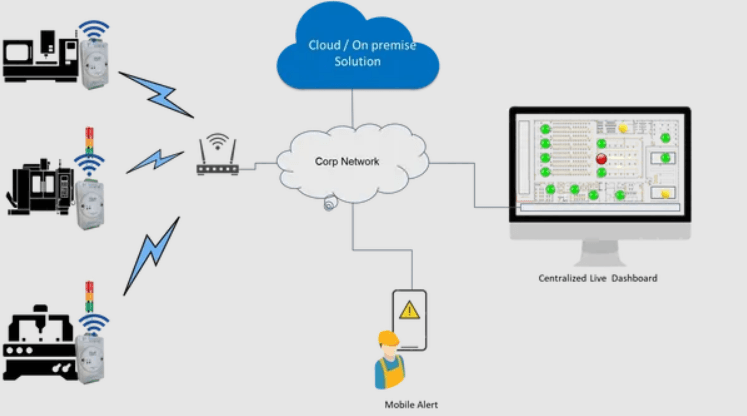
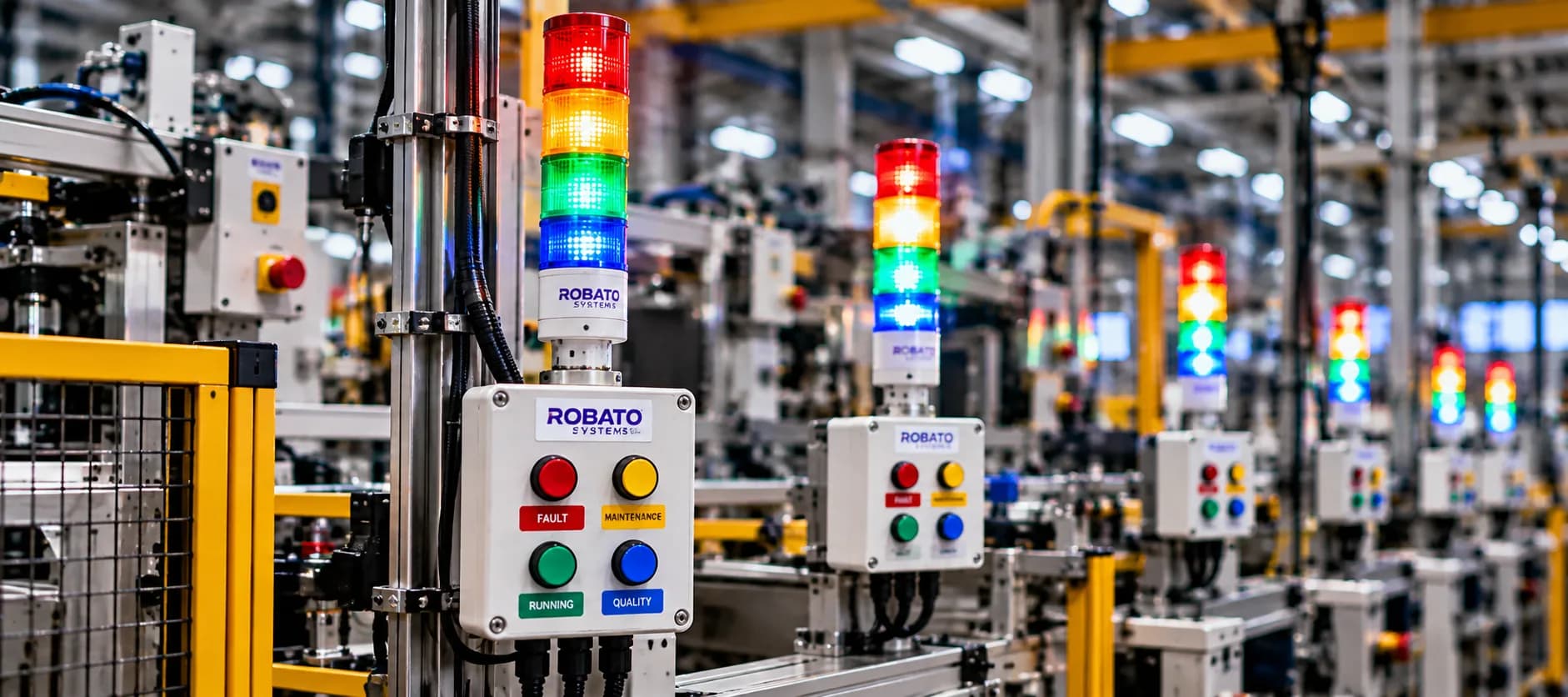
An Andon Board addresses this challenge by providing a centralized visual communication system that instantly displays production alerts, machine status, operator requests, maintenance notifications, and manufacturing KPIs. Instead of waiting for supervisors to identify problems manually, operators can trigger alerts immediately, allowing the right teams to respond without delay.
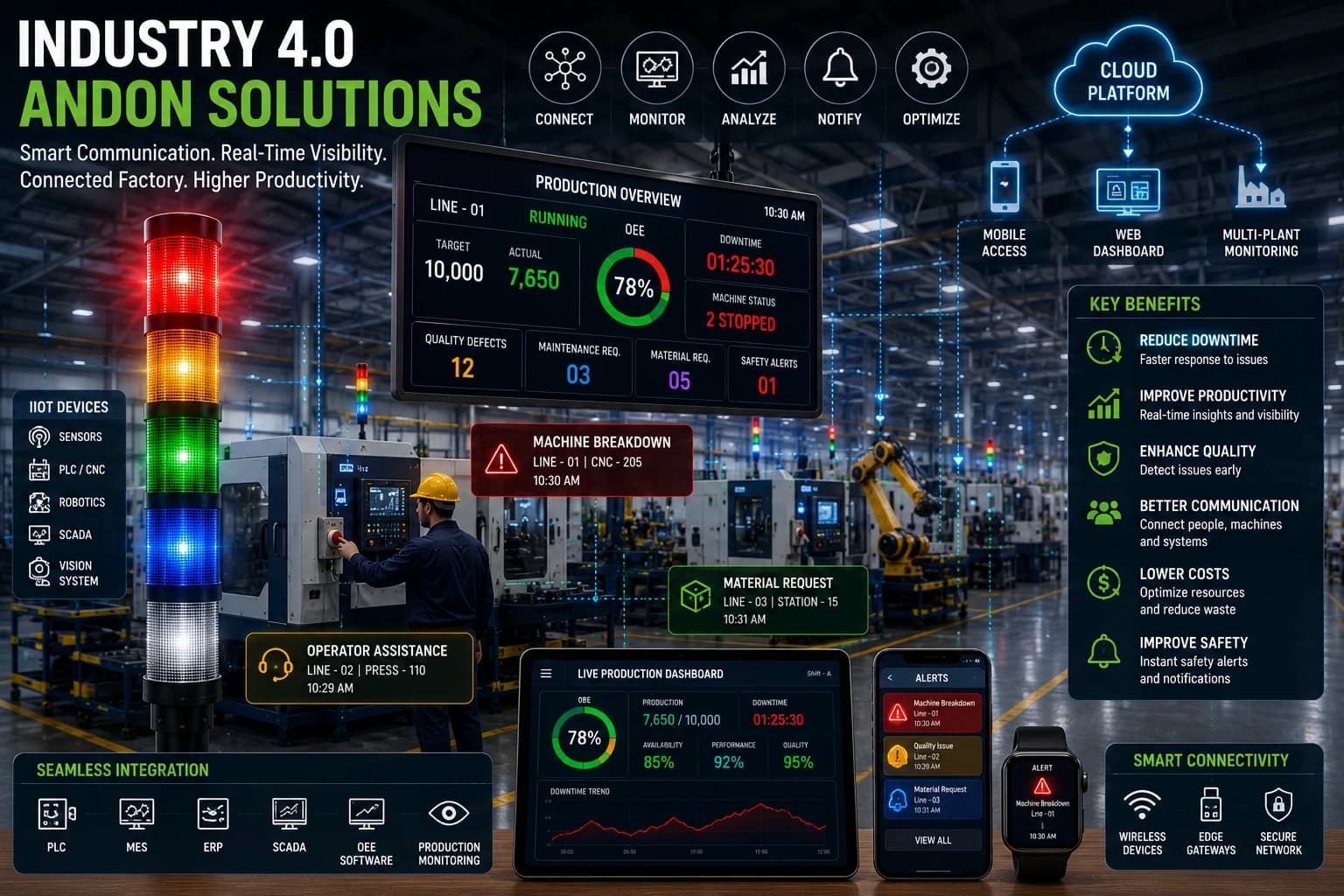
Originally introduced as part of the Toyota Production System (TPS), Andon Boards have evolved into intelligent digital platforms that integrate with PLCs, Industrial IoT (IIoT) devices, Manufacturing Execution Systems (MES), ERP software, SCADA systems, and cloud-based monitoring platforms. Today, they are an essential component of Industry 4.0 and smart factory initiatives, helping manufacturers improve visibility, reduce downtime, and optimize shop floor operations.
What is an Andon Board?
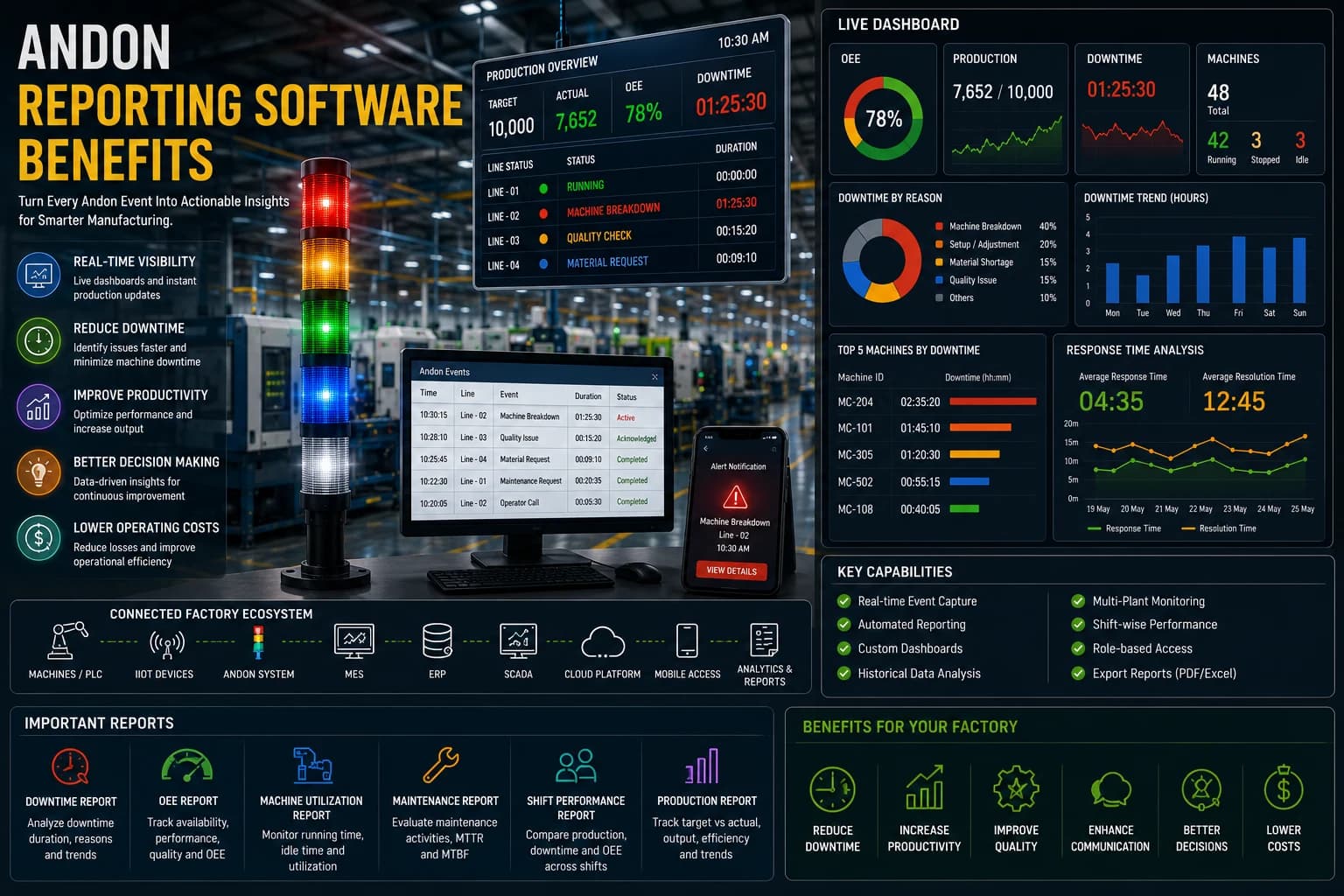
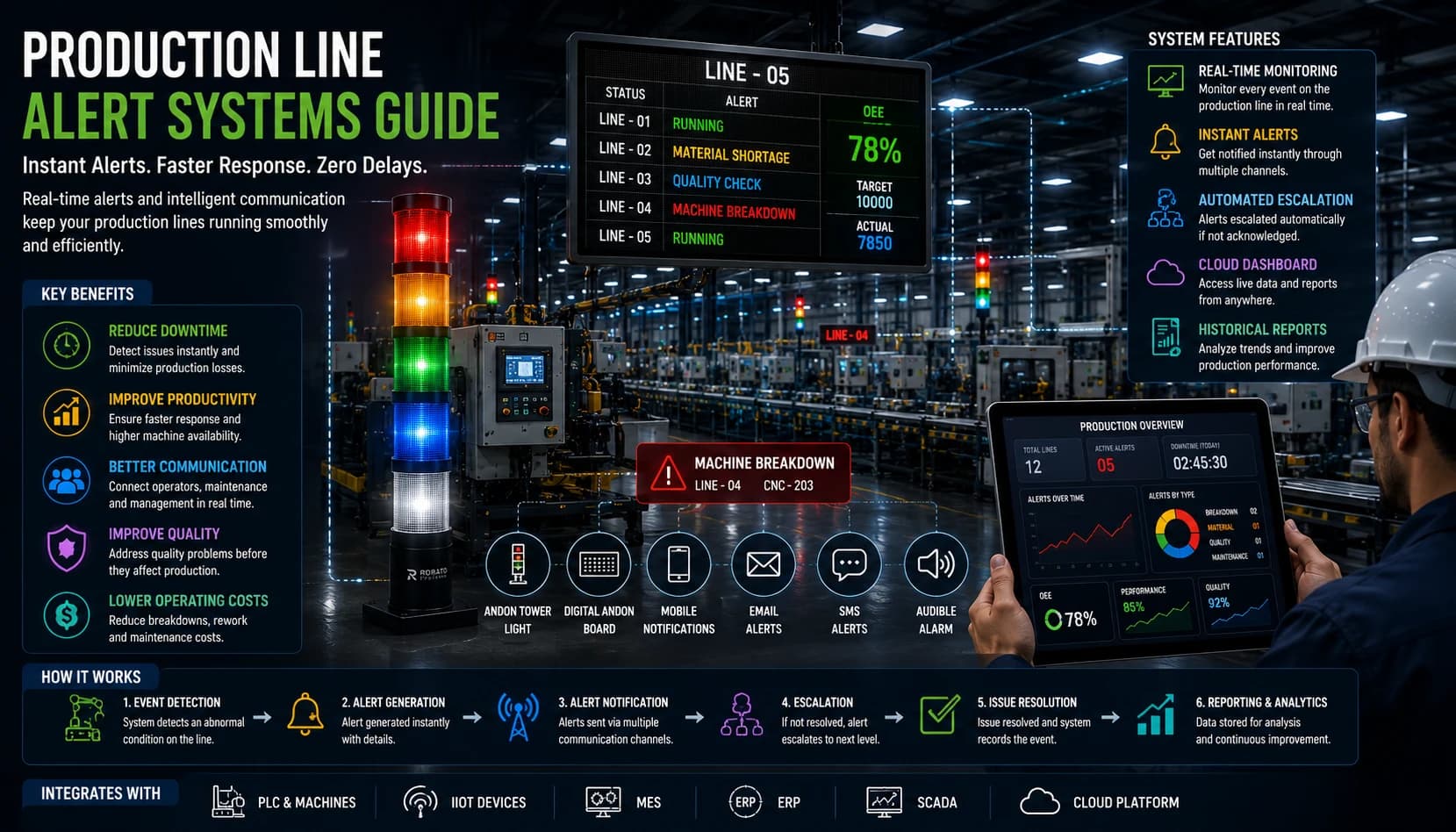
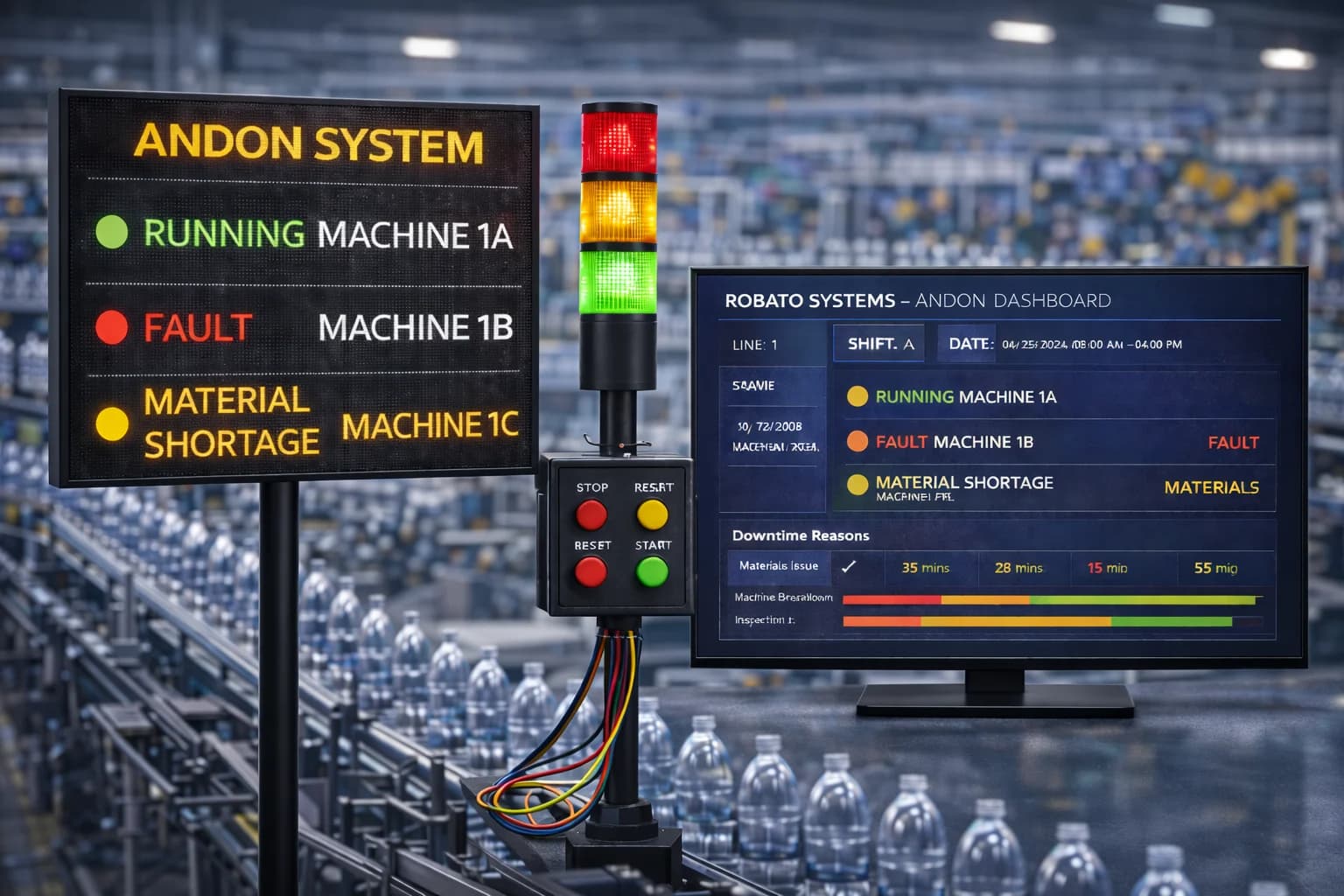
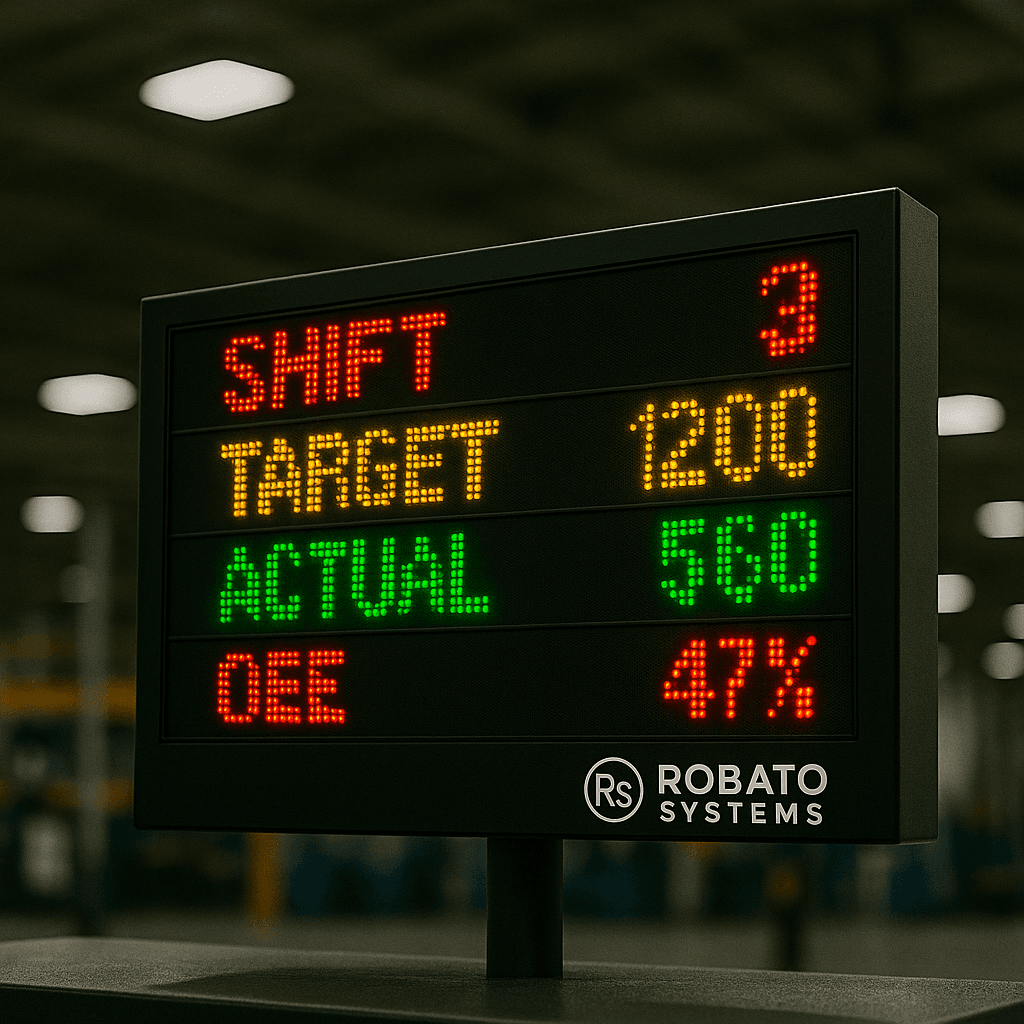
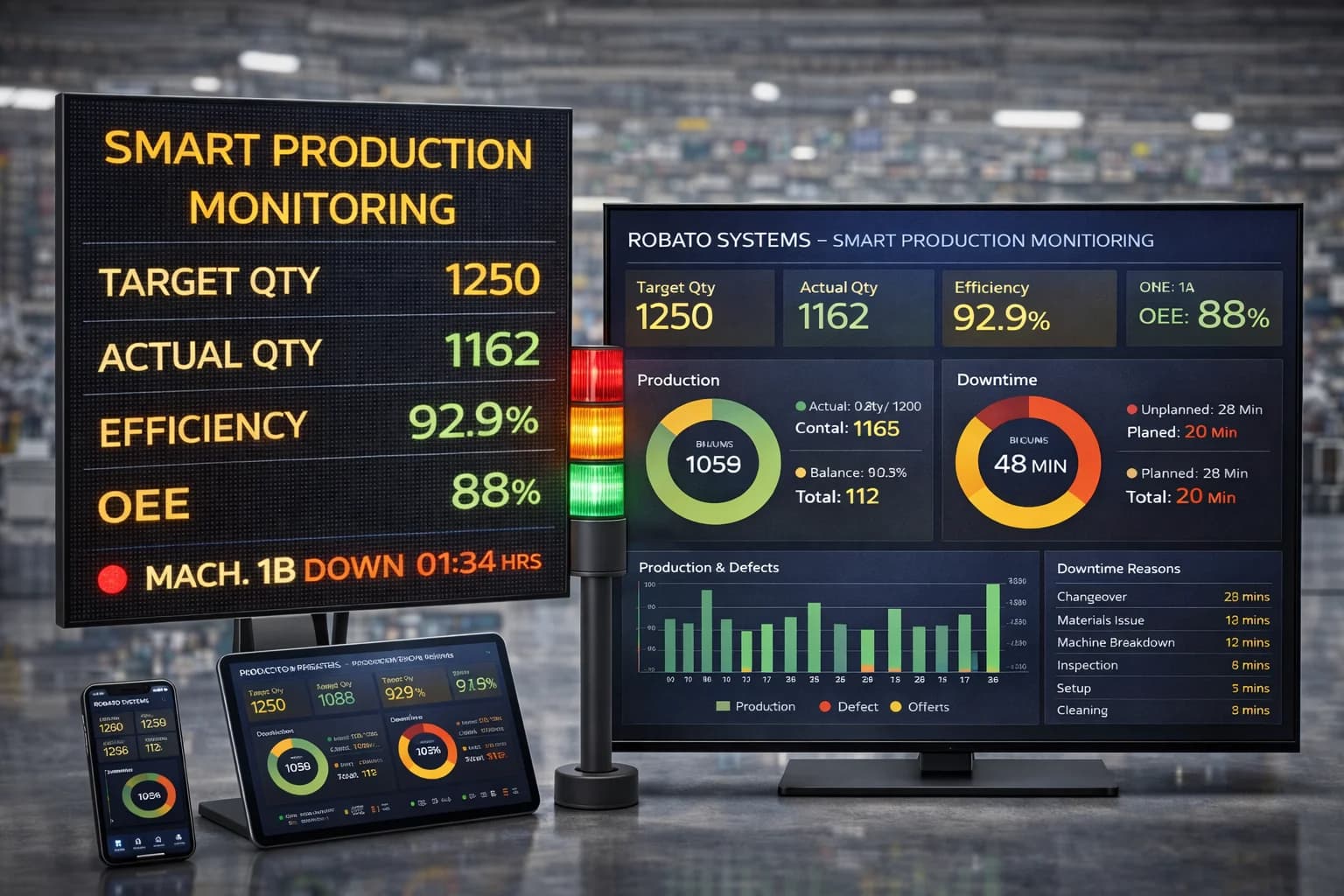
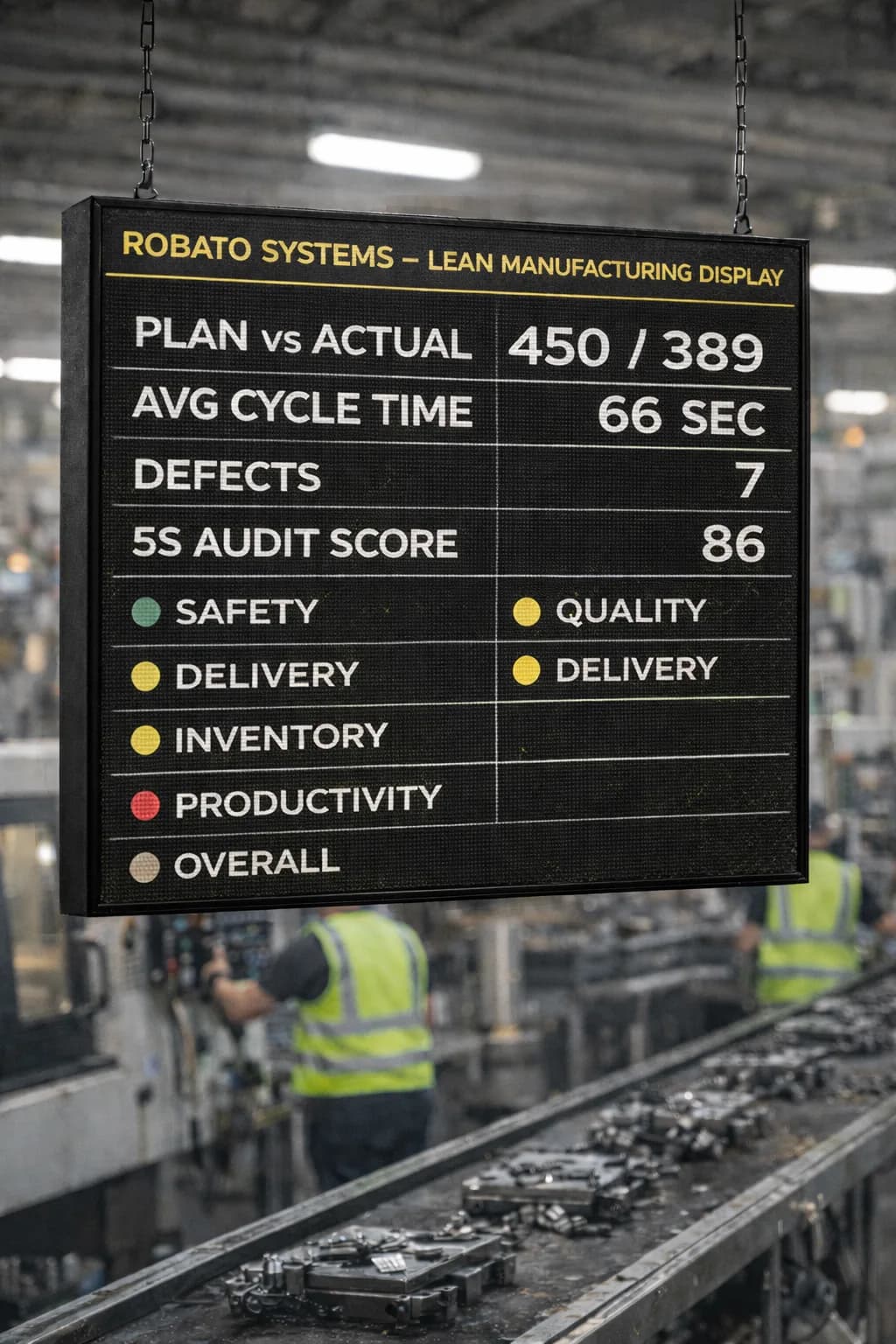
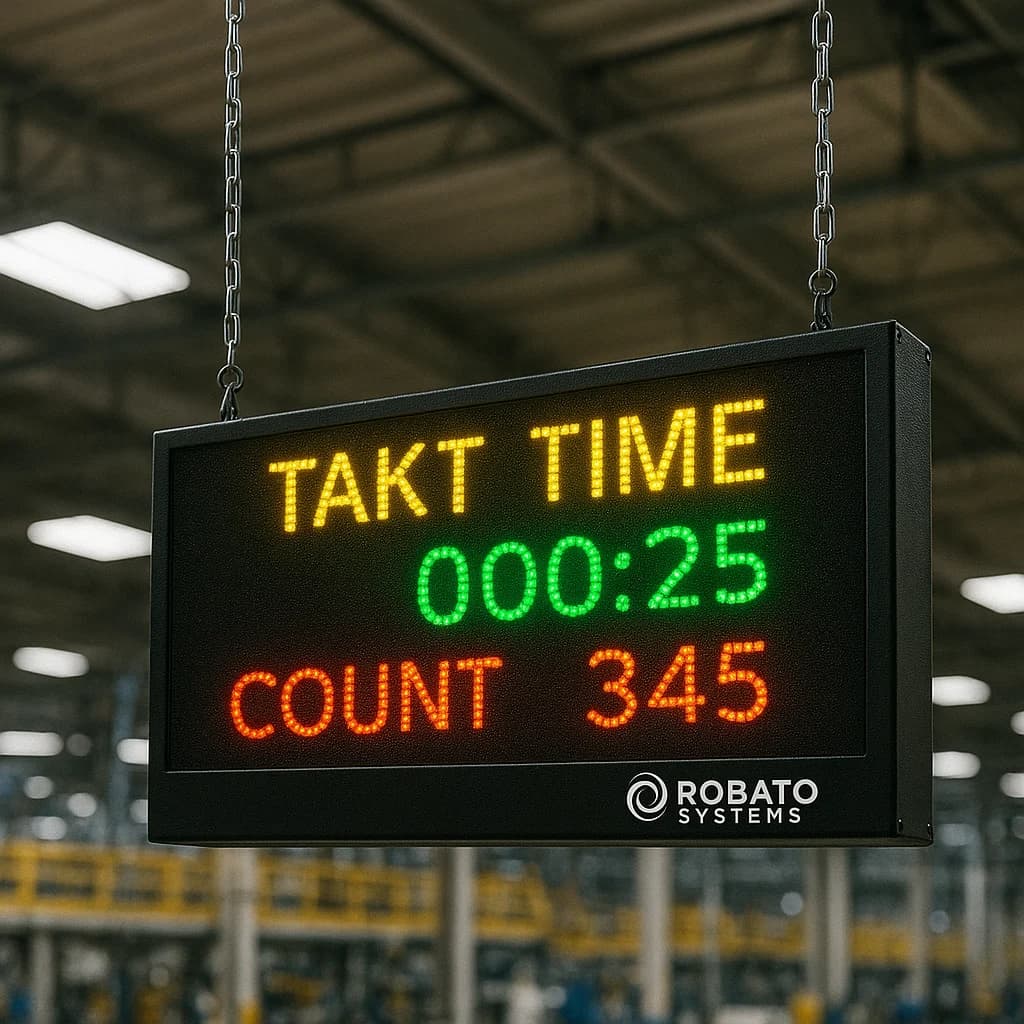
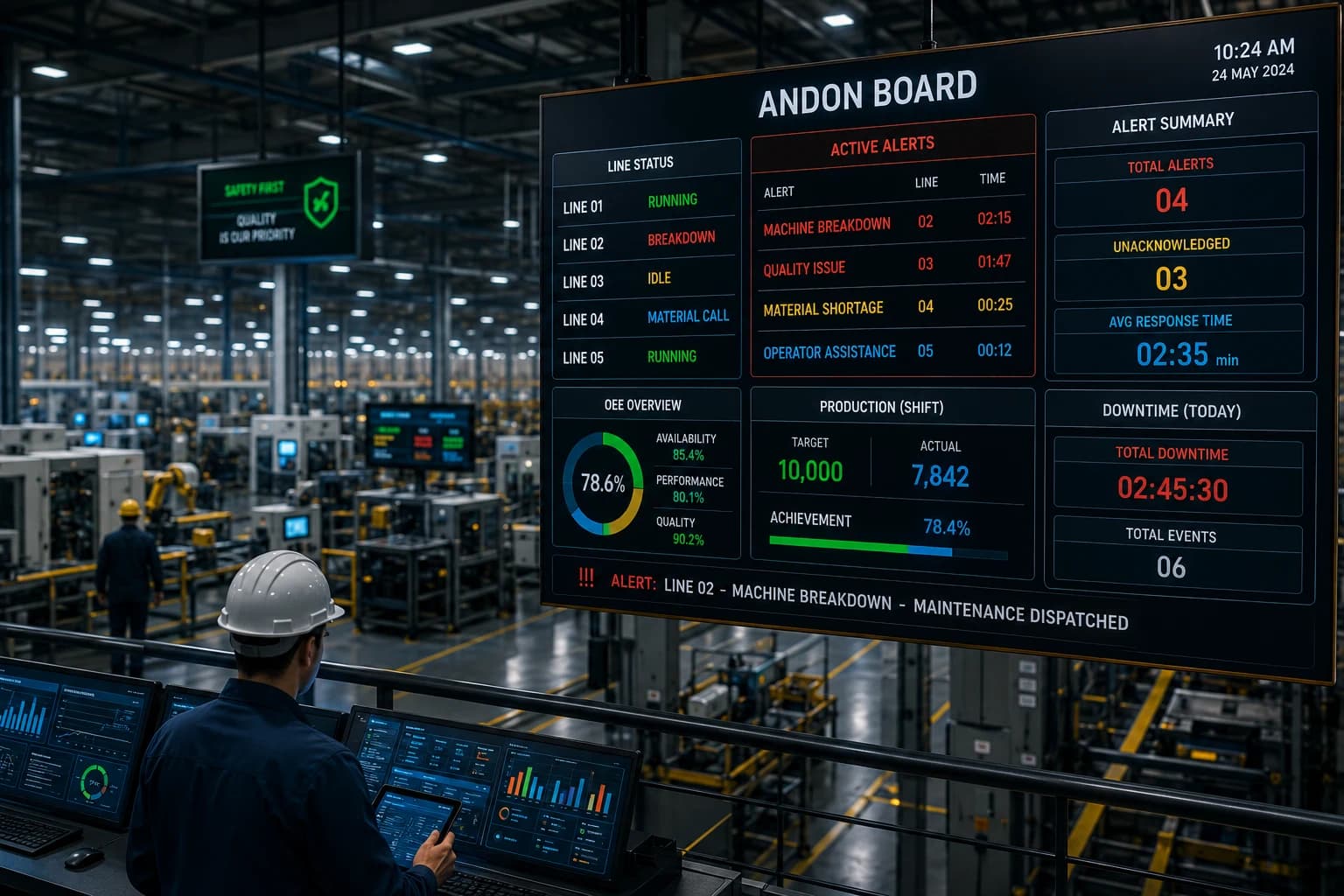
An Andon Board is a digital display system used in manufacturing to communicate production issues, machine conditions, maintenance requests, and operational performance in real time. It serves as a visual dashboard that enables operators, supervisors, maintenance personnel, and management to monitor the status of production lines from a single location.
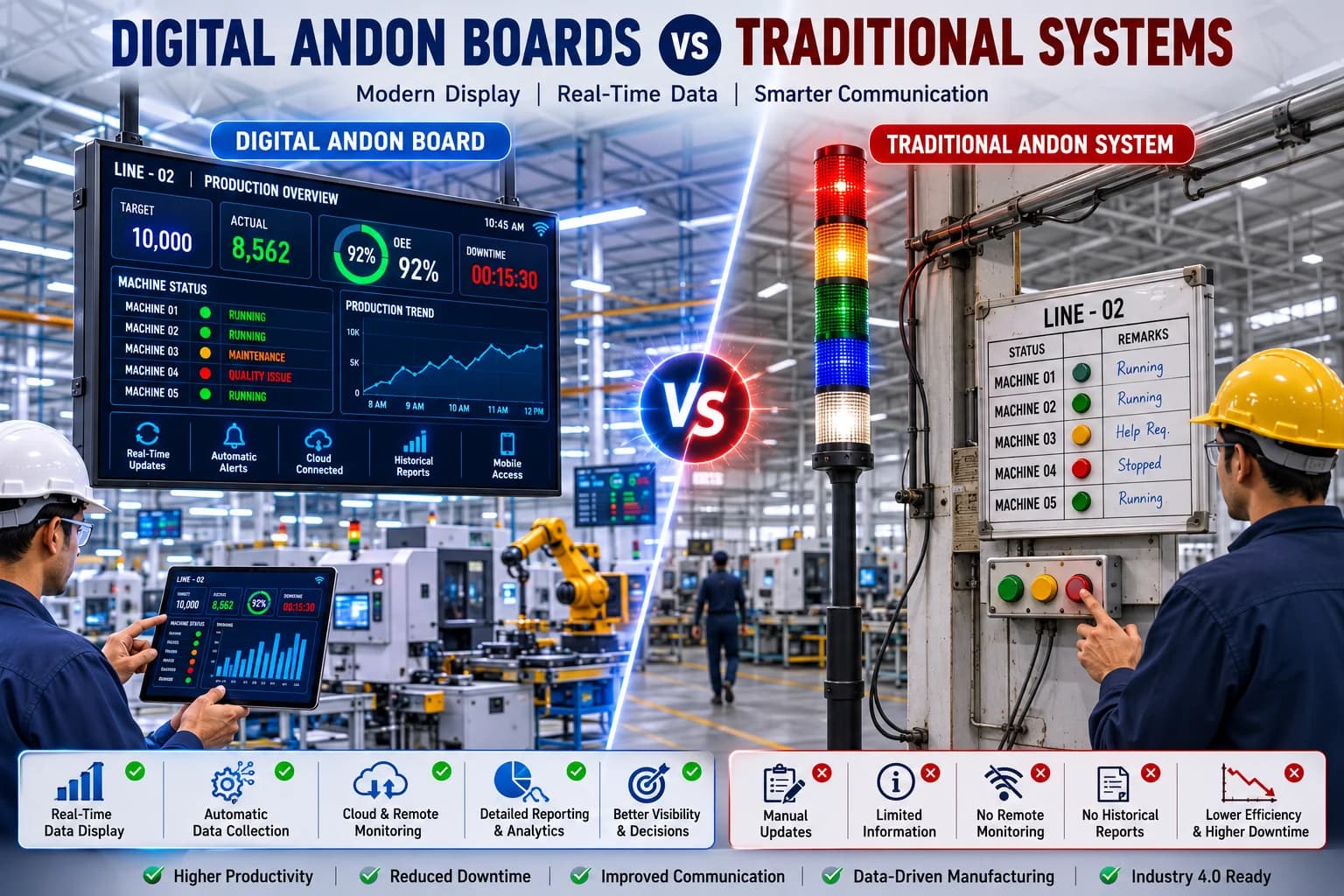
Unlike traditional whiteboards or manually updated production charts, an Andon Board automatically displays live information collected from machines, PLCs, sensors, or production monitoring software.
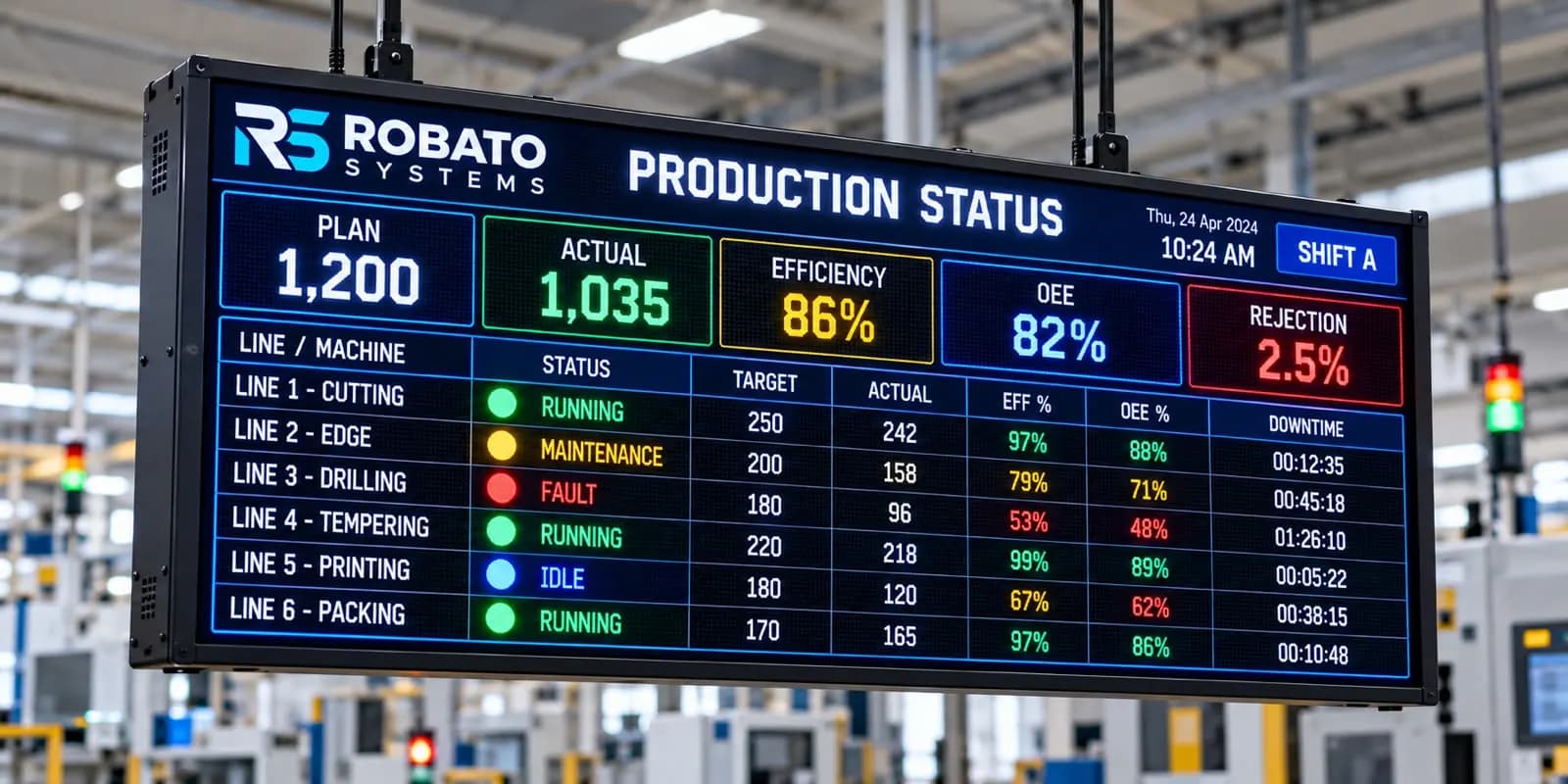
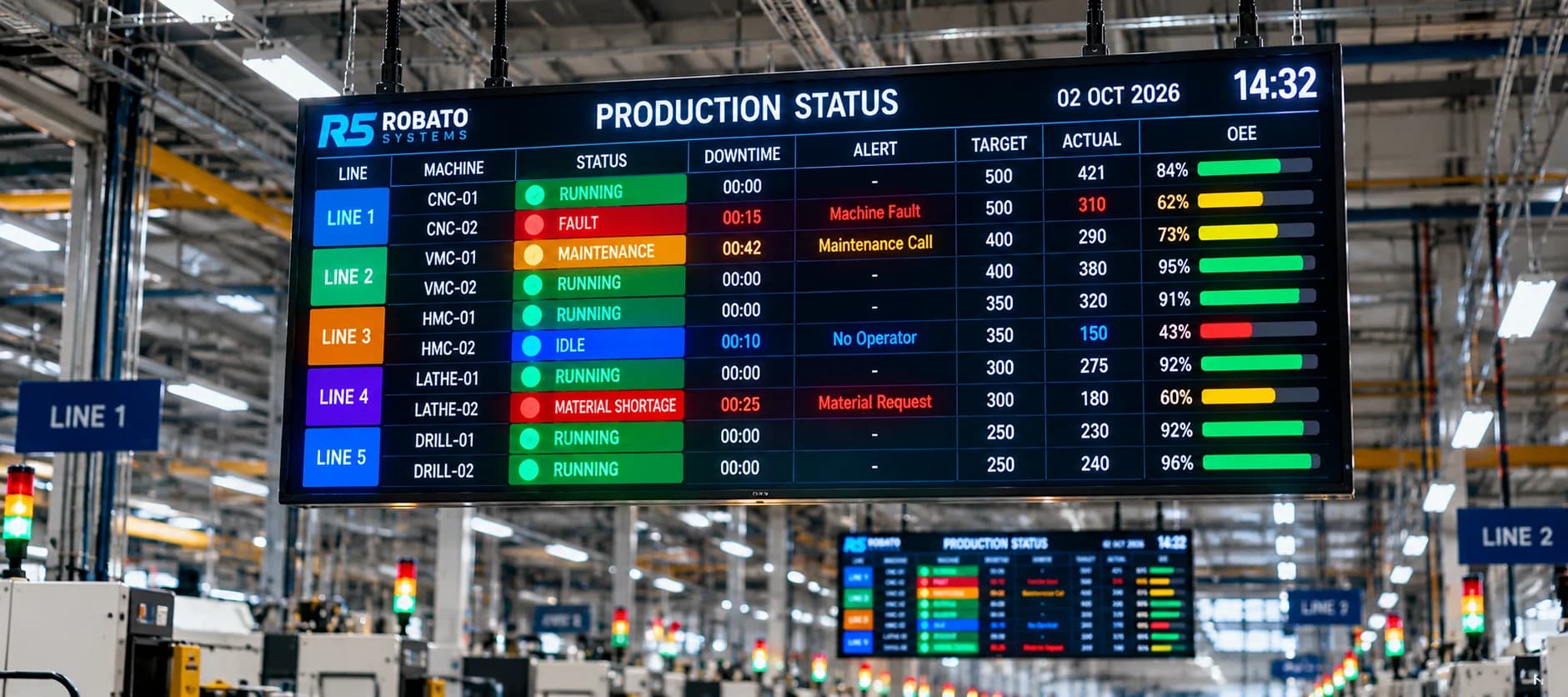
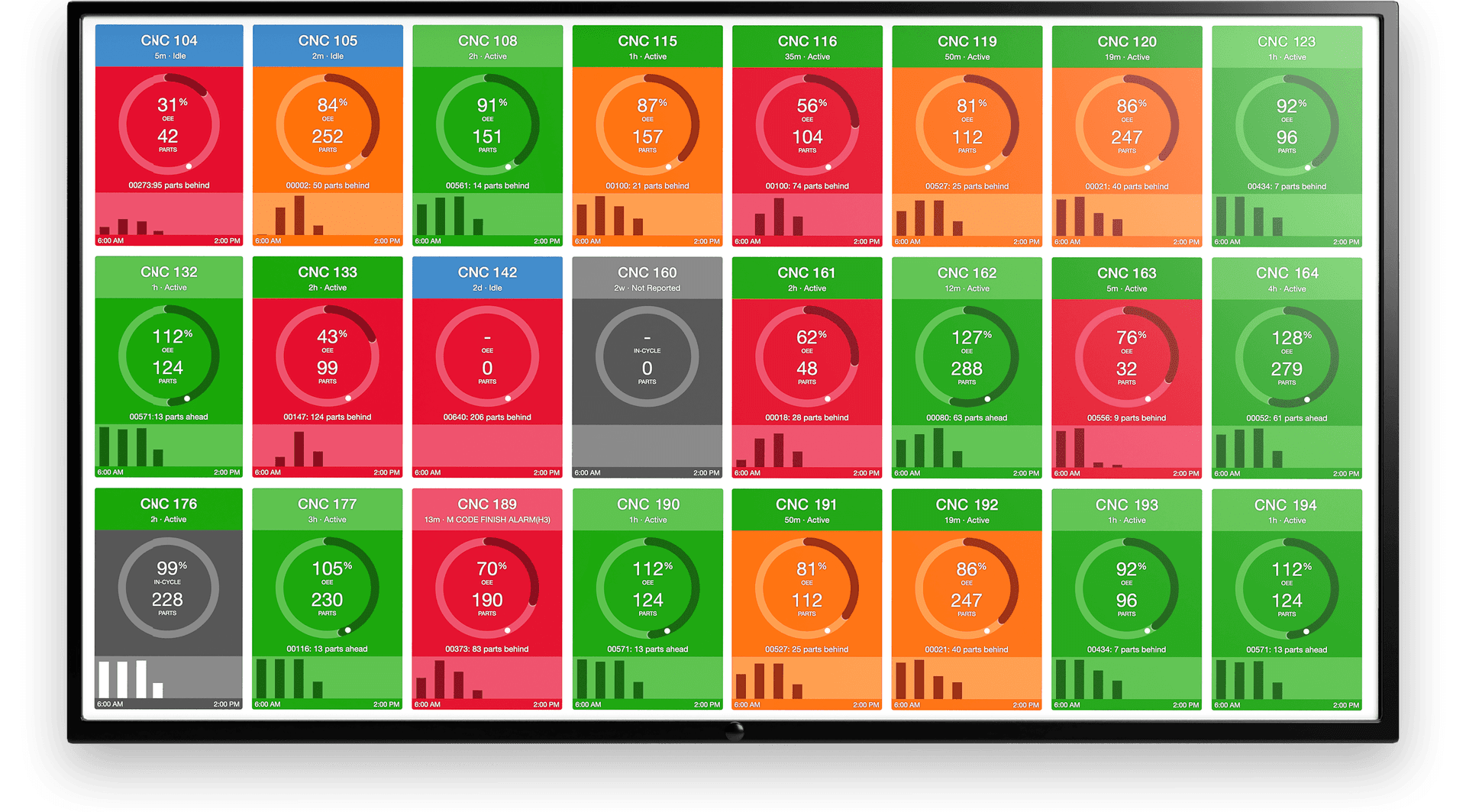
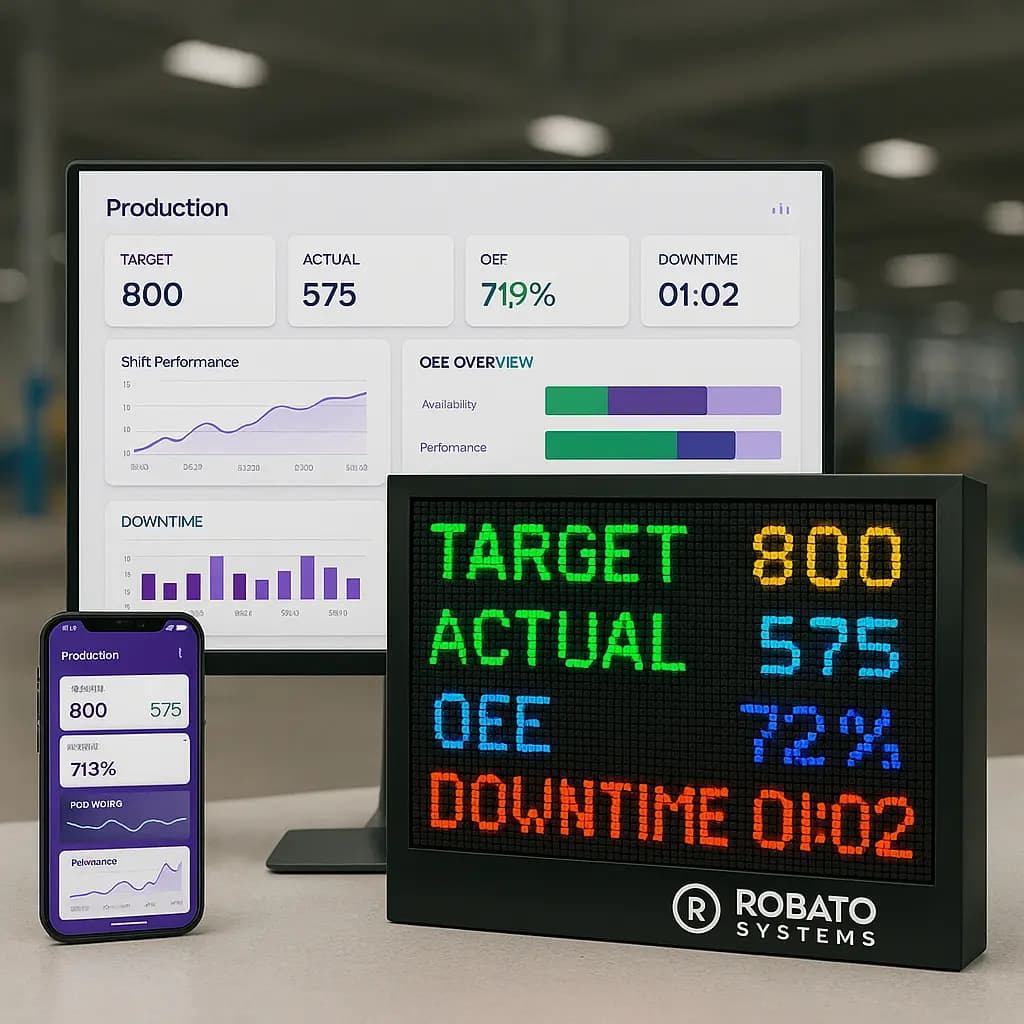
A typical Andon Board displays:
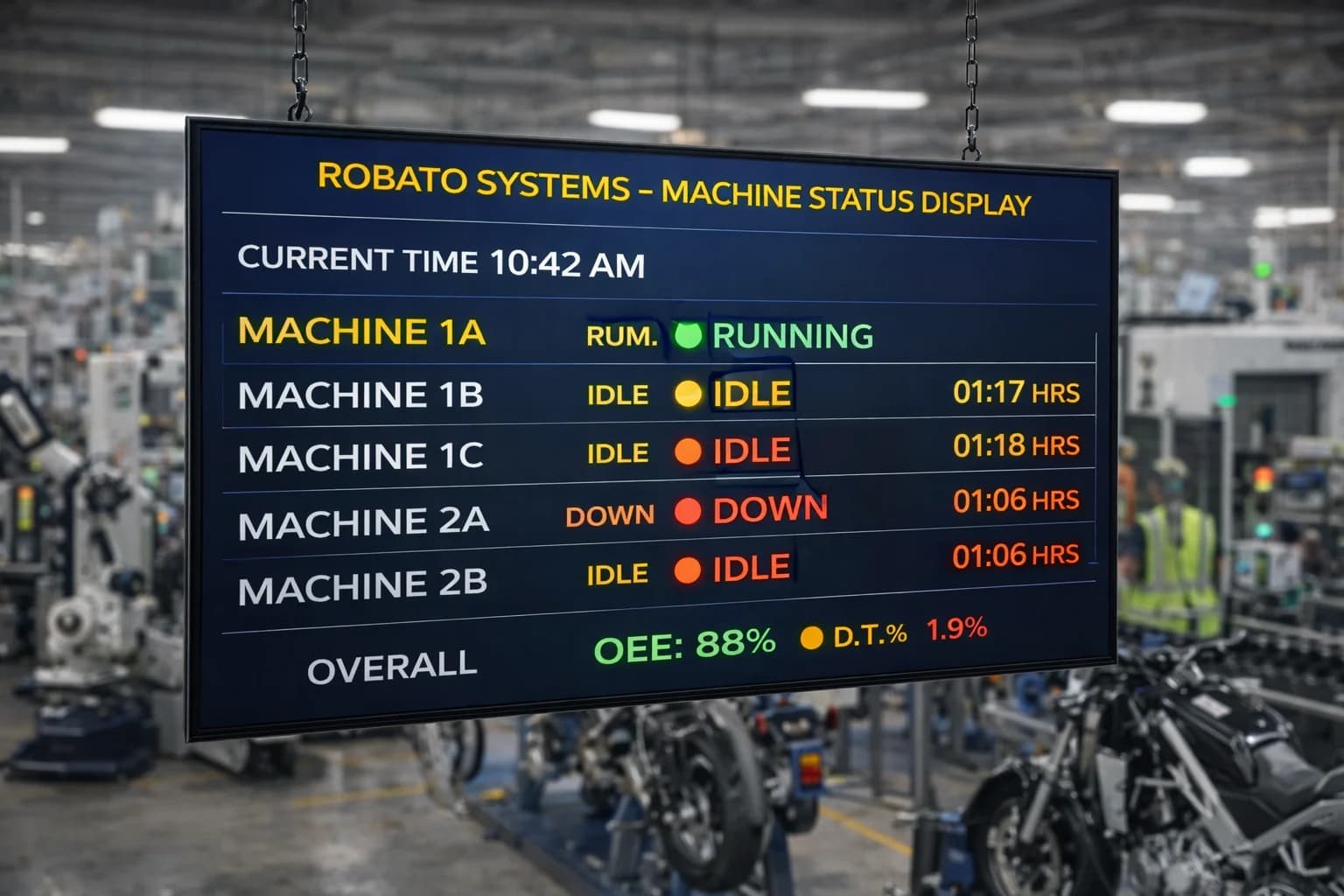
- Machine status
- Production line status
- Active machine alerts
- Operator assistance requests
- Maintenance requests
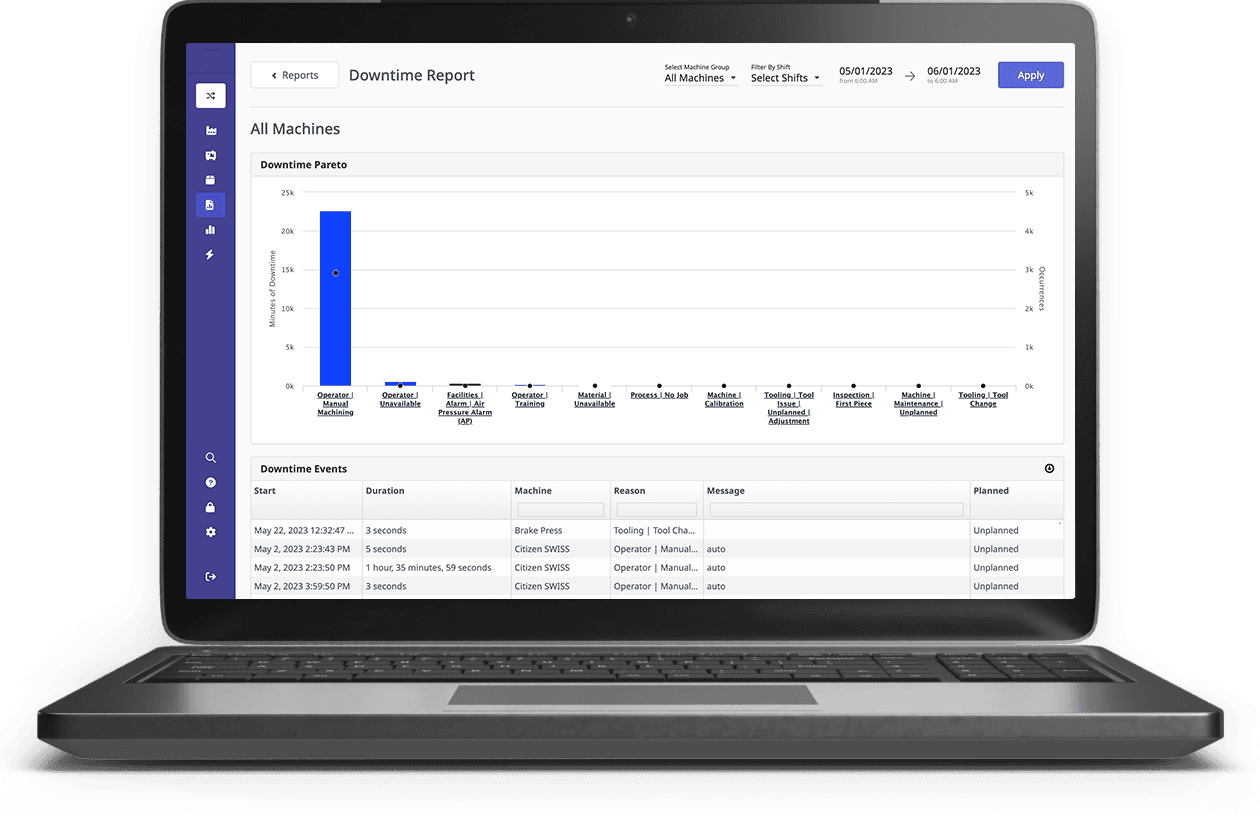
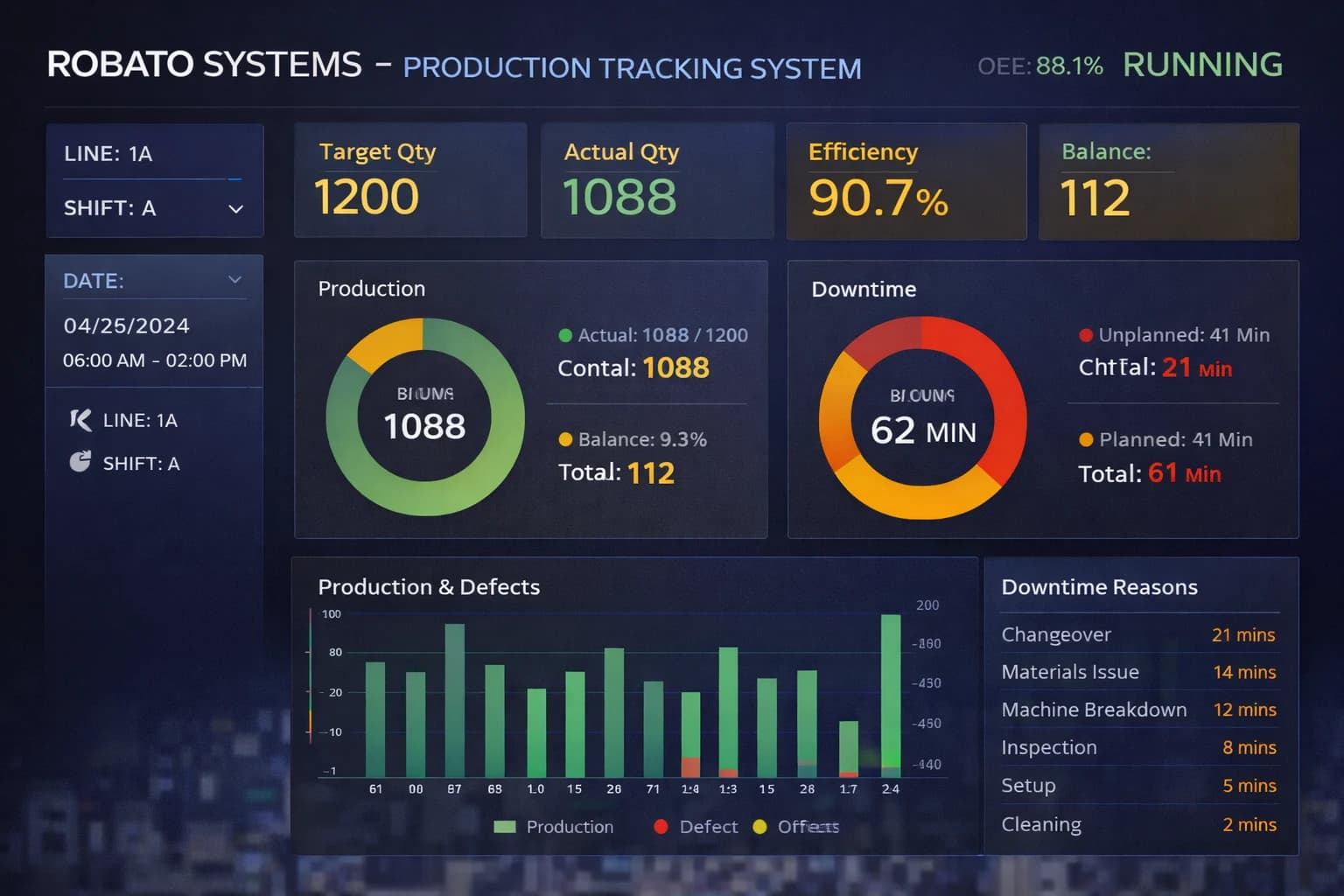
- Downtime information
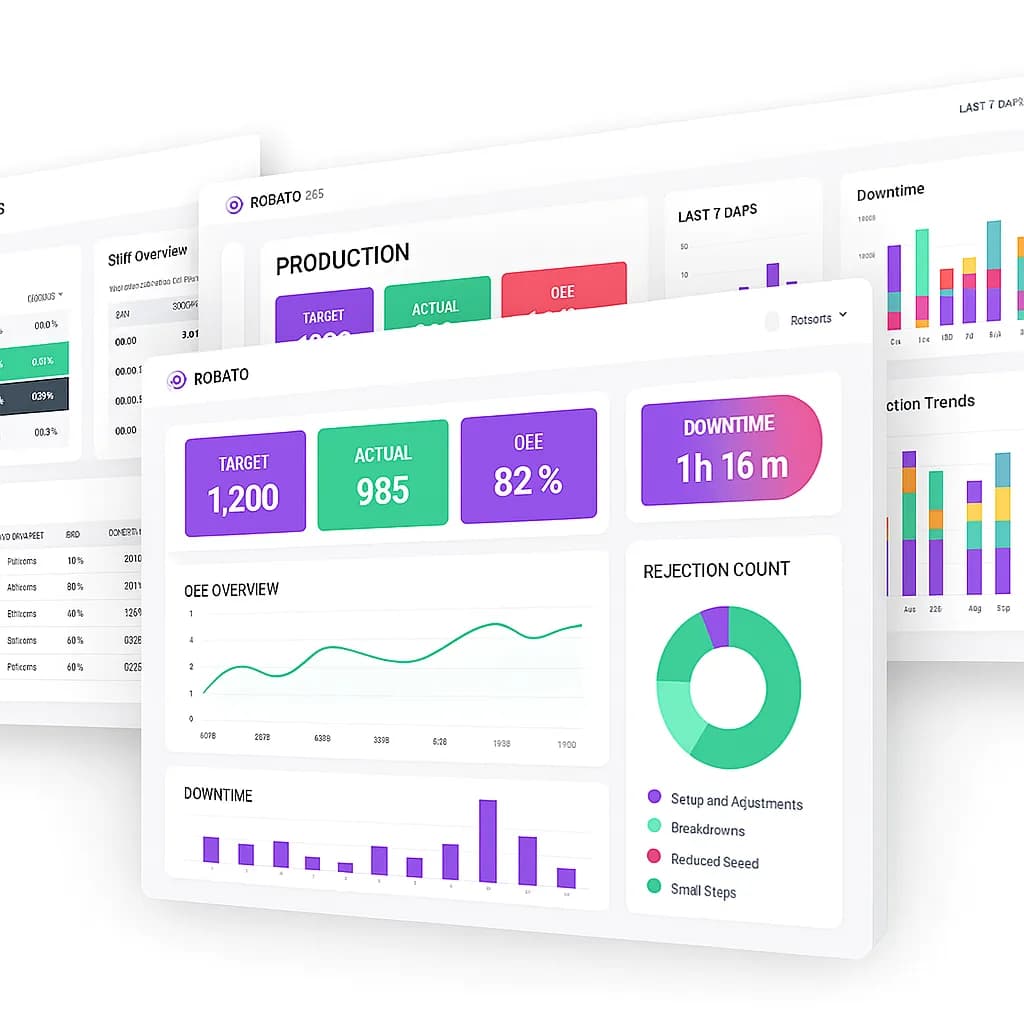
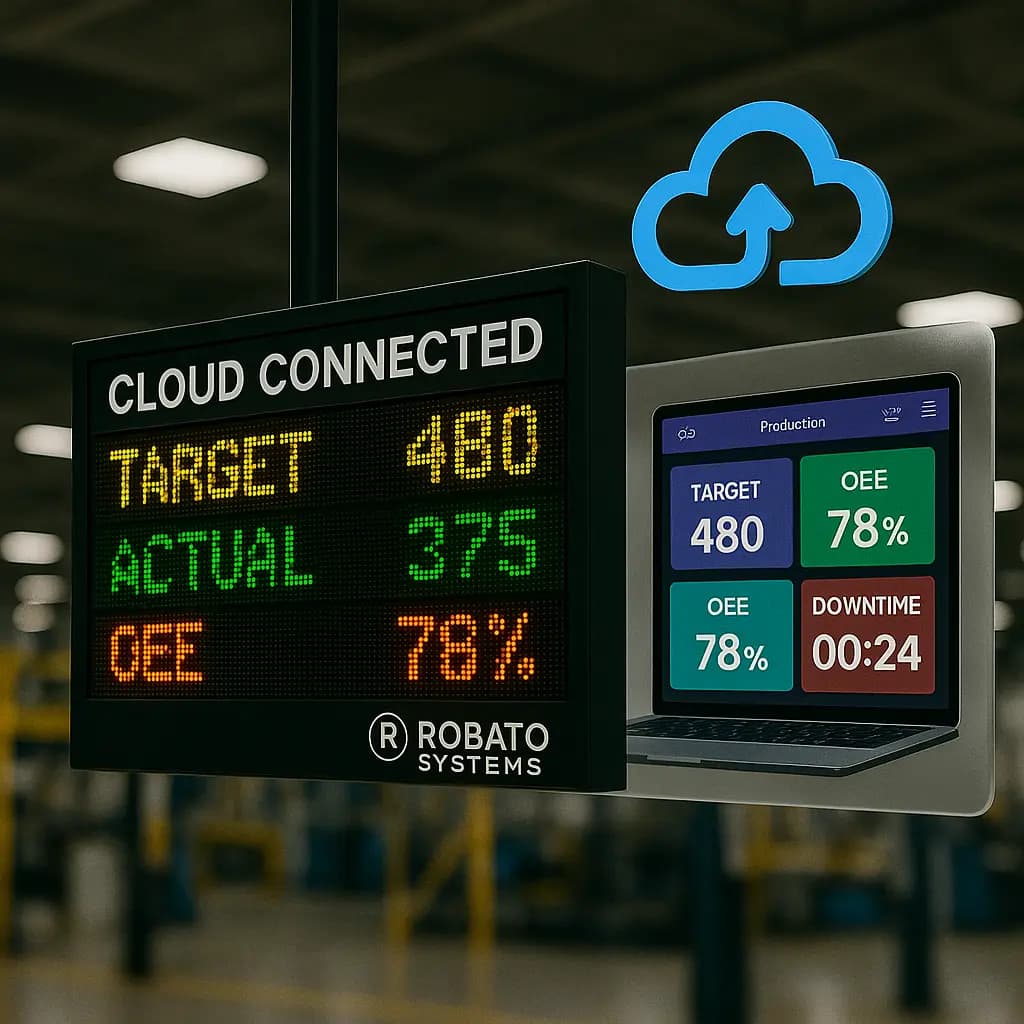
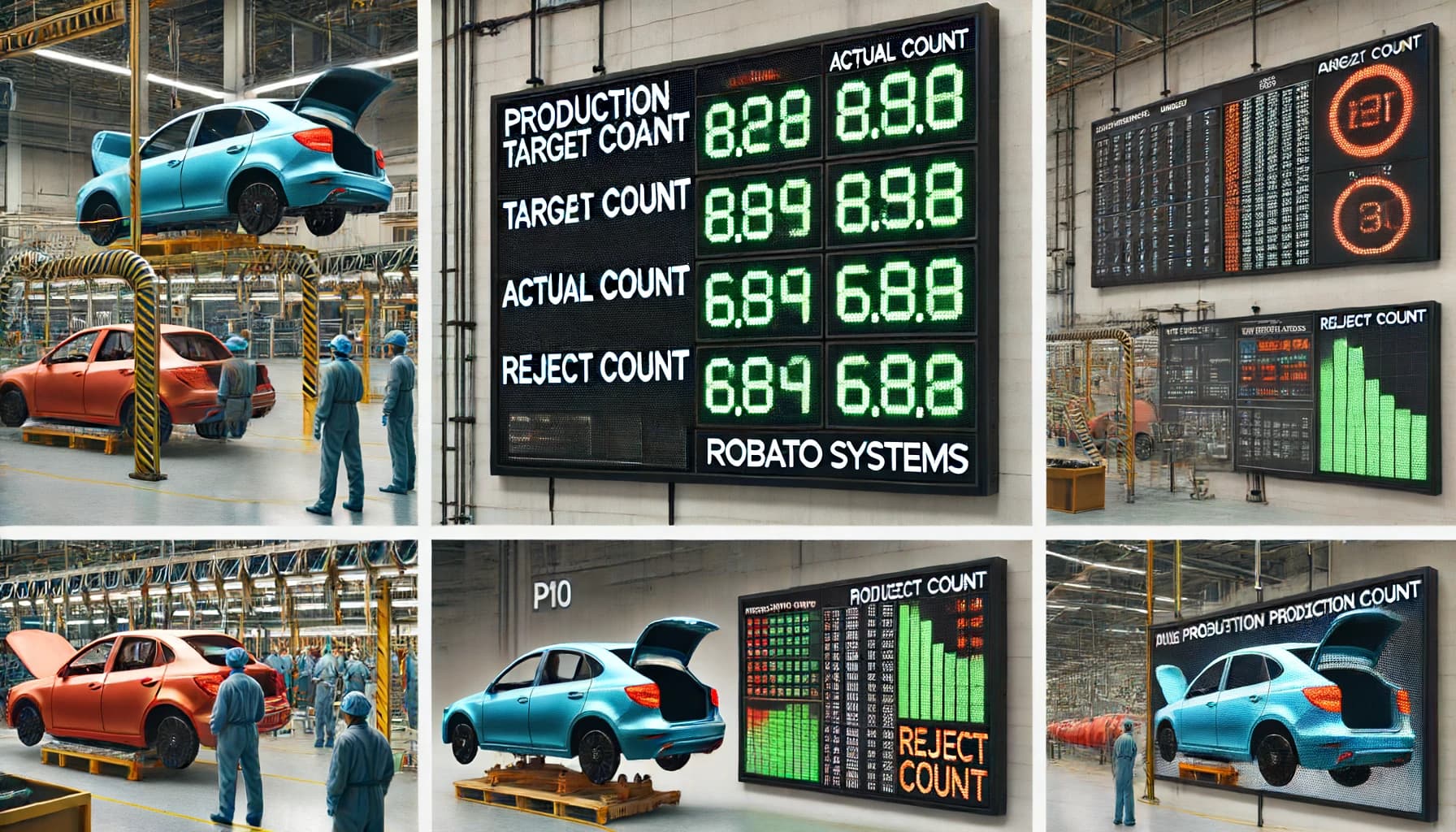
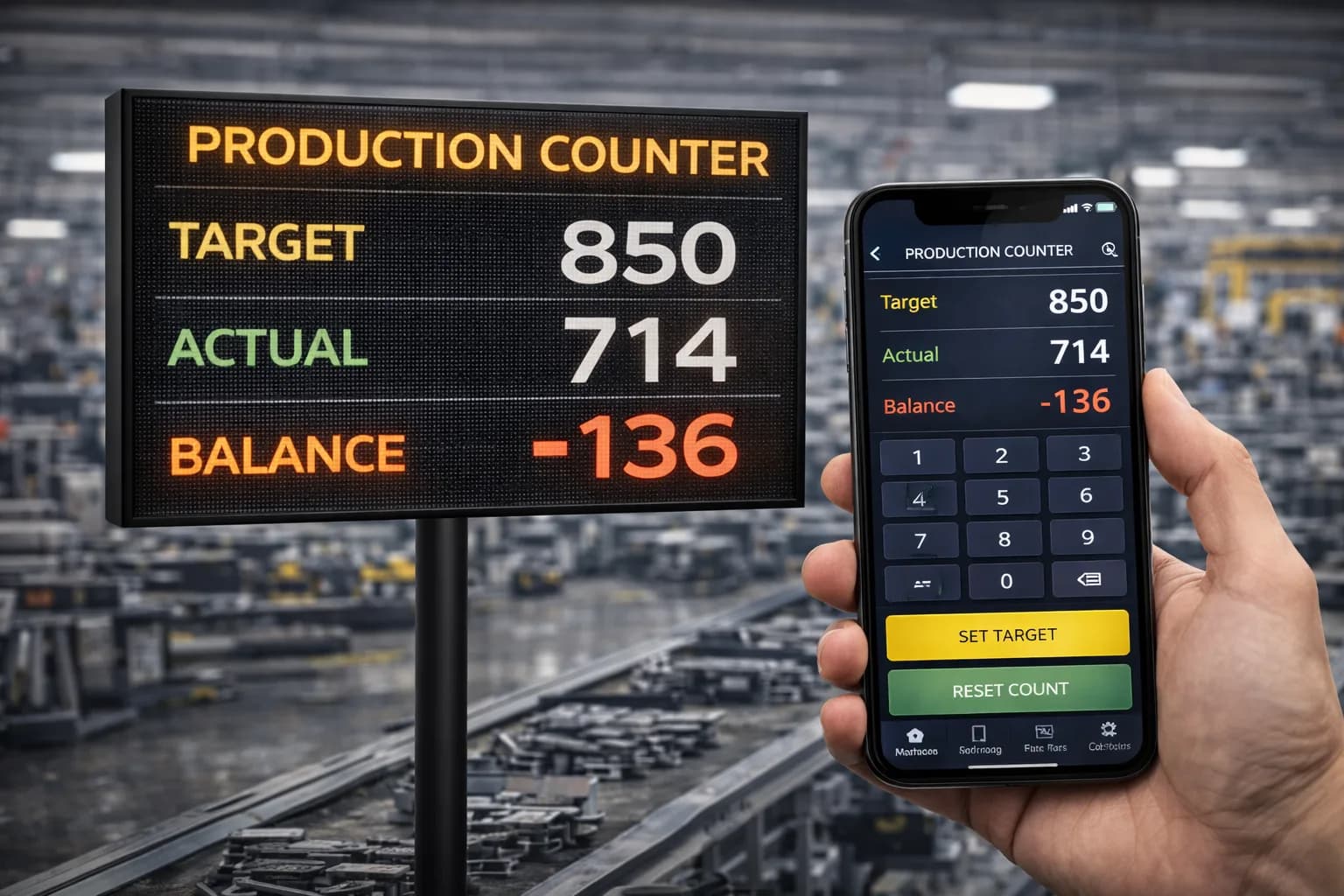
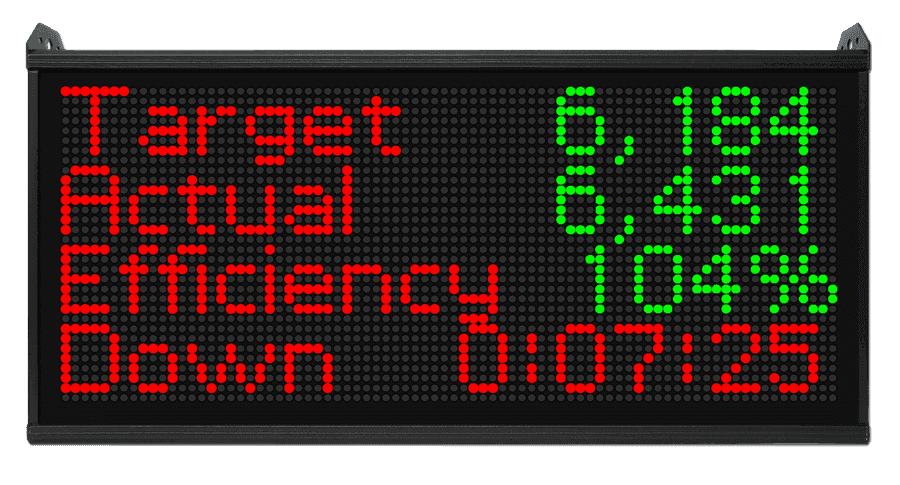
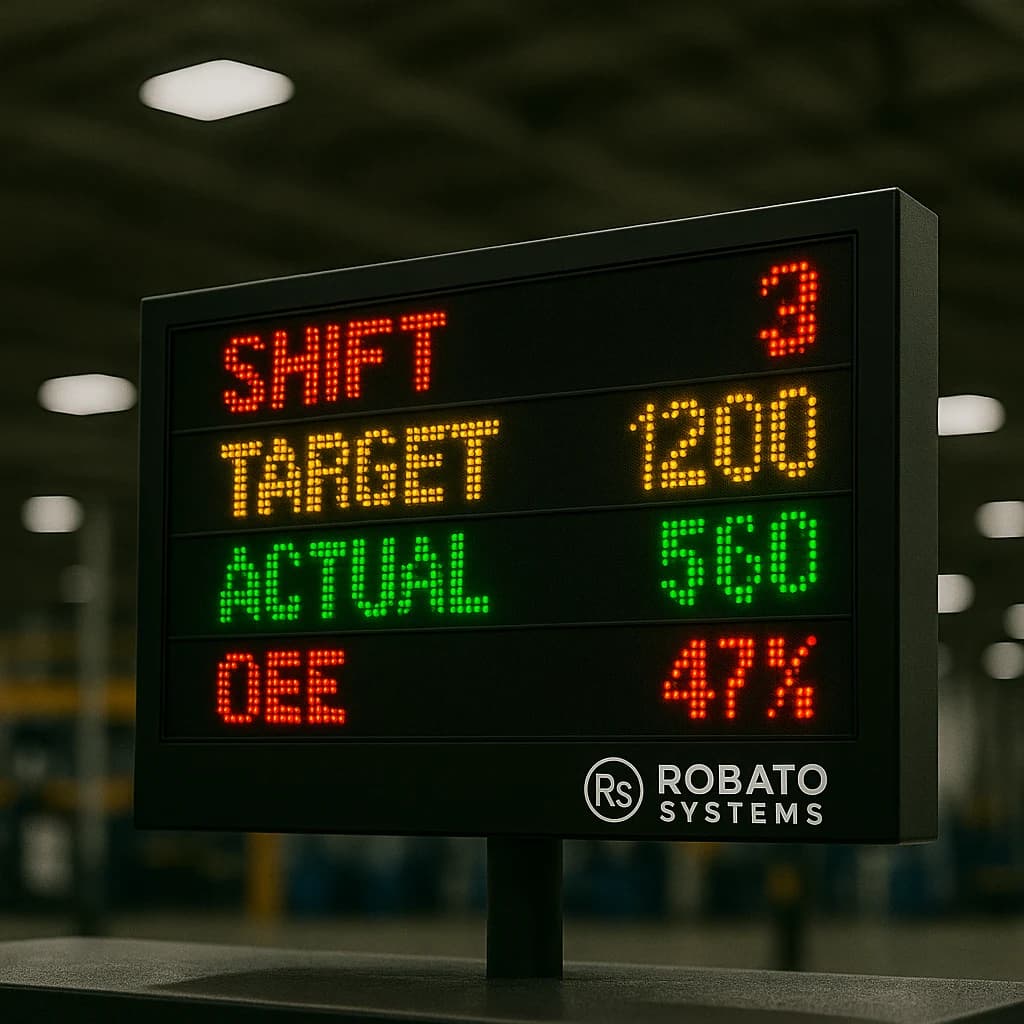
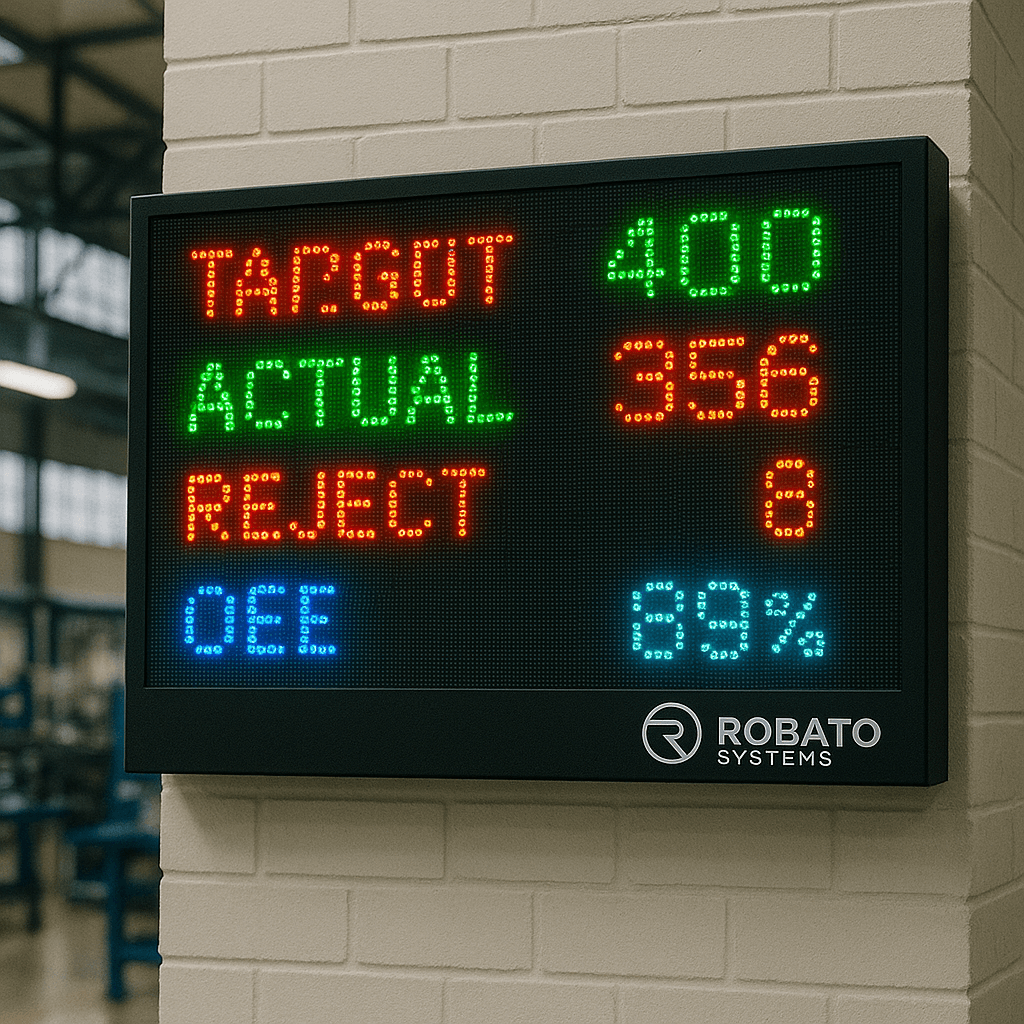
- Target vs actual production
- Overall Equipment Effectiveness (OEE)
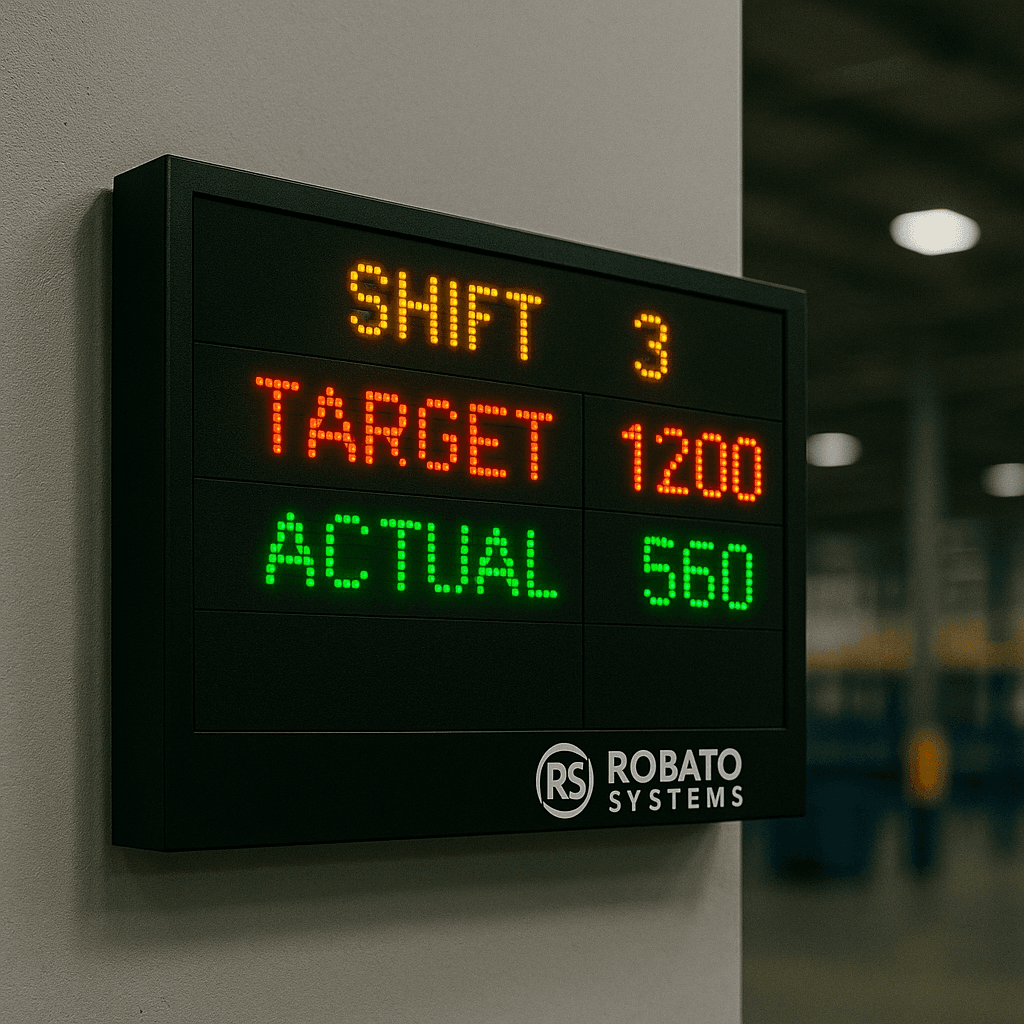
- Shift performance
- Quality alerts
- Safety notifications
- Escalation status
This real-time visibility enables teams to detect and resolve problems before they affect overall production.
Why Every Factory Needs an Andon Board
Manufacturing environments operate under constant pressure to maximize production while minimizing downtime. Delayed communication can result in prolonged machine failures, quality defects, and missed delivery schedules.
An Andon Board helps manufacturers by:
- Providing instant production visibility
- Improving communication between departments
- Reducing machine downtime
- Accelerating maintenance response
- Increasing production efficiency
- Supporting Lean Manufacturing
- Enhancing workforce accountability
- Improving operational transparency
By making problems visible to everyone on the shop floor, Andon Boards encourage faster collaboration and continuous improvement.
How an Andon Board Works
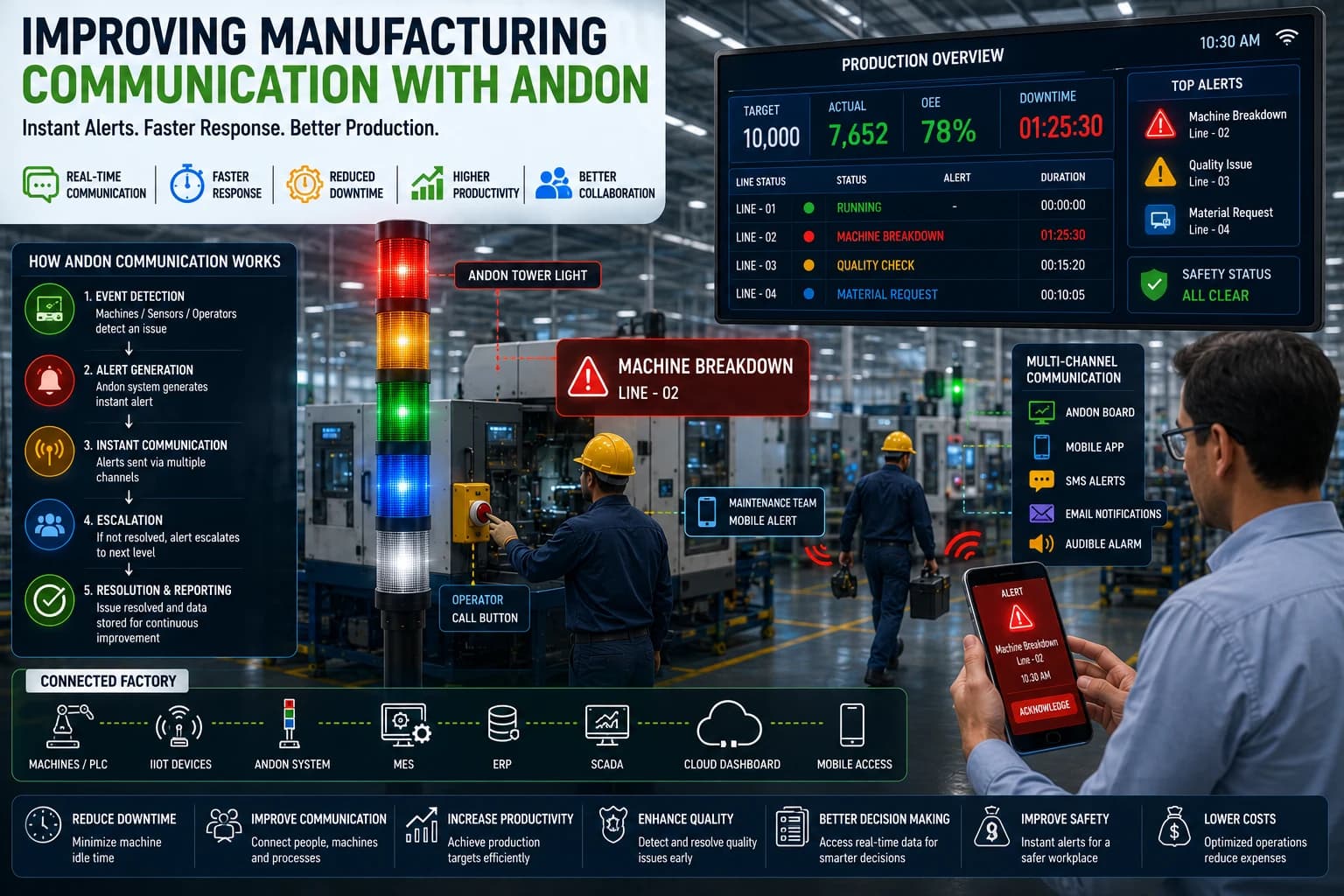
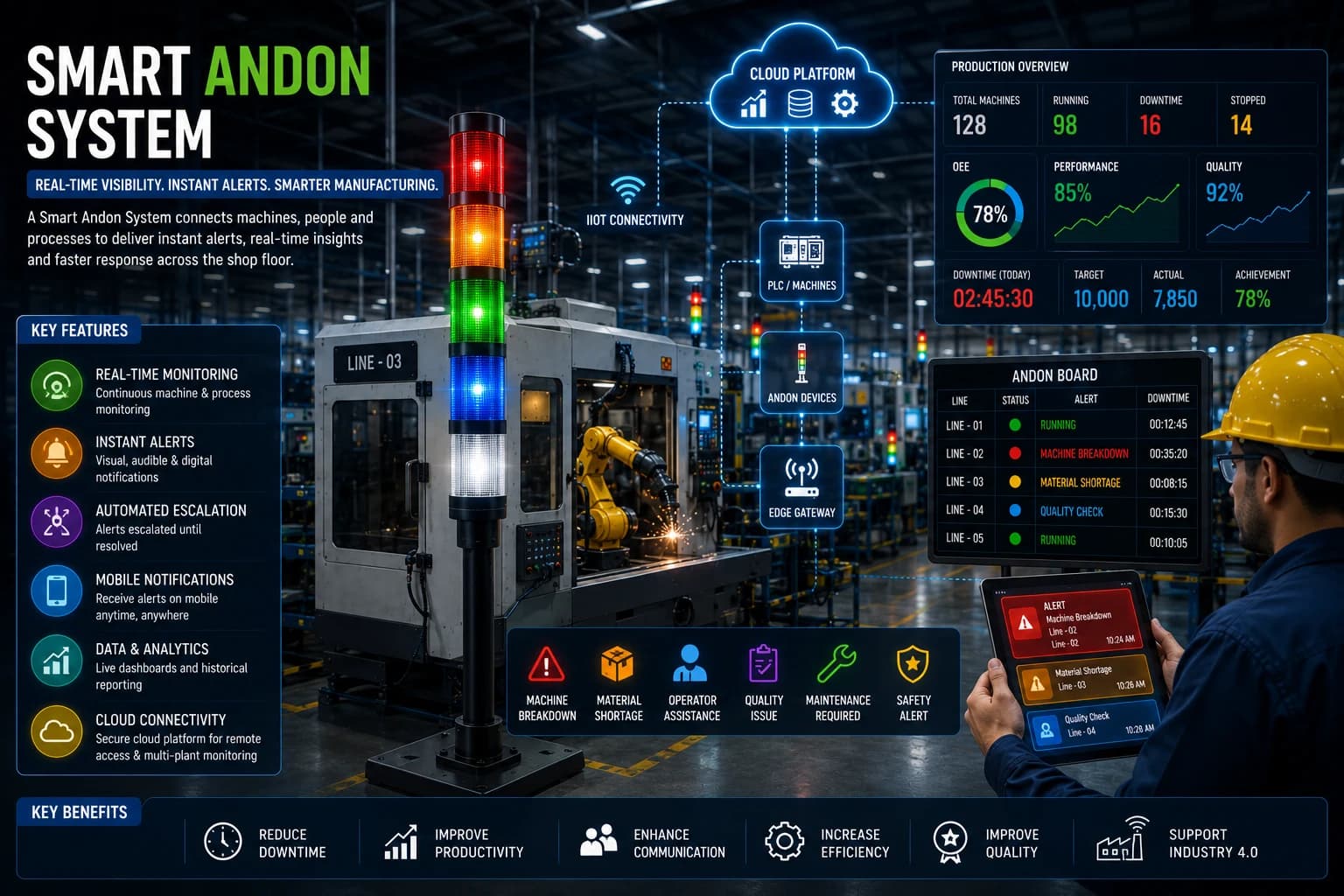
Step 1: Issue Detection
Production issues may be detected by:
- Operators
- PLCs
- Industrial IoT sensors
- Vision inspection systems
- Machine controllers
- Safety devices
Step 2: Alert Generation
The system immediately generates alerts for:
- Machine breakdowns
- Material shortages
- Operator assistance
- Quality issues
- Maintenance requests
- Production delays
Step 3: Display on the Andon Board
The alert appears instantly on the digital Andon Board along with relevant production information such as:
- Machine ID
- Production line
- Alert category
- Time elapsed
- Responsible department
Step 4: Escalation
If the issue remains unresolved within a predefined period, automated escalation rules notify supervisors or senior management.
Step 5: Reporting
Every alert is recorded to support performance analysis, root cause investigation, and continuous improvement.
Key Features of an Andon Board
Real-Time Alert Display
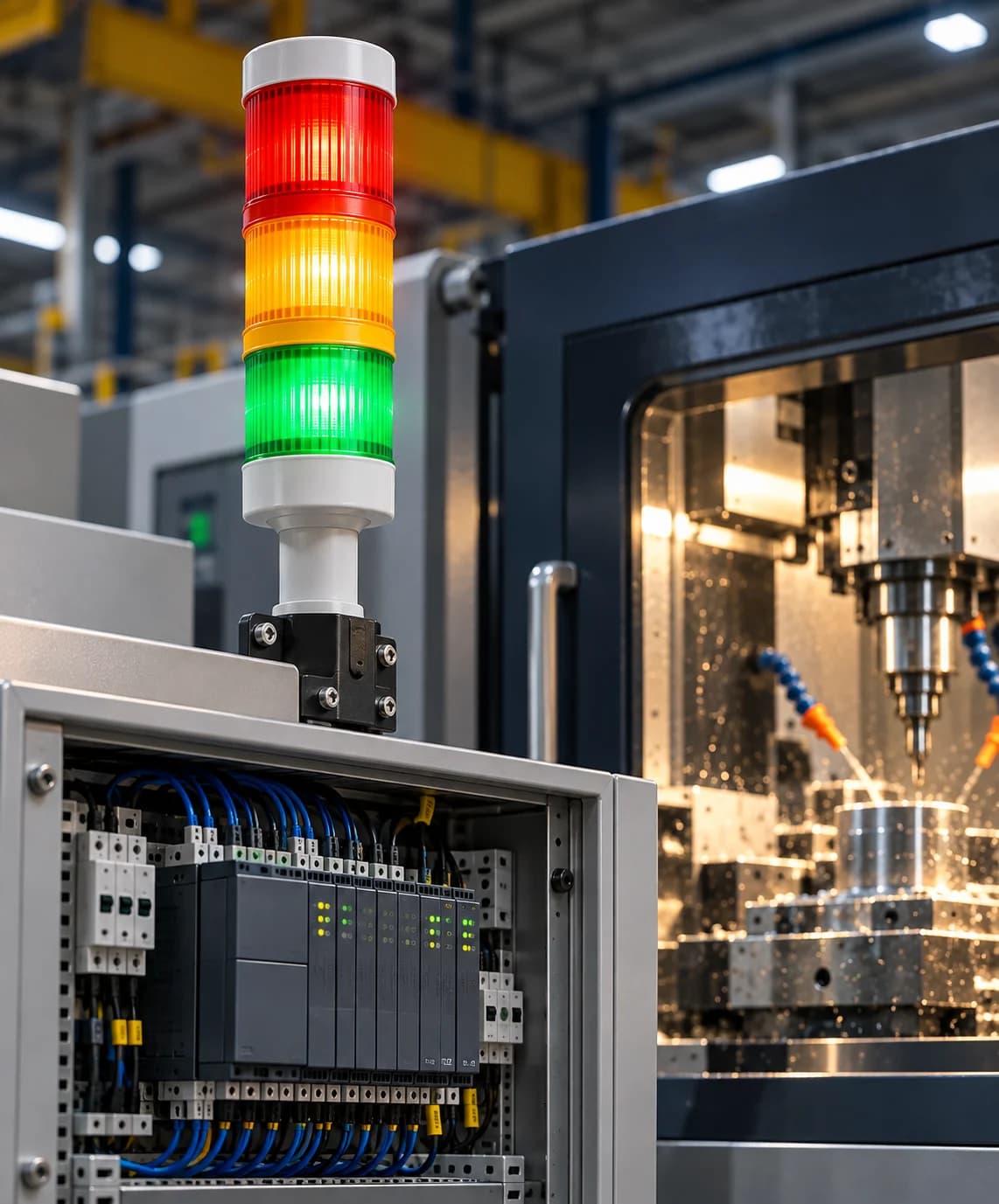
Instantly display machine faults, production interruptions, and maintenance requests.
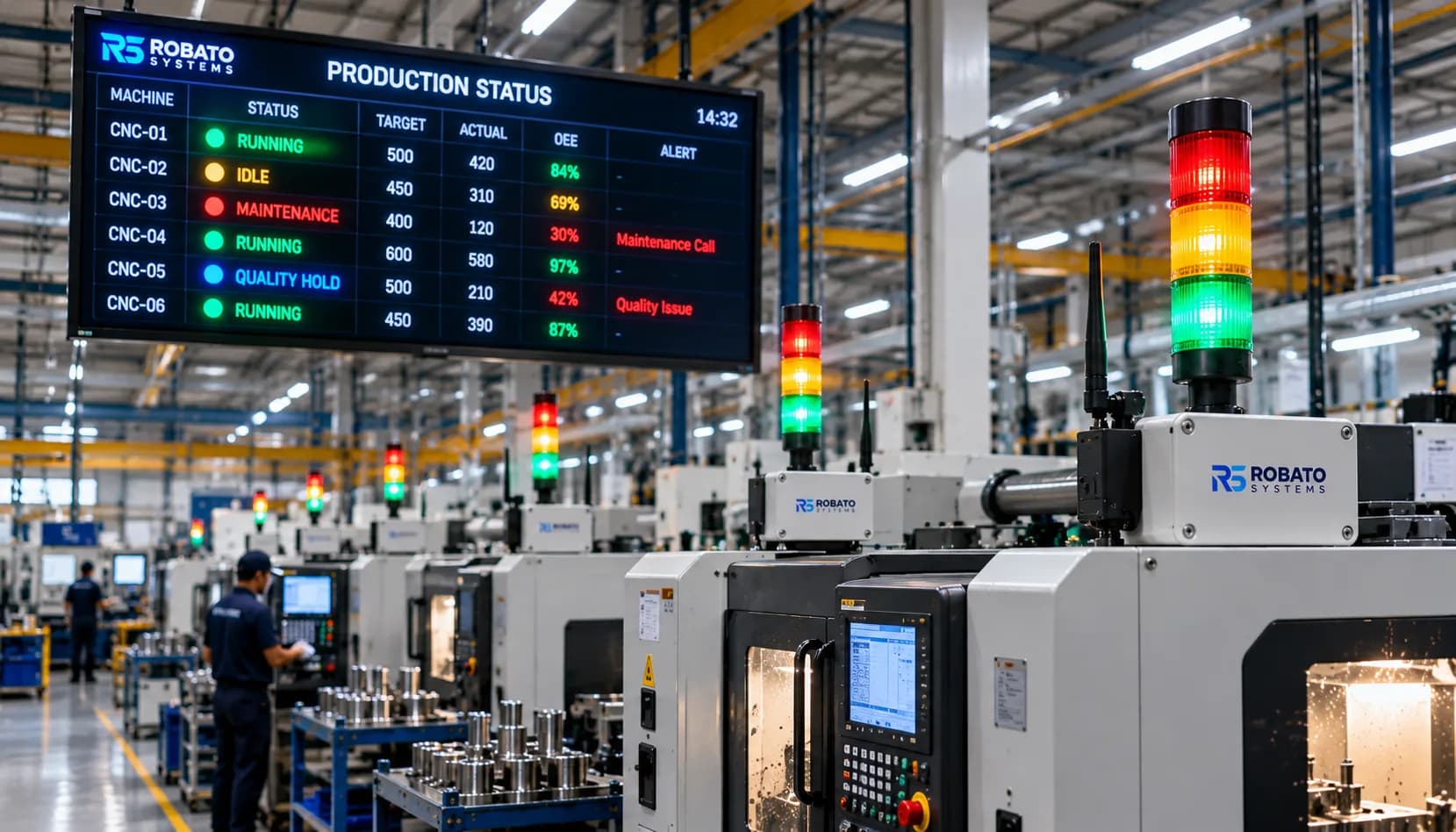
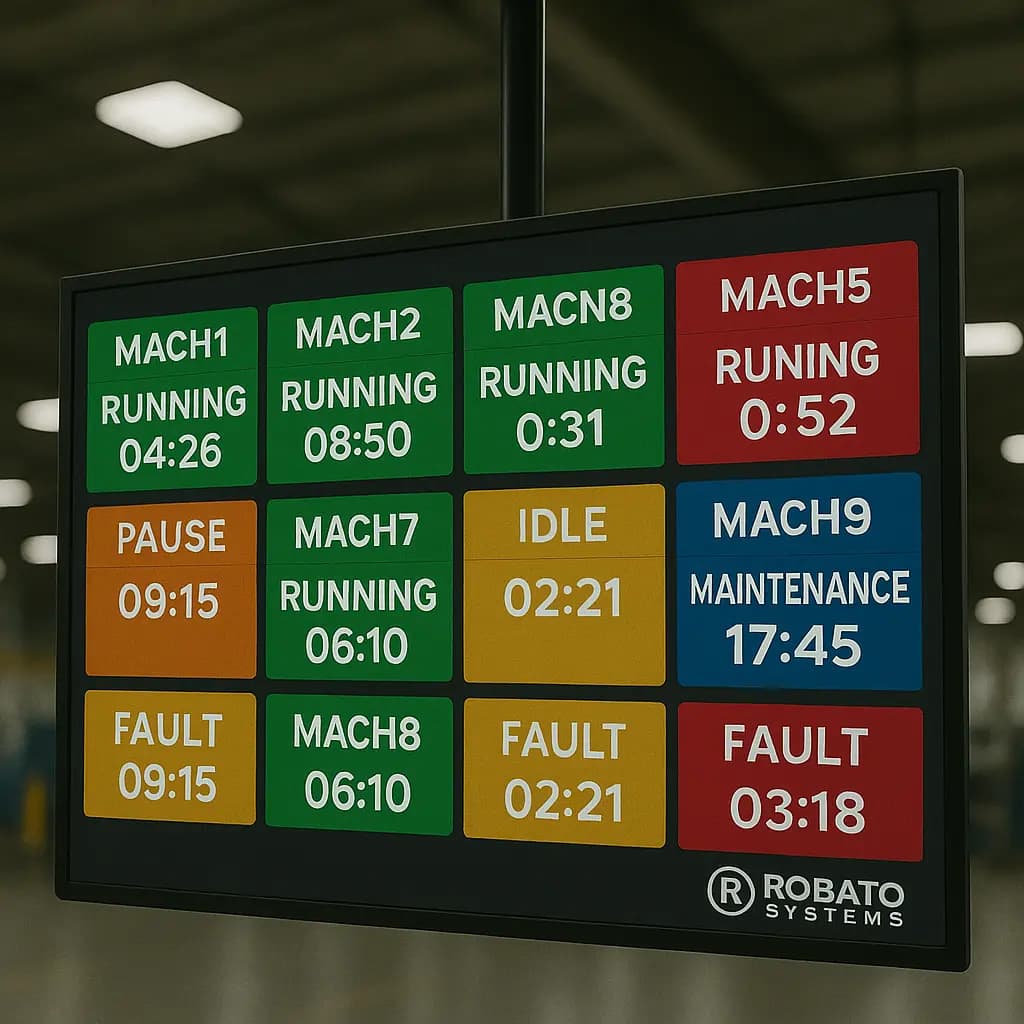
Machine Status Monitoring
Monitor equipment conditions including:
- Running
- Idle
- Breakdown
- Setup
- Maintenance
Target vs Actual Production
Display planned production alongside actual output to identify production gaps quickly.
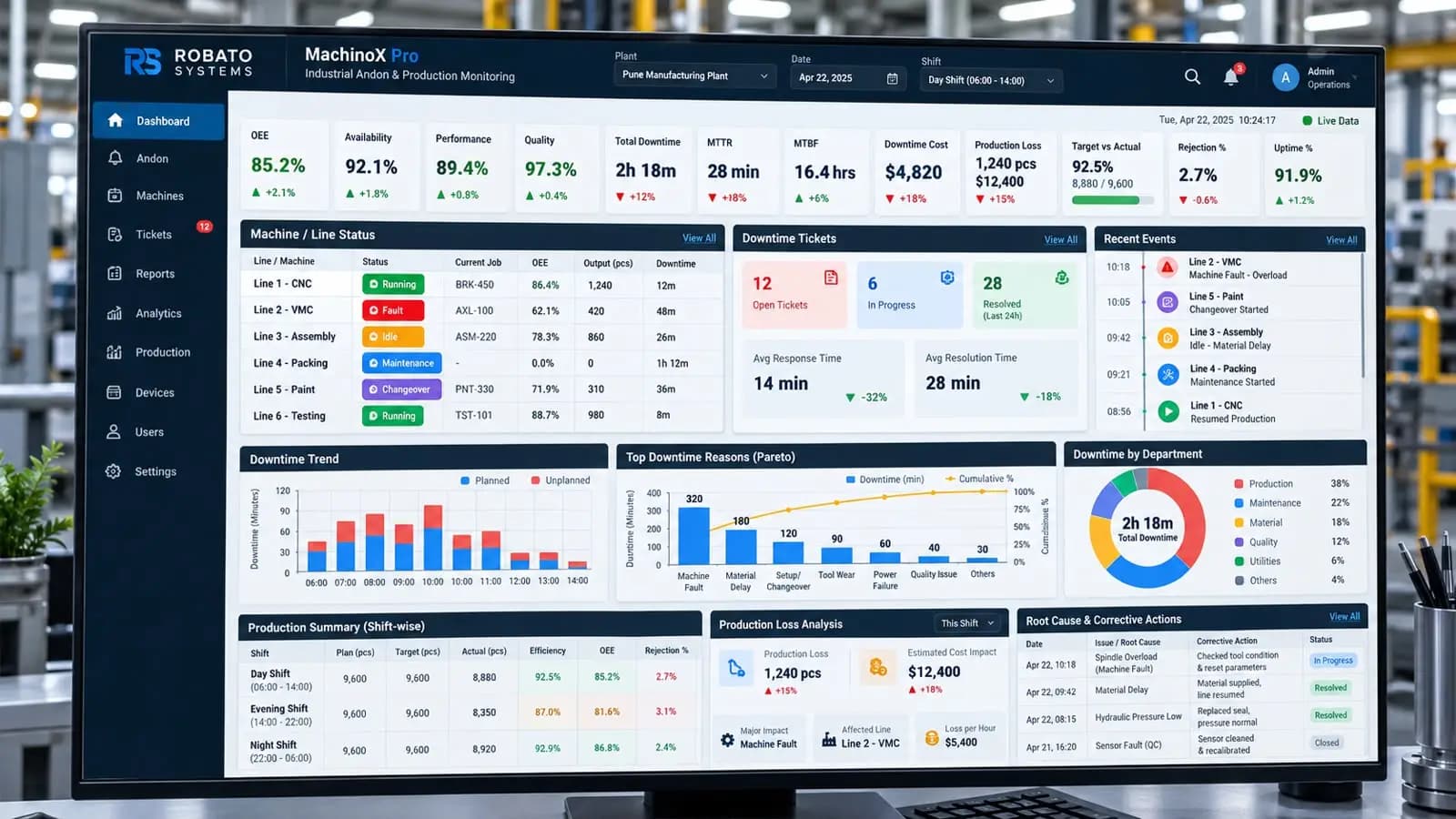
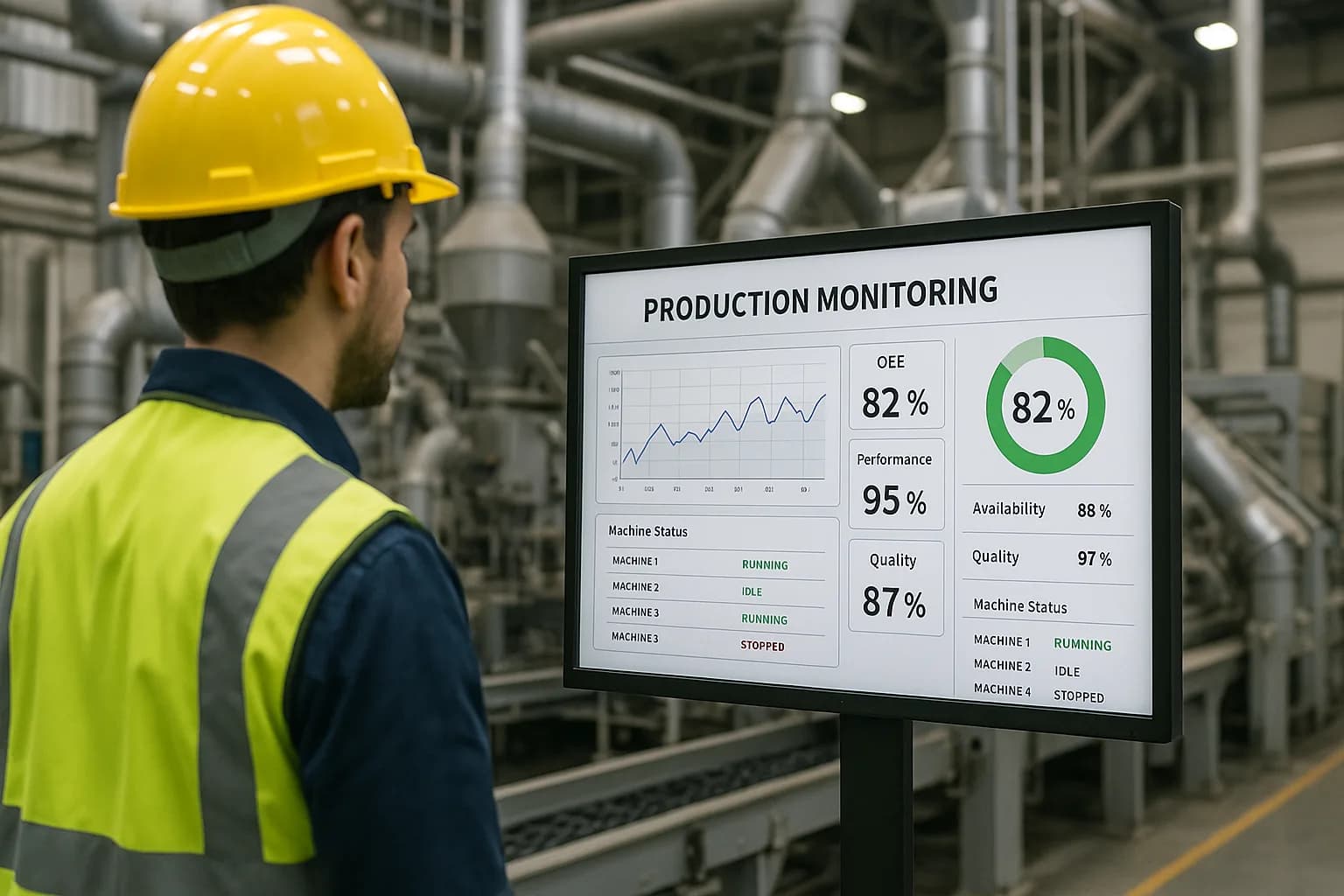
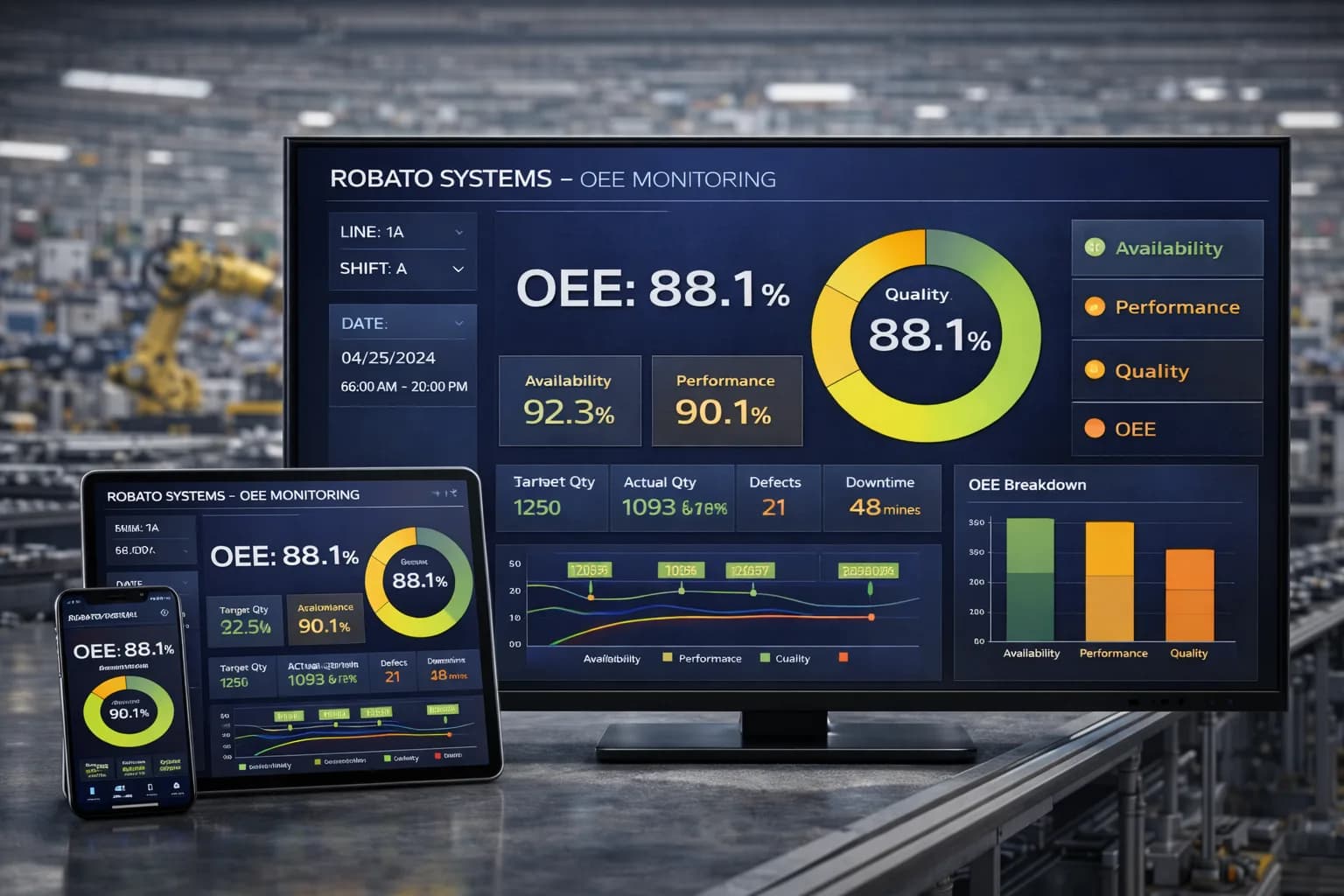
OEE Dashboard
Monitor:
- Availability
- Performance
- Quality
- Overall Equipment Effectiveness
Downtime Monitoring
Display:
- Downtime duration
- Machine affected
- Root cause
- Maintenance status
Escalation Timer
Show how long an issue has remained unresolved and trigger automatic escalations when required.
Multi-Line Monitoring
Monitor multiple production lines simultaneously from one centralized display.
Shift Performance
Track production performance separately for each manufacturing shift.
Safety Notifications
Display:
- Emergency alerts
- Safety reminders
- Factory announcements
- Compliance notifications
Benefits of an Andon Board
Improved Production Visibility
Everyone on the shop floor can view real-time production information and machine status.
Faster Problem Resolution
Maintenance teams receive immediate alerts, reducing response times.
Reduced Downtime
Quick issue identification minimizes equipment downtime and production losses.
Better Communication
Visual alerts eliminate delays associated with verbal communication.
Increased Productivity
Operators can continue focusing on production while support teams respond to alerts.
Improved Quality Control
Quality defects become visible immediately, preventing defective products from progressing through production.
Enhanced Accountability
Every alert is tracked, making response performance measurable.
Support for Lean Manufacturing
Visual management helps eliminate waste and improve process efficiency.
Types of Andon Boards
Digital Andon Board
Displays live production information and machine alerts using LED or LCD technology.
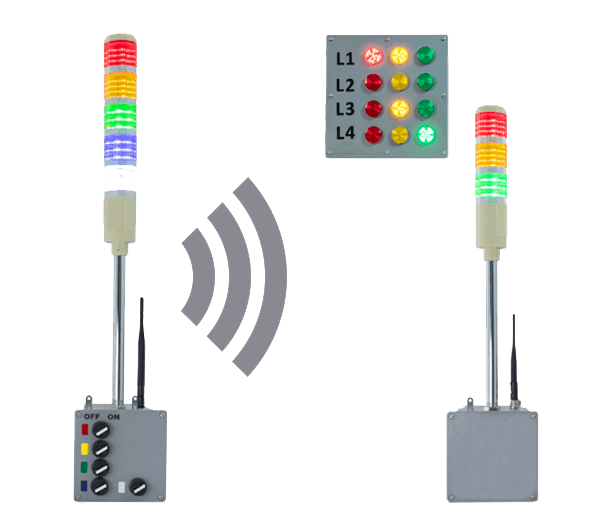
Wireless Andon Board
Communicates production alerts through wireless networks, simplifying installation.
Production Line Andon Board
Dedicated display for monitoring individual production lines.
Centralized Andon Board
Displays information from multiple production lines across the facility.
Cloud-Based Andon Board
Enables remote monitoring through cloud-connected dashboards.
Applications Across Manufacturing Industries
Andon Boards are widely used in:
Automotive Manufacturing
Monitor assembly line performance and equipment faults.
Electronics Manufacturing
Track PCB assembly, testing, and production interruptions.
Food & Beverage Industry
Display filling, bottling, and packaging equipment status.
Pharmaceutical Manufacturing
Monitor batch production, packaging, and quality alerts.
Textile Manufacturing
Track weaving, spinning, and knitting operations.
Plastic & Injection Molding
Monitor molding machines and production counts.
Packaging Industry
Display packaging line performance and downtime alerts.
Andon Boards and Industry 4.0
Modern Andon Boards integrate seamlessly with:
- Industrial IoT (IIoT)
- PLCs
- MES
- ERP
- SCADA
- Production Monitoring Systems
- Cloud dashboards
- Mobile applications
These integrations create connected manufacturing environments where production issues are identified and resolved faster.
Best Practices for Implementation
Automate Data Collection
Connect directly with machines and PLCs to eliminate manual reporting.
Use Standard Alert Categories
Classify alerts into:
- Maintenance
- Production
- Quality
- Material
- Safety
Install Boards in Visible Locations
Place displays where operators and supervisors can easily monitor production.
Configure Escalation Rules
Ensure unresolved alerts are automatically escalated to the appropriate personnel.
Train Employees
Operators should understand alert categories and response procedures.
Review Historical Reports
Analyze recurring issues to support continuous improvement.
Common Challenges
Legacy Machine Integration
Older equipment may require retrofit sensors or Industrial IoT gateways.
Alert Overload
Prioritize alerts to prevent unnecessary notifications.
Network Reliability
Reliable industrial networking ensures uninterrupted communication.
Employee Adoption
Proper training encourages consistent use of the system.
Future Trends
Andon Boards continue evolving with advanced manufacturing technologies.
Artificial Intelligence
AI-powered analytics will prioritize alerts based on production impact.
Predictive Maintenance
Machine learning will predict equipment failures before they occur.
Digital Twins
Virtual factory models will synchronize with live production data.
Edge Computing
Production information will be processed locally for faster response times.
Mobile Integration
Operators and supervisors will receive synchronized alerts on smartphones and tablets.
These innovations will make Andon Boards even more effective in modern smart factories.
Why Choose Robato Systems for Andon Boards?
Robato Systems provides intelligent Andon Board solutions that deliver real-time production visibility, faster communication, and improved manufacturing performance. Our systems integrate with PLCs, Industrial IoT devices, MES, ERP, SCADA, and production monitoring software to display machine status, production alerts, downtime information, and operational KPIs across your factory.
Our customizable Andon Boards support wireless communication, automated escalation, mobile notifications, production dashboards, and comprehensive reporting, helping manufacturers reduce downtime, improve productivity, and accelerate Industry 4.0 adoption.
Whether you operate a single production line or multiple manufacturing facilities, Robato Systems offers scalable Andon solutions designed to meet your operational goals.
Conclusion
An Andon Board is much more than a production display—it is a powerful visual communication system that helps manufacturers identify issues instantly, improve collaboration, reduce downtime, and maintain efficient production operations.
By providing real-time visibility into machine status, production performance, maintenance activities, and operational alerts, Andon Boards enable manufacturers to make faster decisions and respond proactively to production challenges.
As Industry 4.0 continues to transform manufacturing, investing in a modern Andon Board is an important step toward creating a connected, efficient, and data-driven factory.
Frequently Asked Questions (FAQs)
What is an Andon Board?
An Andon Board is a digital display that shows real-time production alerts, machine status, maintenance requests, and manufacturing KPIs.
What are the benefits of an Andon Board?
It improves communication, reduces downtime, enhances production visibility, supports faster problem resolution, and increases productivity.
What information can an Andon Board display?
Machine status, production alerts, downtime, OEE, target vs actual production, maintenance requests, shift performance, and safety notifications.
Can an Andon Board integrate with PLCs and ERP systems?
Yes. Modern Andon Boards integrate with PLCs, MES, ERP, SCADA, Industrial IoT devices, and cloud-based monitoring platforms.
Which industries use Andon Boards?
Automotive, electronics, pharmaceuticals, food processing, textiles, plastics, packaging, logistics, and many other manufacturing industries.