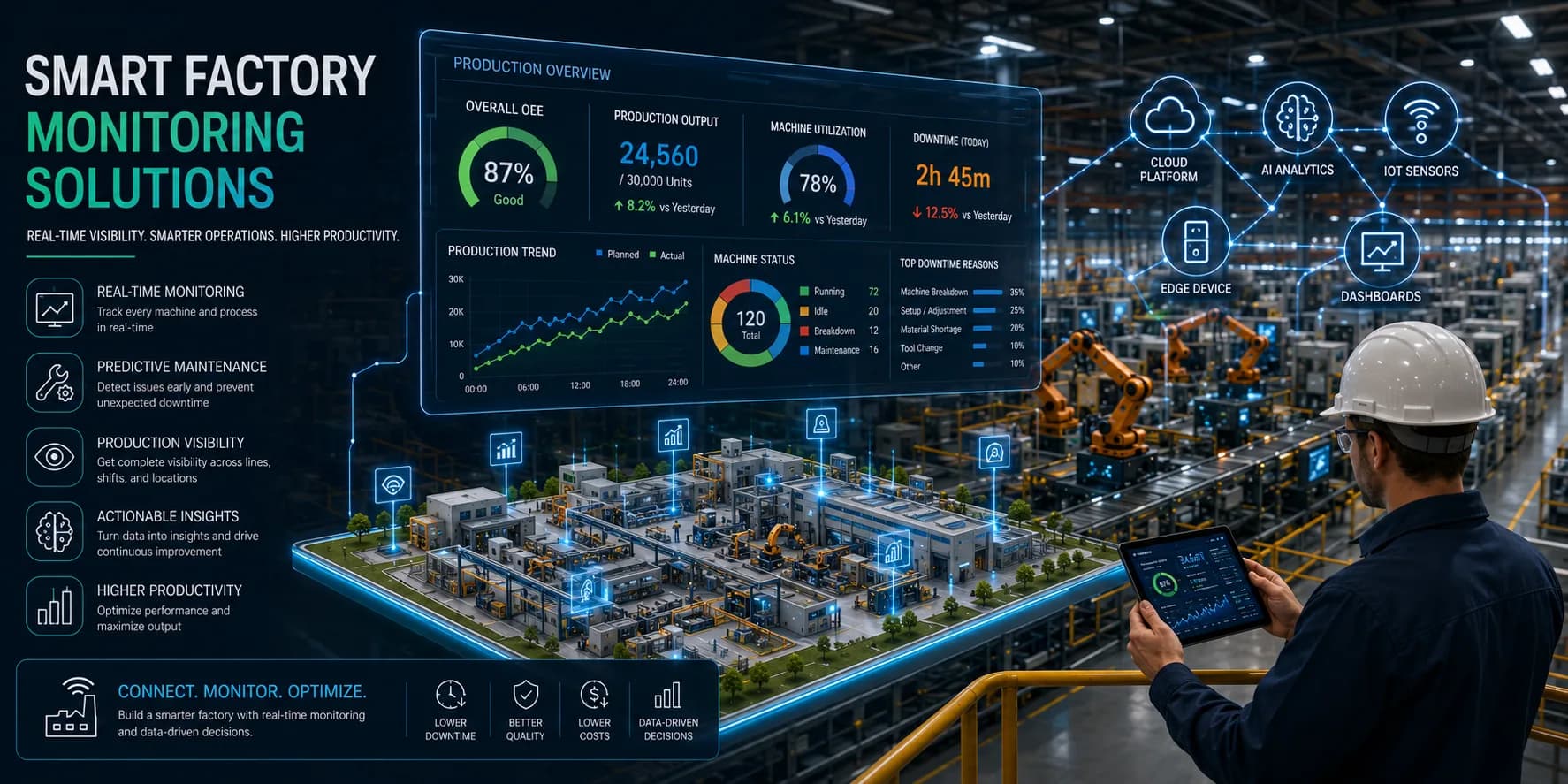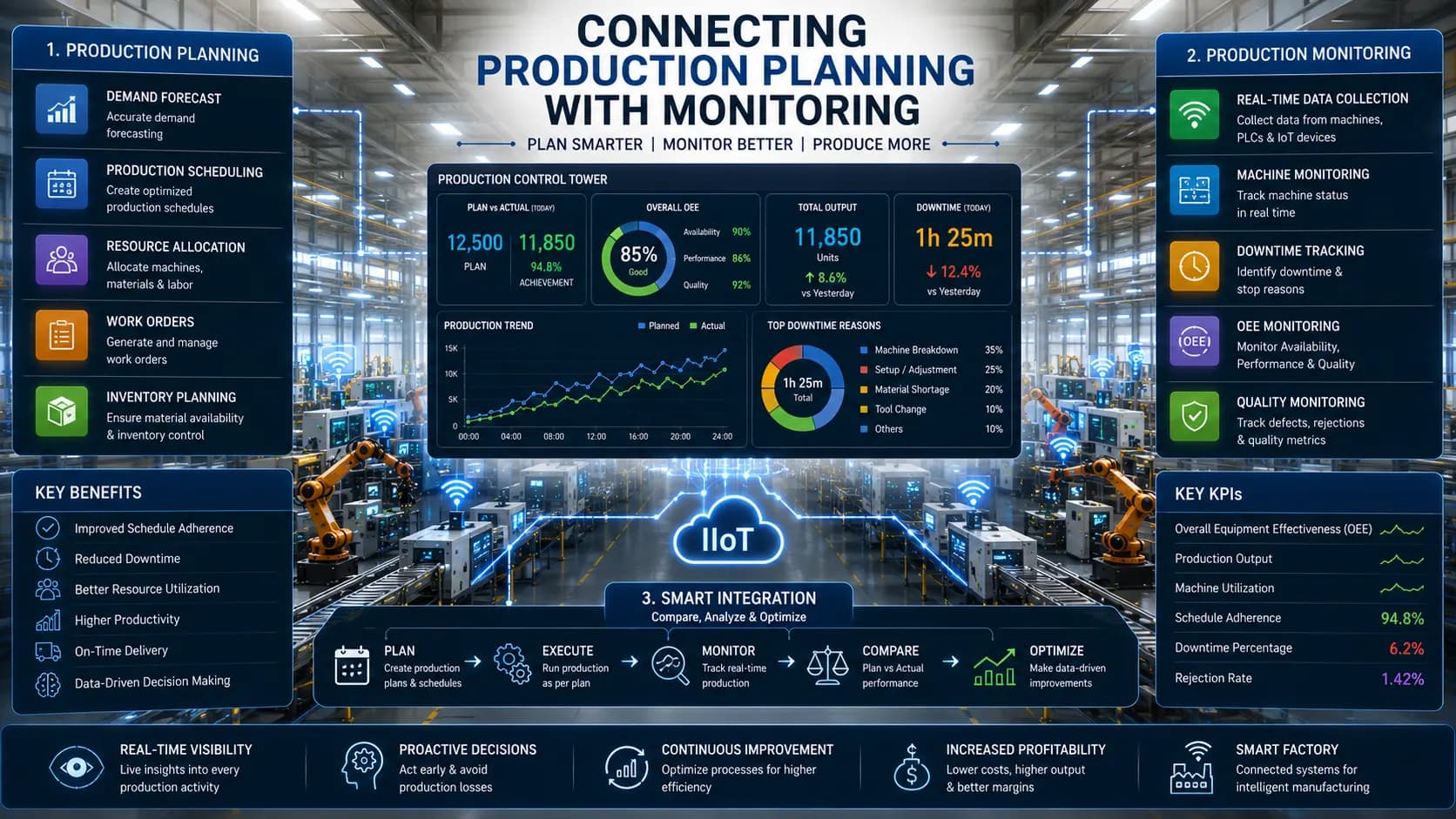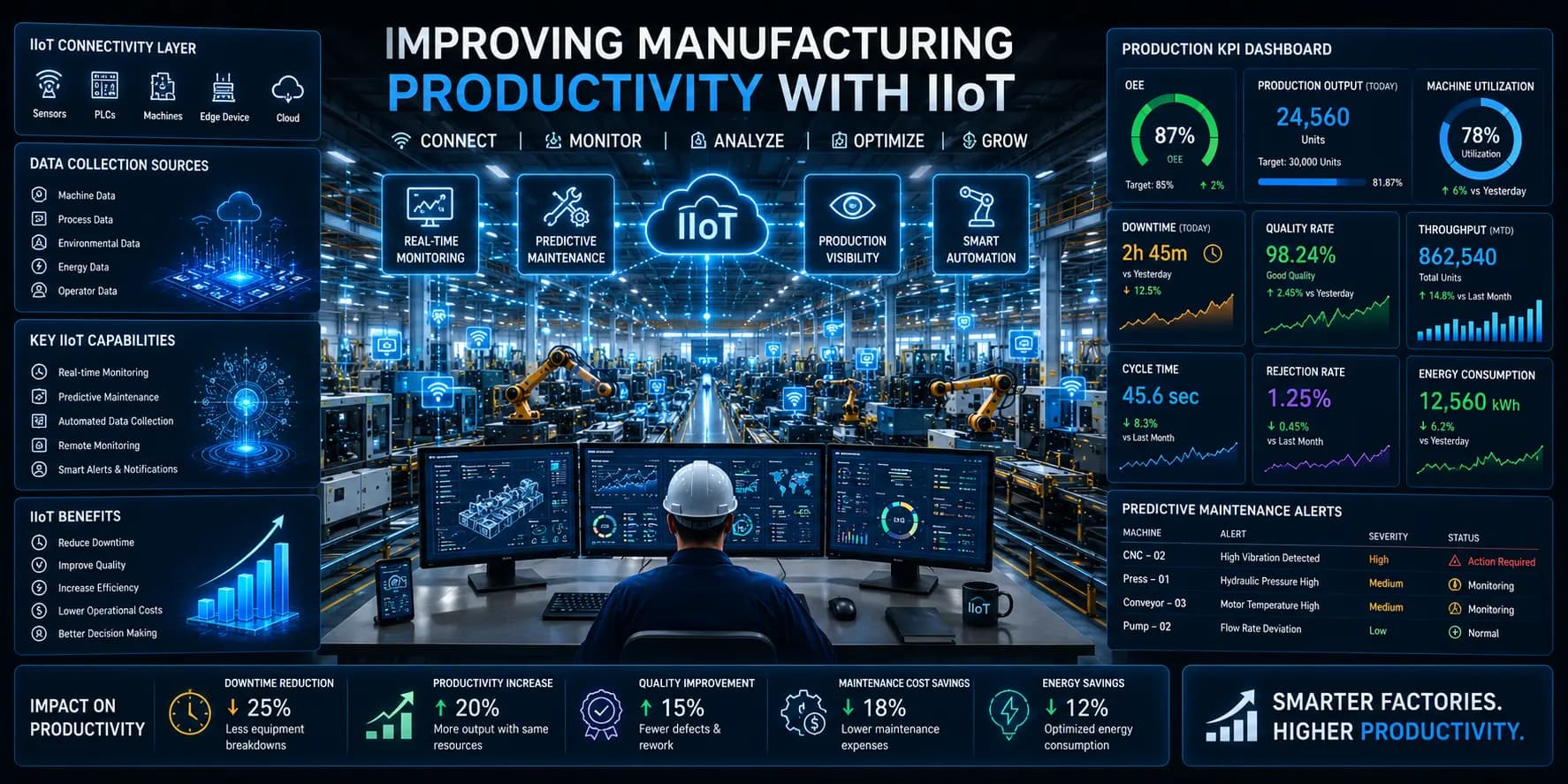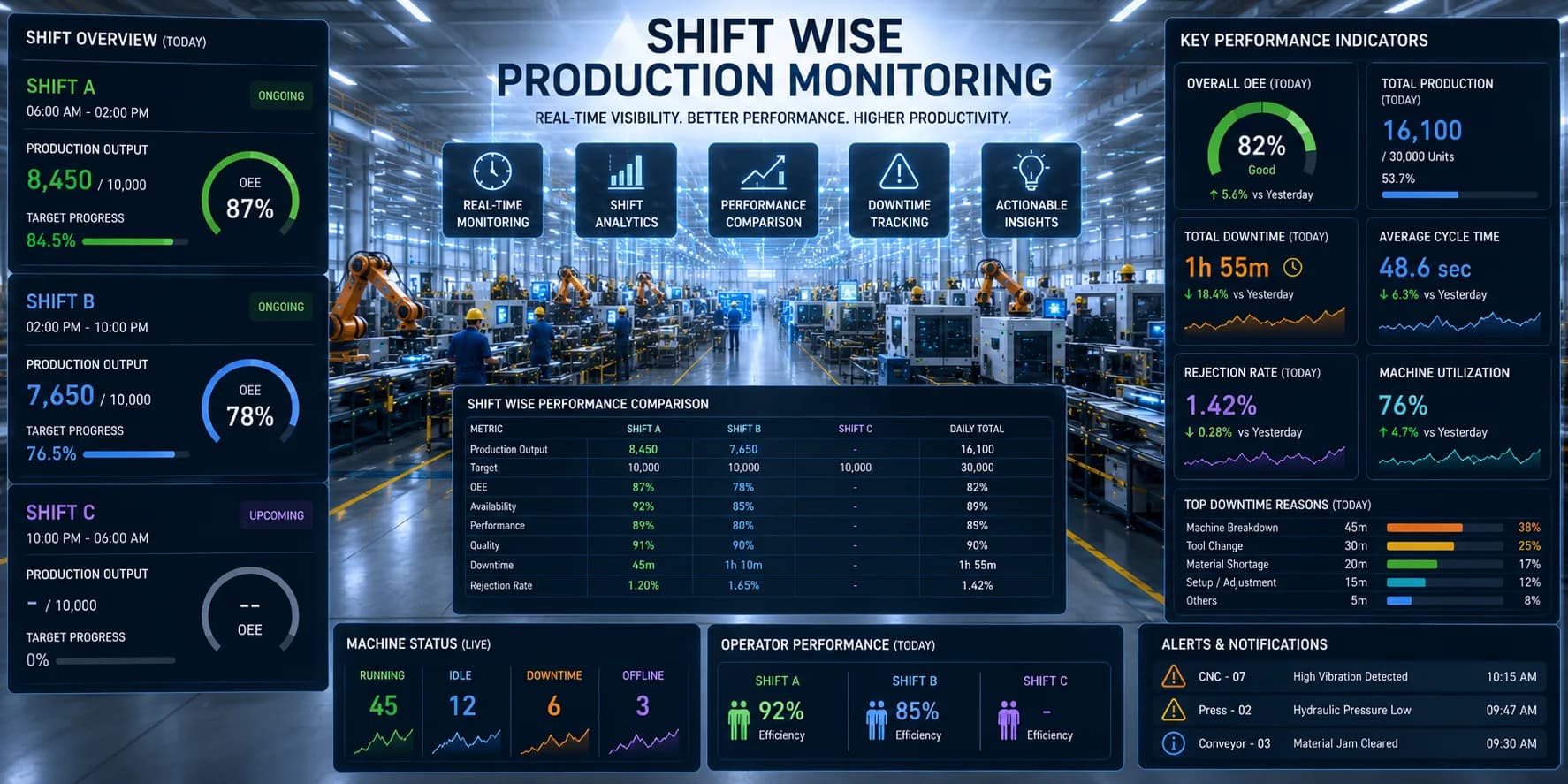
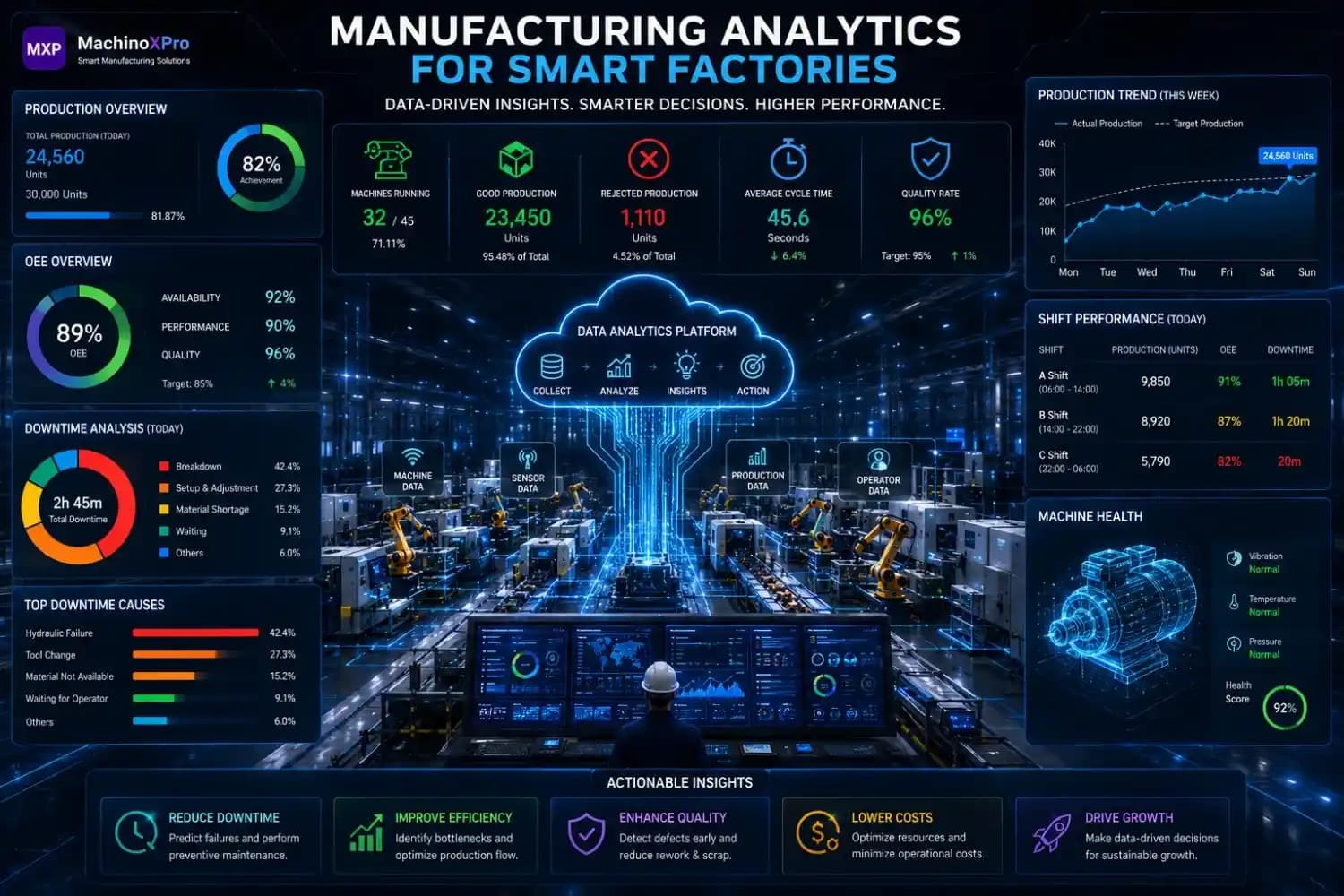
Manufacturing Analytics for Smart Factories
The rise of Industry 4.0 has transformed traditional manufacturing into a connected and data-driven ecosystem. Modern factories generate enormous amounts of data from machines, sensors, PLCs, and production systems. However, collecting data alone is not enough. Manufacturers need the ability to analyze that information and convert it into actionable insights. This is where Manufacturing Analytics plays a crucial role.
Manufacturing analytics enables organizations to monitor production performance, identify inefficiencies, predict failures, and optimize operations. By leveraging real-time data and advanced analytics, smart factories can increase productivity, improve quality, and gain a competitive advantage.
This guide explores how manufacturing analytics supports smart factories and why it has become a critical component of digital transformation.
What is Manufacturing Analytics?
Manufacturing Analytics refers to the process of collecting, analyzing, and interpreting production data to improve manufacturing performance. It combines information from machines, Industrial IoT devices, sensors, ERP systems, and production software to generate valuable insights.
Manufacturing analytics helps organizations:
- Monitor production performance.
- Reduce machine downtime.
- Improve product quality.
- Optimize resource utilization.
- Increase Overall Equipment Effectiveness (OEE).
- Support predictive maintenance.
- Enhance decision-making.
Instead of relying on assumptions, manufacturers can use data-driven insights to continuously improve operations.
Why Manufacturing Analytics is Important
Manufacturing facilities operate in highly competitive environments where efficiency and quality are essential. Without proper analytics, valuable production information often remains underutilized.
Manufacturing analytics helps businesses:
- Gain complete production visibility.
- Detect process inefficiencies.
- Improve machine utilization.
- Reduce operational costs.
- Increase productivity.
- Enhance quality control.
- Support continuous improvement initiatives.
As smart factories continue to evolve, analytics has become one of the most valuable tools for achieving operational excellence.
Types of Manufacturing Analytics
Descriptive Analytics
Descriptive analytics helps manufacturers understand what has happened in the production process.
Examples include:
- Production reports
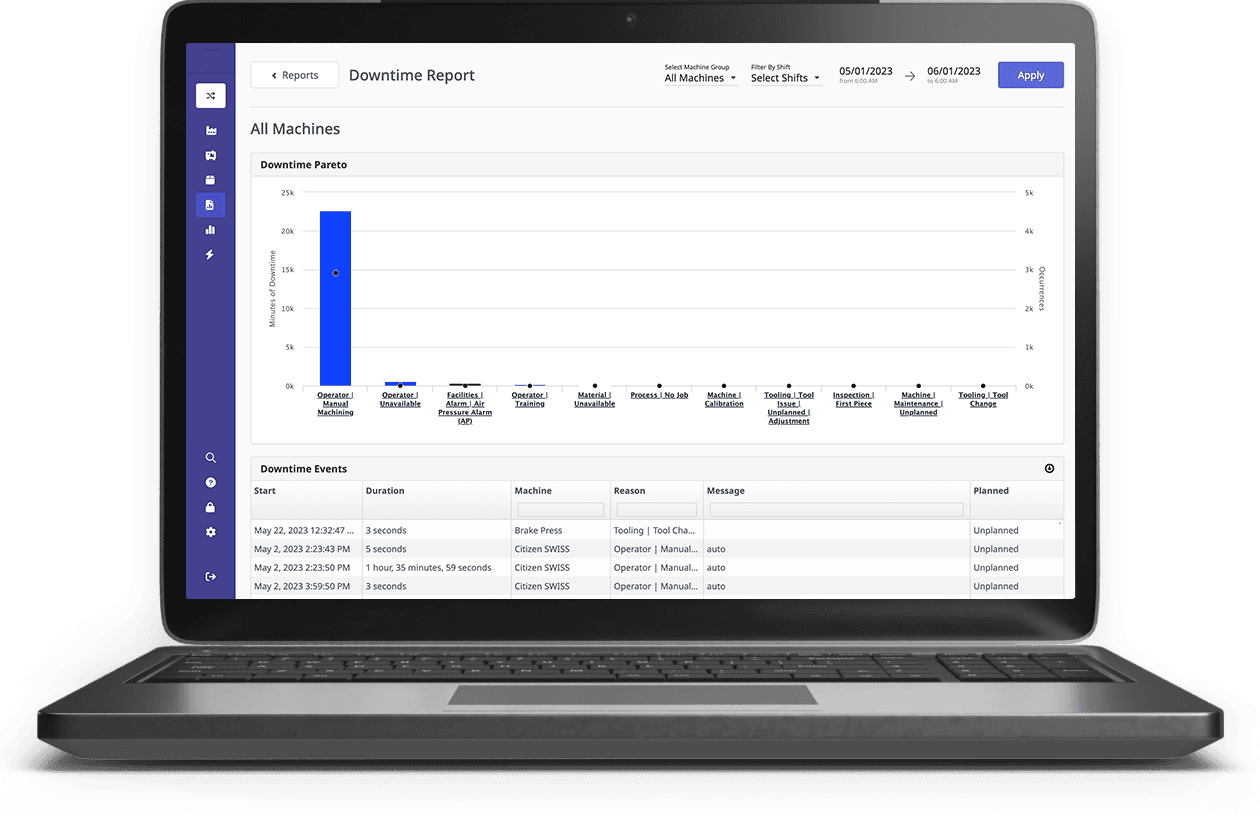
- Downtime reports
- OEE analysis
- Machine utilization reports
This type of analytics provides historical insights and performance summaries.
Diagnostic Analytics
Diagnostic analytics focuses on identifying why a problem occurred.
It helps manufacturers analyze:
- Downtime causes
- Production losses
- Equipment failures
- Quality issues
Root cause analysis enables organizations to prevent recurring problems.
Predictive Analytics
Predictive analytics uses historical and real-time data to forecast future events.
Applications include:
- Predictive maintenance
- Failure prediction
- Demand forecasting
- Production planning
By predicting issues before they occur, manufacturers can minimize downtime and improve reliability.
Prescriptive Analytics
Prescriptive analytics recommends actions based on data analysis.
Examples include:
- Production optimization strategies
- Maintenance schedules
- Resource allocation improvements
- Process adjustments
This enables manufacturers to make smarter and faster decisions.
Key Components of Manufacturing Analytics
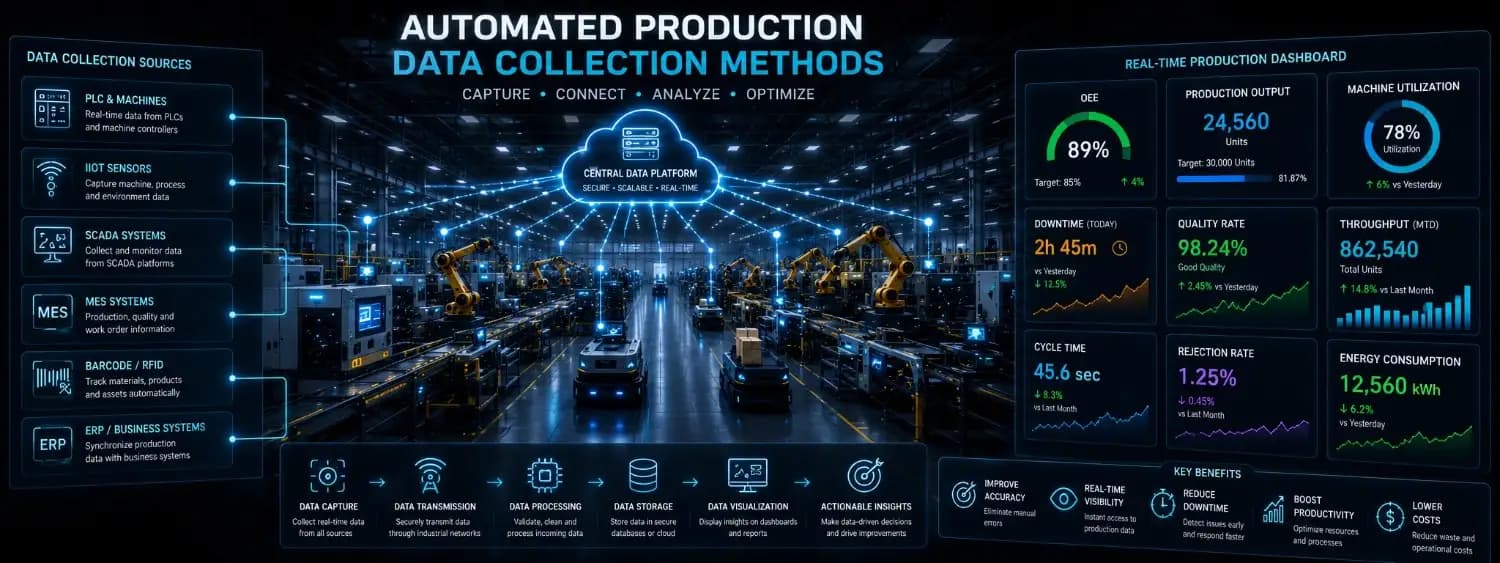
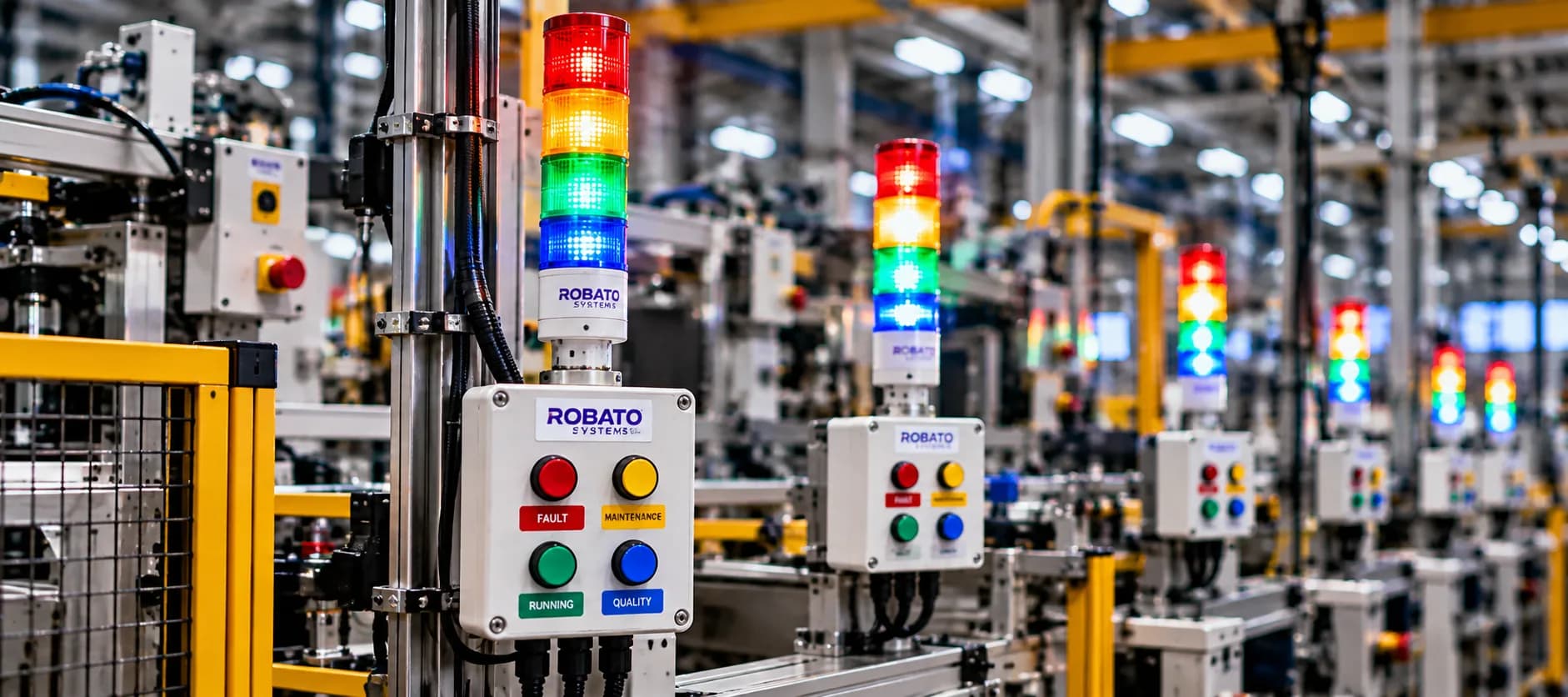
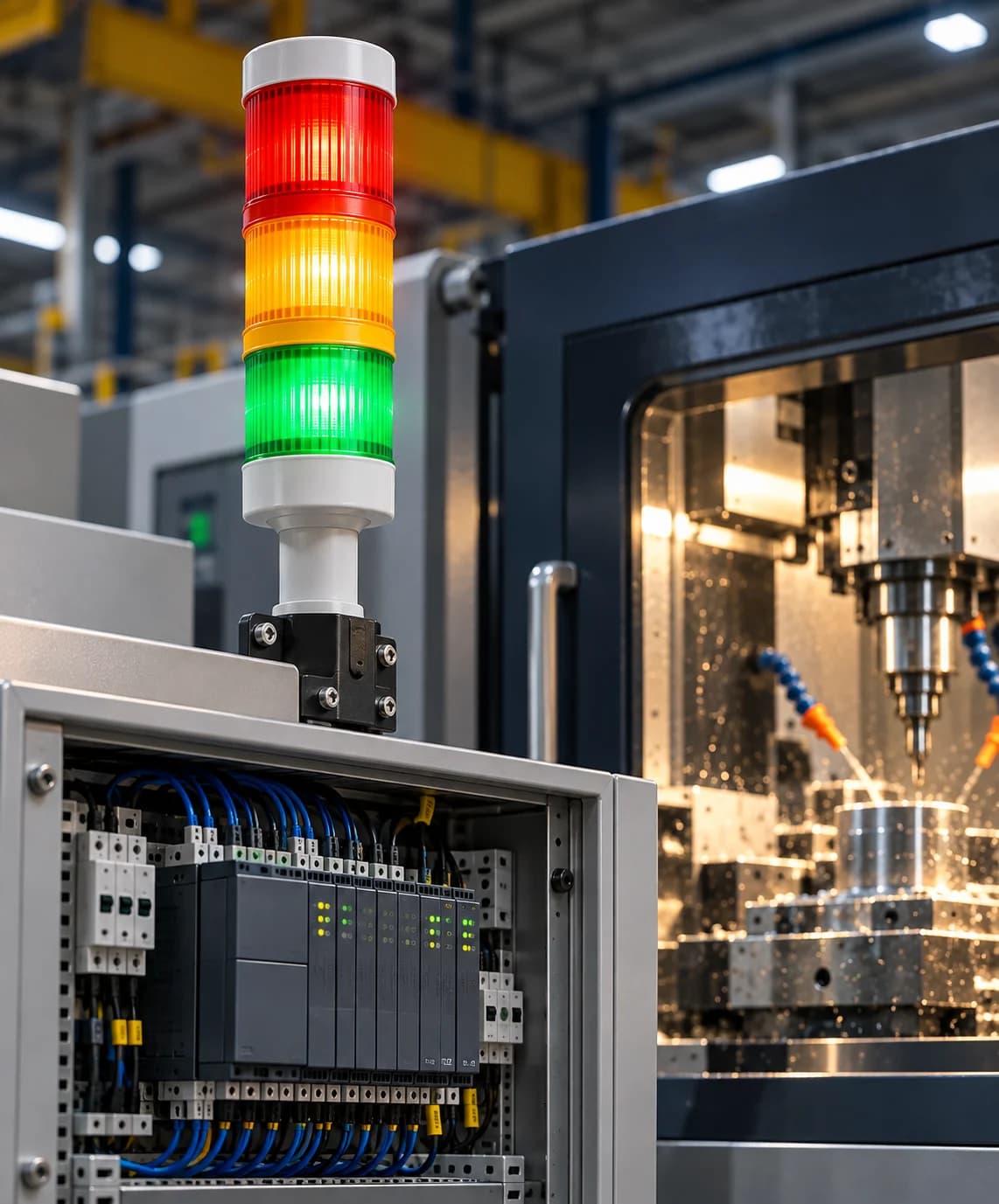
Real-Time Data Collection
Manufacturing analytics relies on accurate and continuous data from:
- Machines
- PLCs
- Sensors
- Industrial IoT devices
- Production systems
Real-time information provides immediate insights into factory performance.
Data Integration
Analytics platforms combine data from multiple systems, including:
- ERP software
- MES systems
- SCADA systems
- Quality management systems
- Maintenance management platforms
Integrated data provides a complete view of manufacturing operations.
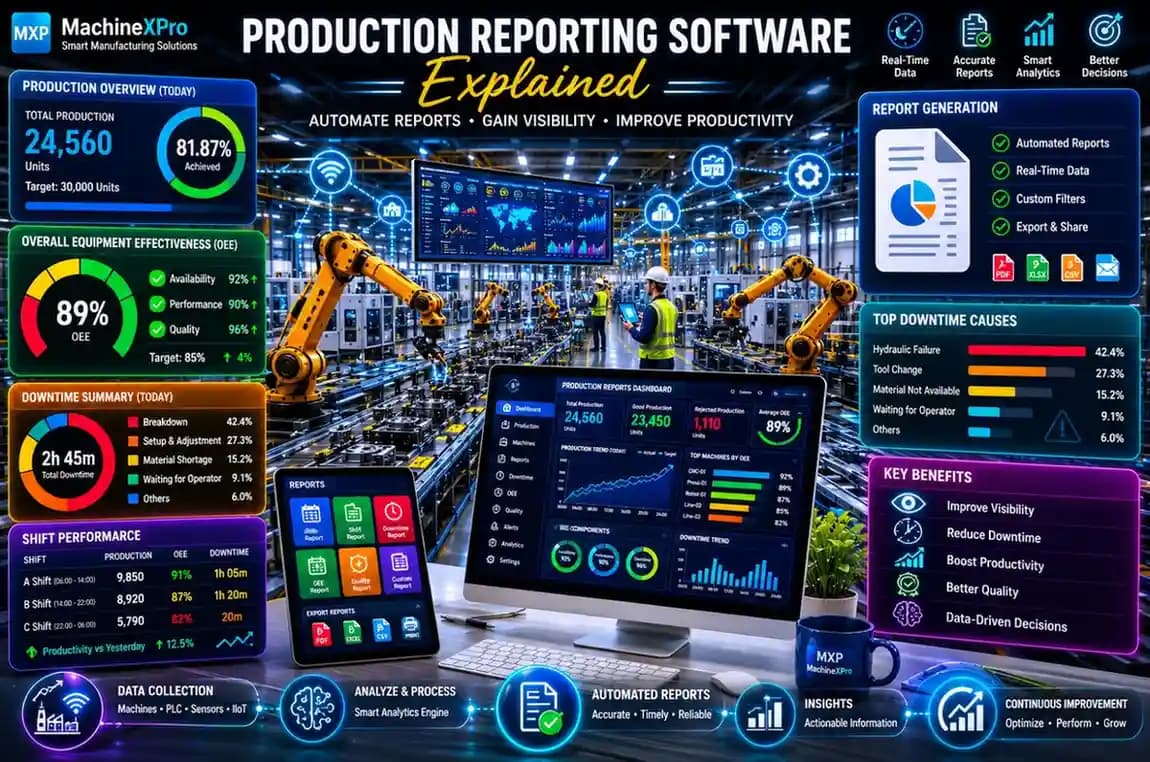
Data Visualization
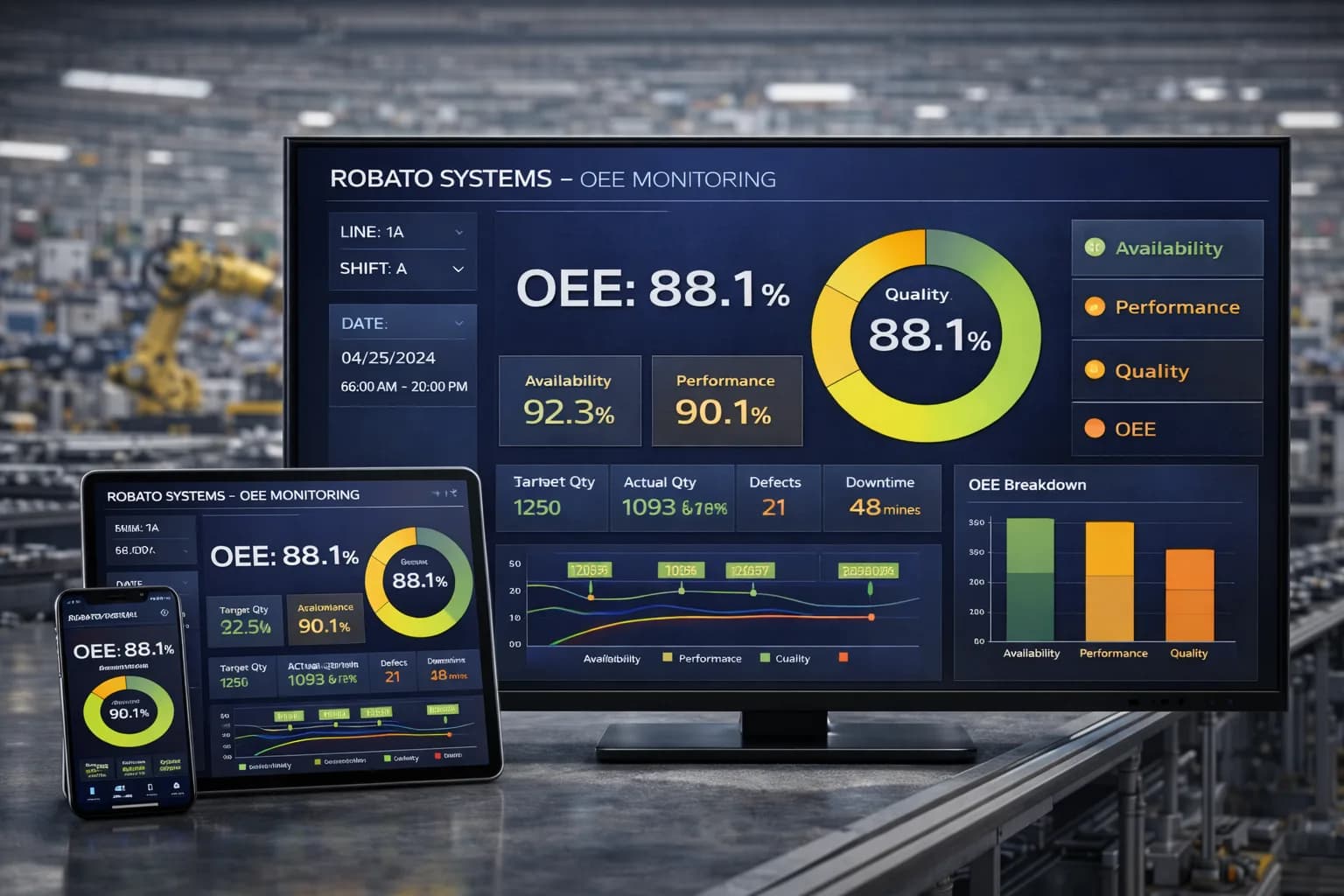
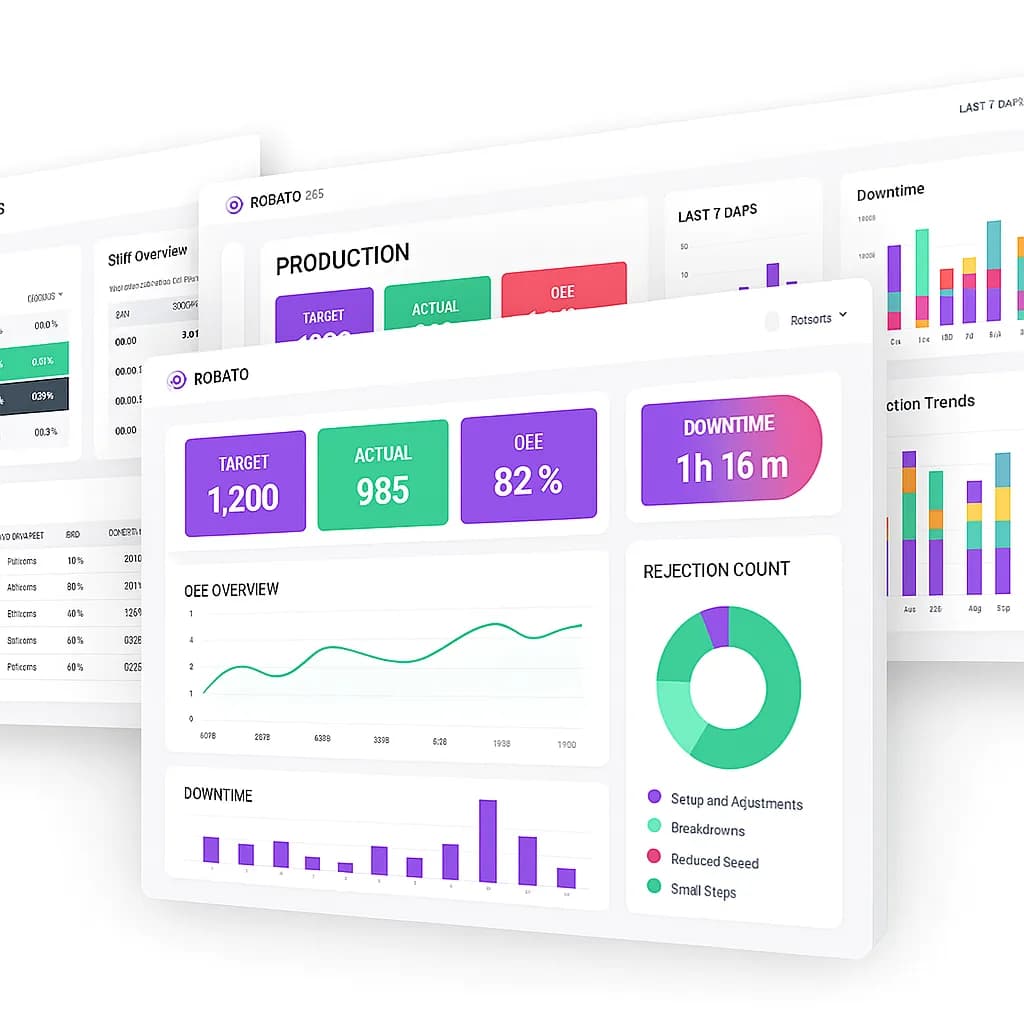
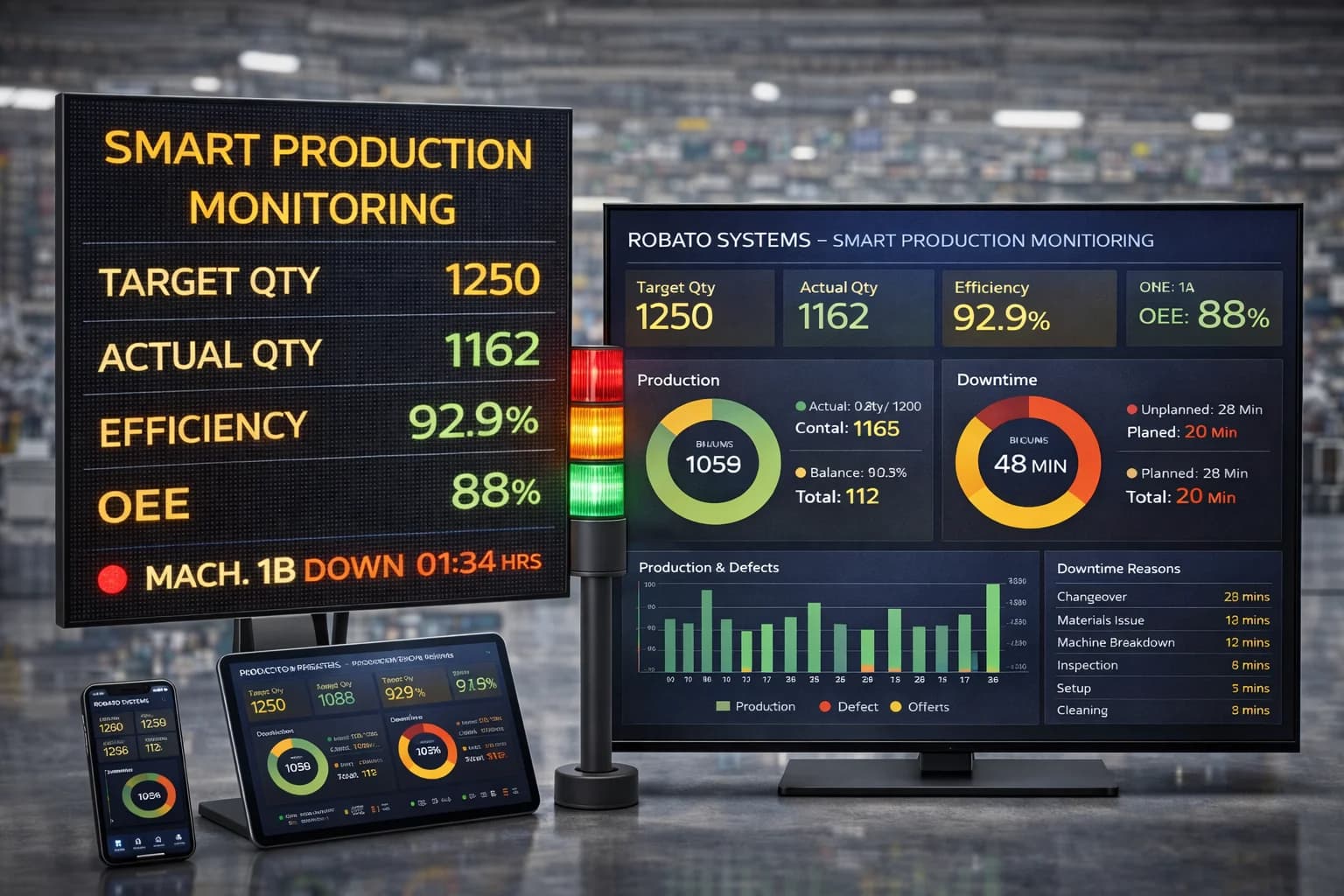
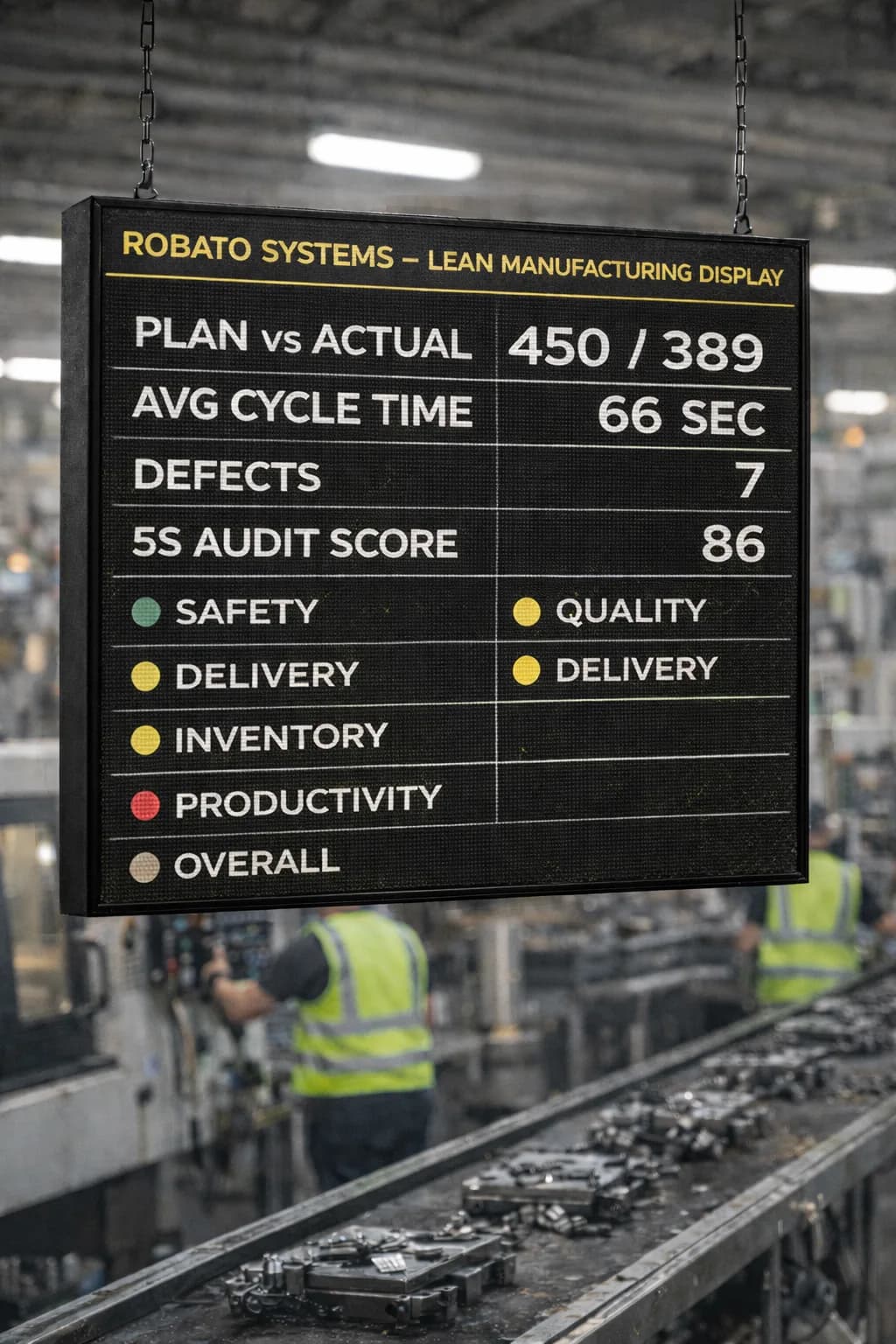
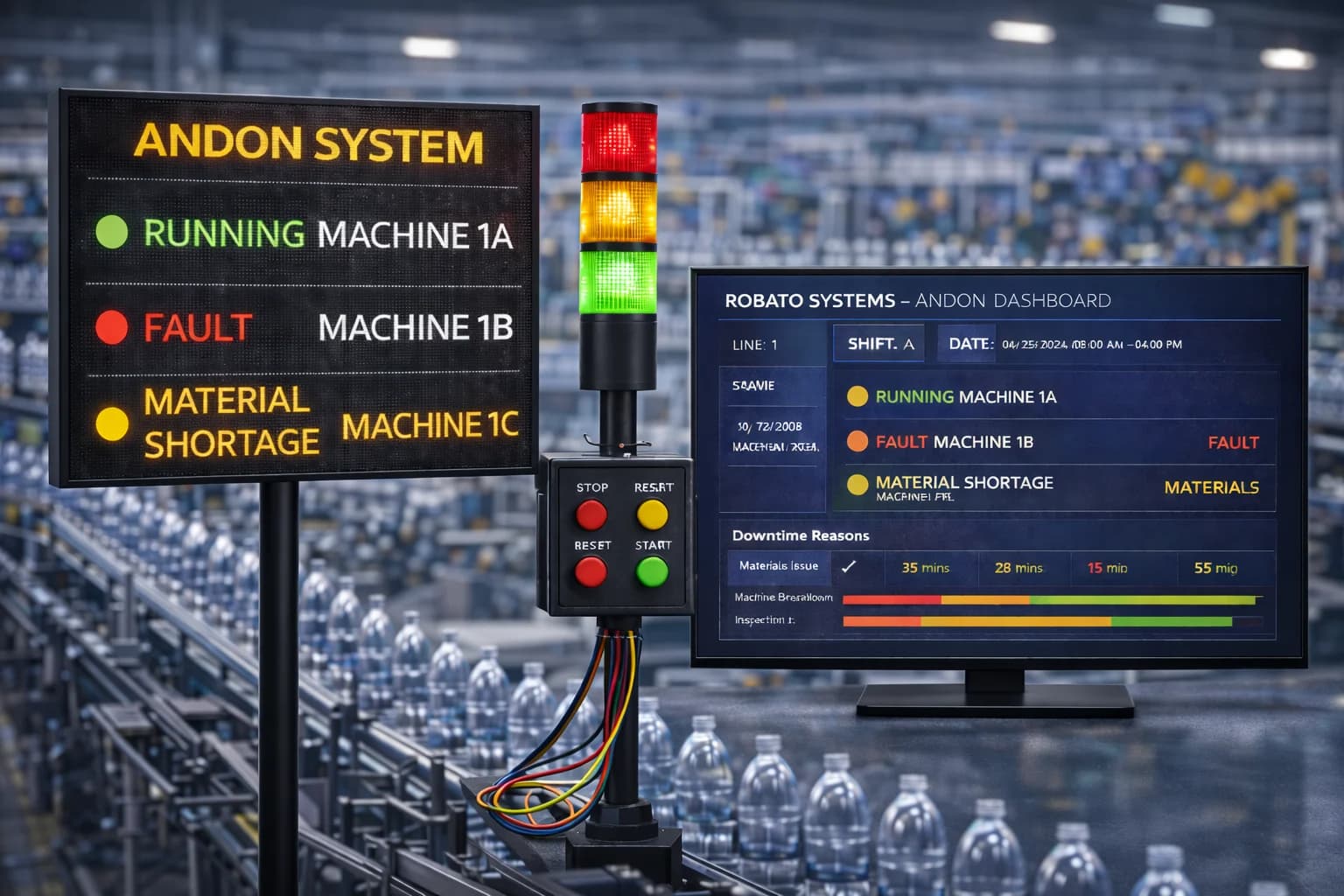
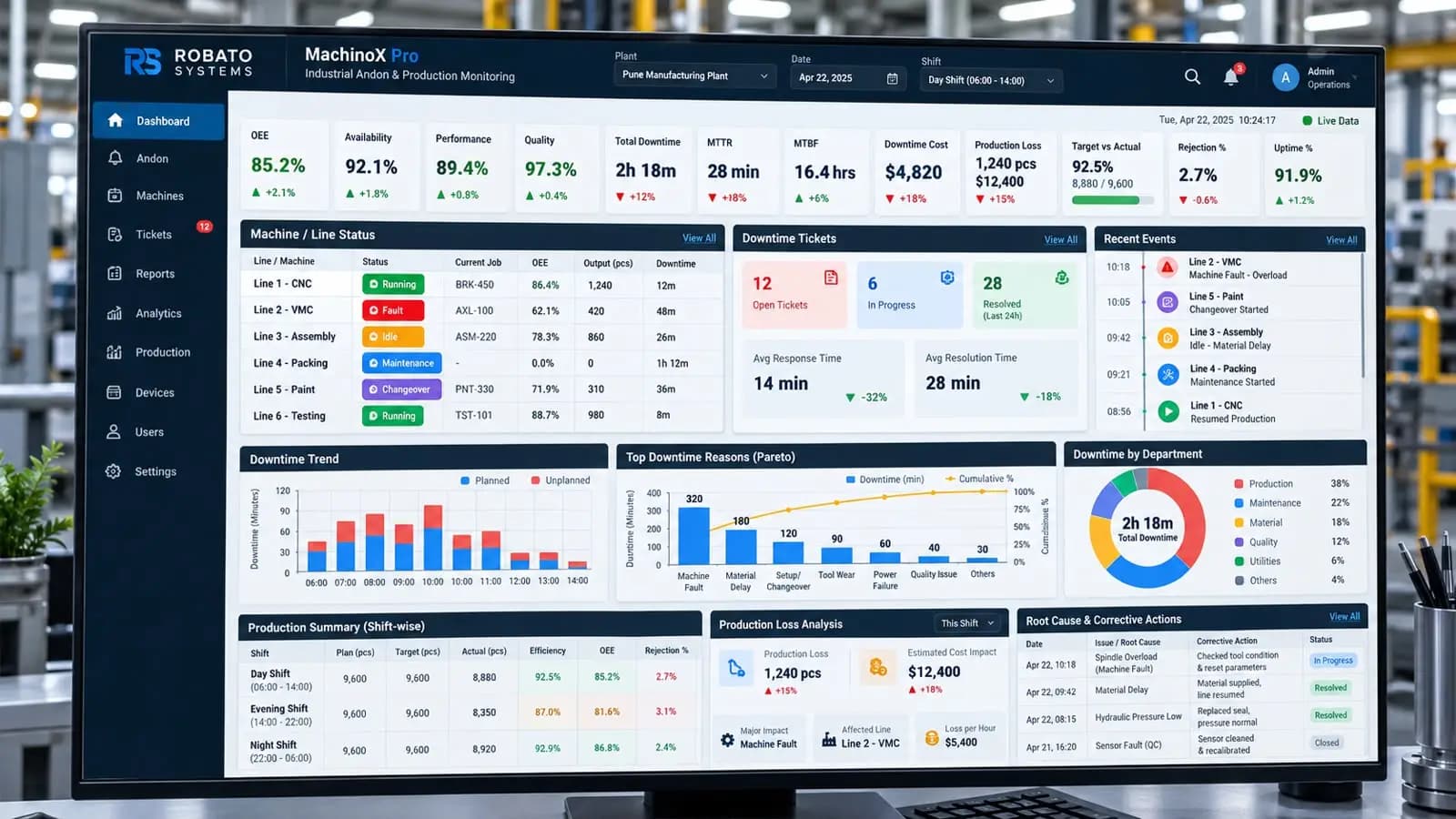
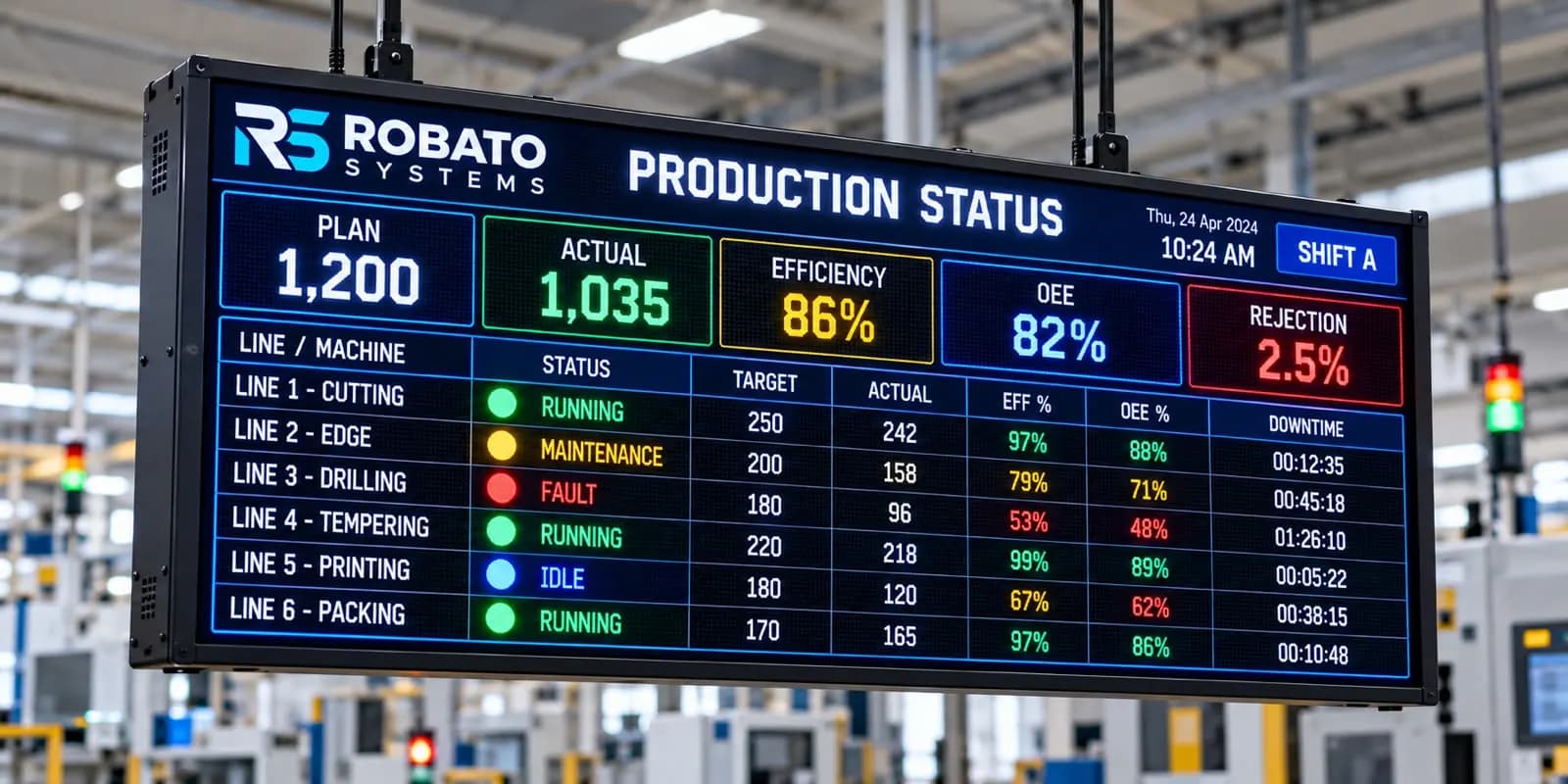
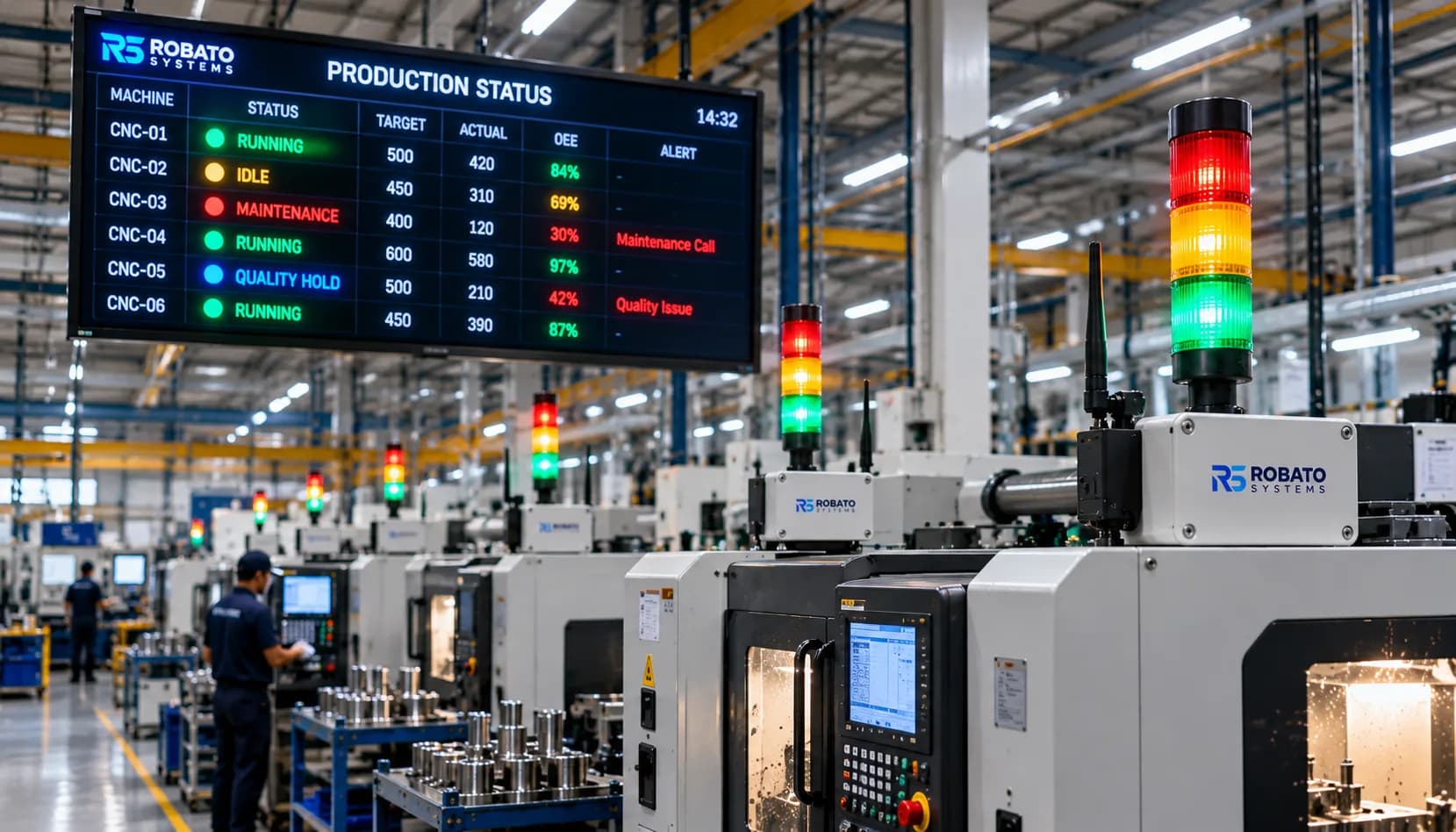
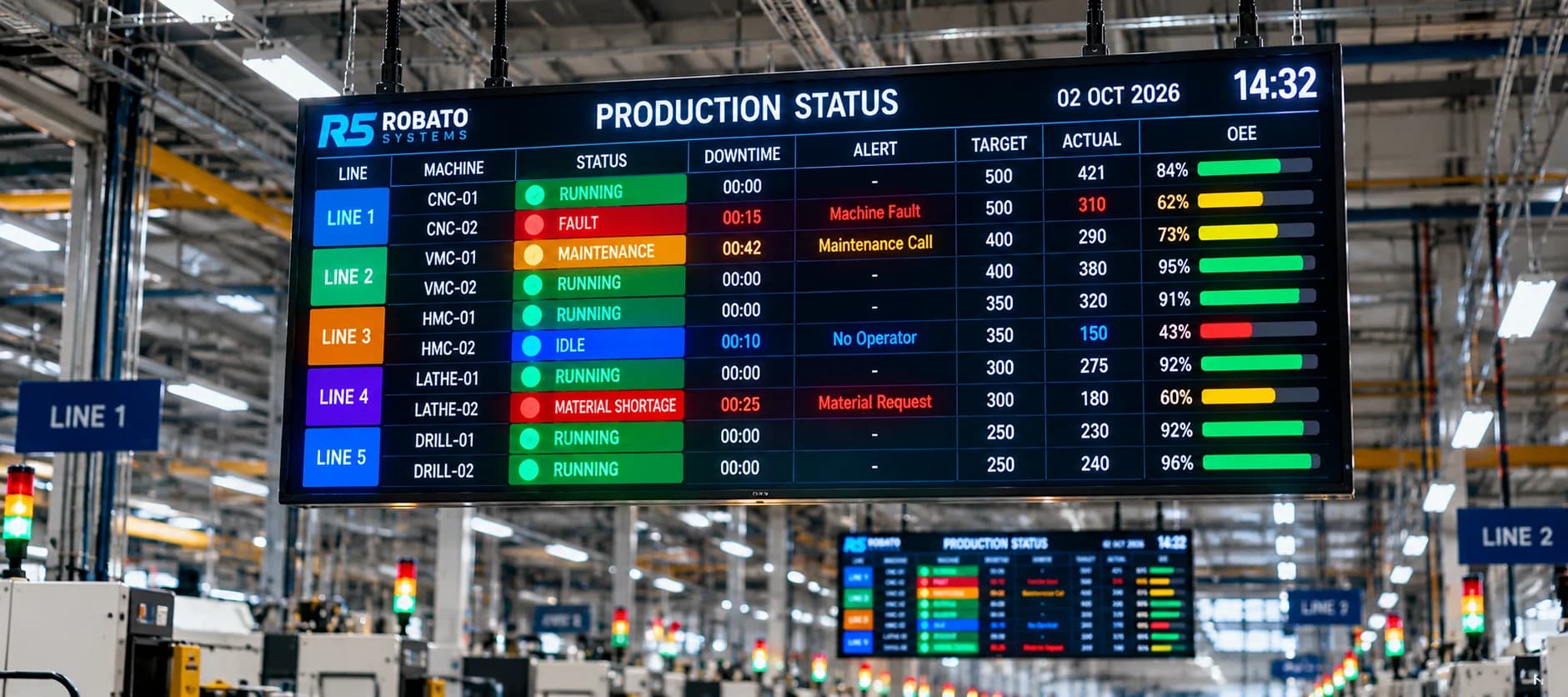
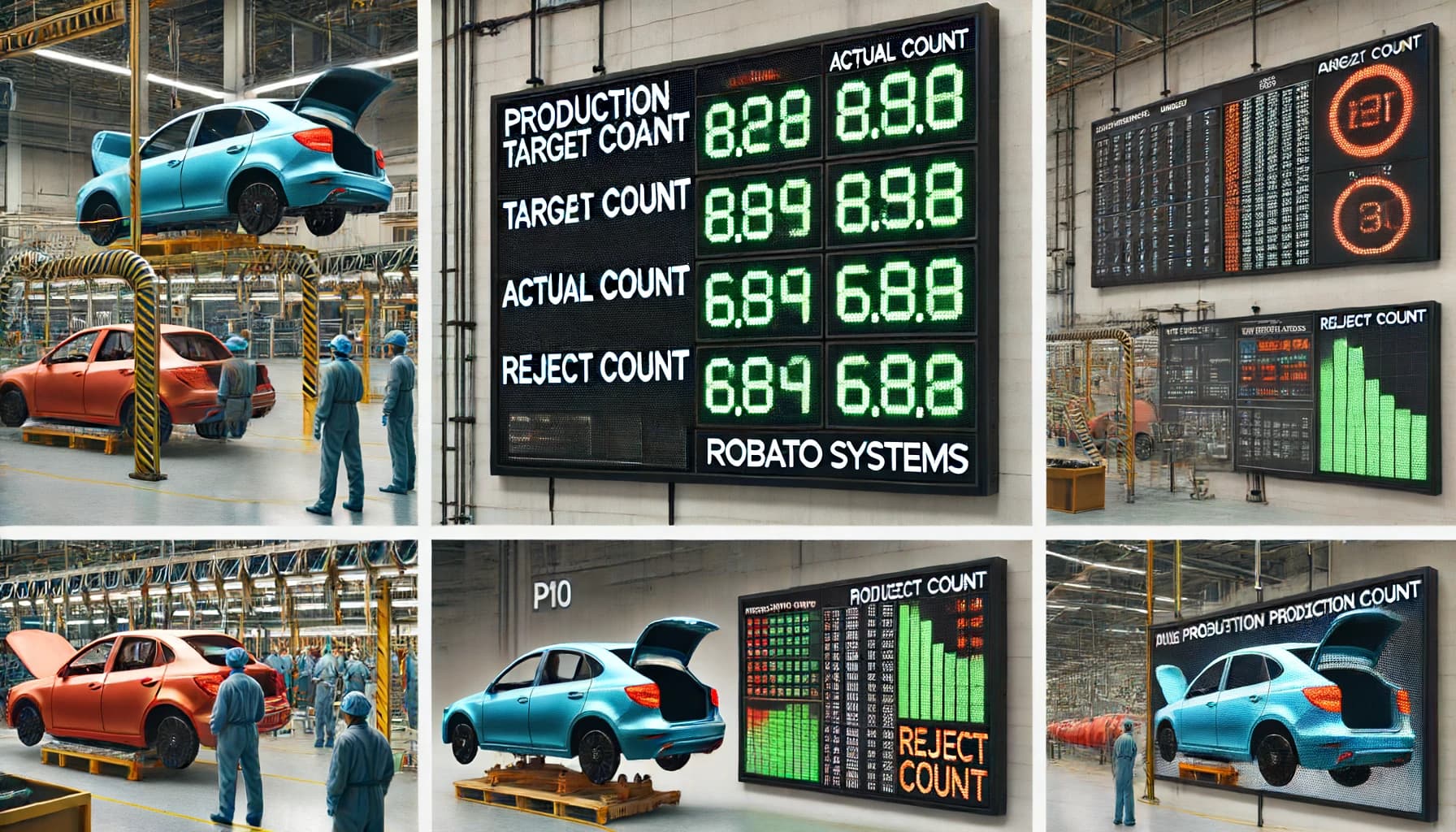
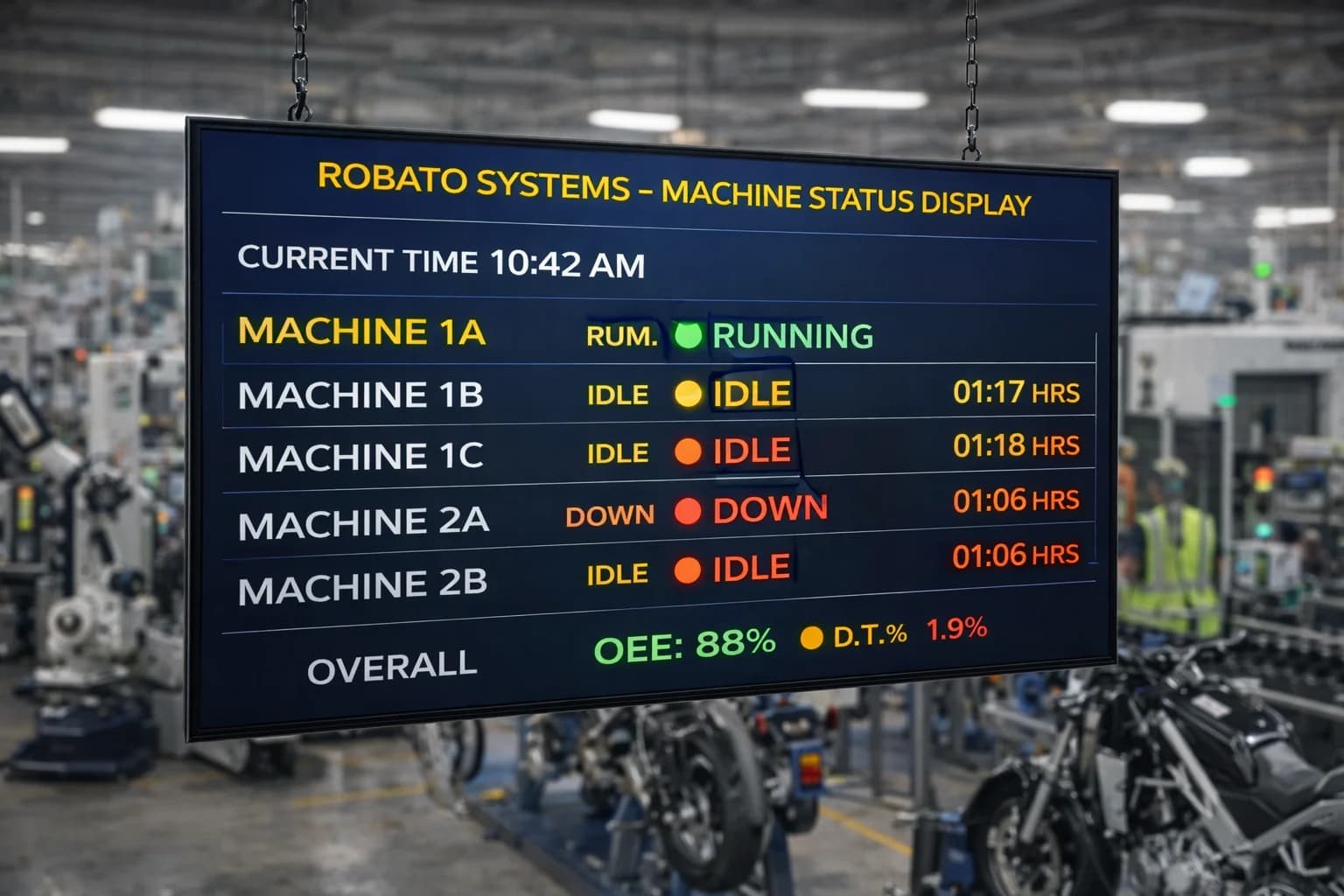
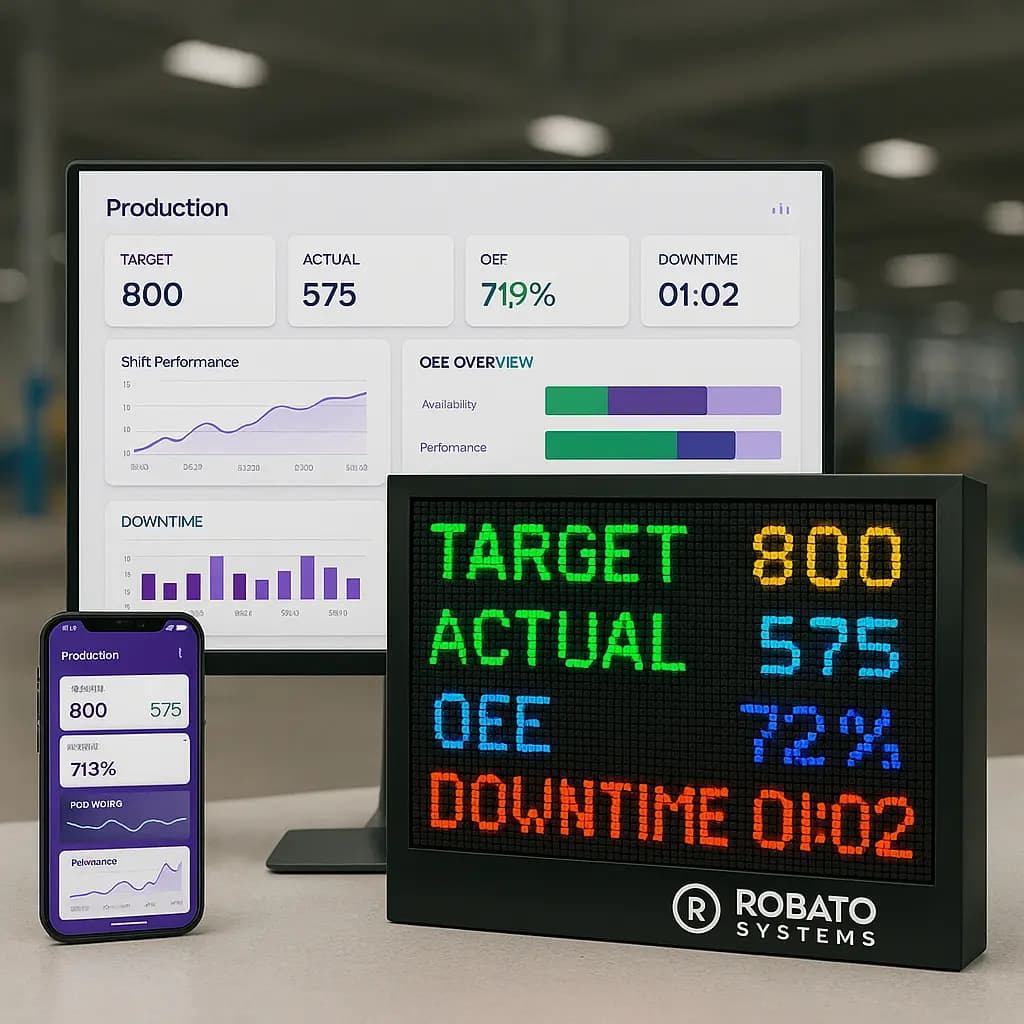
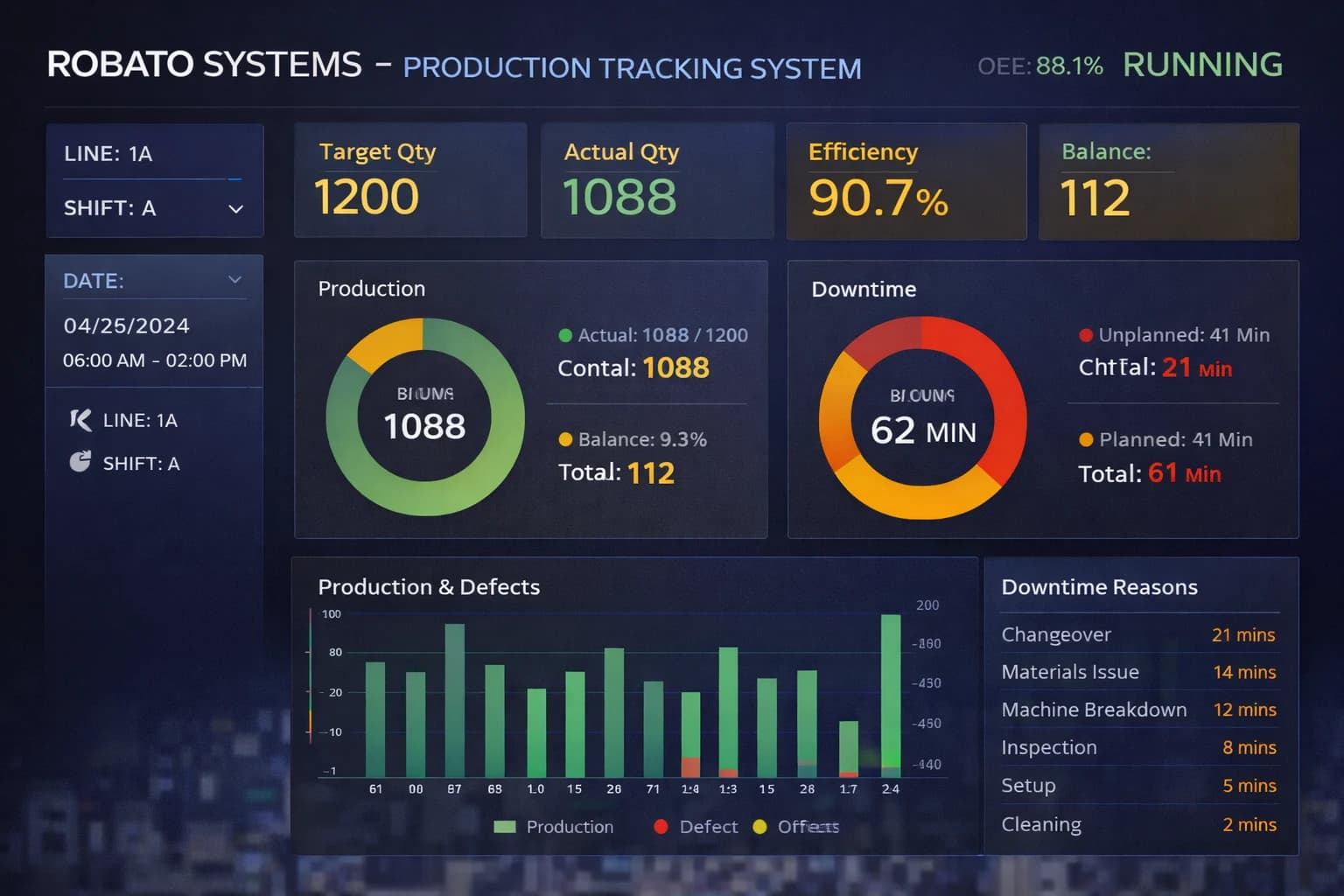
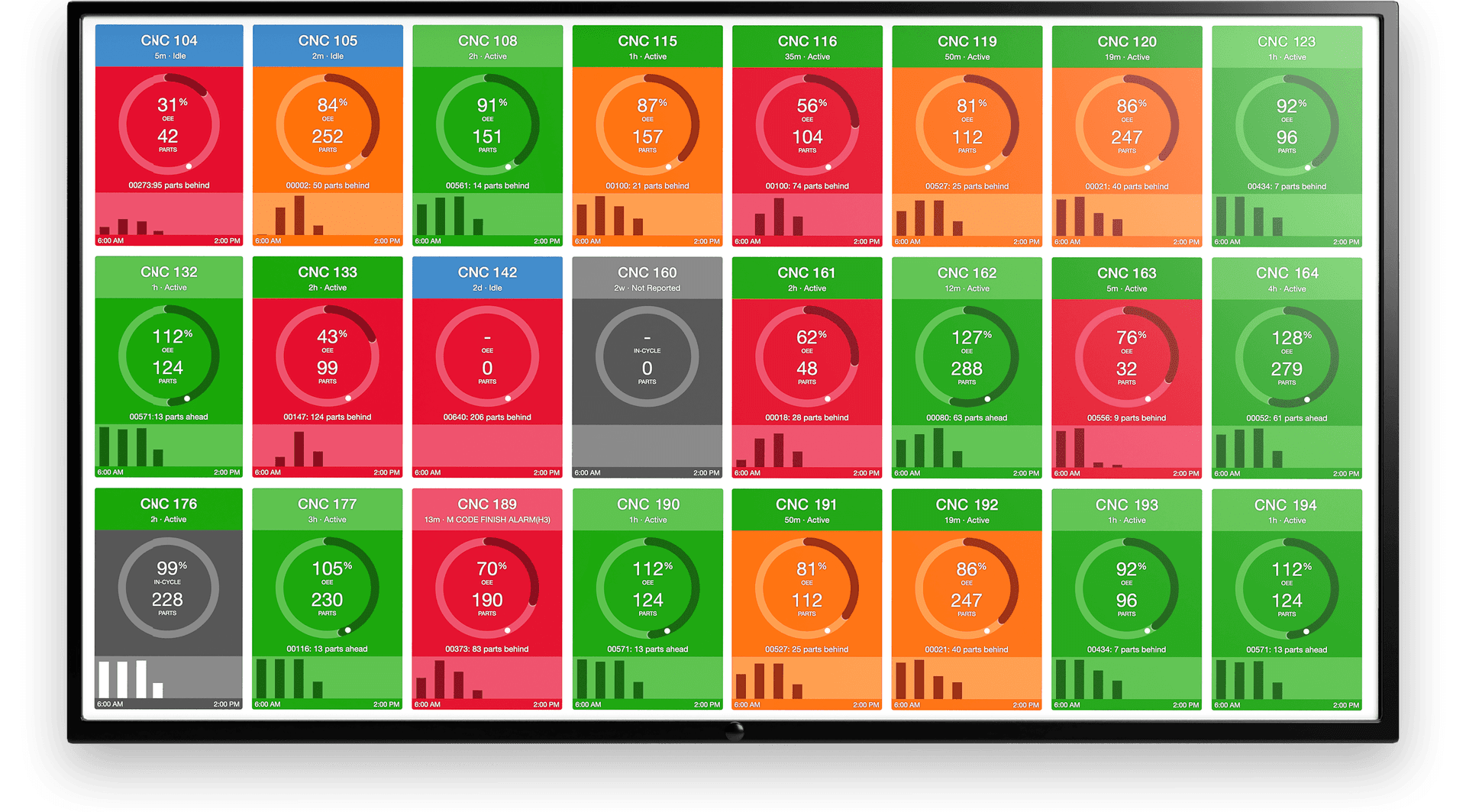
Dashboards and graphical reports simplify complex information and improve decision-making.
Visualization tools display:
- Production trends
- Machine performance
- OEE metrics
- Downtime analysis
- Quality indicators
This makes it easier for managers to understand and act on production data.
Advanced Analytics Engine
Modern manufacturing analytics platforms use:
- Artificial Intelligence (AI)
- Machine Learning (ML)
- Statistical analysis
- Predictive algorithms
These technologies uncover patterns and opportunities that traditional reporting cannot identify.
Benefits of Manufacturing Analytics for Smart Factories
Improved Production Efficiency
Analytics helps identify bottlenecks and process inefficiencies, enabling manufacturers to optimize workflows and increase output.
Reduced Downtime
Predictive analytics detects potential machine failures before they occur, reducing unplanned downtime and maintenance costs.
Increased Equipment Utilization
Manufacturers can maximize machine availability and improve Overall Equipment Effectiveness (OEE).
Better Quality Control
Analytics identifies process deviations and quality issues early, reducing defects and rework.
Data-Driven Decision-Making
Managers can make informed decisions based on real-time and historical production data rather than assumptions.
Lower Operational Costs
Improved efficiency and reduced downtime contribute to significant cost savings.
Enhanced Production Visibility
Analytics provides complete visibility into manufacturing operations, enabling faster response to issues.
Important Manufacturing KPIs to Analyze
Smart factories rely on analytics to monitor critical performance indicators.
Overall Equipment Effectiveness (OEE)
Measures equipment performance using:
- Availability
- Performance
- Quality
Machine Utilization
Tracks how effectively equipment is being used.
Downtime Percentage
Measures production losses caused by machine stoppages.
Cycle Time
Analyzes production speed and process efficiency.
Throughput
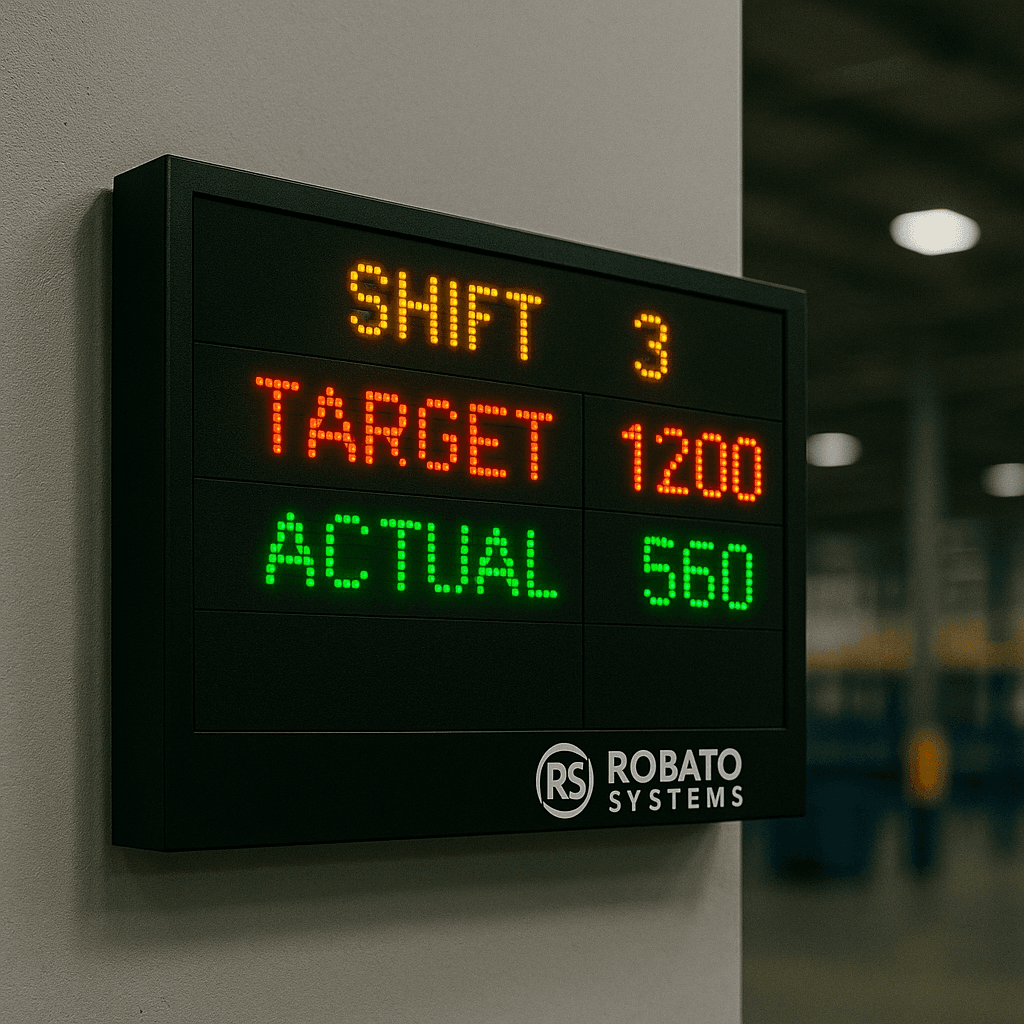
Measures production output over a specific period.
Rejection Rate
Tracks defective products and quality losses.
Production Efficiency
Compares actual production against planned targets.
Monitoring these KPIs helps manufacturers continuously improve performance.
Applications of Manufacturing Analytics
Predictive Maintenance
Analytics predicts equipment failures before they happen, minimizing downtime and maintenance costs.
Production Optimization
Manufacturers can identify bottlenecks and optimize production workflows.
Quality Improvement
Data analysis helps reduce defects and maintain product consistency.
Energy Management
Analytics monitors energy consumption and identifies opportunities to improve efficiency.
Supply Chain Optimization
Manufacturers can align production schedules with demand and inventory requirements.
Workforce Performance Monitoring
Analytics provides insights into labor productivity and shift efficiency.
Manufacturing Analytics and Industry 4.0
Industry 4.0 depends on interconnected systems and intelligent decision-making. Manufacturing analytics enables smart factories through:
- Industrial IoT integration
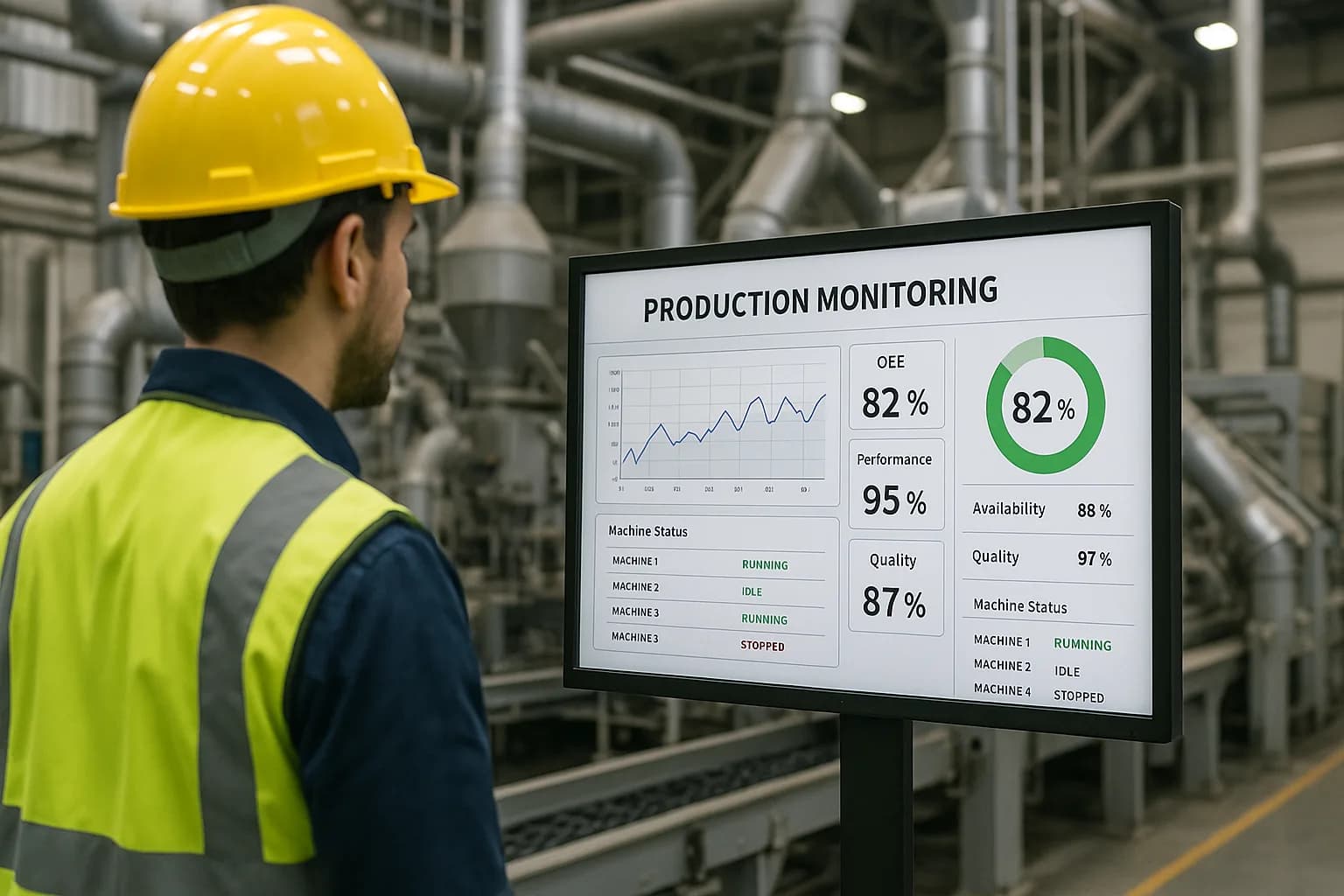
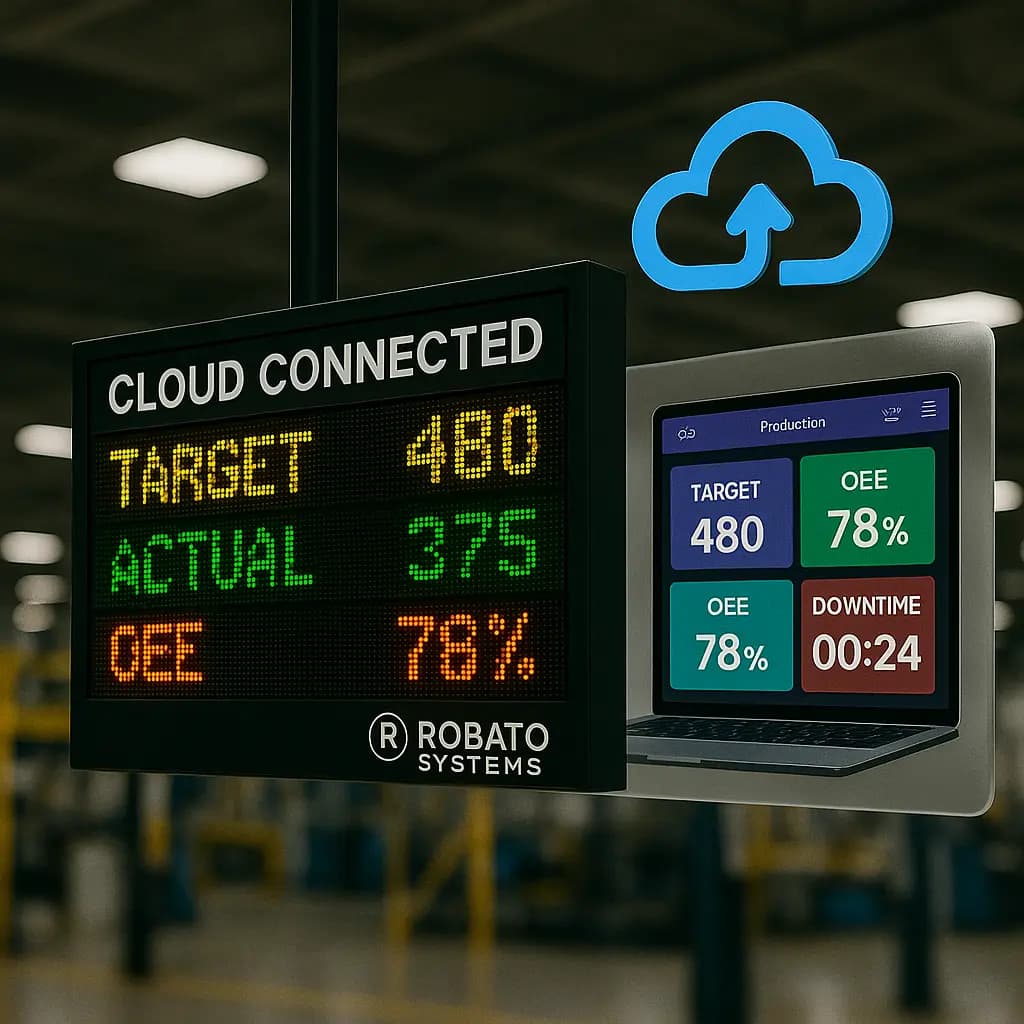
- Real-time production monitoring
- Automated reporting
- Smart dashboards
- Predictive maintenance
- Artificial Intelligence applications
These capabilities help organizations create highly efficient and digitally connected manufacturing environments.
Technologies Driving Manufacturing Analytics
Industrial IoT (IIoT)
IIoT devices collect and transmit production data automatically.
Artificial Intelligence (AI)
AI algorithms detect patterns and improve production forecasting.
Machine Learning
Machine learning continuously improves analytical accuracy and predictive capabilities.
Cloud Computing
Cloud platforms provide scalability and remote access to analytics systems.
Big Data Analytics
Big data technologies process massive volumes of manufacturing information efficiently.
Digital Twins
Digital replicas of physical assets enable advanced simulation and performance optimization.
Best Practices for Implementing Manufacturing Analytics
Define Clear Objectives
Identify business goals such as reducing downtime or improving OEE.
Collect Accurate Data
Reliable analytics depend on high-quality production data.
Focus on Key Metrics
Monitor KPIs that directly impact productivity and profitability.
Use Interactive Dashboards
Visual tools simplify analysis and improve decision-making.
Integrate Existing Systems
Connect analytics platforms with ERP, MES, SCADA, and maintenance systems.
Promote Continuous Improvement
Use insights to optimize processes and achieve long-term efficiency gains.
Future Trends in Manufacturing Analytics
Emerging technologies are shaping the future of manufacturing analytics:
AI-Driven Analytics
Artificial intelligence will provide more accurate predictions and automation.
Edge Computing
Real-time analytics will move closer to machines for faster processing.
Autonomous Manufacturing
Analytics will support self-optimizing production systems.
Digital Twins
Virtual factory simulations will improve planning and efficiency.
Cloud-Based Analytics Platforms
Manufacturers will gain greater flexibility and scalability.
These innovations are accelerating the transition toward fully connected smart factories.
Conclusion
Manufacturing Analytics is a cornerstone of smart manufacturing and Industry 4.0. By transforming raw production data into actionable insights, analytics helps manufacturers improve efficiency, reduce downtime, optimize resources, and enhance product quality.
As factories continue to adopt advanced technologies, manufacturing analytics will play an increasingly important role in driving productivity and maintaining competitiveness in the digital era.
Frequently Asked Questions (FAQs)
What is manufacturing analytics?
Manufacturing analytics is the process of collecting and analyzing production data to improve efficiency, quality, and decision-making.
How does manufacturing analytics improve productivity?
It helps identify bottlenecks, optimize processes, reduce downtime, and improve equipment utilization.
What are the types of manufacturing analytics?
The four main types are descriptive, diagnostic, predictive, and prescriptive analytics.
How does manufacturing analytics support Industry 4.0?
It enables real-time monitoring, predictive maintenance, data-driven decisions, and smart factory operations.
Which technologies are used in manufacturing analytics?
Common technologies include Industrial IoT, AI, machine learning, cloud computing, big data, and digital twins.