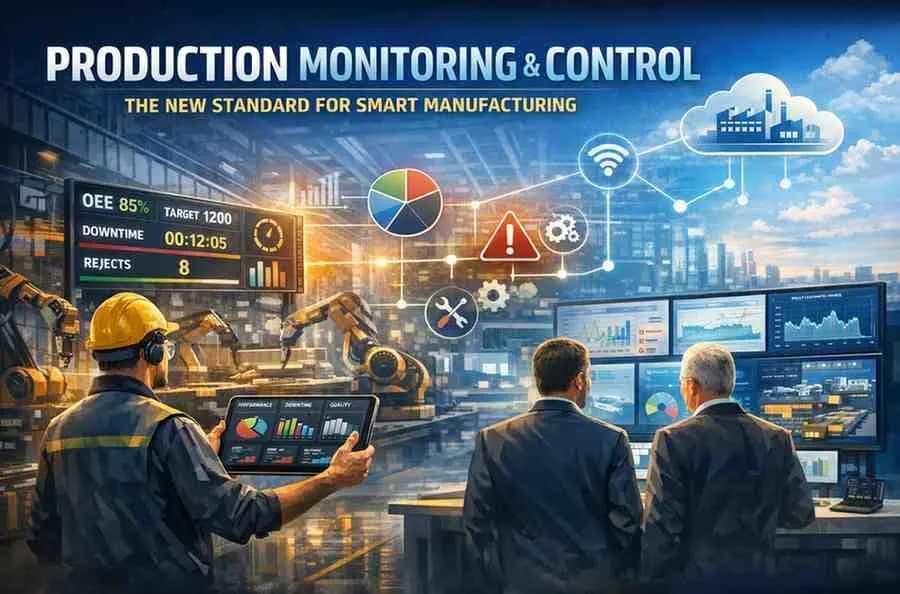
Production Monitoring and Control: The New Standard for Smart Manufacturing
Modern manufacturing has no room for guesswork. Every minute of unplanned downtime, every missed production target, and every quality defect has a direct cost. That is exactly why production monitoring and control has become the cornerstone of how successful factories operate today. It replaces assumptions with real data, reactive firefighting with proactive decision-making, and manual reporting with live, automated intelligence that keeps every level of the organization informed and in control at all times.
The Factory Floor Has Changed. Has Your Monitoring Kept Up?
Not long ago, a shift supervisor's job involved walking the floor, checking clipboards, and compiling a report at the end of the day. That information would then travel up the chain, often hours after the problems it described had already caused significant losses.
The modern factory floor moves faster than that process can handle. Machines run multiple cycles per minute. Demand schedules shift. Quality deviations appear without warning. In this environment, end-of-shift reports are not just slow. They are a liability. Production monitoring and control systems exist to close that gap by giving everyone from operators to plant managers a live, accurate view of what is happening right now.
Monitoring and Control Are Two Sides of the Same Coin
Many manufacturers treat monitoring and control as separate functions. Monitoring is seen as the act of watching, while control is the act of responding. In a truly connected factory, these two functions are inseparable.
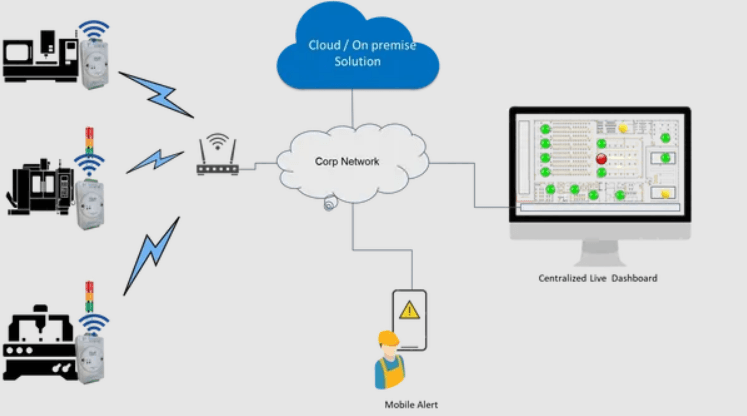
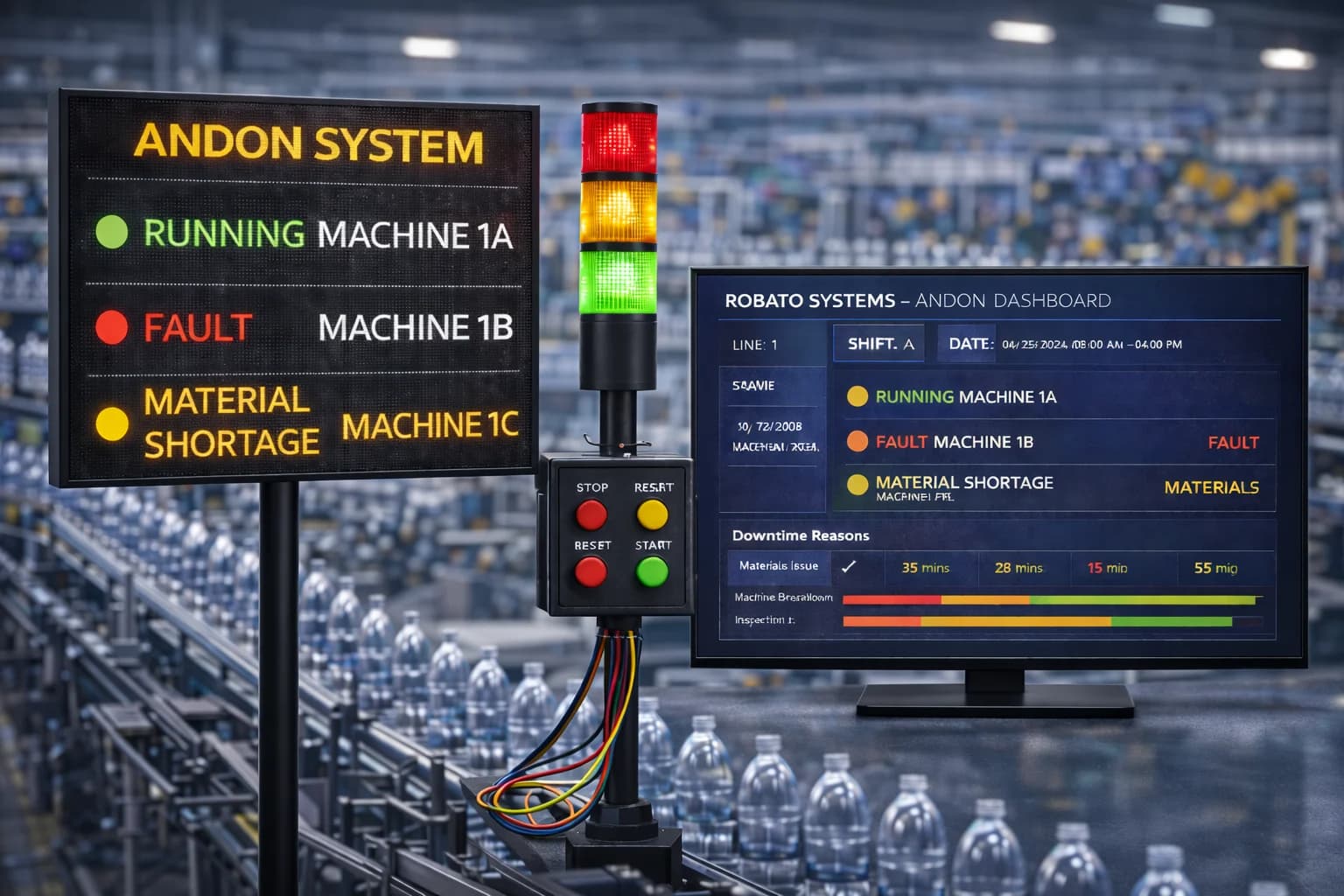
A production monitoring and control system does not just collect data. It acts on it. When output falls behind target, the system flags the deviation instantly. When a machine enters an idle state, the downtime clock starts automatically and an alert is sent to the right person. When a quality check fails, the system can interlock the affected machine, preventing further rejects from reaching the next stage of production. Monitoring feeds control, and control drives improvement.
What the System Watches in Real Time
A comprehensive production monitoring and control system tracks multiple parameters simultaneously across every machine, line, and shift.
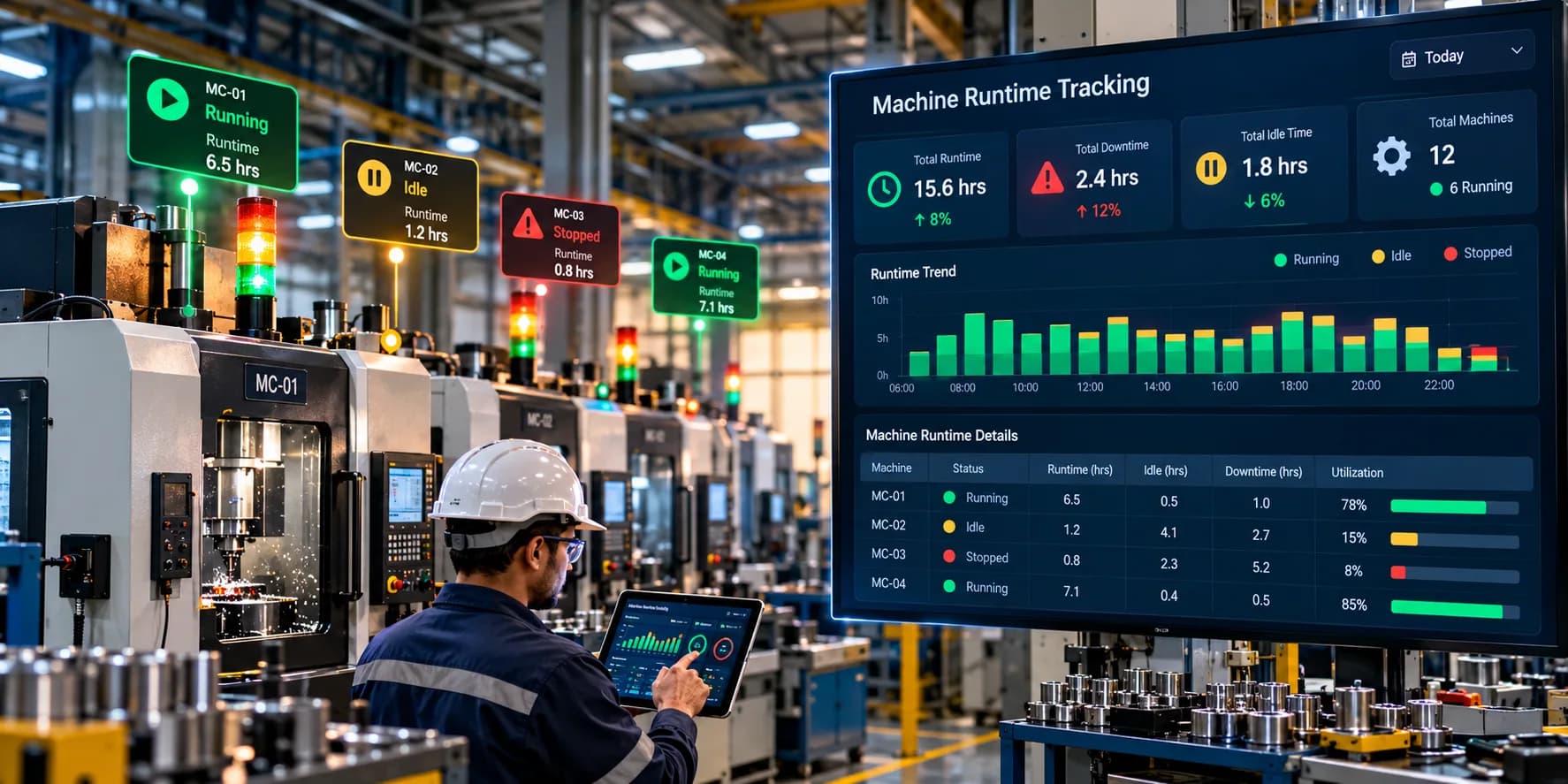
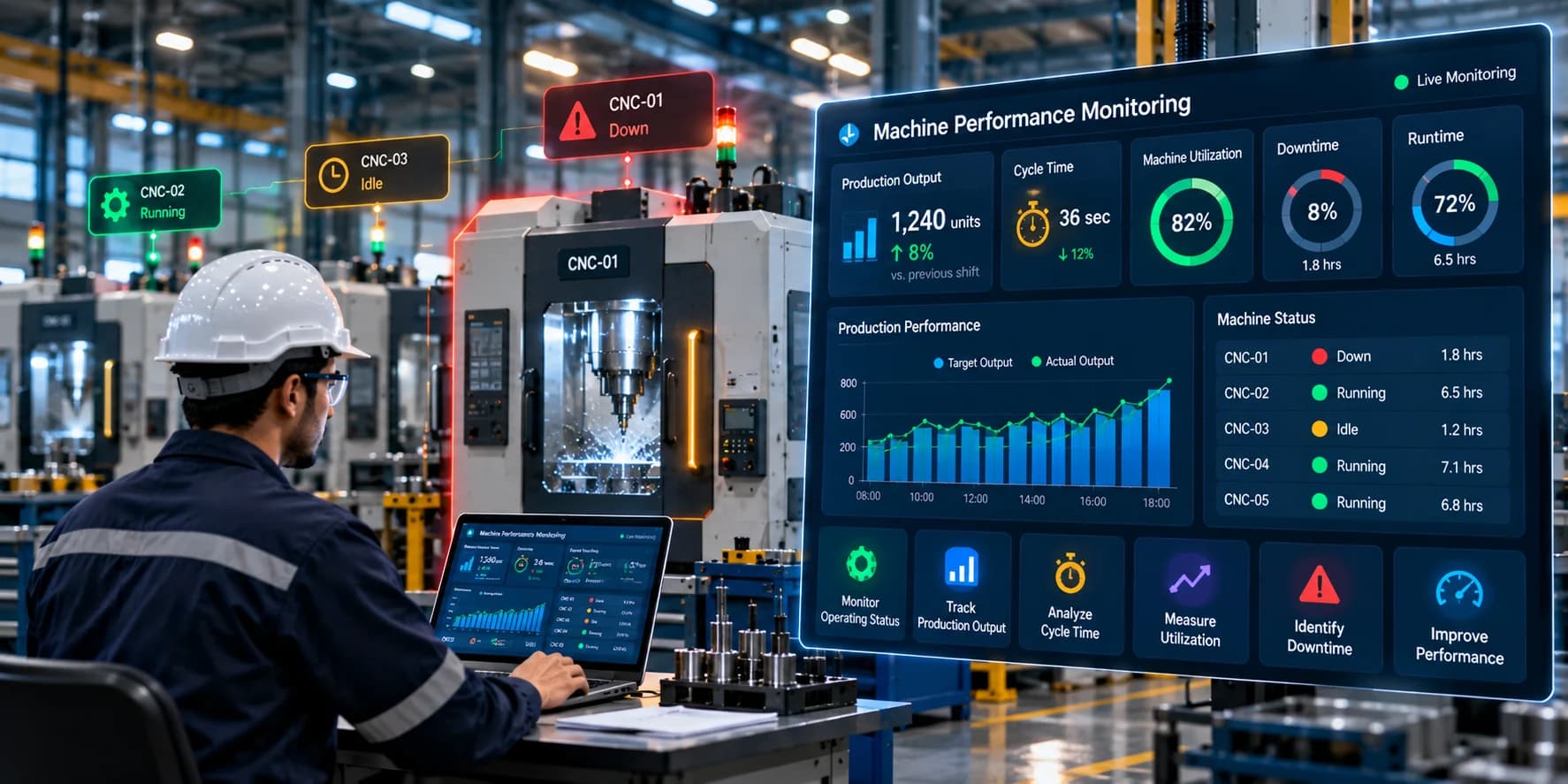
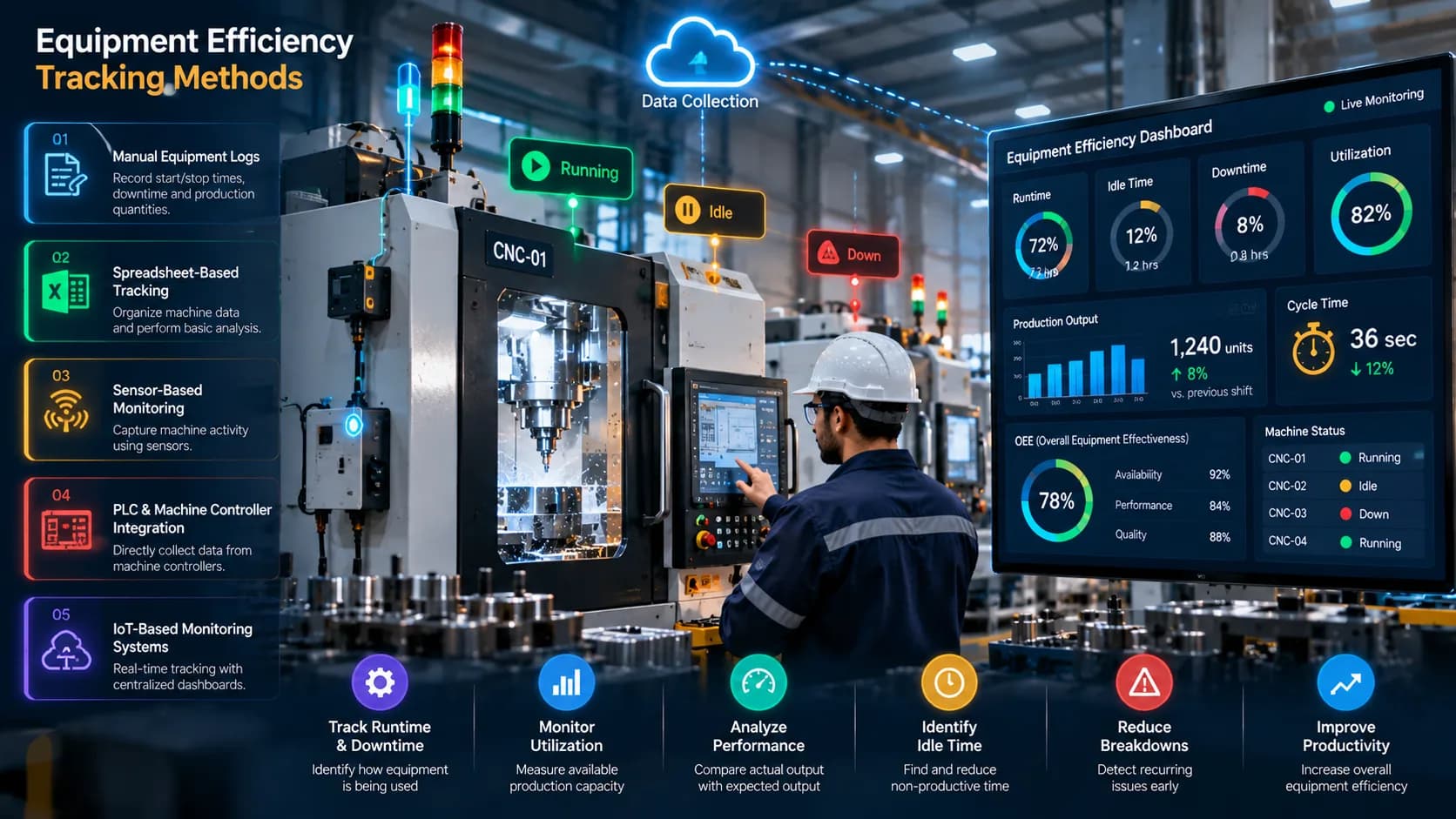
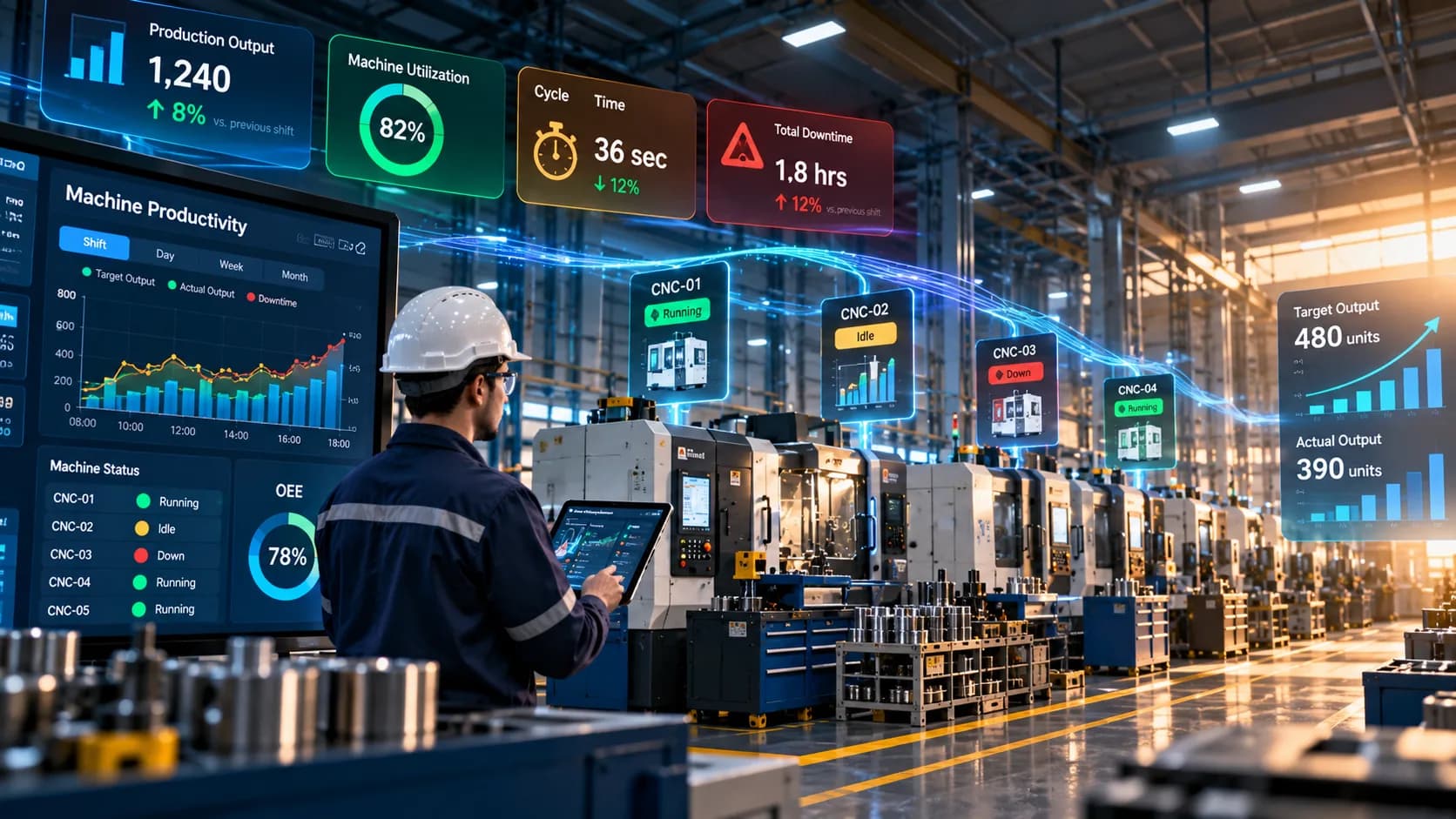
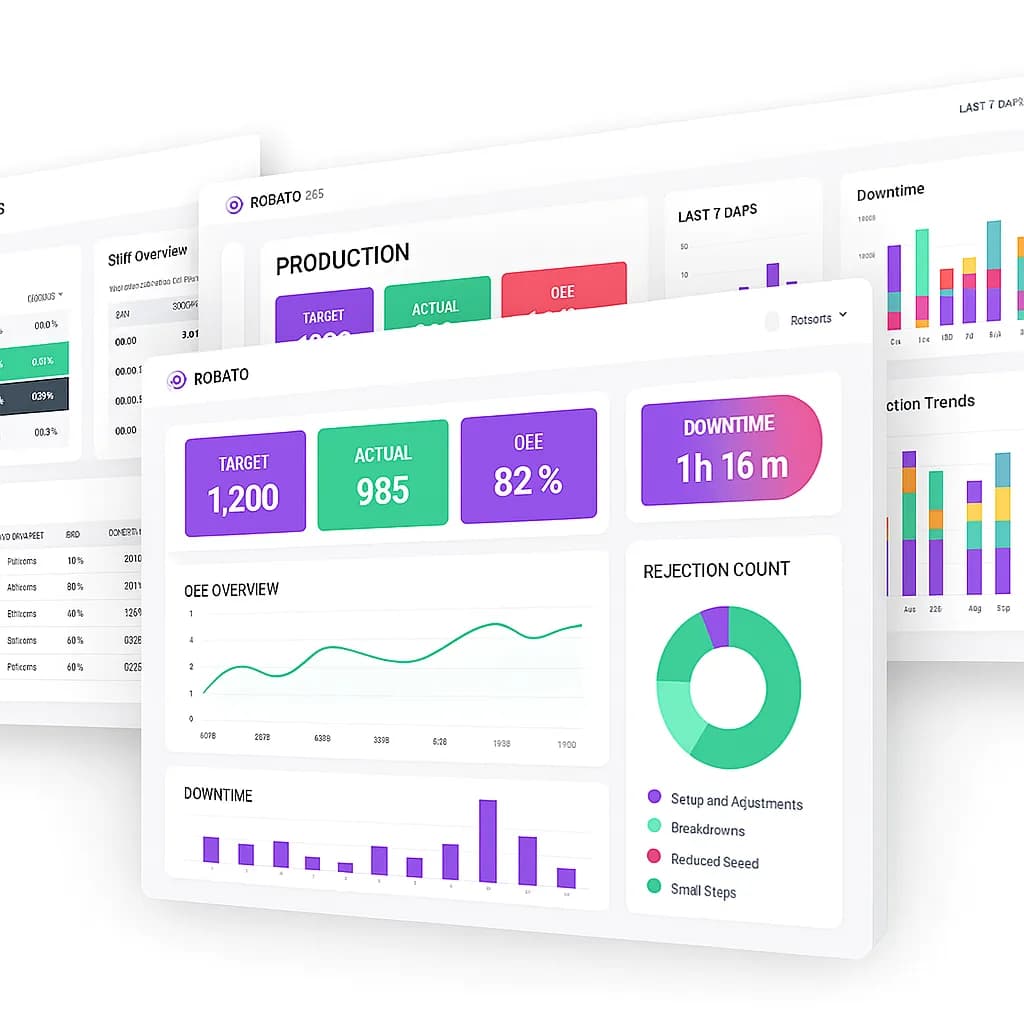
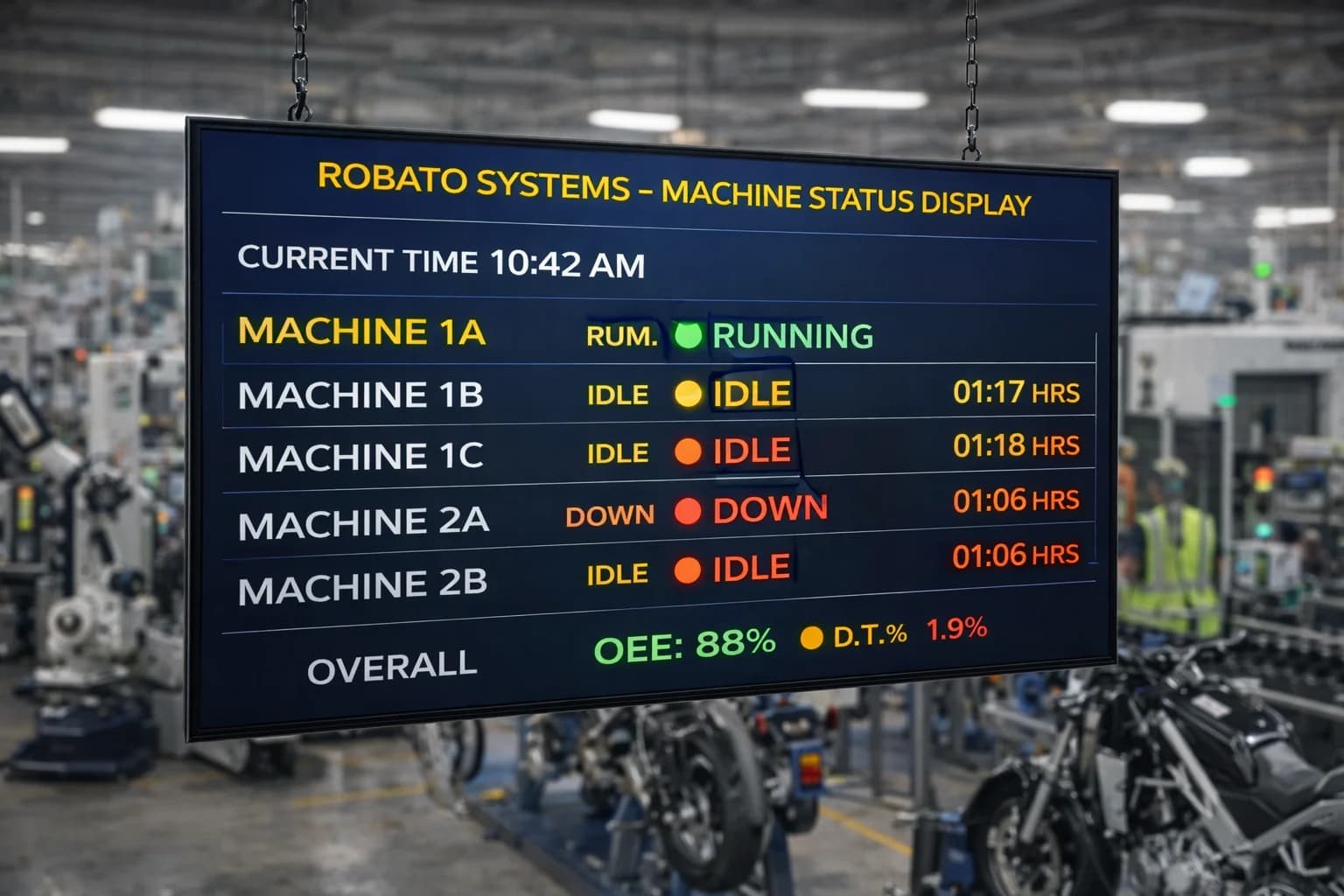
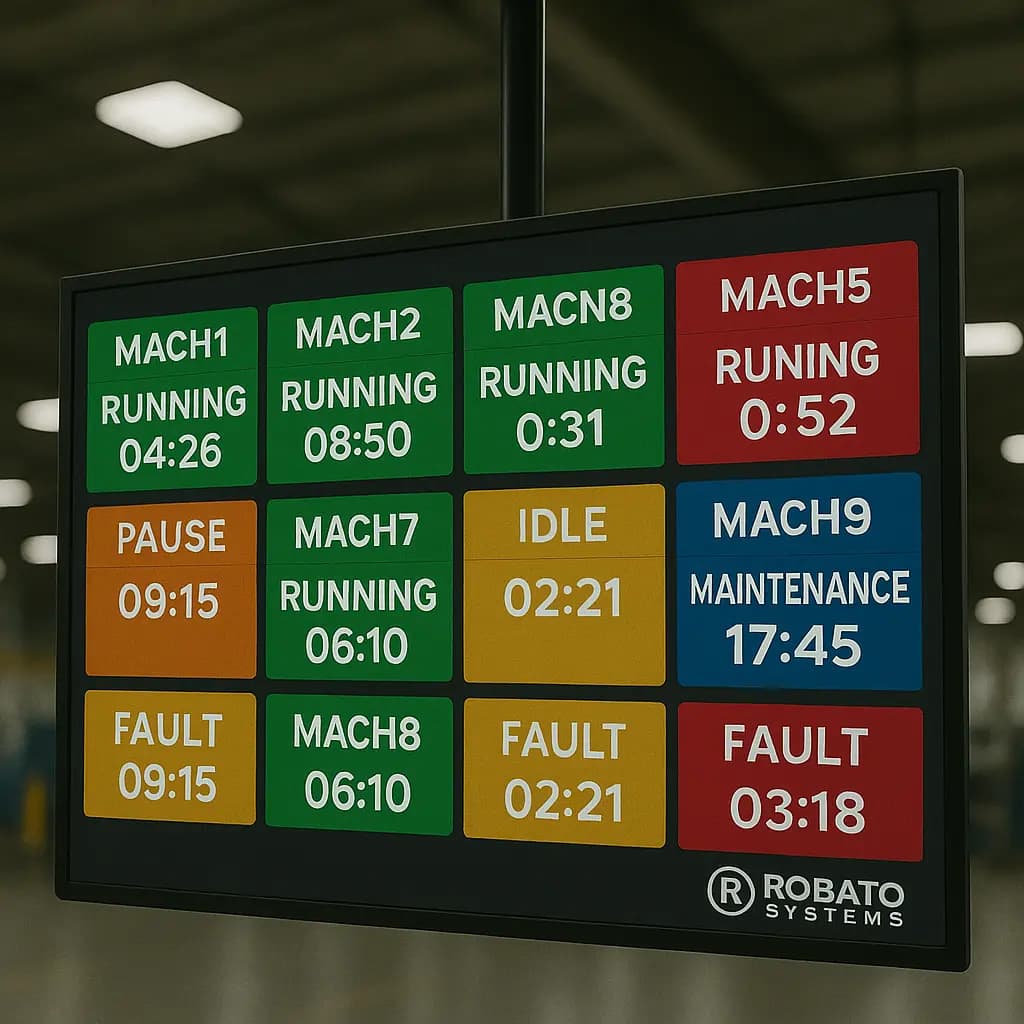
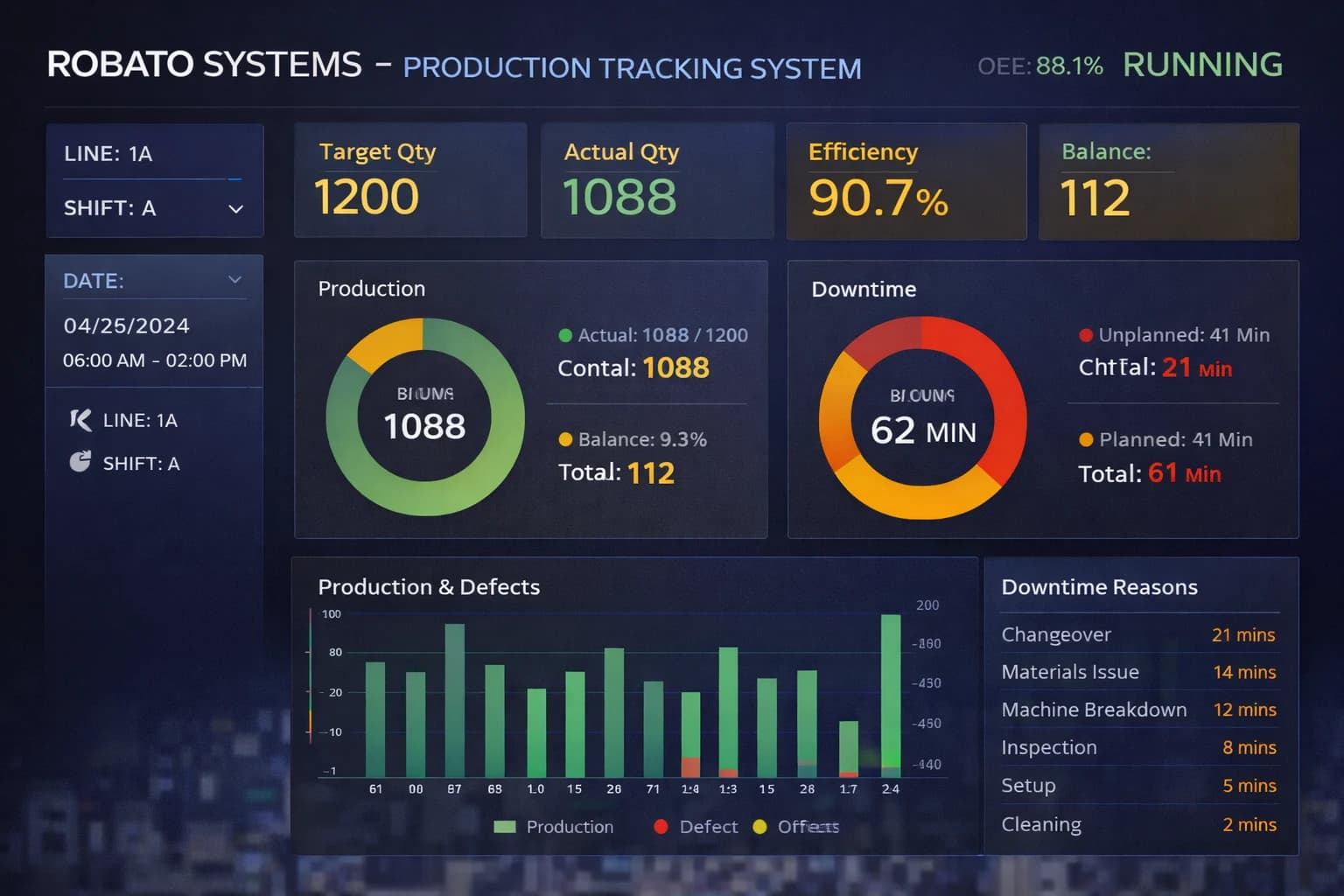
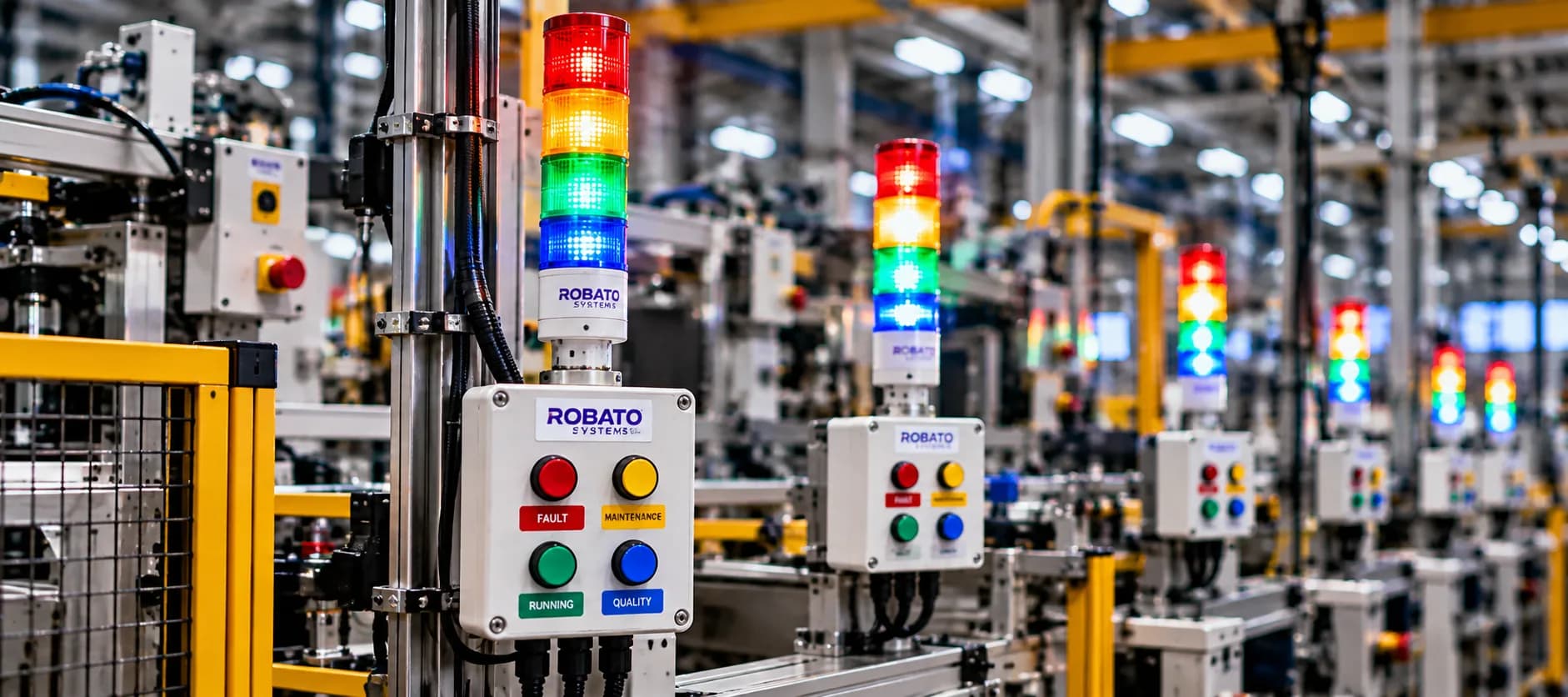
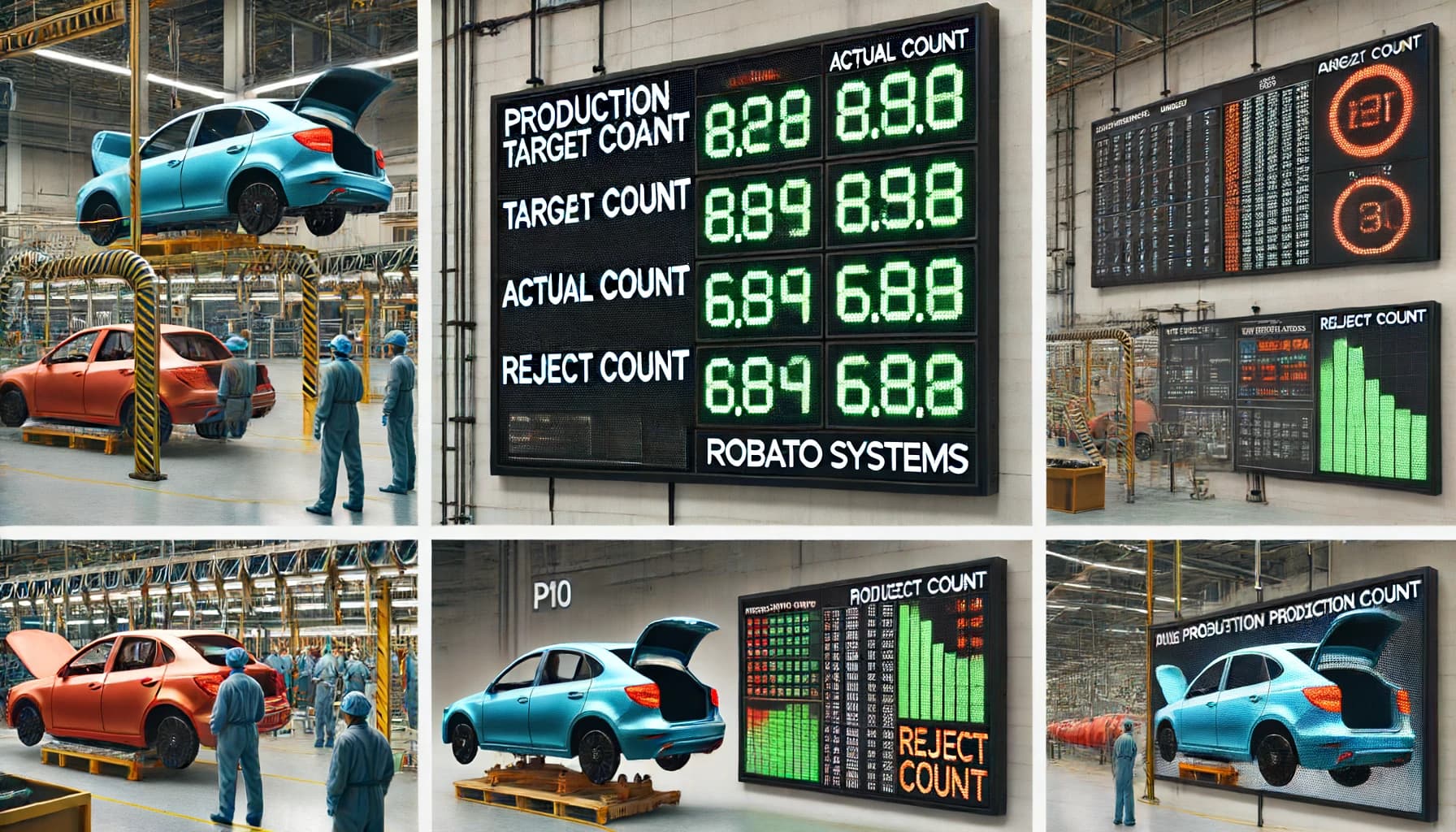
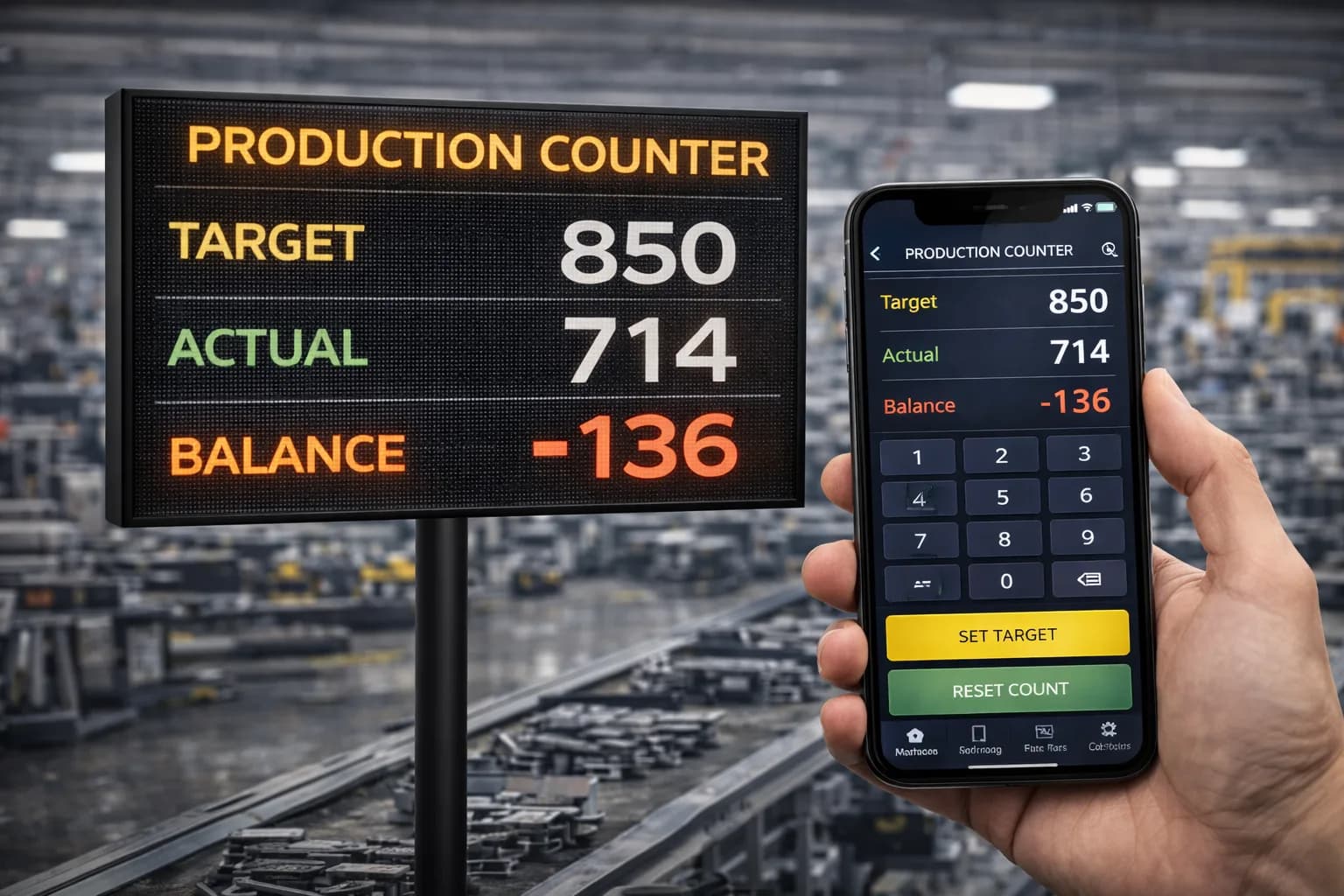
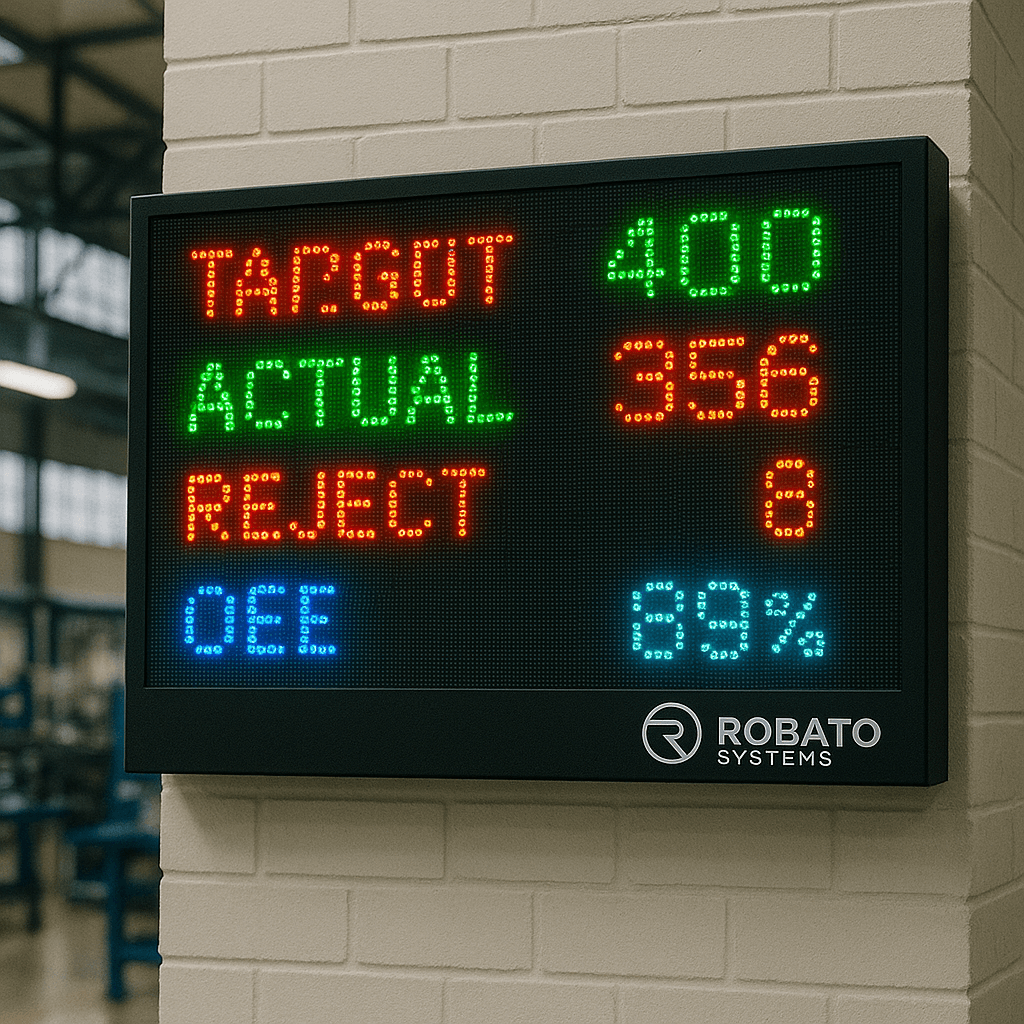
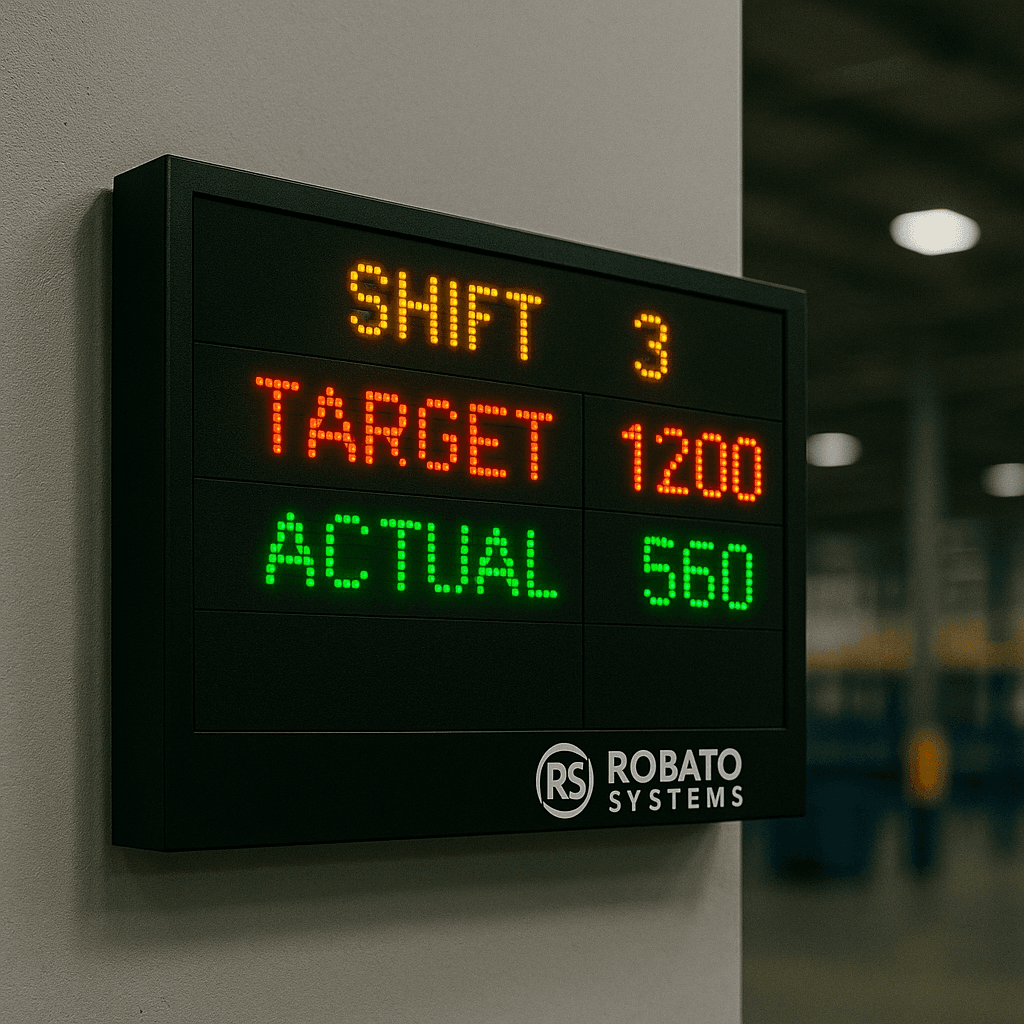
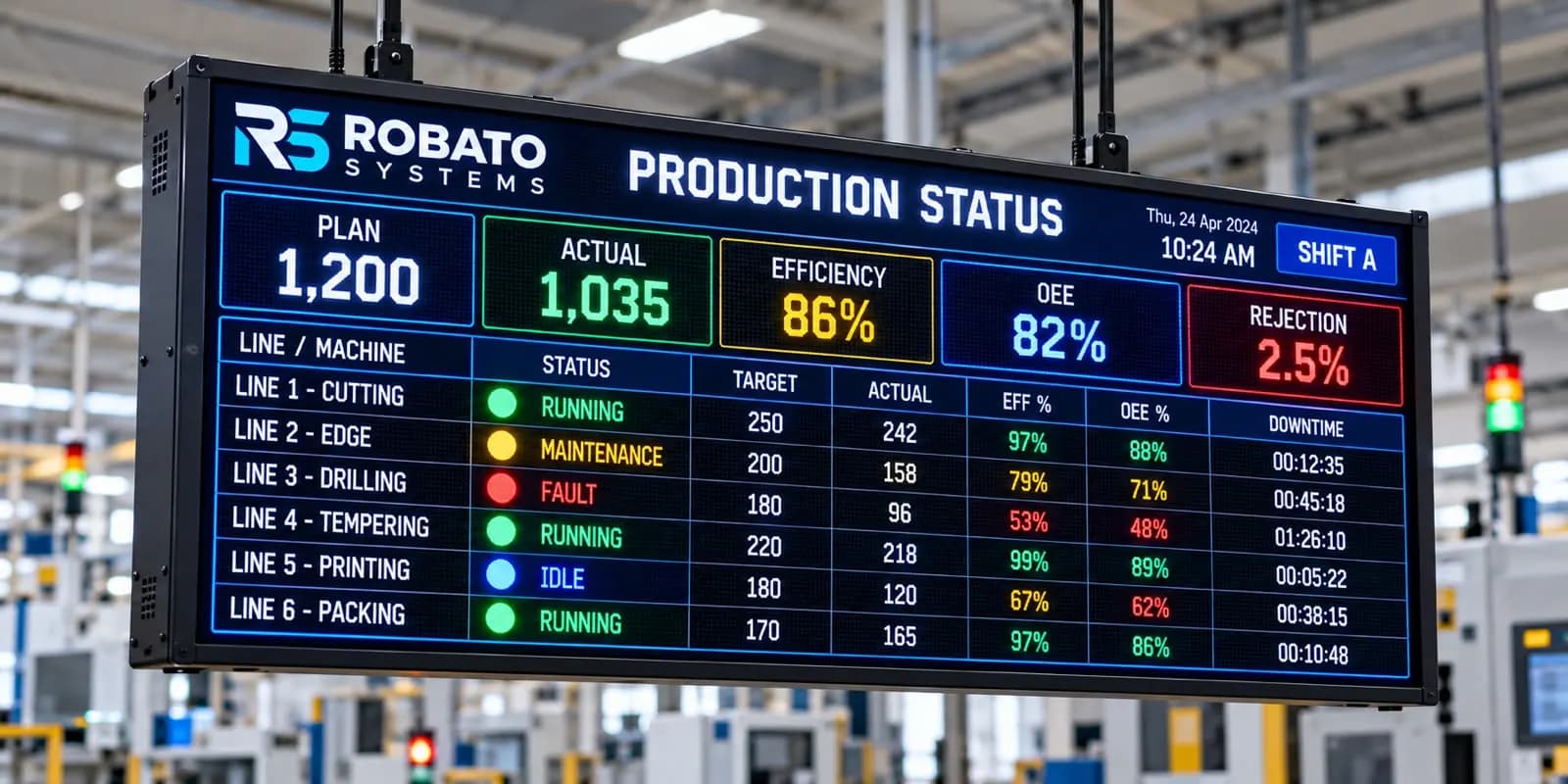
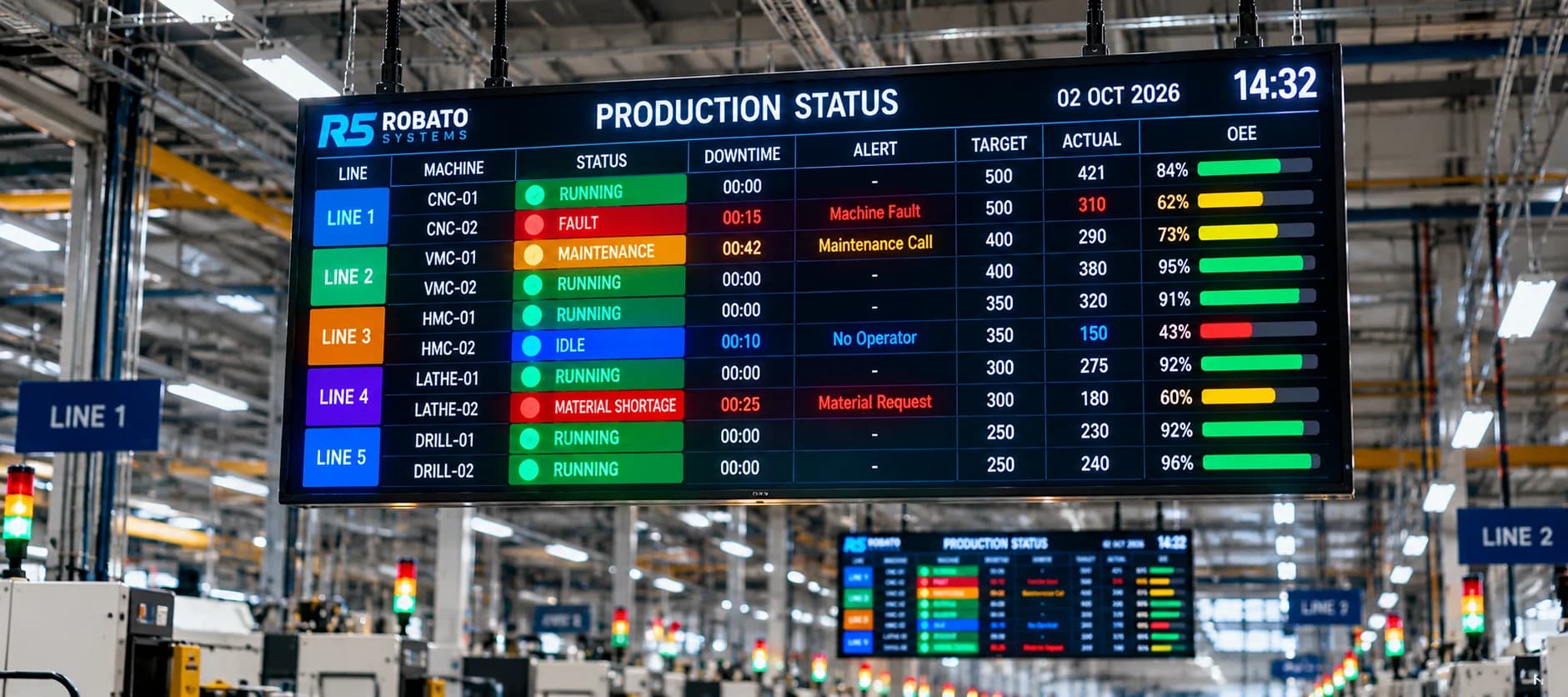
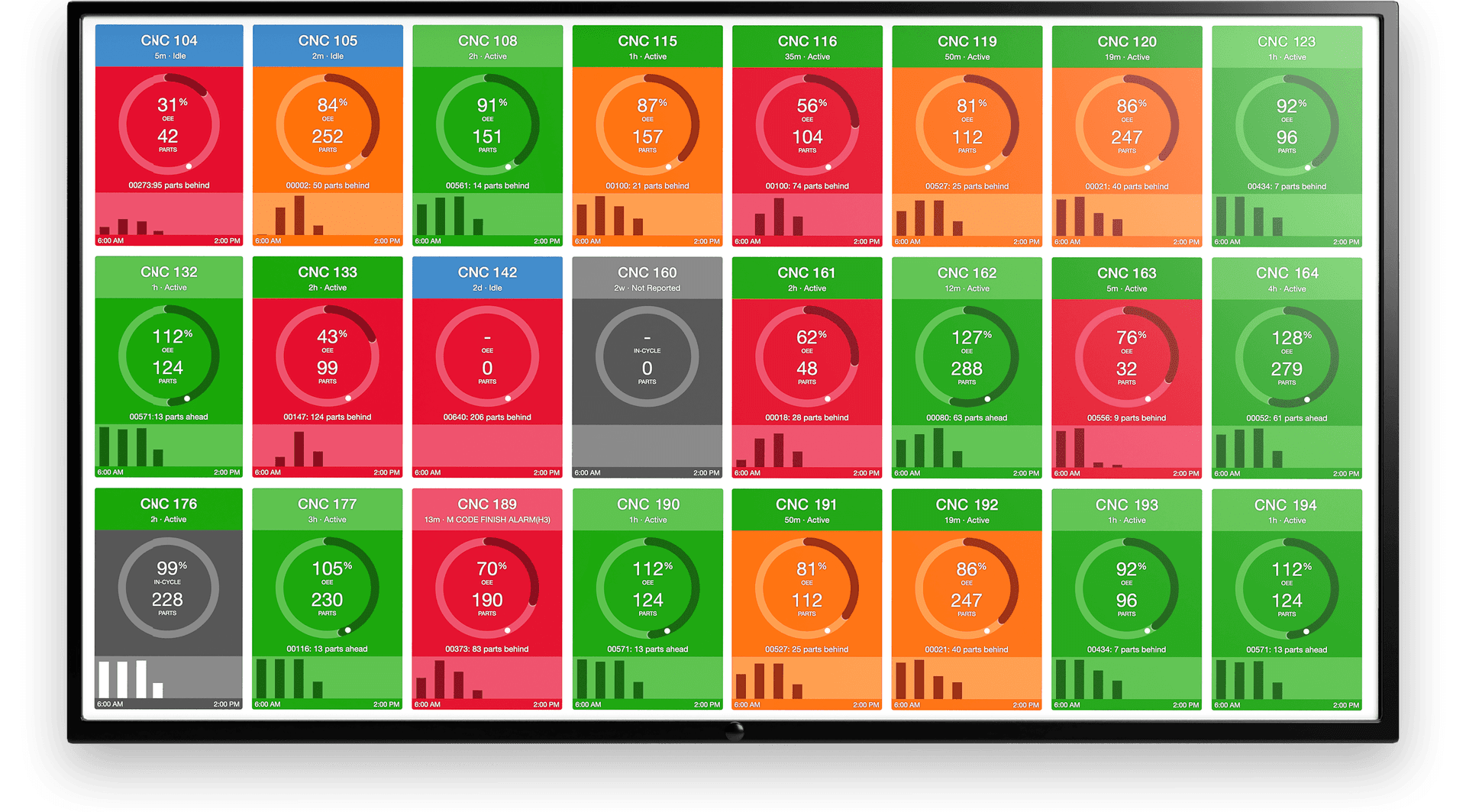
Output tracking compares actual production count against the scheduled target on a live basis. Any gap between the two is visible the moment it starts forming, not hours later. Machine status monitoring records whether each machine is running, idle, or in a breakdown state, with timestamps for every transition.
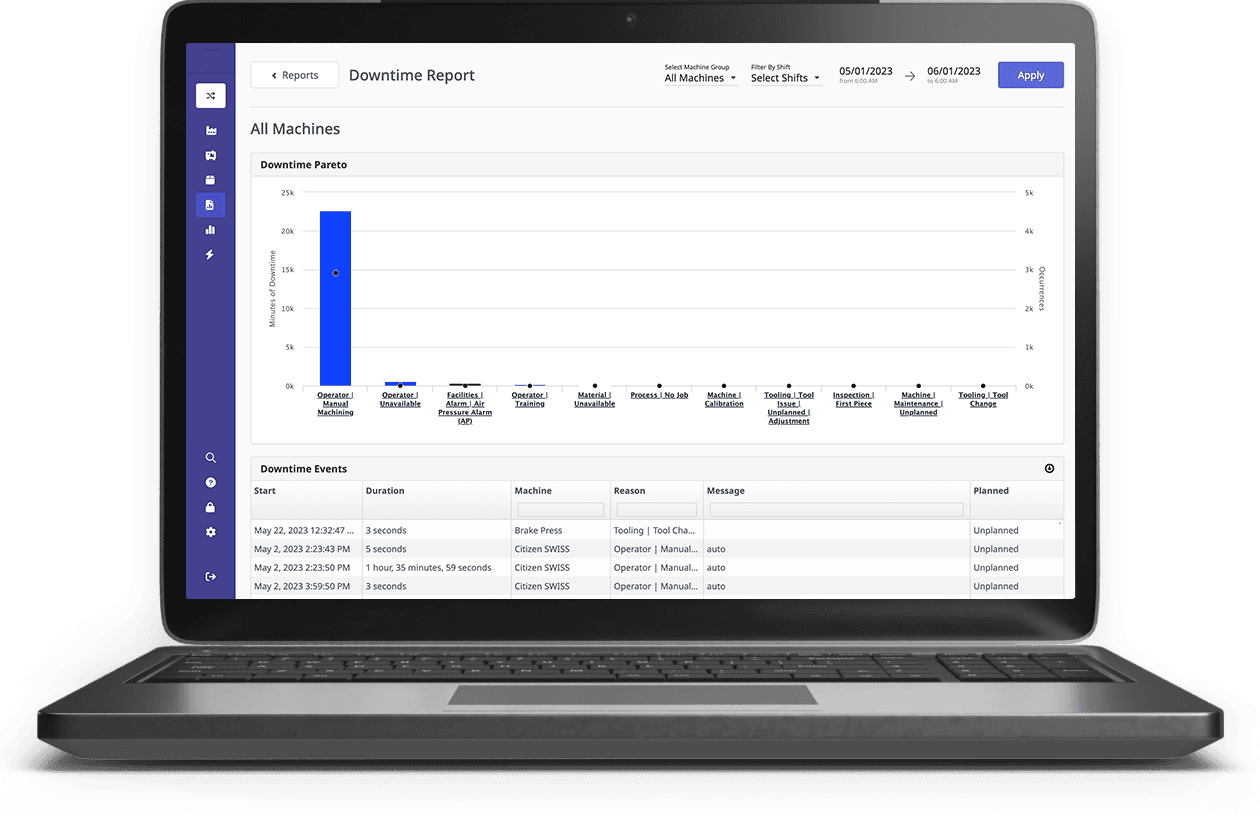
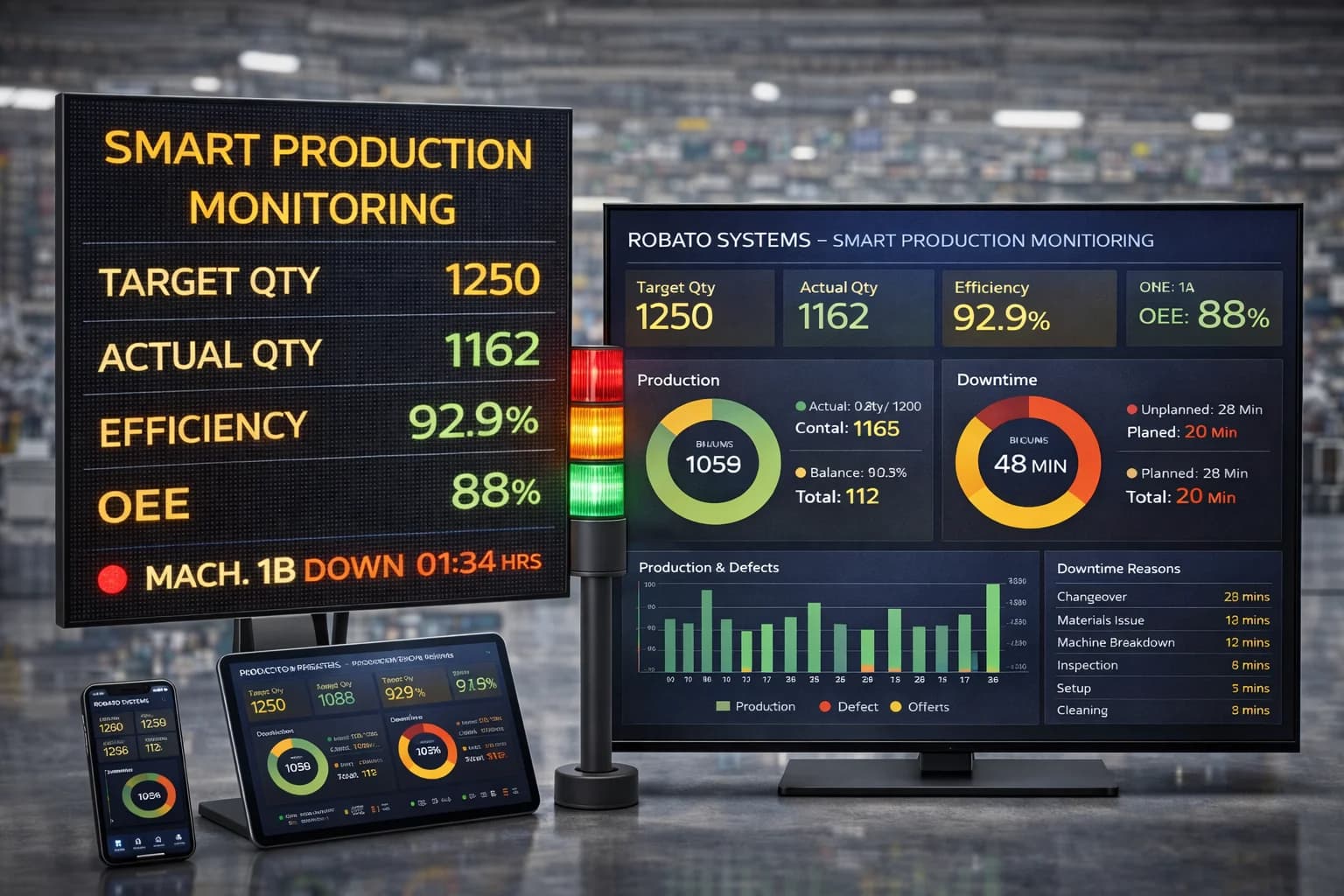
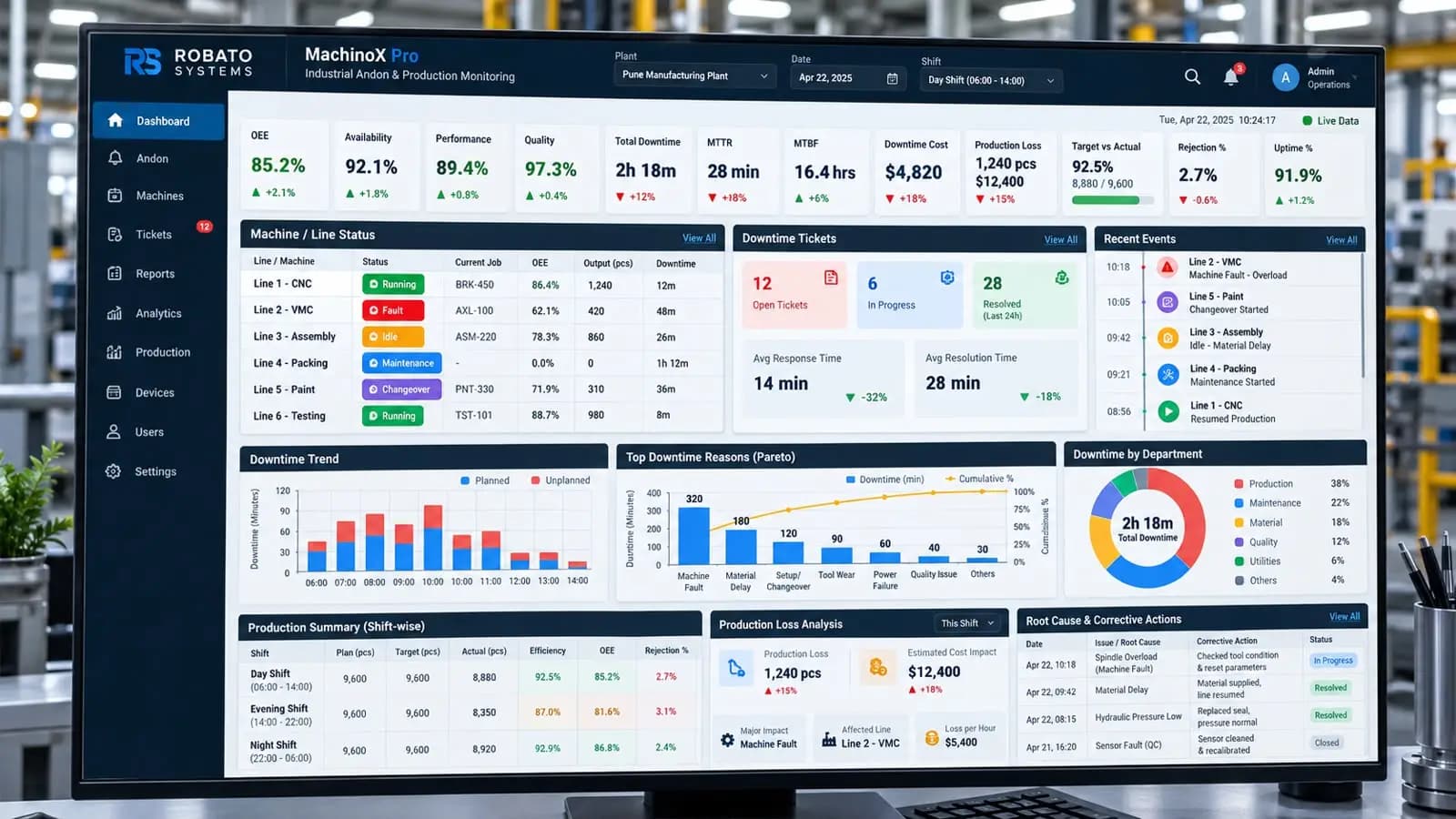
Downtime tracking captures the duration and reason for every stoppage, building a database of downtime events that can be analyzed by machine, shift, operator, or time period. OEE calculation combines availability, performance, and quality into a single metric that reflects true machine effectiveness. Quality monitoring captures rejection counts and defect reasons, enabling corrective actions before defective output compounds.
Live Dashboards That Reach Every Corner of the Organization
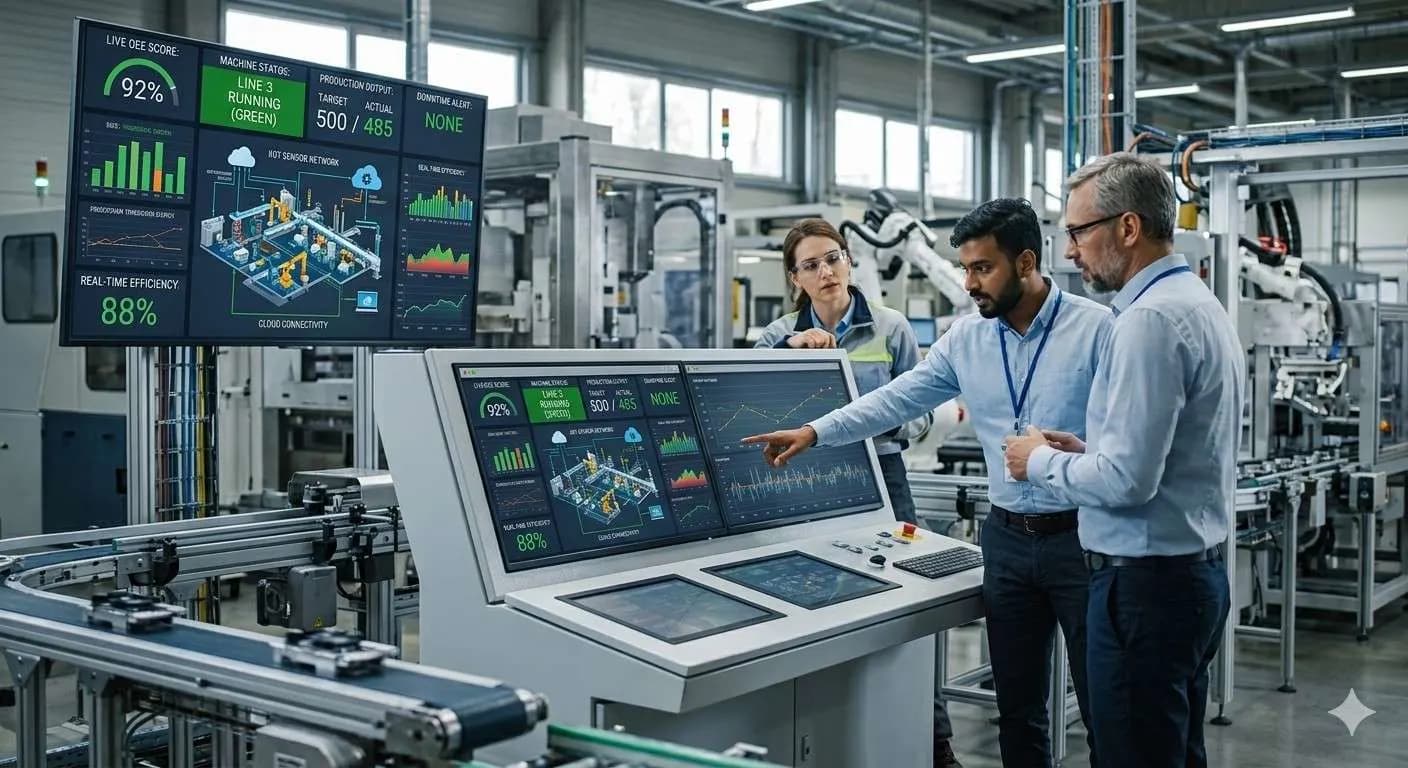
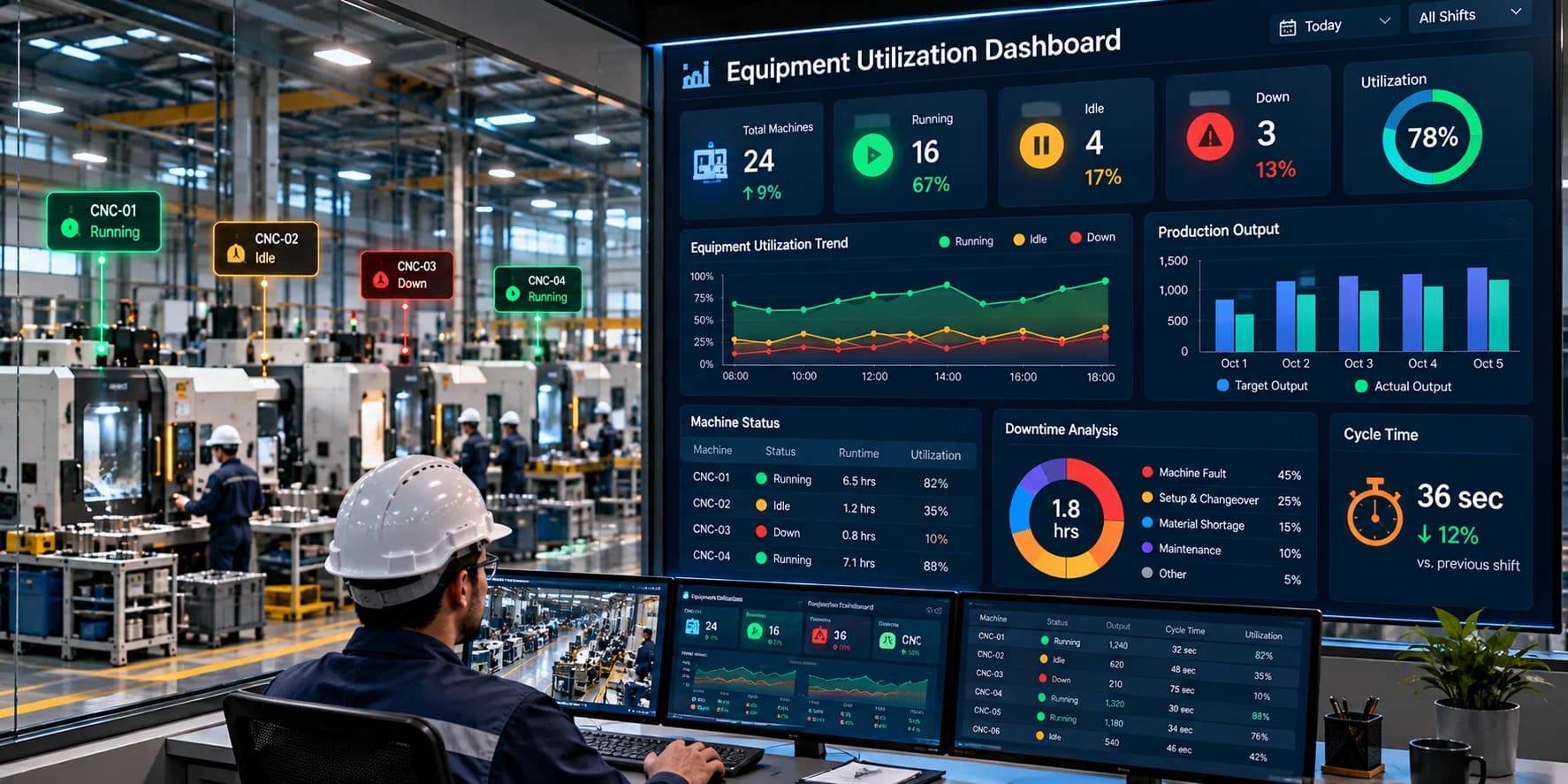
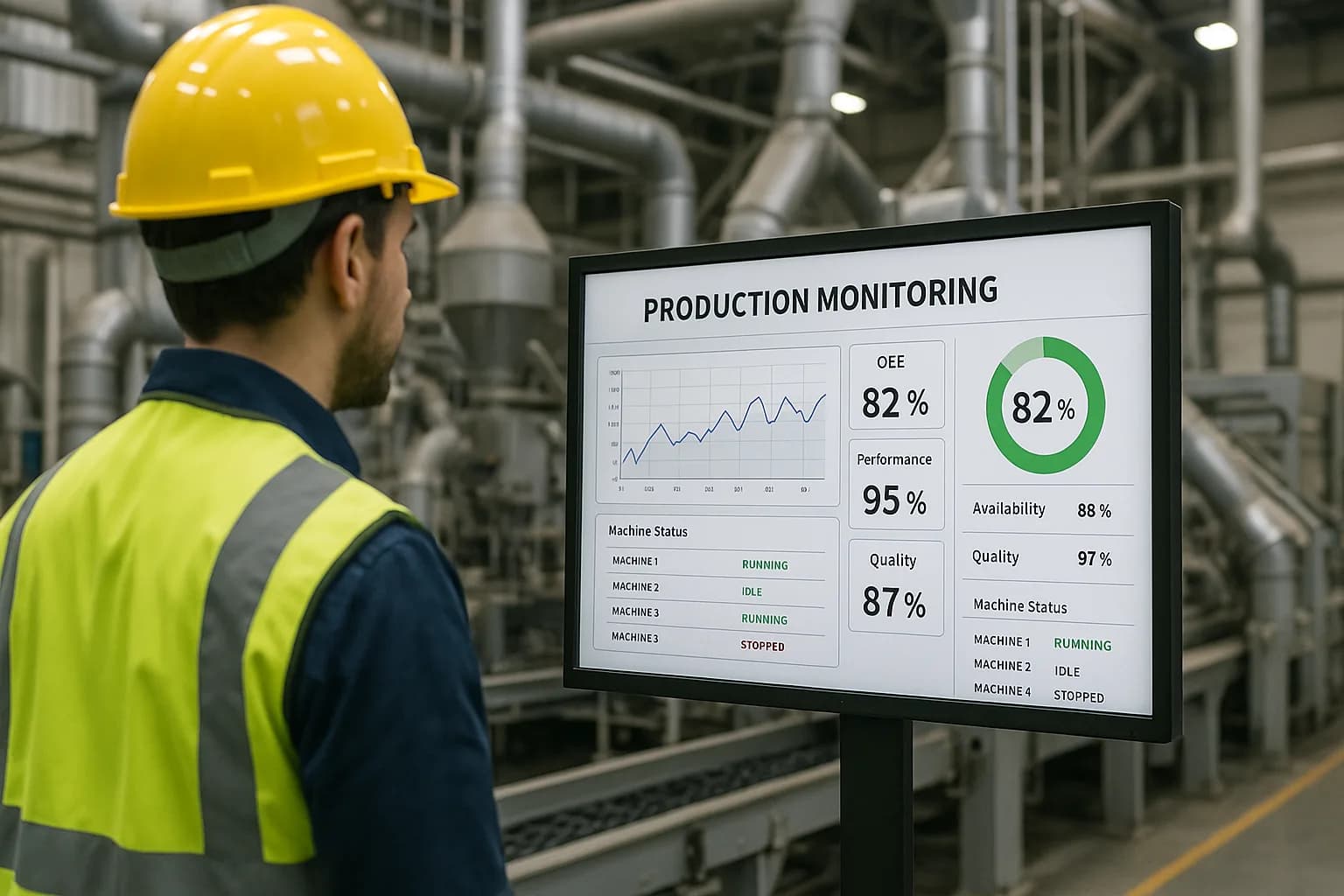
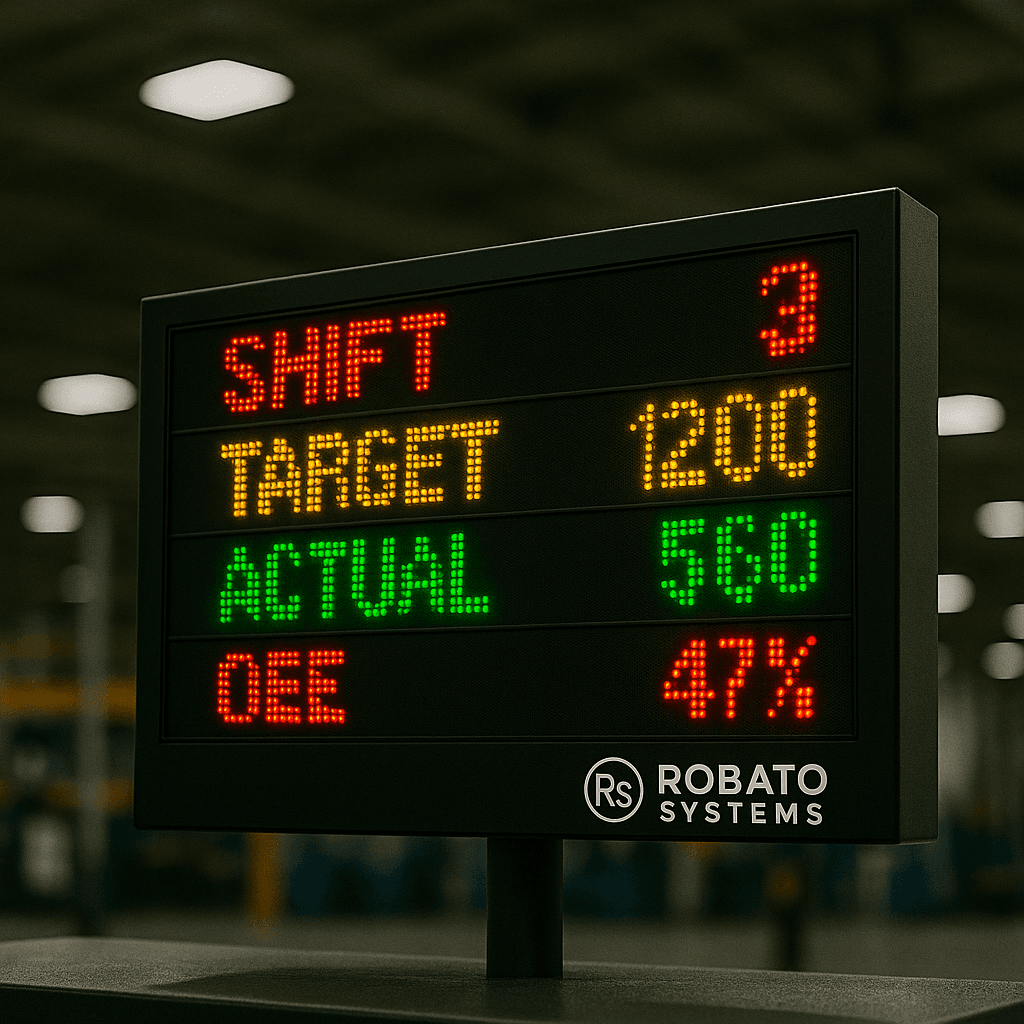
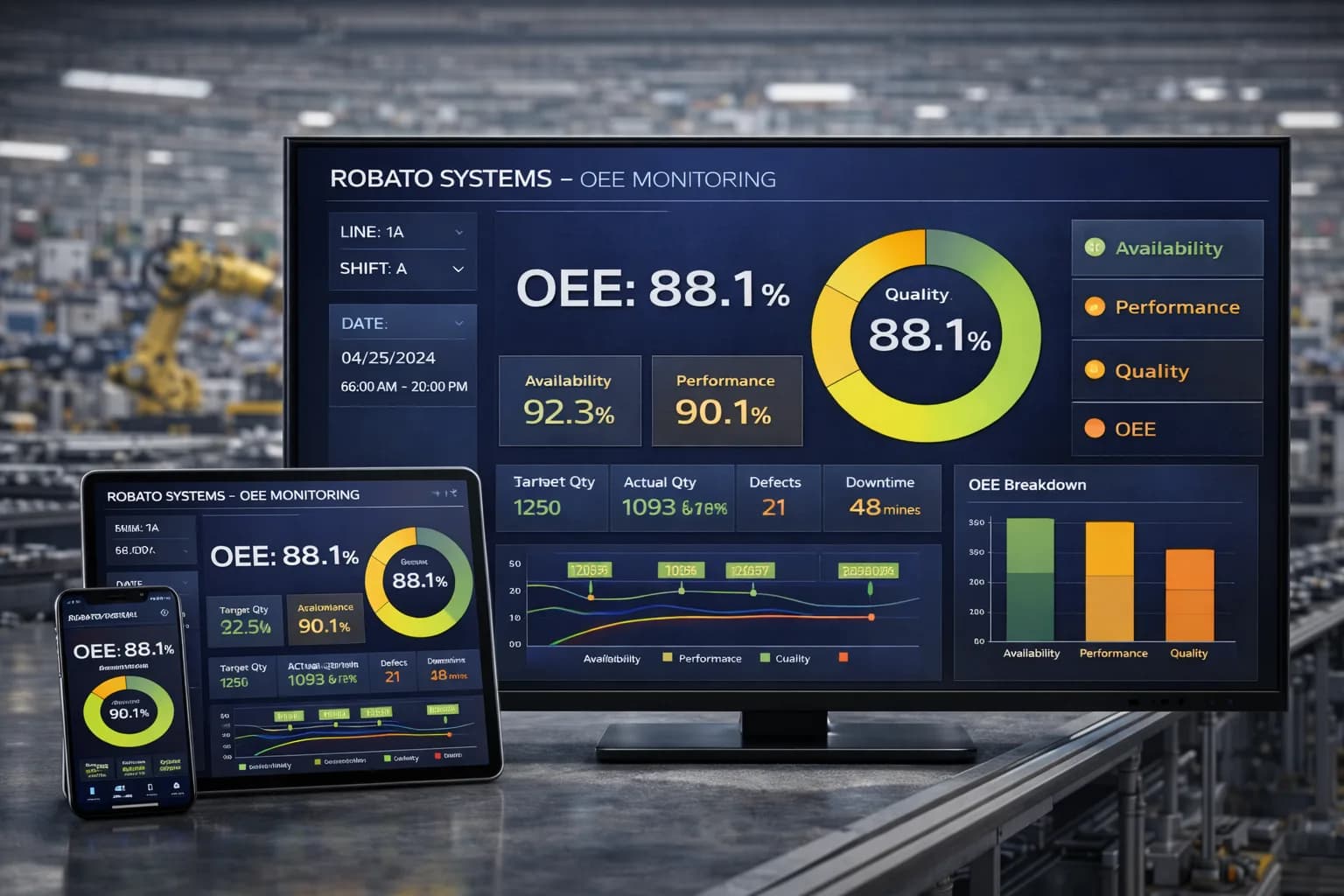
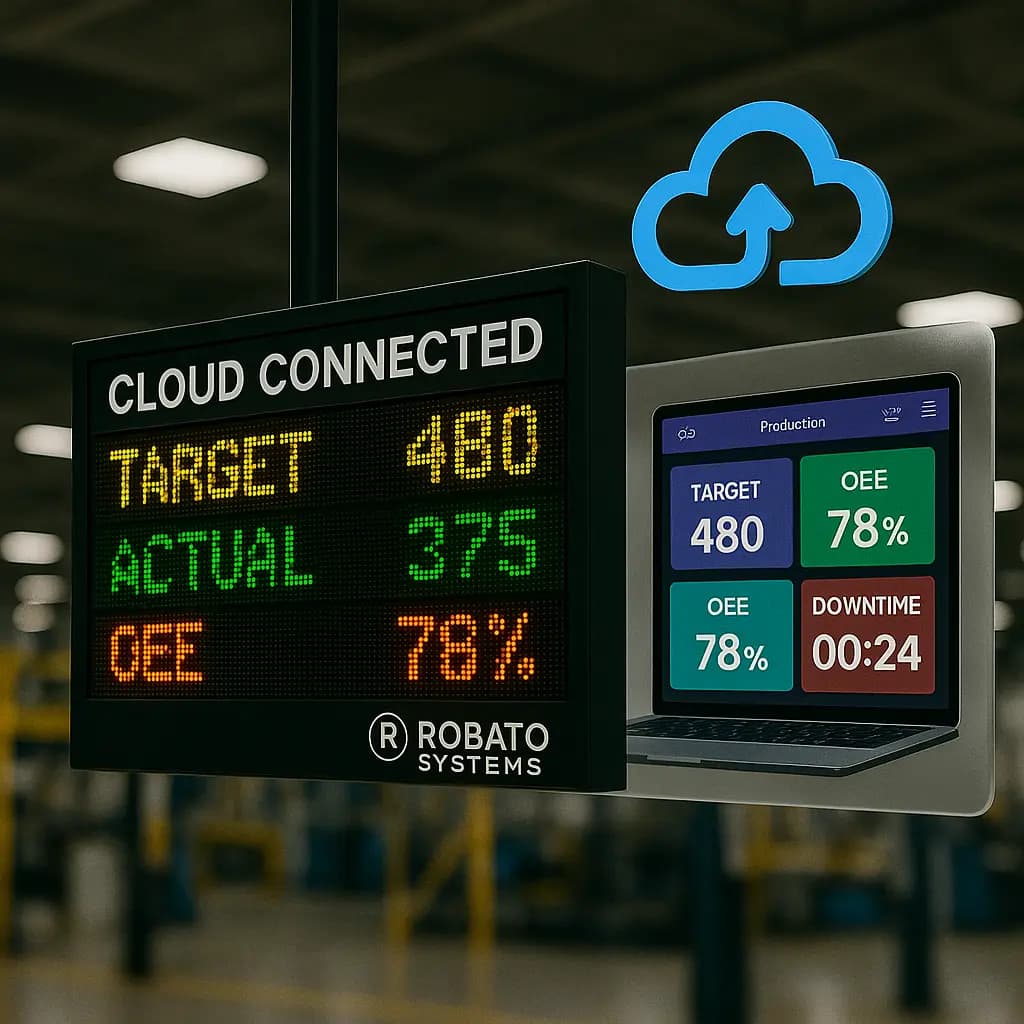
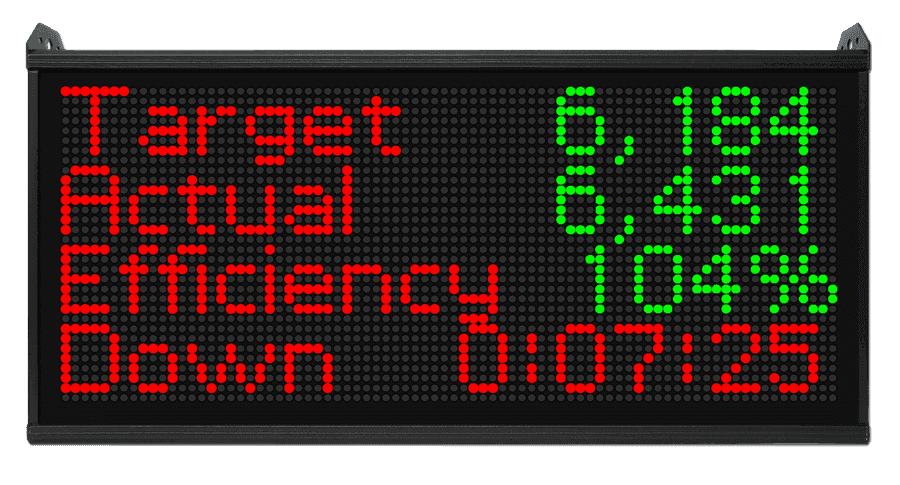
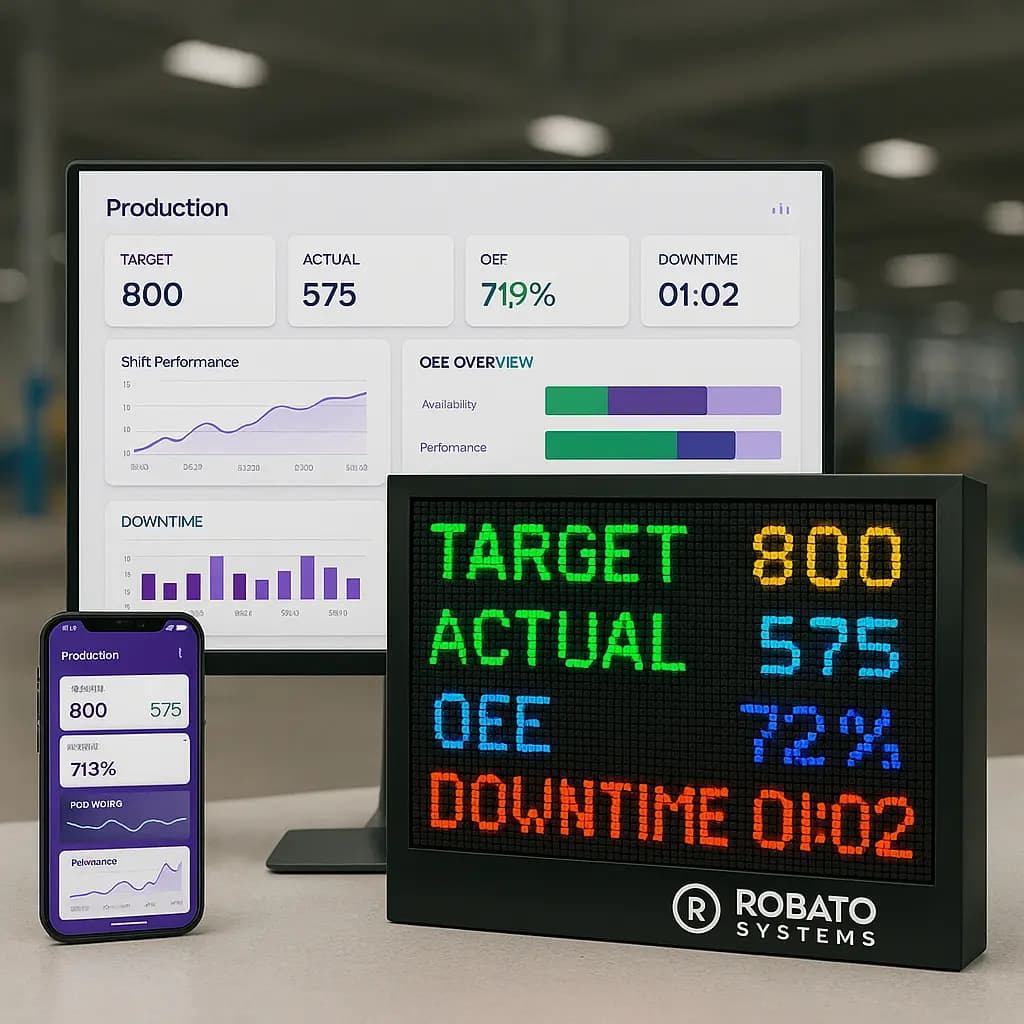
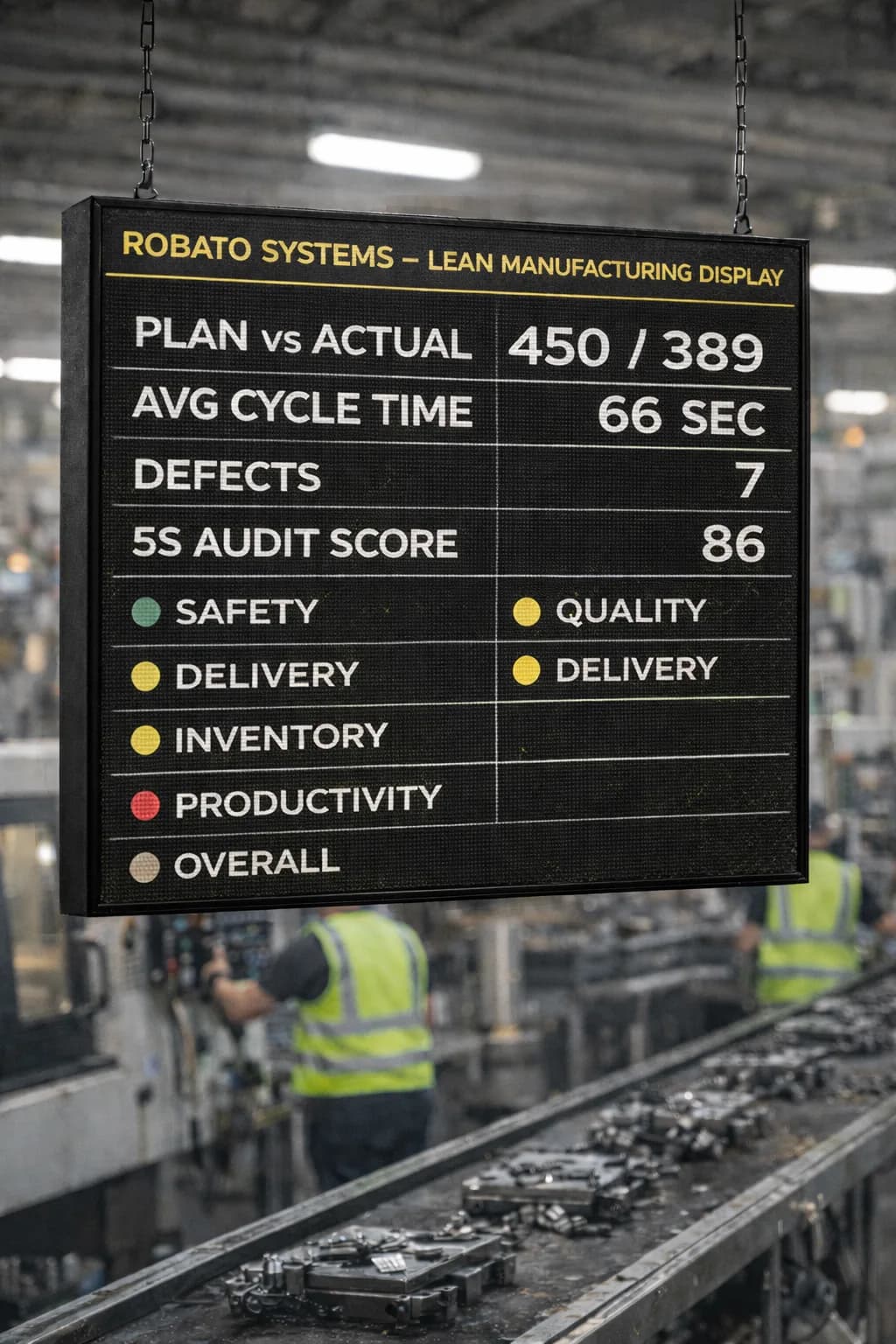
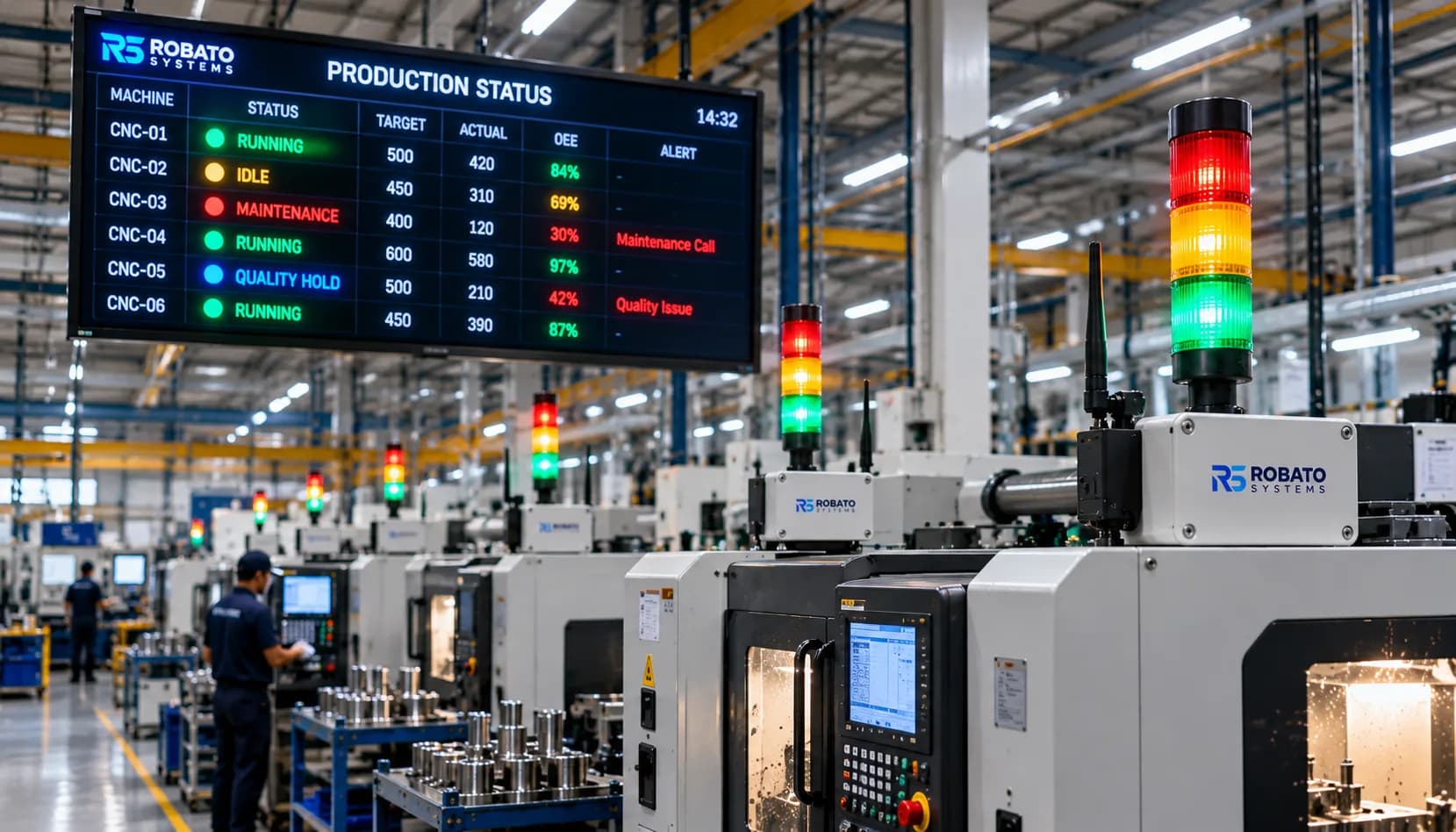
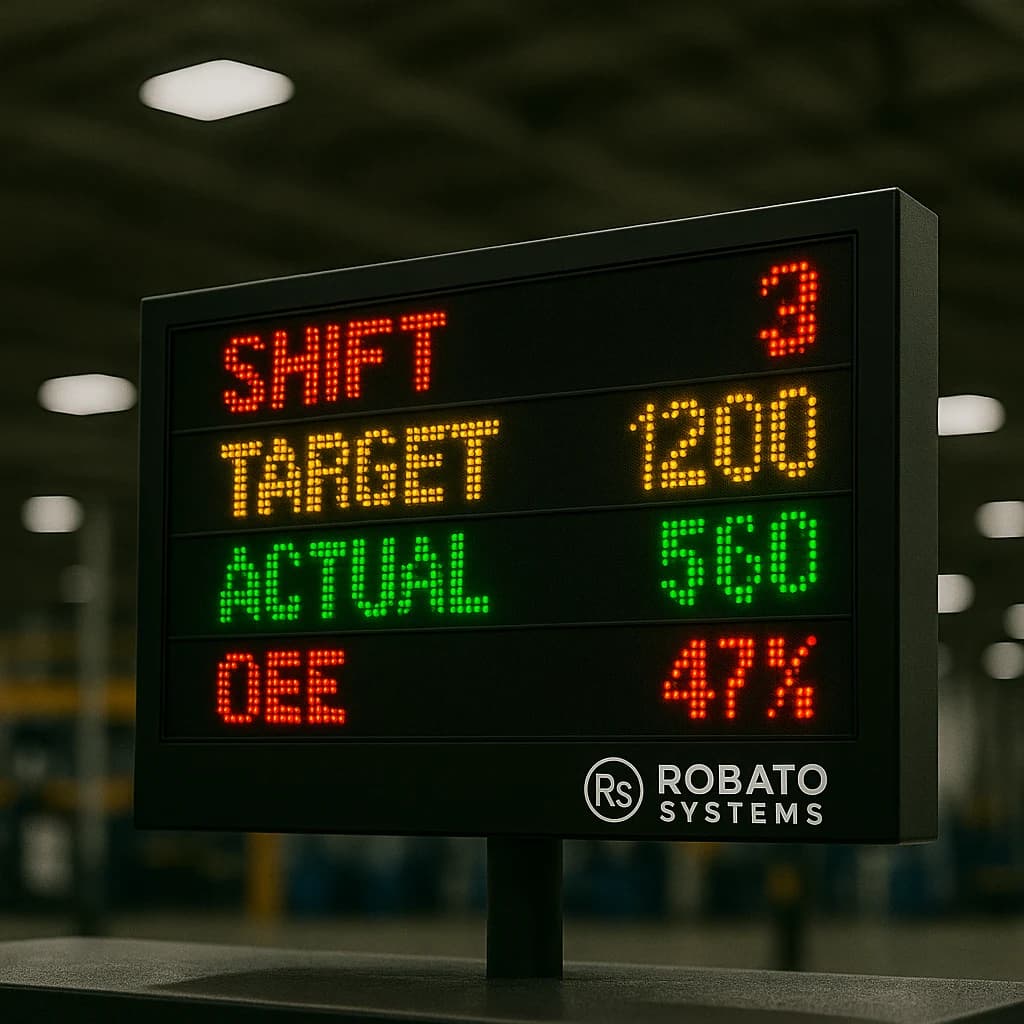
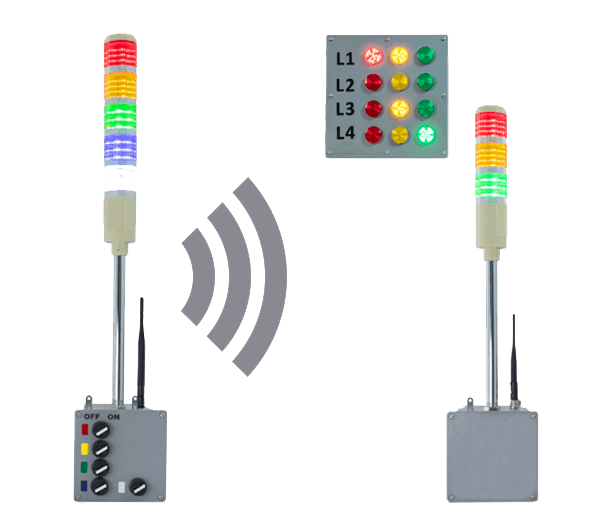
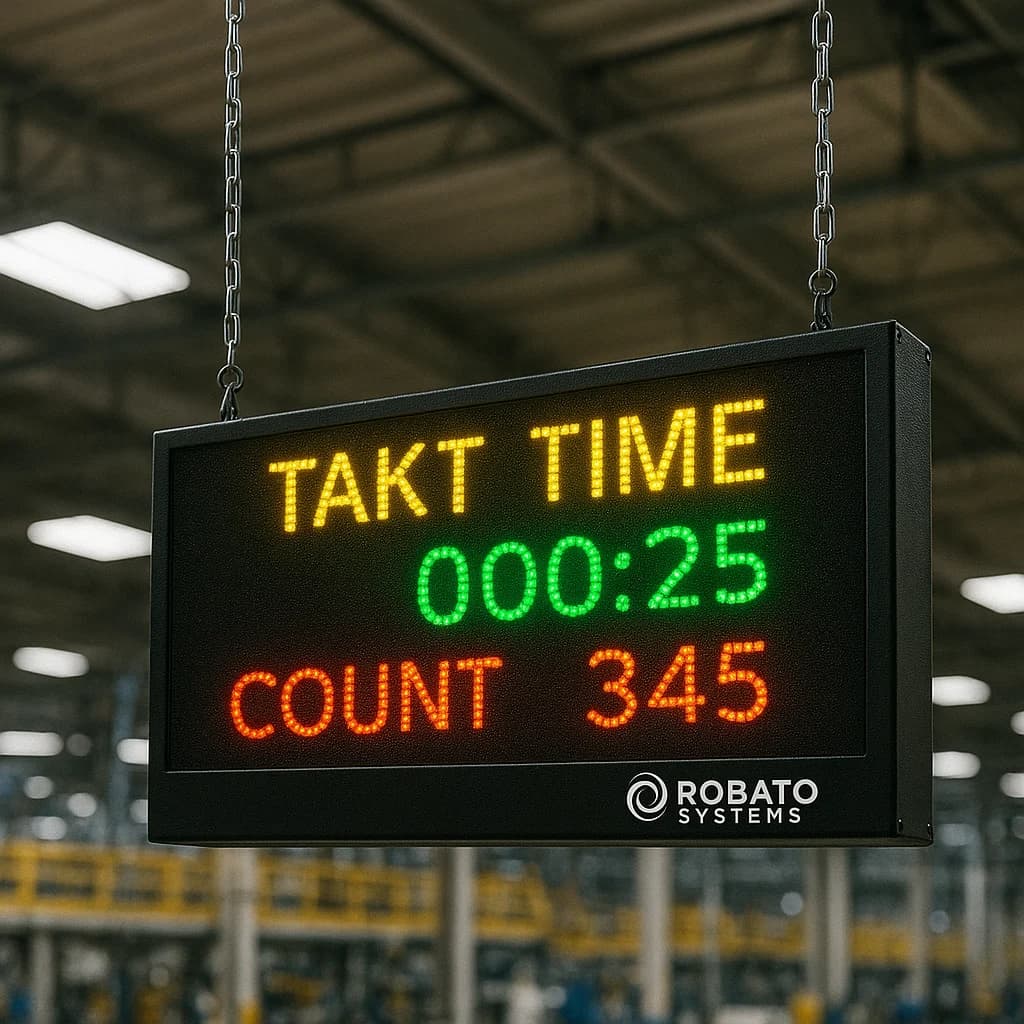
One of the most powerful aspects of a modern production monitoring and control system is how far the data travels. Live dashboards are displayed on LED production boards mounted on the shop floor, keeping operators and supervisors aligned in real time. Smart TV dashboards in supervisors' offices and conference rooms bring management into the picture without requiring them to physically walk the floor.
Cloud-based portals and mobile apps extend that visibility further, allowing plant managers and senior leadership to monitor multiple facilities from a single screen, regardless of where they are. The information is always current, always accessible, and always consistent across every level of the organization.
Built to Fit Any Manufacturing Environment
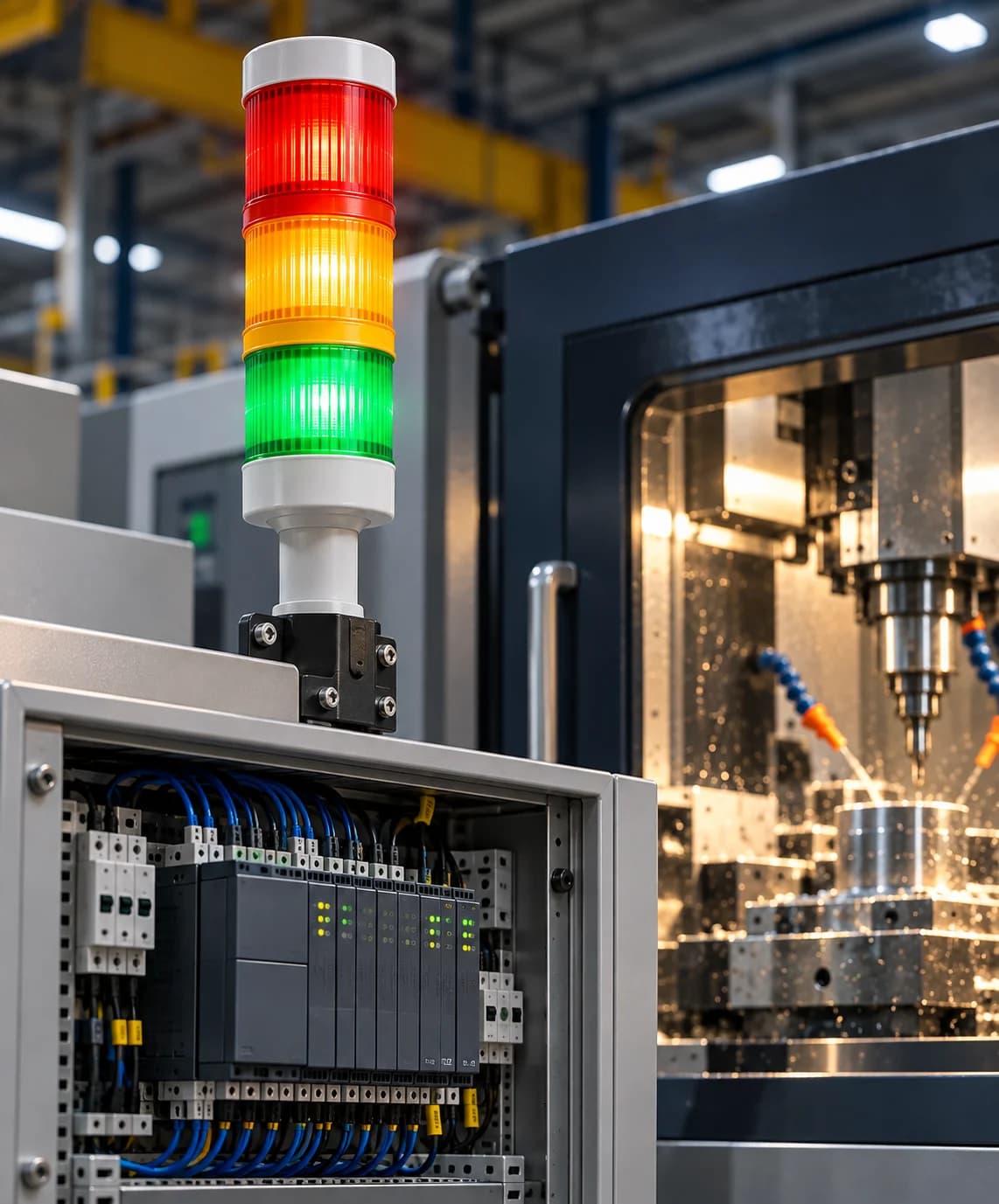
Whether a factory runs automotive components, pharmaceutical batches, electronic assemblies, textile products, or fast-moving consumer goods, a production monitoring and control system adapts to the specific needs of that environment. Integration with existing PLCs, sensors, and ERP systems means there is no need to replace existing infrastructure. The system layers on top of what is already there and begins delivering value from the very first shift.
Deployment options include cloud-based SaaS platforms for multi-plant enterprises, on-premise installations for regulated industries with strict data policies, and hybrid configurations that combine local data collection with cloud-level reporting for management teams.
The Outcome Is Always the Same: Better Decisions, Faster
At its core, production monitoring and control is about shortening the distance between what happens on the factory floor and the decision that follows. When that distance is measured in seconds rather than hours, factories operate at a level of efficiency that manual processes simply cannot match. Losses are caught earlier, problems are solved faster, and continuous improvement becomes a daily reality rather than a quarterly goal.