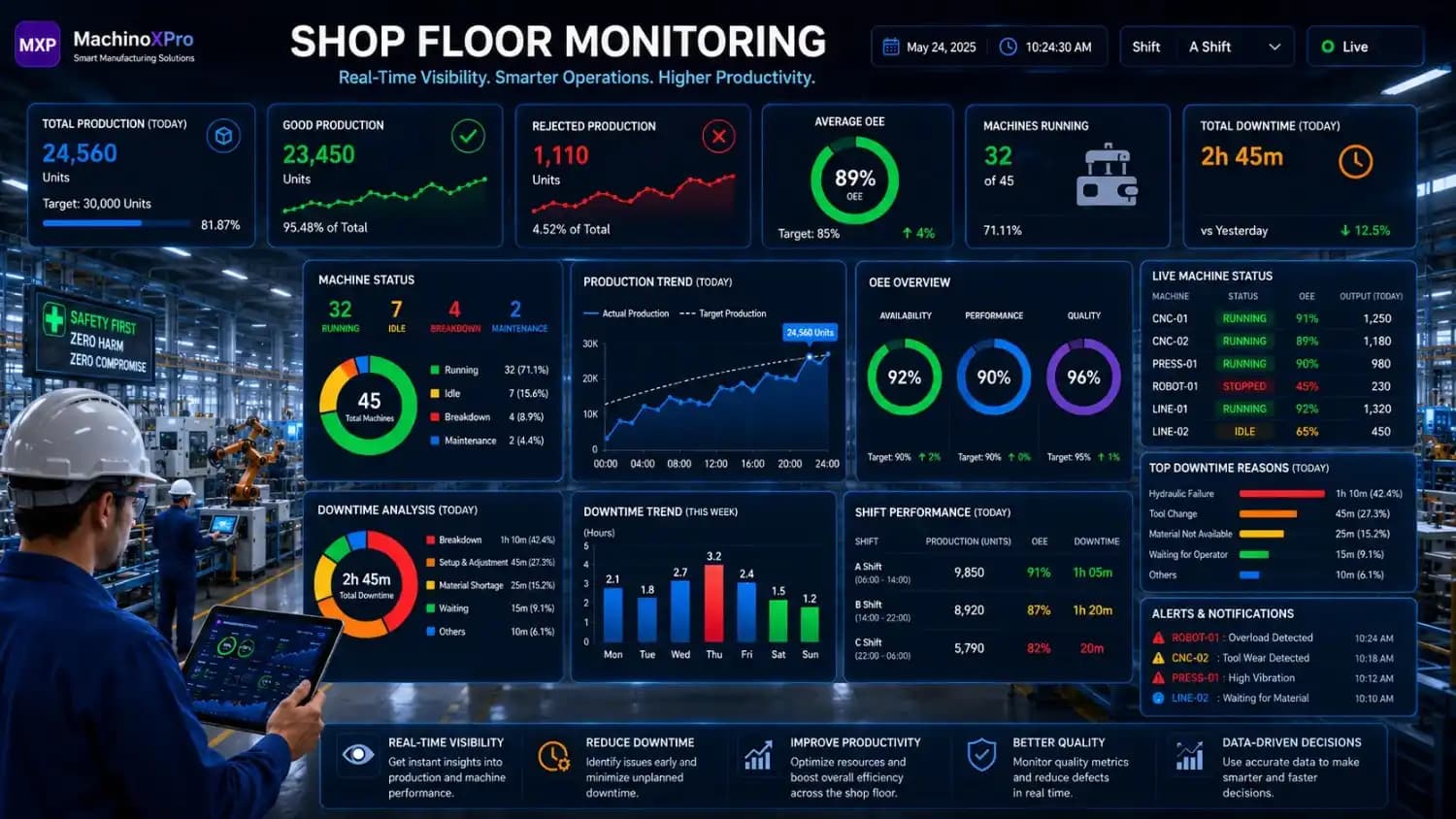
Shop Floor Monitoring Best Practices
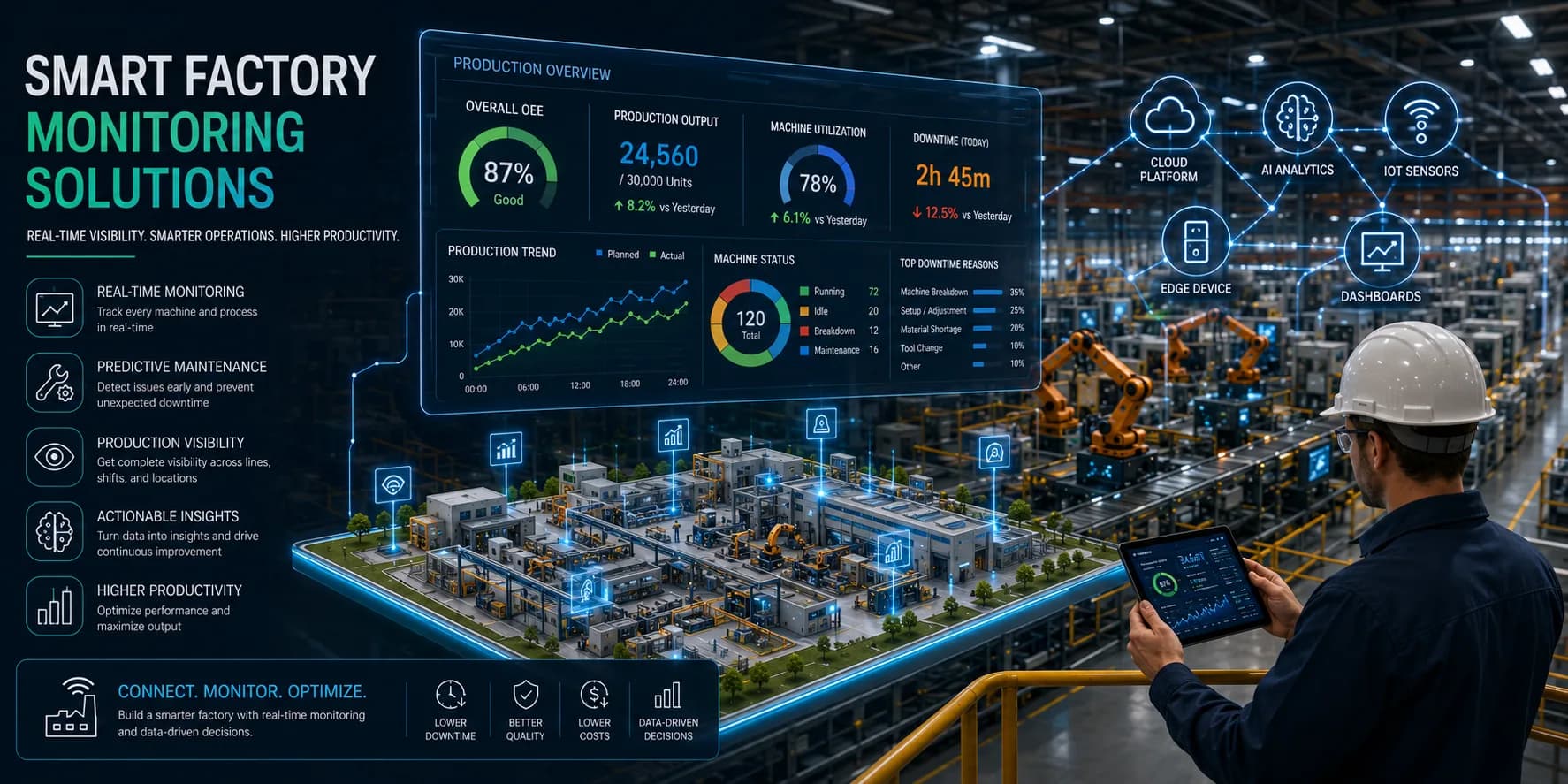
Modern manufacturing environments demand greater visibility, efficiency, and responsiveness than ever before. As factories adopt Industry 4.0 technologies, Shop Floor Monitoring has become essential for optimizing production processes and maximizing operational performance.
Shop floor monitoring enables manufacturers to collect and analyze real-time production data from machines, operators, and production lines. With instant visibility into manufacturing operations, businesses can identify bottlenecks, minimize downtime, and make data-driven decisions that improve productivity.
This guide explores the importance of shop floor monitoring and the best practices manufacturers should follow to achieve maximum efficiency.
What is Shop Floor Monitoring?
Shop Floor Monitoring refers to the continuous tracking and analysis of production activities across the manufacturing floor. It provides real-time visibility into machine performance, production output, downtime events, and workforce efficiency.
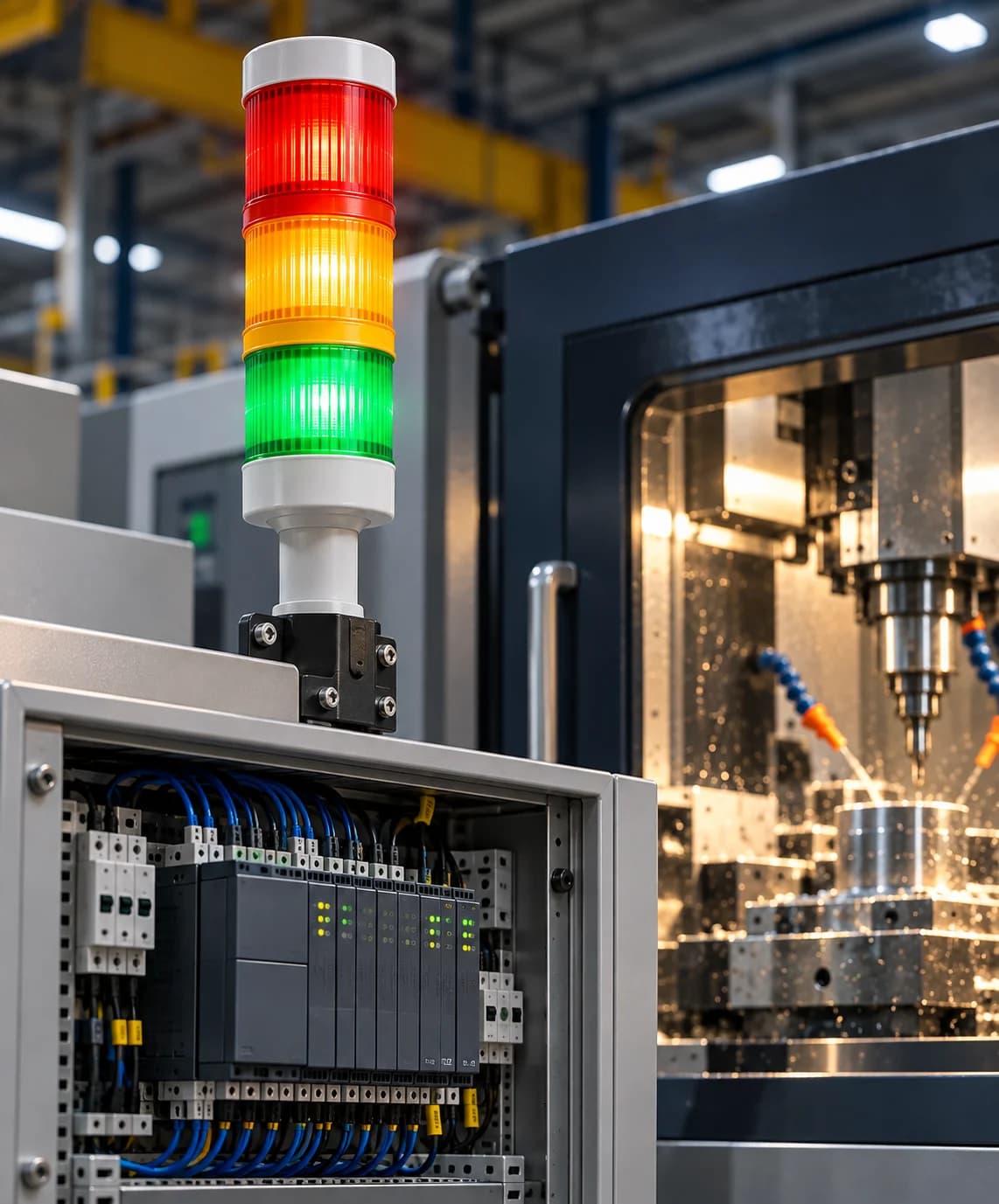
Using sensors, PLCs, Industrial IoT devices, and monitoring software, manufacturers can monitor critical information such as:
- Machine status
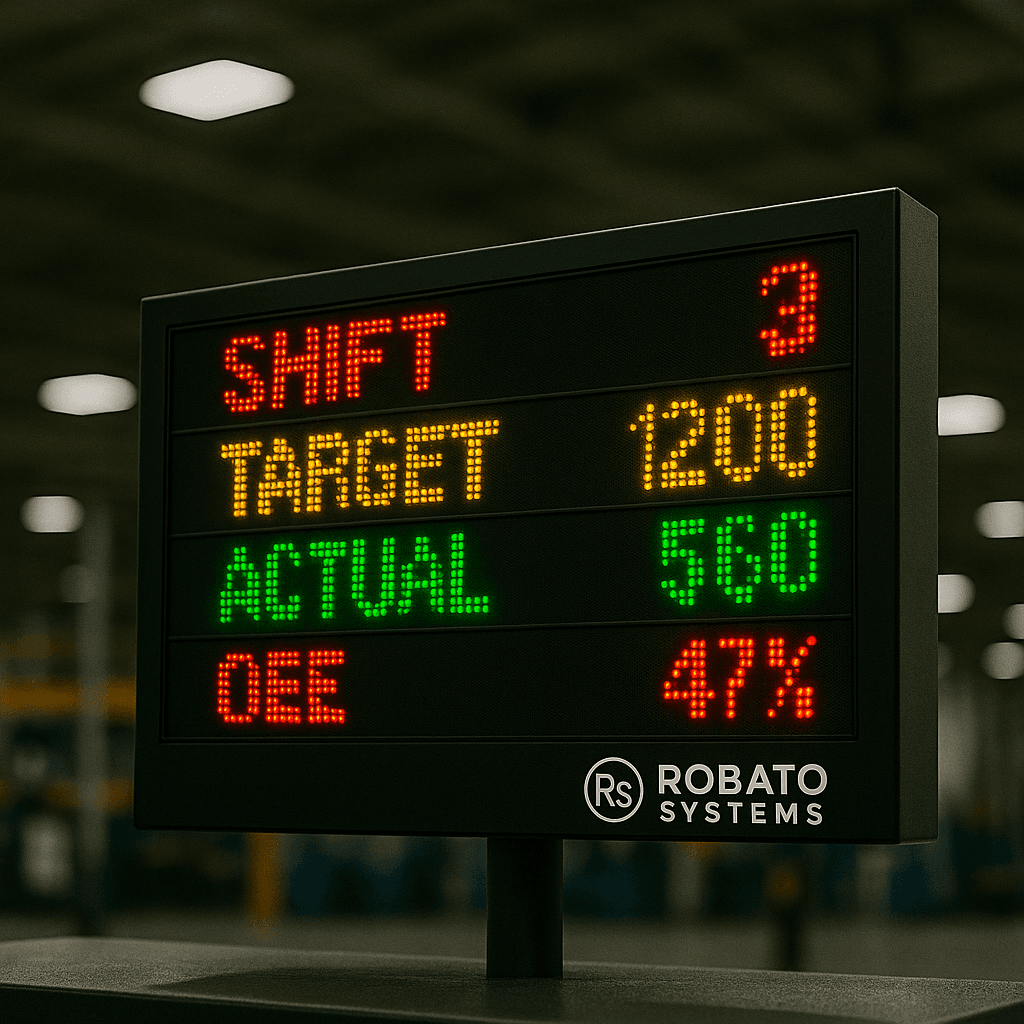
- Production counts
- Downtime events
- Cycle times
- Operator performance
- Overall Equipment Effectiveness (OEE)
- Quality metrics
- Production targets
This real-time information helps organizations improve efficiency and maintain consistent production performance.
Why Shop Floor Monitoring is Important
Without proper monitoring, production losses and inefficiencies often remain unnoticed until they significantly impact output and profitability.
Shop floor monitoring helps manufacturers:
- Increase production visibility.
- Improve machine utilization.
- Reduce downtime.
- Enhance quality control.
- Optimize workforce performance.
- Improve decision-making.
- Support continuous improvement initiatives.
These benefits make shop floor monitoring a critical component of smart manufacturing.
Best Practices for Effective Shop Floor Monitoring
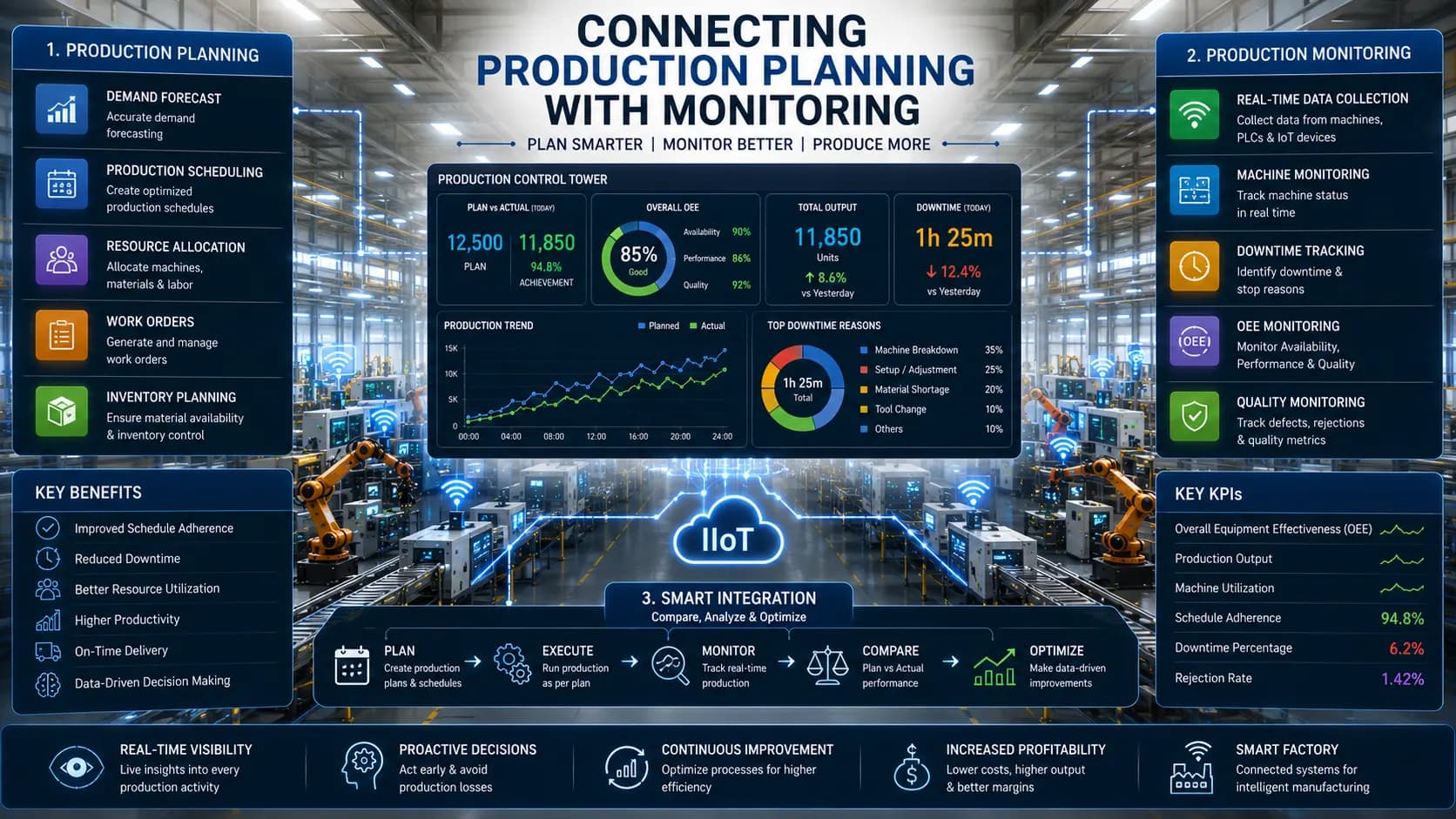
1. Implement Real-Time Data Collection
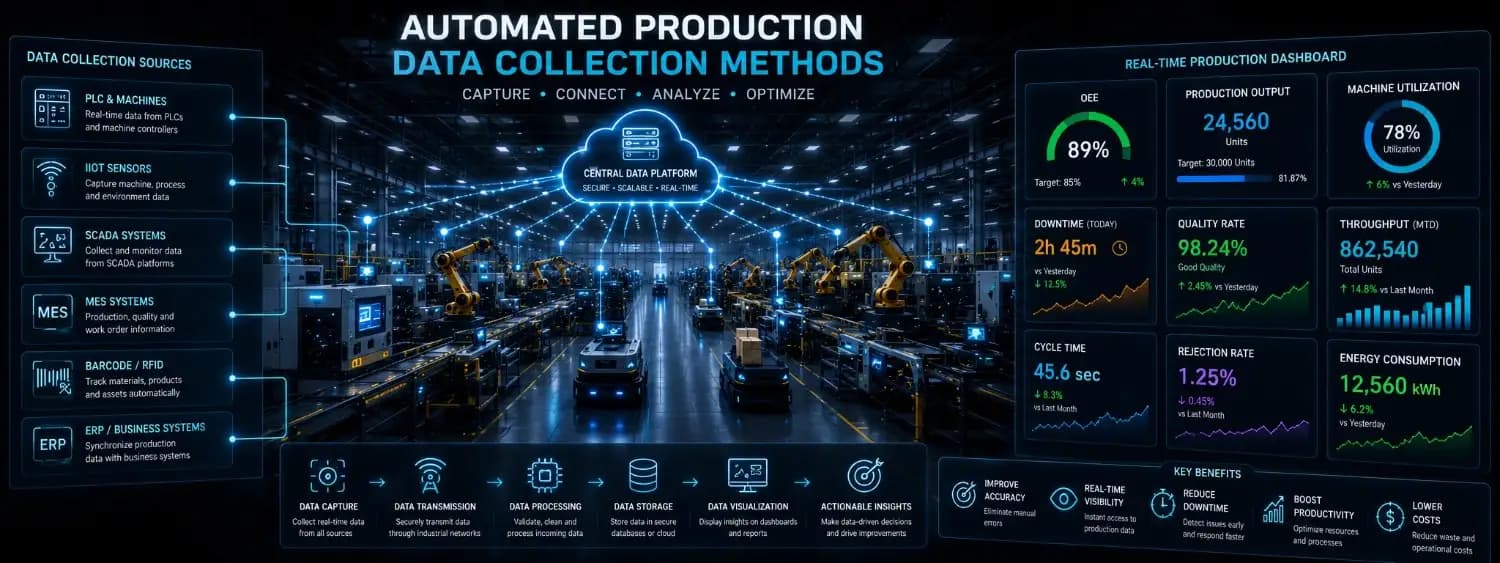
Manual reporting methods are prone to delays and errors. Automated data collection provides accurate and timely information directly from machines and production systems.
Real-time data enables manufacturers to:
- Detect abnormalities instantly.
- Improve response times.
- Eliminate manual errors.
- Increase operational efficiency.
Automated production data collection forms the foundation of an effective monitoring system.
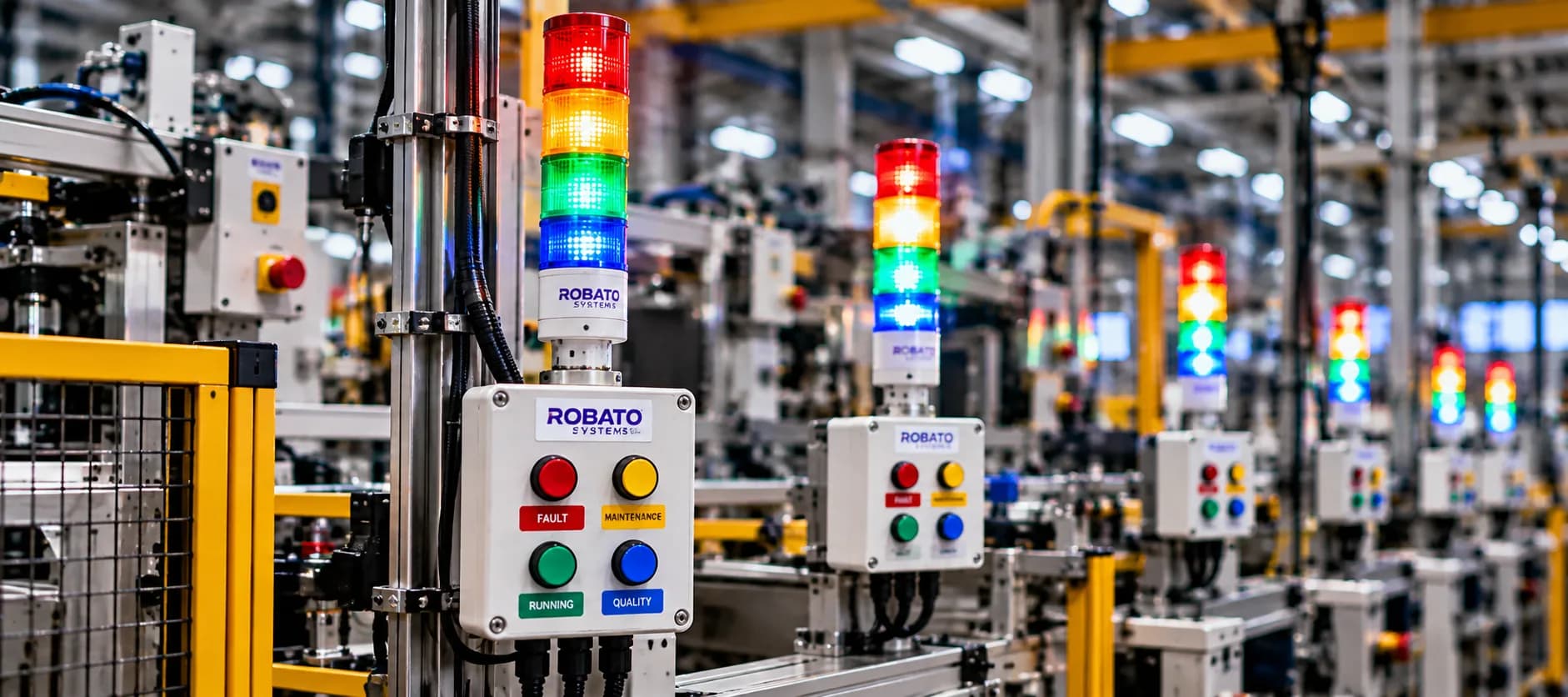
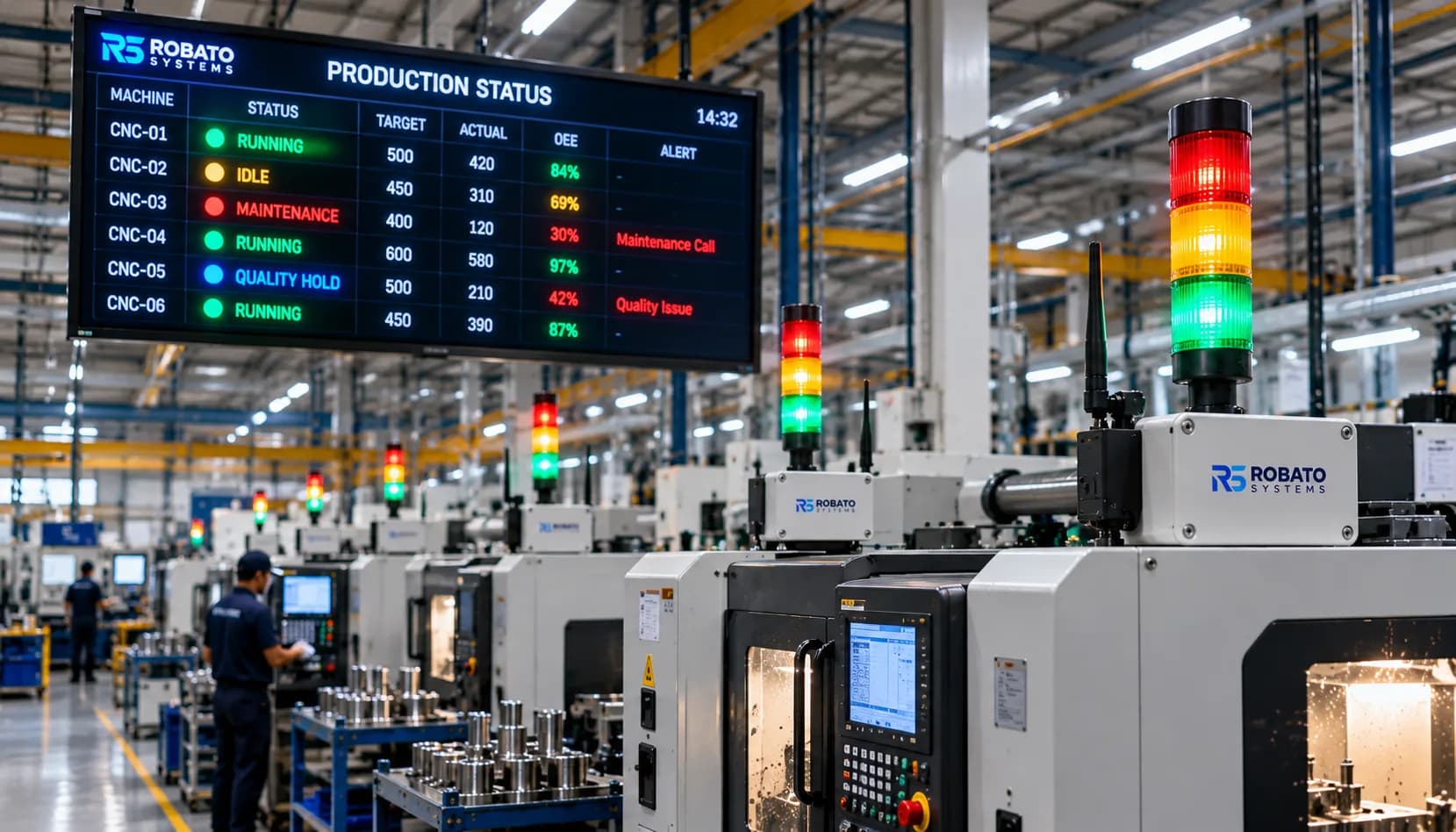
2. Monitor Machine Status Continuously
Machine availability has a direct impact on productivity.
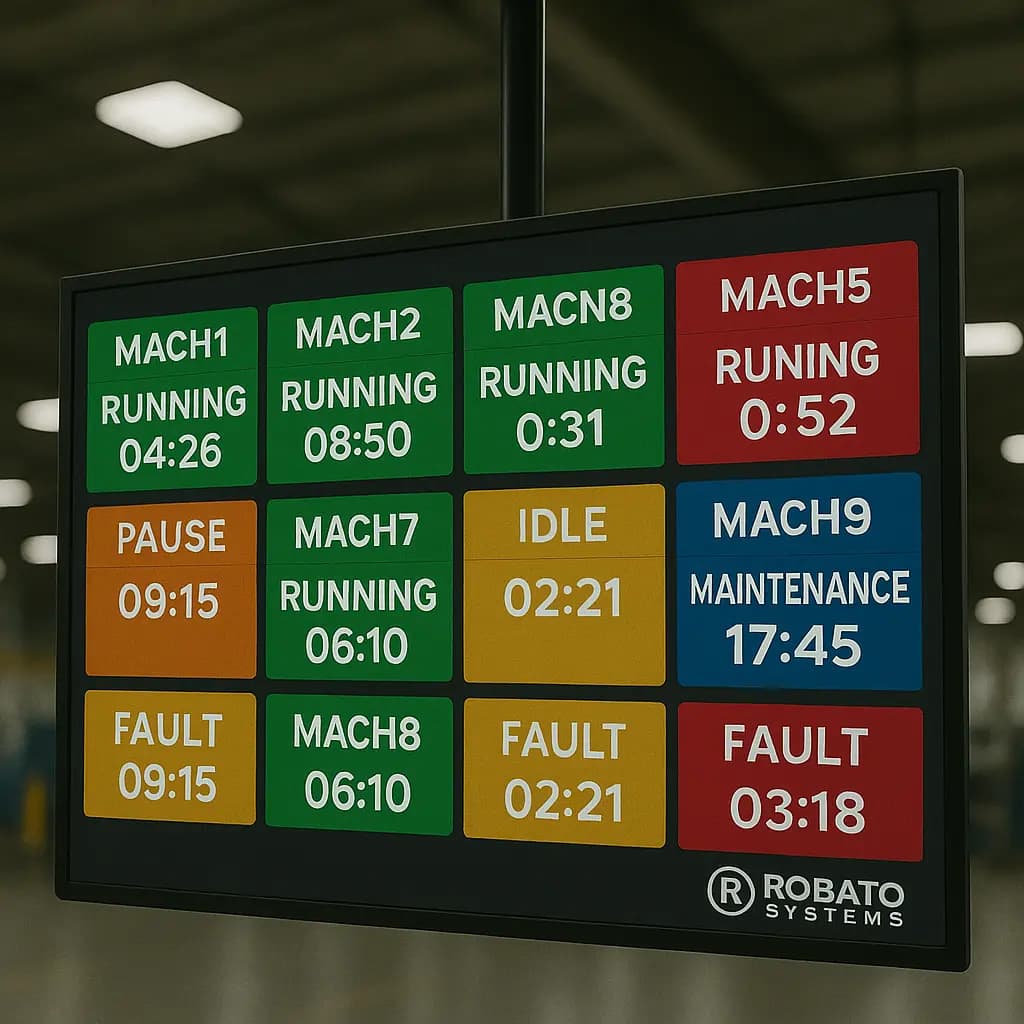
Manufacturers should track:
- Running condition
- Idle time
- Breakdown events
- Maintenance activities
- Setup and changeover times
Continuous machine monitoring helps maintenance teams respond quickly and minimize production losses.
3. Focus on Key Performance Indicators (KPIs)
Monitoring too many metrics can create confusion. Instead, manufacturers should prioritize critical KPIs such as:
Overall Equipment Effectiveness (OEE)
Measures availability, performance, and quality.
Machine Utilization
Indicates how effectively equipment is being used.
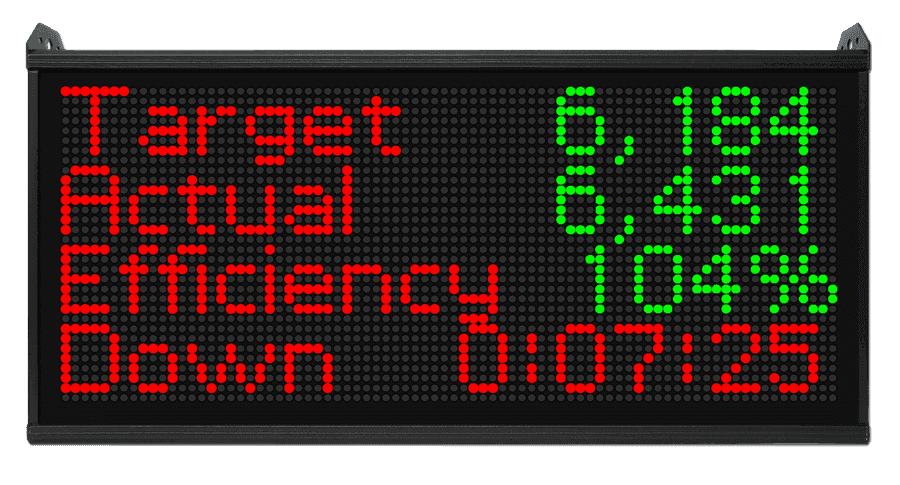
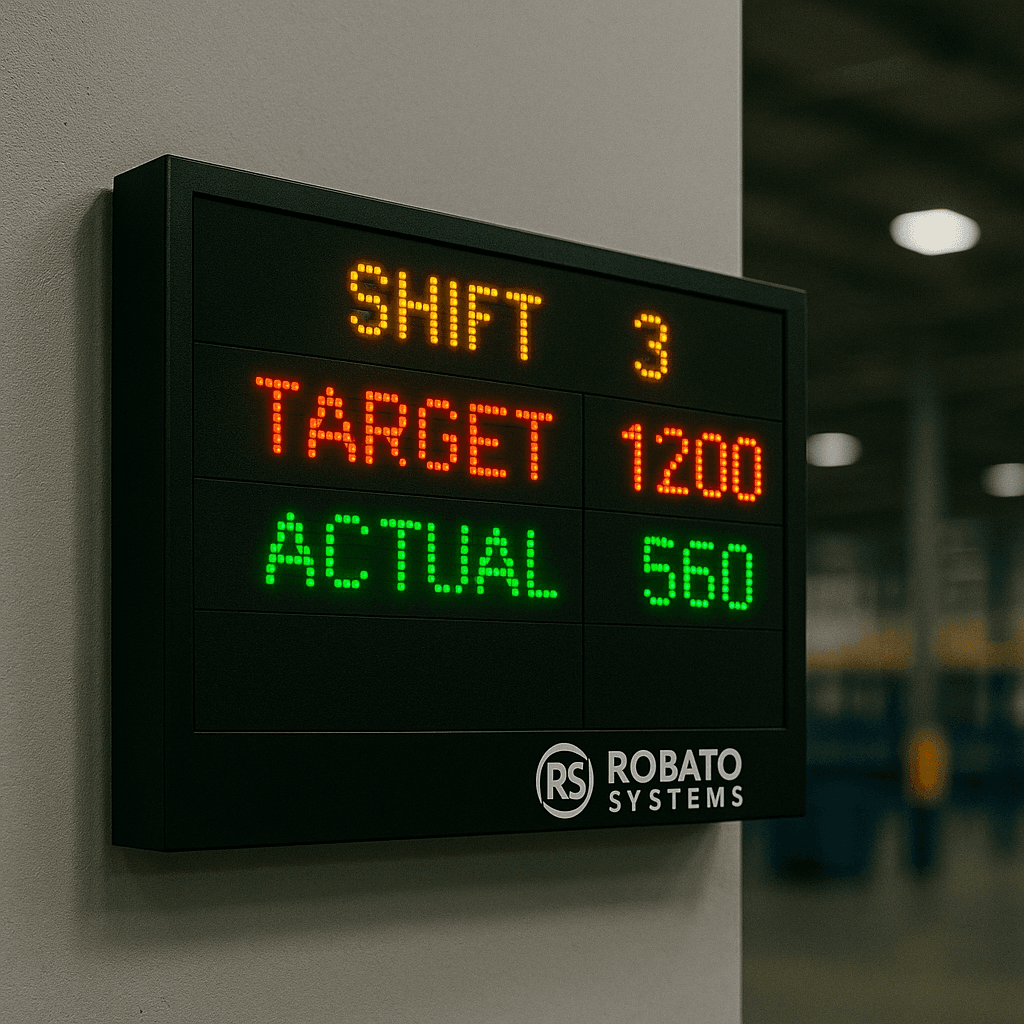
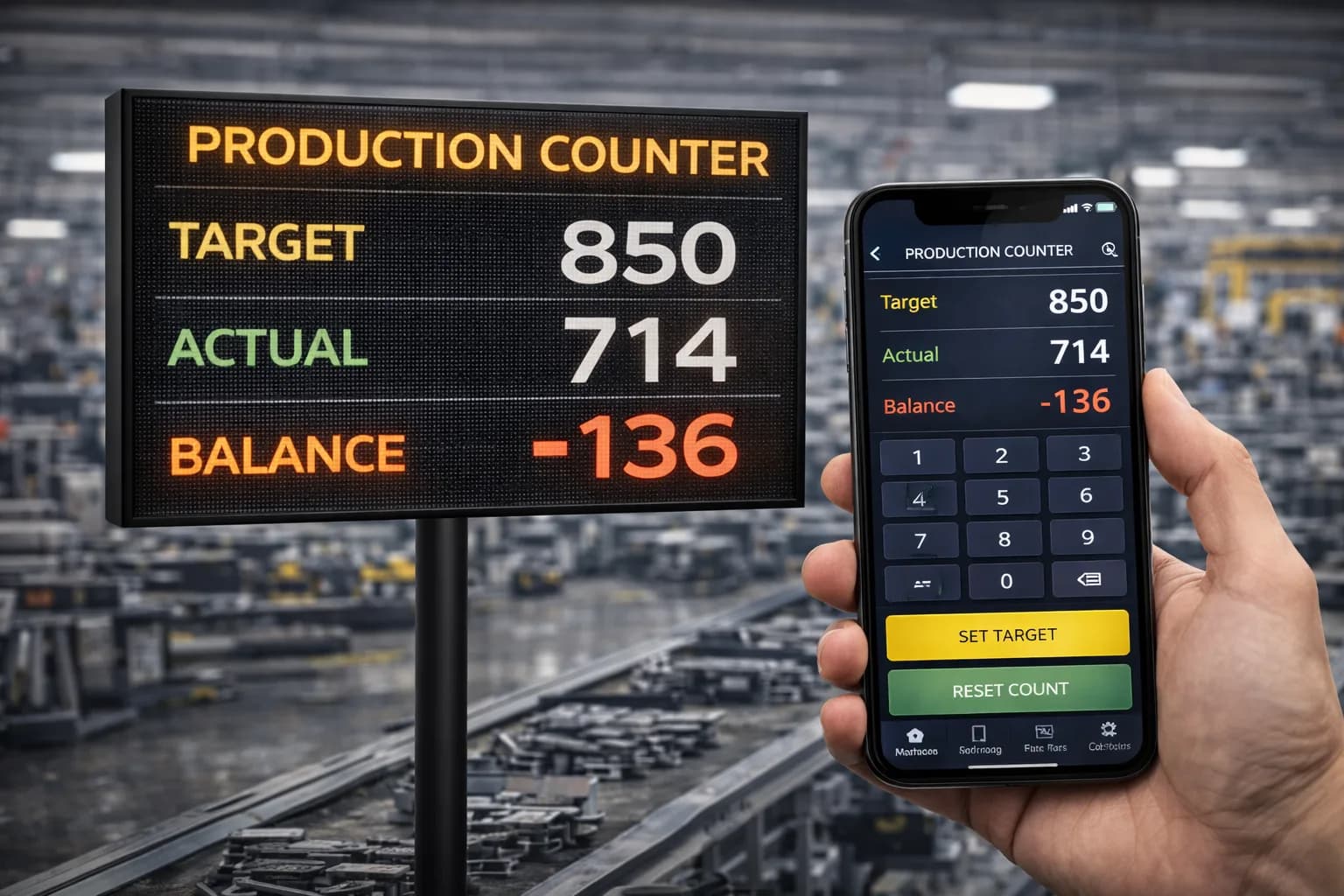
Production Output
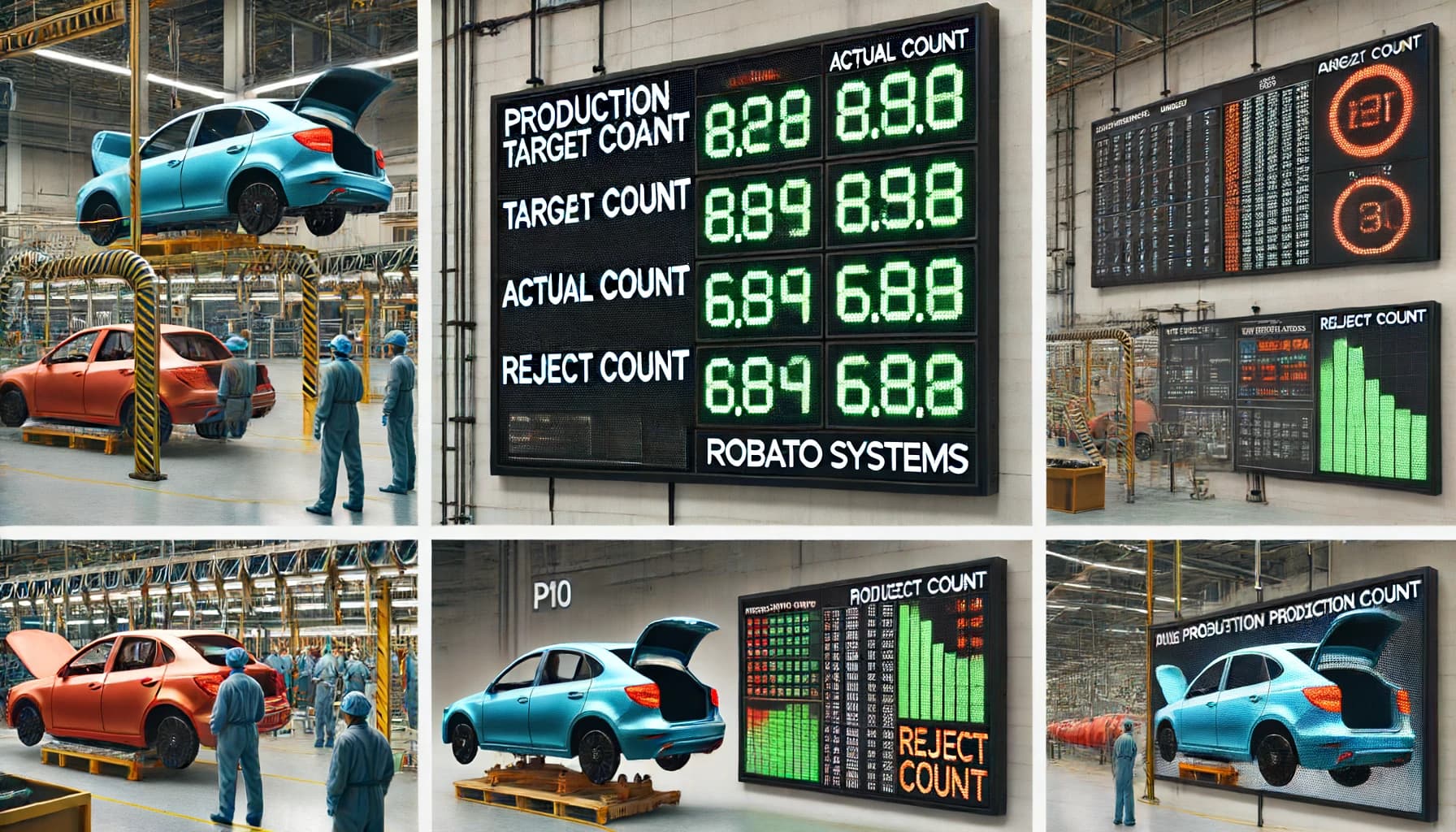
Compares target production with actual production.
Downtime Percentage
Measures production losses caused by machine stoppages.
Rejection Rate
Tracks product quality and defect levels.
These KPIs provide valuable insights into manufacturing performance.
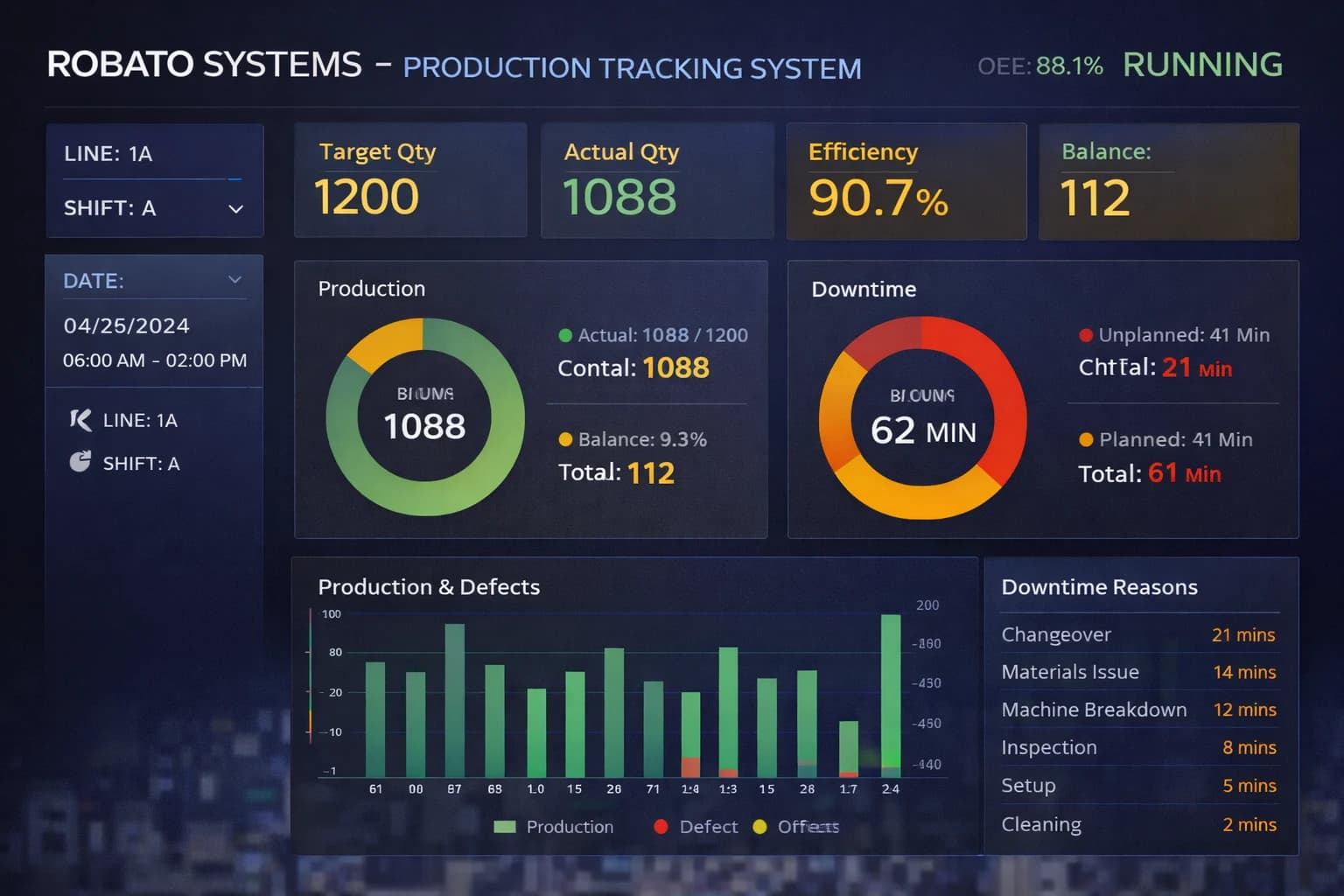
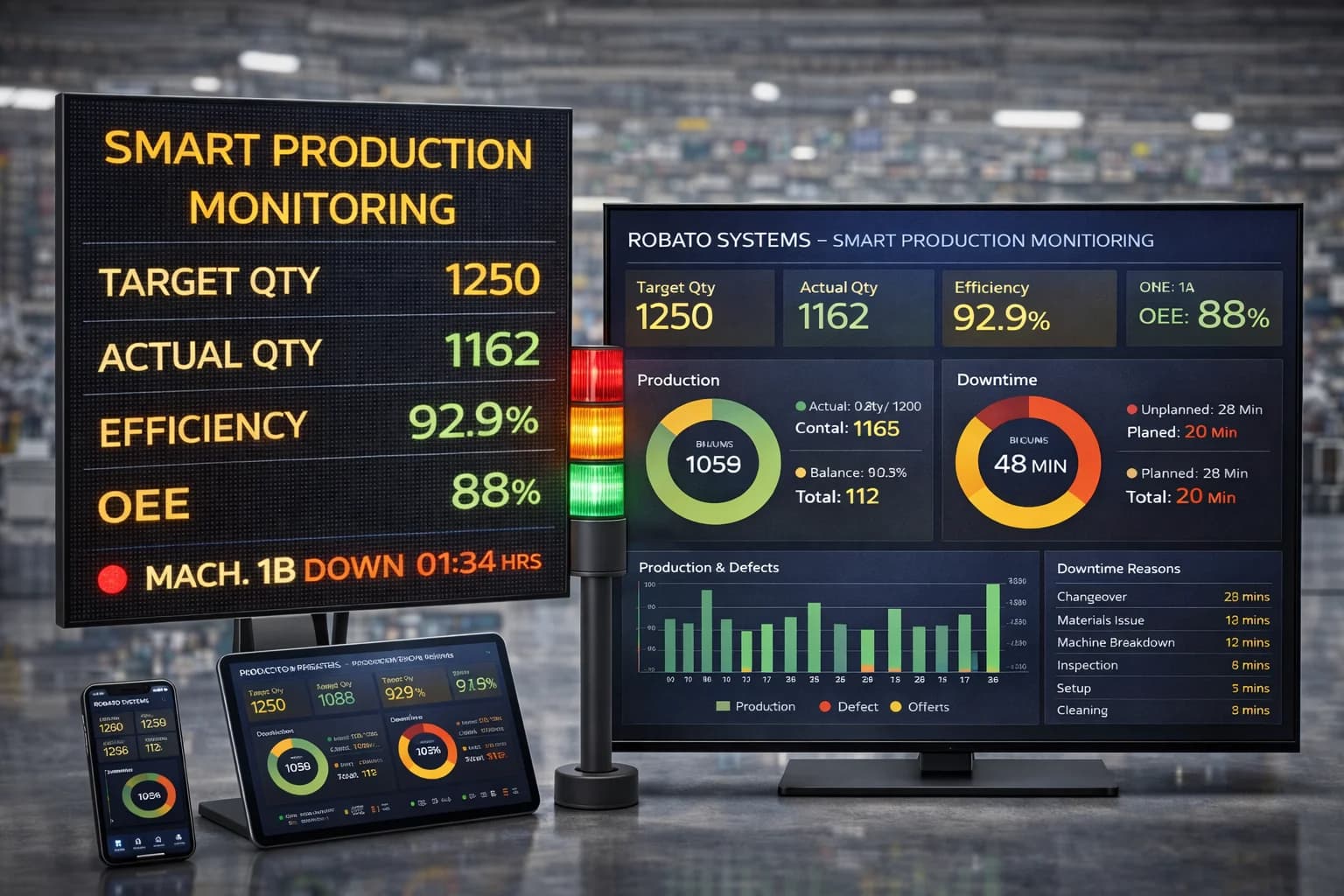
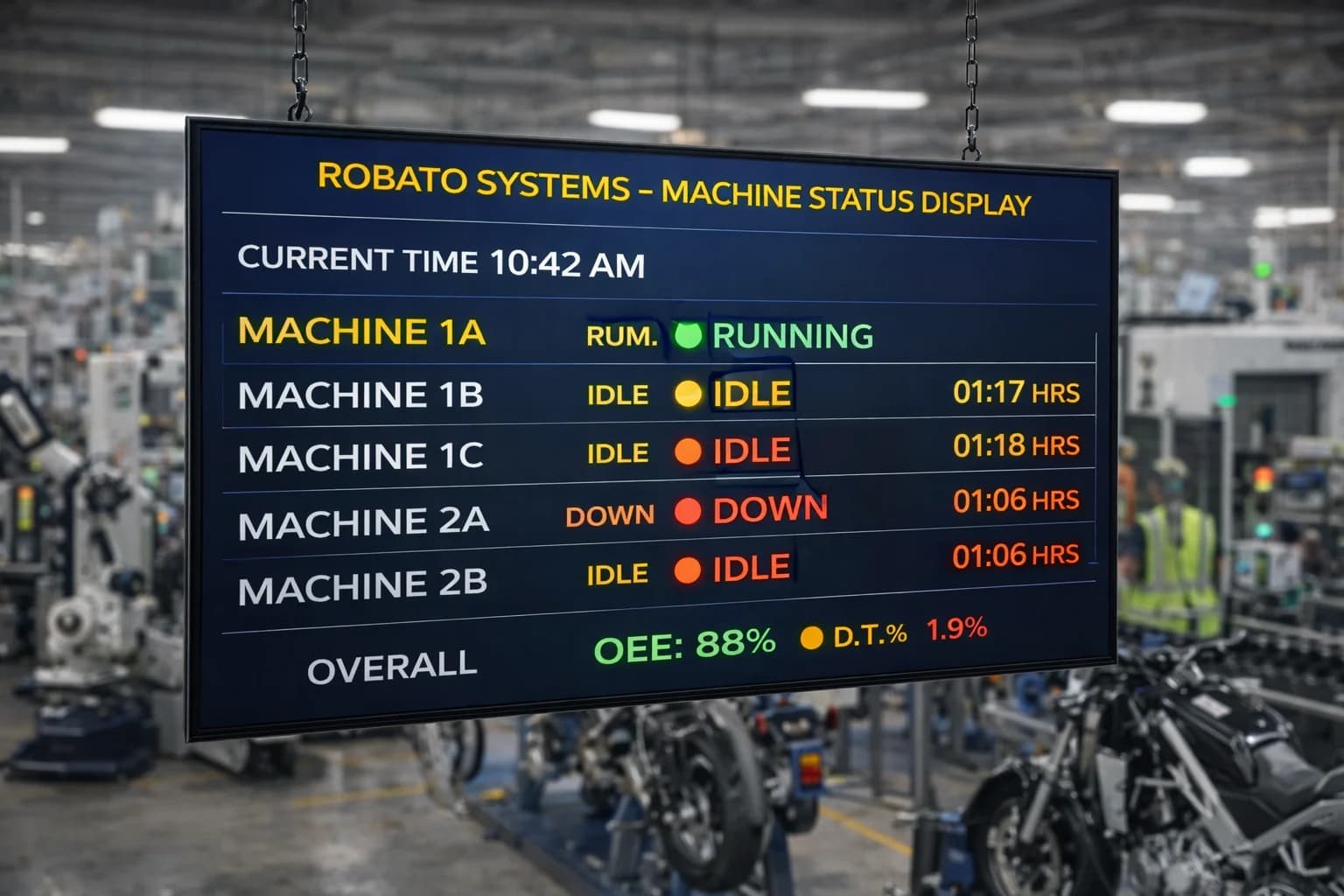
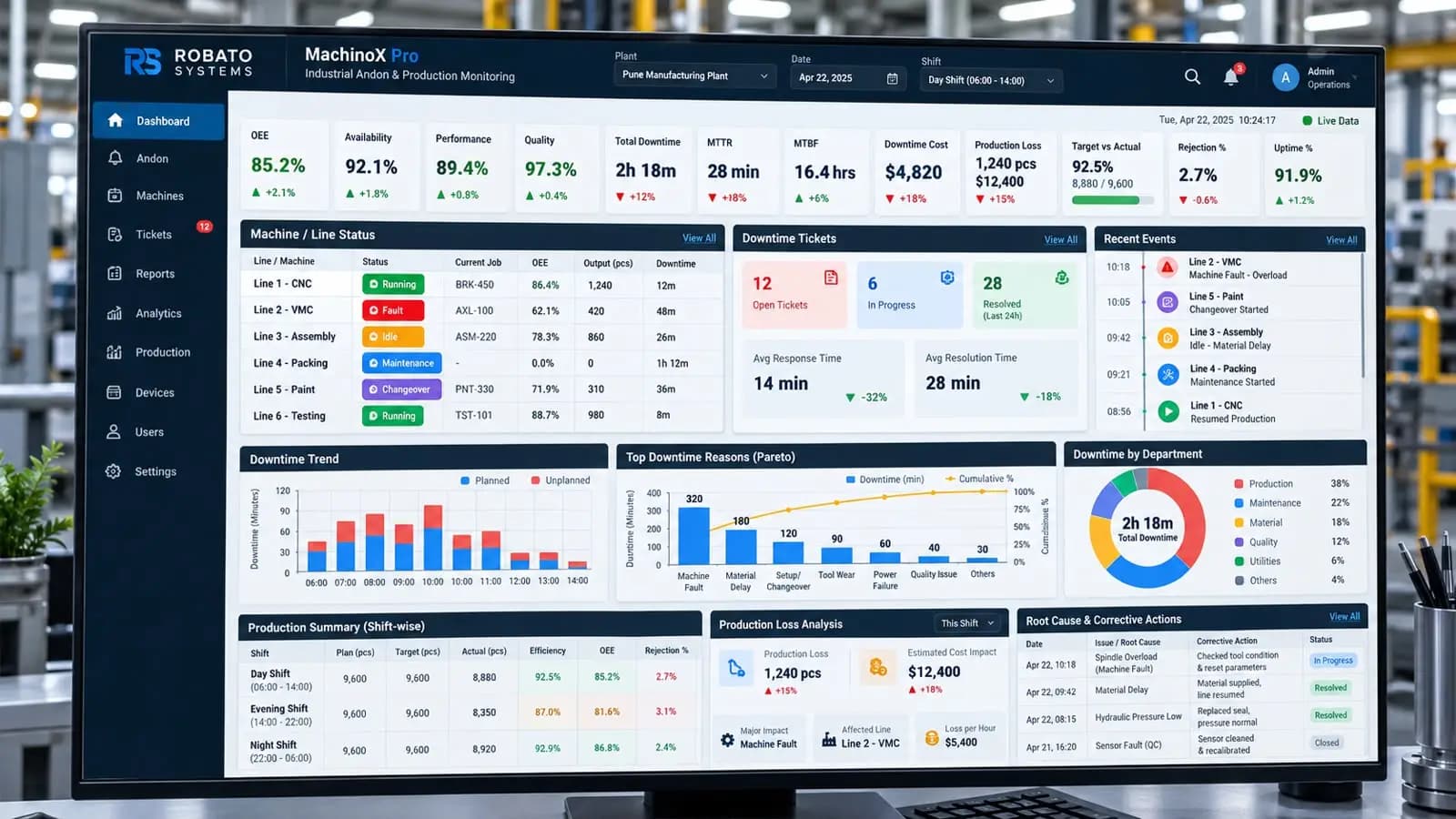
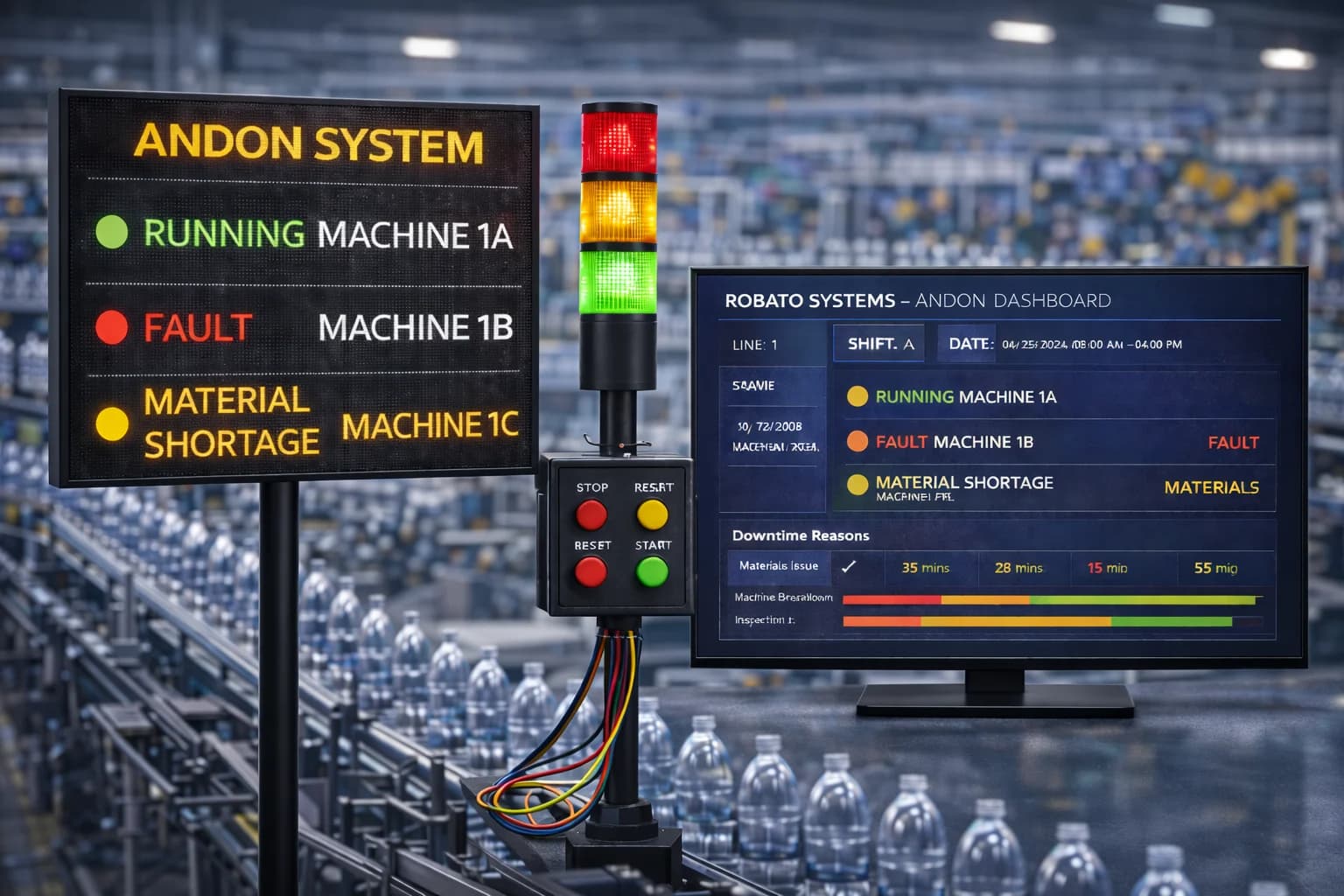
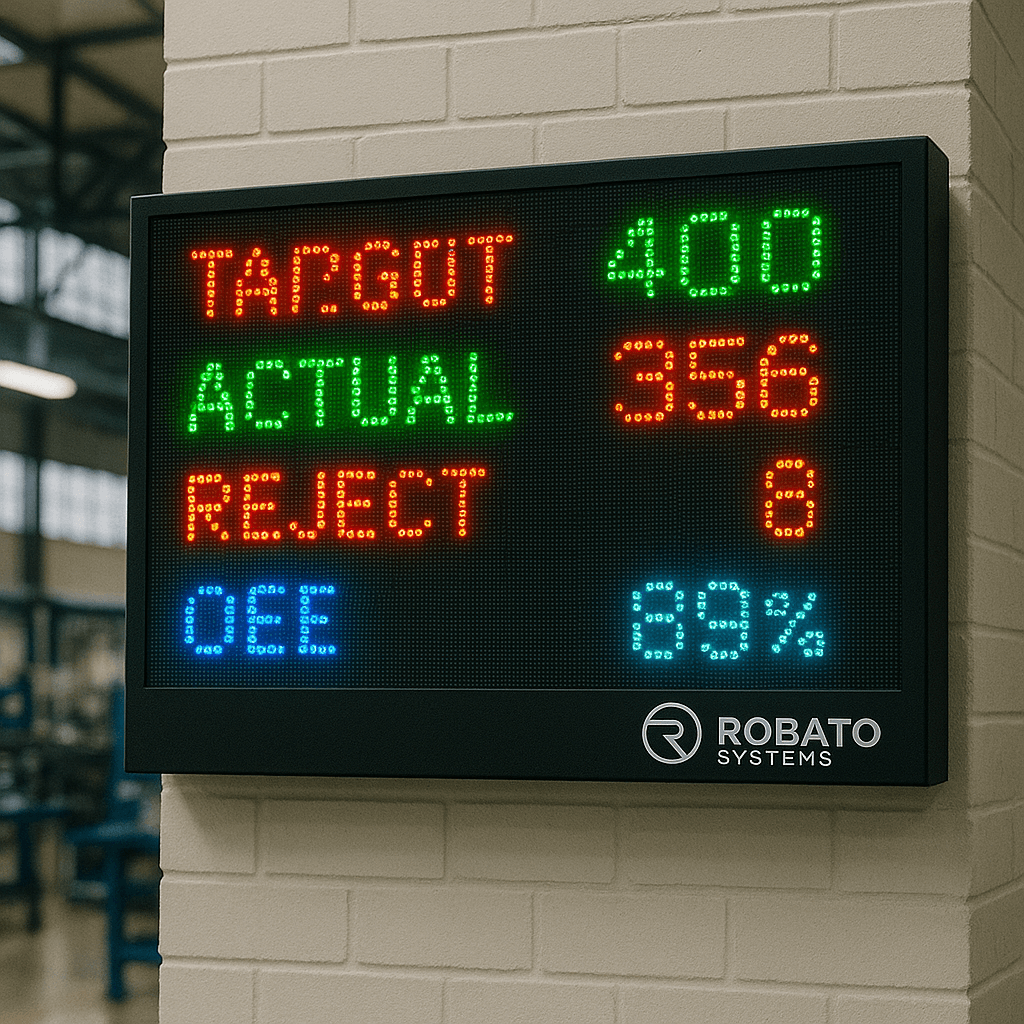
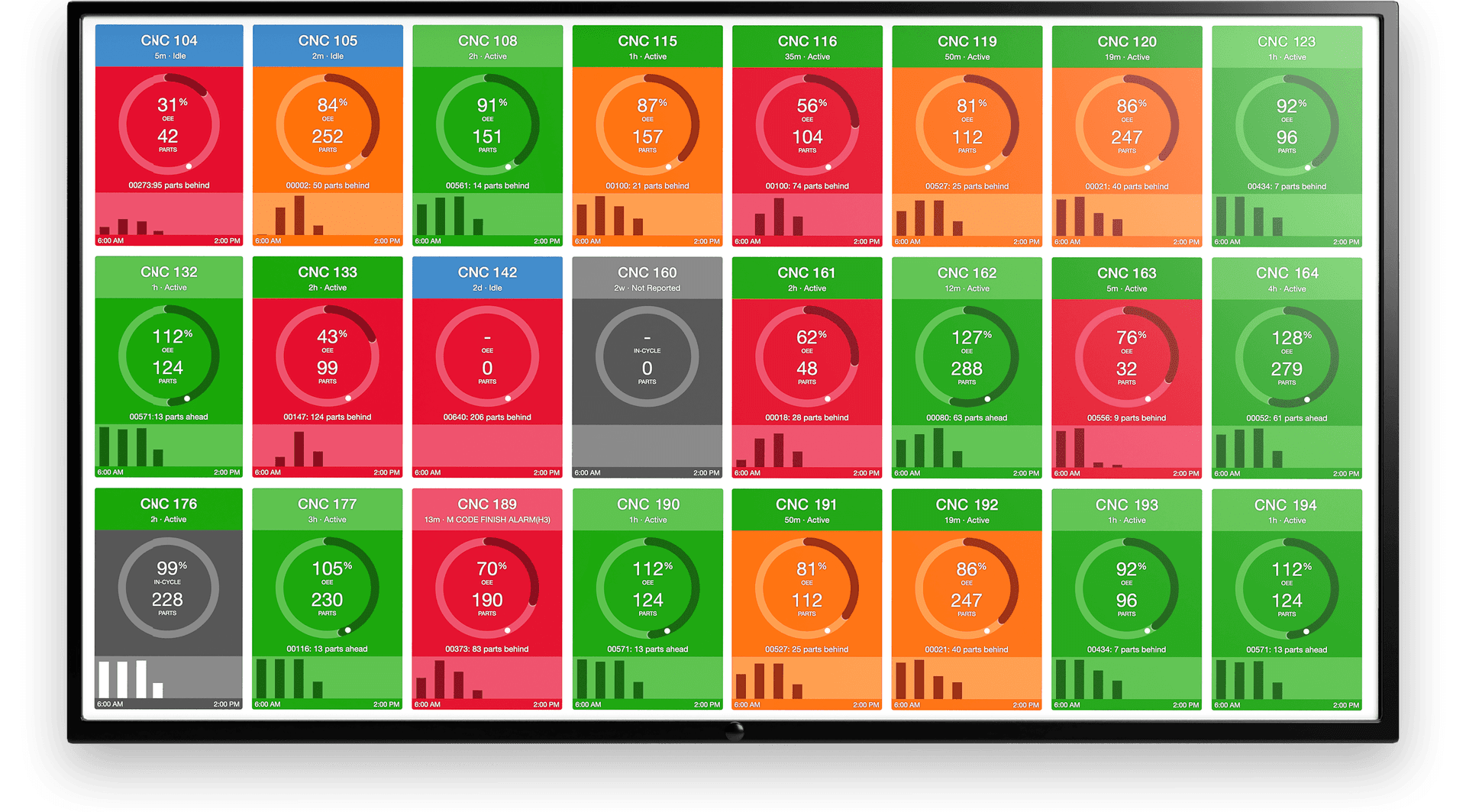
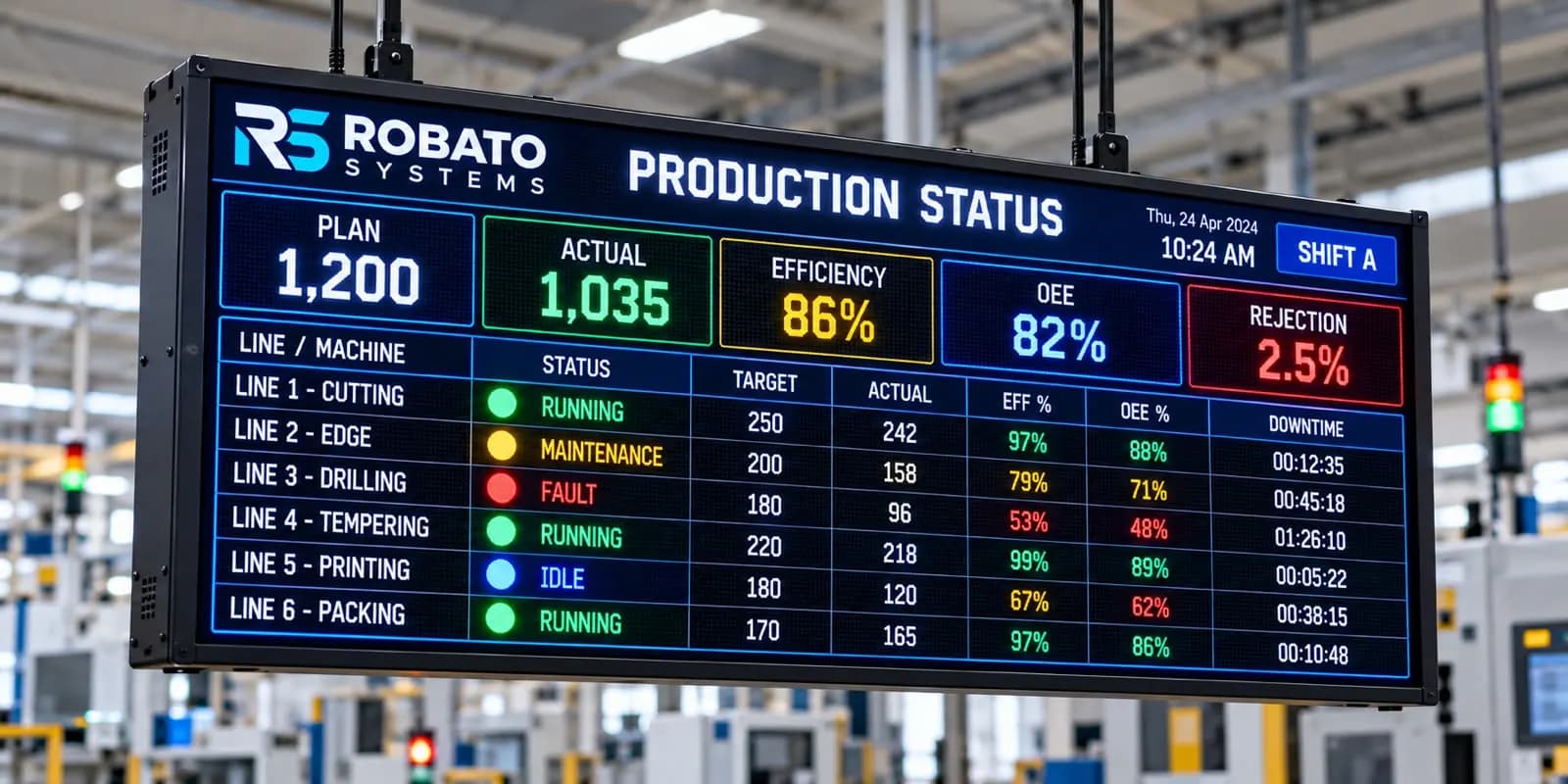
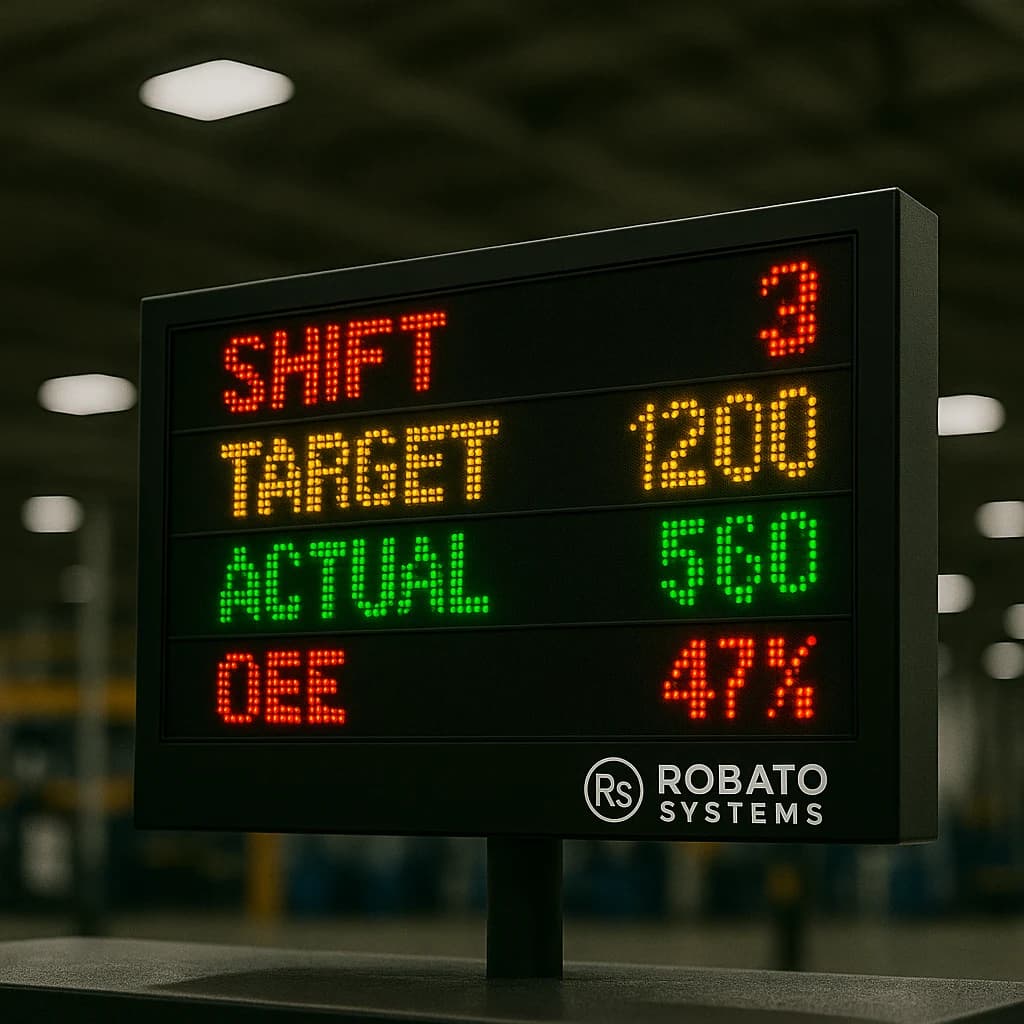
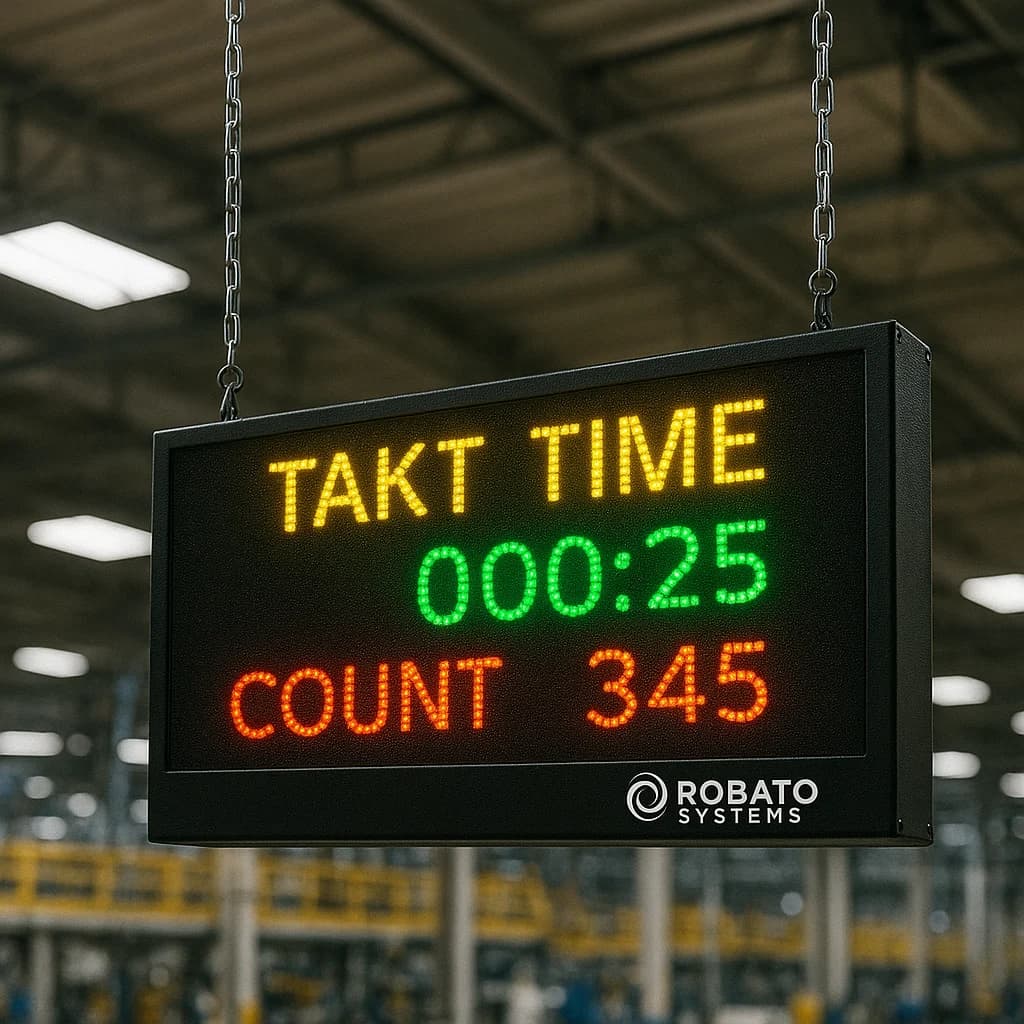
4. Use Production Monitoring Dashboards
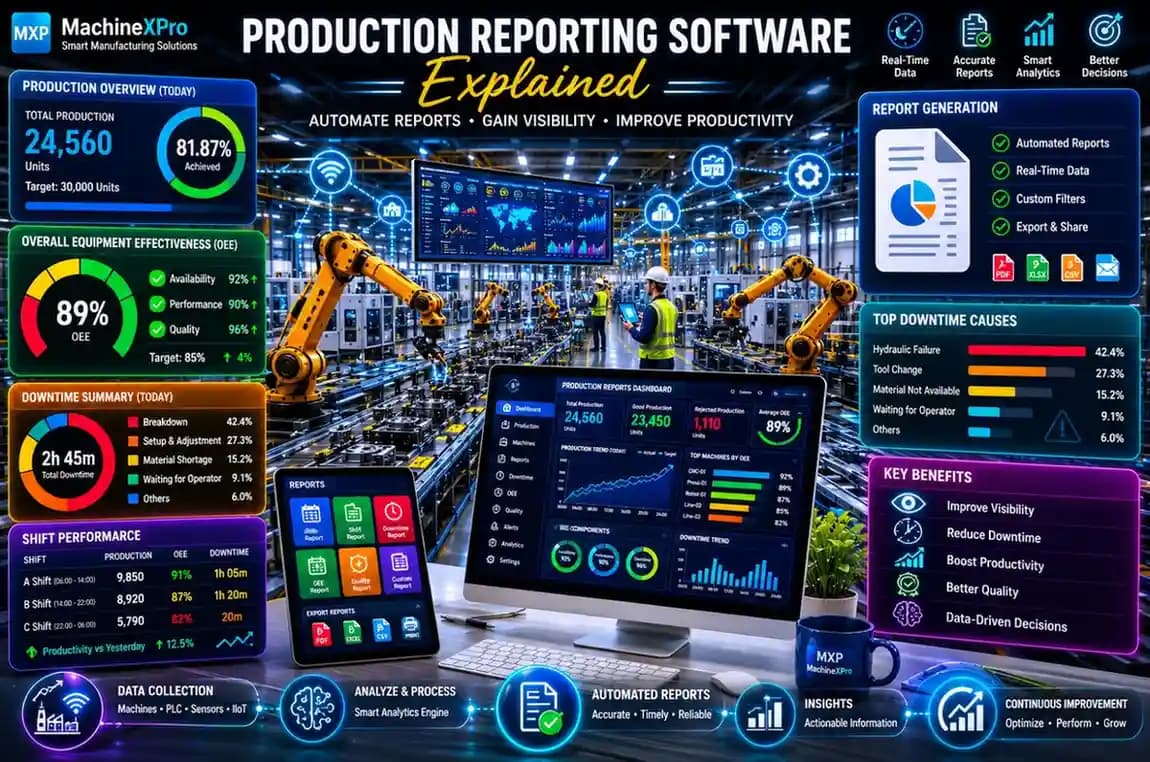
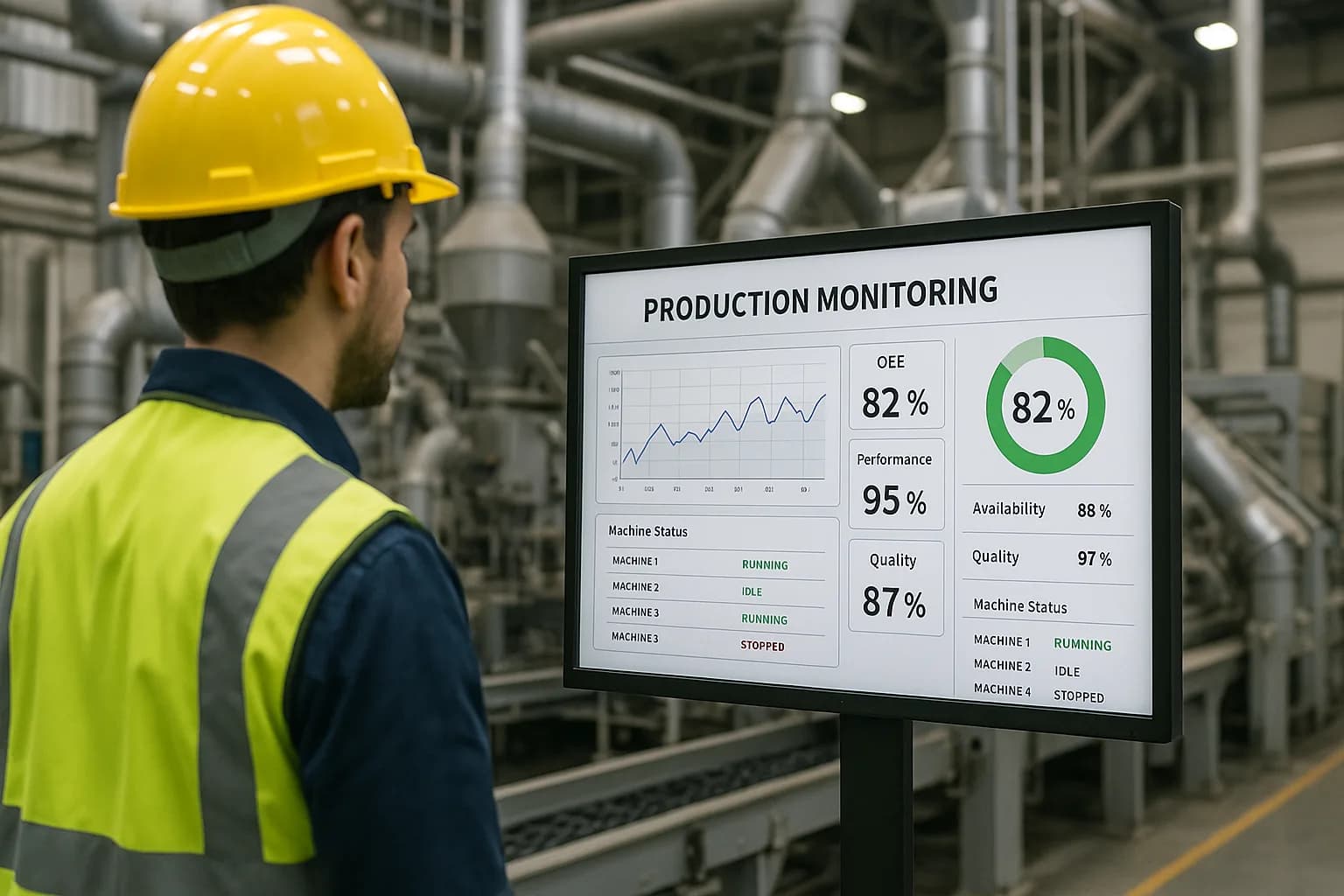
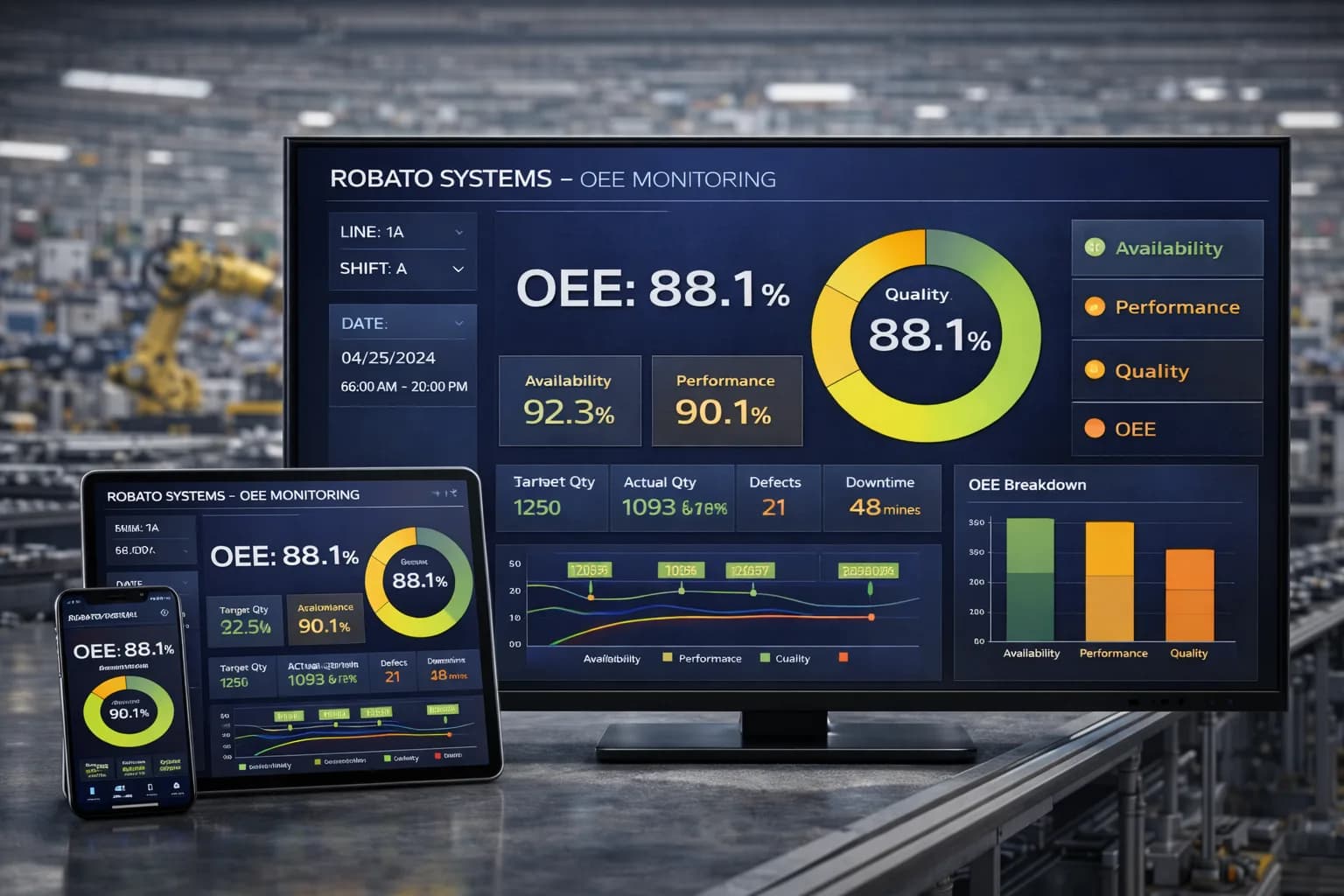
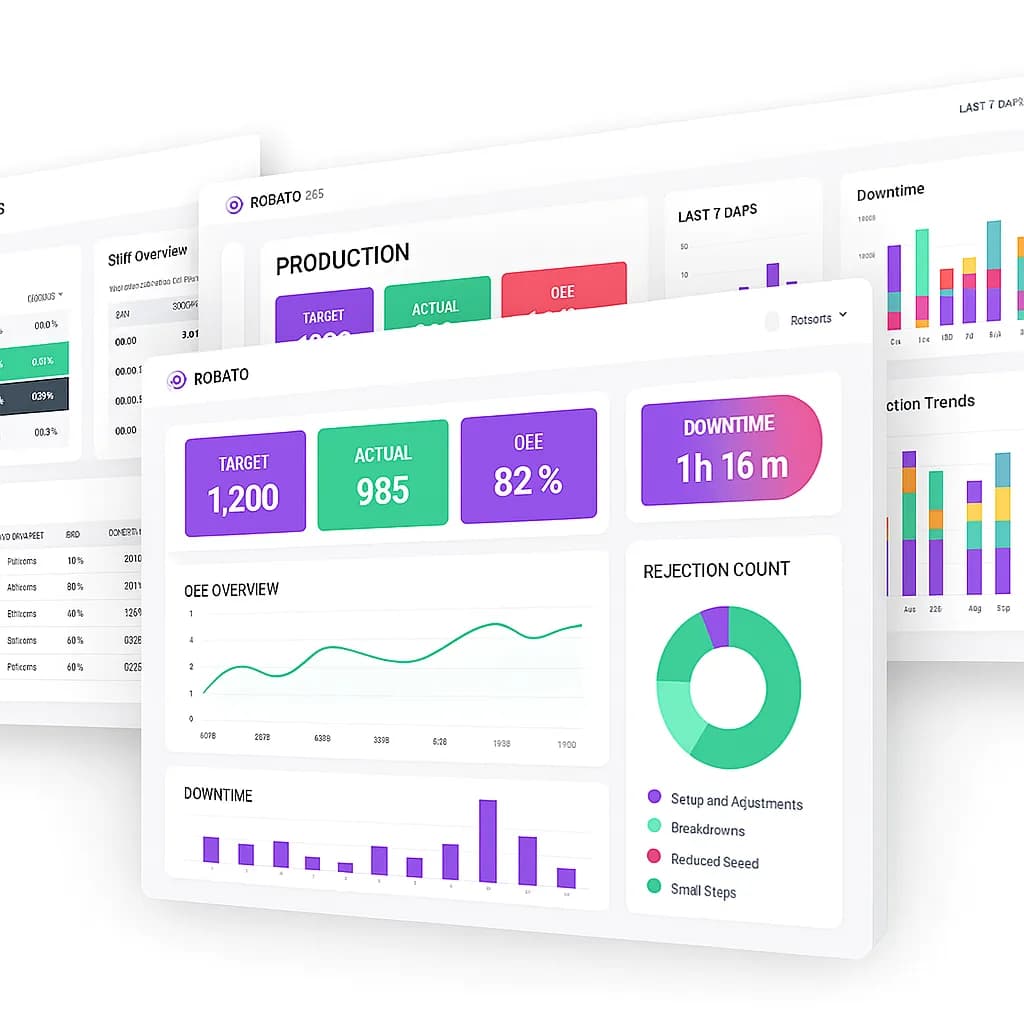
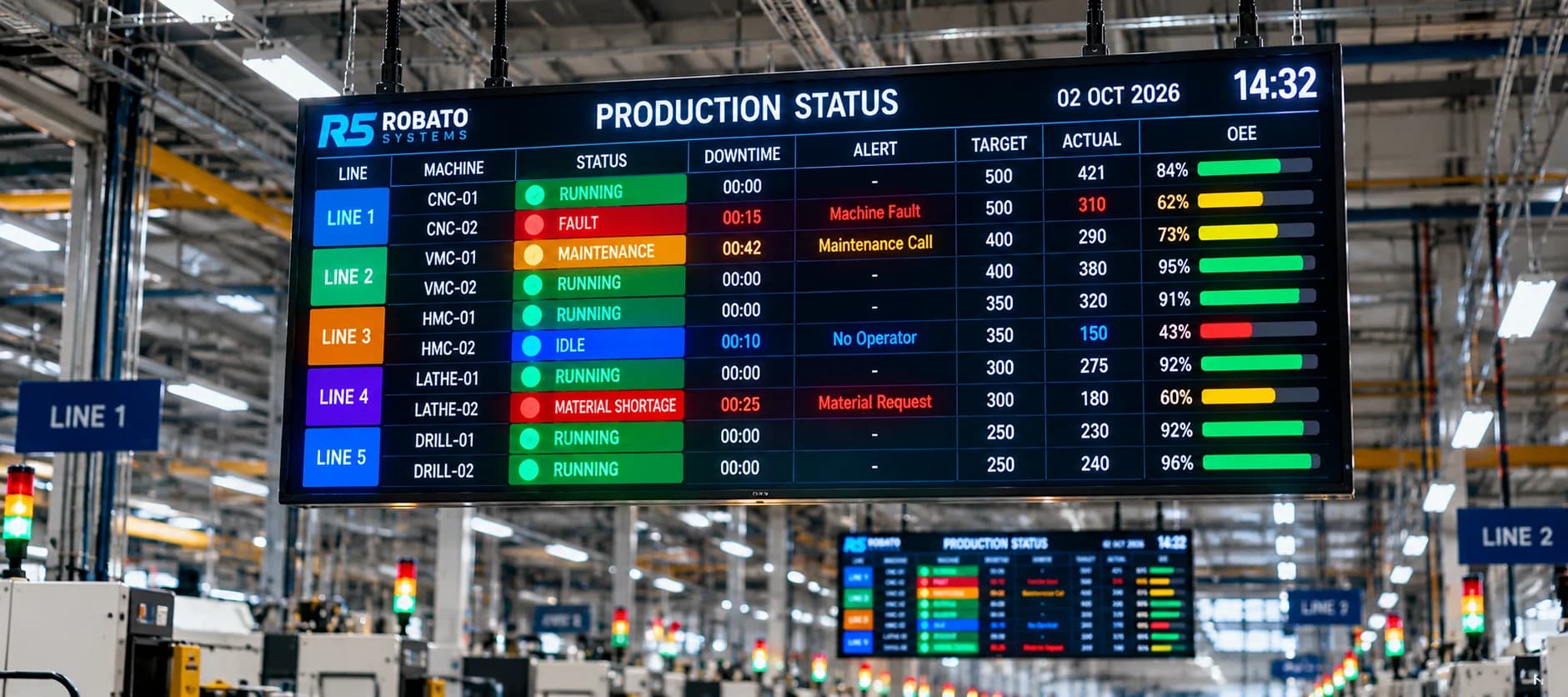
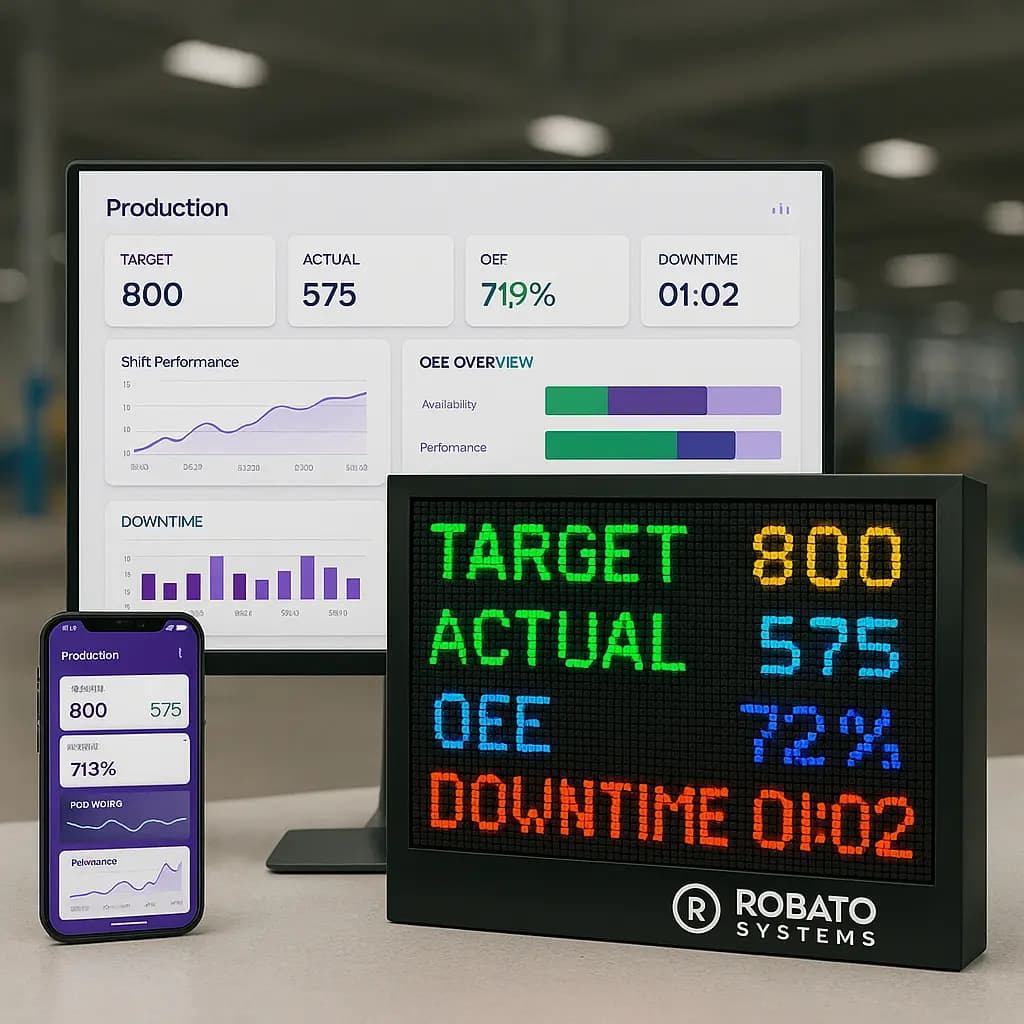
A visual dashboard provides centralized access to real-time production data.
Dashboards can display:
- Machine status
- Production counts
- OEE metrics
- Downtime analysis
- Shift performance
- Efficiency trends
Clear visualization enables supervisors and managers to identify problems quickly and make informed decisions.
5. Analyze Downtime Causes
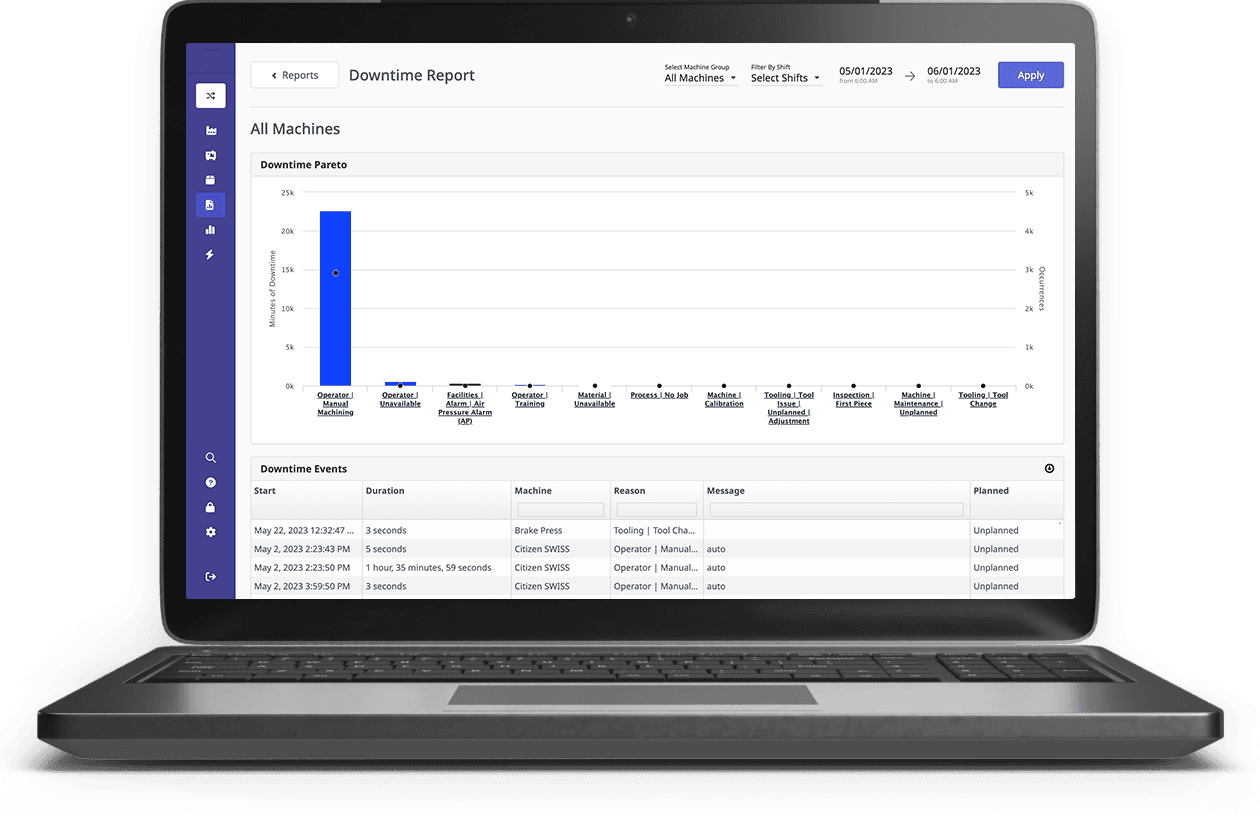
Downtime is one of the biggest sources of productivity loss.
Manufacturers should track:
- Frequency of breakdowns
- Downtime duration
- Root causes
- Maintenance history
Downtime analysis supports preventive maintenance and helps eliminate recurring failures.
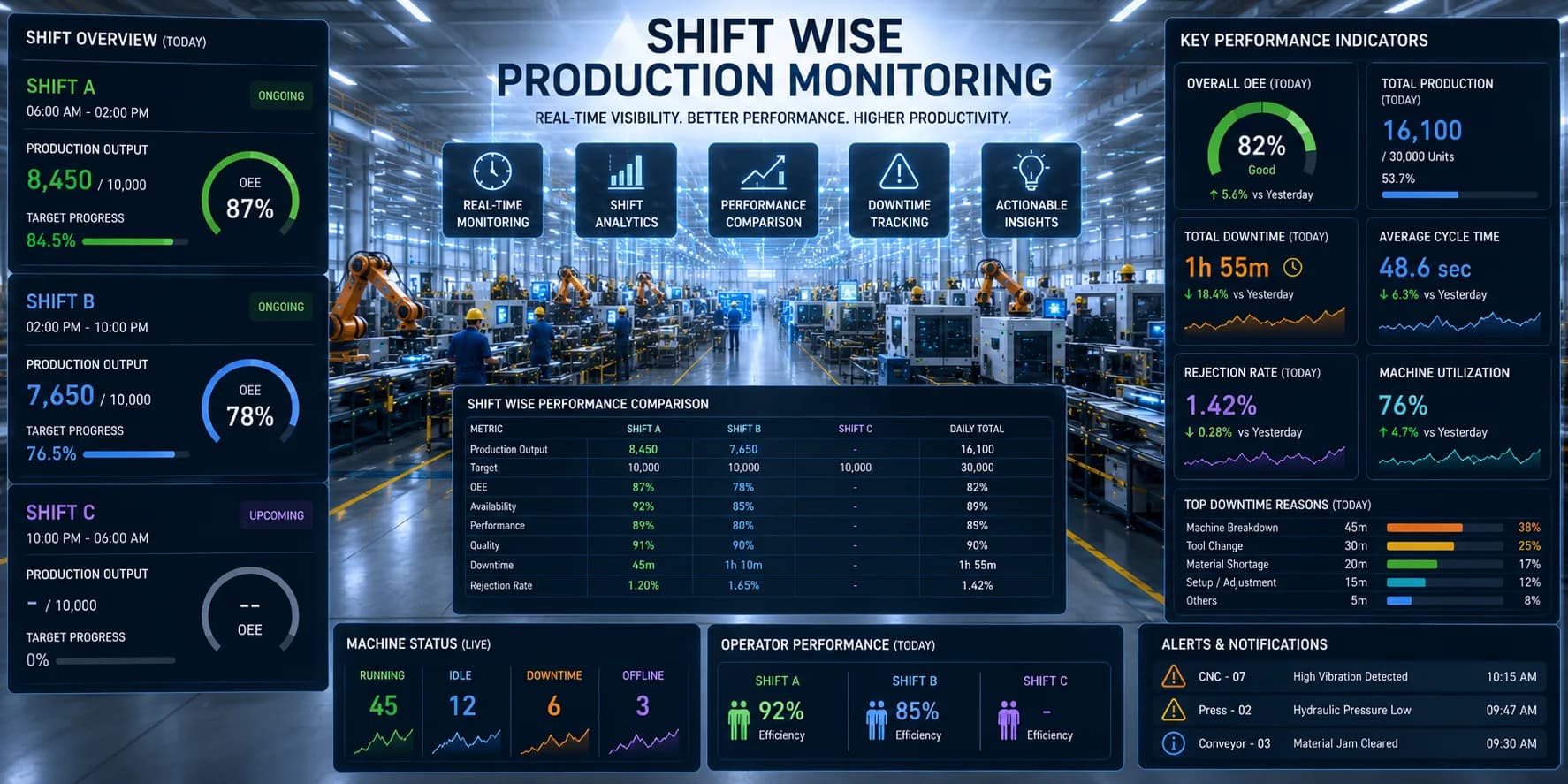
6. Monitor Shift-Wise Performance
Different shifts often exhibit varying levels of efficiency.
Shift analysis helps manufacturers evaluate:
- Production output
- Downtime events
- Operator performance
- Quality metrics
- Efficiency percentages
Comparing shifts helps identify improvement opportunities and optimize workforce management.
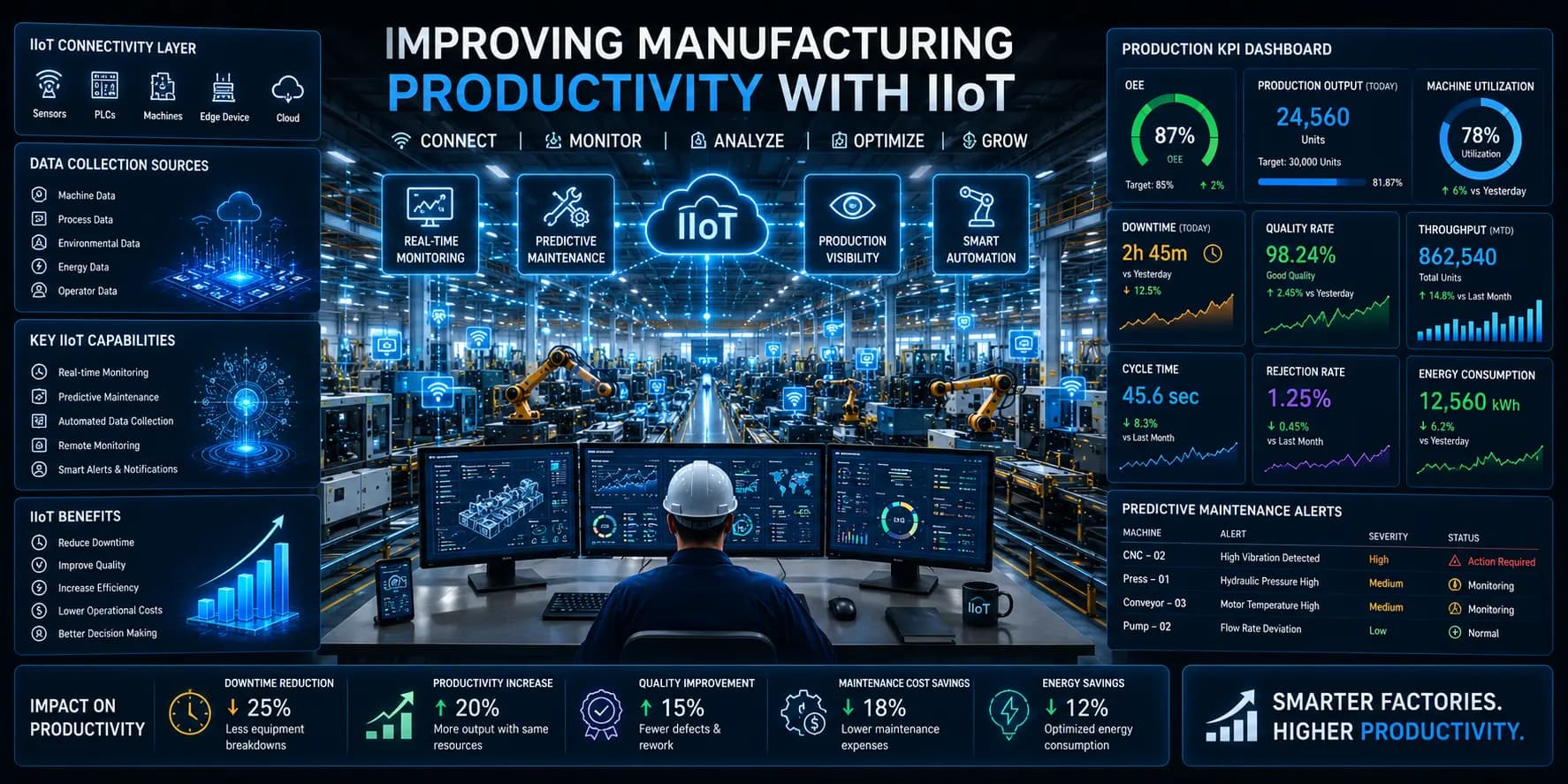
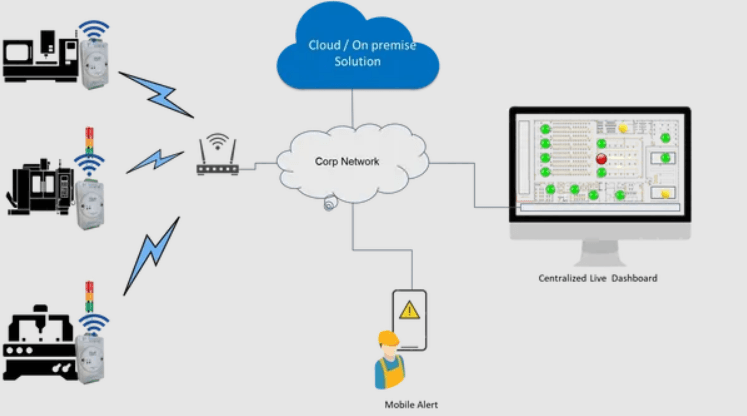
7. Integrate Industrial IoT Technologies
Industrial IoT (IIoT) devices enable automatic communication between machines and monitoring systems.
Benefits include:
- Real-time visibility
- Predictive maintenance
- Remote monitoring
- Improved equipment reliability
- Enhanced production analytics
IIoT integration is a key enabler of Industry 4.0 initiatives.
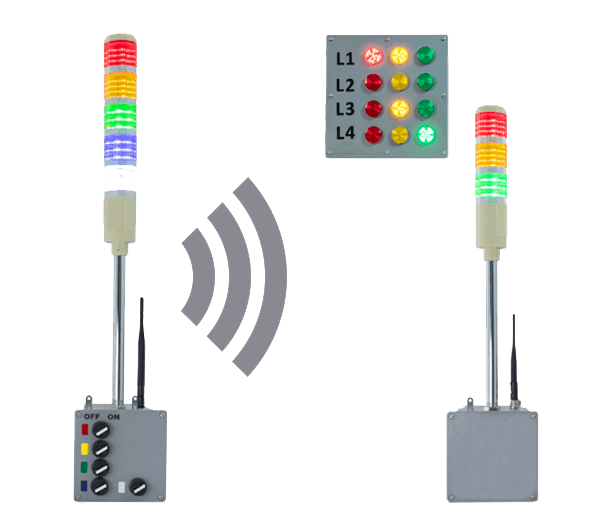
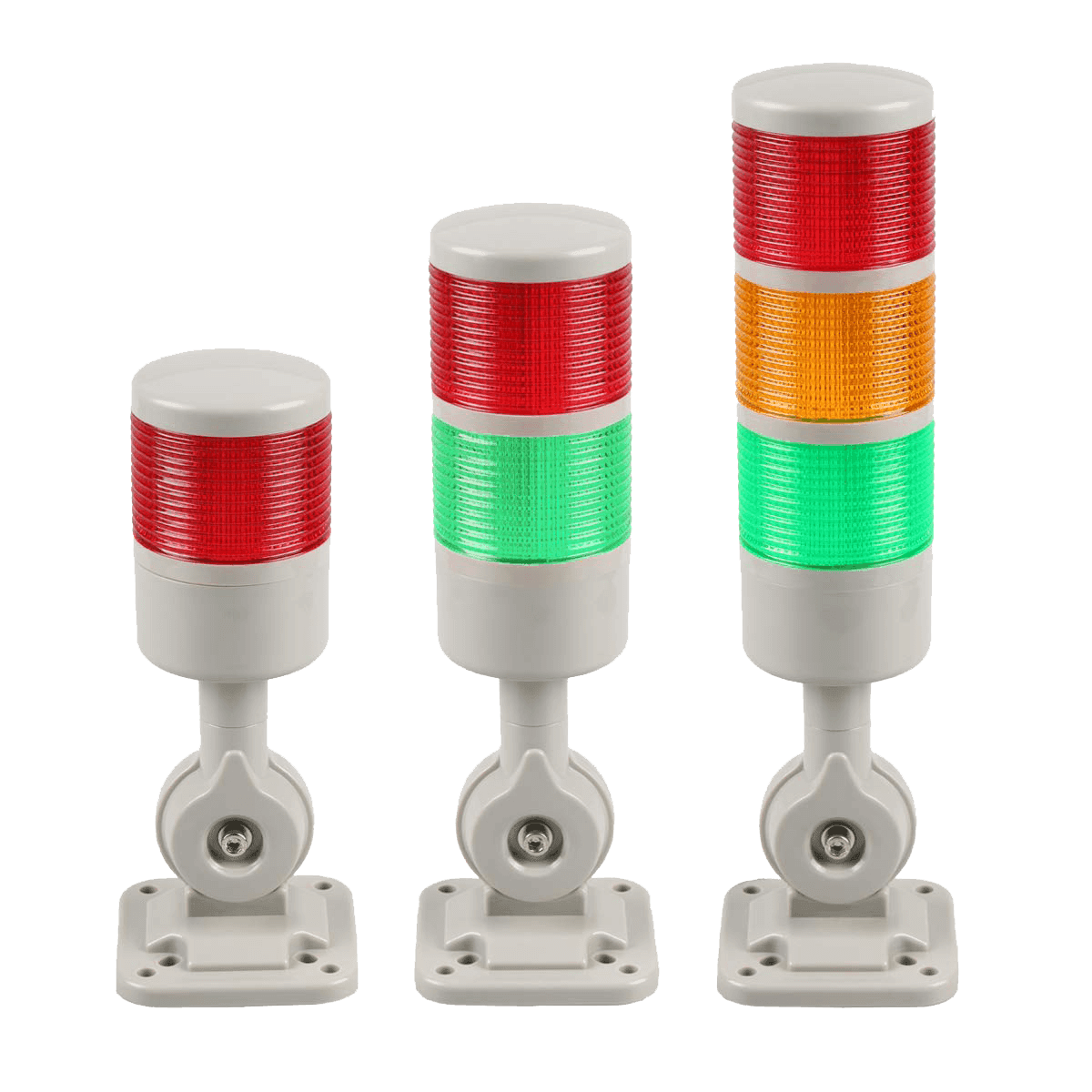
8. Enable Instant Alerts and Notifications
Immediate notifications help operators and maintenance teams respond quickly to machine failures and production abnormalities.
Alerts can be triggered for:
- Machine breakdowns
- Production delays
- High rejection rates
- Abnormal cycle times
- Downtime events
Faster response minimizes production losses and improves efficiency.
9. Standardize Data Collection Processes
Consistency is essential for reliable analysis.
Manufacturers should standardize:
- Production reporting methods
- Downtime classifications
- KPI definitions
- Shift records
- Quality parameters
Standardized data improves reporting accuracy and supports continuous improvement.
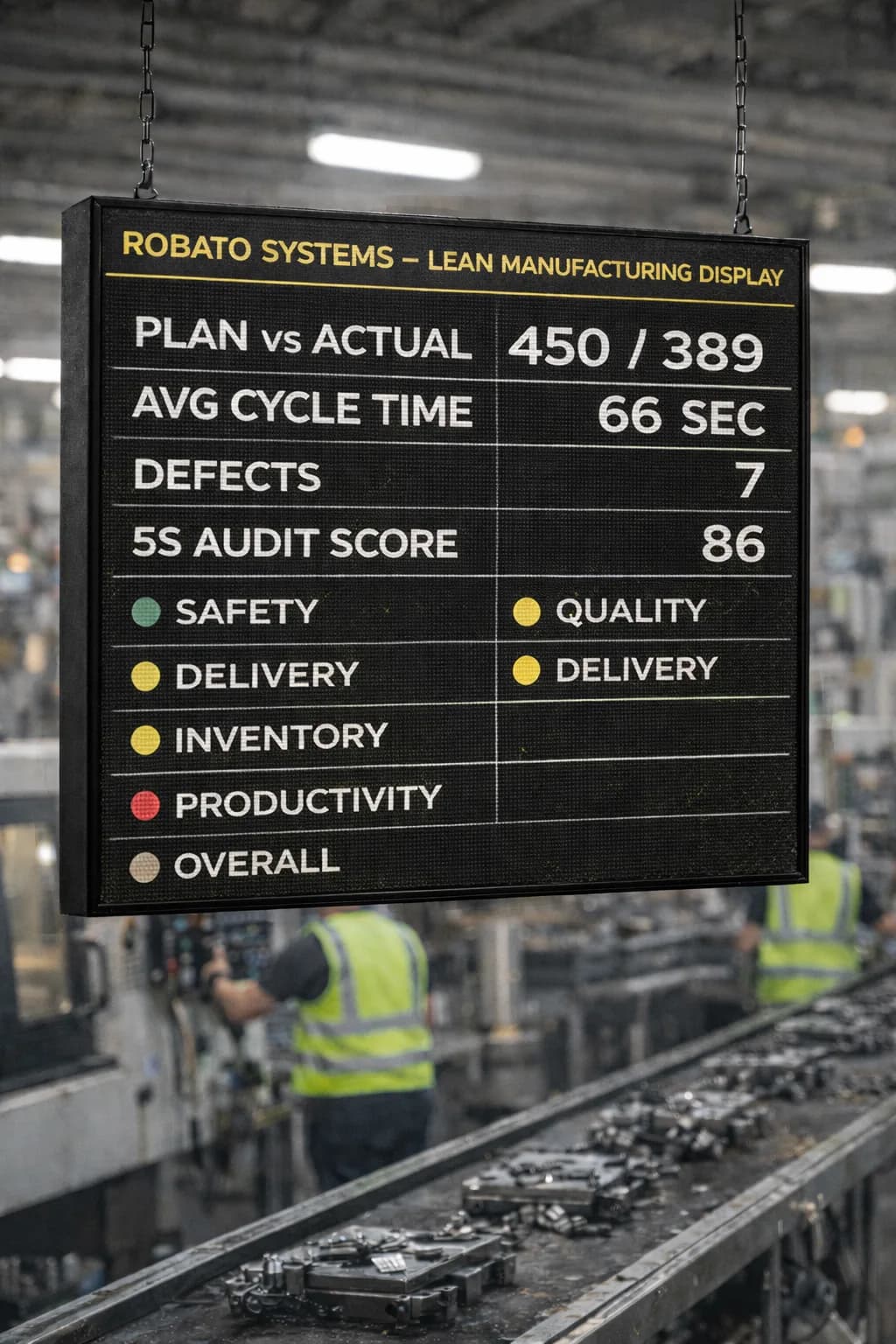
10. Promote Continuous Improvement
Shop floor monitoring should support ongoing optimization efforts.
Manufacturers can use production data for:
- Root cause analysis
- Lean manufacturing initiatives
- Process optimization
- Productivity improvement
- Waste reduction
Continuous improvement helps organizations remain competitive and efficient.
Benefits of Shop Floor Monitoring
Improved Production Visibility
Managers gain complete visibility into operations across multiple production lines.
Reduced Downtime
Real-time monitoring enables faster detection and resolution of machine issues.
Increased Productivity
Continuous performance monitoring helps maximize output and machine utilization.
Better Quality Control
Live production insights enable early detection of quality problems.
Enhanced Decision-Making
Data-driven insights help management make faster and more effective decisions.
Improved Workforce Efficiency
Monitoring operator performance helps optimize labor utilization and productivity.
Reduced Operational Costs
Early problem detection minimizes maintenance costs and production losses.
Components of a Shop Floor Monitoring System
An effective system typically includes:
Industrial Sensors
Capture machine and process data.
PLC Connectivity
Collect machine-level information.
Data Acquisition Modules
Transfer production data to the software platform.
Production Monitoring Software
Processes and visualizes data.
Dashboard and Reporting Tools
Provide real-time insights and historical analysis.
Alert Management System
Sends notifications during abnormalities and machine stoppages.
Applications Across Industries
Automotive Manufacturing
Monitor assembly lines and improve machine utilization.
Food and Beverage Industry
Ensure quality standards and maximize throughput.
Pharmaceutical Industry
Maintain compliance and monitor batch production.
Packaging Industry
Reduce downtime and increase productivity.
Textile Manufacturing
Track machine performance and production targets.
Electronics Industry
Improve quality and minimize defects.
Shop Floor Monitoring and Industry 4.0
Industry 4.0 emphasizes connected and intelligent manufacturing systems. Shop floor monitoring supports digital transformation through:
- Industrial IoT integration
- Real-time production monitoring
- Smart dashboards
- Manufacturing analytics
- Predictive maintenance
- Data-driven operations
These capabilities help manufacturers build highly efficient and smart factories.
Future Trends in Shop Floor Monitoring
Emerging technologies are transforming manufacturing operations with:
Artificial Intelligence
AI-powered analytics improve production forecasting and optimization.
Predictive Maintenance
Machine failures can be prevented before they occur.
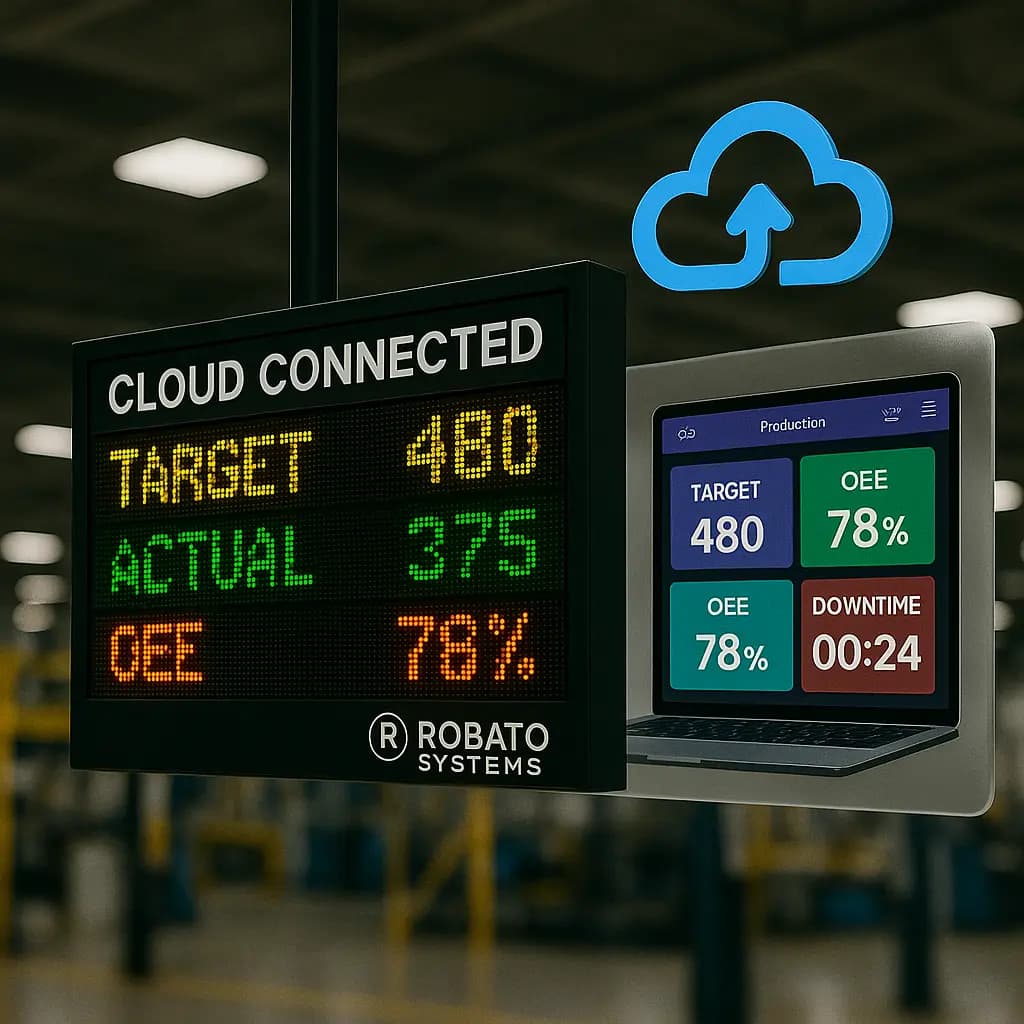
Cloud-Based Monitoring
Access production information remotely from anywhere.
Digital Twins
Virtual factory models support advanced analysis and process optimization.
Mobile Monitoring Applications
Managers can monitor production operations from smartphones and tablets.
These innovations are shaping the future of intelligent manufacturing.
Conclusion
Shop Floor Monitoring is an essential component of modern manufacturing and Industry 4.0 initiatives. By implementing best practices such as real-time data collection, KPI monitoring, dashboard visualization, and predictive maintenance, manufacturers can significantly improve productivity and operational efficiency.
Organizations that invest in effective shop floor monitoring systems gain better visibility, reduce downtime, and create a foundation for continuous improvement and smart manufacturing success.
Frequently Asked Questions (FAQs)
What is shop floor monitoring?
Shop floor monitoring is the process of tracking and analyzing production activities, machine performance, and operational data in real time.
Why is shop floor monitoring important?
It improves production visibility, reduces downtime, increases productivity, and enables data-driven decision-making.
Which KPIs should be monitored on the shop floor?
Important KPIs includeOEE, machine utilization, production output, downtime percentage, cycle time, and rejection rates.
How does Industrial IoT improve shop floor monitoring?
IIoT enables automatic data collection, real-time monitoring, predictive maintenance, and advanced analytics.
Which industries benefit from shop floor monitoring?
Automotive, pharmaceutical, food processing, packaging, textile, and electronics industries widely use shop floor monitoring systems.