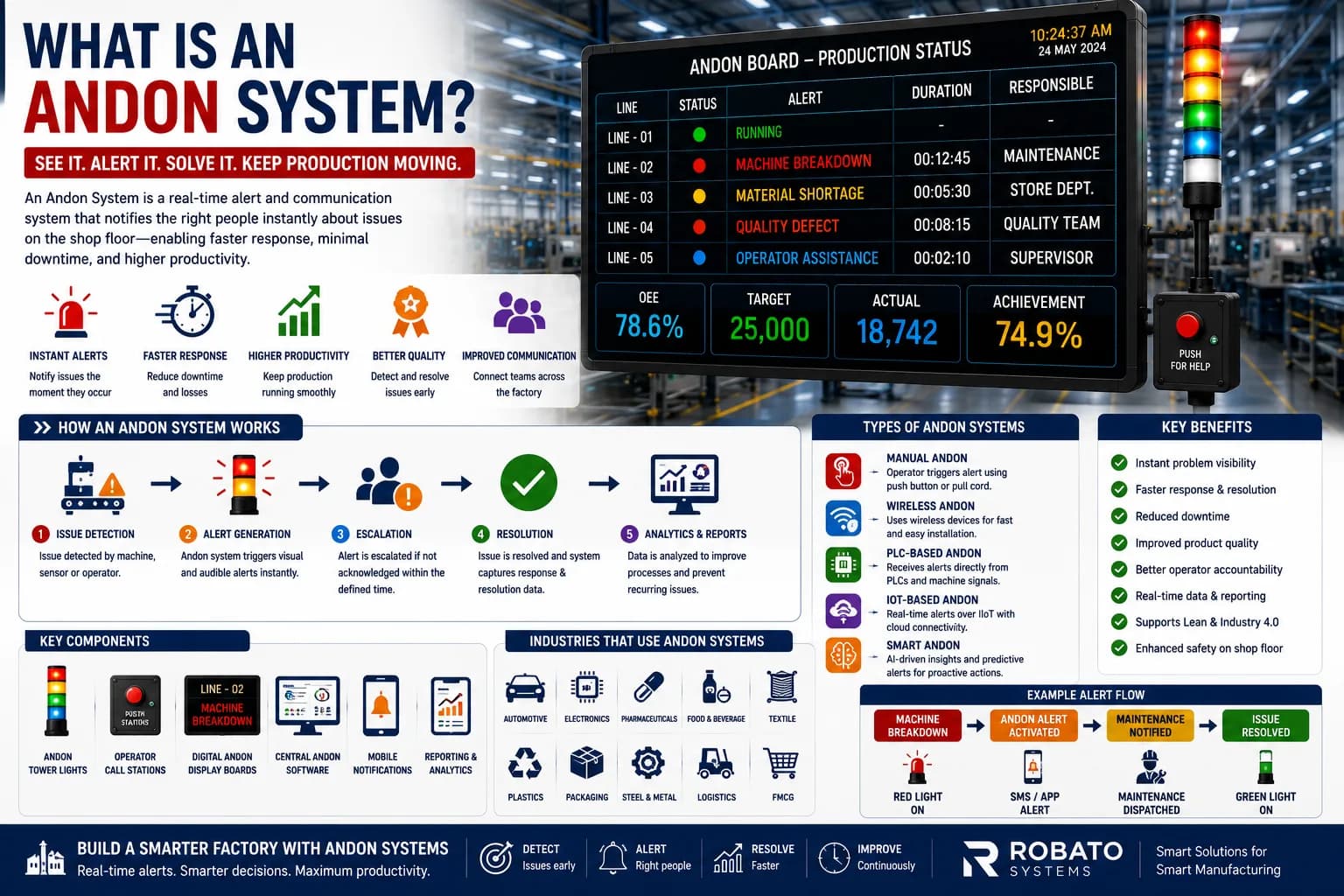
What is an Andon System?
Manufacturing has evolved from reactive problem-solving to proactive, data-driven operations. Modern factories are expected to minimize downtime, improve quality, respond instantly to production issues, and maintain high productivity while meeting demanding customer expectations. To achieve these goals, manufacturers need an effective way to communicate problems as soon as they occur. This is exactly where an Andon System plays a crucial role.
Originally developed as part of the Toyota Production System (TPS), the Andon System has become one of the most important visual management tools in Lean Manufacturing. It enables operators to immediately report machine failures, quality defects, material shortages, or maintenance issues through visual and audible alerts. Instead of waiting for supervisors to discover a problem, the system notifies the appropriate personnel in real time, ensuring faster response and minimizing production losses.
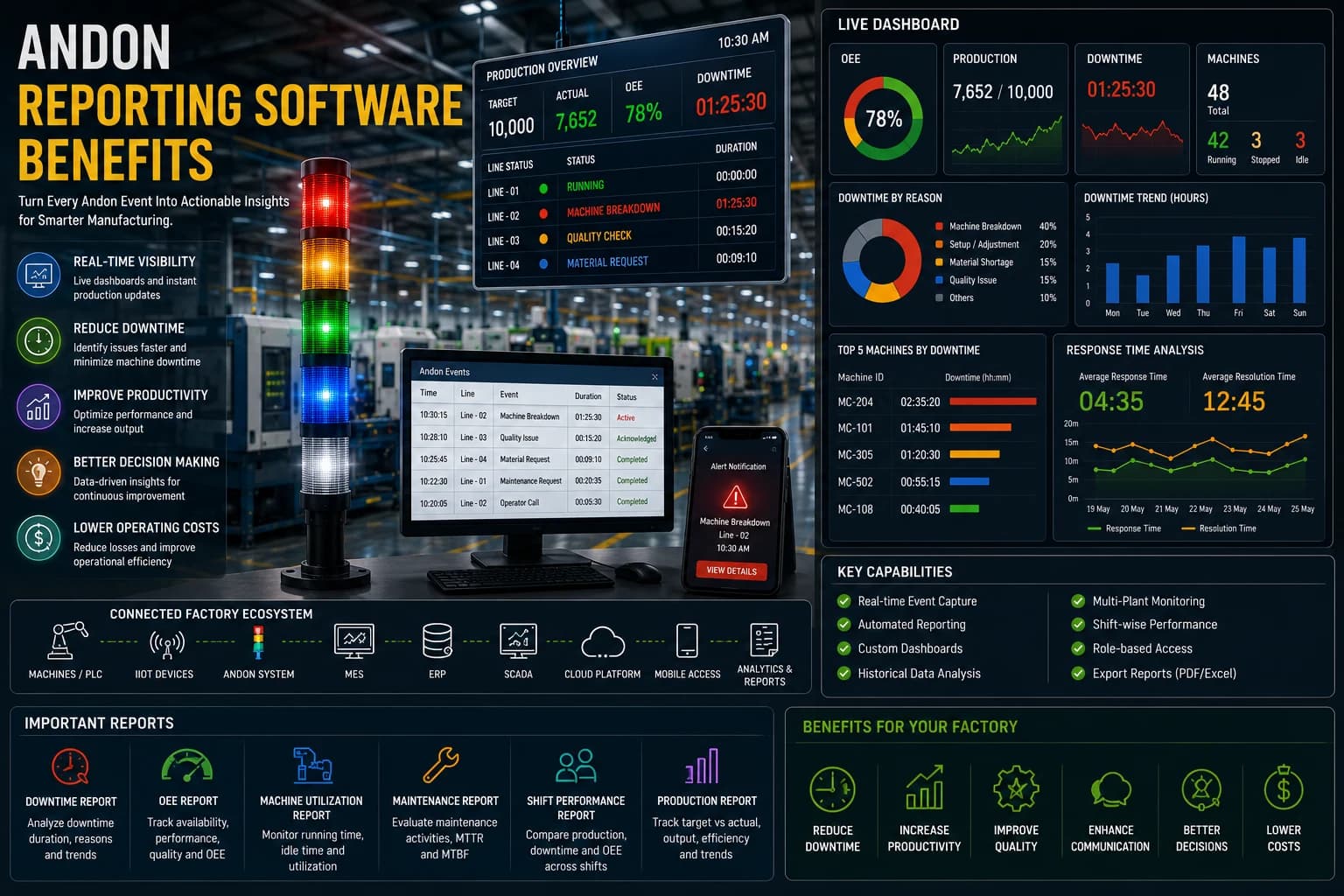
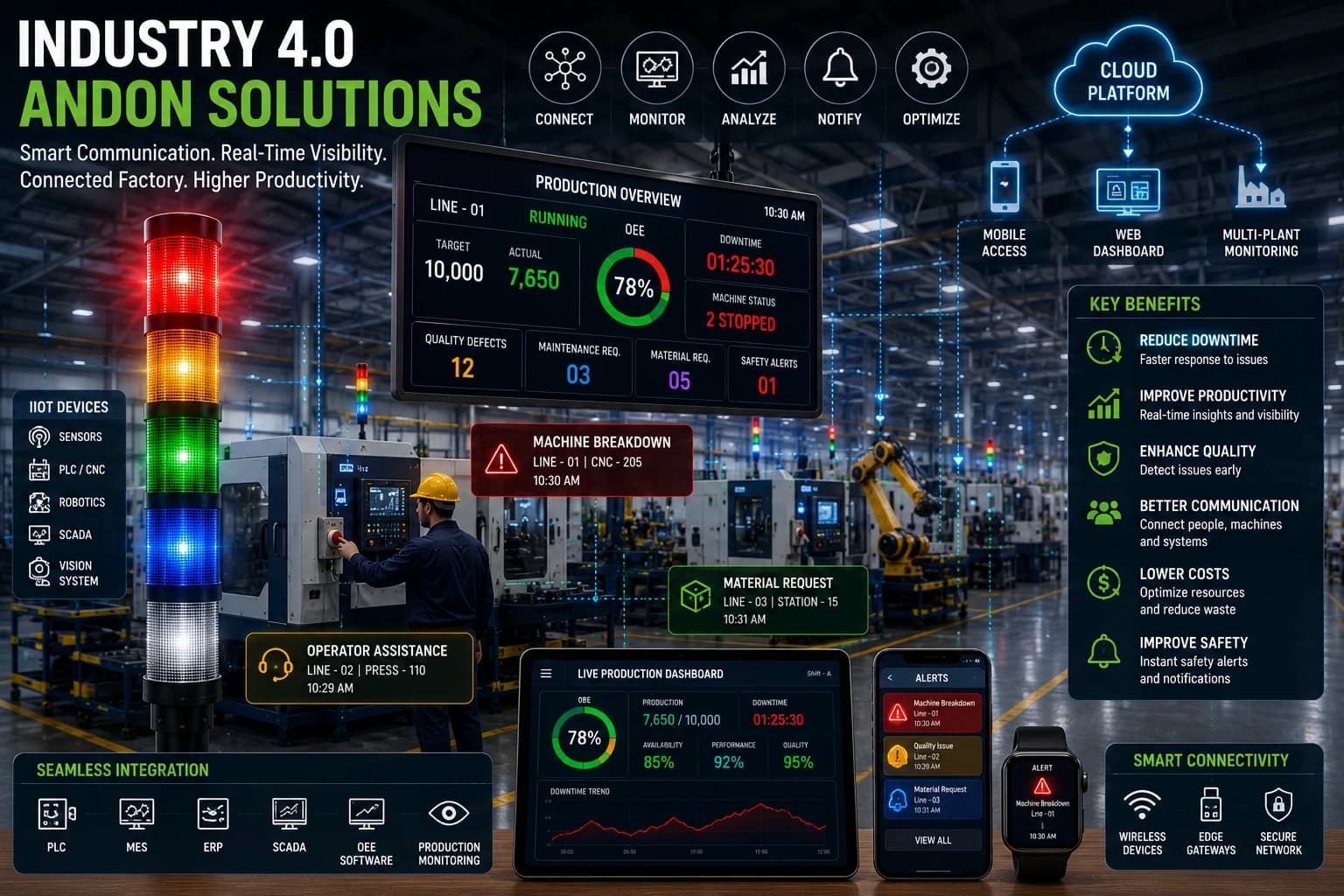
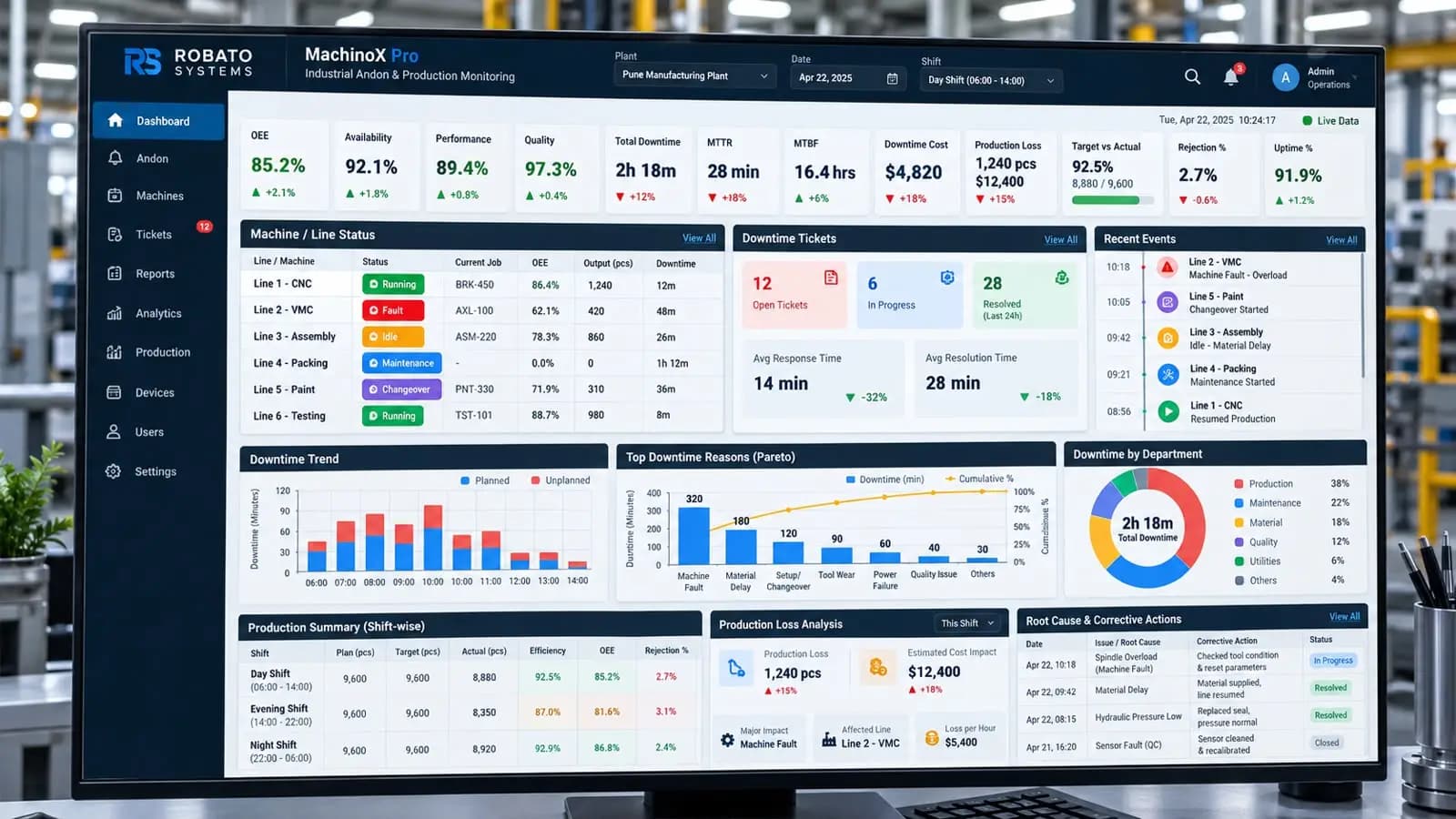
Today's Andon Systems have evolved far beyond simple signal lights. Modern solutions integrate with PLCs, Industrial IoT (IIoT) devices, Manufacturing Execution Systems (MES), ERP software, SCADA platforms, and cloud-based dashboards, making them an essential component of Industry 4.0 and smart factory initiatives.
What is an Andon System?
An Andon System is a real-time visual and audio communication system used in manufacturing to notify operators, supervisors, maintenance teams, and management whenever a production issue occurs. The term "Andon" comes from the Japanese word for a traditional paper lantern, symbolizing a visual signal that draws attention.
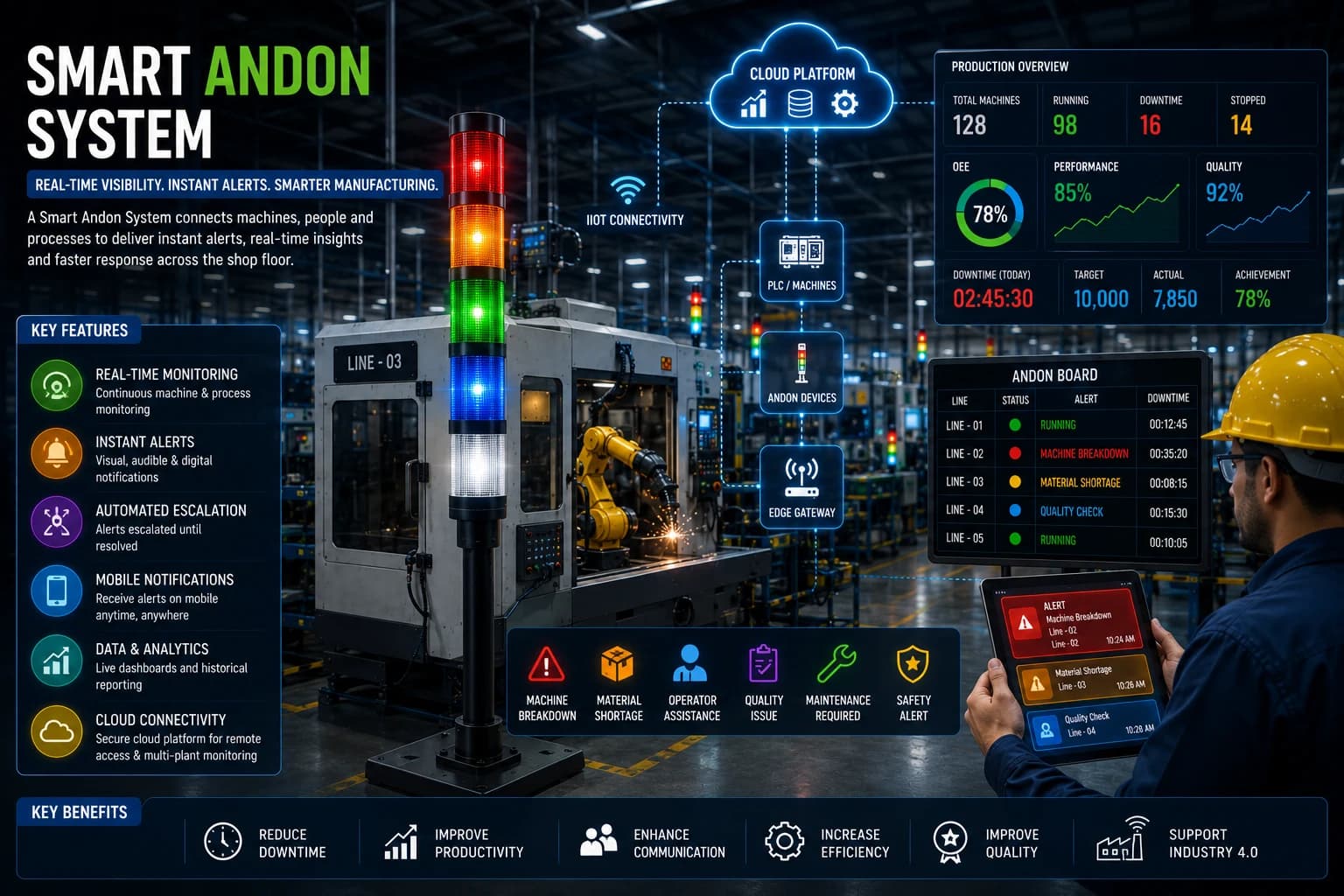
An Andon System continuously monitors manufacturing processes and provides instant alerts for abnormal conditions such as:
- Machine breakdowns
- Equipment faults
- Quality defects
- Material shortages
- Production delays
- Operator assistance requests
- Maintenance requirements
- Safety incidents
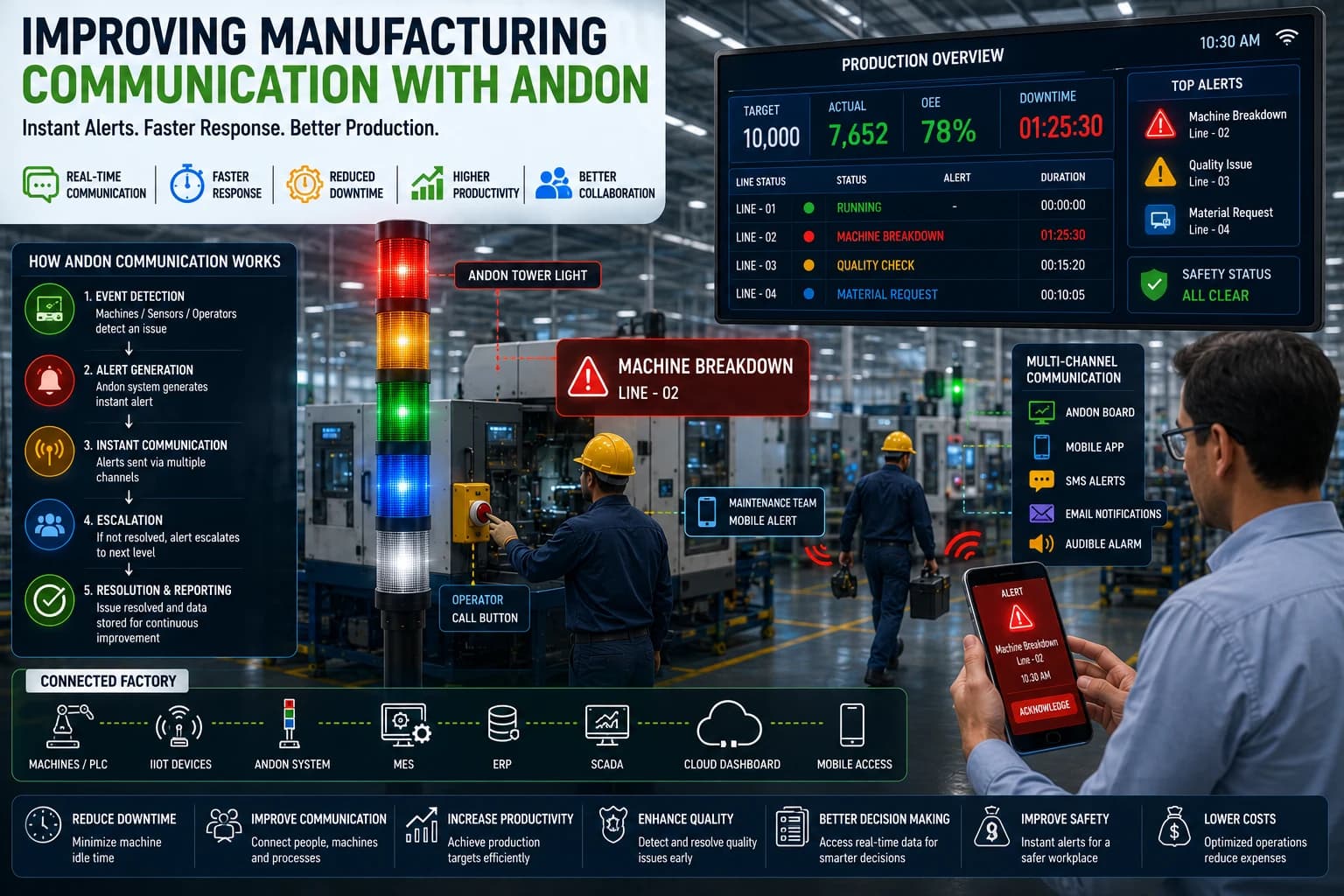
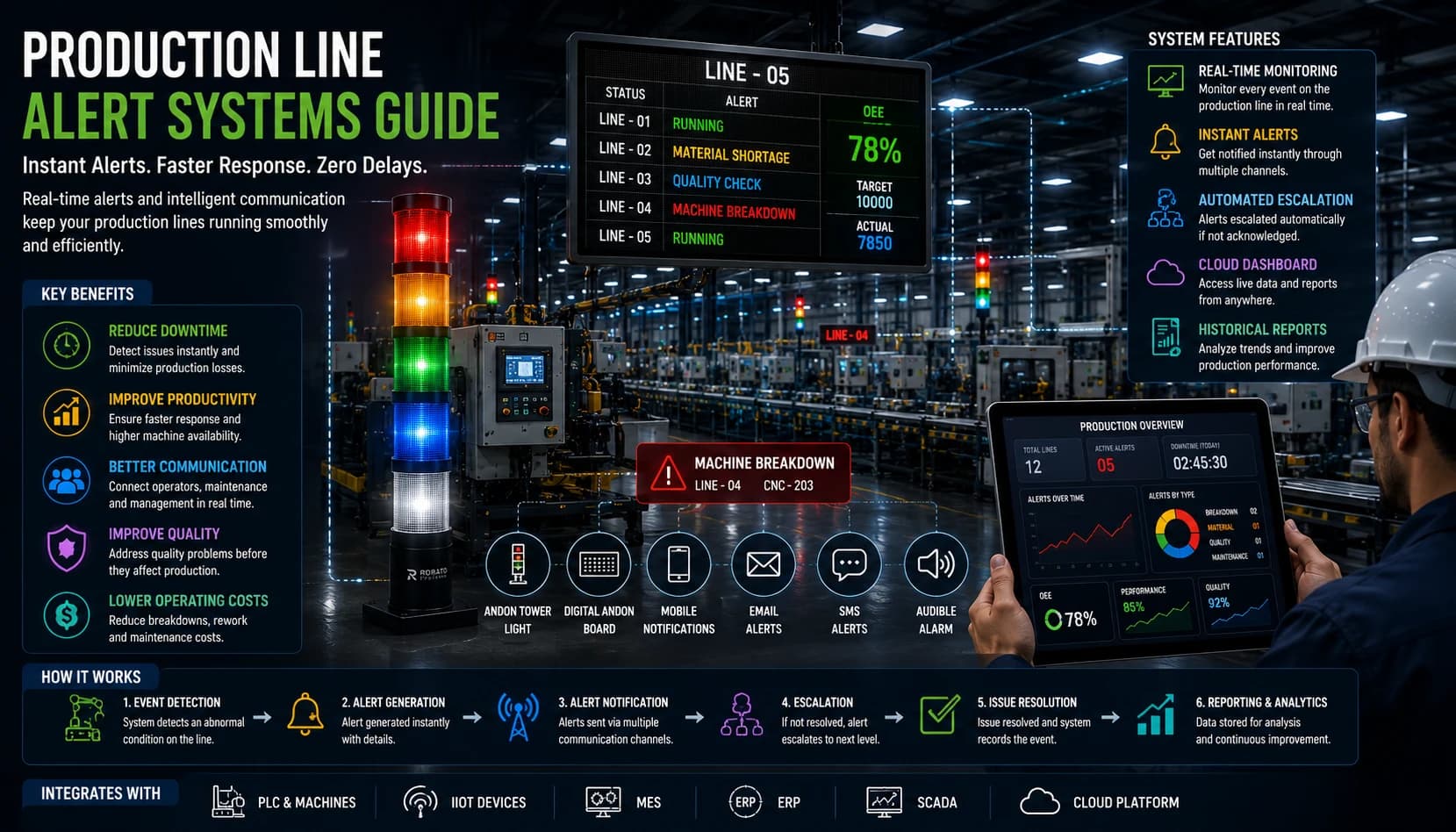
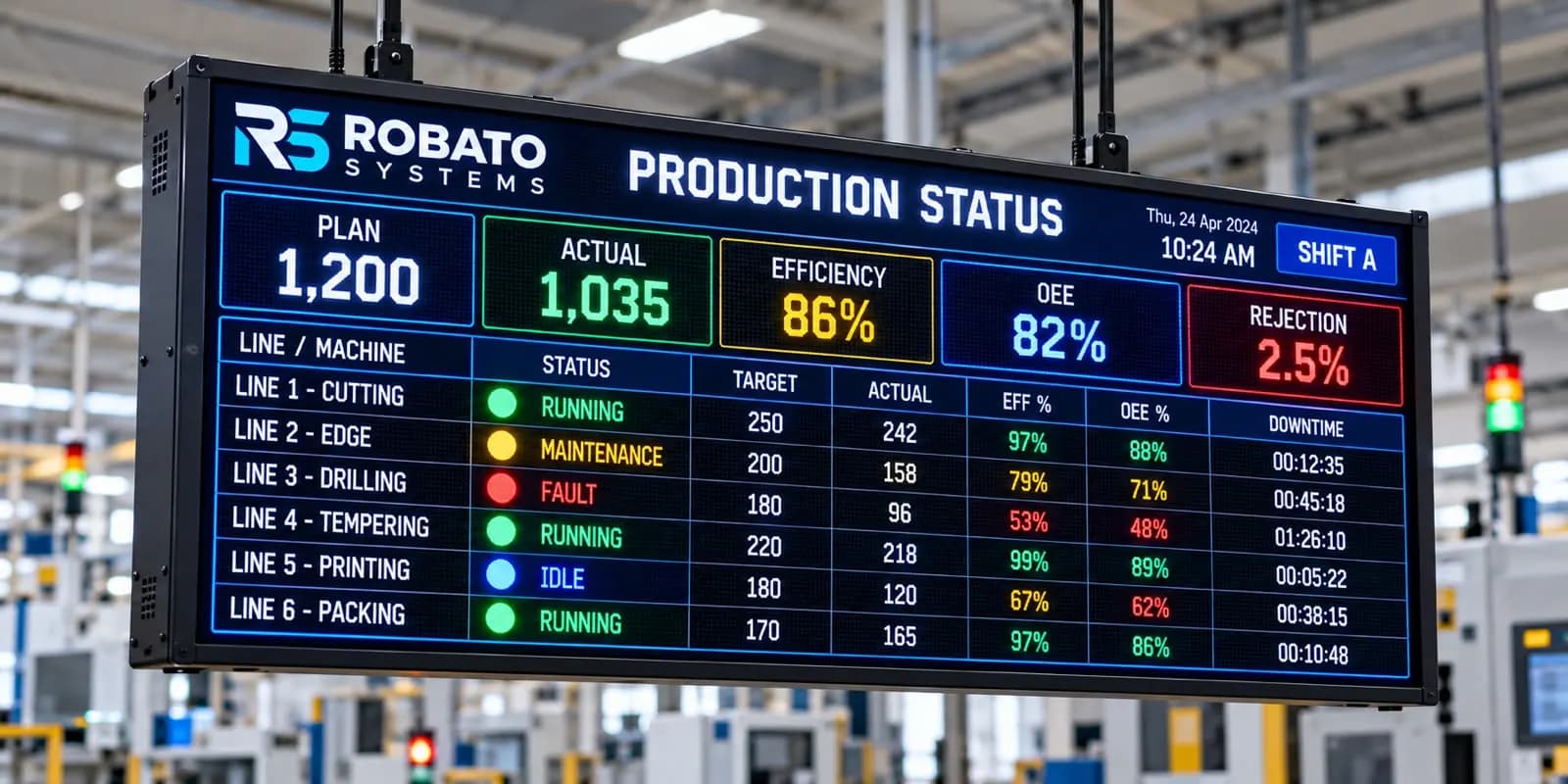
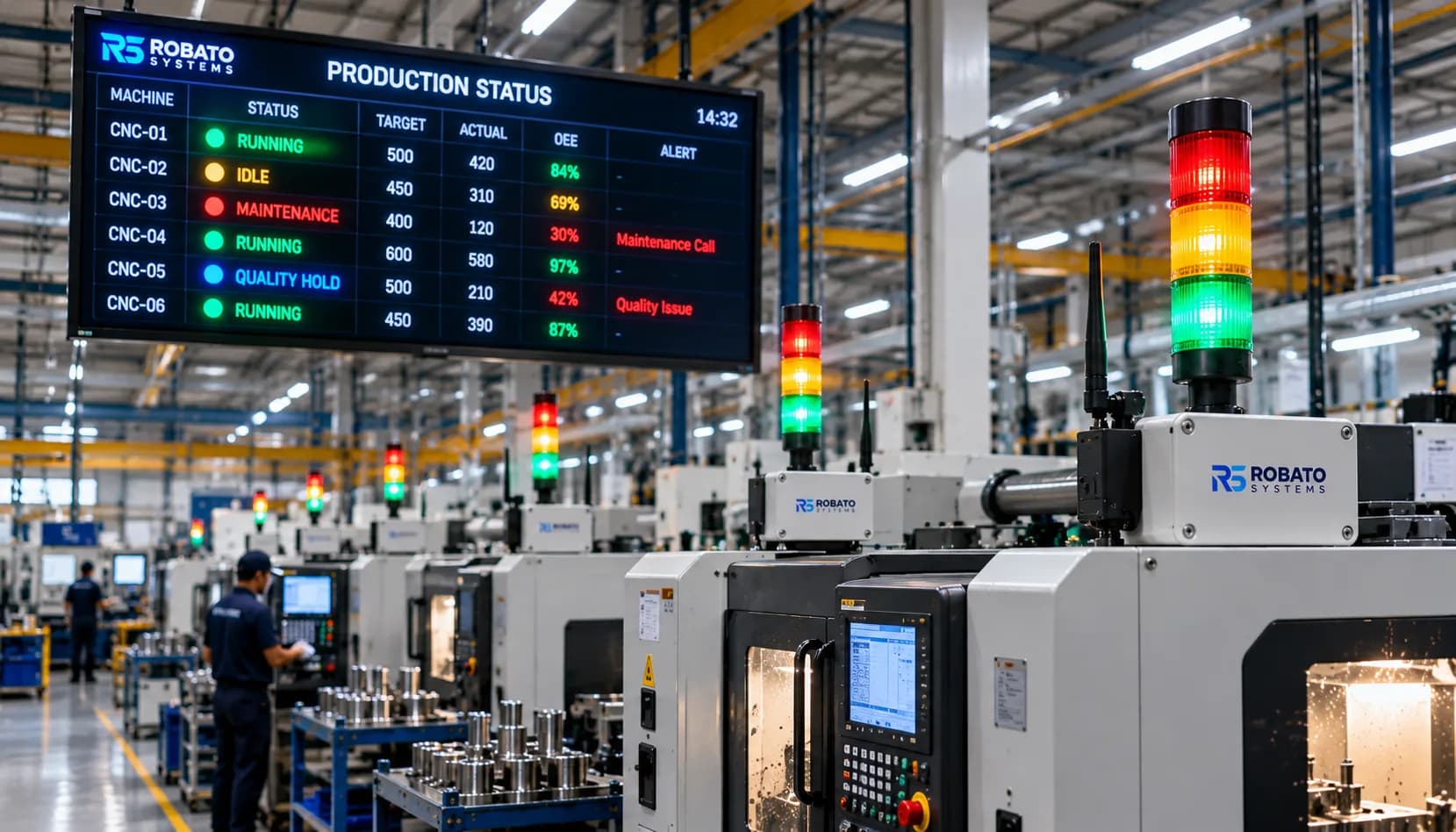
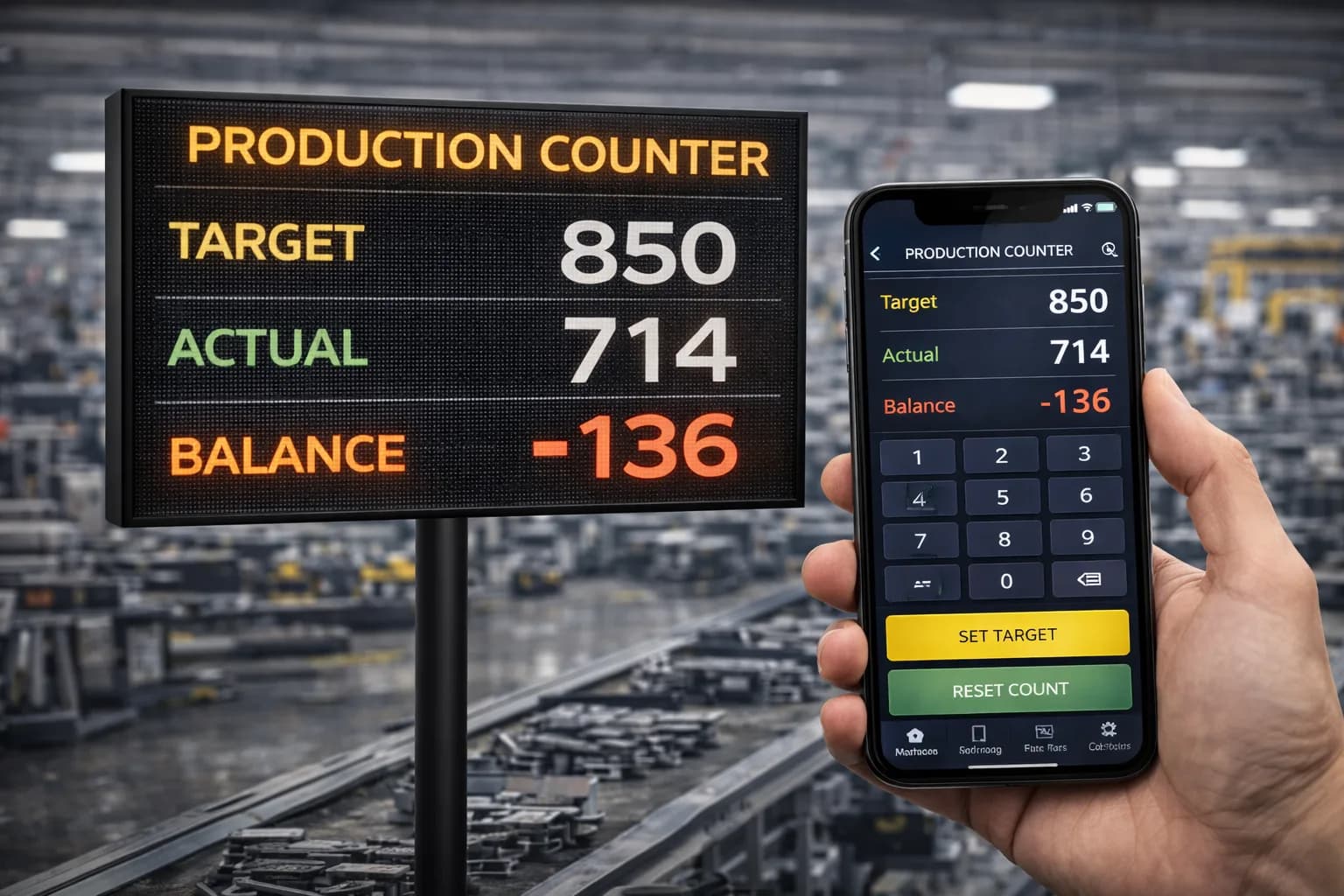
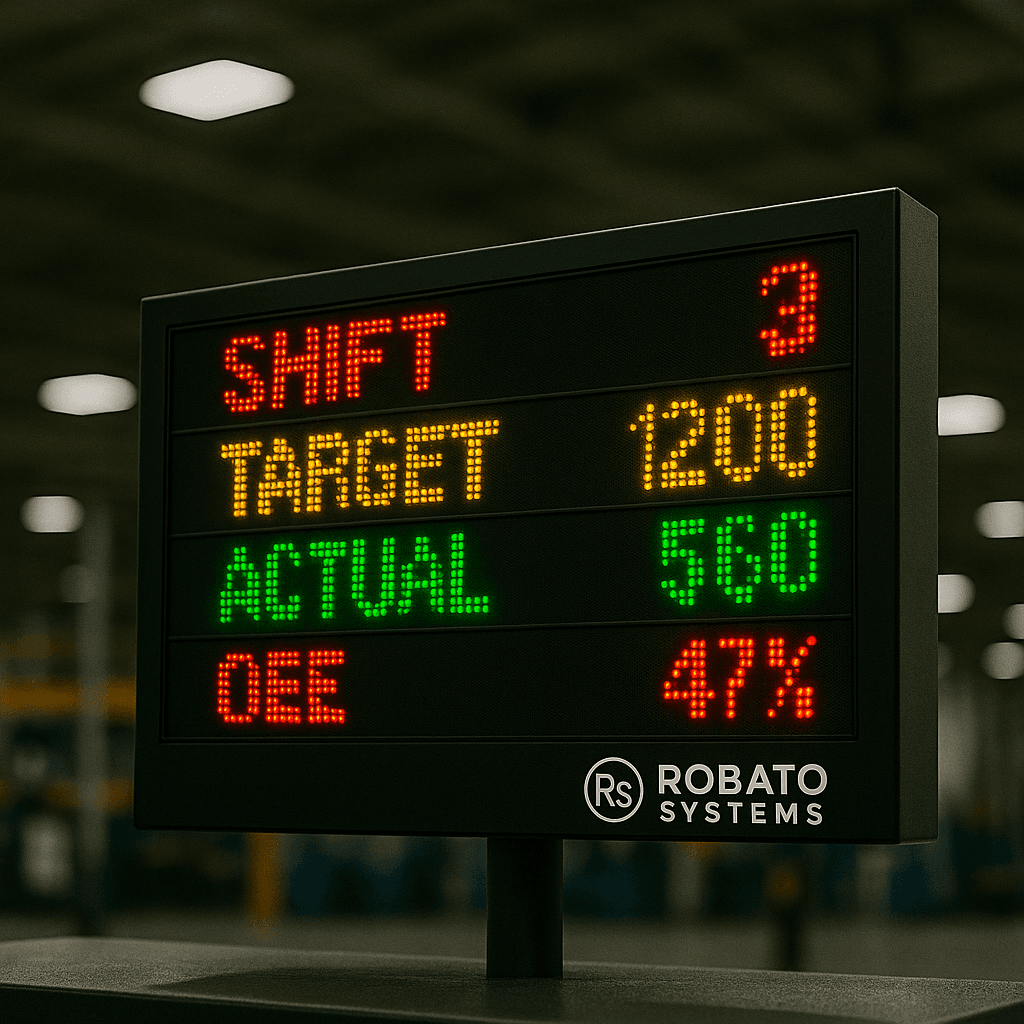
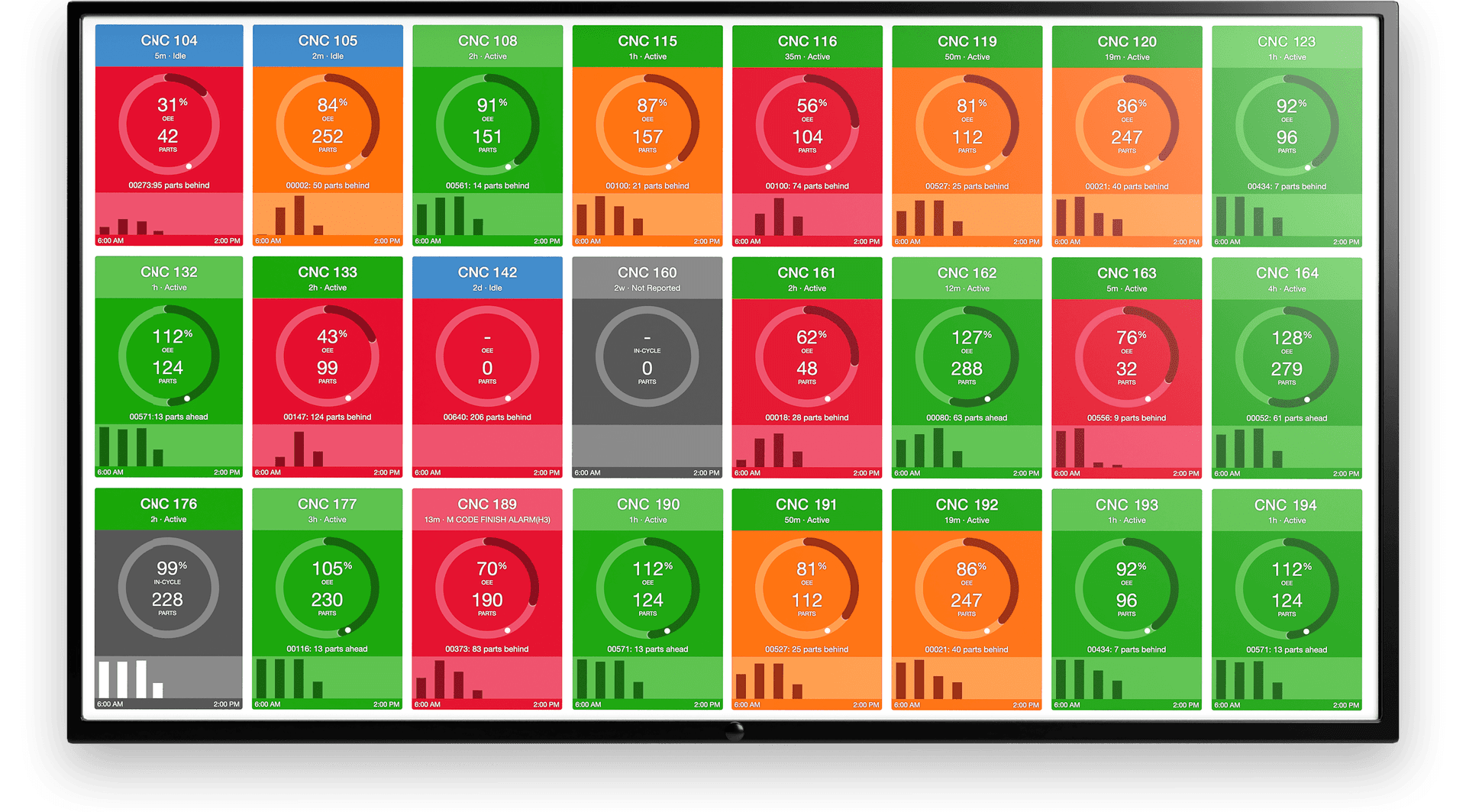
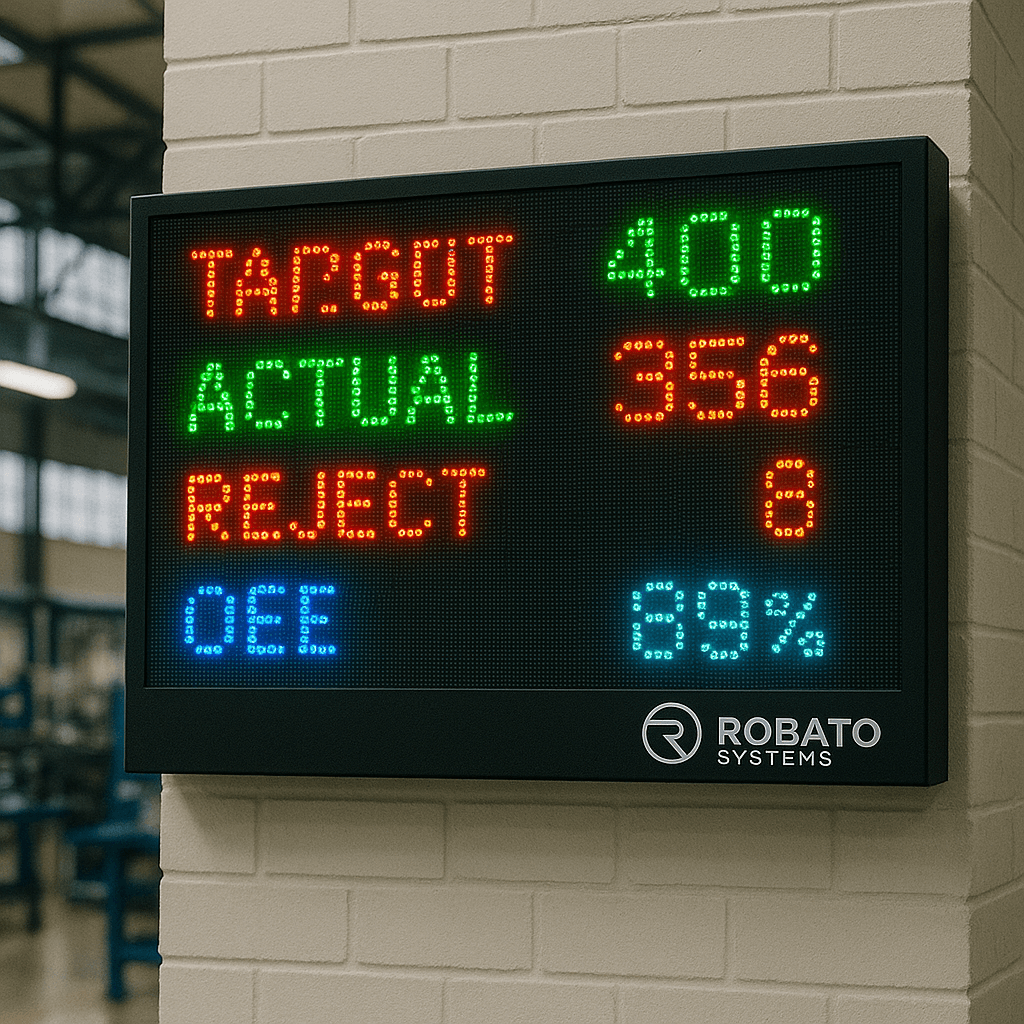
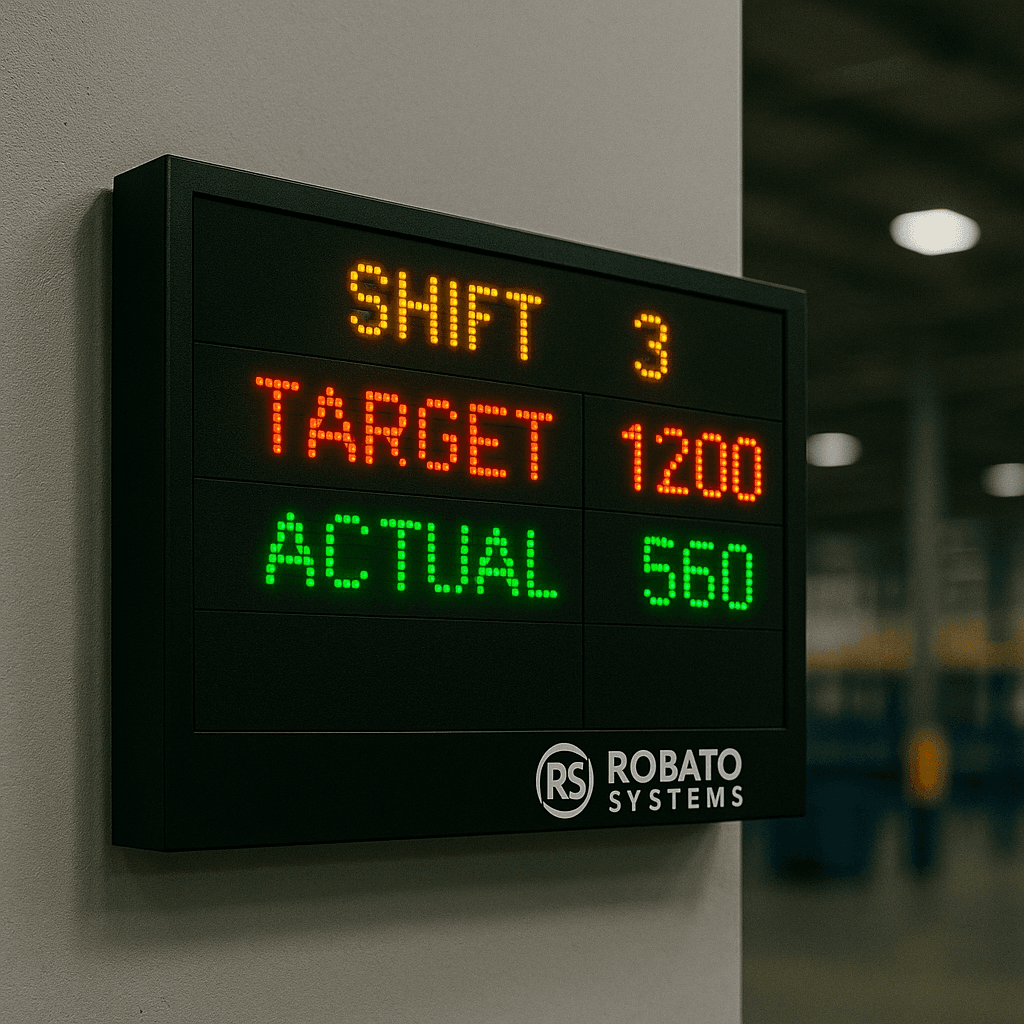
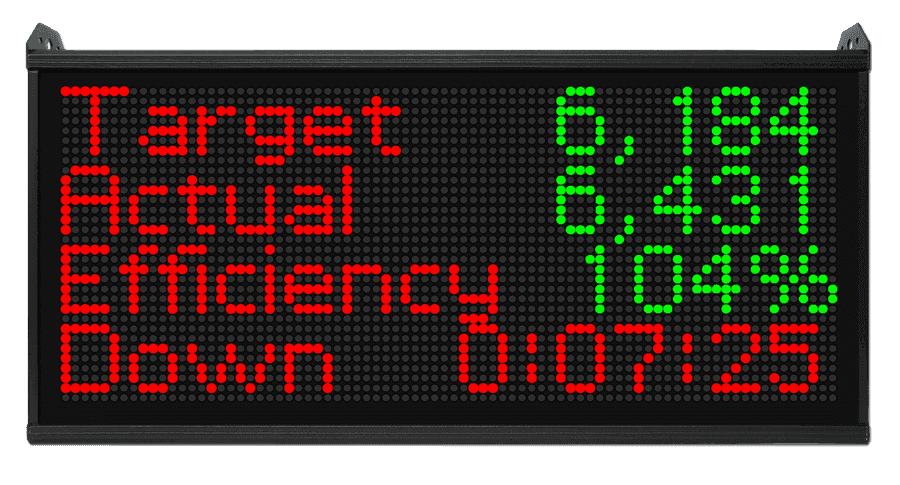
Alerts are typically displayed using tower lights, digital Andon boards, LED display boards, mobile notifications, alarm buzzers, emails, or SMS notifications.
By making problems visible immediately, manufacturers can respond quickly, reduce downtime, and keep production running efficiently.
Why Are Andon Systems Important?
Without a structured alert system, production issues often remain unnoticed until they cause significant delays. Operators may struggle to contact supervisors, maintenance teams may not receive timely notifications, and quality defects can continue unnoticed.
An Andon System solves these challenges by creating a standardized communication process.
Benefits include:
- Immediate problem visibility
- Faster response times
- Reduced machine downtime
- Improved product quality
- Better communication
- Increased production efficiency
- Enhanced operator accountability
- Support for Lean Manufacturing
Instead of reacting after production stops, teams can intervene as soon as an issue arises.
How Does an Andon System Work?
A modern Andon System follows a simple but highly effective workflow.
Step 1: Issue Detection
A production issue may be detected through:
- Machine PLCs
- Industrial IoT sensors
- Operator push buttons
- Quality inspection systems
- Vision inspection cameras
- Safety devices
- Machine monitoring software
Step 2: Alert Generation
When an abnormal condition is detected, the Andon System automatically generates an alert.
Alerts may include:
- Flashing tower lights
- Audible alarms
- Digital display notifications
- SMS alerts
- Email notifications
- Mobile app notifications
- Dashboard updates
Step 3: Escalation
If the issue is not resolved within a predefined time, the system automatically escalates the alert to higher management or specialized maintenance teams.
This ensures no production issue remains unattended.
Step 4: Resolution Tracking
Once the issue is resolved, the system records:
- Response time
- Resolution time
- Root cause
- Responsible department
- Downtime duration
This historical data supports continuous improvement initiatives.
Components of an Andon System
A complete Andon solution typically consists of:
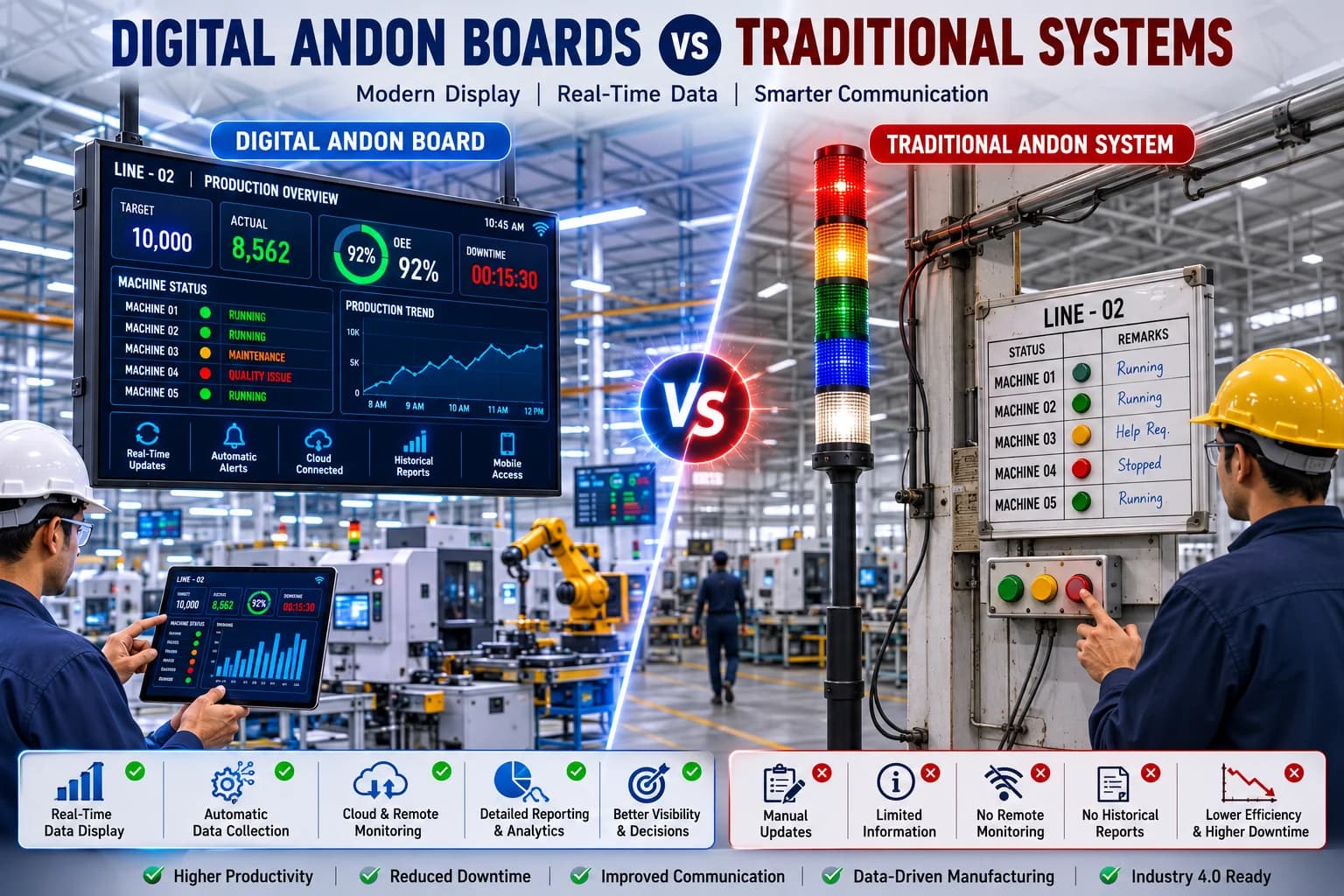
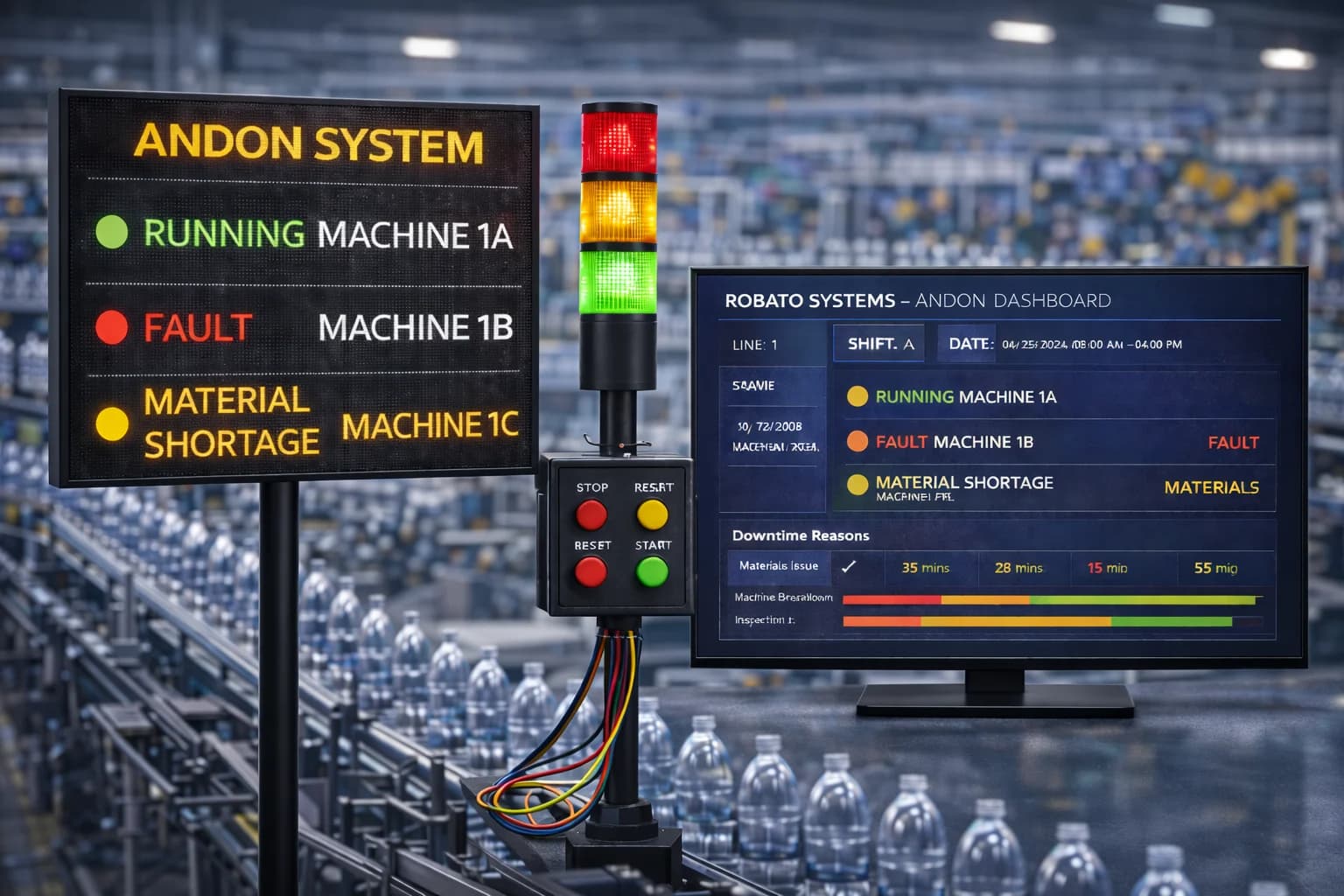
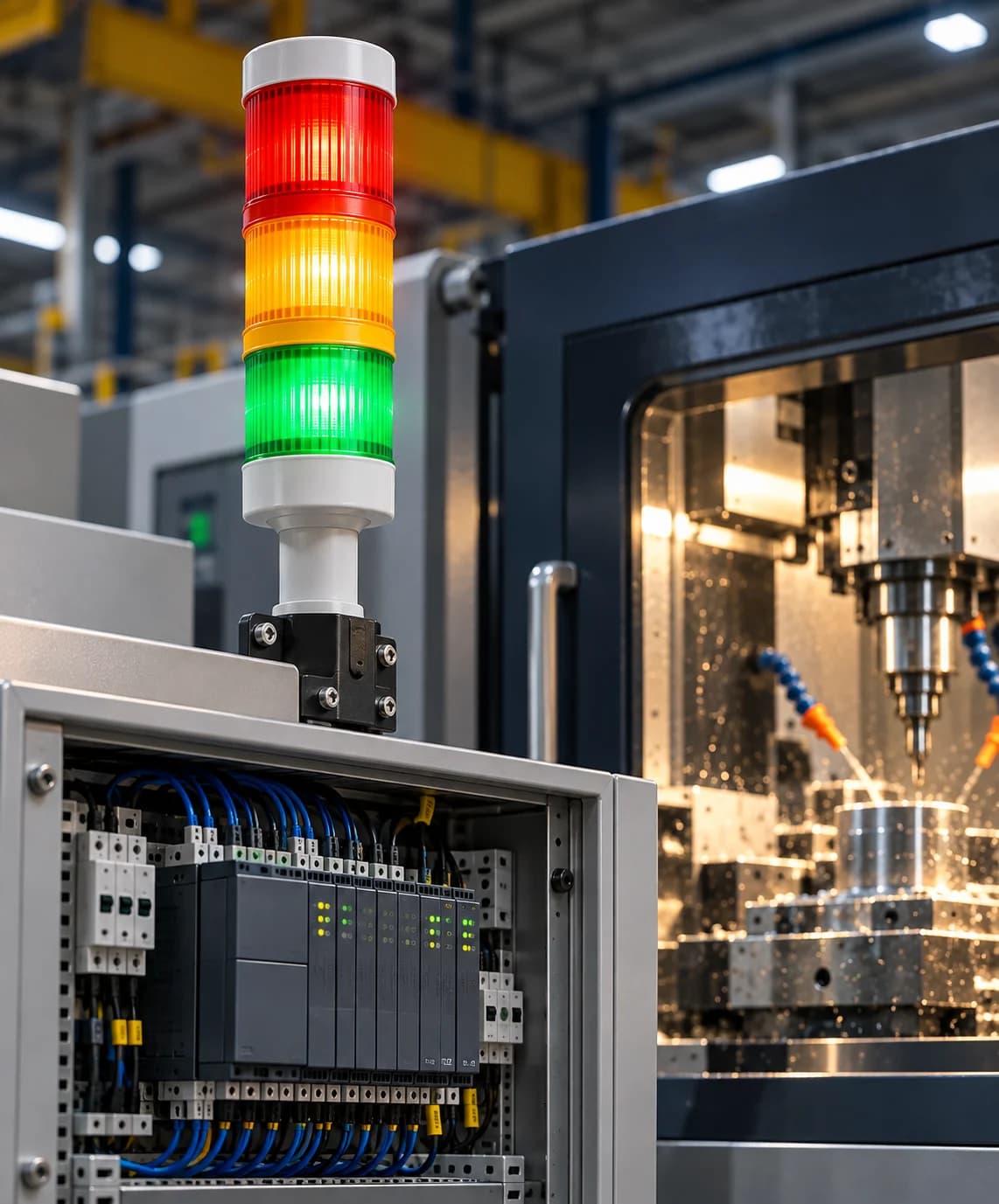
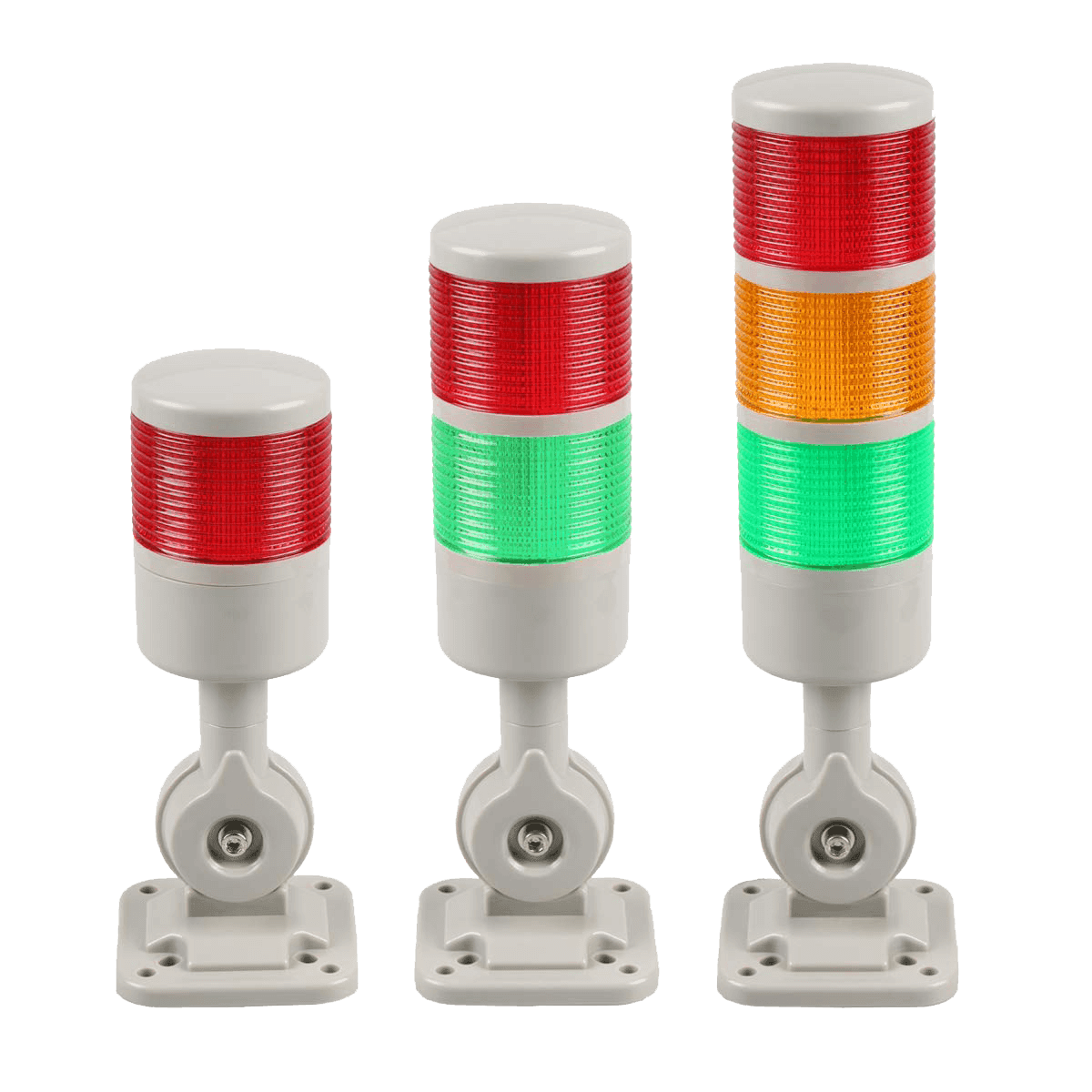
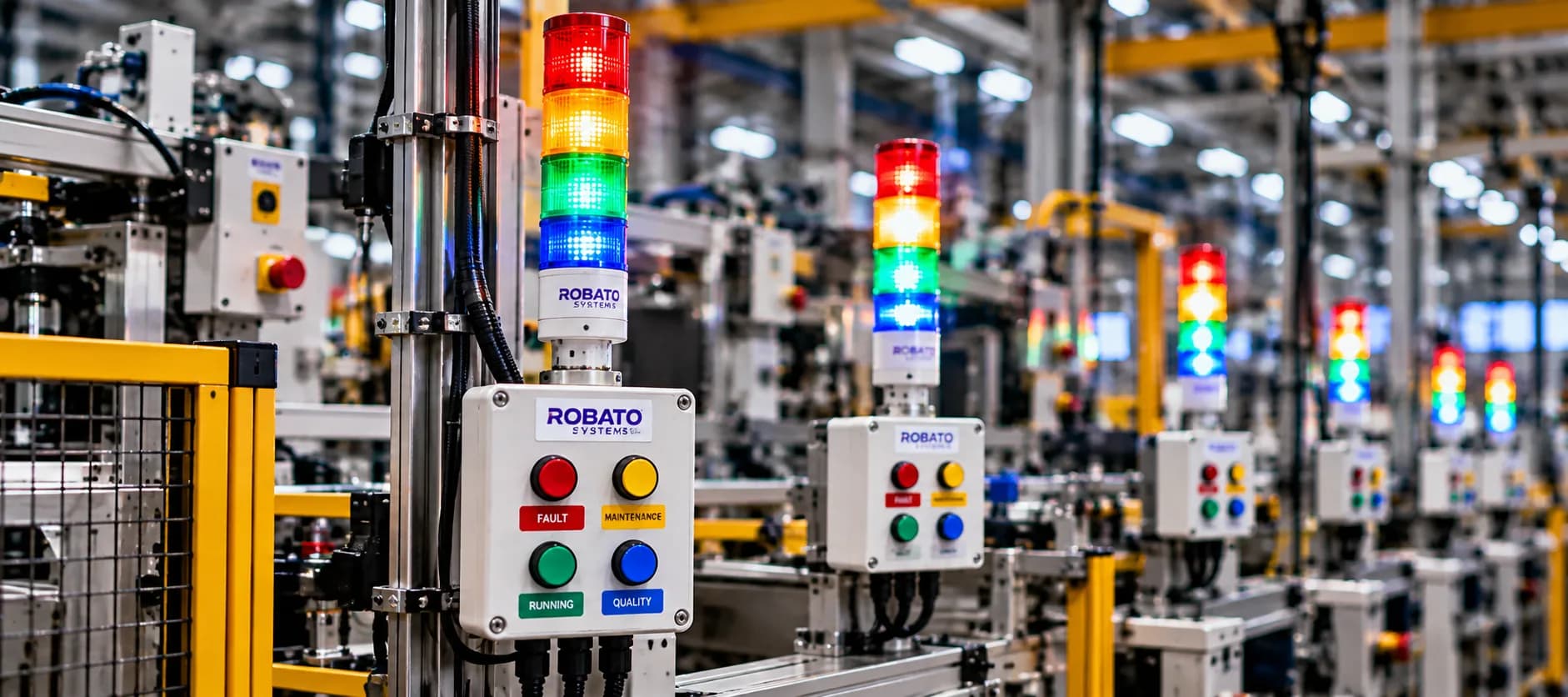
Andon Tower Lights
Provide immediate visual indication of machine or production status using color-coded signals.
Common colors include:
- Green – Normal operation
- Yellow – Warning
- Red – Machine fault
- Blue – Material request
- White – Operator assistance
Operator Call Stations
Allow operators to manually report issues with the press of a button.
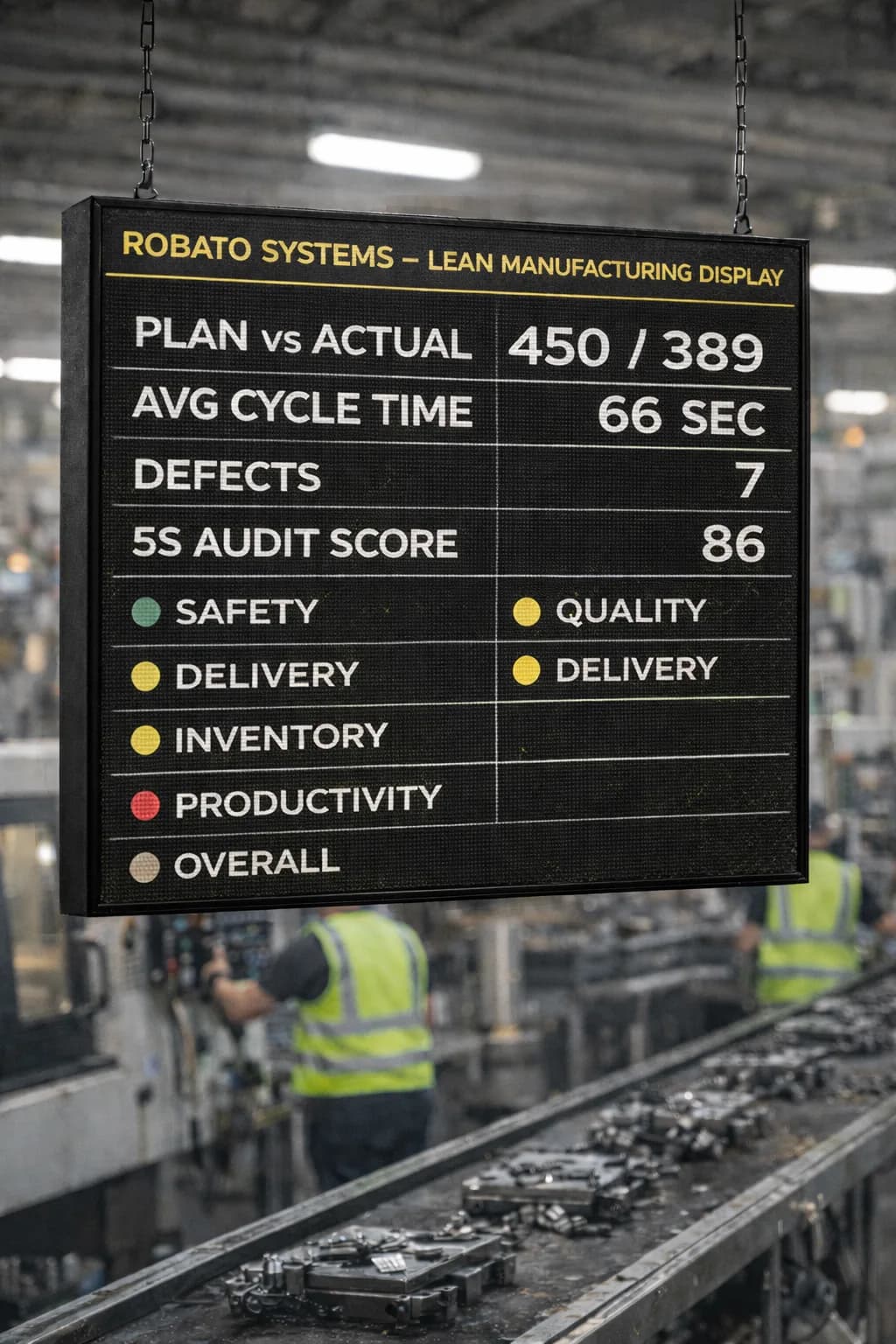
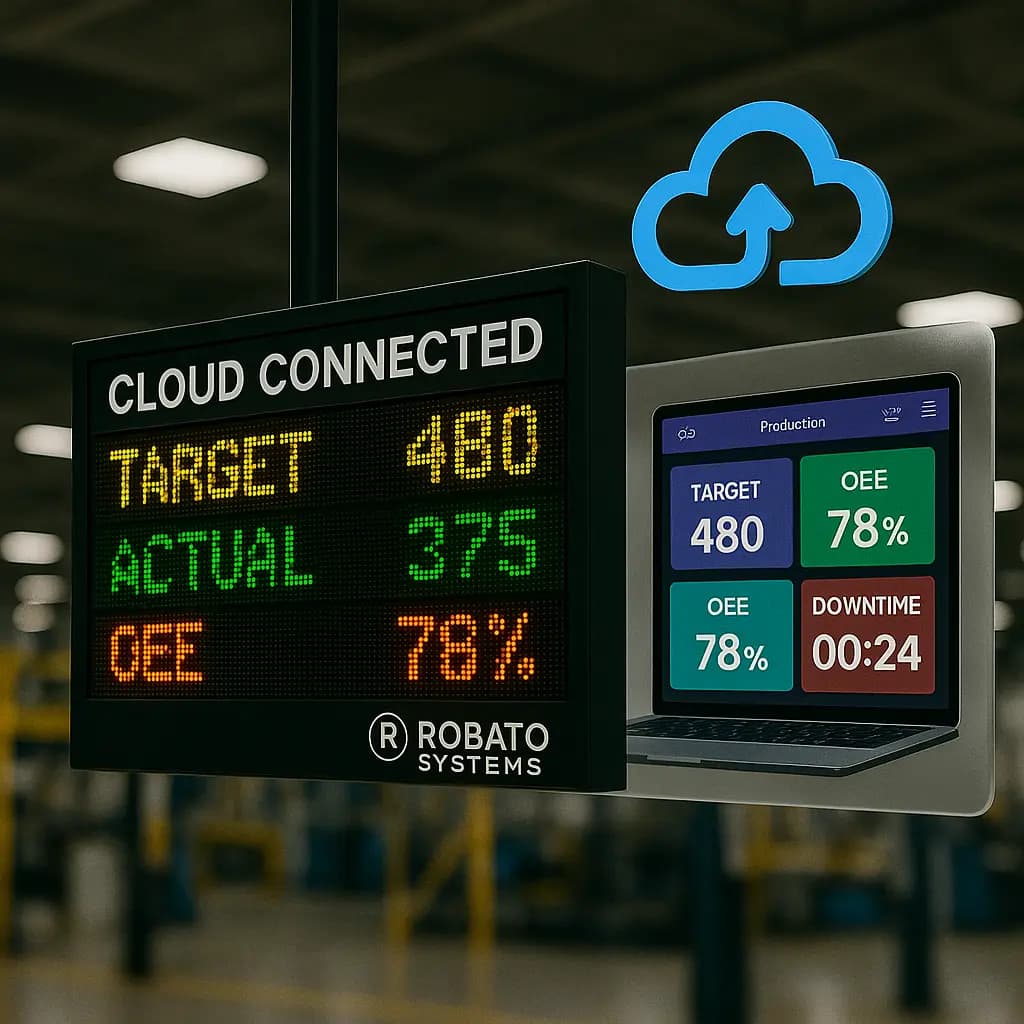
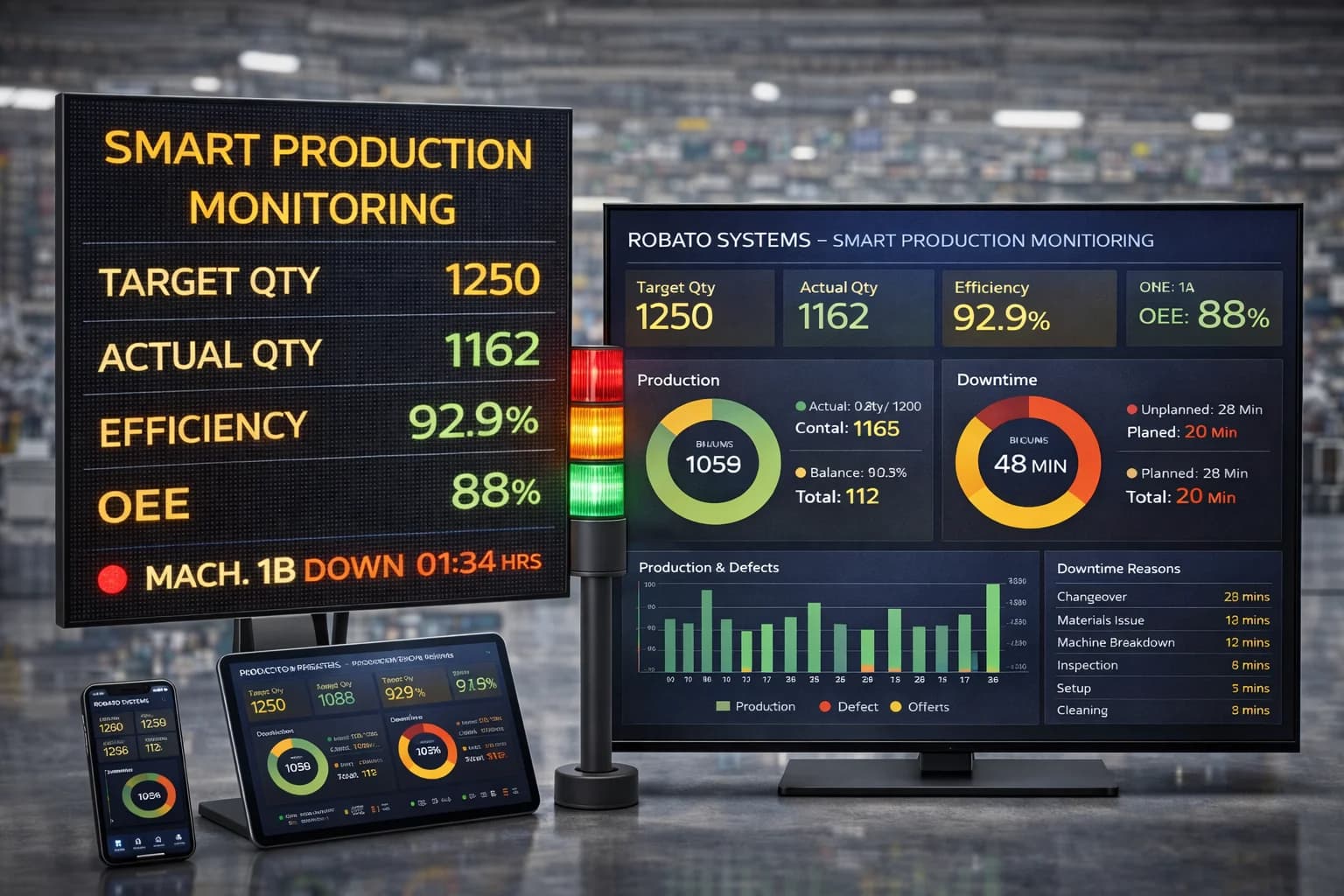
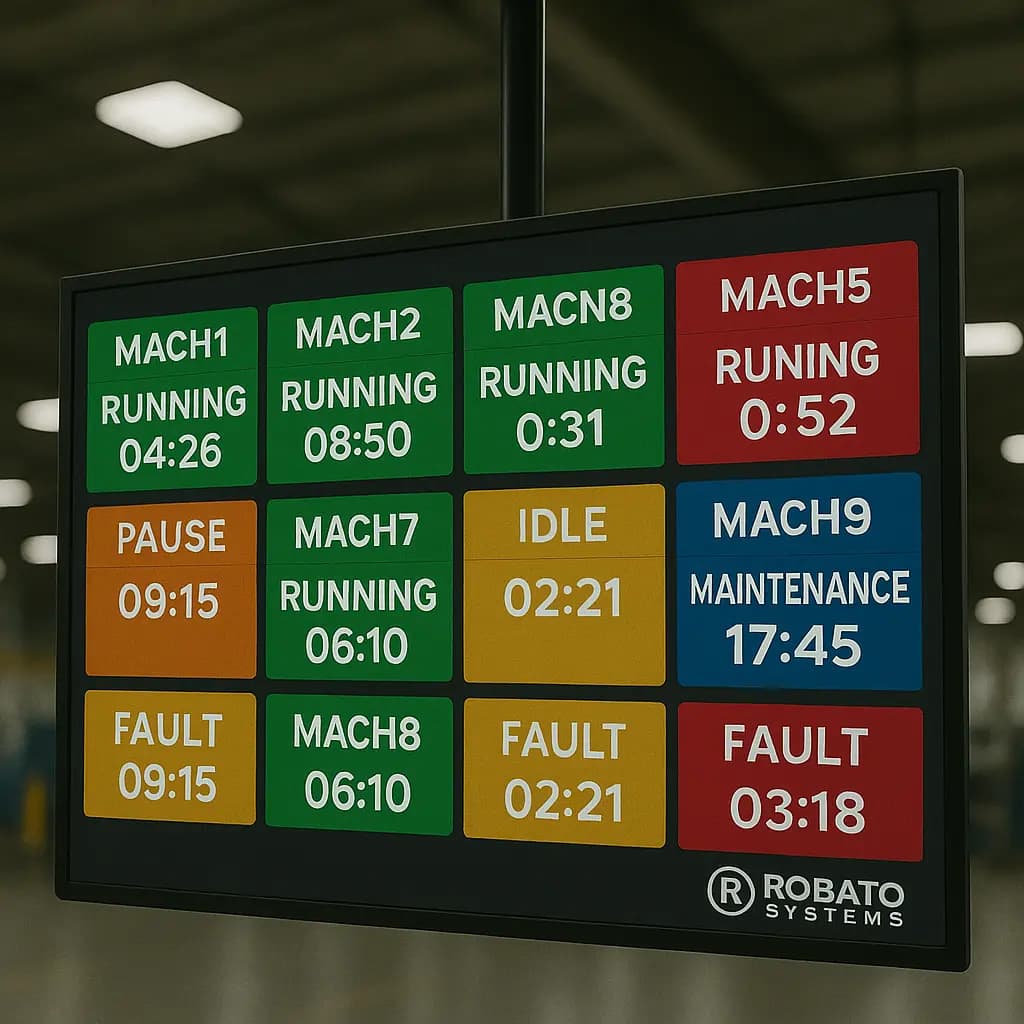
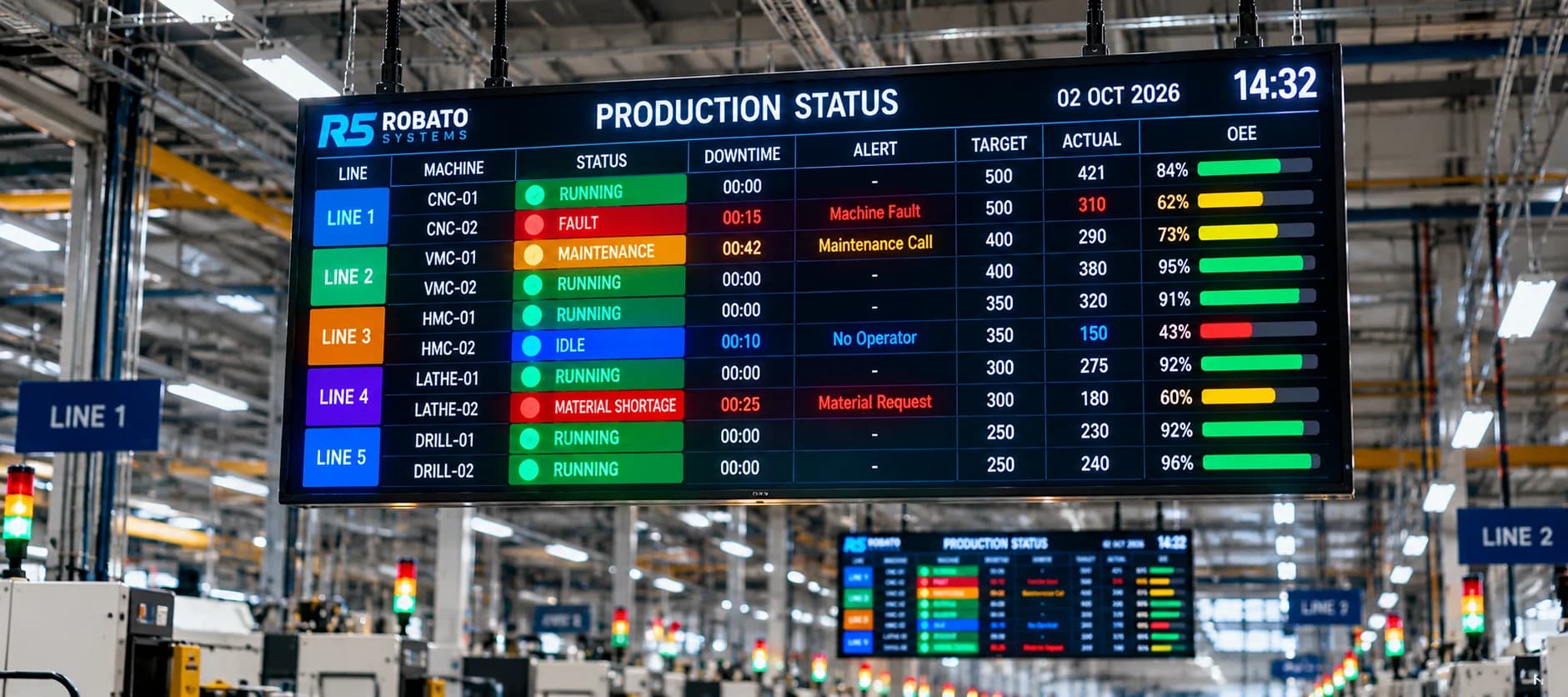
Digital Andon Boards
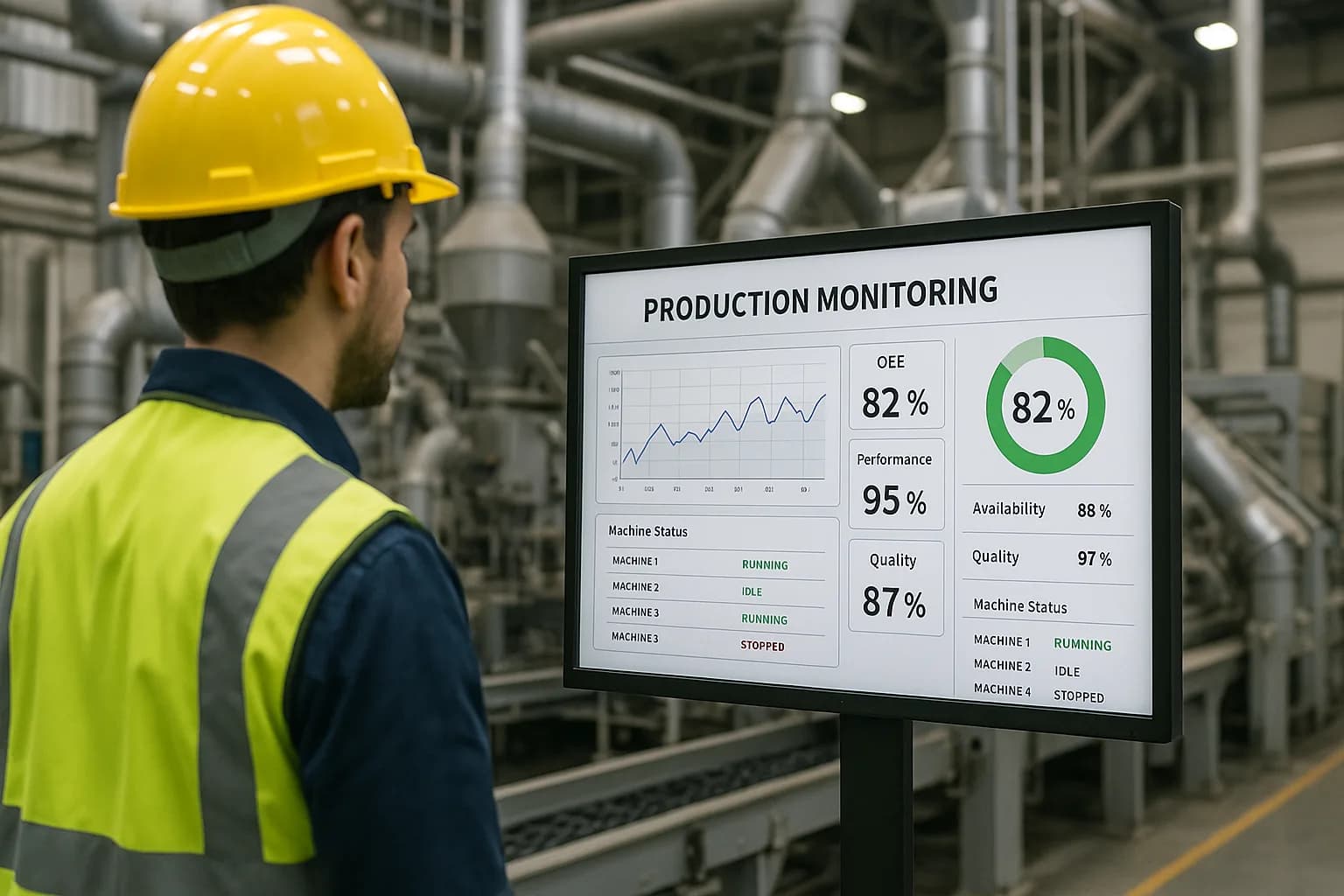
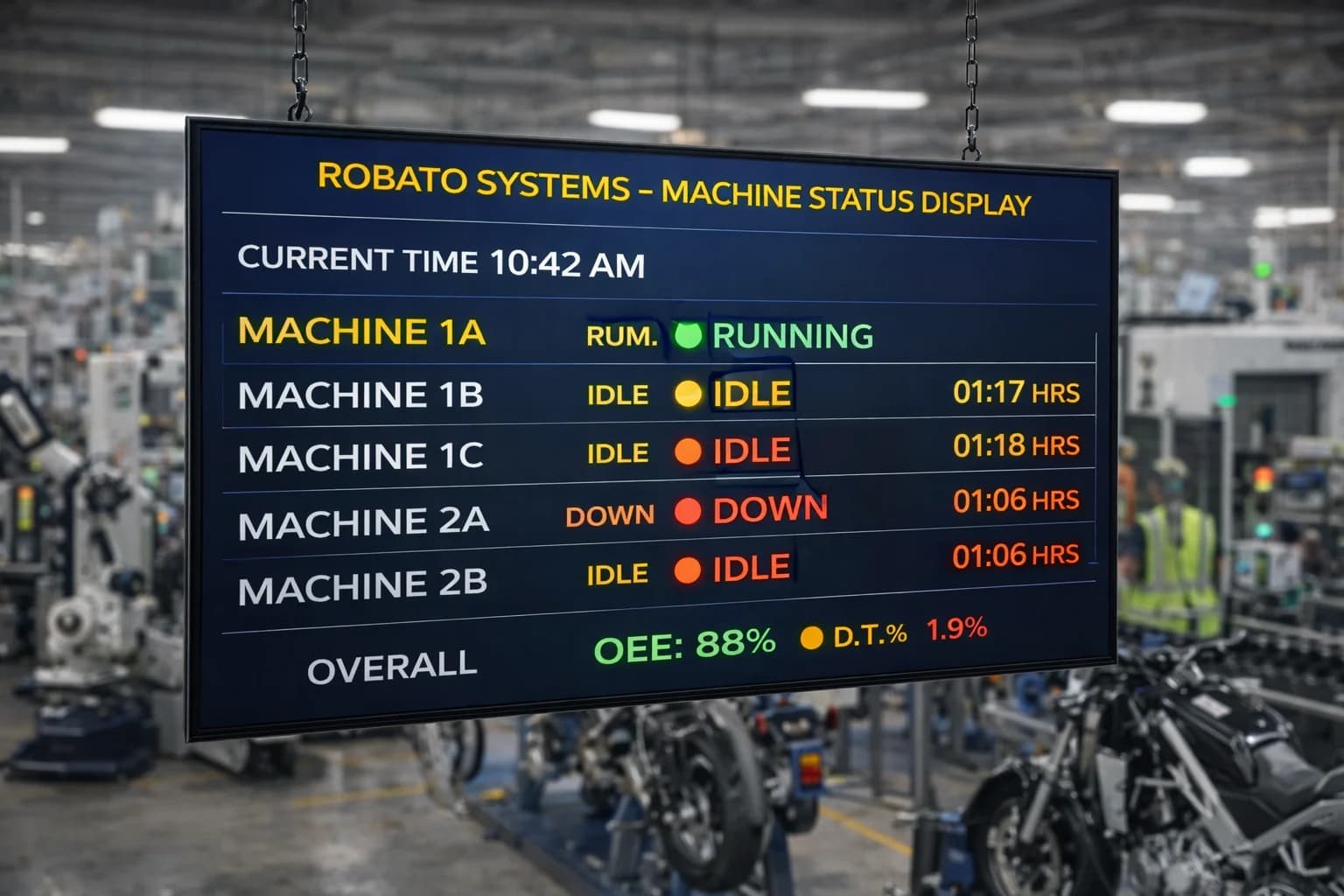
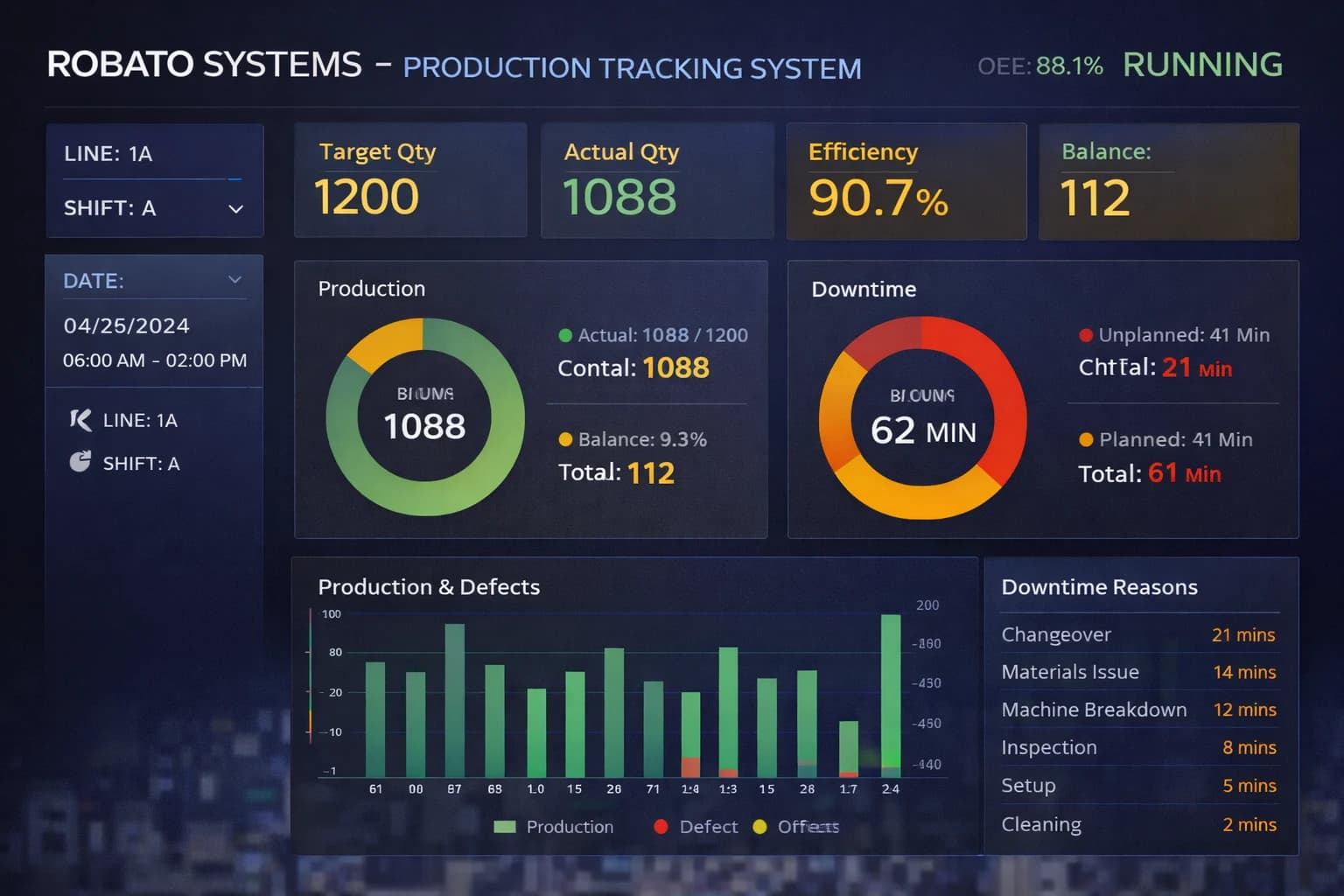
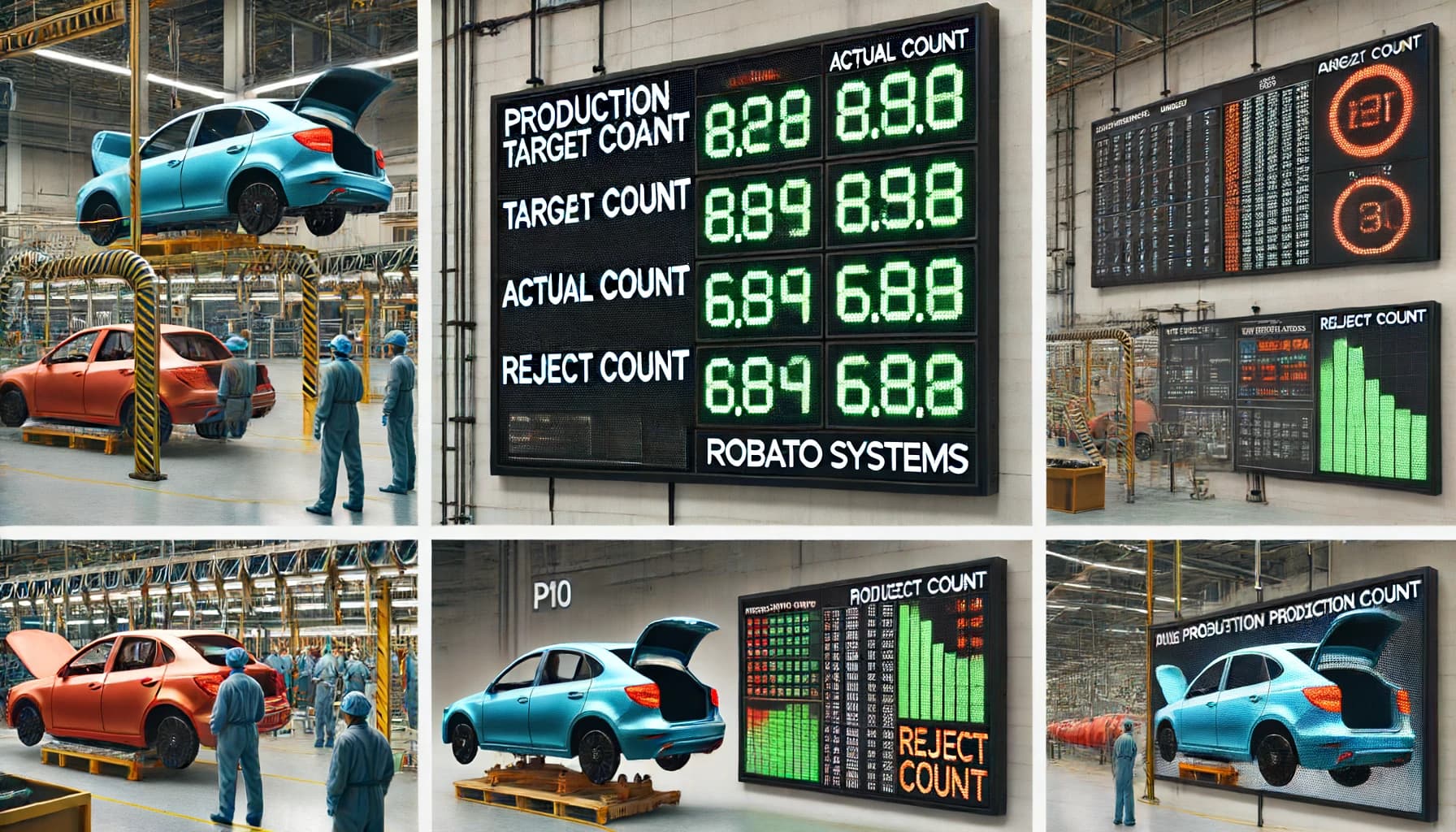
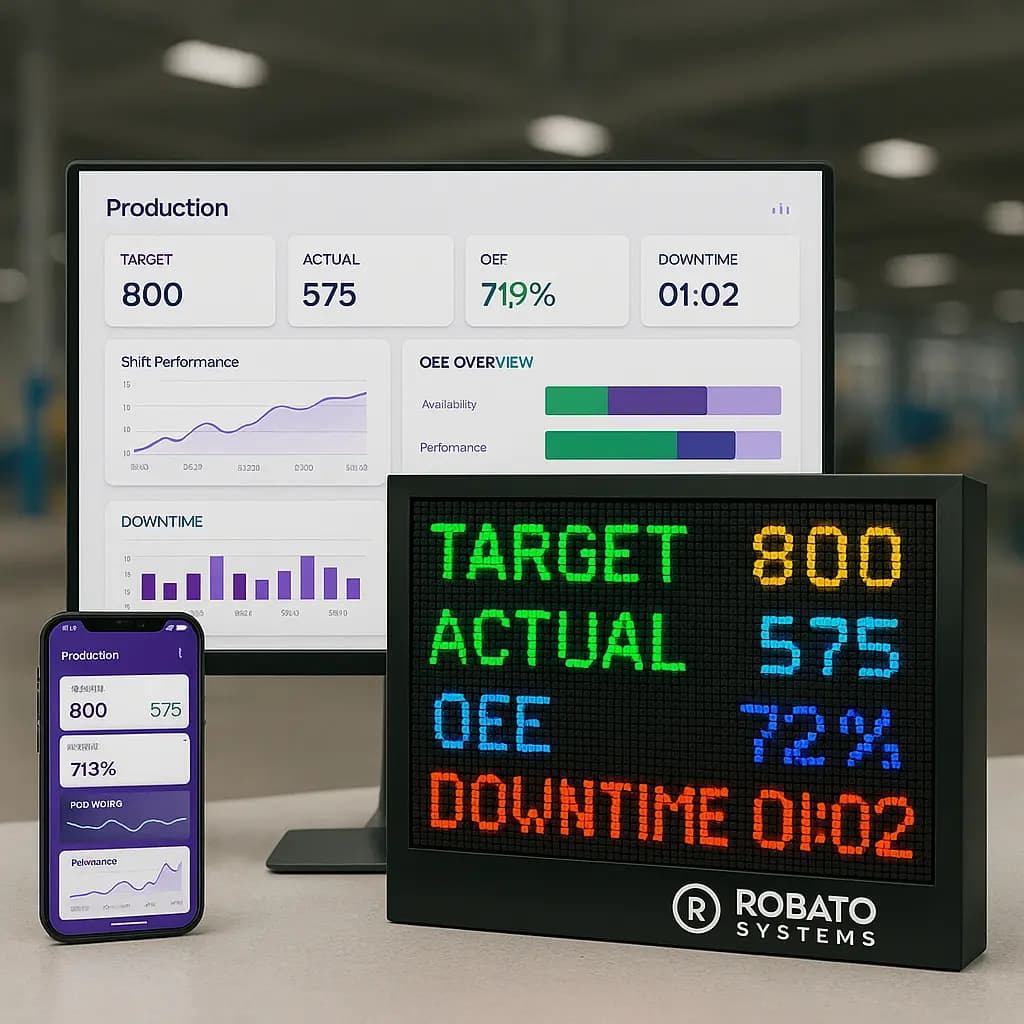
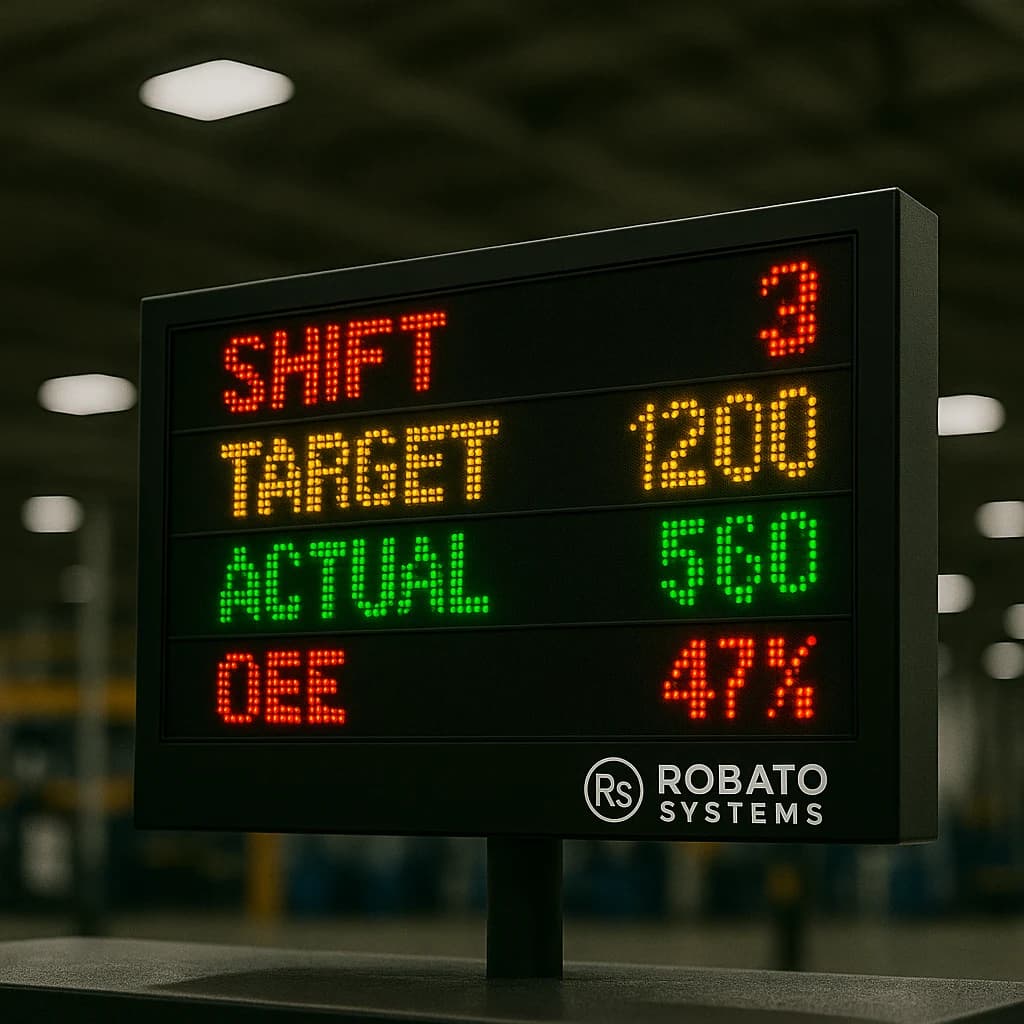
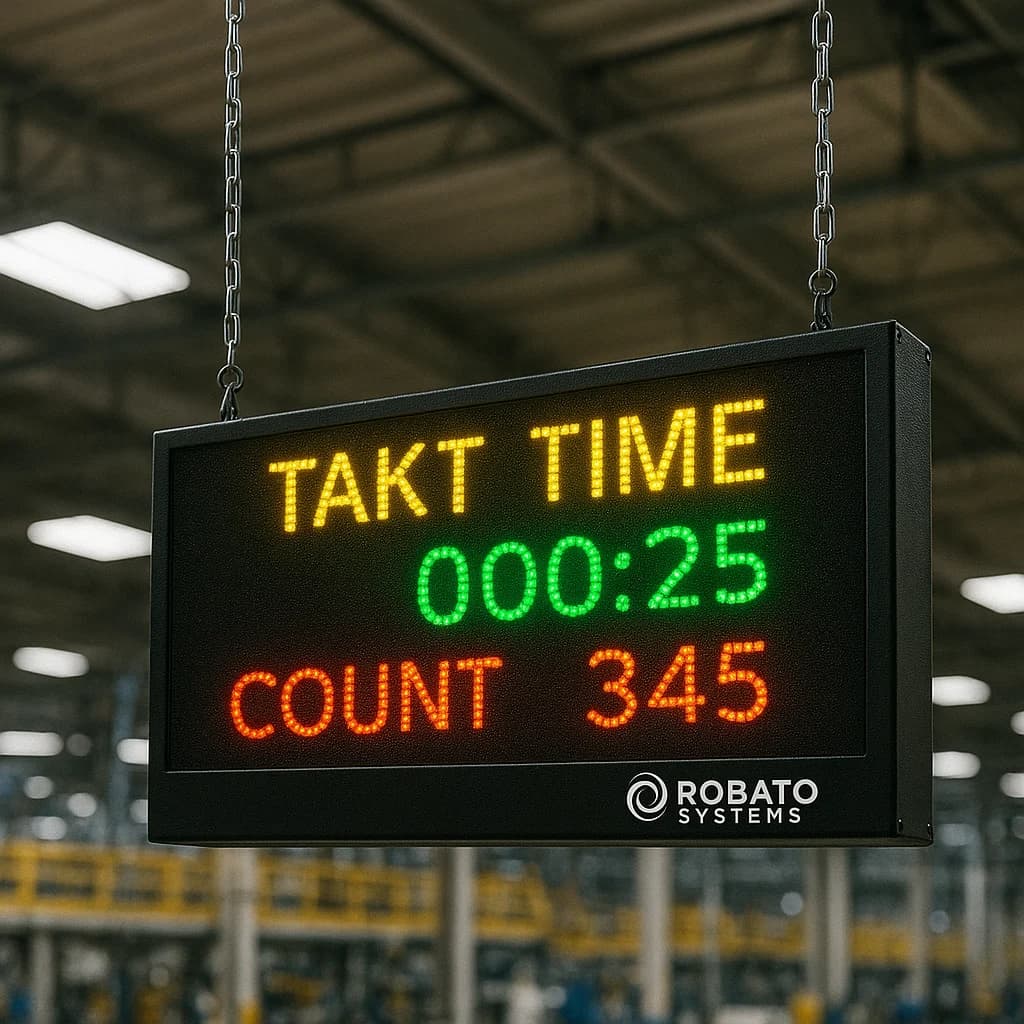
Display production alerts, machine status, response timers, and active incidents across the shop floor.
Central Monitoring Software
Collects alerts from all production lines and provides centralized monitoring.
Mobile Notifications
Notify supervisors and maintenance personnel wherever they are located.
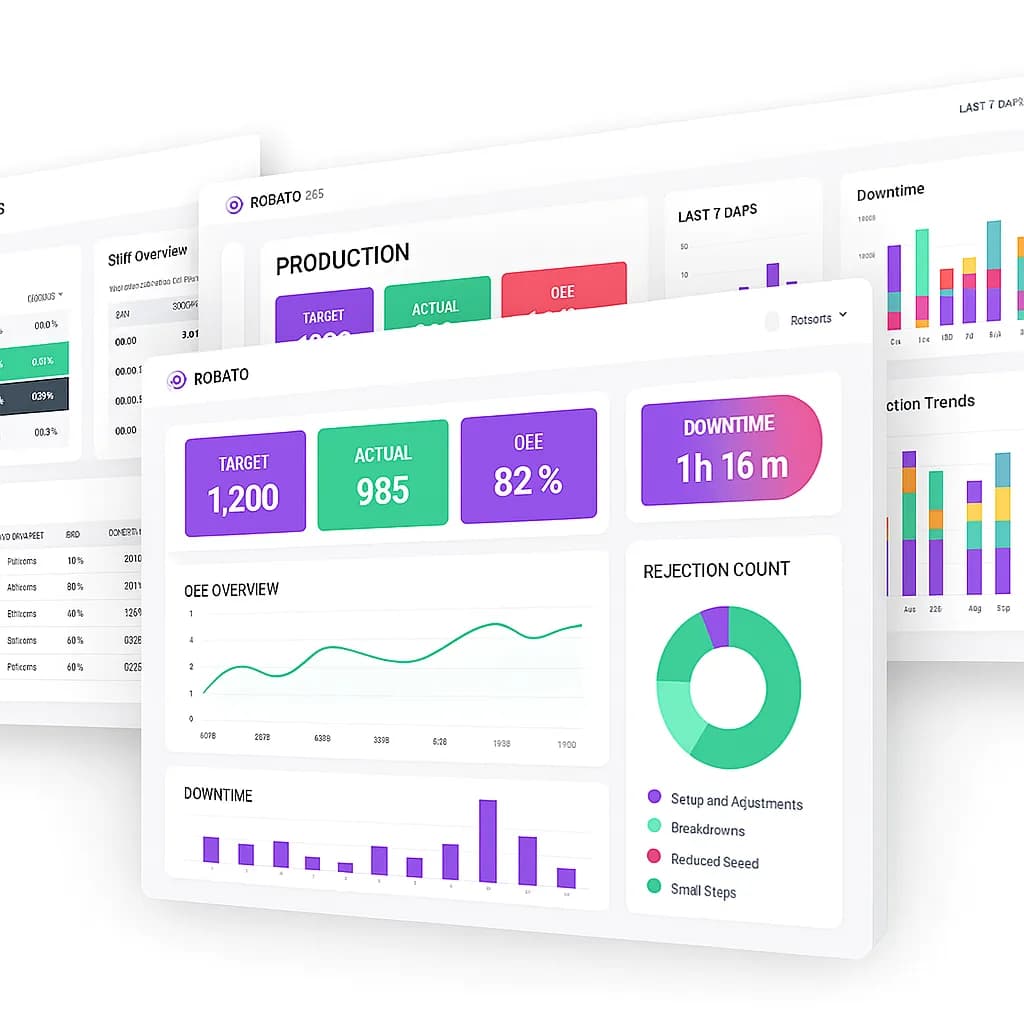
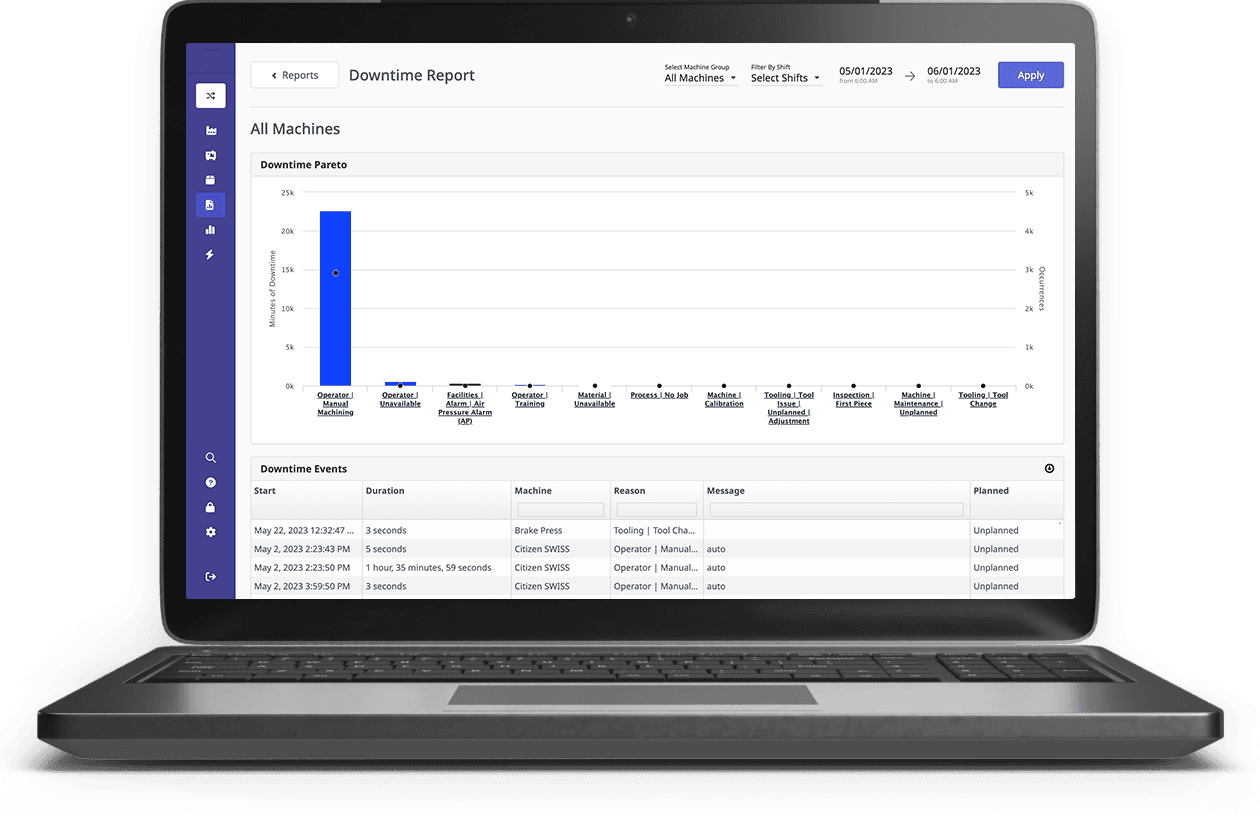
Reporting Dashboard
Provides historical reports on:
- Machine downtime
- Response times
- Escalations
- Maintenance activities
- Production interruptions
Types of Andon Systems
Manual Andon System
Operators manually activate alerts using buttons or pull cords.
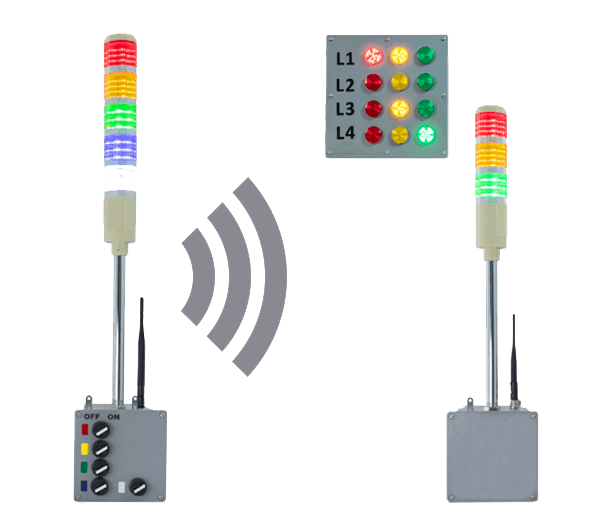
Wireless Andon System
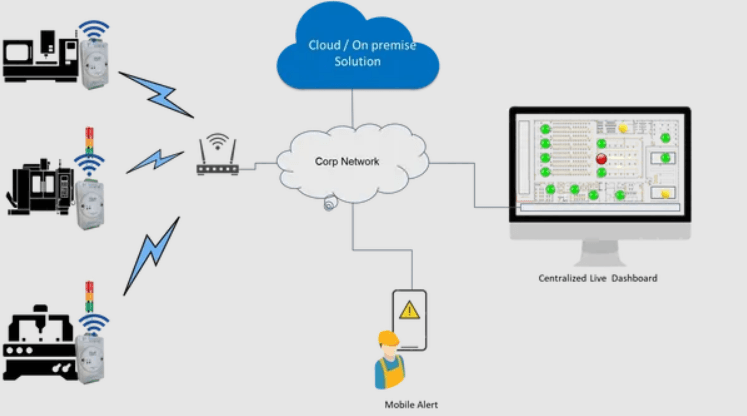
Uses wireless communication to eliminate complex wiring and simplify installation.
PLC-Based Andon System
Receives machine fault information directly from PLCs.
IoT-Based Andon System
Connects machines, sensors, and cloud platforms for real-time monitoring.
Smart Andon System
Uses AI, analytics, and Industry 4.0 technologies for predictive manufacturing insights.
Benefits of an Andon System
Reduced Downtime
Immediate alerts ensure maintenance teams respond quickly.
Improved Quality
Operators can stop production immediately when defects occur.
Faster Communication
Visual and digital alerts eliminate communication delays.
Increased Productivity
Production interruptions are resolved faster, improving equipment availability.
Better Accountability
Every alert is recorded, making response performance measurable.
Data-Driven Decision Making
Historical alert data helps identify recurring production issues.
Support for Lean Manufacturing
Andon Systems promote continuous improvement and waste reduction.
Industries That Use Andon Systems
Andon Systems are widely used in:
- Automotive Manufacturing
- Electronics Manufacturing
- Pharmaceutical Industry
- Food & Beverage Processing
- Textile Manufacturing
- Plastic & Injection Molding
- Packaging Industry
- Steel & Metal Fabrication
- Logistics & Warehousing
- FMCG Manufacturing
Andon Systems and Industry 4.0
Modern Andon Systems integrate with:
- Industrial IoT (IIoT)
- PLCs
- MES
- ERP
- SCADA
- Cloud Dashboards
- Production Monitoring Systems
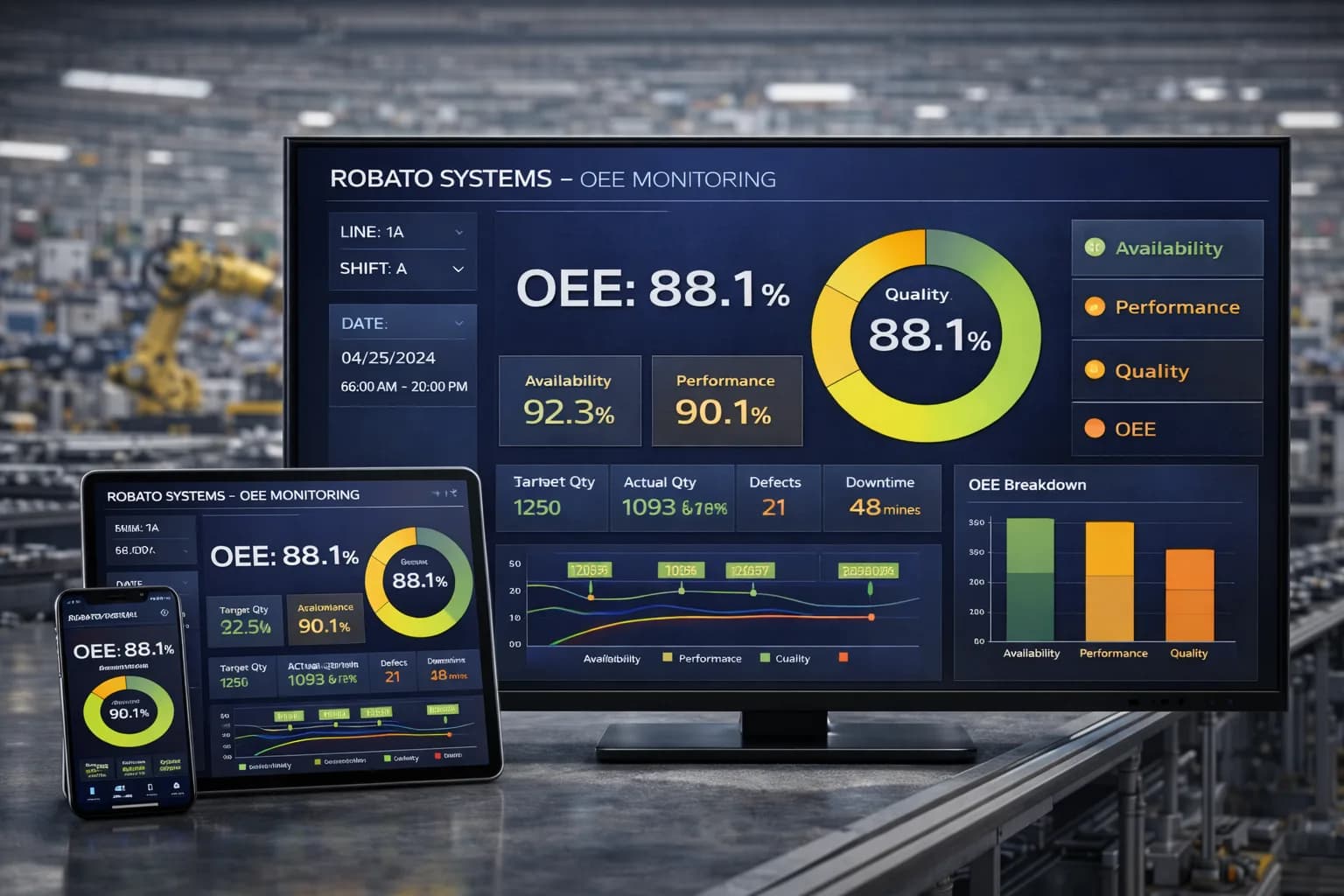
- OEE Software
This integration enables manufacturers to monitor operations in real time while supporting predictive maintenance, remote monitoring, and smart factory initiatives.
Best Practices for Implementing an Andon System
- Define clear alert categories.
- Standardize tower light color codes.
- Automate alerts wherever possible.
- Integrate with PLCs and machine monitoring systems.
- Configure automatic escalation rules.
- Train operators and maintenance teams.
- Review Andon reports regularly.
- Analyze recurring production issues for continuous improvement.
Common Challenges
Some common implementation challenges include:
- Integrating with legacy machines
- Poor alert prioritization
- Excessive false alarms
- Lack of employee training
- Weak network infrastructure
- Inconsistent response procedures
Proper planning and system configuration help overcome these issues.
Future of Andon Systems
Future Andon solutions will include:
- AI-powered predictive alerts
- Machine learning analytics
- Edge computing
- Digital Twin integration
- Mobile-first dashboards
- Cloud-based manufacturing intelligence
- Voice-enabled operator assistance
- Advanced predictive maintenance
These innovations will make manufacturing more connected, intelligent, and efficient.
Why Choose Robato Systems for Andon Solutions?
Robato Systems delivers intelligent Andon System solutions designed to improve manufacturing communication, reduce downtime, and enhance operational efficiency. Our solutions integrate seamlessly with PLCs, Industrial IoT devices, MES, ERP, SCADA, and production monitoring software to provide real-time alerts and complete production visibility.
Our customizable Andon solutions include wireless tower lights, digital Andon boards, escalation management, mobile notifications, machine breakdown alerts, and comprehensive reporting dashboards. Built for Industry 4.0, Robato Systems helps manufacturers create smarter factories with faster response times, improved quality, and increased productivity.
Whether your facility operates a single production line or multiple manufacturing plants, our scalable Andon solutions are tailored to meet your operational requirements.
Conclusion
An Andon System is much more than a visual alert mechanism—it is a critical communication and problem-management system that enables manufacturers to identify issues instantly, reduce downtime, improve quality, and maintain continuous production.
As factories continue embracing Industry 4.0, Andon Systems have become an essential part of smart manufacturing by connecting machines, operators, supervisors, and management through real-time information.
Organizations that invest in a modern Andon System gain improved operational visibility, stronger team collaboration, and the ability to respond to production issues before they impact productivity and customer deliveries.
Frequently Asked Questions (FAQs)
What is an Andon System?
An Andon System is a visual and audible alert system used in manufacturing to notify teams about machine faults, quality issues, maintenance requests, and production problems in real time.
How does an Andon System work?
It detects production issues through operators, PLCs, or sensors and immediately sends alerts using tower lights, display boards, alarms, mobile notifications, or software dashboards.
What are the benefits of an Andon System?
It reduces downtime, improves communication, increases productivity, enhances quality, supports Lean Manufacturing, and enables faster issue resolution.
Can an Andon System integrate with ERP and PLC systems?
Yes. Modern Andon Systems integrate with PLCs, MES, ERP, SCADA, Industrial IoT platforms, and cloud-based production monitoring systems.
Which industries use Andon Systems?
Automotive, electronics, pharmaceuticals, food processing, textiles, plastics, packaging, logistics, FMCG, and many other manufacturing industries.