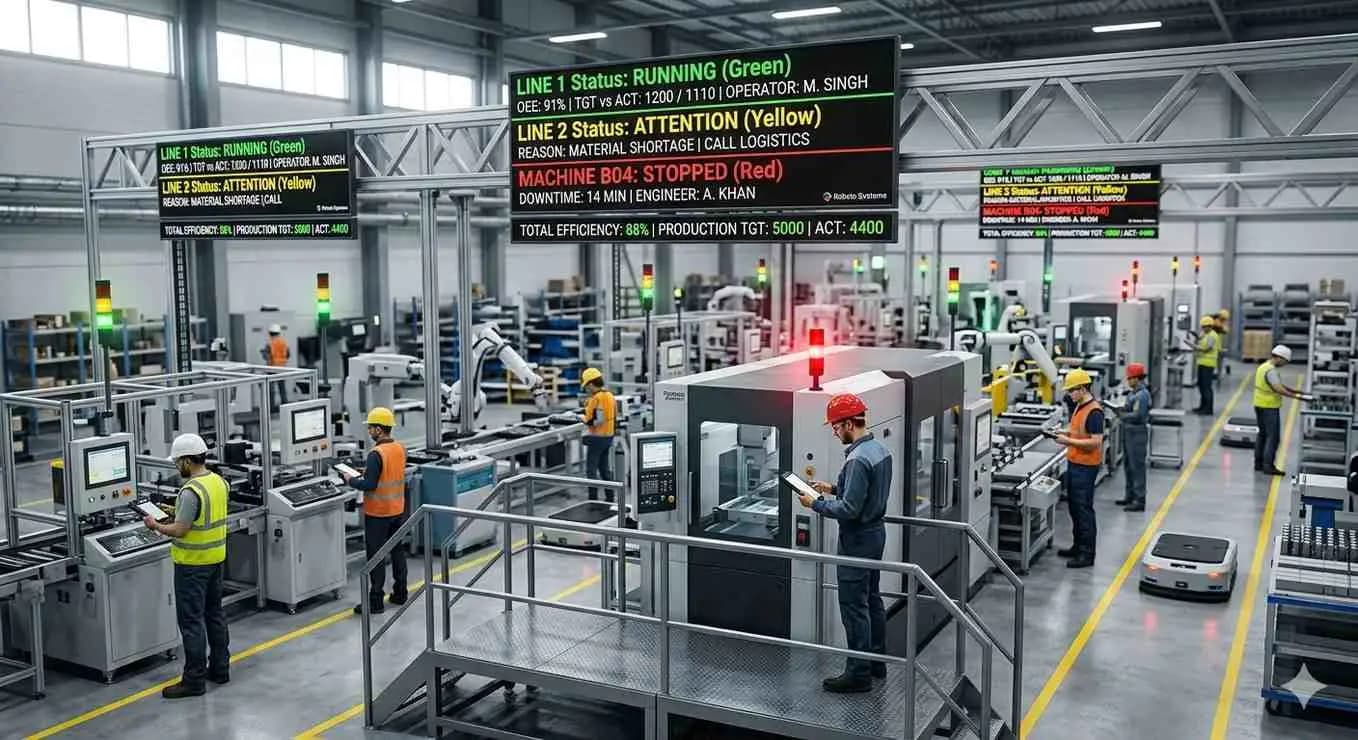
Why Andon Display Systems Are the Heartbeat of a Smart Factory
In any well-run manufacturing facility, the difference between a small problem and a costly production stoppage often comes down to one thing: how quickly the right person finds out. That is the core function of Andon display systems. Rooted in lean manufacturing principles and now powered by modern IIoT technology, Andon display systems give every person on the shop floor an immediate, visual understanding of what is happening on every machine and production line at any given moment. They are not just boards on a wall. They are the real-time nervous system of a productive factory.
What Andon Display Systems Actually Are
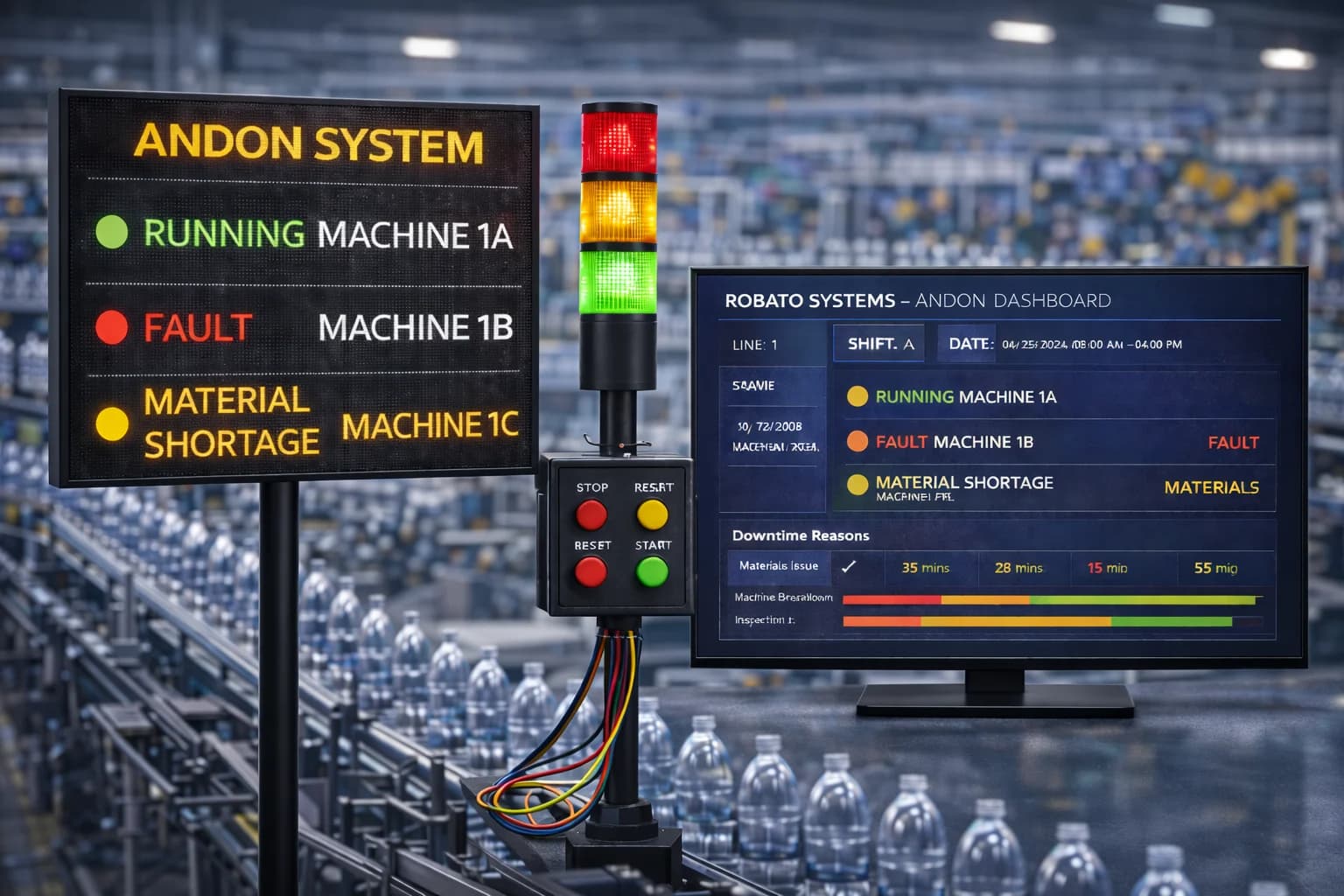
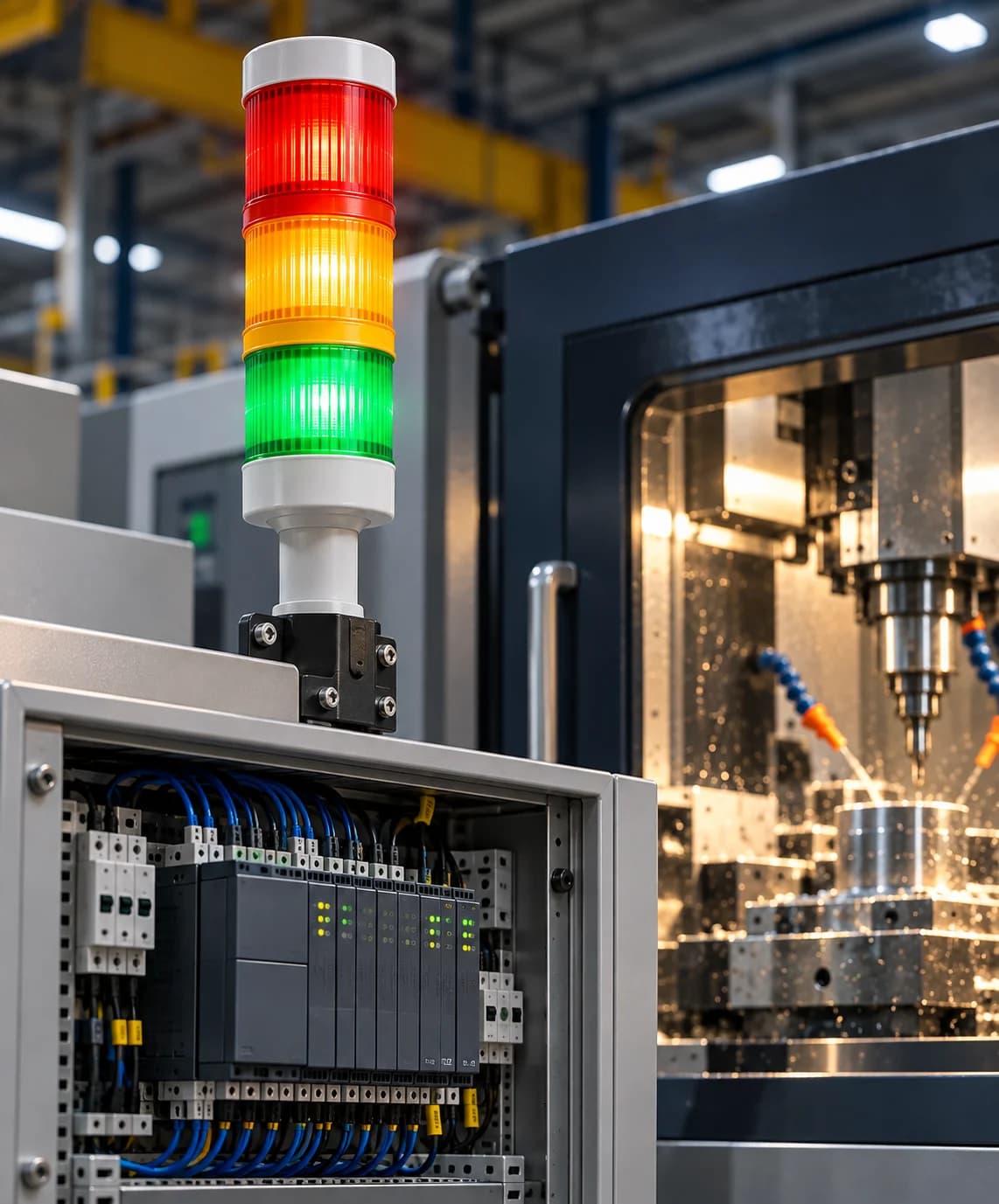
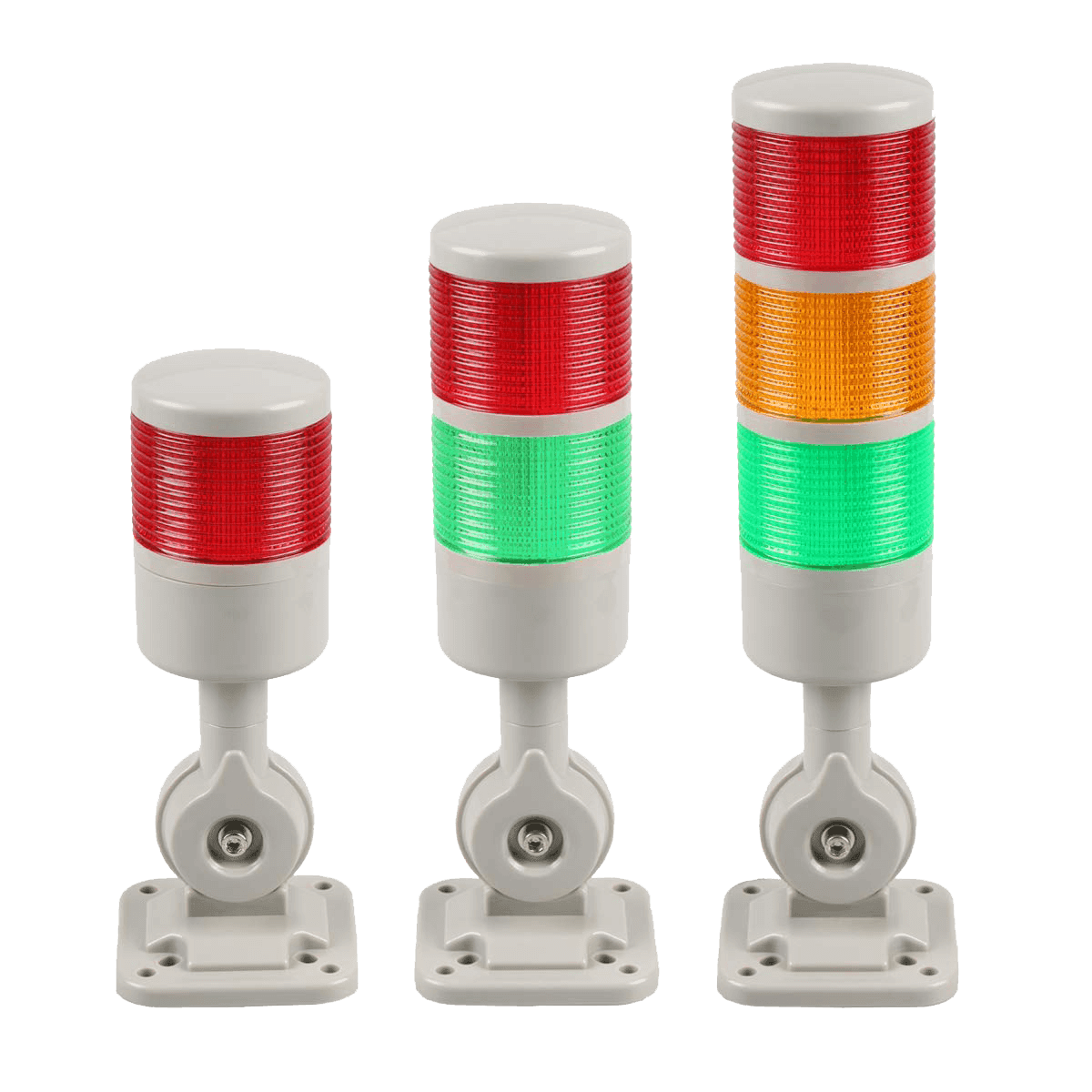
The word "Andon" comes from Japanese manufacturing culture and refers to a visual signal used to communicate the status of a production process. In their most traditional form, Andon systems were simple colored lights: green for normal operation, yellow for a developing issue, and red for a stoppage requiring immediate action.
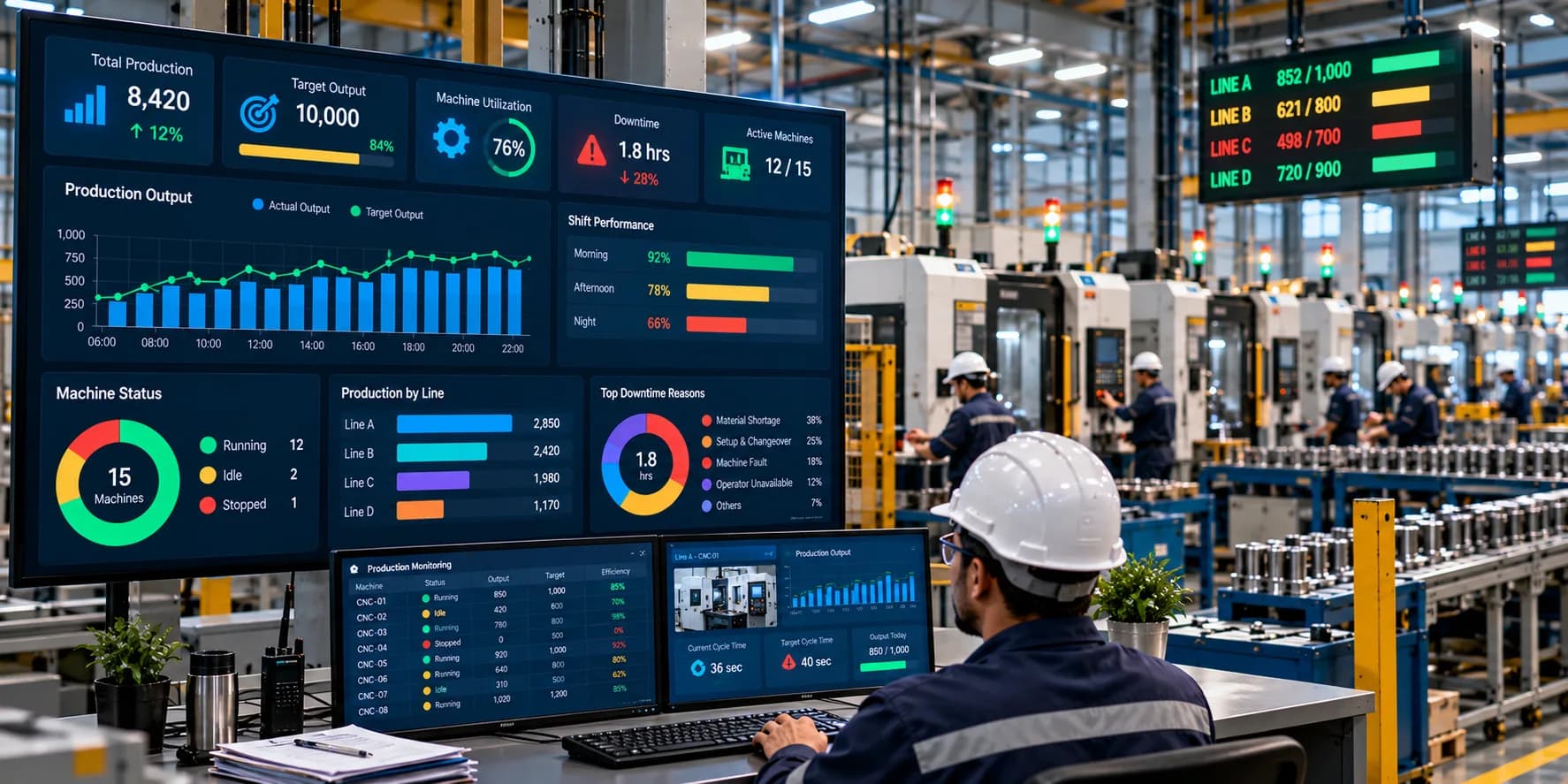
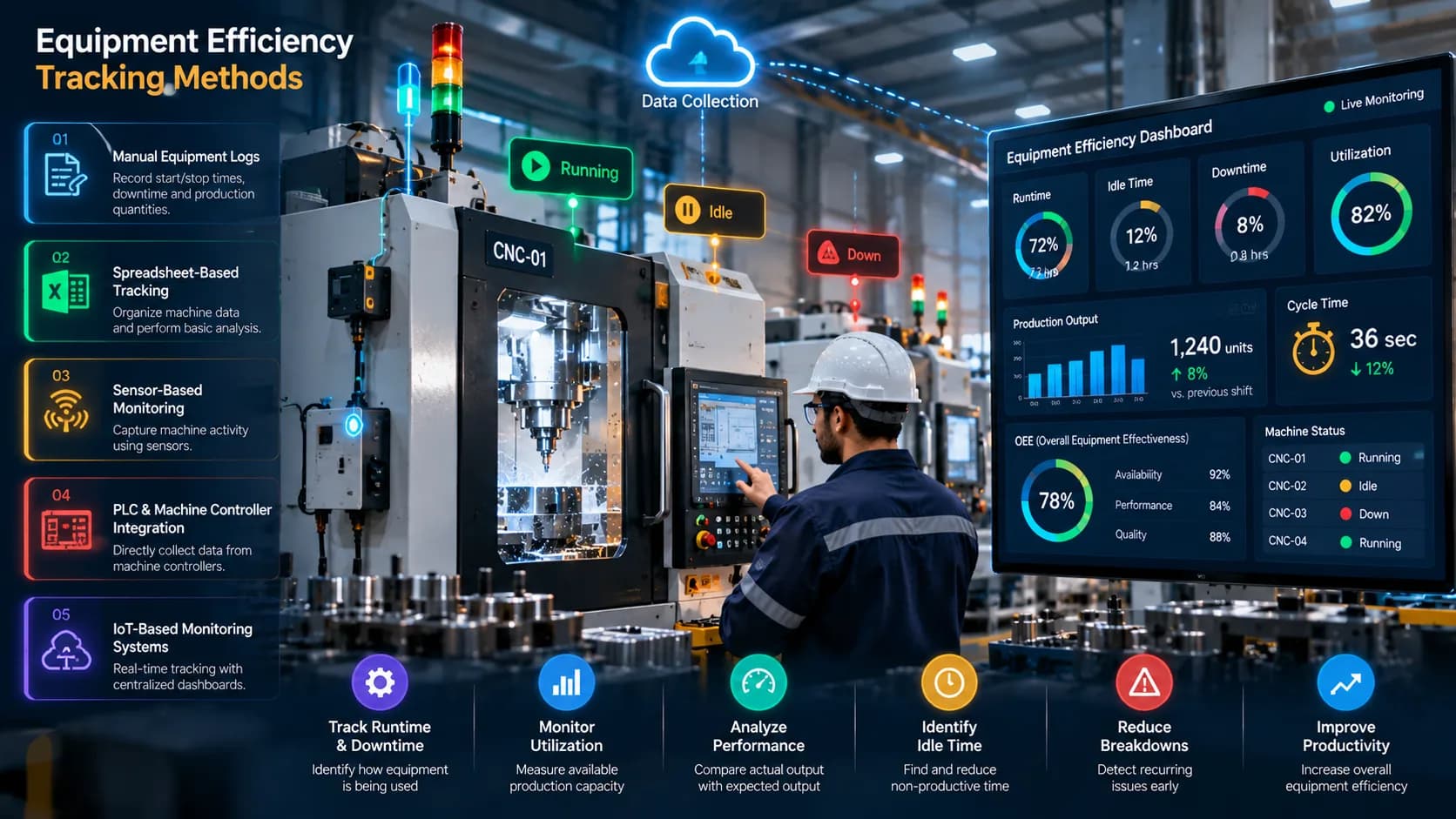
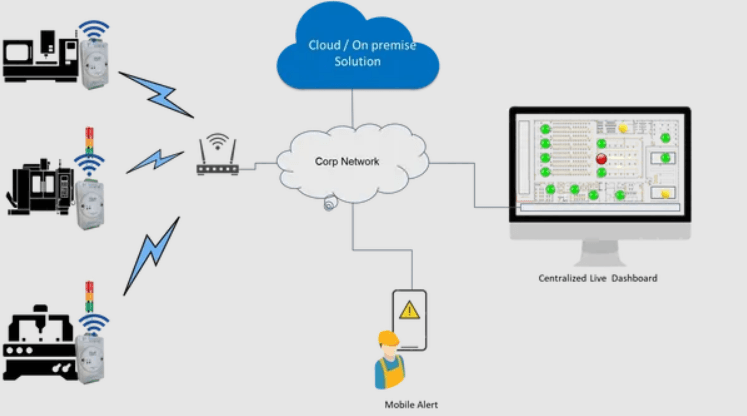
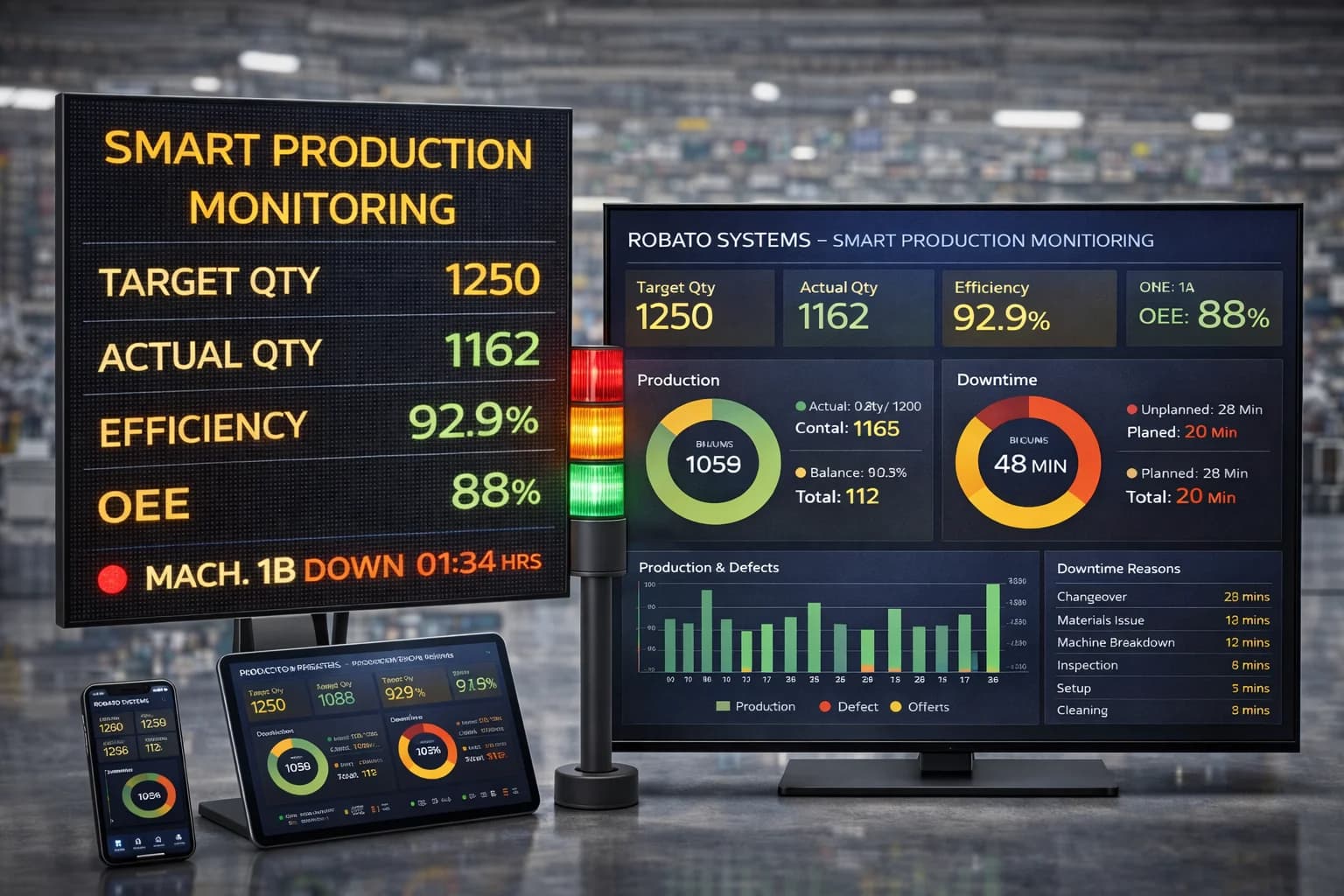
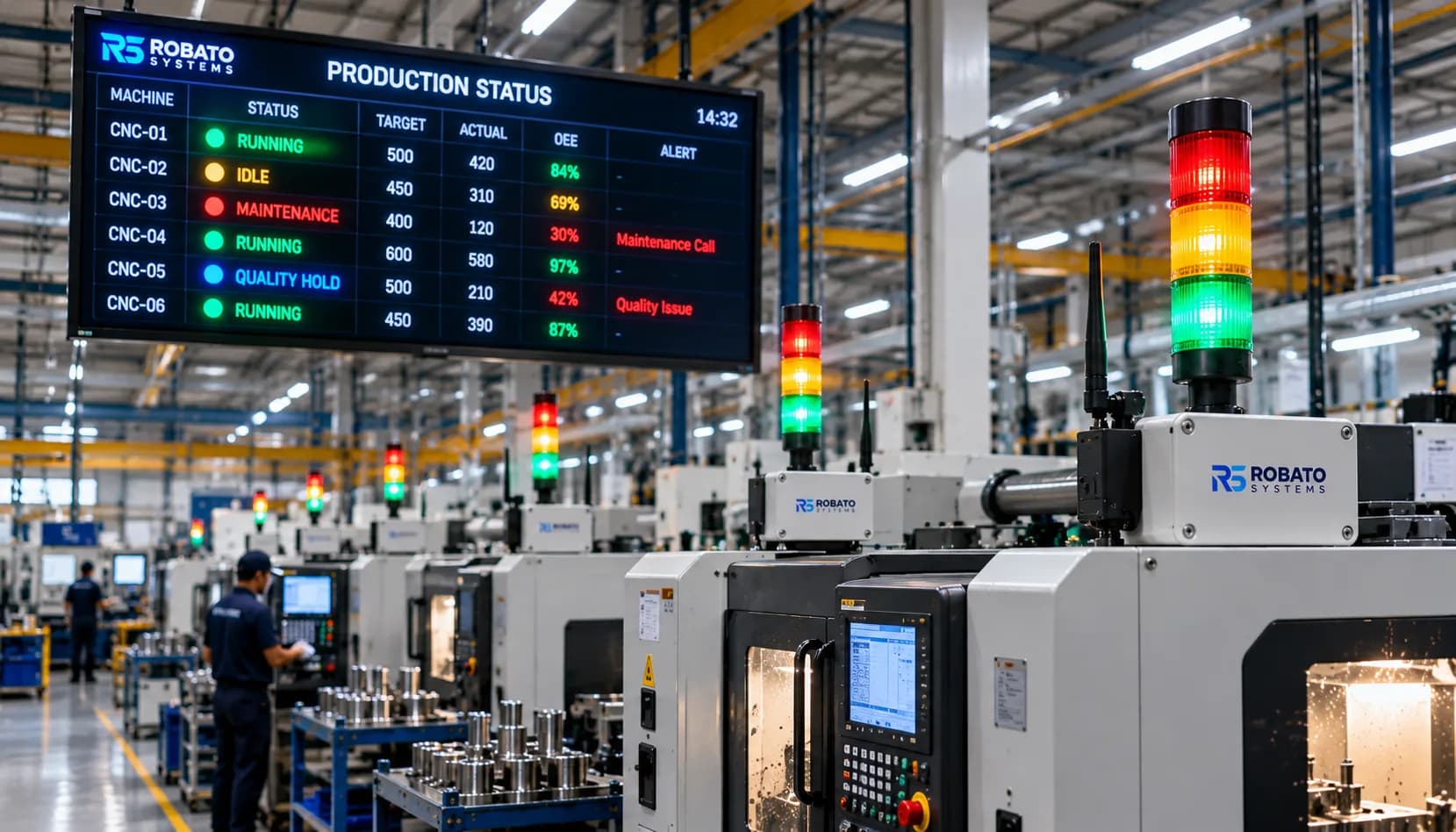
Today, Andon display systems have evolved far beyond a single tower of lights. Modern systems combine LED signal tower lights, digital Andon board displays, cloud-connected dashboards, and automated alert systems into a fully integrated visual management platform that operates across the entire factory floor in real time.
The Three Layers of a Modern Andon System
Understanding how Andon display systems work starts with understanding their three main components and how each one contributes to the overall communication picture.
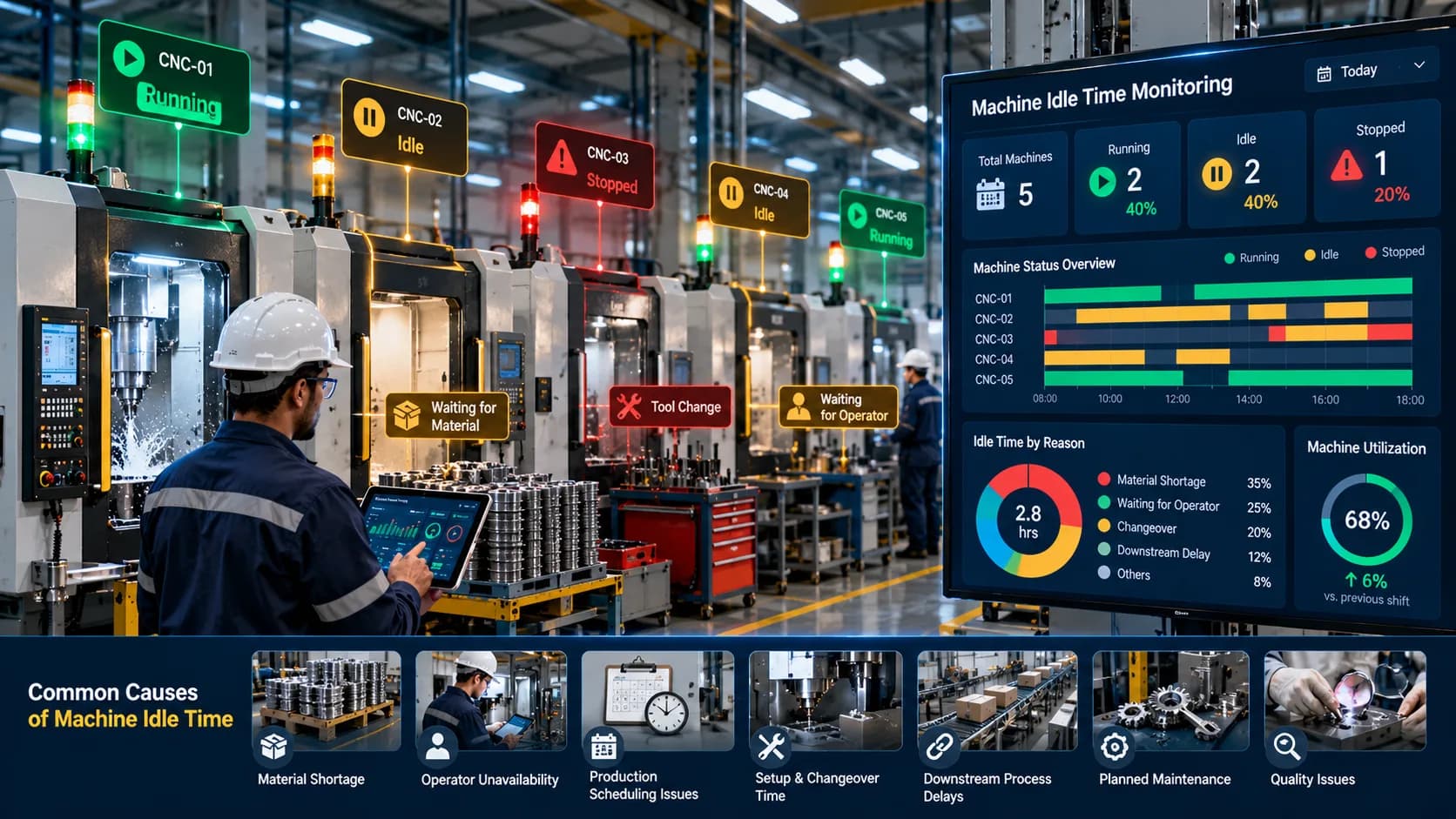
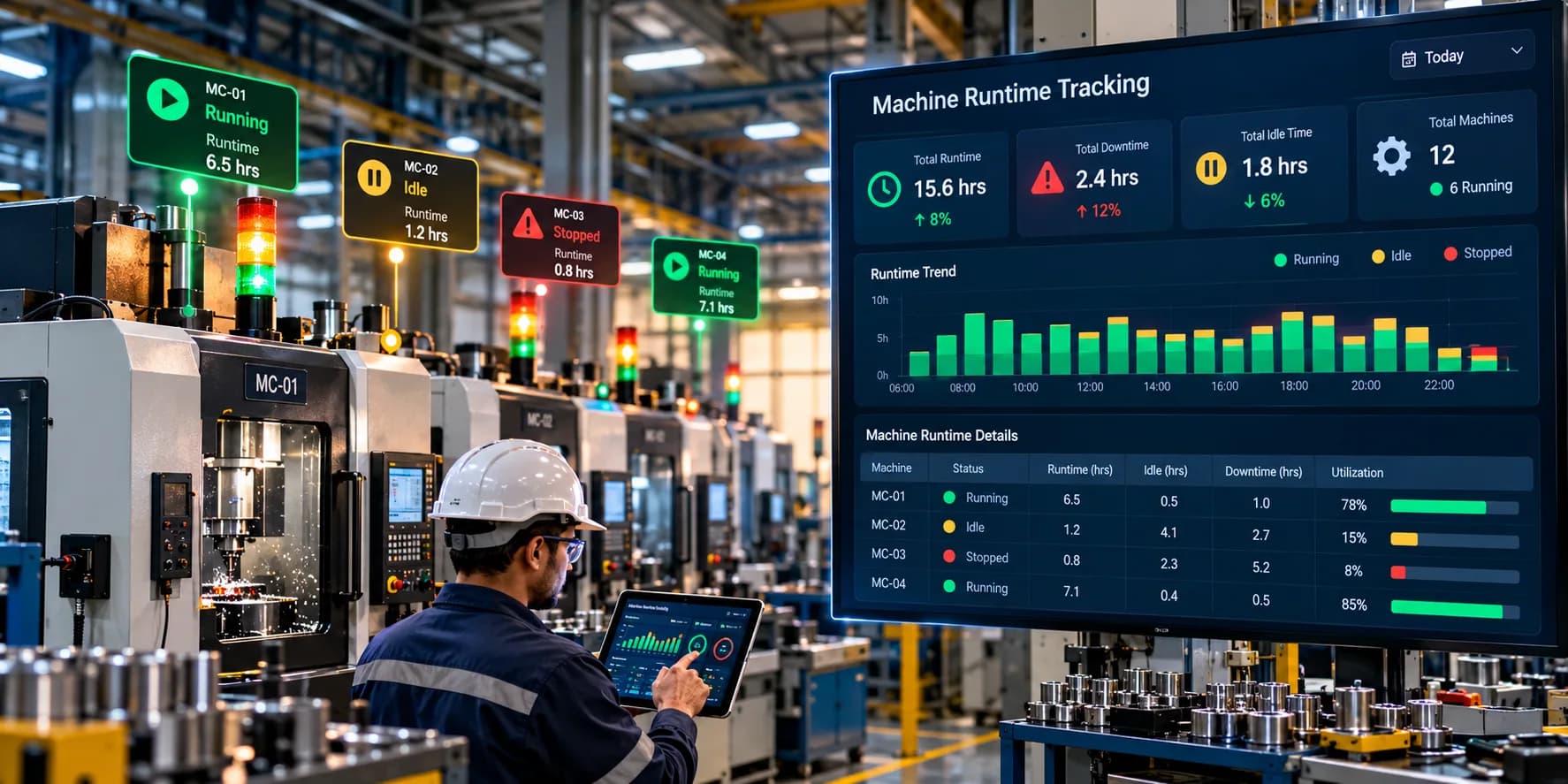
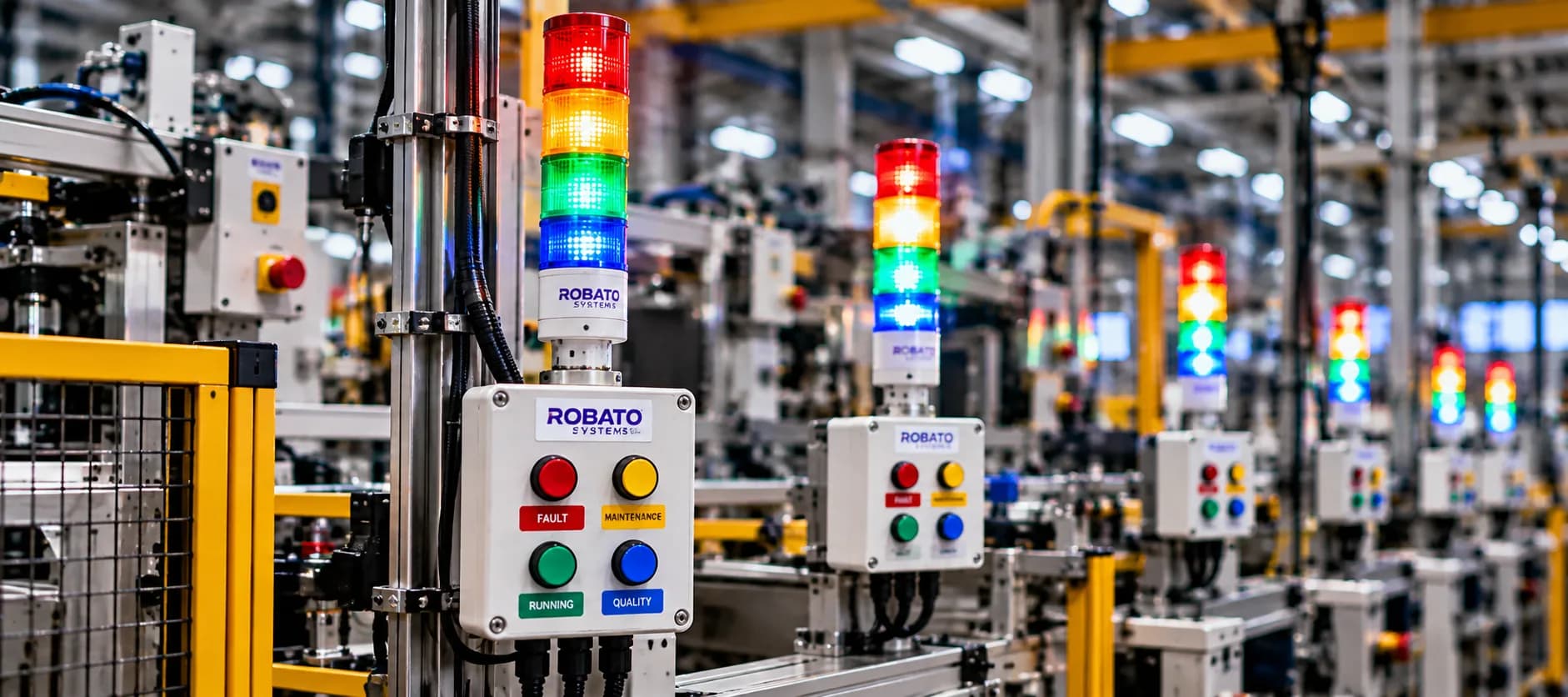
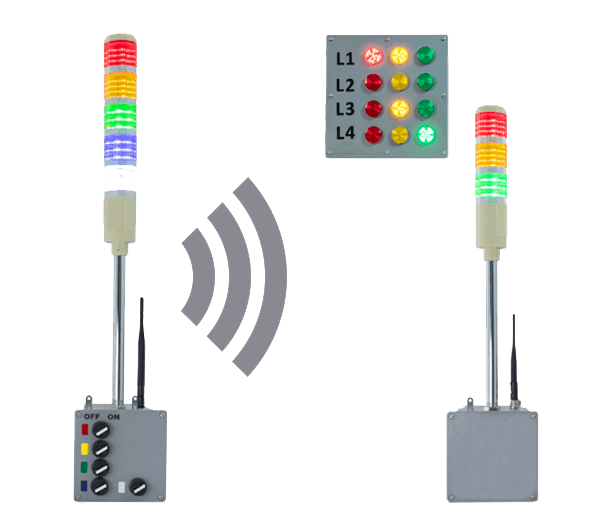
The first layer is the Andon tower light. This is the vertical stack of colored LED lights mounted at or near each workstation or machine. It communicates machine status at a glance to anyone on the floor, from any distance, without requiring them to look at a screen or ask a colleague. Green means the machine is running normally. Yellow means attention is needed. Red means a stoppage has occurred and immediate action is required. Some towers also include blue and white signals for additional status categories such as planned maintenance or material requests.
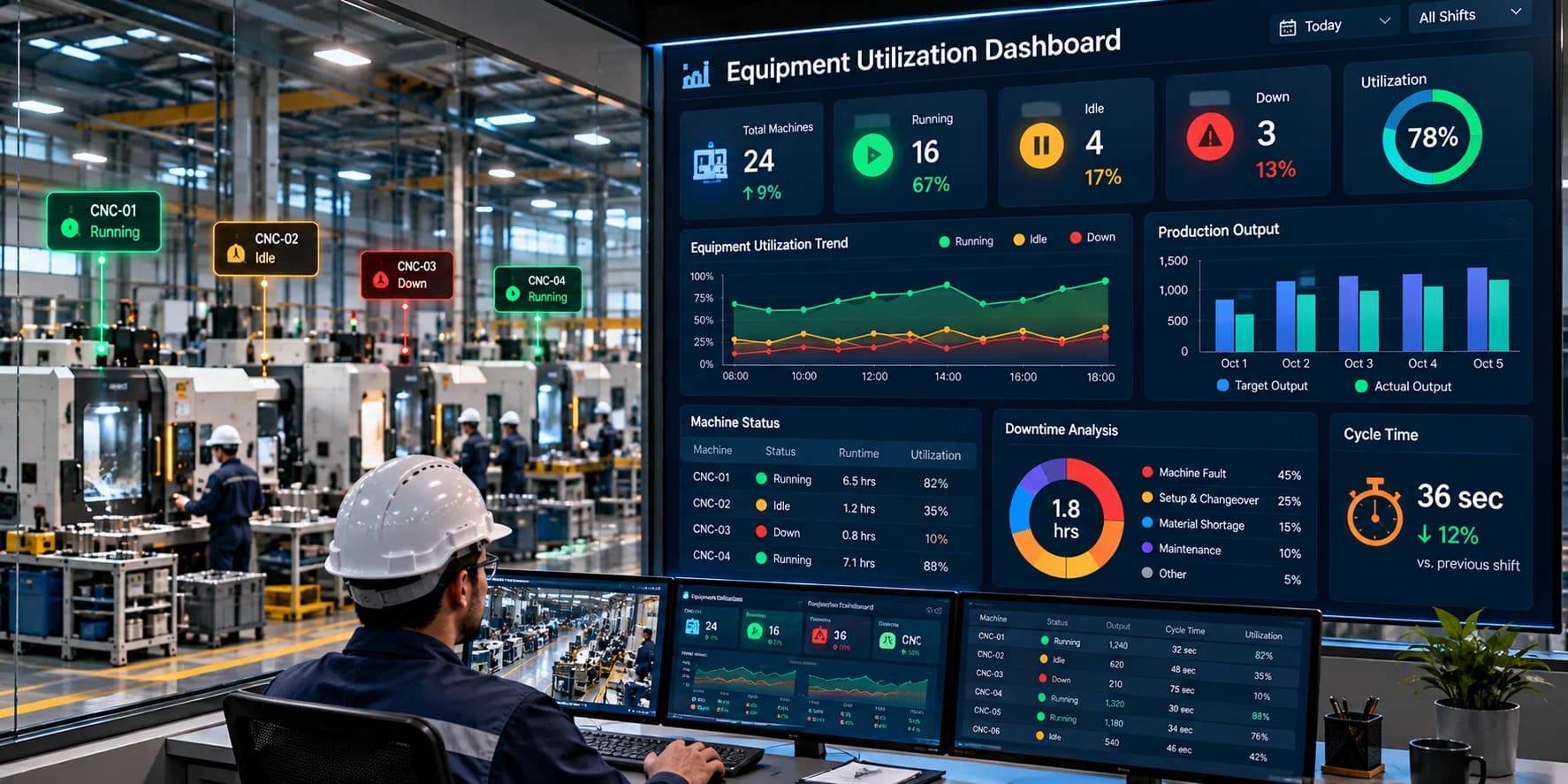
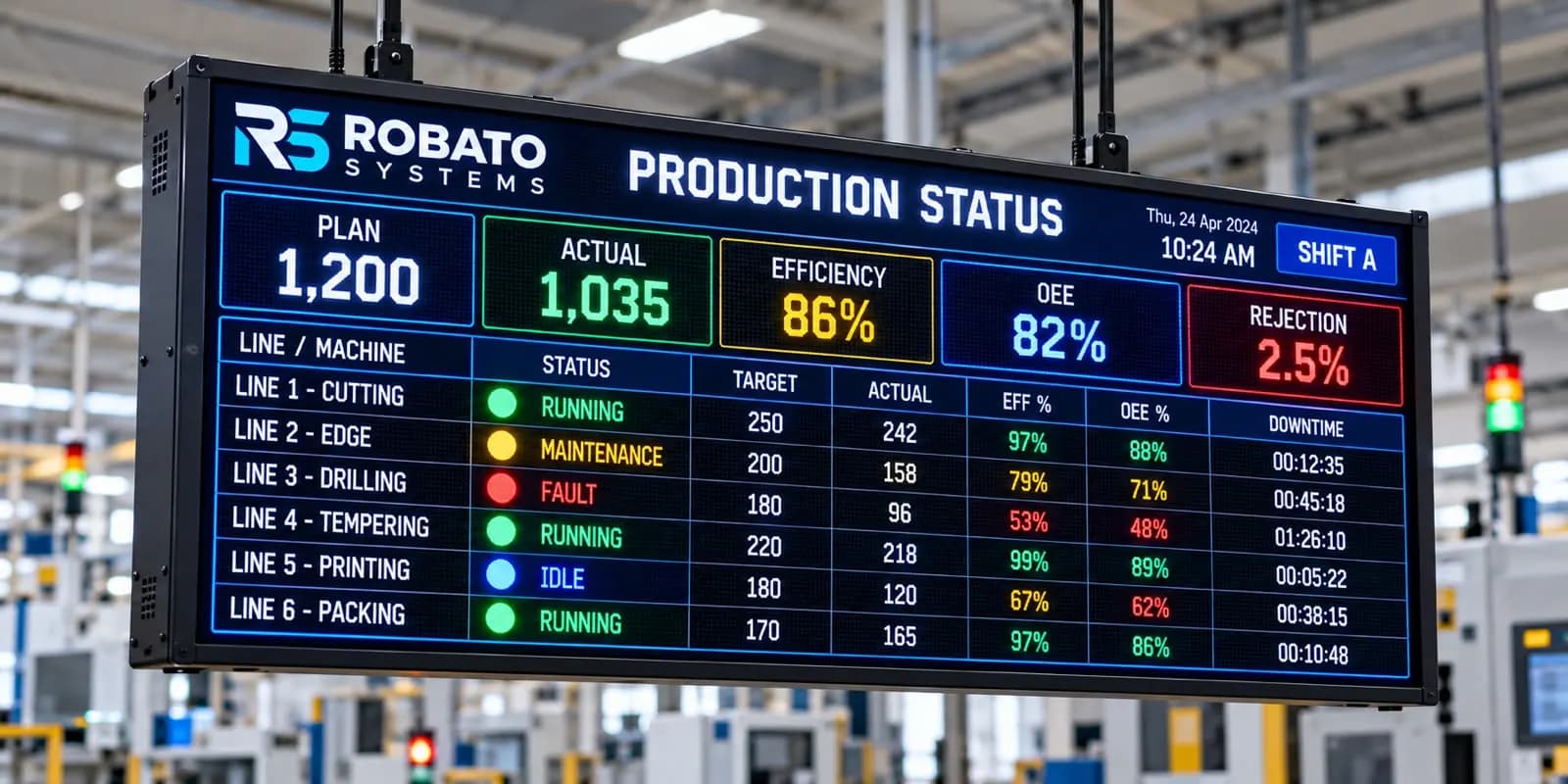
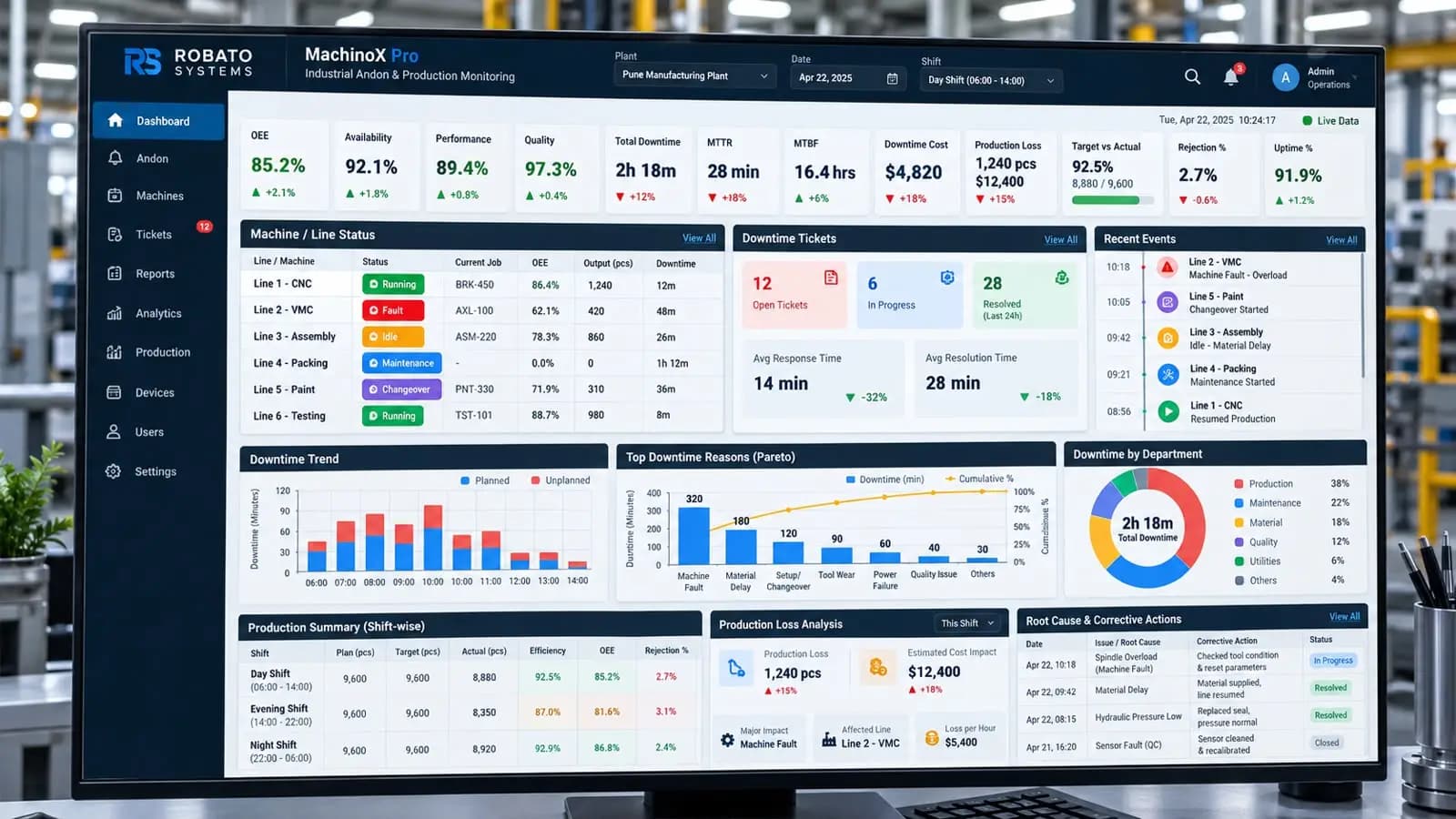
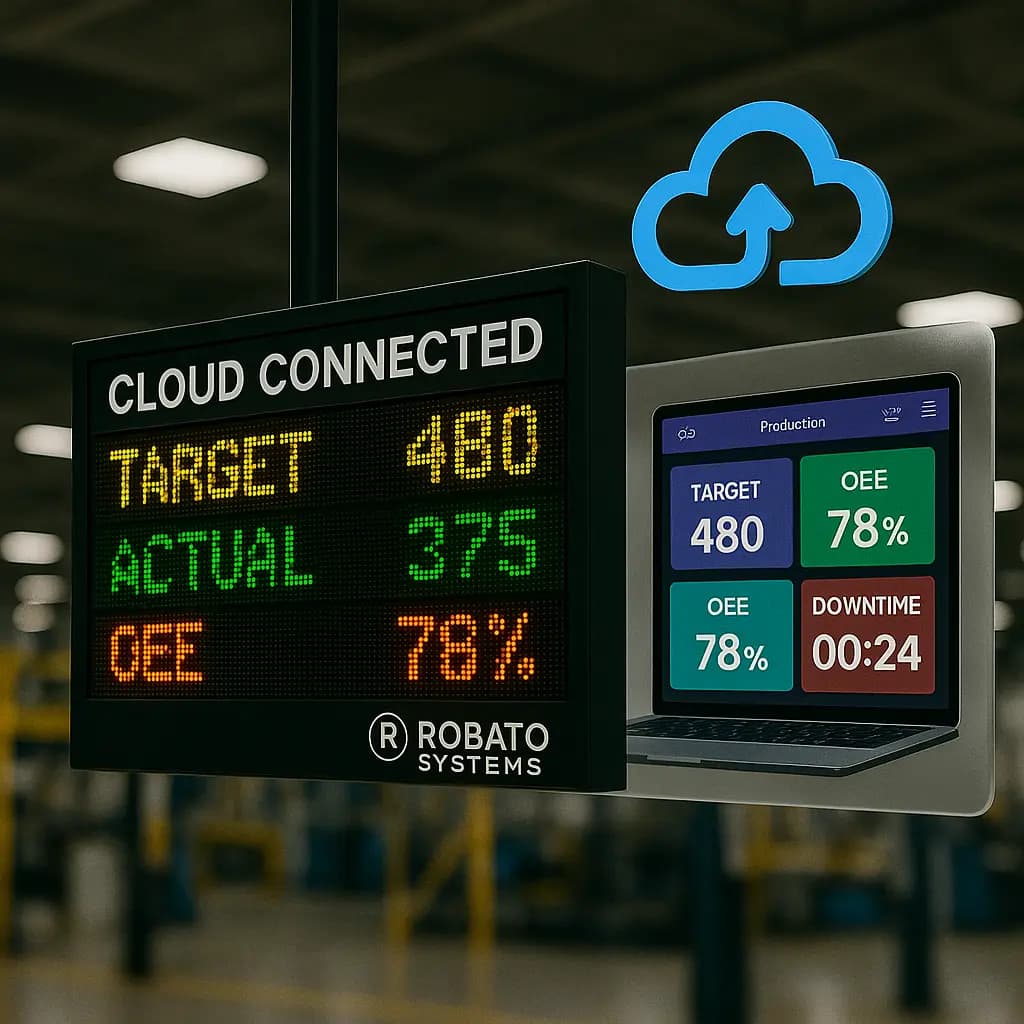
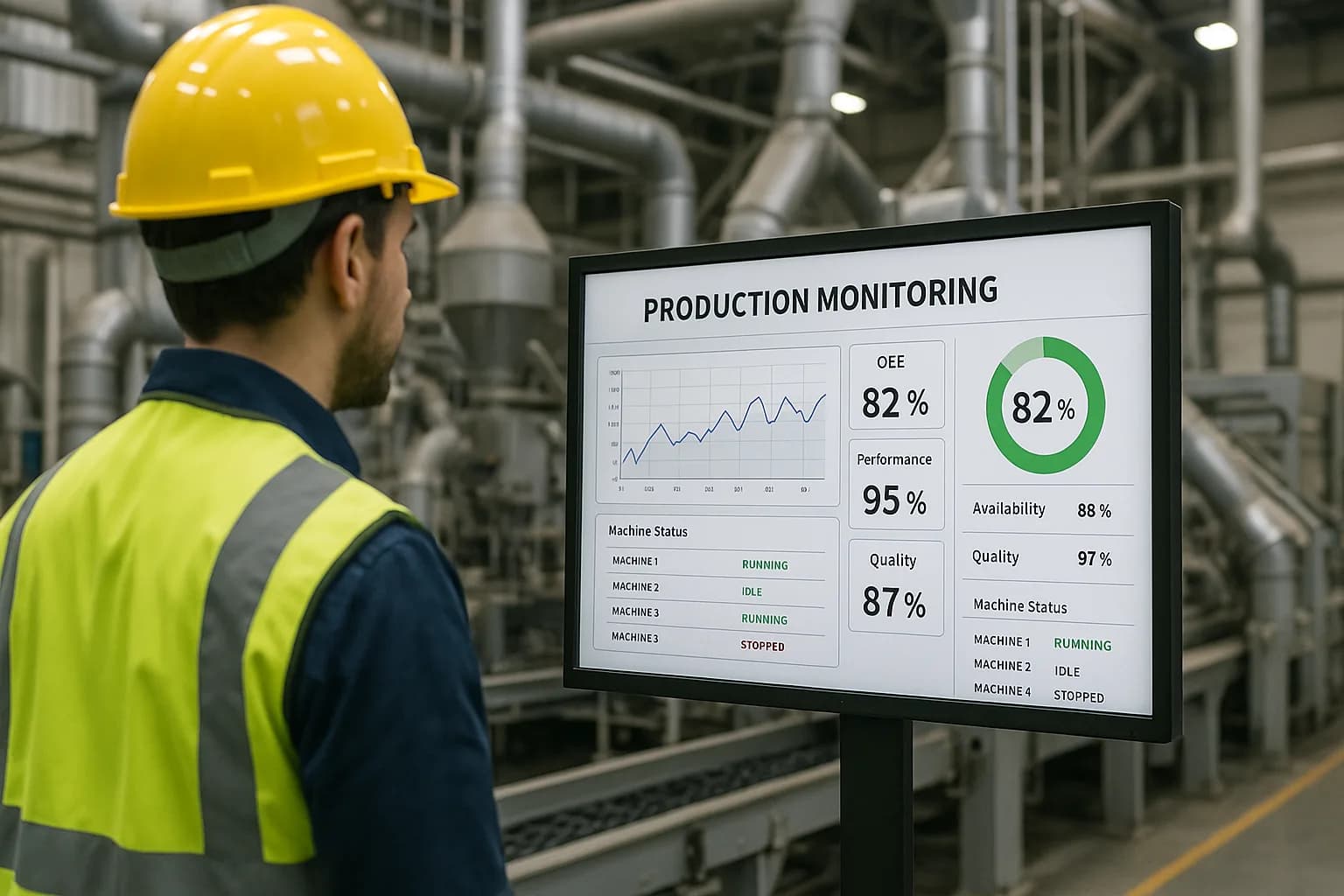
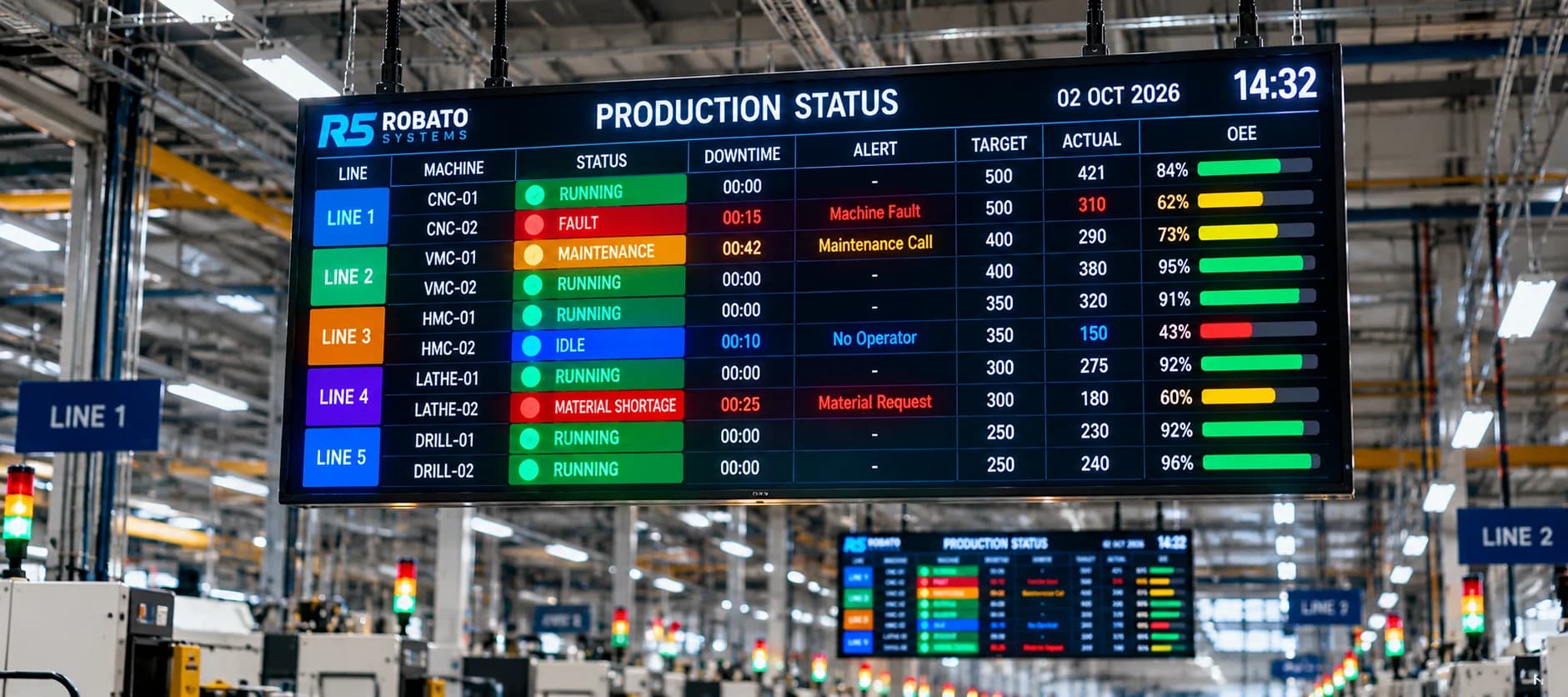
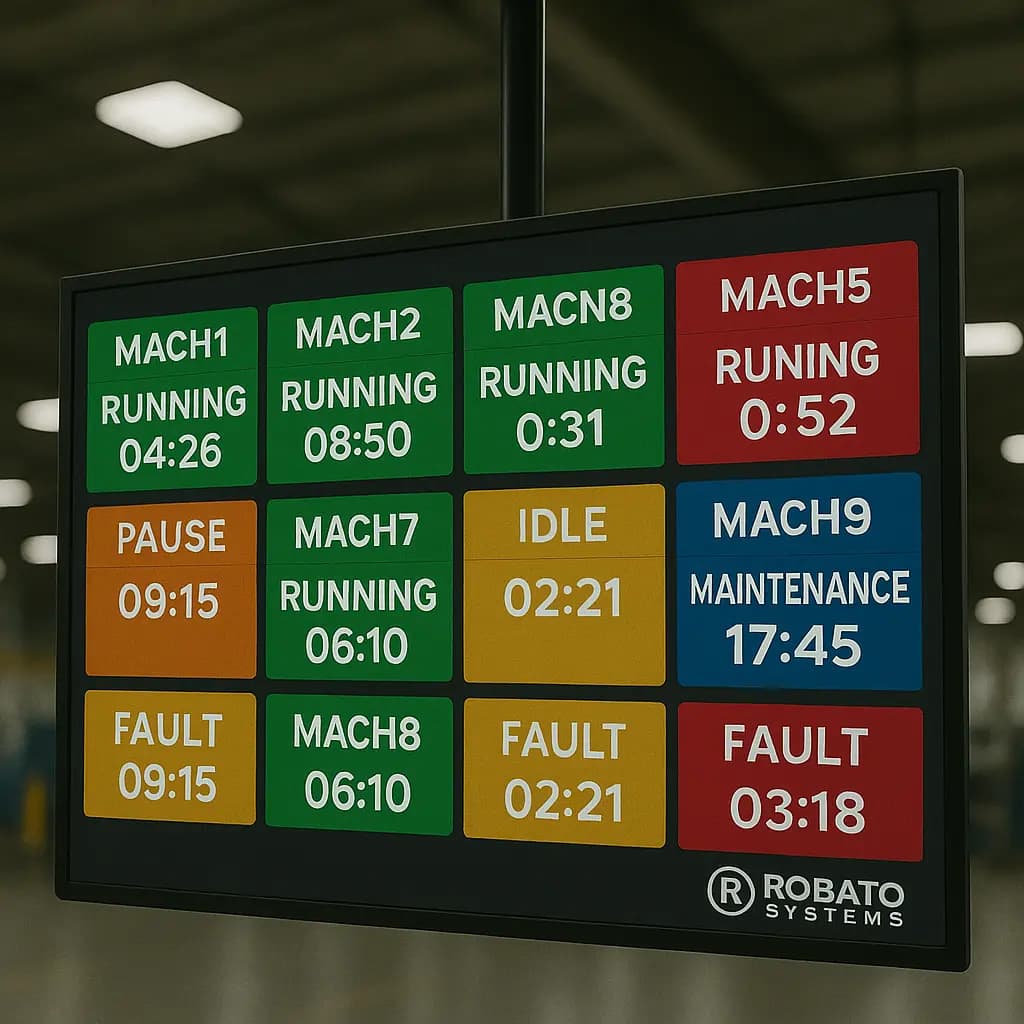
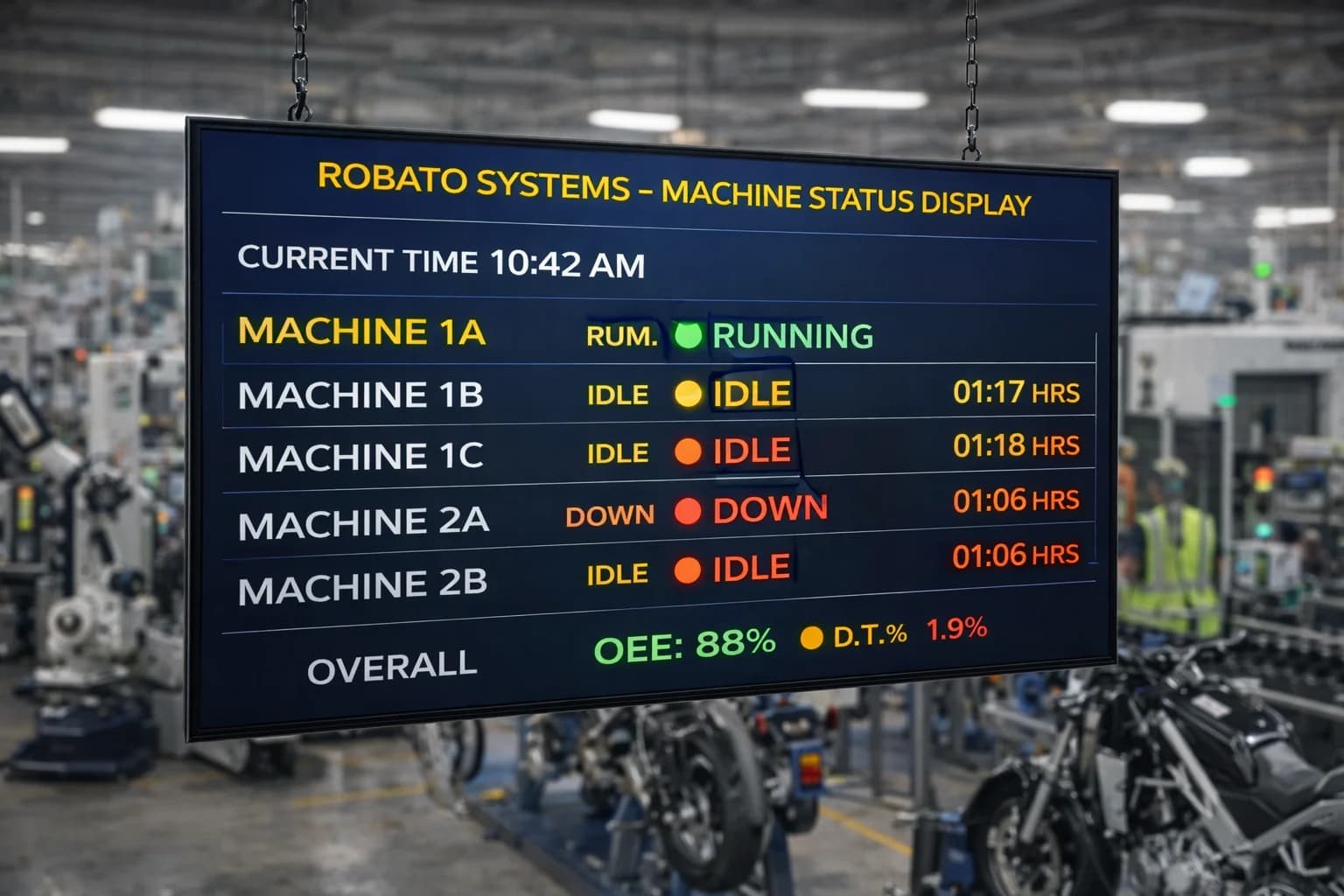
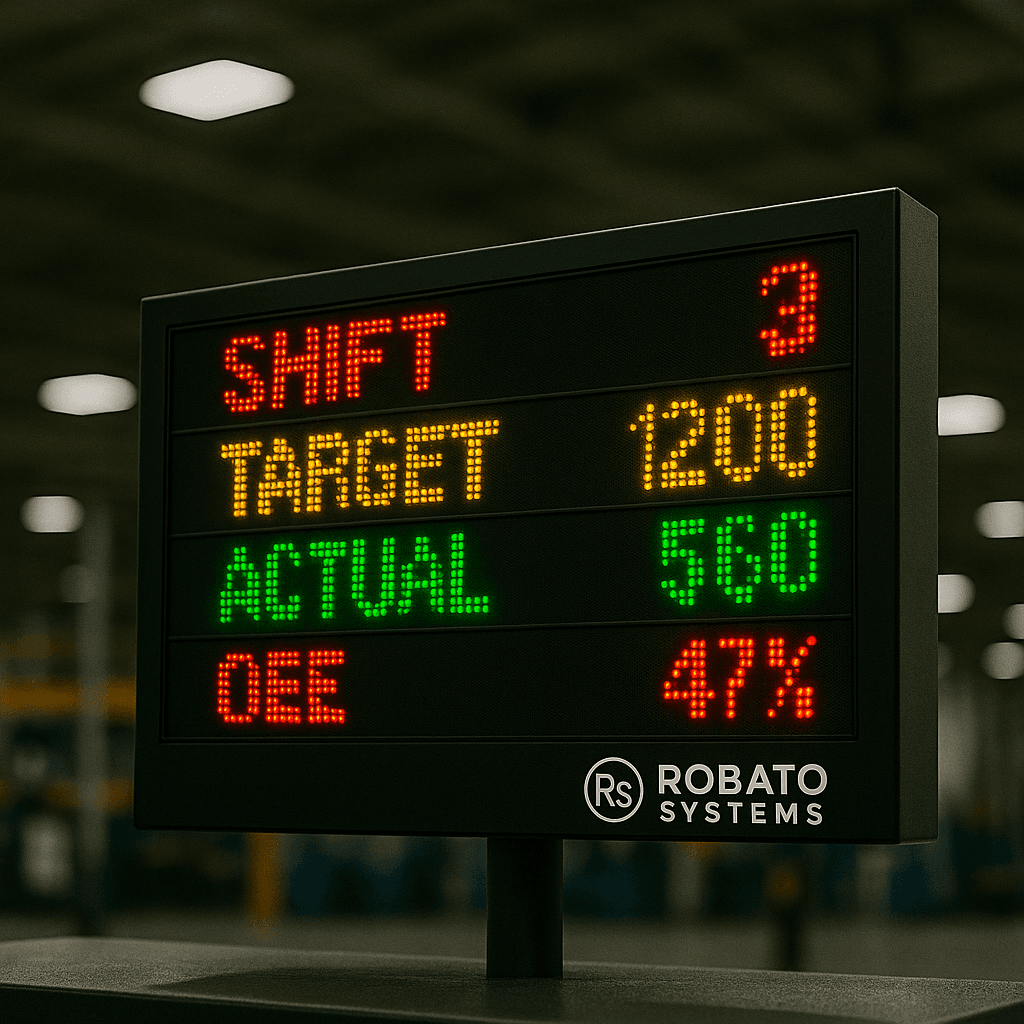
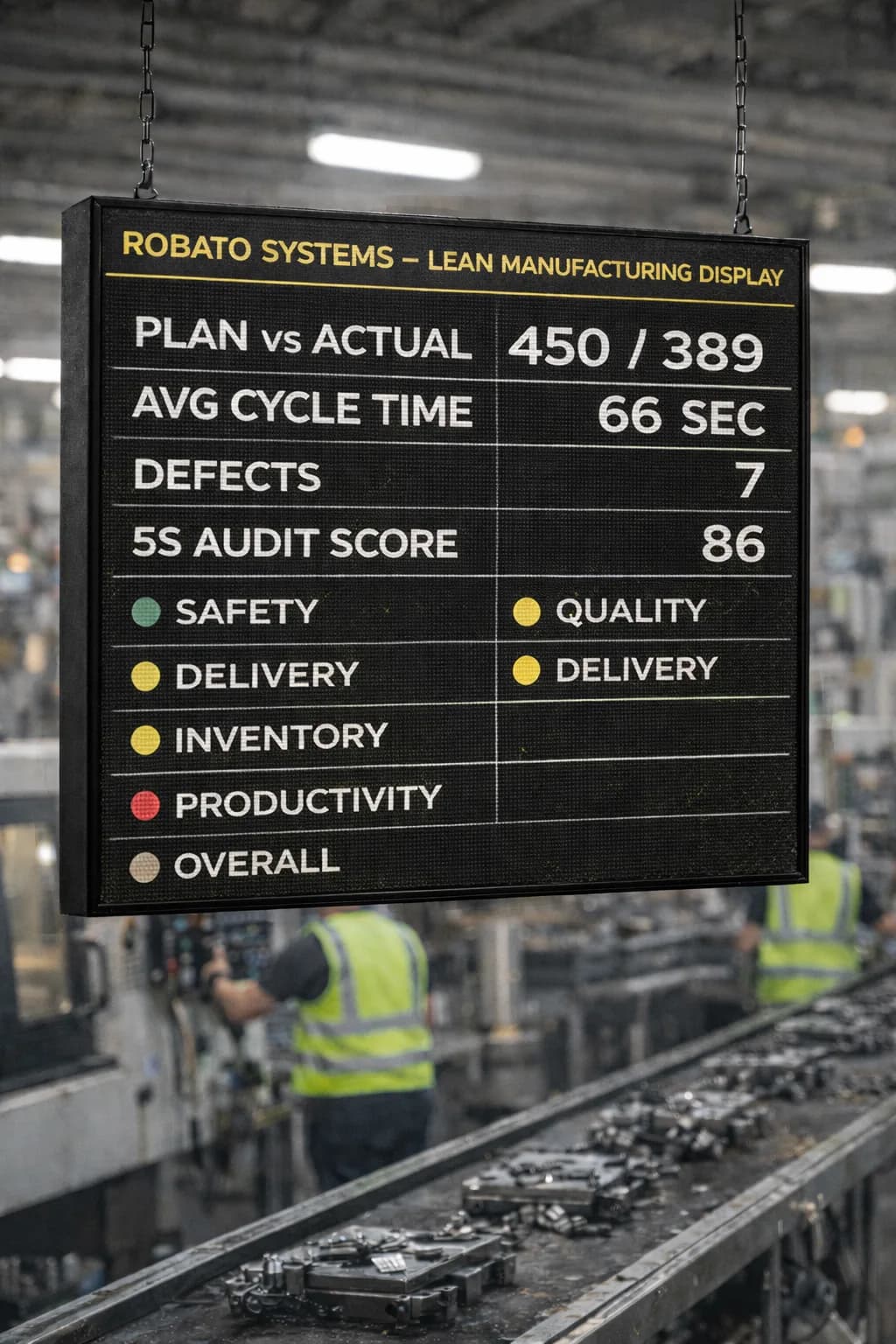
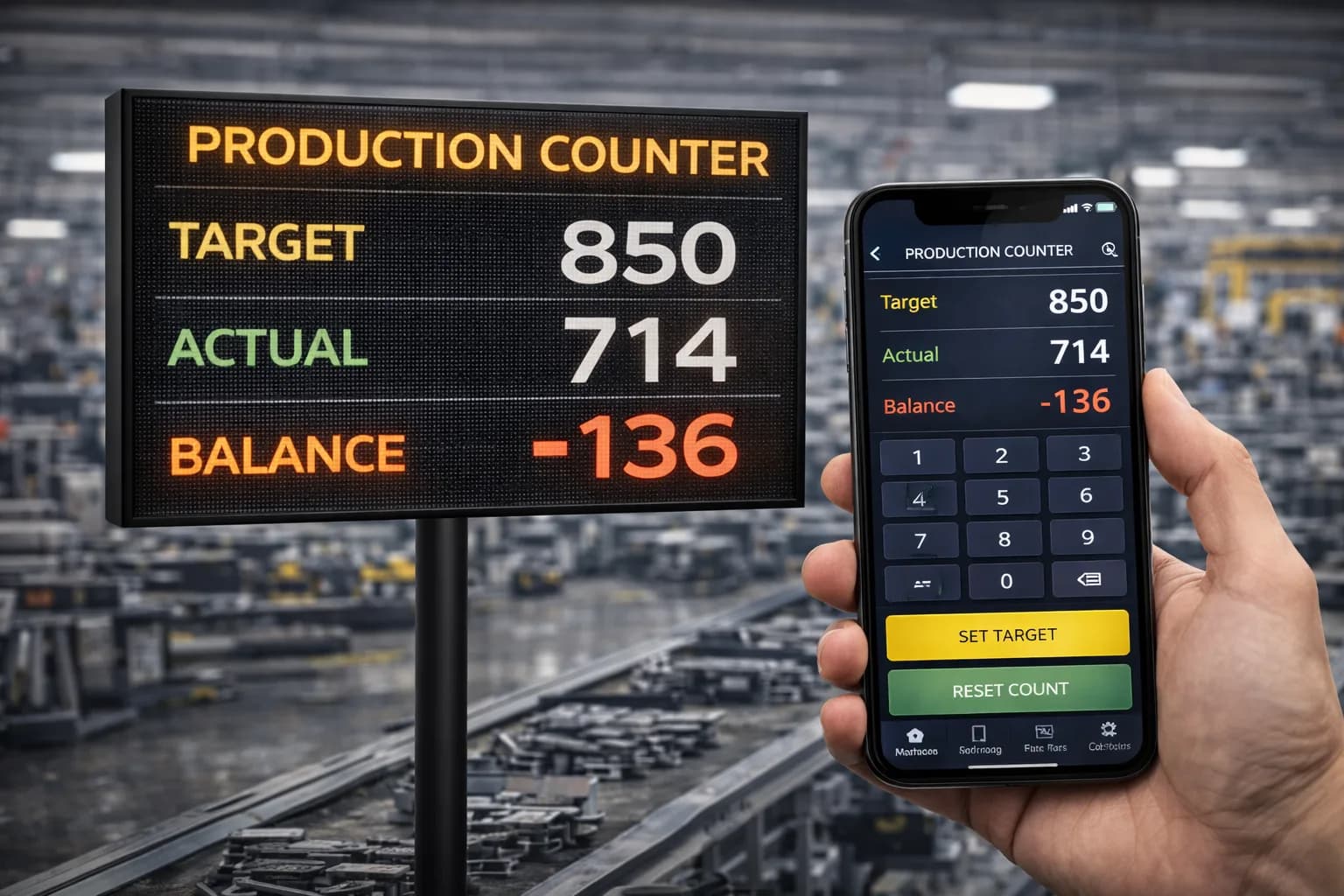
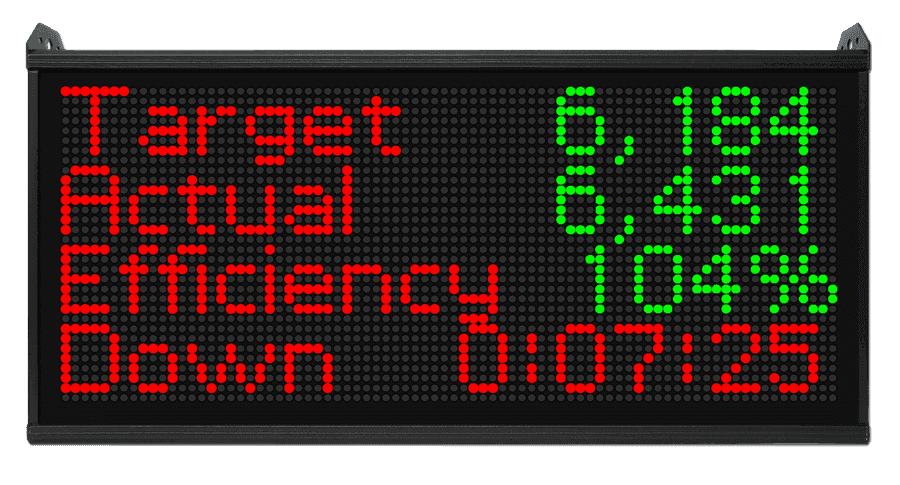
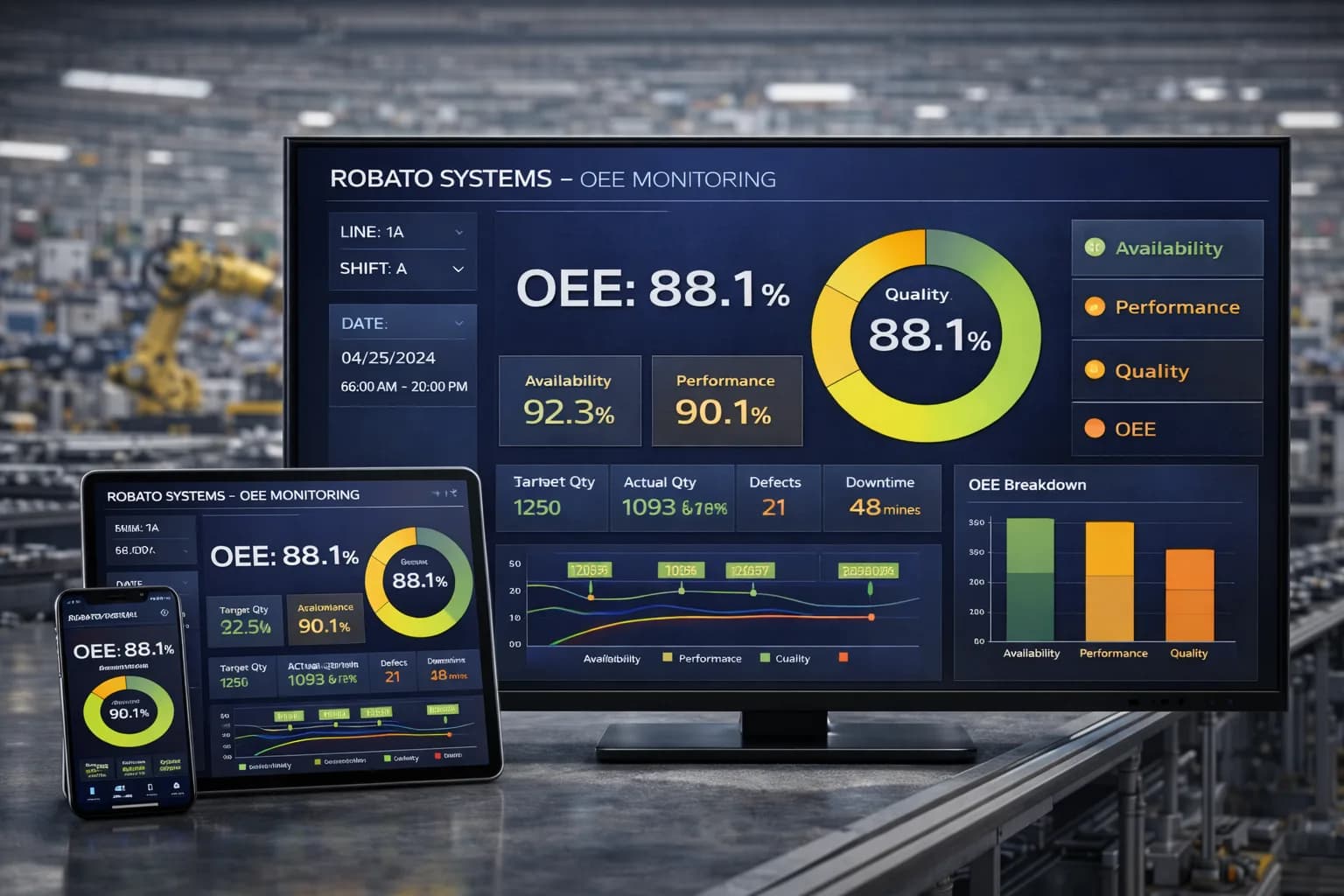
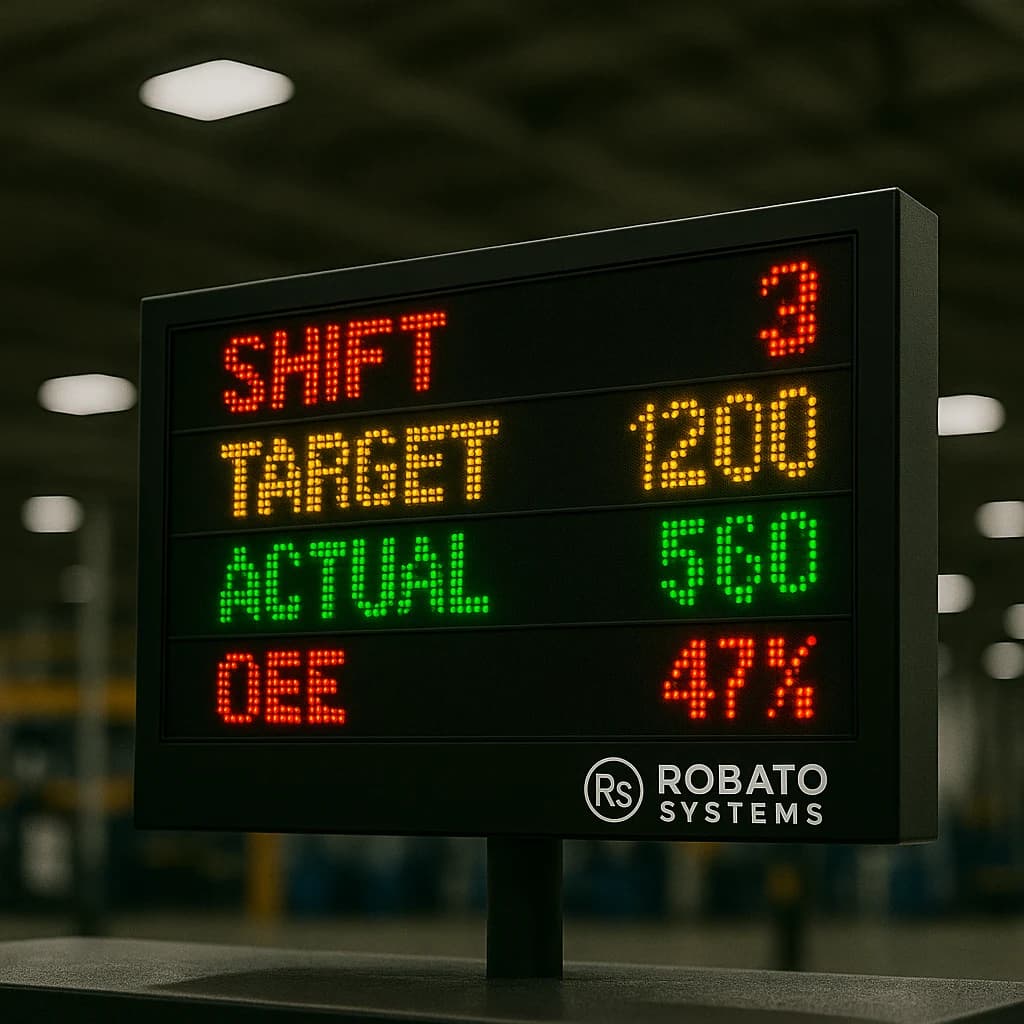
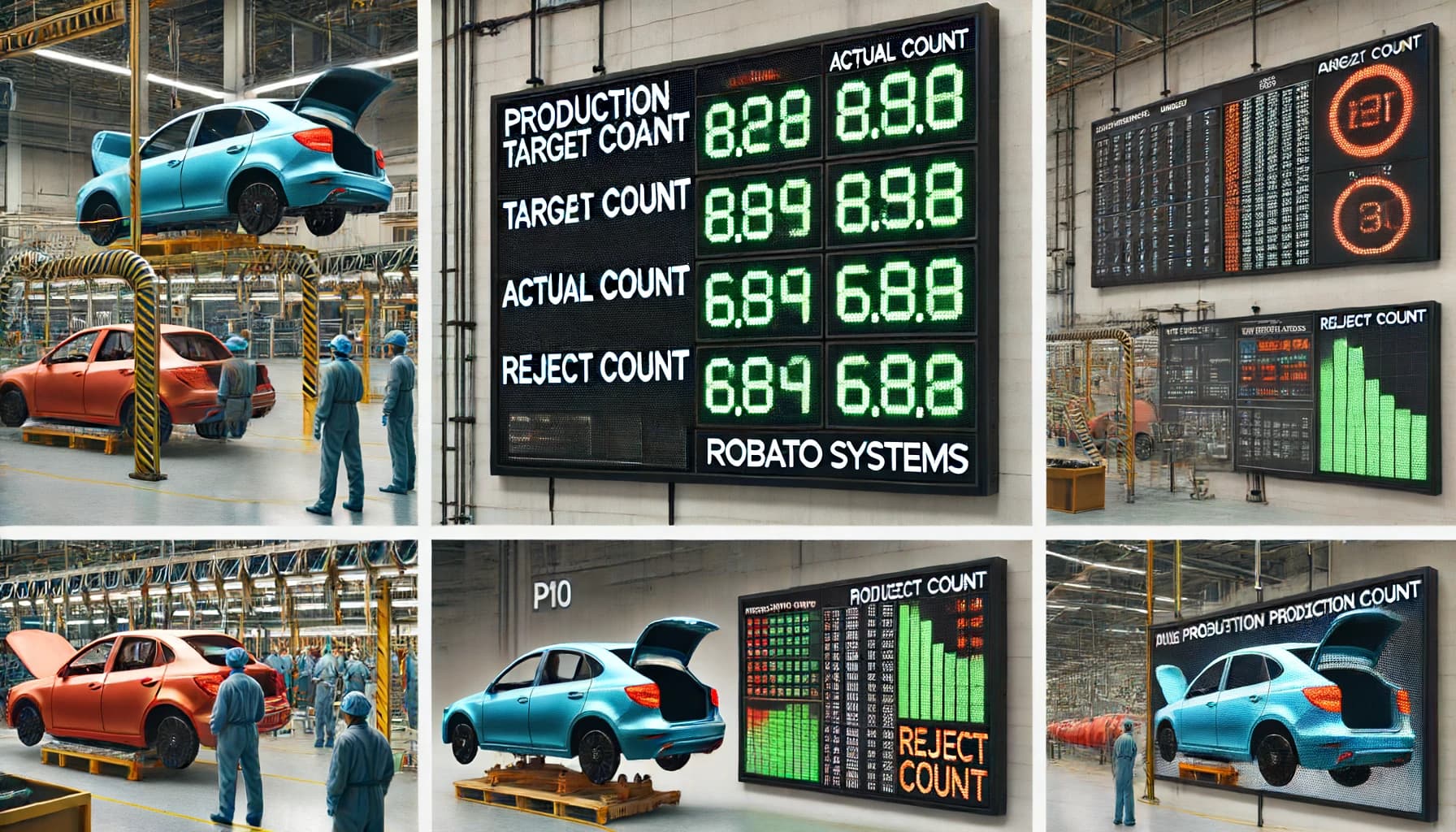
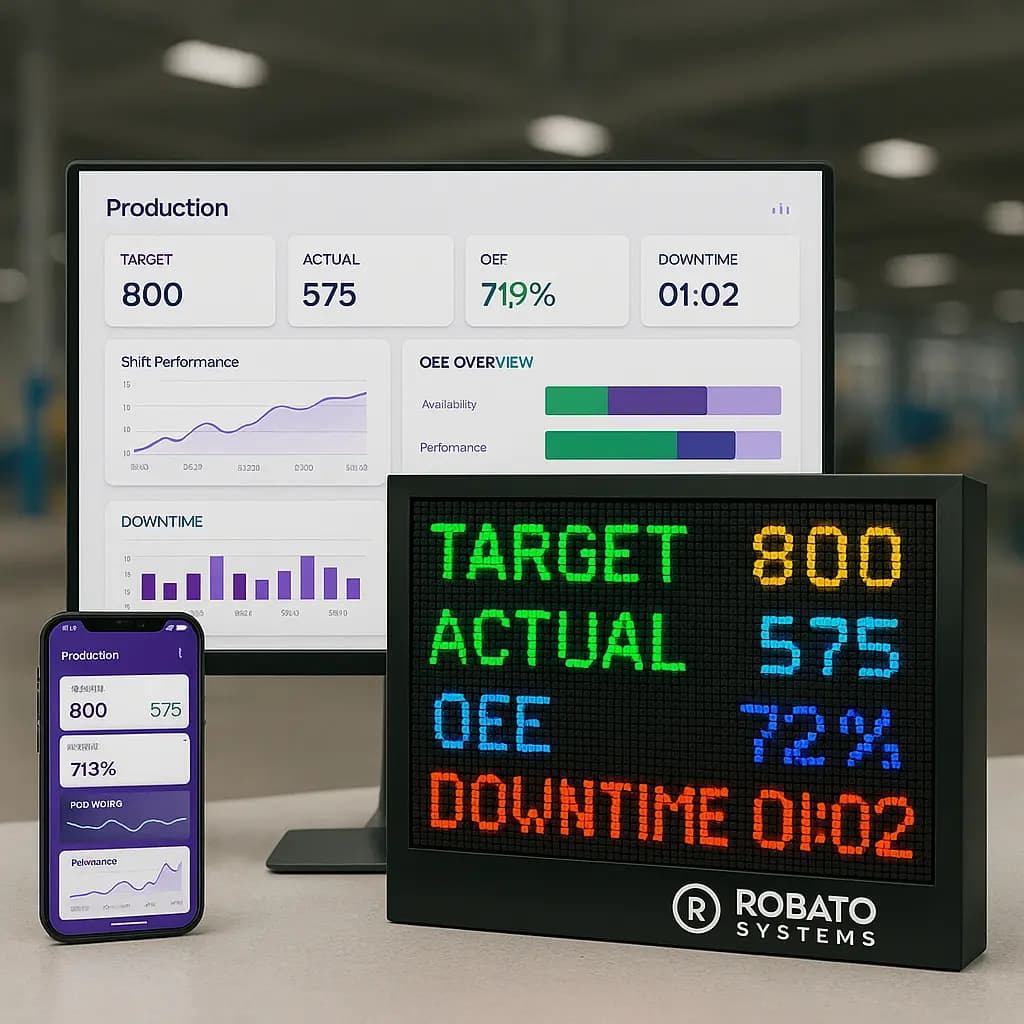
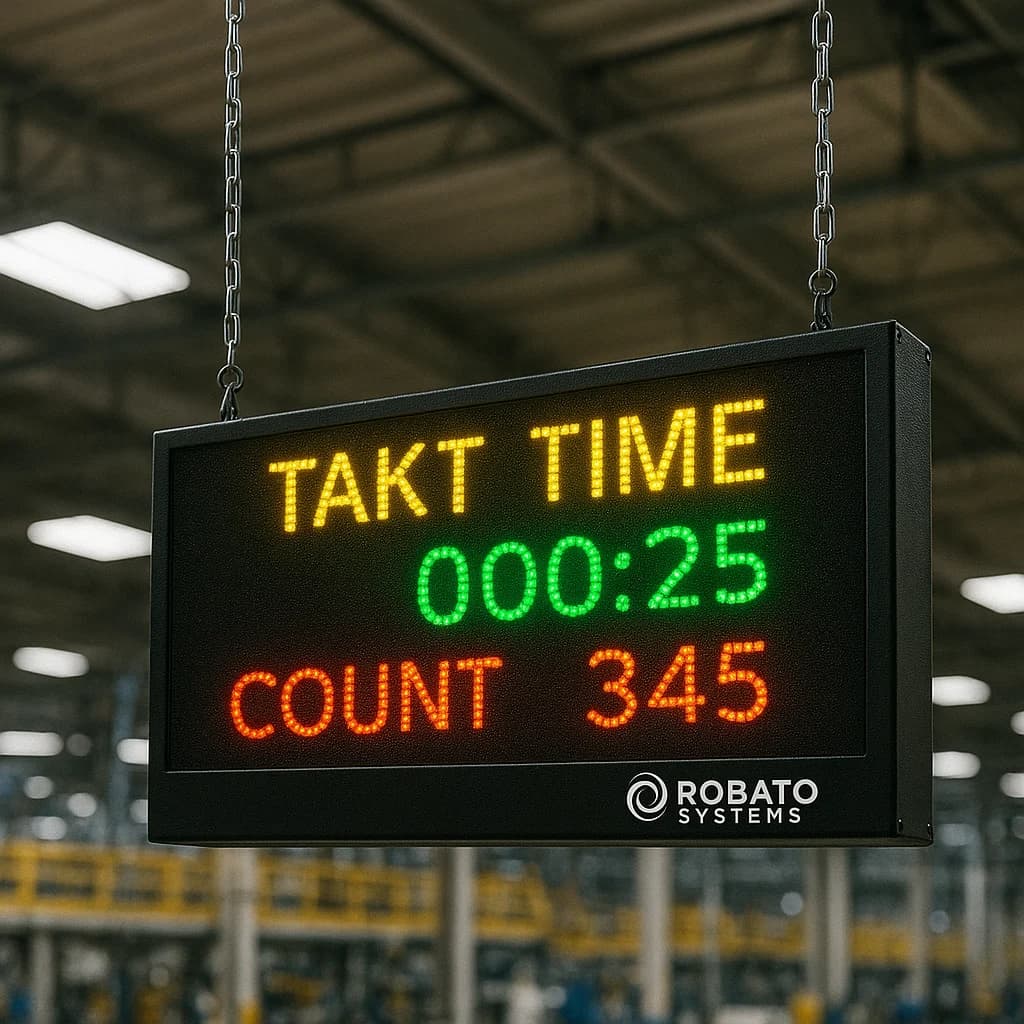
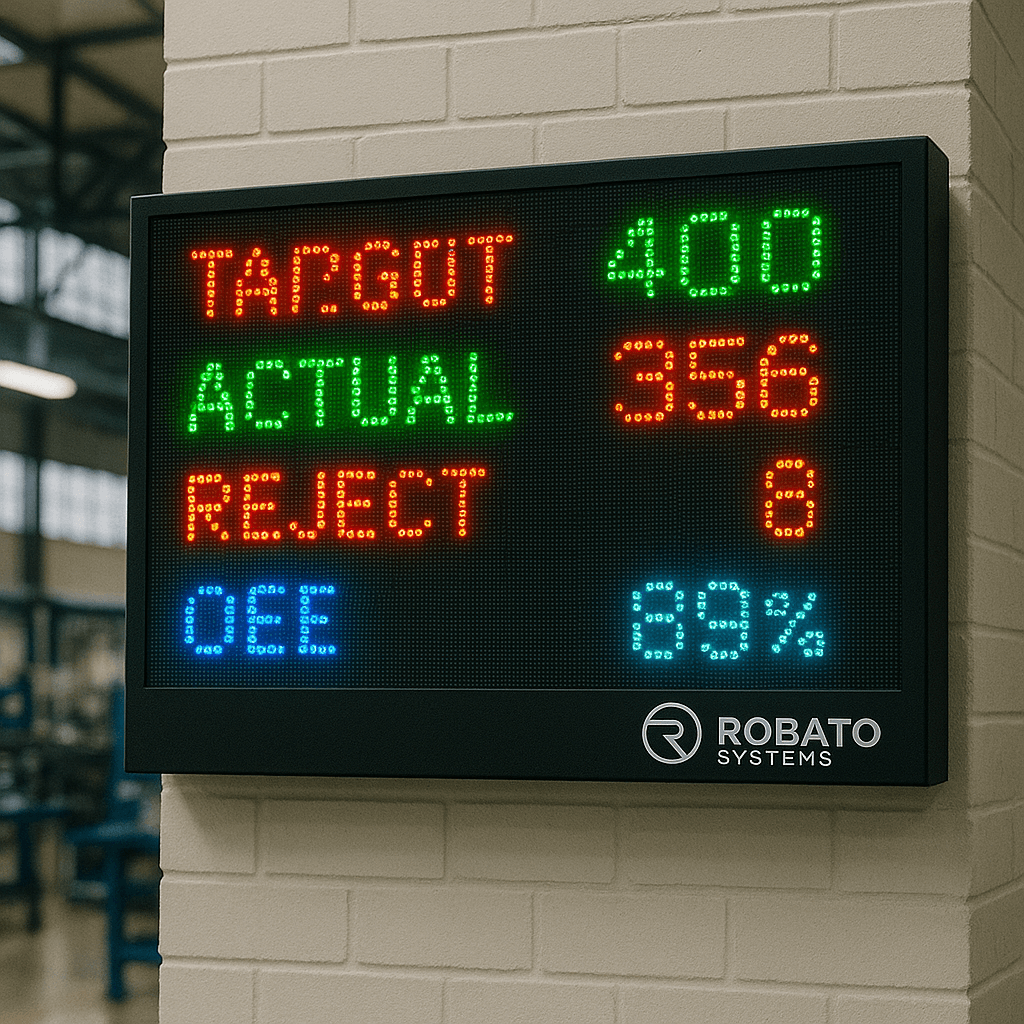
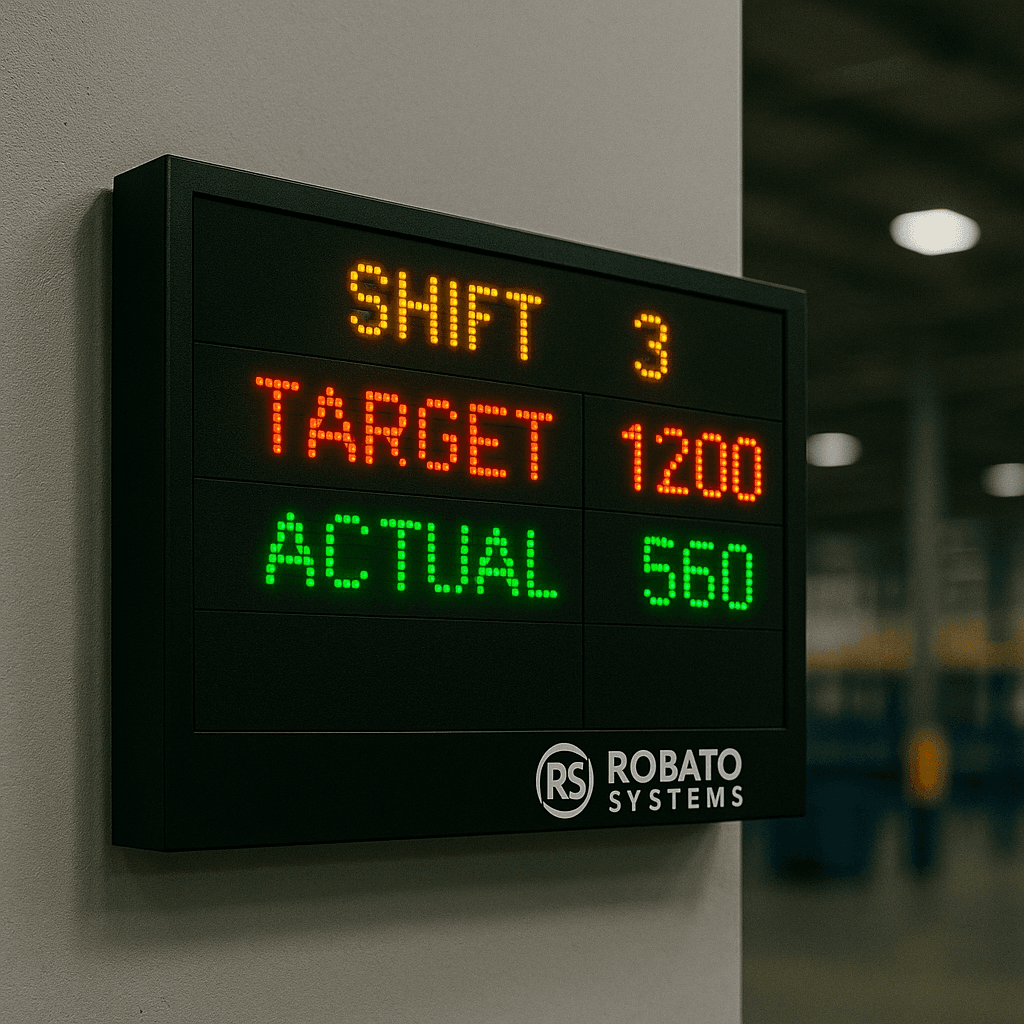
The second layer is the Andon board display. This is a larger digital screen, typically mounted in a central or elevated position on the shop floor, that shows live production data for multiple machines or production lines simultaneously. It displays output counts, target versus actual performance, machine status, and downtime information in a format that supervisors and managers can read at a glance from across the floor.
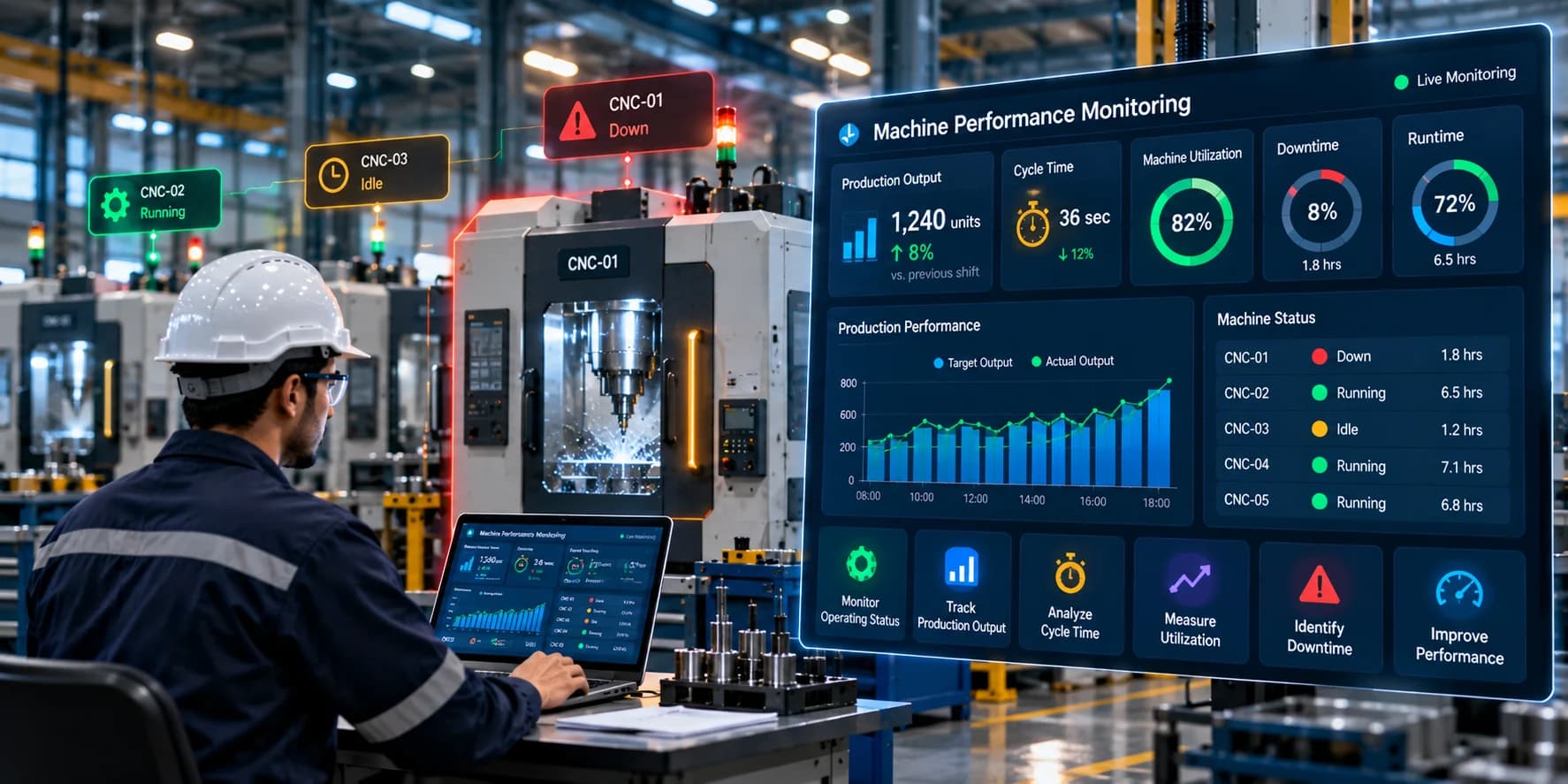
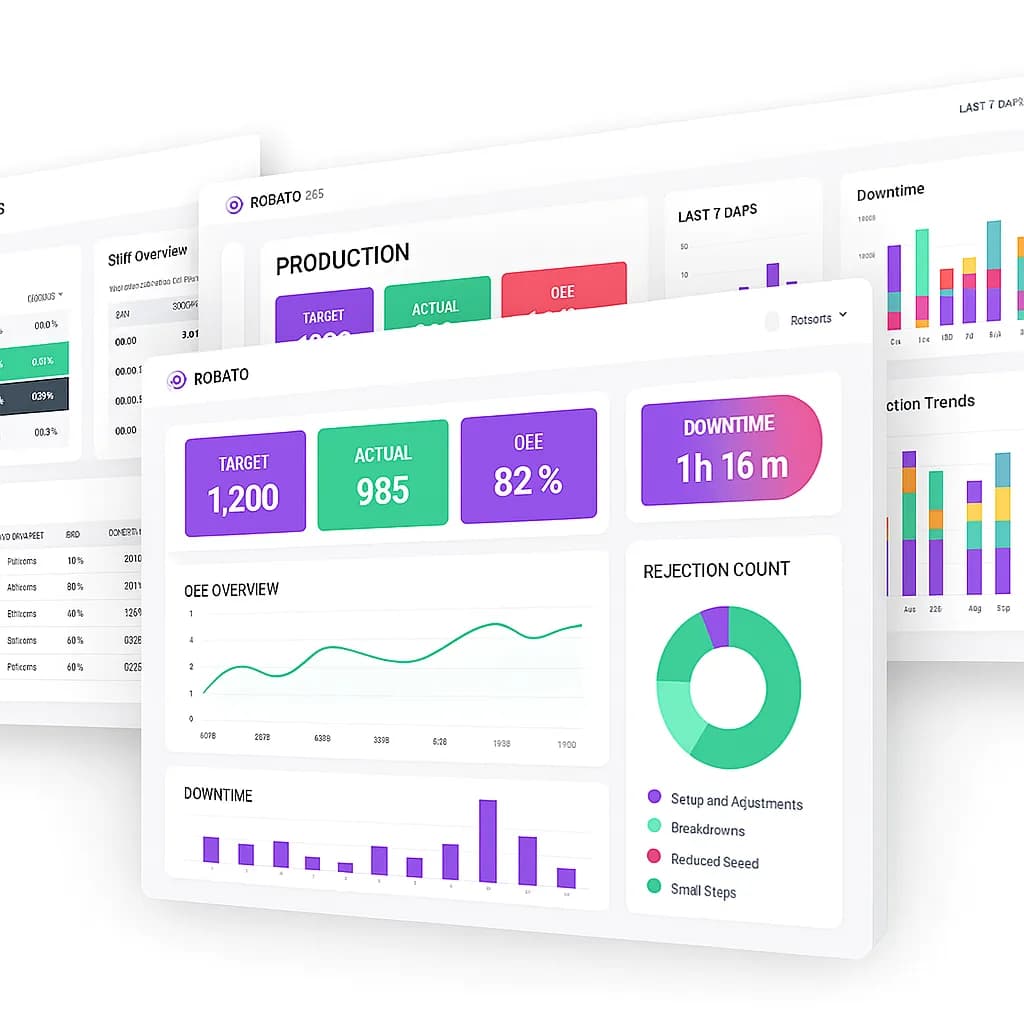
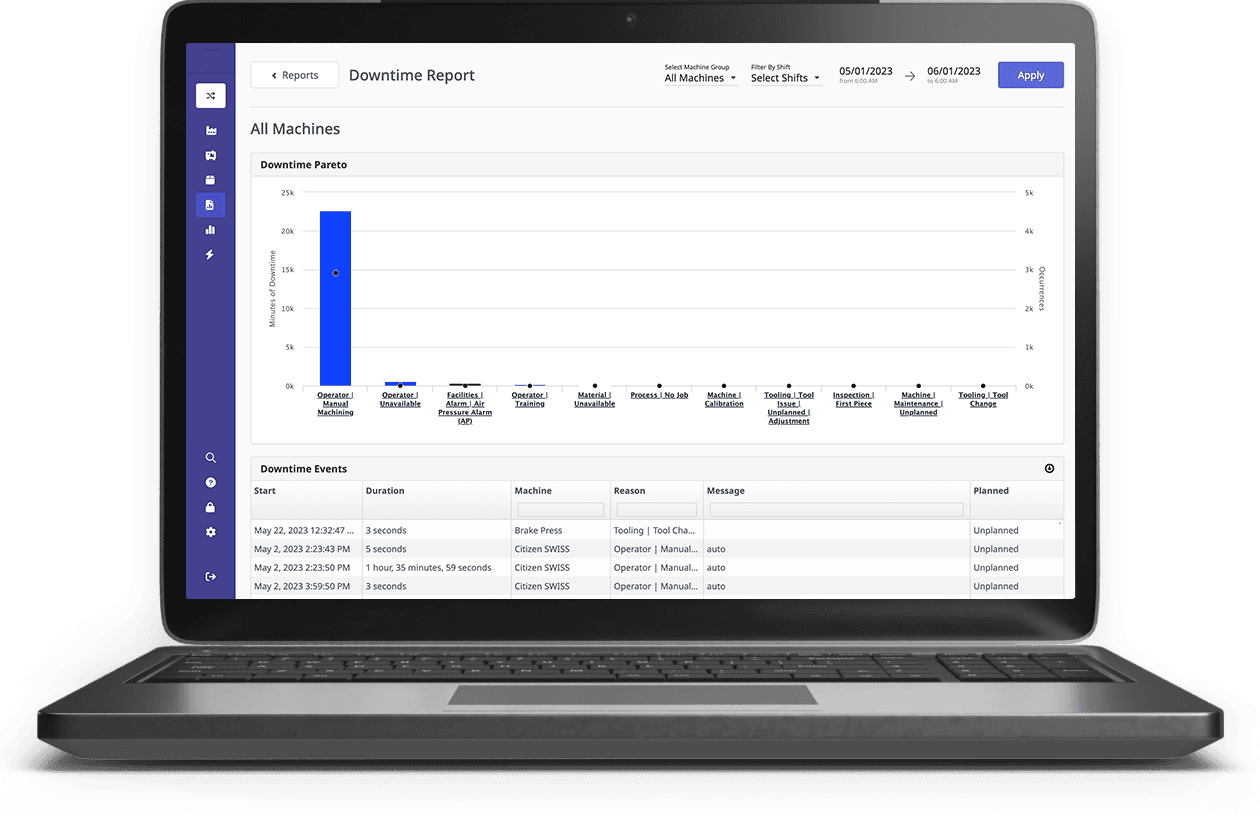
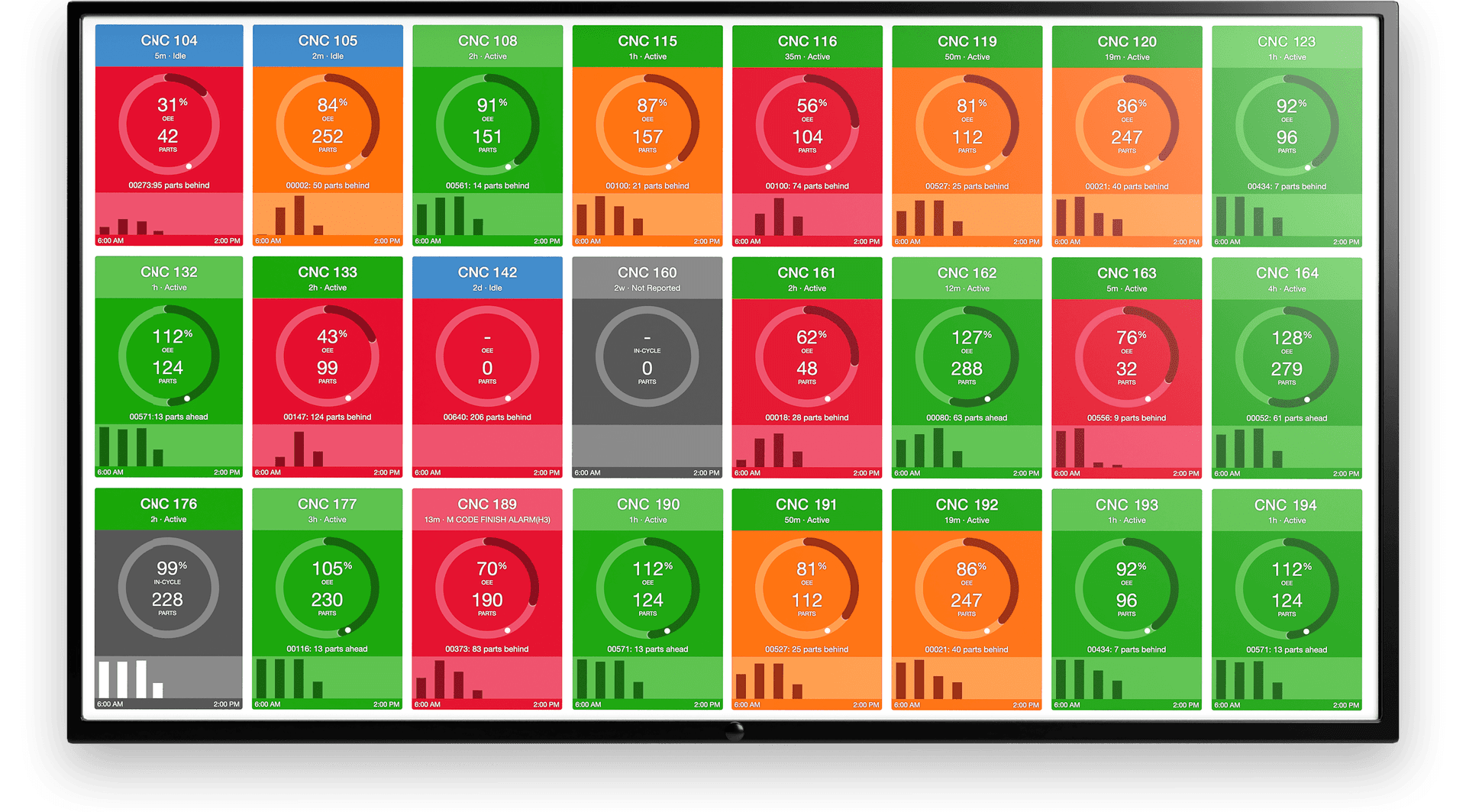
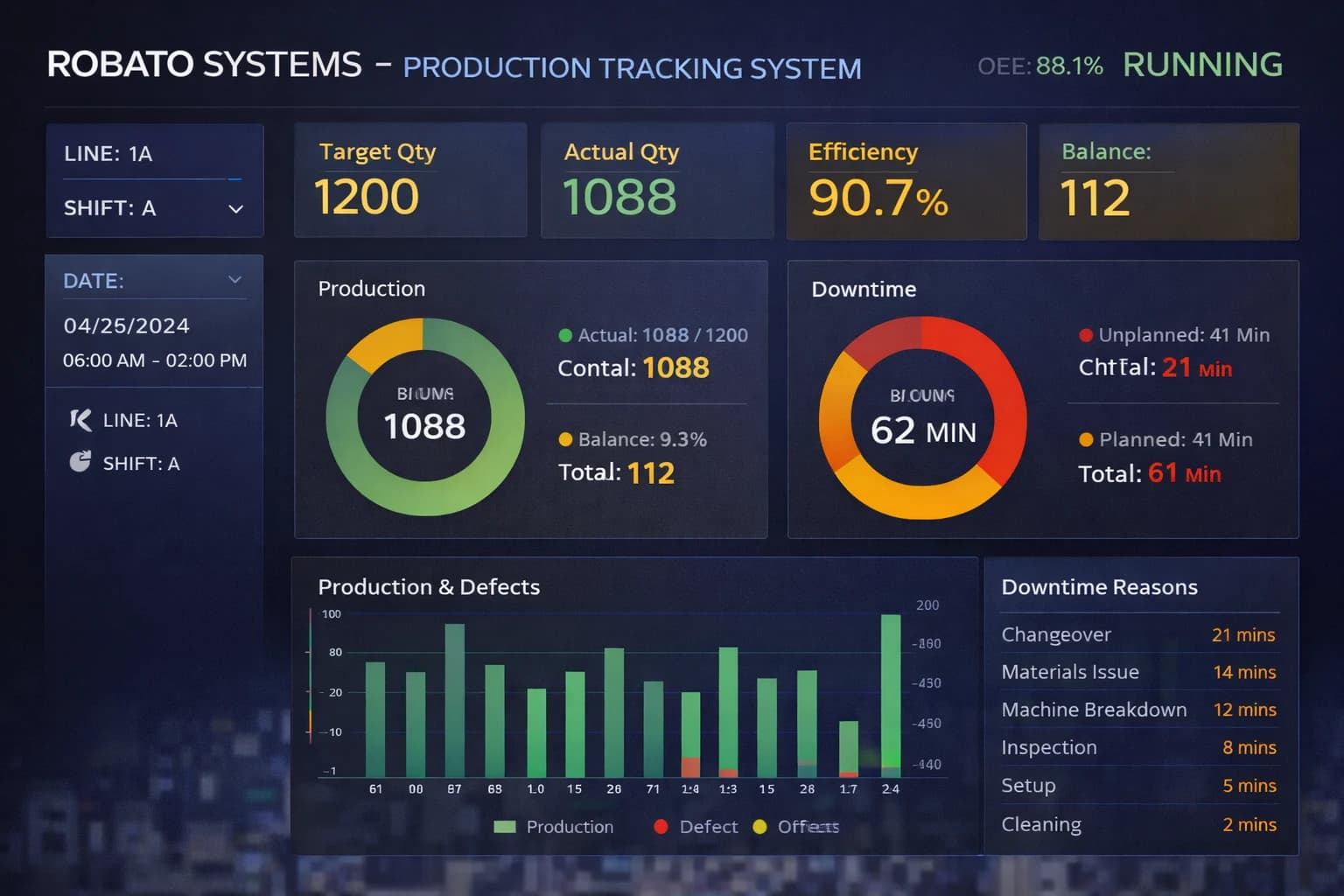
The third layer is the cloud-connected Andon dashboard. This extends the visibility of the Andon system beyond the factory floor to supervisors' offices, management meeting rooms, and remote locations. Through a web-based portal or mobile app, managers can monitor the live status of every machine and production line from any device, anywhere, at any time.
How Andon Systems Cut Downtime at Its Source
The most direct operational benefit of Andon display systems is their ability to compress the time between a problem occurring and a response being triggered. In a factory without Andon, a machine stoppage might go unnoticed for several minutes while an operator tries to fix the issue themselves, then walks to find a supervisor, then waits for a maintenance engineer to be located and arrive at the machine. Each of those steps costs time that the line is not producing.
With an Andon display system in place, the moment a machine stops or a quality issue is detected, the tower light changes color, the Andon board updates automatically, and an alert is sent by text or email to the relevant maintenance engineer or supervisor in real time. The response begins within seconds of the event occurring, not minutes or longer after it has already compounded into a significant production loss.
Quality Assurance Gets a Boost Too
Andon display systems are not only about machine breakdowns. They are equally powerful as quality management tools. When a quality defect is detected at a workstation, the operator can trigger a yellow signal immediately, alerting a quality supervisor to investigate the issue before further defective output is produced and passes down the line.
This early intervention capability is one of the most valuable aspects of Andon systems in industries where quality standards are tight, such as automotive, pharmaceutical, electronics, and food processing. Catching a defect at the source is always less costly than discovering it further down the production process or, worse, after the product has already reached the customer.
Wireless and Cloud-Connected for Modern Factories
Traditional Andon systems required extensive wiring infrastructure to connect each workstation to the central display. Modern cloud-connected Andon systems from Robato Systems use wireless communication and IIoT edge devices to collect and transmit machine data without the constraints of physical wiring.
This wireless capability makes Andon display systems far easier and faster to deploy, and significantly more flexible to reconfigure when production layouts change. The cloud connectivity ensures that data is accessible in real time from any location, and that system updates and configurations can be managed remotely without requiring on-site technical intervention.