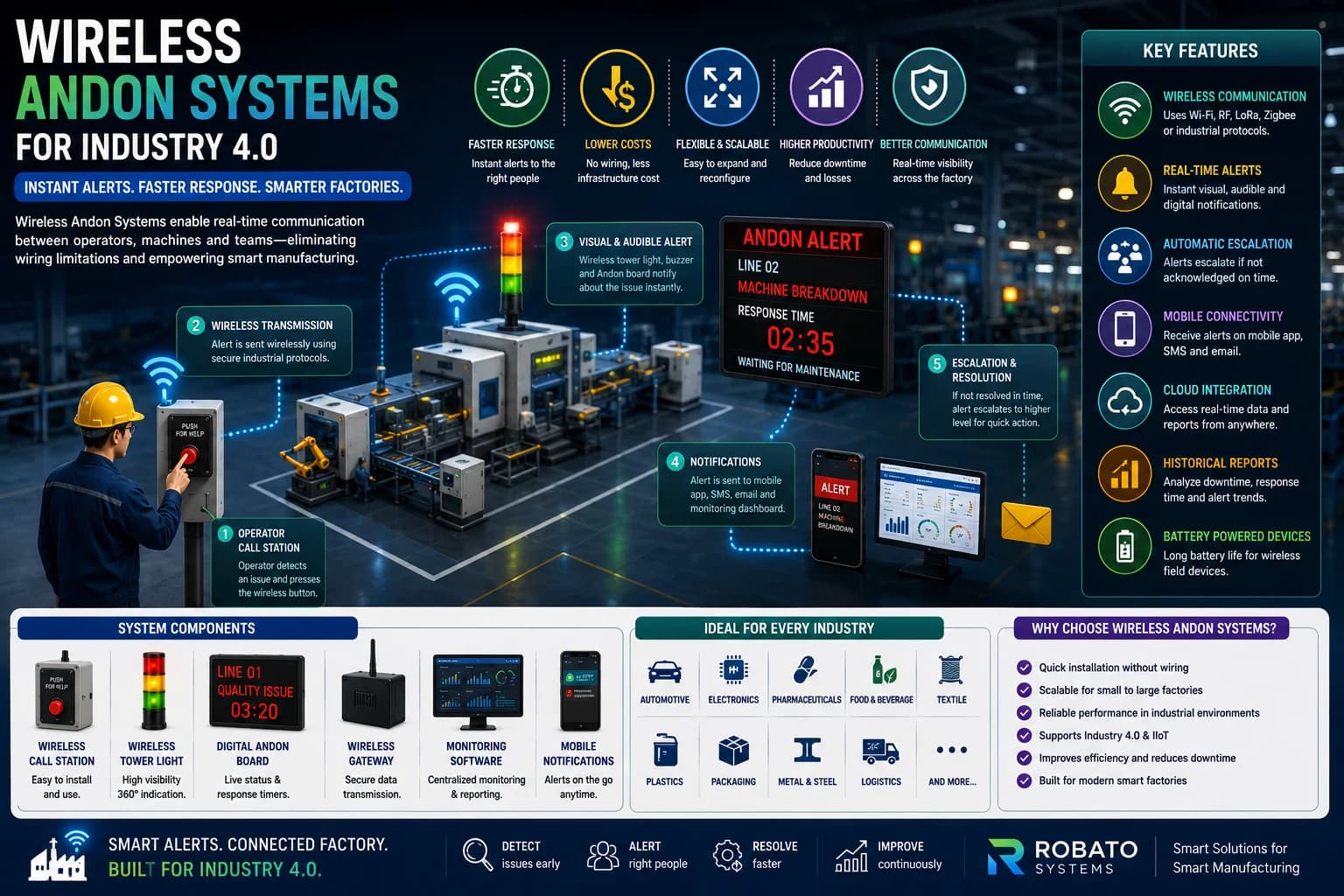
Wireless Andon Systems for Industry 4.0
Manufacturing environments are becoming increasingly connected, automated, and data-driven. Modern factories are expected to respond instantly to machine failures, quality issues, material shortages, and production delays without disrupting operations. Traditional wired communication systems often struggle to provide the flexibility and scalability required in today's dynamic manufacturing facilities. This is where a Wireless Andon System becomes an essential part of Industry 4.0.
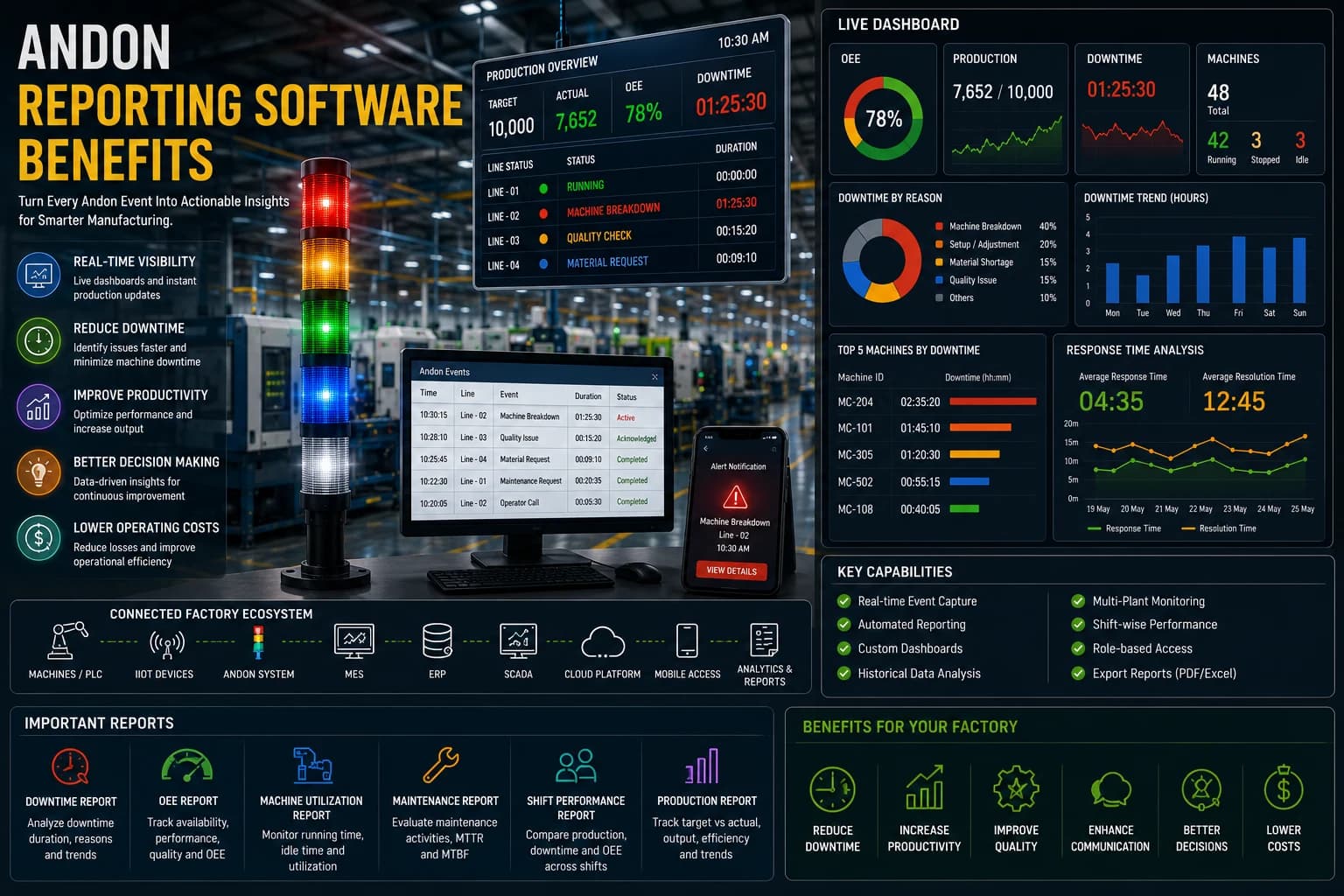
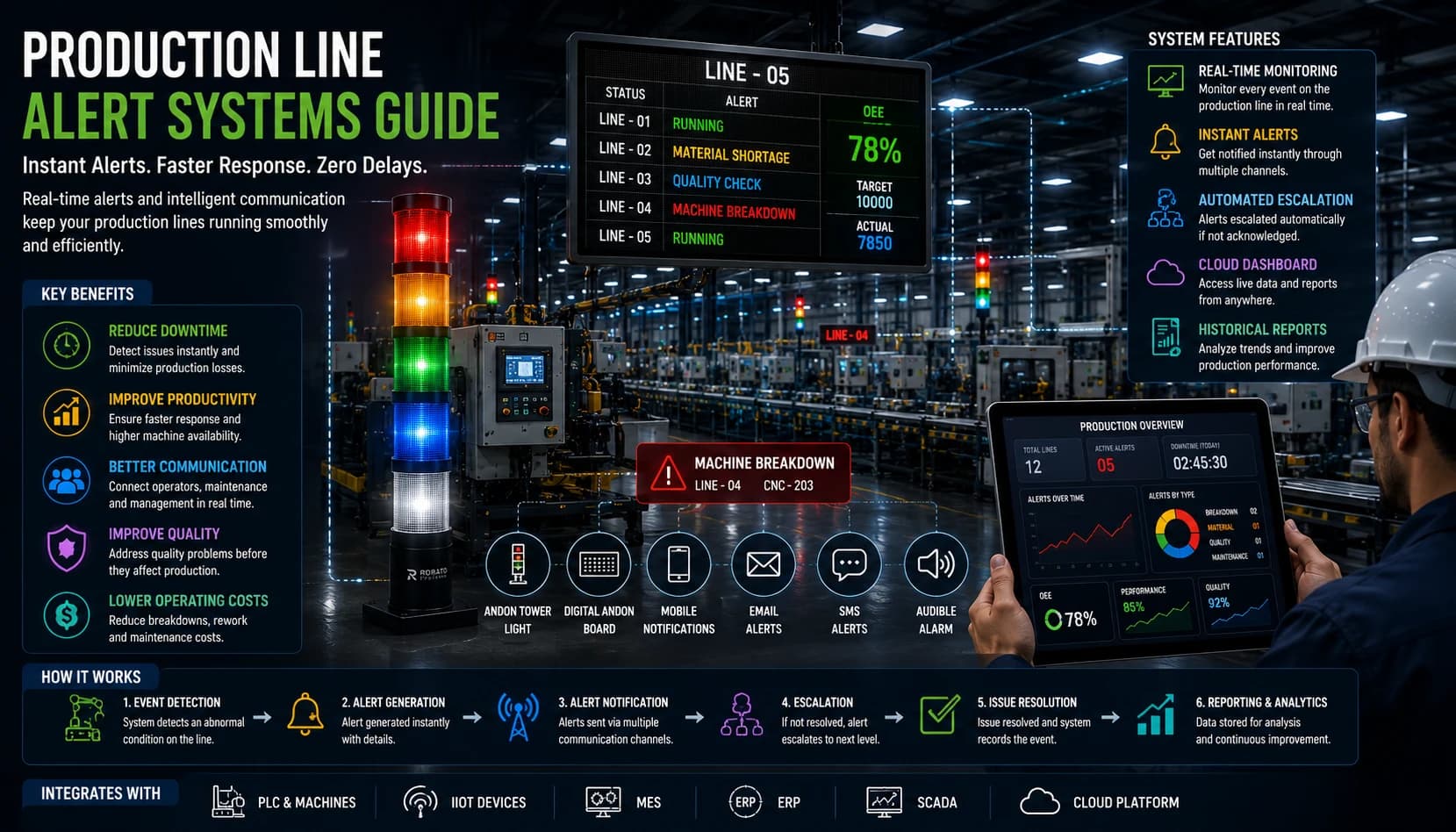
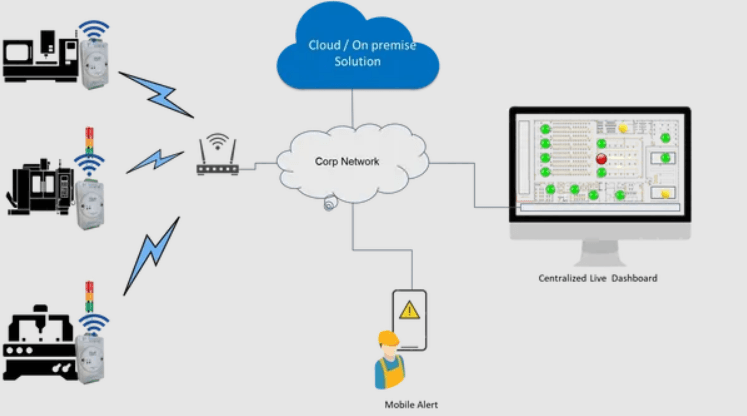
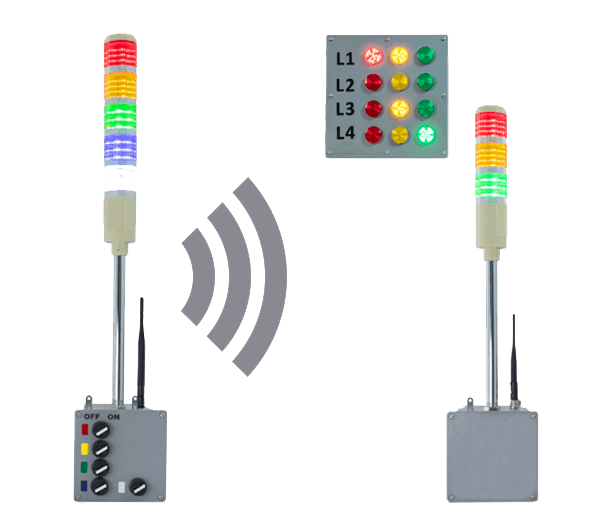
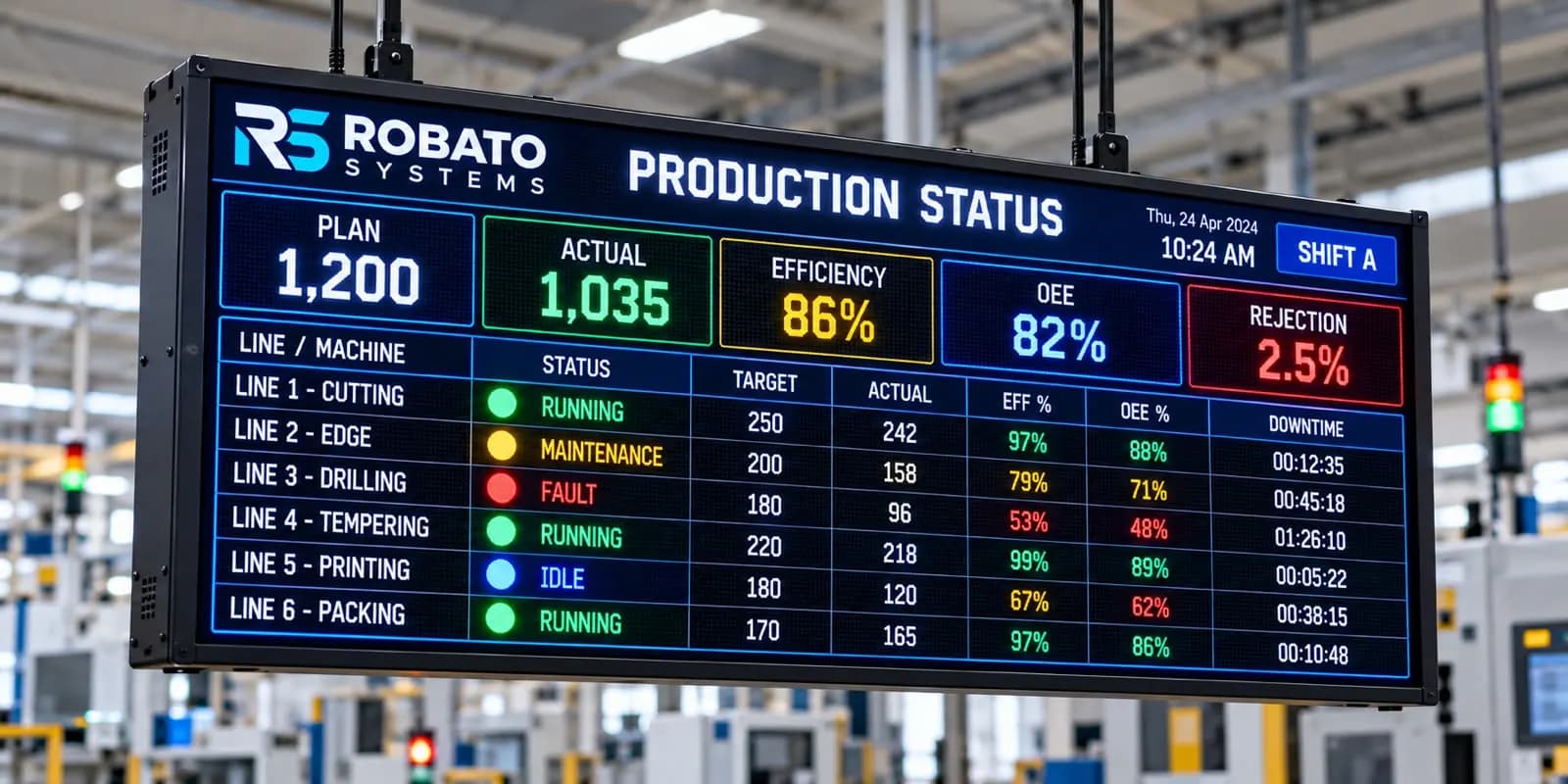
A wireless Andon system enables operators, supervisors, maintenance teams, and production managers to communicate production issues instantly without relying on complex wiring or manual reporting. Using wireless technologies such as Wi-Fi, RF, LoRa, Zigbee, or industrial wireless networks, these systems transmit real-time alerts from machines or operator stations directly to tower lights, digital Andon boards, mobile devices, and centralized monitoring software.
By eliminating wiring limitations and enabling faster deployment, wireless Andon systems help manufacturers improve communication, reduce downtime, increase productivity, and support smart factory initiatives.
What is a Wireless Andon System?
A Wireless Andon System is a manufacturing communication solution that uses wireless technology to send real-time alerts whenever production abnormalities occur. Instead of depending on wired connections between machines and display systems, wireless Andon solutions communicate through secure wireless networks, making installation faster, more flexible, and easier to expand.
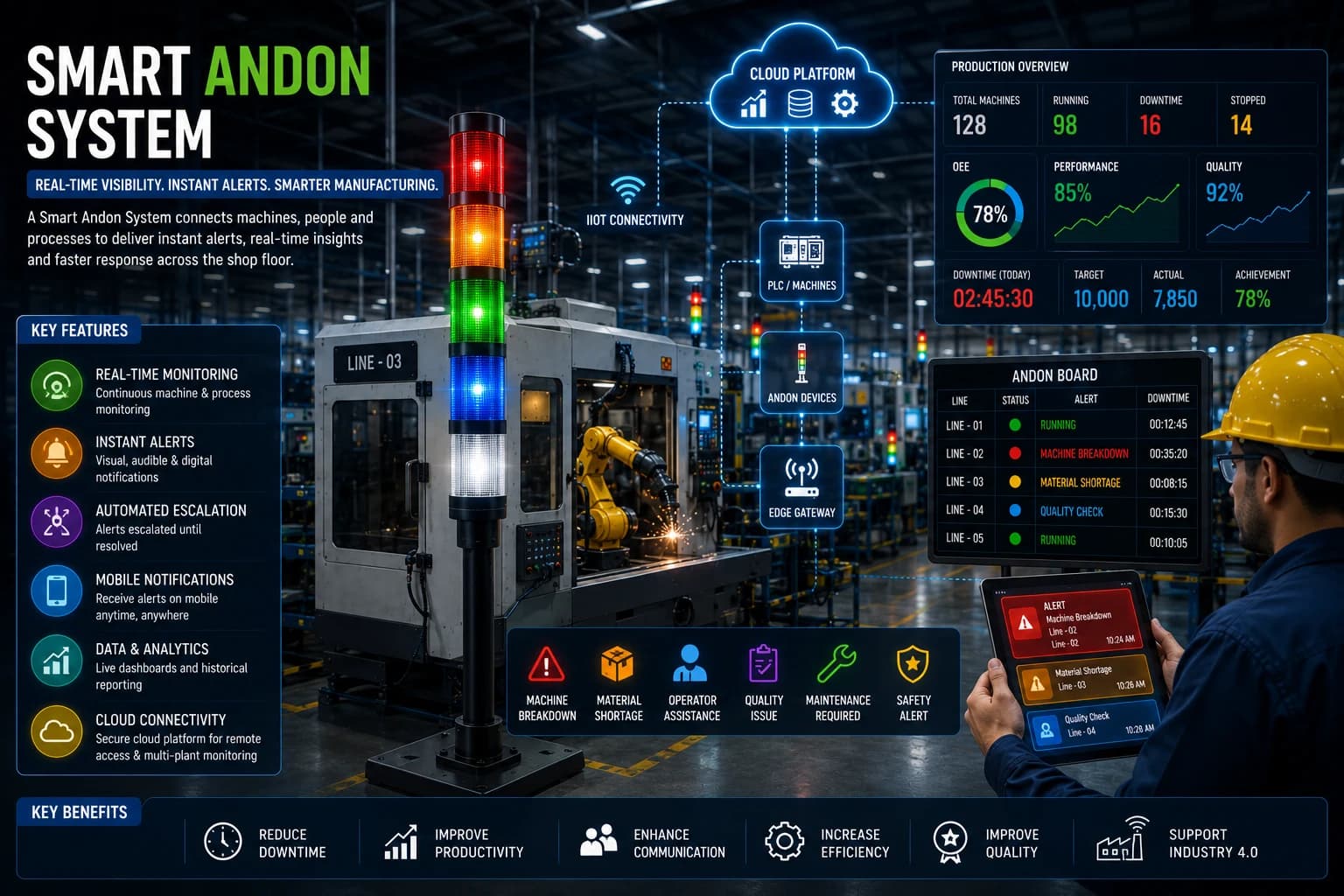
The system automatically notifies the appropriate personnel when events such as machine breakdowns, quality defects, operator assistance requests, material shortages, or maintenance issues occur.
Typical alerts include:
- Machine breakdown
- Production stoppage
- Material replenishment request
- Quality issue
- Maintenance request
- Safety incident
- Operator assistance
- Emergency notifications
Alerts can be displayed through:
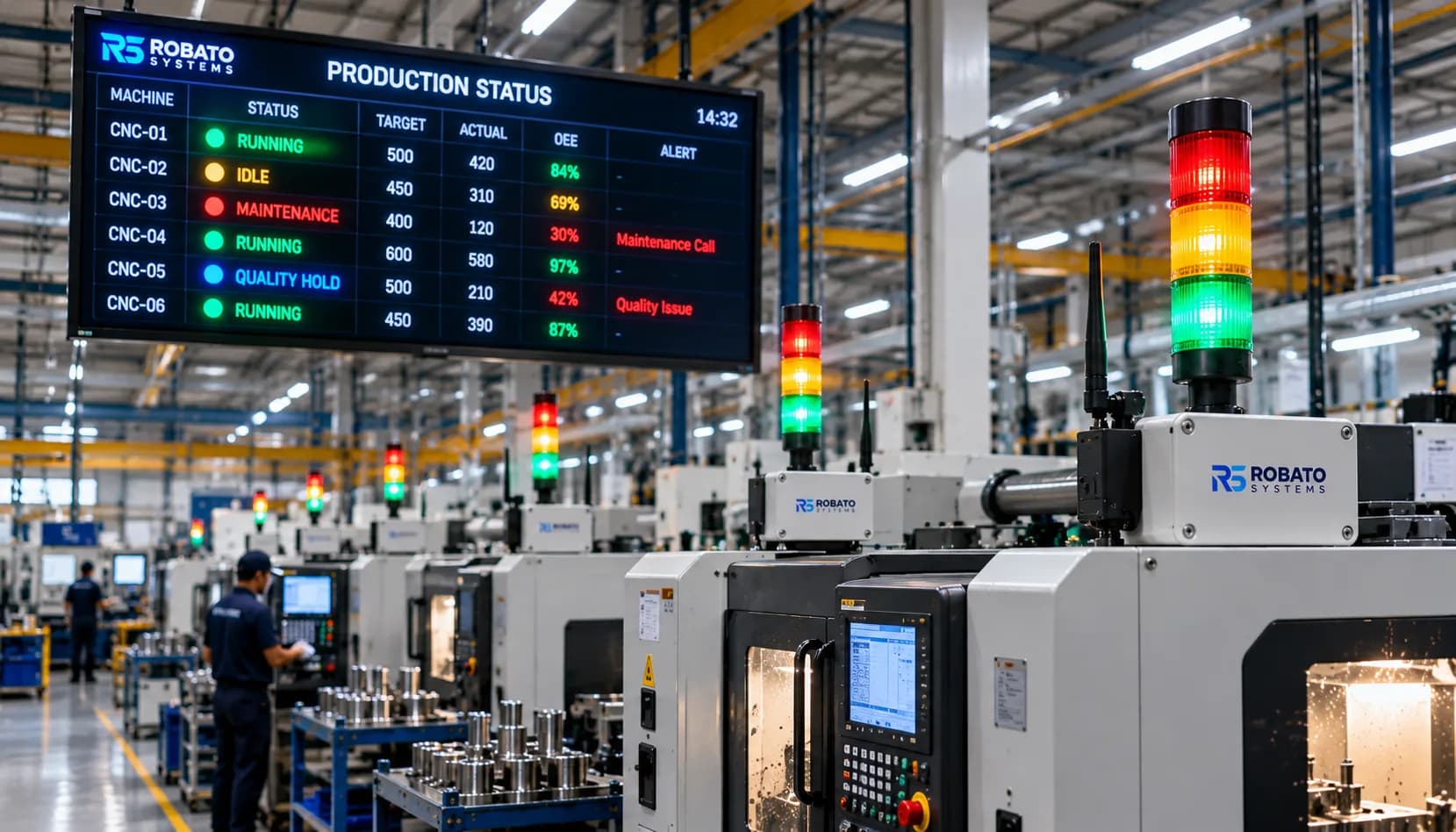
- Wireless tower lights
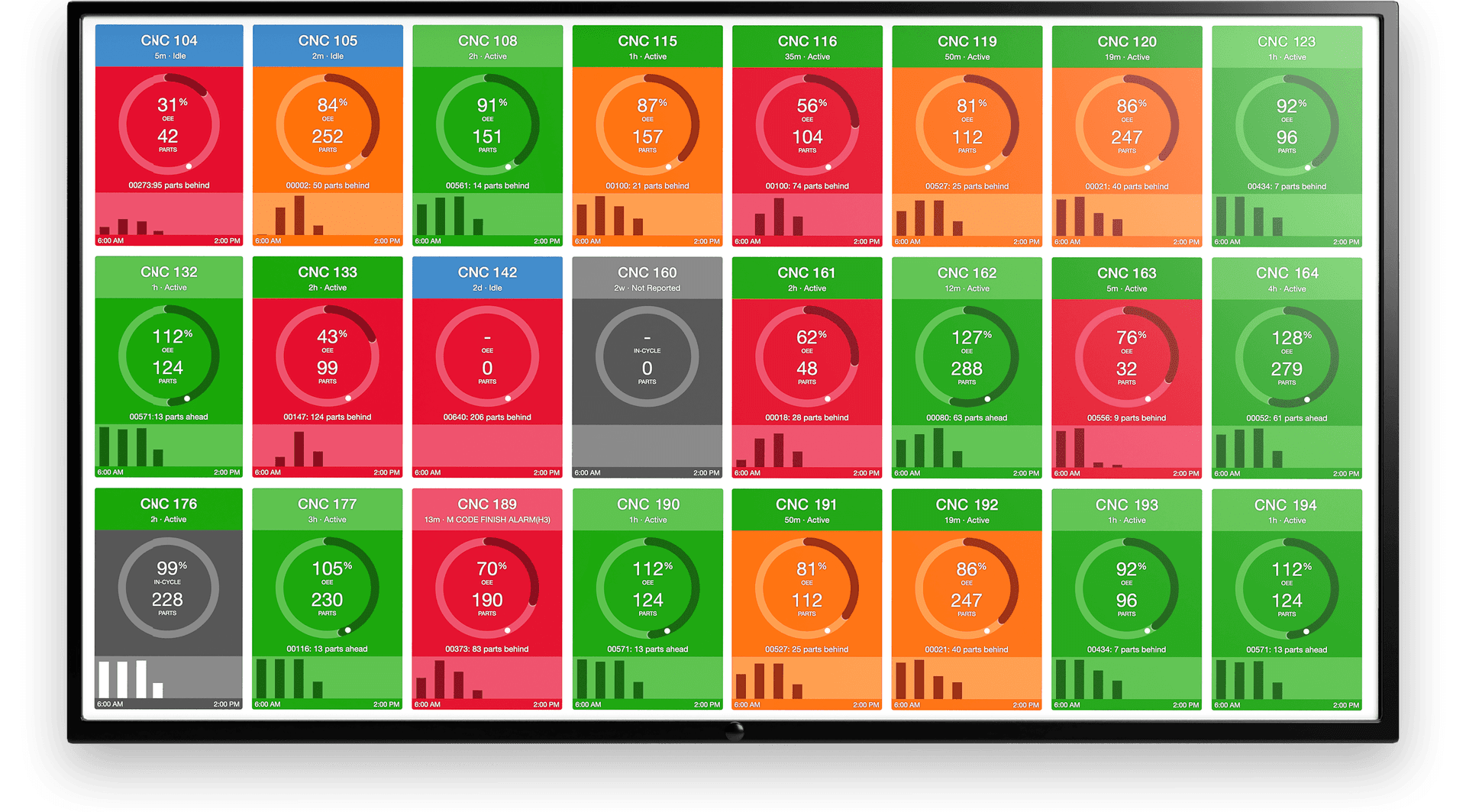
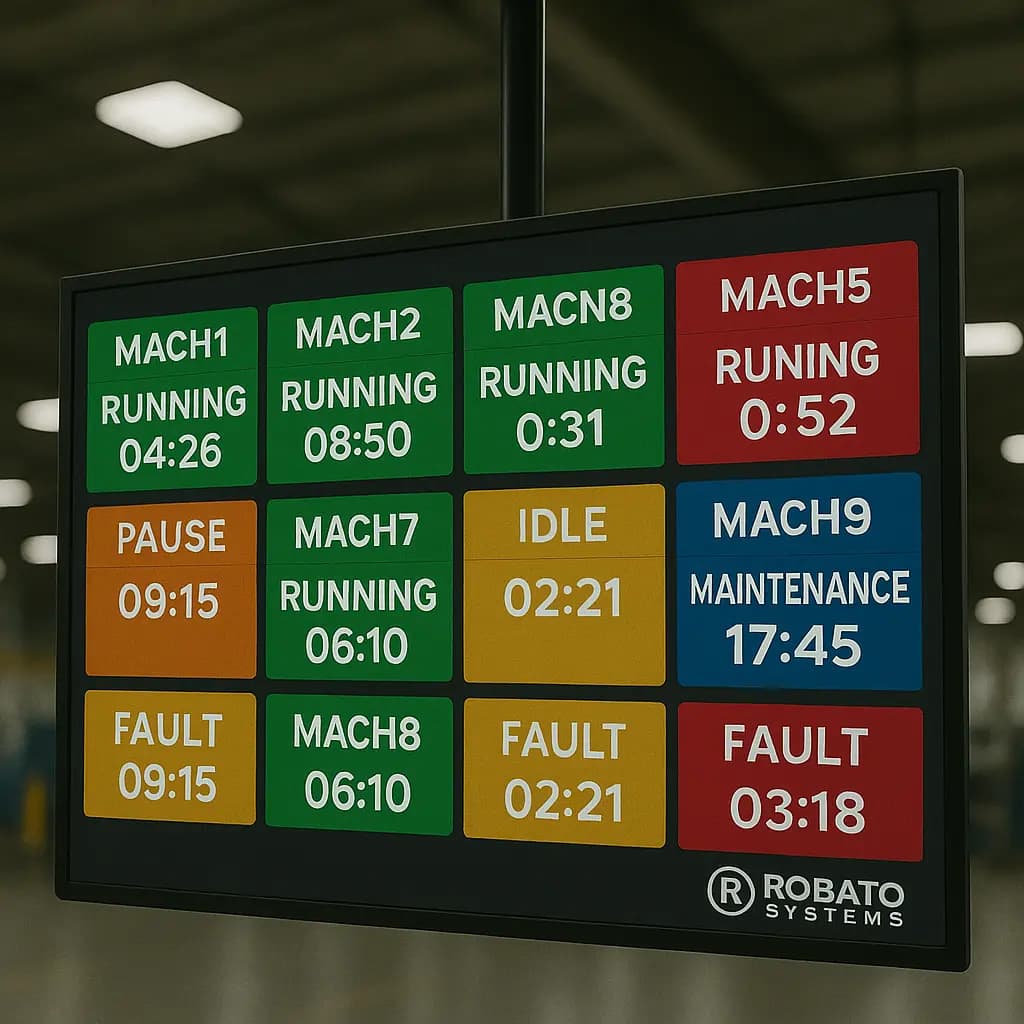
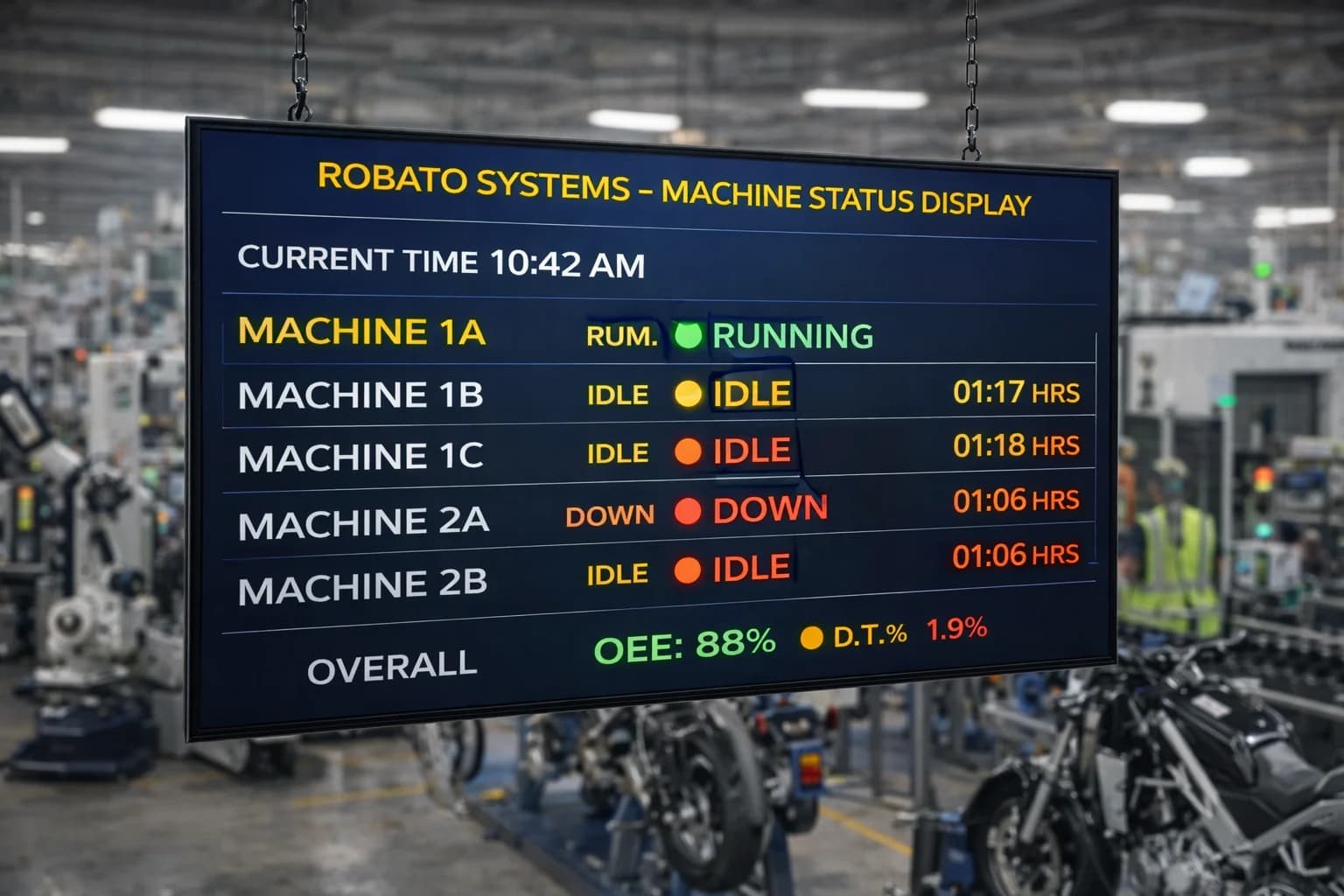
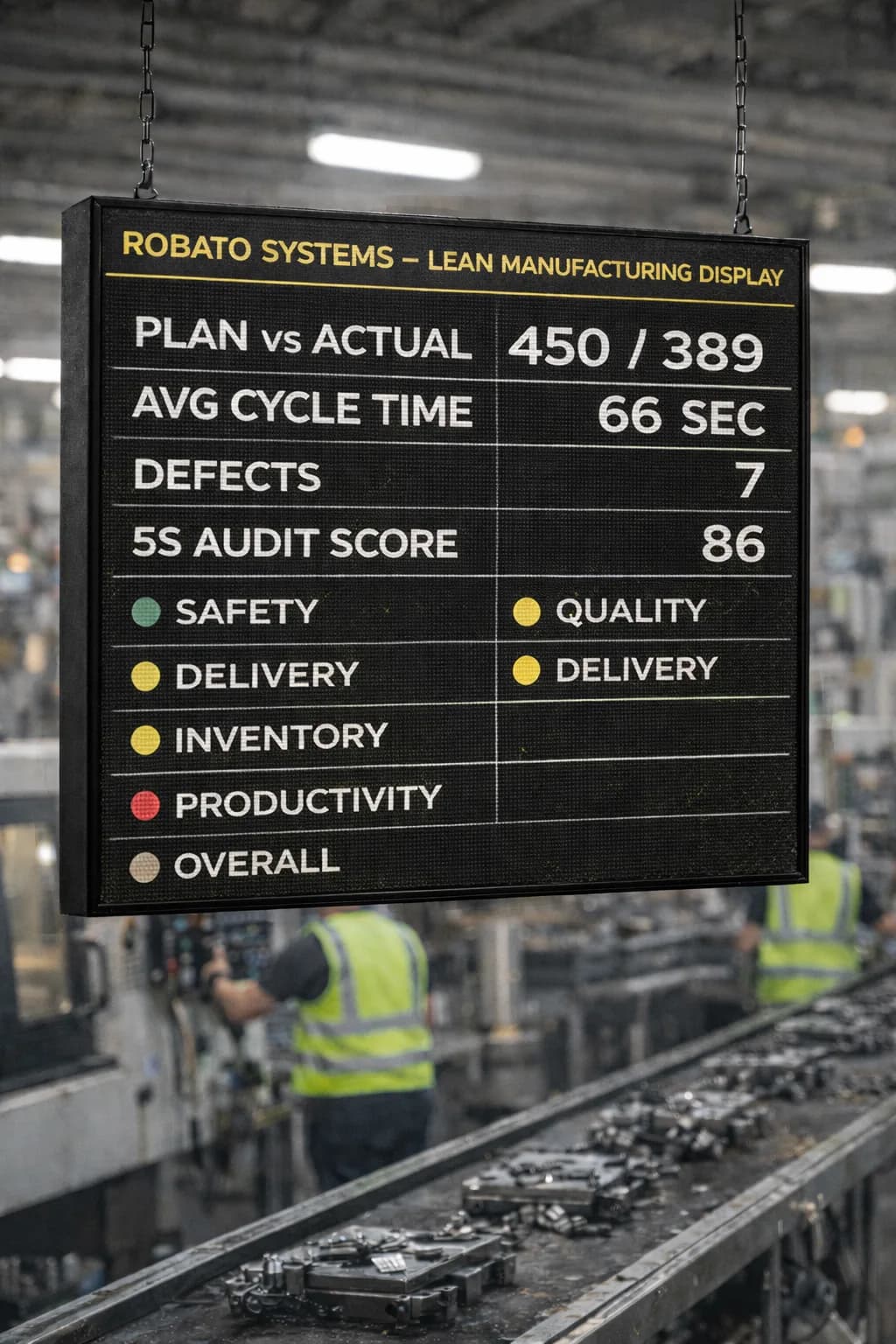
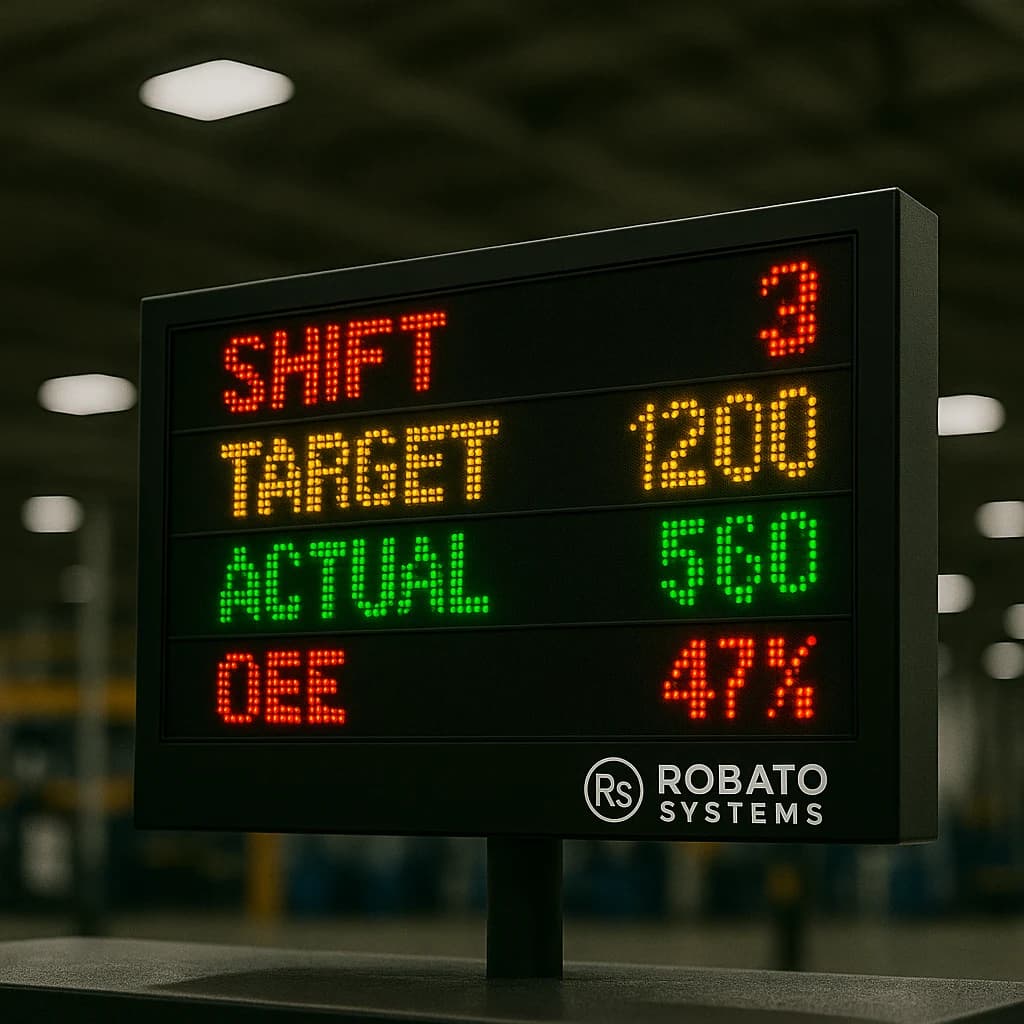
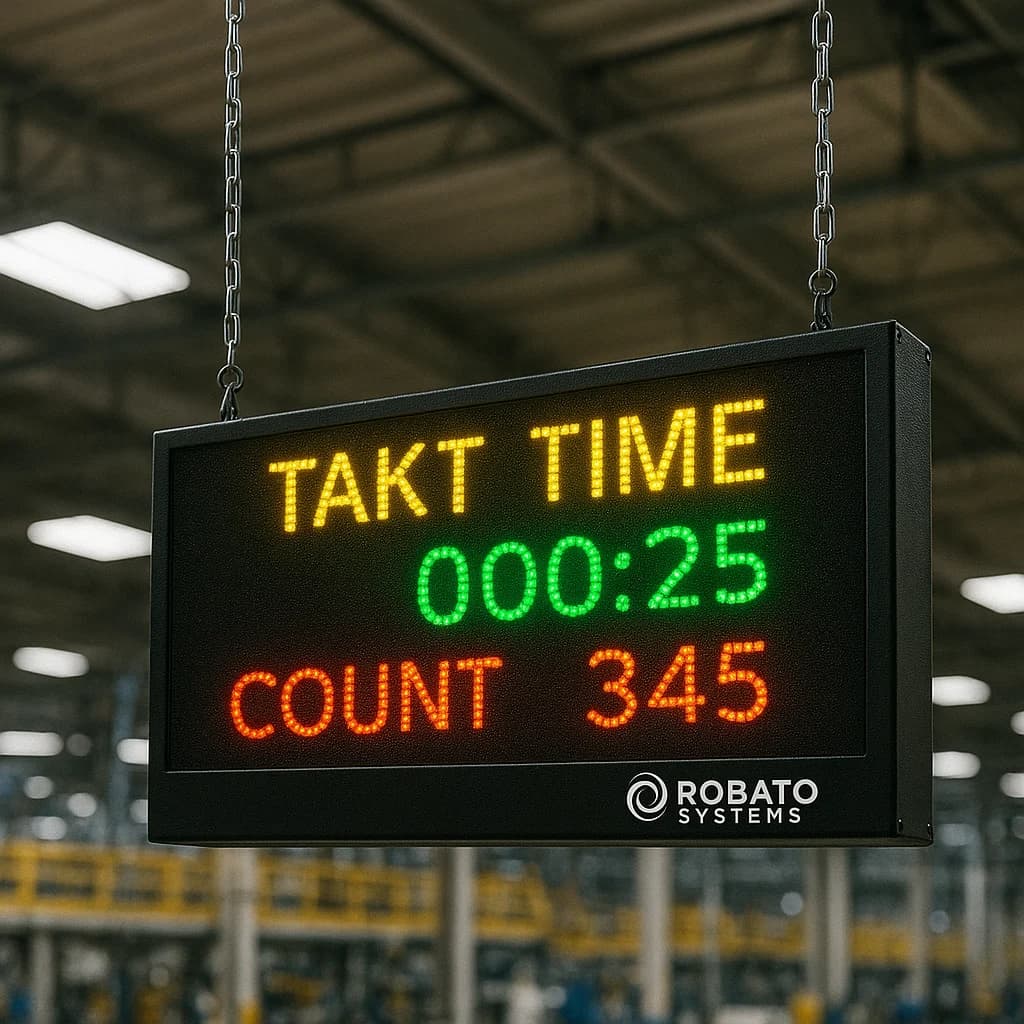
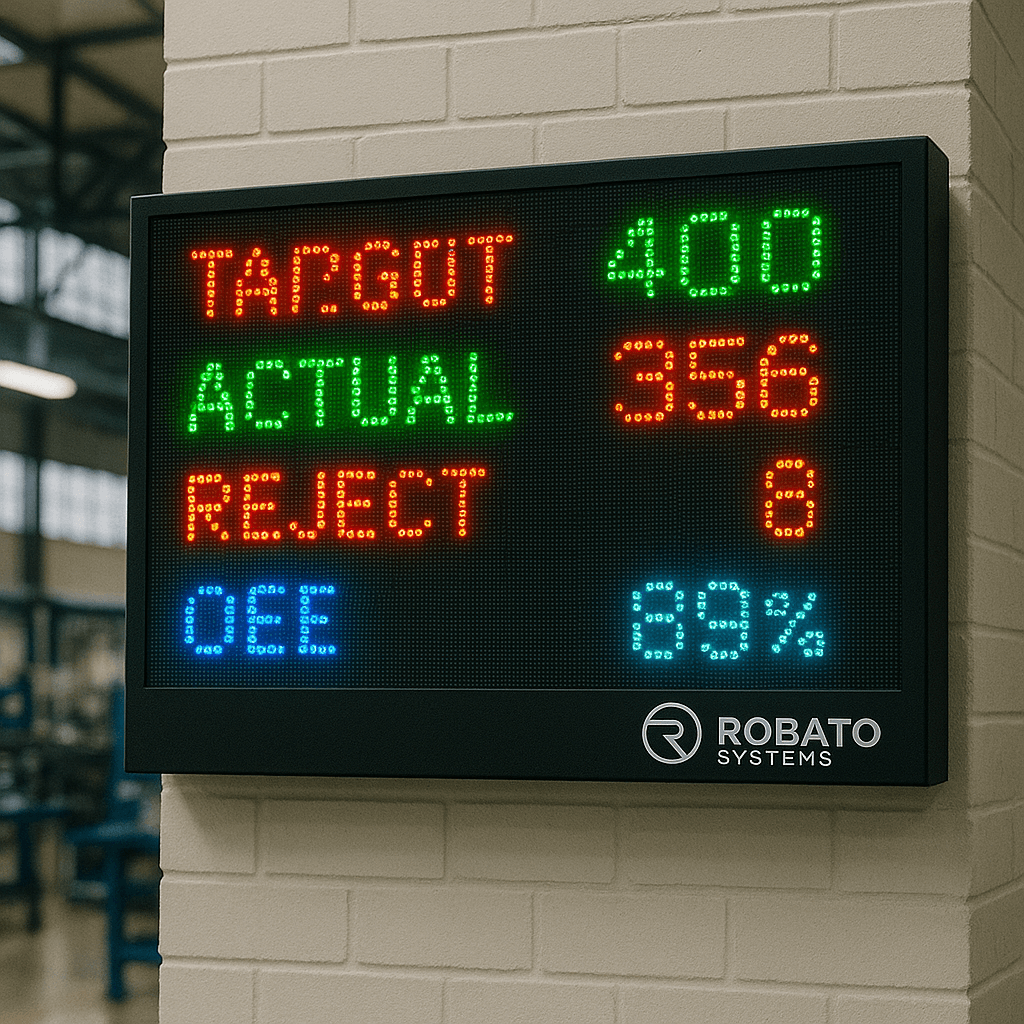
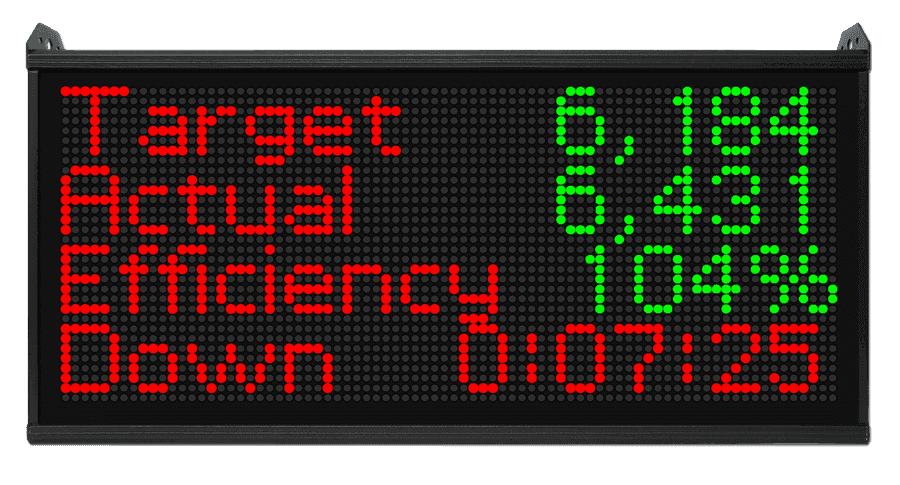
- Digital Andon boards
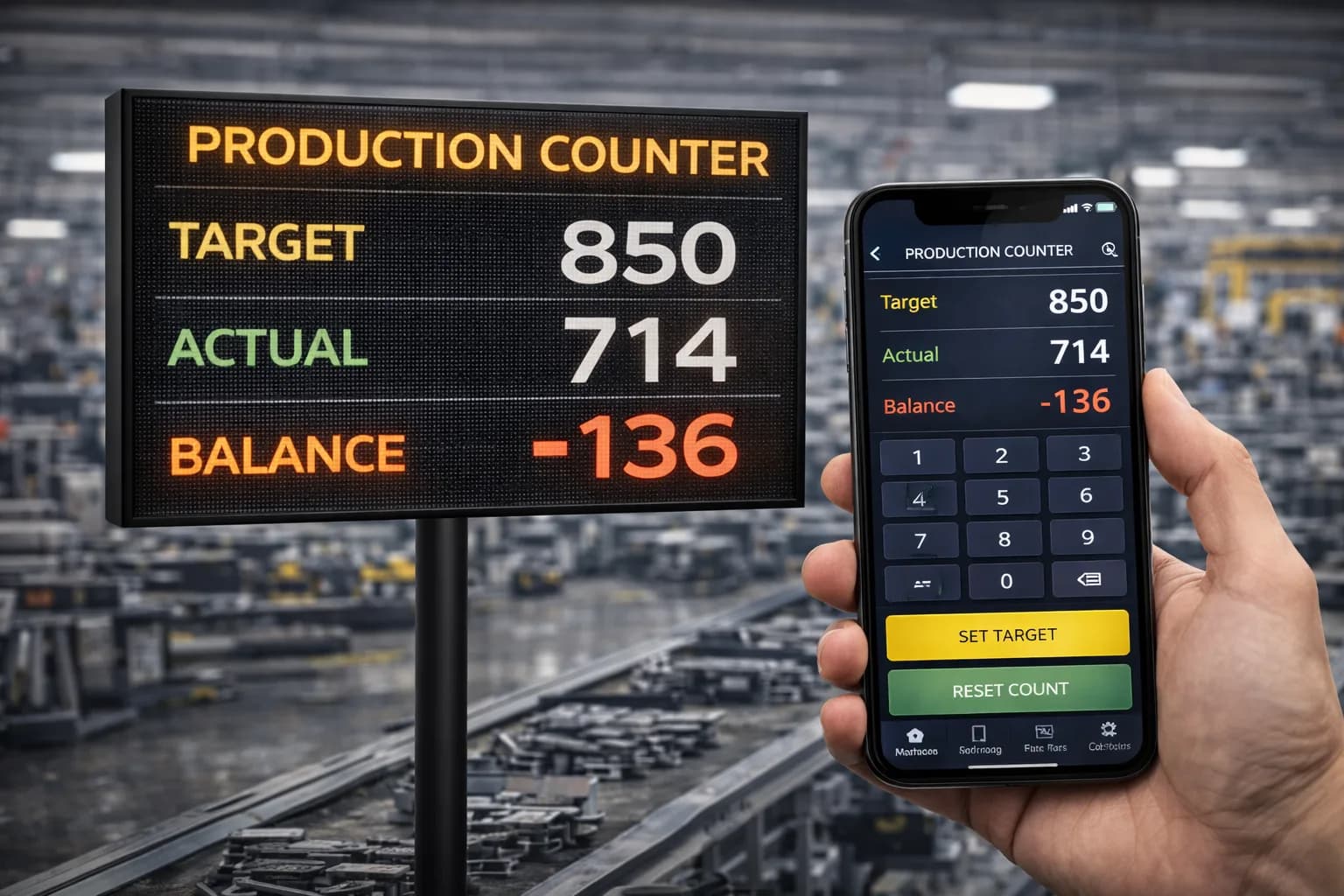
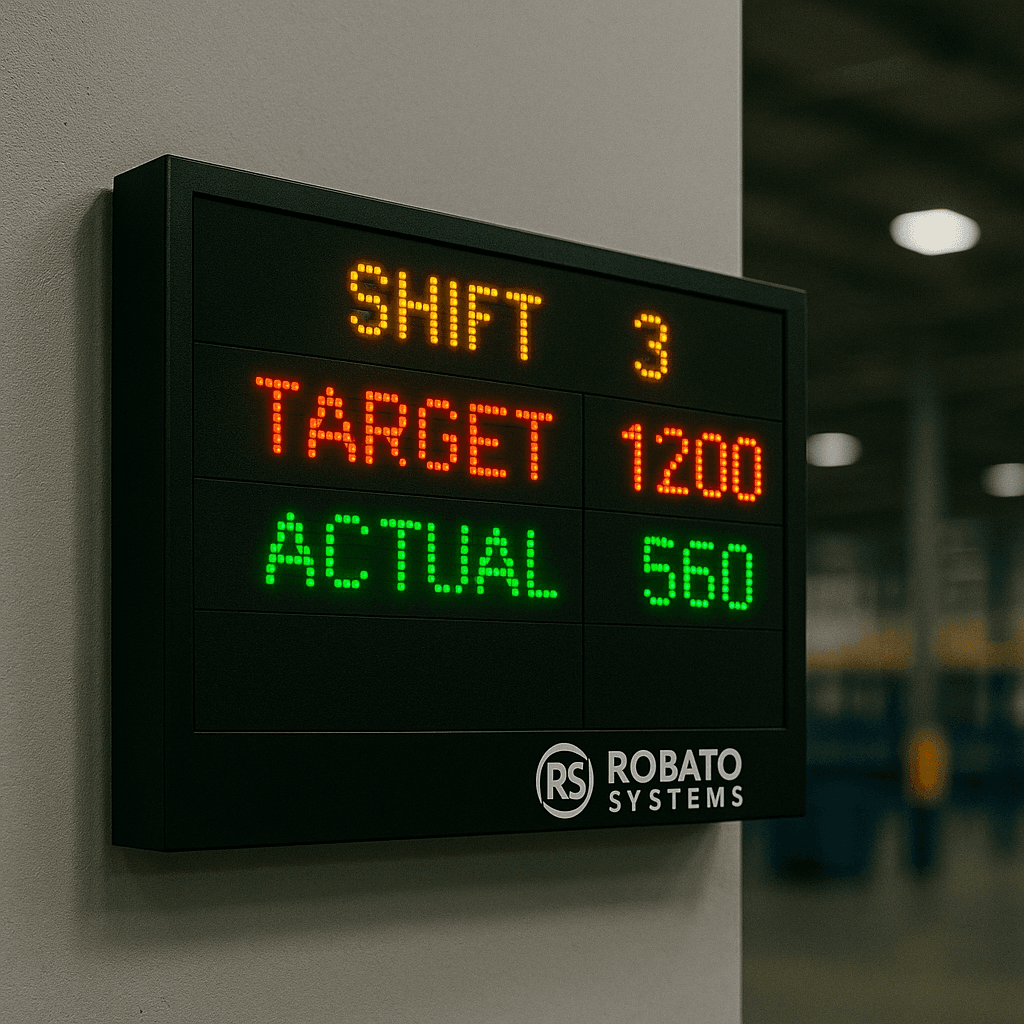
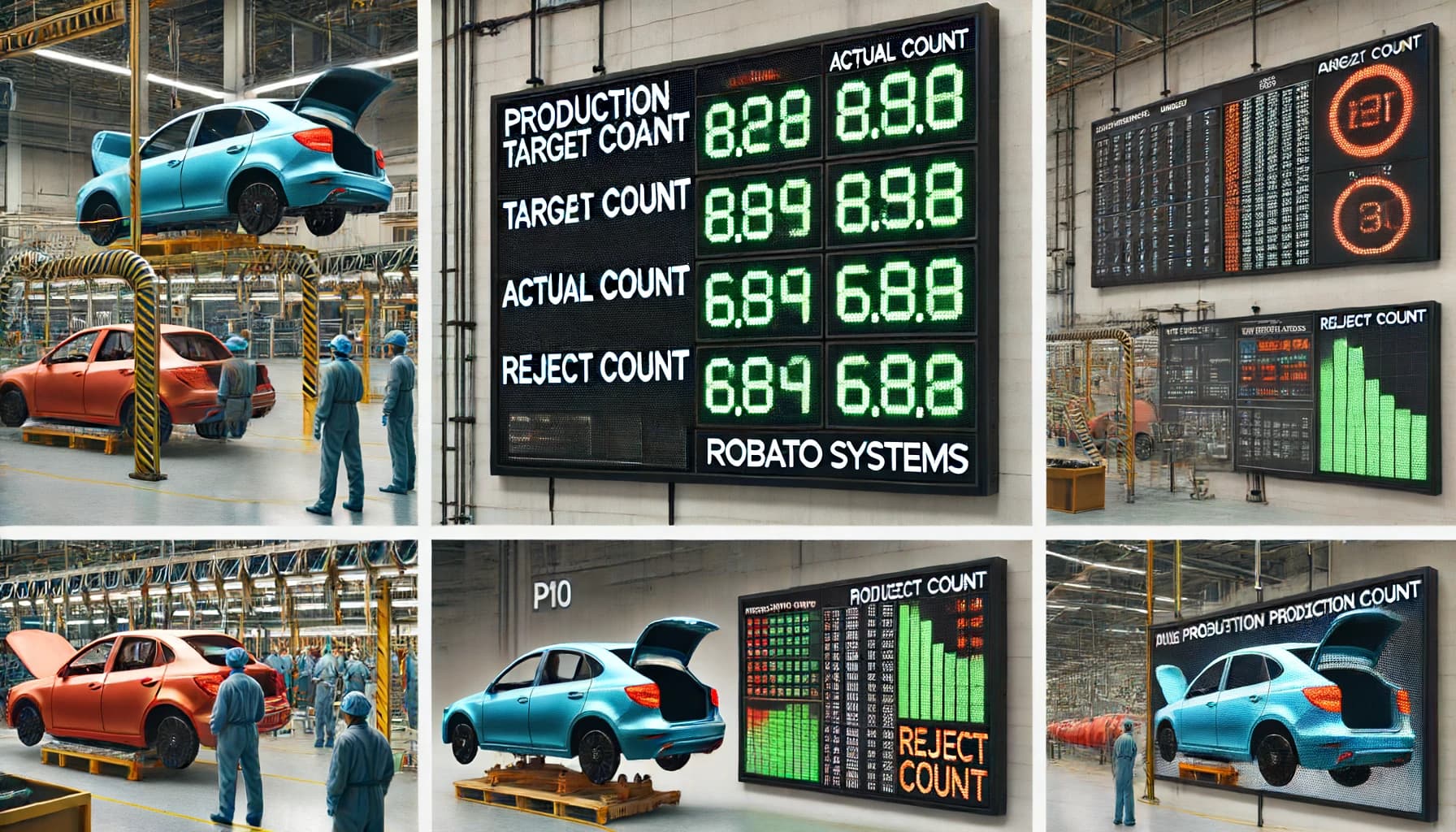
- LED display boards
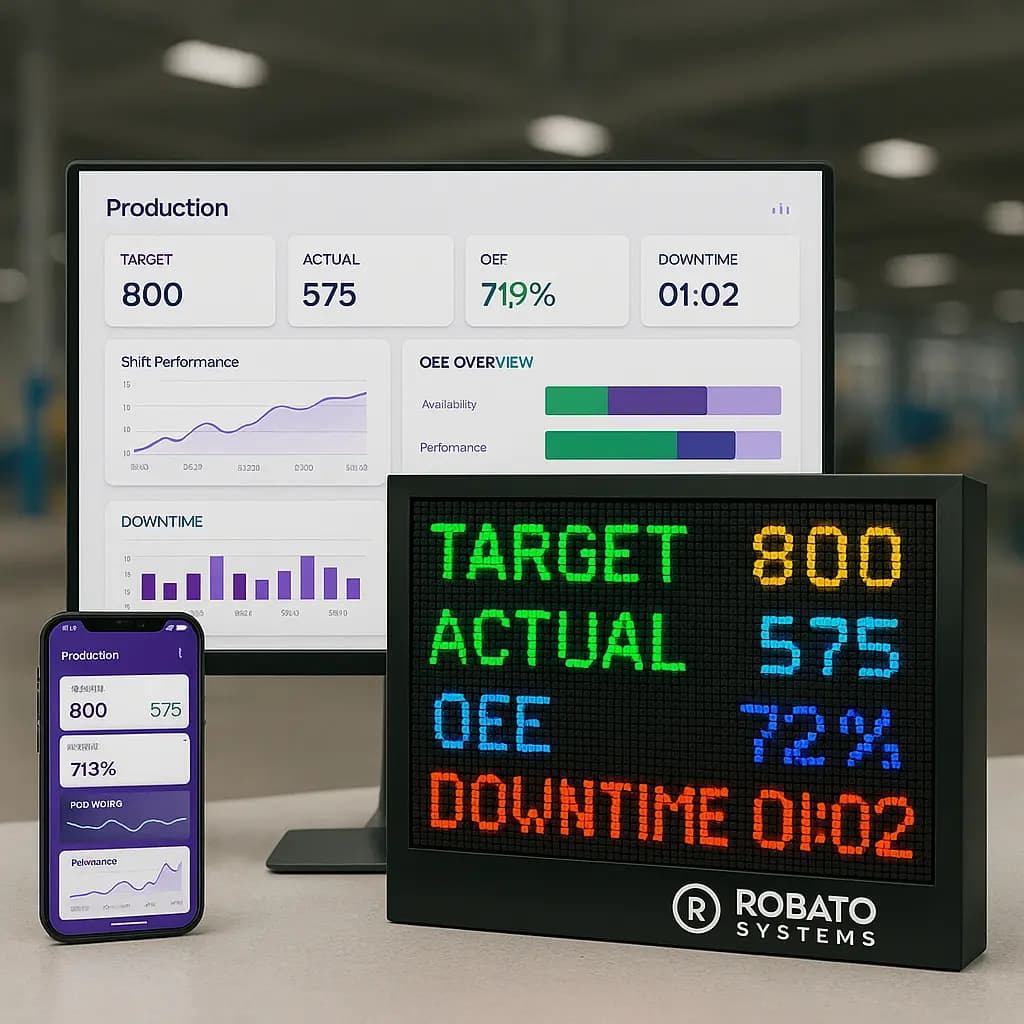
- Mobile applications
- SMS notifications
- Email alerts
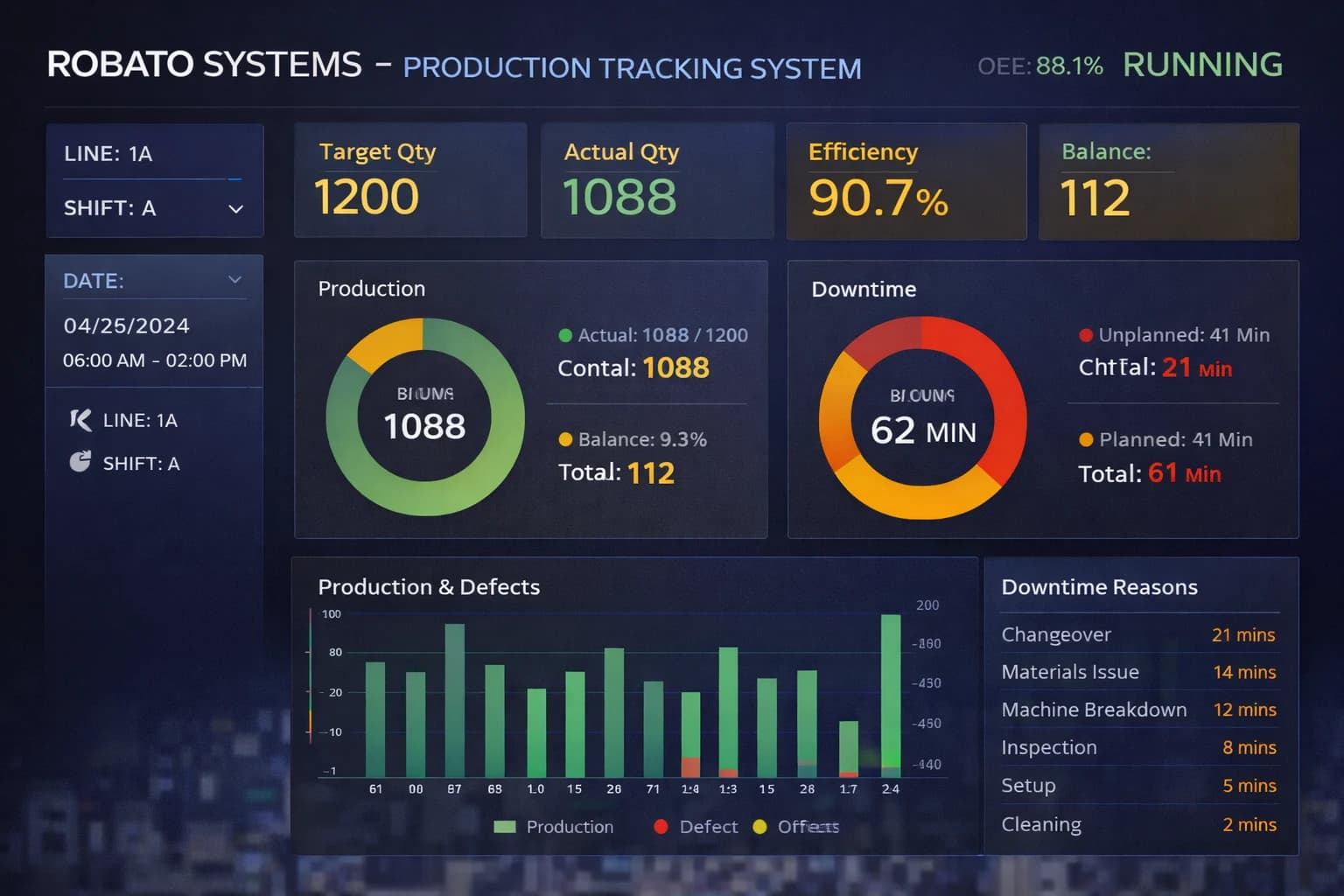
- Central monitoring dashboards
Why Wireless Andon Systems Matter
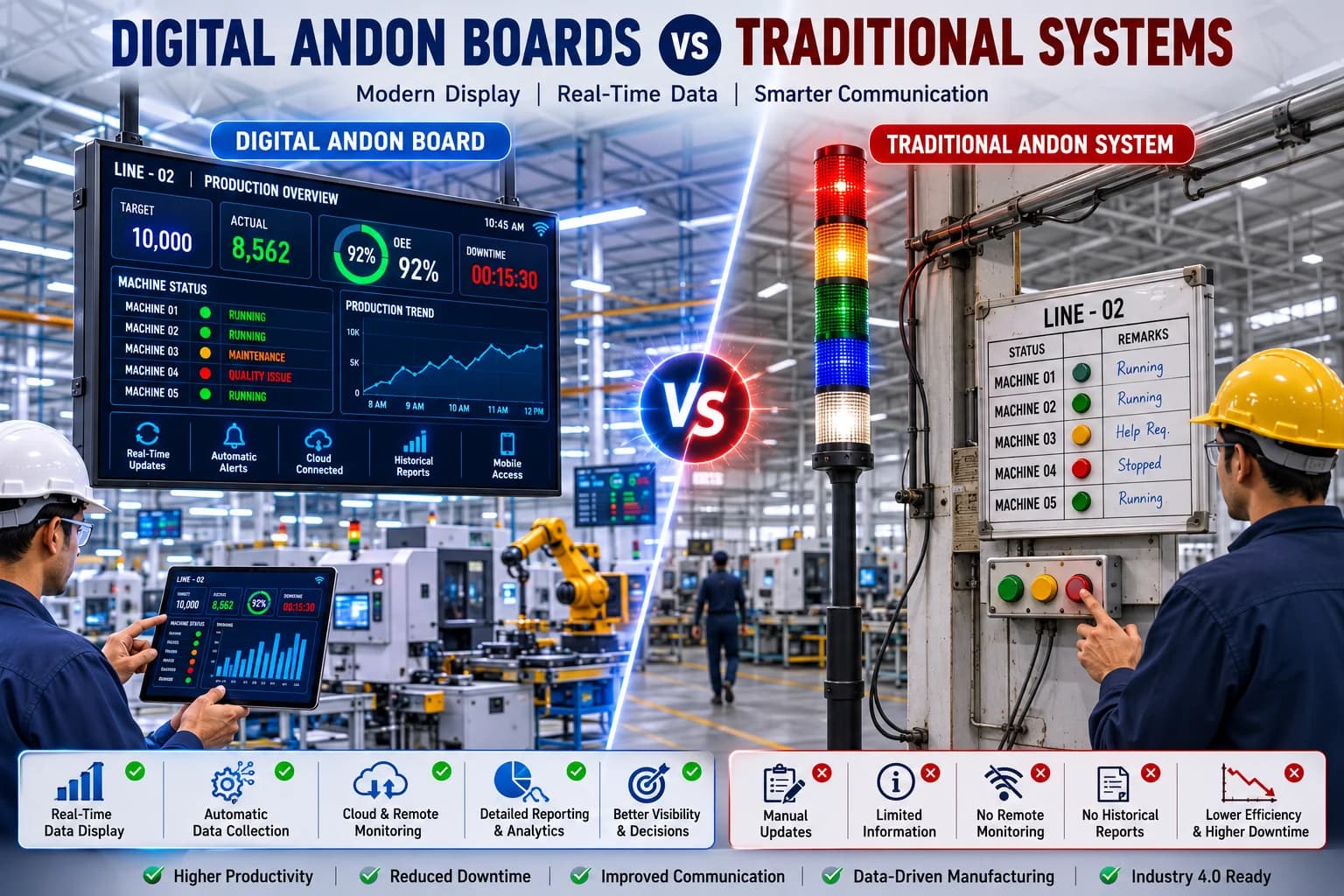
Traditional wired Andon systems often require significant installation time, extensive cabling, and production downtime during deployment. As manufacturing facilities expand or production lines change, modifying wired systems can become expensive and time-consuming.
Wireless Andon systems solve these challenges by providing flexible communication without physical wiring.
Key advantages include:
- Faster installation
- Lower infrastructure costs
- Easy expansion
- Greater flexibility
- Real-time communication
- Reduced maintenance
- Minimal production disruption
- Improved scalability
These benefits make wireless Andon systems ideal for modern manufacturing environments.
How a Wireless Andon System Works
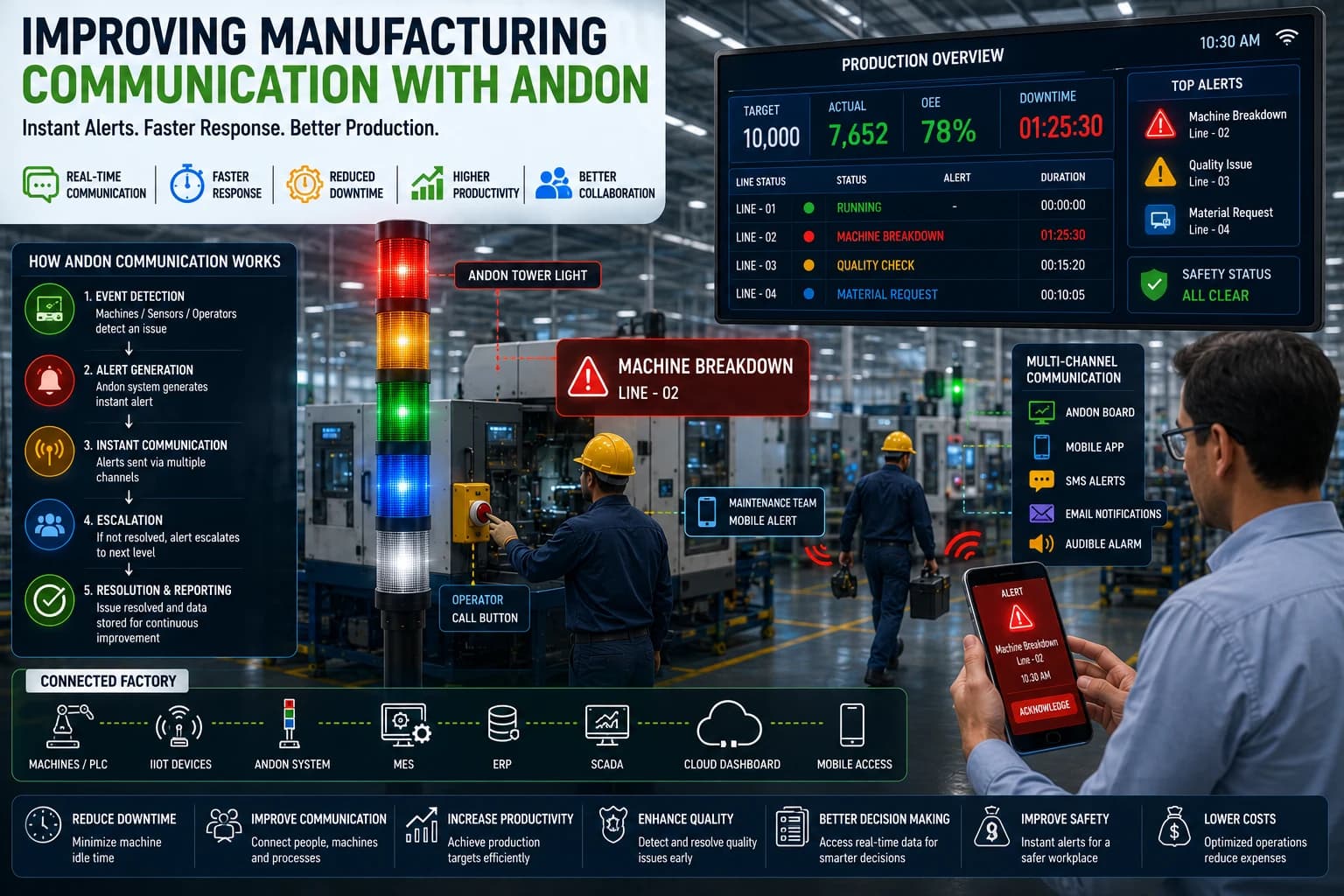
Step 1: Issue Detection
Production issues are detected through:
- Operator call buttons
- PLCs
- Industrial IoT sensors
- Machine controllers
- Vision inspection systems
- Safety devices
Step 2: Wireless Signal Transmission
The alert is transmitted using secure wireless communication technologies such as:
- Wi-Fi
- Radio Frequency (RF)
- Zigbee
- LoRa
- Bluetooth Low Energy (BLE)
- Industrial wireless protocols
Step 3: Alert Distribution
The system immediately sends notifications to:
- Tower lights
- Digital Andon boards
- Mobile devices
- Maintenance teams
- Supervisors
- Production managers
Step 4: Escalation
If the issue is not resolved within a predefined time, automated escalation rules notify higher-level personnel.
Step 5: Reporting
Every event is recorded for future analysis, including:
- Alert type
- Response time
- Resolution time
- Machine affected
- Root cause
- Downtime duration
Components of a Wireless Andon System
Wireless Operator Call Stations
Allow operators to request assistance without wired connections.
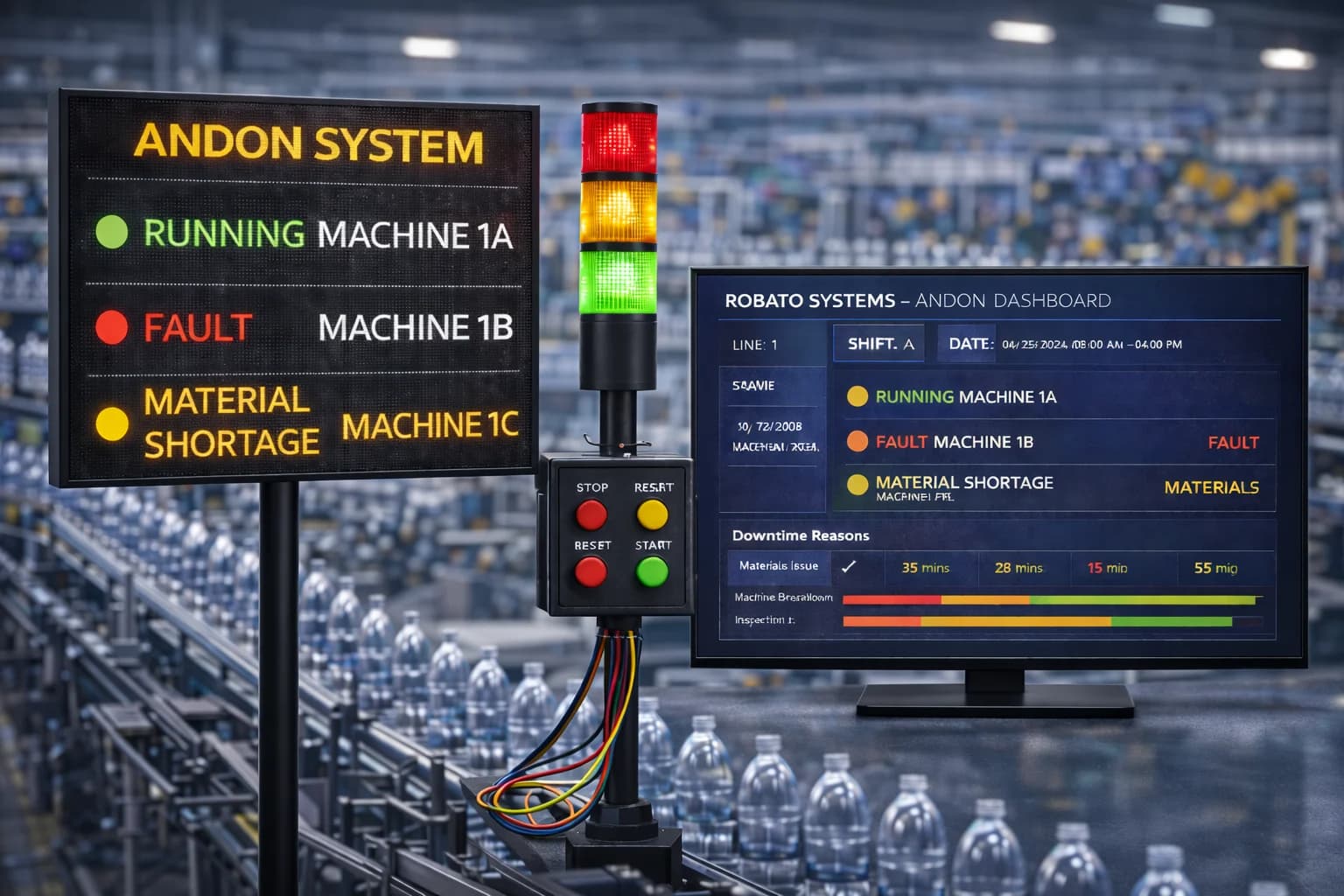
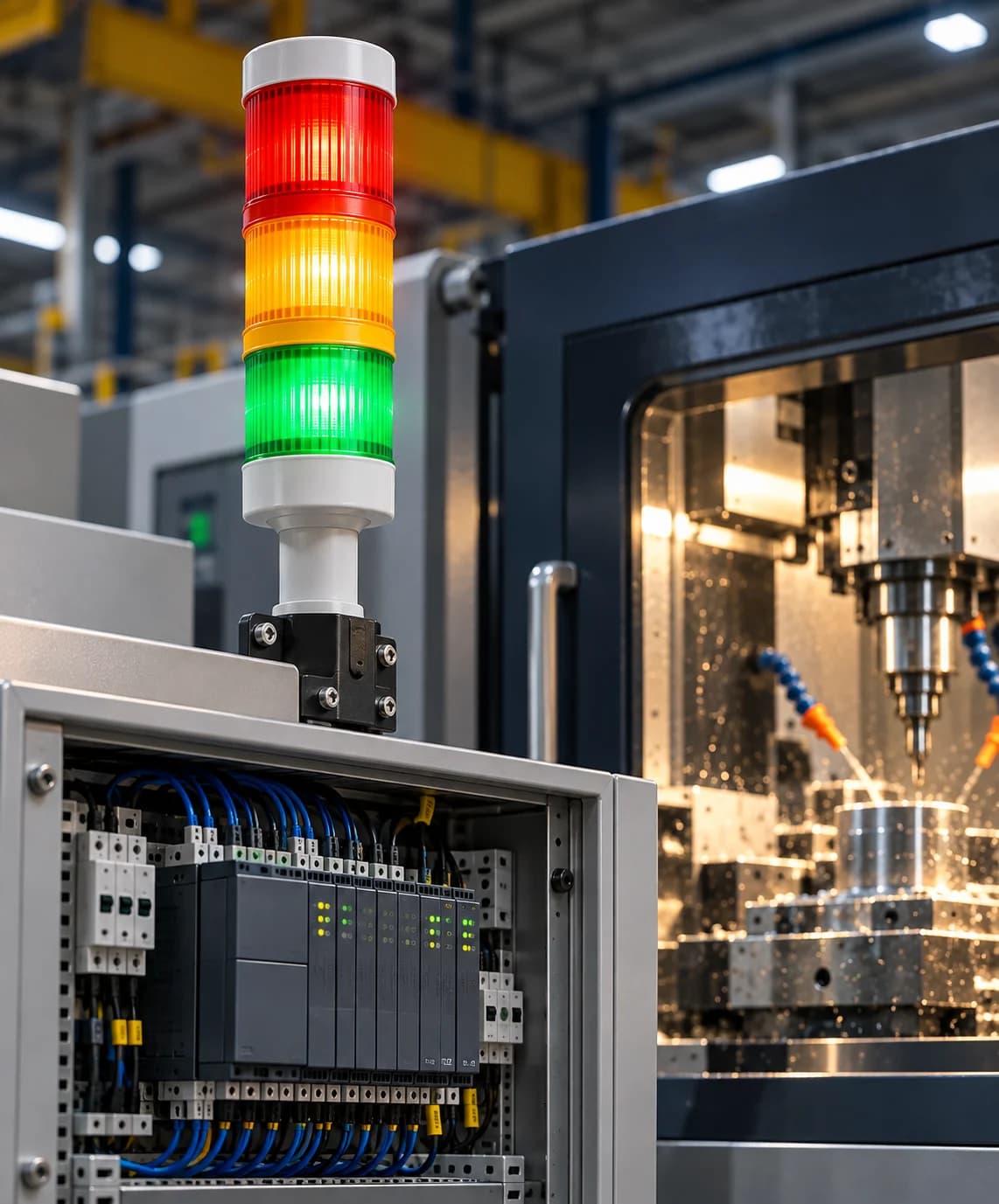
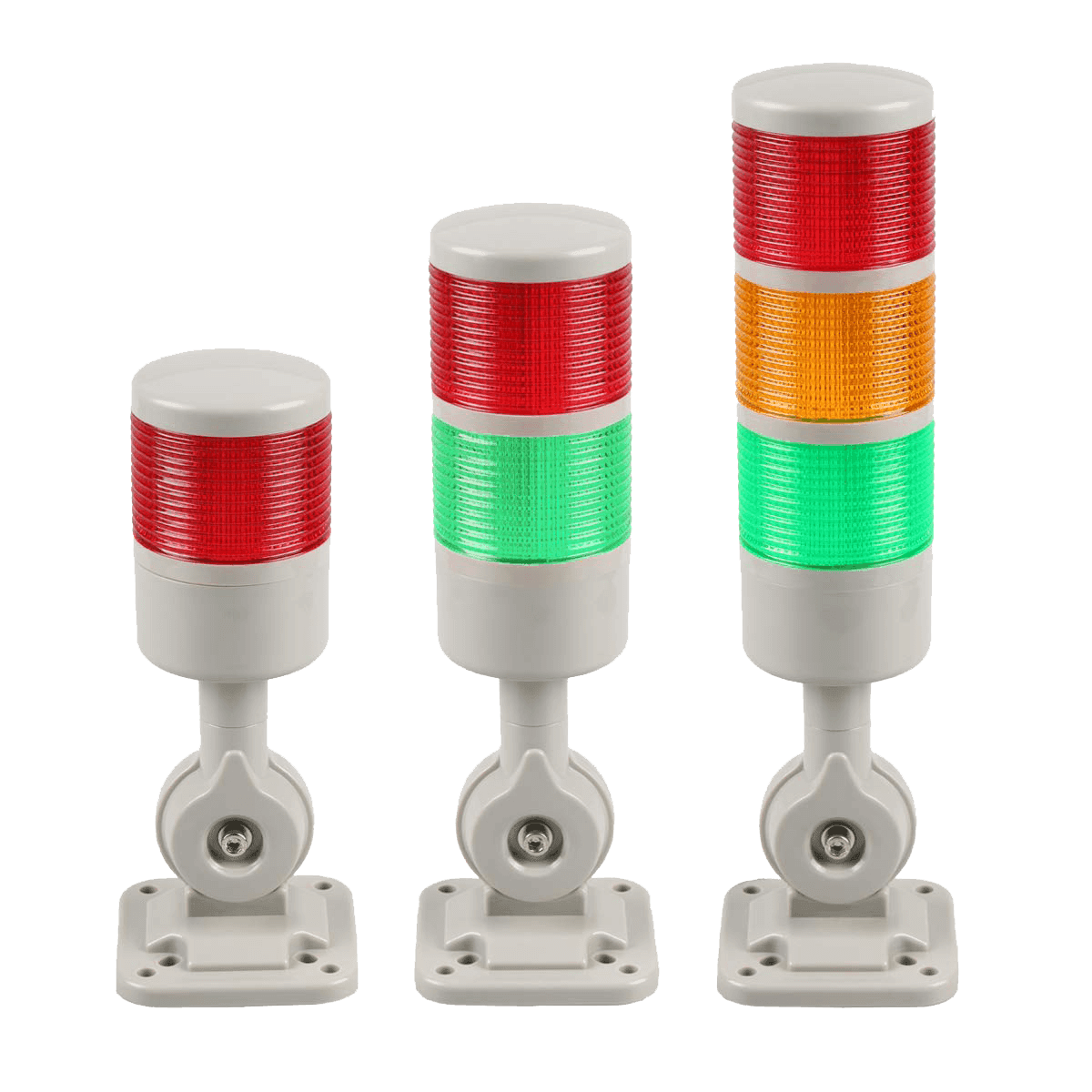
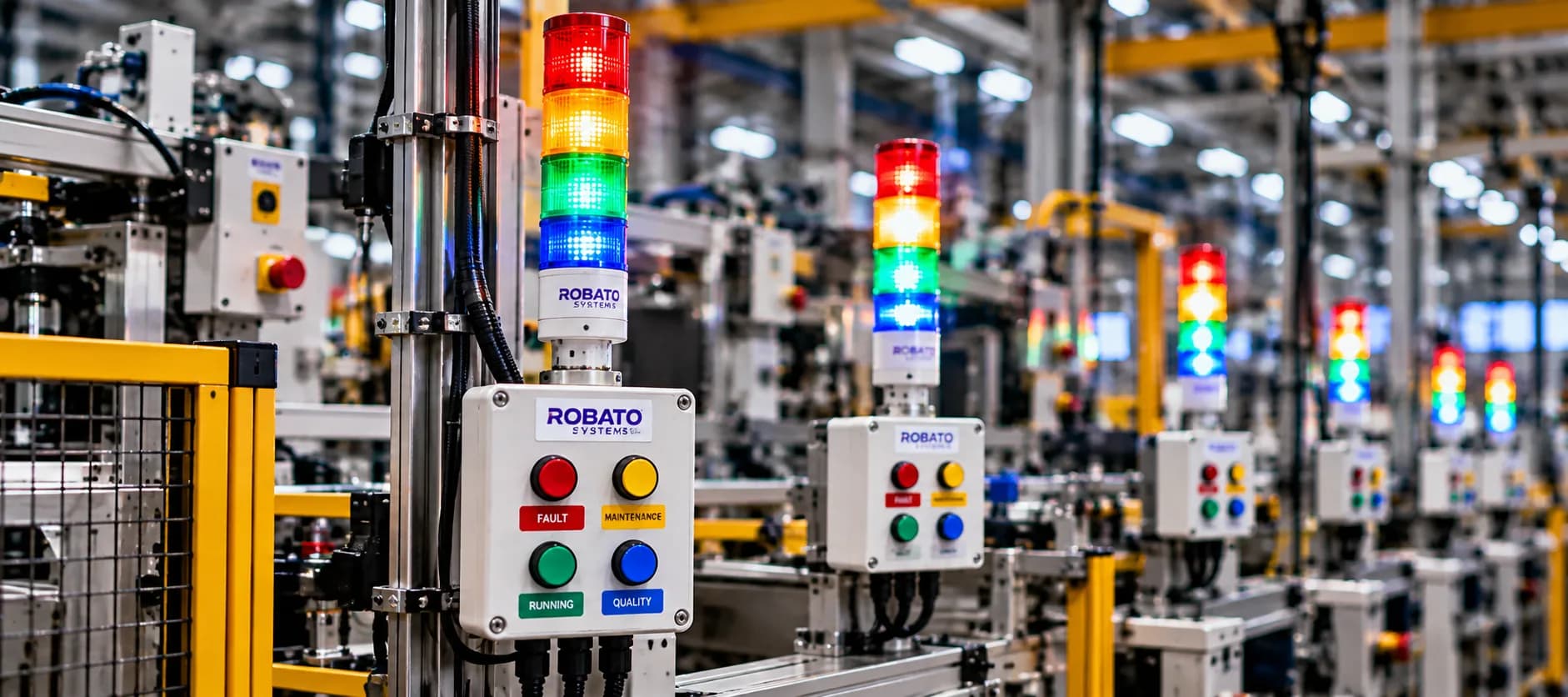
Wireless Andon Tower Lights
Provide highly visible color-coded alerts throughout the production floor.
Typical color meanings include:
- Green – Normal operation
- Yellow – Warning
- Red – Machine fault
- Blue – Material request
- White – Operator assistance
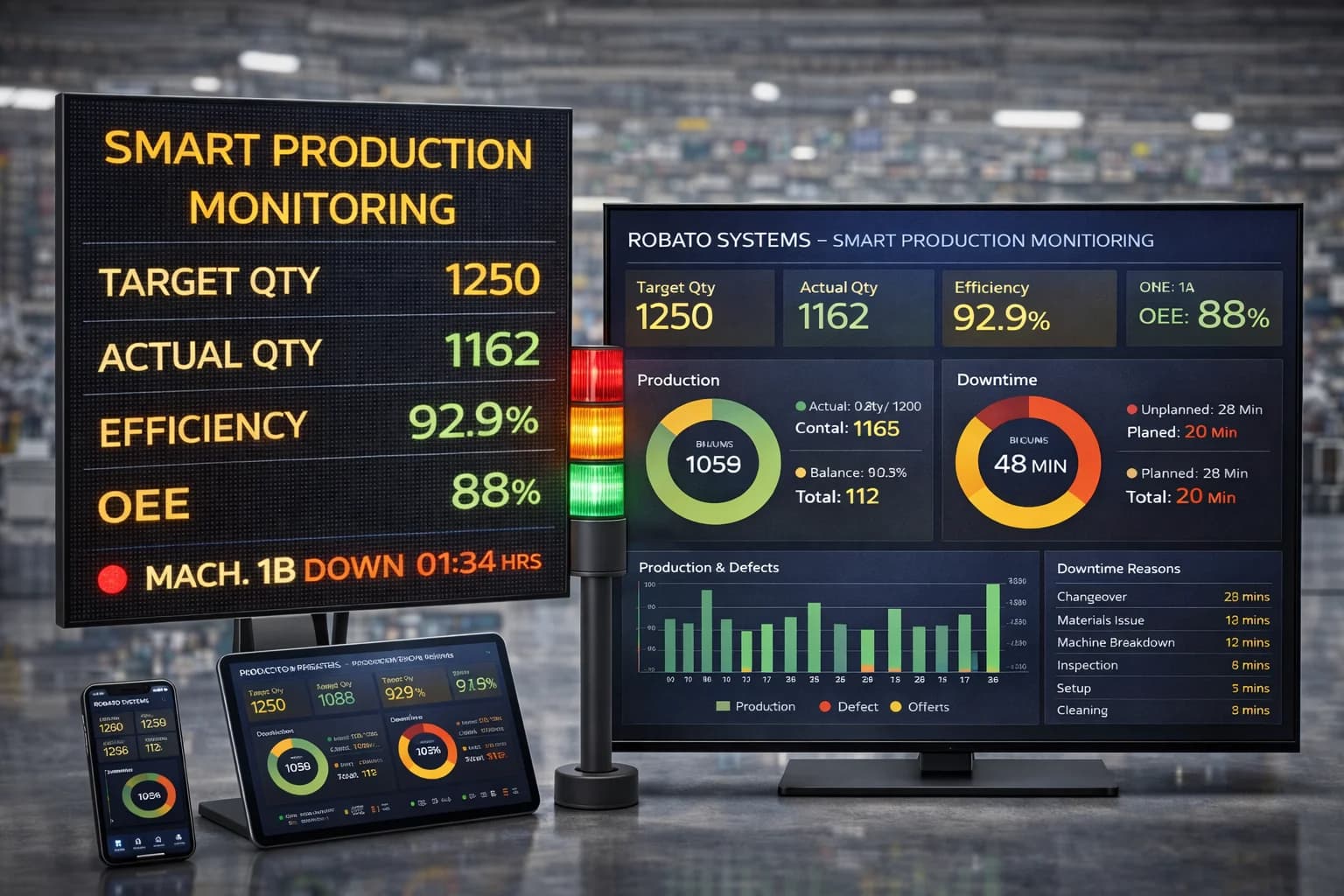
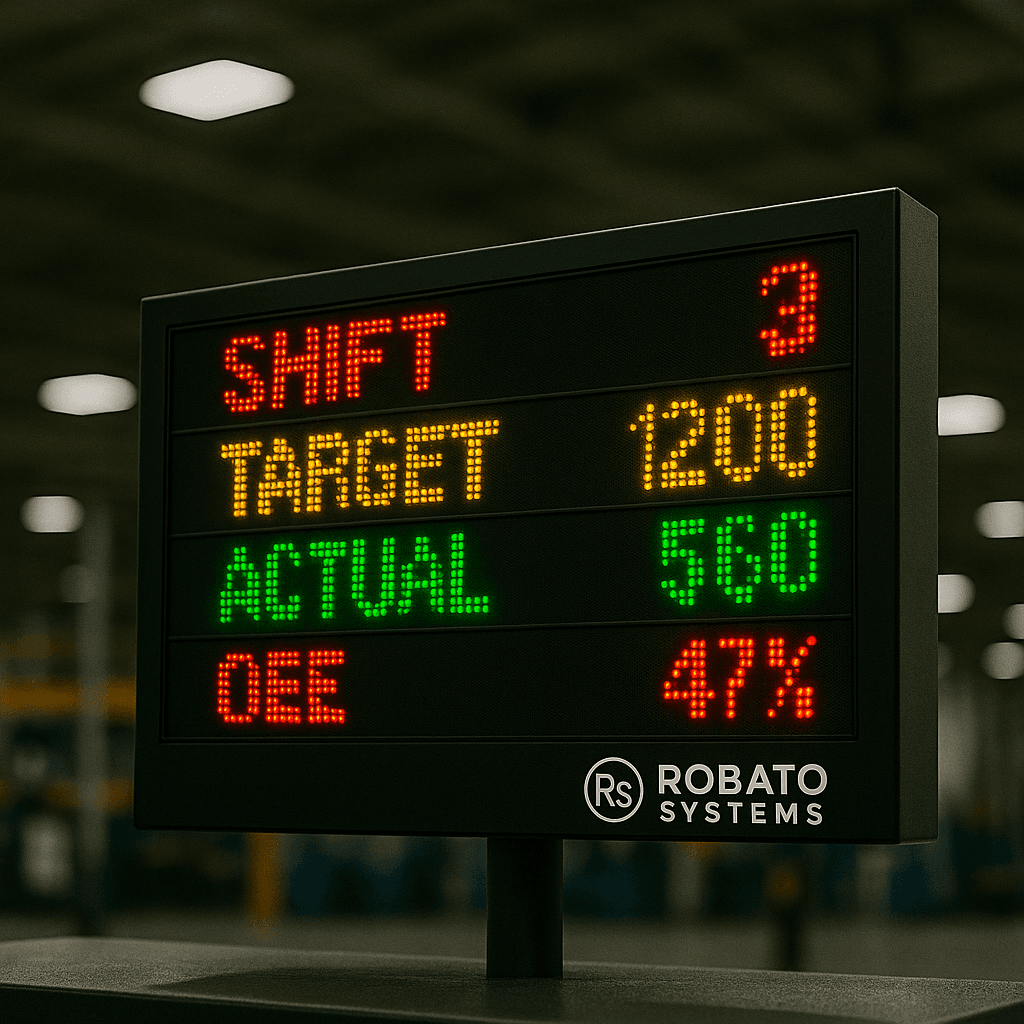
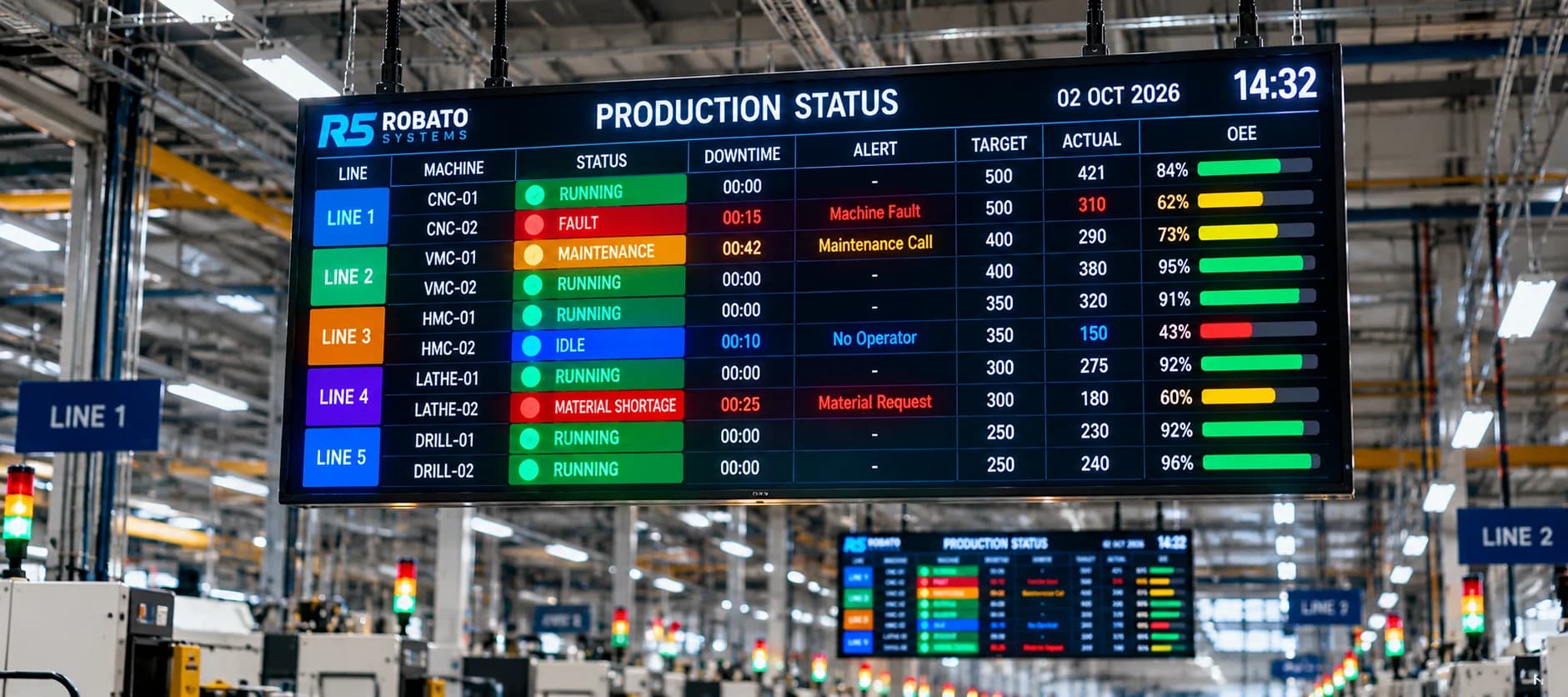
Digital Andon Boards
Display active alerts, machine status, production information, and response timers.
Central Monitoring Software
Receives wireless alerts from all production areas and provides centralized monitoring.
Mobile Notification System
Sends alerts directly to smartphones or tablets carried by supervisors and maintenance personnel.
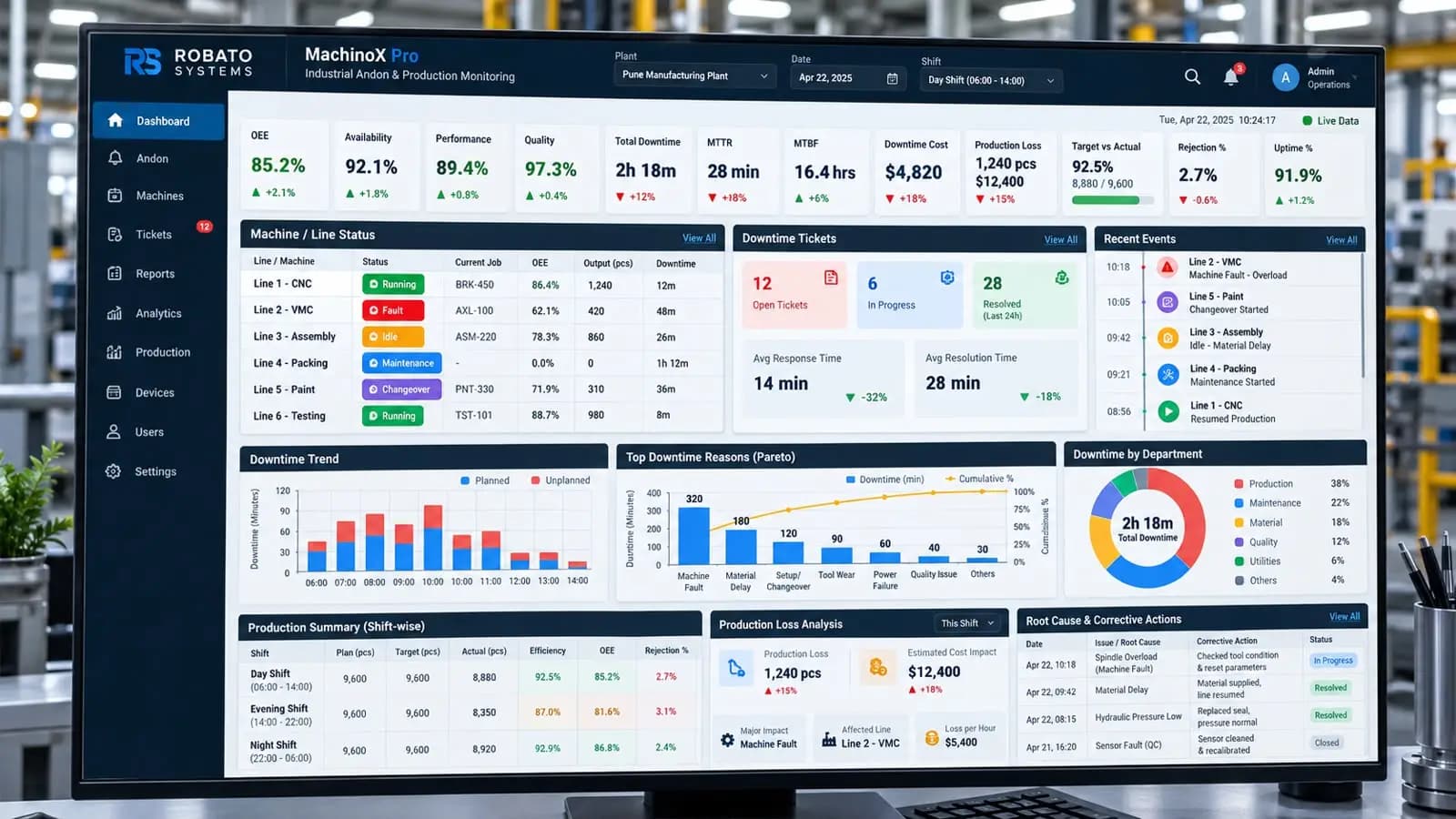
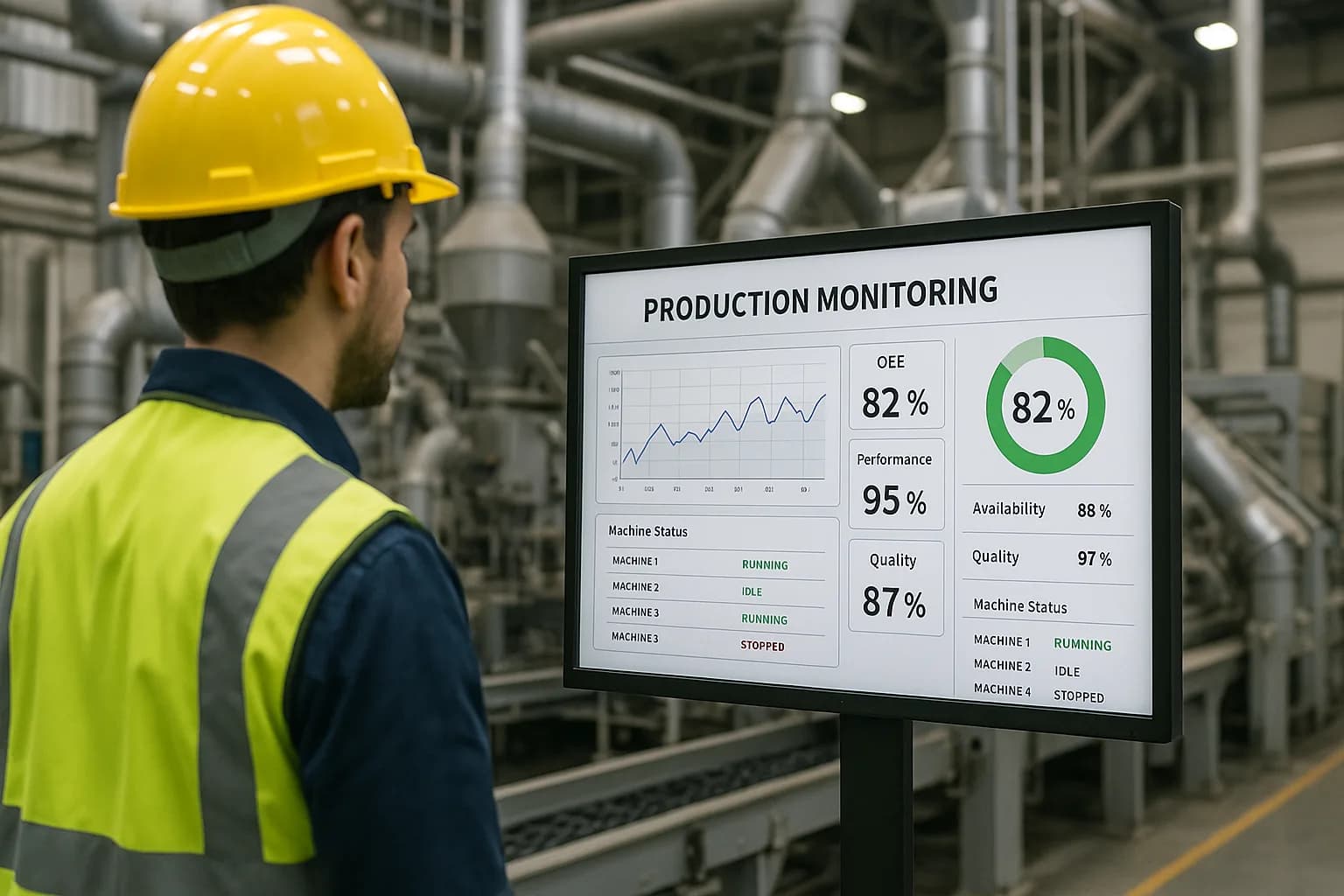
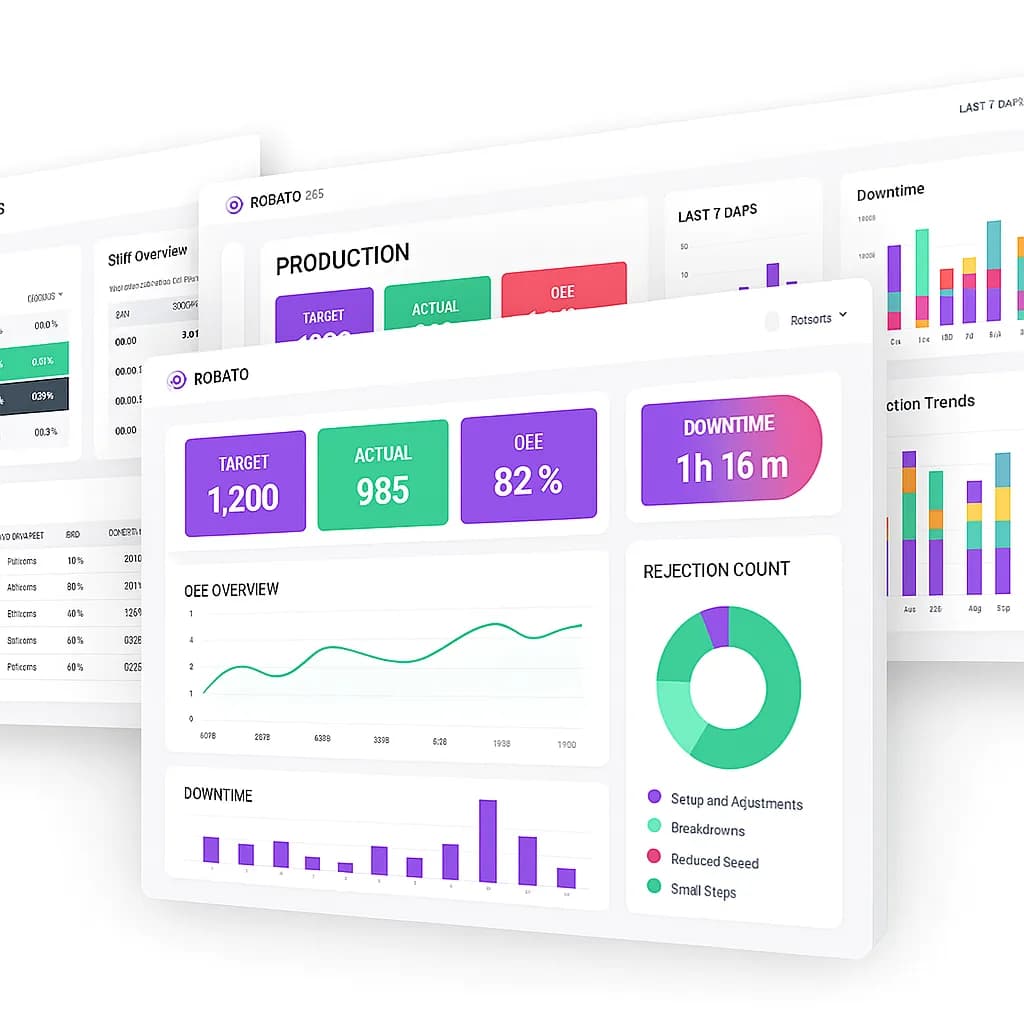
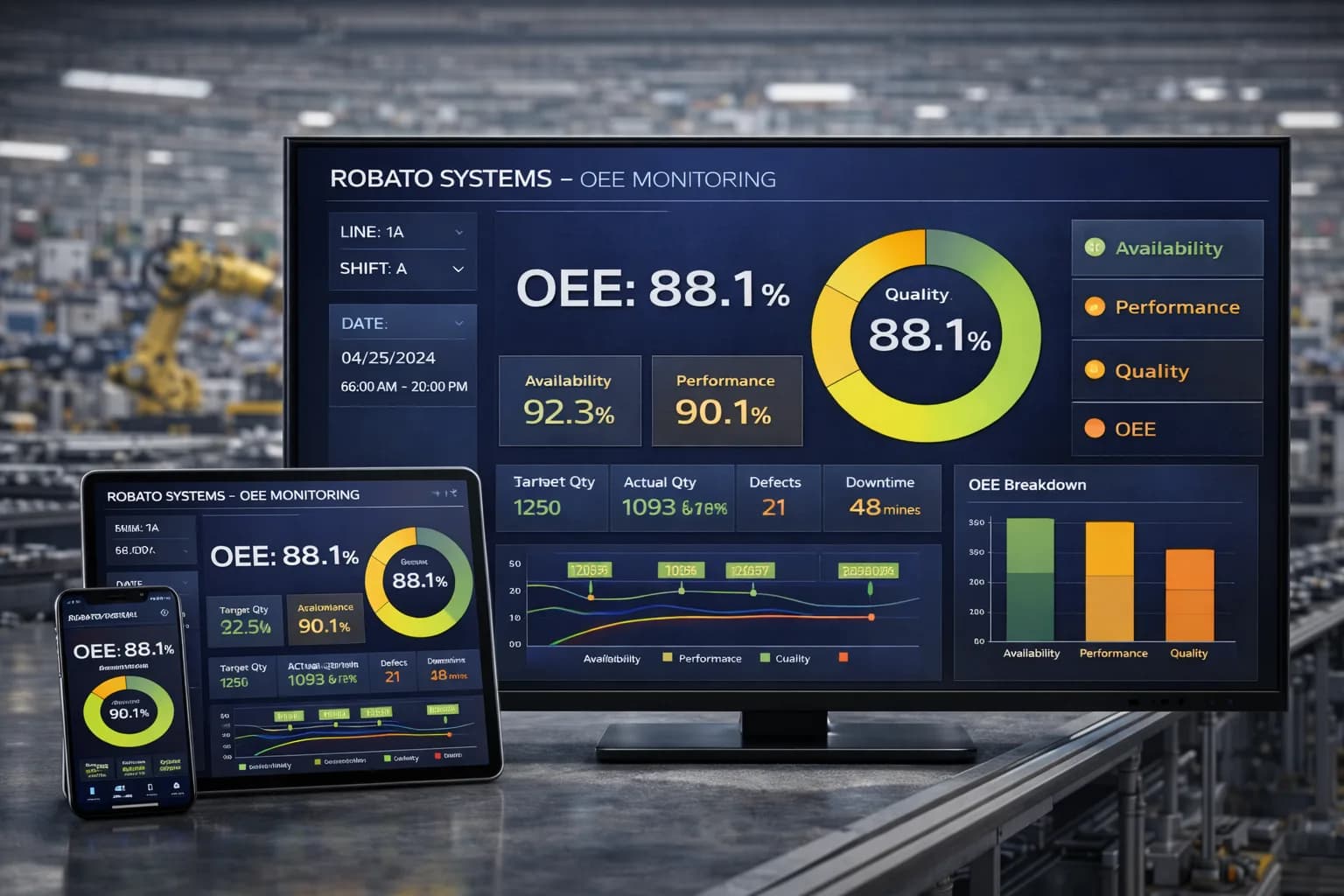
Reporting Dashboard
Stores historical event data for performance analysis and continuous improvement.
Key Features of Wireless Andon Systems
Cable-Free Installation
Wireless communication eliminates complex wiring and reduces installation time.
Real-Time Alerts
Production issues are communicated instantly across the factory.
Automatic Escalation
Alerts are automatically forwarded if initial responses exceed predefined limits.
Mobile Notifications
Maintenance personnel receive alerts wherever they are within the facility.
Machine Integration
Supports direct communication with:
- PLCs
- Sensors
- SCADA
- MES
- ERP
- Production monitoring software
Multi-Line Monitoring
Monitor multiple production lines from a centralized dashboard.
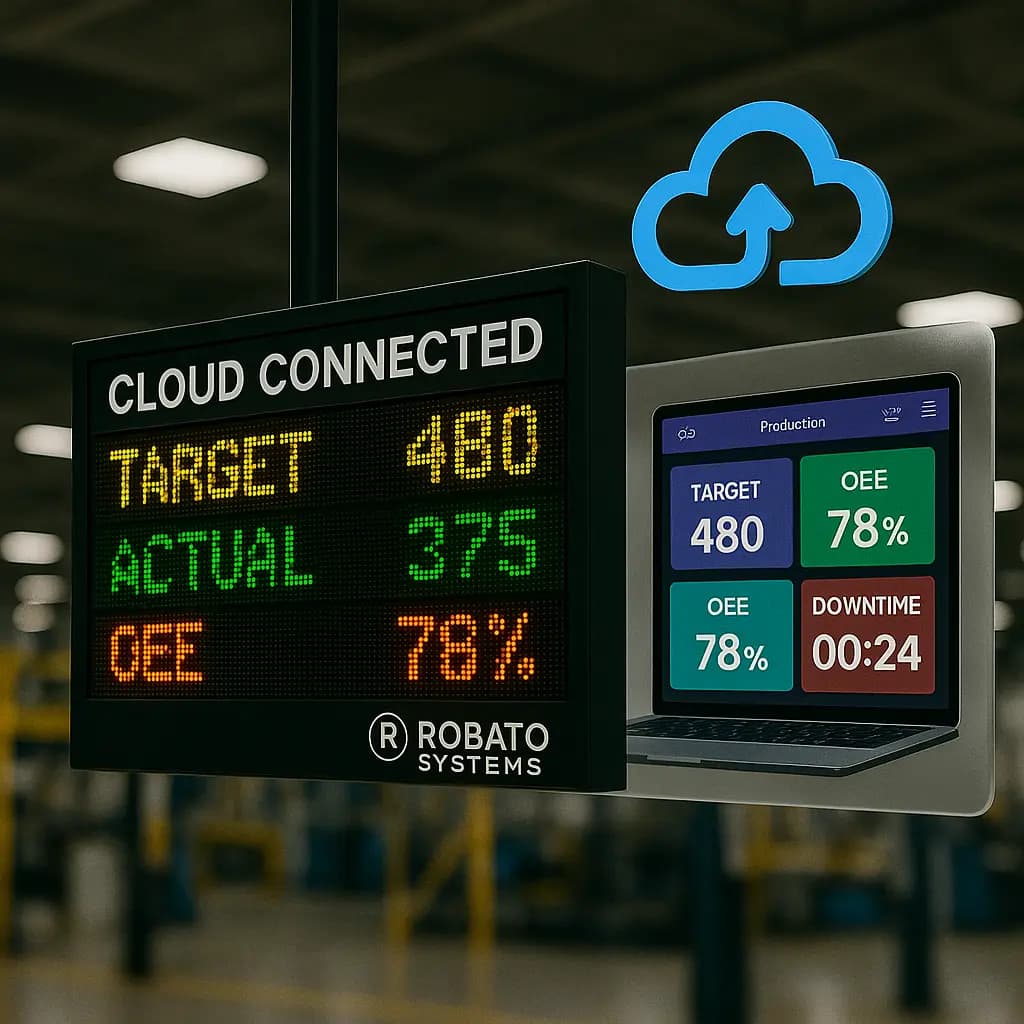
Cloud Connectivity
Remote managers can monitor production alerts from any location.
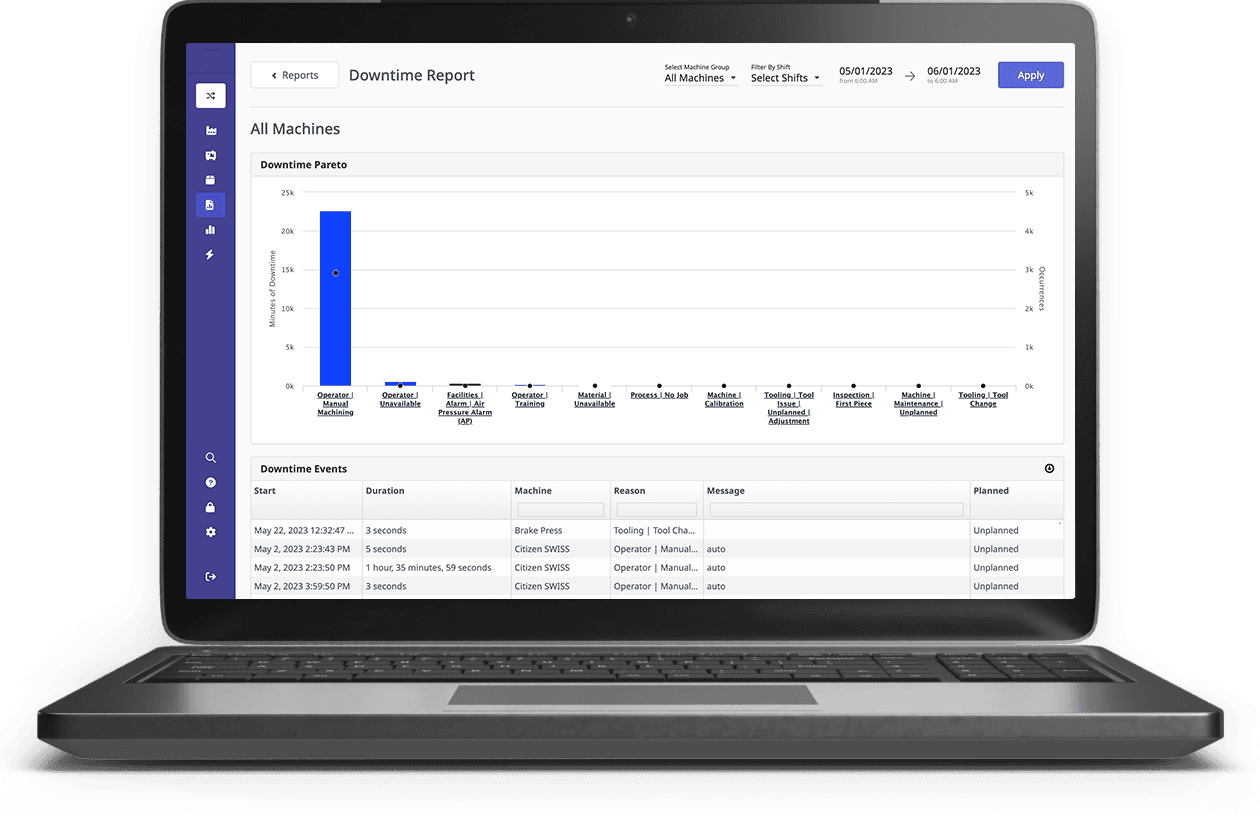
Historical Reporting
Generate reports on:
- Downtime
- Response time
- Alert frequency
- Maintenance performance
- Production interruptions
Benefits of Wireless Andon Systems
Faster Installation
Wireless deployment significantly reduces installation time compared to wired systems.
Lower Installation Costs
Reduced wiring requirements decrease infrastructure expenses.
Greater Flexibility
Production lines can be expanded or reconfigured without major electrical modifications.
Reduced Downtime
Immediate alerts enable maintenance teams to respond faster.
Better Communication
Real-time notifications eliminate delays between operators and support teams.
Improved Productivity
Production interruptions are resolved more quickly, increasing equipment availability.
Increased Scalability
New machines and production lines can easily be added to the system.
Enhanced Smart Factory Readiness
Wireless communication supports Industry 4.0 and digital transformation initiatives.
Wireless Andon Systems and Industry 4.0
Industry 4.0 emphasizes intelligent, connected manufacturing systems.
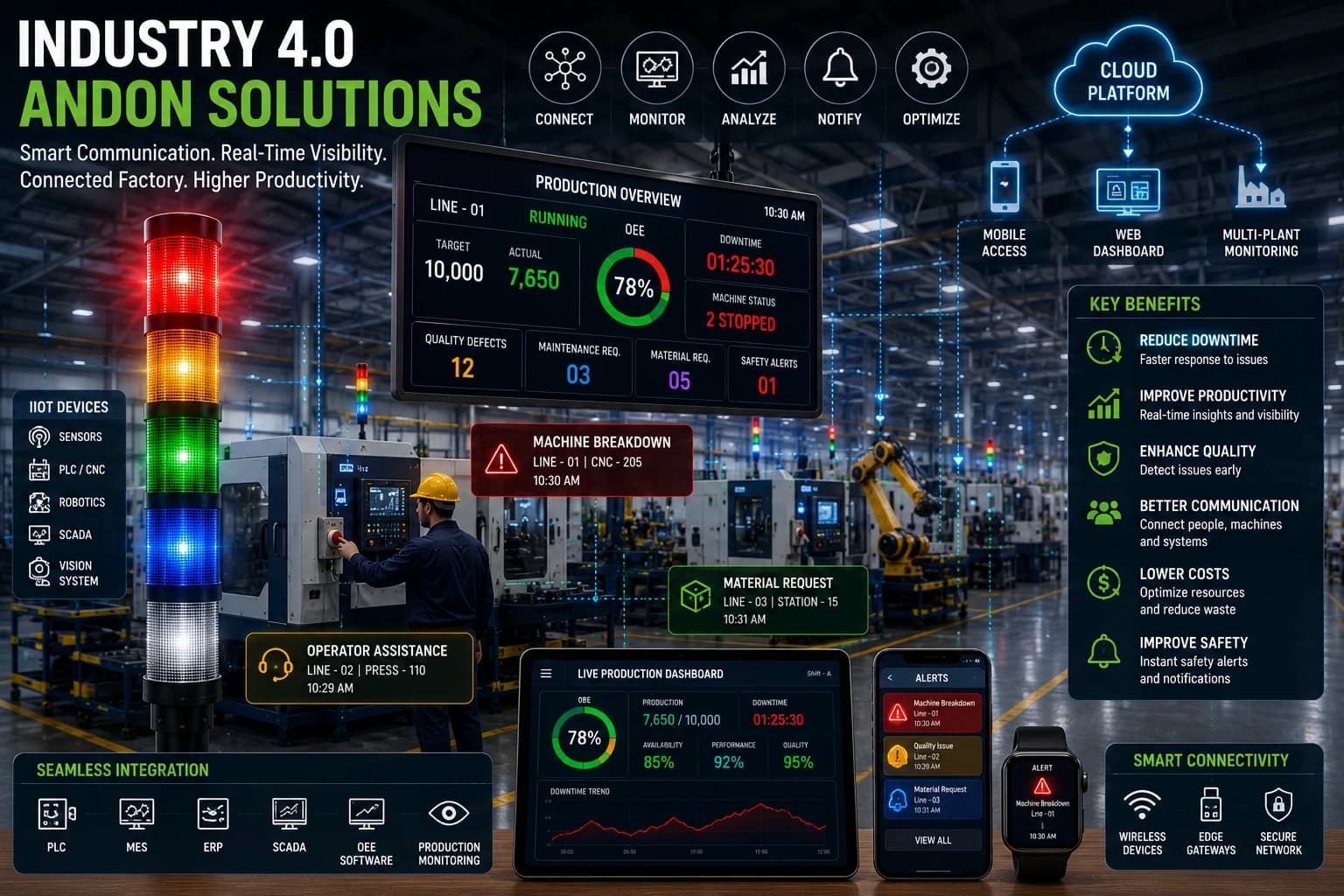
Wireless Andon systems integrate seamlessly with:
- Industrial IoT (IIoT)
- PLCs
- MES
- ERP
- SCADA
- Cloud dashboards
- Production Monitoring Systems
- OEE software
These integrations enable manufacturers to build highly connected production environments with real-time visibility and rapid issue resolution.
Applications Across Manufacturing Industries
Wireless Andon systems are widely used in:
Automotive Manufacturing
Monitor assembly lines and equipment failures.
Electronics Manufacturing
Track production interruptions and quality issues.
Food & Beverage Processing
Alert operators about packaging and filling equipment issues.
Pharmaceutical Manufacturing
Support batch production monitoring and compliance.
Textile Manufacturing
Monitor weaving, knitting, and spinning operations.
Plastic & Injection Molding
Detect machine failures and production delays.
Packaging Industry
Track packaging equipment performance.
Logistics & Warehousing
Manage material movement and operator assistance requests.
Best Practices for Implementation
Choose Reliable Wireless Technology
Select communication protocols suitable for industrial environments.
Define Clear Alert Categories
Differentiate between maintenance, quality, production, and safety alerts.
Integrate with Existing Systems
Ensure compatibility with ERP, MES, PLCs, and production monitoring software.
Configure Escalation Rules
Automatically notify higher management when response times exceed acceptable limits.
Train Employees
Ensure operators understand when and how to trigger alerts.
Analyze Reports Regularly
Review historical data to identify recurring production issues.
Common Challenges
Wireless Signal Coverage
Large facilities may require additional wireless gateways.
Network Security
Industrial wireless networks should use secure encryption and authentication.
Legacy Equipment Integration
Older machines may require IoT gateways or retrofit communication modules.
Employee Adoption
Proper training improves user acceptance and effective system utilization.
Future Trends
Wireless Andon systems continue evolving with advanced manufacturing technologies.
Artificial Intelligence
AI will analyze alert patterns and recommend preventive actions.
Predictive Maintenance
Machine learning will detect equipment failures before breakdowns occur.
Edge Computing
Alerts will be processed locally for faster response times.
Digital Twins
Virtual production environments will mirror live factory conditions.
5G Connectivity
Ultra-low latency communication will further improve wireless manufacturing systems.
These innovations will strengthen factory automation and operational efficiency.
Why Choose Robato Systems for Wireless Andon Systems?
Robato Systems offers advanced Wireless Andon System solutions that enable manufacturers to improve communication, reduce downtime, and enhance operational efficiency without the complexity of extensive wiring. Our solutions integrate seamlessly with PLCs, Industrial IoT devices, MES, ERP, SCADA, and production monitoring software to deliver real-time alerts across your manufacturing facility.
Our wireless Andon solutions include tower lights, operator call stations, digital Andon boards, mobile notifications, escalation management, and comprehensive reporting dashboards. Designed for Industry 4.0, Robato Systems helps manufacturers create connected factories with faster issue resolution, improved collaboration, and higher productivity.
Whether you manage a single production line or multiple manufacturing plants, our scalable wireless solutions adapt to your operational needs.
Conclusion
A Wireless Andon System is a powerful communication solution that enables manufacturers to respond instantly to production issues while eliminating the limitations of traditional wired systems. By providing real-time alerts, automated escalation, and seamless integration with modern manufacturing platforms, wireless Andon systems improve productivity, reduce downtime, and support smarter factory operations.
As Industry 4.0 continues to reshape manufacturing, wireless Andon systems provide the flexibility, scalability, and connectivity required to build efficient, data-driven production environments. Investing in a wireless Andon solution today prepares manufacturers for a more agile and competitive future.
Frequently Asked Questions (FAQs)
What is a wireless Andon system?
A wireless Andon system is a factory communication solution that uses wireless technology to send real-time alerts for machine faults, maintenance requests, quality issues, and production problems.
What are the benefits of a wireless Andon system?
It offers faster installation, lower infrastructure costs, real-time communication, easy scalability, reduced downtime, and improved operational efficiency.
Which wireless technologies are used in Andon systems?
Common technologies include Wi-Fi, RF, Zigbee, LoRa, Bluetooth Low Energy (BLE), and industrial wireless communication protocols.
Can wireless Andon systems integrate with PLCs and ERP software?
Yes. Modern wireless Andon systems integrate with PLCs, MES, ERP, SCADA, Industrial IoT devices, and cloud-based production monitoring platforms.
Which industries use wireless Andon systems?
Automotive, electronics, pharmaceuticals, food processing, textiles, plastics, packaging, logistics, warehousing, and many other manufacturing industries.