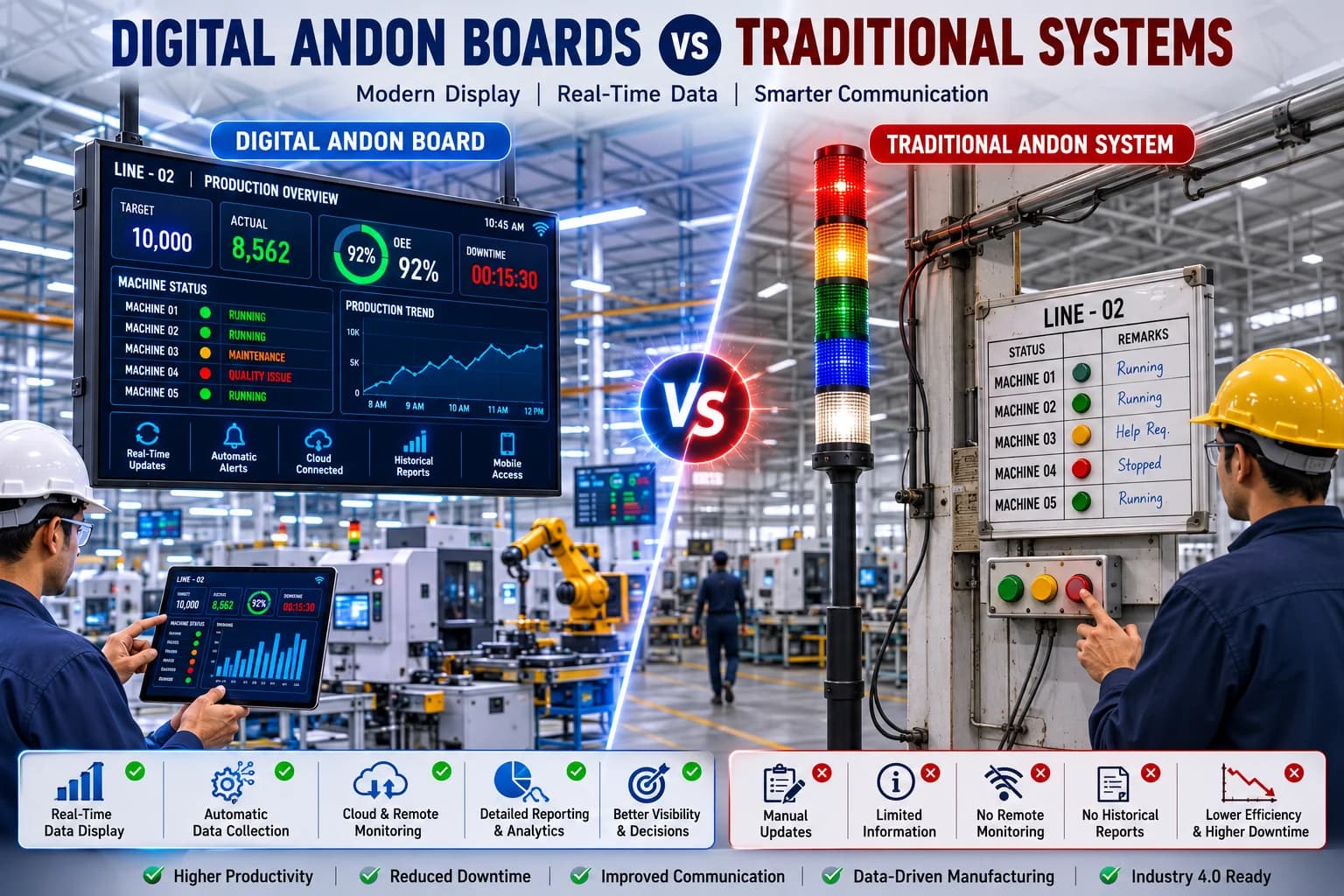
Manufacturing has evolved significantly over the past decade. Modern factories are increasingly adopting automation, Industrial Internet of Things (IIoT), cloud computing, and real-time production monitoring to improve productivity and remain competitive. While traditional Andon systems have served manufacturers well for many years by providing basic visual alerts, today's production environments require more intelligent, connected, and data-driven communication solutions. This is where a Digital Andon Board makes a significant difference.
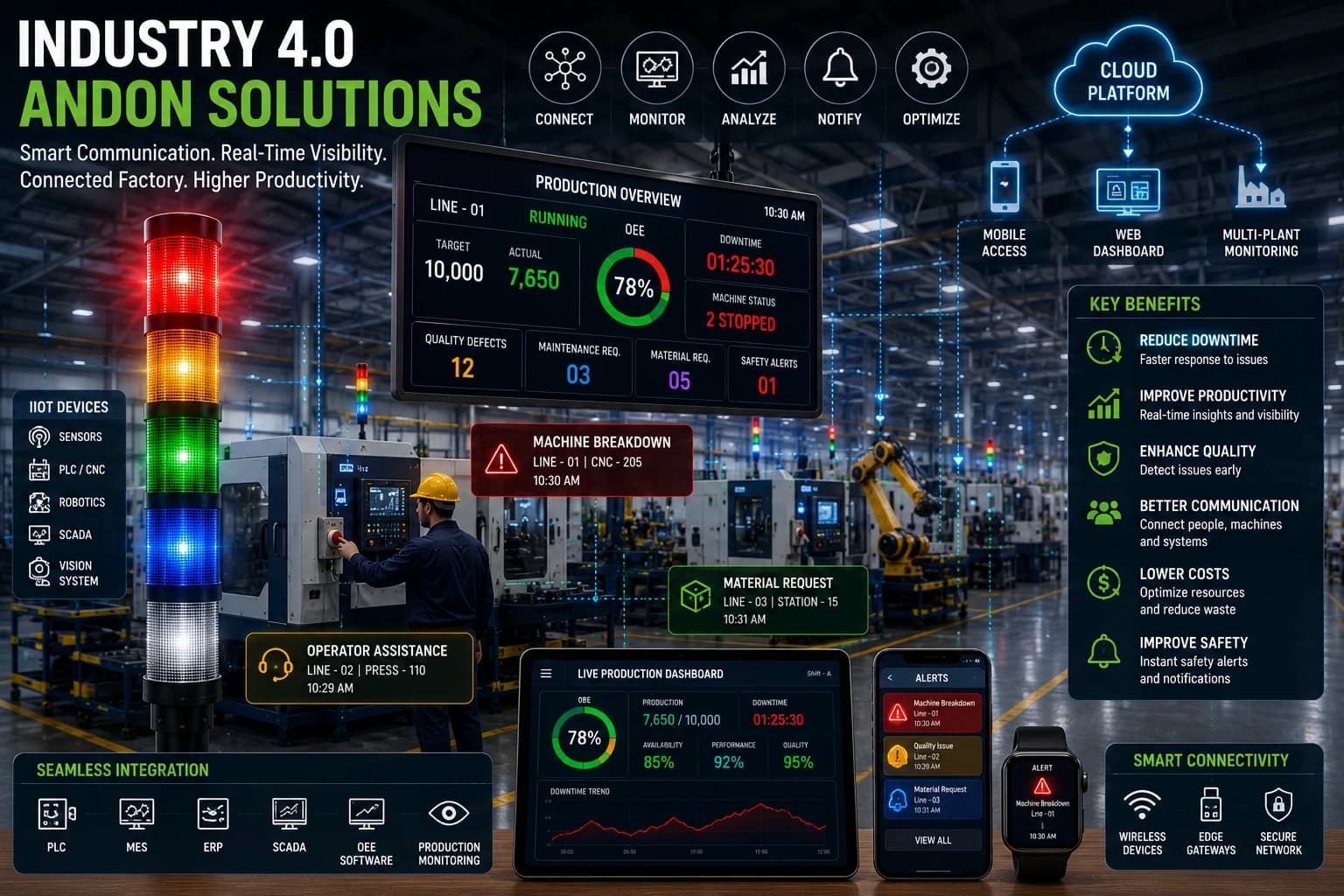
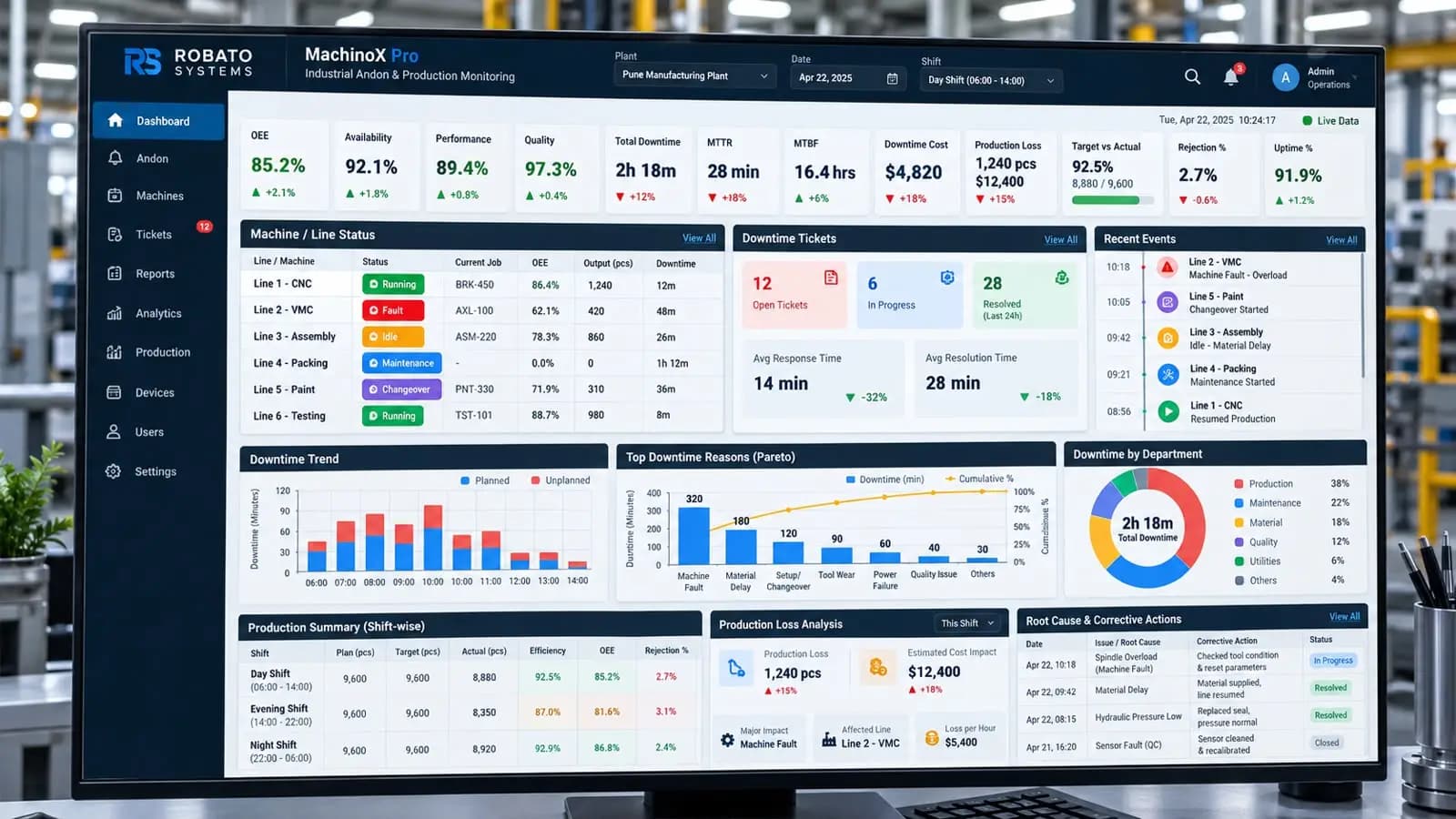
Unlike traditional Andon boards that primarily rely on colored lights or manual updates, Digital Andon Boards display live production information, machine status, downtime alerts, quality issues, production targets, and maintenance notifications in real time. They integrate directly with PLCs, Industrial IoT devices, Manufacturing Execution Systems (MES), Enterprise Resource Planning (ERP), SCADA platforms, and cloud dashboards to provide complete visibility across the production floor.
This guide compares Digital Andon Boards with traditional systems, helping manufacturers understand why digital transformation is becoming essential for Industry 4.0.
What is a Digital Andon Board?
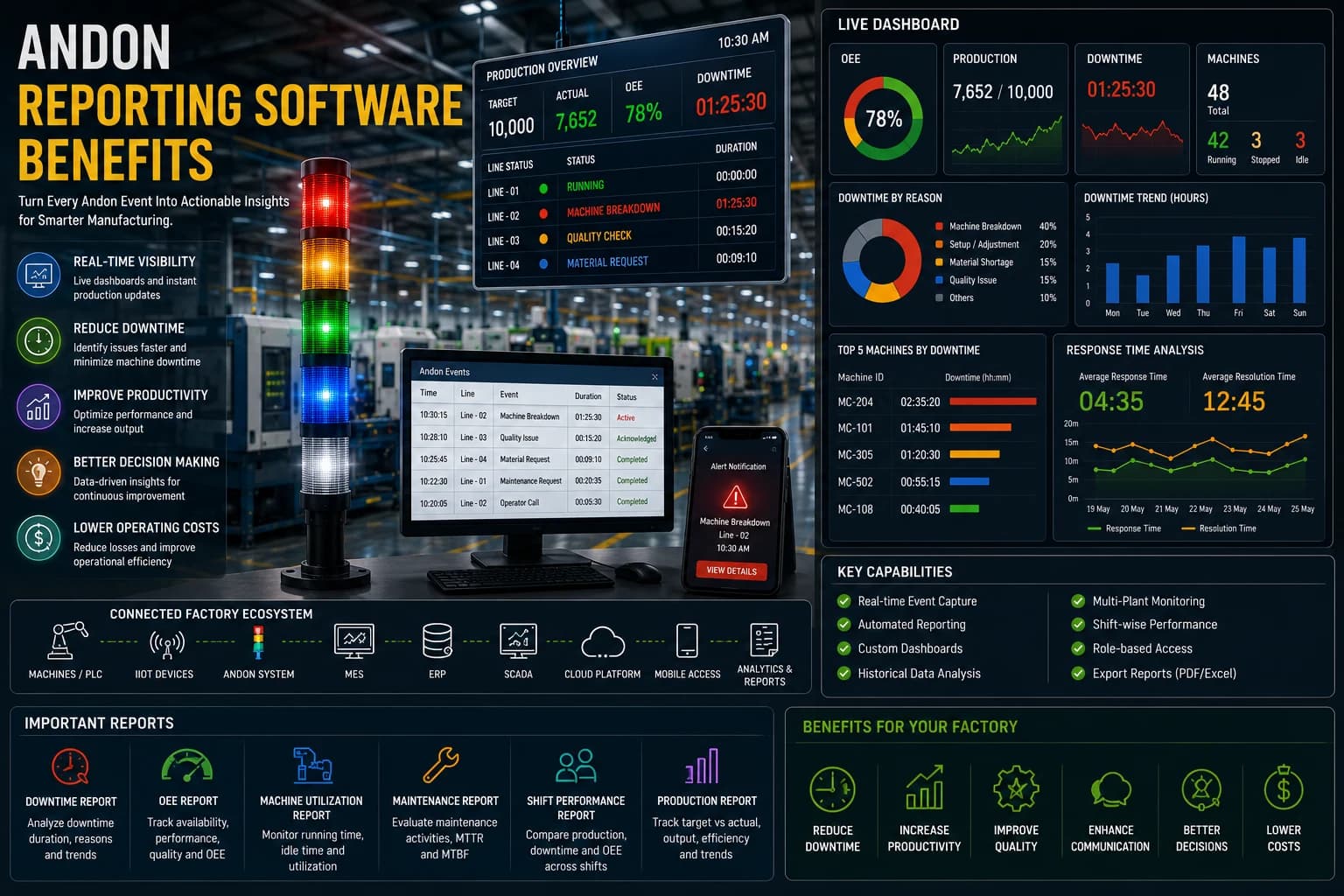
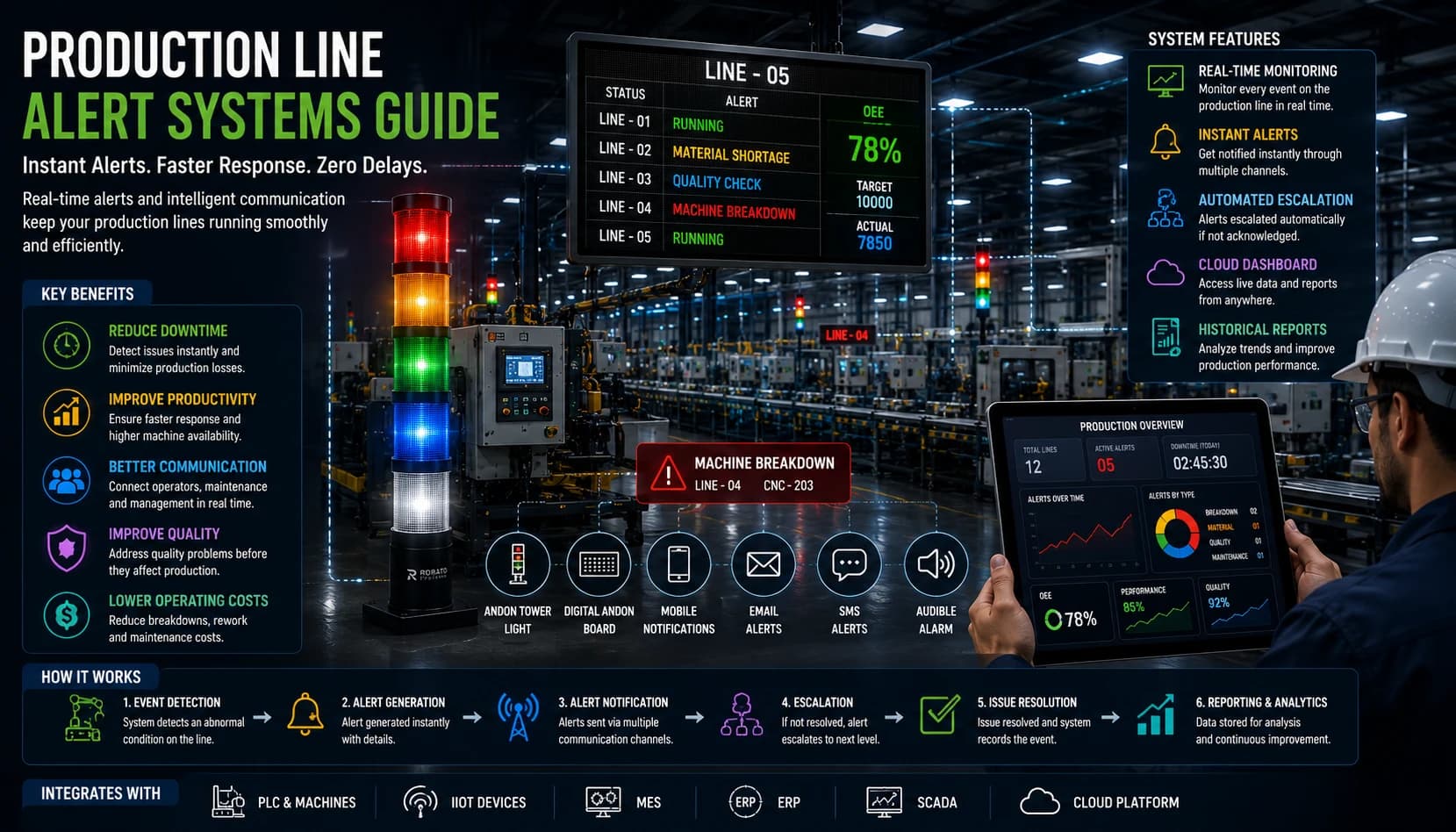
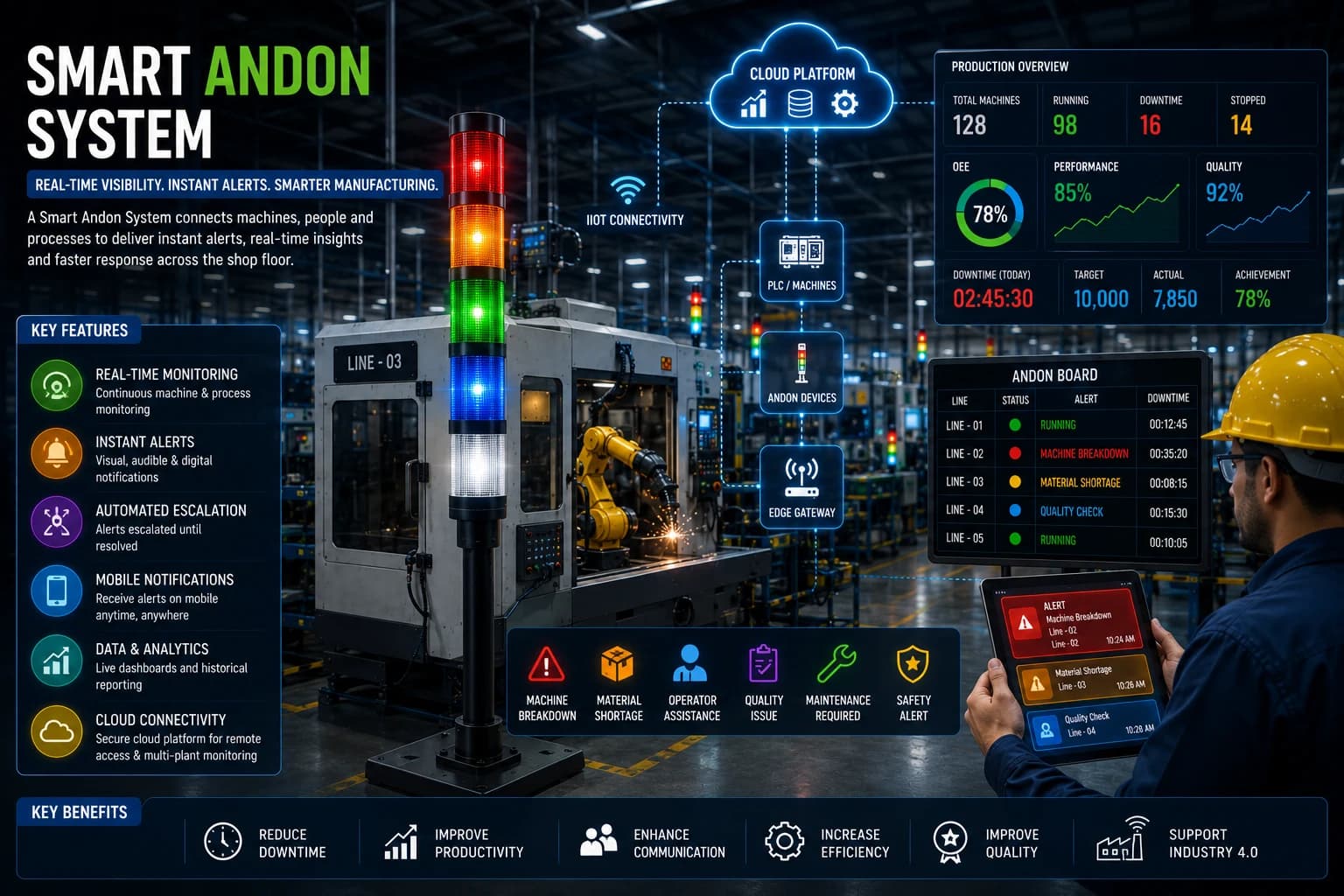
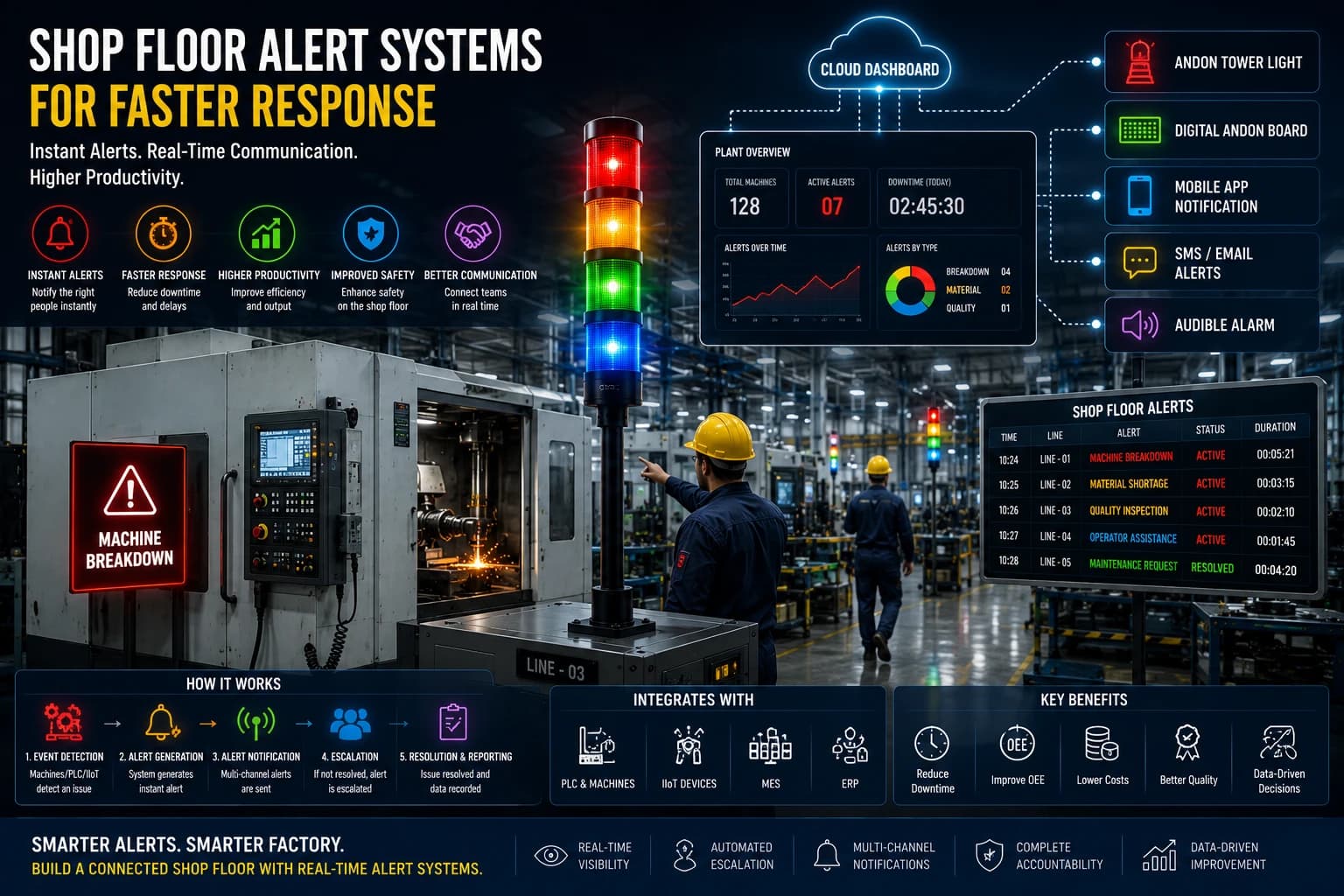
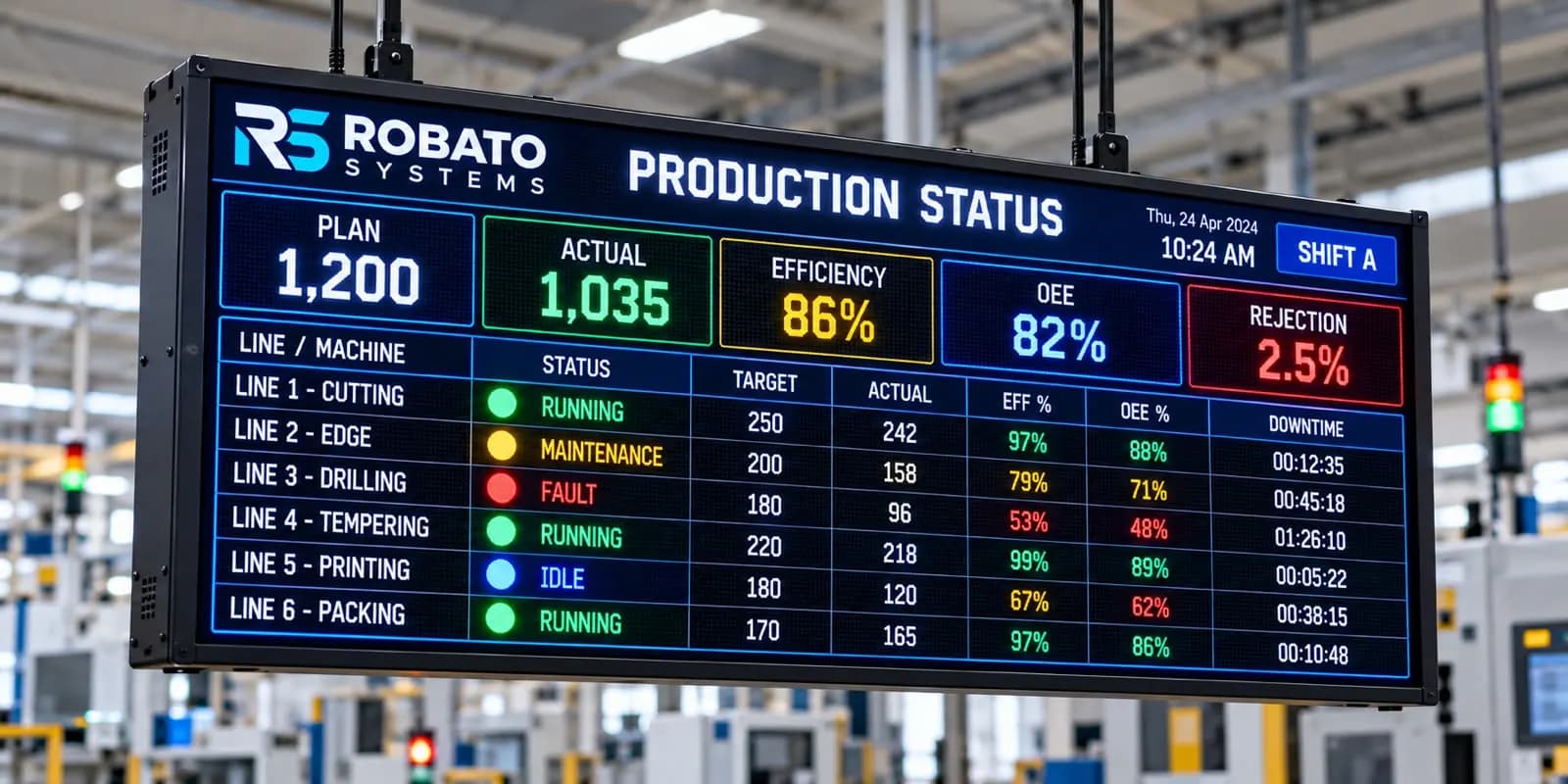
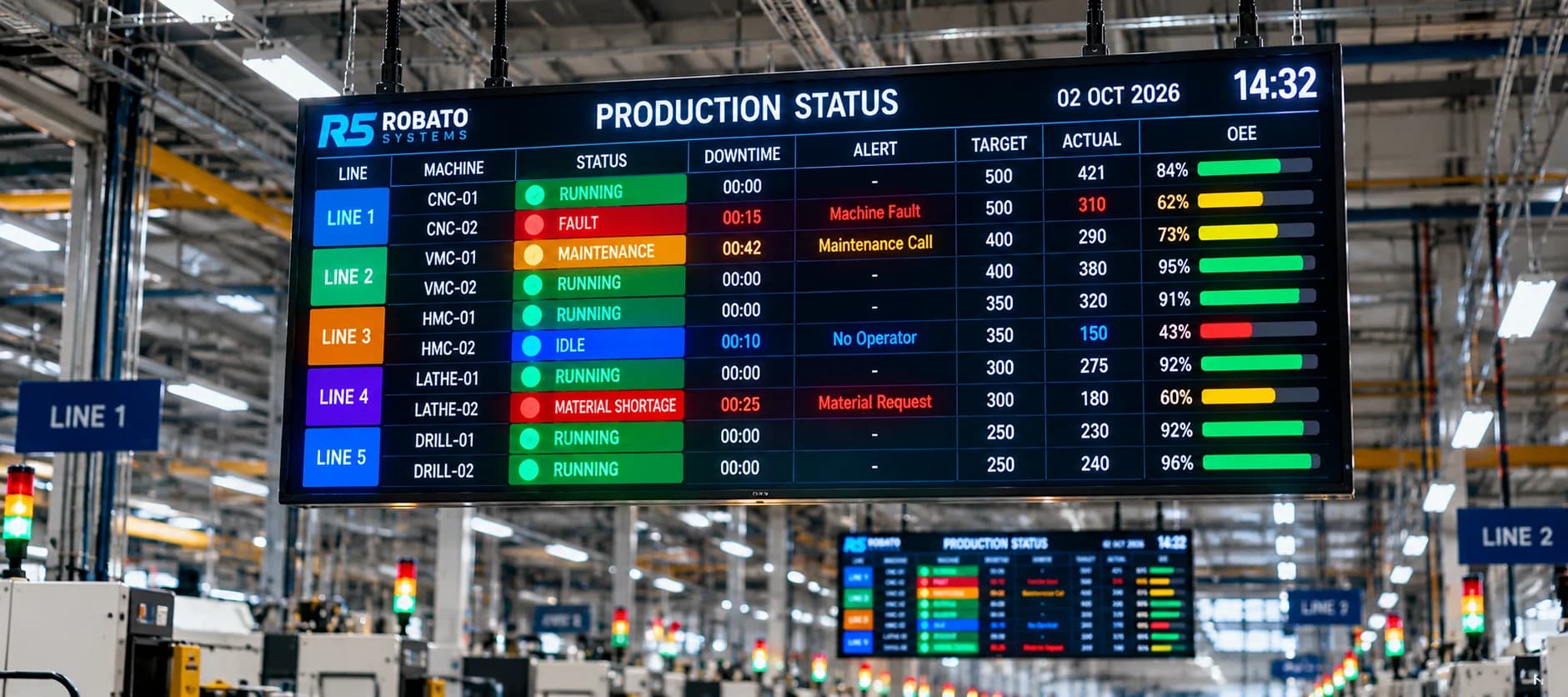
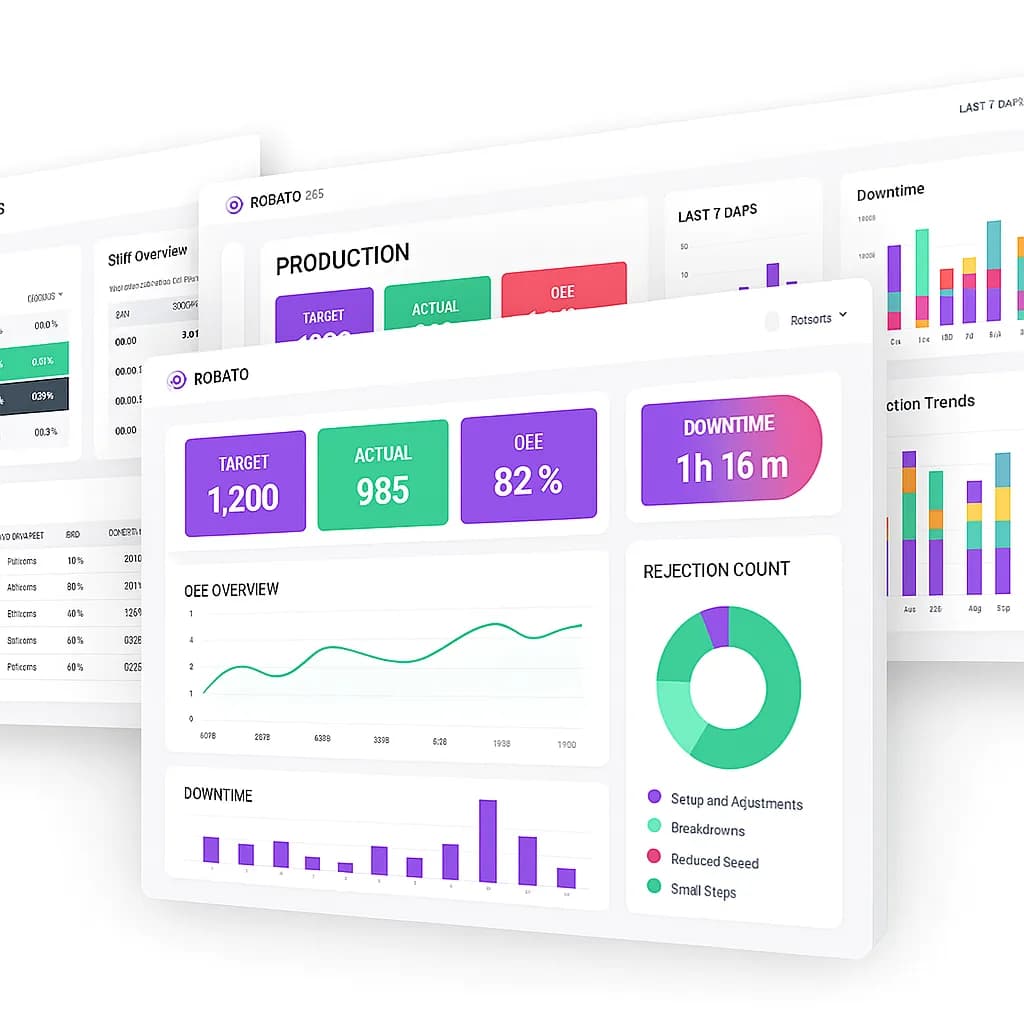
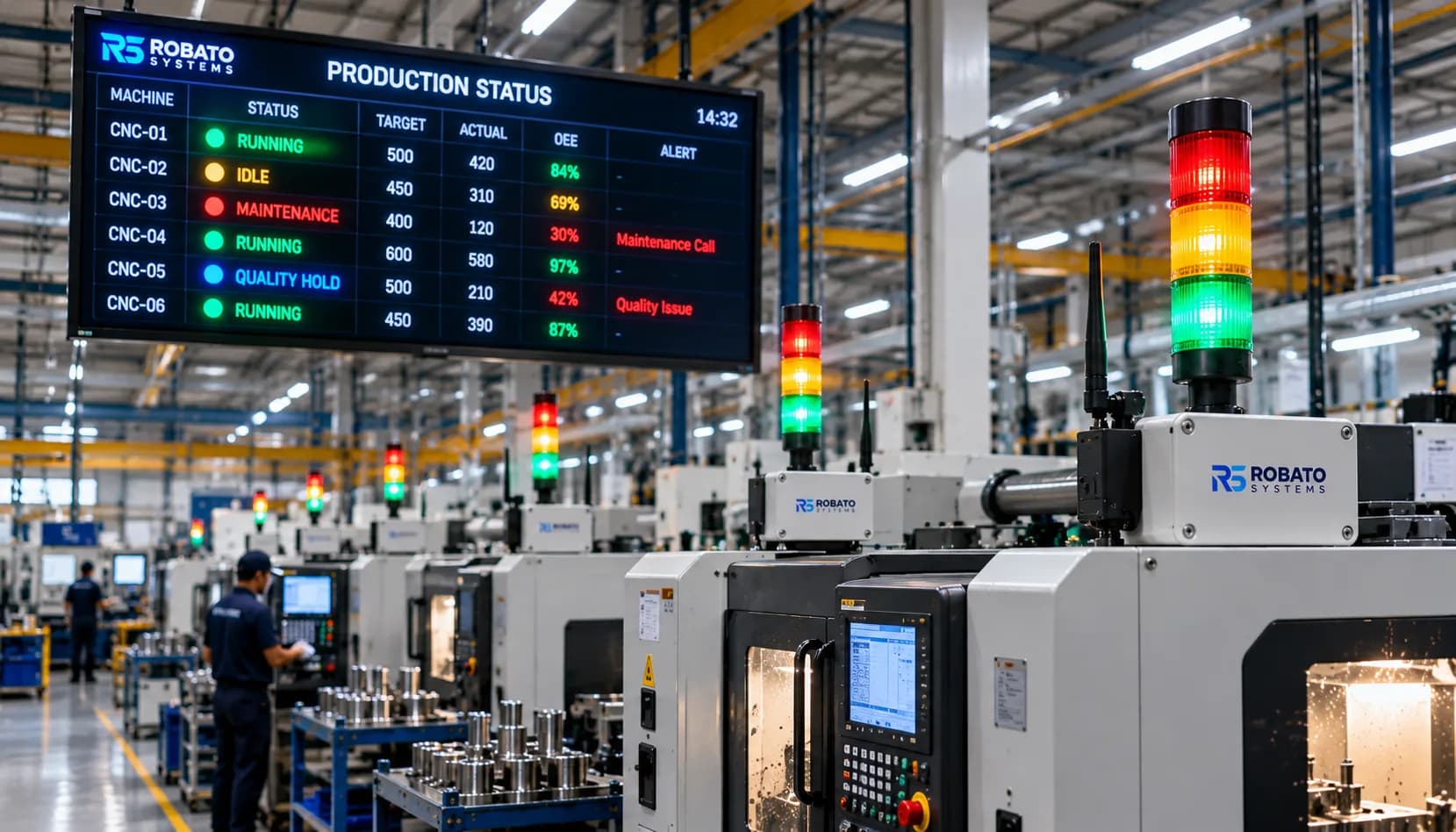
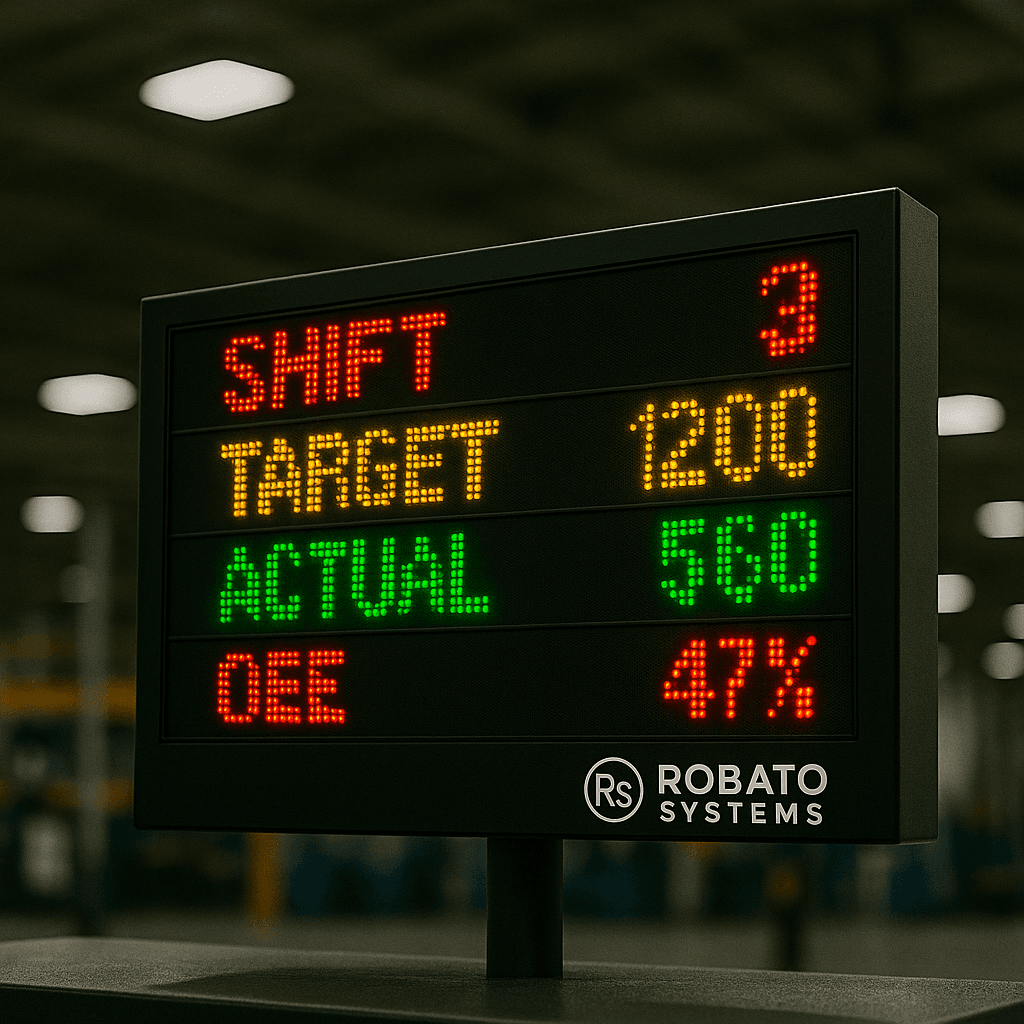
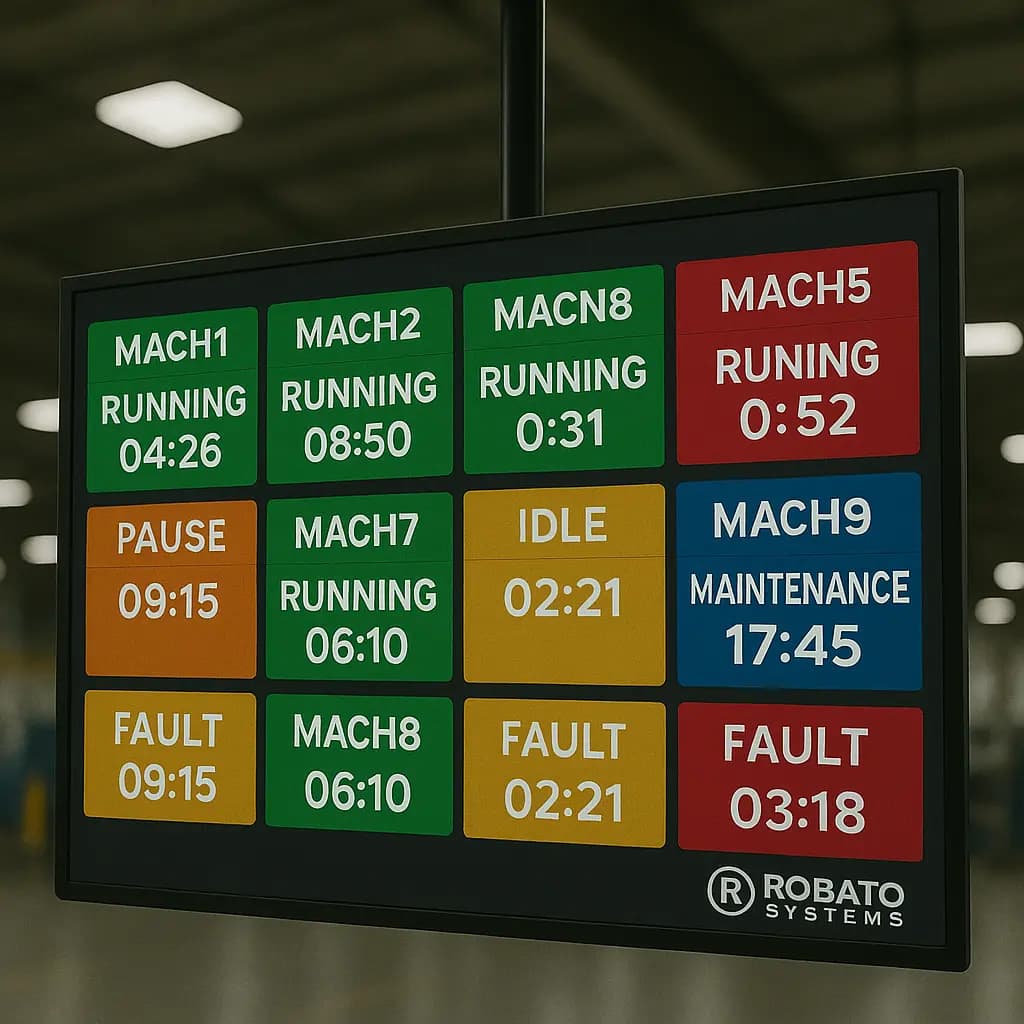
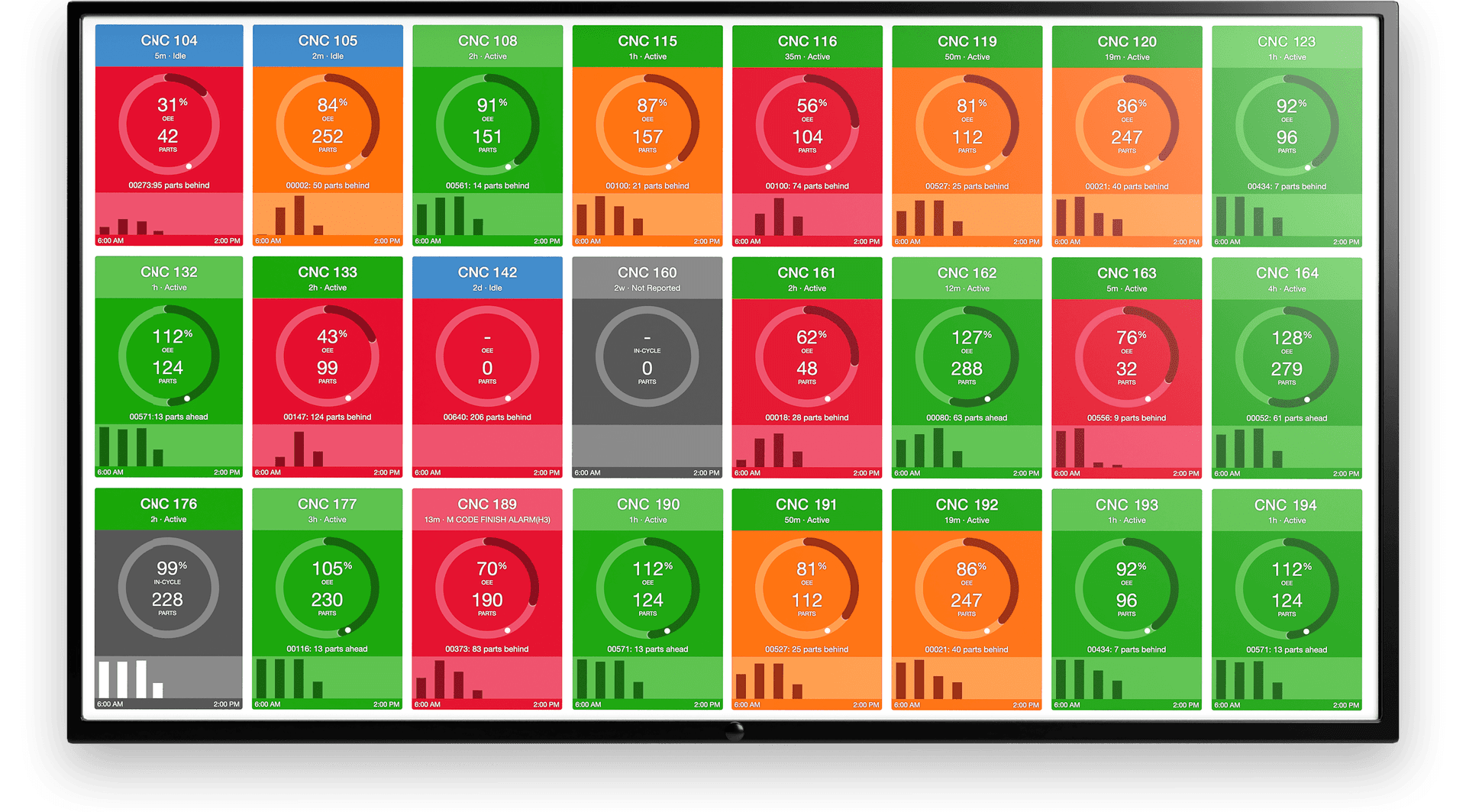
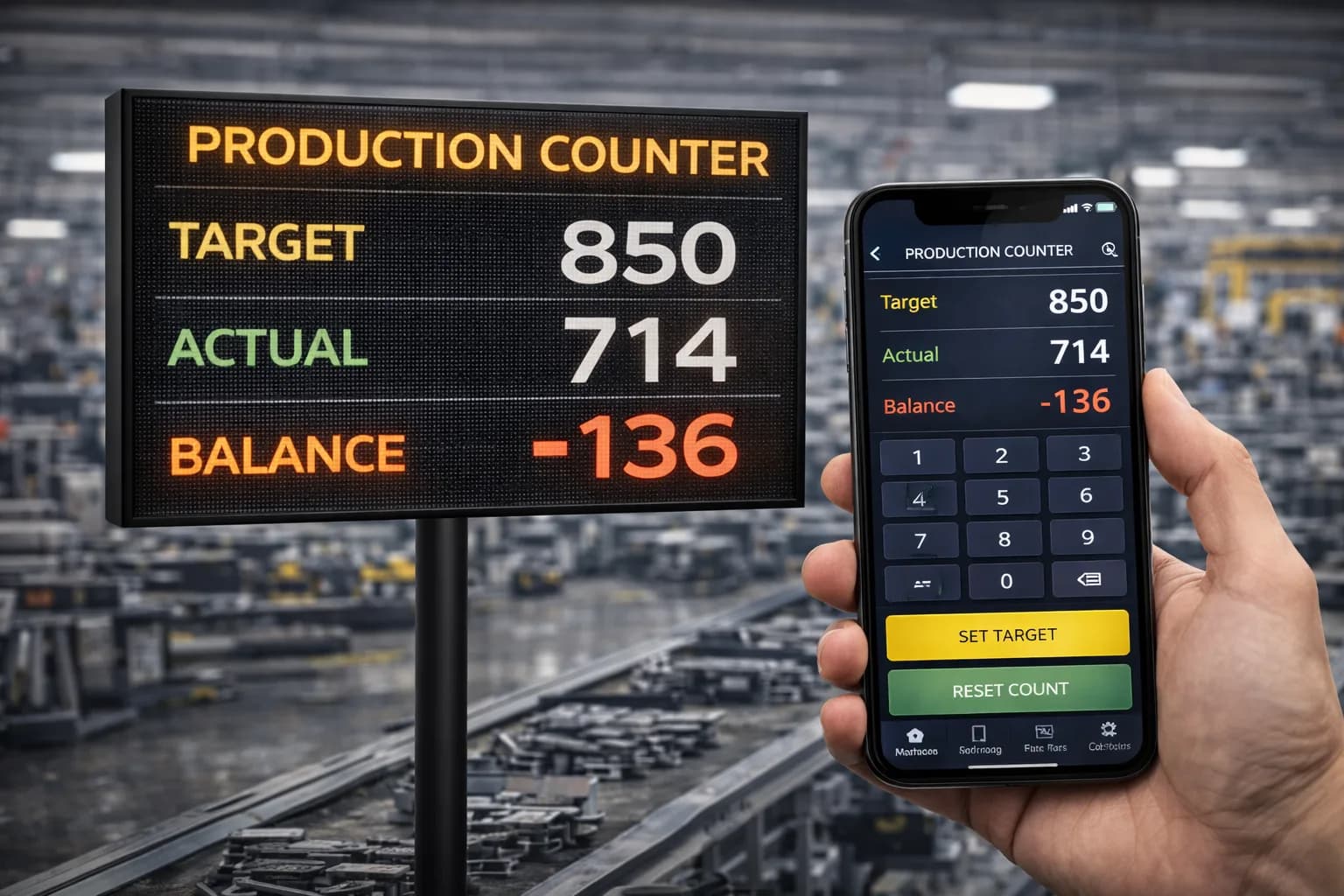
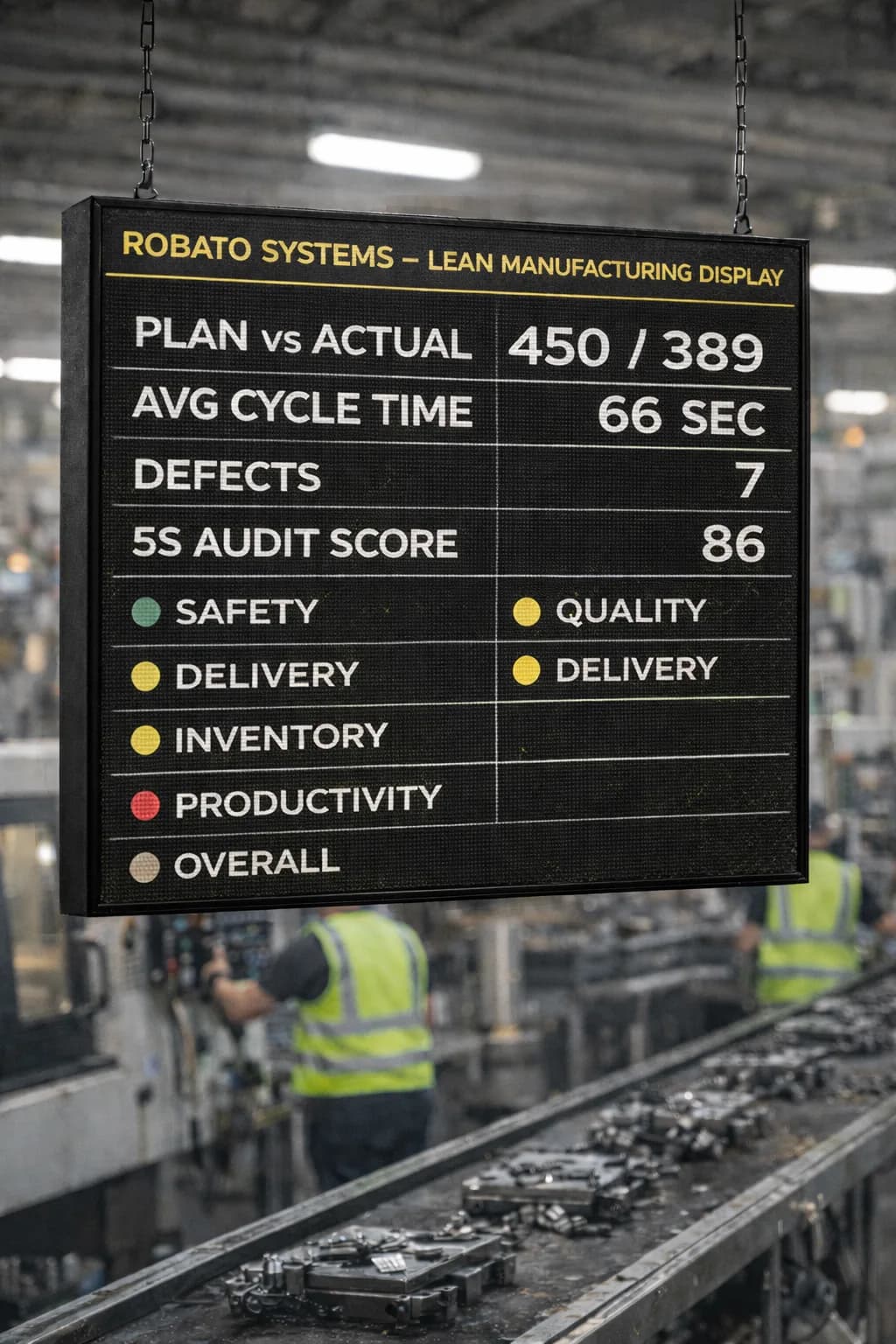
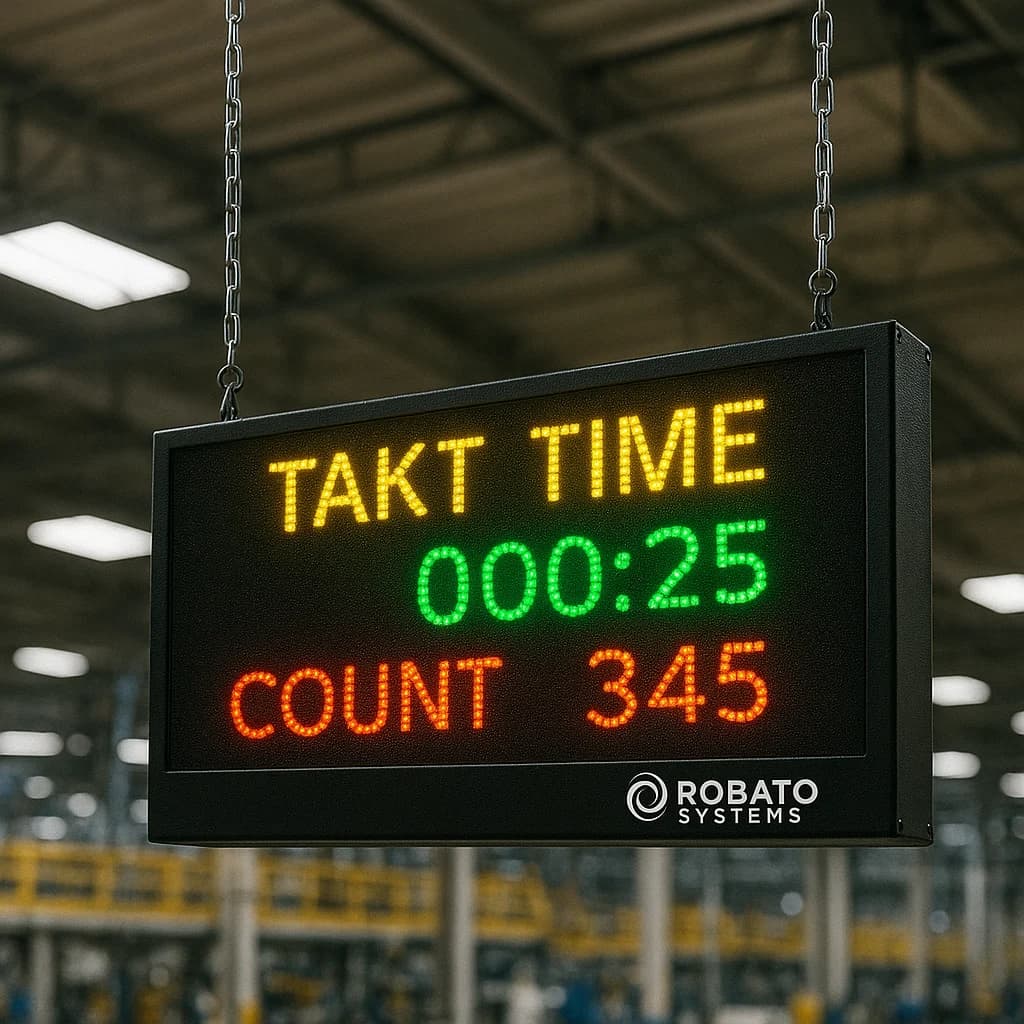
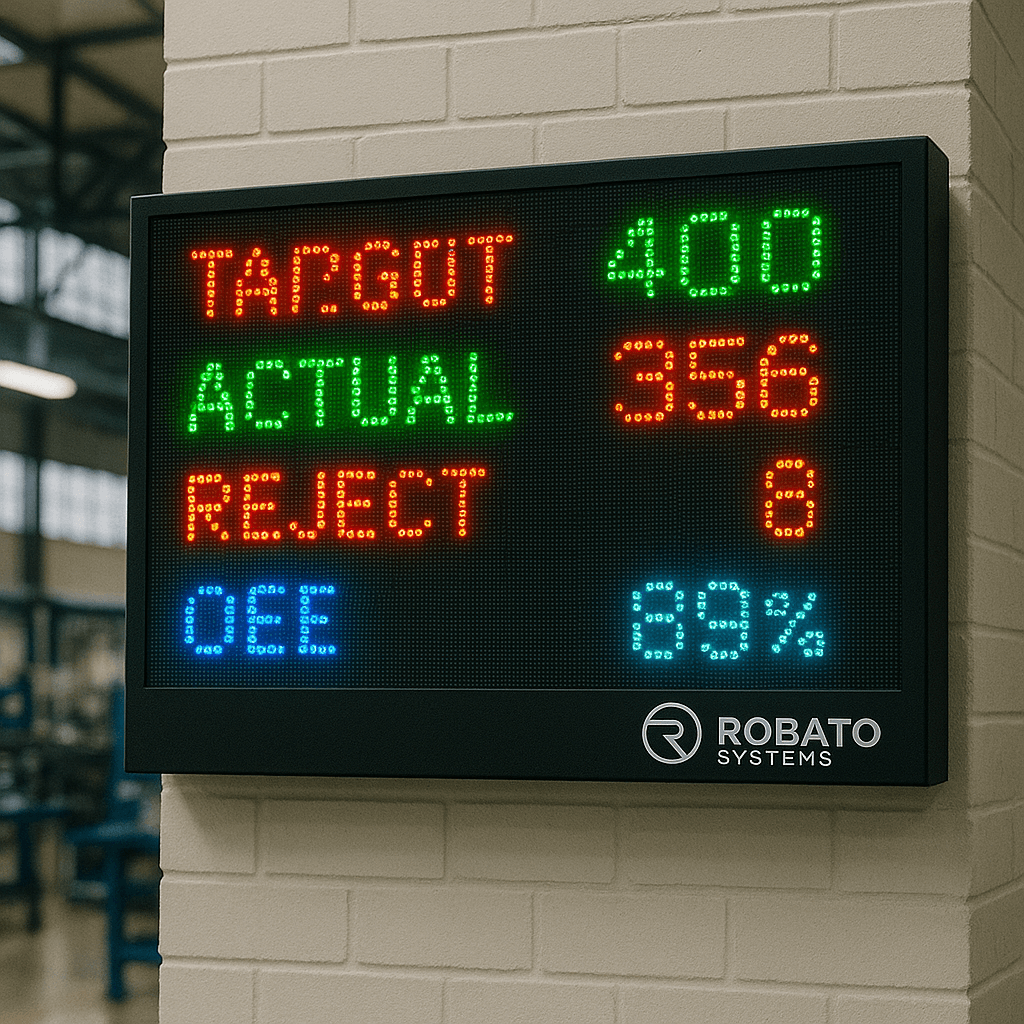
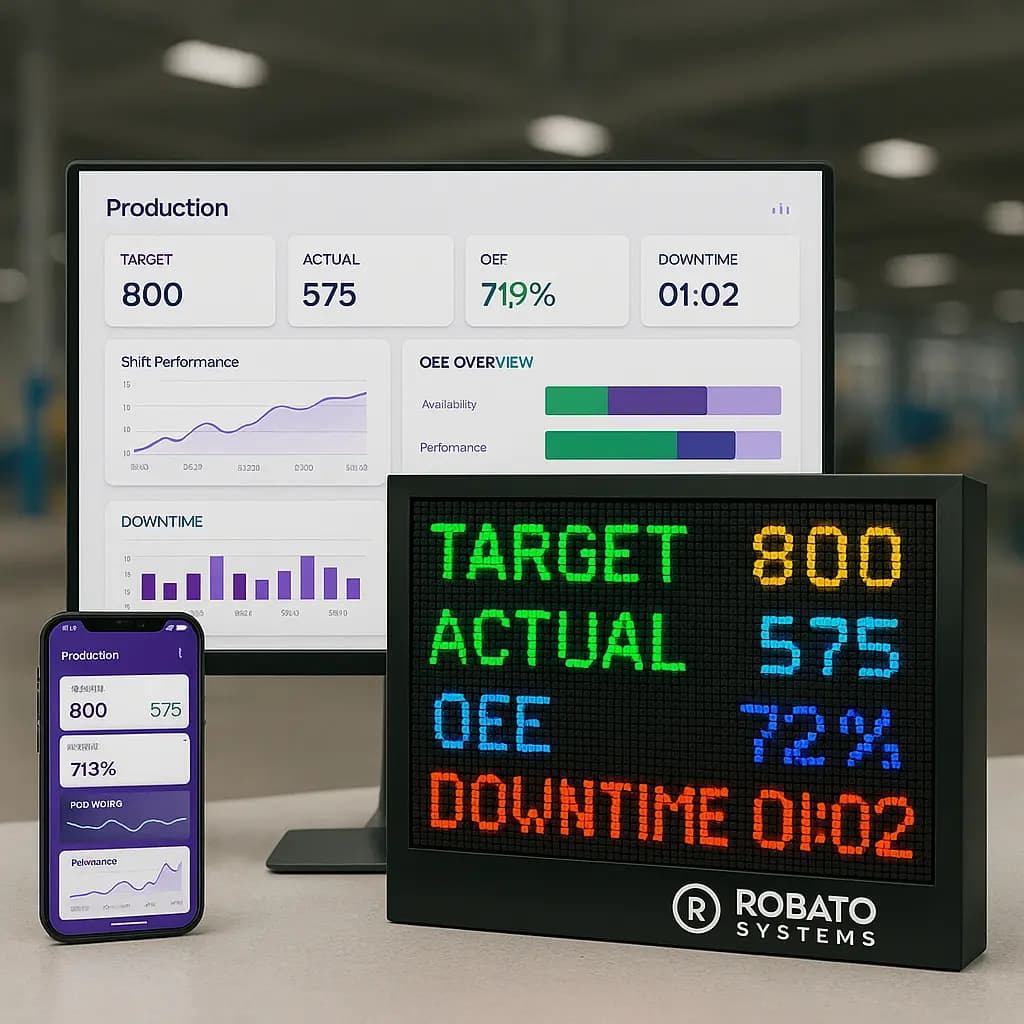
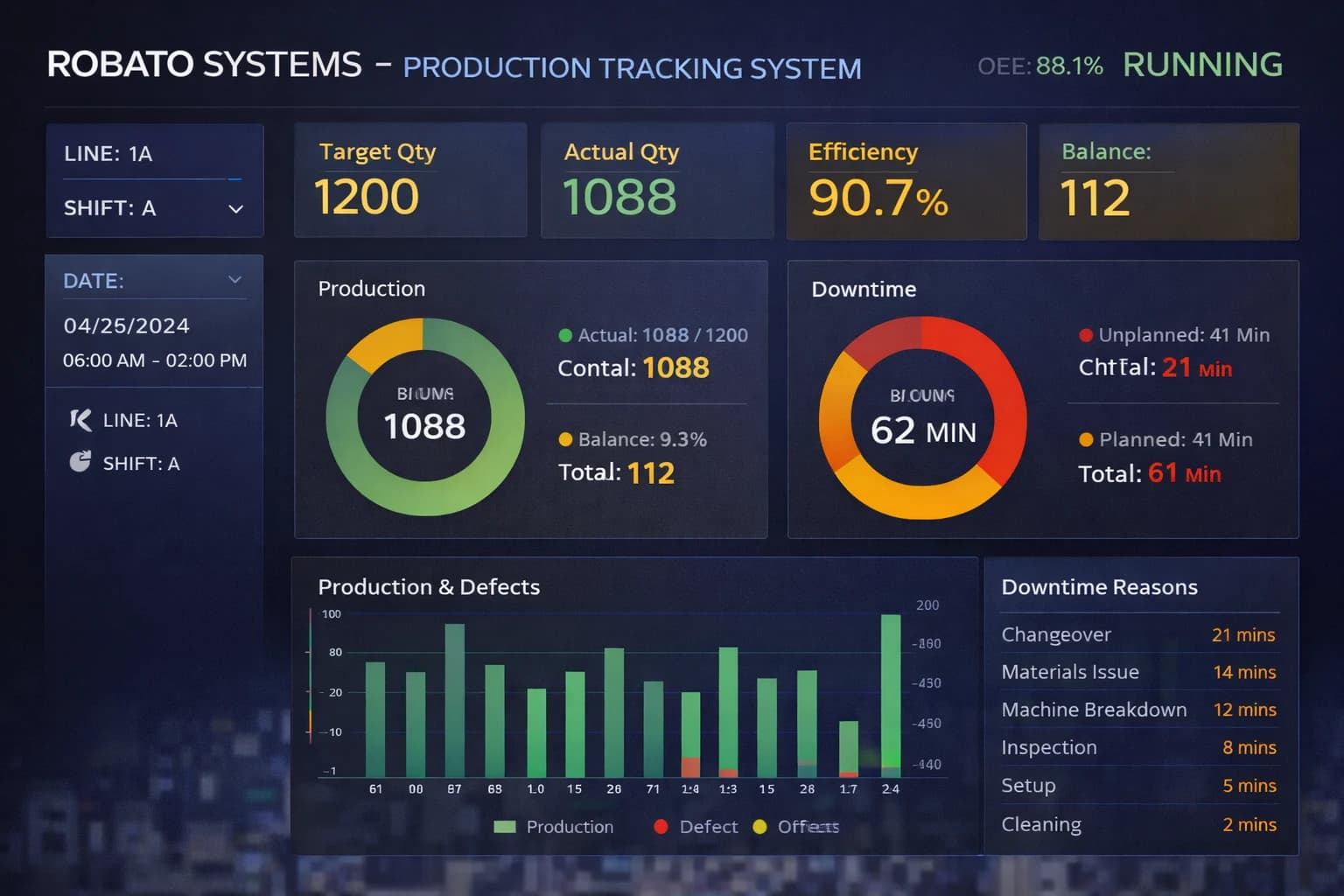
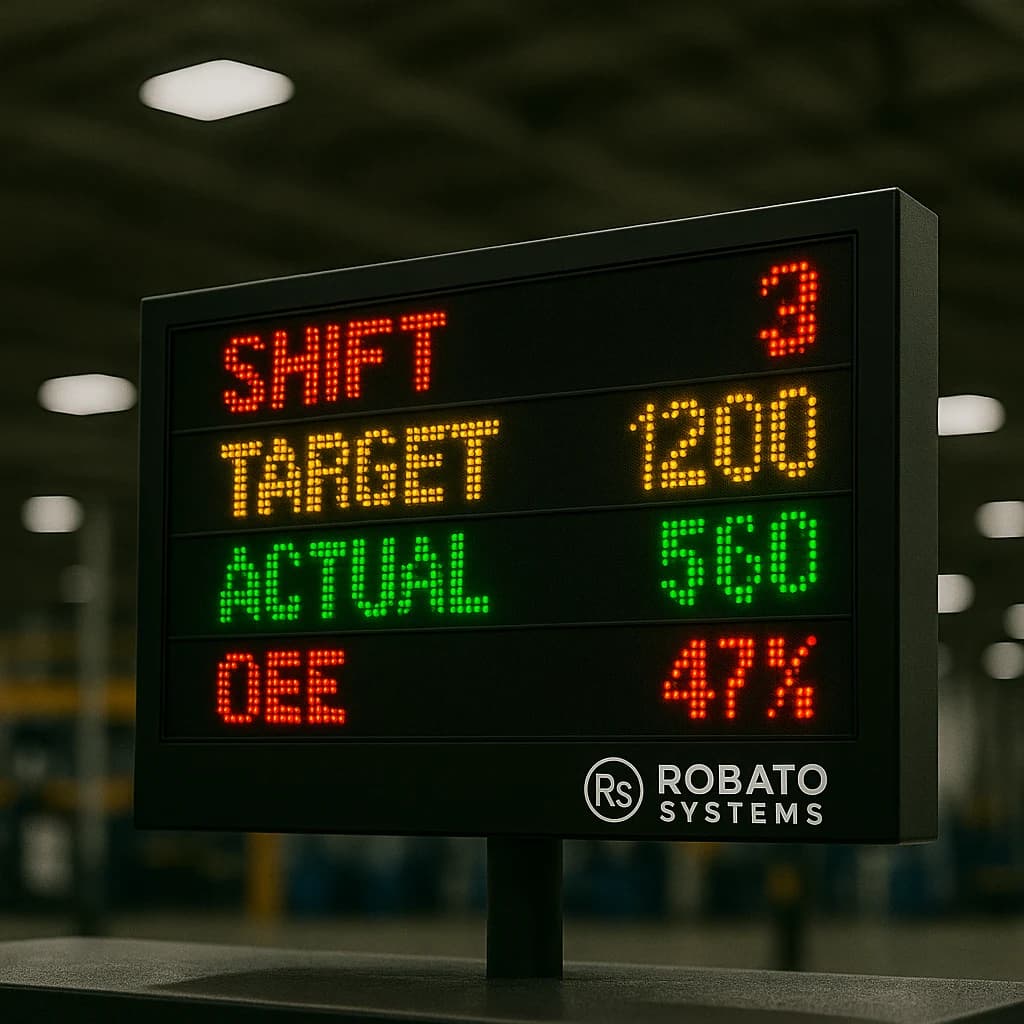
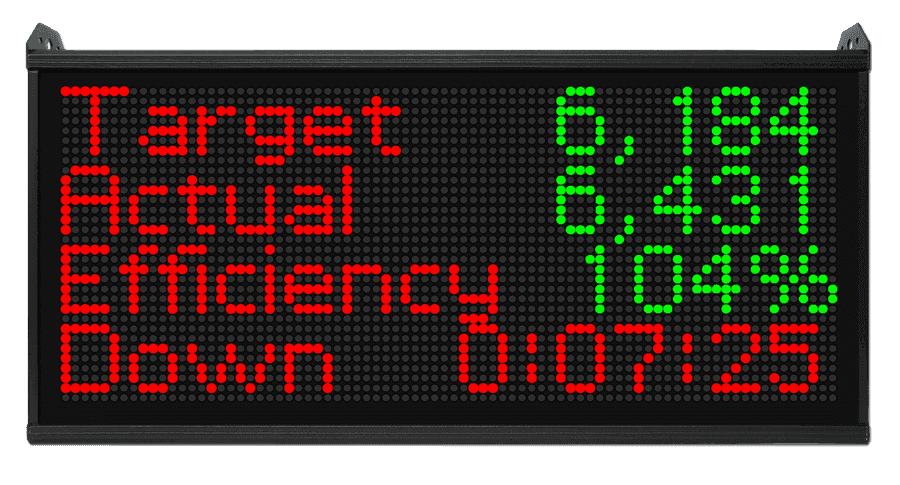
A Digital Andon Board is an electronic production display system that provides real-time visibility into manufacturing operations. It automatically collects data from machines, sensors, and software systems to display accurate production information on large LED or LCD screens located across the factory.
Unlike manual Andon boards, digital systems update automatically without operator intervention.
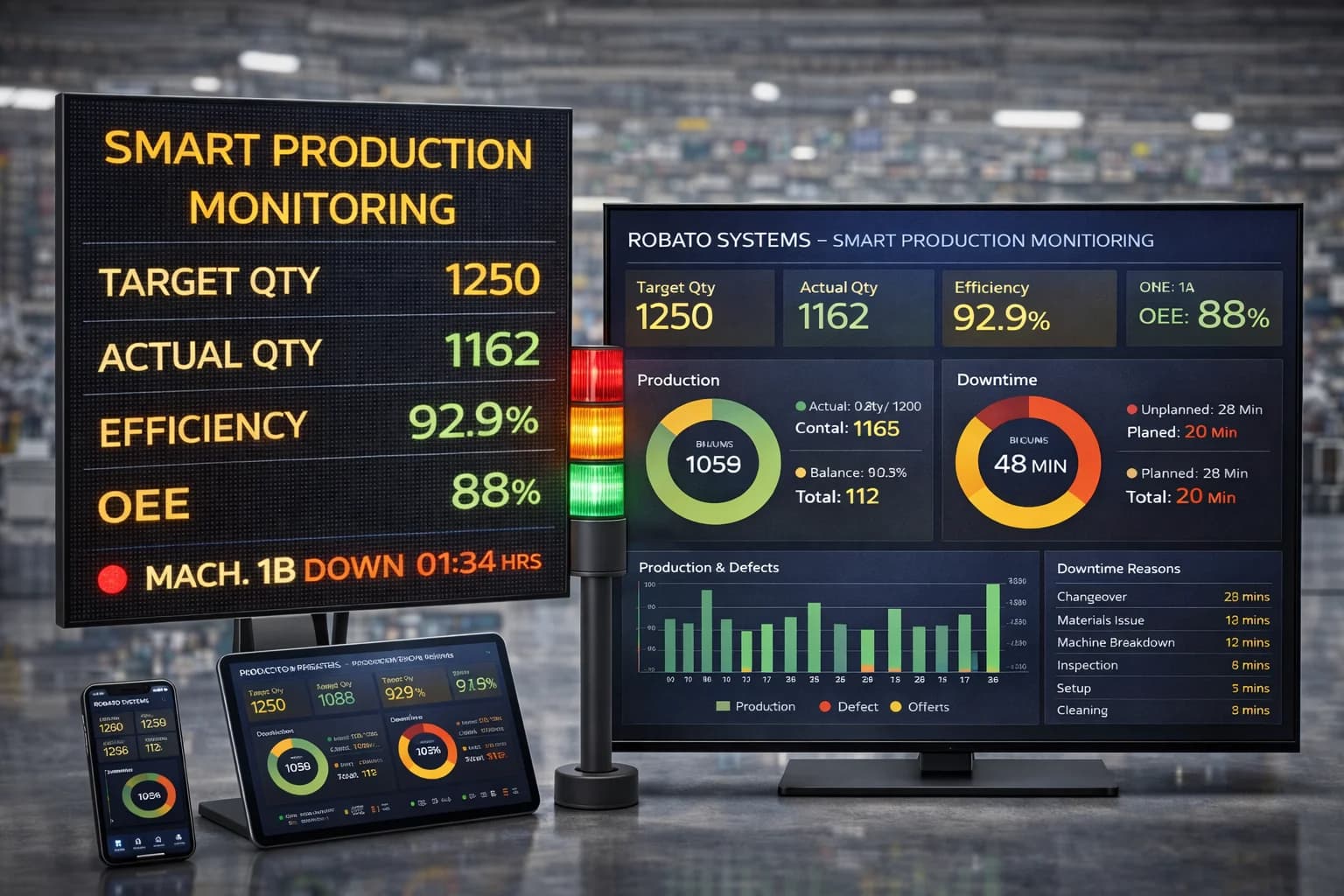
Typical information displayed includes:
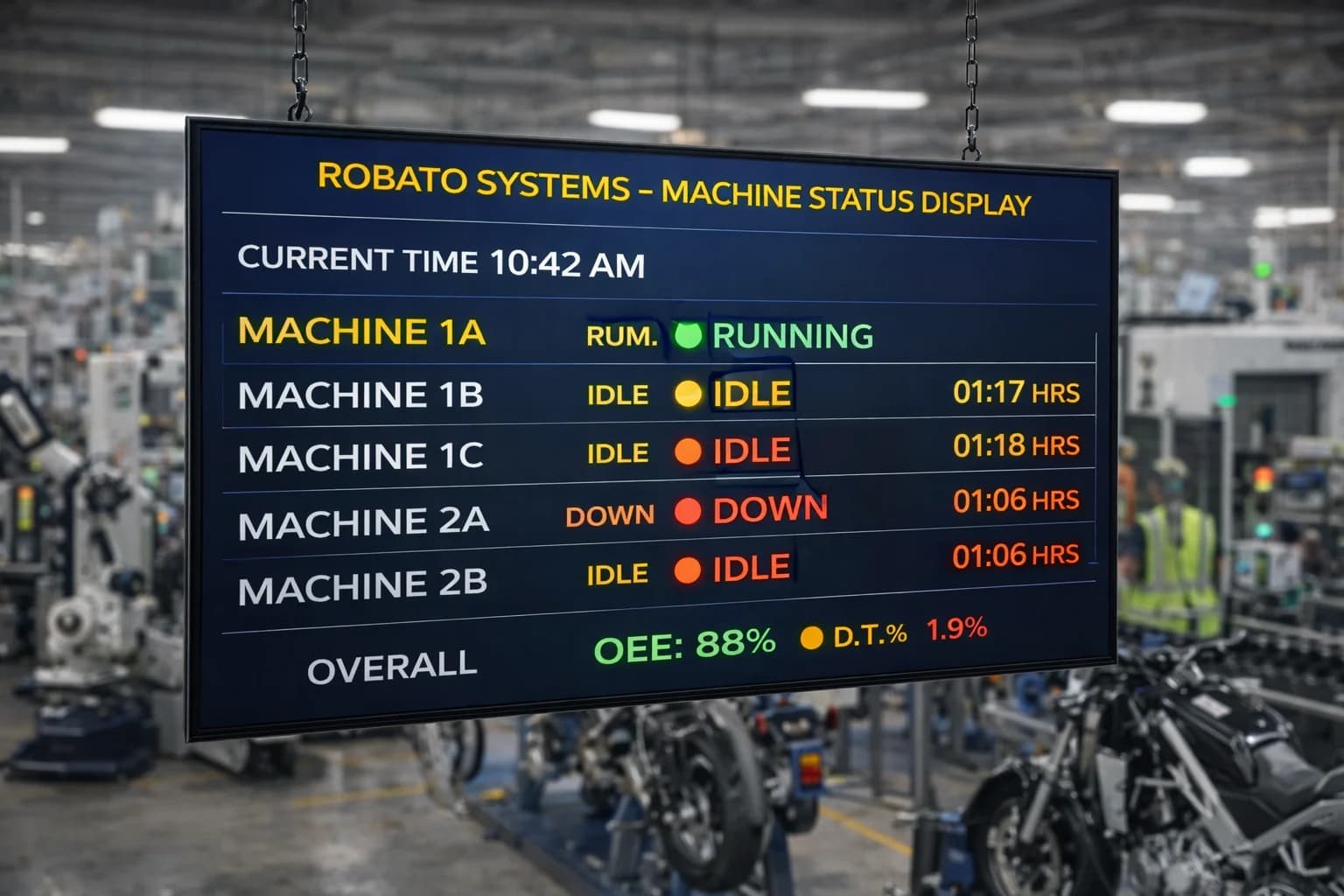
- Machine running status
- Machine breakdown alerts
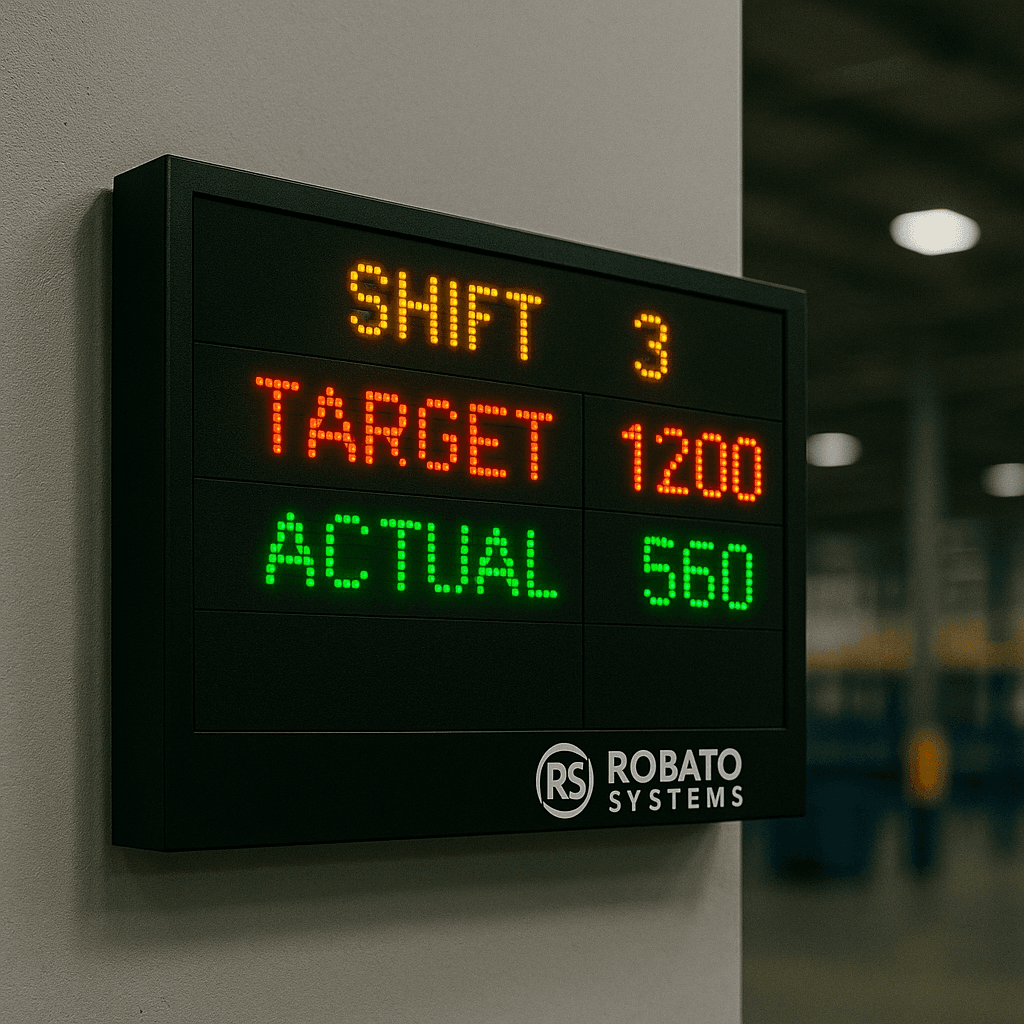
- Production targets
- Actual production count
- Downtime duration
- Quality defects
- Shift performance
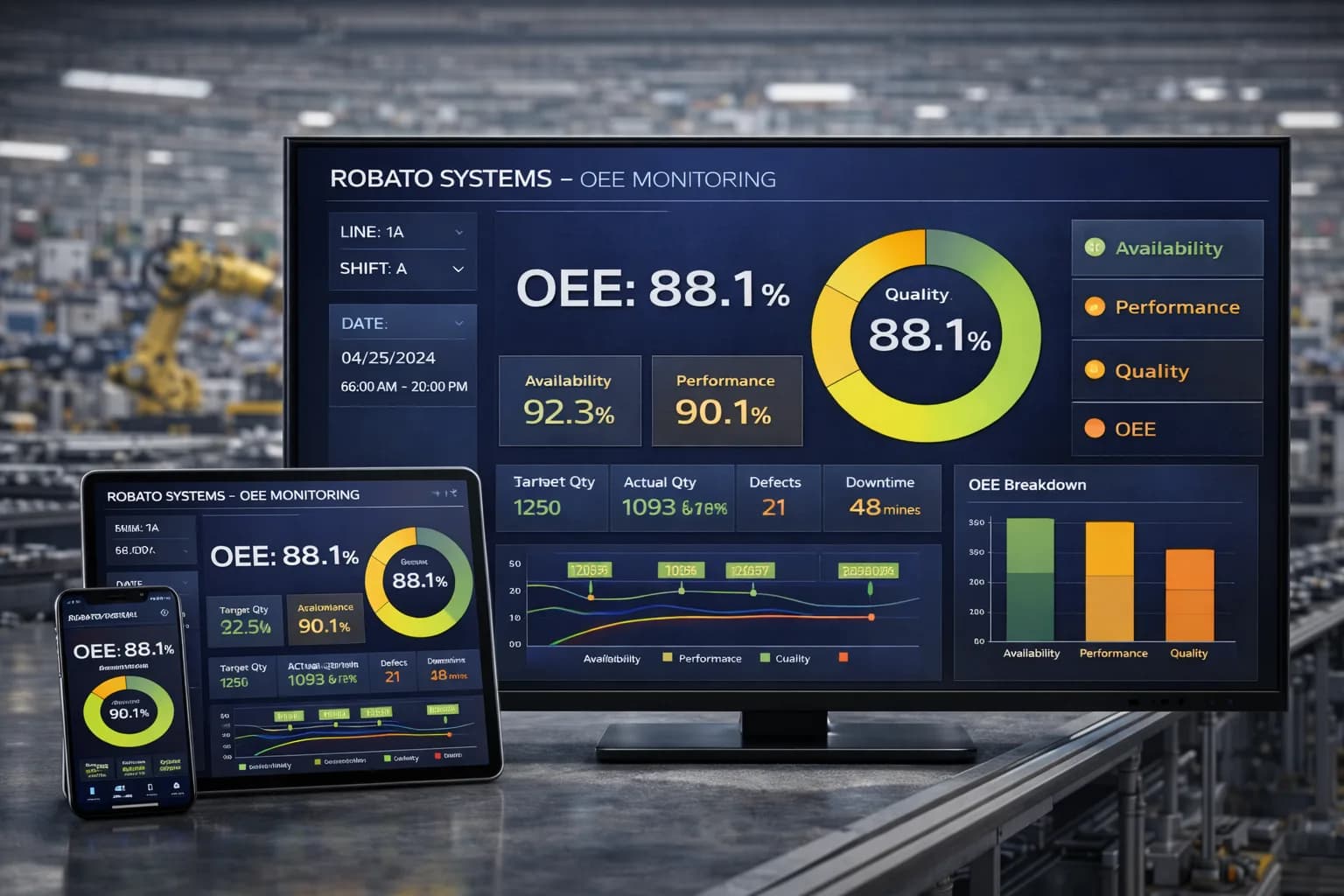
- OEE metrics
- Maintenance requests
- Safety alerts
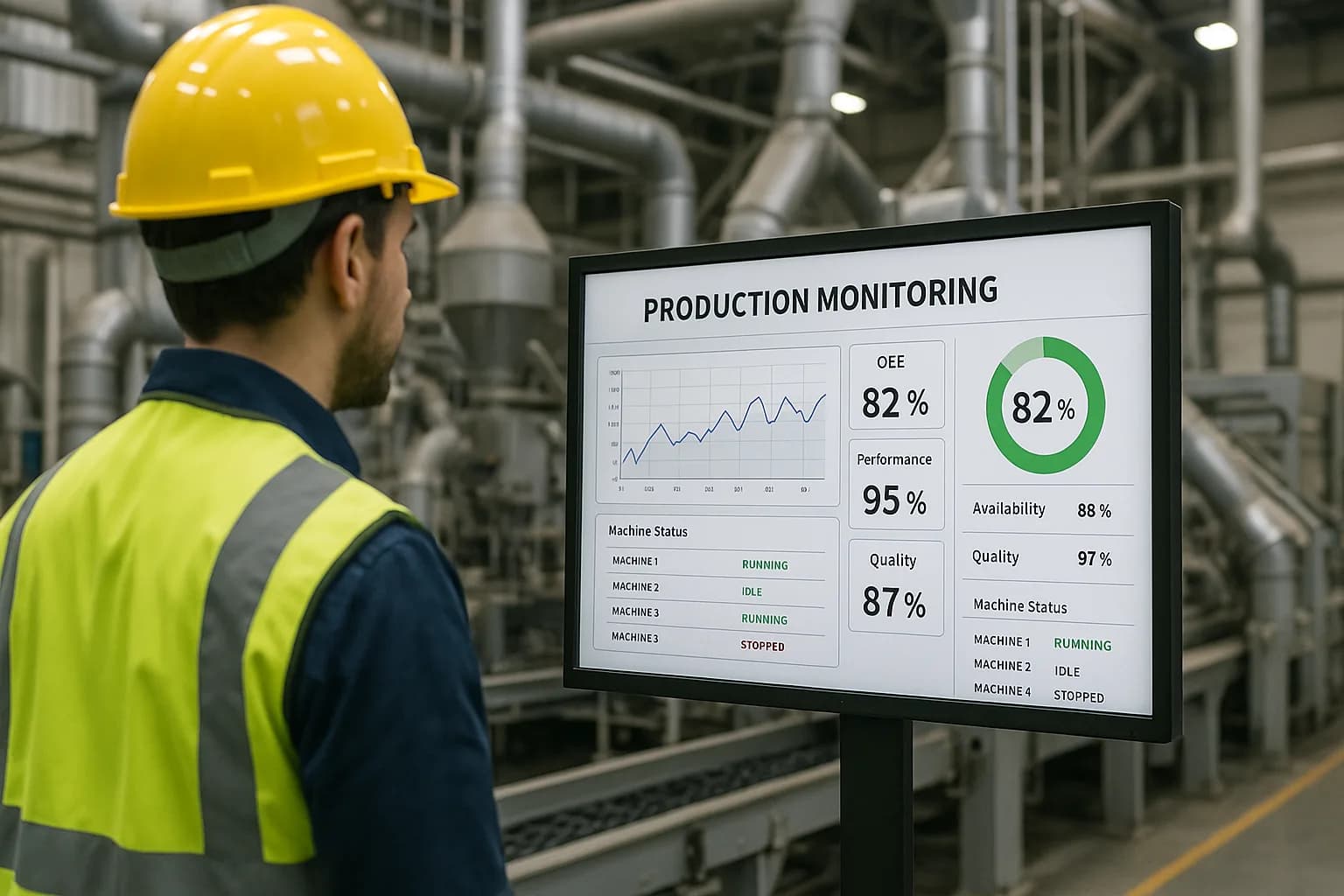
Because the information is updated instantly, operators and managers always have access to the latest production status.
What is a Traditional Andon System?
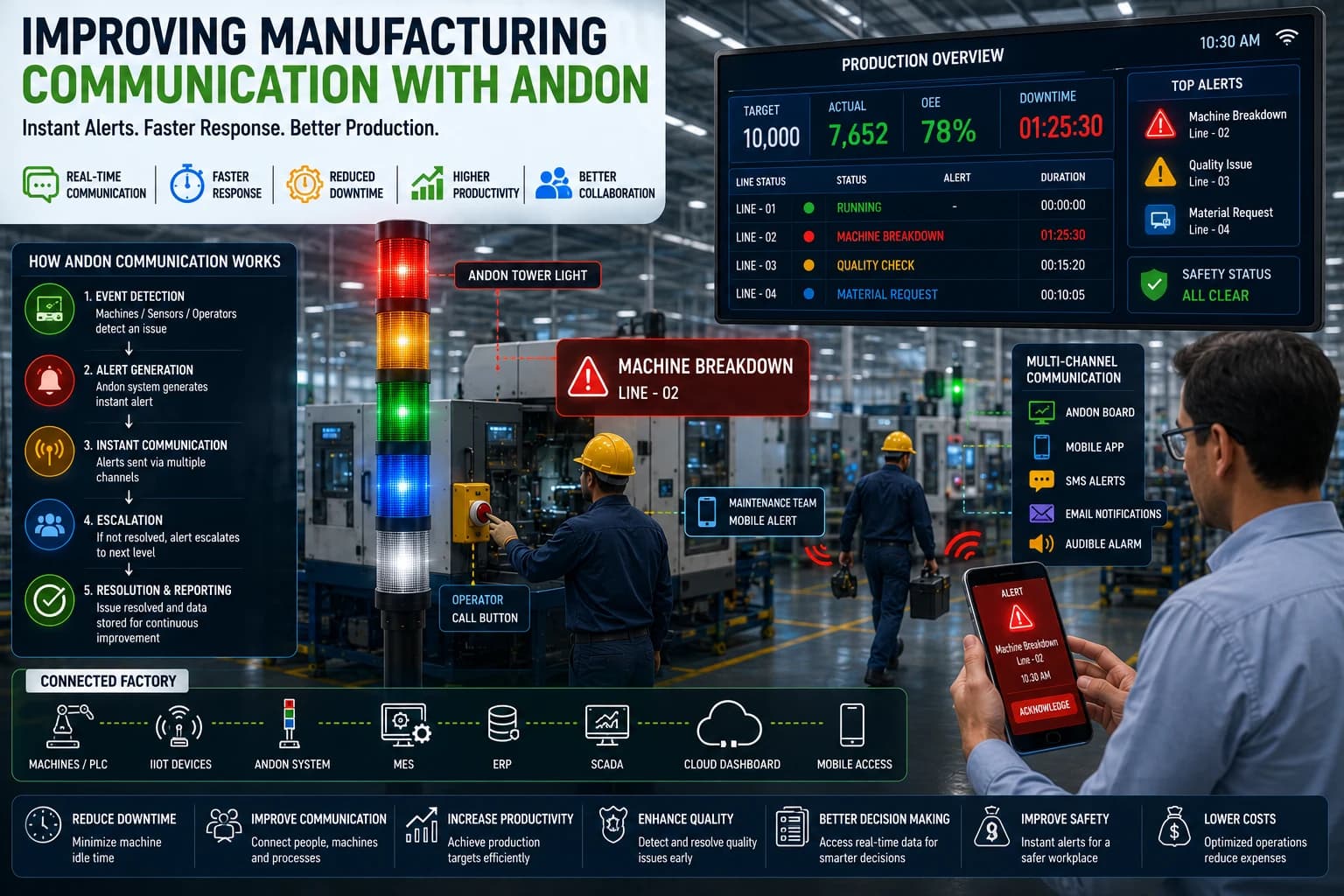
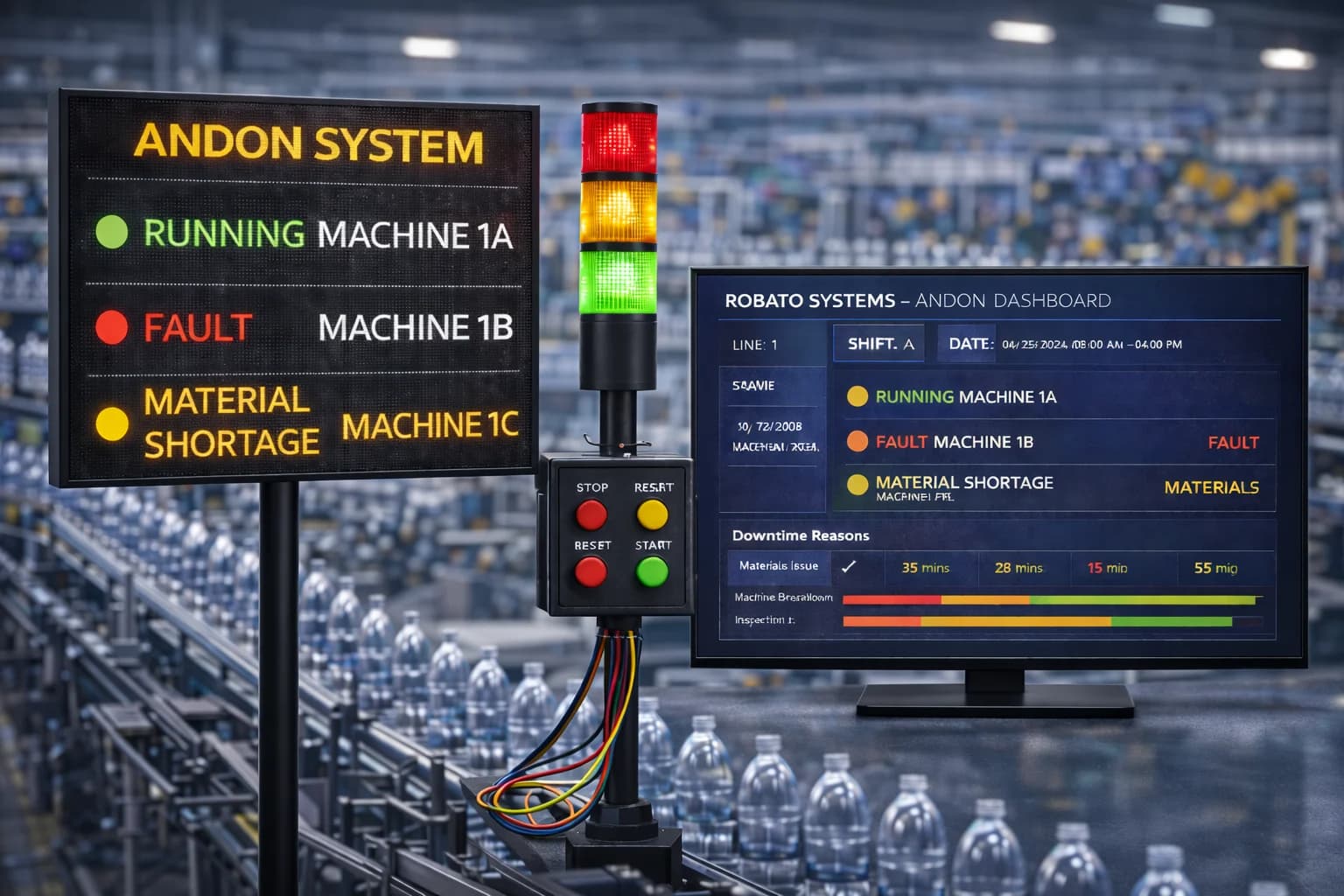
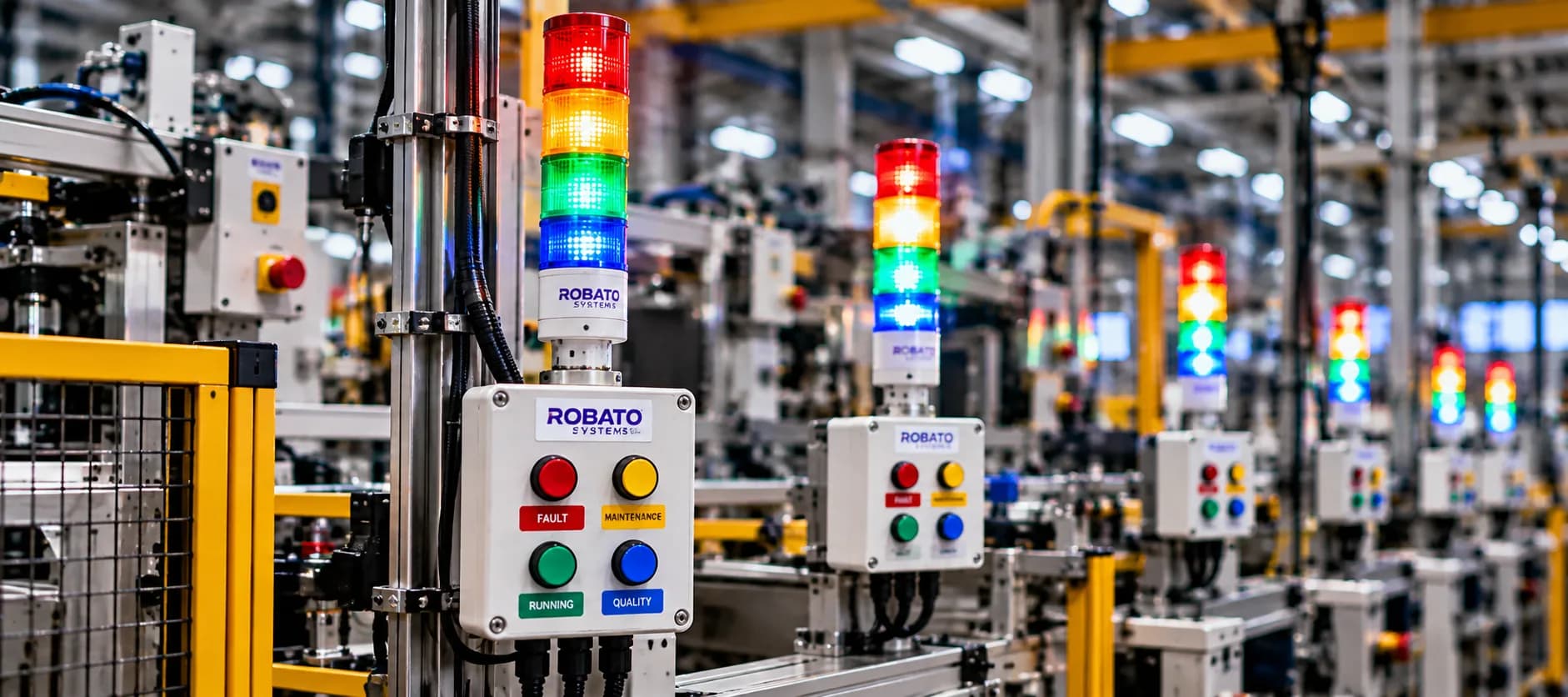
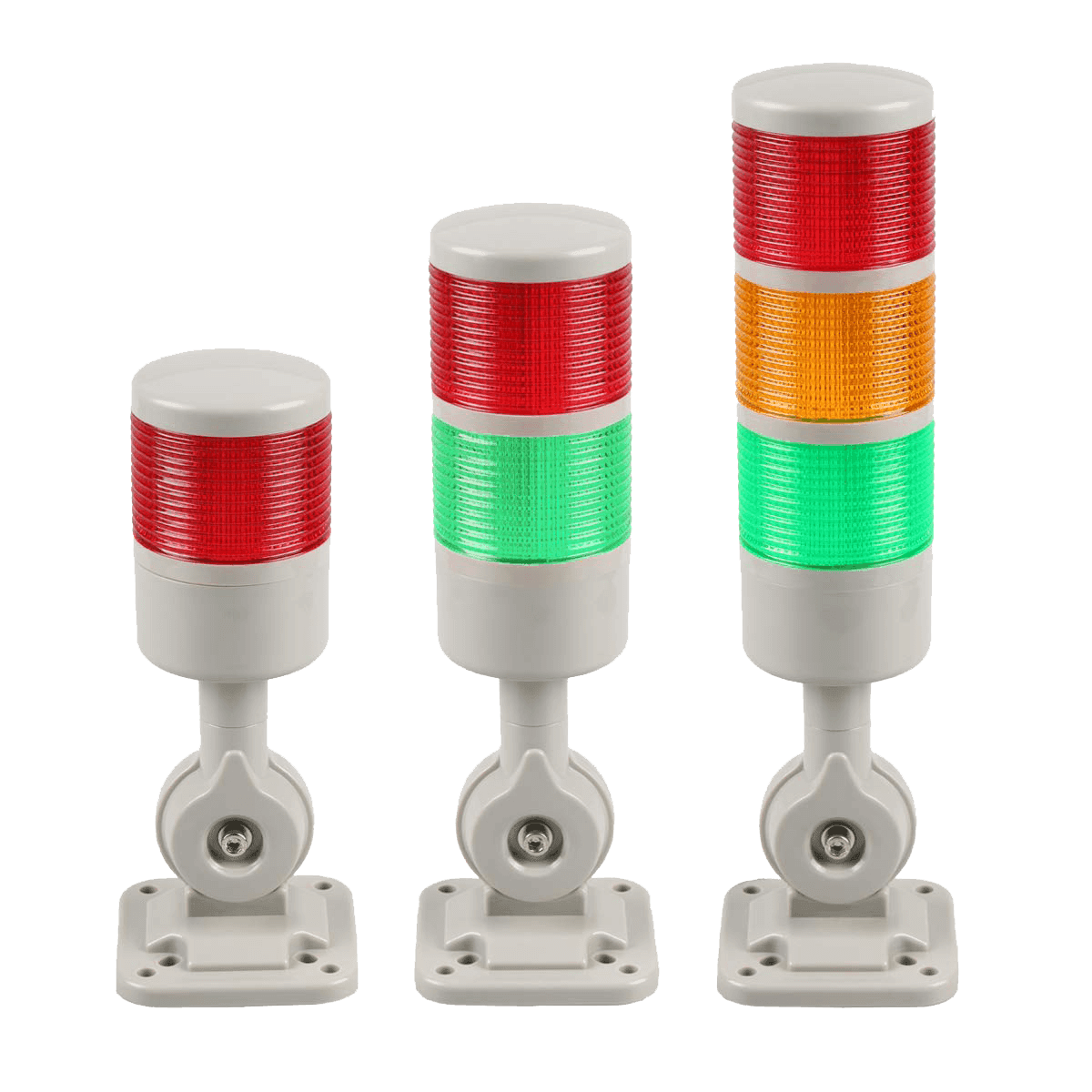
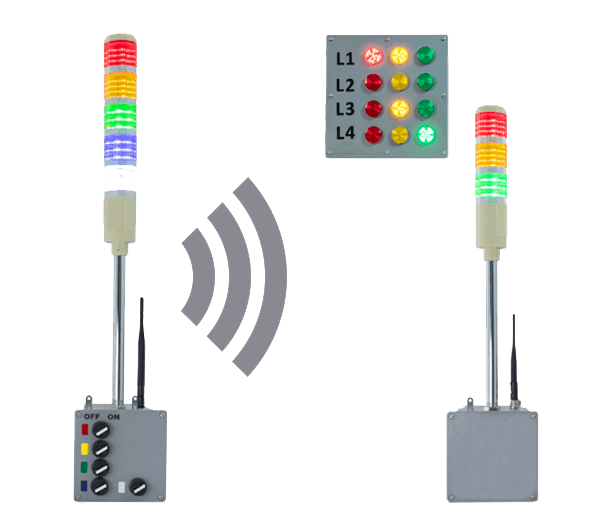
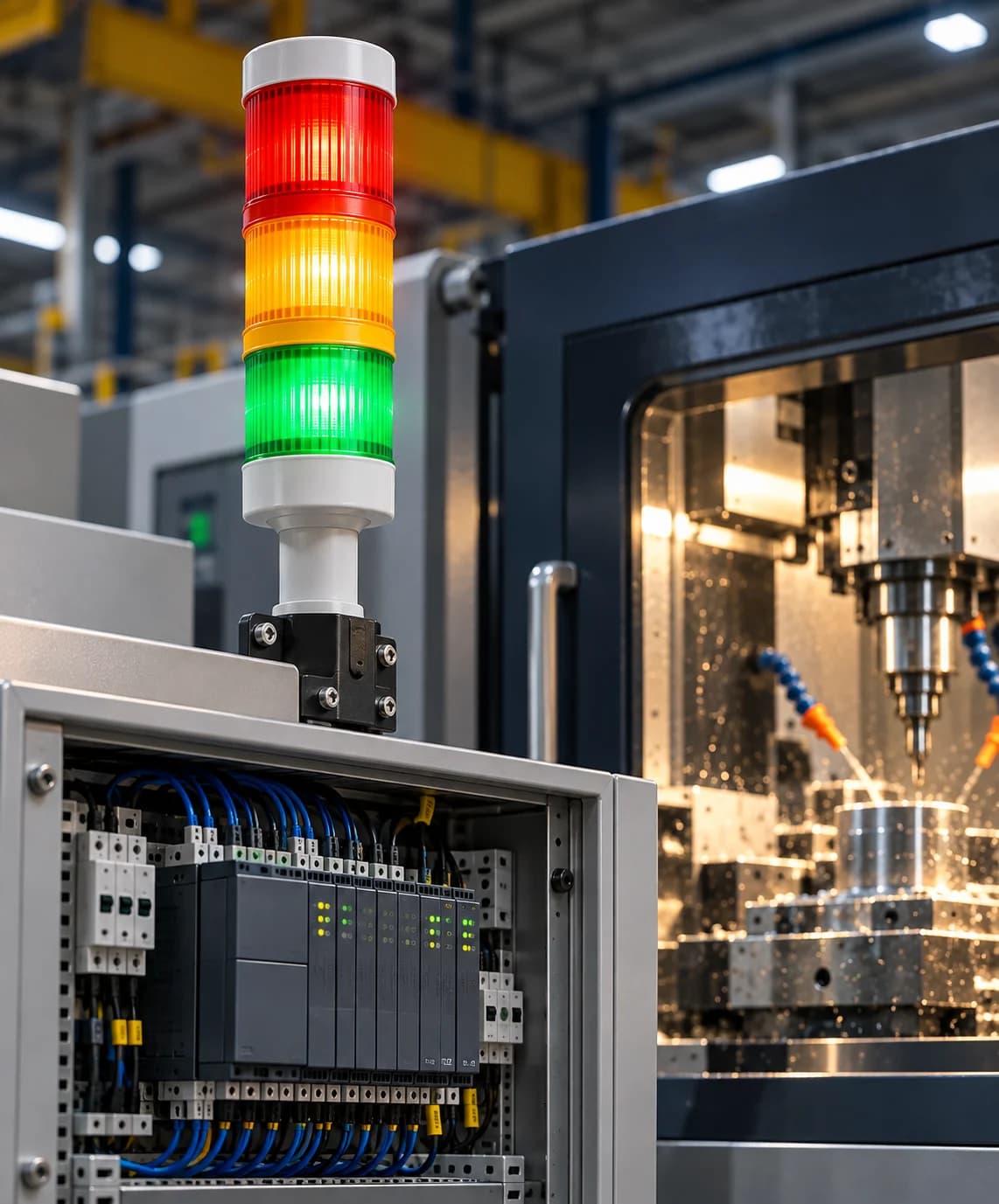
A traditional Andon system is a visual communication method commonly used in manufacturing plants. It generally consists of stack lights, push buttons, buzzers, and manually updated display boards.
Operators activate the system whenever assistance is needed.
Common indications include:
- Green – Machine running
- Yellow – Assistance required
- Red – Machine stopped
- Blue – Material request
- White – Quality inspection
While these systems improve communication compared to verbal reporting, they have several limitations in modern manufacturing environments.
Digital Andon Board vs Traditional Systems
1. Data Collection
Traditional System
- Manual updates
- Operator-dependent
- Limited machine integration
Digital Andon Board
- Automatic data collection
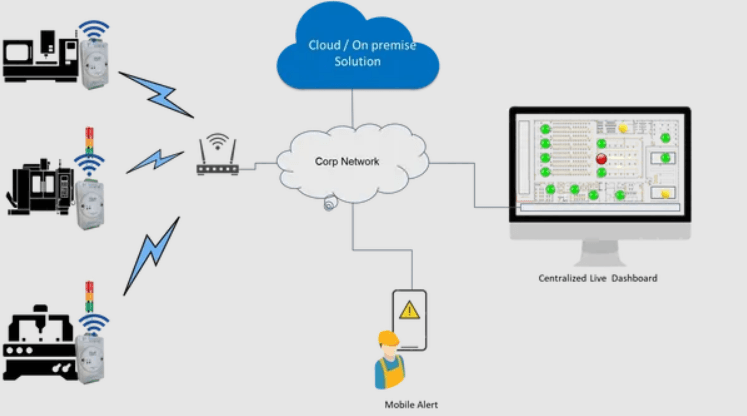
- PLC integration
- IIoT connectivity
- Real-time updates
Winner: Digital Andon Board
2. Communication Speed
Traditional System
Operators manually trigger alerts.
Digital Andon Board
Automatic alerts are generated immediately when production events occur.
Winner: Digital Andon Board
3. Production Visibility
Traditional boards display only basic machine status.
Digital Andon Boards provide:
- Production targets
- Actual output
- Downtime
- OEE
- Shift performance
- Machine utilization
- Quality metrics
Winner: Digital Andon Board
4. Remote Monitoring
Traditional systems generally require managers to be physically present.
Digital systems support:
- Cloud dashboards
- Mobile applications
- Remote monitoring
- Multi-plant visibility
Winner: Digital Andon Board
5. Reporting
Traditional systems rarely maintain historical records.
Digital systems automatically generate:
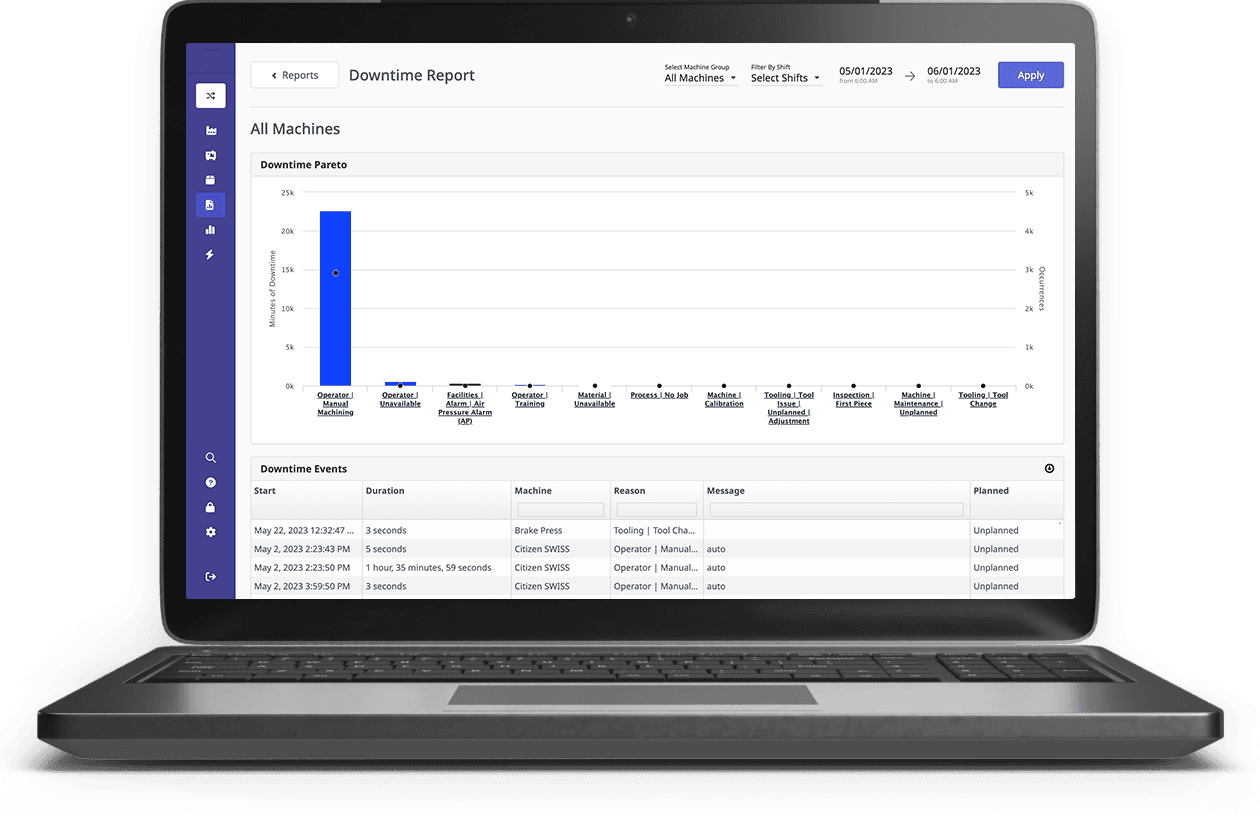
- Downtime reports
- Maintenance reports
- OEE reports
- Shift reports
- Production reports
- Response time reports
Winner: Digital Andon Board
6. Integration
Traditional systems operate independently.
Digital Andon Boards integrate with:
- PLCs
- MES
- ERP
- SCADA
- Industrial IoT
- Production Monitoring System
- Cloud platforms
Winner: Digital Andon Board
7. Scalability
Traditional systems become difficult to manage across multiple production lines.
Digital systems easily support:
- Multiple lines
- Multiple departments
- Multiple factories
- Centralized monitoring
Winner: Digital Andon Board
Key Features of a Digital Andon Board
Real-Time Production Monitoring
Display live production information without manual updates.
Automatic Machine Status Detection
Monitor machine conditions directly from PLCs and industrial controllers.
Live Production KPIs
Display important metrics including:
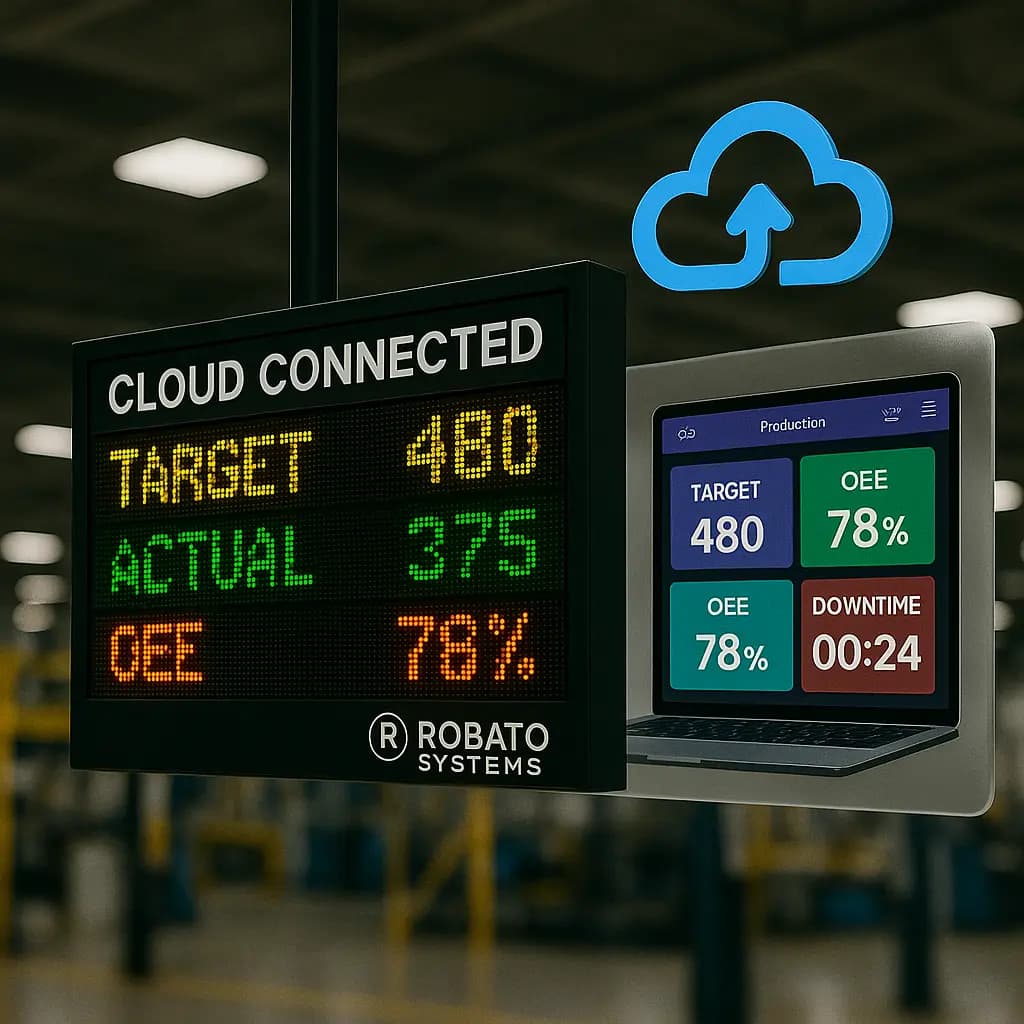
- Target vs Actual
- OEE
- Downtime
- Productivity
- Machine utilization
- Quality rate
Visual Alert Management
Provide highly visible alerts using:
- LED display boards
- Large LCD screens
- Tower lights
- Color-coded notifications
Mobile Notifications
Send production alerts directly to operators and supervisors.
Cloud Dashboard
Monitor factory operations remotely from any location.
Historical Analytics
Store production data for:
- Trend analysis
- Maintenance planning
- Productivity improvement
- Root cause analysis
Multi-Language Support
Display production information in multiple languages across global manufacturing facilities.
Benefits of a Digital Andon Board
Faster Response Times
Immediate alerts reduce production delays.
Reduced Downtime
Maintenance teams receive instant notifications.
Improved Communication
Every department has access to the same production information.
Better Decision-Making
Managers can act using live production data rather than delayed reports.
Increased Productivity
Continuous visibility helps eliminate unnecessary production interruptions.
Improved Product Quality
Quality issues are identified before defective products continue through production.
Higher Equipment Utilization
Machines spend more time producing and less time waiting for maintenance.
Lower Manufacturing Costs
Reduced downtime and higher productivity improve profitability.
Digital Andon Boards and Industry 4.0
Industry 4.0 focuses on intelligent manufacturing powered by connected systems.
Digital Andon Boards integrate with:
- Industrial IoT (IIoT)
- PLCs
- MES
- ERP
- SCADA
- Production Monitoring Software
- OEE Software
- Cloud Platforms
- Artificial Intelligence
These integrations provide manufacturers with complete operational visibility and enable data-driven decision-making.
Applications Across Manufacturing Industries
Digital Andon Boards are widely used across numerous industries.
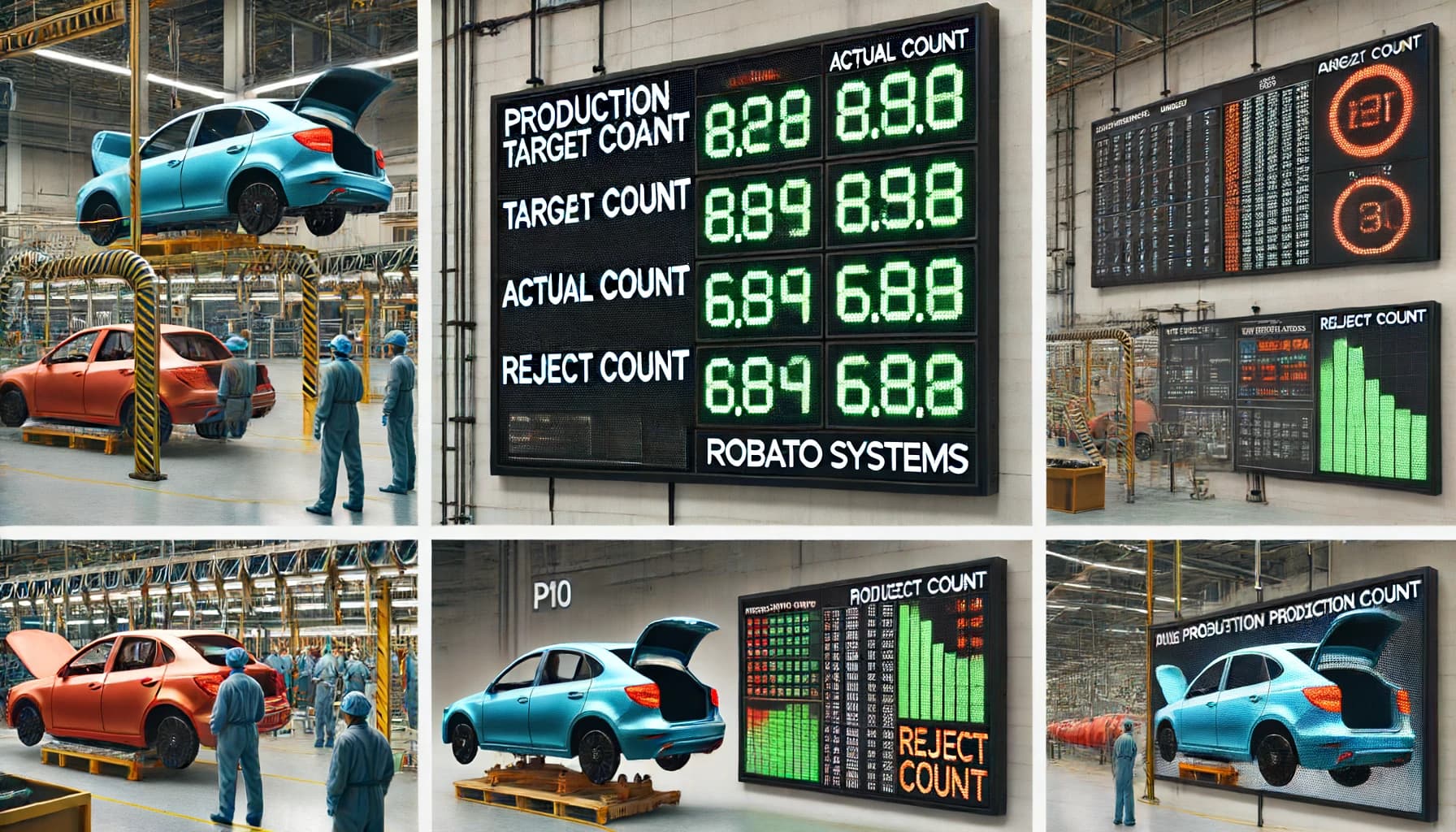
Automotive Manufacturing
Display production status across robotic assembly lines.
Electronics Manufacturing
Monitor SMT equipment and PCB production.
Food & Beverage Industry
Track packaging, bottling, and processing operations.
Pharmaceutical Manufacturing
Display batch production status and compliance information.
Textile Manufacturing
Monitor weaving, spinning, and dyeing operations.
Plastic & Injection Molding
Track molding machine performance and production output.
Packaging Industry
Monitor conveyors, labeling systems, and packaging equipment.
Best Practices for Implementation
Integrate with Existing Systems
Connect Digital Andon Boards with PLCs, MES, ERP, and SCADA systems.
Automate Data Collection
Avoid manual data entry to improve accuracy.
Display Relevant KPIs
Show only meaningful production metrics for each department.
Configure Alert Priorities
Differentiate between critical and non-critical production issues.
Train Employees
Ensure operators understand dashboard information and response procedures.
Review Performance Regularly
Use historical reports to identify continuous improvement opportunities.
Common Challenges
Legacy Machine Integration
Older equipment may require IoT gateways or retrofit communication modules.
Network Infrastructure
Reliable industrial networking is essential for real-time communication.
Change Management
Employees should receive proper training during digital transformation.
Data Accuracy
Machine signals should be calibrated correctly to avoid false reporting.
Future Trends
Digital Andon Boards continue evolving with emerging technologies.
Artificial Intelligence
AI will analyze production patterns and recommend corrective actions automatically.
Predictive Maintenance
Machine learning will identify equipment failures before breakdowns occur.
Digital Twins
Virtual factory models will synchronize with Digital Andon Boards to simulate production performance.
Edge Computing
Production data will be processed closer to machines, reducing latency.
Advanced Analytics
Cloud platforms will provide predictive production insights and operational benchmarking.
These innovations will make Digital Andon Boards even more valuable in smart manufacturing environments.
Why Choose Robato Systems for Digital Andon Boards?
Robato Systems provides advanced Digital Andon Board solutions designed for modern manufacturing facilities. Our systems integrate seamlessly with PLCs, Industrial IoT devices, MES, ERP, SCADA, and production monitoring software to deliver real-time production visibility across the factory.
Our Digital Andon Boards display production targets, actual output, machine status, downtime, OEE, maintenance alerts, quality information, and shift performance on large LED displays and cloud dashboards. With wireless connectivity, automated notifications, and detailed reporting, Robato Systems helps manufacturers improve communication, reduce downtime, and accelerate Industry 4.0 transformation.
Whether you operate a single production line or multiple manufacturing plants, our scalable Digital Andon Board solutions provide the visibility needed to optimize manufacturing performance.
Conclusion
A Digital Andon Board is a major advancement over traditional Andon systems, offering real-time production visibility, automated communication, and seamless integration with Industry 4.0 technologies. Unlike traditional systems that depend on manual updates, Digital Andon Boards provide instant access to production data, machine status, and performance metrics, enabling faster decision-making and improved operational efficiency.
For manufacturers looking to reduce downtime, improve communication, and embrace smart factory initiatives, investing in a Digital Andon Board is a practical step toward building a more connected and productive manufacturing environment.
Frequently Asked Questions (FAQs)
What is a Digital Andon Board?
A Digital Andon Board is an electronic display system that provides real-time production information, machine status, downtime alerts, and performance metrics across manufacturing facilities.
How is a Digital Andon Board different from a traditional Andon system?
Traditional systems rely on manual alerts and basic visual signals, while Digital Andon Boards automatically collect machine data, provide real-time dashboards, integrate with factory software, and generate detailed reports.
Can Digital Andon Boards integrate with PLCs?
Yes. Modern Digital Andon Boards integrate with PLCs, Industrial IoT devices, MES, ERP, SCADA, production monitoring software, and cloud platforms.
What information can be displayed on a Digital Andon Board?
Machine status, production targets, actual production, downtime, OEE, maintenance alerts, quality metrics, shift performance, and safety notifications.
Which industries use Digital Andon Boards?
Automotive, electronics, pharmaceuticals, food processing, textiles, plastics, packaging, logistics, and many other manufacturing industries.