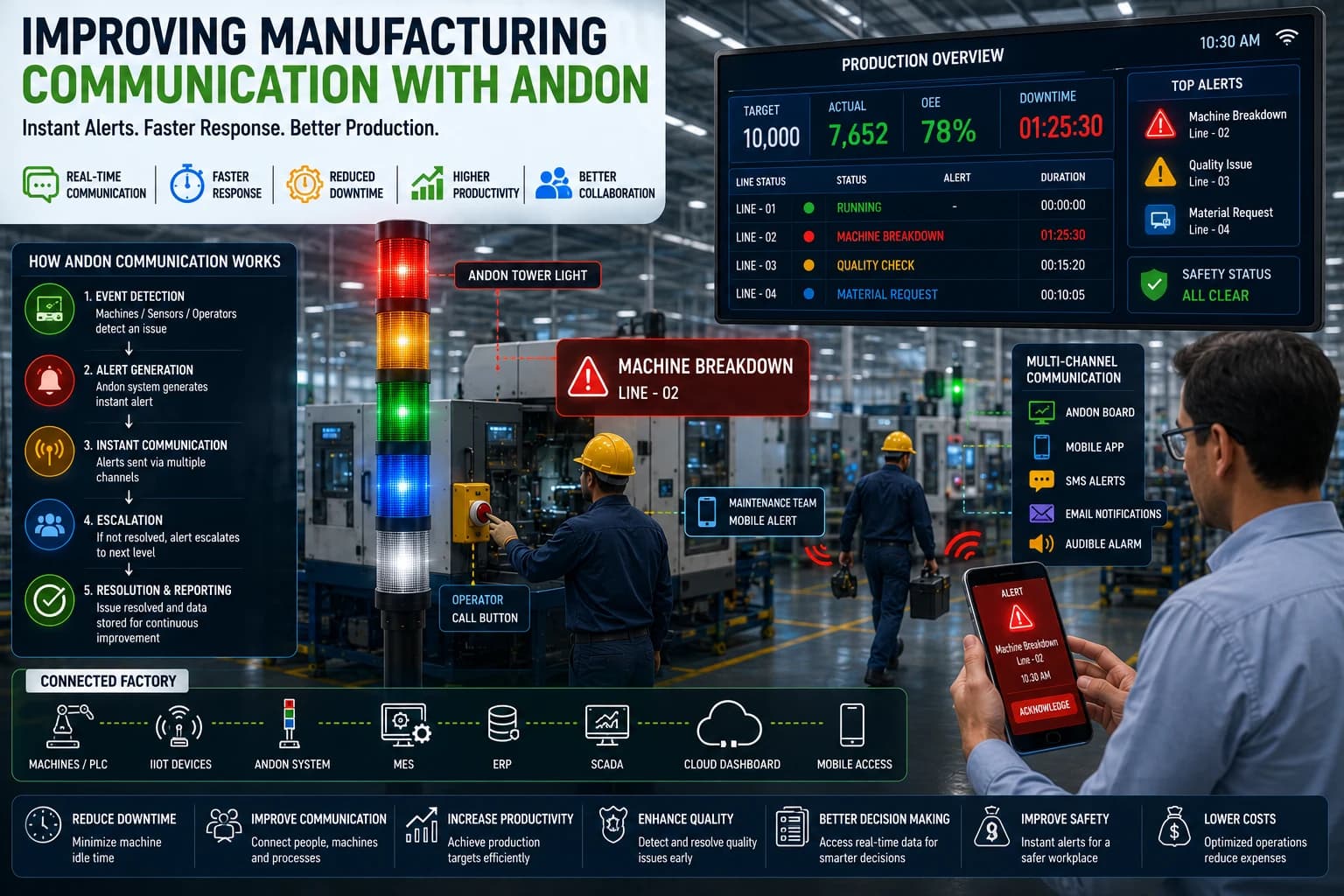
Effective communication is the foundation of every successful manufacturing operation. Whether it's reporting a machine breakdown, requesting maintenance support, identifying a quality issue, or calling for materials, every second counts on the production floor. Delayed communication often leads to longer machine downtime, reduced productivity, missed production targets, and increased operational costs. A modern Manufacturing Communication System powered by an Andon System solves these challenges by enabling instant, real-time communication between operators, supervisors, maintenance teams, and management.
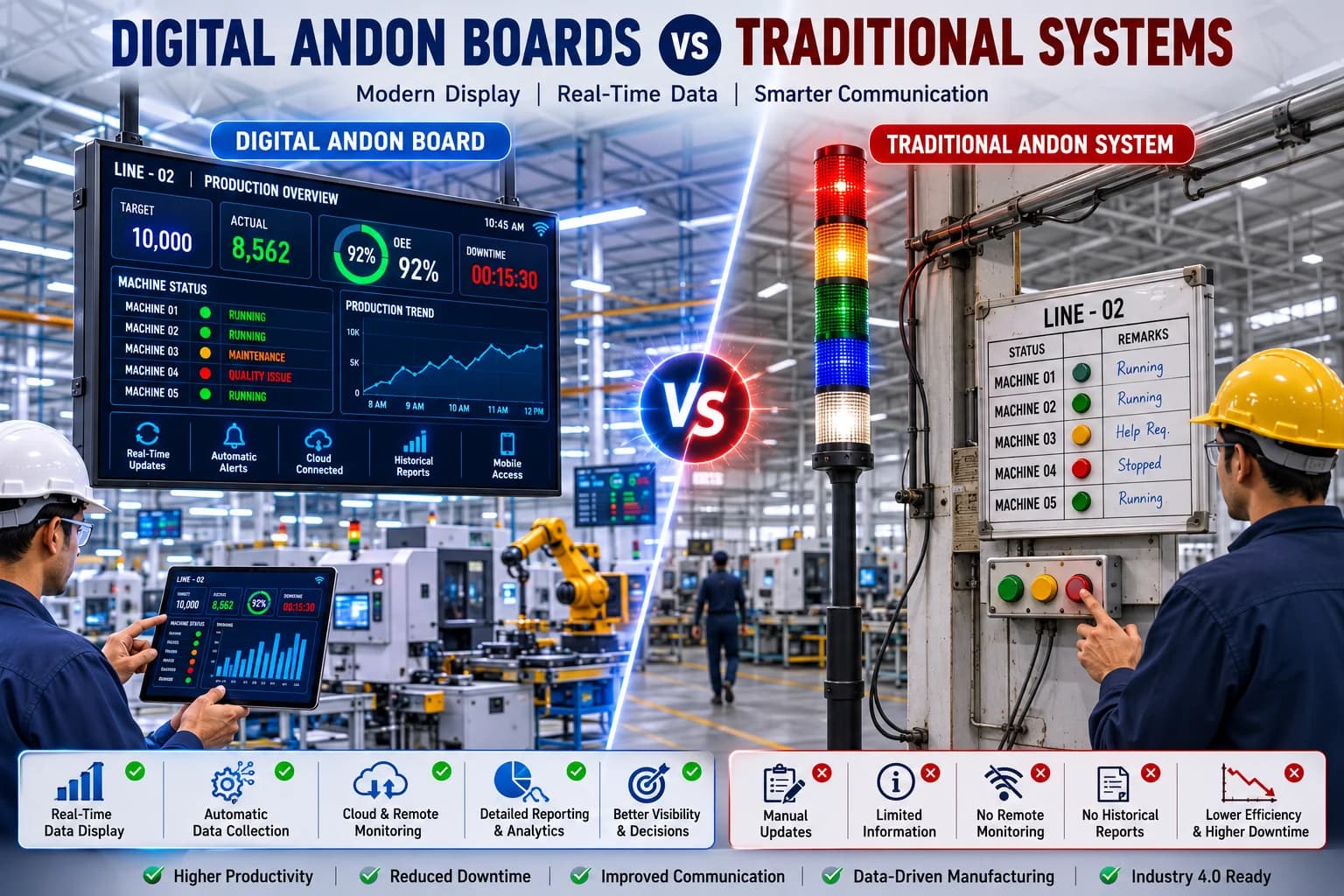
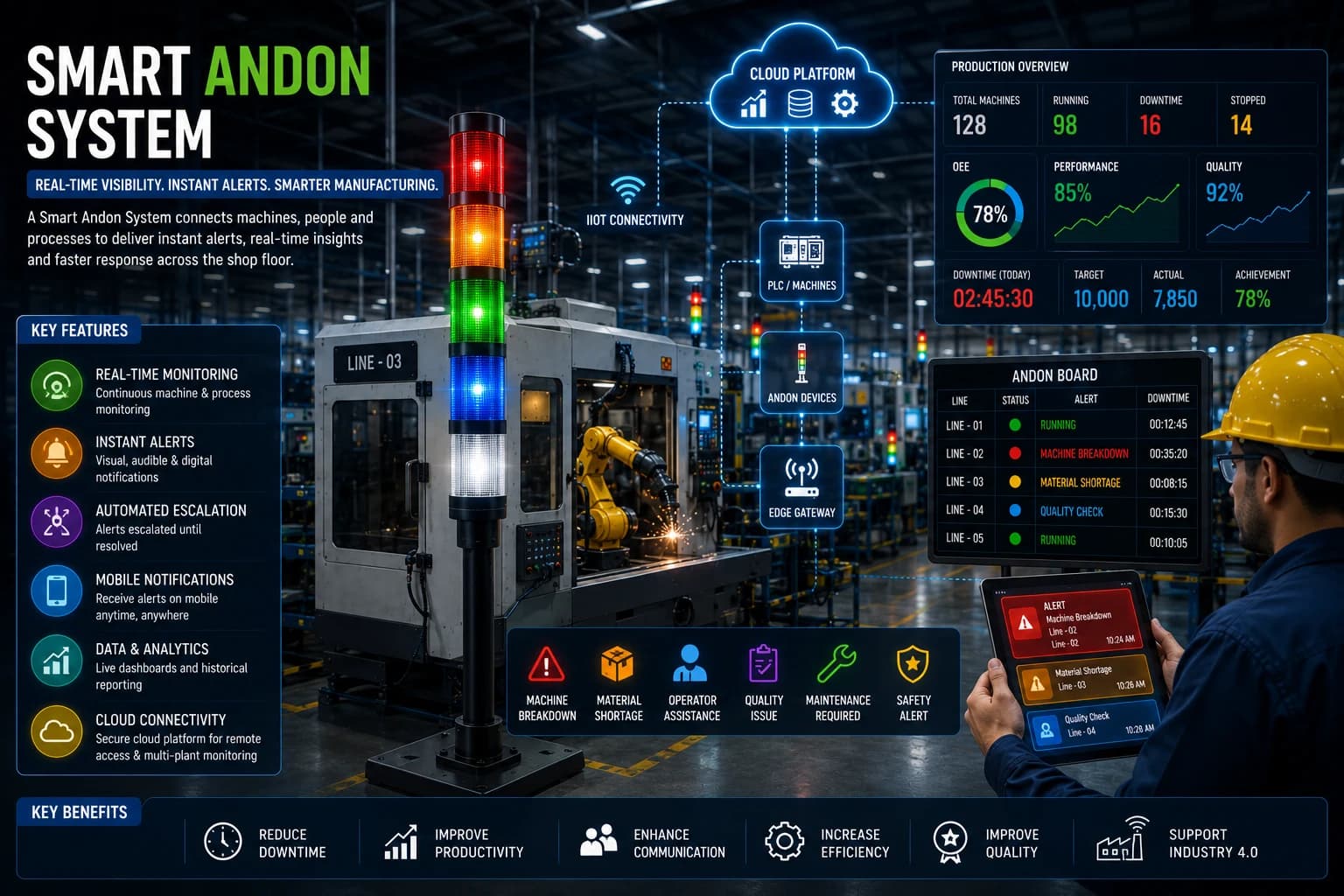
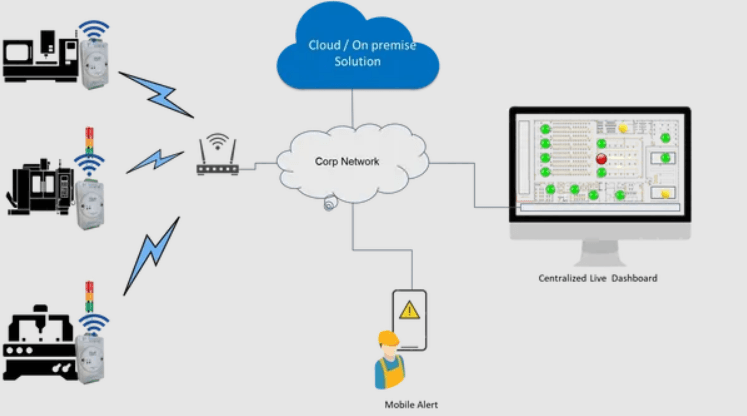
Traditional communication methods such as phone calls, paper reports, walkie-talkies, or verbal messages are often slow and unreliable, especially in large manufacturing facilities. Modern Andon-based communication systems automate the entire process by instantly notifying the right personnel whenever an issue occurs. Operators can raise alerts with a single button, while machines can automatically generate notifications through PLCs and Industrial Internet of Things (IIoT) devices.
Today's Manufacturing Communication Systems integrate with Manufacturing Execution Systems (MES), Enterprise Resource Planning (ERP), SCADA, Production Monitoring Software, cloud dashboards, and mobile applications to create a connected factory where information flows seamlessly across every department.
What is a Manufacturing Communication System?
A Manufacturing Communication System is a centralized platform that enables real-time communication between people, machines, and software across a manufacturing facility. It ensures that production events, maintenance requests, quality issues, safety incidents, and operational updates are communicated immediately to the appropriate personnel.
When integrated with an Andon System, communication becomes automated, eliminating manual reporting and reducing response times.
Typical manufacturing events include:
- Machine breakdowns
- Operator assistance requests
- Material shortages
- Quality inspection alerts
- Maintenance requests
- Production target deviations
- Safety incidents
- Utility failures
- Equipment faults
- Shift change notifications
Instead of relying on manual communication, the system distributes alerts instantly through multiple communication channels.
Why Manufacturing Communication Matters
Poor communication is one of the leading causes of production delays in manufacturing. When operators cannot quickly notify maintenance teams or supervisors, small issues often grow into major production losses.
An efficient Manufacturing Communication System helps organizations:
- Respond to production issues faster
- Reduce machine downtime
- Improve collaboration between departments
- Increase production efficiency
- Improve product quality
- Enhance workplace safety
- Reduce operational costs
- Improve customer delivery performance
Fast and accurate communication ensures that production continues with minimal interruptions.
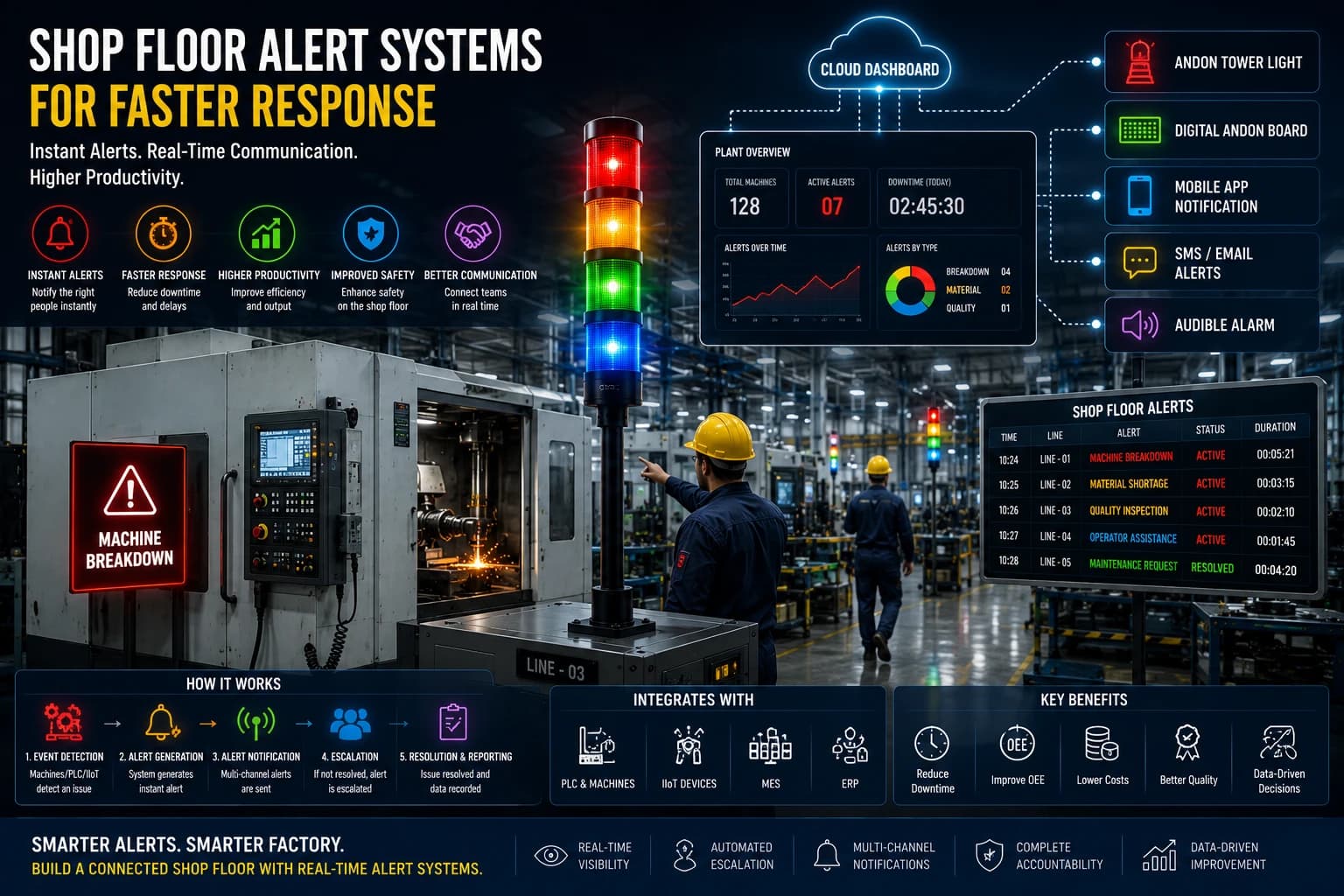
How an Andon-Based Manufacturing Communication System Works
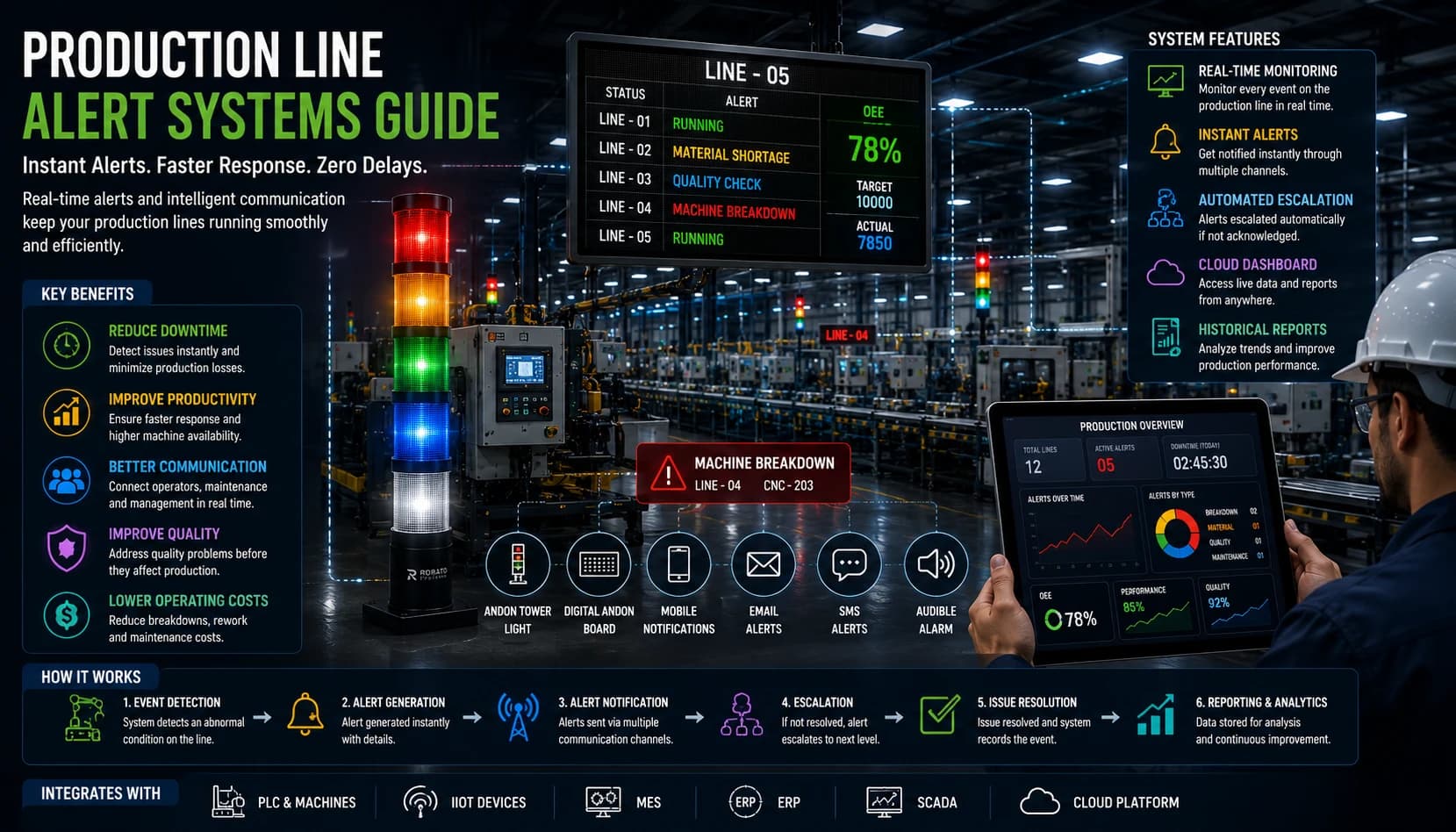
Step 1: Event Detection
Production events are detected through:
- PLCs
- Industrial IoT sensors
- Machine controllers
- Operator call buttons
- Quality inspection systems
- Safety monitoring devices
Step 2: Alert Generation
Whenever a production issue occurs, the system automatically generates an alert.
Common alerts include:
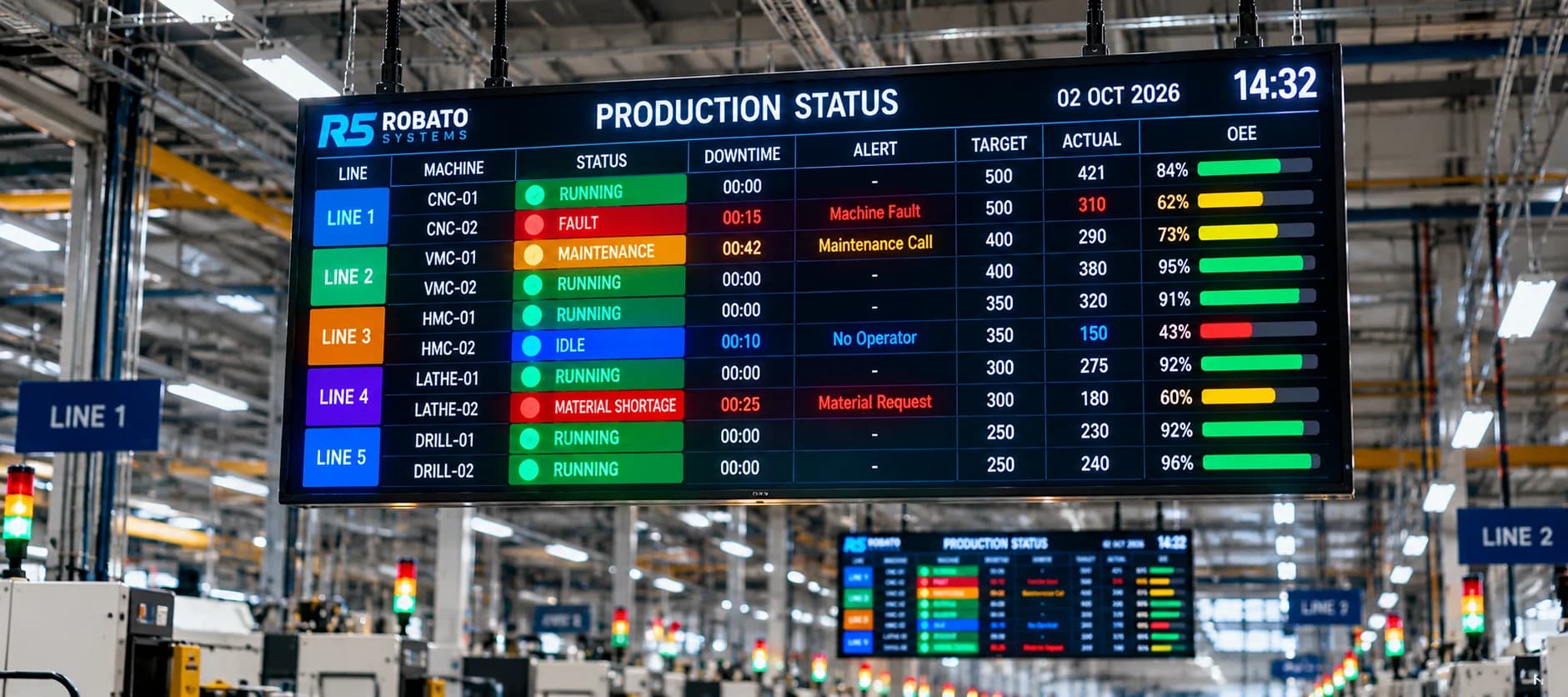
- Machine stopped
- Maintenance required
- Material request
- Operator assistance
- Quality inspection
- Emergency stop
- Production delay
Step 3: Instant Communication
The alert is immediately delivered using:
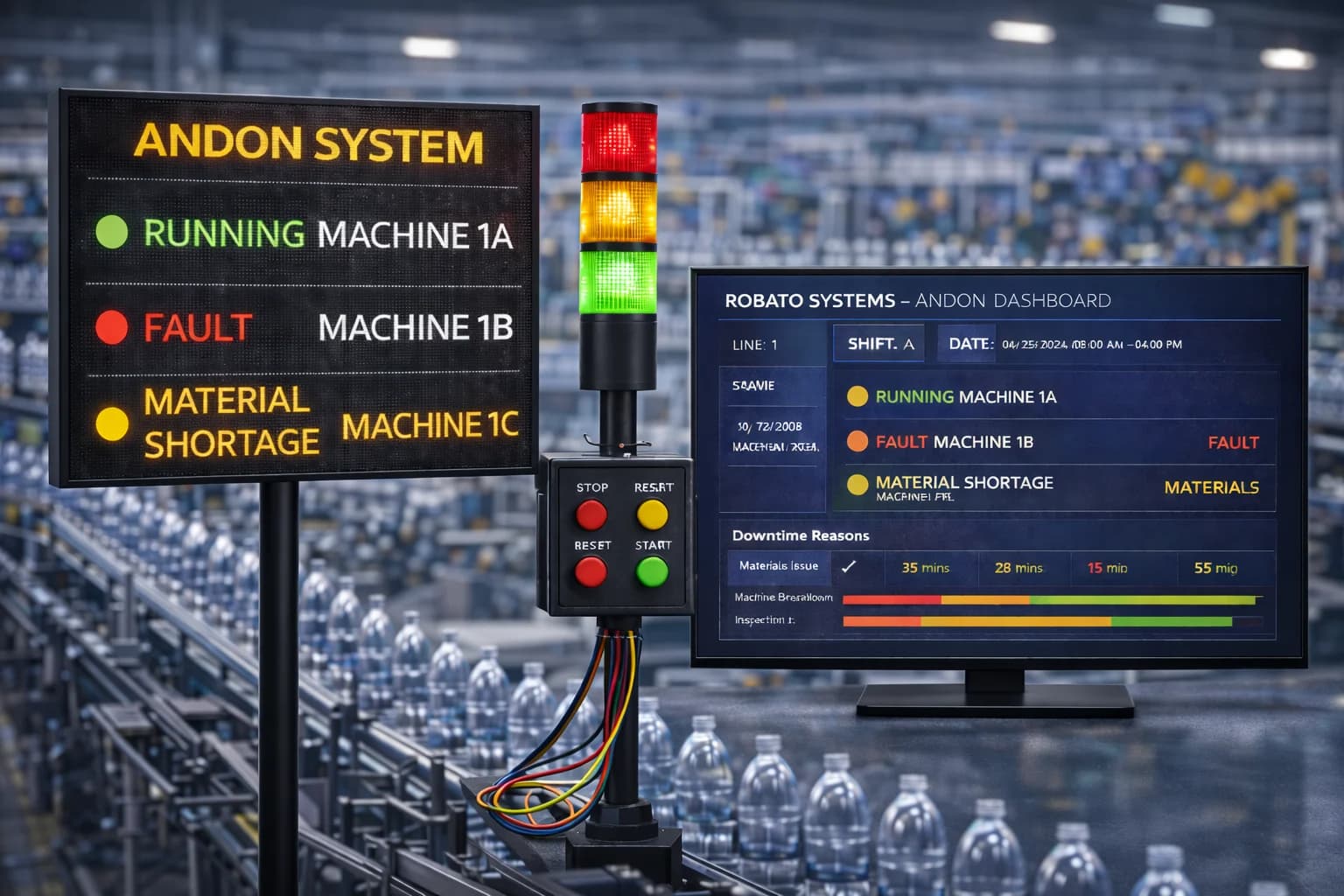
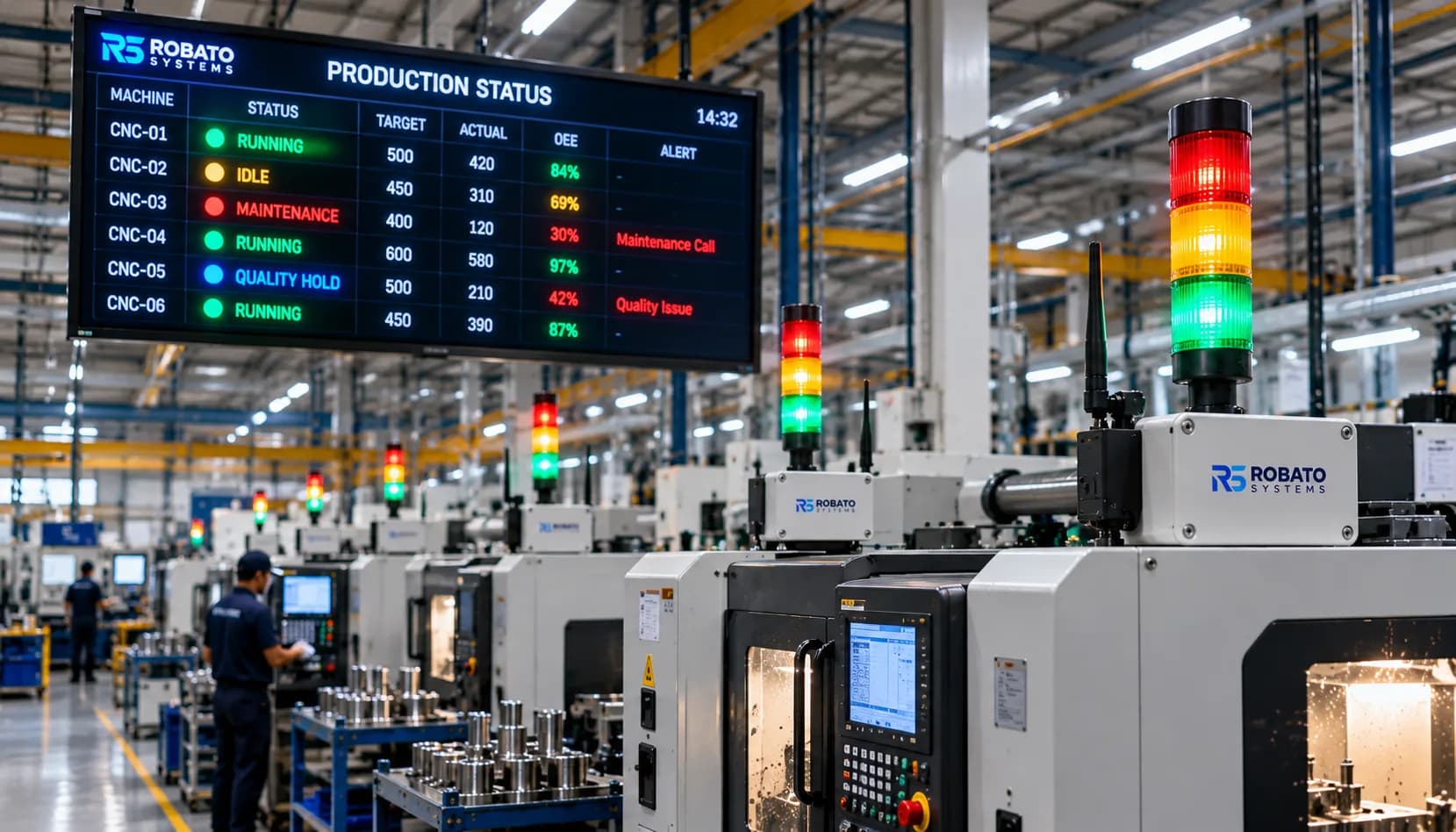
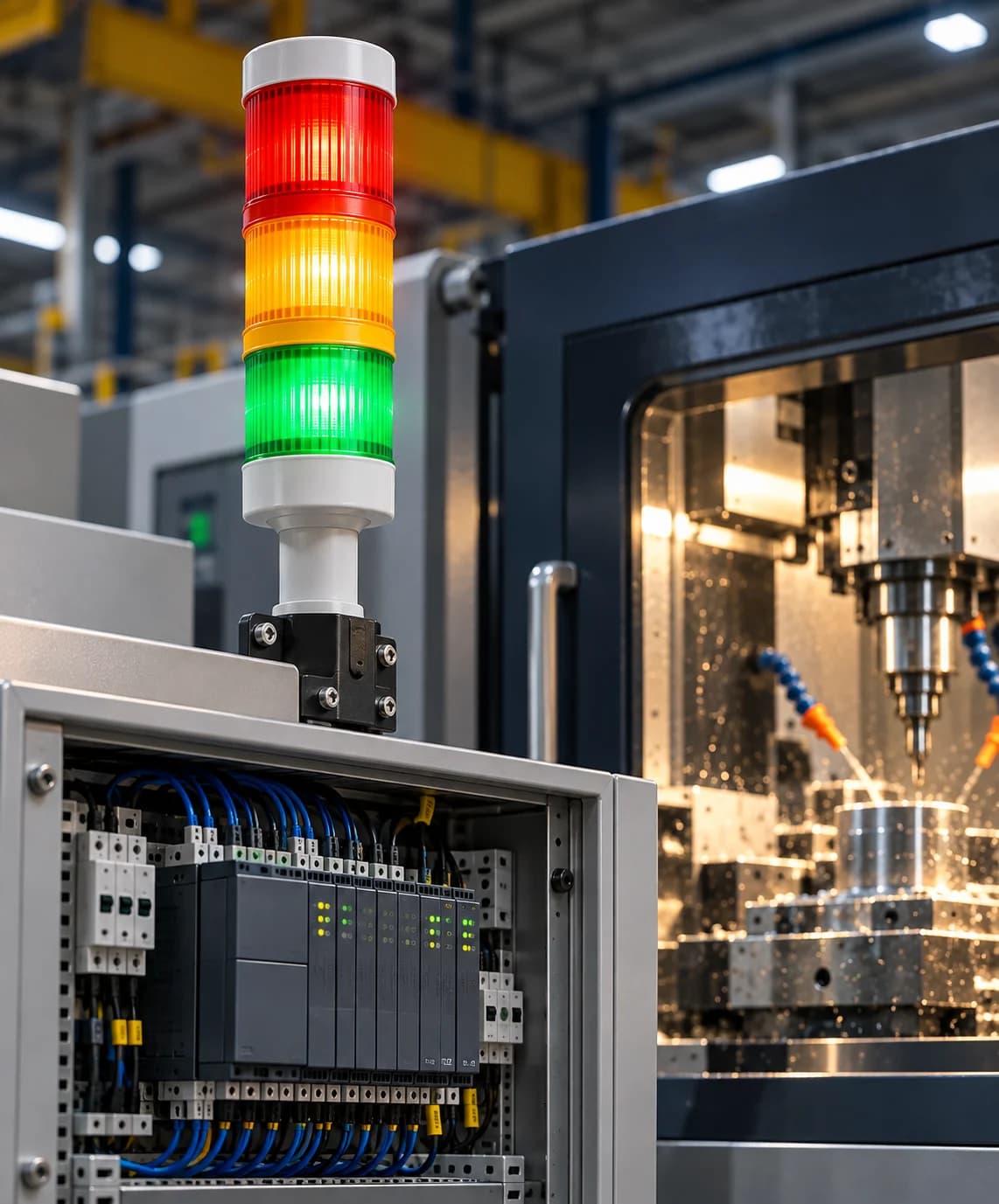
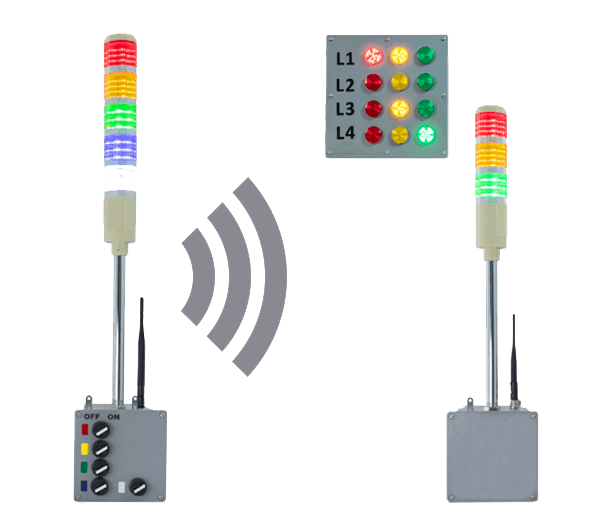
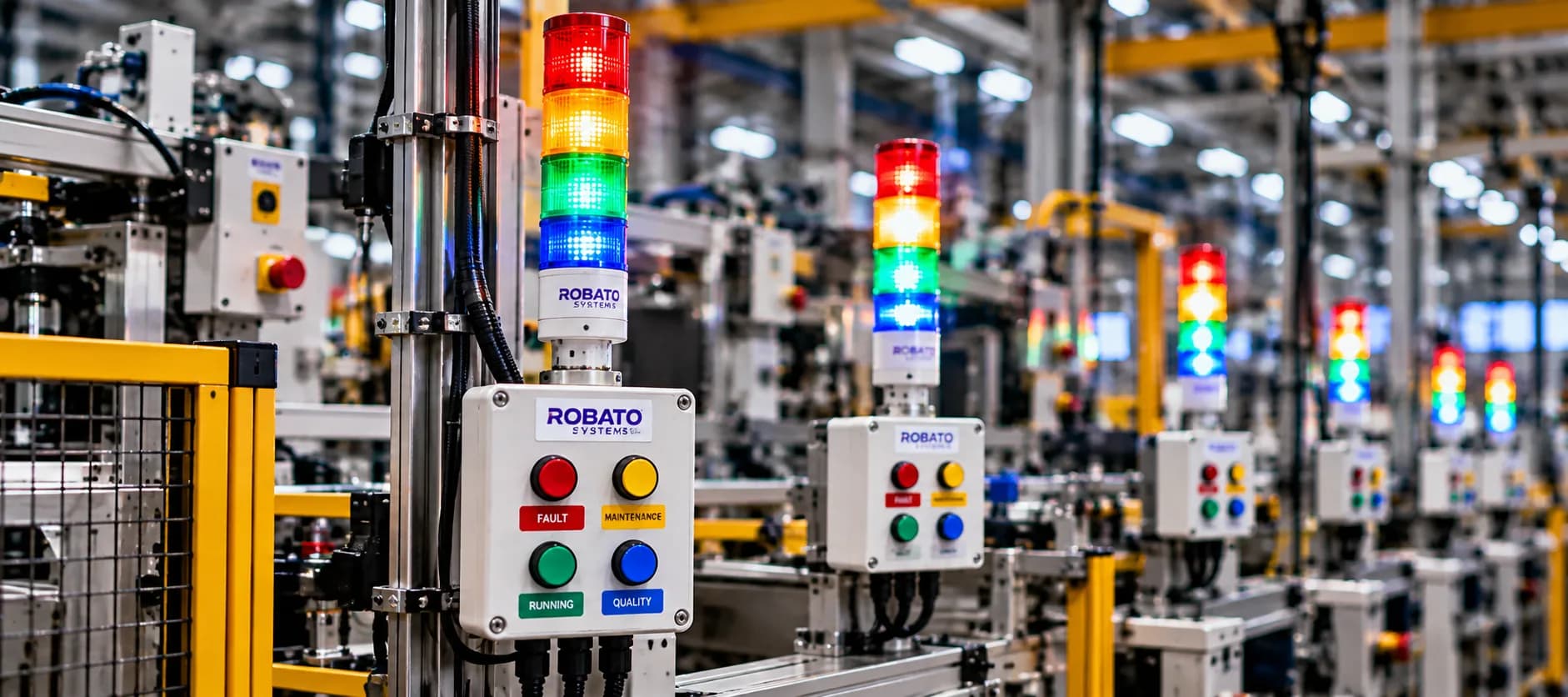
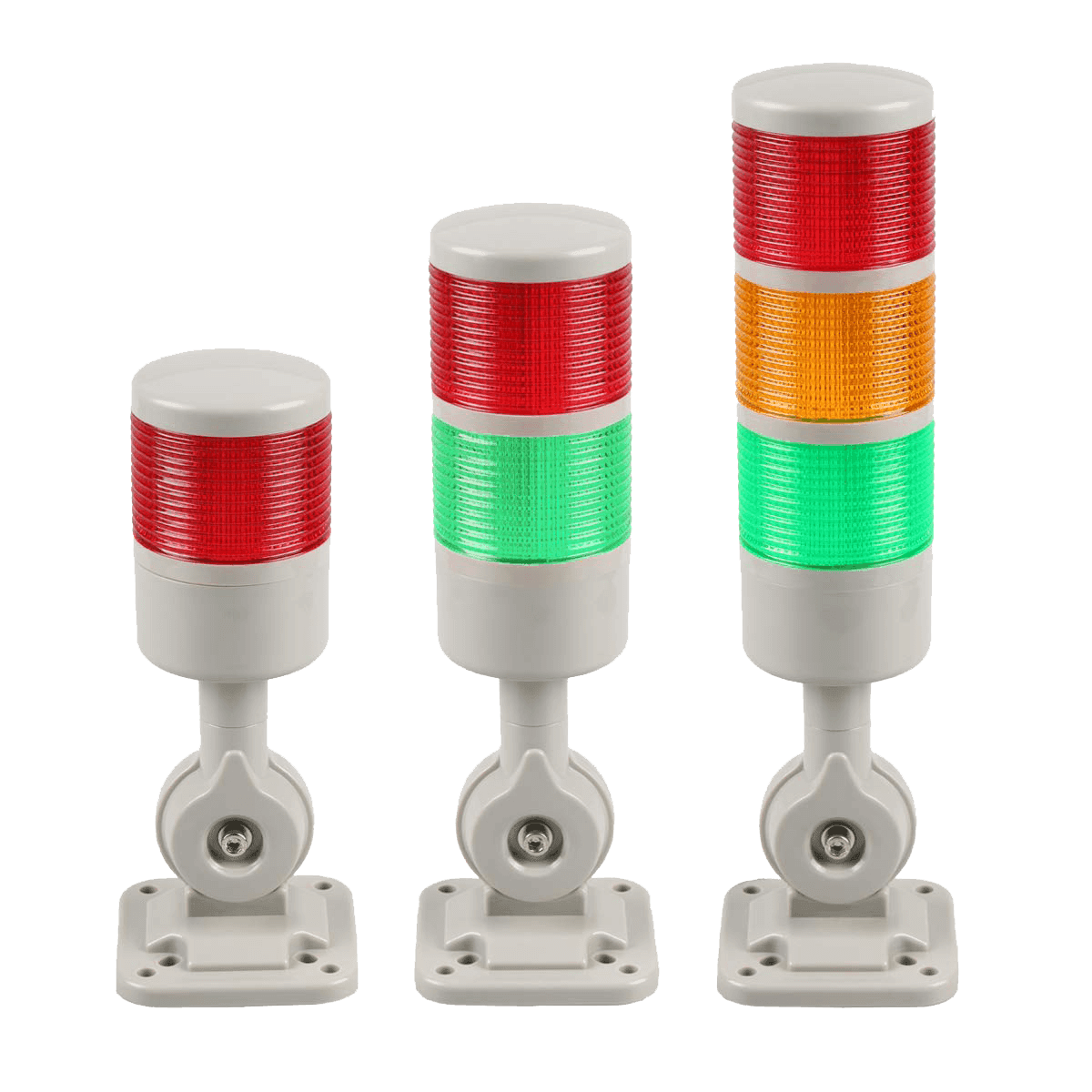
- Andon Tower Lights
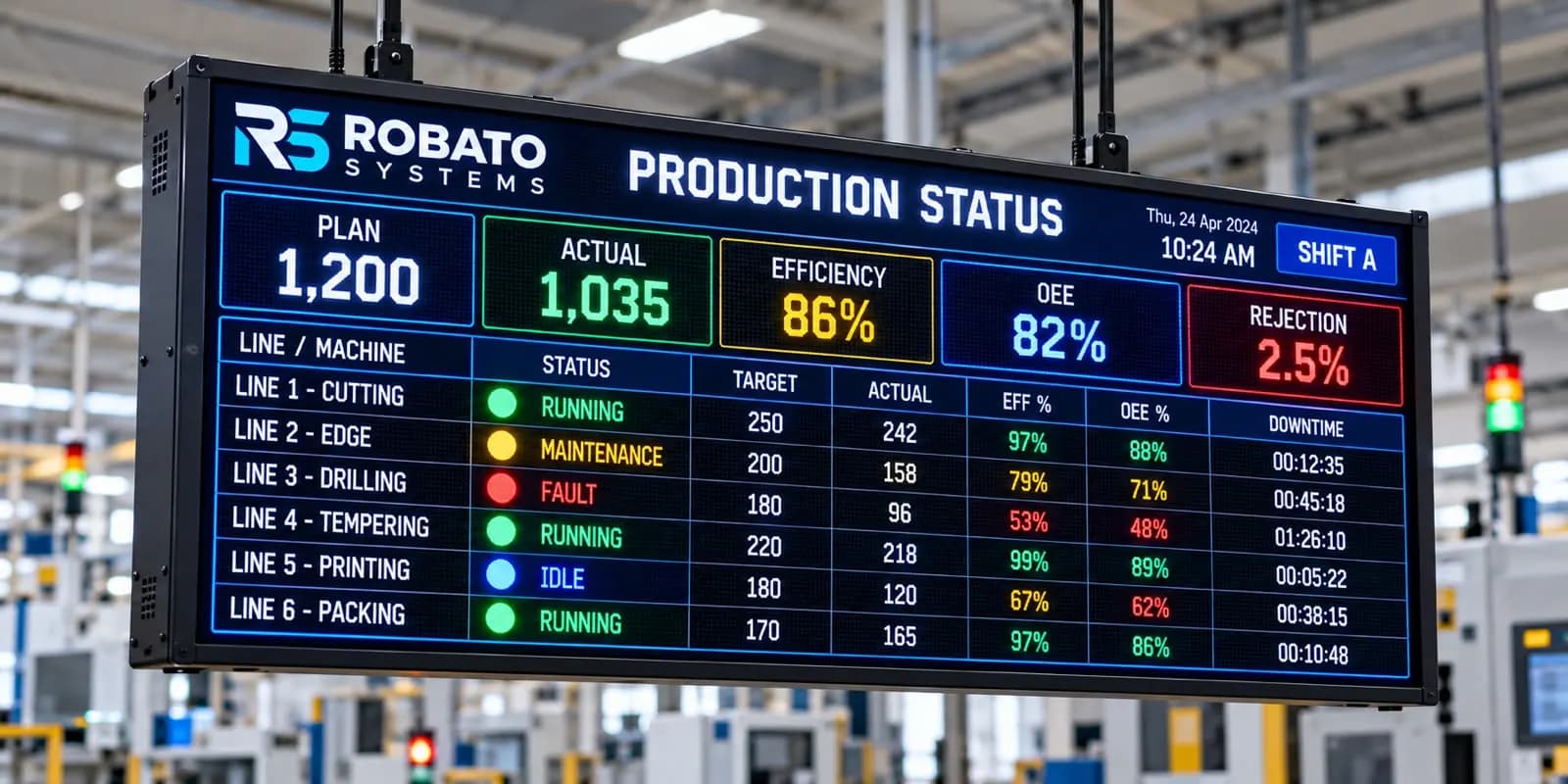
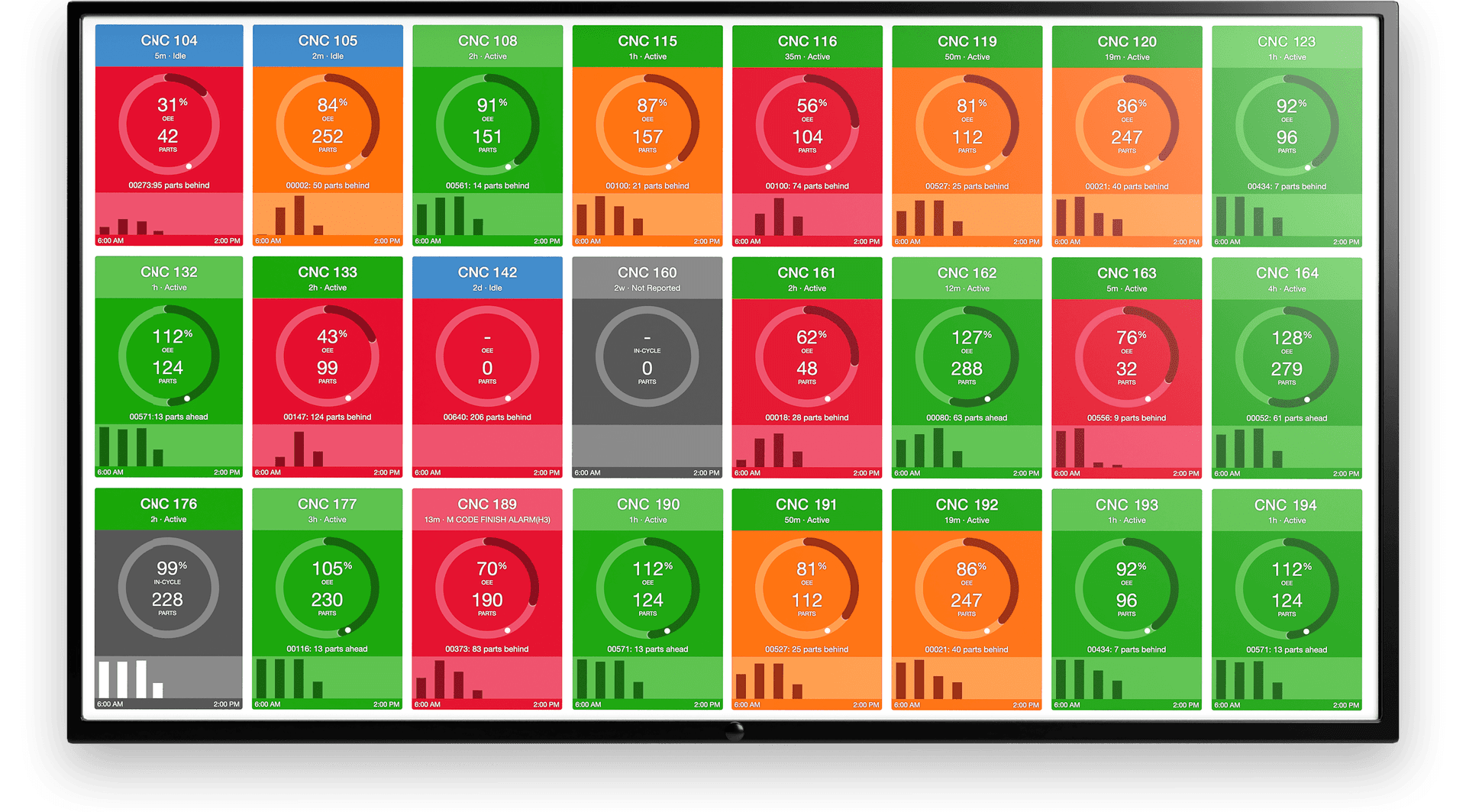
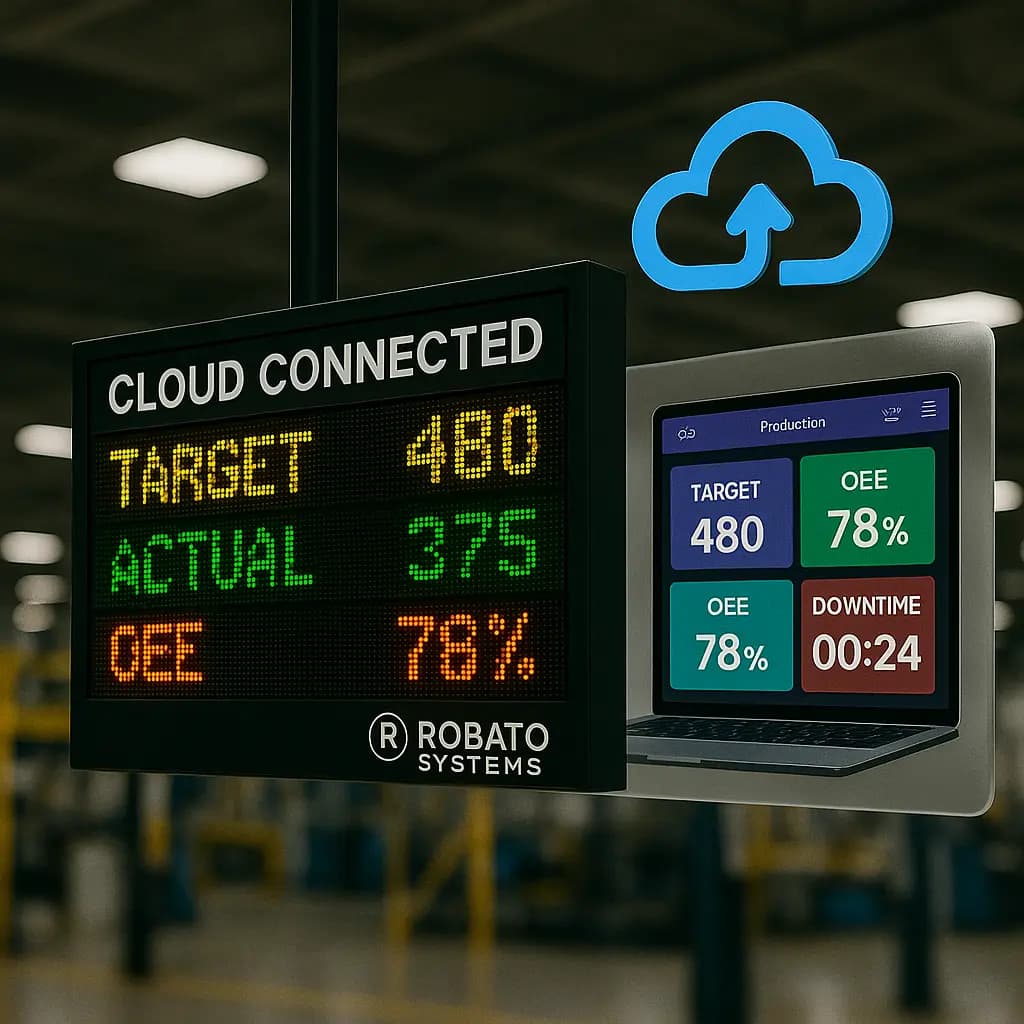
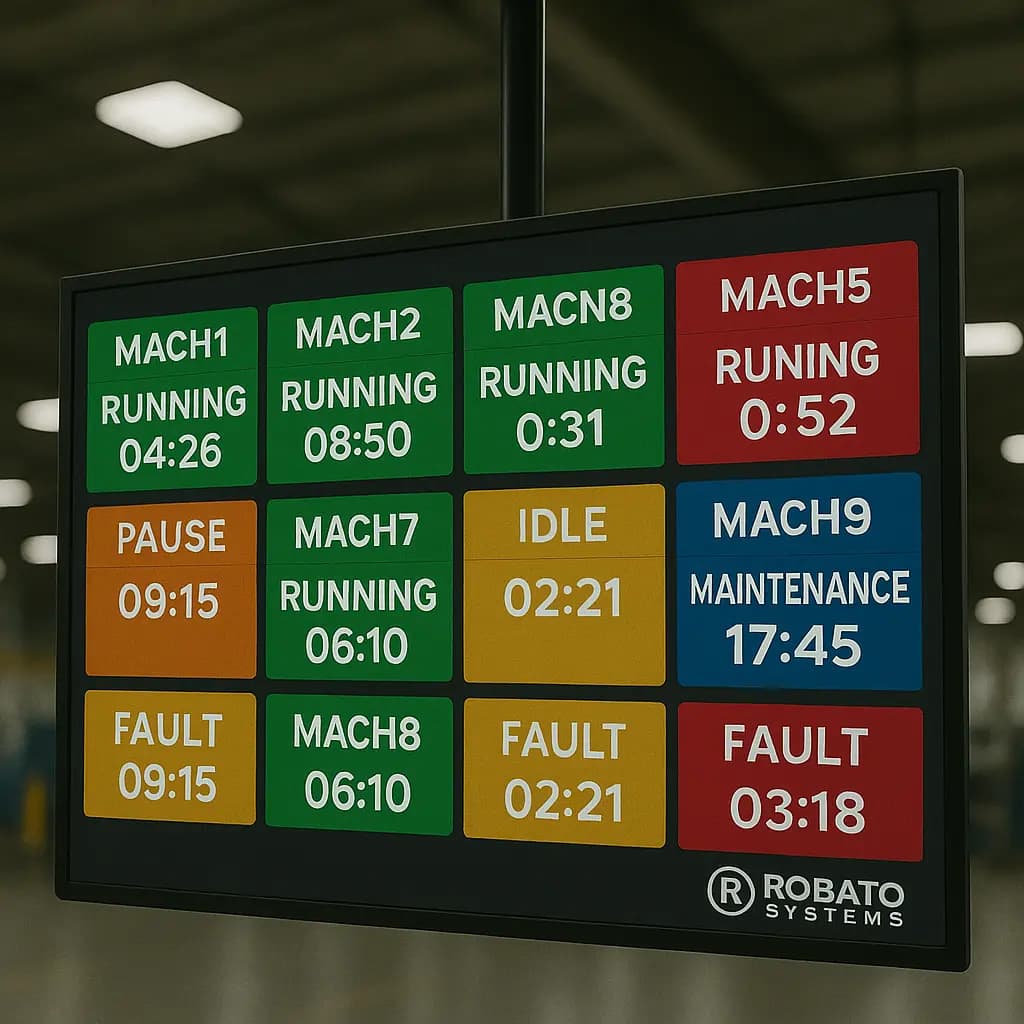
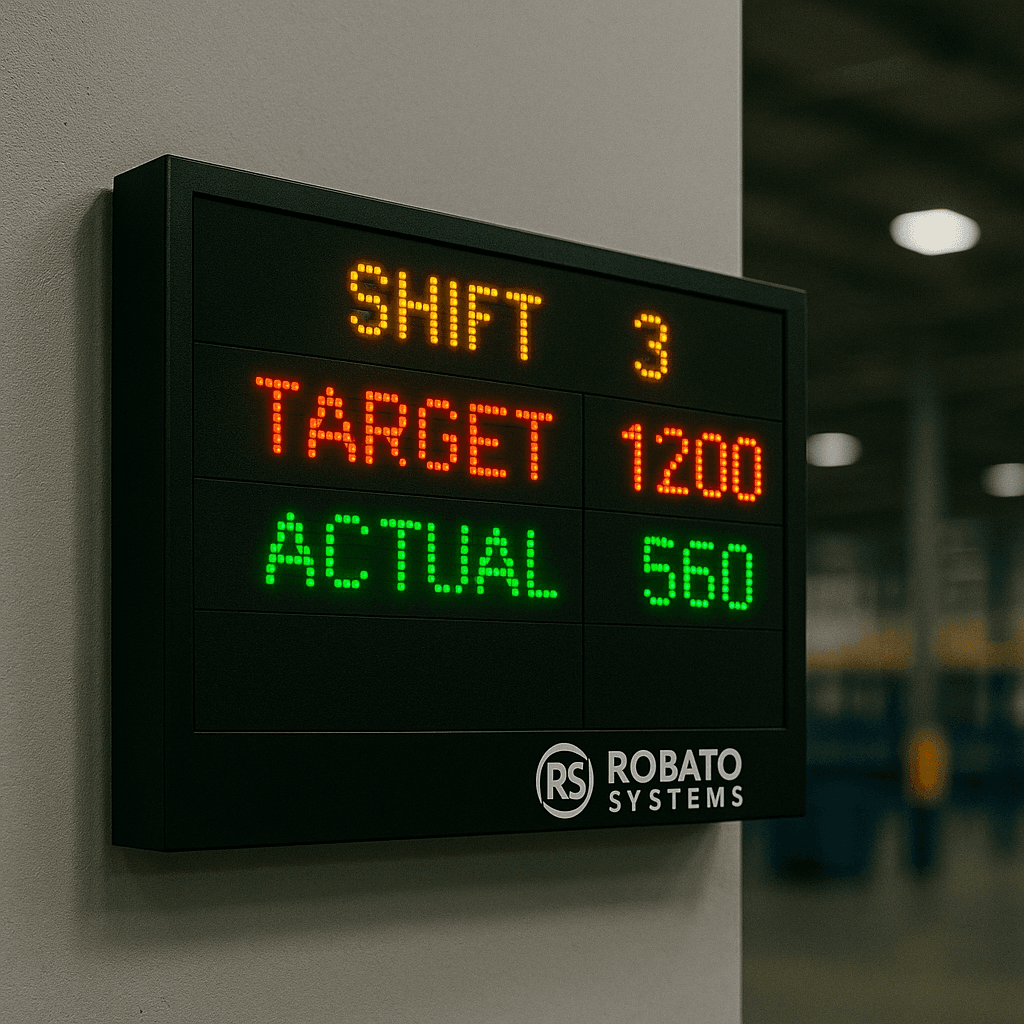
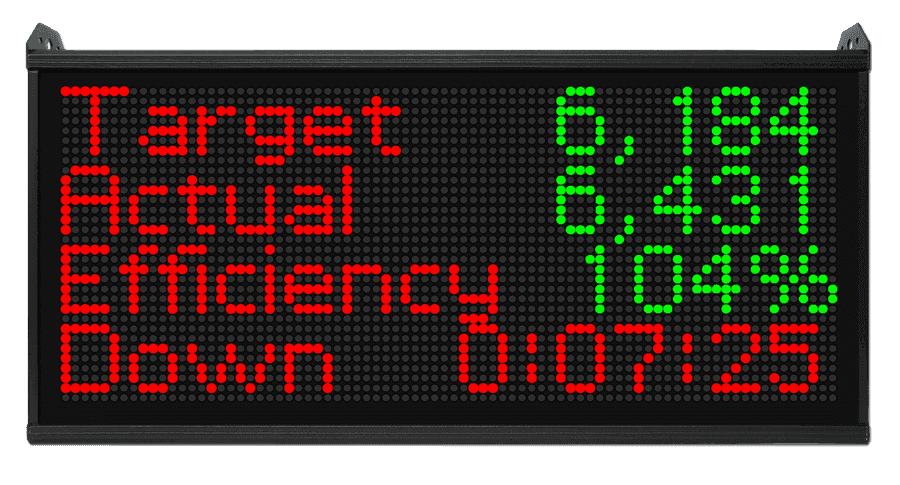
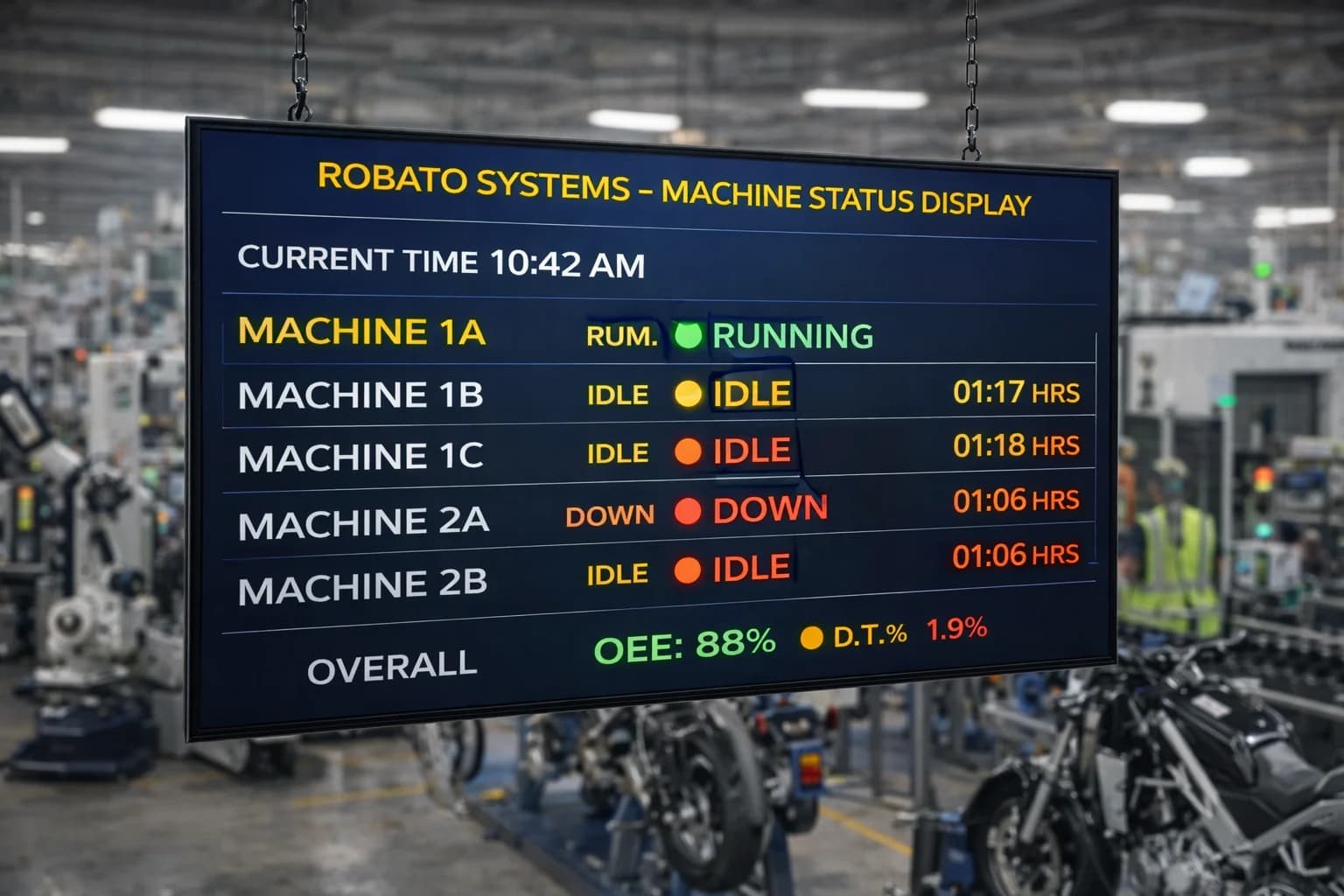
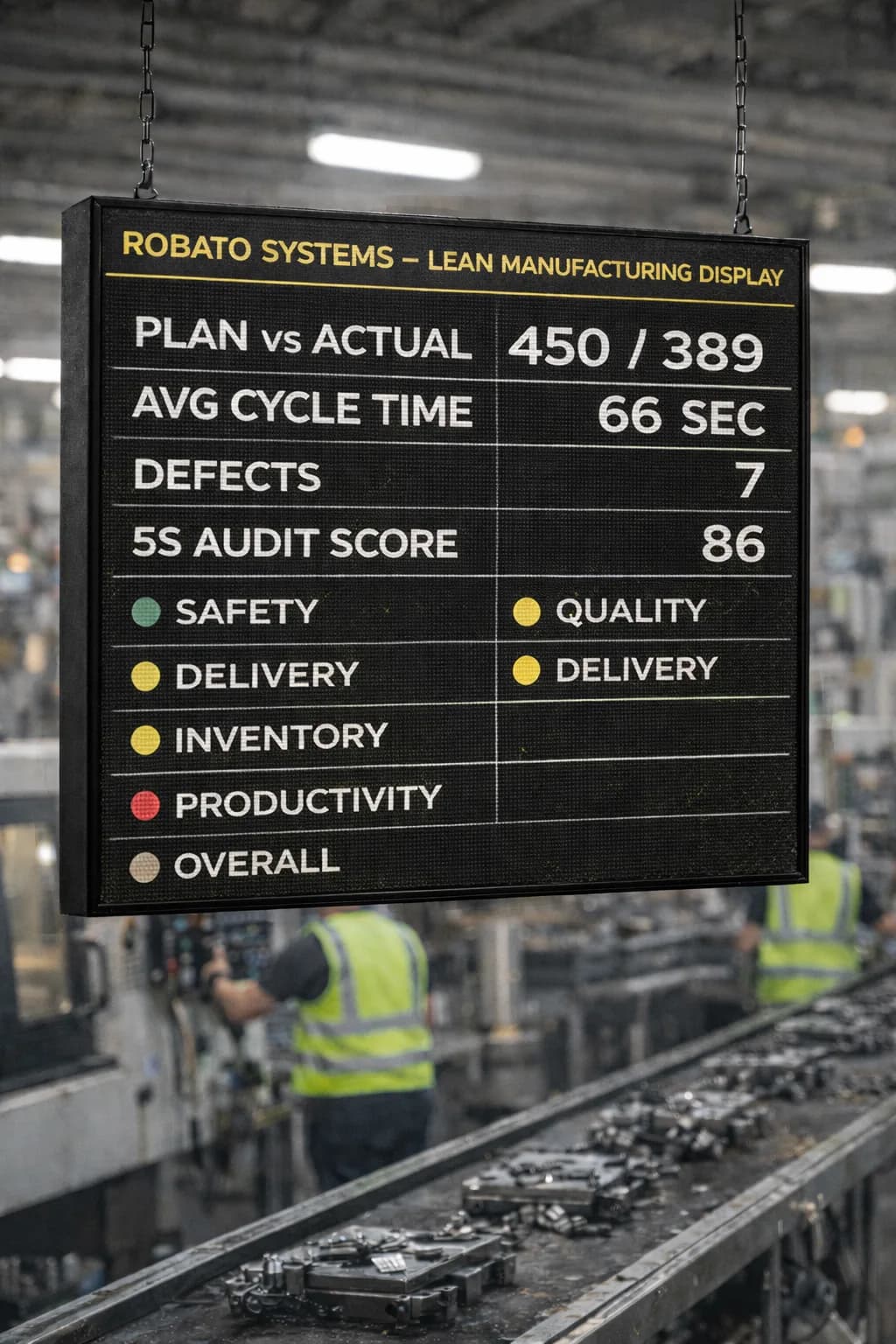
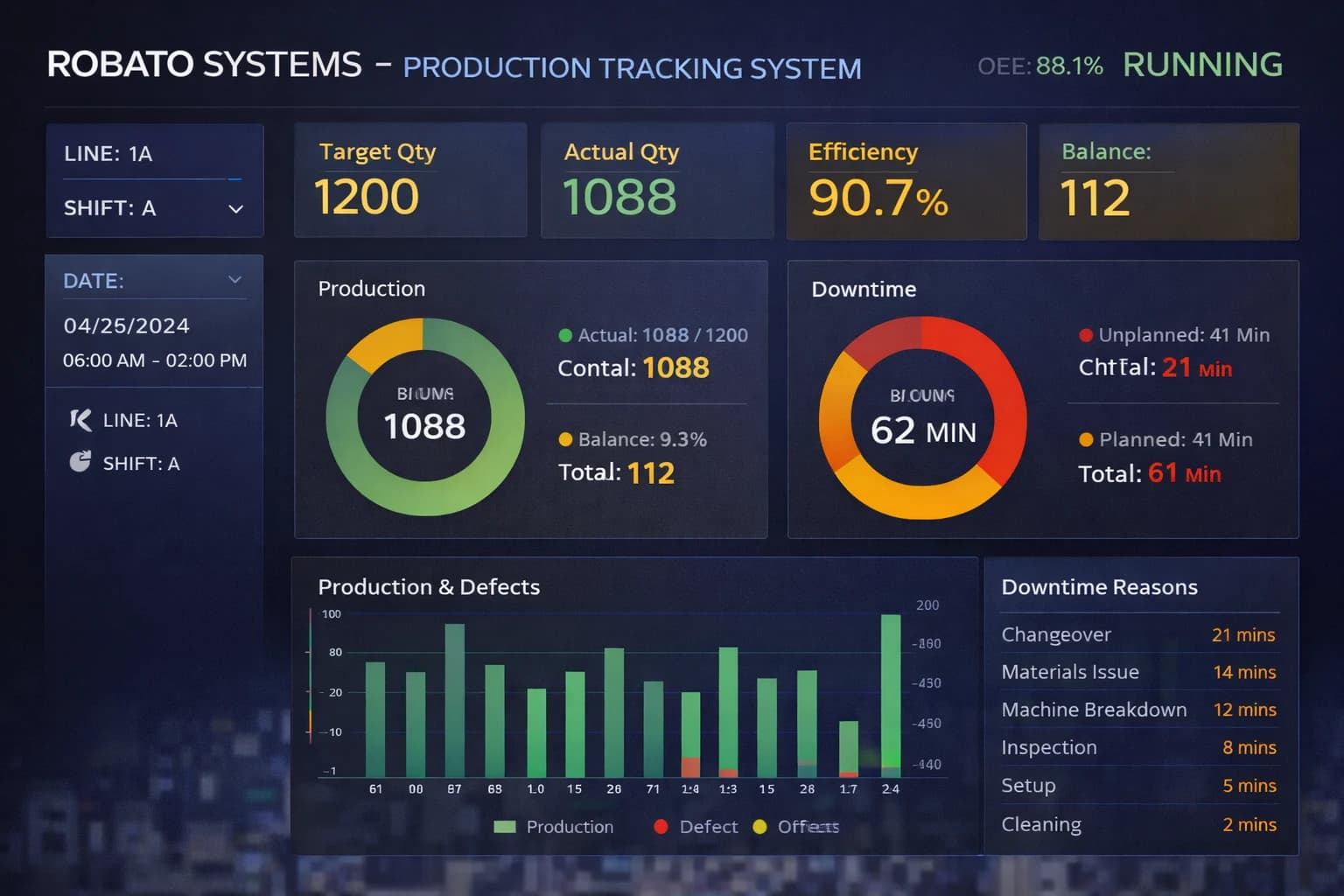
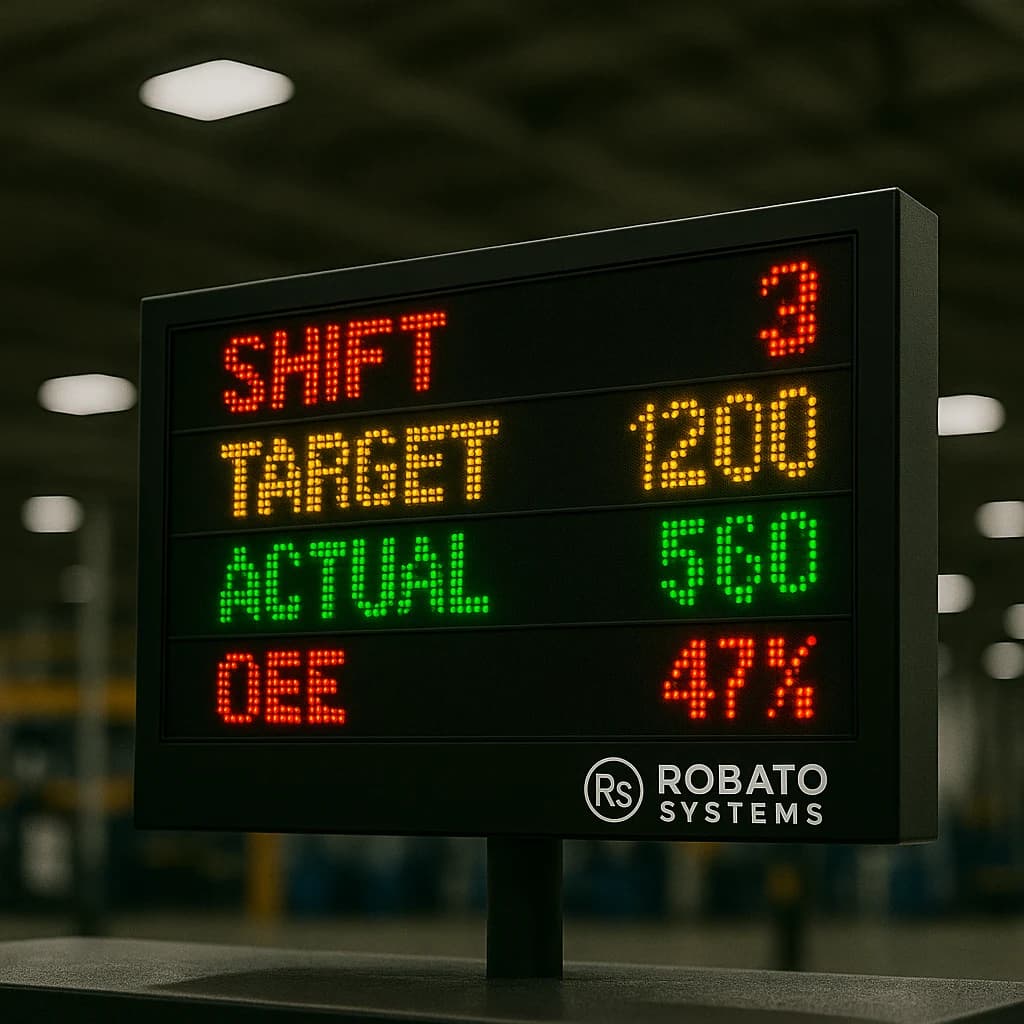
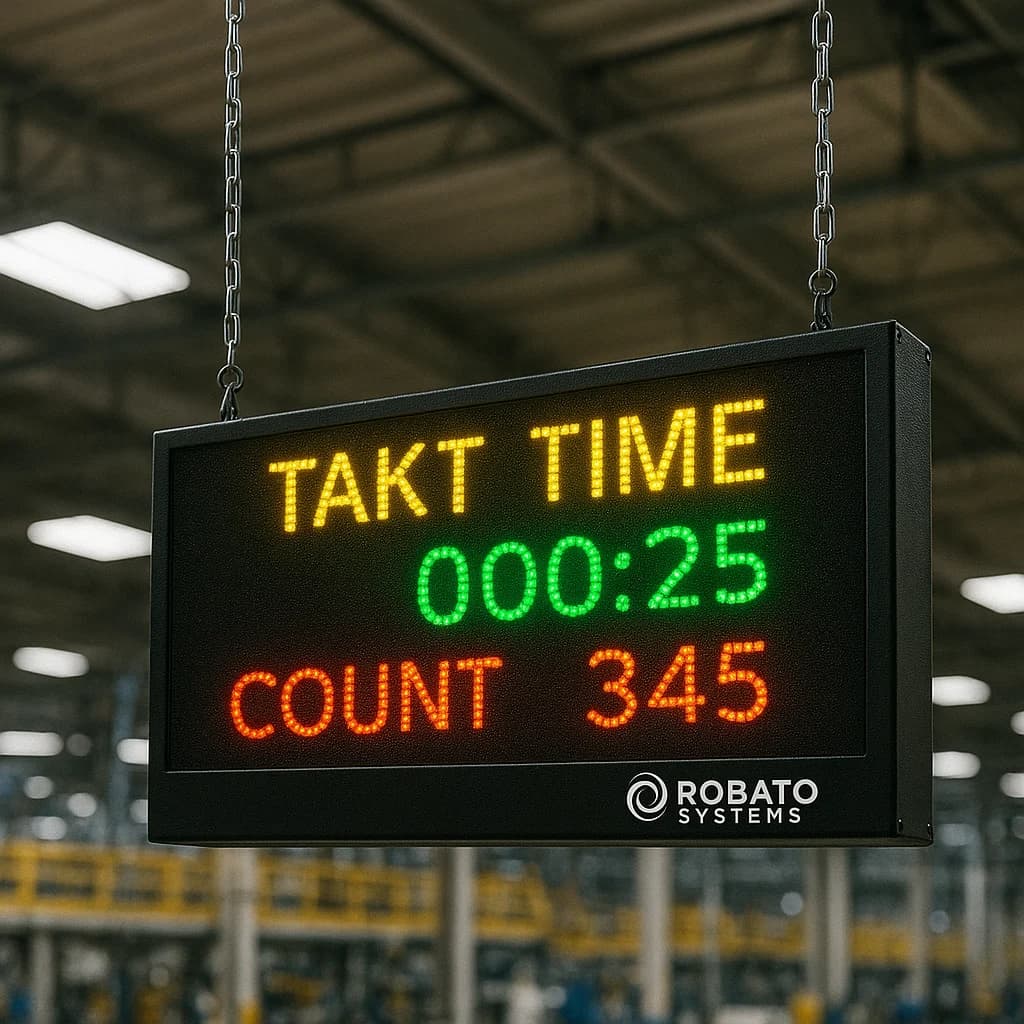
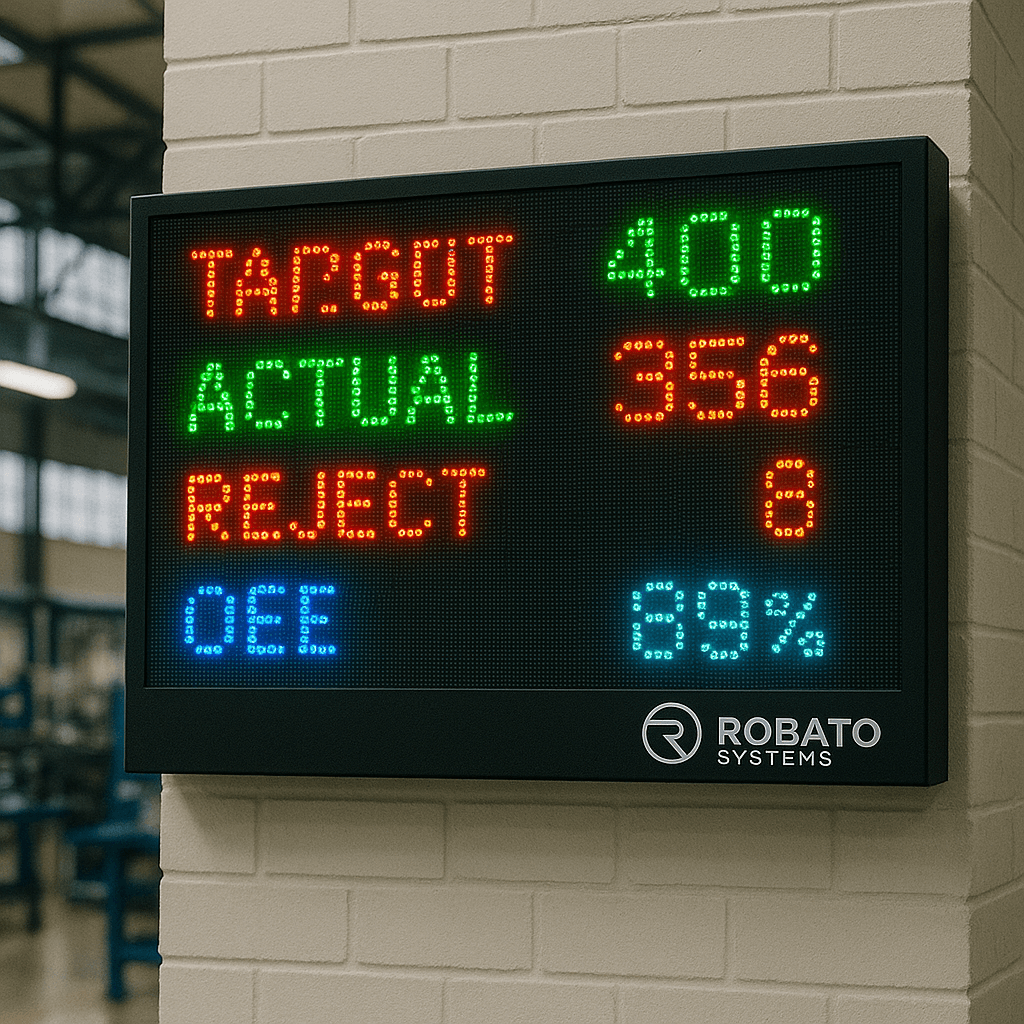
- Digital Andon Boards
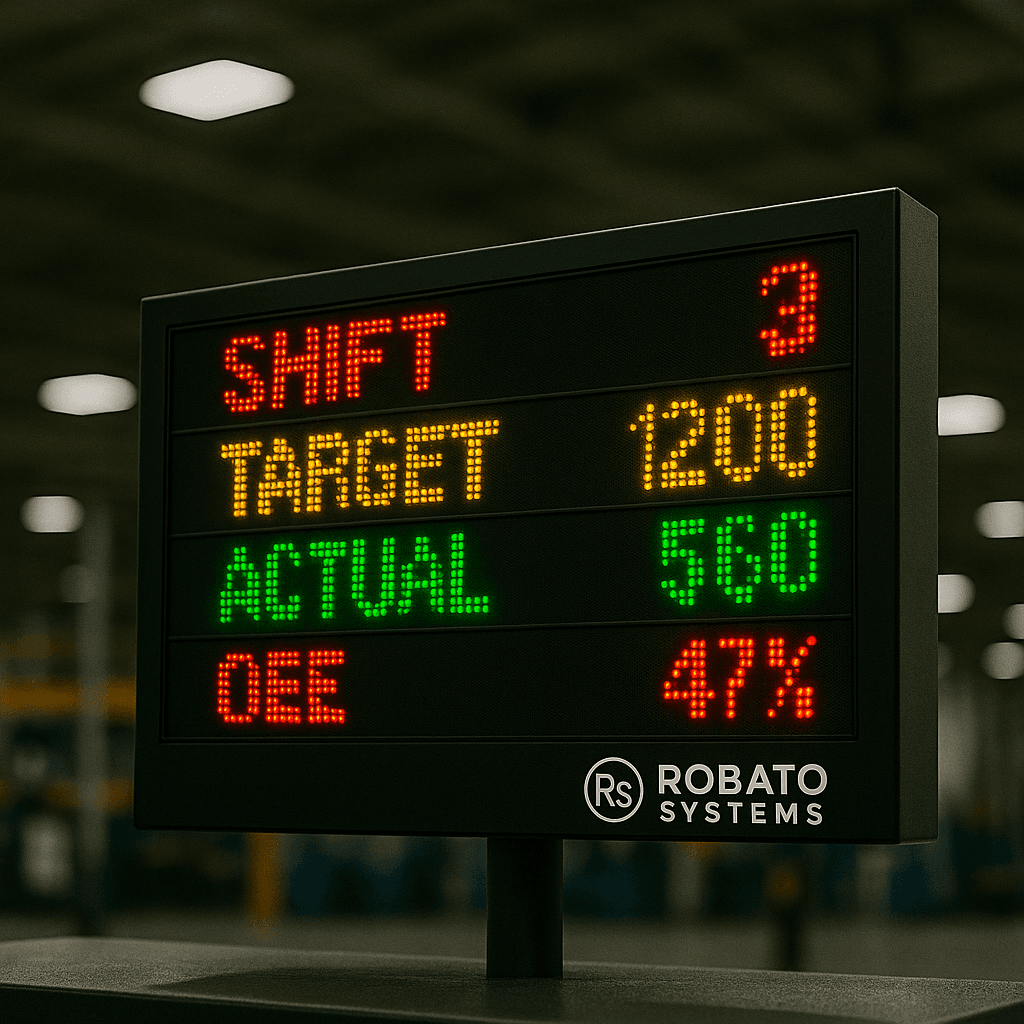
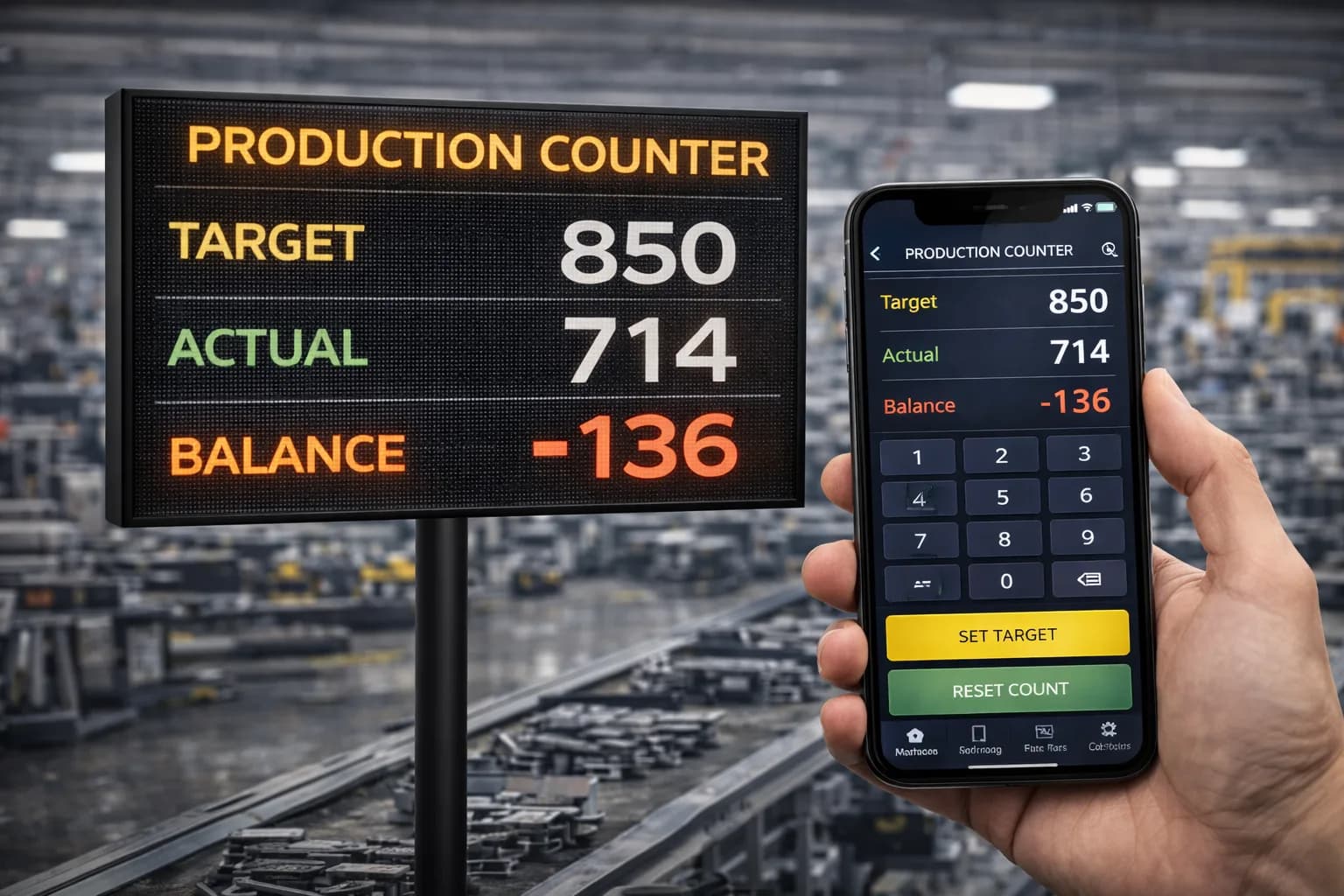
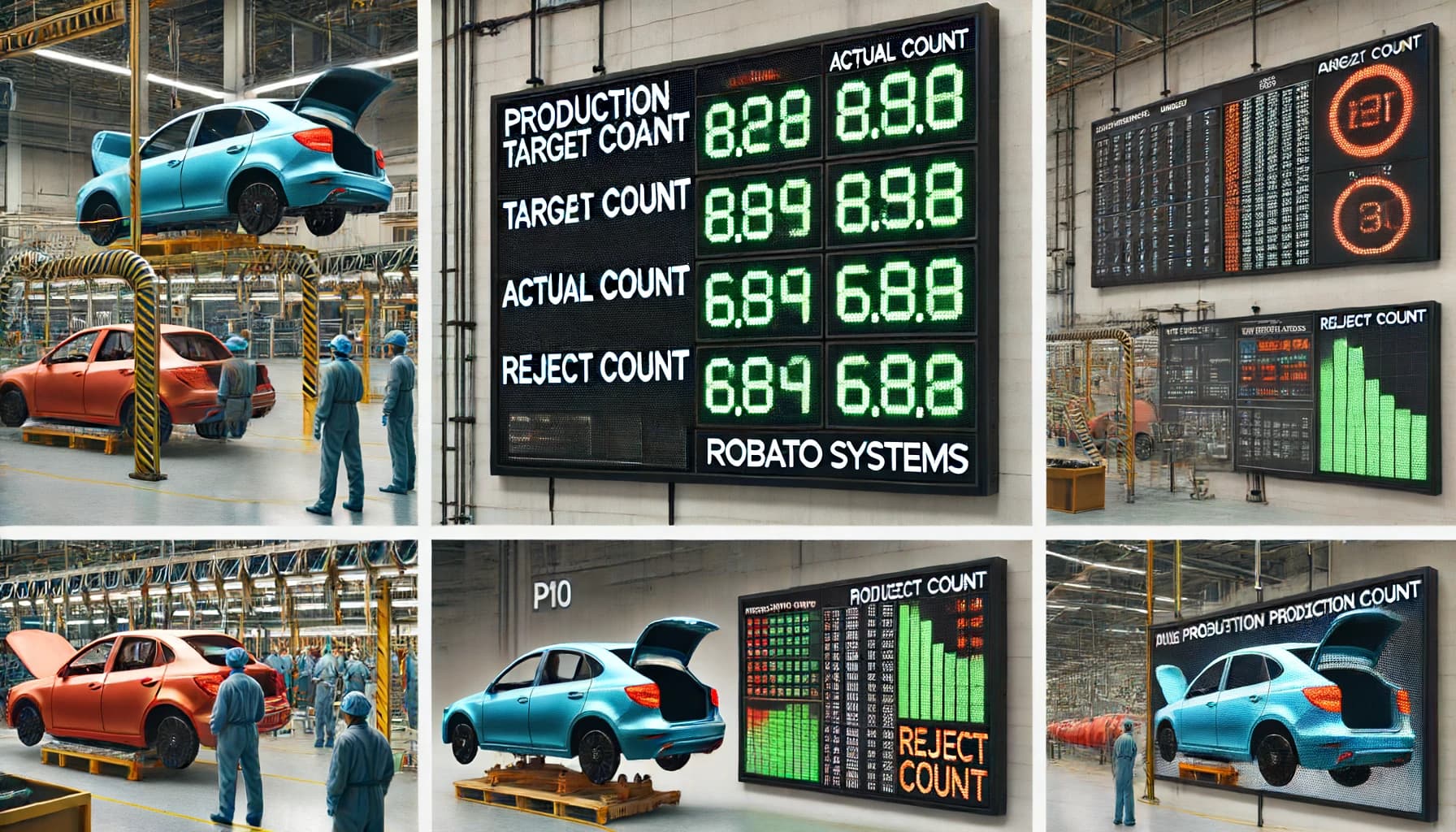
- LED Display Boards
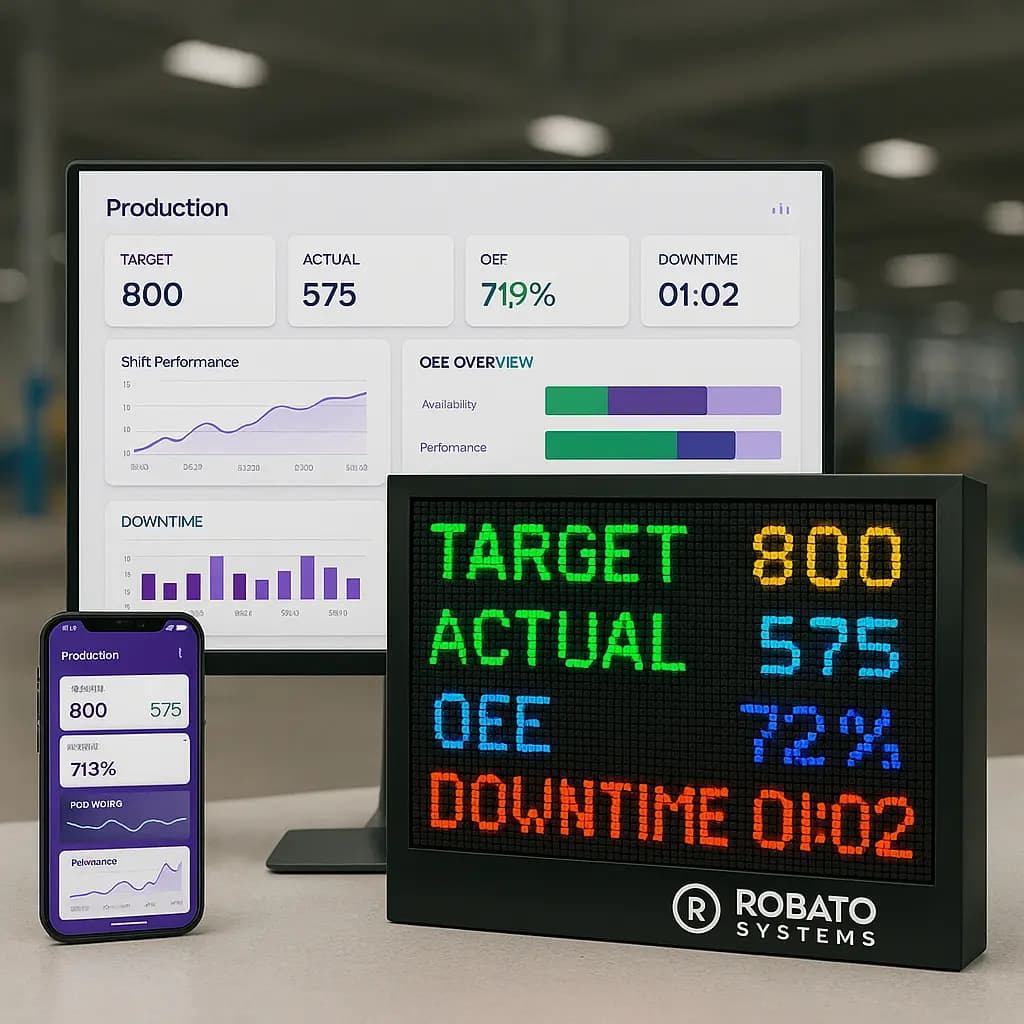
- Mobile applications
- SMS
- Audible alarms
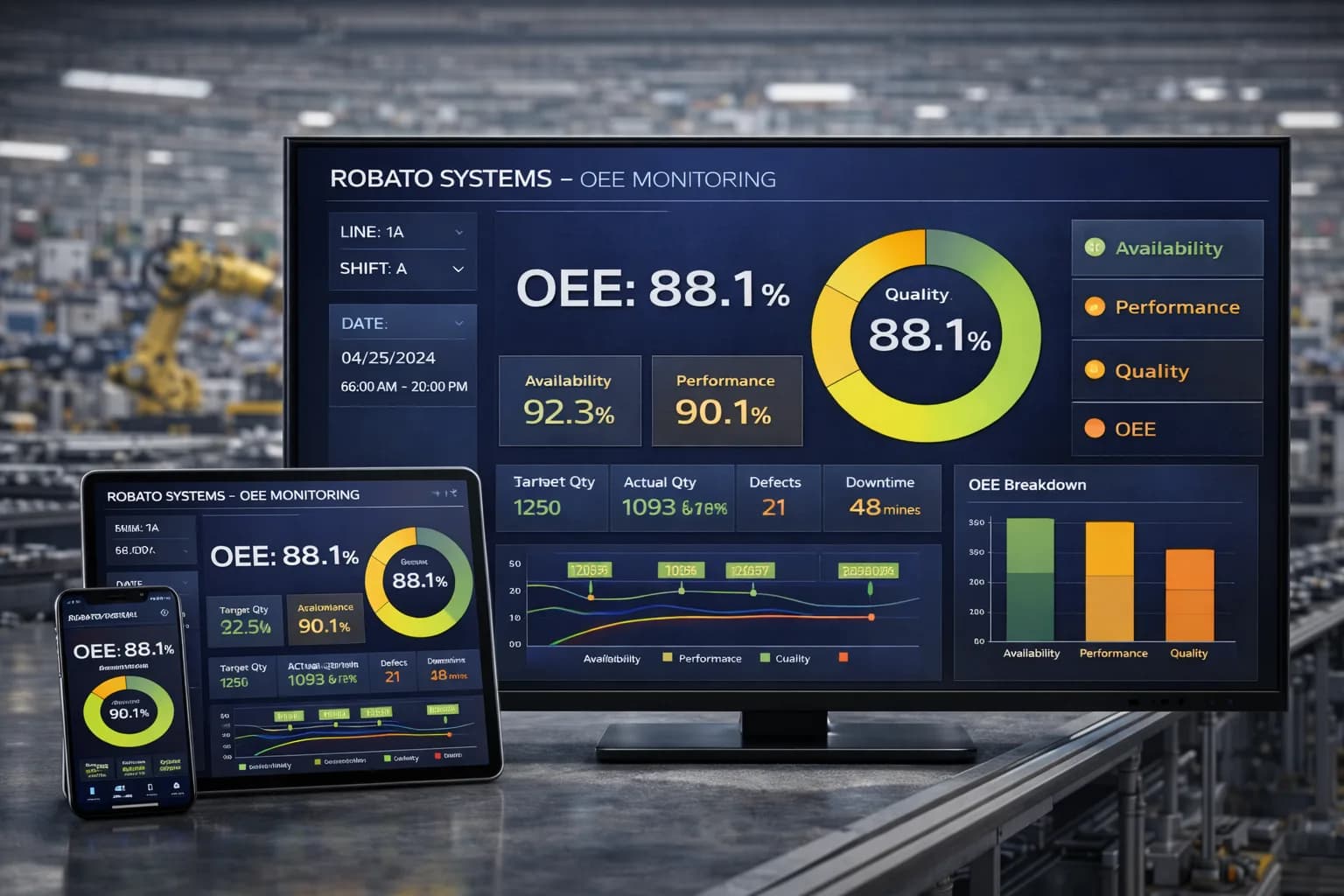
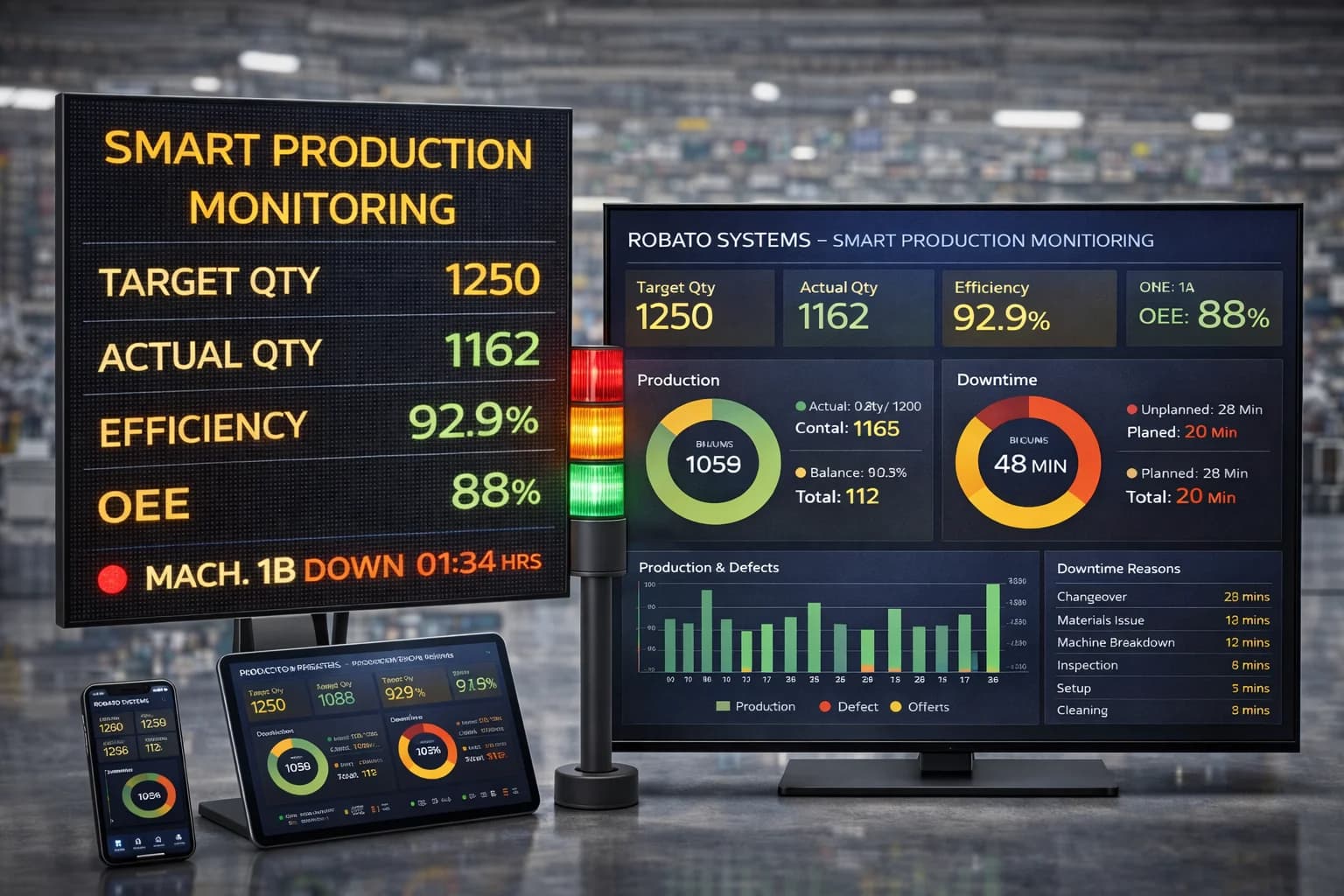
- Control room dashboards
Step 4: Escalation
If the issue remains unresolved, the system automatically escalates the alert to supervisors, managers, or plant heads based on predefined response times.
Step 5: Resolution & Reporting
Once resolved, the system records:
- Response time
- Resolution time
- Responsible department
- Root cause
- Downtime duration
- Corrective actions
This information supports continuous improvement and performance analysis.
Key Features of a Manufacturing Communication System
Real-Time Communication
Instantly notify the right people when production issues occur.
Automated Alerts
Generate notifications automatically using machine signals and IoT devices.
Multi-Channel Notifications
Communicate through:
- Tower lights
- Digital Andon boards
- Mobile applications
- SMS
- Audible alarms
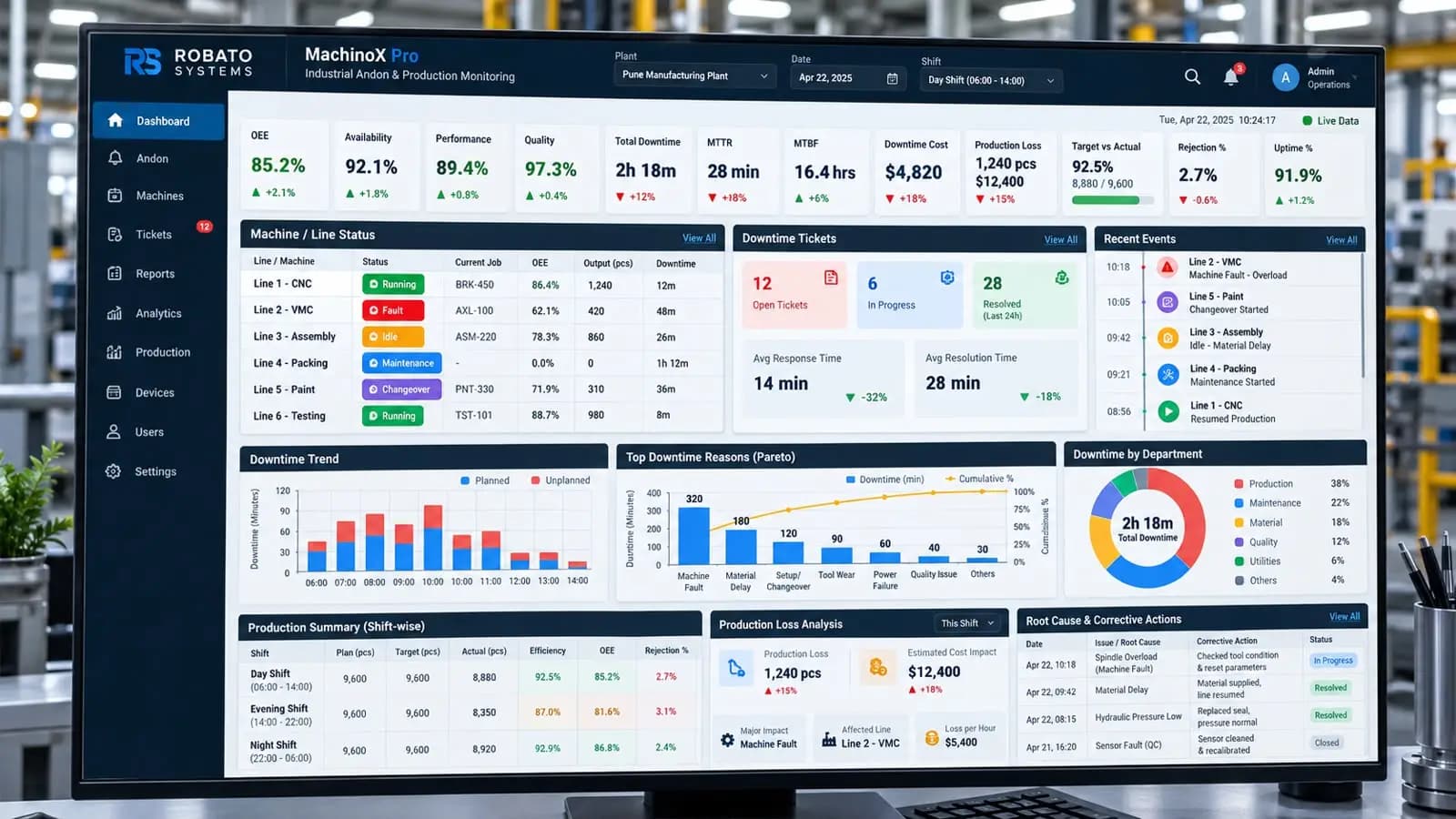
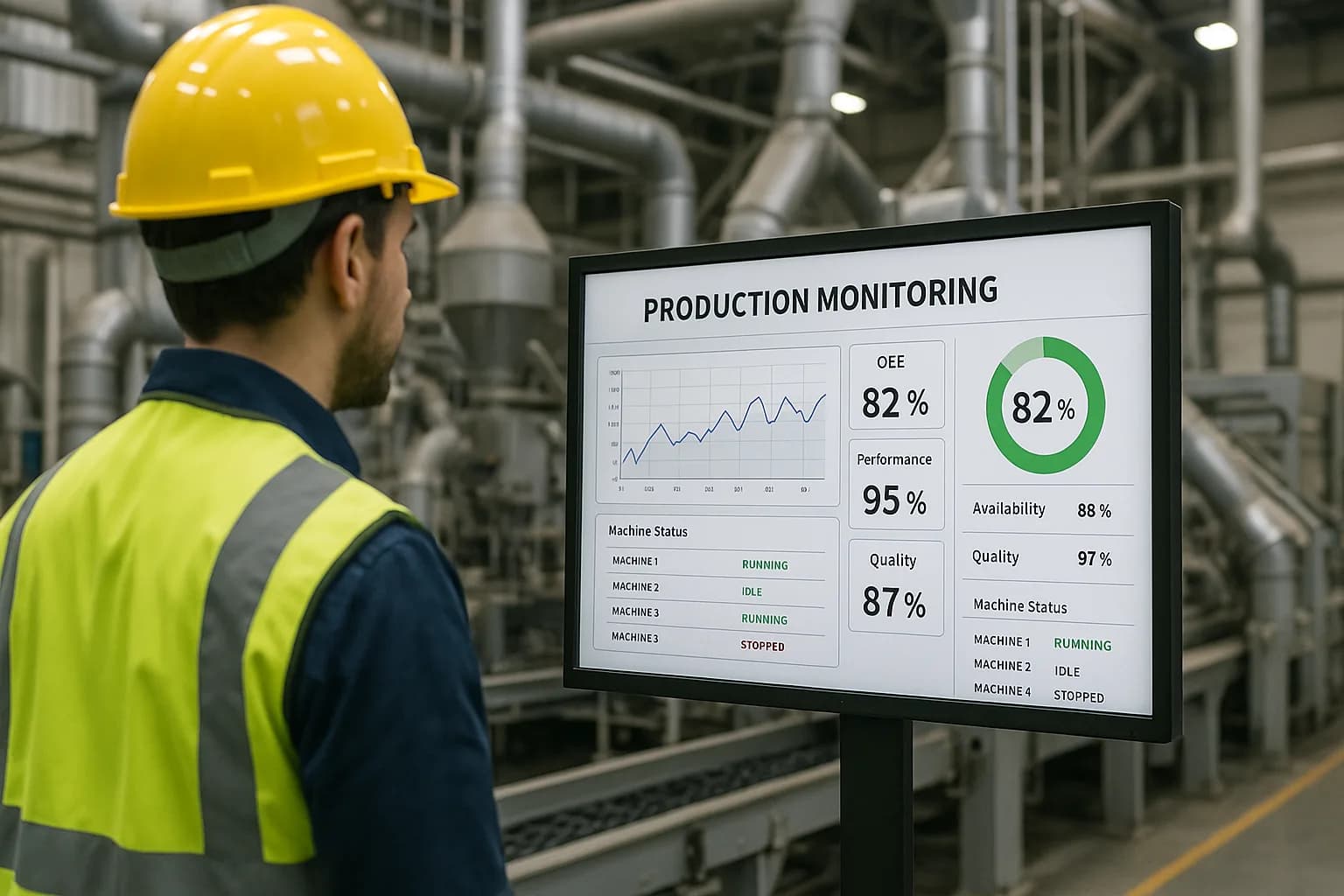
Centralized Dashboard
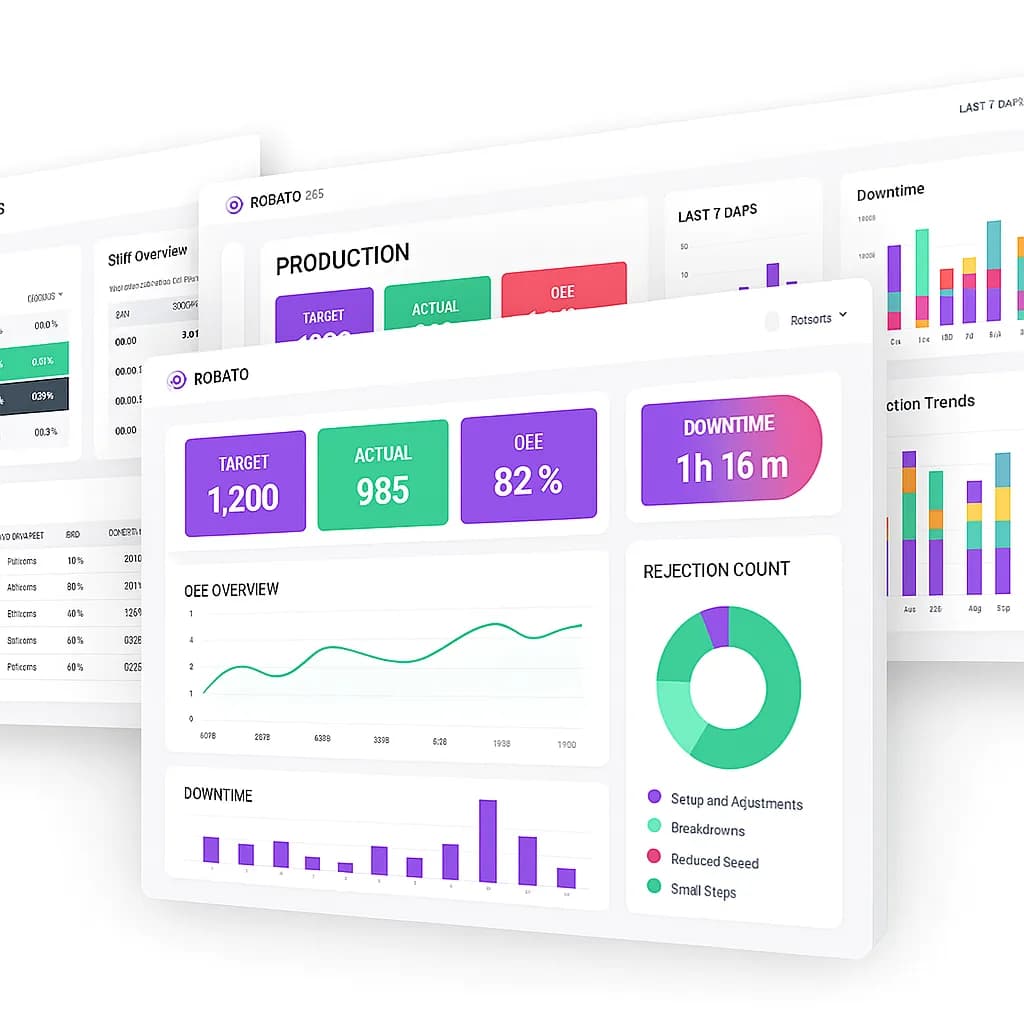
Monitor production events across all departments from one interface.
Automated Escalation
Ensure unresolved issues are automatically forwarded to higher management.
Cloud Connectivity
Monitor multiple factories remotely through secure cloud dashboards.
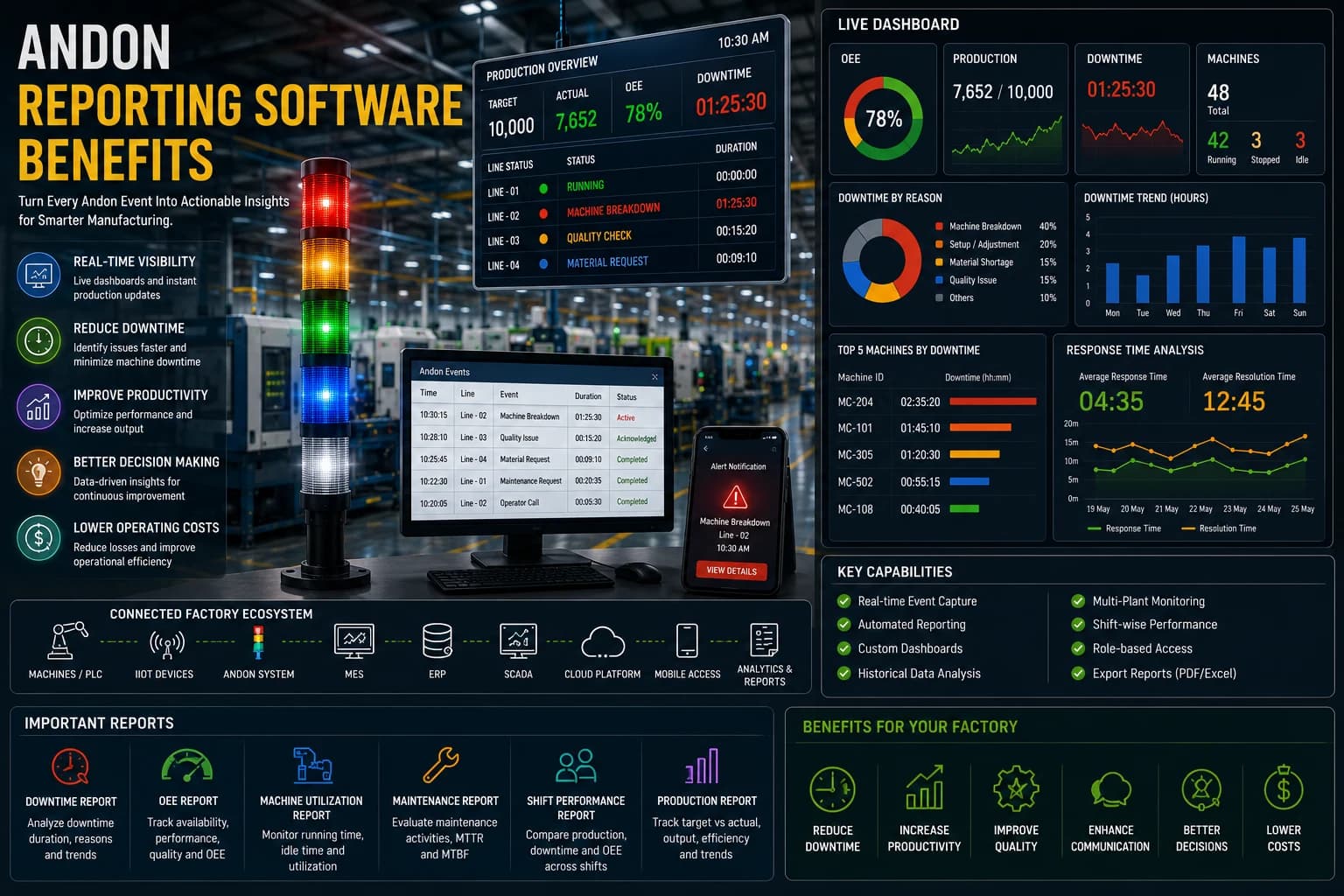
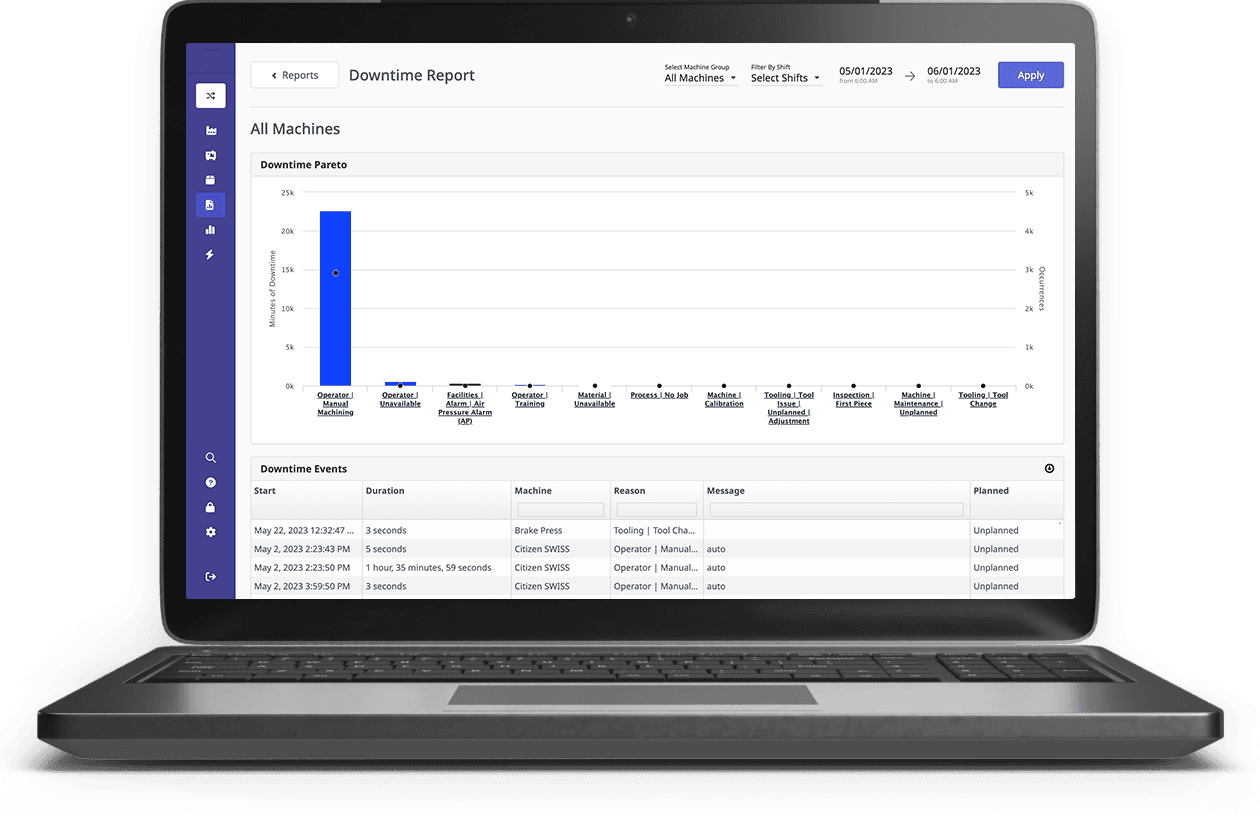
Historical Reporting
Generate reports for:
- Downtime
- Response times
- Production performance
- Maintenance efficiency
- Alert history
- OEE analysis
User Role Management
Assign customized access to operators, supervisors, maintenance engineers, and administrators.
Benefits of Using an Andon-Based Manufacturing Communication System
Faster Response to Production Issues
Real-time notifications eliminate delays in communication.
Reduced Machine Downtime
Maintenance teams are informed immediately, allowing faster repairs.
Improved Team Collaboration
Operators, maintenance teams, production supervisors, and managers remain connected through one communication platform.
Increased Productivity
Faster issue resolution keeps production lines running efficiently.
Better Decision-Making
Live production dashboards help managers make informed operational decisions.
Improved Product Quality
Quality alerts ensure defects are addressed before affecting large production batches.
Enhanced Workplace Safety
Safety incidents are communicated instantly, reducing risks for employees.
Lower Operating Costs
Reducing downtime and improving efficiency directly lowers manufacturing costs.
Manufacturing Communication System and Industry 4.0
Industry 4.0 focuses on intelligent, connected manufacturing powered by automation and real-time data.
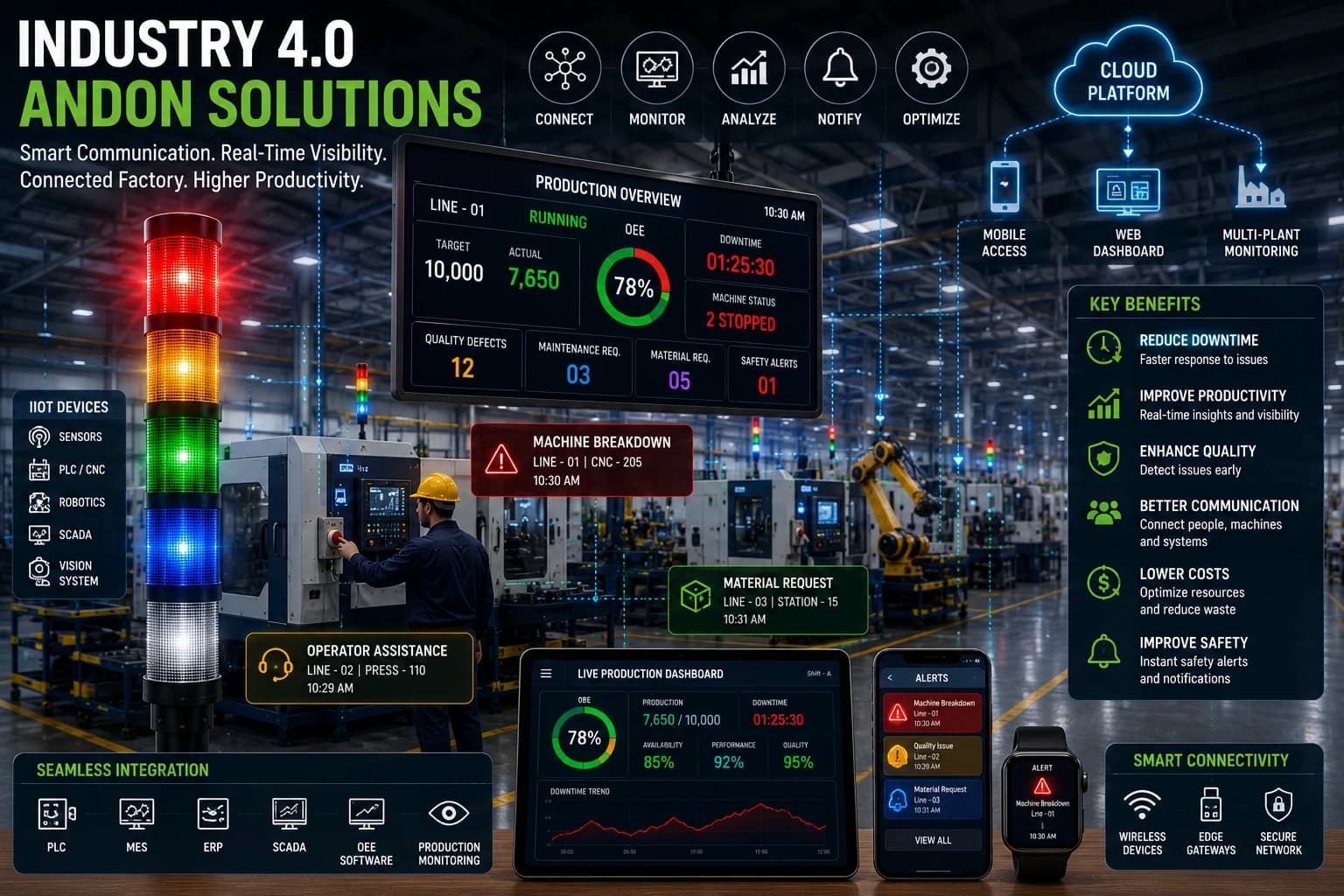
Modern Manufacturing Communication Systems integrate with:
- Industrial IoT (IIoT)
- PLCs
- MES
- ERP
- SCADA
- Production Monitoring Systems
- OEE Software
- AI-powered analytics
- Cloud platforms
This integration creates a digital communication network where machines, operators, and management work together in real time.
Applications Across Manufacturing Industries
Manufacturing Communication Systems are widely used in various industries.
Automotive Manufacturing
Coordinate assembly lines, robotic workstations, and maintenance teams.
Electronics Manufacturing
Manage SMT production, testing equipment, and quality inspections.
Food & Beverage Industry
Communicate processing issues, packaging alerts, and sanitation requirements.
Pharmaceutical Manufacturing
Coordinate batch production, quality control, and compliance monitoring.
Textile Manufacturing
Monitor weaving, spinning, dyeing, and finishing operations.
Plastic & Injection Molding
Communicate machine failures and production interruptions instantly.
Packaging Industry
Manage conveyor systems, packaging machines, and labeling operations.
Best Practices for Implementation
Automate Alert Generation
Reduce dependence on manual reporting by integrating directly with production equipment.
Standardize Communication Procedures
Create consistent workflows for every production event.
Configure Escalation Rules
Automatically escalate unresolved issues based on response time.
Integrate with Existing Software
Connect with ERP, MES, PLCs, SCADA, and production monitoring systems.
Train Employees
Ensure operators and supervisors understand communication workflows and alert priorities.
Analyze Reports Regularly
Use historical communication data to identify recurring production issues.
Common Challenges
Legacy Equipment Integration
Older machines may require communication gateways or retrofit sensors.
Alert Fatigue
Configure alert priorities to avoid excessive notifications.
Network Reliability
A stable industrial communication network is essential for uninterrupted operation.
Employee Adoption
Proper onboarding and training improve system effectiveness.
Future Trends
Manufacturing Communication Systems continue evolving with new technologies.
Artificial Intelligence
AI will automatically prioritize alerts based on production impact and historical patterns.
Predictive Communication
Machine learning will notify maintenance teams before failures occur.
Digital Twins
Virtual production environments will simulate communication workflows for process optimization.
Edge Computing
Local processing will enable faster communication with minimal latency.
Advanced Analytics
Manufacturers will gain deeper insights into communication efficiency, response times, and production performance through AI-powered dashboards.
These innovations will further strengthen collaboration and operational efficiency across modern manufacturing facilities.
Why Choose Robato Systems for Manufacturing Communication Solutions?
Robato Systems delivers intelligent Manufacturing Communication System solutions powered by advanced Andon technology. Our systems provide real-time communication between operators, maintenance teams, supervisors, and management through Andon tower lights, digital display boards, mobile notifications, and cloud dashboards.
Our solutions integrate seamlessly with PLCs, Industrial IoT devices, MES, ERP, SCADA, and production monitoring software to automate communication, reduce downtime, and improve production efficiency. Features such as automated escalation, real-time reporting, downtime analytics, and wireless communication help manufacturers build connected, Industry 4.0-ready factories.
Whether your facility has a single production line or multiple manufacturing plants, Robato Systems offers scalable solutions tailored to your operational requirements.
Conclusion
A Manufacturing Communication System is essential for factories that want to improve collaboration, reduce downtime, and increase operational efficiency. By combining real-time communication with intelligent Andon technology, manufacturers can eliminate communication delays, automate workflows, and ensure that every production issue is addressed quickly.
As Industry 4.0 continues to transform manufacturing, Andon-powered communication systems provide the foundation for connected, responsive, and data-driven factory operations. Investing in a modern Manufacturing Communication System helps manufacturers improve productivity, product quality, maintenance performance, and overall business competitiveness.
Frequently Asked Questions (FAQs)
What is a Manufacturing Communication System?
A Manufacturing Communication System is a centralized platform that enables real-time communication between machines, operators, maintenance teams, and management across a manufacturing facility.
How does an Andon System improve manufacturing communication?
An Andon System instantly communicates production issues using tower lights, digital display boards, mobile alerts, and automated notifications, reducing response time and downtime.
Can a Manufacturing Communication System integrate with ERP and MES?
Yes. Modern systems integrate with ERP, MES, PLCs, SCADA, Industrial IoT devices, production monitoring software, and cloud platforms.
What are the benefits of a Manufacturing Communication System?
It improves communication, reduces downtime, increases productivity, enhances safety, supports faster decision-making, and enables Industry 4.0 manufacturing.
Which industries use Manufacturing Communication Systems?
Automotive, electronics, food processing, pharmaceuticals, textiles, plastics, packaging, logistics, and many other manufacturing industries.