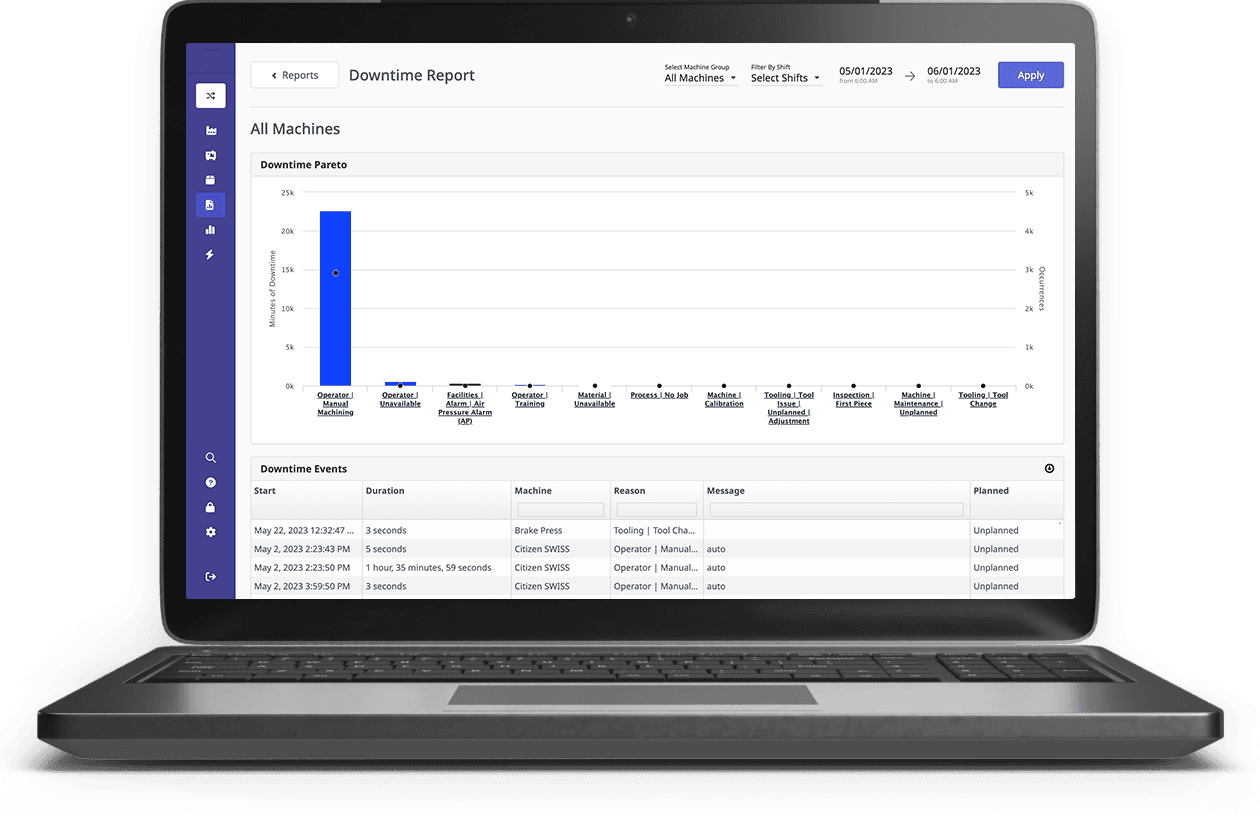
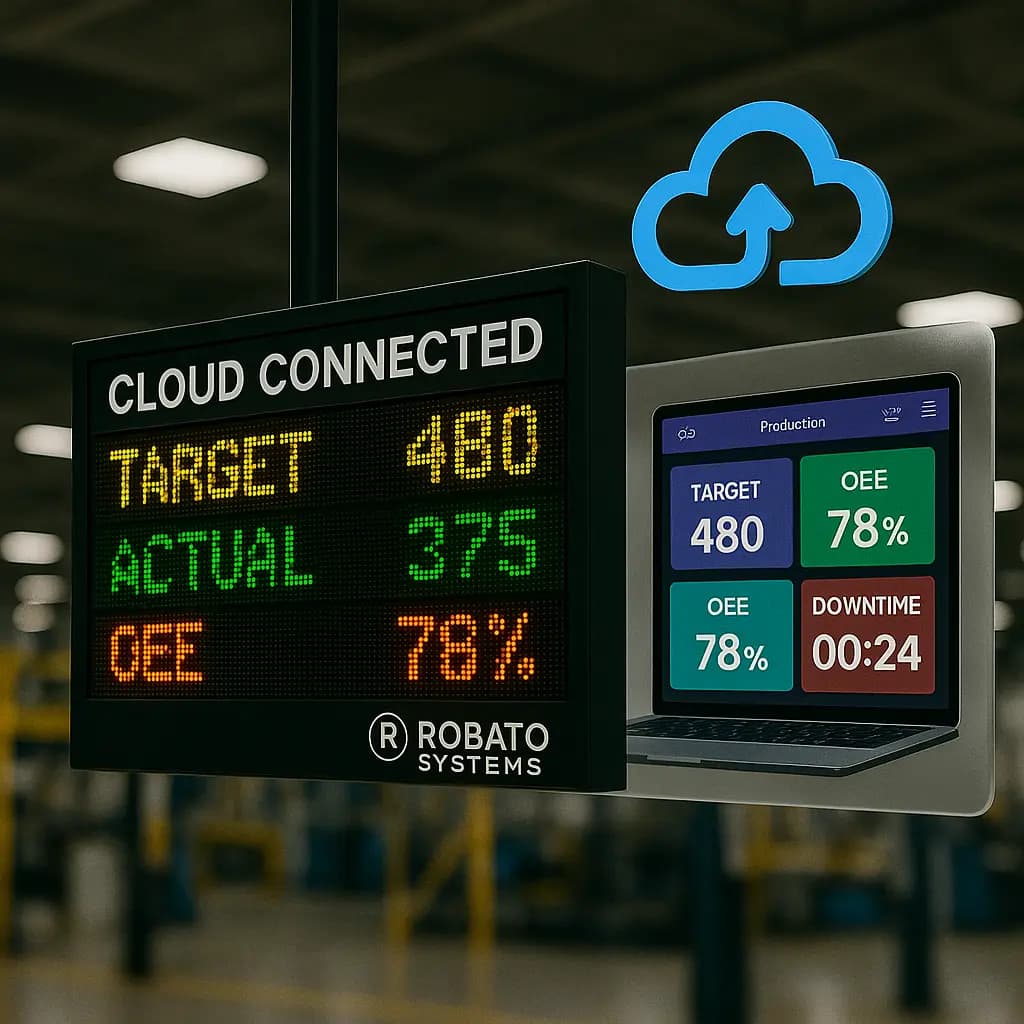
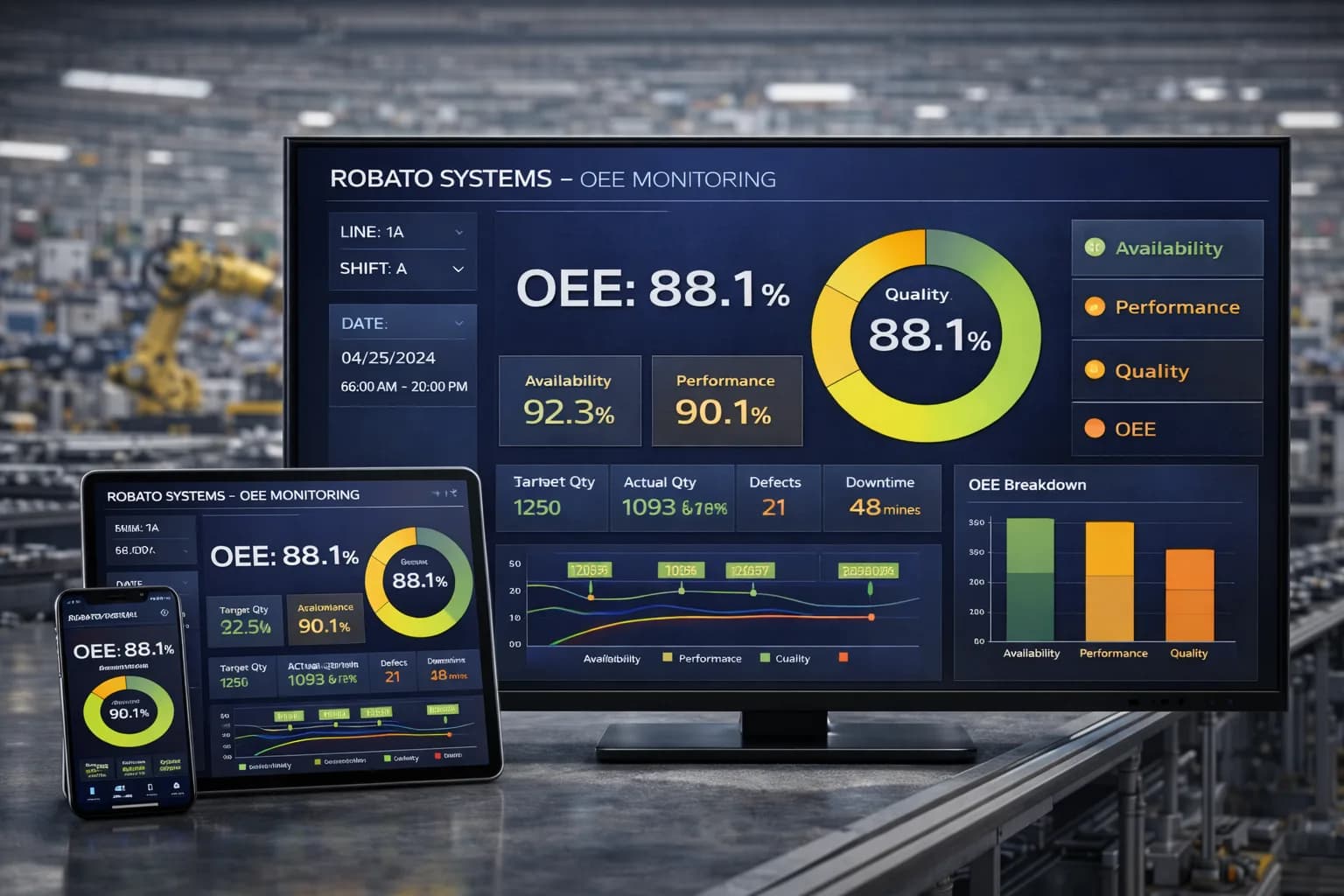
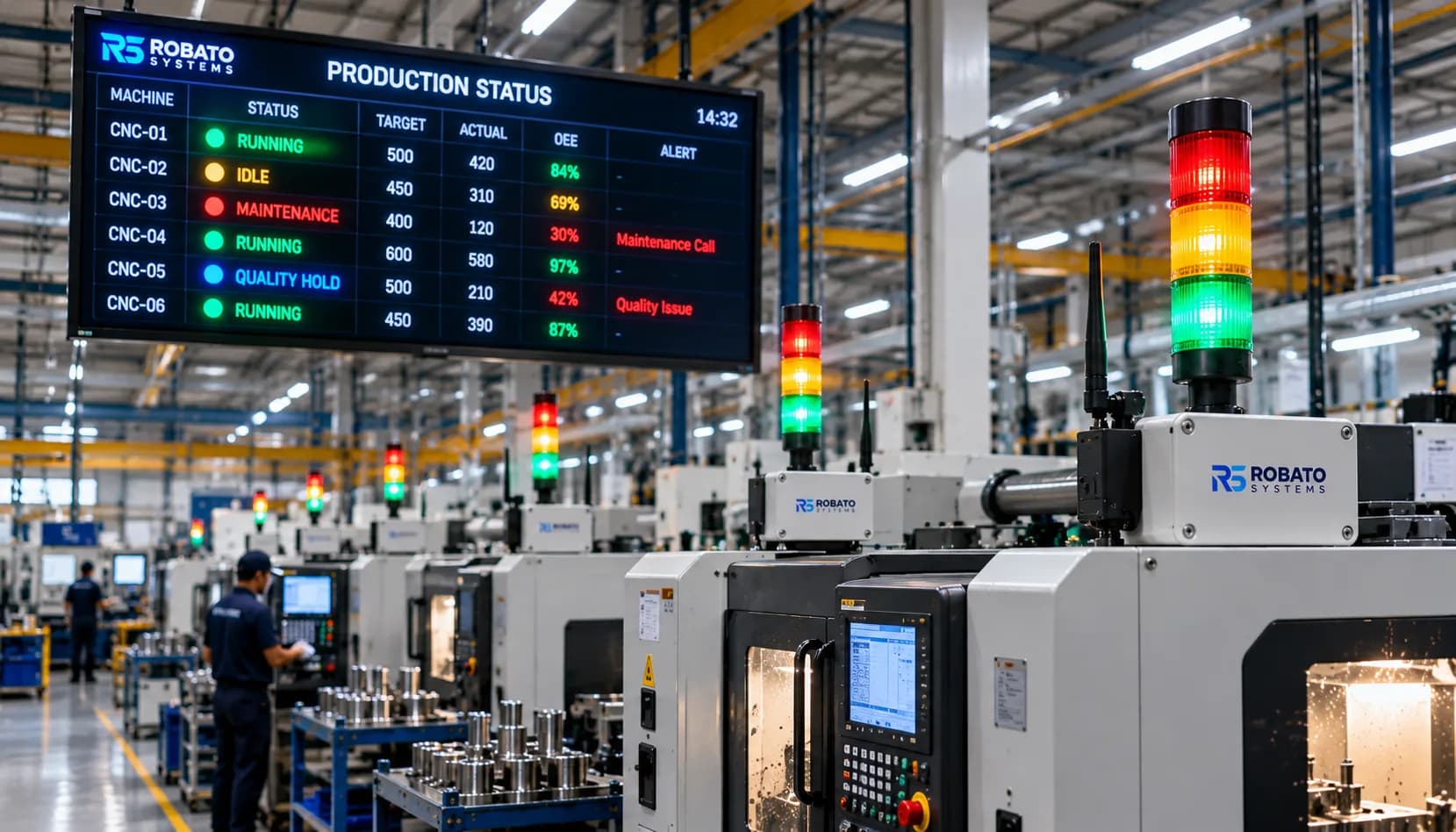
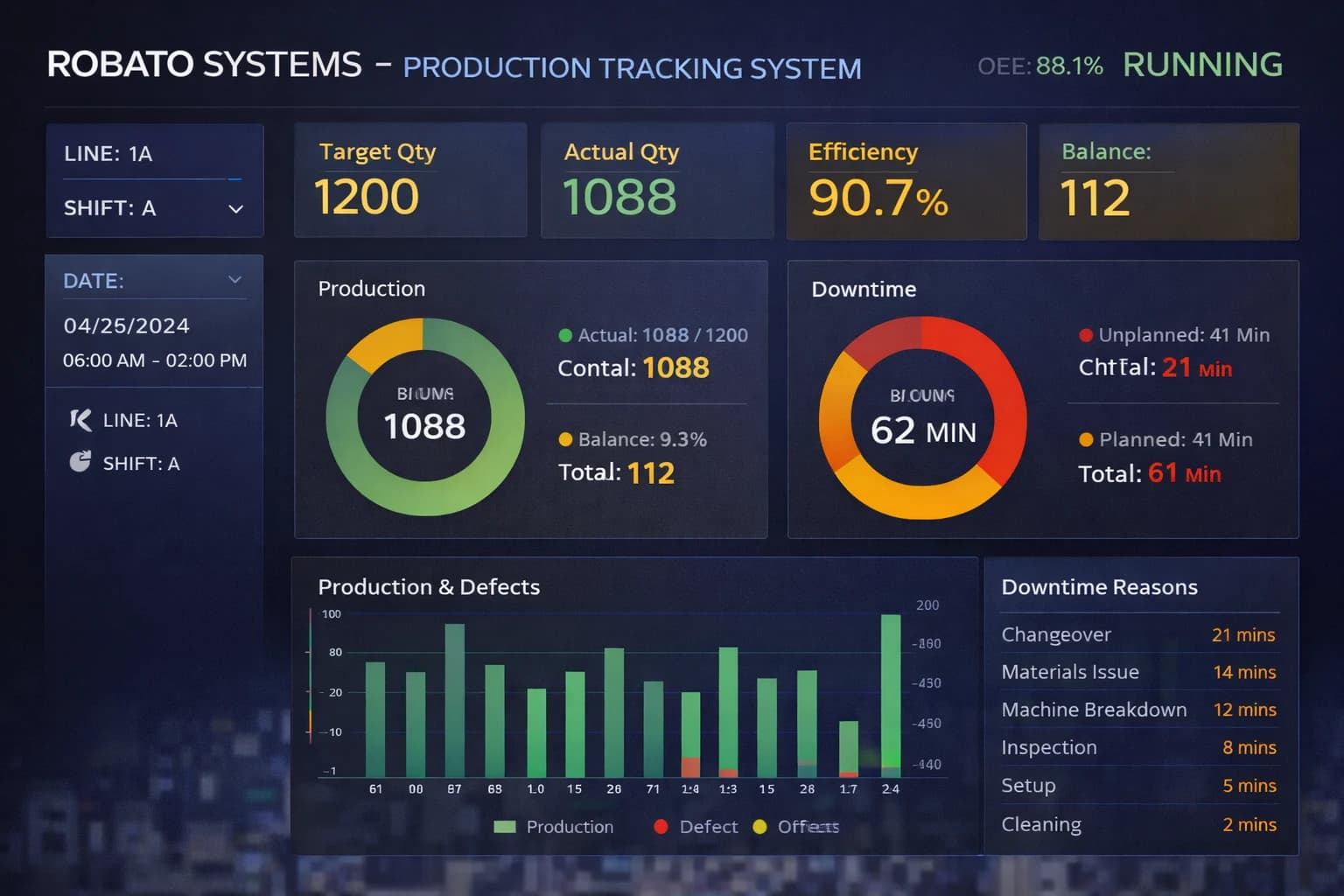
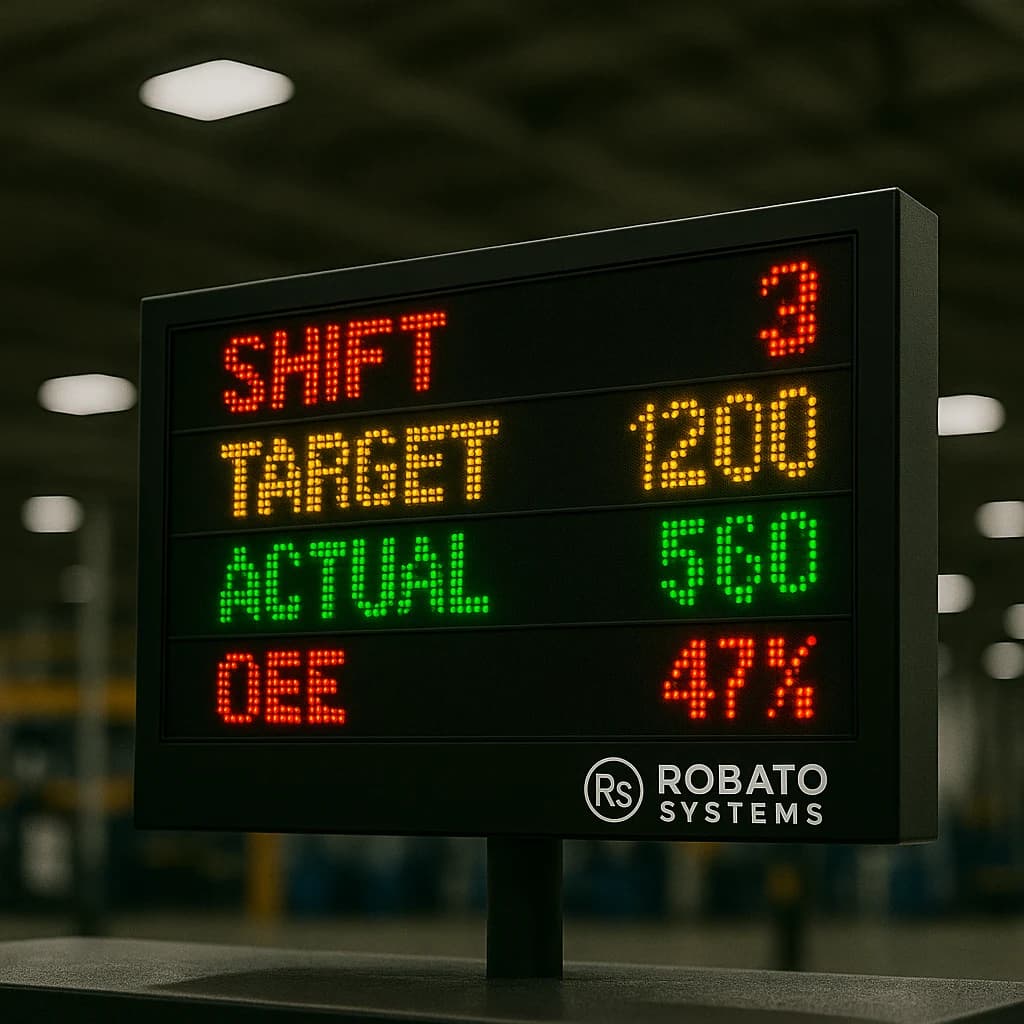
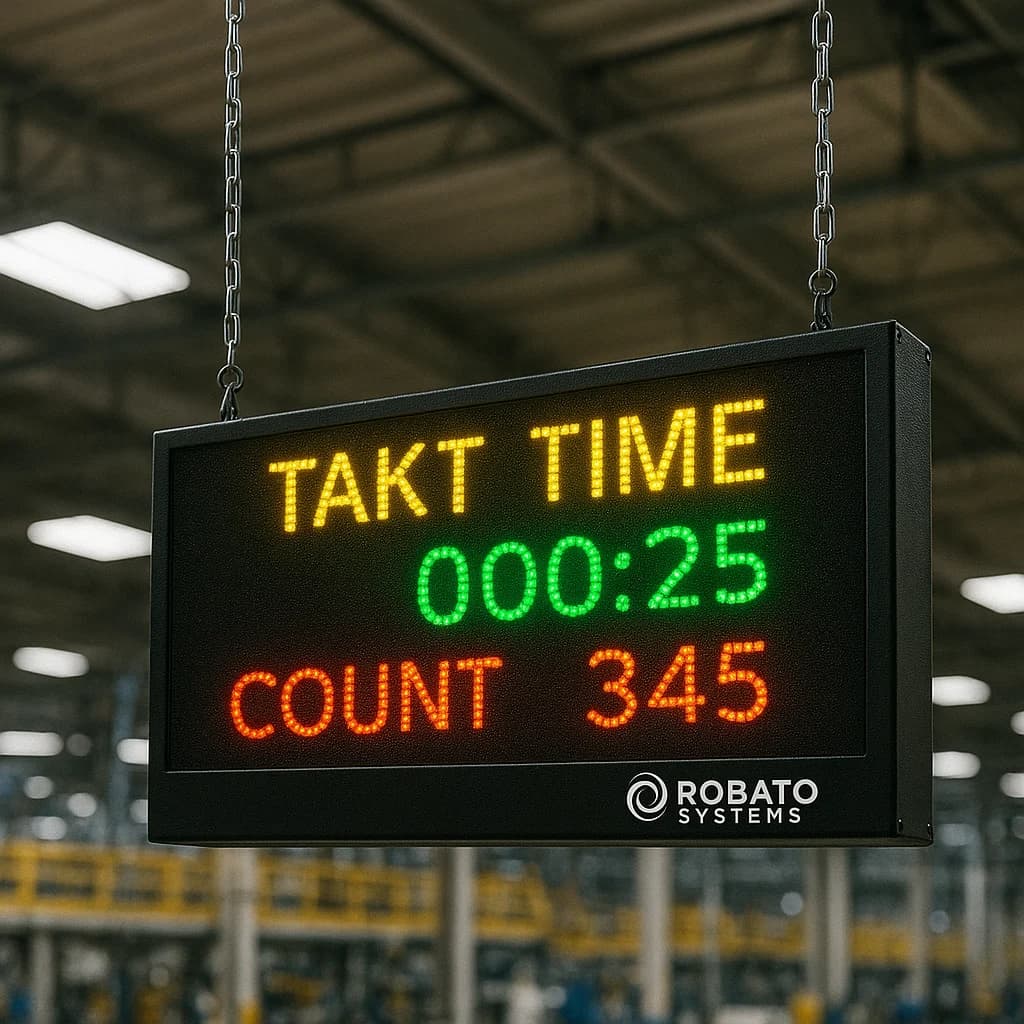
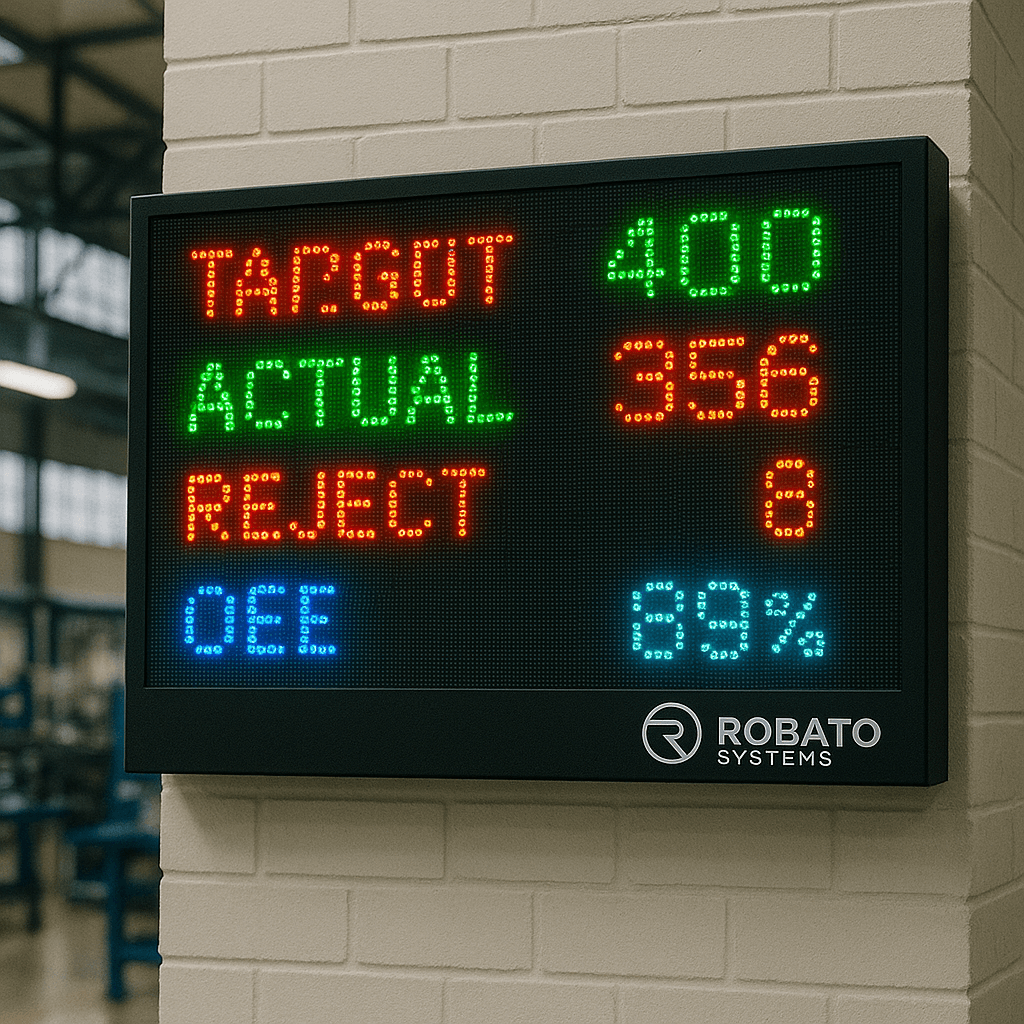
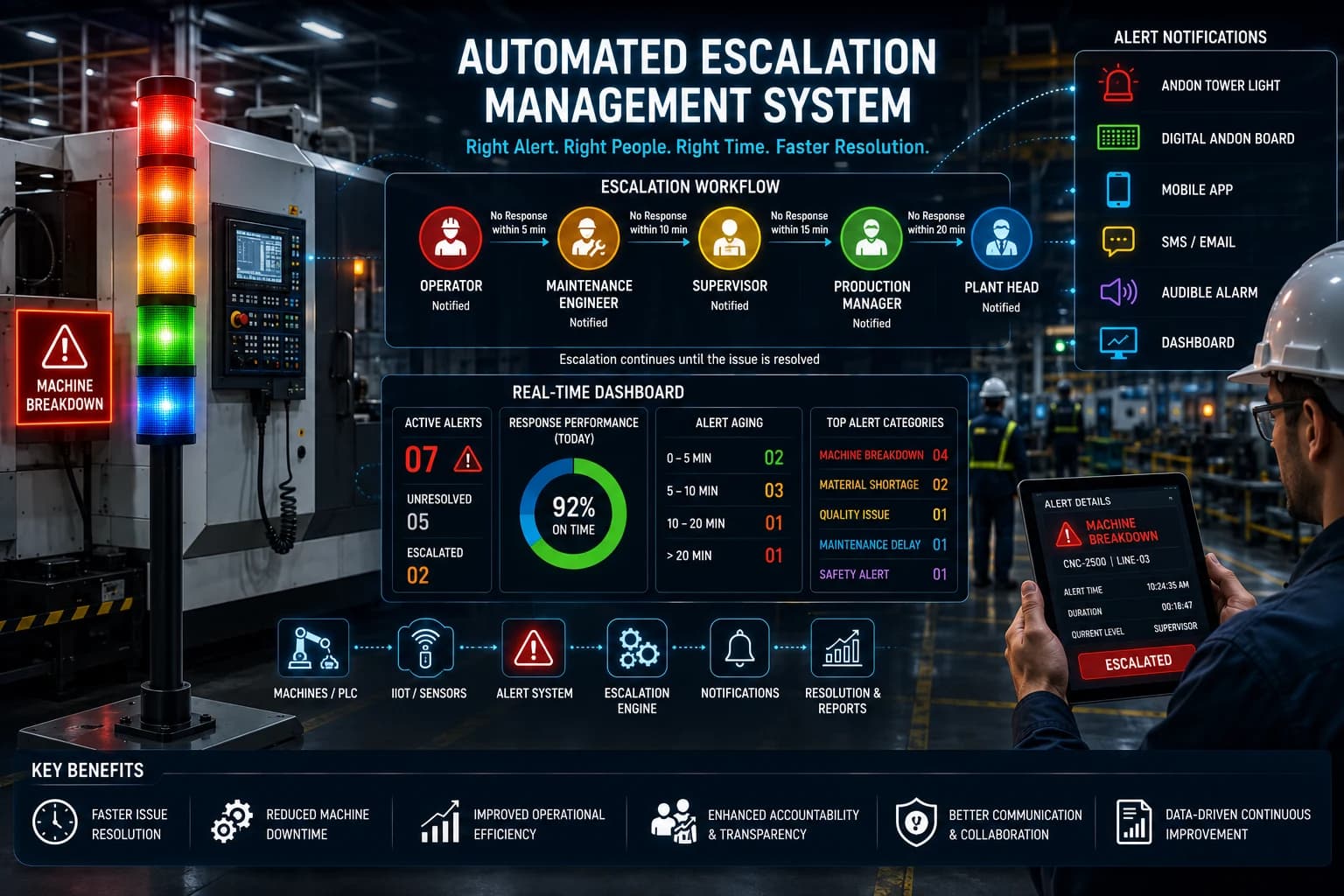
Manufacturing facilities operate under constant pressure to maximize productivity, reduce downtime, and deliver products on schedule. Every production issue—whether it's a machine breakdown, quality defect, material shortage, or operator assistance request—requires an immediate response. However, many factories still rely on phone calls, manual reporting, or verbal communication, which often leads to delayed responses and prolonged production interruptions. An Escalation Management System eliminates these delays by automatically notifying the right personnel and escalating unresolved issues until they are resolved.
An Escalation Management System is an intelligent workflow solution that ensures production alerts are never ignored. When a problem occurs, the system immediately informs operators, supervisors, maintenance engineers, or managers through visual alerts, mobile notifications, emails, SMS, and digital Andon boards. If the issue is not addressed within a predefined response time, the system automatically escalates the alert to the next level of management.
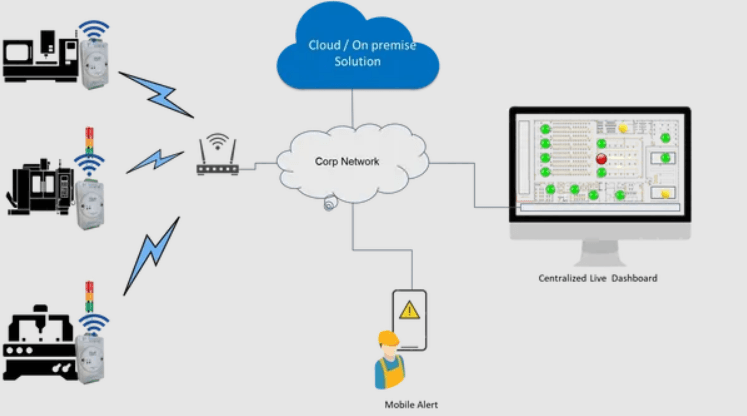
Integrated with PLCs, Industrial Internet of Things (IIoT) devices, Manufacturing Execution Systems (MES), Enterprise Resource Planning (ERP), SCADA platforms, and cloud dashboards, an Escalation Management System plays a vital role in Industry 4.0 by improving communication, minimizing downtime, and ensuring operational accountability.
What is an Escalation Management System?
An Escalation Management System is an automated notification and workflow platform that ensures production issues receive timely attention. It continuously monitors manufacturing events and follows predefined escalation rules whenever an alert remains unresolved within the configured response time.
Instead of depending on manual follow-ups, the system automatically forwards unresolved alerts to supervisors, maintenance managers, production heads, or senior management.
Typical events managed include:
- Machine breakdowns
- Production stoppages
- Quality defects
- Material shortages
- Operator assistance requests
- Maintenance delays
- Safety incidents
- Utility failures
- Process abnormalities
This structured escalation process helps manufacturers resolve problems faster while maintaining complete visibility into every incident.
Why Escalation Management is Important
Production issues often become costly not because they occur, but because they are not addressed quickly enough. Delayed communication can increase downtime, reduce equipment availability, create quality problems, and affect customer deliveries.
An Escalation Management System addresses these challenges by:
- Eliminating communication delays
- Ensuring every alert reaches the right person
- Reducing machine downtime
- Improving maintenance efficiency
- Increasing accountability
- Supporting standardized response procedures
- Improving production continuity
- Enhancing operational transparency
By automating notifications and escalation workflows, manufacturers reduce dependence on manual coordination and improve response consistency.
How an Escalation Management System Works
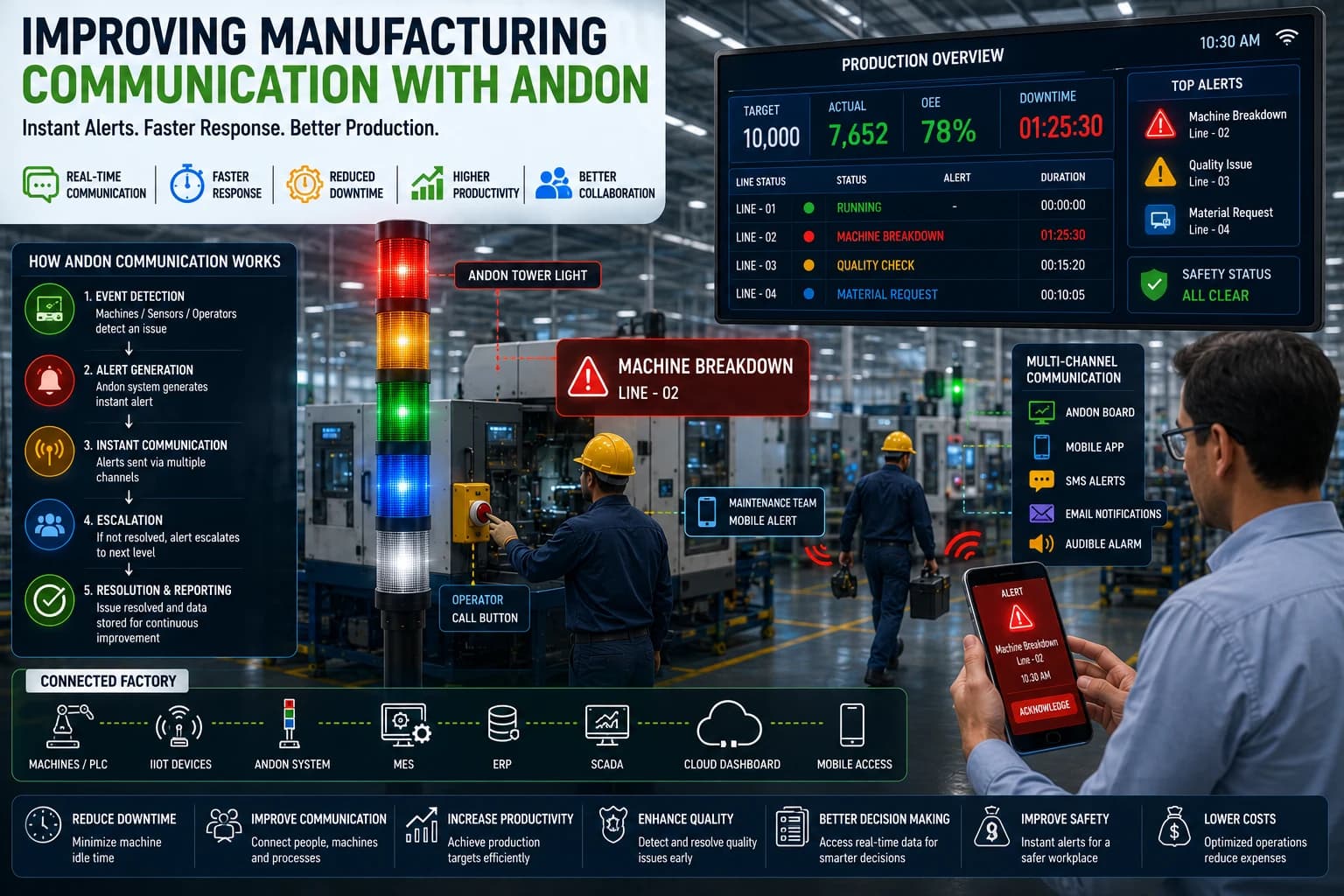
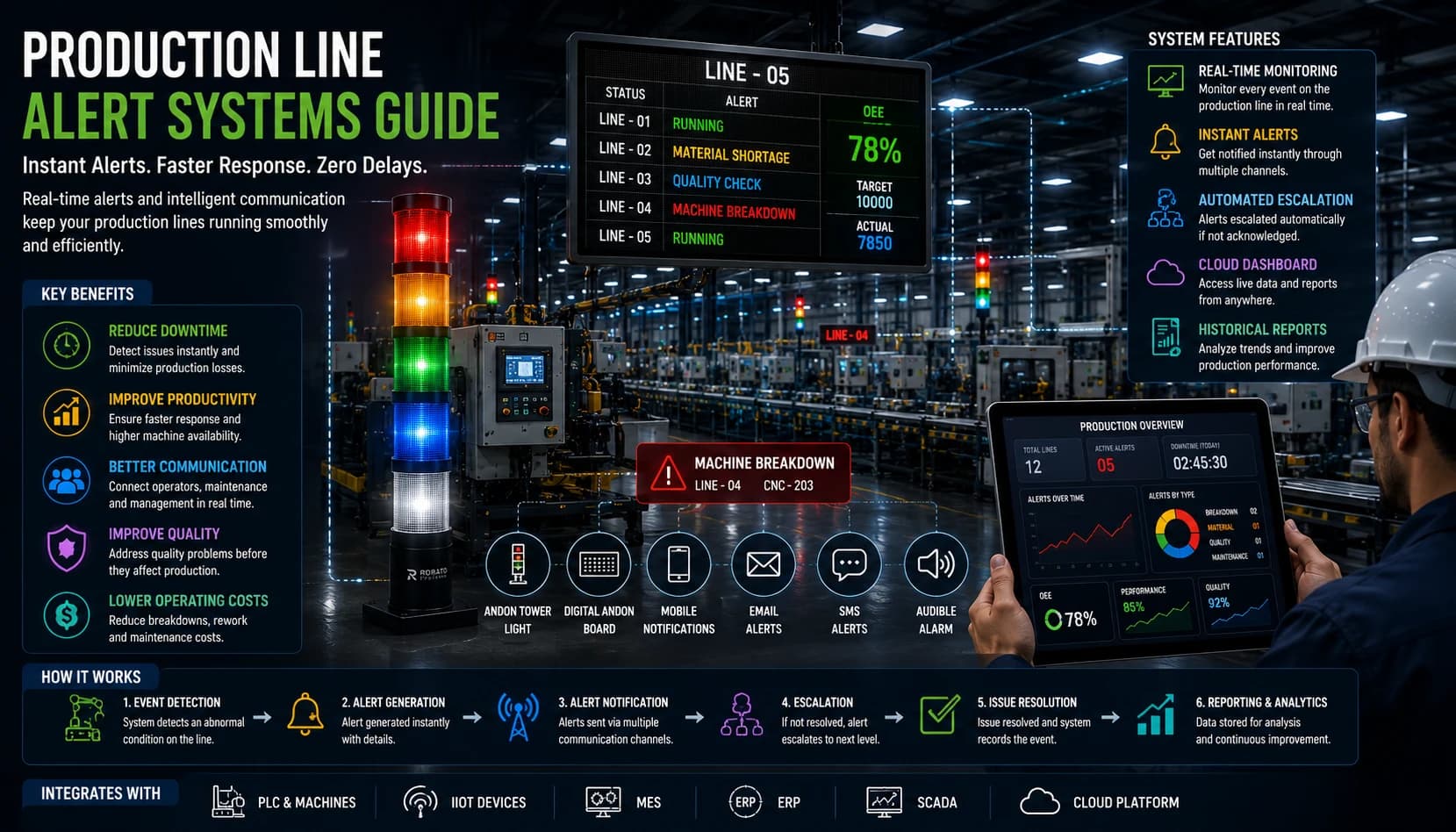
Step 1: Event Detection
Production events are detected through:
- PLCs
- Industrial IoT sensors
- Machine controllers
- Operator call stations
- Quality inspection systems
- Safety devices
- Production monitoring software
Step 2: Initial Notification
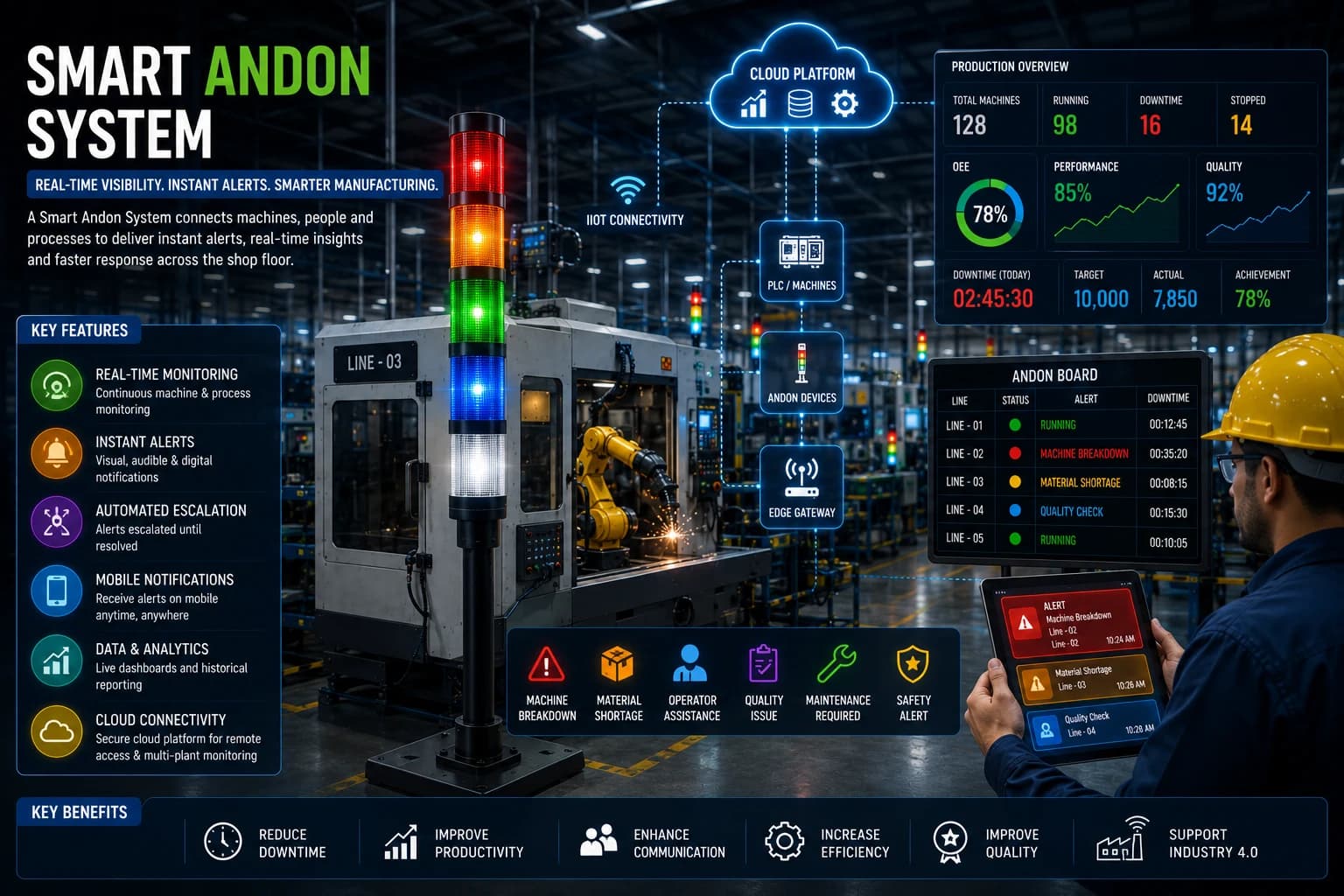
The system immediately sends alerts to the responsible personnel using:
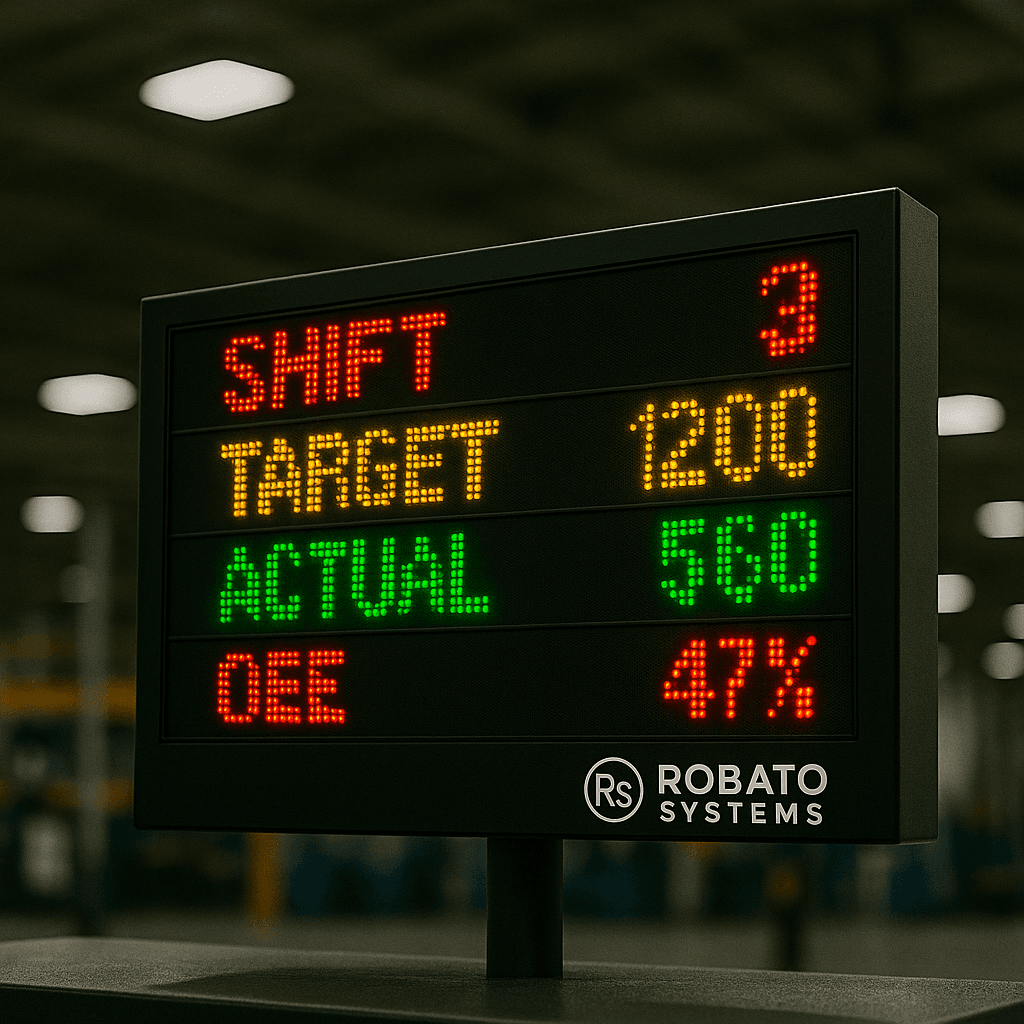
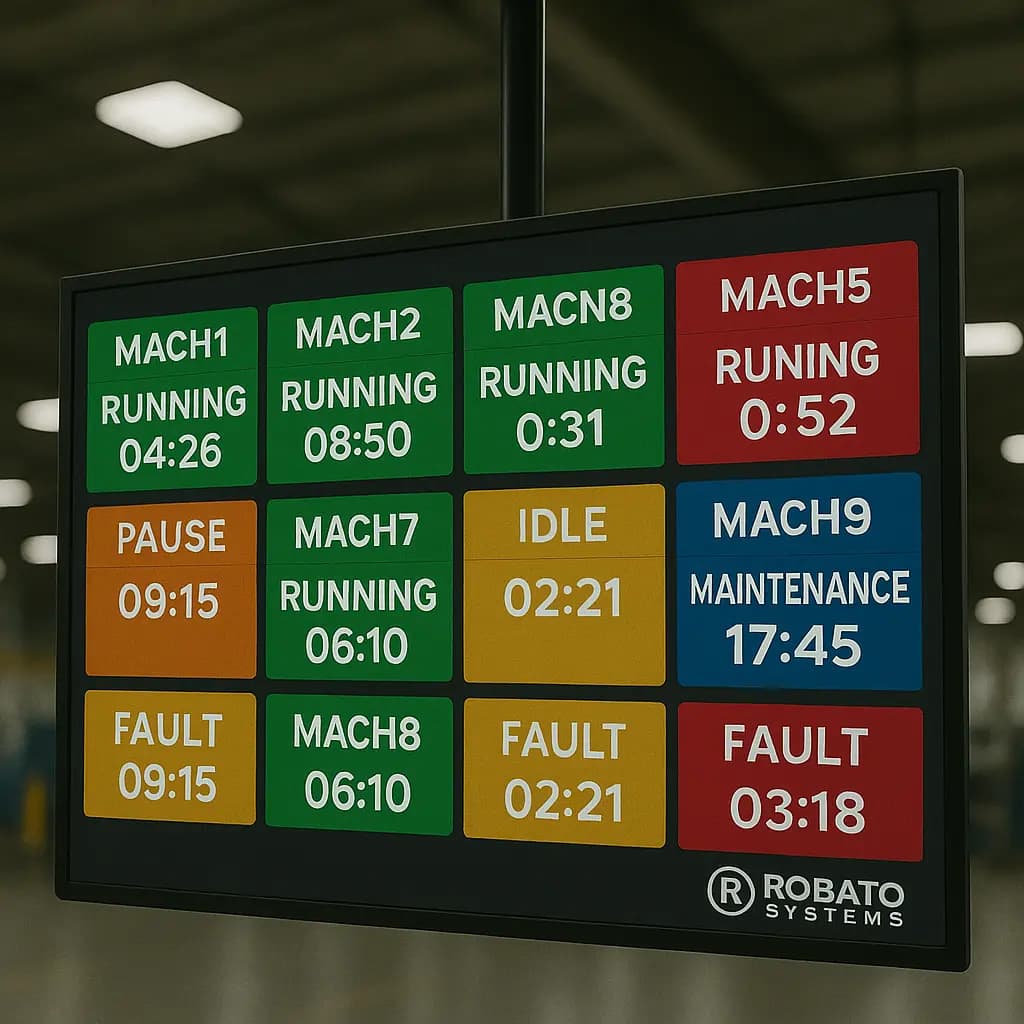
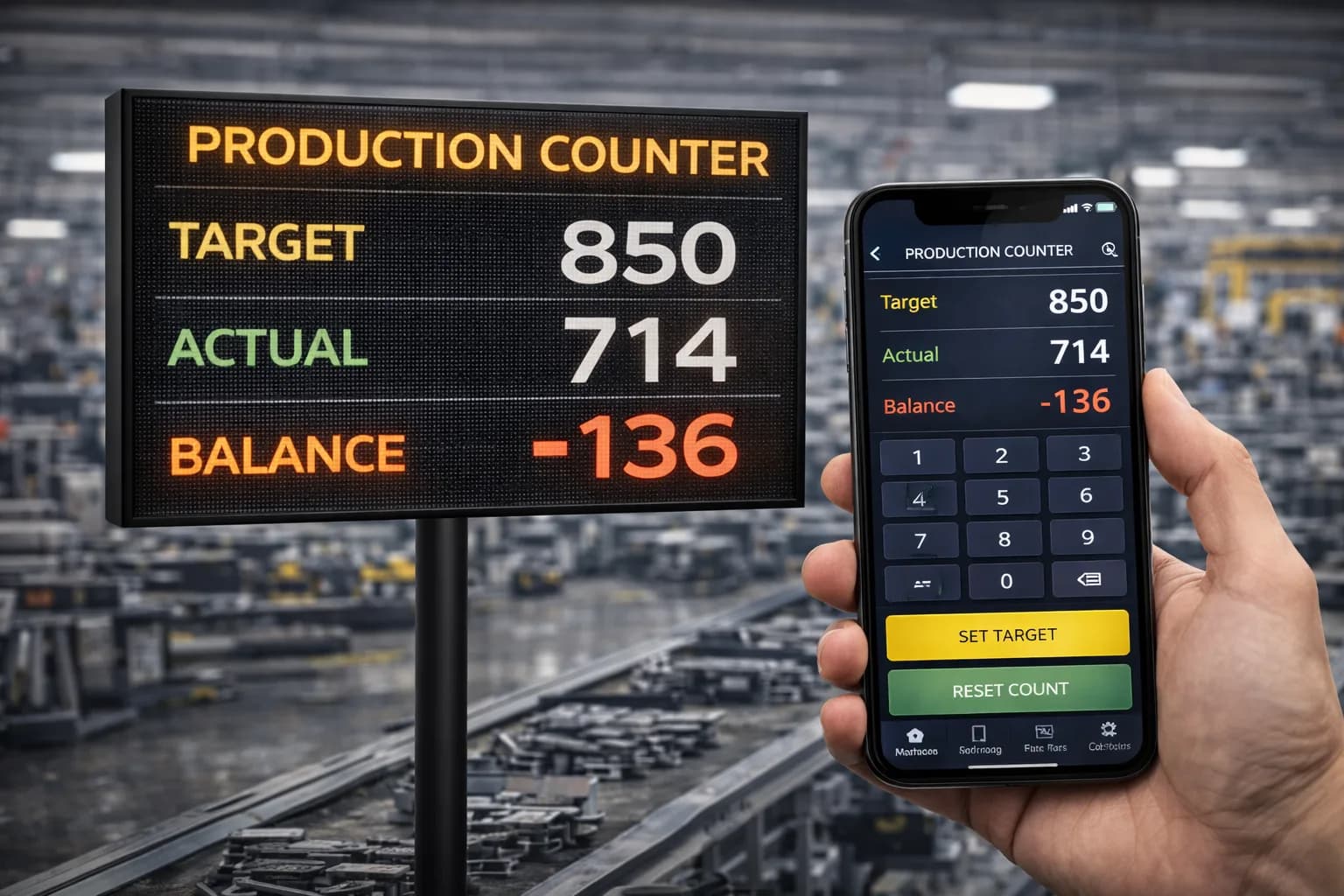
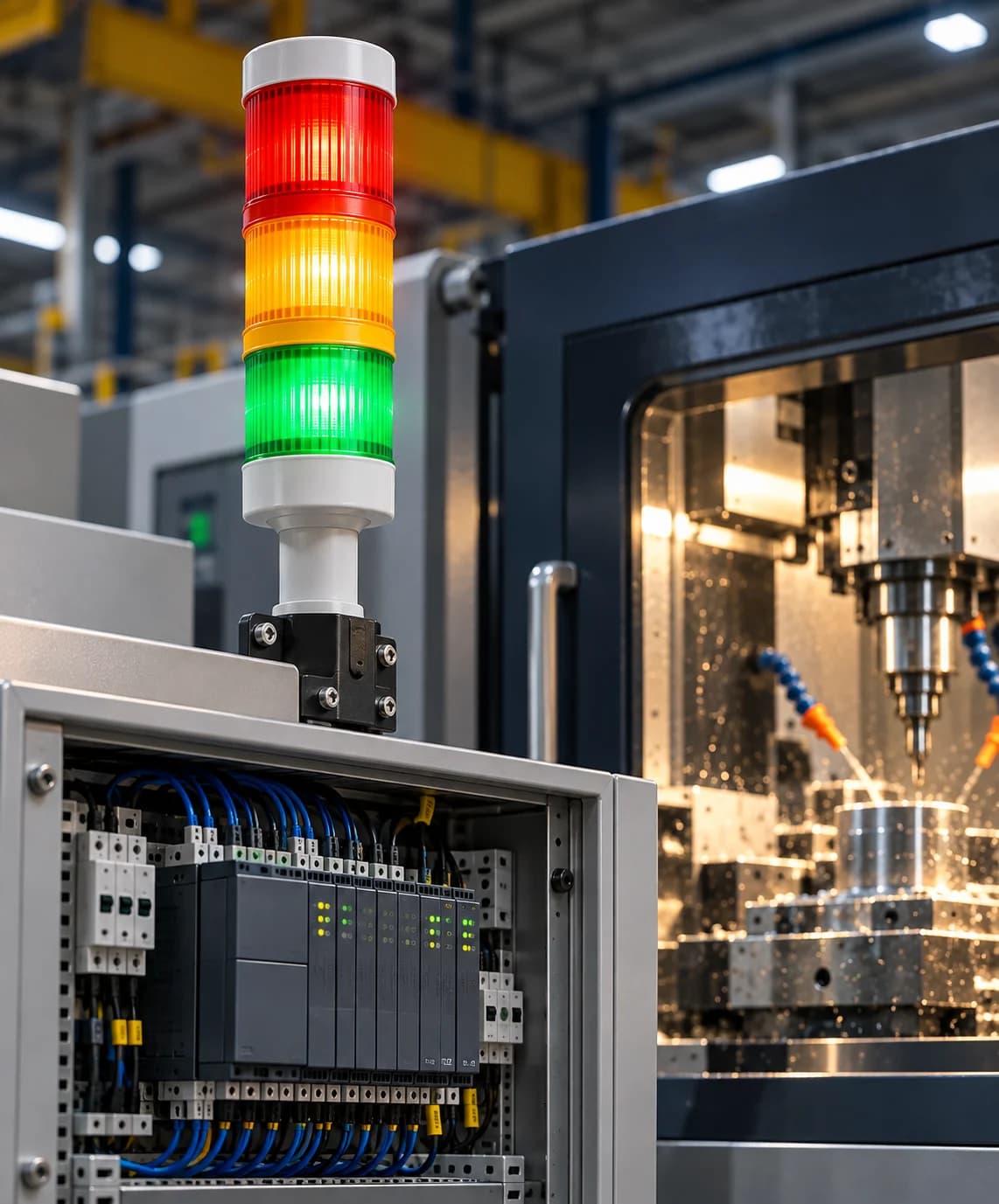
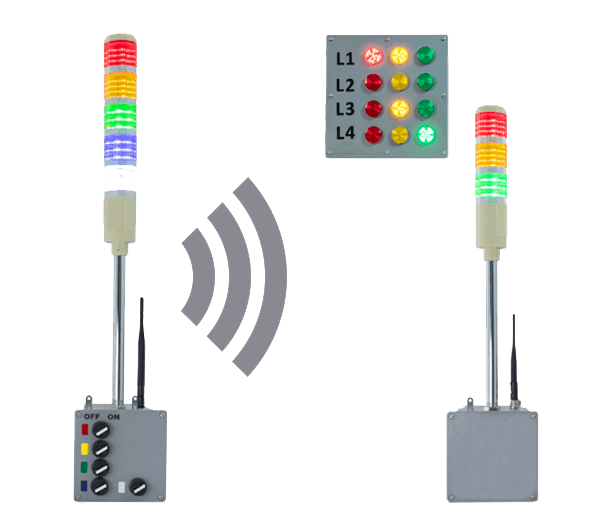
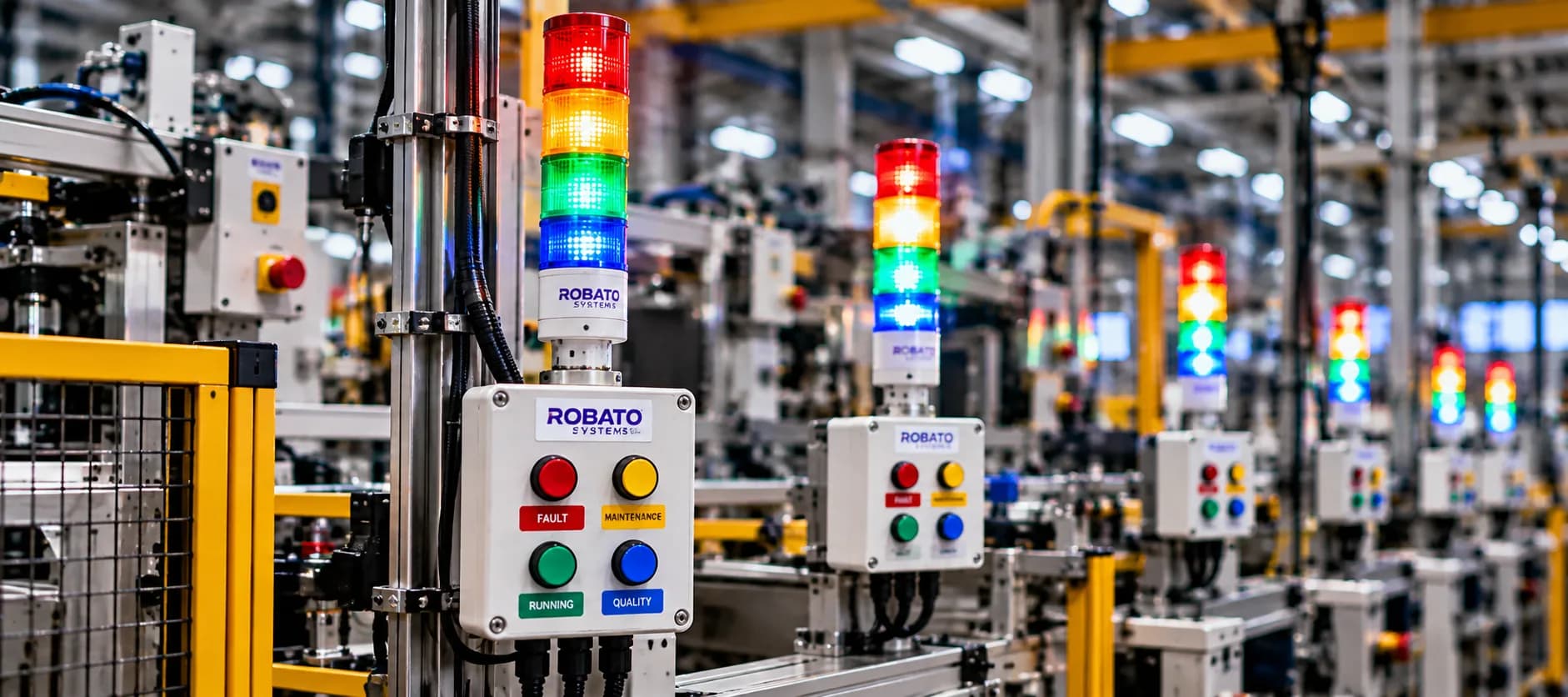
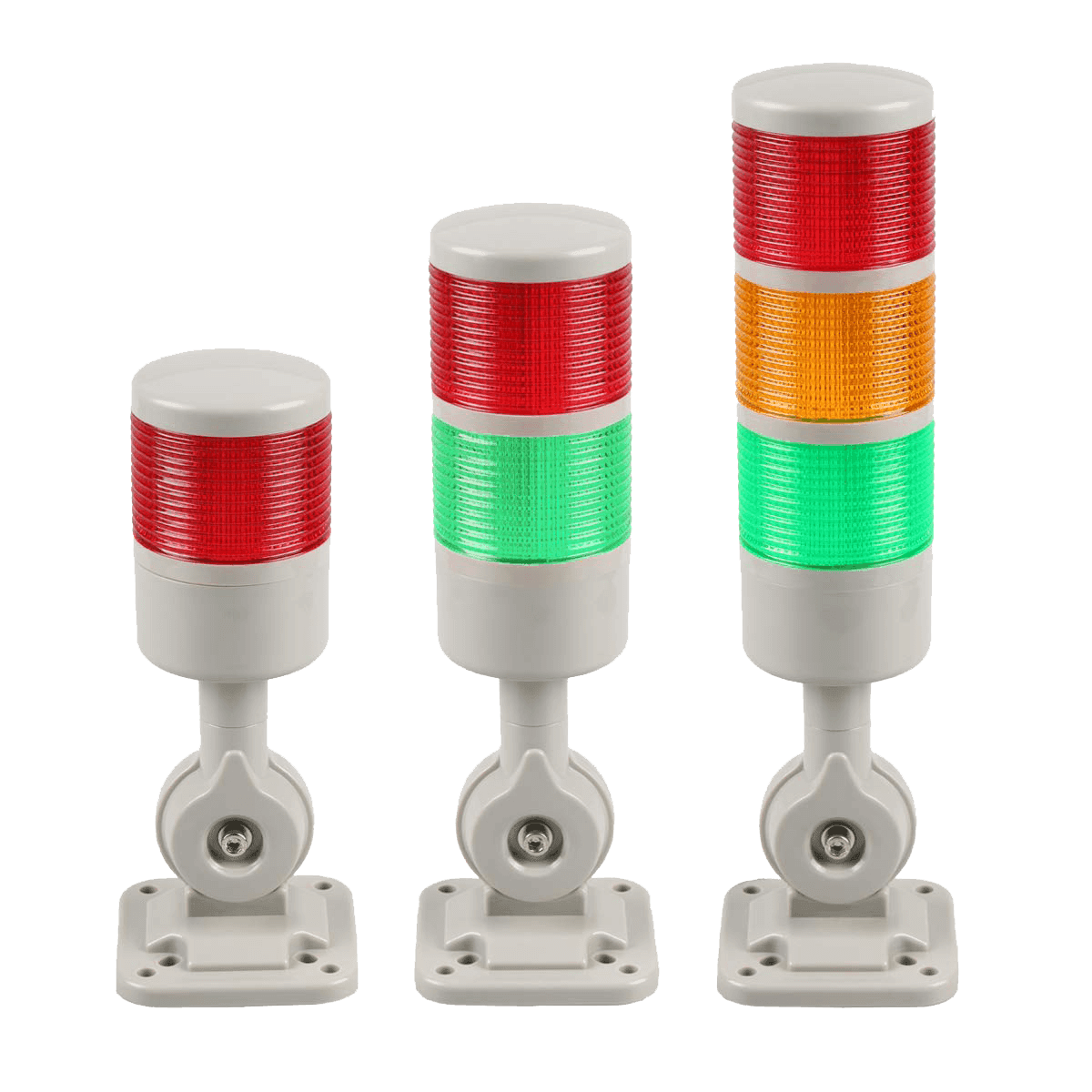
- Andon tower lights
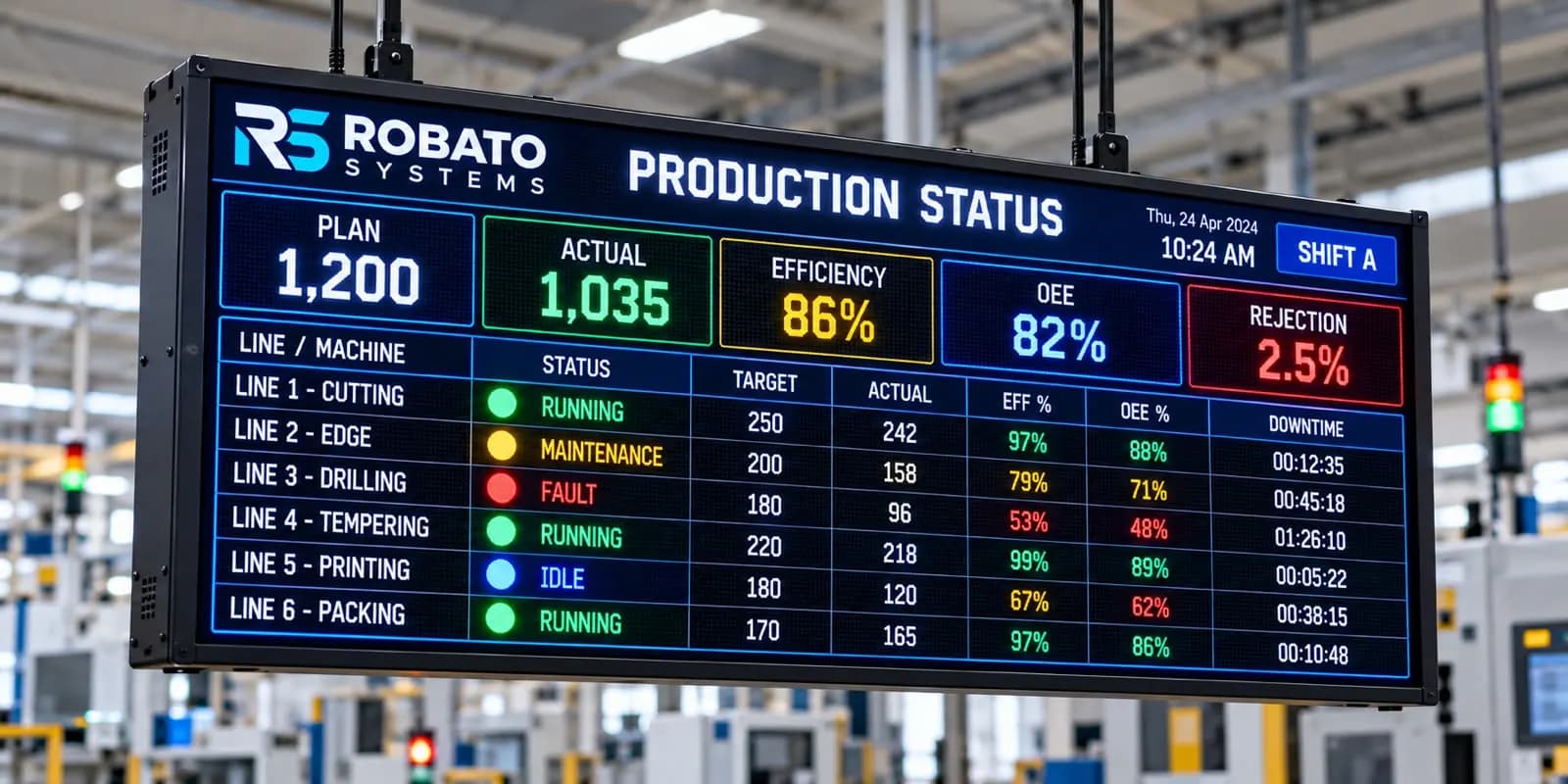
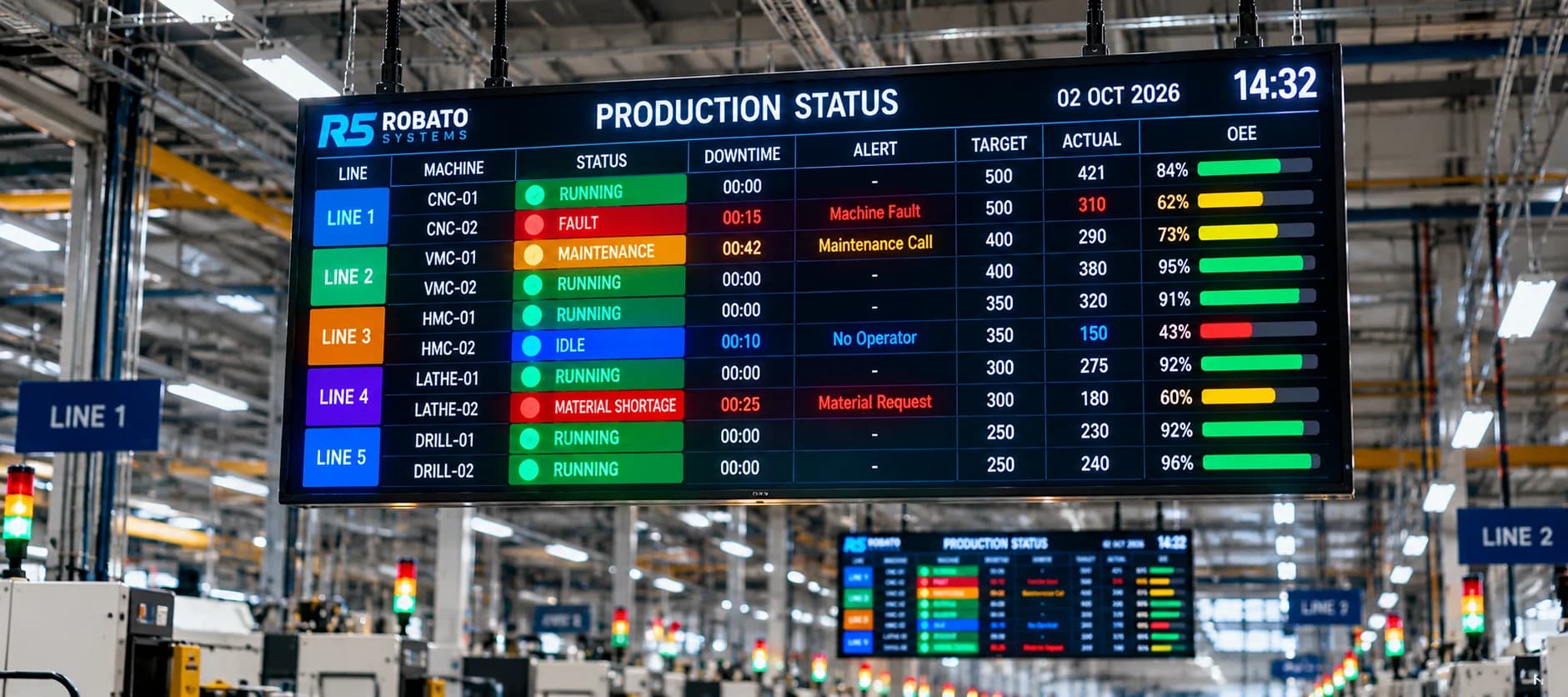
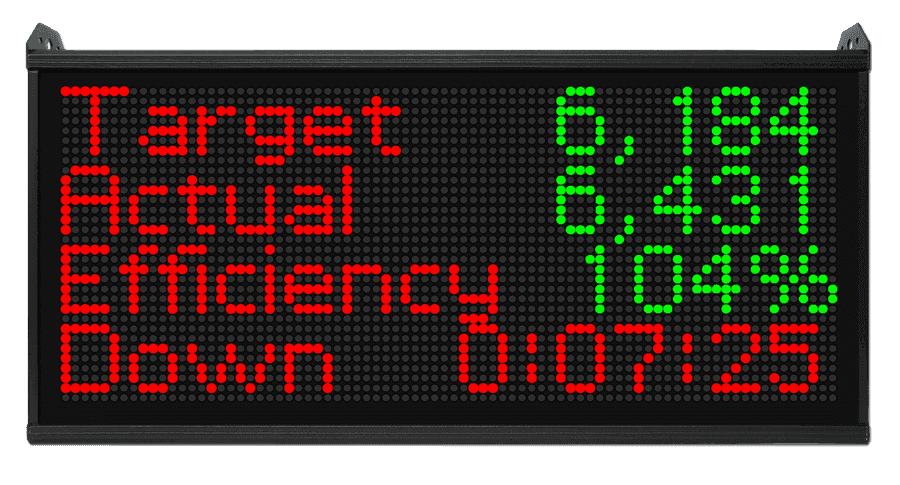
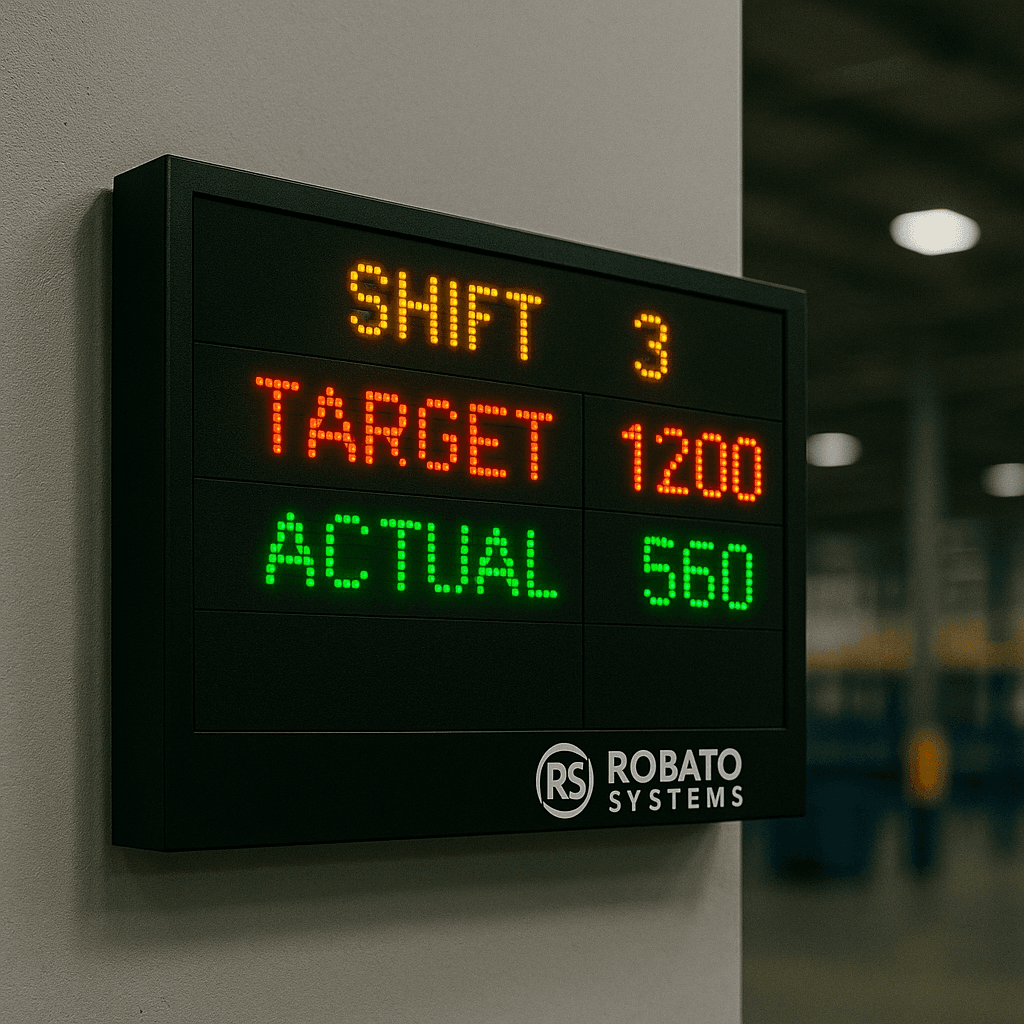
- Digital Andon boards
- Mobile applications
- SMS
- Audible alarms
- Desktop dashboards
Step 3: Response Timer Starts
A configurable response timer begins counting as soon as the alert is generated.
Examples:
- Maintenance response: 5 minutes
- Material request: 3 minutes
- Quality inspection: 10 minutes
- Supervisor response: 5 minutes
Step 4: Automatic Escalation
If the issue remains unresolved after the configured response time, the system automatically escalates the alert.
Typical escalation flow:
- Operator
- Maintenance Engineer
- Shift Supervisor
- Production Manager
- Plant Head
Step 5: Issue Resolution
Once the problem is resolved, the system records:
- Resolution time
- Responsible employee
- Root cause
- Corrective action
- Downtime duration
Step 6: Historical Reporting
Every event is stored for performance analysis and continuous improvement.
Key Features of an Escalation Management System
Automated Escalation Workflow
Alerts automatically move through predefined escalation levels until resolved.
Configurable Response Times
Different response limits can be assigned for:
- Machine breakdowns
- Quality issues
- Material requests
- Safety incidents
- Maintenance activities
Multi-Channel Notifications
Send alerts through:
- Tower lights
- Andon boards
- Mobile apps
- SMS
- Voice calls (optional)
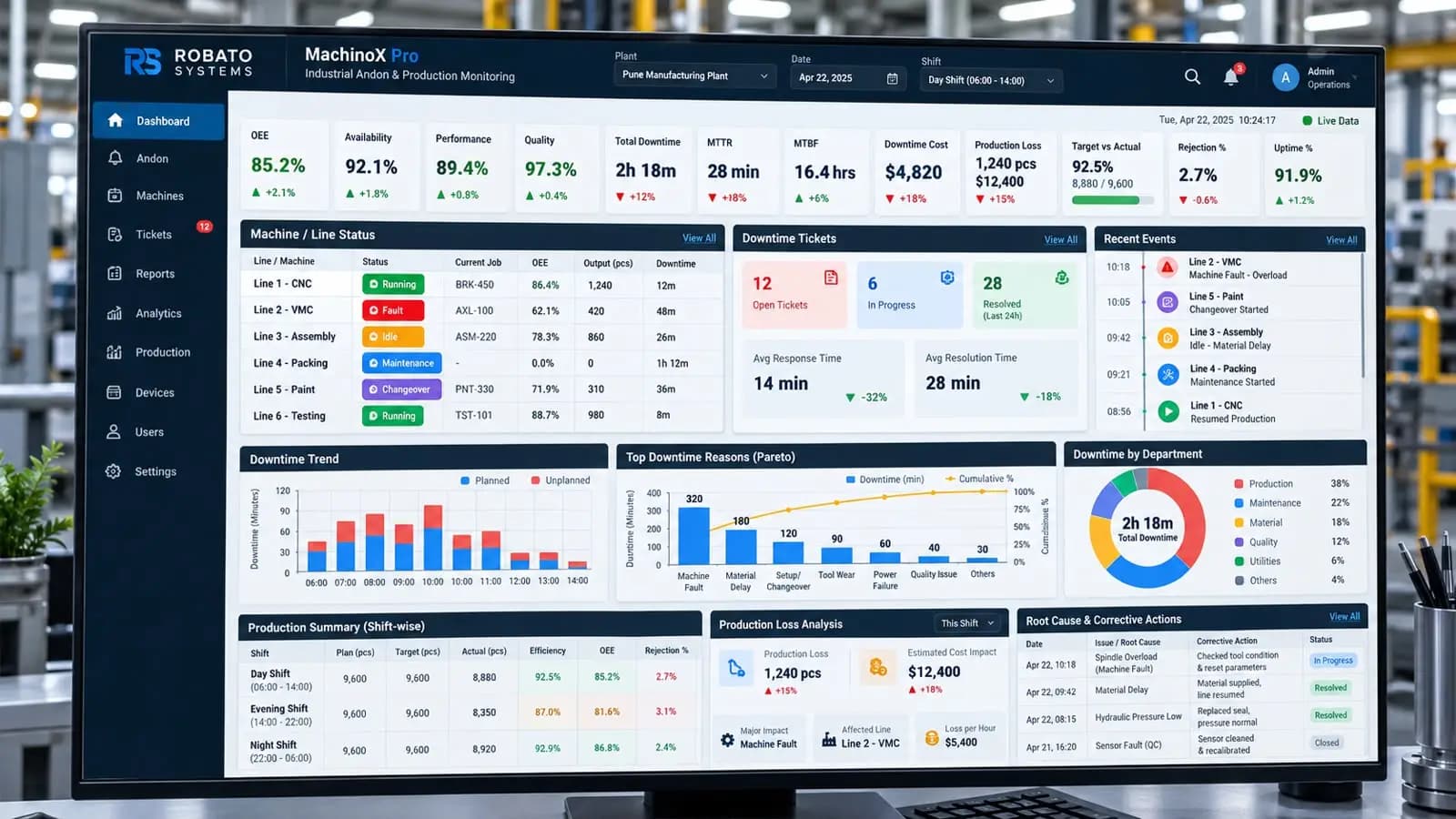
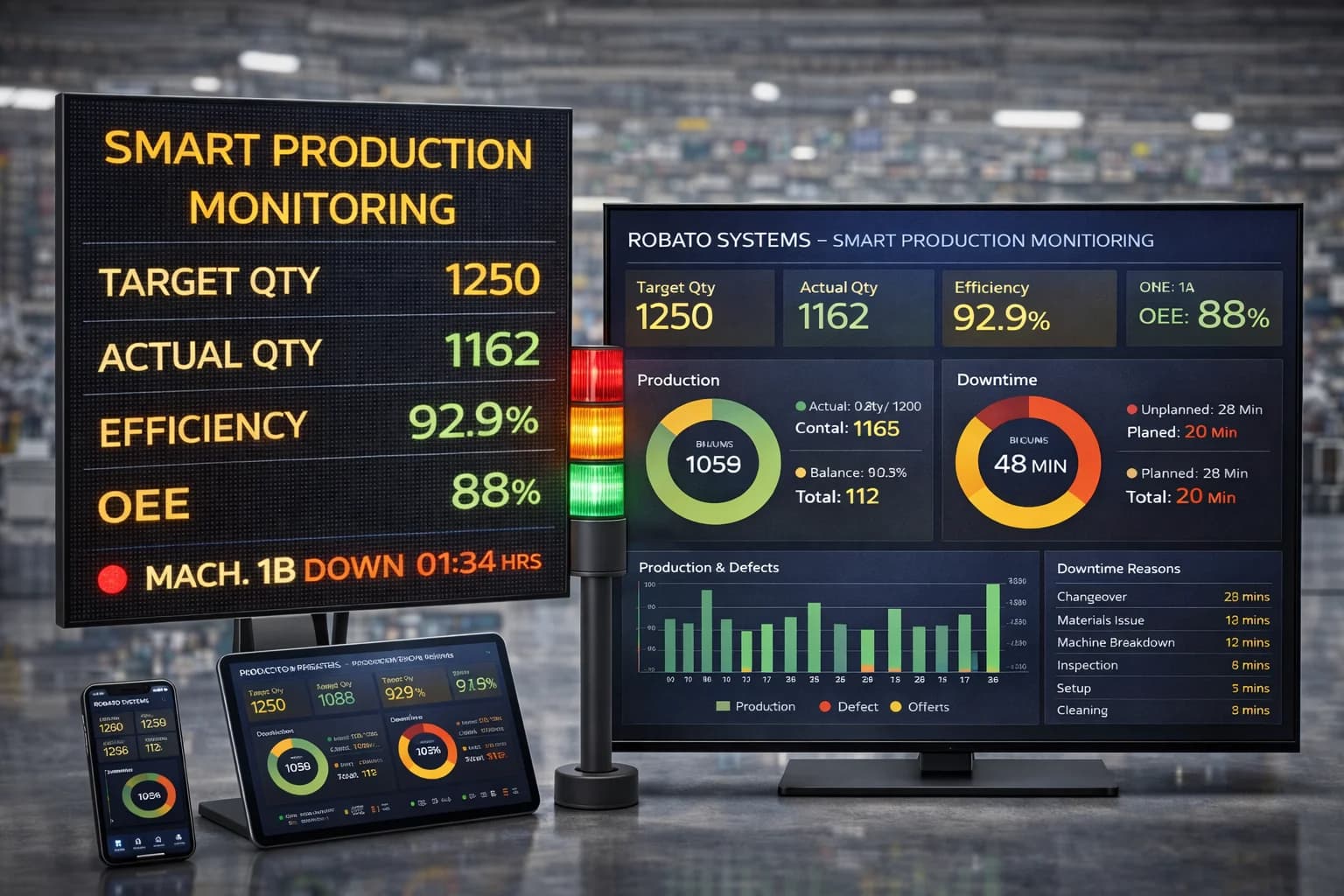
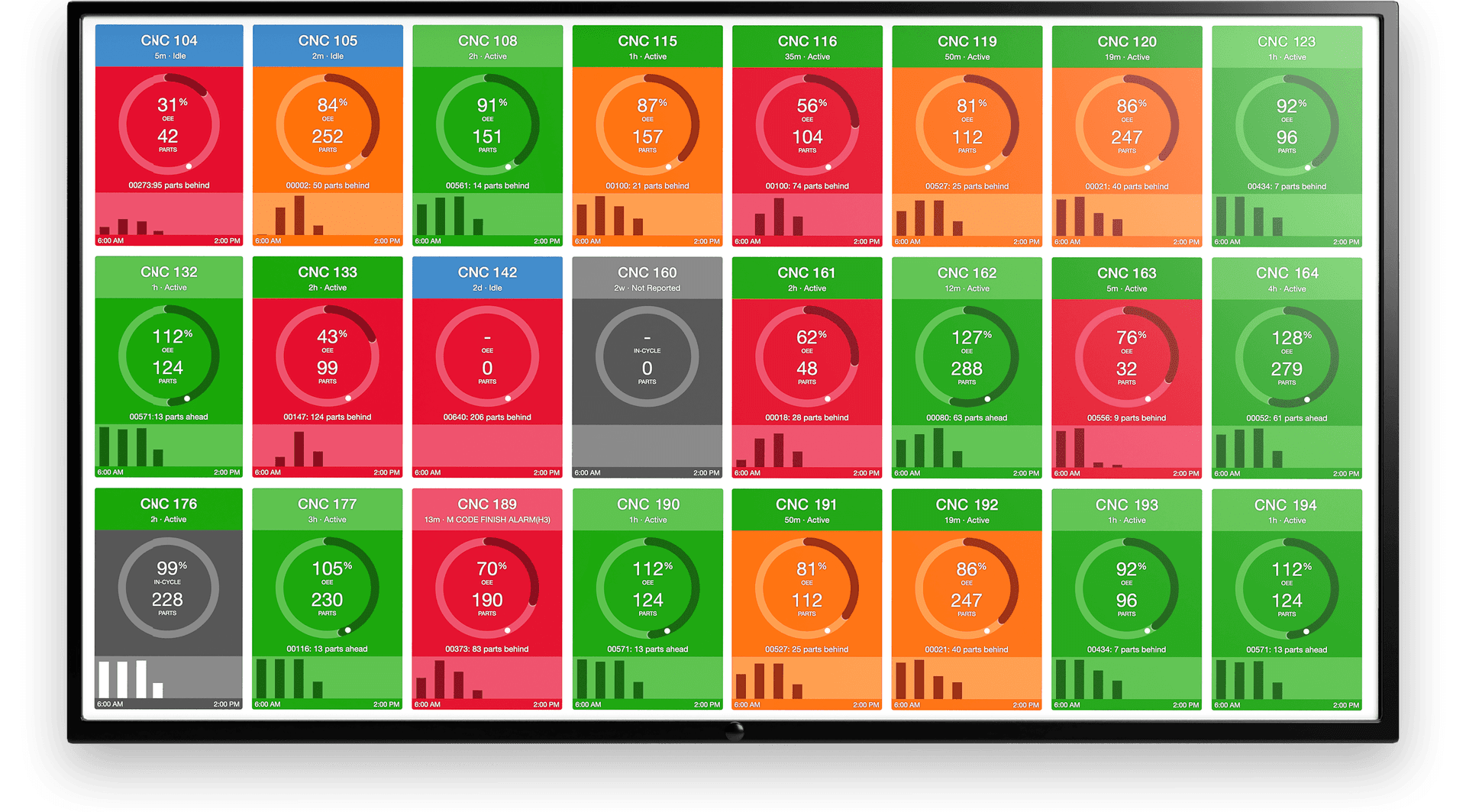
Real-Time Dashboard
Monitor:
- Active alerts
- Escalation status
- Response timers
- Department performance
- Machine conditions
Mobile Access
Managers receive alerts and monitor escalation status from anywhere.
Integration with Manufacturing Systems
Supports integration with:
- PLCs
- MES
- ERP
- SCADA
- Production Monitoring Systems
- OEE Software
- Industrial IoT devices
Event History
Maintain complete records for:
- Alert history
- Escalation levels
- Response times
- Resolution times
- Root cause analysis
Role-Based Notifications
Ensure alerts are delivered to the correct personnel based on responsibility and department.
Benefits of an Escalation Management System
Faster Issue Resolution
Automatic notifications reduce delays between fault detection and corrective action.
Reduced Machine Downtime
Quick escalation minimizes equipment idle time.
Improved Accountability
Every action is recorded, making performance measurable.
Better Communication
Eliminates dependency on manual phone calls and verbal communication.
Increased Productivity
Production interruptions are resolved faster, improving equipment utilization.
Enhanced Decision-Making
Managers gain visibility into response performance and recurring issues.
Standardized Workflows
Every production issue follows the same structured resolution process.
Improved Customer Satisfaction
Faster issue resolution helps maintain production schedules and on-time deliveries.
Escalation Management and Industry 4.0
Industry 4.0 emphasizes connected, intelligent, and automated manufacturing.
An Escalation Management System integrates with:
- Industrial IoT (IIoT)
- PLCs
- MES
- ERP
- SCADA
- Cloud dashboards
- Andon Systems
- Production Monitoring Software
These integrations provide manufacturers with complete operational visibility while supporting predictive maintenance and digital transformation.
Applications Across Manufacturing Industries
Escalation Management Systems are widely used across manufacturing sectors.
Automotive Manufacturing
Escalate robotic cell failures and assembly line stoppages.
Electronics Manufacturing
Manage SMT equipment alerts and quality issues.
Food & Beverage Industry
Escalate packaging, filling, and processing equipment failures.
Pharmaceutical Manufacturing
Manage batch production alerts and compliance events.
Textile Manufacturing
Escalate machine breakdowns and maintenance requests.
Plastic & Injection Molding
Manage molding machine faults and production interruptions.
Packaging Industry
Handle conveyor failures, packaging delays, and quality alerts.
Best Practices for Implementation
Define Clear Escalation Levels
Assign responsibilities for every alert category.
Configure Realistic Response Times
Balance urgency with operational requirements.
Integrate with Existing Systems
Connect with PLCs, MES, ERP, and production monitoring software.
Automate Alert Generation
Avoid manual reporting wherever possible.
Train Employees
Ensure everyone understands escalation procedures and responsibilities.
Review Reports Regularly
Analyze escalation trends to improve operational performance.
Common Challenges
Poor Escalation Design
Complex workflows may confuse users.
Excessive Notifications
Alert prioritization reduces notification fatigue.
Legacy Equipment Integration
Older machines may require retrofit communication modules.
Employee Adoption
Proper training improves system effectiveness.
Future Trends
Escalation Management Systems continue evolving with advanced manufacturing technologies.
Artificial Intelligence
AI will recommend the most appropriate escalation path based on historical data.
Predictive Escalation
Machine learning will trigger preventive alerts before production issues occur.
Edge Computing
Local event processing will reduce notification latency.
Digital Twins
Virtual production models will simulate escalation scenarios.
Cloud Analytics
Managers will monitor escalation performance across multiple manufacturing plants from a centralized dashboard.
These technologies will further improve manufacturing responsiveness and operational efficiency.
Why Choose Robato Systems for Escalation Management Solutions?
Robato Systems delivers advanced Escalation Management System solutions that automate manufacturing communication and ensure every production issue receives immediate attention. Our solutions integrate seamlessly with PLCs, Industrial IoT devices, MES, ERP, SCADA, and production monitoring software to provide real-time notifications, automated escalation, and centralized monitoring.
Our customizable escalation solutions include Andon tower lights, digital display boards, mobile notifications, response timers, cloud dashboards, and comprehensive reporting. Designed for Industry 4.0, Robato Systems helps manufacturers reduce downtime, improve accountability, accelerate issue resolution, and increase operational efficiency.
Whether your facility operates a single production line or multiple manufacturing plants, our scalable solutions adapt to your operational requirements and support continuous improvement.
Conclusion
An Escalation Management System is a critical component of modern manufacturing, ensuring that production issues are communicated, monitored, and resolved efficiently. By automating notifications, enforcing response timelines, and escalating unresolved problems to the appropriate personnel, manufacturers can significantly reduce downtime and improve operational performance.
As factories continue adopting Industry 4.0 technologies, escalation management systems provide the structured communication framework needed to support connected manufacturing, predictive maintenance, and continuous operational improvement.
Investing in an intelligent Escalation Management System helps manufacturers build more responsive, accountable, and productive production environments.
Frequently Asked Questions (FAQs)
What is an Escalation Management System?
An Escalation Management System is an automated workflow solution that ensures production issues are communicated to the right personnel and escalated if they remain unresolved.
What are the benefits of an Escalation Management System?
It improves communication, reduces downtime, increases accountability, speeds up issue resolution, and supports standardized manufacturing workflows.
Can an Escalation Management System integrate with PLCs and ERP software?
Yes. Modern systems integrate with PLCs, MES, ERP, SCADA, Industrial IoT devices, production monitoring software, and cloud dashboards.
Which manufacturing events can be escalated?
Machine breakdowns, maintenance requests, material shortages, quality issues, operator assistance requests, production delays, and safety incidents.
Which industries use Escalation Management Systems?
Automotive, electronics, pharmaceuticals, food processing, textiles, plastics, packaging, logistics, and many other manufacturing industries.