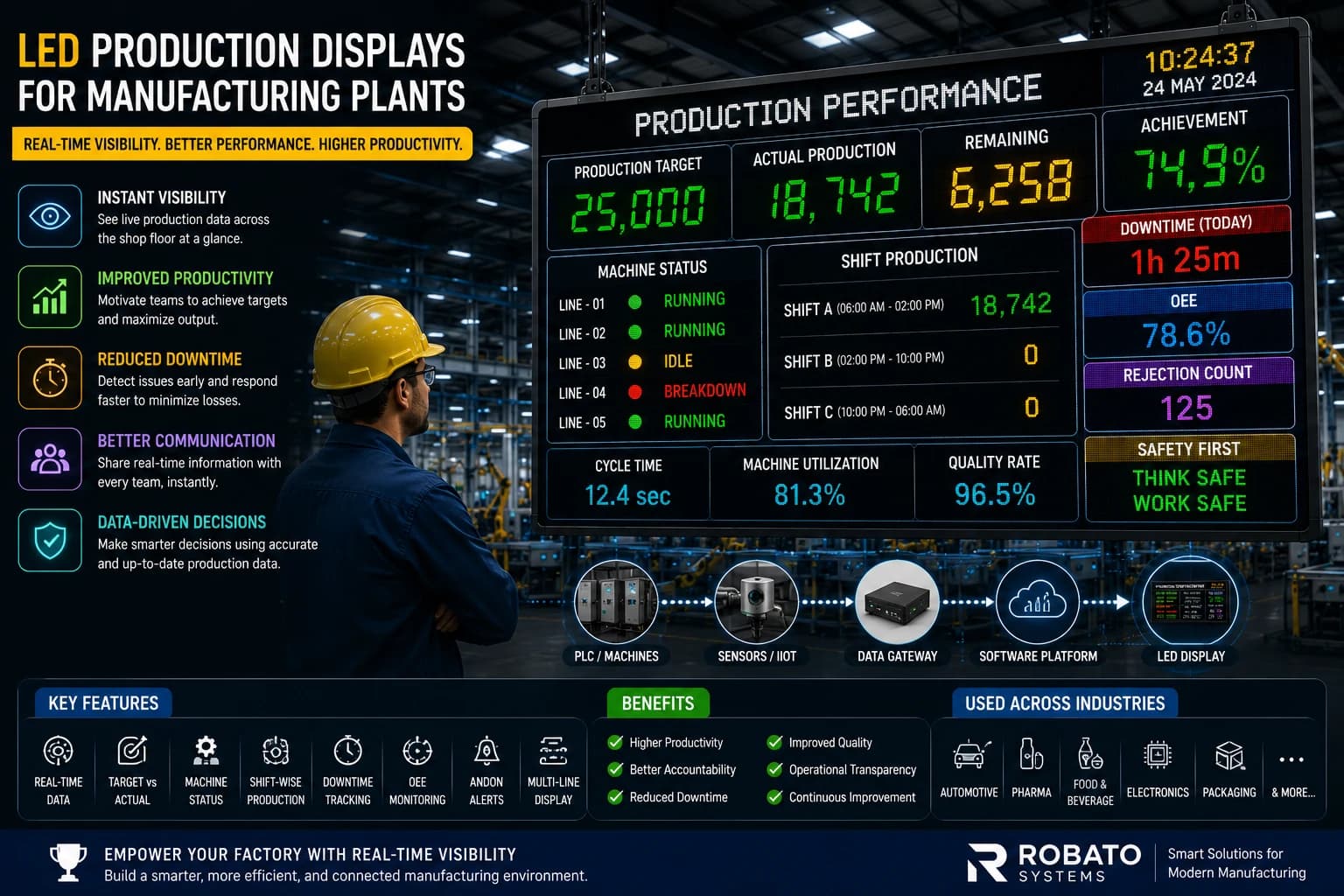
LED Production Displays for Manufacturing Plants
Modern manufacturing plants generate a continuous stream of production data every second. Machine performance, production output, shift efficiency, downtime, quality metrics, and production targets all need to be monitored in real time to ensure smooth operations. However, if this information remains hidden inside software dashboards or spreadsheets, operators and supervisors may struggle to react quickly when production issues occur.
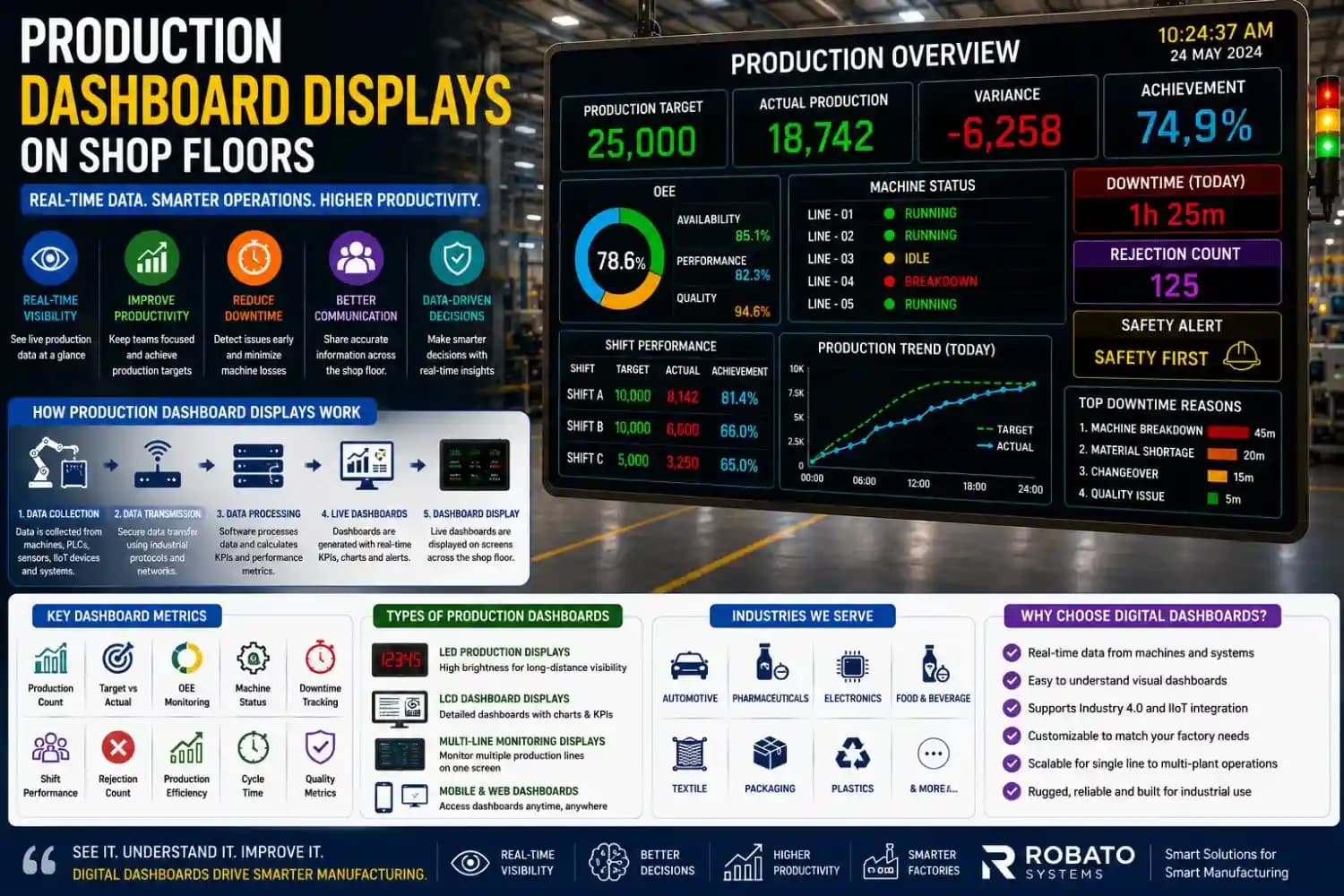
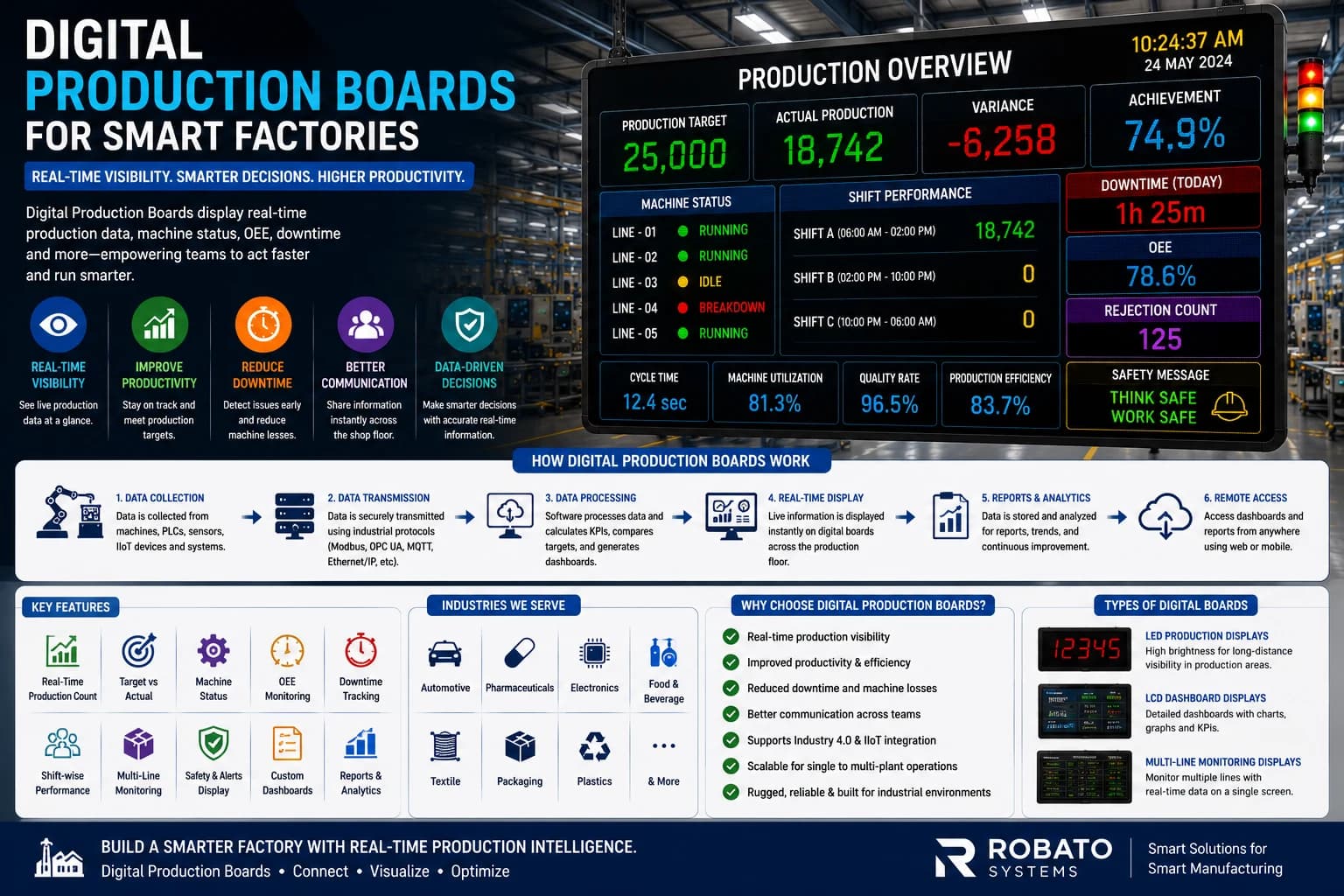
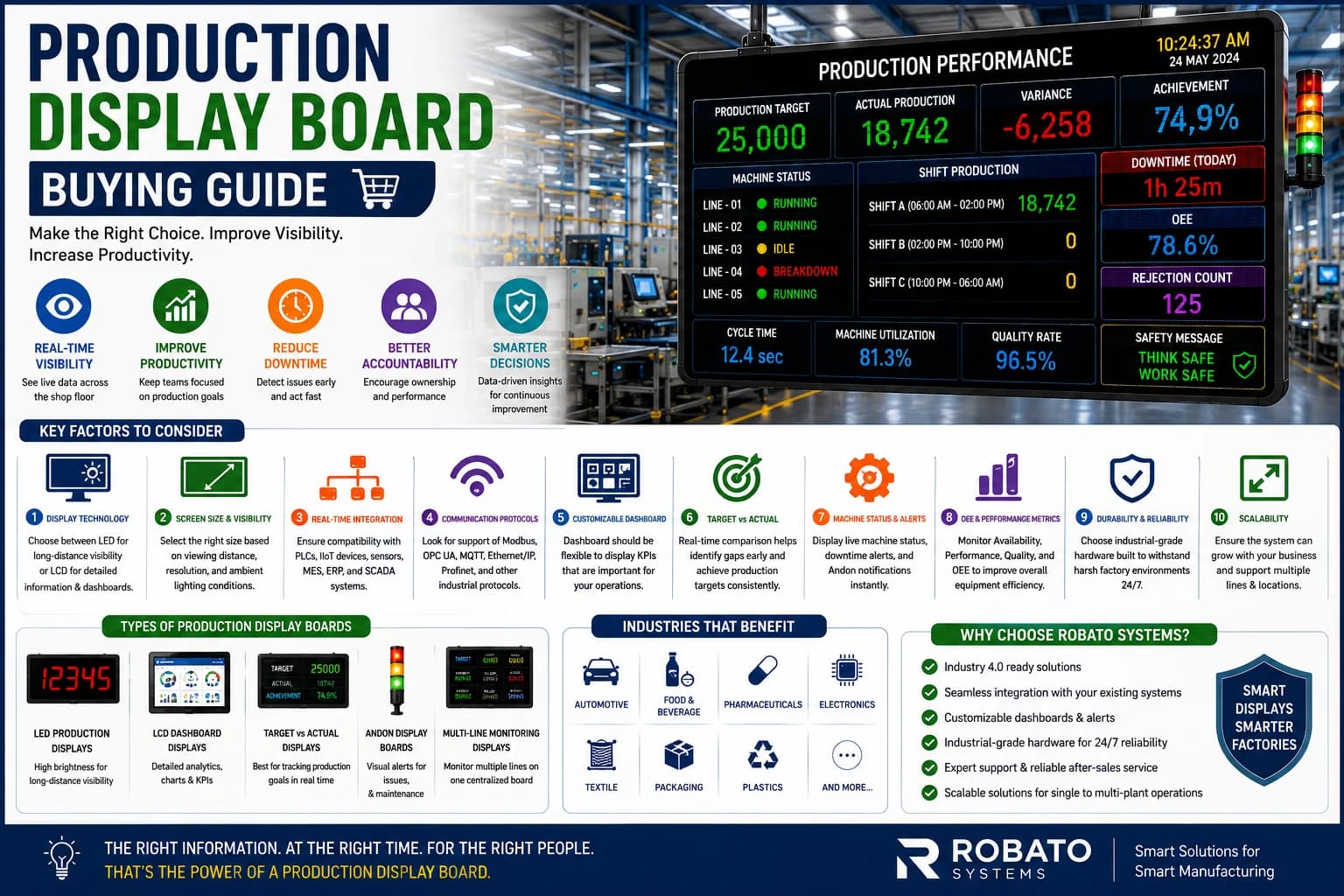
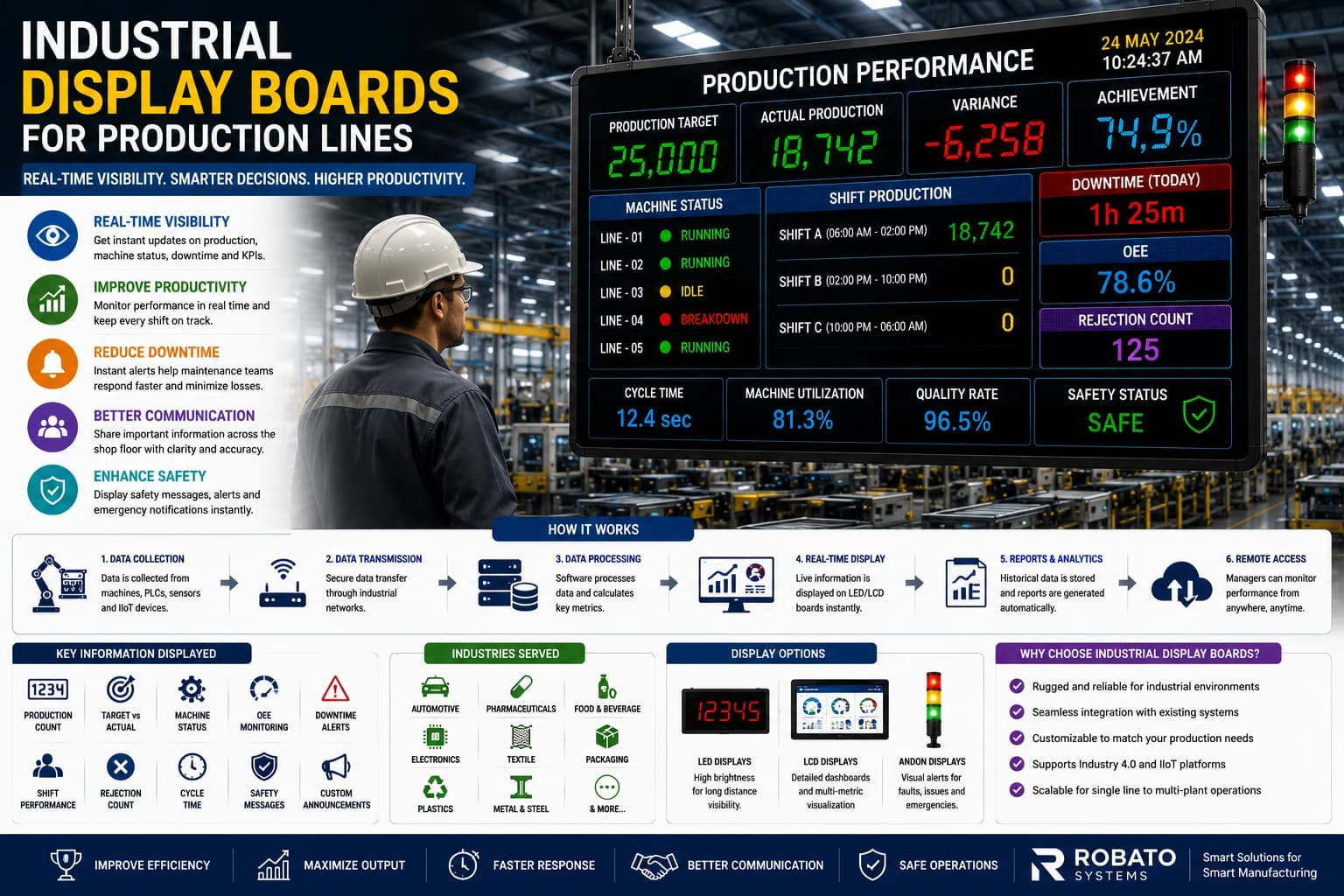
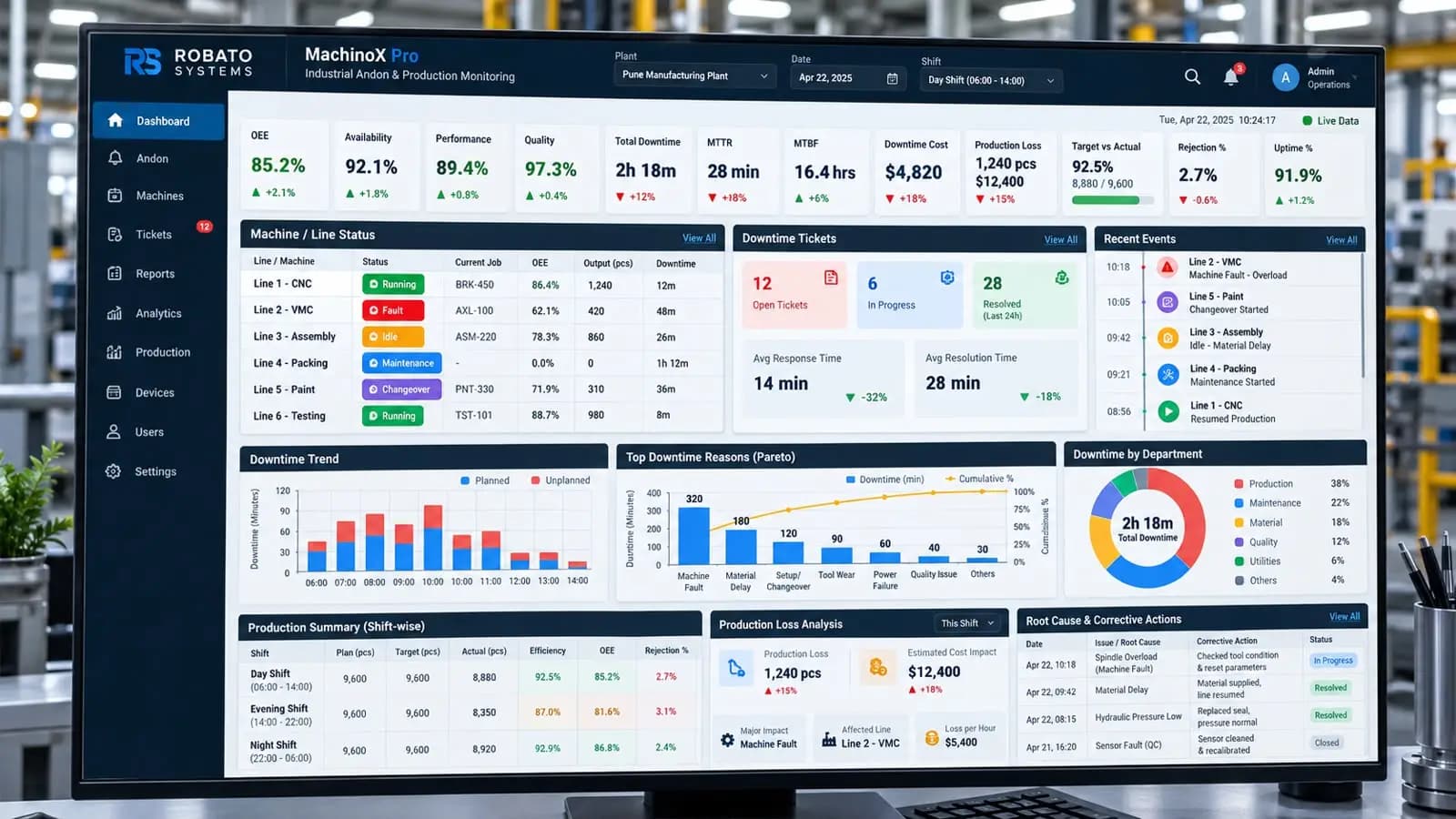
This is where LED Production Displays become an essential part of a smart manufacturing environment. Installed at strategic locations across the shop floor, these large digital displays provide instant visibility into production performance. They display live production counts, machine status, target versus actual output, downtime alerts, and key manufacturing KPIs, enabling everyone on the production floor to stay informed.
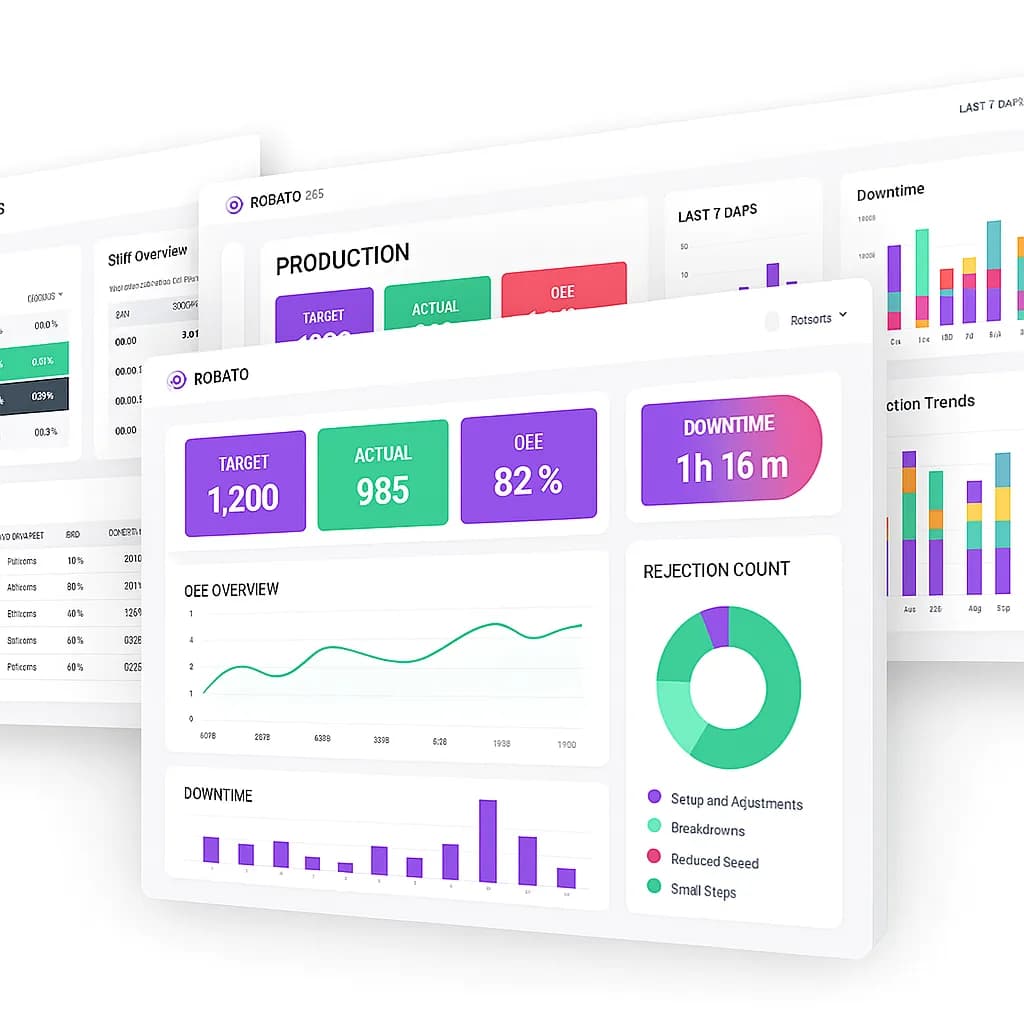
As manufacturers adopt Industry 4.0 technologies, LED production displays have evolved beyond simple digital counters. Today, they are intelligent visual communication tools that integrate seamlessly with PLCs, Industrial IoT (IIoT) devices, MES, ERP systems, and production monitoring software to support real-time decision-making and continuous improvement.
What is an LED Production Display?
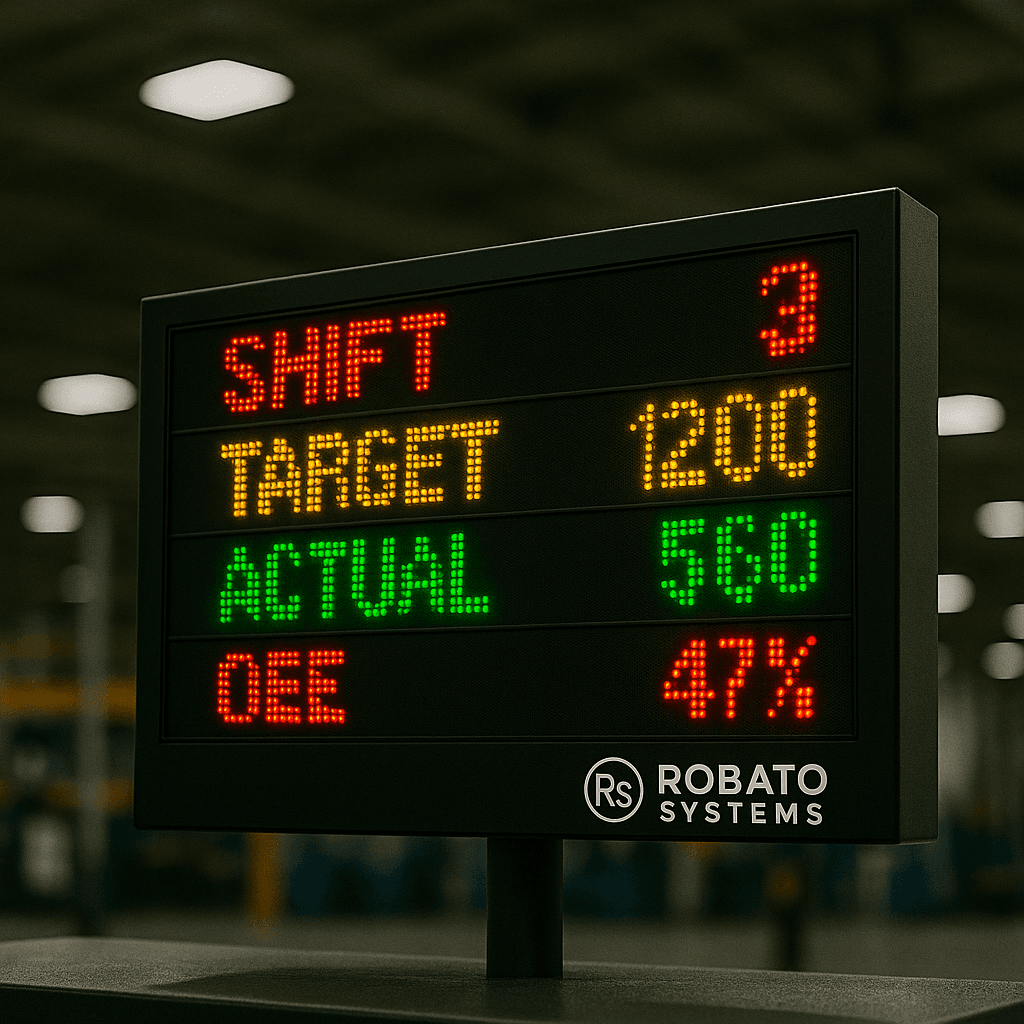
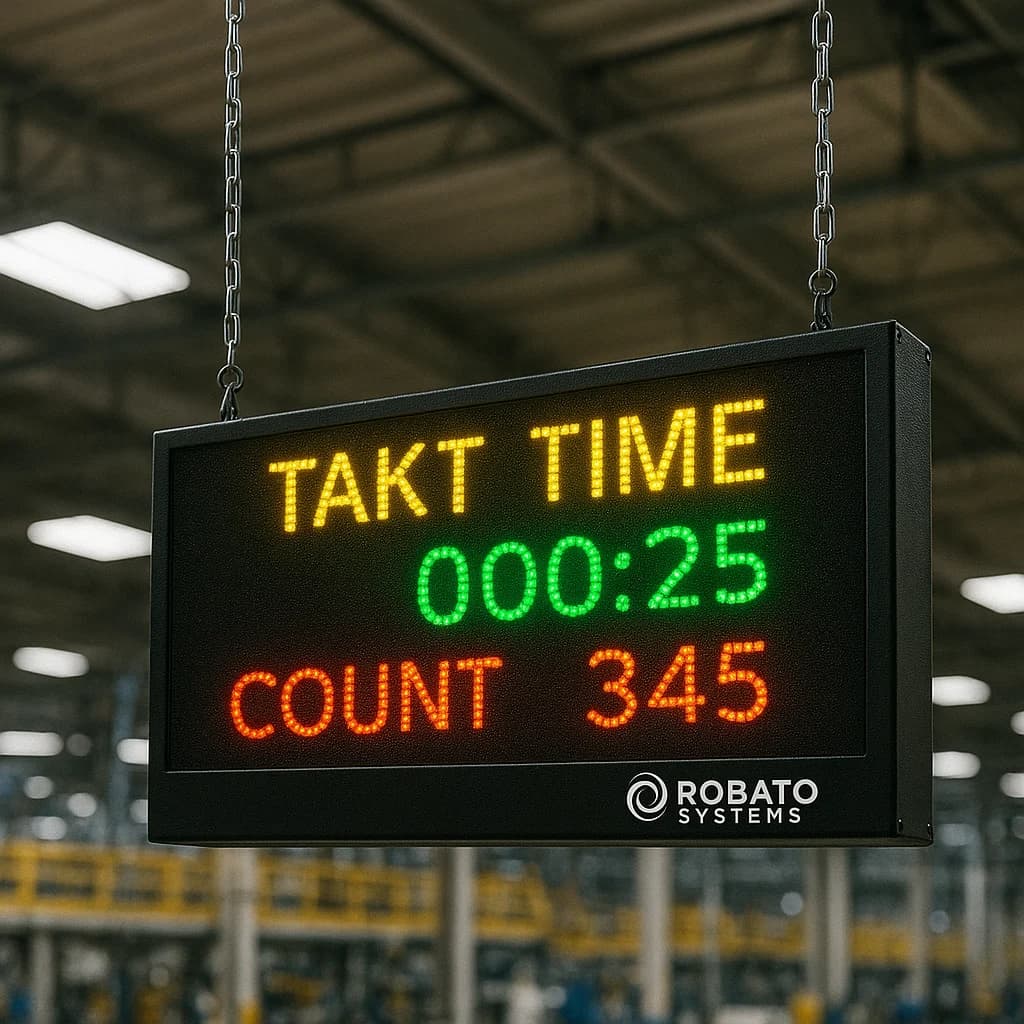
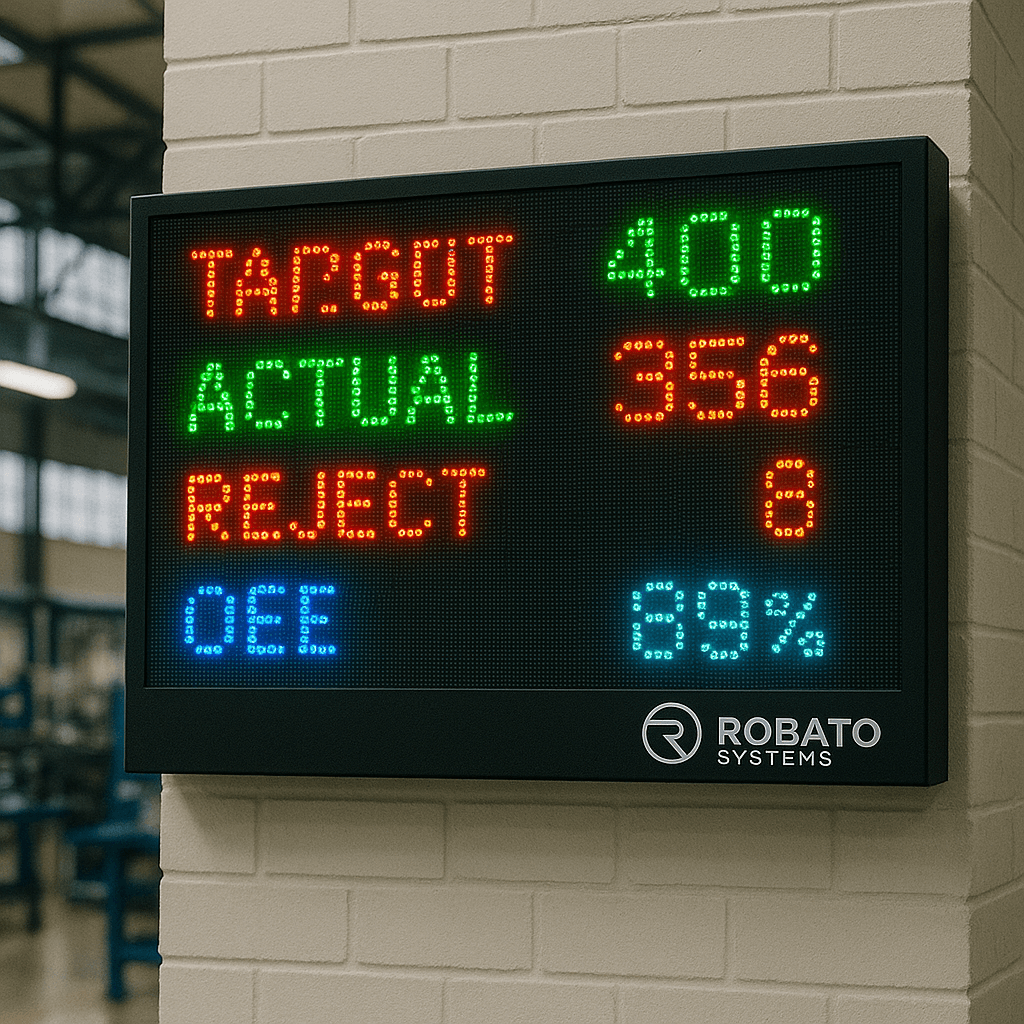
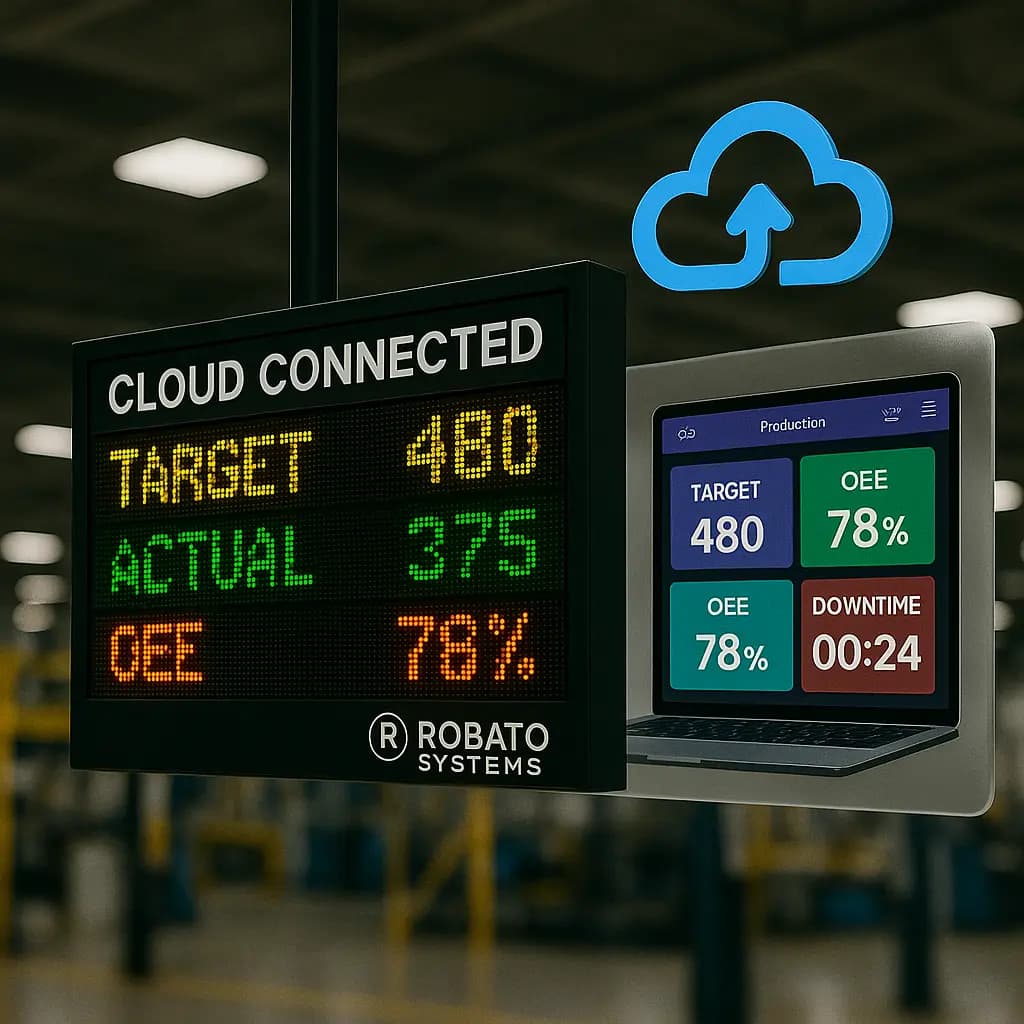
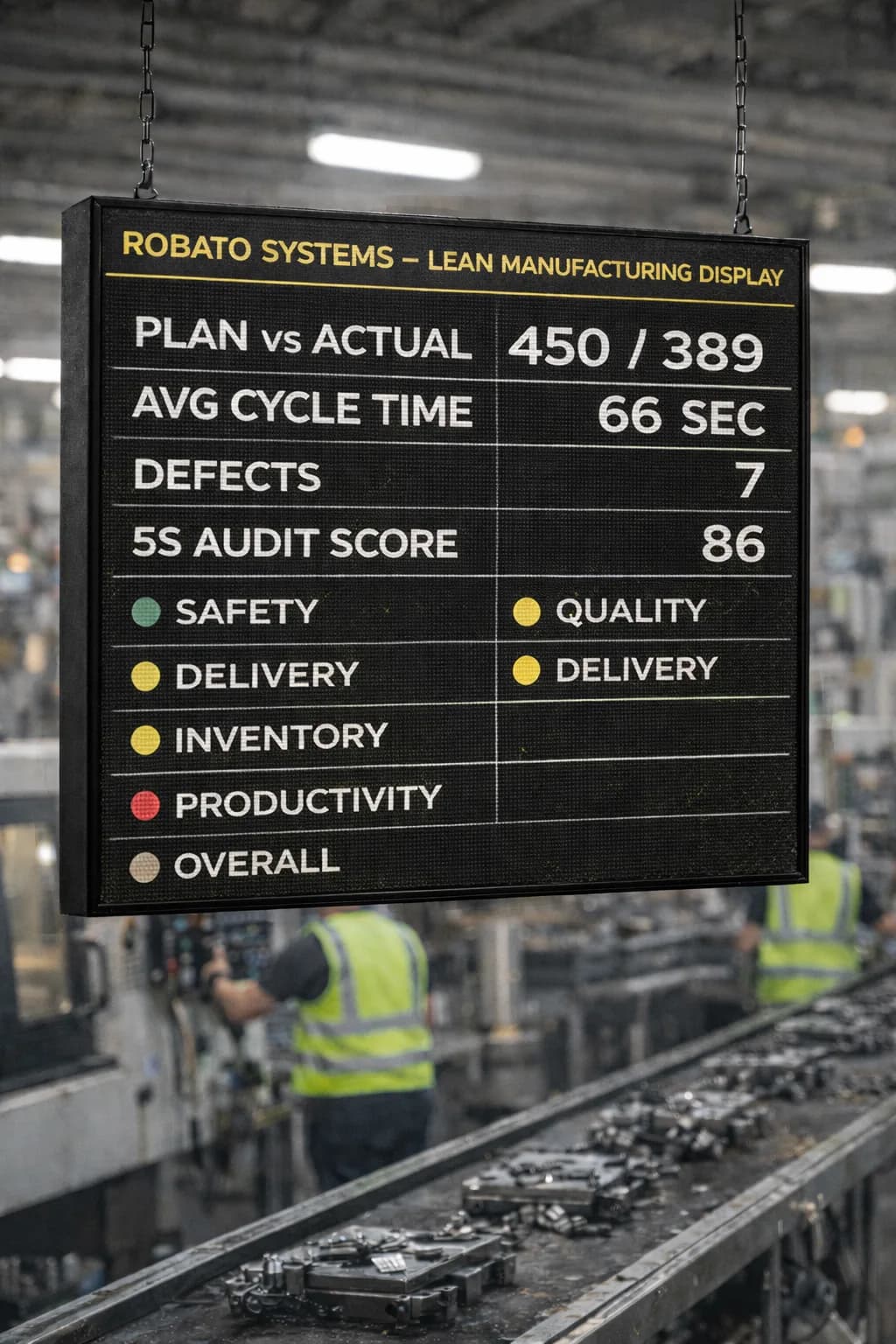
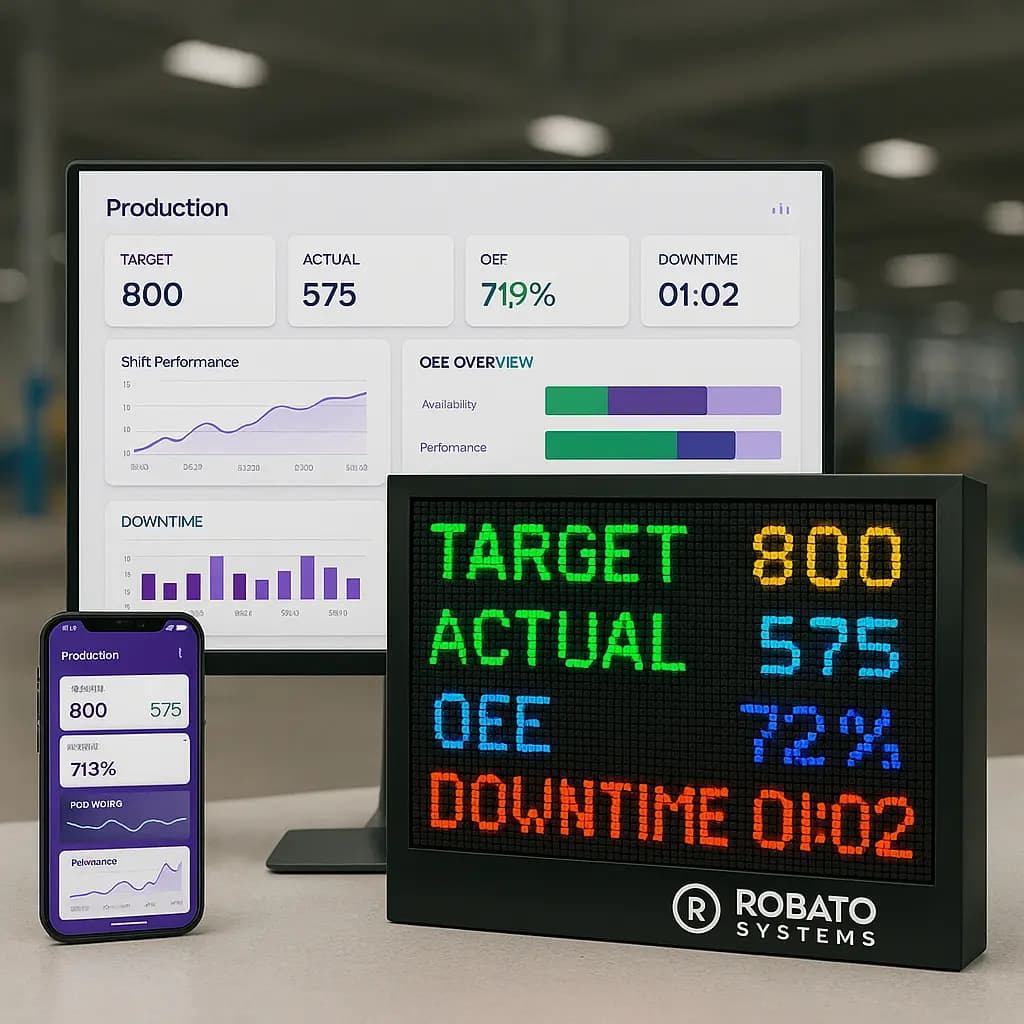
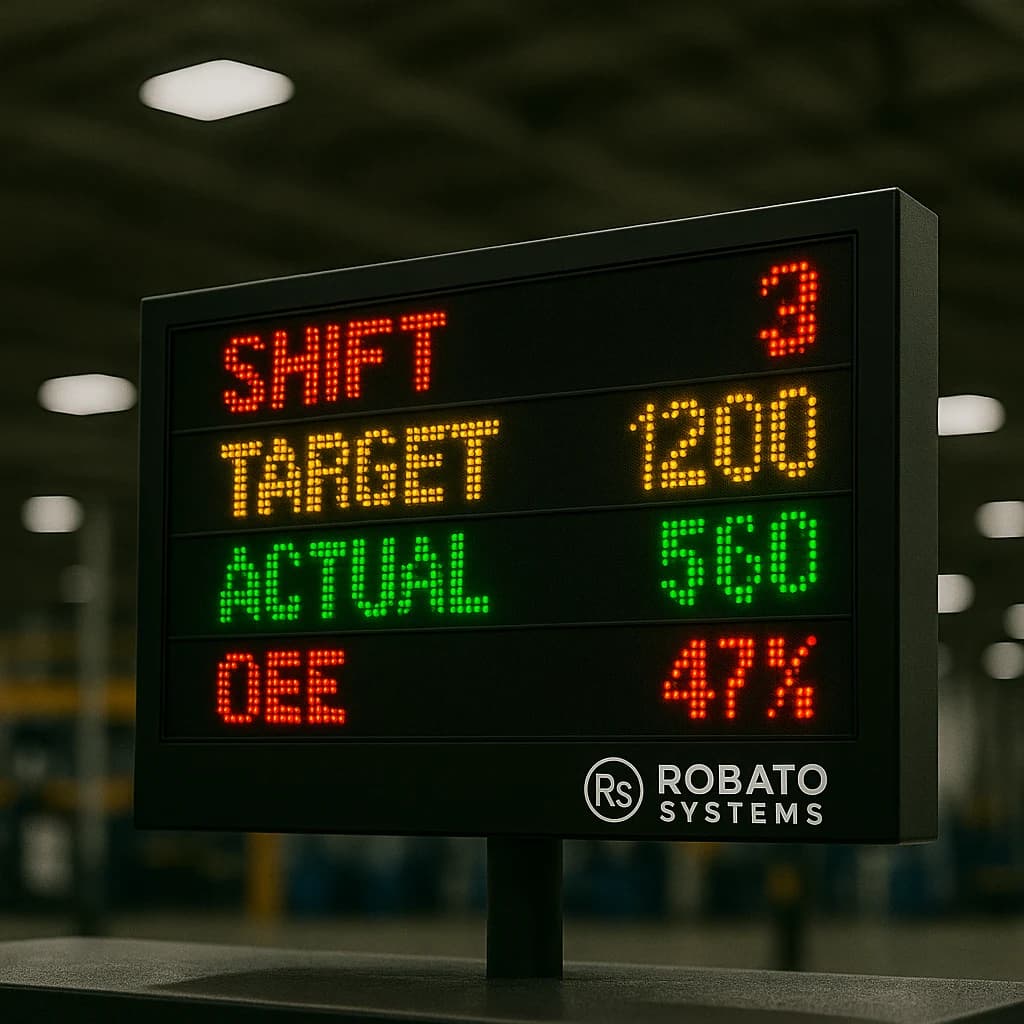
An LED Production Display is a high-visibility electronic display board designed for manufacturing environments. It automatically receives production data from machines, sensors, PLCs, or production monitoring systems and displays real-time information using bright LED panels that remain visible even in large industrial facilities.
Unlike manual whiteboards or printed production charts, LED production displays update automatically whenever production data changes, ensuring that operators and supervisors always have access to accurate information.
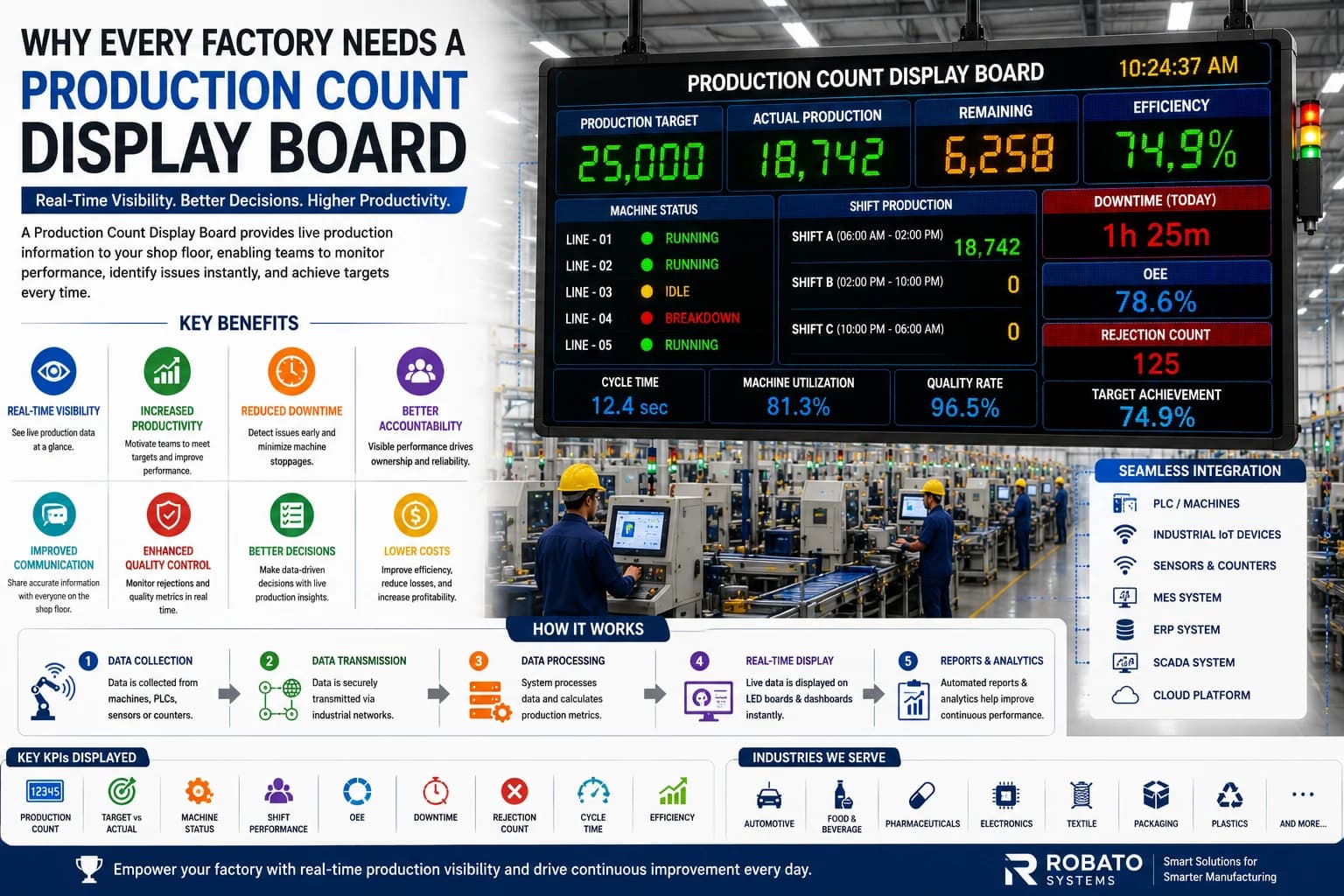
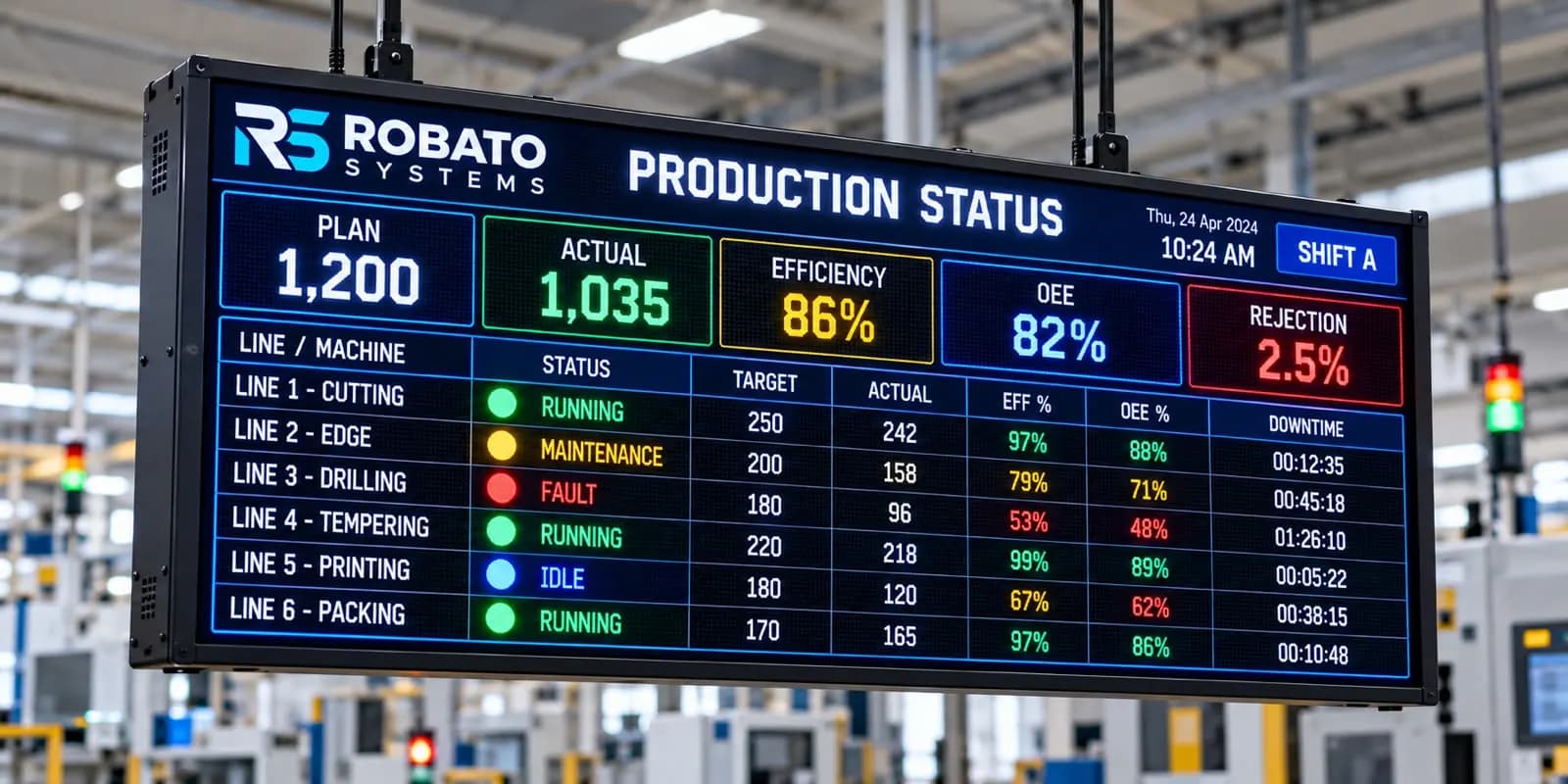
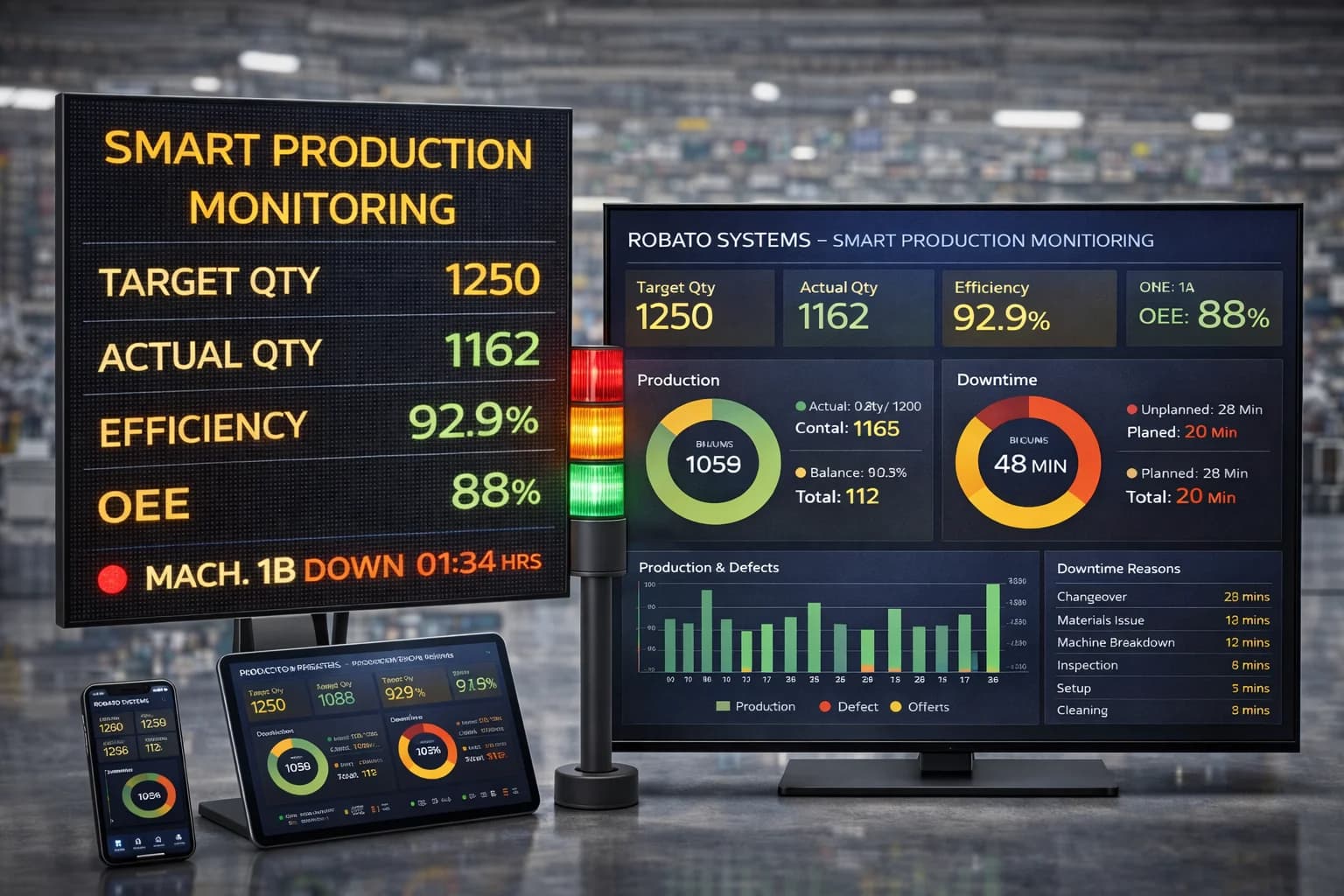
Typical information displayed includes:
- Production target
- Actual production
- Target vs actual comparison
- Machine status
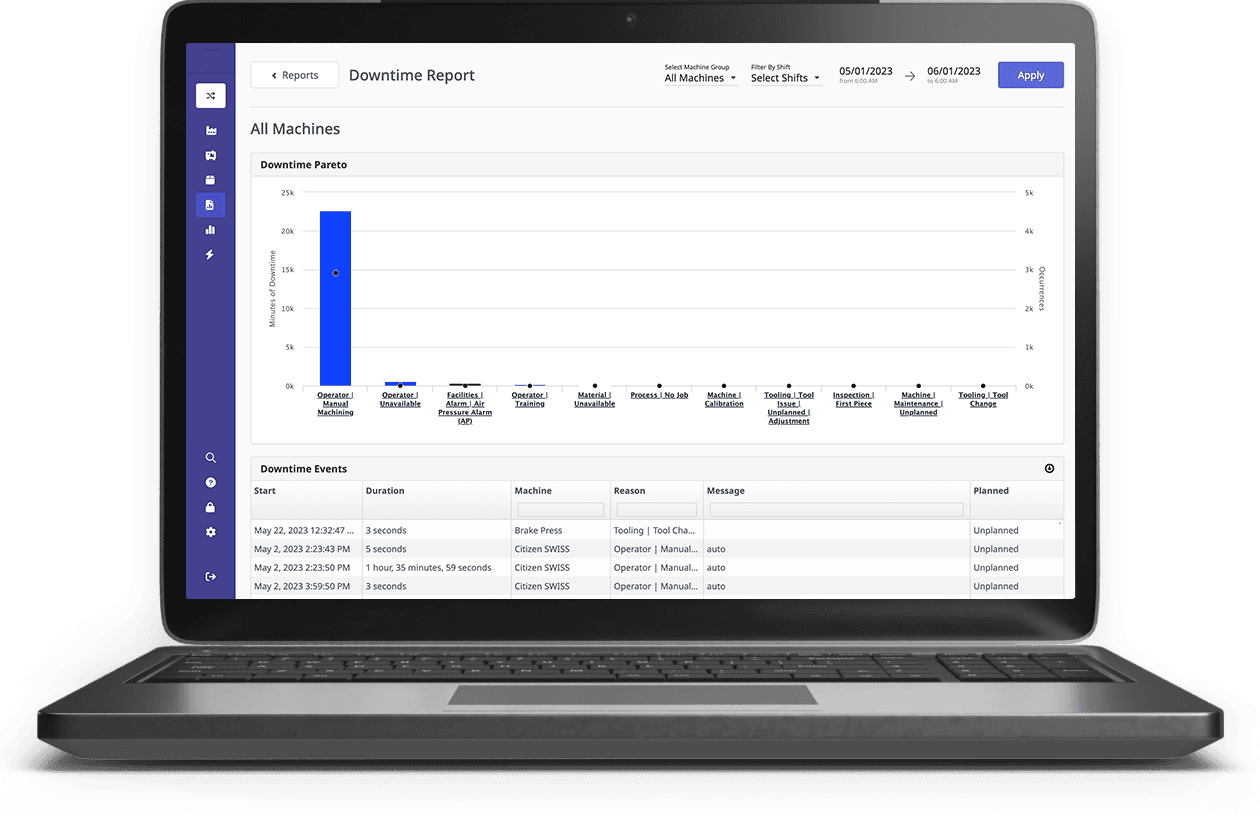
- Downtime
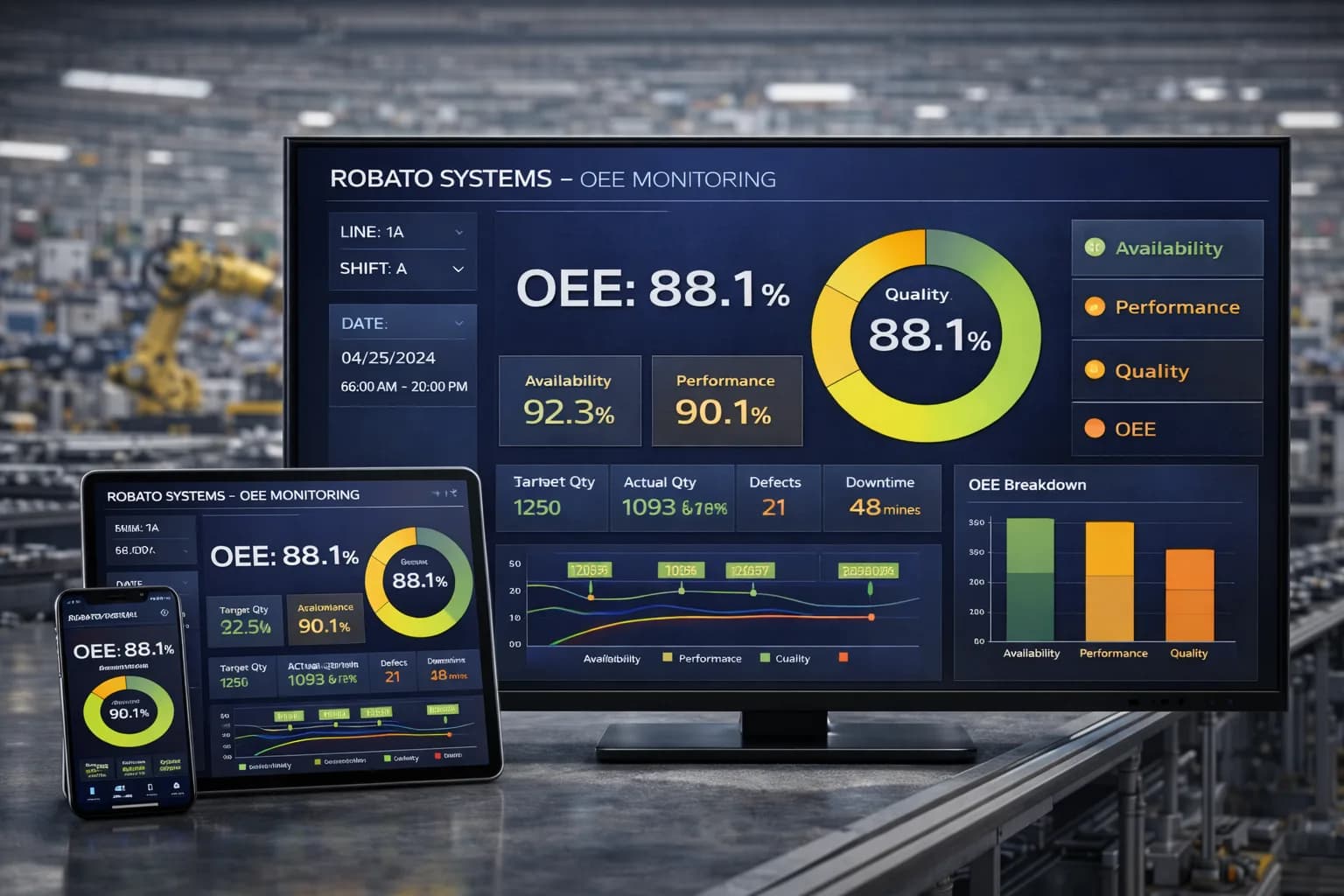
- Overall Equipment Effectiveness (OEE)
- Shift-wise production
- Rejection count
- Production efficiency
- Safety messages
- Andon alerts
These displays serve as a centralized source of production information for the entire manufacturing team.
Why LED Production Displays are Important
Manufacturing decisions become more effective when everyone has access to real-time production data.
Without visual production displays, factories often experience:
- Delayed communication
- Slow response to machine failures
- Missed production targets
- Manual reporting errors
- Poor production visibility
- Reduced operator engagement
LED production displays eliminate these problems by providing instant production updates that everyone can see.
Key advantages include:
- Improved operational transparency
- Faster decision-making
- Better communication
- Increased accountability
- Enhanced production efficiency
How LED Production Displays Work
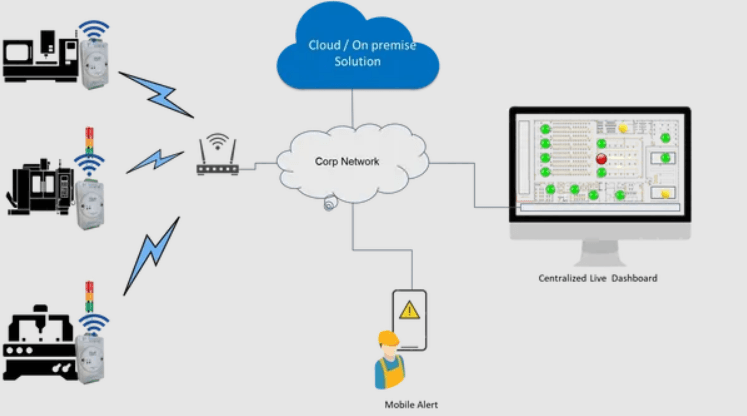
A modern LED production display operates through a connected manufacturing ecosystem.
Step 1: Data Collection
Production information is collected automatically from:
- PLCs
- Industrial IoT sensors
- Machine counters
- Barcode scanners
- RFID systems
- Production monitoring software
- MES platforms
Step 2: Data Transmission
The collected information is transmitted using industrial communication protocols such as:
- Modbus
- OPC UA
- MQTT
- Ethernet/IP
- Profinet
This ensures secure and reliable communication between machines and display systems.
Step 3: Data Processing
The production monitoring software processes incoming information and calculates manufacturing KPIs such as:
- Production output
- OEE
- Machine utilization
- Downtime
- Production efficiency
Step 4: Live LED Display
The processed information is displayed instantly on LED production boards installed throughout the manufacturing plant.
The displays refresh automatically whenever production data changes.
Key Features of LED Production Displays
Real-Time Production Count
Display the exact number of products manufactured at any moment.
This allows operators to compare actual production with planned targets throughout the shift.
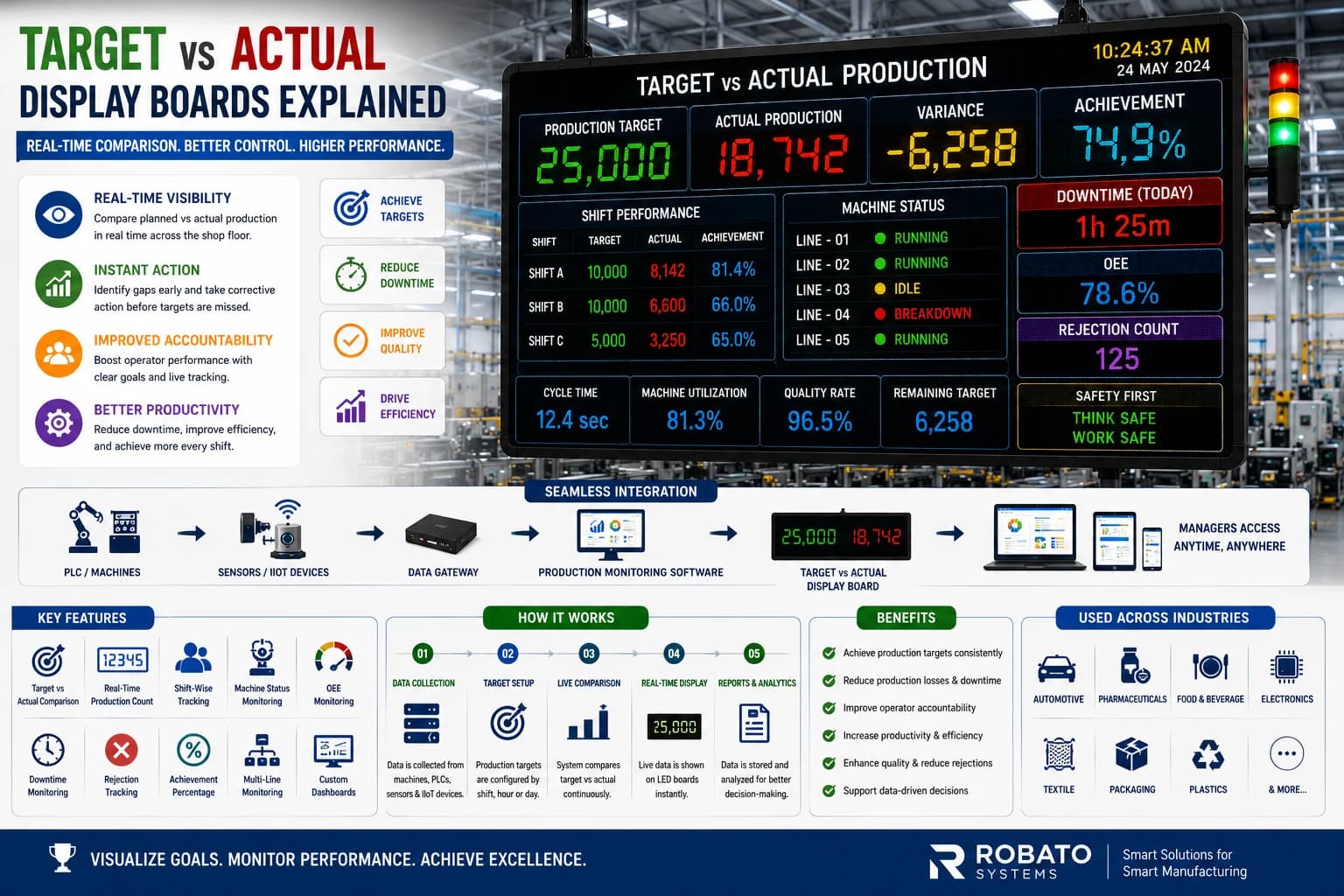
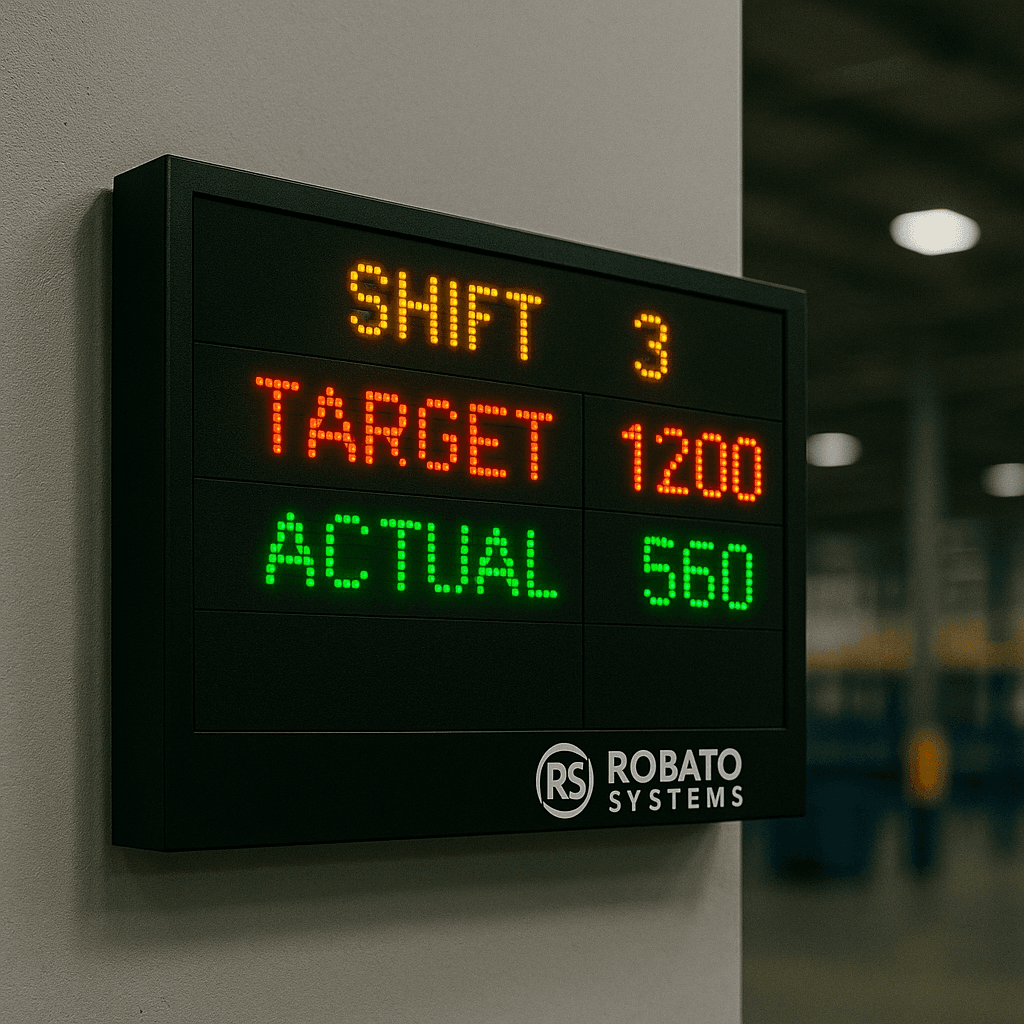
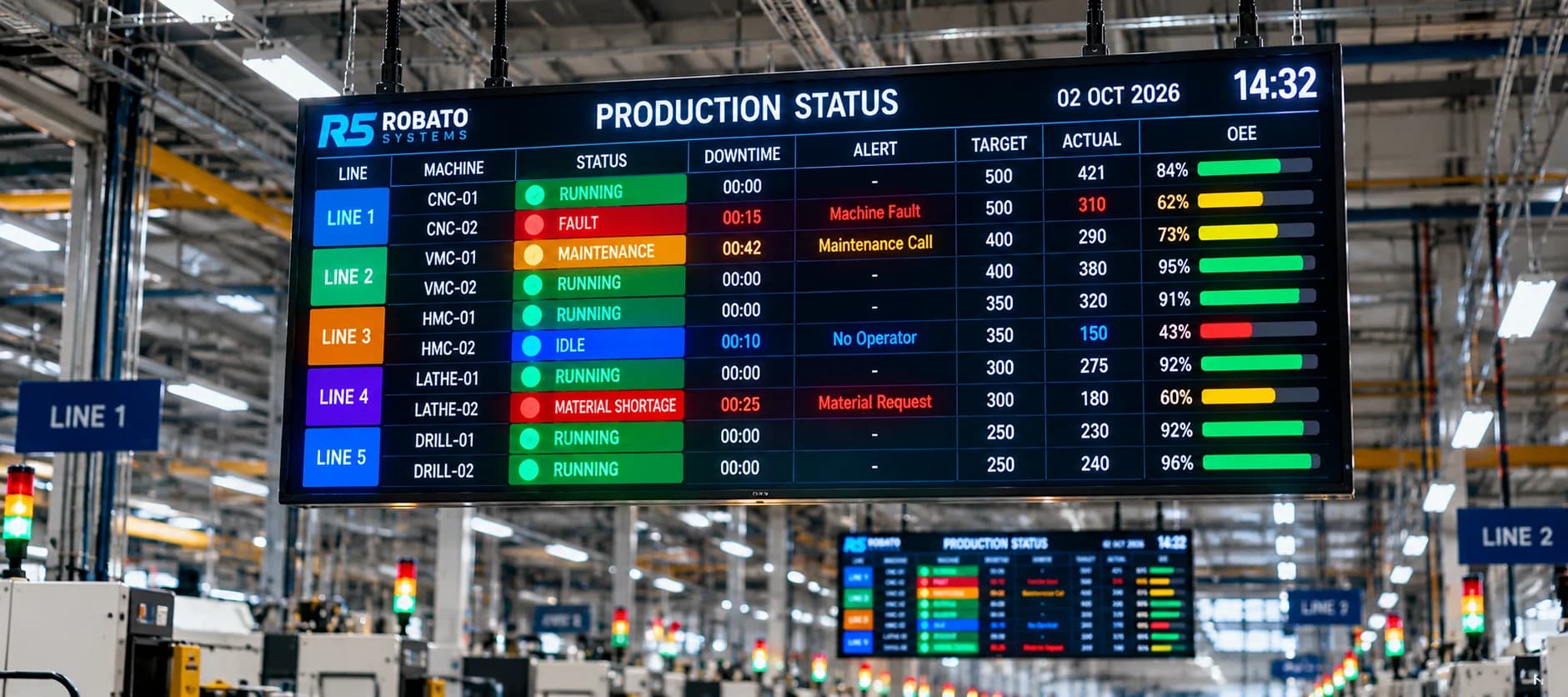
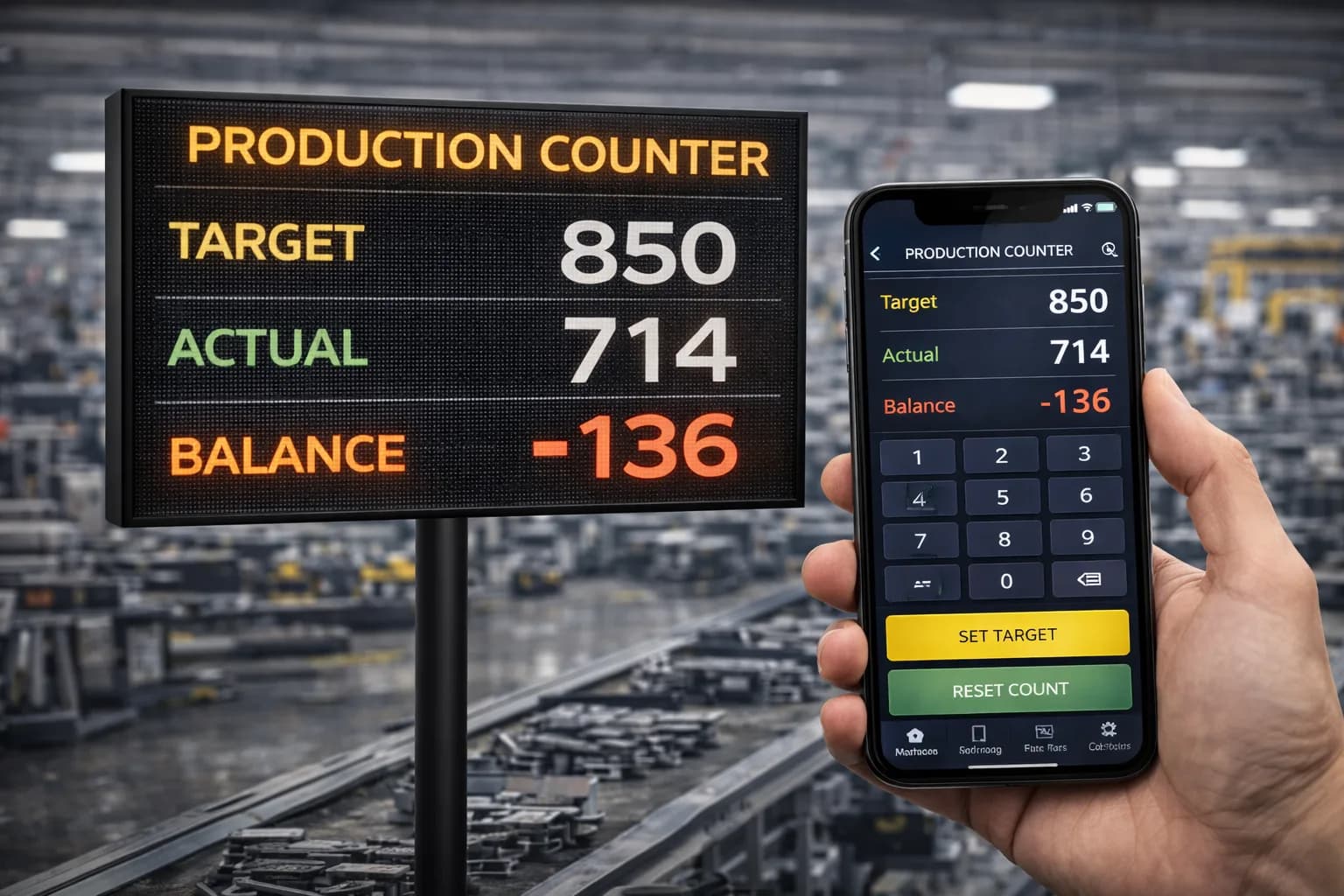
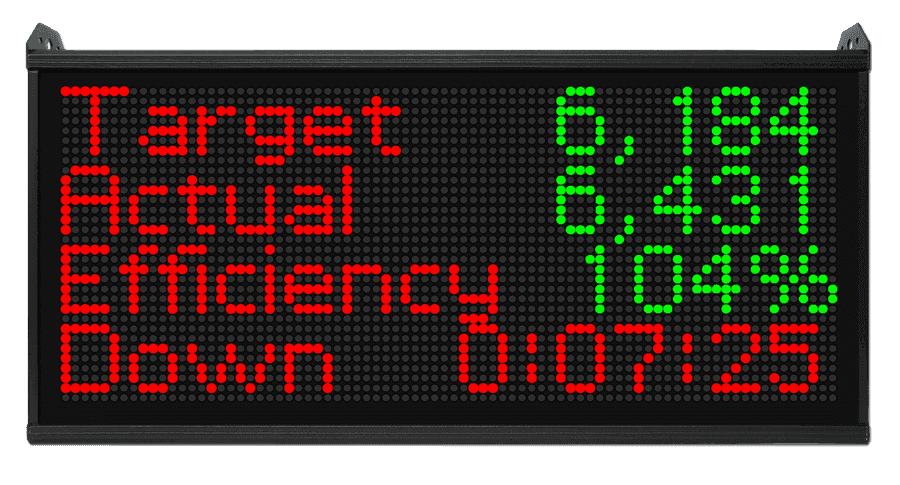
Target vs Actual Production
One of the most valuable features is displaying:
- Production target
- Actual production
- Remaining production
- Achievement percentage
This helps supervisors quickly identify production delays.
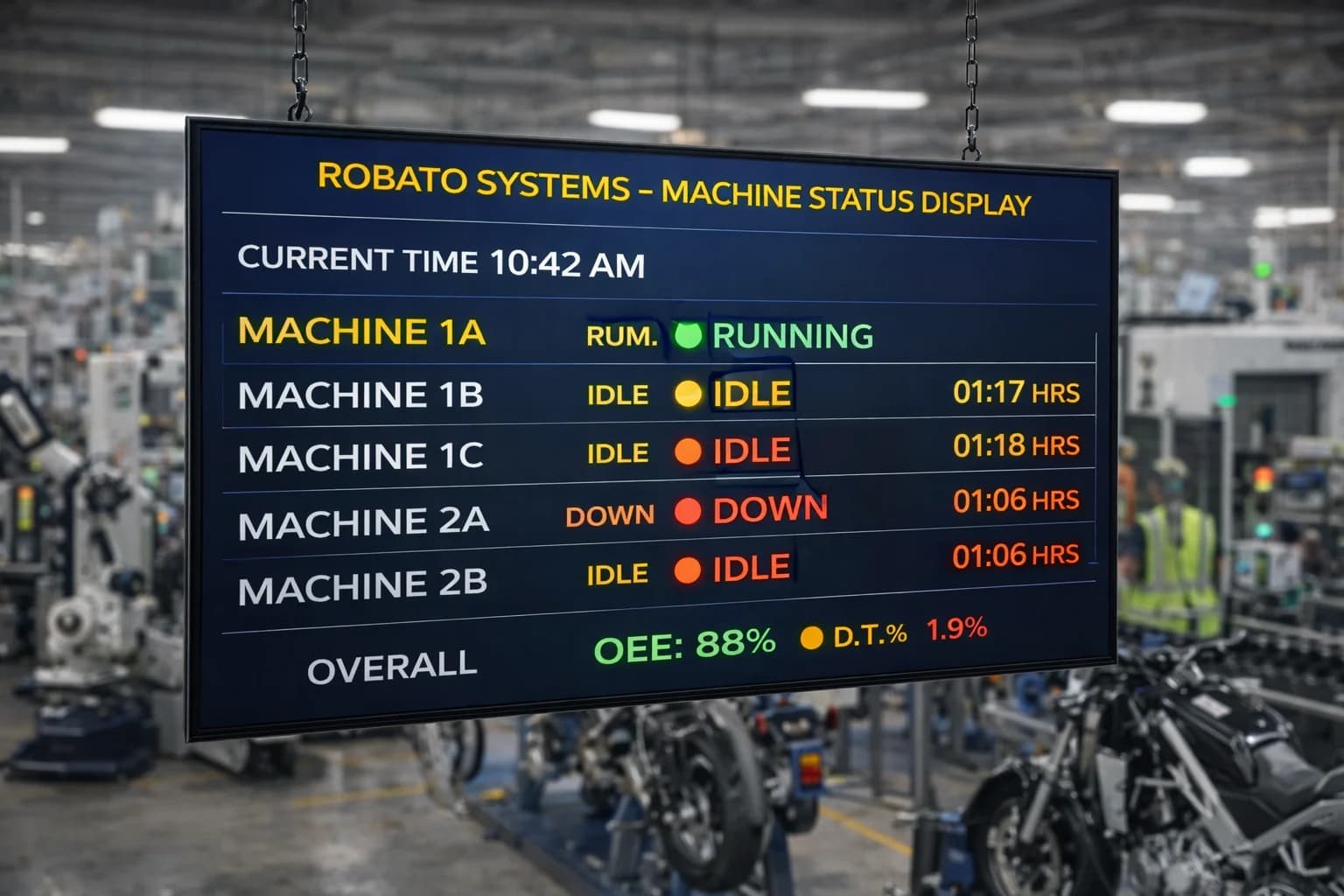
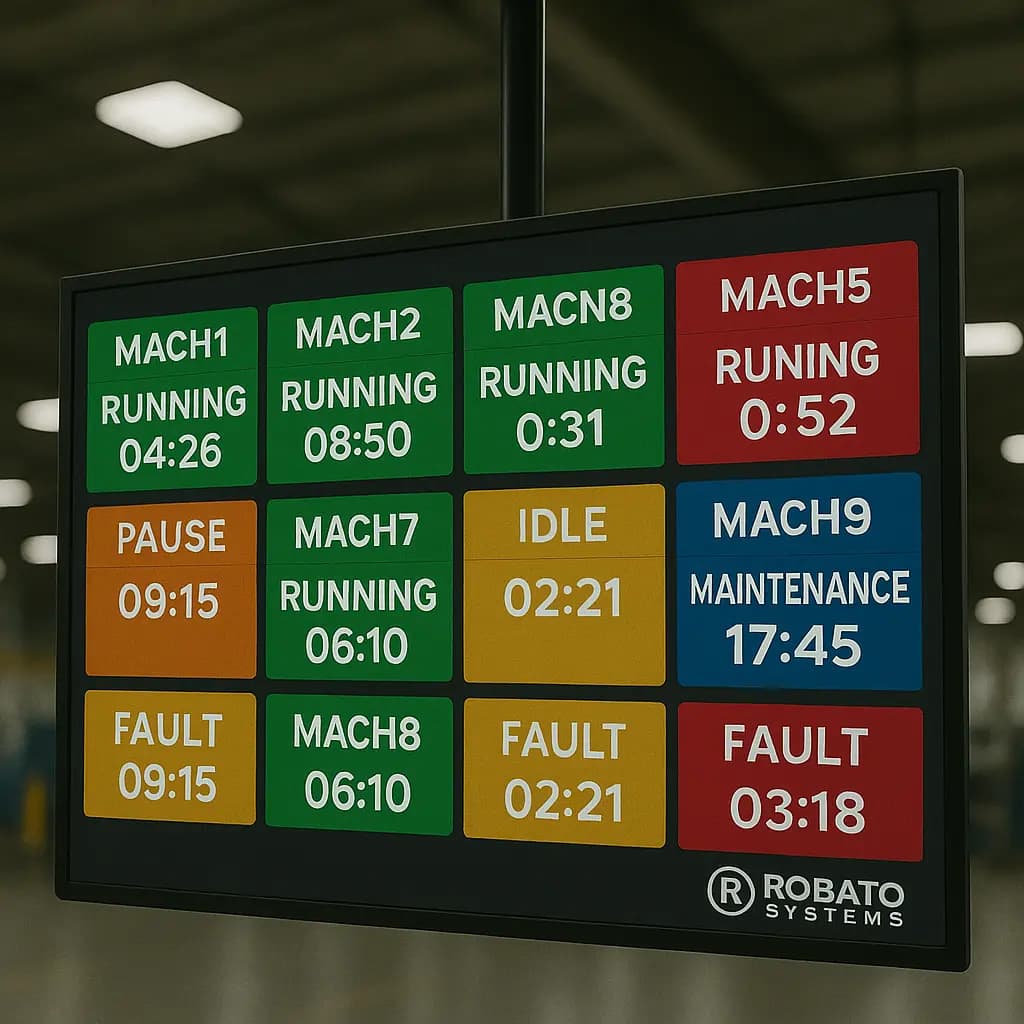
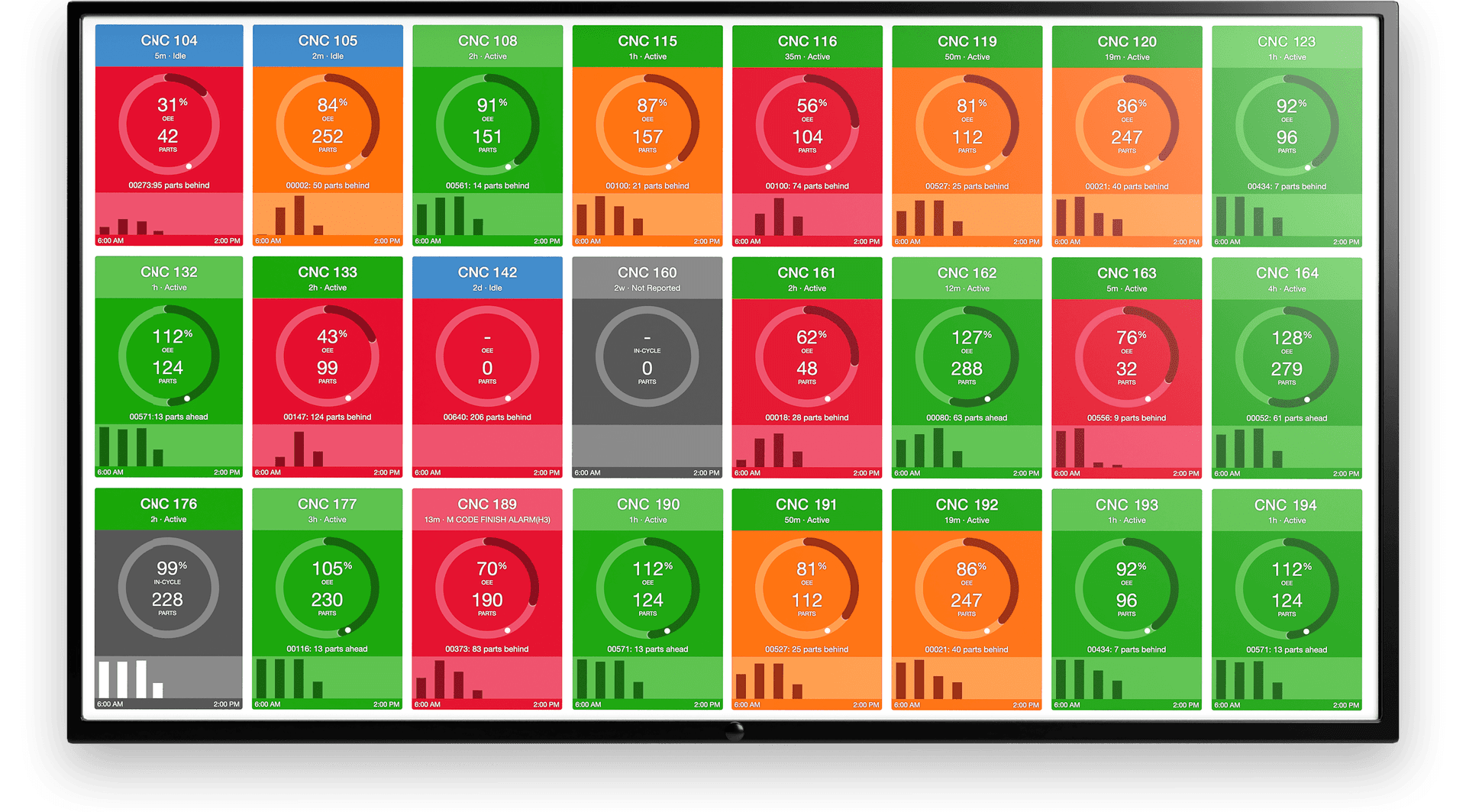
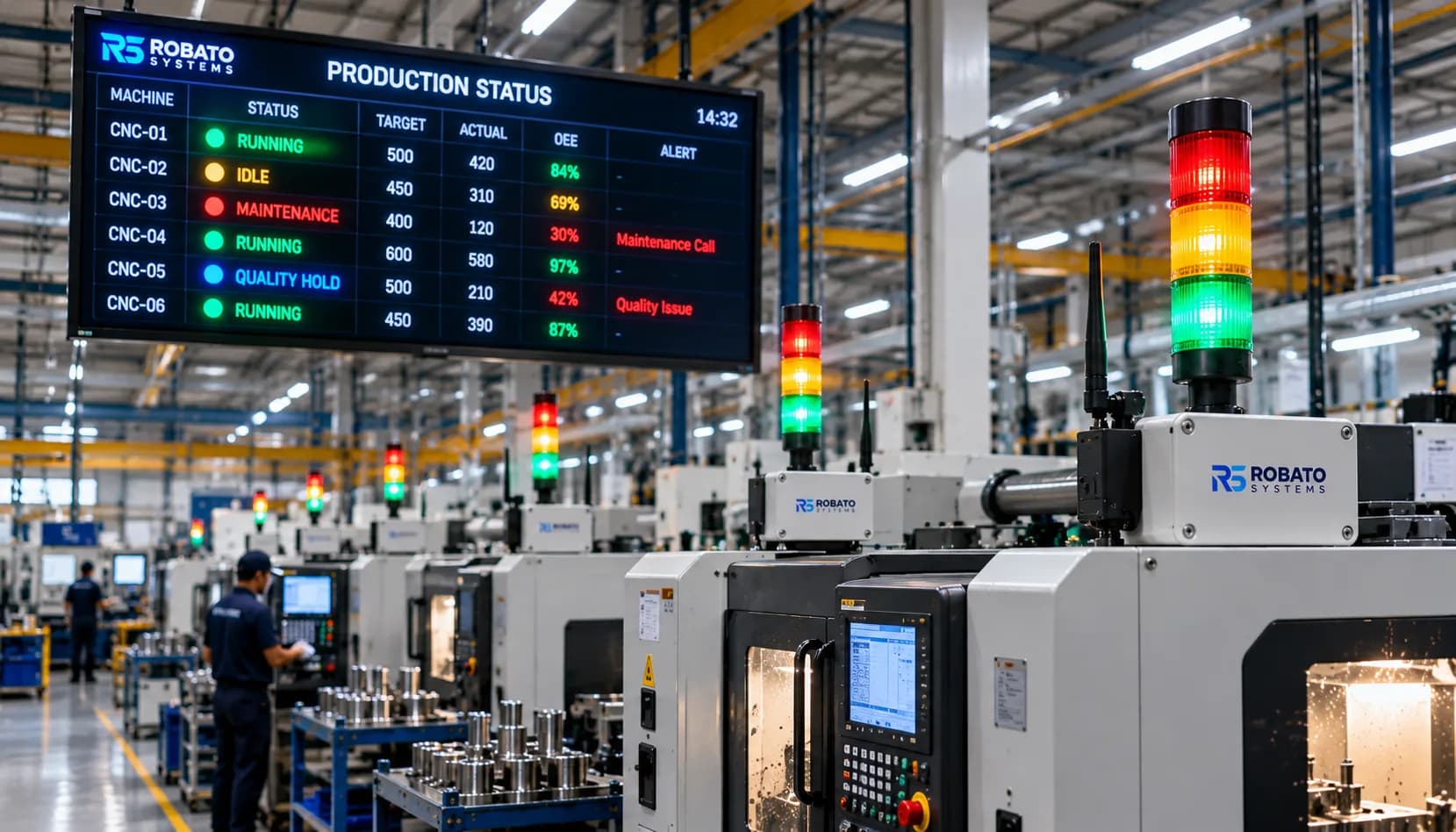
Machine Status Monitoring
LED displays show equipment conditions such as:
- Running
- Idle
- Breakdown
- Maintenance
- Setup
This improves maintenance response time and reduces production losses.
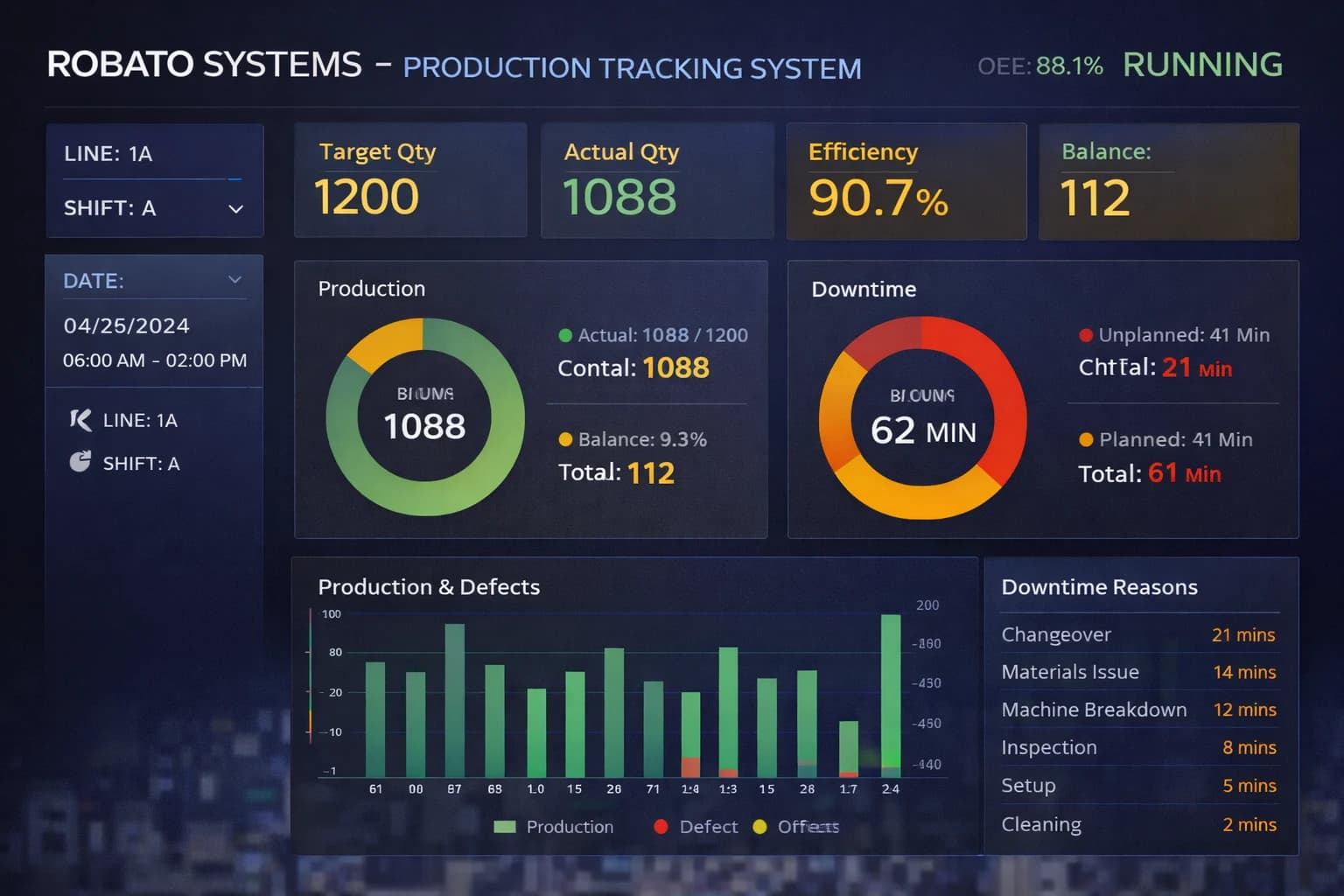
Shift Performance Display
Monitor production separately for each manufacturing shift.
Displayed metrics include:
- Shift output
- Production efficiency
- OEE
- Downtime
- Rejections
Overall Equipment Effectiveness (OEE)
LED production displays provide live OEE metrics based on:
- Availability
- Performance
- Quality
This enables manufacturers to monitor equipment productivity continuously.
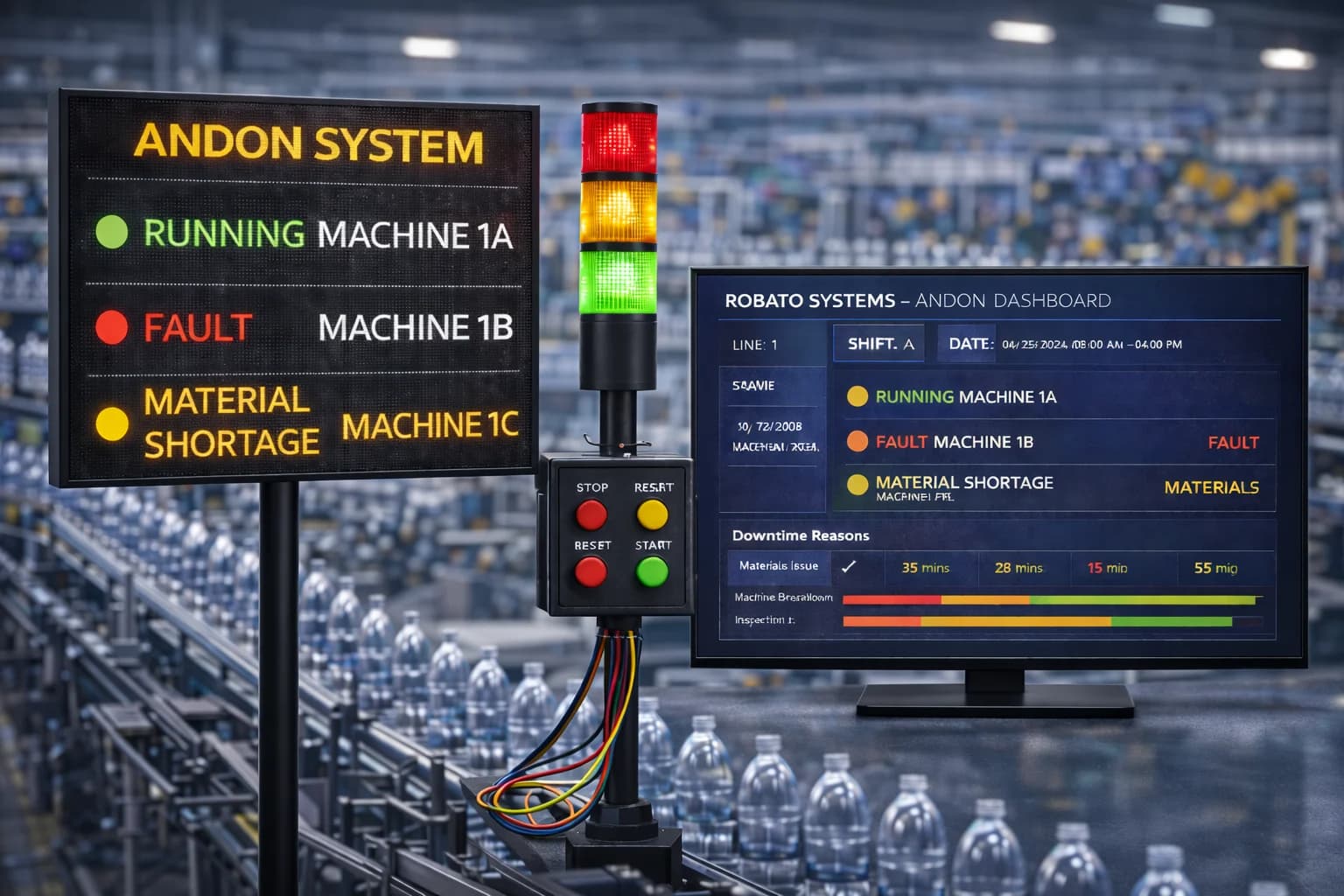
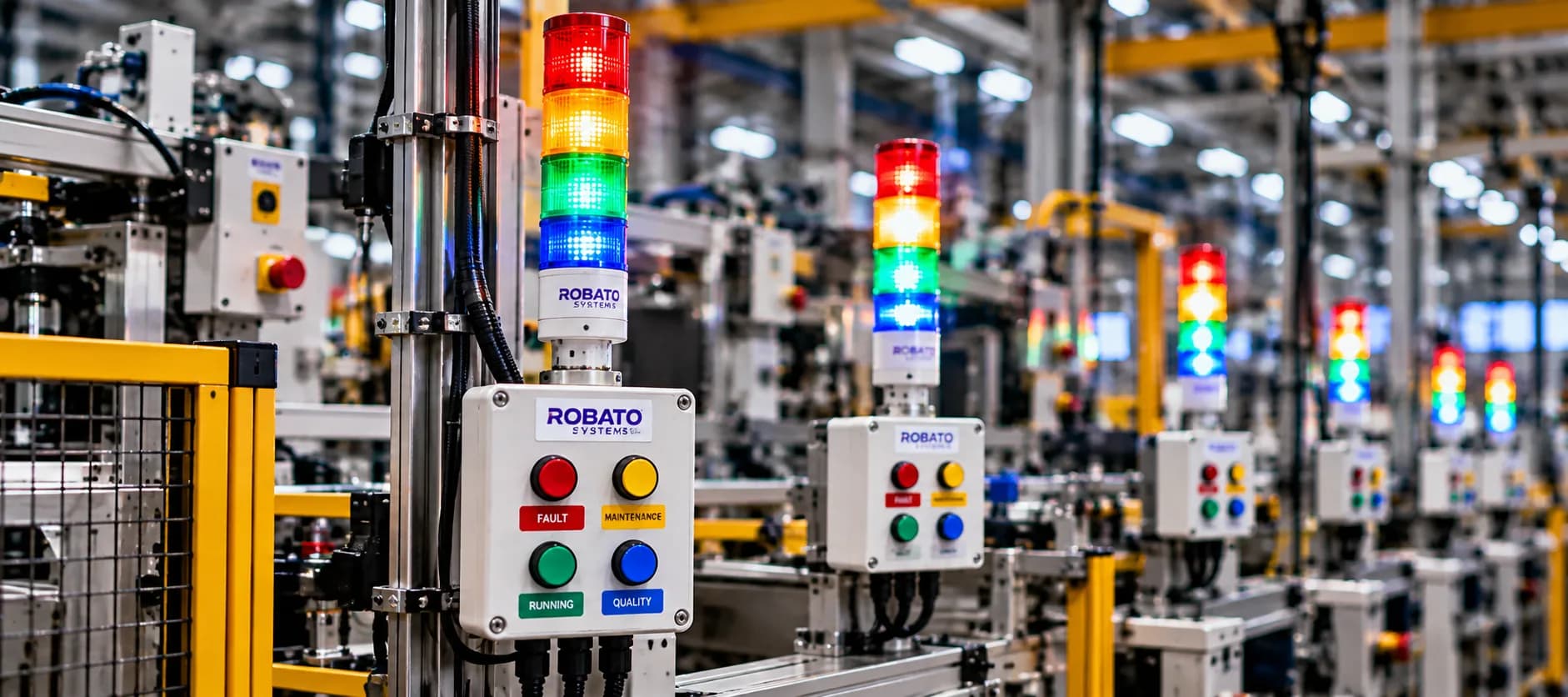
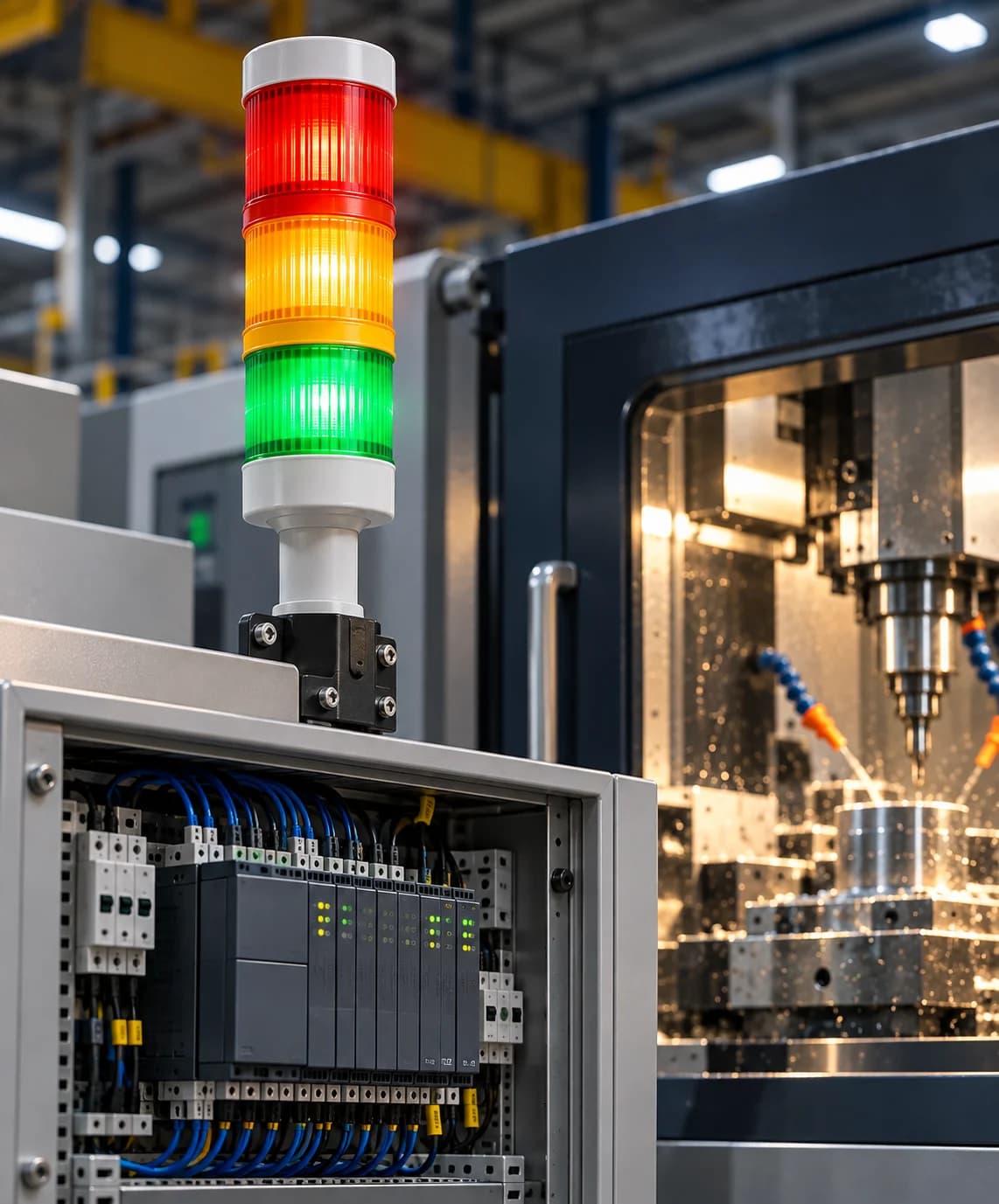
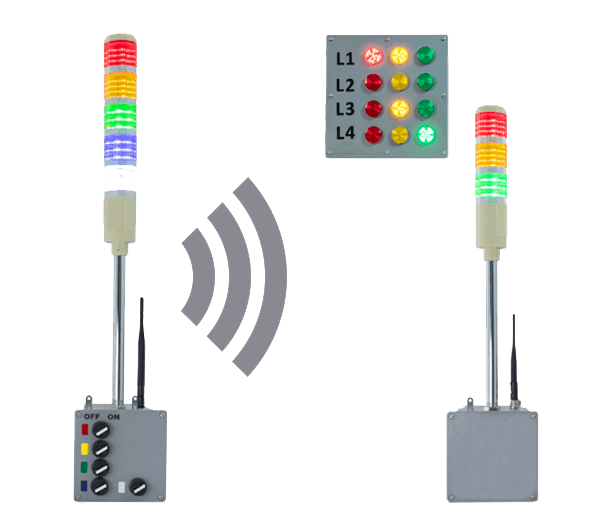
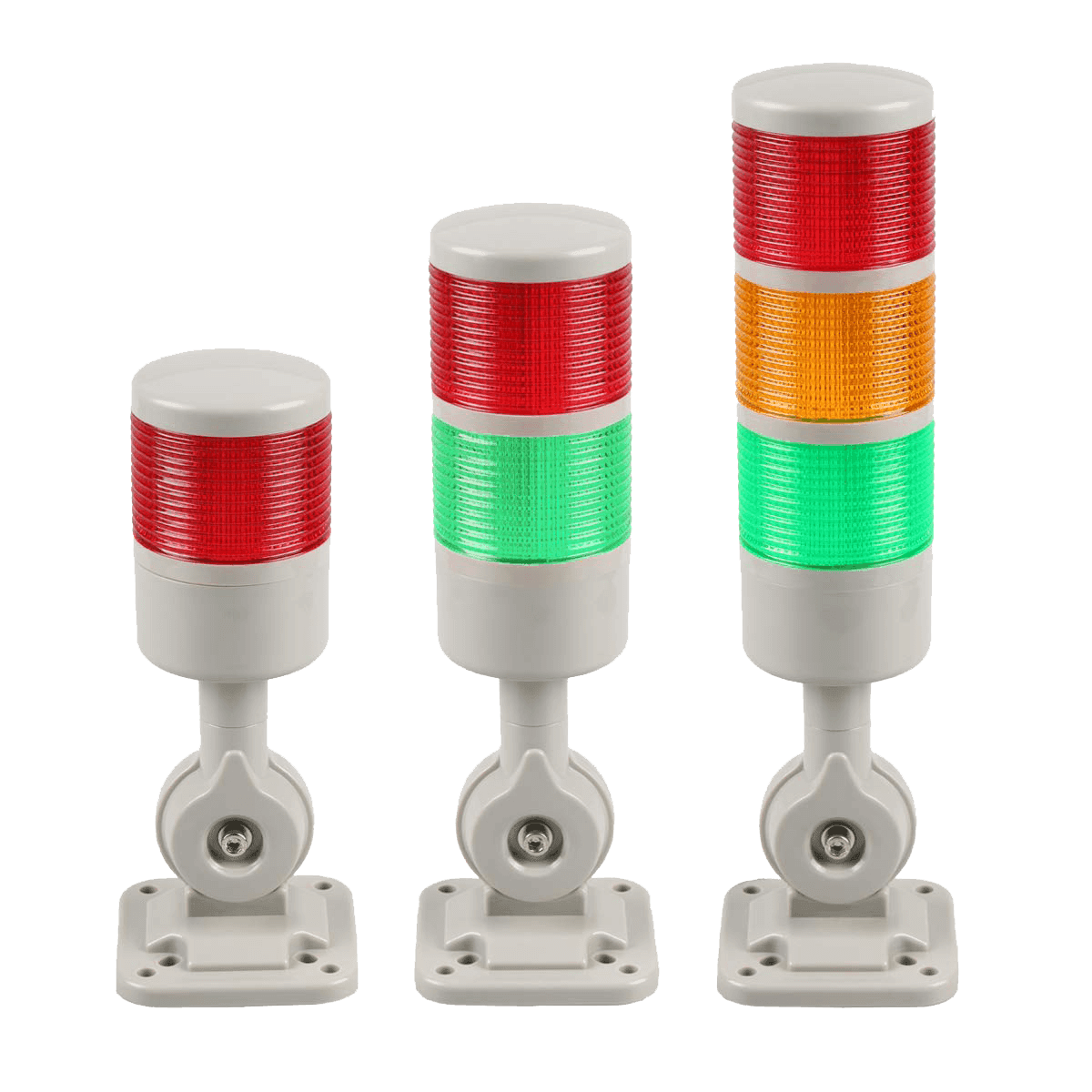
Andon Alerts
Modern LED displays can function as Andon boards by displaying:
- Machine faults
- Emergency alerts
- Quality issues
- Maintenance requests
Visual alerts help production teams respond immediately.
Safety and Communication Messages
In addition to production information, LED displays can communicate:
- Safety reminders
- Emergency notifications
- Shift announcements
- Company updates
This improves workplace communication.
Benefits of LED Production Displays
Improved Production Visibility
Everyone on the shop floor can see live production information without accessing software systems.
Higher Manufacturing Productivity
Operators remain focused on achieving production targets because performance is always visible.
Reduced Downtime
Immediate machine status updates allow maintenance teams to respond quickly.
Better Team Communication
LED displays eliminate dependence on verbal communication and printed reports.
Increased Accountability
Visible production targets encourage operators to take ownership of production performance.
Faster Decision-Making
Managers receive instant production insights, allowing them to resolve issues before they impact delivery schedules.
Improved Quality Control
Displaying rejection counts and quality KPIs helps identify manufacturing defects earlier.
Enhanced Lean Manufacturing
LED production displays support Lean manufacturing principles by improving visual management and reducing waste.
Types of LED Production Displays
Single-Line Production Display
Designed for monitoring one production line.
Ideal for small and medium manufacturing facilities.
Multi-Line Production Display
Displays production information for multiple production lines simultaneously.
Suitable for large factories.
Target vs Actual LED Display
Focuses specifically on comparing planned and actual production output.
OEE Display Board
Displays equipment efficiency metrics in real time.
Custom LED Display
Fully configurable displays that show production metrics based on specific operational requirements.
Applications Across Manufacturing Industries
LED production displays are widely used in:
Automotive Manufacturing
Track assembly line productivity and production targets.
Electronics Manufacturing
Monitor PCB assembly, testing, and component production.
Pharmaceutical Manufacturing
Display batch production status and packaging performance.
Food & Beverage Industry
Track filling, bottling, labeling, and packaging operations.
Textile Industry
Display weaving, knitting, and production output.
Packaging Industry
Monitor packaging speed and completed units.
Plastic & Injection Molding
Display molding cycles, production count, and machine utilization.
LED Production Displays and Industry 4.0
Industry 4.0 relies on connected manufacturing systems.
LED production displays integrate seamlessly with:
- Industrial IoT platforms
- Production Monitoring Systems
- ERP software
- MES solutions
- SCADA systems
- Cloud dashboards
This enables manufacturers to create intelligent production environments with complete operational transparency.
Best Practices for Implementing LED Production Displays
Install Displays at Strategic Locations
Ensure displays are clearly visible to operators, supervisors, and maintenance personnel.
Automate Data Collection
Connect directly to PLCs and production equipment to eliminate manual updates.
Display Actionable KPIs
Focus on metrics such as:
- Production target
- Actual production
- OEE
- Downtime
- Machine status
- Rejection count
- Cycle time
Keep Display Layout Simple
Large fonts, color coding, and organized layouts improve readability.
Integrate with Existing Software
Connect LED displays with ERP, MES, SCADA, and production monitoring systems.
Common Challenges
Legacy Equipment Integration
Older machines may require Industrial IoT gateways or retrofit sensors.
Display Placement
Improper positioning can reduce visibility.
Install displays where production teams naturally look during operations.
Data Accuracy
Sensor calibration is essential to ensure reliable production information.
Employee Adoption
Provide training to help employees understand displayed KPIs and production objectives.
Future Trends in LED Production Displays
Manufacturing display technology continues evolving rapidly.
AI-Powered Production Insights
Artificial intelligence will recommend process improvements automatically.
Cloud-Based Monitoring
Production displays will synchronize with cloud dashboards for remote monitoring.
Digital Twins
Live production data will synchronize with virtual factory models.
Predictive Maintenance Integration
Displays will warn operators before equipment failures occur.
Mobile Display Synchronization
Production information will be available simultaneously on LED boards and mobile devices.
These innovations will further enhance manufacturing productivity and operational efficiency.
Why Choose Robato Systems for LED Production Displays?
Robato Systems delivers advanced LED Production Display solutions designed specifically for modern manufacturing environments. Our display systems integrate seamlessly with PLCs, Industrial IoT devices, ERP, MES, and production monitoring software to provide accurate, real-time production visibility.
Our customizable LED displays support target versus actual production tracking, machine status monitoring, OEE visualization, Andon alerts, and automated production reporting. Built for Industry 4.0, Robato Systems' solutions help manufacturers improve productivity, reduce downtime, enhance communication, and achieve smarter factory operations.
Whether you manage a single production line or multiple manufacturing facilities, Robato Systems provides scalable LED production display solutions tailored to your operational needs.
Conclusion
An LED Production Display is one of the most effective visual management tools available for modern manufacturing plants. By displaying real-time production information, machine status, quality metrics, and key performance indicators, these systems help manufacturers improve communication, increase productivity, reduce downtime, and make faster operational decisions.
As factories continue adopting Industry 4.0 technologies, LED production displays have become a critical component of smart manufacturing. Investing in an intelligent LED production display system enables organizations to build more connected, transparent, and efficient production environments capable of meeting today's manufacturing challenges.
Frequently Asked Questions (FAQs)
What is an LED production display?
An LED production display is a digital display board that shows real-time production information such as production count, targets, machine status, OEE, and downtime.
What are the benefits of LED production displays?
They improve production visibility, increase productivity, reduce downtime, enhance communication, and support faster decision-making.
Can LED production displays integrate with ERP and PLC systems?
Yes. Modern LED production displays integrate with PLCs, ERP, MES, SCADA, Industrial IoT devices, and cloud-based monitoring platforms.
What information can be displayed?
Production targets, actual production, machine status, OEE, downtime, rejection count, shift performance, safety messages, and Andon alerts.
Which industries use LED production displays?
Automotive, pharmaceuticals, electronics, food processing, packaging, plastics, textiles, and many other manufacturing industries.