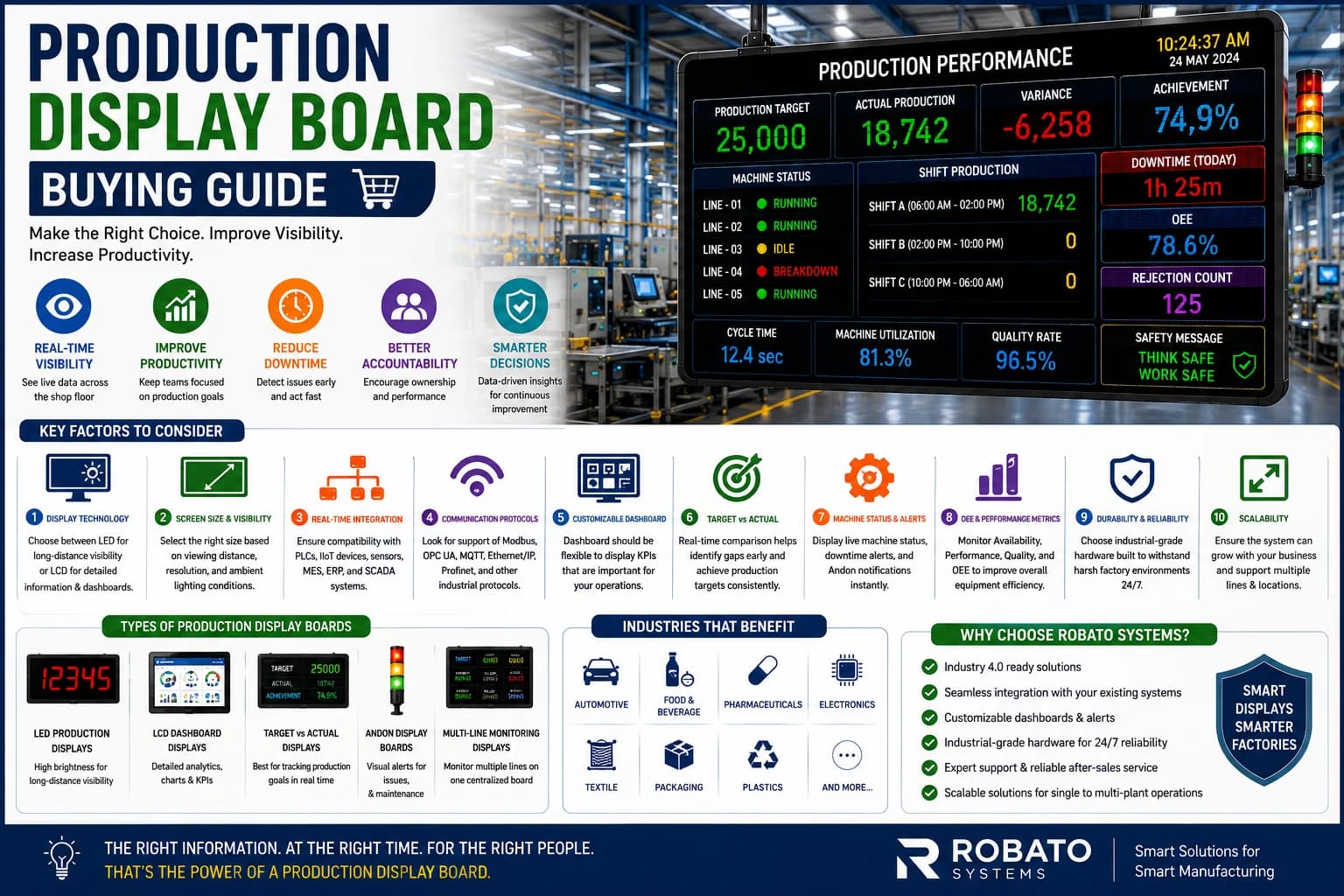
Production Display Board Buying Guide
Manufacturing has evolved significantly over the past decade. Modern factories no longer rely solely on manual production reports, whiteboards, or verbal communication to monitor daily operations. Instead, manufacturers are investing in digital visual management systems that provide real-time production information to operators, supervisors, and plant managers. Among these solutions, a Production Display Board has become one of the most valuable tools for improving operational visibility and manufacturing efficiency.
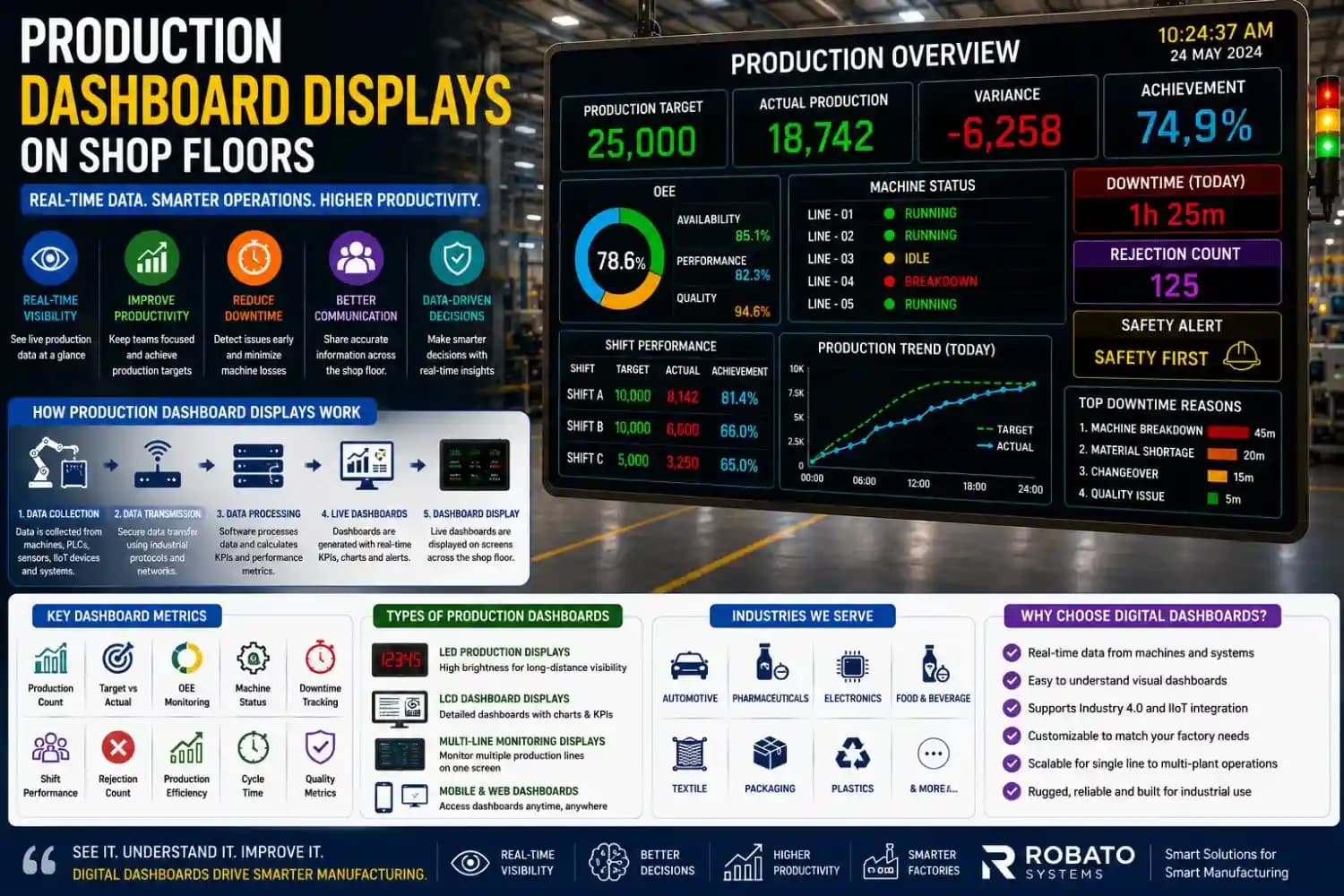
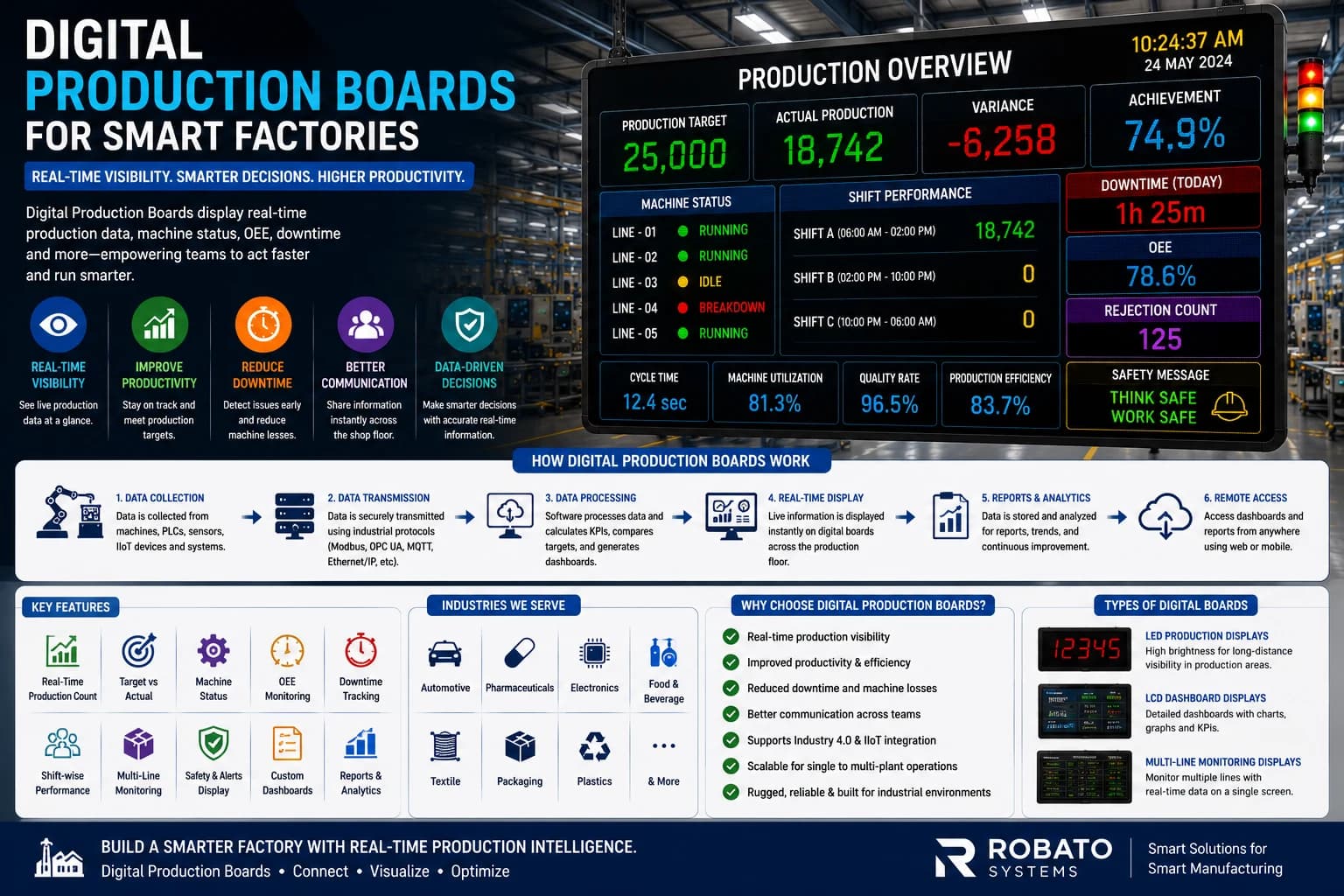
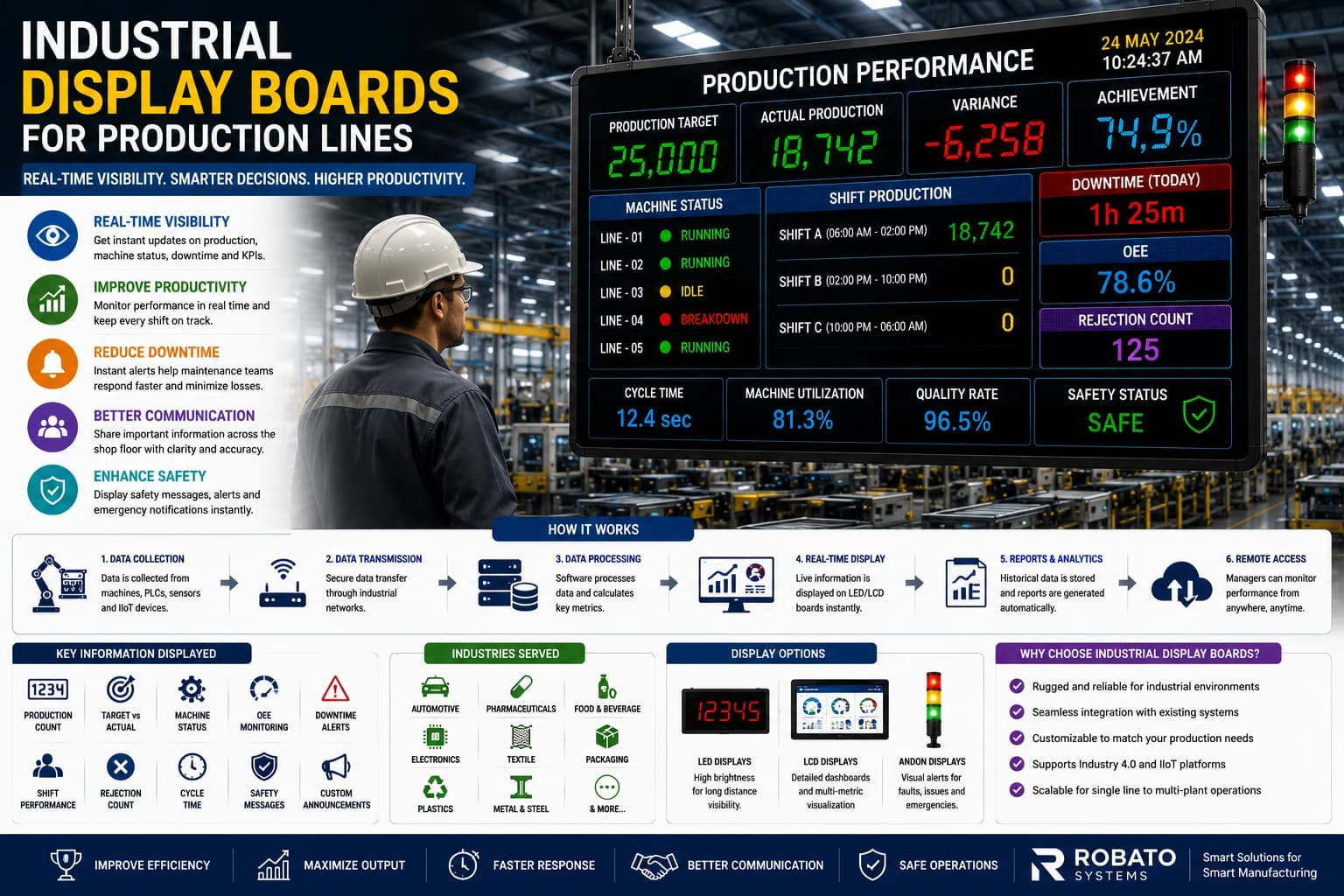
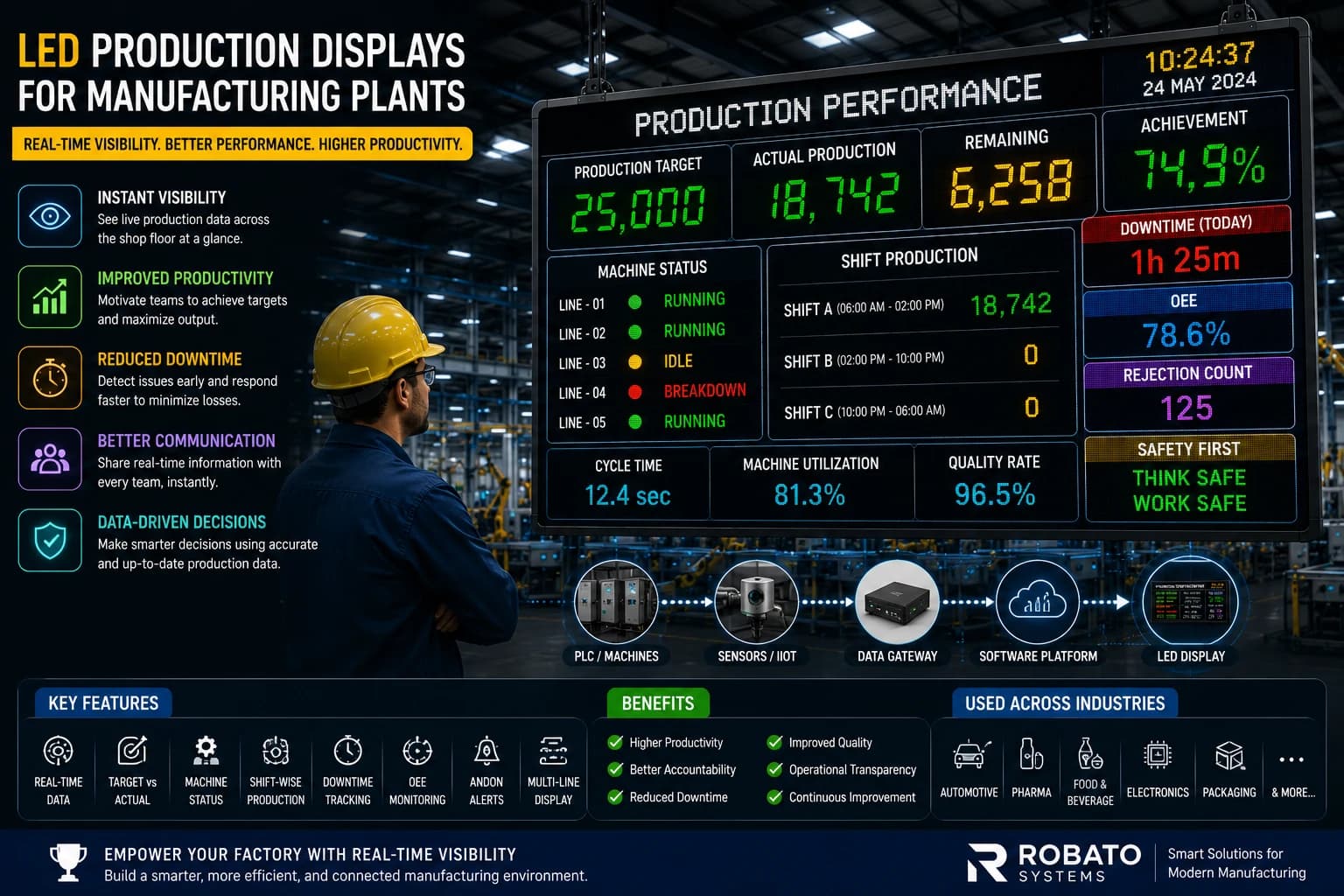
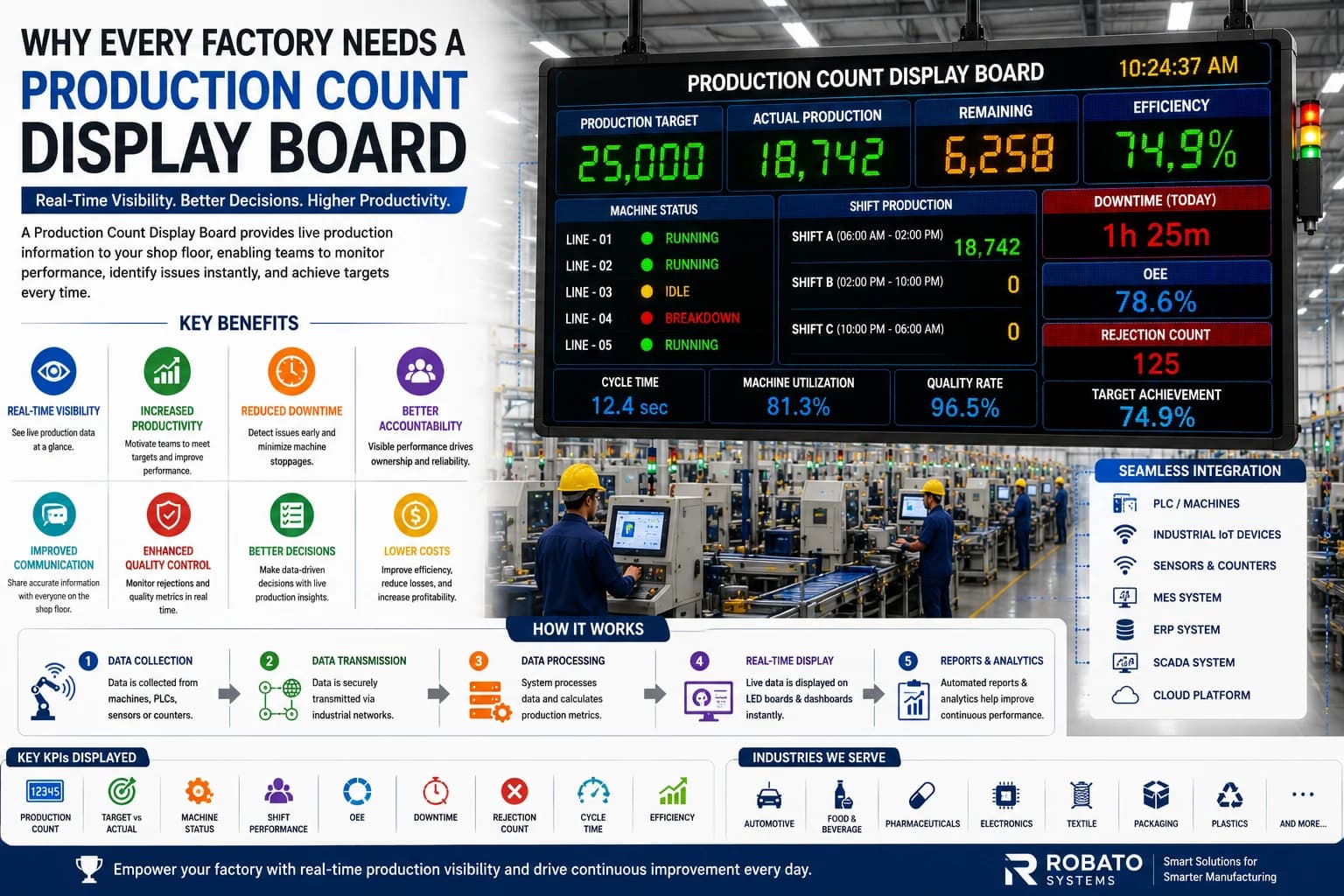
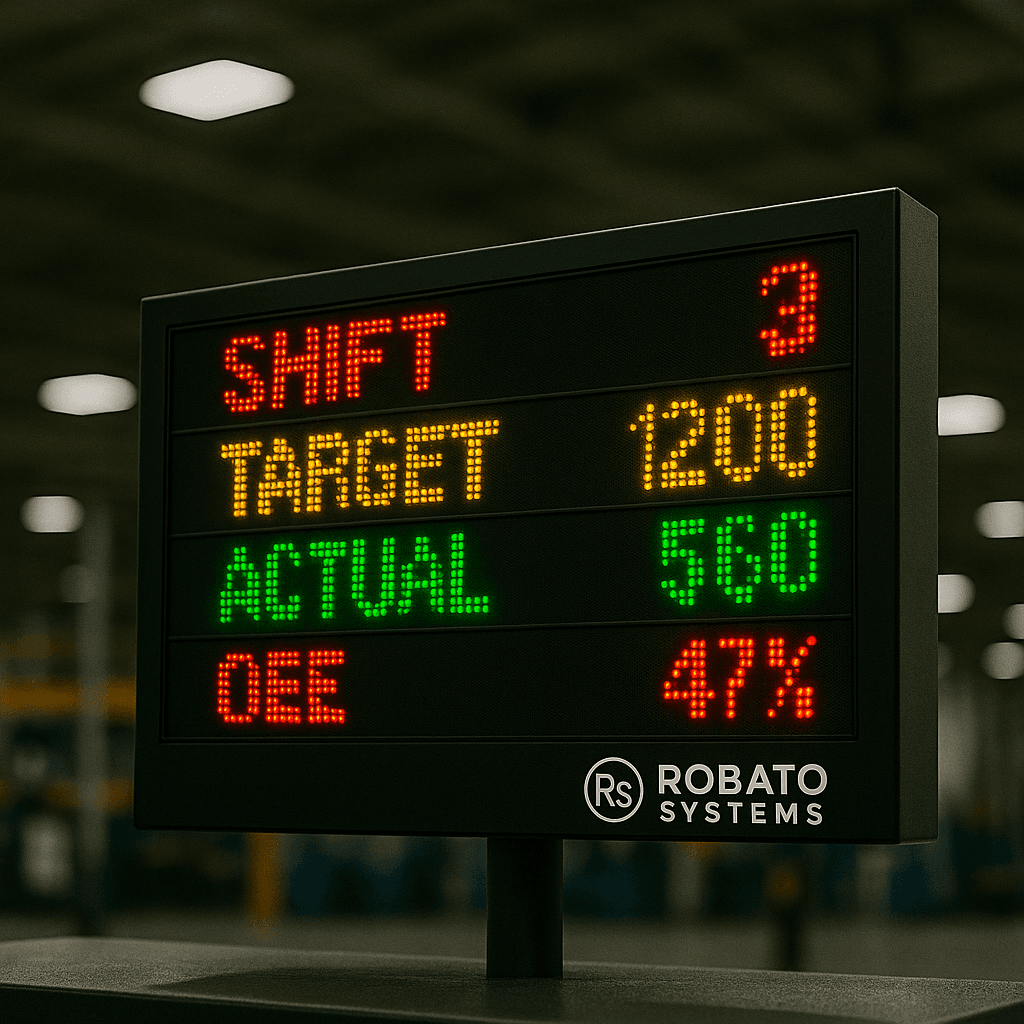
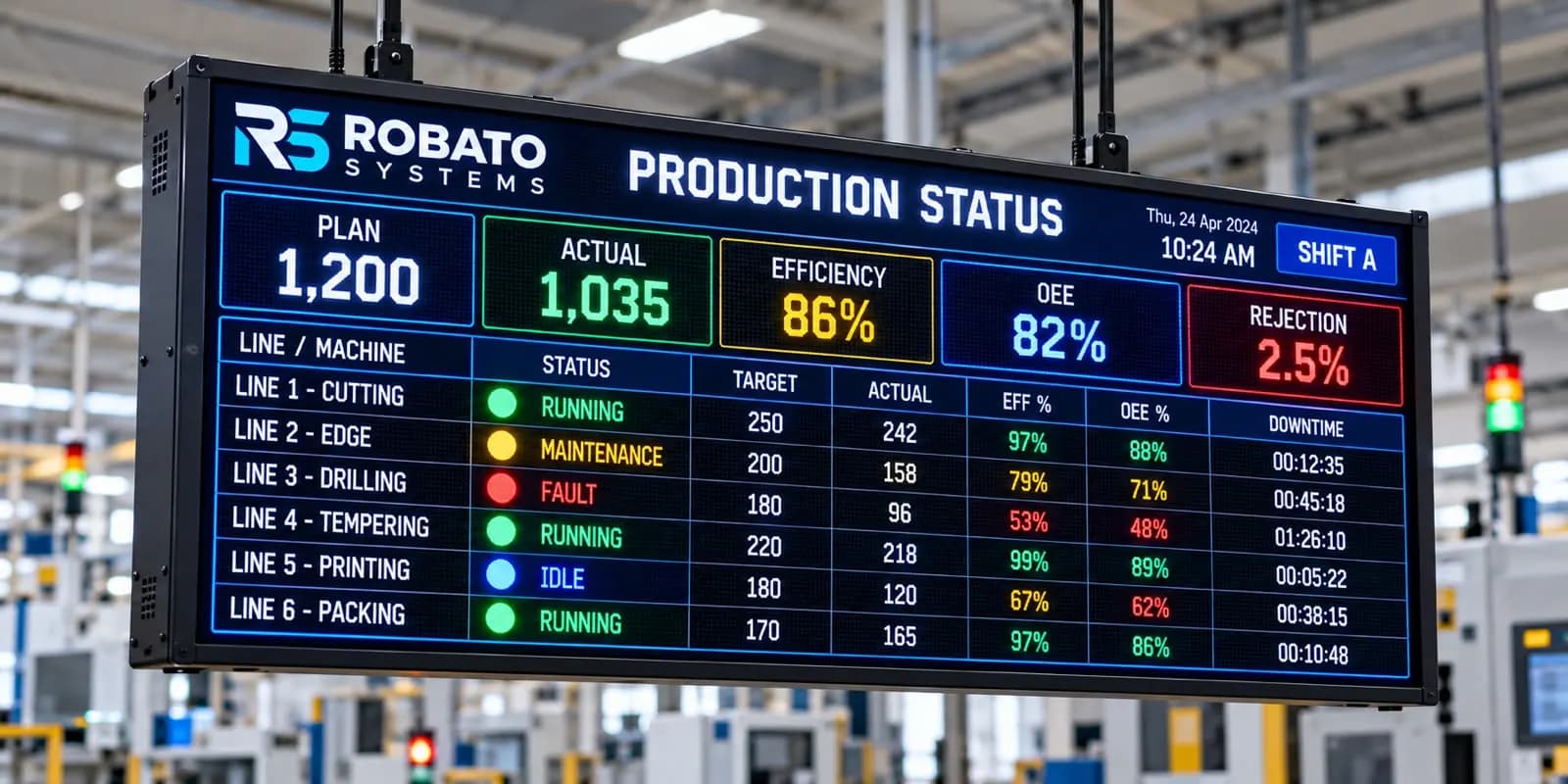
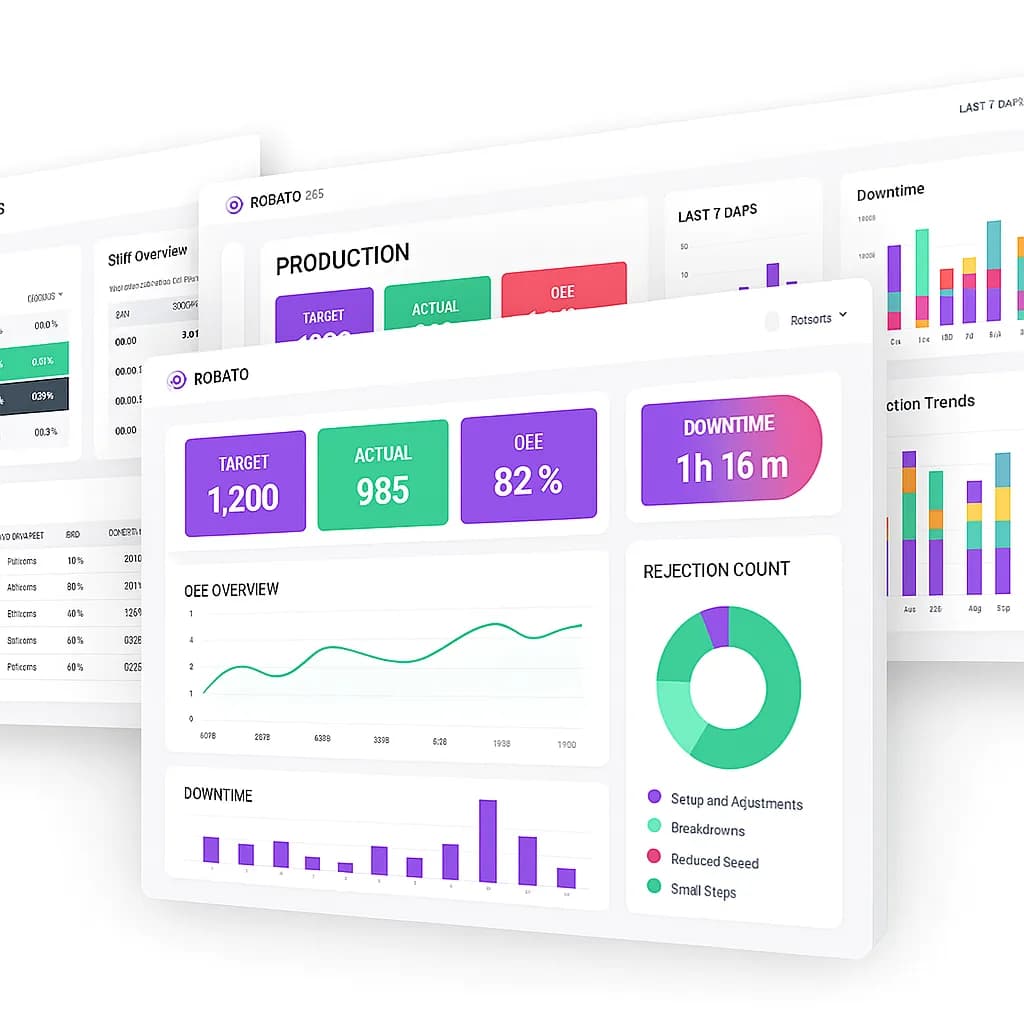
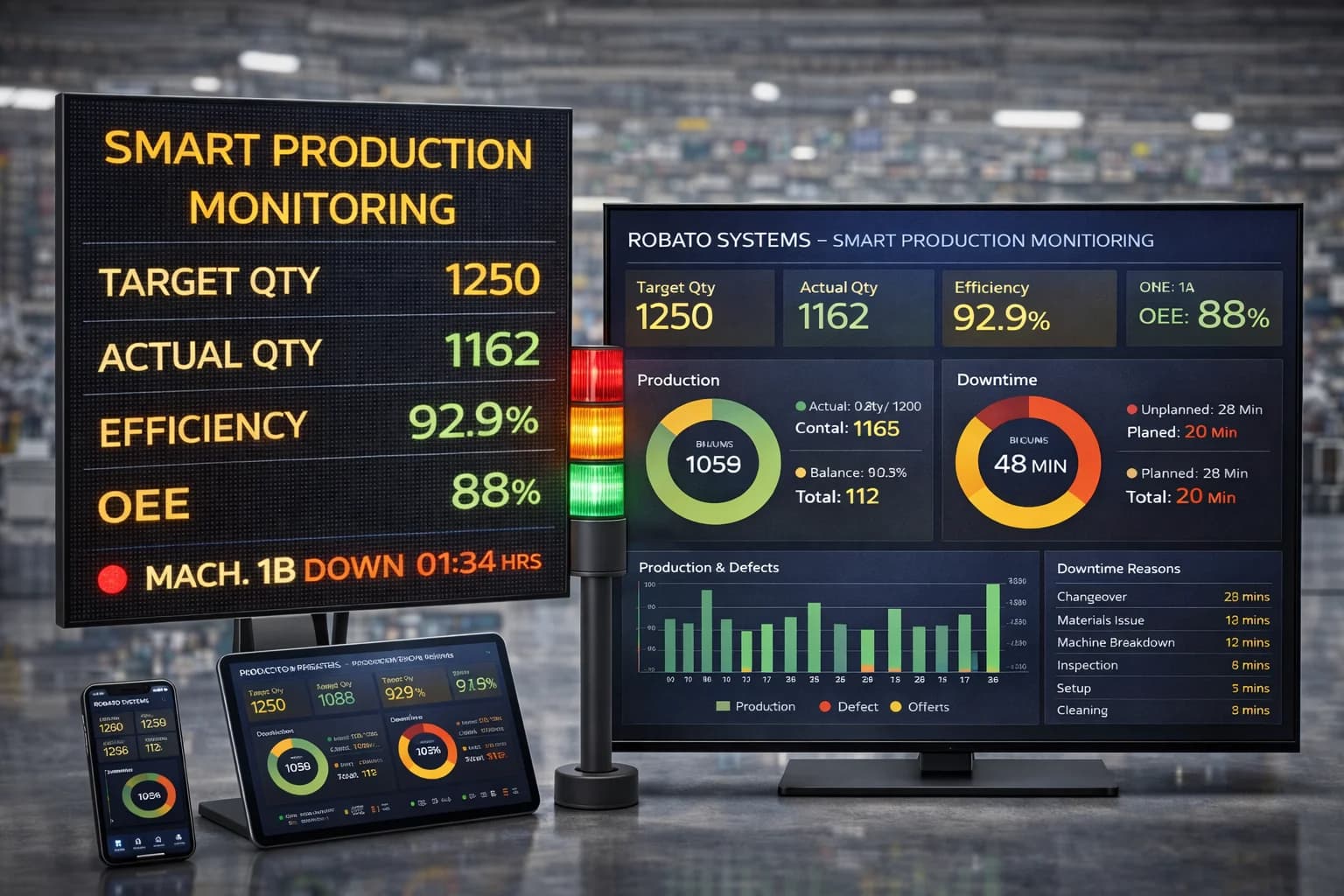
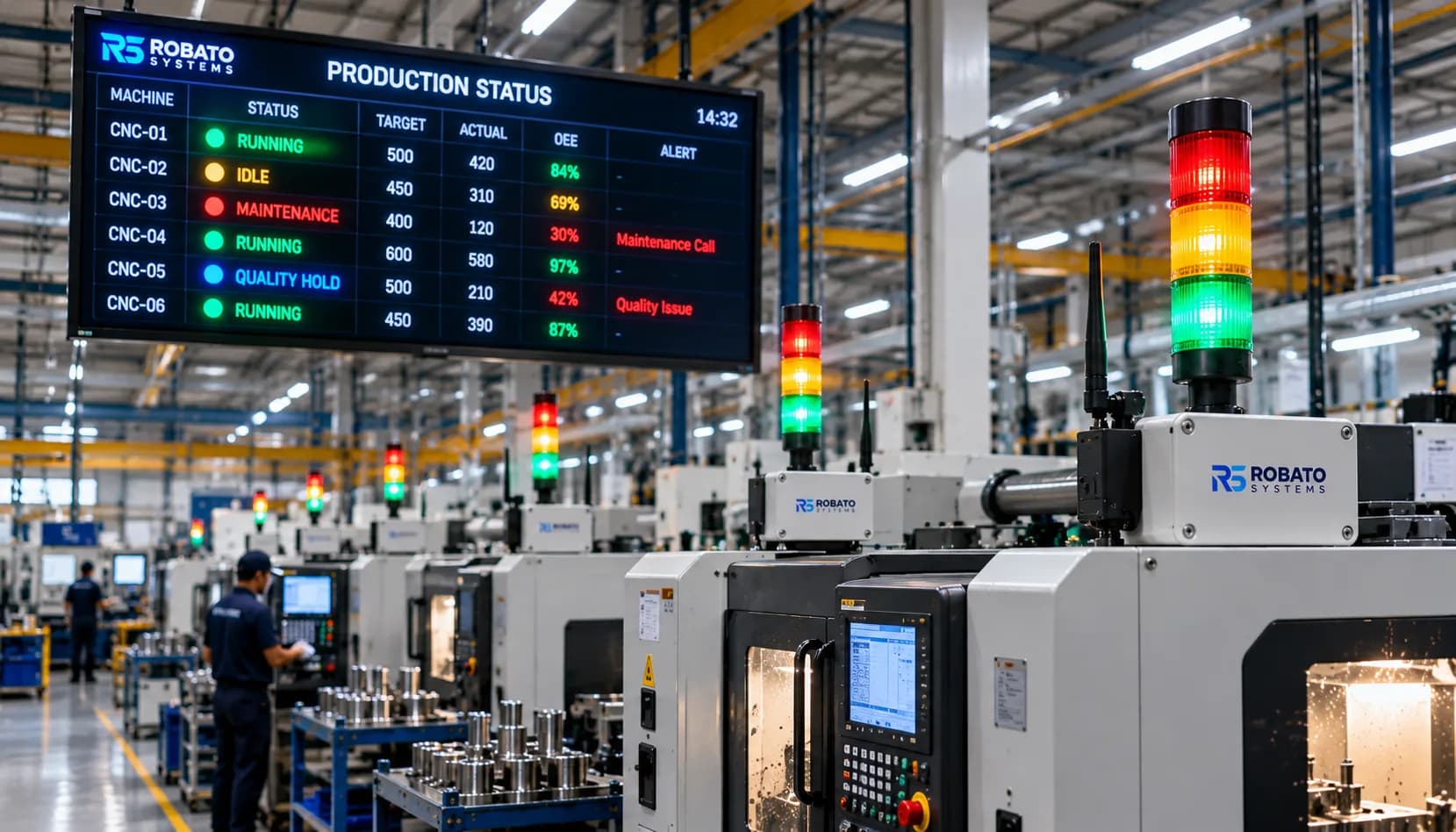
A production display board acts as a centralized communication platform that displays live production data such as production targets, actual output, machine status, downtime, Overall Equipment Effectiveness (OEE), quality metrics, and shift performance. By presenting this information in real time, it enables production teams to respond quickly to issues, improve coordination, and maintain production schedules.
However, not all production display boards offer the same features. Choosing the right solution requires evaluating display technology, integration capabilities, scalability, software compatibility, and long-term operational requirements. This buying guide explains everything manufacturers should consider before investing in a production display board.
What is a Production Display Board?
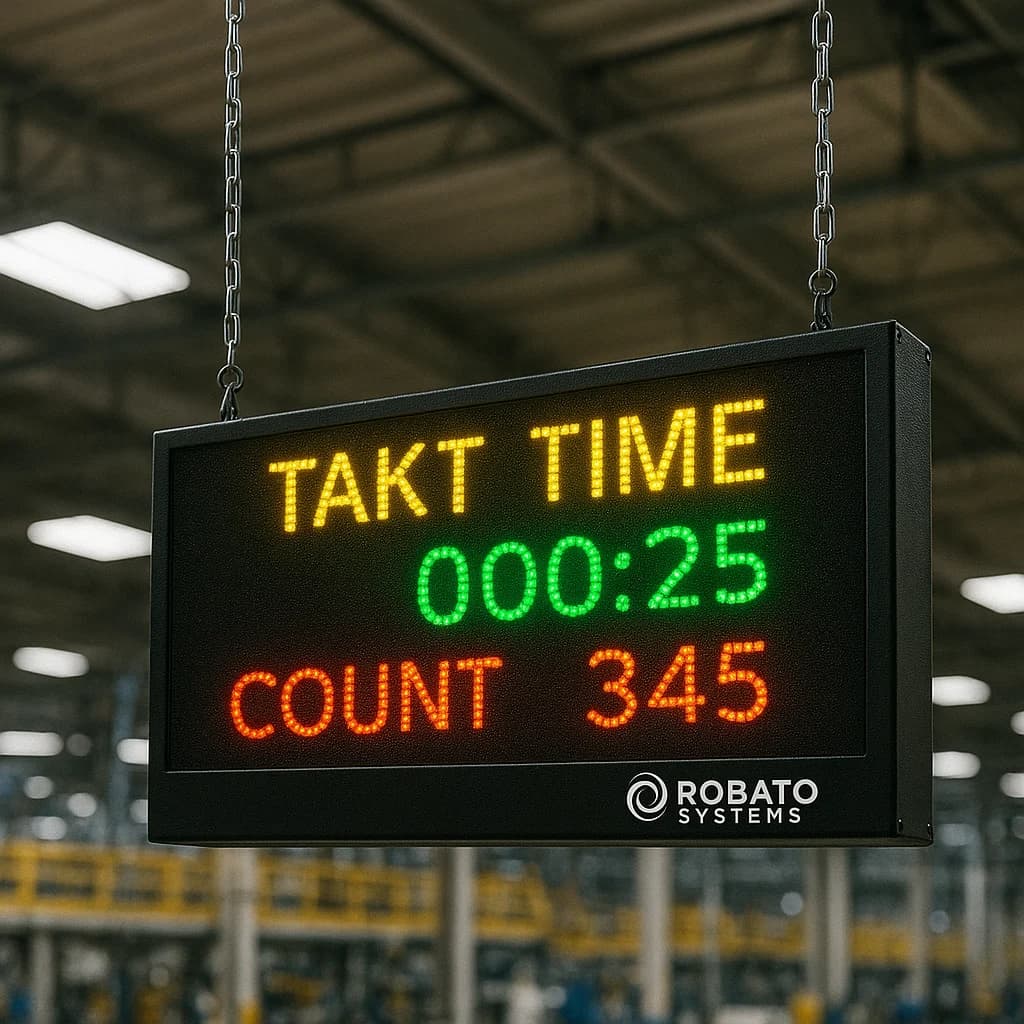
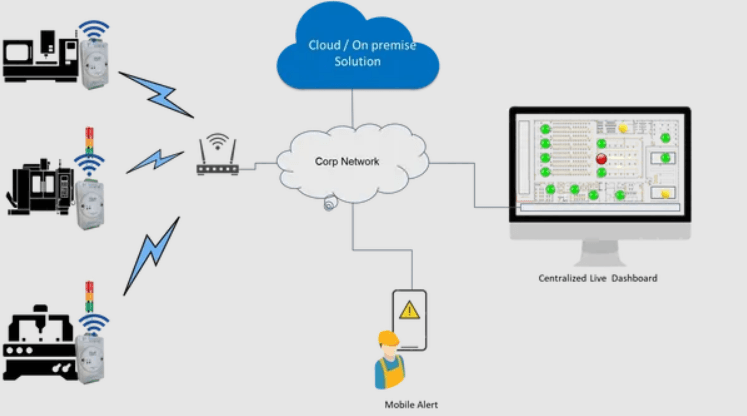
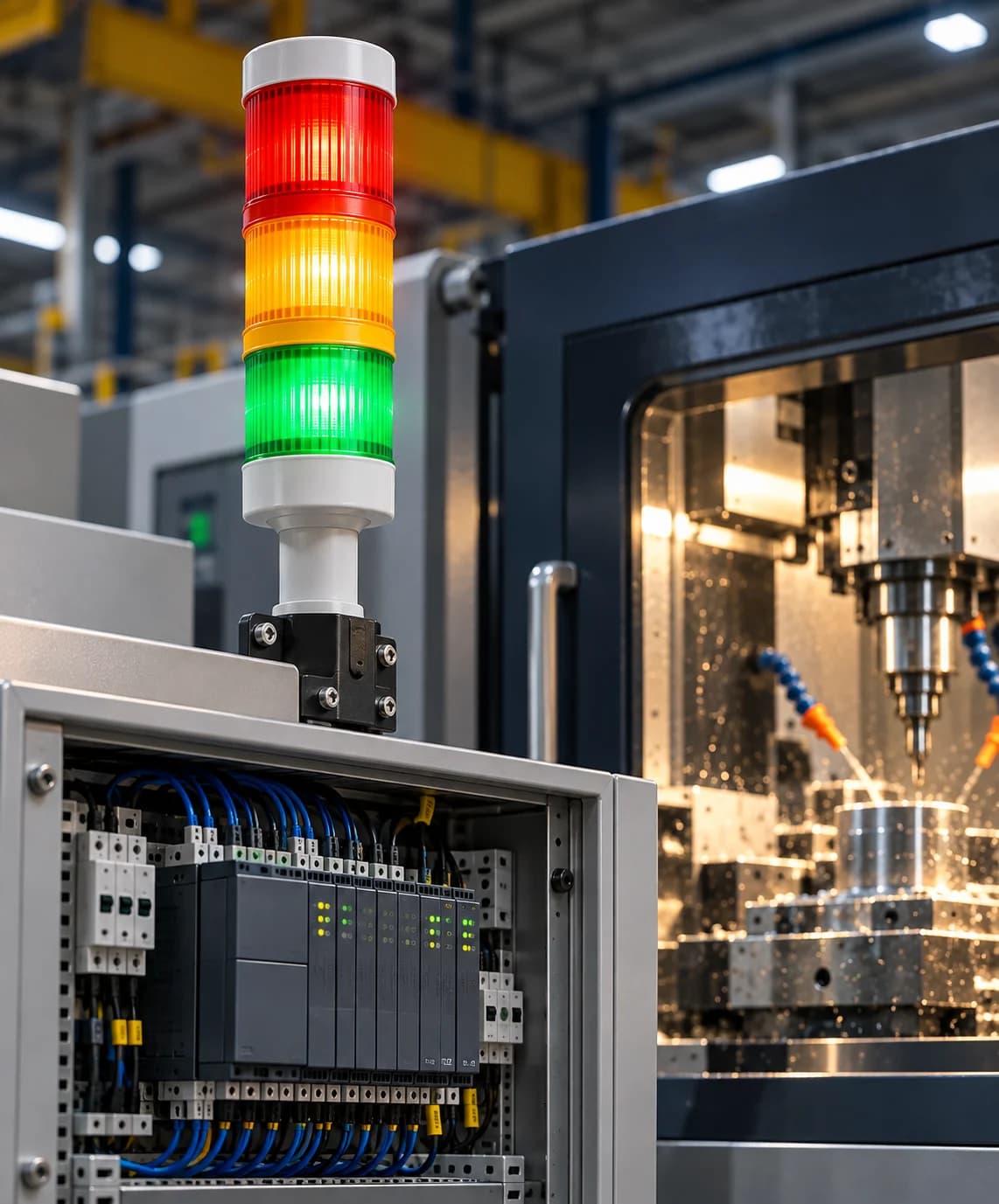
A Production Display Board is a digital information display designed specifically for manufacturing environments. It receives production data from machines, PLCs, Industrial IoT (IIoT) devices, production monitoring software, or Manufacturing Execution Systems (MES) and displays that information in an easy-to-understand visual format.
Unlike traditional notice boards or manually updated production charts, production display boards refresh automatically whenever production data changes.
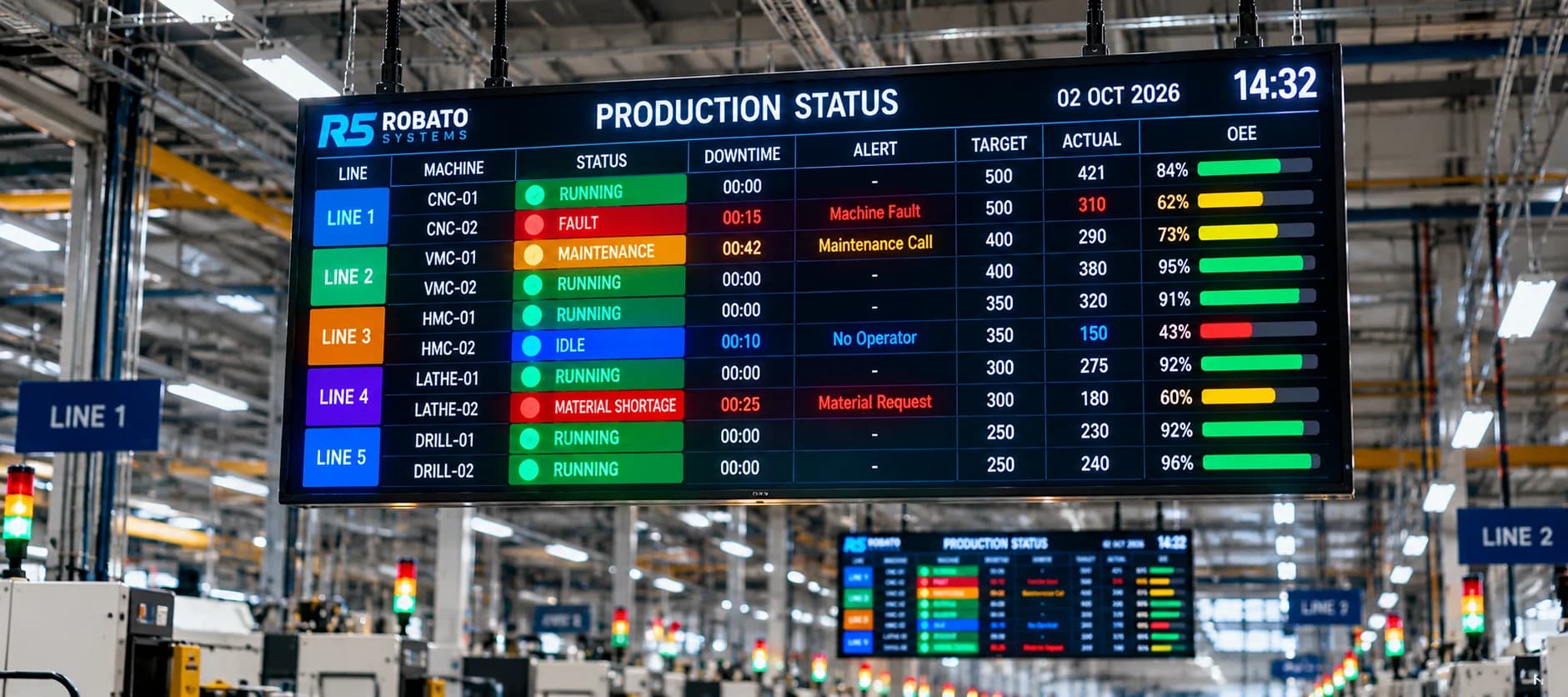
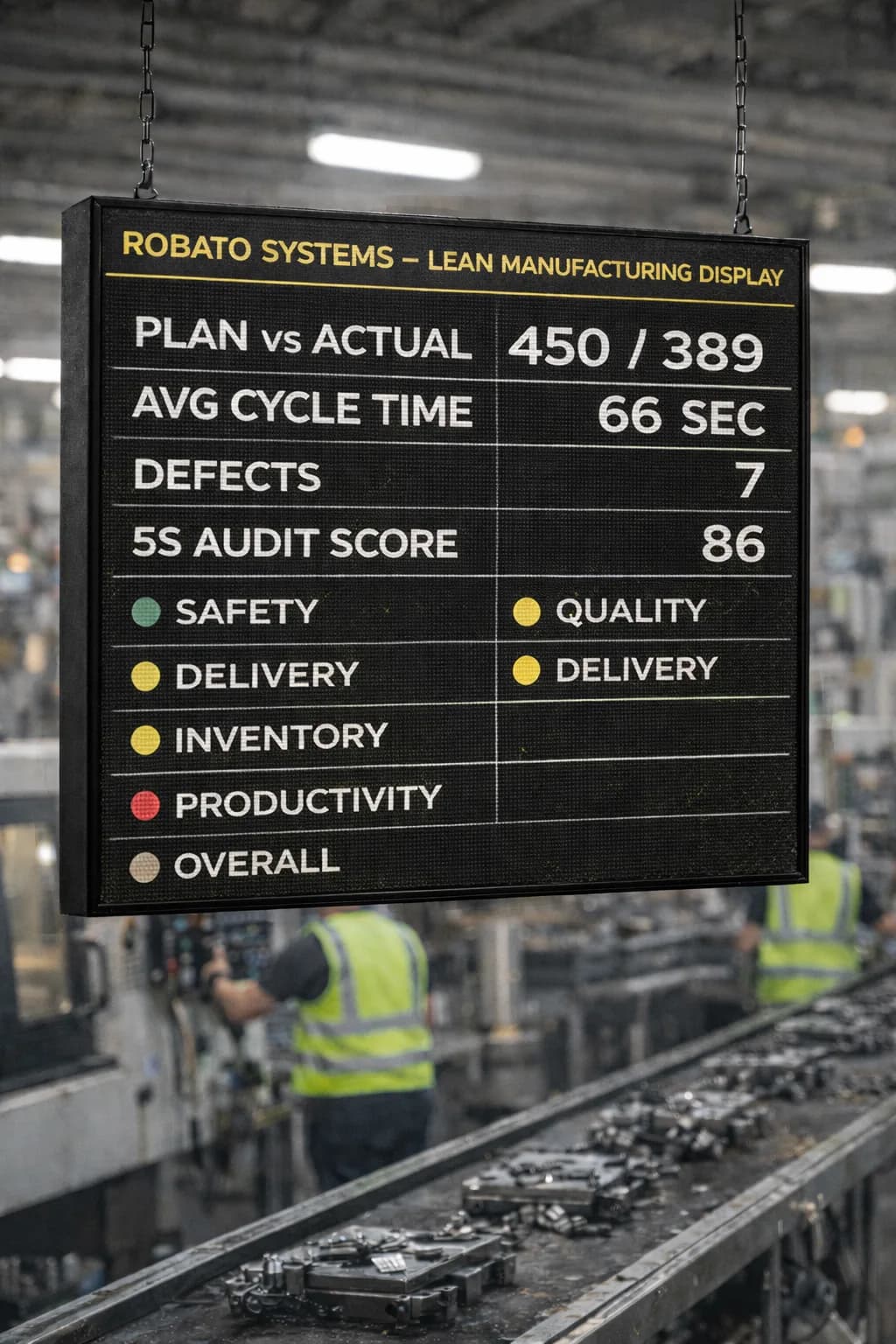
A production display board typically displays:
- Production target
- Actual production
- Target vs actual comparison
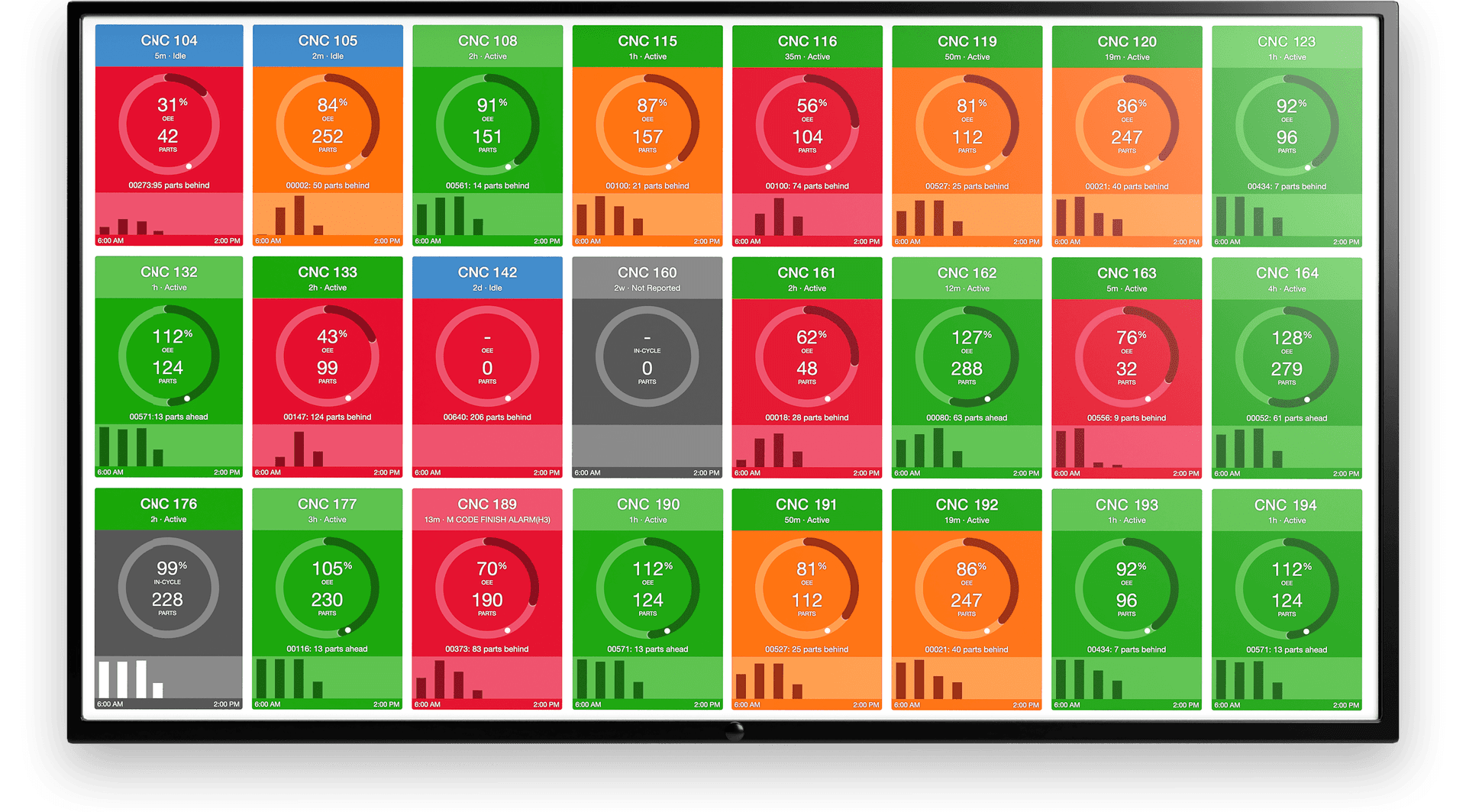
- Machine status
- Downtime
- OEE
- Shift-wise production
- Production efficiency
- Rejection count
- Safety alerts
- Factory announcements
These boards provide complete visibility across the production floor.
Why Every Factory Needs a Production Display Board
Real-time production visibility enables manufacturers to make better decisions and improve operational performance.
Without a production display board, factories often experience:
- Delayed reporting
- Poor communication
- Missed production targets
- Slow response to machine failures
- Limited operational visibility
- Increased manual reporting
Installing a production display board helps solve these challenges by making production information visible to everyone.
Key benefits include:
- Better communication
- Higher productivity
- Faster decision-making
- Reduced downtime
- Increased accountability
- Improved production planning
Factors to Consider Before Buying a Production Display Board
Choosing the right production display board involves more than selecting a screen size. Manufacturers should evaluate both hardware and software capabilities to ensure the solution supports long-term operational goals.
Display Technology
The first consideration is the type of display technology.
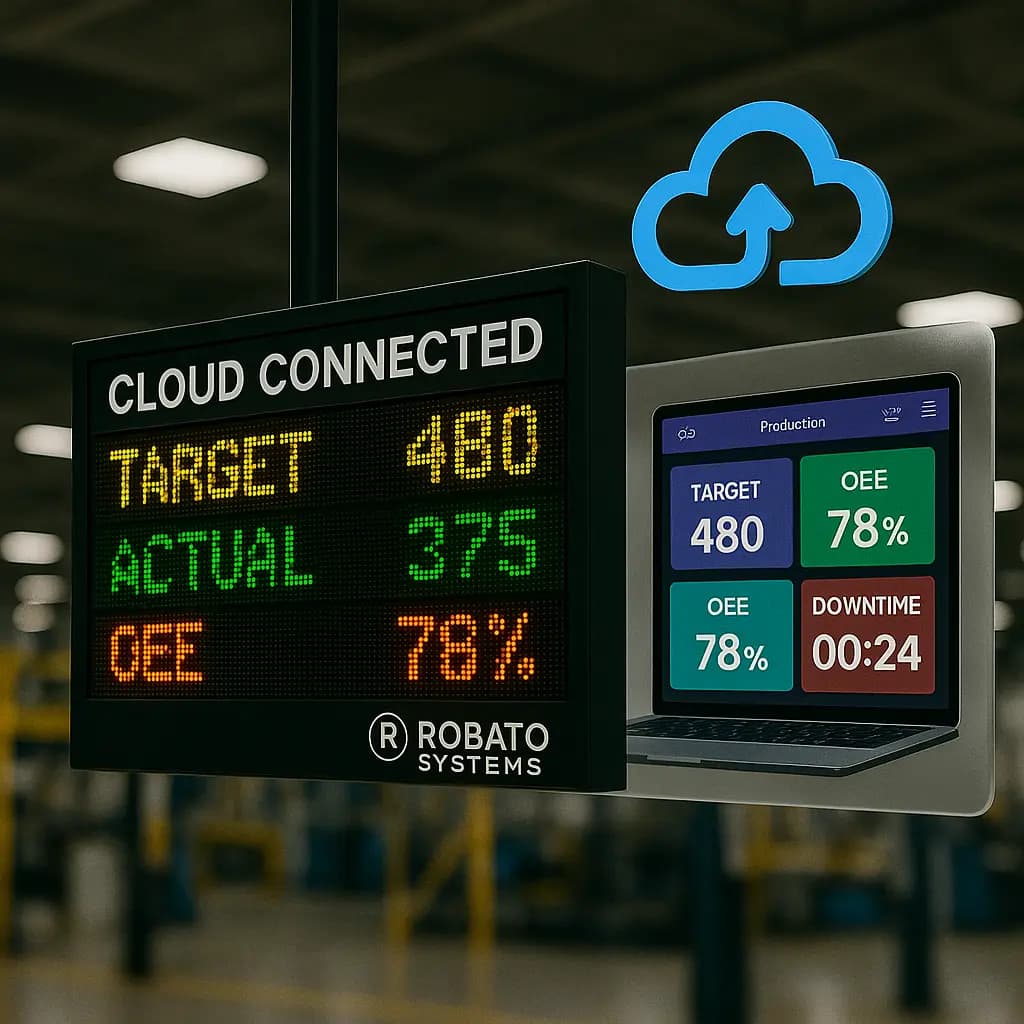
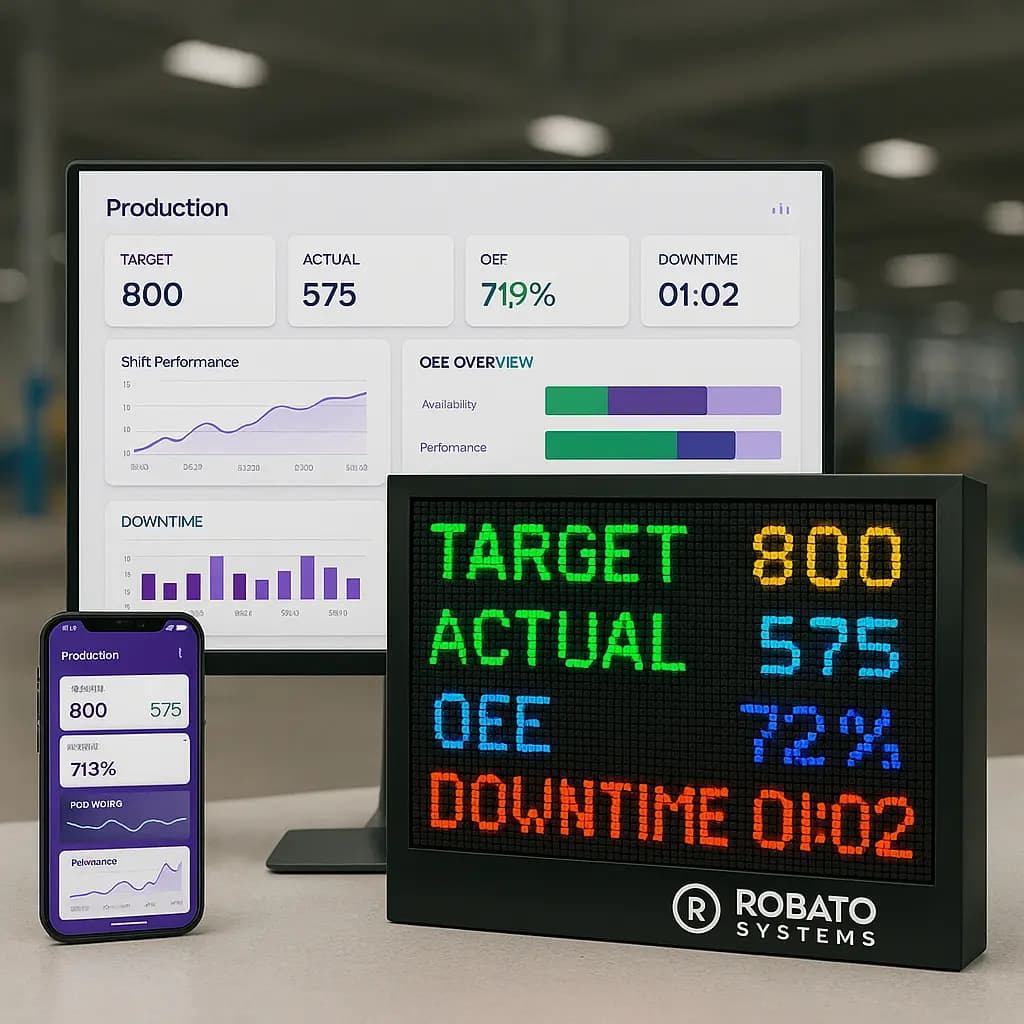
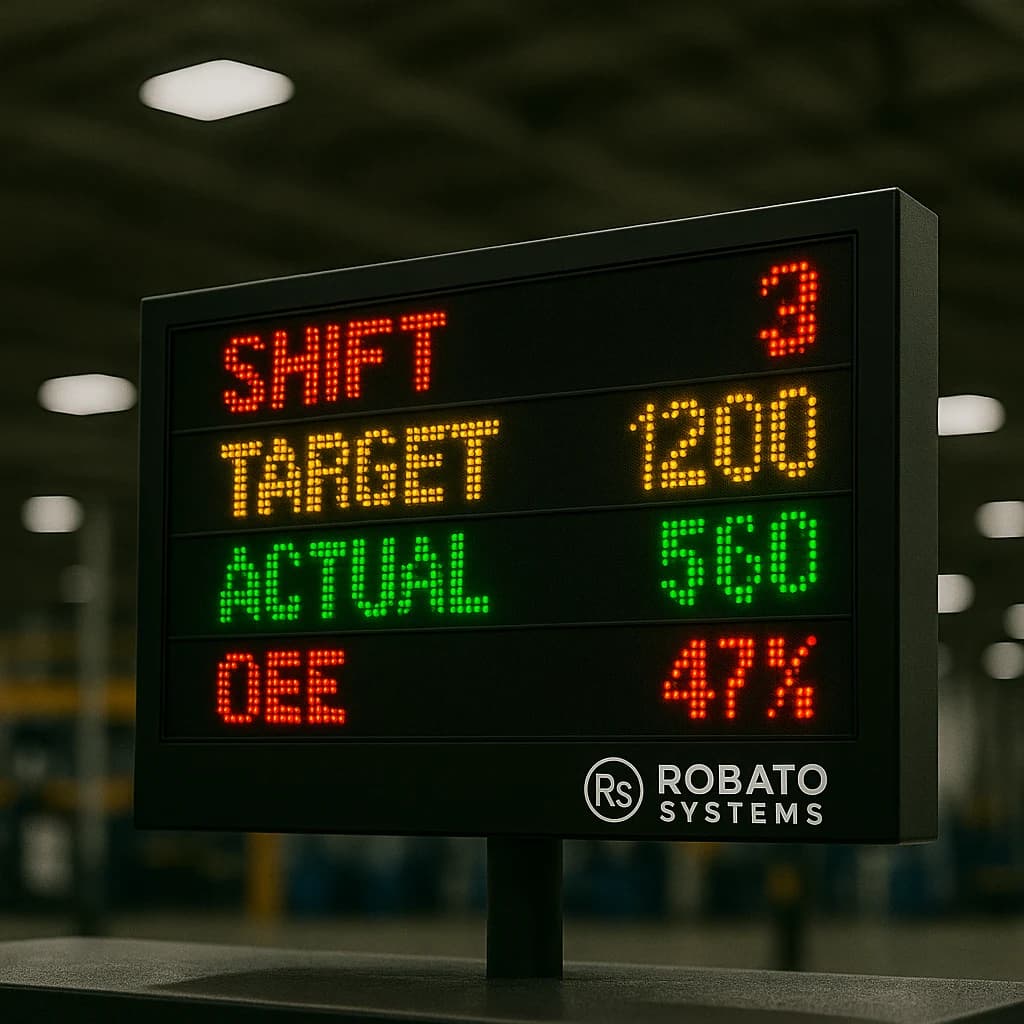
LED Display Boards
LED production displays offer:
- High brightness
- Excellent long-distance visibility
- Low power consumption
- Long operating life
They are ideal for large production halls and warehouses.
LCD Display Boards
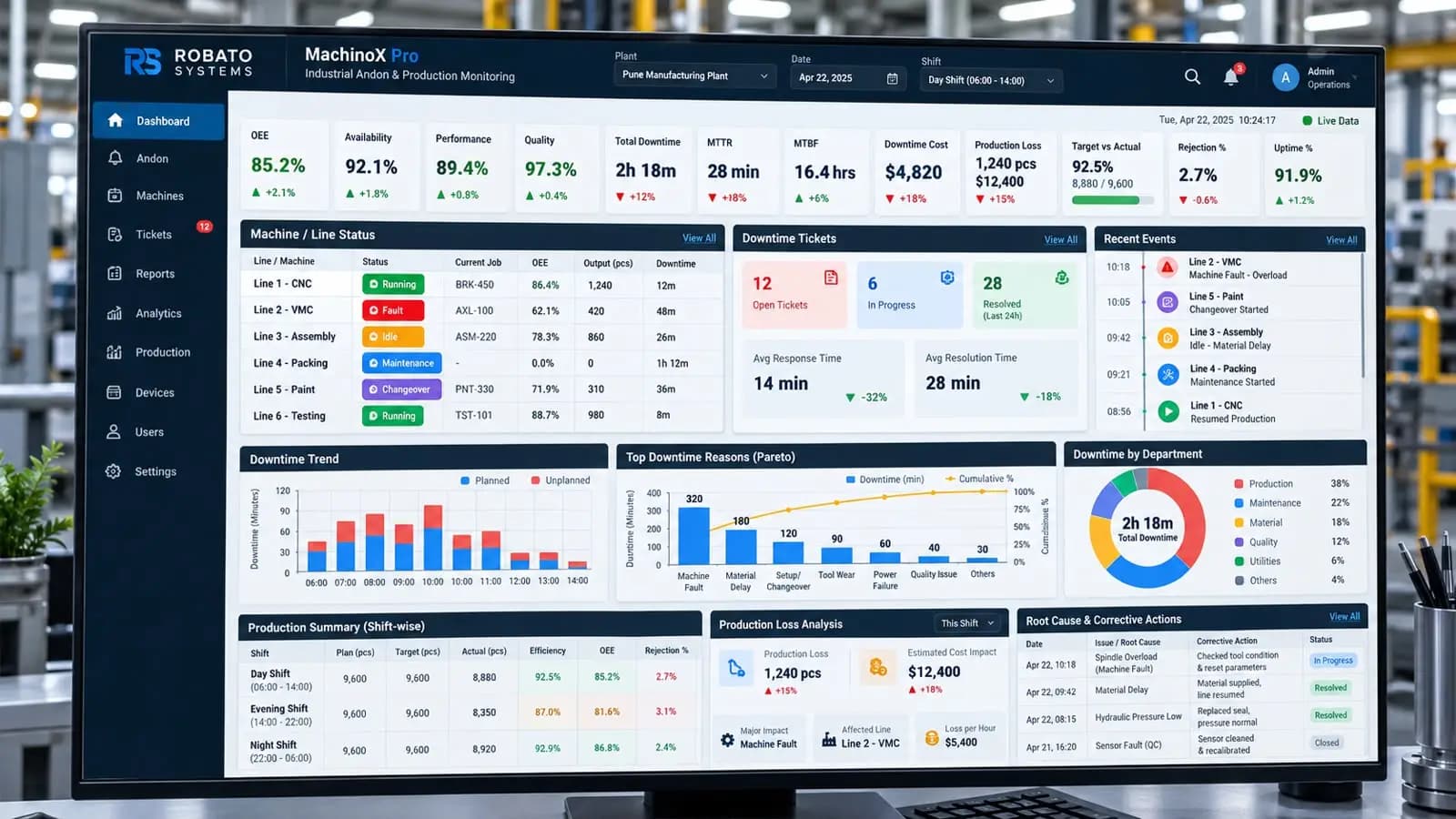
LCD displays are suitable for presenting:
- Dashboards
- Charts
- Graphs
- Detailed production information
They work well in control rooms and supervisor stations.
Screen Size and Visibility
The display should be visible from all operator workstations.
Consider:
- Viewing distance
- Ceiling height
- Production line layout
- Ambient lighting
- Display resolution
Large manufacturing facilities generally require larger displays or multiple strategically positioned screens.
Real-Time Data Integration
A modern production display board should support real-time communication with manufacturing equipment.
Look for compatibility with:
- PLCs
- Industrial IoT sensors
- Barcode scanners
- RFID systems
- Production counters
- MES software
- ERP systems
- SCADA platforms
Automatic data collection eliminates manual updates and improves accuracy.
Supported Communication Protocols
Industrial communication compatibility is essential.
Common protocols include:
- Modbus
- OPC UA
- MQTT
- Ethernet/IP
- Profinet
- Modbus TCP
Choosing a display board with broad protocol support simplifies machine integration.
Customizable Dashboard
Every factory has different operational requirements.
A production display board should allow users to customize displayed information such as:
- Production count
- Production target
- Actual output
- Machine status
- OEE
- Downtime
- Rejection count
- Shift performance
Flexible dashboards improve usability across different manufacturing environments.
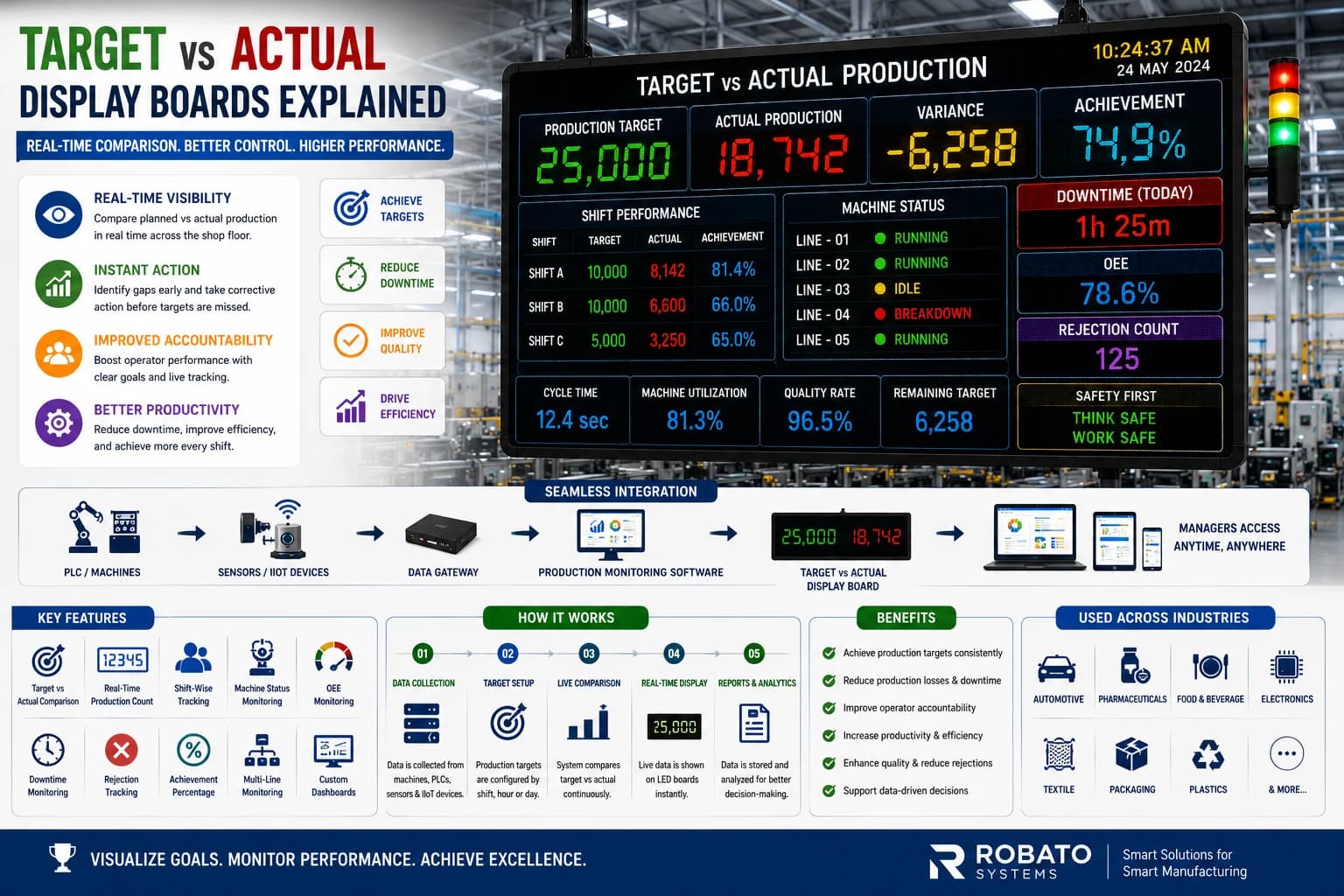
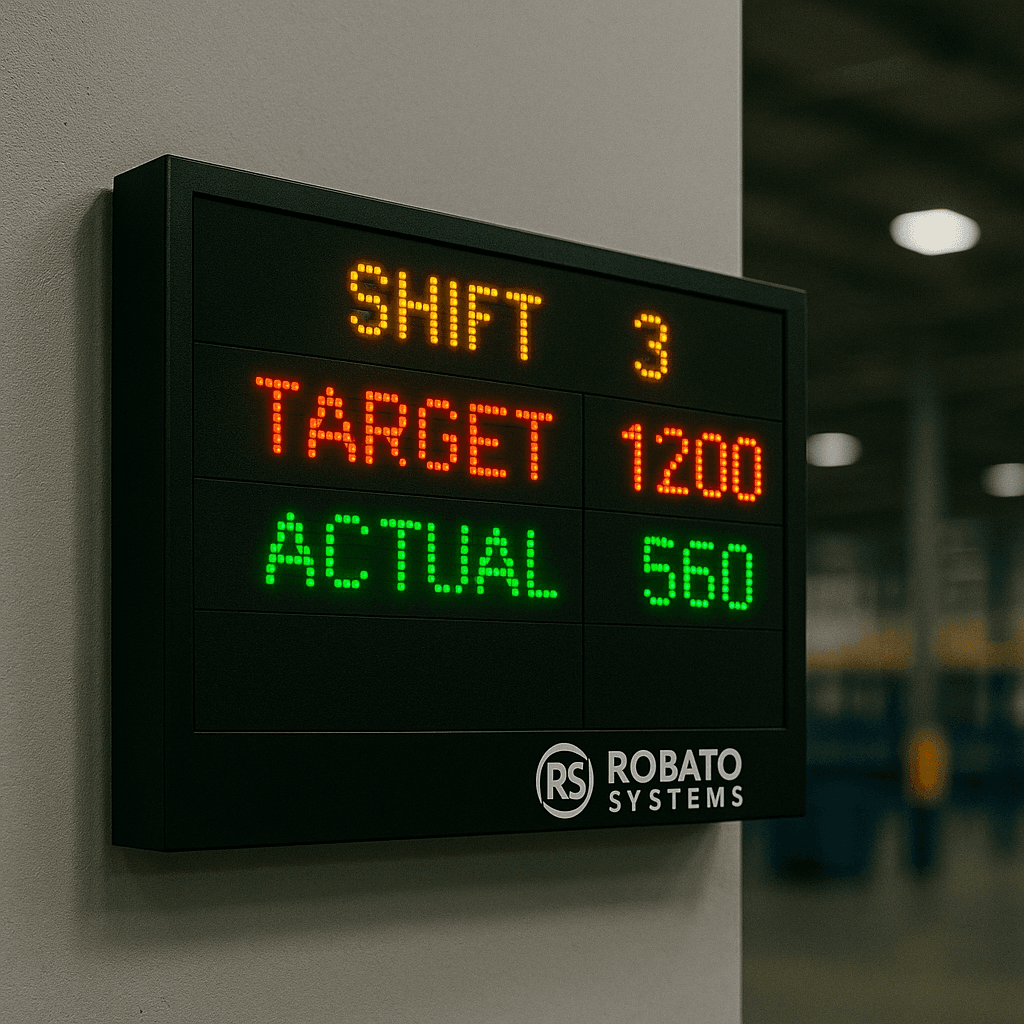
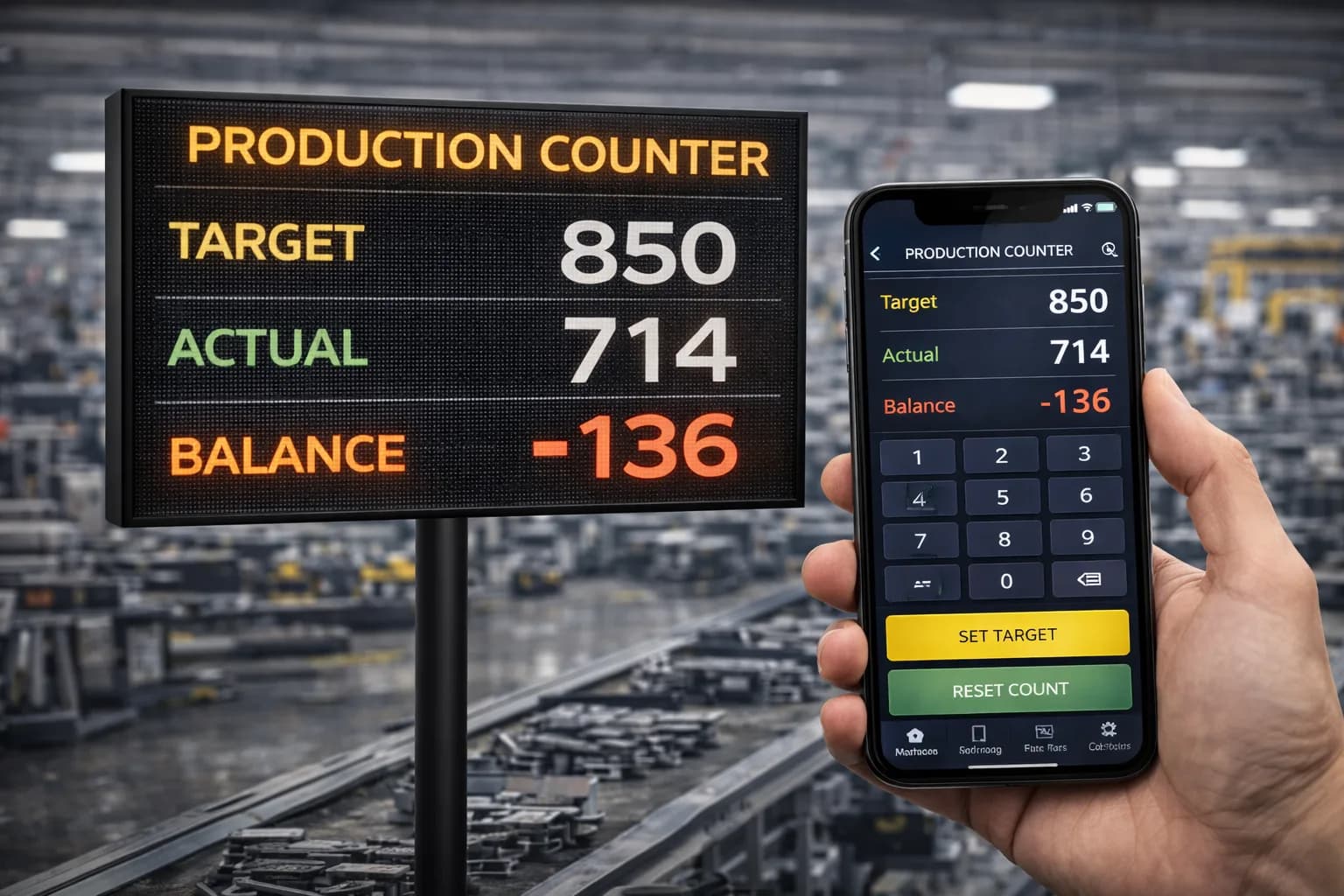
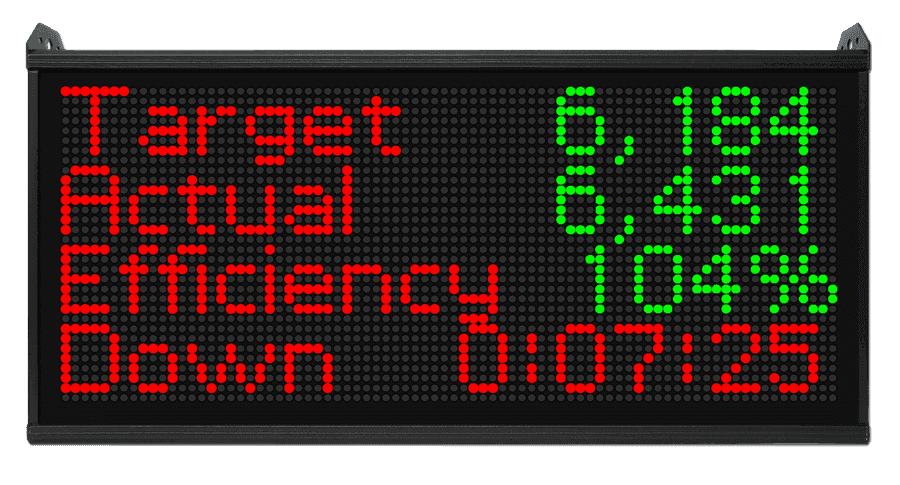
Target vs Actual Display
One of the most valuable features is displaying planned production alongside actual production.
This allows supervisors to identify production delays immediately and take corrective action before delivery schedules are affected.
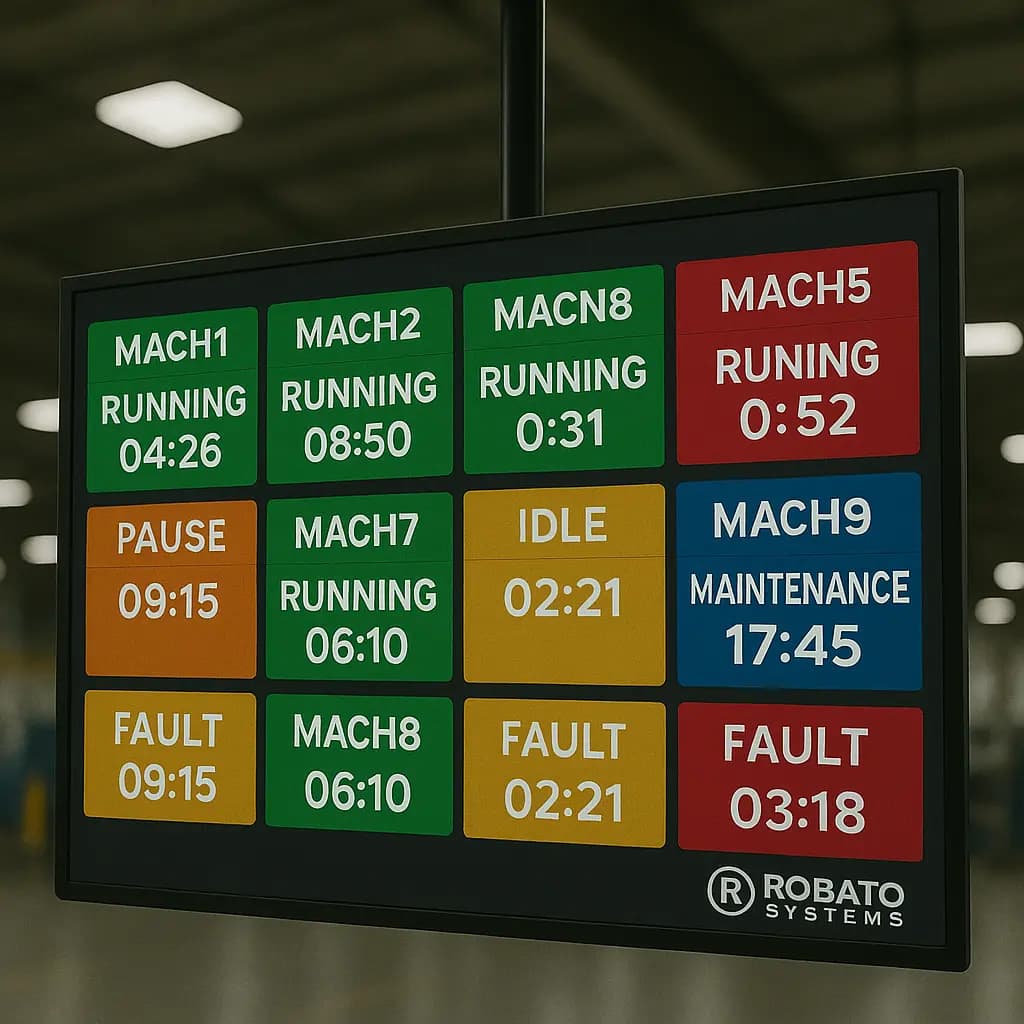
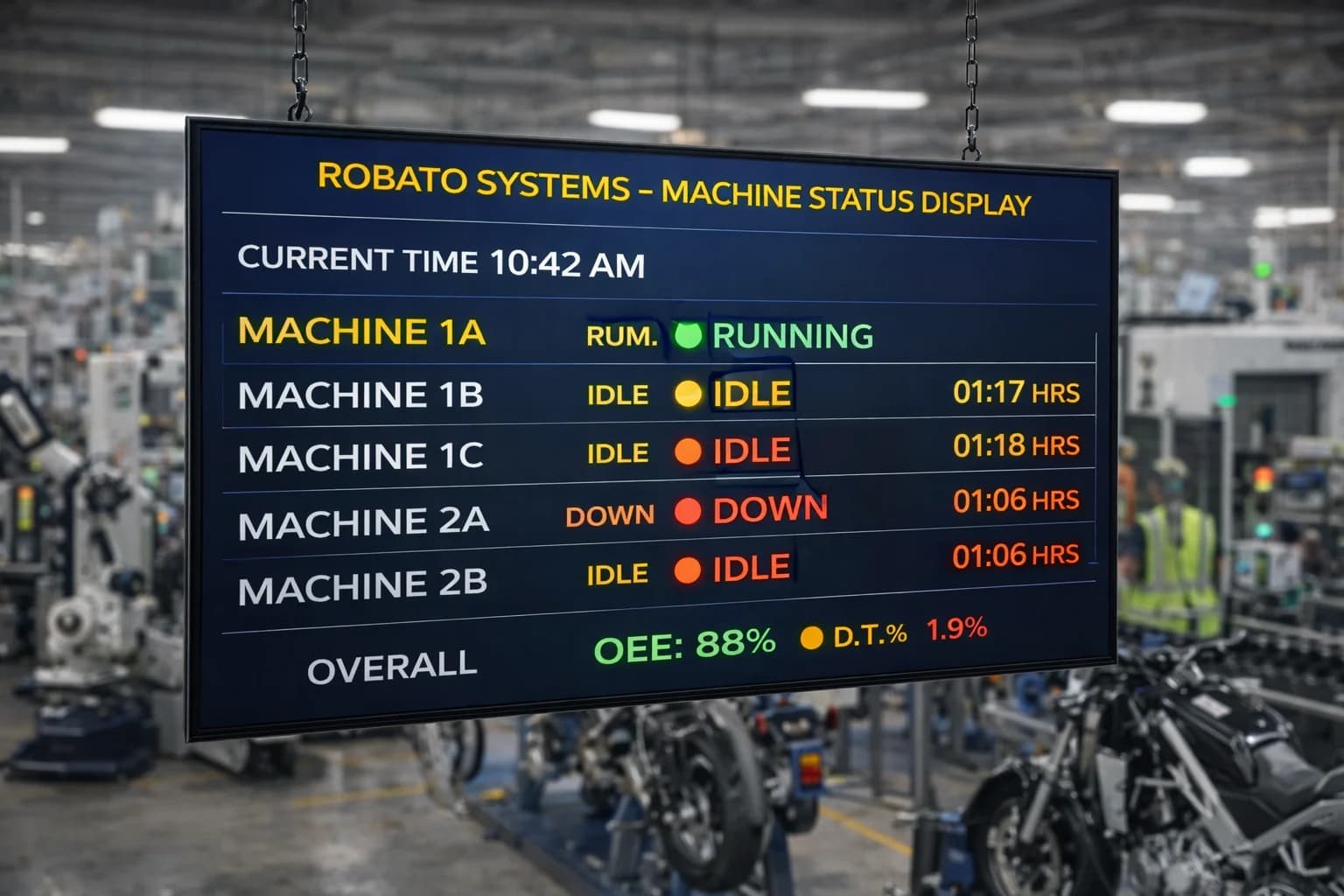
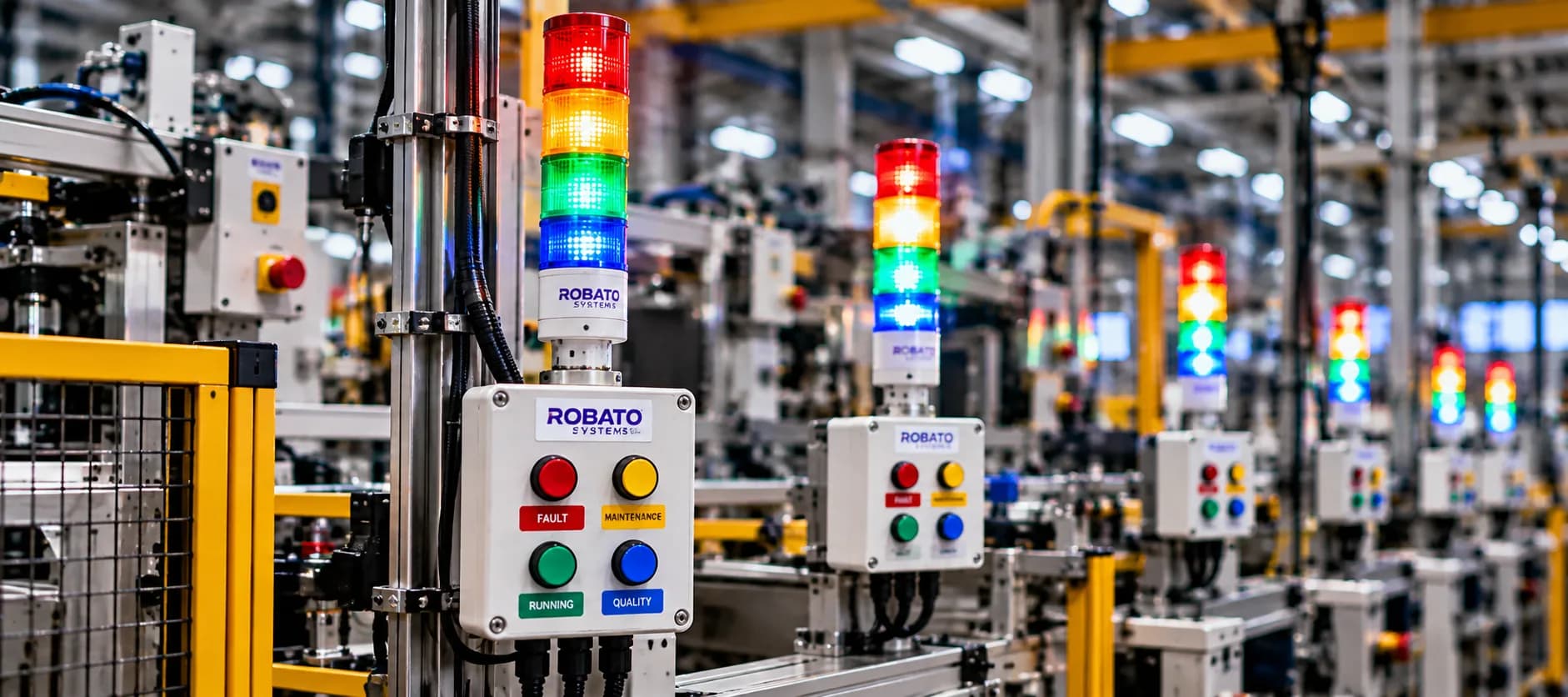
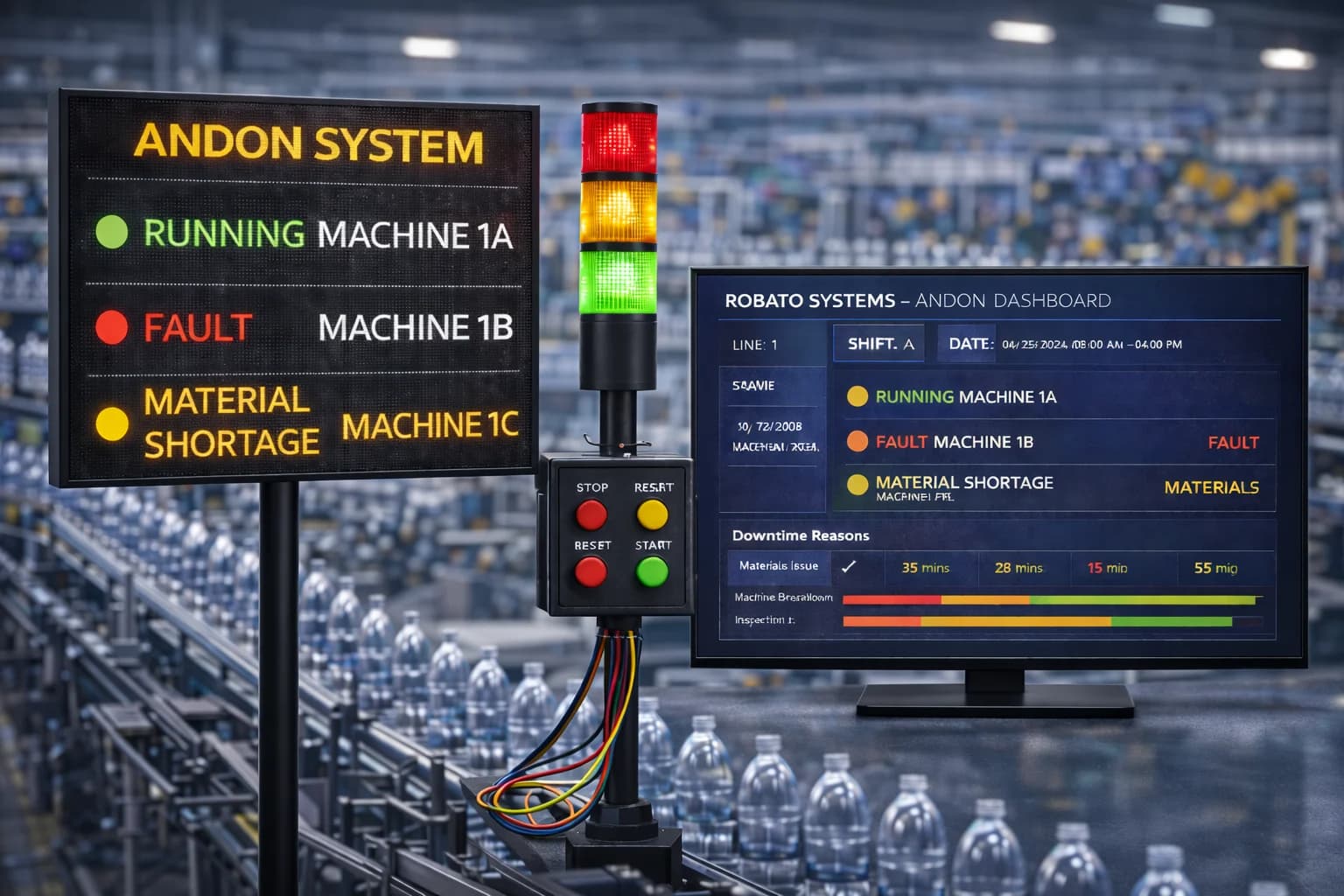
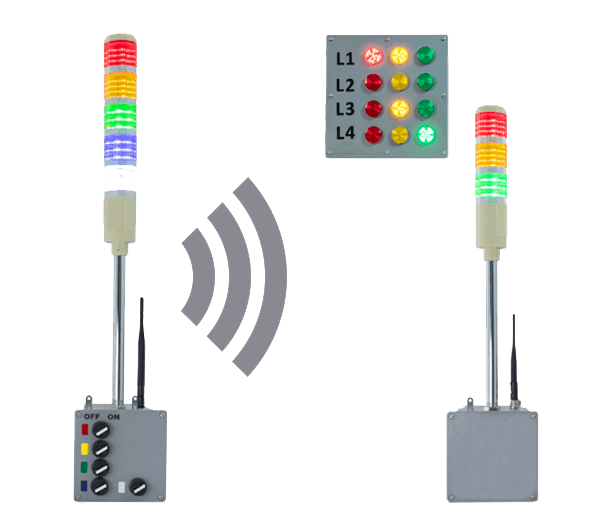
Machine Status Monitoring
Look for production display boards that show machine conditions including:
- Running
- Idle
- Breakdown
- Setup
- Maintenance
Machine visibility significantly reduces response time during production interruptions.
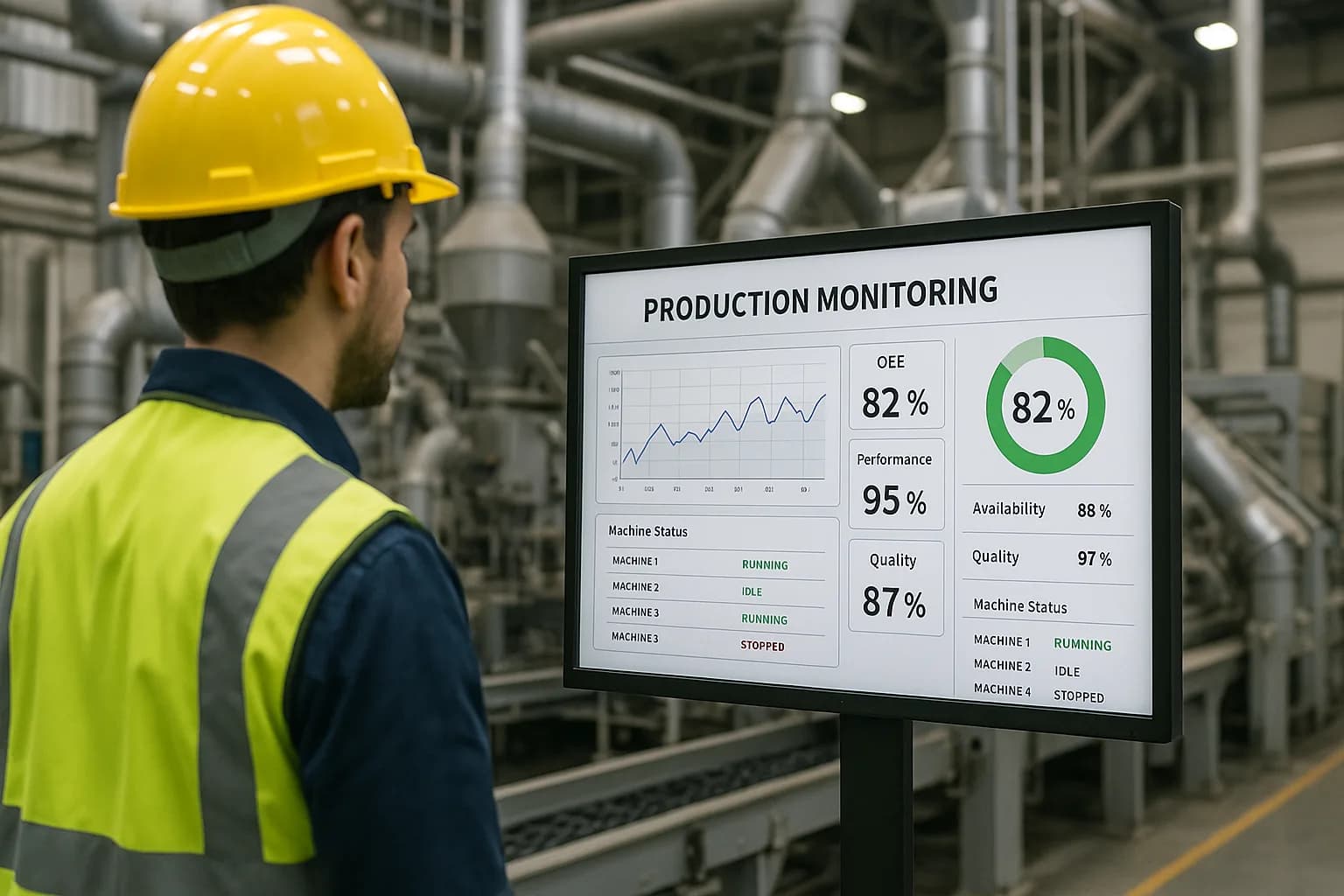
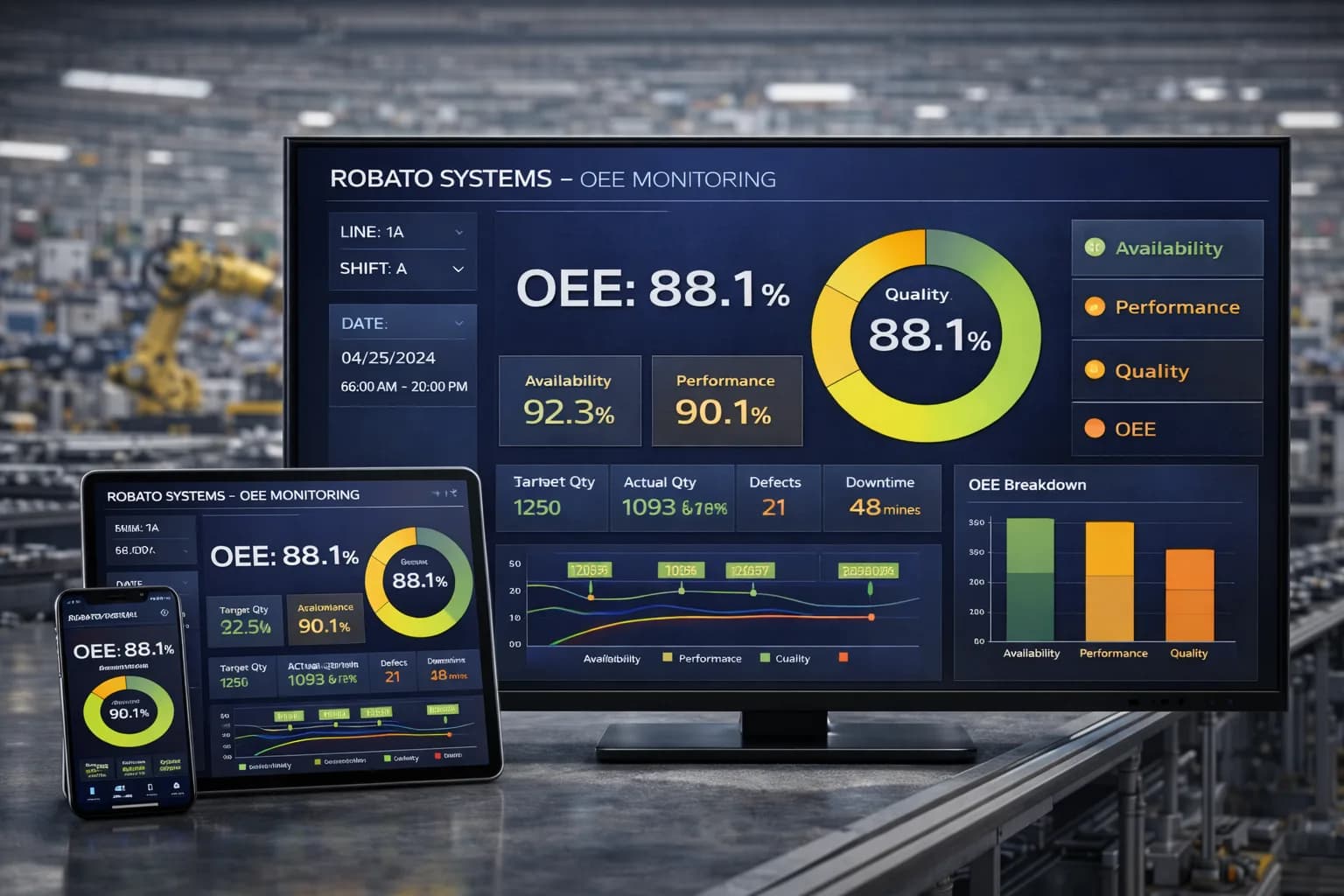
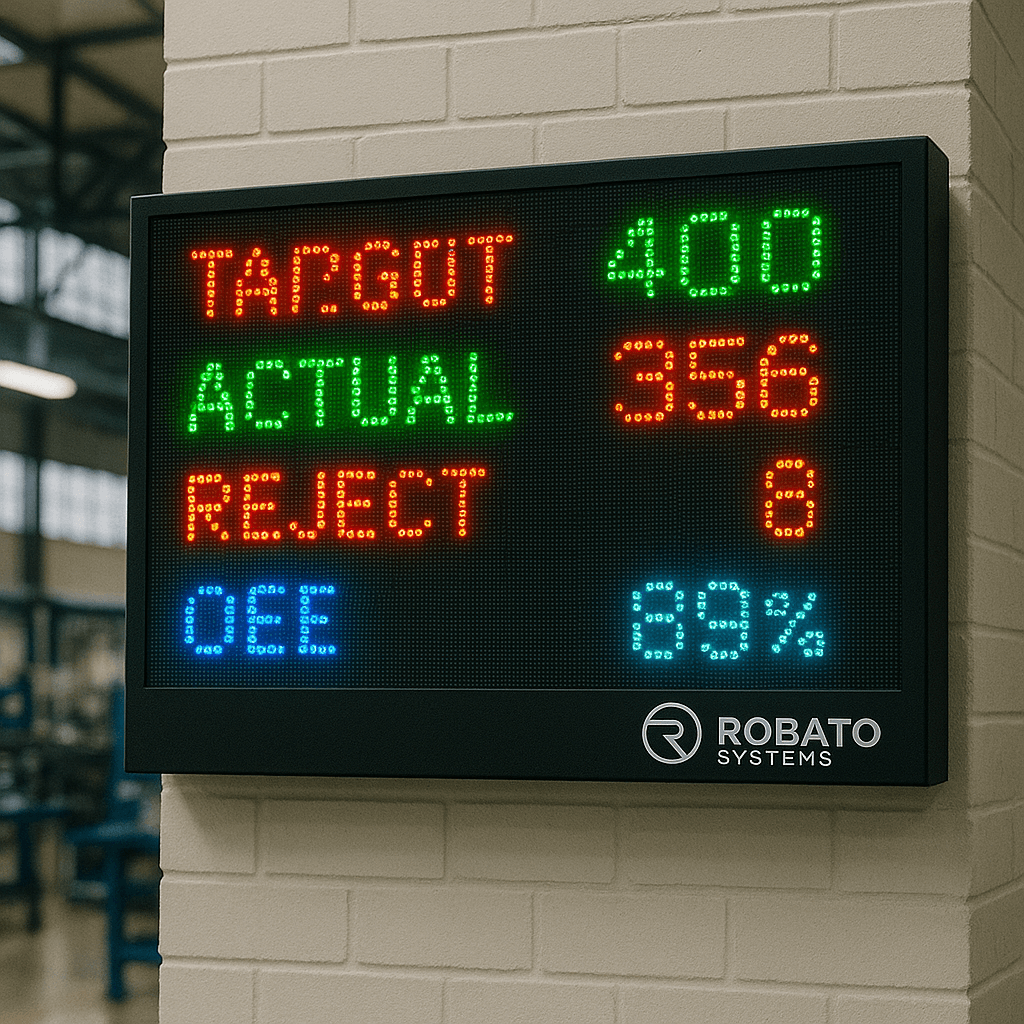
OEE Monitoring
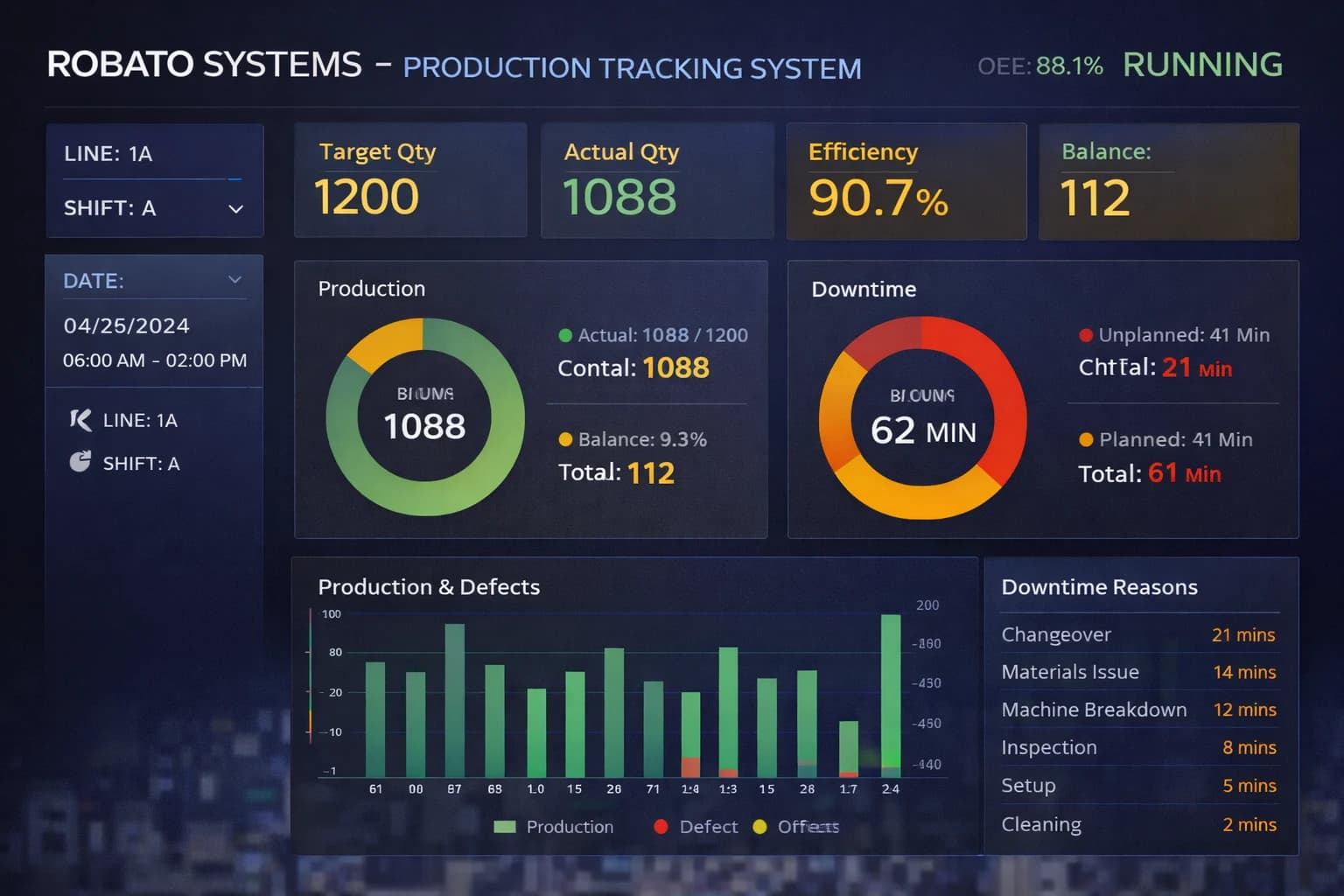
Modern production display boards should support live Overall Equipment Effectiveness (OEE) monitoring.
Displaying:
- Availability
- Performance
- Quality
helps manufacturers measure equipment productivity continuously.
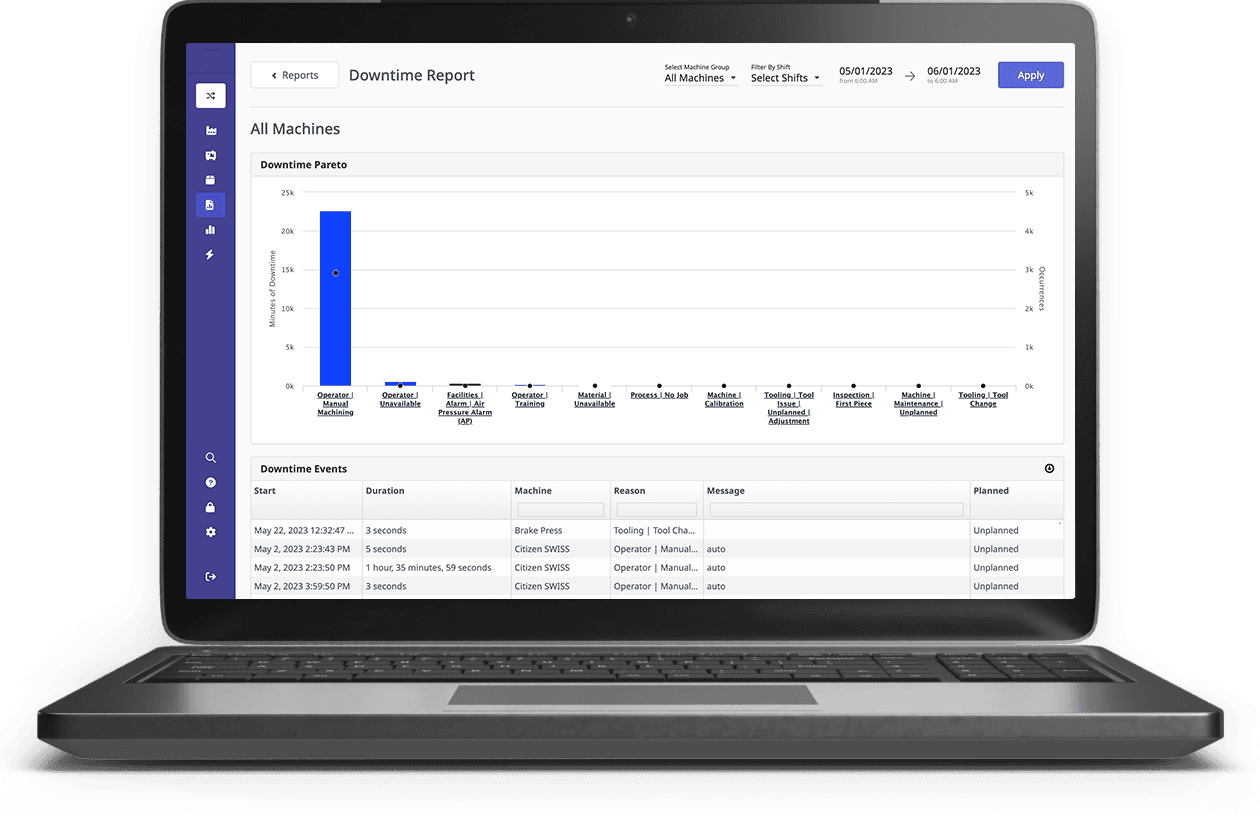
Downtime Tracking
The display should automatically show:
- Machine stoppages
- Downtime duration
- Downtime reasons
- Maintenance activities
Downtime visibility enables faster maintenance response.
Shift-Wise Production Monitoring
Factories operating multiple shifts benefit from shift-specific dashboards.
Monitor:
- Shift production
- Shift efficiency
- Downtime
- OEE
- Quality performance
This improves accountability and performance analysis.
Remote Monitoring
Cloud-enabled production display boards allow managers to monitor production remotely through:
- Web browsers
- Mobile applications
- Cloud dashboards
Remote visibility is especially valuable for organizations operating multiple manufacturing plants.
Scalability
Choose a solution that can grow with your business.
A scalable production display board should support:
- Additional production lines
- Multiple factories
- New machines
- Future software integrations
Scalability protects long-term investments.
Ease of Installation
A good production display solution should require minimal disruption during installation.
Manufacturers should consider:
- Wiring requirements
- Mounting options
- Network connectivity
- Power availability
- Software configuration
Professional installation ensures reliable operation.
User-Friendly Interface
Operators and supervisors should understand displayed information immediately.
A well-designed interface includes:
- Large fonts
- Color coding
- Simple layouts
- Easy navigation
- Clear KPIs
This improves usability and reduces training requirements.
Maintenance and Reliability
Industrial environments require durable equipment.
Choose production display boards with:
- Industrial-grade components
- Dust-resistant enclosures
- Long operating life
- Reliable technical support
- Software updates
Reliable systems minimize maintenance costs.
Common Applications
Production display boards are widely used across manufacturing industries.
Automotive Manufacturing
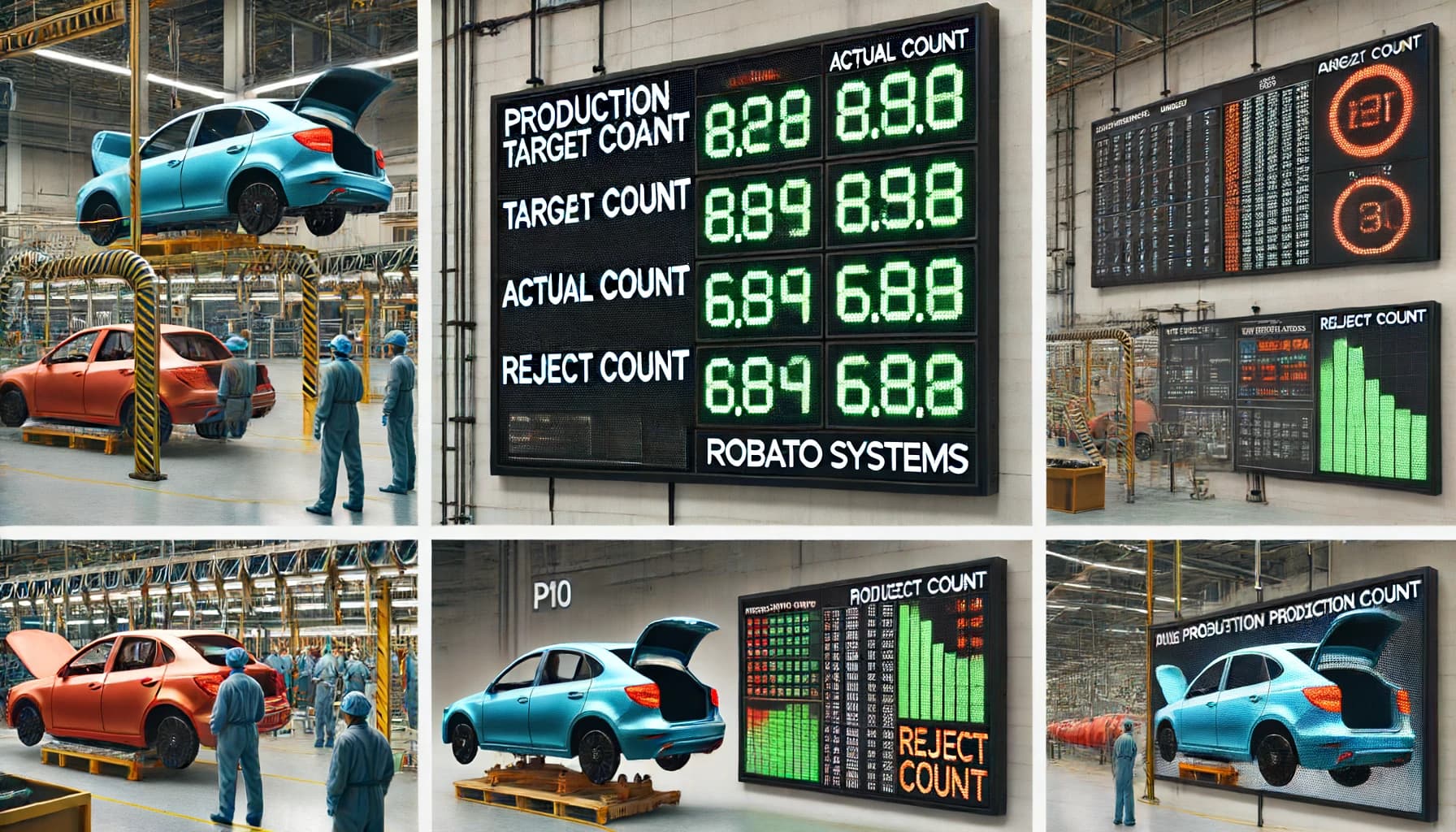
Track assembly line performance and production targets.
Electronics Manufacturing
Monitor PCB assembly and testing operations.
Food & Beverage Industry
Display packaging, filling, and bottling production.
Pharmaceutical Manufacturing
Monitor batch production and packaging efficiency.
Textile Industry
Track weaving, knitting, and fabric production.
Plastic & Injection Molding
Display molding cycles and production counts.
Packaging Industry
Monitor packaging speed and completed production.
Industry 4.0 Integration
Modern production display boards integrate with:
- Industrial IoT (IIoT)
- ERP software
- MES platforms
- SCADA systems
- Production Monitoring Systems
- Cloud platforms
These integrations create connected manufacturing environments with complete production visibility.
Common Mistakes to Avoid
When selecting a production display board, manufacturers should avoid:
Choosing Based Only on Price
Lower-cost solutions may lack essential integration capabilities.
Ignoring Software Compatibility
Ensure the display board integrates with existing manufacturing systems.
Underestimating Future Growth
Select a scalable solution that supports future expansion.
Poor Display Placement
Displays should be positioned for maximum visibility across production areas.
Limited KPI Support
Choose systems capable of displaying comprehensive production metrics.
Future Trends
Production display technology continues advancing rapidly.
Artificial Intelligence
AI-powered production analytics will recommend operational improvements automatically.
Predictive Maintenance
Display boards will warn operators before machine failures occur.
Digital Twins
Virtual production environments will synchronize with real-time manufacturing data.
Edge Computing
Production data will be processed closer to machines for lower latency.
Cloud-Based Manufacturing Dashboards
Production information will be accessible from any location.
These innovations will make production display boards even more valuable in smart factories.
Why Choose Robato Systems for Production Display Boards?
Robato Systems delivers advanced Production Display Board solutions that provide complete real-time production visibility across manufacturing operations. Our systems integrate seamlessly with PLCs, Industrial IoT devices, ERP, MES, and SCADA platforms to display accurate production data and key performance indicators.
Our customizable production display boards support target vs actual tracking, machine status monitoring, OEE visualization, downtime analysis, shift-wise performance, and automated production reporting. Designed for Industry 4.0, Robato Systems helps manufacturers improve productivity, reduce downtime, enhance communication, and accelerate digital transformation.
Whether your facility operates a single production line or multiple manufacturing plants, our scalable solutions are tailored to meet your operational needs.
Conclusion
A Production Display Board is one of the most important investments a modern manufacturing facility can make. It transforms raw production data into clear, actionable information that improves communication, increases productivity, reduces downtime, and supports faster decision-making.
Choosing the right production display board requires careful evaluation of display technology, integration capabilities, scalability, software compatibility, and future business requirements. By selecting a solution that aligns with your manufacturing goals, you create a strong foundation for Industry 4.0 adoption and continuous operational improvement.
A well-designed production display board not only enhances visibility across the shop floor but also empowers your workforce to achieve higher efficiency and consistently meet production targets.
Frequently Asked Questions (FAQs)
What is a production display board?
A production display board is a digital display system that shows real-time production data, machine status, production targets, and manufacturing KPIs.
What should I consider before buying a production display board?
Consider display technology, software integration, communication protocols, scalability, dashboard customization, visibility, and maintenance requirements.
Can production display boards integrate with ERP and PLC systems?
Yes. Modern production display boards integrate with PLCs, ERP, MES, SCADA, Industrial IoT devices, and cloud platforms.
Which display technology is better: LED or LCD?
LED displays are ideal for large shop floors and long-distance visibility, while LCD displays are better for detailed dashboards and control rooms.
Which industries use production display boards?
Automotive, electronics, pharmaceuticals, food processing, textiles, plastics, packaging, and many other manufacturing industries.