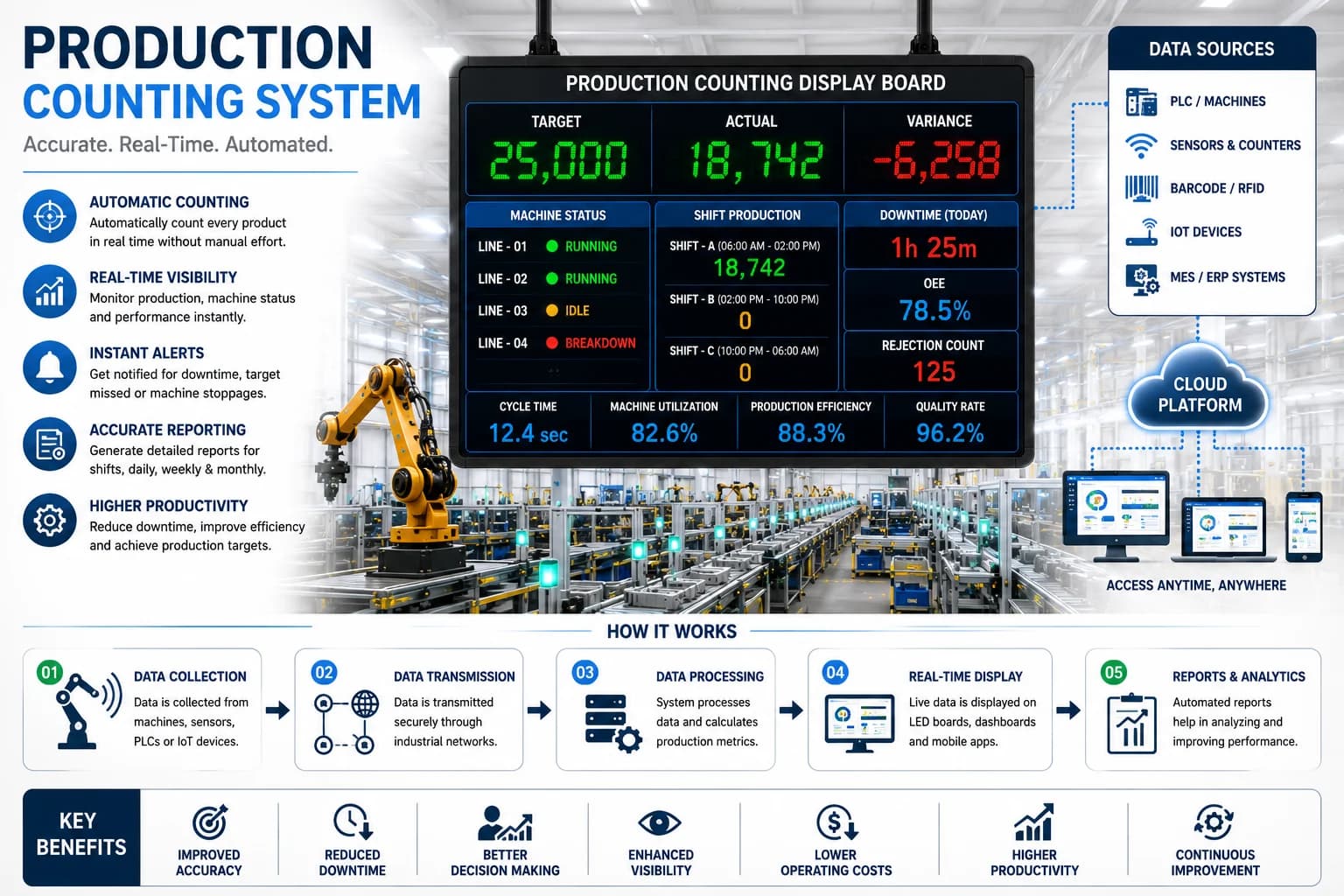
What is a Production Counting System?
Manufacturing facilities depend on accurate production data to achieve operational efficiency, meet customer demand, and improve overall productivity. However, many factories still rely on manual counting methods, paper records, or spreadsheets to track production output. These traditional methods are time-consuming, prone to human error, and often fail to provide real-time visibility into manufacturing operations.
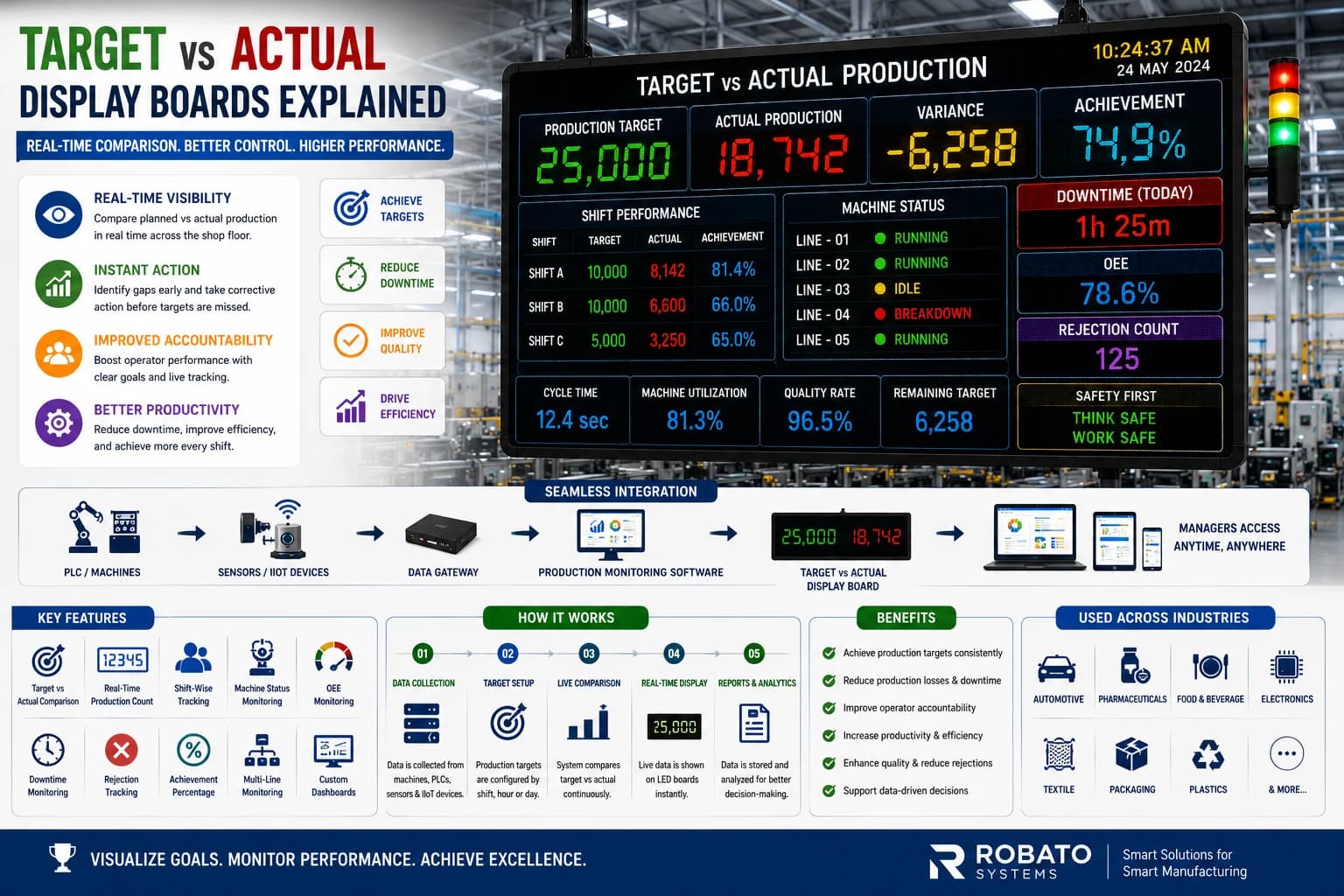
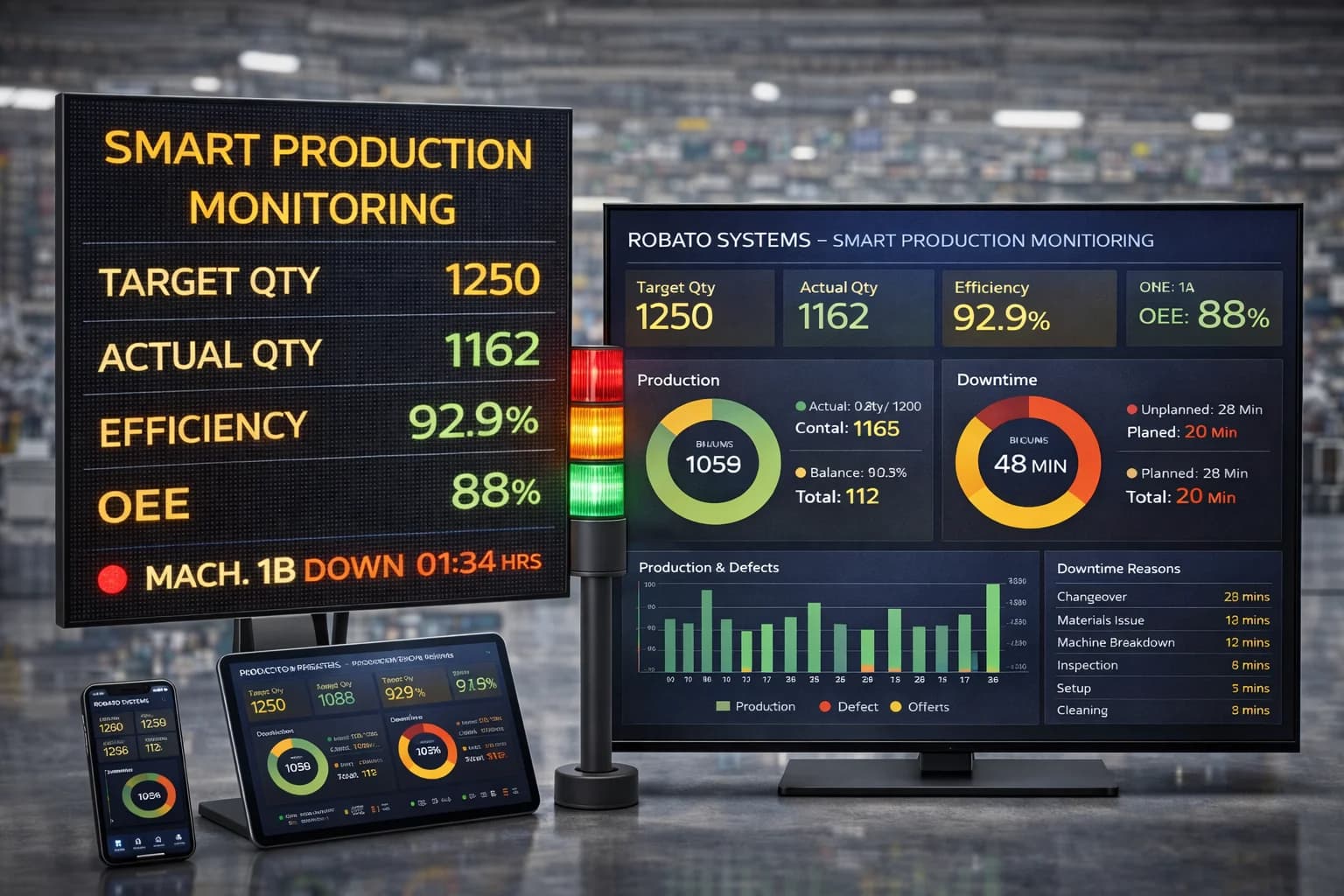
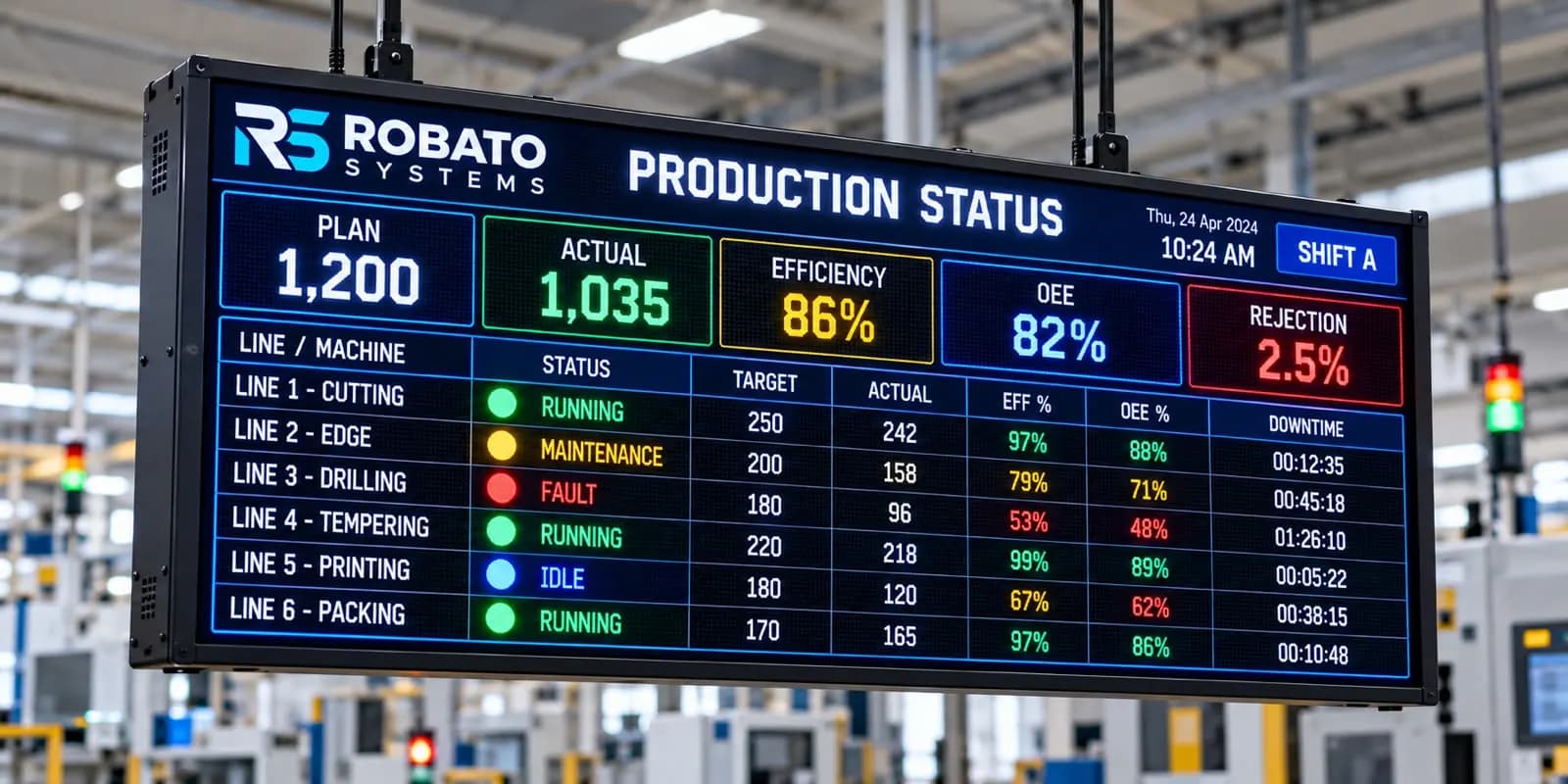
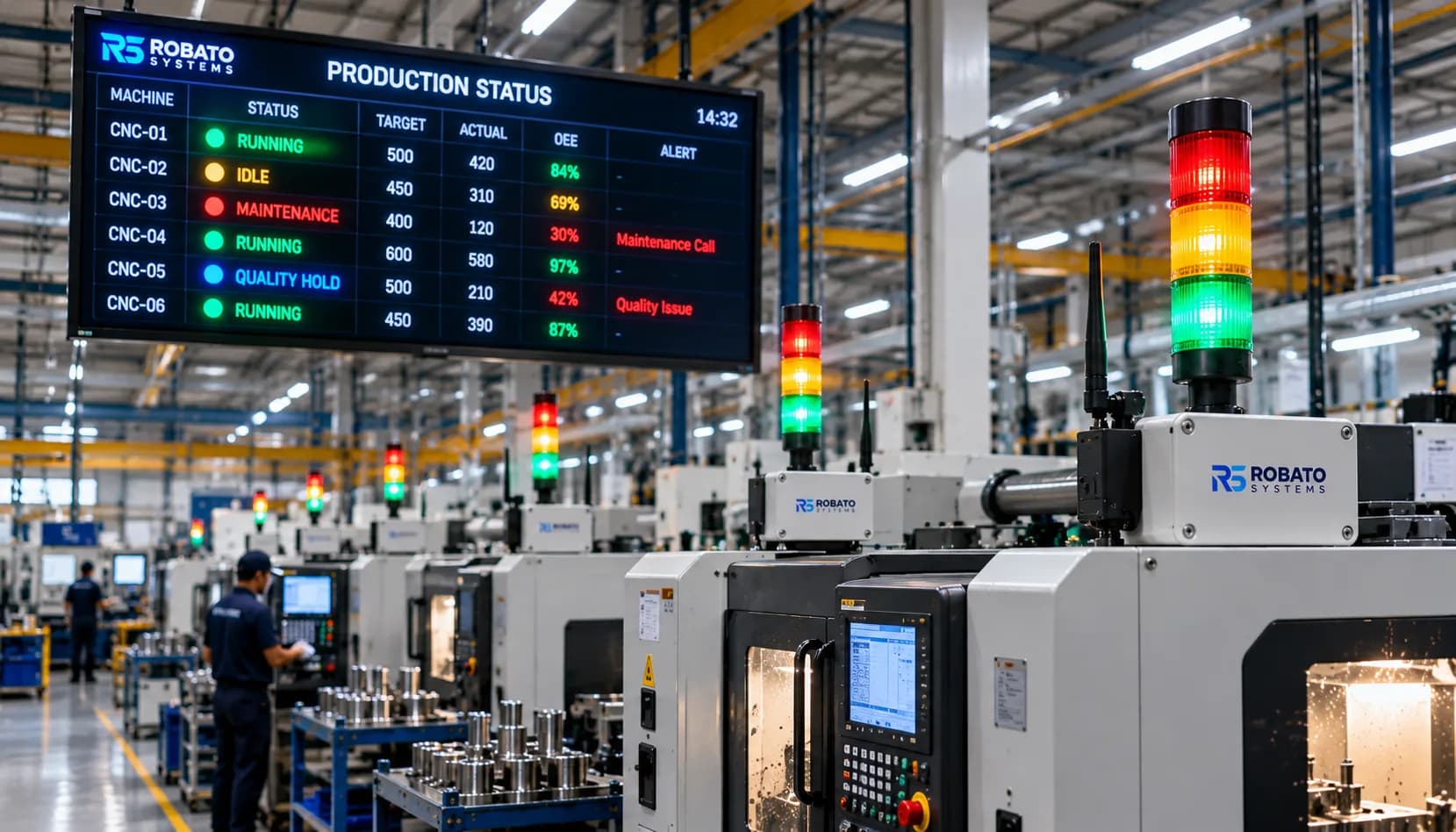
A Production Counting System eliminates these challenges by automatically tracking the number of products produced in real time. It collects data directly from production machines, PLCs, sensors, or Industrial IoT (IIoT) devices and displays accurate production information on dashboards or digital display boards. This allows manufacturers to monitor production performance continuously, identify bottlenecks, and make informed decisions without waiting for end-of-shift reports.
As manufacturing moves toward Industry 4.0, production counting systems have become an essential tool for improving efficiency, reducing downtime, and enabling data-driven production management.
What is a Production Counting System?
A Production Counting System is an automated solution that records and monitors the number of products manufactured on a production line. Instead of relying on manual counting, the system captures production data directly from machines or sensors and updates production records in real time.
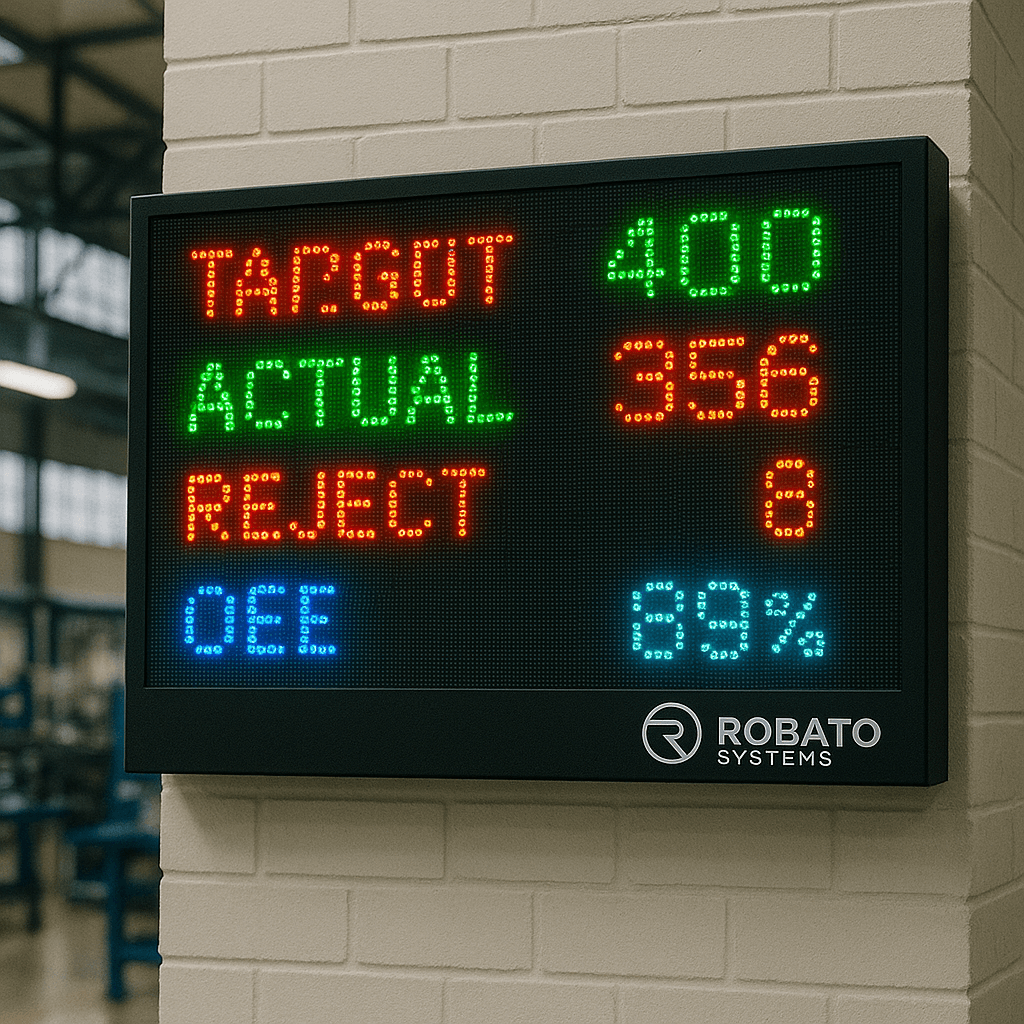
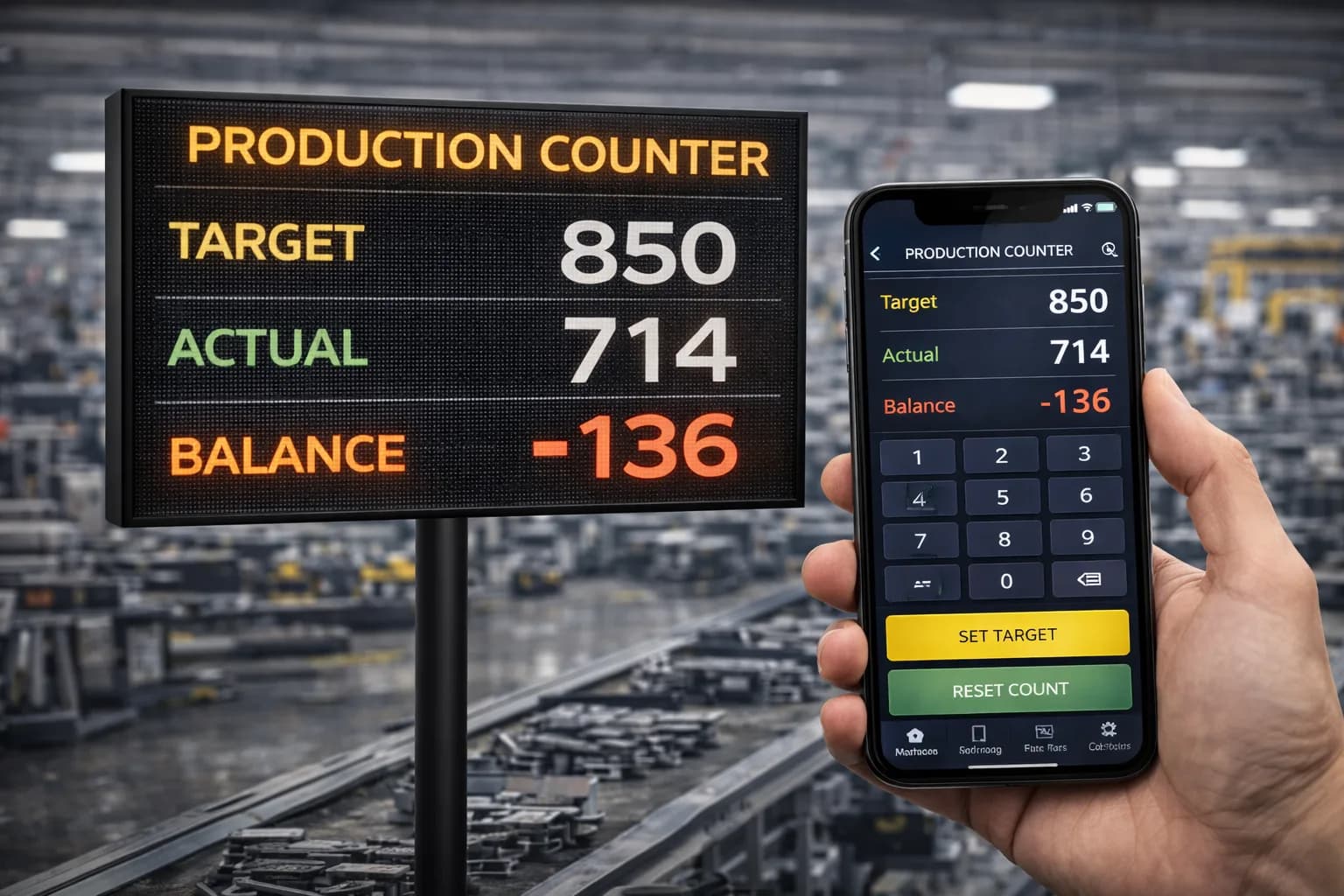
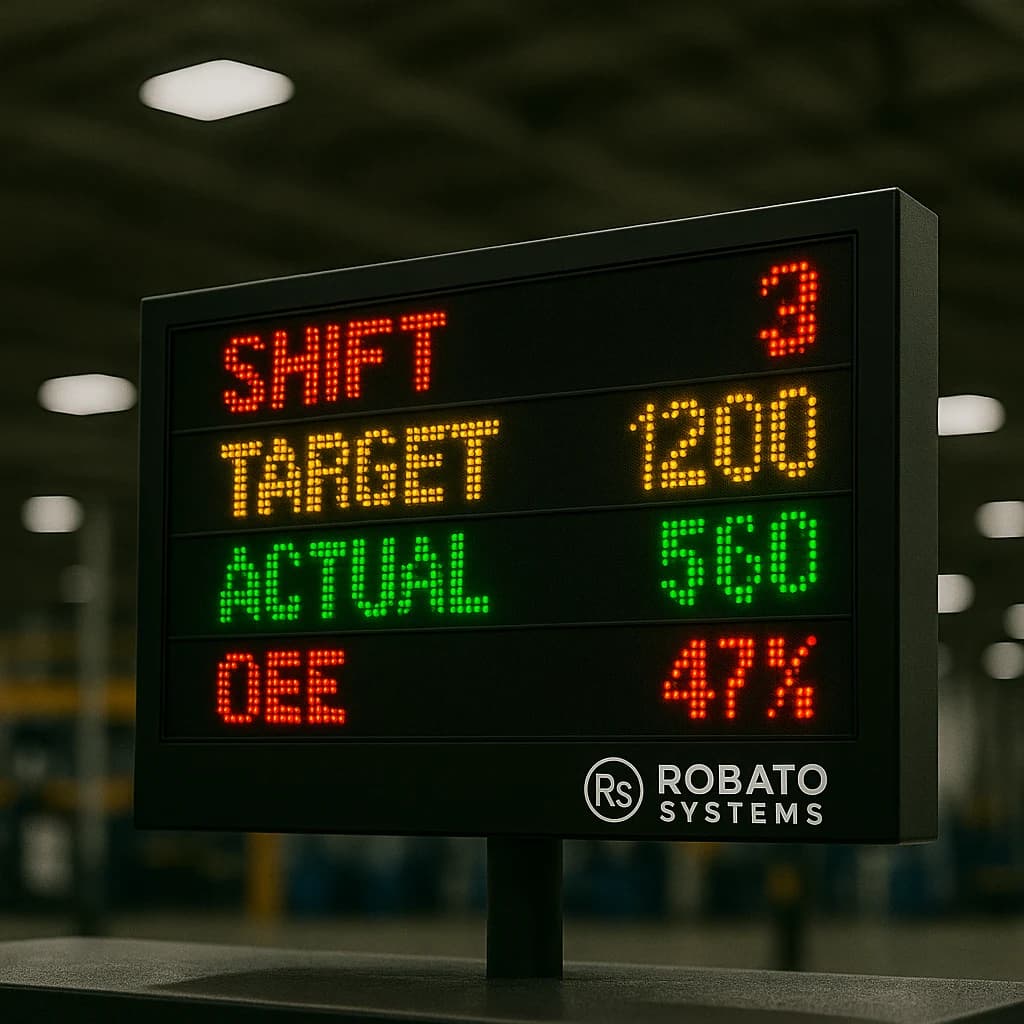
The system provides live visibility into manufacturing performance and helps organizations compare actual production against planned targets.
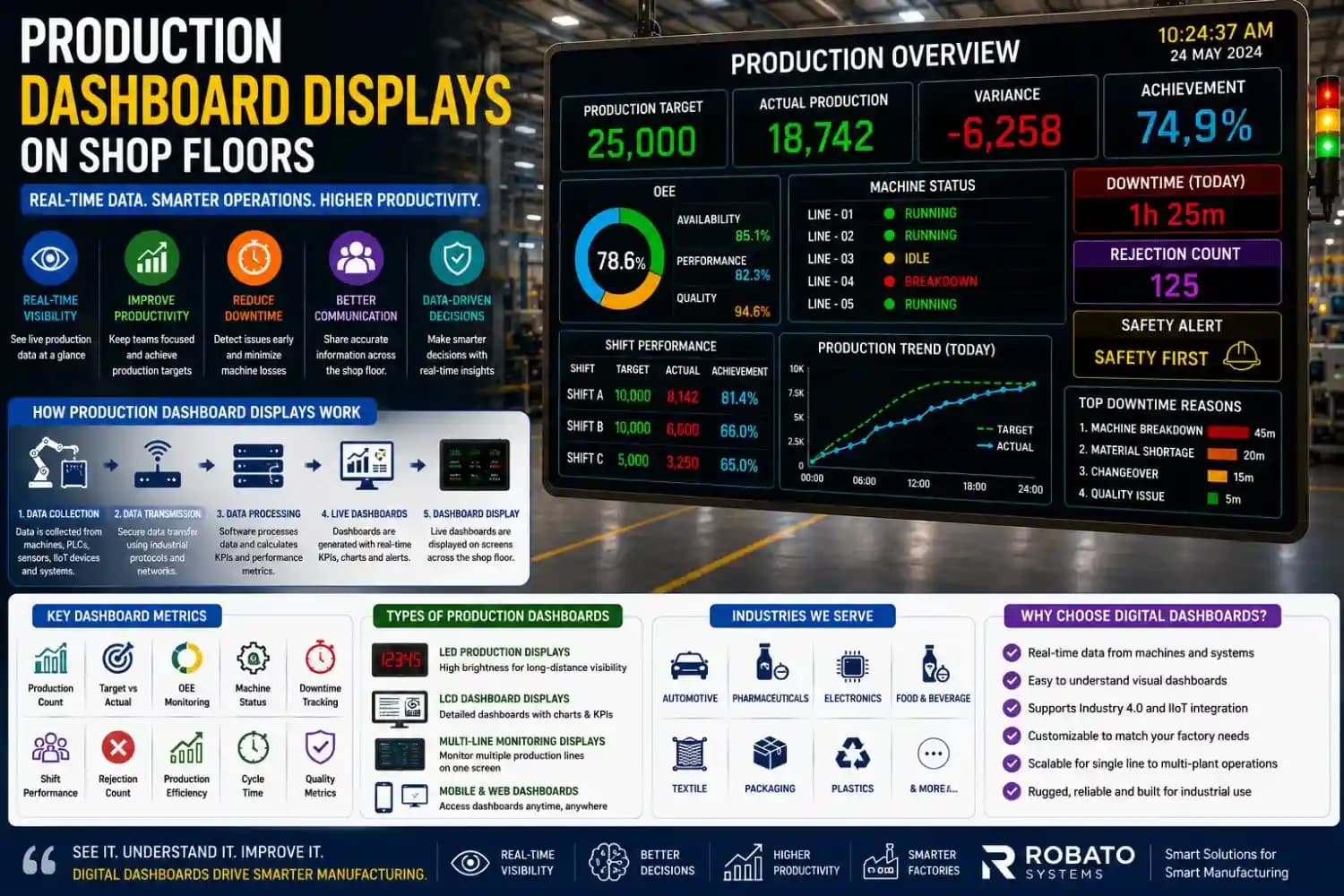
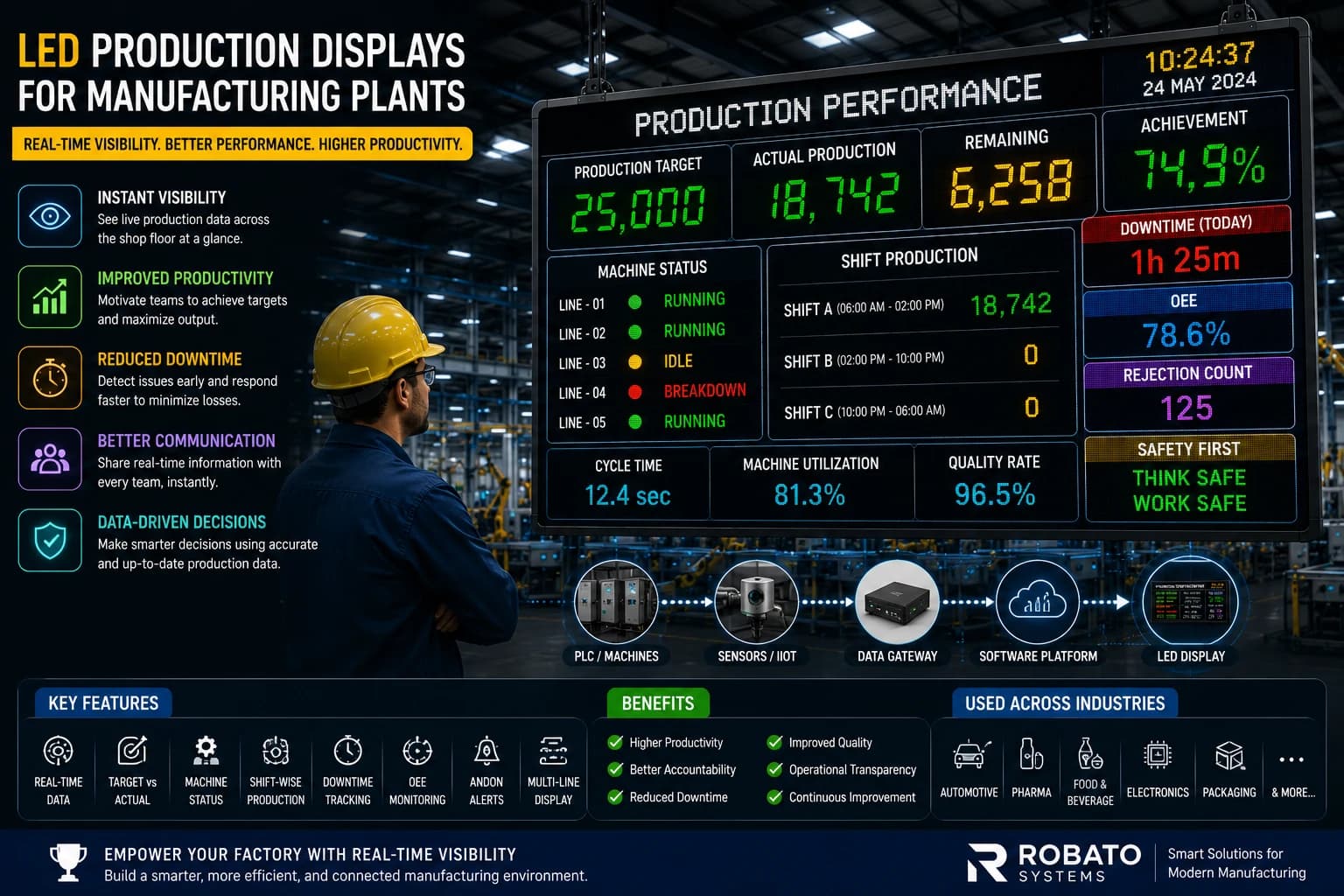
A typical production counting system monitors:
- Production quantity
- Production targets
- Machine status
- Shift-wise production
- Cycle time
- Rejection count
- Downtime Overall Equipment Effectiveness (OEE)
- Production efficiency
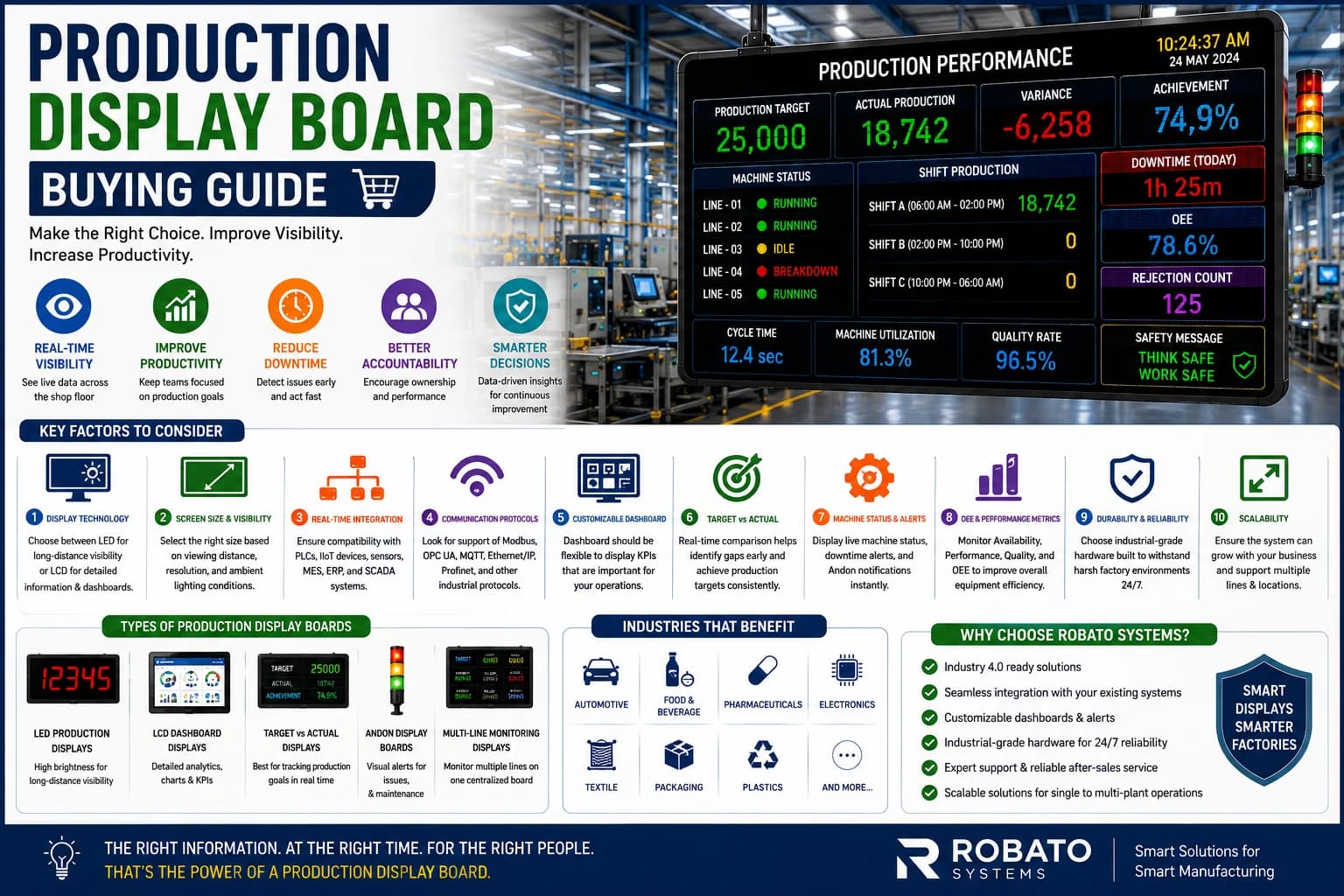
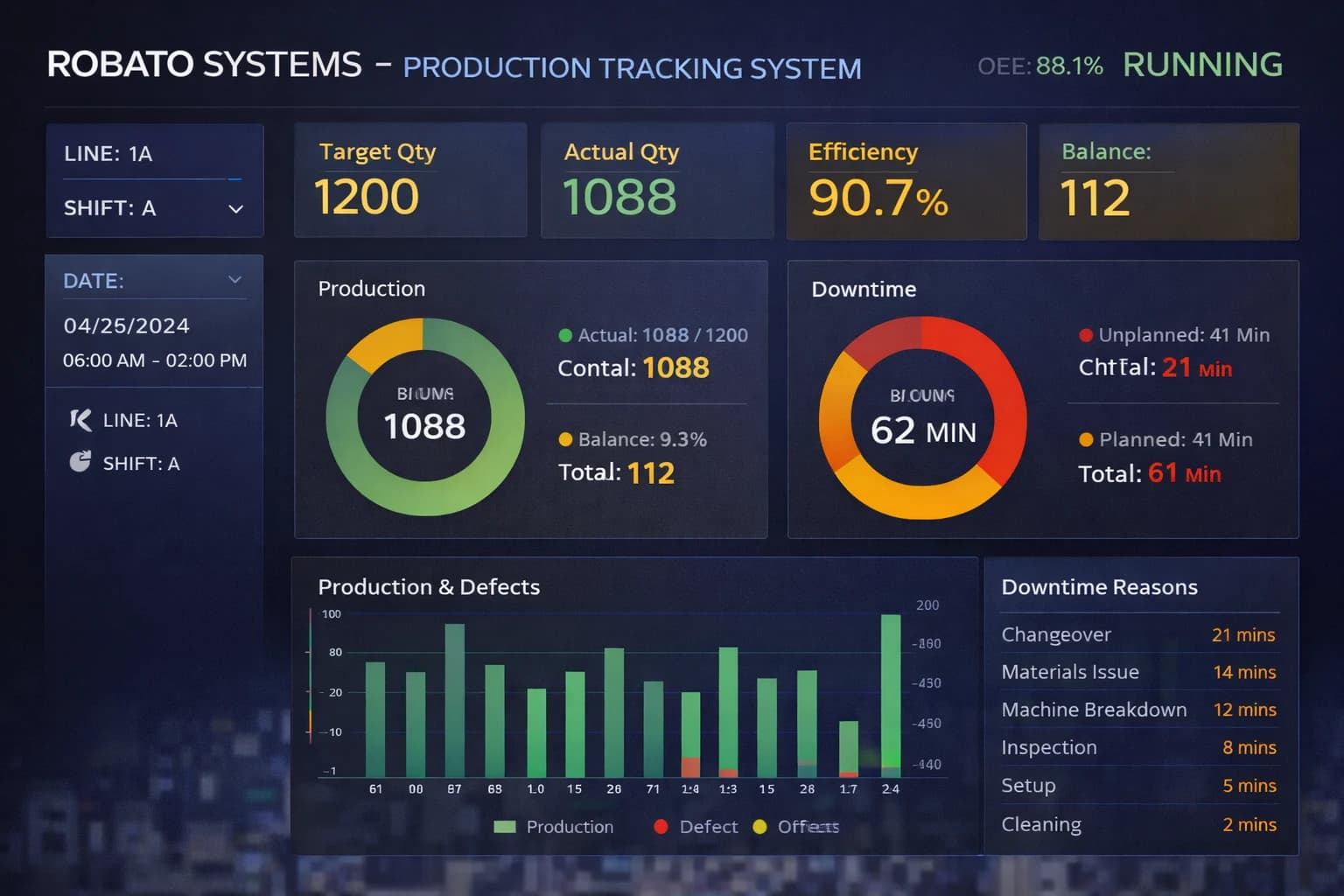
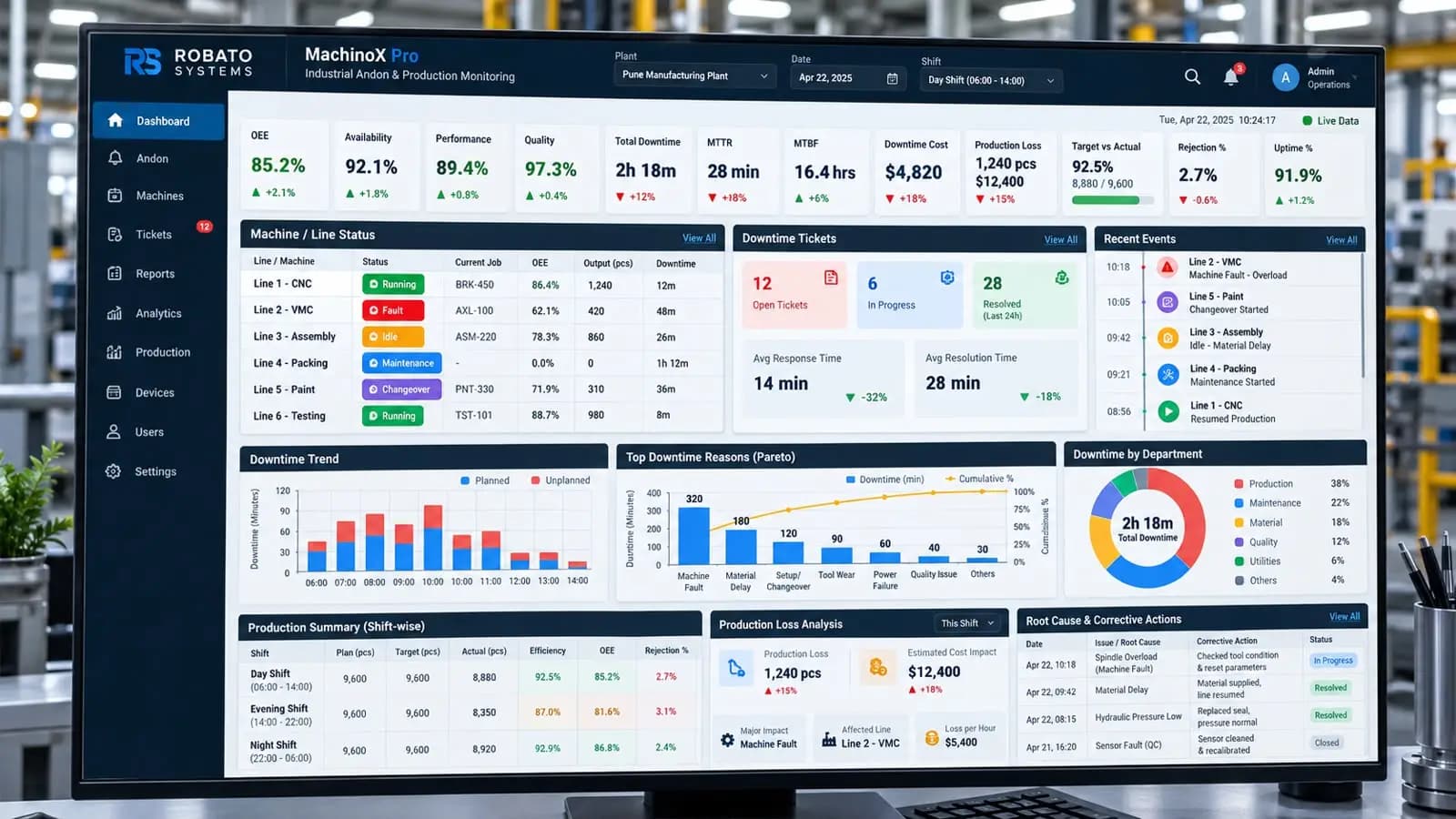
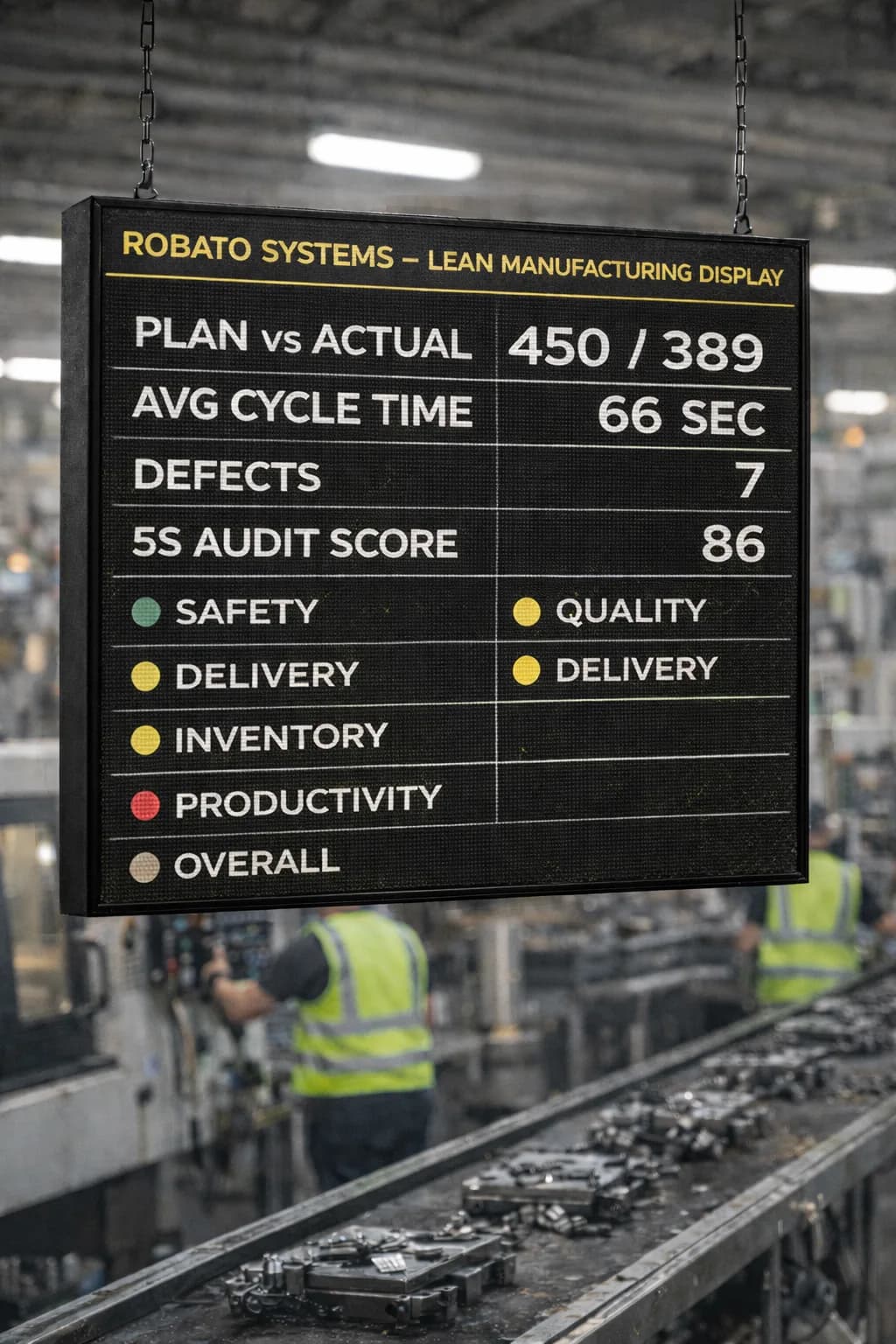
The collected data can be displayed on production display boards, dashboards, or integrated with ERP and MES software for centralized reporting.
Why Manual Production Counting is No Longer Enough
Manual production tracking may work for small-scale operations, but it creates significant challenges in high-volume manufacturing environments.
Common problems include:
- Human counting errors
- Delayed production reporting
- Inaccurate production records
- Lack of real-time visibility
- Difficulty tracking multiple production lines
- Increased administrative workload
- Limited production analytics
These issues can lead to poor production planning, delayed decision-making, and lower operational efficiency.
A production counting system addresses these problems by automating the entire data collection process.
How a Production Counting System Works
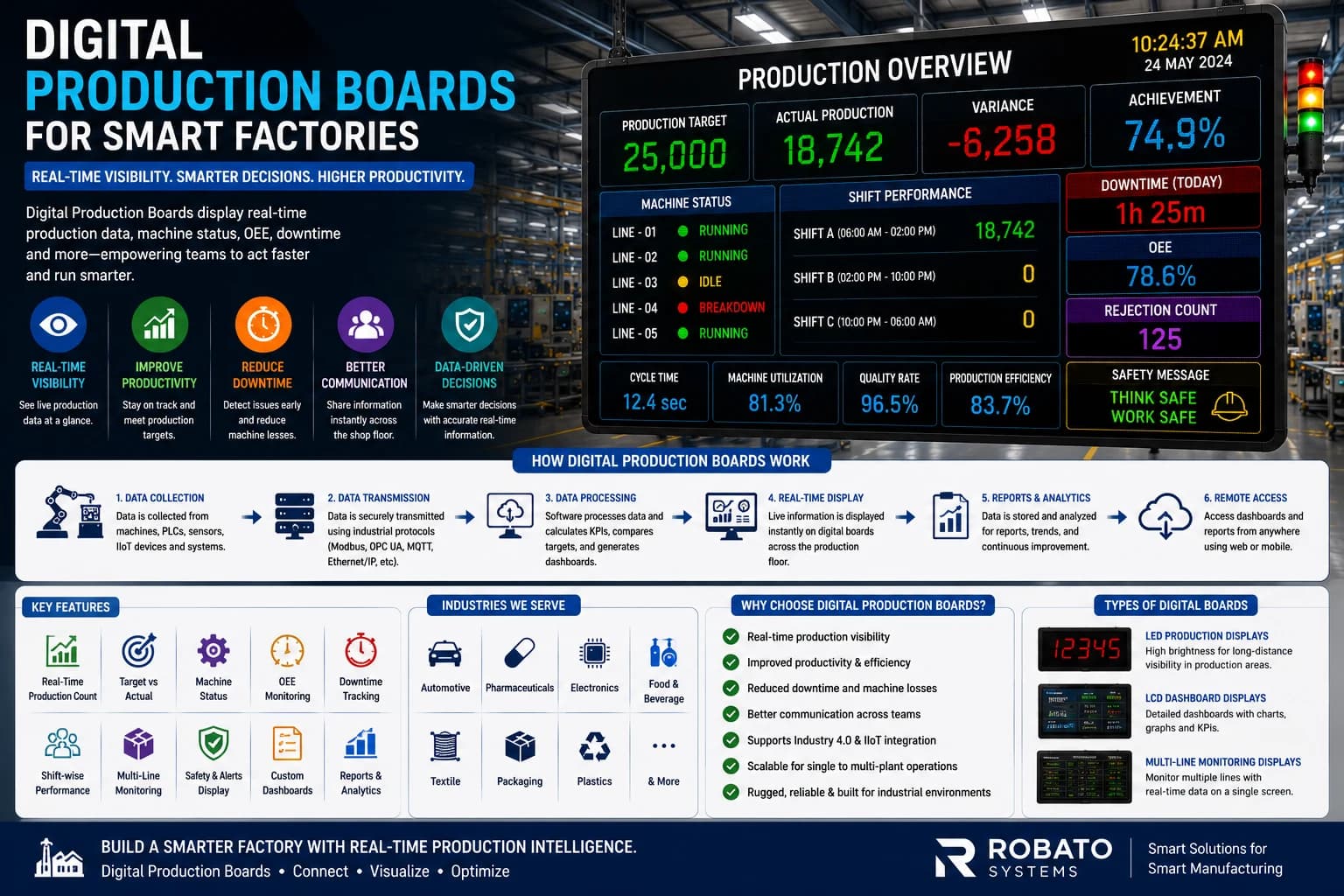
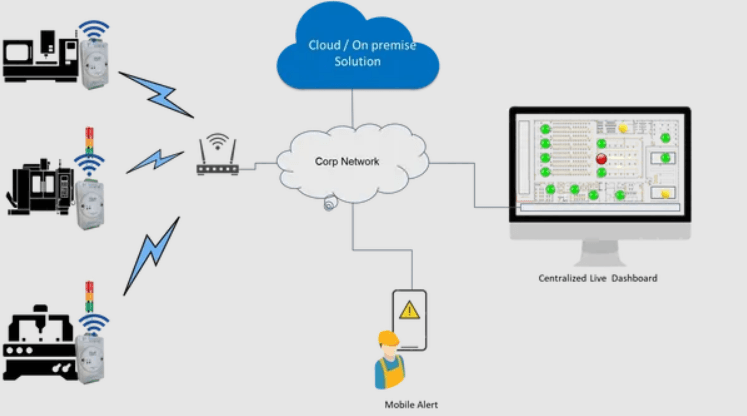
A production counting system follows a straightforward process to ensure accurate and continuous production tracking.
Step 1: Data Collection
The system collects production data from various sources, including:
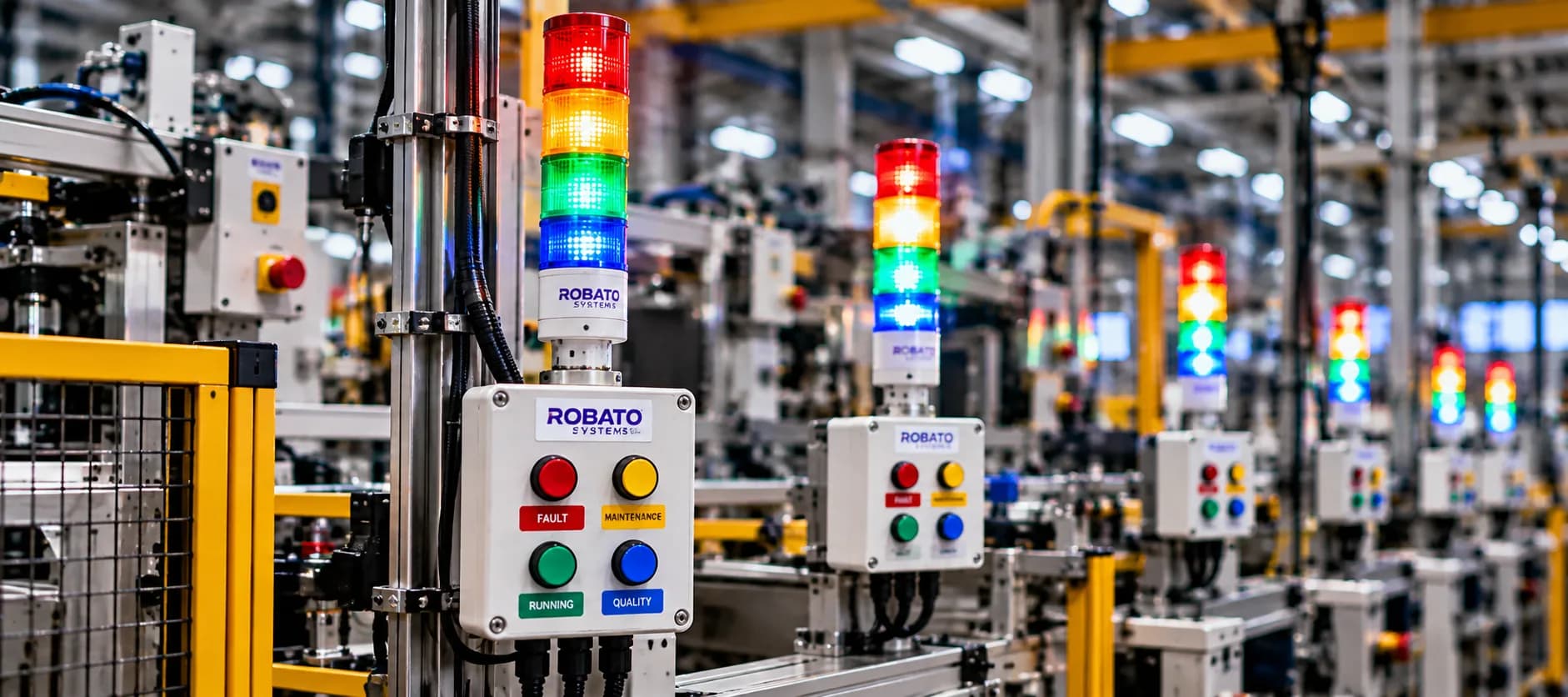
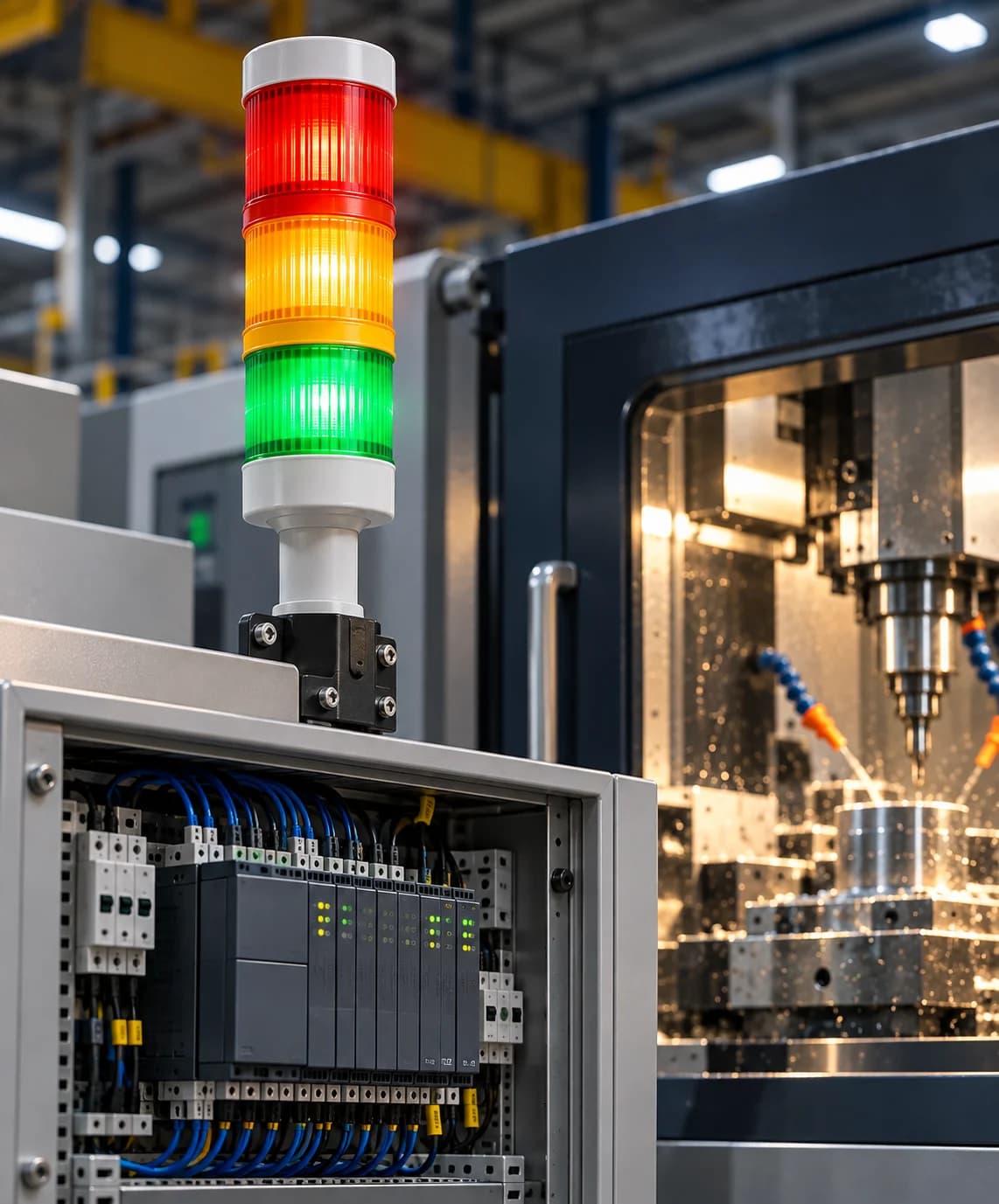
- PLCs (Programmable Logic Controllers)
- Industrial IoT sensors
- Photoelectric sensors
- Limit switches
- Machine counters
- Barcode scanners
- RFID systems
These devices detect every completed product or machine cycle.
Step 2: Data Processing
The collected data is processed by production monitoring software, which calculates:
- Total production
- Production speed
- Machine efficiency
- Production targets
- Shift performance
The software also filters duplicate or invalid signals to ensure accuracy.
Step 3: Real-Time Display
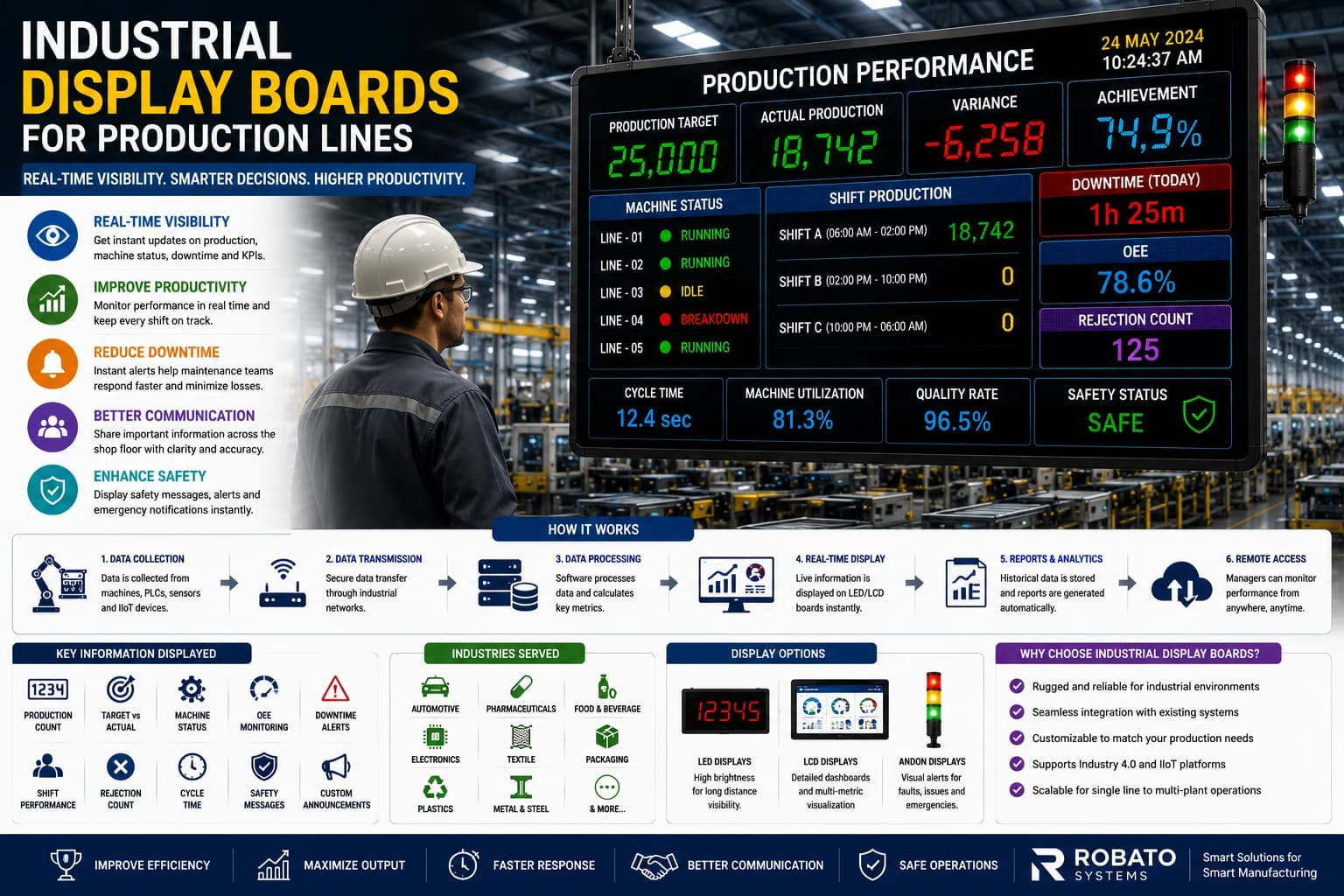
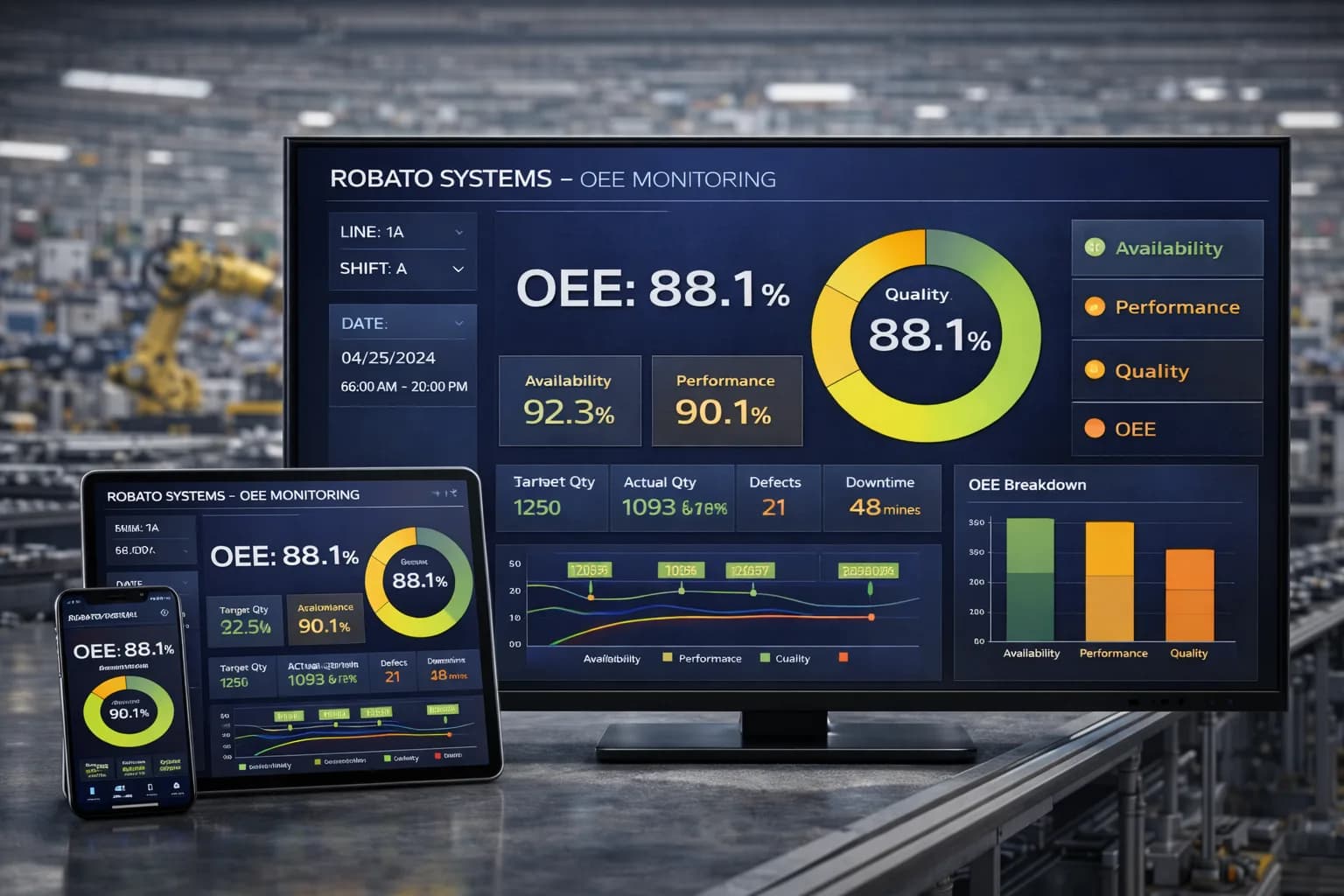
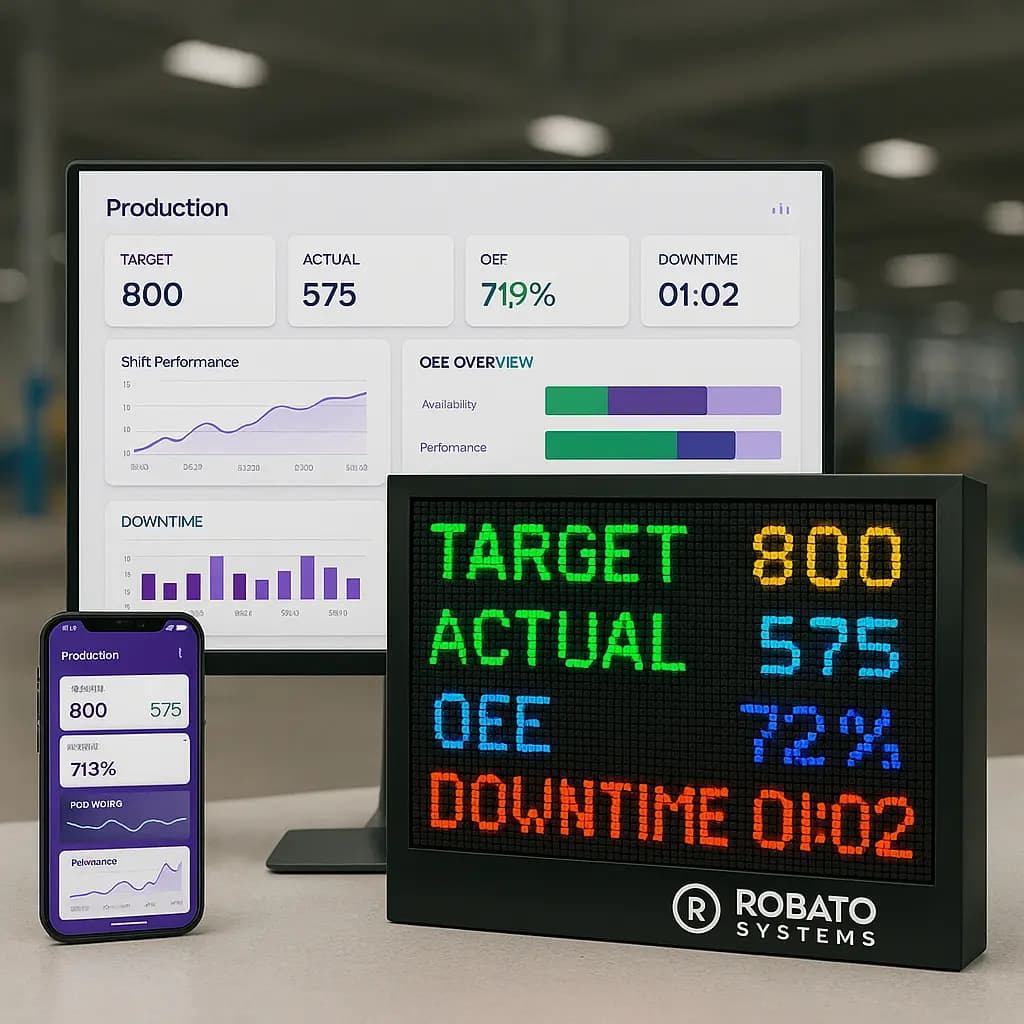
The processed information is displayed on:
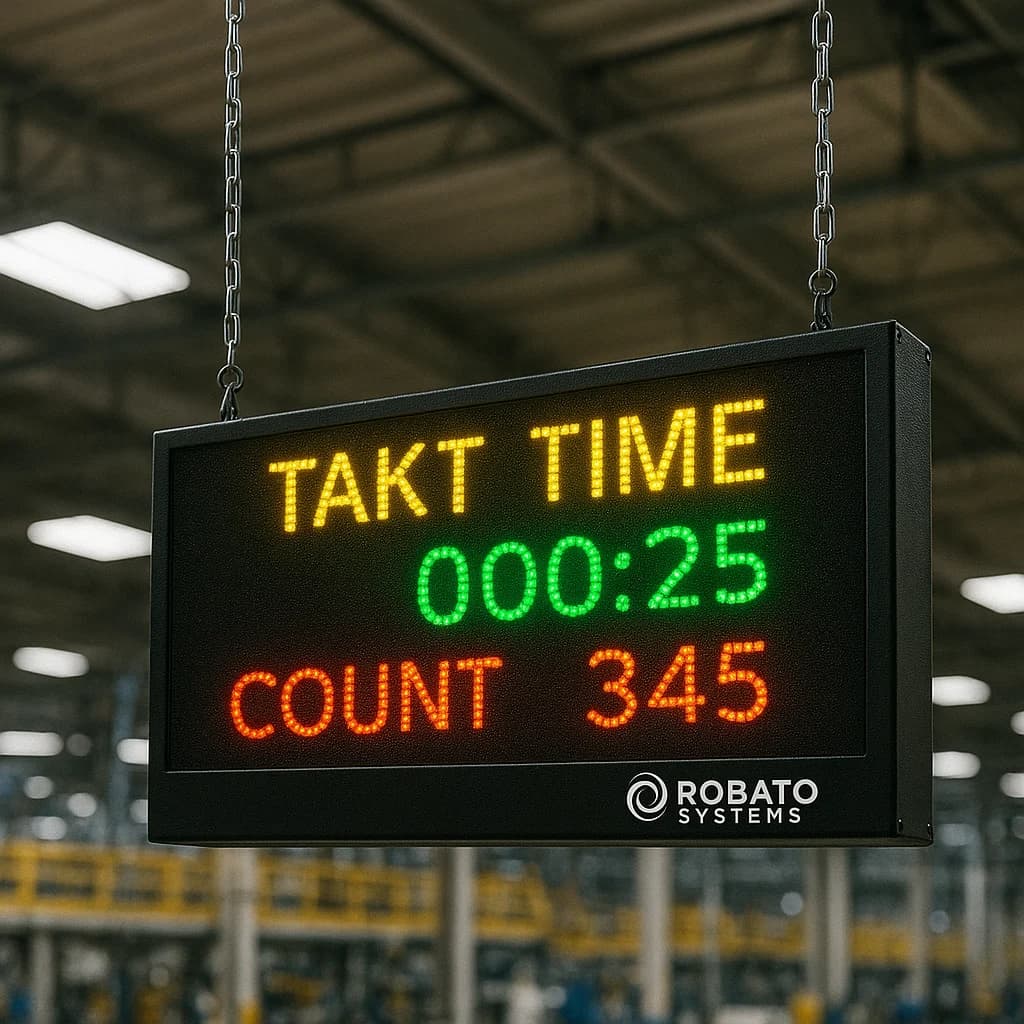
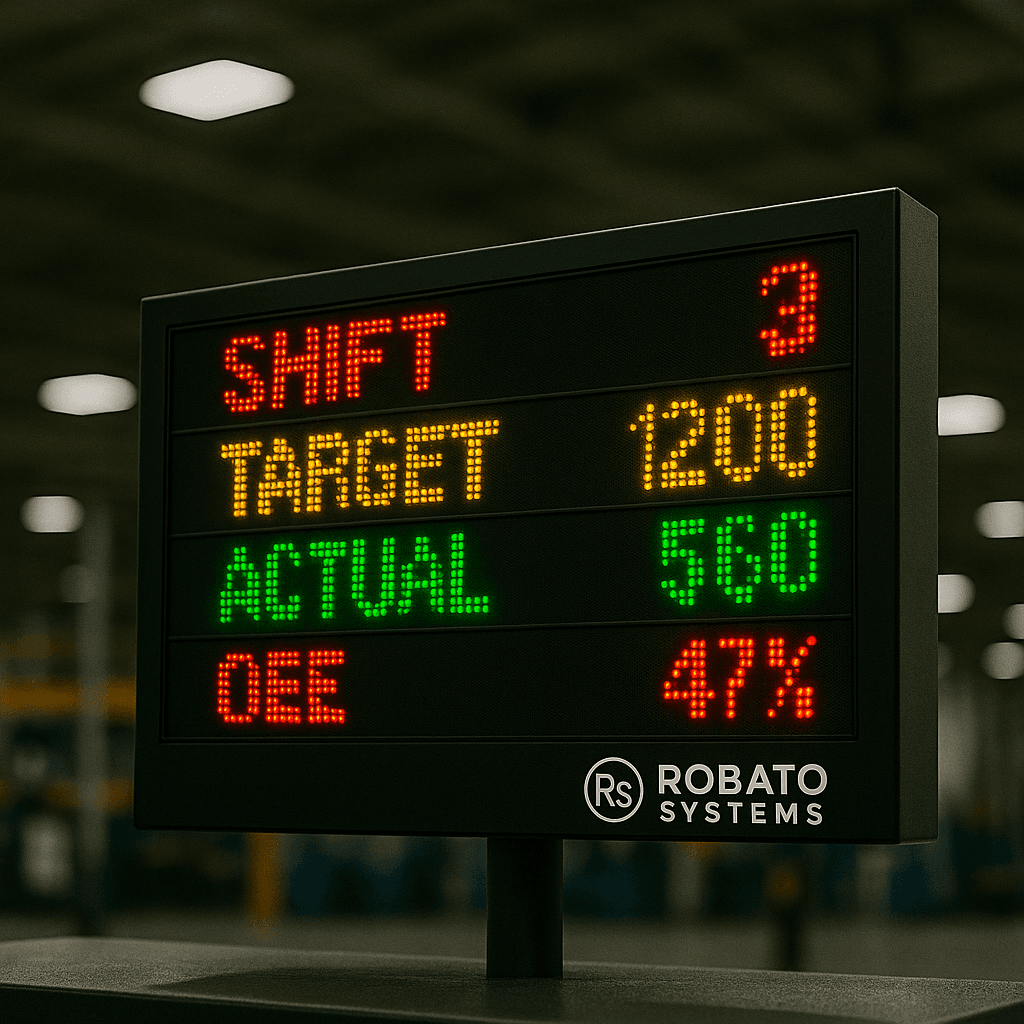
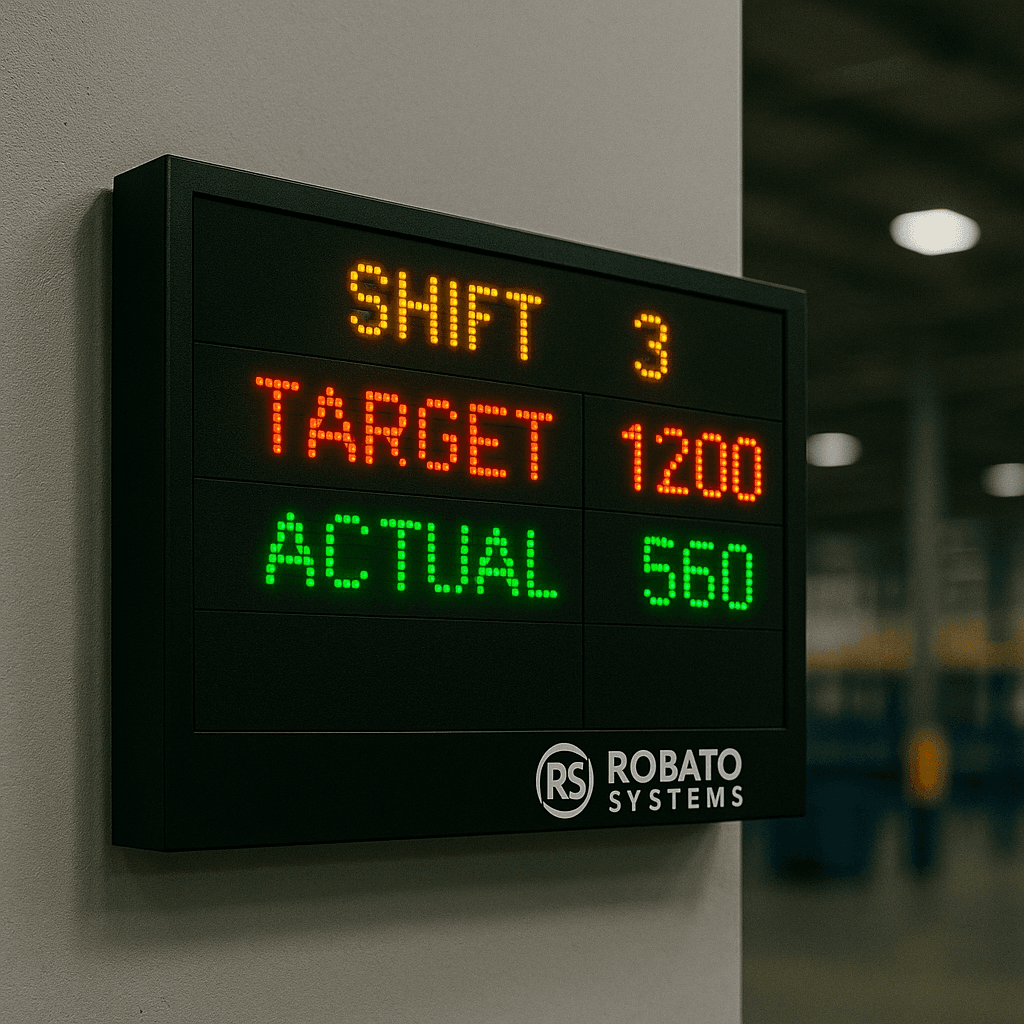
- LED production display boards
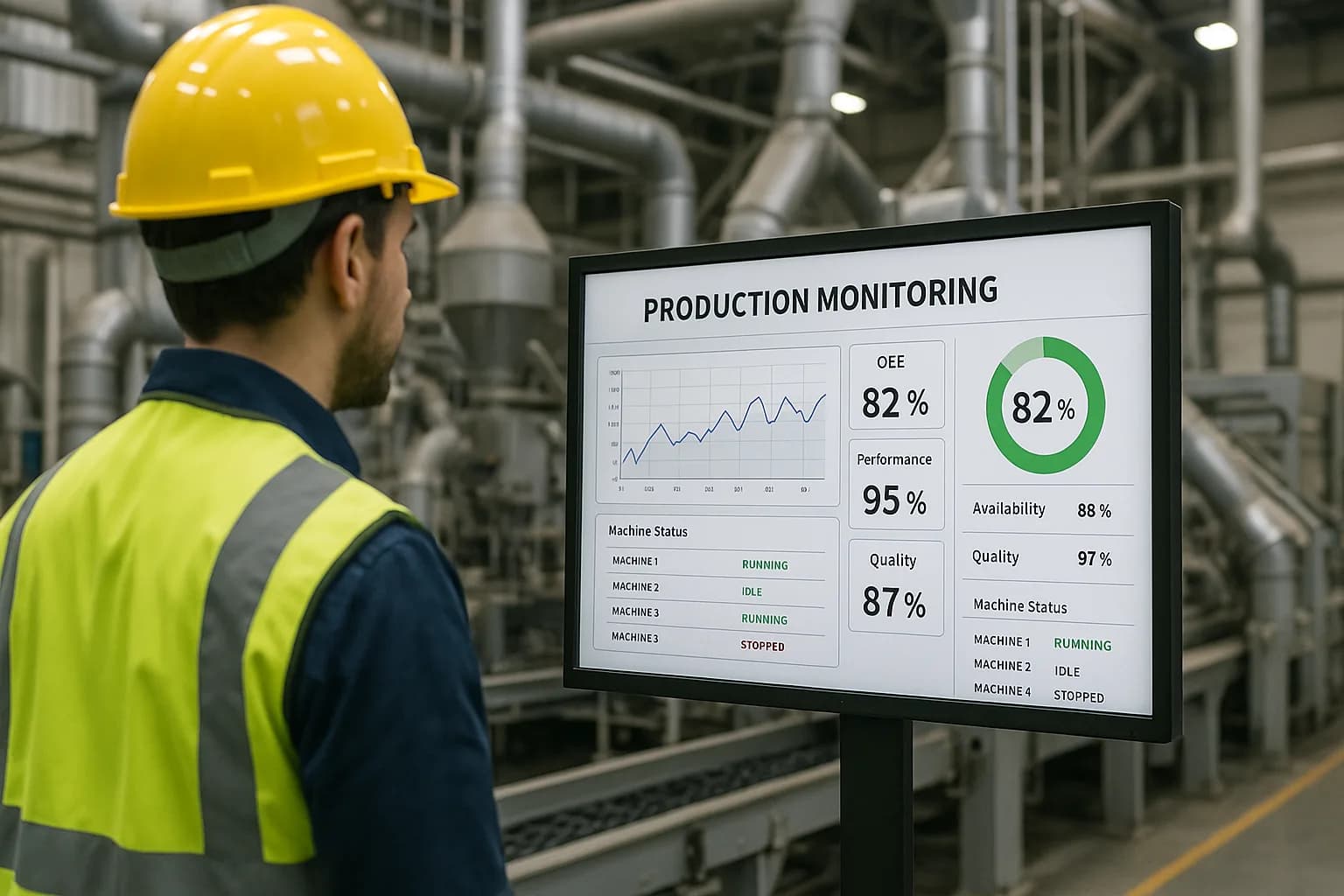
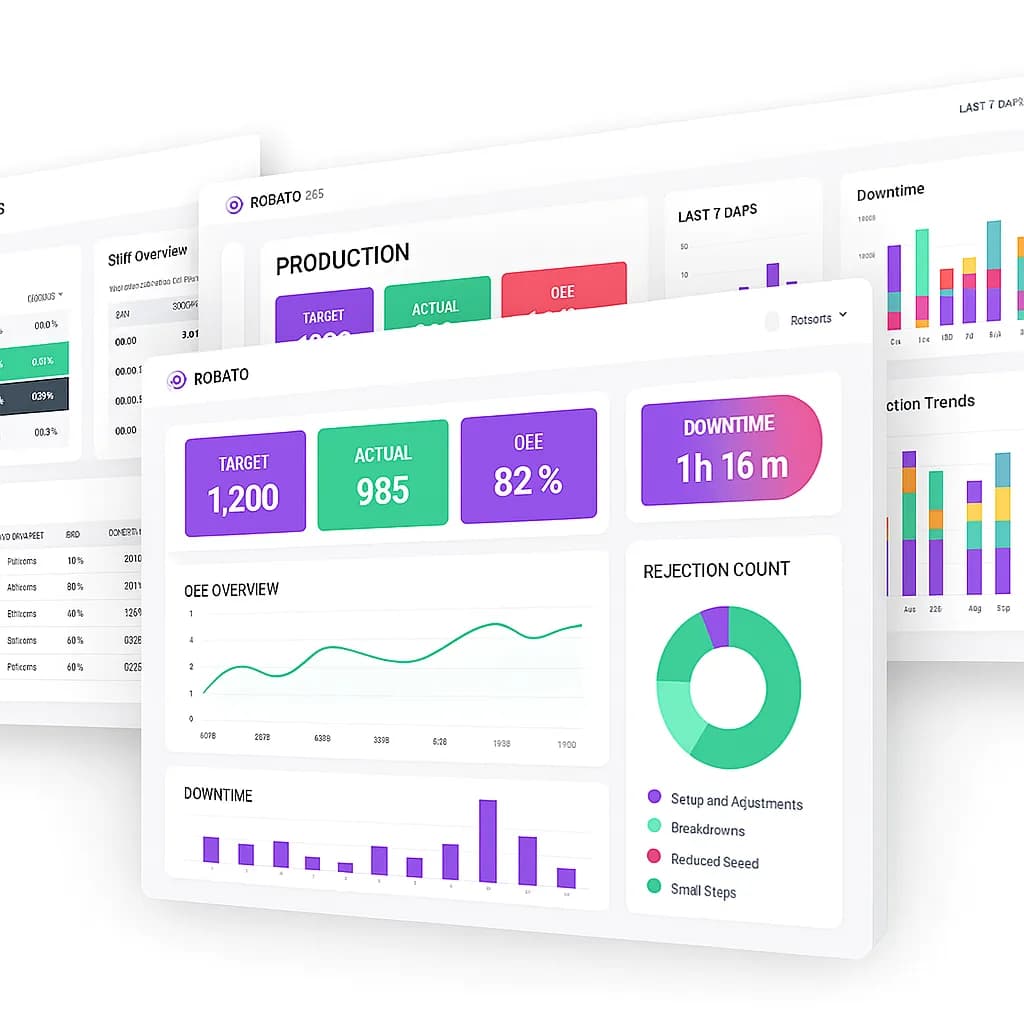
- LCD dashboards
- Operator terminals
- Supervisor dashboards
- Mobile applications
This provides instant visibility across the shop floor.
Step 4: Reporting and Analytics
The system generates automated reports that help management analyze production performance over time.
Reports may include:
- Hourly production
- Shift-wise production
- Daily output
- Weekly trends
- Monthly performance
- Machine utilization
- Downtime analysis
Key Features of a Production Counting System
Automatic Product Counting
Every completed product is counted automatically without manual intervention.
This eliminates counting errors and ensures accurate production records.
Real-Time Production Tracking
Production data updates continuously throughout the manufacturing process.
Managers can instantly see whether production is meeting planned targets.
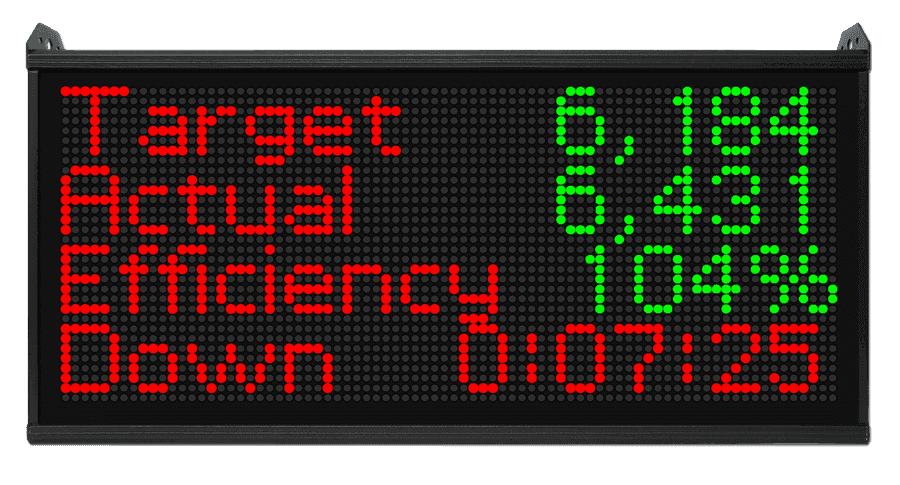
Target vs Actual Comparison
One of the most valuable features is comparing:
- Planned production
- Actual production
- Production variance
This enables quick corrective actions whenever production falls behind schedule.
Shift-Wise Production Monitoring
Track production separately for each manufacturing shift.
Metrics include:
- Shift output
- Operator performance
- Machine utilization
- Downtime
- Rejection count
This improves accountability and performance evaluation.
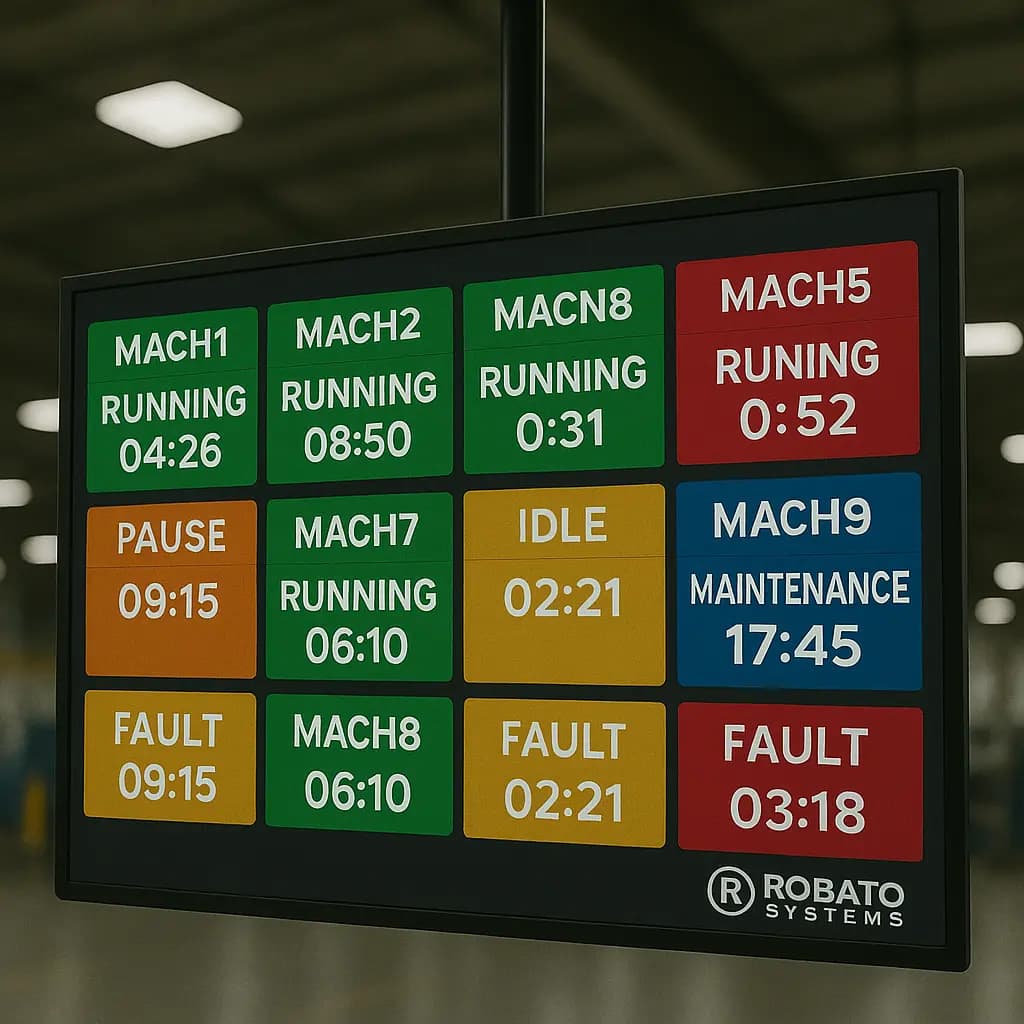
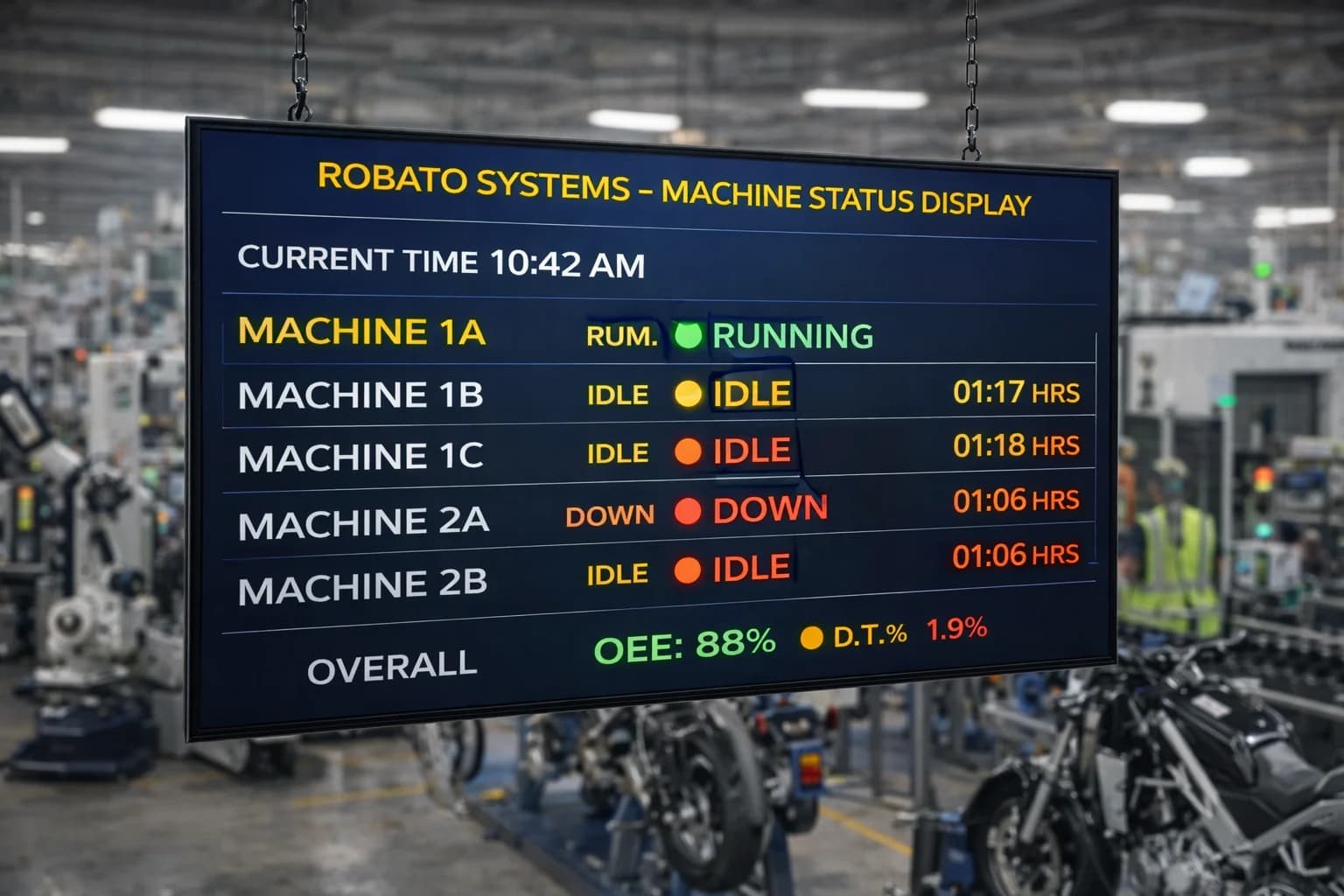
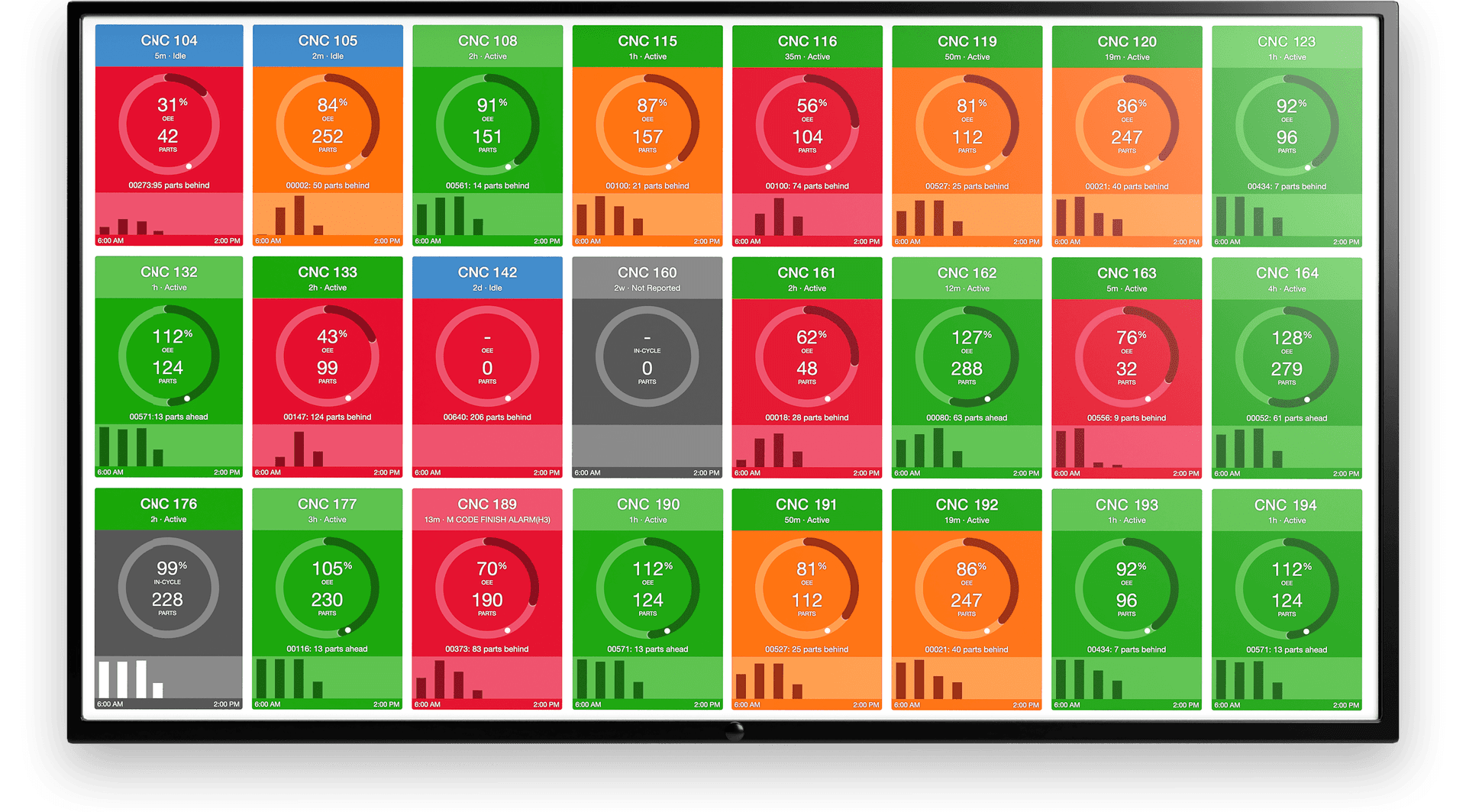
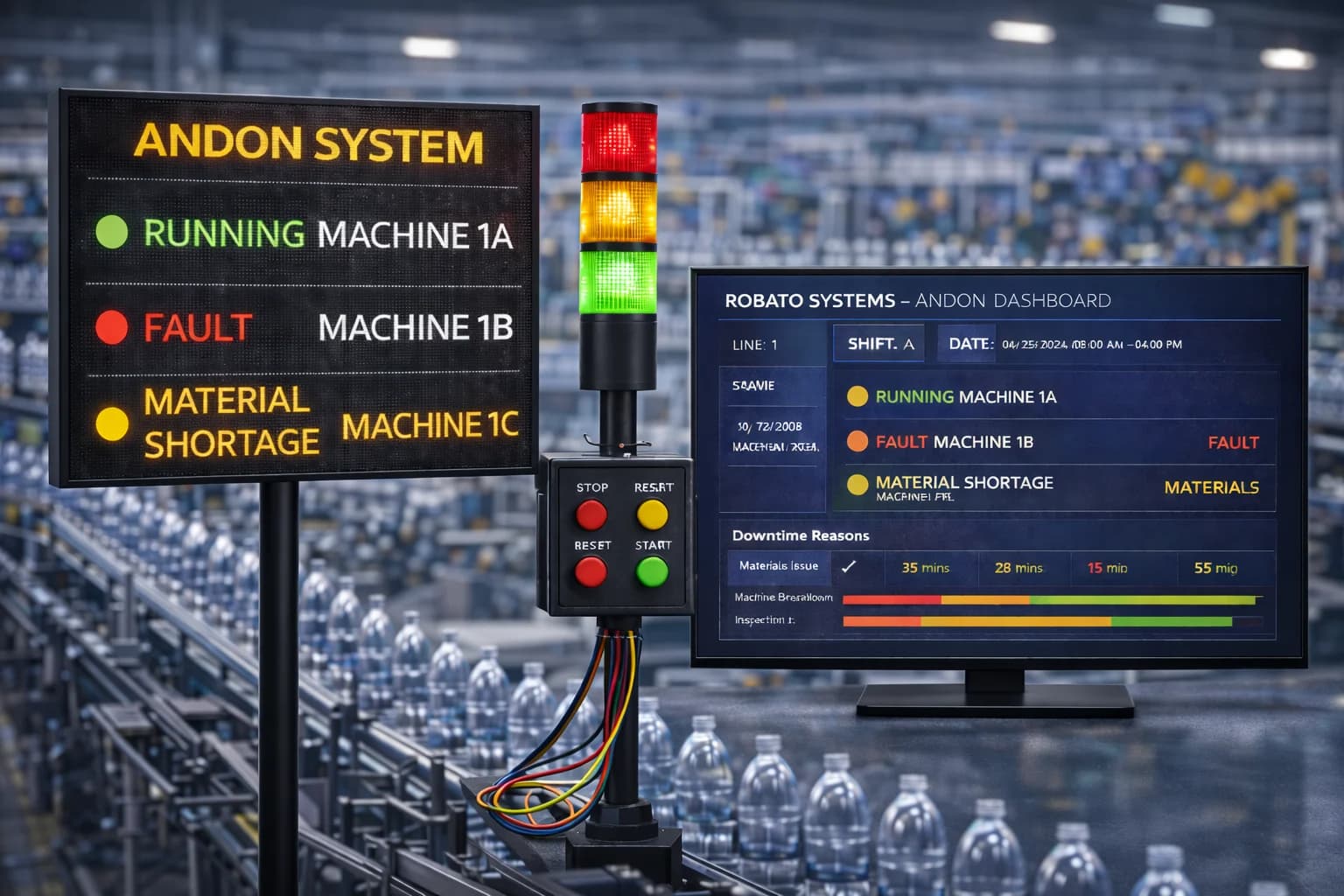
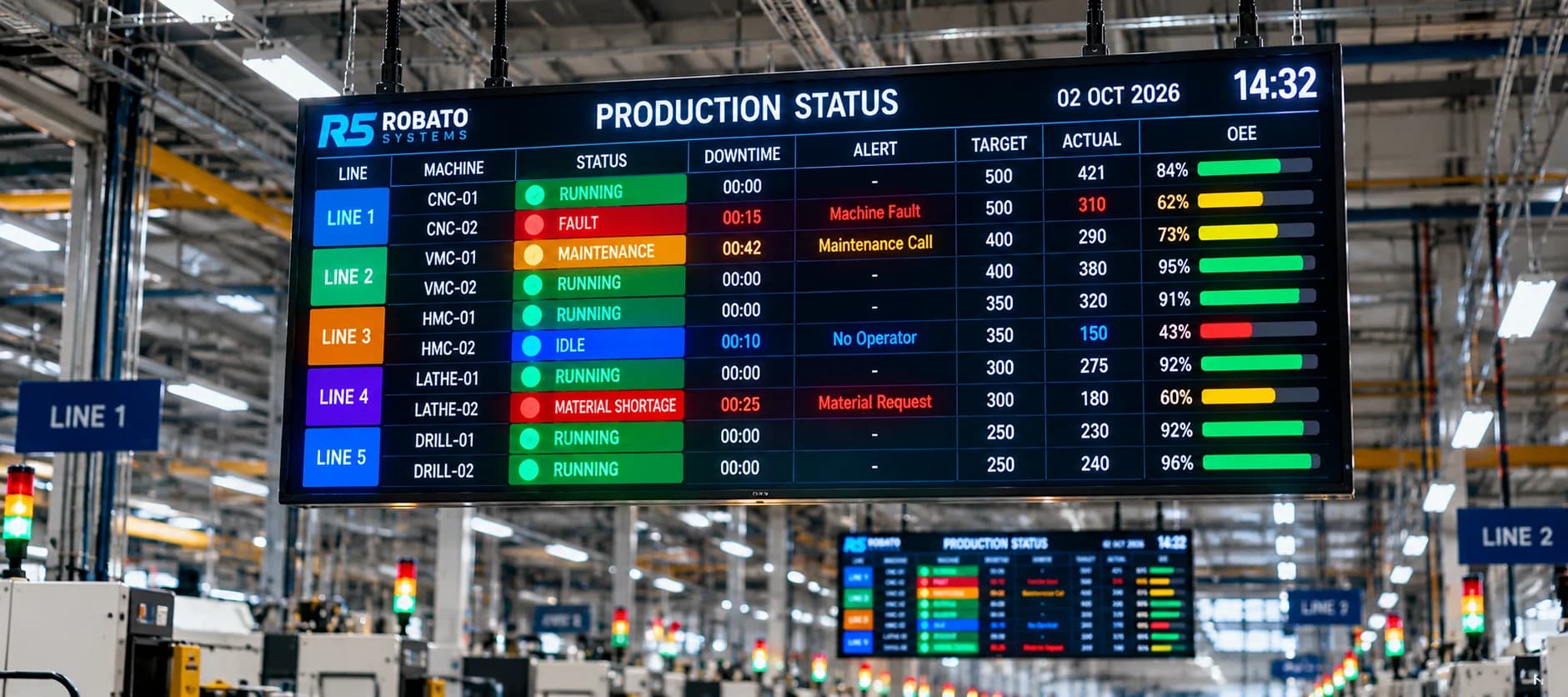
Machine Status Monitoring
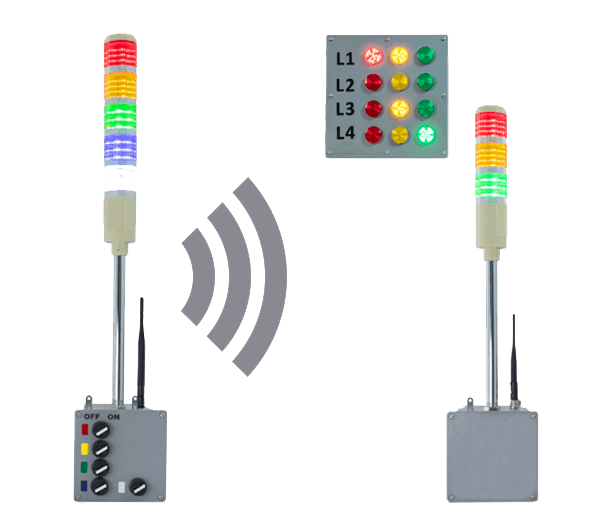
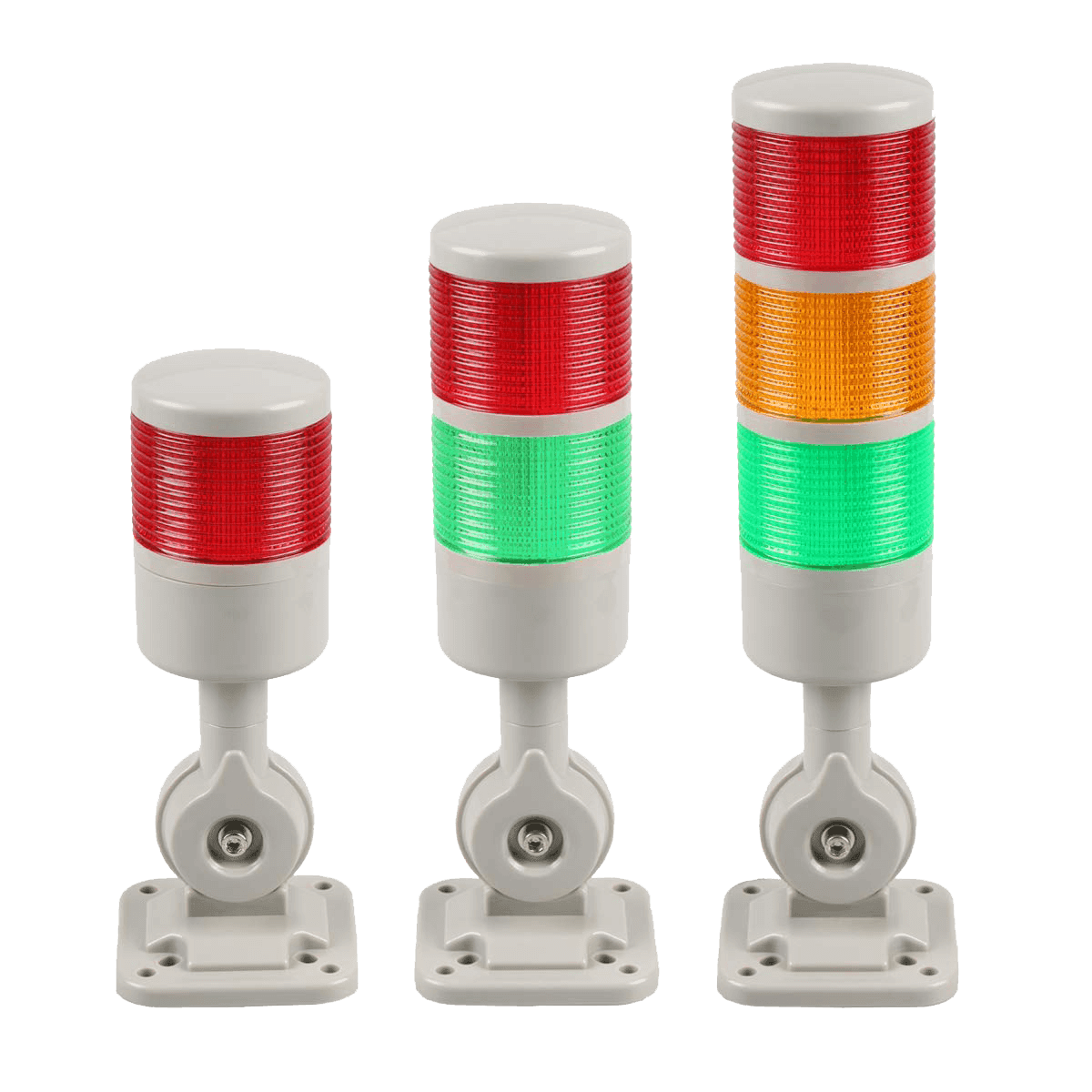
The system can display machine conditions such as:
- Running
- Idle
- Breakdown
- Maintenance
- Setup
Supervisors can immediately identify production interruptions.
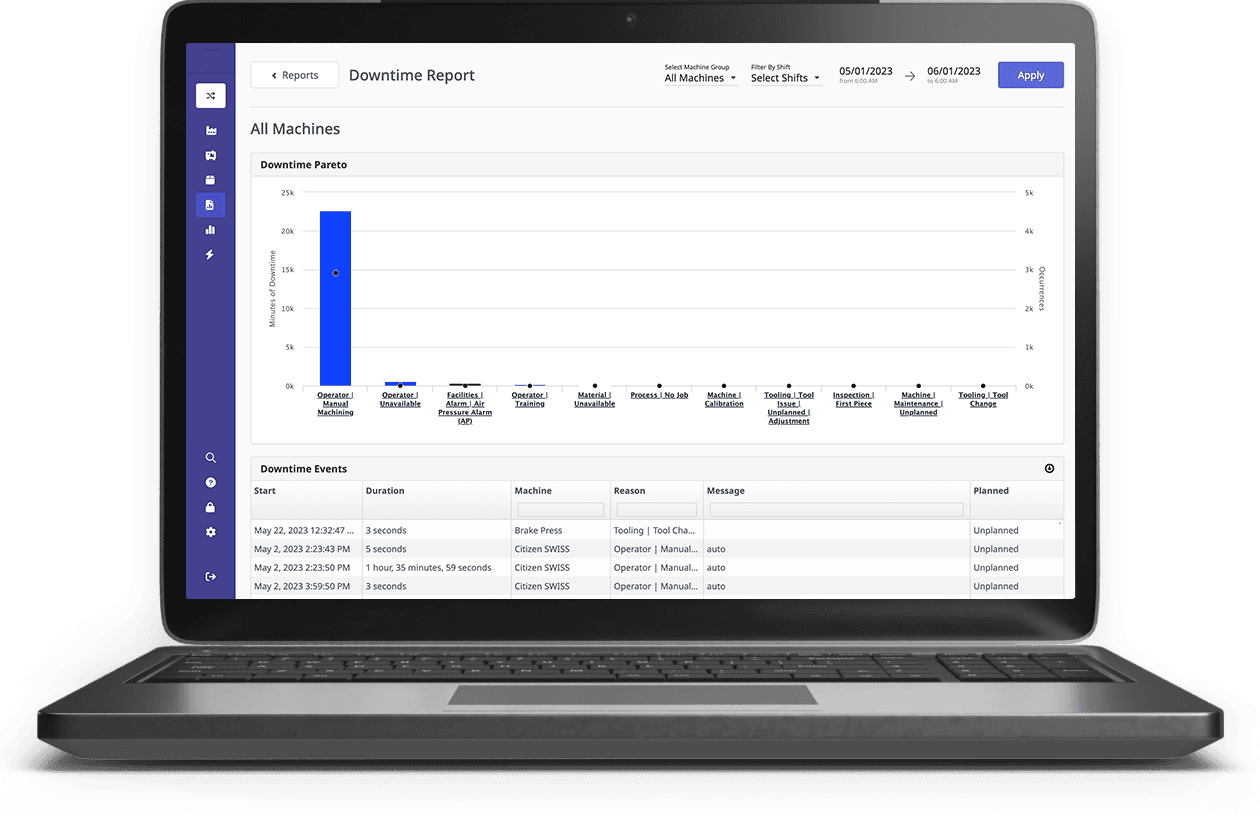
Downtime Tracking
Automatically records:
- Machine stoppages
- Downtime duration
- Downtime reasons
- Maintenance events
This helps manufacturers reduce production losses.
Production Reports
Generate automated reports without manual data entry.
Common reports include:
- Hourly production reports
- Shift reports
- Daily production summaries
- OEE reports
- Downtime reports
Benefits of a Production Counting System
Improved Production Accuracy
Automated counting eliminates manual recording errors and provides reliable production data.
Increased Productivity
Real-time visibility allows operators and supervisors to identify production delays immediately and take corrective action.
Better Decision-Making
Managers receive accurate production information without waiting for manual reports.
Reduced Downtime
Machine issues can be detected quickly, minimizing production interruptions.
Enhanced Production Visibility
Everyone on the shop floor can monitor production progress through digital displays and dashboards.
Improved Resource Utilization
Production data helps optimize machine usage, labor allocation, and production planning.
Higher Product Quality
Monitoring production performance enables early identification of process deviations that may affect quality.
Lower Operational Costs
Automation reduces administrative work, production losses, and unnecessary downtime.
Applications of Production Counting Systems
Production counting systems are widely used in various manufacturing industries.
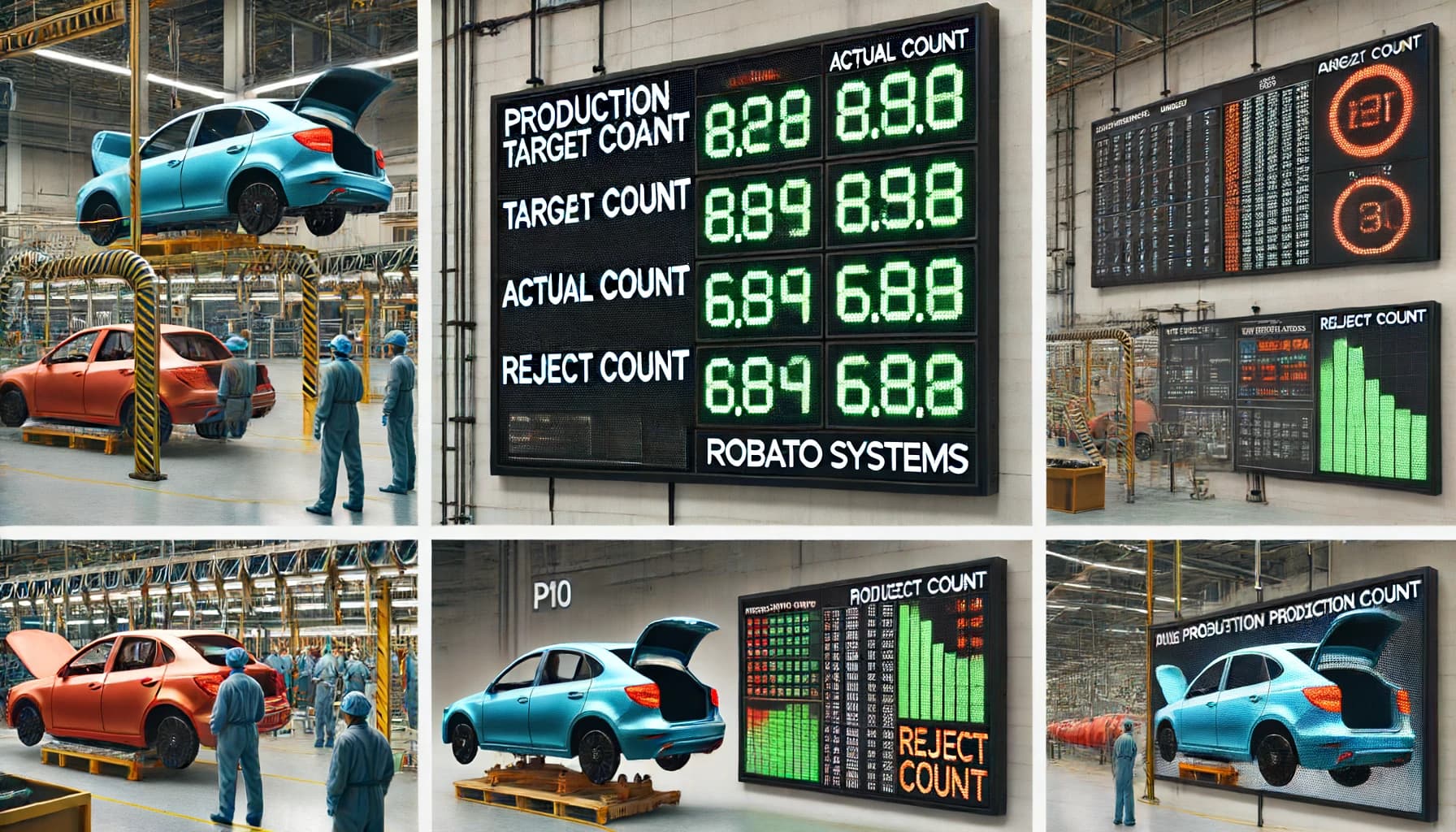
Automotive Manufacturing
Track assembly line output and component production.
Food & Beverage Industry
Monitor packaging lines and bottling operations.
Pharmaceutical Manufacturing
Count batches and monitor packaging processes.
Textile Industry
Track fabric production and machine output.
Electronics Manufacturing
Monitor PCB assembly and electronic component production.
Plastic & Injection Molding
Count molded parts and monitor machine cycles.
Packaging Industry
Track carton production, labeling, and packing operations.
Integration with Industry 4.0
A modern production counting system integrates seamlessly with Industry 4.0 technologies.
Common integrations include:
Industrial IoT (IIoT)
Connect machines and sensors for real-time data collection.
Manufacturing Execution Systems (MES)
Synchronize production data with manufacturing workflows.
Enterprise Resource Planning (ERP)
Share production information with inventory, planning, and sales systems.
SCADA Systems
Provide centralized monitoring and control of production equipment.
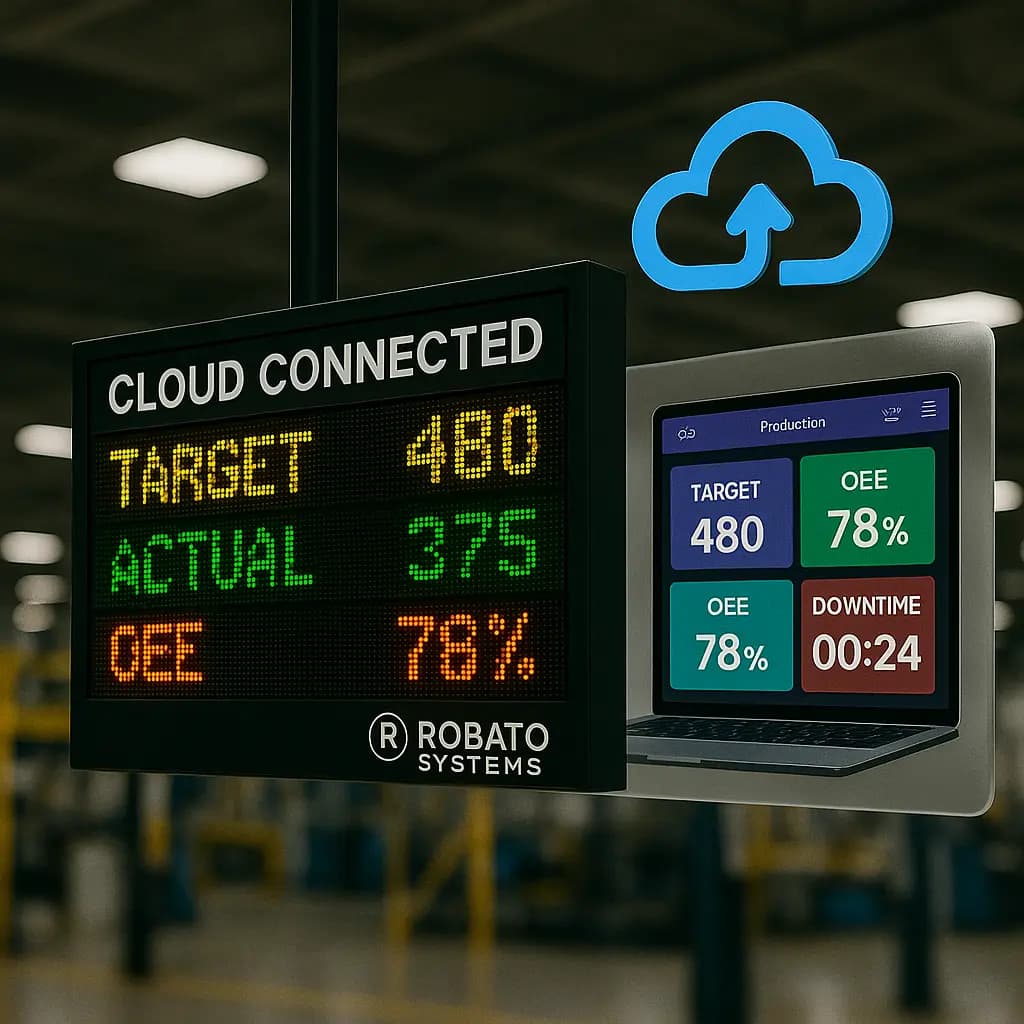
Cloud Platforms
Enable remote monitoring and multi-plant visibility.
These integrations create a connected manufacturing ecosystem that supports digital transformation.
Best Practices for Implementing a Production Counting System
Automate Data Collection
Avoid manual counting by connecting directly to machines and sensors.
Monitor Key Performance Indicators
Track metrics such as:
- Production output
- Machine utilization
- OEE
- Downtime
- Cycle time
- Rejection rate
Display Real-Time Data
Install production display boards where operators and supervisors can easily monitor performance.
Integrate with Existing Systems
Connect the production counting system with ERP, MES, SCADA, and production monitoring software for seamless information flow.
Train Employees
Ensure operators understand how to interpret production data and respond to alerts effectively.
Common Challenges and Solutions
Legacy Equipment Integration
Older machines may not support modern communication protocols.
Solution: Use Industrial IoT gateways or retrofit sensors to enable connectivity.
Data Accuracy
Incorrect sensor placement can lead to inaccurate counts.
Solution: Regularly calibrate sensors and validate production data.
Employee Resistance
Some workers may be hesitant to adopt automated systems.
Solution: Provide training and demonstrate the operational benefits of automation.
Cybersecurity
Connected production systems require secure communication.
Solution: Implement network security, user authentication, and regular software updates.
Future Trends in Production Counting Systems
Production counting systems are evolving rapidly with Industry 4.0 technologies.
Artificial Intelligence (AI)
AI will analyze production trends and recommend process improvements.
Predictive Analytics
Advanced analytics will forecast production delays before they occur.
Edge Computing
Production data will be processed closer to machines for faster decision-making.
Digital Twins
Virtual production models will simulate manufacturing performance using live production data.
Mobile Monitoring
Managers will access production data from smartphones and tablets in real time.
These innovations will make production counting systems even more intelligent and efficient.
Why Choose Robato Systems for Production Counting Solutions?
Robato Systems offers advanced Production Counting Systems designed to provide accurate, real-time production visibility for manufacturing facilities. Our solutions integrate seamlessly with PLCs, Industrial IoT devices, ERP systems, and production monitoring platforms.
With customizable dashboards, LED production display boards, automated reporting, and Industry 4.0-ready connectivity, Robato Systems helps manufacturers improve productivity, reduce downtime, and achieve greater operational efficiency.
Whether you manage a single production line or multiple manufacturing plants, our production counting solutions are built to support your digital transformation journey.
Conclusion
A Production Counting System is an essential component of modern manufacturing. By automating production tracking and providing real-time visibility into manufacturing operations, these systems help organizations improve productivity, reduce errors, minimize downtime, and make informed decisions.
As factories continue embracing Industry 4.0 and smart manufacturing, production counting systems will play an increasingly important role in achieving operational excellence and maintaining a competitive advantage.
Investing in an automated production counting system today lays the foundation for a more connected, efficient, and data-driven manufacturing future.
Frequently Asked Questions (FAQs)
What is a production counting system?
A production counting system is an automated solution that tracks the number of products manufactured in real time using sensors, PLCs, or Industrial IoT devices.
Why is a production counting system important?
It improves production accuracy, provides real-time visibility, reduces manual effort, and supports better production planning.
Can a production counting system integrate with ERP and MES software?
Yes. Most modern production counting systems integrate with ERP, MES, SCADA, and Industrial IoT platforms for centralized production management.
Which industries use production counting systems?
Automotive, food processing, pharmaceuticals, textiles, electronics, plastics, packaging, and many other manufacturing industries.
What are the benefits of automating production counting?
Automation improves data accuracy, increases productivity, reduces downtime, enhances reporting, and enables data-driven decision-making.