Production Monitoring System Driving Real Time Factory Performance
In today’s fast paced manufacturing environment, staying in control of production is critical. This is where a production monitoring system becomes an essential tool for modern factories. It provides real time visibility into machine performance, production output, and operational efficiency, helping teams make faster and smarter decisions.
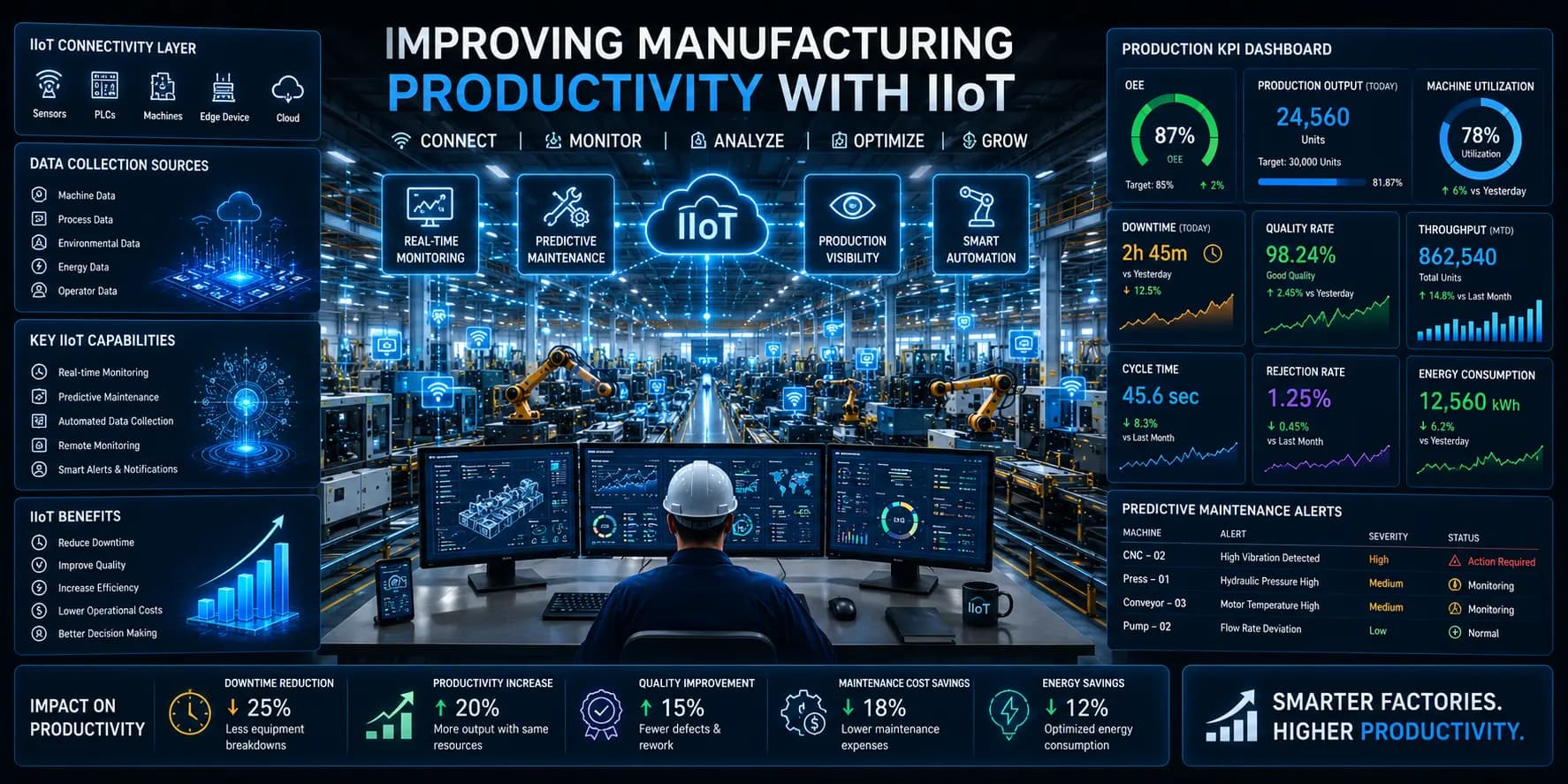
Instead of relying on manual tracking or delayed reports, manufacturers are adopting intelligent IIoT based systems that automatically collect and analyze data. This shift allows businesses to reduce downtime, improve productivity, and maintain consistent quality across operations.
Why Real Time Monitoring Is No Longer Optional
Manufacturing today demands speed, accuracy, and adaptability. A production monitoring system ensures that every aspect of the production process is tracked continuously.
Without such a system, factories often struggle with delayed information, hidden inefficiencies, and inaccurate data. Real-time monitoring eliminates these challenges by offering instant insights into production activities and machine performance.
It allows both operators and managers to stay aligned, ensuring that production goals are met without unnecessary delays.
How a Production Monitoring System Works
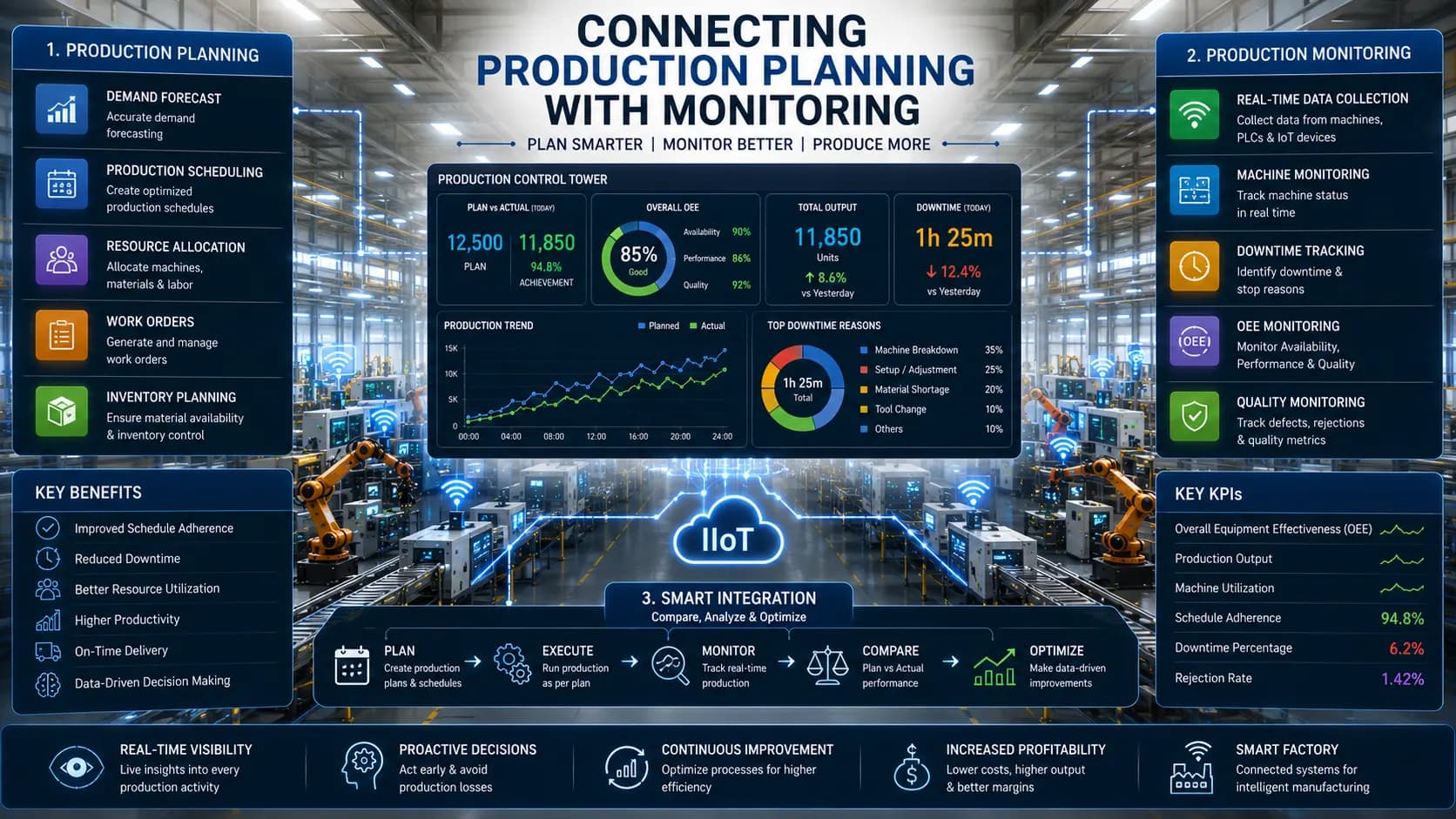
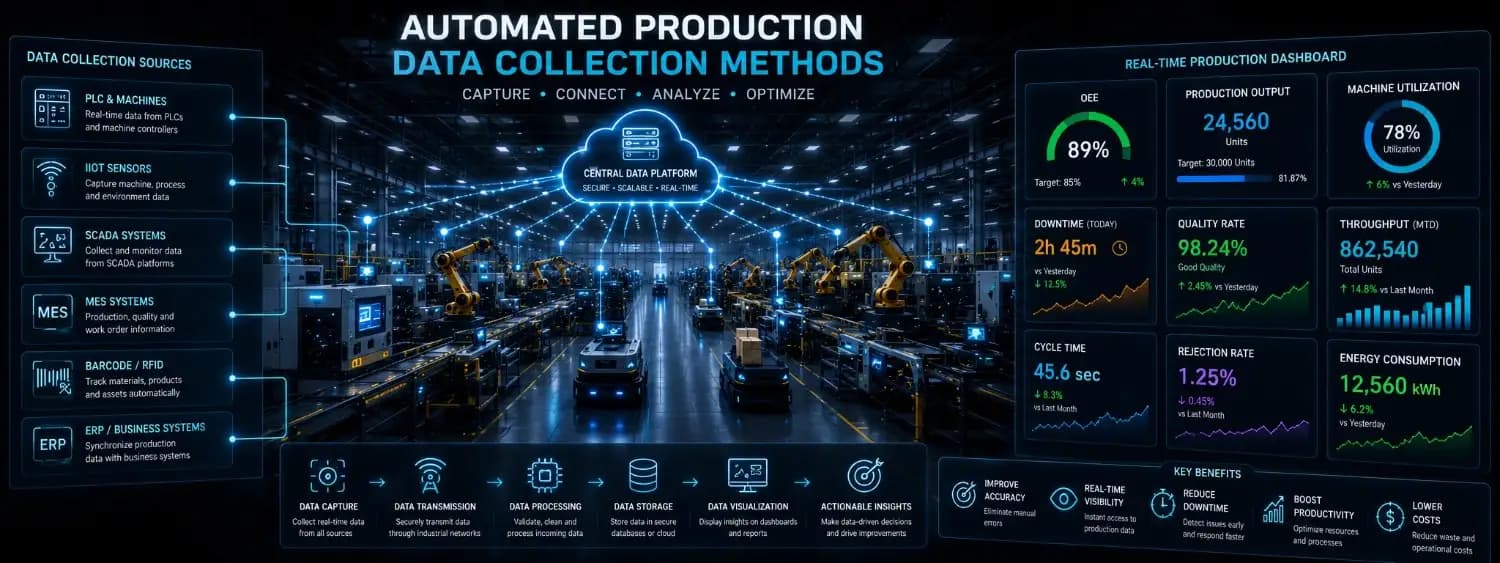
The effectiveness of a production monitoring system lies in its ability to connect machines, sensors, and software into one unified platform.
Data Collection from Machines
The system gathers data from PLCs, sensors, production counters, and other connected devices. This ensures that every activity on the shop floor is captured automatically.
Real Time Dashboards
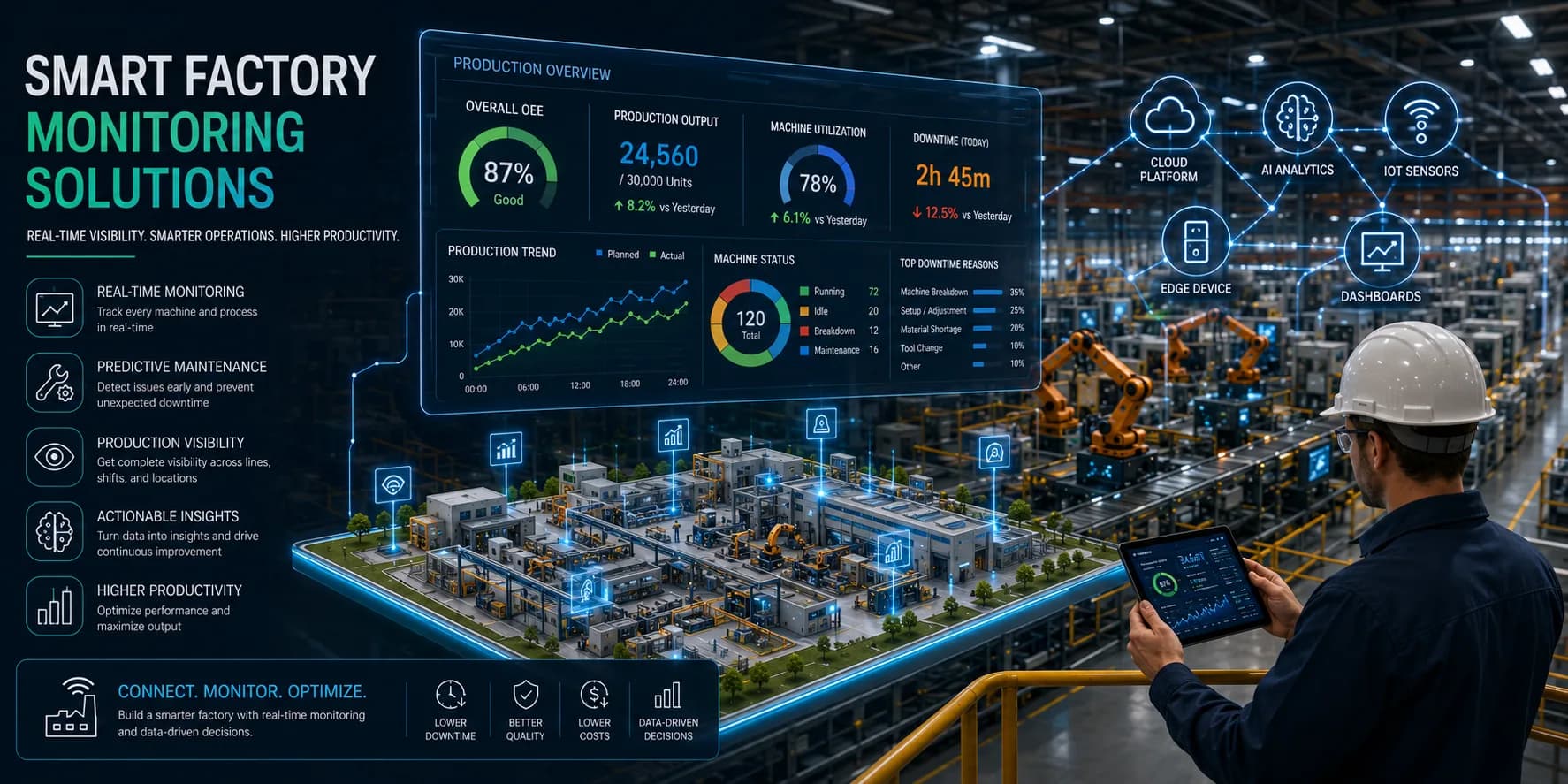
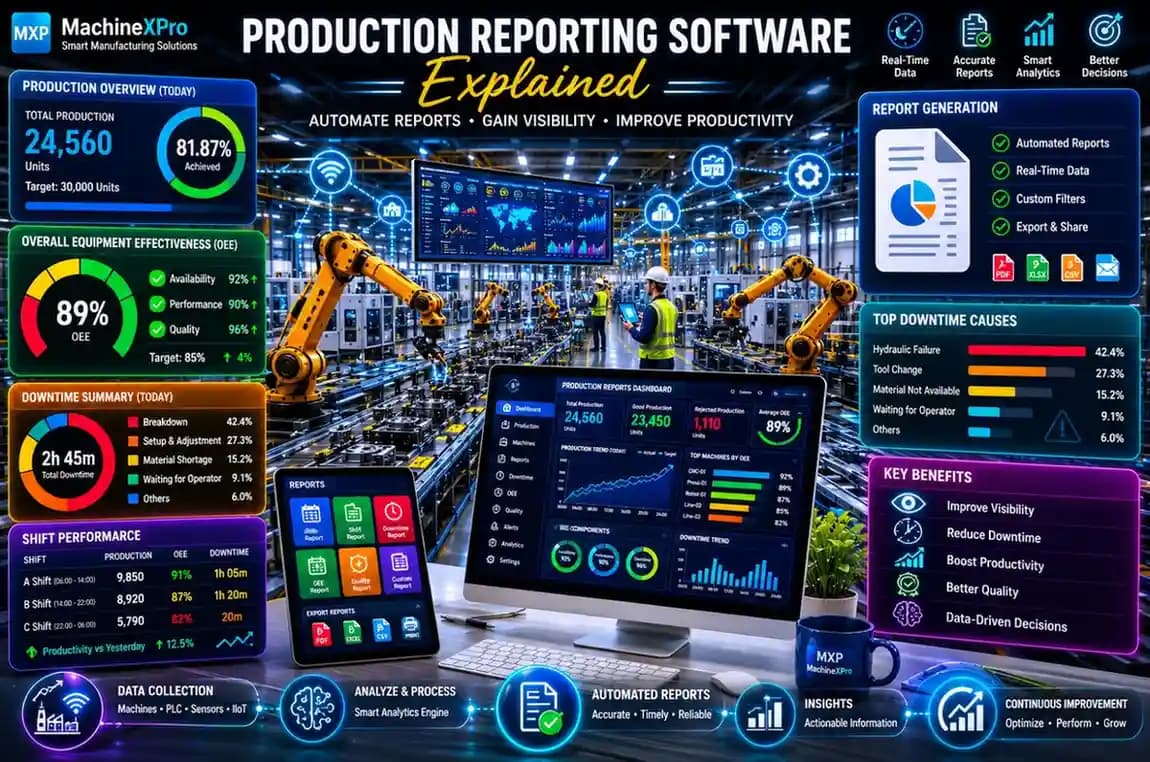
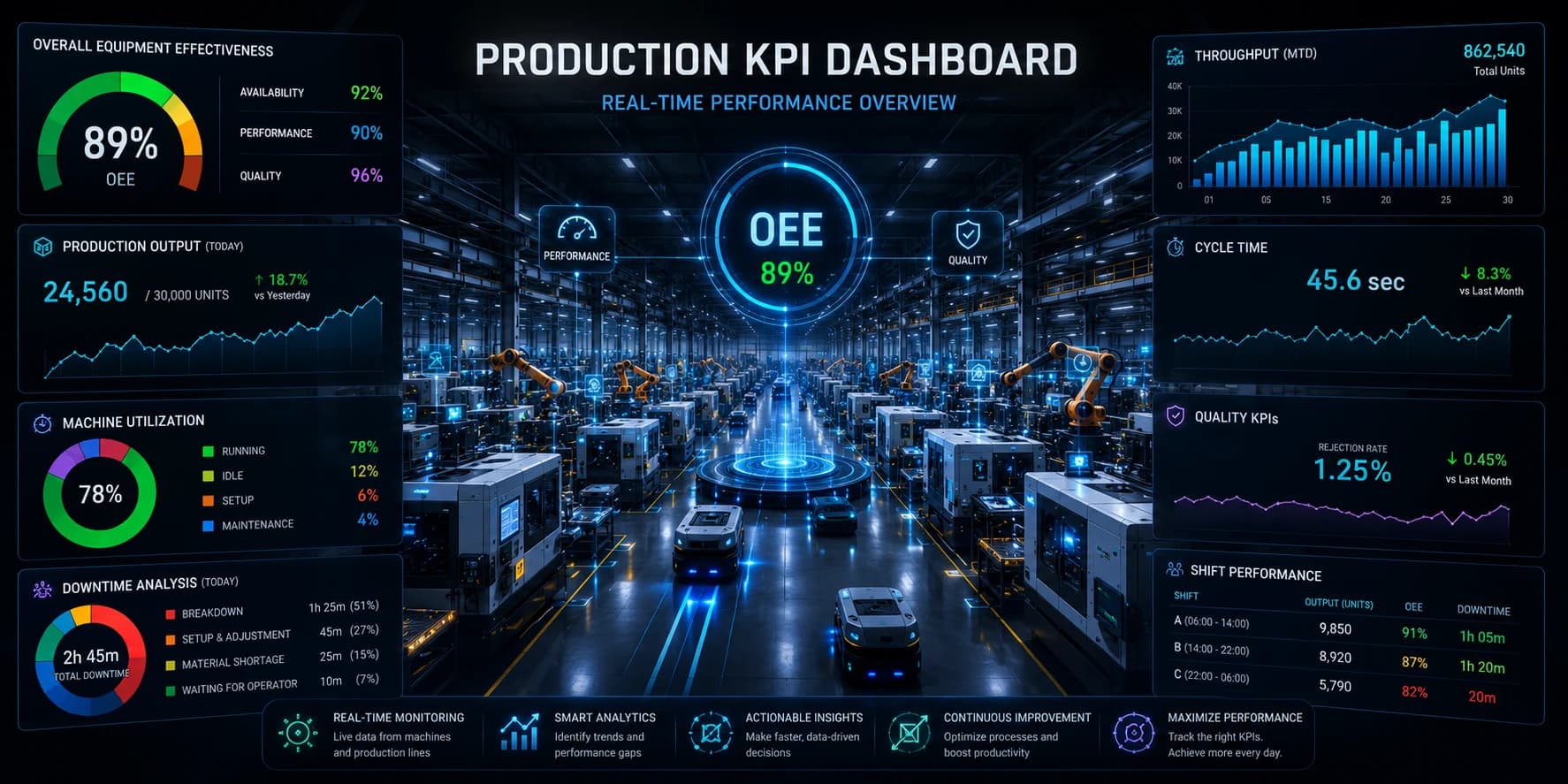
All collected data is displayed on live dashboards that can be accessed through mobile devices, laptops, or large display screens. This enables instant visibility across machines, lines, and even multiple plants.
Automated Analysis
The system processes the data to identify trends, inefficiencies, and performance gaps. This helps teams understand where improvements are needed.
Alerts and Notifications
Whenever a machine stops or performance drops, the system sends instant alerts. This ensures quick response and minimizes downtime.
Features That Make It a Must Have Tool
Real Time Production Tracking
A production monitoring system provides live updates on production status, helping teams track output against targets at any moment.
Machine Utilization Insights
It tracks how efficiently machines are being used across shifts, days, and weeks. This helps identify underutilized equipment and hidden capacity.
Downtime Monitoring
The system automatically detects machine stoppages and records downtime reasons, making it easier to address recurring issues.
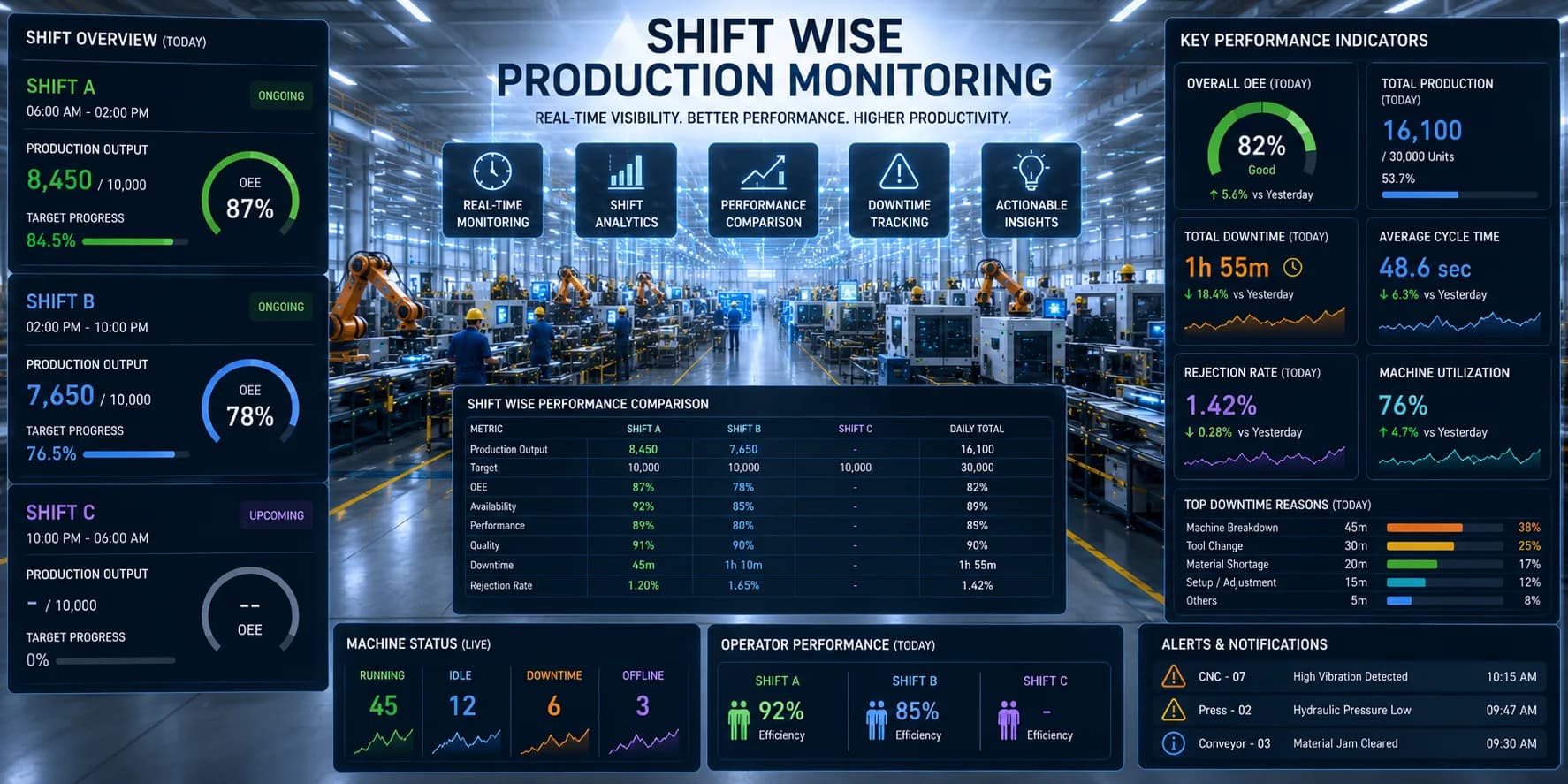
Shift and Operator Performance
Performance can be analyzed at the shift and operator level, improving accountability and productivity.
Centralized Multi Plant Monitoring
For businesses with multiple facilities, the system offers a centralized dashboard to monitor operations across locations.
Benefits That Go Beyond Monitoring
Faster Decision Making
With real-time insights, teams can act immediately instead of waiting for end-of-shift reports.
Increased Productivity
By identifying inefficiencies and eliminating bottlenecks, factories can boost output without additional investment.
Reduced Downtime
Instant alerts and clear visibility help minimize machine idle time and improve response speed.
Improved Quality Control
Continuous monitoring ensures that defects and quality issues are detected early, reducing waste.
Data Driven Operations
Decisions are based on accurate data rather than assumptions, leading to more reliable outcomes.
Industries Rapidly Adopting Production Monitoring Systems
Production monitoring systems are widely used across industries such as automotive, electronics, pharmaceuticals, textiles, and FMCG. These sectors require high efficiency, real time decision making, and consistent output.
With Industry 4.0 gaining momentum, more manufacturers are investing in smart monitoring systems to stay competitive and future ready.
Final Thoughts From Visibility to Control
A production monitoring system is no longer just an optional upgrade. It is a necessity for modern manufacturing. By turning real time data into actionable insights, it helps businesses gain better control over their operations.
From reducing downtime to improving productivity and quality, the impact of such systems is significant. For manufacturers aiming to optimize performance and stay ahead in a competitive market, adopting a production monitoring system is a smart and strategic move.