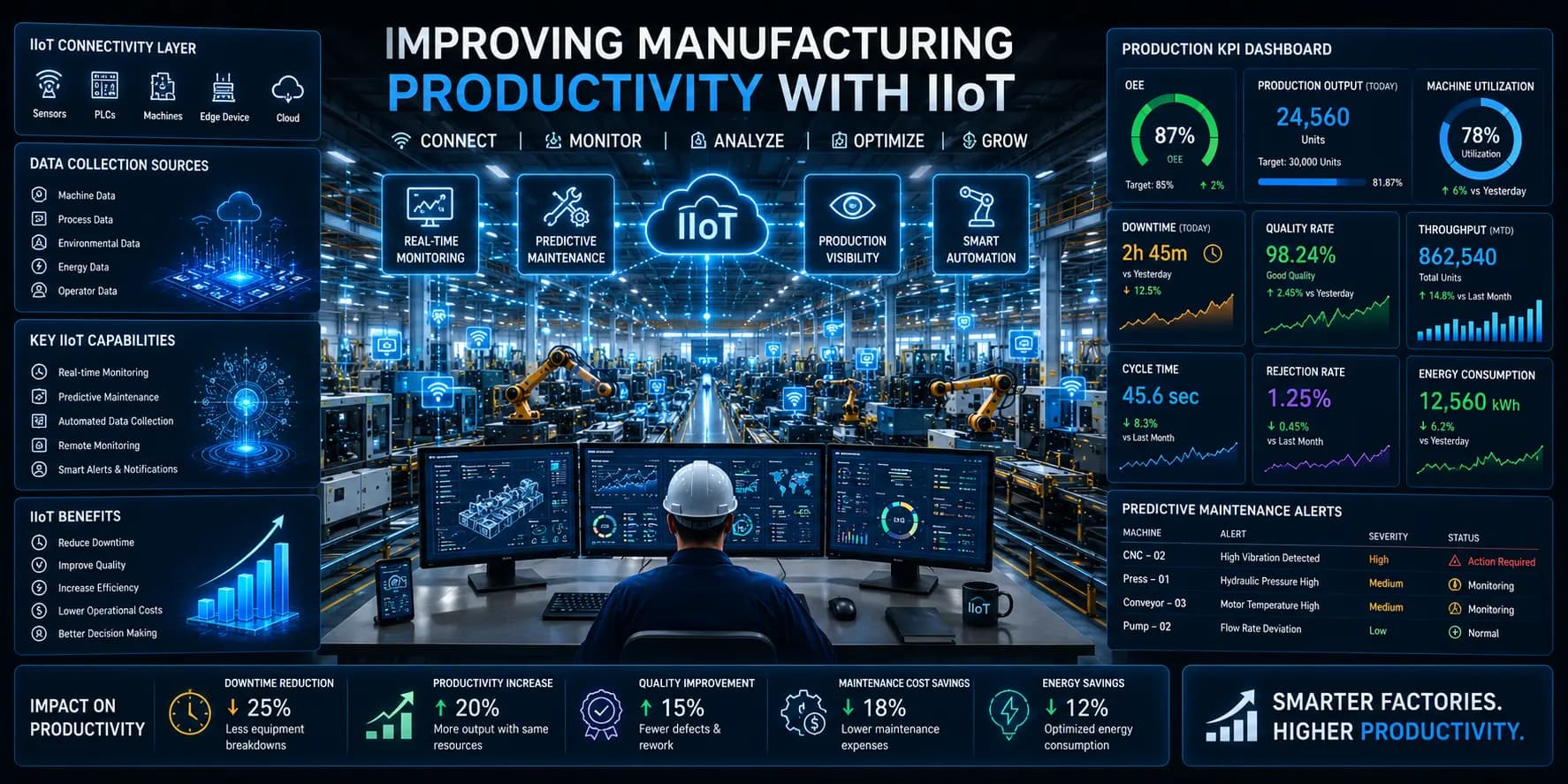
Improving Manufacturing Productivity with IIoT
In today's highly competitive manufacturing industry, improving Manufacturing Productivity is one of the top priorities for factory owners and operations managers. Rising production costs, increasing customer expectations, and the need for higher operational efficiency have encouraged manufacturers to adopt advanced digital technologies. Among these technologies, the Industrial Internet of Things (IIoT) has emerged as a game-changer.
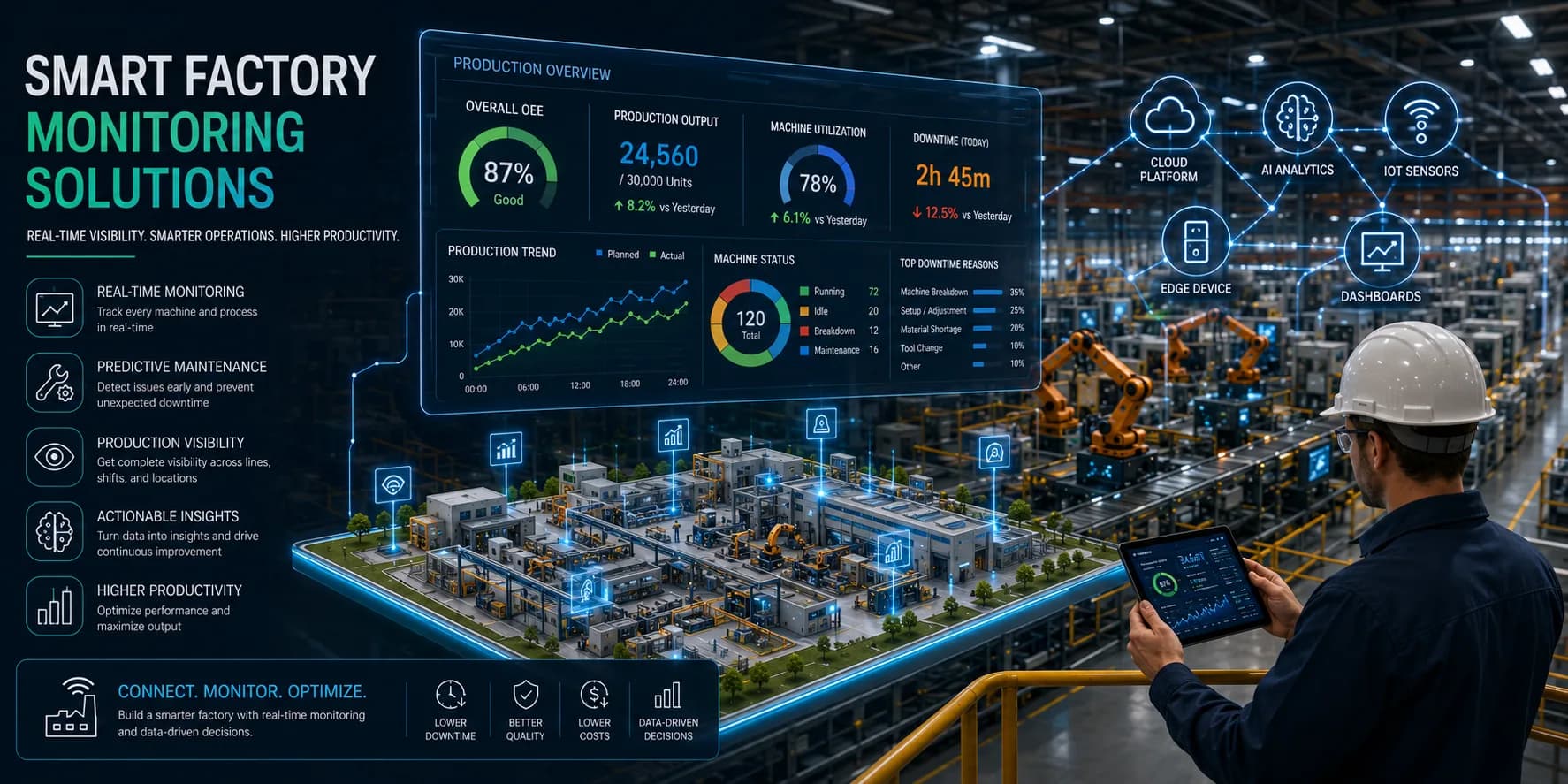
IIoT connects machines, sensors, PLCs, and production systems into a unified digital ecosystem that continuously collects and analyzes production data. With real-time visibility into manufacturing operations, organizations can identify inefficiencies, reduce downtime, optimize resources, and significantly improve productivity.
This guide explores how IIoT transforms manufacturing productivity and why it is becoming an essential part of every smart factory.
What is Manufacturing Productivity?
Manufacturing Productivity measures how efficiently a factory converts raw materials, labor, machines, and other resources into finished products. Higher productivity means producing more output while using the same or fewer resources.
Manufacturing productivity is influenced by several factors, including:
- Machine availability
- Equipment utilization
- Production efficiency
- Workforce performance
- Product quality
- Downtime
- Production planning
- Maintenance effectiveness
Improving these areas helps manufacturers reduce costs and increase profitability.
What is IIoT?
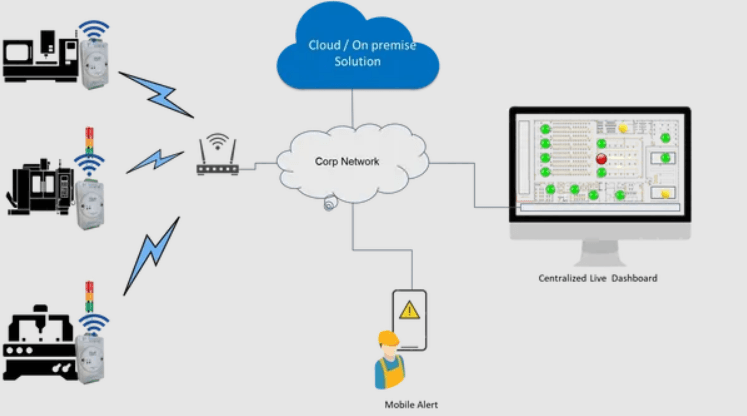
The Industrial Internet of Things (IIoT) is the application of connected devices, sensors, industrial controllers, and software within manufacturing environments. IIoT enables machines to communicate with each other and share operational data in real time.
An IIoT ecosystem typically includes:
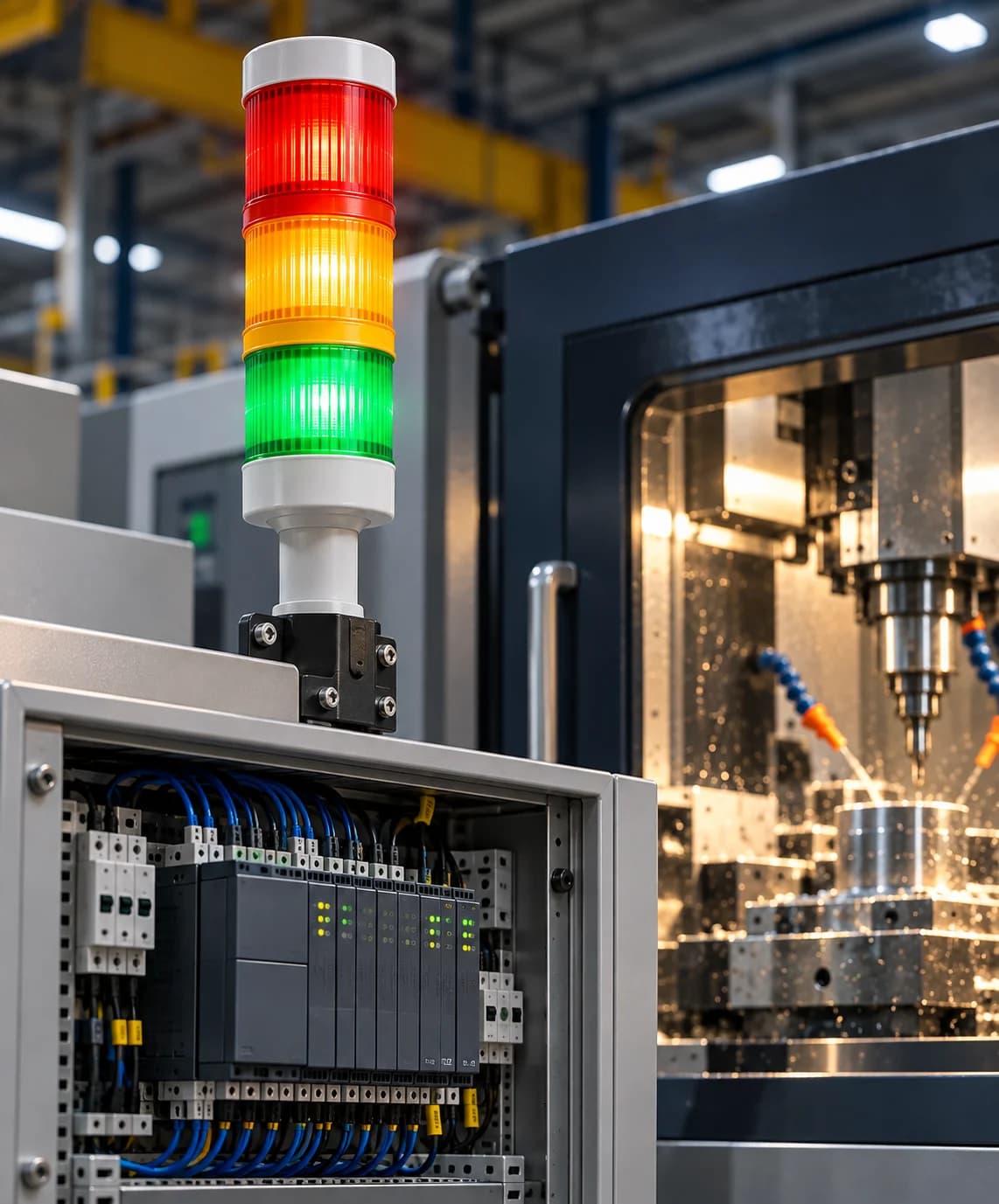
- Industrial sensors
- PLCs
- Smart machines
- Edge devices
- Industrial gateways
- Cloud platforms
- Production monitoring software
- Analytics dashboards
Together, these technologies create a connected manufacturing environment where decisions are based on real-time information rather than assumptions.
Why IIoT is Important for Manufacturing Productivity
Traditional factories often rely on manual reporting and reactive maintenance, making it difficult to detect issues before they affect production.
IIoT helps manufacturers:
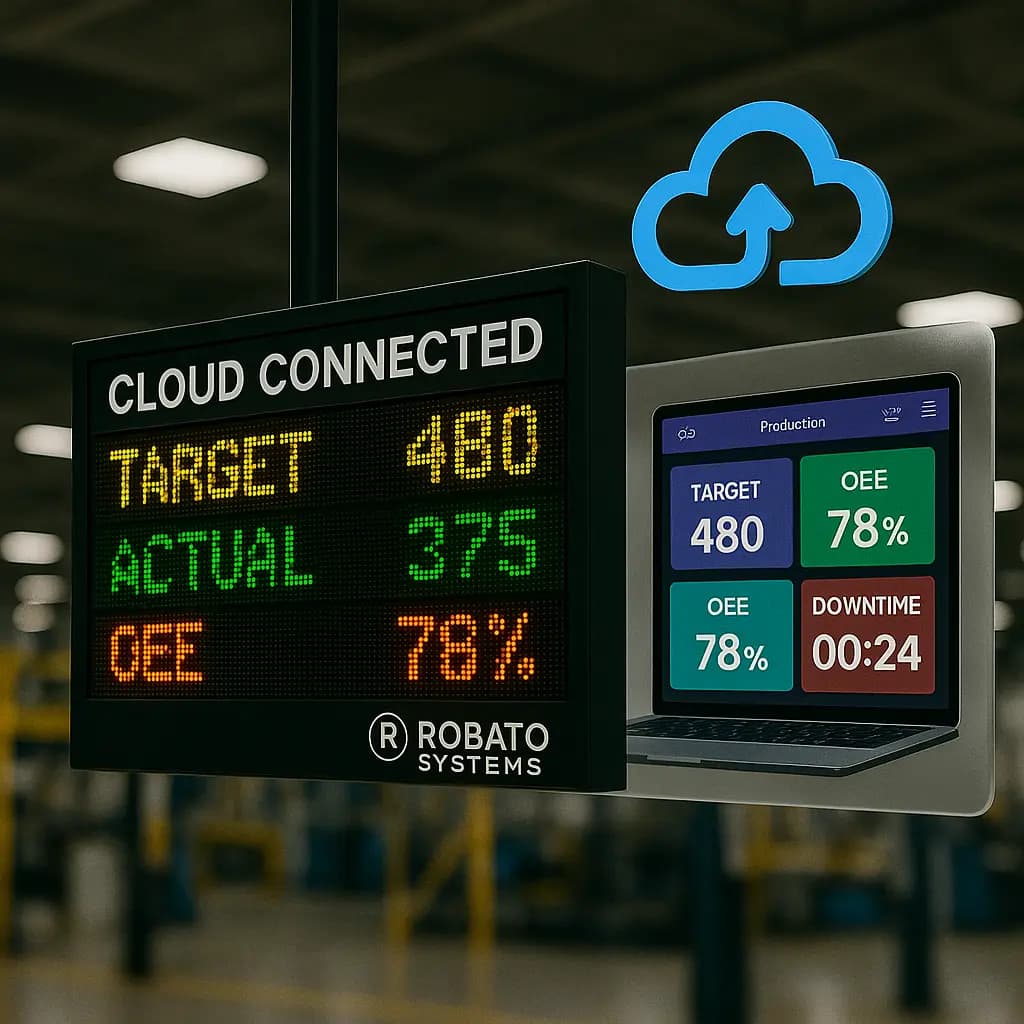
- Monitor production in real time.
- Reduce machine downtime.
- Improve equipment utilization.
- Increase production visibility.
- Enable predictive maintenance.
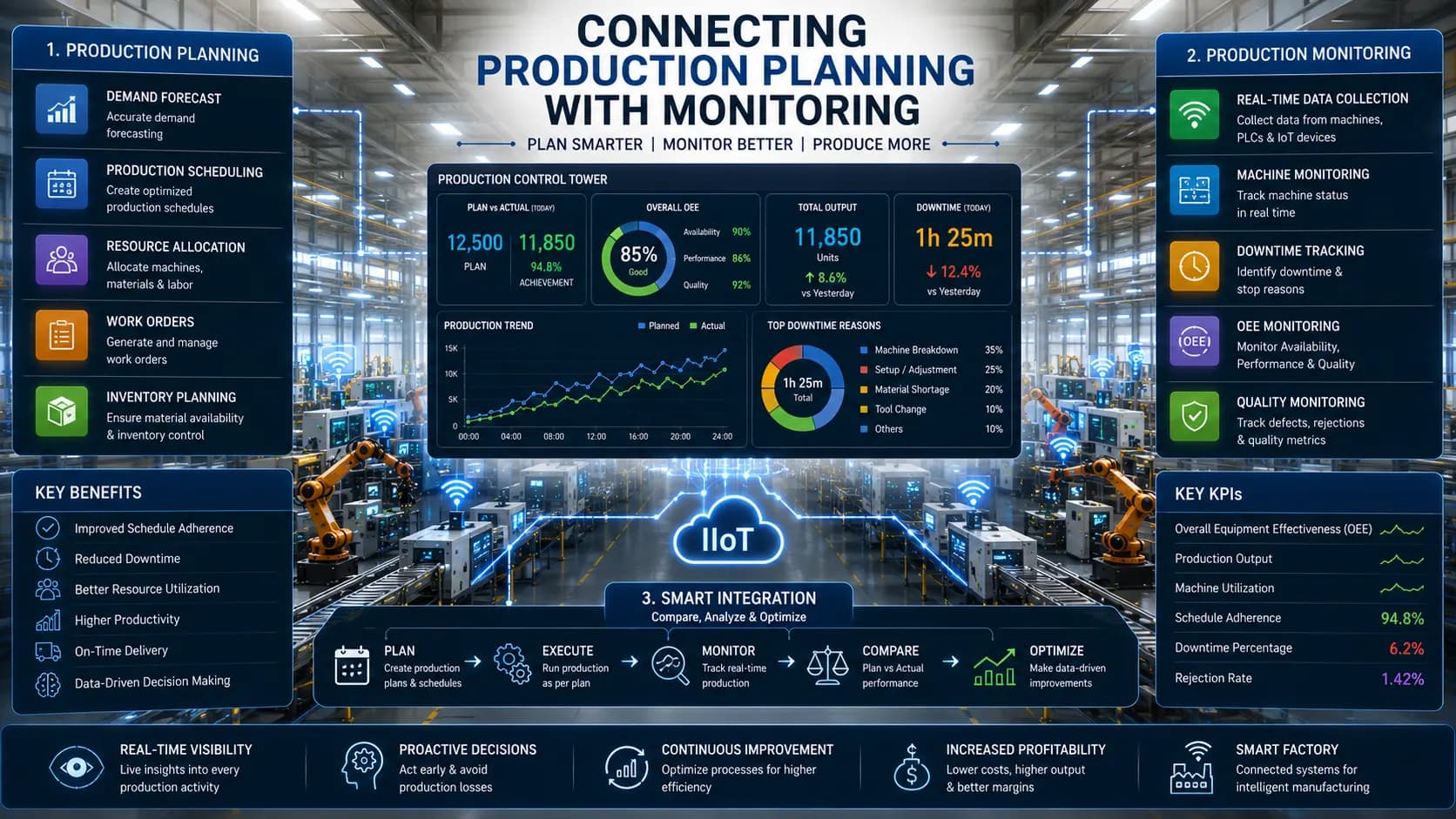
- Optimize production planning.
- Improve product quality.
- Support data-driven decision-making.
These capabilities directly contribute to higher manufacturing productivity.
How IIoT Improves Manufacturing Productivity
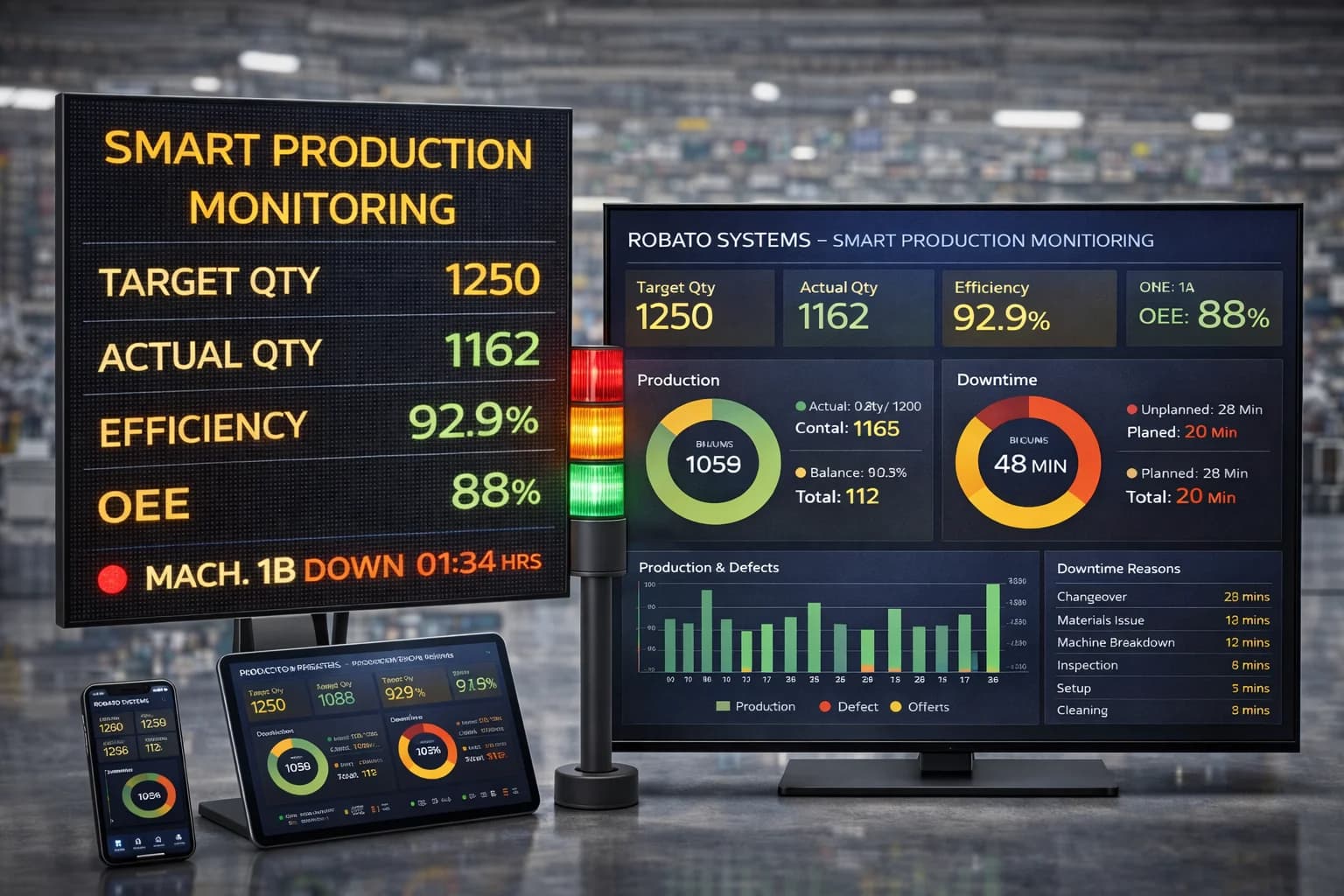
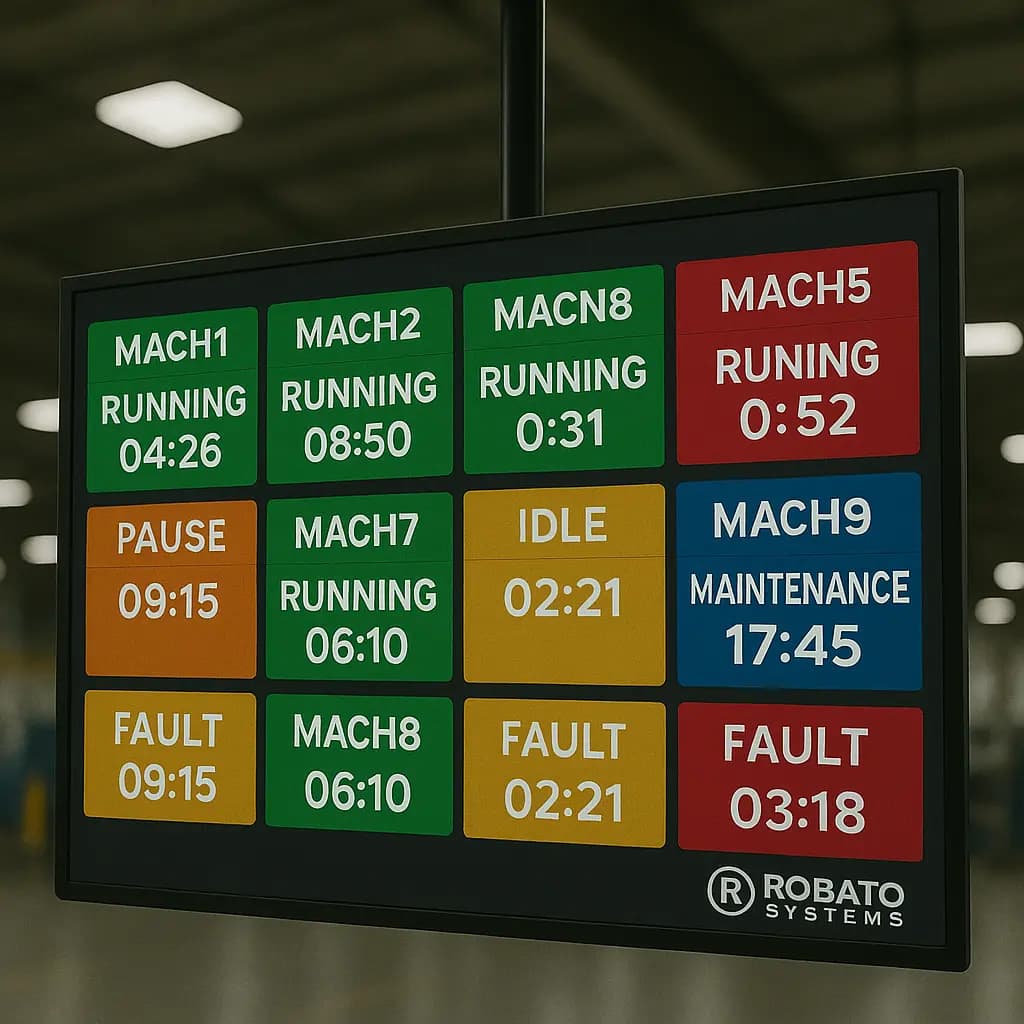
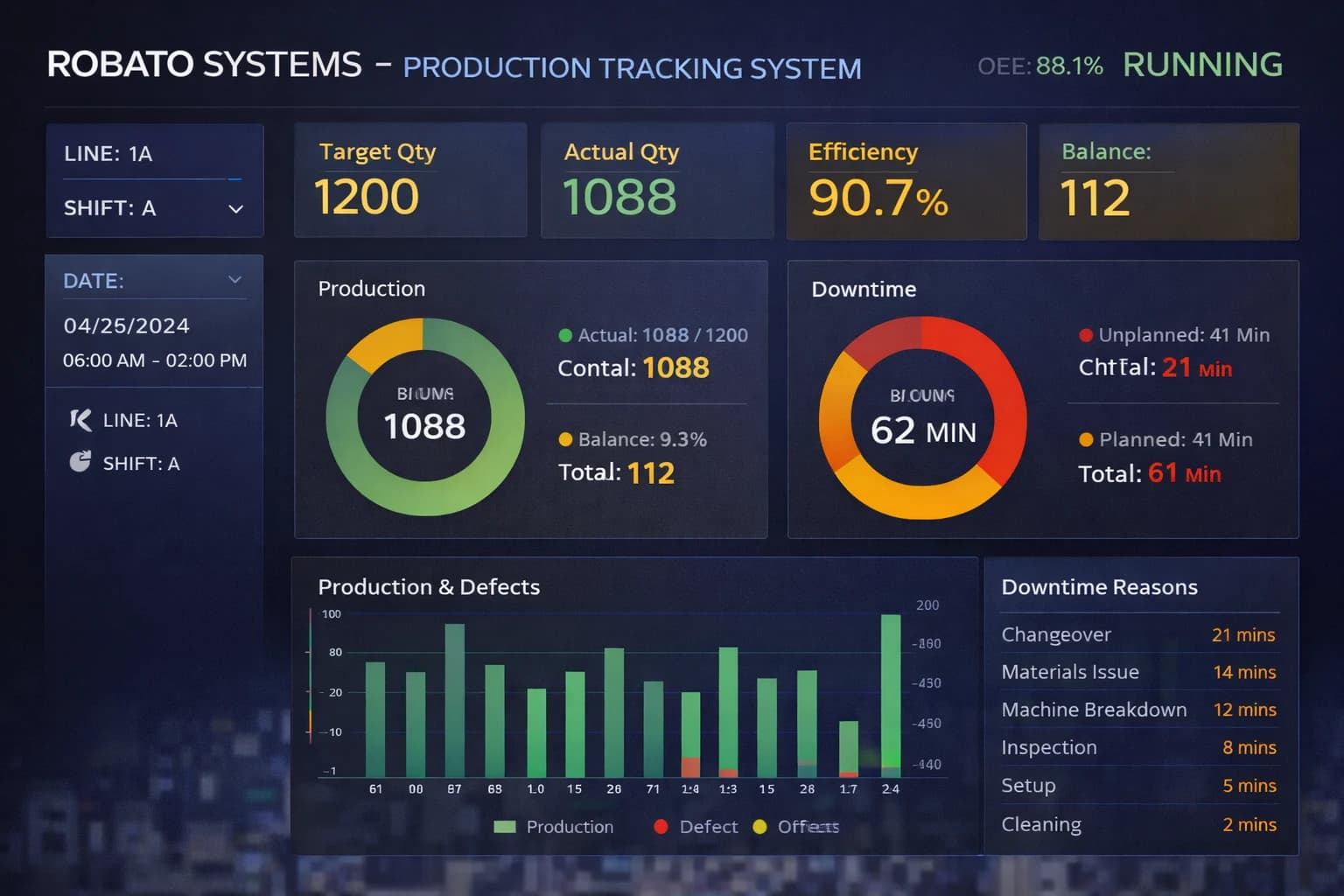
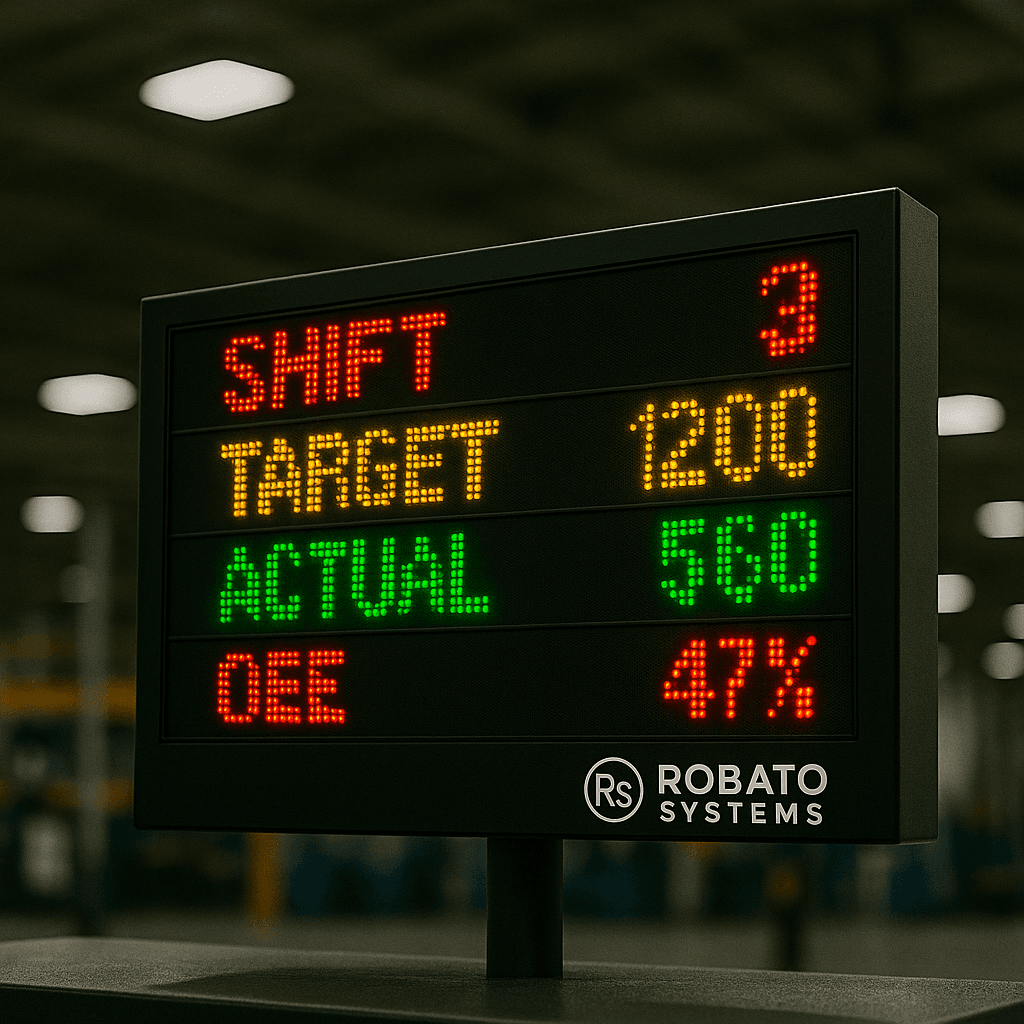
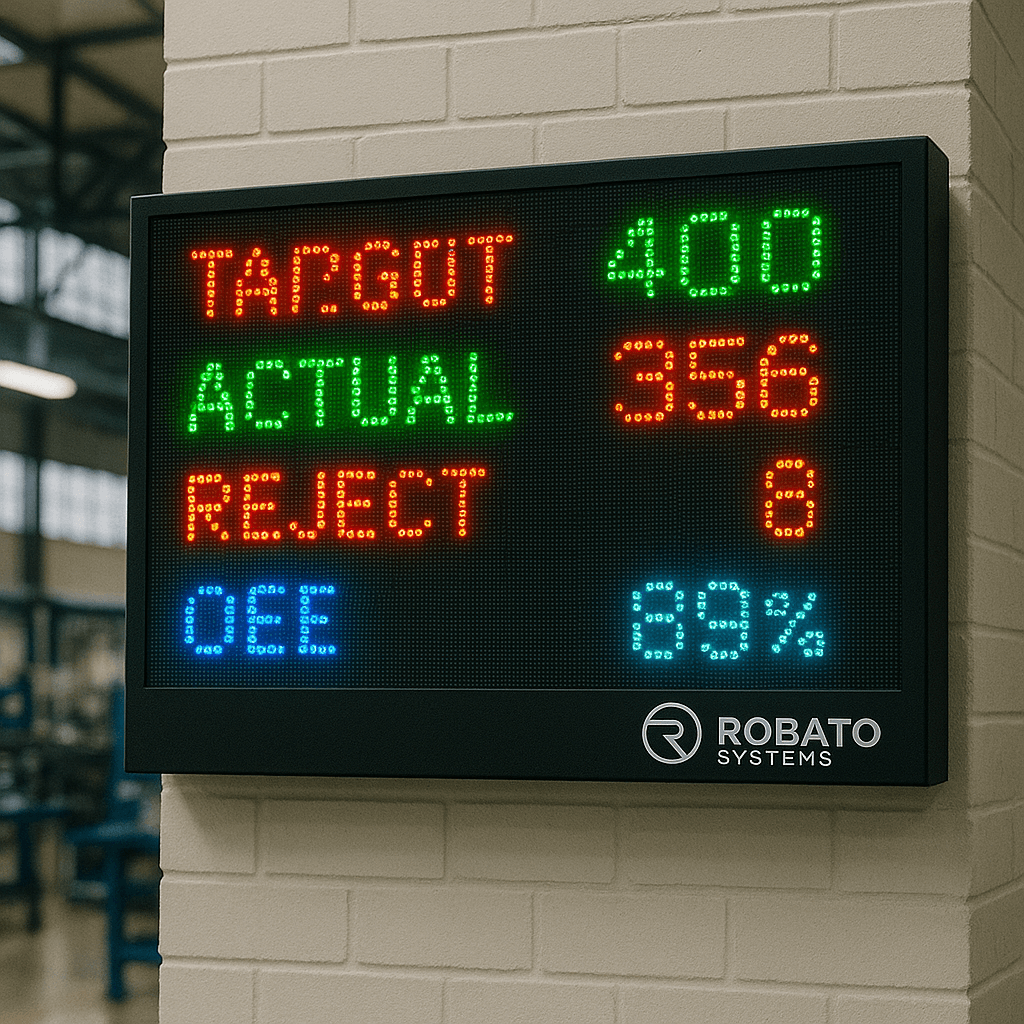
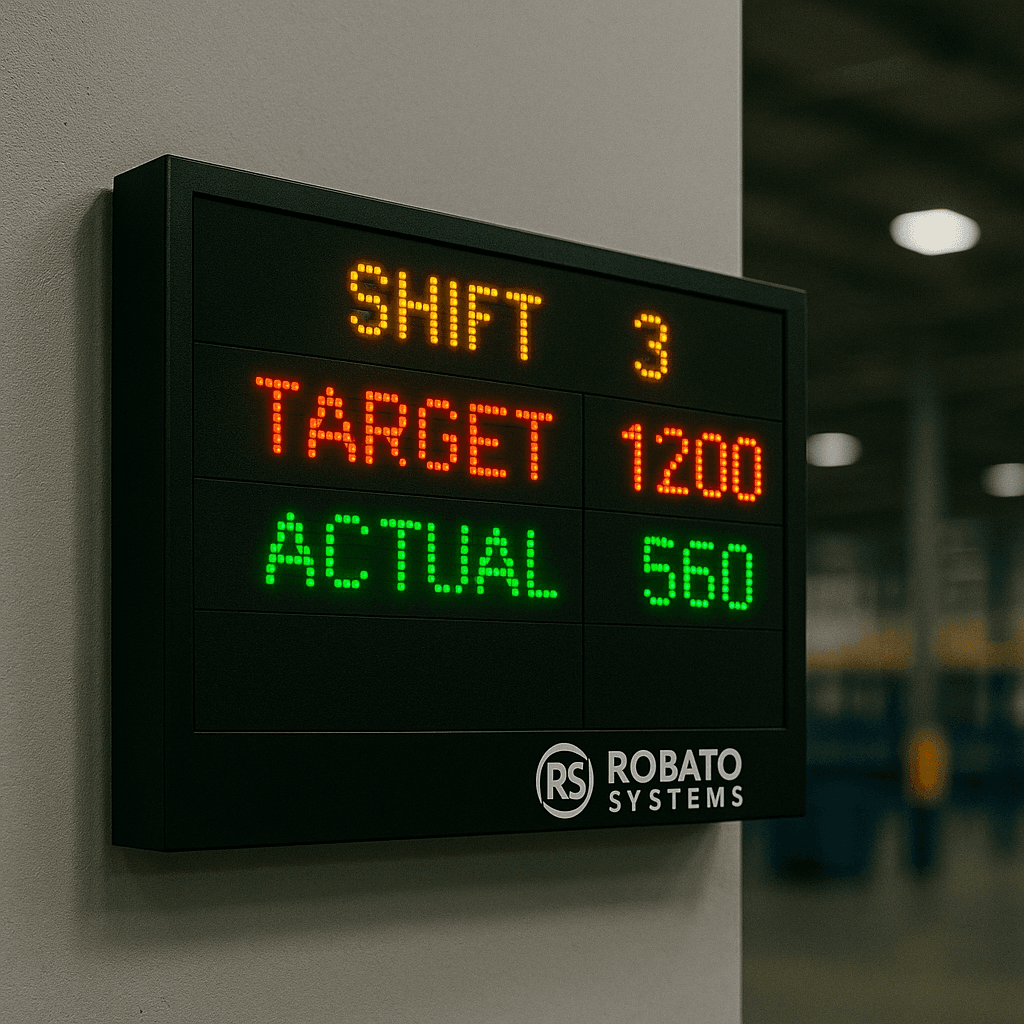
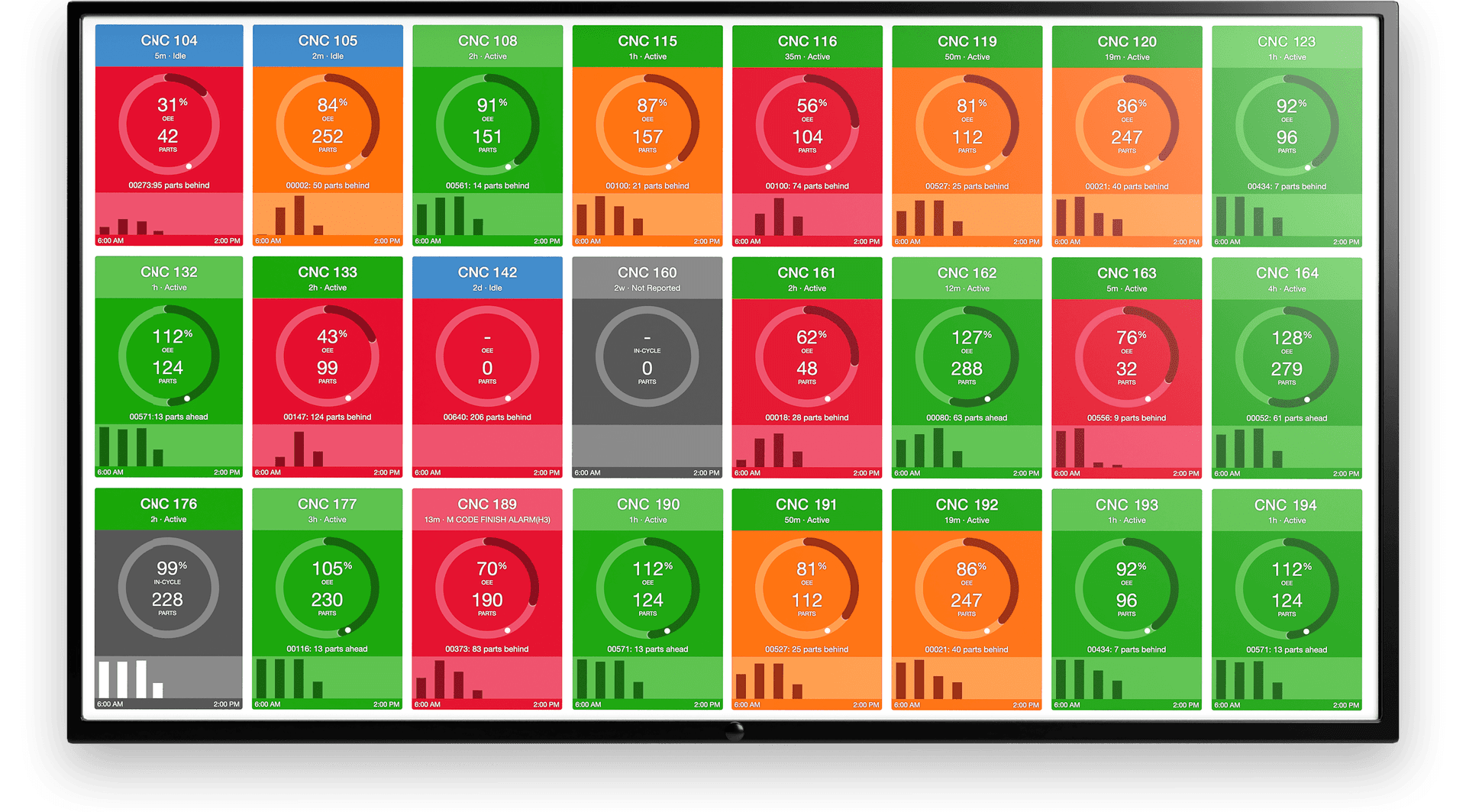
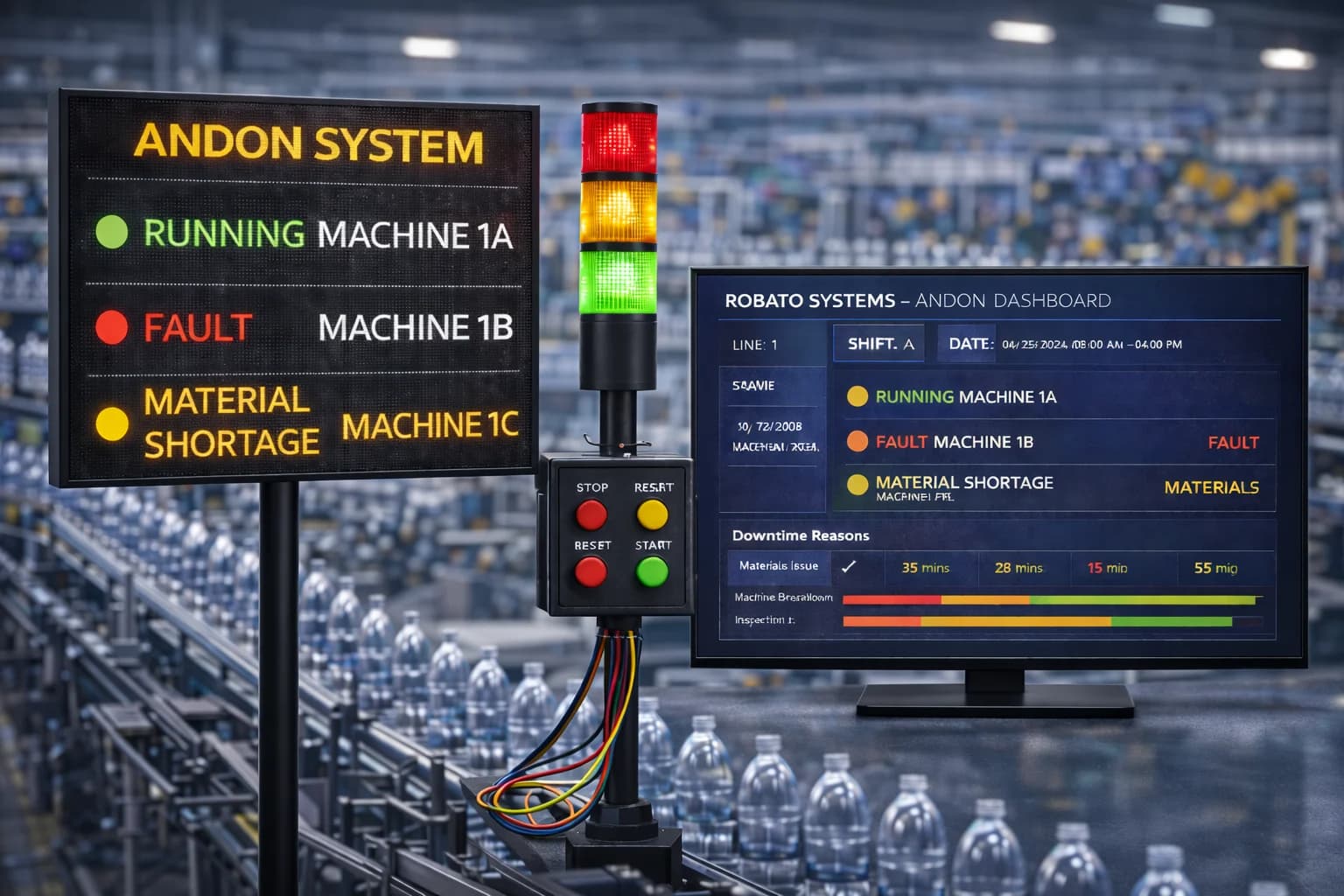
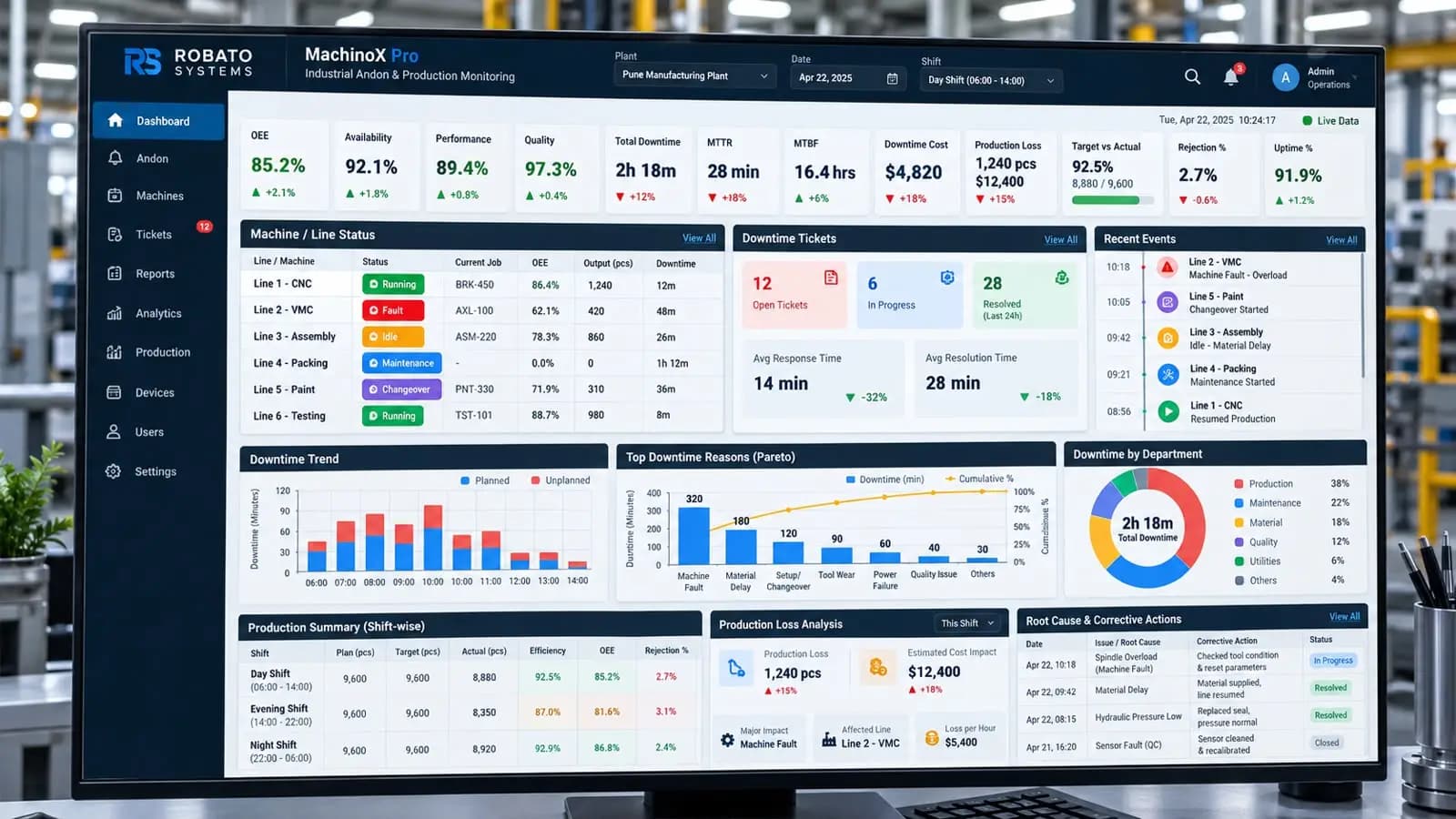
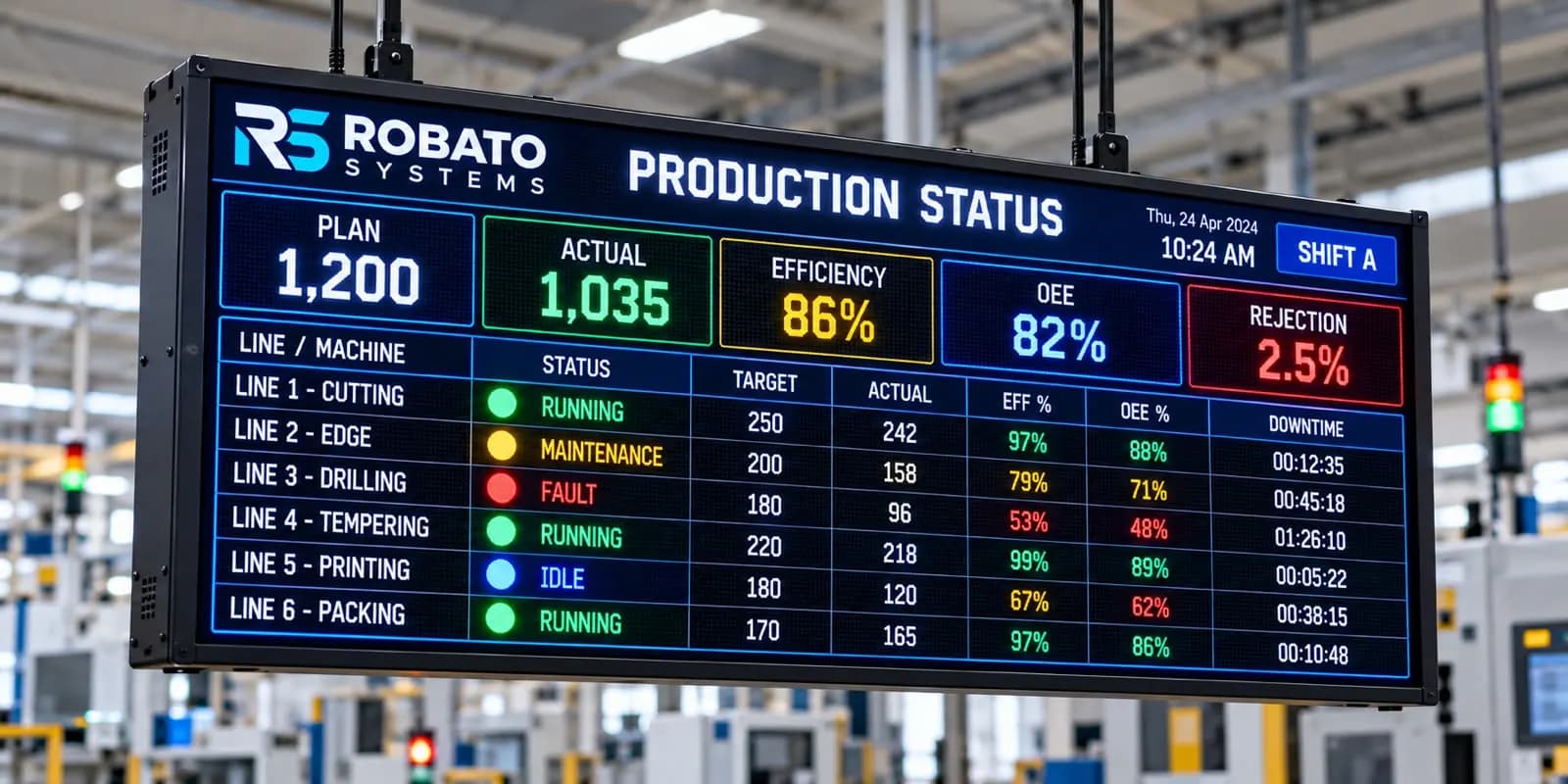
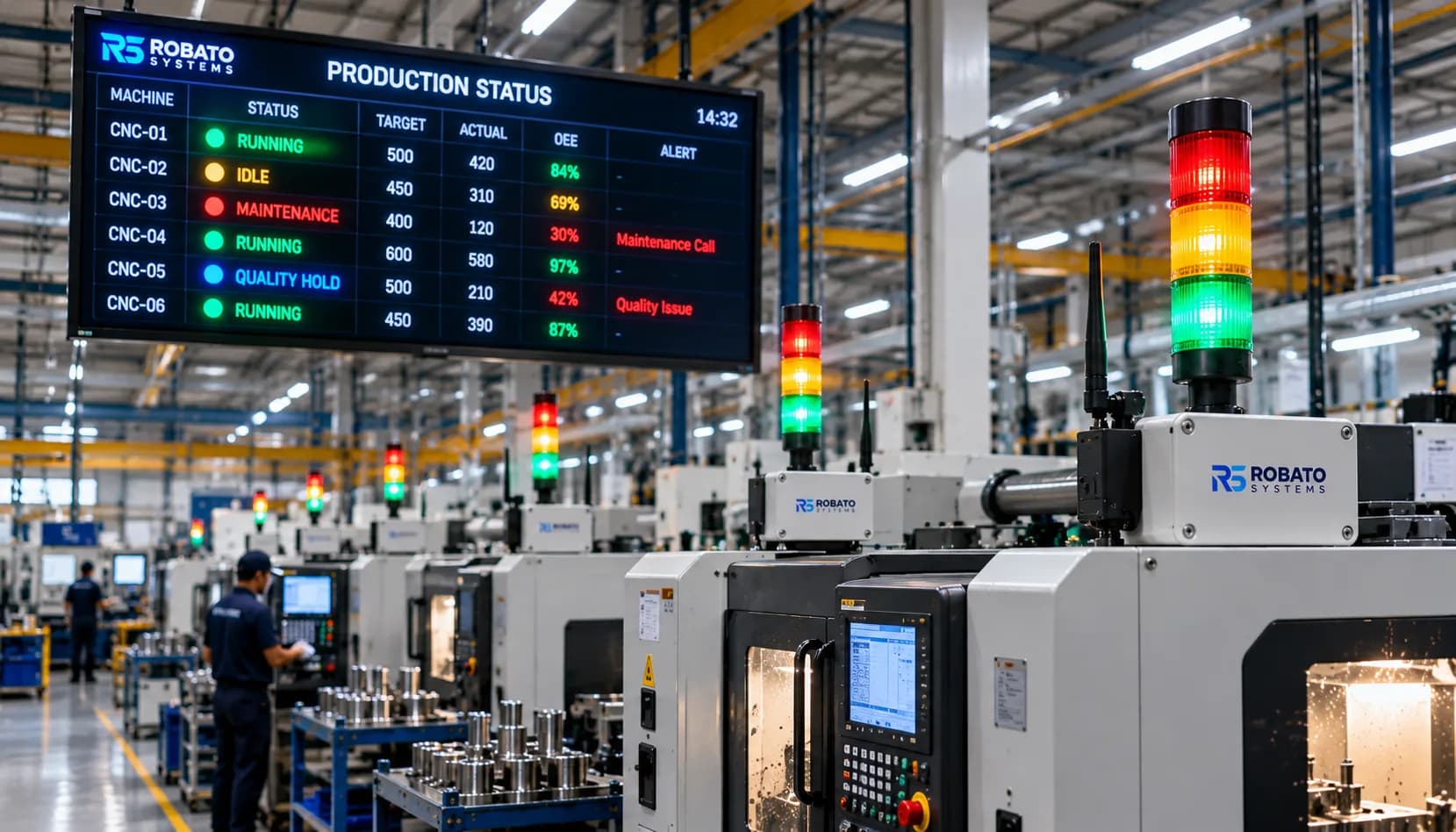
Real-Time Production Monitoring
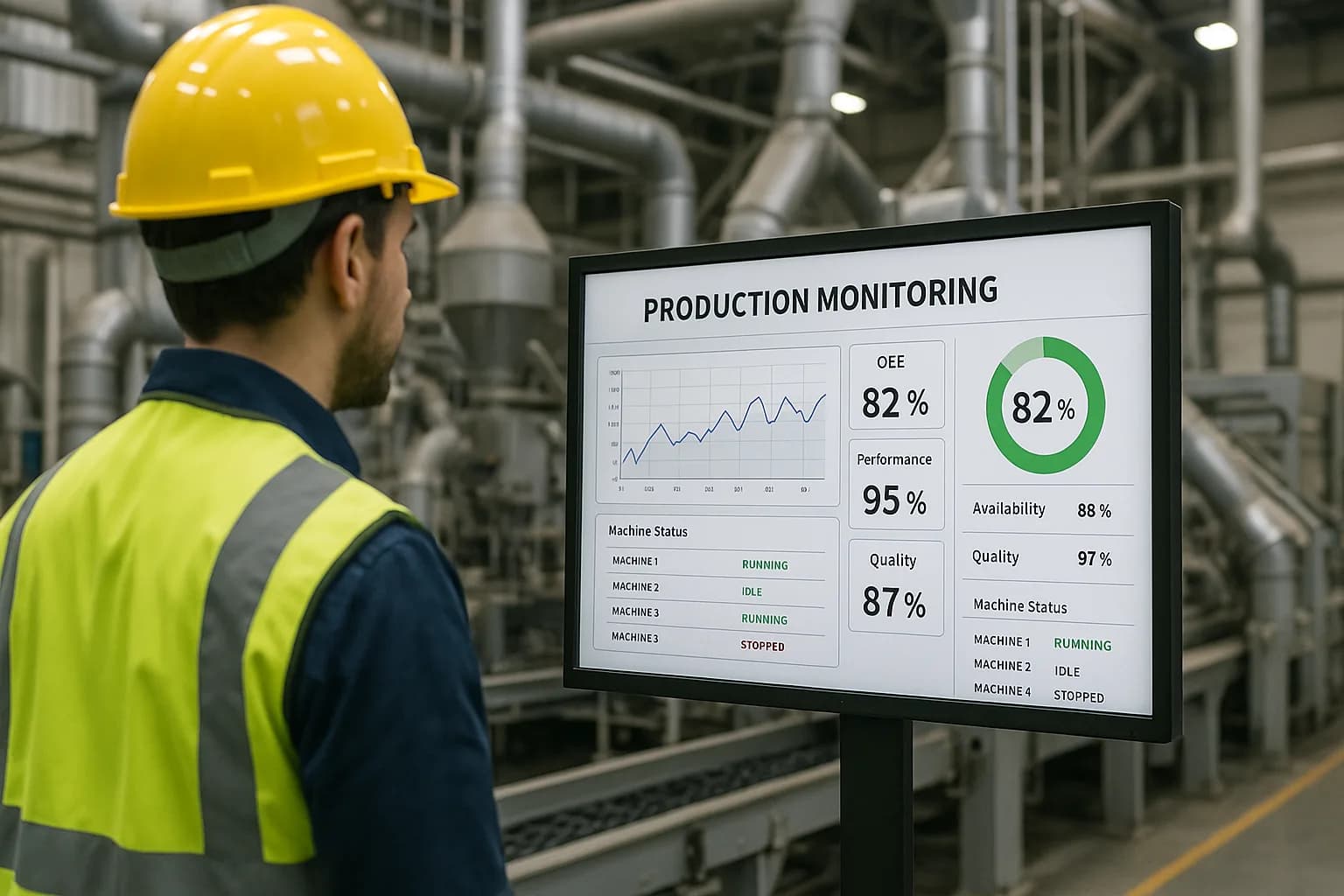
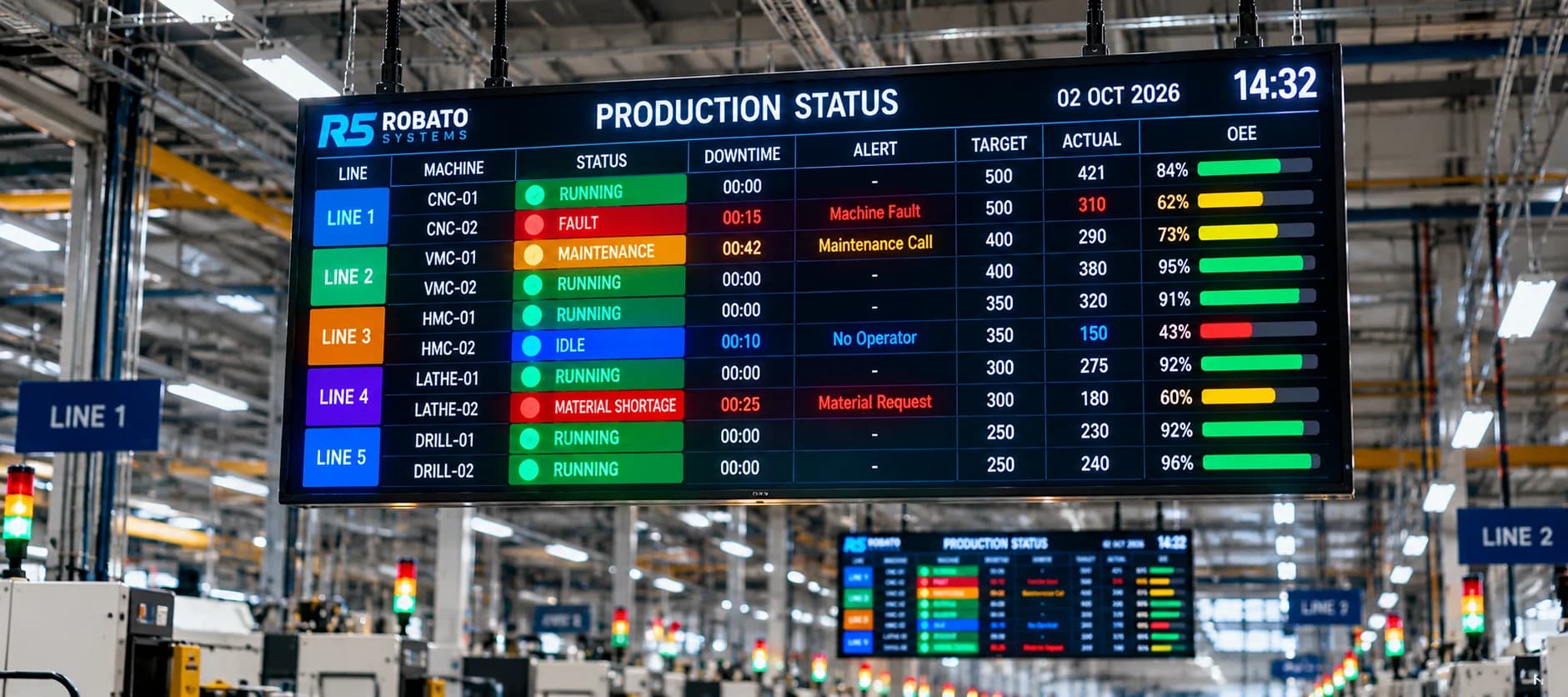
One of the biggest advantages of IIoT is the ability to monitor production continuously.
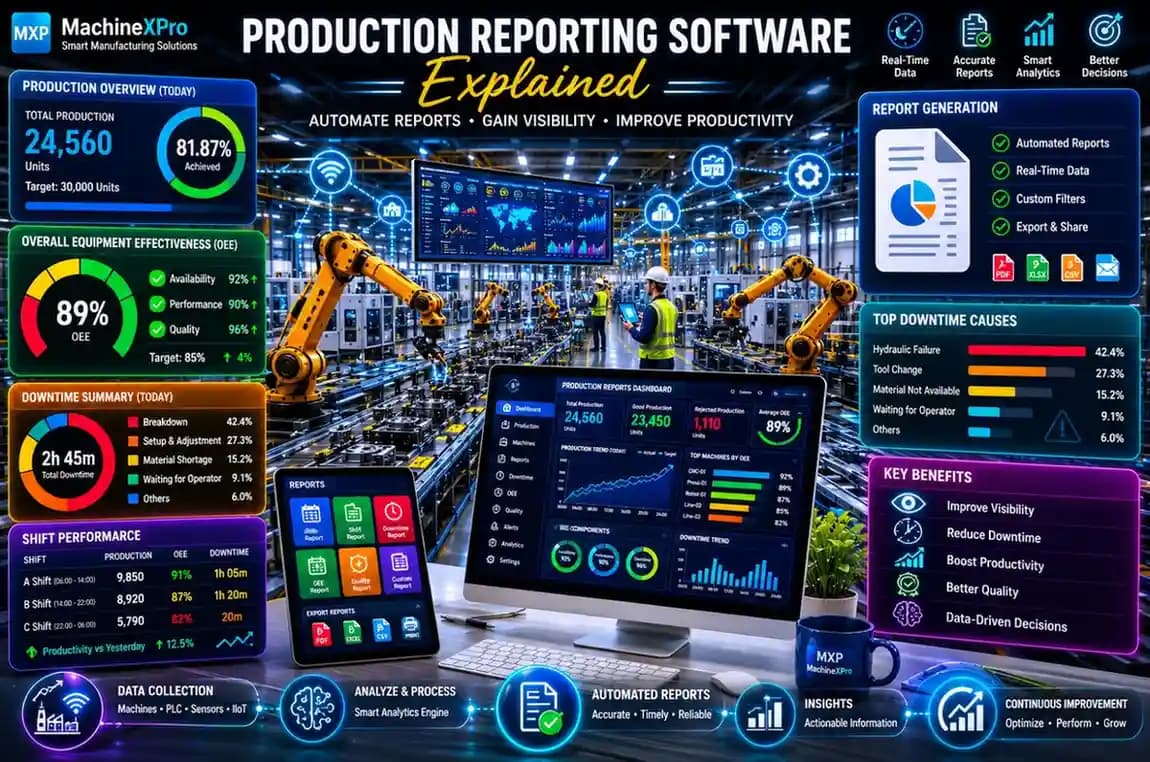
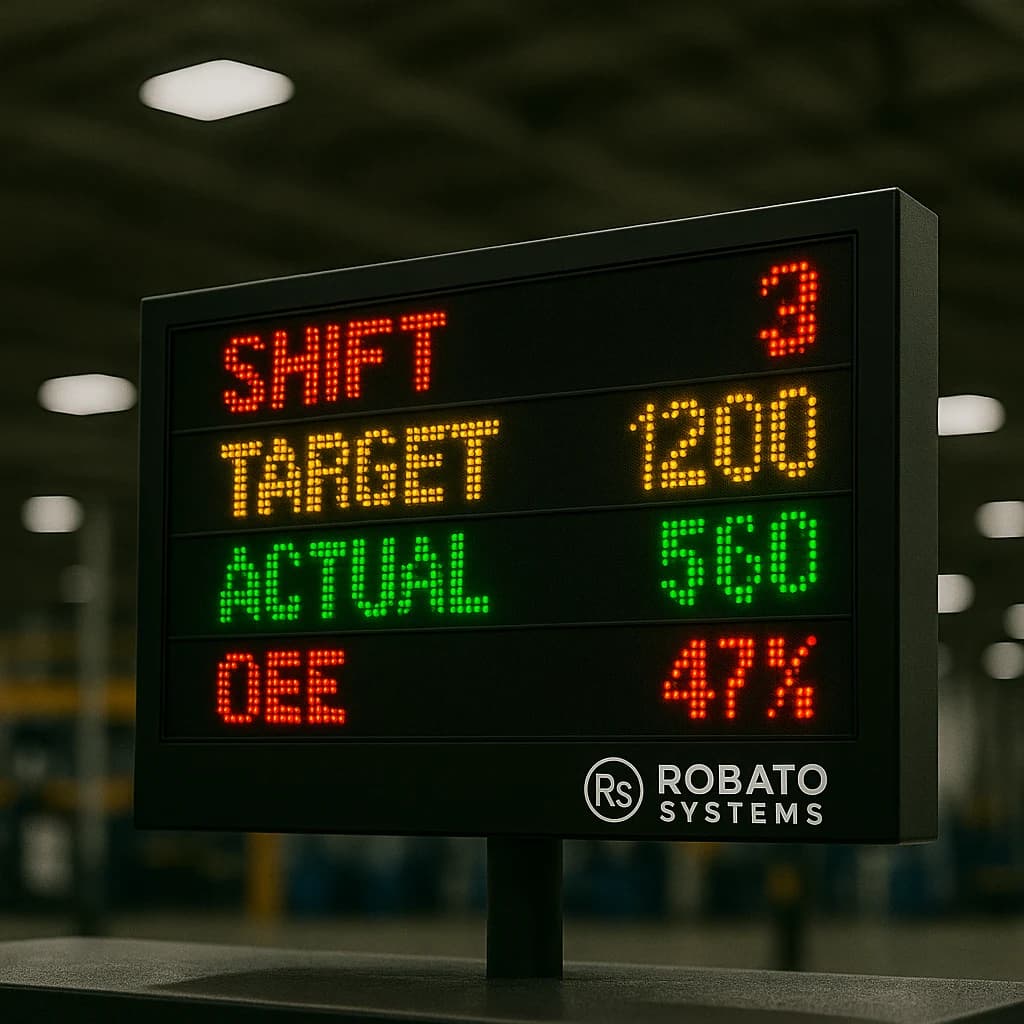
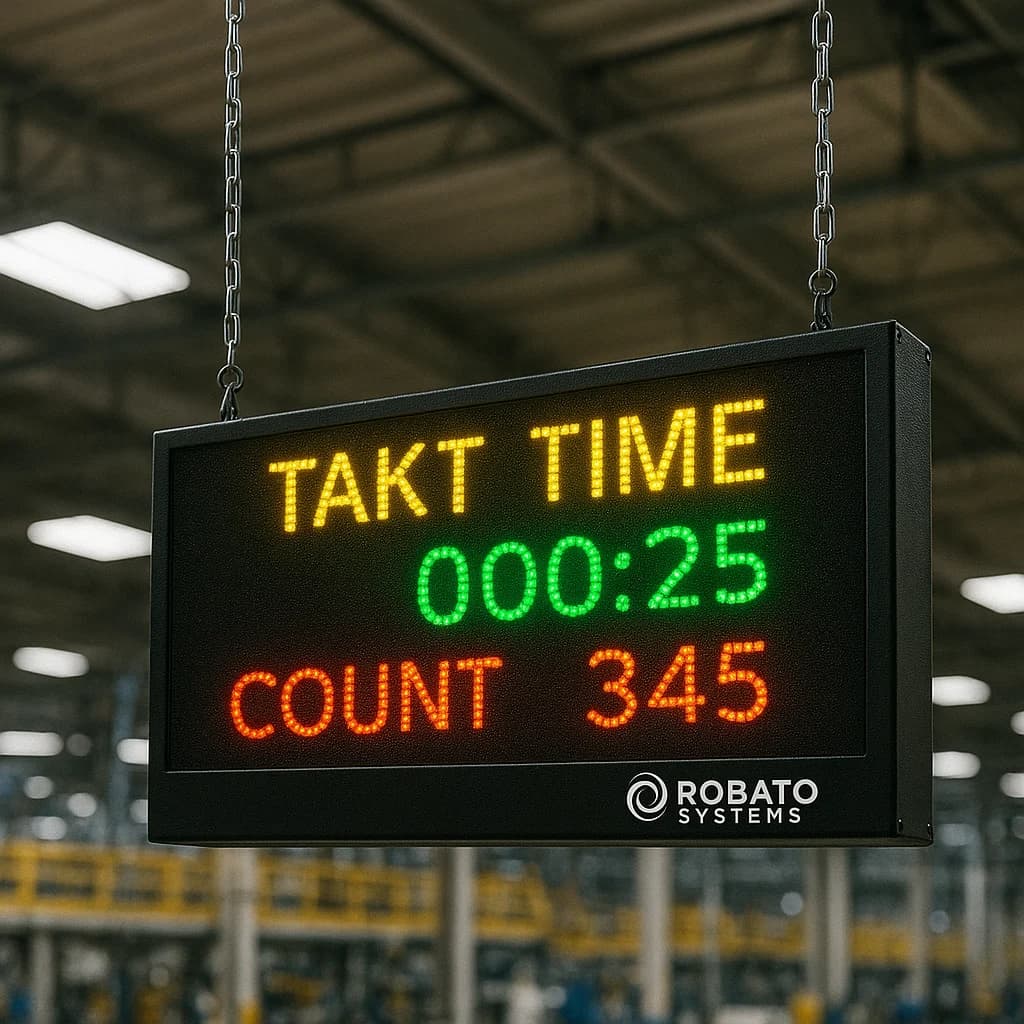
Manufacturers can track:
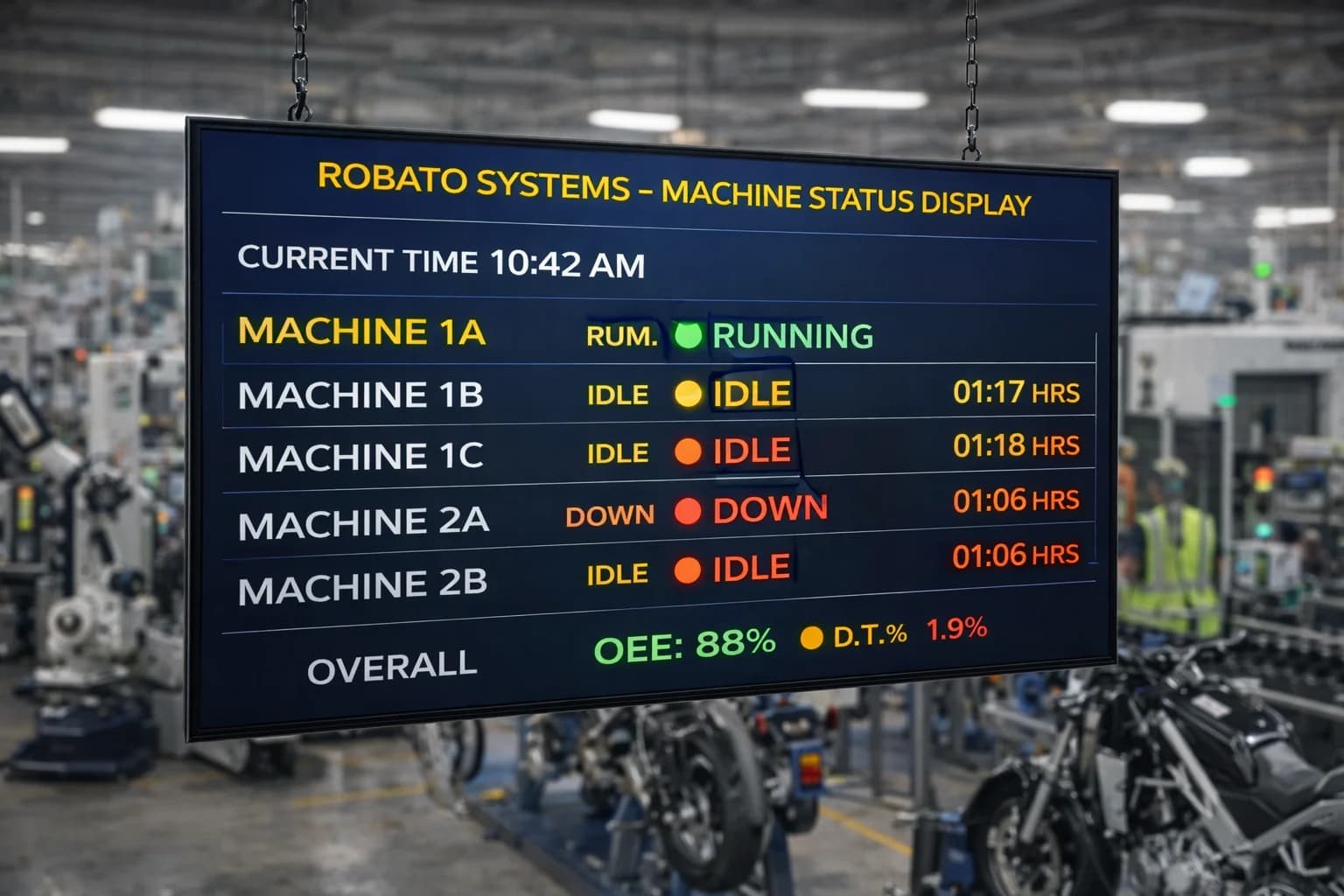
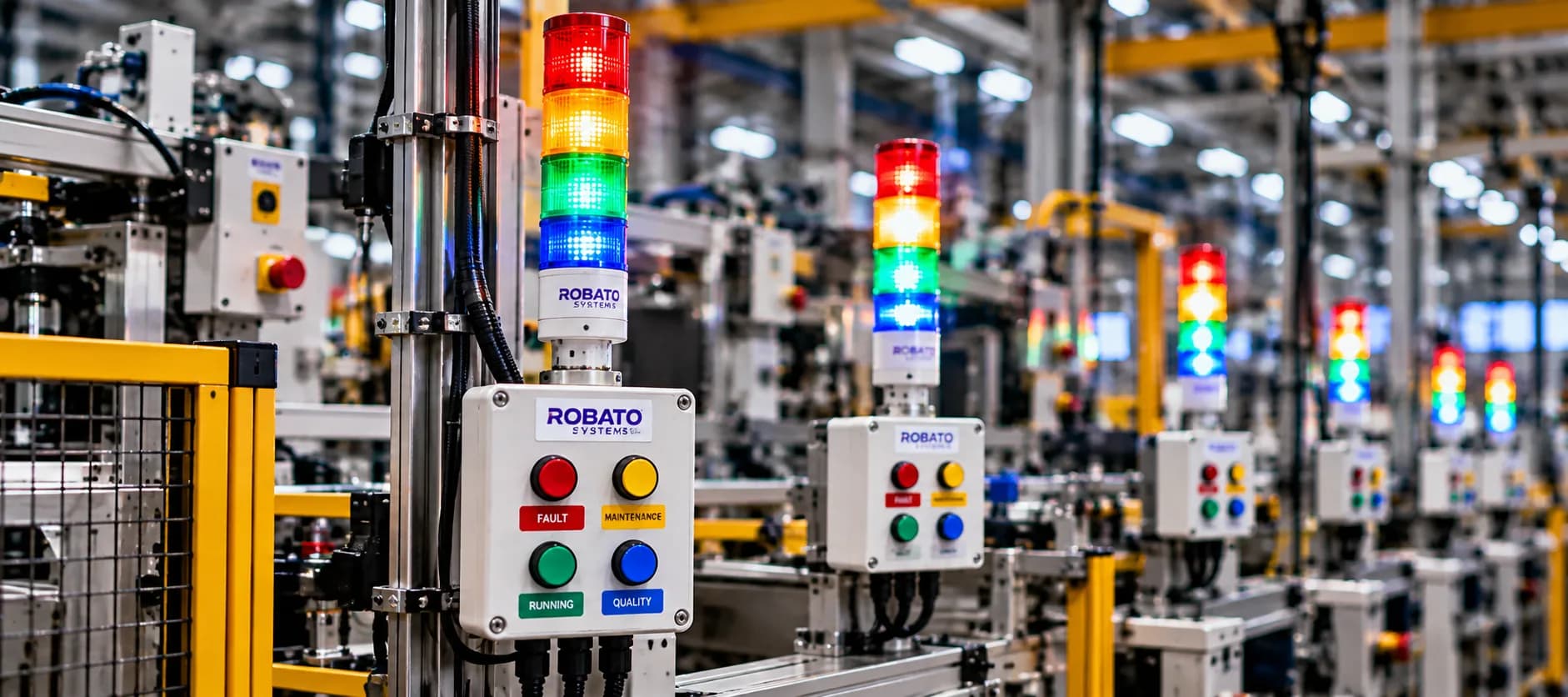
- Machine status
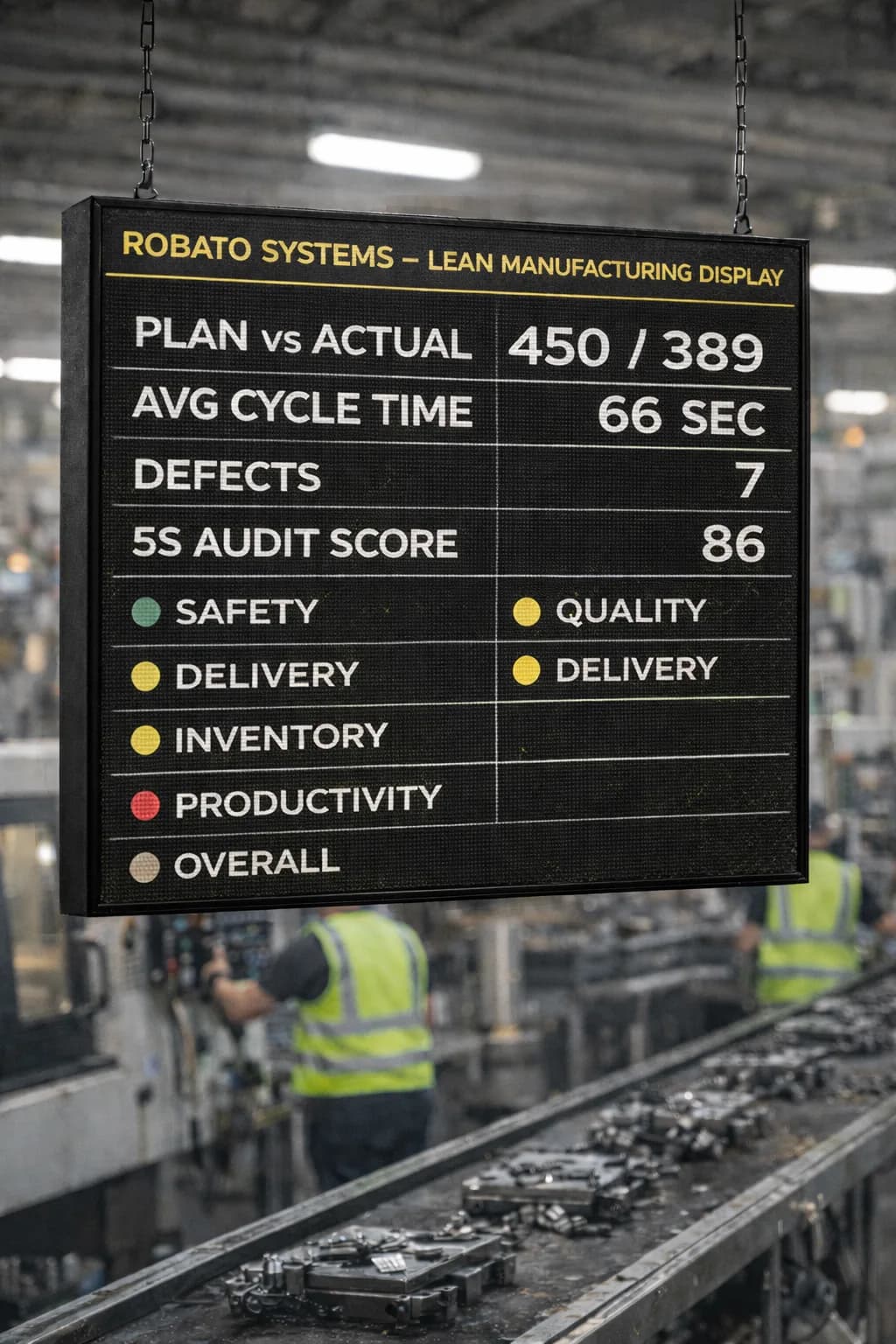
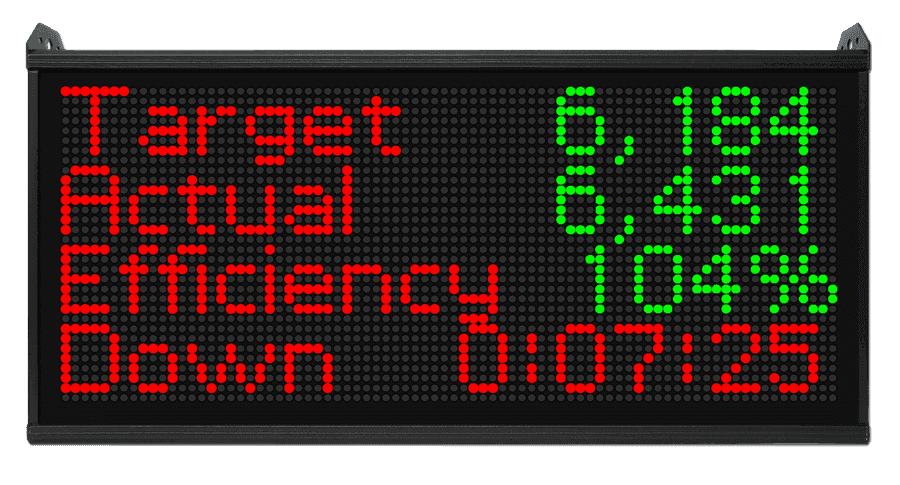
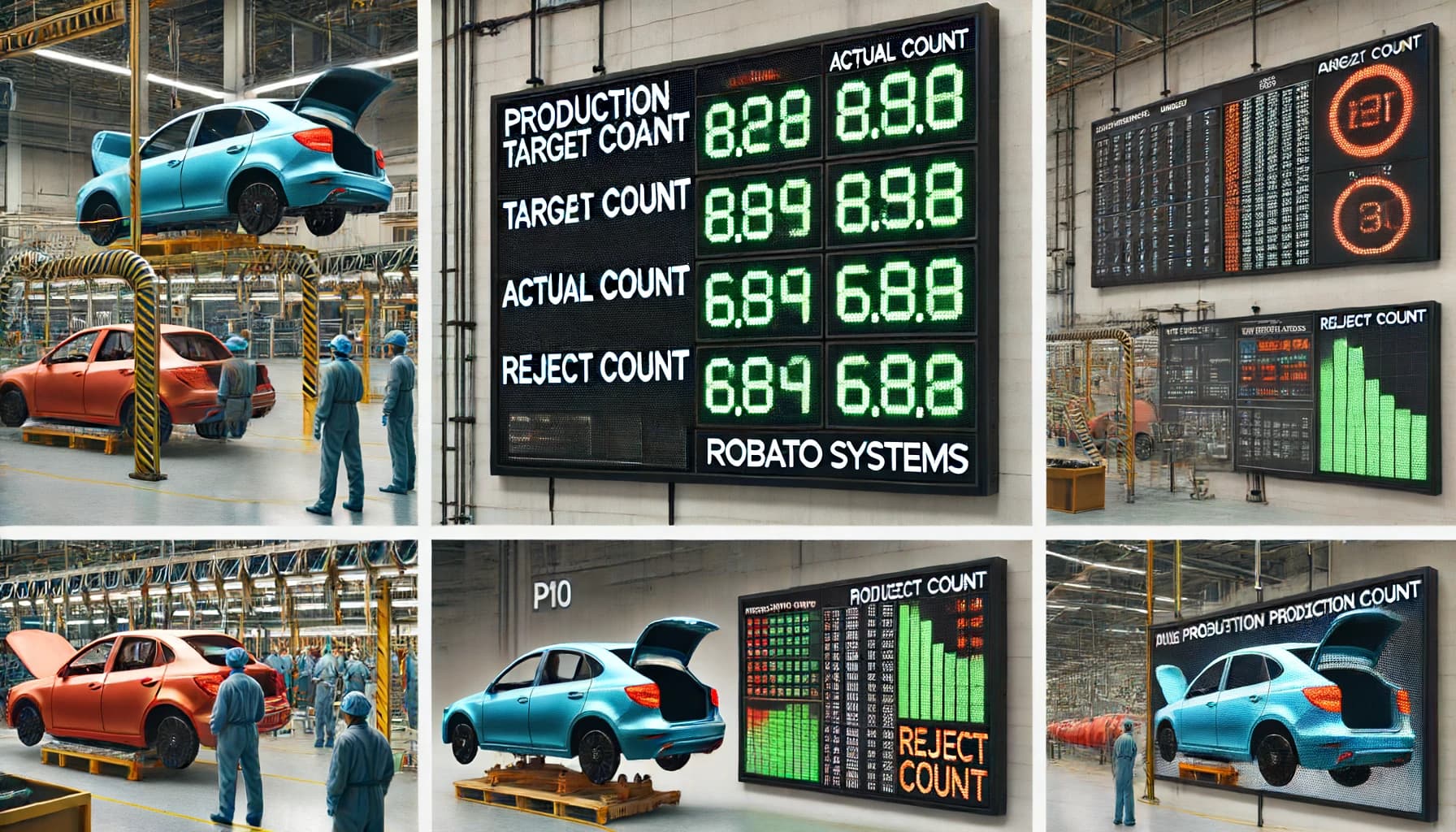
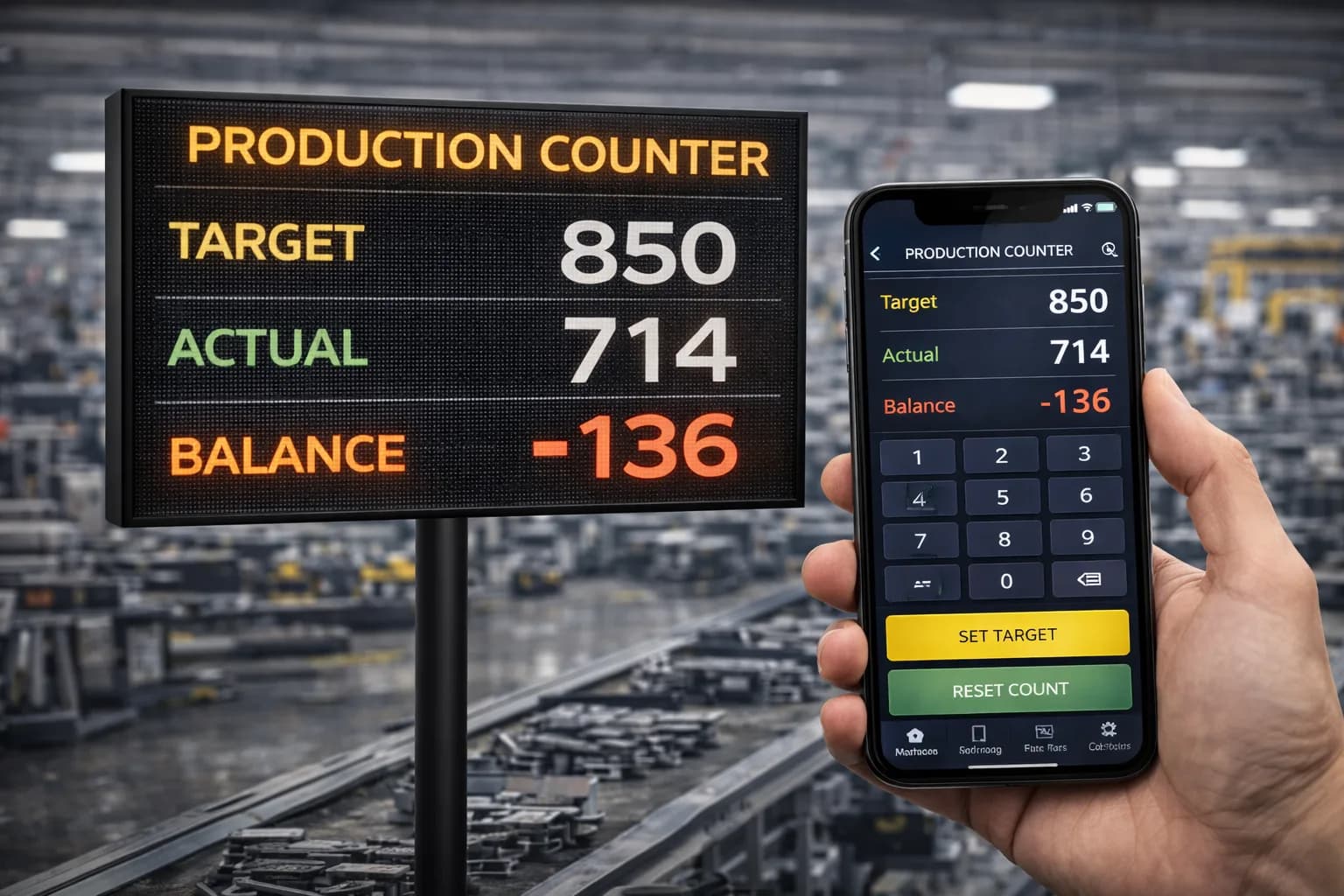
- Production counts
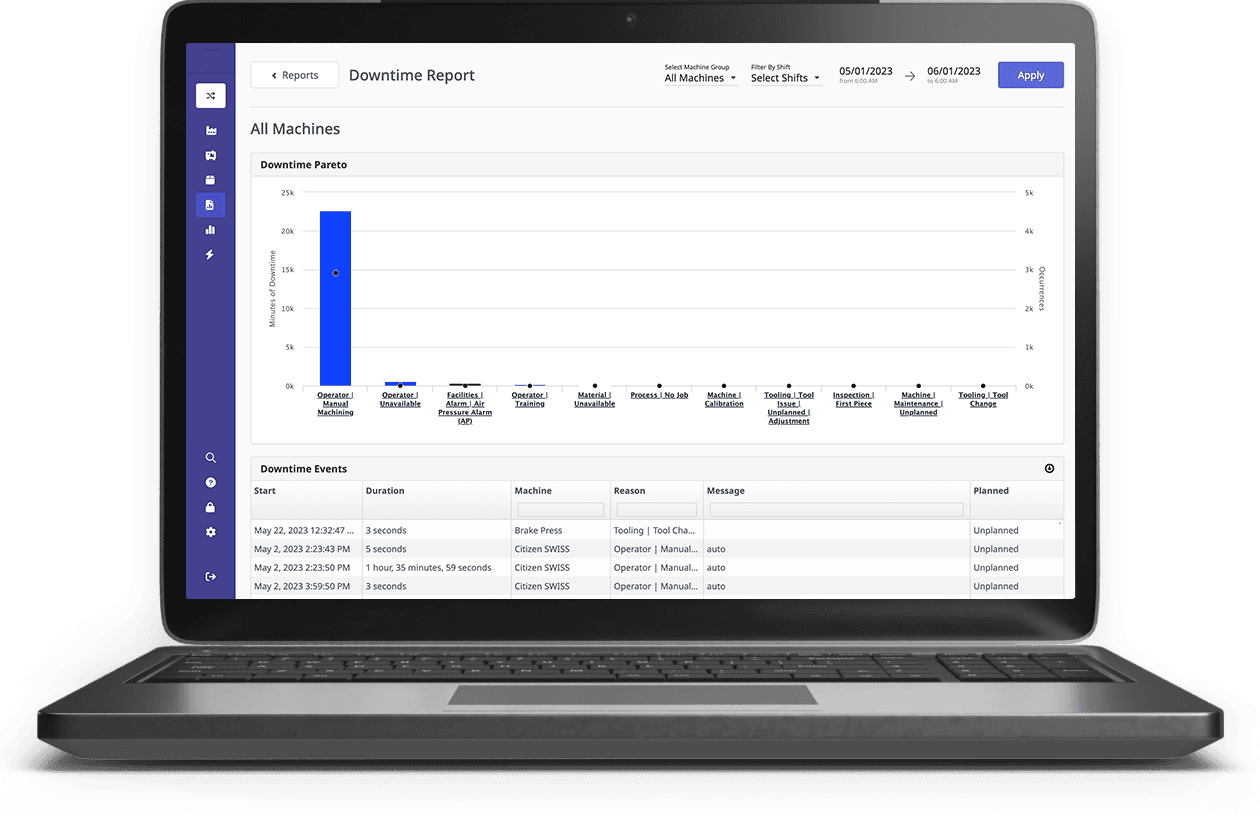
- Downtime events
- Cycle times
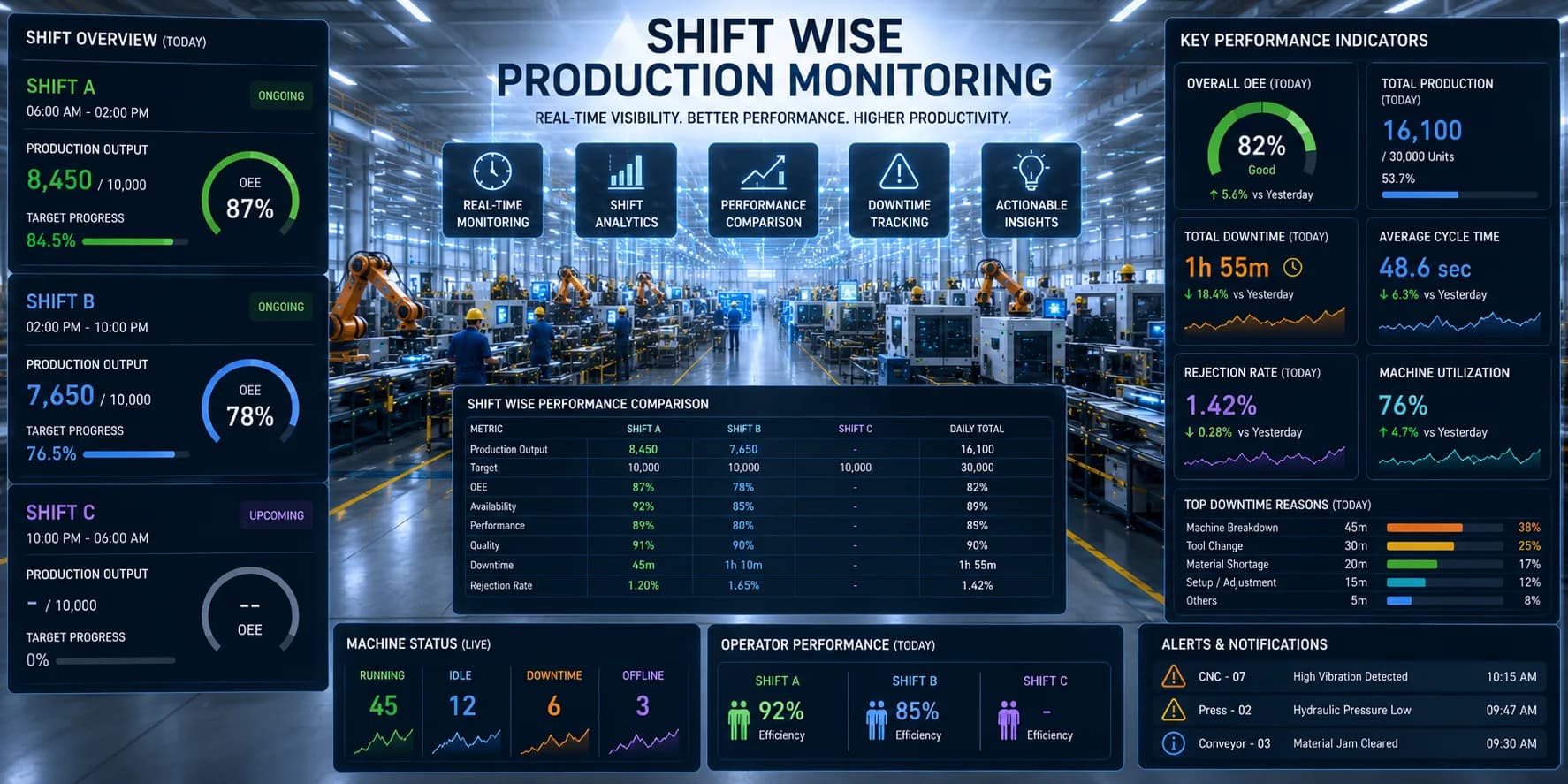
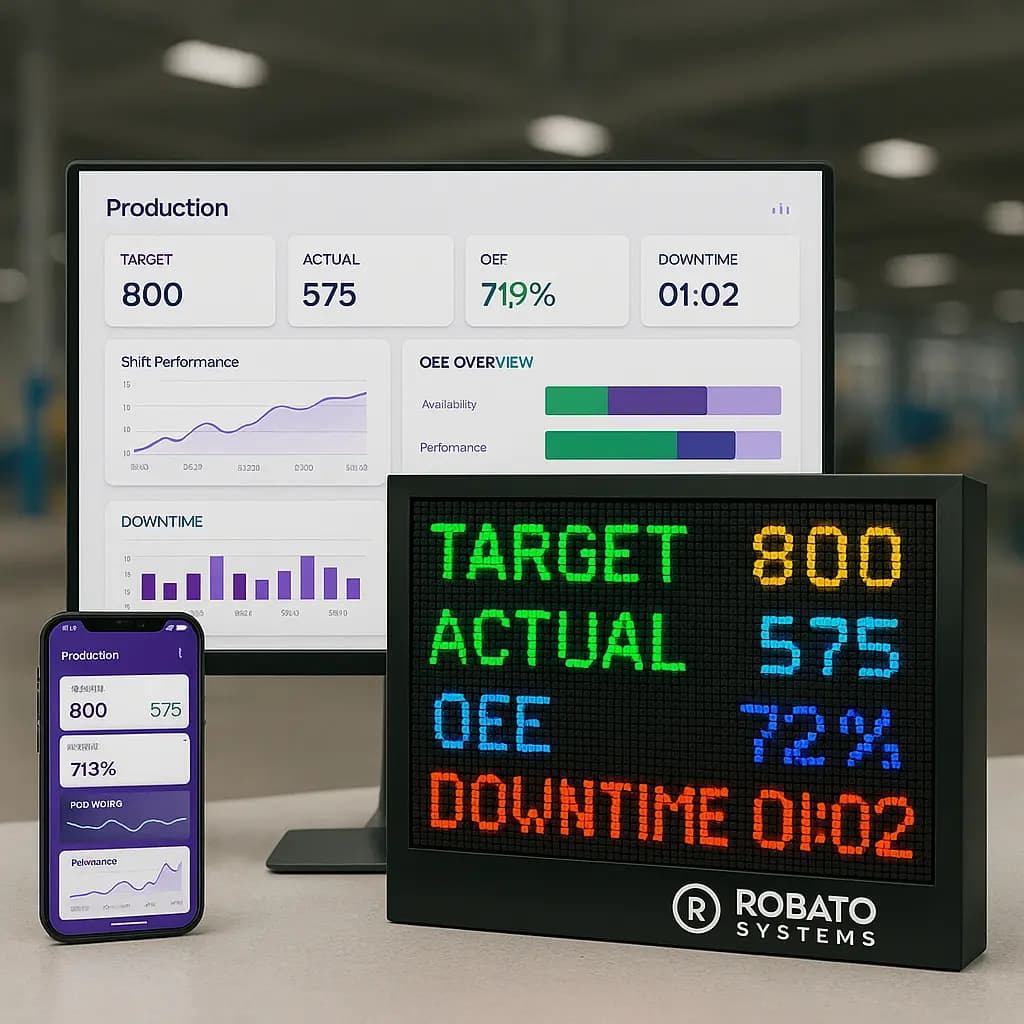
- Shift performance
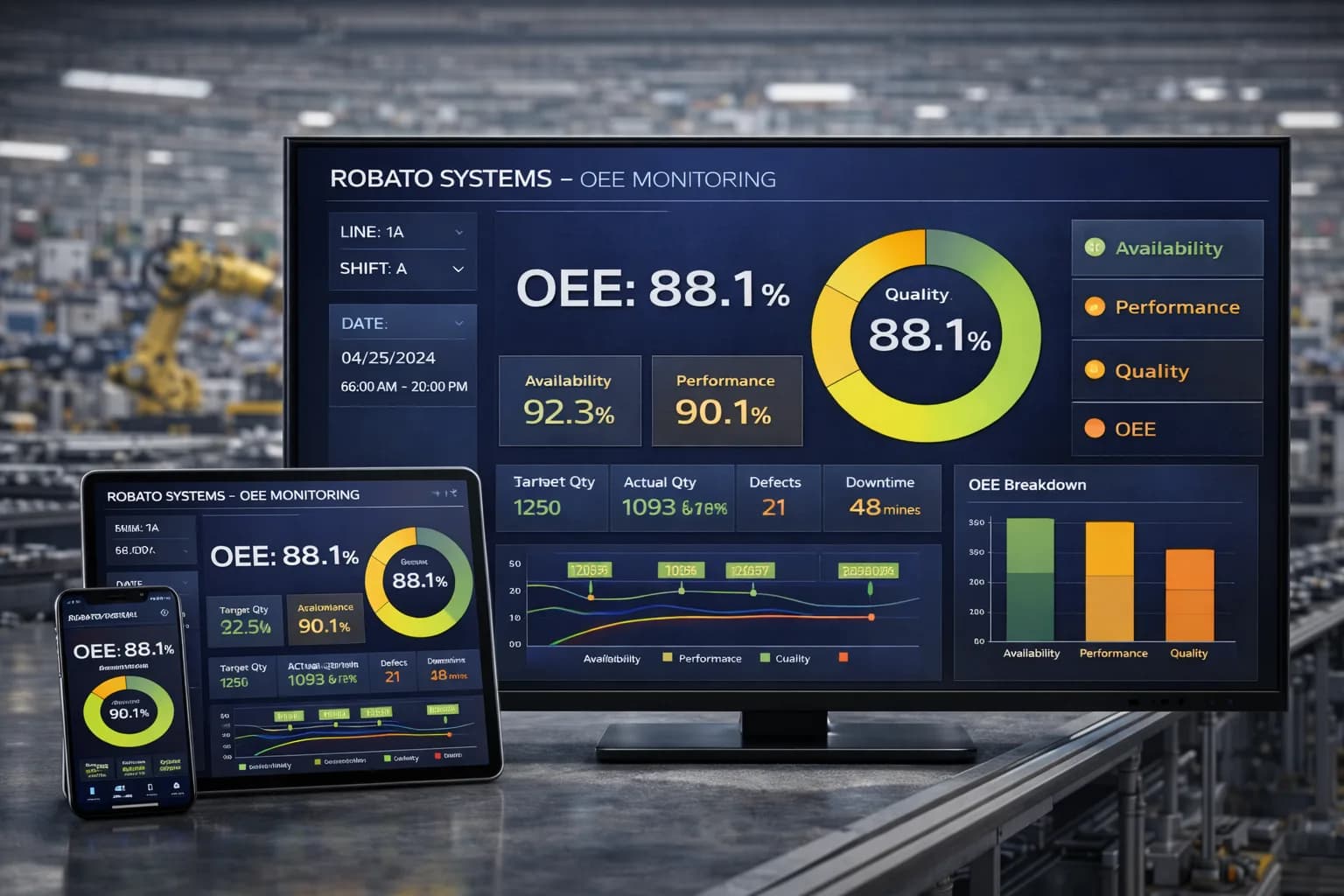
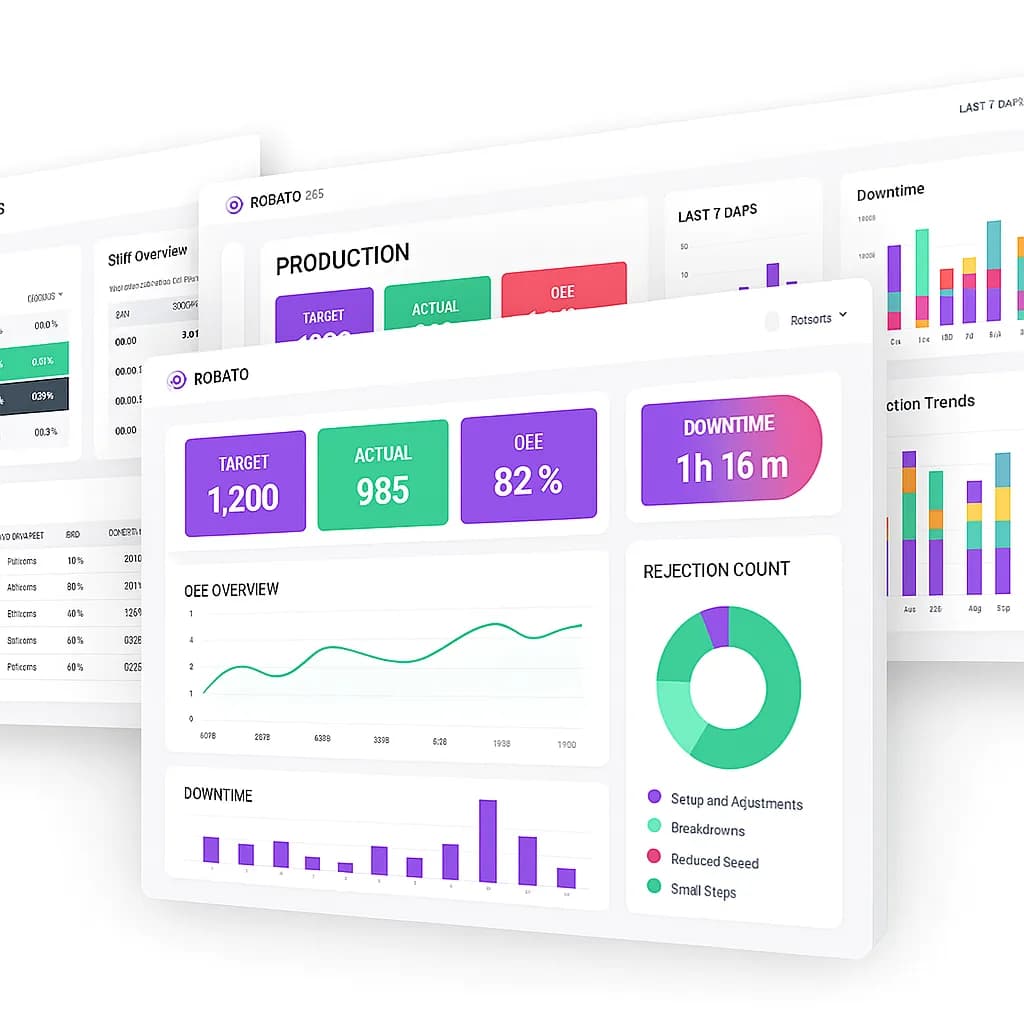
- OEE metrics
Real-time monitoring enables immediate action whenever production issues arise.
Benefits
- Faster response times
- Improved operational visibility
- Reduced production losses
Predictive Maintenance
Unexpected equipment failures are one of the largest causes of productivity loss.
IIoT sensors monitor machine conditions such as:
- Temperature
- Vibration
- Pressure
- Energy consumption
Using predictive analytics, maintenance teams can detect potential failures before they occur.
Benefits
- Reduced downtime
- Longer equipment life
- Lower maintenance costs
Improved Machine Utilization
IIoT provides detailed insights into how machines are being used.
Manufacturers can monitor:
- Running time
- Idle time
- Setup time
- Utilization percentage
Improving equipment utilization increases production capacity without purchasing additional machinery.
Better Production Planning
Accurate production data enables more effective scheduling and resource allocation.
Managers can:
- Balance workloads
- Forecast production
- Allocate manpower efficiently
- Optimize inventory
Better planning leads to smoother operations and increased productivity.
Enhanced Overall Equipment Effectiveness (OEE)
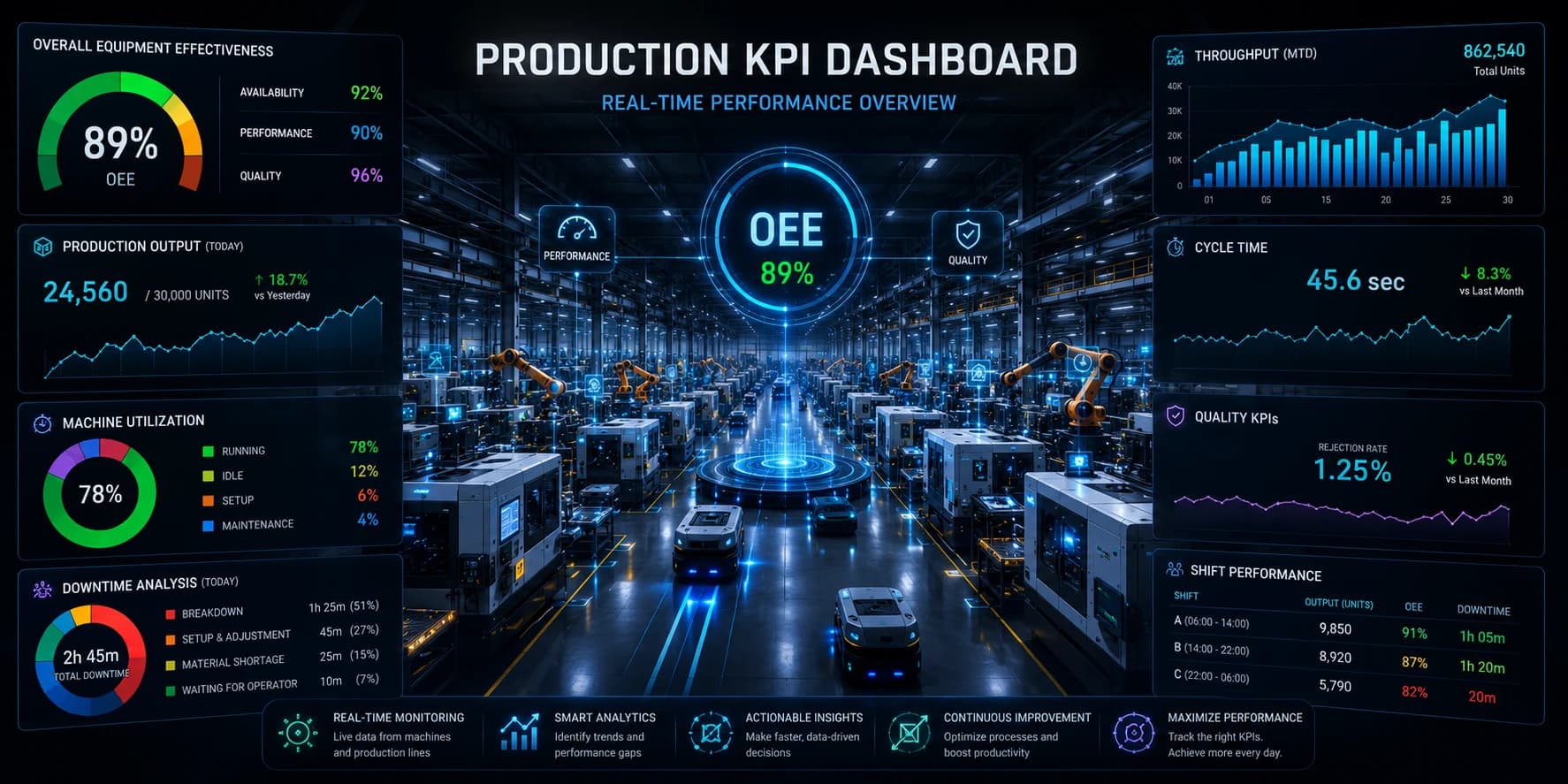
IIoT systems automatically calculate Overall Equipment Effectiveness based on:
Availability
Machine uptime.
Performance
Production speed.
Quality
Defect-free output.
Monitoring OEE helps manufacturers identify production losses and continuously improve efficiency.
Improved Quality Control
IIoT enables continuous monitoring of production parameters, allowing manufacturers to detect quality issues early.
Benefits include:
- Reduced defects
- Less rework
- Lower scrap rates
- Improved customer satisfaction
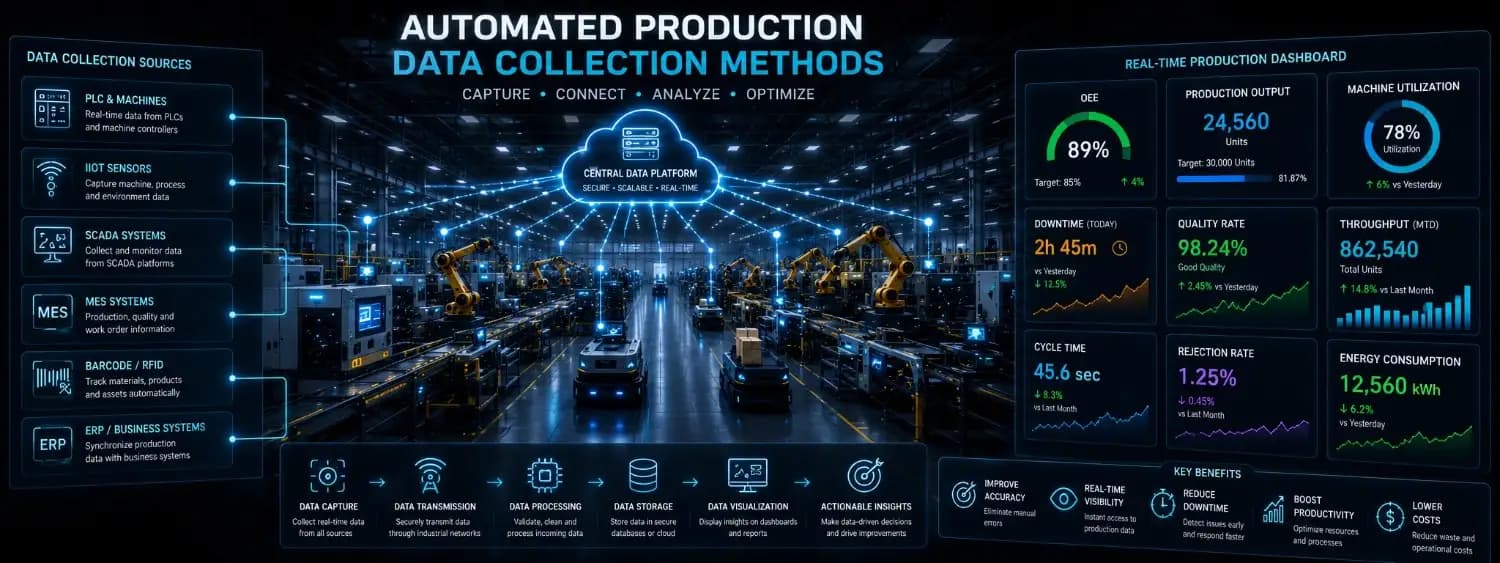
Automated Production Data Collection
Manual data entry often results in delays and inaccuracies.
IIoT automates data collection from machines and production lines, providing accurate information for analysis and reporting.
Benefits include:
- Improved data accuracy
- Reduced administrative work
- Faster reporting
Energy Monitoring and Optimization
Energy costs represent a significant portion of manufacturing expenses.
IIoT systems monitor:
- Machine energy consumption
- Power usage trends
- Peak demand
- Equipment efficiency
Manufacturers can identify opportunities to reduce energy waste and lower operating costs.
Remote Factory Monitoring
Cloud-enabled IIoT platforms allow managers to monitor factory operations from any location.
Remote monitoring supports:
- Faster decision-making
- Multi-site management
- Increased operational flexibility
Key IIoT Technologies Supporting Manufacturing Productivity
Industrial Sensors
Collect real-time production and machine data.
PLC Connectivity
Capture operational information from industrial equipment.
Edge Computing
Process production data near the machines for faster response.
Cloud Computing
Store and analyze manufacturing data securely.
Artificial Intelligence
Identify production trends and optimize processes.
Machine Learning
Improve predictive maintenance and operational forecasting.
Big Data Analytics
Analyze large volumes of production information for continuous improvement.
Important Manufacturing KPIs Improved by IIoT
Manufacturers use IIoT to improve:
Overall Equipment Effectiveness (OEE)
Increase machine efficiency.
Machine Utilization
Reduce idle time.
Downtime Percentage
Minimize equipment failures.
Production Output
Increase throughput.
Cycle Time
Improve production speed.
Rejection Rate
Reduce quality defects.
Energy Consumption
Optimize operational costs.
Monitoring these KPIs enables continuous productivity improvement.
Applications of IIoT Across Industries
Automotive Manufacturing
Optimize assembly lines and equipment utilization.
Pharmaceutical Manufacturing
Improve batch production and compliance.
Food and Beverage Industry
Maintain quality while maximizing throughput.
Packaging Industry
Reduce downtime and improve operational efficiency.
Textile Manufacturing
Track machine performance and production output.
Electronics Manufacturing
Enhance precision and minimize production defects.
Best Practices for Improving Manufacturing Productivity with IIoT
Start with Critical Equipment
Connect machines that have the highest impact on production.
Define Clear KPIs
Track meaningful metrics such as OEE, downtime, throughput, and quality.
Use Real-Time Dashboards
Provide operators and managers with live production visibility.
Integrate Existing Systems
Connect IIoT platforms with:
- ERP software
- MES systems
- SCADA platforms
- Production monitoring software
Train Employees
Ensure operators understand how to use IIoT data effectively.
Continuously Optimize Processes
Use production insights to improve workflows and eliminate inefficiencies.
Challenges of IIoT Implementation
Manufacturers may encounter several challenges, including:
Legacy Equipment Integration
Older machines may require communication gateways.
Cybersecurity
Connected devices require strong network security.
Data Management
Large volumes of production data require efficient storage and analysis.
Initial Investment
Implementation costs should be evaluated against long-term productivity gains.
Proper planning helps organizations overcome these challenges successfully.
Future of IIoT in Manufacturing
The future of manufacturing productivity will be shaped by technologies such as:
AI-Powered Smart Factories
Artificial intelligence will automate production optimization.
Autonomous Manufacturing
Factories will become increasingly self-managing.
Digital Twins
Virtual factory models will improve planning and maintenance.
Advanced Robotics
Collaborative robots will increase operational efficiency.
Edge AI
Real-time machine intelligence will improve production performance.
These innovations will continue driving higher manufacturing productivity.
Conclusion
Manufacturing Productivity is essential for achieving sustainable growth and maintaining a competitive advantage. IIoT empowers manufacturers with real-time visibility, predictive maintenance, automated data collection, and advanced analytics that significantly improve operational efficiency.
By integrating Industrial IoT technologies into production environments, manufacturers can reduce downtime, optimize machine utilization, improve product quality, and make data-driven decisions that support continuous improvement.
As Industry 4.0 continues to evolve, IIoT will remain one of the most powerful technologies for building smarter, more productive, and highly efficient manufacturing facilities.
Frequently Asked Questions (FAQs)
What is manufacturing productivity?
Manufacturing productivity measures how efficiently a factory converts resources into finished products while minimizing waste and downtime.
How does IIoT improve manufacturing productivity?
IIoT enables real-time monitoring, predictive maintenance, automated data collection, and data-driven decision-making that improve efficiency.
What are the benefits of IIoT in manufacturing?
Benefits include reduced downtime, improved machine utilization, better quality control, increased production visibility, and optimized maintenance.
Which industries use IIoT?
Automotive, pharmaceutical, food processing, packaging, textile, electronics, and many other manufacturing industries.
What KPIs can IIoT improve?
IIoT helps improve OEE, production output, cycle time, downtime percentage, machine utilization, quality, and energy efficiency.