Connecting Production Planning with Monitoring
In today's fast-paced manufacturing environment, creating an efficient production schedule is only half the battle. The real challenge lies in ensuring that production plans are executed as intended. Delays, machine breakdowns, labor shortages, and unexpected production issues can quickly disrupt schedules and impact delivery commitments. This is where integrating Production Planning Software with Production Monitoring Systems becomes essential.
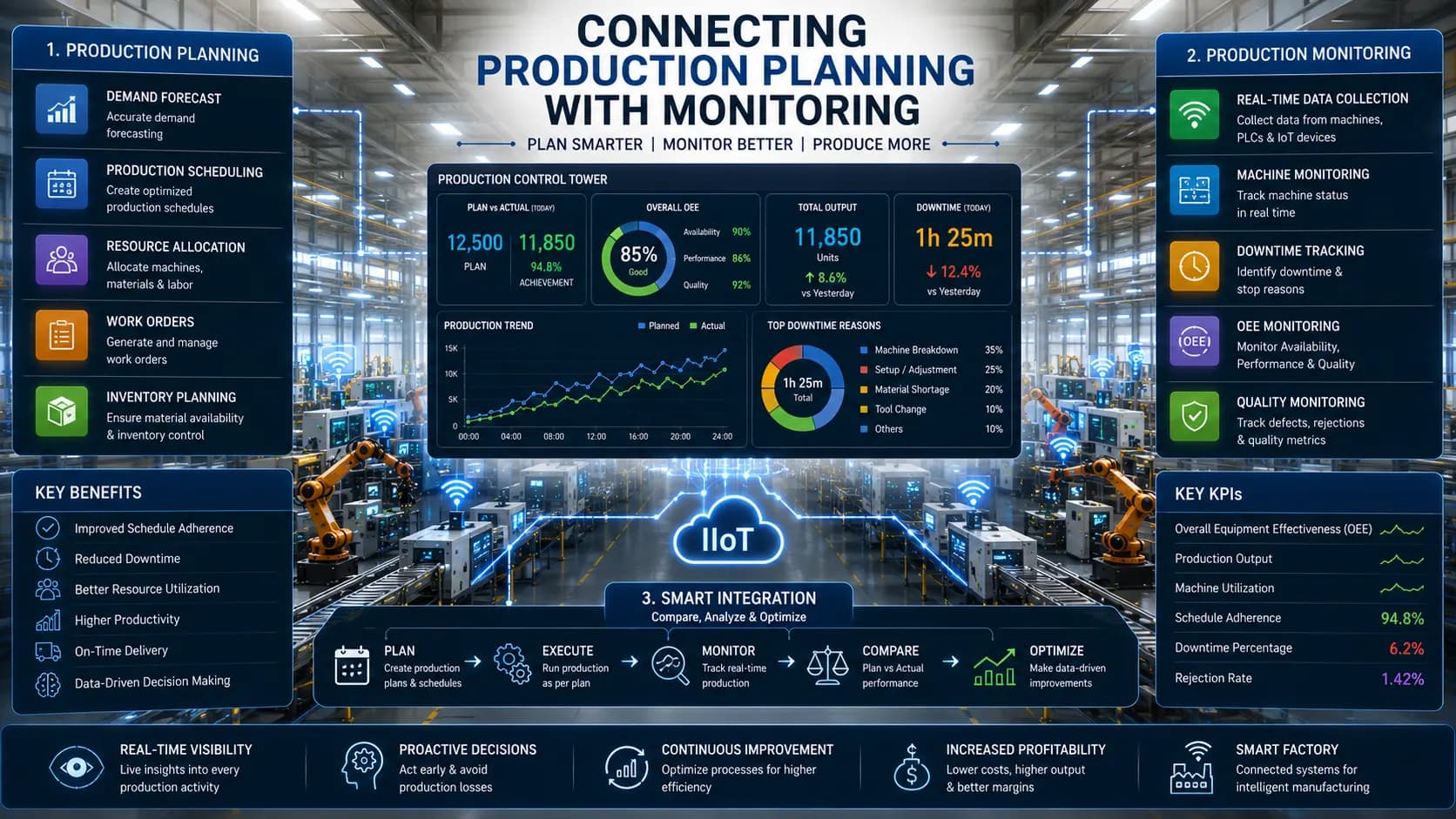
Production planning software helps manufacturers create optimized schedules, allocate resources, and manage production orders. When combined with real-time production monitoring, manufacturers gain complete visibility into execution, allowing them to compare planned production with actual performance and make immediate adjustments when required.
As manufacturers continue adopting Industry 4.0 technologies, integrating planning with monitoring has become a key strategy for improving operational efficiency, reducing production losses, and achieving on-time delivery.
What is Production Planning Software?
Production Planning Software is a digital solution that helps manufacturers plan, schedule, and manage production activities. It ensures that machines, materials, labor, and production capacity are effectively utilized to meet customer demand while minimizing costs.
A production planning system typically manages:
- Production schedules
- Work orders
- Resource allocation
- Material availability
- Production capacity
- Delivery timelines
- Inventory planning
- Production priorities
The primary objective is to optimize manufacturing operations and maximize productivity.
What is Production Monitoring?
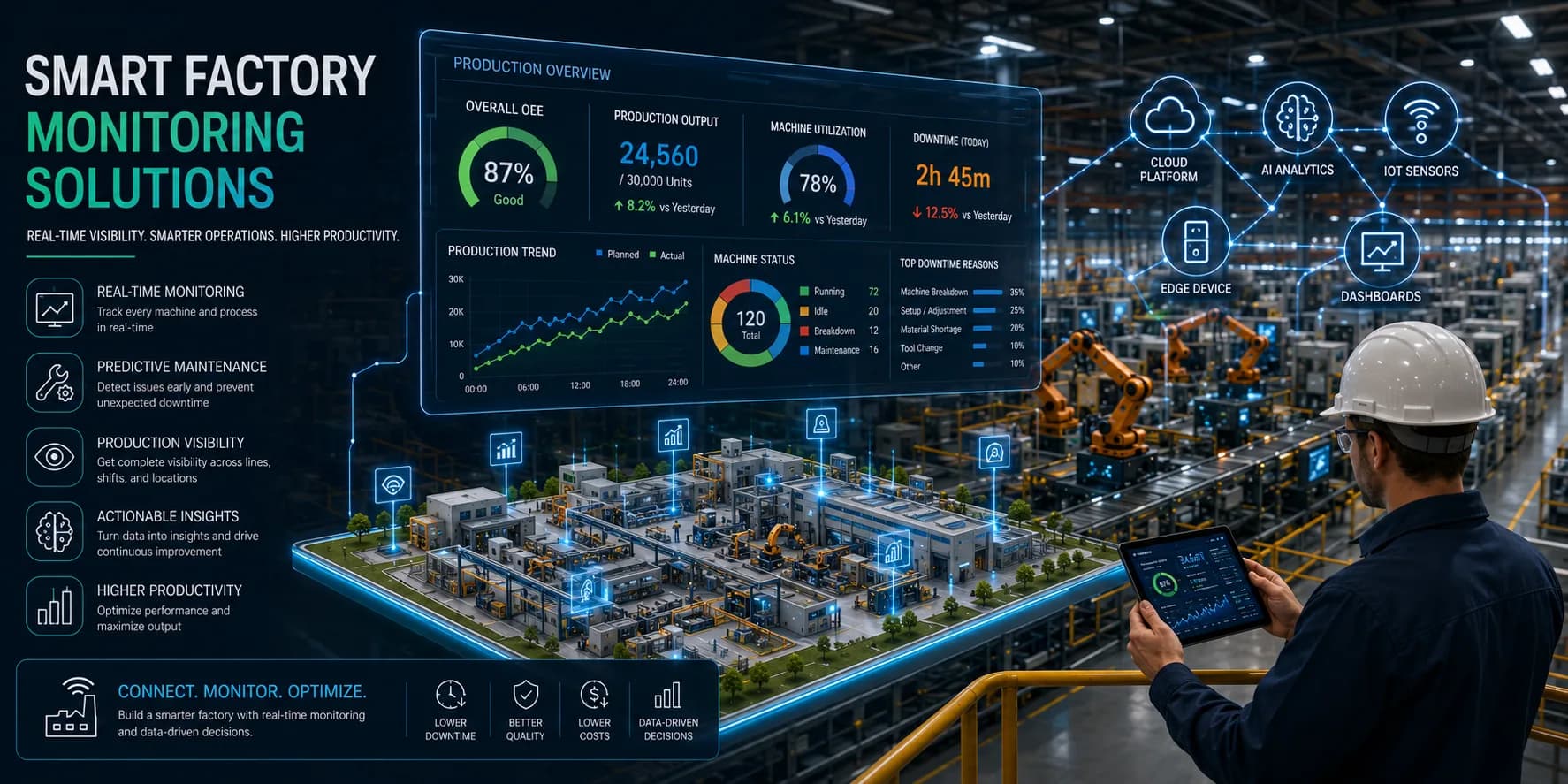
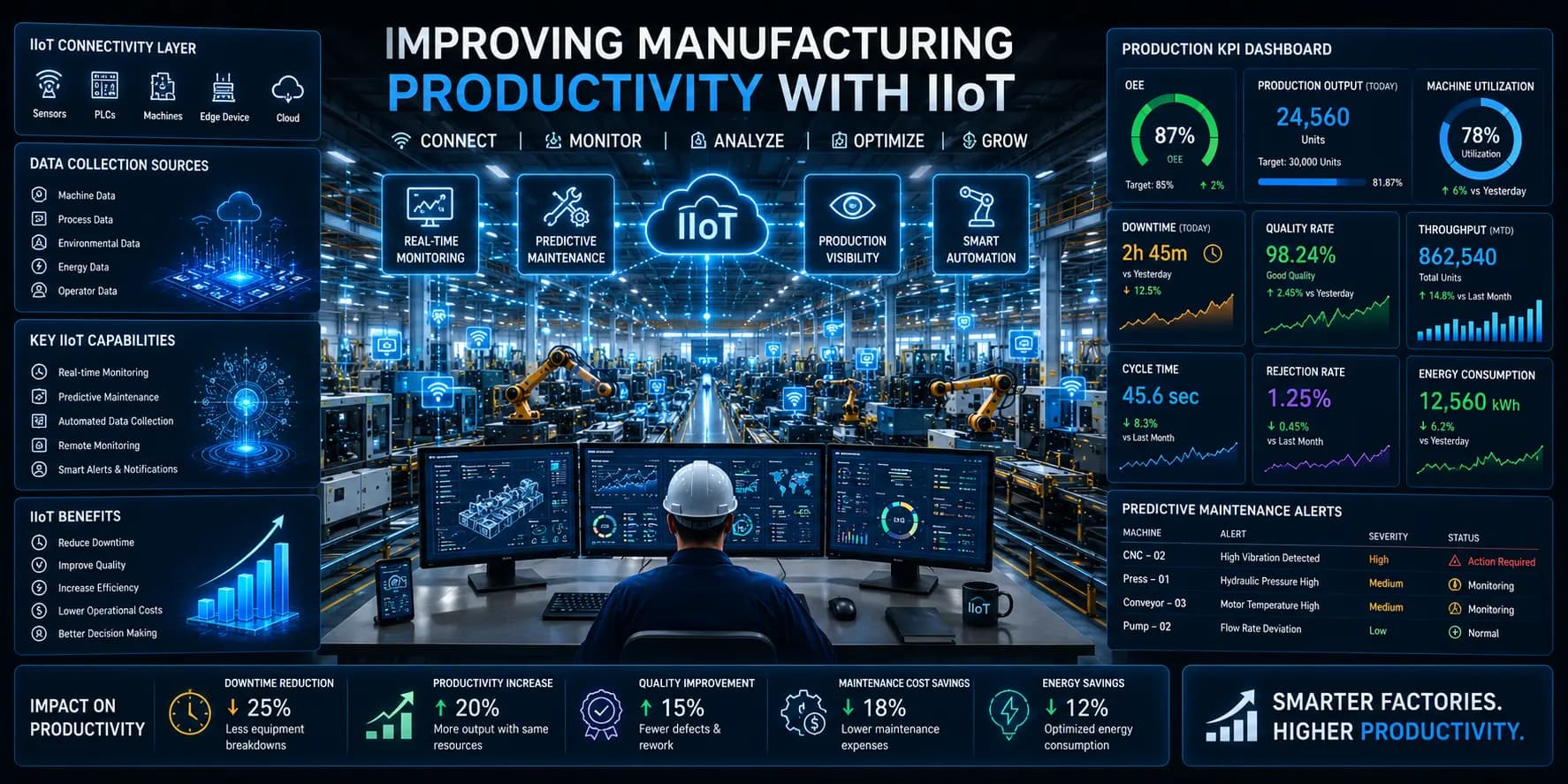
Production monitoring involves continuously tracking manufacturing activities in real time. It collects live data from machines, PLCs, Industrial IoT devices, and production equipment to provide complete visibility into shop floor operations.
Production monitoring tracks:
-
Machine status
- Production output
- Downtime
- Cycle times
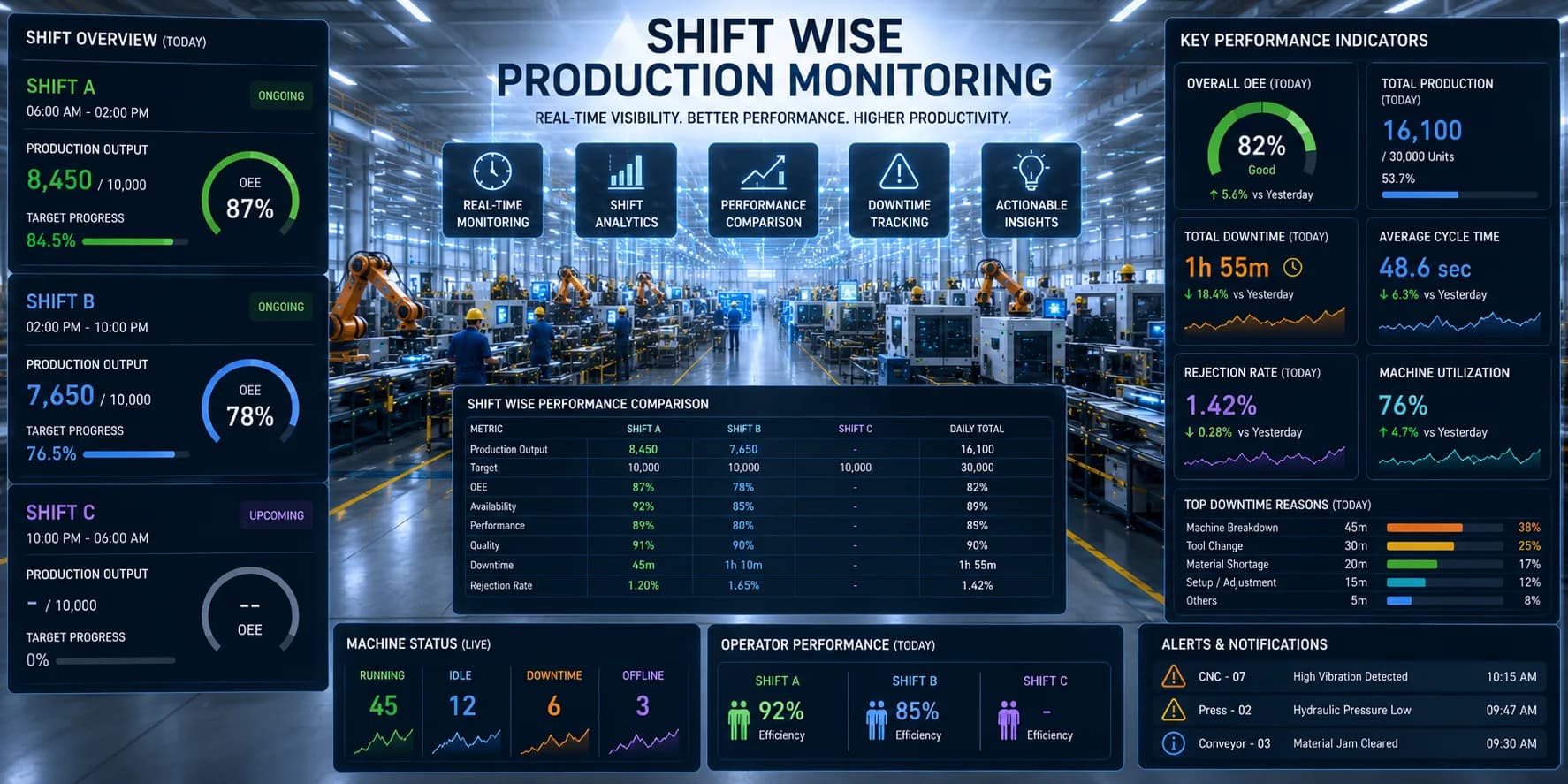
- Shift performance
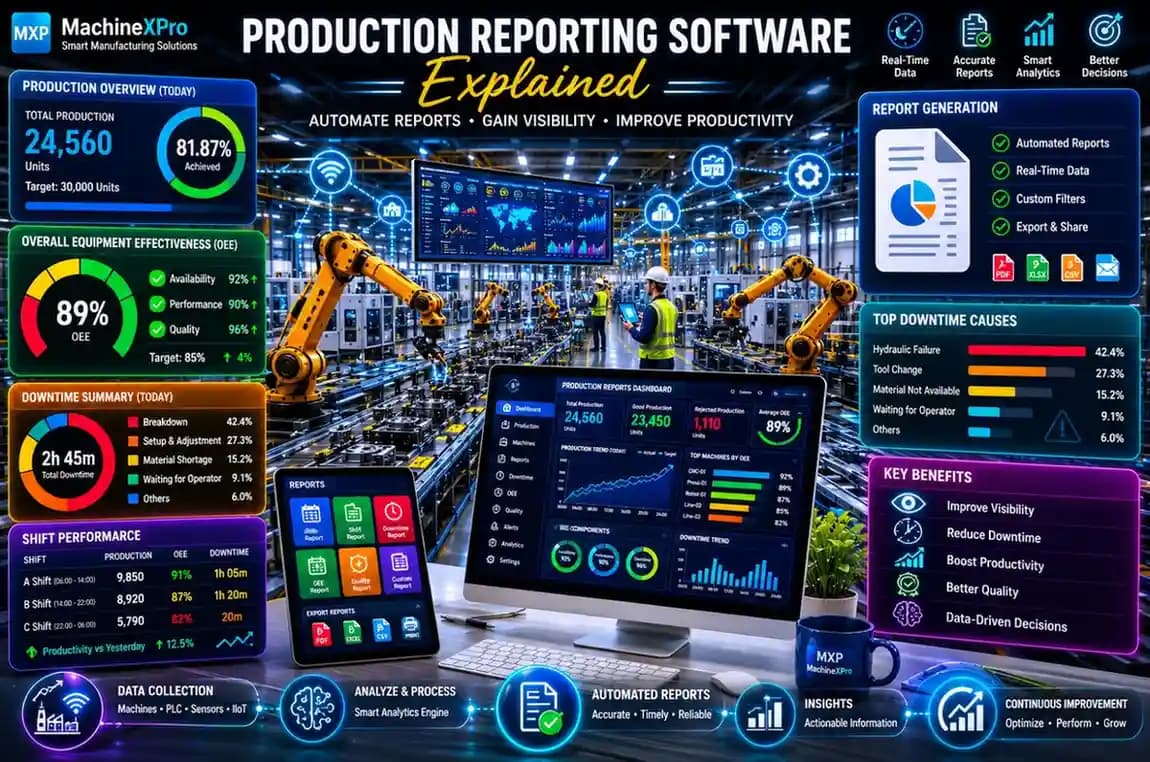
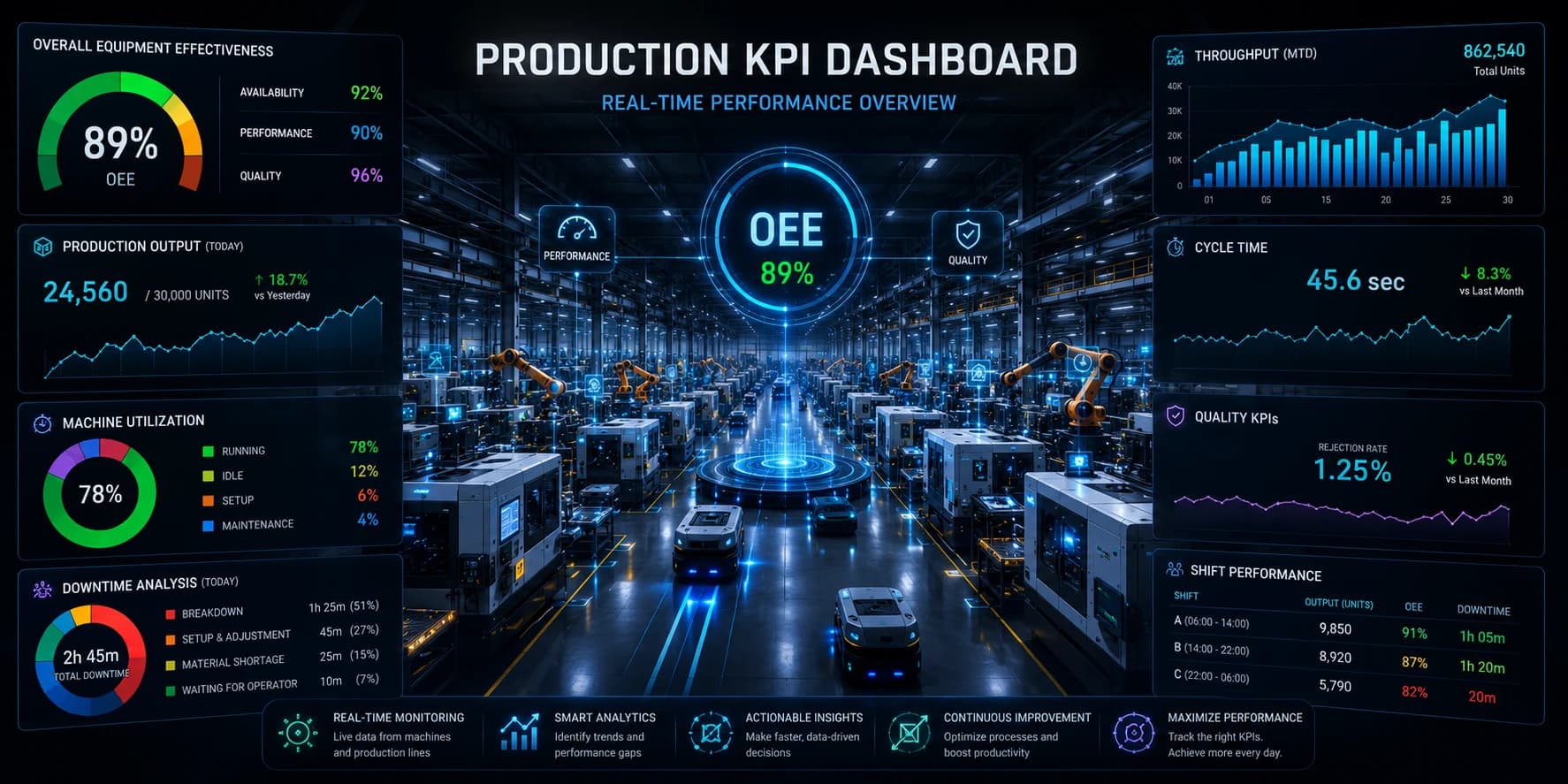
- Overall Equipment Effectiveness (OEE)
- Quality metrics
- Equipment utilization
By monitoring production continuously, manufacturers can detect issues early and ensure production stays aligned with planned schedules.
Why Production Planning Alone is Not Enough
Many manufacturers prepare detailed production plans but struggle during execution due to unforeseen shop floor events.
Common challenges include:
- Unexpected machine failures
- Material shortages
- Production bottlenecks
- Operator absenteeism
- Quality issues
- Unplanned maintenance
- Delayed production updates
Without real-time monitoring, managers often become aware of these issues only after production targets have already been missed.
Integrating planning with monitoring closes this gap by providing live production visibility and enabling proactive decision-making.
Benefits of Connecting Production Planning with Monitoring
Real-Time Production Visibility
Managers can compare planned production with actual output at any moment.
This enables:
- Immediate issue detection
- Better production control
- Faster corrective actions
Improved Production Scheduling
Real-time machine data helps planners create more realistic and achievable production schedules.
Benefits include:
- Reduced scheduling conflicts
- Better machine allocation
- Higher production efficiency
Reduced Downtime
Production monitoring identifies equipment failures instantly, allowing maintenance teams to respond quickly and minimize disruptions.
Better Resource Utilization
Integrated systems help optimize:
- Machine capacity
- Labor allocation
- Material usage
- Production lines
This leads to higher operational efficiency.
Enhanced Decision-Making
Managers no longer rely on delayed reports or manual updates.
Live dashboards provide accurate information for:
- Production planning
- Capacity management
- Maintenance scheduling
- Inventory control
Improved On-Time Delivery
When production schedules are continuously monitored, manufacturers can identify delays early and take corrective actions to meet delivery deadlines.
Higher Manufacturing Productivity
Real-time insights help eliminate bottlenecks, reduce idle time, and improve overall equipment utilization.
How Production Planning and Monitoring Work Together
Step 1: Create the Production Plan
Production planning software generates work orders based on:
- Customer demand
- Machine capacity
- Available resources
- Inventory levels
Step 2: Execute Production
Production begins according to the planned schedule.
Machines, operators, and production lines start executing assigned tasks.
Step 3: Monitor Production in Real Time
Production monitoring systems collect live information from:
- PLCs
- Industrial IoT sensors
- Machines
- Production equipment
Managers can monitor:
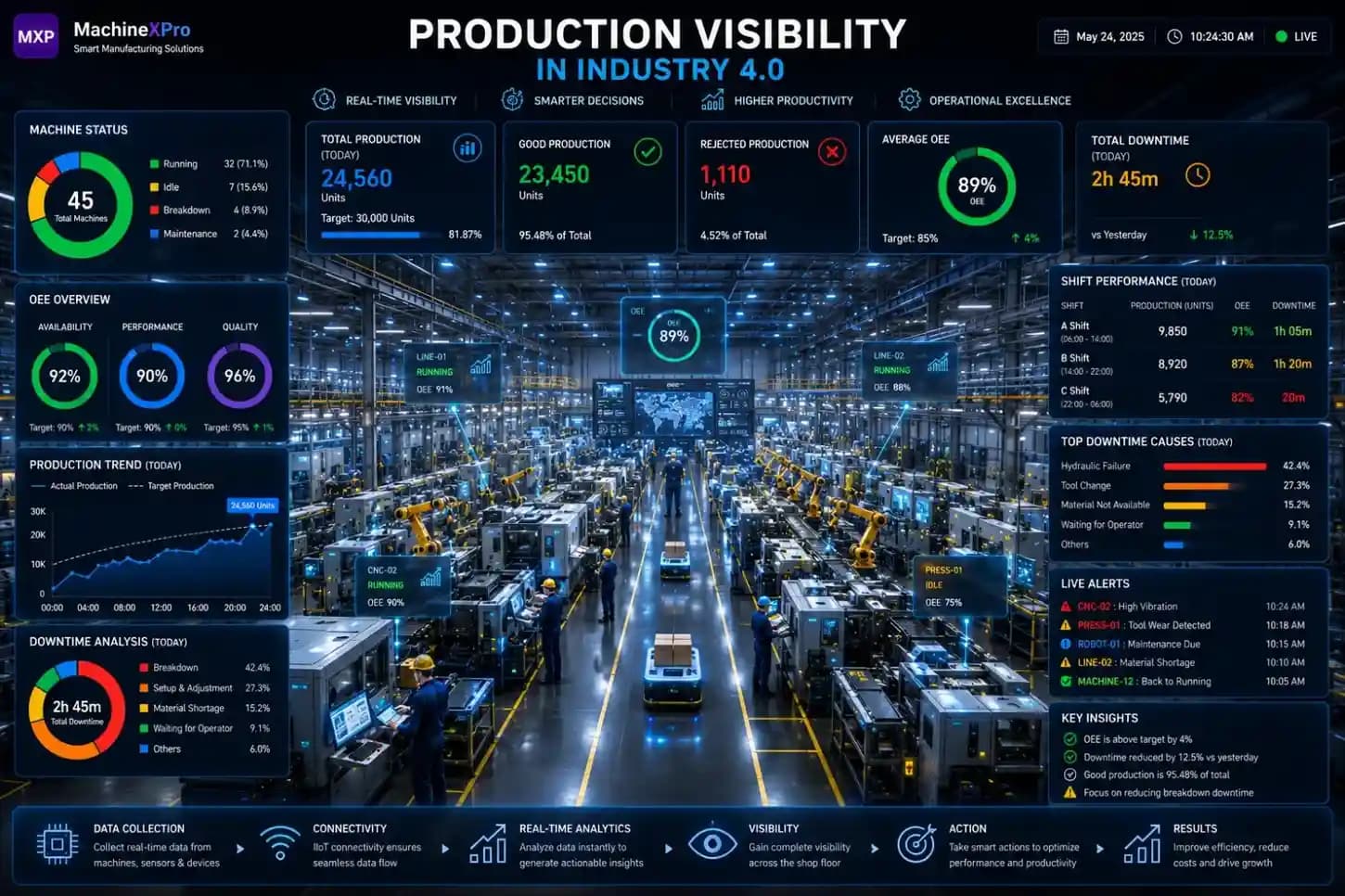
- Machine status
- Production counts
- Downtime
- OEE
- Shift performance
Step 4: Compare Planned vs Actual Performance
Dashboards automatically compare:
- Planned production
- Actual production
- Production efficiency
- Delivery progress
Any deviations are immediately visible.
Step 5: Optimize Production
Using real-time insights, managers can:
- Reschedule production
- Reassign resources
- Reduce bottlenecks
- Improve machine utilization
- Increase productivity
This creates a continuous improvement cycle.
Key Features of an Integrated Production Planning and Monitoring System
Production Scheduling
Plan jobs based on capacity and priorities.
Live Production Dashboards
Monitor factory operations in real time.
Machine Monitoring
Track running, idle, breakdown, and maintenance conditions.
OEE Monitoring
Measure equipment availability, performance, and quality.
Downtime Analysis
Identify causes of production interruptions.
Shift Performance Tracking
Evaluate production efficiency across different shifts.
Automated Alerts
Receive notifications for production delays, machine failures, or quality issues.
Production Reporting
Generate daily, weekly, and monthly production reports automatically.
Important KPIs to Monitor
An integrated system should track:
Overall Equipment Effectiveness (OEE)
Measures equipment productivity.
Production Output
Compare planned and actual production.
Machine Utilization
Monitor equipment efficiency.
Downtime Percentage
Identify production losses.
Schedule Adherence
Measure how closely production follows the original plan.
Cycle Time
Evaluate manufacturing speed.
Rejection Rate
Track production quality.
Monitoring these KPIs helps ensure production plans remain on target.
Role of Industry 4.0 in Production Planning
Industry 4.0 technologies make production planning more intelligent by integrating:
Industrial IoT
Real-time machine connectivity.
Artificial Intelligence
Optimized scheduling and predictive analytics.
Manufacturing Analytics
Data-driven performance improvement.
Cloud Platforms
Remote production monitoring.
Predictive Maintenance
Prevent equipment failures before they impact production schedules.
These technologies enable highly responsive manufacturing operations.
Best Practices for Successful Integration
Connect All Critical Equipment
Ensure production monitoring covers all major machines and production lines.
Standardize Production Data
Use consistent data formats across all manufacturing systems.
Integrate ERP and MES
Synchronize planning, inventory, and shop floor operations.
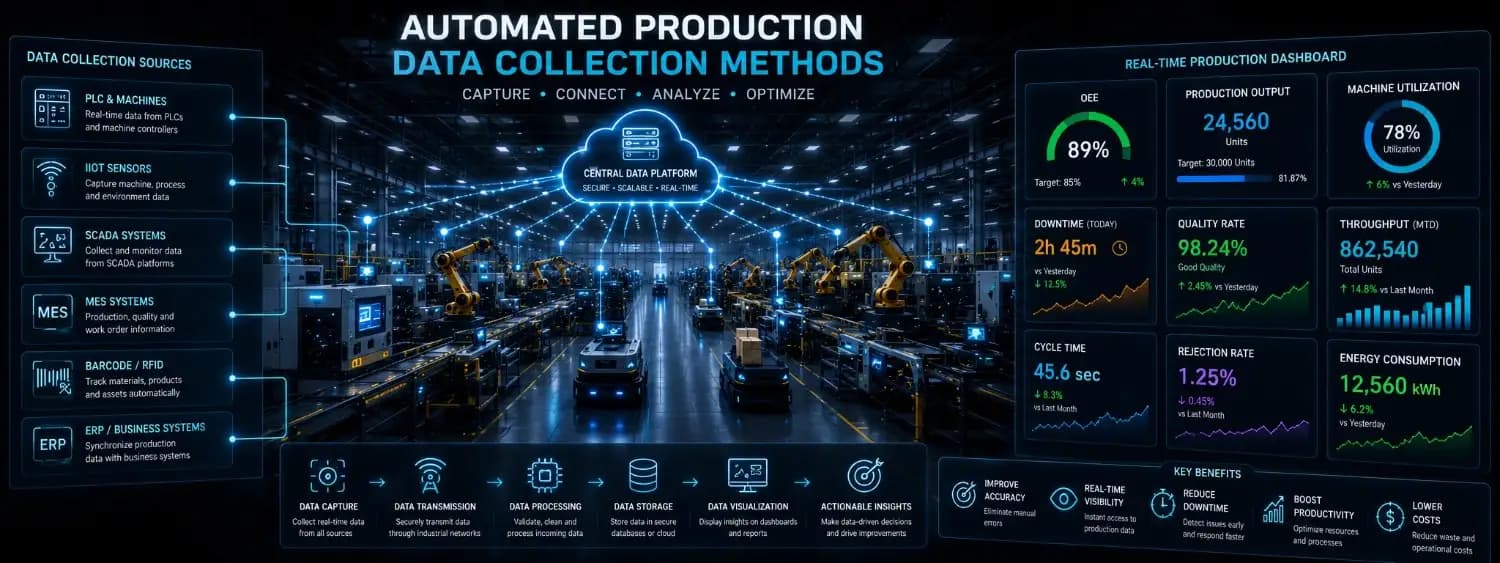
Automate Data Collection
Reduce manual reporting and improve data accuracy.
Train Production Teams
Ensure operators and supervisors understand both planning and monitoring tools.
Review KPIs Daily
Regular performance reviews help identify opportunities for continuous improvement.
Challenges in Integrating Planning with Monitoring
Although highly beneficial, manufacturers may encounter:
Legacy Equipment Compatibility
Older machines may require Industrial IoT gateways or communication converters.
Data Synchronization
Ensuring planning and monitoring systems remain synchronized can be challenging without proper integration.
Employee Adoption
Training is essential to maximize the value of new digital tools.
Cybersecurity
Connected manufacturing systems require secure communication and data protection.
With careful planning, these challenges can be addressed successfully.
Future Trends
The future of production planning and monitoring includes:
AI-Powered Scheduling
Artificial intelligence will automatically optimize production plans.
Digital Twins
Virtual production environments will simulate production before execution.
Autonomous Manufacturing
Smart factories will adjust production schedules automatically based on live conditions.
Advanced Manufacturing Analytics
Predictive insights will further improve operational efficiency.
Mobile Production Management
Managers will monitor and modify production plans from anywhere.
These technologies will continue making manufacturing more agile and efficient.
Conclusion
Integrating Production Planning Software with Production Monitoring Systems enables manufacturers to bridge the gap between planning and execution. By combining optimized production schedules with real-time shop floor visibility, organizations can reduce downtime, improve resource utilization, increase productivity, and ensure on-time delivery.
As Industry 4.0 continues to reshape manufacturing, connected planning and monitoring systems are becoming essential for smart factories seeking higher efficiency and long-term competitiveness.
Manufacturers that embrace this integrated approach are better equipped to respond to changing production demands, optimize operations, and achieve sustainable growth.
Frequently Asked Questions (FAQs)
What is production planning software?
Production planning software helps manufacturers schedule production, allocate resources, and manage work orders efficiently.
Why should production planning be integrated with production monitoring?
Integration provides real-time visibility into production execution, enabling manufacturers to compare planned versus actual performance and respond quickly to issues.
What are the benefits of connecting production planning with monitoring?
Key benefits include improved scheduling, reduced downtime, better resource utilization, increased productivity, and enhanced production visibility.
Which KPIs should be monitored?
Important KPIs include OEE, production output, machine utilization, downtime percentage, schedule adherence, cycle time, and rejection rate.
Which industries benefit from integrated planning and monitoring?
Automotive, pharmaceutical, food processing, packaging, textile, electronics, and other manufacturing industries benefit from this approach.