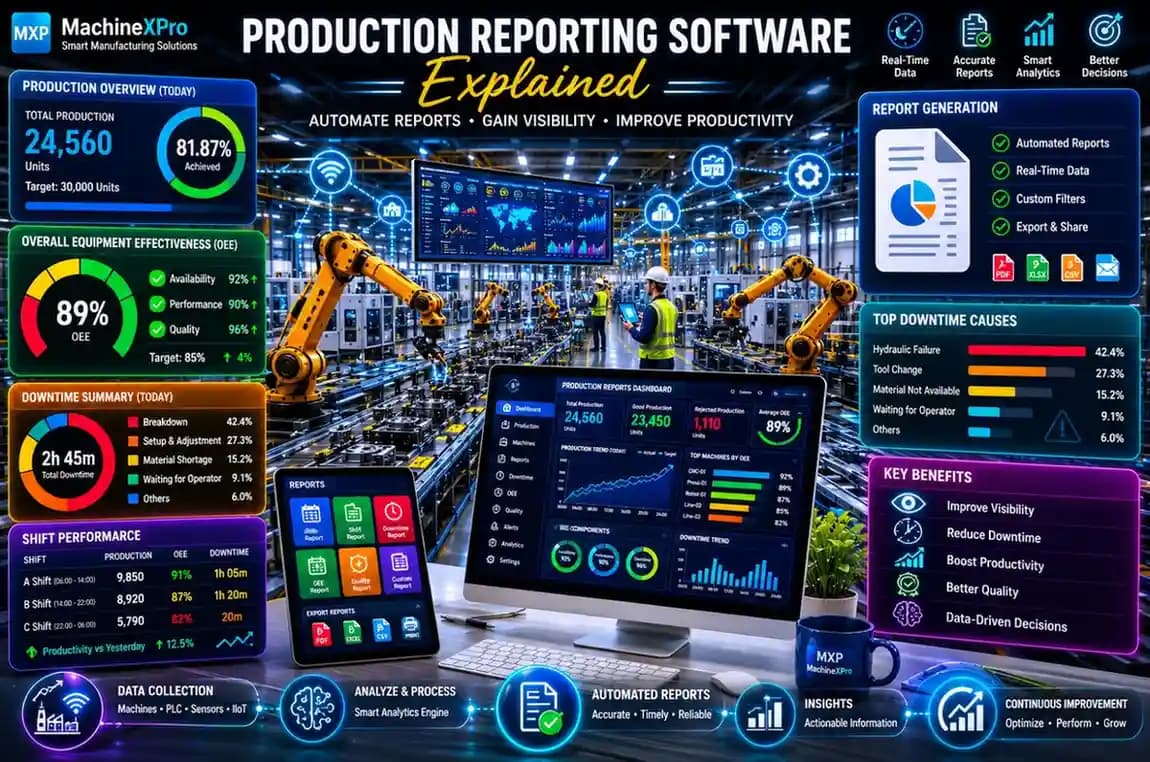
Production Reporting Software Explained
Modern manufacturing environments generate vast amounts of data every day. From machine performance and production counts to downtime events and quality metrics, factories rely on accurate information to improve efficiency and productivity. However, manually compiling reports can be time-consuming, error-prone, and inefficient. This is where Production Reporting Software becomes essential.
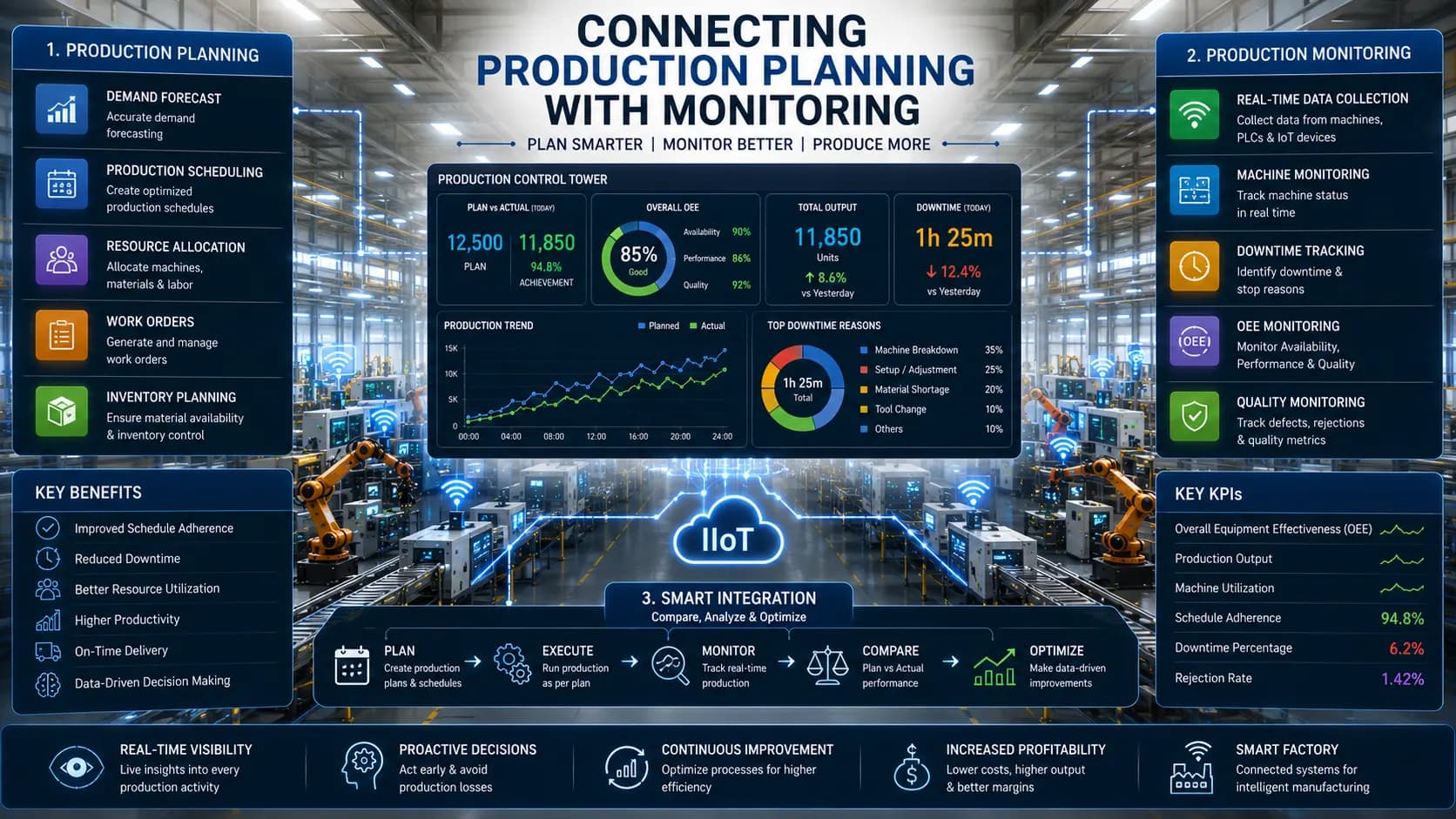
Production reporting software automates the collection, organization, and analysis of manufacturing data. It provides real-time insights and comprehensive reports that help manufacturers optimize processes, reduce downtime, and make informed decisions.
As Industry 4.0 continues to drive digital transformation, production reporting software has become a critical tool for achieving operational excellence.
What is Production Reporting Software?
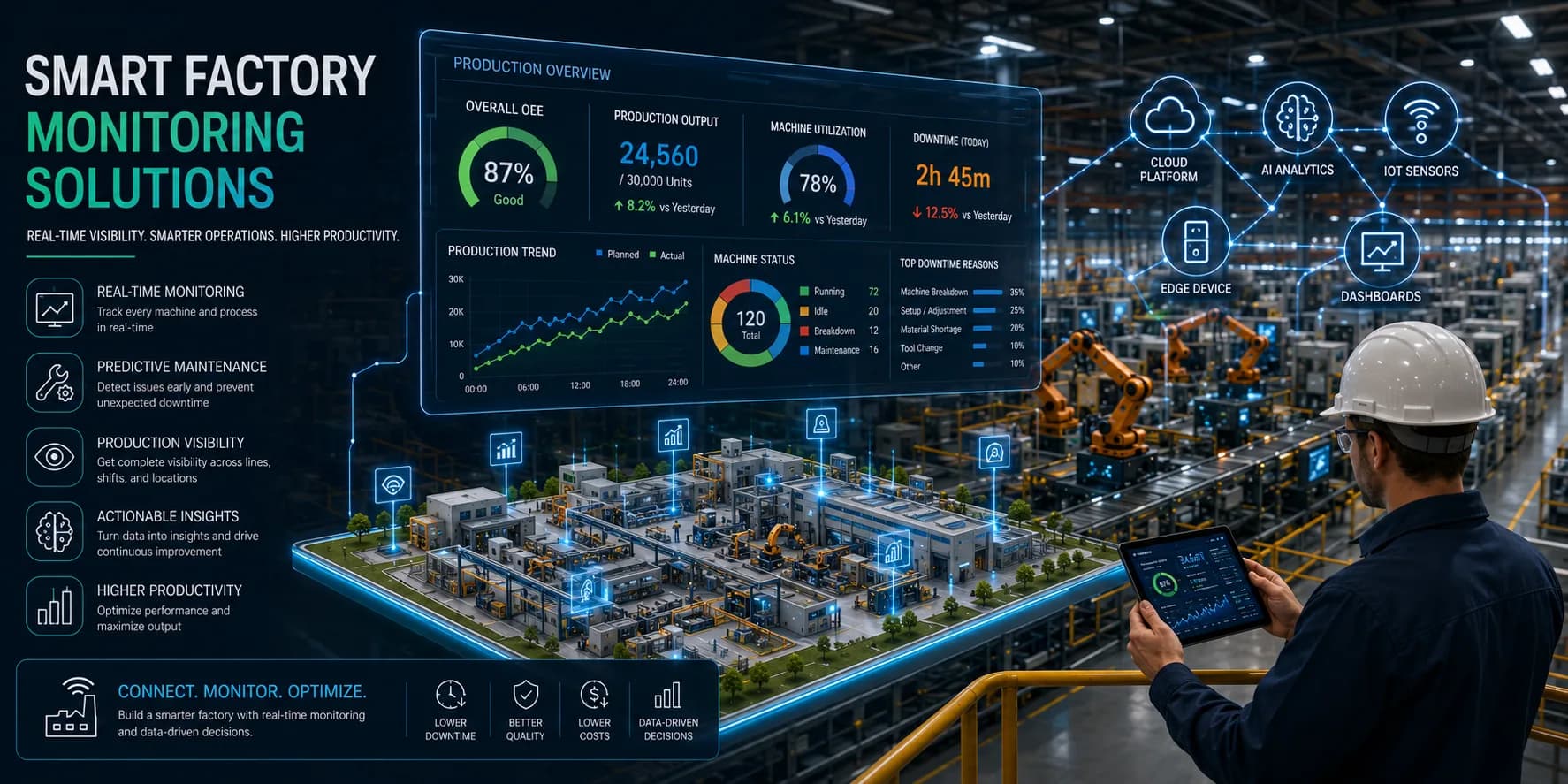
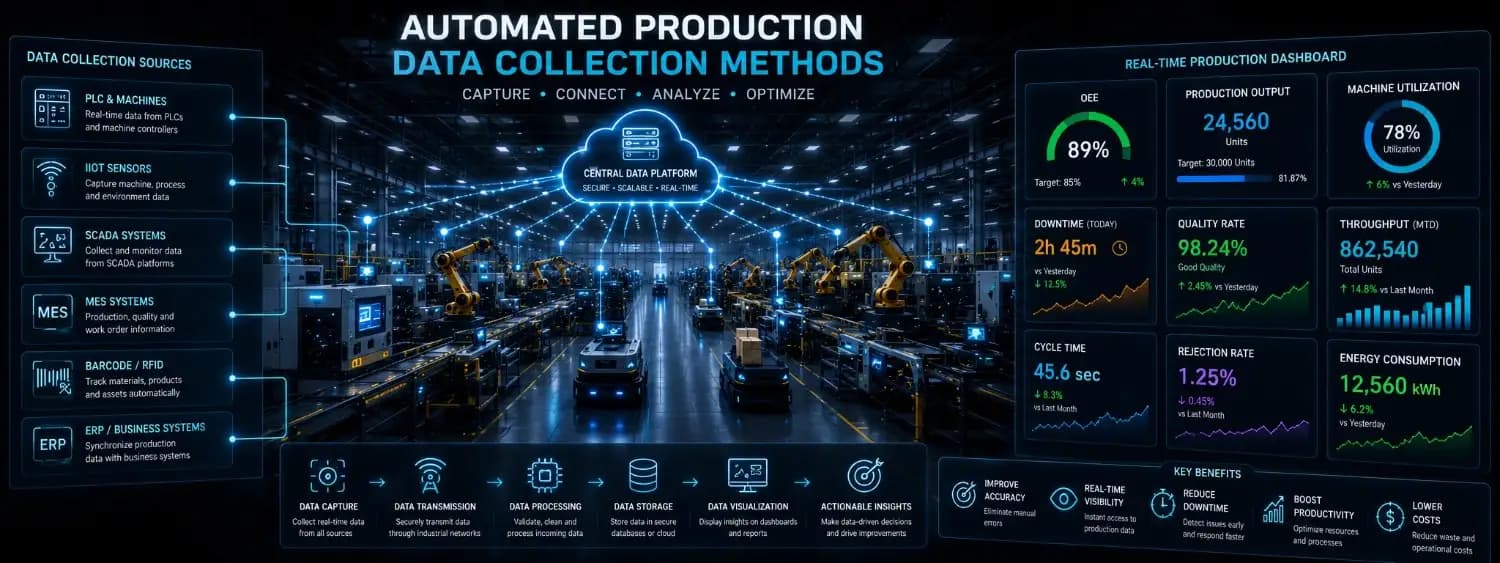
Production Reporting Software is a digital solution that collects and organizes production-related data from machines, PLCs, sensors, and manufacturing systems. It automatically generates reports that provide visibility into production performance and operational efficiency.
The software enables manufacturers to track:
- Production output
- Machine utilization
- Downtime events
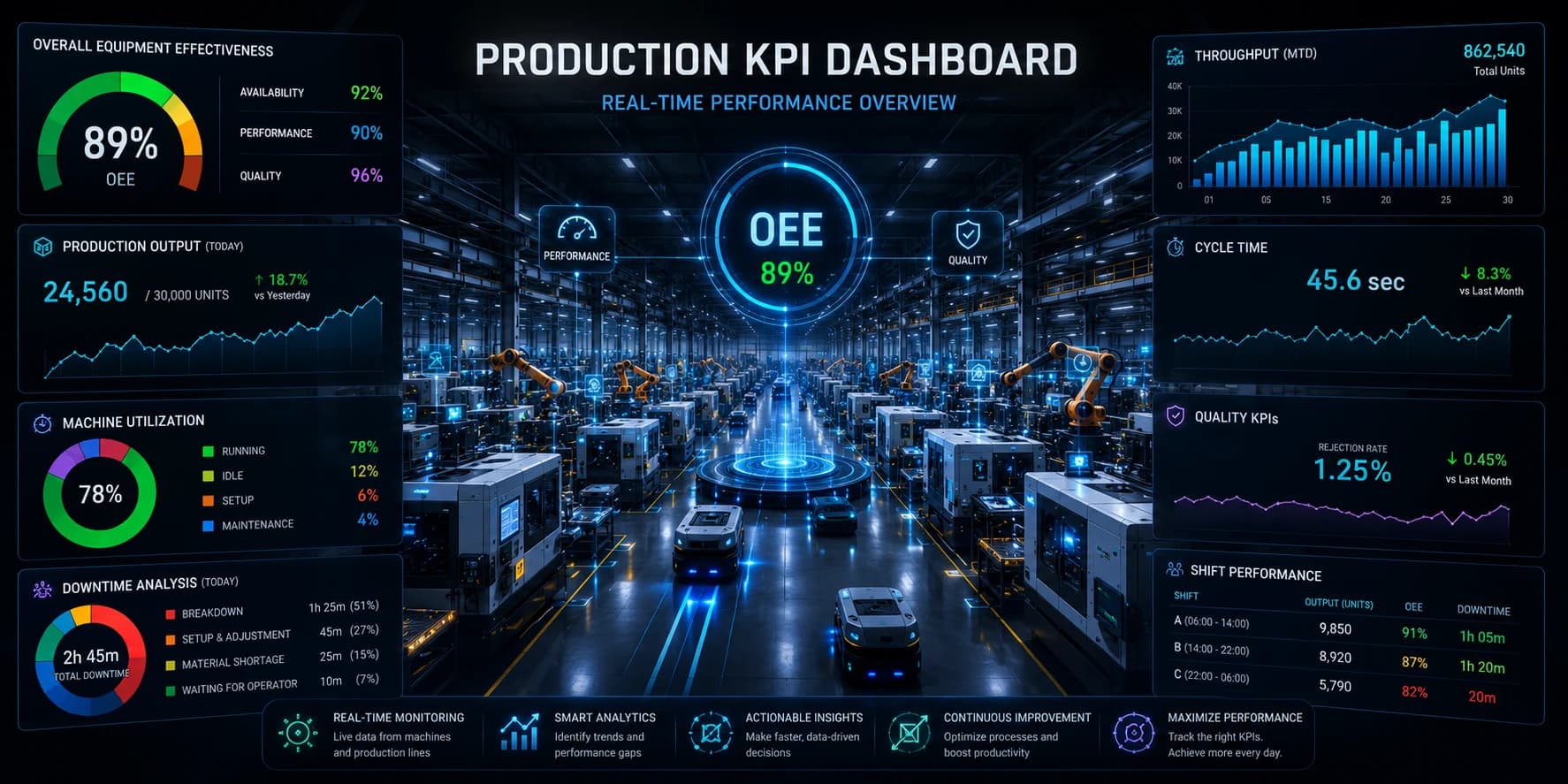
- Shift performance
- Overall Equipment Effectiveness (OEE)
- Rejection rates
- Cycle times
- Quality metrics
By replacing manual reporting methods, manufacturers can access accurate and timely information for better decision-making.
Why Production Reporting is Important
Traditional reporting methods often involve spreadsheets, paper logs, and delayed data. These approaches can lead to:
- Human errors
- Inaccurate reports
- Delayed decisions
- Limited visibility
- Increased administrative work
Production reporting software addresses these challenges by providing automated and real-time reporting capabilities that improve efficiency and transparency.
Key Features of Production Reporting Software
Automated Data Collection
Modern software automatically gathers data from:
- PLCs
- Industrial IoT devices
- Sensors
- Machines
- Production lines
This eliminates manual entry and improves data accuracy.
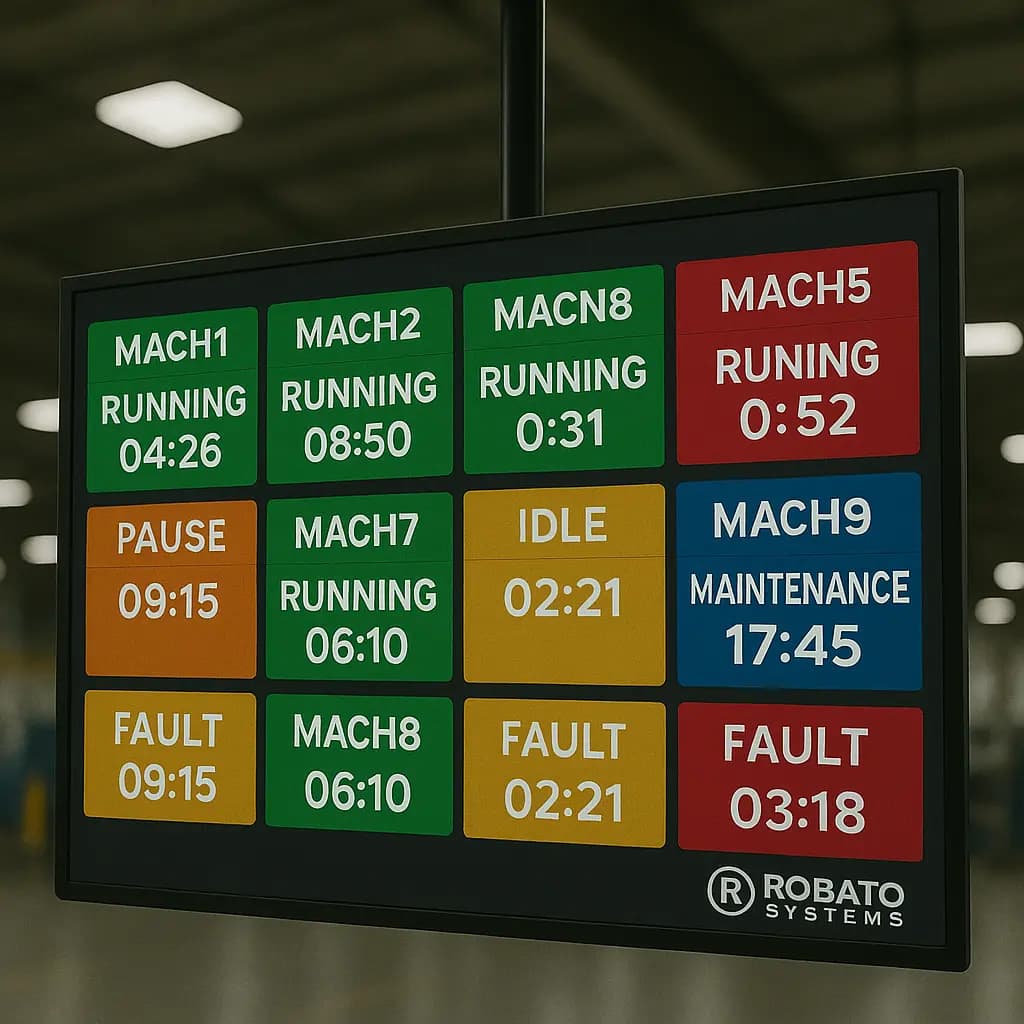
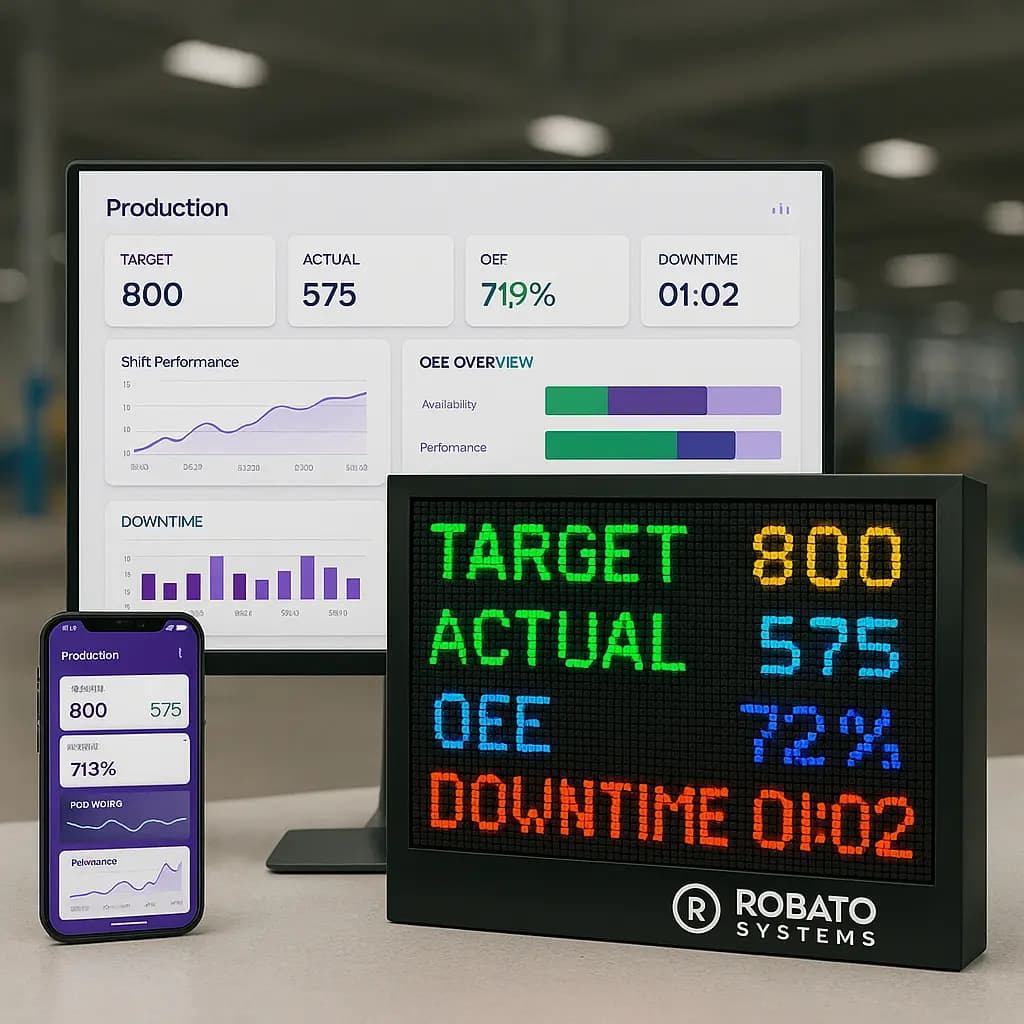
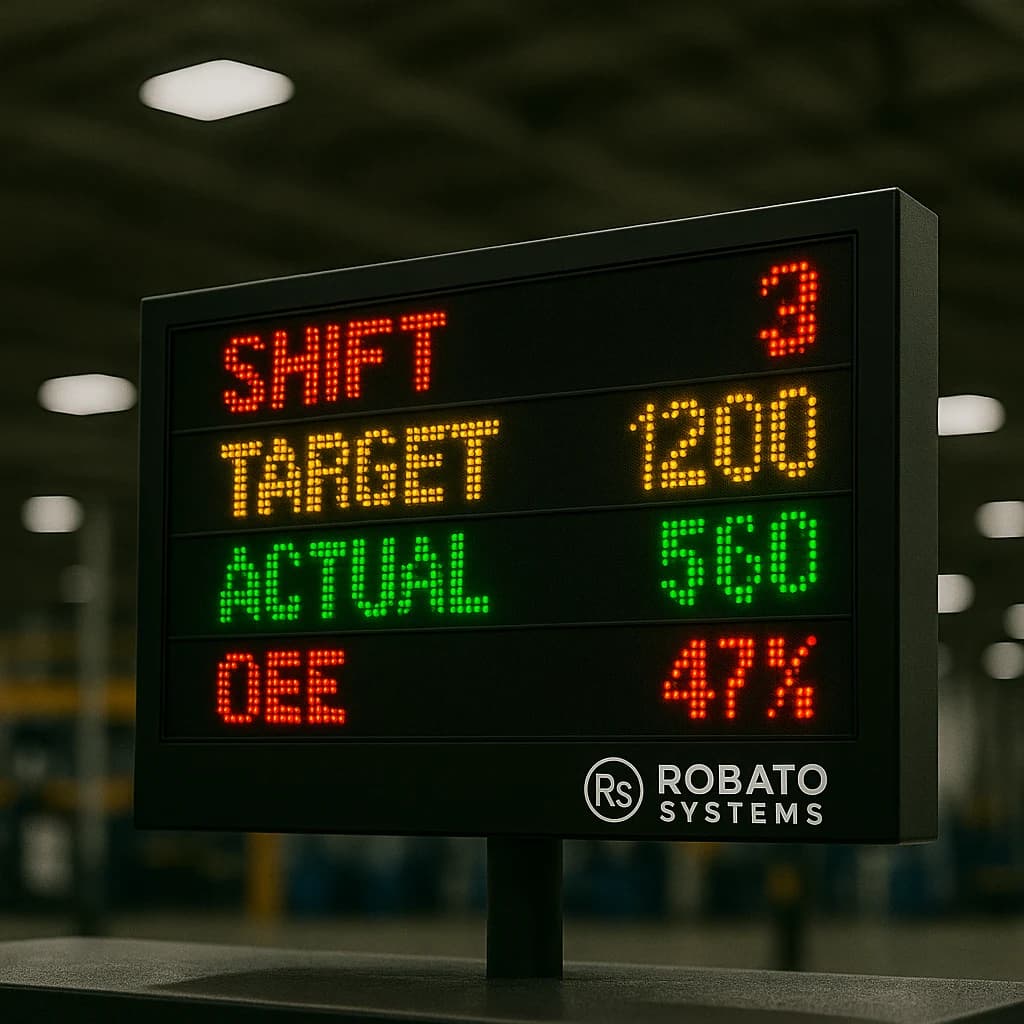
Real-Time Reporting
Managers can access up-to-date production information instantly.
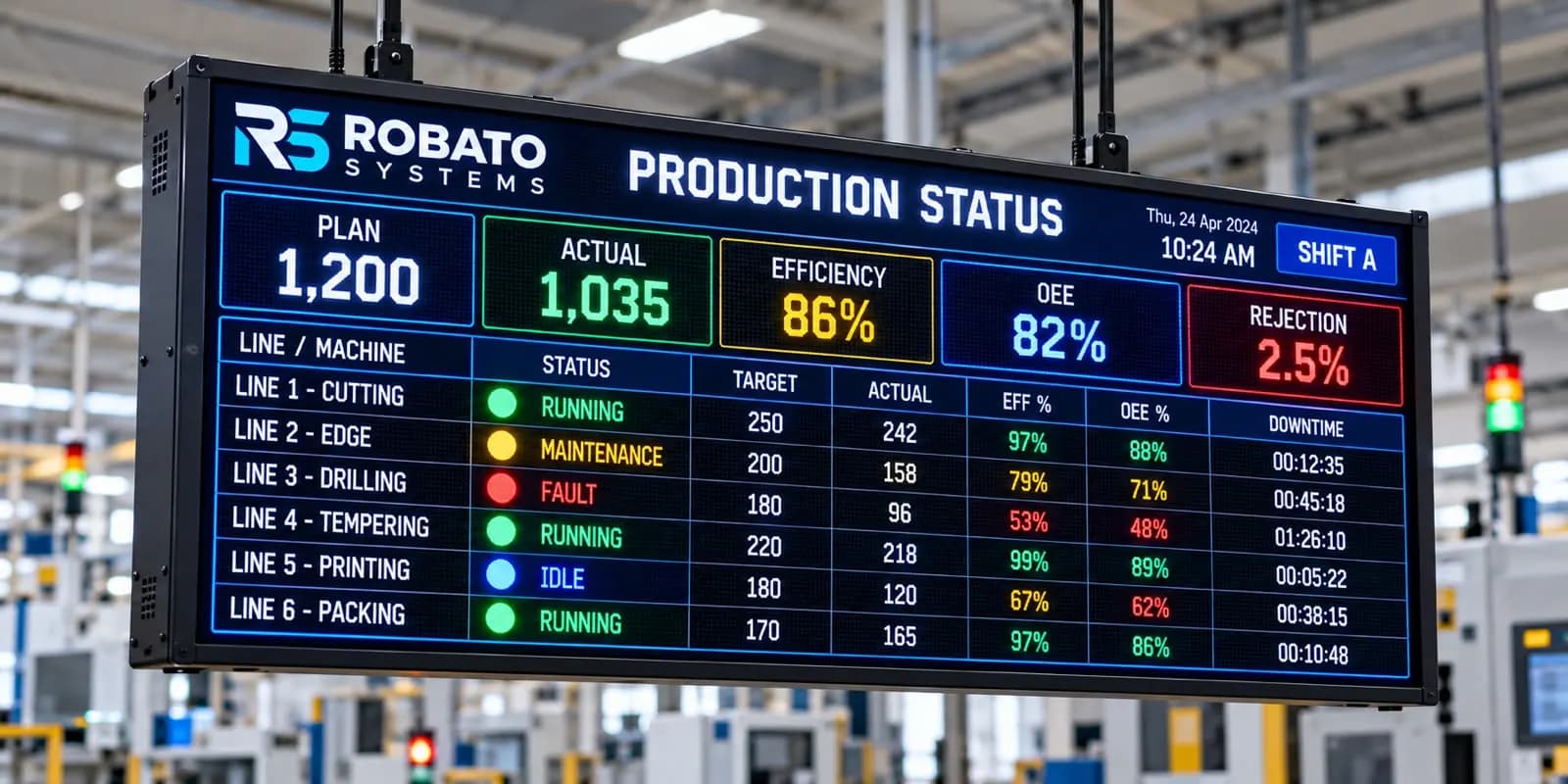
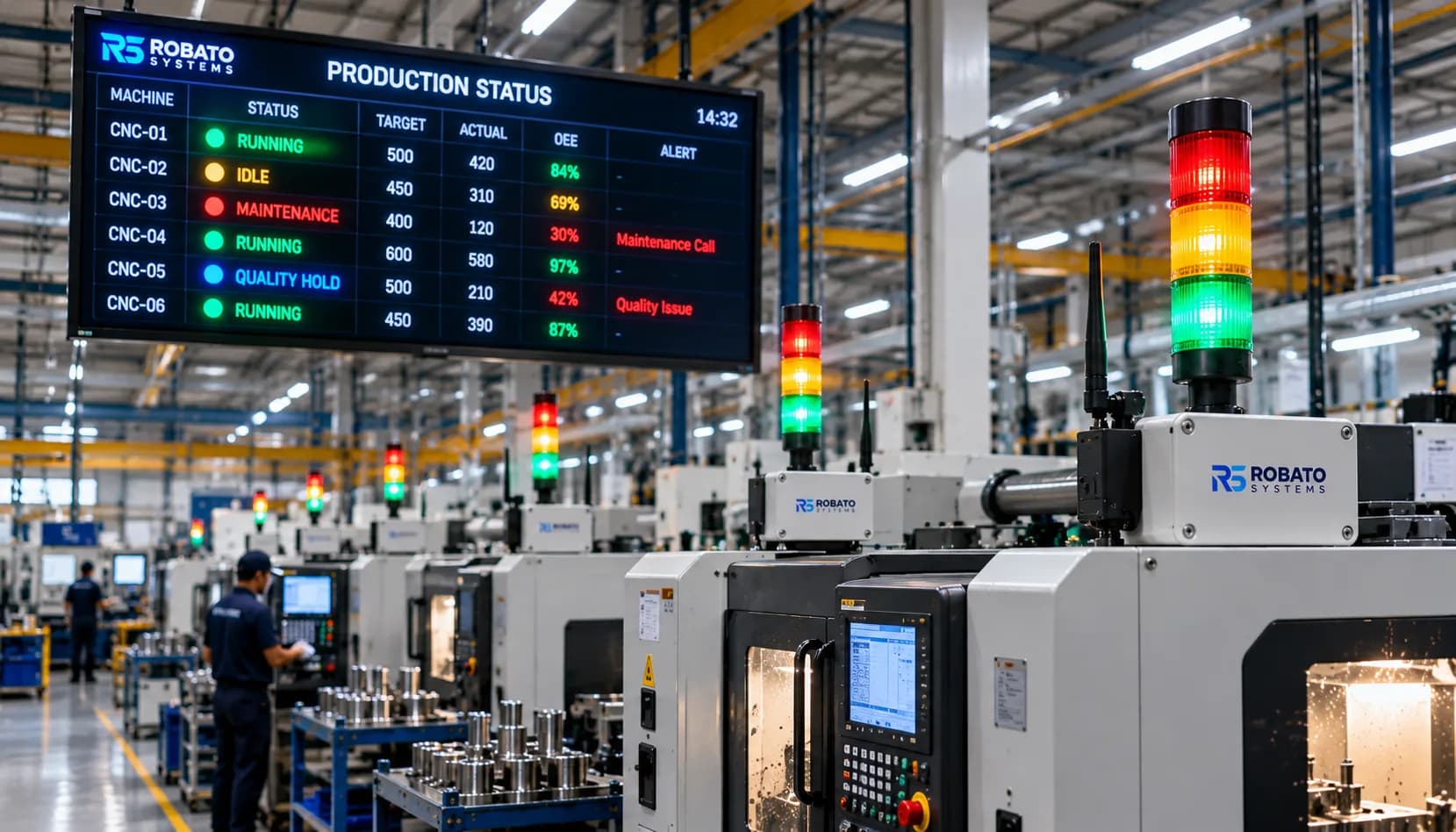
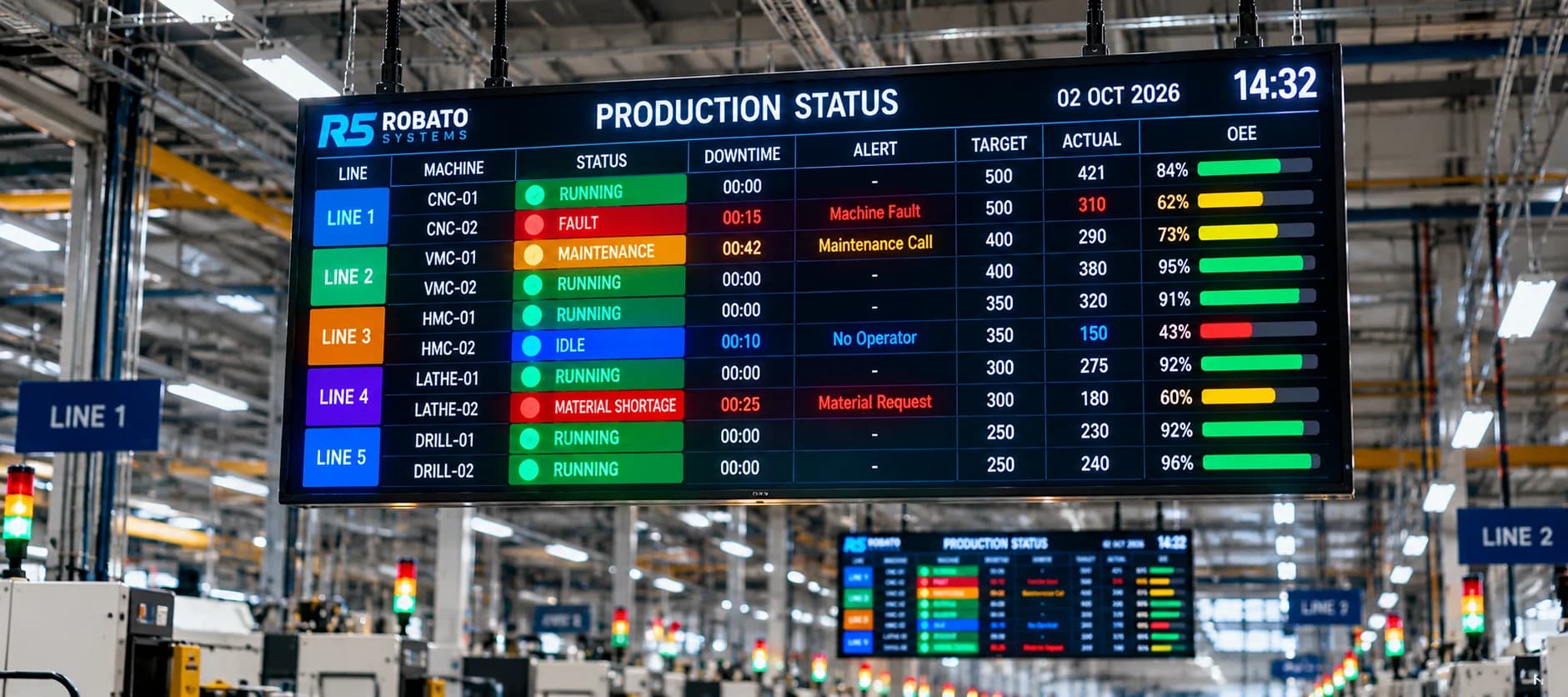
Real-time reports provide visibility into:
- Production counts
- Machine status
- Downtime events
- Shift performance
- OEE metrics
Immediate access to information enables faster decision-making.
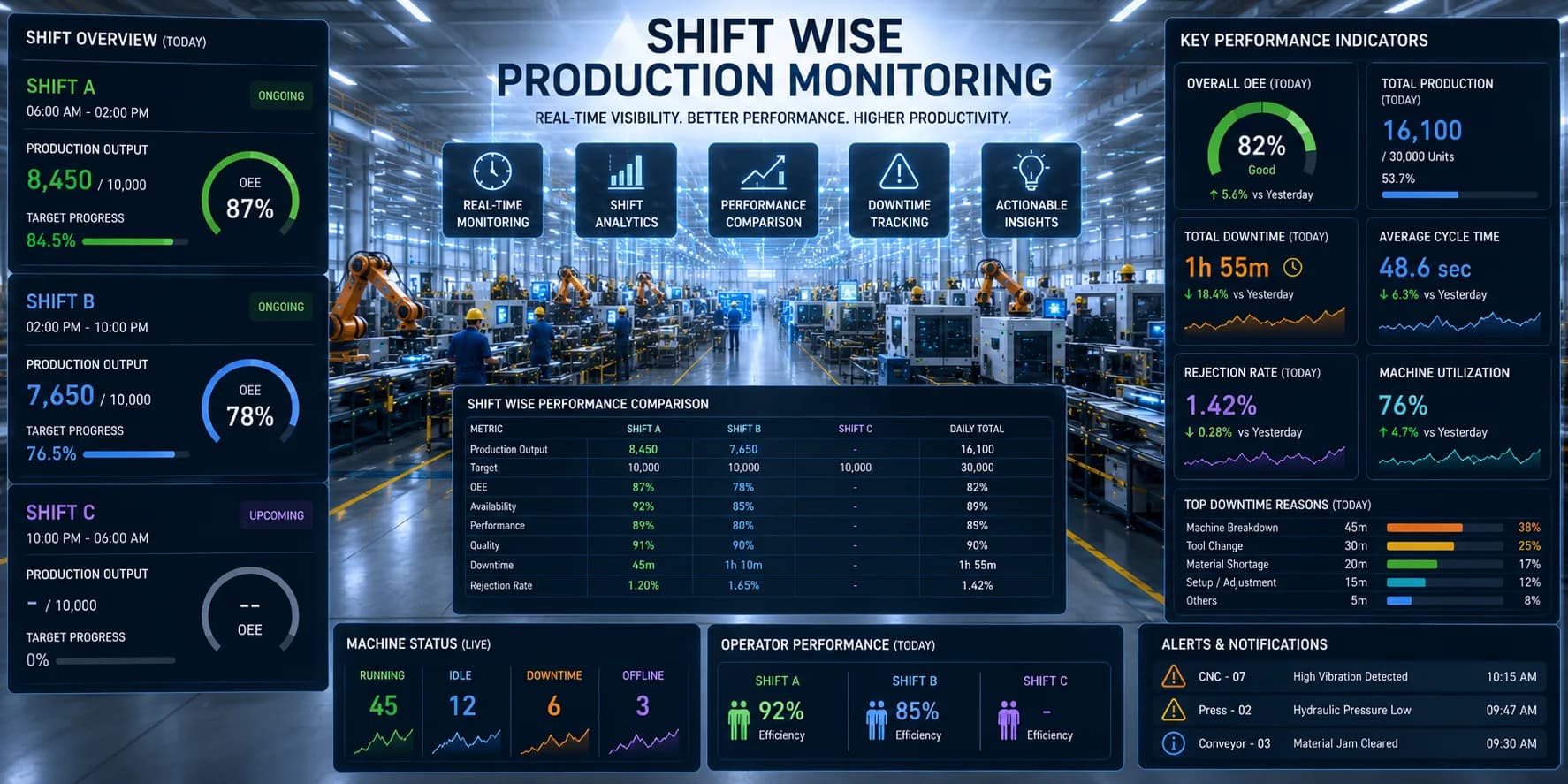
Shift-Wise Reporting
Shift analysis helps manufacturers evaluate productivity and identify performance gaps.
Reports may include:
- Shift production quantity
- Downtime duration
- Efficiency percentage
- Rejections
- Operator performance
These insights help optimize workforce productivity.
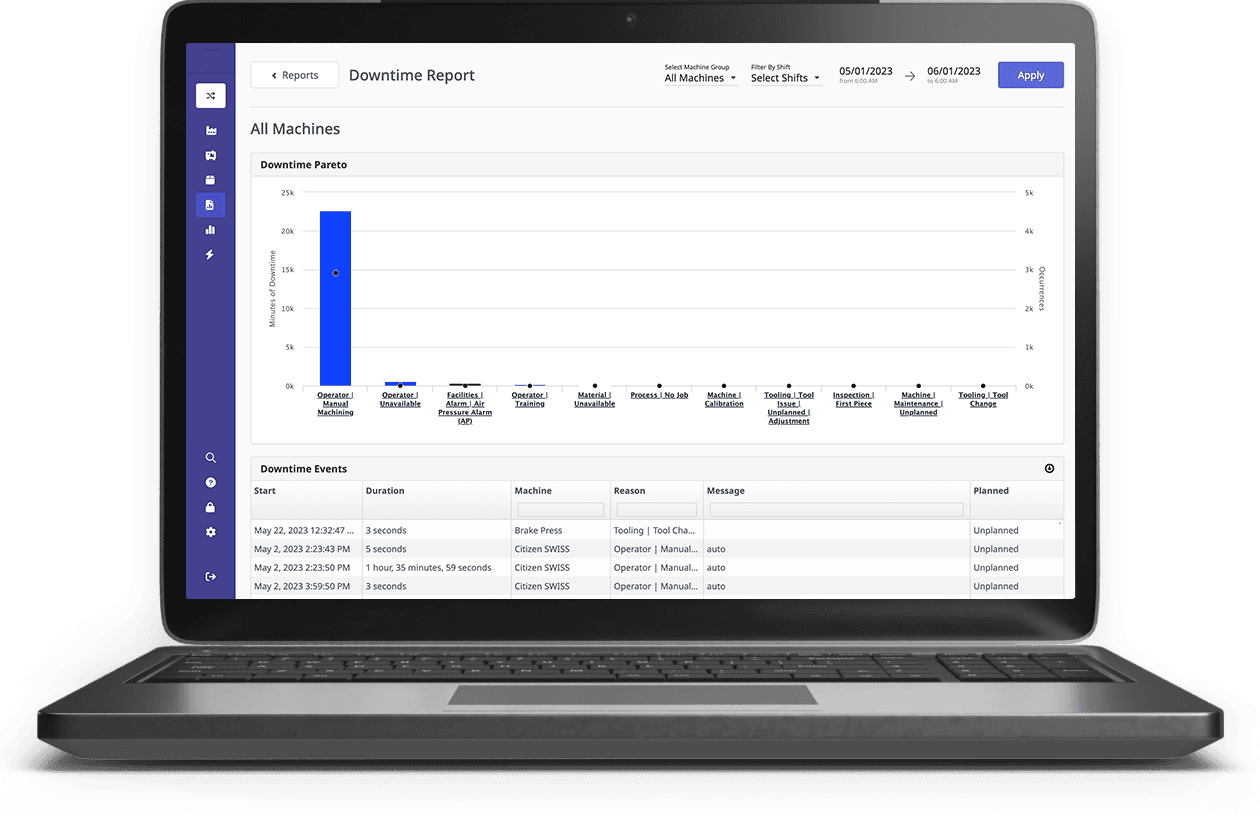
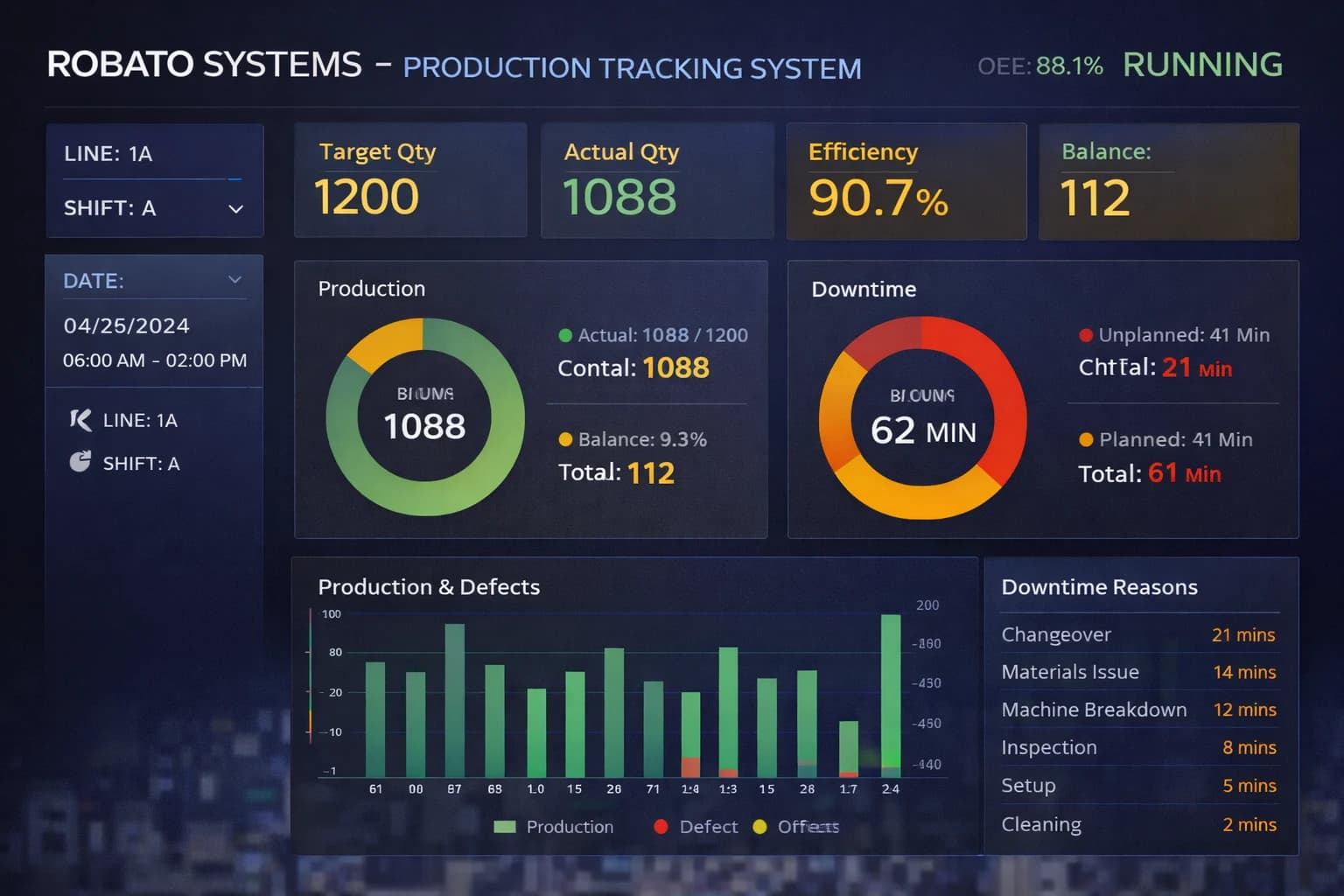
Downtime Analysis Reports
Understanding downtime is essential for improving equipment performance.
Reports typically include:
- Downtime causes
- Machine stoppage frequency
- Downtime duration
- Root cause analysis
This information supports preventive maintenance initiatives.
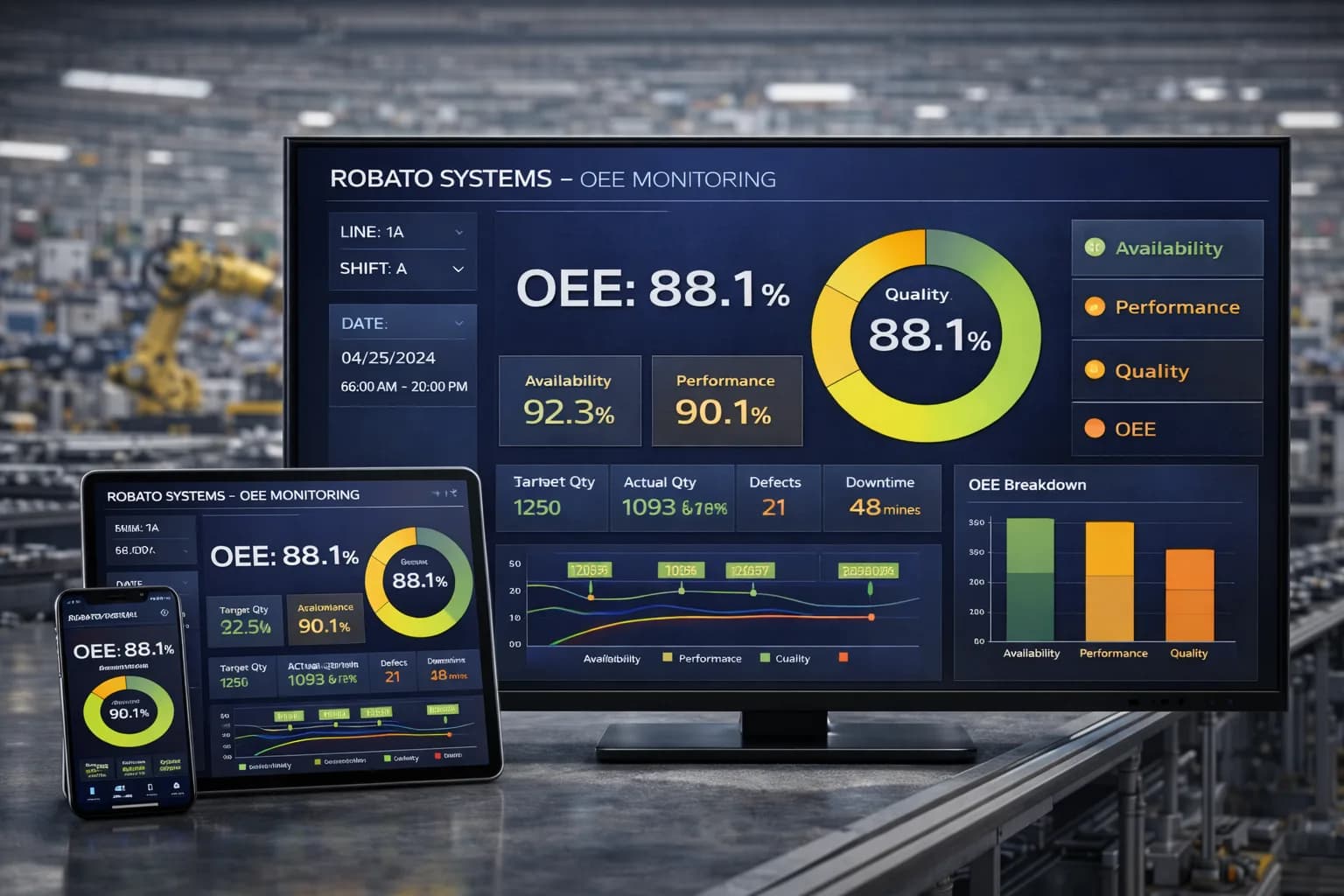
OEE Reports
Overall Equipment Effectiveness (OEE) is a key manufacturing metric.
Production reporting software provides visibility into:
Availability
Machine uptime and downtime.
Performance
Actual speed compared to ideal speed.
Quality
Percentage of defect-free products.
OEE reports help identify losses and improve operational efficiency.
Customizable Reports
Manufacturers can generate customized reports based on:
- Machines
- Production lines
- Products
- Shifts
- Time periods
Customized reporting provides flexibility and supports different business requirements.
Types of Production Reports
Daily Production Reports
Summarize daily output, efficiency, and machine performance.
Shift Production Reports
Compare productivity across shifts and operators.
Machine Utilization Reports
Measure equipment usage and availability.
Downtime Reports
Analyze machine failures and production losses.
OEE Reports
Track equipment effectiveness and productivity.
Quality Reports
Monitor rejection rates and process consistency.
Monthly Performance Reports
Provide long-term insights into production trends.
Benefits of Production Reporting Software
Improved Production Visibility
Real-time reports provide complete transparency across manufacturing operations.
Reduced Manual Work
Automated reporting minimizes paperwork and administrative tasks.
Faster Decision-Making
Accurate and timely information supports proactive management.
Increased Productivity
Manufacturers can identify inefficiencies and optimize processes.
Better Quality Control
Detailed reports help detect quality issues early.
Reduced Downtime
Downtime analysis enables maintenance teams to prevent recurring failures.
Enhanced Compliance
Accurate records support regulatory and quality requirements.
Data-Driven Continuous Improvement
Historical and real-time reports provide insights for process optimization.
Production Reporting Software and Industry 4.0
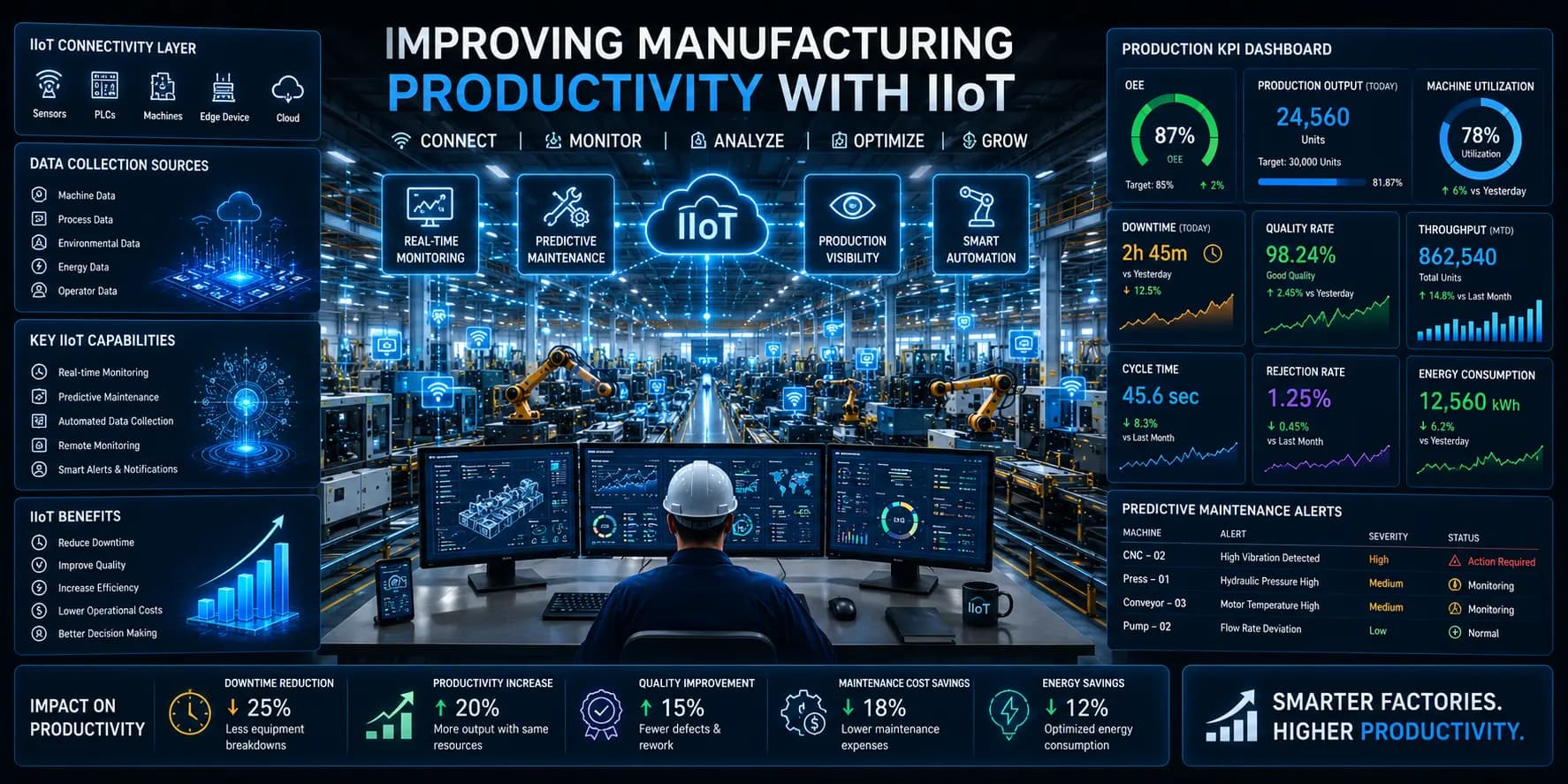
Industry 4.0 focuses on intelligent and connected manufacturing environments. Production reporting software supports digital transformation through:
- Real-time production monitoring
- Automated reporting
- Industrial IoT connectivity
- Manufacturing analytics
- Smart dashboards
- Predictive maintenance
These capabilities help manufacturers create efficient and data-driven operations.
Important KPIs Tracked by Production Reporting Software
Manufacturers commonly monitor:
Overall Equipment Effectiveness (OEE)
Measures availability, performance, and quality.
Machine Utilization
Tracks equipment efficiency.
Production Output
Compares actual output with planned targets.
Downtime Percentage
Measures losses caused by machine stoppages.
Cycle Time
Analyzes production speed.
Rejection Rate
Tracks product quality.
Throughput
Measures production capacity over time.
Monitoring these KPIs helps improve overall manufacturing performance.
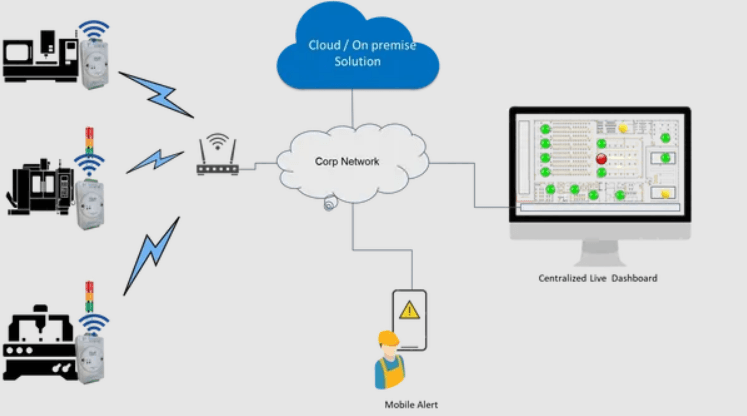
Components of Production Reporting Software
A complete solution typically includes:
Data Acquisition Module
Collects information from machines and production systems.
Reporting Engine
Generates automated reports and analytics.
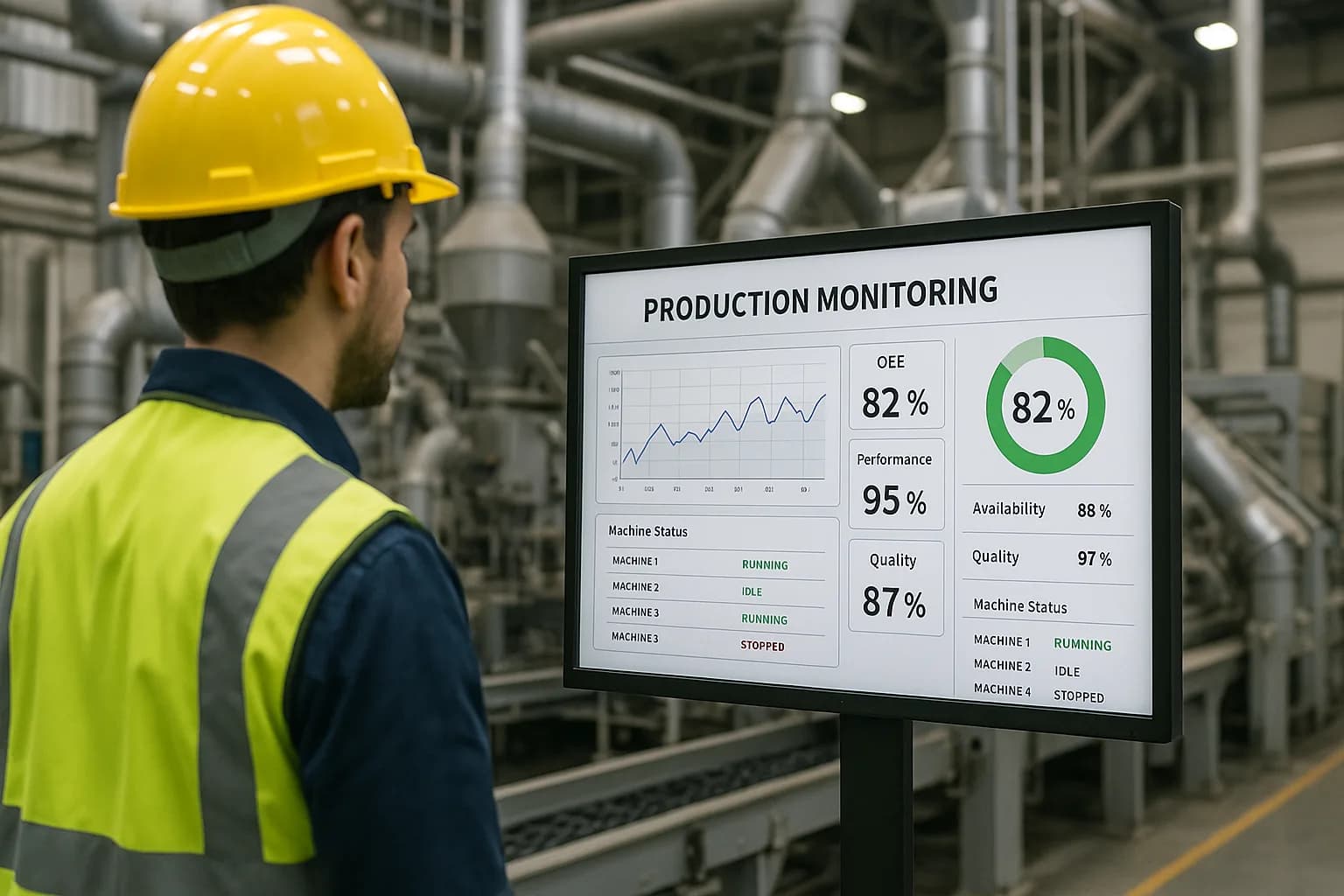
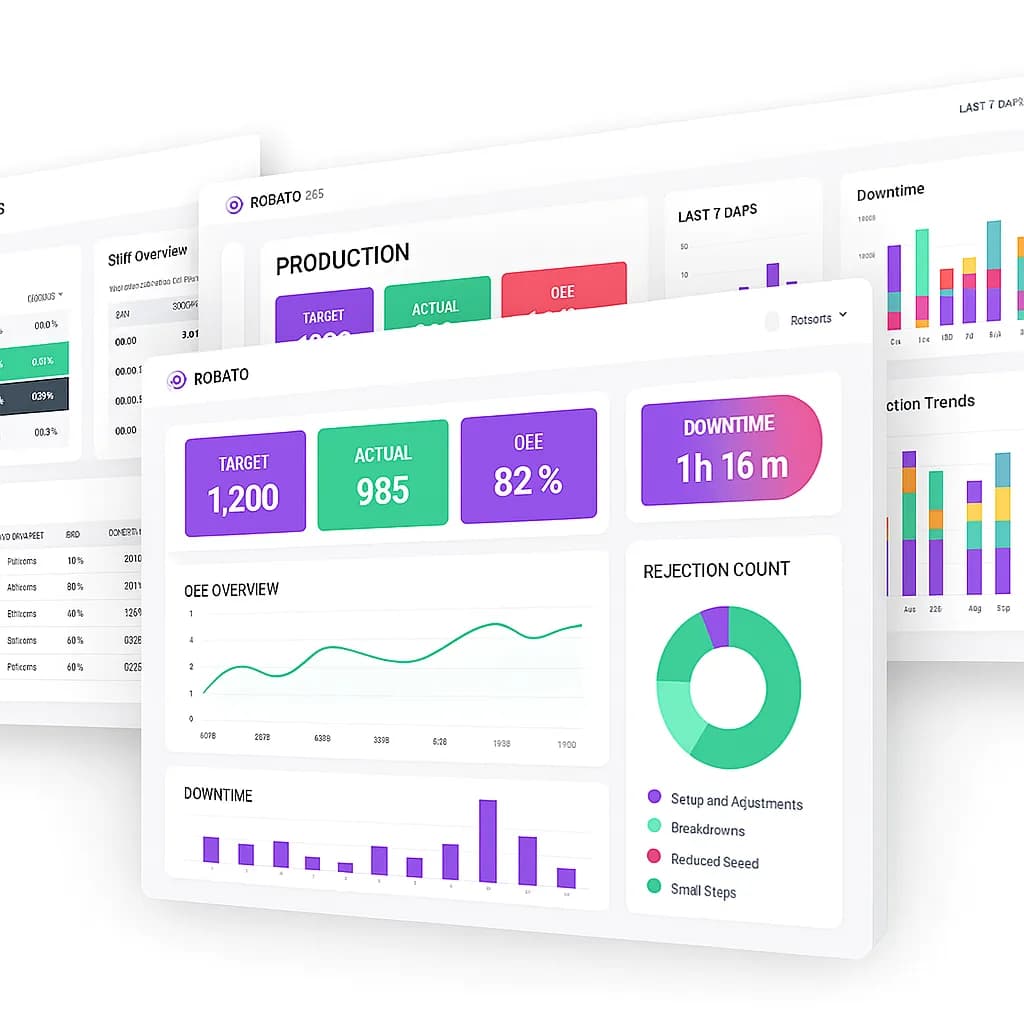
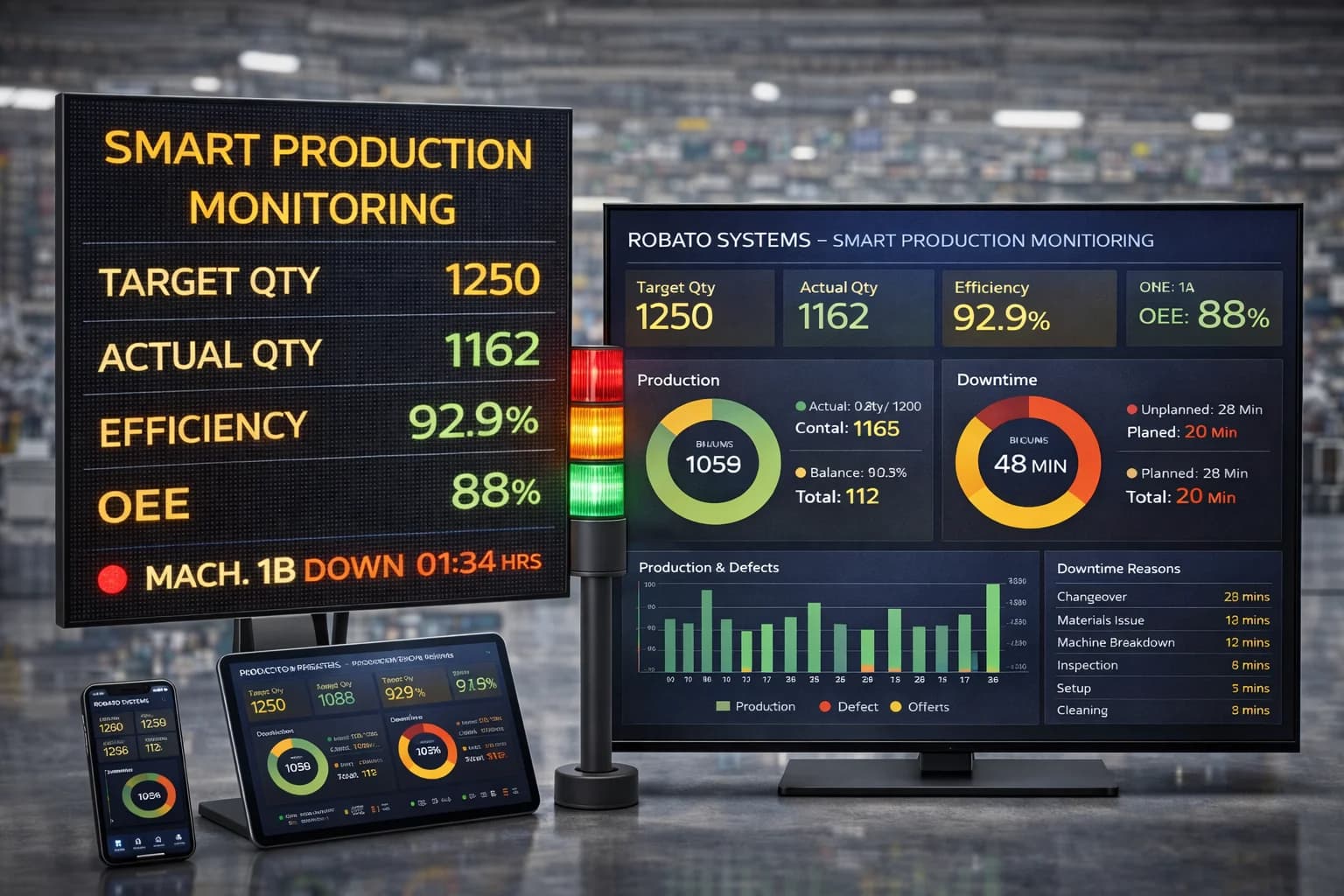
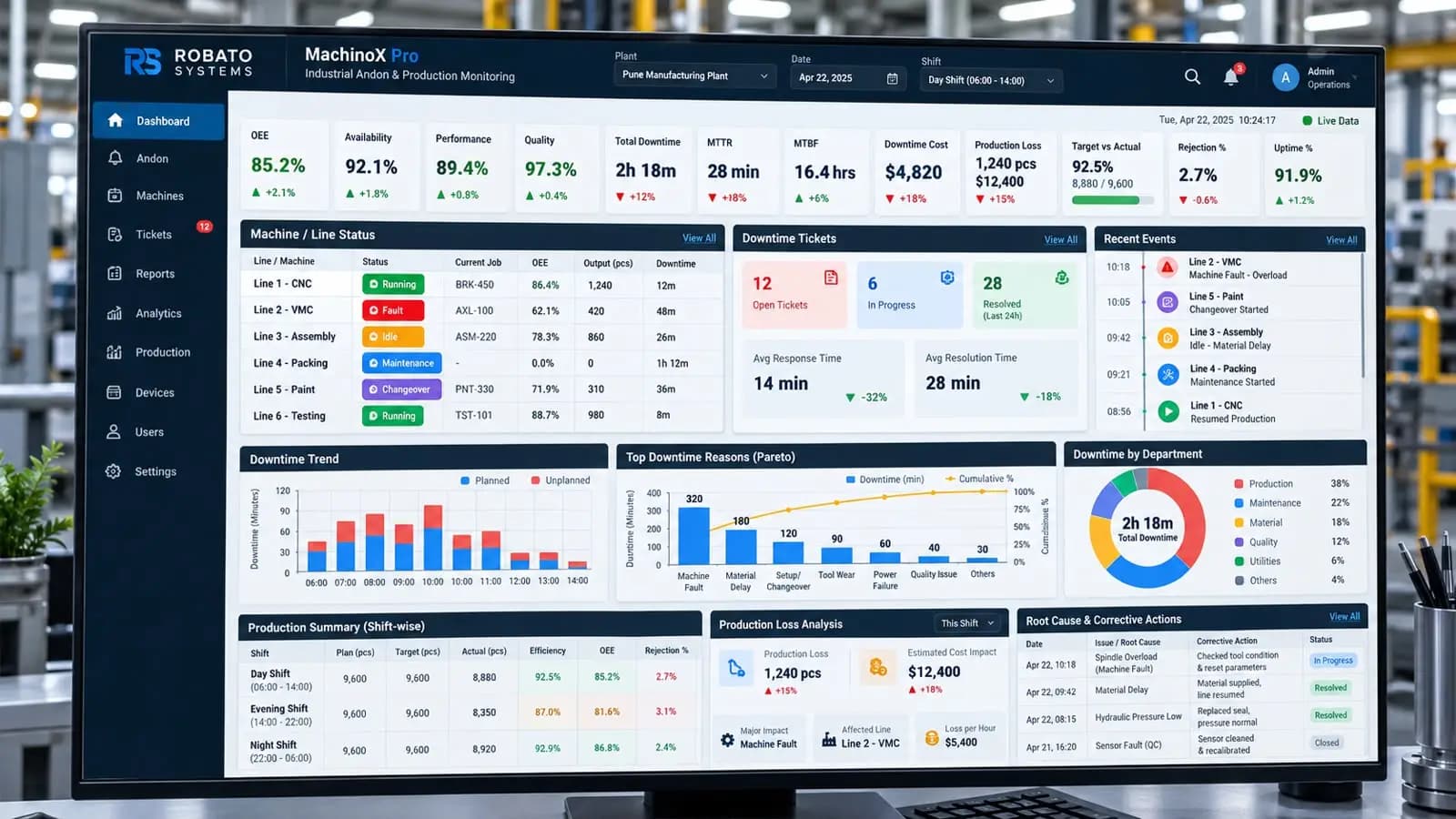
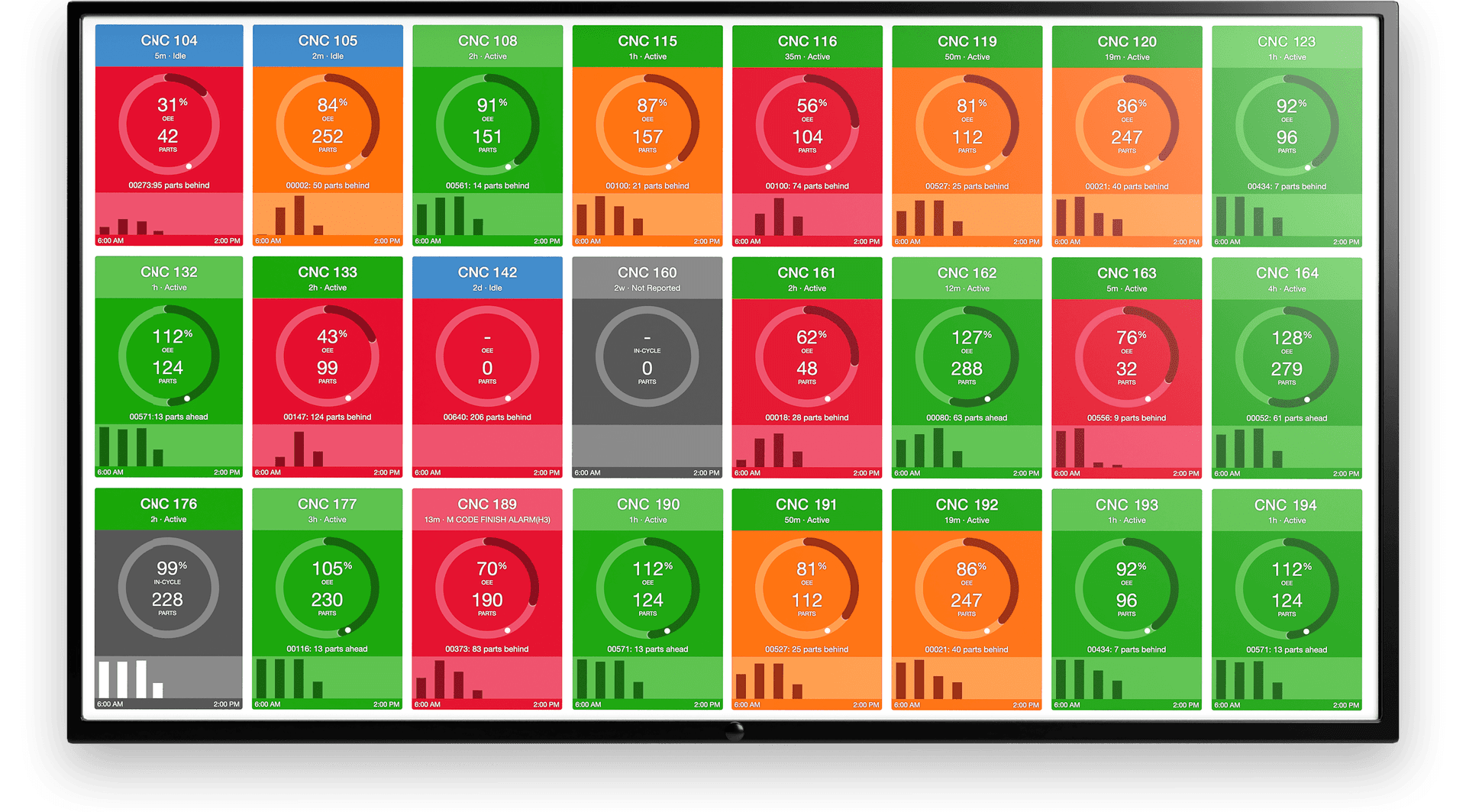
Dashboard Interface
Displays real-time production information visually.
Historical Database
Stores data for trend analysis and long-term reporting.
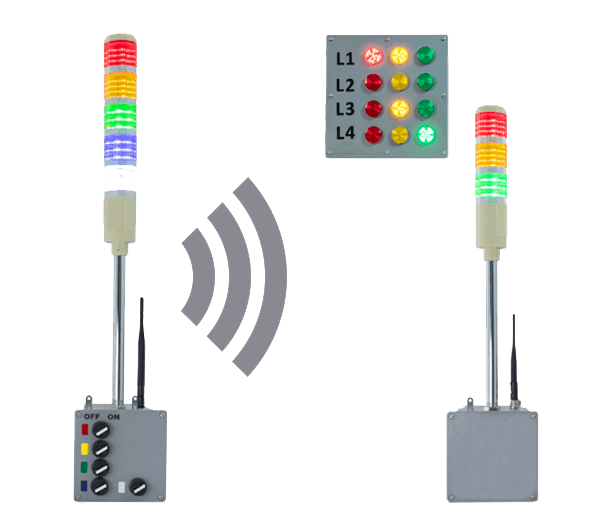
Alert and Notification System
Provides immediate notifications for abnormalities and machine failures.
Analytics Module
Converts raw production data into actionable insights.
Industries Using Production Reporting Software
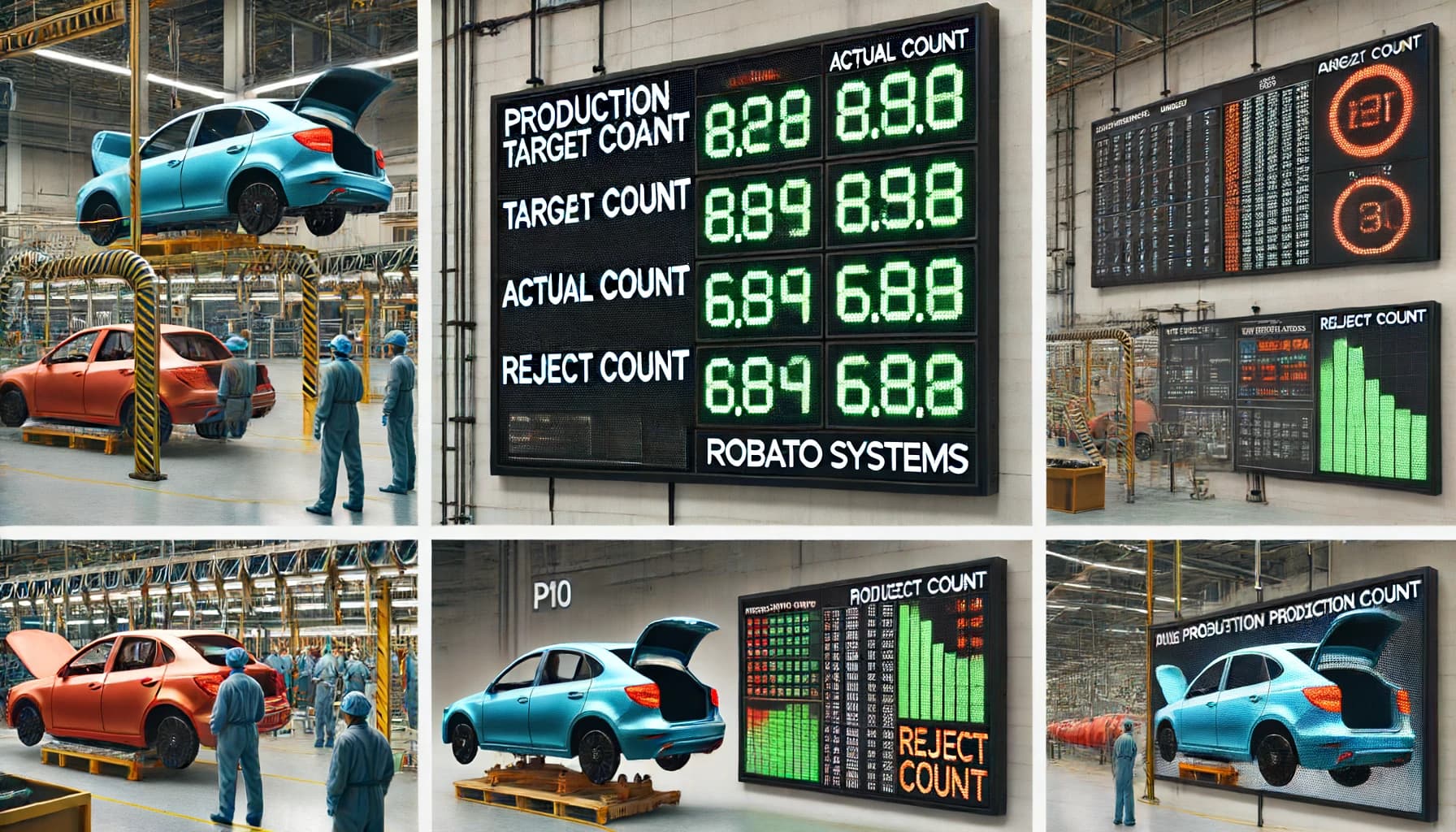
Automotive Manufacturing
Monitor assembly lines and improve efficiency.
Food and Beverage Industry
Track production output and maintain quality standards.
Pharmaceutical Manufacturing
Ensure compliance and optimize batch production.
Packaging Industry
Reduce downtime and maximize throughput.
Textile Industry
Monitor machine performance and production targets.
Electronics Manufacturing
Improve precision and reduce defects.
Best Practices for Implementing Production Reporting Software
Define Reporting Objectives
Identify goals such as improving OEE or reducing downtime.
Automate Data Collection
Reduce errors and improve data accuracy.
Monitor Relevant KPIs
Focus on metrics that directly impact productivity.
Use Interactive Dashboards
Provide visual insights for operators and managers.
Integrate Existing Systems
Connect with:
- ERP systems
- MES platforms
- SCADA systems
- Industrial IoT devices
Encourage Continuous Improvement
Use reports to optimize processes and eliminate inefficiencies.
Future Trends in Production Reporting Software
Modern reporting systems are evolving with technologies such as:
Artificial Intelligence
AI-powered analytics will provide smarter insights and forecasting.
Cloud-Based Reporting
Remote access to production reports will become standard.
Predictive Analytics
Manufacturers will anticipate failures before they occur.
Mobile Reporting Applications
Managers will access reports from anywhere.
Digital Twins
Virtual production environments will enhance performance analysis.
These innovations are transforming manufacturing reporting and operational efficiency.
Conclusion
Production Reporting Software is a powerful tool that helps manufacturers automate reporting, improve visibility, and optimize production performance. By providing accurate and timely information, these solutions enable organizations to reduce downtime, increase productivity, and make better decisions.
As Industry 4.0 and smart manufacturing continue to advance, production reporting software will remain a critical component of digital transformation and operational excellence.
Organizations that invest in modern reporting solutions gain greater efficiency, enhanced transparency, and a stronger competitive advantage.
Frequently Asked Questions (FAQs)
What is production reporting software?
Production reporting software is a digital solution that automates the collection and reporting of manufacturing data to improve visibility and efficiency.
Why is production reporting important?
It helps manufacturers monitor performance, reduce downtime, and make informed decisions based on accurate data.
What types of reports can production reporting software generate?
It can generate daily reports, shift reports, downtime reports, OEE reports, machine utilization reports, and quality reports.
How does production reporting software support Industry 4.0?
It enables real-time monitoring, automated reporting, Industrial IoT integration, and data-driven decision-making.
Which industries use production reporting software?
Automotive, pharmaceutical, food processing, packaging, textile, and electronics industries commonly use production reporting software.