Complete Guide to Real-Time Production Monitoring Software for Factories
In today's manufacturing world, speed and accuracy go hand in hand. A factory that knows exactly what is happening on its shop floor at any given moment will always outperform one that relies on guesswork and delayed reports. That is the core promise of real-time production monitoring software. It connects your machines, your people, and your management layer through live data, giving every stakeholder an accurate, up-to-the-minute picture of production performance. This guide covers everything you need to know about it.
Why "End of Shift" Reporting Is No Longer Enough
Most factories that have not yet adopted real-time monitoring are still running on a familiar cycle. Operators fill in paper logs. Supervisors compile shift summaries. Managers review reports the following morning. By the time anyone acts on that information, the damage is already done.
A machine that slowed down at 11 PM gets discovered at 9 AM. A recurring stoppage that cost four hours of output is logged as a single line item with no root cause attached. Decisions made on yesterday's data cannot fix today's problems. Real-time production monitoring software breaks this cycle by making every event on the shop floor visible the moment it happens.
What the Software Tracks From the Very First Shift
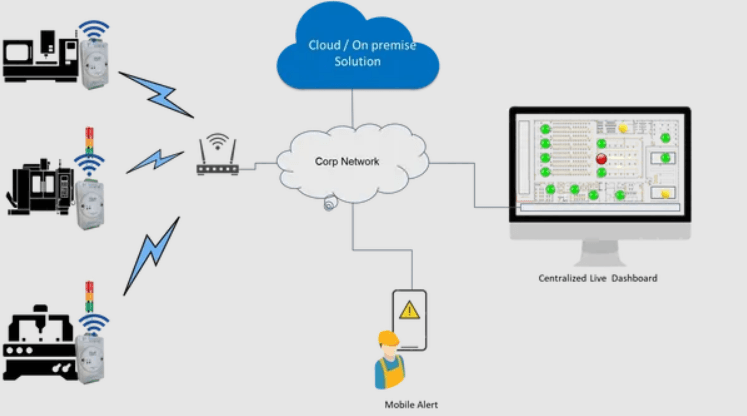
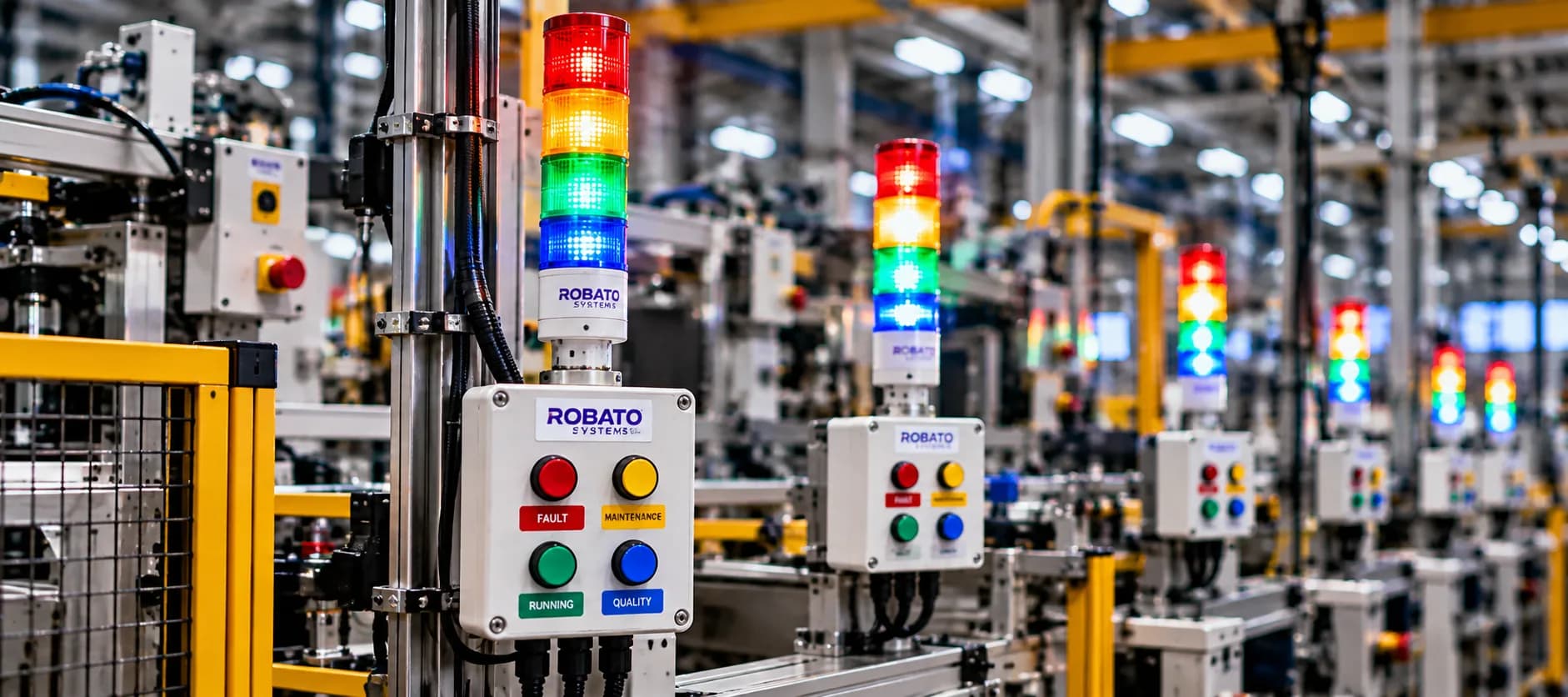
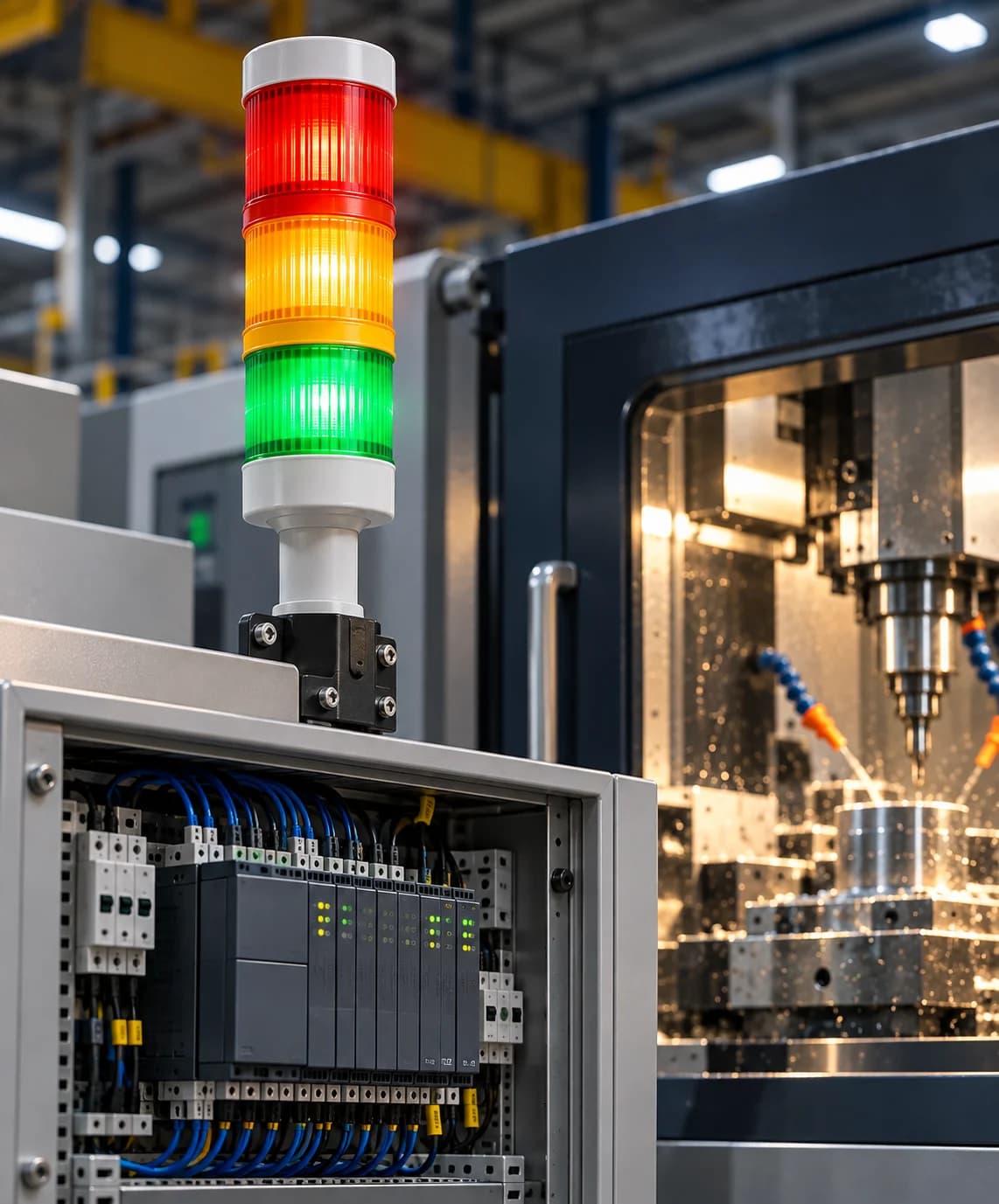
Real-time production monitoring software connects to machines through sensors, proximity detectors, photoelectric counters, and PLCs. Once connected, it begins collecting and processing data automatically without any manual input from operators.
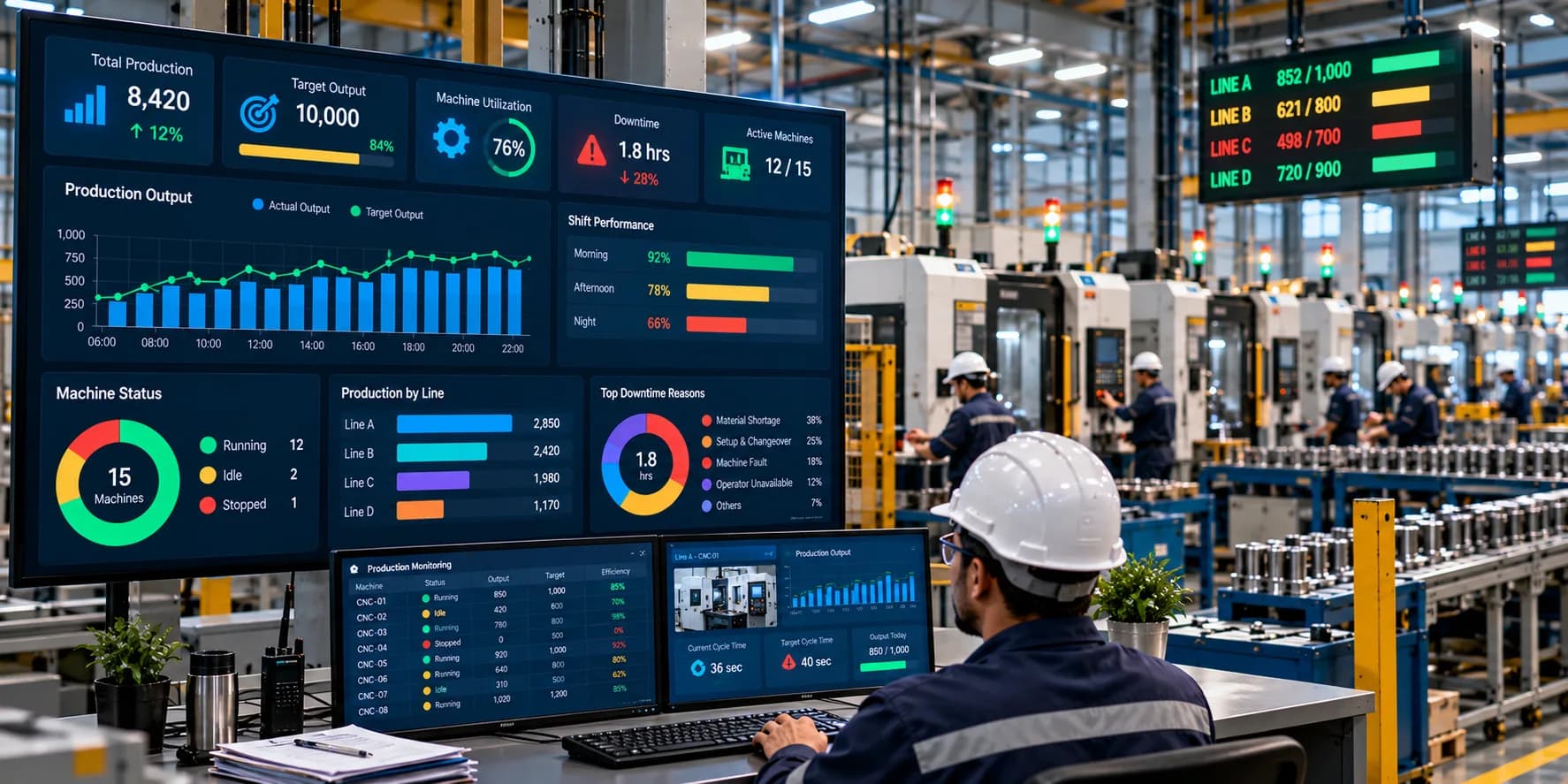
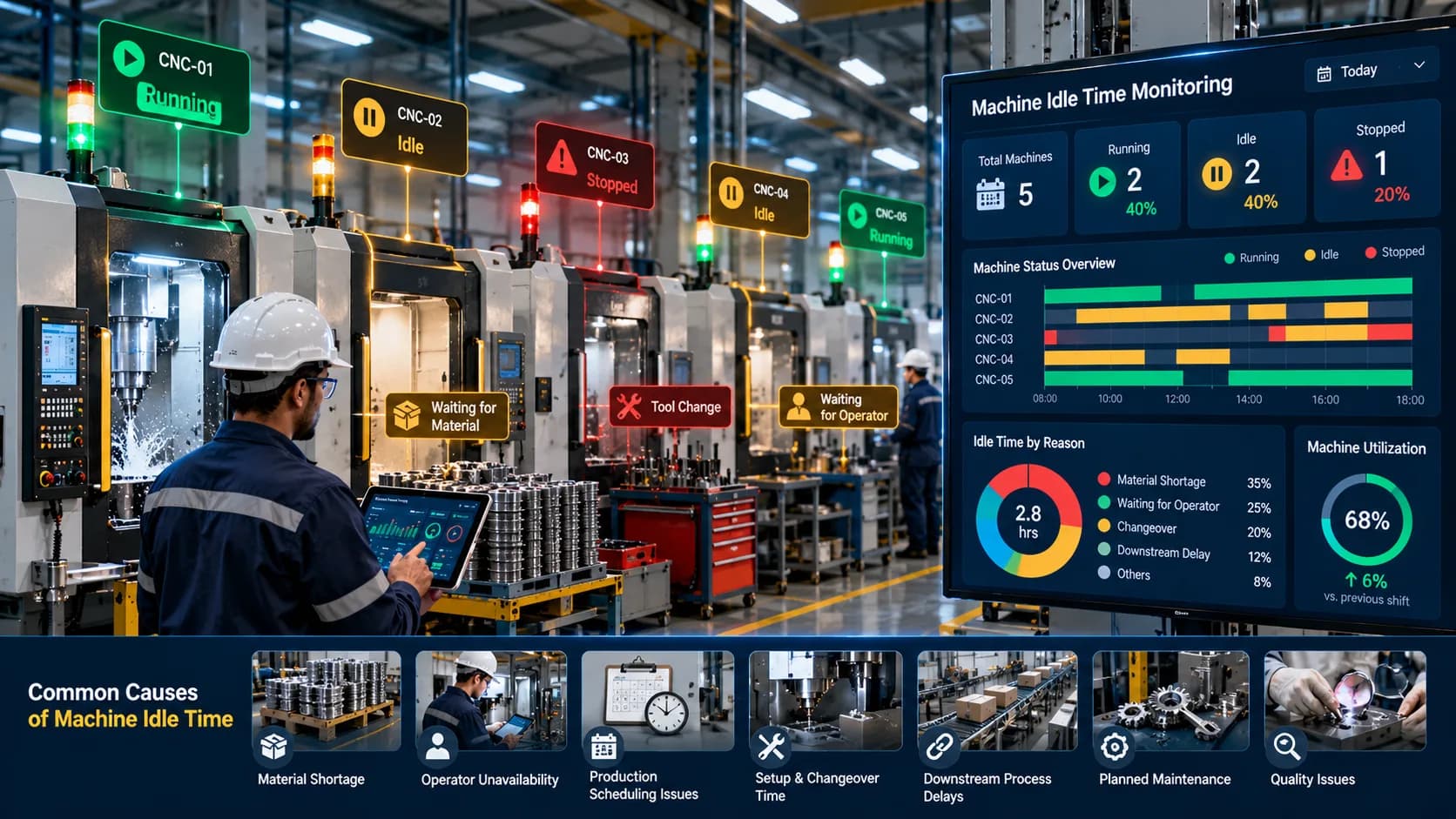
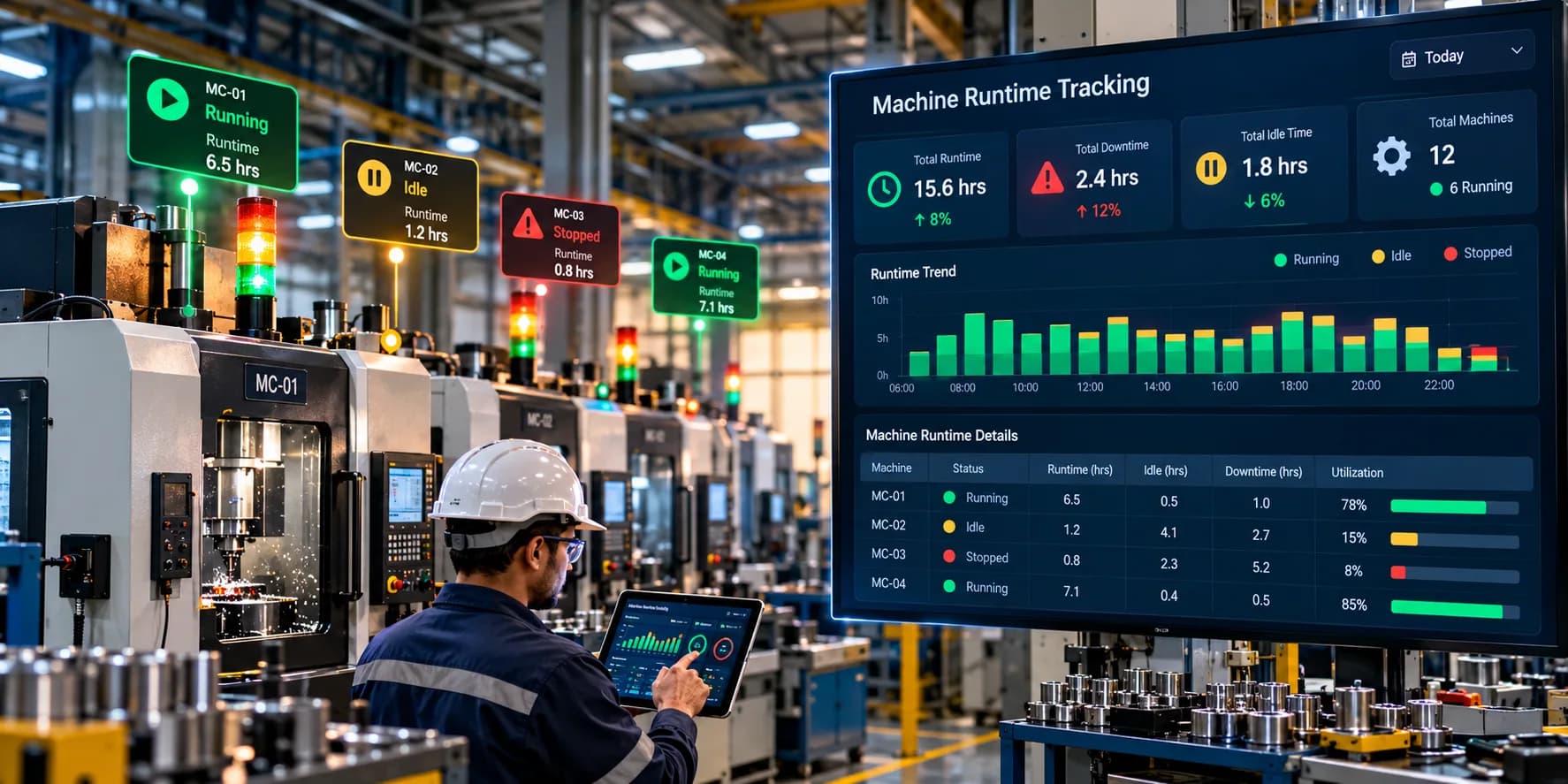
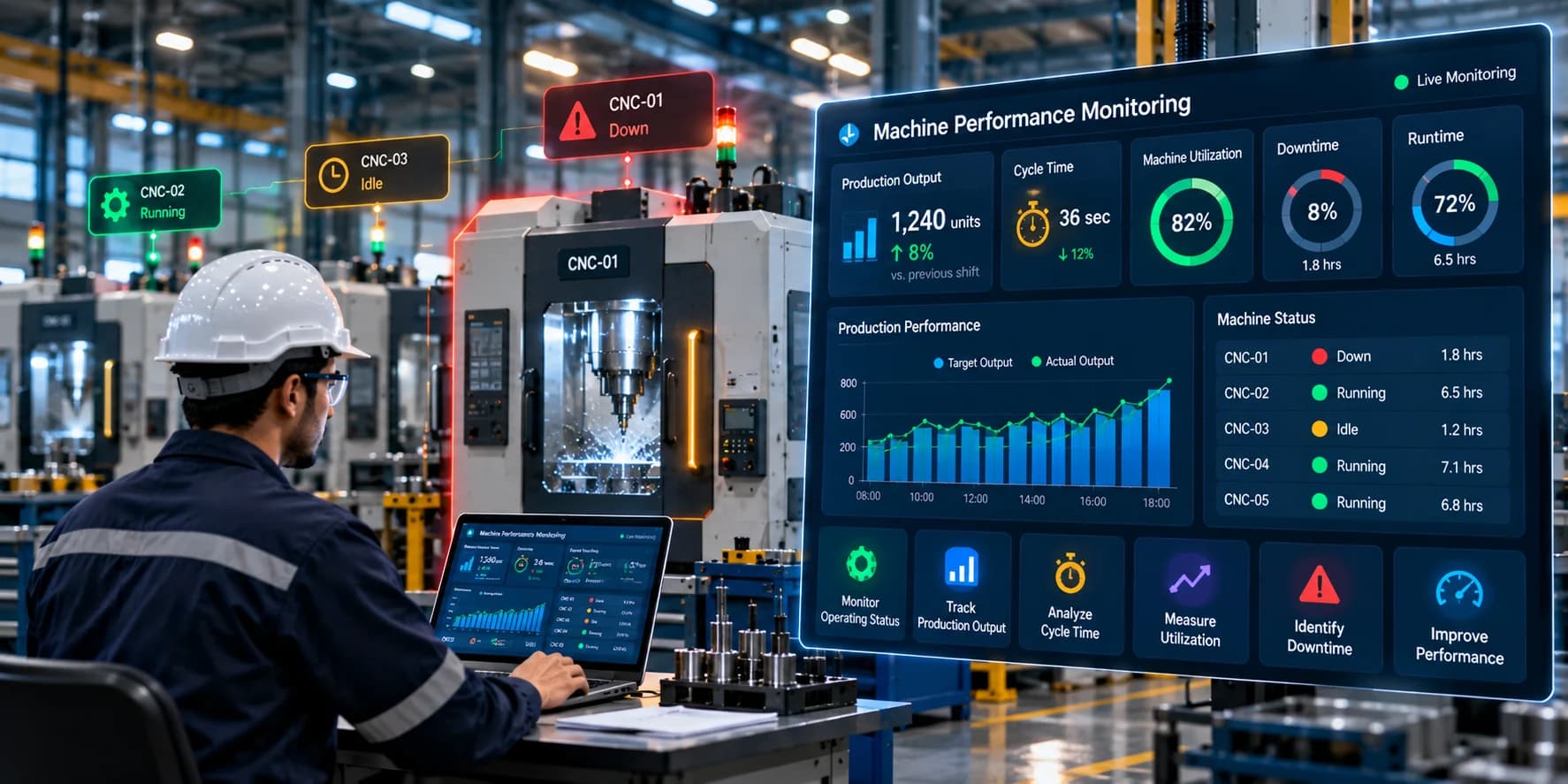
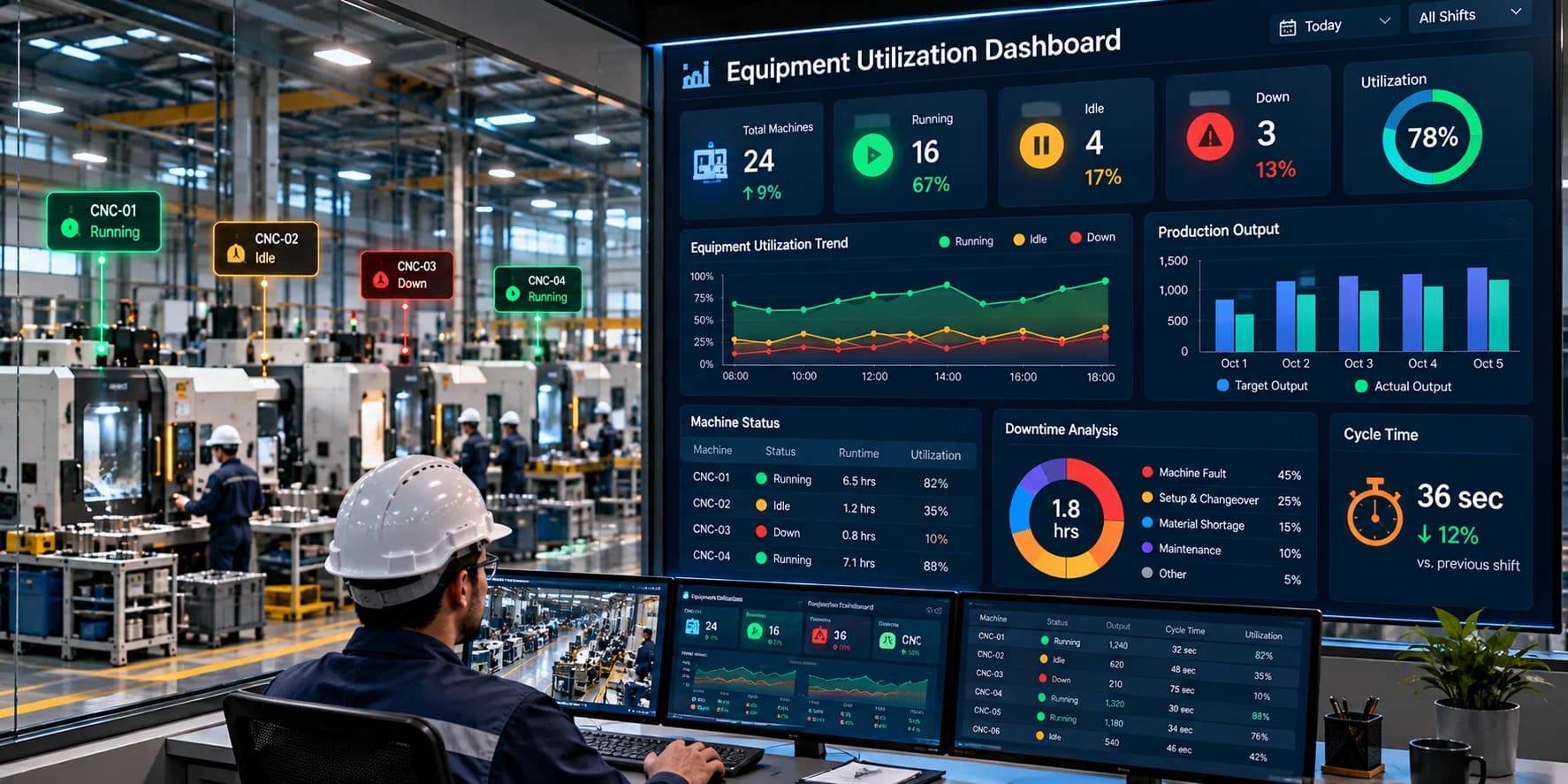
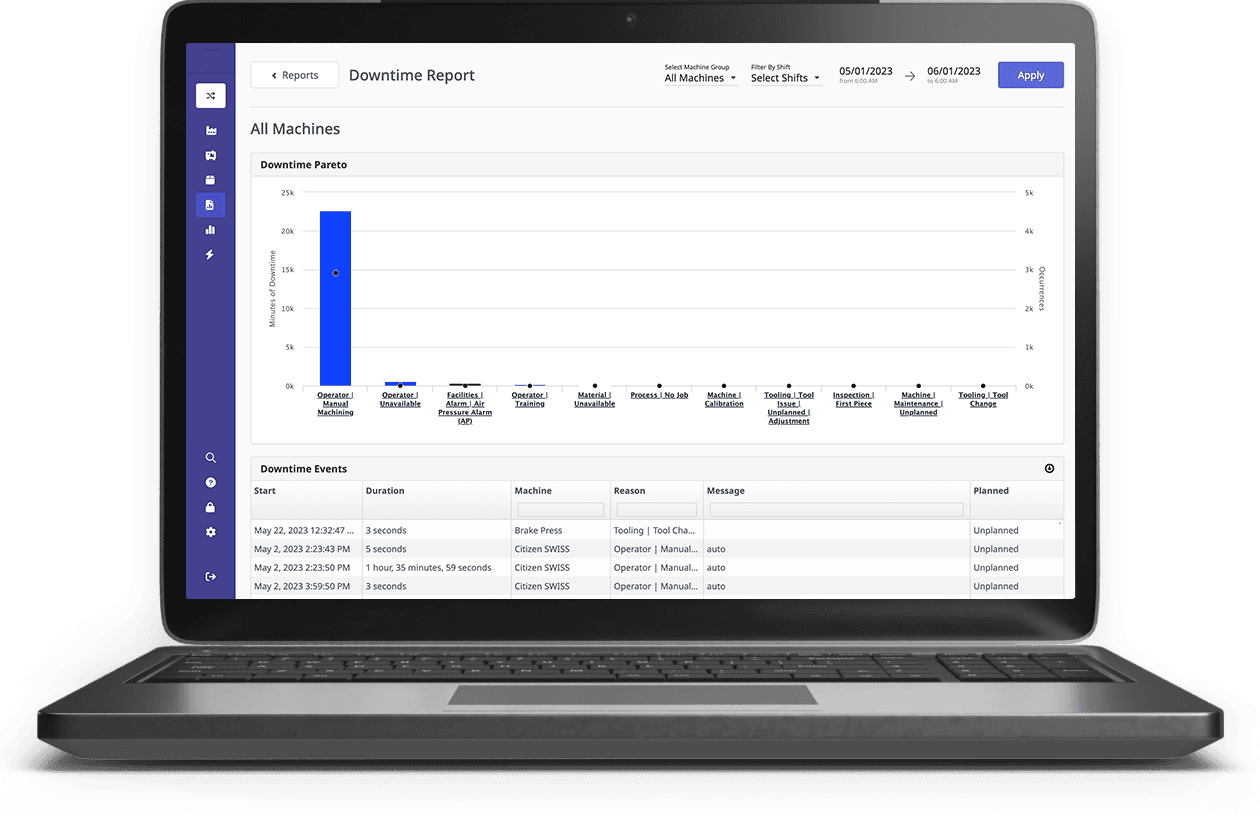
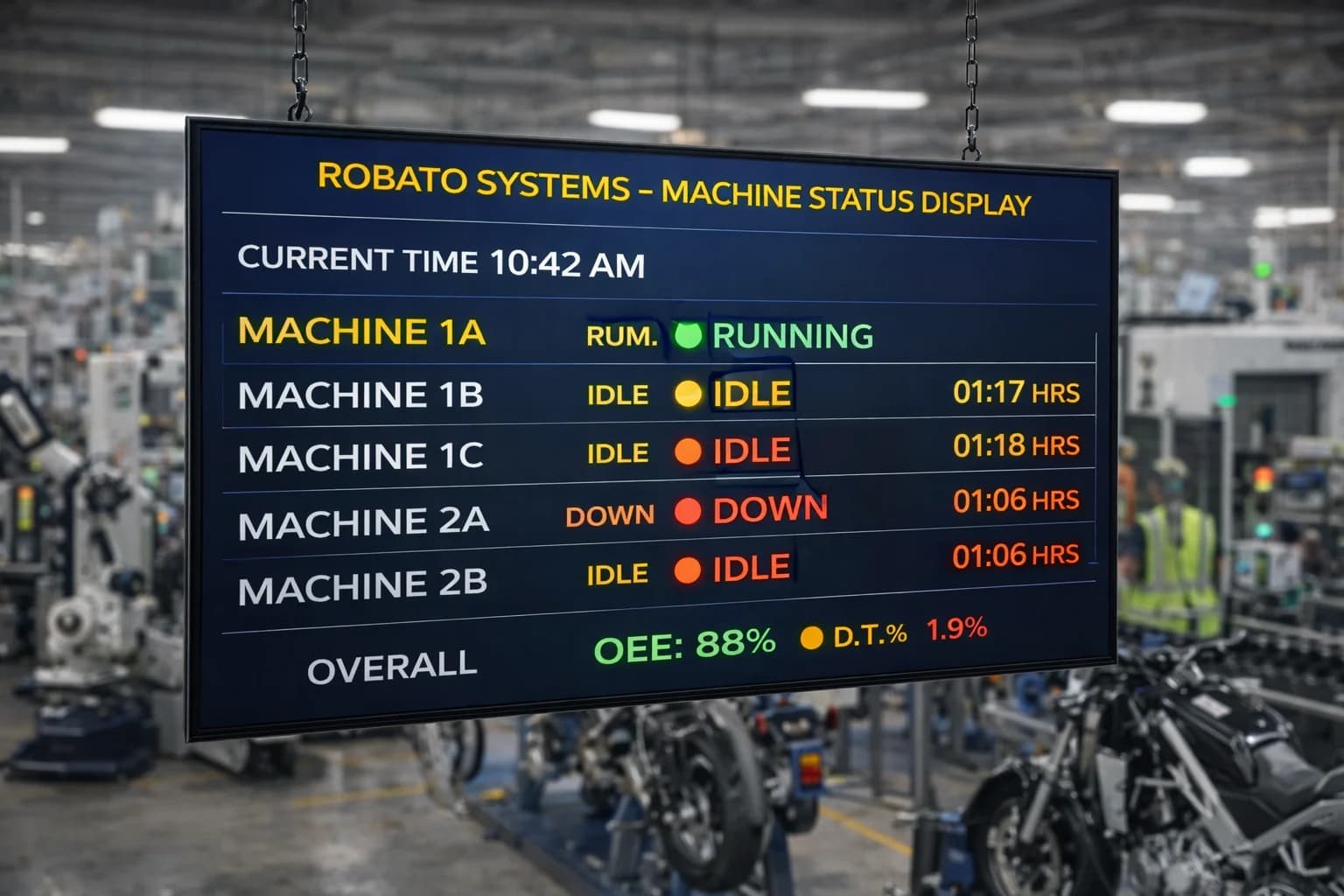
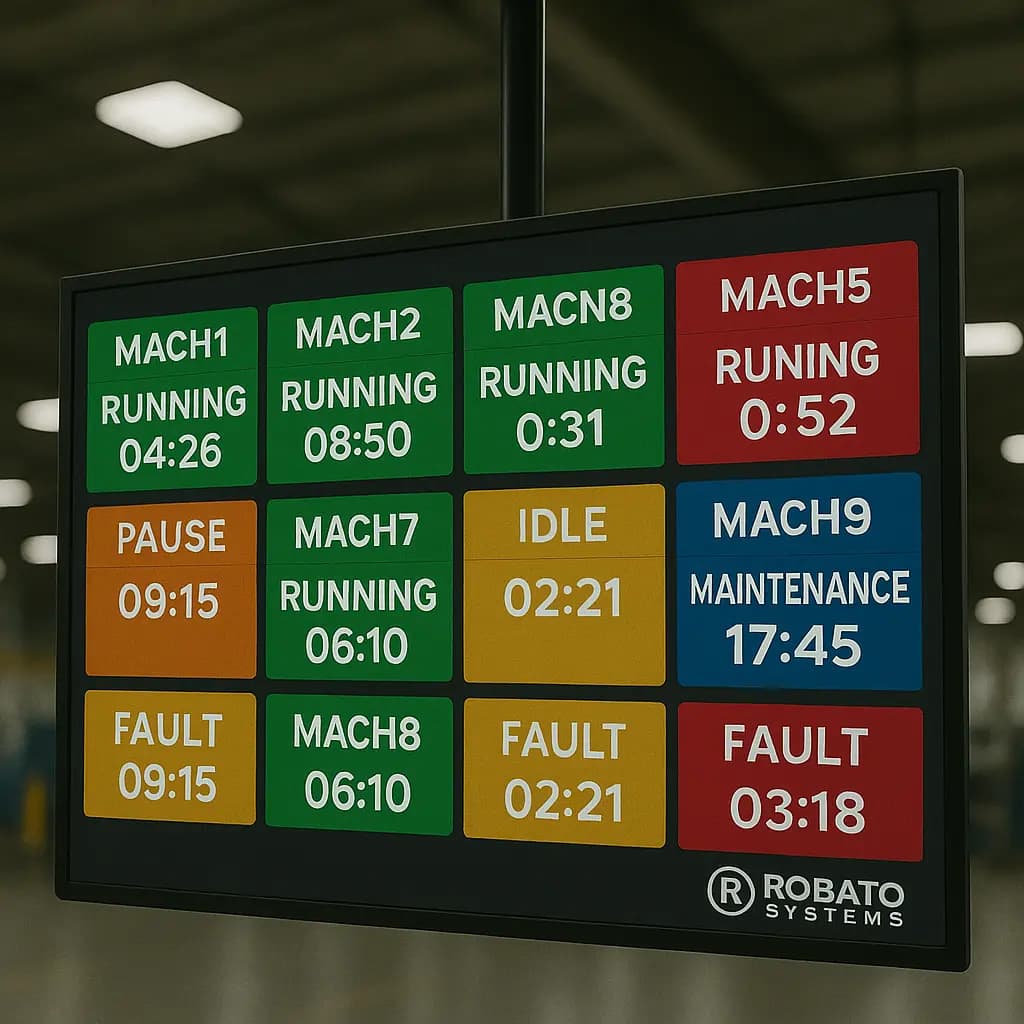
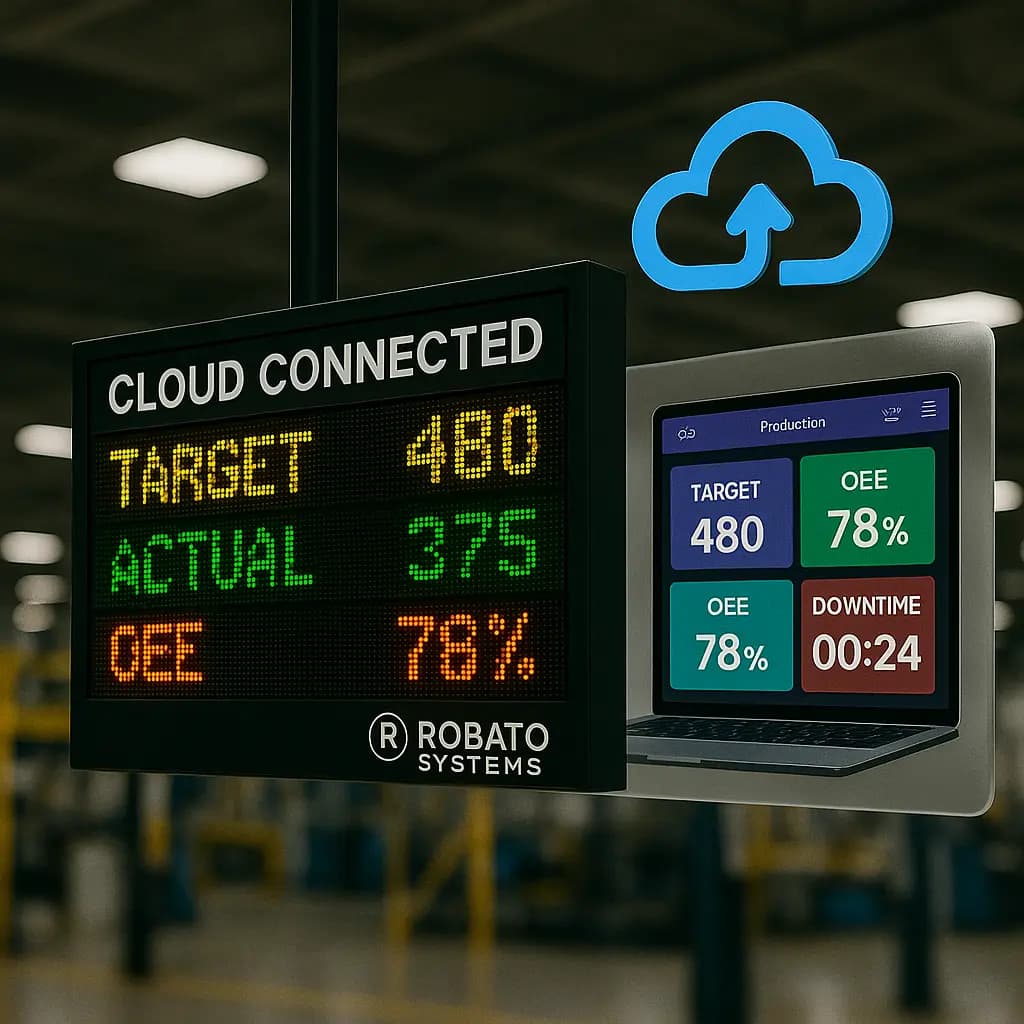
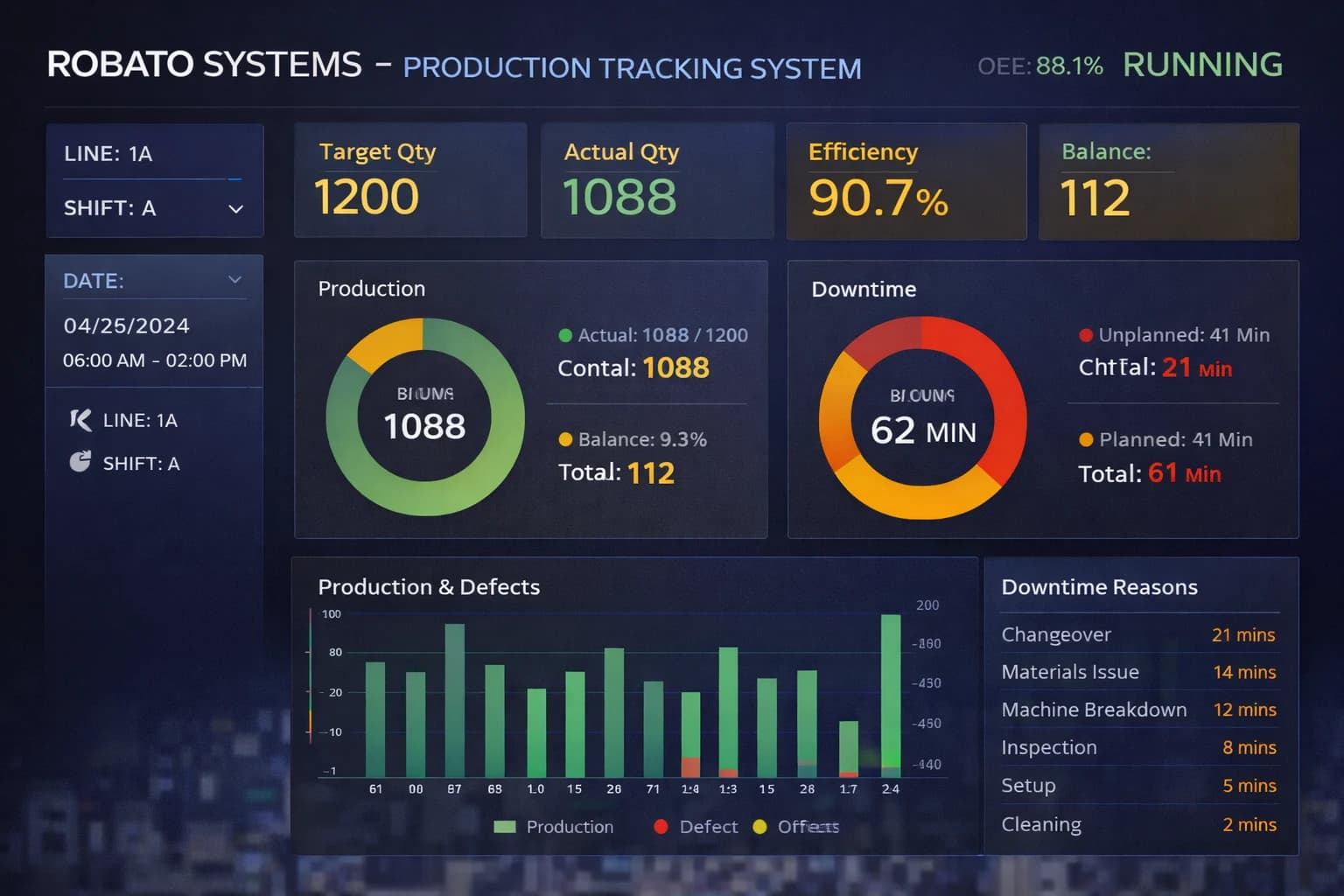
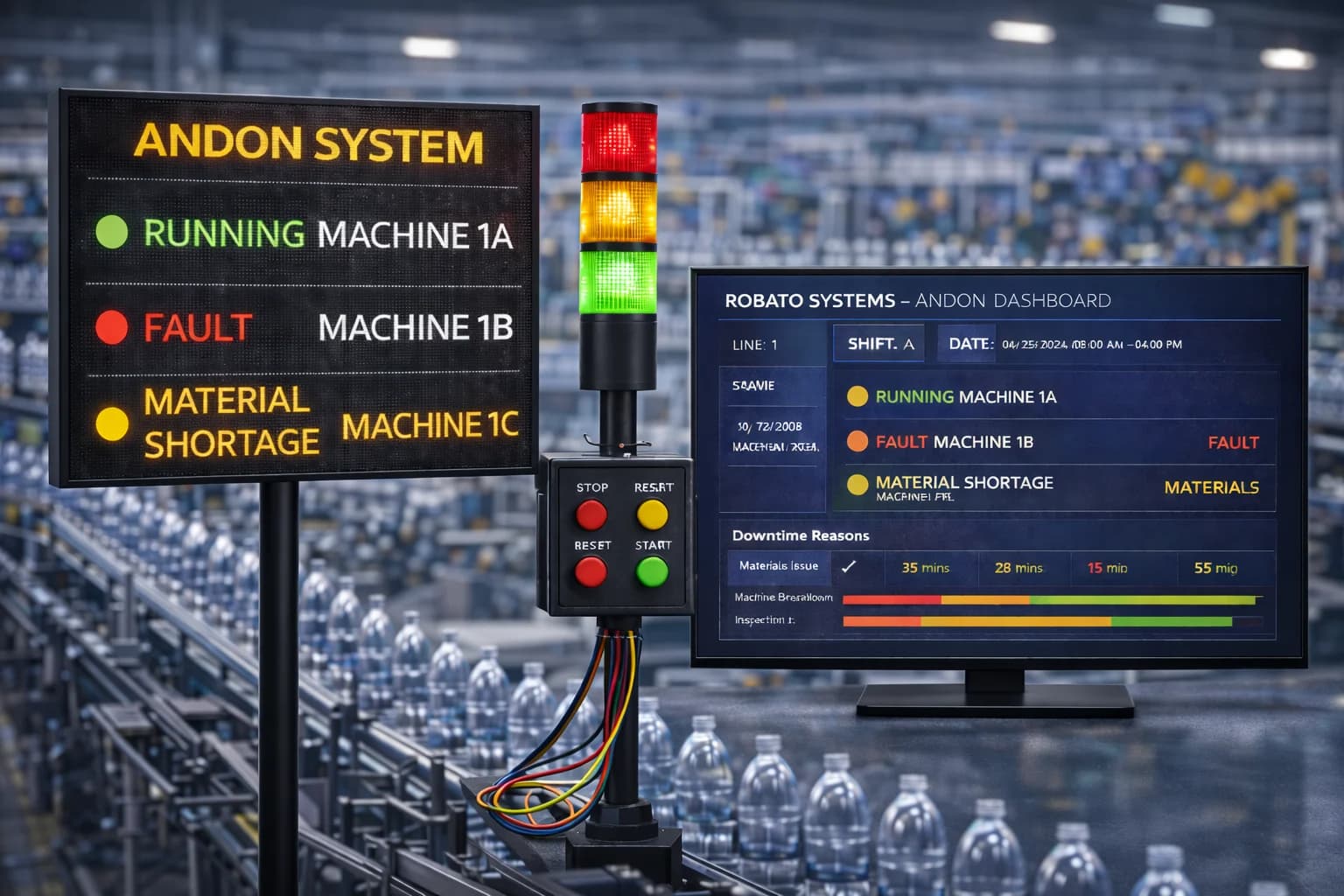
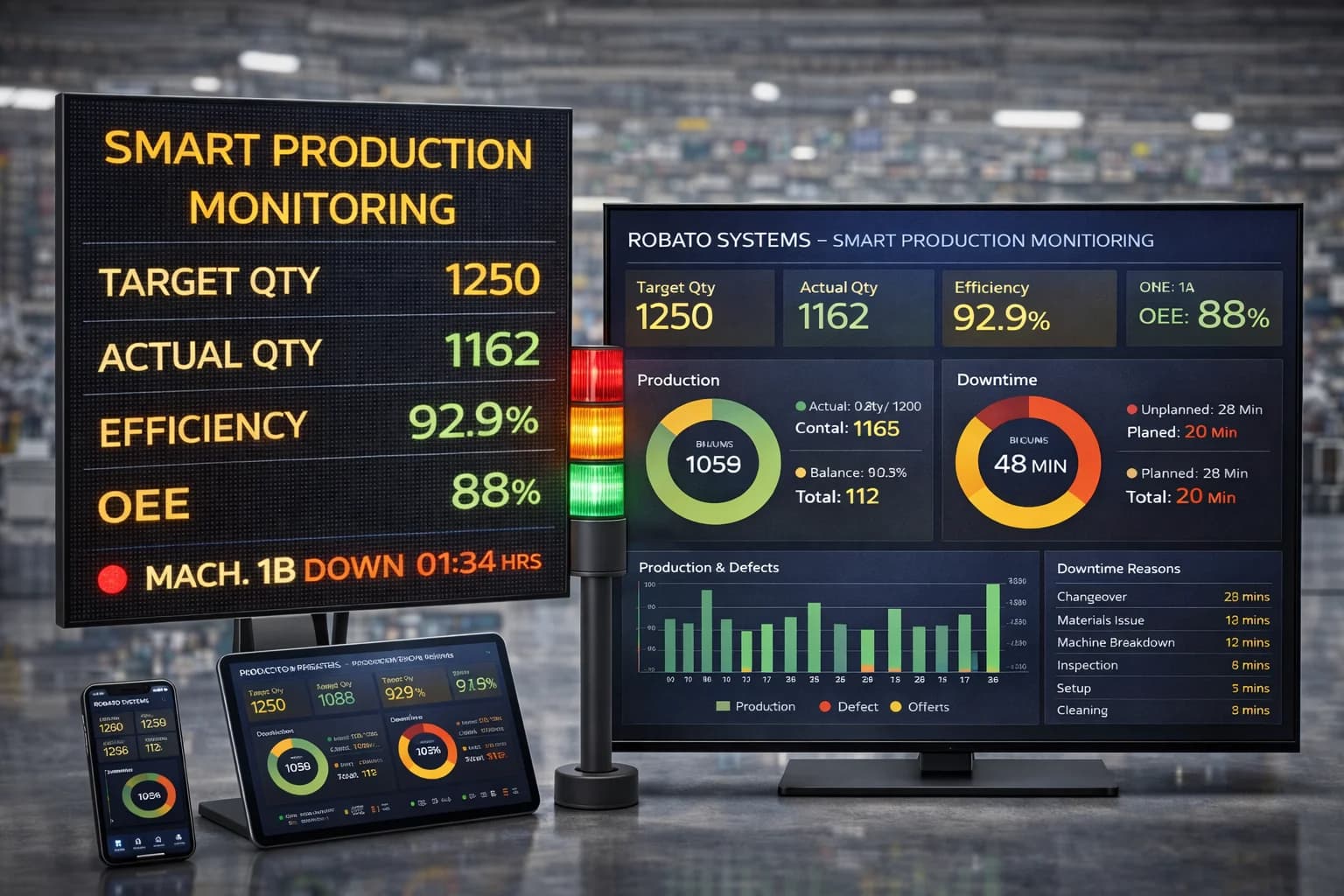
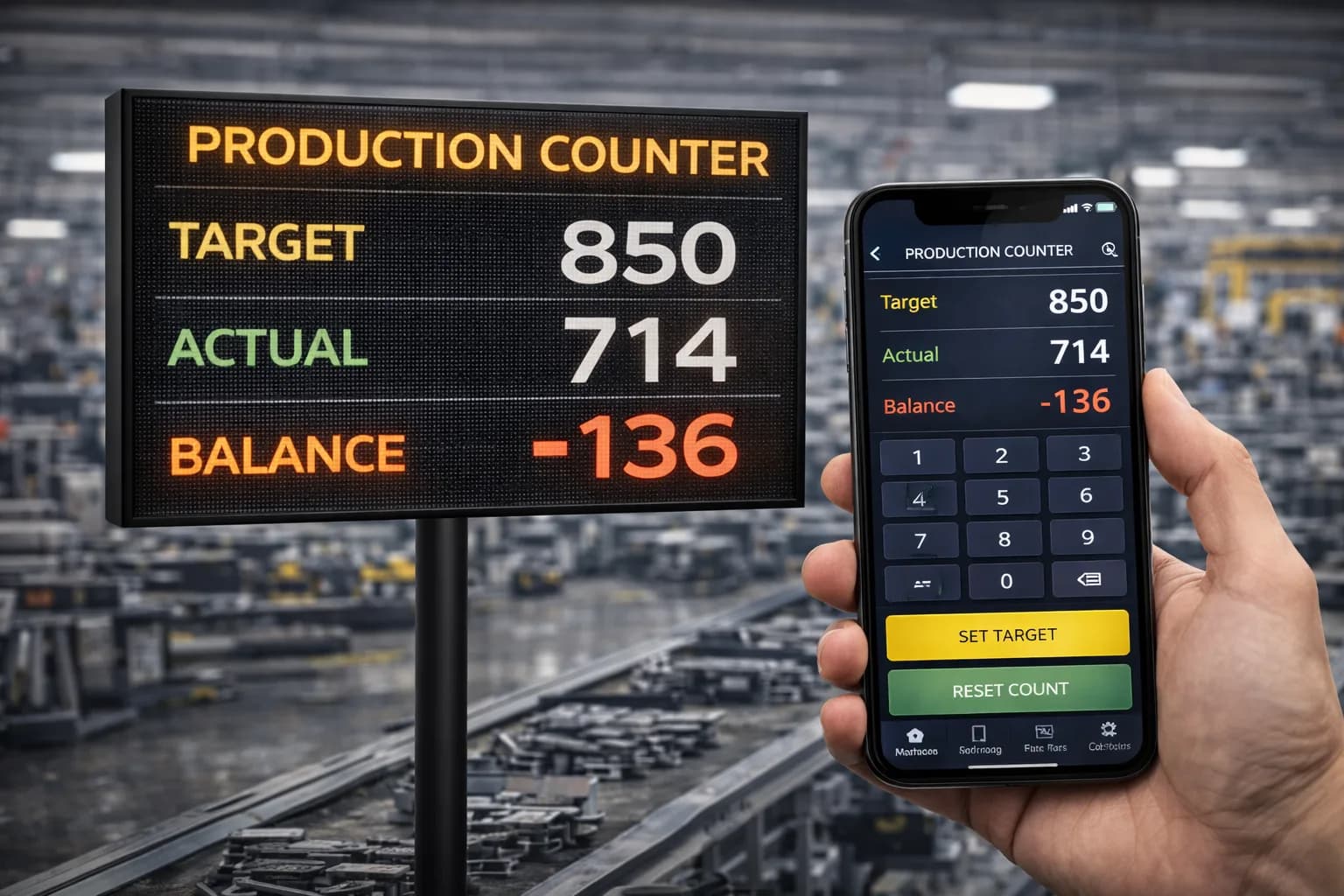
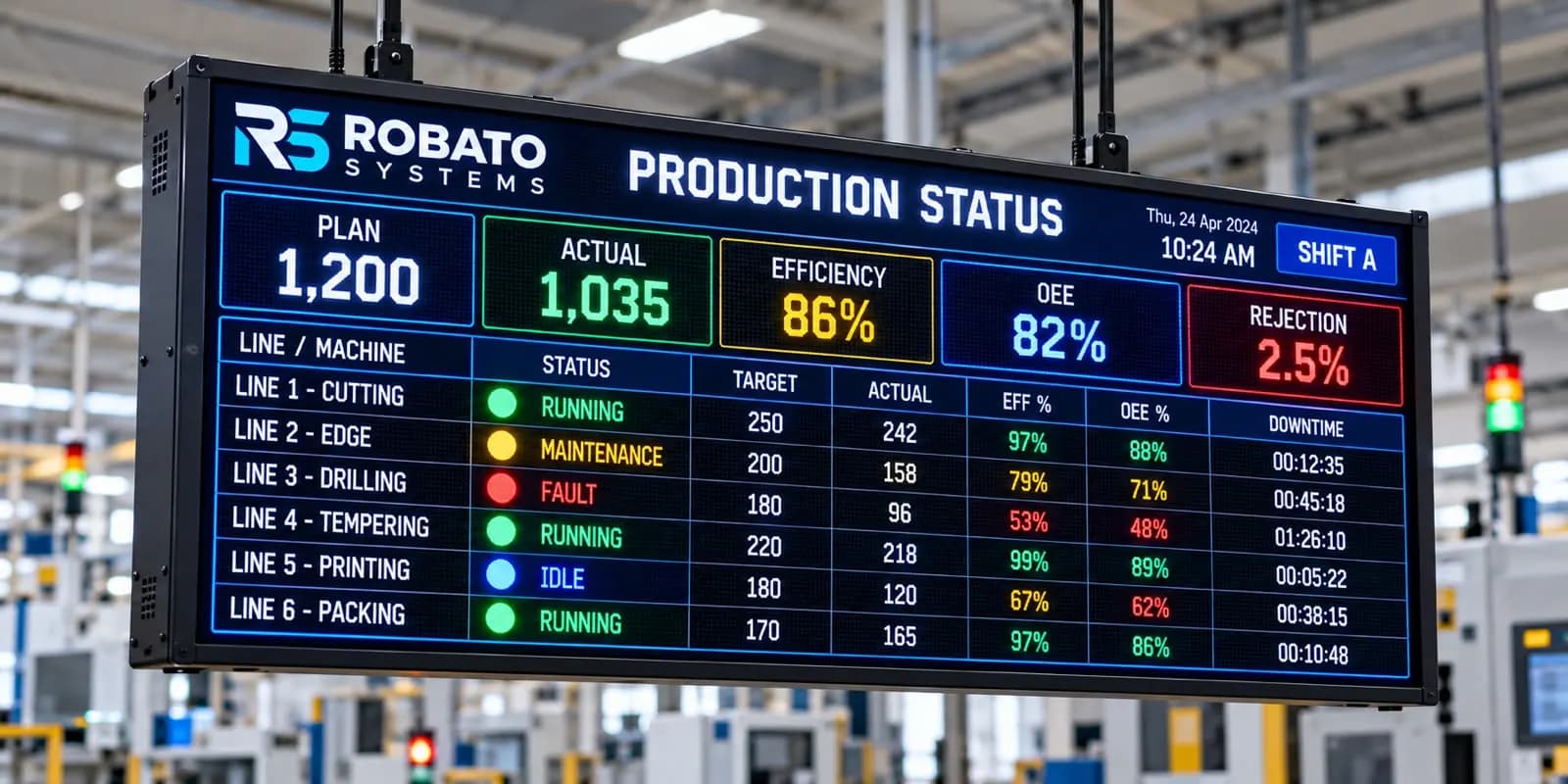
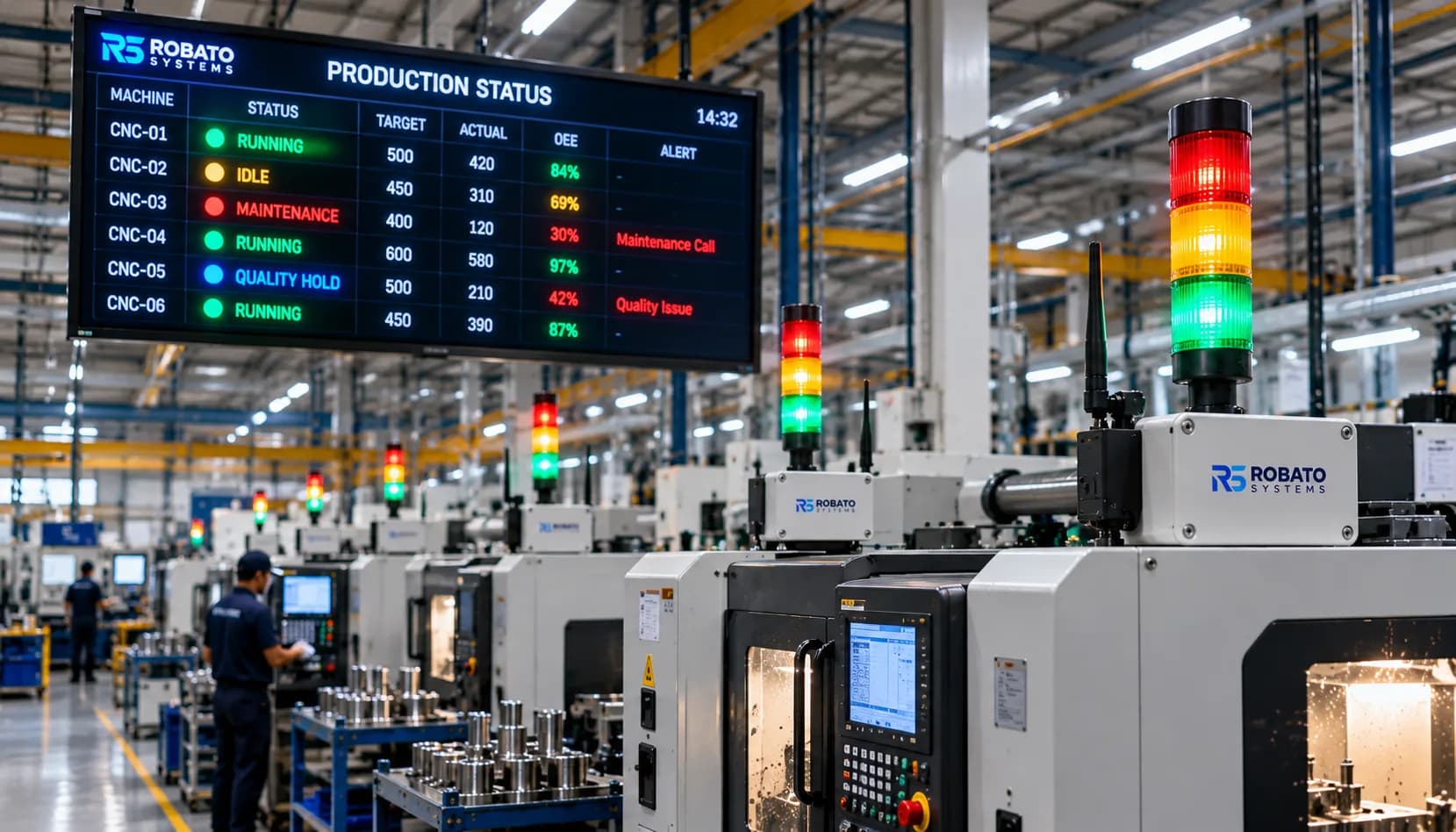
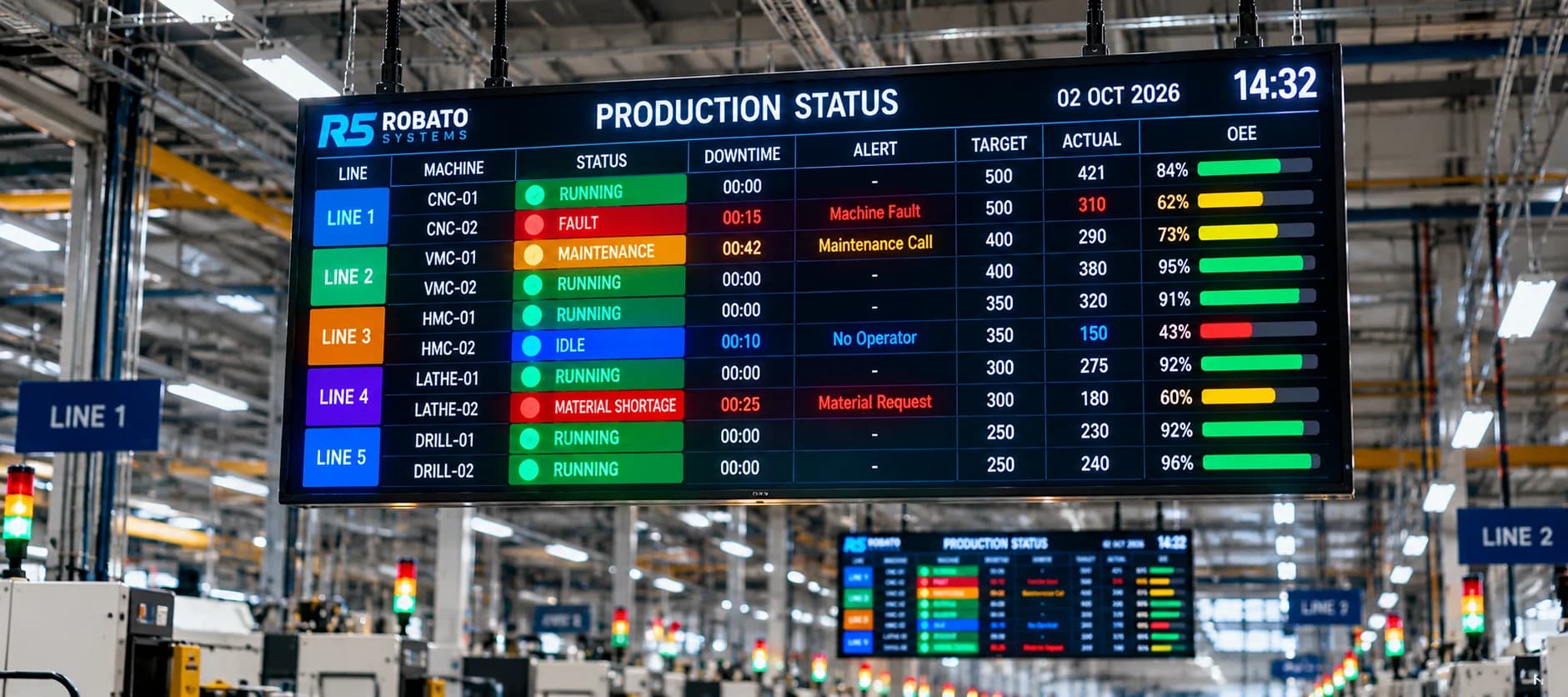
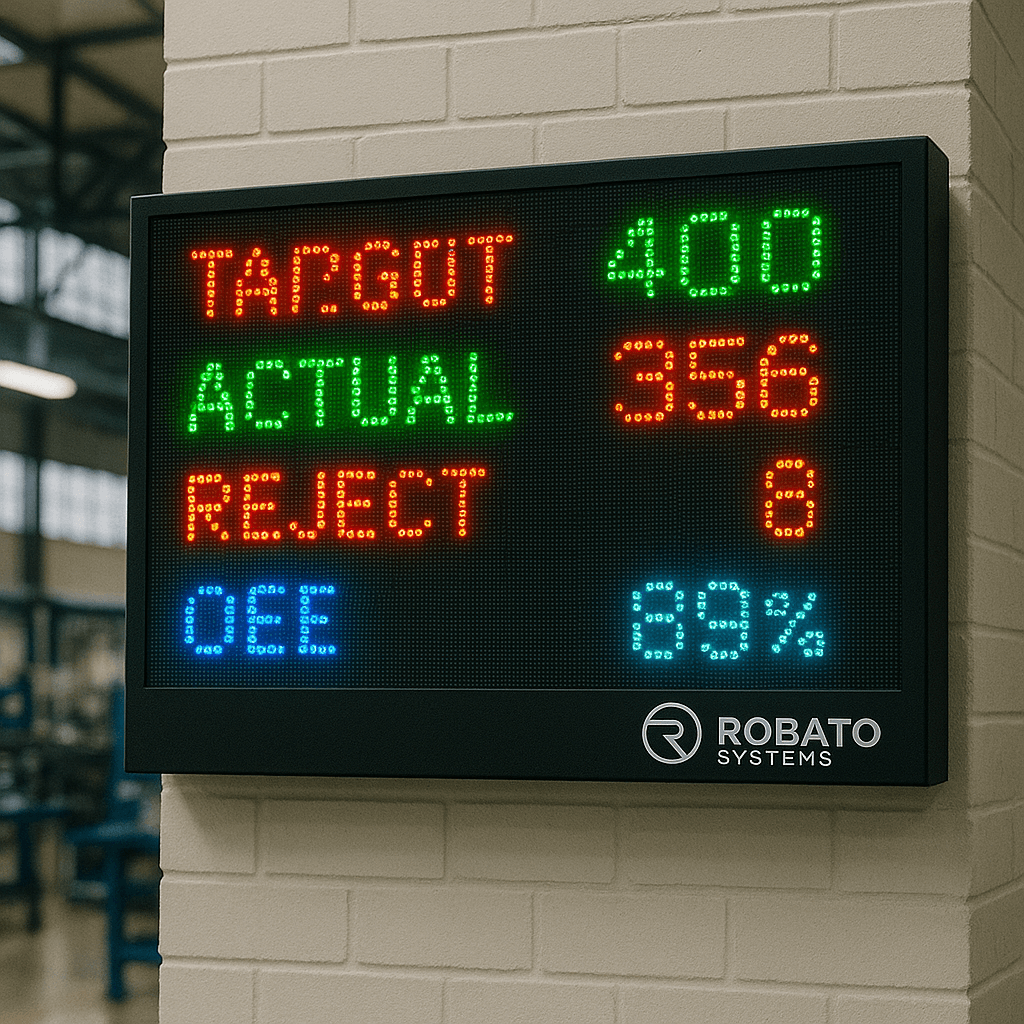
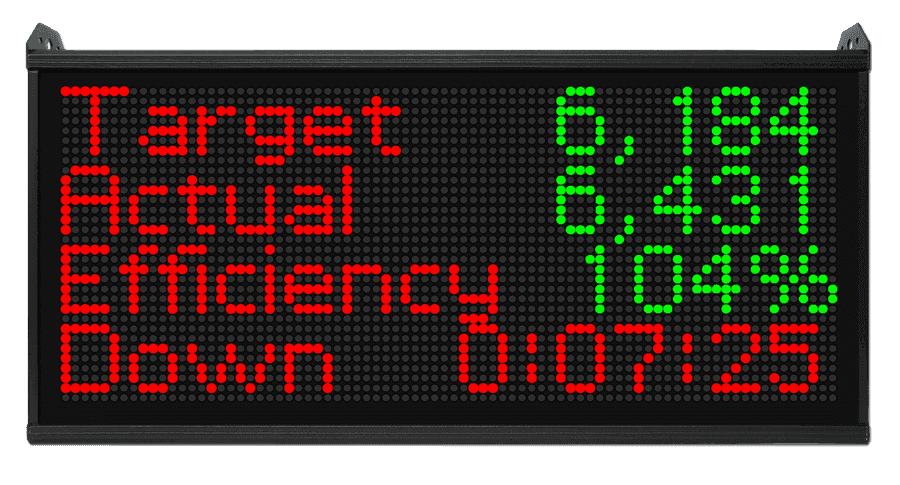
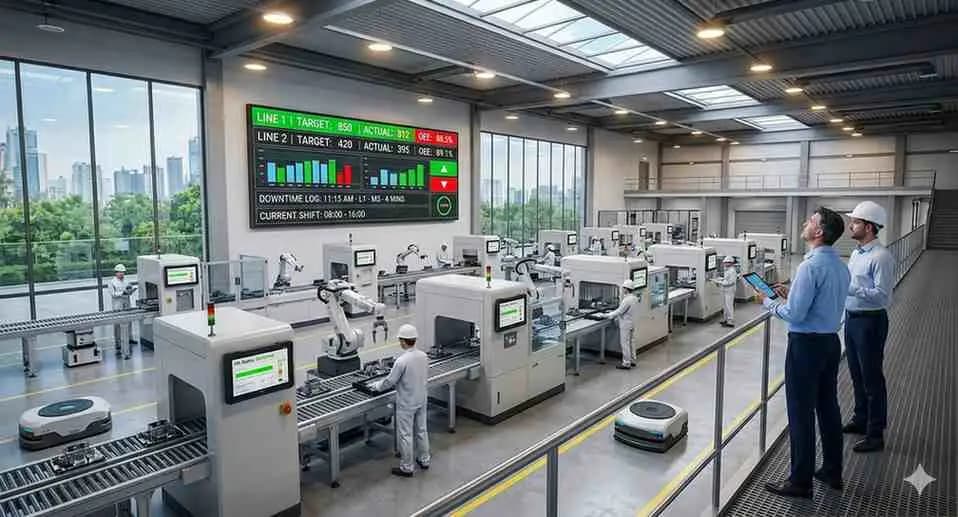
Output tracking compares actual production count against the scheduled target on a live basis, displaying the gap clearly on dashboards and shop floor displays. Machine status monitoring records whether each machine is running, idle, or in a breakdown state, with precise timestamps for every transition. Downtime tracking captures the exact start time, duration, and reason for every machine stoppage, building a detailed event log that managers can analyze by machine, shift, operator, or time period.
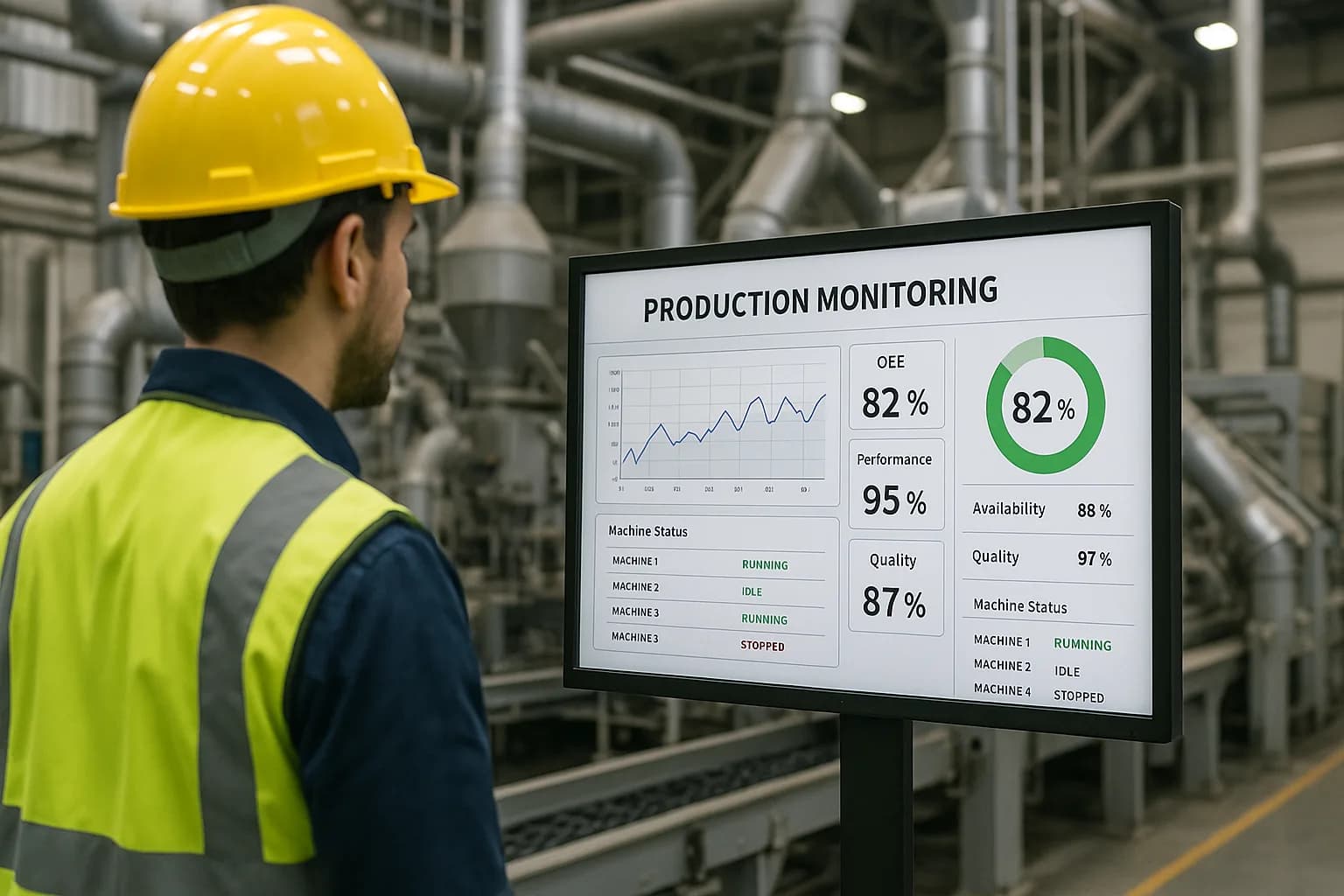
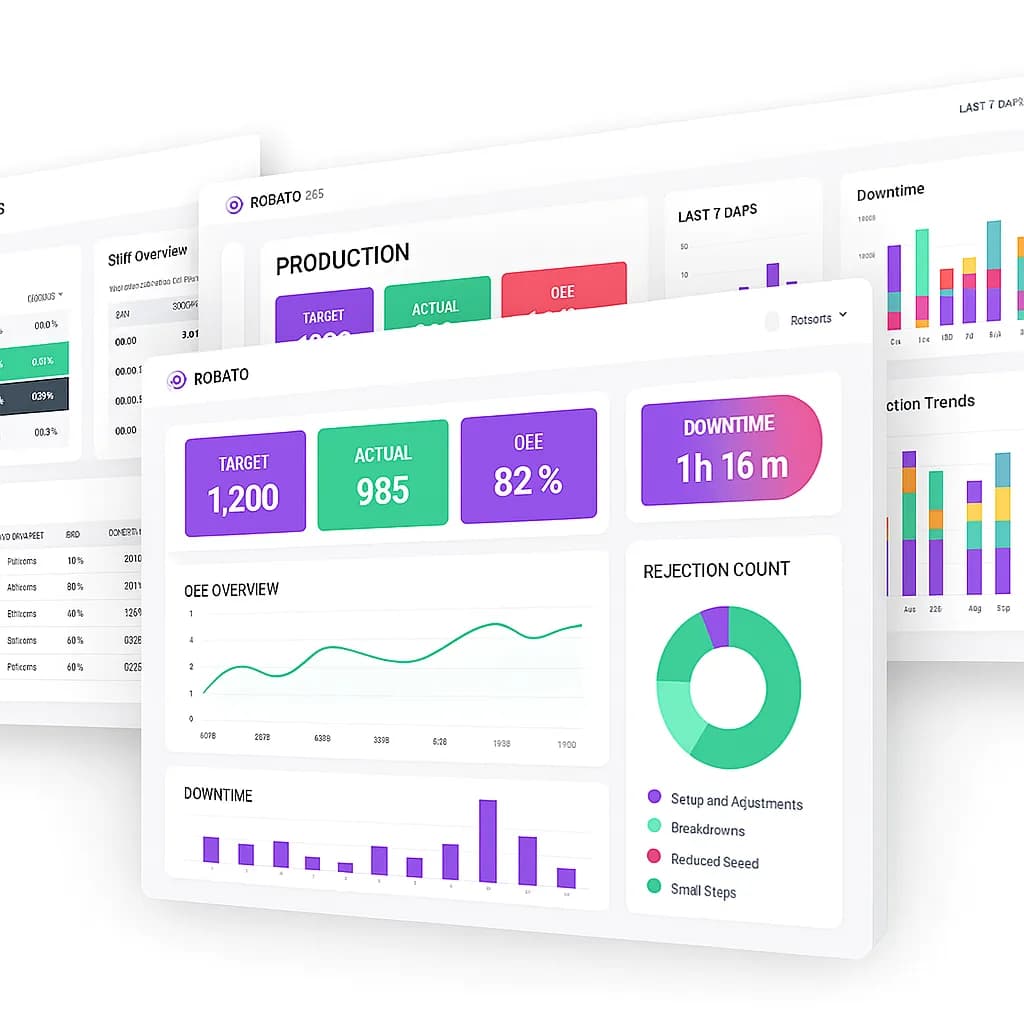
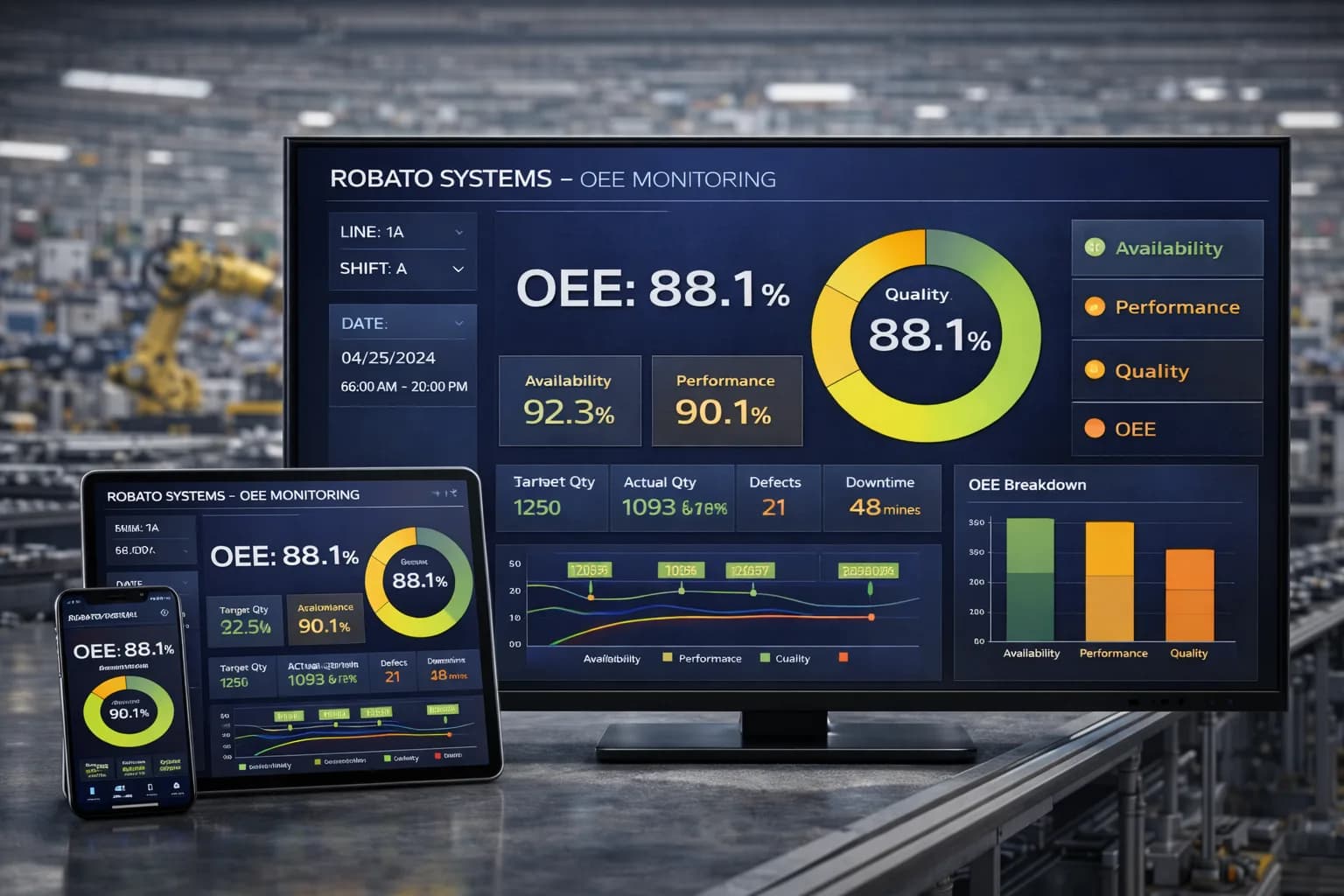
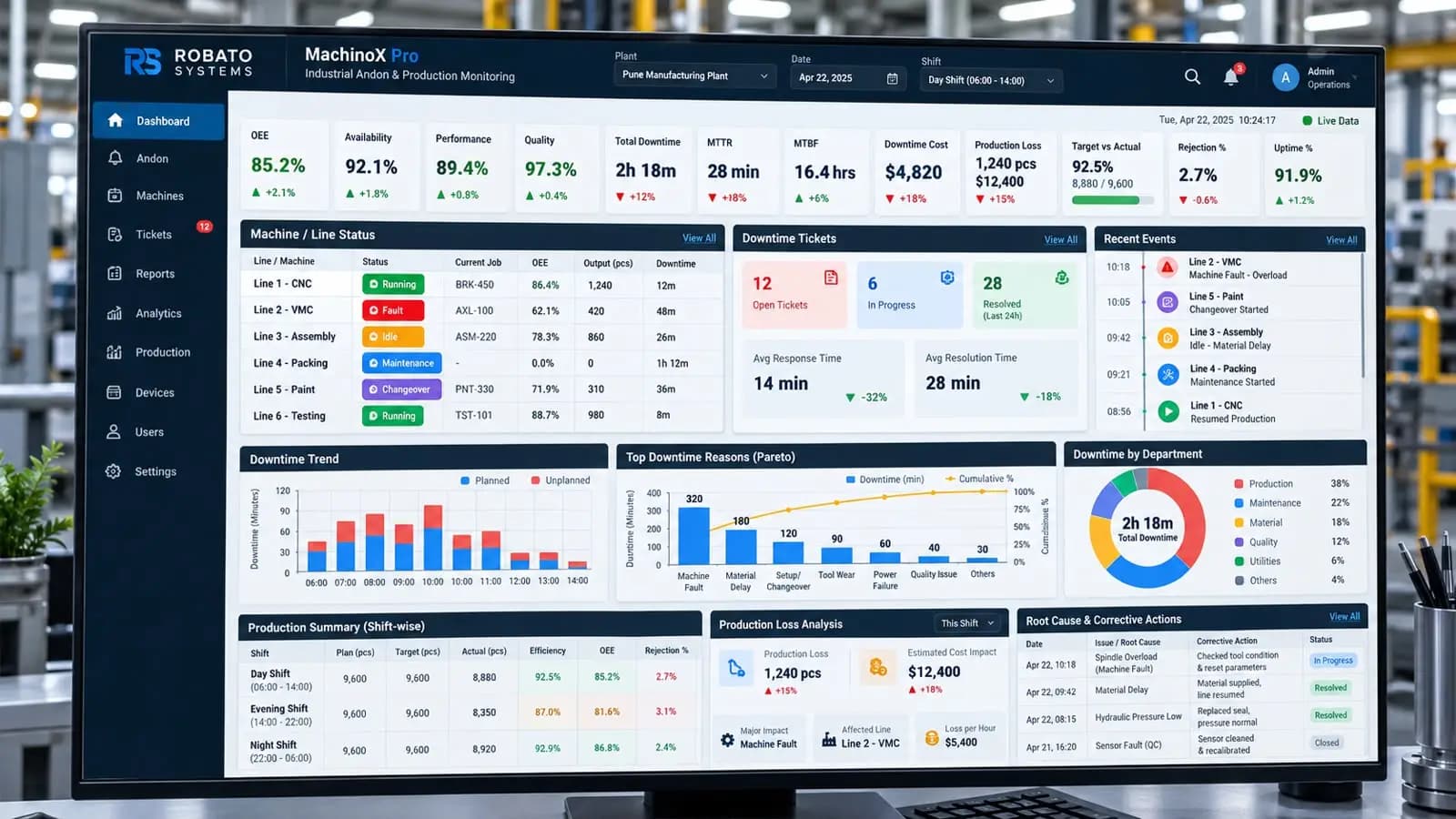
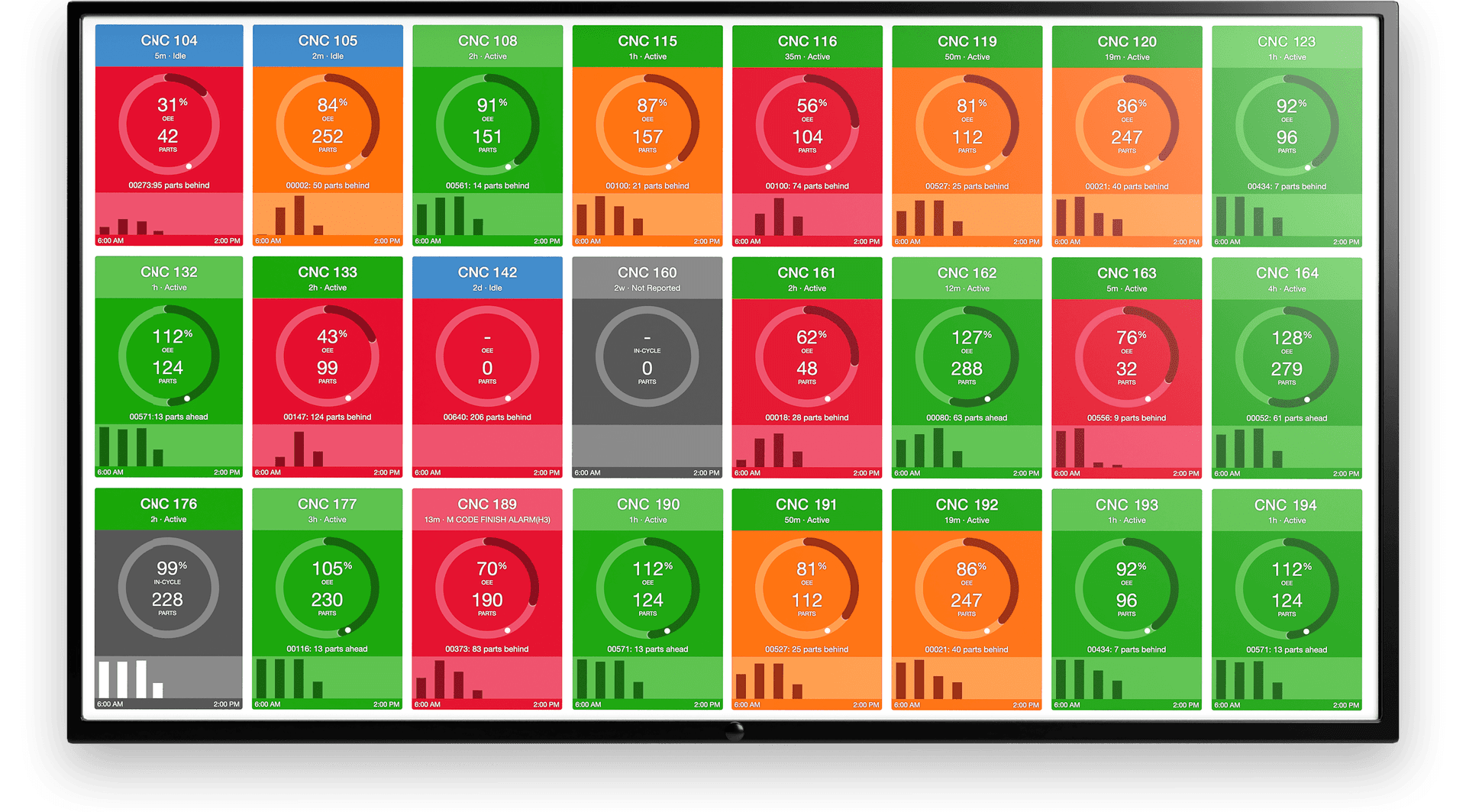
OEE calculation brings it all together. By combining availability, performance, and quality into a single percentage, the software gives plant managers the clearest possible picture of how efficiently their equipment is being used across every shift.
Live Dashboards That Put Everyone on the Same Page
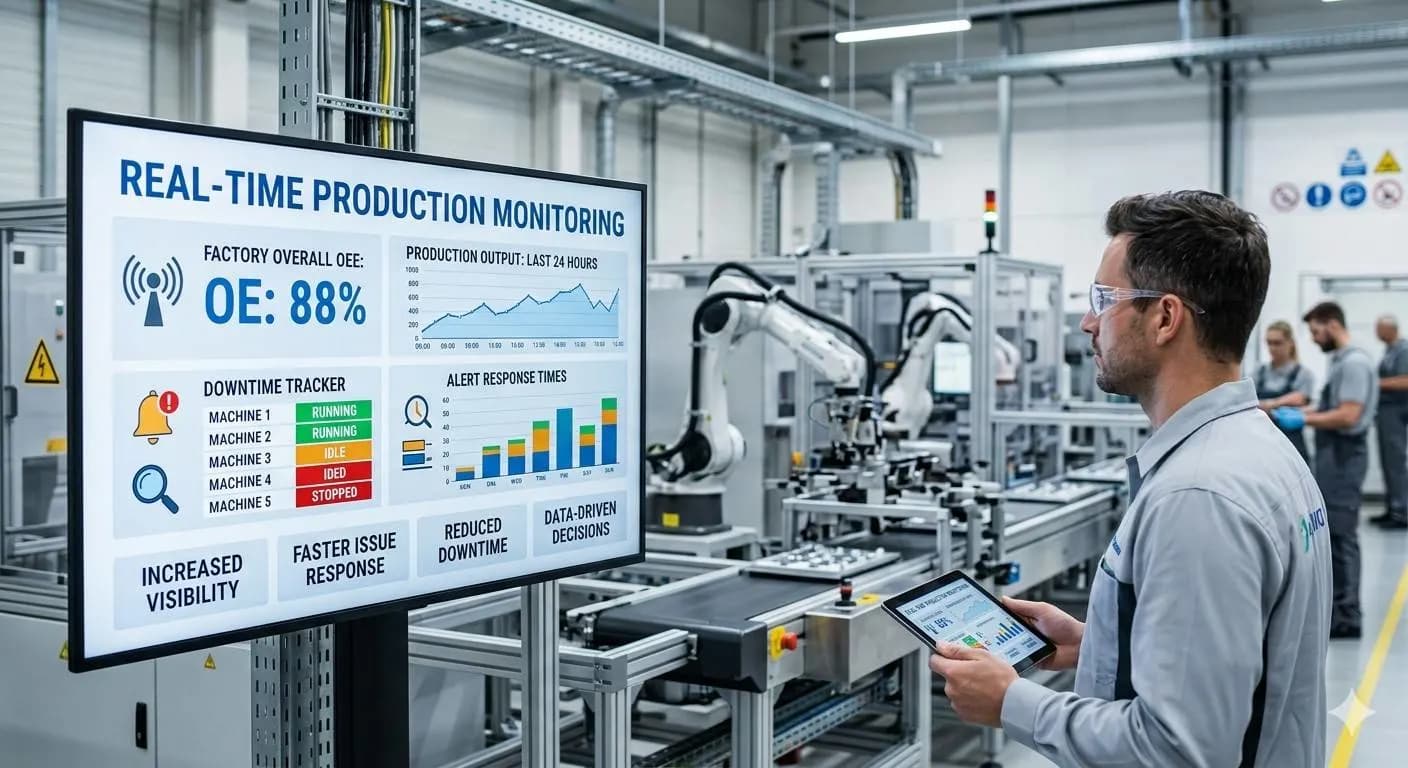
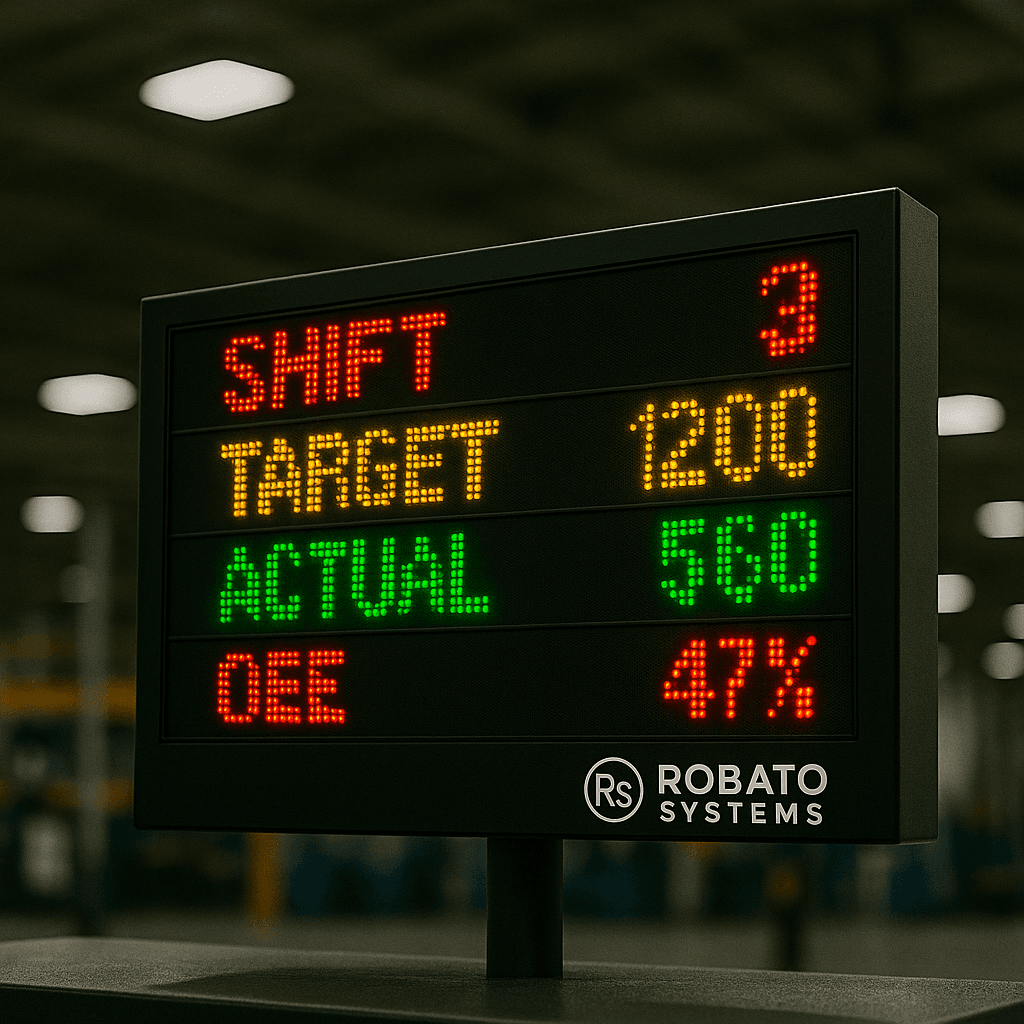
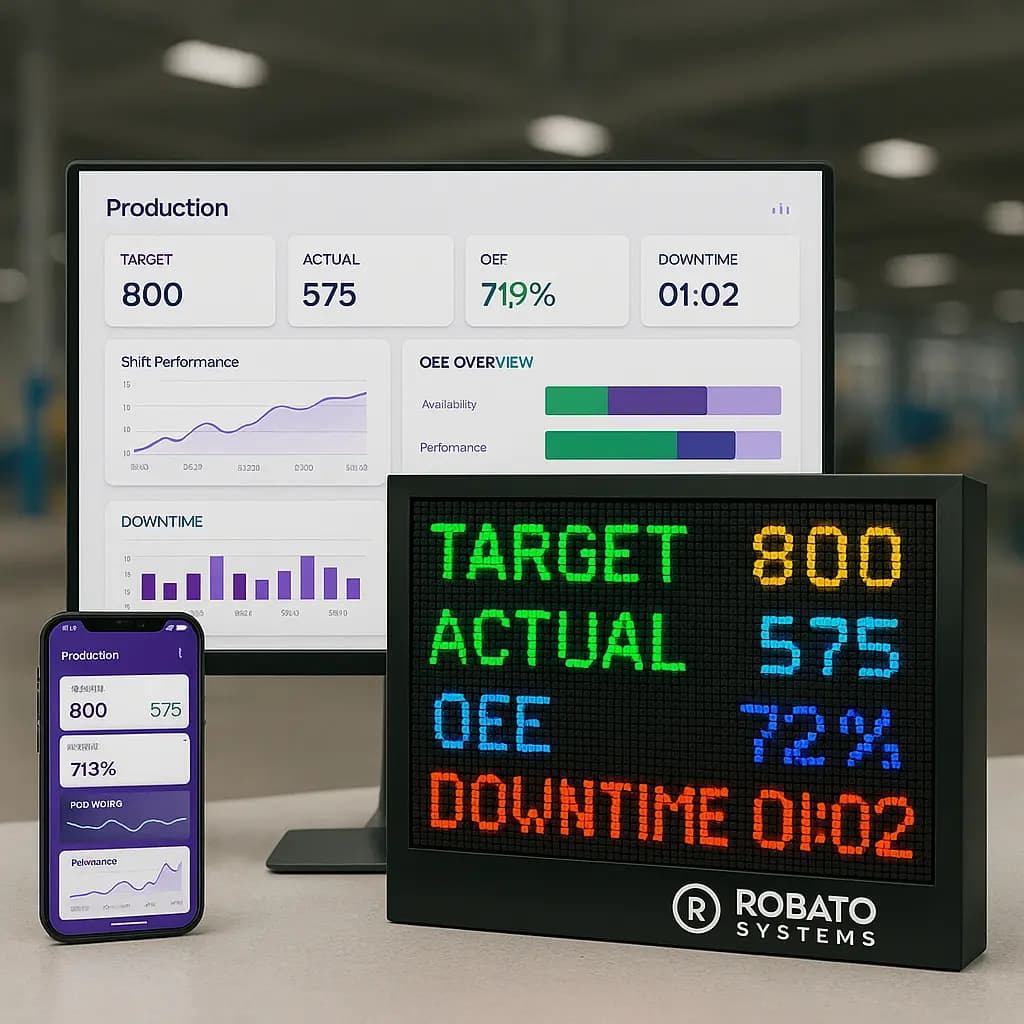
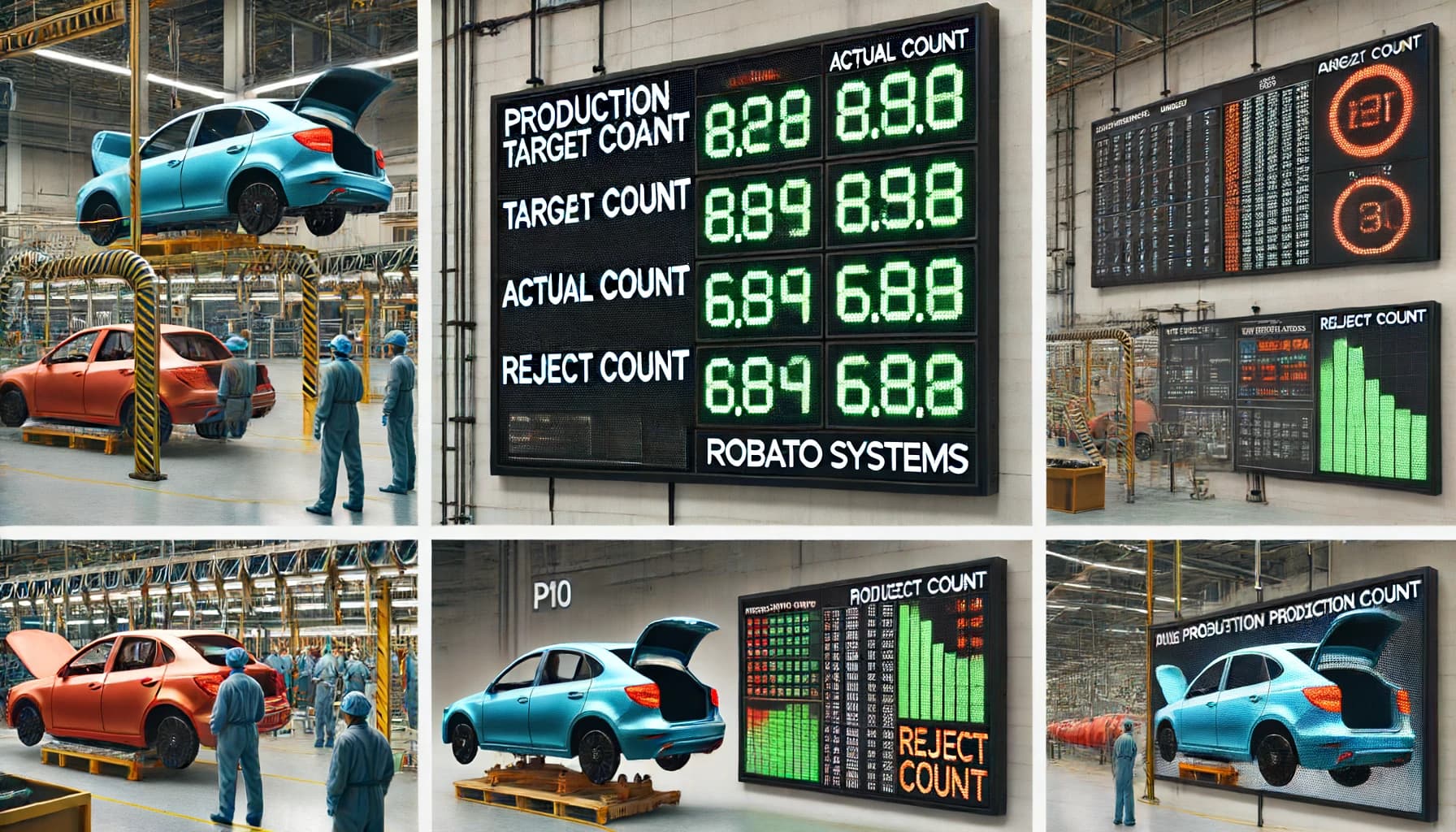
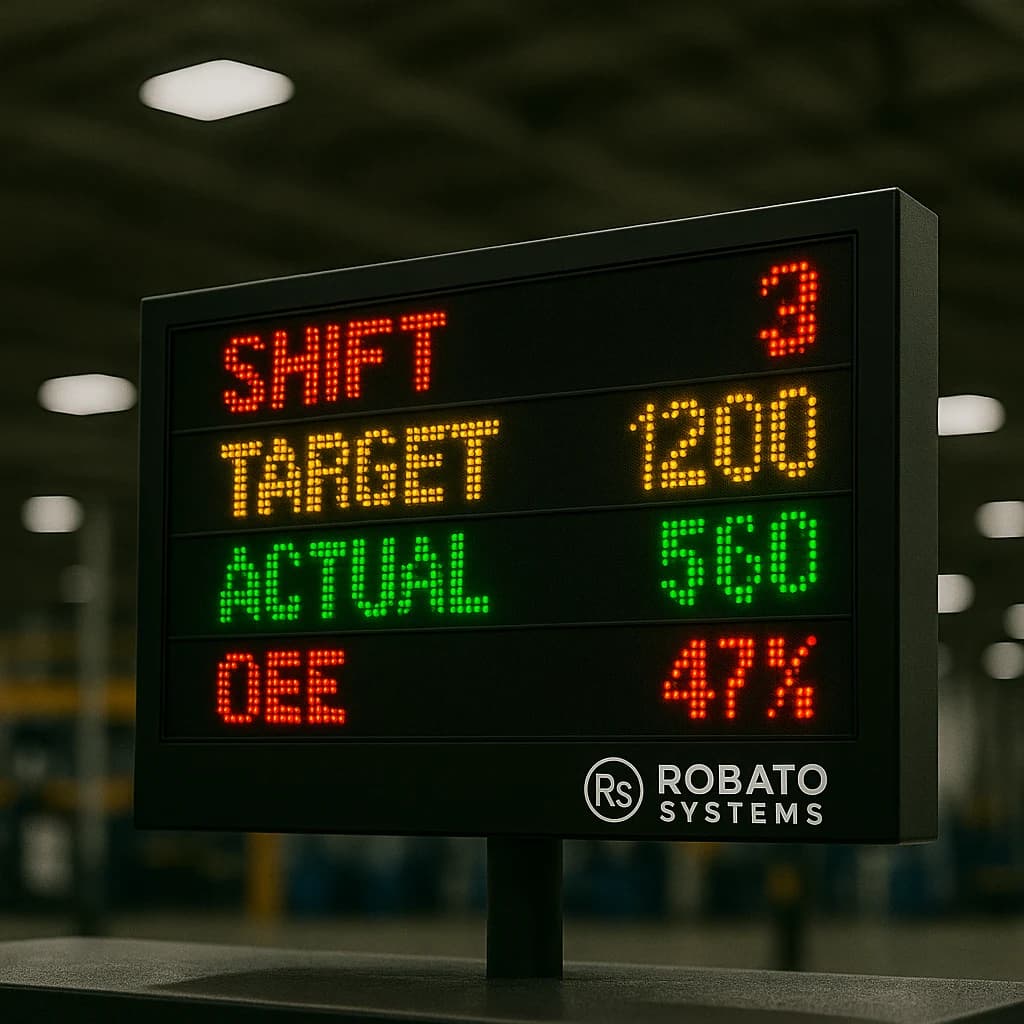
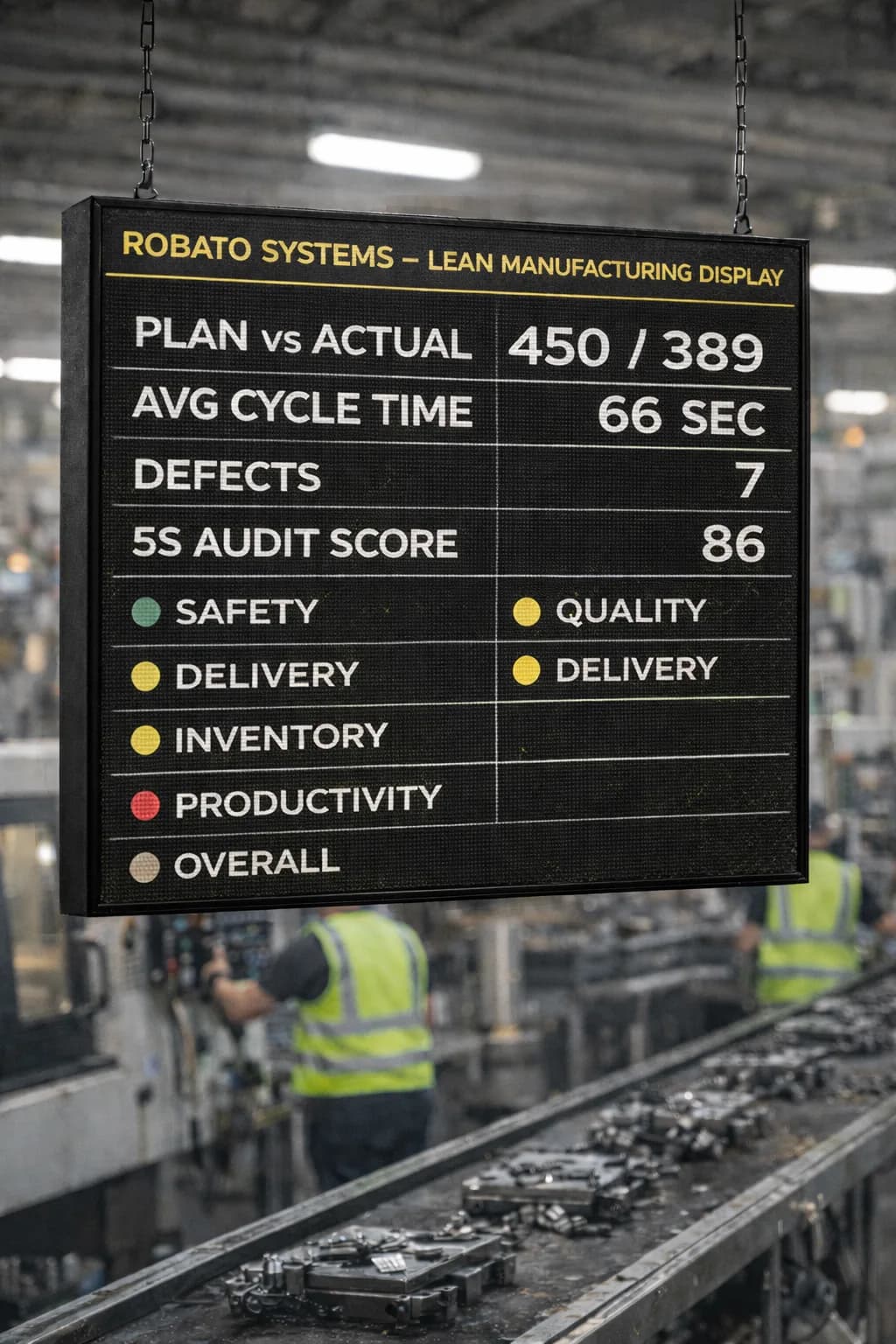
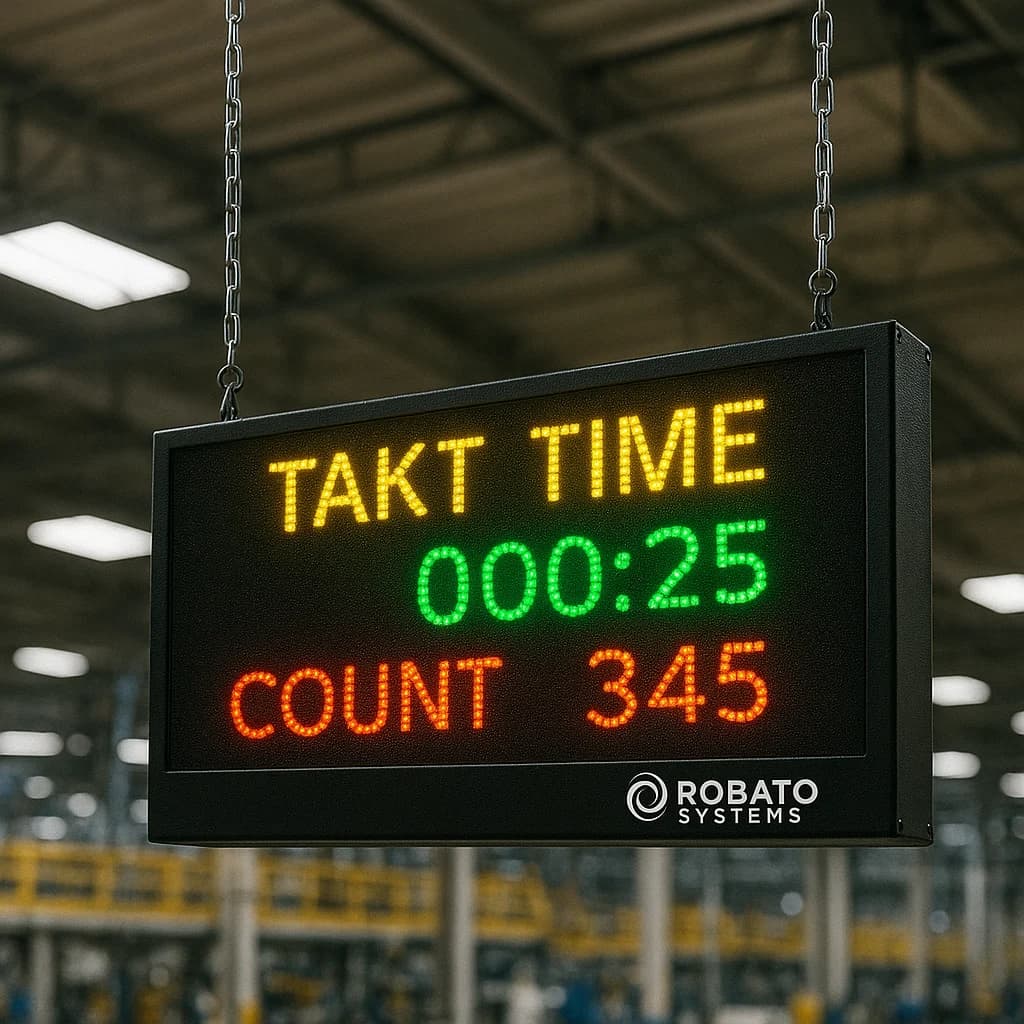
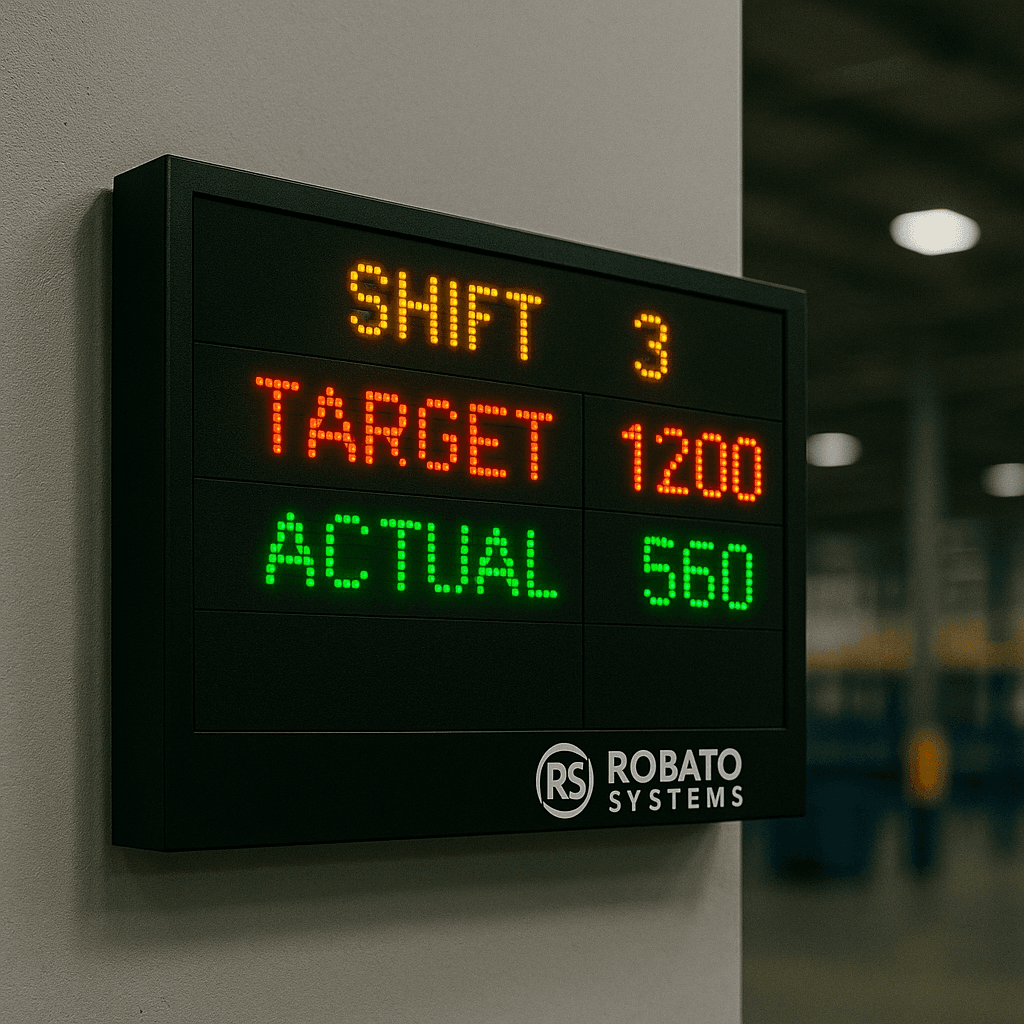
One of the most powerful aspects of real-time production monitoring software is where the data appears. LED production display boards mounted on the shop floor show live output counts, target versus actual figures, and machine status to every operator and supervisor in the area. There is no need to walk to a computer or wait for a report. The information is right there, updating continuously throughout the shift.
Smart TV dashboards in supervisors' offices and management meeting rooms bring the same live data to the people who make operational decisions. Cloud-based portals and mobile apps extend visibility even further, allowing plant managers and senior leadership to monitor output, downtime, and OEE across multiple facilities simultaneously from any device, anywhere in the world.
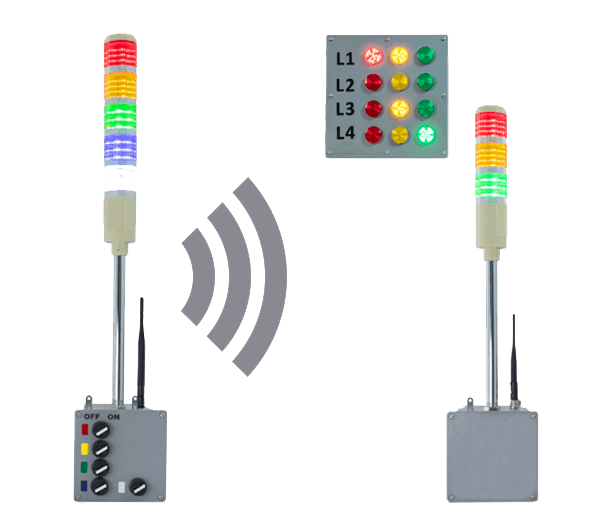
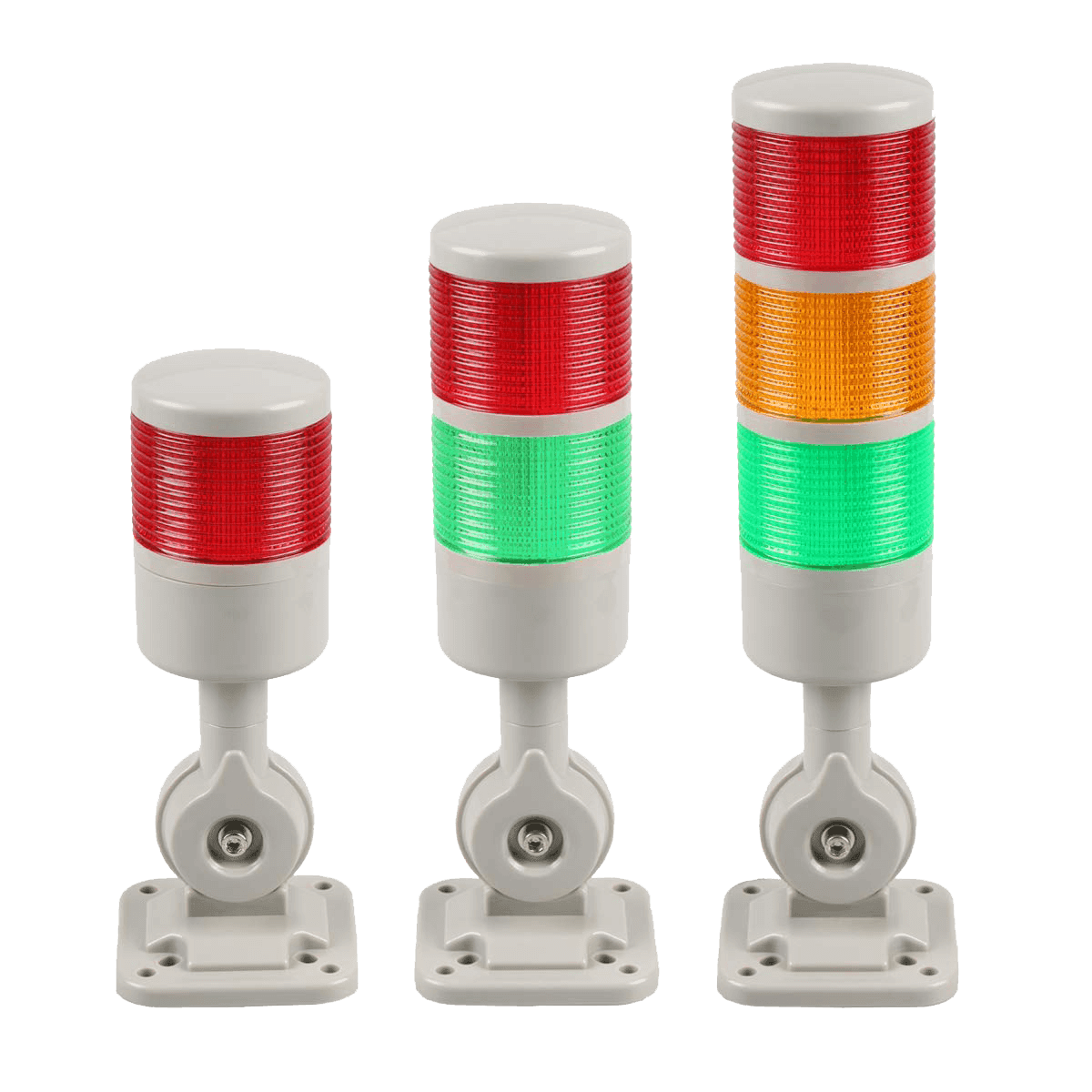
Automated alerts take visibility a step further by notifying the right person the moment a machine stops or output falls behind schedule. Problems that would previously be discovered hours later are now addressed within minutes.
Flexible Deployment for Every Type of Factory
Every factory has different infrastructure, different data security requirements, and different levels of technical readiness. Real-time production monitoring software is designed to accommodate all of them.
Cloud-based deployment offers quick setup, remote access from any device, automatic software updates, and multi-plant visibility from a single dashboard. It is the fastest route to live shop floor data for factories that want to get started without investing in on-site server infrastructure.
On-premise deployment keeps all data within the factory's own network, which is preferred in pharmaceutical, defense, and other regulated industries with strict data governance policies. Hybrid configurations combine local data collection at the machine level with cloud-level reporting for management teams, delivering the practical benefits of both approaches.
Industries Where It Makes the Biggest Difference
Real-time production monitoring software delivers measurable value across virtually every manufacturing sector. Automotive component factories use it to maintain tight cycle time discipline across high-speed production lines. Pharmaceutical manufacturers use it to track batch output and ensure compliance with production schedules. Textile mills use it to monitor loom and machine utilization across large factory floors. Electronics manufacturers use it to catch quality deviations early before defective output reaches the next production stage. FMCG producers use it to sustain the high throughput volumes that their supply chains depend on.
In each case, the outcome is the same. Losses are caught earlier, decisions are made faster, and the factory runs closer to its true potential every single day.
The Real Competitive Advantage
Real-time production monitoring software does not just improve efficiency. It changes the entire culture of how a factory operates. When shop floor data is visible to everyone in real time, accountability increases naturally. Operators know their output is being tracked. Supervisors can respond to problems as they emerge. Managers can identify systemic issues before they become costly patterns.
That shift from reactive management to proactive, data-driven operations is what makes real-time production monitoring software one of the smartest investments a modern factory can make today.