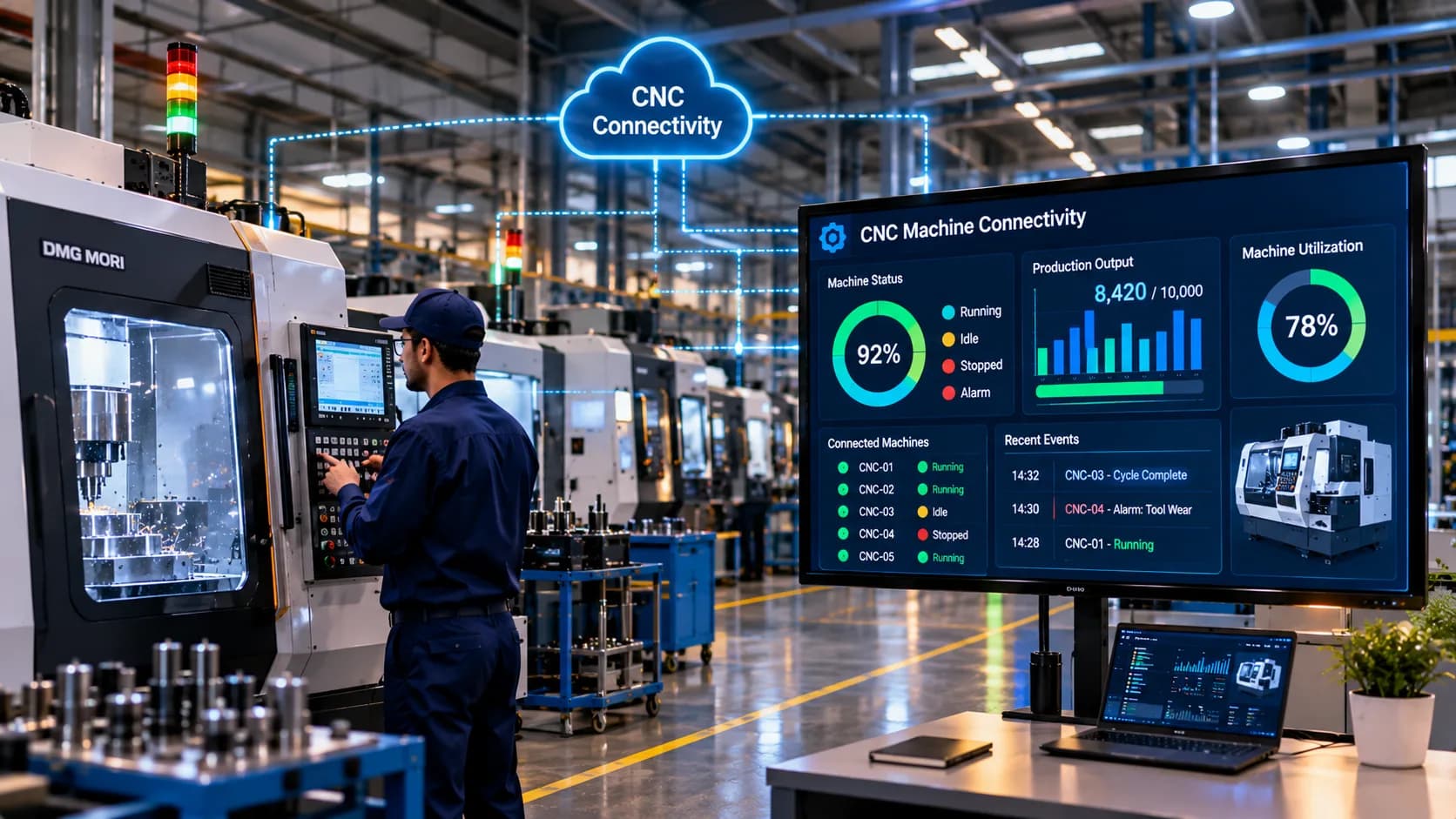
CNC Machine Connectivity: A Complete Guide to Connecting CNC Machines with Industrial IoT
Modern manufacturing facilities often operate dozens or hundreds of CNC machines across different production lines. These machines may come from different manufacturers, use different controller generations, and support different communication technologies. Although each machine performs a specific manufacturing operation, connecting them to a common monitoring environment can be challenging.
This is where CNC machine connectivity becomes important.
CNC machine connectivity refers to the technologies, communication interfaces, and integration methods used to connect Computer Numerical Control machines with other industrial equipment, production systems, and monitoring applications.
A connected CNC machine can share operational information such as machine status, production counts, cycle time, alarms, program details, and selected process parameters. This information can then be used for real-time monitoring, production analysis, downtime tracking, and operational decision-making.
With industrial IoT technologies, manufacturers can connect both modern and legacy CNC machines to centralized platforms without necessarily replacing their existing equipment.
This guide explains how CNC machine connectivity works, the available communication methods, common integration challenges, and the steps required to build a connected manufacturing environment.
What Is CNC Machine Connectivity?
CNC machine connectivity is the process of establishing communication between CNC equipment and external systems so that operational information can be exchanged.
A CNC machine typically contains a controller that manages machining operations, movement, programs, and machine functions. Depending on its design and configuration, the controller may provide access to selected information through Ethernet, serial communication, industrial protocols, APIs, or dedicated interfaces.
Connectivity allows this information to move beyond the machine itself.
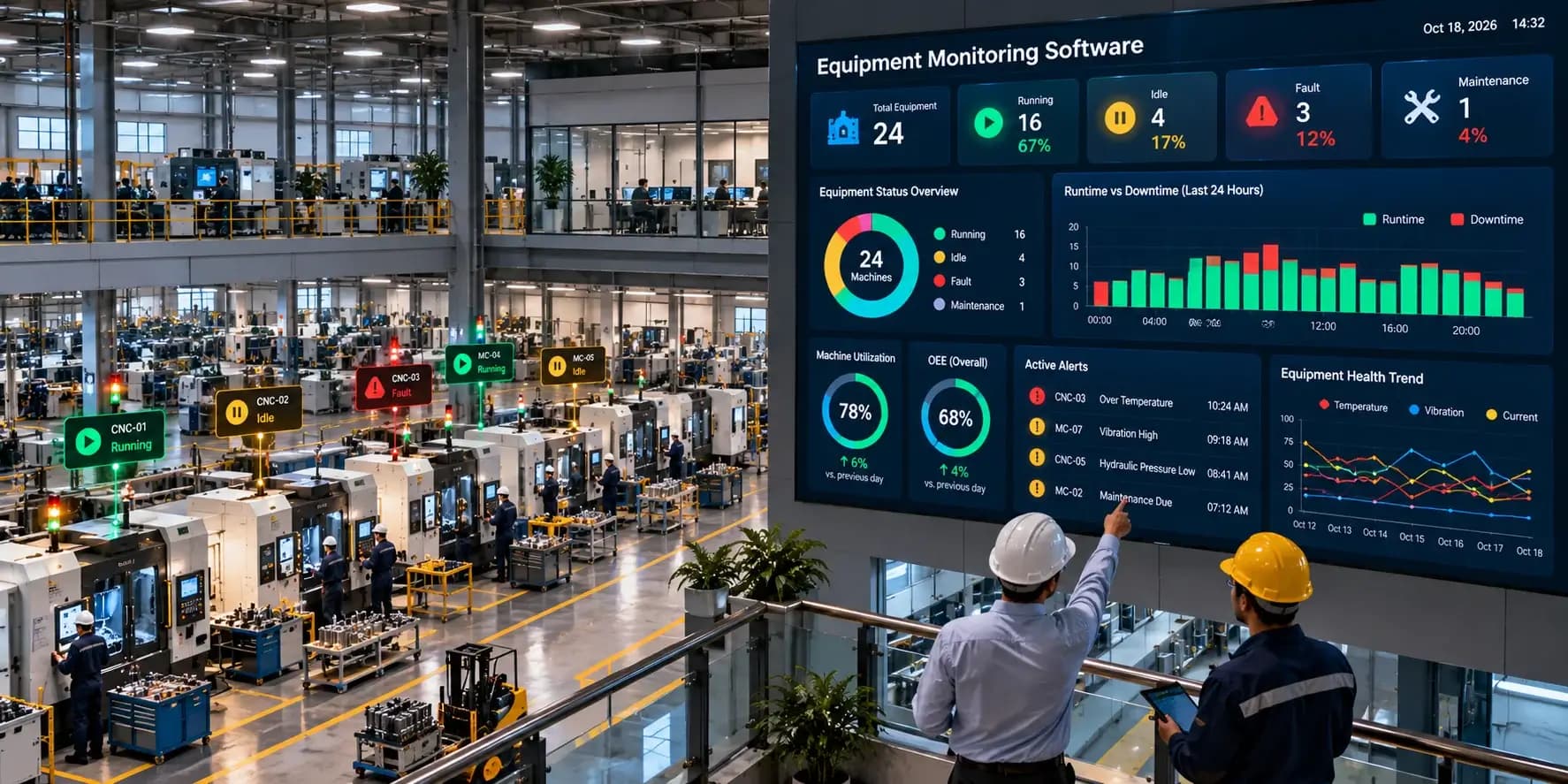
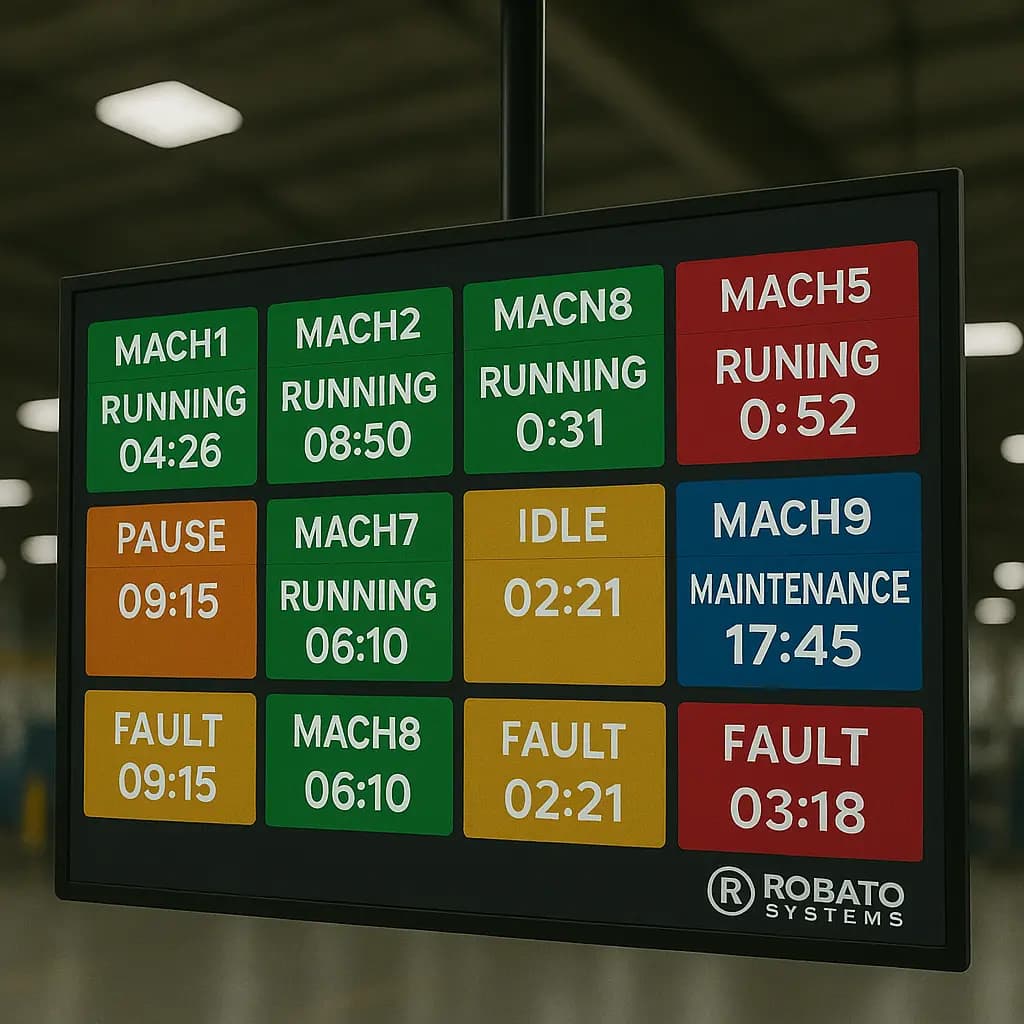
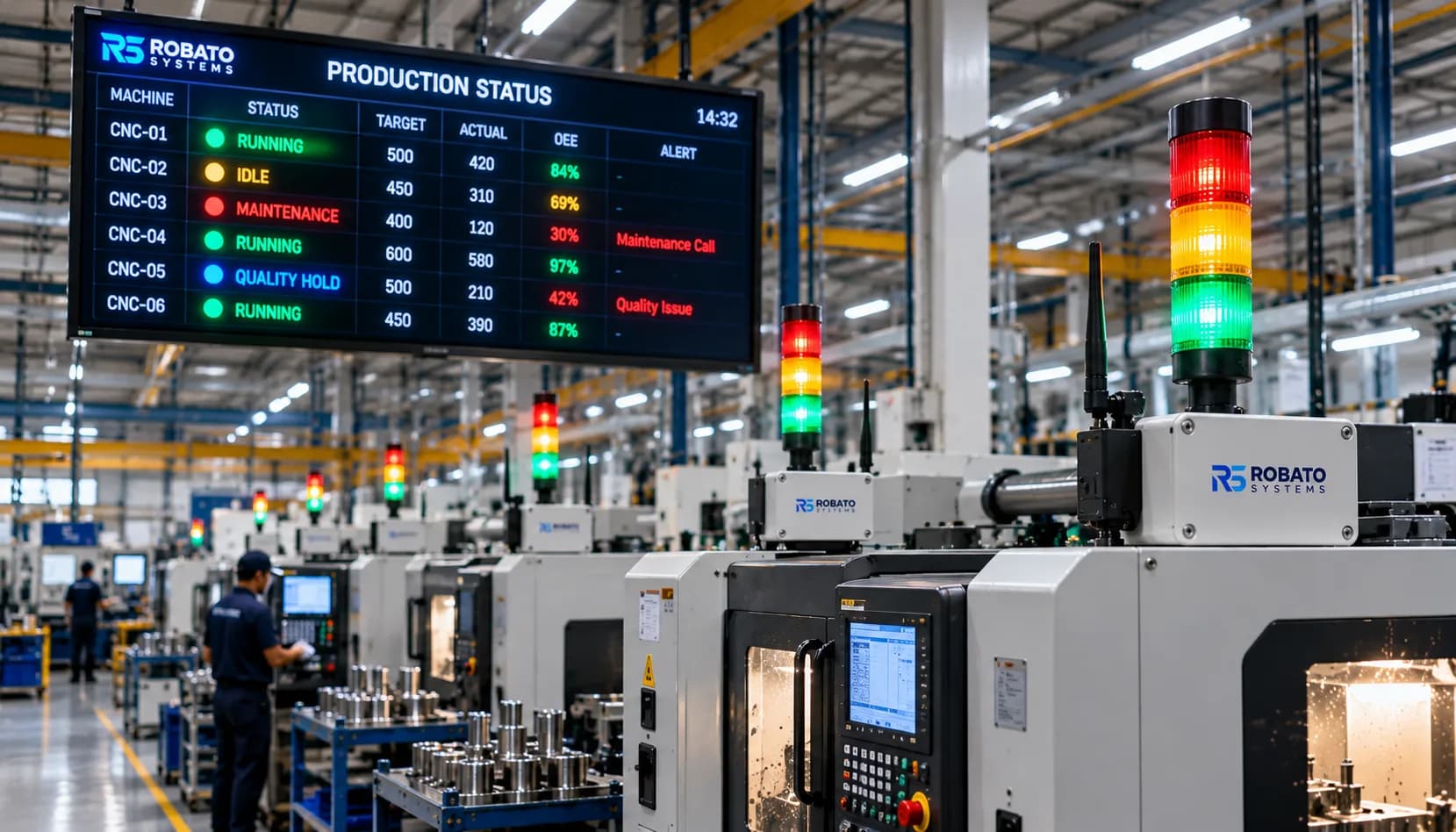
For example, when a CNC machine is connected to a production monitoring platform, supervisors may be able to view whether the machine is running, how many parts it has produced, how long it has been idle, and whether an alarm has occurred.
A connected manufacturing environment can include:
CNC machines and their controllers
Programmable Logic Controllers (PLCs)
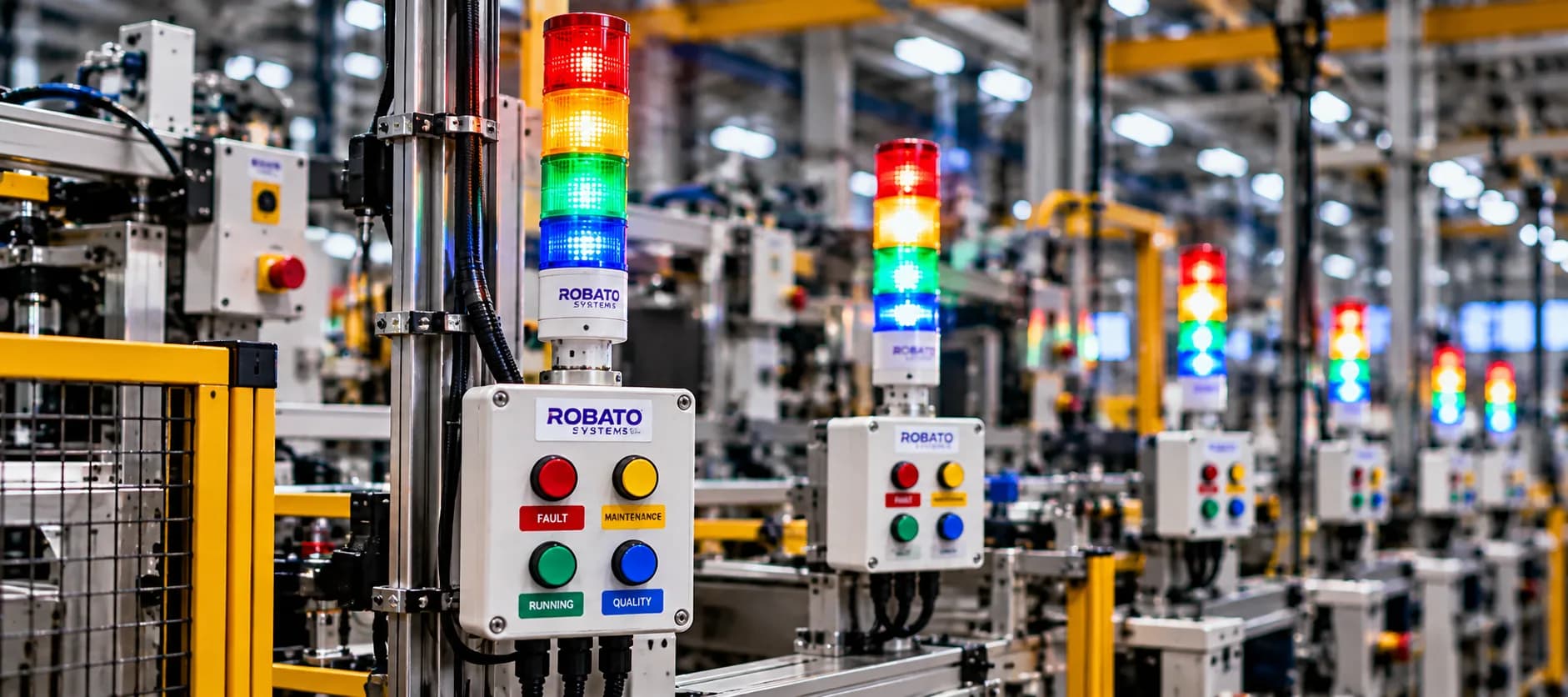
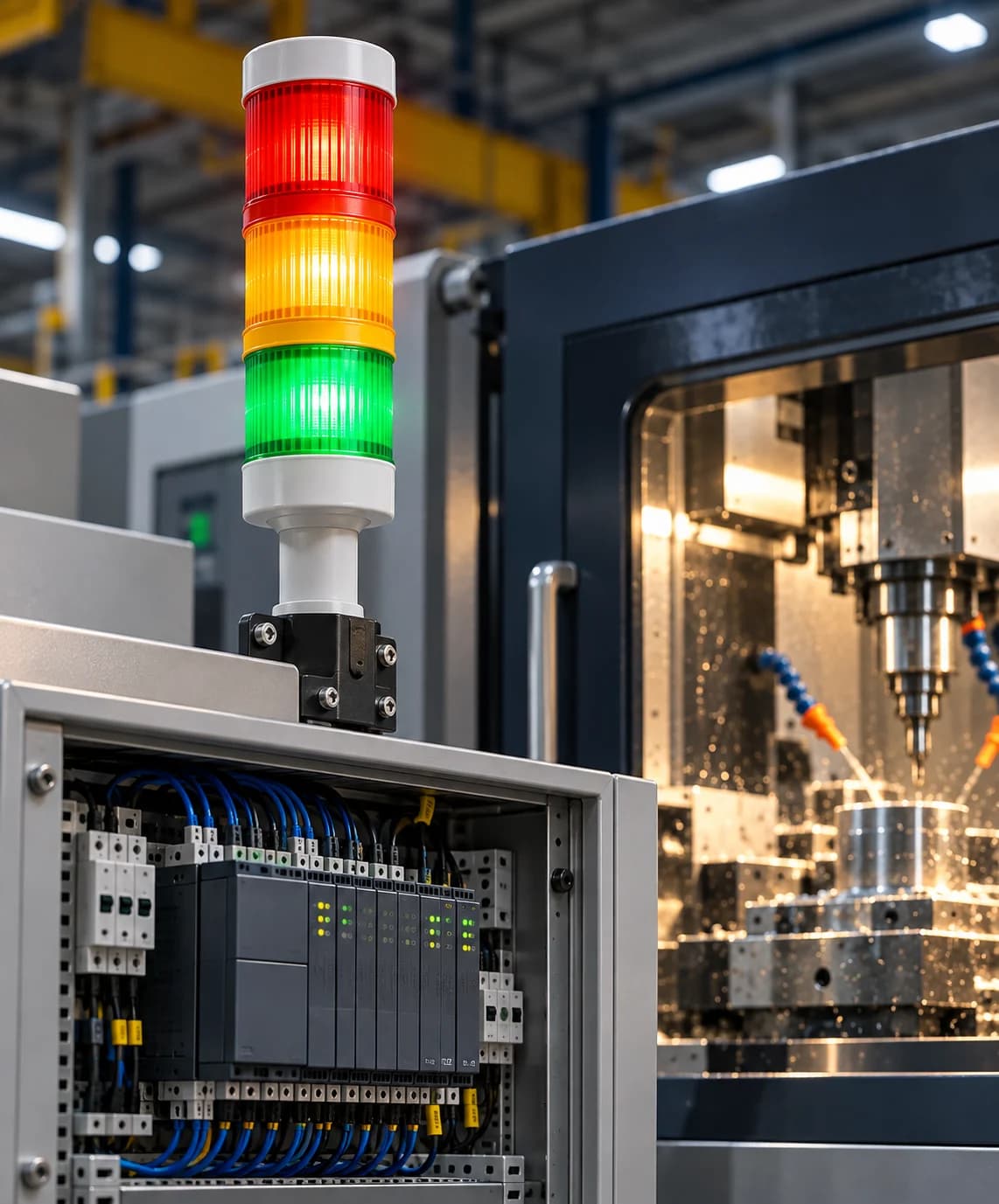
Industrial sensors and data acquisition devices
Ethernet and industrial communication networks
Industrial IoT gateways
Edge computing devices
Production monitoring software
Cloud or on-premise data platforms
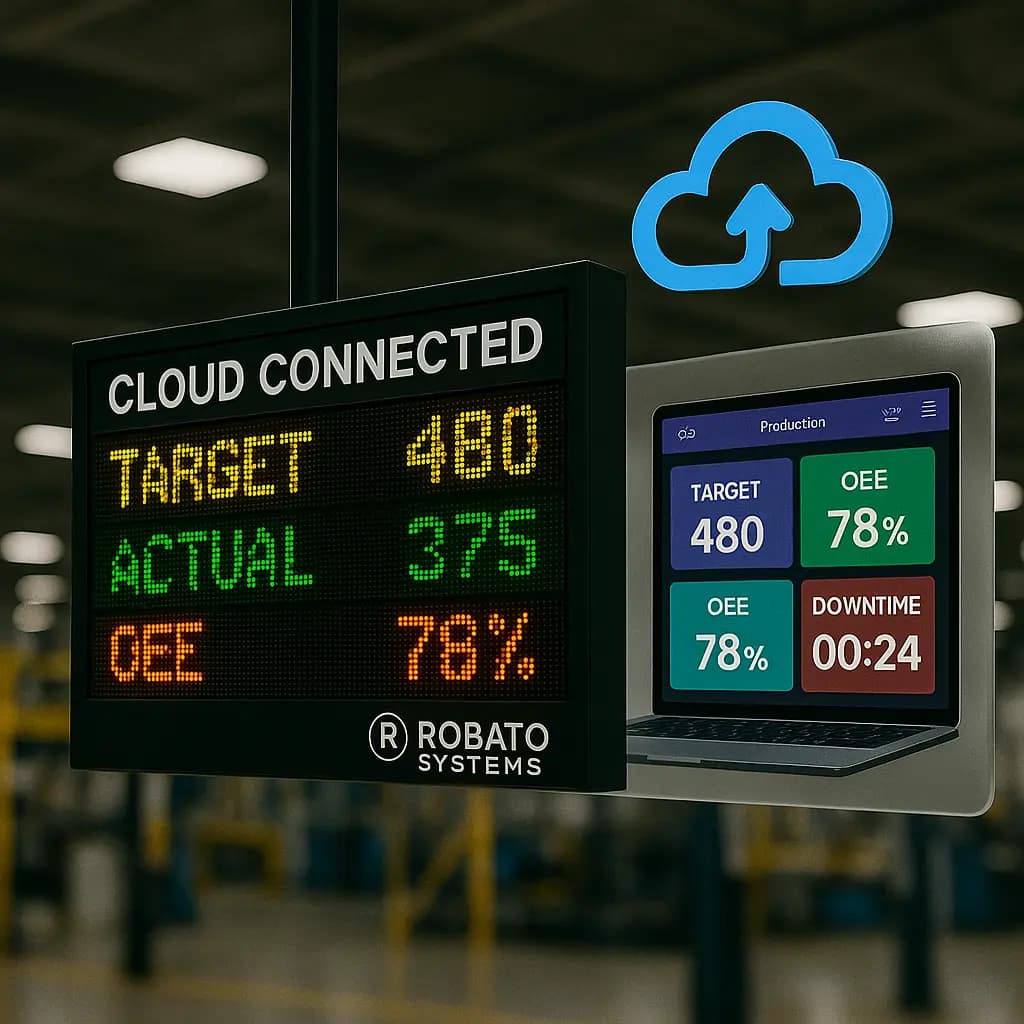
Factory dashboards and reporting systems
The purpose is to create a reliable communication path between shop-floor equipment and the applications that use its information.
Why Is CNC Machine Connectivity Important?
Without connectivity, machine information often remains isolated within individual controllers or is recorded manually by production operators.
This makes it difficult for supervisors to understand the overall production situation, especially when several machines operate simultaneously.
Connecting CNC machines provides a more consistent way to access operational information.
1. Centralized Machine Monitoring
Connected machines can send operational information to a central monitoring platform.
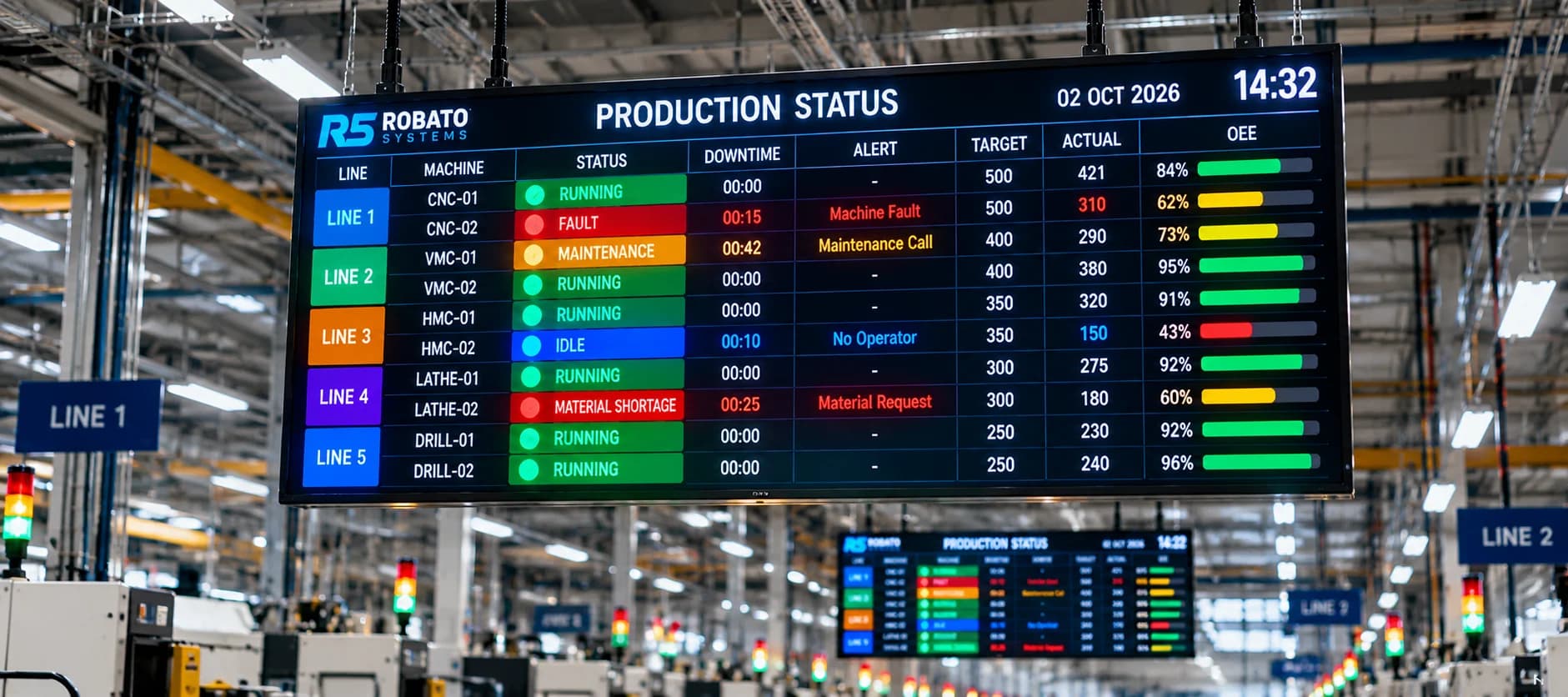
Production supervisors can view multiple machines through a common dashboard rather than checking each machine individually.
2. Real-Time Production Visibility
Connectivity enables machine information to be transmitted as operating conditions change or at configured collection intervals.
This helps production teams identify machine stoppages, idle periods, and production interruptions more quickly.
3. Improved Production Tracking
Connected controllers, PLCs, and sensors can provide production-related information such as part counts, cycle completion, and operating time.
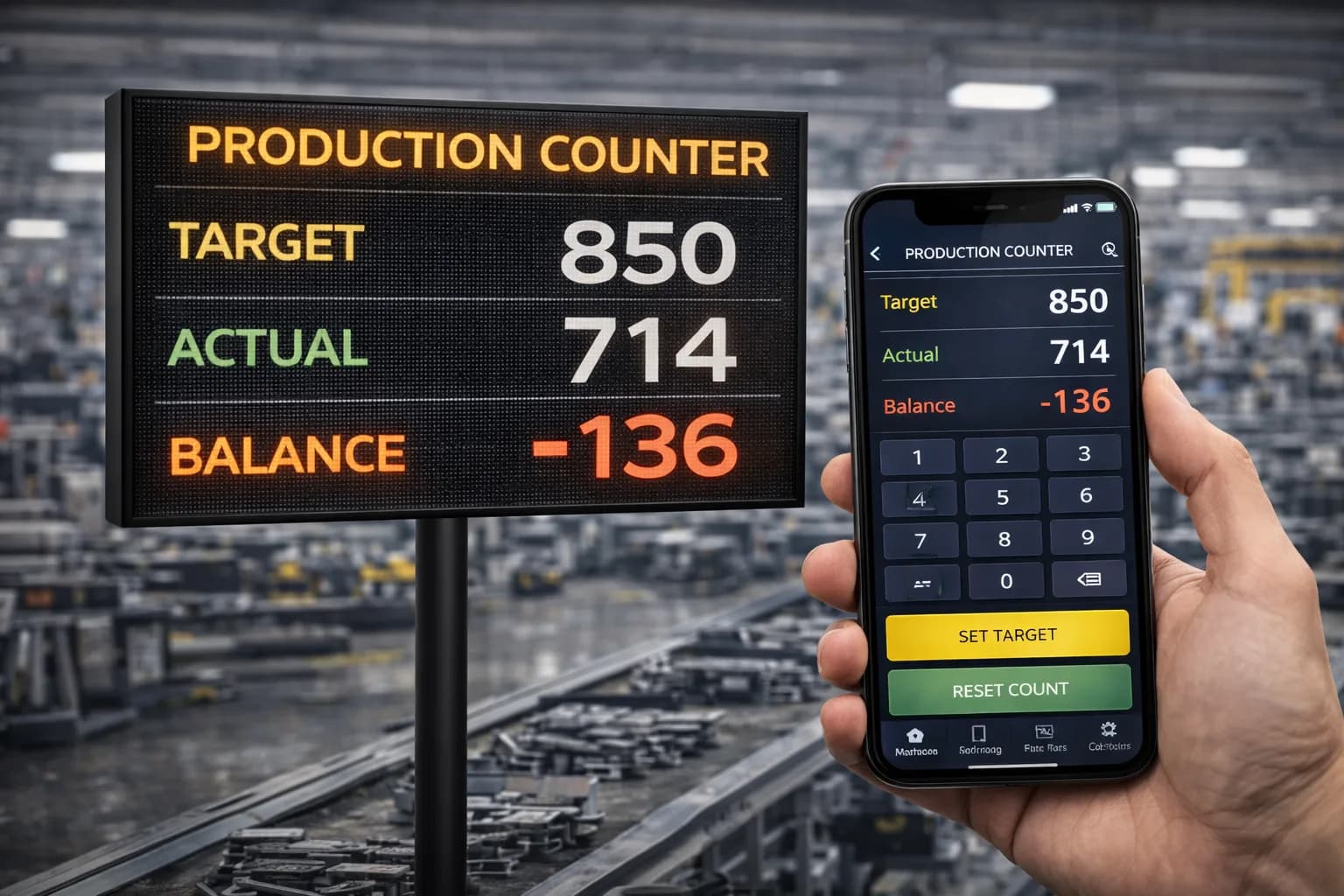
This information helps manufacturers compare actual production with planned targets.
4. Better Downtime Analysis
When machine status information is available centrally, production teams can identify when equipment stops operating.
Additional operator input can capture the reason behind a stoppage, making downtime analysis more meaningful.
5. Data-Driven Production Decisions
Historical machine information can support analysis of utilization, output, cycle time, and operating performance.
Manufacturers can use these insights to identify recurring production issues and evaluate improvement opportunities.
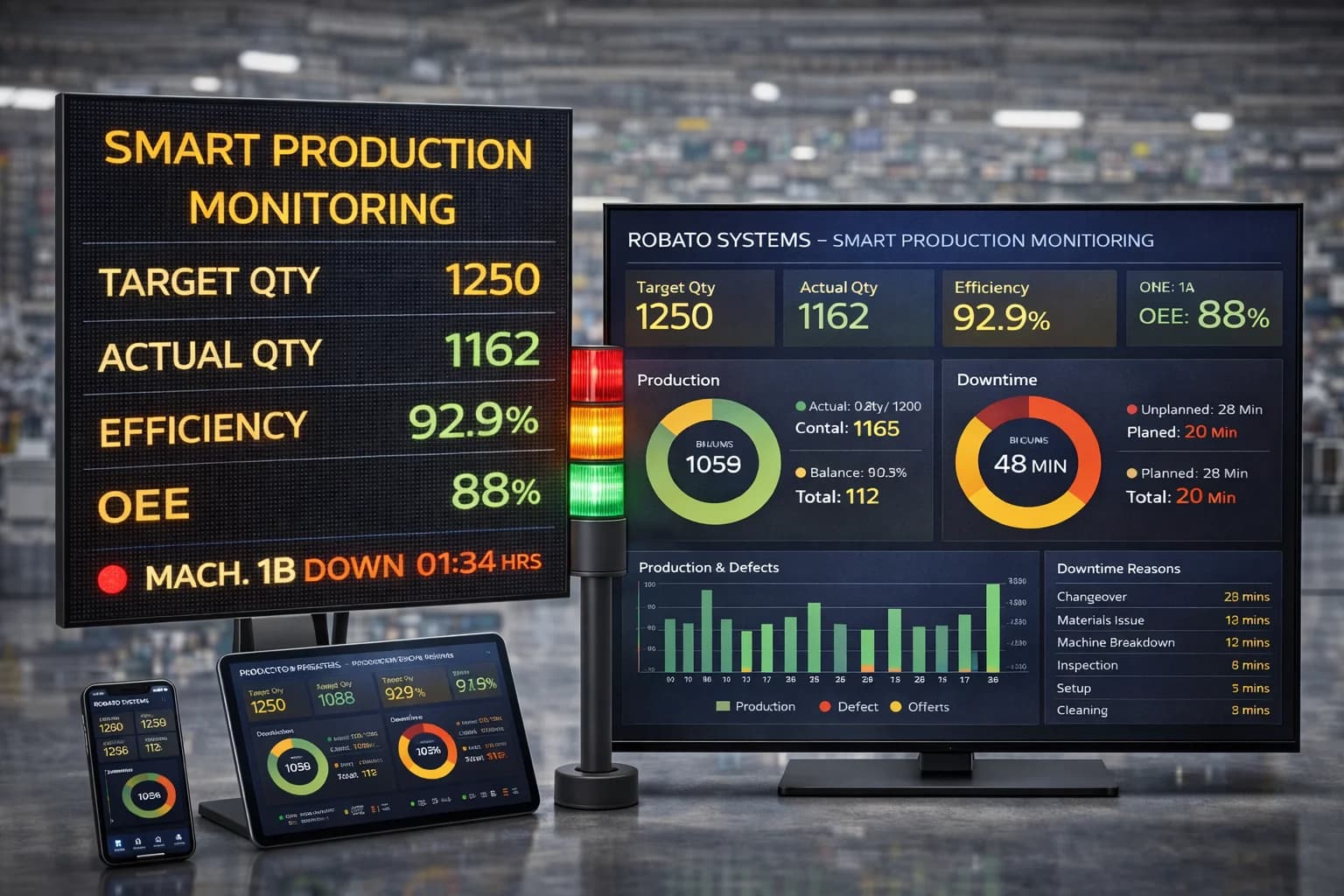
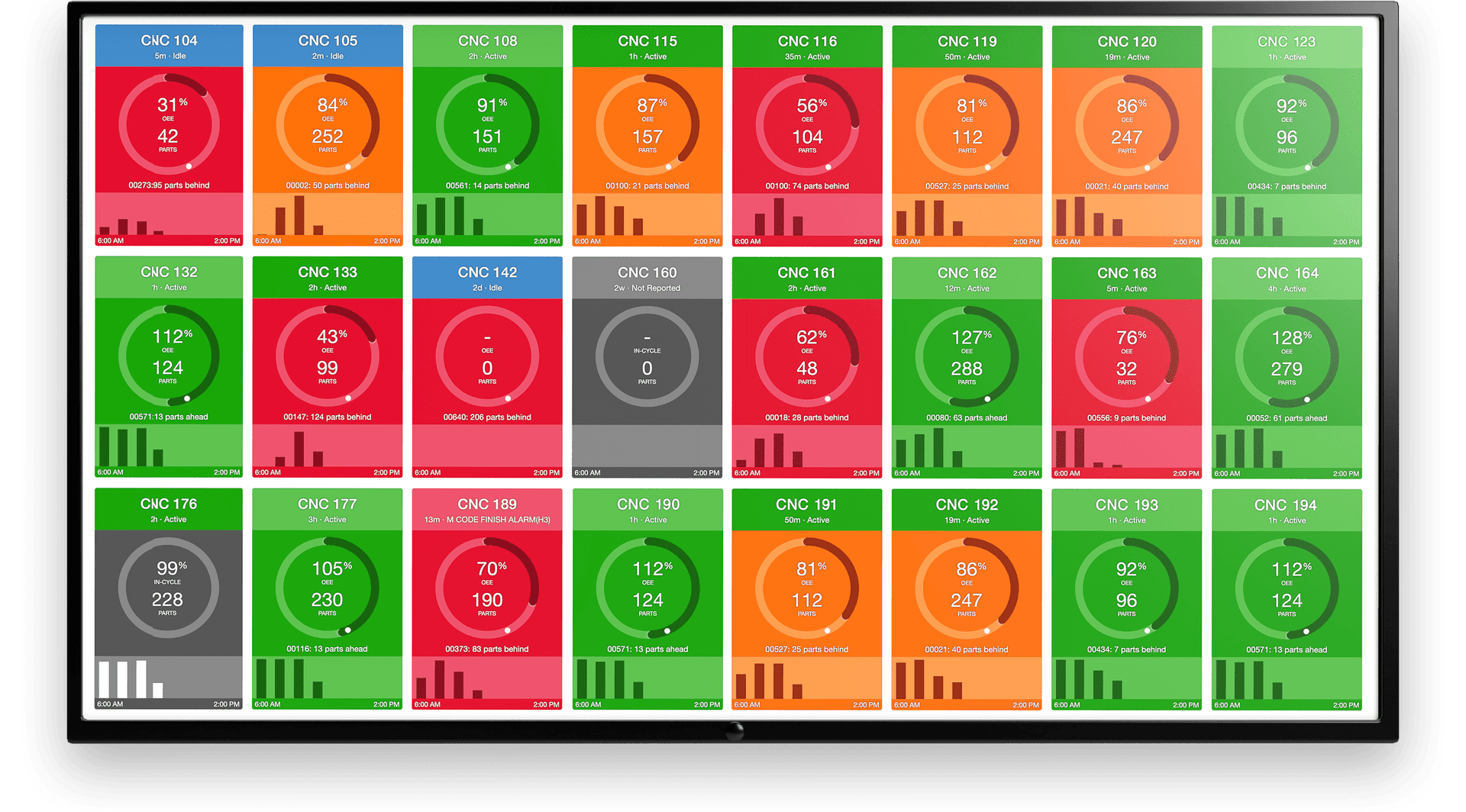
A connected production monitoring solution can bring machine-level information together for centralized production visibility.
How Does CNC Machine Connectivity Work?
CNC connectivity involves more than connecting an Ethernet cable to a machine. It requires a compatible communication interface, correct data mapping, and a system capable of receiving and interpreting machine information.
A typical CNC connectivity workflow includes five stages.
Stage 1: Machine-Level Data Generation
The CNC controller generates operational information while managing machining activities.
Depending on the controller, this may include:
Machine operating state
Active program information
Spindle and feed information
Production counters
Cycle-related events
Alarm messages
Selected machine parameters
Additional information may be available through connected PLCs and sensors.
Stage 2: Communication Interface
The machine exposes selected information through a supported interface.
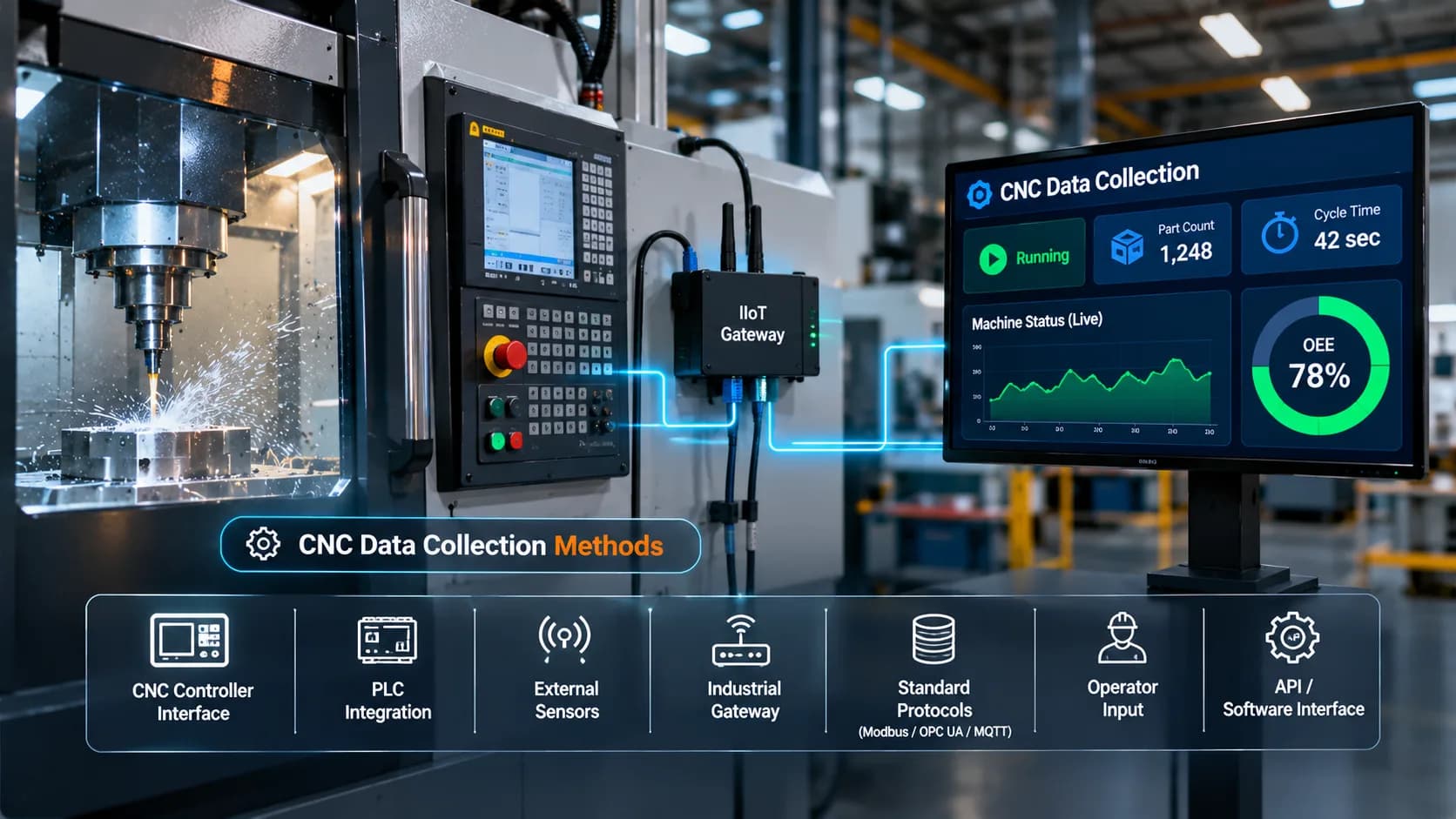
Common options include:
Ethernet communication
Serial communication
Controller-specific interfaces
PLC communication
MTConnect adapters
OPC UA servers
Digital and analog I/O
The interface determines how external devices can access machine information.
Stage 3: Industrial Gateway or Data Acquisition Device
An industrial gateway can collect information from machines using different communication methods.
It may perform protocol conversion, signal processing, data normalization, and temporary storage.
For example, a gateway may collect machine status through PLC signals and send the information to a monitoring platform using MQTT.
Stage 4: Data Transmission
Collected information is transferred through the factory network to a local server or cloud platform.
The transmission method depends on the architecture and supported communication technologies.
Stage 5: Monitoring and Analytics
The monitoring application organizes machine information and presents it through dashboards, alerts, reports, and historical analysis.
Production teams can then use the information to understand machine activity and production performance.
Common CNC Machine Connectivity Methods
Different CNC machines provide different connectivity options. Selecting the correct method requires understanding the controller, available interfaces, and information required by the monitoring application.
1. Ethernet-Based CNC Connectivity
Ethernet is one of the most common networking technologies used in modern manufacturing environments.
When a CNC controller supports Ethernet communication, it can be connected to a factory network or an industrial gateway.
Depending on the controller and enabled services, Ethernet may support:
Controller-specific data access
Communication with PLCs
Industrial protocol connections
File and program transfer
Connection to supported monitoring applications
How it works:
Identify the CNC controller's Ethernet interface.
Check the controller's supported communication services.
Configure the appropriate network settings.
Establish communication with an authorized gateway or application.
Verify that the required machine information can be accessed.
An Ethernet port alone does not guarantee that all controller data is available. Supported protocols, software options, and access permissions must also be considered.
2. Serial Communication
Some older CNC machines and industrial devices use serial communication interfaces such as RS-232 or RS-485.
These interfaces can be used to exchange information with compatible external devices.
Serial connectivity may be useful for:
Legacy machine integration
Selected controller data exchange
Communication with external monitoring hardware
Connecting devices that do not support Ethernet directly
Serial communication generally requires correct configuration of parameters such as baud rate, parity, data bits, and stop bits.
In many installations, a serial-to-Ethernet converter or industrial gateway is used to connect legacy equipment to a modern network.
3. PLC-Based CNC Connectivity
A PLC often acts as an important communication point between CNC equipment and external monitoring systems.
It may receive machine signals and expose them through registers, tags, or supported communication protocols.
For example, a PLC may provide:
Machine running signal
Cycle-complete signal
Machine fault signal
Part detection signal
Door status
Production counter
A monitoring gateway can read these values and convert them into meaningful machine events.
PLC-based connectivity is useful when the required information is already available through the machine's automation system or when direct controller integration is limited.
4. Controller-Native Connectivity
Many CNC controller manufacturers provide their own communication interfaces, software development options, or data access mechanisms.
These can provide more detailed machine information than basic external signals.
Depending on the controller model and enabled features, manufacturers may be able to access:
Operating mode
Program information
Machine status
Alarms
Spindle information
Feed information
Production counters
Selected process variables
Before selecting a controller-native integration method, verify the supported interface, licensing requirements, documentation, and permitted access.
This method is particularly useful when manufacturers require detailed machine-level information.
5. Sensor-Based Connectivity for Legacy Machines
Older CNC machines may not support modern network communication or may expose only limited controller information.
External sensors and data acquisition modules can help connect these machines.
Common examples include:
Proximity sensors for detecting movement or position
Optical sensors for part detection and counting
Current sensors for monitoring electrical load
Encoders for rotational or movement measurements
Vibration sensors for selected condition-monitoring applications
The collected signals can be transmitted through a compatible industrial gateway.
Sensor-based integration is useful for adding monitoring capabilities to existing machines without modifying their primary control logic.
However, sensors must be installed and configured appropriately, and their readings should be validated against actual machine activity.
Communication Protocols Used for CNC Machine Connectivity
Industrial communication protocols define how devices exchange information. The right choice depends on controller compatibility, network design, data requirements, and security policies.
1. MTConnect
MTConnect is an open manufacturing equipment interoperability standard designed to represent and expose machine information in a consistent structure.
It commonly uses an HTTP-based agent interface to make equipment information available to client applications.
MTConnect can represent information such as:
Machine execution state
Operating mode
Spindle data
Feed rate
Alarms
Program-related information
Other supported equipment observations
It is particularly useful when manufacturers want to access standardized equipment information across compatible machines.
Important: MTConnect is not a physical connection or a fieldbus. A CNC machine may need a compatible adapter or integration component before its information can be exposed through MTConnect.
2. OPC UA
OPC UA, or Open Platform Communications Unified Architecture, is an industrial communication architecture designed for secure and structured information exchange.
It supports client-server communication as well as publish-subscribe configurations.
In CNC environments, OPC UA can connect compatible controllers, PLCs, gateways, and industrial applications.
Its capabilities include:
Structured information models
Authentication and authorization
Encryption
Certificate-based security
Interoperability between compatible industrial systems
OPC UA support varies across equipment. Some CNC installations may require a gateway or PLC to expose machine information through an OPC UA server.
3. Modbus
Modbus is an industrial communication protocol used to exchange data between controllers, PLCs, meters, and other devices.
Common variants include:
Modbus RTU over serial communication
Modbus TCP over Ethernet
It is frequently used to read registers and digital or analog values.
For CNC monitoring, Modbus may be used when machine signals or relevant data are exposed through a compatible PLC or gateway.
The register mapping and meaning of each value must be documented correctly.
4. MQTT
MQTT is a lightweight publish-subscribe messaging protocol widely used in IoT systems.
A gateway can publish machine information to an MQTT broker, while monitoring applications subscribe to the relevant data topics.
For example, a gateway might publish machine status and production count information under separate topics associated with a machine identifier.
MQTT is useful for moving selected machine information between edge devices and centralized applications, including cloud platforms.
It generally works alongside other industrial communication methods rather than replacing the controller's native interface.
Understanding the Differences
| Technology | Main Purpose | Typical CNC Connectivity Role |
|---|---|---|
| Ethernet | Network communication technology | Connects controllers, gateways, and factory systems |
| RS-232 / RS-485 | Serial communication interfaces | Connects compatible legacy equipment |
| MTConnect | Manufacturing interoperability standard | Exposes structured machine information |
| OPC UA | Industrial communication architecture | Exchanges structured information securely |
| Modbus | Industrial communication protocol | Reads values from compatible controllers and devices |
| MQTT | Publish-subscribe messaging protocol | Transmits selected machine data to IoT applications |
These technologies serve different purposes and can be used together within one connectivity architecture.
CNC Connectivity Architecture for an IIoT-Based Factory
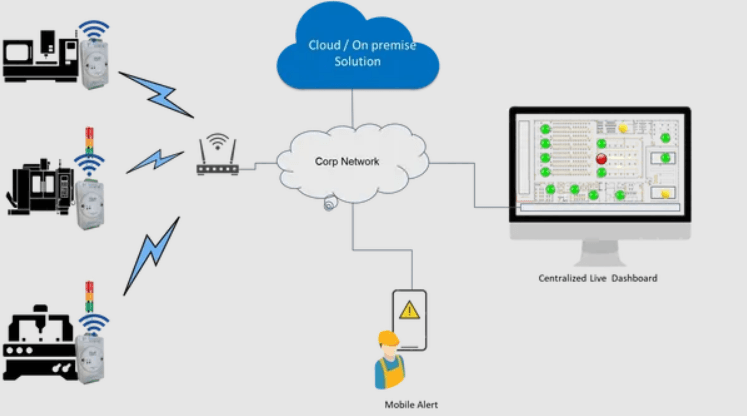
A connected manufacturing environment typically combines machine-level communication, edge devices, industrial networking, and centralized monitoring software.
A practical architecture can be divided into five layers.
Layer 1: CNC Machines and Controllers
This layer includes the physical machines and their CNC controllers.
Different machines may provide different communication interfaces and data points.
Layer 2: PLCs, Sensors, and Data Acquisition
This layer collects additional information from machine signals, PLCs, external sensors, and connected meters.
It is especially important when the controller does not provide all required information directly.
Layer 3: Industrial IoT Gateways
Gateways connect different equipment and communication methods.
They may support:
Data acquisition
Protocol conversion
Signal mapping
Timestamping
Local processing
Temporary data buffering
A gateway can help create a common integration layer for machines from different manufacturers.
Layer 4: Network and Data Platform
Machine information is transferred through the factory network to a local server or cloud-based monitoring platform.
The architecture should include appropriate network segmentation, access control, and security measures.
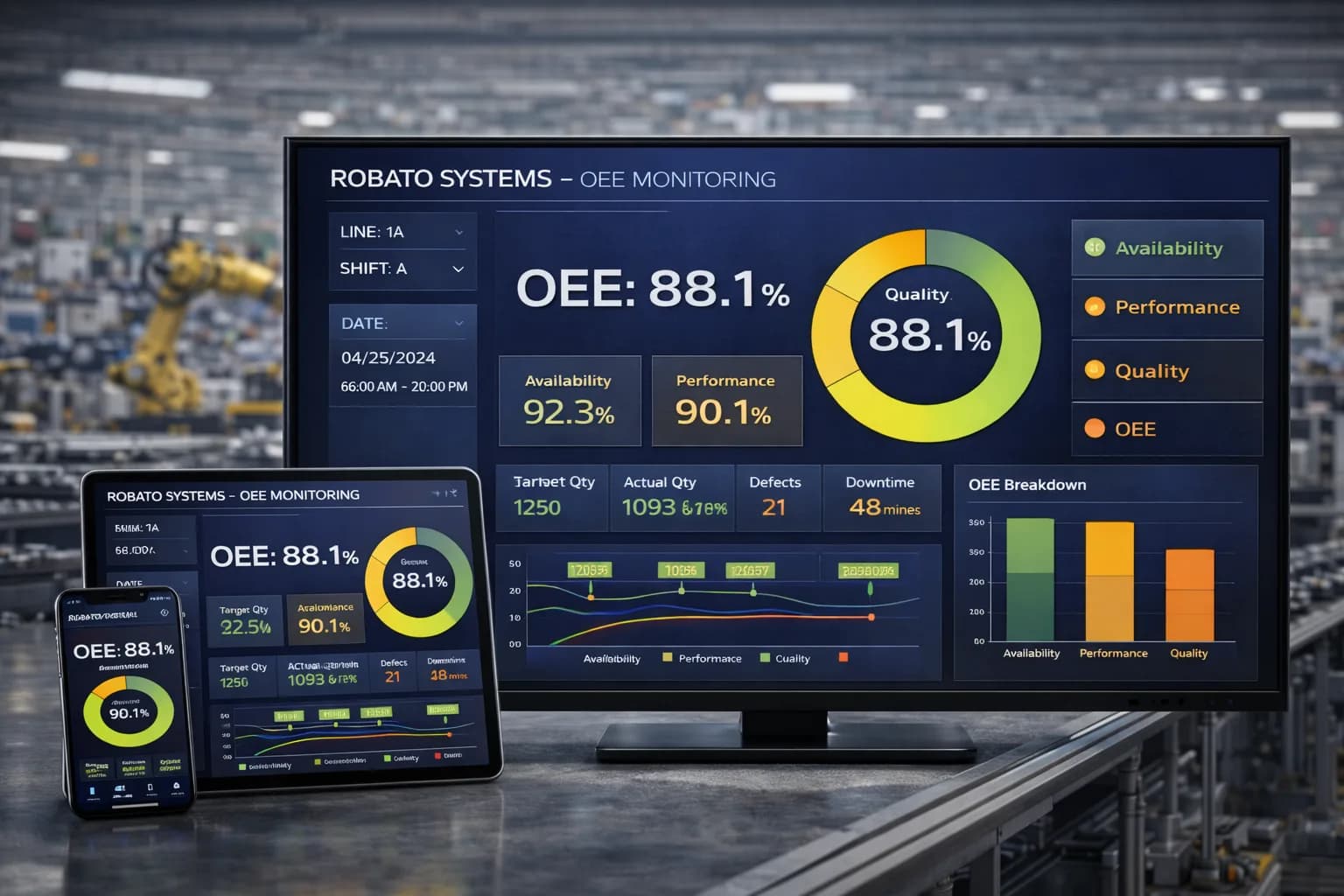
Layer 5: Monitoring Dashboards and Analytics
The final layer presents information to production teams.
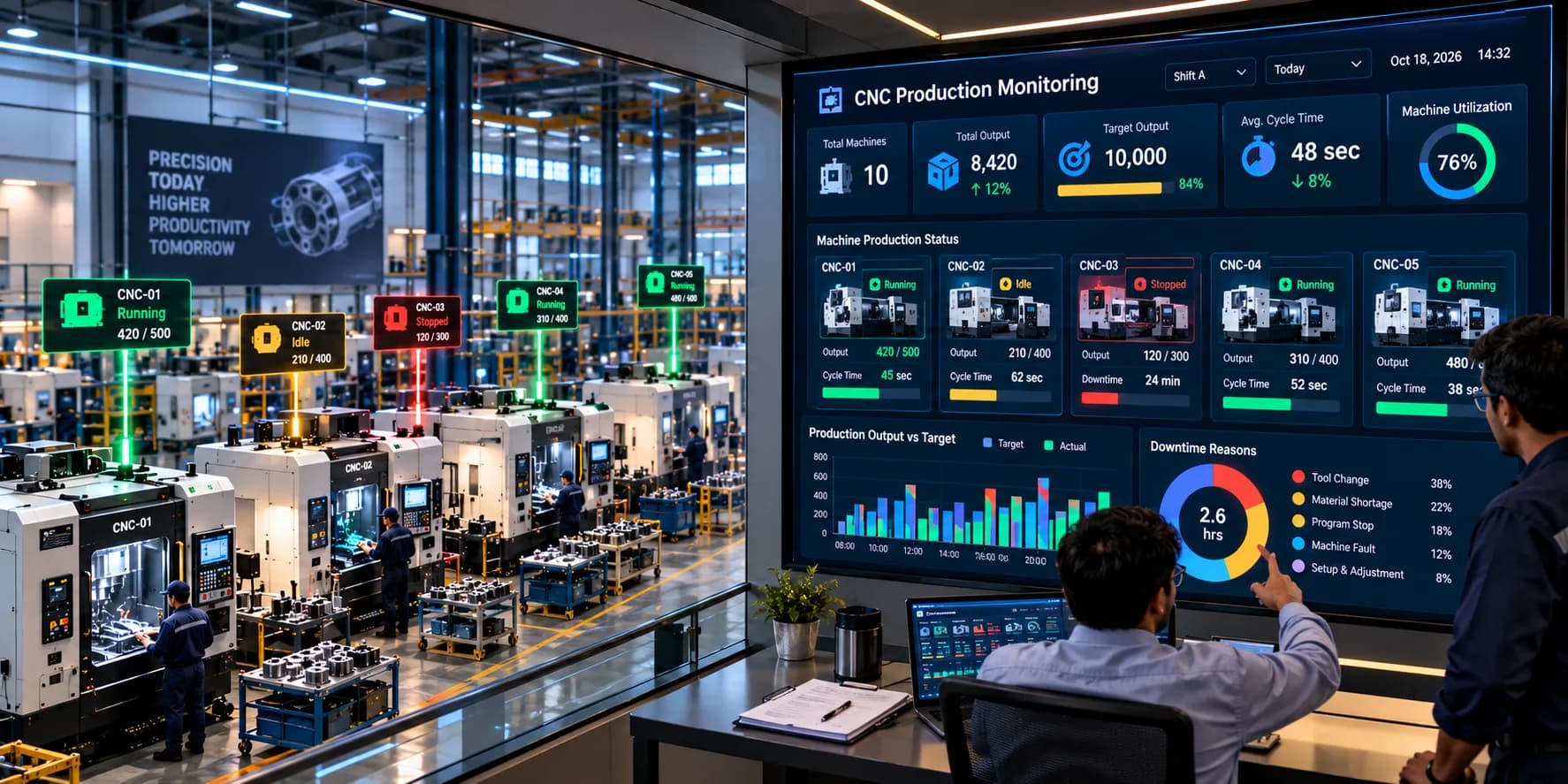
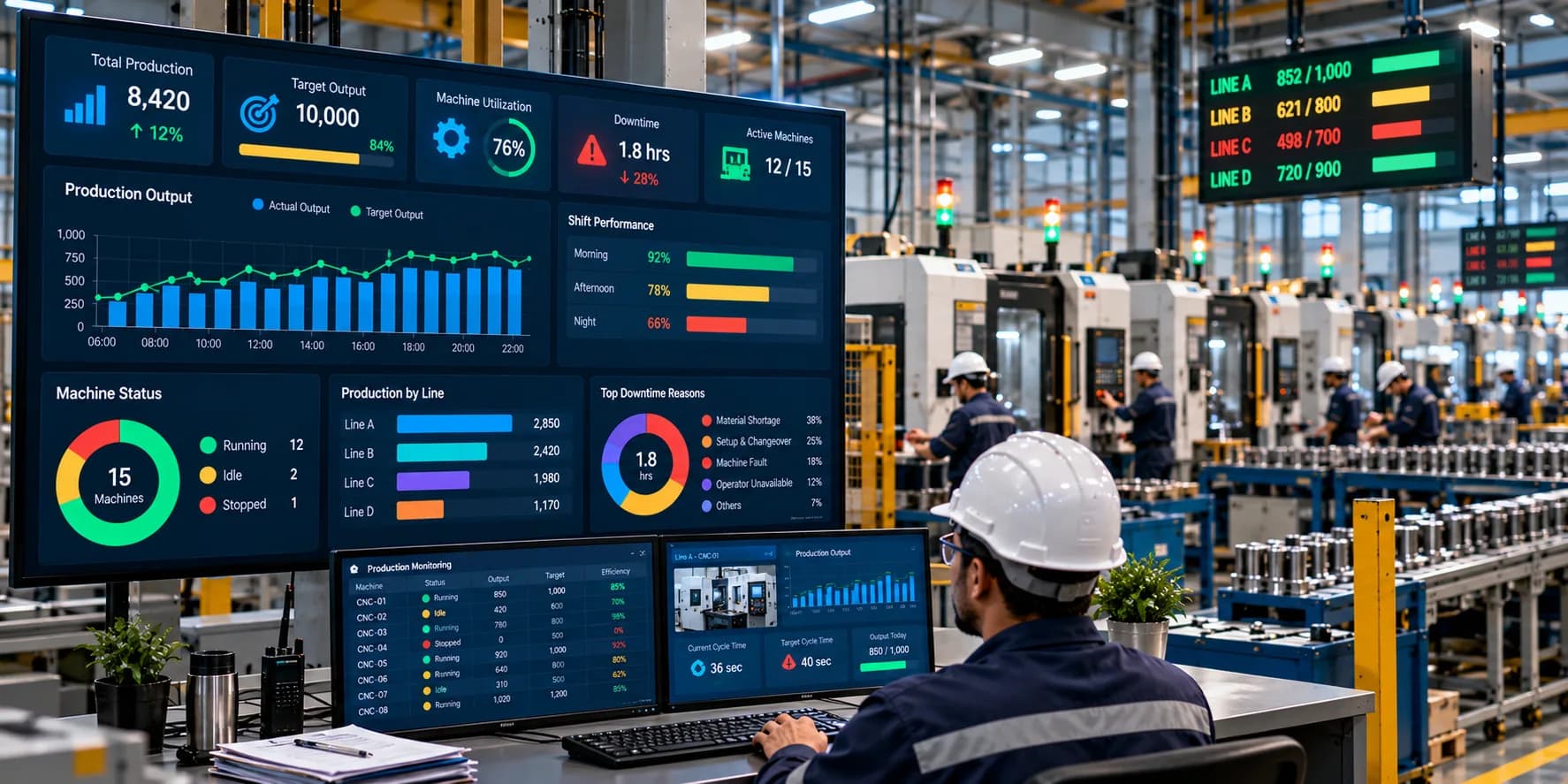
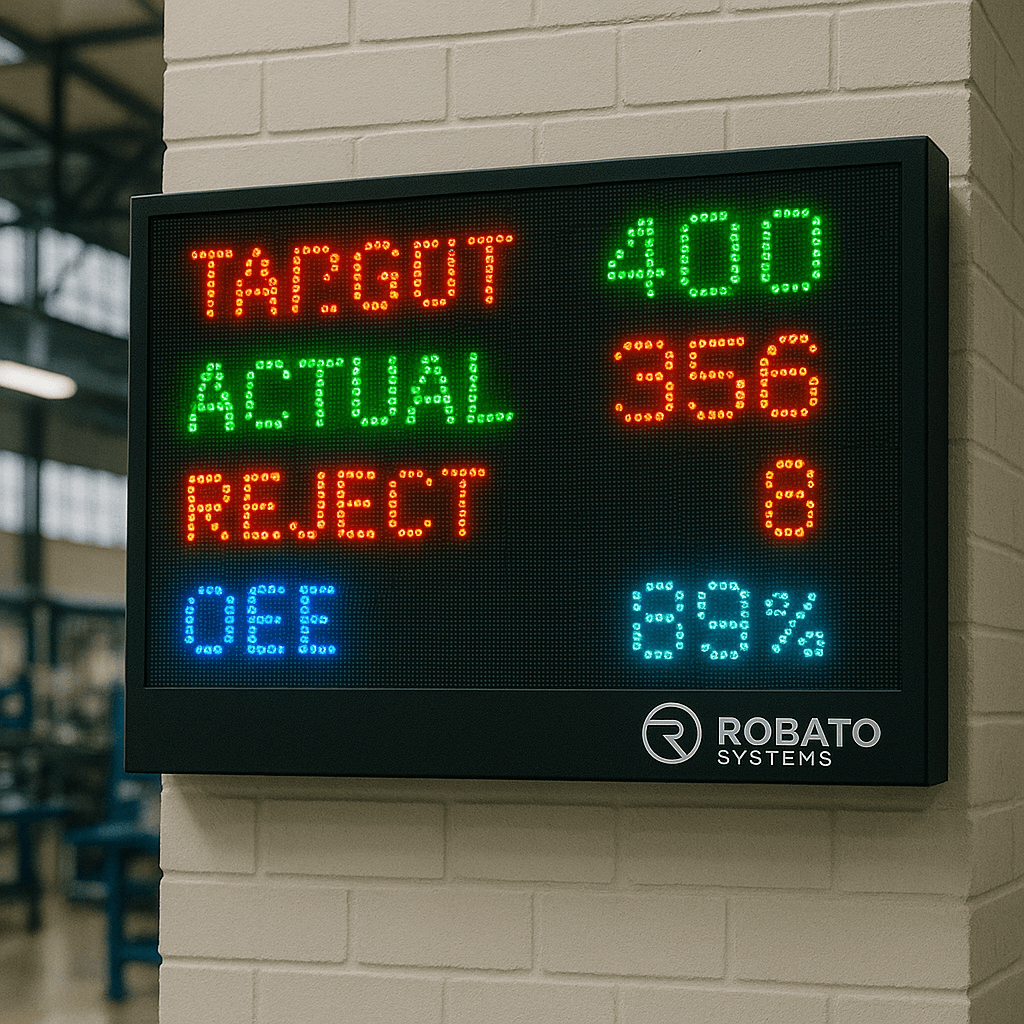
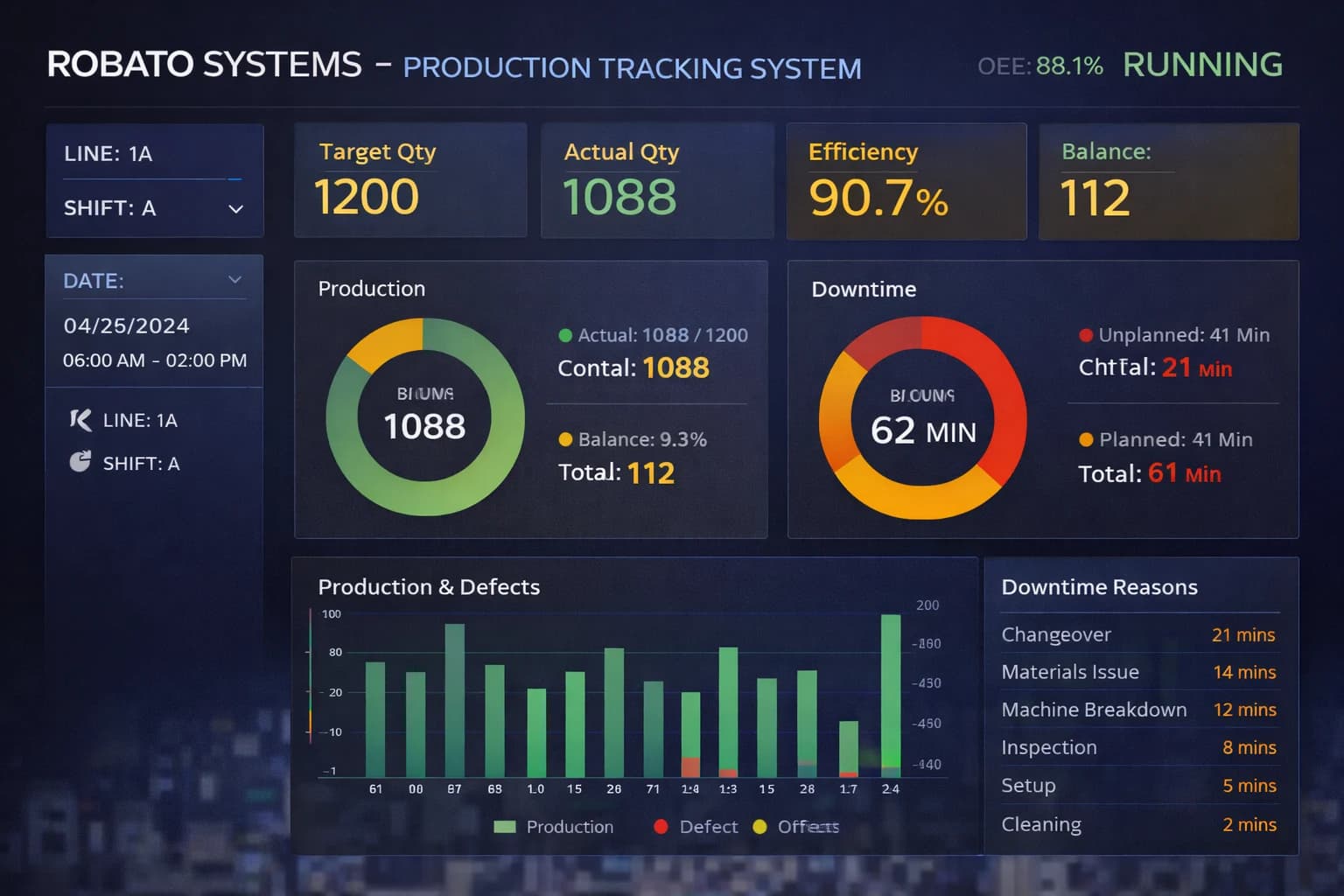
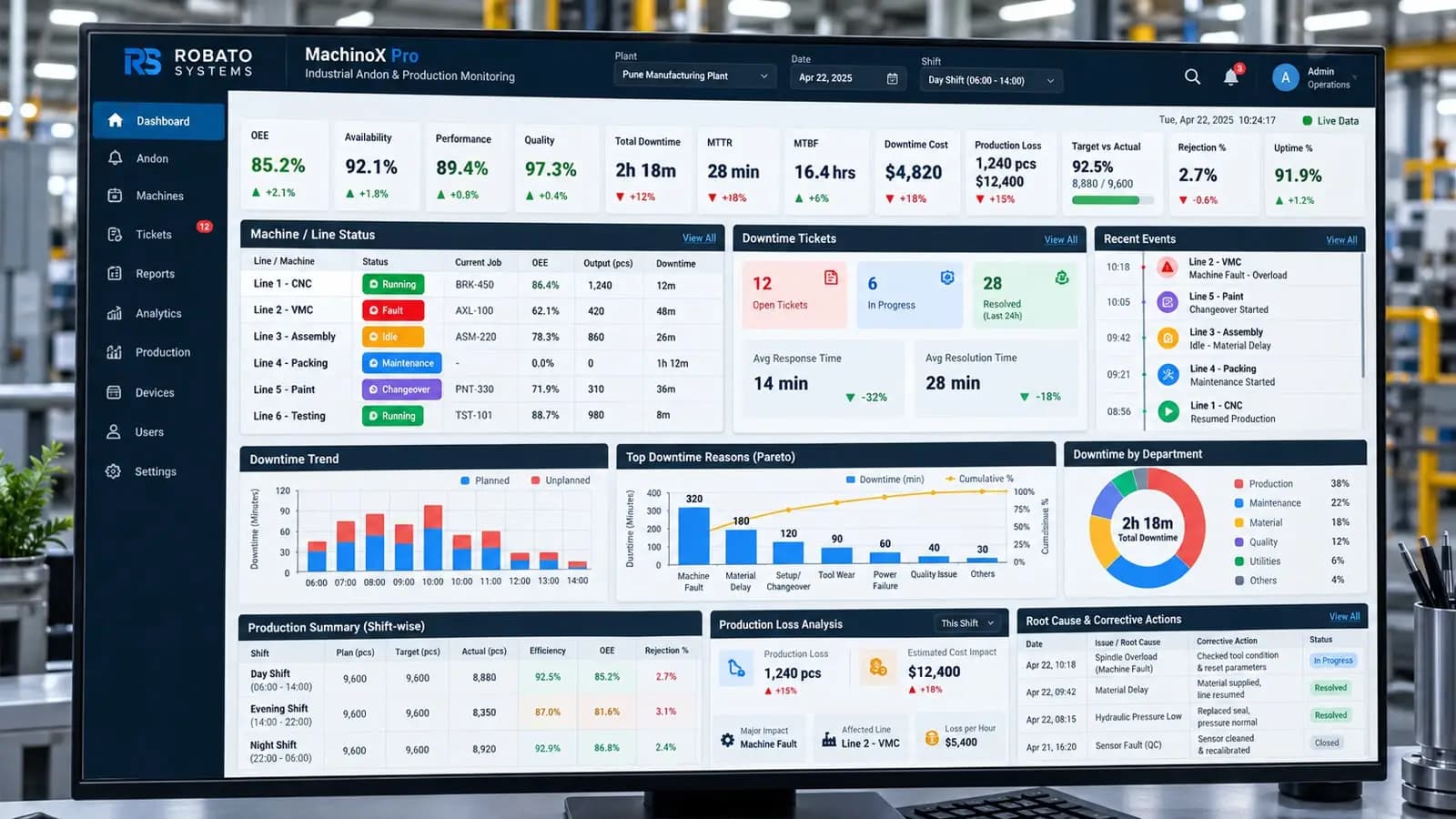
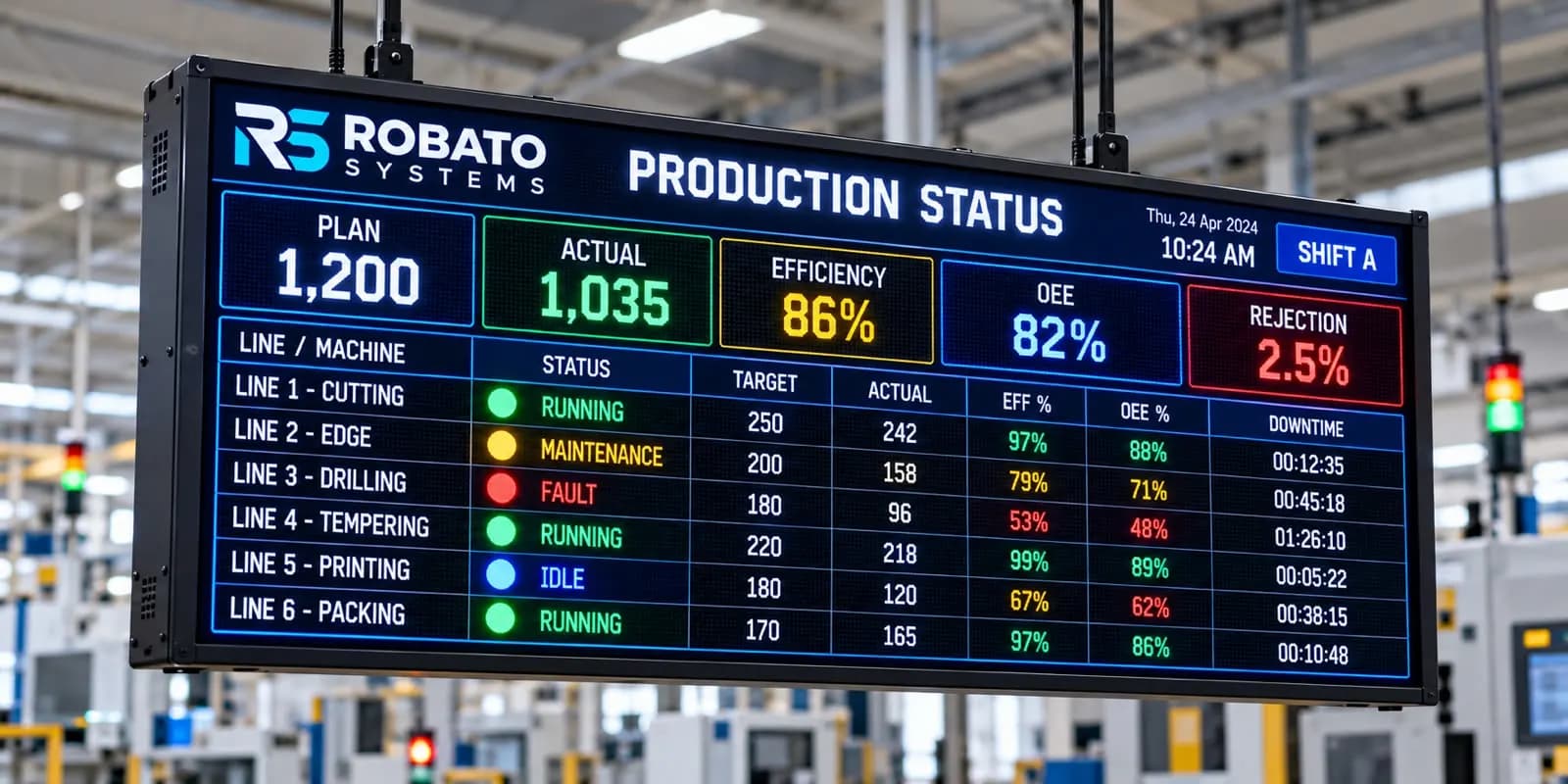
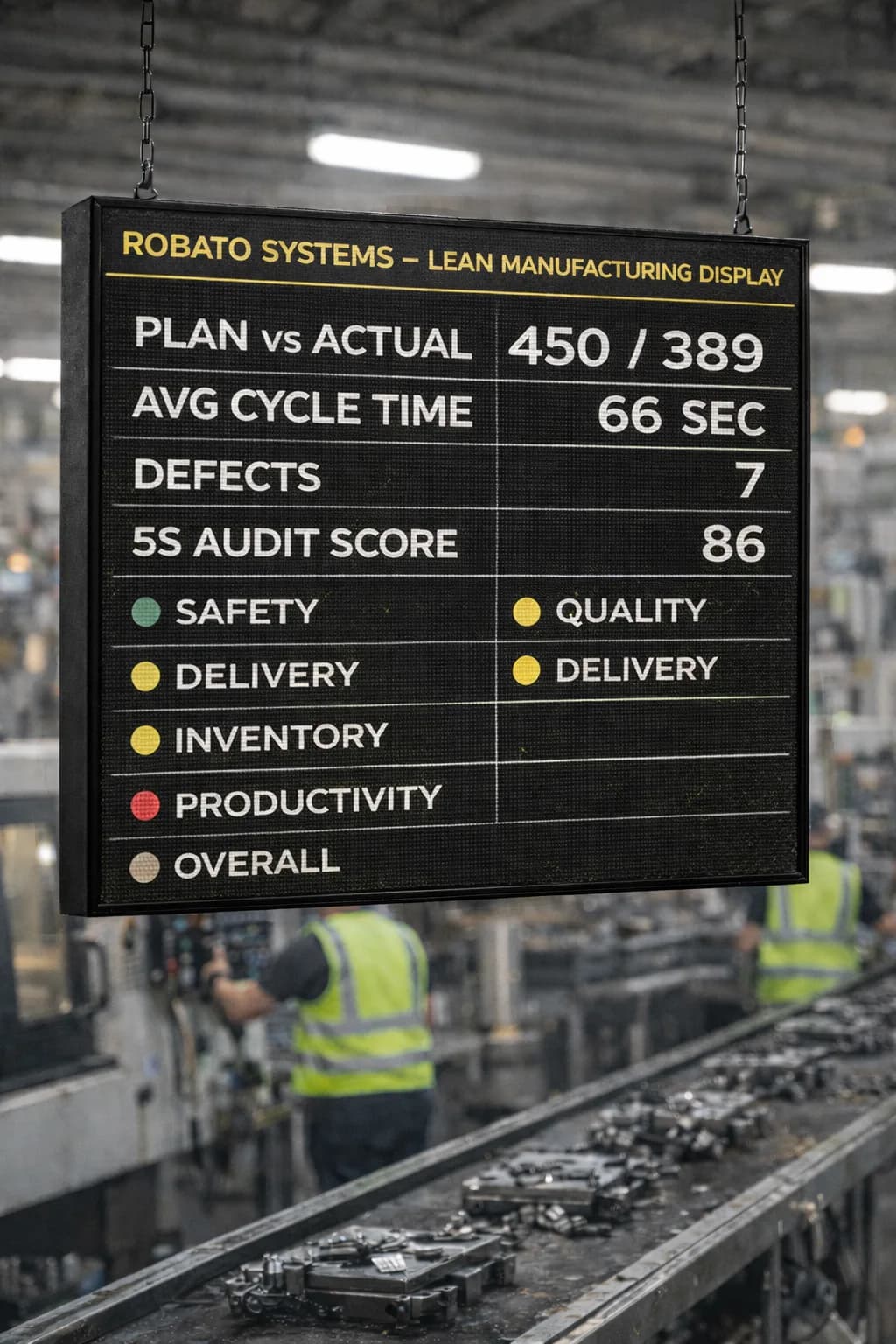
Typical dashboard information includes:
Live machine status
Machine-wise production
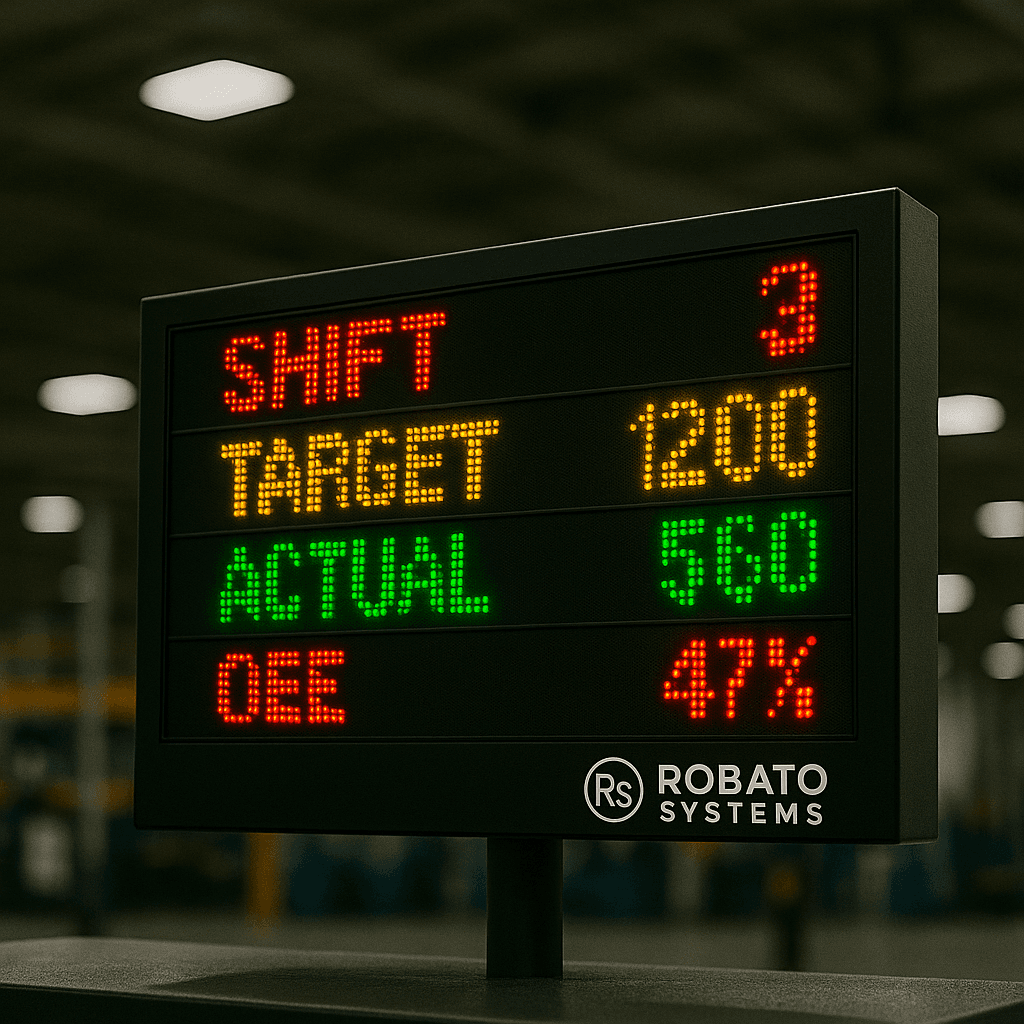
Shift-wise output
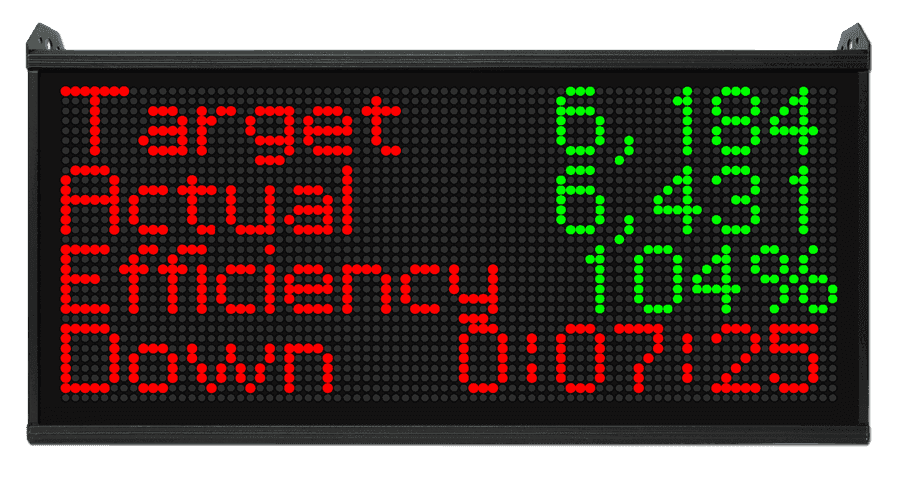
Downtime duration
Production targets
Cycle time
OEE and utilization indicators
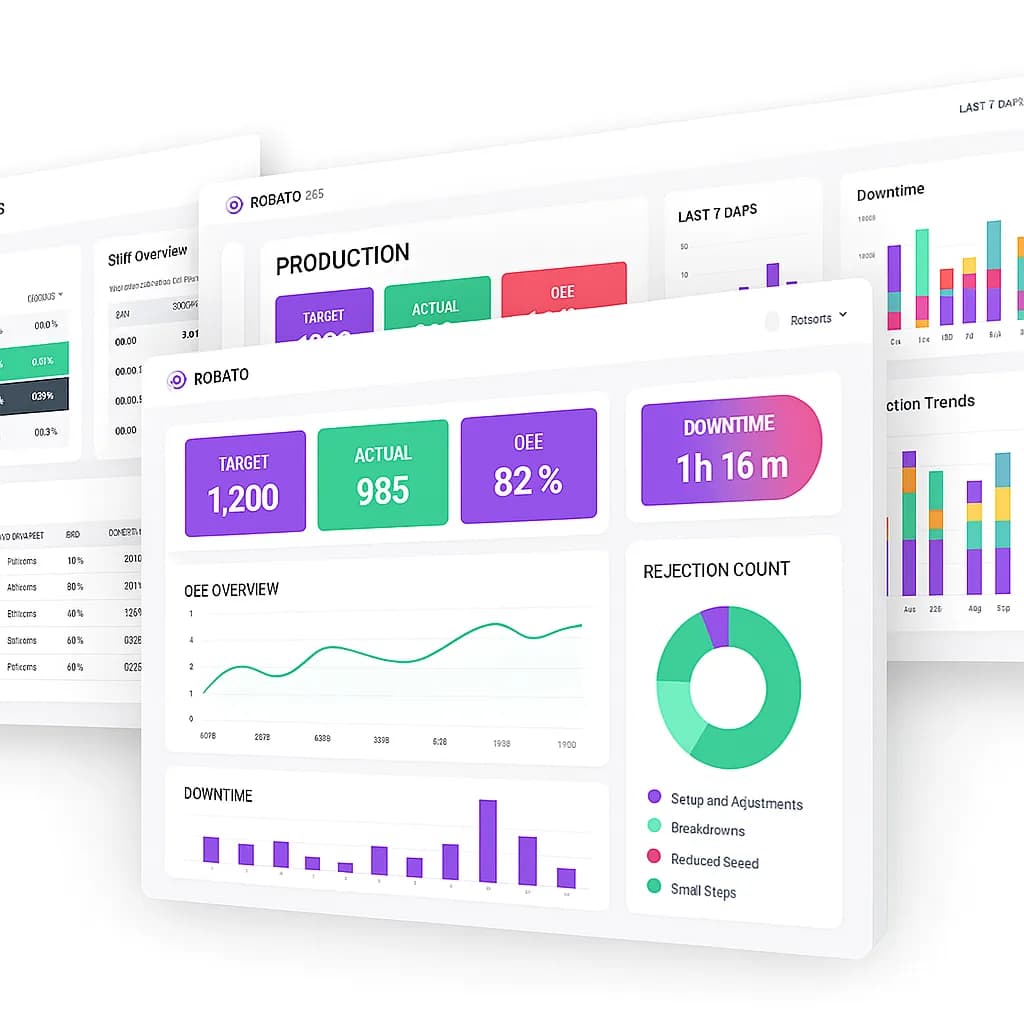
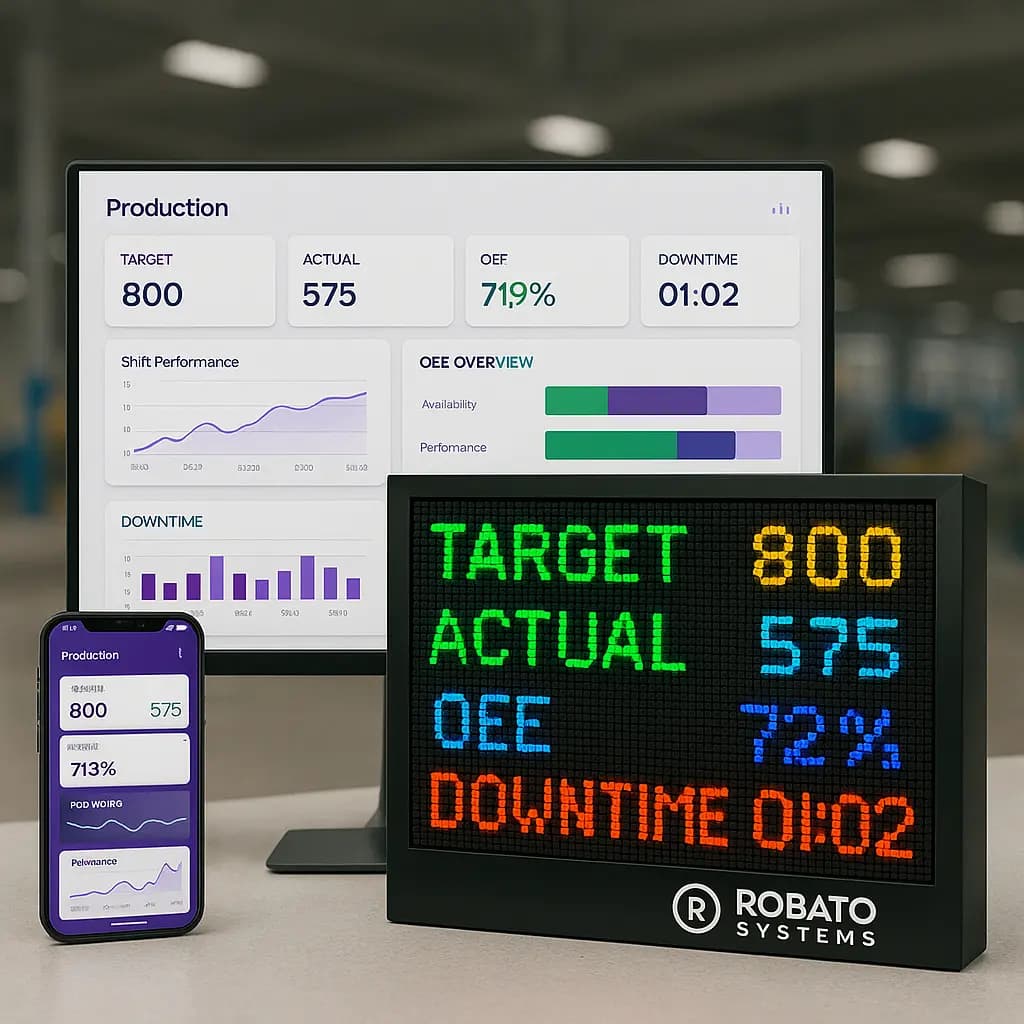
A connected production monitoring software platform can help consolidate information from connected production equipment.
Connecting CNC Machines from Different Manufacturers
One of the most common challenges in manufacturing is integrating machines from multiple manufacturers.
A factory may operate CNC equipment from different brands, with each controller supporting different interfaces, communication options, and data structures.
For example:
One controller may provide a native Ethernet interface.
Another may expose information through a PLC.
An older controller may require serial communication.
A machine without accessible controller data may need external sensors.
Trying to force every machine to use the same connection method can increase integration complexity.
A better approach is to use a flexible connectivity architecture.
Recommended Integration Approach
Step 1: Classify machines by connectivity capability.
Group machines according to controller type, available communication interfaces, and accessible data.
Step 2: Identify common data requirements.
Define the information that should be available across all machines, such as running status, part count, cycle time, and downtime.
Step 3: Select compatible integration methods.
Use controller interfaces where possible, PLC connectivity where appropriate, and external data acquisition for machines with limited capabilities.
Step 4: Standardize the collected information.
Convert different machine-specific signals into a common data model.
For example, different controller signals may represent the same general operating state. The monitoring platform should interpret them consistently.
Step 5: Validate machine-level information.
Confirm that the collected information matches actual machine behaviour before using it for reporting.
This approach makes it easier to integrate different CNC machines into a common monitoring environment.
How to Connect Legacy CNC Machines to an IIoT Platform
Legacy CNC machines can remain valuable production assets even when they lack modern communication capabilities.
Replacing an entire machine simply to gain connectivity may not be necessary.
Manufacturers can evaluate alternative integration methods.
Option 1: Use Existing PLC Signals
If the machine exposes useful signals through its PLC, a compatible gateway can collect them.
This is often a practical way to capture basic machine status and production events.
Option 2: Install External Sensors
External sensors can capture physical events such as machine activity, part movement, and completed production.
A suitable data acquisition device can convert these signals into information that a monitoring platform can process.
Option 3: Use Serial-to-Network Conversion
If the controller supports serial communication, a compatible converter or gateway may allow information to be transferred through an Ethernet network.
Option 4: Add an Industrial IoT Gateway
An industrial gateway can combine multiple data sources and transfer selected information to the monitoring application.
The best option depends on the machine's available signals, electrical design, safety requirements, and required monitoring detail.
Any retrofit should be planned with qualified automation personnel. Changes to machine wiring or control systems must not interfere with safety functions or normal operation.
Common CNC Machine Connectivity Challenges
Connecting CNC equipment can involve technical, operational, and cybersecurity challenges.
Understanding these issues early helps manufacturers avoid unnecessary integration work.
1. Controller Compatibility
Different CNC controllers may use different communication interfaces and expose different information.
Solution: Prepare a machine connectivity assessment before selecting gateways or monitoring software. Verify controller models, supported protocols, software options, and available data points.
2. Limited Connectivity in Older Machines
Legacy machines may not have Ethernet or modern industrial communication support.
Solution: Evaluate PLC signals, serial interfaces, external sensors, and compatible data acquisition devices.
3. Inconsistent Data Formats
Different machines may represent similar information using different registers, codes, units, or signal names.
Solution: Standardize machine identifiers, operating states, units, and event definitions within the data integration layer.
4. Network Reliability
Unstable network connections can interrupt data transmission and create gaps in monitoring records.
Solution: Use suitable industrial networking equipment, monitor communication health, and implement local buffering where supported.
5. Cybersecurity Risks
Connecting production equipment to broader networks increases the importance of access control and network security.
Solution: Apply network segmentation, controlled access, secure authentication, encryption where supported, and regular security reviews.
6. Data Delays and Incorrect Timestamps
Poor time synchronization or unsuitable polling intervals can make machine events difficult to interpret.
Solution: Synchronize system clocks, select appropriate data collection frequencies, and validate event timestamps.
7. Production Context Is Missing
Machine connectivity may identify a stoppage but cannot always determine the reason behind it.
Solution: Integrate production orders, shift information, and operator-entered downtime reasons where necessary.
Security Best Practices for CNC Machine Connectivity
Machine connectivity should be designed with operational technology security in mind.
CNC controllers are part of production infrastructure, and unnecessary access can introduce operational risks.
Manufacturers should follow these practices:
Segment industrial networks: Separate production equipment networks from general office networks wherever practical.
Use controlled access: Permit only authorized systems and personnel to communicate with machine controllers.
Prefer read-only monitoring: Avoid write access when the application only needs to collect machine information.
Secure remote connectivity: Use approved secure access methods and avoid exposing controllers directly to the public internet.
Manage credentials: Use unique credentials and change default passwords where applicable.
Monitor network activity: Review communication logs and investigate unexpected connections.
Maintain device updates: Apply vendor-approved security updates through controlled maintenance procedures.
Coordinate with OT teams: Review connectivity changes with production, automation, and cybersecurity teams.
Security requirements should be considered before connecting machines, not added only after deployment.
Benefits of Integrating CNC Connectivity with Production Monitoring
Machine connectivity becomes more valuable when collected information is presented in a practical monitoring environment.
An IIoT-based production monitoring platform can turn individual machine signals into operational information that production teams can use.
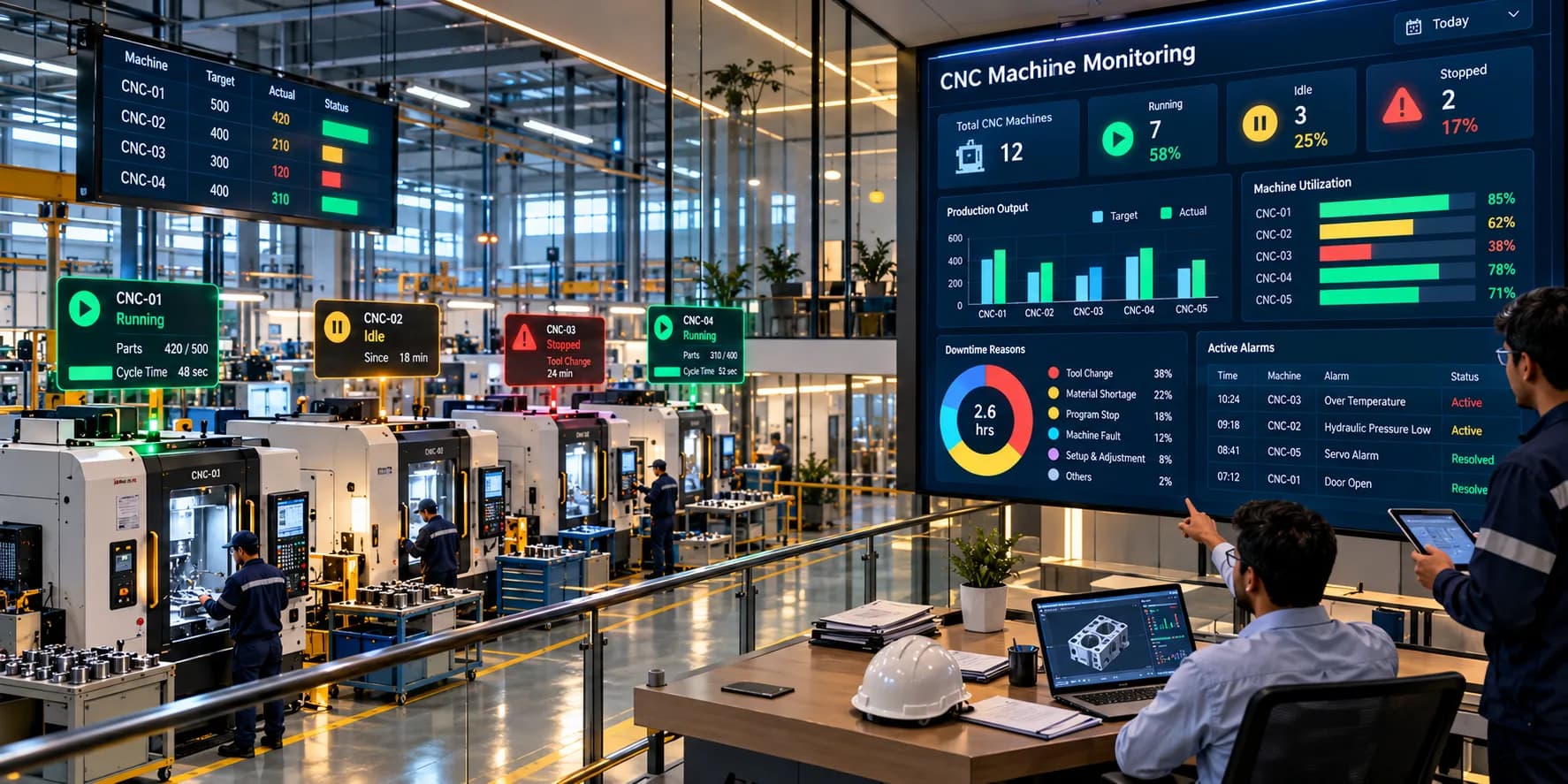
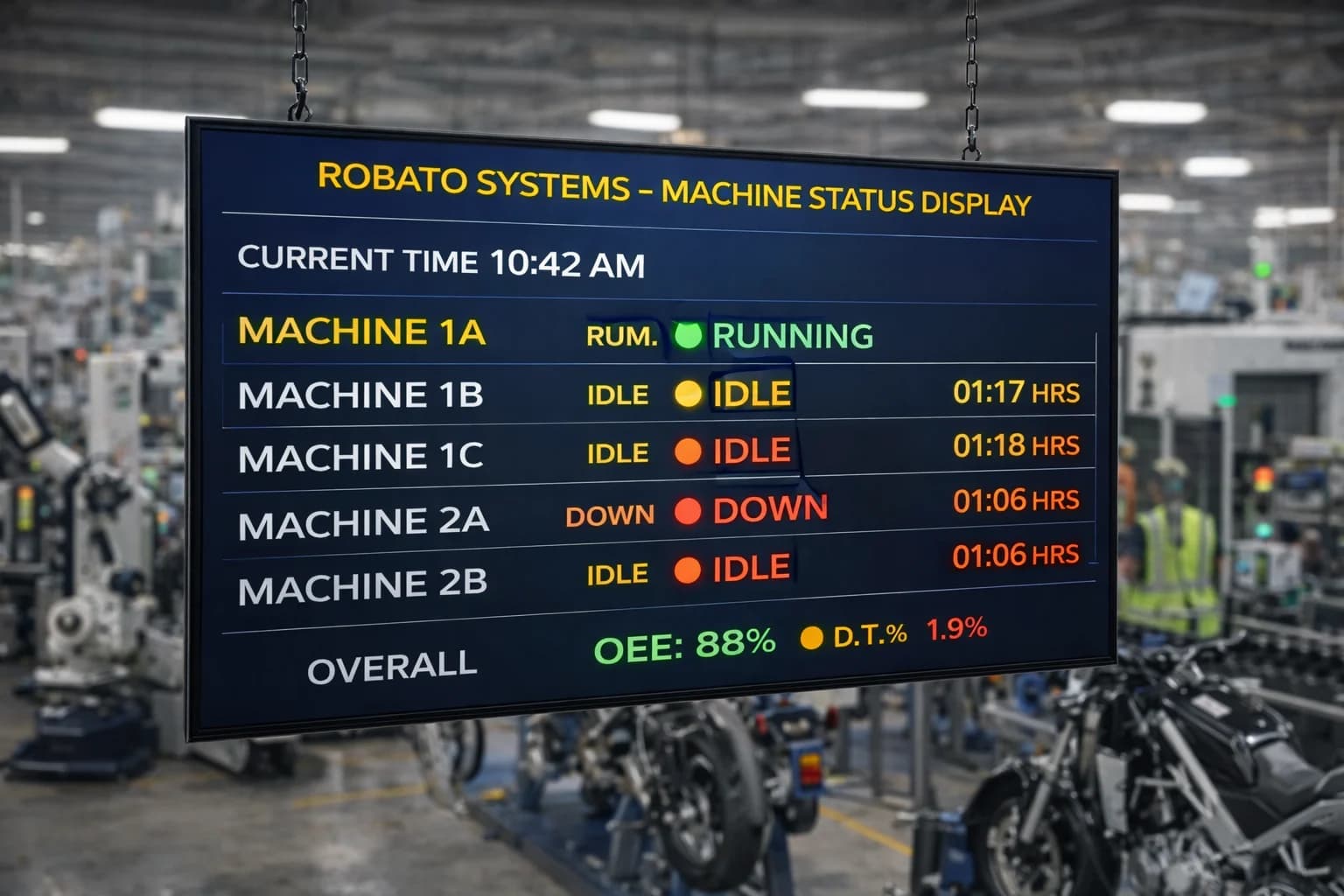
1. Real-Time Machine Status
Connected machines can report their operating conditions to a centralized dashboard.
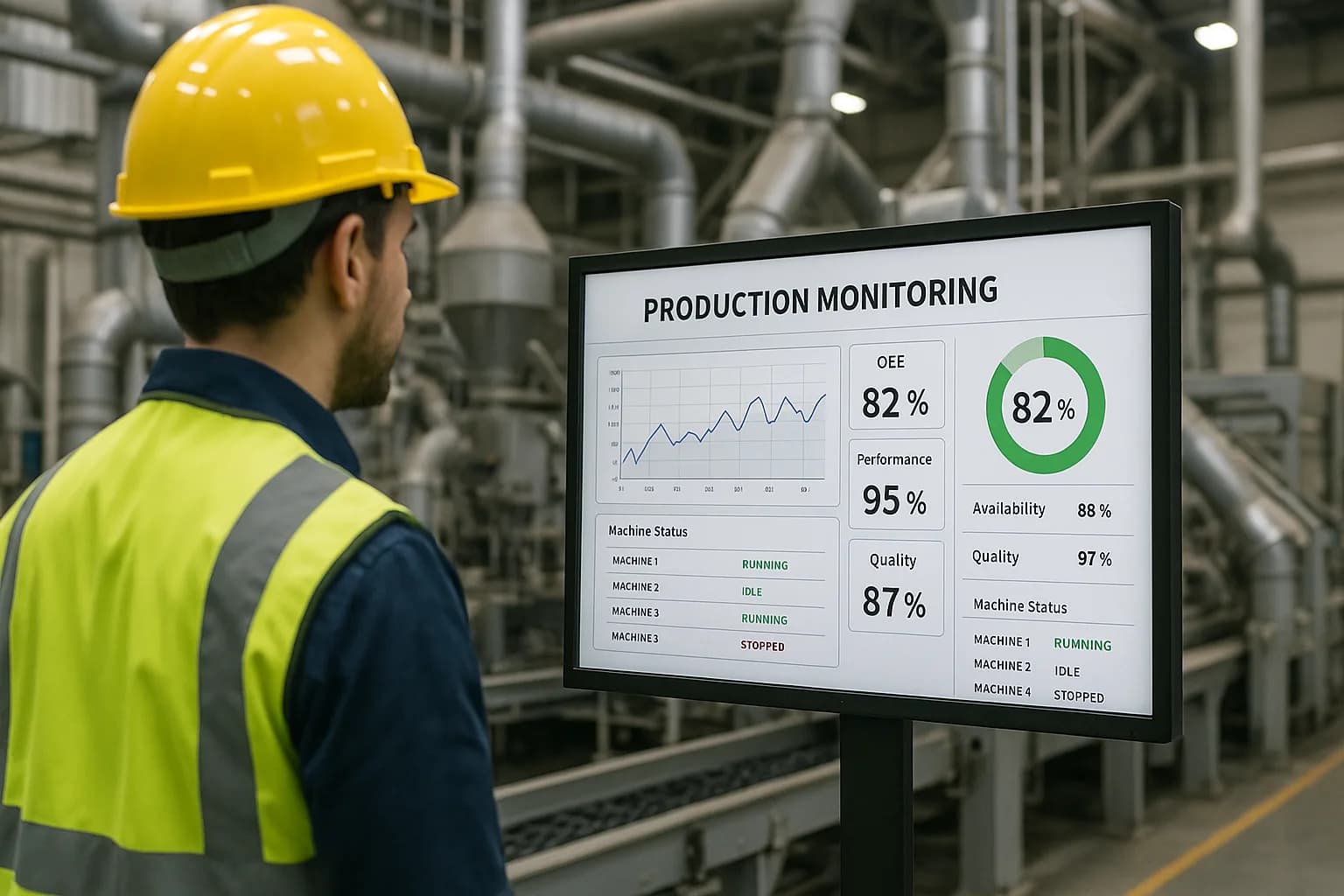
Supervisors can quickly identify running, idle, stopped, and alarm conditions.
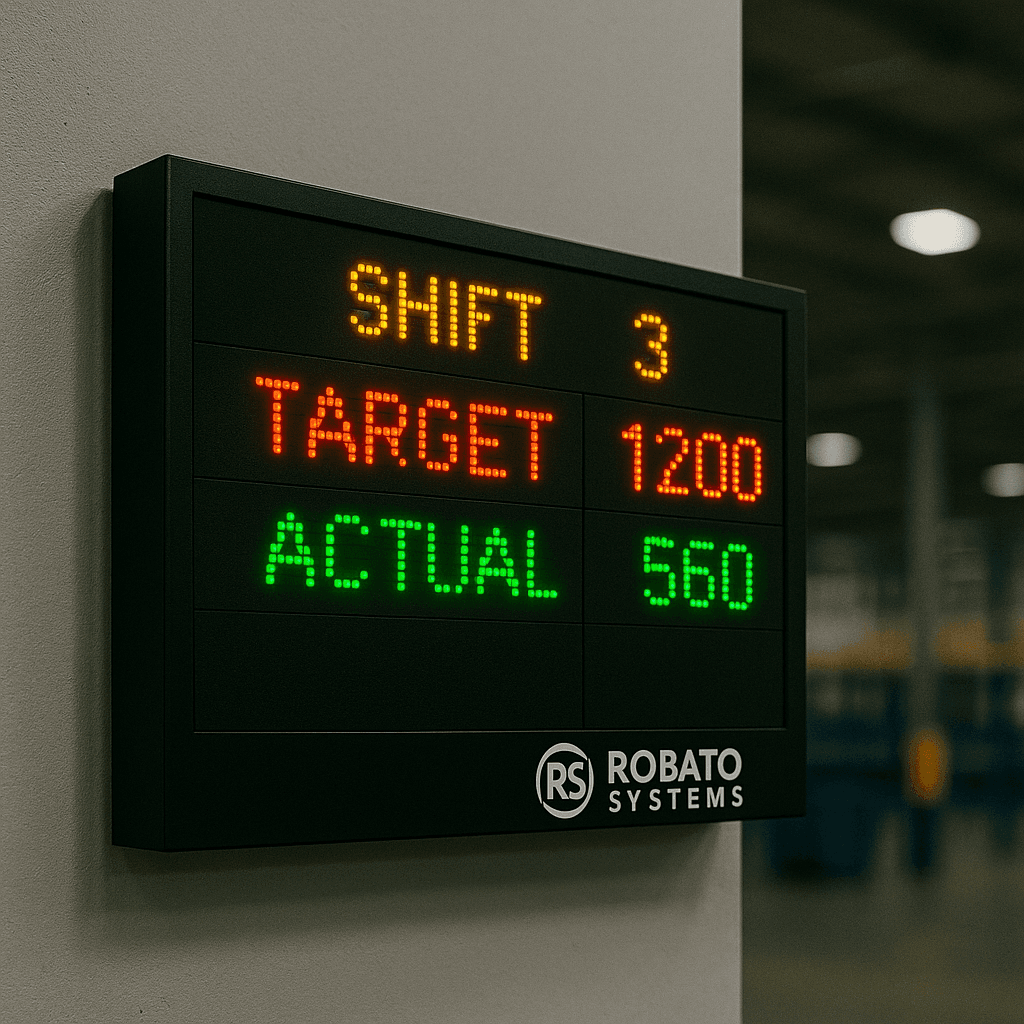
2. Centralized Production Tracking
Production quantities can be collected from connected controllers, PLCs, or sensors.
This supports machine-wise and shift-wise output reporting.
3. Improved Downtime Visibility
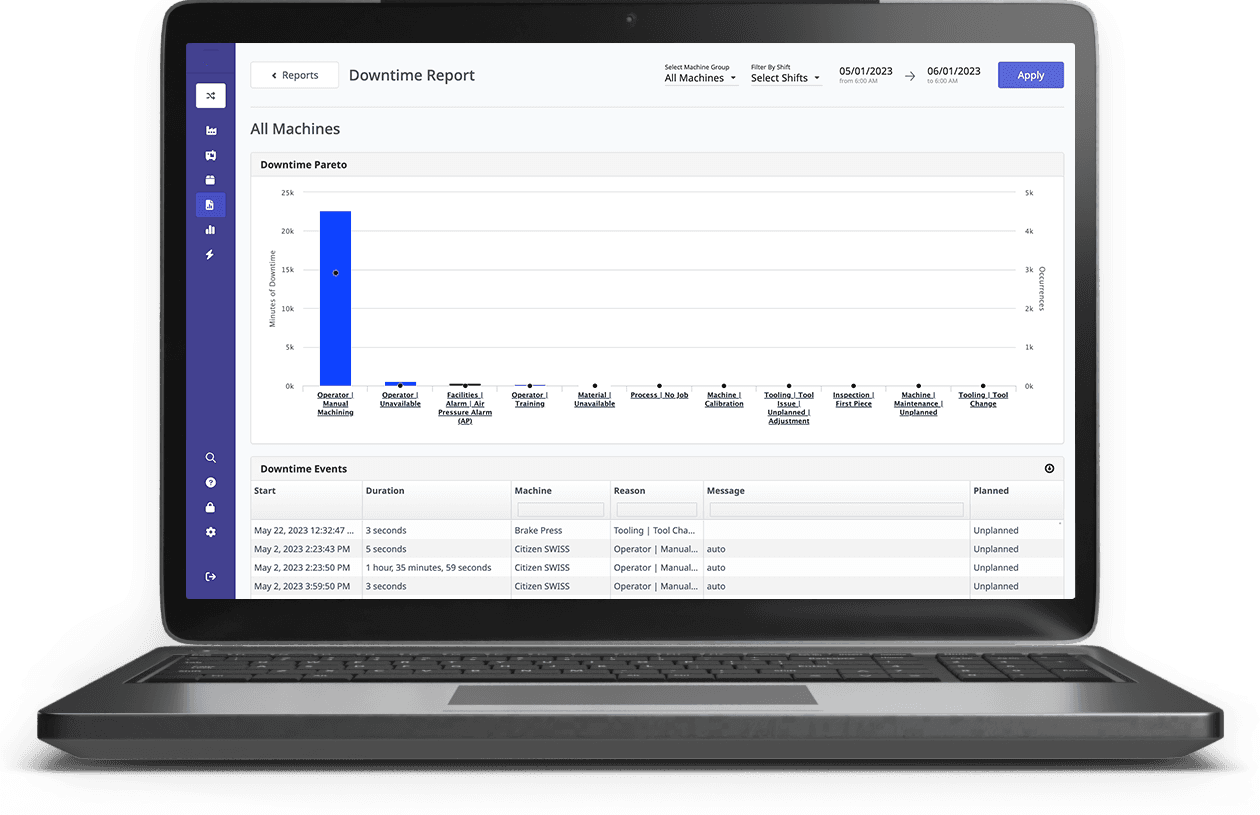
Machine-state events help identify when equipment stops operating.
When combined with downtime reasons, the system can support more detailed production-loss analysis.
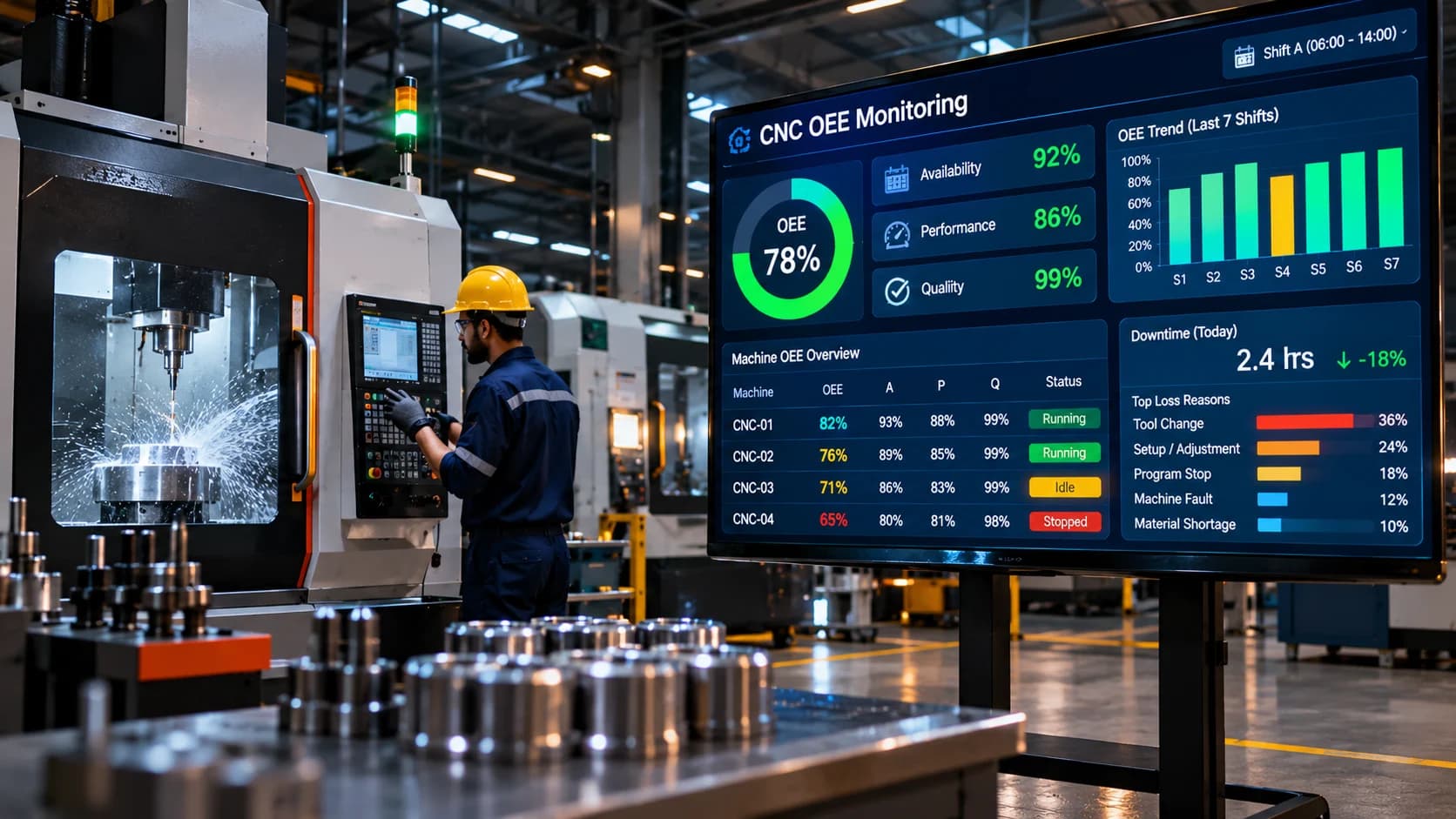
4. OEE Monitoring
Connected machine data can provide inputs for availability and performance calculations.
Quality information can be integrated from suitable inspection or production records to complete OEE calculations.
5. Historical Reporting
Stored information can help manufacturers compare production performance across machines, shifts, and time periods.
6. Better Multi-Machine Coordination
Centralized machine information gives supervisors a broader view of production activity and helps them coordinate responses to interruptions.
For manufacturers looking to bring connected equipment into one monitoring environment, smart production monitoring provides a useful reference for an IIoT-based approach.
Cloud vs. On-Premise CNC Machine Connectivity
After establishing machine connectivity, manufacturers must decide where machine information will be processed and stored.
Both cloud and on-premise architectures can support CNC monitoring.
Cloud-Based CNC Connectivity
In a cloud-based architecture, connected gateways transmit selected machine information to a cloud-hosted application.
Potential advantages include:
Centralized monitoring across multiple locations
Remote access for authorized users
Consolidated reporting
Flexible infrastructure expansion
Access to cloud-hosted analytics
A cloud production monitoring solution can support centralized access to connected machine information.
Cloud deployment requires suitable internet connectivity, data governance, and security controls.
On-Premise CNC Connectivity
An on-premise system processes and stores machine information within the factory's local infrastructure.
It may be suitable when manufacturers require local data storage, have restricted external connectivity, or need to follow specific IT policies.
The choice should be based on operational requirements, security policies, infrastructure capabilities, and long-term maintenance considerations.
Step-by-Step Guide to Implementing CNC Machine Connectivity
A structured implementation helps reduce integration risks and ensures that the connected system provides useful information.
Step 1: Conduct a Machine Connectivity Audit
Create an inventory of all CNC machines.
Record controller models, network interfaces, supported protocols, PLC availability, and existing sensors.
Step 2: Define Business and Monitoring Requirements
Identify what the production team needs to see.
Start with essential requirements such as machine status, production count, downtime, and cycle time.
Step 3: Evaluate Integration Options
Assess whether each machine supports controller-native communication, PLC-based connectivity, industrial protocols, or external sensor integration.
Step 4: Design the Network Architecture
Determine how machines, gateways, servers, and monitoring applications will communicate.
Include network segmentation, access permissions, and security requirements.
Step 5: Configure Gateways and Data Mapping
Connect the selected devices and configure the required data points.
Map machine-specific signals to consistent names, states, and units.
Step 6: Test Connectivity and Data Accuracy
Verify that machines communicate reliably and that the collected information represents actual operating conditions.
Test machine-state changes, production counts, alarms, and communication recovery.
Step 7: Connect the Monitoring Platform
Transfer the validated information to the selected production monitoring application.
Configure machine dashboards, alerts, reports, and relevant production metrics.
Step 8: Expand the Implementation
Start with a pilot group of machines. Once connectivity and data quality are validated, expand the same architecture to additional production areas.
This gradual approach helps identify compatibility issues before large-scale deployment.
Frequently Asked Questions About CNC Machine Connectivity
1. What is CNC machine connectivity?
CNC machine connectivity is the process of connecting CNC equipment to external systems so that machine information can be collected and exchanged. It enables manufacturers to access operational data for monitoring, reporting, and production analysis.
2. How can CNC machines be connected to the internet?
CNC machines can connect through Ethernet, industrial gateways, PLCs, or compatible communication interfaces. In most industrial applications, machine information is transferred through a controlled factory network and then sent to a local or cloud-based monitoring platform.
3. Can different CNC machine brands connect to the same monitoring system?
Yes. A suitable monitoring architecture can integrate different CNC brands using their supported controller interfaces, PLC connections, industrial protocols, and external data acquisition devices. Machine-specific information must be mapped into a consistent format.
4. What protocols are used for CNC machine connectivity?
Common technologies include MTConnect, OPC UA, Modbus, and MQTT. Ethernet and serial interfaces may also be used as communication methods. The appropriate option depends on equipment compatibility and integration requirements.
5. Can older CNC machines be connected to an IIoT platform?
Yes. Older CNC machines can often be connected using PLC signals, external sensors, serial communication, or industrial gateways. The available machine interfaces determine how much information can be collected.
6. What is the role of an industrial IoT gateway in CNC connectivity?
An industrial IoT gateway connects machine-level equipment with monitoring applications. It can collect information from controllers, PLCs, and sensors, convert protocols, process data, and transmit selected readings to centralized platforms.
7. Is Ethernet enough to connect a CNC machine?
Not necessarily. Ethernet provides network connectivity, but the controller must also support a suitable communication service or protocol. Additional software options, adapters, gateways, or access permissions may be required.
8. Is CNC machine connectivity secure?
It can be designed securely using network segmentation, access controls, authentication, encryption where supported, and controlled remote access. Security should be planned with the factory's IT and operational technology teams.
9. What data can be monitored after connecting a CNC machine?
Depending on the controller and integration method, manufacturers can monitor machine status, production counts, cycle time, alarms, program information, spindle parameters, and selected process measurements.
10. How does CNC machine connectivity improve production monitoring?
Connectivity allows machine information to reach a centralized platform. Production teams can use this information to monitor equipment status, track production quantities, identify interruptions, analyse historical performance, and support OEE monitoring.
Conclusion
CNC machine connectivity is an important foundation for modern smart manufacturing. It connects individual machines with the wider production environment and makes machine-level information accessible for monitoring and analysis.
Whether a factory uses modern CNC controllers, legacy equipment, PLC-based automation, external sensors, or a combination of technologies, a flexible connectivity architecture can bring different data sources together.
Successful implementation depends on selecting compatible communication methods, standardizing machine information, maintaining reliable network connections, and applying appropriate security controls.
By connecting CNC equipment to an industrial IoT monitoring platform, manufacturers can establish a more transparent production environment, improve machine visibility, and build a foundation for data-driven manufacturing decisions.
Explore Robato Systems' production monitoring solutions to understand how connected machine data can support centralized production monitoring.