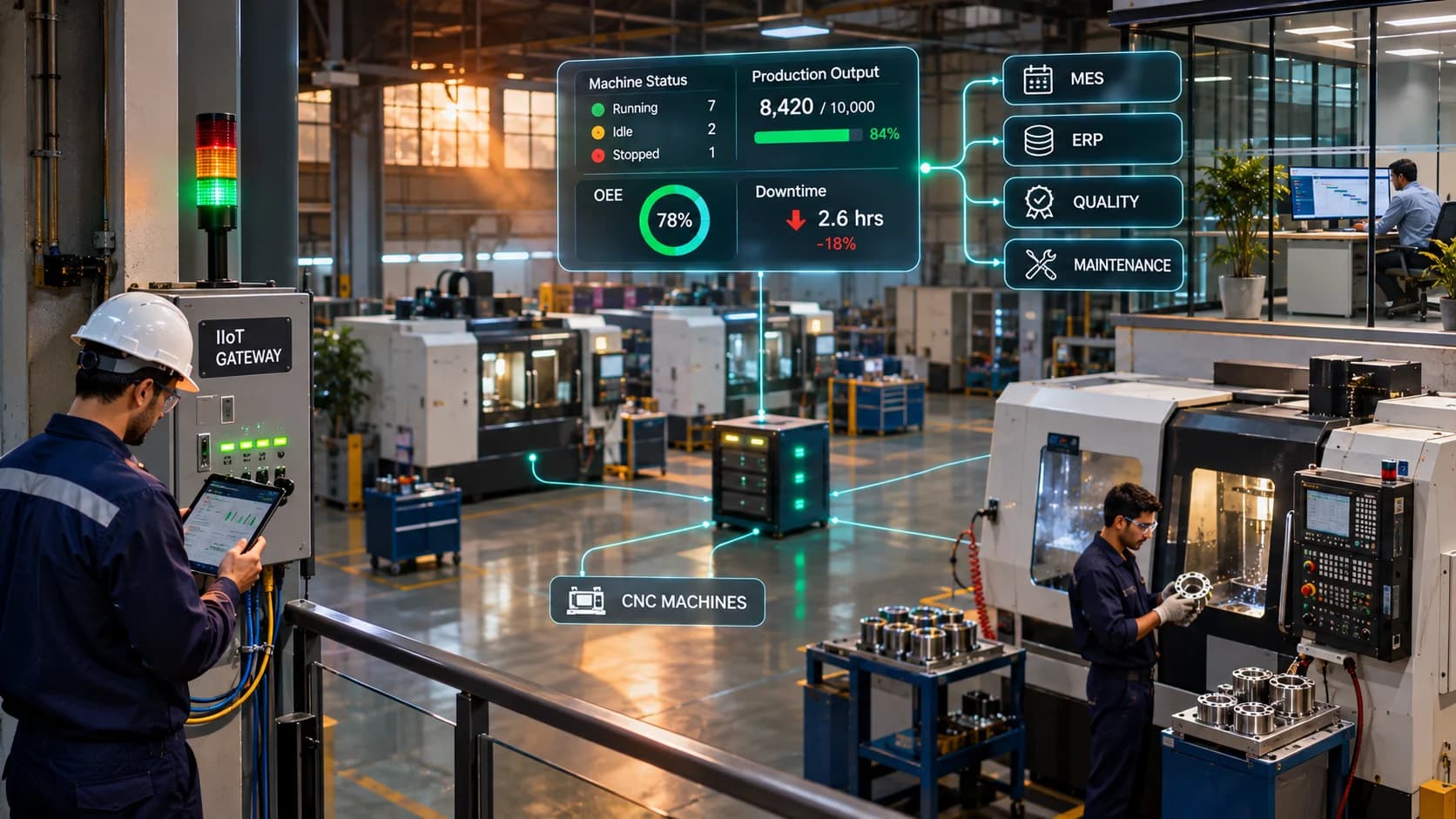
Building a Smart CNC Factory: A Complete Guide to Smart Manufacturing
Manufacturing is evolving beyond traditional machine operations. CNC machines are becoming connected, production data is becoming more accessible, and factories are increasingly using digital systems to coordinate equipment, people, and processes.
However, simply connecting CNC machines to the internet does not make a factory smart. A truly smart CNC factory combines machine connectivity, Industrial Internet of Things (IIoT), production monitoring, data analytics, automation, and enterprise system integration to create a more visible, coordinated, and data-driven manufacturing environment.
For manufacturers handling multiple CNC machines, production shifts, complex job schedules, and demanding quality requirements, this transformation can improve operational visibility and support better decisions.
This guide explains what a smart CNC factory is, how its technology architecture works, which systems should be integrated, and how manufacturers can implement smart manufacturing step by step.
1. What Is a Smart CNC Factory?
A smart CNC factory is a manufacturing environment where CNC machines, production equipment, industrial sensors, software platforms, and business systems work together through connected digital infrastructure.
It uses real-time machine data and operational information to help manufacturers understand production performance, identify bottlenecks, coordinate workflows, and make informed decisions.
A smart CNC factory typically combines:
Connected CNC machines and production equipment
Industrial sensors, PLCs, and IoT gateways
Real-time machine and production monitoring
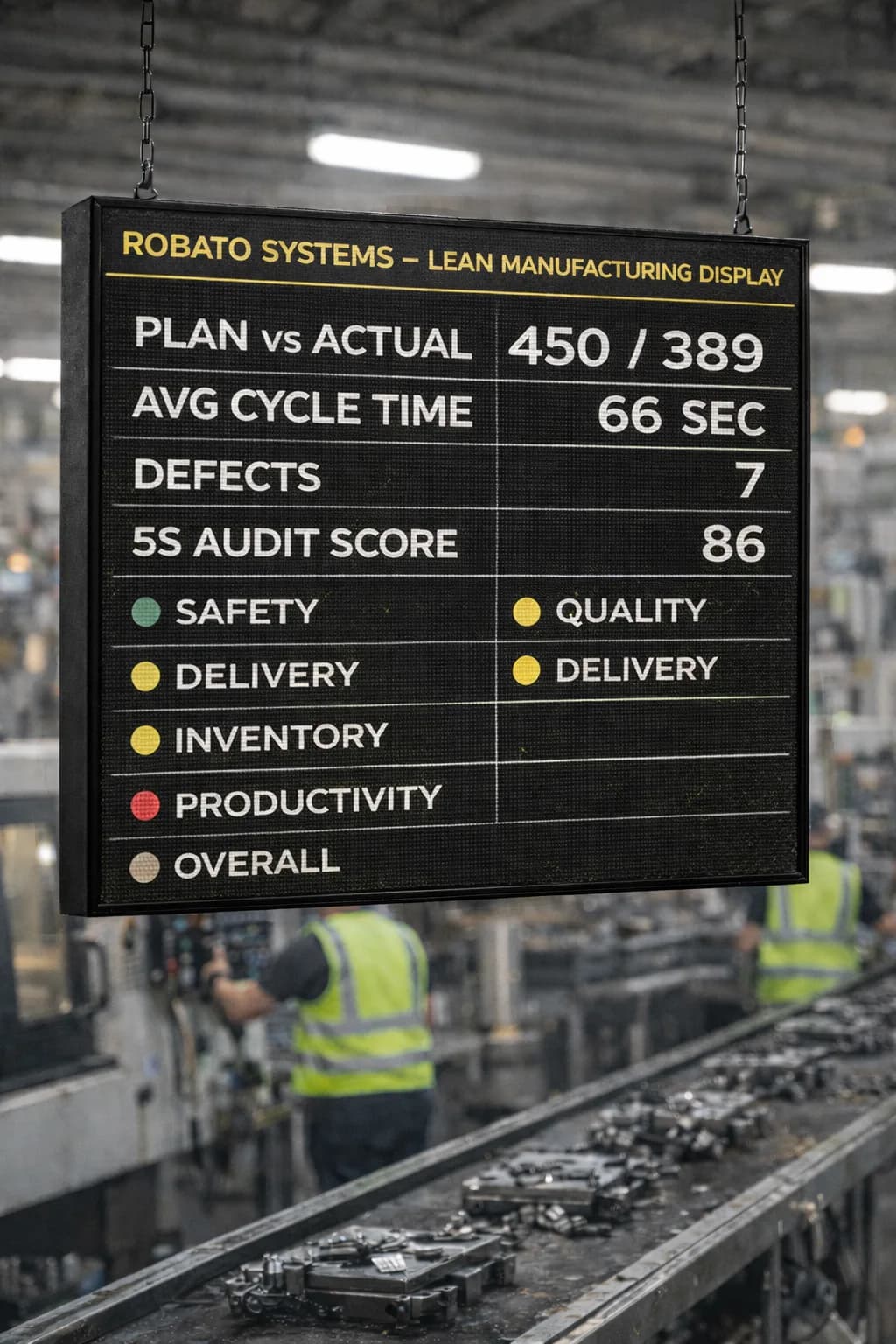
Centralized manufacturing dashboards
Production planning and scheduling systems
Quality and maintenance management
Data analytics and performance reporting
Secure communication between operational and business systems
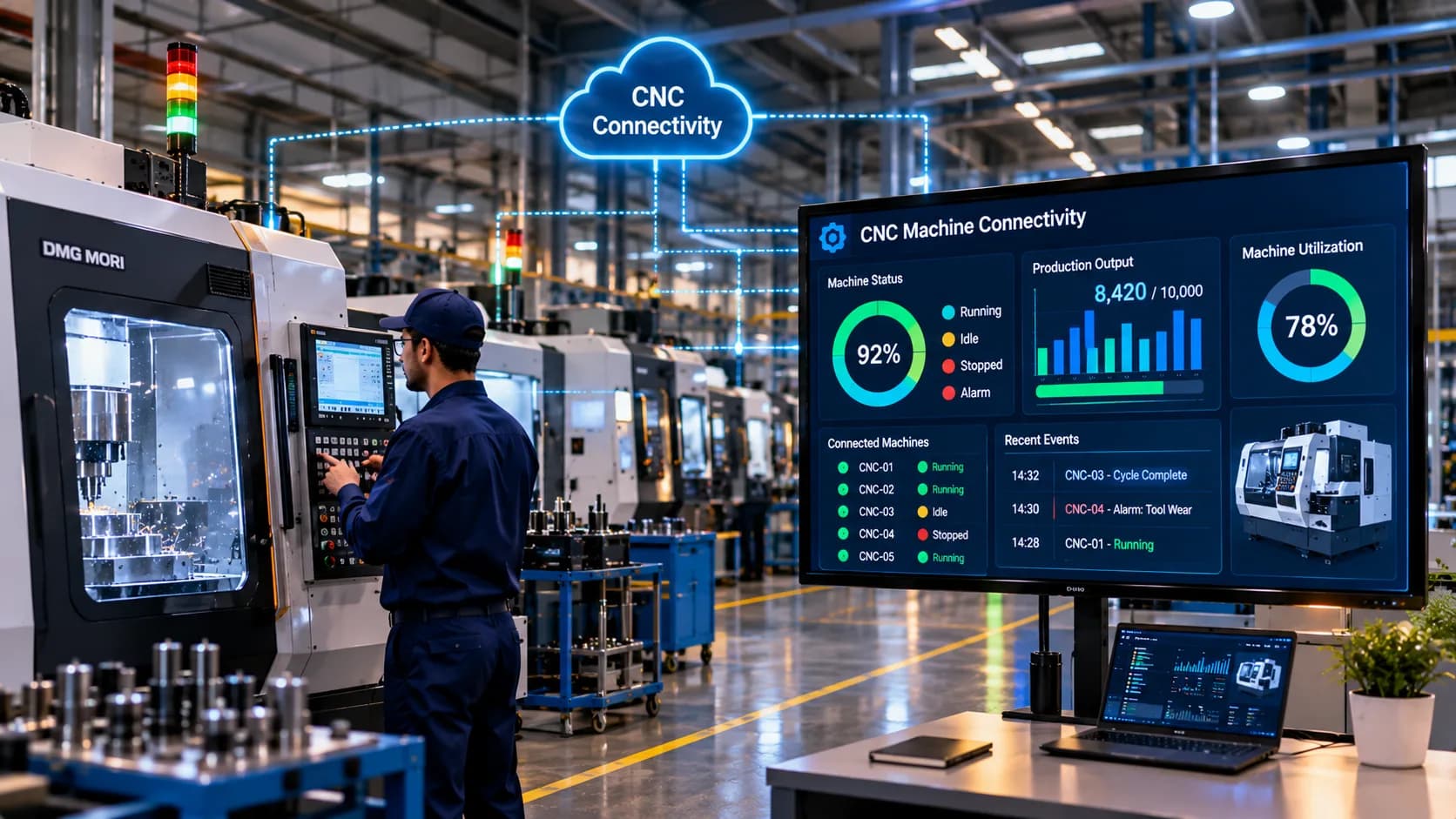
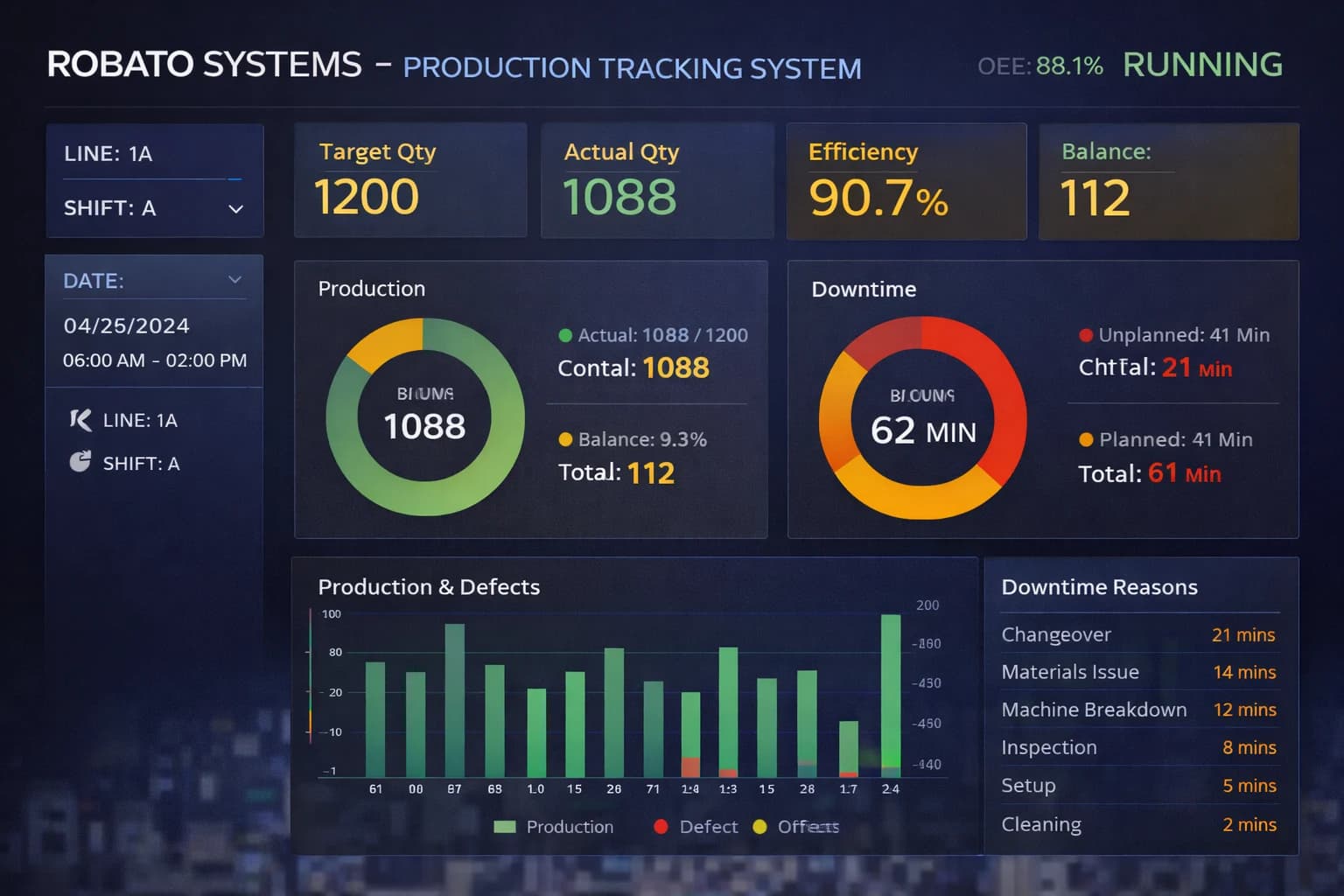
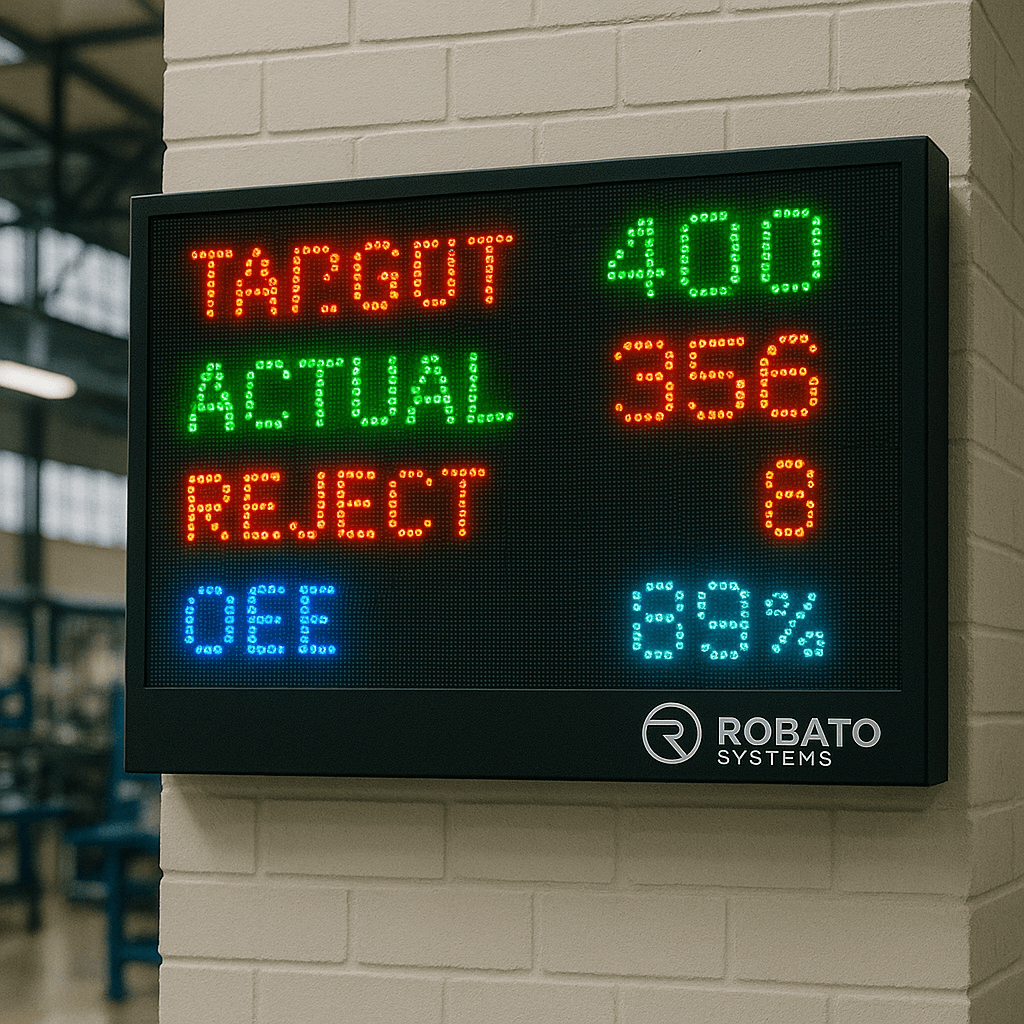
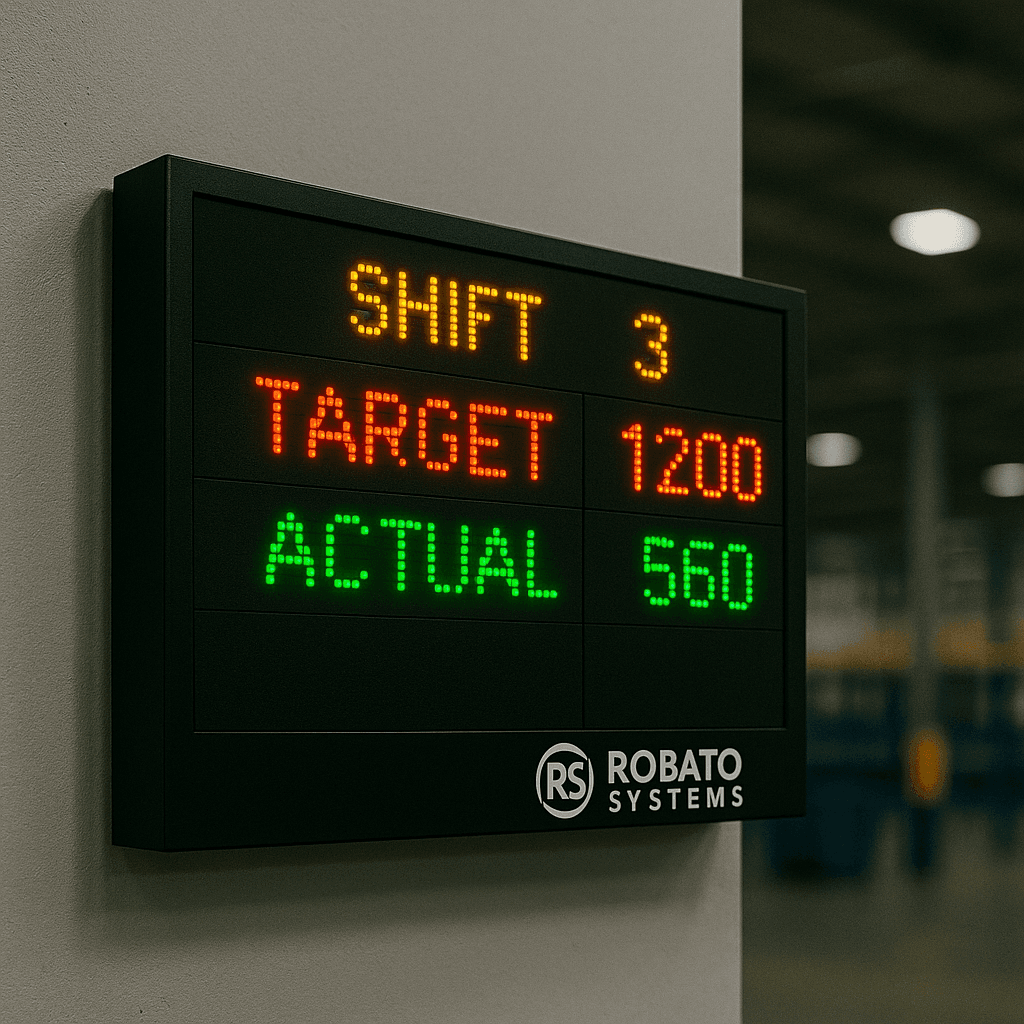
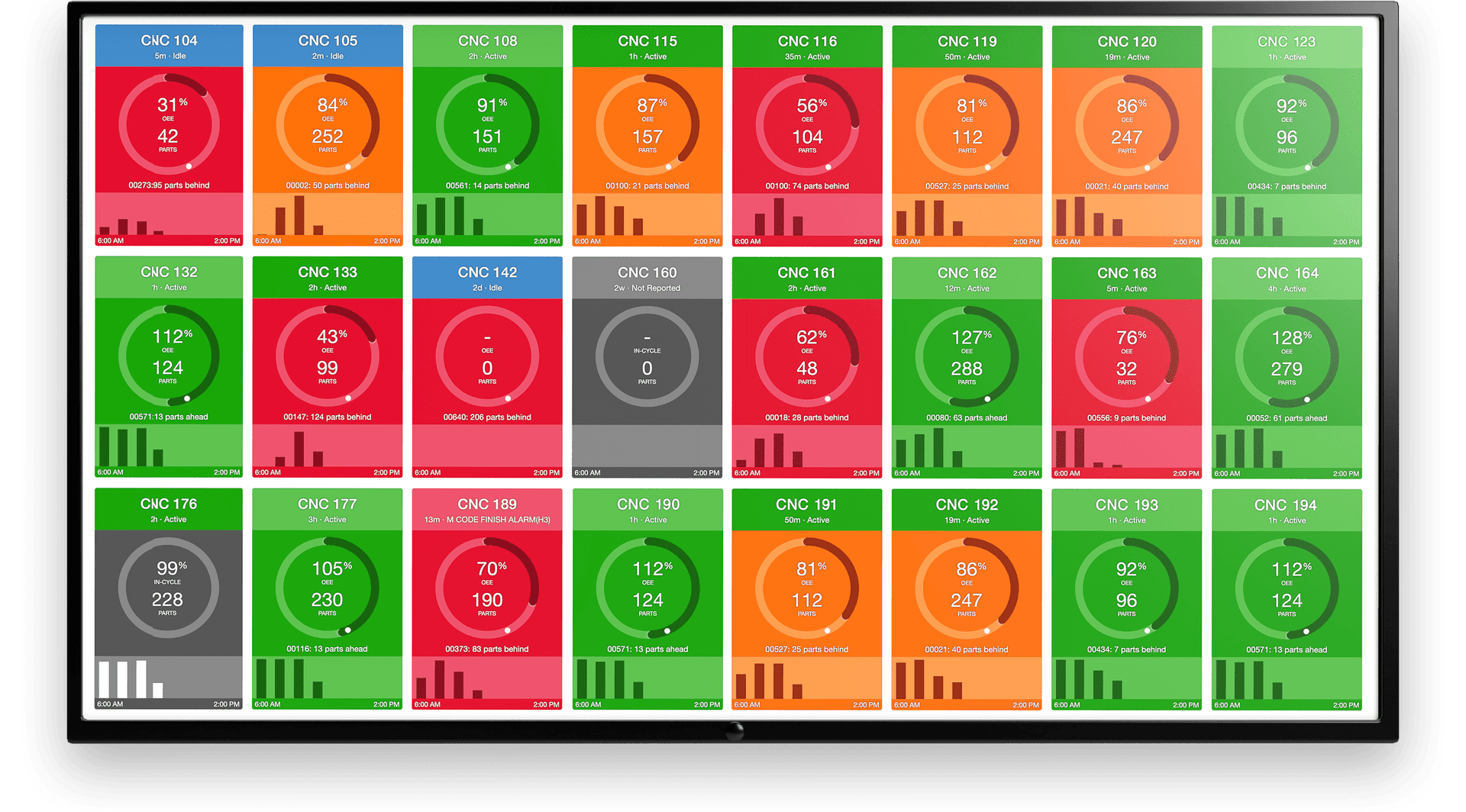
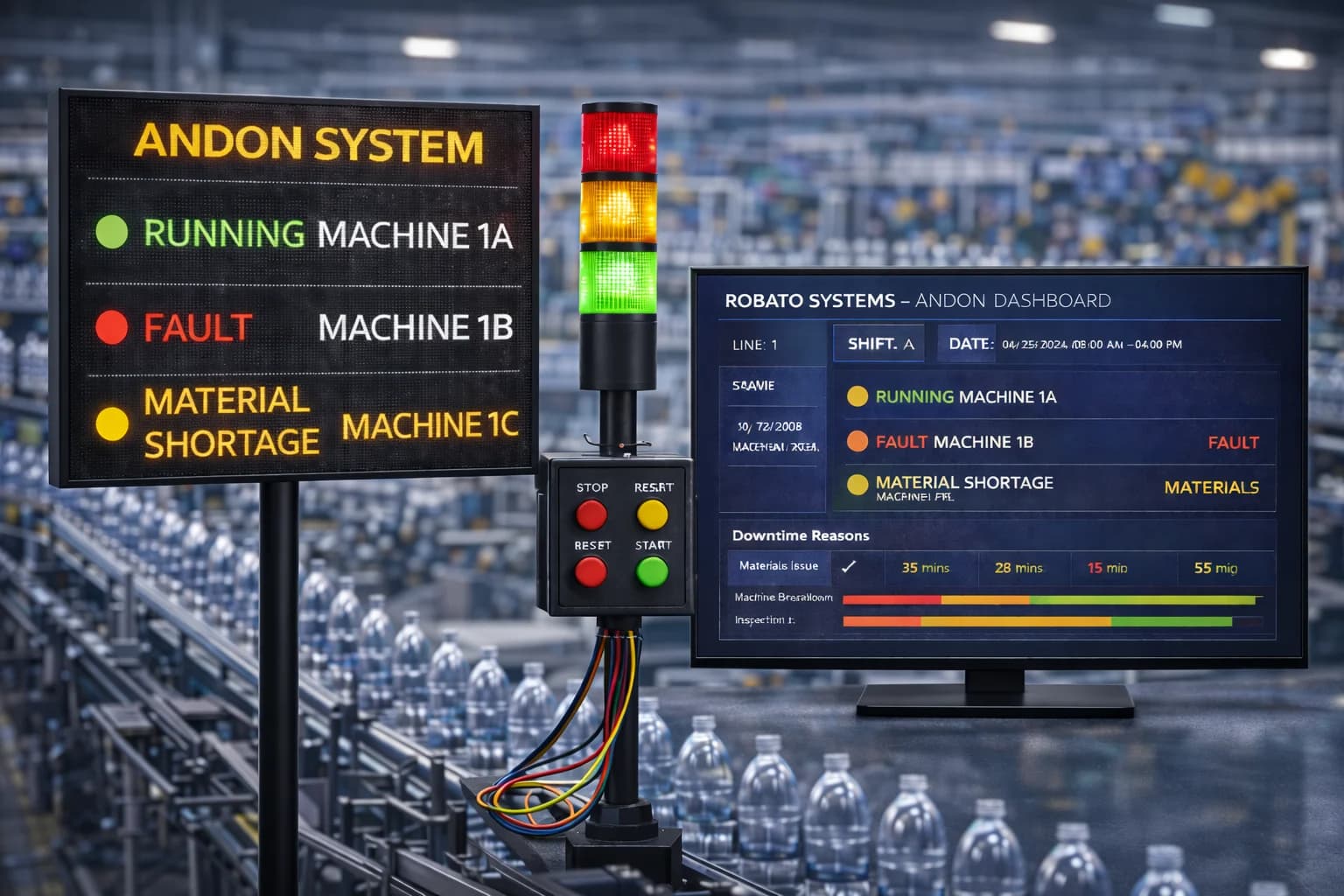
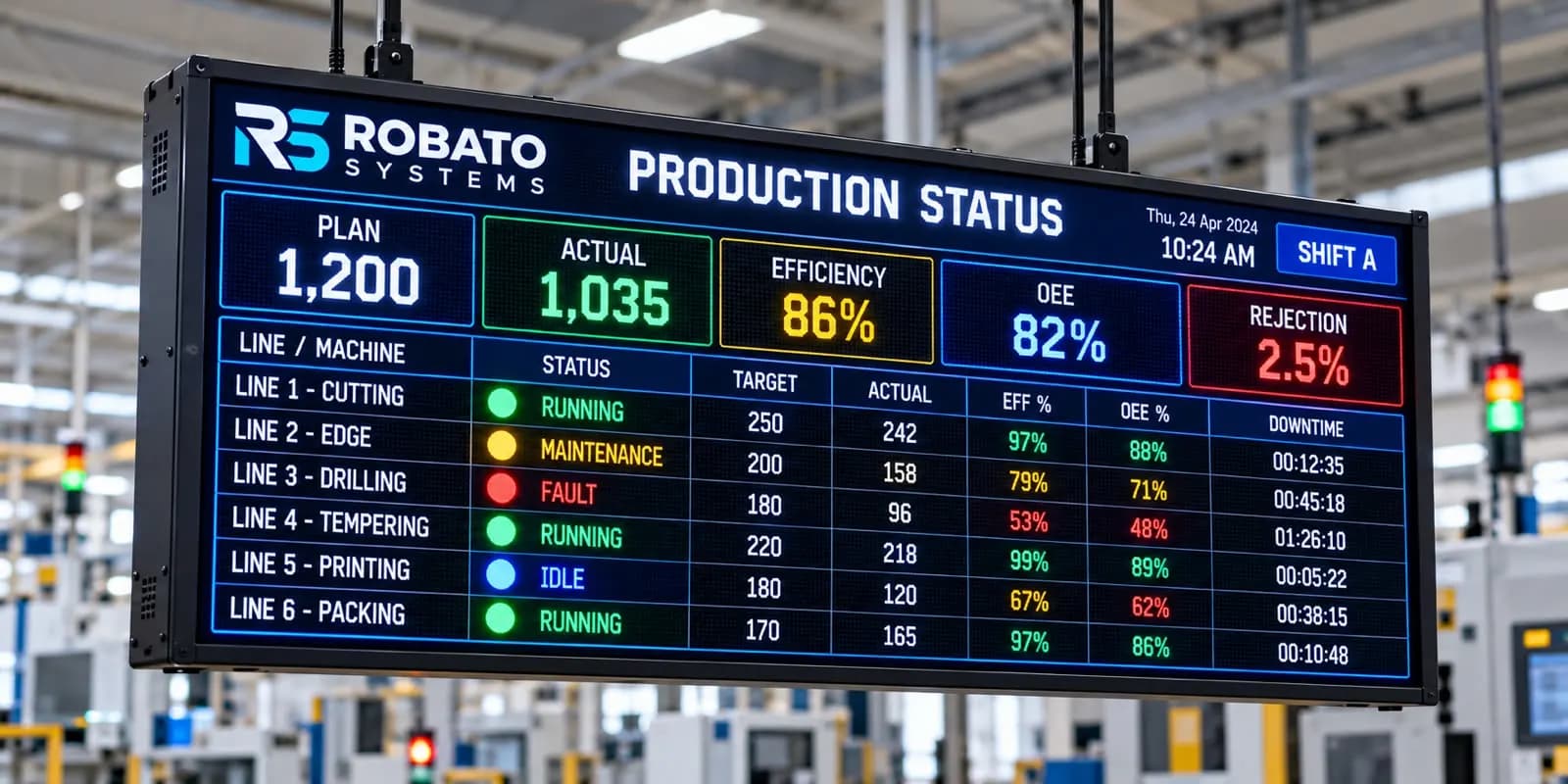
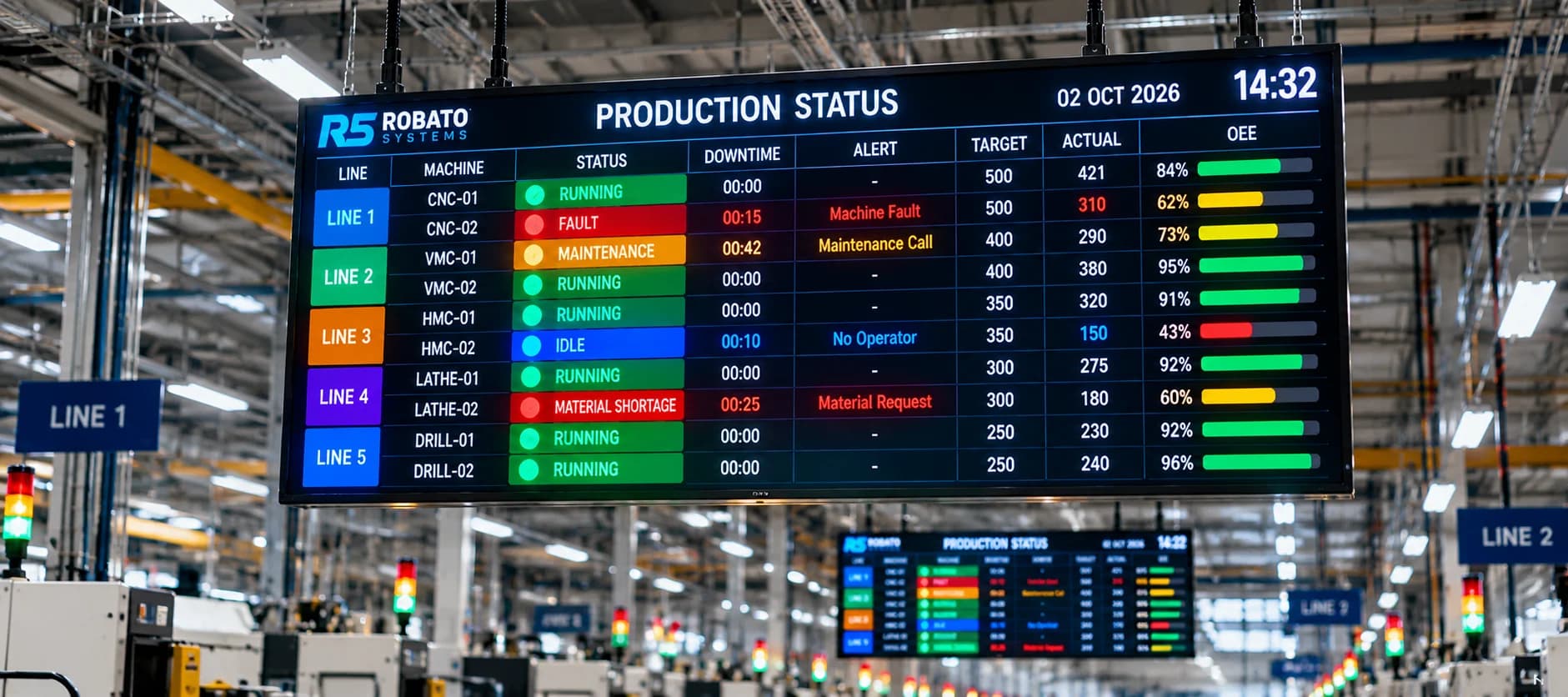
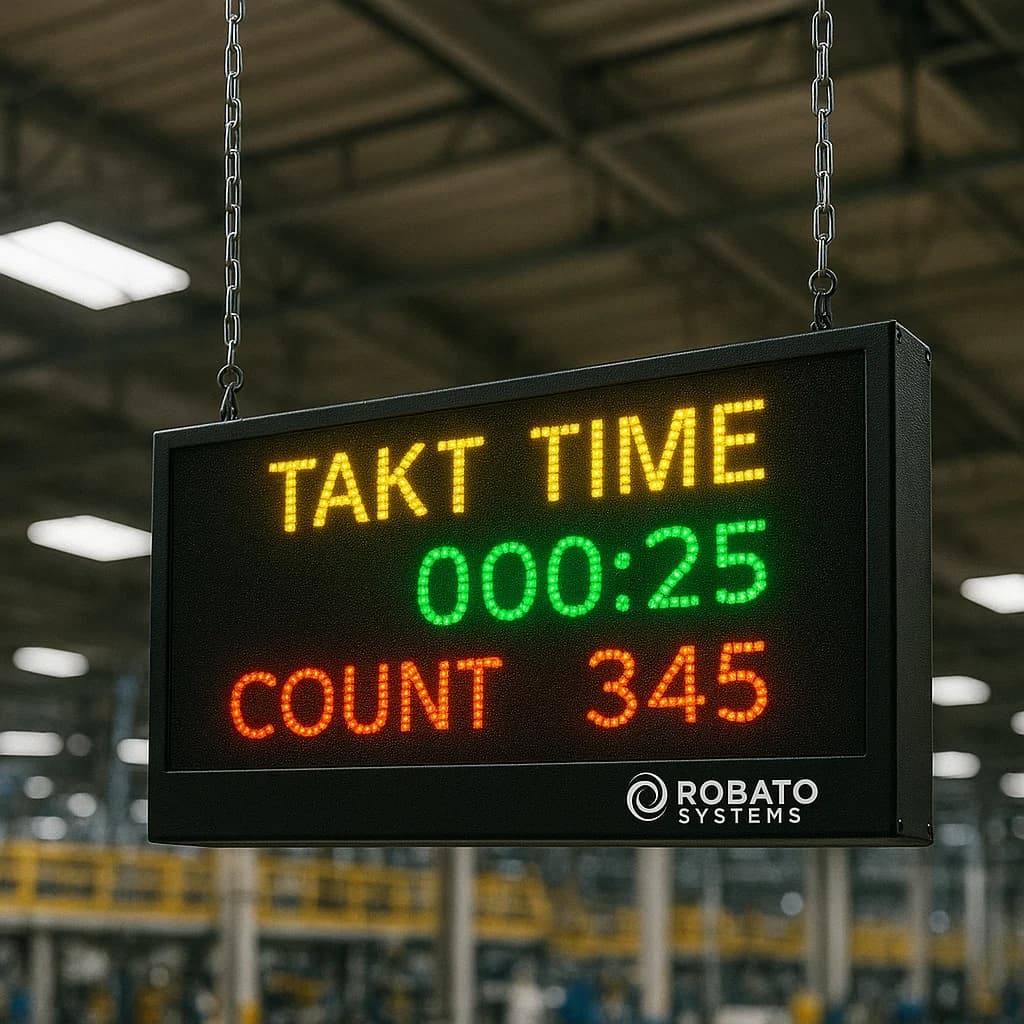
For example, when a CNC machine starts a production job, its operating status and production count can be captured by a monitoring system. This information can be presented on a centralized dashboard, compared with production targets, and made available to authorized teams.
Production supervisors can identify delays, maintenance teams can investigate unexpected stoppages, and management can review performance across machines and shifts.
The objective is to create a connected manufacturing operation where decisions are supported by reliable production information.
2. Connected CNC Machines vs. a Smart CNC Factory
A connected CNC machine and a smart CNC factory are not the same thing.
Machine connectivity is an important starting point, but smart manufacturing requires broader integration.
| Connected CNC Machine | Smart CNC Factory |
|---|---|
| Shares machine operating data | Integrates machine and business data |
| Displays individual machine status | Provides factory-wide production visibility |
| Tracks machine runtime | Connects runtime with production targets and schedules |
| Provides basic machine information | Supports performance analysis and decision-making |
| Works mainly at equipment level | Connects equipment, people, and processes |
| May operate independently | Coordinates information across manufacturing systems |
Consider a factory with 20 CNC machines.
If each machine displays its own production count, supervisors still need to collect information from different locations. They may use spreadsheets or manual reports to calculate total production and identify delays.
In a smart CNC factory, machine data is collected centrally. Production information can be organized by machine, job, shift, department, and production target.
This creates a common operational view instead of isolated machine-level information.
3. Core Technologies Behind a Smart CNC Factory
A smart CNC factory is built using multiple technologies that work together. Each technology serves a specific purpose within the manufacturing environment.
3.1 CNC Machine Connectivity
The first step is connecting CNC machines and other production equipment to a data collection infrastructure.
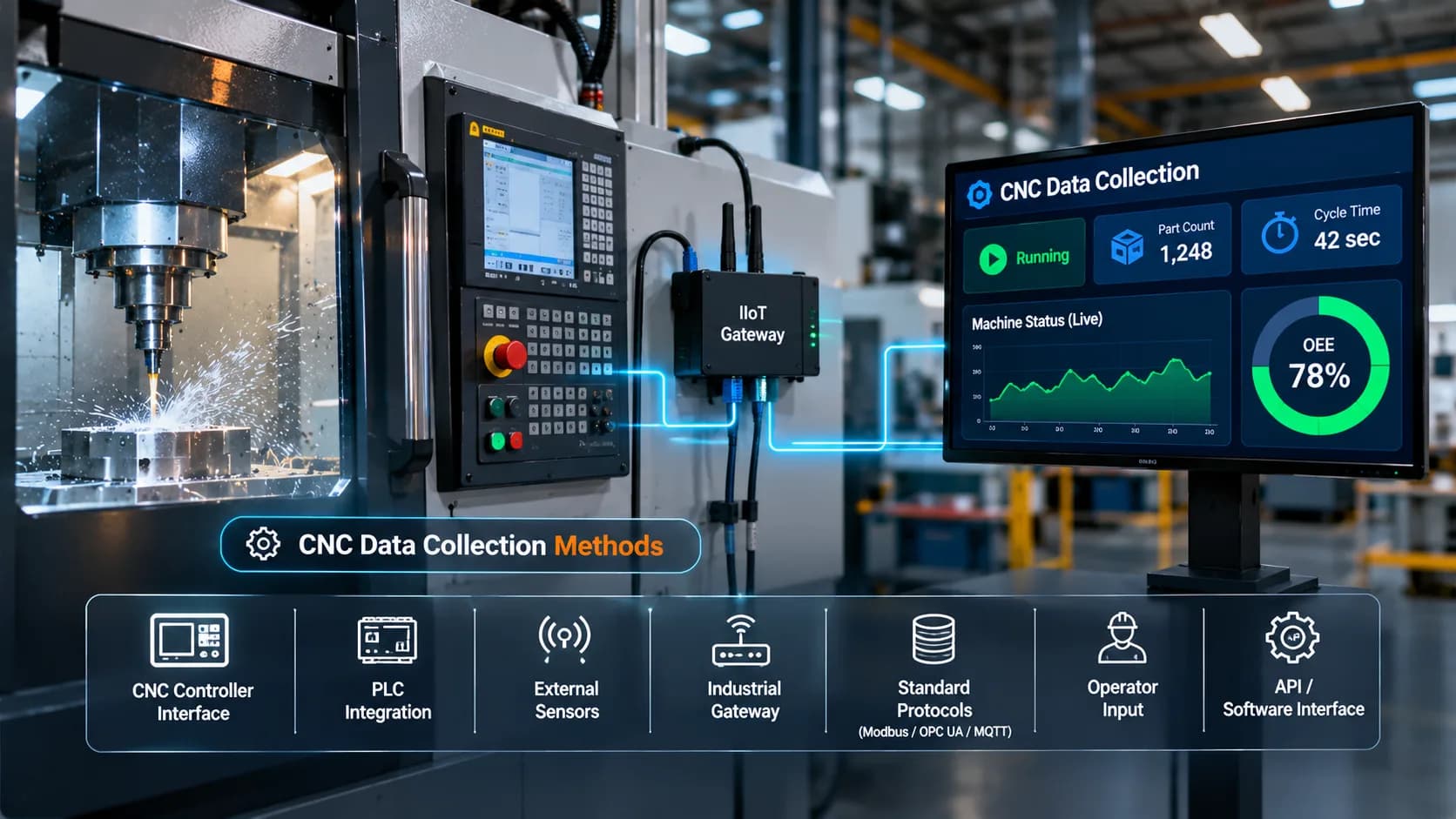
Depending on the controller and machine configuration, connectivity may be established through:
Ethernet communication
Serial communication
Controller-specific interfaces
PLC communication
Industrial gateways
External sensors and signal interfaces
Not every CNC machine supports the same communication capabilities. Older equipment may require additional hardware or signal-based data collection.
A proper connectivity assessment helps determine which machines can provide controller-level information and which require alternative data acquisition methods.
3.2 Industrial IoT Gateways
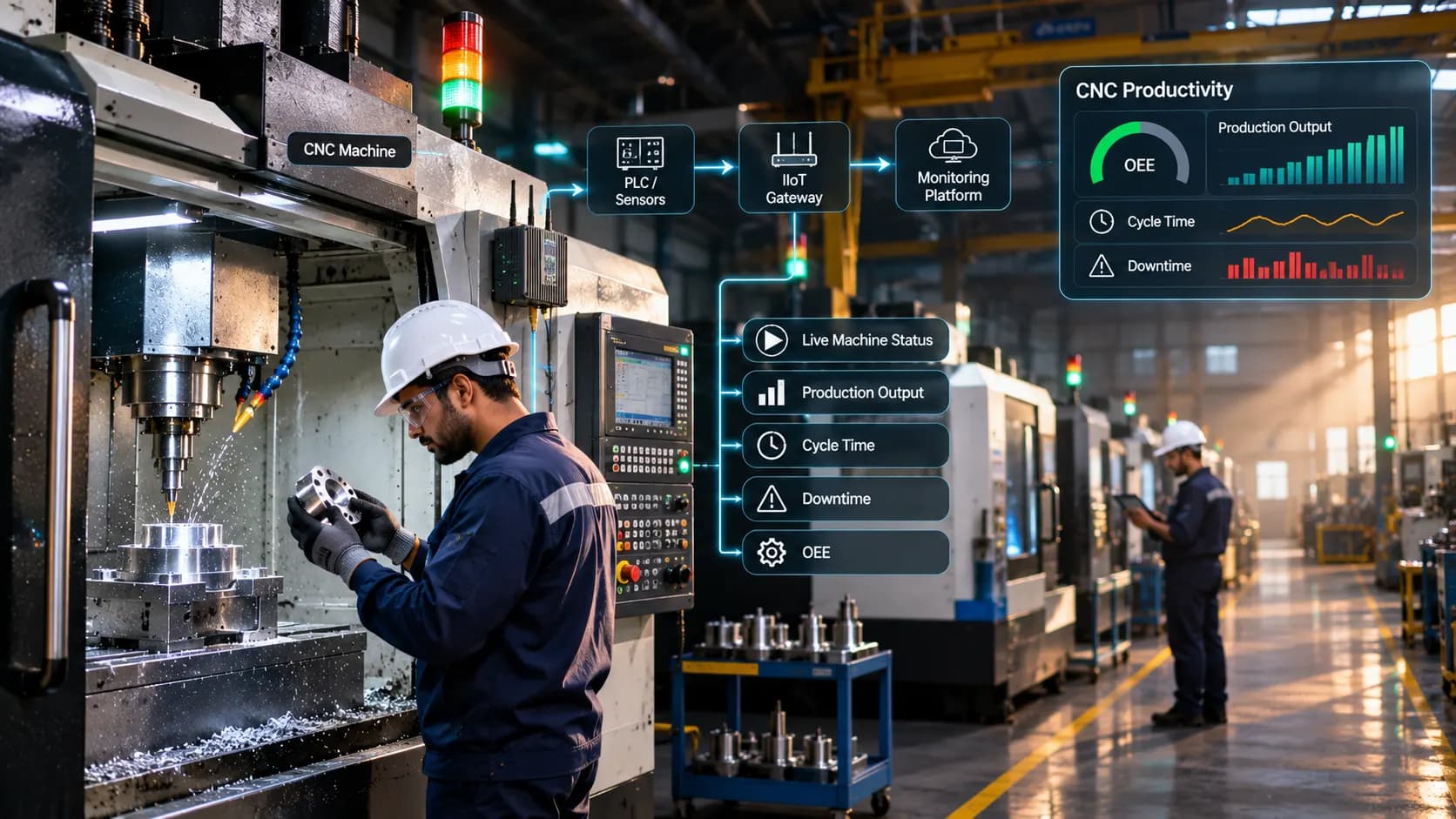
IoT gateways act as communication bridges between industrial equipment and centralized monitoring platforms.
They can collect data from different sources, convert supported protocols, filter information, and forward relevant machine data to software platforms.
A gateway may receive information from CNC controllers, PLCs, industrial sensors, and production counters.
Depending on the solution, it can also provide local processing and temporary data buffering when network connectivity is interrupted.
3.3 Production Monitoring Software
Production monitoring software converts collected machine signals and production information into useful operational insights.
A monitoring platform can help manufacturers:
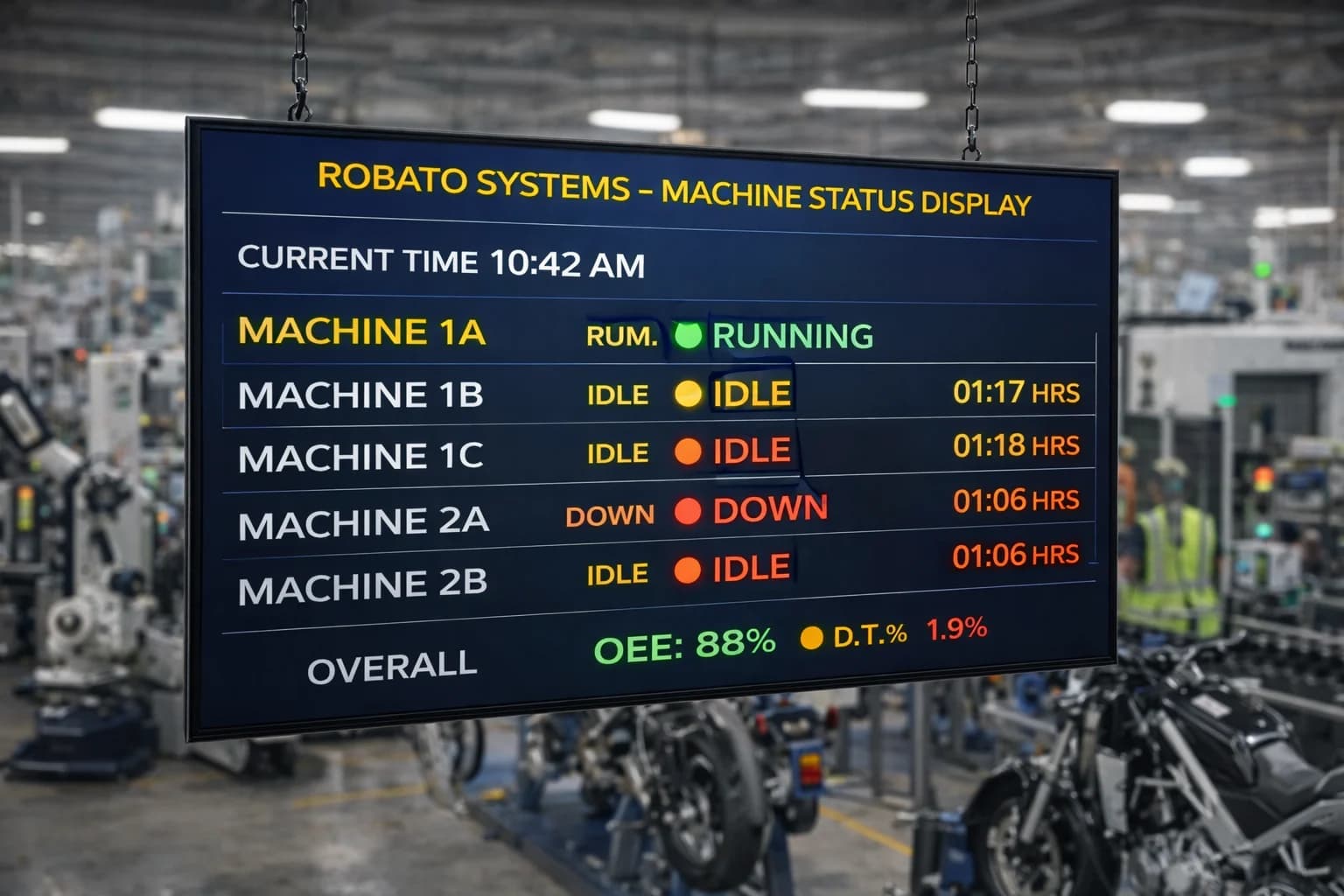
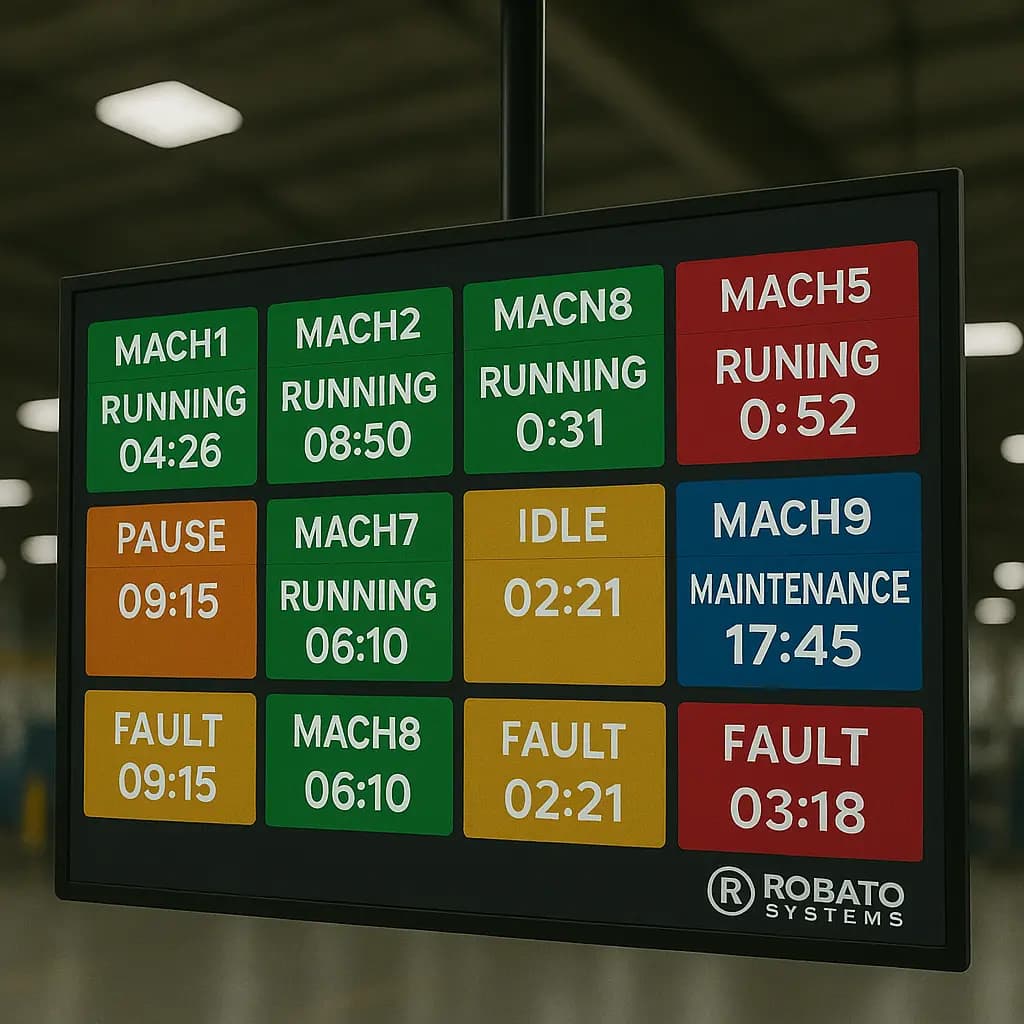
View real-time machine status
Track production output
Monitor running and idle time
Identify machine stoppages
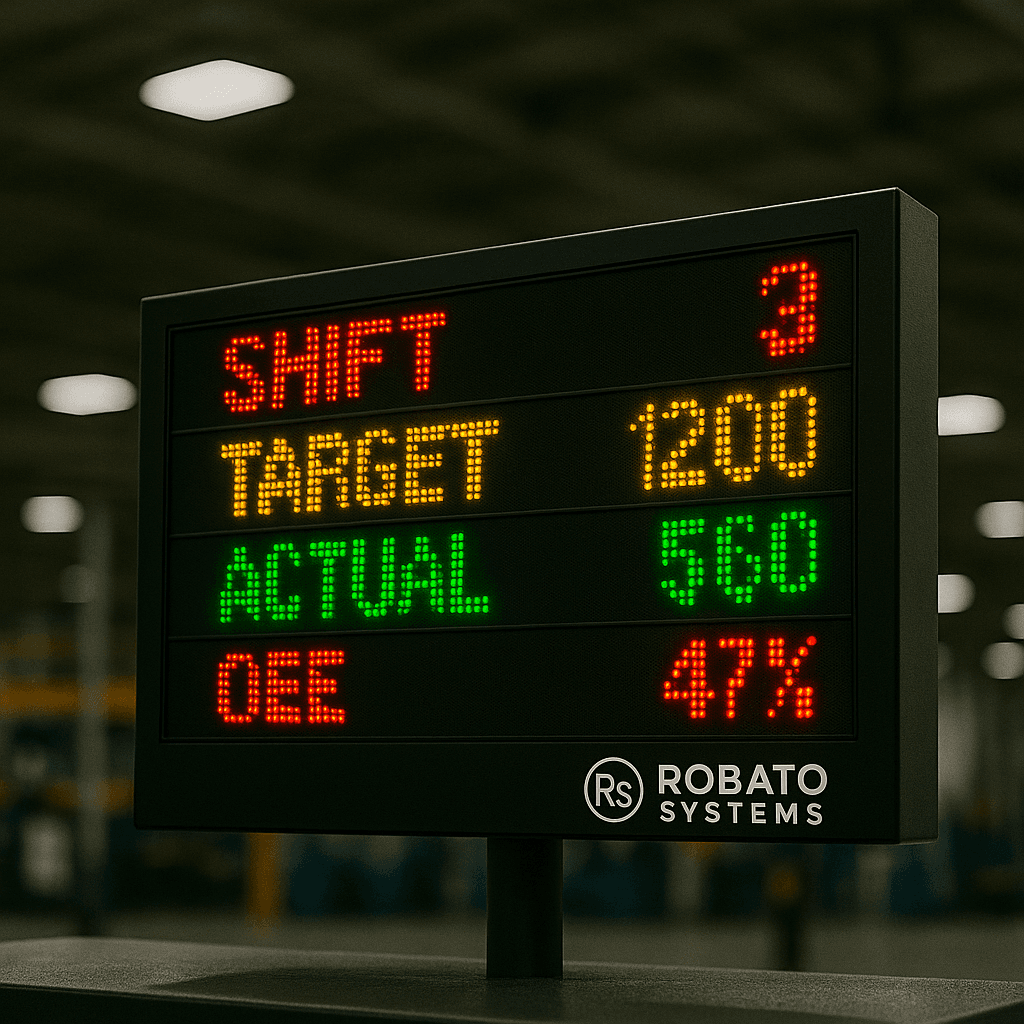
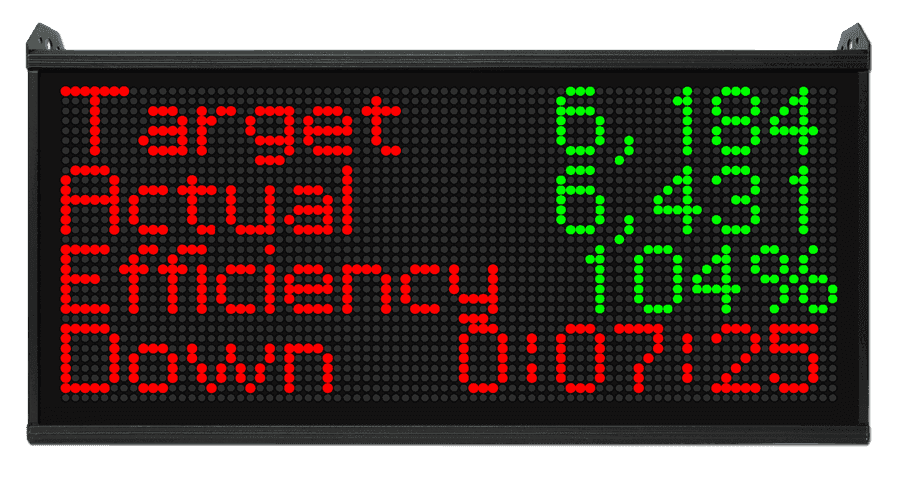
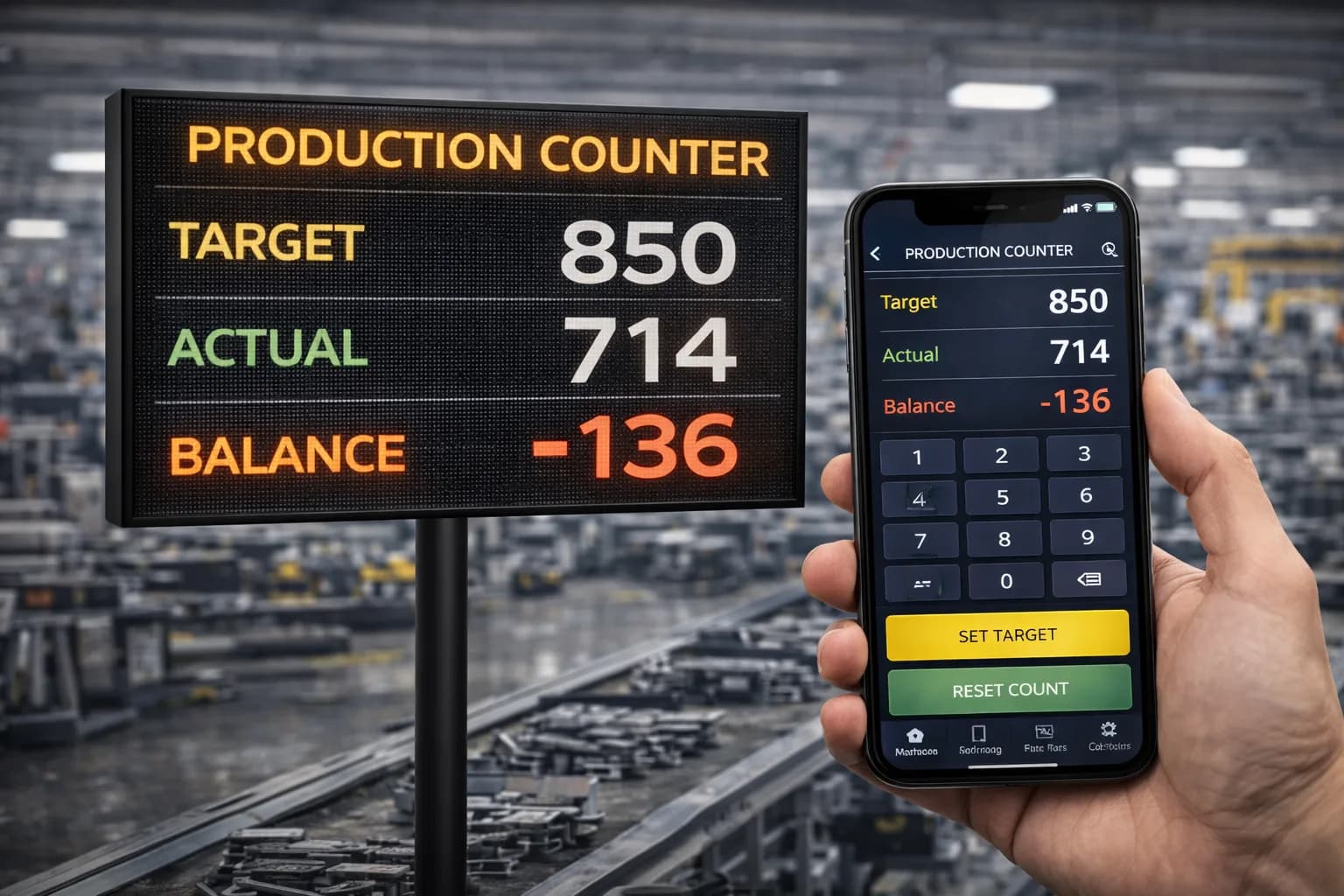
Compare actual production with targets
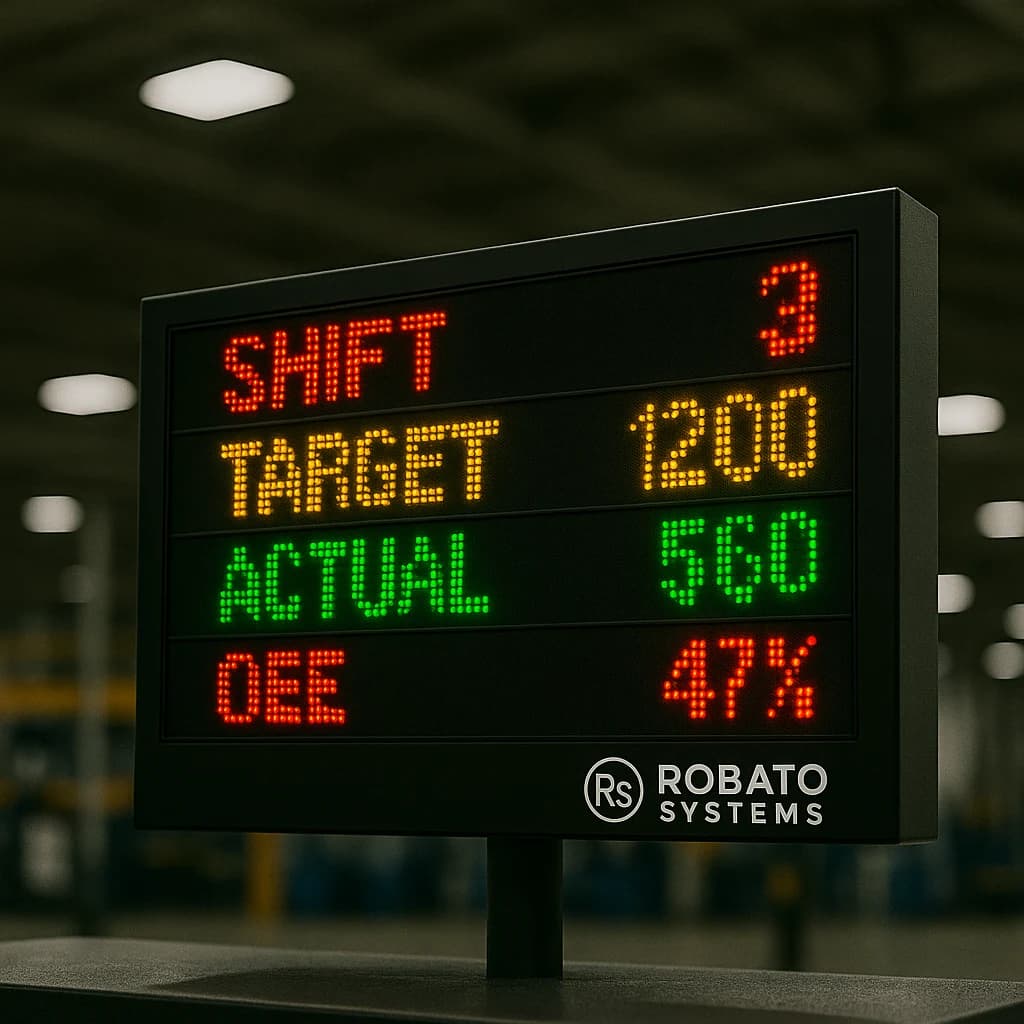
Review shift-wise performance
Generate production reports
Analyze machine utilization
A centralized production monitoring software platform helps bring machine-level information into one operational environment.
3.4 Industrial Communication Protocols
Communication protocols allow machines, gateways, controllers, and software platforms to exchange information.
Some commonly used technologies include:
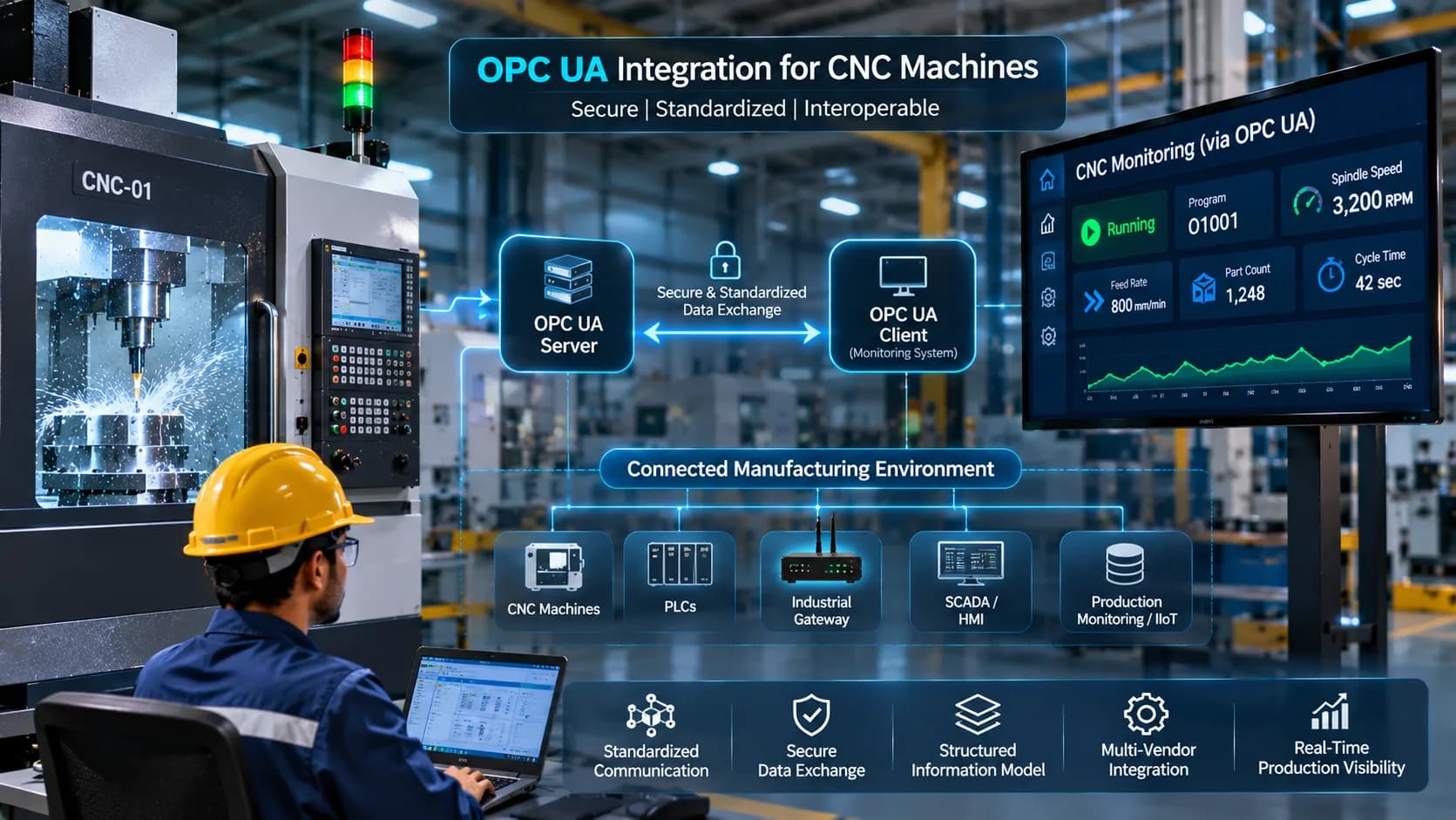
OPC UA: Supports structured industrial communication and information exchange.
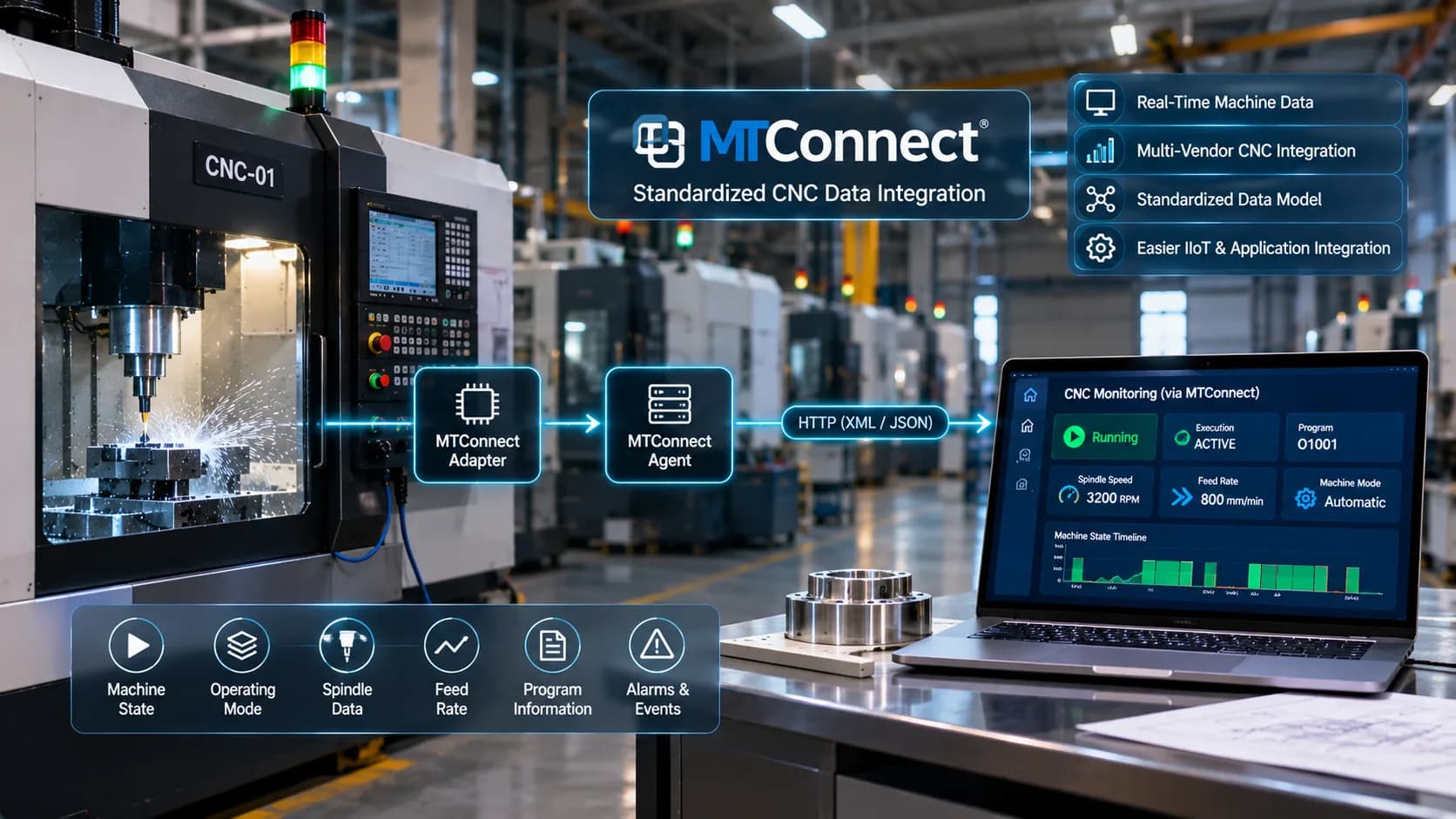
MTConnect: Provides a standardized approach to sharing manufacturing equipment data.
Modbus: Commonly used for communication with industrial devices and PLCs.
MQTT: A lightweight publish-subscribe messaging protocol often used in IIoT architectures.
The appropriate technology depends on machine compatibility, available interfaces, security requirements, and the intended data architecture.
3.5 Data Analytics and Dashboards
Collected machine data becomes more valuable when it is presented in a meaningful format.
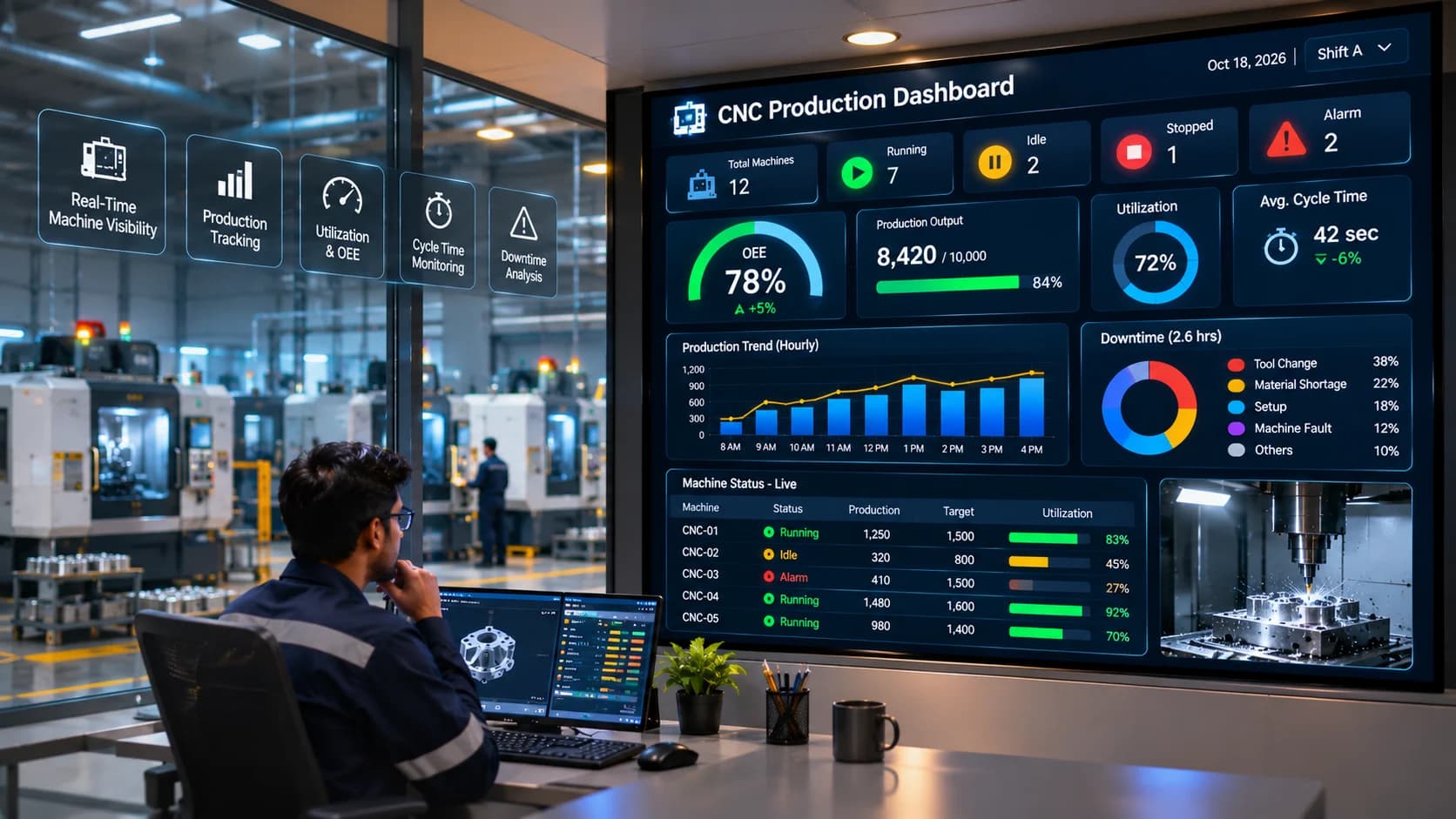
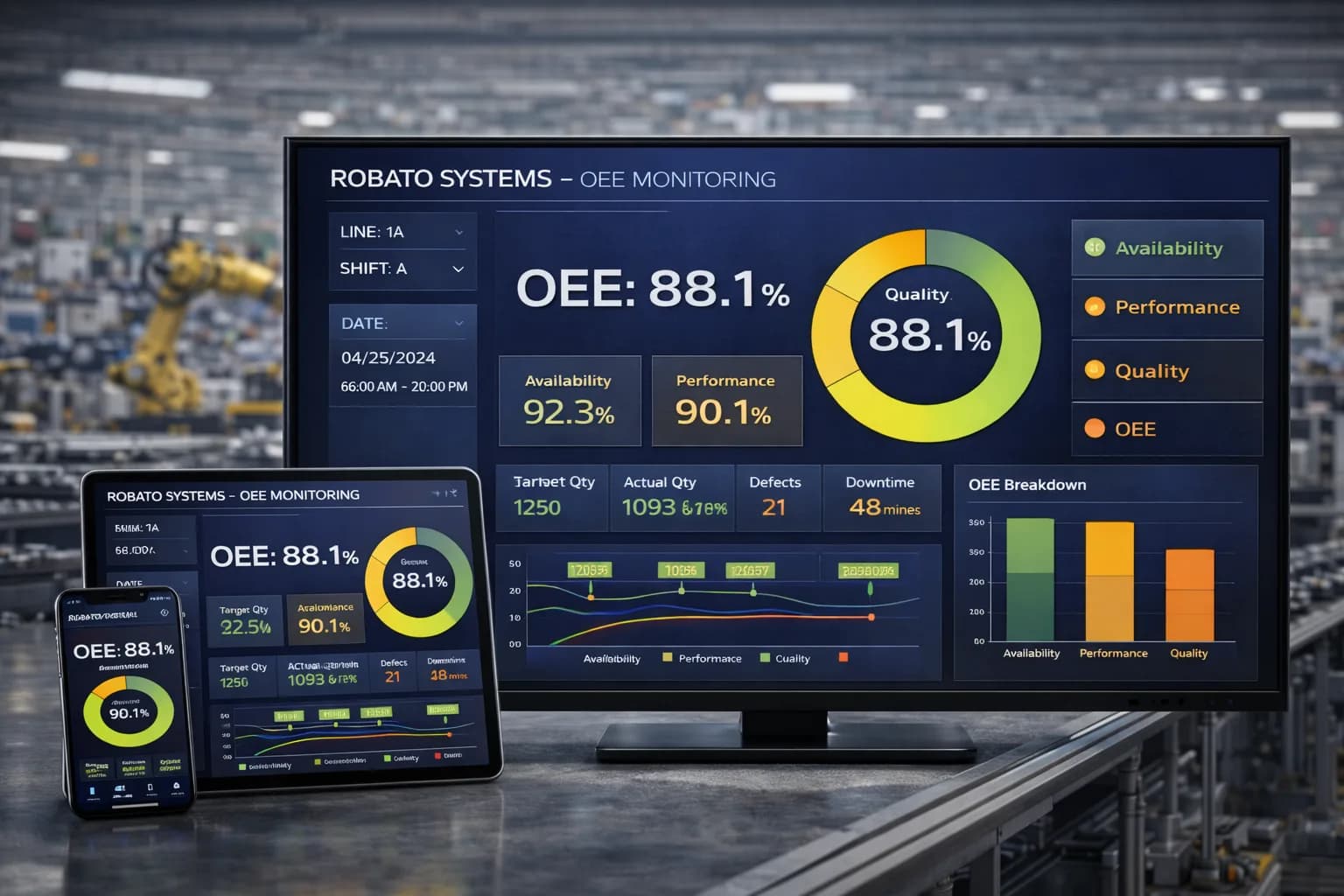
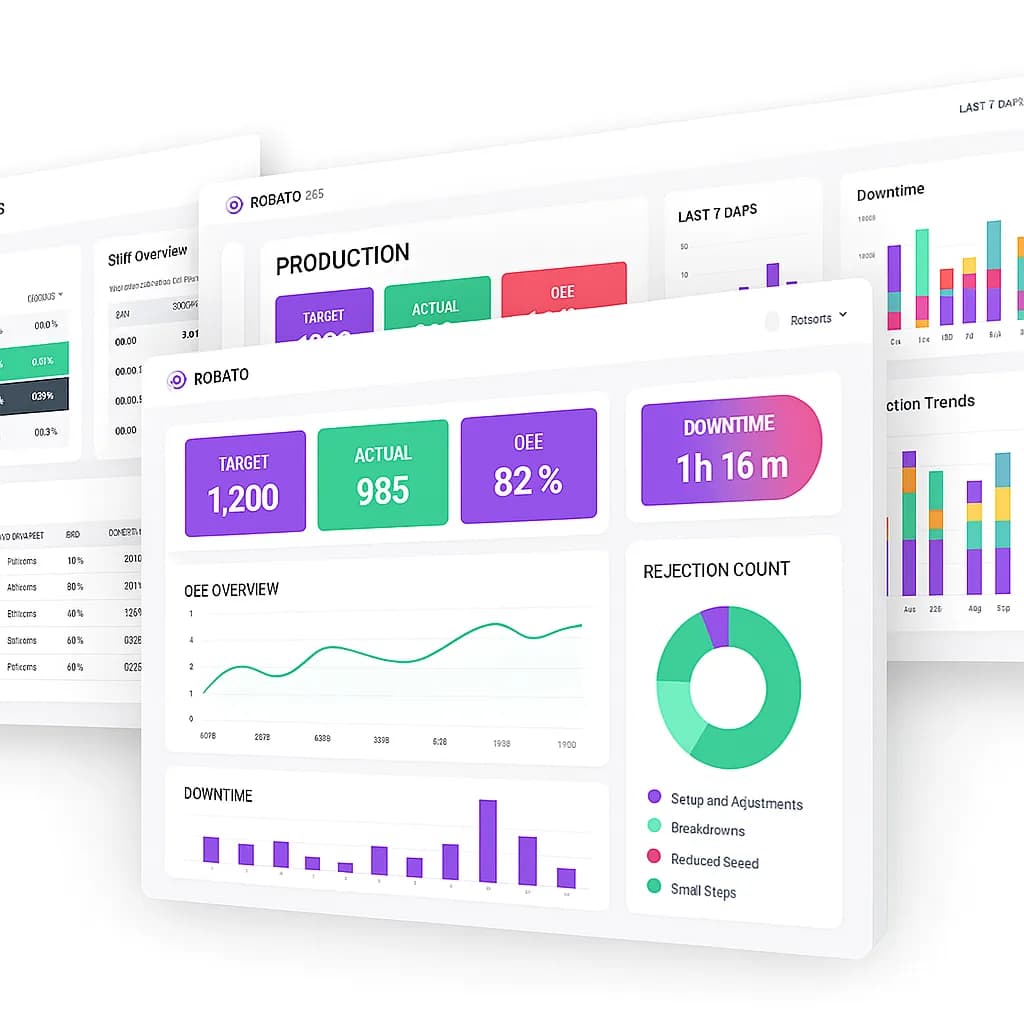
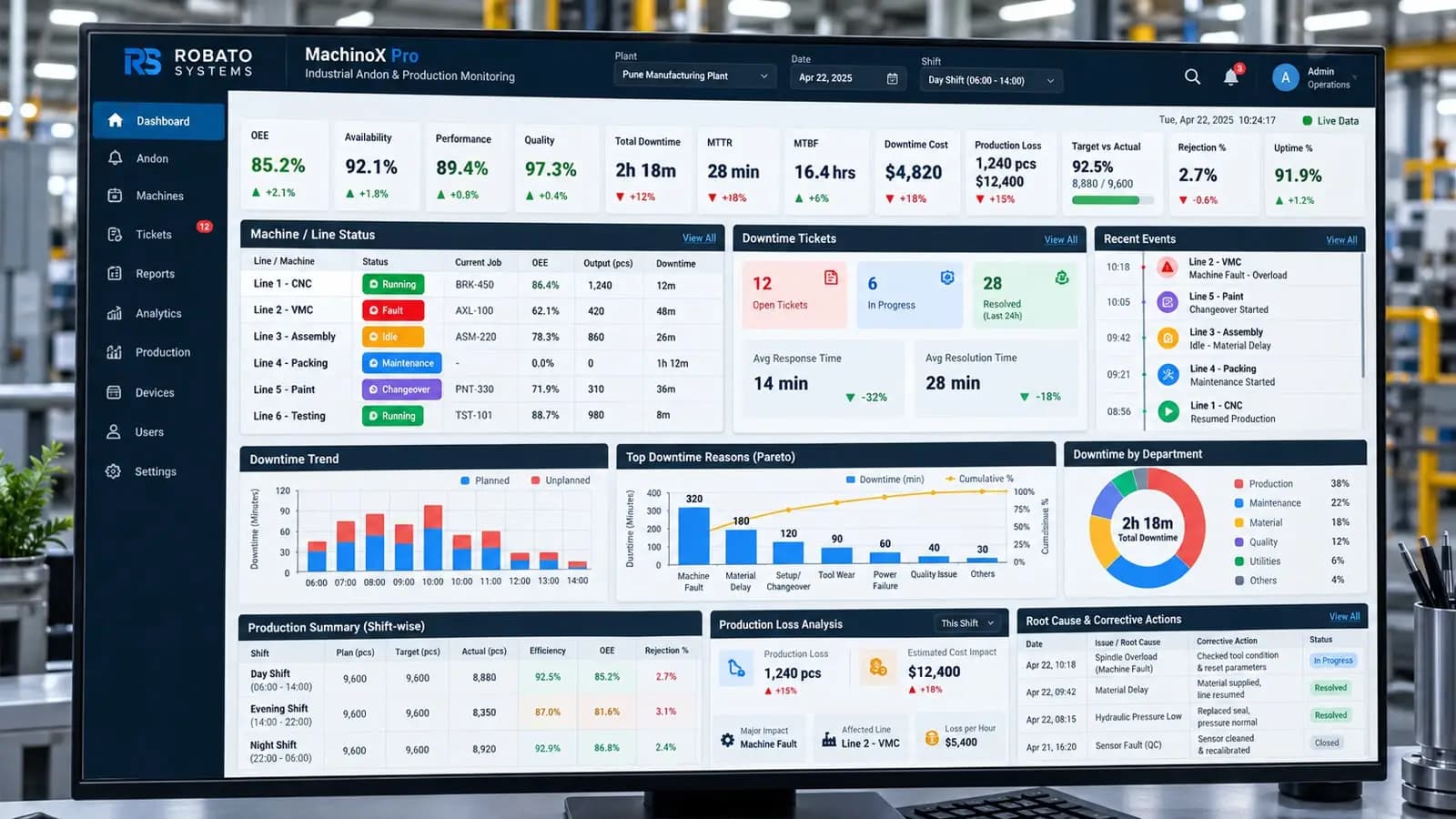
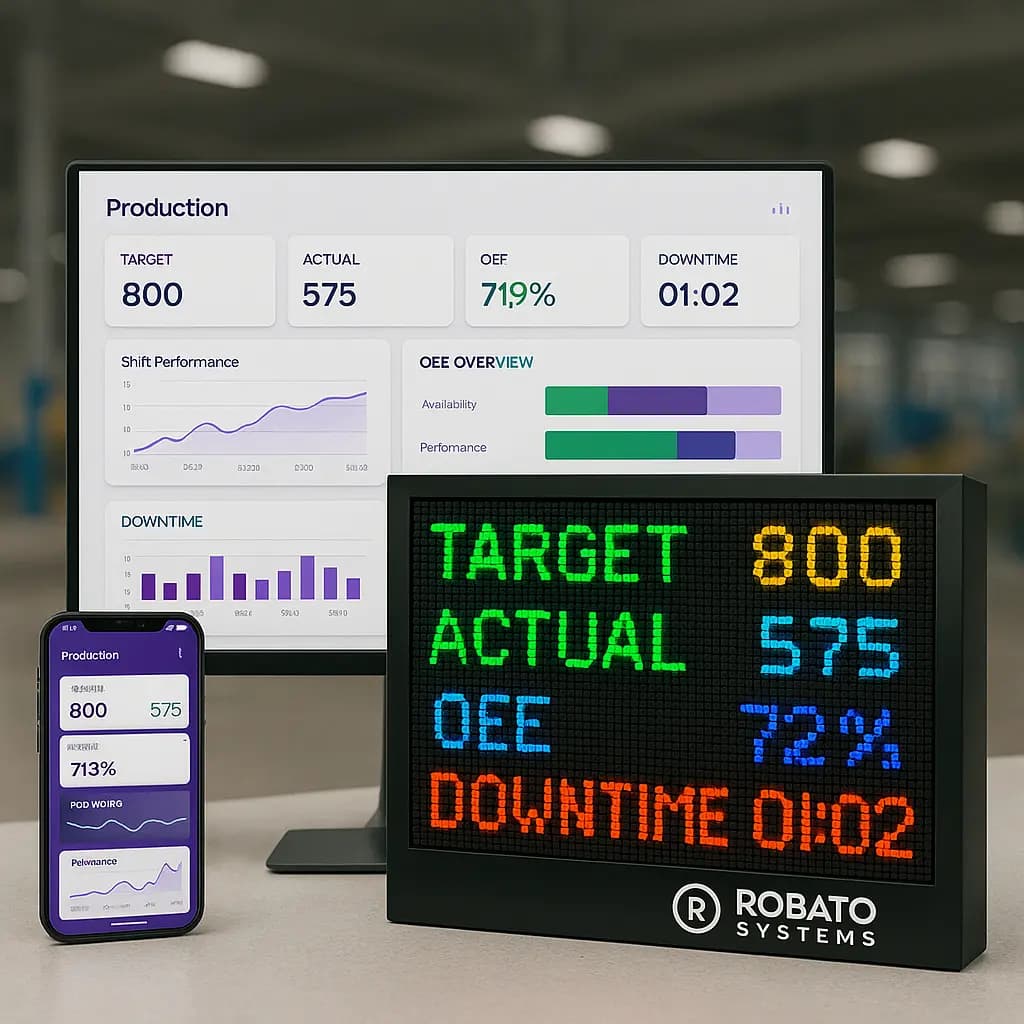
Smart manufacturing dashboards can display:
Machine operating status
Production output
Downtime information
Machine utilization
OEE performance
Shift-wise production
Production target achievement
Historical performance trends
These dashboards help production teams identify operational issues without depending entirely on manual reporting.
4. Smart CNC Factory Architecture: How Everything Connects
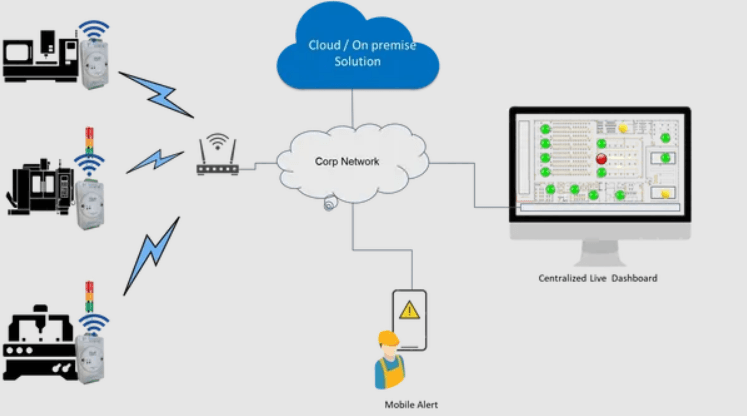
A smart CNC factory requires a structured architecture that connects shop-floor equipment with manufacturing applications.
A typical architecture includes five layers.
Layer 1: Shop-Floor Equipment
This layer includes the physical manufacturing equipment:
CNC turning machines
CNC milling machines
VMC and HMC machines
PLC-controlled equipment
Industrial sensors
Production counters
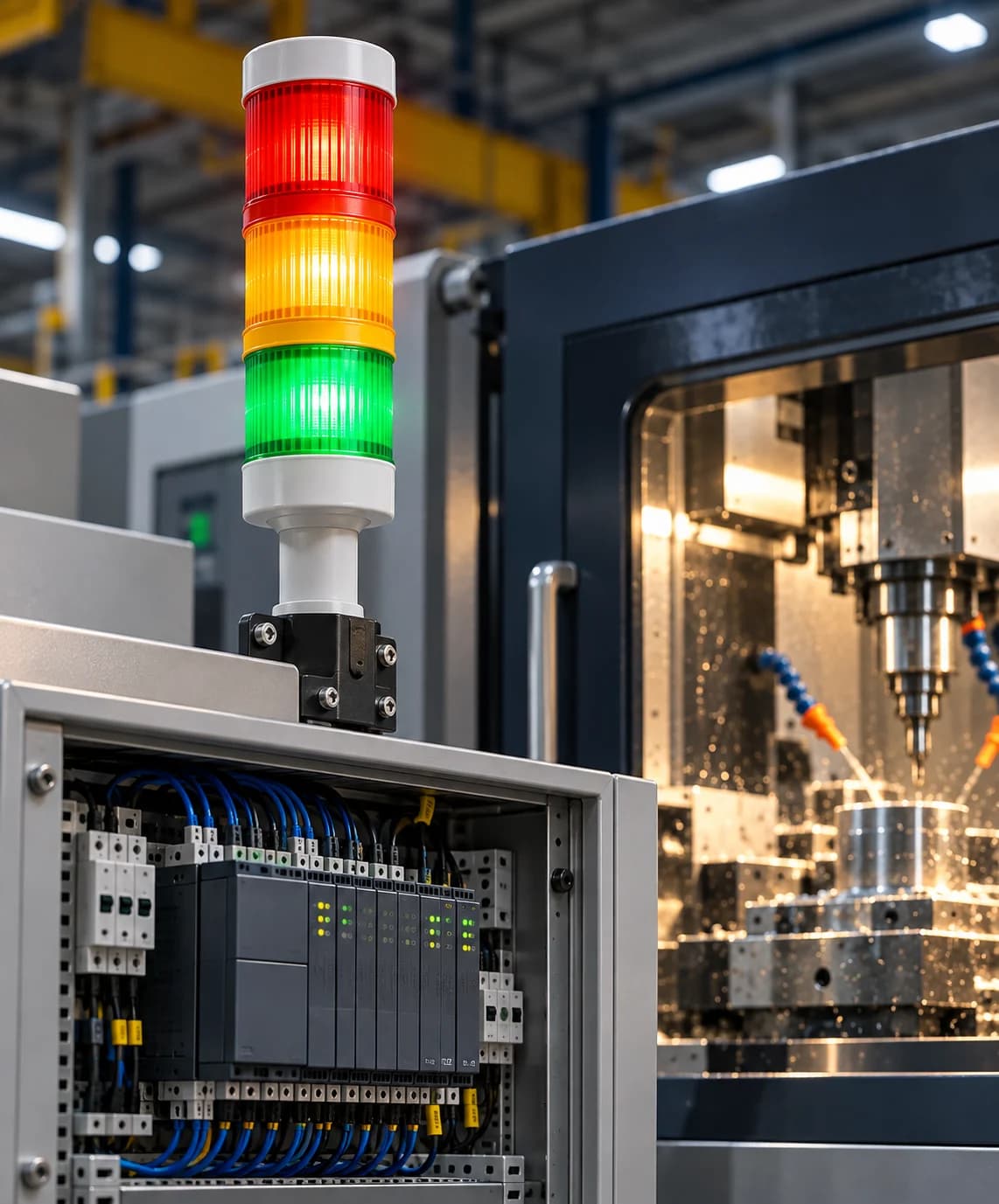
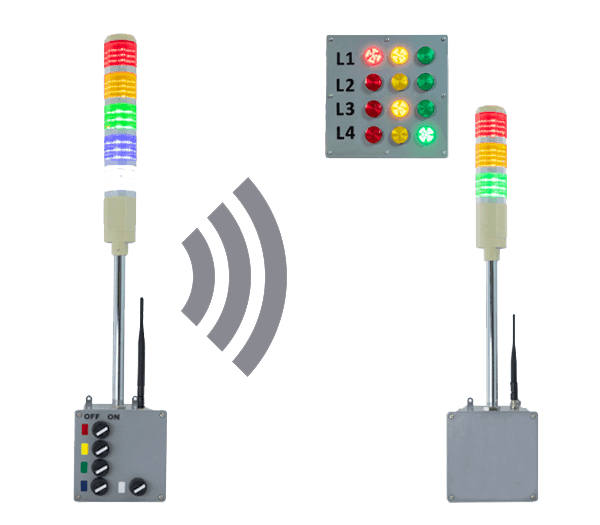
Machine status indicators
These devices generate information about machine operation and production activity.
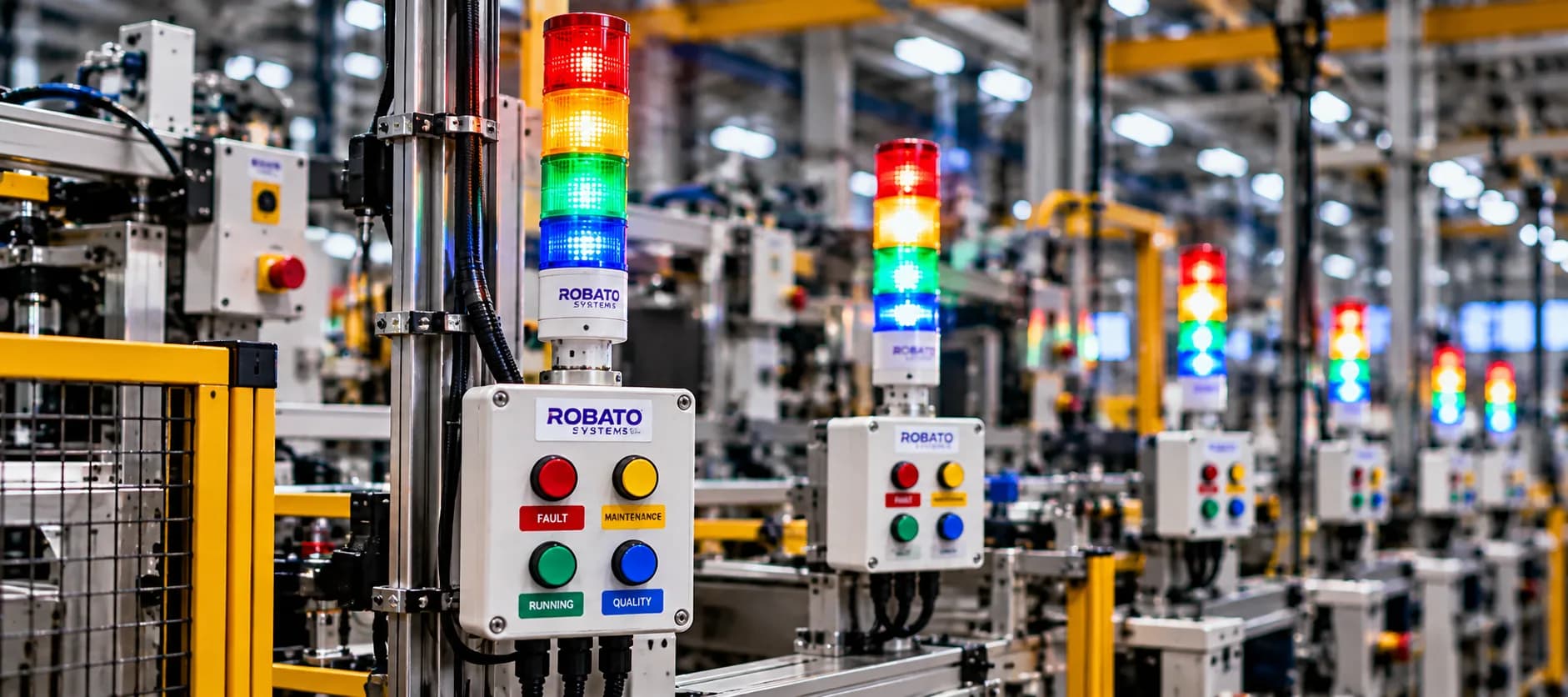
Layer 2: Data Acquisition and Edge Gateways
The second layer collects information from machines and connected devices.
Depending on the equipment, this may involve controller interfaces, PLCs, sensors, communication modules, or industrial IoT gateways.
The gateway can normalize incoming information and prepare it for transmission to the monitoring platform.
Layer 3: Industrial Network and Data Platform
The collected information travels through a controlled industrial network to a data platform.
This platform may manage:
Machine identification
Data storage
Time-stamped production events
Machine status history
Production records
Data validation
User access and permissions
Consistent machine identifiers and timestamps are important when information from different equipment sources must be combined.
Layer 4: Manufacturing and Enterprise Applications
The data platform can exchange information with other manufacturing applications through controlled interfaces.
Examples include:
Manufacturing Execution Systems (MES)
Enterprise Resource Planning (ERP)
Computerized Maintenance Management Systems (CMMS)
Quality Management Systems (QMS)
Production planning applications
These integrations connect shop-floor activity with broader manufacturing operations.
Layer 5: Dashboards, Analytics, and Decision-Making
The final layer presents information to different teams.
Operators may need machine status and production targets, supervisors may need shift performance and downtime details, while management may need department-level and factory-wide reports.
The information should be relevant to each user's responsibilities.
5. Integrating CNC Machines with MES, ERP, and Other Systems
A smart CNC factory should not operate as a collection of disconnected applications.
Integrating manufacturing systems helps create a more complete picture of production operations.
5.1 CNC Integration with MES
A Manufacturing Execution System manages and tracks production activities on the shop floor.
Connecting CNC monitoring data with MES can help manufacturers associate machine activity with production orders and manufacturing operations.
Possible integration scenarios include:
Sharing production order information
Associating machine activity with active jobs
Comparing planned and actual production
Tracking job progress
Identifying production delays
Supporting shift-level reporting
For example, MES may provide the scheduled job and target quantity, while the machine monitoring platform supplies actual machine status and production counts.
Combining these data sources helps supervisors understand whether production is progressing as planned.
5.2 CNC Integration with ERP
ERP systems manage broader business operations, including inventory, procurement, order management, finance, and planning.
A controlled integration between ERP, MES, and machine monitoring systems can connect production activity with business requirements.
For example:
ERP manages customer orders and material requirements.
Production planning or MES converts requirements into manufacturing jobs.
CNC machines execute the assigned operations.
Machine monitoring captures production activity.
Relevant production updates are shared with authorized business applications.
This structure avoids uncontrolled direct communication between business systems and machine controllers.
5.3 Integration with Maintenance Systems
Unexpected machine stoppages can affect production schedules.
Connecting monitoring information with a CMMS can help maintenance teams investigate equipment problems and manage maintenance workflows.
Possible use cases include:
Recording machine stoppage events
Identifying recurring downtime patterns
Reviewing machine operating hours
Supporting maintenance planning
Tracking maintenance requests
Analyzing equipment reliability
Monitoring information can support maintenance decisions, but maintenance actions should follow established engineering procedures.
5.4 Integration with Quality Management Systems
Production performance is not only about quantity. Product quality and traceability are equally important.
Connecting production records with quality systems can help manufacturers associate inspection information with jobs, batches, machines, and production periods.
This can support:
Inspection record management
Rejection and rework tracking
Batch-level traceability
Quality issue investigation
Production history review
Process performance analysis
The level of traceability depends on the information captured and the integration available in the factory.
6. Important Applications of a Smart CNC Factory
A smart CNC factory supports several practical manufacturing applications.
6.1 Real-Time Production Monitoring
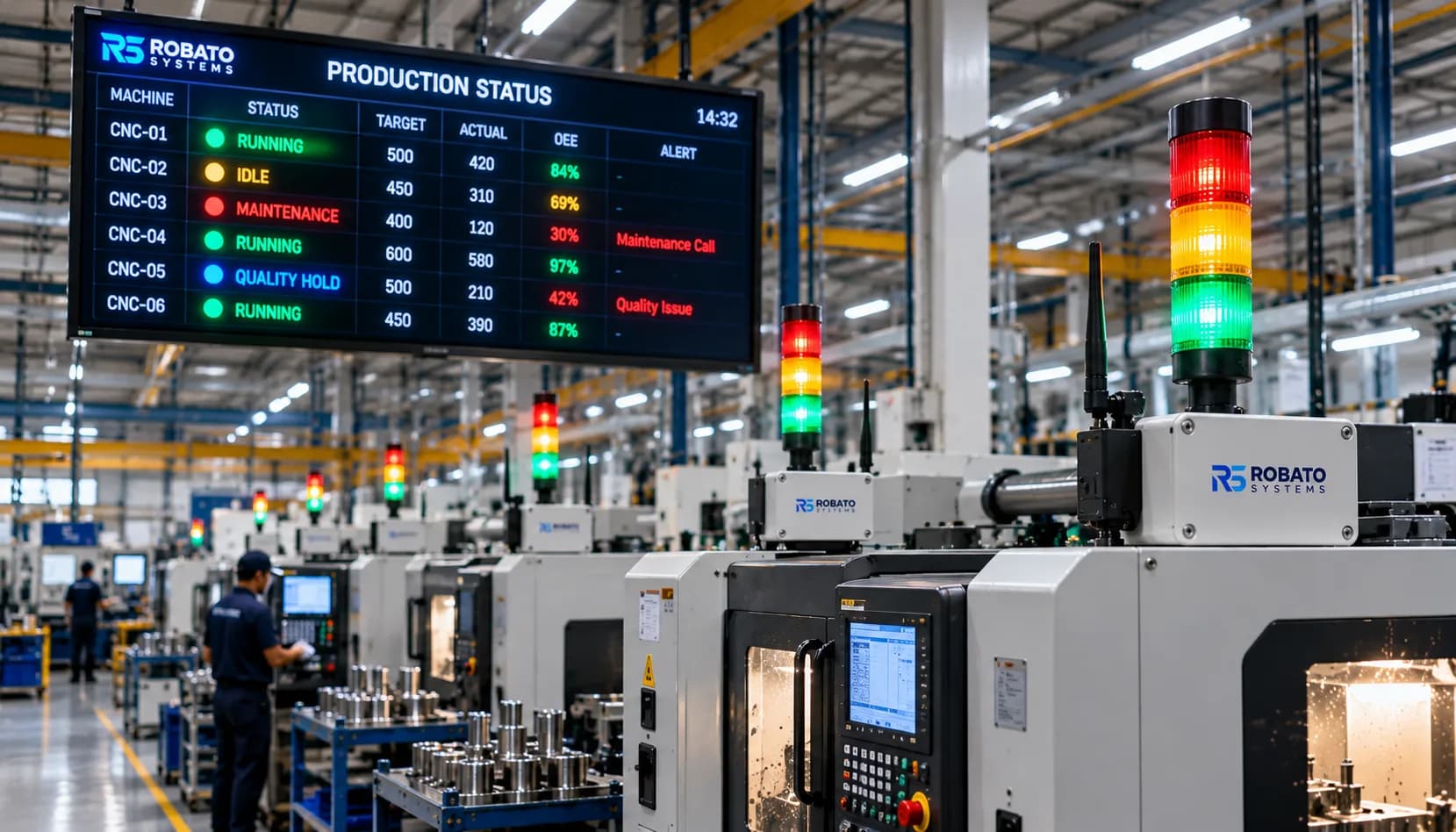
Supervisors can view machine operating conditions and production output through centralized dashboards.
Instead of visiting each machine or collecting manual updates, teams can access production information from a common platform.
A connected production monitoring solution can bring together machine signals, production counters, sensors, and monitoring software.
6.2 Automated Production Reporting
Manual production reporting can consume valuable time and introduce data-entry errors.
Connected monitoring systems can collect production information and organize it into shift-wise, daily, and machine-wise reports.
This helps reduce dependence on manually maintained production records.
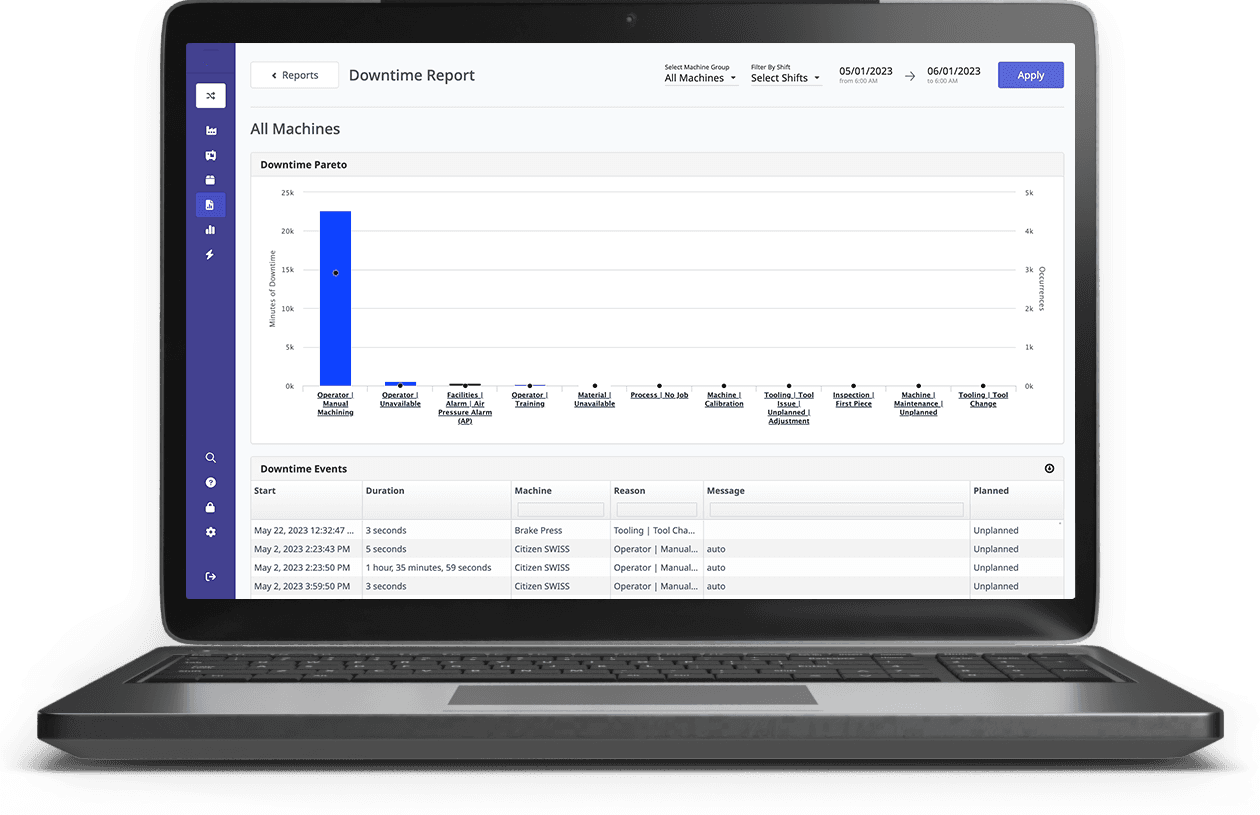
6.3 Downtime Identification and Analysis
A smart factory can capture machine stoppages and help teams understand where production time is being lost.
By reviewing downtime duration, frequency, and reasons, manufacturers can identify recurring operational problems.
For more detailed performance analysis, OEE monitoring can help evaluate machine availability, performance, and quality.
6.4 Machine Utilization Tracking
Machine utilization provides insight into how effectively available production equipment is being used.
Manufacturers can compare machine operating time with planned production time and identify equipment that remains idle for extended periods.
This information can support better scheduling and capacity planning.
6.5 Predictive and Condition-Based Maintenance
Where suitable sensors and machine data are available, manufacturers can monitor equipment conditions such as vibration, temperature, and other relevant operating parameters.
Historical patterns and condition information can help maintenance teams investigate potential equipment issues.
However, predictive maintenance requires appropriate sensors, validated analysis methods, and sufficient historical data. A basic machine monitoring system alone does not guarantee accurate failure prediction.
6.6 Energy Monitoring
Energy monitoring can provide information about electricity consumption across machines, production areas, or departments.
When energy readings are associated with production activity, manufacturers can investigate energy usage patterns and compare consumption across operating periods.
6.7 Multi-Location Production Visibility
Manufacturers operating multiple production facilities may need a centralized view of machine performance.
A connected monitoring platform can help authorized users review production information across different locations, provided the underlying systems use consistent data structures and access controls.
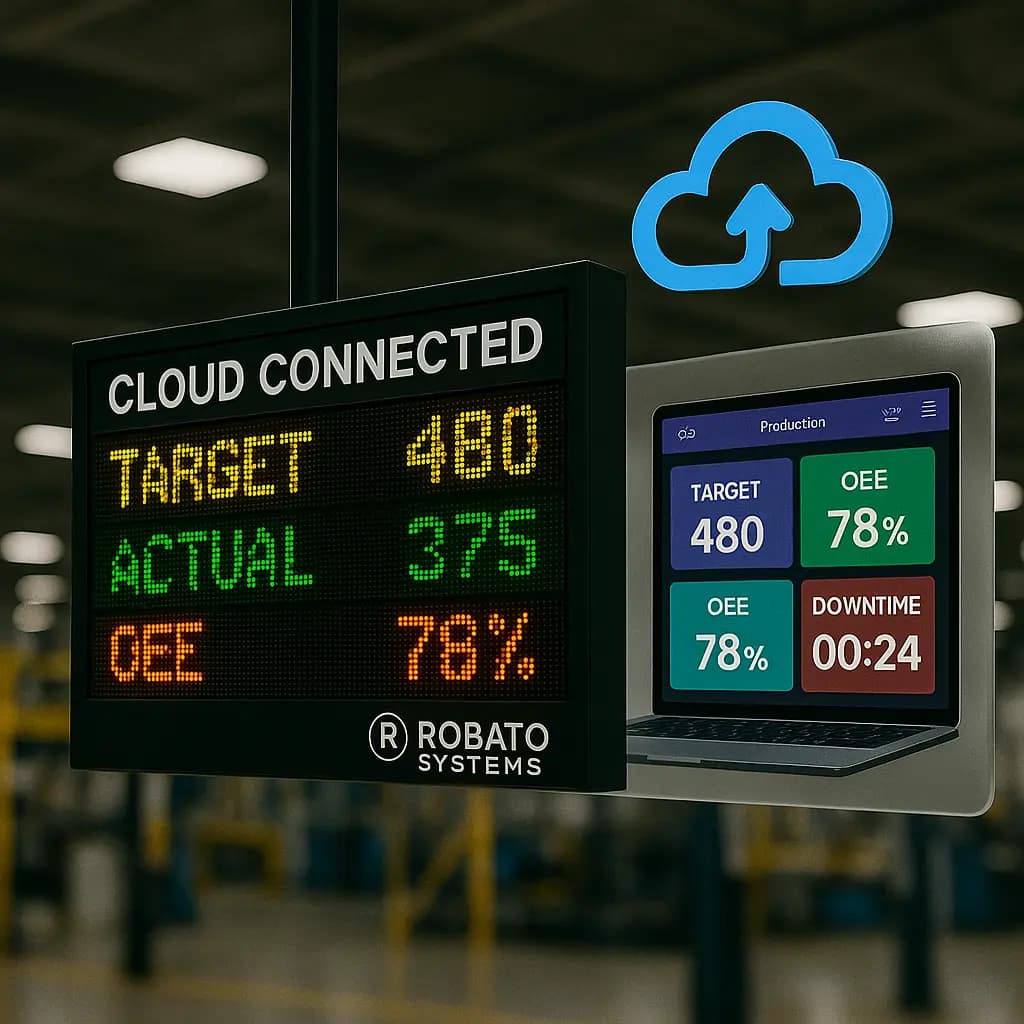
A cloud-based production monitoring platform can support centralized visibility across geographically distributed operations.
7. Choosing Between Edge, Cloud, and Hybrid Architecture
The architecture of a smart CNC factory should match its operational and technical requirements.
Three common deployment approaches are available.
Edge-Based Architecture
In an edge-based architecture, data processing takes place close to the machines.
Advantages include:
Local data processing
Reduced dependence on continuous internet connectivity
Faster handling of selected local events
Better control over certain operational data flows
Edge systems are useful where local processing and network independence are important.
Cloud-Based Architecture
A cloud-based architecture sends selected machine information to a centralized cloud platform.
It can support:
Remote production visibility
Centralized reporting
Multi-location monitoring
Historical data analysis
Access for authorized teams from different locations
However, manufacturers must consider internet availability, data protection, network security, and operational requirements.
Hybrid Architecture
A hybrid architecture combines local processing with cloud-based services.
For example, machine data can be collected and temporarily stored at the factory level before selected information is synchronized with a cloud platform.
This approach can provide a balance between local operational requirements and centralized reporting.
The right choice depends on the factory's infrastructure, machine criticality, data policies, and integration needs.
8. Cybersecurity Considerations for Smart CNC Factories
Connecting manufacturing equipment creates additional responsibilities around cybersecurity.
CNC machines and industrial networks should not be exposed to unnecessary external access.
Important security practices include:
Separating operational technology (OT) networks from general IT networks where appropriate
Using network segmentation and controlled communication paths
Applying least-privilege access permissions
Securing remote access through approved methods
Using authentication and certificates where supported
Maintaining software and gateway updates
Monitoring network activity
Maintaining backups and recovery procedures
Coordinating security changes with OT and engineering teams
Data collection and monitoring should generally use read-only access wherever practical.
Direct machine control, remote program changes, or automated command execution require separate engineering assessment, authorization, and validated safety controls. A monitoring dashboard should not be assumed to have authority to control CNC equipment.
9. Challenges in Building a Smart CNC Factory
Smart manufacturing transformation can involve technical and organizational challenges.
Legacy CNC Equipment
Older CNC machines may not support modern communication interfaces.
Additional sensors, PLC interfaces, or gateways may be required to capture useful operating information.
Different Machine Brands and Controllers
Factories often operate equipment from multiple manufacturers.
Each machine may use different communication methods and provide different data structures.
A flexible data acquisition architecture can help standardize the information.
Inconsistent Data Quality
Machine signals may not always provide complete production context.
For example, a machine may report that it is running without identifying which job is active or whether the produced part has passed inspection.
Machine data should be combined with appropriate production, job, and quality information.
Integration Complexity
Connecting CNC machines with MES, ERP, CMMS, and quality systems requires careful planning.
Data ownership, system responsibilities, integration interfaces, and synchronization rules should be defined before implementation.
Cybersecurity and Operational Risk
Poorly designed connectivity can introduce unnecessary risks to industrial operations.
Network architecture, access permissions, monitoring, and recovery procedures should be considered from the beginning.
Employee Adoption
Operators, supervisors, maintenance teams, and managers must understand how to use the new systems.
Training and clearly defined workflows are essential to ensure that collected data leads to practical action.
Investment and Scalability
A smart factory transformation does not need to happen all at once.
A phased implementation allows manufacturers to validate the business case, learn from an initial deployment, and expand based on actual operational requirements.
10. Step-by-Step Roadmap to Build a Smart CNC Factory
A structured implementation roadmap helps reduce complexity and makes the transformation easier to manage.
Step 1: Assess Existing Manufacturing Operations
Start by understanding the current factory environment.
Document:
Number and types of CNC machines
Controller brands and models
Available communication interfaces
Existing PLCs and sensors
Current production reporting methods
Existing MES, ERP, and maintenance applications
Network and cybersecurity requirements
This assessment establishes the starting point.
Step 2: Identify Business and Production Objectives
Define what the factory needs to improve.
Possible objectives include:
Better machine visibility
More reliable production reporting
Improved downtime analysis
Better production target tracking
Improved OEE visibility
Stronger job traceability
Centralized multi-site reporting
Avoid selecting technology before identifying the operational problems it needs to solve.
Step 3: Select a Pilot Production Area
Choose a limited group of machines or one production department for the first implementation.
The pilot should include representative equipment and clearly defined use cases.
This allows the team to validate connectivity, data accuracy, dashboard requirements, and operational workflows before expanding.
Step 4: Establish Machine Connectivity
Select appropriate data acquisition methods for each machine.
Depending on equipment capabilities, this may involve controller interfaces, PLCs, industrial protocols, external sensors, or IoT gateways.
Validate the collected data against actual machine activity.
Step 5: Implement the Monitoring Platform
Deploy a production monitoring platform to collect, organize, and present machine information.
Configure machine status, production counters, downtime tracking, shift reports, and relevant performance indicators.
A centralized smart production monitoring system can help manufacturers build visibility across connected equipment and production operations.
Step 6: Integrate Manufacturing Applications
Once the machine data is reliable, plan integration with MES, ERP, maintenance, and quality systems where required.
Define:
Which system owns each data field
How machines and production jobs are identified
How often information is synchronized
Which users can access the information
How errors and communication failures are handled
Step 7: Validate Data and Workflows
Test the complete process using real production scenarios.
Confirm that machine states, production counts, timestamps, shift boundaries, and downtime records are accurate.
Check that dashboards and reports reflect actual shop-floor activity.
Step 8: Train Employees and Define Responsibilities
Train operators, supervisors, maintenance personnel, and management teams.
Define who reviews alerts, who records downtime reasons, who validates reports, and who is responsible for resolving data issues.
Step 9: Measure Results and Expand
Review the pilot against the objectives defined at the beginning.
Identify technical gaps and operational improvements before connecting additional machines or departments.
Scale the implementation in phases, using lessons from each deployment.
11. Key Metrics to Measure Smart CNC Factory Performance
A smart factory should be evaluated using both technology and manufacturing performance indicators.
| Metric | What It Measures |
|---|---|
| Machine Connectivity Coverage | Percentage of relevant machines connected to the monitoring infrastructure |
| Data Completeness | Availability of required machine and production information |
| Machine Availability | Proportion of planned production time when machines are available |
| Machine Utilization | How effectively available machine capacity is being used |
| OEE | Combined availability, performance, and quality performance |
| Downtime Response Time | Time taken to acknowledge and investigate stoppages |
| Production Reporting Latency | Time between production activity and its availability in reports |
| Schedule Adherence | How closely actual production follows the planned schedule |
| Quality Traceability | Completeness of records linking production with inspection and quality information |
These metrics help evaluate whether the smart factory is improving operational visibility and supporting better manufacturing decisions.
The most useful measurement framework depends on the factory's production model, equipment, and business objectives.
12. Best Practices for Smart CNC Factory Implementation
Manufacturers can make the transformation more manageable by following a few practical principles.
Start with measurable problems: Prioritize issues such as manual reporting, poor machine visibility, recurring downtime, or limited production traceability.
Use a scalable architecture: Select connectivity and data platforms that can accommodate different CNC controllers and future equipment additions.
Standardize machine information: Use consistent machine IDs, timestamps, shift definitions, production units, and job identifiers.
Integrate systems gradually: Establish reliable machine monitoring before introducing complex enterprise integrations.
Prioritize cybersecurity: Design secure network access and data flows from the beginning.
Keep people involved: Operators and supervisors should participate in defining workflows and validating production information.
Measure before expanding: Use pilot results and verified data to guide the next phase of implementation.
Avoid unnecessary automation: Automate only workflows that have been properly assessed, tested, and approved by the responsible engineering teams.
13. Frequently Asked Questions
What is a smart CNC factory?
A smart CNC factory is a connected manufacturing environment where CNC machines, industrial sensors, monitoring software, analytics, and business applications exchange relevant information to improve production visibility and operational decision-making.
How is a smart CNC factory different from a traditional CNC factory?
A traditional CNC factory may operate machines independently and rely on manual production reporting. A smart CNC factory connects equipment and manufacturing systems to provide centralized production information, performance analysis, and coordinated workflows.
Can old CNC machines be converted into smart machines?
Yes. Older CNC machines can often be connected using external sensors, PLC interfaces, industrial gateways, or available controller communication interfaces. The appropriate method depends on the machine's hardware and technical capabilities.
What is the role of IIoT in a smart CNC factory?
IIoT connects industrial equipment and collects operational information. It enables machine data to be transferred to monitoring platforms, analytics systems, and other manufacturing applications.
Does a smart CNC factory require an MES or ERP system?
Not necessarily. A factory can begin with machine connectivity and production monitoring. MES and ERP integrations can be introduced when production planning, order management, inventory, or enterprise-level coordination requires them.
Can CNC machines be monitored remotely?
Yes. With appropriate connectivity, security controls, and deployment architecture, authorized users can view machine and production information remotely through web-based or cloud-connected monitoring platforms.
Is cloud deployment suitable for CNC monitoring?
Cloud deployment can support centralized reporting and remote visibility. However, manufacturers should evaluate internet reliability, security requirements, data policies, and the need for local processing before selecting a deployment model.
How long does it take to build a smart CNC factory?
The timeline depends on the number of machines, controller compatibility, existing infrastructure, integration requirements, and implementation scope. A phased pilot approach is generally more practical than attempting to connect every system simultaneously.
What should manufacturers implement first?
Start with a machine and connectivity assessment, followed by a pilot implementation focused on real-time machine status and production monitoring. Once the data is reliable, expand into OEE analysis, system integration, and advanced analytics.
Conclusion: Build a More Connected and Data-Driven CNC Factory
Building a smart CNC factory is a gradual transformation that connects machines, production processes, people, and business applications.
The journey begins with reliable machine connectivity and production data collection. It then expands into centralized monitoring, performance analytics, enterprise integration, and coordinated manufacturing workflows.
Manufacturers do not need to replace every existing CNC machine or implement every technology at once. A practical approach is to start with clearly defined operational challenges, validate a pilot project, and expand the architecture as business requirements evolve.
With the right IIoT infrastructure and production monitoring strategy, manufacturers can develop a more connected, transparent, and data-driven production environment.
Ready to improve production visibility across your CNC machines?
Explore Robato Systems' production monitoring solutions to understand how connected machine data, centralized dashboards, and IIoT-based monitoring can support your smart manufacturing journey.