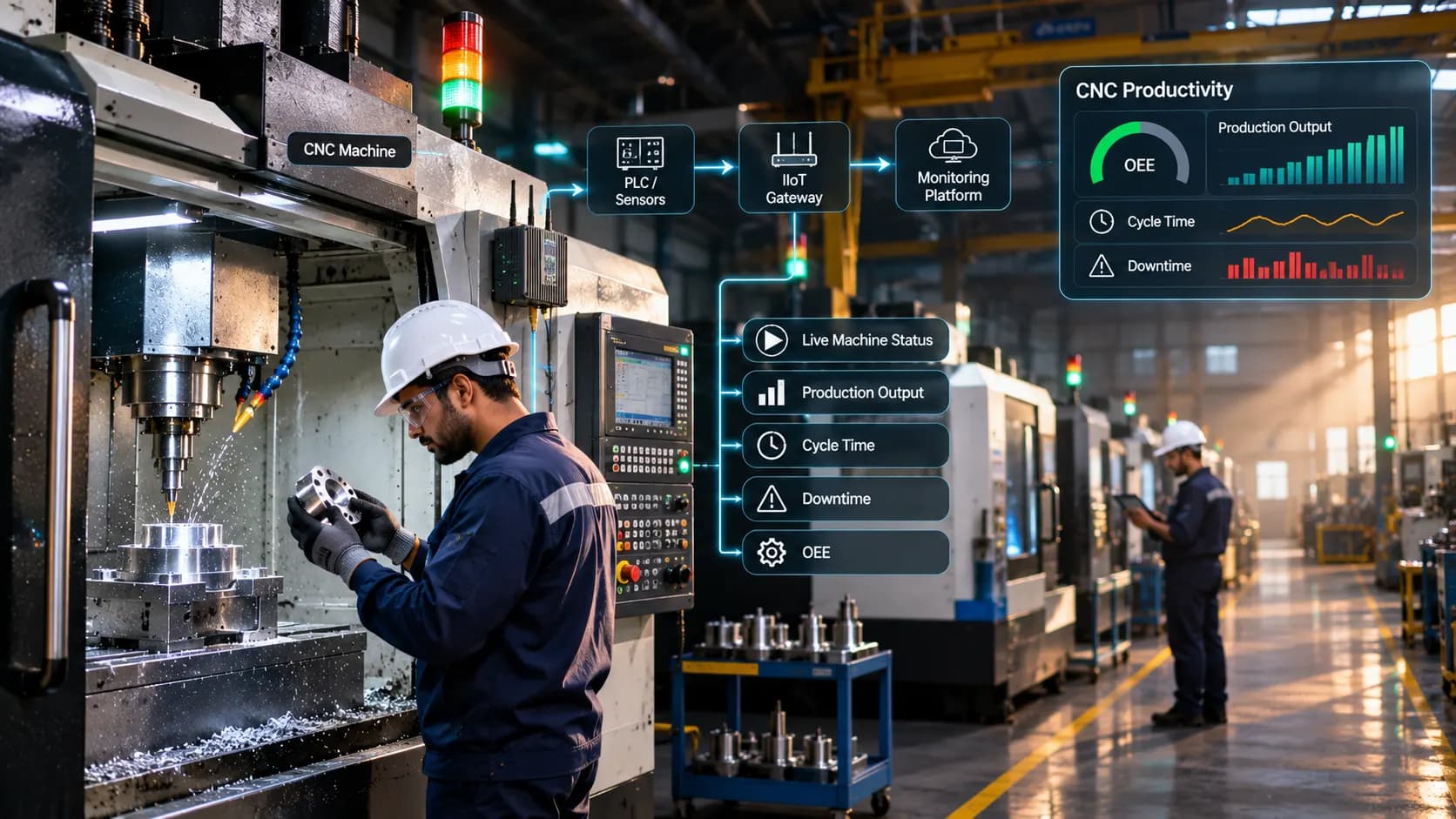
Improving CNC Productivity with IIoT: A Complete Guide for Modern Manufacturing
CNC machines play an important role in modern manufacturing. They help produce precision components, maintain consistent machining operations, and support high-volume production across industries such as automotive, aerospace, electronics, medical equipment, and industrial machinery.
However, installing advanced CNC equipment does not automatically guarantee high productivity. Machines can lose valuable production time due to unexpected stoppages, long setup periods, inefficient scheduling, tooling issues, material shortages, and inconsistent production processes.
Manufacturers need reliable information about how their machines operate to identify these issues and improve production performance.
This is where the Industrial Internet of Things (IIoT) becomes valuable.
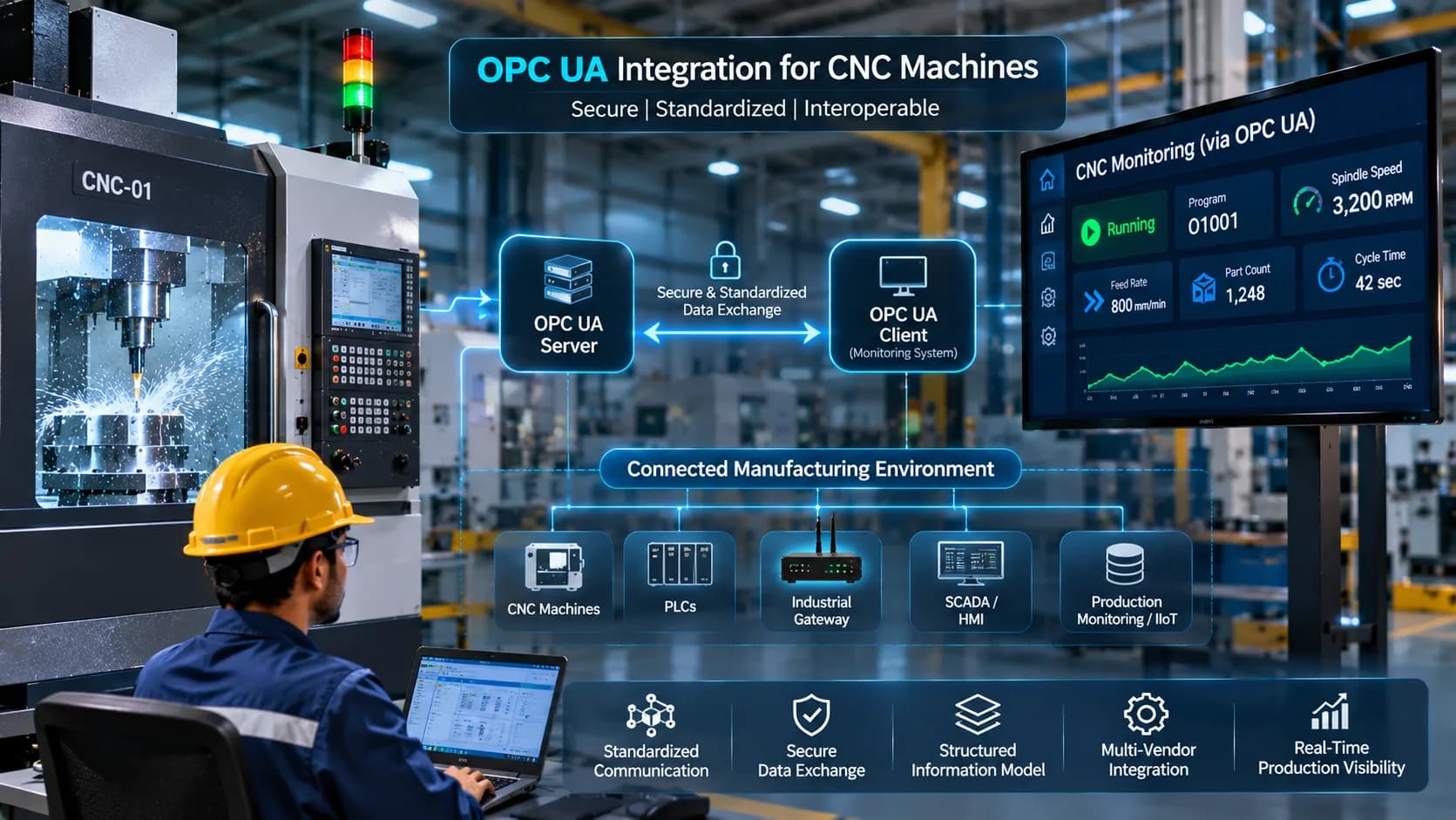
IIoT connects CNC machines, controllers, PLCs, sensors, industrial gateways, and monitoring applications to create a connected manufacturing environment. It allows production teams to access machine information, monitor operating conditions, track production output, and analyse performance through centralized dashboards.
With the right implementation, IIoT can help manufacturers identify productivity losses, improve machine utilization, and make more informed operational decisions.
This guide explains how IIoT improves CNC productivity, which metrics manufacturers should monitor, and how to implement an effective CNC productivity monitoring system.
What Is CNC Productivity?
CNC productivity refers to how effectively CNC machines convert available production resources, operating time, materials, and labour into acceptable finished components.
It is influenced by several factors, including:
Machine availability
Production cycle time
Actual production output
Product quality
Machine utilization
Setup and changeover time
Unplanned downtime
Production scheduling
Tool and material availability
A machine may operate for long hours but still deliver lower-than-expected production if cycle times are excessive or rejected components are frequent.
Similarly, a machine may have excellent cycle-time performance but produce fewer parts because of frequent stoppages.
Therefore, CNC productivity should be evaluated using multiple operational and production metrics rather than a single measurement.
What Is IIoT in CNC Manufacturing?
The Industrial Internet of Things refers to the use of connected industrial equipment, communication technologies, sensors, gateways, and software platforms to collect and exchange operational information.
In CNC manufacturing, IIoT connects machine-level information with centralized monitoring and analytics systems.
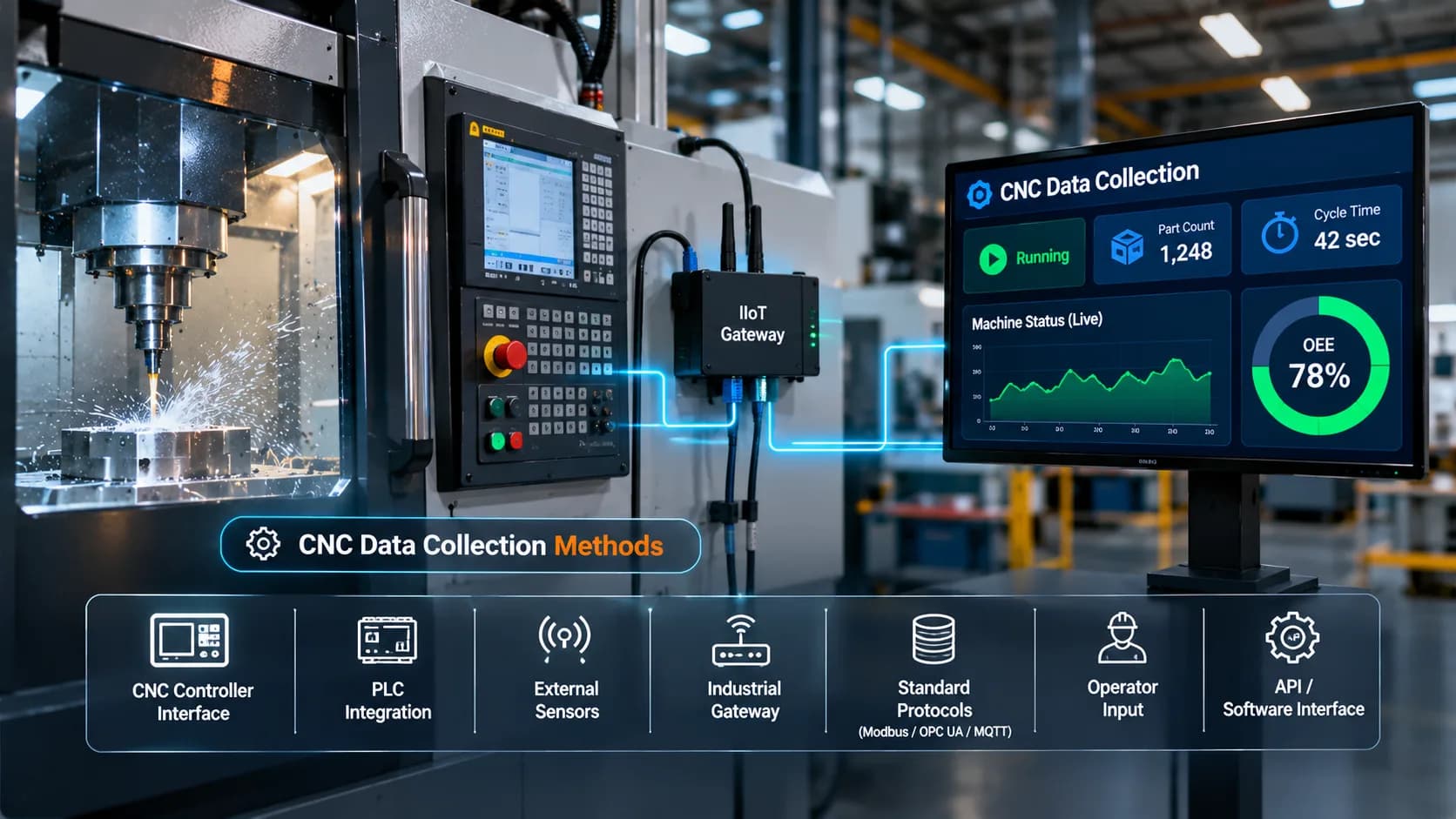
A typical IIoT-based CNC monitoring environment may include:
CNC machines and controllers
PLCs and automation systems
Industrial sensors
Data acquisition devices
Industrial IoT gateways
Machine communication protocols
Production monitoring software
Cloud or on-premise platforms
Production dashboards and reporting tools
These components work together to collect information from machines and make it available to production teams.
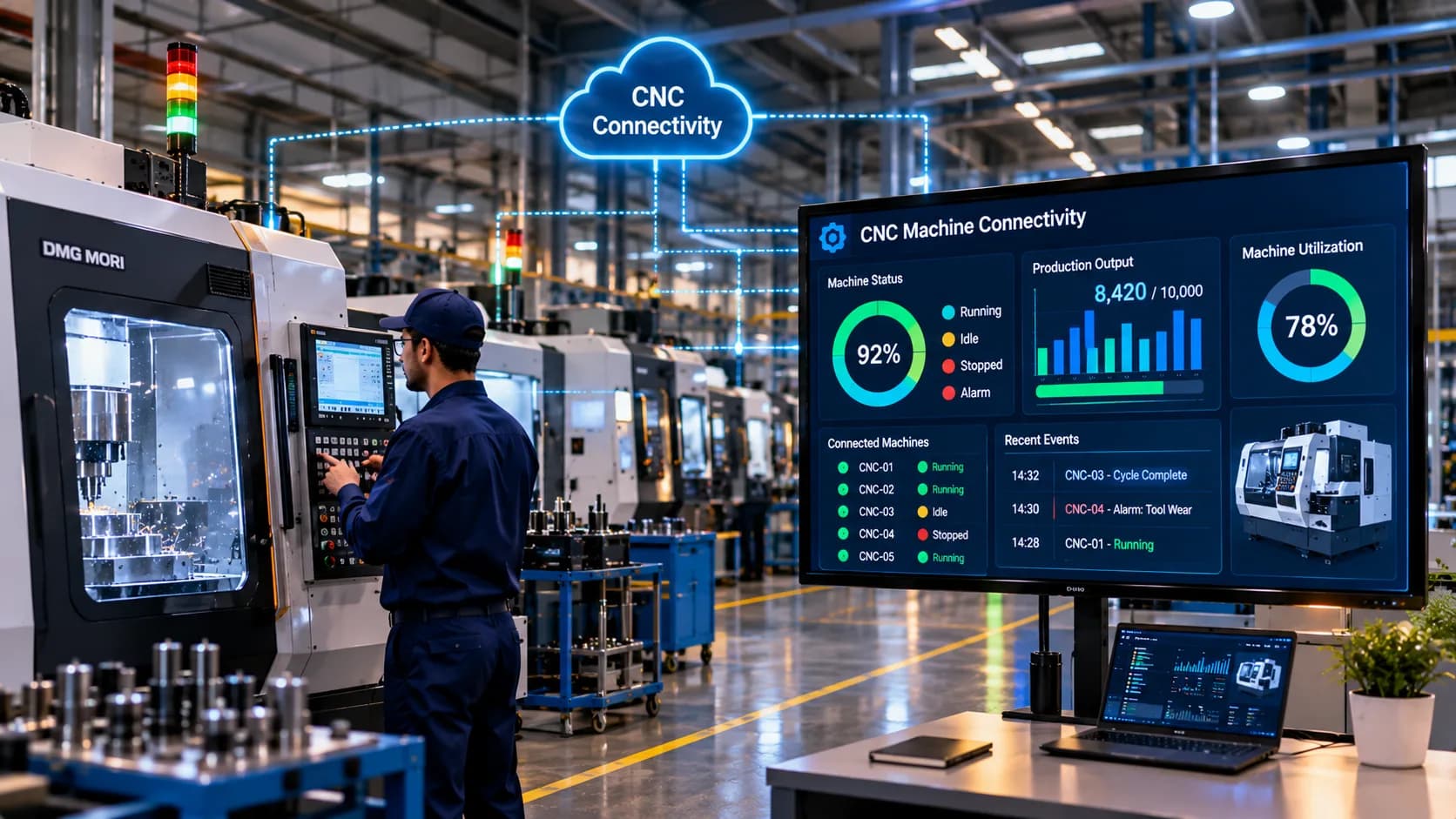
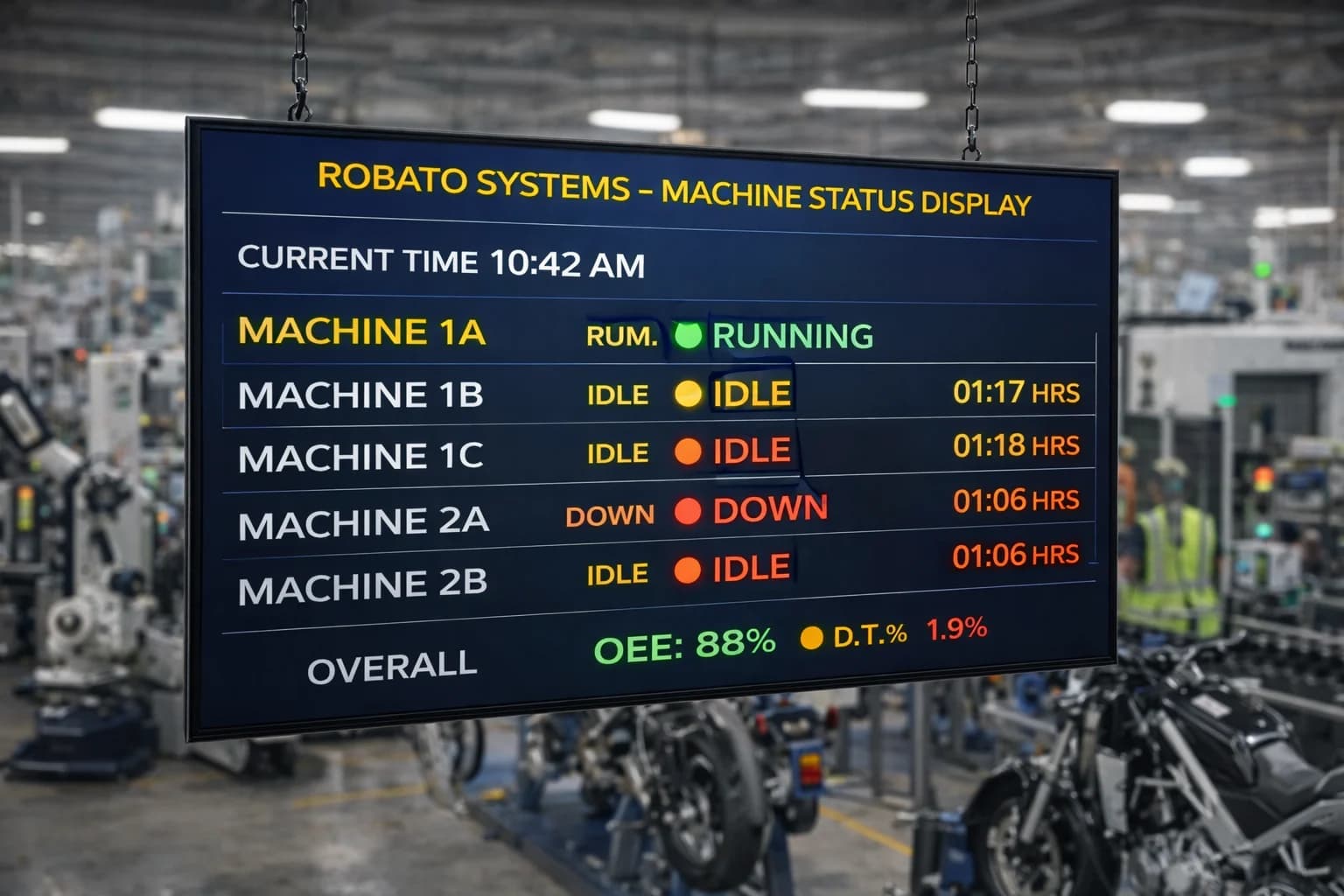
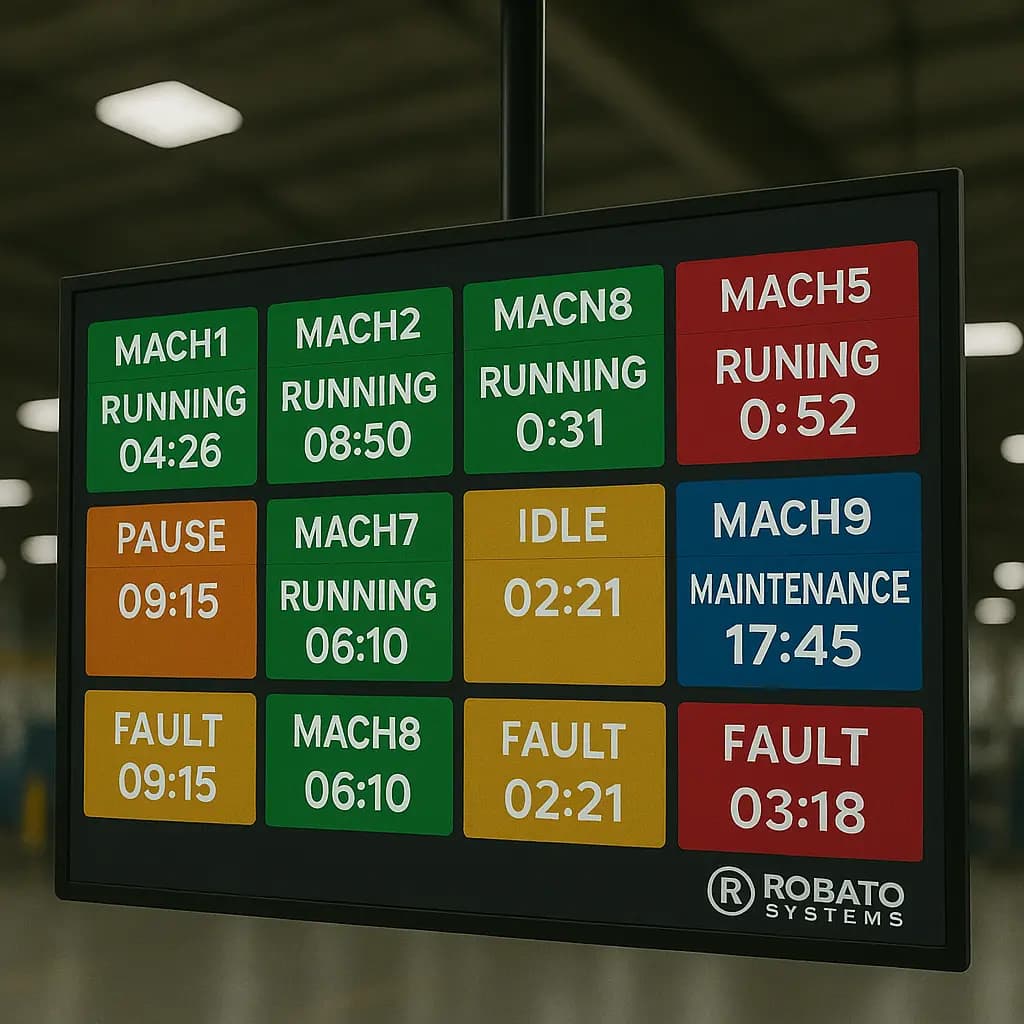
For example, a connected CNC machine may send operating-status information to an IIoT gateway. The gateway transfers the information to a monitoring platform, where supervisors can view whether the machine is running, idle, stopped, or experiencing an alarm.
The same architecture can collect production counts, cycle-time information, and selected machine parameters.
Why Is CNC Productivity Improvement Important?
Manufacturing productivity directly affects production capacity, delivery schedules, resource utilization, and operating costs.
When machines are not operating as expected, manufacturers may experience delayed orders, inefficient labour allocation, increased operating expenses, and missed production targets.
Improving CNC productivity helps manufacturers make better use of existing production resources.
1. Increase Production Visibility
Without connected monitoring, supervisors may need to visit machines or depend on operator reports to understand production conditions.
IIoT-based monitoring provides centralized access to machine information.
2. Identify Hidden Production Losses
Machines may experience short stoppages, waiting periods, setup delays, or reduced operating speeds that are difficult to identify through manual reporting.
Collecting machine data helps reveal these losses.
3. Improve Production Planning
Accurate production information helps managers compare actual output with planned targets and evaluate machine availability.
4. Reduce Unplanned Downtime
Machine-state monitoring and alarm information can help maintenance and production teams identify equipment interruptions and investigate recurring problems.
5. Improve Quality Visibility
Combining machine data with inspection and rejection records helps manufacturers understand the relationship between production activity and product quality.
10 Ways IIoT Can Improve CNC Productivity
IIoT does not improve productivity simply by connecting machines to a network. Its value comes from collecting reliable information and using it to support practical operational improvements.
The following applications can help manufacturers improve CNC production performance.
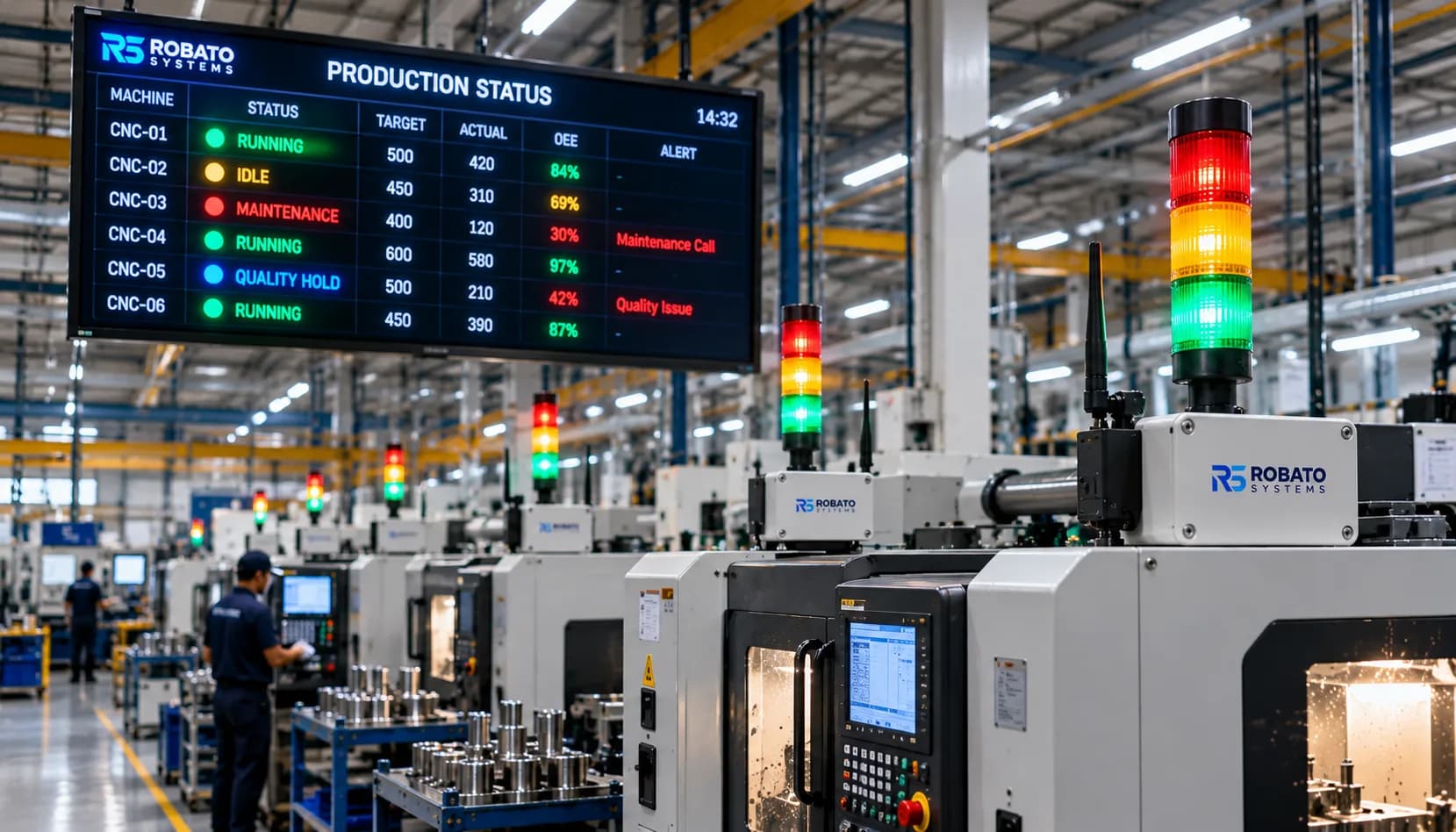
1. Real-Time CNC Machine Monitoring
One of the most useful applications of IIoT is real-time machine monitoring.
Connected CNC machines can share operating information with a centralized monitoring platform.
Depending on available interfaces, the system can display:
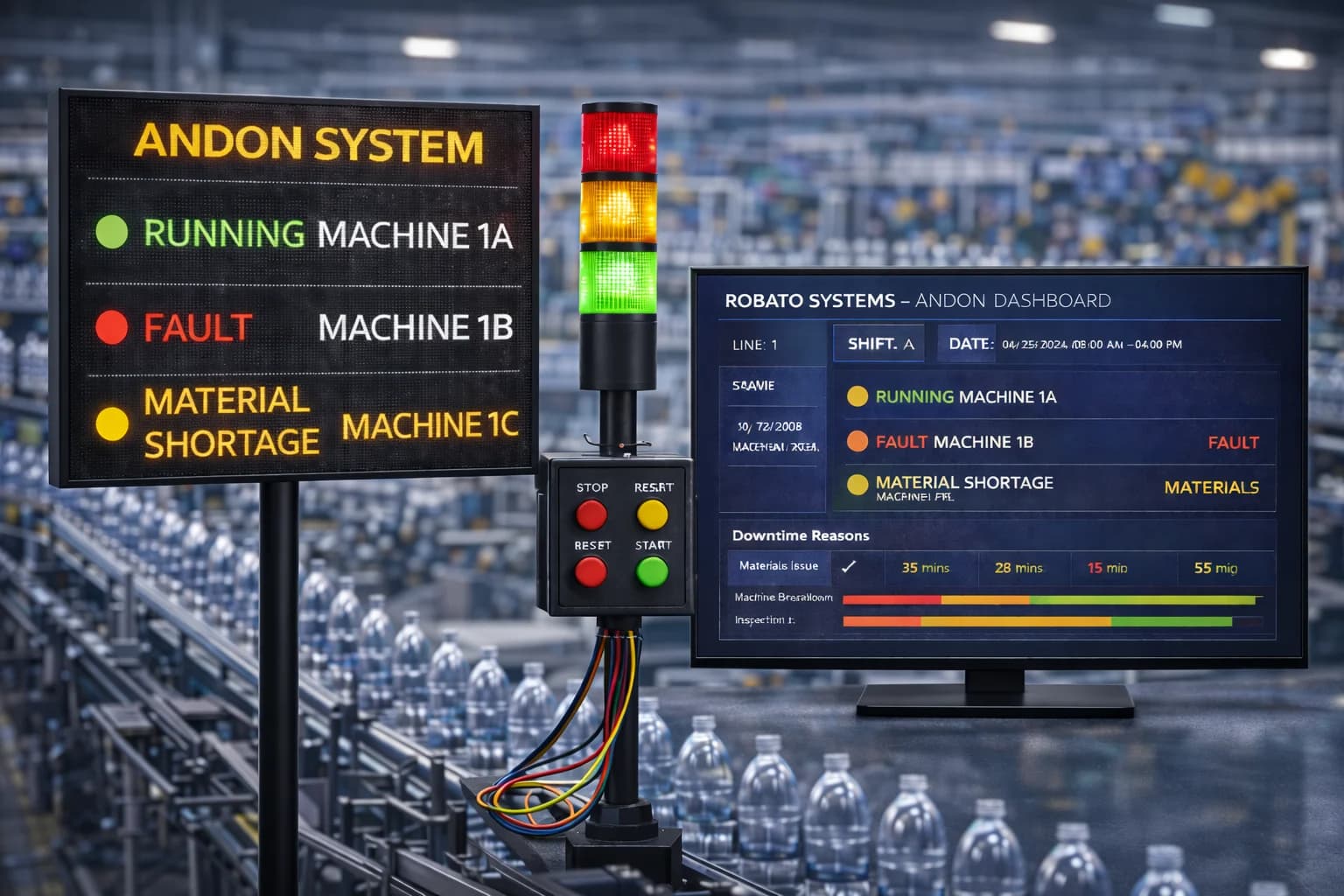
Machine running status
Idle condition
Stopped condition
Active alarms
Production counter
Cycle-related information
Selected operating parameters
Supervisors can identify machines that are not operating as expected and investigate the situation.
For example, if a machine remains idle during a planned production period, the production team can check whether the cause is a material shortage, setup activity, operator availability, or another operational issue.
Real-time visibility helps teams respond based on current machine conditions rather than waiting for end-of-shift reports.
2. Reduce Machine Downtime
Unplanned downtime is one of the major causes of lost CNC production time.
Machines may stop because of:
Mechanical faults
Tool breakage
Electrical issues
Material shortages
Program errors
Setup delays
Operator availability
Maintenance activities
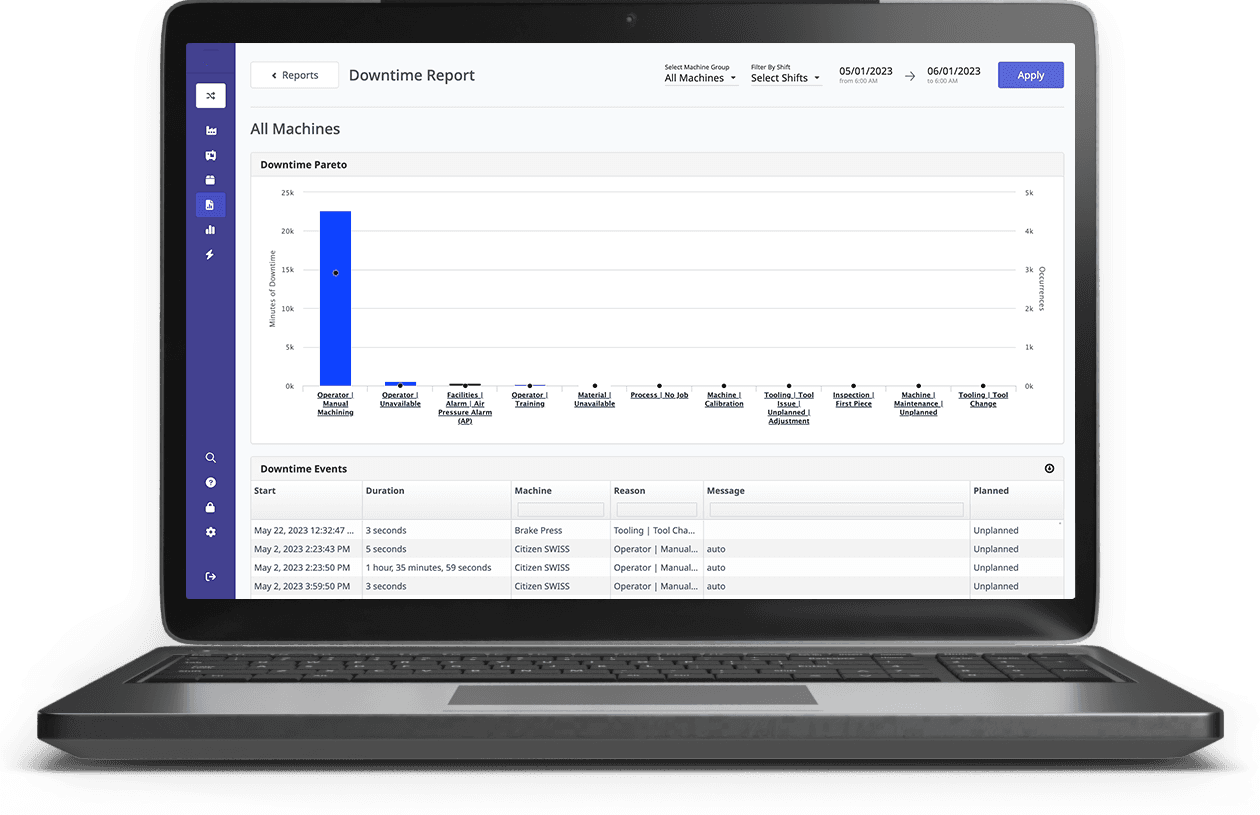
An IIoT monitoring system can detect machine-state changes and record stoppage events.
When combined with operator-entered downtime reasons, this information helps manufacturers understand why machines stop and how long interruptions last.
Production teams can use the collected information to identify recurring issues and prioritize corrective actions.
The system does not automatically eliminate downtime. Instead, it provides the visibility needed to investigate and manage production interruptions more effectively.
3. Improve Machine Utilization
Machine utilization indicates how much of a defined available-time period the machine is being used.
A low utilization value may indicate excessive idle time, poor scheduling, frequent changeovers, material waiting, or other operational constraints.
IIoT-based monitoring helps manufacturers compare machine activity across:
Individual machines
Production lines
Departments
Shifts
Different production periods
This information can support better resource allocation and production planning.
For example, if one CNC machine regularly remains idle while another machine is overloaded, supervisors can investigate whether work allocation or scheduling needs adjustment.
Utilization should always be calculated using a clearly defined time denominator. Different factories may use scheduled production time or another available-time window.
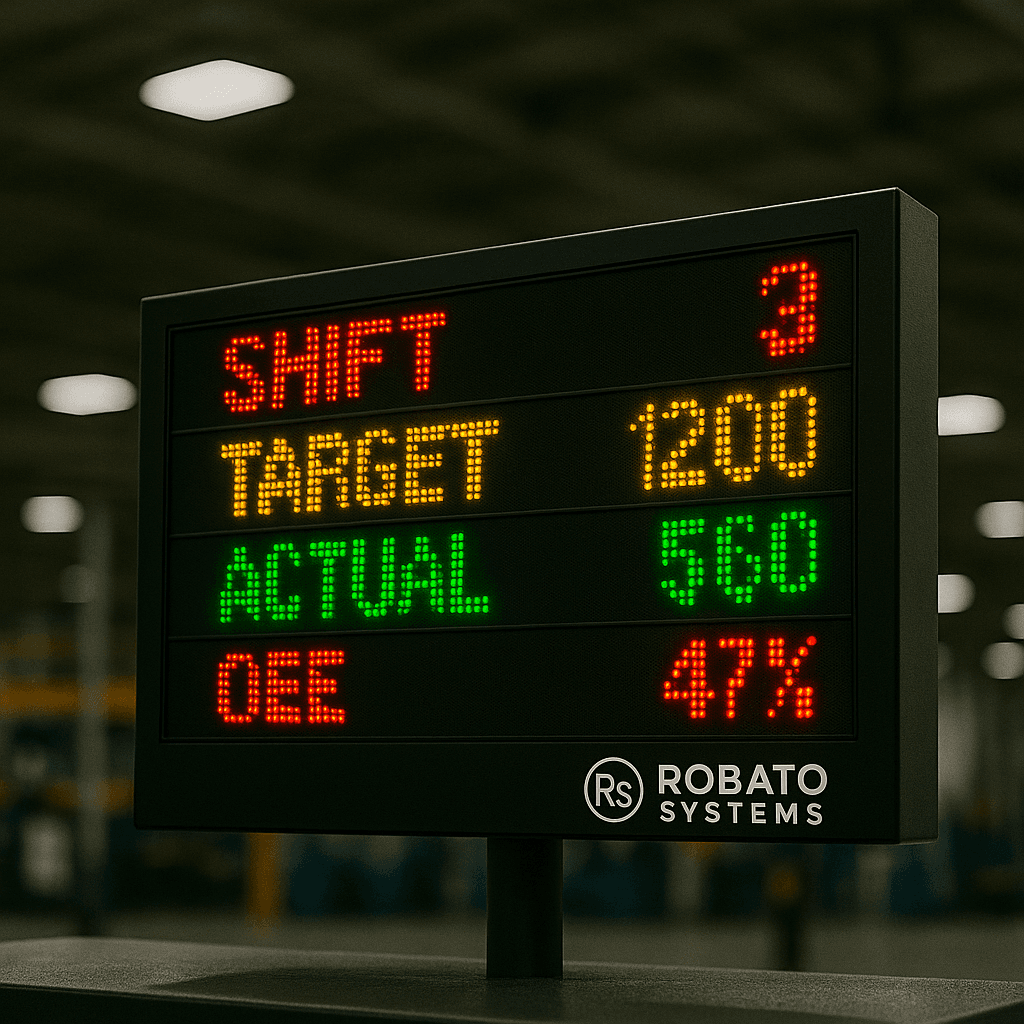
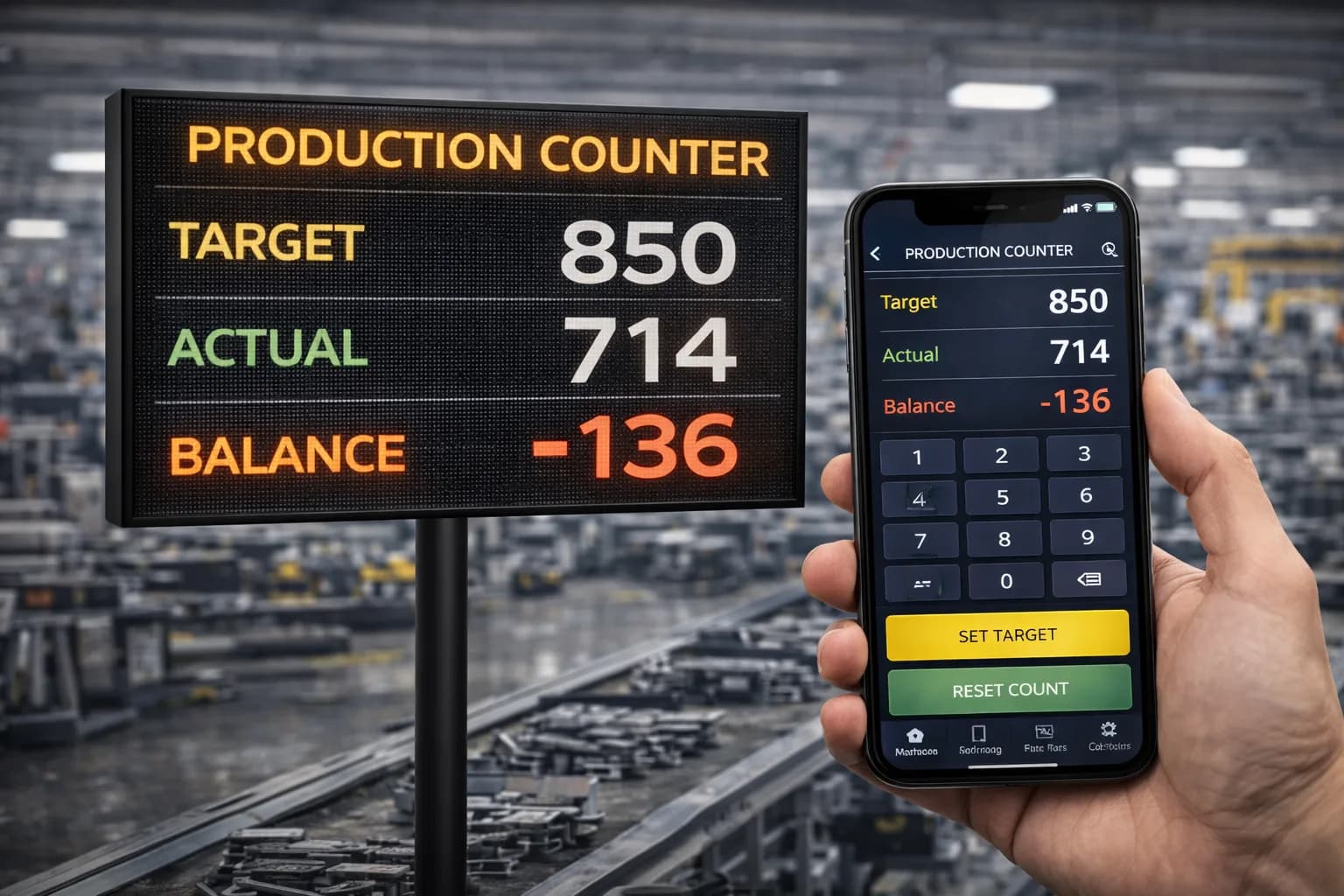
4. Monitor Production Output in Real Time
Production output is a fundamental measure of manufacturing productivity.
An IIoT system can collect production quantities from CNC controllers, PLC registers, cycle-complete signals, or suitable external sensors.
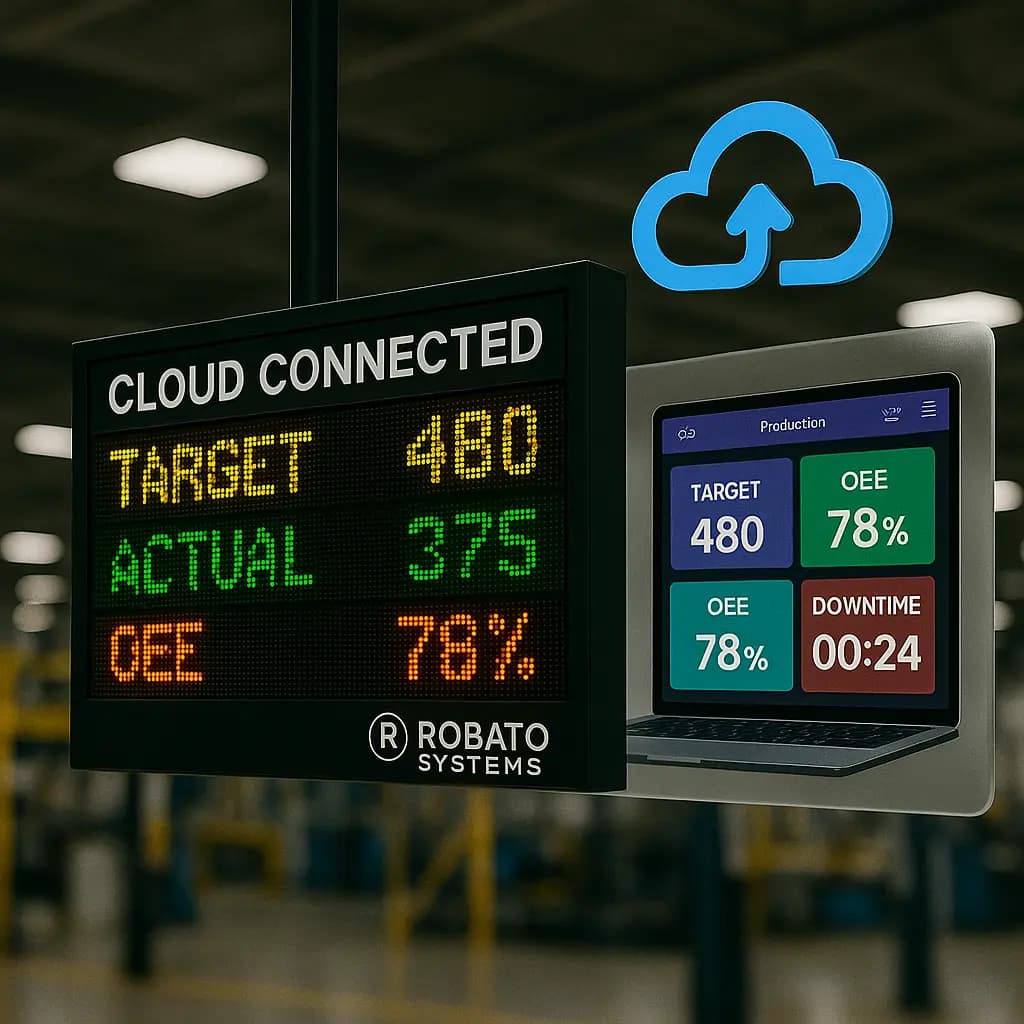
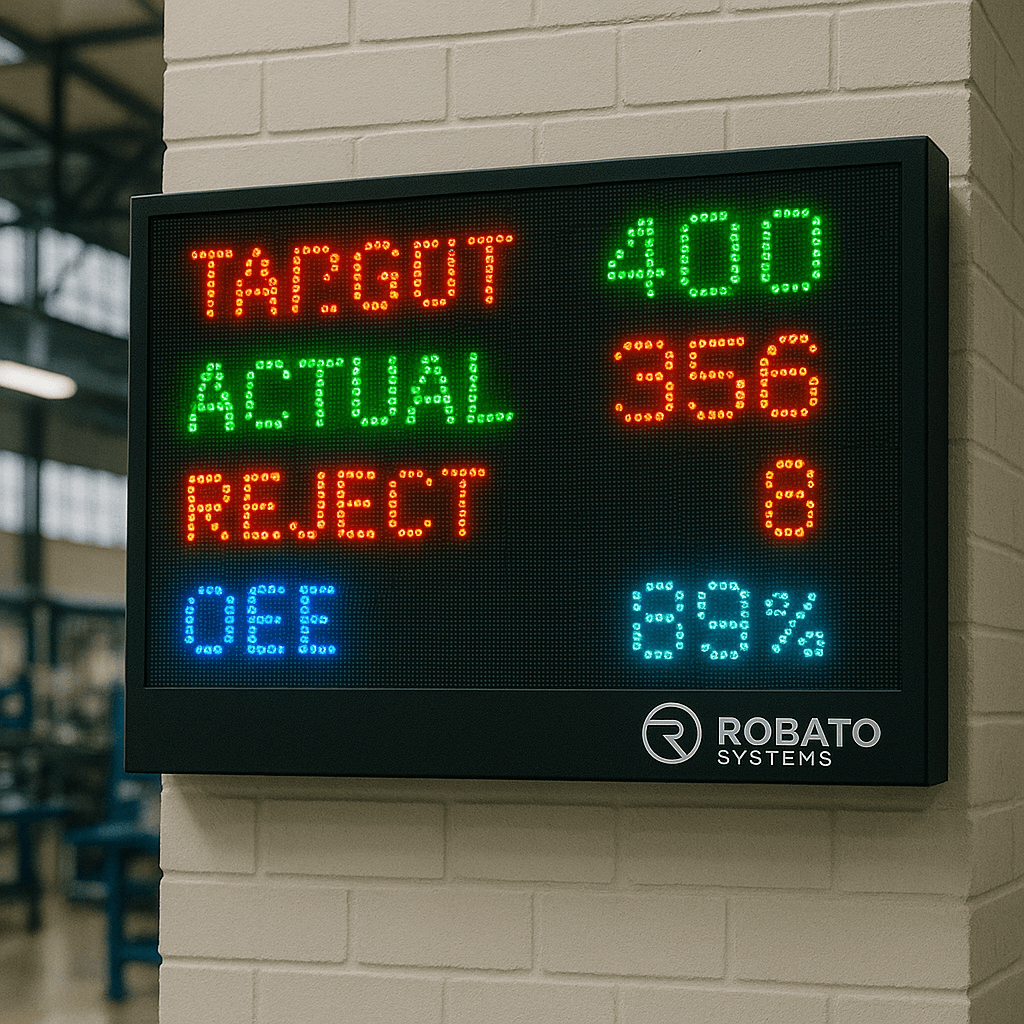
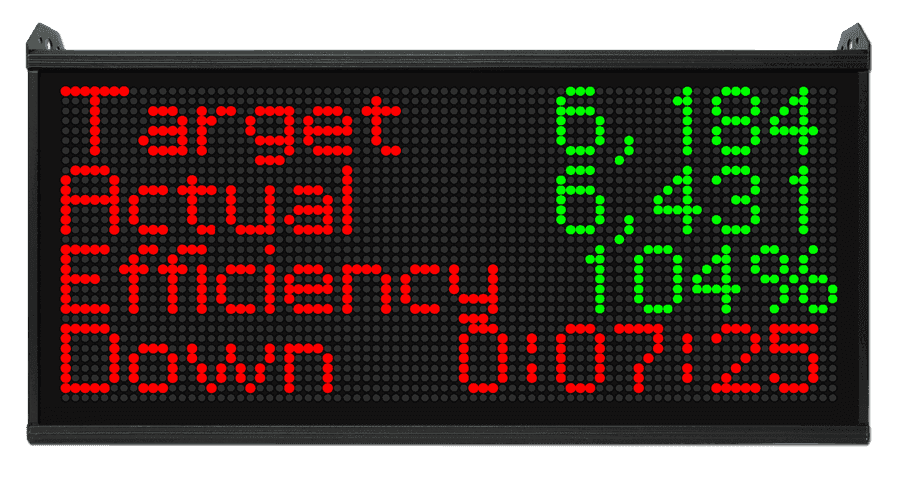
The monitoring platform can display:
Current production count
Shift-wise output
Daily production
Planned target
Actual output
Production achievement
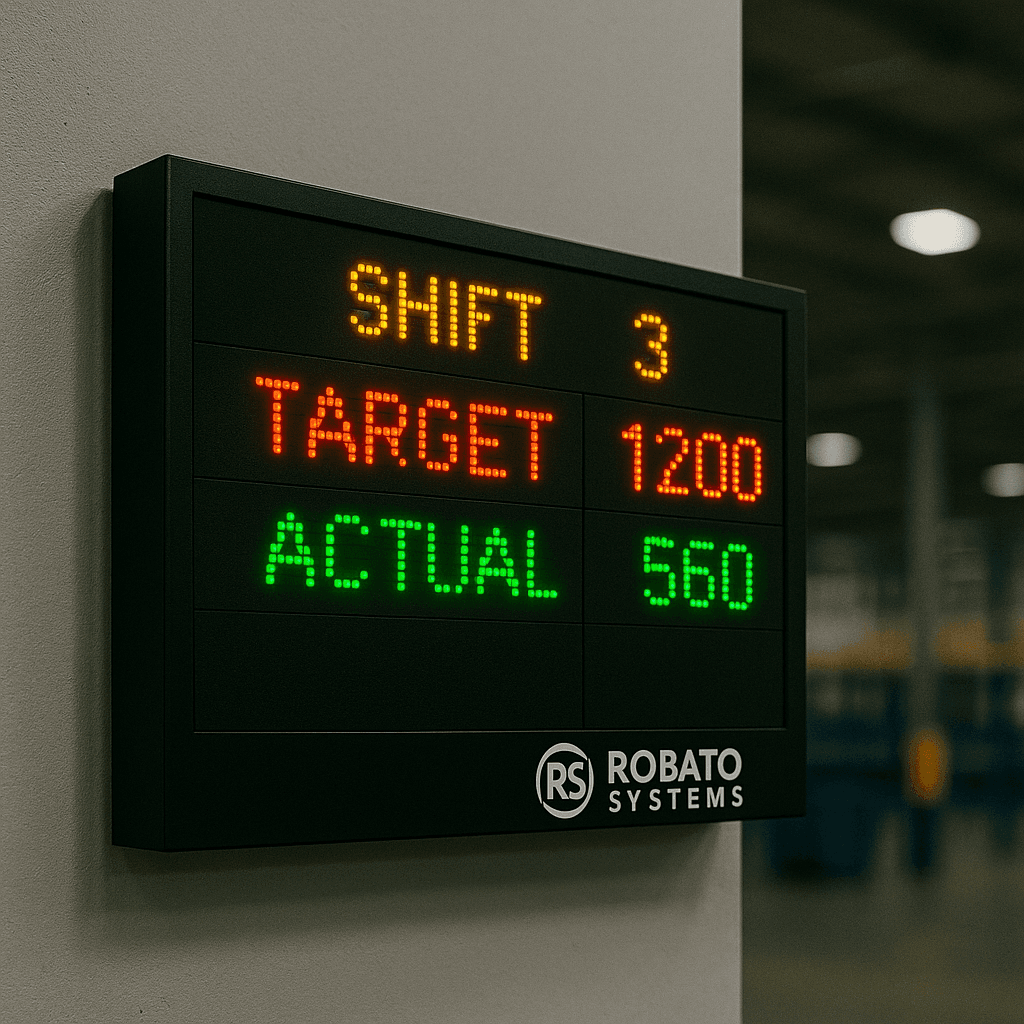
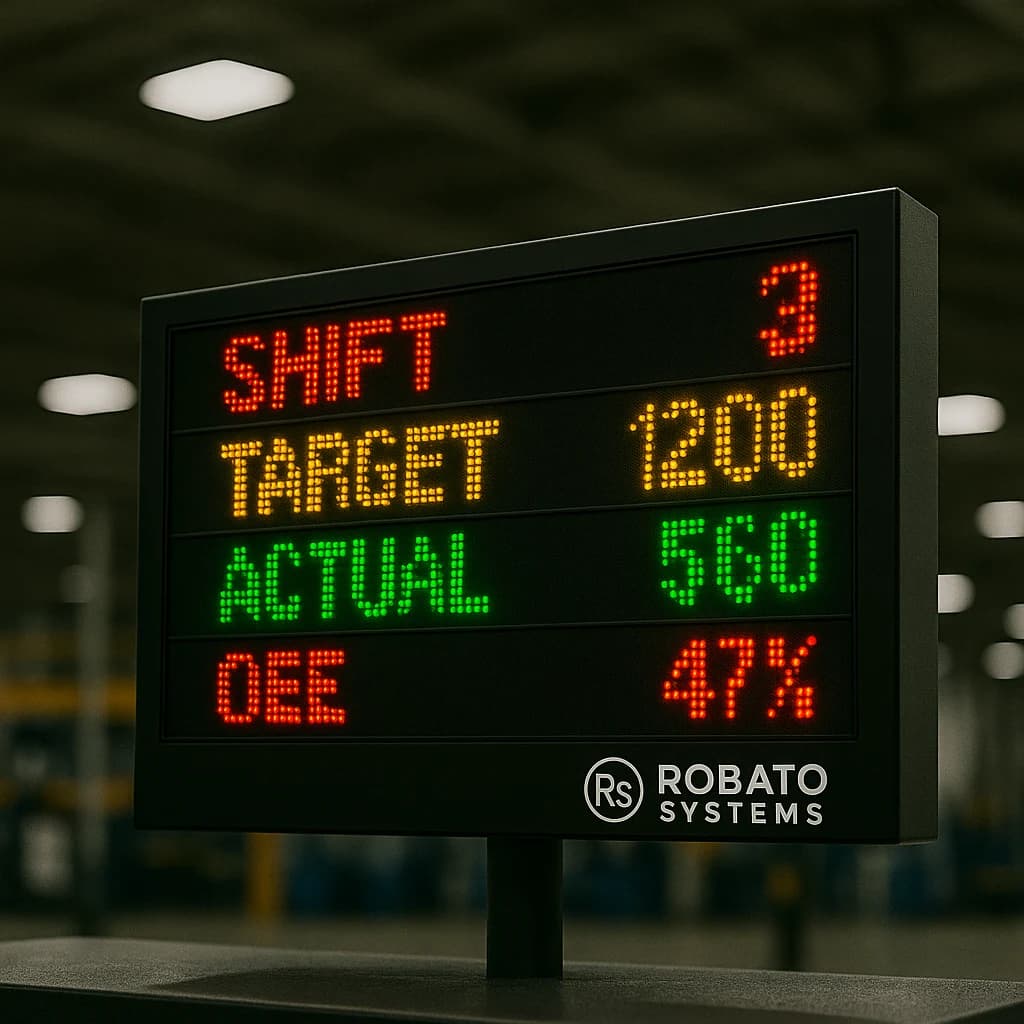
For example, a machine may have a target of 600 parts during a shift. If the dashboard shows that actual production is significantly below the target, the supervisor can investigate the reasons while the shift is still in progress.
It is important to distinguish between completed machining cycles, produced components, and accepted parts. A single cycle may produce multiple components, and some parts may be rejected.
5. Analyse CNC Cycle Time
Cycle time is the time required to complete a production cycle.
Longer-than-expected cycle times can reduce production output even when machines remain operational.
IIoT systems can collect cycle-related information from controllers, PLC signals, or suitable event-based data acquisition methods.
Manufacturers can compare:
Expected cycle time
Actual cycle time
Average cycle time
Cycle-time variation
Production quantity per hour
This helps identify machines or processes that consistently operate below expected production rates.
Cycle-time analysis should consider part type, program, tooling, material, and machining conditions. Comparing different products without accounting for their process requirements can lead to misleading conclusions.
6. Improve OEE Performance
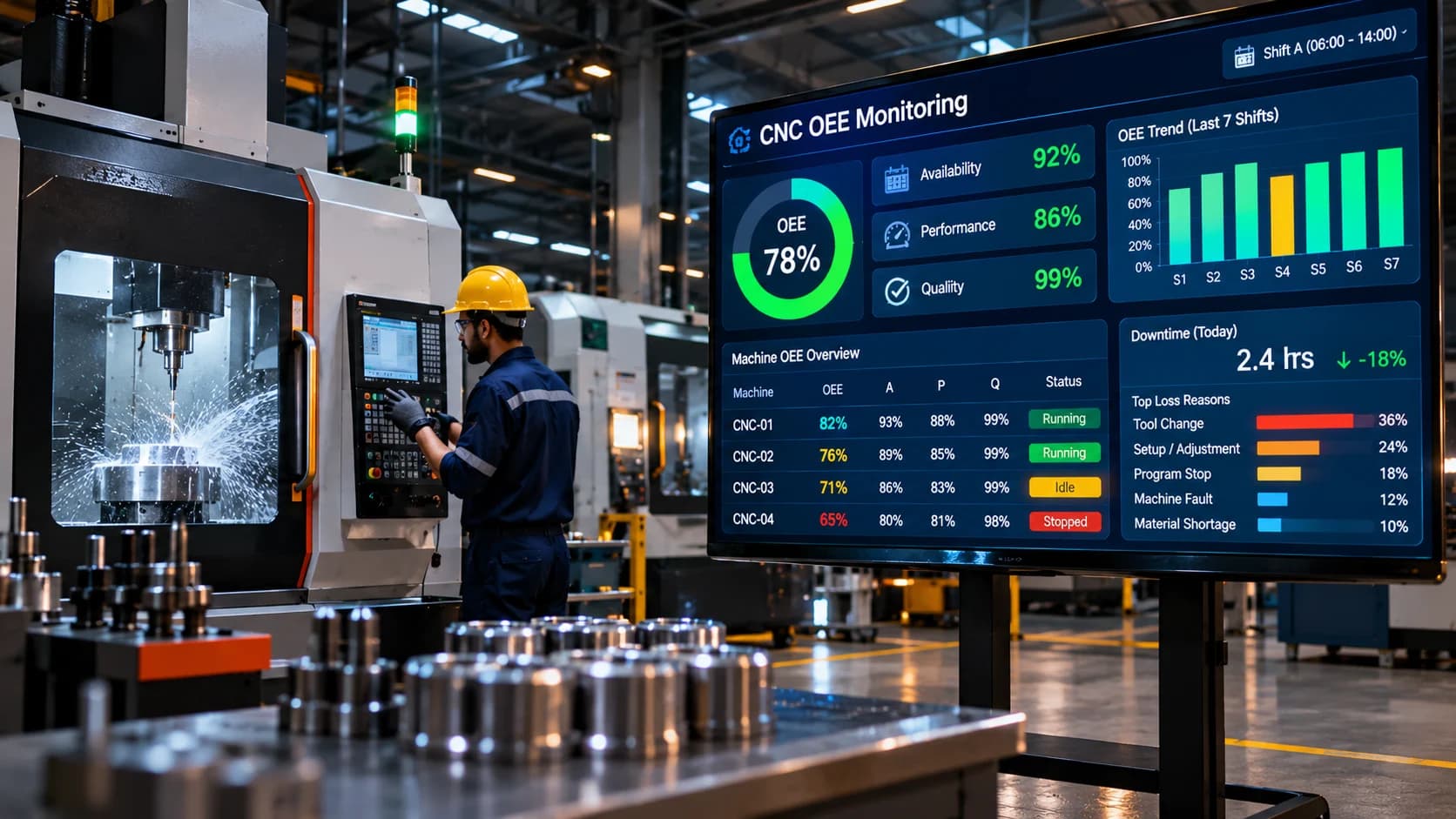
Overall Equipment Effectiveness (OEE) is a widely used metric for understanding manufacturing equipment performance.
It combines three factors:
Availability
Performance
Quality
IIoT-based CNC monitoring can provide much of the information required to calculate OEE.
For example:
Machine-state data supports availability calculations.
Cycle time and production counts support performance calculations.
Accepted and rejected production quantities support quality calculations.
The standard formula is:
OEE = Availability × Performance × Quality
Manufacturers can use OEE trends to understand whether production losses are mainly associated with downtime, slower operating speeds, or quality issues.
An effective OEE monitoring system can help organize these measurements and present them through production dashboards.
7. Improve Production Scheduling
Production scheduling determines how machines, materials, operators, and production orders are coordinated.
Poor scheduling can create machine waiting time, unnecessary changeovers, and uneven workloads.
IIoT-based monitoring provides actual machine availability and production information that can support scheduling decisions.
For example, production managers can use machine status and current output to understand whether equipment is available for the next production order.
When connected with suitable production planning or manufacturing execution systems, machine information can contribute to more informed scheduling decisions.
8. Support Predictive Maintenance
Unexpected machine failures can interrupt production and create additional maintenance costs.
IIoT can support condition monitoring by collecting selected information from controllers and sensors.
Depending on the machine and installed devices, this may include:
Vibration
Temperature
Electrical current
Spindle load
Operating hours
Alarm history
Other equipment-condition measurements
Historical measurements can help maintenance teams identify changes that may require investigation.
For example, unusual vibration patterns or repeated spindle-related alarms may indicate a condition worth examining.
However, predictive maintenance requires appropriate sensors, reliable baselines, suitable analysis, and engineering validation. Collecting machine data alone does not automatically predict failures.
9. Improve Quality Monitoring
High production output is not necessarily a sign of high productivity if a significant number of components fail quality requirements.
An IIoT-based monitoring architecture can combine machine information with quality records from inspection systems or operator entries.
Manufacturers can track:
Total produced quantity
Accepted parts
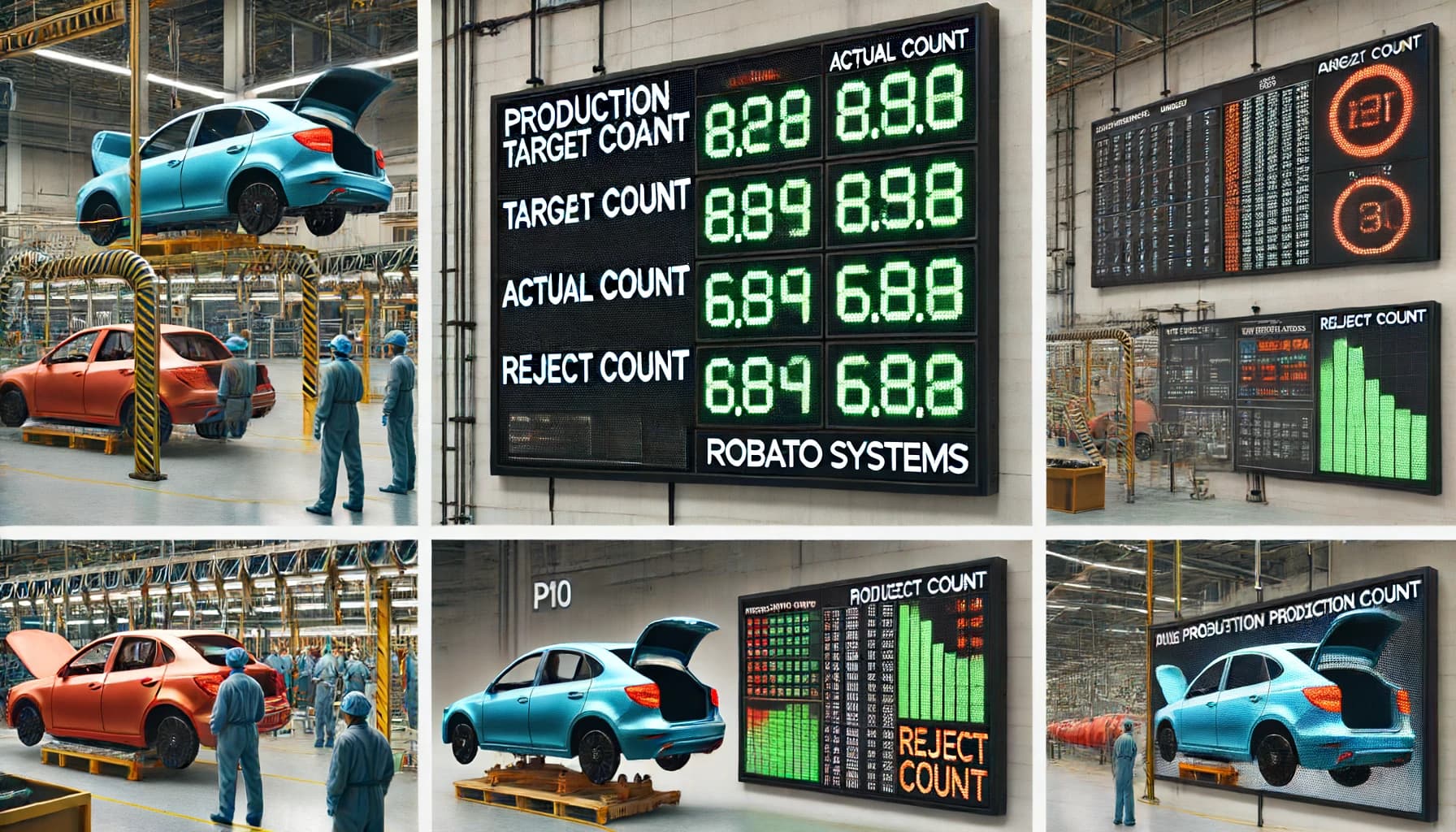
Rejected parts
Rejection percentage
Machine-wise quality trends
Shift-wise rejection data
This helps production teams identify recurring quality issues and investigate whether they are associated with specific machines, programs, tools, or production conditions.
10. Use Centralized Production Dashboards
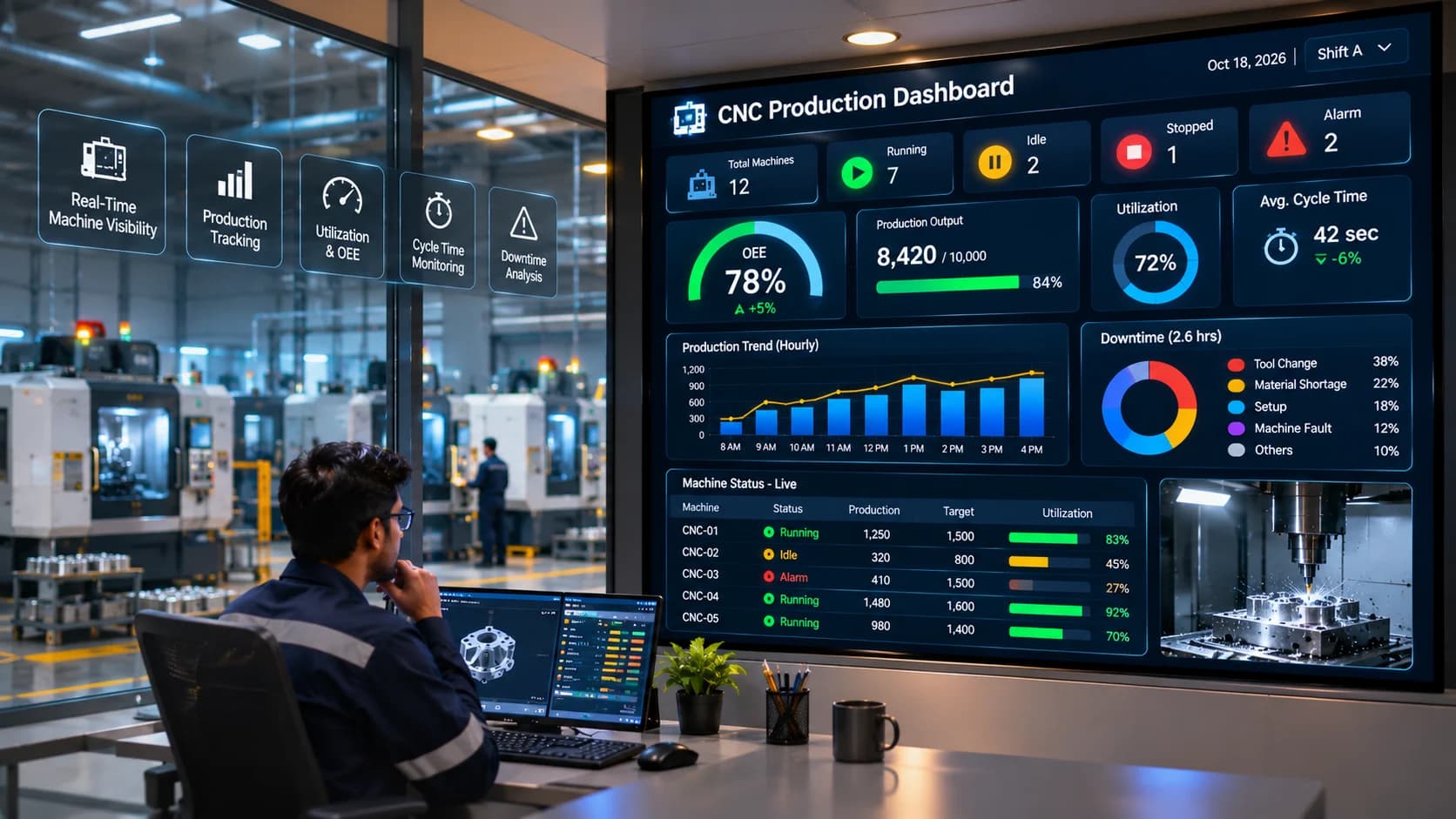
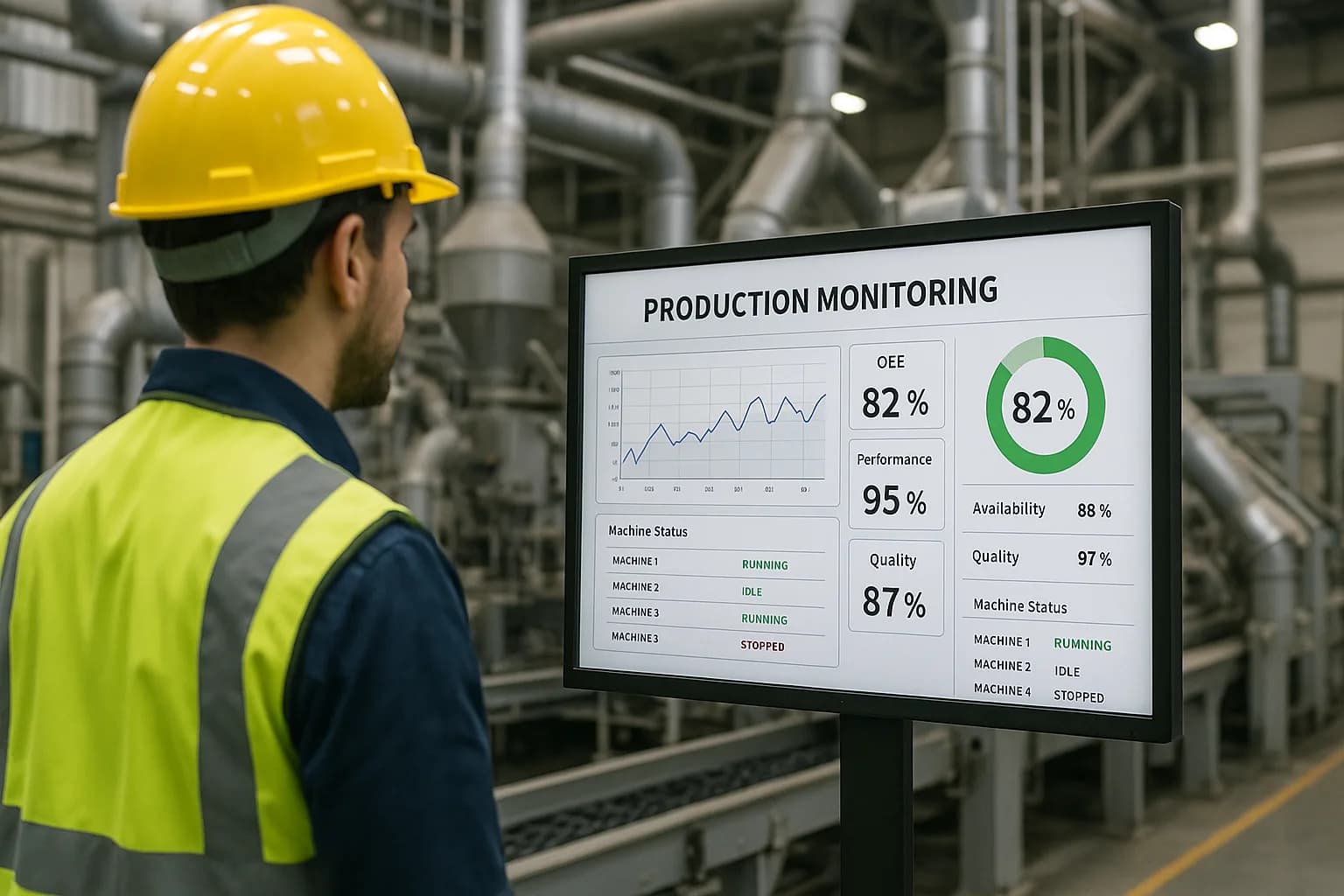
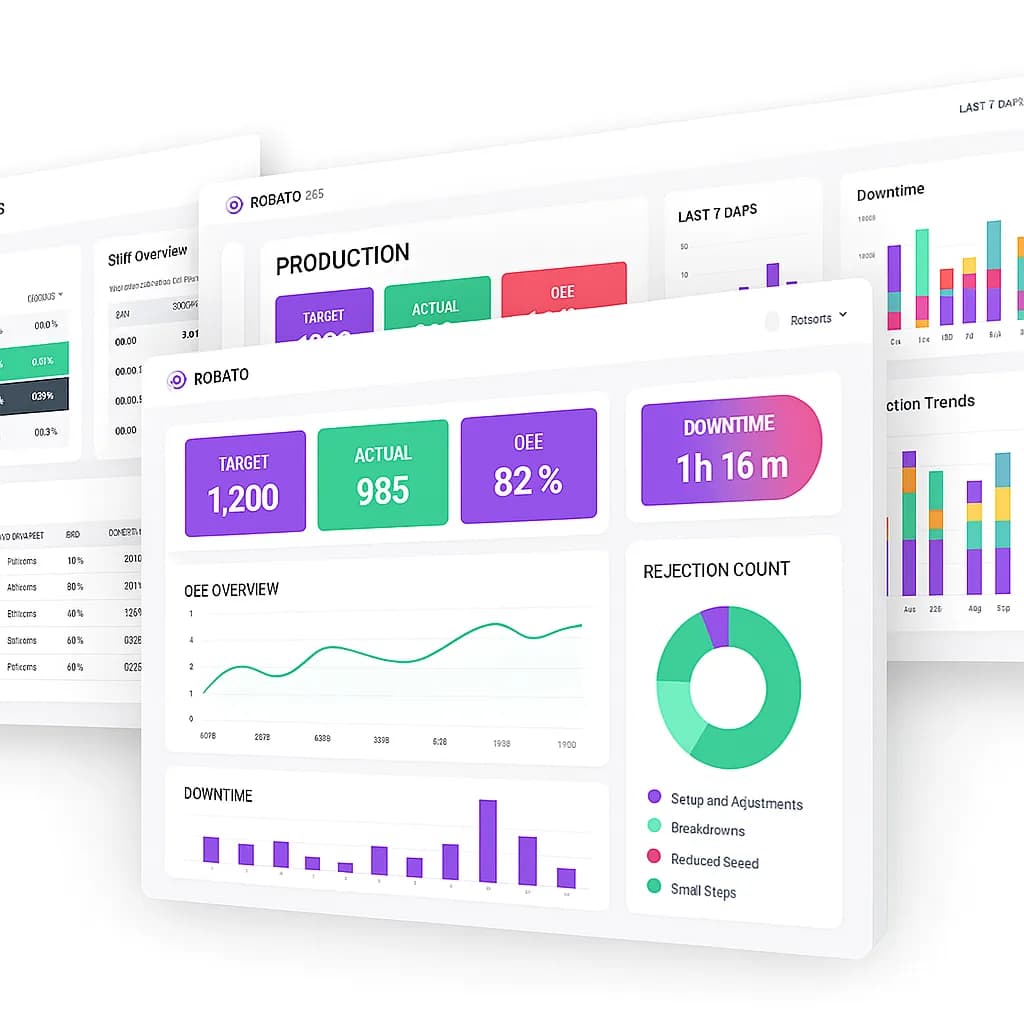
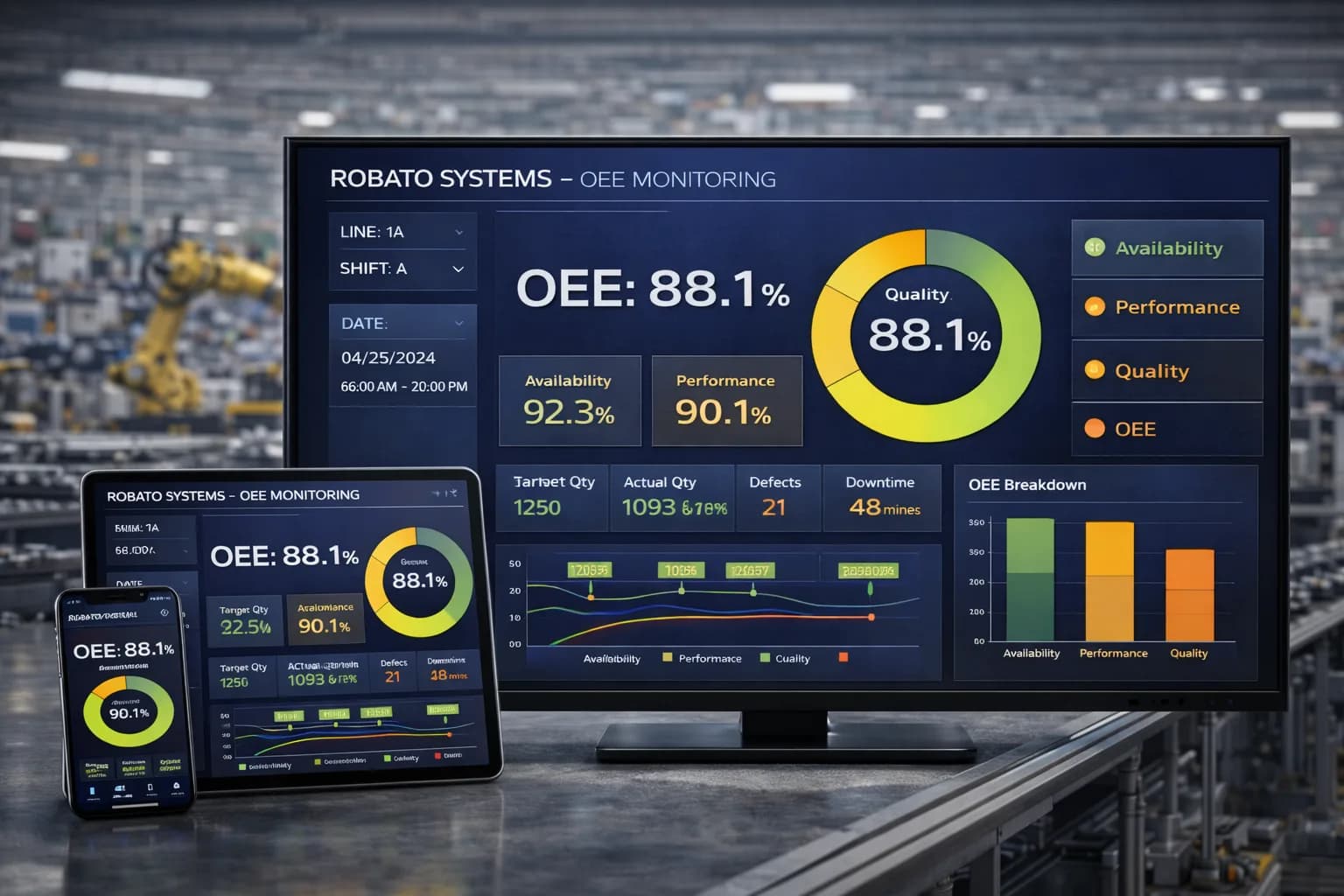
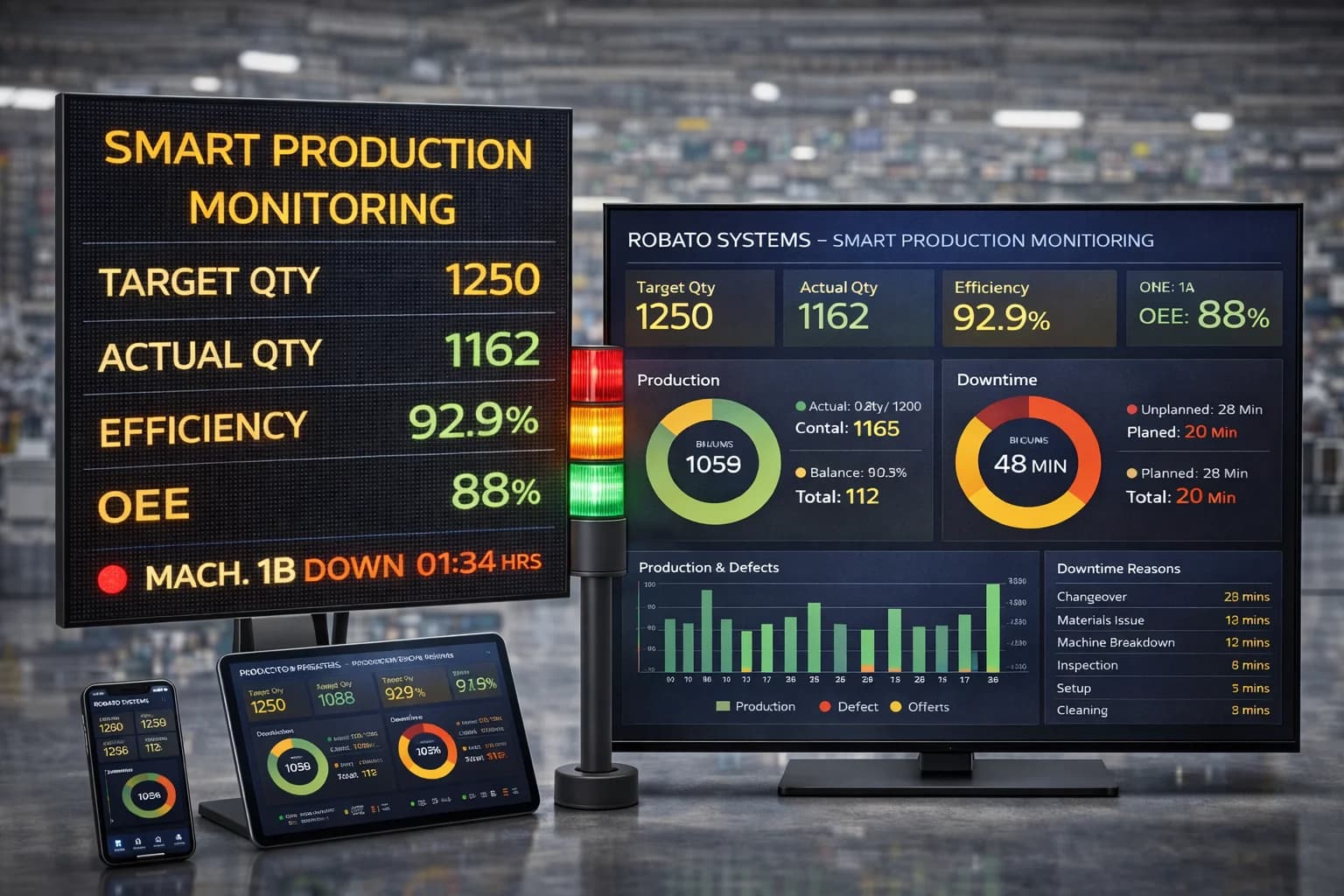
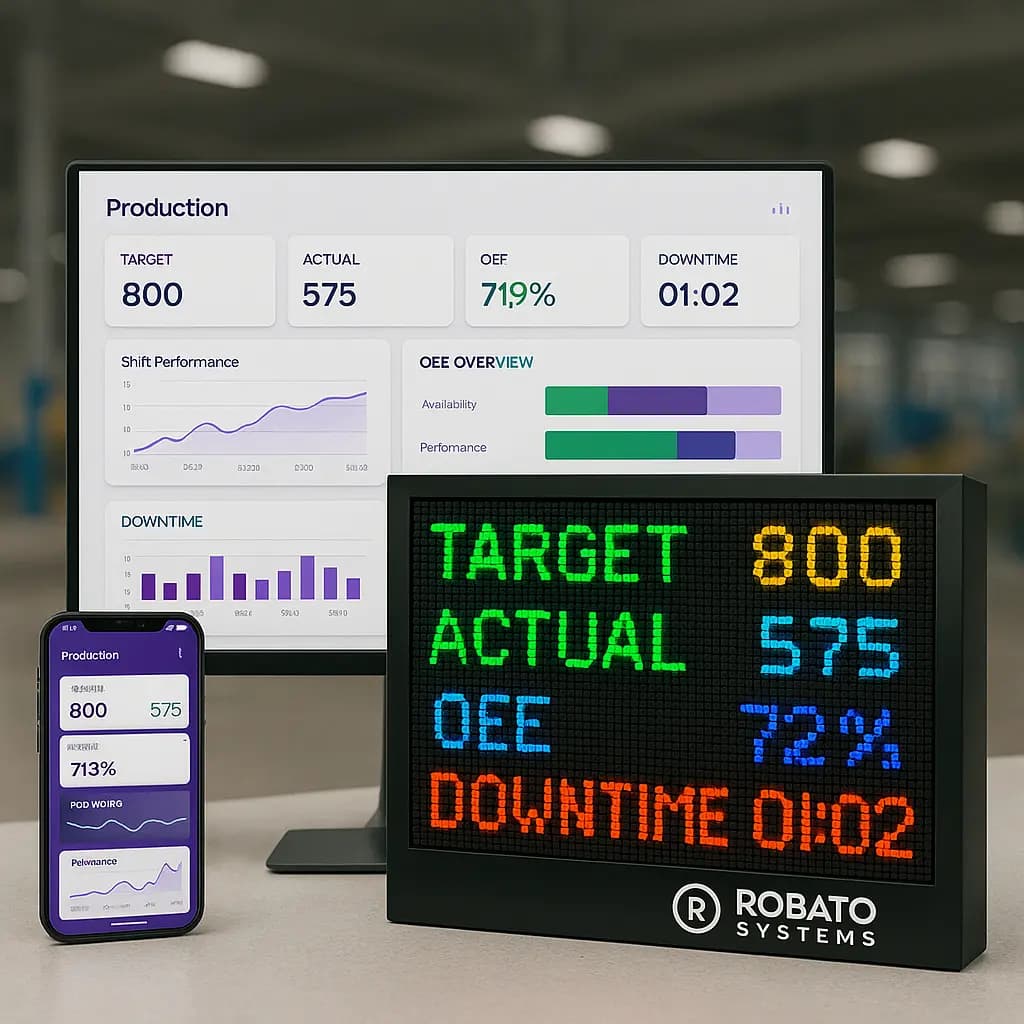
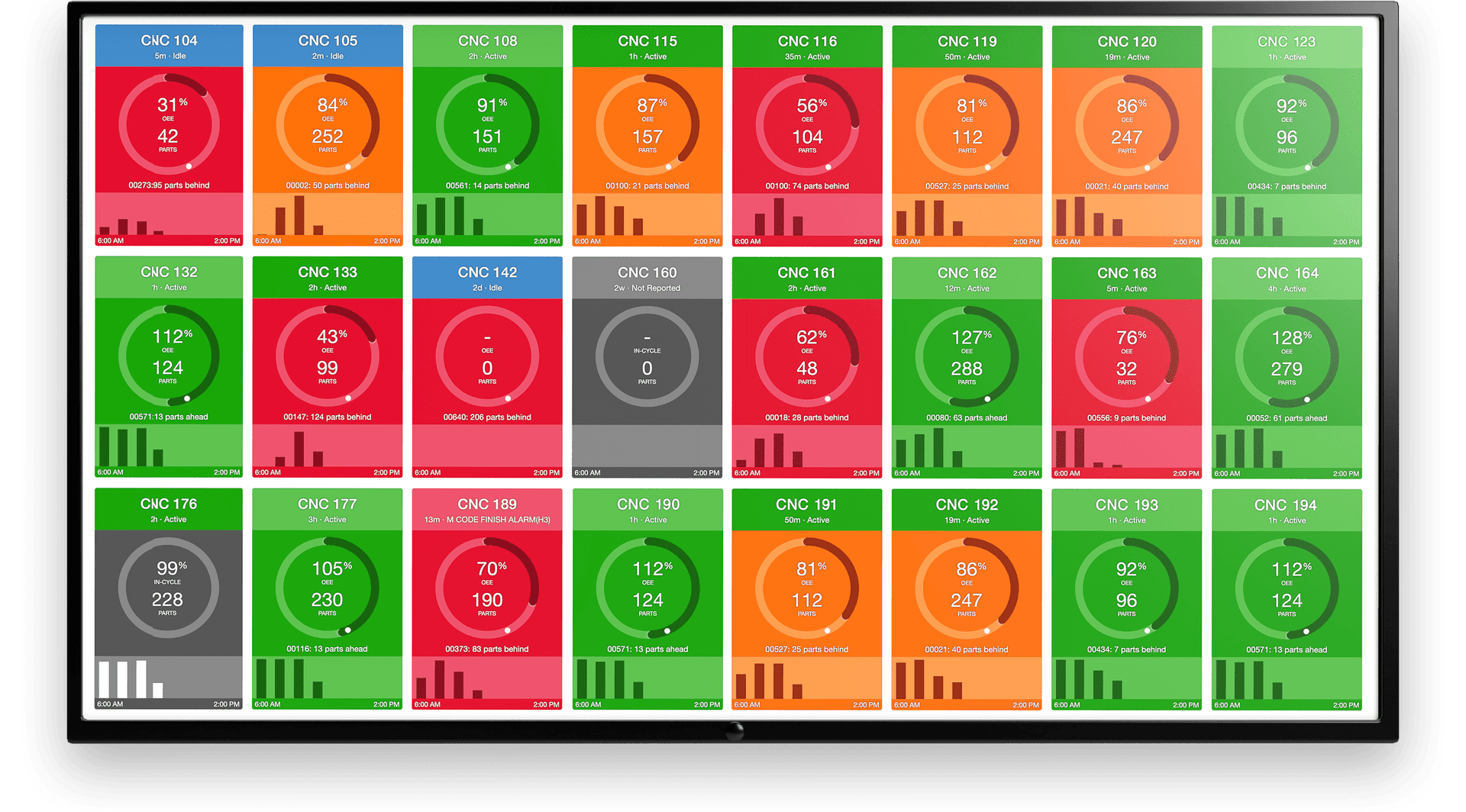
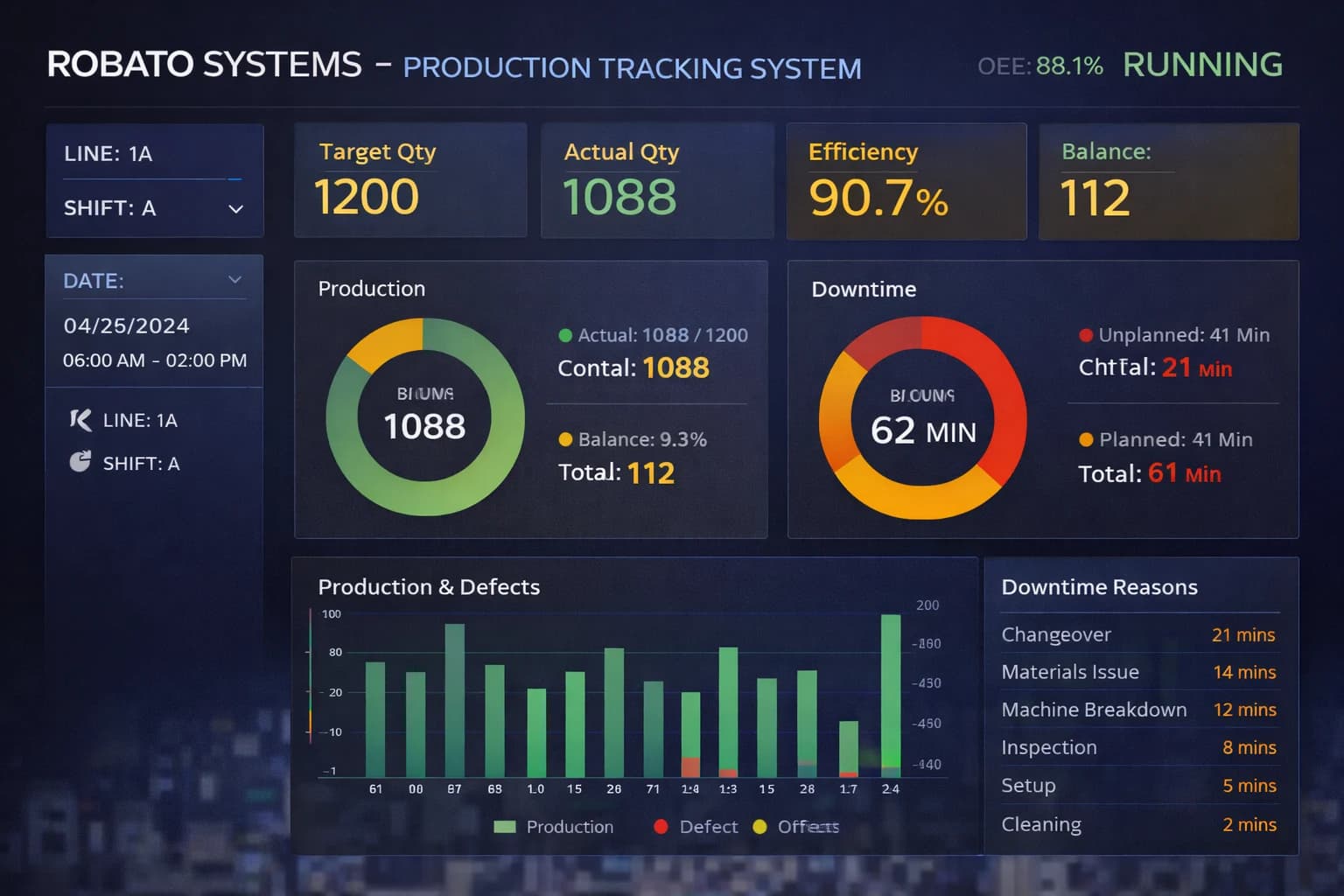
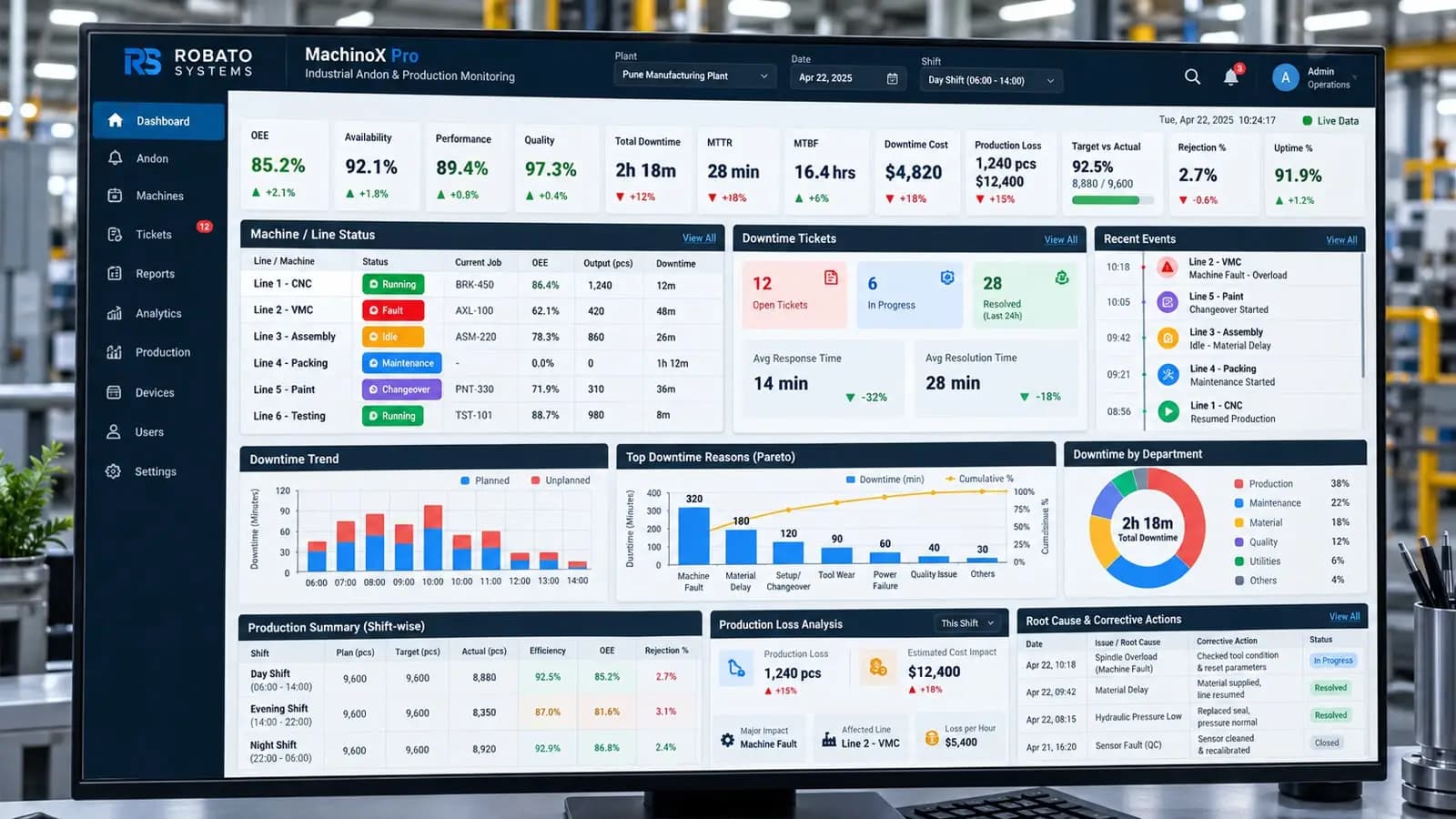
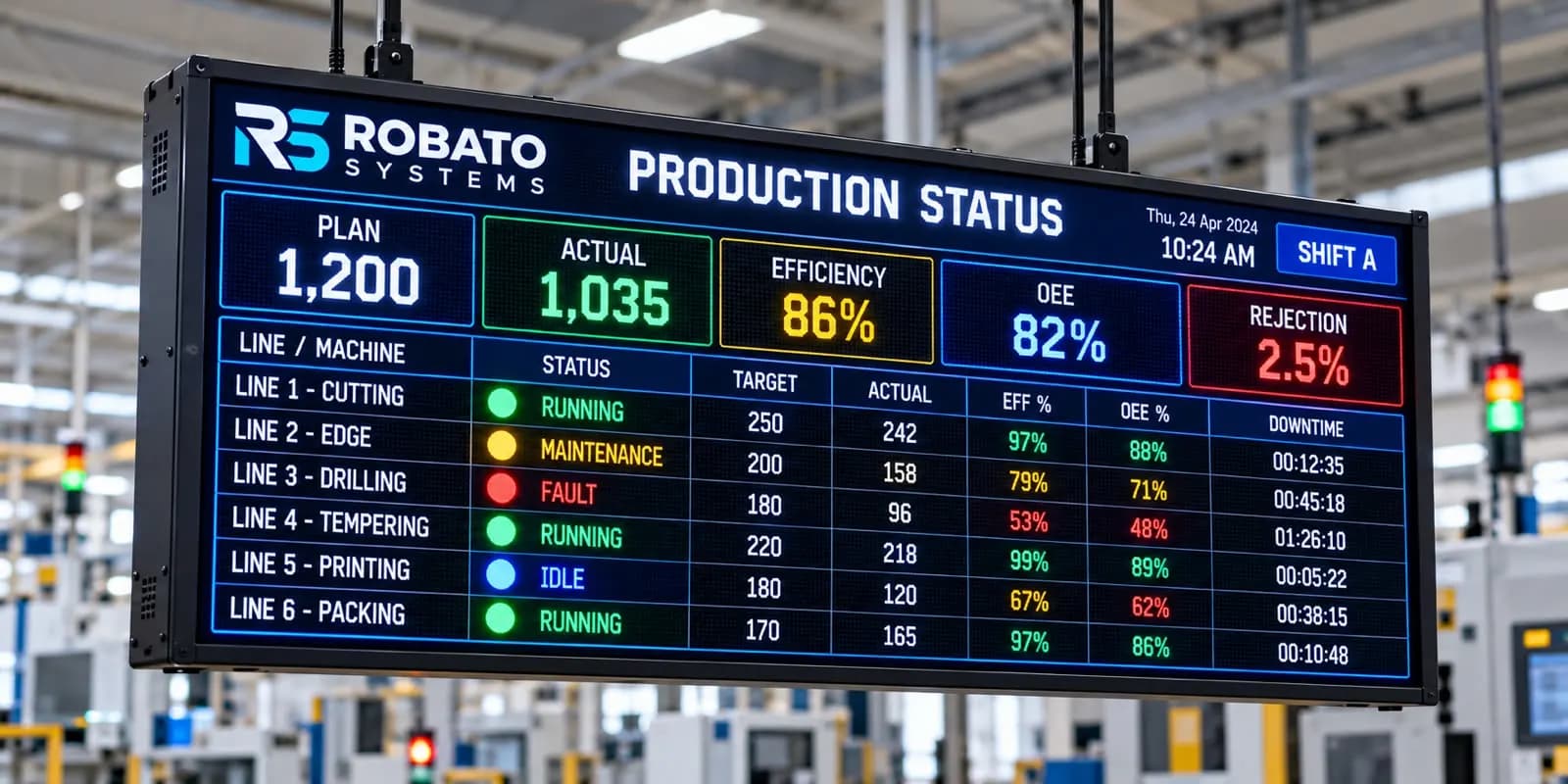
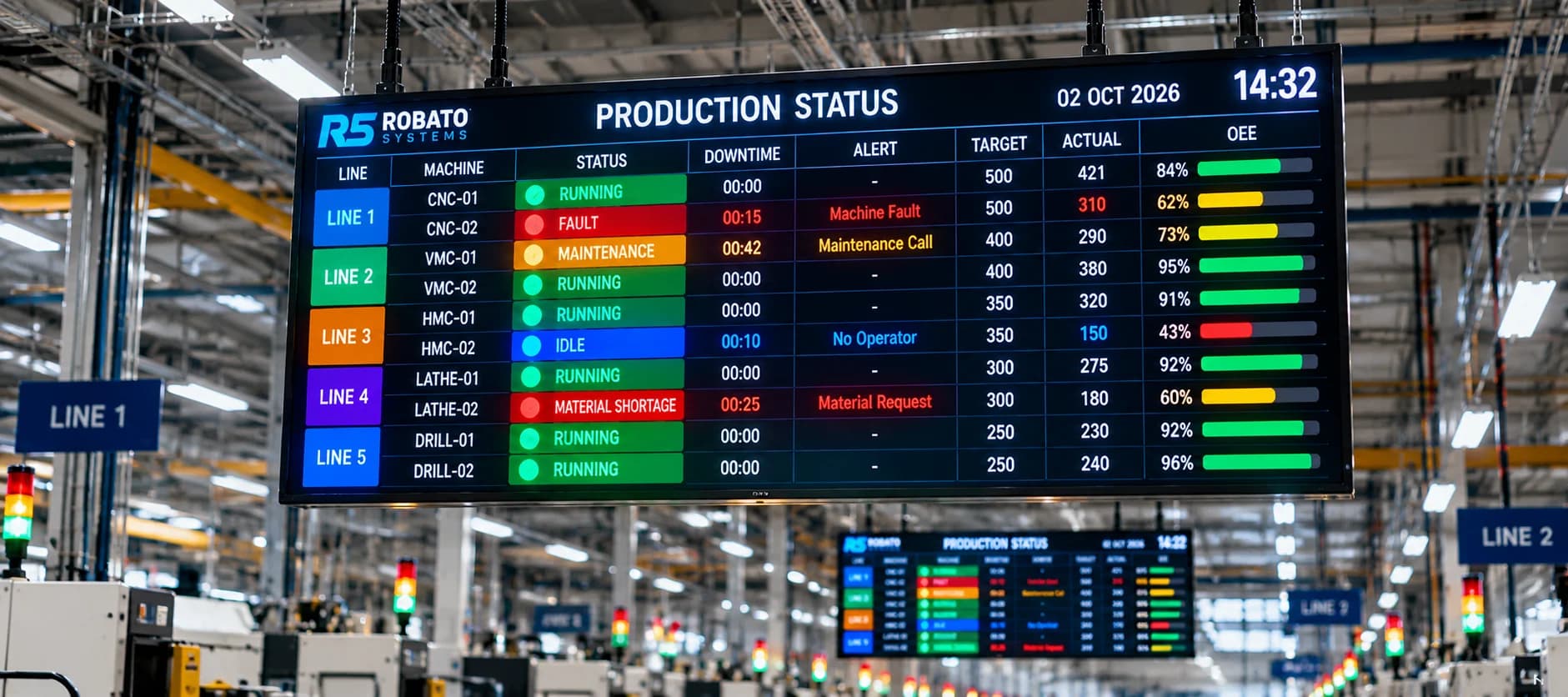
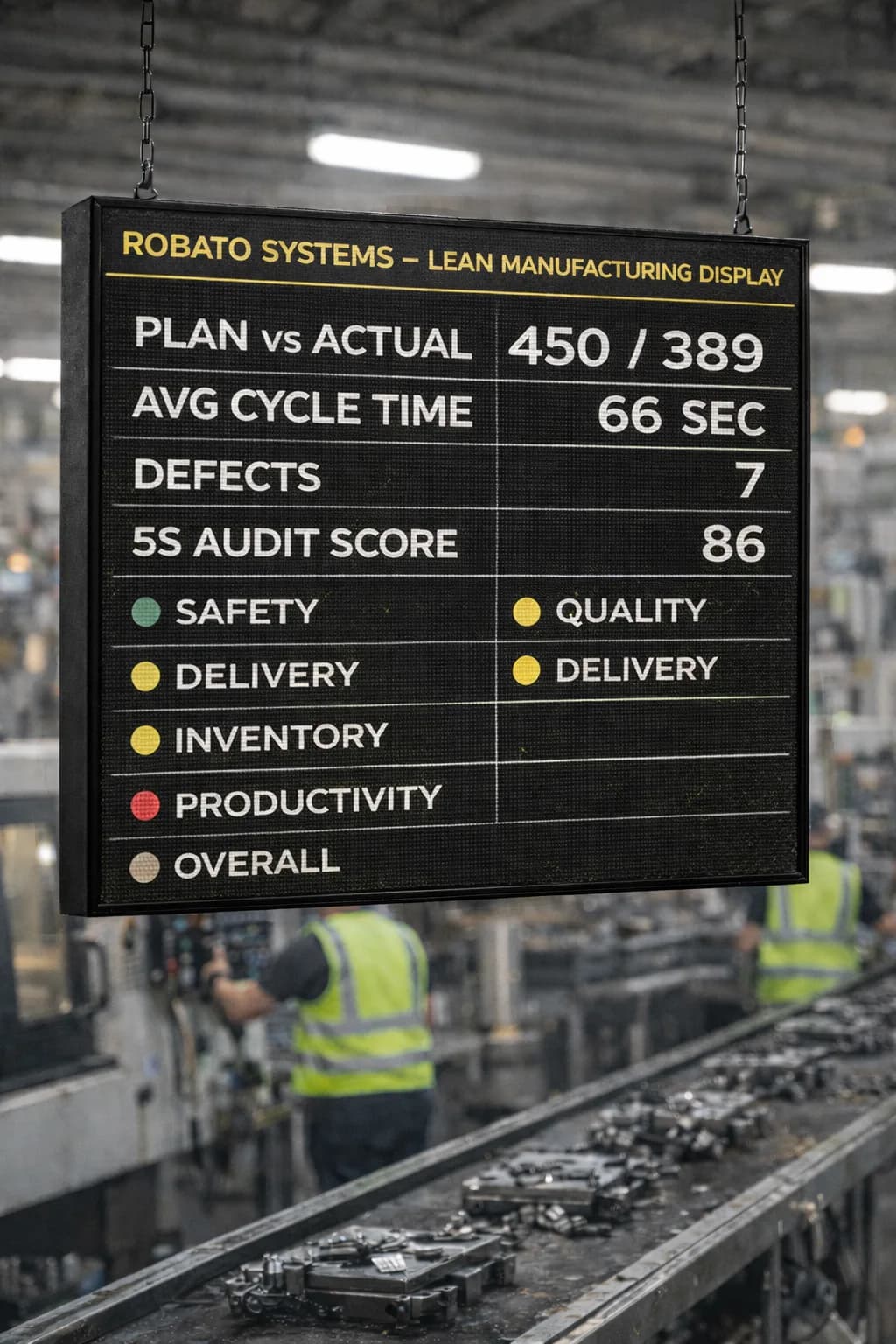
A centralized CNC dashboard brings machine and production information together in one interface.
Instead of checking individual machine controllers, production supervisors can review the condition of multiple machines through a common display.
A useful dashboard may show:
Total connected machines
Running and stopped machines
Production output
Target achievement
Downtime
Machine utilization
OEE
Active alarms
Historical production trends
This improves production visibility and helps teams focus on machines that need attention.
Manufacturers can explore smart production monitoring to understand how connected equipment and centralized dashboards support factory monitoring.
Important KPIs to Measure CNC Productivity
Manufacturers should select KPIs that reflect their production objectives.
Collecting too many metrics can create unnecessary complexity. A practical monitoring system should begin with a small group of essential indicators.
| KPI | What It Measures | Productivity Value |
|---|---|---|
| Machine Availability | Operating time compared with planned production time | Identifies availability losses |
| Machine Utilization | Machine operating time compared with defined available time | Evaluates equipment usage |
| Production Output | Number of components produced | Measures manufacturing output |
| Production Achievement | Actual output compared with target | Identifies production gaps |
| Cycle Time | Duration of a production cycle | Evaluates operating speed |
| Downtime | Duration of defined non-producing periods | Highlights interruptions |
| OEE | Availability × Performance × Quality | Measures overall equipment effectiveness |
| Rejection Rate | Rejected parts compared with total production | Tracks quality performance |
Machine Availability
Availability (%) = (Operating Time ÷ Planned Production Time) × 100
For example, if a machine operates for 420 minutes during a planned production period of 480 minutes:
Availability = (420 ÷ 480) × 100 = 87.5%
Production Achievement
Production Achievement (%) = (Actual Production ÷ Target Production) × 100
If the target is 500 parts and actual output is 450 parts:
Production Achievement = (450 ÷ 500) × 100 = 90%
Rejection Rate
Rejection Rate (%) = (Rejected Parts ÷ Total Produced Parts) × 100
If 20 parts are rejected out of 1,000 produced parts:
Rejection Rate = (20 ÷ 1,000) × 100 = 2%
OEE
OEE (%) = Availability × Performance × Quality
All three components should be calculated using consistent definitions and reliable data sources.
How IIoT Connects CNC Machines to Monitoring Software
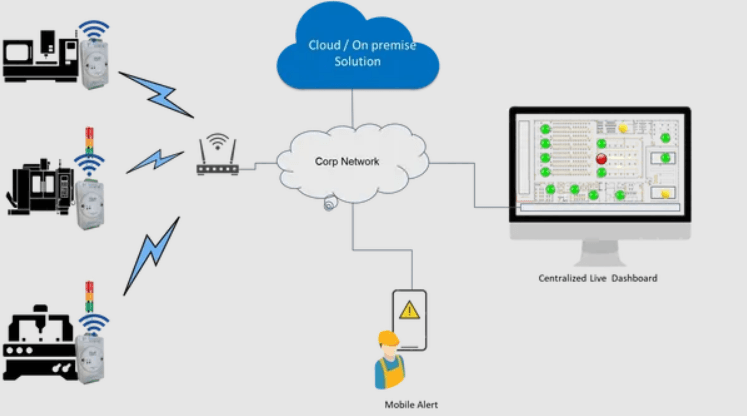
An IIoT-based CNC monitoring system uses multiple components to collect and process machine information.
A typical architecture includes the following layers.
1. CNC Machines and Controllers
CNC machines generate information during production, including operating status, cycle activity, alarms, and selected process parameters.
2. PLCs and Sensors
PLCs and external sensors provide additional machine information where controller-level data is unavailable or insufficient.
For example, a PLC may expose cycle-complete signals, while an optical sensor may detect finished components.
3. Industrial IoT Gateway
An industrial gateway connects different machine interfaces and communication methods.
It may perform:
Data acquisition
Protocol conversion
Signal mapping
Timestamp handling
Local processing
Temporary data buffering
4. Communication Network
Collected information is transmitted through the factory network using compatible communication technologies.
Depending on the equipment and architecture, these may include:
OPC UA
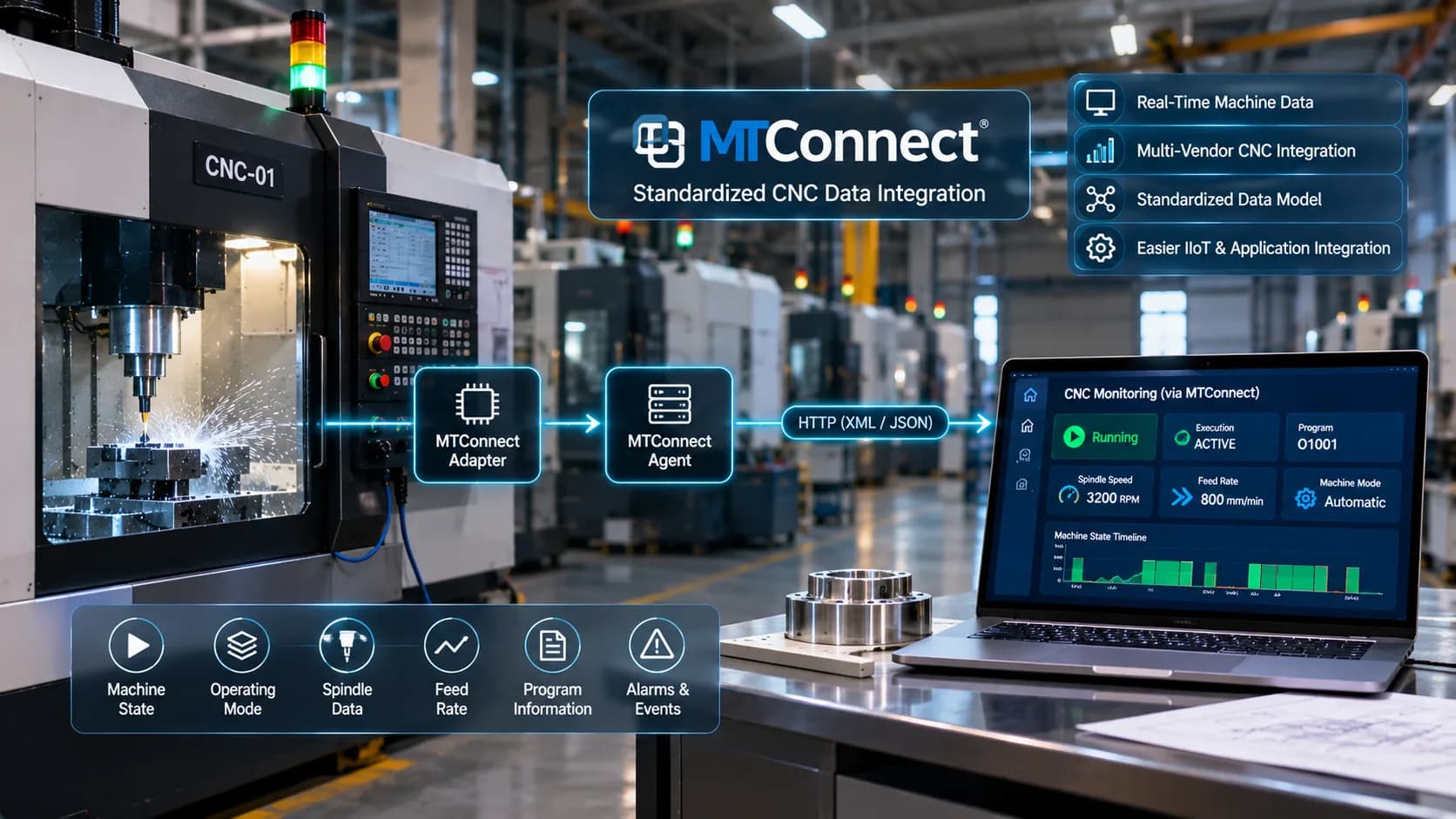
MTConnect
Modbus
MQTT
Controller-specific interfaces
These technologies have different roles and may work together within one integration architecture.
5. Monitoring Software
The monitoring platform receives and organizes machine information.
It can associate the data with machine identifiers, production shifts, timestamps, and other production context.
6. Dashboards and Reports
The final layer presents operational information through live dashboards, alerts, and historical reports.
A connected production monitoring software platform can help consolidate machine-level information for production teams.
How to Implement IIoT for CNC Productivity Improvement
A successful implementation should begin with clear production objectives and a practical assessment of existing equipment.
Step 1: Identify Productivity Challenges
Understand where the factory is experiencing production losses.
Common areas include:
Frequent machine stoppages
Low production output
Excessive idle time
Long cycle times
Poor shift performance
Inconsistent production reporting
High rejection rates
Choose the problems that have the greatest operational impact.
Step 2: Audit CNC Machine Connectivity
Prepare an inventory of CNC machines and document:
Machine manufacturer and model
Controller type
Available communication interfaces
PLC availability
Existing sensors
Network connectivity
Accessible machine signals
This helps determine which integration method is suitable for each machine.
Step 3: Define Required Data Points
Identify the minimum information needed to address the selected productivity challenges.
A practical starting list may include:
Machine status
Production count
Cycle-complete events
Downtime duration
Alarm information
Shift-wise output
Additional measurements can be introduced as the monitoring system develops.
Step 4: Select the Data Collection Method
Choose the appropriate collection method for each machine.
Possible options include:
Direct CNC controller integration
PLC-based data collection
External sensor integration
Industrial IoT gateways
Supported industrial communication standards
Not every CNC machine needs the same integration method.
Step 5: Connect Machines to the IIoT Platform
Configure the gateways, communication interfaces, and monitoring application.
Assign unique machine identifiers and map the collected signals to consistent data definitions.
Step 6: Configure Production KPIs
Set up the required calculations for machine availability, utilization, production achievement, cycle time, downtime, and OEE.
Define planned production time, shift boundaries, and production-count rules consistently.
Step 7: Build Monitoring Dashboards
Create machine-level and factory-level dashboards that display the information needed by operators, supervisors, and managers.
Keep the main dashboard focused on important operational indicators.
Step 8: Validate the Data
Compare the system's readings with actual machine activity and production records.
Check:
Production counter accuracy
Machine-state changes
Cycle-time calculations
Downtime events
Timestamp consistency
Data gaps
Shift-wise reporting
Step 9: Start with a Pilot
Connect a small group of machines and evaluate the monitoring workflow.
Once the data is reliable and the dashboard is useful, expand the implementation to additional machines.
Step 10: Use Insights to Improve Production
Review the collected information regularly and identify specific improvement opportunities.
Assign corrective actions, measure their impact, and continue improving the production process.
Common Challenges in CNC Productivity Improvement with IIoT
IIoT can provide valuable production visibility, but implementation requires attention to several technical and operational challenges.
1. Different CNC Controller Manufacturers
Different machines may use different communication interfaces and data structures.
Solution: Use a flexible integration architecture that supports controller interfaces, PLC connections, industrial gateways, and suitable communication standards.
2. Legacy CNC Machines
Older machines may not support modern industrial communication protocols.
Solution: Evaluate existing PLC signals, serial interfaces, external sensors, and compatible data acquisition devices.
3. Inaccurate Machine Data
Incorrect counter logic, poorly mapped signals, or inconsistent timestamps can affect productivity calculations.
Solution: Validate collected data against actual machine operation and document signal definitions.
4. Network Connectivity Problems
Communication interruptions can result in missing or delayed information.
Solution: Use reliable industrial networking equipment, connection monitoring, and gateway buffering where supported.
5. Inconsistent KPI Definitions
Different departments may calculate downtime, utilization, and production achievement differently.
Solution: Establish common formulas, shift definitions, and reporting rules.
6. Incomplete Downtime Reasons
Machine-state information may show that a machine stopped without identifying why.
Solution: Combine automated detection with operator-entered reasons and maintenance records.
7. Lack of User Adoption
A monitoring platform may not deliver its full value if operators and supervisors do not use it consistently.
Solution: Keep interfaces simple, provide practical training, and make sure the displayed information supports everyday production decisions.
Cloud vs. On-Premise IIoT Monitoring for CNC Machines
Manufacturers can deploy IIoT-based CNC monitoring through cloud-based or on-premise platforms.
The right option depends on operational requirements, data policies, network availability, and IT infrastructure.
Cloud-Based CNC Monitoring
In a cloud-based architecture, machine information is collected locally and securely transmitted to a cloud-hosted monitoring application.
Potential advantages include:
Centralized monitoring across multiple locations
Remote access for authorized teams
Consolidated production reports
Flexible infrastructure expansion
Centralized historical data
A suitable cloud production monitoring solution can help manufacturers access connected production information through centralized dashboards.
On-Premise CNC Monitoring
An on-premise platform processes and stores machine information within the factory's local infrastructure.
It may be suitable when manufacturers have restricted external connectivity, local data-storage requirements, or specific security policies.
Both models can support IIoT-based CNC monitoring. The final architecture should be selected according to the manufacturer's operational and security requirements.
Best Practices for Improving CNC Productivity with IIoT
To get practical value from IIoT, manufacturers should focus on reliable information and measurable production improvements.
Start with clear objectives: Identify the production problems that the monitoring system should address.
Connect machines systematically: Assess controller compatibility before selecting integration hardware.
Prioritize essential data: Begin with machine status, production counts, cycle time, and downtime.
Standardize machine states: Use consistent definitions for running, idle, stopped, setup, and alarm conditions.
Validate production counts: Confirm the relationship between machine cycles, produced parts, and accepted parts.
Use consistent KPI formulas: Define reporting periods and calculation rules across departments.
Make downtime reasons meaningful: Combine automatic machine-state detection with operator input.
Design useful dashboards: Display information according to the needs of different production roles.
Maintain data security: Apply network segmentation, authentication, and controlled machine access.
Review results regularly: Use historical data to measure whether corrective actions are improving production performance.
Frequently Asked Questions About CNC Productivity Improvement with IIoT
1. What is CNC productivity improvement?
CNC productivity improvement is the process of increasing the effectiveness of CNC manufacturing operations by improving machine availability, production output, cycle time, quality, and resource utilization.
2. How does IIoT improve CNC productivity?
IIoT connects CNC machines to monitoring platforms so manufacturers can collect machine status, production counts, cycle-time information, and other operational data. This visibility helps production teams identify losses and make better-informed decisions.
3. Can IIoT reduce CNC machine downtime?
IIoT can help identify machine stoppages, record downtime duration, and highlight recurring interruptions. This information supports investigation and corrective action, although downtime reduction depends on how effectively the factory responds to the identified issues.
4. What data should be collected to improve CNC productivity?
Useful data includes machine status, production counts, cycle time, alarms, downtime duration, operating hours, and quality information. The exact requirements depend on the manufacturing process.
5. What is the role of OEE in CNC productivity improvement?
OEE measures availability, performance, and quality together. It helps manufacturers understand different categories of production loss and evaluate overall equipment effectiveness.
6. Can older CNC machines be connected to an IIoT system?
Yes. Older machines can often be connected through PLC signals, external sensors, serial interfaces, or compatible data acquisition gateways, depending on the available machine interfaces.
7. Which communication protocols are used in IIoT-based CNC monitoring?
Common technologies include OPC UA, MTConnect, Modbus, and MQTT. They serve different purposes and can be combined within a machine connectivity architecture.
8. How can a CNC dashboard help improve productivity?
A CNC dashboard displays machine status, production output, downtime, cycle time, and performance indicators in one place. This helps supervisors identify production gaps and coordinate operational responses.
9. Does IIoT automatically improve CNC machine performance?
No. IIoT provides machine information and monitoring capabilities. Actual productivity improvement requires analysis, corrective actions, effective production planning, and continuous process improvement.
10. Should CNC monitoring be cloud-based or on-premise?
Both approaches can support CNC monitoring. Cloud-based systems can provide centralized remote visibility, while on-premise systems may suit factories with local data-storage or connectivity requirements. The decision should follow the manufacturer's infrastructure and security policies.
Conclusion
Improving CNC productivity requires more than increasing machine operating hours. Manufacturers need to understand how equipment performs, where production losses occur, and which operational changes can improve output and quality.
Industrial IoT provides the connectivity and monitoring capabilities needed to collect this information from CNC machines, PLCs, sensors, and other production equipment.
By combining real-time machine monitoring, production tracking, downtime analysis, OEE reporting, and centralized dashboards, manufacturers can develop a clearer understanding of their production operations.
The most effective approach is to start with clearly defined productivity challenges, collect reliable machine data, validate the information, and use the resulting insights to guide practical improvements.
Explore Robato Systems' production monitoring solutions to understand how IIoT-based machine connectivity and centralized monitoring can support production visibility and smarter manufacturing operations.