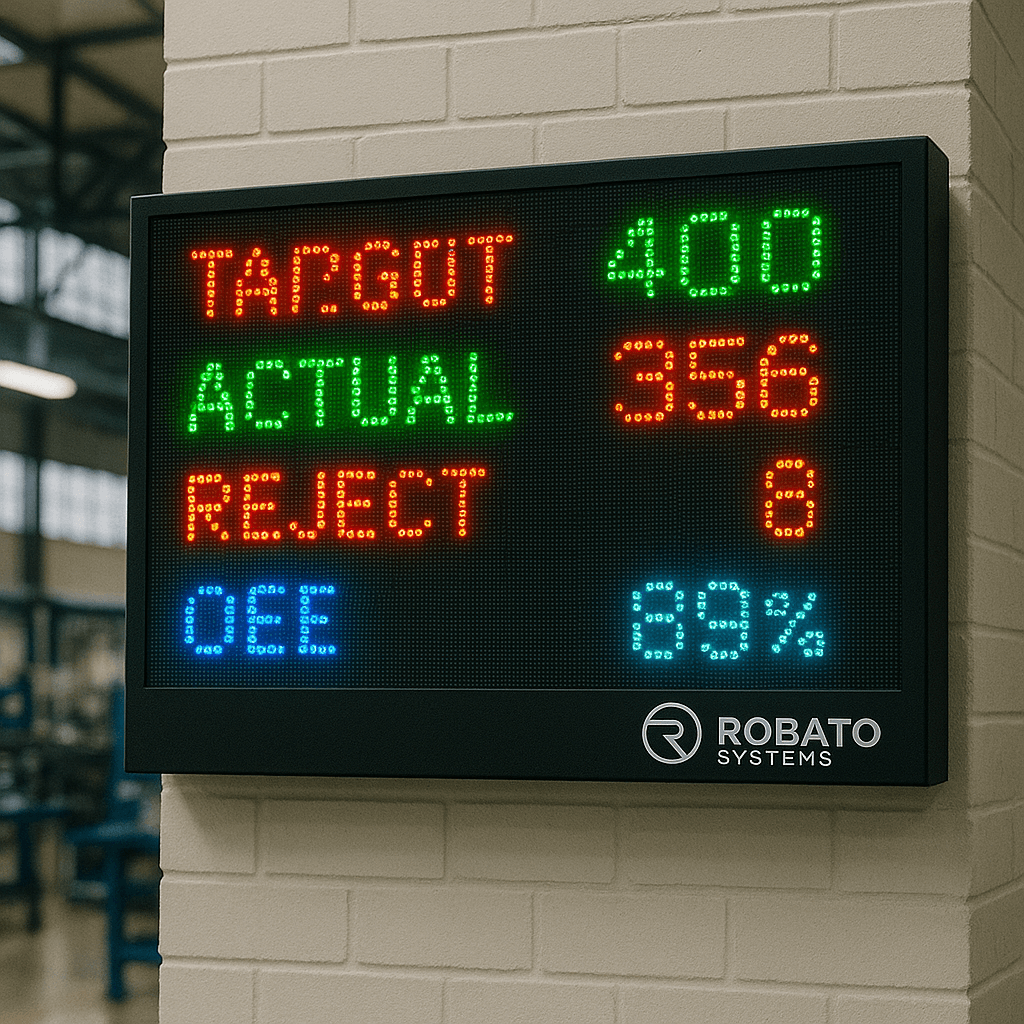
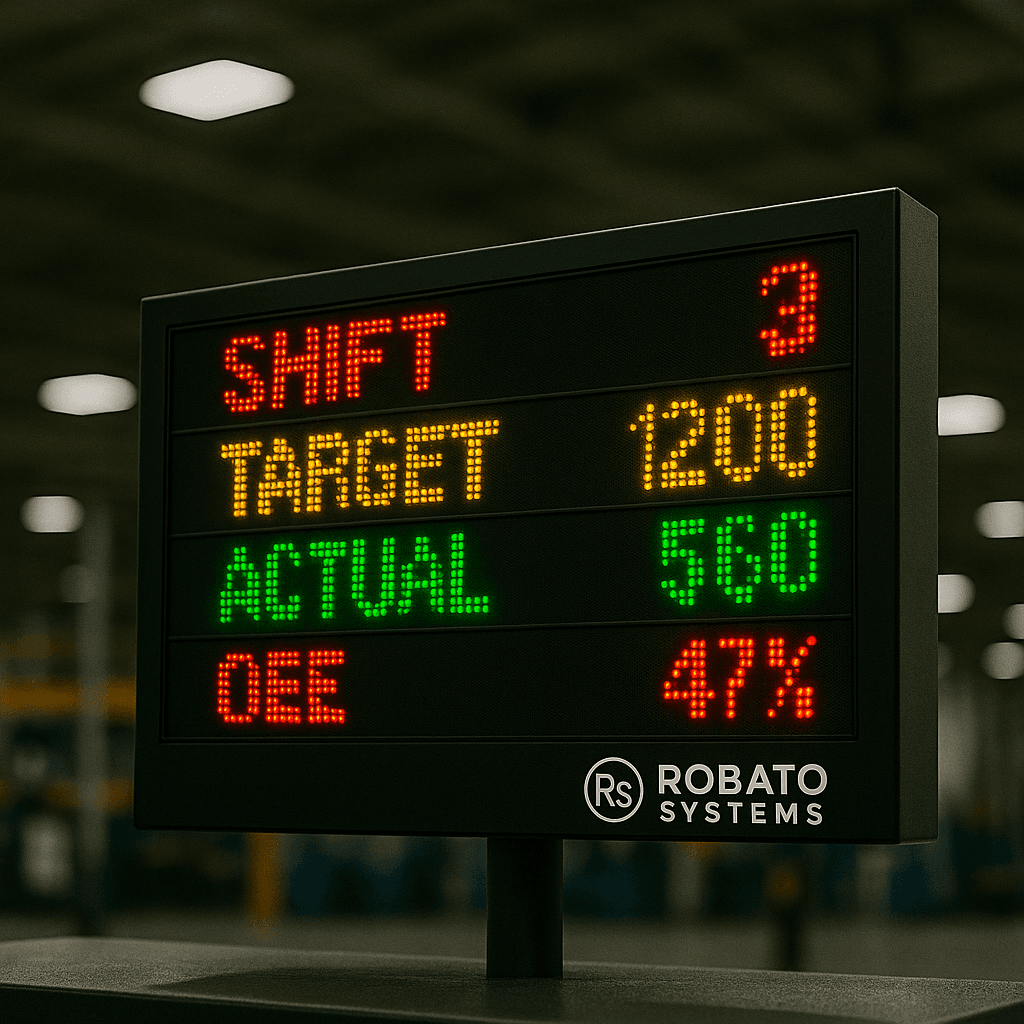
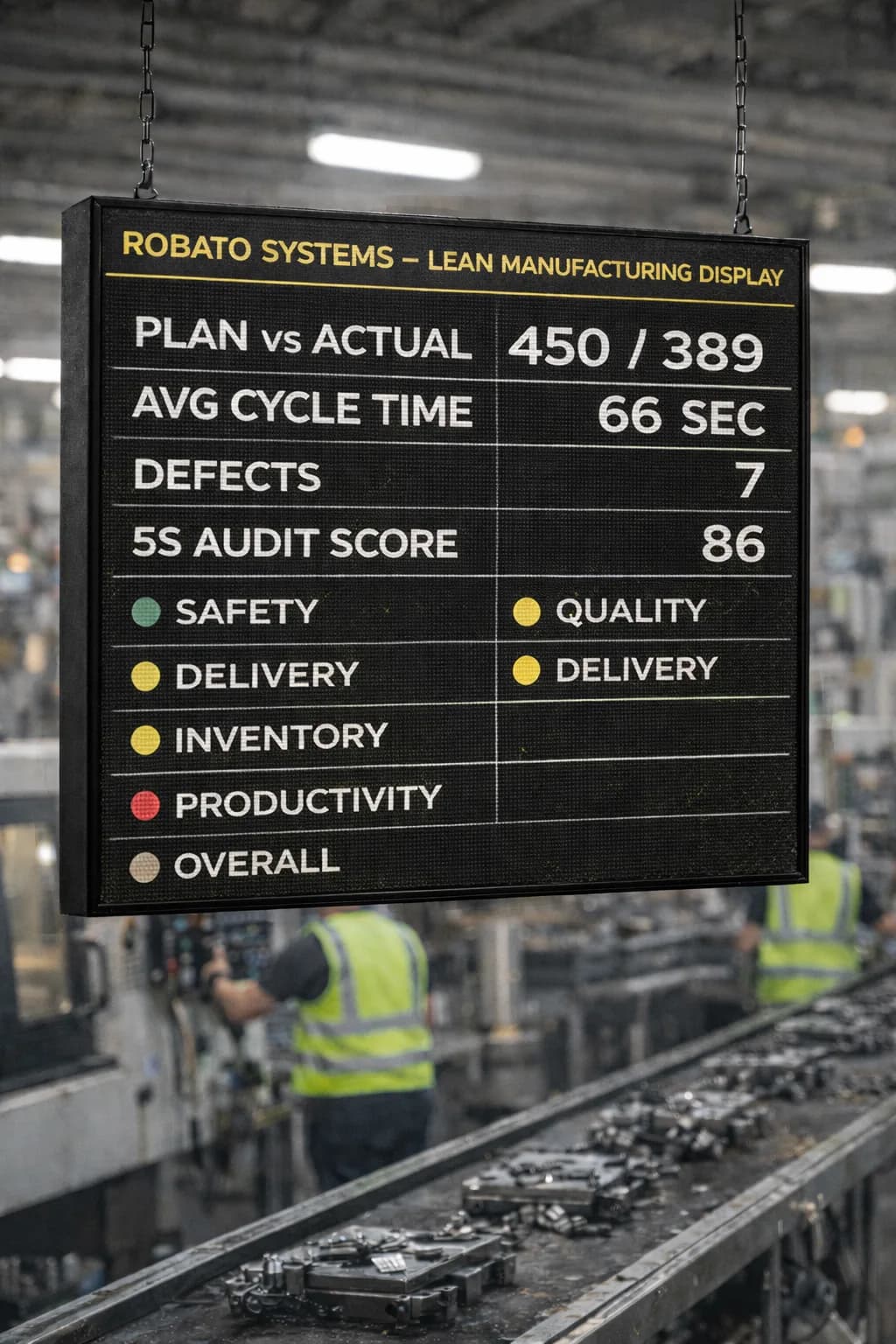
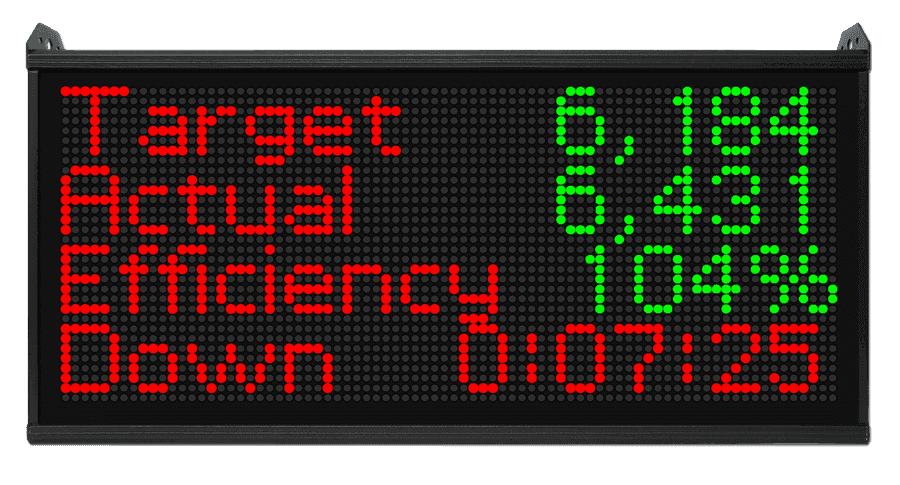
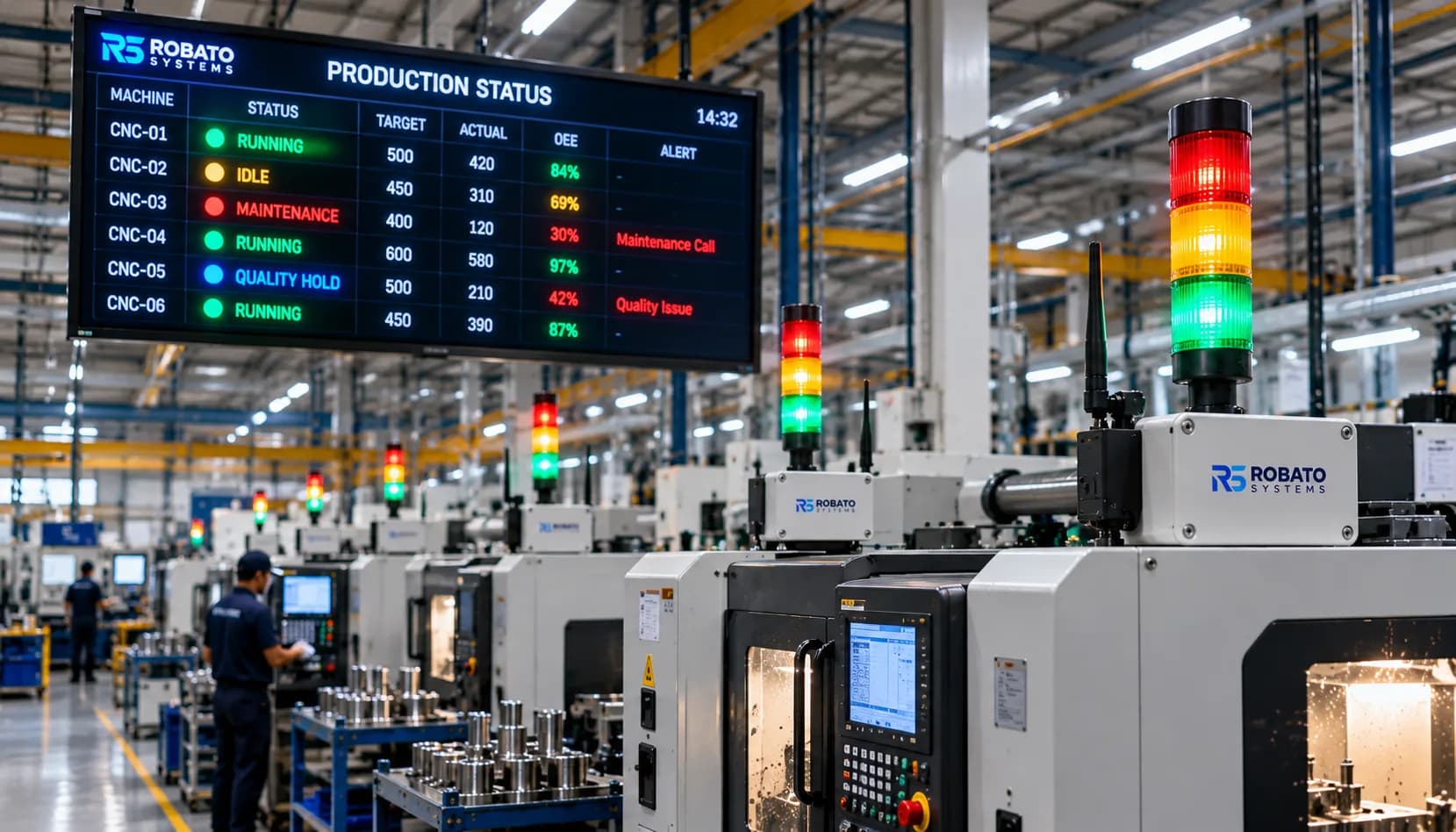
Machine downtime is one of the major challenges faced by manufacturing companies. When production equipment stops unexpectedly, production targets can be delayed, operators may remain idle, and delivery schedules can be affected.
Many factories still depend on manual registers, spreadsheets, or operator reports to record machine downtime. While these methods can provide basic information, they may not provide the real-time visibility required to understand production losses.
Downtime Monitoring Software provides a digital way to track machine stoppages, record downtime events, analyze downtime causes, and understand how equipment interruptions affect production.
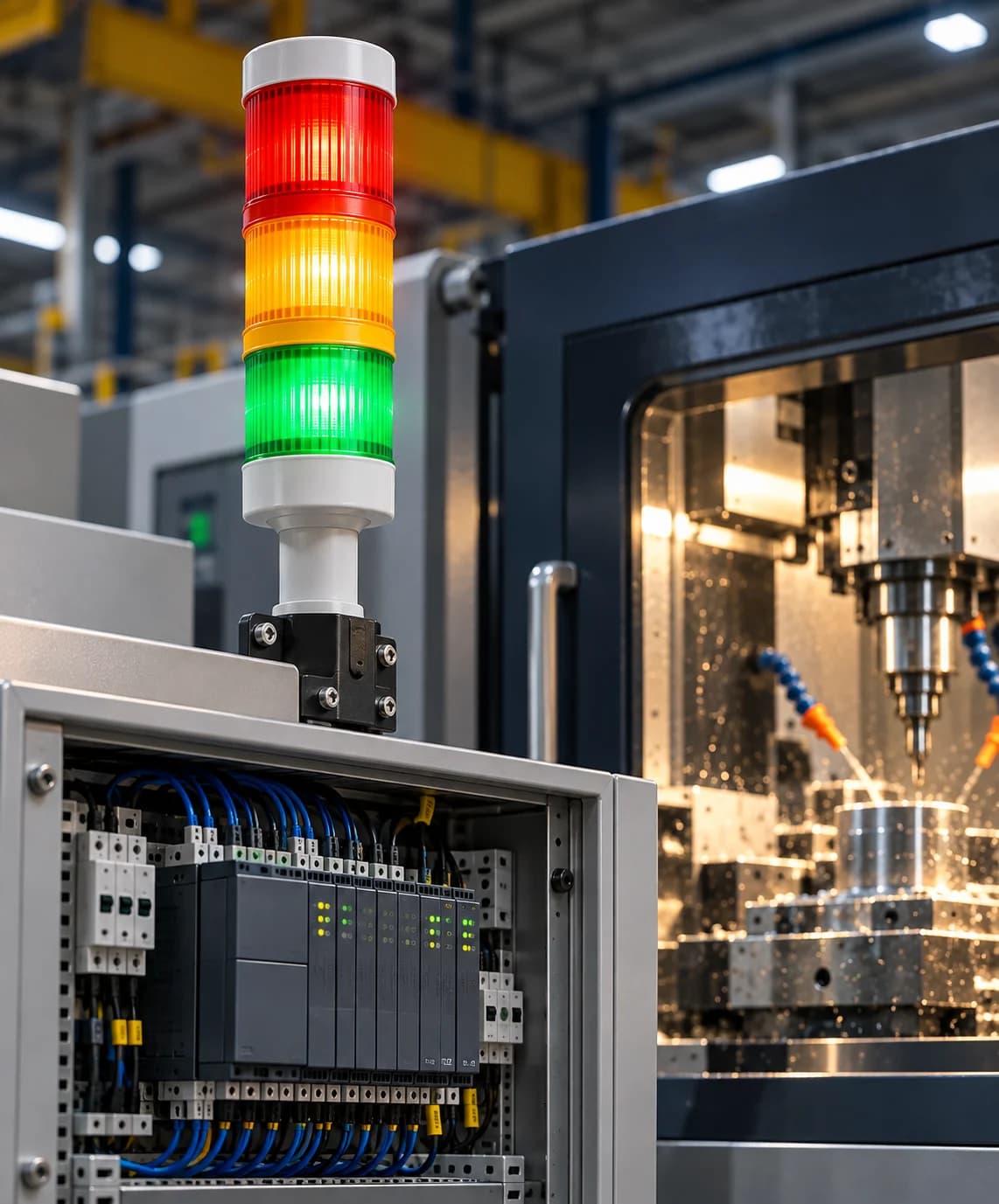
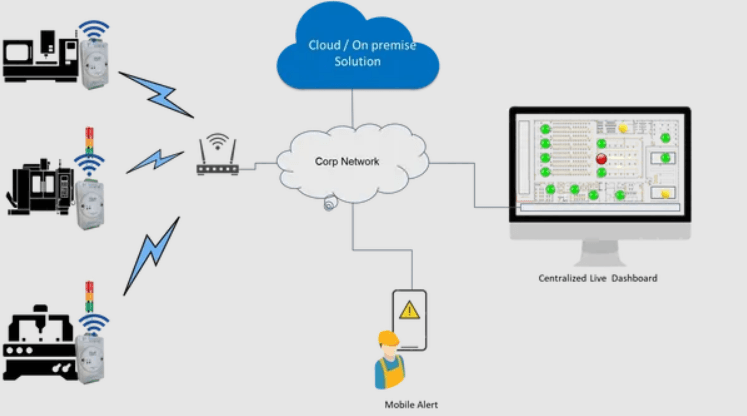
By connecting machines, sensors, PLCs, or Industrial IoT devices to a monitoring system, manufacturers can gain better visibility into equipment performance and production interruptions.
What is Downtime Monitoring Software?
Downtime Monitoring Software is a digital manufacturing solution used to monitor and record machine downtime.
The system can collect information about when a machine starts, stops, becomes idle, or experiences a production interruption.
Depending on the implementation, the software can monitor:
- Machine status
- Downtime duration
- Downtime events
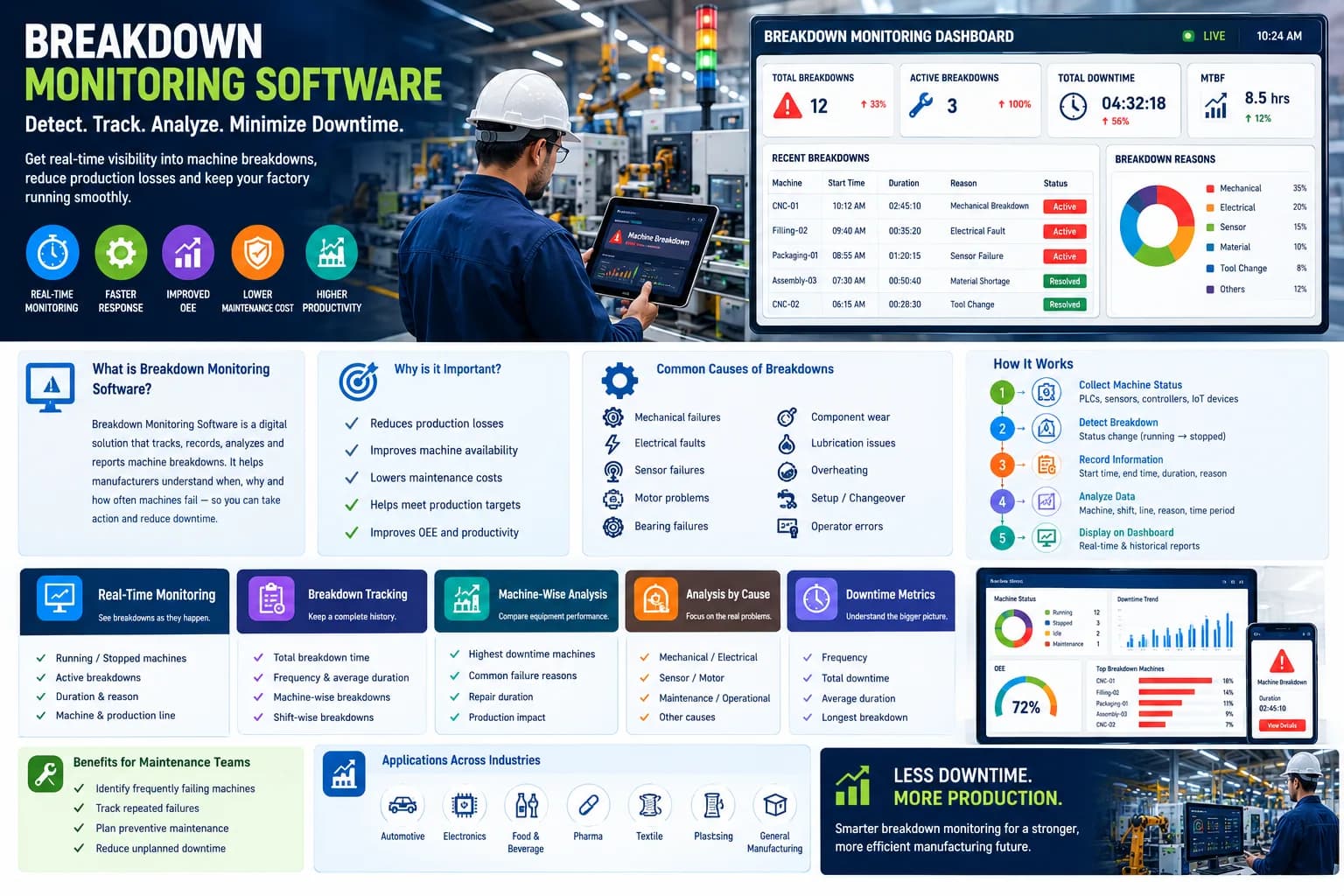
- Machine breakdowns
- Downtime reasons
- Production losses
- Shift-wise downtime
- Machine-wise downtime
- Production line performance
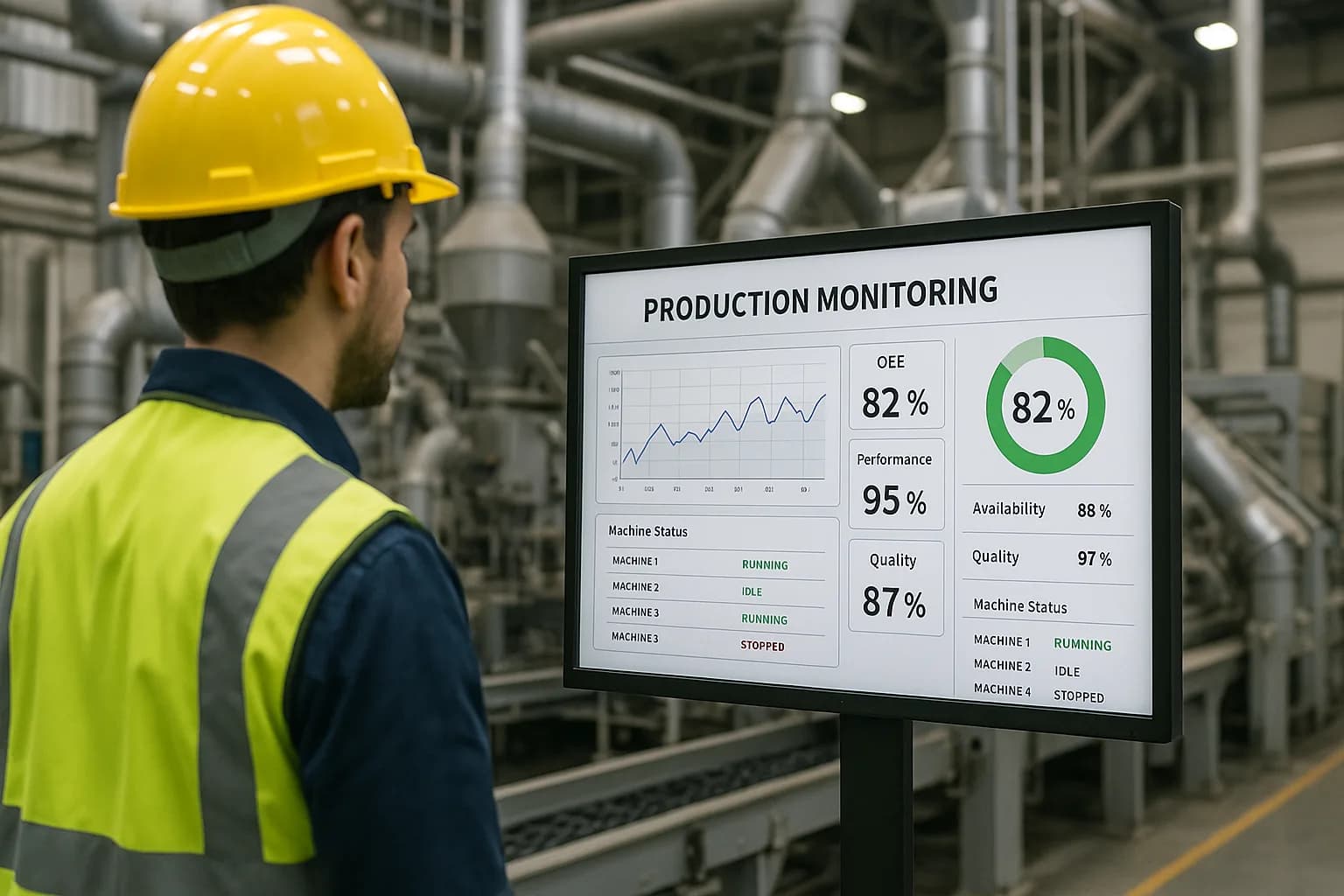
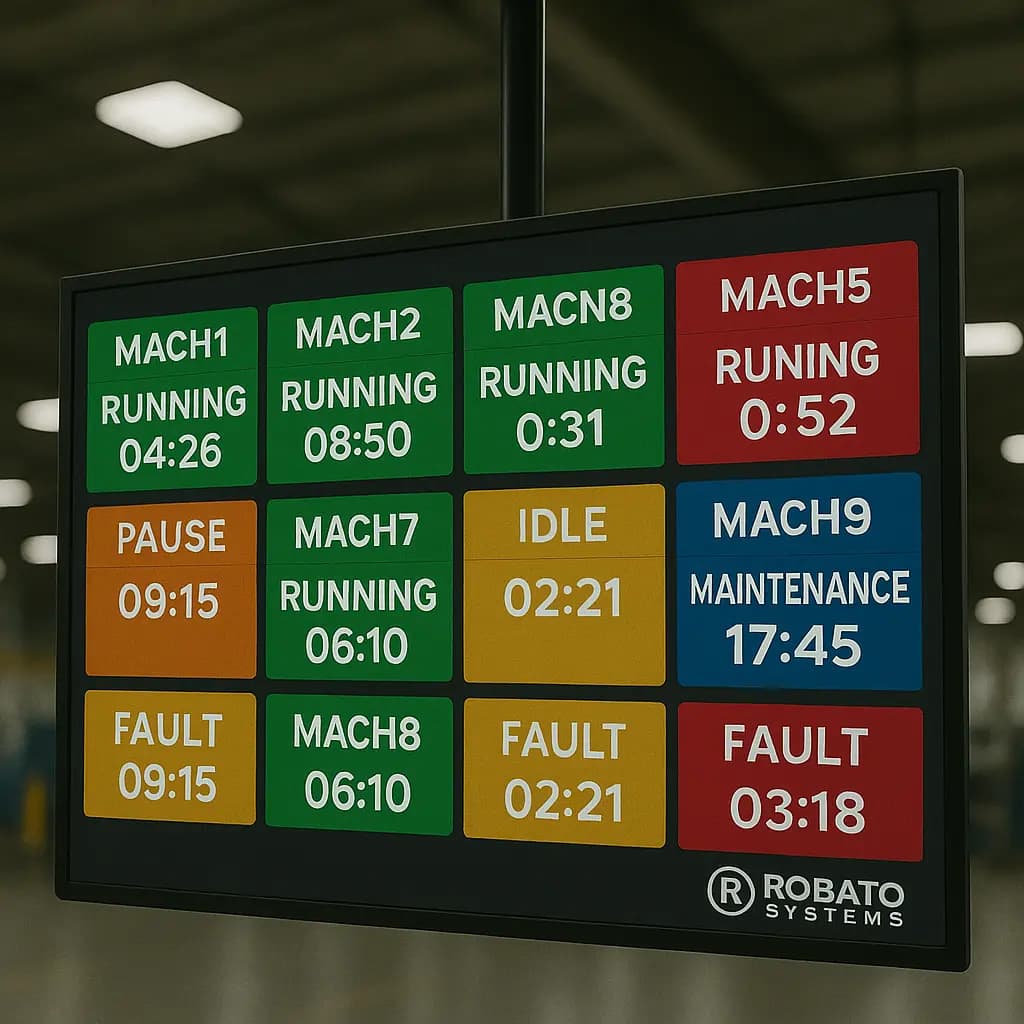
This information can be displayed through a digital dashboard for production and maintenance teams.
Why is Machine Downtime Important?
Every minute of unnecessary machine downtime can reduce available production time.
Downtime can occur because of:
- Machine breakdowns
- Electrical problems
- Mechanical failures
- Material shortages
- Tool changes
- Maintenance activities
- Operator-related issues
- Quality problems
- Setup and changeover activities
If these events are not monitored properly, it can be difficult to determine which problems are responsible for the largest production losses.
Downtime monitoring makes these losses easier to identify and analyze.
How Does Downtime Monitoring Software Work?
A typical downtime monitoring system works through several stages.
Machine Data Collection
The system receives information from machines and production equipment.
Data can be collected through:
- PLCs
- Sensors
- Machine controllers
- Industrial IoT devices
- Production counters
- Industrial gateways
Machine Status Detection
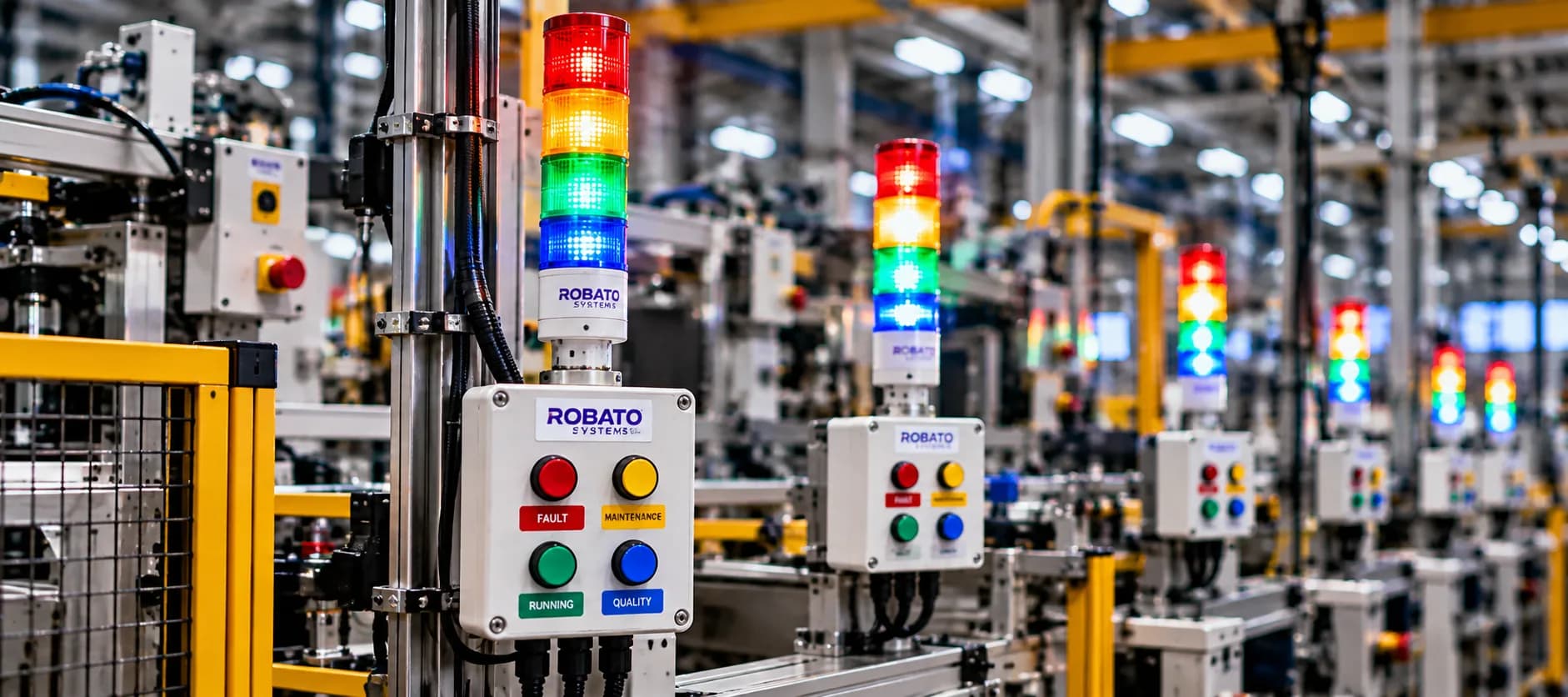
The system identifies whether a machine is:
- Running
- Stopped
- Idle
- Under maintenance
- Experiencing a production interruption
Downtime Recording
When a machine stops, the system records the downtime event.
Information can include the machine name, start time, stop time, duration, and downtime reason.
Dashboard Monitoring
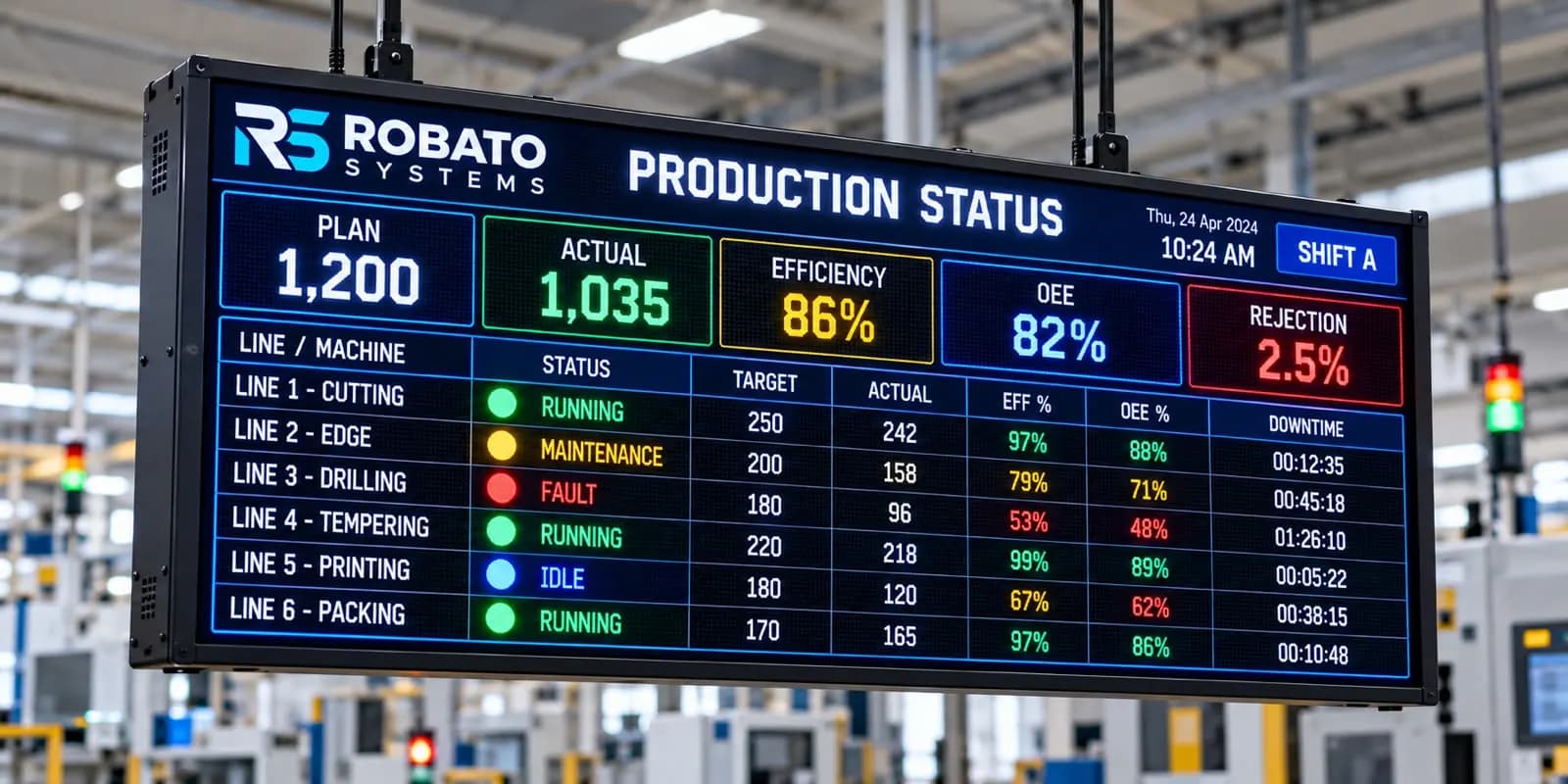
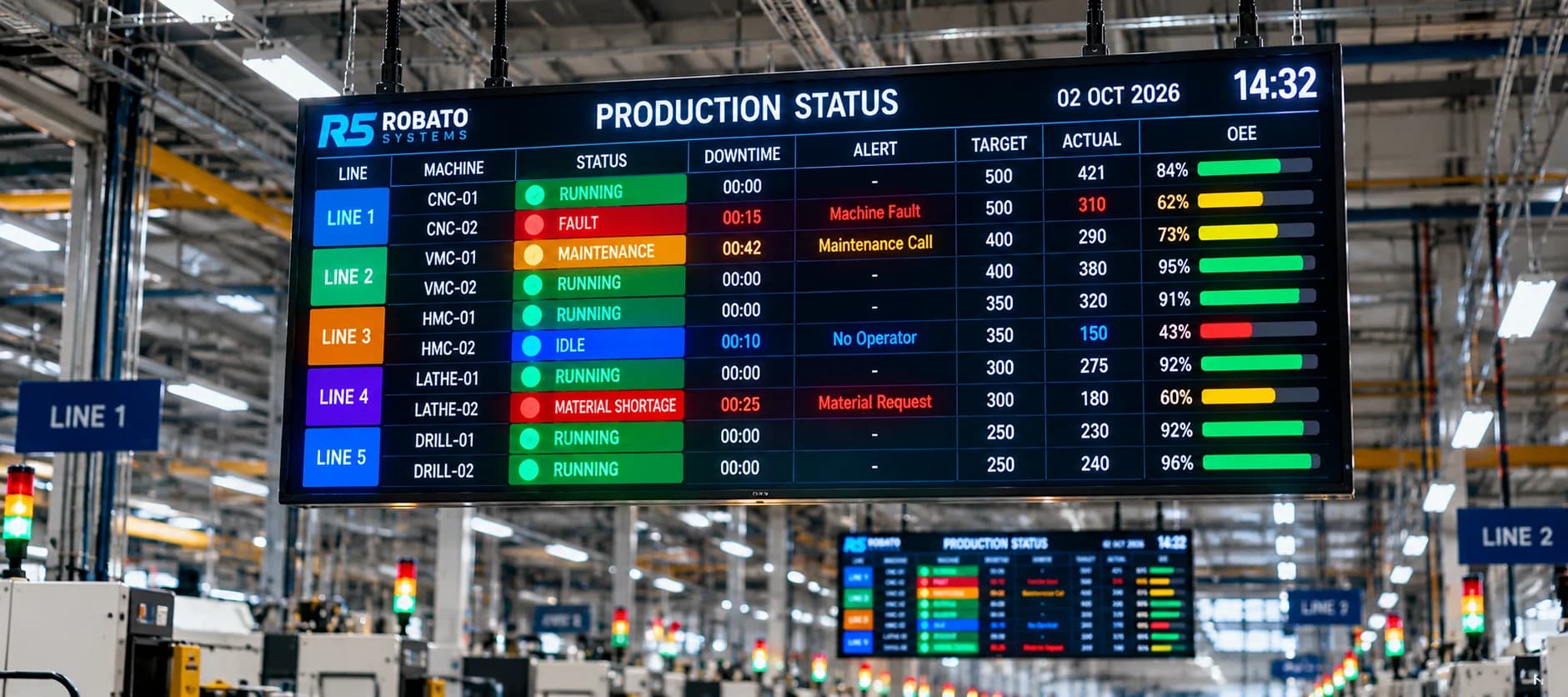
The collected information is displayed through a production dashboard.
Production and maintenance teams can use the dashboard to understand current and historical downtime.
Real-Time Downtime Monitoring
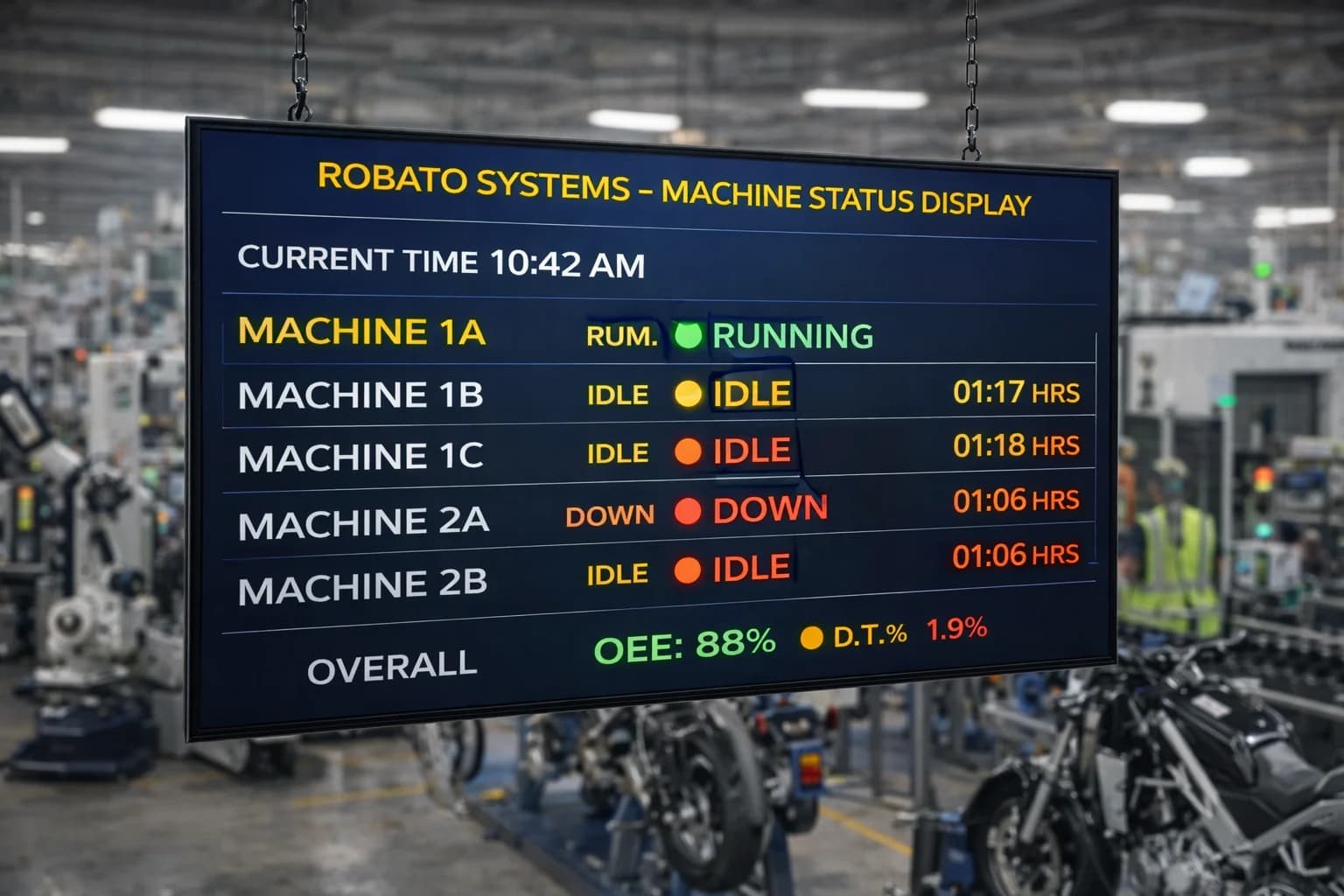
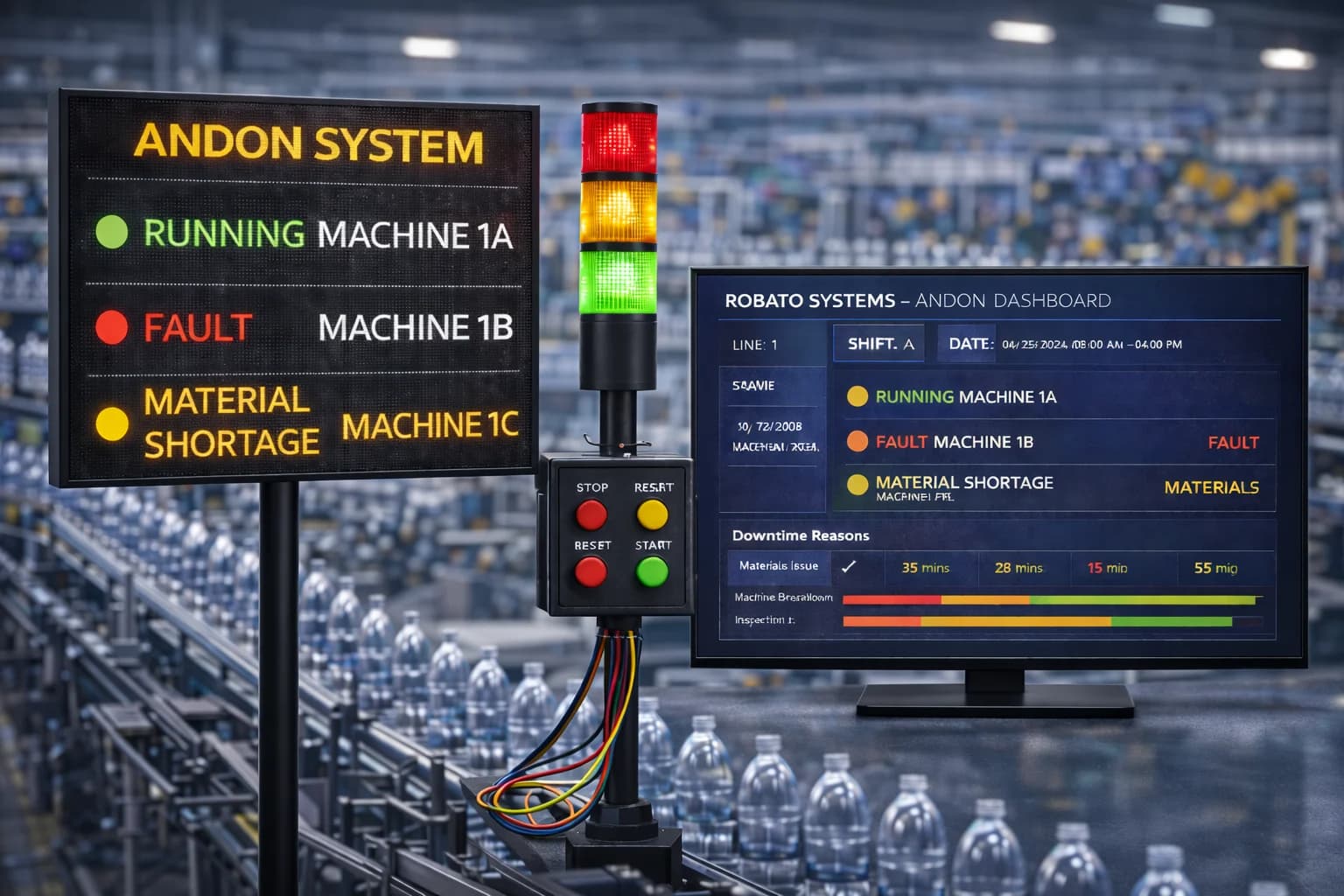
Real-time monitoring allows production teams to see machine stoppages while they are happening.
For example, when a machine stops unexpectedly, the monitoring system can detect the event and update the machine status on the dashboard.
This can help teams respond faster instead of waiting until the end of a shift to discover the downtime.
Real-time information can include:
- Current machine status
- Active downtime
- Downtime duration
- Production line
- Machine name
- Downtime reason
Machine Downtime Tracking
Machine downtime tracking helps manufacturers maintain a historical record of equipment stoppages.
The system can track:
- Number of downtime events
- Total downtime
- Average downtime
- Longest downtime
- Machine-wise downtime
- Shift-wise downtime
- Date-wise downtime
Historical tracking makes it easier to identify machines that repeatedly experience downtime.
Automatic Downtime Detection
Manual downtime recording can depend heavily on operators entering information correctly.
Automatic downtime monitoring can reduce this dependency by detecting machine status directly from connected equipment.
When the machine stops, the system can automatically record the event.
This can improve the accuracy and consistency of downtime information.
Downtime Reason Tracking
Knowing that a machine stopped is useful, but knowing why it stopped is even more valuable.
Downtime reasons can include:
- Mechanical breakdown
- Electrical fault
- Material shortage
- Tool change
- Setup
- Maintenance
- Quality issue
- Operator issue
- Changeover
Categorizing downtime helps manufacturers understand which causes contribute most to production losses.
Downtime Analysis
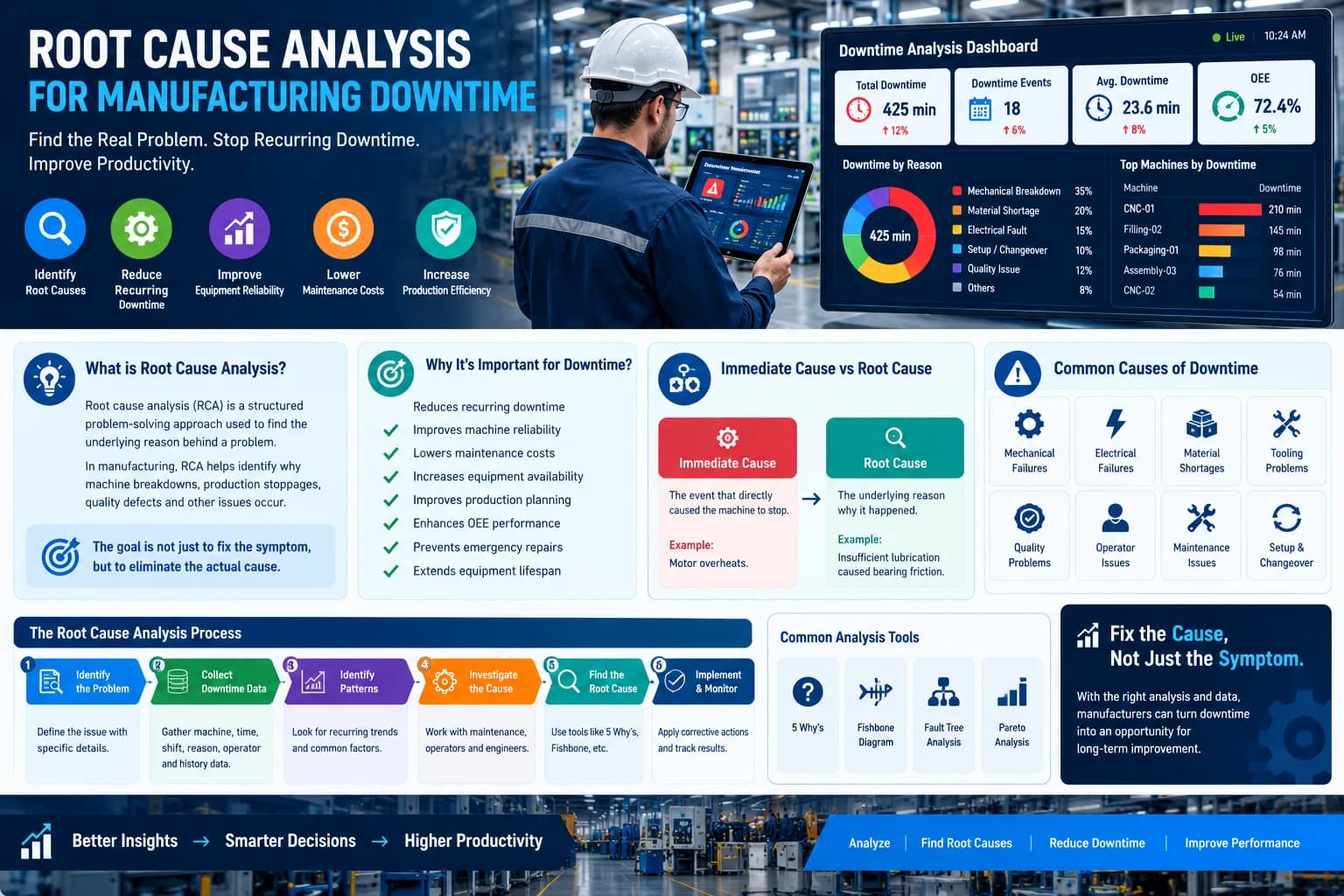
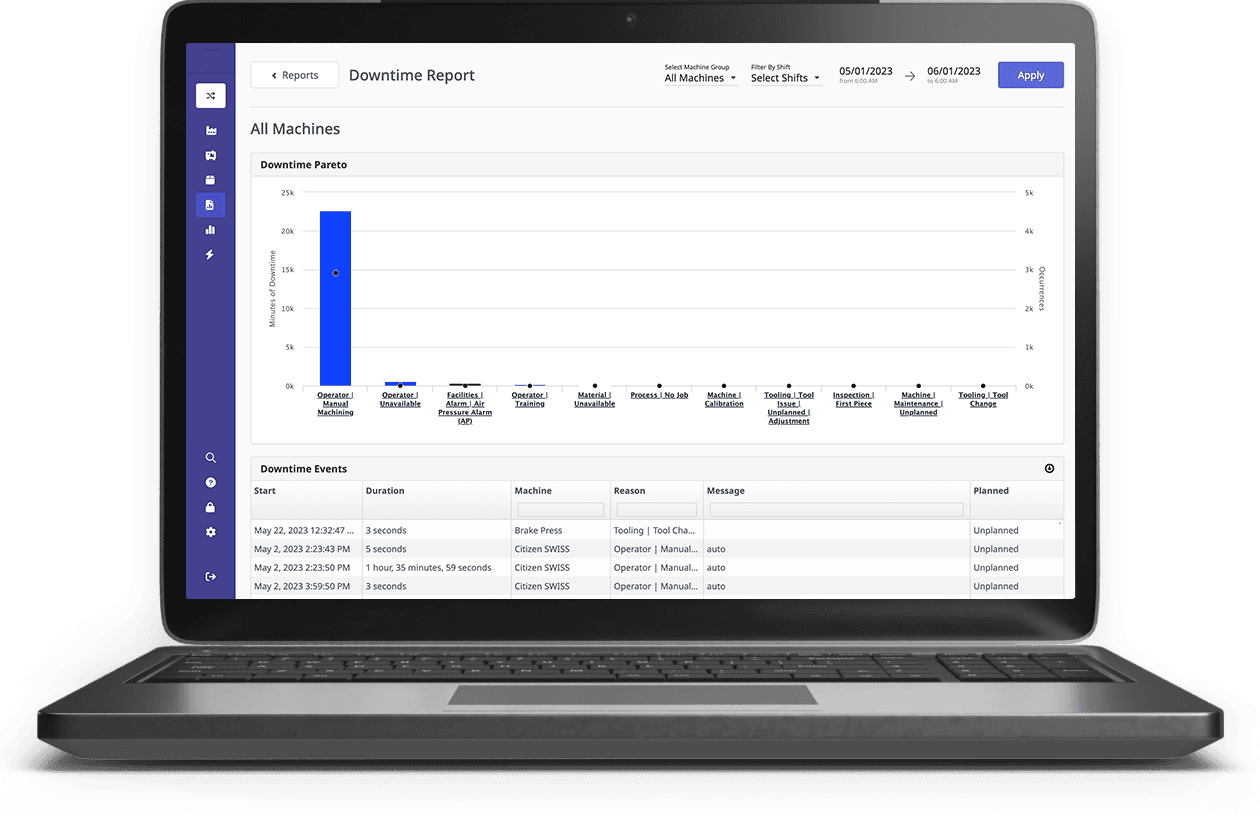
Downtime analysis involves studying collected downtime information to identify recurring problems and major sources of production loss.
Manufacturers can analyze downtime by:
- Machine
- Production line
- Shift
- Department
- Downtime reason
- Date
- Duration
For example, if one machine consistently accounts for a large percentage of total downtime, maintenance and production teams can investigate that machine in greater detail.
Downtime and Production Losses
Machine downtime directly affects available production time.
When a machine stops, production may be delayed or completely interrupted.
Downtime monitoring helps manufacturers understand:
- How long machines remain stopped
- How frequently machines stop
- Which machines lose the most production time
- Which downtime reasons occur most frequently
This information can help production teams prioritize improvement activities.
Benefits of Downtime Monitoring Software
Better Production Visibility
Downtime monitoring provides a centralized view of machine stoppages and production interruptions.
Faster Response
Real-time machine status helps teams identify active downtime more quickly.
Accurate Downtime Records
Automatic data collection can reduce errors associated with manual downtime recording.
Better Maintenance Planning
Historical downtime information helps maintenance teams identify machines with recurring problems.
Reduced Production Losses
Understanding downtime causes allows manufacturers to focus on reducing the most significant sources of lost production time.
Better Performance Analysis
Downtime data can be combined with production and OEE information to understand overall equipment performance.
Reduced Manual Reporting
Automated downtime records reduce the need to maintain manual registers and spreadsheets.
Downtime Monitoring for Production Managers
Production managers can use downtime monitoring software to understand how machine stoppages are affecting production.
They can monitor:
- Current downtime
- Total downtime
- Machine status
- Production output
- Downtime reasons
- Shift performance
- Production losses
This information can help production managers make faster operational decisions.
Downtime Monitoring for Maintenance Teams
Maintenance teams need accurate information about machine failures and equipment interruptions.
Downtime monitoring can help them identify machines with:
- Frequent breakdowns
- Long downtime events
- Repeated failure patterns
- High maintenance downtime
Historical downtime information can also support preventive maintenance planning.
Downtime Monitoring for Plant Managers
Plant managers can use downtime data to compare equipment and production lines.
They can identify:
- Underperforming machines
- High-downtime production lines
- Frequent breakdown causes
- Production areas requiring improvement
This can help management prioritize investments and improvement activities.
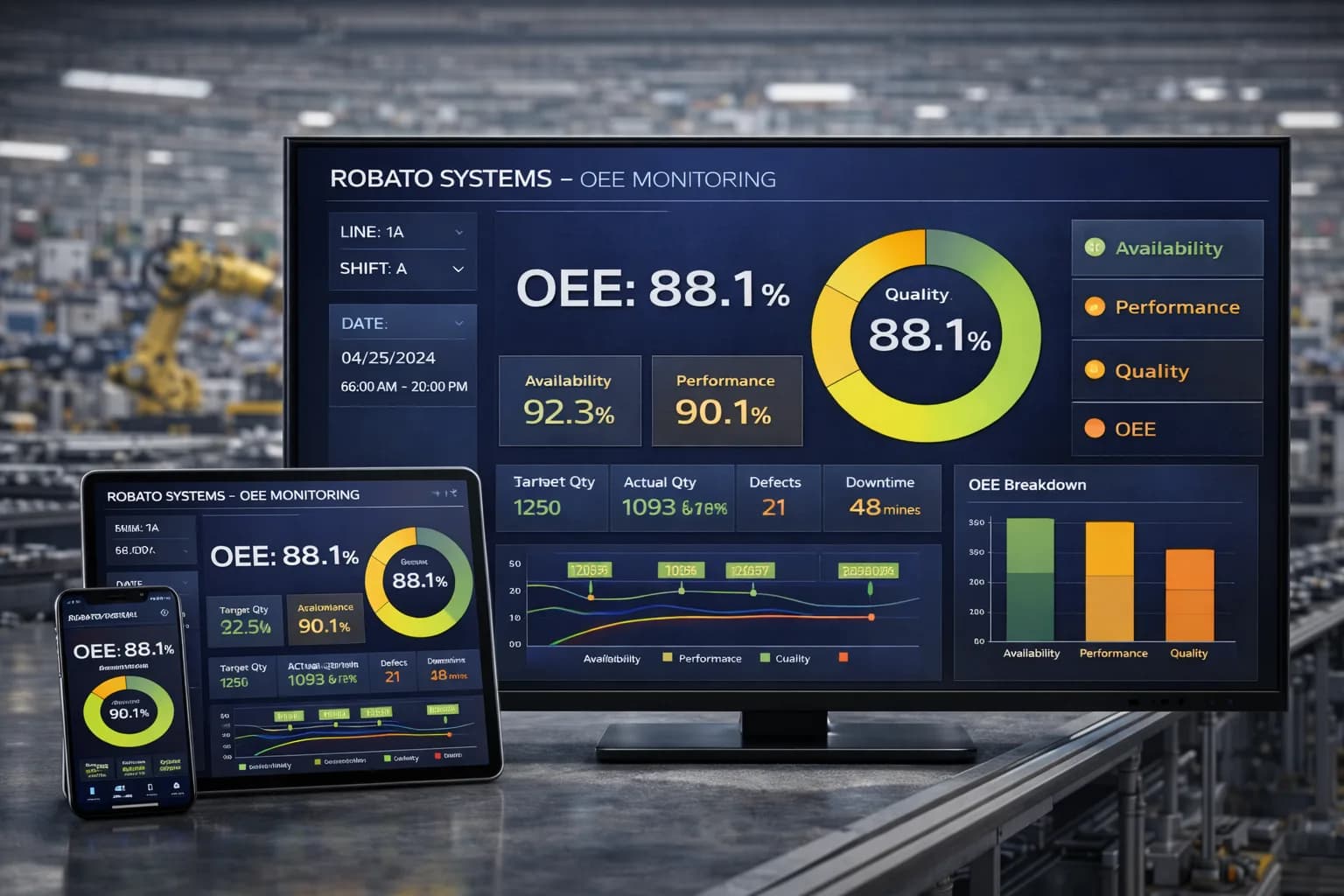
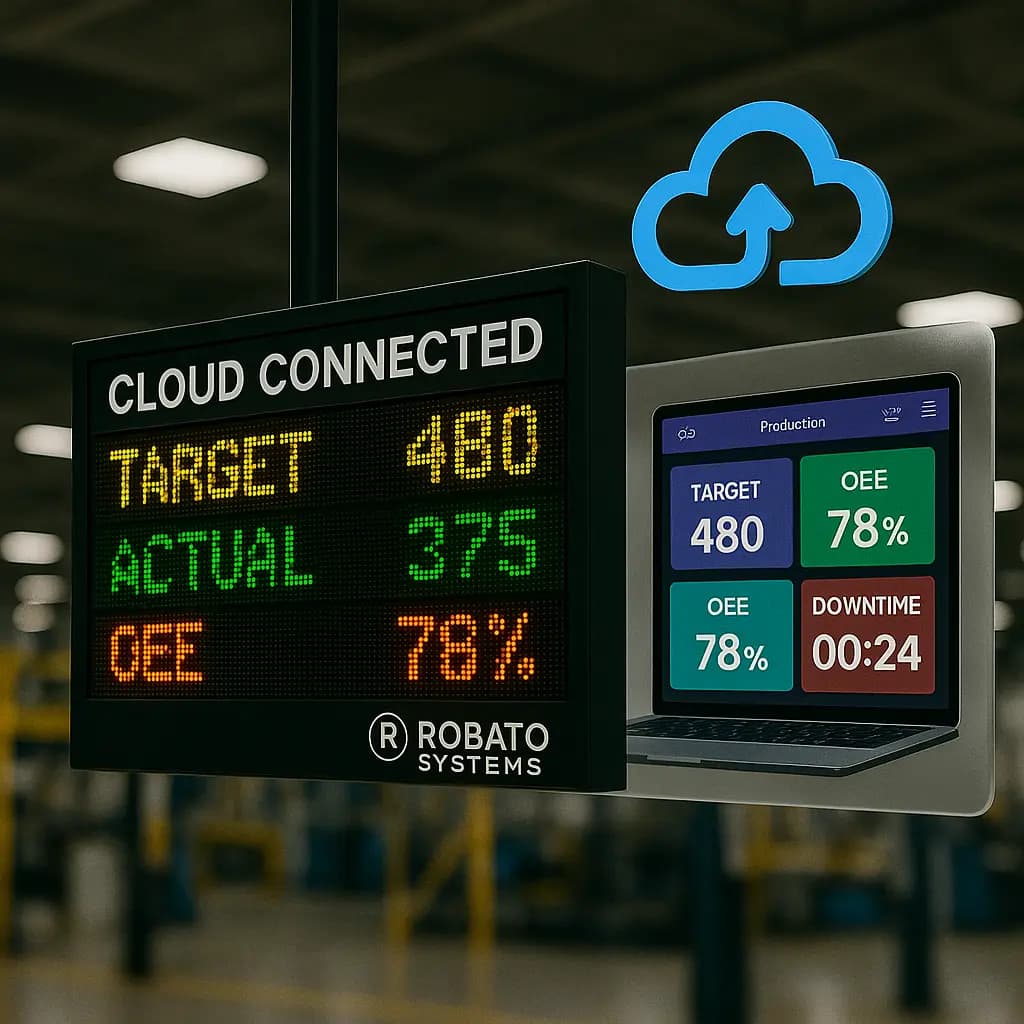
Downtime Monitoring and OEE
Downtime monitoring and OEE monitoring are closely connected.
OEE considers availability, performance, and quality.
Downtime directly affects the availability component of OEE.
By tracking downtime accurately, manufacturers can better understand why equipment availability is decreasing.
Downtime information can therefore become an important part of an OEE monitoring system.
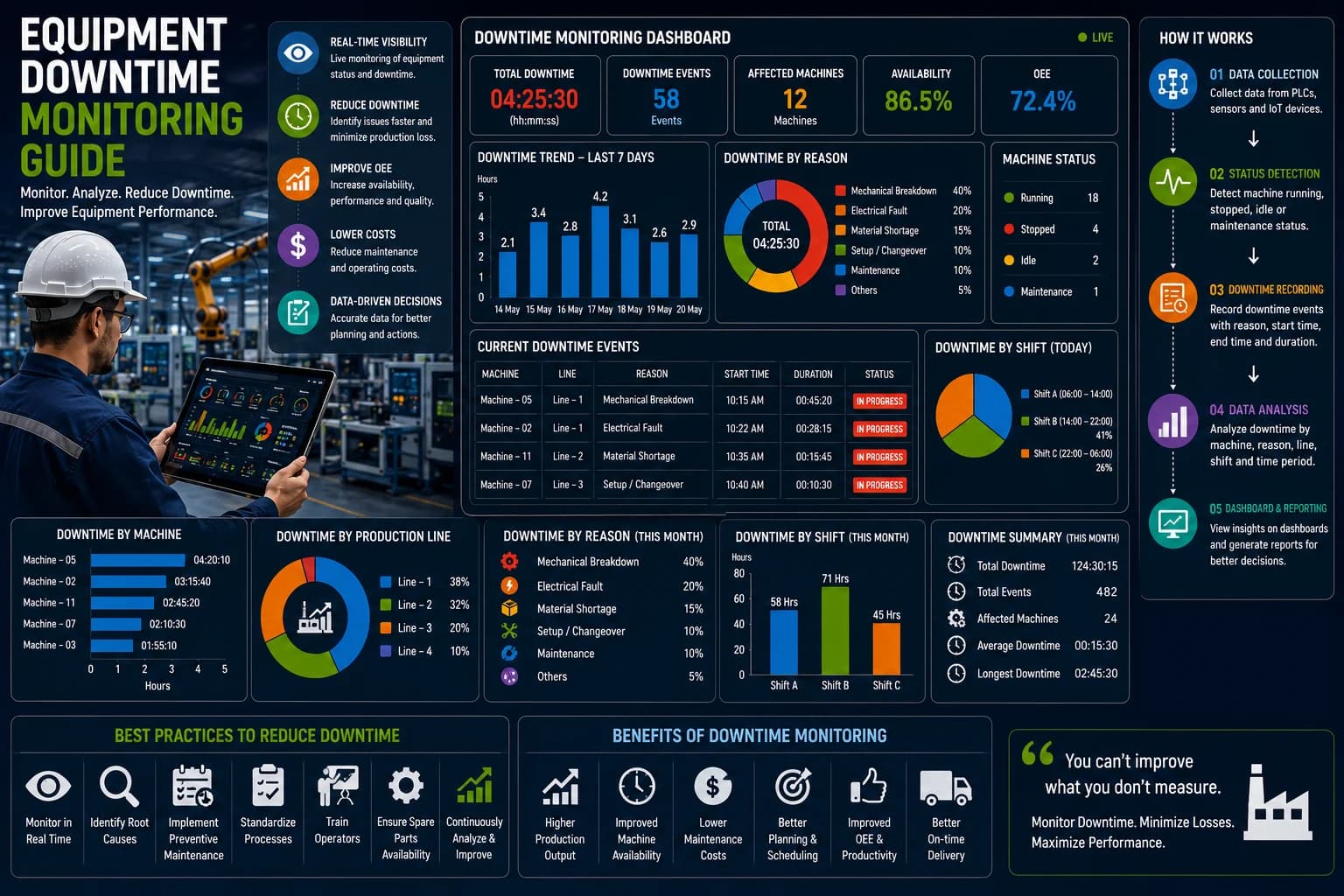
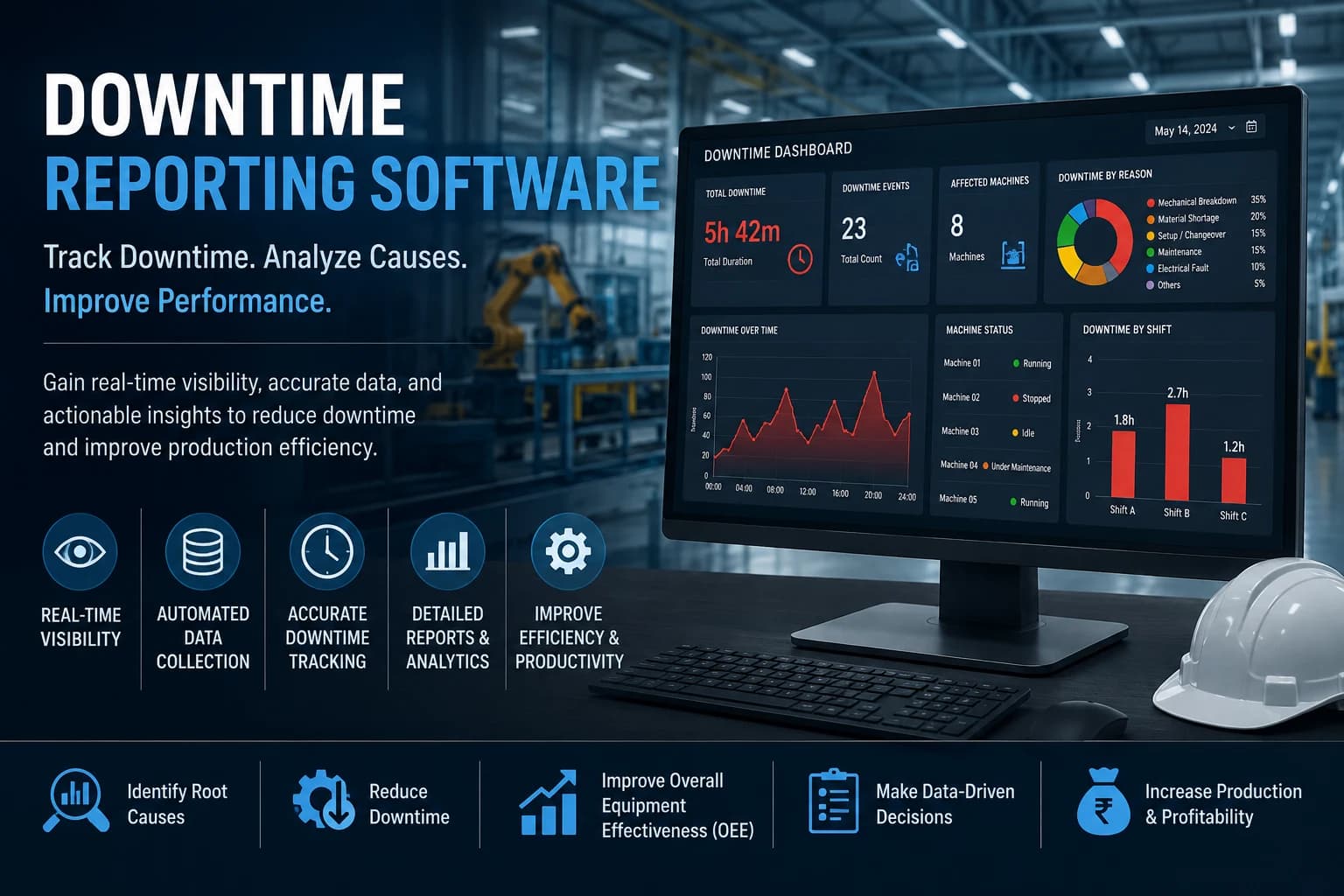
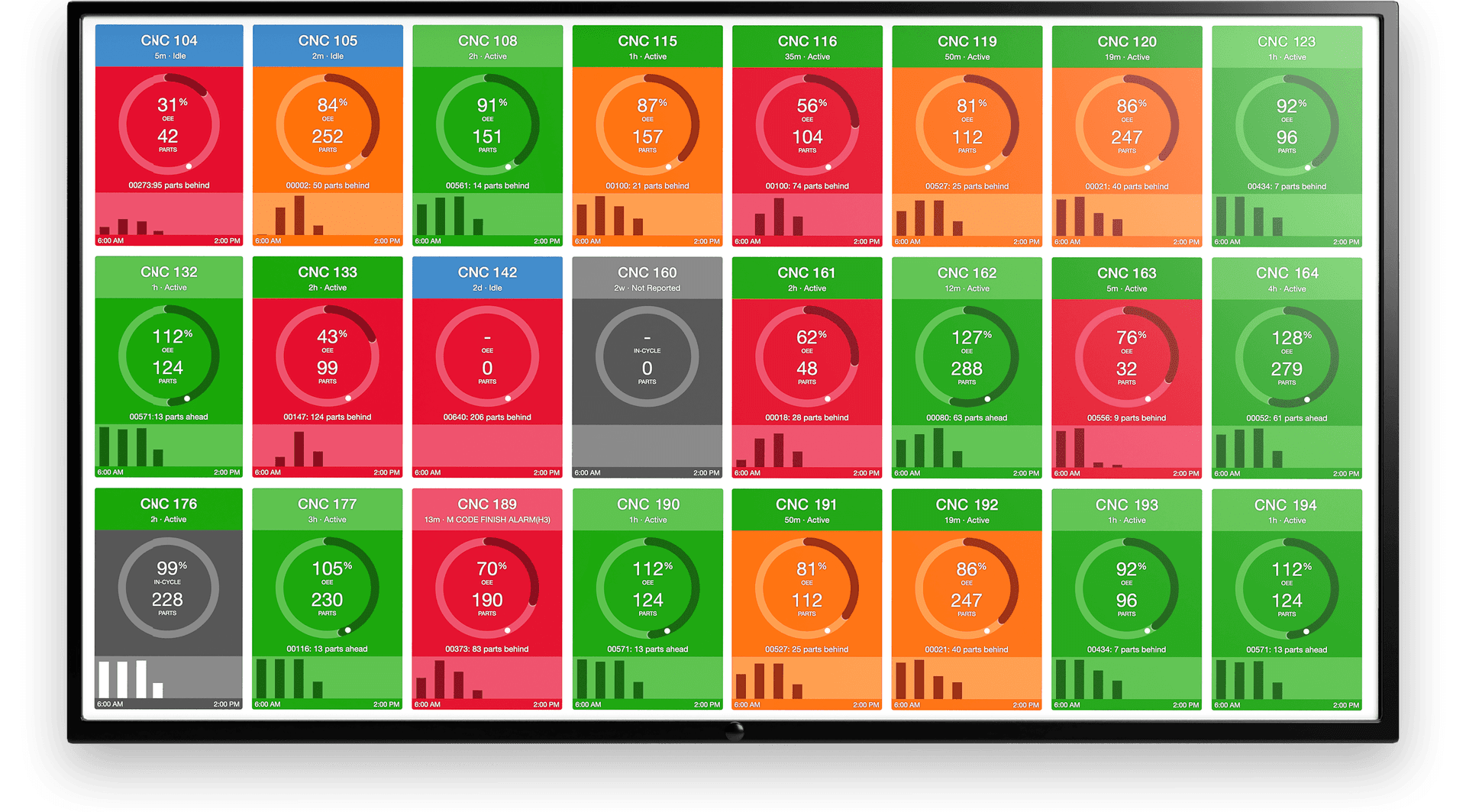
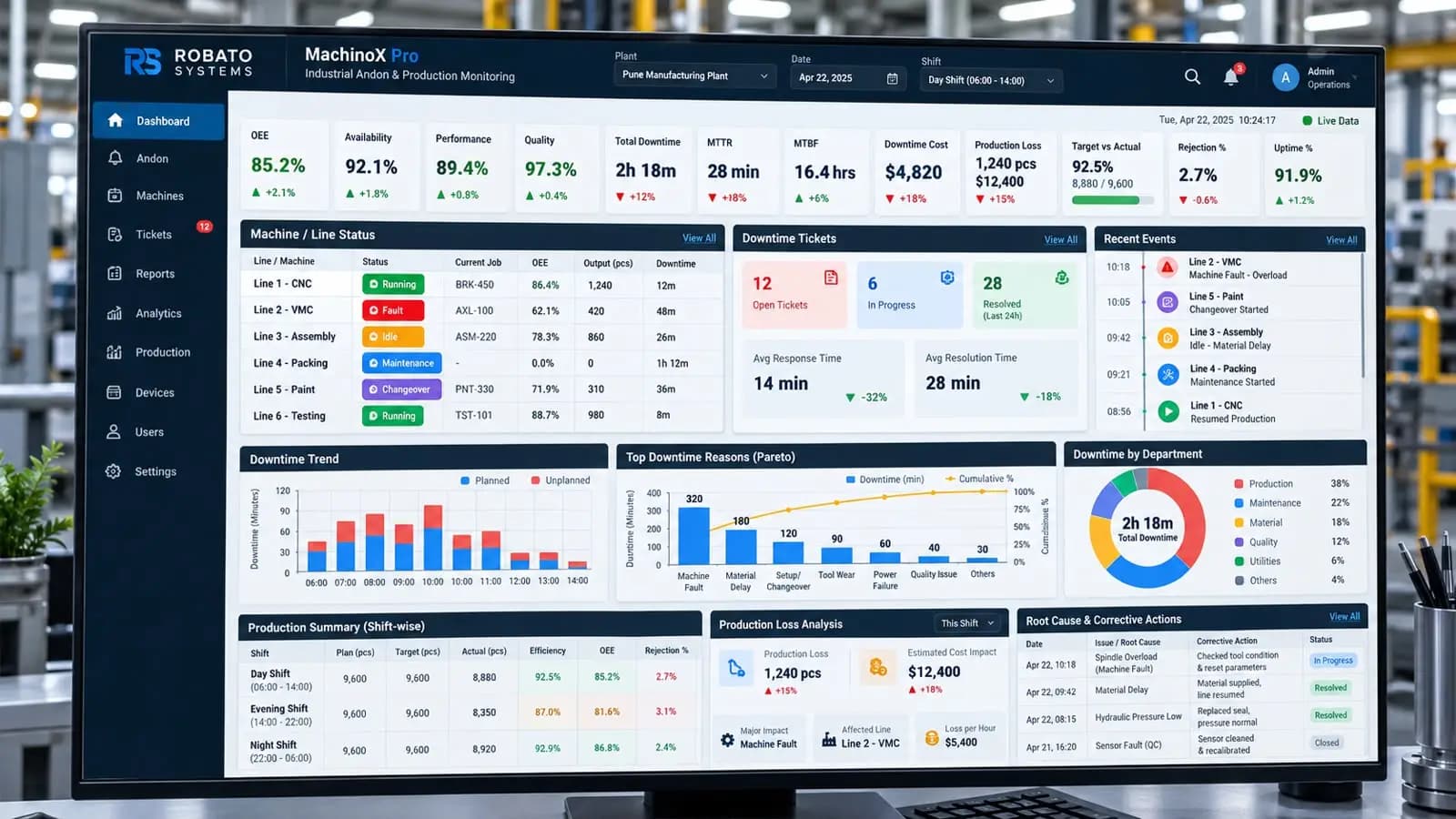
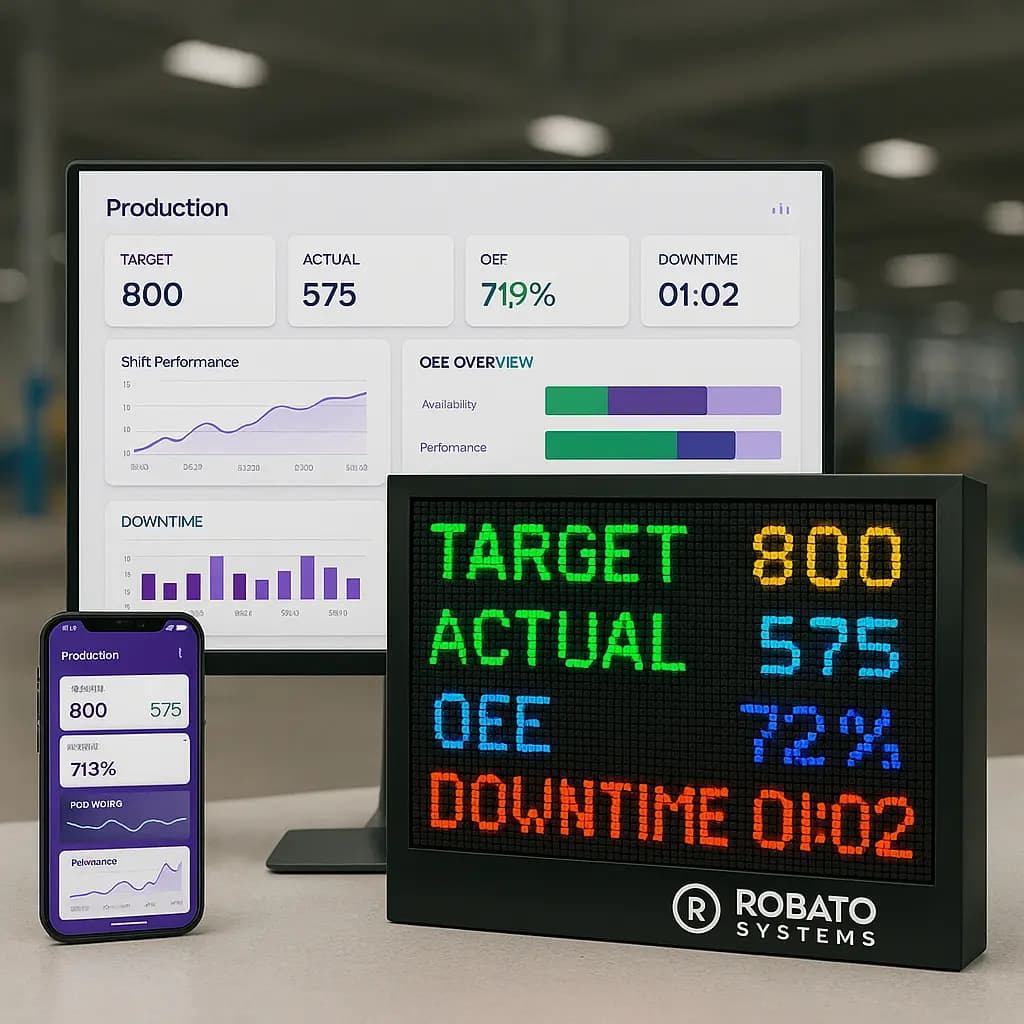
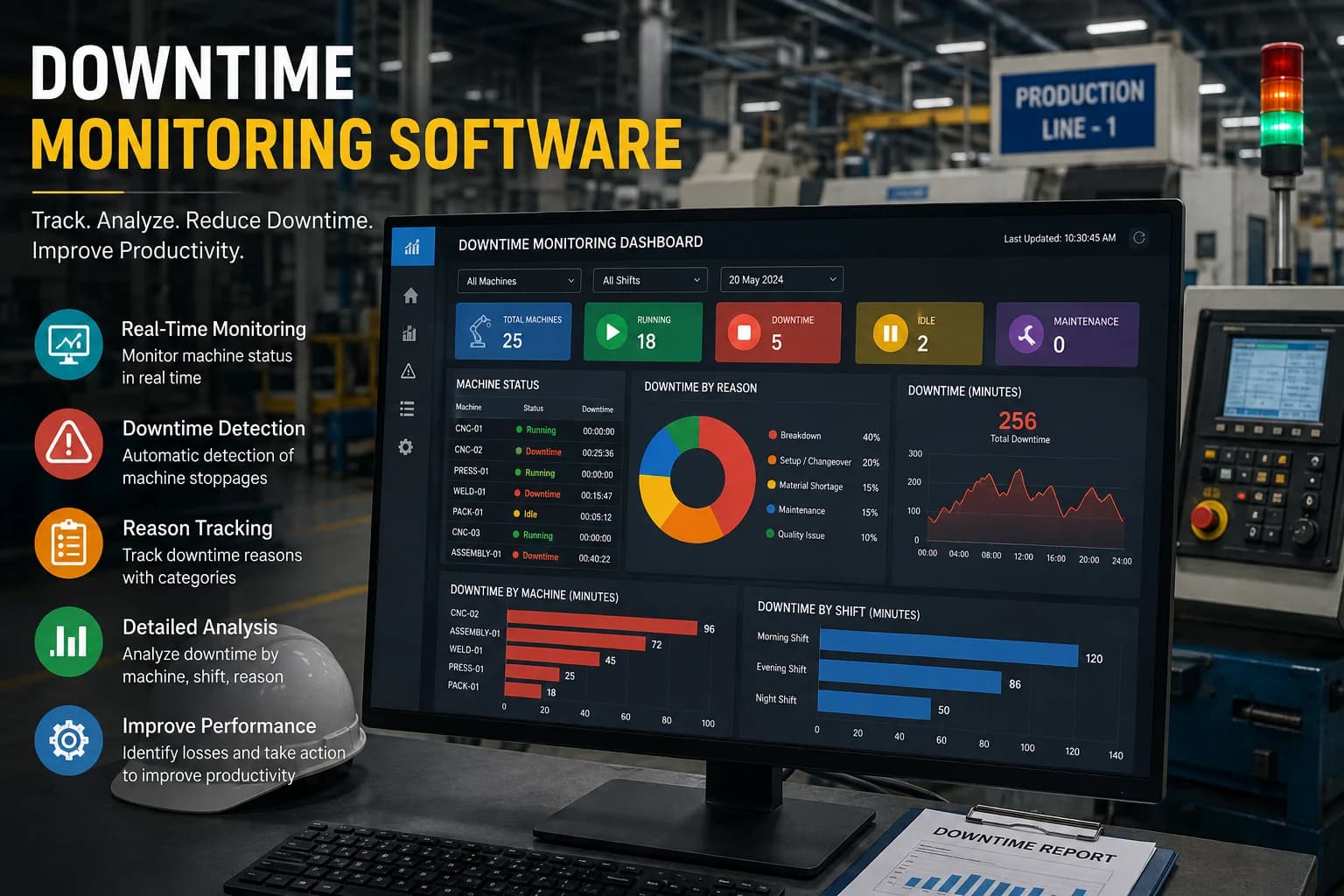
Downtime Monitoring Dashboard
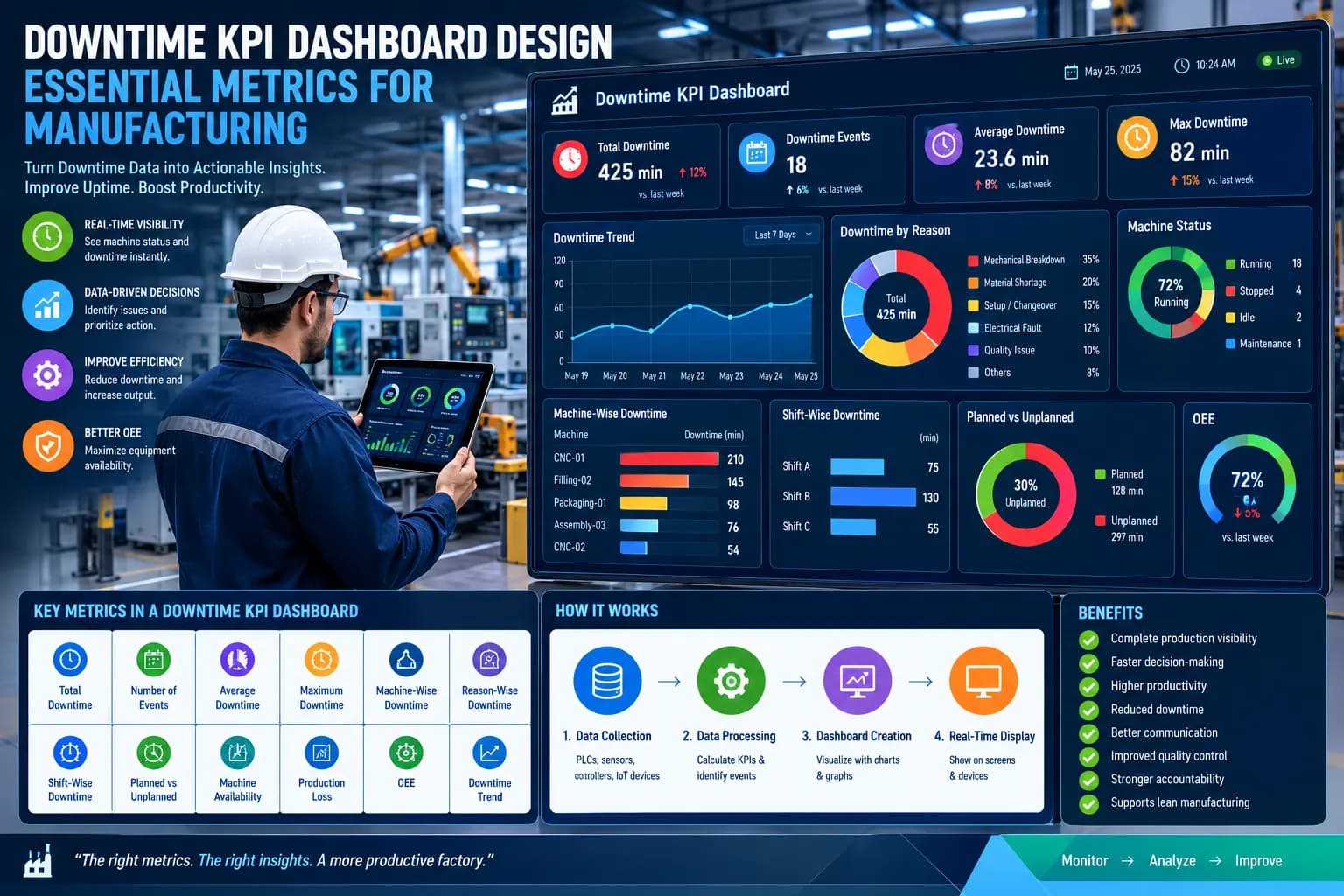
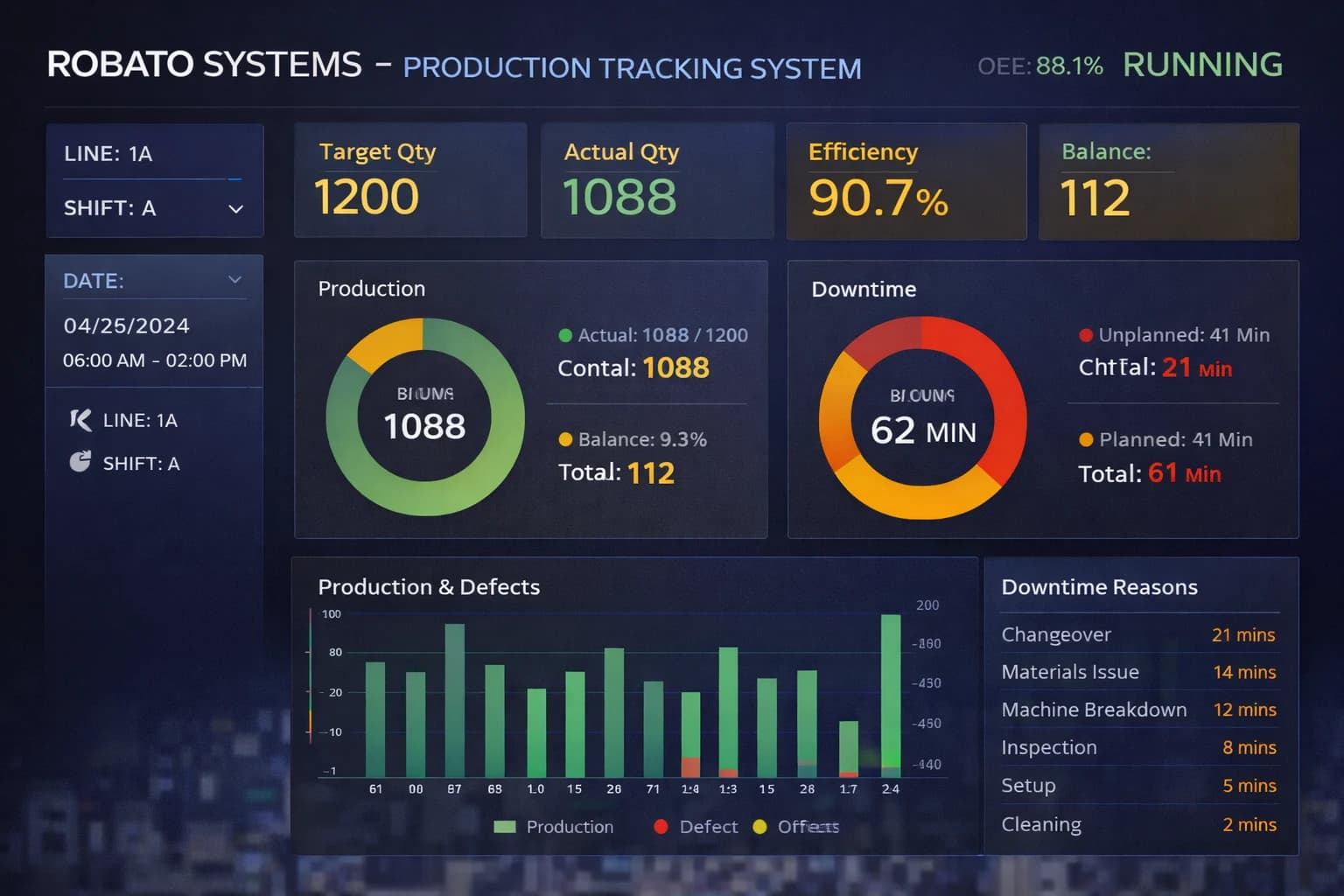
A downtime monitoring dashboard provides a centralized view of machine stoppages.
A dashboard can display:
- Current machine status
- Total downtime
- Active downtime
- Downtime by machine
- Downtime by reason
- Downtime by shift
- Number of breakdowns
- Production losses
A simple dashboard allows production teams to quickly identify machines that require attention.
Shift-Wise Downtime Monitoring
Downtime can vary significantly between production shifts.
Shift-wise analysis allows manufacturers to compare downtime across different operating periods.
Teams can analyze:
- Total downtime per shift
- Number of downtime events
- Average downtime
- Machine-wise downtime
- Downtime reasons
This can help identify recurring shift-level production issues.
Machine-Wise Downtime Monitoring
Machine-wise downtime analysis helps manufacturers identify equipment that causes significant production interruptions.
For example, if one machine consistently has more downtime than other machines, the maintenance team can investigate its condition, maintenance history, and operating environment.
Machine-wise monitoring can support targeted improvement activities.
Downtime Monitoring for Legacy Machines
Many manufacturing plants operate older equipment that does not have modern communication capabilities.
Legacy machines can often be integrated into downtime monitoring systems using:
- Sensors
- Industrial gateways
- PLC connections
- IoT devices
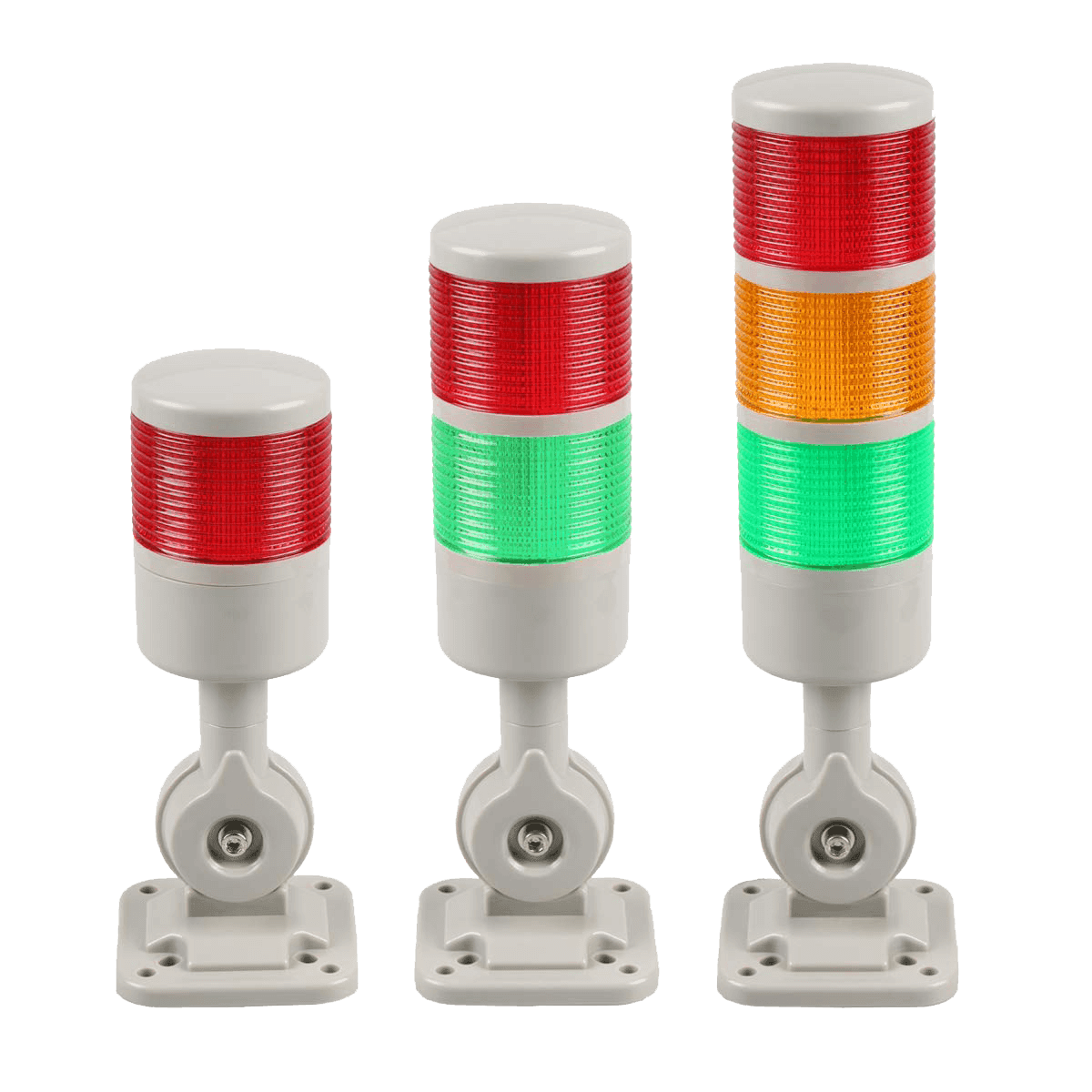
- Machine status signals
This allows manufacturers to monitor older equipment without completely replacing their existing machinery.
How to Implement Downtime Monitoring Software
Manufacturers can implement downtime monitoring in several stages.
Identify Critical Machines
Start with machines that have the greatest impact on production.
Identify Data Sources
Determine whether machine information is available through PLCs, sensors, controllers, or other equipment.
Define Downtime Rules
Establish what should be considered downtime and how machine states should be classified.
Connect Machines
Use appropriate connectivity methods to collect machine status information.
Configure the Dashboard
Display important downtime information for production and maintenance teams.
Analyze Historical Data
Use collected information to identify recurring downtime patterns and major production losses.
Best Practices for Downtime Monitoring
Use Automatic Data Collection
Automated collection can improve data accuracy and reduce manual work.
Standardize Downtime Reasons
Use clear and consistent downtime categories across production areas.
Monitor Downtime in Real Time
Real-time monitoring helps teams respond to active production interruptions.
Analyze Historical Trends
Historical analysis helps identify recurring equipment problems.
Focus on Major Losses
Prioritize downtime causes that have the greatest impact on production.
Connect Downtime with OEE
Combining downtime information with OEE can provide a broader view of equipment performance.
Common Challenges in Downtime Monitoring
Manufacturers may face several challenges when implementing downtime monitoring.
Inaccurate Machine Data
Incorrect machine signals can affect downtime calculations.
Poor Connectivity
Older machines may require additional sensors or gateways.
Incorrect Downtime Classification
If downtime reasons are not standardized, analysis can become difficult.
Manual Data Entry
Manual records can introduce errors and delays.
Lack of Follow-Up
Collecting downtime information without investigating the causes will not automatically reduce downtime.
The monitoring system should therefore be combined with an improvement process.
Downtime Monitoring and Industry 4.0
Industry 4.0 encourages manufacturers to connect machines and use real-time production data.
Downtime monitoring can support Industry 4.0 initiatives by connecting machines with digital monitoring platforms.
Production information can be collected from connected equipment and displayed through dashboards.
This provides manufacturers with better visibility into equipment performance and production interruptions.
Why Choose Robato Systems?
Robato Systems provides manufacturing monitoring solutions designed to improve production visibility and machine performance.
The solution can connect with machines, PLCs, sensors, production counters, and Industrial IoT devices.
Manufacturers can monitor:
- Machine status
- Downtime
- Production output
- OEE
- Availability
- Performance
- Quality
- Machine utilization
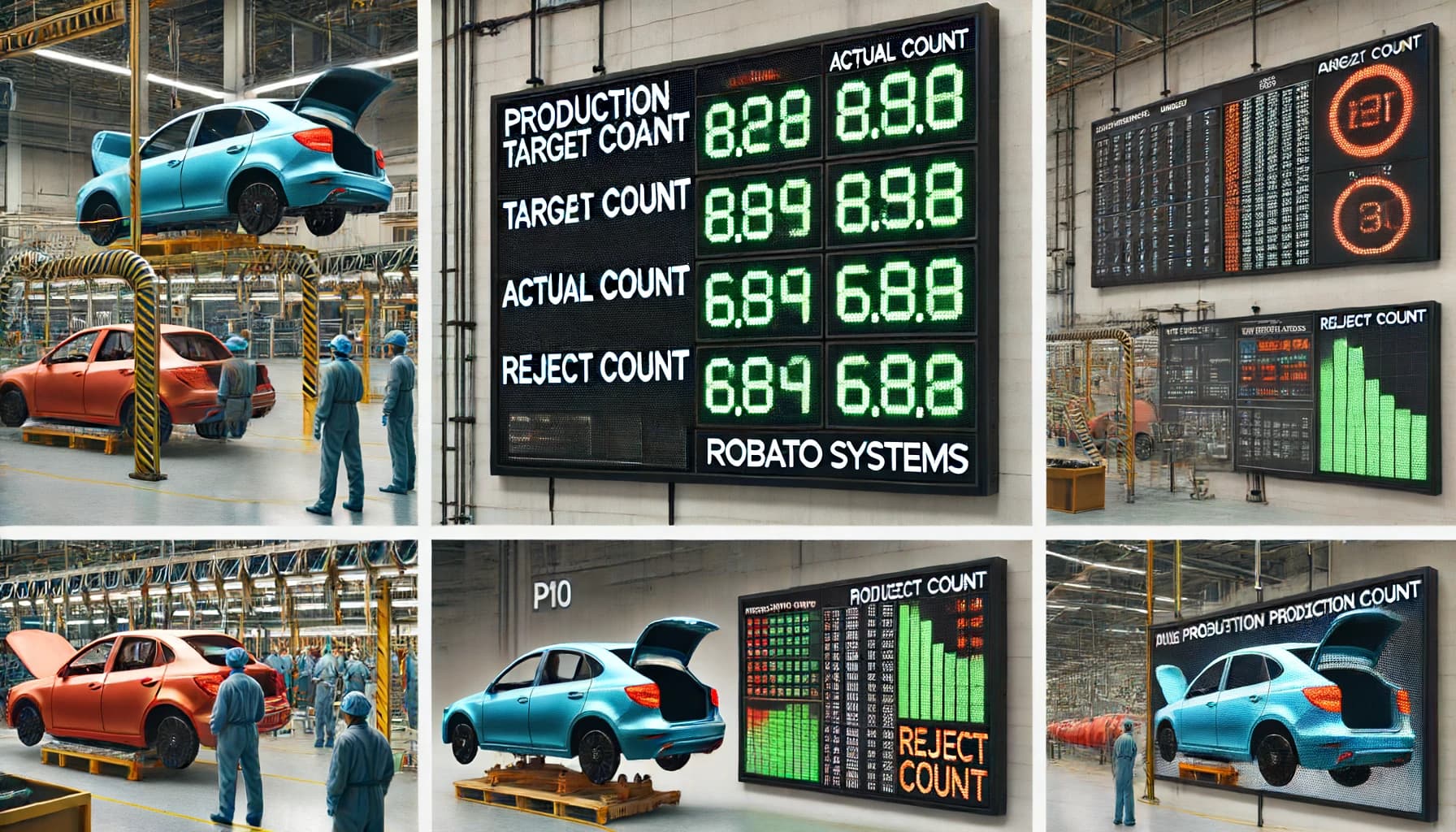
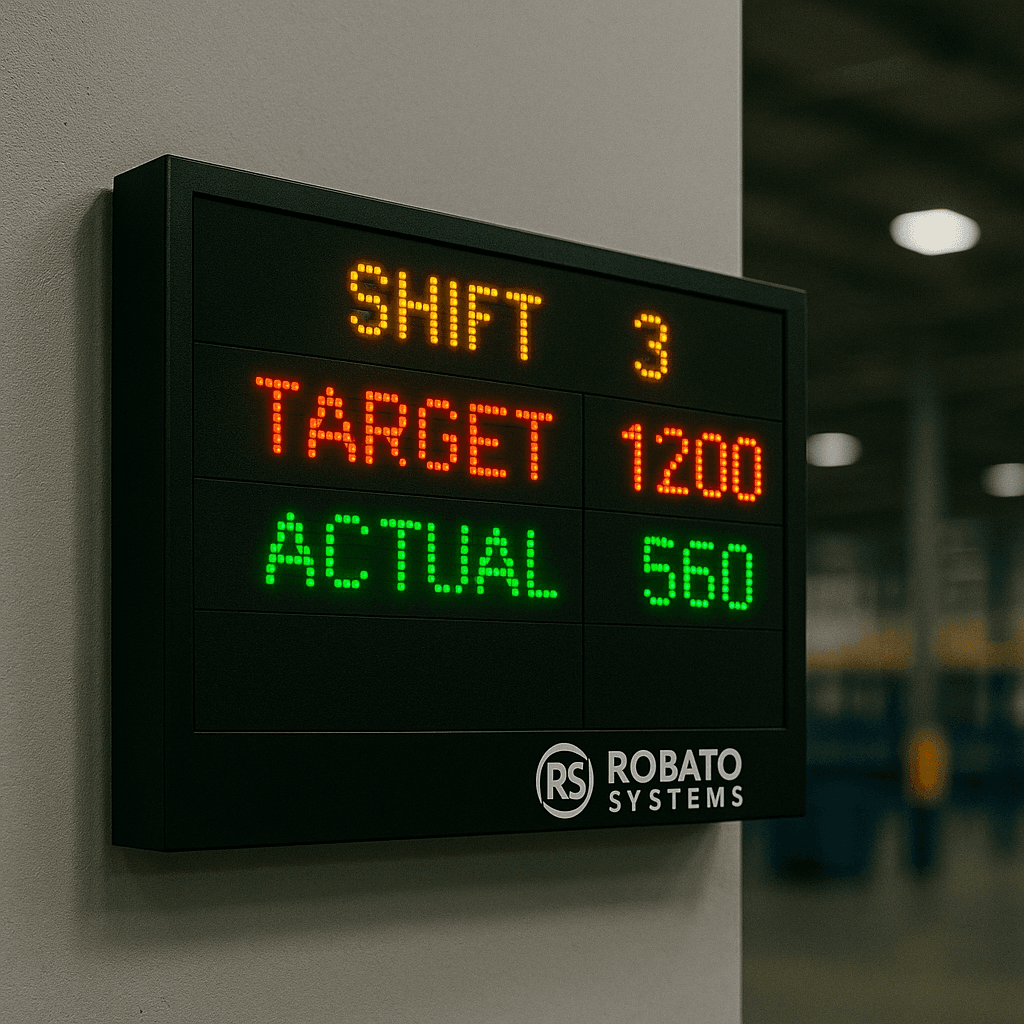
- Production targets
- Actual production
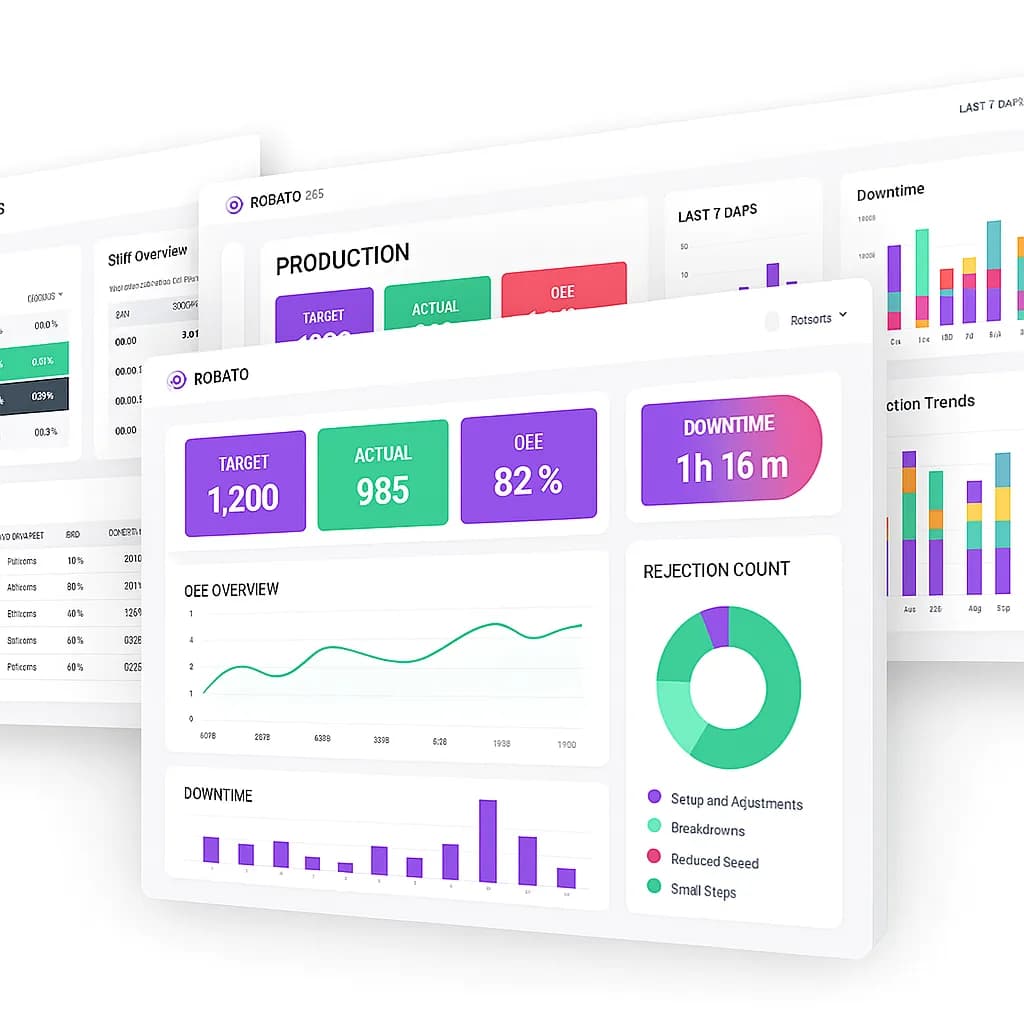
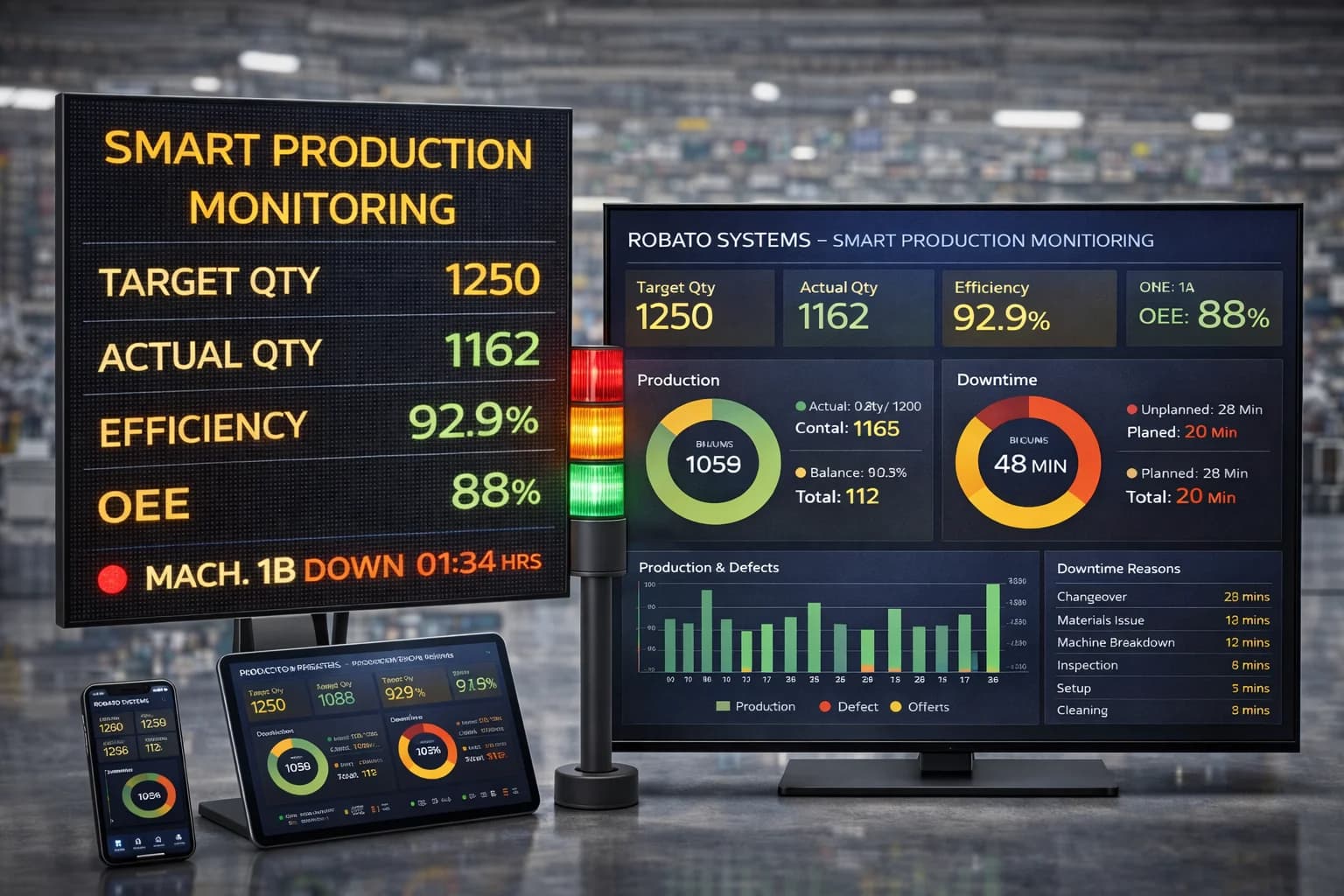
Real-time dashboards can help production and maintenance teams identify downtime and understand production performance.
Conclusion
Downtime Monitoring Software provides manufacturers with a structured way to track machine stoppages, analyze downtime causes, and understand production losses.
Real-time monitoring can provide immediate visibility into machine status, while historical downtime analysis can help identify recurring equipment problems.
By combining automated data collection, downtime analysis, digital dashboards, and continuous improvement practices, manufacturers can work toward reducing unnecessary machine downtime and improving production efficiency.
For modern manufacturing plants, downtime monitoring can also become an important part of broader OEE and Industry 4.0 initiatives.
Frequently Asked Questions
What is Downtime Monitoring Software?
Downtime Monitoring Software is a digital manufacturing solution used to track machine stoppages, record downtime events, analyze downtime causes, and monitor equipment performance.
Can downtime be monitored in real time?
Yes. Connected machines, PLCs, sensors, and Industrial IoT devices can provide real-time machine status information.
What information can downtime software track?
It can track machine status, downtime duration, downtime events, downtime reasons, machine-wise downtime, shift-wise downtime, and production losses.
Can downtime monitoring reduce machine downtime?
Monitoring itself does not automatically reduce downtime, but it provides the information required to identify recurring problems and take corrective action.
Can downtime monitoring be integrated with OEE?
Yes. Downtime information can be used to understand the availability component of OEE.
Can older machines be connected?
Yes. Older machines can often be connected using sensors, gateways, PLC signals, and Industrial IoT devices.
Who uses downtime monitoring software?
Production managers, maintenance teams, plant managers, operators, quality teams, and factory management can use downtime monitoring information.