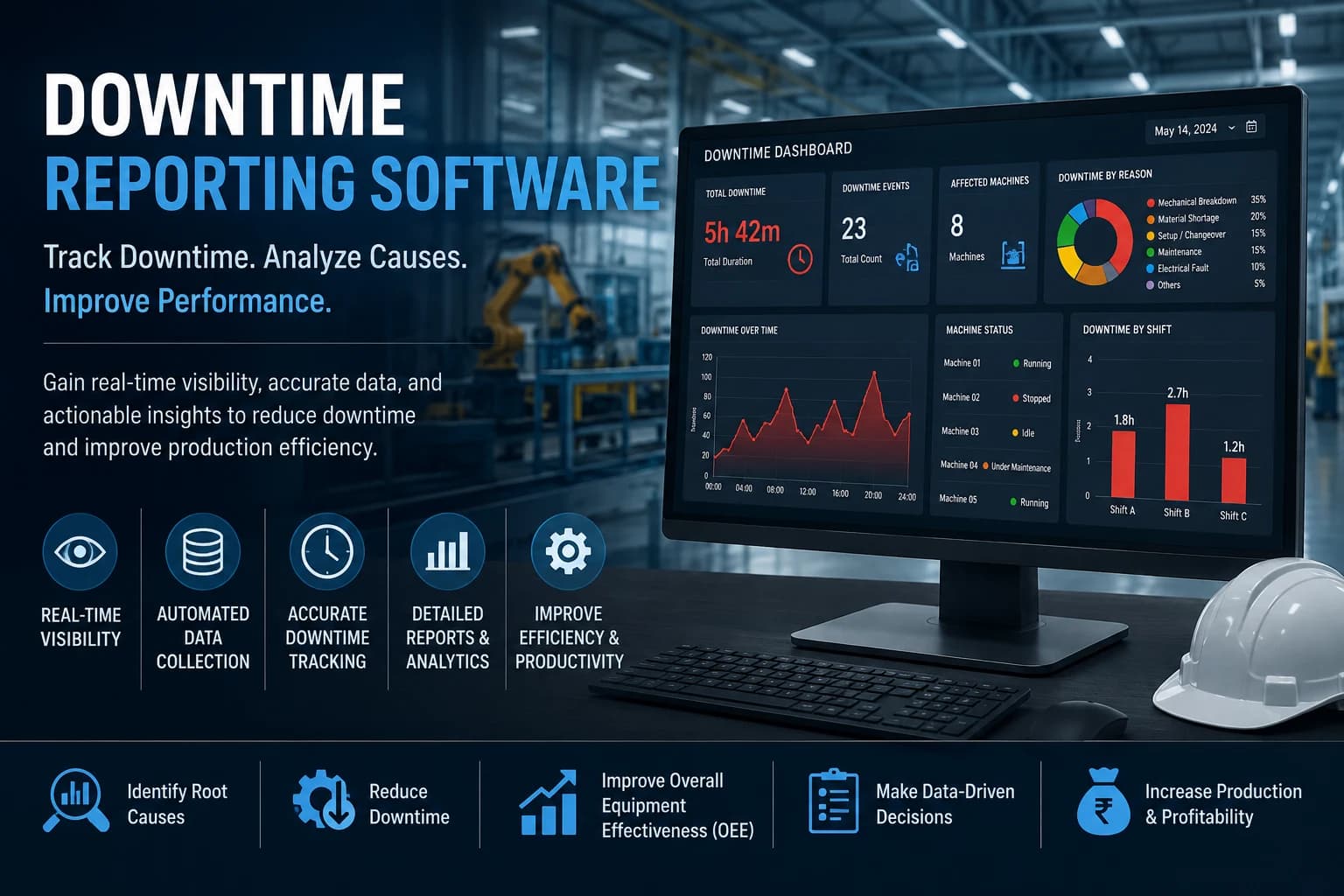
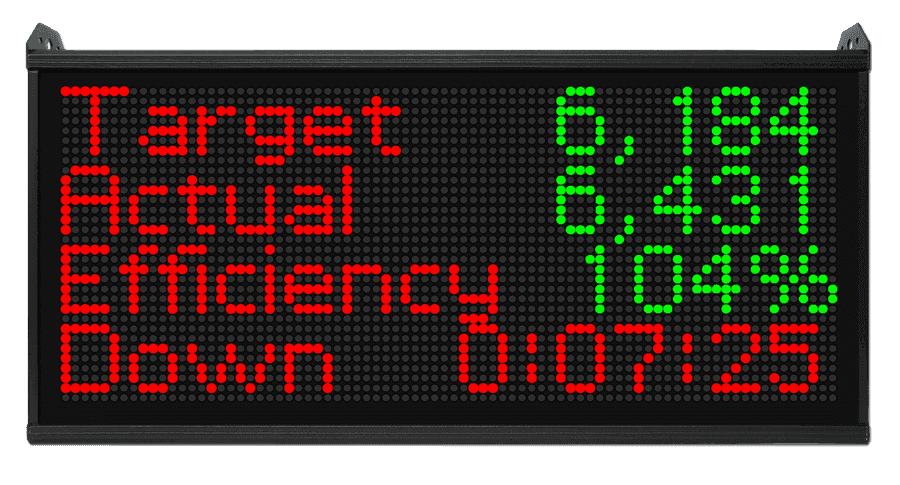
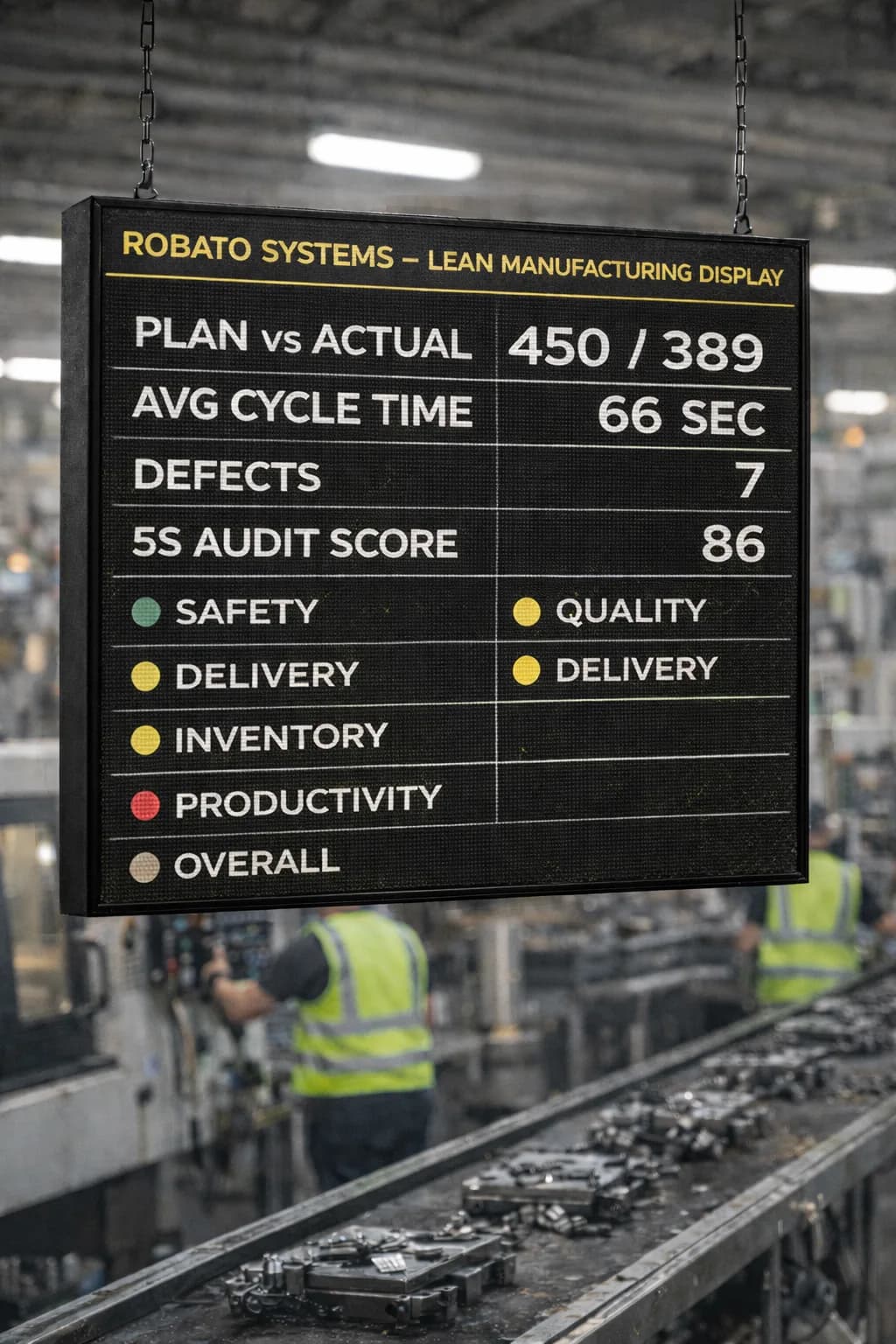
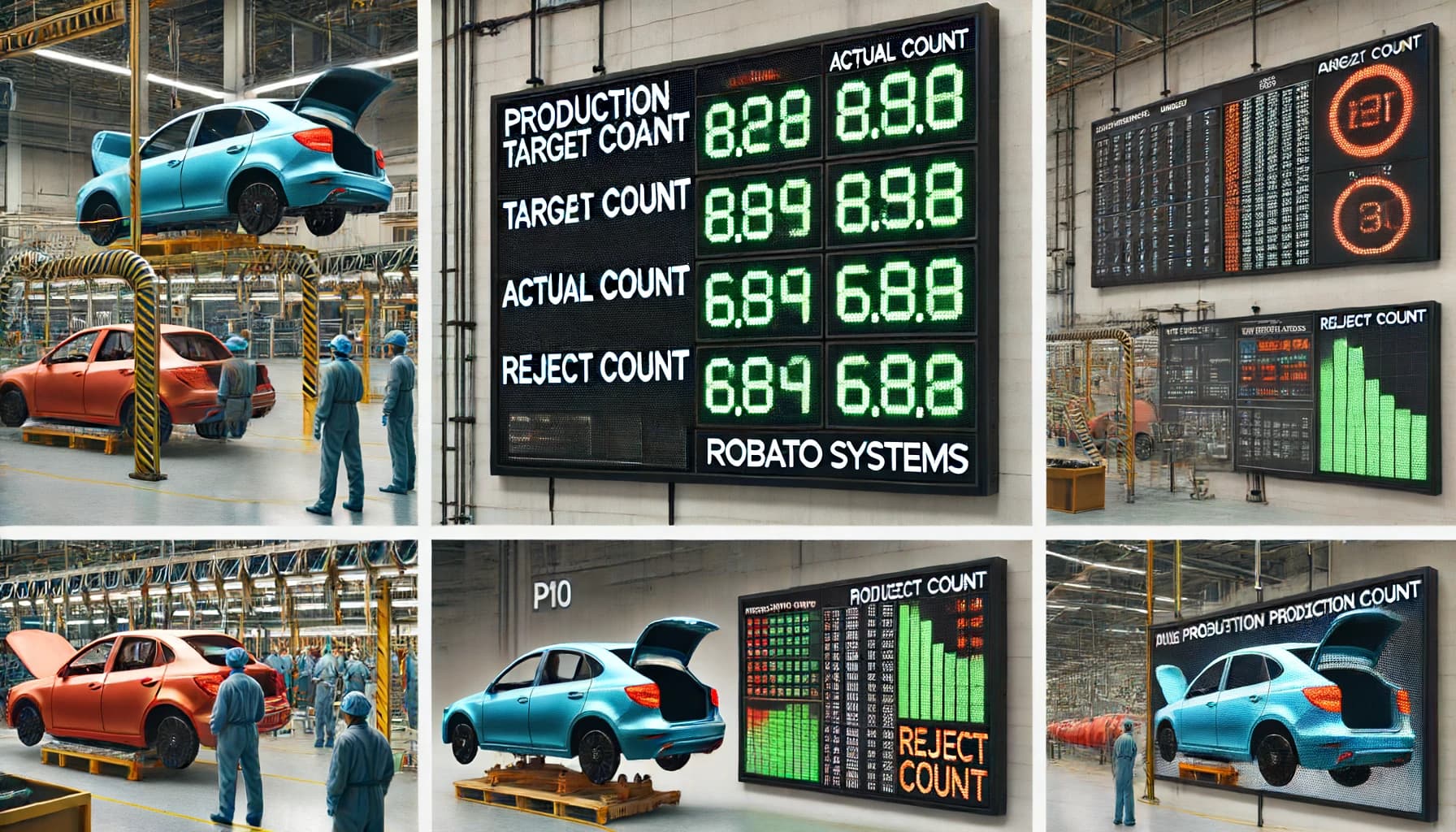
Machine downtime can have a significant impact on manufacturing productivity. When equipment stops unexpectedly, production output can decrease, operators may remain idle, and production targets can become difficult to achieve.
For this reason, manufacturers need an effective method for tracking machine downtime.
Machine Downtime Tracking helps production and maintenance teams understand when machines stop, how long they remain stopped, and what causes the downtime.
With accurate downtime information, manufacturers can identify recurring equipment problems and focus improvement efforts on the areas that create the largest production losses.
What is Machine Downtime Tracking?
Machine Downtime Tracking is the process of recording and monitoring the time during which manufacturing equipment is not available for normal production.
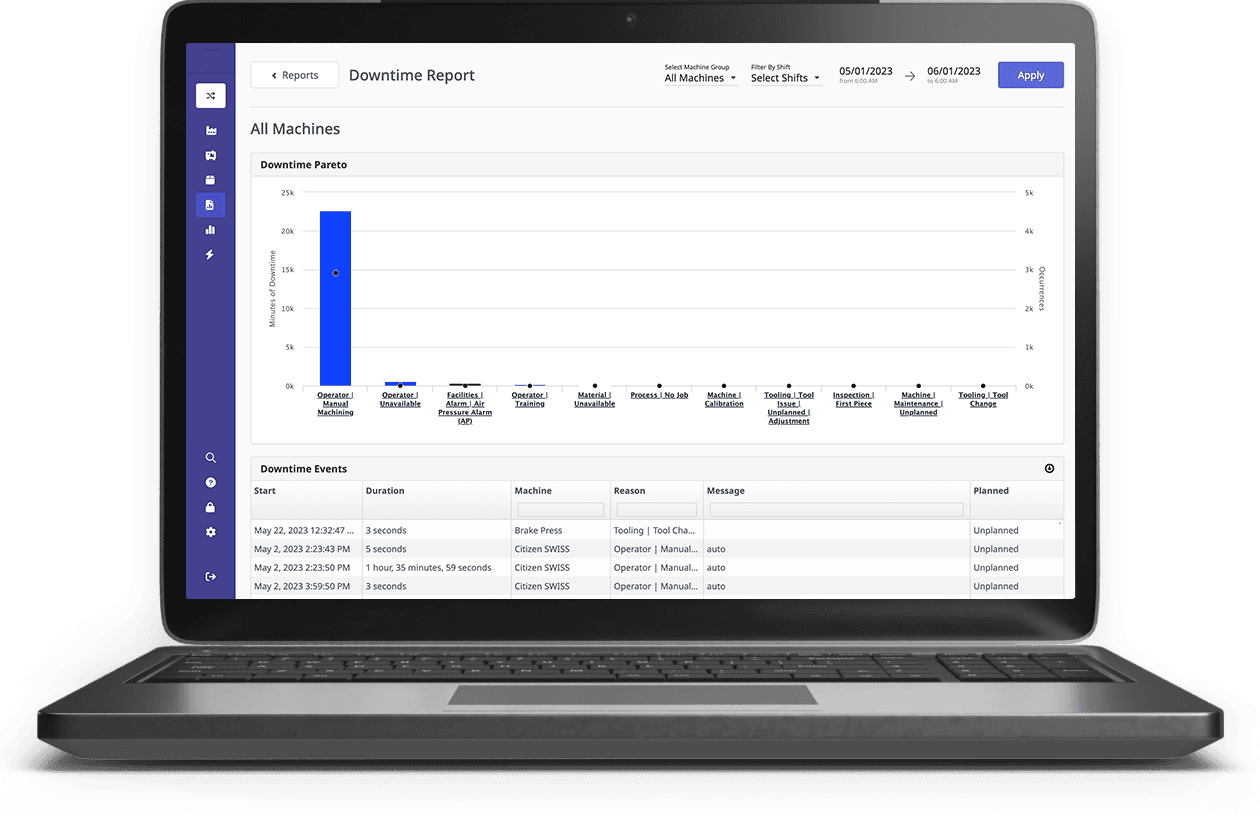
Downtime tracking can include information such as:
- Machine name
- Machine status
- Downtime start time
- Downtime end time
- Downtime duration
- Downtime reason
- Production line
- Shift
- Date
This information can be collected manually or automatically.
Modern manufacturing plants can use downtime monitoring software to automatically detect machine stoppages and record downtime events.
Why is Machine Downtime Tracking Important?
Manufacturers cannot improve downtime without first understanding it.
A machine may experience several short stoppages throughout a shift or one long breakdown. Without proper tracking, these losses may not be visible in production reports.
Downtime tracking helps manufacturers understand:
- Which machines stop most frequently
- How long machines remain stopped
- Which downtime reasons occur most often
- Which shifts experience more downtime
- Which production lines have the highest downtime
This information can support better production and maintenance decisions.
Best Practice 1: Track Downtime Automatically
One of the most effective downtime tracking practices is to automate machine status collection.
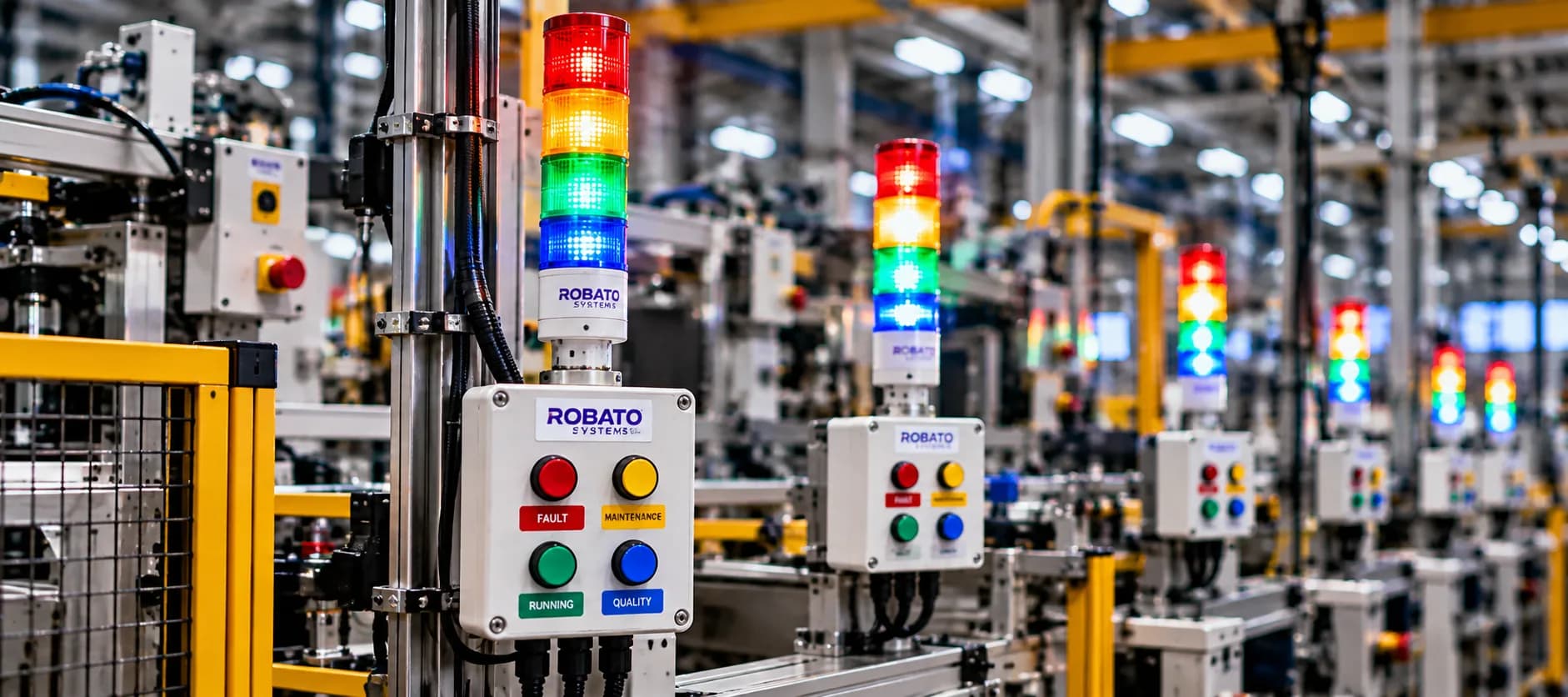
Machines can be connected using:
- PLCs
- Sensors
- Machine controllers
- Industrial IoT devices
- Industrial gateways
When the machine stops, the monitoring system can detect the change in status and record the downtime event.
Automatic tracking can reduce dependency on manual operator entries and improve data consistency.
Best Practice 2: Record Downtime Duration
Knowing that a machine stopped is useful, but knowing how long it remained stopped is even more important.
The system should record:
- Start time
- Stop time
- Duration
For example, if a machine stops for 25 minutes because of a mechanical problem, that downtime should be recorded and included in the machine's historical performance data.
Tracking duration allows manufacturers to identify machines responsible for significant production time losses.
Best Practice 3: Track Downtime Reasons
Downtime should not simply be recorded as "machine stopped."
Manufacturers should categorize downtime based on its cause.
Common downtime reasons include:
- Mechanical breakdown
- Electrical fault
- Material shortage
- Maintenance
- Setup
- Changeover
- Tool replacement
- Quality issue
- Operator issue
Reason-based tracking makes downtime analysis more useful.
Best Practice 4: Standardize Downtime Categories
Different operators may describe the same problem in different ways.
For example, one operator may record "motor problem" while another records "motor failure."
Standardized downtime categories make reports easier to understand.
Manufacturers should create clear categories and use them consistently across machines and production lines.
This makes it easier to compare downtime information over time.
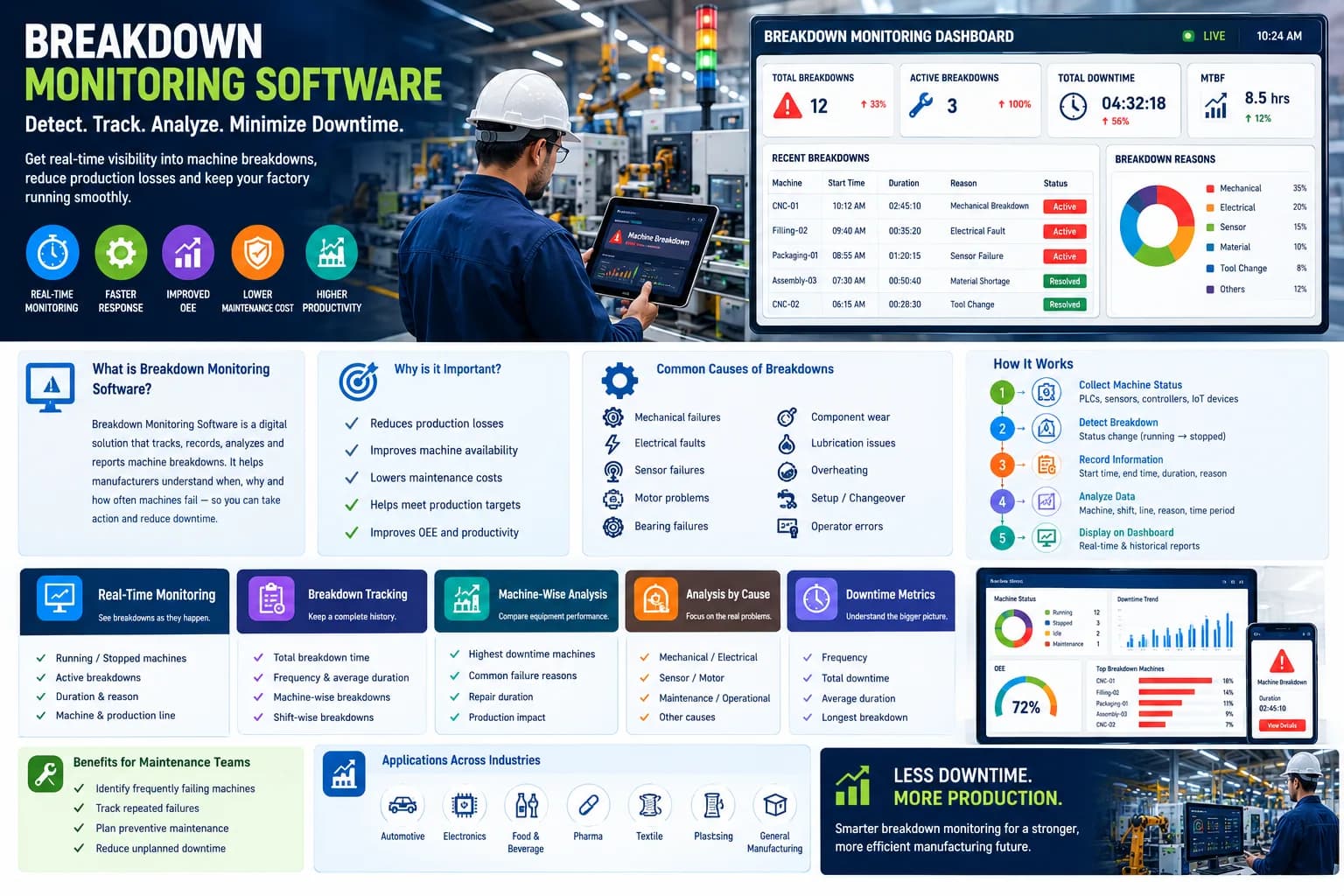
Best Practice 5: Monitor Downtime in Real Time
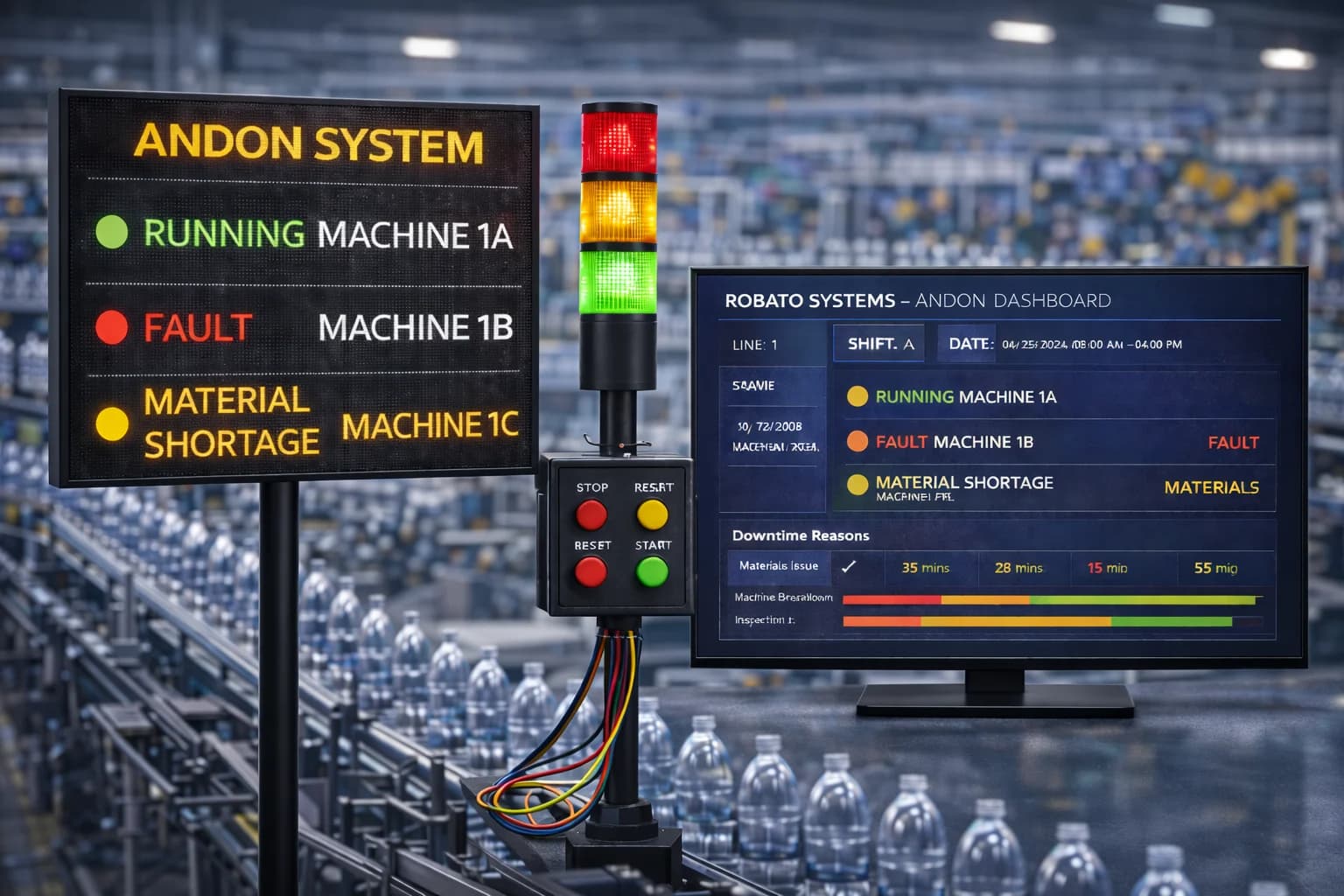
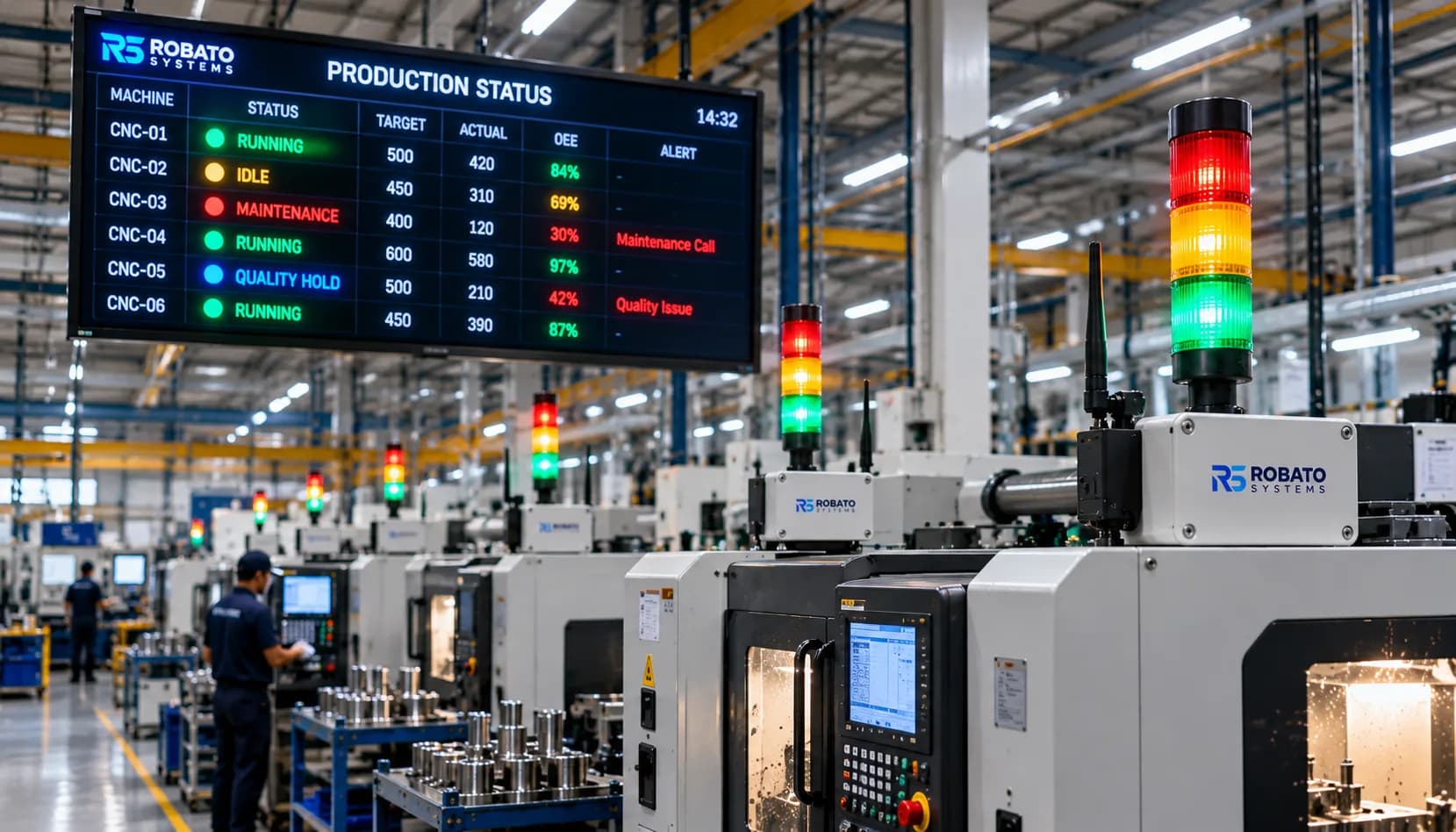
Real-time monitoring provides immediate visibility into machine stoppages.
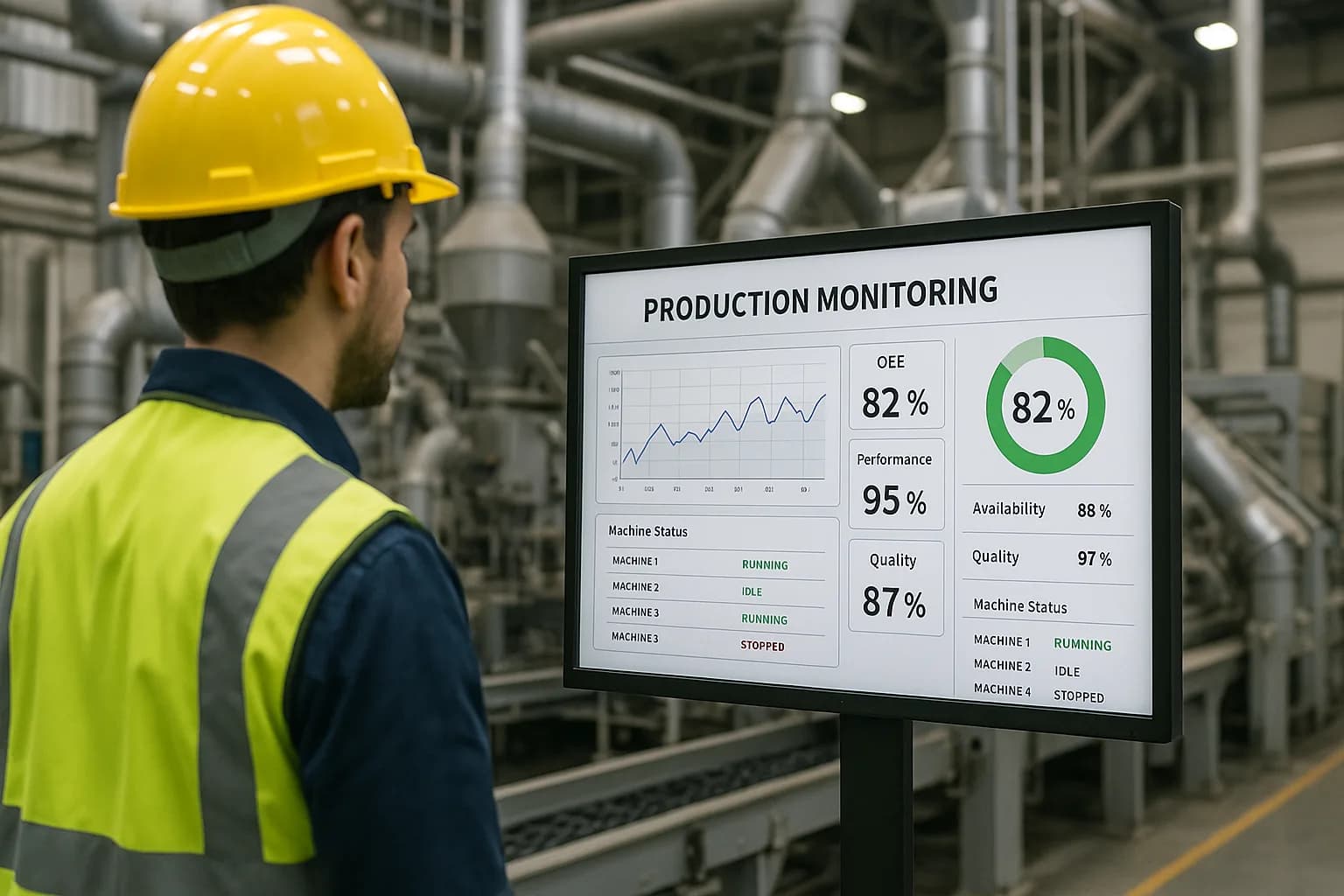
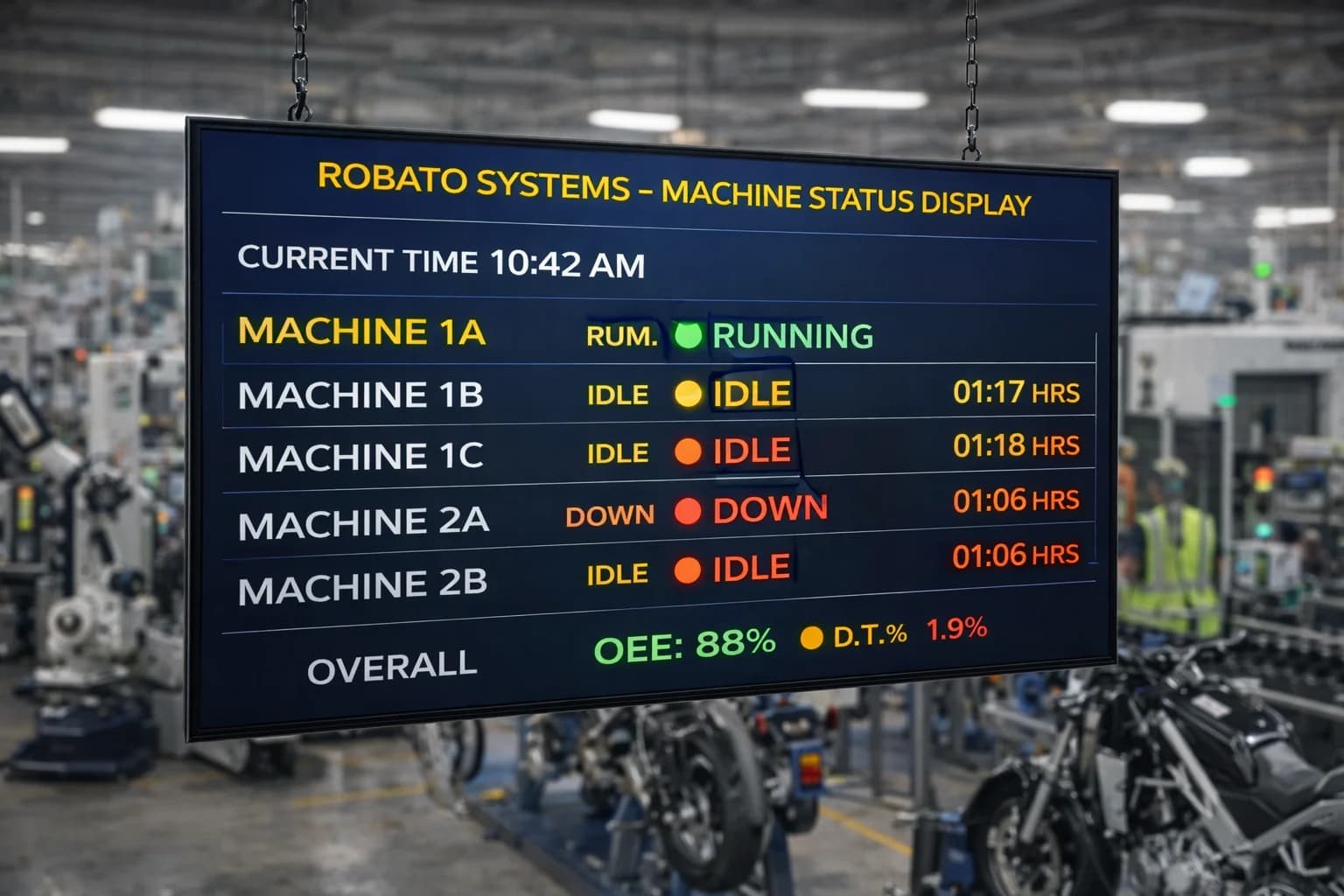
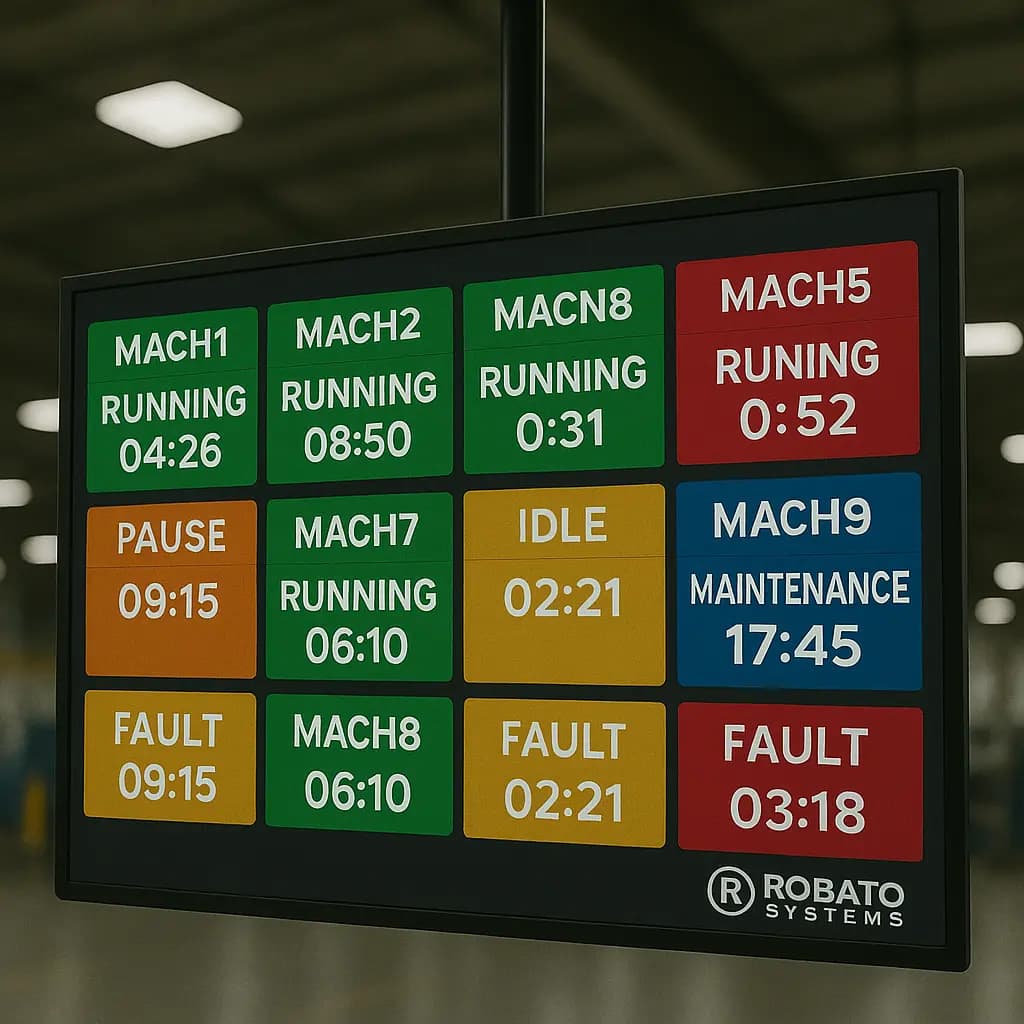
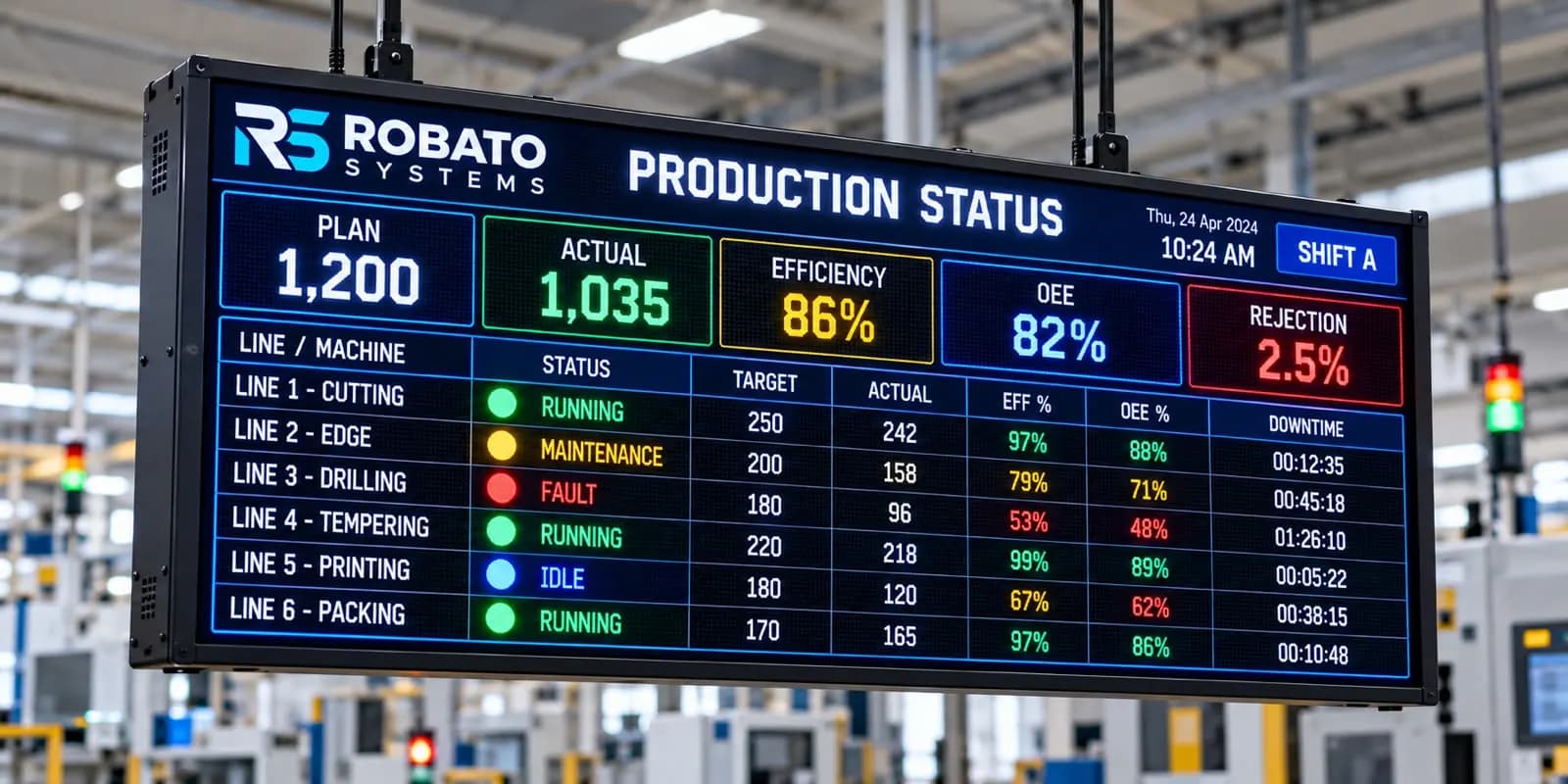
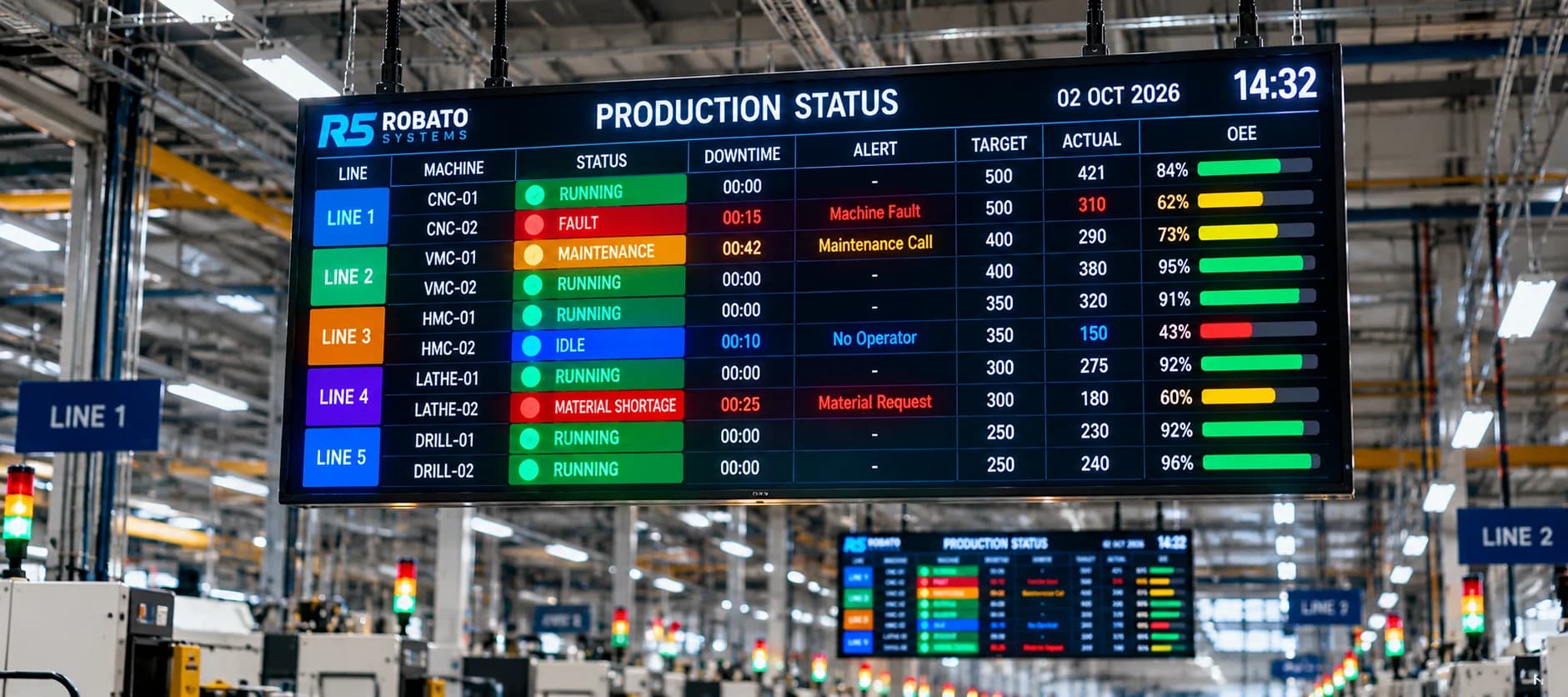
A production dashboard can show:
- Running machines
- Stopped machines
- Active downtime
- Downtime duration
- Machine status
- Production line status
When a machine stops, production and maintenance teams can see the event without waiting for a shift report.
This can help reduce response time.
Best Practice 6: Track Machine-Wise Downtime
Every machine has different operating conditions and performance characteristics.
Machine-wise downtime tracking allows manufacturers to compare equipment performance.
Teams can identify:
- Highest downtime machine
- Most frequent breakdowns
- Longest downtime events
- Most common downtime reasons
This helps maintenance teams prioritize machines that require attention.
Best Practice 7: Analyze Shift-Wise Downtime
Downtime may vary between production shifts.
Shift-wise downtime analysis can help manufacturers compare:
- Total downtime
- Number of downtime events
- Average downtime
- Downtime reasons
- Machine performance
If one shift consistently experiences higher downtime, management can investigate the underlying causes.
Best Practice 8: Track Frequent Small Stops
Large breakdowns are easy to notice, but small stops can also create significant production losses when they occur repeatedly.
Examples include:
- Material positioning
- Minor machine jams
- Sensor interruptions
- Small adjustments
- Short operator interventions
Tracking these events can reveal hidden production losses that may not appear in traditional downtime reports.
Best Practice 9: Analyze the Largest Downtime Causes
Not every downtime reason has the same impact.
Manufacturers should identify the causes responsible for the largest amount of lost production time.
For example, if mechanical breakdowns account for most downtime, maintenance teams can focus improvement efforts on mechanical reliability.
This approach allows teams to prioritize problems based on their actual impact.
Best Practice 10: Connect Downtime with Production Data
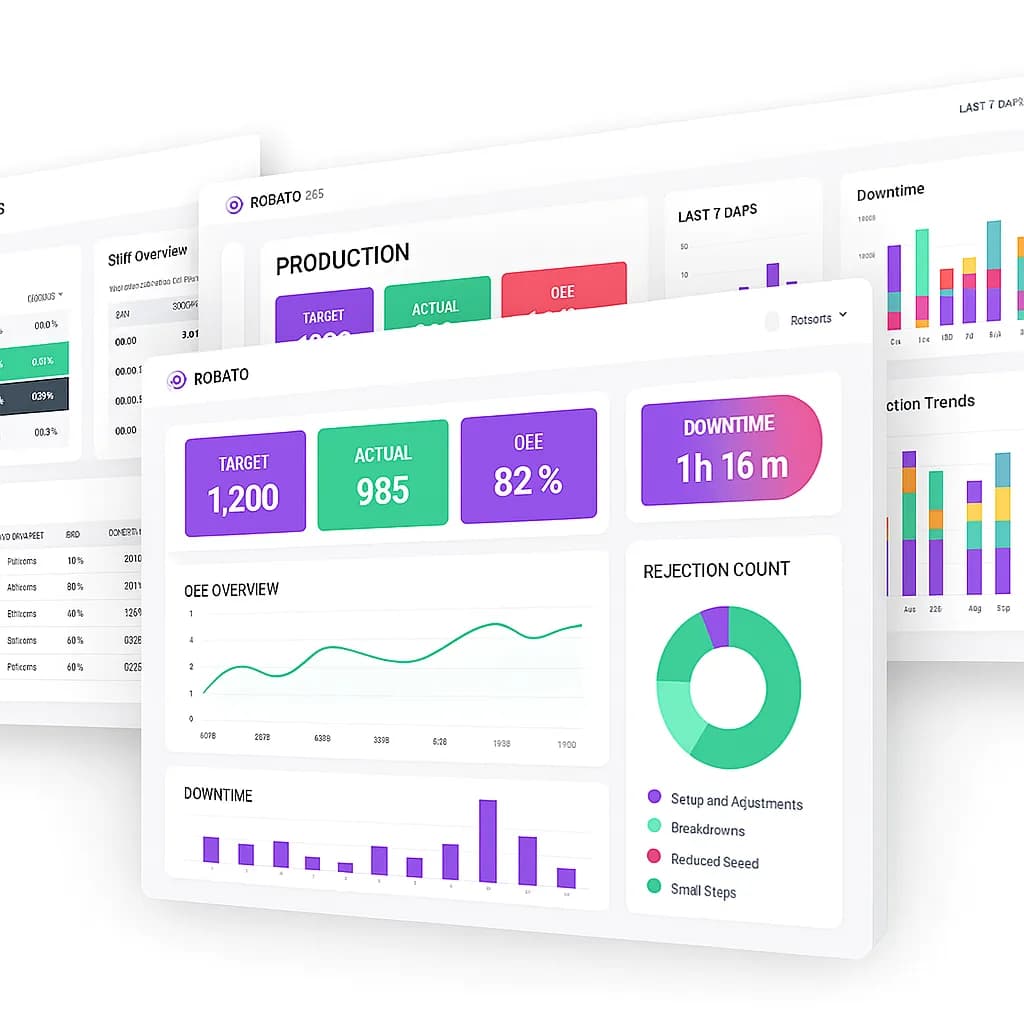
Downtime information becomes more useful when combined with production data.
Manufacturers can compare downtime with:
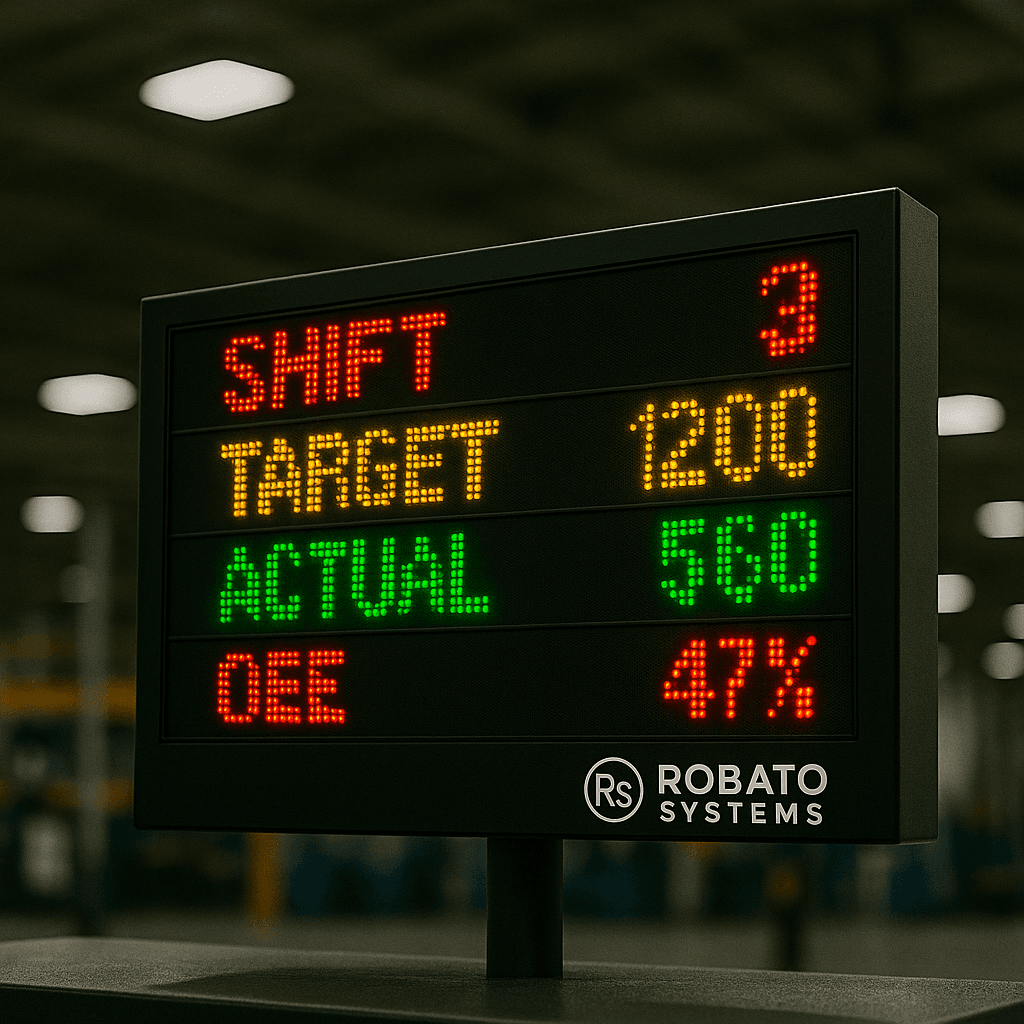
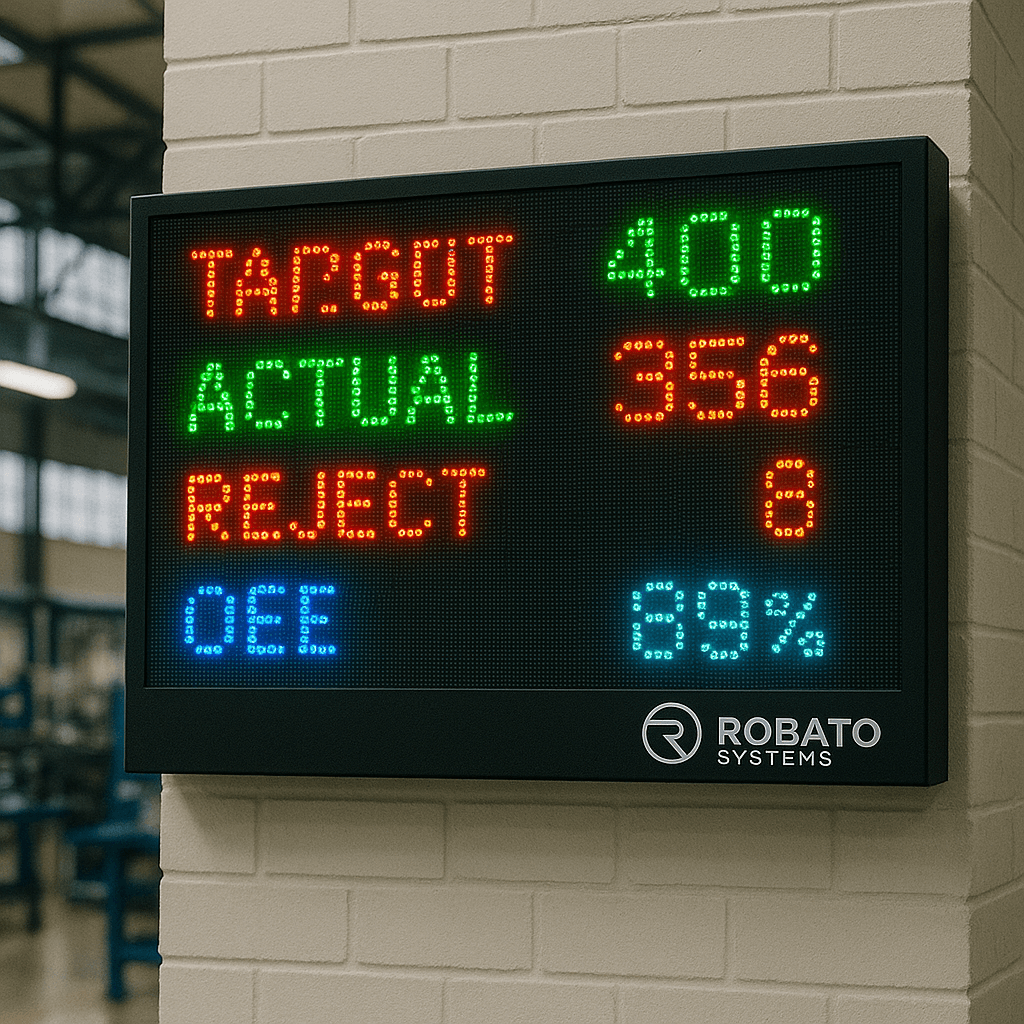
- Production output
- Production targets
- Good production
- Rejected production
- Machine utilization
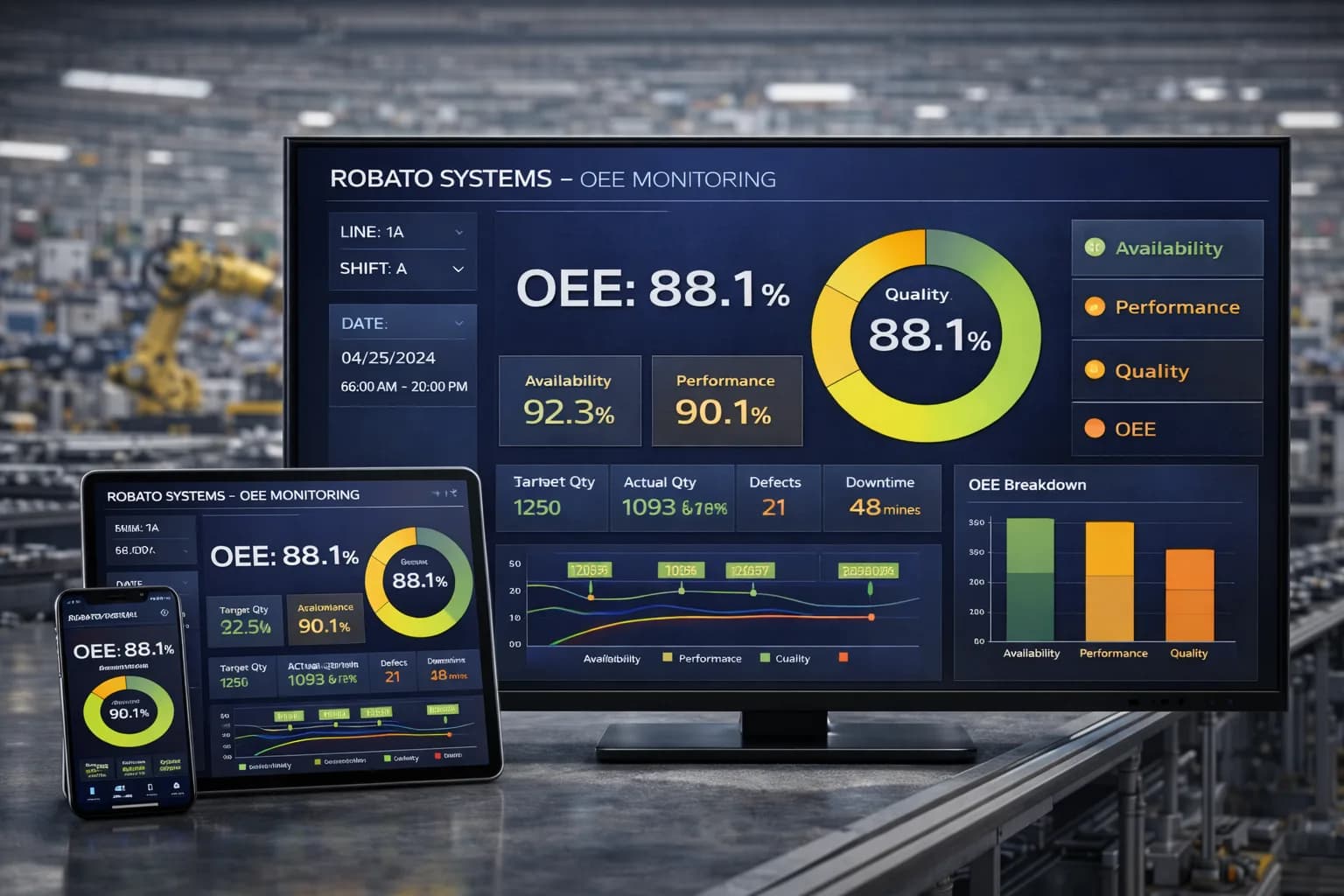
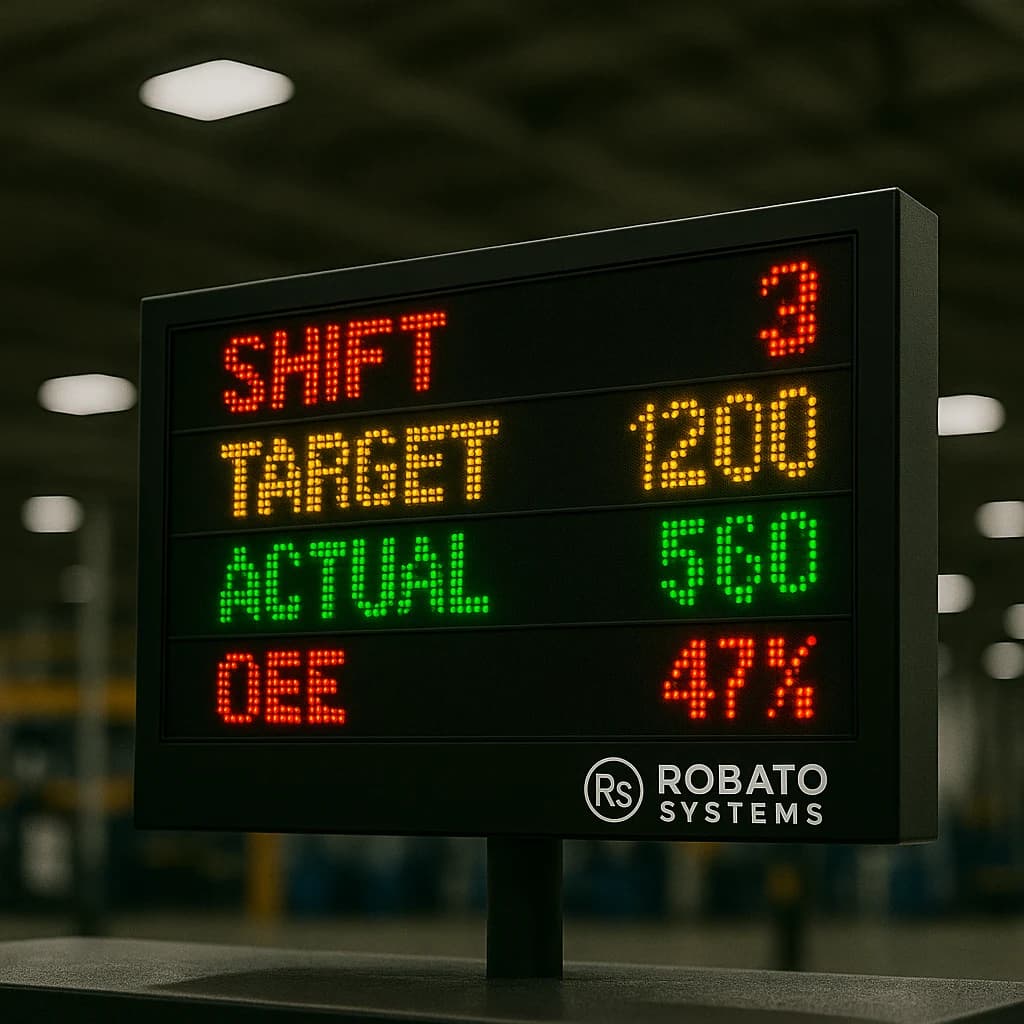
- OEE
This provides a broader understanding of how equipment stoppages affect production performance.
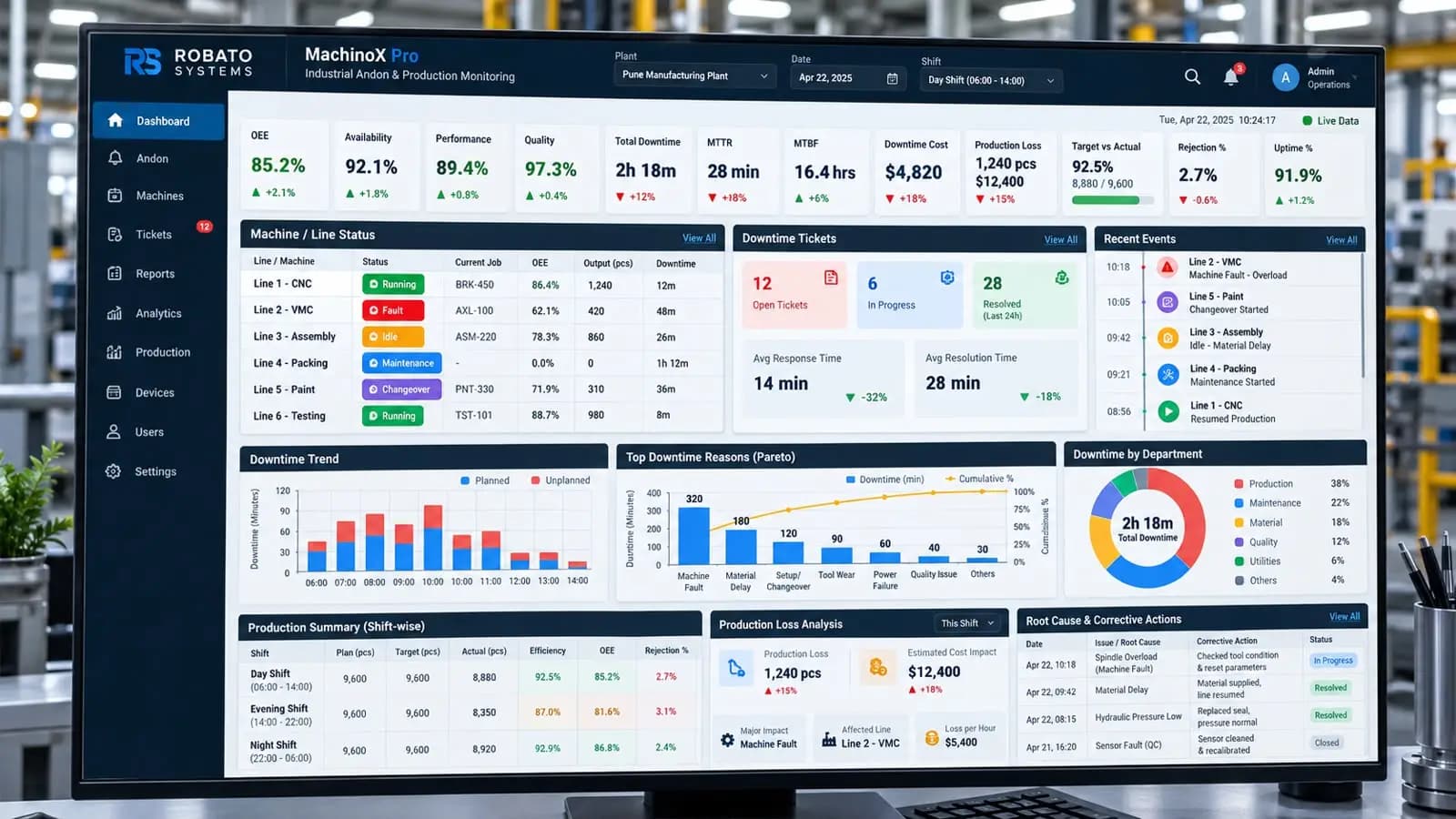
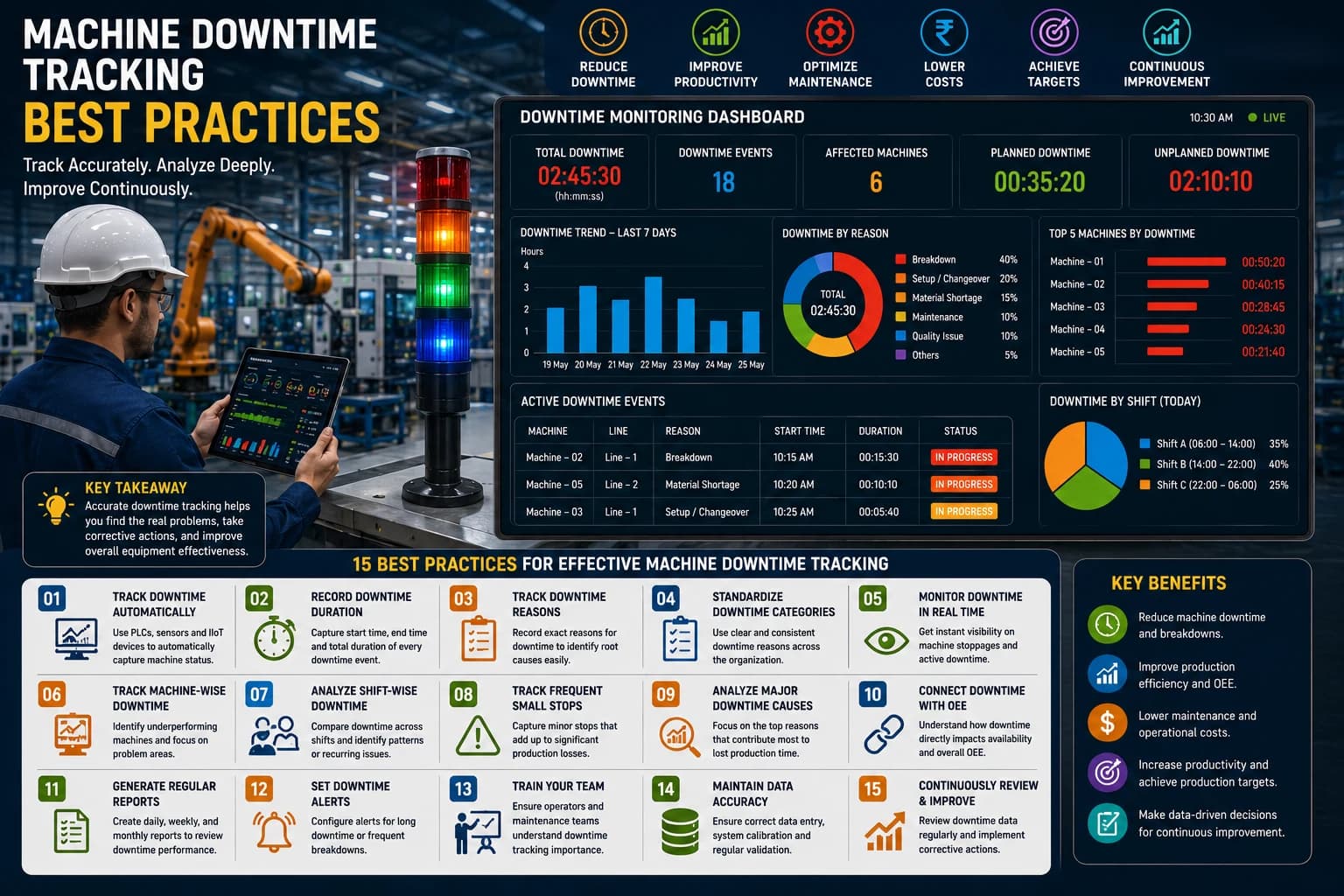
Best Practice 11: Use a Downtime Dashboard
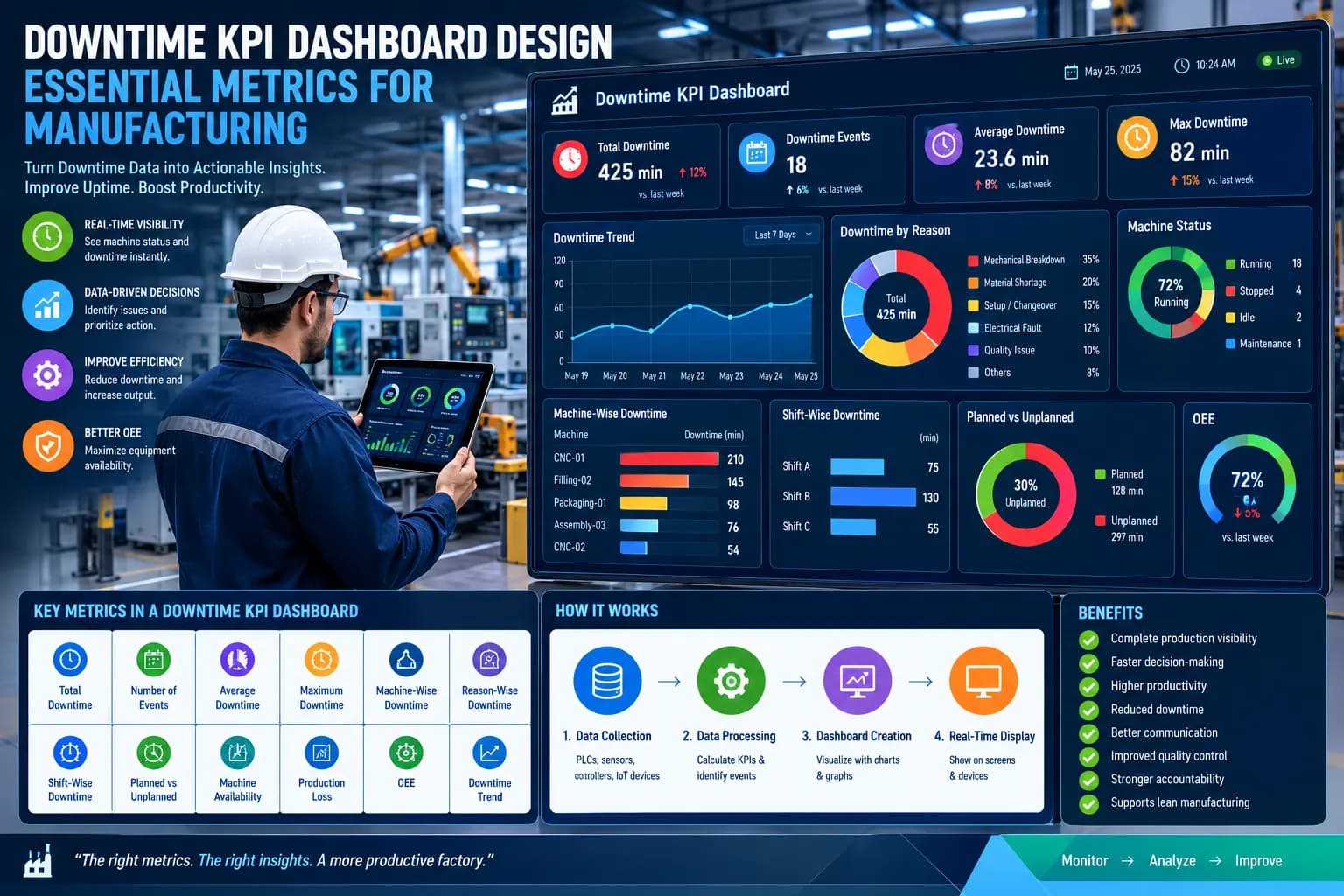
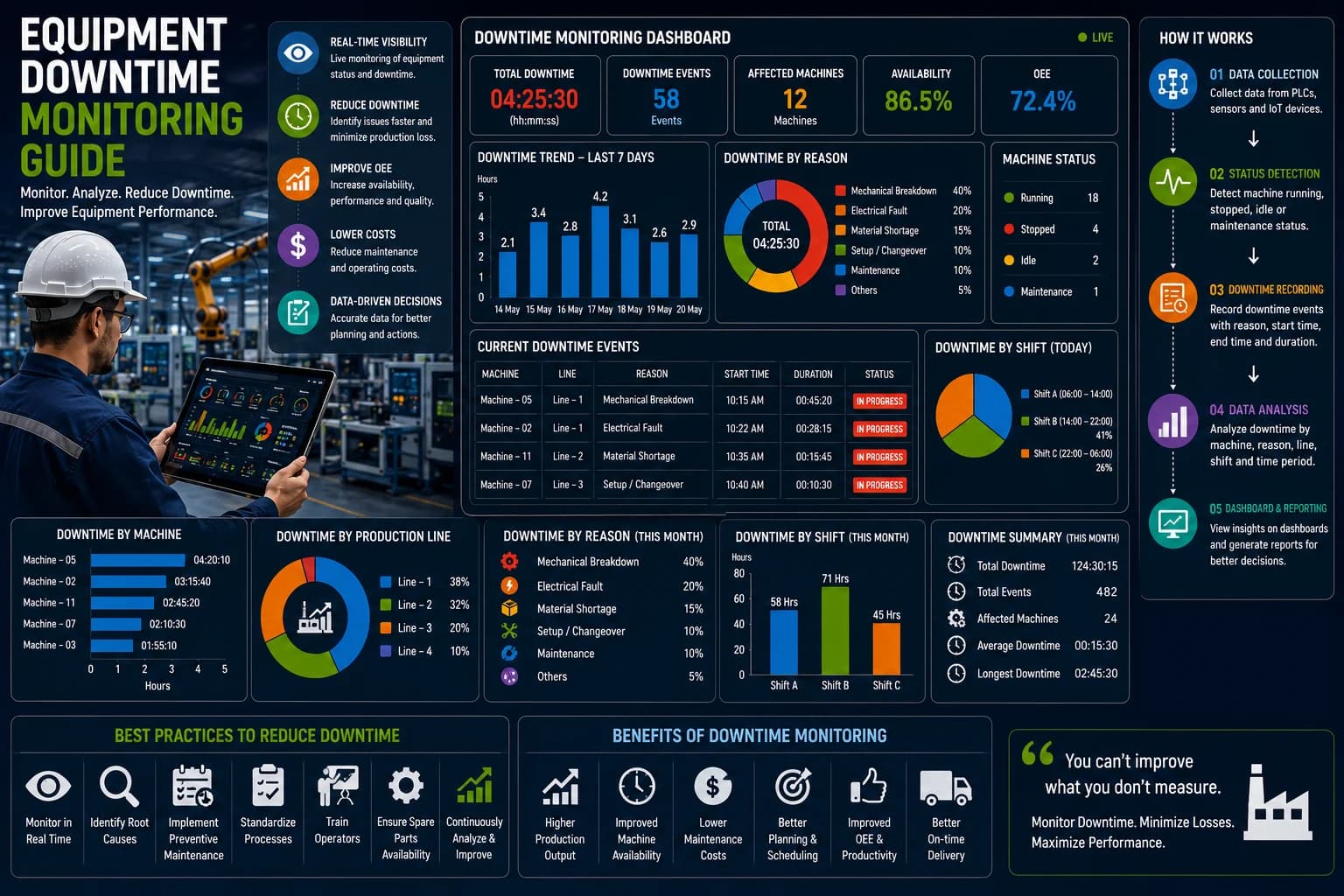
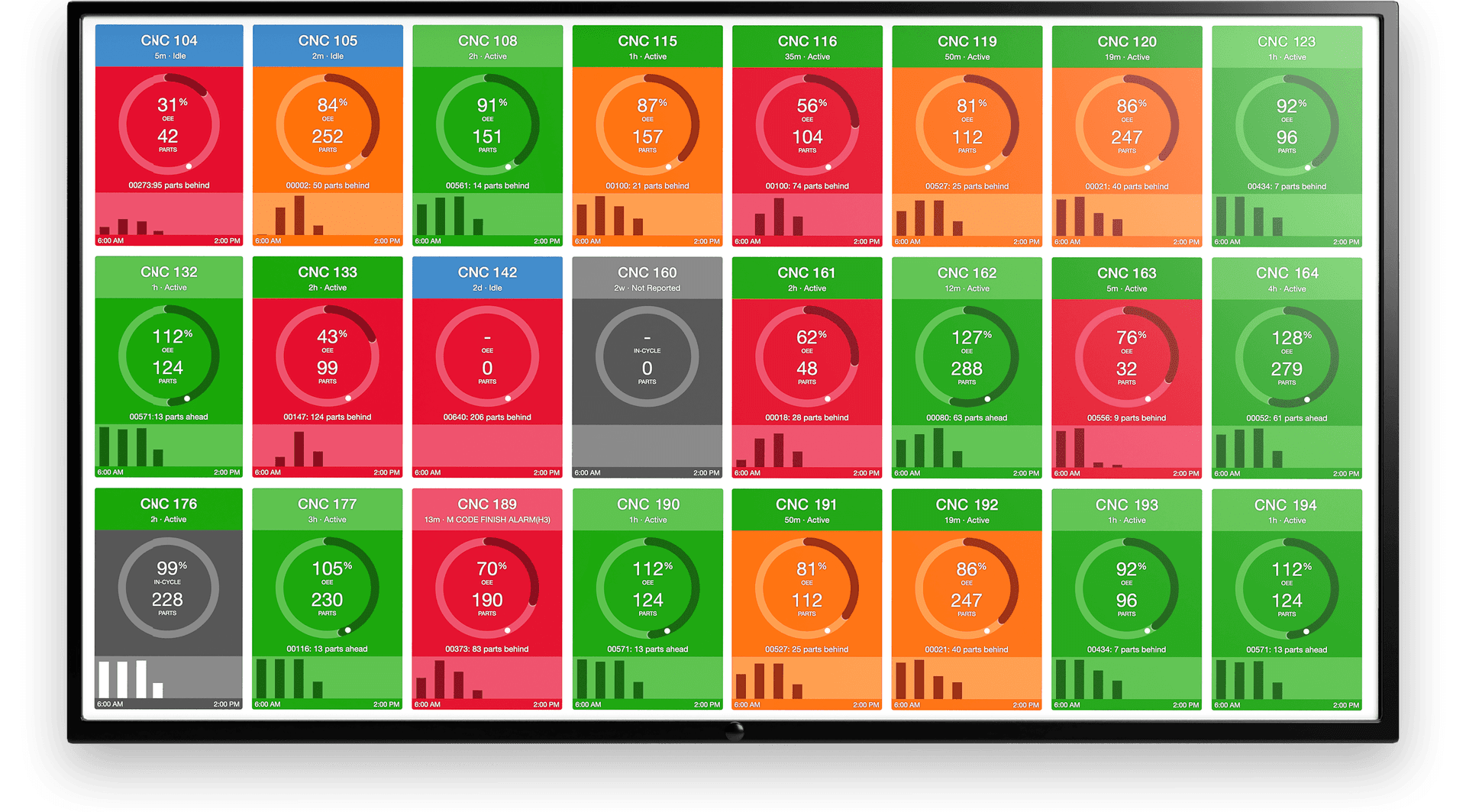
A digital downtime dashboard can provide a centralized view of equipment performance.
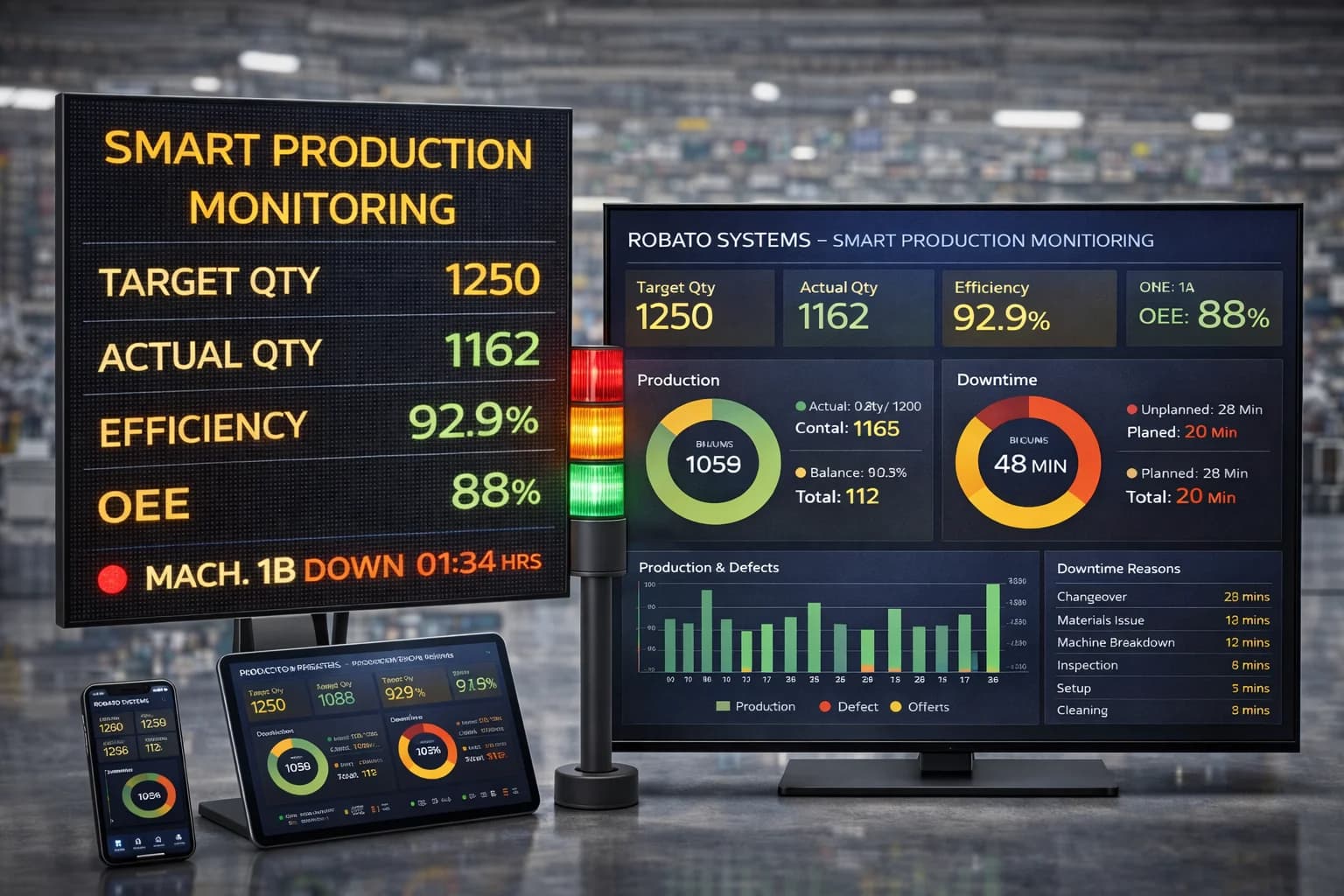
A dashboard can display:
- Total downtime
- Active downtime
- Downtime by machine
- Downtime by reason
- Downtime by shift
- Number of breakdowns
- Machine status
Production managers can use this information to identify machines that require immediate attention.
Best Practice 12: Review Historical Downtime
Real-time monitoring helps teams respond to current problems, while historical analysis helps identify recurring problems.
Manufacturers should review downtime data over:
- Days
- Weeks
- Months
- Production shifts
Historical trends can reveal machines or downtime reasons that repeatedly affect production.
Best Practice 13: Use Downtime Data for Maintenance Planning
Maintenance teams can use historical downtime information to improve maintenance planning.
If a machine repeatedly experiences the same failure, maintenance teams can investigate the cause and consider preventive actions.
Downtime history can help identify equipment that may require:
- Inspection
- Component replacement
- Calibration
- Servicing
- Preventive maintenance
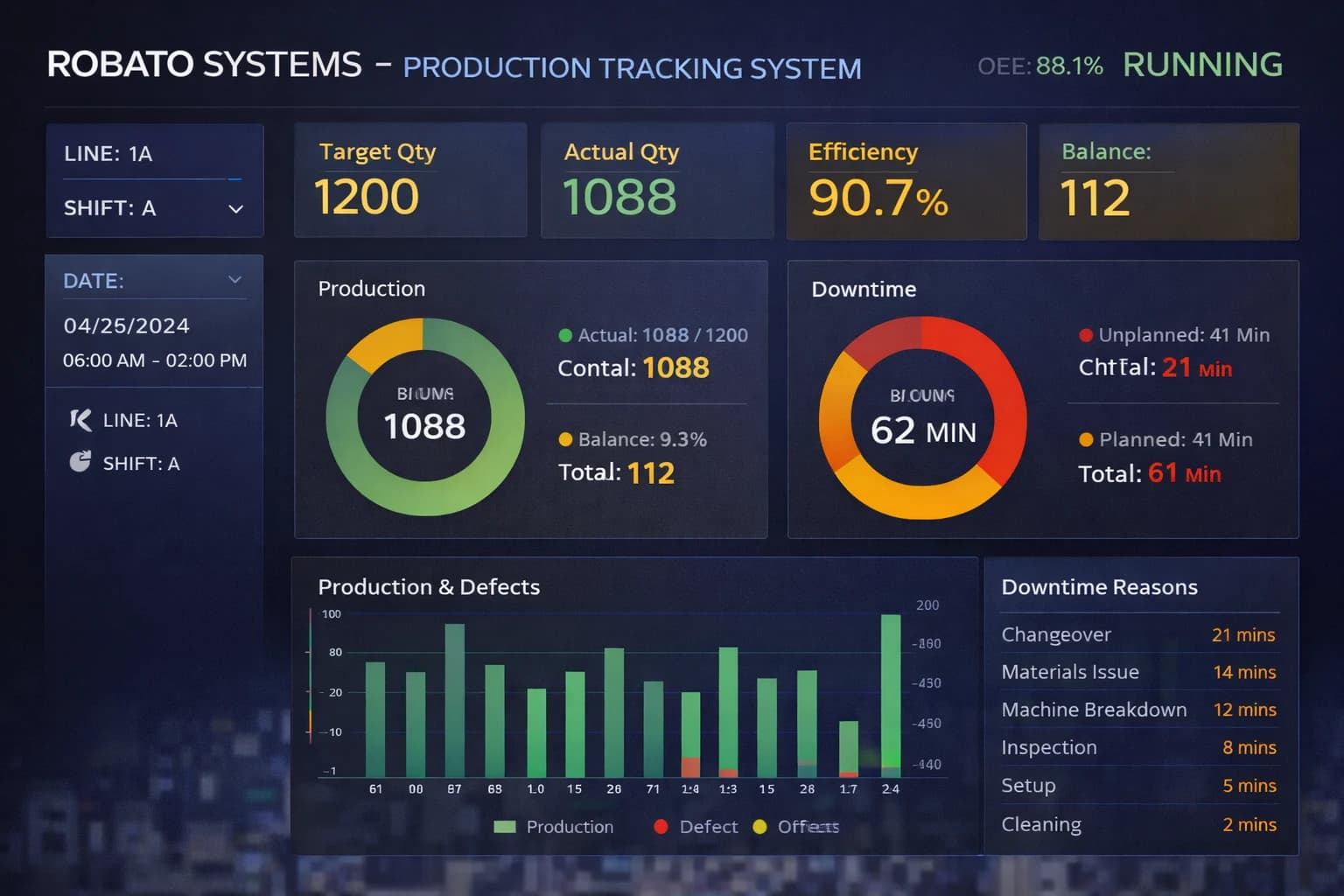
Best Practice 14: Monitor Downtime Against Production Targets
Downtime should be considered alongside production targets.
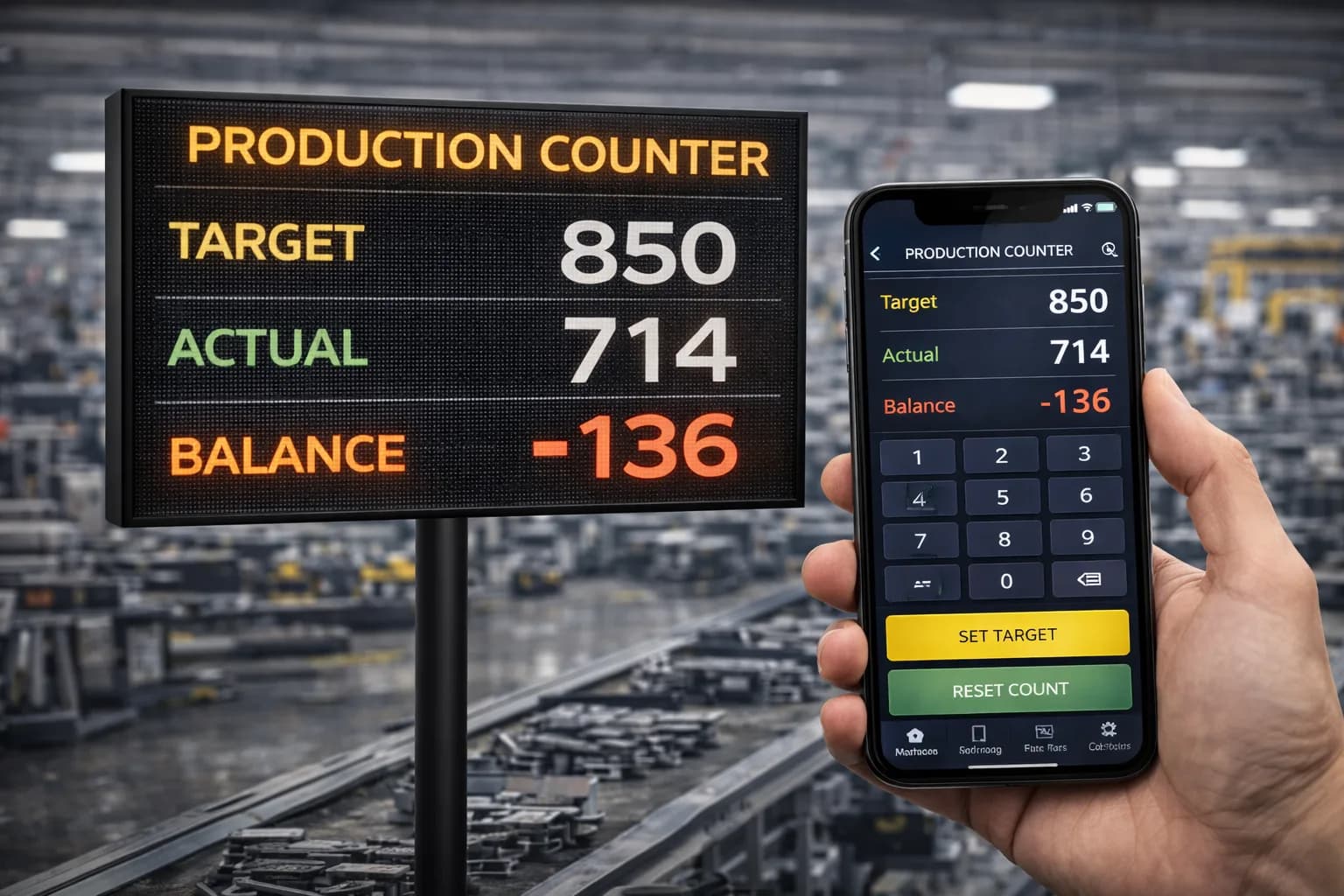
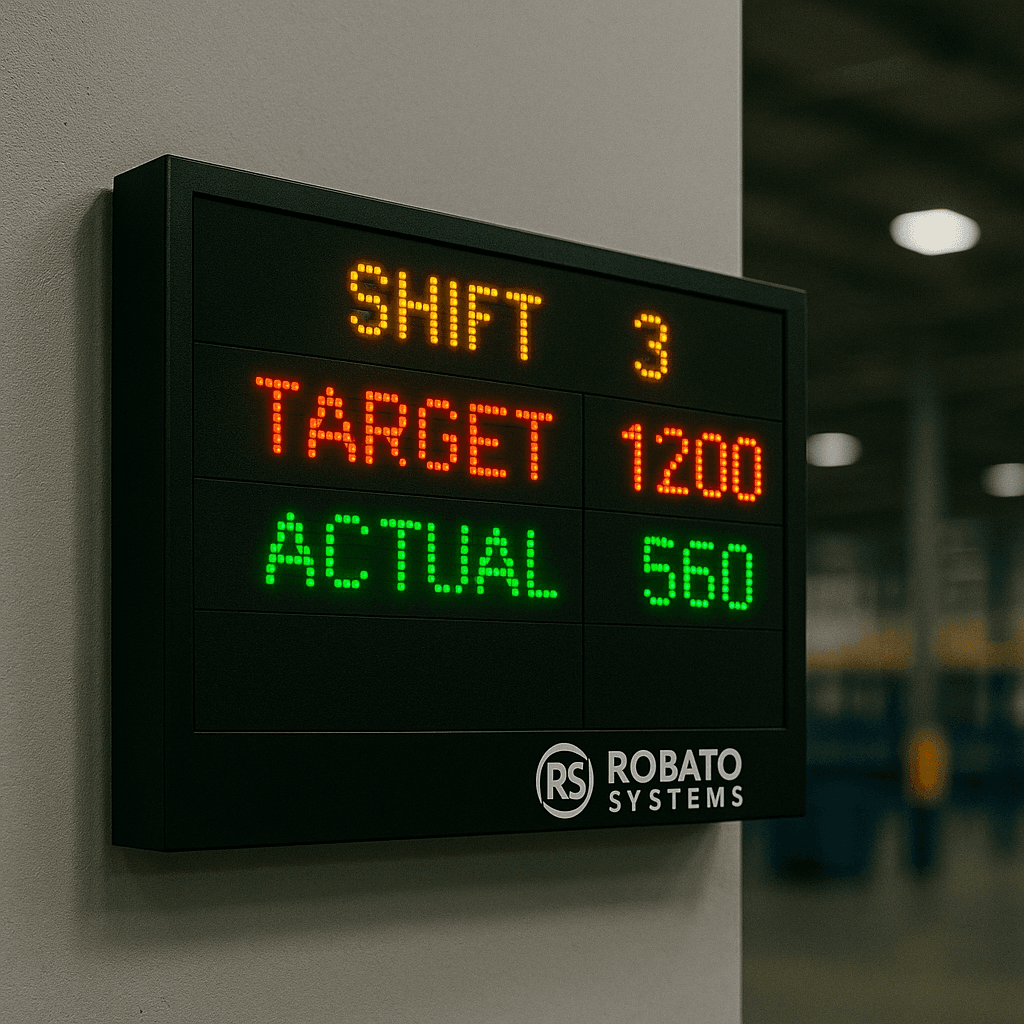
For example, if a production line has a target of 5000 units but experiences several hours of downtime, production may fall significantly below target.
Comparing downtime with target versus actual production helps managers understand the operational impact of machine stoppages.
Best Practice 15: Use Downtime Data for Continuous Improvement
Downtime tracking should be part of a continuous improvement process.
A simple improvement cycle can include:
- Track downtime
- Identify major causes
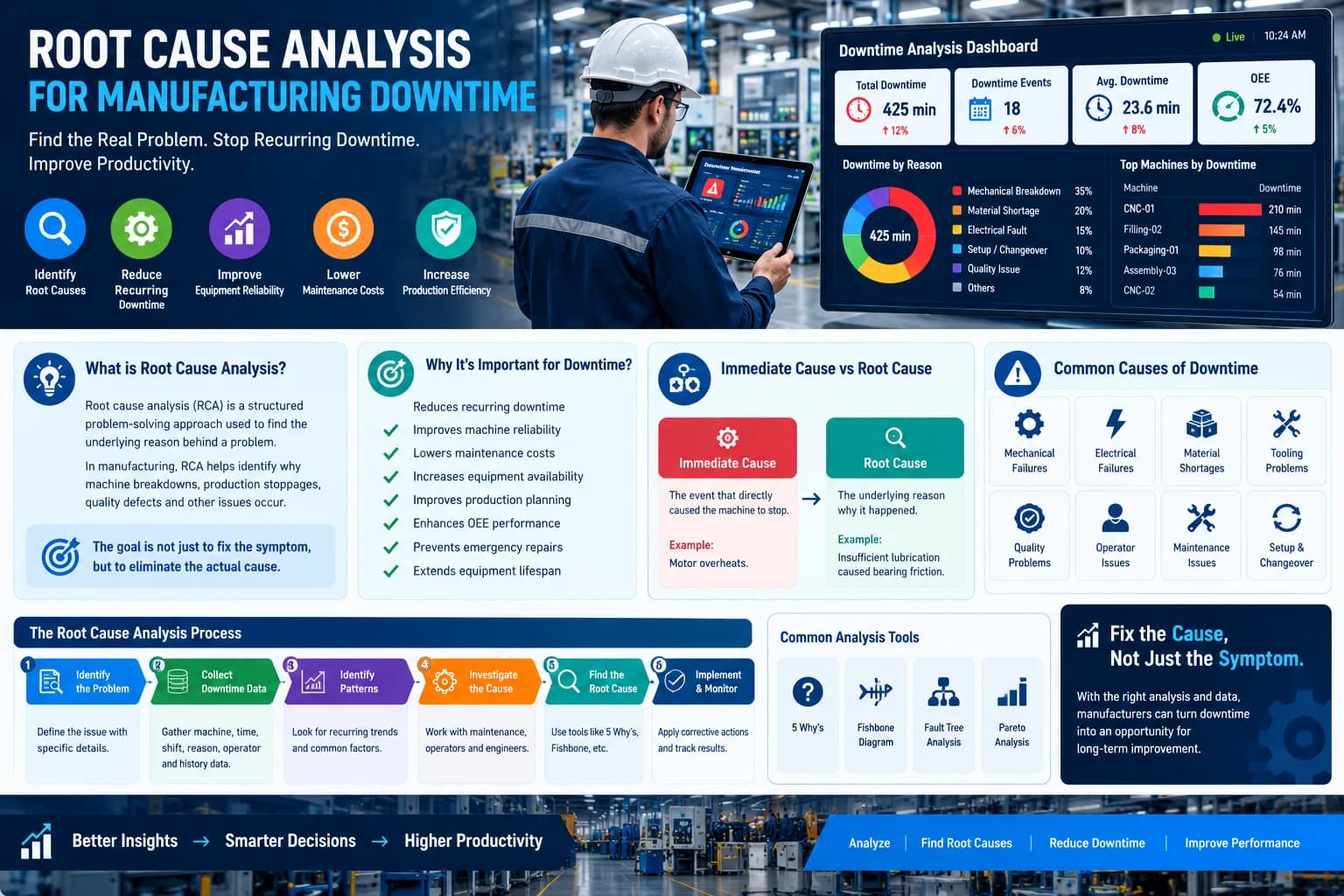
- Investigate root causes
- Implement corrective action
- Monitor results
- Compare performance
This allows manufacturers to determine whether their improvement activities are actually reducing downtime.
Manual Machine Downtime Tracking
Some factories still use paper registers or spreadsheets to track machine downtime.
Manual tracking can provide basic information, but it can also have limitations.
Common problems include:
- Delayed data entry
- Missing downtime events
- Incorrect durations
- Inconsistent downtime reasons
- Difficult historical analysis
- Time-consuming report preparation
Digital downtime monitoring can help reduce these limitations.
Automated Machine Downtime Tracking
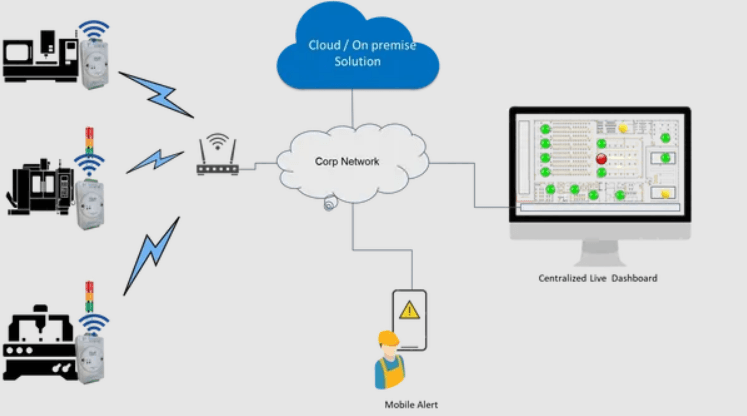
Automated tracking uses machine signals, sensors, PLCs, or Industrial IoT devices to collect equipment status information.
When a machine stops, the system can automatically record the event.
This can provide more timely and consistent downtime information.
Machine Downtime Tracking and OEE
Machine downtime is closely connected to OEE.
OEE considers:
- Availability
- Performance
- Quality
Machine downtime directly affects equipment availability.
Accurate downtime tracking therefore helps manufacturers understand why availability is decreasing and where improvements may be required.
Machine Downtime Tracking for Maintenance Teams
Maintenance teams can use downtime information to identify equipment reliability problems.
They can monitor:
- Breakdown frequency
- Downtime duration
- Repeated failure reasons
- Machine-wise downtime
- Maintenance-related downtime
This information can support preventive maintenance and equipment improvement programs.
Machine Downtime Tracking for Production Managers
Production managers can use downtime tracking to monitor the effect of machine stoppages on production.
They can compare downtime with:
- Production targets
- Actual production
- Machine utilization
- Shift performance
- OEE
This can help managers identify production areas that need attention.
Machine Downtime Tracking for Plant Managers
Plant managers can use historical downtime information to compare machines and production lines.
This can help them identify:
- High-downtime equipment
- Production bottlenecks
- Recurring breakdown causes
- Underperforming production areas
The information can also support long-term manufacturing improvement decisions.
Machine Downtime Tracking for Legacy Equipment
Older machines may not provide modern digital communication interfaces.
However, manufacturers can often connect legacy equipment using:
- Sensors
- PLC signals
- Industrial gateways
- IoT devices
This allows older machines to become part of a modern downtime monitoring system.
Benefits of Effective Machine Downtime Tracking
Reduced Production Losses
Tracking downtime helps manufacturers identify where production time is being lost.
Faster Response
Real-time machine status allows teams to respond quickly to active downtime.
Better Maintenance Planning
Historical downtime data helps maintenance teams identify equipment that requires attention.
Improved Machine Availability
Reducing unnecessary stoppages can increase available production time.
Better Production Visibility
Digital dashboards provide production teams with centralized downtime information.
Improved Decision-Making
Accurate downtime information allows managers to make decisions based on actual equipment performance.
Common Machine Downtime Tracking Mistakes
Manufacturers should avoid several common mistakes.
Tracking Only Major Breakdowns
Small and repeated stops can also create significant losses.
Not Recording Downtime Reasons
Without reasons, it becomes difficult to identify the root causes of downtime.
Depending Completely on Manual Records
Manual records can be delayed or inconsistent.
Ignoring Historical Data
Historical information is valuable for identifying recurring problems.
Collecting Data Without Taking Action
Downtime tracking should lead to investigation and improvement activities.
How to Implement Machine Downtime Tracking
A practical implementation process can include:
Step 1: Identify Critical Machines
Start with equipment that has a major impact on production.
Step 2: Identify Machine Signals
Determine how machine status can be collected.
Step 3: Define Downtime Rules
Establish when a machine should be considered stopped or in downtime.
Step 4: Define Downtime Reasons
Create standardized categories for common downtime causes.
Step 5: Connect the Equipment
Use suitable sensors, PLC connections, or Industrial IoT devices.
Step 6: Configure the Dashboard
Display the information required by production and maintenance teams.
Step 7: Analyze Downtime
Review the data regularly and identify the largest sources of production loss.
Step 8: Implement Improvements
Take corrective actions and monitor whether downtime decreases.
Why Choose Robato Systems?
Robato Systems provides manufacturing monitoring solutions designed to improve machine and production visibility.
The solution can connect with machines, PLCs, sensors, production counters, and Industrial IoT devices.
Manufacturers can monitor:
- Machine status
- Downtime
- Production output
- OEE
- Availability
- Performance
- Quality
- Machine utilization
- Production targets
- Actual production
Real-time dashboards can help production and maintenance teams understand machine performance and identify downtime-related production losses.
Conclusion
Machine Downtime Tracking is an important part of modern manufacturing performance management.
By tracking machine stoppages, downtime duration, downtime reasons, machine-wise performance, and historical trends, manufacturers can gain a better understanding of equipment losses.
Automated downtime monitoring can provide more timely information than traditional manual records and can help production and maintenance teams respond faster.
When downtime tracking is combined with OEE, production monitoring, maintenance planning, and continuous improvement, manufacturers can work toward higher equipment availability and better production efficiency.
Frequently Asked Questions
What is Machine Downtime Tracking?
Machine Downtime Tracking is the process of recording and monitoring machine stoppages, their duration, and their causes.
Why should manufacturers track machine downtime?
Tracking downtime helps manufacturers identify production losses, recurring machine problems, and equipment that requires improvement.
Can machine downtime be tracked automatically?
Yes. Sensors, PLCs, machine controllers, and Industrial IoT devices can be used to automatically collect machine status information.
What downtime information should be tracked?
Manufacturers should track machine name, downtime start time, end time, duration, reason, shift, production line, and date.
How does downtime tracking help maintenance teams?
It helps maintenance teams identify machines with frequent breakdowns and recurring failure patterns.
Can downtime tracking improve OEE?
Yes. Accurate downtime information helps manufacturers understand availability losses, which are an important part of OEE.
Can older machines be monitored?
Yes. Legacy machines can often be connected using sensors, PLC signals, gateways, or Industrial IoT devices.