Machine downtime is one of the biggest challenges faced by manufacturing plants. When production equipment stops unexpectedly, valuable production time is lost and manufacturing targets can be affected.
Frequent machine breakdowns can also increase maintenance costs, create production delays, affect delivery schedules, and reduce overall equipment effectiveness.
The good news is that manufacturers can take several practical steps to reduce machine downtime.
By combining preventive maintenance, real-time machine monitoring, downtime analysis, operator training, and continuous improvement, factories can identify the major causes of downtime and take corrective action.
This guide explains practical strategies that manufacturing companies can use to reduce machine downtime and improve production efficiency.
What is Machine Downtime?
Machine downtime is the period when production equipment is unavailable for normal manufacturing operations.
Downtime can be planned or unplanned.
Planned Downtime
Planned downtime can include:
- Preventive maintenance
- Equipment servicing
- Scheduled inspections
- Product changeovers
- Machine setup
Unplanned Downtime
Unplanned downtime can include:
- Mechanical breakdowns
- Electrical failures
- Sensor problems
- Unexpected equipment faults
- Material-related interruptions
- Machine jams
While planned downtime can be included in production planning, unplanned downtime can create unexpected production losses.
Why Should Manufacturers Reduce Machine Downtime?
Reducing unnecessary downtime can provide several benefits.
Higher Production Output
Machines that remain available for longer periods can produce more during scheduled production time.
Improved Machine Availability
Fewer unexpected stoppages can increase equipment availability.
Lower Maintenance Costs
Identifying recurring problems can help maintenance teams address issues before they become major failures.
Better Production Planning
More reliable equipment makes production planning easier.
Improved OEE
Reducing downtime can improve the availability component of Overall Equipment Effectiveness.
Better Delivery Performance
Fewer production interruptions can help manufacturers maintain production schedules and delivery commitments.
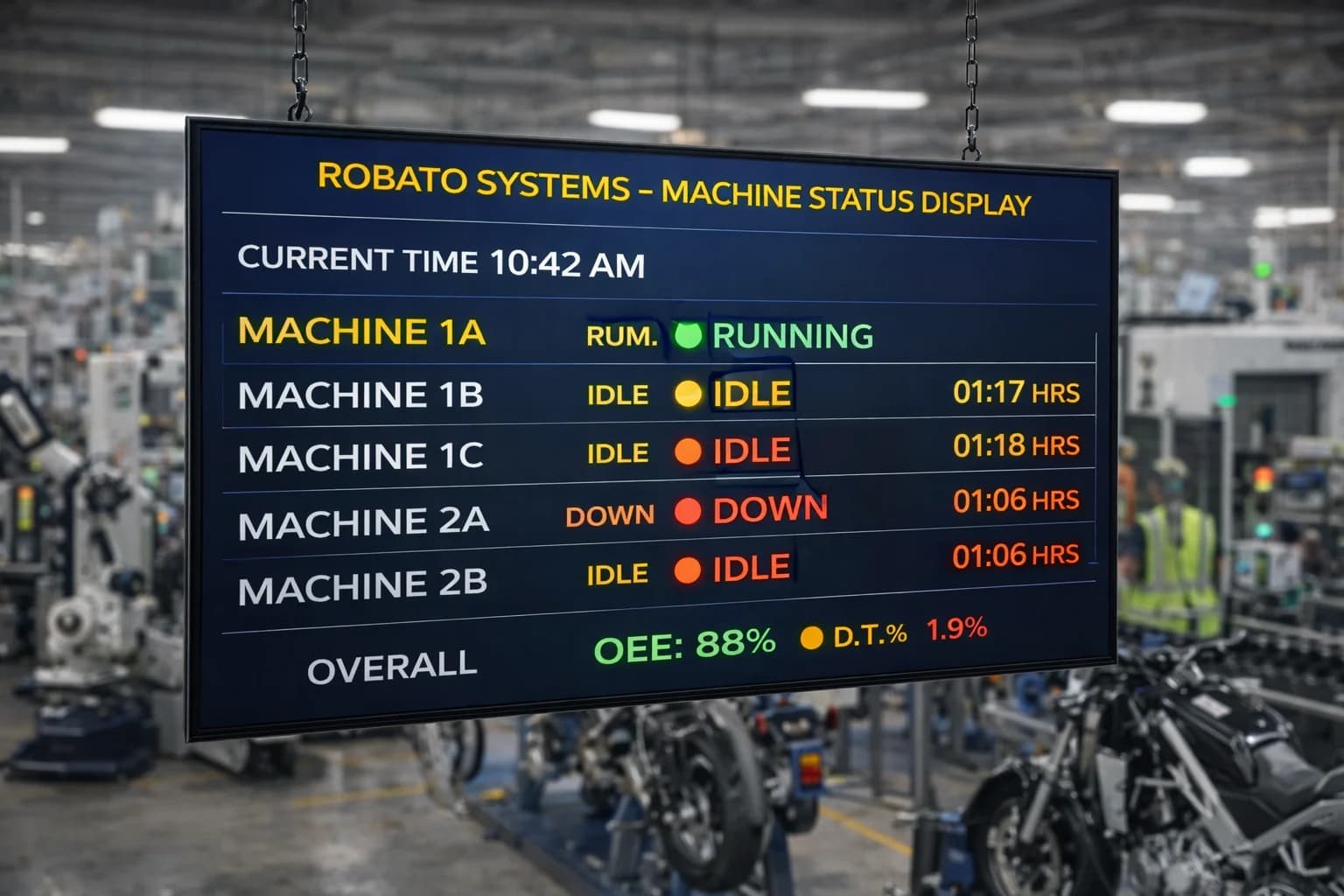
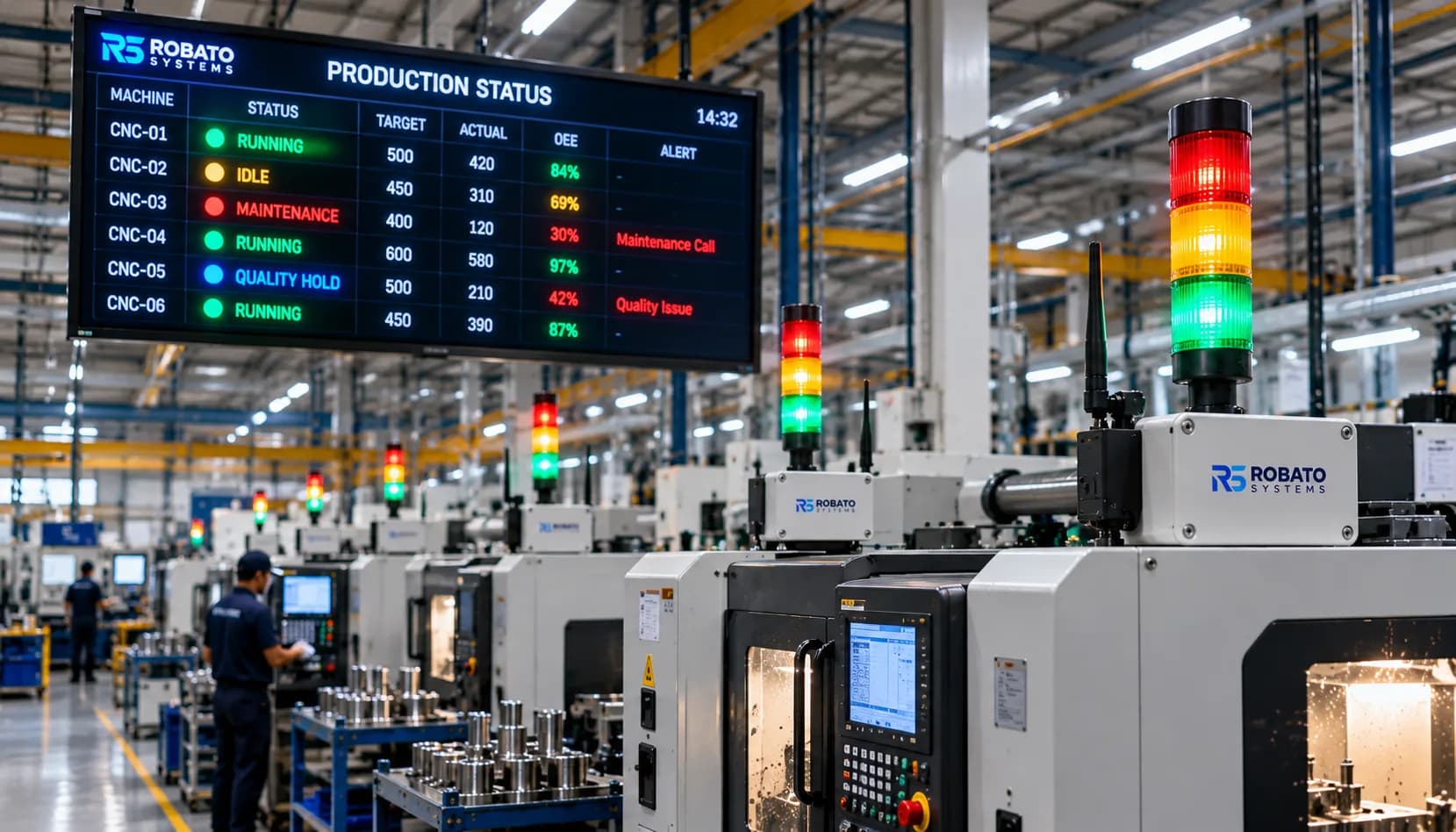
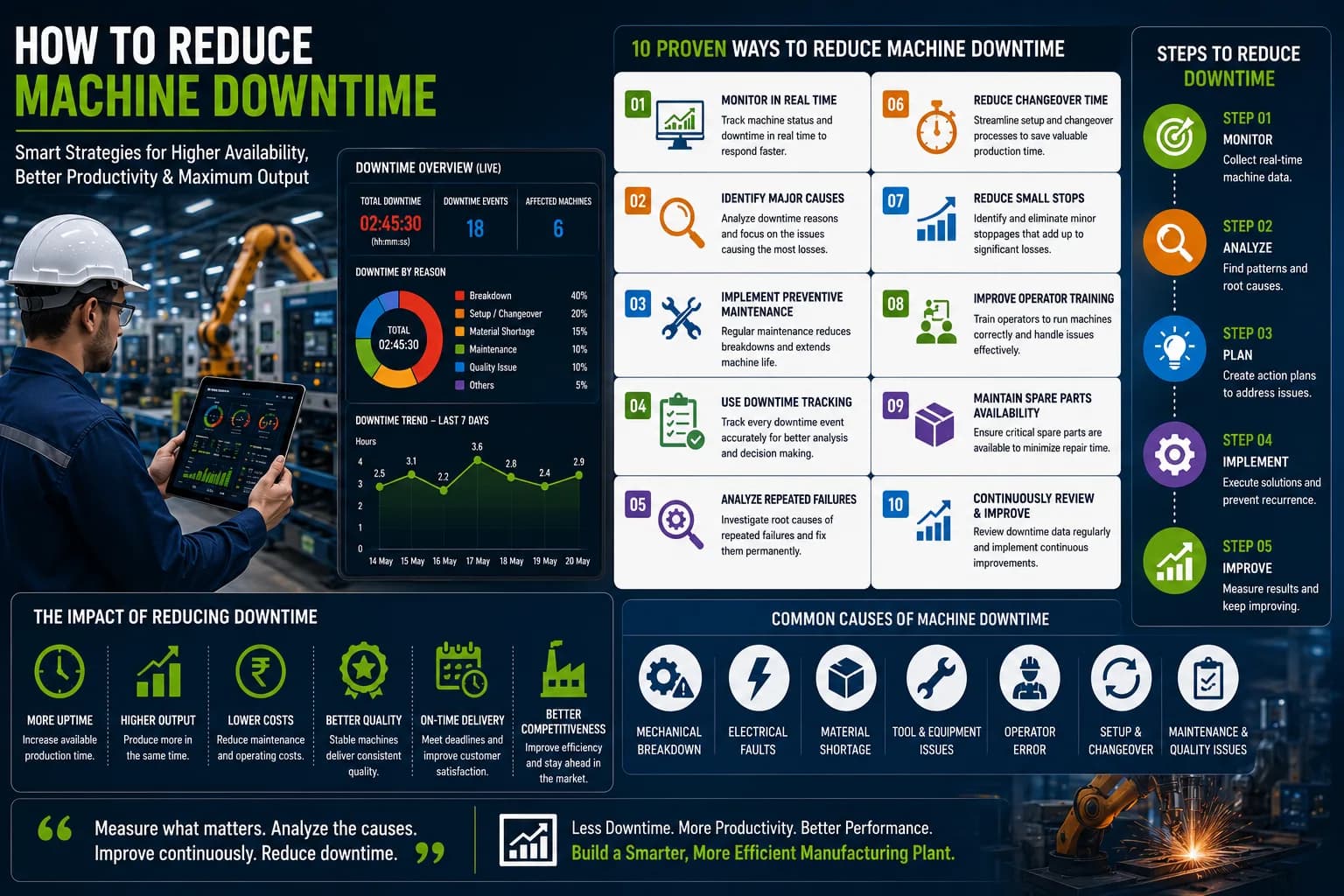
1. Monitor Machine Downtime in Real Time
One of the first steps toward reducing machine downtime is understanding when machines stop.
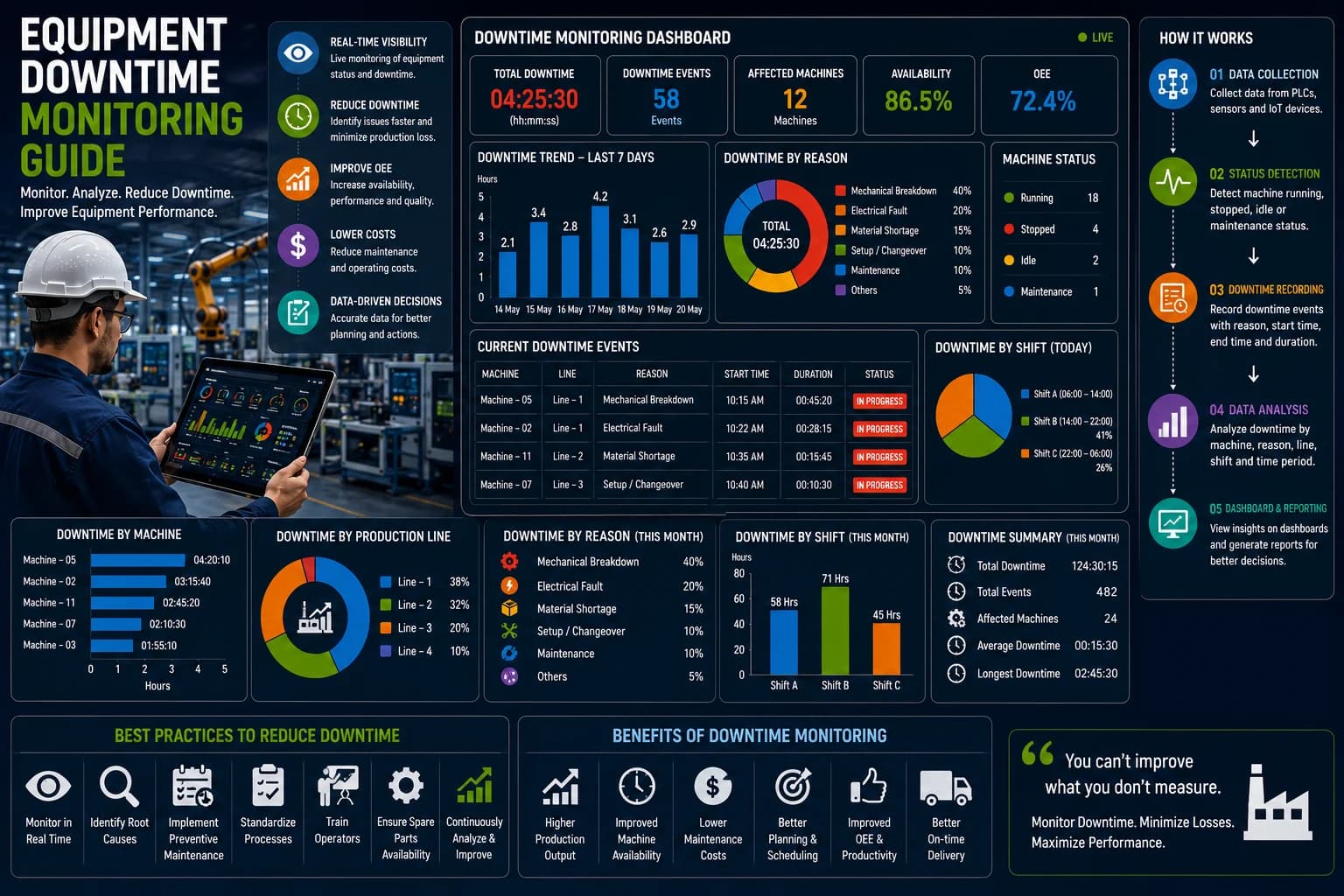
Real-time downtime monitoring can show:
- Machine status
- Active downtime
- Downtime duration
- Machine name
- Production line
- Downtime reason
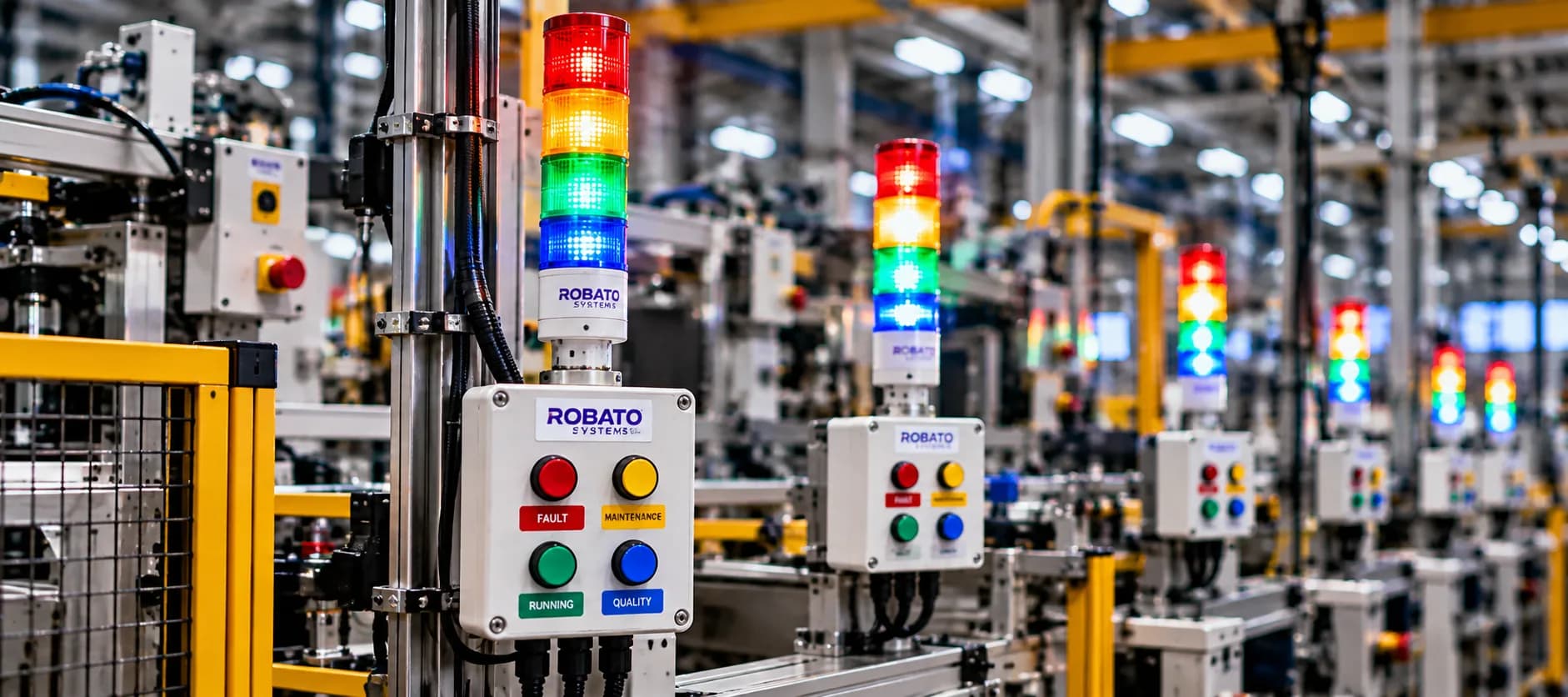
When a machine stops, production and maintenance teams can identify the event immediately.
This can reduce the delay between a machine stopping and the team responding to the problem.
2. Identify the Major Causes of Downtime
Not every downtime event has the same impact.
Manufacturers should identify which causes contribute most to total downtime.
Common causes include:
- Mechanical failures
- Electrical faults
- Material shortages
- Tool problems
- Setup
- Changeovers
- Maintenance
- Quality issues
- Operator-related problems
Downtime analysis can help teams prioritize the causes that create the largest production losses.
3. Implement Preventive Maintenance
Preventive maintenance involves servicing equipment at planned intervals instead of waiting for a breakdown.
Maintenance activities can include:
- Inspection
- Lubrication
- Cleaning
- Calibration
- Component replacement
- Equipment servicing
A preventive maintenance program can help identify equipment problems before they result in unexpected production stoppages.
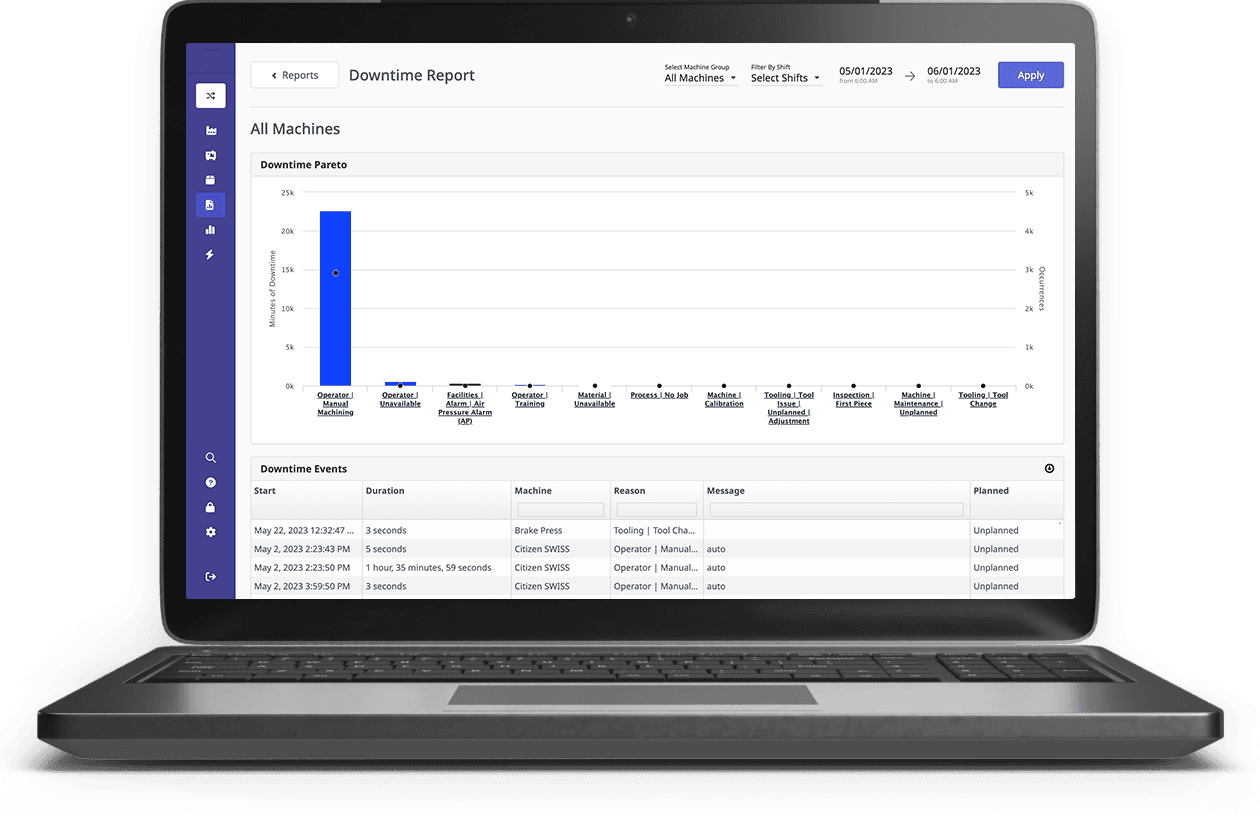
4. Use Machine Downtime Tracking
Accurate downtime tracking provides a historical record of machine stoppages.
Manufacturers can track:
- Number of downtime events
- Downtime duration
- Downtime reasons
- Machine-wise downtime
- Shift-wise downtime
- Date-wise downtime
This information can help production and maintenance teams understand which machines require improvement.
5. Analyze Repeated Machine Failures
If the same machine repeatedly experiences the same type of failure, the problem may require a deeper investigation.
For example, repeated motor failures may indicate an underlying mechanical, electrical, environmental, or operating issue.
Instead of repeatedly repairing the same problem, maintenance teams can investigate the root cause.
6. Reduce Changeover Time
Changeovers can consume valuable production time.
Manufacturers can reduce changeover time by standardizing:
- Tool preparation
- Machine settings
- Cleaning procedures
- Material preparation
- Operator responsibilities
- Startup procedures
Reducing unnecessary changeover time can increase the amount of time available for actual production.
7. Reduce Small and Frequent Stops
Not all downtime events are large breakdowns.
Small stops can occur because of:
- Material positioning
- Sensor interruptions
- Minor jams
- Machine adjustments
- Operator interventions
A machine that stops for one or two minutes may not appear significant.
However, if the same problem occurs dozens of times during a shift, the total production loss can become substantial.
Tracking small stops can help manufacturers identify hidden sources of downtime.
8. Improve Operator Training
Operators interact with machines throughout the production process.
Proper training can help reduce problems caused by:
- Incorrect machine operation
- Incorrect settings
- Improper startup procedures
- Incorrect adjustments
- Delayed response to machine problems
Operators should understand standard operating procedures and know how to respond when abnormal machine conditions occur.
9. Maintain Spare Parts Availability
Sometimes machines remain stopped because the required replacement component is not available.
Manufacturers should identify critical spare parts and maintain appropriate inventory levels.
Important components may include:
- Motors
- Sensors
- Bearings
- Belts
- Electrical components
- Fuses
- Switches
- Pneumatic components
Having critical spare parts available can reduce repair delays.
10. Improve Machine Condition Monitoring
Monitoring machine condition can help identify potential problems before equipment fails.
Depending on the equipment, manufacturers can monitor:
- Temperature
- Vibration
- Current
- Pressure
- Machine cycles
- Operating status
Abnormal readings can provide an indication that equipment may require inspection or maintenance.
11. Track Downtime by Machine
Machine-wise downtime analysis helps manufacturers identify equipment that creates the greatest production losses.
For each machine, teams can compare:
- Total downtime
- Downtime frequency
- Average downtime
- Breakdown count
- Production output
This allows maintenance teams to prioritize high-impact equipment.
12. Monitor Downtime by Production Shift
Downtime patterns can differ between shifts.
Manufacturers can compare:
- Shift-wise downtime
- Machine performance
- Breakdown frequency
- Downtime reasons
- Production output
If one shift consistently experiences higher downtime, management can investigate the underlying reasons.
13. Use Root Cause Analysis
Fixing a machine after every breakdown does not necessarily eliminate the problem.
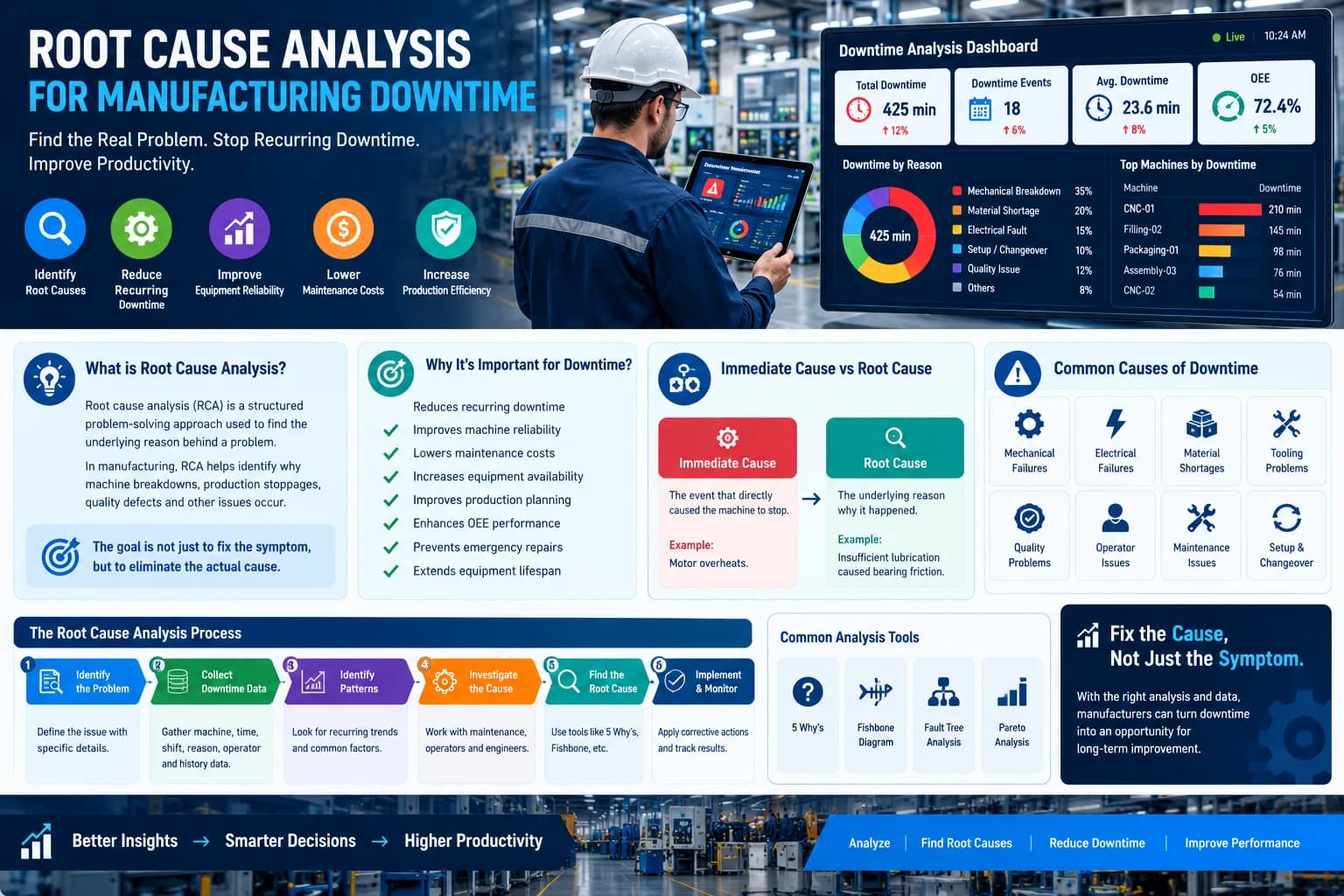
Root cause analysis helps teams determine why the failure occurred.
A structured investigation can examine:
- What happened?
- When did it happen?
- Which machine was affected?
- What was the immediate cause?
- What underlying condition caused the problem?
- What corrective action can prevent recurrence?
This approach can help reduce repeated downtime events.
14. Standardize Machine Operating Procedures
Machines should be operated according to consistent procedures.
Standard operating procedures can define:
- Startup process
- Shutdown process
- Machine settings
- Cleaning
- Inspection
- Changeover
- Safety checks
Standardization can reduce process variation and help operators maintain consistent machine performance.
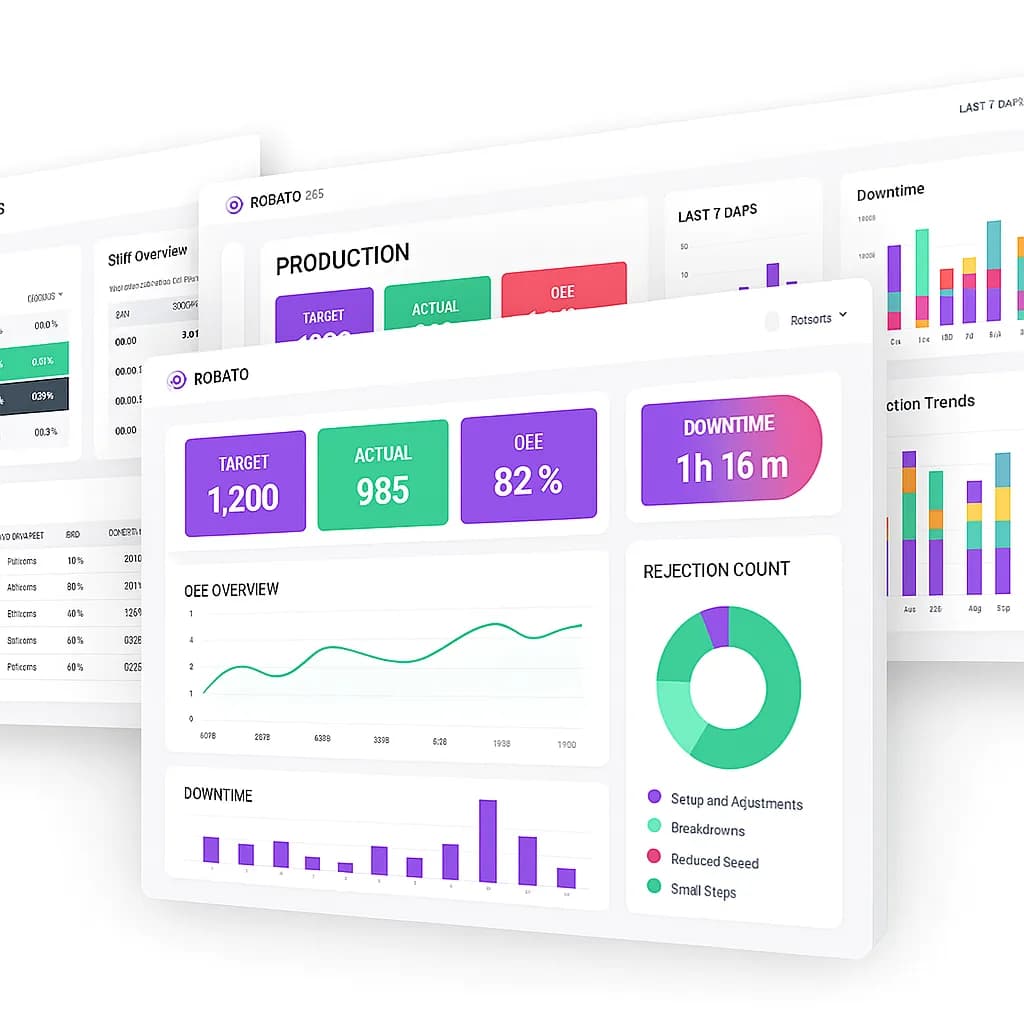
15. Monitor Production Performance
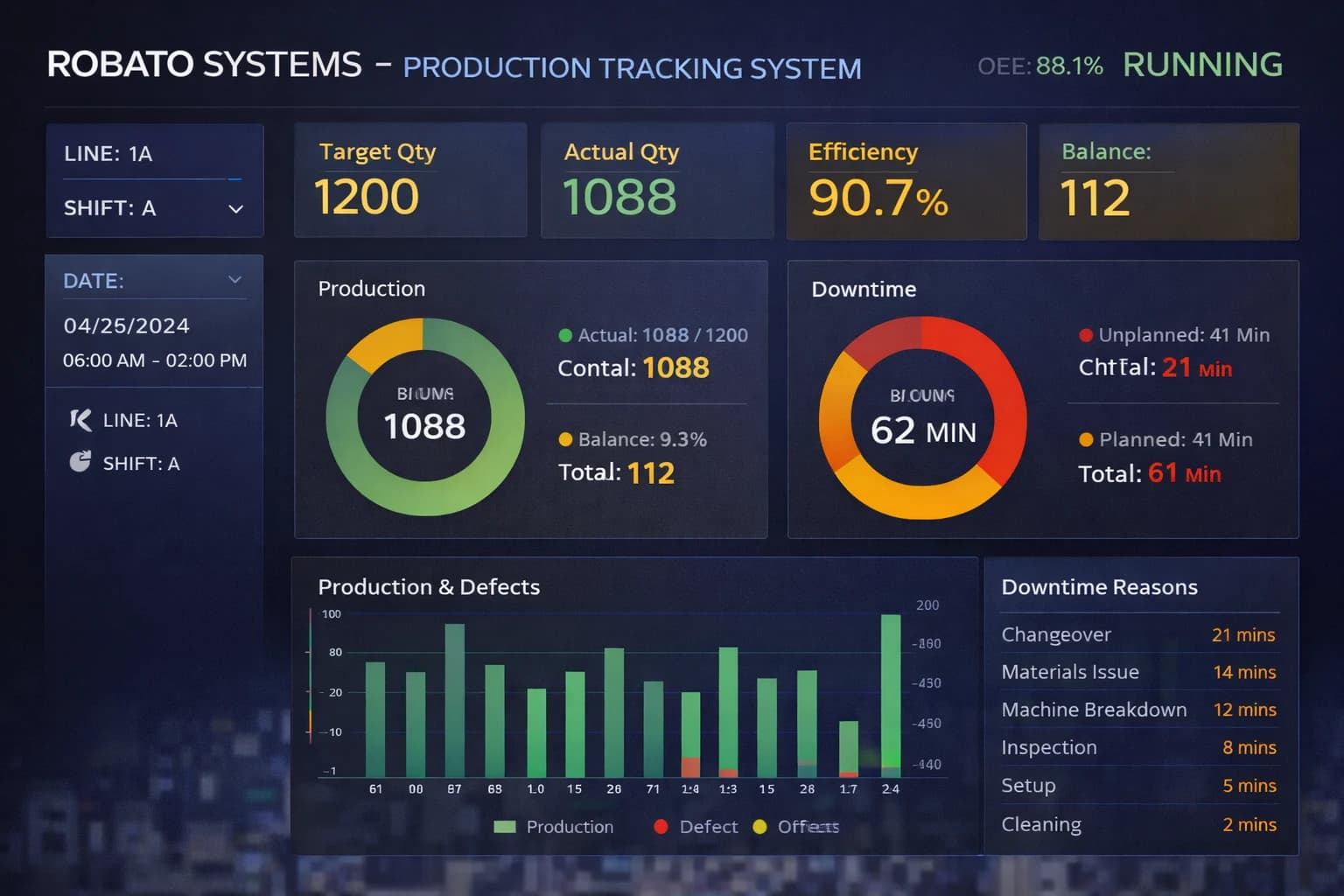
Machine downtime should be analyzed together with production performance.
Manufacturers can compare:
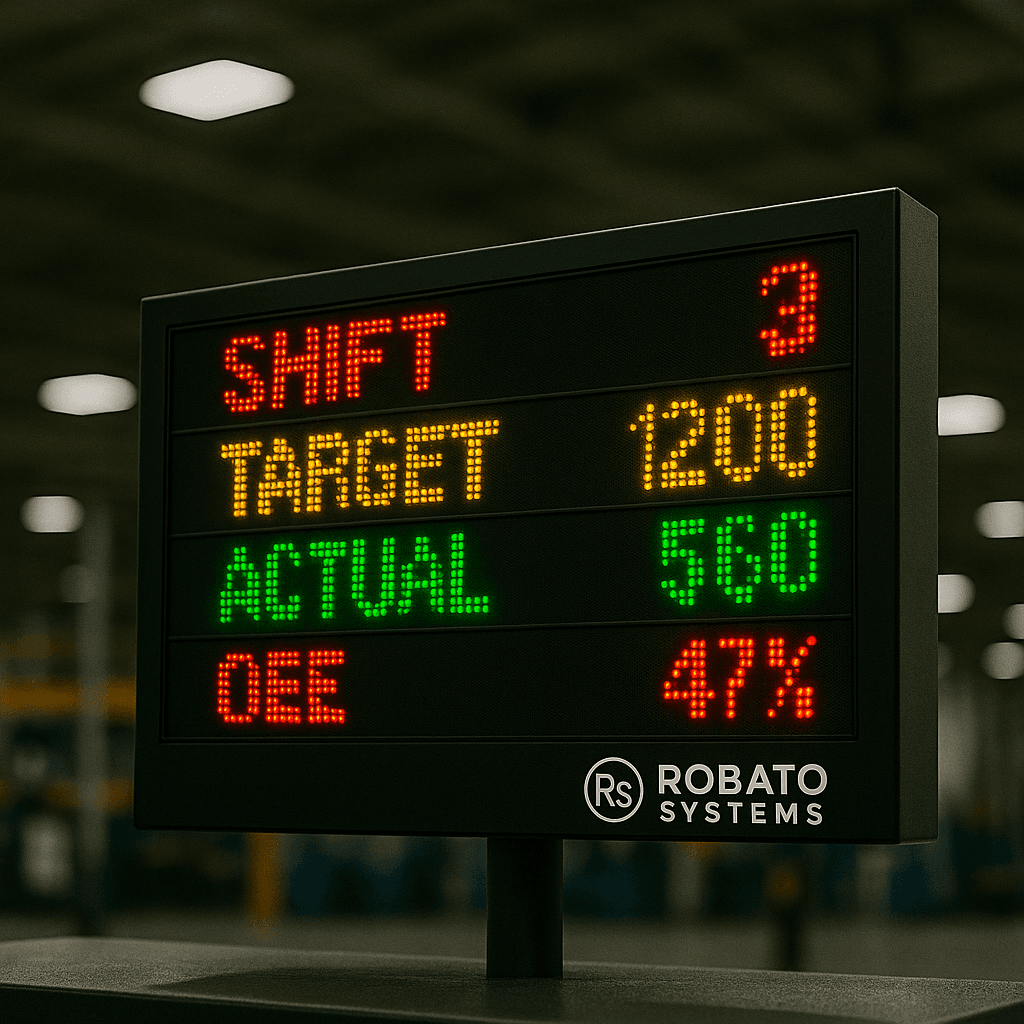
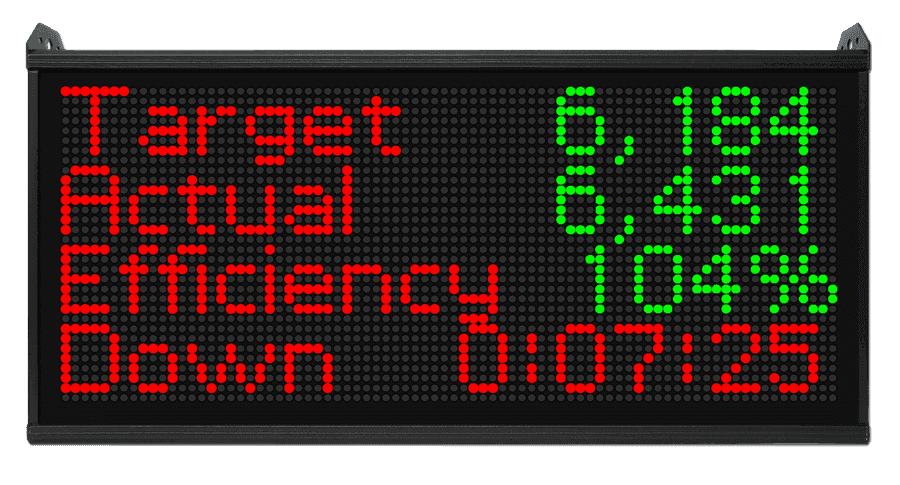
- Planned production
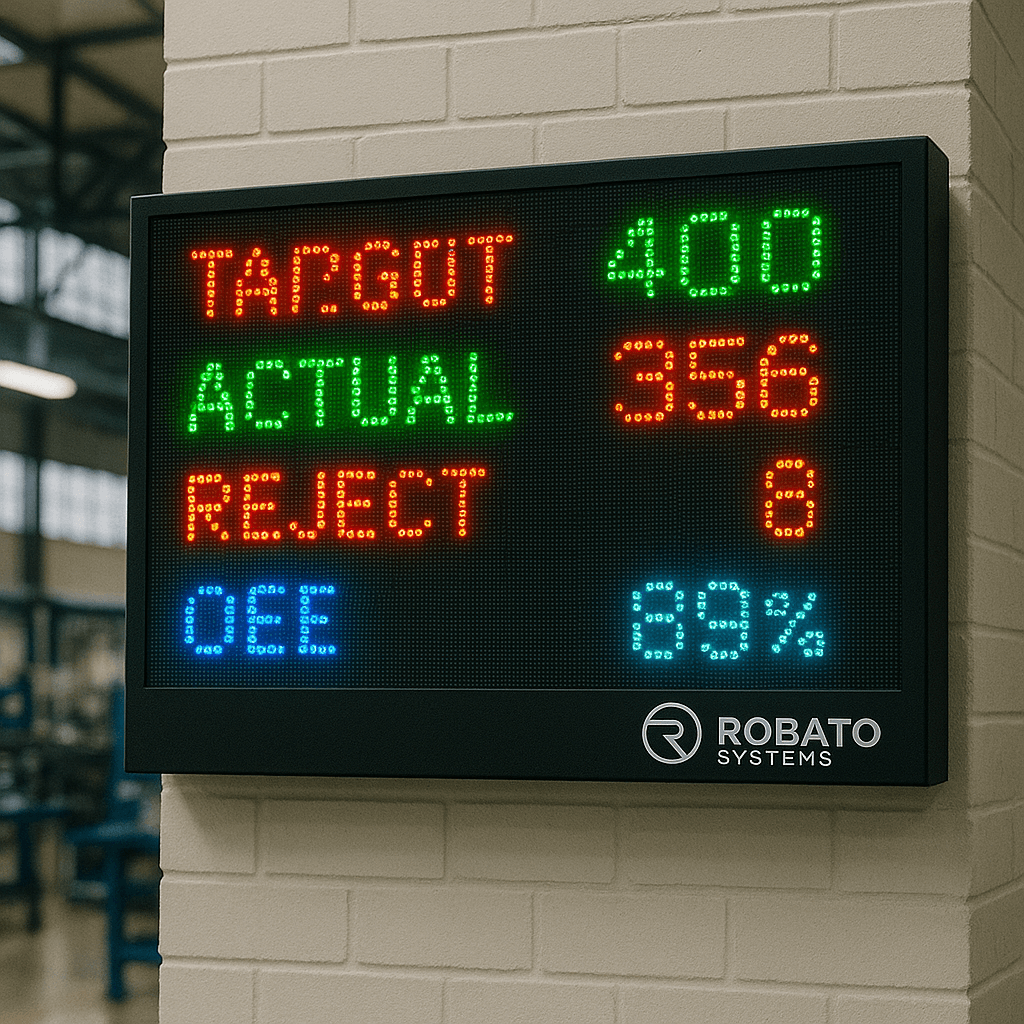
- Actual production
- Machine downtime
- Machine utilization
- OEE
- Good production
- Rejected production
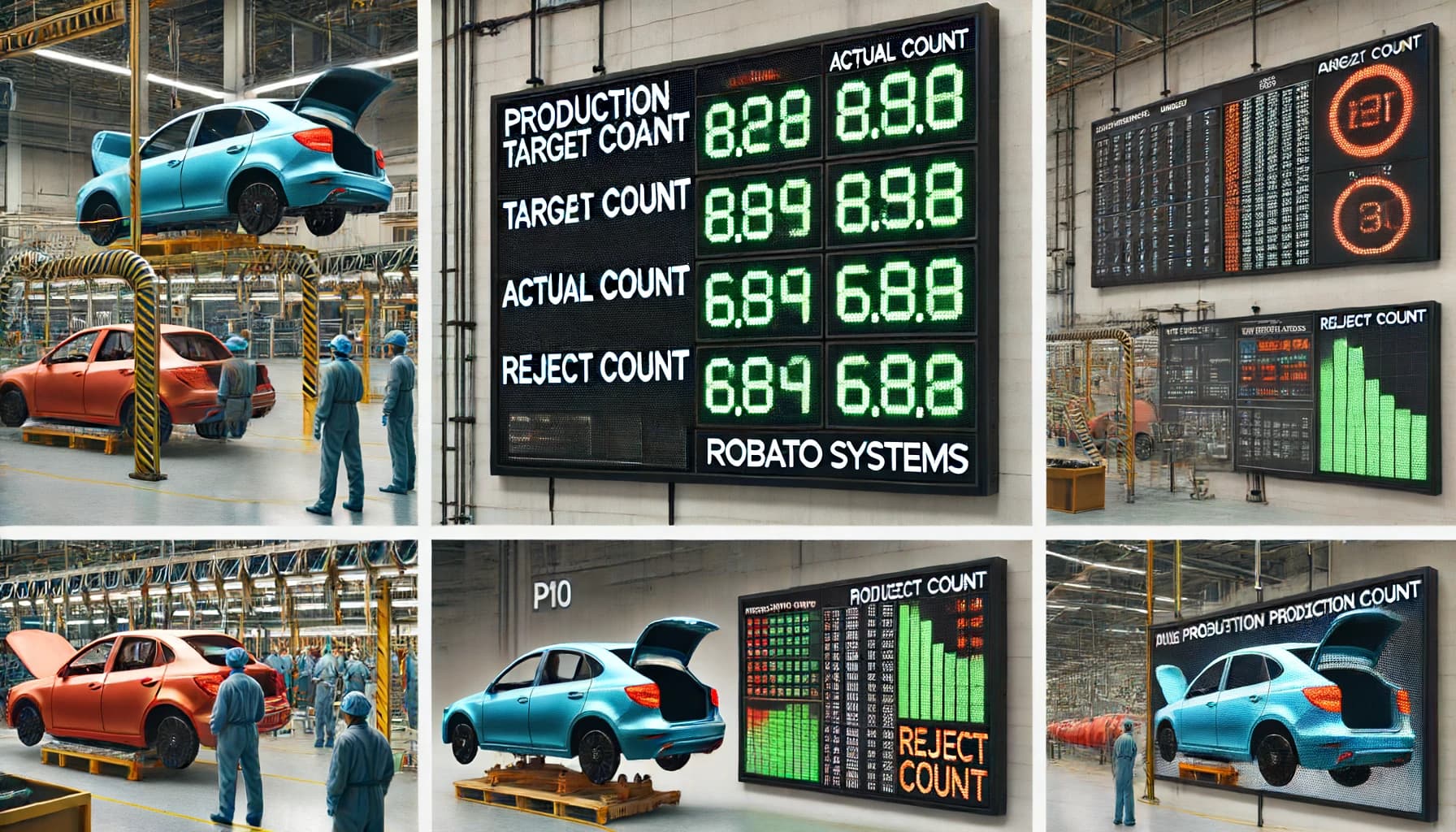
This provides a clearer understanding of how downtime affects production targets.
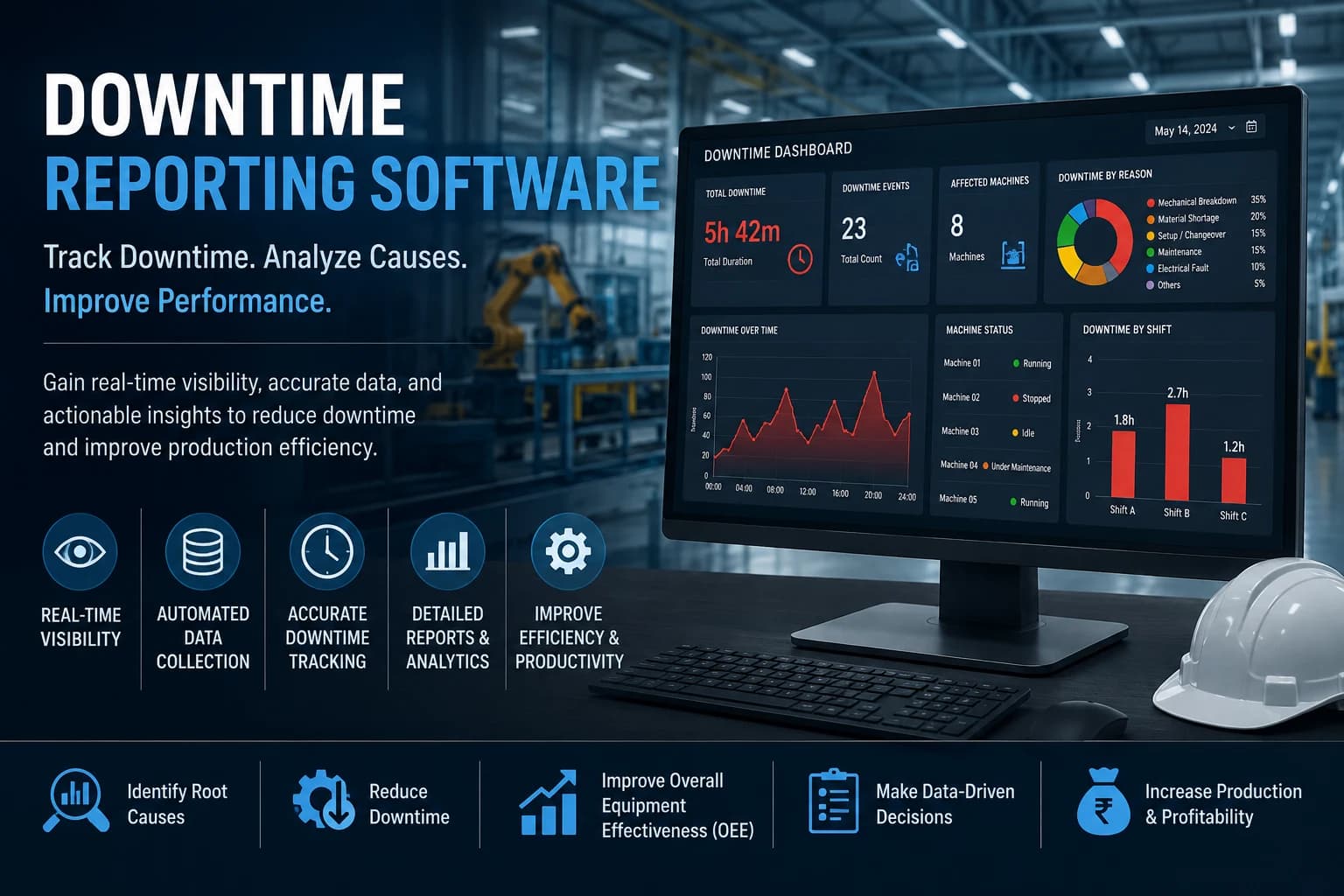
16. Use a Downtime Monitoring Dashboard
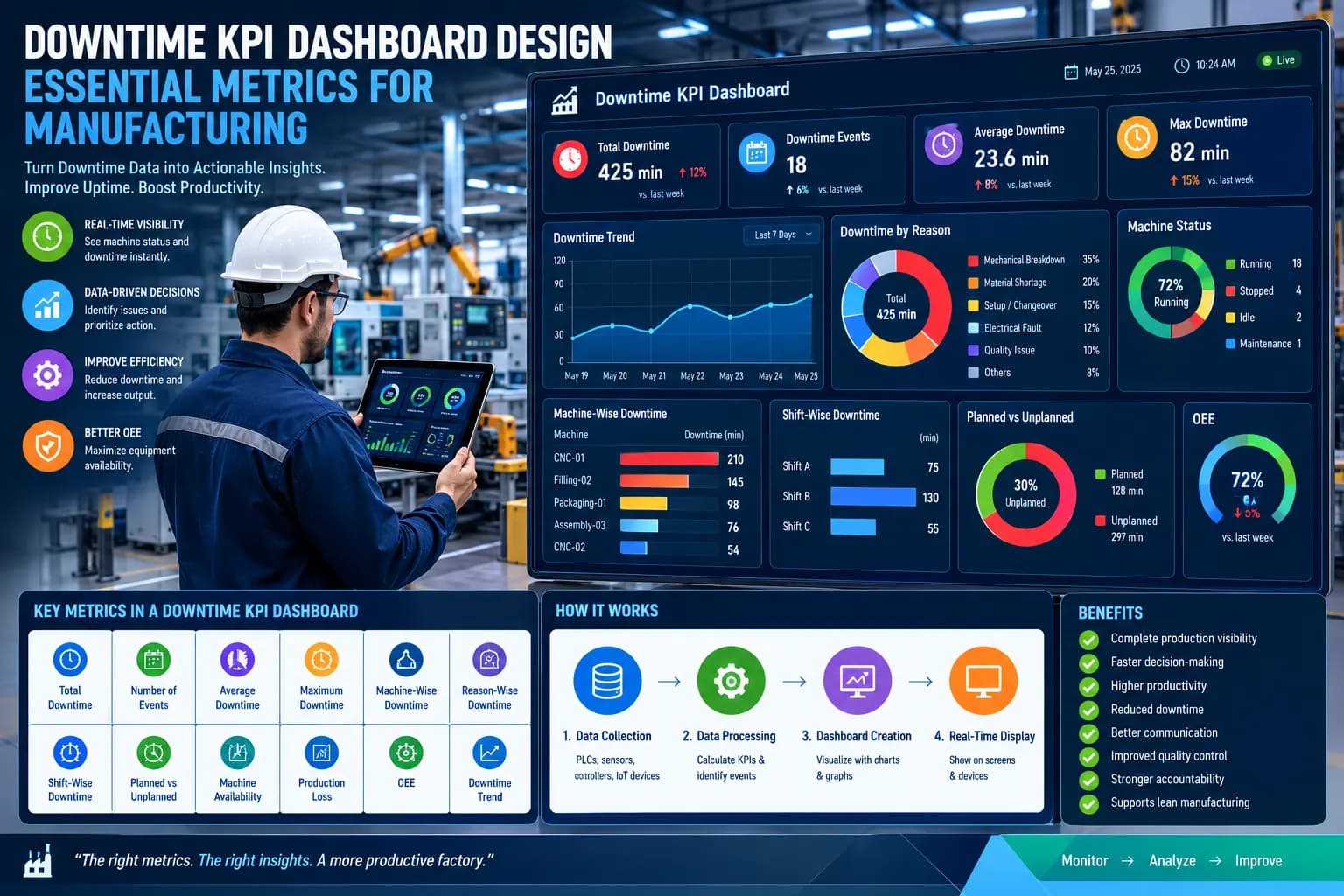
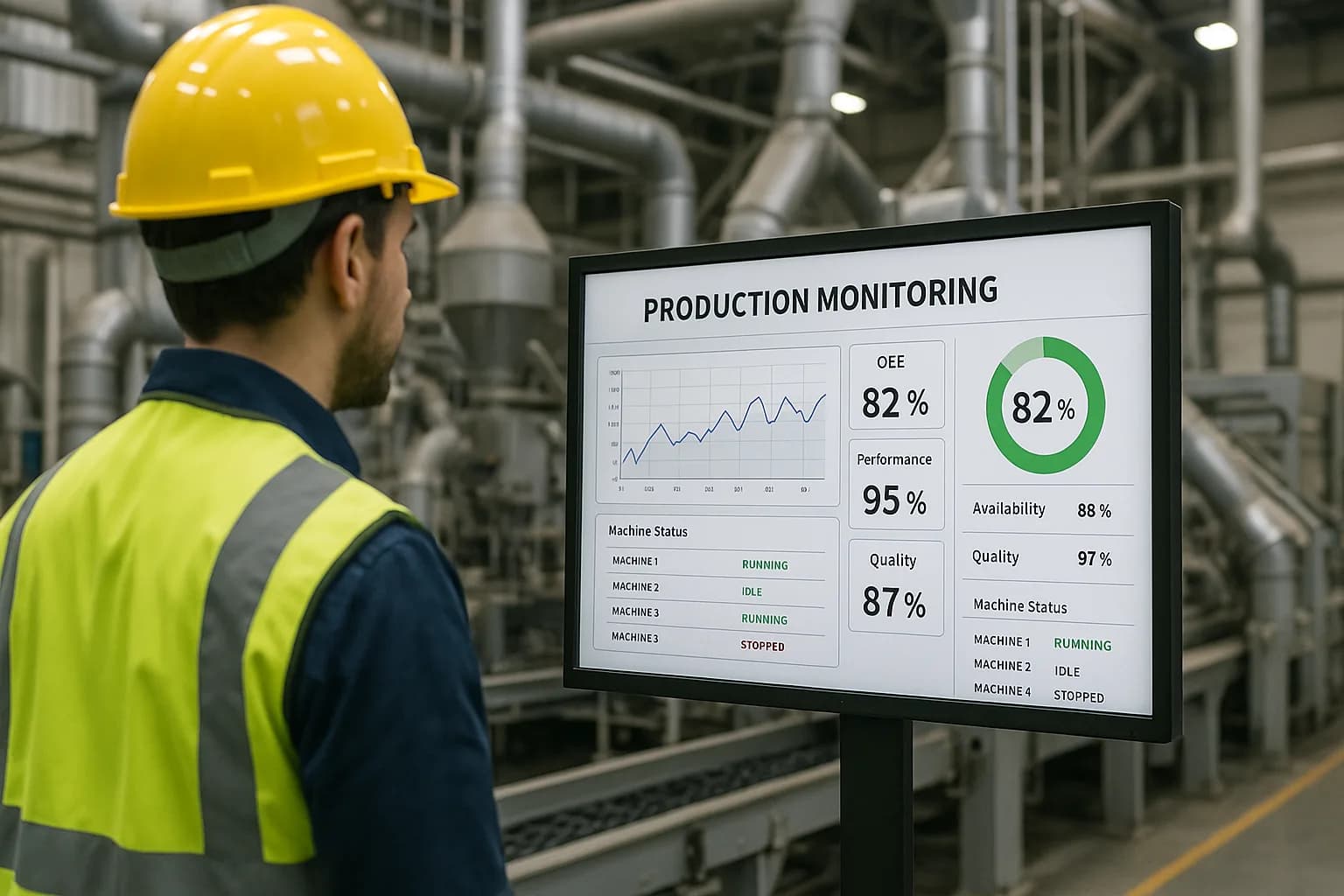
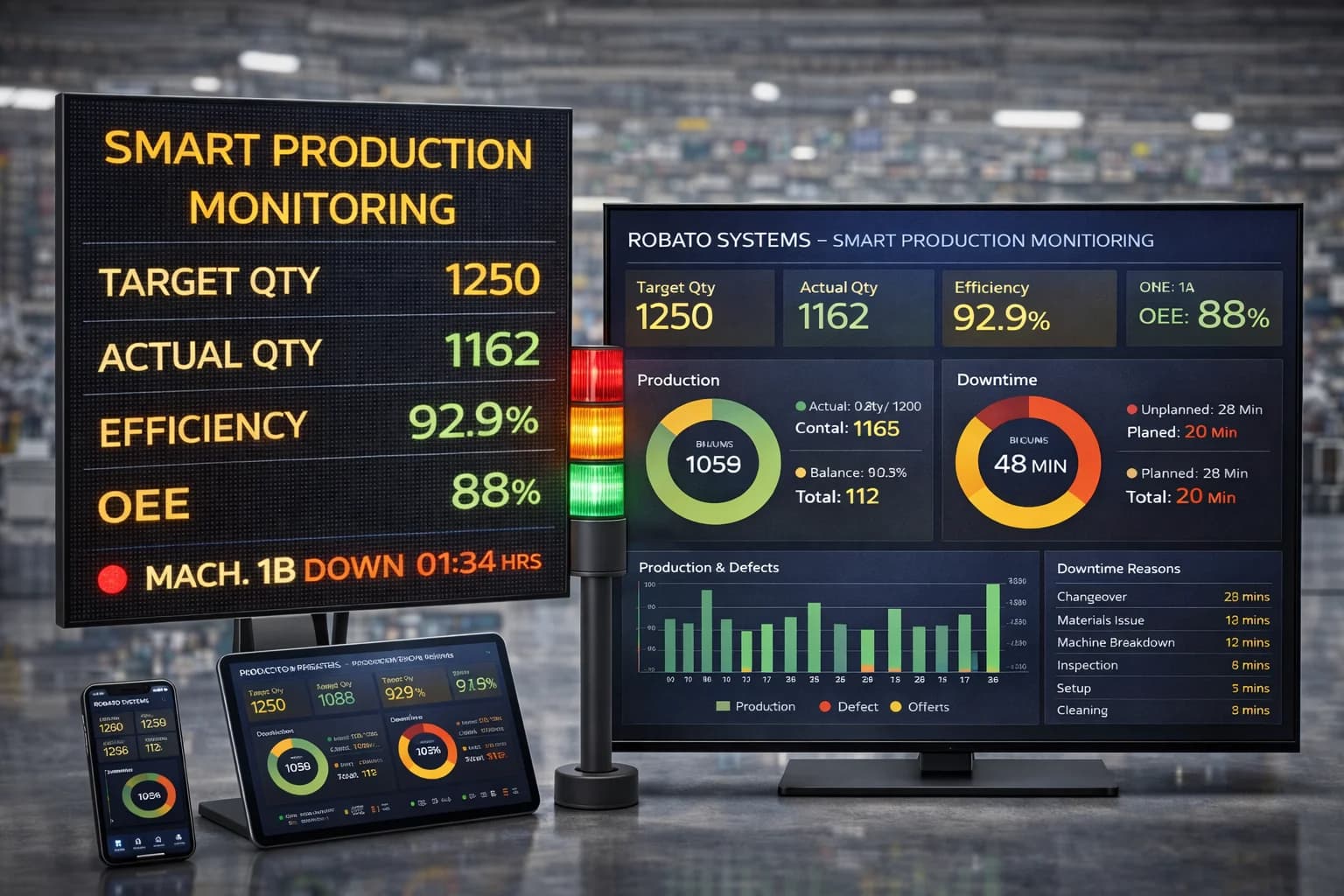
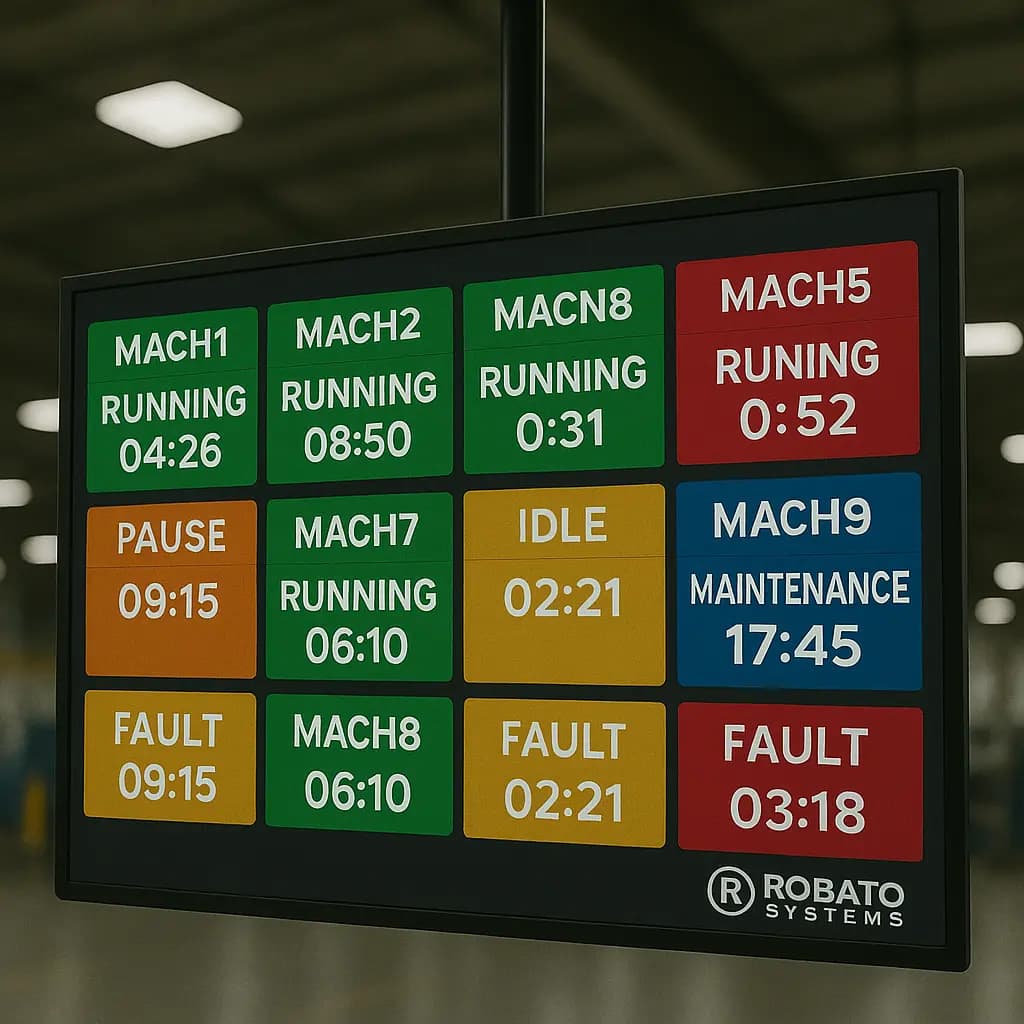
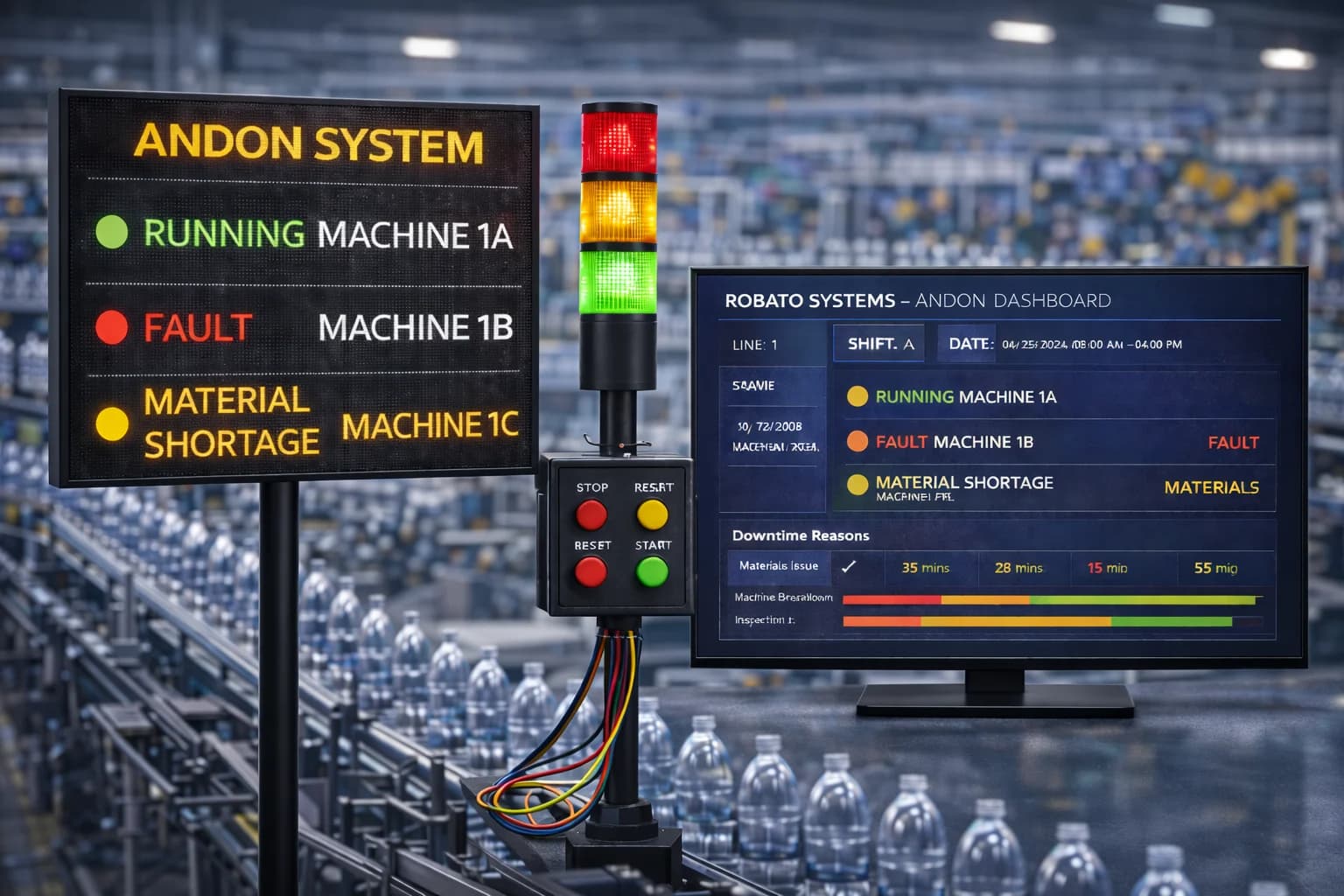
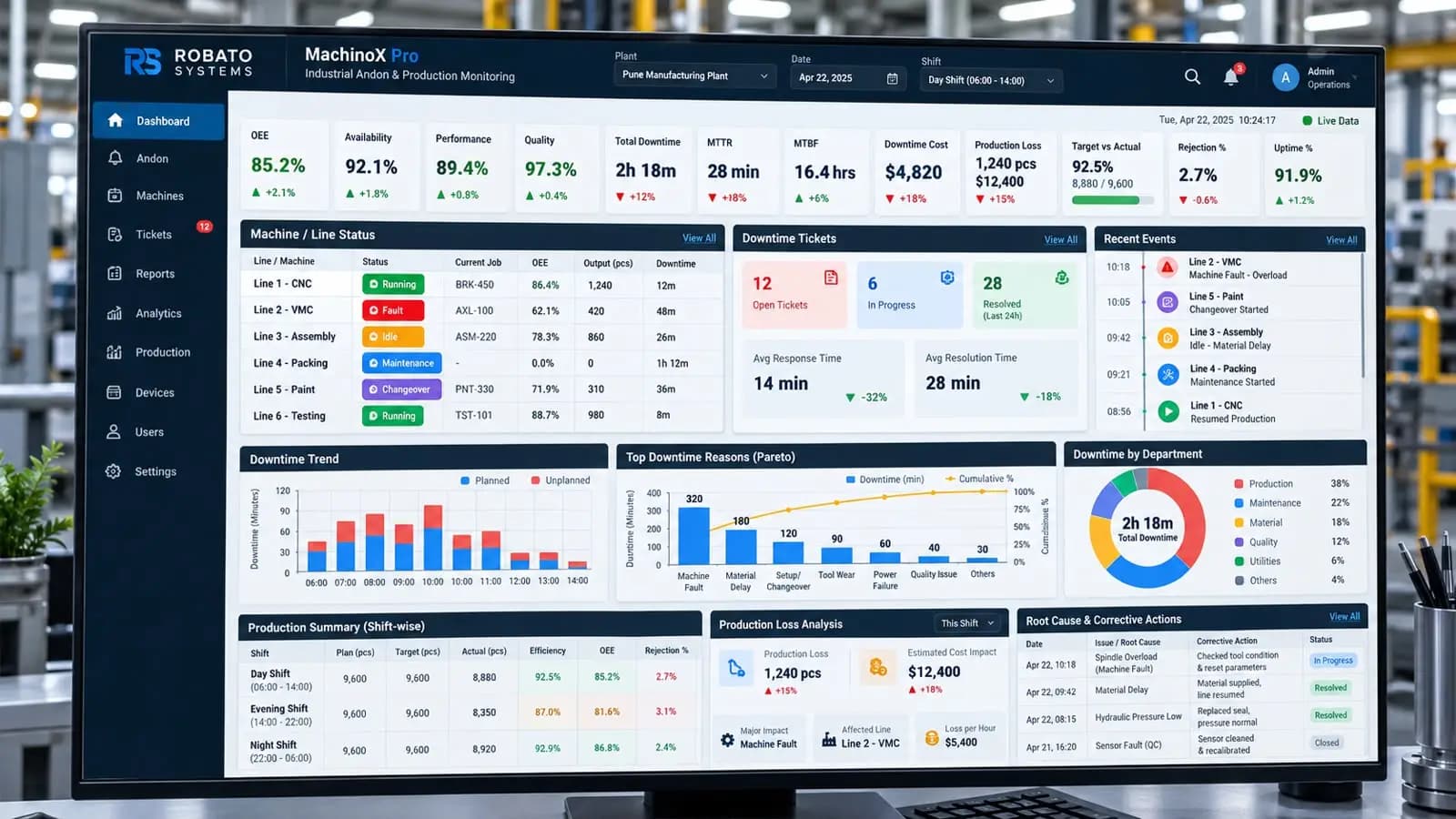
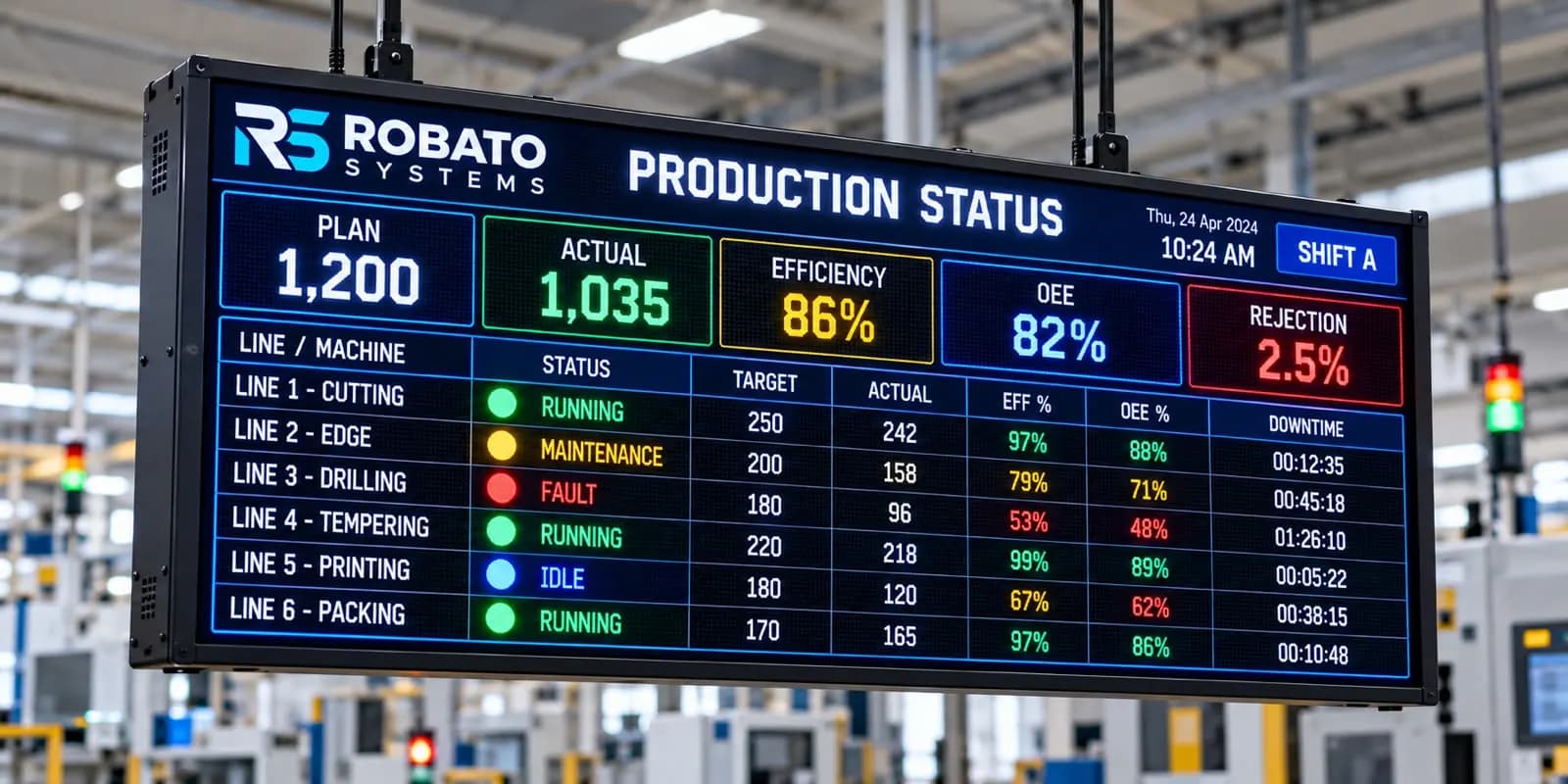
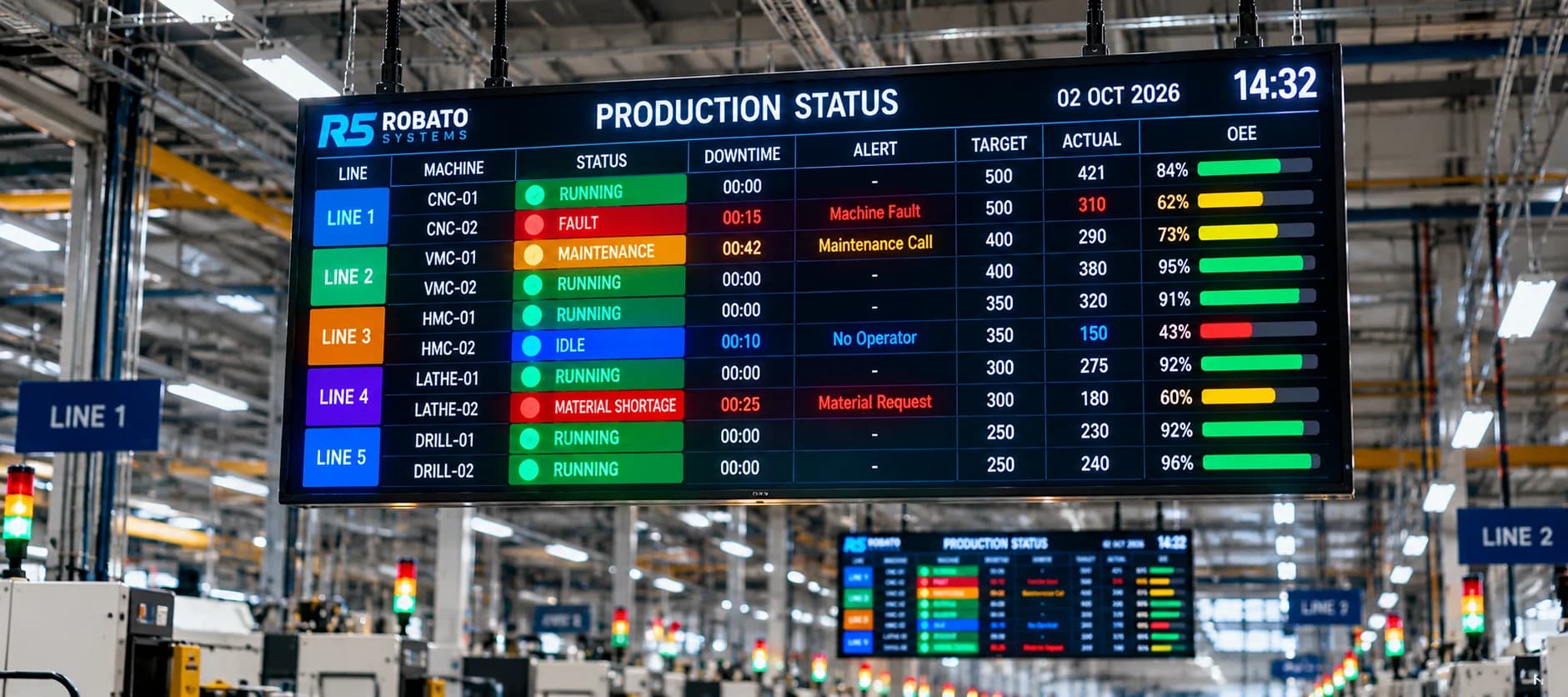
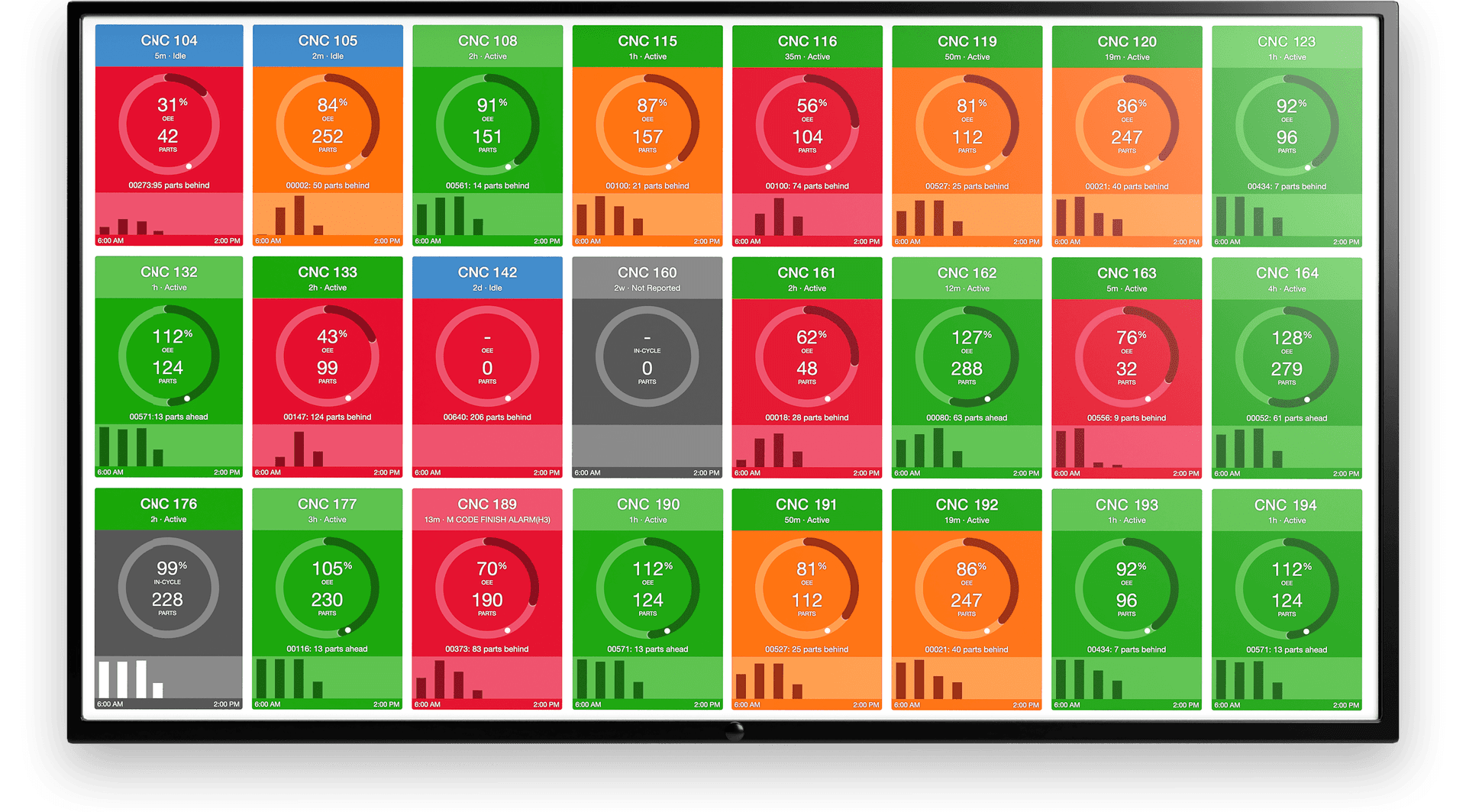
A digital downtime dashboard can provide real-time visibility into equipment performance.
A dashboard can display:
- Running machines
- Stopped machines
- Active downtime
- Downtime duration
- Downtime by machine
- Downtime by reason
- Production output
Production managers can use this information to identify problems quickly.
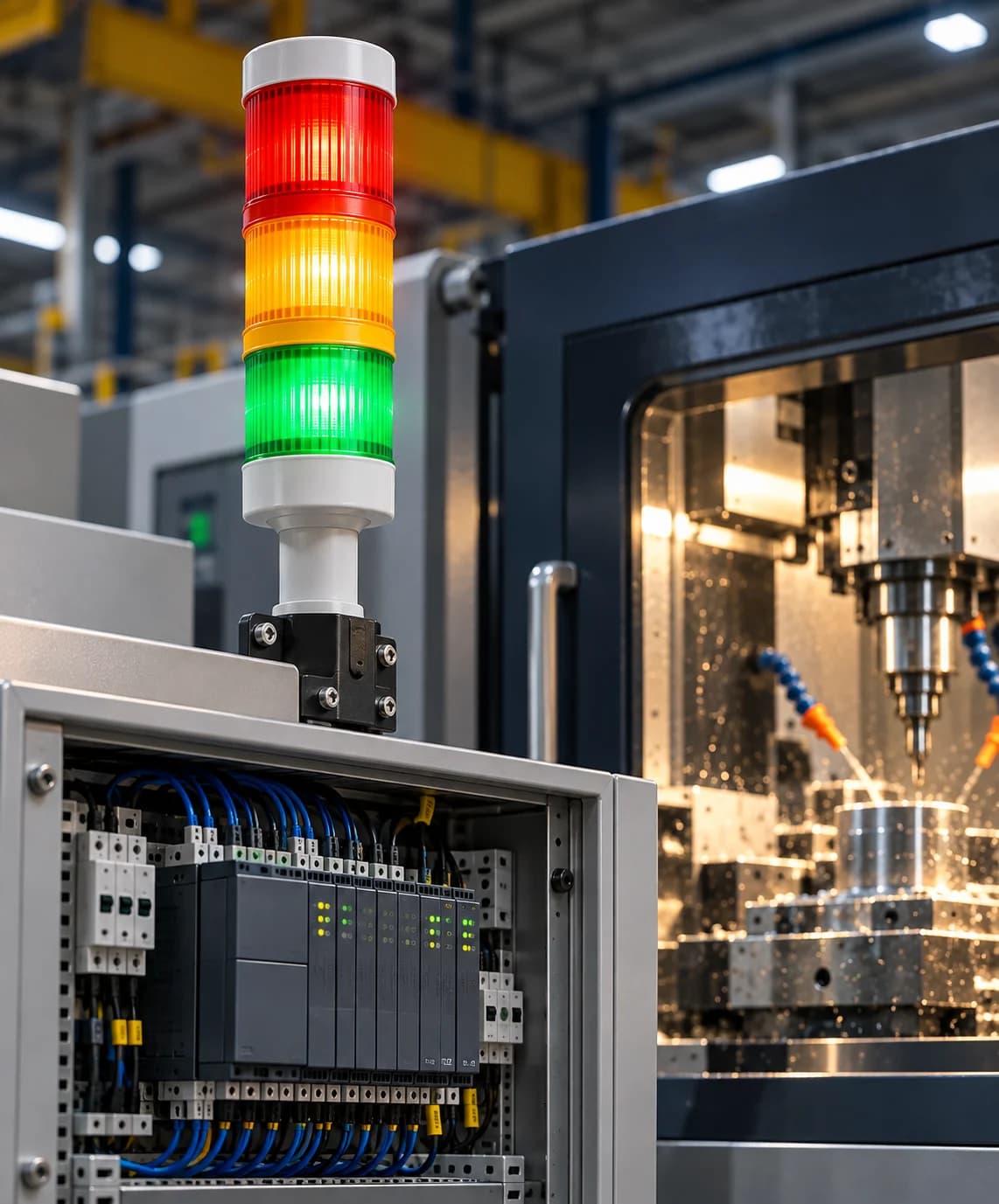
17. Connect Machines with Industrial IoT
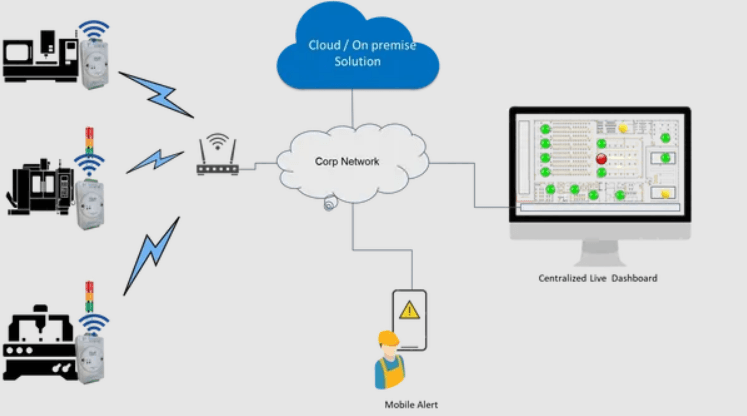
Industrial IoT technologies can help manufacturers collect machine information automatically.
Machines can be connected through:
- Sensors
- PLCs
- Industrial gateways
- Machine controllers
- IoT devices
The collected data can then be sent to a centralized monitoring platform.
This can provide better visibility into machine conditions and production interruptions.
18. Measure Downtime Improvement
Downtime reduction activities should be measured over time.
Manufacturers can compare downtime:
- Before and after improvements
- Week over week
- Month over month
- Machine by machine
- Shift by shift
This helps determine whether improvement initiatives are producing measurable results.
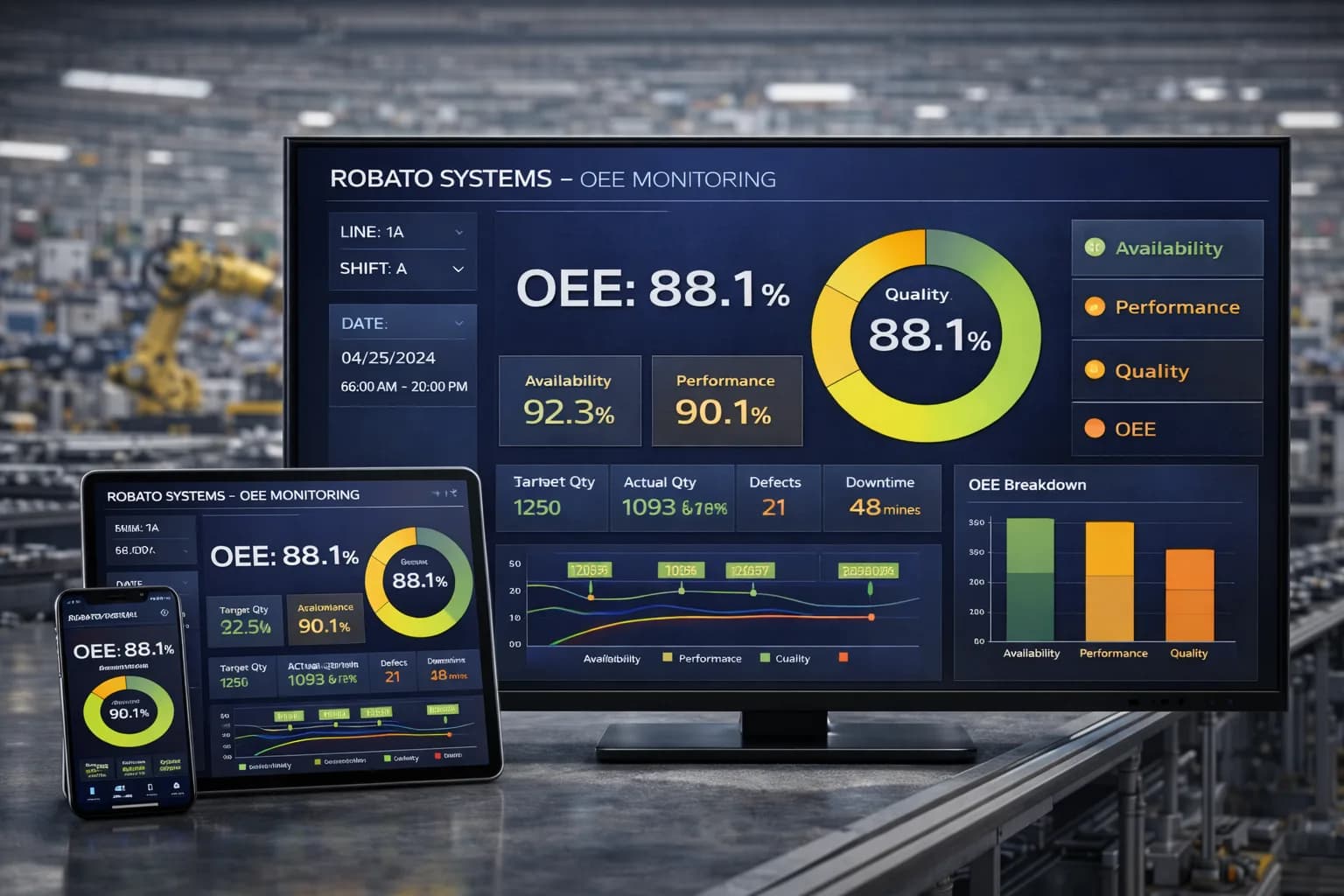
19. Integrate Downtime with OEE Monitoring
Downtime is directly connected to equipment availability.
By integrating downtime monitoring with OEE software, manufacturers can analyze:
- Availability
- Performance
- Quality
- Downtime
- Production output
This provides a broader view of machine effectiveness.
20. Create a Continuous Improvement Process
Reducing downtime should not be treated as a one-time project.
Manufacturers should continuously:
- Monitor machine performance.
- Record downtime.
- Identify major causes.
- Investigate root causes.
- Implement corrective actions.
- Measure the results.
- Repeat the process.
Continuous improvement helps manufacturers address new problems as production conditions change.
Manual vs Digital Downtime Monitoring
Traditional downtime monitoring often relies on paper registers or spreadsheets.
These approaches can have limitations such as:
- Manual data entry
- Delayed reporting
- Missing events
- Incorrect downtime duration
- Inconsistent downtime reasons
- Difficult historical analysis
Digital downtime monitoring can automate machine status collection and provide real-time dashboards.
This can make downtime information easier to collect, analyze, and use.
How Downtime Monitoring Software Helps Reduce Machine Downtime
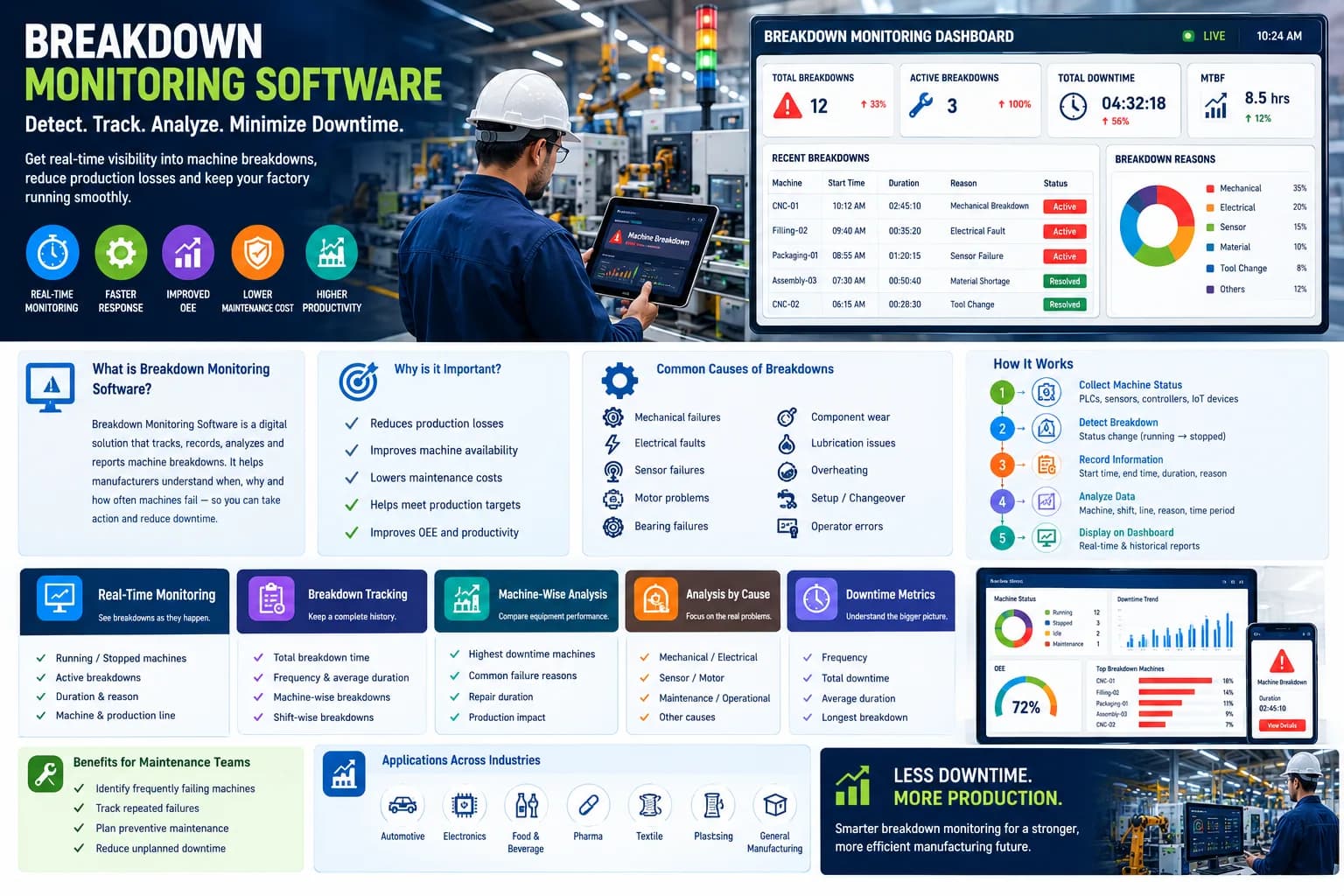
Downtime Monitoring Software can provide a centralized platform for tracking equipment interruptions.
It can help manufacturers monitor:
- Machine status
- Downtime duration
- Downtime reasons
- Breakdown frequency
- Production output
- Machine utilization
- OEE
By providing real-time and historical information, the software can help production and maintenance teams identify areas requiring improvement.
Benefits of Reducing Machine Downtime
Increased Production Capacity
More available machine time can provide greater production capacity without necessarily adding new equipment.
Better Equipment Availability
Reducing unexpected stoppages can improve machine availability.
Improved Production Efficiency
Fewer interruptions can help production teams maintain smoother manufacturing operations.
Reduced Production Losses
Identifying and eliminating recurring downtime causes can reduce lost production time.
Better Maintenance Planning
Downtime information helps maintenance teams prioritize equipment problems.
Improved OEE
Reducing downtime can improve equipment availability and contribute to higher OEE.
Common Mistakes When Trying to Reduce Downtime
Manufacturers should avoid several common mistakes.
Only Fixing Machines After They Break
Reactive maintenance alone may result in repeated failures.
Ignoring Small Stops
Frequent small interruptions can create significant cumulative losses.
Not Tracking Downtime Reasons
Without cause information, it is difficult to determine what needs improvement.
Relying Entirely on Manual Records
Manual data collection can result in incomplete or delayed information.
Not Measuring Results
Improvement activities should be measured to determine whether they are actually reducing downtime.
Why Choose Robato Systems?
Robato Systems provides manufacturing monitoring solutions designed to improve machine and production visibility.
The solution can connect with machines, PLCs, sensors, production counters, and Industrial IoT devices.
Manufacturers can monitor:
- Machine status
- Downtime
- Production output
- OEE
- Availability
- Performance
- Quality
- Machine utilization
- Production targets
- Actual production
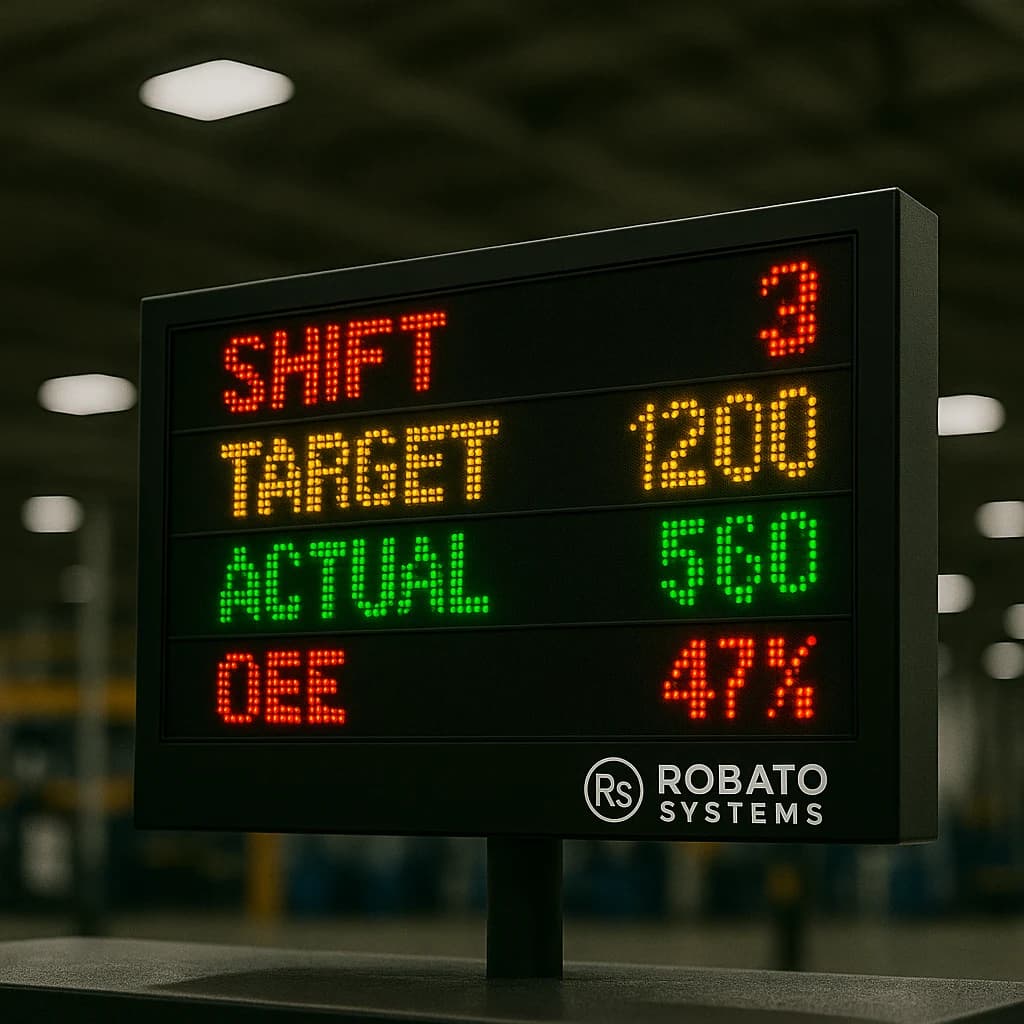
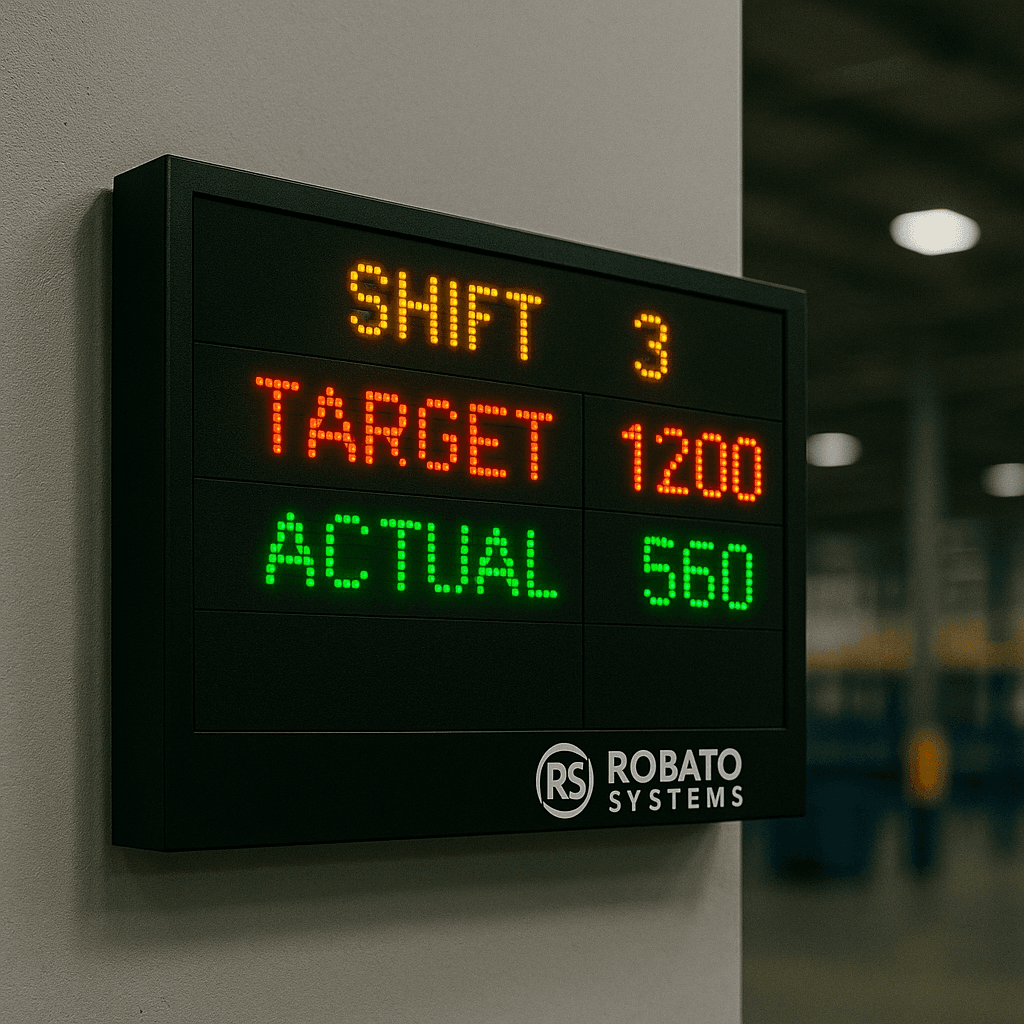
Real-time dashboards can help production and maintenance teams identify machine stoppages, analyze downtime, and monitor production performance.
Conclusion
Reducing machine downtime requires manufacturers to understand why equipment stops and how those stoppages affect production.
Real-time machine monitoring, accurate downtime tracking, preventive maintenance, root cause analysis, operator training, spare parts planning, and continuous improvement can all contribute to reducing unnecessary machine downtime.
Downtime Monitoring Software can make this process more effective by providing real-time machine information and historical downtime data in a centralized platform.
When manufacturers consistently monitor, analyze, and act on downtime information, they can improve equipment availability, production efficiency, and overall manufacturing performance.
Frequently Asked Questions
What is the most effective way to reduce machine downtime?
The most effective approach is to identify the major causes of downtime and combine preventive maintenance, real-time monitoring, root cause analysis, and continuous improvement.
How does preventive maintenance reduce downtime?
Preventive maintenance helps identify and address equipment problems before they result in unexpected breakdowns.
Can downtime monitoring software help reduce machine downtime?
Yes. It provides real-time and historical information about machine stoppages, helping teams identify recurring problems and take corrective action.
How can small machine stops affect production?
Individual small stops may appear insignificant, but repeated stops can accumulate and create substantial production losses.
Does reducing downtime improve OEE?
Yes. Reducing unnecessary machine downtime improves equipment availability, which contributes to improved OEE.
How can manufacturers identify the biggest downtime problems?
Manufacturers can analyze downtime by machine, duration, frequency, shift, production line, and downtime reason to identify the largest sources of production loss.
Can old machines be monitored?
Yes. Legacy machines can often be connected using sensors, PLC signals, industrial gateways, and Industrial IoT devices.