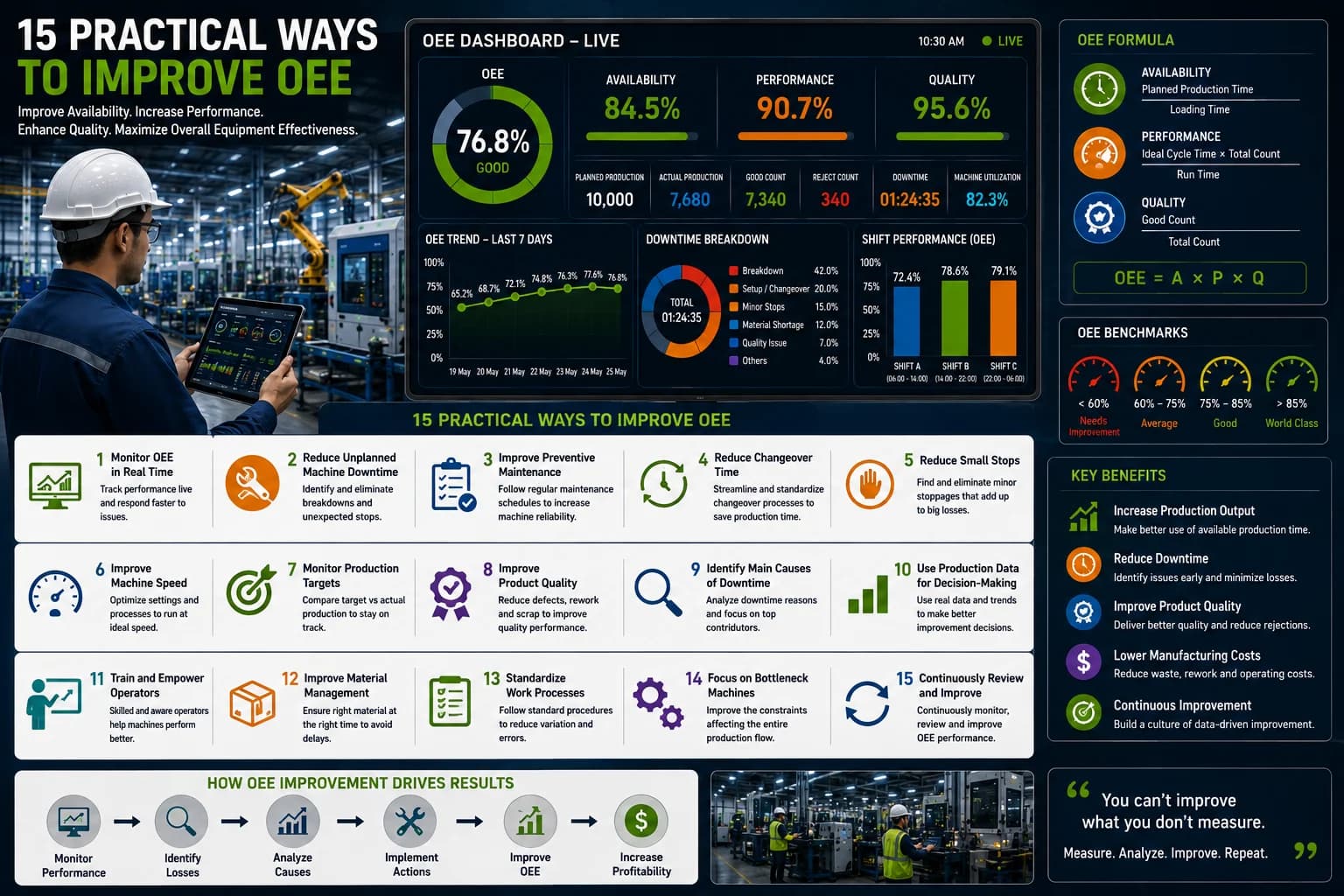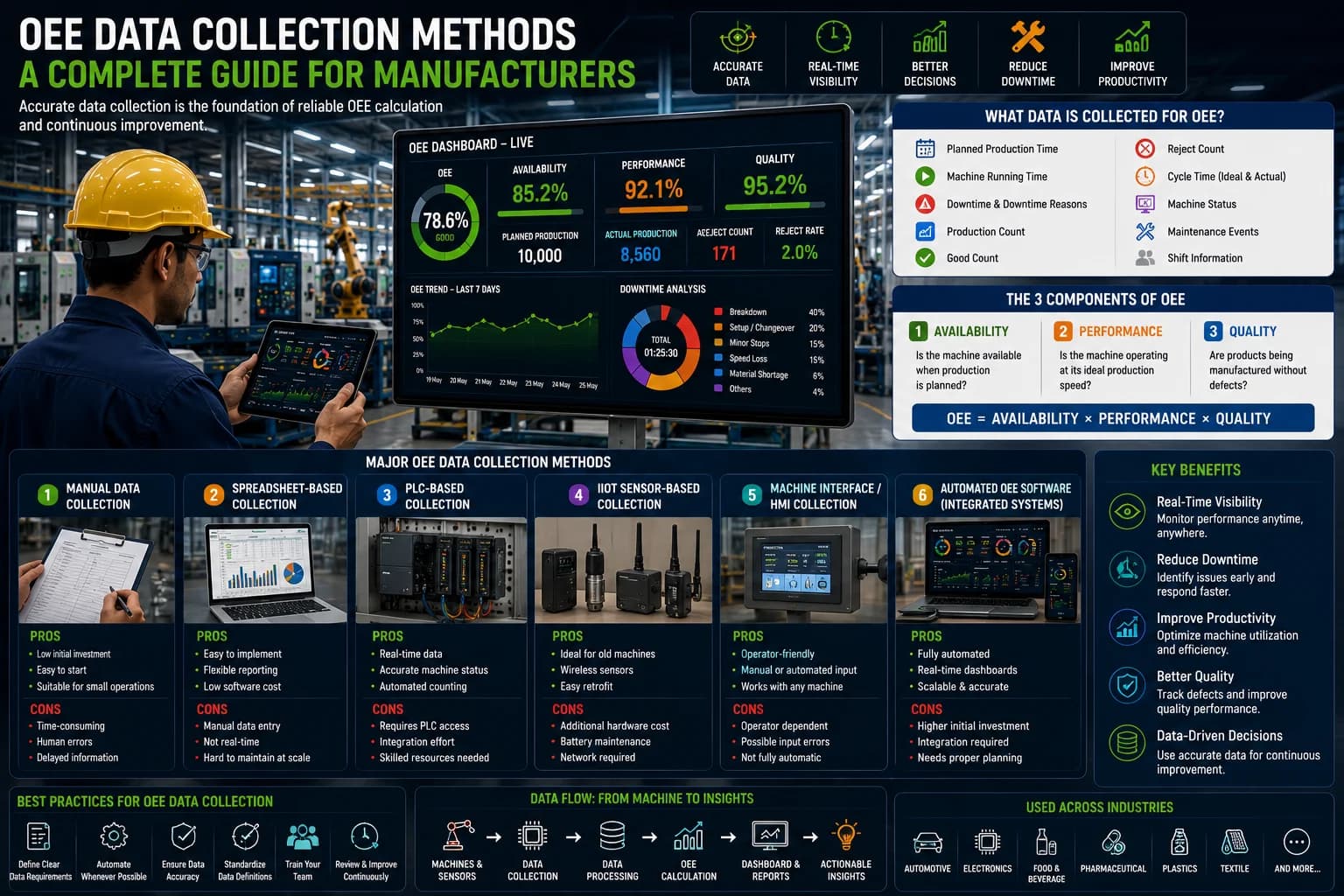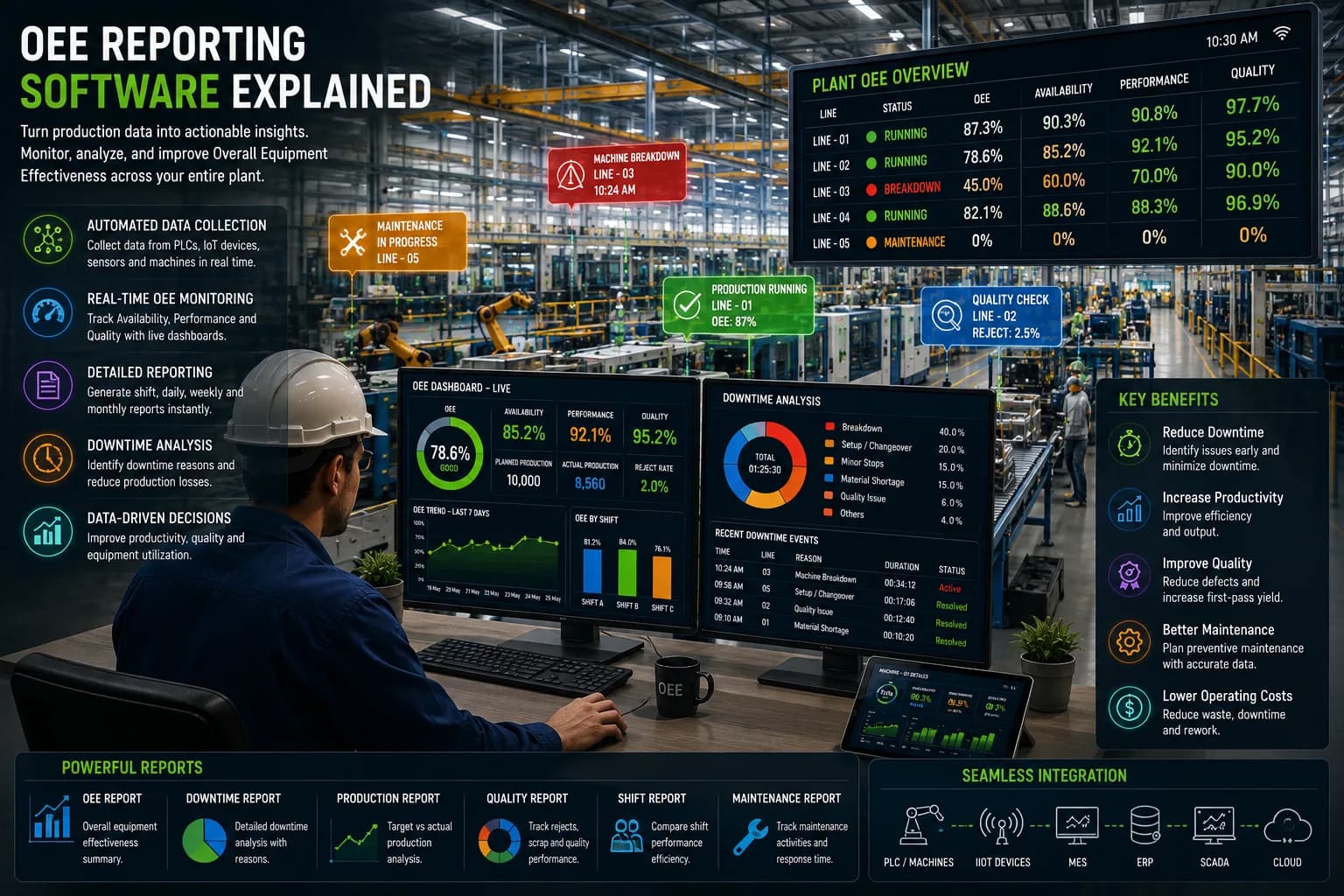
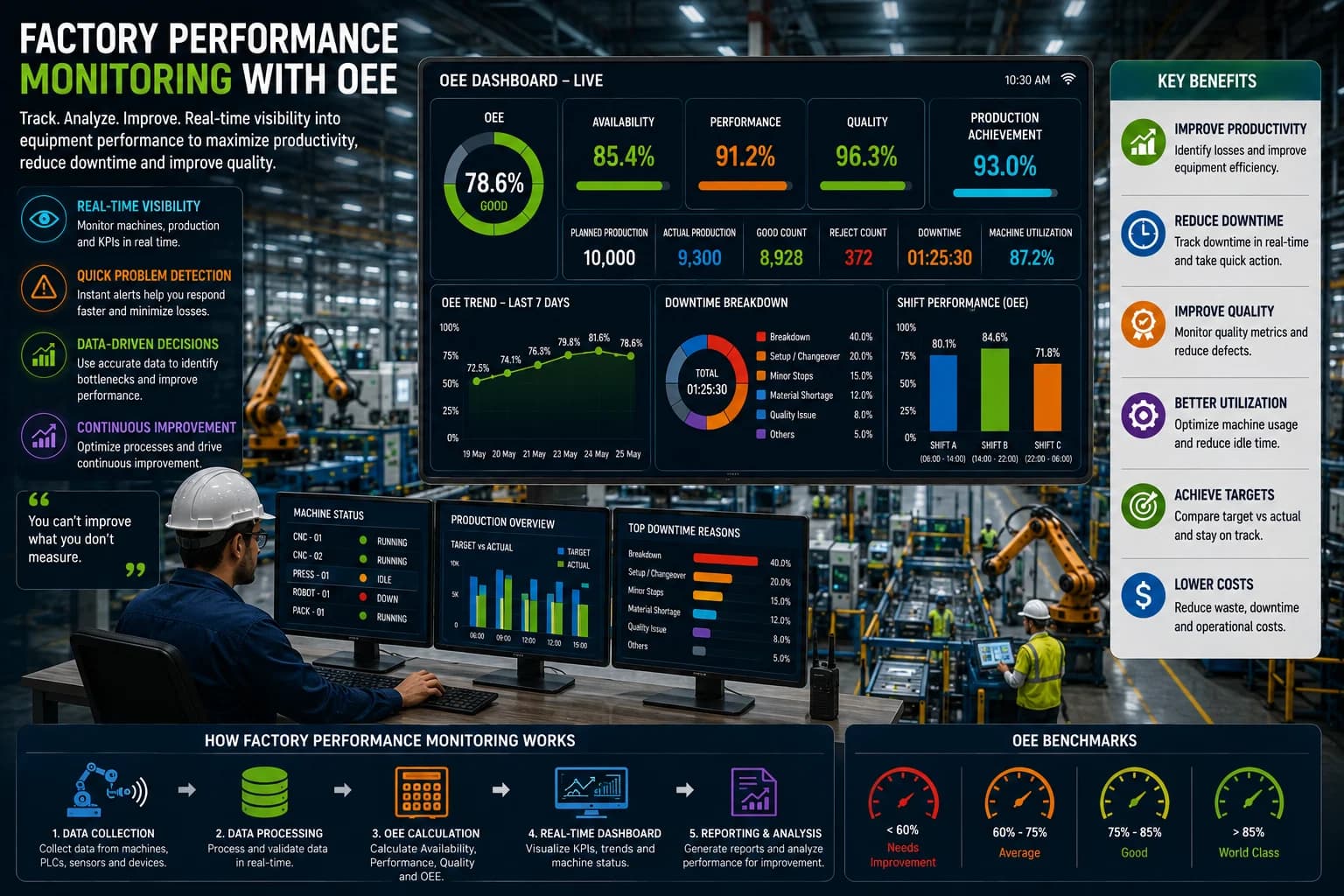
Manufacturing plants need continuous visibility into production performance to maintain efficiency and meet production targets. Machines can experience downtime, production speed losses, quality problems, and other issues that affect overall factory performance.
Simply looking at production output does not always provide enough information to understand why production performance changes.
Factory Performance Monitoring helps manufacturers track important production indicators and identify areas that require improvement.
One of the most useful metrics for this purpose is Overall Equipment Effectiveness, commonly known as OEE.
By using OEE as part of factory performance monitoring, manufacturers can understand machine availability, production performance, quality, downtime, and overall equipment efficiency.
What is Factory Performance Monitoring?
Factory Performance Monitoring is the process of continuously tracking production activities and manufacturing performance.
It helps manufacturers understand how machines, production lines, and production processes are performing.
Important information can include:
- Production output
- Machine status
- Machine downtime
- OEE
- Availability
- Performance
- Quality
- Production target
- Actual production
- Machine utilization
Traditionally, this information may be collected using paper records and spreadsheets.
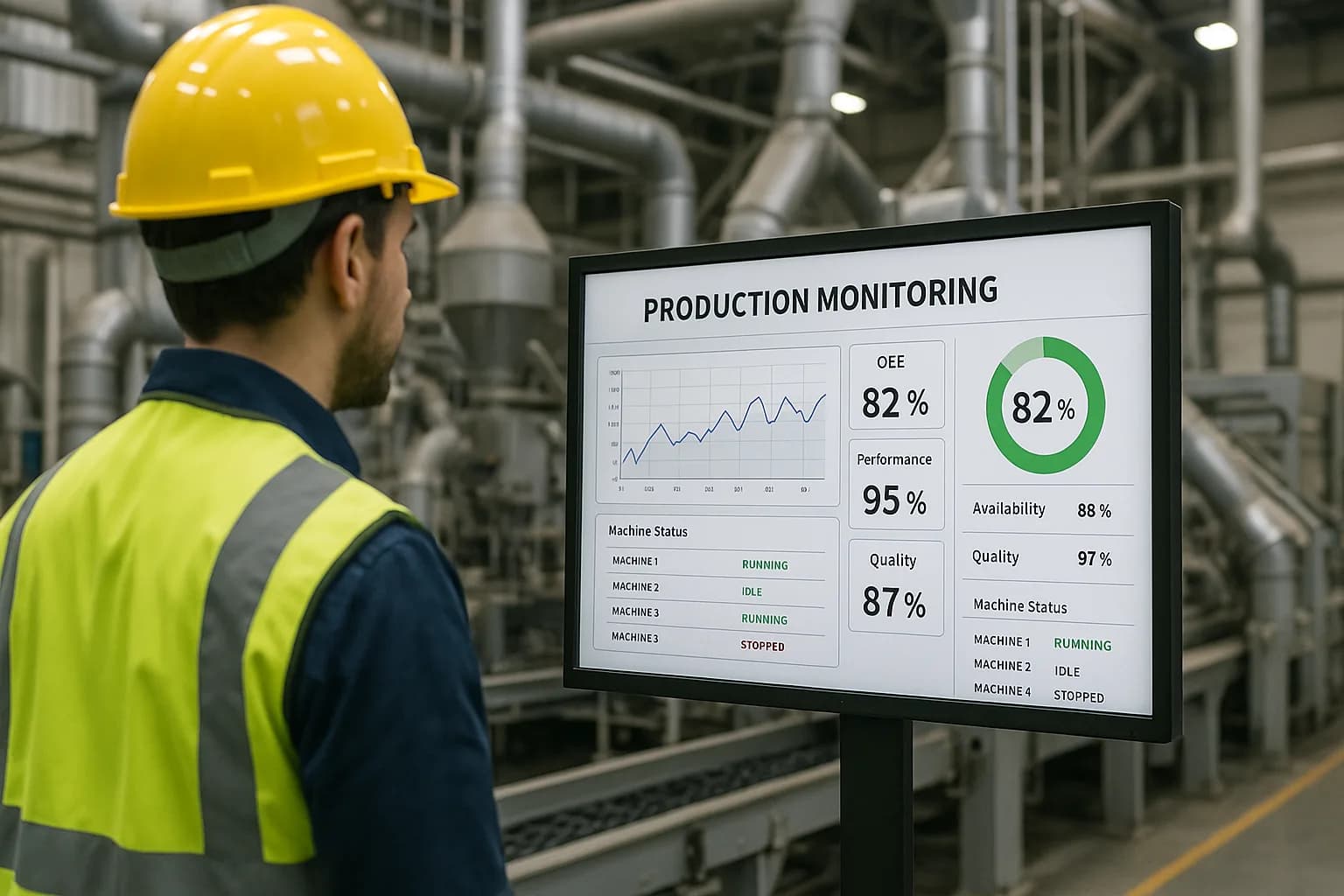
Modern manufacturing systems can collect this information automatically and display it through digital dashboards.
What is OEE?
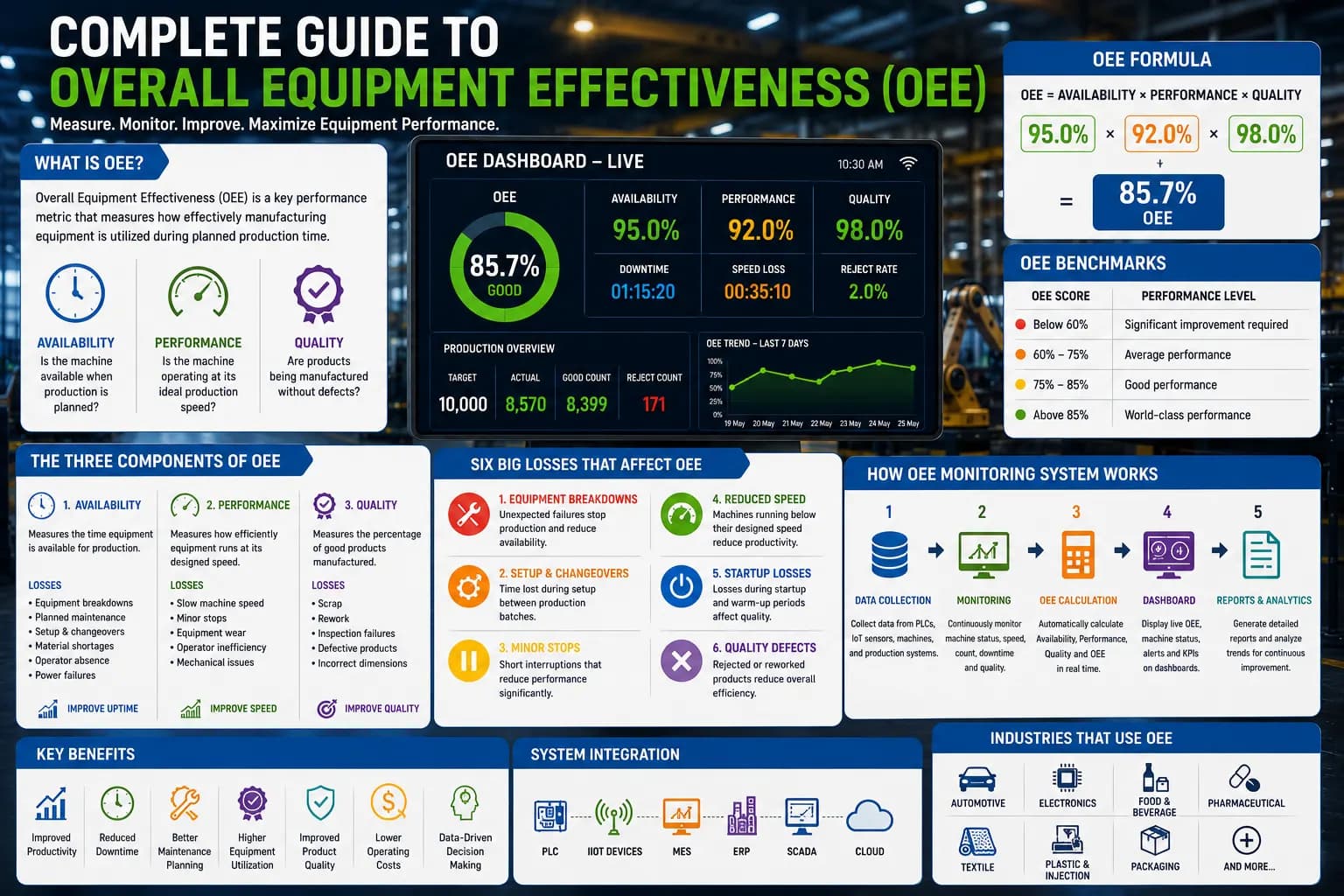
OEE stands for Overall Equipment Effectiveness.
OEE is a manufacturing performance metric that combines three important factors:
- Availability
- Performance
- Quality
These three factors help manufacturers understand how effectively their equipment is being used.
OEE is useful for factory performance monitoring because it provides more information than production output alone.
A machine may produce a large number of products while still experiencing significant downtime or producing defective products.
OEE helps make these losses more visible.
Why Use OEE for Factory Performance Monitoring?
Factories generate large amounts of production information.
Without a structured monitoring system, it can be difficult to identify the main causes of production losses.
OEE provides a standardized way to monitor equipment performance.
Manufacturers can use OEE to identify:
- Downtime
- Slow production speed
- Quality losses
- Underperforming machines
- Production gaps
- Equipment problems
This information helps production teams focus their improvement efforts.
Availability Monitoring
Availability shows how much of the planned production time equipment was available for production.
Availability can be affected by:
- Machine breakdowns
- Maintenance
- Setup time
- Changeovers
- Unexpected stoppages
- Material-related delays
Monitoring availability helps production managers understand how much planned production time is being lost.
Performance Monitoring
Performance measures whether machines are producing at their expected speed.
A machine can be running but producing fewer products than expected.
Performance losses can occur because of:
- Slow cycle times
- Small machine stops
- Reduced machine speed
- Process problems
- Material conditions
Monitoring performance helps identify machines that are operating below their expected production rate.
Quality Monitoring
Quality is another important part of factory performance monitoring.
Manufacturers can monitor:
- Total production
- Good production
- Rejected production
- Scrap
- Rework
- Defect rates
Quality information helps production teams understand how much manufacturing output is affected by defective products.
Monitoring Factory Performance in Real Time
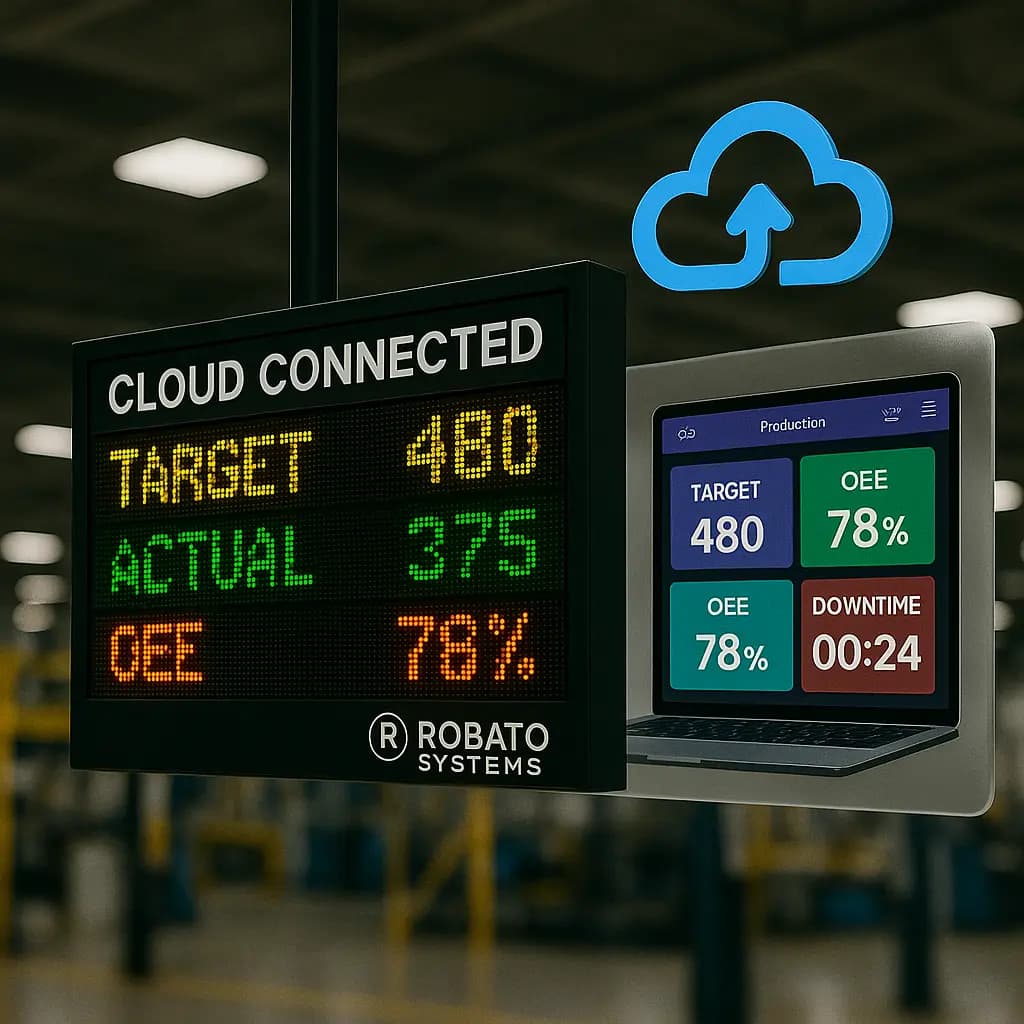
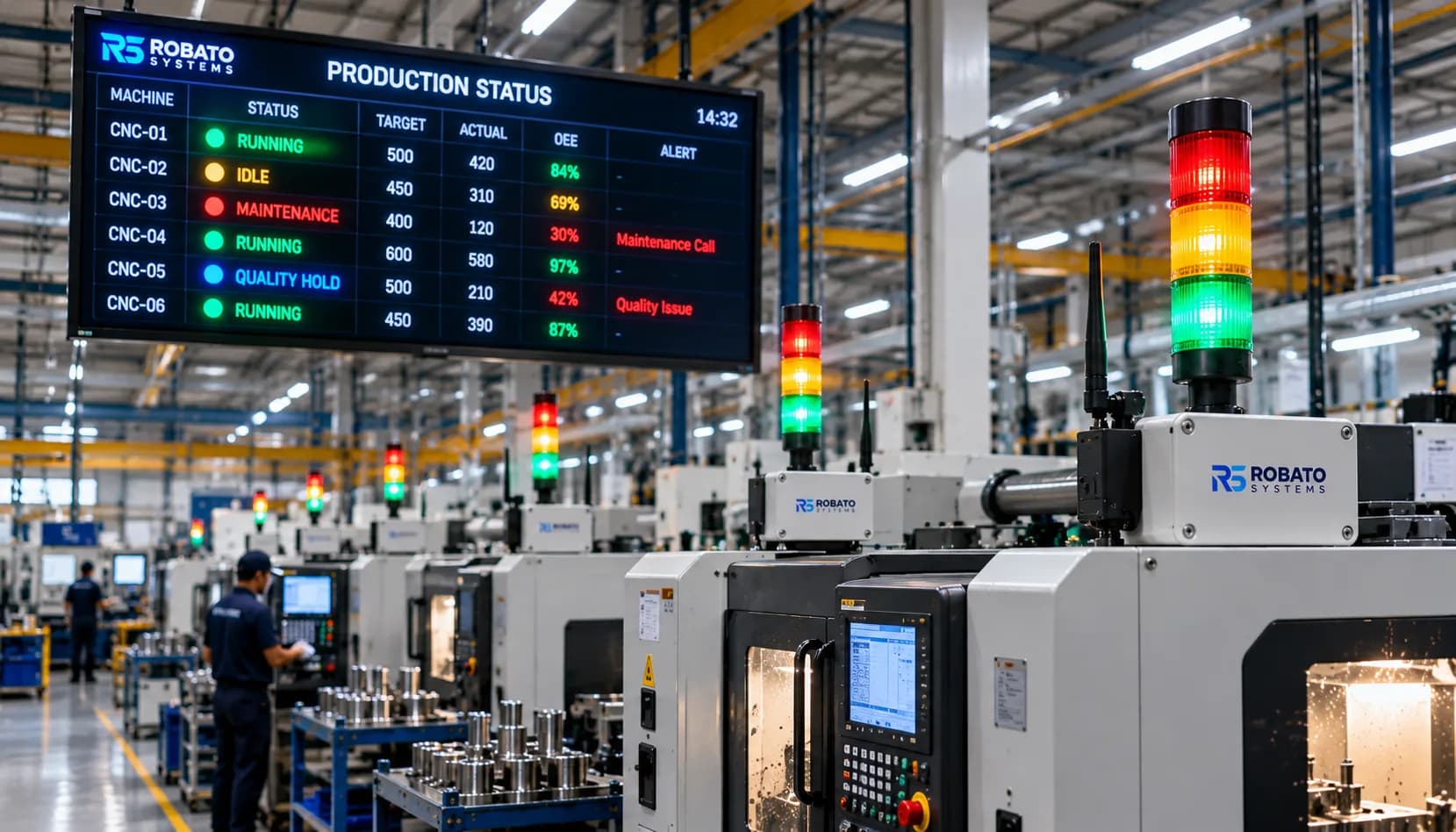
Real-time monitoring allows manufacturers to see production conditions while manufacturing is taking place.
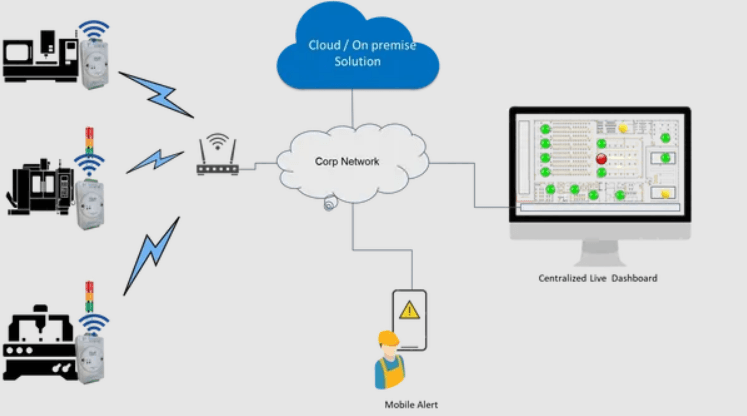
When machines are connected to a monitoring system, information can be collected automatically.
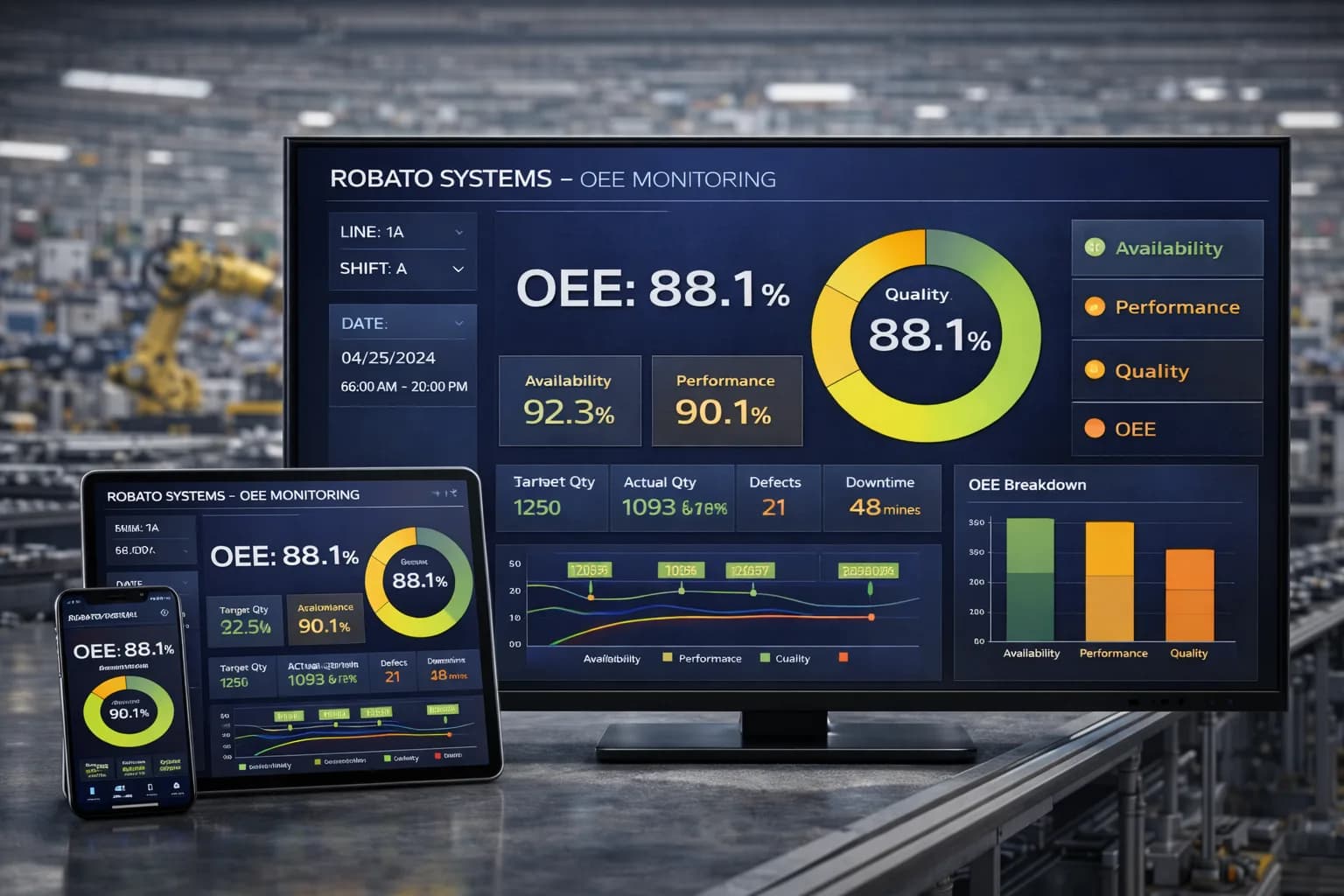
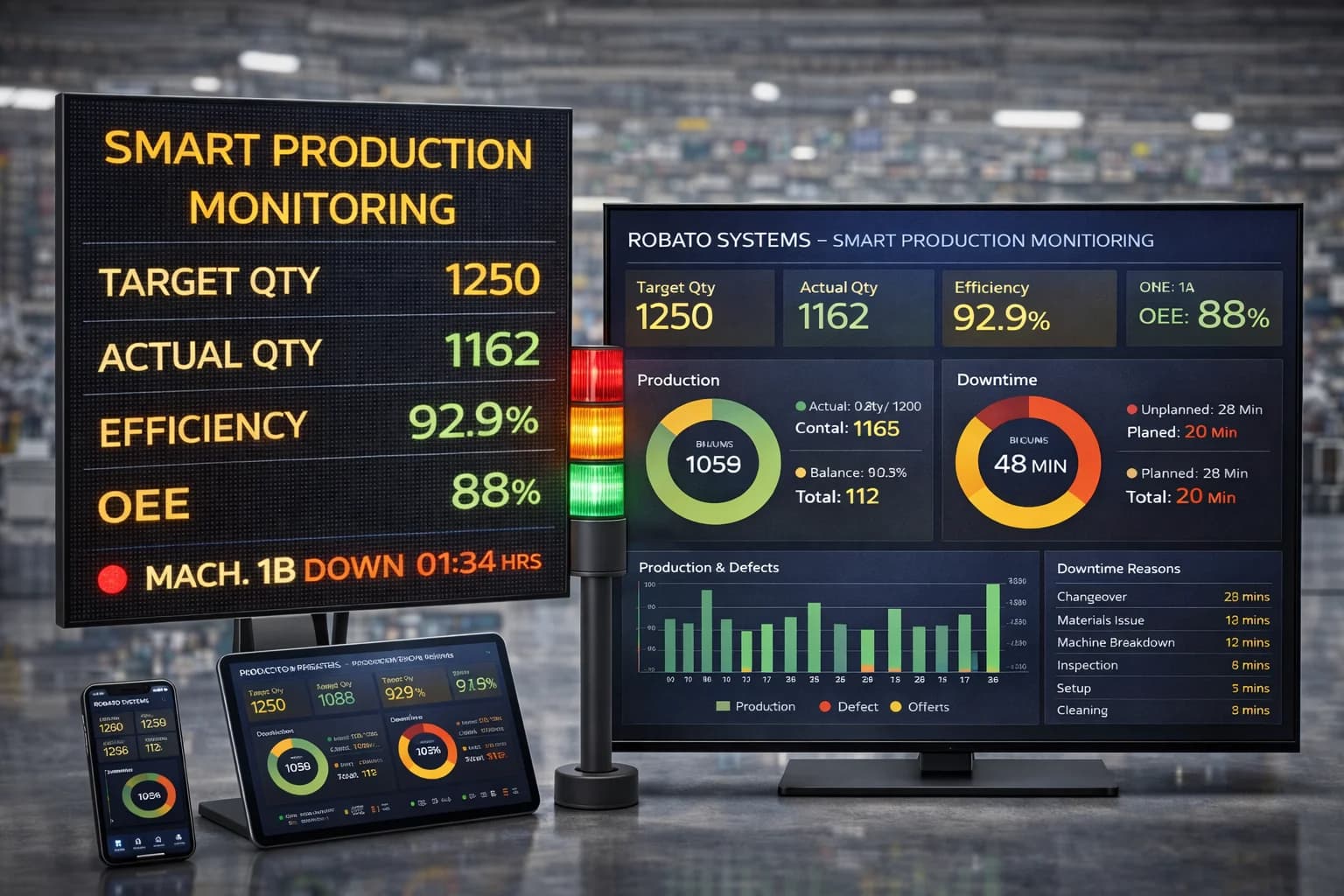
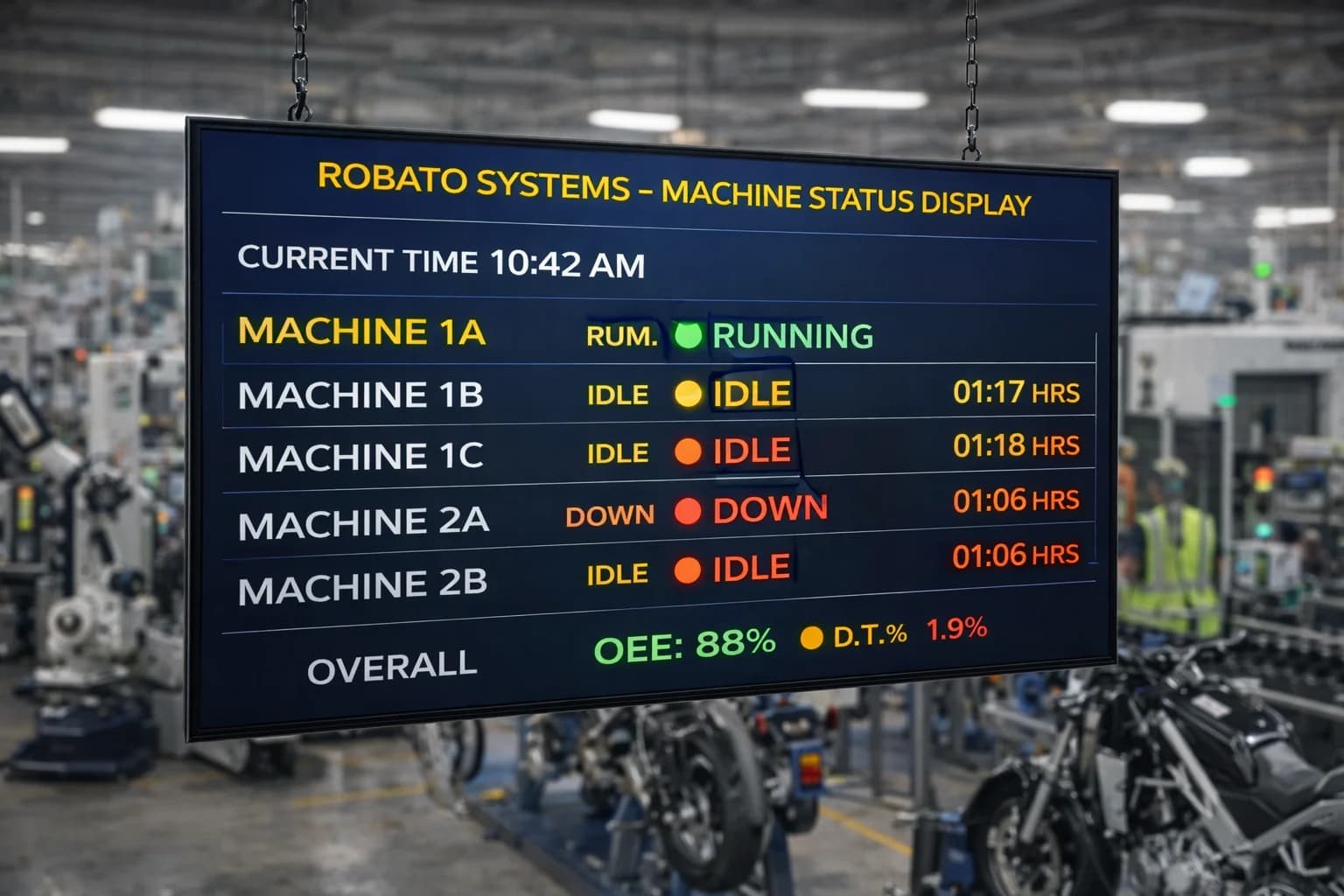
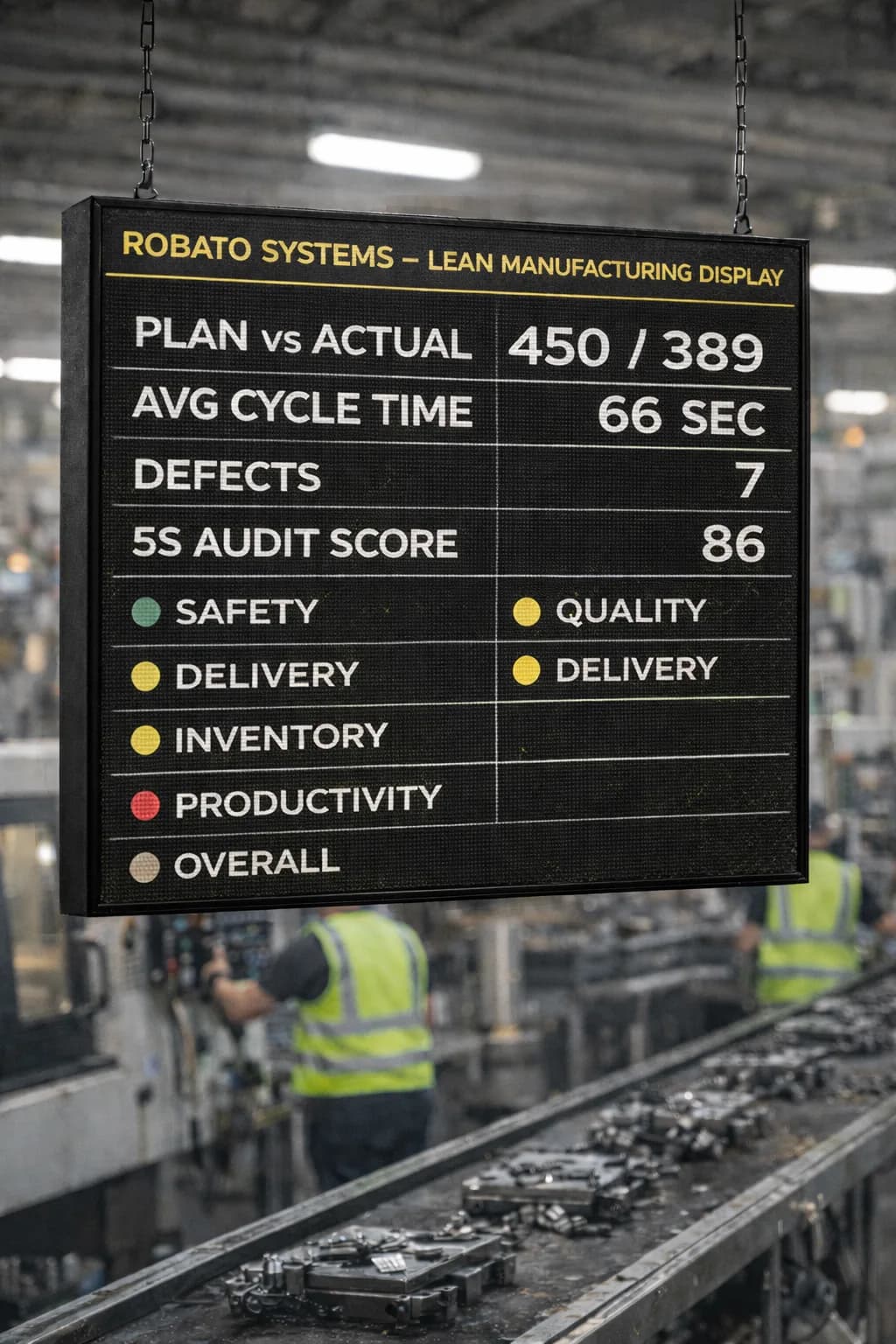
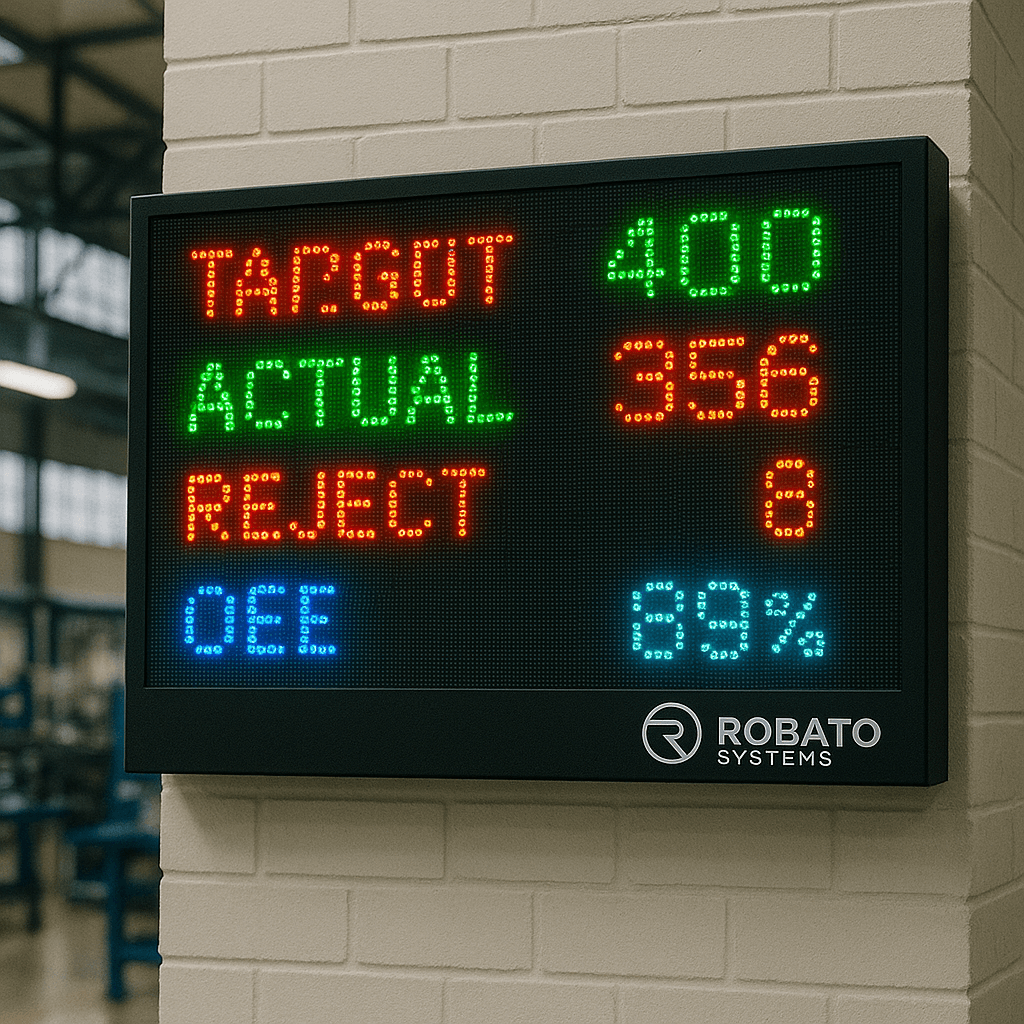
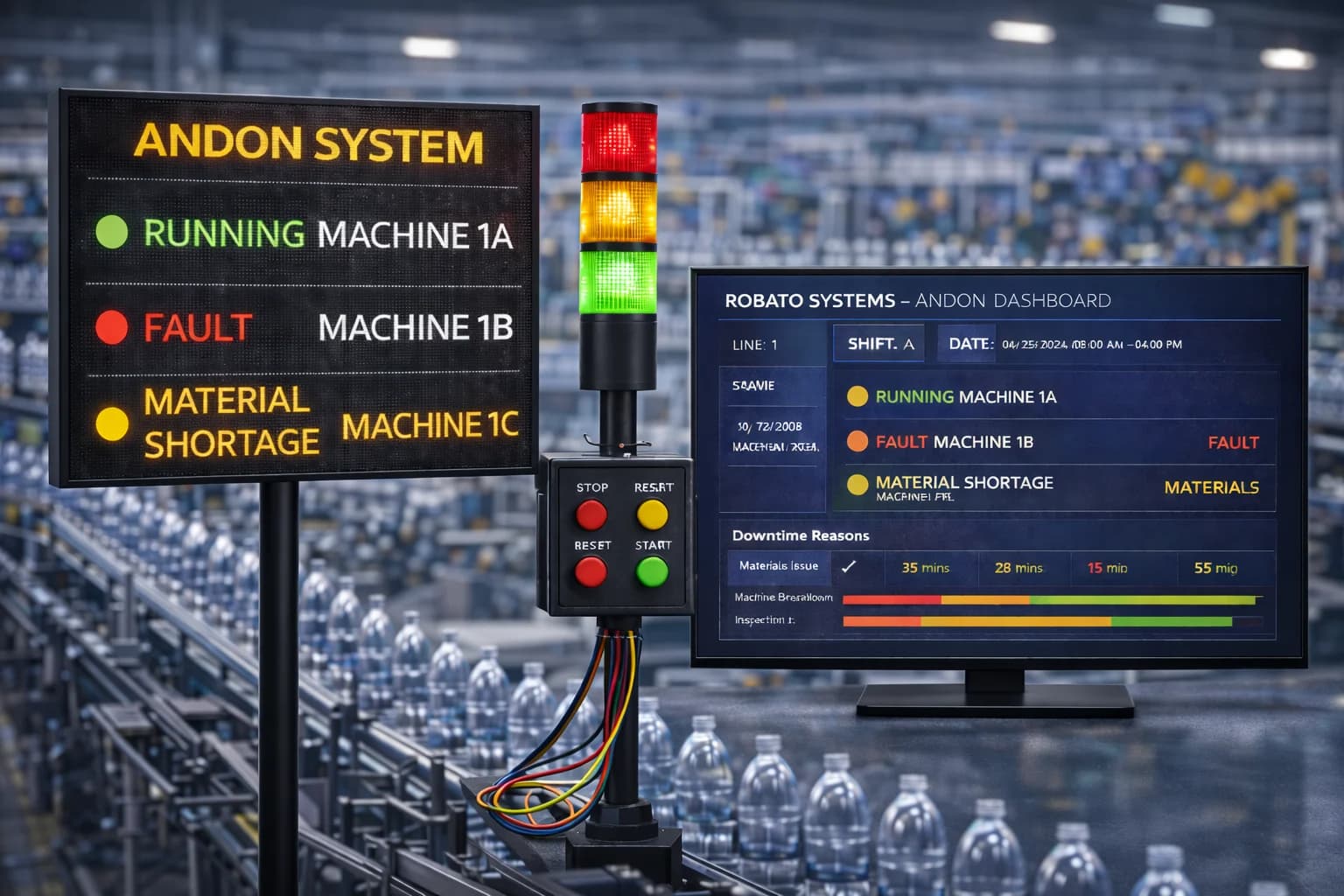
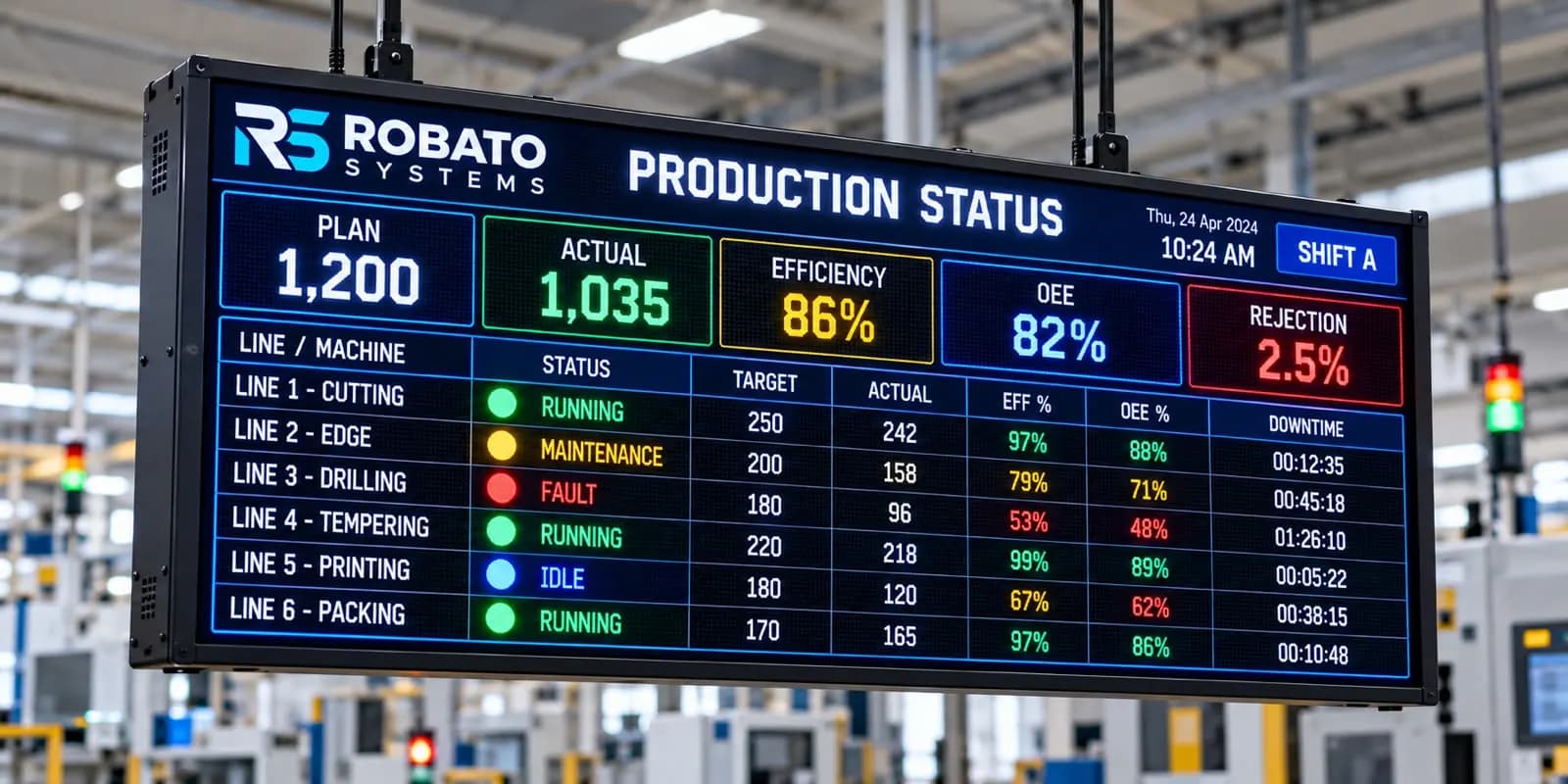
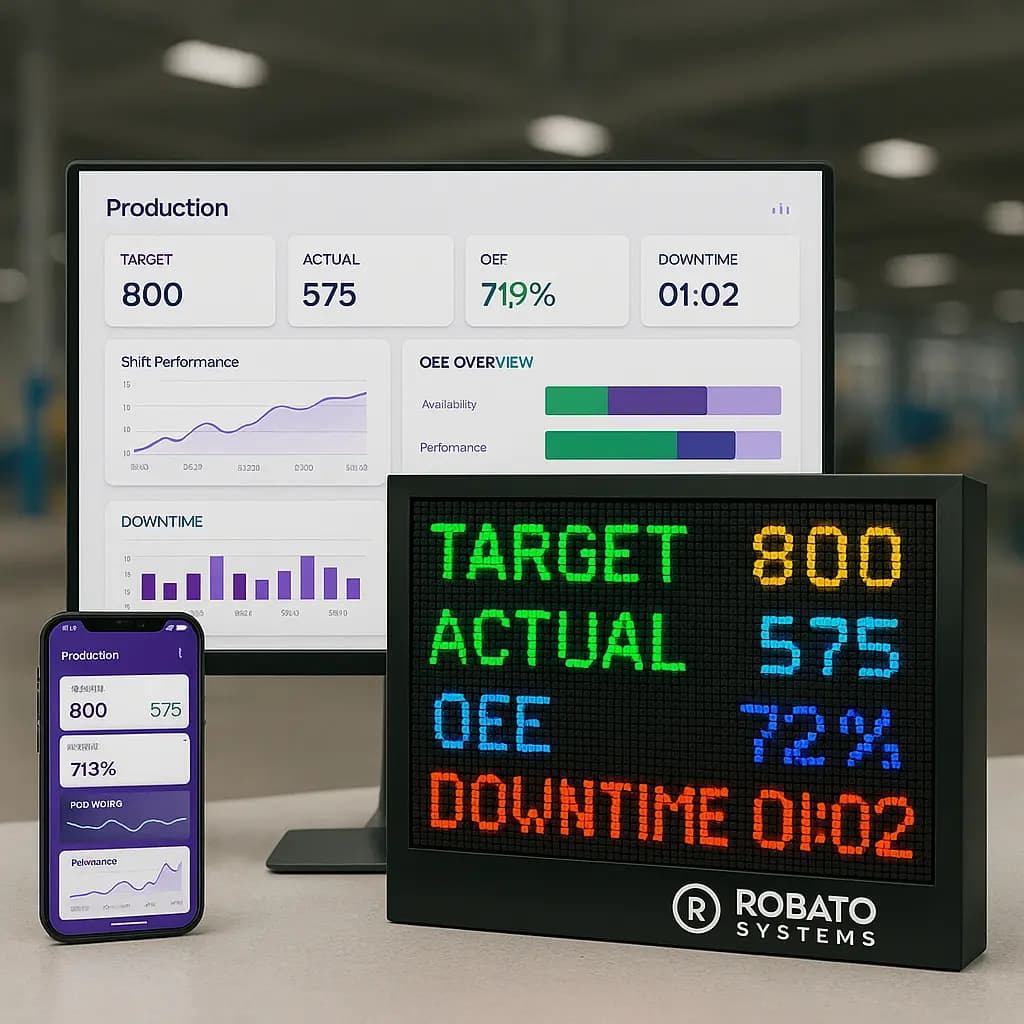
The dashboard can display:
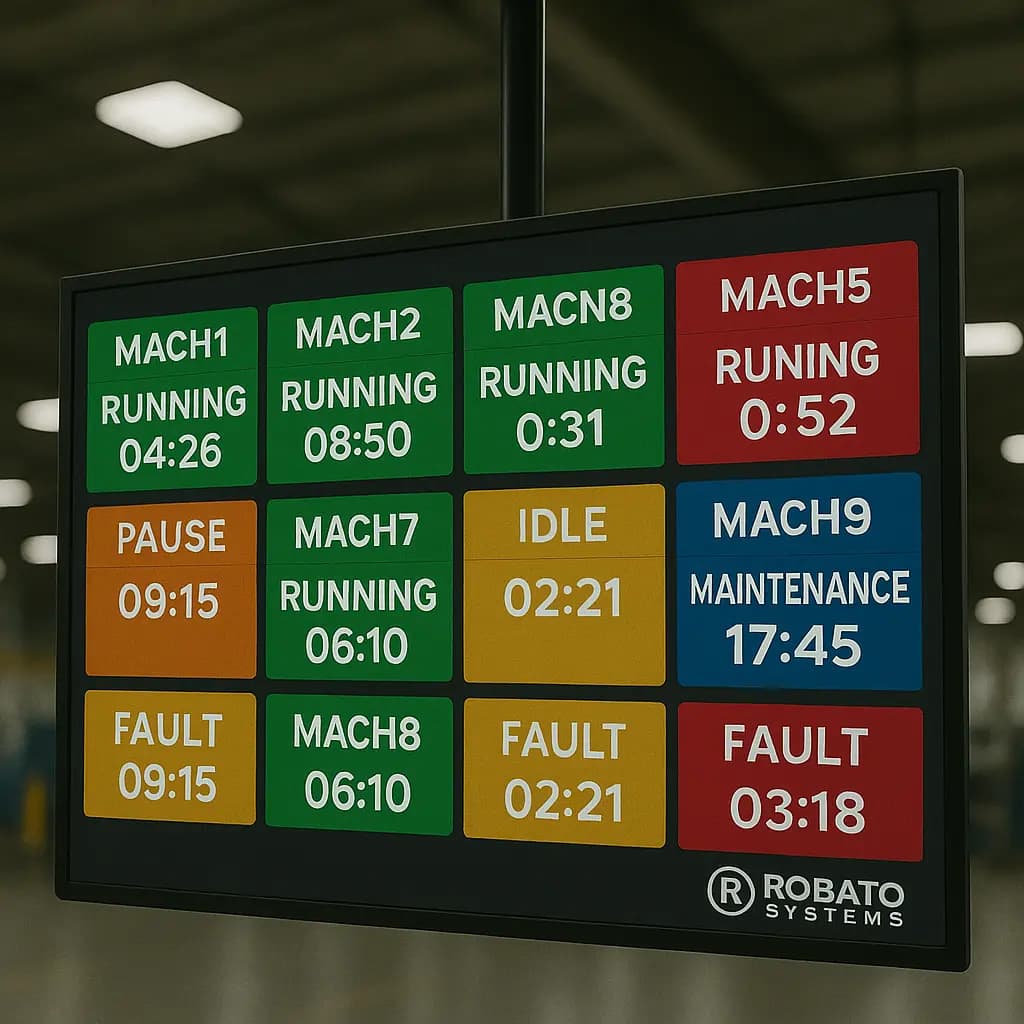
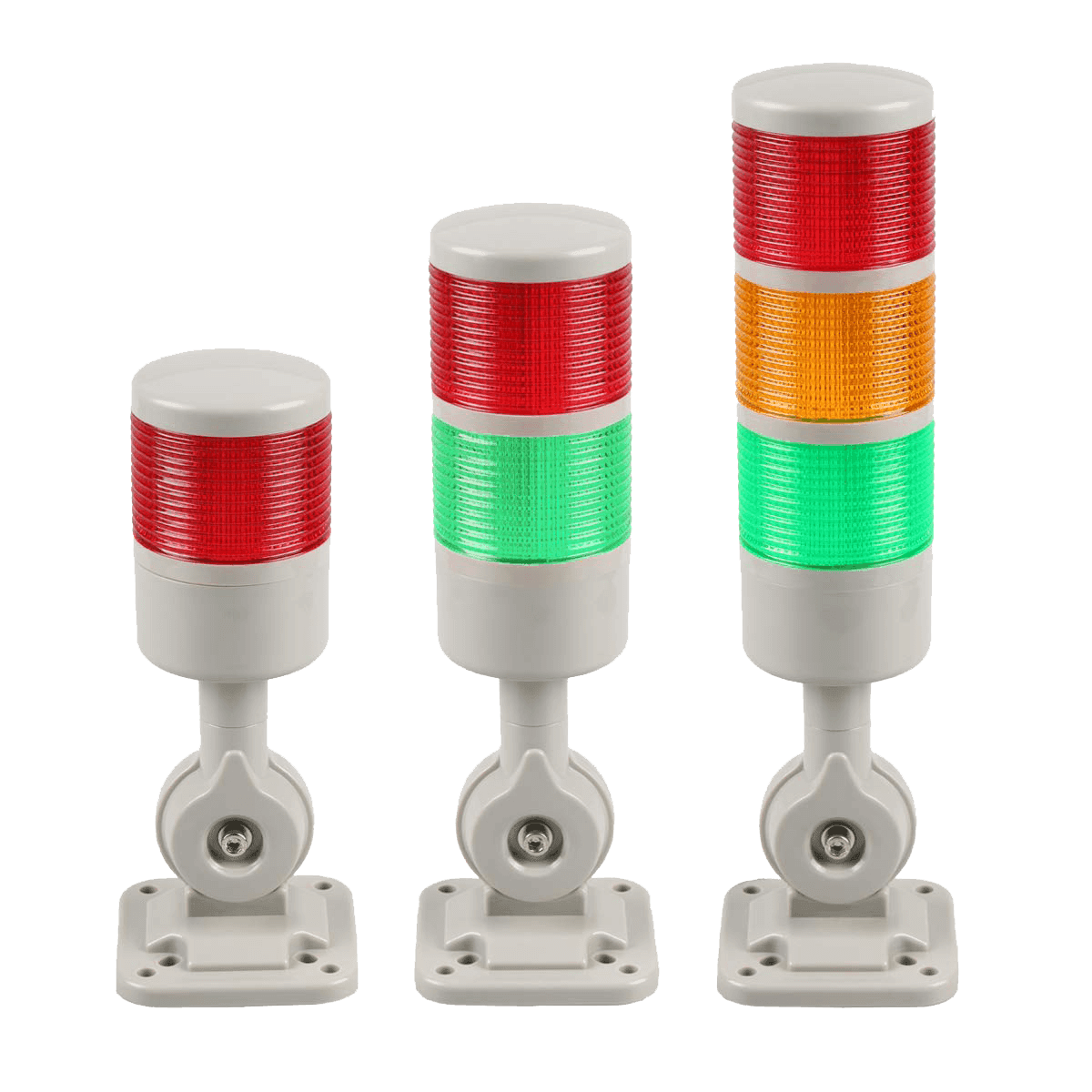
- Current machine status
- Current production
- Current downtime
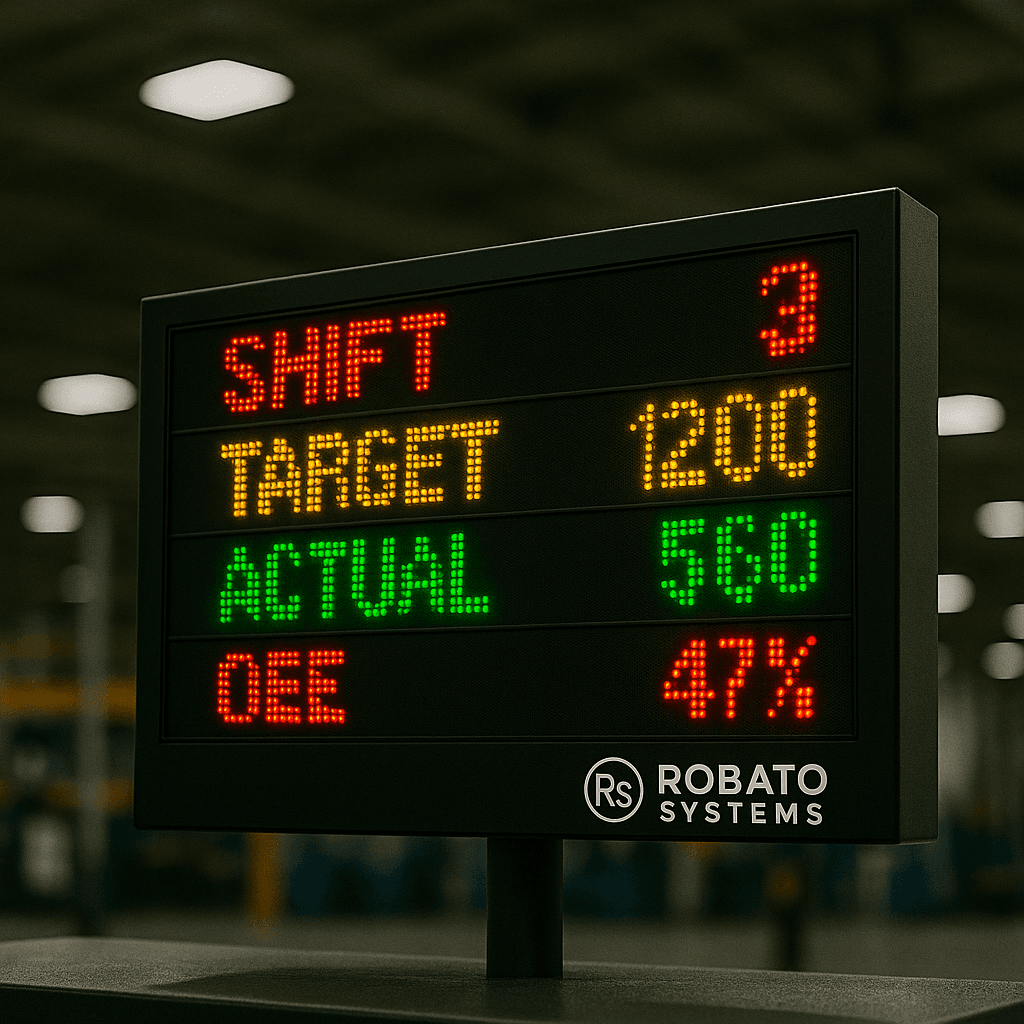
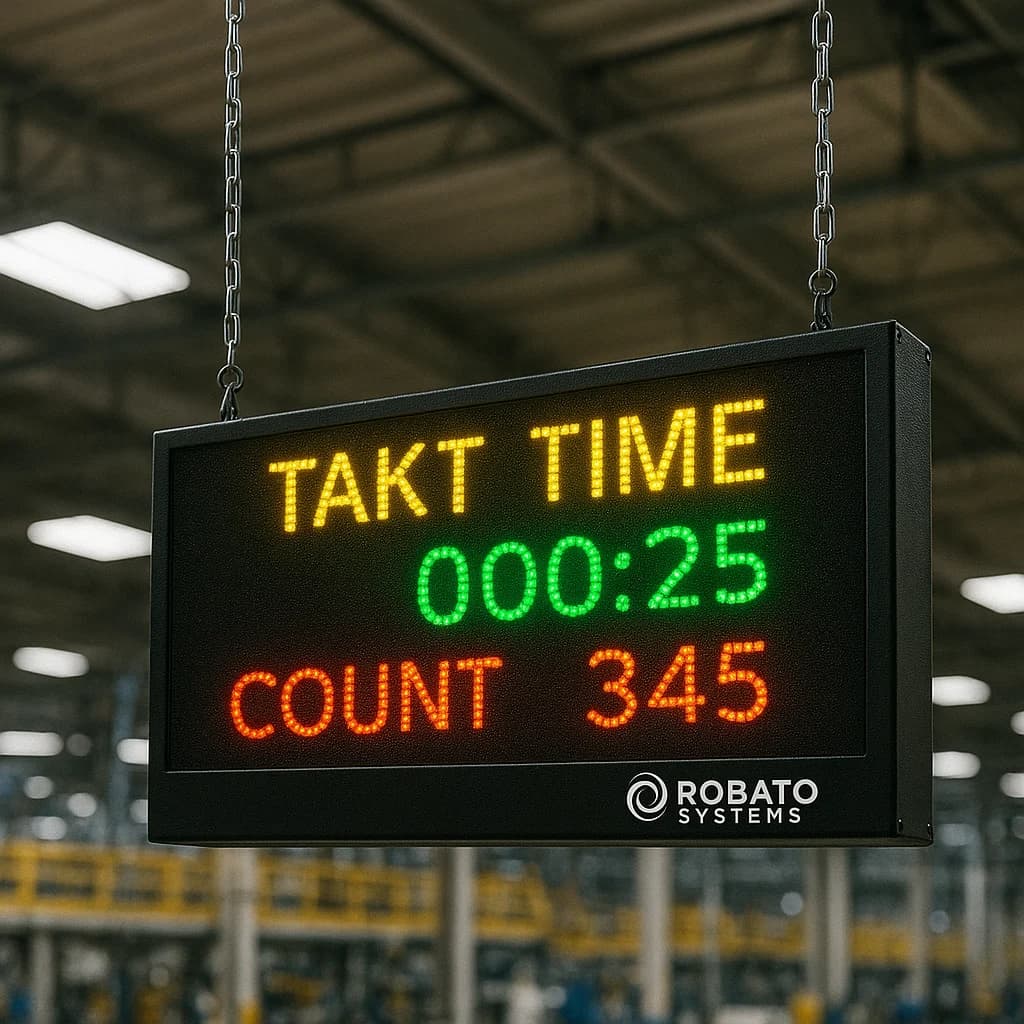
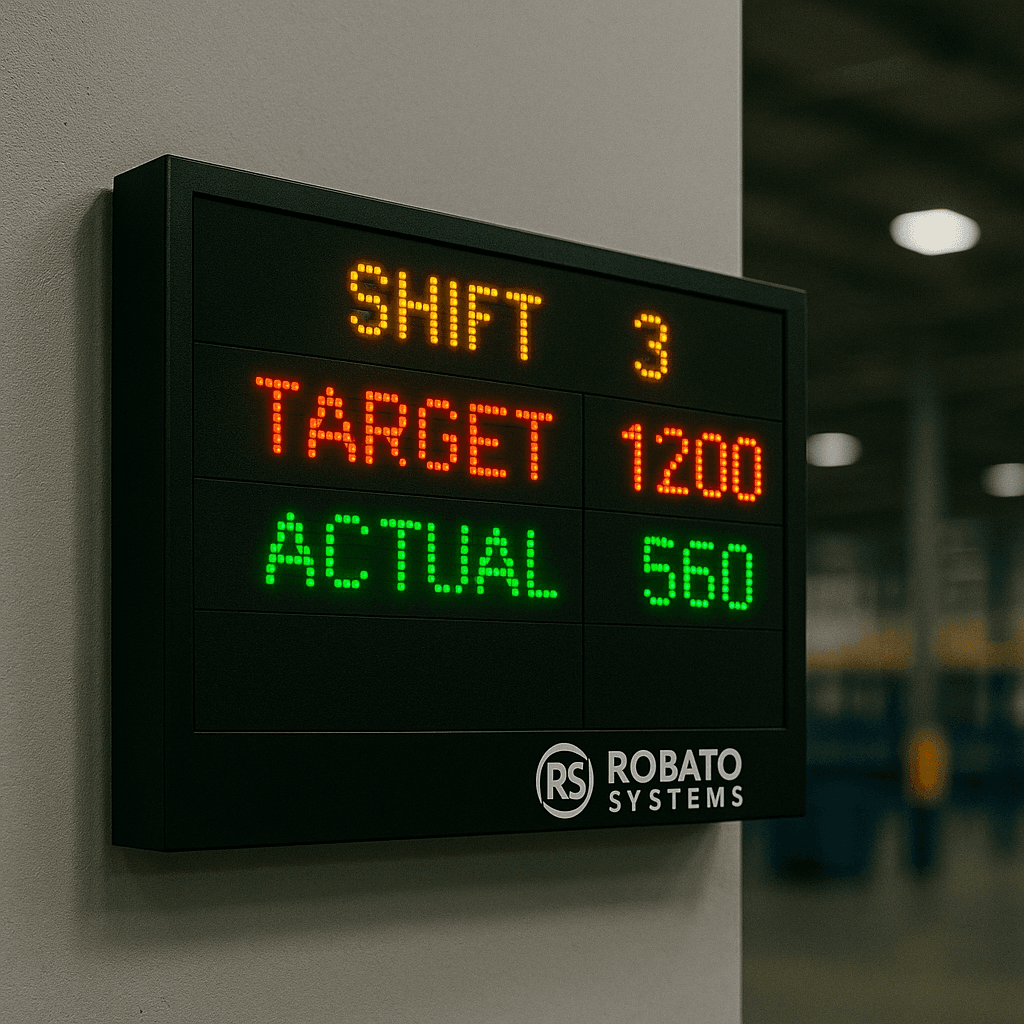
- Production target
- Actual production
- OEE
Production managers can use this information to identify problems without waiting for manual reports.
Factory Performance Monitoring and Machine Downtime
Downtime is one of the major causes of production losses.
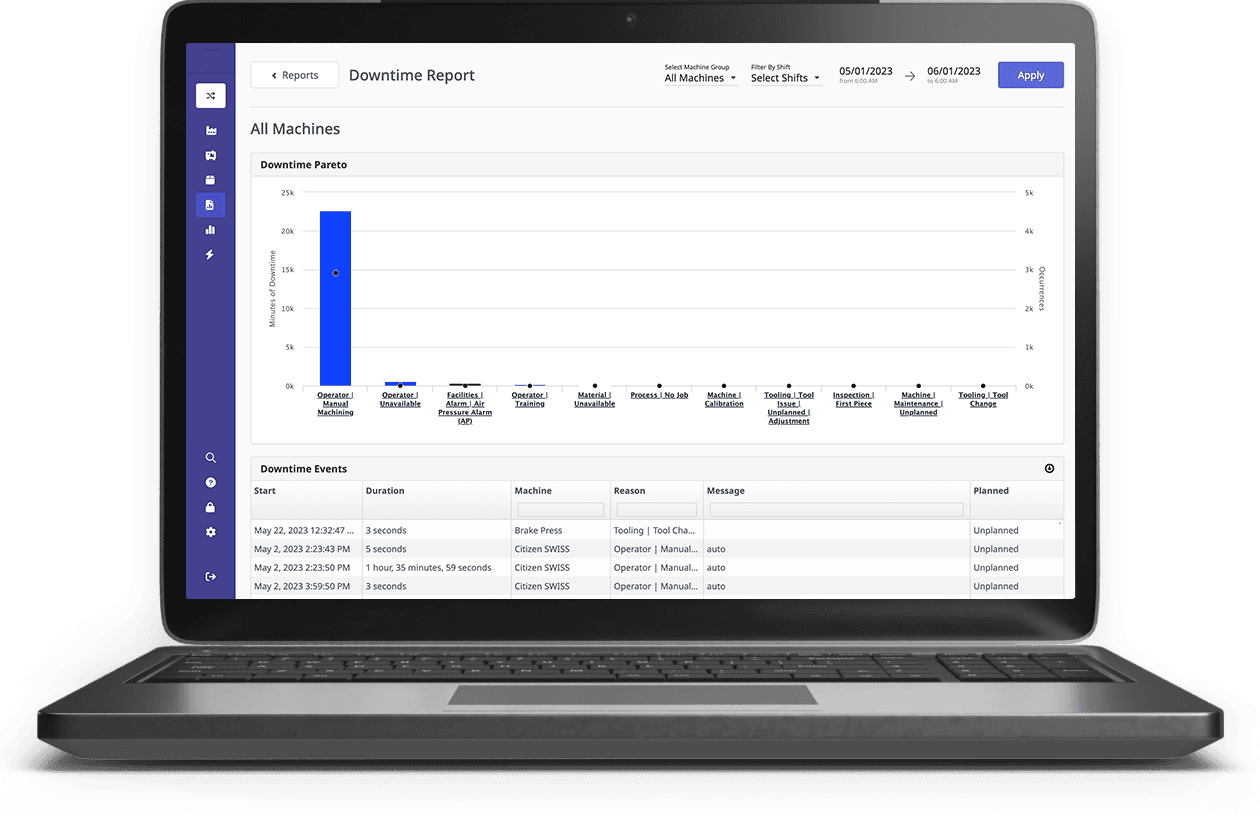
A factory performance monitoring system can record machine stoppages and provide information about downtime.
Downtime information can include:
- Machine
- Production line
- Duration
- Downtime reason
- Shift
- Date
This information can help maintenance and production teams identify machines with frequent or extended downtime.
Factory Performance Monitoring and Production Targets
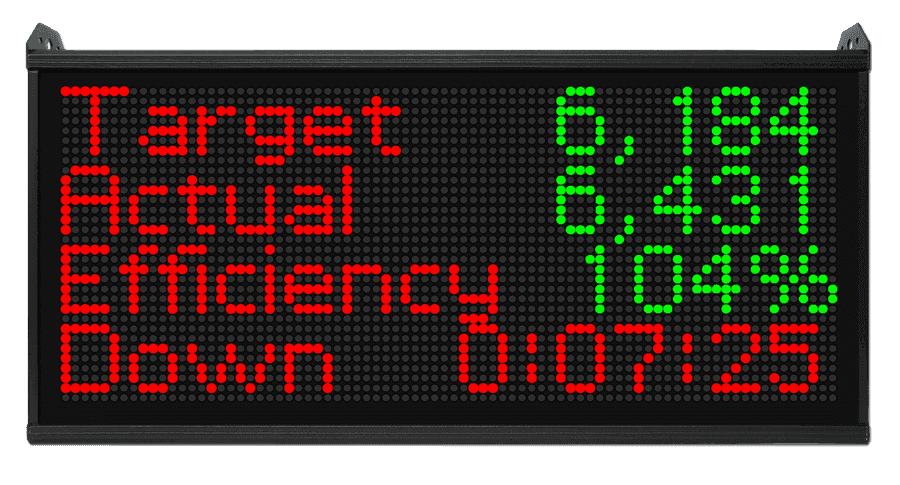
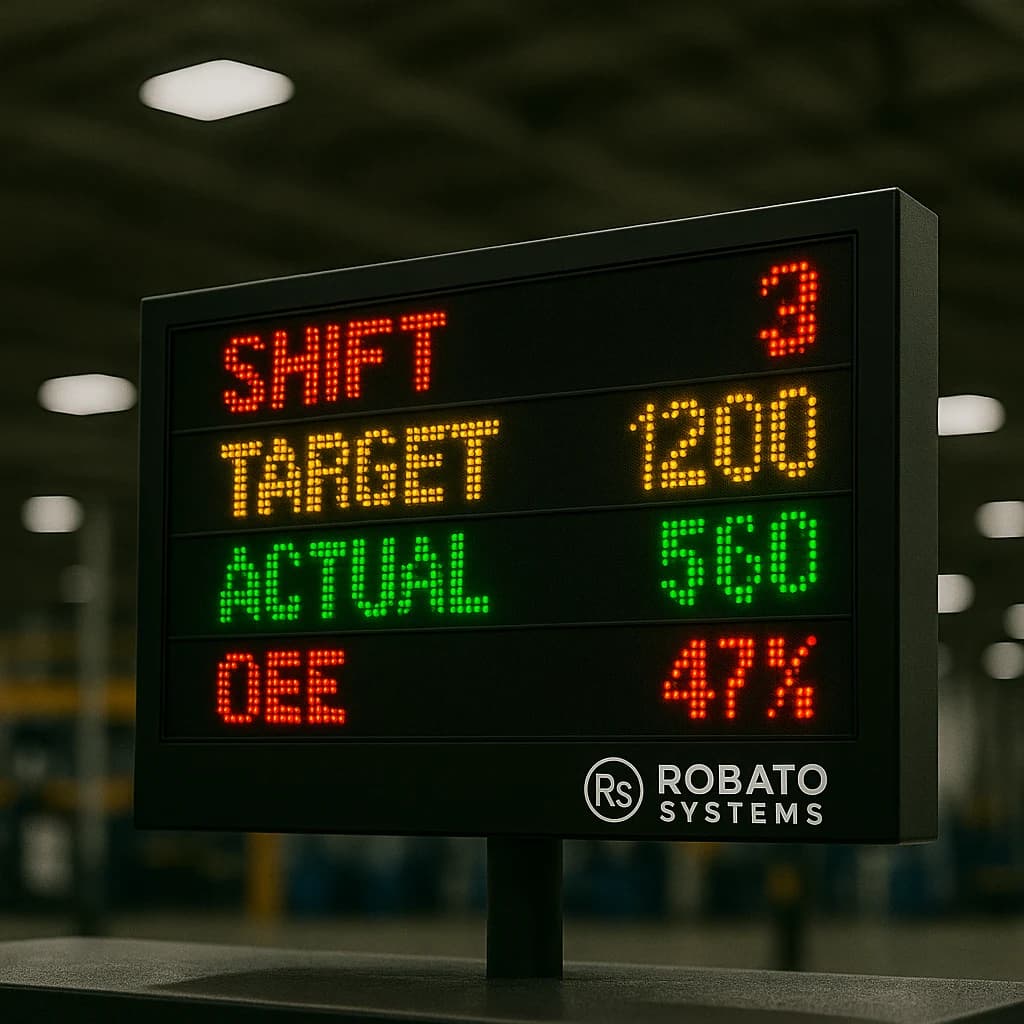
Production targets help manufacturers understand whether production is progressing according to plan.
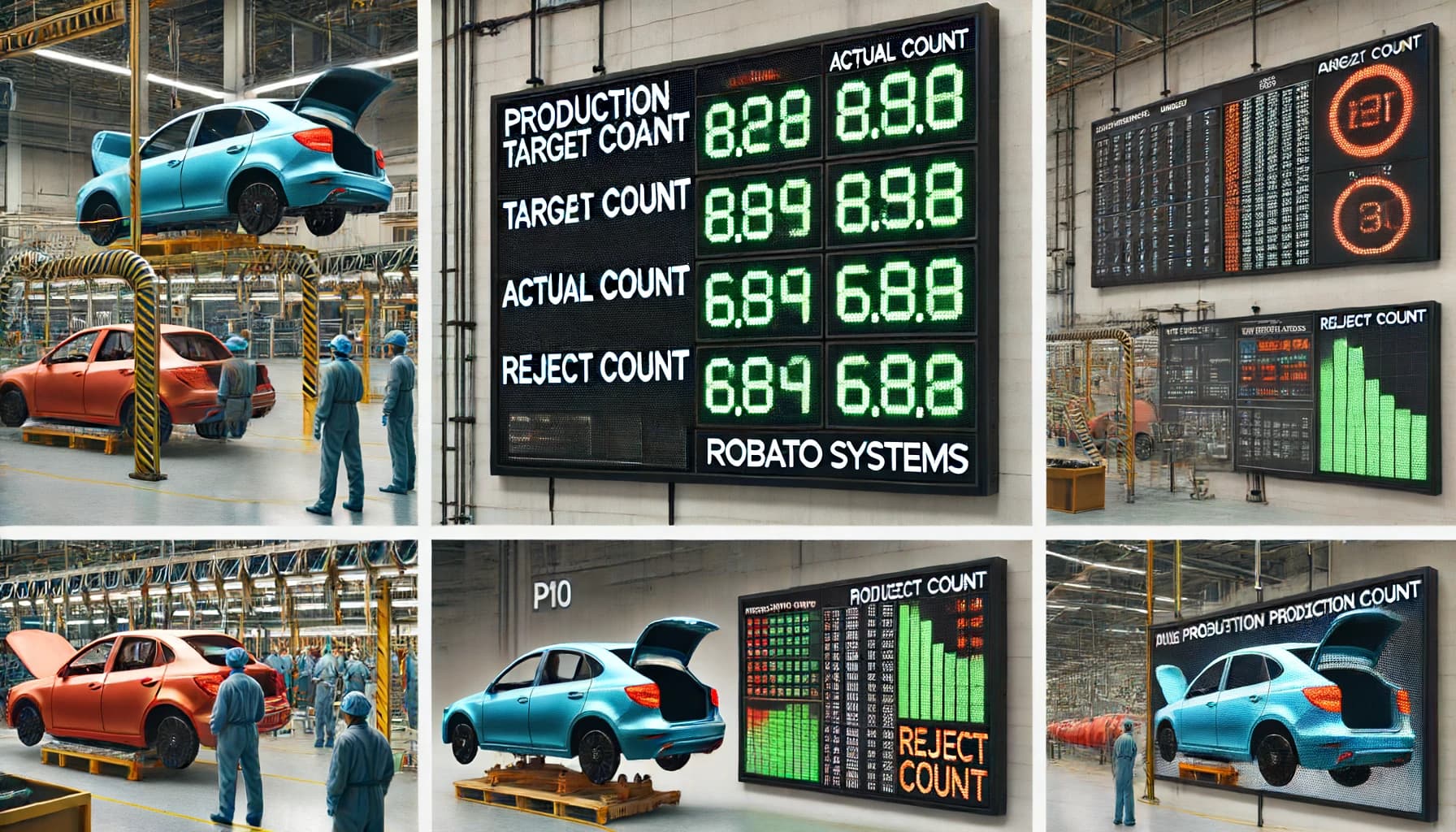
A monitoring system can compare:
- Planned production
- Actual production
- Good production
- Rejected production
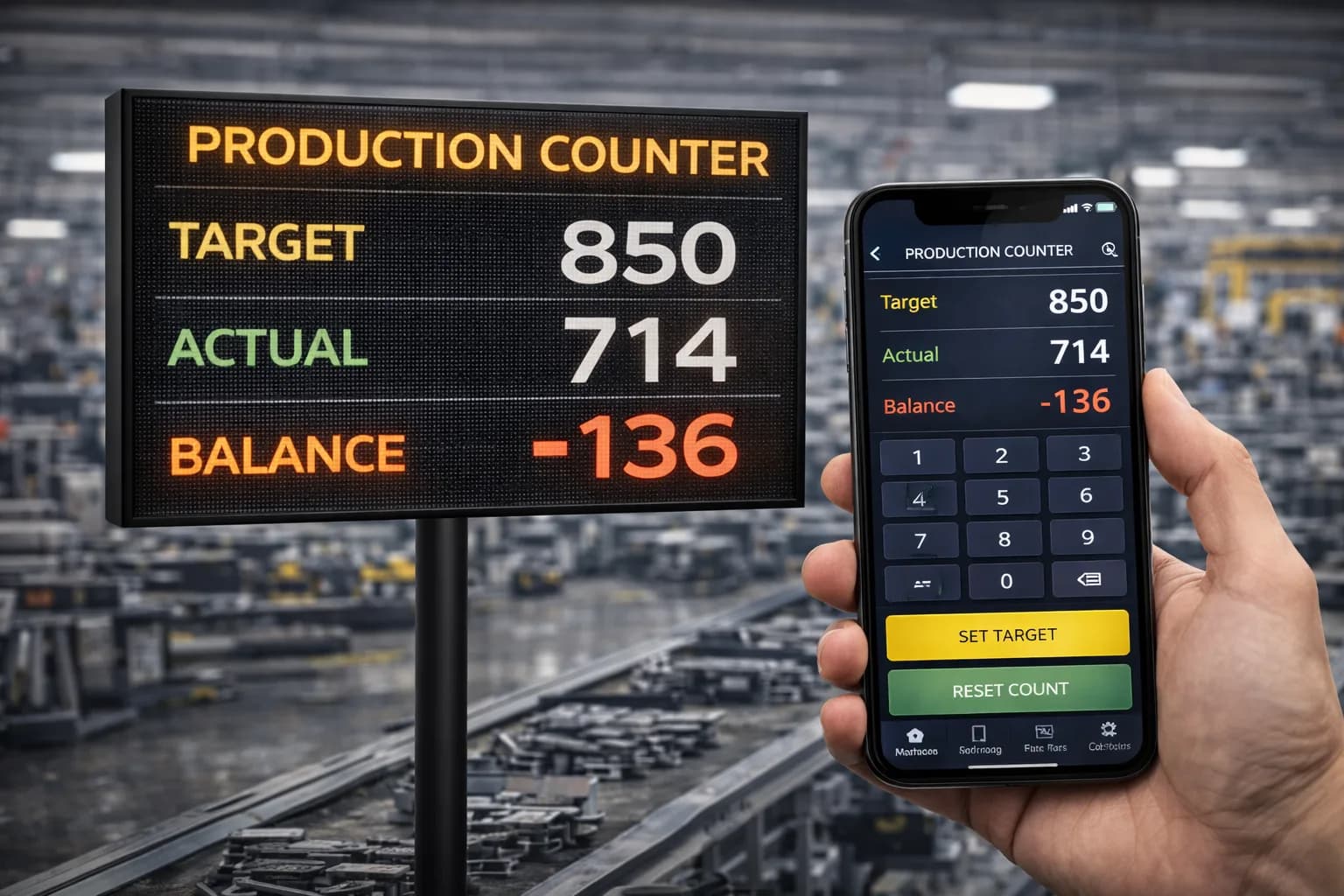
For example, if the production target for a shift is 5000 units and actual production is 4600 units, the dashboard can show the difference.
The production team can then investigate the reason for the production gap.
Monitoring Machine Utilization
Machine utilization shows how effectively production equipment is being used.
Manufacturers can monitor:
- Running time
- Idle time
- Downtime
- Maintenance time
- Production time
Low machine utilization can indicate problems with production planning, equipment availability, material supply, or machine performance.
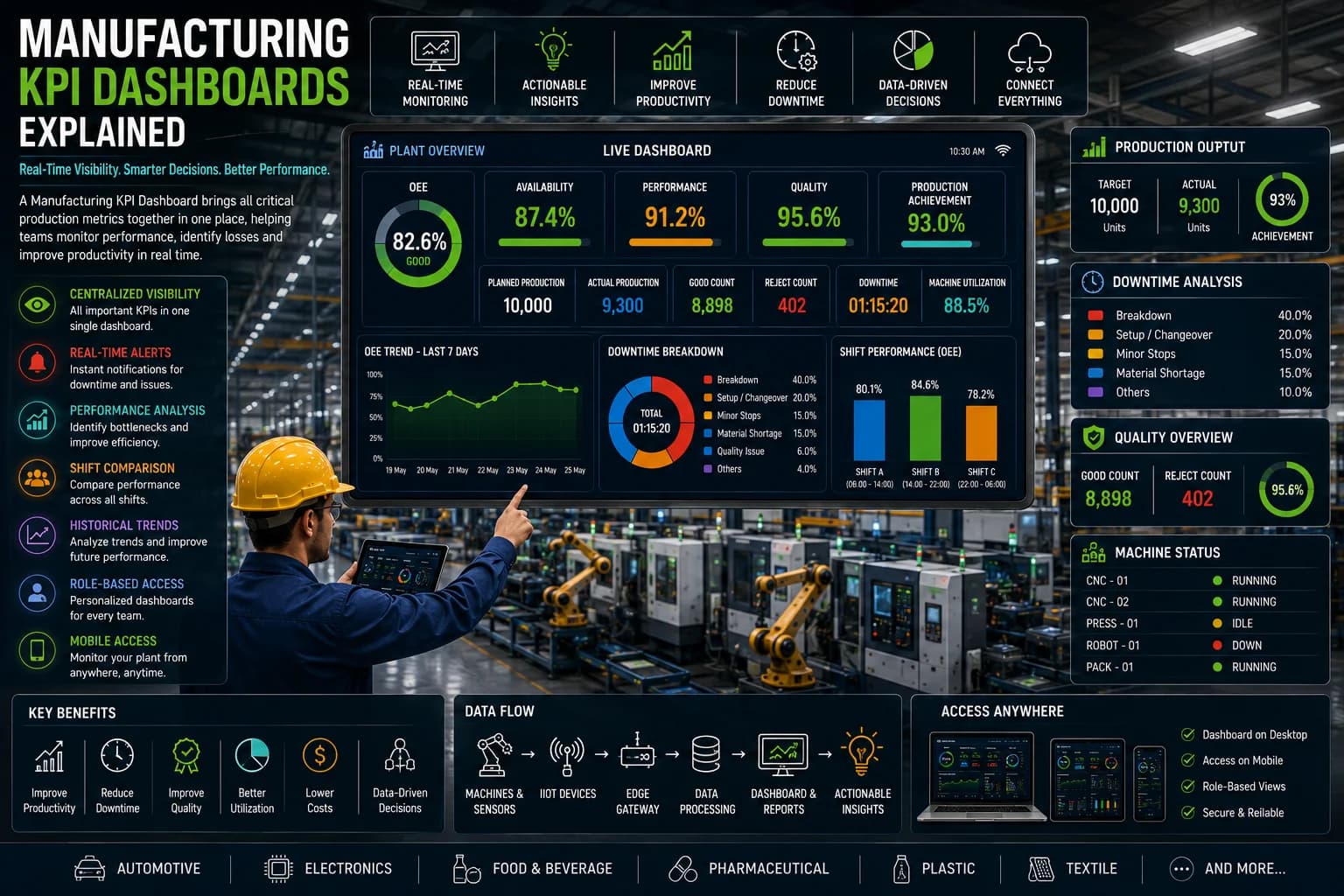
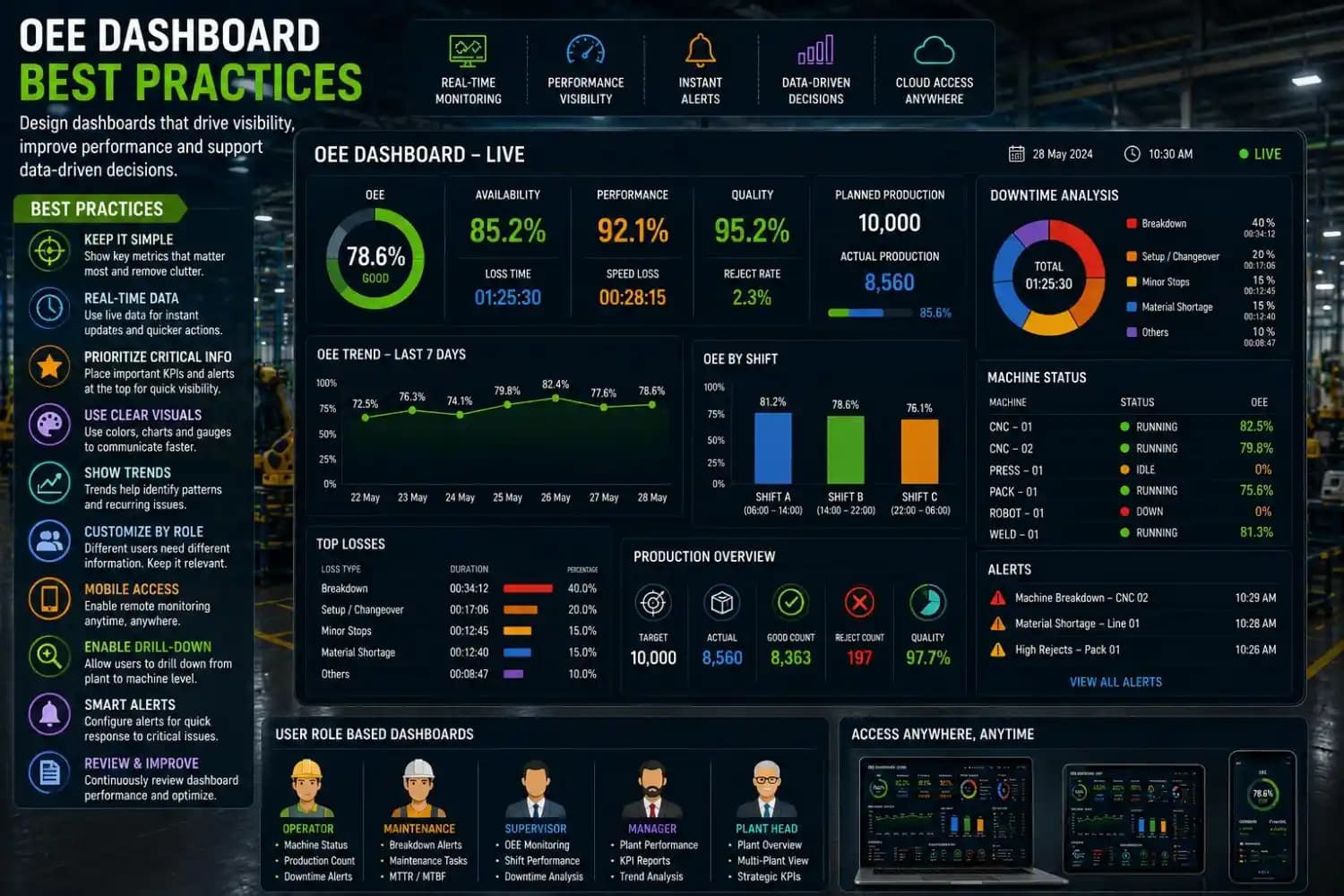
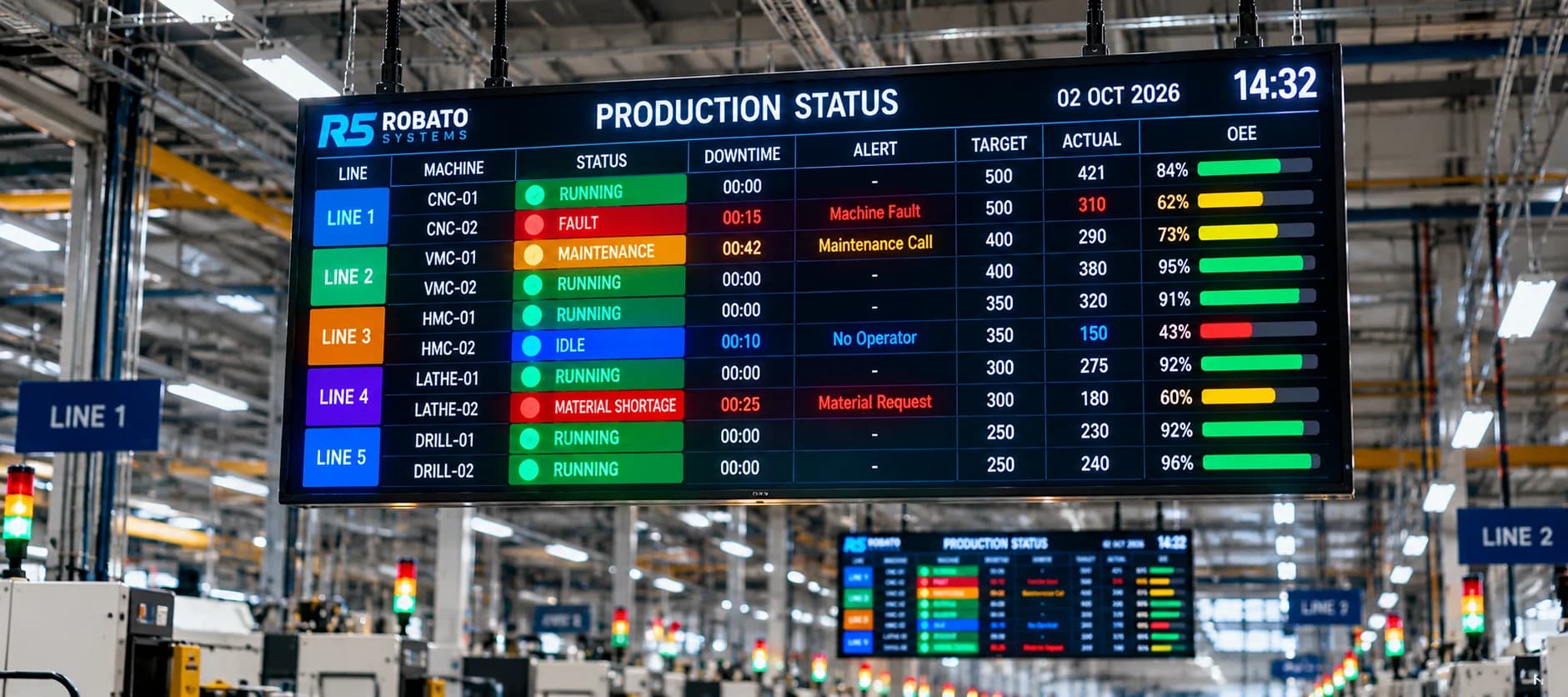
OEE Dashboard for Factory Performance
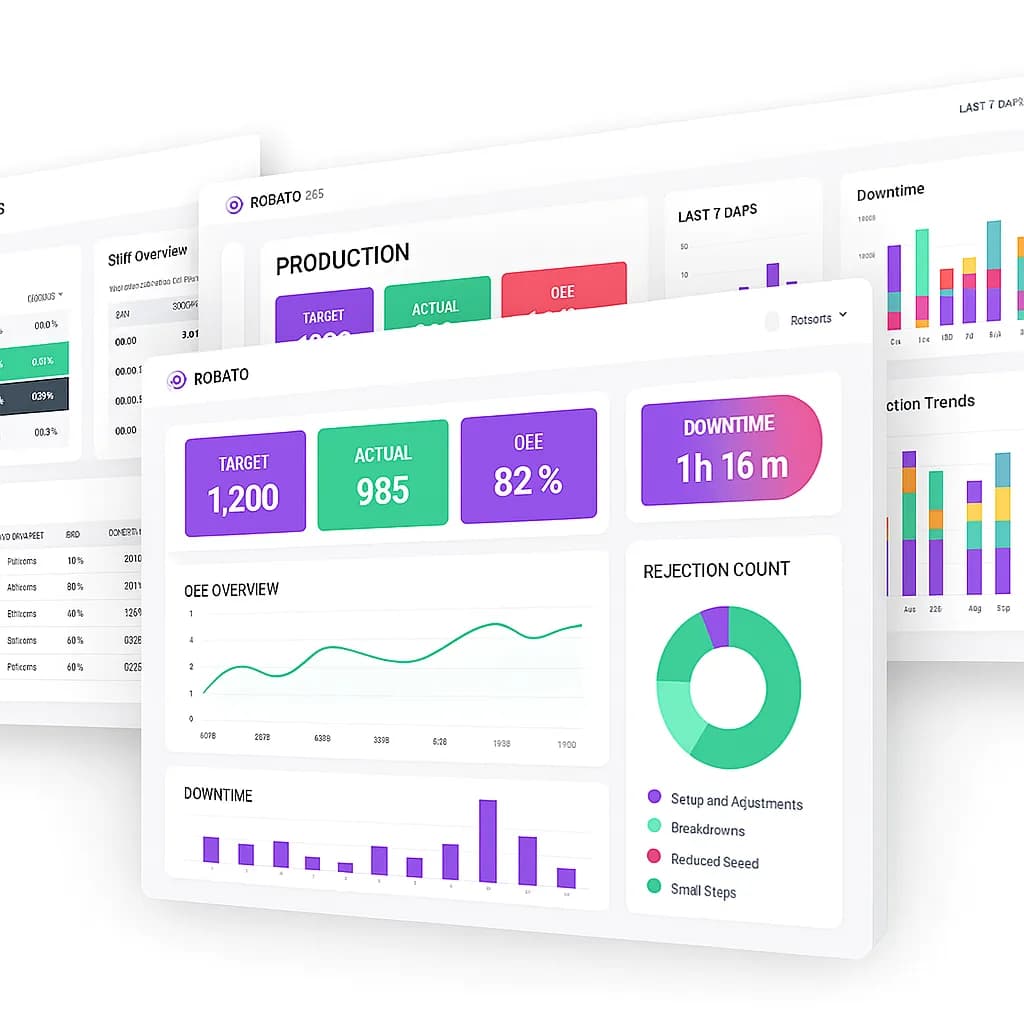
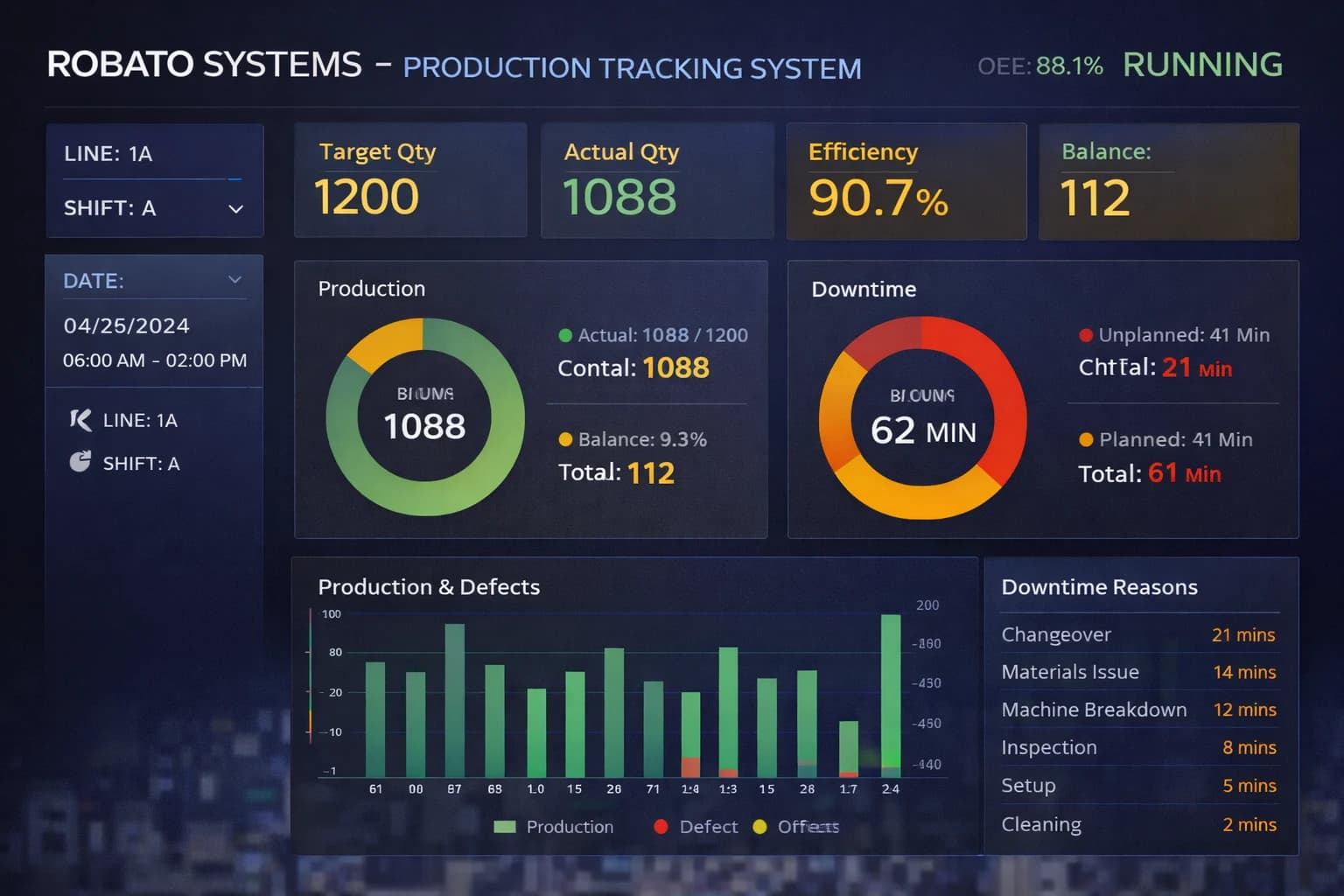
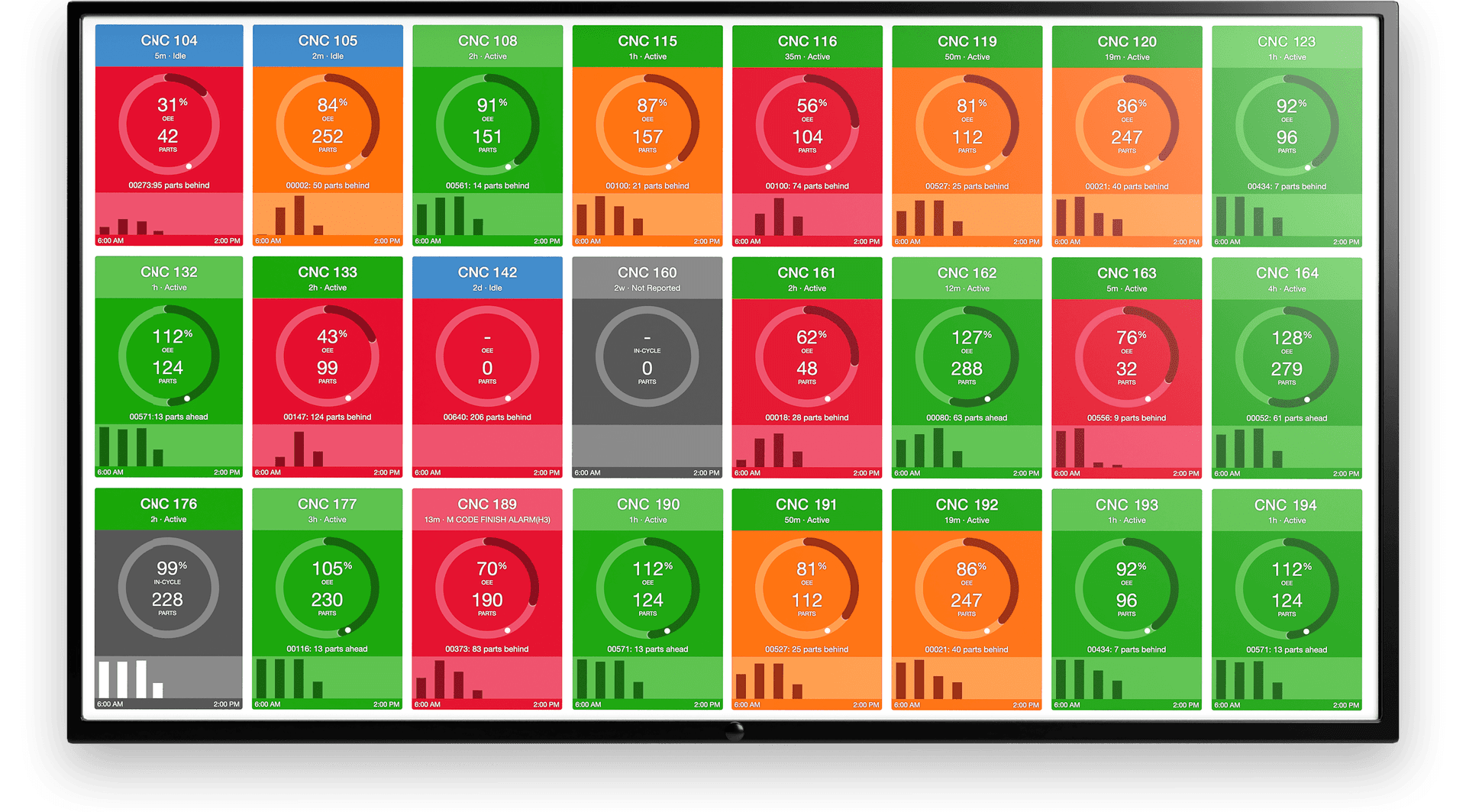
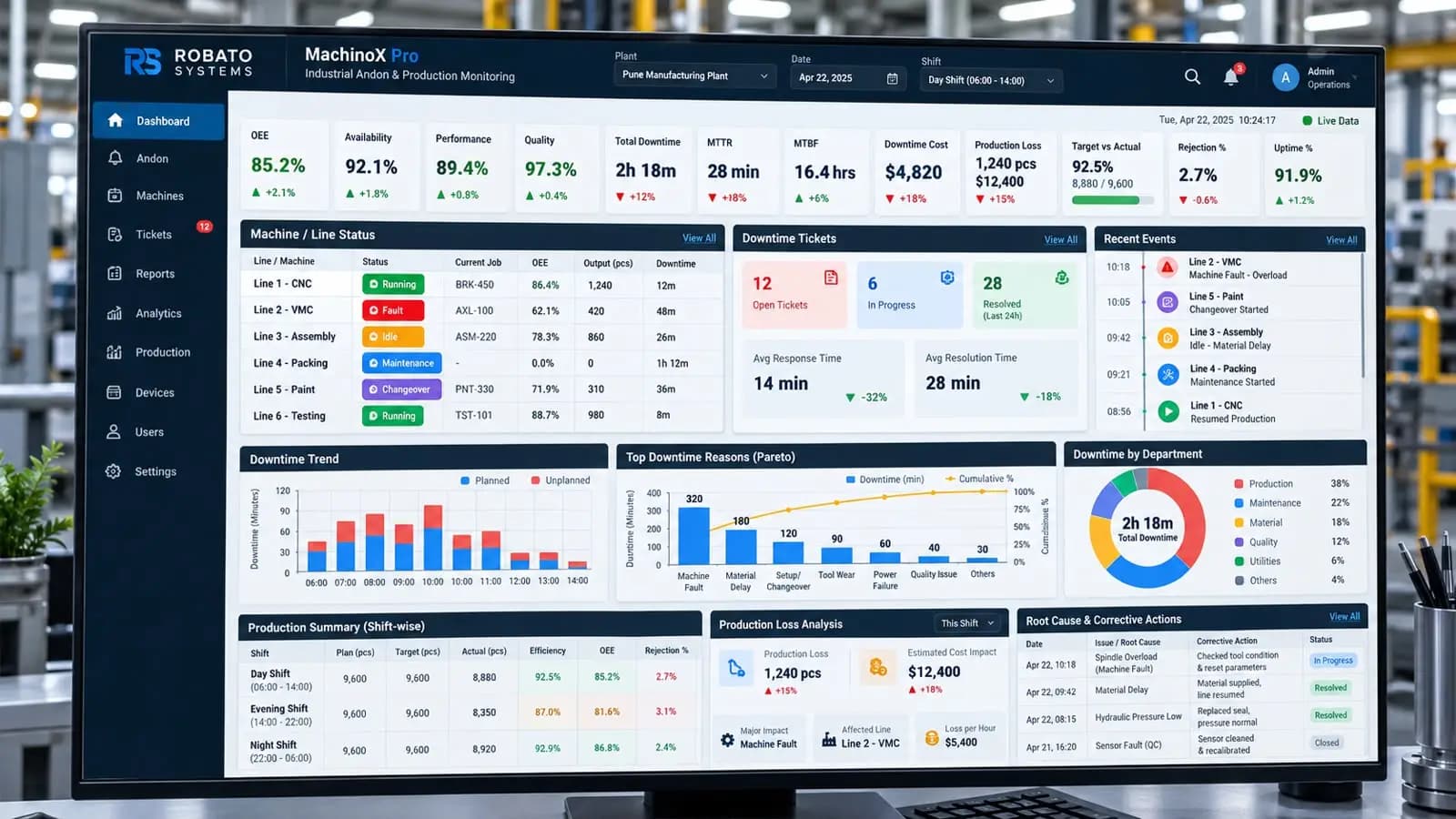
An OEE dashboard provides a centralized view of factory performance.
A dashboard can display:
- OEE
- Availability
- Performance
- Quality
- Production output
- Downtime
- Machine status
- Target production
- Actual production
- Machine utilization
This allows managers to understand factory performance without reviewing multiple manual reports.
Factory Performance Monitoring for Production Managers
Production managers need information that helps them manage production efficiently.
They can use factory performance monitoring to track:
- OEE
- Production output
- Downtime
- Production targets
- Machine utilization
- Shift performance
This information helps production managers identify problems and prioritize improvement activities.
Factory Performance Monitoring for Maintenance Teams
Maintenance teams can use production performance information to understand how equipment problems affect manufacturing.
OEE and downtime information can help identify machines with:
- Frequent breakdowns
- Long downtime
- Repeated failures
- High maintenance losses
This can support better maintenance planning.
Factory Performance Monitoring for Quality Teams
Quality teams can monitor production quality and identify processes that generate higher levels of rejected products.
They can analyze:
- Rejection quantity
- Defect rates
- Good production
- Scrap
- Rework
This information can help quality teams identify areas that require improvement.
Benefits of Factory Performance Monitoring Using OEE
Better Production Visibility
OEE provides a clear view of machine and production performance.
Managers can understand factory performance using centralized production information.
Reduced Downtime
Monitoring downtime helps teams identify machines that frequently stop or experience long breakdowns.
Improved Machine Performance
Performance monitoring helps identify machines that operate below their expected production speed.
Better Quality Monitoring
Quality information helps manufacturers identify production processes that generate excessive rejected products.
Faster Decision-Making
Real-time information allows teams to identify production problems and respond more quickly.
Reduced Manual Reporting
Automated data collection reduces the need for operators and managers to prepare production reports manually.
Better Continuous Improvement
Historical OEE information can help manufacturers measure the results of production improvement initiatives.
OEE and Industry 4.0
Industry 4.0 focuses on connected machines, Industrial IoT, automation, and data-driven manufacturing.
OEE monitoring can support these initiatives by connecting production equipment with digital monitoring platforms.
Data can be collected from:
- PLCs
- Sensors
- Machines
- Production counters
- Industrial IoT devices
- Machine controllers
The information can then be displayed through digital dashboards.
This allows factories to move toward more connected and data-driven production management.
Factory Performance Monitoring for Legacy Machines
Many manufacturing plants use older machines that do not have modern communication capabilities.
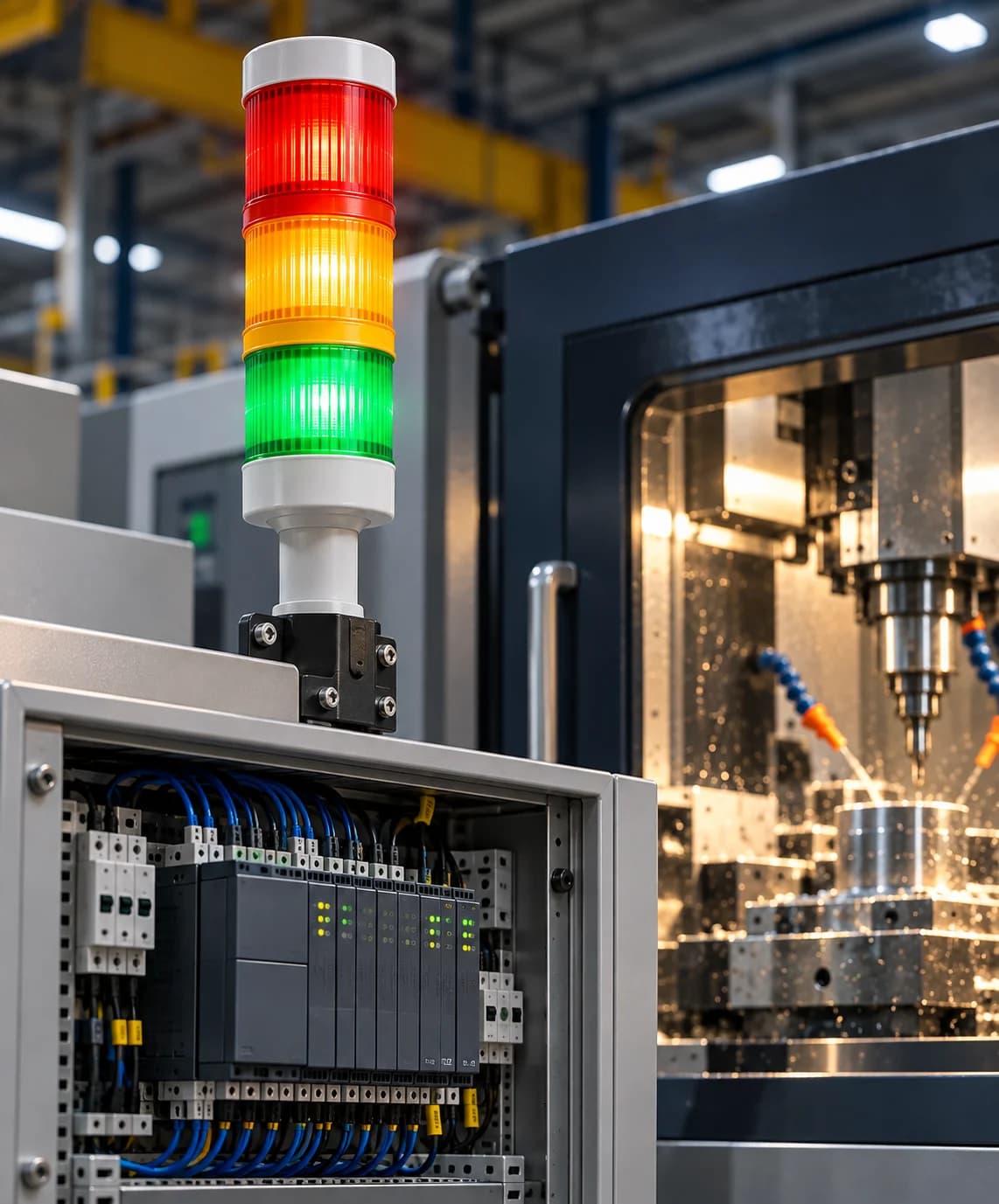
These machines can often be connected using sensors, industrial gateways, and Industrial IoT devices.
Manufacturers can then collect information such as:
- Machine status
- Production count
- Running time
- Downtime
- Production events
This makes it possible to include older equipment in modern factory performance monitoring systems.
How to Implement Factory Performance Monitoring
Manufacturers can implement performance monitoring in several stages.
Identify Important Production Areas
Start by identifying machines and production lines that have the greatest impact on production.
Select Important KPIs
Choose KPIs that support the factory's production goals.
These can include:
- OEE
- Production output
- Downtime
- Quality
- Machine utilization
Connect Production Equipment
Use appropriate sensors, PLC connections, gateways, or Industrial IoT devices to collect production information.
Create a Production Dashboard
Display important production information in a centralized dashboard.
Analyze Performance
Use real-time and historical information to identify production losses and improvement opportunities.
Best Practices for Factory Performance Monitoring
Keep the Dashboard Simple
Display the KPIs that production teams actually need.
Avoid filling the dashboard with unnecessary information.
Use Accurate Data
OEE and other KPIs depend on reliable production information.
Data collection should be consistent across machines and production lines.
Monitor Performance in Real Time
Real-time monitoring allows teams to respond to production problems while they are occurring.
Analyze Historical Performance
Historical information helps identify recurring problems and production trends.
Compare Production Lines
Comparing machines and production lines can help identify areas with lower performance.
Factory Performance Monitoring and Continuous Improvement
Monitoring factory performance is only the first step.
Manufacturers should use the collected information to identify problems and implement improvements.
A continuous improvement process can include:
- Monitor production
- Identify losses
- Investigate causes
- Take corrective action
- Measure results
- Continue monitoring
OEE can provide measurable information for evaluating whether improvement initiatives are producing results.
Why Choose Robato Systems?
Robato Systems provides manufacturing monitoring solutions designed to improve production visibility and equipment performance.
The solution can connect with machines, PLCs, sensors, production counters, and Industrial IoT devices.
Manufacturers can monitor:
- OEE
- Production output
- Availability
- Performance
- Quality
- Machine utilization
- Downtime
- Production targets
- Actual production
- Machine status
Real-time dashboards can help production teams understand factory performance and identify opportunities for improvement.
Conclusion
Factory Performance Monitoring helps manufacturers understand how efficiently their production equipment and processes are operating.
Using OEE as part of factory performance monitoring provides visibility into availability, performance, quality, downtime, and production losses.
Real-time OEE monitoring can help production managers identify problems faster, maintenance teams understand equipment losses, and quality teams monitor production defects.
With connected machines, Industrial IoT devices, and digital dashboards, manufacturers can move toward more efficient and data-driven production operations.
OEE-based factory performance monitoring can therefore become an important part of continuous improvement and Industry 4.0 manufacturing strategies.
Frequently Asked Questions
What is Factory Performance Monitoring?
Factory Performance Monitoring is the process of tracking production and equipment performance using manufacturing KPIs and production data.
How does OEE help monitor factory performance?
OEE measures availability, performance, and quality, helping manufacturers identify different types of production losses.
Can factory performance be monitored in real time?
Yes. Connected machines, PLCs, sensors, and Industrial IoT devices can provide production information for real-time monitoring.
What KPIs should be monitored in a factory?
Common KPIs include OEE, production output, downtime, quality, machine utilization, availability, and performance.
Can older machines be included in factory monitoring?
Yes. Older machines can often be connected using sensors, gateways, and Industrial IoT devices.
Who uses factory performance monitoring systems?
Production managers, maintenance teams, quality teams, plant managers, operators, and factory management can use factory performance information.