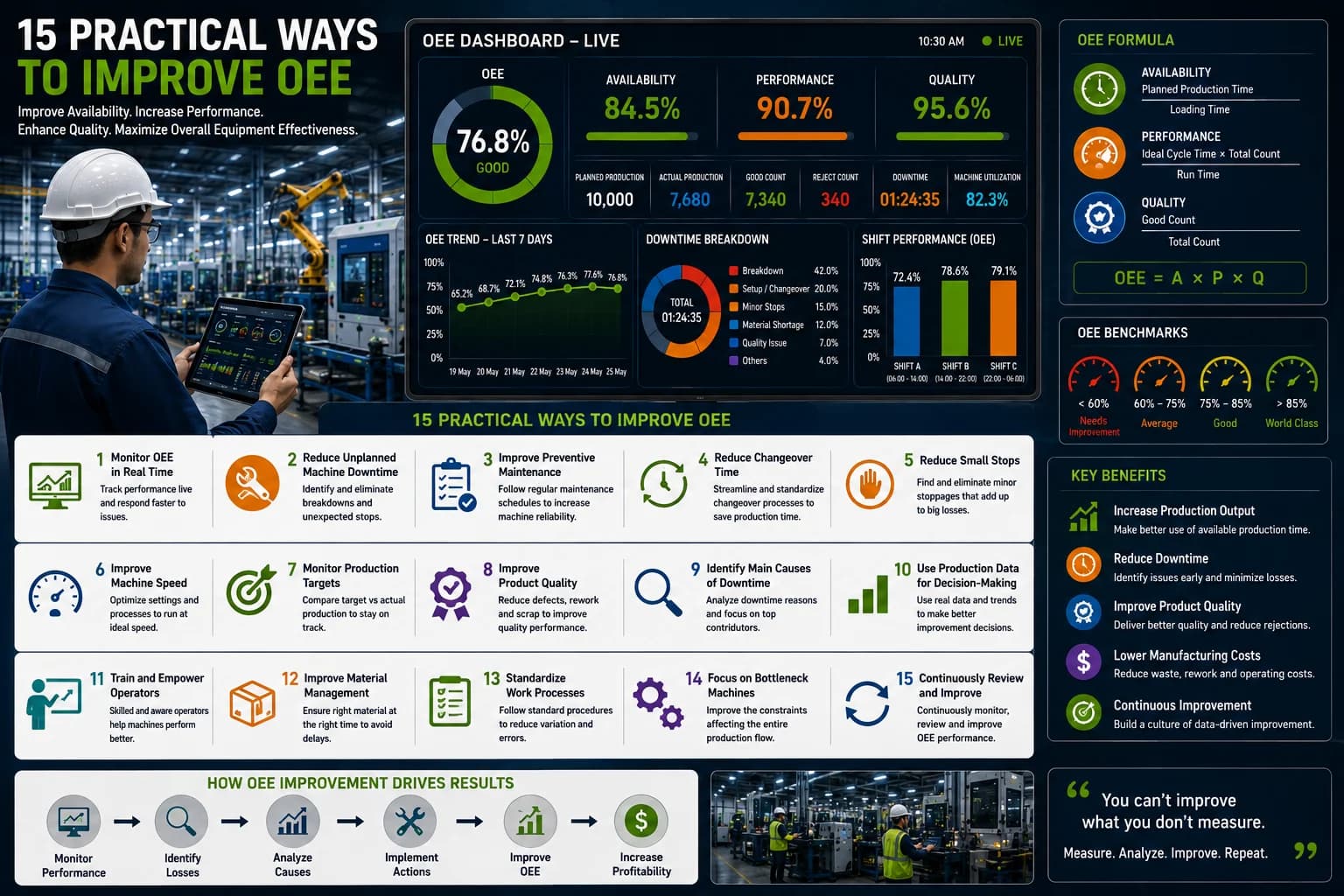
Manufacturing companies constantly look for ways to improve production efficiency, reduce machine downtime, and increase output without unnecessarily increasing costs.
Overall Equipment Effectiveness, commonly known as OEE, is an important metric that helps manufacturers understand how effectively their production equipment is being used.
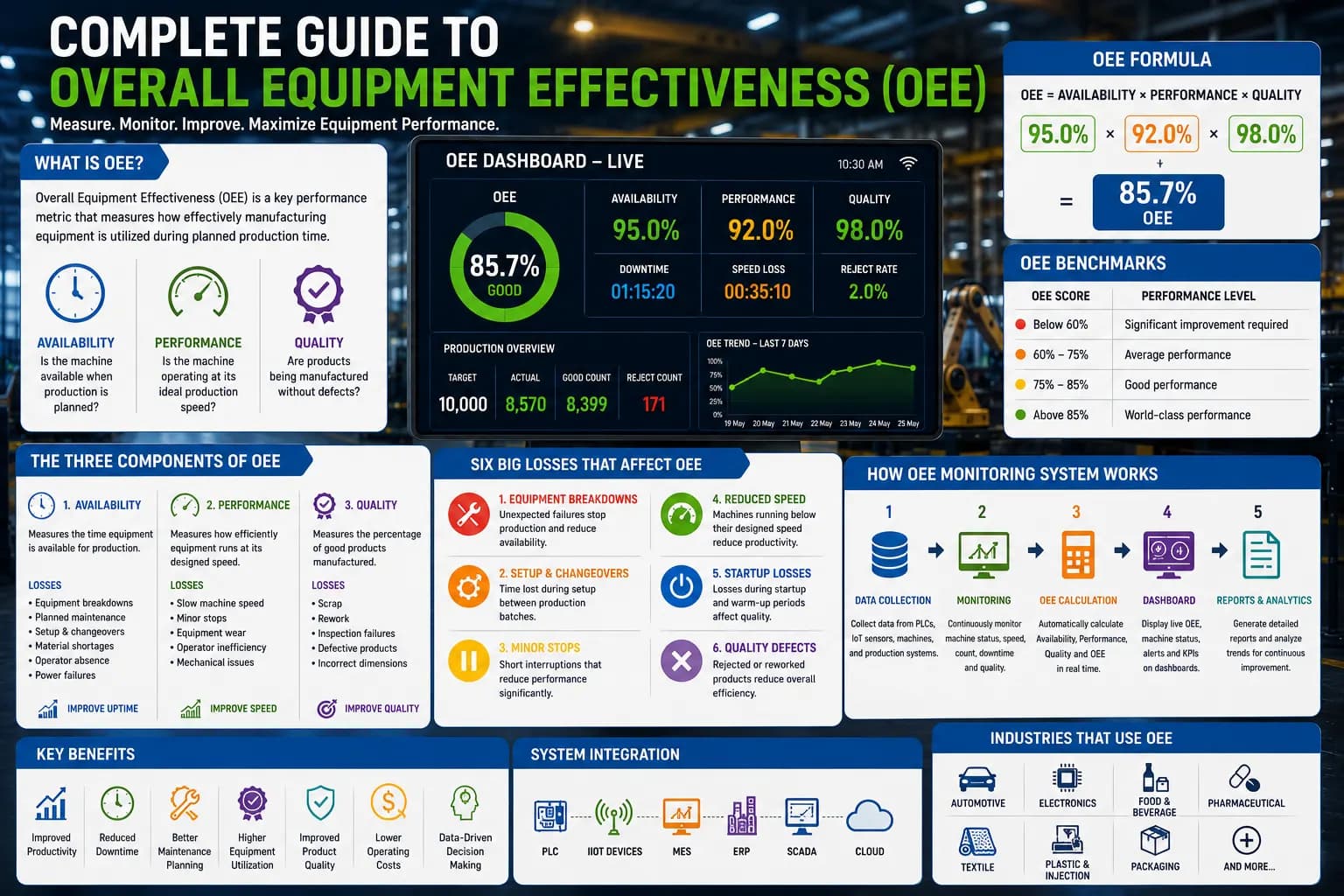
OEE is based on three main factors:
- Availability
- Performance
- Quality
When any of these factors decreases, overall OEE can also decrease.
Improving OEE is therefore not only about increasing machine speed. Manufacturers need to reduce downtime, improve production performance, reduce defects, and make better use of available production time.
In this guide, we will look at 15 practical ways manufacturers can improve OEE and production efficiency.
What is OEE?
OEE stands for Overall Equipment Effectiveness.
It measures how effectively a machine or production line is being used compared with its potential production capability.
OEE considers:
- Availability
- Performance
- Quality
A low OEE score indicates that production losses are occurring somewhere in the manufacturing process.
The first step toward improving OEE is understanding where those losses are coming from.
1. Monitor OEE in Real Time
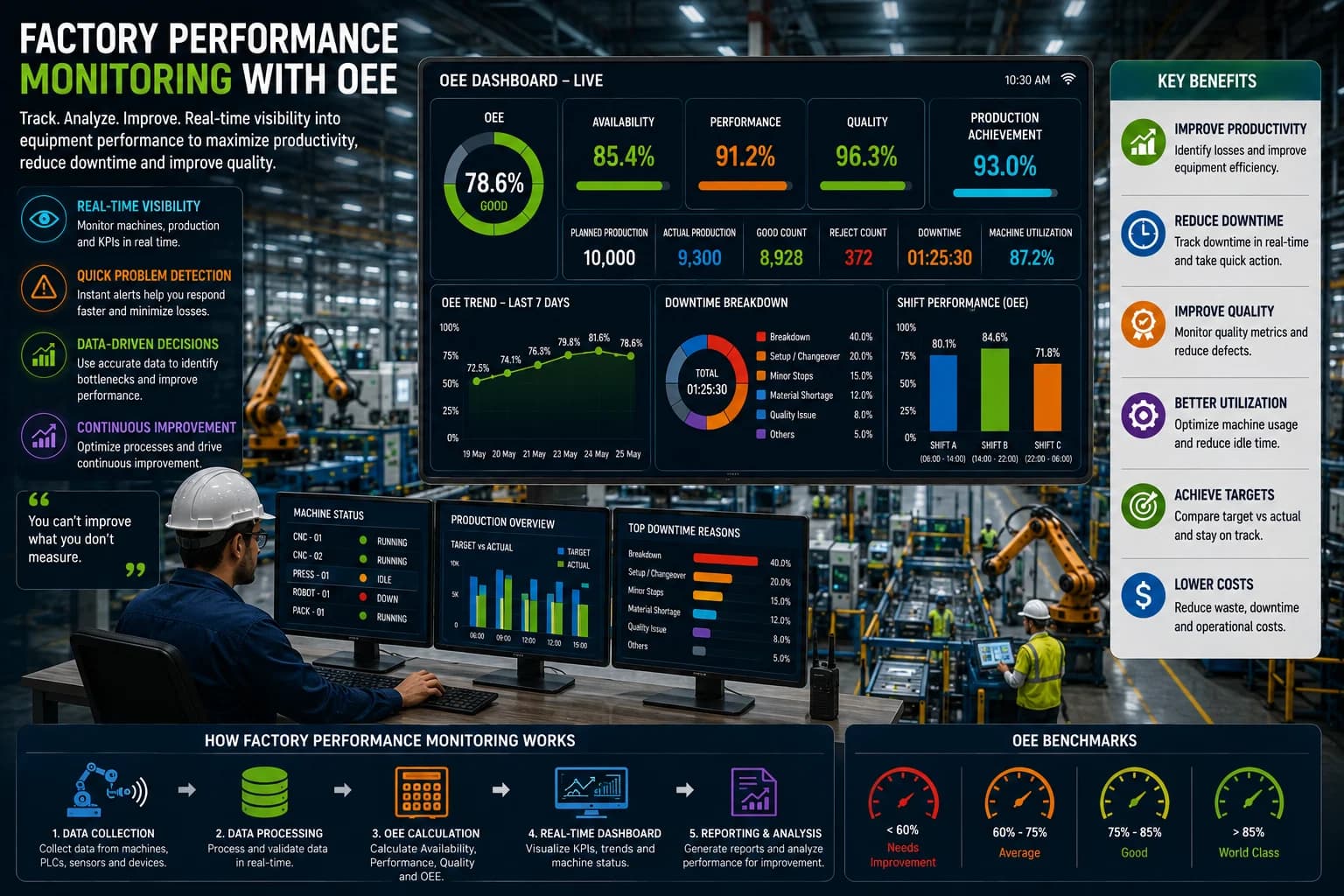
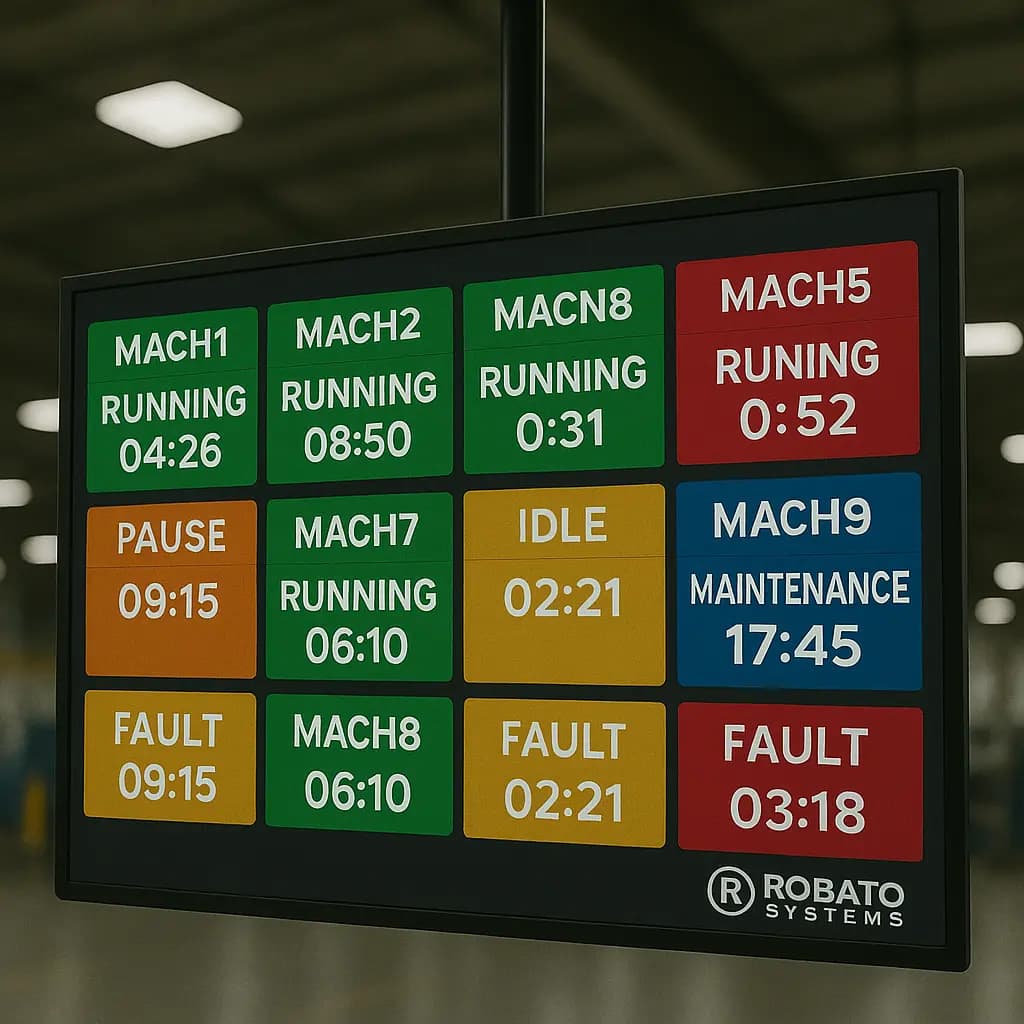
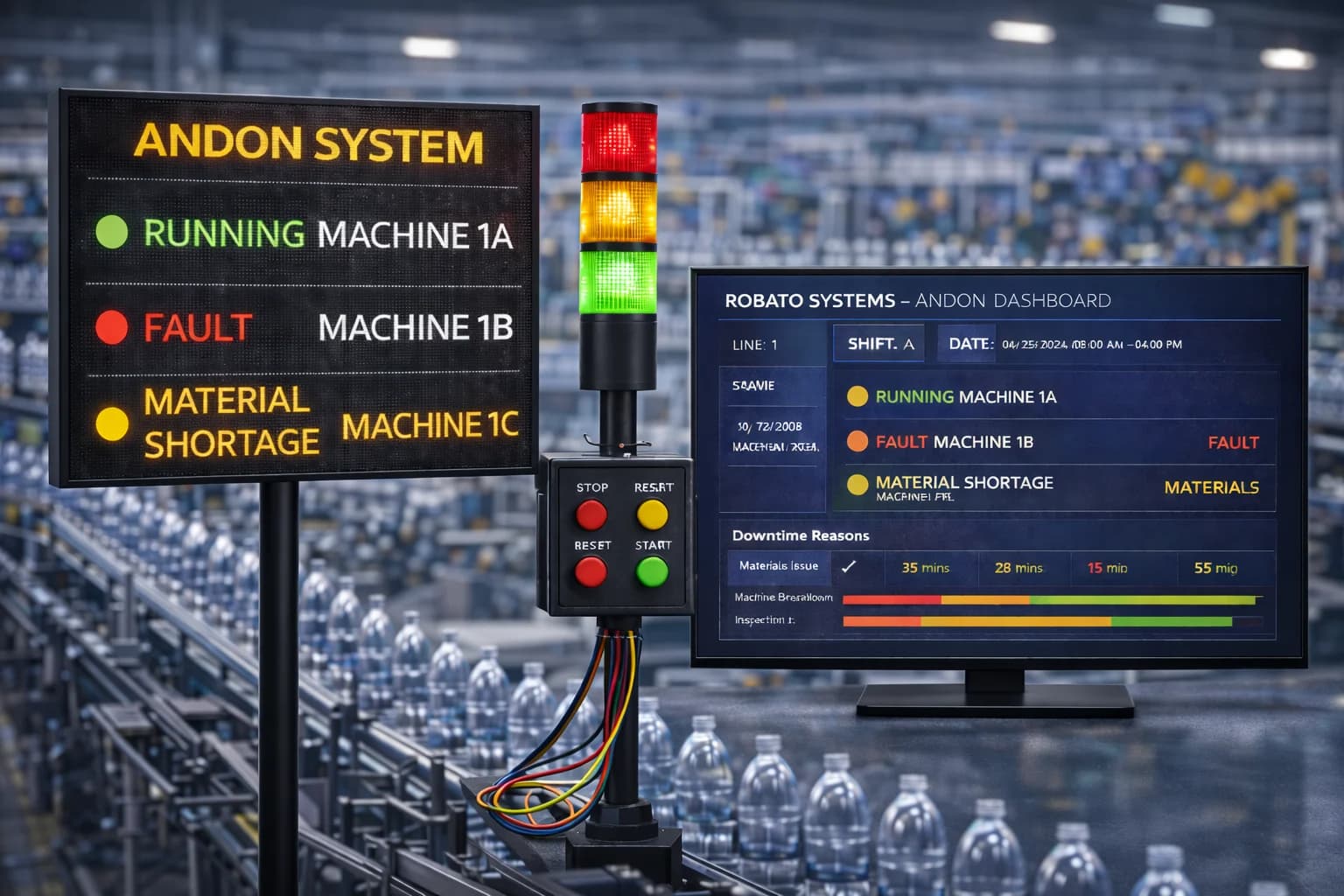
One of the most effective ways to improve OEE is to monitor it while production is taking place.
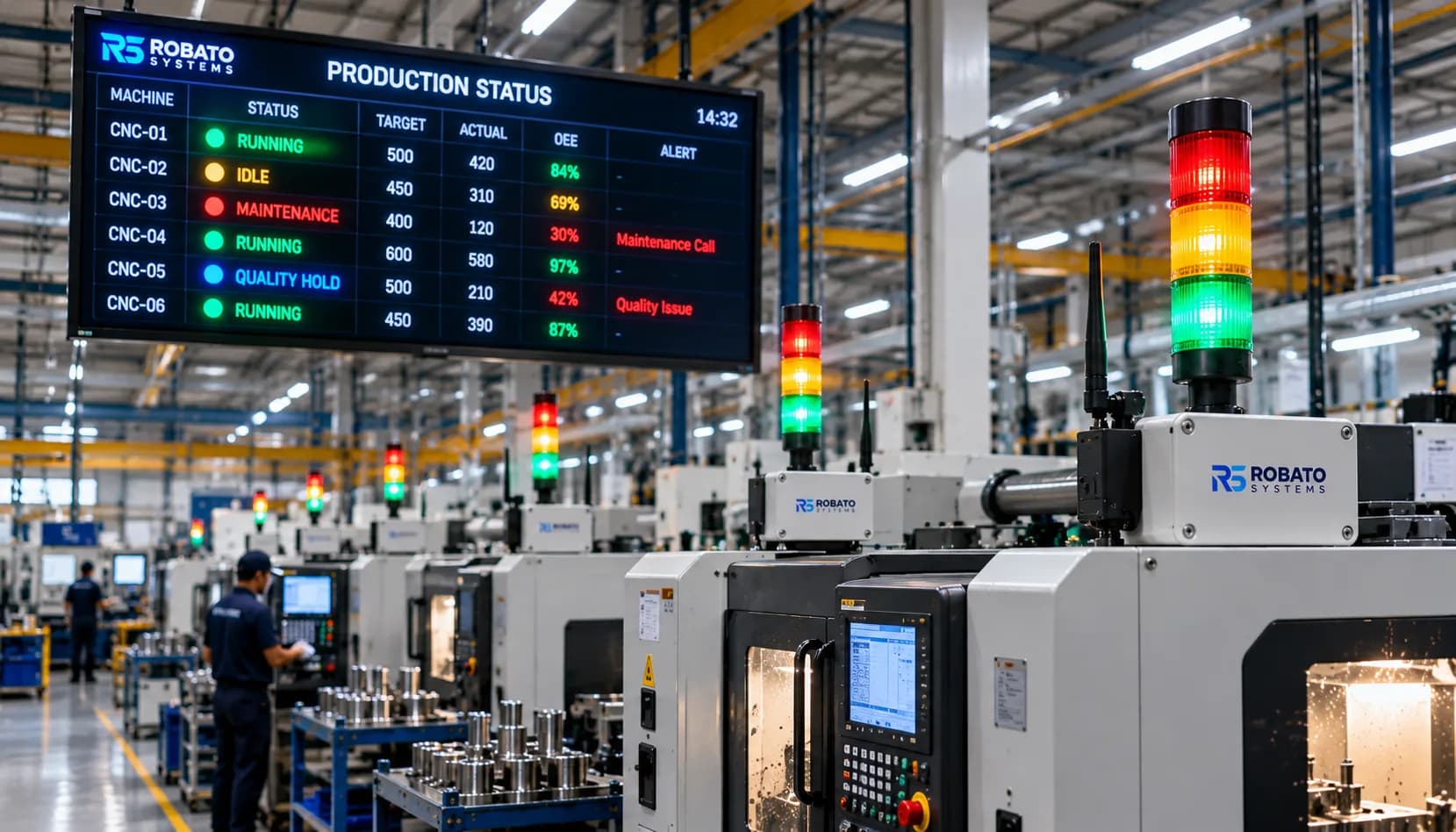
Real-time OEE monitoring provides information about:
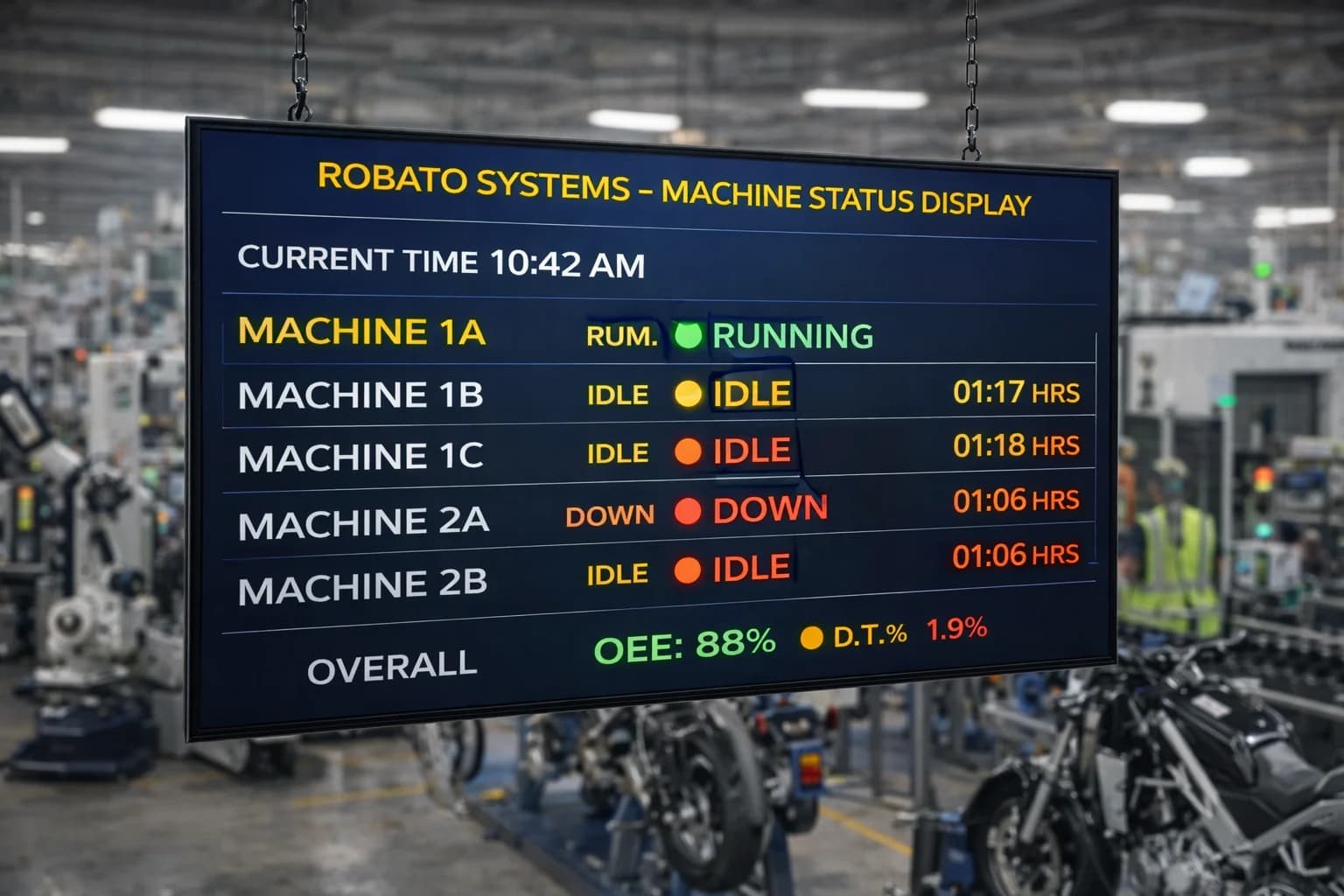
- Machine status
- Production count
- Downtime
- Production speed
- Quality
- Current OEE
Production teams can identify problems as they happen instead of discovering them later through manual reports.
Real-time visibility can help teams respond faster to machine stoppages and production losses.
2. Reduce Unplanned Machine Downtime
Unplanned downtime can significantly affect machine availability.
Common causes include:
- Machine breakdowns
- Electrical problems
- Mechanical failures
- Sensor problems
- Material issues
- Unexpected equipment faults
Manufacturers should monitor downtime and identify machines that experience frequent or extended stoppages.
Reducing unplanned downtime can directly improve equipment availability.
3. Improve Preventive Maintenance
Regular preventive maintenance can help reduce unexpected equipment failures.
Maintenance teams can create schedules for:
- Inspection
- Lubrication
- Component replacement
- Cleaning
- Calibration
- Equipment servicing
Monitoring machine performance and downtime history can help maintenance teams determine which machines require more attention.
A well-planned maintenance strategy can improve machine reliability and reduce production interruptions.
4. Reduce Changeover Time
Changeovers can reduce the amount of time available for production.
Long changeover times can occur when machines need to be:
- Cleaned
- Adjusted
- Reconfigured
- Tooled
- Calibrated
- Prepared for another product
Manufacturers can analyze changeover activities and identify unnecessary delays.
Standardizing changeover procedures can help reduce the amount of production time lost during product transitions.
5. Reduce Small Stops
Not all production losses come from large machine breakdowns.
Small and repeated machine stops can also reduce OEE.
Examples include:
- Material positioning problems
- Sensor interruptions
- Minor machine adjustments
- Short jams
- Operator interventions
Because these stops may only last a few seconds or minutes, they can be difficult to identify manually.
Monitoring machine events can help manufacturers discover recurring small stops and address their causes.
6. Improve Machine Speed
A machine may remain operational while producing below its expected speed.
This can happen because of:
- Incorrect machine settings
- Worn components
- Material variations
- Process problems
- Operator practices
- Equipment limitations
Manufacturers should compare actual production speed with the expected cycle time.
If a machine consistently operates below its ideal rate, the production team can investigate the reason and implement corrective action.
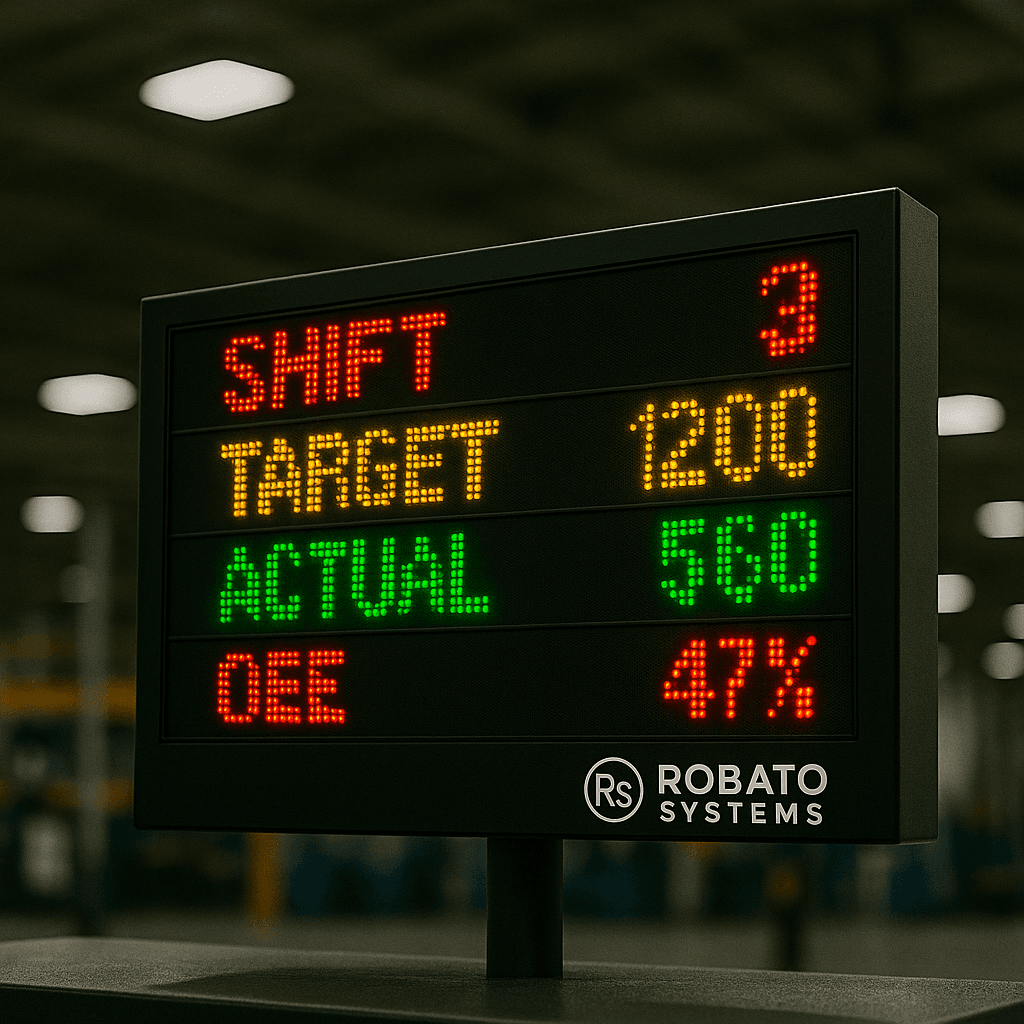
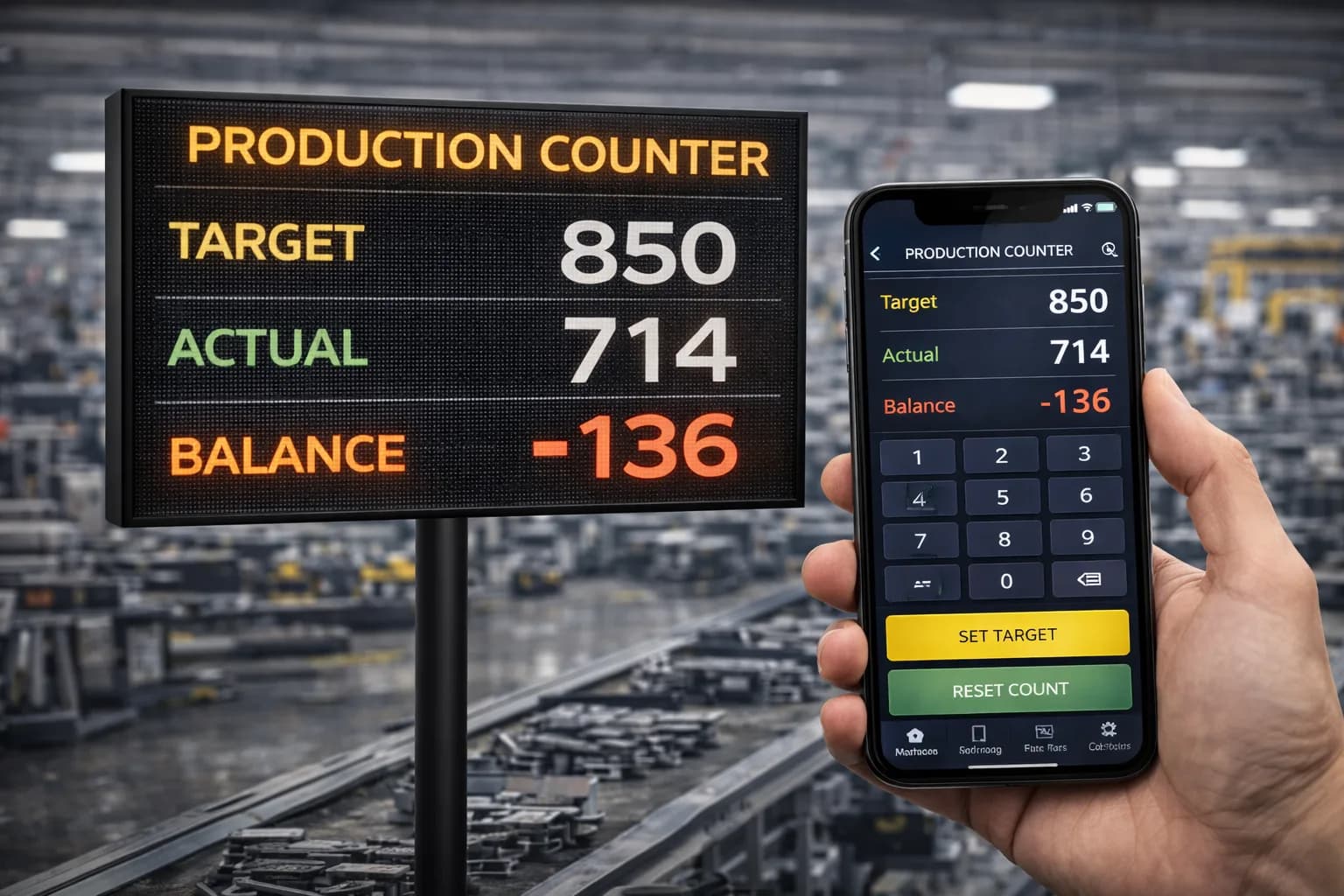
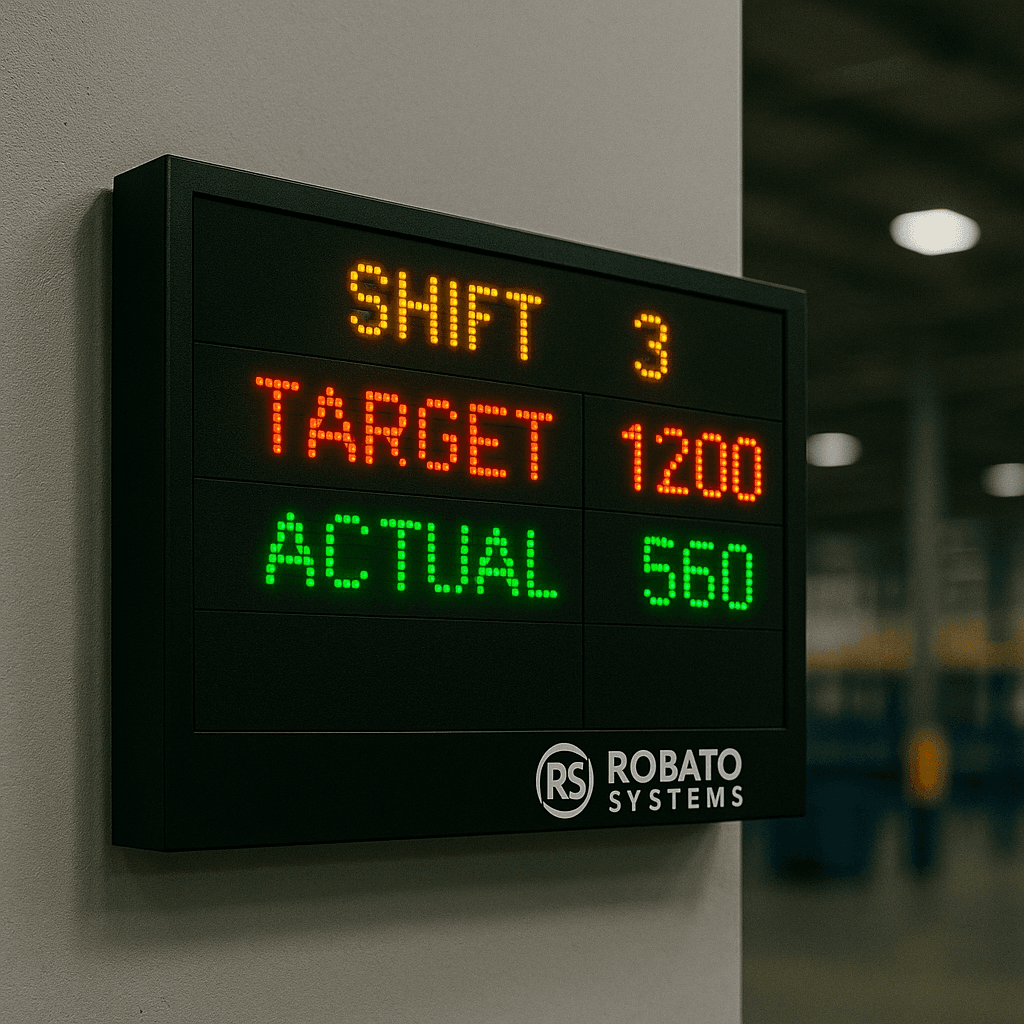
7. Monitor Production Targets
Production targets provide a useful reference for understanding whether manufacturing operations are progressing according to plan.
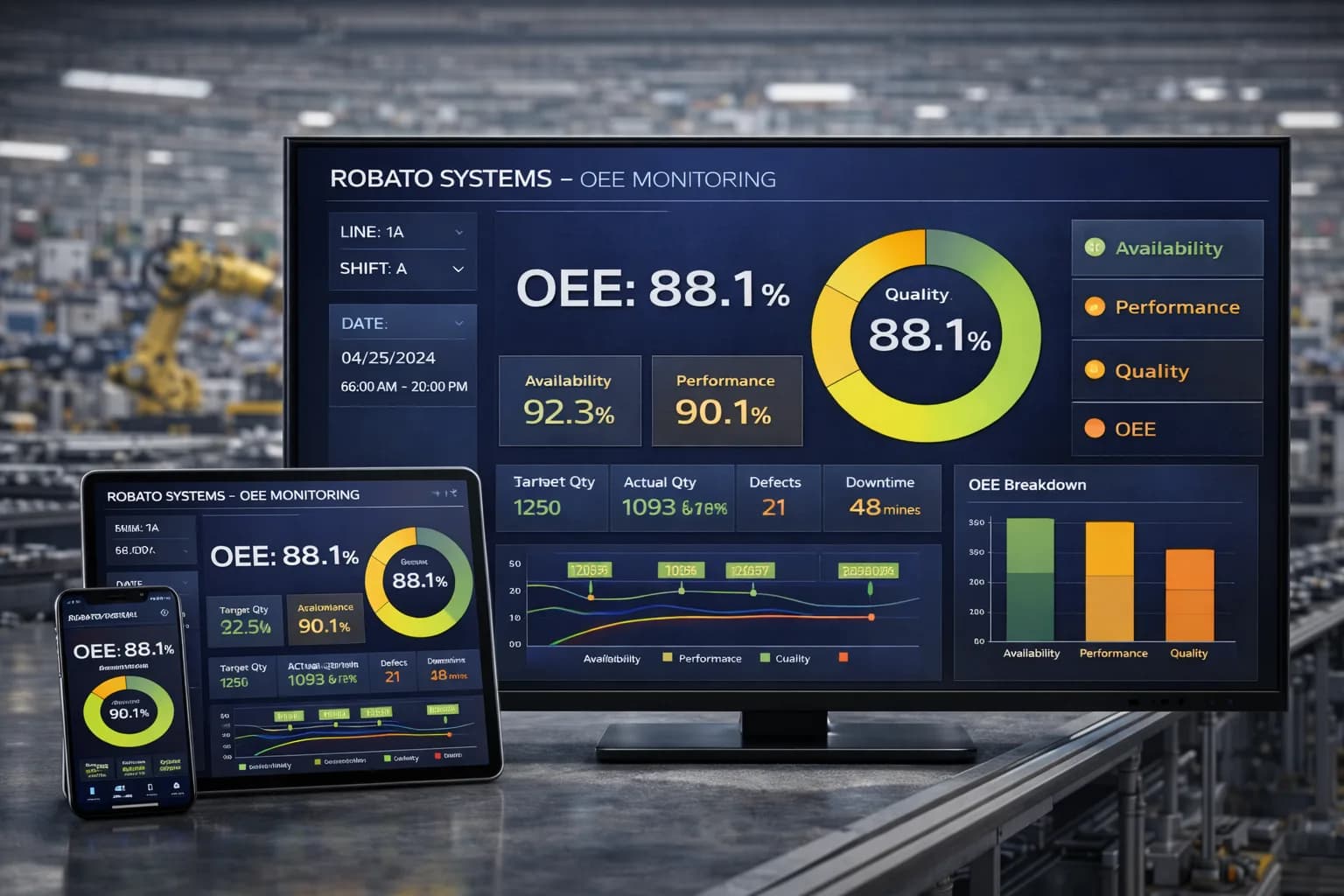
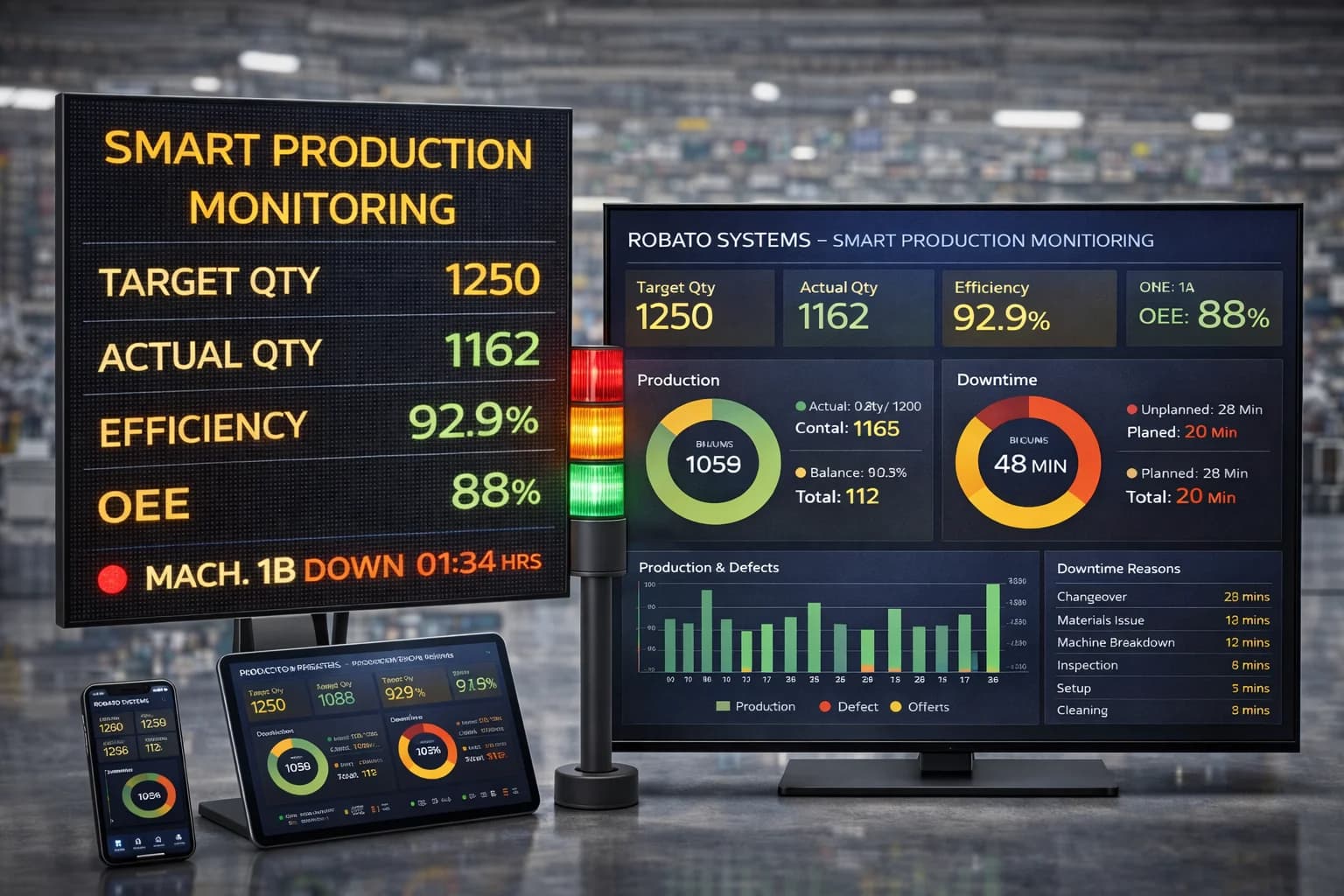
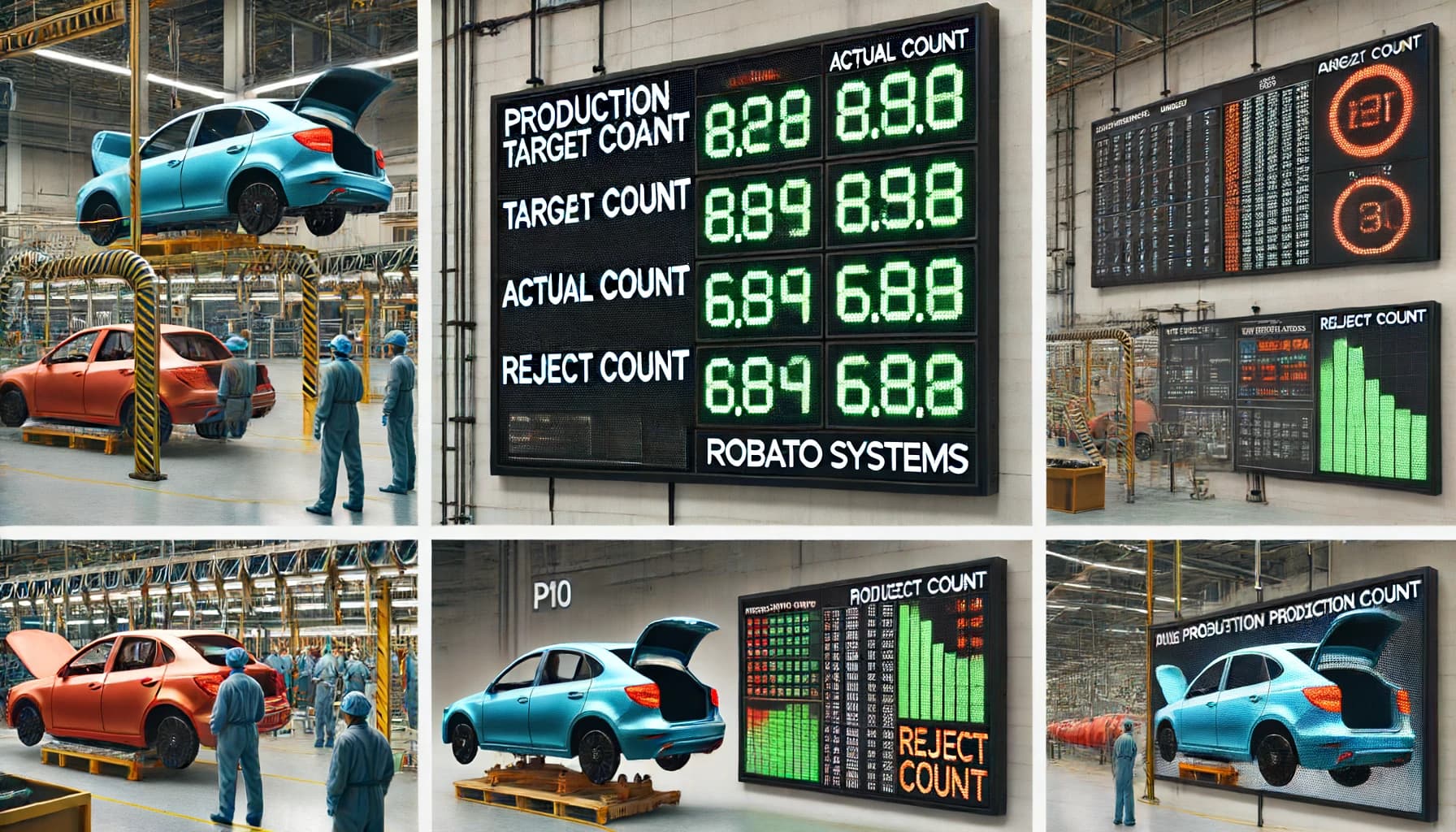
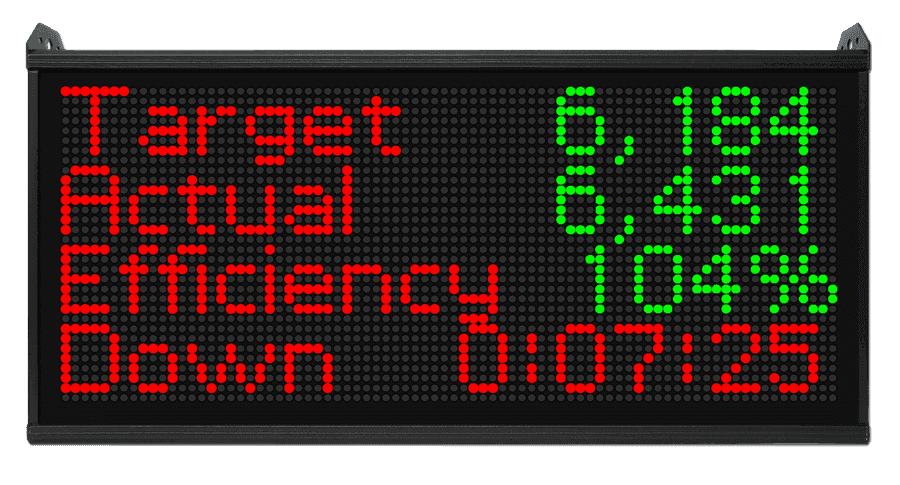
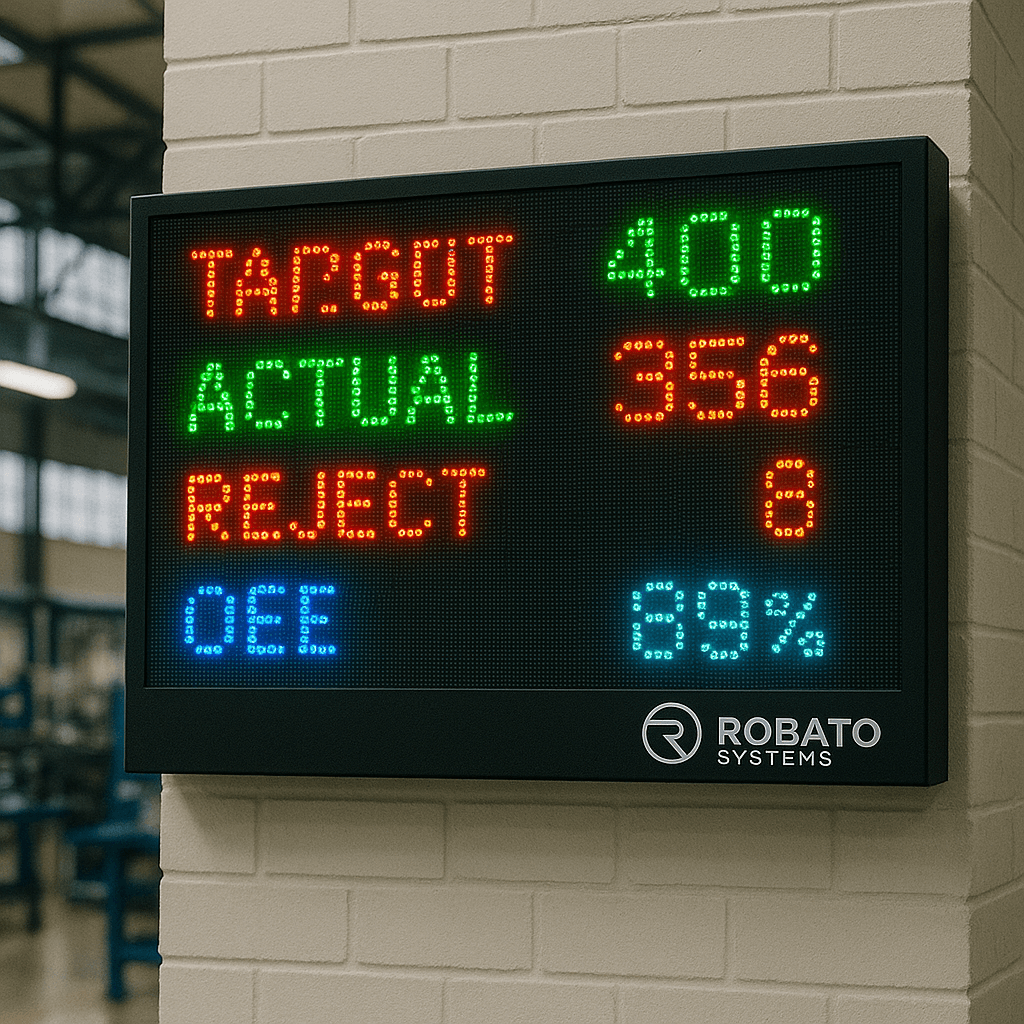
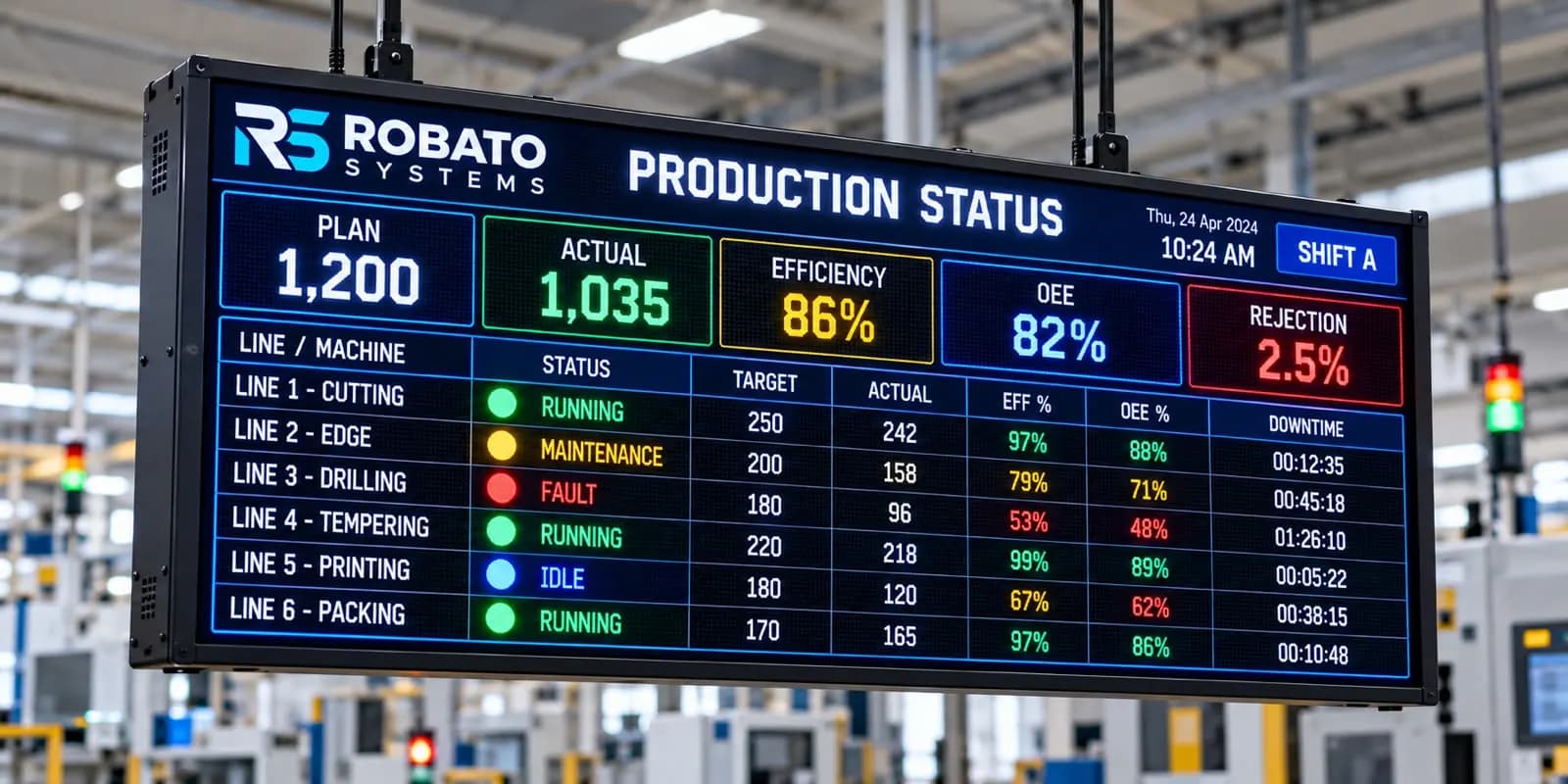
A dashboard can compare:
- Target production
- Actual production
- Good production
- Rejected production
If actual production is consistently below target, managers can investigate downtime, speed losses, material shortages, or quality problems.
Target versus actual monitoring can therefore support OEE improvement.
8. Improve Product Quality
Quality losses can have a significant impact on OEE.
Manufacturers should monitor:
- Rejected products
- Defects
- Scrap
- Rework
- Good production
Identifying the most common defects can help quality teams investigate their causes.
Improving production processes and reducing defects can increase the quality component of OEE.
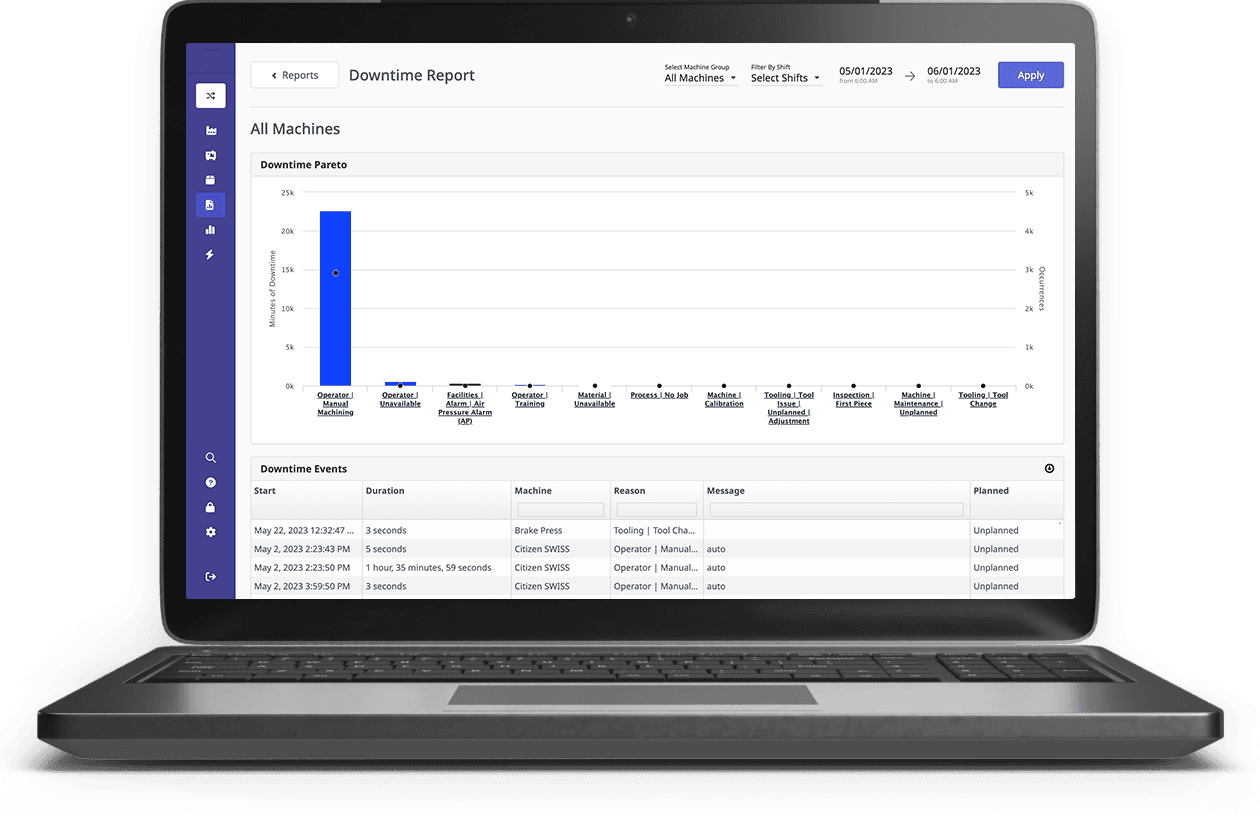
9. Identify the Main Causes of Downtime
Simply knowing that a machine stopped is not always enough.
Manufacturers should also understand why the machine stopped.
Downtime reasons can include:
- Mechanical breakdown
- Electrical fault
- Material shortage
- Tool change
- Setup
- Maintenance
- Operator availability
Categorizing downtime makes it easier to identify recurring problems.
Teams can then focus improvement efforts on the downtime causes that have the largest impact.
10. Use Production Data for Decision-Making
Manufacturing plants generate large amounts of production information.
This information can include:
- Machine status
- Production count
- Downtime
- Quality
- Cycle time
- OEE
- Machine utilization
Instead of relying only on assumptions, production managers can use this data to identify where improvements are required.
Data-driven decision-making can make OEE improvement activities more focused and measurable.
11. Monitor Machine Utilization
Machine utilization shows how effectively production equipment is being used.
Manufacturers can monitor:
- Running time
- Idle time
- Downtime
- Maintenance time
- Production time
Machines with consistently low utilization may require further investigation.
The cause could be production planning, material availability, machine reliability, or demand patterns.
Improving machine utilization can help manufacturers make better use of existing production capacity.
12. Improve Operator Training
Operators play an important role in maintaining production efficiency.
Inadequate training can result in:
- Incorrect machine operation
- Longer setup times
- Incorrect adjustments
- Increased production errors
- More quality problems
Regular training can help operators understand machine procedures, production standards, quality requirements, and troubleshooting processes.
Better operator knowledge can contribute to improved machine performance and quality.
13. Standardize Production Processes
Inconsistent production methods can create performance variations.
Manufacturers can standardize important activities such as:
- Machine setup
- Changeovers
- Quality checks
- Startup procedures
- Machine adjustments
- Maintenance procedures
Standardized processes help reduce unnecessary variations and make production performance easier to measure.
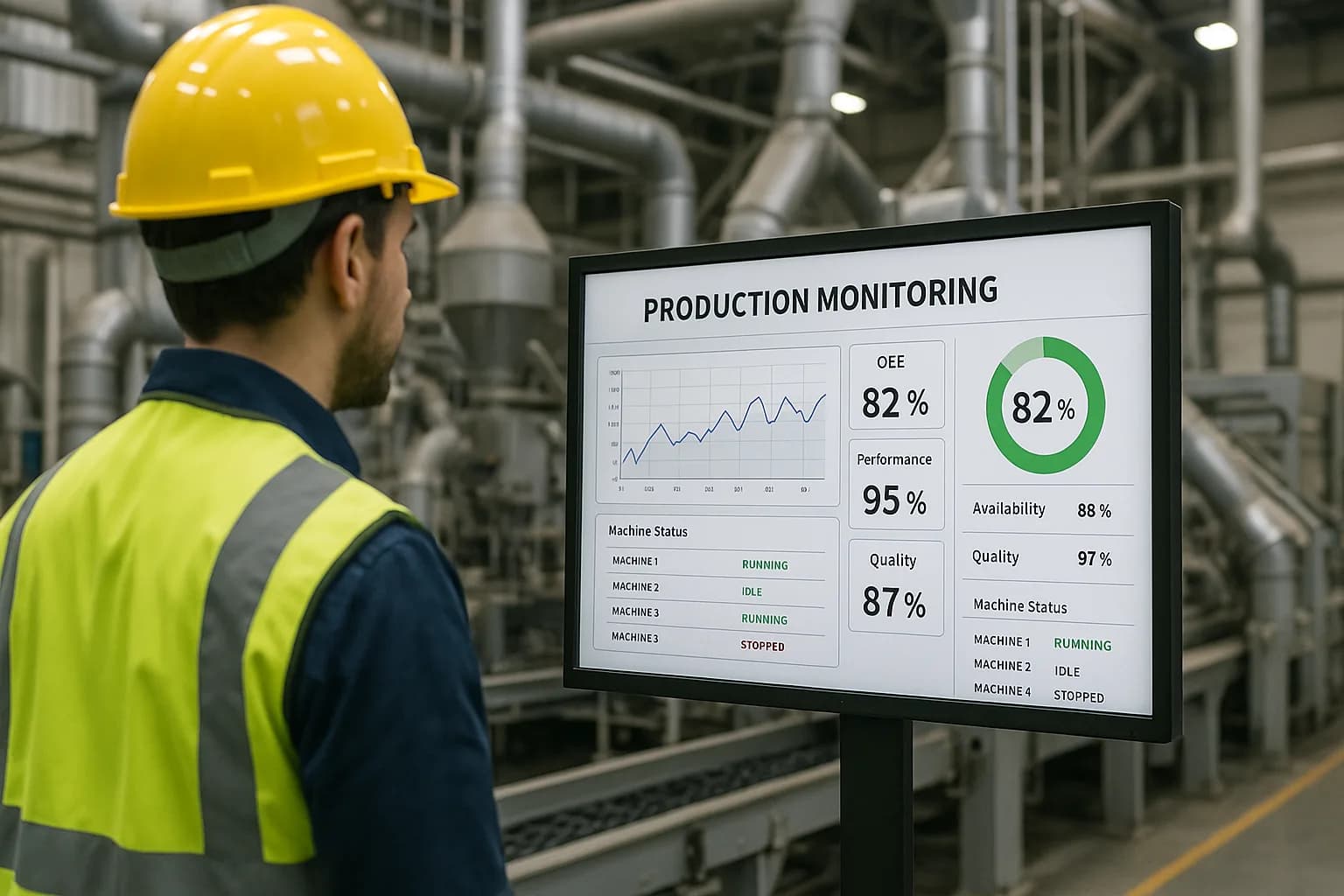
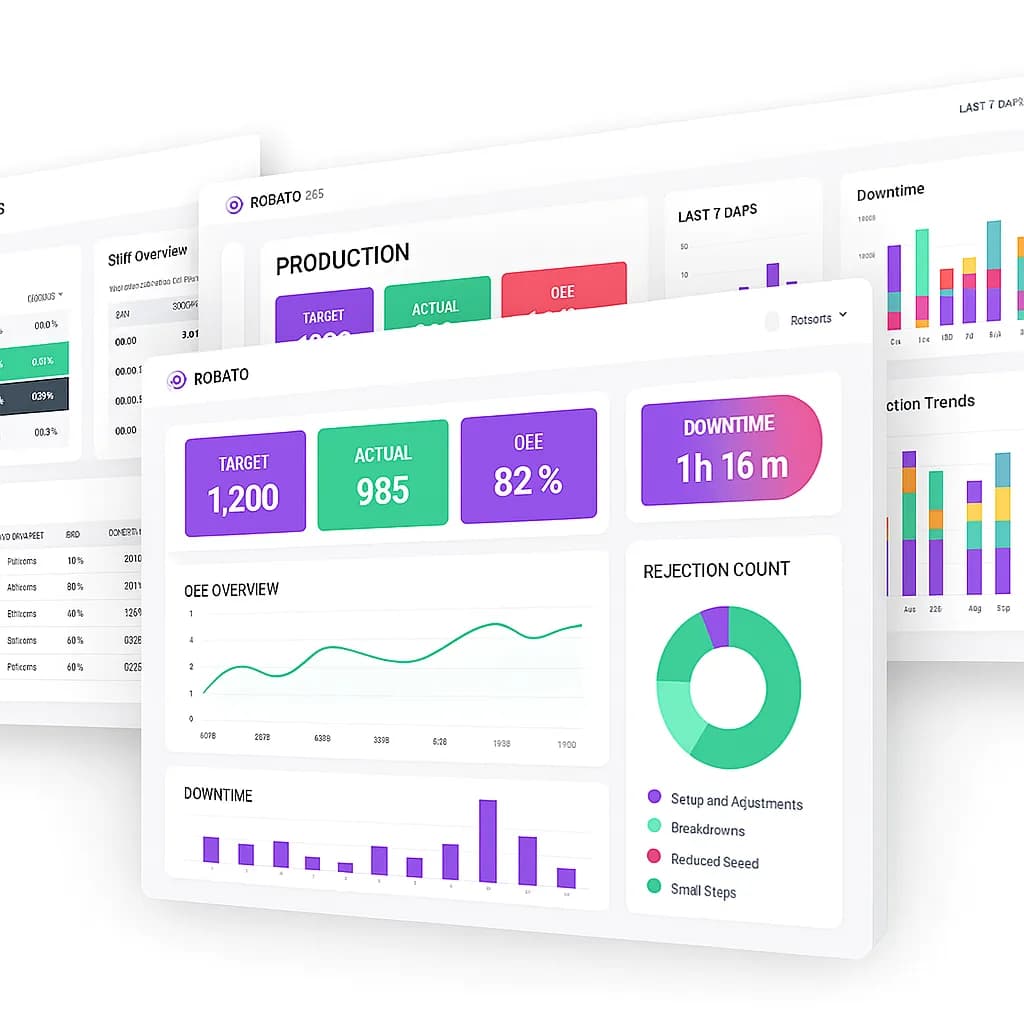
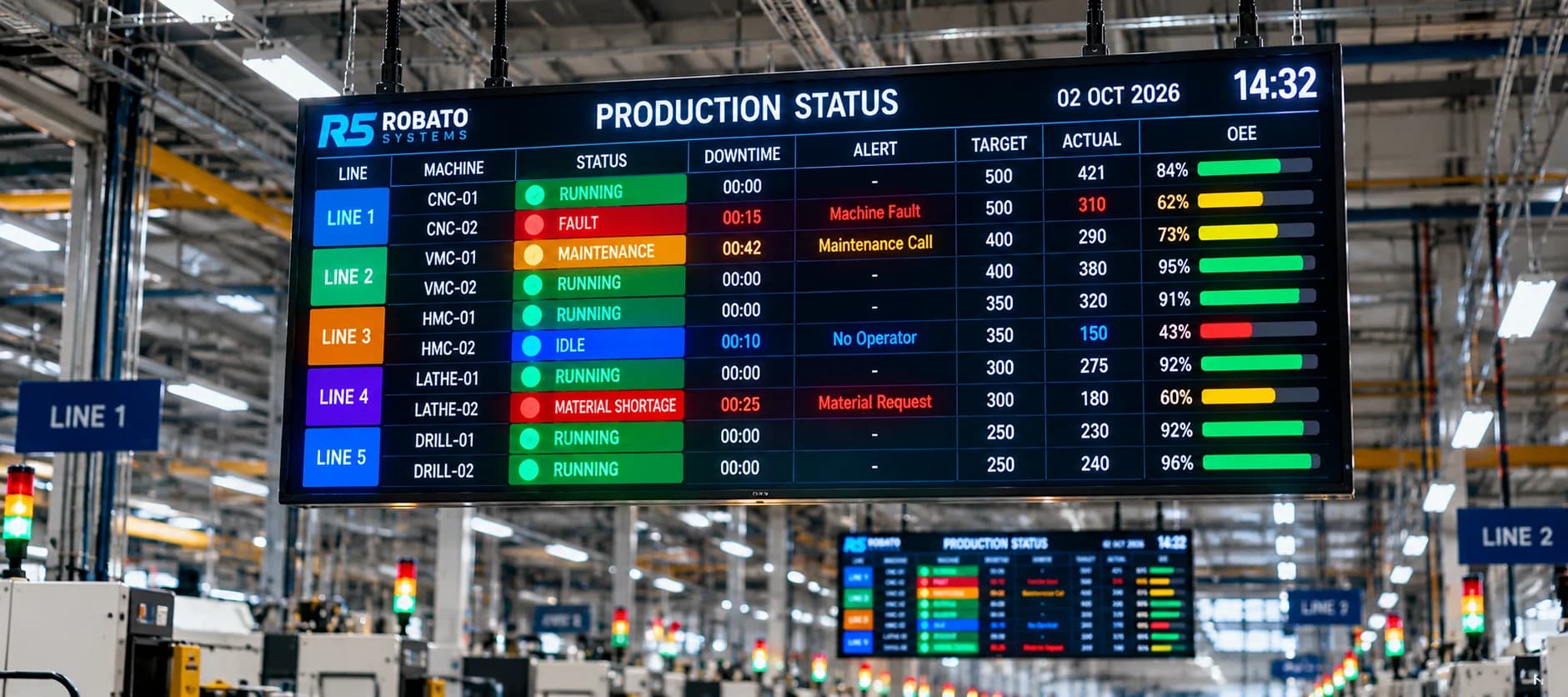
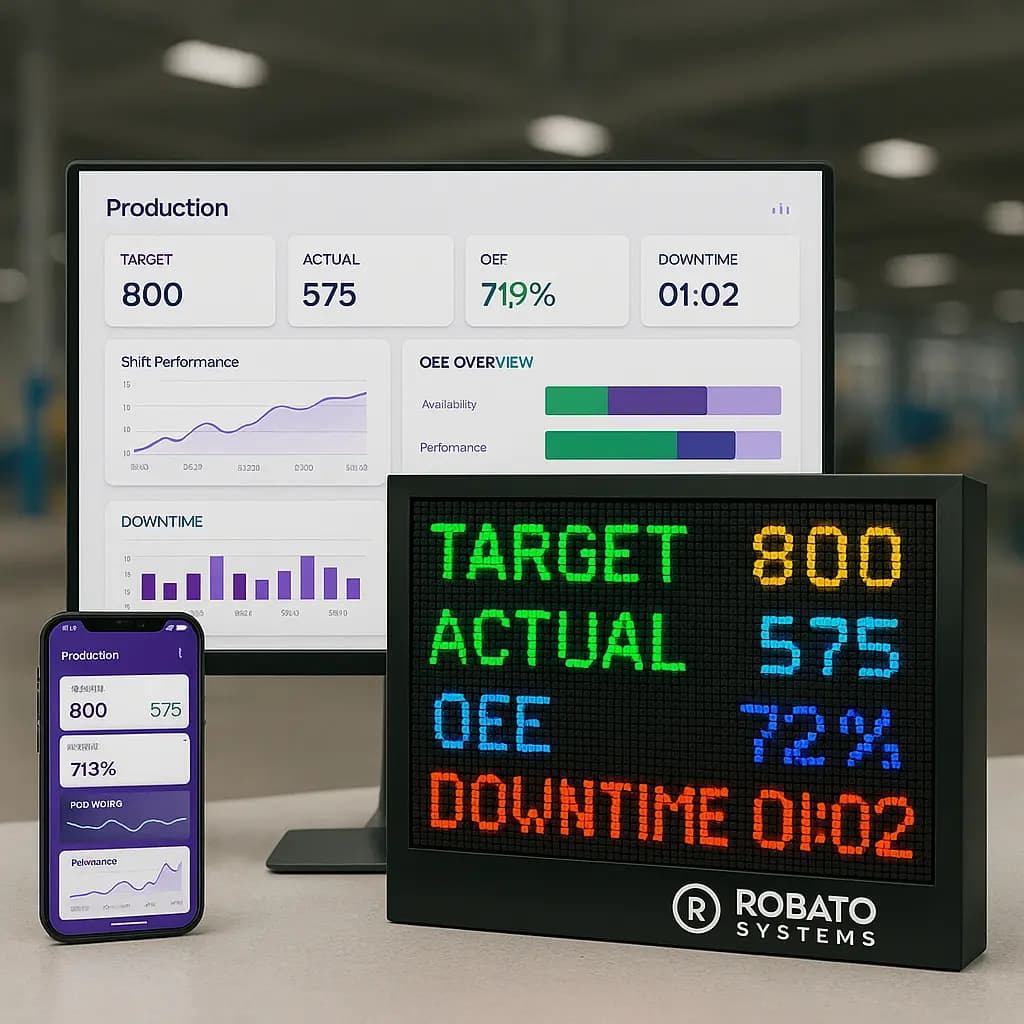
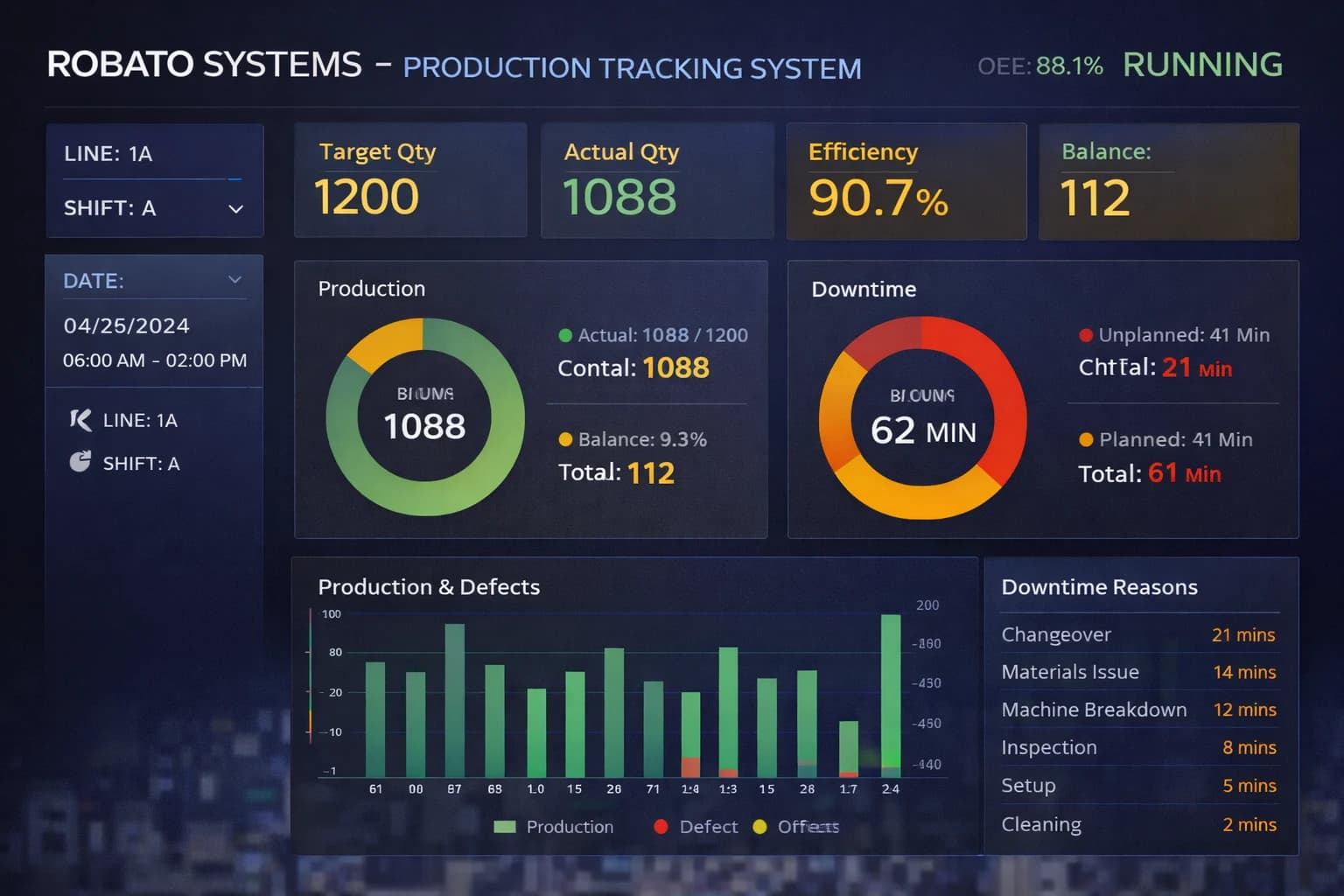
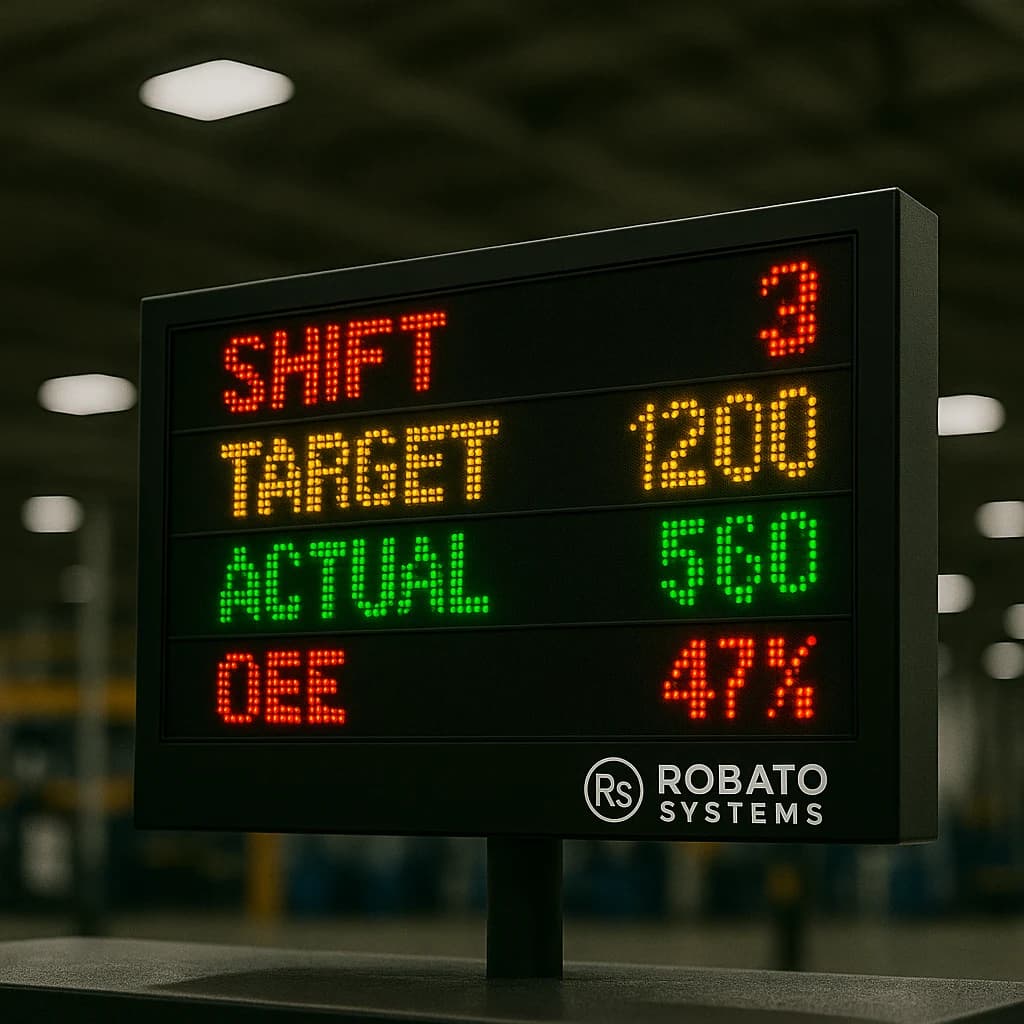
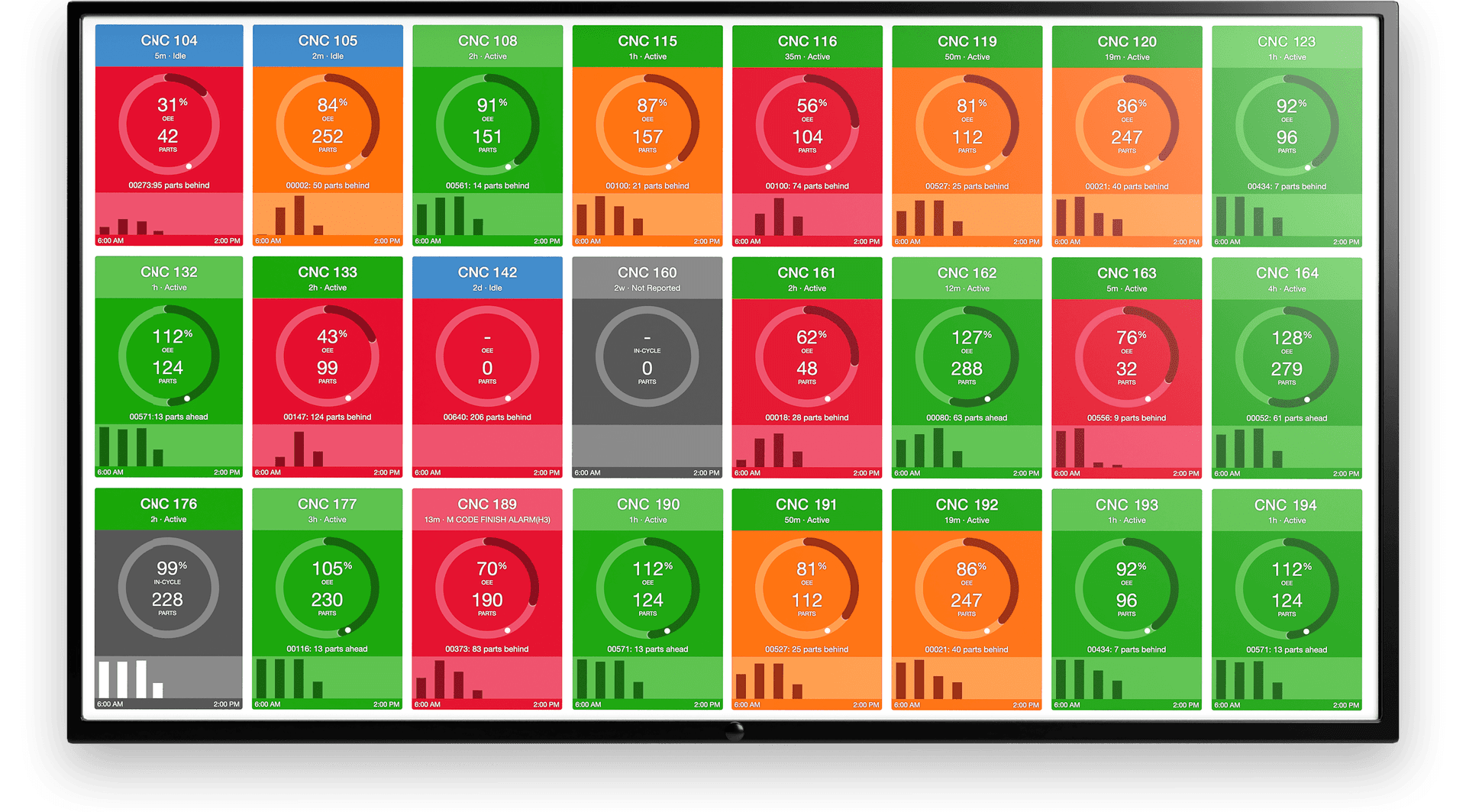
14. Use OEE Dashboards
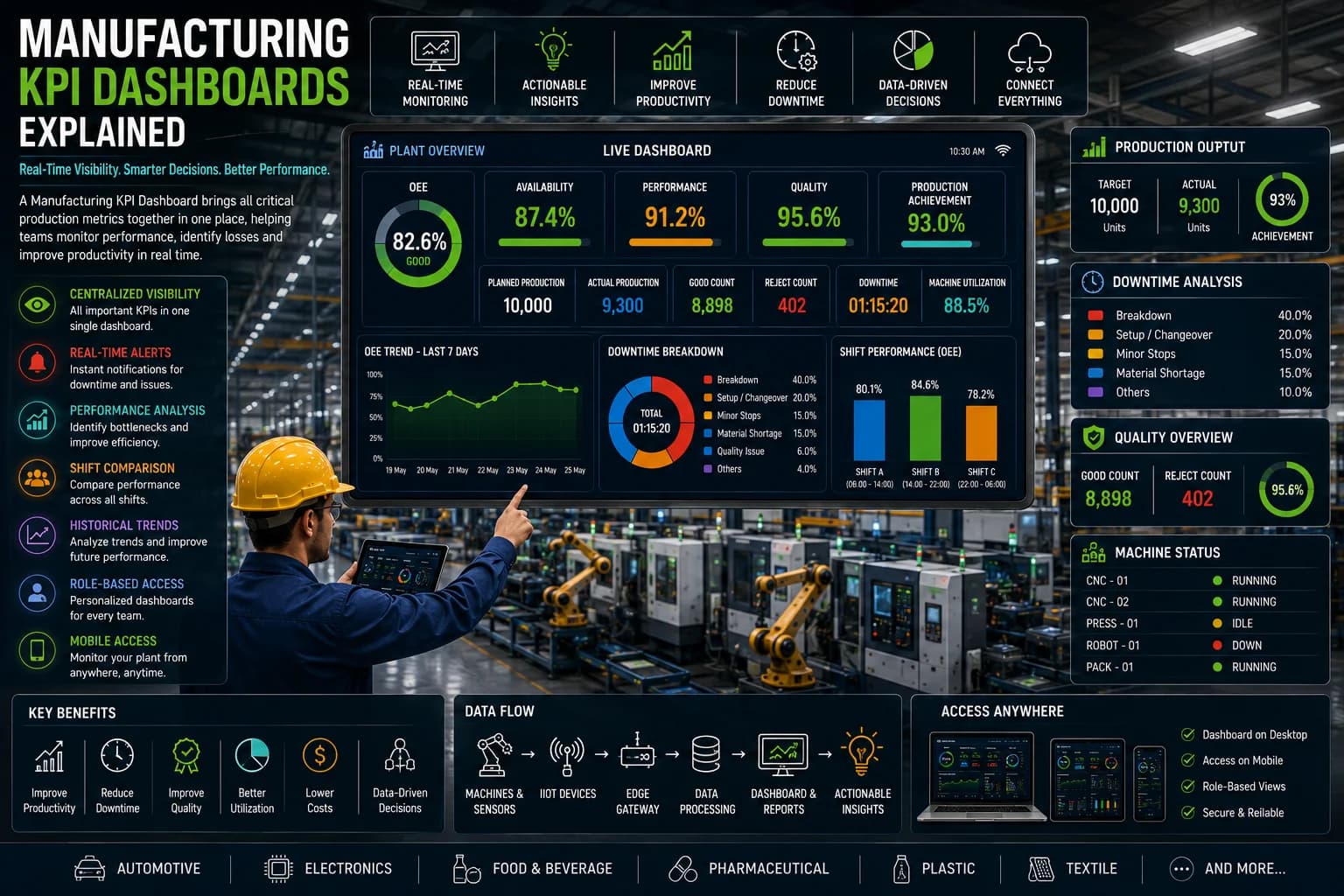
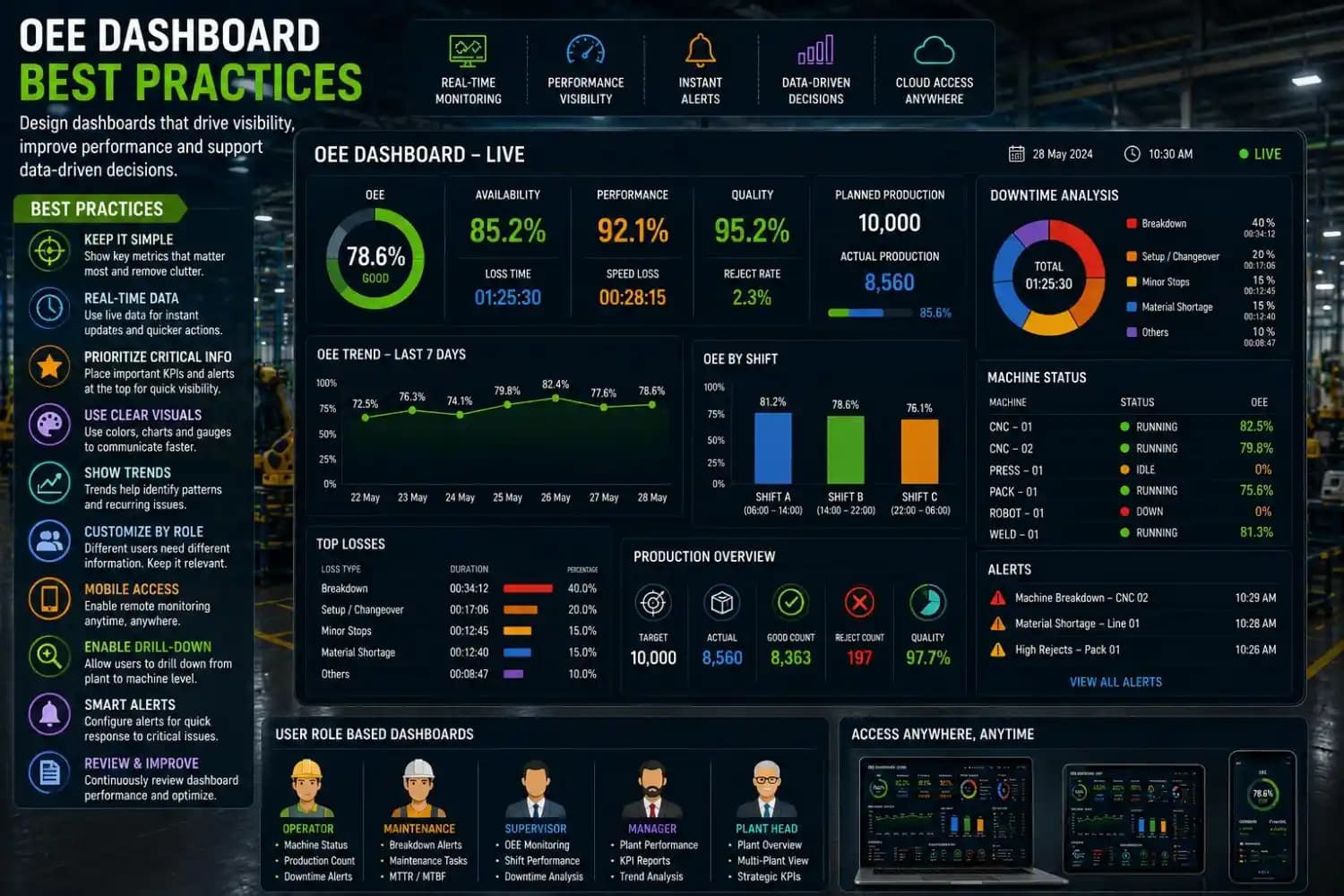
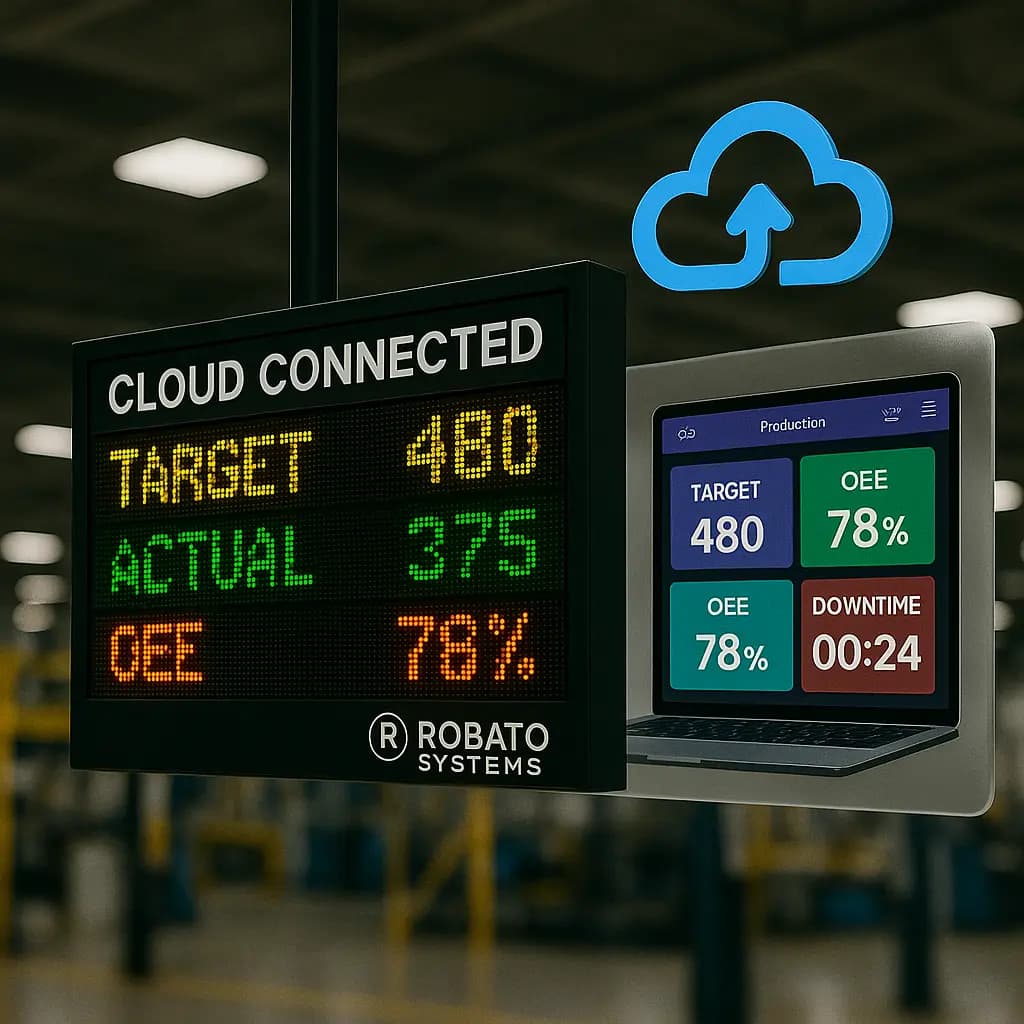
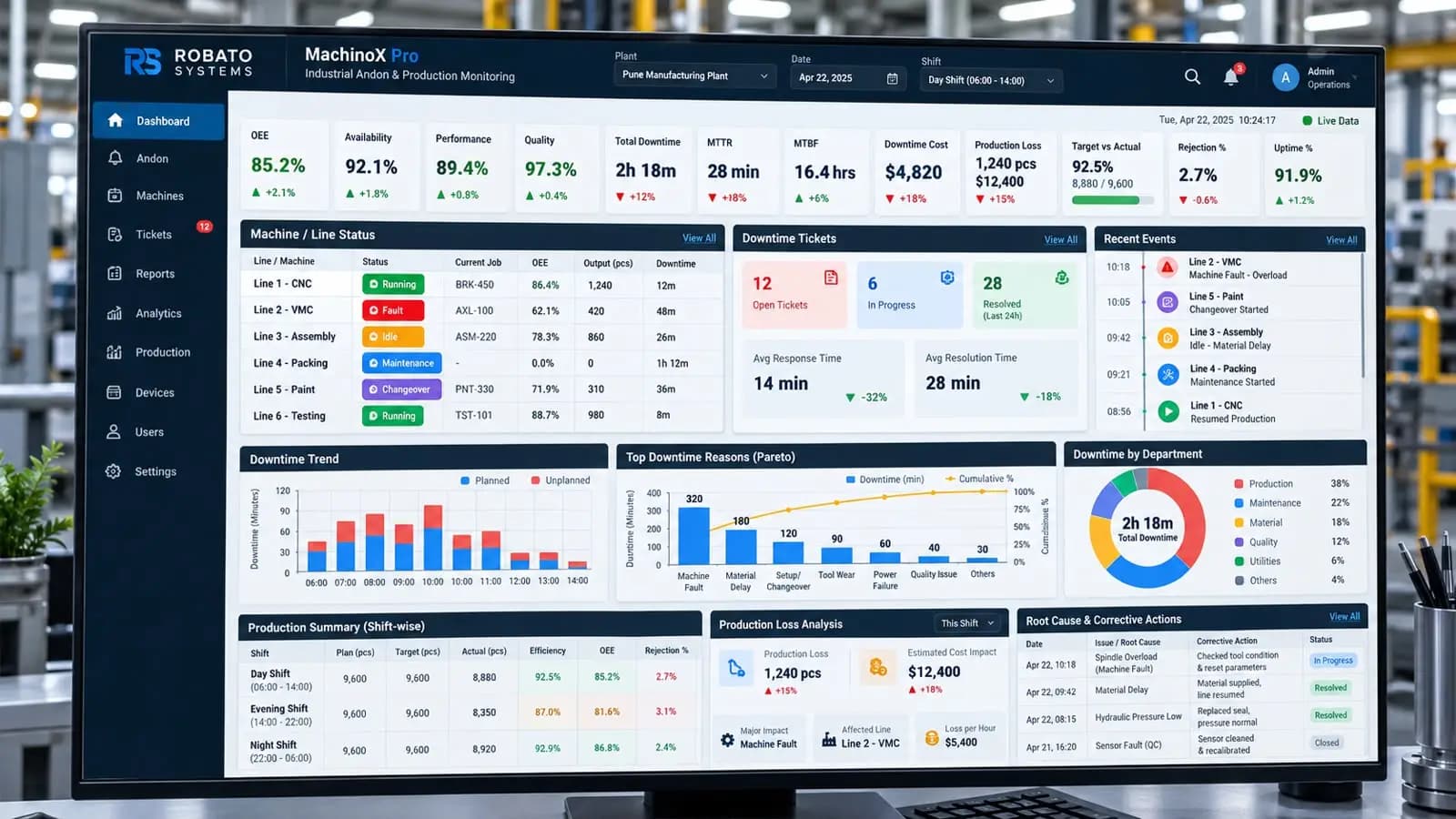
An OEE dashboard provides production teams with a centralized view of manufacturing performance.
A dashboard can display:
- OEE
- Availability
- Performance
- Quality
- Production output
- Downtime
- Machine status
- Target production
- Actual production
Real-time dashboards make important production information easier to access.
They can also help managers compare machines, production lines, and shifts.
15. Track Improvement Over Time
OEE improvement should be measured continuously.
Manufacturers can compare OEE across:
- Shifts
- Days
- Weeks
- Months
- Production lines
- Machines
Historical information helps determine whether improvement activities are producing measurable results.
If OEE improves after a maintenance or process change, the production team can use the data to evaluate the effectiveness of that change.
How to Identify OEE Losses
Before trying to improve OEE, manufacturers should understand where the largest losses are occurring.
A practical approach is to monitor:
- Downtime
- Production speed
- Rejected products
- Changeover time
- Small stops
- Machine utilization
Once the major losses are identified, teams can focus improvement efforts on those areas.
This is usually more effective than attempting to improve every part of the production process at the same time.
Role of Real-Time OEE Monitoring
Real-time OEE monitoring can make improvement activities more effective.
When production information is available immediately, teams can identify problems while they are still occurring.
For example, if a machine stops unexpectedly, the monitoring system can record the event and display the machine status.
Production and maintenance teams can then investigate the problem.
This reduces the delay between identifying a production problem and taking action.
OEE Improvement and Industry 4.0
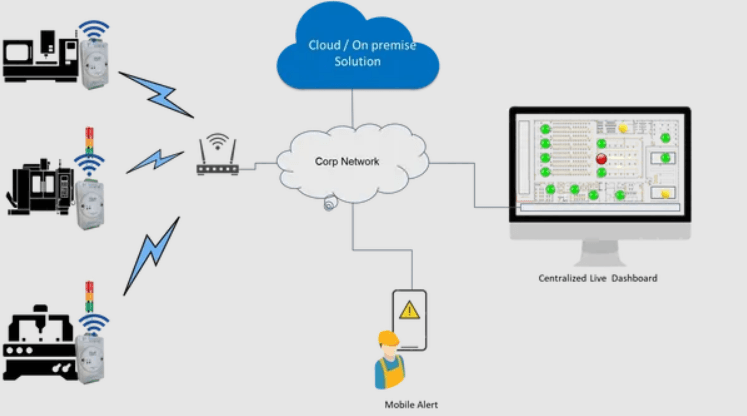
Industry 4.0 technologies can support OEE improvement by connecting machines and production systems.
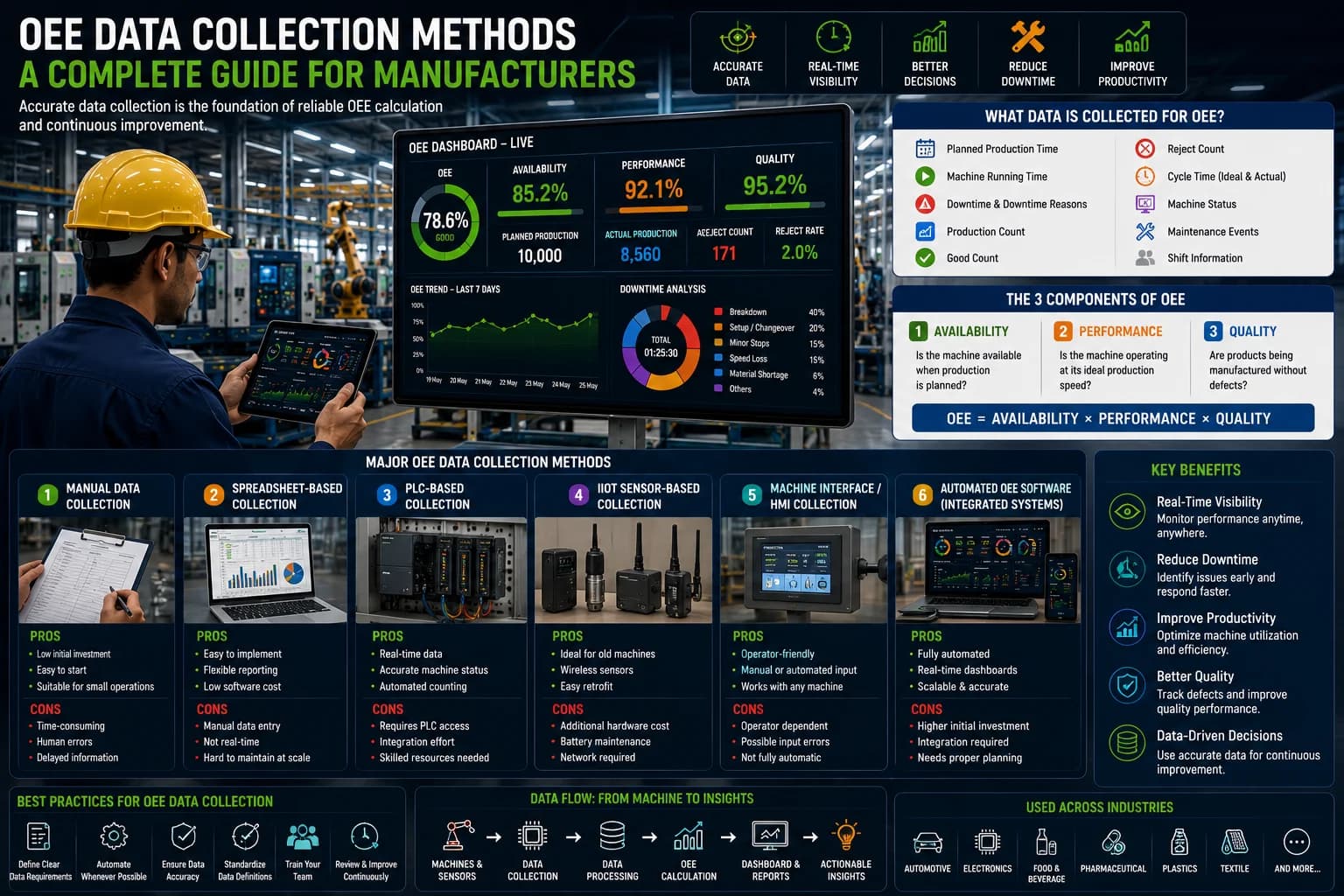
Manufacturers can collect information using:
- PLCs
- Sensors
- Industrial IoT devices
- Production counters
- Machine controllers
- Edge devices
The information can then be displayed through digital dashboards and monitoring systems.
This creates better production visibility and provides the data needed for continuous improvement.
Common Mistakes When Trying to Improve OEE
Improving OEE requires more than simply watching the OEE percentage.
Some common mistakes include:
- Focusing only on the OEE number
- Ignoring downtime reasons
- Using inaccurate production data
- Relying entirely on manual reporting
- Ignoring quality losses
- Not analyzing small stops
- Failing to compare historical performance
- Making improvements without measuring results
Manufacturers should use OEE as a tool for understanding production losses rather than treating it as just a performance score.
Benefits of Improving OEE
Improving OEE can provide several benefits to manufacturing operations.
Higher Production Efficiency
Better equipment performance can help manufacturers produce more within the available production time.
Reduced Downtime
Identifying and addressing recurring machine problems can reduce production interruptions.
Better Machine Utilization
Improved OEE can help manufacturers make better use of existing equipment.
Improved Quality
Reducing defects and rejected products can improve the quality component of OEE.
Lower Production Losses
Understanding production losses allows teams to focus improvement efforts on areas with the greatest impact.
Better Production Visibility
Digital monitoring provides production teams with clearer information about factory performance.
Why Choose OEE Software for Improvement?
Manual production reports can make it difficult to identify OEE losses quickly.
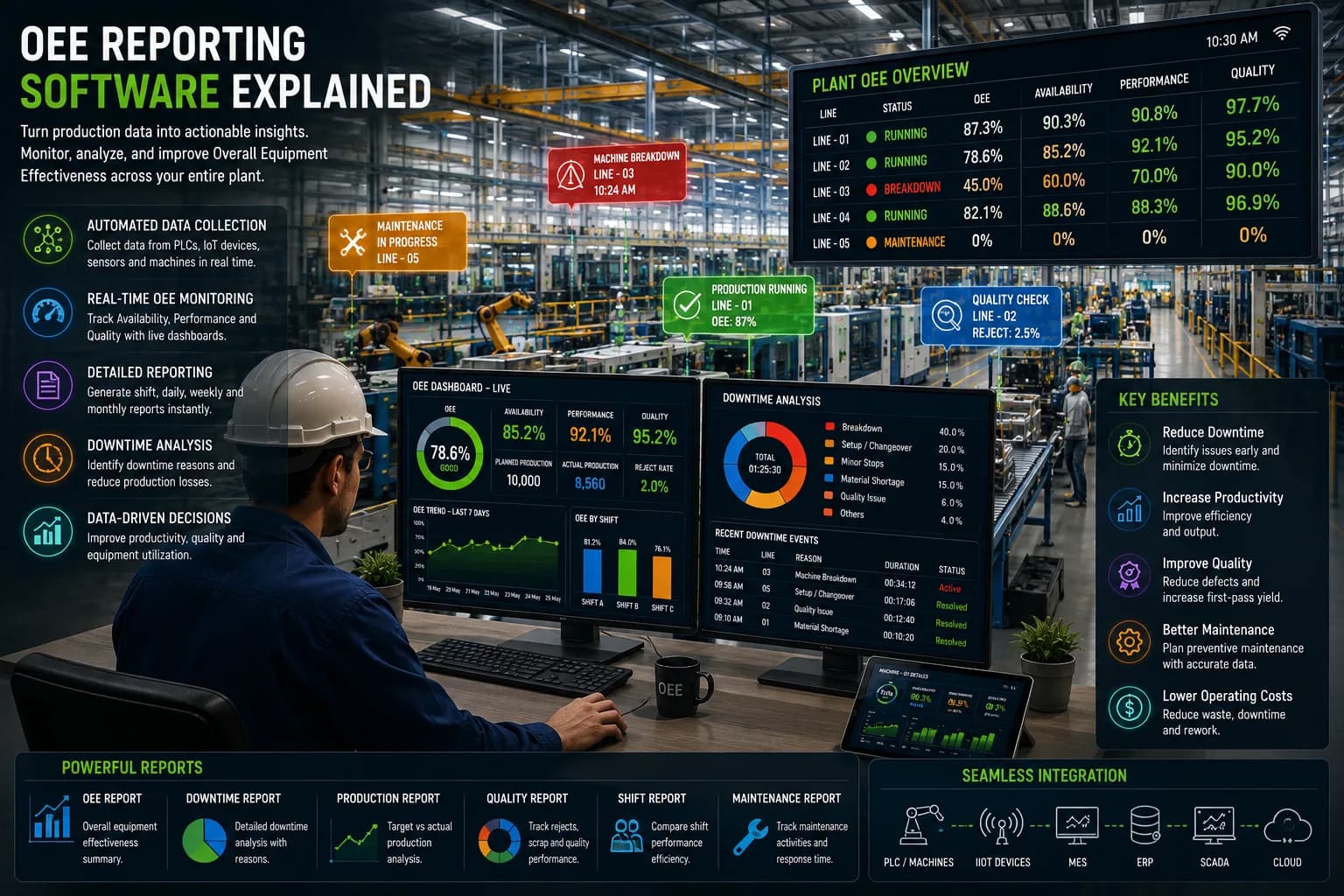
OEE software can automate data collection and provide information about:
- Availability
- Performance
- Quality
- Downtime
- Production
- Machine utilization
- Production targets
This information can help manufacturers identify production losses and monitor improvement over time.
Why Choose Robato Systems?
Robato Systems provides manufacturing monitoring solutions designed to improve production visibility and machine performance.
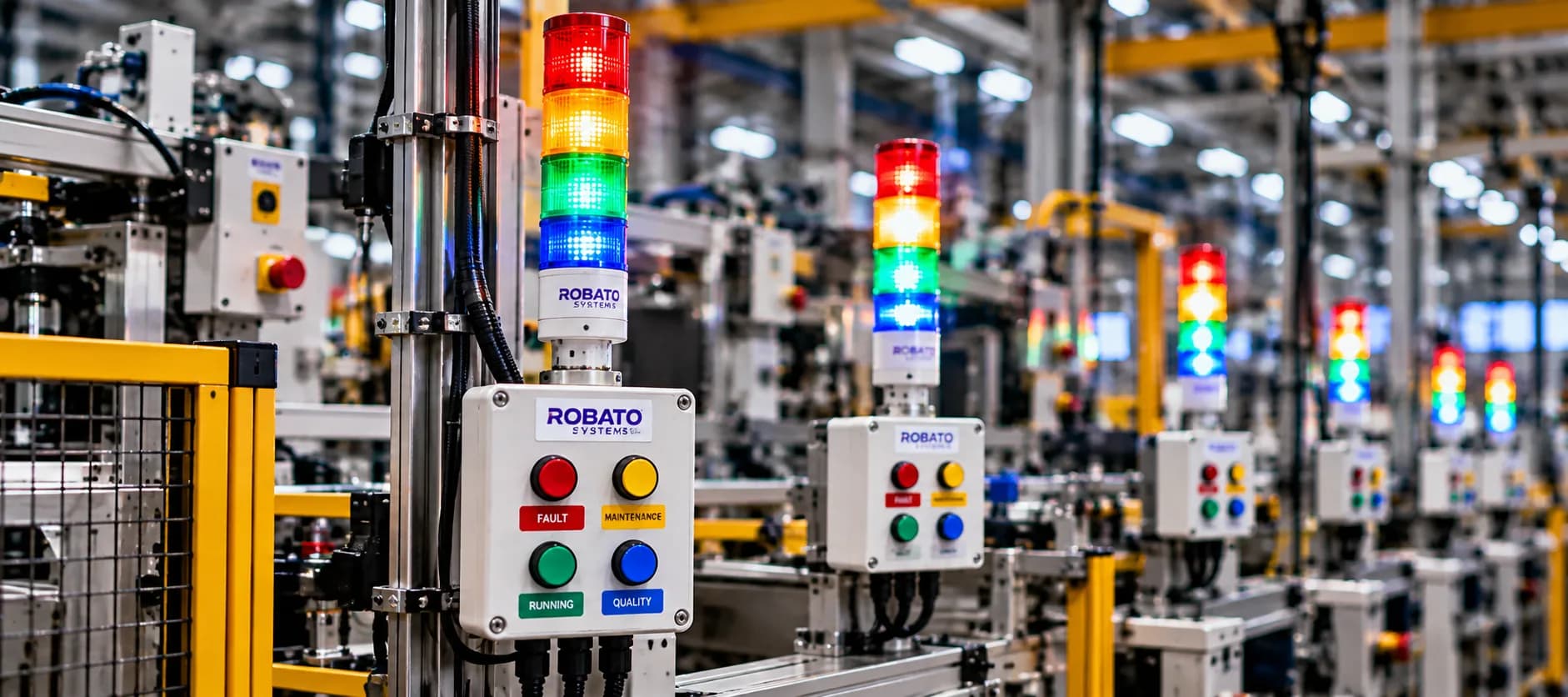
The solution can connect with machines, PLCs, sensors, production counters, and Industrial IoT devices.
Manufacturers can monitor:
- OEE
- Production output
- Availability
- Performance
- Quality
- Machine utilization
- Downtime
- Target versus actual production
- Machine status
Real-time production dashboards can help manufacturing teams identify production losses and take corrective action.
Conclusion
Improving OEE requires manufacturers to understand and address the causes of production losses.
Reducing downtime, improving machine speed, minimizing small stops, reducing defects, optimizing changeovers, and monitoring machine performance can all contribute to better OEE.
Real-time OEE monitoring and digital production dashboards can provide the information needed to identify problems and measure improvement.
By using production data consistently and focusing on continuous improvement, manufacturers can improve equipment effectiveness, production efficiency, and overall factory performance.
Frequently Asked Questions
What is the best way to improve OEE?
The best approach is to first identify the largest production losses and then focus on reducing downtime, improving machine performance, and reducing quality problems.
How can downtime affect OEE?
Downtime reduces machine availability and can significantly lower overall OEE.
Can real-time monitoring improve OEE?
Real-time monitoring provides faster visibility into production problems and can help teams respond to machine and production losses more quickly.
How can manufacturers improve machine performance?
Manufacturers can improve machine performance by reducing slow cycles, small stops, machine adjustments, and process-related production losses.
Does reducing defects improve OEE?
Yes. Reducing rejected products improves the quality component of OEE and can increase overall equipment effectiveness.
How can OEE software help improve manufacturing?
OEE software can collect production information, monitor machine performance, track downtime, calculate OEE, and provide dashboards for production analysis.
How often should OEE be monitored?
OEE can be monitored continuously in real time. Historical OEE should also be reviewed regularly to identify trends and measure improvement.