Introduction
Manufacturing efficiency depends on how effectively machines, operators, materials, and production time are used. Even a small amount of unplanned downtime, excessive idle time, slow production cycles, or underutilized equipment can affect overall output and operating costs.
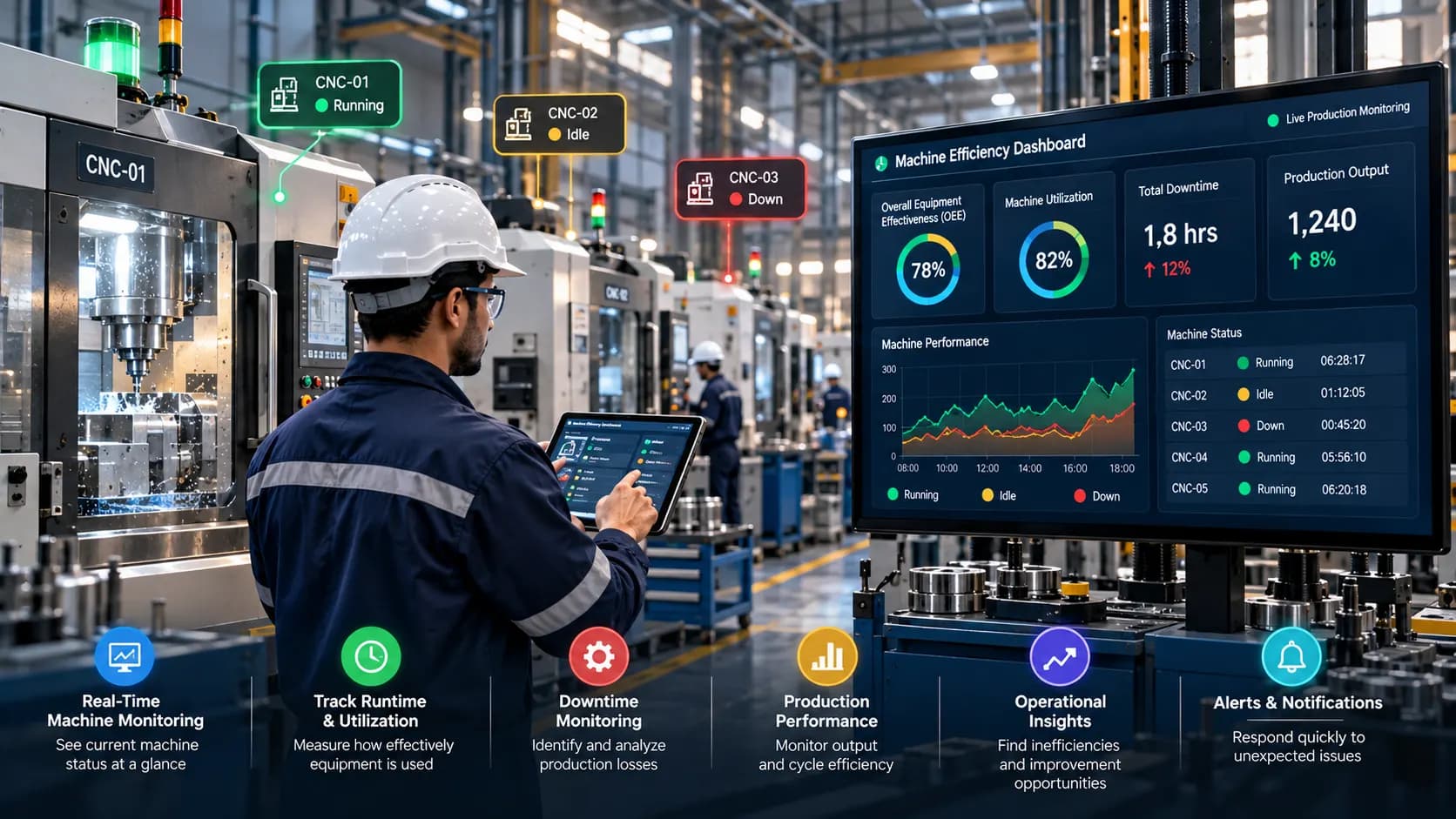
Machine Efficiency Software helps manufacturers turn machine and production data into actionable information. Instead of relying entirely on manual observations, spreadsheets, or periodic production reports, businesses can continuously monitor machine activity, identify inefficiencies, and understand how equipment is performing.
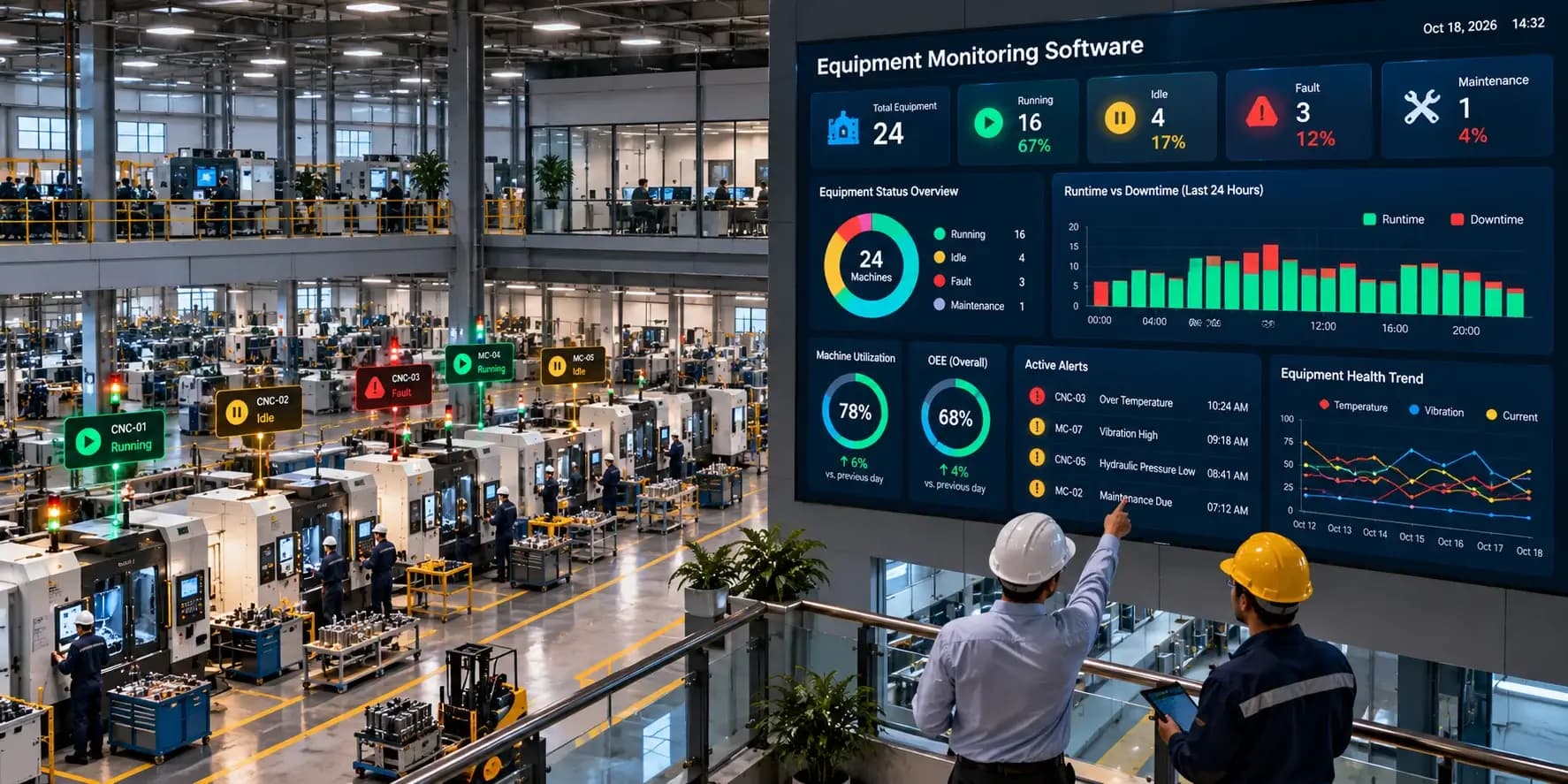
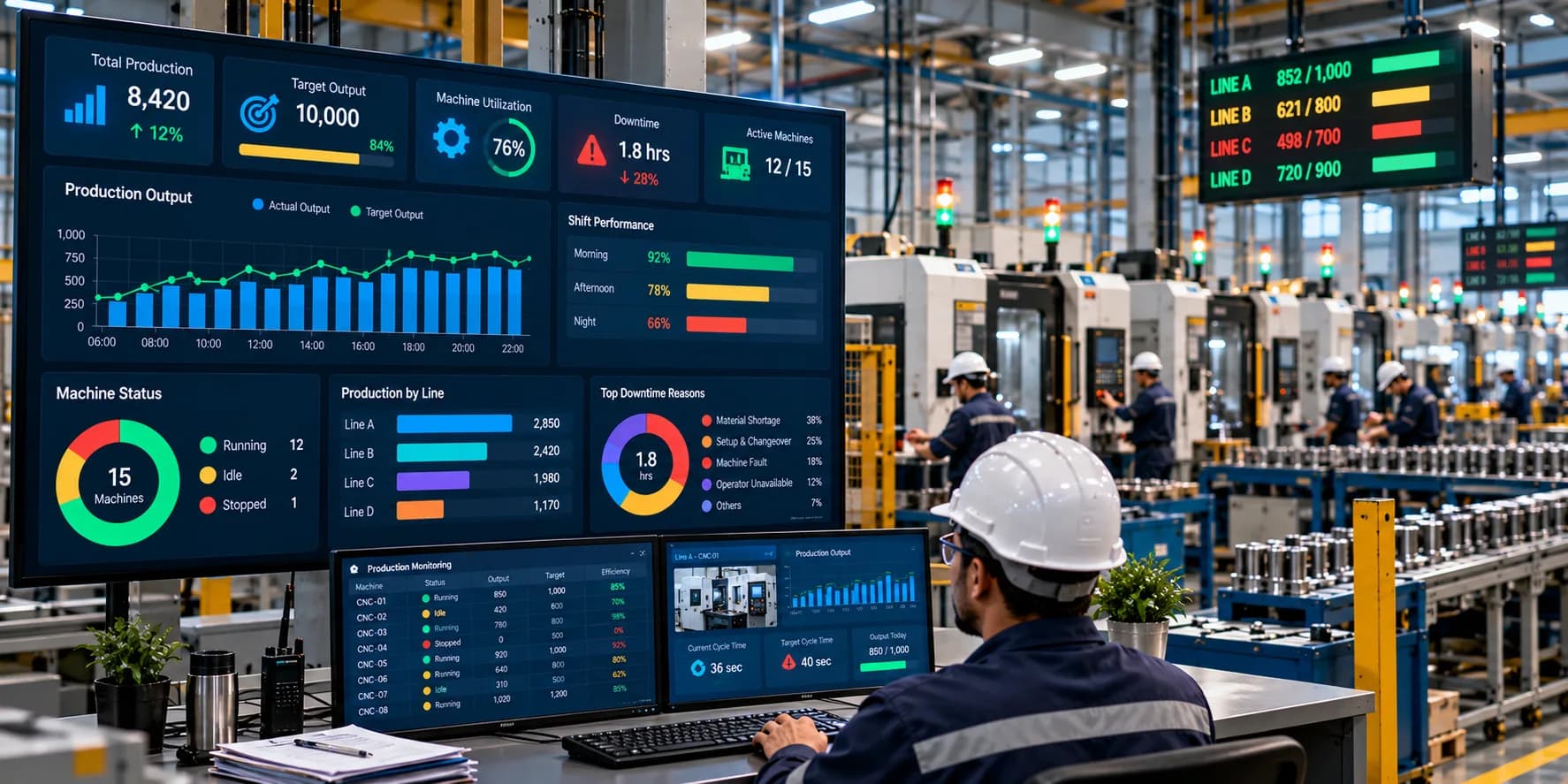
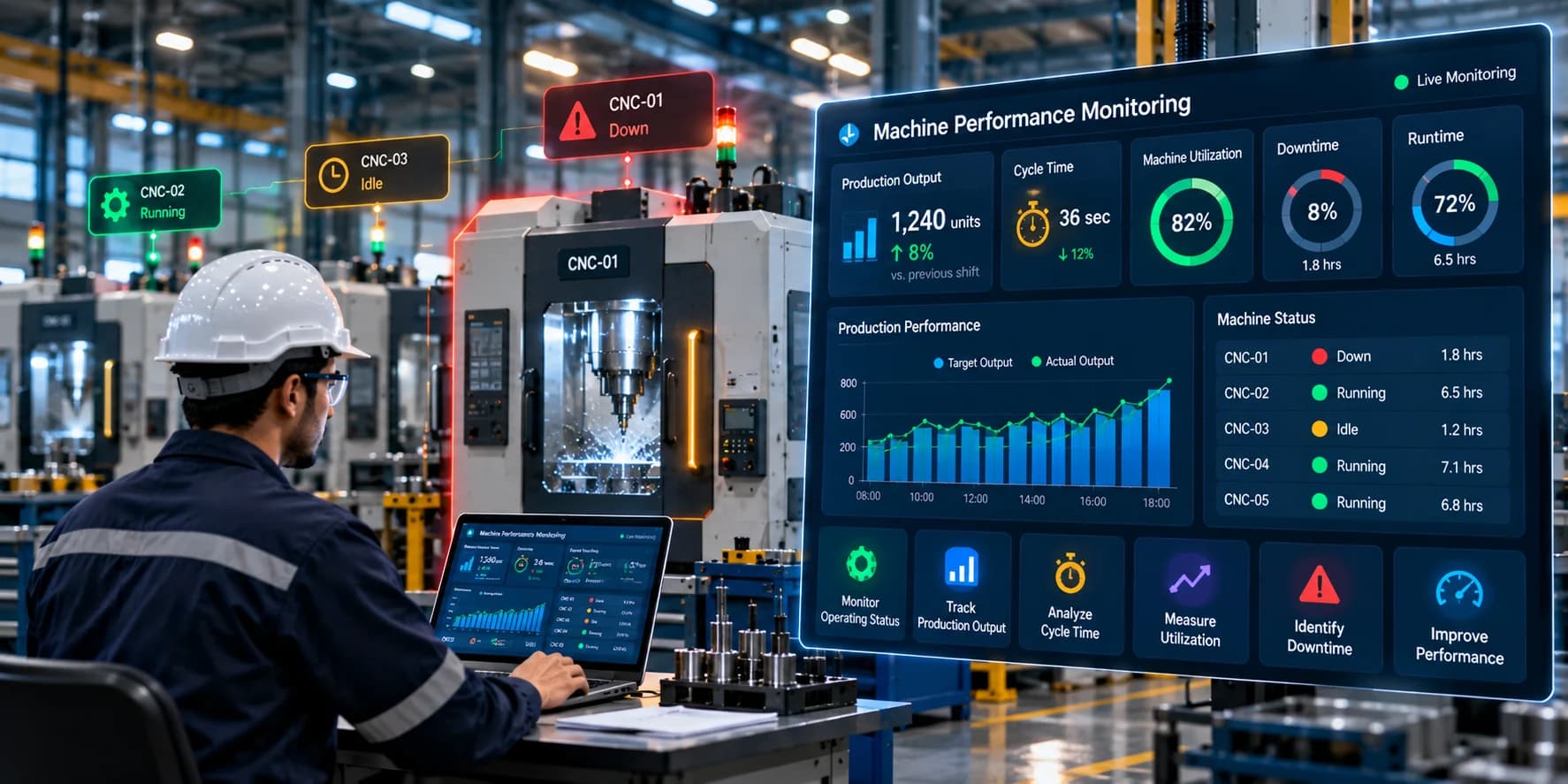
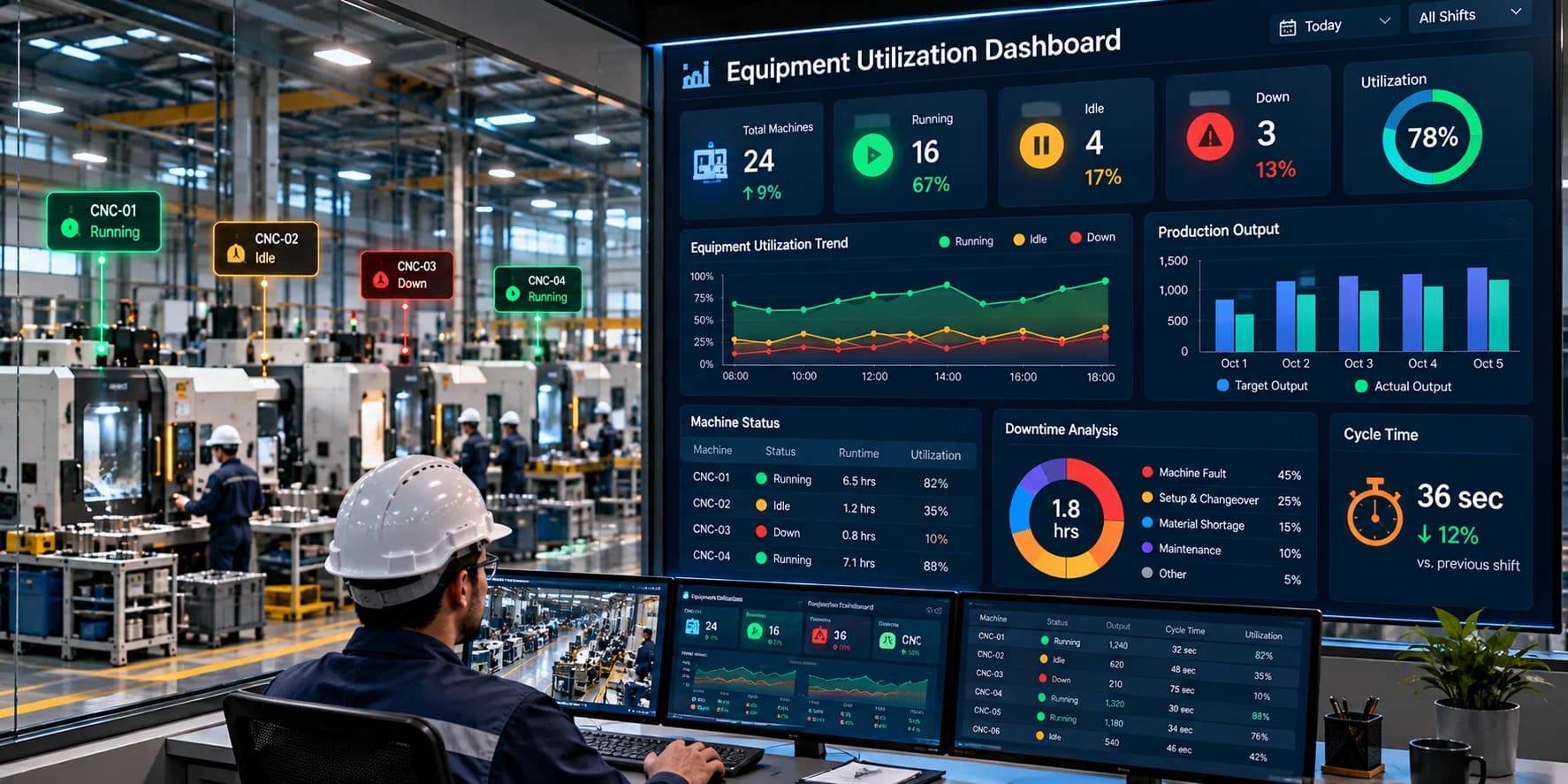
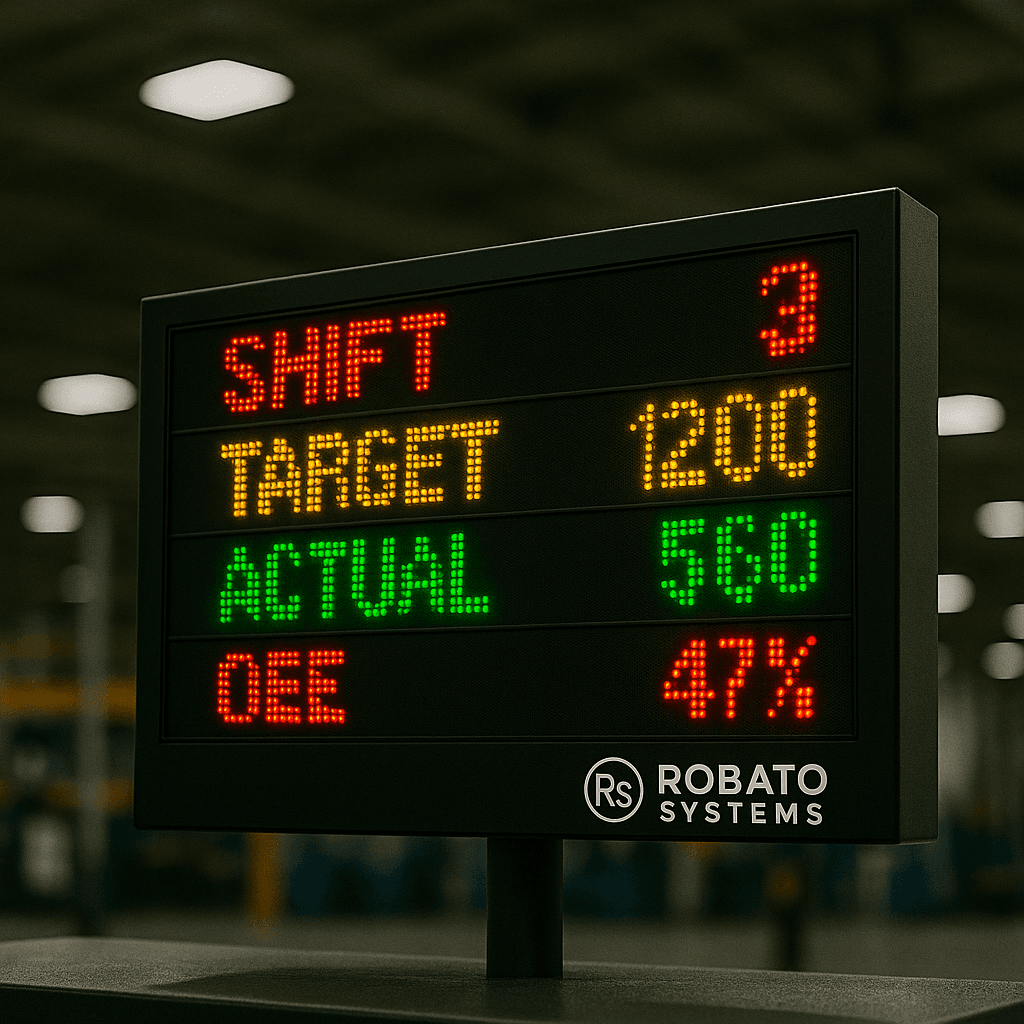
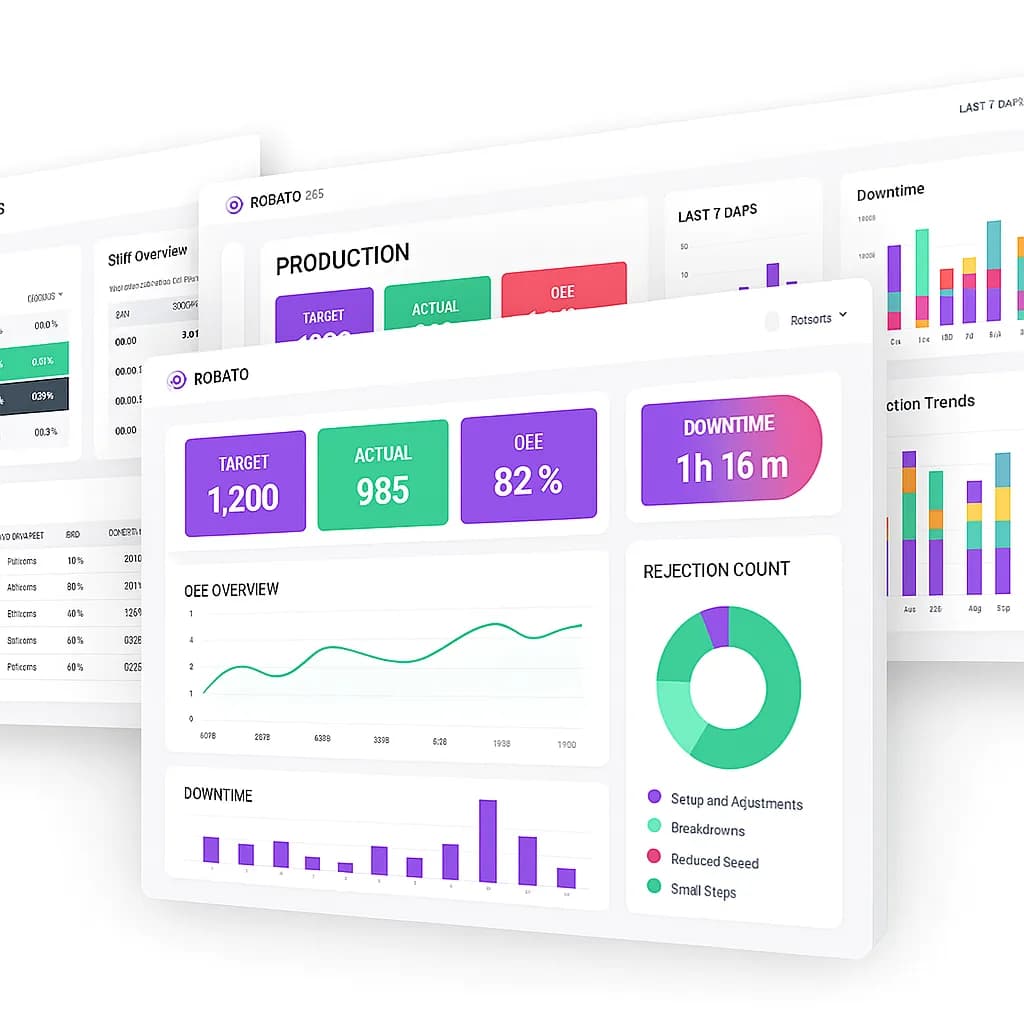
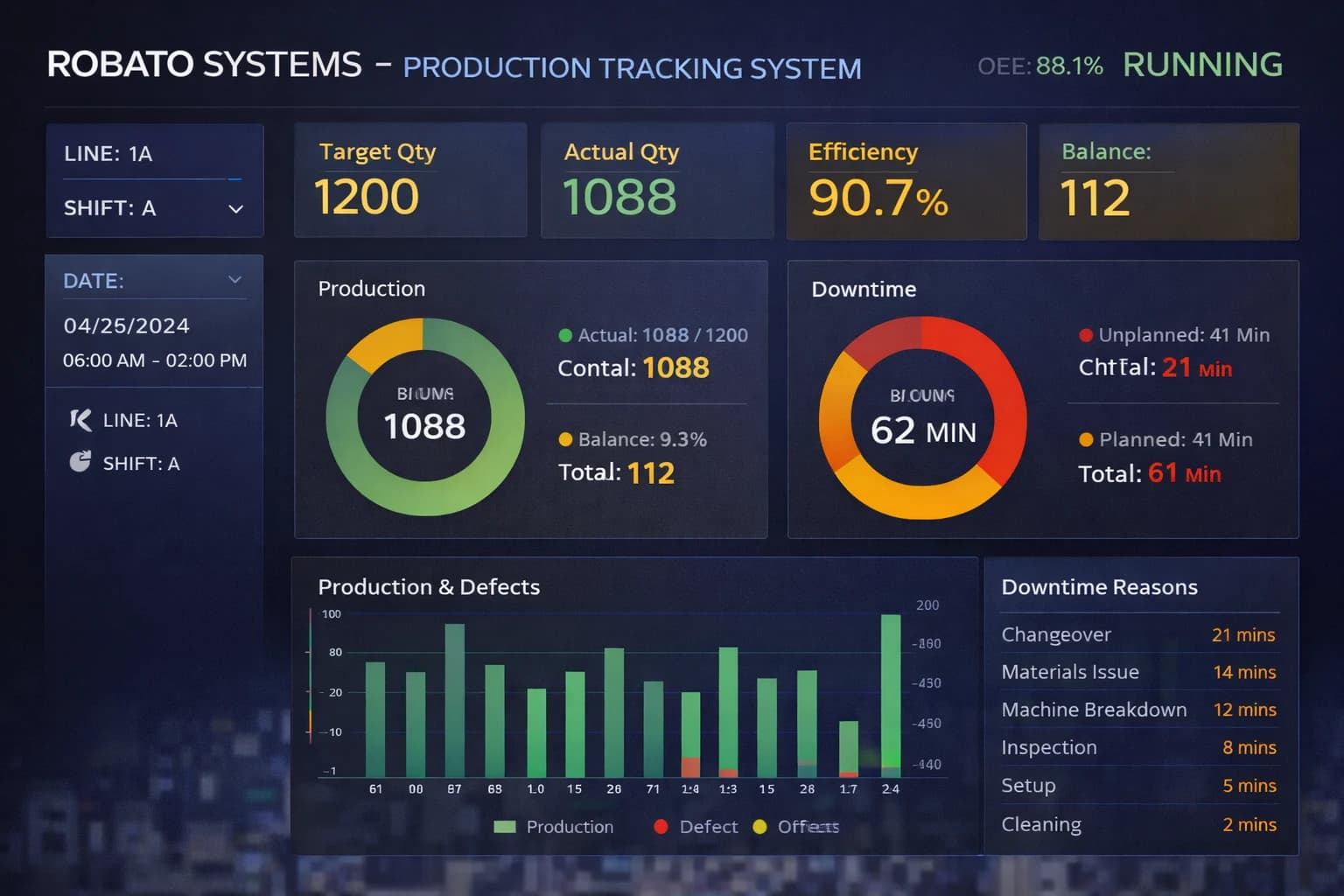
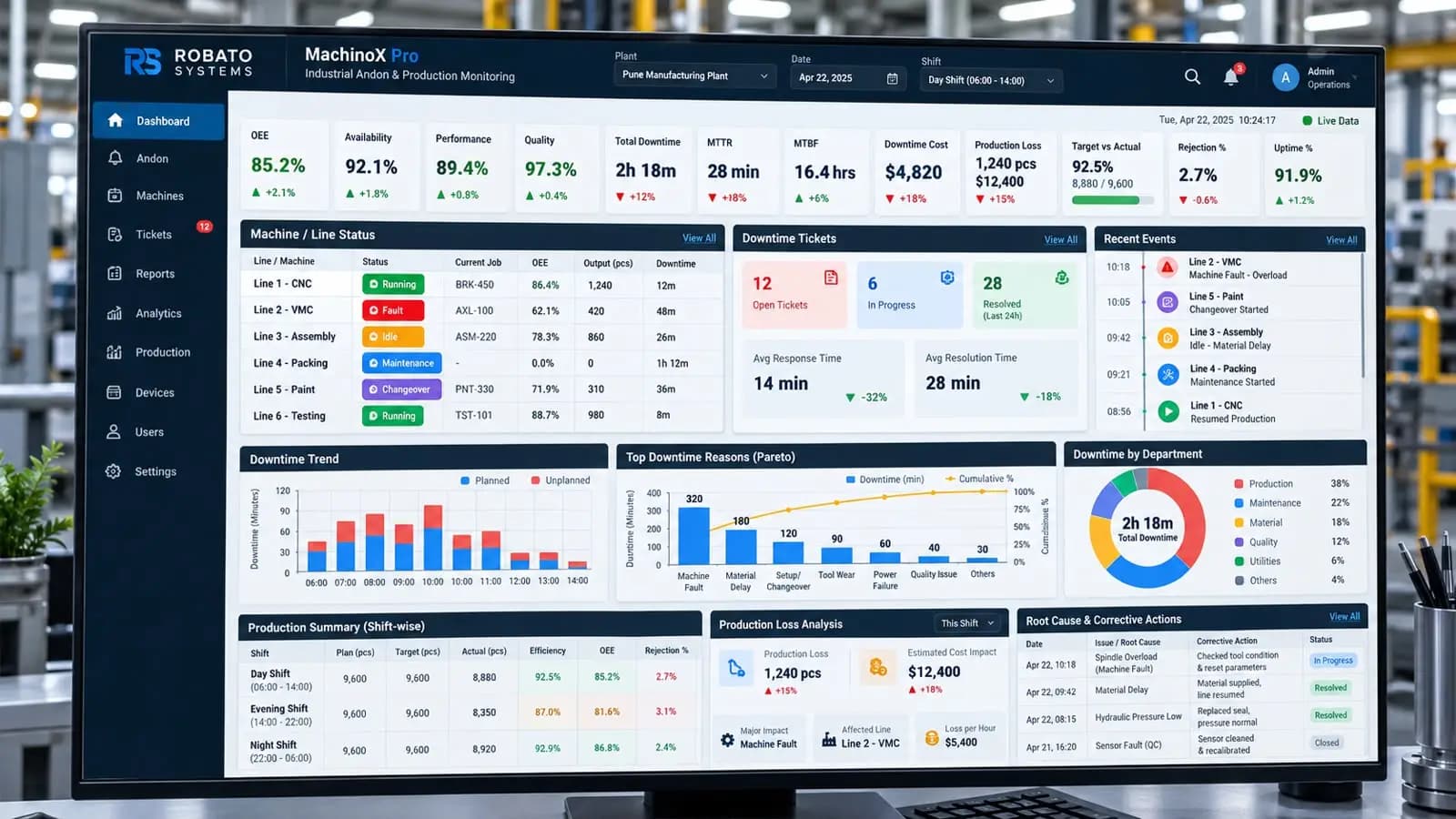
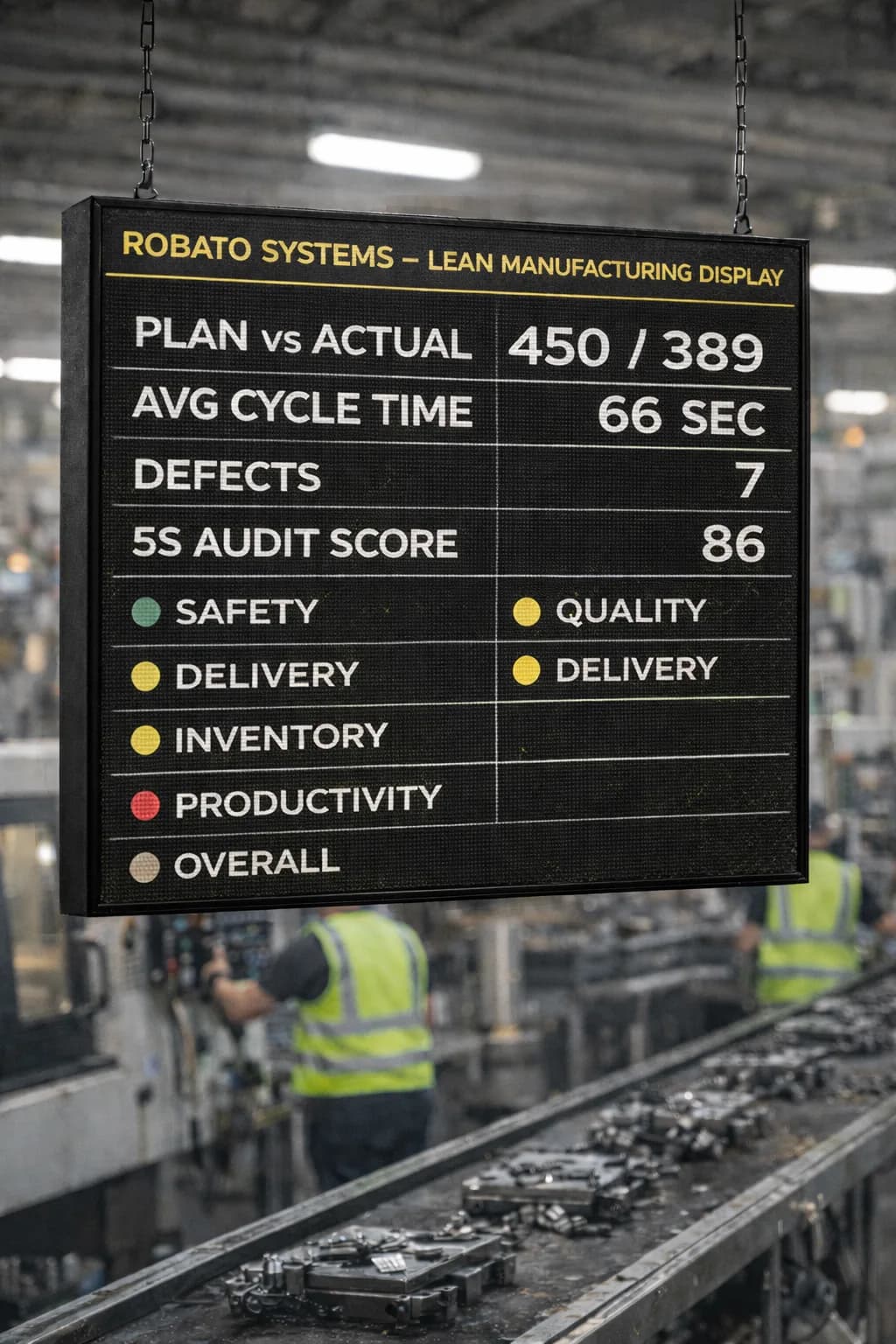
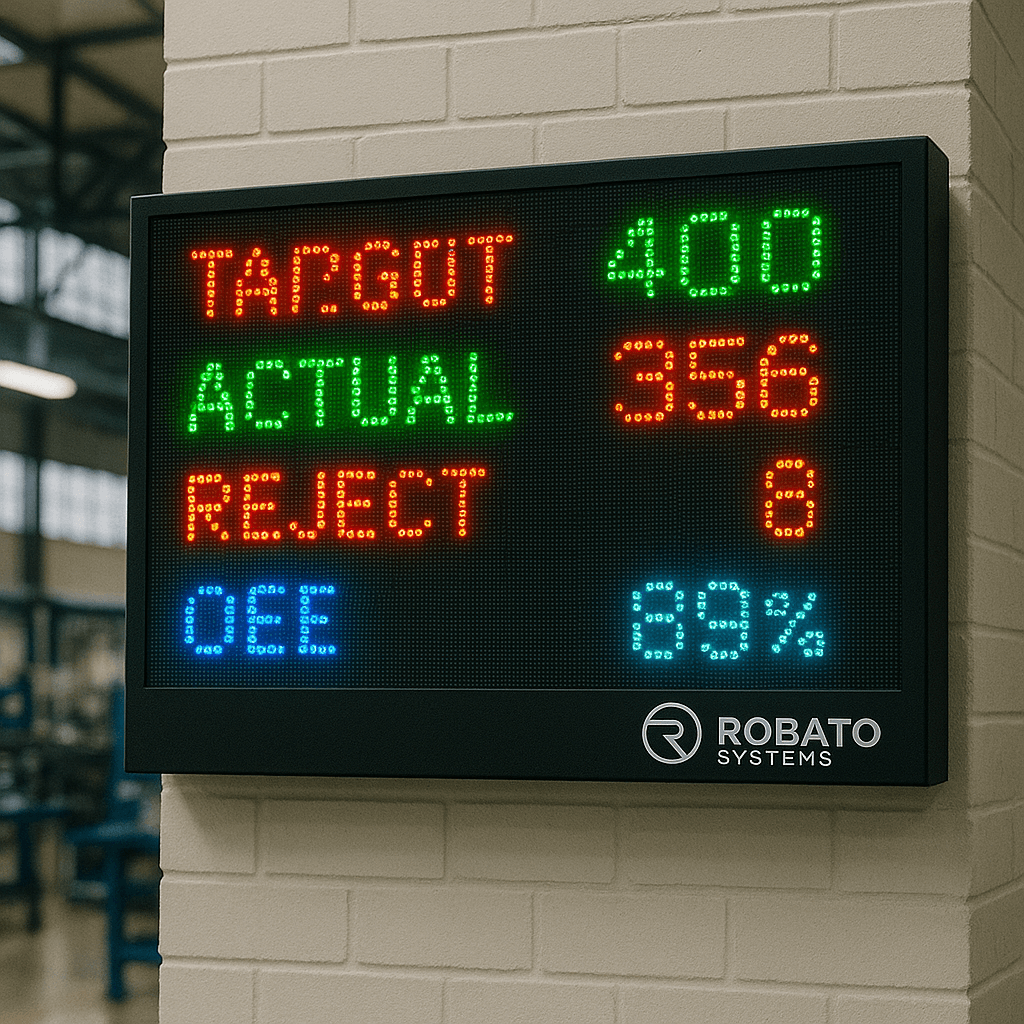
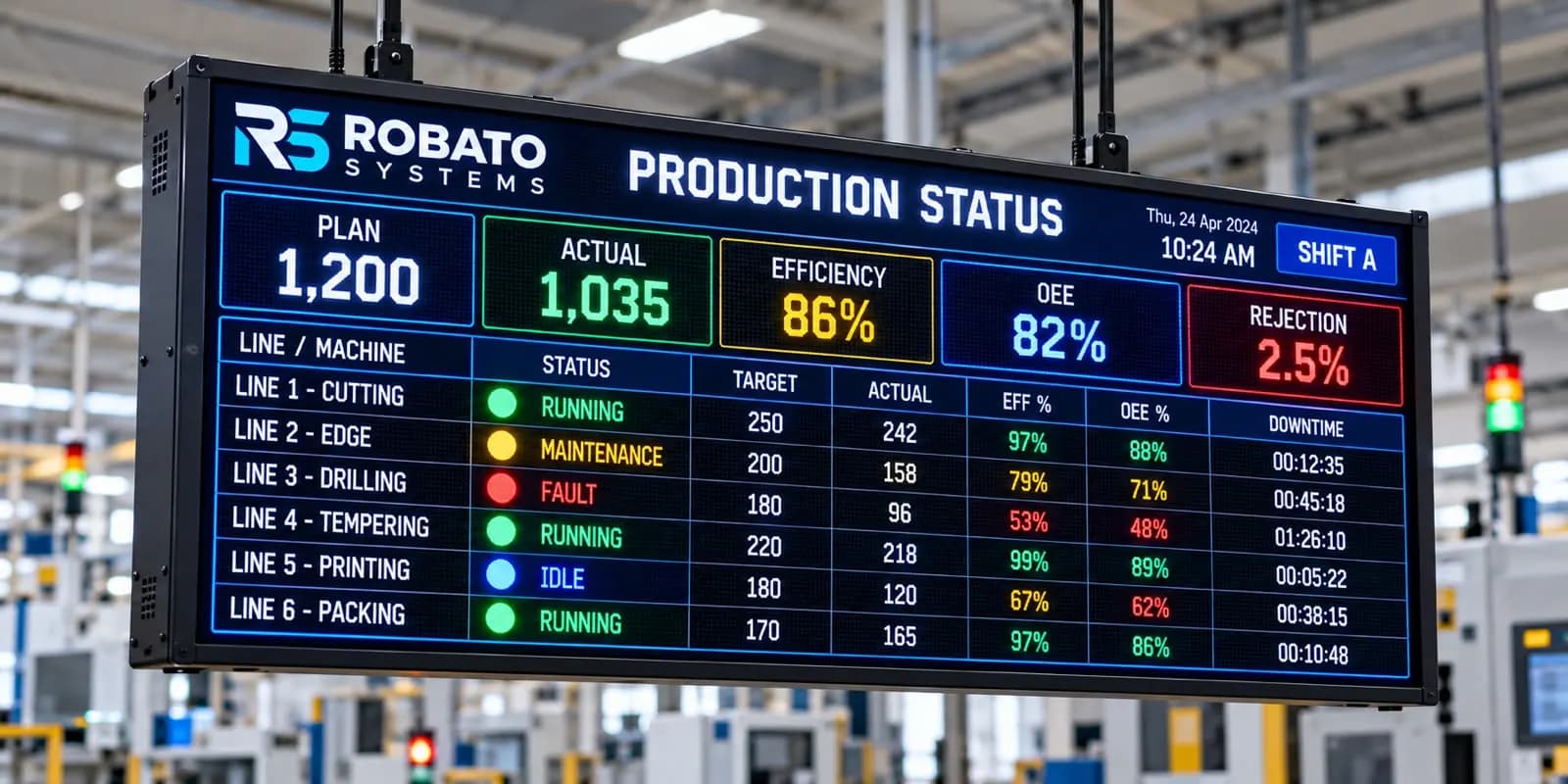
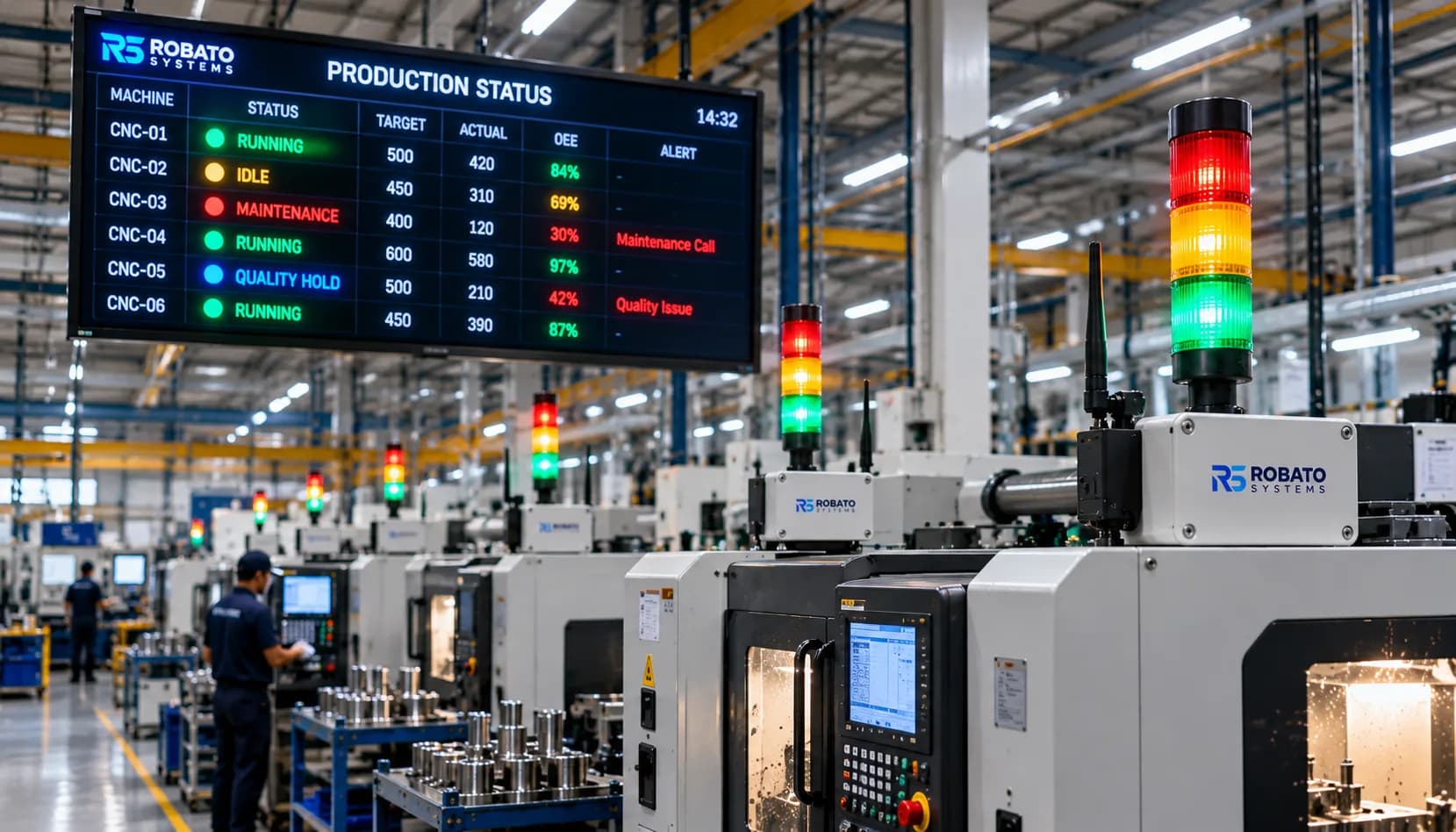
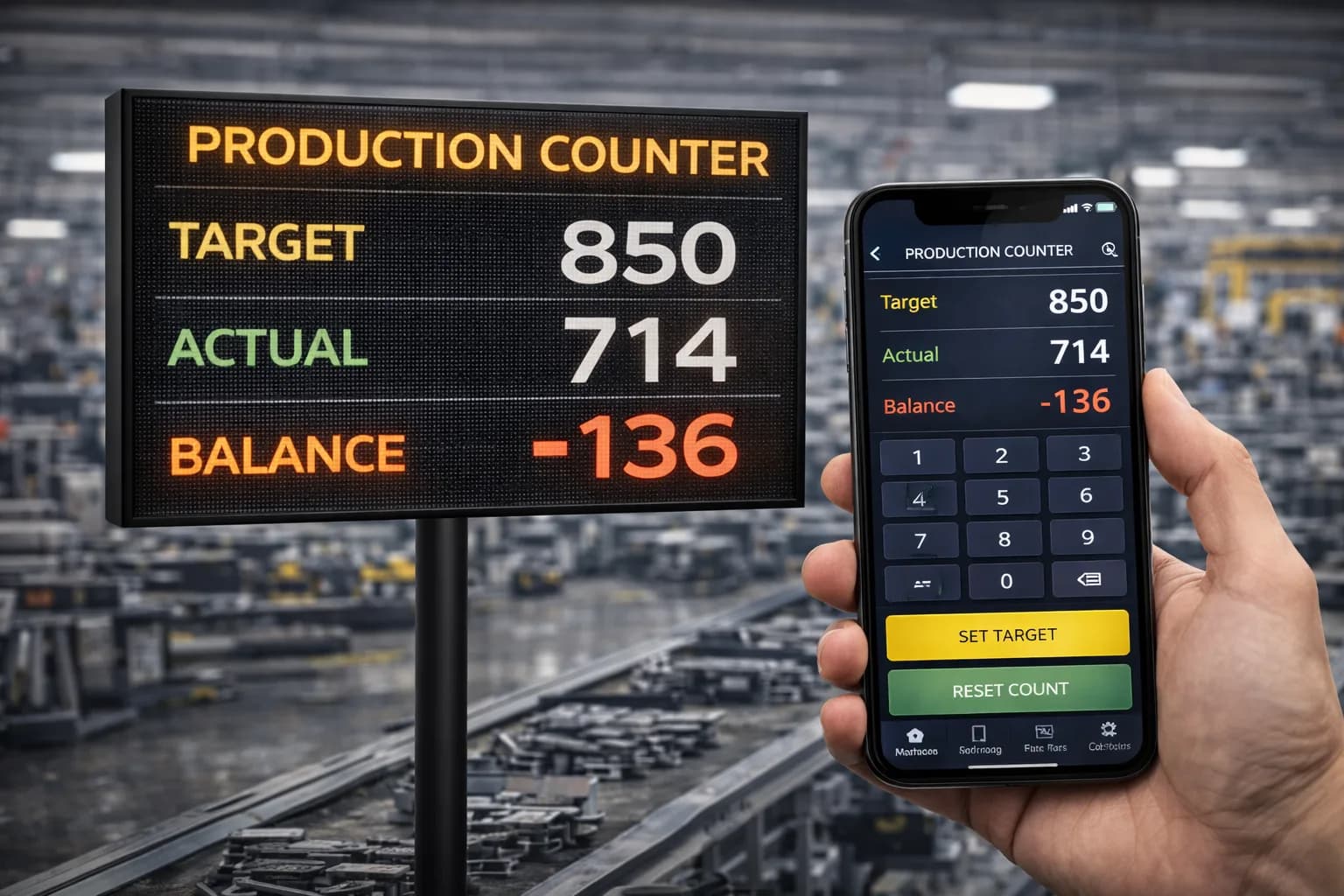
Modern machine efficiency solutions can collect operational data, track machine runtime and downtime, measure utilization, monitor production performance, and present important information through centralized dashboards. This gives production teams a clearer view of what is happening on the factory floor and where improvements may be required.
This guide explains what machine efficiency software is, how it works, its key features, benefits, implementation considerations, and how manufacturers can use it to improve production efficiency.
What Is Machine Efficiency Software?
Machine efficiency software is a digital solution used to monitor, measure, and analyze the operational performance of manufacturing machines and equipment.
The software collects machine-related information such as:
Machine running time
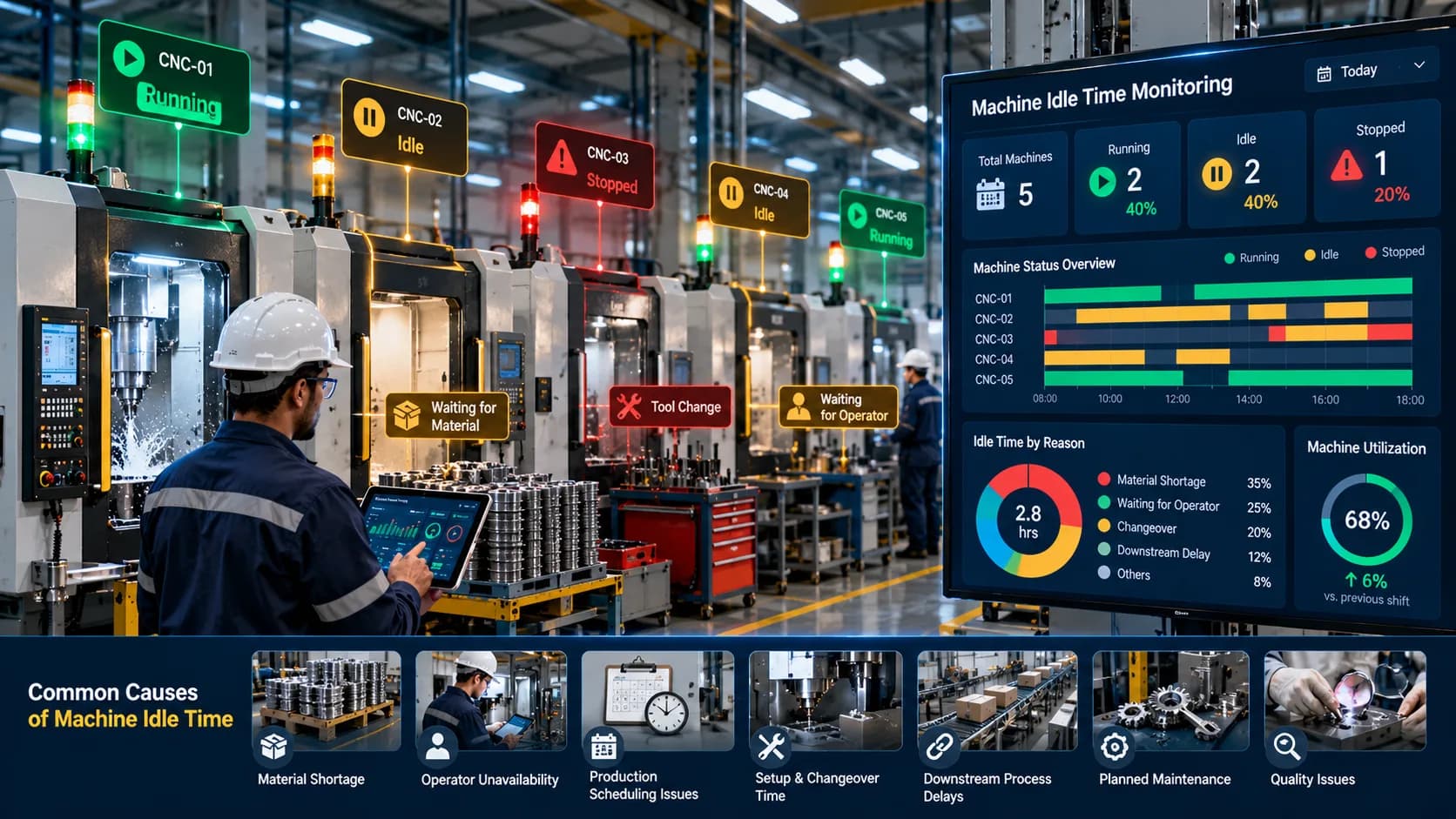
Idle time
Downtime
Production cycles
Equipment utilization
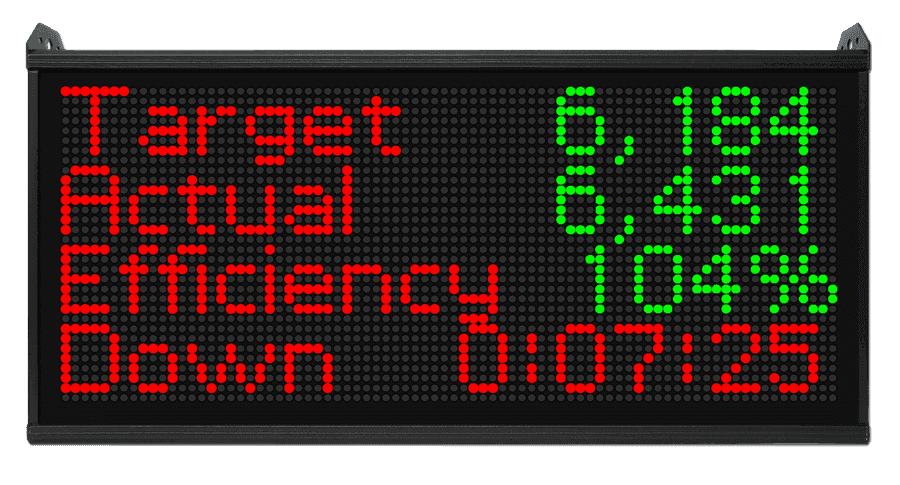
Production output
Performance trends
Operational events
This information is converted into dashboards, reports, metrics, and alerts that help production managers understand machine performance.
Instead of simply knowing how many products were manufactured during a shift, managers can investigate how effectively the available machine time was used and identify the factors affecting production.
Why Machine Efficiency Matters in Manufacturing
A factory may have modern equipment and sufficient production capacity but still experience productivity problems.
For example, a machine scheduled to operate for eight hours may not actually produce for the entire eight-hour period. Some time may be lost because of:
Unplanned breakdowns
Material shortages
Operator availability
Changeovers
Maintenance activities
Quality issues
Waiting time
Process interruptions
Extended idle periods
When these losses are not measured accurately, it becomes difficult to determine where production capacity is being lost.
Machine efficiency monitoring provides visibility into these operational patterns. By measuring actual machine activity against available production time, manufacturers can identify opportunities to improve utilization and reduce avoidable losses.
How Does Machine Efficiency Software Work?
The exact architecture differs between platforms, but most machine efficiency solutions follow a similar process.
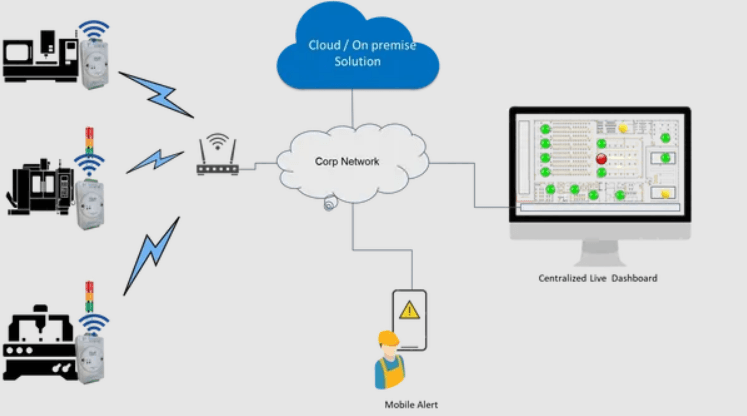
1. Machine Data Collection
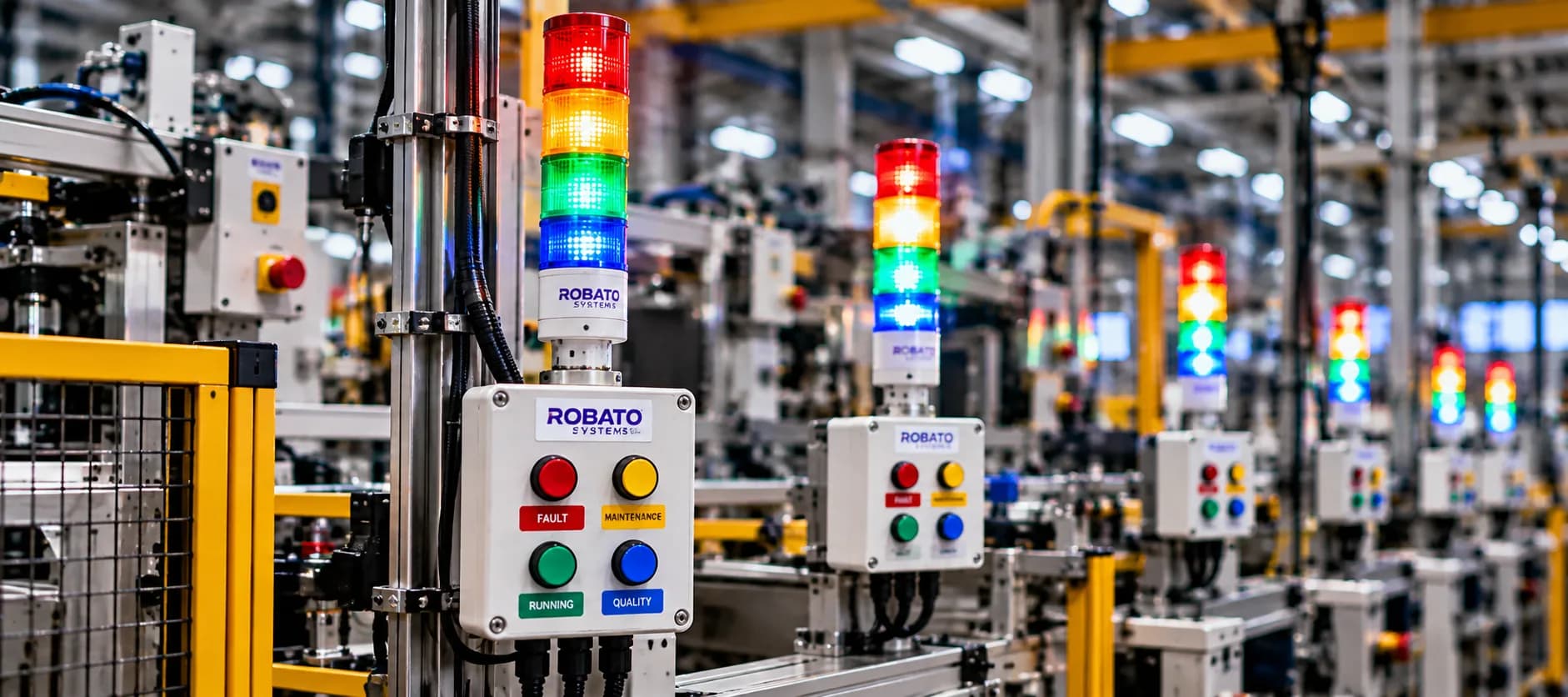
Machine data is collected from available industrial sources such as PLCs, sensors, controllers, industrial gateways, or machine interfaces.
Depending on the equipment and integration method, the system may capture information such as machine status, operating state, cycle information, or production counts.
2. Data Transmission
The collected information is transmitted to the software platform through an appropriate communication layer.
Industrial communication protocols, gateways, APIs, or IoT infrastructure may be used depending on the factory environment.
3. Data Processing
Raw machine signals are processed and converted into meaningful operational information.
For example, a machine signal can be interpreted as:
Running
Idle
Stopped
Under maintenance
Production cycle active
Production cycle completed
This allows the system to transform raw operational data into usable production metrics.
4. Dashboard and Visualization
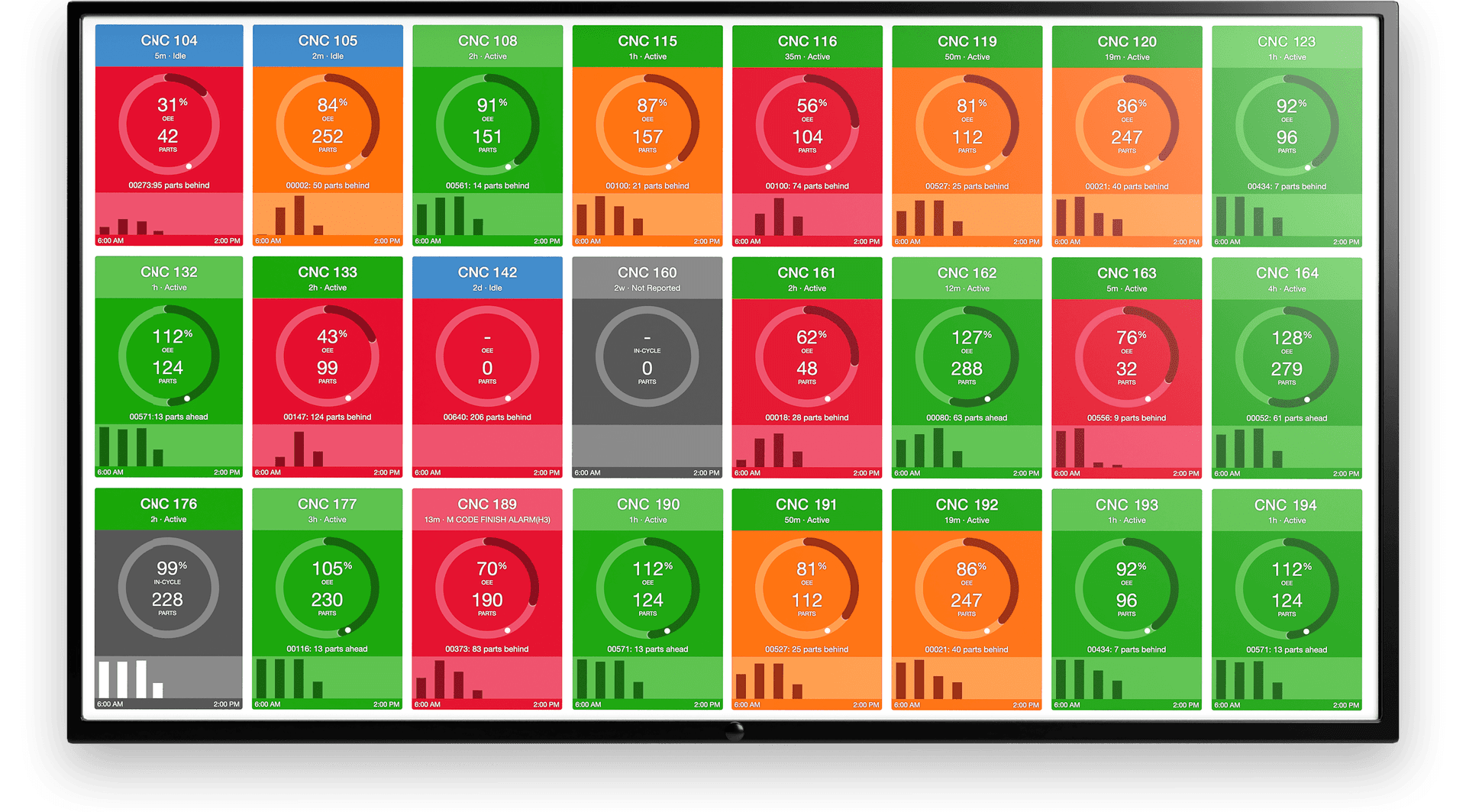
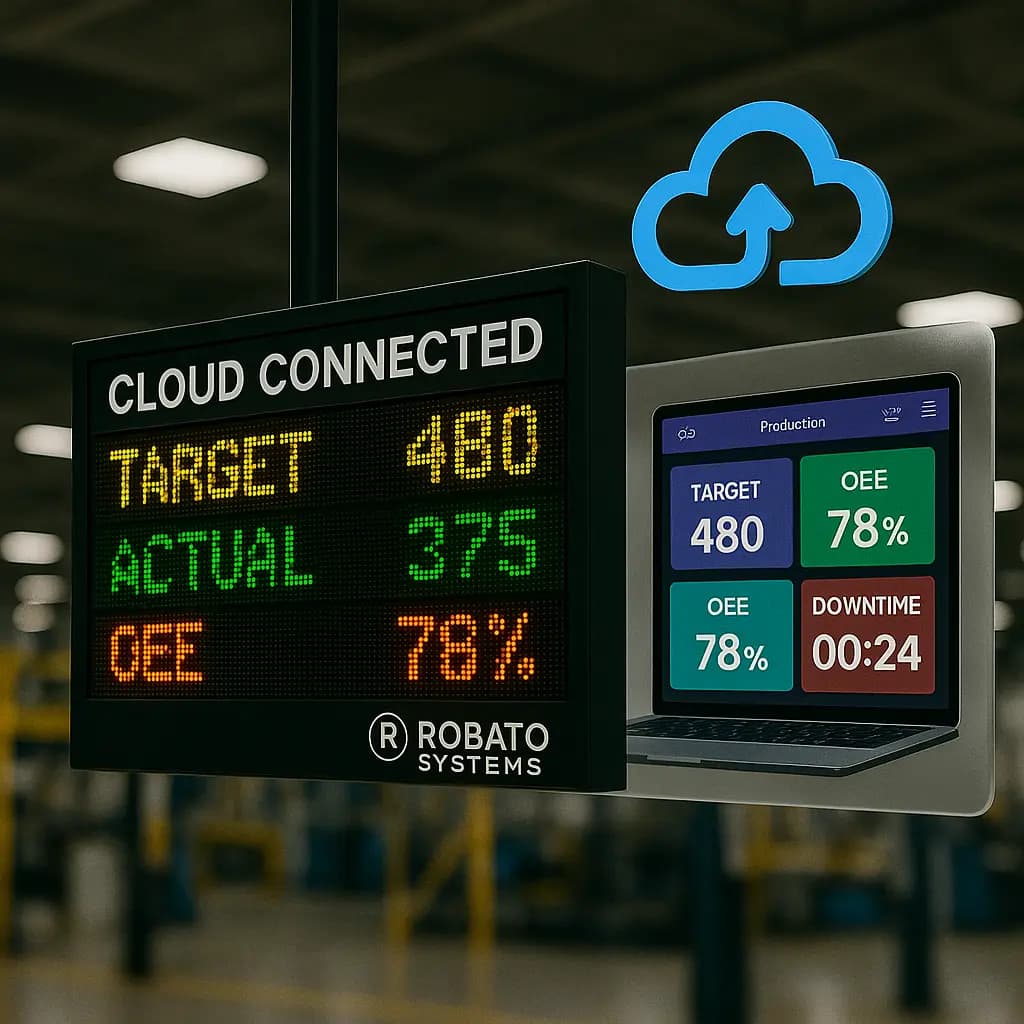
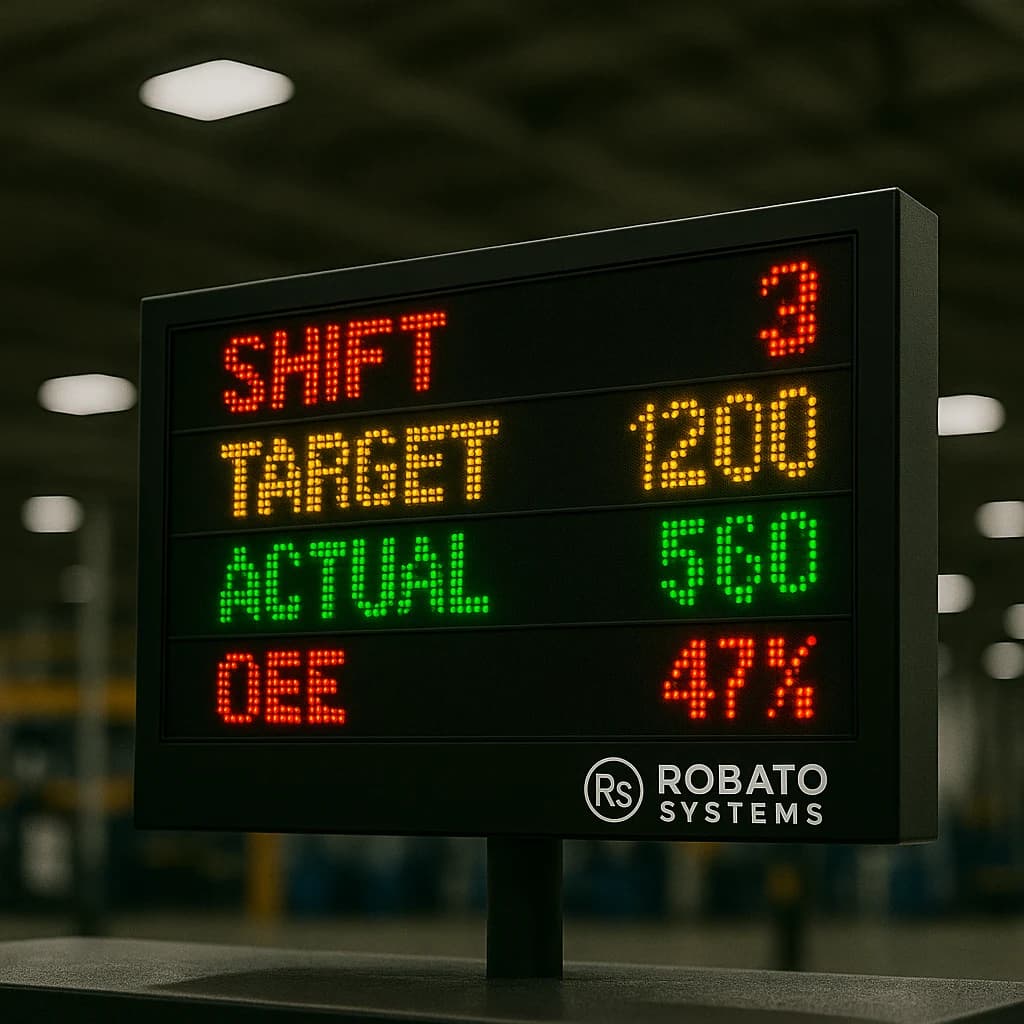
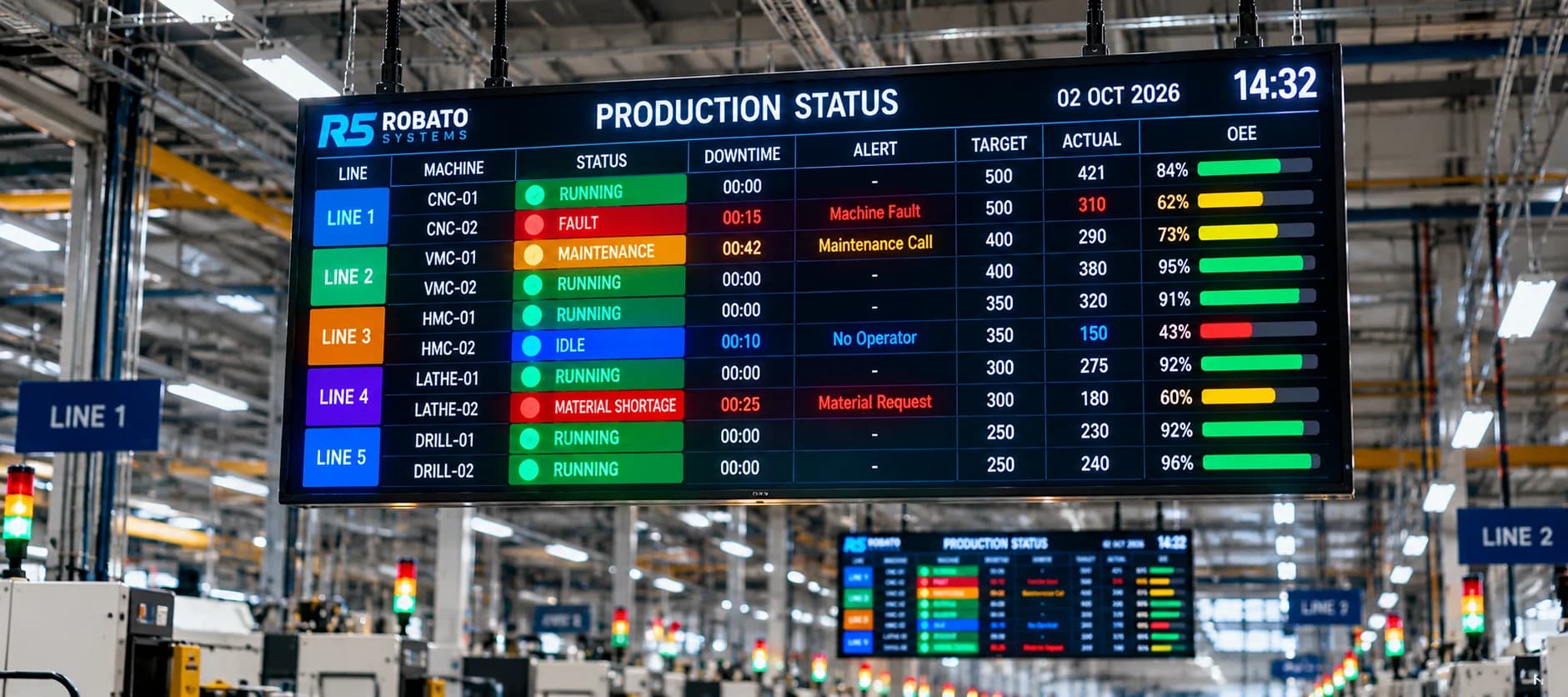
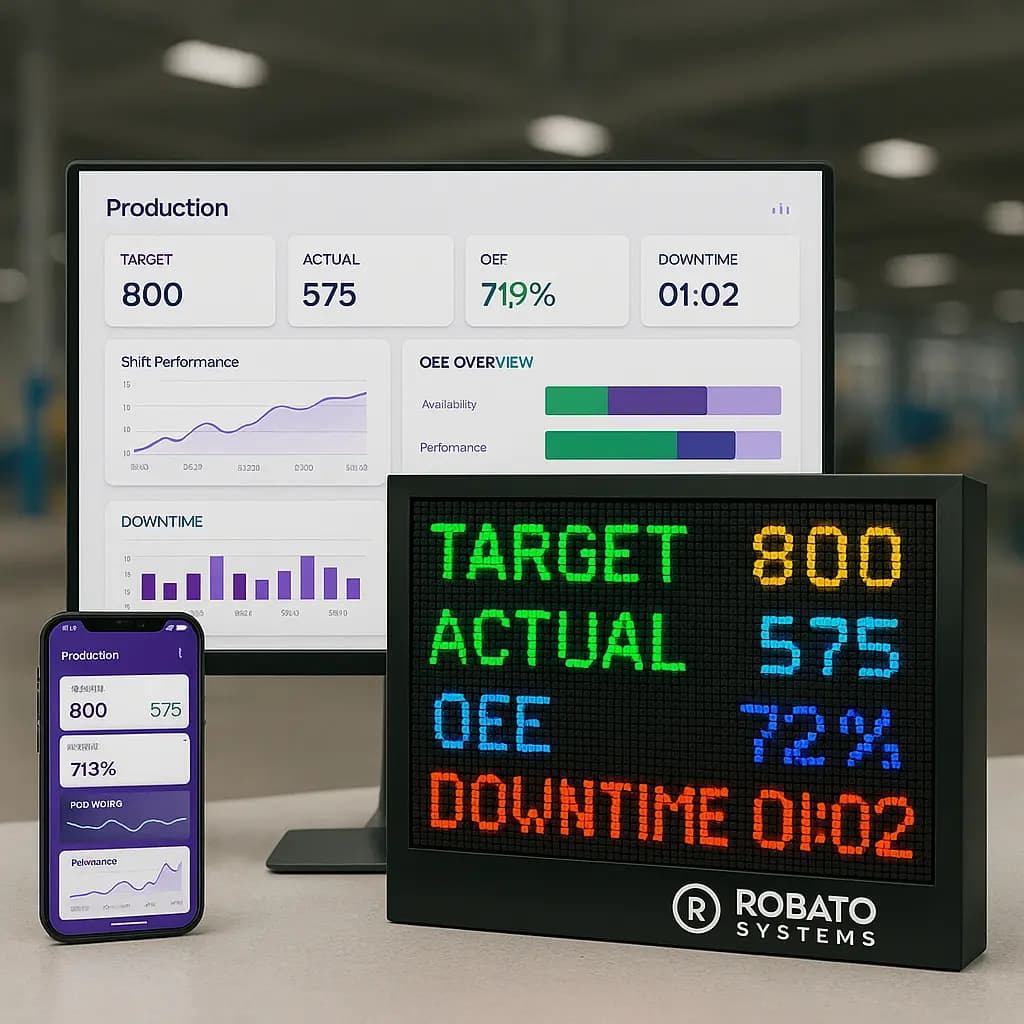
Processed information is displayed through dashboards and reports.
Production managers can view machine status, utilization, runtime, downtime, and performance trends without manually collecting information from different production areas.
5. Analysis and Action
The final step is using the information to identify production losses and improvement opportunities.
For example, repeated idle periods during a particular shift may indicate a scheduling, material, or operational issue that requires investigation.
Key Features of Machine Efficiency Software
A useful machine efficiency platform should provide more than basic machine status monitoring. Important capabilities typically include the following.
Real-Time Machine Monitoring
Real-time monitoring provides visibility into current machine conditions.
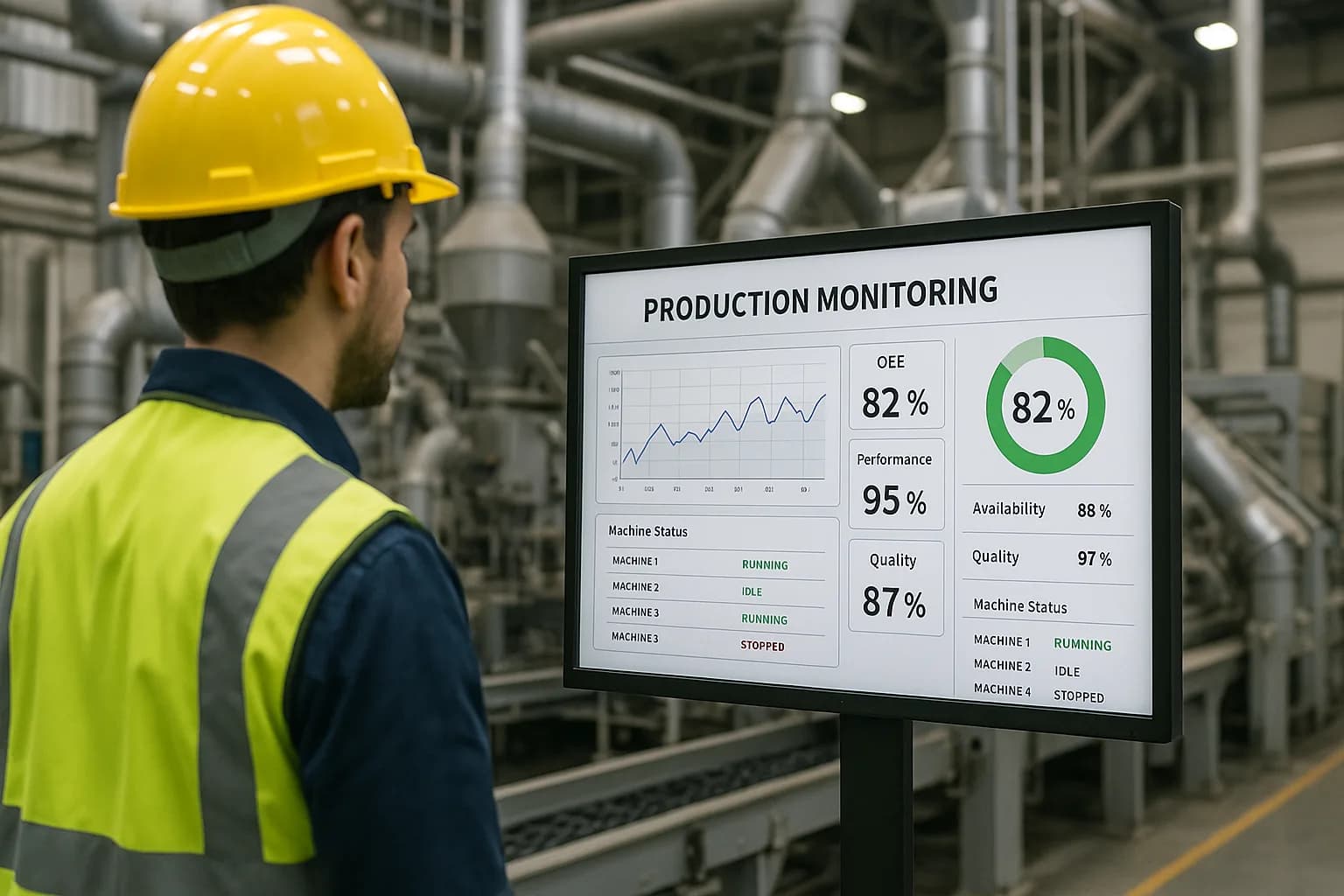
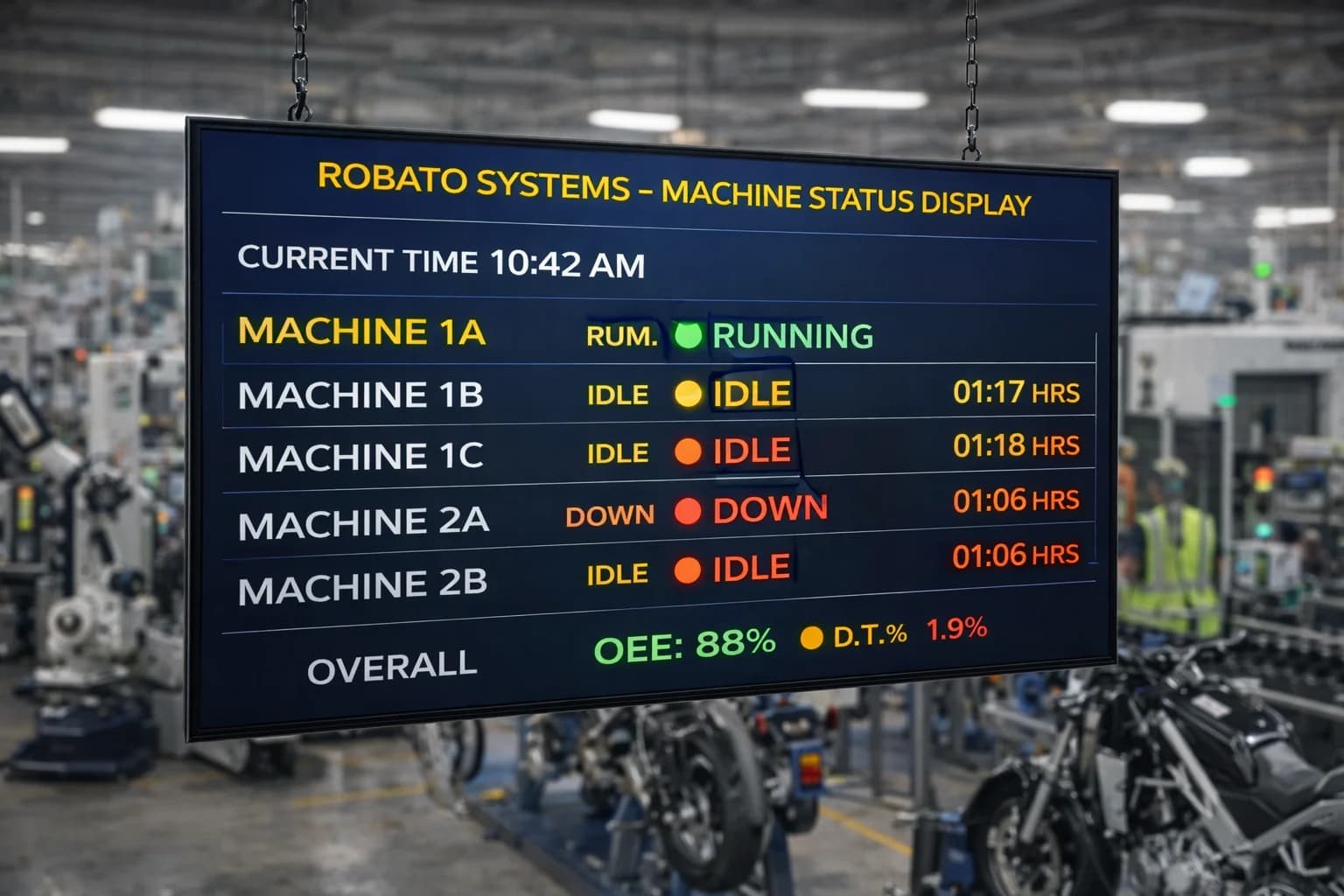
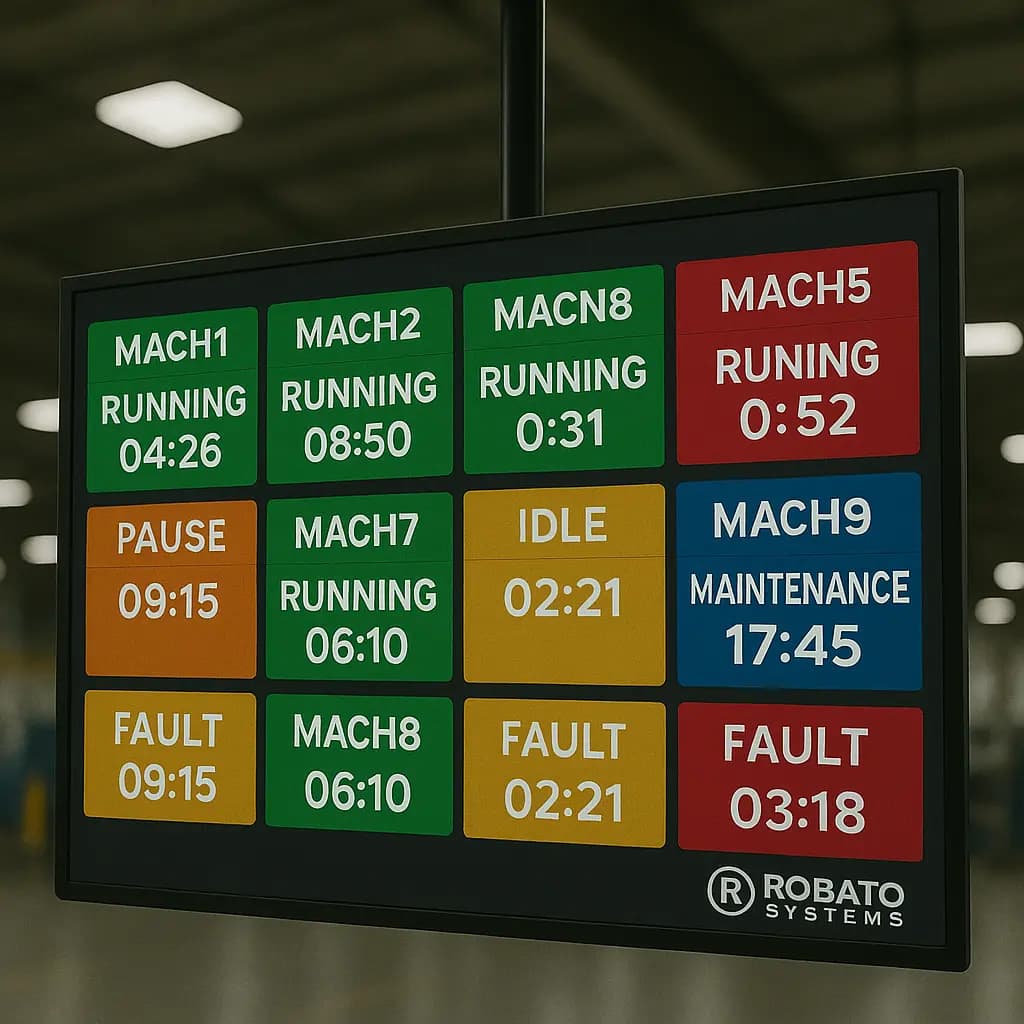
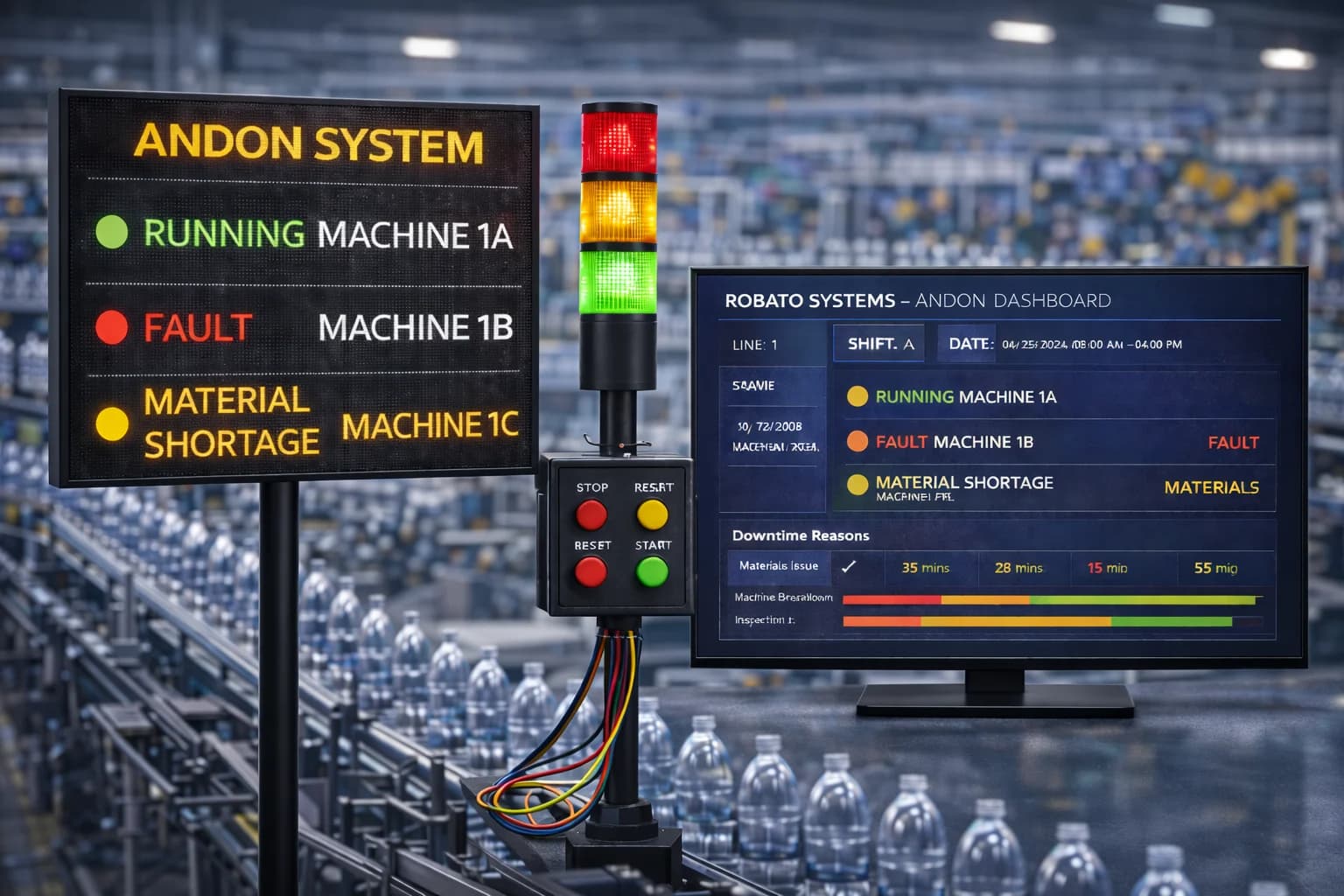
Production teams can see which machines are running, idle, or stopped and respond more quickly when unexpected production interruptions occur.
Machine Runtime Tracking
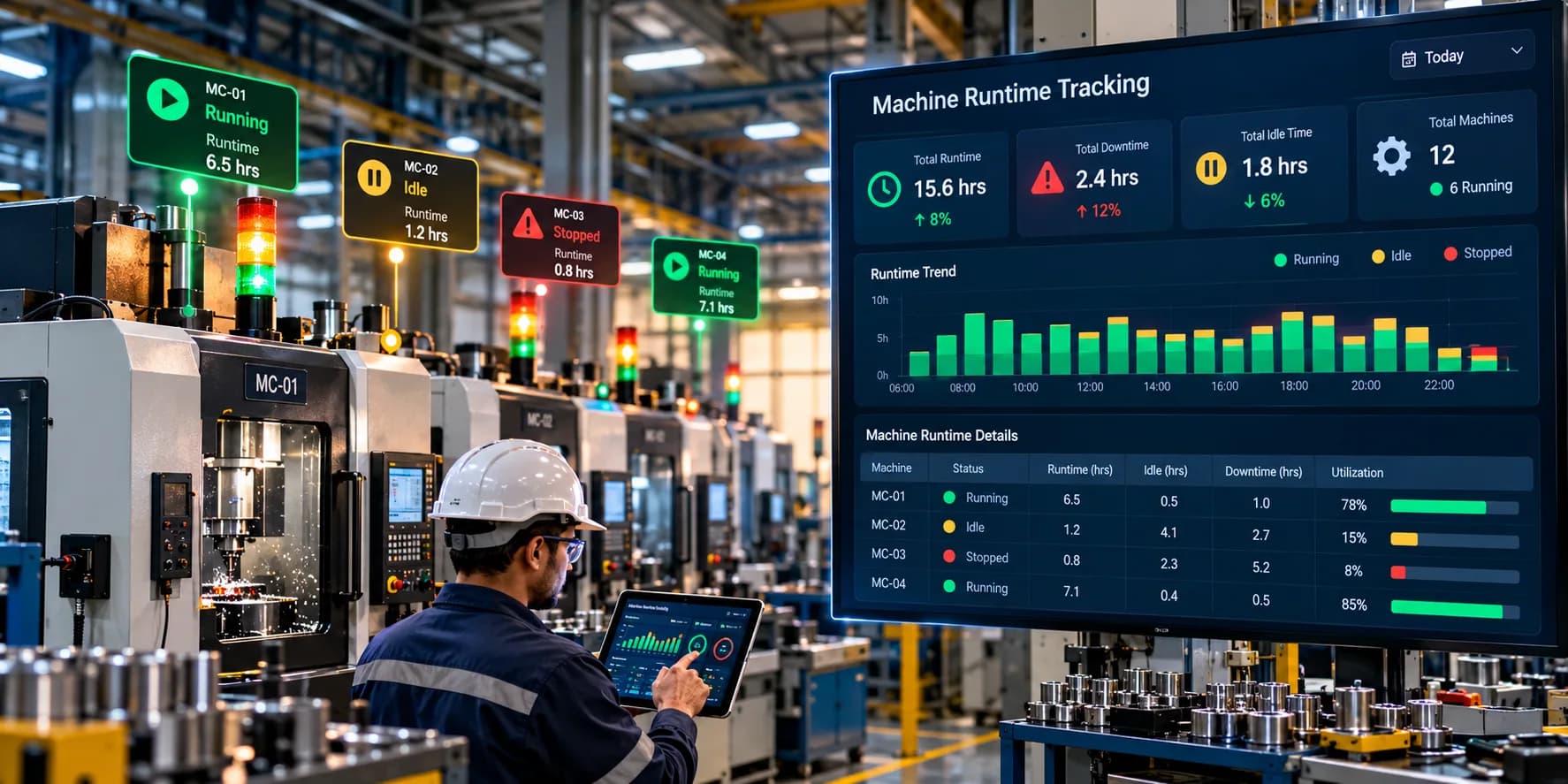
Runtime tracking measures how long equipment remains operational during a defined period.
Historical runtime data can help managers compare machine usage across shifts, days, production lines, or facilities.
Downtime Monitoring
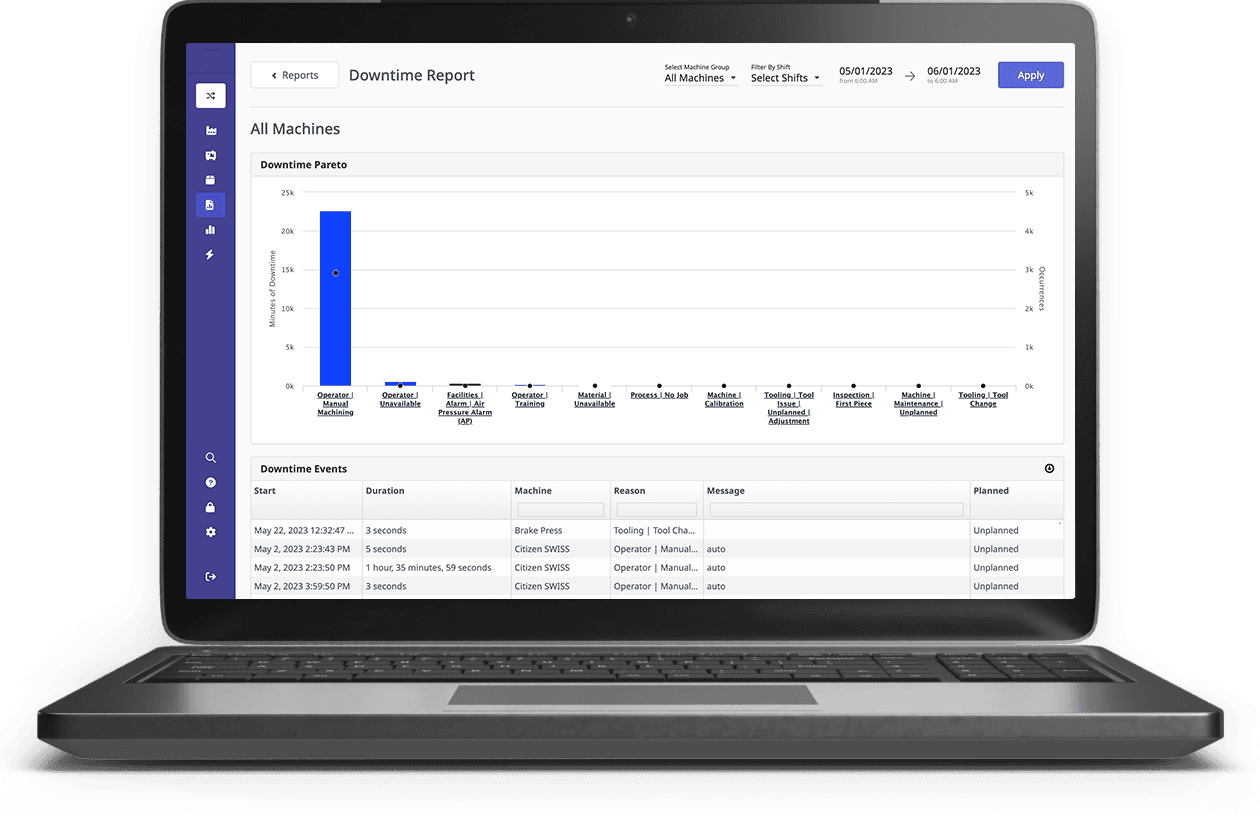
Downtime monitoring records periods when machines are not producing.
Analyzing downtime patterns helps teams distinguish between planned maintenance and unexpected production losses.
Machine Utilization Tracking
Utilization metrics help determine how much of the available machine capacity is actually being used.
This can be particularly valuable when manufacturers are evaluating production capacity, scheduling equipment, or considering additional machinery.
Production Performance Monitoring
Production performance monitoring connects machine activity with production results.
Teams can use historical information to identify changes in output, operating patterns, and production efficiency.
Centralized Dashboards
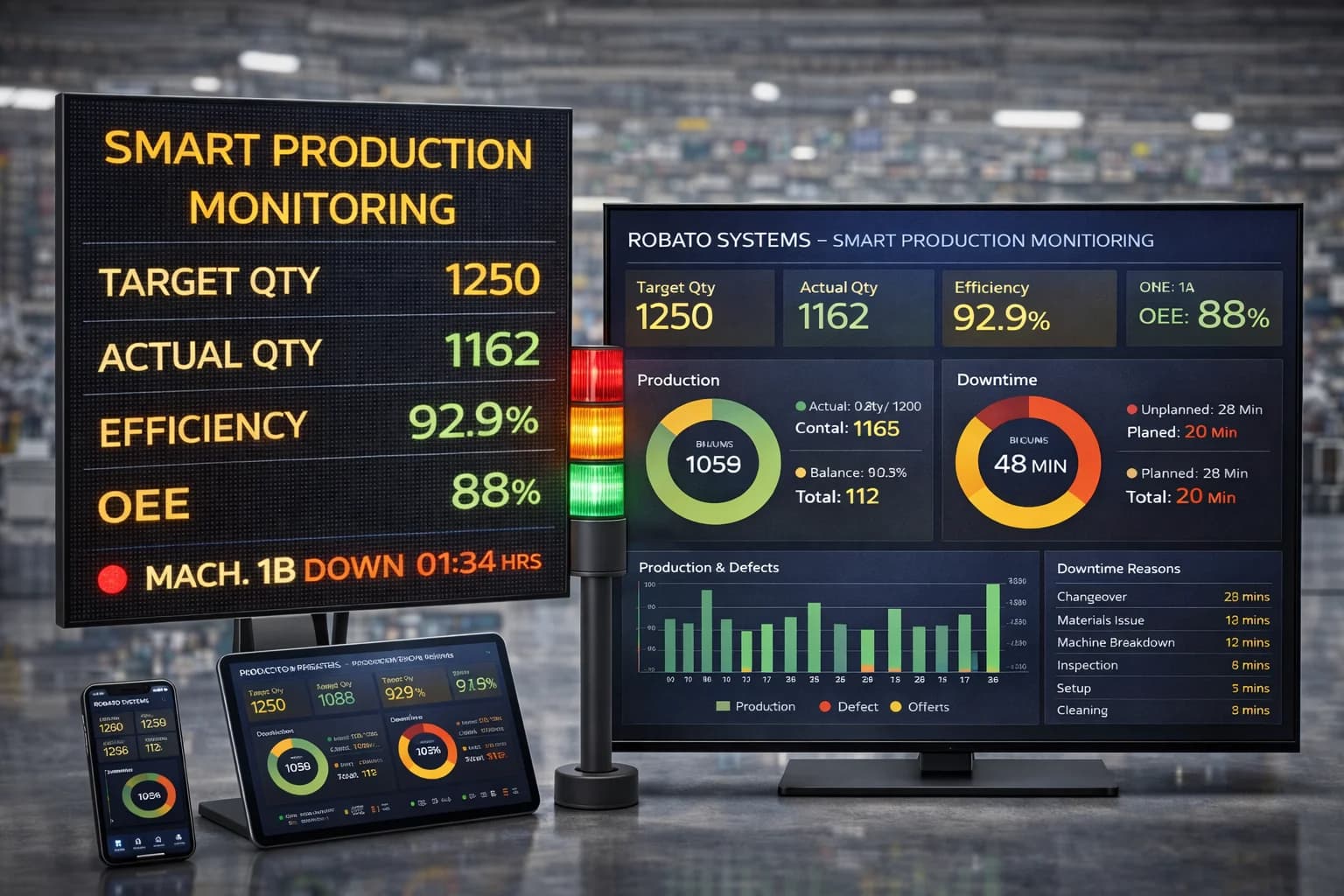
A centralized dashboard brings machine information into a single view.
Managers can monitor multiple machines, production lines, or facilities without depending on separate spreadsheets or manually prepared reports.
Historical Reports
Historical reporting allows production teams to analyze trends over time.
Reports can help identify recurring downtime, utilization changes, shift-level differences, and other operational patterns.
Alerts and Notifications
Some platforms can generate alerts when predefined conditions occur.
For example, a system may notify responsible personnel when a machine remains inactive beyond a defined period or when an operational threshold is exceeded.
Data Export and Integration
Integration with existing manufacturing, ERP, MES, maintenance, or reporting systems can help organizations connect machine data with wider operational processes.
Machine Efficiency Software vs. Manual Monitoring
Traditional machine monitoring often depends on operators or supervisors recording production information manually.
This approach can work for smaller operations, but it becomes increasingly difficult as the number of machines and production shifts increases.
| Manual Monitoring | Machine Efficiency Software |
|---|---|
| Relies heavily on manual data entry | Automates machine data collection where integrations are available |
| Reports may be delayed | Supports near-real-time visibility |
| Difficult to monitor many machines | Centralized monitoring across machines |
| Data may be inconsistent | Standardized data collection |
| Limited historical analysis | Historical trends and reporting |
| Time-consuming reporting | Automated dashboards and reports |
| Difficult to identify recurring patterns | Easier analysis of operational trends |
The goal is not necessarily to eliminate human involvement. Instead, software gives production teams better information so they can spend more time solving operational problems rather than collecting and organizing data.
Benefits of Machine Efficiency Software
1. Better Visibility Into Machine Operations
One of the primary advantages is improved visibility.
Managers can understand what is happening across machines and production lines without waiting for end-of-shift reports.
2. Reduced Production Losses
When downtime and idle periods are clearly measured, teams can investigate the causes behind production losses.
This creates a structured basis for improvement instead of relying on assumptions.
3. Improved Equipment Utilization
Manufacturers can identify machines that are consistently underutilized and investigate why available capacity is not being used effectively.
4. Faster Operational Decisions
Real-time information can help supervisors respond to production interruptions sooner.
This can reduce the delay between an operational problem occurring and someone becoming aware of it.
5. More Accurate Production Reporting
Automated data collection can reduce dependence on manually prepared production records and provide a more consistent source of operational information.
6. Data-Driven Performance Improvement
Historical machine data allows teams to identify recurring patterns rather than treating every production problem as an isolated incident.
7. Better Production Planning
Understanding actual equipment usage can support production scheduling and capacity planning.
Managers can make planning decisions based on historical machine activity instead of relying solely on theoretical equipment capacity.
8. Improved Accountability
Machine-level and shift-level data can help teams understand where production losses occur and establish measurable improvement targets.
What Metrics Should You Monitor?
The right metrics depend on the production environment, but common machine efficiency measurements include:
Machine Runtime
The amount of time a machine remains operational during a selected period.
Machine Downtime
The amount of time equipment is unavailable or not producing.
Idle Time
The period when a machine is available but not actively producing.
Utilization Rate
A utilization metric can help compare actual equipment usage against available operating capacity.
Production Output
The quantity of products or units produced during a specific period.
Cycle Time
The time required to complete a production cycle.
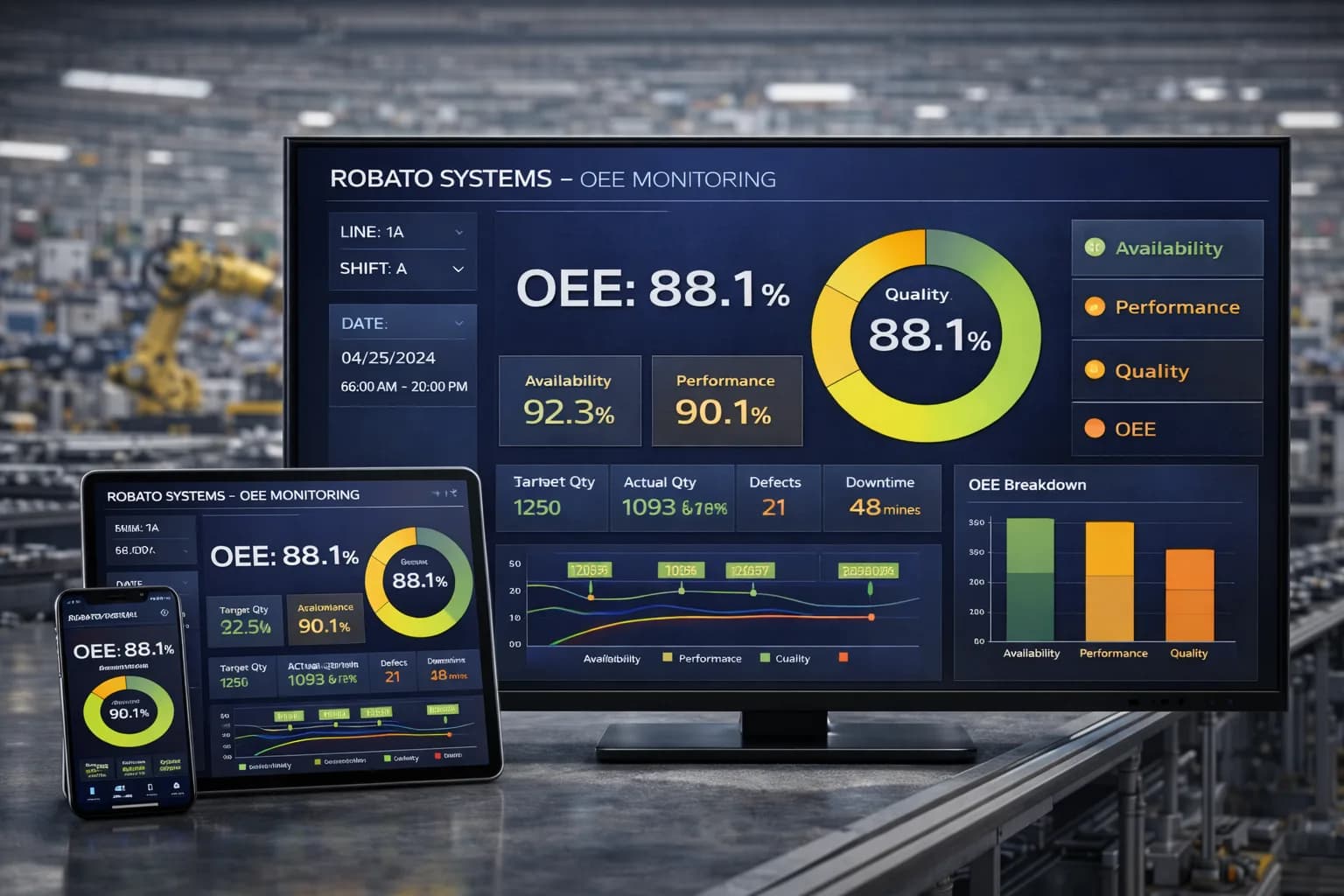
Availability
Availability measures how much scheduled production time equipment is available for operation.
Performance
Performance metrics can help compare actual production speed with expected or target production rates.
Quality
Where quality data is integrated, manufacturers can also evaluate defective or rejected production alongside machine performance.
These metrics become more valuable when analyzed together rather than individually.
How Machine Efficiency Software Supports Different Manufacturing Teams
Production Managers
Production managers can use machine efficiency dashboards to monitor overall equipment usage, production trends, and operational losses.
Plant Managers
Plant managers can compare performance across production lines, shifts, or facilities and identify areas requiring attention.
Maintenance Teams
Maintenance teams can use machine activity and downtime information to understand recurring equipment interruptions and support maintenance planning.
Operations Supervisors
Supervisors can monitor current machine states and respond to operational interruptions more quickly.
Business and Management Teams
Management teams can use summarized production data to understand capacity utilization, operational performance, and improvement trends.
How to Implement Machine Efficiency Software
Successful implementation requires more than installing software. Manufacturers should consider the complete flow from machine connectivity to operational adoption.
Step 1: Define Business Objectives
Start by identifying the problems the organization wants to solve.
Examples include:
Reducing unplanned downtime
Increasing machine utilization
Improving production visibility
Reducing idle time
Automating production reports
Monitoring multiple production lines
Clear objectives help determine which features and metrics are actually required.
Step 2: Assess Existing Machines
Review the machines, controllers, PLCs, sensors, and communication interfaces available in the factory.
Older equipment may require additional connectivity hardware or sensors before operational data can be collected.
Step 3: Identify Required Metrics
Determine which measurements are important for the operation.
Avoid collecting large amounts of data simply because it is technically available. Focus on information that supports real production decisions.
Step 4: Connect Machines and Data Sources
Configure the required connectivity layer between machines and the software platform.
The implementation approach will depend on the equipment, available interfaces, network architecture, and software requirements.
Step 5: Configure Dashboards
Create dashboards based on different user roles.
For example, operators may need machine status information, while plant managers may require production trends and performance summaries.
Step 6: Establish Baselines
Collect sufficient historical data to understand normal operating patterns.
Baseline information provides a reference point for measuring future improvements.
Step 7: Train the Production Team
Employees should understand what the metrics mean and how the information should be used.
Technology becomes more effective when teams use the data as part of their normal operational decision-making.
Step 8: Continuously Improve
Machine efficiency monitoring should be treated as an ongoing improvement process.
As recurring losses are identified and addressed, organizations can refine their metrics, dashboards, alerts, and operational processes.
Challenges to Consider
Machine efficiency software can provide significant operational visibility, but implementation can involve several challenges.
Legacy Equipment
Older machines may not provide modern digital interfaces. Additional sensors or industrial gateways may be required.
Data Quality
Incorrect machine signals or poorly configured data mappings can produce misleading results.
Data validation should therefore be part of the implementation process.
Connectivity
Reliable industrial networking is important for collecting and transmitting machine information.
Integration Complexity
Factories often operate multiple machine types, vendors, and control systems. Connecting these environments may require careful planning.
Employee Adoption
Production teams need to understand how the system supports their work. Poor adoption can reduce the value of even a technically capable platform.
Metric Standardization
Different departments may interpret metrics differently. Establishing consistent definitions helps ensure that reports are comparable.
What to Look for When Choosing Machine Efficiency Software
Before selecting a platform, manufacturers should evaluate several areas.
Machine Connectivity
Check whether the solution supports the machines, controllers, sensors, and communication methods used in the facility.
Scalability
The platform should be capable of expanding as additional machines, production lines, or facilities are added.
Dashboard Flexibility
Different users require different levels of information. Look for dashboards that can support operational, supervisory, and management views.
Reporting Capabilities
Evaluate whether the system provides the reports required for daily production reviews, management reporting, and historical analysis.
Integration Support
Consider integration requirements with ERP, MES, maintenance, analytics, or other business systems.
Security
Machine data is part of the organization's operational technology environment. Access control, authentication, network security, and appropriate data protection should be considered during implementation.
Ease of Use
The system should be understandable to the people who will use it every day.
A technically advanced platform that production teams cannot easily use may create limited practical value.
Machine Efficiency Software and Industry 4.0
Machine efficiency software is closely connected to the broader Industry 4.0 movement.
Industry 4.0 focuses on connecting industrial equipment, collecting operational data, and using digital technologies to create more intelligent and responsive manufacturing environments.
Machine efficiency monitoring can serve as one component of this ecosystem by providing structured information about equipment activity and production performance.
When combined with IoT connectivity, analytics, automation, predictive maintenance, MES platforms, and other digital technologies, machine data can support increasingly connected manufacturing operations.
Frequently Asked Questions
What is machine efficiency software?
Machine efficiency software is a digital platform that collects and analyzes machine operational data to help manufacturers monitor runtime, downtime, utilization, production performance, and other efficiency-related metrics.
Why do manufacturers use machine efficiency software?
Manufacturers use it to improve machine visibility, identify production losses, monitor equipment utilization, automate reporting, and support data-driven operational decisions.
Can machine efficiency software work with older machines?
Yes, depending on the equipment. Older machines may require sensors, gateways, PLC connections, or other integration methods to make operational data available to the software.
What is the difference between machine efficiency and machine utilization?
Machine utilization generally describes how much available equipment capacity is being used, while machine efficiency can encompass a broader set of operational measures such as runtime, downtime, production performance, and output.
Can machine efficiency software monitor multiple machines?
Yes. Many platforms are designed to centralize information from multiple machines and production lines within a single monitoring environment.
Does machine efficiency software replace production managers?
No. The software provides data and visibility. Production managers still need to interpret the information, investigate causes, make operational decisions, and implement improvements.
What industries can use machine efficiency software?
Machine efficiency solutions can be applied across many manufacturing environments, including automotive, electronics, packaging, food and beverage, pharmaceuticals, plastics, metal processing, and other industrial operations.
Final Thoughts
Machine efficiency is not determined simply by how much equipment a factory owns. It depends on how effectively that equipment is available, utilized, operated, and maintained during production.
Machine Efficiency Software provides manufacturers with a structured way to capture machine data, monitor operational activity, identify production losses, and understand equipment performance.
By replacing fragmented manual monitoring with centralized and actionable production information, manufacturers can create a stronger foundation for continuous improvement.
The most effective approach is to start with clearly defined operational objectives, select meaningful metrics, establish reliable machine connectivity, and turn the resulting data into practical actions. Over time, this can help organizations improve visibility, make better production decisions, and use their existing equipment capacity more effectively.