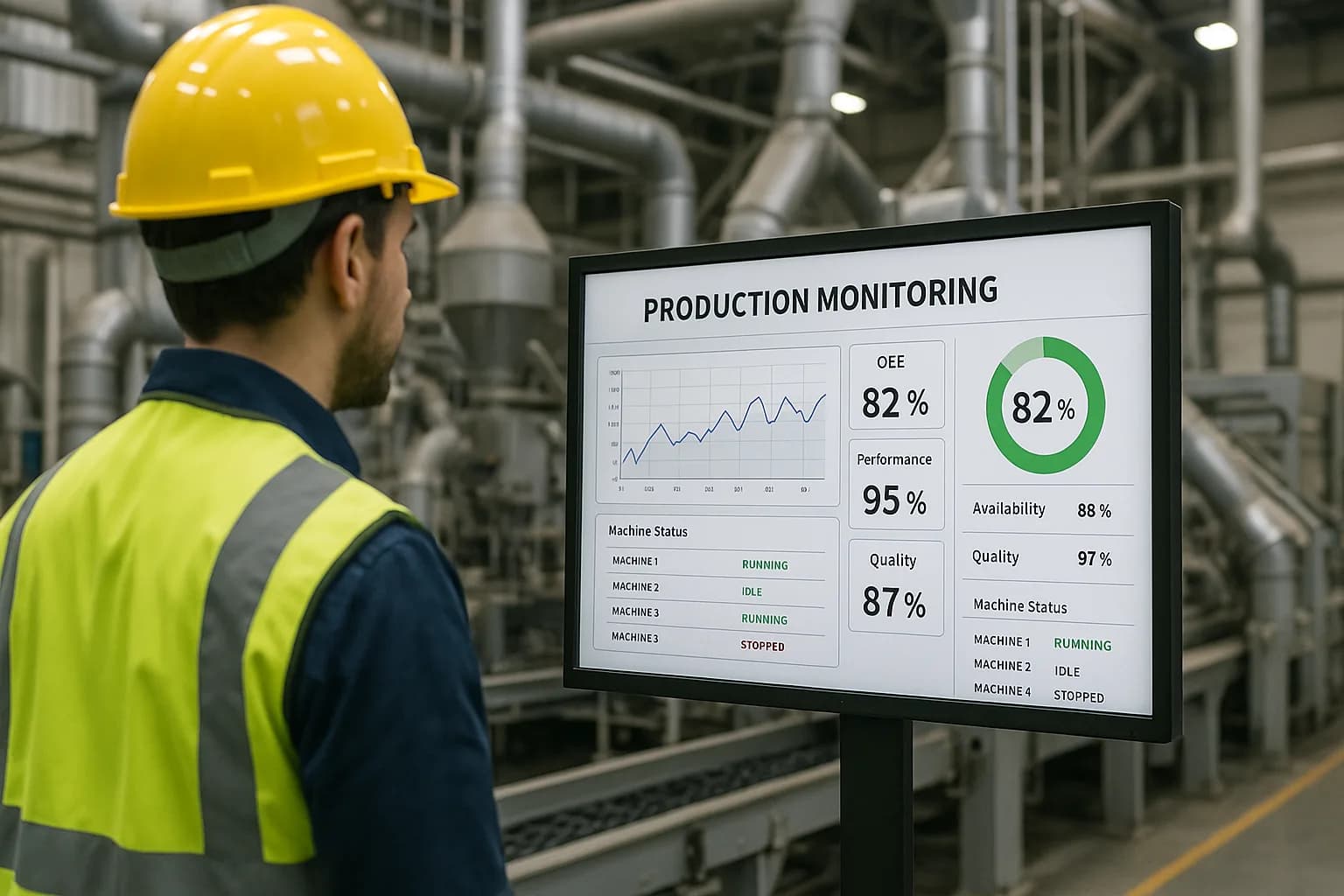
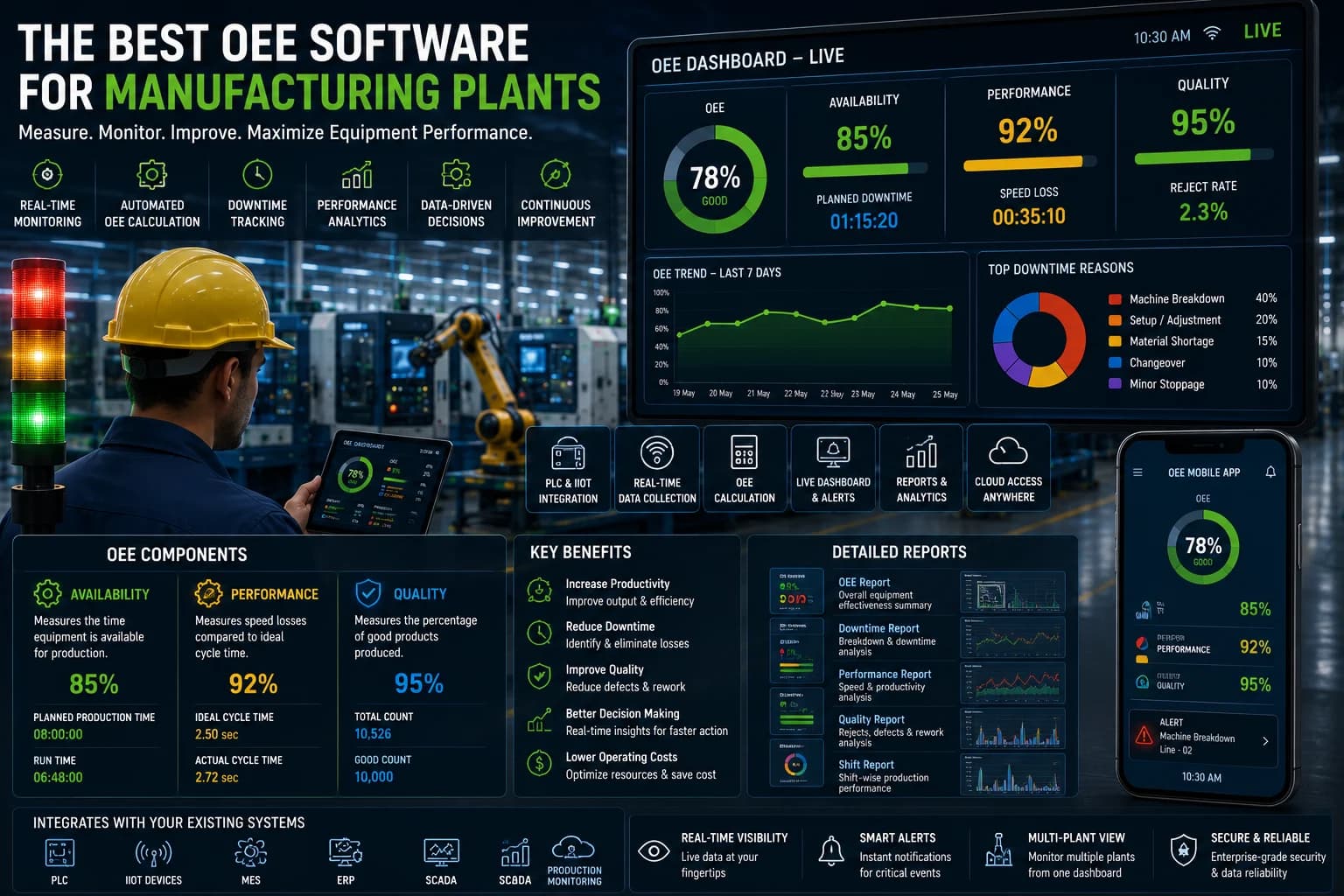
Manufacturing companies are under constant pressure to produce more with fewer resources while maintaining consistent product quality and minimizing operational costs. In today's competitive industrial environment, relying on manual production reports or spreadsheets is no longer enough to achieve operational excellence. Manufacturers need real-time visibility into machine performance, production efficiency, downtime, and quality metrics to make informed decisions. This is where OEE Software plays a crucial role.
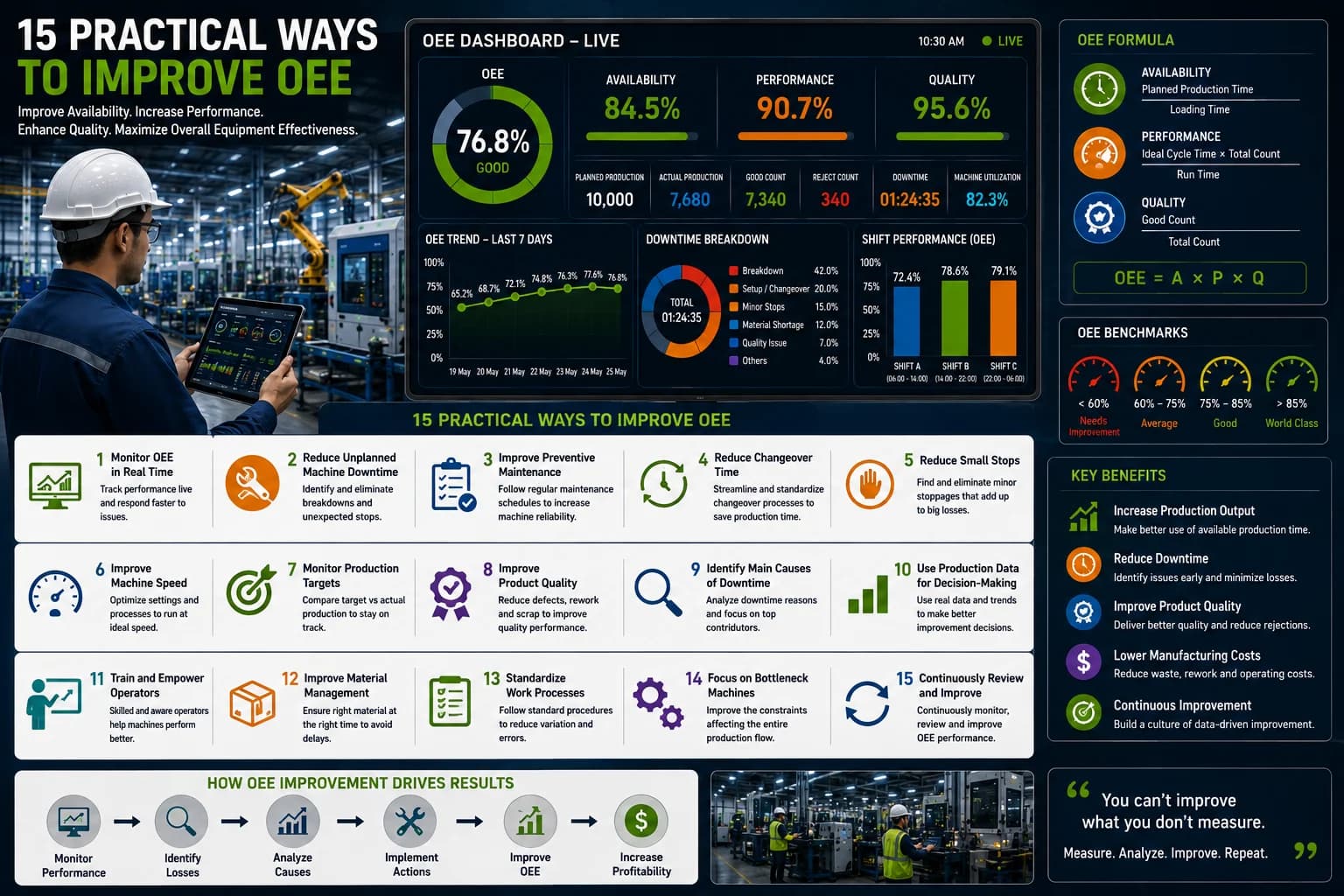
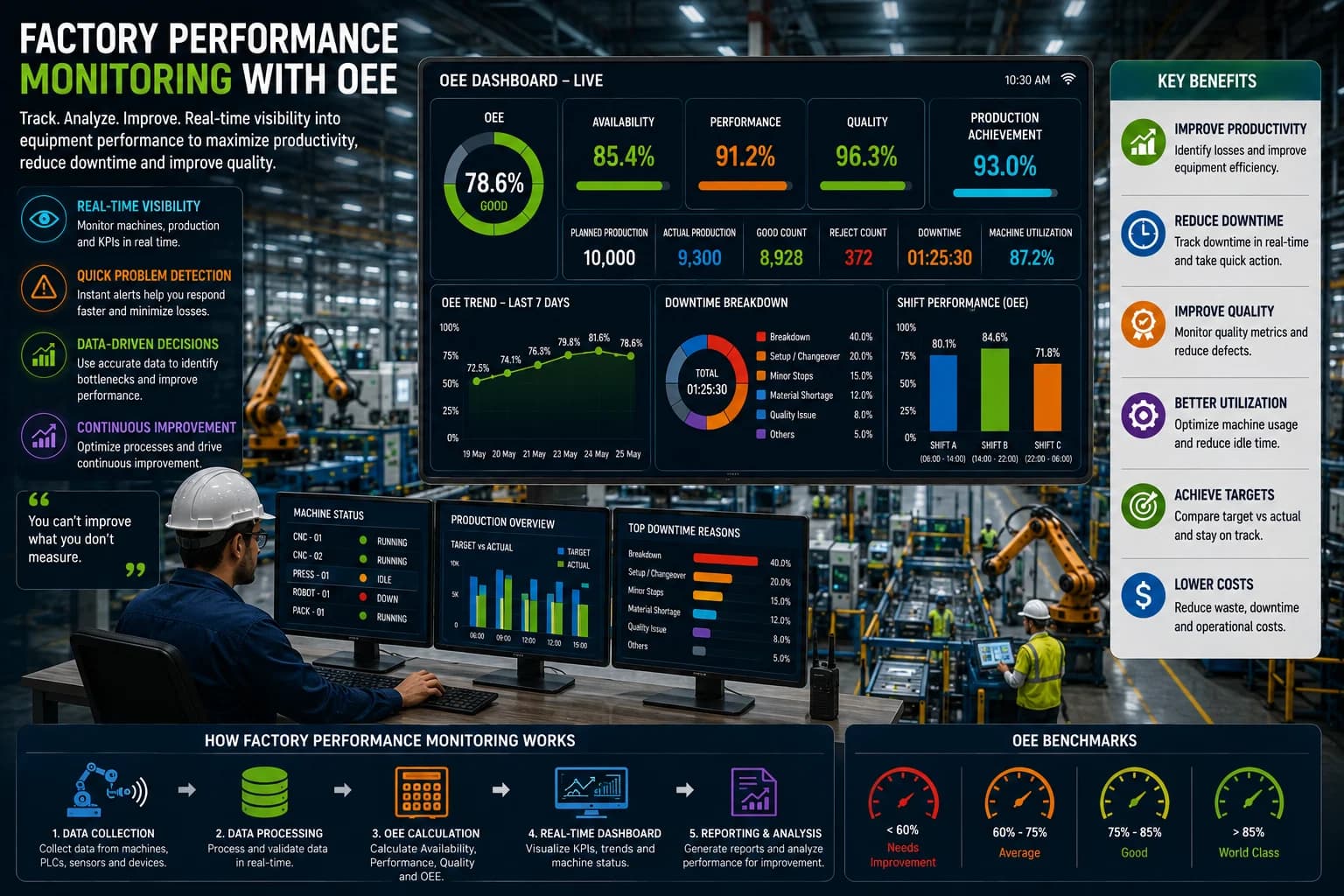
Overall Equipment Effectiveness (OEE) has become one of the most important performance indicators in manufacturing. It helps organizations understand how efficiently their machines and production lines operate by measuring Availability, Performance, and Quality. However, manually calculating OEE is time-consuming, error-prone, and often results in outdated information. Modern OEE Software automates data collection, performs real-time calculations, and provides live dashboards that help manufacturers identify losses, reduce downtime, and continuously improve production performance.
Whether you operate a single production line or multiple manufacturing plants, implementing the right OEE Software can significantly improve productivity, equipment utilization, maintenance planning, and overall factory efficiency.
What is OEE Software?
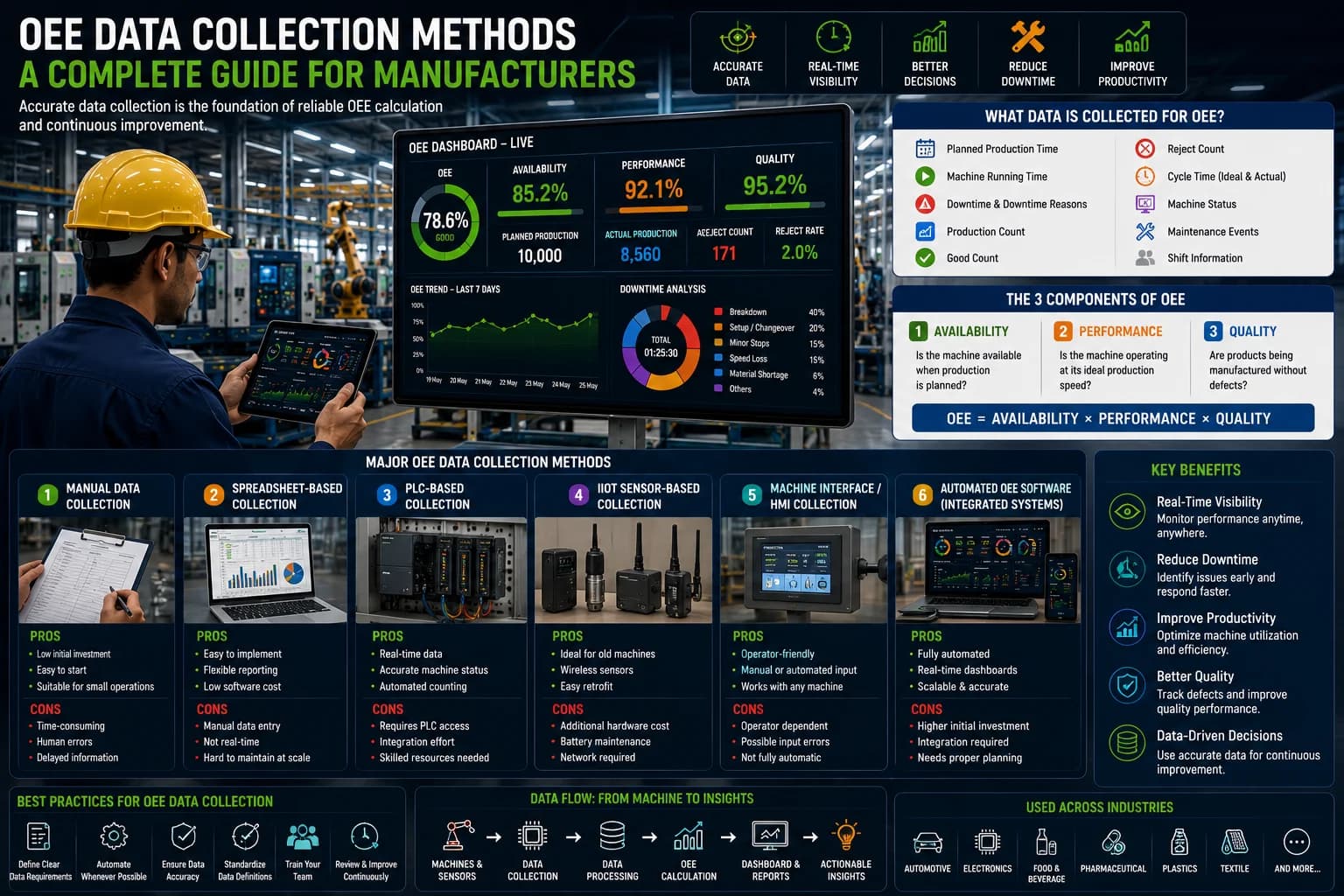
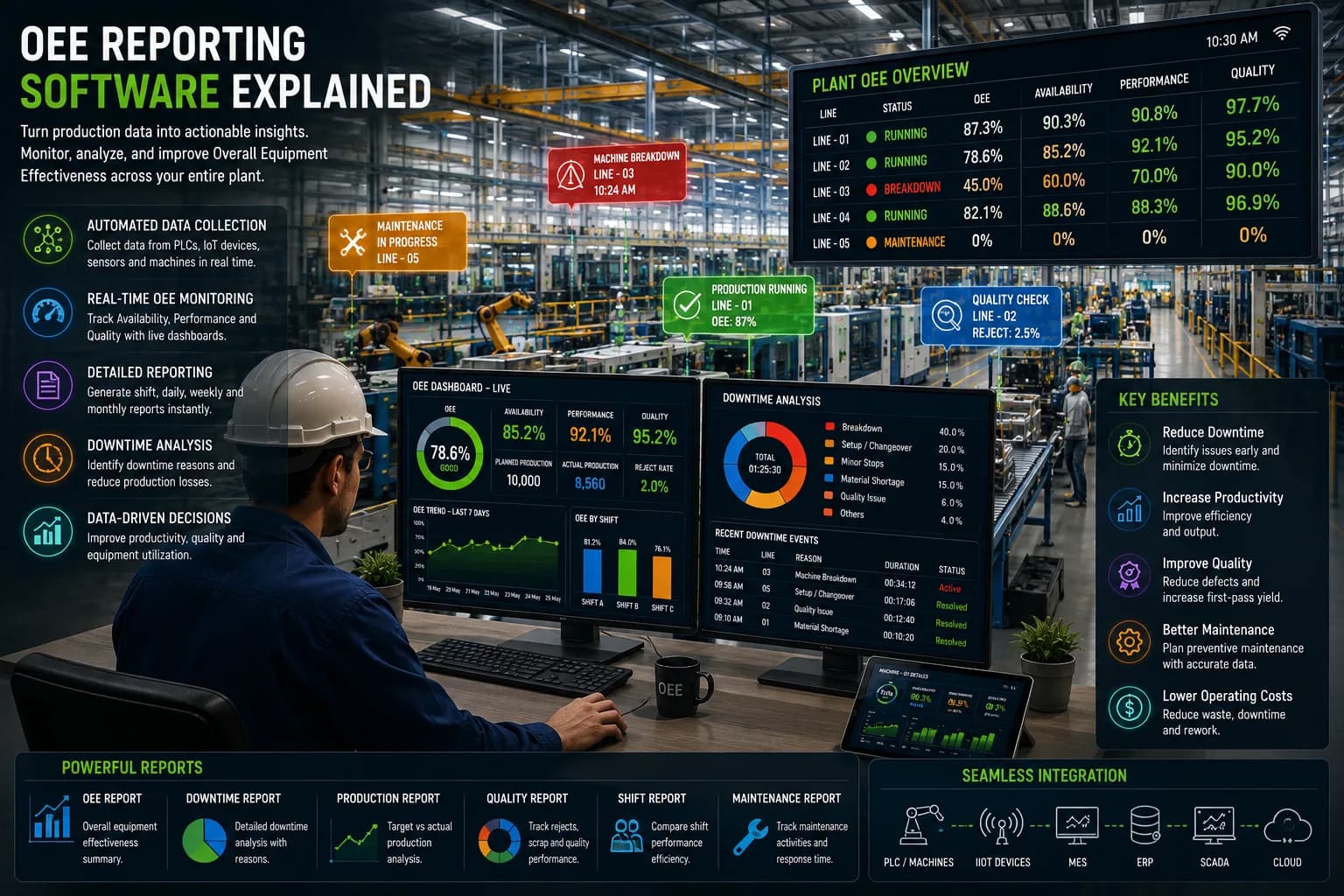
OEE Software is a digital manufacturing solution that automatically measures, monitors, and analyzes Overall Equipment Effectiveness (OEE) in real time. It collects production data directly from machines, PLCs, Industrial IoT (IIoT) devices, sensors, and manufacturing systems to calculate key performance metrics without manual intervention.
The software continuously tracks machine availability, production speed, product quality, downtime events, and equipment utilization while presenting the information through intuitive dashboards and reports.
Modern OEE Software typically integrates with:
- PLCs
- Industrial IoT (IIoT) devices
- Manufacturing Execution Systems (MES)
- Enterprise Resource Planning (ERP)
- SCADA systems
- Production Monitoring Systems
- Quality Management Systems
- Cloud platforms
This integration provides manufacturers with complete visibility into factory performance and enables data-driven decision-making.
Why OEE Software is Important
Many manufacturers still rely on manual production logs and spreadsheet calculations to monitor equipment performance. These methods are often inaccurate, delayed, and incapable of providing real-time insights.
OEE Software addresses these limitations by delivering:
- Live equipment performance monitoring
- Automated OEE calculations
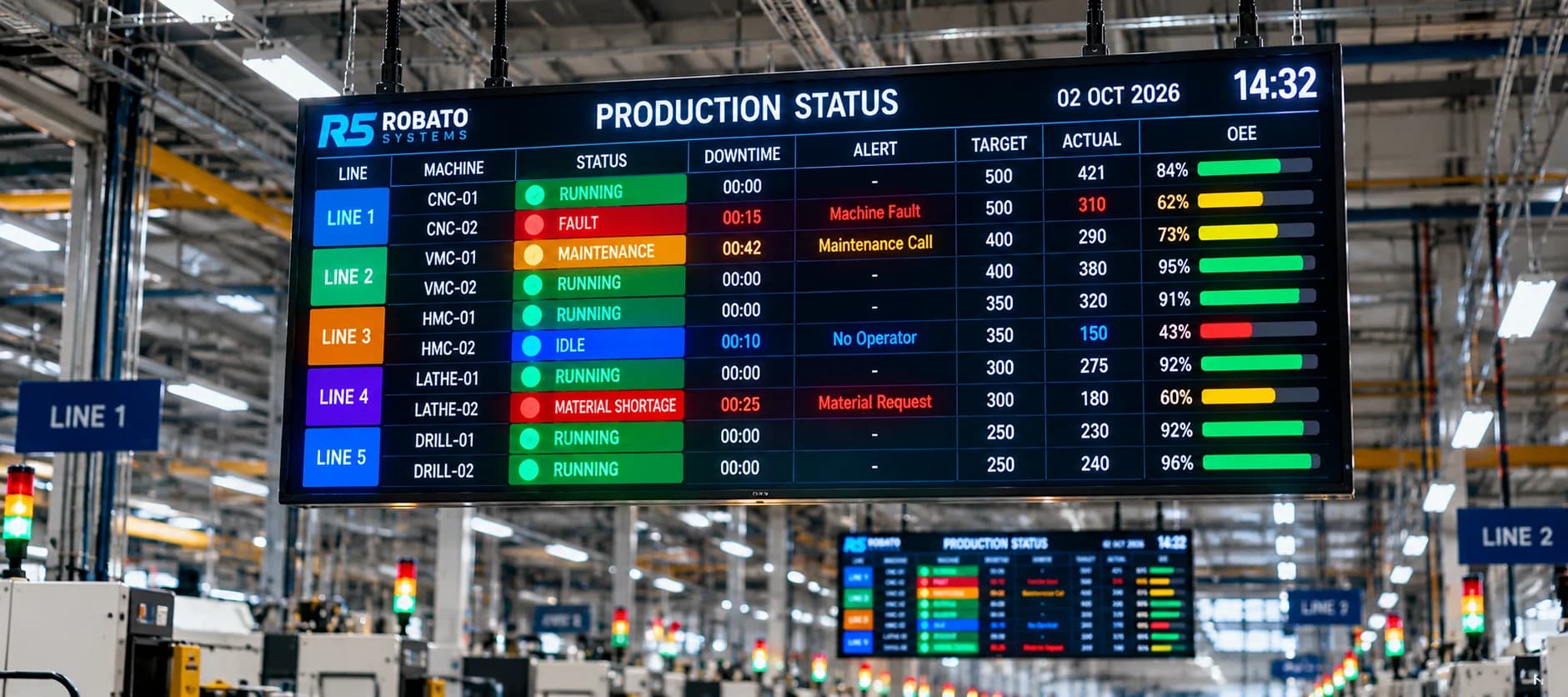
- Real-time production dashboards
- Accurate downtime tracking
- Machine utilization analysis
- Production loss identification
- Historical performance reporting
- Continuous improvement insights
By replacing manual processes with automated monitoring, manufacturers can respond faster to production issues and optimize overall plant performance.
Understanding Overall Equipment Effectiveness (OEE)
OEE measures how effectively manufacturing equipment is utilized during planned production time.
It consists of three key components:
Availability
Availability measures how much planned production time is actually available for manufacturing after accounting for downtime.
Downtime may include:
- Machine breakdowns
- Planned maintenance
- Changeovers
- Material shortages
- Operator absence
Higher availability means machines spend more time producing.
Performance
Performance evaluates whether equipment is operating at its designed production speed.
Performance losses include:
- Reduced operating speed
- Minor stoppages
- Equipment wear
- Operator inefficiencies
Improving performance increases production output without adding new equipment.
Quality
Quality measures the percentage of good products produced compared to total production.
Quality losses include:
- Product defects
- Scrap
- Rework
- Inspection failures
High-quality production minimizes waste and customer complaints.
How OEE Software Works
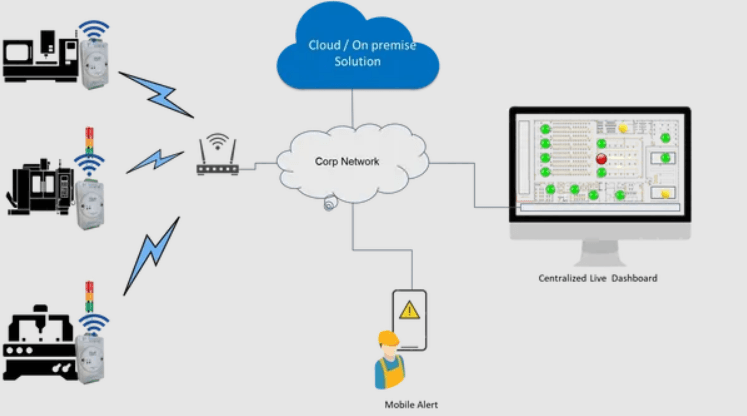
Step 1: Automated Data Collection
Production data is collected from:
- PLCs
- Machine controllers
- Industrial IoT sensors
- Barcode scanners
- RFID systems
- Operator terminals
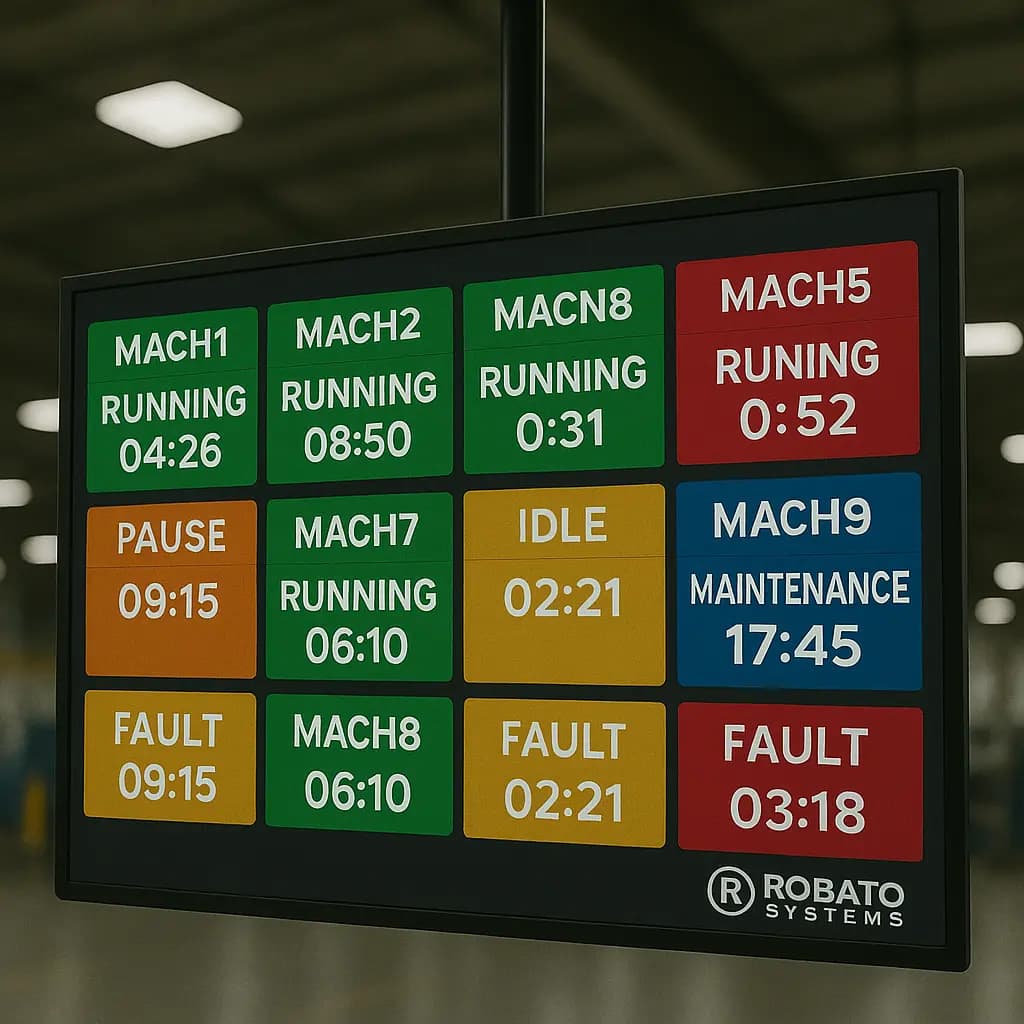
Step 2: Real-Time Monitoring
The software continuously tracks:
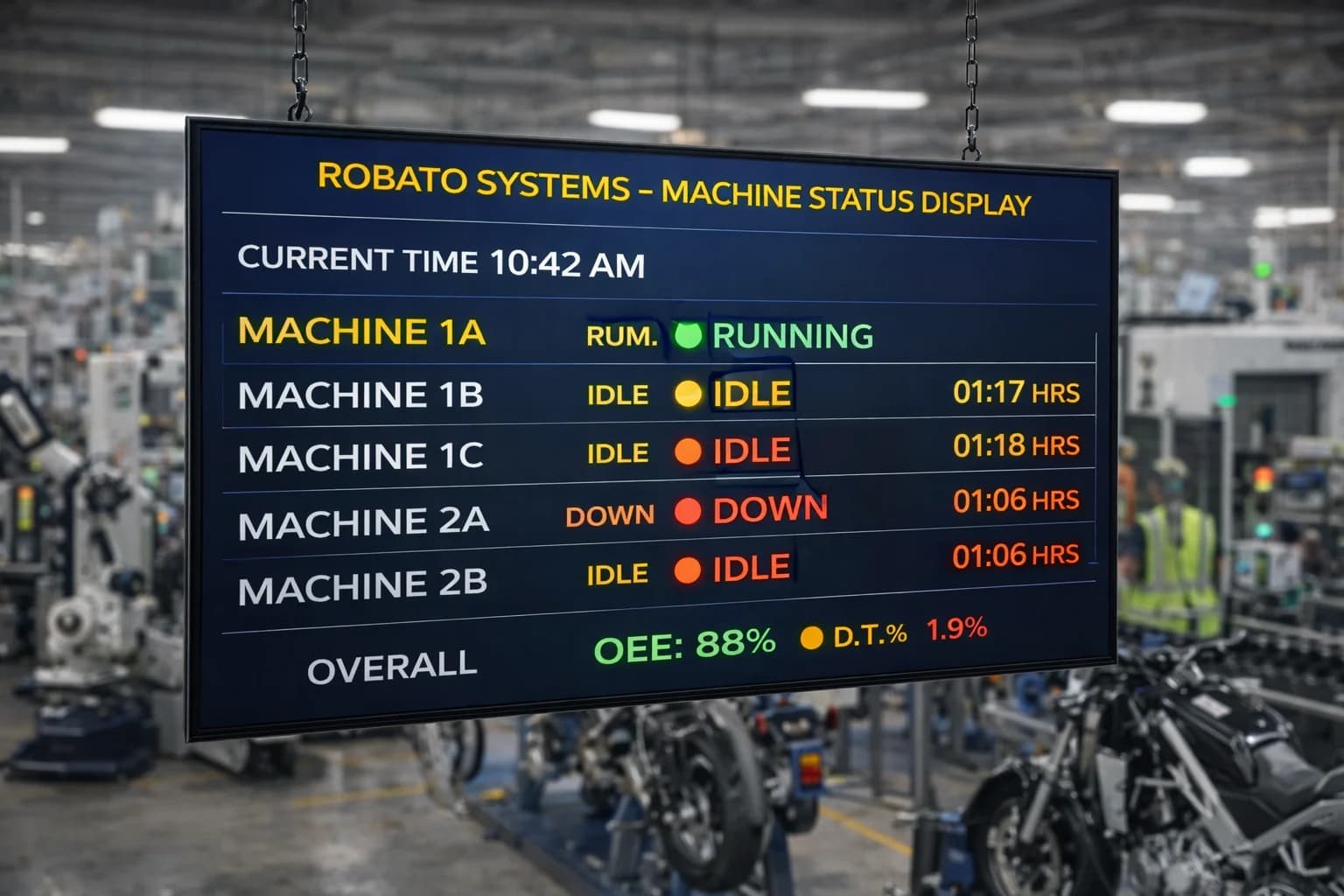
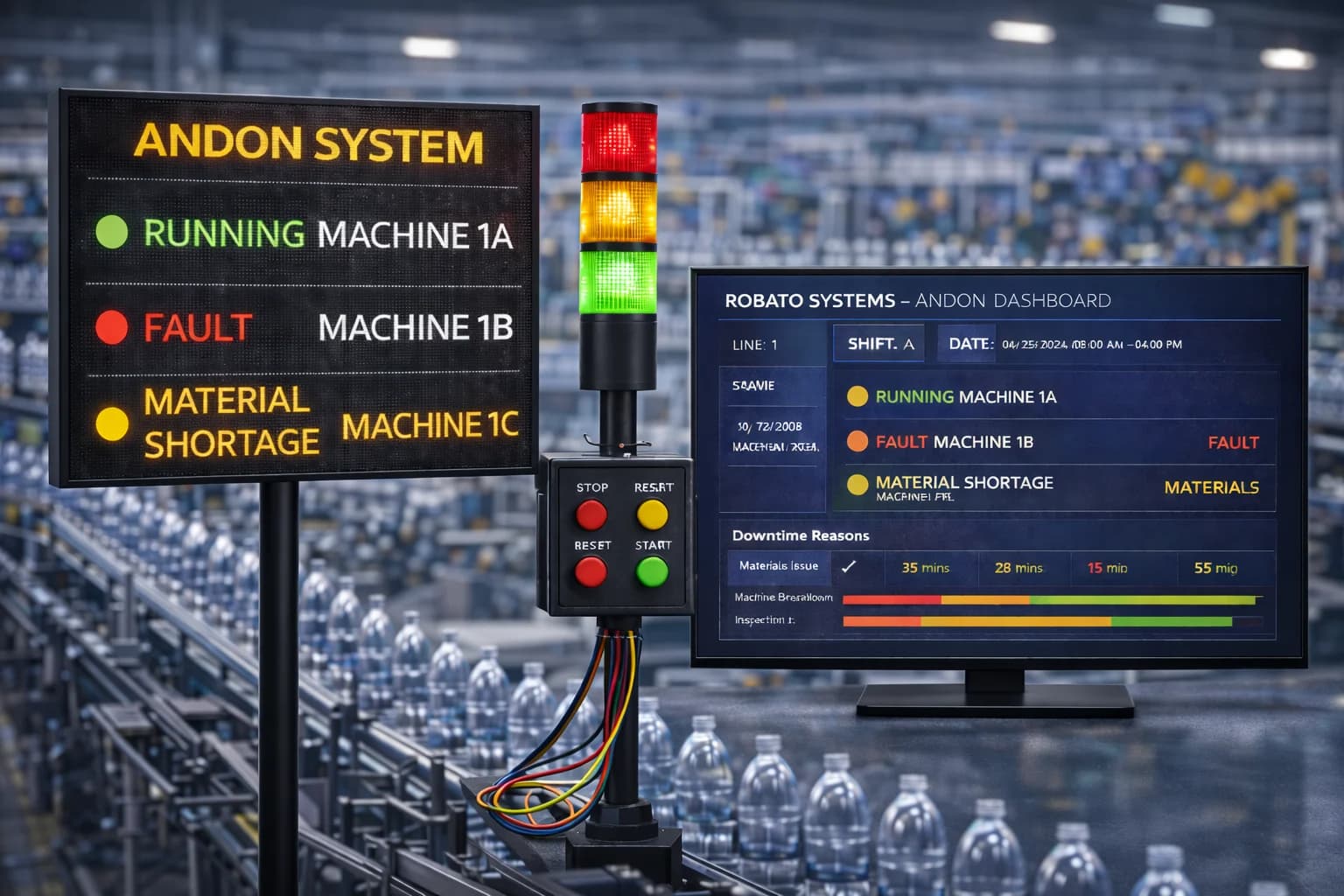
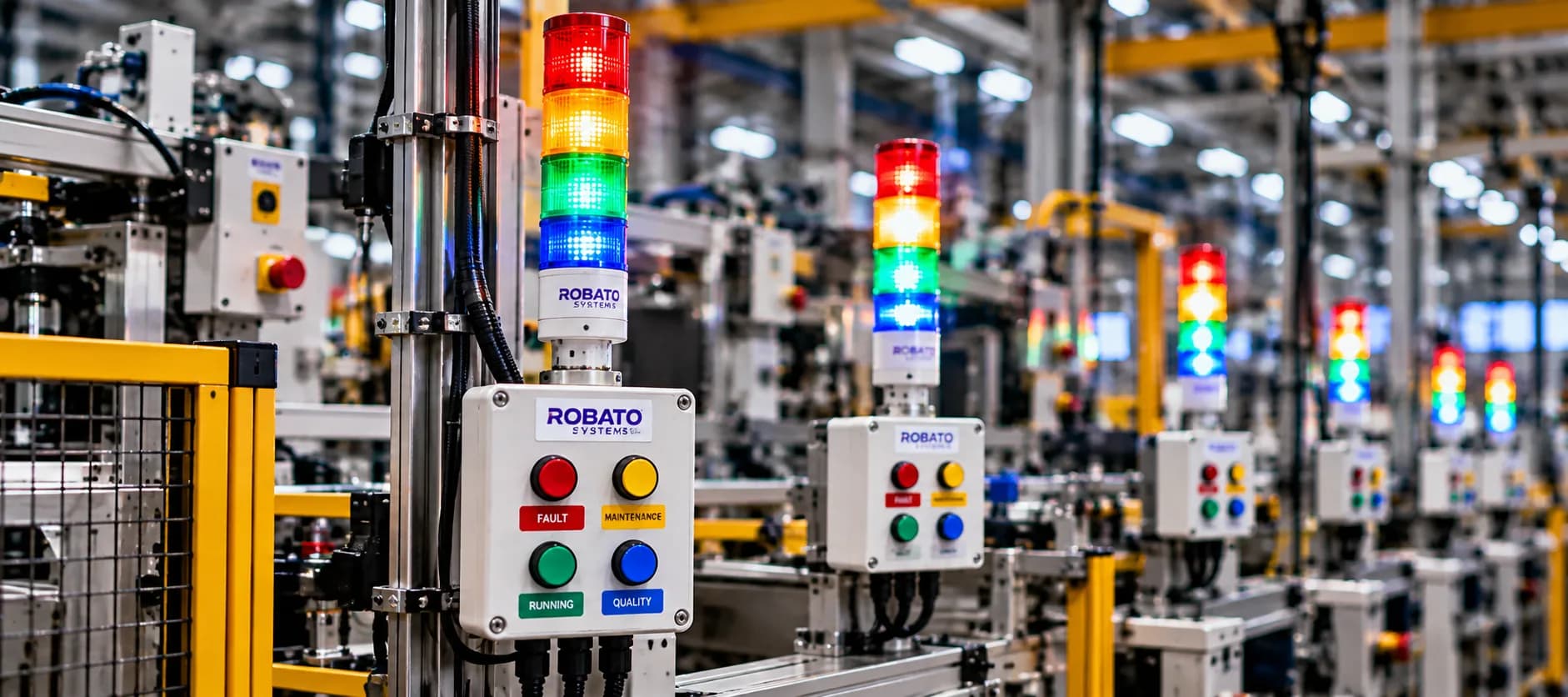
- Machine status
- Running time
- Downtime
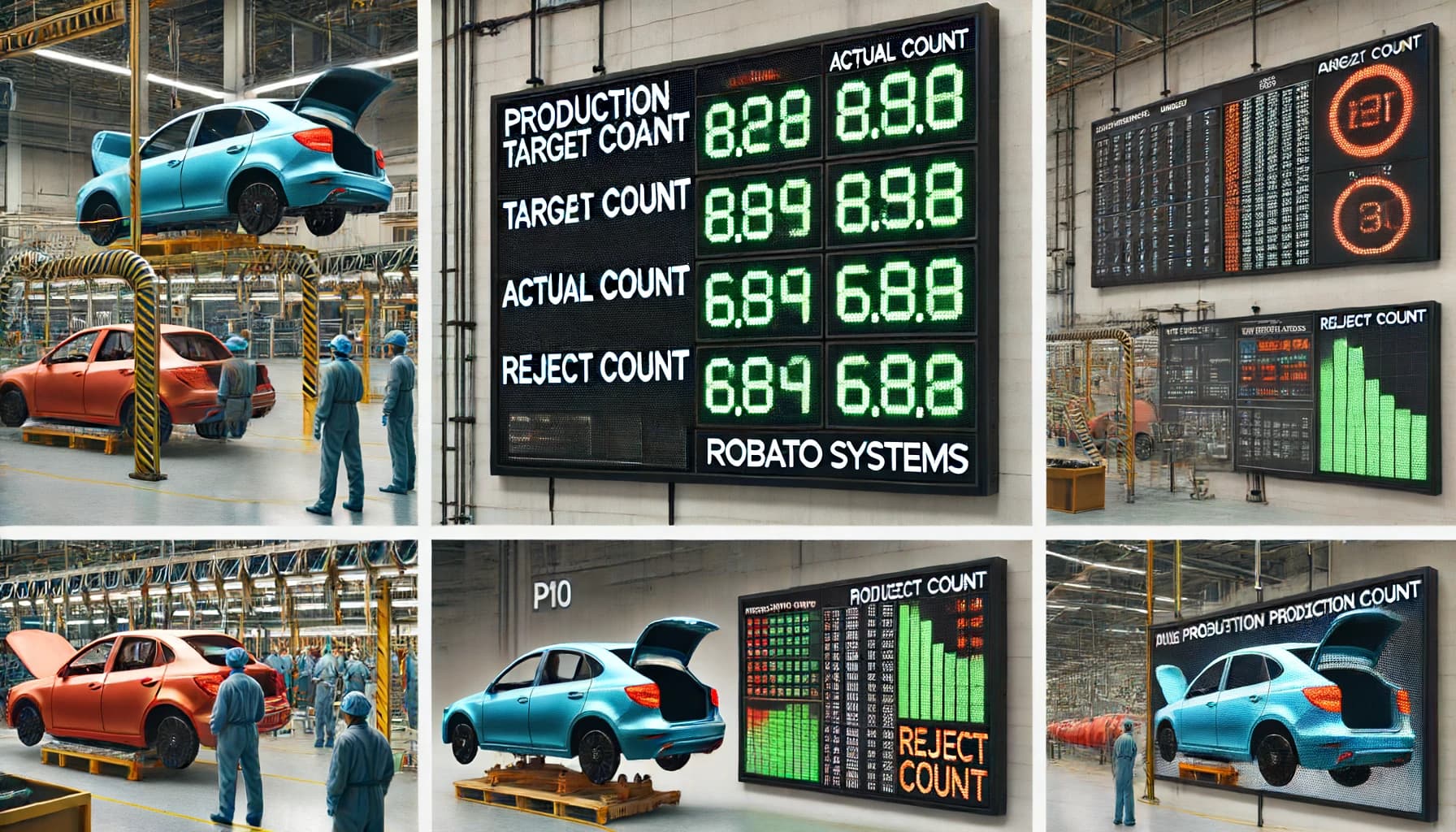
- Production count
- Reject count
- Cycle time
Step 3: OEE Calculation
The system automatically calculates:
- Availability
- Performance
- Quality
- Overall Equipment Effectiveness
without manual calculations.
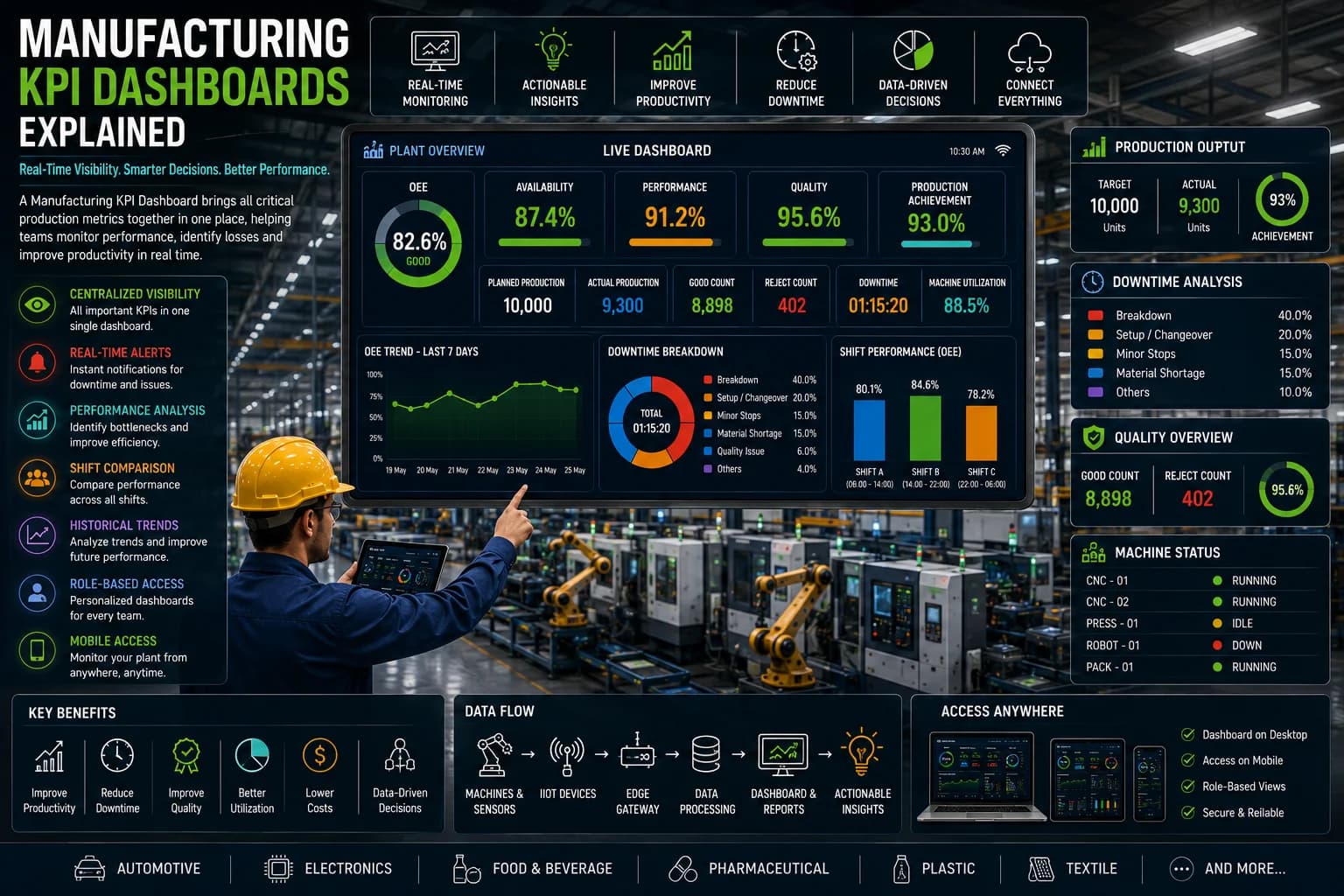
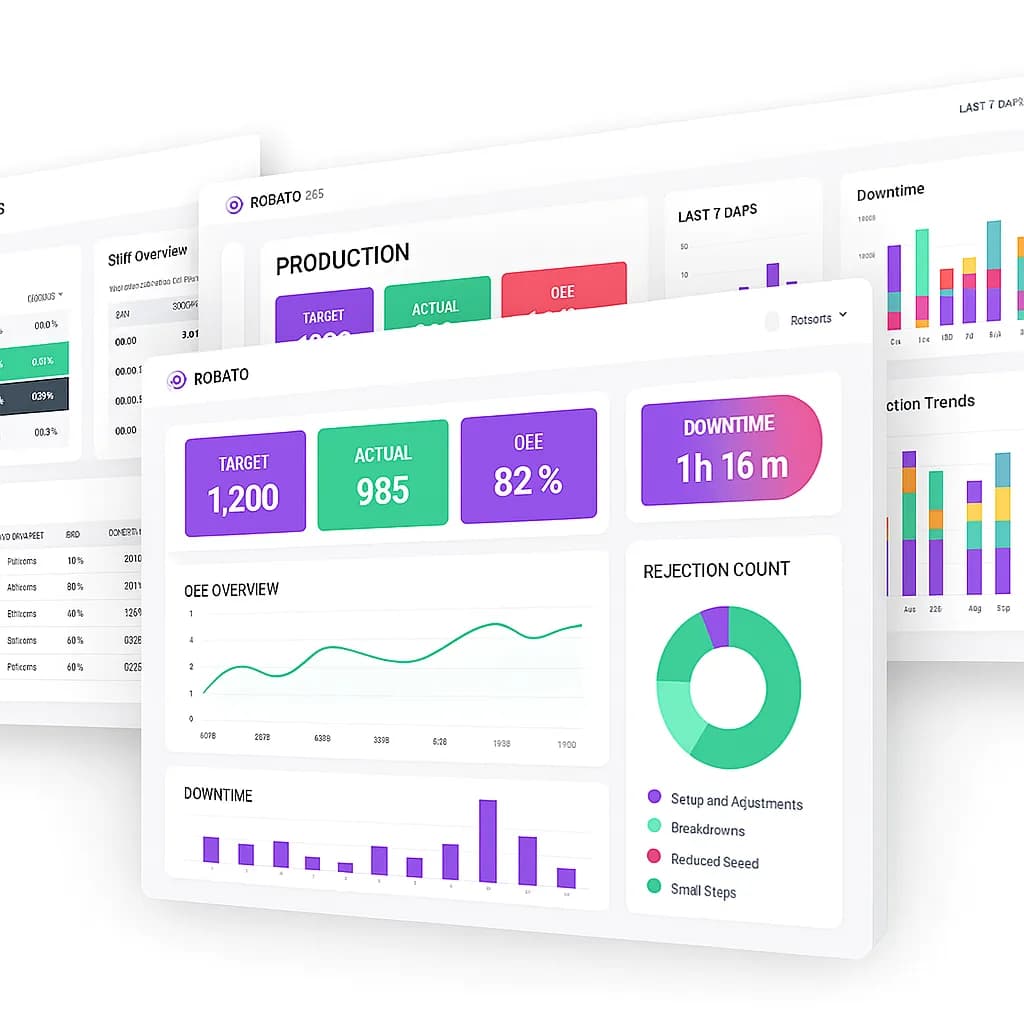
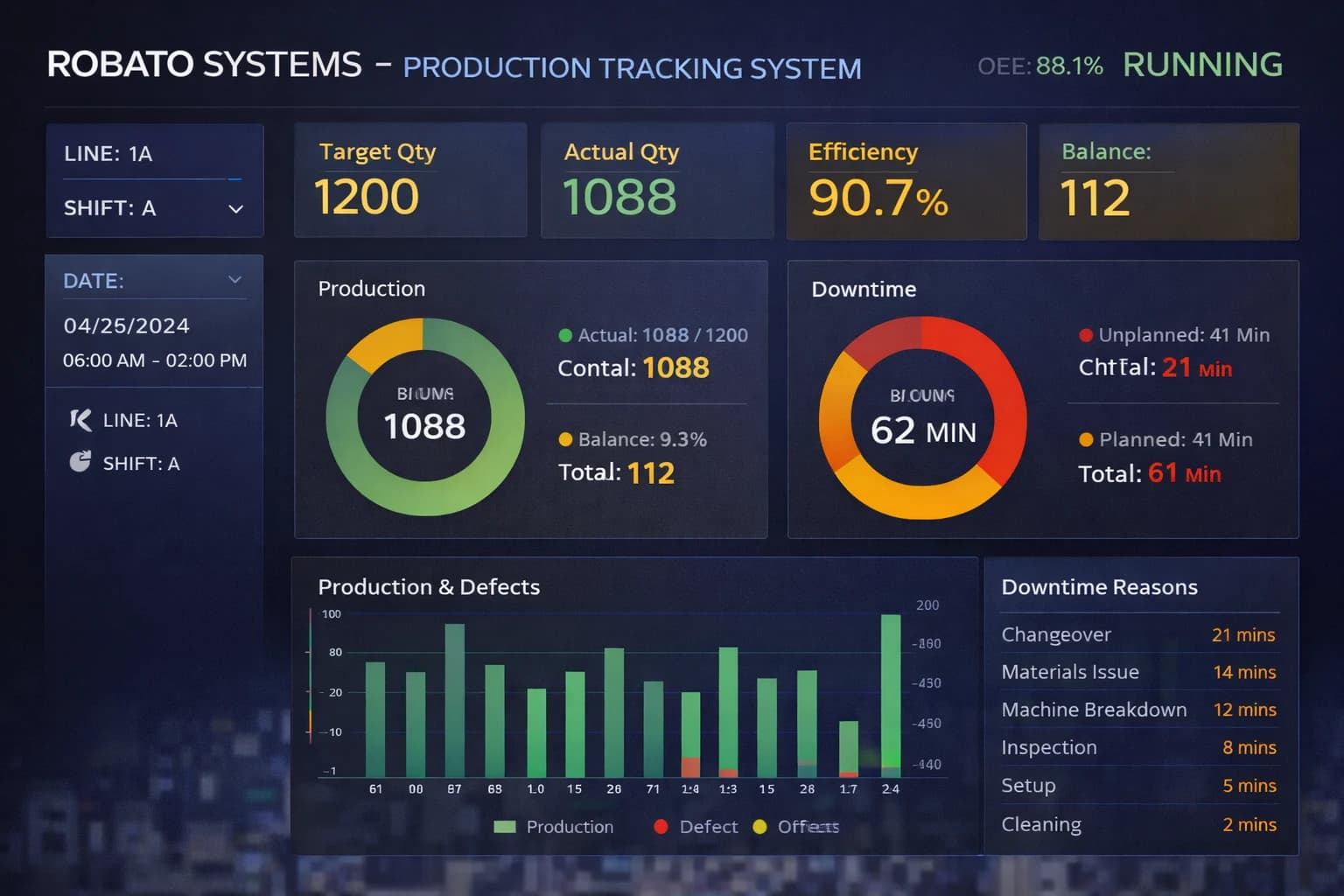
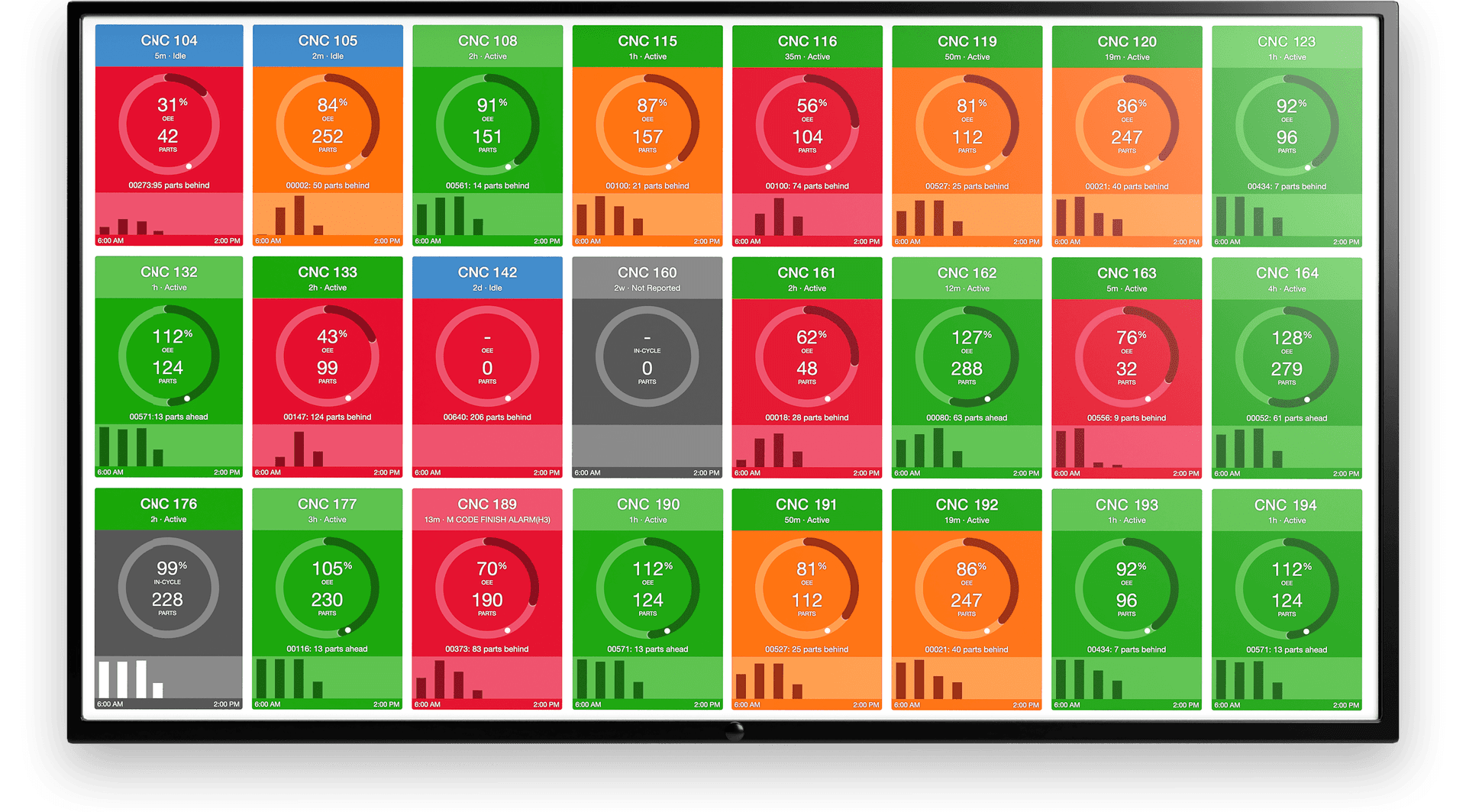
Step 4: Dashboard Visualization
Managers can monitor:
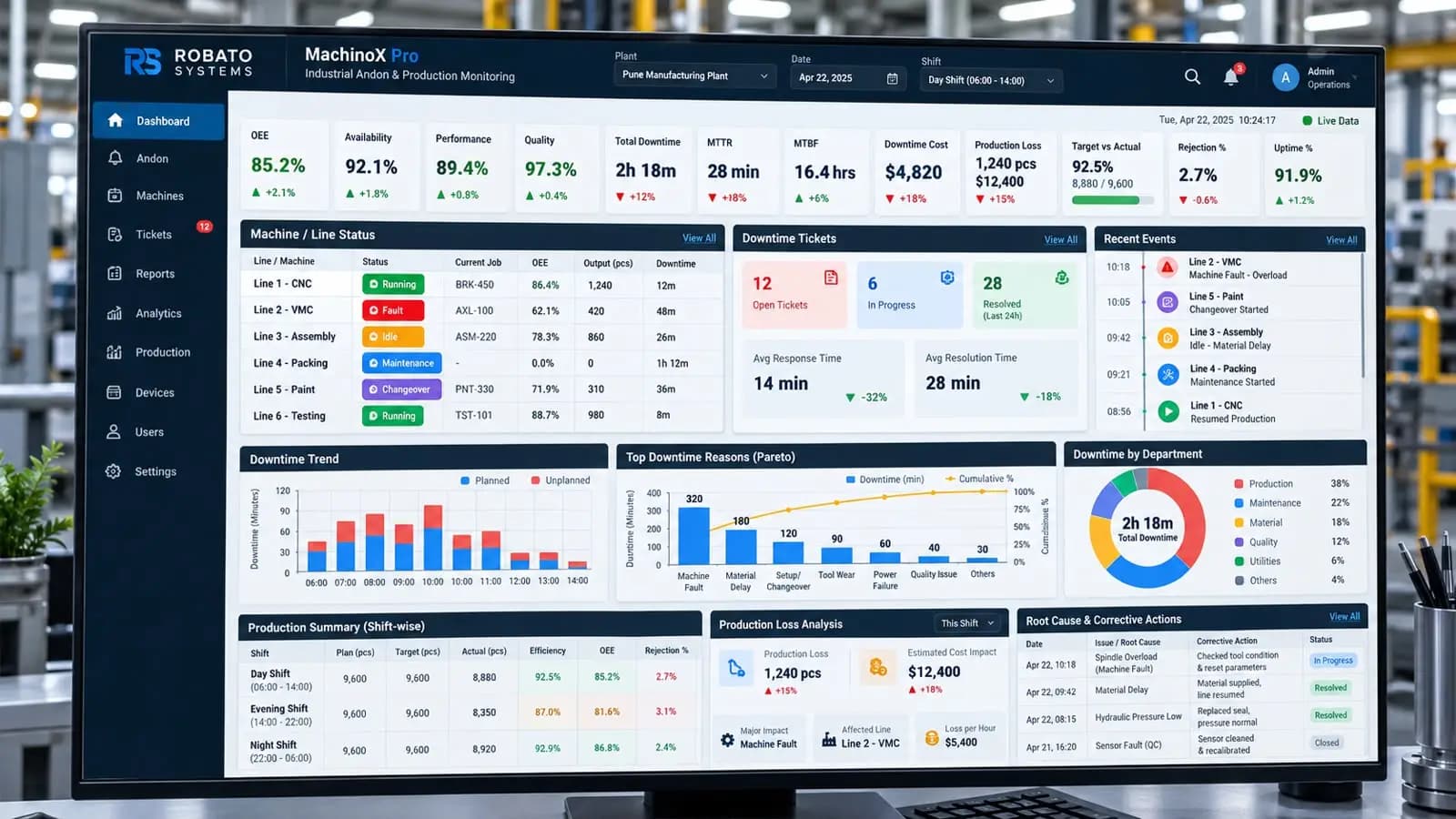
- OEE percentage
- Machine utilization
- Downtime trends
- Production efficiency
- Shift performance
- Plant performance
through interactive dashboards.
Step 5: Reporting & Analytics
Detailed reports help identify:
- Production bottlenecks
- Downtime causes
- Maintenance requirements
- Productivity trends
- Improvement opportunities
Key Features of OEE Software
Real-Time OEE Monitoring
Track equipment effectiveness continuously across production lines.
Automated OEE Calculation
Eliminate manual calculations and reduce reporting errors.
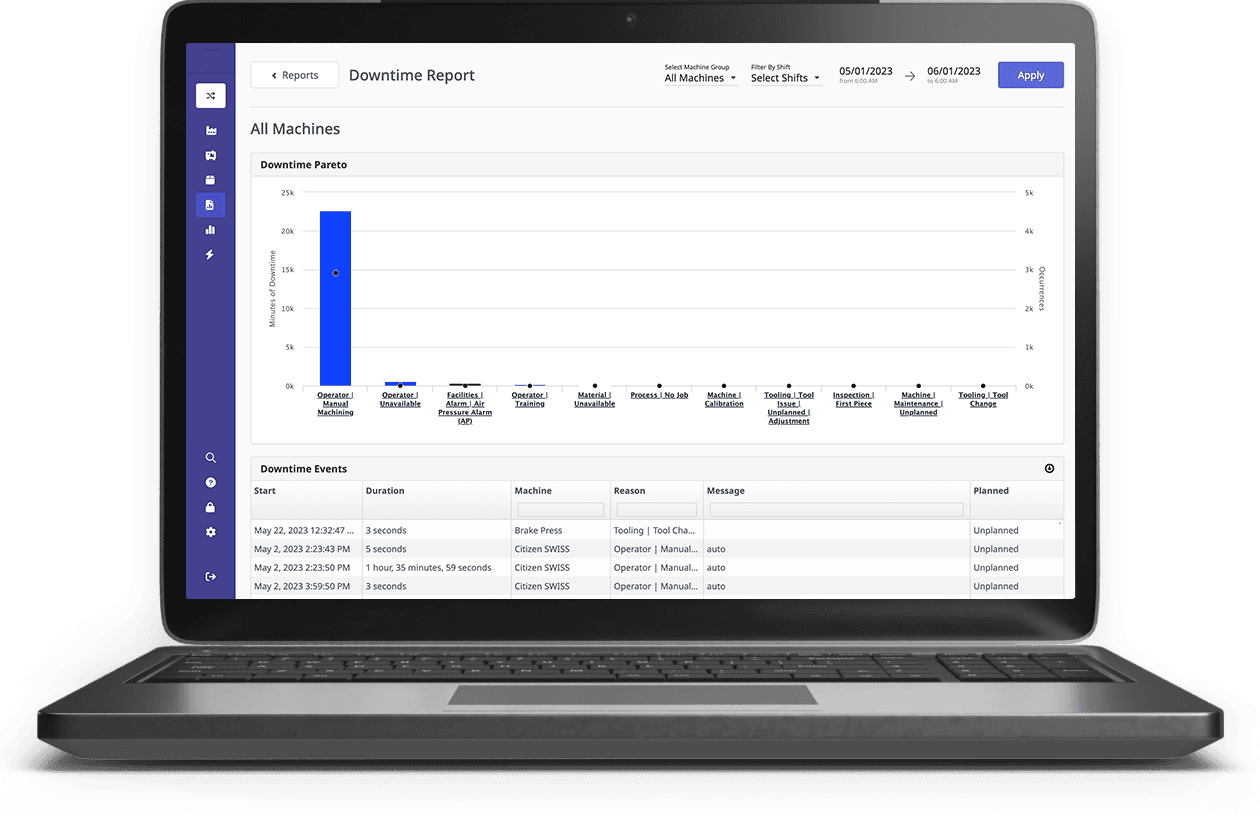
Downtime Monitoring
Identify:
- Planned downtime
- Unplanned downtime
- Breakdown duration
- Downtime reasons
Machine Utilization Tracking
Measure:
- Running hours
- Idle time
- Maintenance time
- Equipment efficiency
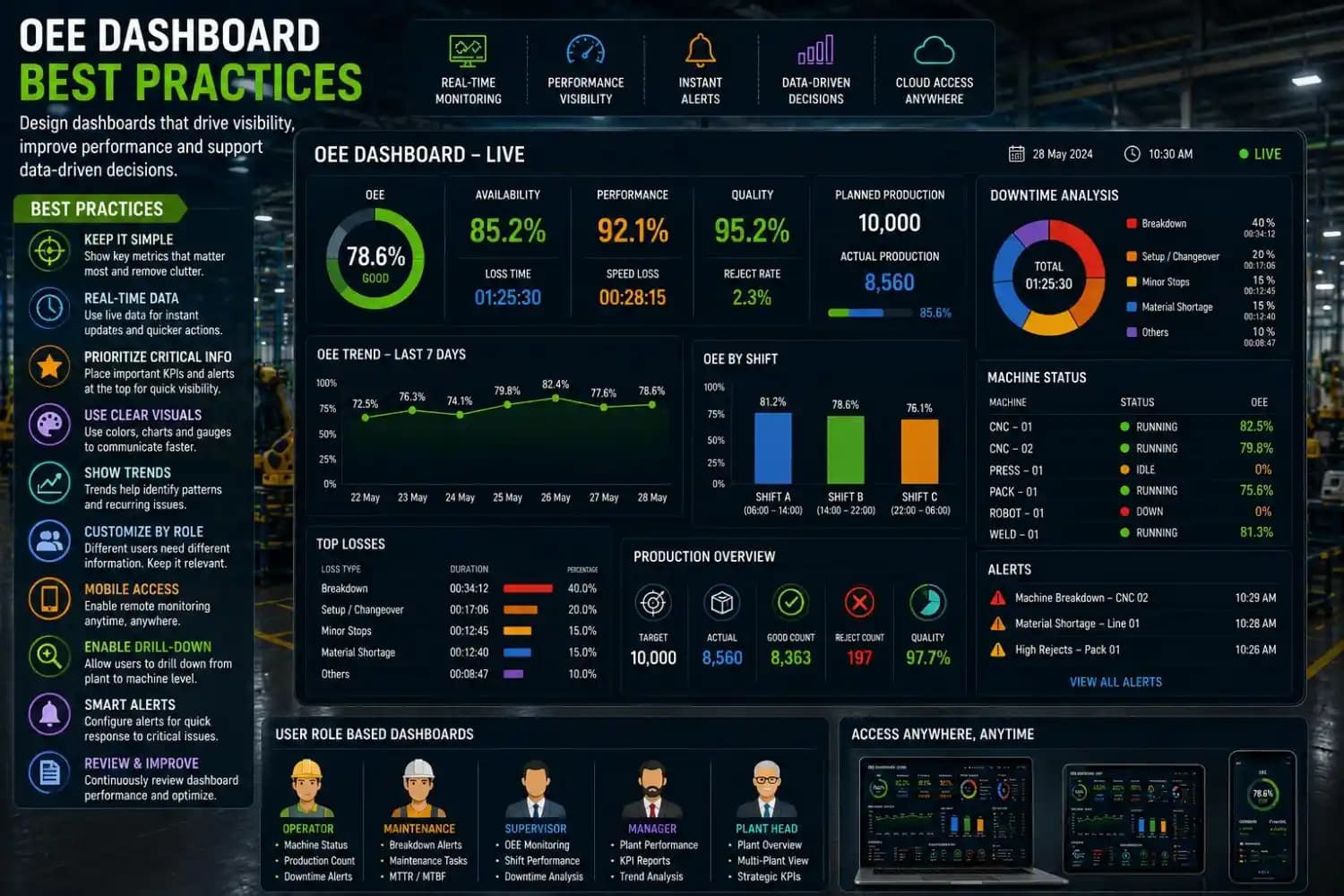
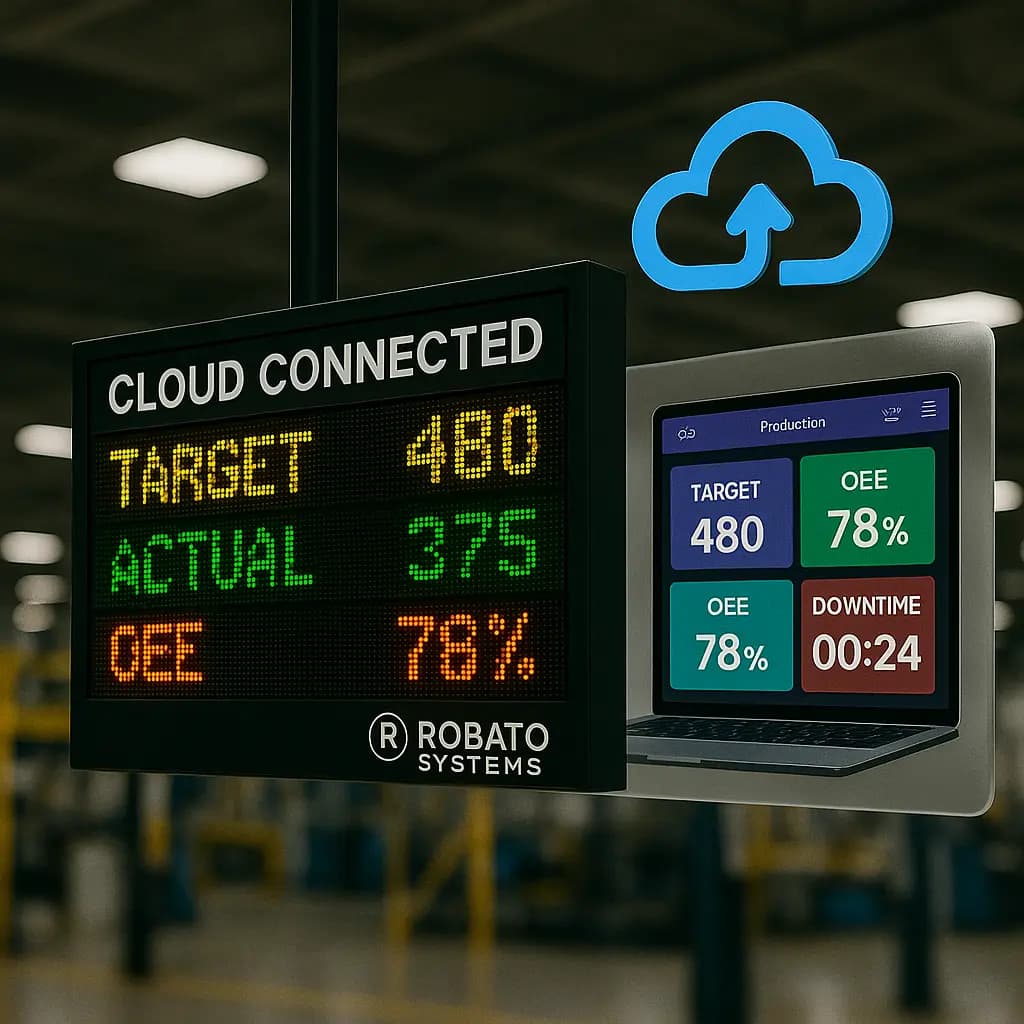
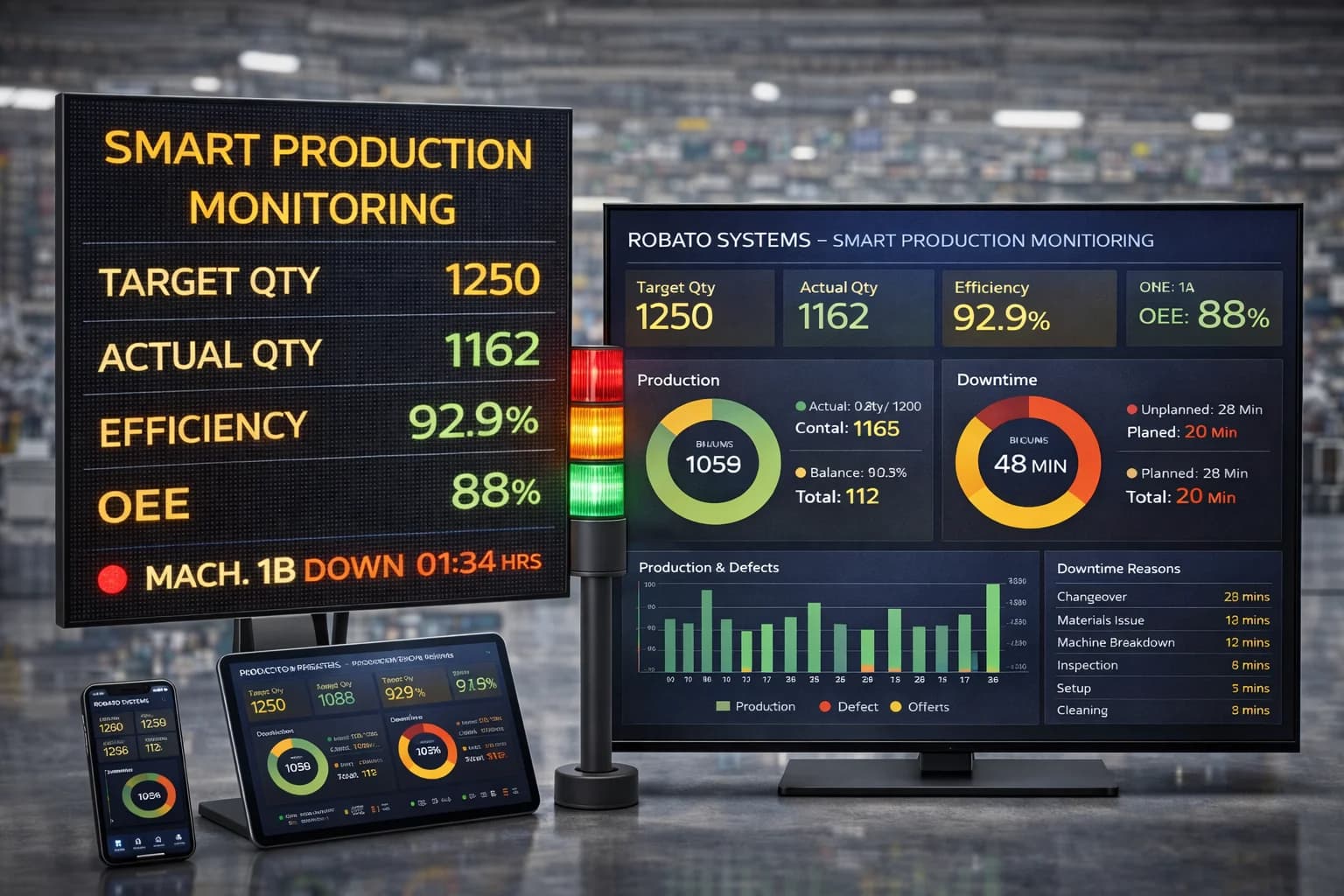
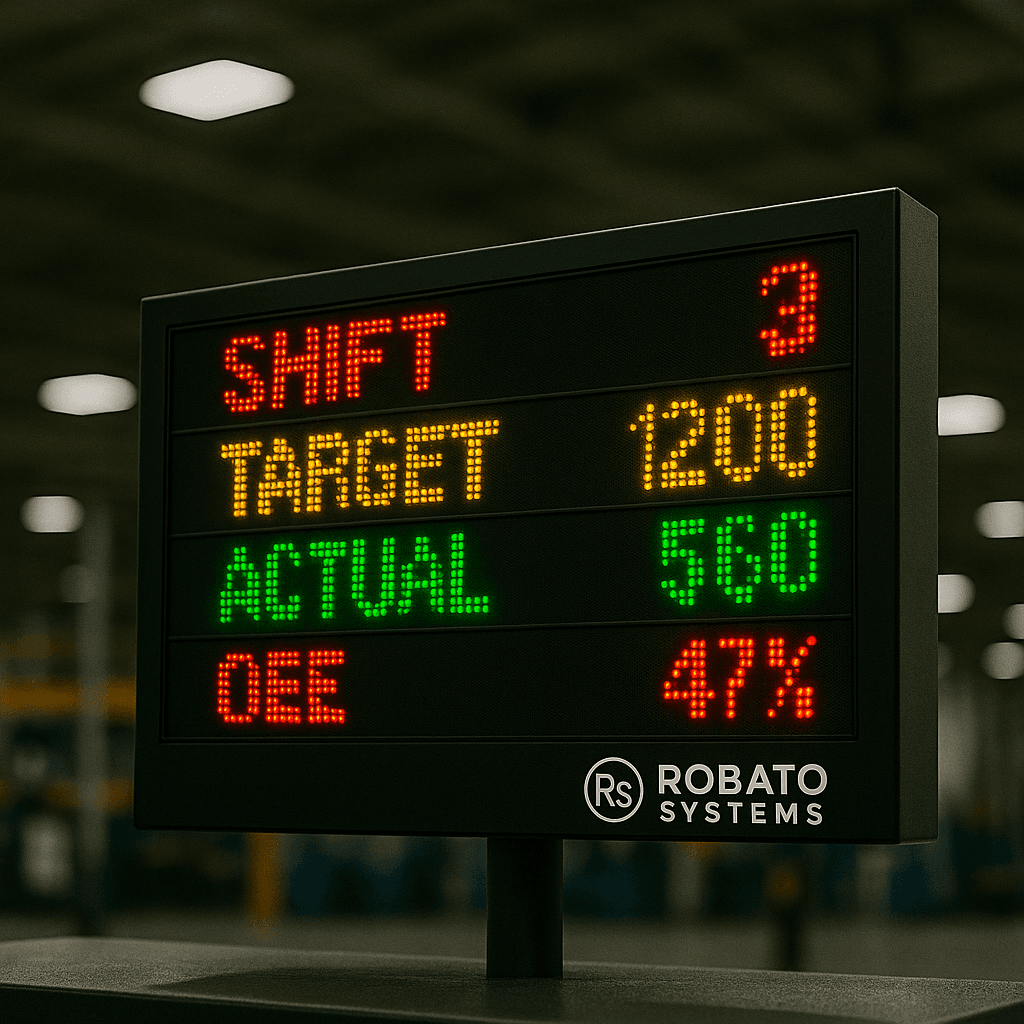
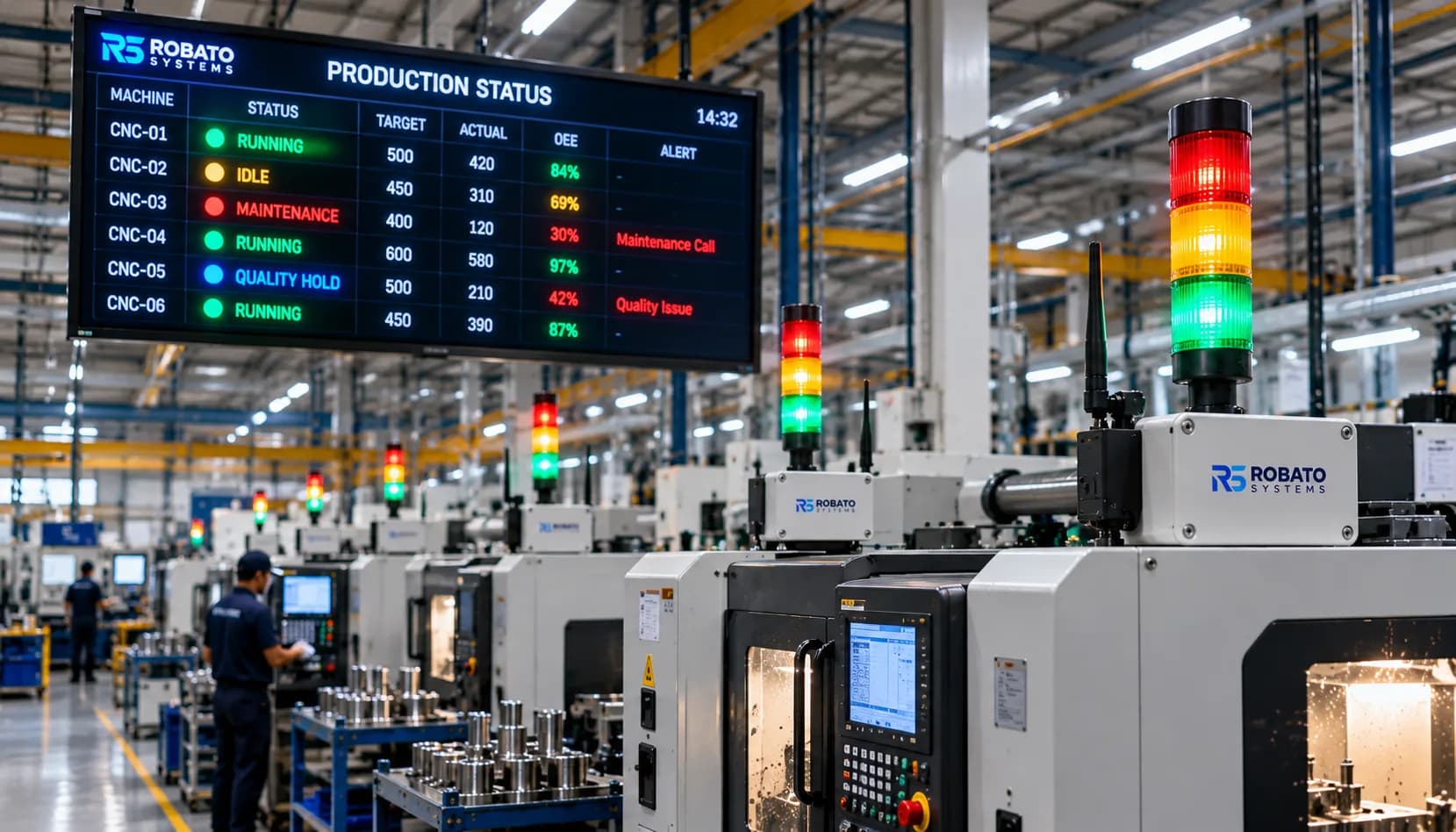
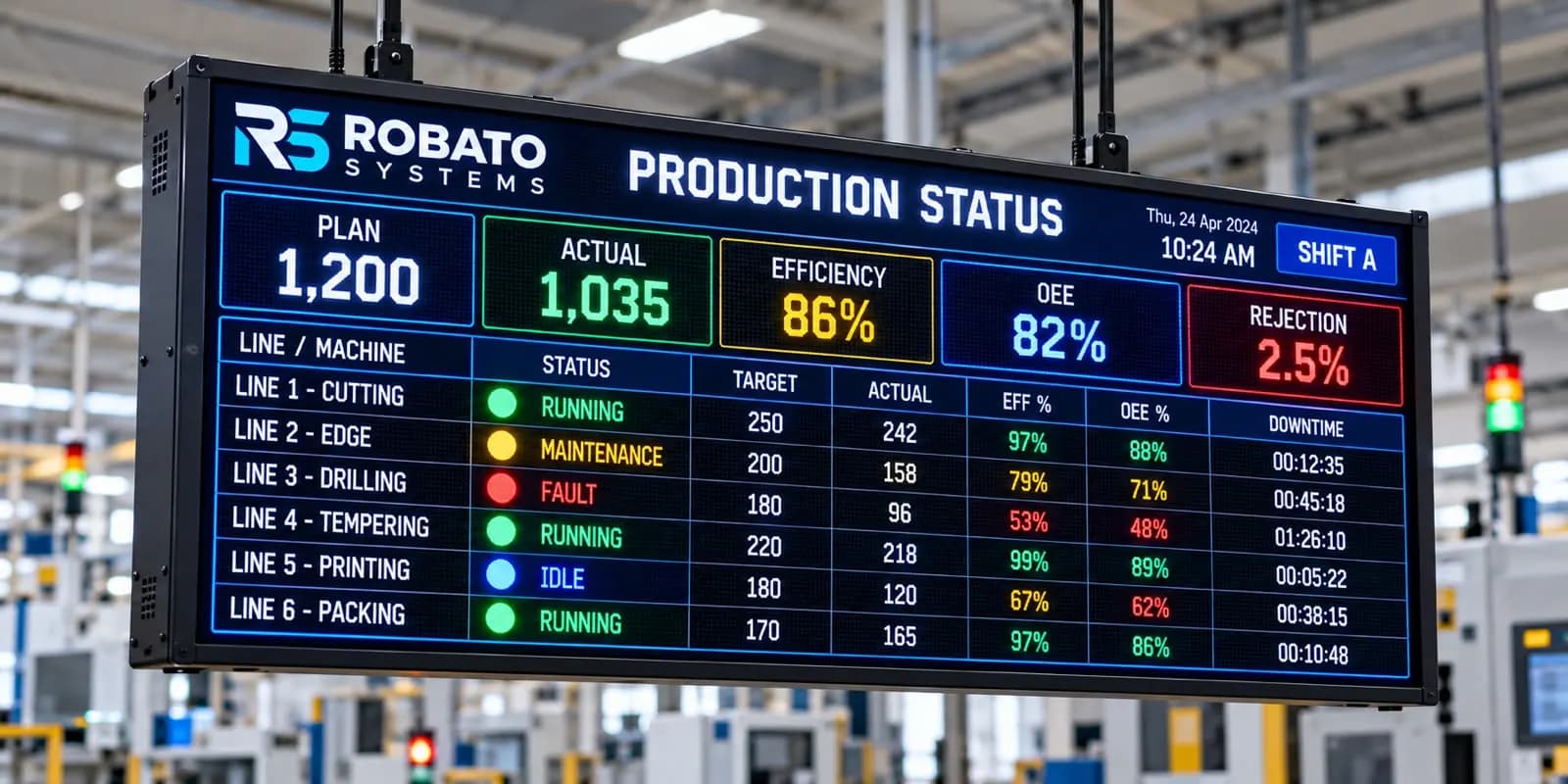
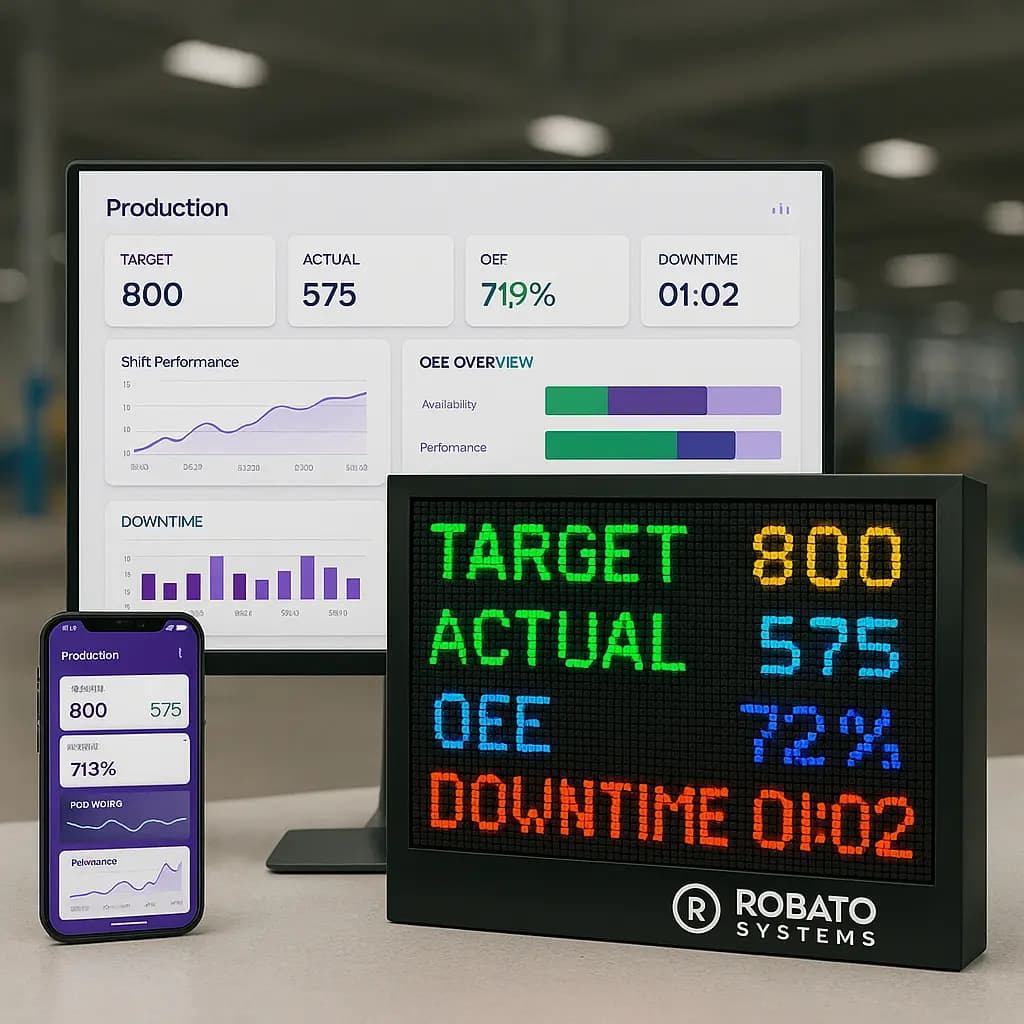
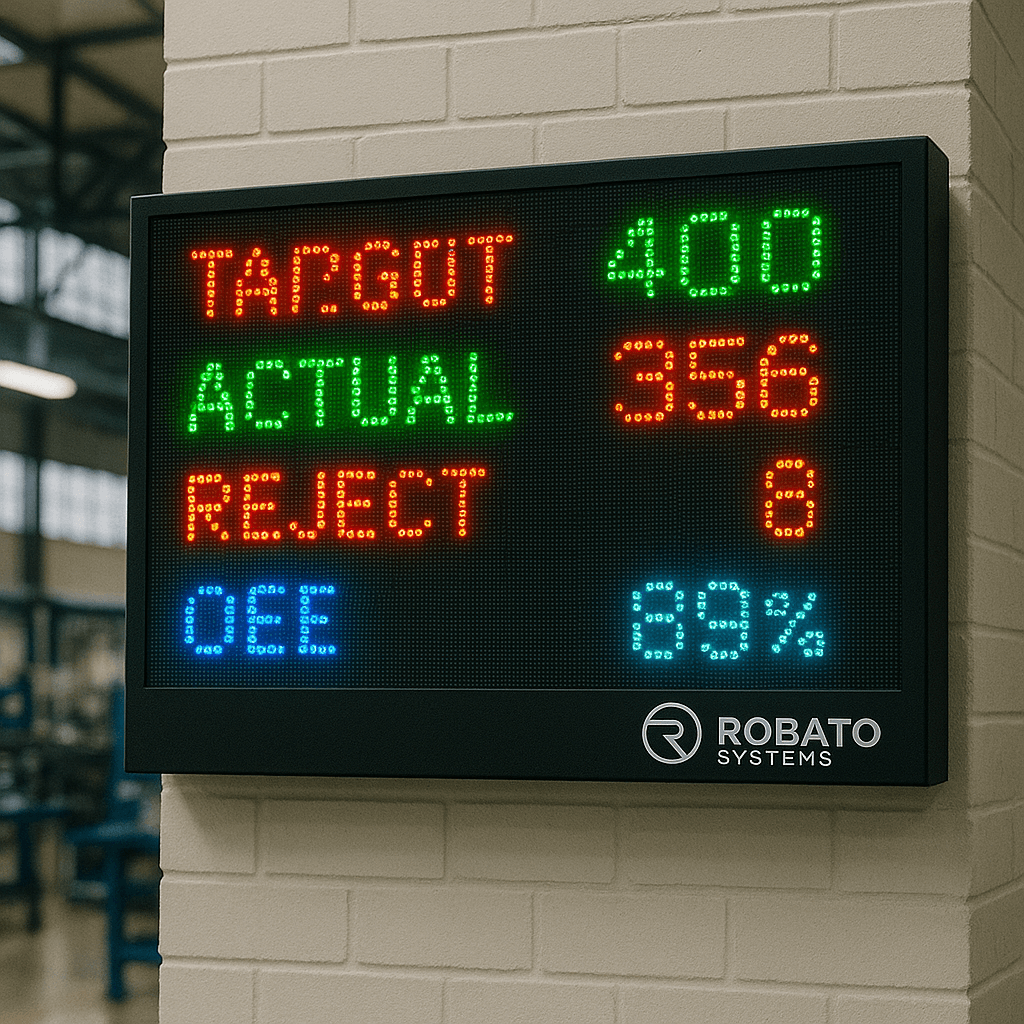
Live Production Dashboard
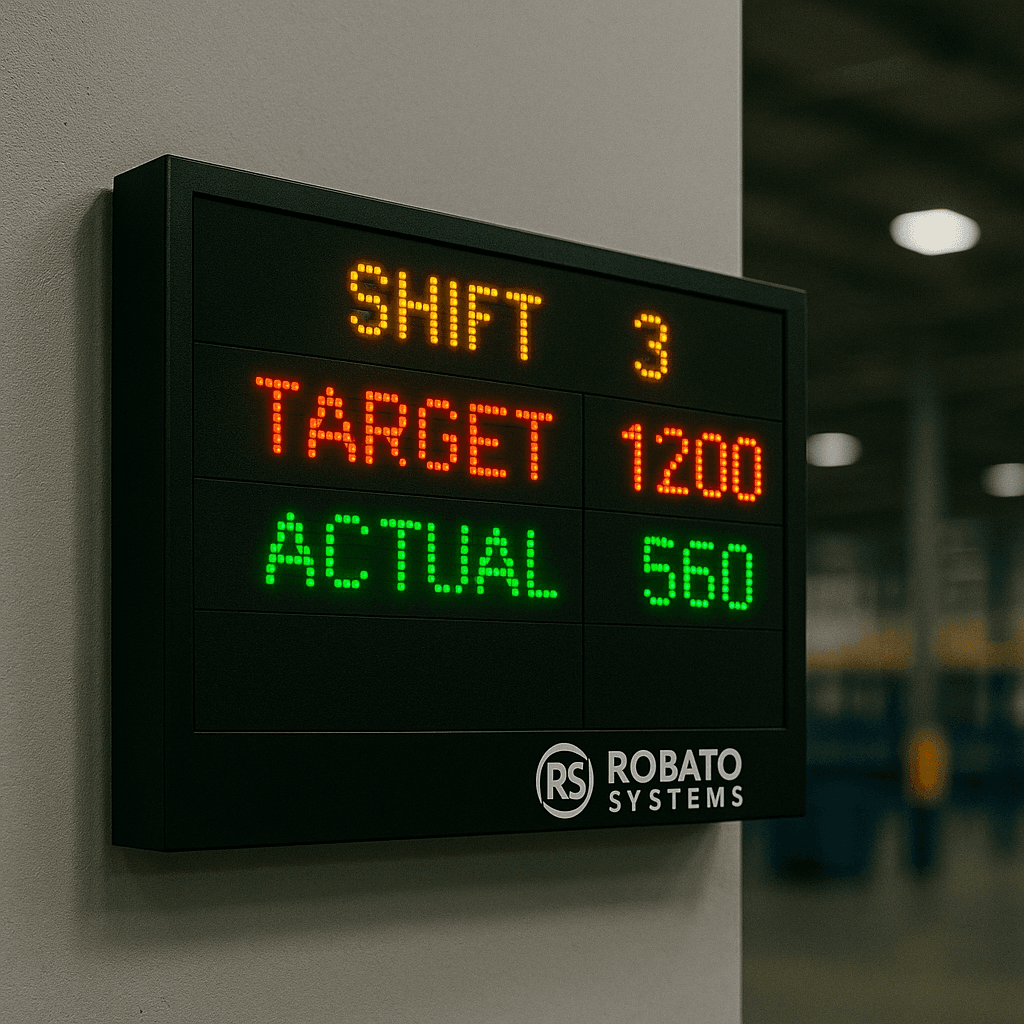
Display:
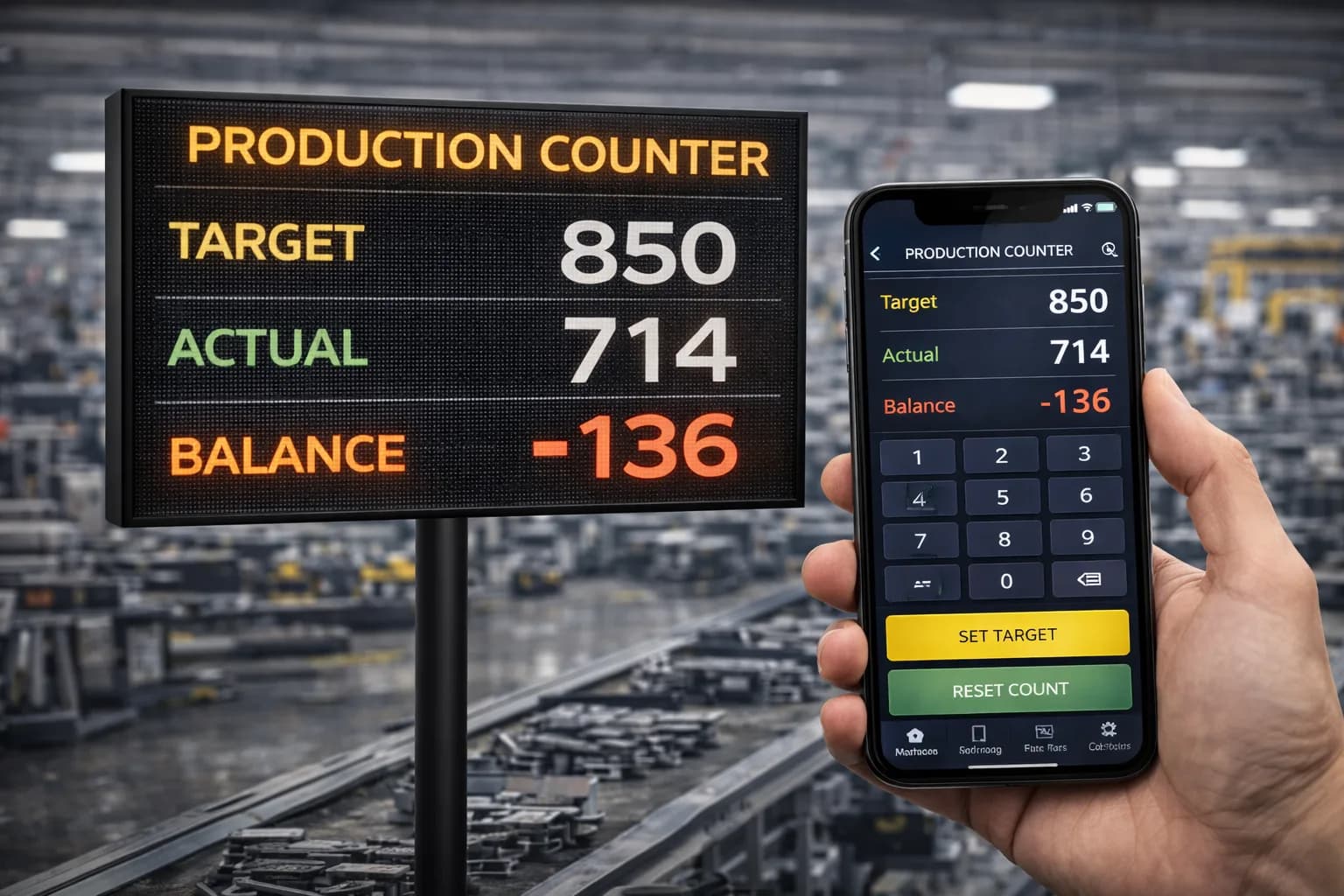
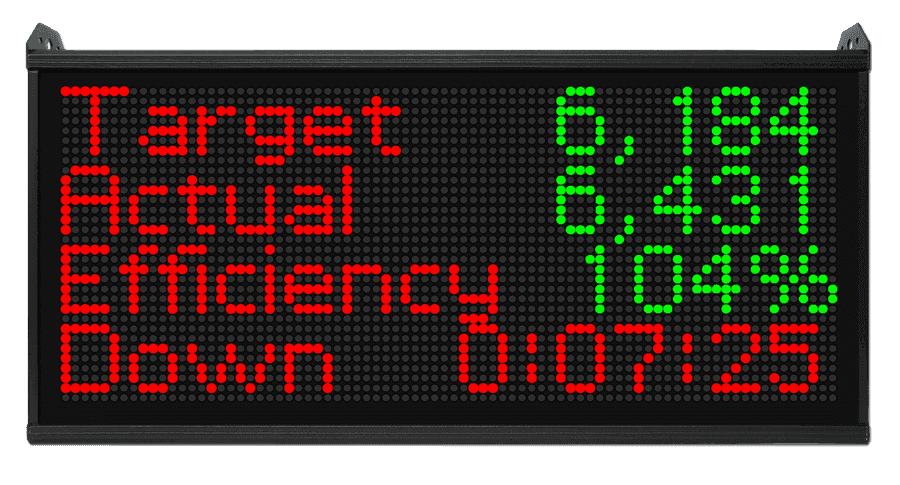
- Target vs Actual
- OEE
- Machine status
- Production output
- Quality metrics
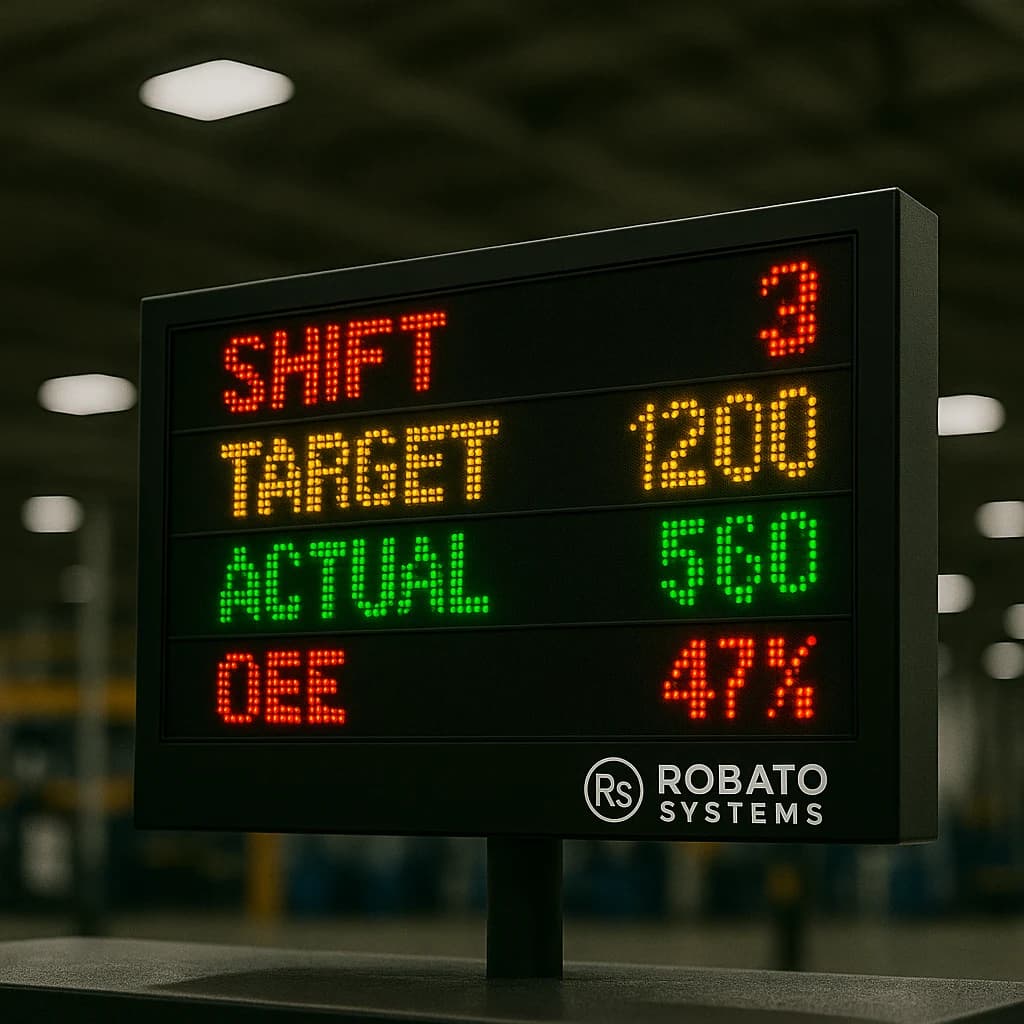
Shift-Wise Performance Analysis
Compare OEE across different production shifts.
Historical Reporting
Generate:
- Daily reports
- Weekly reports
- Monthly reports
- Machine history
- Trend analysis
Cloud-Based Monitoring
Access production data remotely from any location.
Multi-Plant Monitoring
Manage multiple manufacturing facilities through a centralized dashboard.
Mobile Notifications
Receive alerts for:
- Machine stoppages
- Low OEE
- Maintenance requests
- Production delays
Benefits of OEE Software
Improved Productivity
Identify production losses and optimize manufacturing processes.
Reduced Downtime
Detect machine issues early and improve maintenance response times.
Better Equipment Utilization
Ensure machines operate closer to their full production capacity.
Improved Production Planning
Use real-time production data to optimize scheduling.
Enhanced Product Quality
Monitor quality losses and reduce defects.
Data-Driven Decision Making
Managers make decisions based on accurate production data rather than assumptions.
Lower Manufacturing Costs
Reducing downtime and increasing productivity lowers operational expenses.
Continuous Improvement
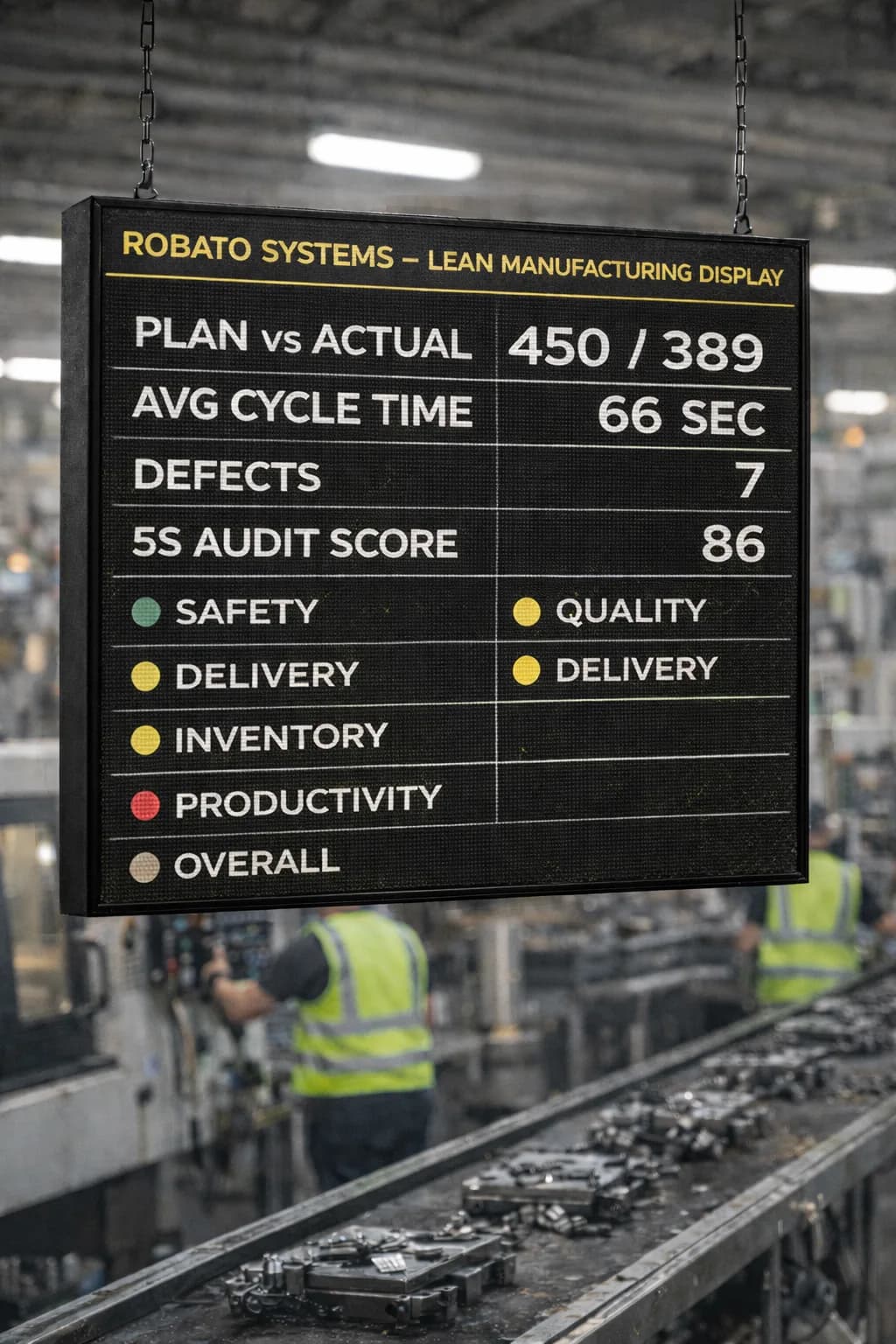
Historical analytics support Lean Manufacturing and Kaizen initiatives.
Industries That Benefit from OEE Software
OEE Software is used across a wide range of industries.
Automotive Manufacturing
Monitor robotic assembly lines, machining centers, and welding operations.
Electronics Manufacturing
Track SMT production, PCB assembly, and testing equipment.
Food & Beverage Industry
Analyze production efficiency, packaging performance, and processing operations.
Pharmaceutical Manufacturing
Monitor batch production, compliance, and quality control.
Textile Manufacturing
Track weaving, spinning, knitting, and finishing processes.
Plastic & Injection Molding
Measure machine utilization and production efficiency.
Packaging Industry
Monitor conveyors, filling machines, and packaging equipment.
Best Practices for Implementing OEE Software
Automate Data Collection
Connect directly with PLCs and machines to eliminate manual entry.
Define Standard KPIs
Ensure consistent OEE measurement across all production lines.
Monitor OEE Daily
Review dashboards regularly to identify performance issues early.
Analyze Downtime Causes
Focus on eliminating recurring production losses.
Train Employees
Educate operators and supervisors on interpreting OEE metrics.
Integrate with Existing Systems
Connect OEE Software with ERP, MES, SCADA, and production monitoring systems.
Common Challenges
Legacy Equipment Integration
Older machines may require retrofit sensors or IoT gateways.
Inaccurate Data Collection
Poor-quality data leads to unreliable OEE calculations.
Employee Resistance
Proper training improves adoption and long-term success.
Lack of Continuous Monitoring
OEE should be monitored continuously, not only at the end of each shift.
Future Trends in OEE Software
Modern OEE Software continues to evolve alongside Industry 4.0 technologies.
Artificial Intelligence
AI will identify production bottlenecks and recommend corrective actions automatically.
Predictive Maintenance
Machine learning algorithms will predict failures before breakdowns occur.
Digital Twins
Virtual production models will simulate equipment performance using live OEE data.
Edge Computing
Real-time processing at the machine level will improve data accuracy and response times.
Advanced Manufacturing Analytics
Cloud-based analytics will provide deeper insights into production efficiency and operational performance.
These innovations will make OEE Software even more valuable for manufacturers seeking operational excellence.
Why Choose Robato Systems for OEE Software?
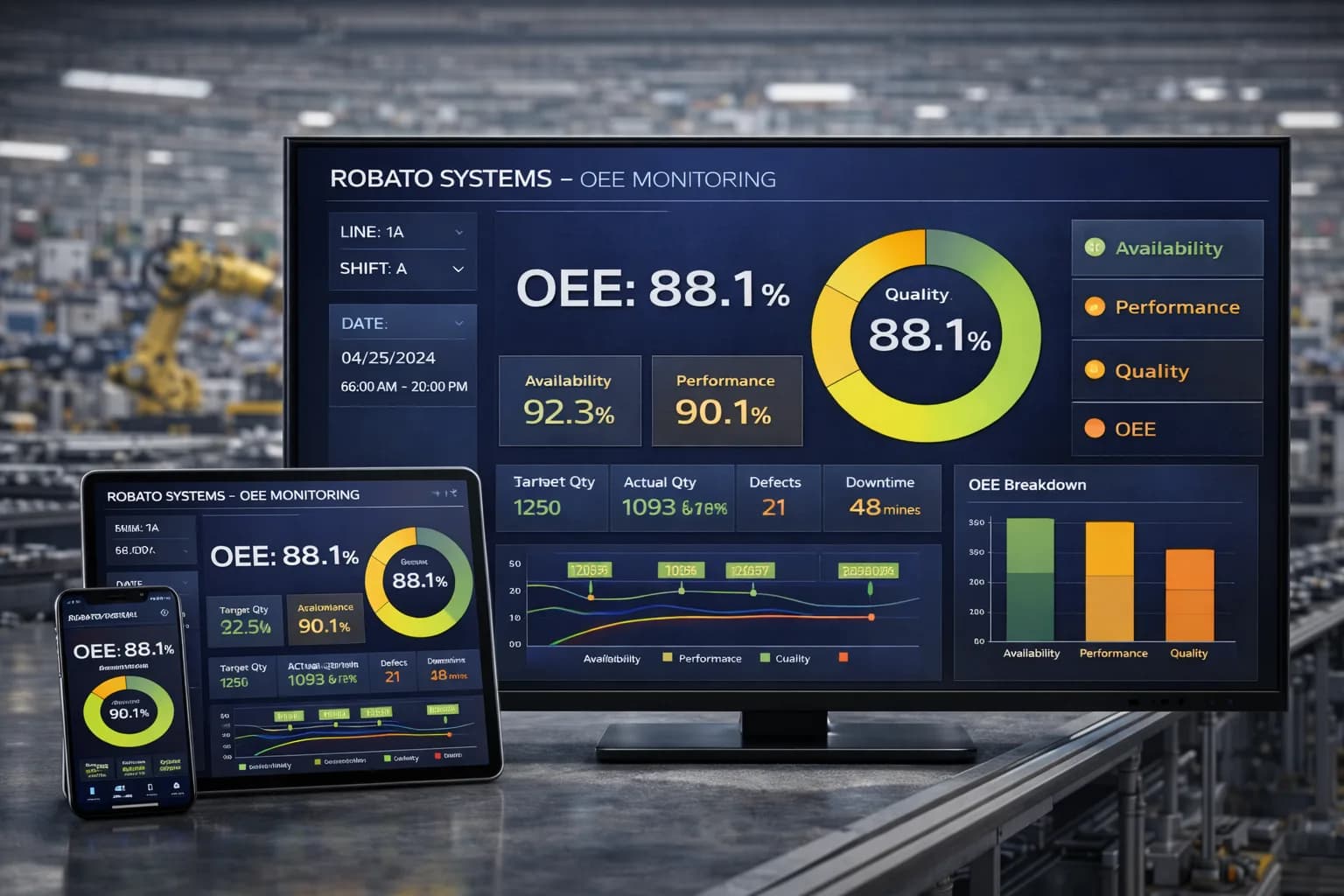
Robato Systems provides intelligent OEE Software designed to help manufacturers maximize equipment performance and improve production efficiency. Our solution integrates seamlessly with PLCs, Industrial IoT devices, MES, ERP, SCADA, and Production Monitoring Systems to automate OEE calculations and deliver real-time visibility into manufacturing operations.
The platform includes live OEE dashboards, downtime tracking, machine utilization monitoring, production reporting, KPI dashboards, shift-wise analytics, cloud access, automated alerts, and detailed historical reports. Built for Industry 4.0, Robato Systems enables manufacturers to identify production losses, improve maintenance planning, reduce downtime, and make faster data-driven decisions.
Whether your organization operates a single production line or multiple manufacturing facilities, our scalable OEE Software helps drive continuous improvement and long-term operational success.
Conclusion
OEE Software has become an essential tool for manufacturers aiming to improve productivity, reduce downtime, and optimize equipment performance. By automating data collection, calculating Overall Equipment Effectiveness in real time, and providing actionable insights through dashboards and reports, OEE Software enables organizations to make smarter operational decisions and continuously improve manufacturing performance.
As Industry 4.0 technologies continue to transform factories, investing in advanced OEE Software helps manufacturers build connected, efficient, and data-driven production environments that are prepared for future growth.
Frequently Asked Questions (FAQs)
What is OEE Software?
OEE Software is a manufacturing solution that automatically measures Overall Equipment Effectiveness by monitoring machine availability, performance, and quality in real time.
What are the benefits of OEE Software?
It improves productivity, reduces downtime, increases equipment utilization, enhances quality, supports preventive maintenance, and provides real-time production insights.
Can OEE Software integrate with existing manufacturing systems?
Yes. Modern OEE Software integrates with PLCs, MES, ERP, SCADA, Industrial IoT devices, Production Monitoring Systems, and cloud platforms.
Which industries use OEE Software?
Automotive, electronics, pharmaceuticals, food processing, textiles, plastics, packaging, FMCG, and many other manufacturing industries.
Is OEE Software suitable for small and medium-sized manufacturers?
Yes. OEE Software is scalable and can be implemented in both small manufacturing facilities and large multi-plant enterprises.