Manufacturing productivity depends on more than machines, production processes, and raw materials. The people operating and managing production equipment also play an important role in maintaining consistent production performance.
When operators are not properly utilized, production can experience delays, idle time, inconsistent output, quality problems, and slower response to machine issues.
However, measuring operator efficiency can be challenging when manufacturing plants depend on manual records, paper-based reports, or disconnected spreadsheets.
This is where operator efficiency monitoring becomes useful.
Operator efficiency monitoring is the process of collecting and analyzing information related to operator activity, production output, machine operation, working time, idle time, and other relevant production indicators.
The objective is not simply to measure individual employees. Instead, the goal is to understand how effectively available workforce time is being utilized and identify opportunities to improve the overall production process.
In a modern manufacturing environment, operator efficiency monitoring can become an important part of workforce analytics, production monitoring, and continuous improvement.
What Does Operator Efficiency Mean in Manufacturing?
Operator efficiency refers to how effectively available operator time and resources contribute to production activities.
An operator may spend a shift performing several different activities:
- Operating machines
- Loading and unloading materials
- Performing inspections
- Handling changeovers
- Responding to machine alerts
- Waiting for materials
- Waiting for maintenance
- Performing setup activities
- Recording production information
- Handling quality-related tasks
Not all working time directly contributes to production output.
For example, an operator may be available for an eight-hour shift but spend a significant amount of time waiting for materials or machine maintenance.
Operator efficiency monitoring helps identify these patterns.
What Is Operator Efficiency Monitoring?
Operator efficiency monitoring uses production and workforce-related data to understand how effectively operators are contributing to manufacturing activities.
Depending on the manufacturing environment, the monitoring system may consider:
- Operator working time
- Production quantity
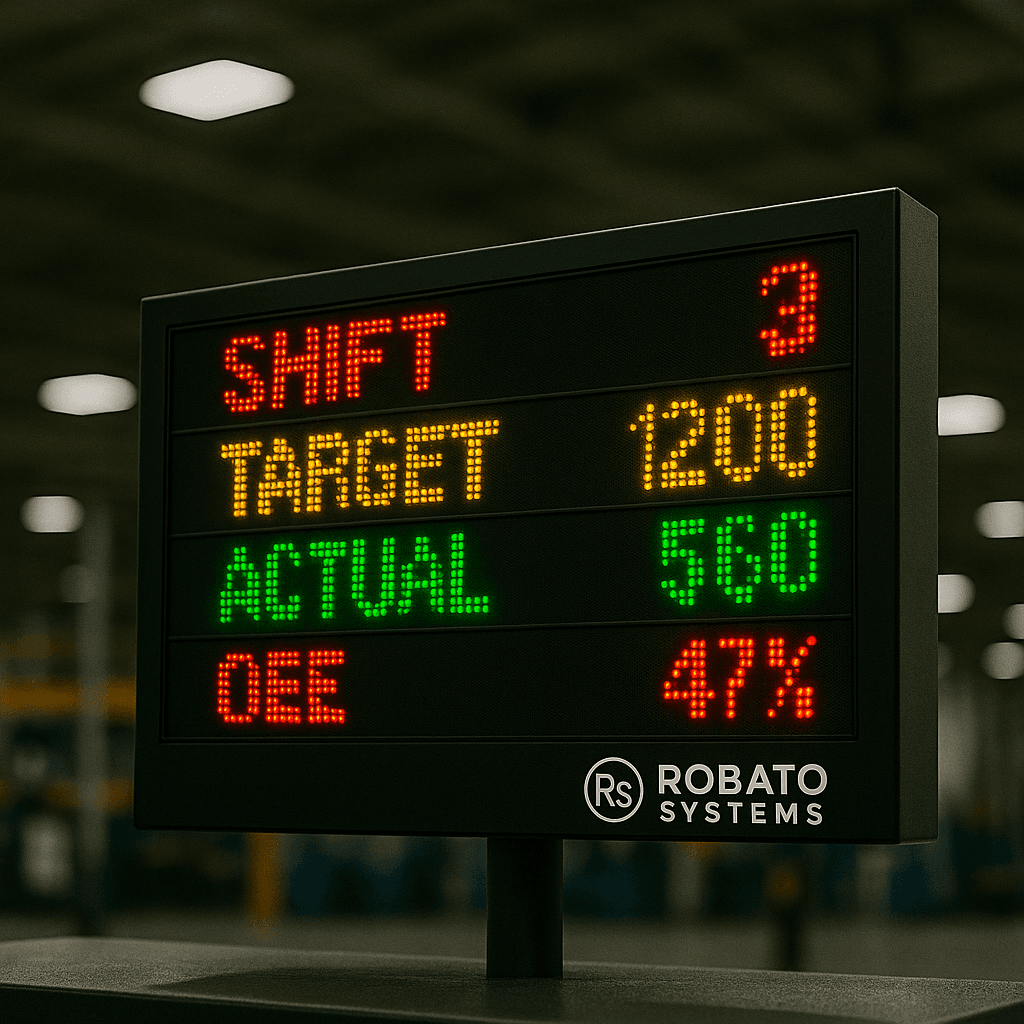
- Target quantity
- Actual quantity
- Machine operating time
- Operator idle time
- Downtime
- Changeover time
- Production cycle information
- Shift information
- Machine assignments
The exact metrics should be selected according to the production process and the decisions the organization needs to make.
Why Is Operator Efficiency Monitoring Important?
Manufacturers often invest heavily in machines and automation while overlooking workforce-related production losses.
A machine may have excellent technical performance, but production can still be affected if:
- Operators are waiting for materials
- Machines are not staffed when required
- Operators are assigned inefficiently
- Production information is recorded late
- Changeovers take longer than expected
- Operators spend excessive time waiting for maintenance
- Workforce utilization varies significantly between shifts
Operator efficiency monitoring can help make these issues more visible.
Operator Efficiency vs Operator Productivity
These two terms are related but should not always be treated as identical.
Operator Efficiency
Efficiency focuses on how effectively available time and resources are being used.
For example, an operator may have eight hours available but spend part of the shift waiting for production-related activities.
Operator Productivity
Productivity generally focuses on the relationship between input and output.
For example:
Production Output / Operator Hours
This can help manufacturers understand how much production is being achieved relative to available labor time.
Both concepts can be useful, but they answer different questions.
How Does Operator Efficiency Monitoring Work?
A typical operator efficiency monitoring process can follow several stages.
Step 1: Operator Identification
The system identifies the operator working on a machine, production line, or work area.
Identification may be performed using:
- Login credentials
- Operator IDs
- RFID cards
- Digital terminals
- Production systems
Step 2: Production Data Collection
The system collects relevant production information such as:
- Target production
- Actual production
- Production cycles
- Machine status
- Downtime
Step 3: Working Time Analysis
The system compares available operator time with productive and non-productive periods.
Step 4: KPI Calculation
Relevant operator KPIs are calculated based on the organization's defined methodology.
Step 5: Dashboard Visualization
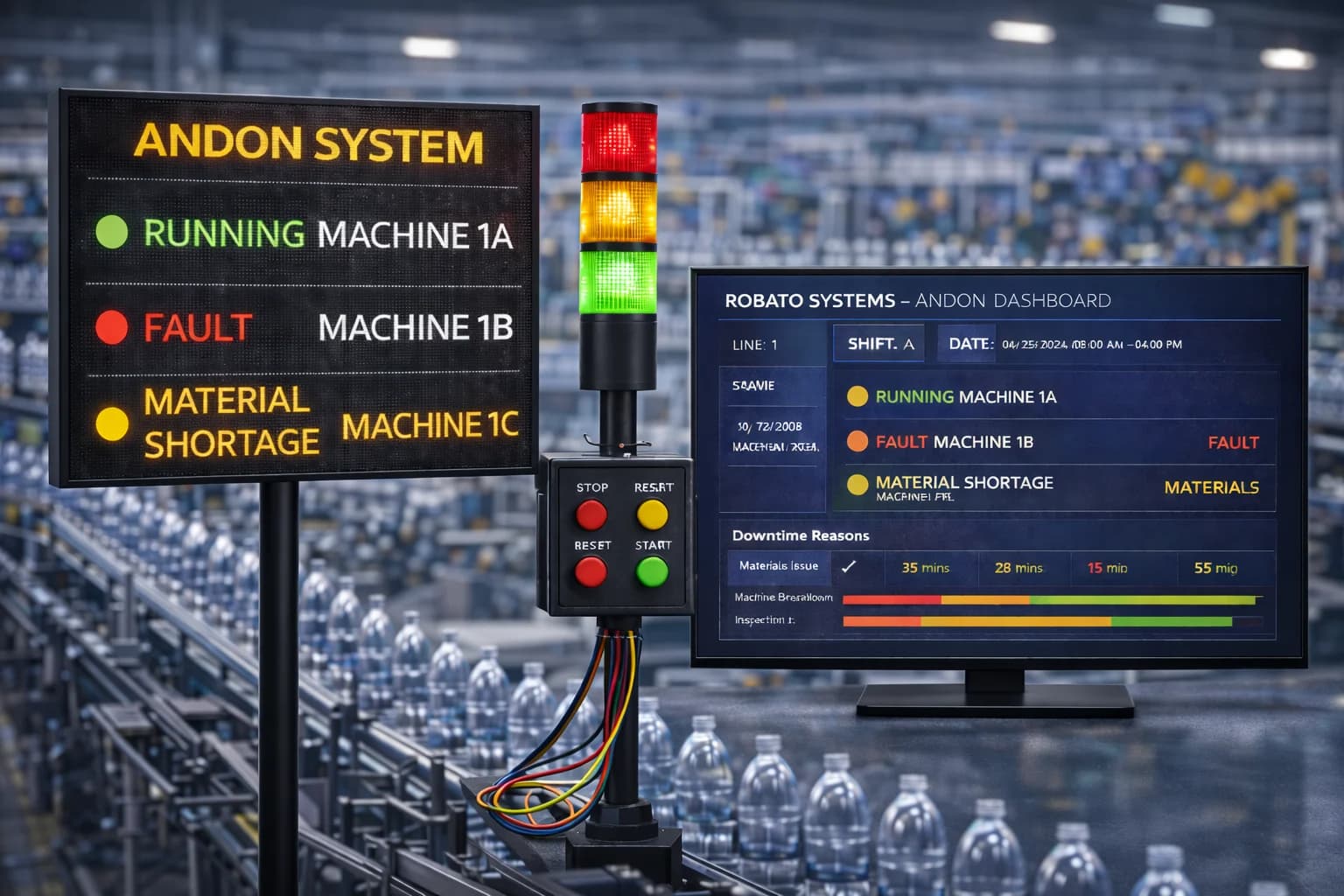
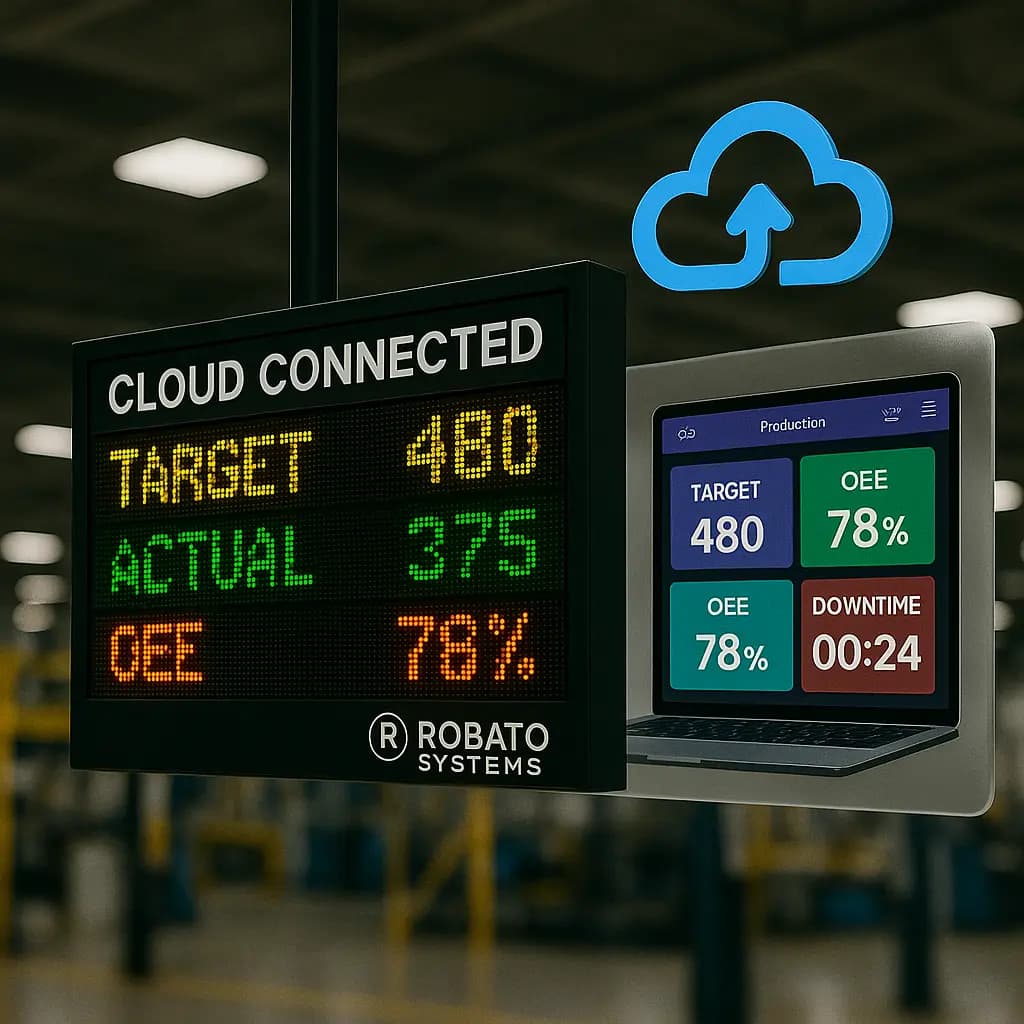
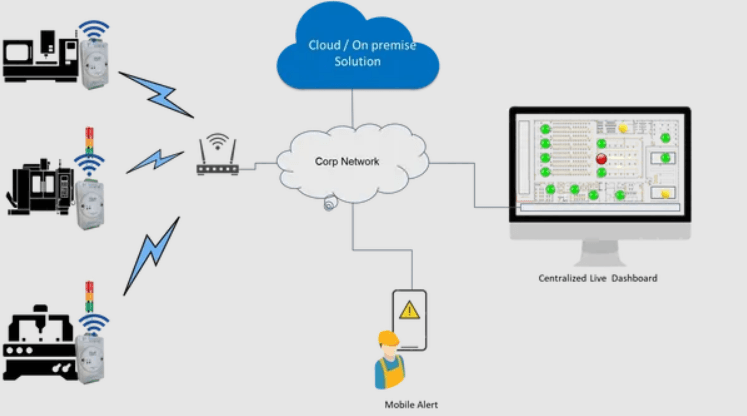
Managers can view operator and workforce performance through centralized dashboards.
Step 6: Continuous Improvement
Production teams use the information to identify bottlenecks and improve workforce utilization.
Key Metrics for Operator Efficiency Monitoring
A useful operator efficiency system should focus on meaningful metrics rather than simply collecting large amounts of information.
1. Production Output Per Operator
This metric shows how much production is associated with an operator during a defined period.
It can be reviewed by:
- Shift
- Day
- Machine
- Production line
- Product
This can help identify differences in production performance.
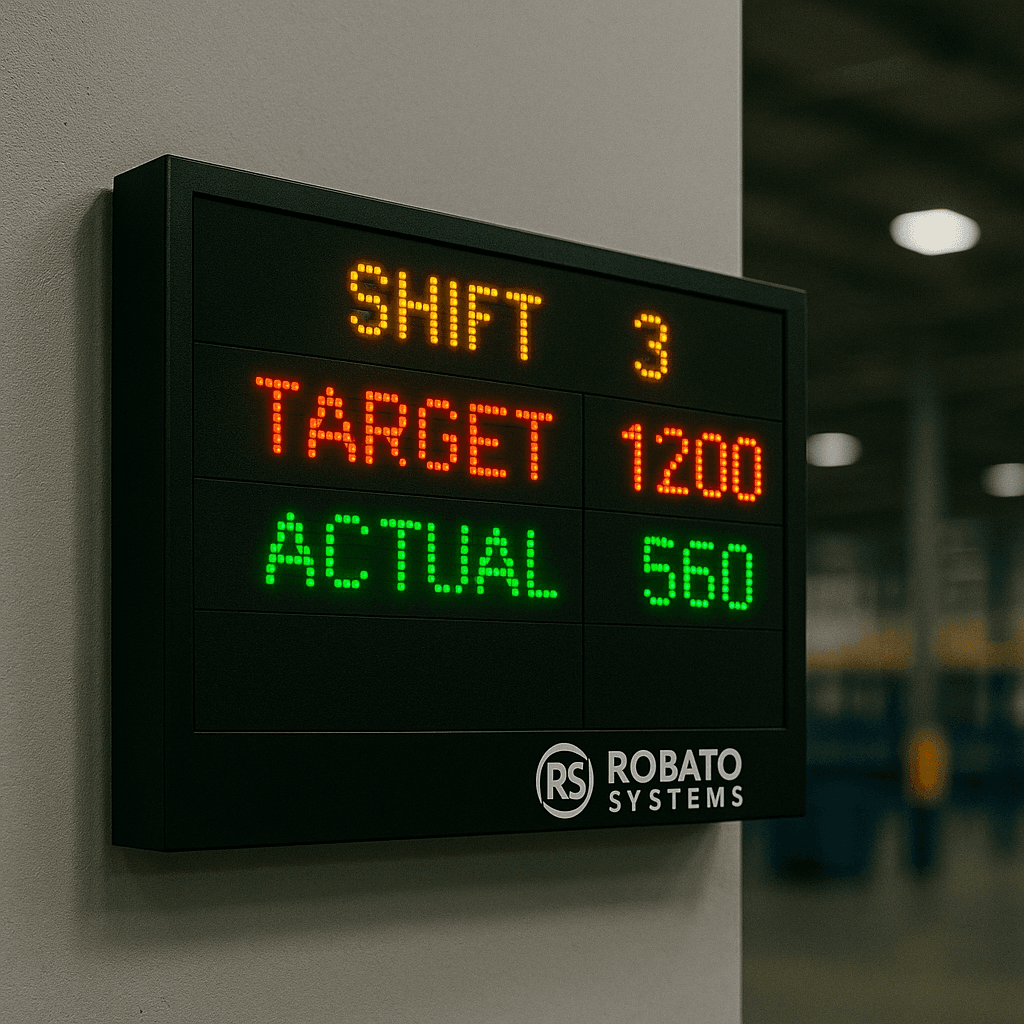
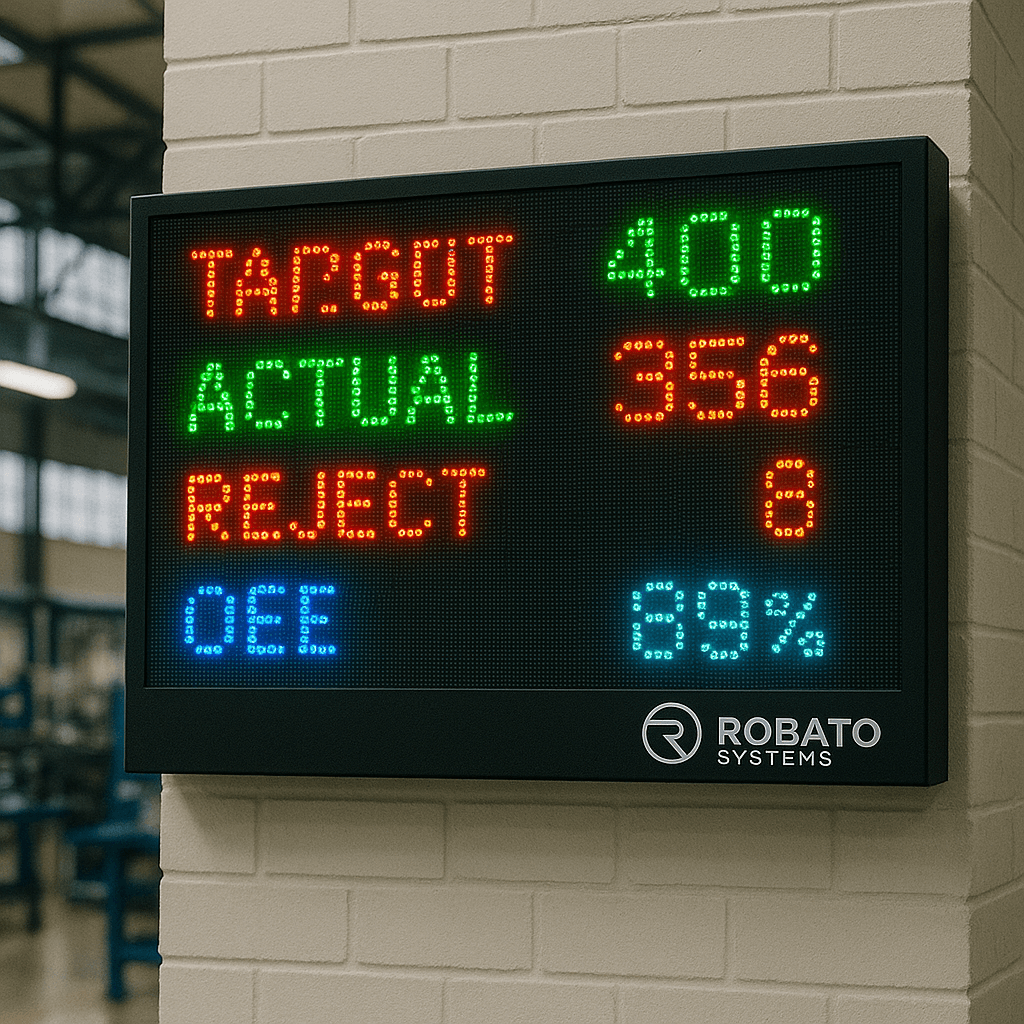
2. Target vs Actual Production
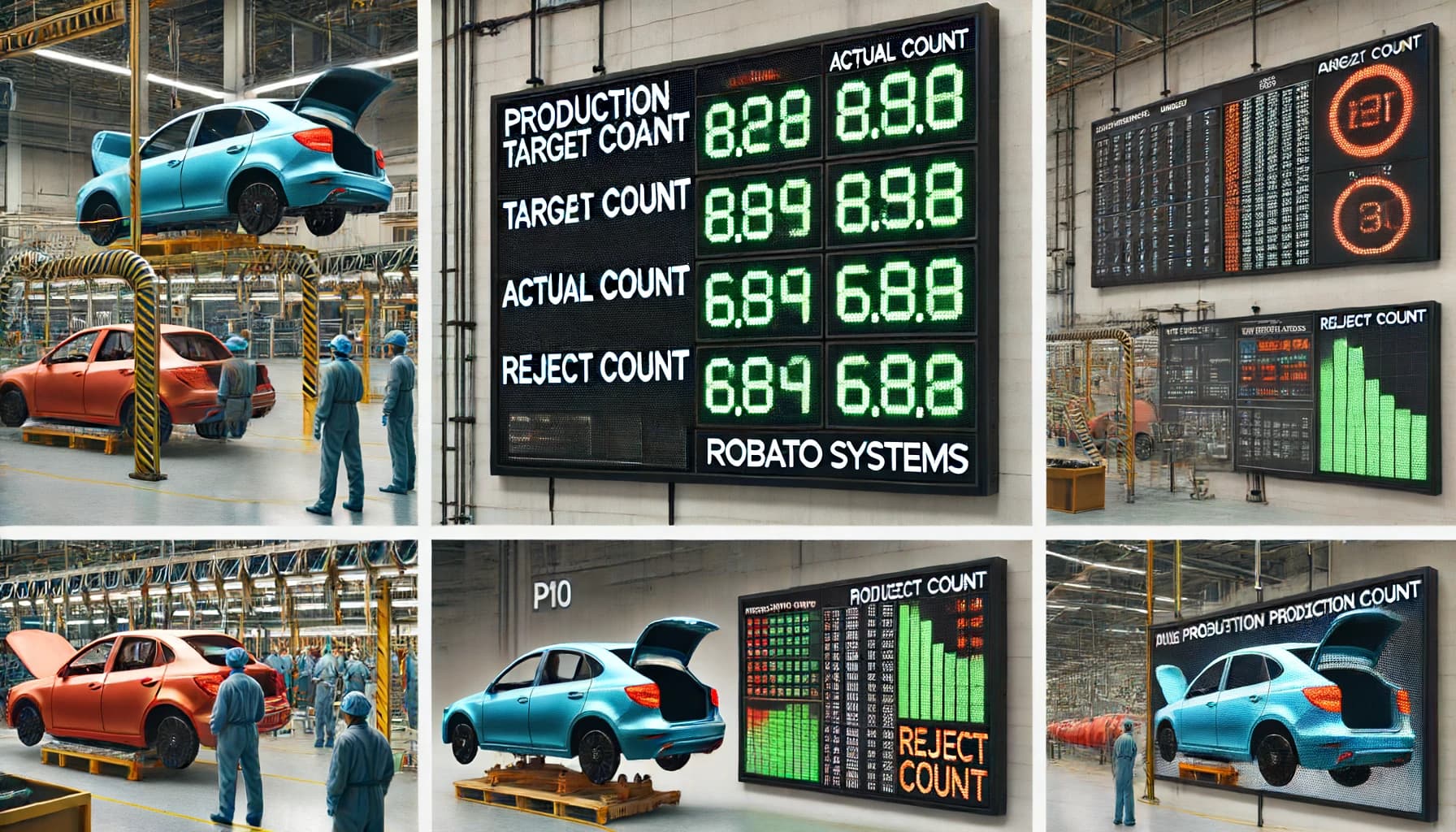
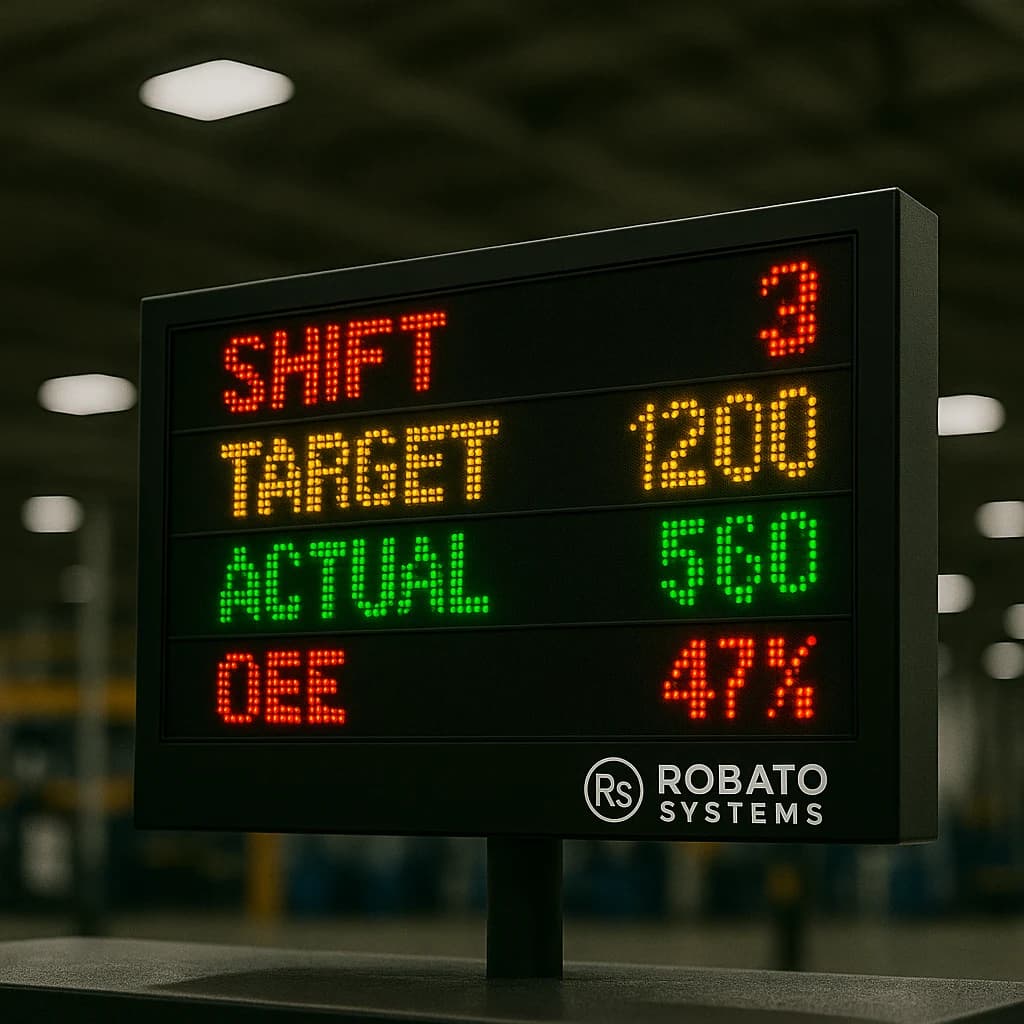
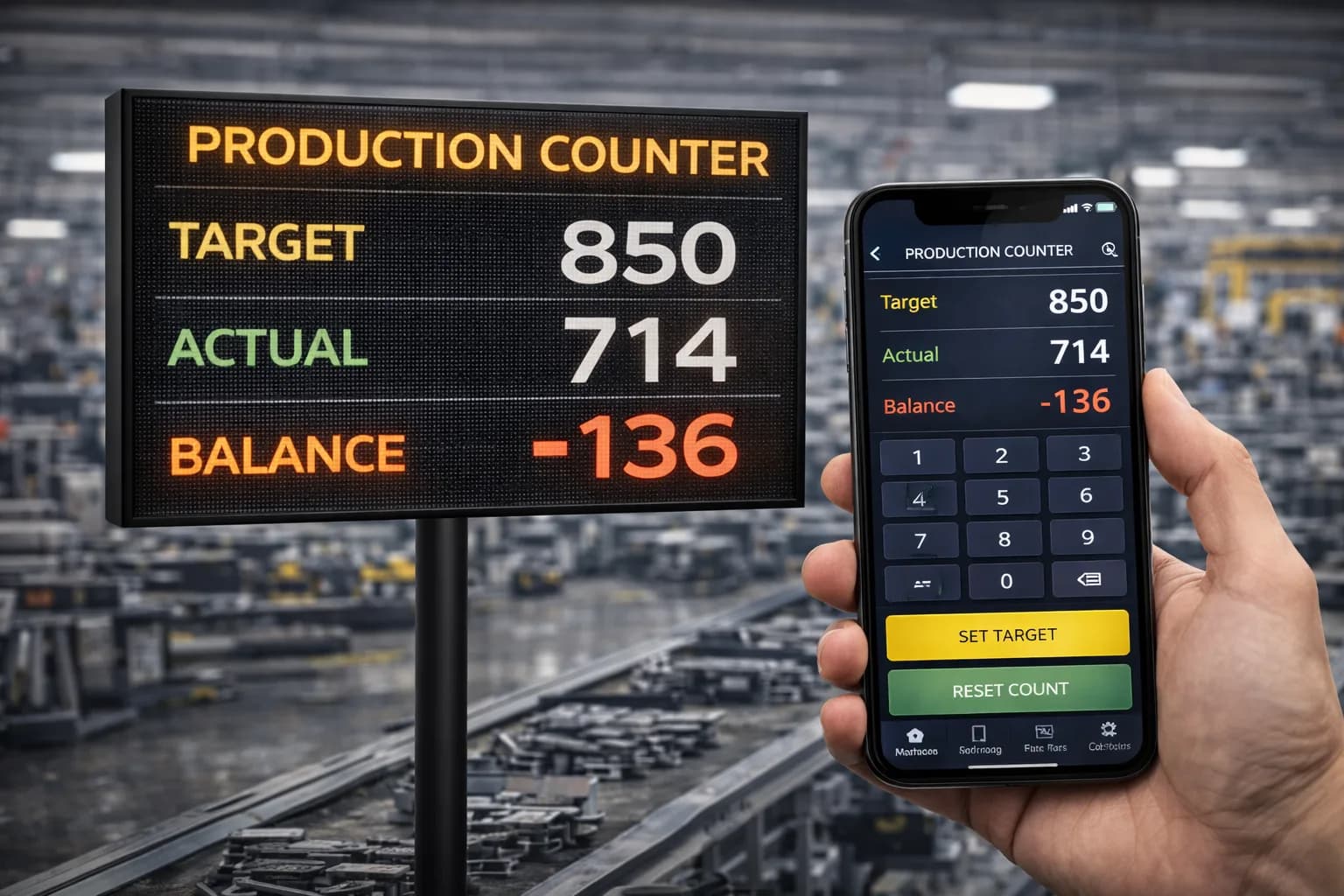
Comparing target production with actual production provides useful production context.
For example:
Target: 1,000 units
Actual: 920 units
The difference can prompt further investigation.
However, managers should avoid automatically assuming that the operator is responsible for the gap. Machine downtime, material shortages, quality issues, product complexity, and other production conditions may also affect output.
3. Operator Utilization
Operator utilization measures how available operator time is being used for defined production activities.
For example, available time may be divided into:
- Productive time
- Setup time
- Waiting time
- Maintenance support
- Break time
- Other defined activities
The categories should reflect the actual manufacturing process.
4. Idle Time
Idle time can indicate periods when an operator is available but cannot perform productive work.
Possible reasons include:
- Machine downtime
- Material shortage
- Waiting for instructions
- Maintenance activity
- Production scheduling issues
- Quality inspection
Tracking idle time can help identify process-level inefficiencies.
5. Production Cycle Performance
For manufacturing processes with standardized cycle times, actual production cycles can be compared with expected cycle times.
This can help identify production processes that consistently operate slower than expected.
6. Shift-Wise Operator Performance
Comparing performance across shifts can help identify operational differences.
For example:
Shift A: 94% of target
Shift B: 82% of target
Shift C: 91% of target
A difference does not automatically indicate an operator performance issue.
Managers should investigate factors such as machine condition, product mix, staffing, material availability, and maintenance support before drawing conclusions.
7. Operator-to-Machine Assignment
In multi-machine manufacturing environments, operators may be responsible for one or multiple machines.
Monitoring assignments can help production managers understand:
- Which machines are assigned to each operator
- How many machines each operator manages
- Where workforce capacity is available
- Where additional staffing may be required
This can support better workforce planning.
Real-Time Operator Efficiency Monitoring
Traditional workforce reports are often created at the end of a shift.
Real-time monitoring provides a different approach.
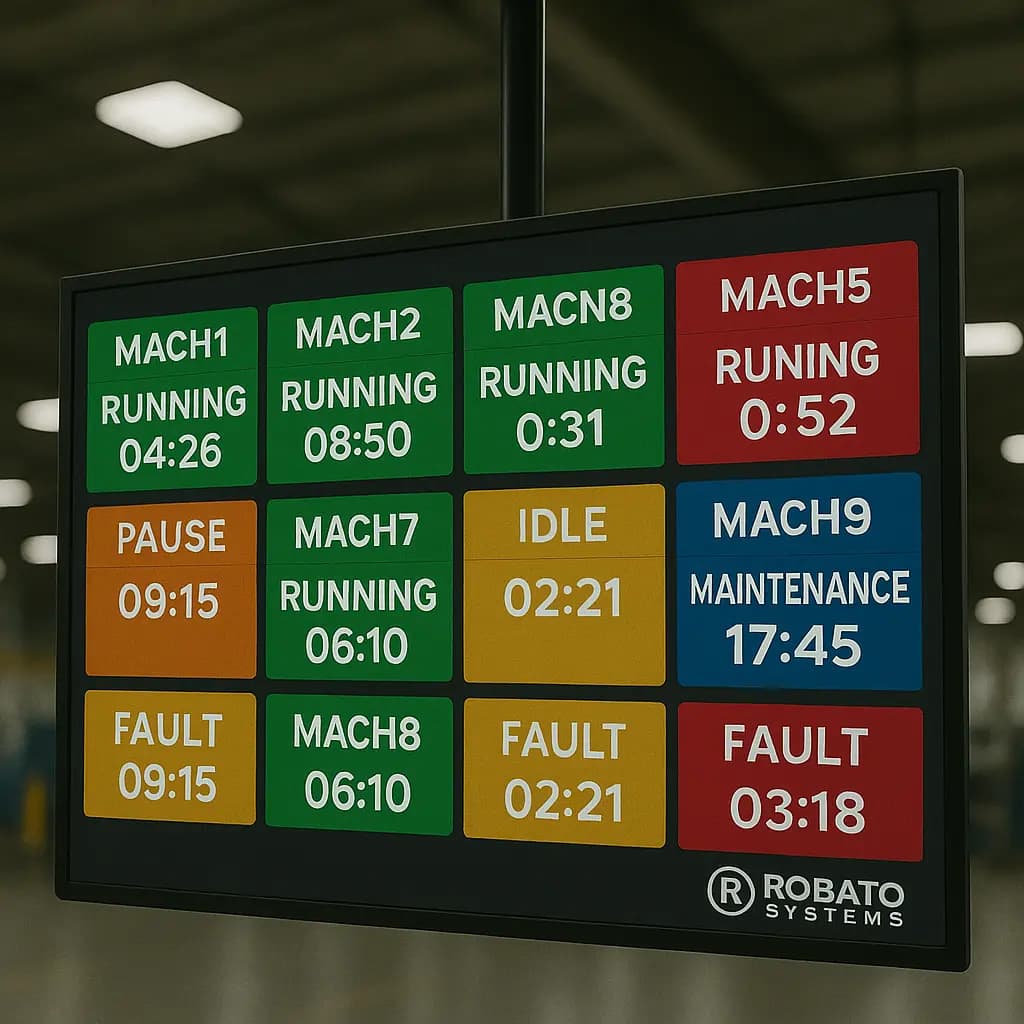
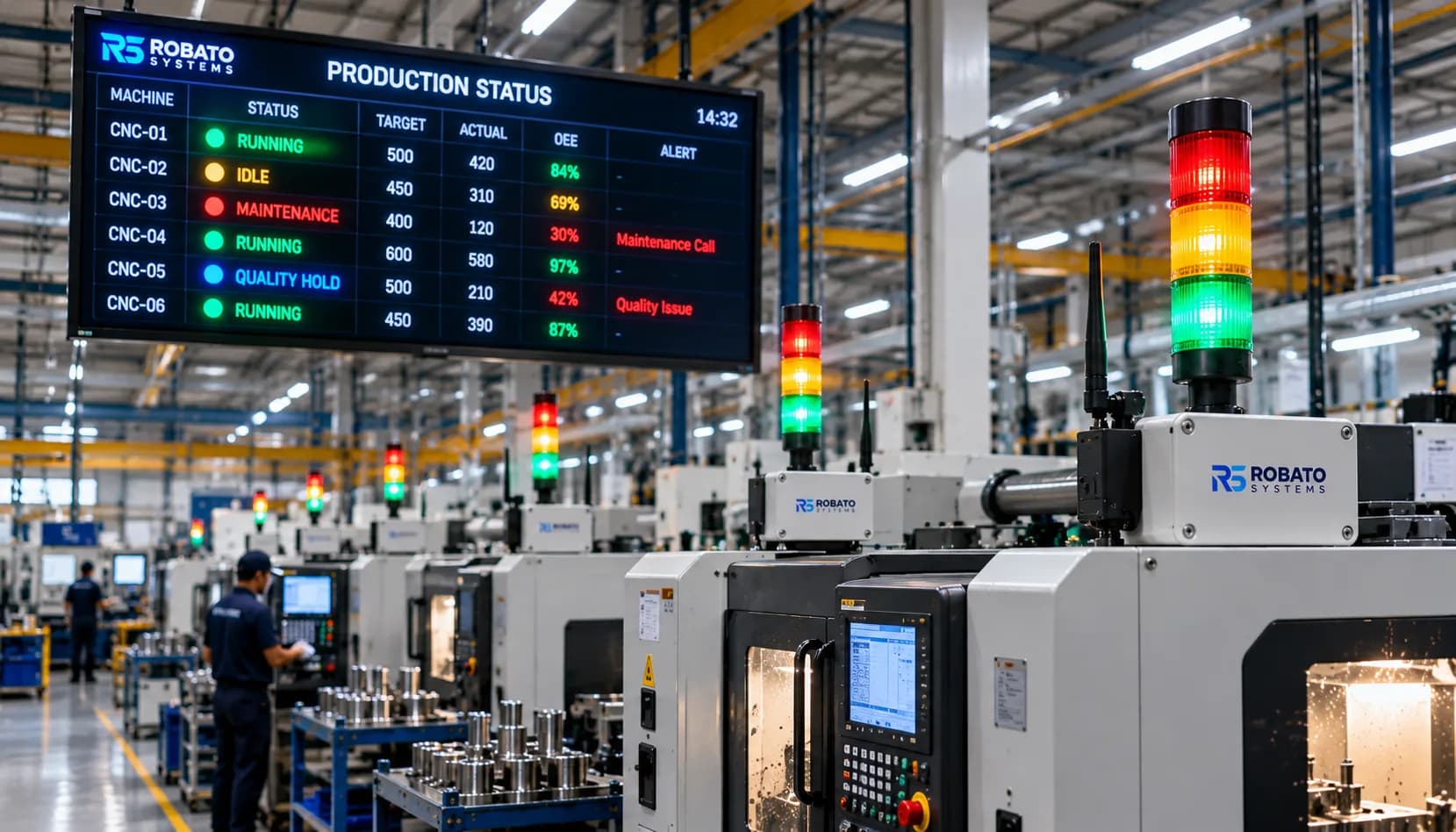
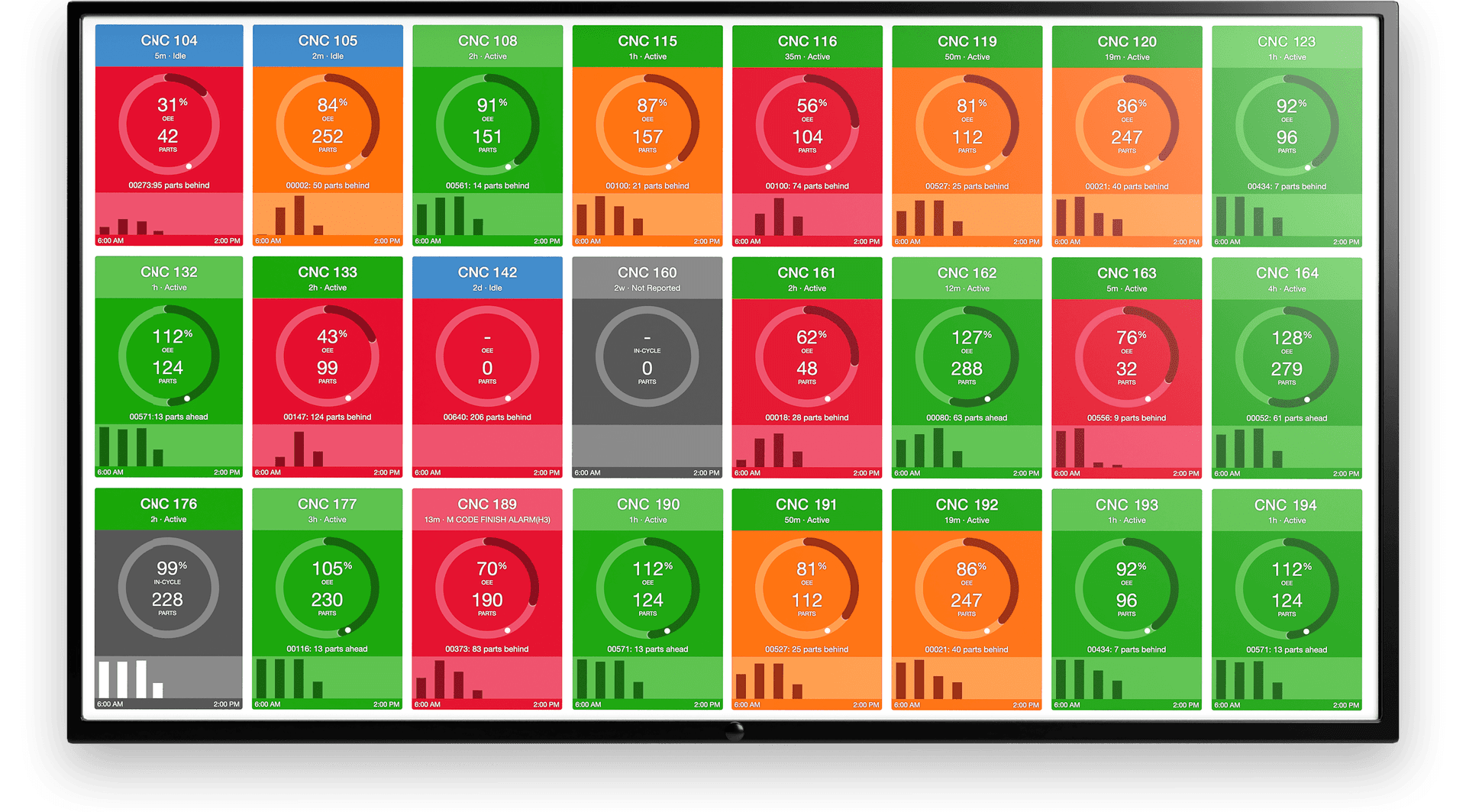
Production supervisors can view current information such as:
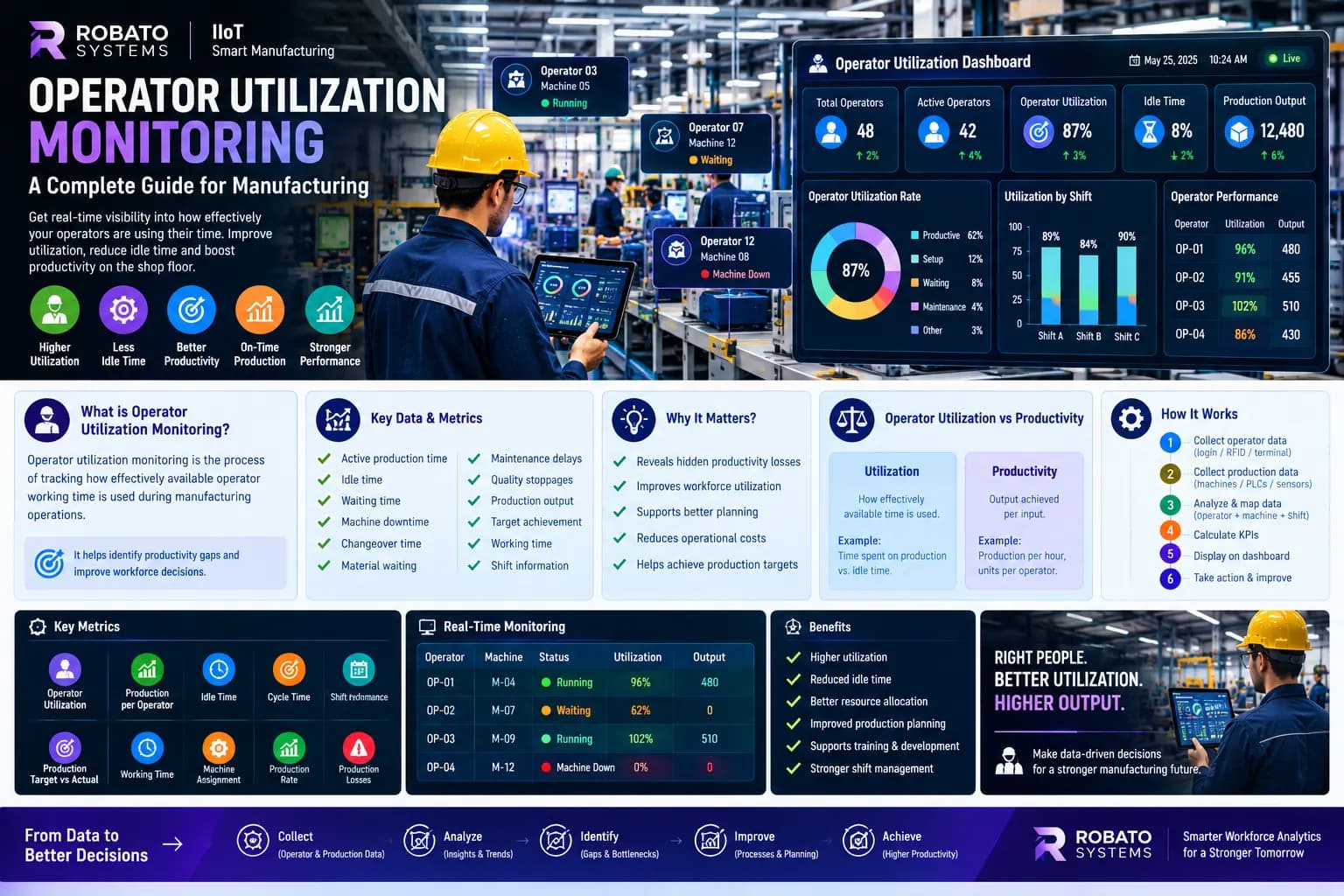
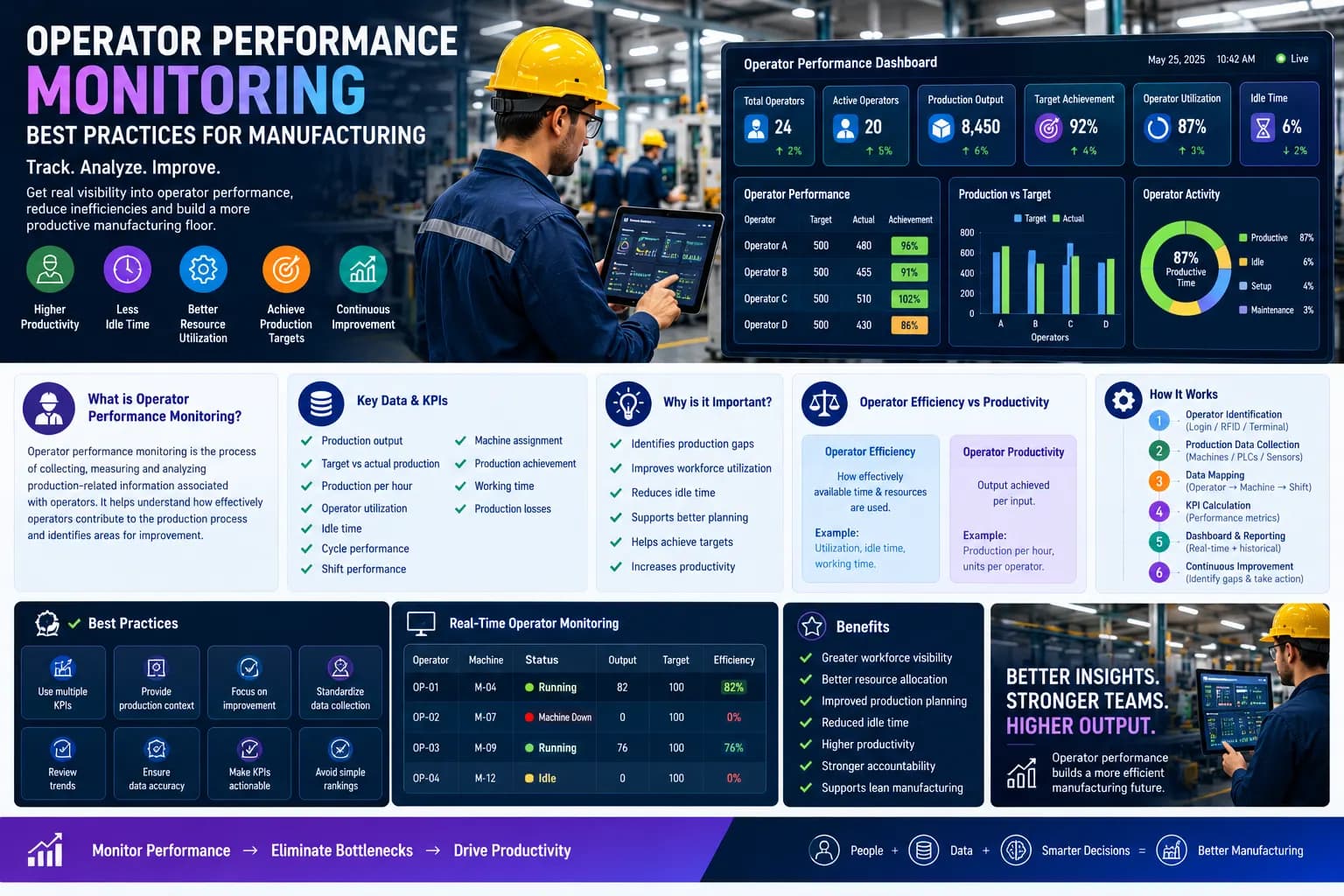
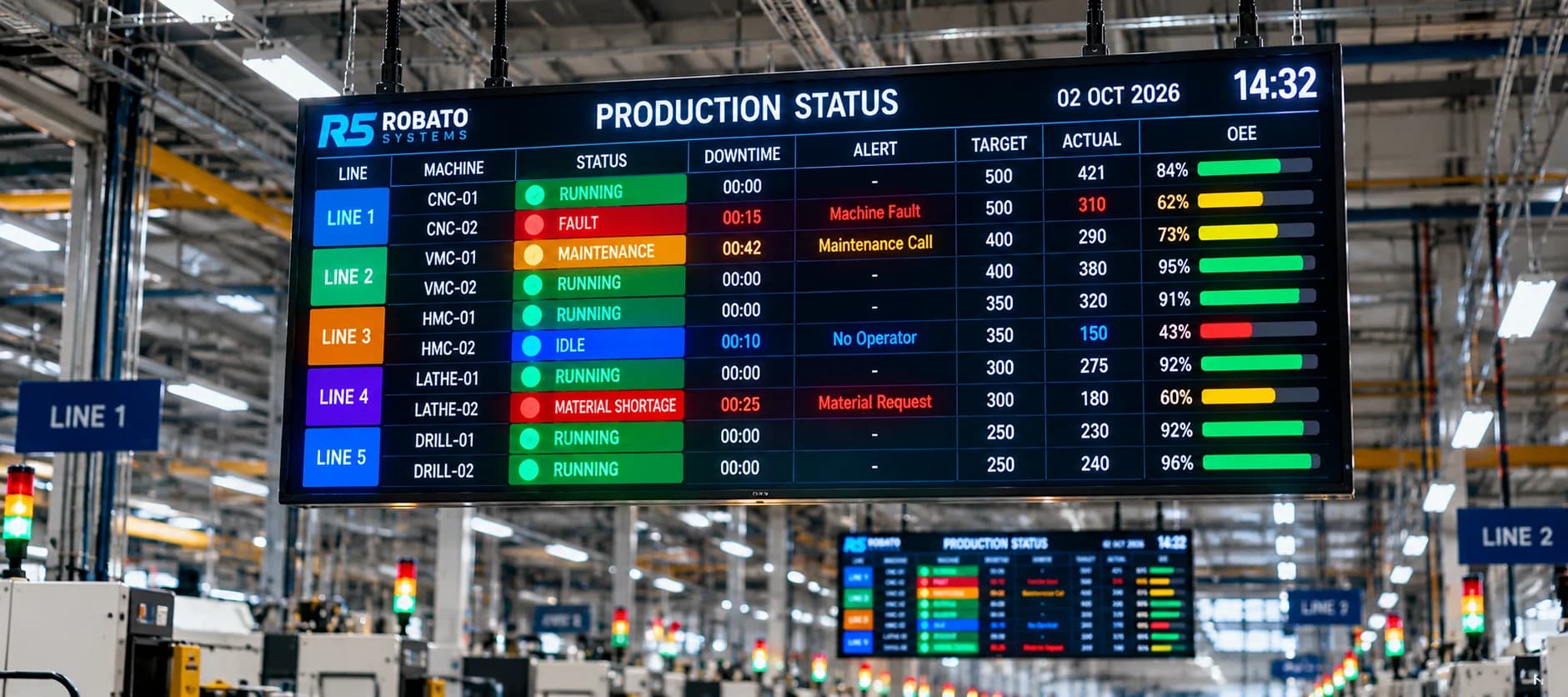
Operator 01 - Machine 04 - Production: 82% of Target
Operator 02 - Machine 07 - Machine Down
Operator 03 - Machine 09 - Running
This provides operational visibility while production is still taking place.
If an operator is waiting because of a machine problem, the supervisor can respond rather than discovering the issue hours later.
Operator Efficiency Monitoring and Machine Downtime
Operator efficiency cannot always be analyzed separately from machine performance.
Consider an operator who spends 60 minutes waiting because a machine has broken down.
If the system only measures production output, the operator may appear less productive.
But the actual problem may be equipment downtime.
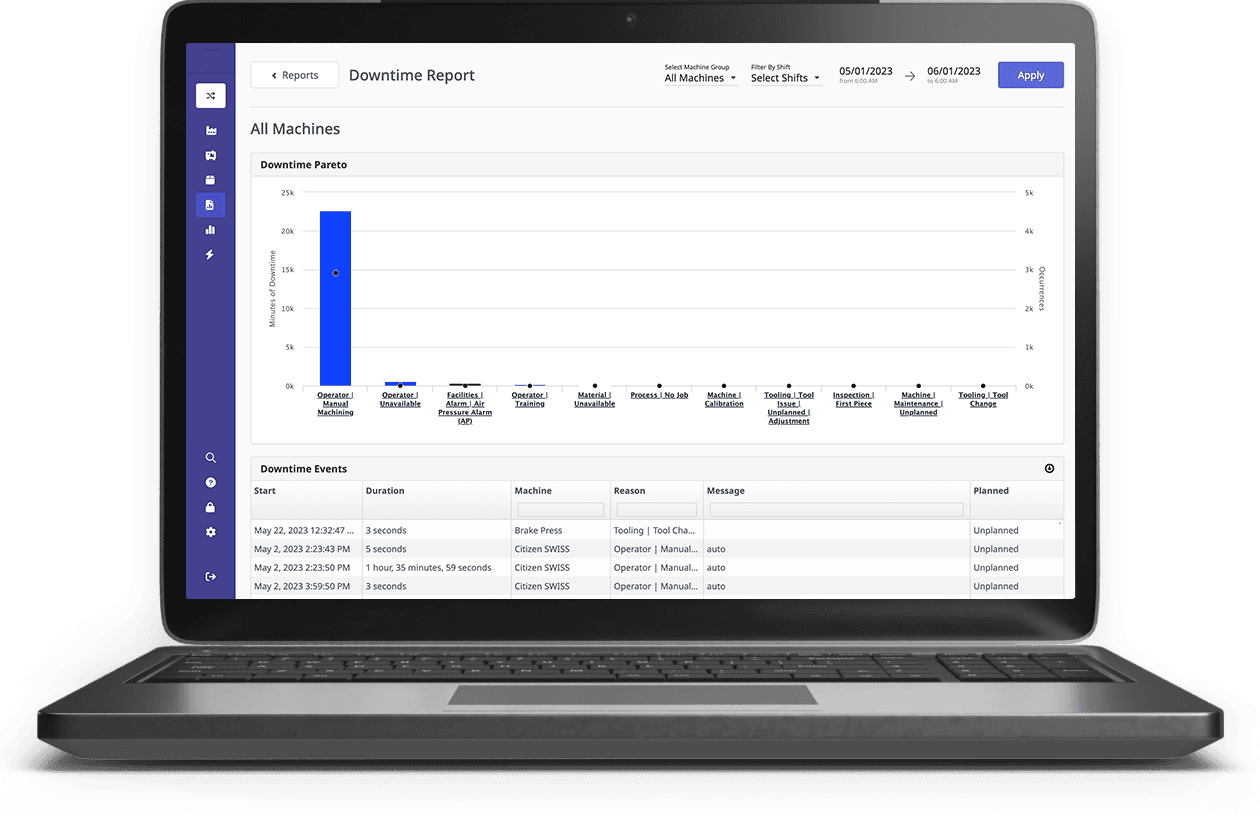
This is why operator efficiency monitoring should ideally be considered alongside:
- Machine downtime
- Machine availability
- Production output
- Production target
- Quality performance
- Material availability
This provides better context for performance analysis.
Operator Efficiency and Production Downtime
Downtime can have a significant effect on workforce utilization.
For example:
Available operator time: 480 minutes
Machine downtime: 90 minutes
The operator may not be able to produce during part of that period.
Instead of treating the entire production shortfall as an operator issue, the dashboard should help distinguish between operator-related and process-related losses.
This creates a more accurate approach to workforce analytics.
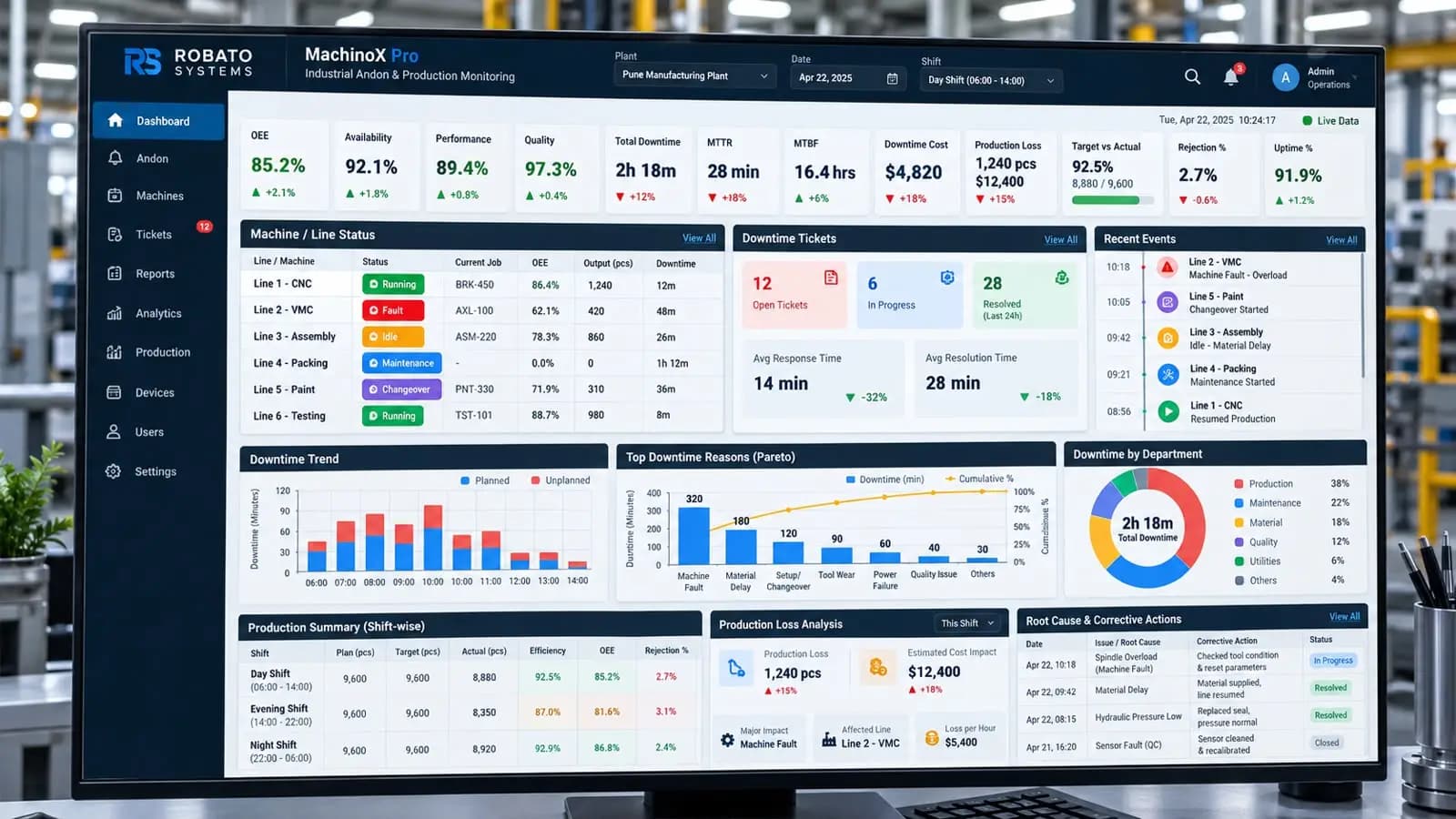
Operator Efficiency Dashboard
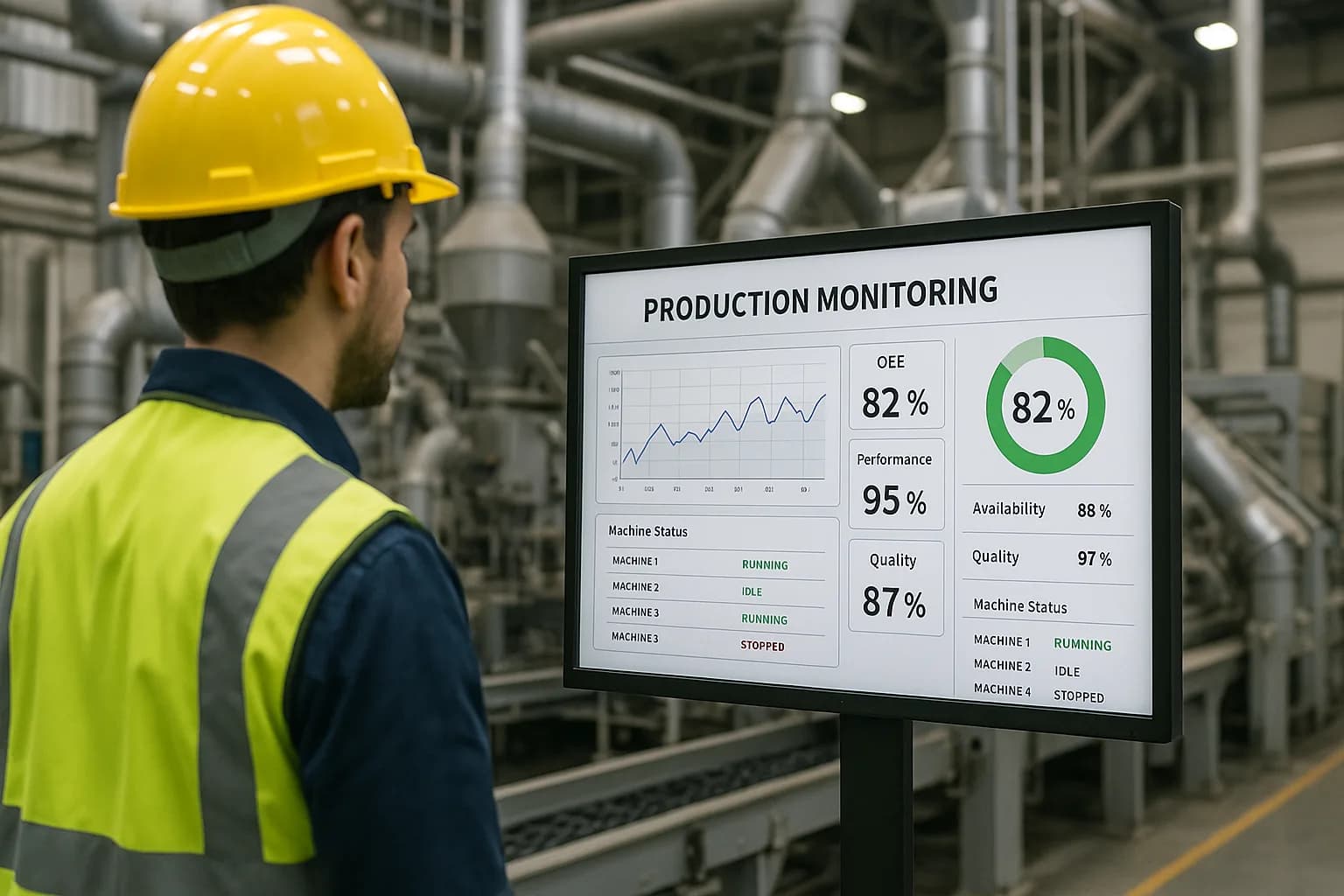
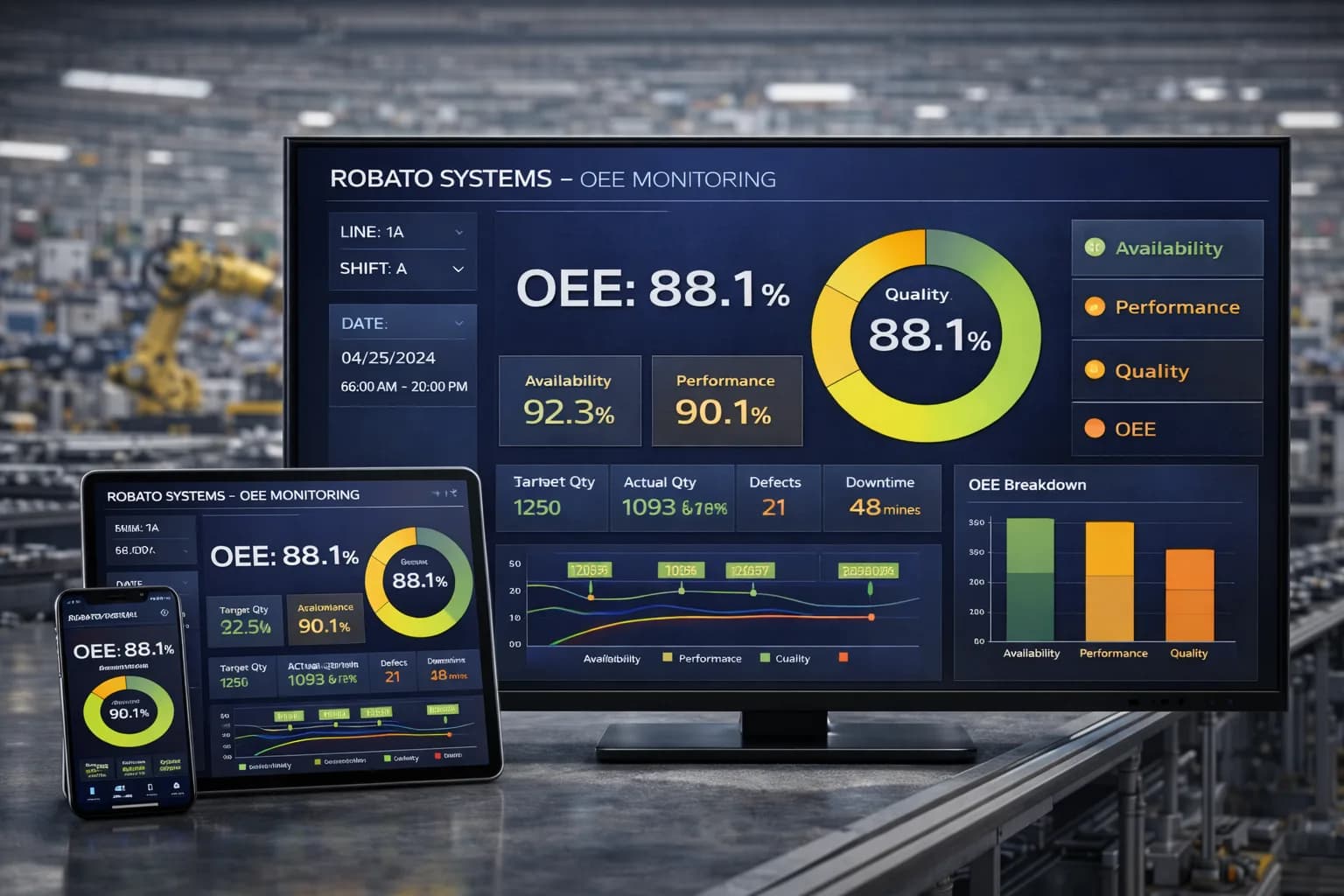
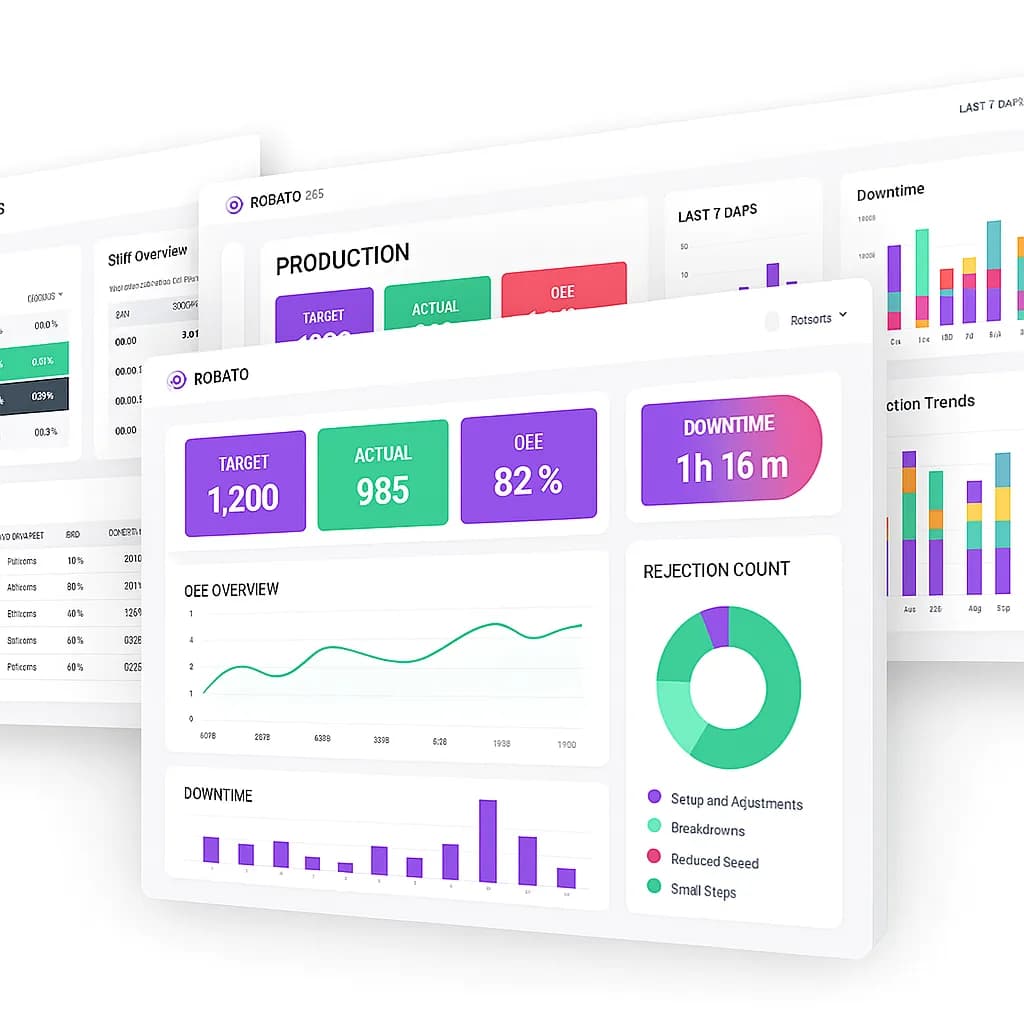
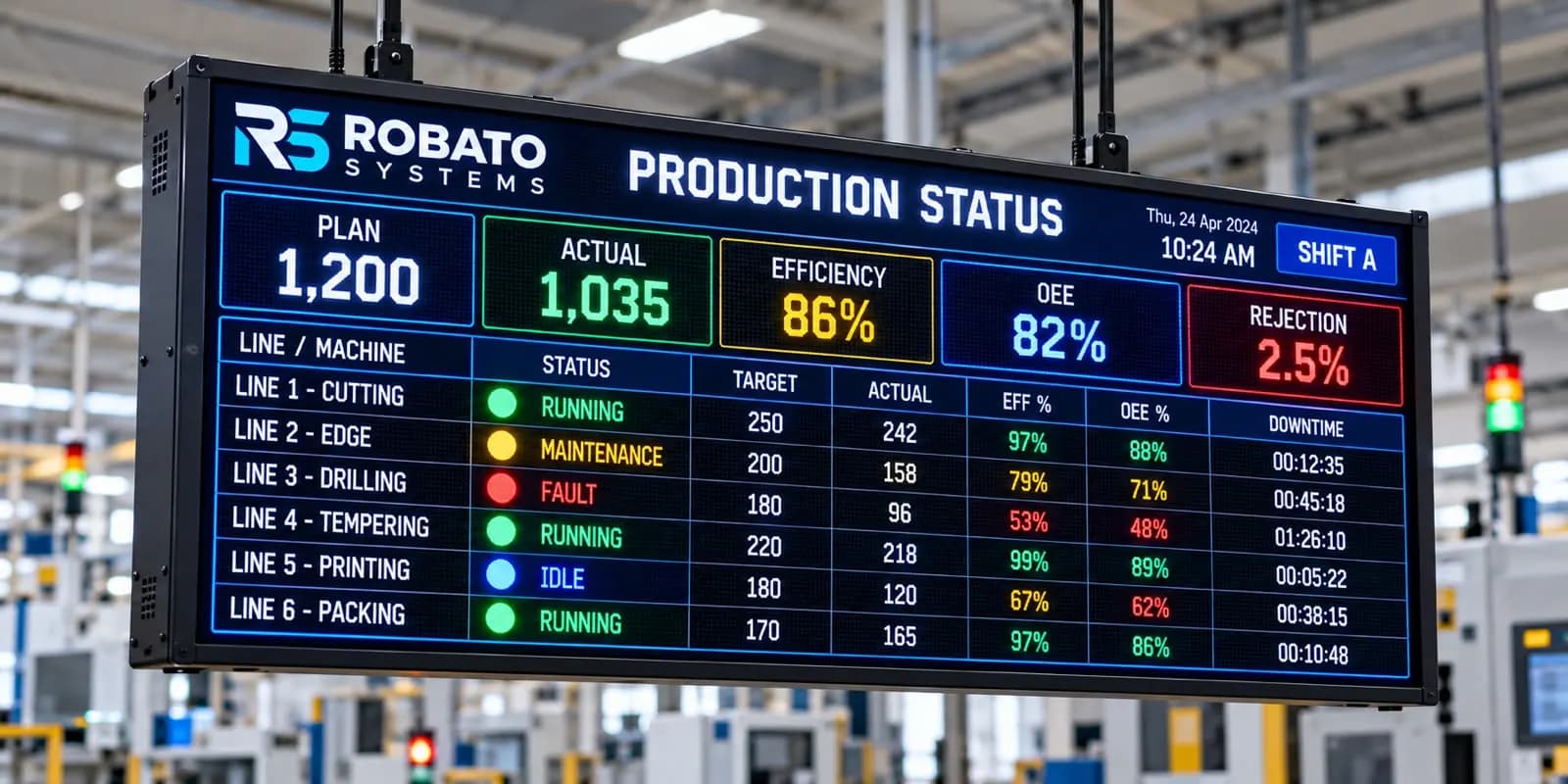
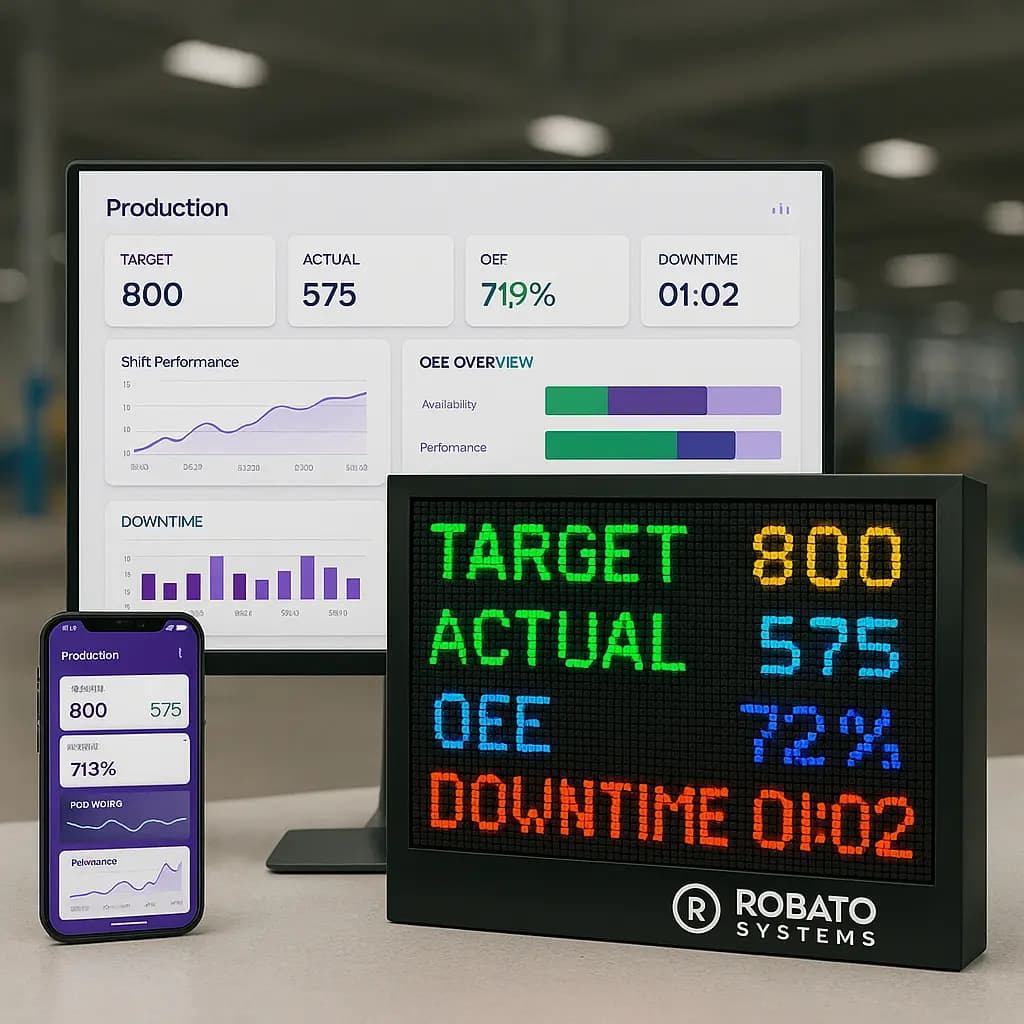
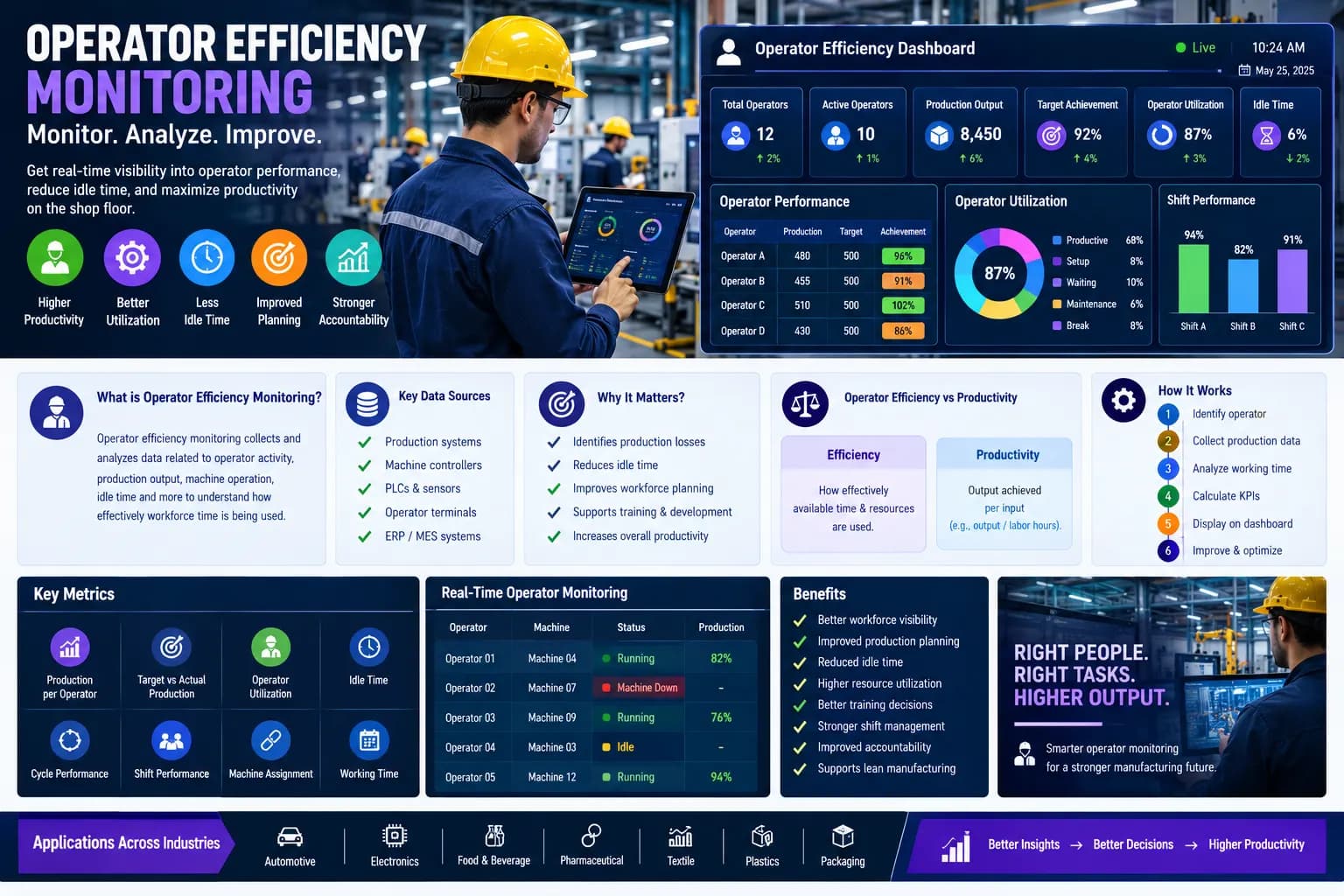
A dedicated operator efficiency dashboard can provide a centralized view of workforce and production performance.
A useful dashboard may include:
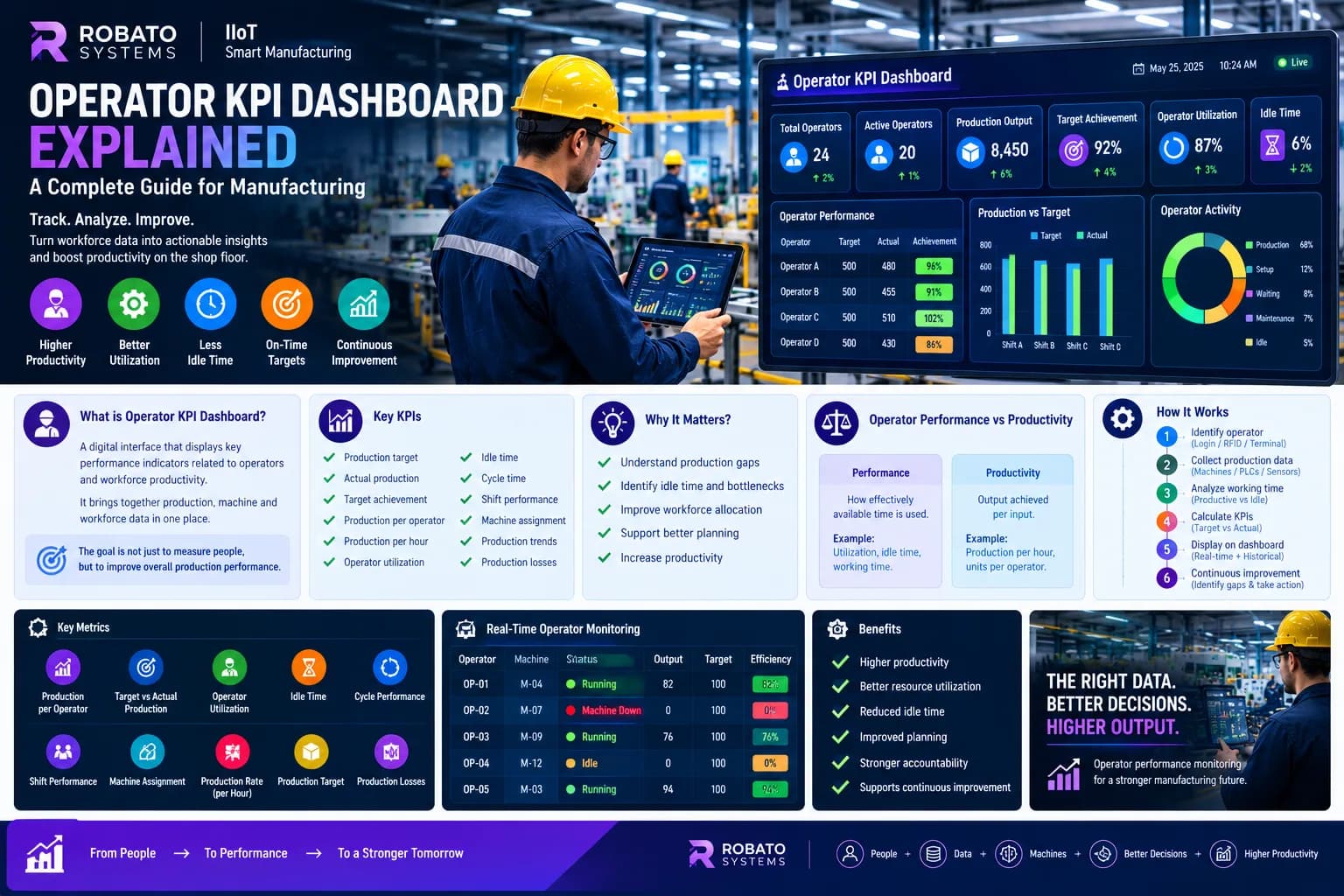
KPI Cards
- Total Operators
- Active Operators
- Production Output
- Target Achievement
- Operator Utilization
- Idle Time
Operator Performance
- Operator-wise production
- Target vs actual
- Production per operator
- Utilization
- Working time
Production Context
- Machine status
- Downtime
- Production line
- Shift
Trend Analysis
- Daily operator productivity
- Weekly trends
- Monthly performance
The dashboard should be designed around decisions rather than simply displaying as many metrics as possible.
Operator-Wise Performance Monitoring
Operator-wise analysis can help supervisors identify differences in production performance.
For example:
| Operator | Target | Actual | Achievement |
|---|---|---|---|
| Operator A | 500 | 480 | 96% |
| Operator B | 500 | 455 | 91% |
| Operator C | 500 | 510 | 102% |
These numbers should be interpreted alongside machine, product, downtime, and production conditions.
A fair performance monitoring system should account for operational context.
Why Context Matters in Operator Monitoring
Operator efficiency should not become a simple ranking system.
Suppose Operator A produces 500 units while Operator B produces 400 units.
It might appear that Operator A performed better.
But suppose:
- Operator A worked on an automated machine.
- Operator B worked on a manual process.
- Operator B experienced 90 minutes of machine downtime.
- Operator B also handled a more complex product.
The raw production number does not tell the complete story.
Therefore, operator monitoring should provide context instead of relying on a single KPI.
Operator Efficiency and Workforce Planning
Historical operator data can help production managers understand workforce requirements.
For example, if a production line consistently requires additional operator support during specific shifts, managers can review historical information to understand why.
Workforce planning can consider:
- Production volume
- Machine count
- Operator availability
- Product complexity
- Shift requirements
- Historical production performance
This can help improve staffing decisions.
Operator Efficiency and Skill Development
Operator performance information can also help identify training opportunities.
If an operator consistently requires more time for a particular production activity, managers can investigate whether additional training or process guidance would help.
Potential training areas include:
- Machine operation
- Setup procedures
- Quality inspection
- Changeover procedures
- Material handling
- Standard operating procedures
The objective should be improvement rather than simply identifying underperformance.
Standard Work and Operator Efficiency
Standardized work procedures are important for consistent manufacturing performance.
If operators follow significantly different methods for the same task, production performance may vary.
Operator efficiency monitoring can help identify areas where standard work procedures may need to be reviewed.
For example:
Standard cycle: 30 seconds
Observed average: 38 seconds
This may indicate an opportunity to investigate:
- Workstation layout
- Material placement
- Tool availability
- Machine condition
- Operator training
- Process design
The objective is to identify what is causing the difference.
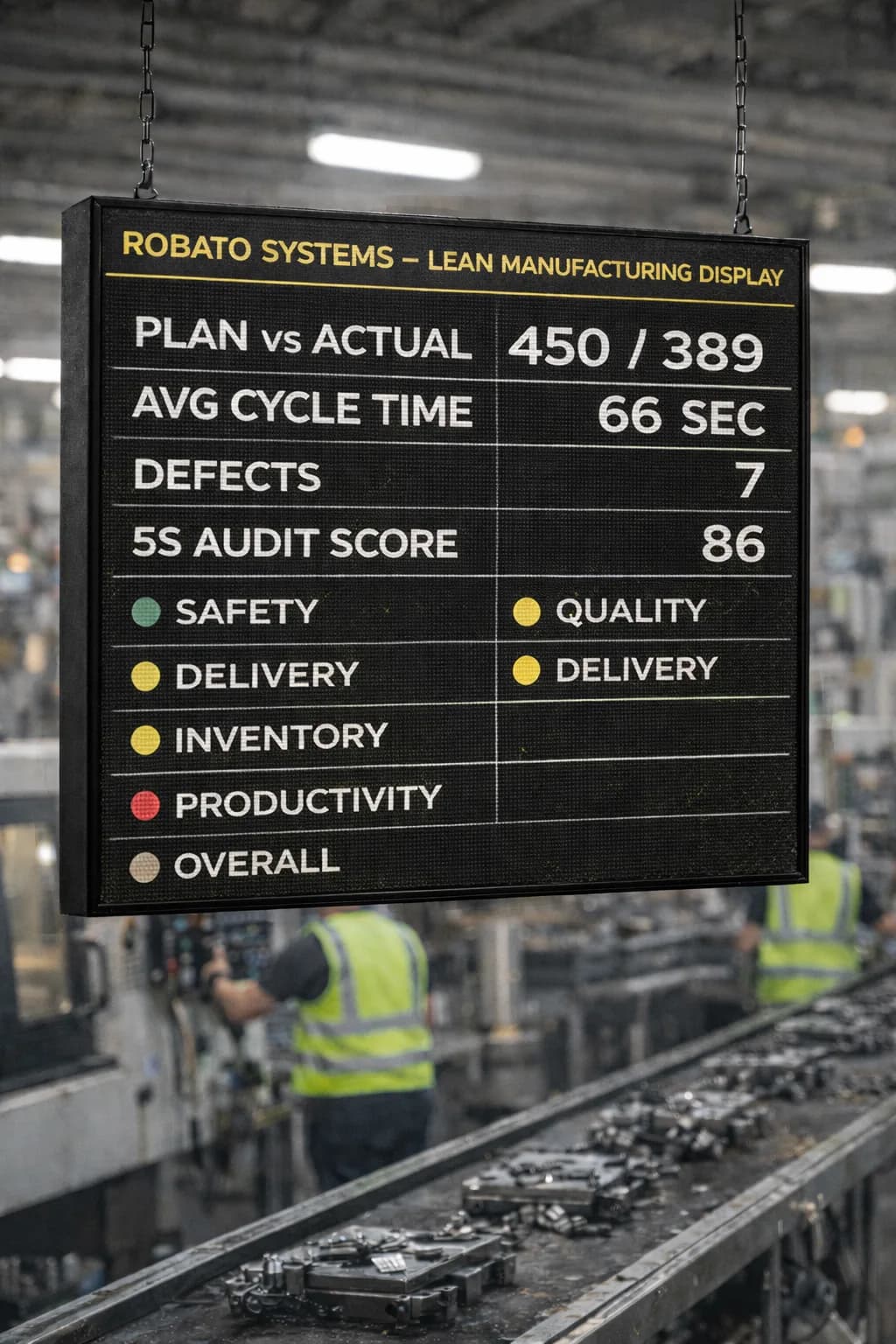
Operator Efficiency Monitoring and Lean Manufacturing
Lean manufacturing focuses on eliminating waste and improving process flow.
Operator efficiency monitoring can support this by helping identify forms of waste such as:
- Waiting
- Unnecessary movement
- Excess processing
- Production delays
- Poor workstation organization
- Uneven workloads
The data can provide evidence for continuous improvement initiatives.
Benefits of Operator Efficiency Monitoring
A structured operator efficiency monitoring system can provide several benefits.
Better Workforce Visibility
Managers gain a clearer view of workforce activity and production performance.
Improved Production Planning
Historical information can support more realistic workforce and production planning.
Reduced Idle Time
Identifying recurring waiting periods can help teams address underlying causes.
Better Resource Utilization
Production managers can identify where workforce capacity is underused or overloaded.
Improved Training Decisions
Performance patterns can highlight potential areas for operator training.
Better Shift Management
Shift-level information helps managers identify operational differences.
Improved Production Accountability
Digital records provide a consistent source of production information.
Better Continuous Improvement
Historical data provides evidence for process improvement decisions.
Manual vs Automated Operator Efficiency Monitoring
Manual Monitoring
Manual monitoring typically relies on:
- Paper reports
- Excel sheets
- Operator records
- Supervisor observations
This approach can be useful for small operations but becomes difficult to scale.
Common challenges include:
- Inconsistent data
- Delayed reporting
- Manual calculations
- Missing information
- Limited real-time visibility
Automated Monitoring
Automated monitoring can combine operator information with production and machine data.
Benefits can include:
- Real-time visibility
- Centralized reporting
- Reduced manual entry
- Consistent data
- Historical analysis
- Automated KPI calculations
How to Implement Operator Efficiency Monitoring
Manufacturers can introduce operator efficiency monitoring gradually.
Step 1: Define the Objective
Decide what you want to improve.
For example:
- Reduce operator idle time
- Improve production output
- Improve workforce utilization
- Understand shift performance
Step 2: Define Relevant KPIs
Select metrics that support the objective.
Avoid measuring unnecessary information.
Step 3: Identify Data Sources
Determine where operator and production information will come from.
Possible sources include:
- Production software
- Machine controllers
- PLCs
- Sensors
- Operator terminals
- Existing ERP or MES systems
Step 4: Connect Operator and Production Data
Link operators with relevant machines, shifts, production orders, and production activity.
Step 5: Build Dashboards
Create dashboards for supervisors, production managers, and plant management.
Step 6: Establish Baselines
Measure current performance before introducing major changes.
Step 7: Identify Improvement Opportunities
Look for recurring idle time, production delays, and workforce bottlenecks.
Step 8: Measure Results
Track performance after improvements to determine whether the changes produced measurable results.
Best Practices for Operator Efficiency Monitoring
Use Multiple KPIs
Do not evaluate operator performance using production quantity alone.
Provide Production Context
Consider machine downtime, material availability, product complexity, and quality requirements.
Focus on Improvement
Use monitoring to identify process improvement opportunities.
Standardize Data Collection
Use consistent definitions for working time, idle time, production output, and other metrics.
Review Trends
A single shift does not necessarily represent long-term performance.
Protect Data Quality
Incorrect operator assignments or incomplete production data can produce misleading results.
Make KPIs Actionable
Every KPI should help managers make a practical decision.
Common Mistakes to Avoid
Measuring Only Production Quantity
Output alone does not explain why performance varies.
Ignoring Machine Downtime
An operator cannot maintain expected output when the assigned machine is unavailable.
Creating Too Many KPIs
Excessive metrics can make the dashboard confusing.
Comparing Different Processes Directly
Different machines and products may have different cycle times and production requirements.
Using Data Only for Ranking
A monitoring system should support improvement, training, planning, and problem-solving.
Ignoring Data Accuracy
Incorrect operator-machine assignments can make the analysis unreliable.
Operator Efficiency Monitoring and Industry 4.0
Industry 4.0 is based on connected systems, real-time data, automation, and intelligent decision-making.
Operator efficiency monitoring can become part of a broader smart manufacturing environment where:
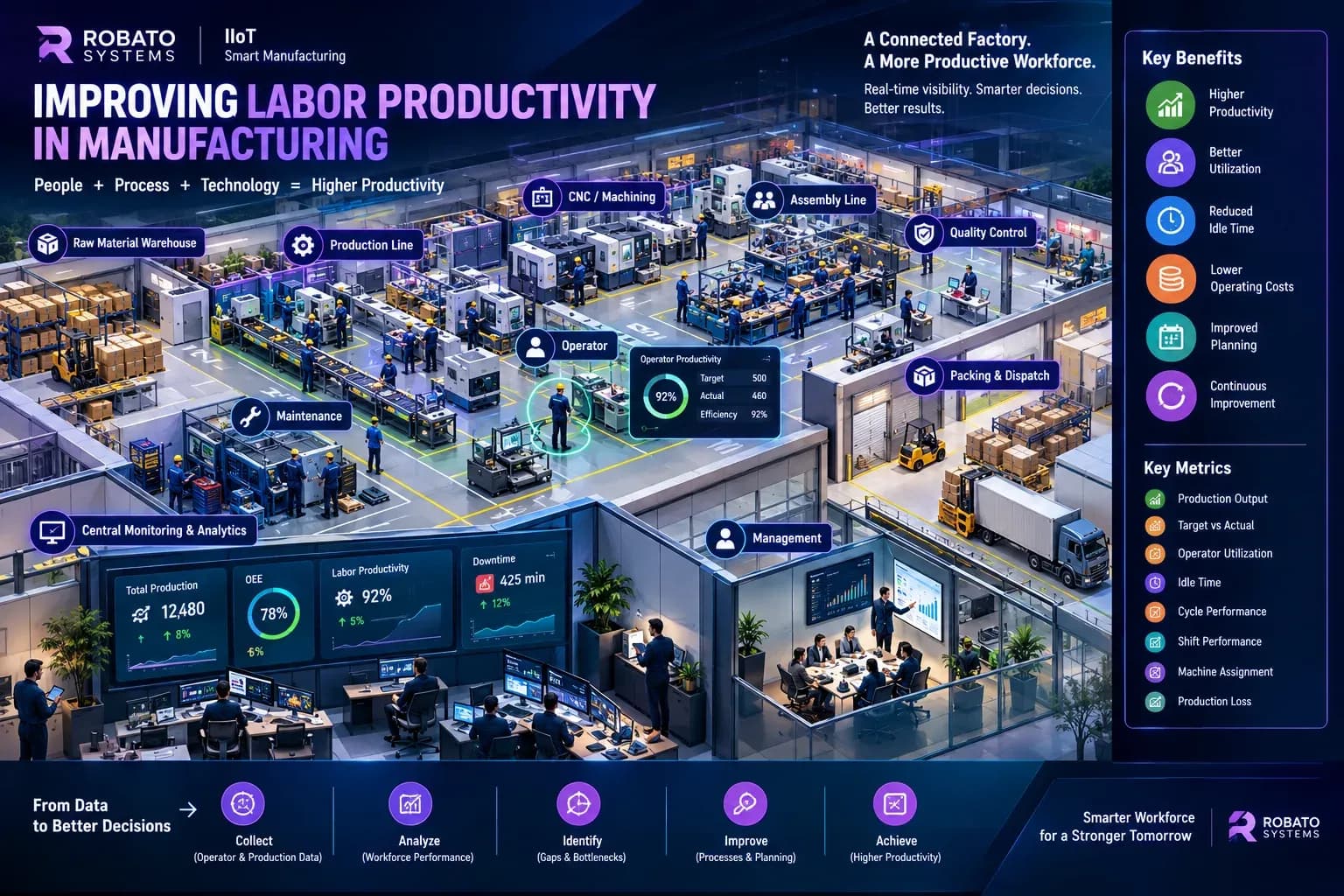
Operators + Machines + Production Data + Downtime Data + Quality Data
are analyzed together.
This creates greater visibility into how people and equipment interact during production.
Instead of analyzing workforce performance separately, manufacturers can examine the entire production process.
Operator Efficiency Monitoring With Robato Systems
Robato Systems develops manufacturing-focused digital solutions that help production teams improve operational visibility.
An operator efficiency monitoring approach can bring together operator information with production and machine performance data.
This can help manufacturing teams monitor production activity, understand operator utilization, review production performance, and identify areas where workforce or process improvements may be required.
By combining workforce information with machine and production data, manufacturers can develop a more complete view of shop-floor performance.
Conclusion
Operator efficiency monitoring provides manufacturers with a structured way to understand how workforce time and production activities are being utilized.
The goal should not be to reduce operator performance to a single number or create simple rankings.
Instead, effective monitoring should provide context around production output, machine availability, downtime, idle time, shift performance, and workforce utilization.
When operator information is connected with machine and production data, manufacturing teams can identify bottlenecks, improve workforce planning, reduce unnecessary waiting, support training, and make better production decisions.
The most effective approach is:
Measure → Understand → Identify → Improve → Monitor
With the right data and a practical dashboard, operator efficiency monitoring can become an important component of a modern manufacturing productivity strategy.
FAQs
What is operator efficiency monitoring?
Operator efficiency monitoring is the process of collecting and analyzing workforce and production information to understand how effectively operator time and resources are being utilized.
Why is operator efficiency monitoring important?
It helps manufacturers identify workforce utilization issues, idle time, production bottlenecks, training opportunities, and differences in production performance.
What KPIs can be used to monitor operator efficiency?
Common KPIs include production per operator, target versus actual production, operator utilization, idle time, working time, shift performance, and production achievement.
Can operator efficiency be monitored automatically?
Yes. Operator information can be combined with production systems, machine data, PLCs, sensors, operator terminals, and manufacturing software to automate parts of the monitoring process.
How does machine downtime affect operator efficiency?
Machine downtime can prevent an operator from producing even when the operator is available. Therefore, operator performance should be analyzed alongside machine availability and downtime.
Is operator efficiency the same as operator productivity?
No. Efficiency generally focuses on how effectively available resources and time are used, while productivity typically focuses on the relationship between production output and inputs such as labor hours.
Can operator efficiency monitoring help with training?
Yes. Consistent performance patterns may help managers identify areas where additional training or process support could improve production performance.
Should operators be ranked using efficiency data?
Ranking should not be the sole purpose of the system. Efficiency data is more useful when it provides context and supports production improvement, workforce planning, training, and problem-solving.
Can operator efficiency monitoring support Industry 4.0?
Yes. It can become part of a connected manufacturing environment where operator, machine, production, downtime, and quality information are analyzed together.