Manufacturing productivity depends on more than machine performance. Operators play an important role in keeping production lines running efficiently, meeting production targets, maintaining quality, and responding to machine issues.
However, many manufacturing plants still have limited visibility into how effectively operators are being utilized during production shifts.
An operator may be assigned to a machine for an entire shift, but that does not necessarily mean the operator is actively contributing to production throughout the shift. Waiting for materials, machine breakdowns, changeovers, quality issues, maintenance activities, and production delays can all affect operator utilization.
This is where operator utilization monitoring becomes useful.
Operator utilization monitoring helps manufacturers understand how available operator time is being used during production. By connecting operator activity with production, machine, downtime, and shift data, companies can identify productivity gaps and make better workforce decisions.
What Is Operator Utilization Monitoring?
Operator utilization monitoring is the process of tracking how effectively available operator working time is used during manufacturing operations.
It provides visibility into activities such as:
- Active production time
- Idle time
- Waiting time
- Machine downtime
- Changeover time
- Material waiting
- Maintenance-related delays
- Quality-related stoppages
- Production output
- Target achievement
The objective is not simply to determine whether an operator is busy. Instead, it is to understand whether available workforce time is being converted into productive manufacturing activity.
For example, if an operator is available for 8 hours but production-related activity occurs for only 6 hours, the remaining time should be investigated. The reason could be planned activities, machine downtime, material shortages, changeovers, or other operational constraints.
This information helps managers understand the real causes behind workforce utilization gaps.
Why Operator Utilization Matters in Manufacturing
Labor is one of the important operating costs for manufacturing organizations. When available workforce capacity is not effectively utilized, production efficiency can suffer.
Poor operator utilization can be associated with:
- Excessive waiting time
- Poor production planning
- Machine breakdowns
- Material shortages
- Long changeovers
- Unbalanced workloads
- Inefficient work allocation
- Quality problems
- Poor coordination between departments
Without reliable data, managers may only see the final production output and miss the operational reasons behind it.
Operator utilization monitoring provides a more detailed view of workforce performance.
Instead of asking:
"Why did production fall below target?"
Managers can investigate:
- How much operator time was available?
- How much time was spent producing?
- How much time was lost because of machine downtime?
- How much time was spent waiting for materials?
- Which shifts experienced the largest utilization gaps?
- Which production lines had workforce imbalances?
This makes workforce improvement more data-driven.
How Operator Utilization Monitoring Works
A modern operator utilization monitoring system can combine information from different manufacturing sources.
Typical data sources include:
- Machine monitoring systems
- Production counters
- Operator login or assignment records
- Shift schedules
- Downtime monitoring systems
- Production planning systems
- Quality systems
- Work orders
- Shop floor input terminals
The collected information can then be connected to operators, machines, production lines, shifts, and production targets.
For example:
Operator assigned to Machine A
→ Machine produces 480 parts
→ Machine runs for 6 hours
→ Machine downtime is 1 hour
→ Material waiting is 30 minutes
→ Changeover takes 30 minutes
The system can provide a structured view of how the operator's available shift time was consumed.
This allows managers to distinguish productive activity from time lost because of operational constraints.
Key Metrics for Operator Utilization Monitoring
A useful monitoring system should track more than one metric.
1. Operator Utilization
Operator utilization measures the proportion of available working time being used for productive or defined operational activities.
A simple representation is:
Operator Utilization = Productive Operator Time / Available Operator Time x 100
The exact definition can vary depending on the manufacturing process and how the organization classifies productive activities.
2. Production Output per Operator
Production output can be associated with the operator or operator group responsible for the work.
This helps answer:
- How many units were produced?
- How much production was completed during the shift?
- How does actual production compare with the target?
3. Idle Time
Idle time shows periods where the operator is available but production activity is not taking place.
Idle time should not automatically be treated as poor performance.
The underlying reason is important.
For example, an operator may be idle because:
- The machine is under maintenance
- Material has not arrived
- A planned changeover is taking place
- Production has been intentionally stopped
- The upstream process has not supplied components
Therefore, idle time should be categorized wherever possible.
4. Downtime Exposure
Operators can be affected by machine downtime even when they are ready to work.
Tracking downtime alongside operator information helps determine how much workforce time is affected by machine-related problems.
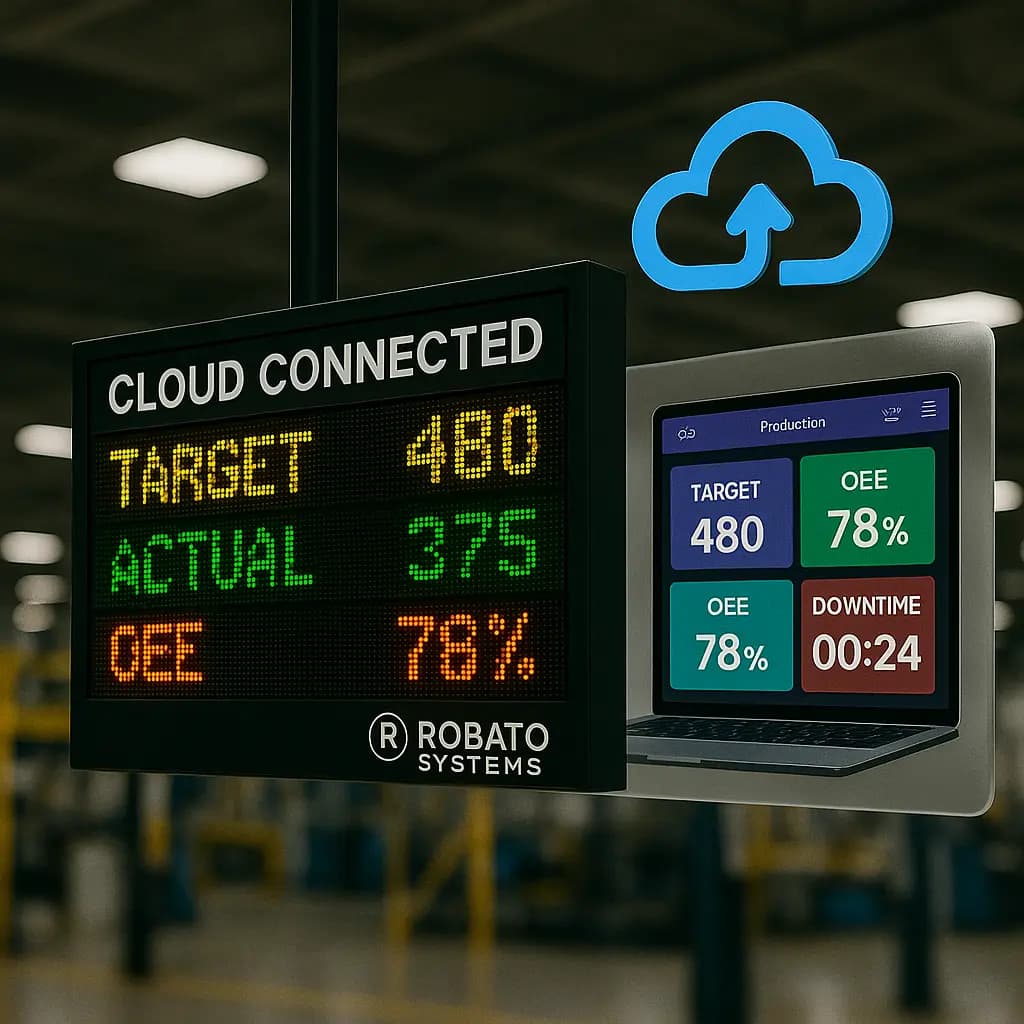
5. Target vs Actual Production
Comparing planned production with actual production helps managers identify production gaps.
When combined with operator utilization data, this provides additional context for understanding whether a production shortfall is related to workforce availability, machine performance, material availability, or other factors.
Operator Utilization vs Operator Productivity
Operator utilization and operator productivity are related but not identical.
Operator utilization focuses on how available operator time is being used.
Operator productivity focuses more directly on the amount of output generated from the available workforce or working time.
For example, an operator may have high utilization because they remain continuously engaged in activities, but the resulting production output may still be low because the machine has a low production rate.
Similarly, an operator can have lower utilization because of machine downtime that is outside their control.
Therefore, utilization data should be analyzed together with production, machine, quality, and downtime information.
This prevents managers from drawing conclusions from a single metric.
Real-Time Operator Utilization Monitoring
Traditional workforce analysis often depends on end-of-shift reports or spreadsheets.
The problem is that delayed information makes it difficult to respond while production is still happening.
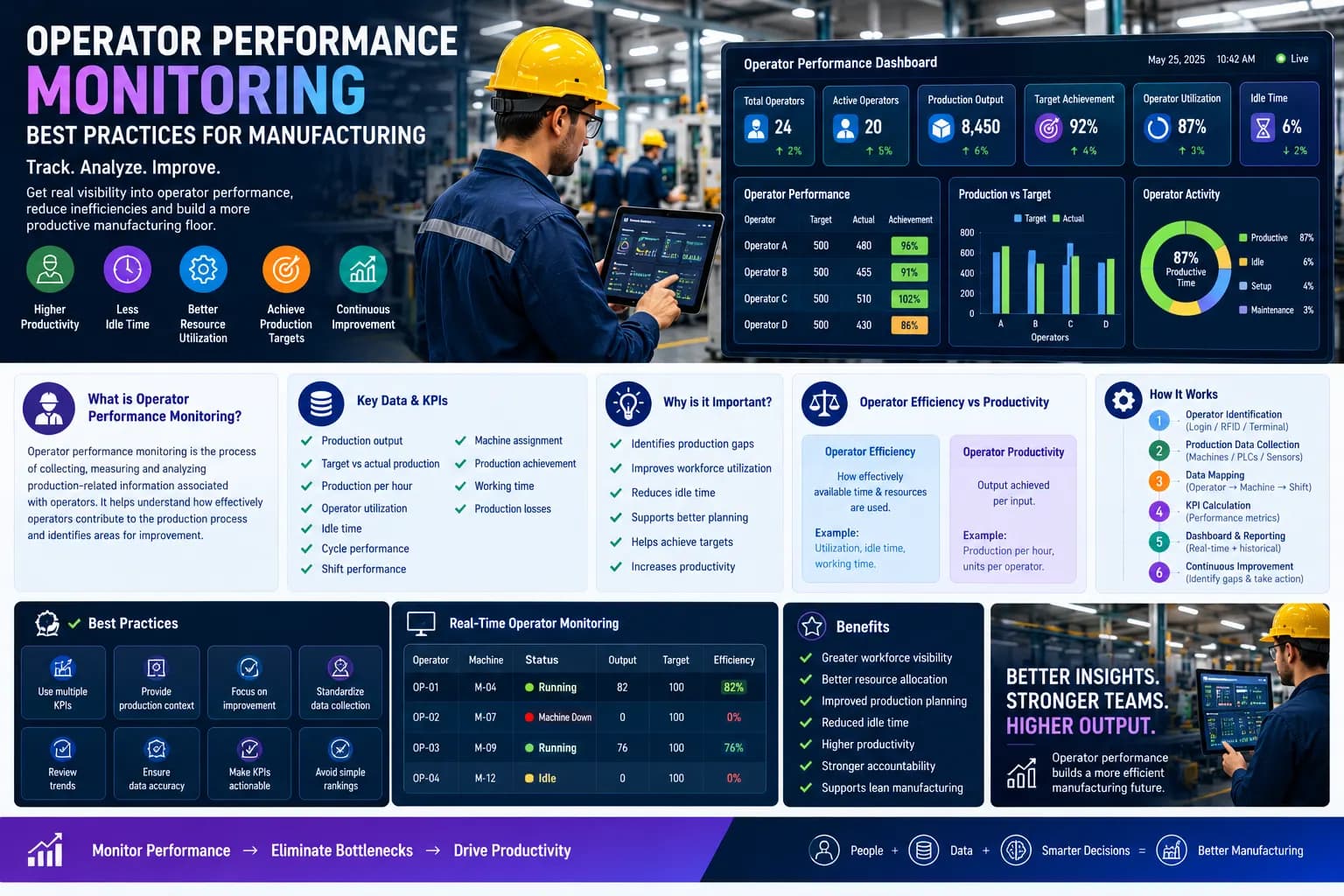
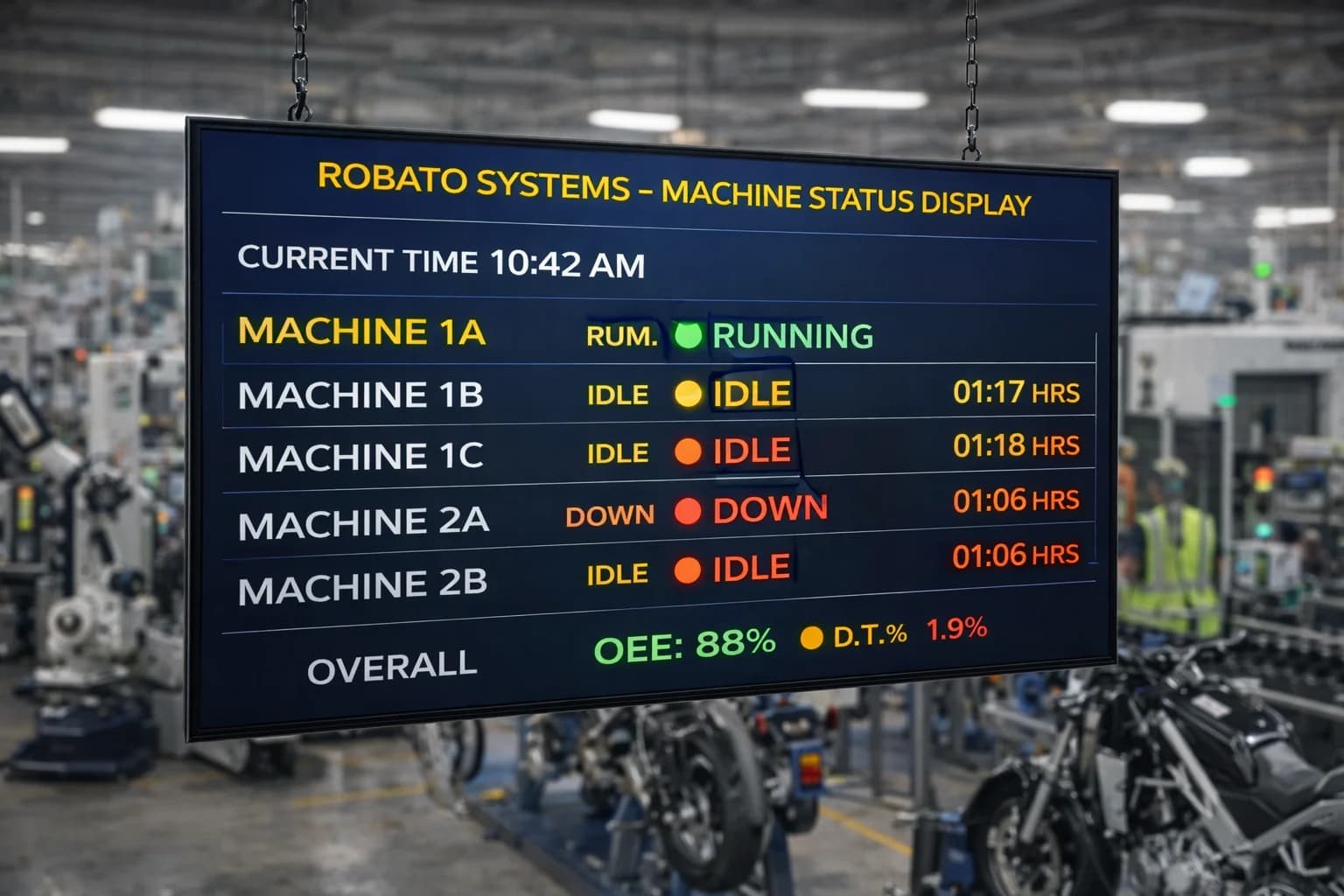
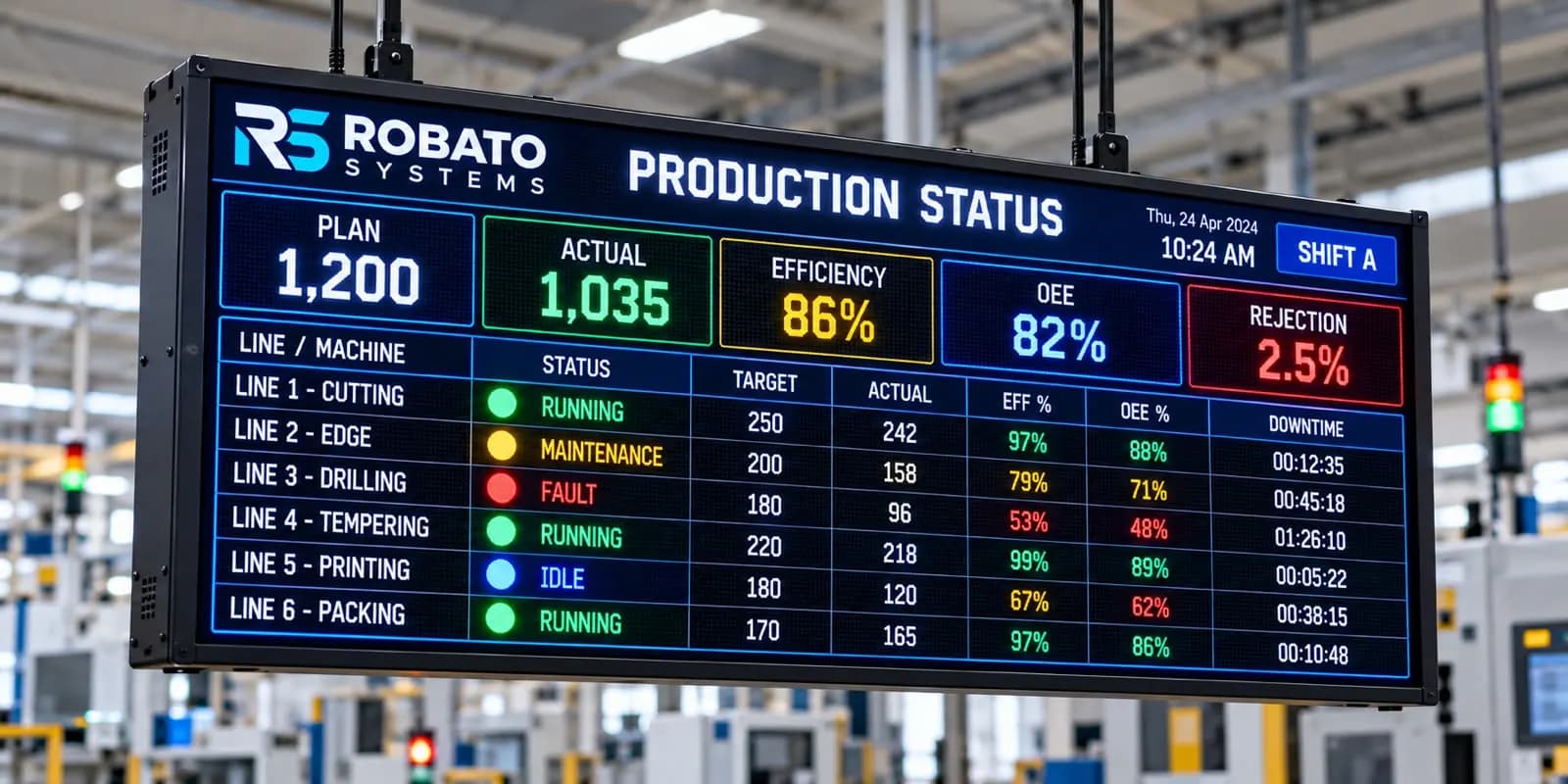
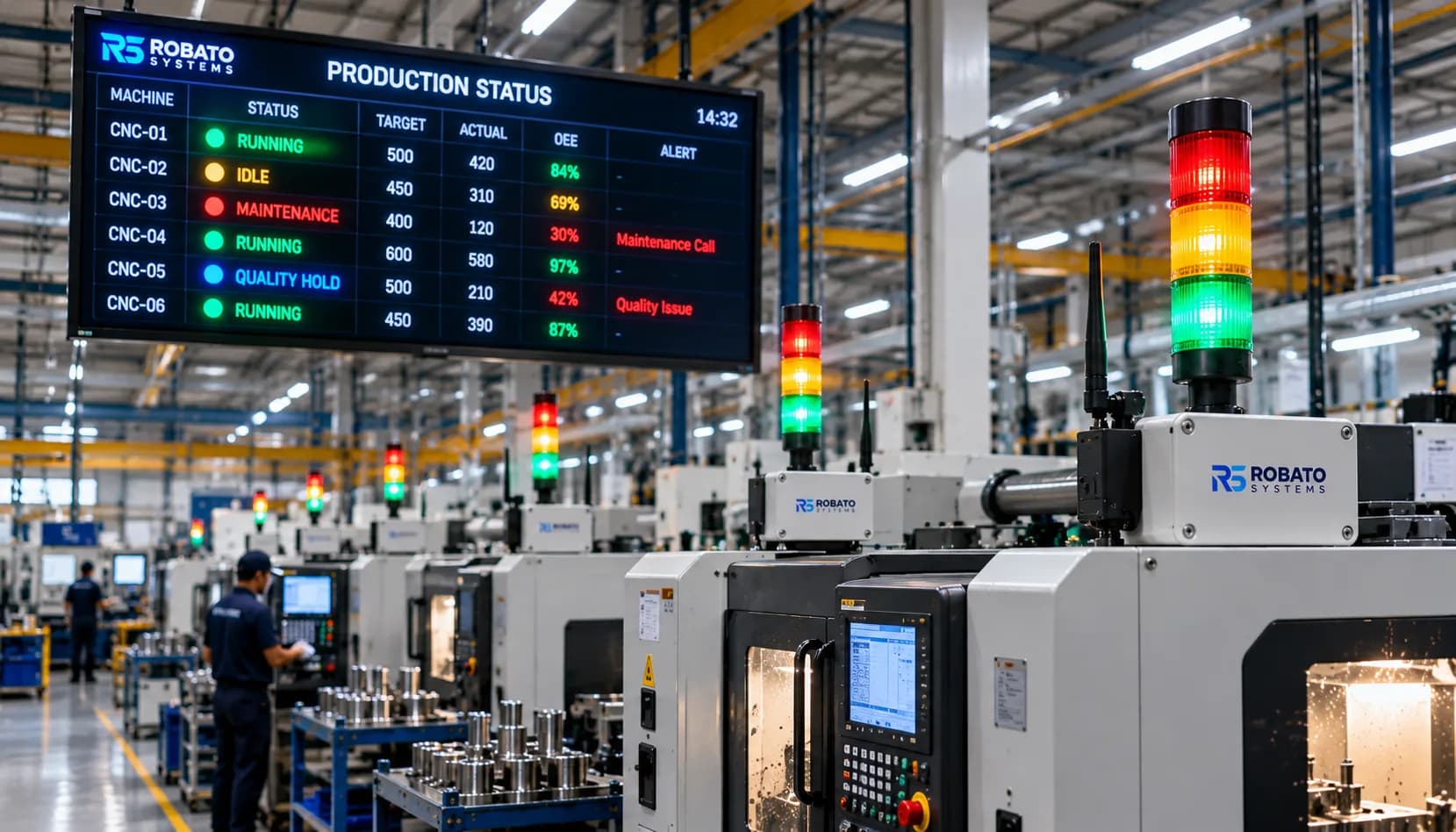
Real-time operator utilization monitoring provides visibility during the shift.
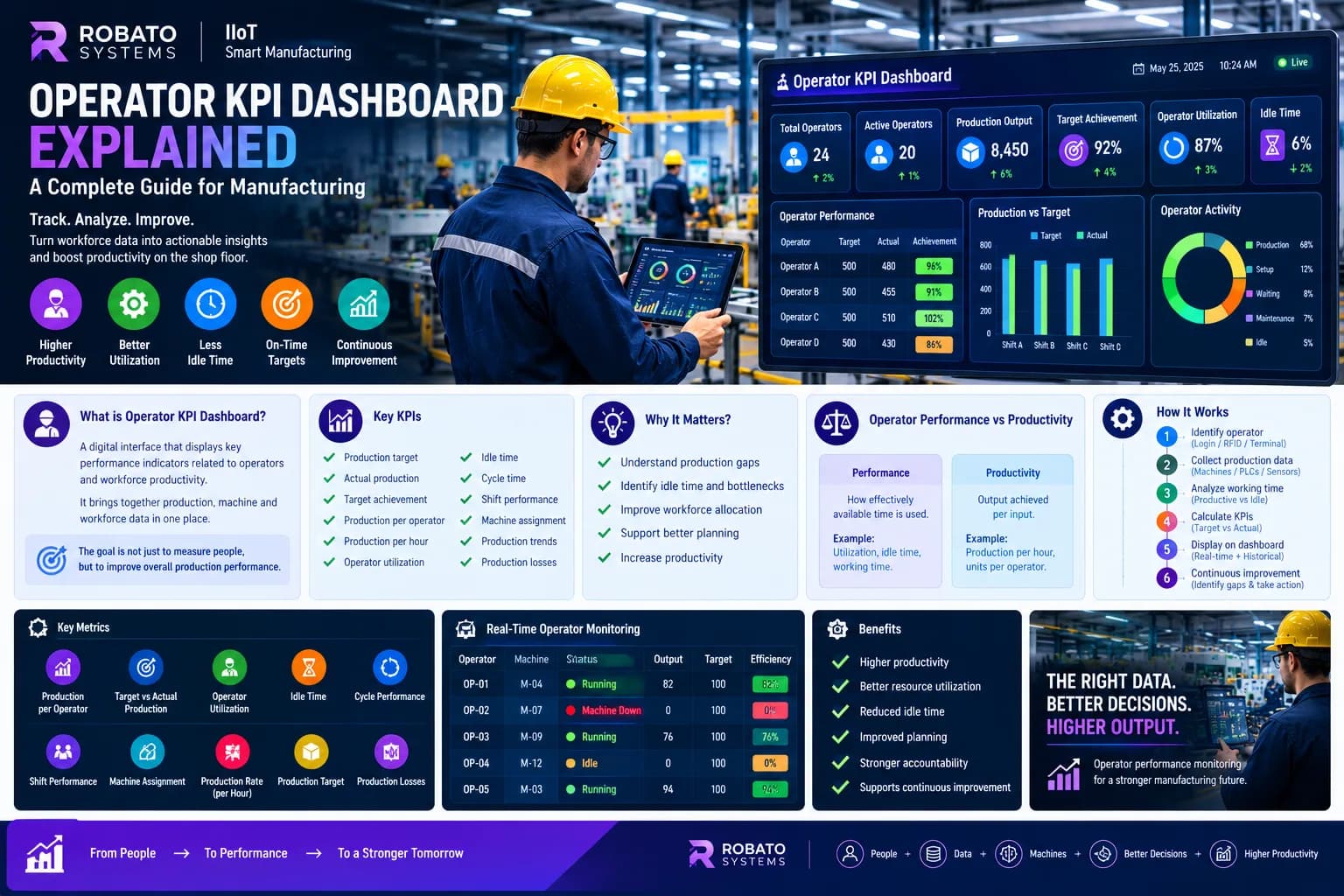
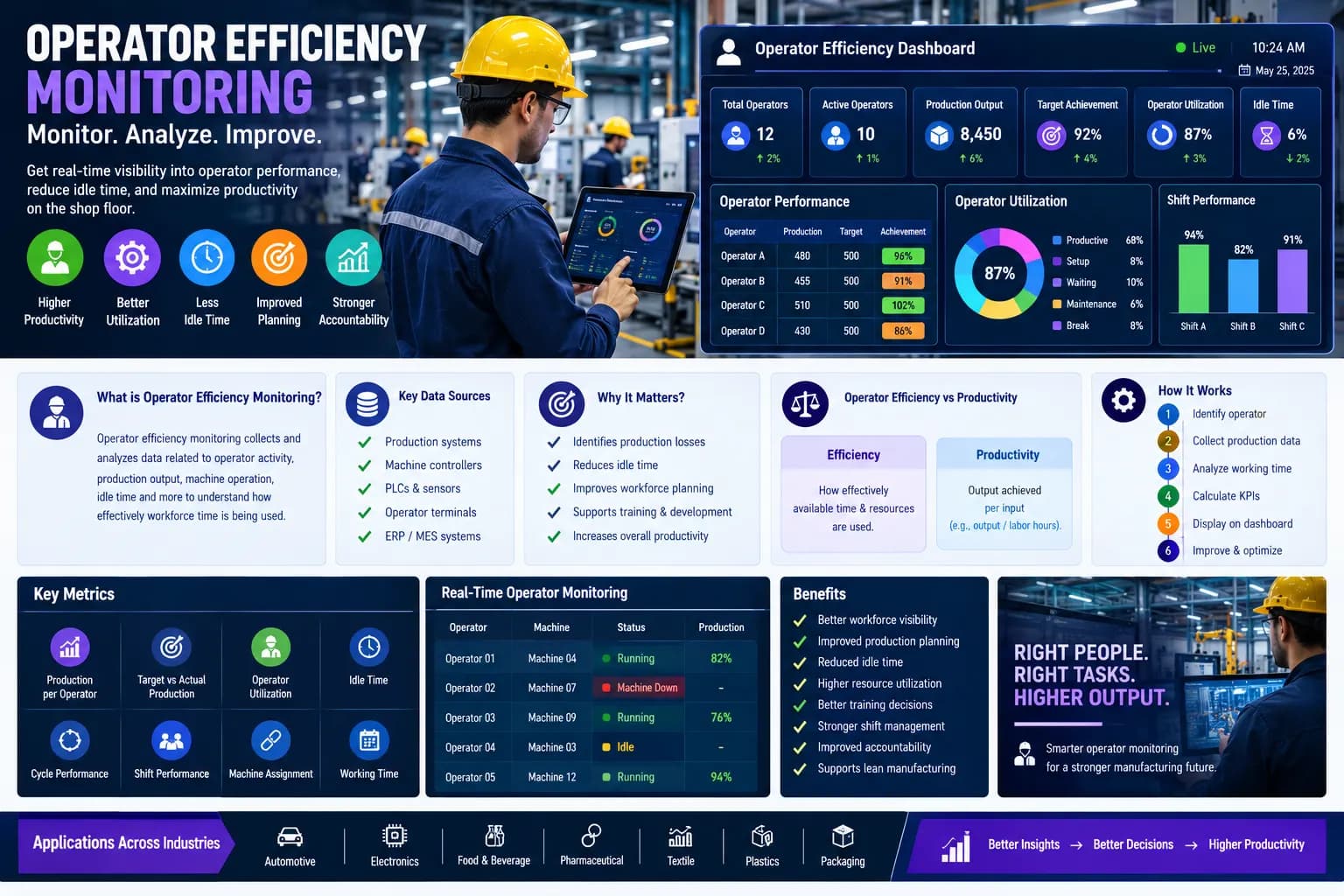
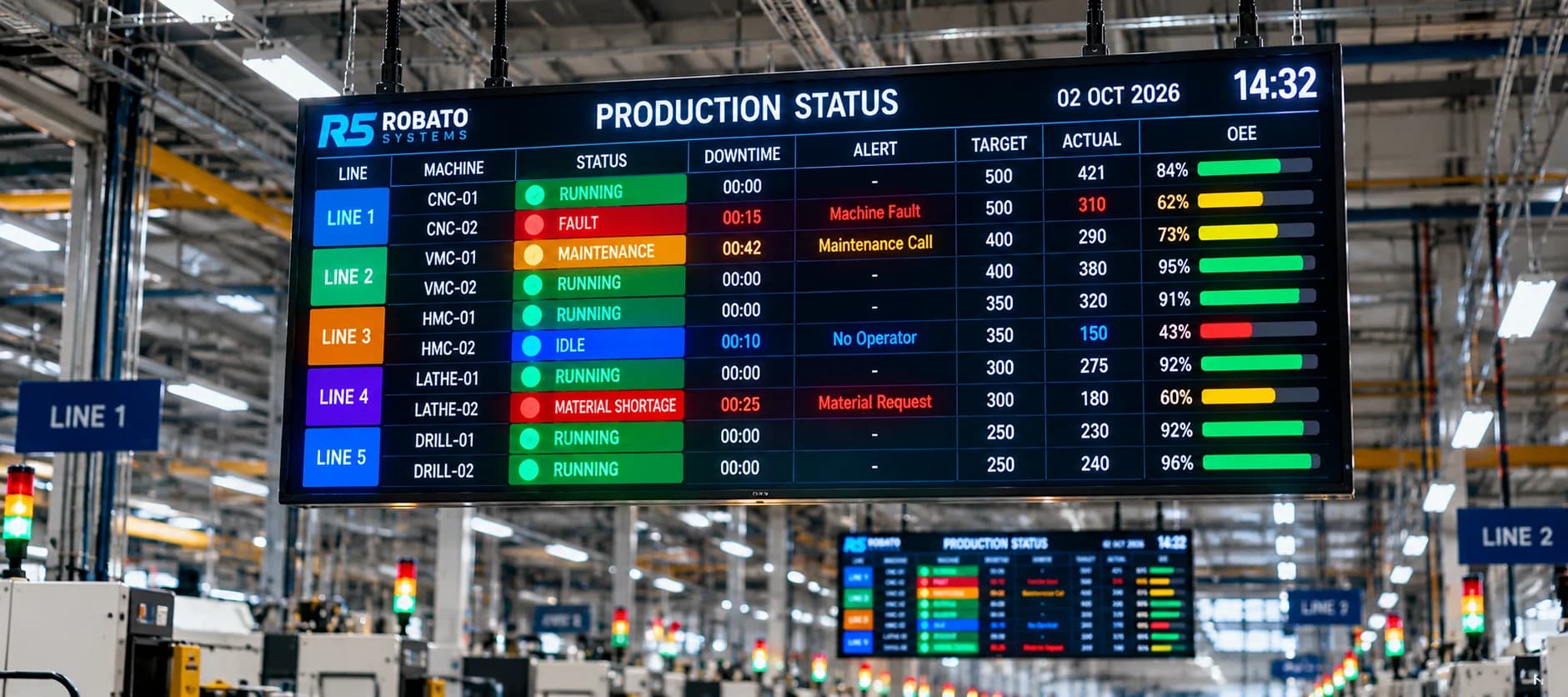
A dashboard can show:
- Active operators
- Assigned machines
- Current production
- Production targets
- Operator utilization
- Idle periods
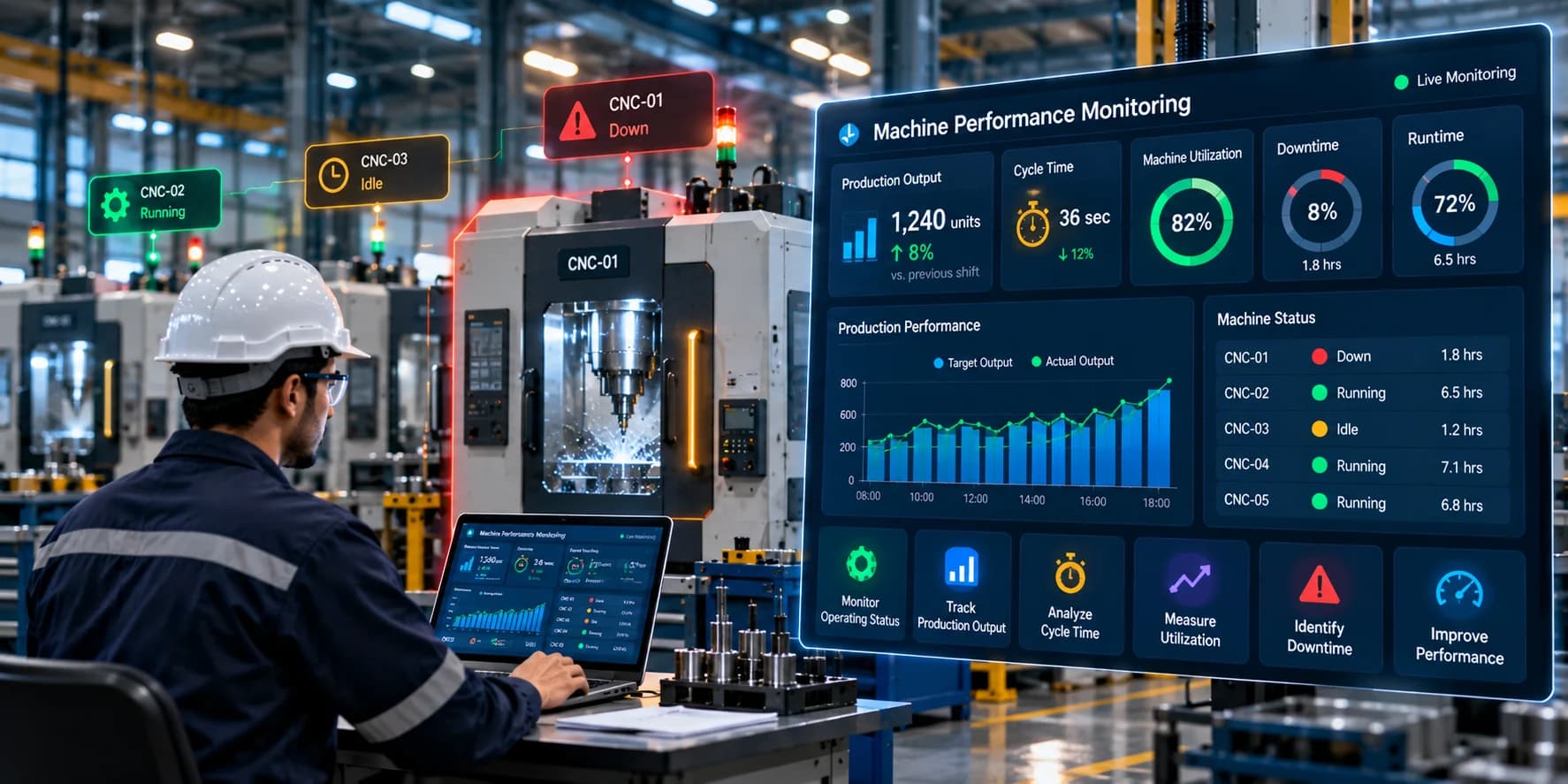
- Machine downtime
- Shift performance
- Production gaps
For example, if several operators are affected by a machine breakdown, a production manager can identify the issue immediately rather than discovering it during the next day's review.
Real-time visibility can therefore support faster operational decisions.
Operator Utilization by Shift
Different shifts can experience different utilization levels.
A manufacturing dashboard can compare:
- Morning shift
- Afternoon shift
- Night shift
- Weekend shifts
- Individual production teams
This can help identify recurring operational patterns.
For example, if a particular shift consistently experiences longer waiting periods, management can investigate whether the cause is related to:
- Material availability
- Maintenance response
- Staffing
- Production scheduling
- Supervisor coordination
- Changeover planning
The goal is to identify the process issue rather than simply comparing employees.
Operator Utilization by Machine
Operators are often assigned to specific machines or production stations.
Monitoring utilization alongside machine performance provides a more complete picture.
Suppose two operators have similar working hours but significantly different production output.
The difference may not necessarily be related to operator performance.
One operator may be working with a machine that experiences frequent breakdowns, while the other is operating a more reliable machine.
By connecting operator data with machine downtime and production data, managers can separate workforce-related issues from equipment-related issues.
Operator Utilization by Production Line
For plants with multiple production lines, utilization monitoring can help identify differences between lines.
Managers can analyze:
- Operator availability
- Operator utilization
- Production output
- Downtime
- Changeover duration
- Target achievement
This can highlight opportunities for better workforce allocation.
For example, one line may have excess operator capacity while another line regularly experiences workload pressure.
This information can support better workforce planning.
How Operator Utilization Helps Identify Idle Time
Idle time is one of the most important areas to investigate.
However, simply measuring idle time is not enough.
A better approach is to categorize it.
Material Waiting
The operator is ready to work but required material is unavailable.
Machine Breakdown
The assigned machine is stopped because of equipment failure.
Changeover
The production process is being changed from one product or batch to another.
Quality Hold
Production is paused because of a quality-related issue.
Planned Downtime
The machine or production process is intentionally stopped according to the production plan.
Unplanned Waiting
The operator is available but is waiting because of an unexpected operational issue.
Categorizing these conditions helps management identify where utilization losses originate.
Benefits of Operator Utilization Monitoring
Better Workforce Visibility
Managers can understand how workforce time is being used across machines, lines, and shifts.
Improved Production Planning
Historical utilization data can support better workforce allocation and production scheduling.
Reduced Unproductive Waiting
Identifying recurring waiting causes makes it easier to address material, maintenance, or planning issues.
Better Shift Management
Supervisors can monitor production and operator activity during the shift instead of relying entirely on end-of-shift reports.
Improved Resource Allocation
Data can help identify where additional workforce capacity is required and where available capacity may exist.
Better Root Cause Analysis
Combining operator utilization with machine and downtime data provides a more complete understanding of production losses.
Improved Manufacturing Productivity
When recurring utilization losses are identified and addressed, organizations can work toward improving overall production efficiency.
Manual Tracking vs Automated Operator Utilization Monitoring
Many factories still use spreadsheets or manual forms to record operator activity.
Manual tracking can create several challenges:
- Data entry takes time
- Information may be delayed
- Records can contain inconsistencies
- Real-time visibility is limited
- Cross-analysis is difficult
- Historical trends are harder to identify
Automated monitoring can collect production and machine information continuously and associate it with operators, shifts, and production activities.
This reduces dependence on manual reporting and provides faster access to operational information.
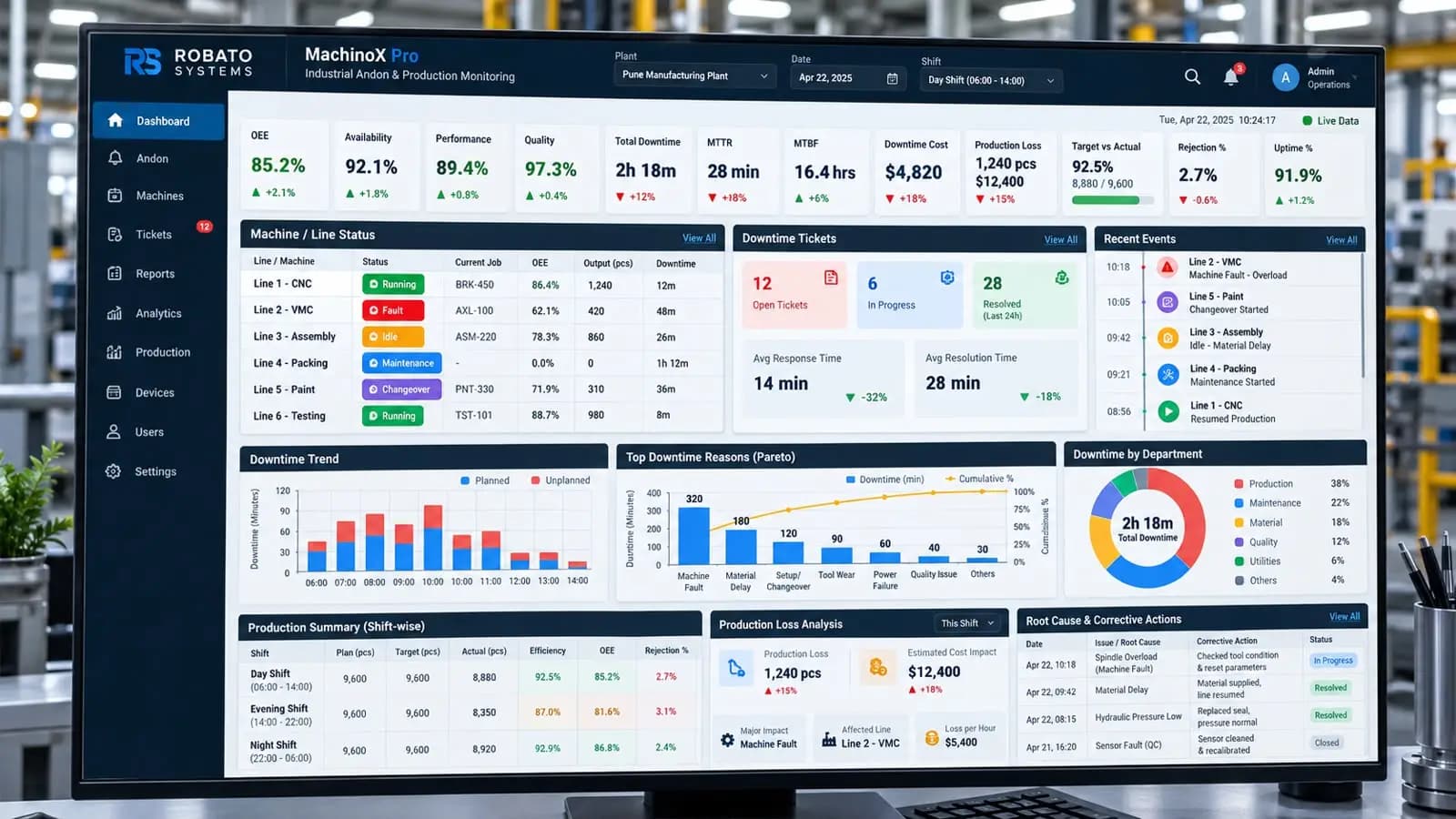
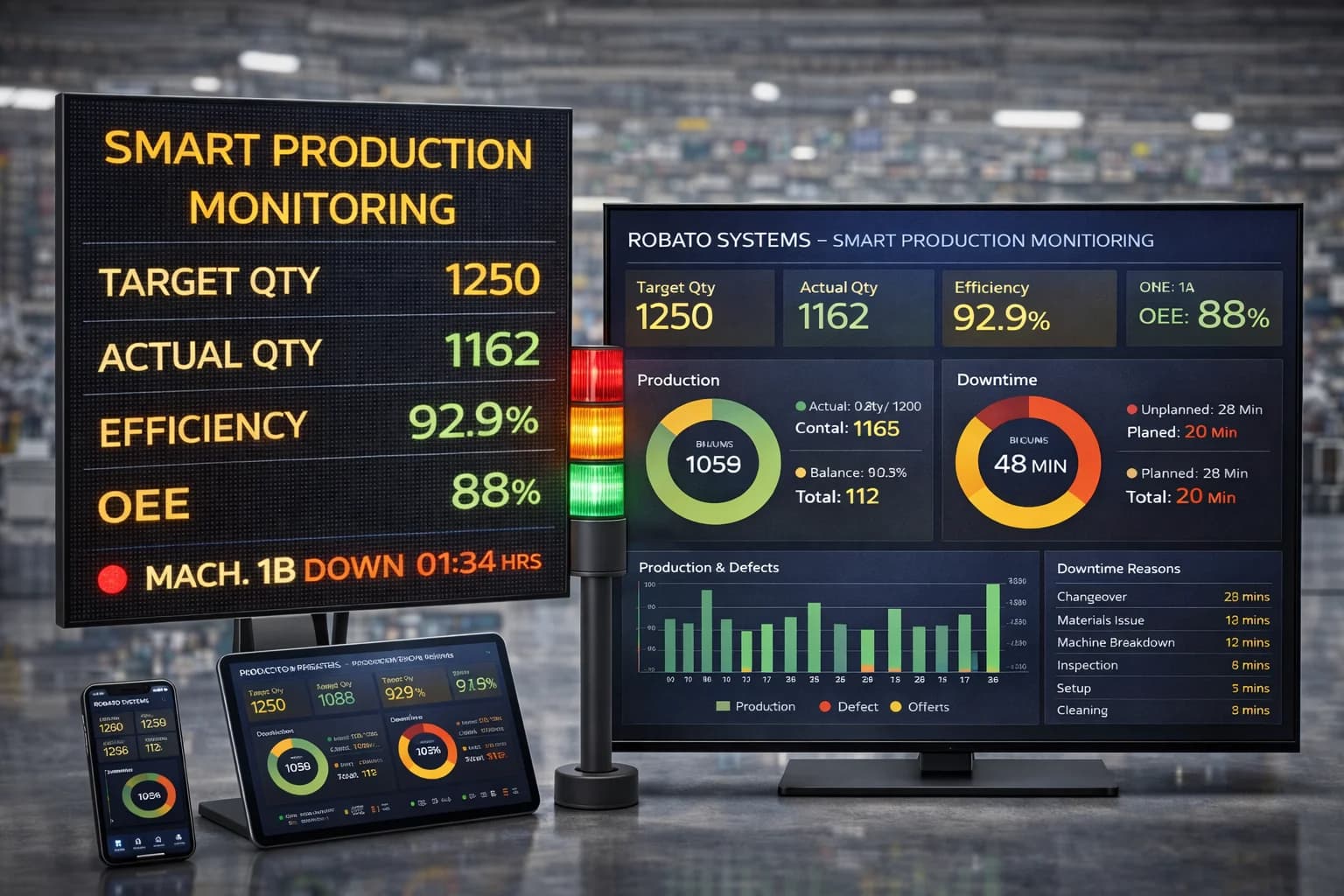
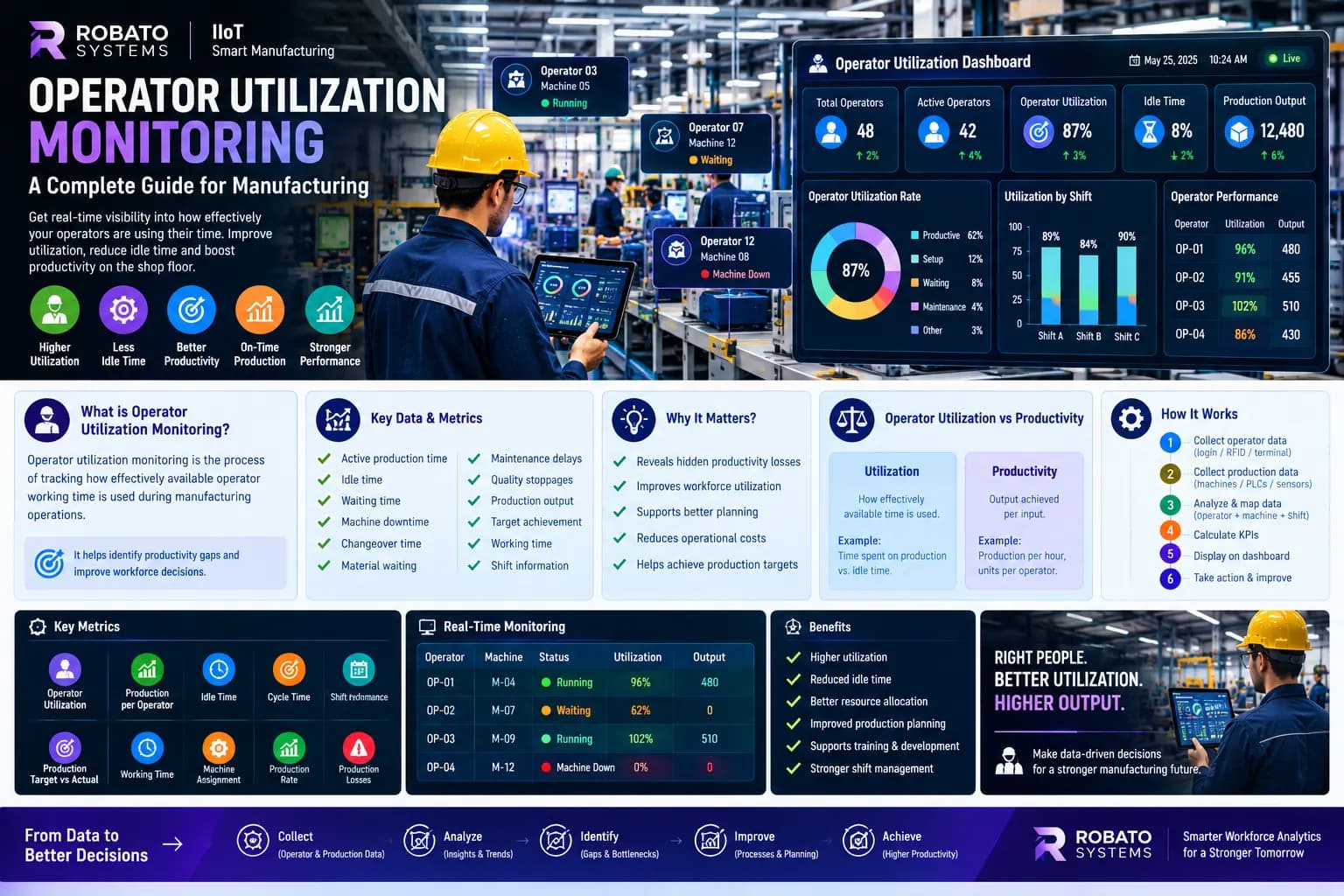
Operator Utilization Dashboard
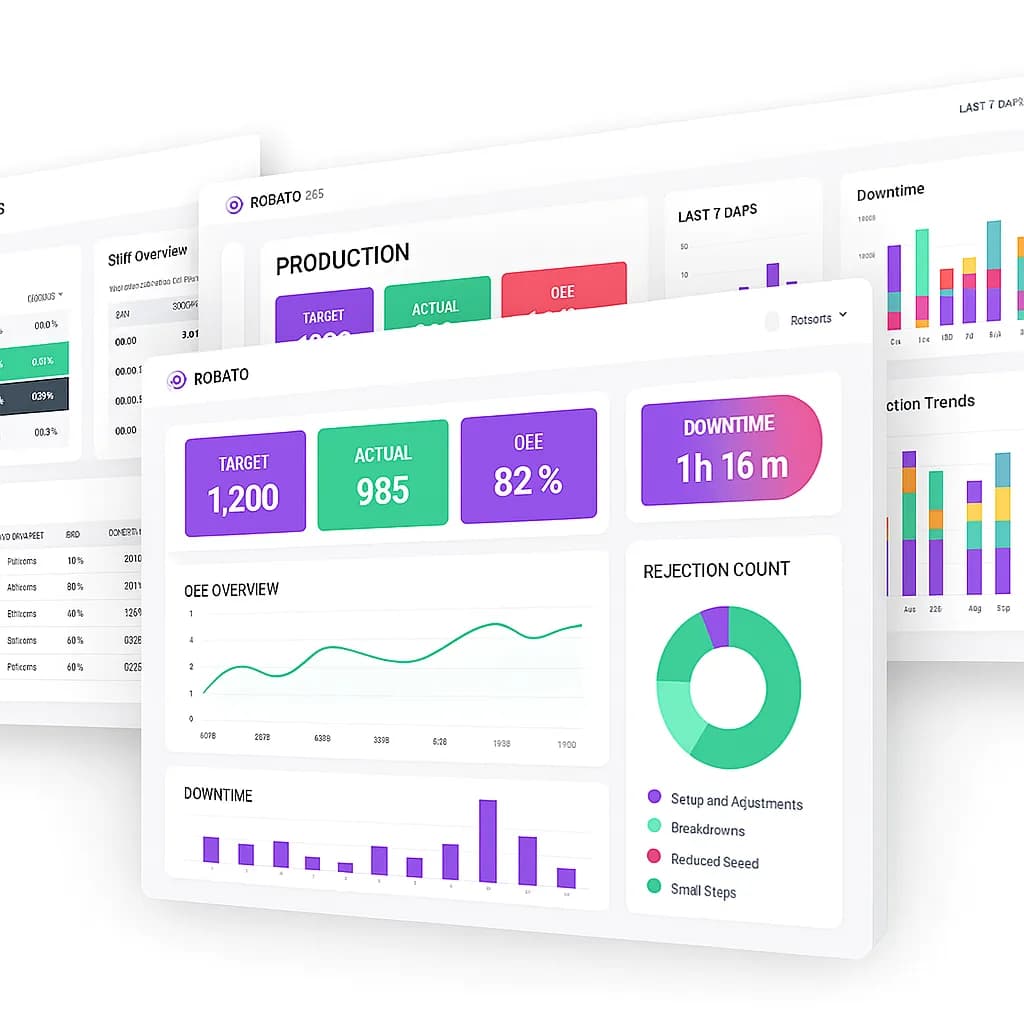
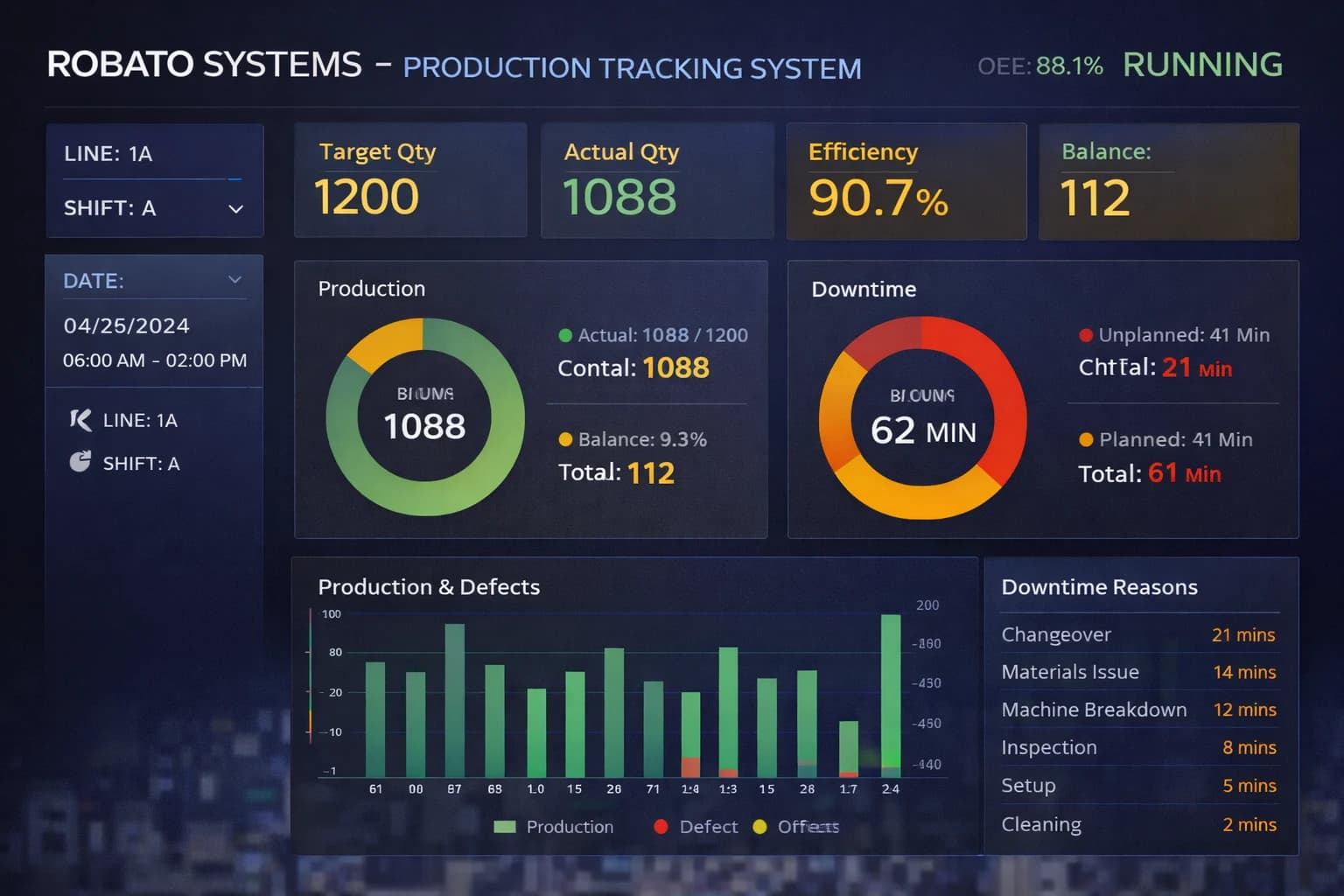
A manufacturing operator utilization dashboard should present important information clearly.
A useful dashboard may include:
Workforce Summary
- Total operators
- Active operators
- Available operators
- Operators affected by downtime
Utilization Metrics
- Average operator utilization
- Productive time
- Idle time
- Waiting time
Production Metrics
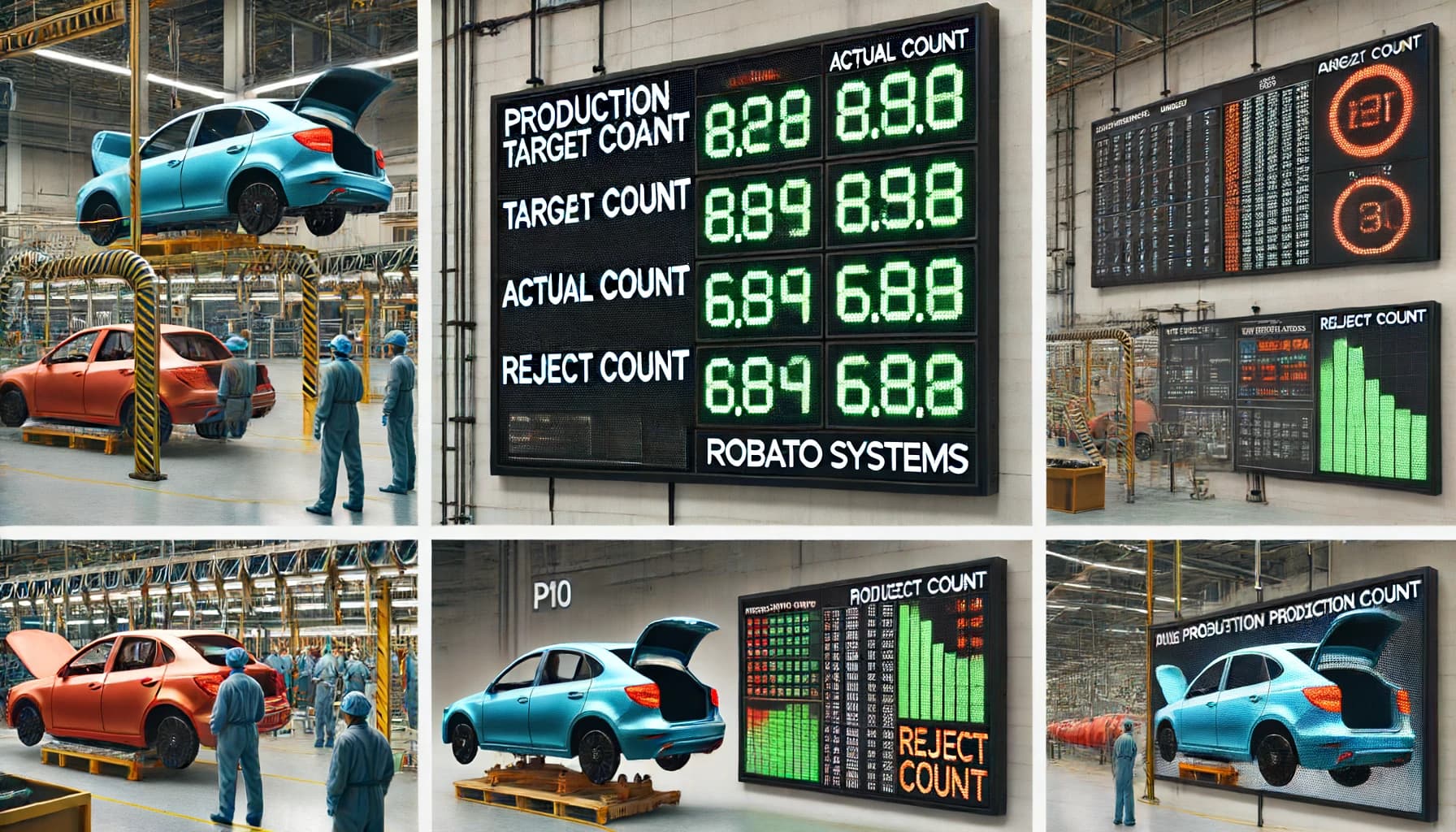
- Target production
- Actual production
- Production achievement
- Output per operator
Operational Analysis
- Downtime by reason
- Material waiting
- Changeover time
- Quality-related delays
Shift Analysis
- Utilization by shift
- Production by shift
- Idle time by shift
- Target achievement by shift
The dashboard should focus on actionable information rather than displaying too many unrelated metrics.
Using Operator Utilization with OEE
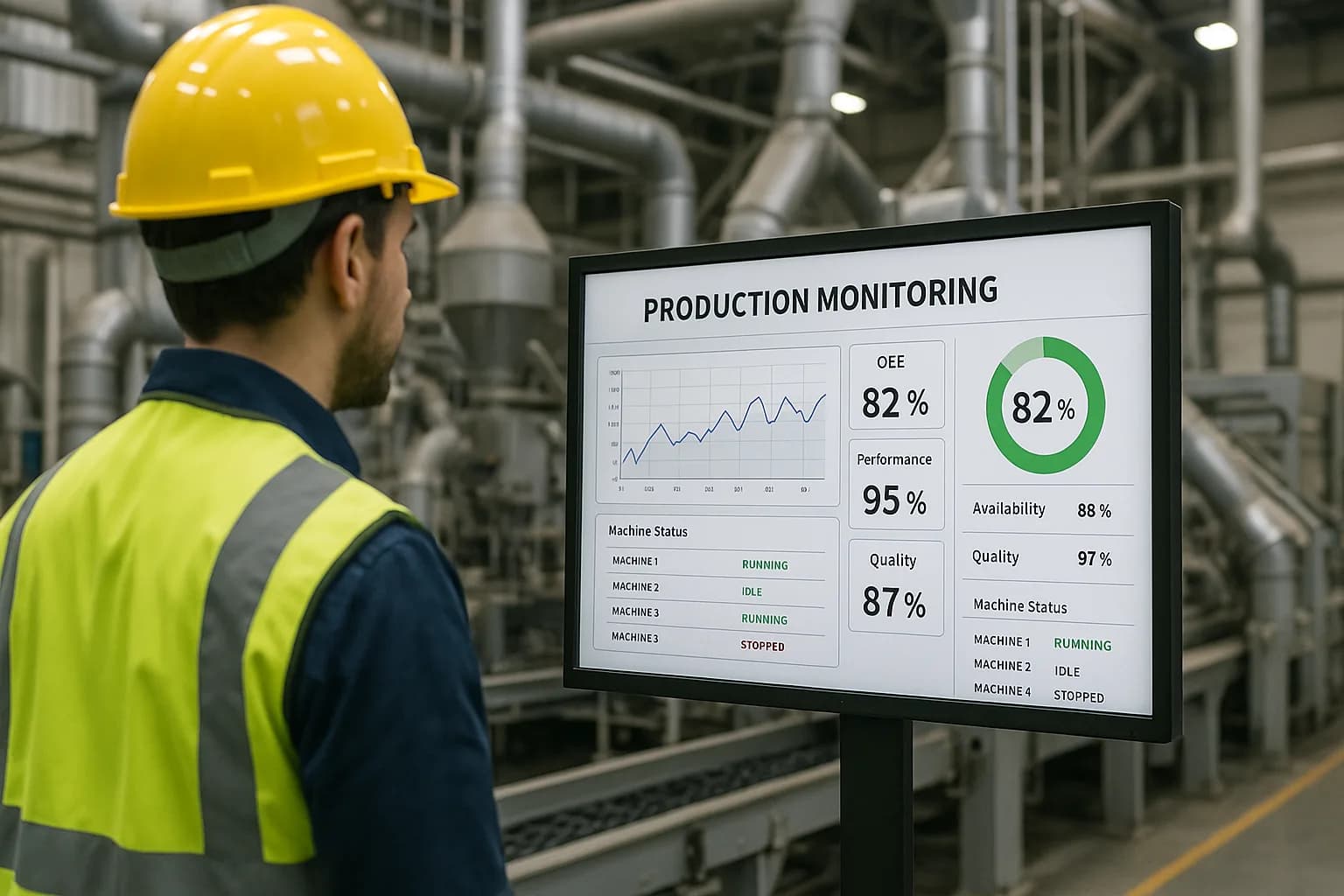
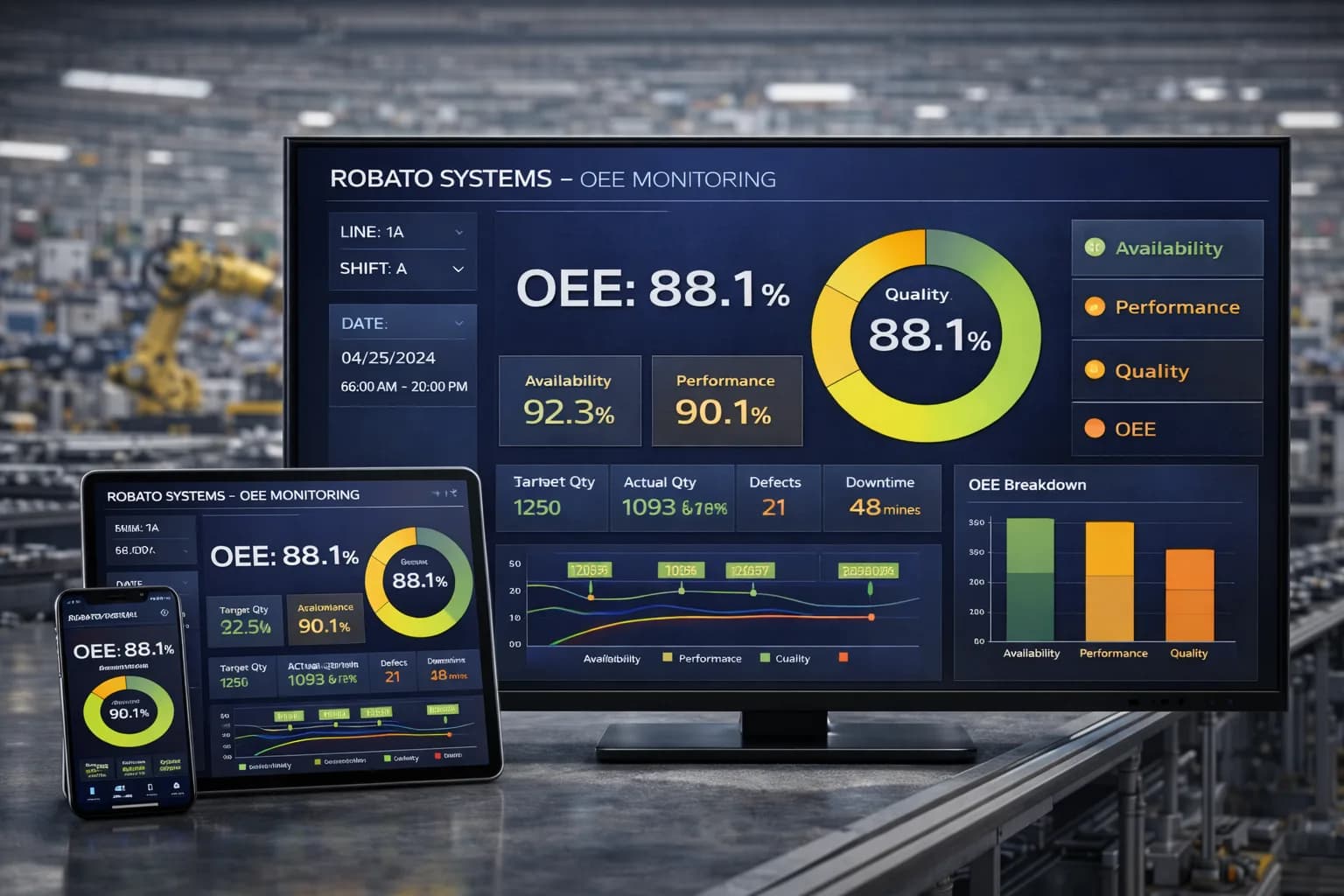
Operator utilization can complement Overall Equipment Effectiveness (OEE).
OEE typically evaluates equipment performance through:
- Availability
- Performance
- Quality
Operator utilization adds another workforce-related perspective.
For example, a machine may have high availability but production output may still be affected by workforce availability or operator-related process constraints.
By analyzing equipment and workforce information together, manufacturers can obtain a broader view of production performance.
The two metrics should not be treated as interchangeable. Instead, they can be used together to understand different parts of the manufacturing process.
Best Practices for Operator Utilization Monitoring
Define Utilization Clearly
Before implementing a monitoring system, define what counts as productive, non-productive, planned, and unplanned time.
Connect Operators to Production Data
Operator information becomes more useful when connected with machine, production, and shift data.
Categorize Idle Time
Do not treat all idle time as the same. Identify the operational reason wherever possible.
Monitor Trends
A single shift may not provide enough information. Analyze utilization across days, weeks, shifts, machines, and production lines.
Avoid Single-Metric Evaluation
Operator utilization should be analyzed alongside production output, quality, downtime, and machine performance.
Use Real-Time Alerts Where Appropriate
Significant production or utilization problems can be communicated to supervisors while the shift is still running.
Focus on Process Improvement
The purpose of utilization monitoring should be to identify and remove operational constraints, not simply to create employee rankings.
Operator Utilization and Industry 4.0
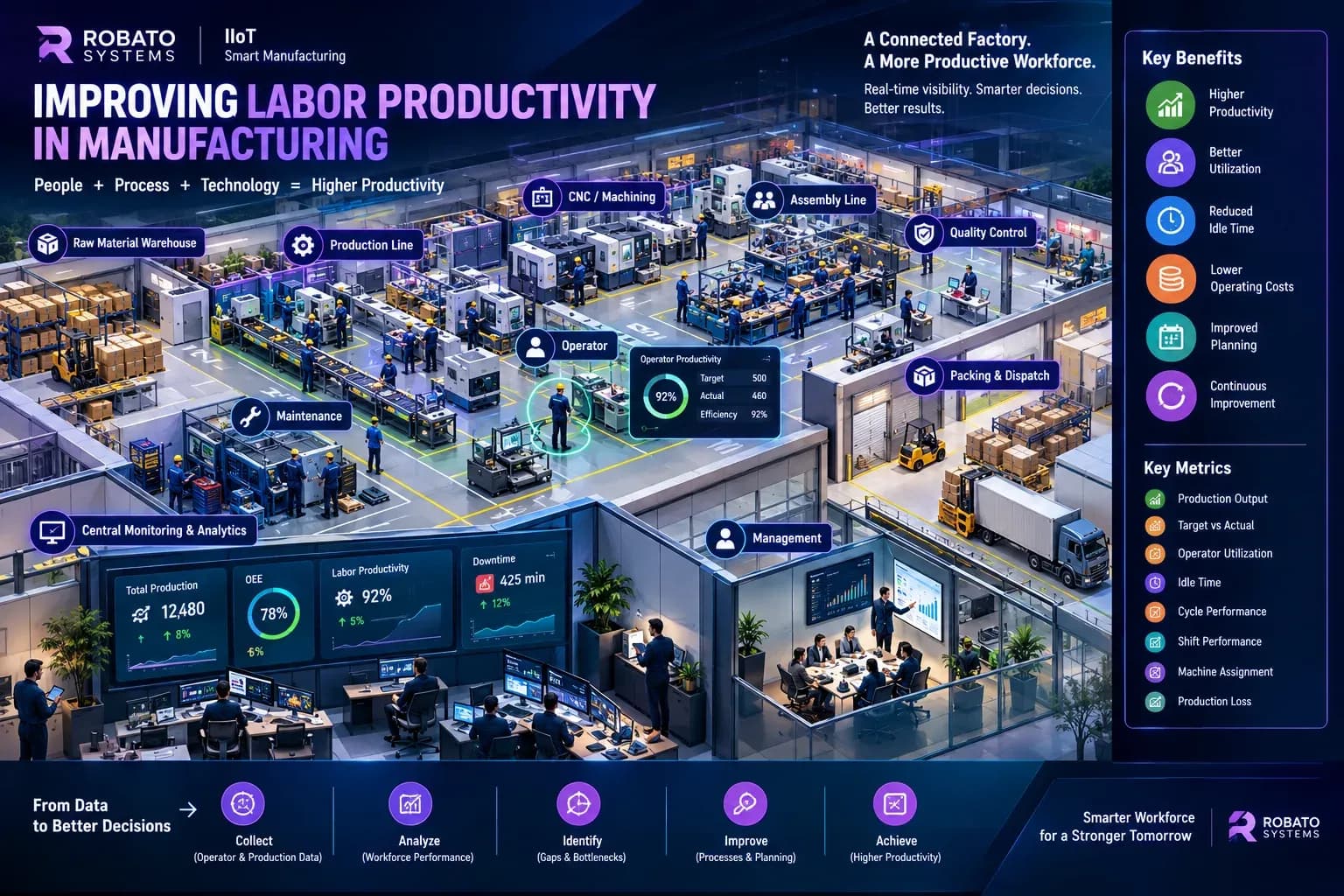
Industry 4.0 manufacturing environments increasingly connect machines, production systems, operators, sensors, and business applications.
Operator utilization monitoring can become part of this connected manufacturing environment.
When operator data is connected with:
- IIoT devices
- Machine monitoring
- Production tracking
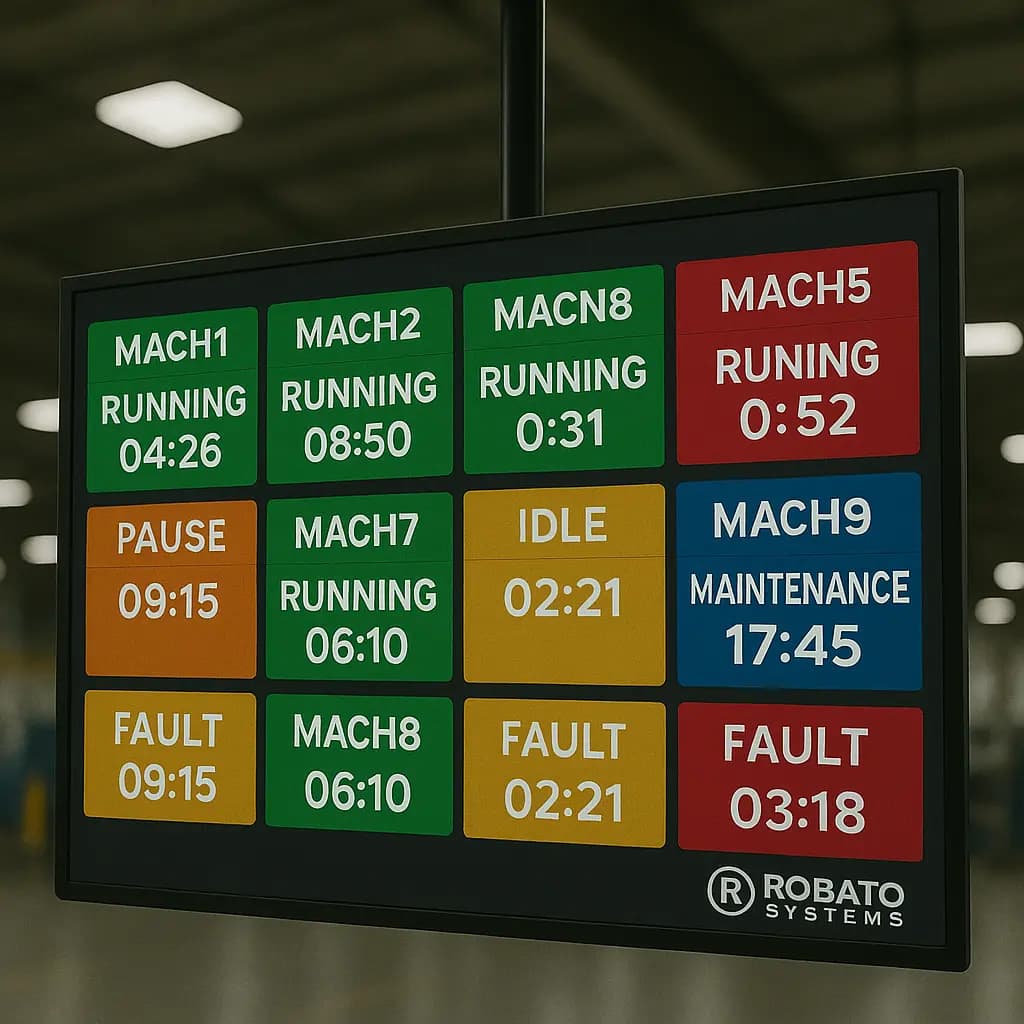
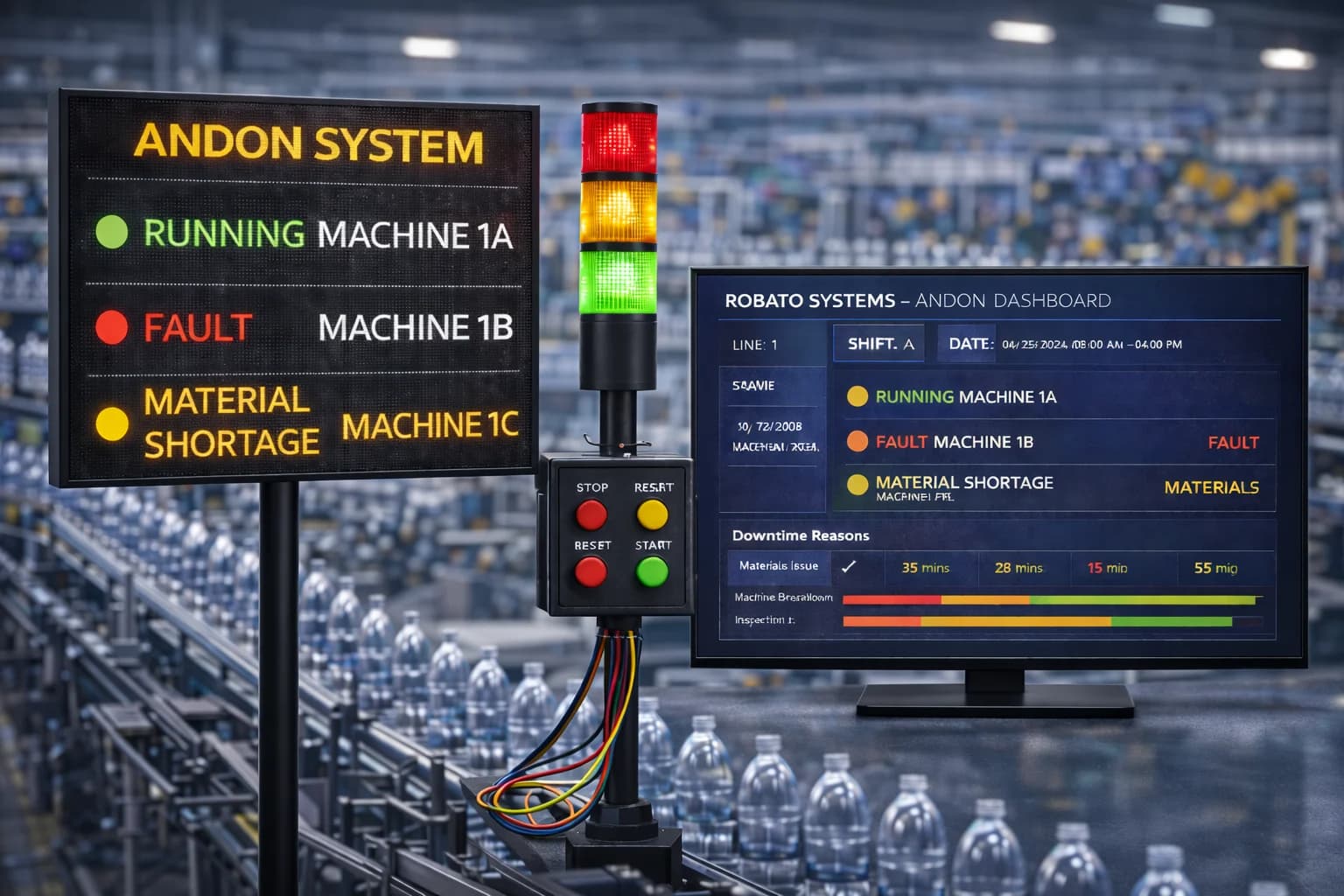
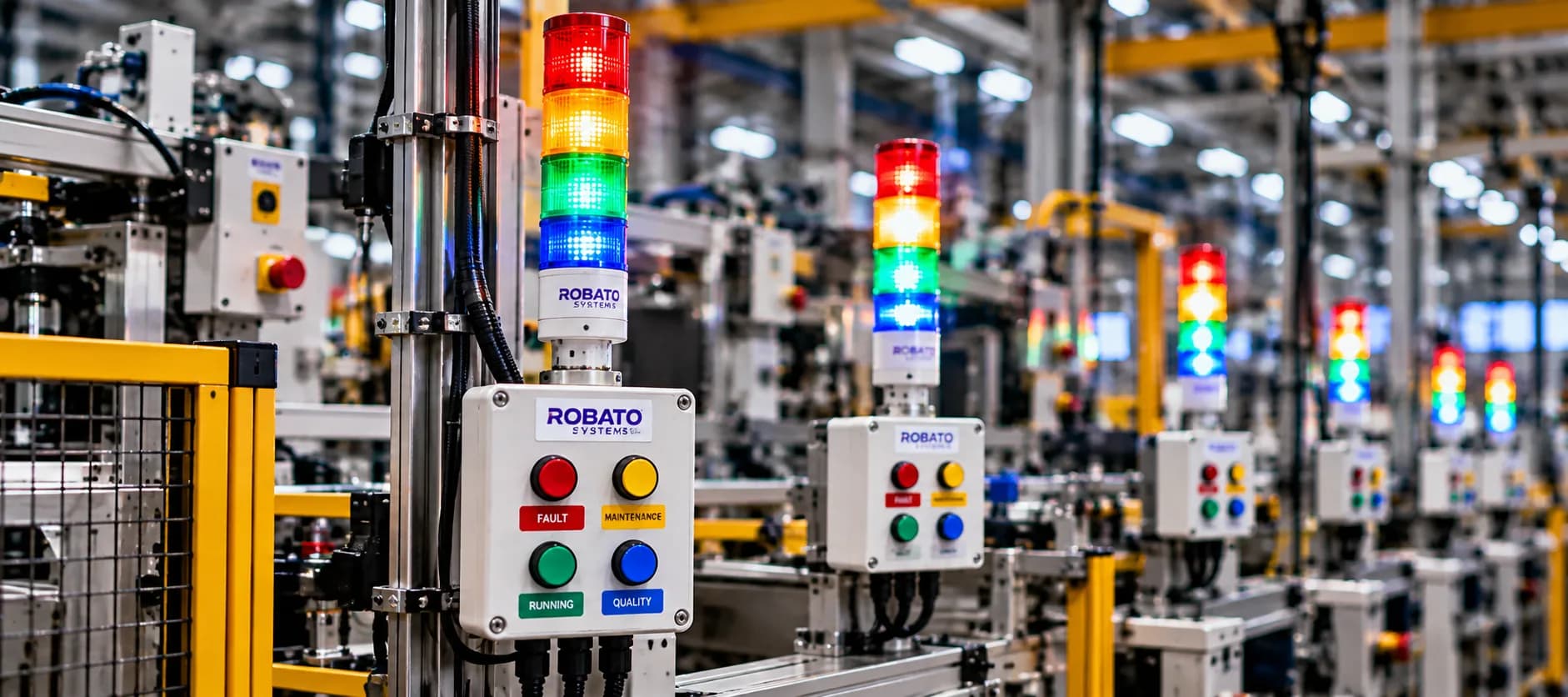
- Digital Andon systems
- OEE monitoring
- Downtime tracking
- Manufacturing dashboards
manufacturers can build a more complete digital view of shop floor operations.
This supports data-driven decision-making and provides better visibility into how people and machines work together.
How Robato Systems Can Support Operator Utilization Monitoring
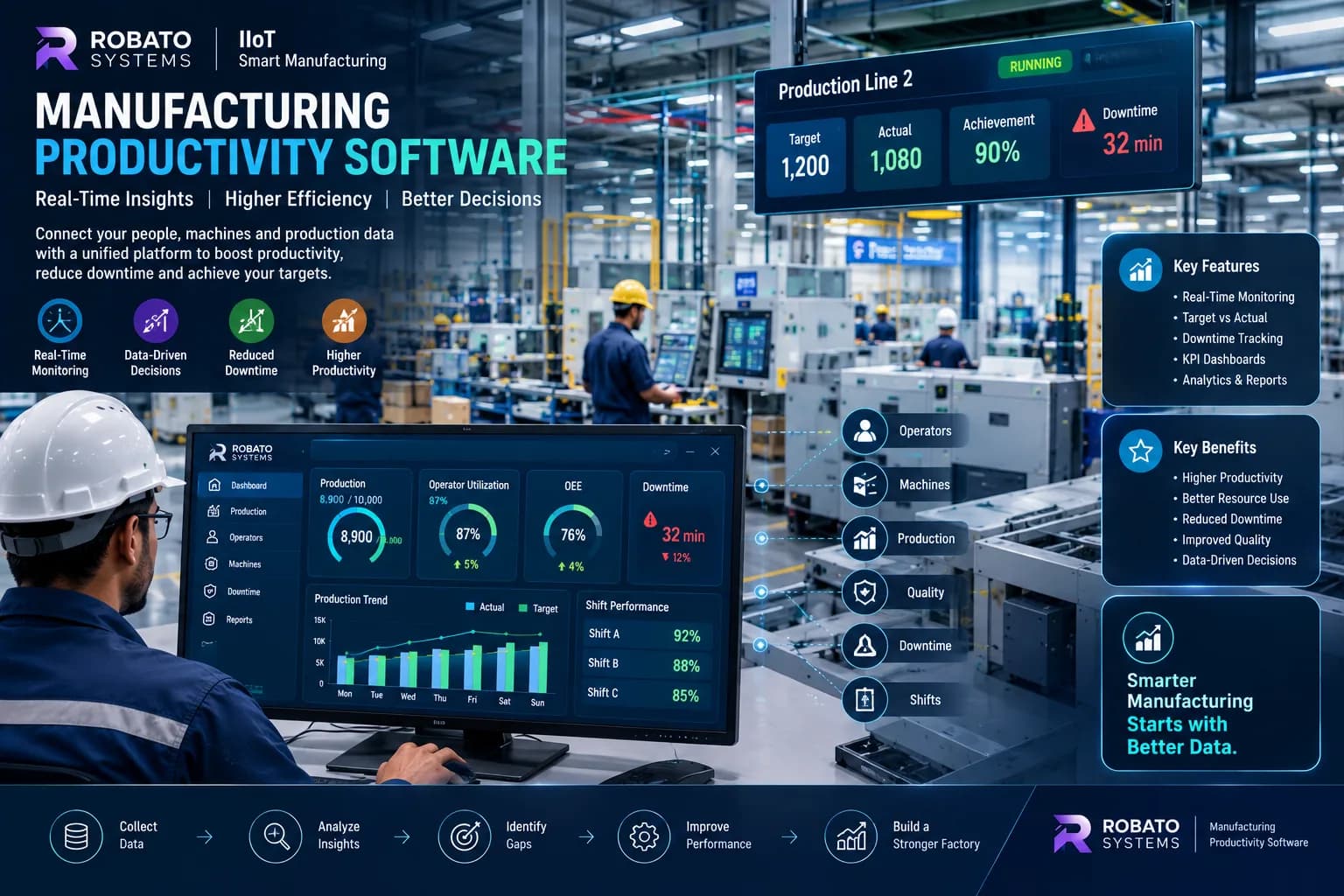
Robato Systems provides manufacturing-focused digital solutions designed to connect production information with real-time shop floor visibility.
An operator efficiency solution can help manufacturers bring together operator, production, machine, shift, and performance information in a centralized environment.
Instead of relying only on manual reports, manufacturing teams can use digital dashboards to monitor production activity and identify utilization gaps.
When combined with OEE, downtime monitoring, production tracking, and Andon capabilities, operator utilization data can become part of a broader manufacturing performance management system.
Conclusion
Operator utilization monitoring provides manufacturers with greater visibility into how workforce time is being used across the production floor.
It helps organizations analyze productive time, idle time, production output, machine downtime, shift performance, and operational constraints.
The most useful approach is not to view operator utilization as an isolated employee metric. Instead, it should be analyzed together with machine performance, production targets, downtime, quality, and process conditions.
With real-time data and meaningful categorization, manufacturers can identify recurring sources of lost workforce capacity and make better decisions about production planning, resource allocation, and process improvement.
As manufacturing operations become increasingly connected, operator utilization monitoring can become an important component of a modern digital production management strategy.
FAQs
What is operator utilization monitoring?
Operator utilization monitoring is the process of tracking how available operator working time is used during manufacturing activities. It can include productive time, idle time, waiting time, downtime exposure, and production output.
Why is operator utilization important?
It helps manufacturers understand how workforce capacity is being used and identify operational causes of lost or underutilized production time.
What is the difference between operator utilization and productivity?
Utilization focuses on how available working time is used, while productivity generally focuses on the output generated from the available workforce or working time.
Can operator utilization monitoring track idle time?
Yes. Modern systems can track idle periods and, where data is available, categorize the reason for the idle time such as machine breakdown, material shortage, changeover, or quality issues.
Can operator utilization be monitored in real time?
Yes. When connected with production and machine monitoring systems, operator utilization information can be presented through real-time manufacturing dashboards.
How does operator utilization monitoring improve production?
It provides visibility into workforce-related production losses and helps managers identify recurring issues such as waiting, poor resource allocation, machine downtime, and production bottlenecks.
Can operator utilization be connected with OEE?
Yes. Operator utilization and OEE measure different aspects of manufacturing performance and can be analyzed together to understand equipment and workforce efficiency.
What should an operator utilization dashboard include?
A dashboard can include operator availability, utilization, productive time, idle time, production output, target vs actual production, shift performance, machine downtime, and utilization trends.