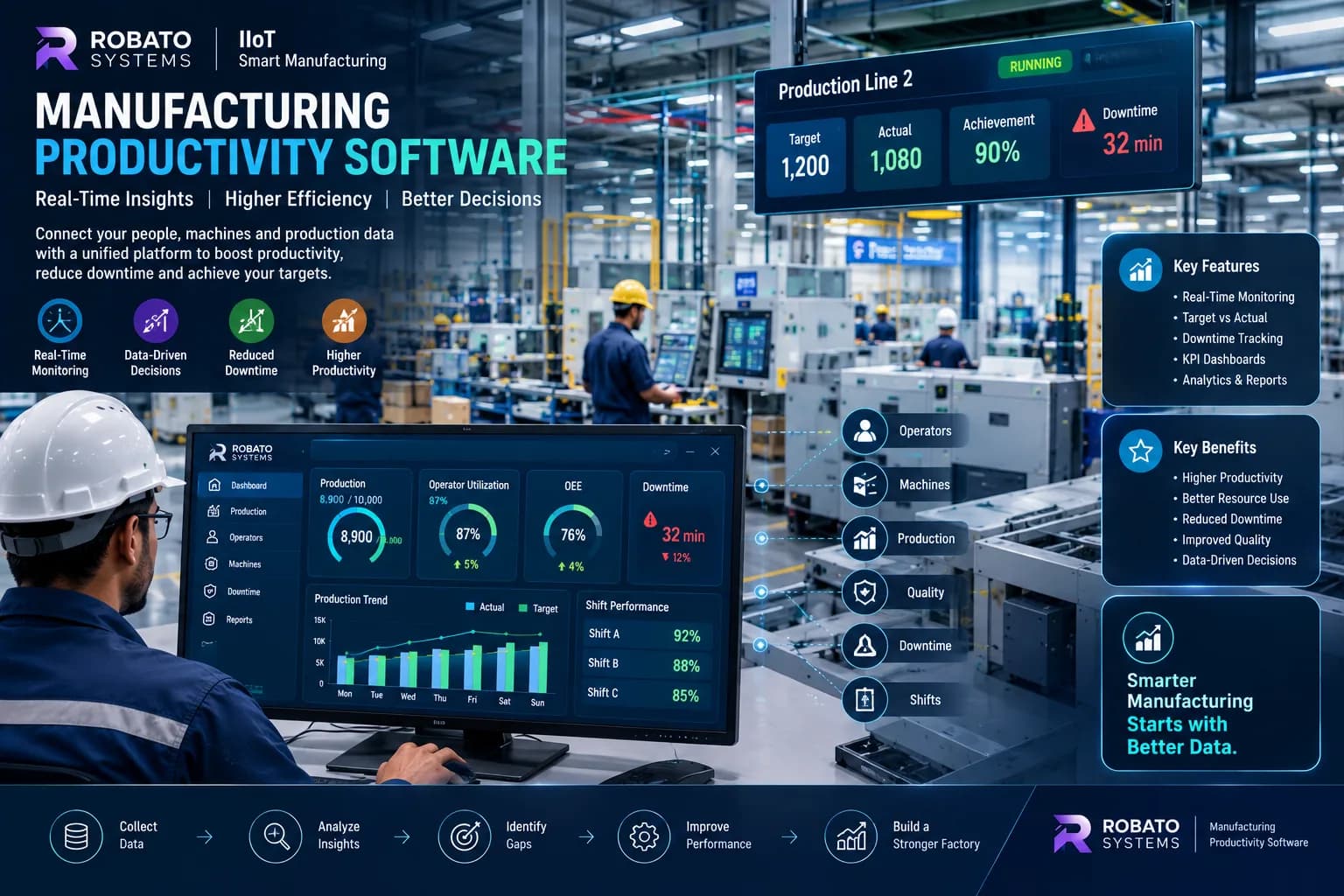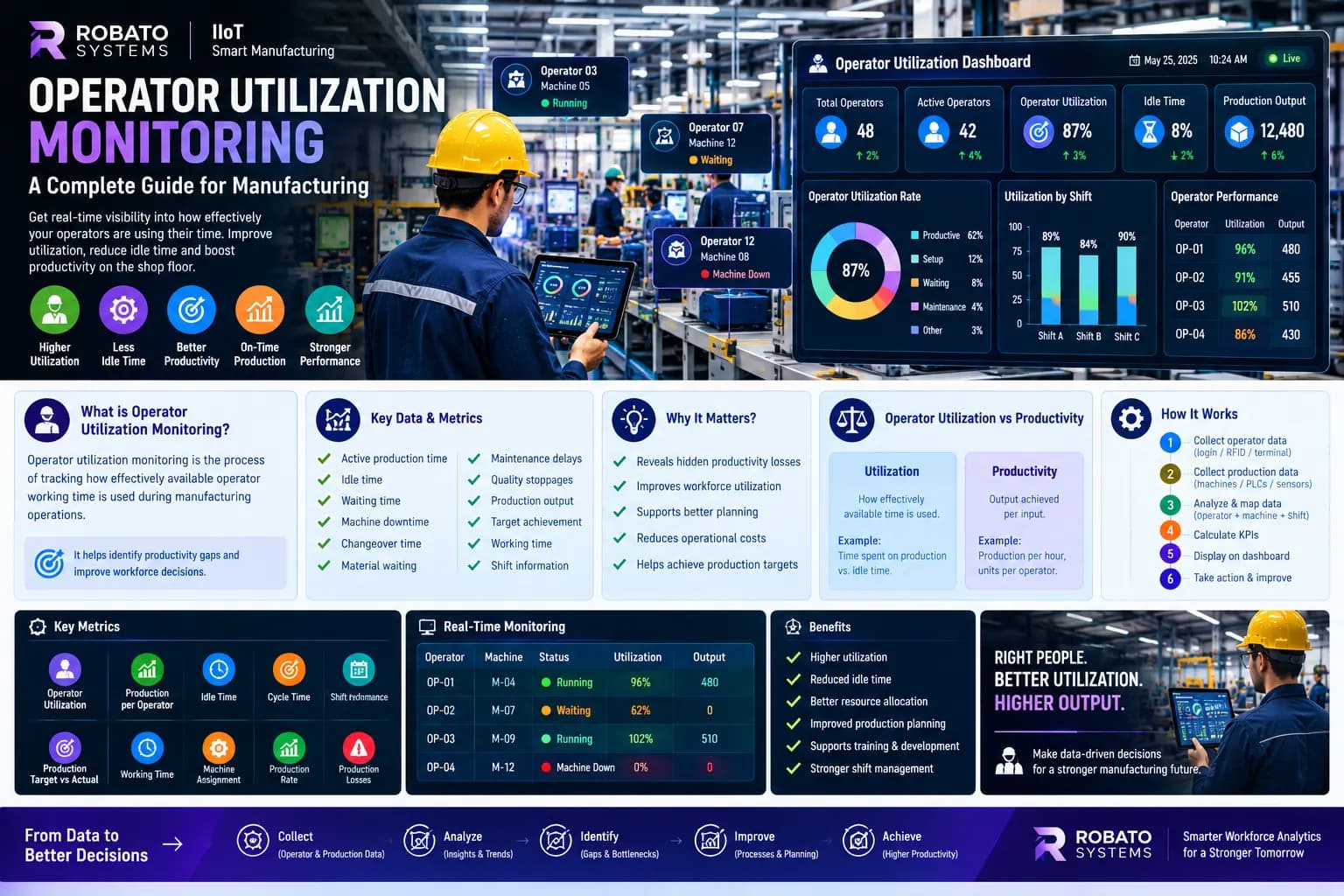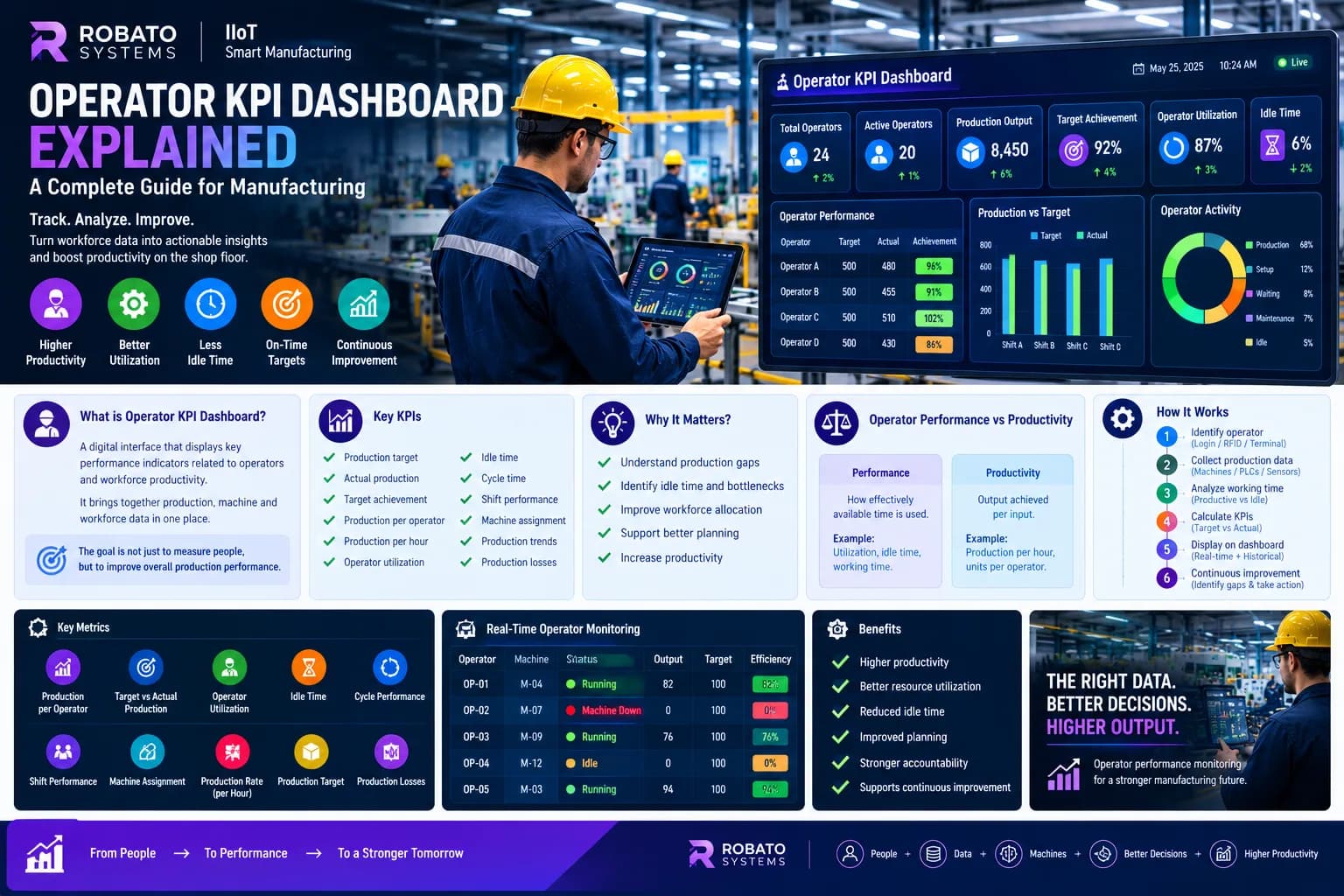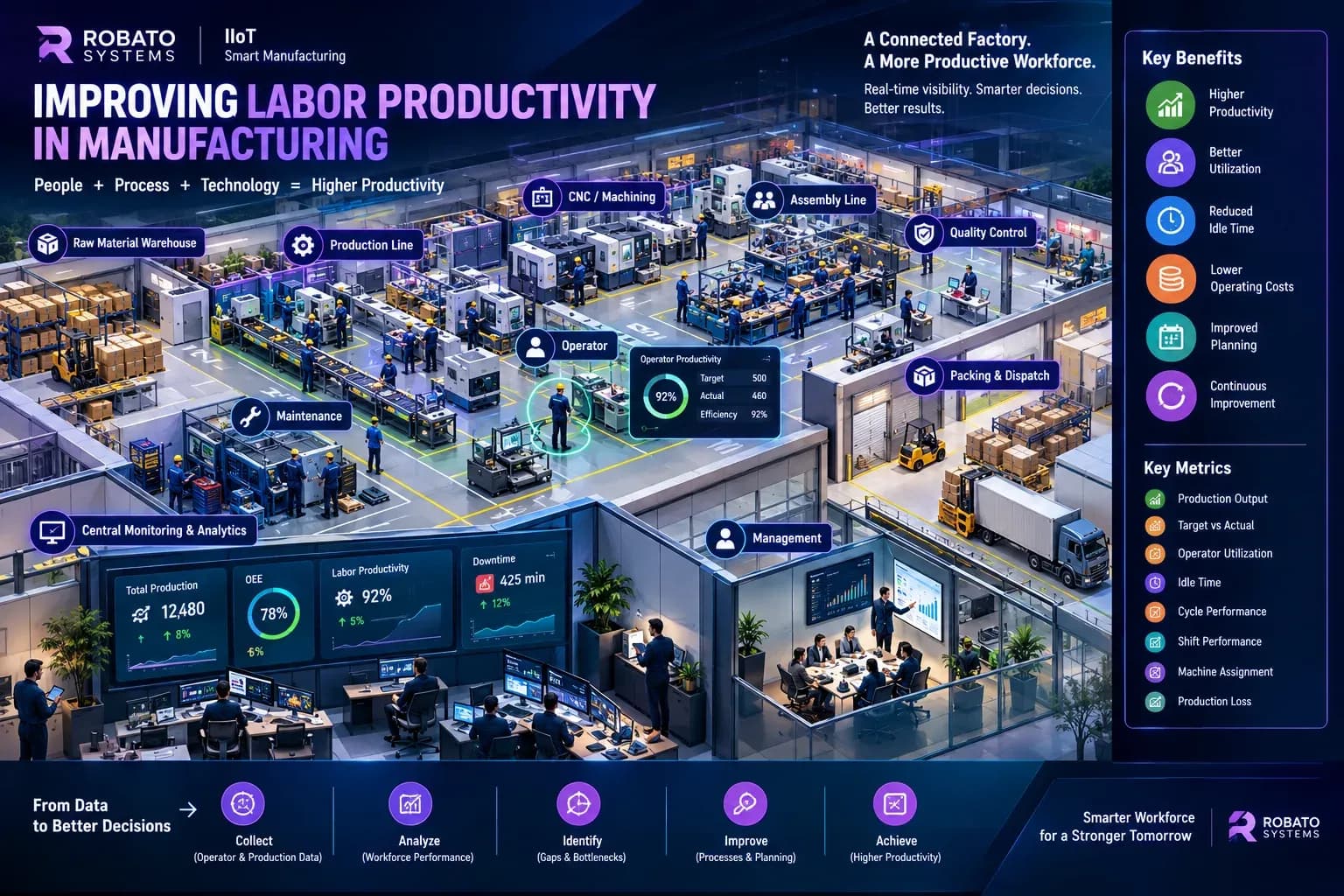
Manufacturing performance depends on the combined efficiency of machines, processes, materials, and people. While modern factories increasingly monitor machine performance and production data, operator performance is another important area that requires visibility.
Operators directly interact with machines, materials, production processes, and quality activities. Their performance can influence production output, cycle times, utilization, and the ability of a plant to achieve daily targets.
However, monitoring operator performance should not simply mean checking how many units an employee produced. Manufacturing environments are complex, and operator performance can be affected by machine downtime, material shortages, changeovers, product complexity, quality issues, and other process conditions.
This is why operator performance monitoring should be based on relevant production data and analyzed in the right context.
A structured monitoring system can help production managers understand workforce performance, identify productivity gaps, improve resource allocation, and support continuous improvement.
What is Operator Performance Monitoring?
Operator performance monitoring is the process of collecting, measuring, and analyzing production-related information associated with operators.
Depending on the manufacturing process, the system may monitor:
- Production output
- Target versus actual production
- Production per hour
- Operator utilization
- Idle time
- Cycle performance
- Shift performance
- Machine assignment
- Production achievement
- Working time
- Production losses
The objective is to understand how effectively operators are contributing to the production process.
A good operator performance monitoring system should provide actionable information rather than simply generating large amounts of data.
Why is Operator Performance Monitoring Important?
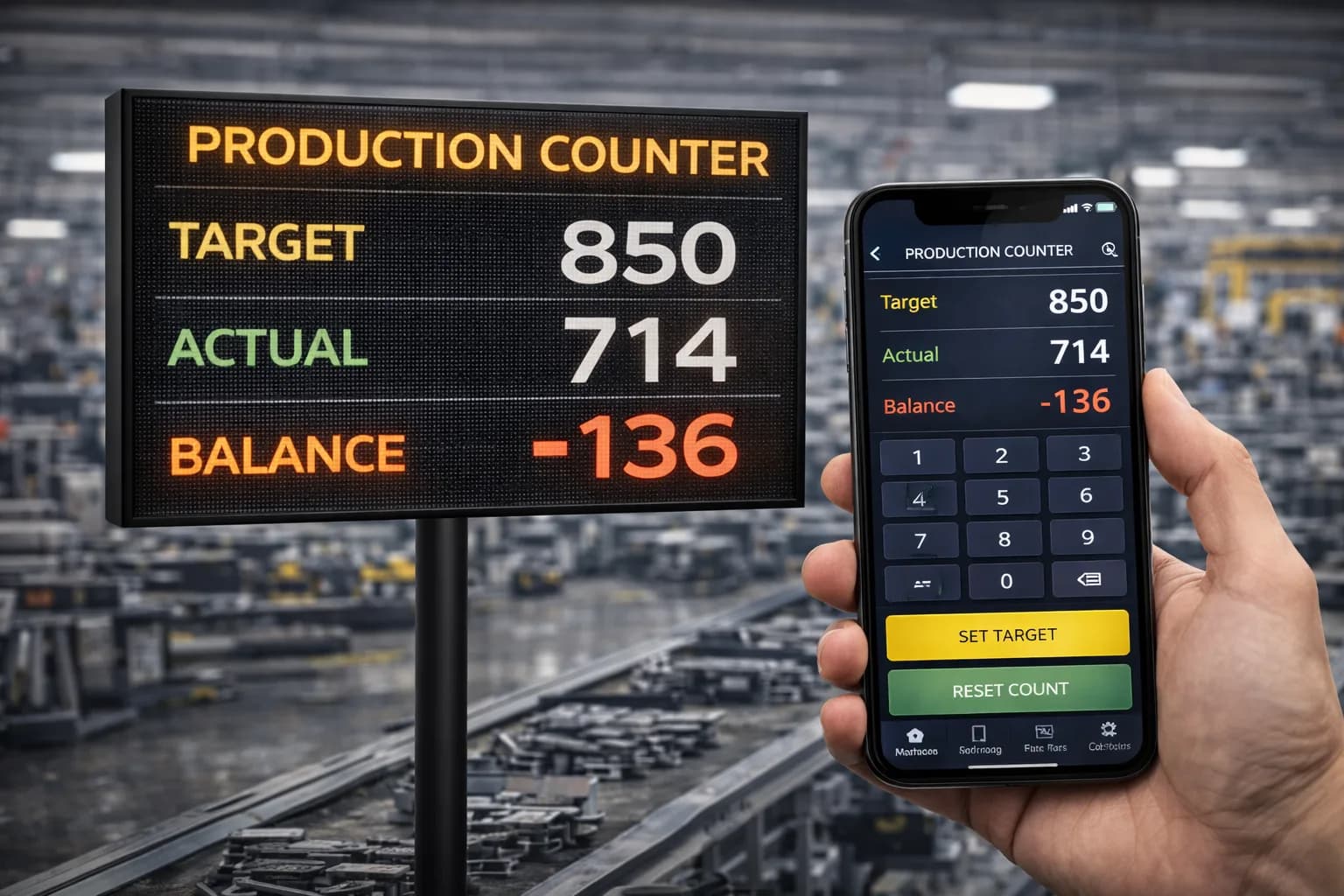
Production managers need accurate information to understand why production targets are achieved or missed.
For example, suppose a machine has a target of 600 units per shift but produces only 510 units.
The production manager needs to determine what caused the 90-unit gap.
Possible reasons could include:
- Machine breakdown
- Material shortage
- Long changeover
- Slow production cycle
- Operator waiting time
- Quality inspection
- Process interruption
- Poor work allocation
Without detailed information, it can be difficult to determine the actual cause.
Operator performance monitoring provides another layer of visibility by connecting workforce performance with production activity.
Operator Performance Should Be Measured in Context
One of the most important best practices is to avoid judging operator performance using a single metric.
Suppose two operators produce different quantities during their shifts.
Operator A produces 500 units.
Operator B produces 430 units.
At first glance, Operator A appears to have performed better.
But imagine that Operator B's machine experienced two hours of downtime while Operator A's machine was available throughout the shift.
The production difference may have more to do with machine availability than operator capability.
Therefore, operator performance should be analyzed alongside:
- Machine availability
- Downtime
- Production target
- Product type
- Cycle time
- Quality requirements
- Material availability
- Shift duration
- Changeover time
This creates a fairer and more useful performance analysis.
Key KPIs for Operator Performance Monitoring
A successful operator performance monitoring system should focus on meaningful KPIs.
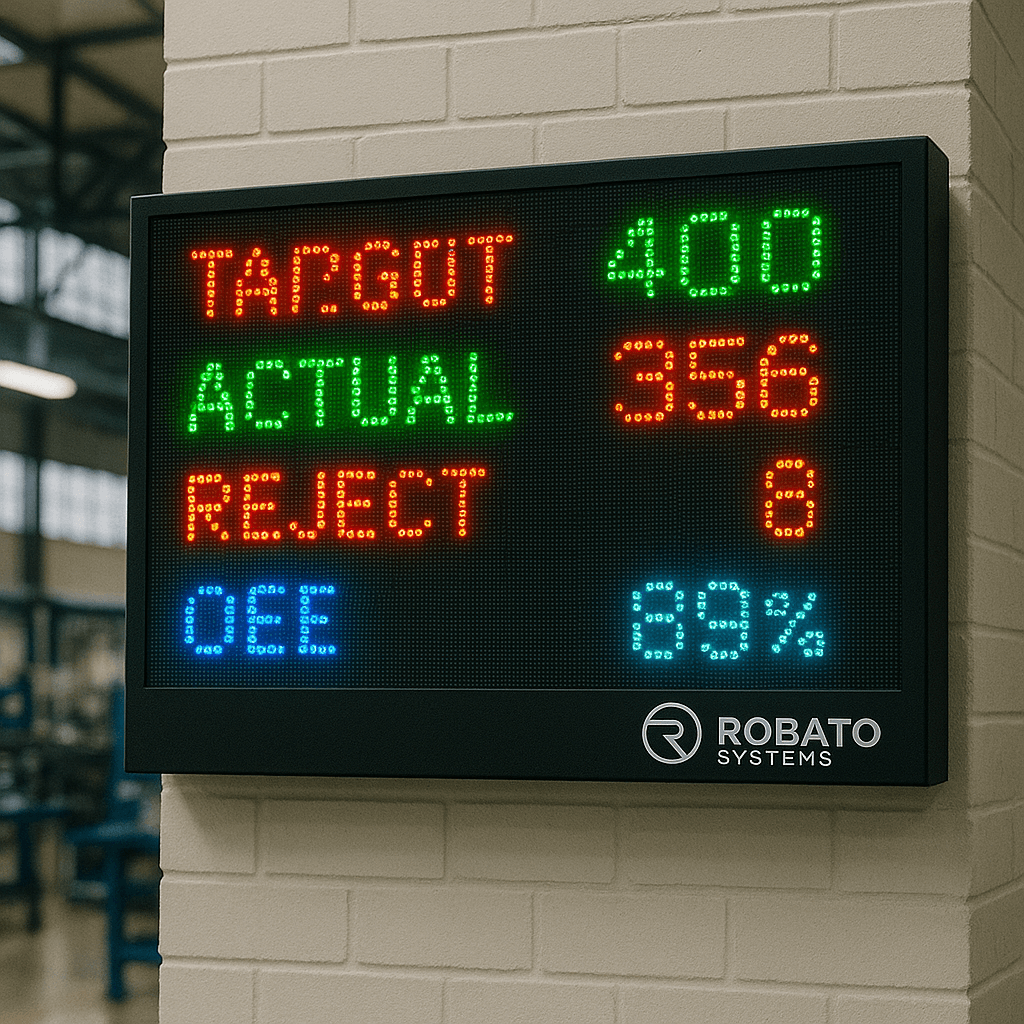
1. Target vs Actual Production
This is one of the simplest ways to understand production achievement.
For example:
Target: 800 units
Actual: 760 units
The operator or production activity achieved 95% of the target.
This metric becomes more useful when managers can drill down into the reasons behind the gap.
2. Production Per Hour
Production per hour helps compare production rates across shifts and operators working under similar conditions.
It can also help identify processes where production rates consistently fall below the expected standard.
3. Operator Utilization
Operator utilization indicates how effectively available operator time is being used for productive activities.
Low utilization may be caused by:
- Material waiting
- Machine downtime
- Process delays
- Poor scheduling
- Workstation imbalance
- Lack of production orders
The cause should be identified before taking corrective action.
4. Idle Time
Idle time is another useful KPI for understanding lost workforce capacity.
Repeated idle periods may indicate problems elsewhere in the production process.
For example, if several operators regularly wait for raw materials, the issue may be related to material handling rather than workforce performance.
5. Cycle Time Performance
Cycle time measures how long it takes to complete a production cycle.
Comparing actual cycle time against the expected cycle time can reveal process variation.
If the standard cycle is 30 seconds and actual production consistently takes 35 seconds, management can investigate the cause.
6. Shift Performance
Shift-level analysis helps identify differences in production performance across working periods.
Managers can compare:
- Shift A
- Shift B
- Shift C
and analyze production output, target achievement, downtime, utilization, and other relevant KPIs.
Real-Time Operator Performance Monitoring
Traditional operator performance reporting often happens after the shift.
This creates a delay between the occurrence of a problem and its identification.
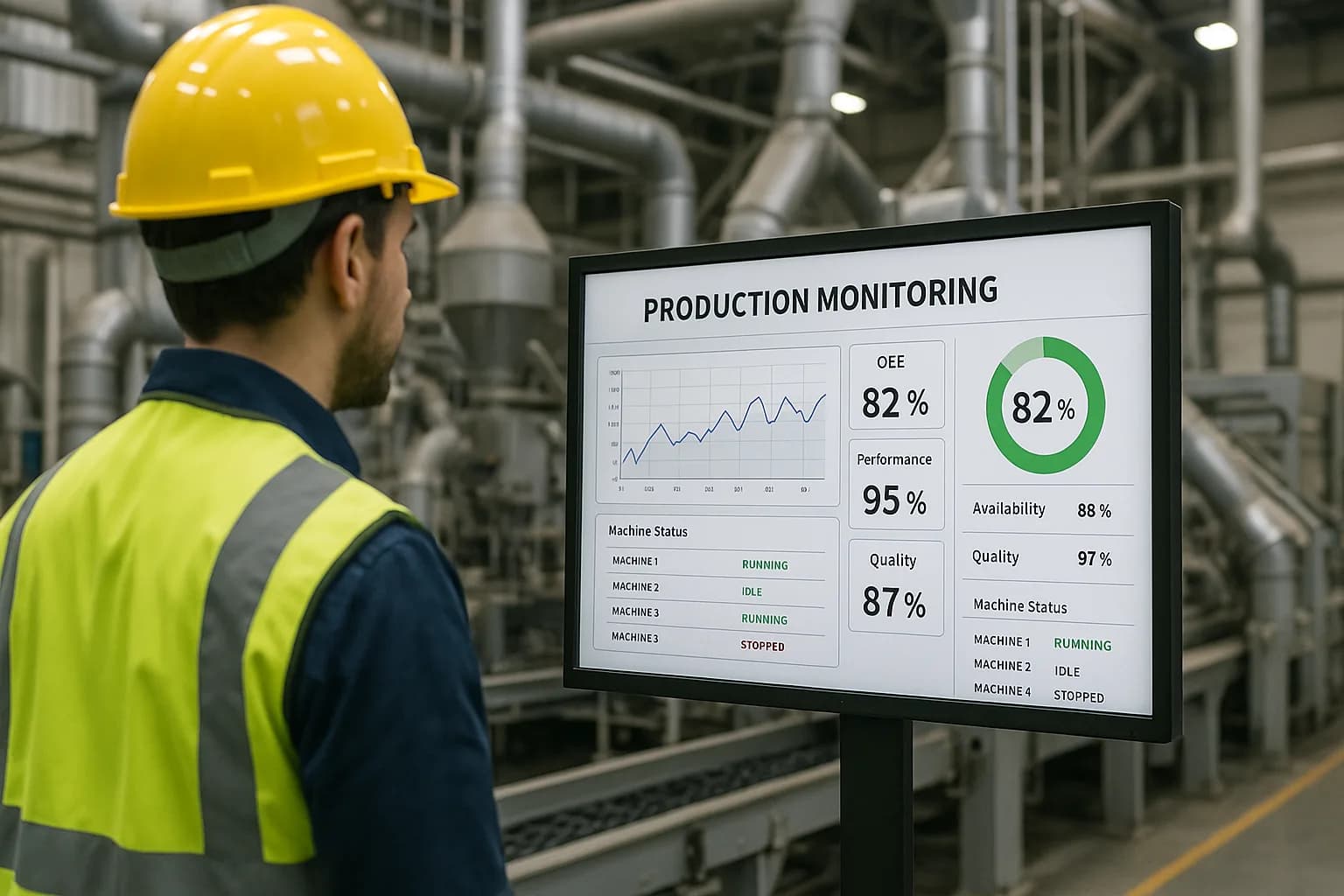
Real-time monitoring can reduce this delay.
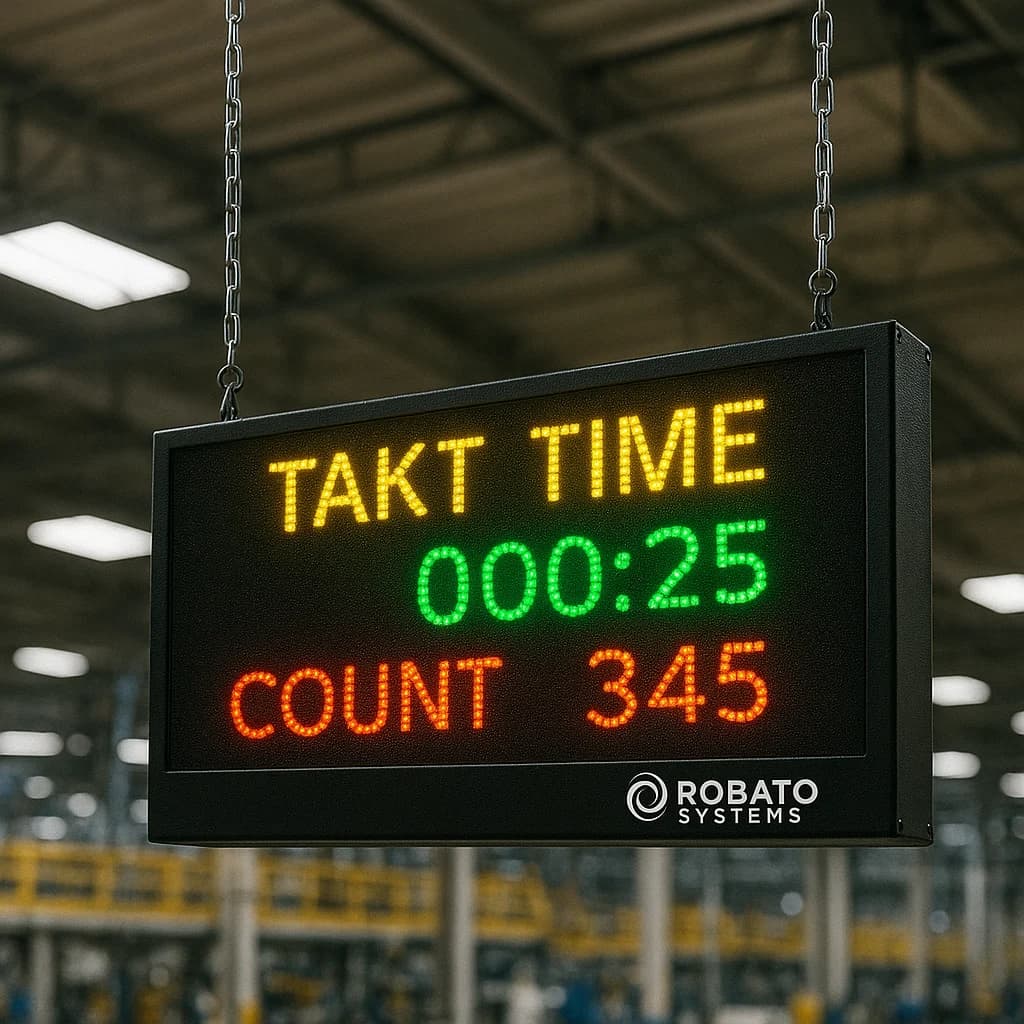
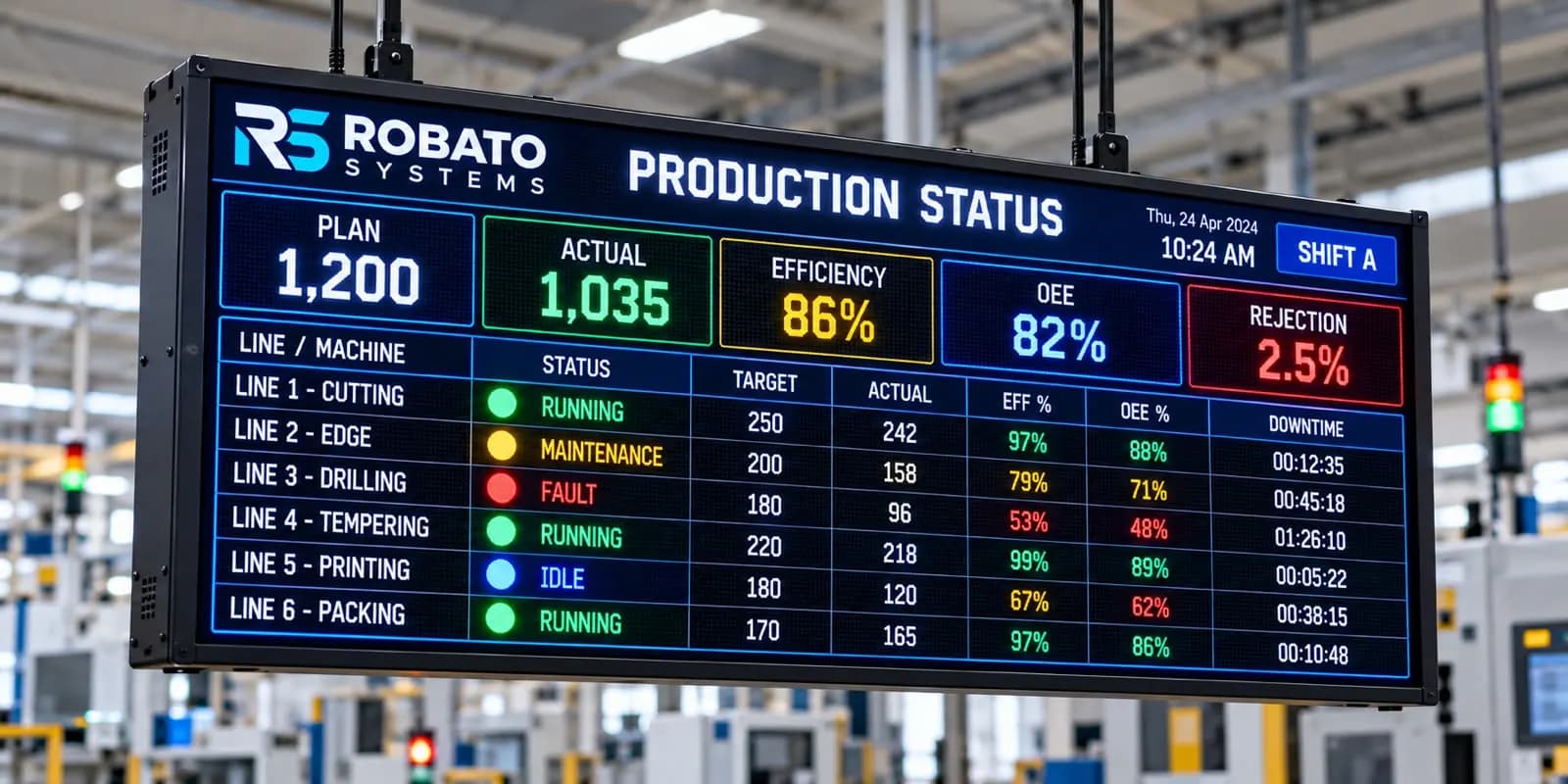
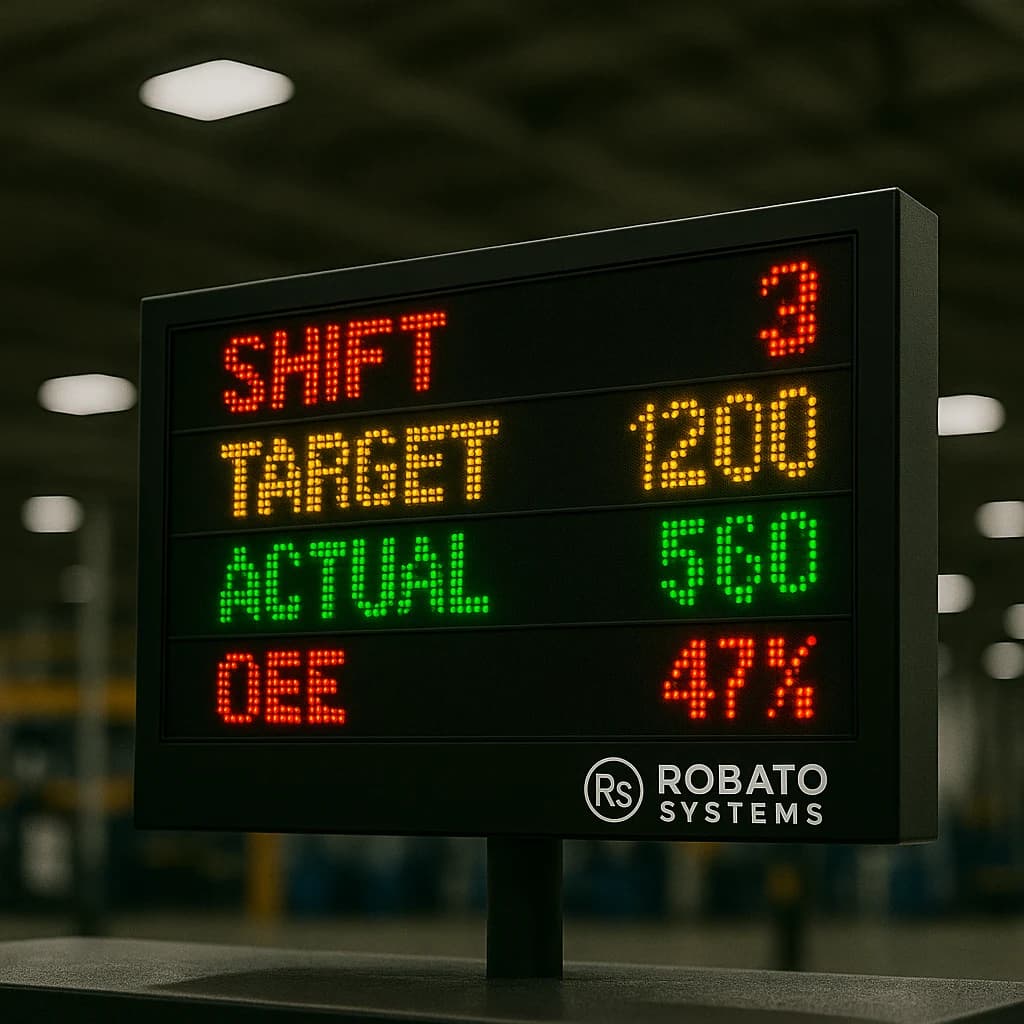
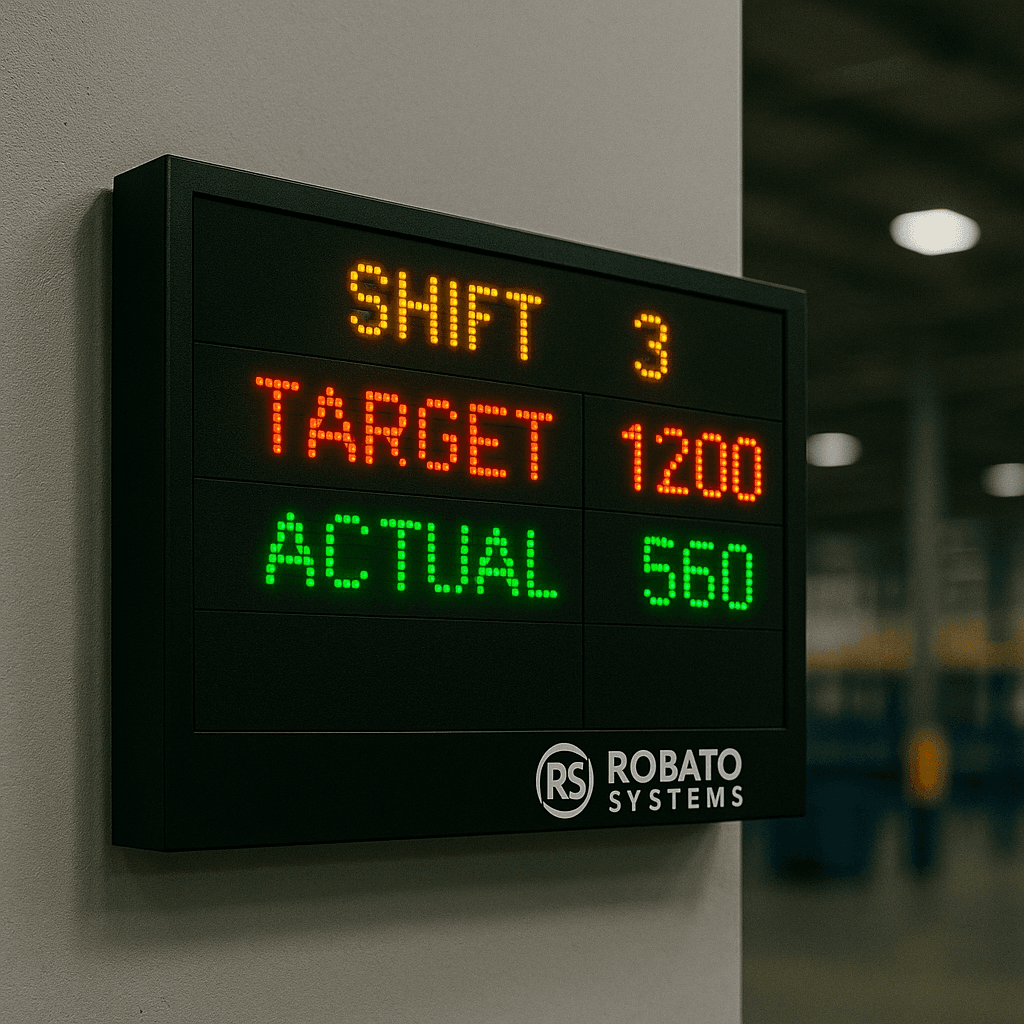
A supervisor can see production progress during the shift and identify when output begins falling behind the expected rate.
For example:
Expected production by 2 PM: 400 units
Actual production: 345 units
The supervisor can investigate the gap immediately instead of discovering it several hours later.
Real-time visibility can therefore support faster operational decisions.
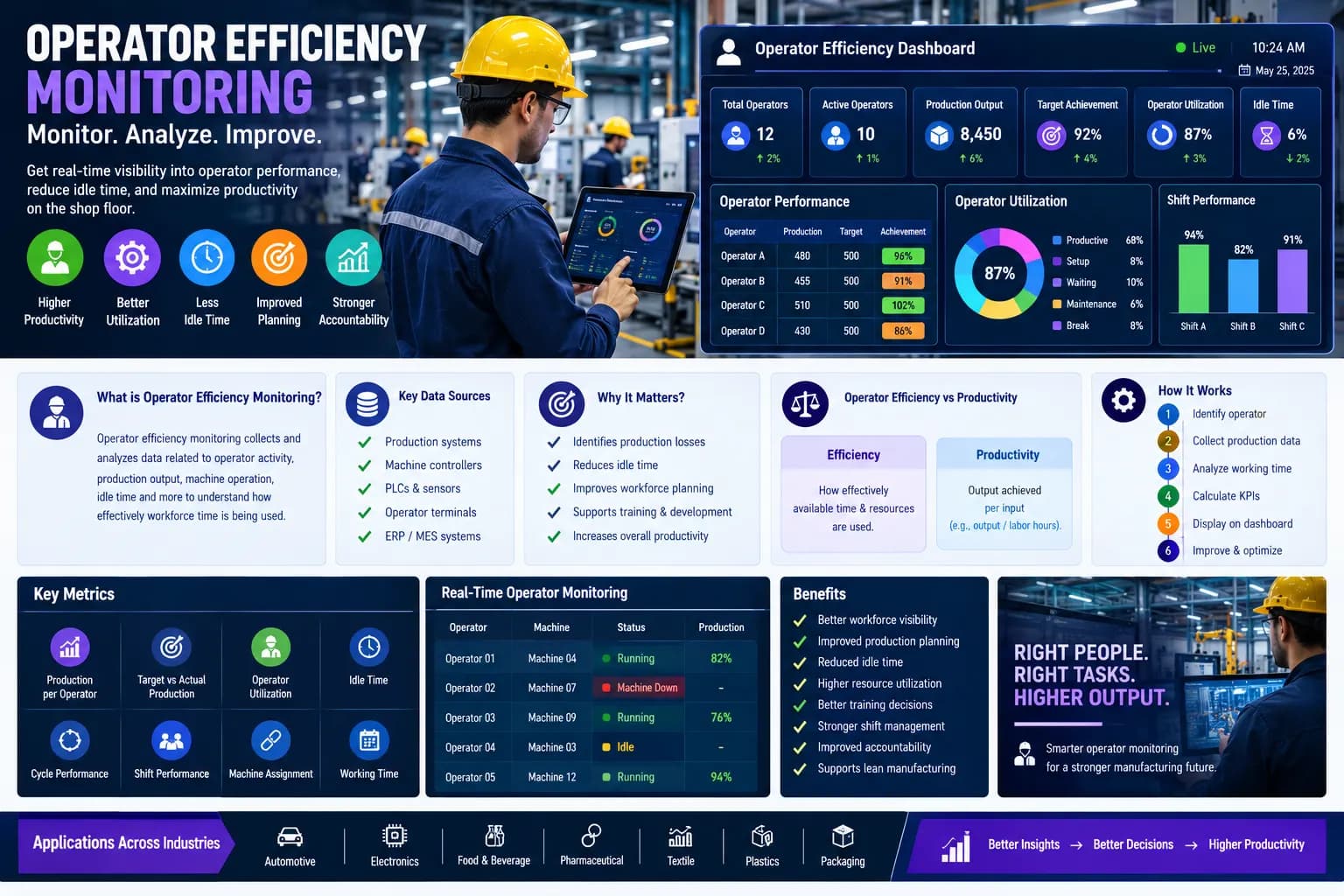
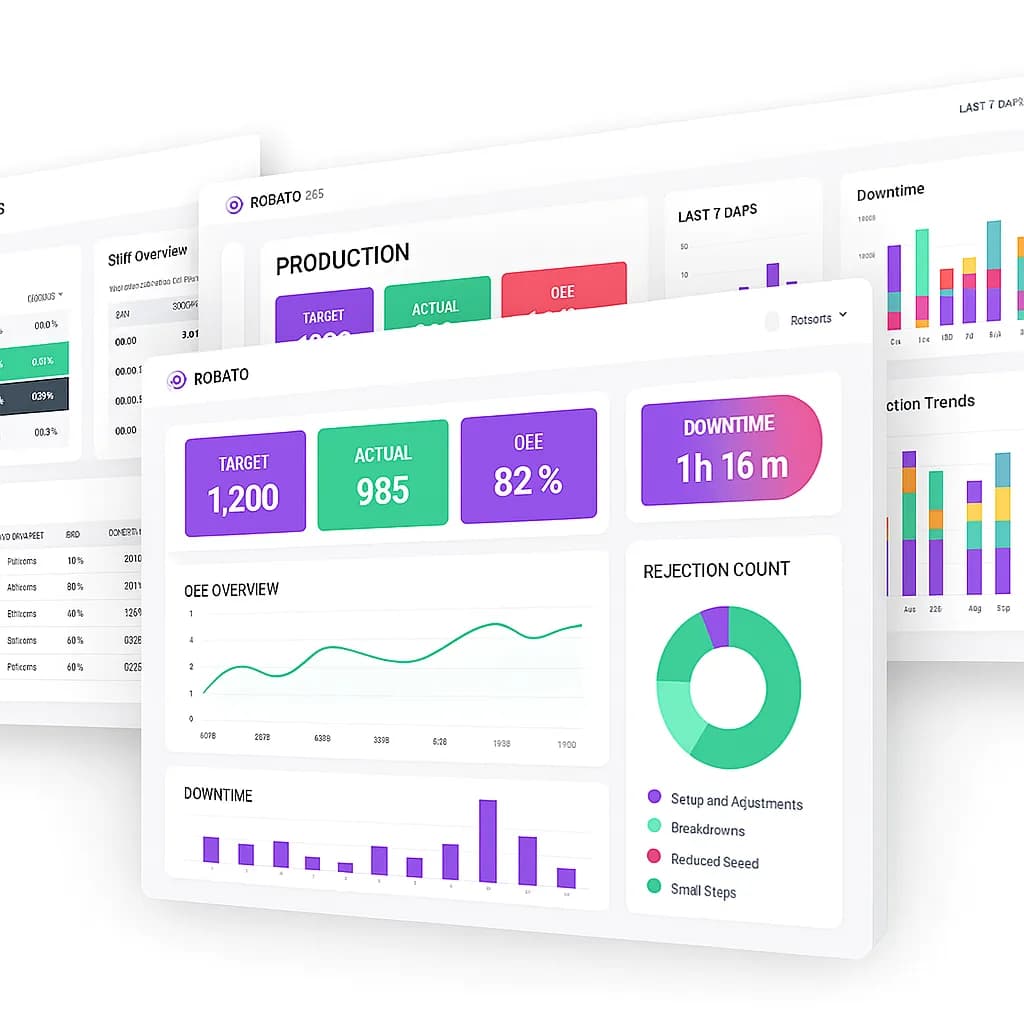
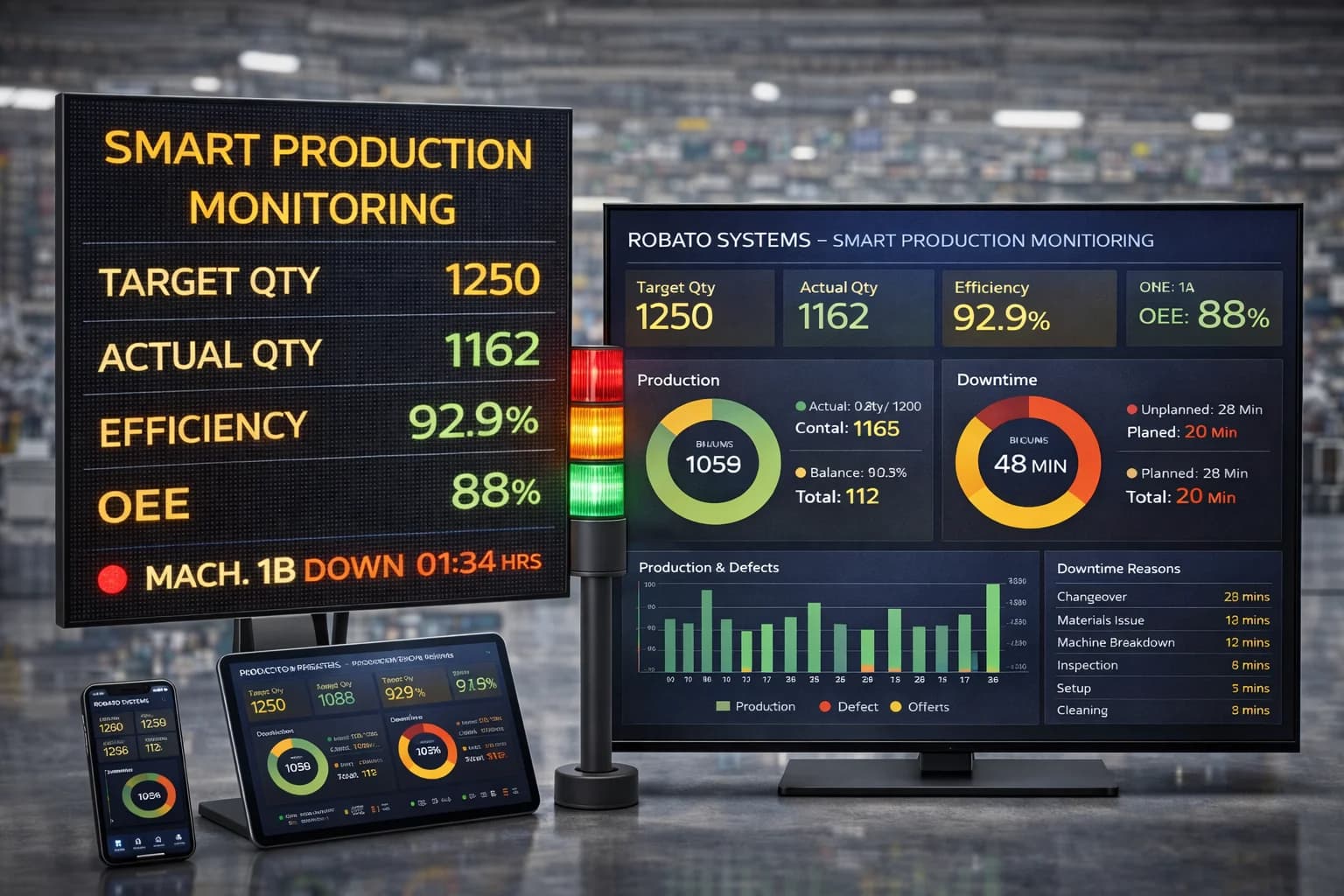
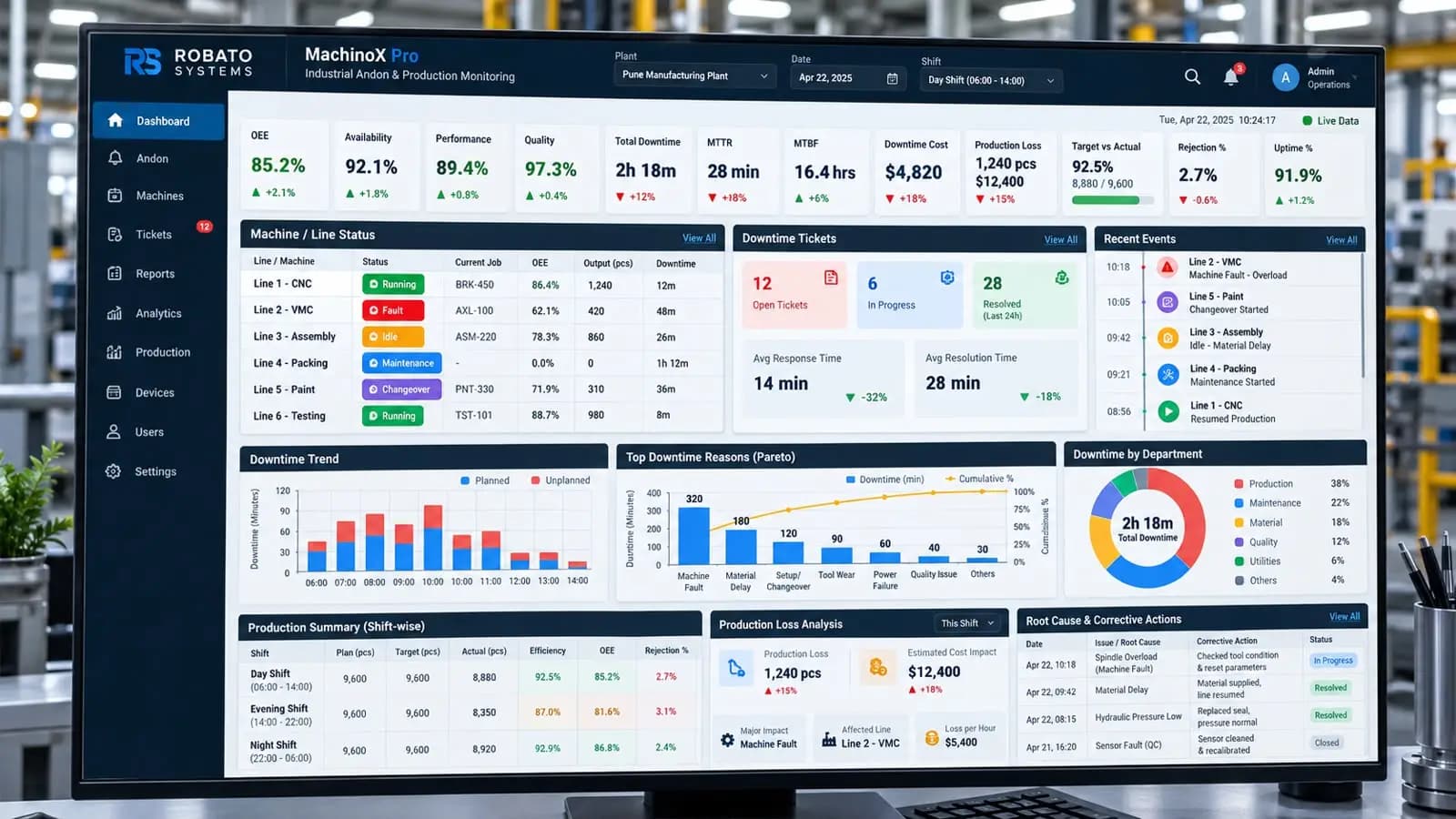
Operator Performance Dashboard
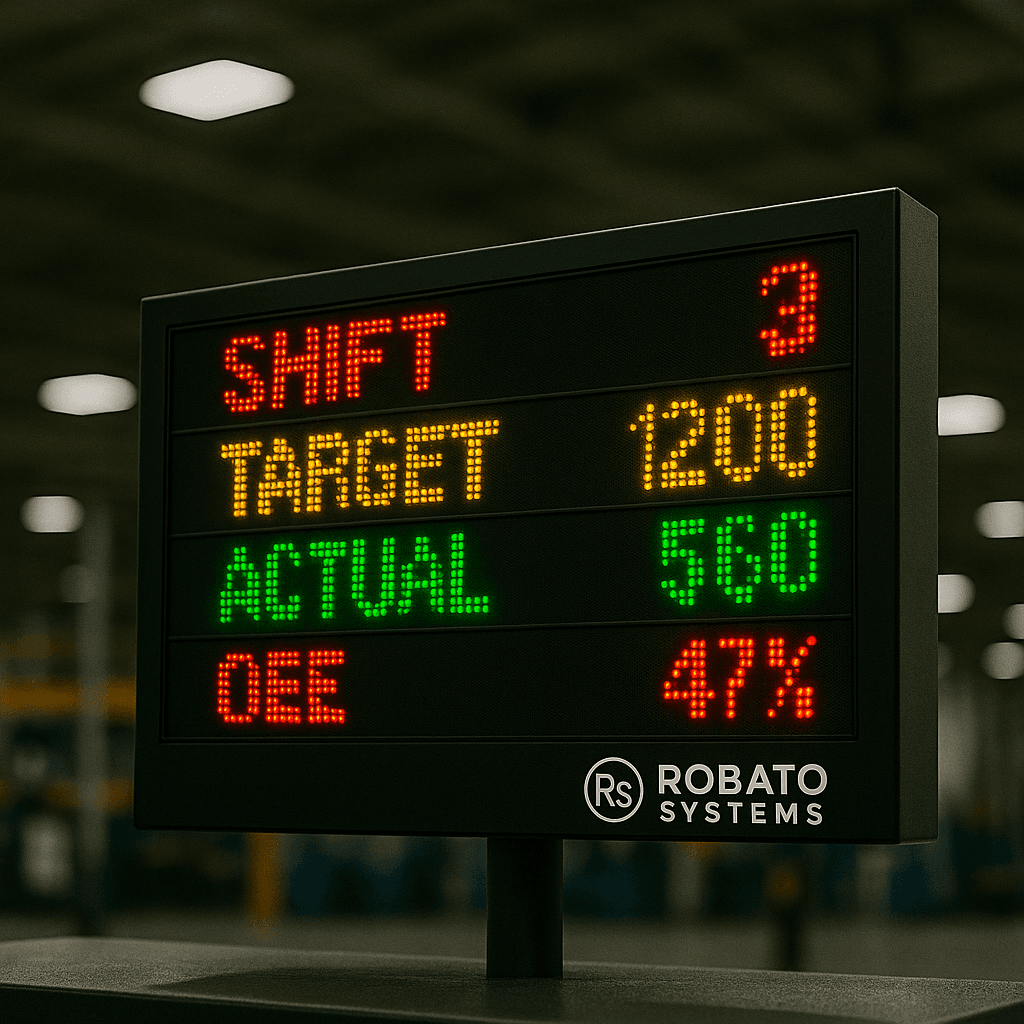
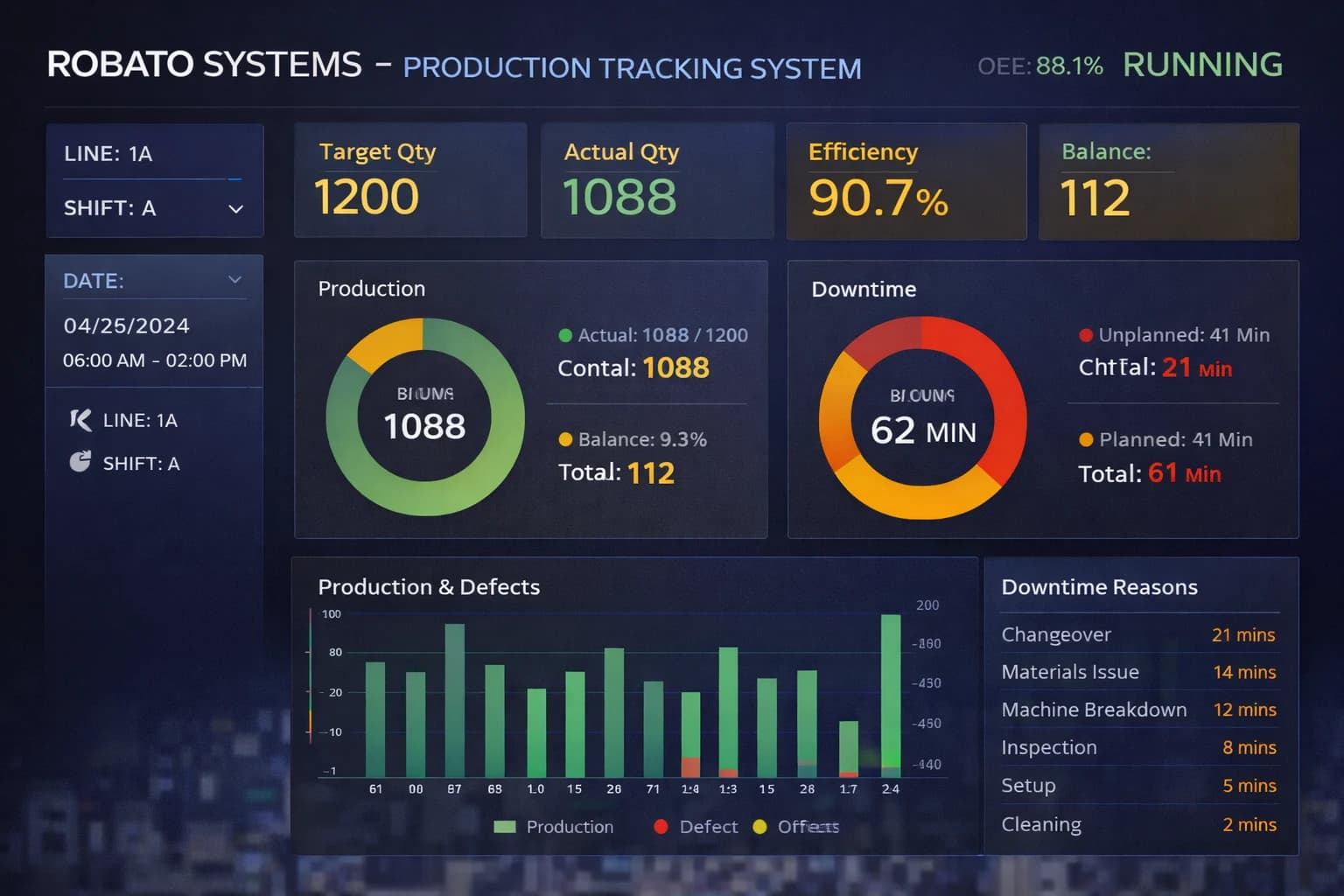
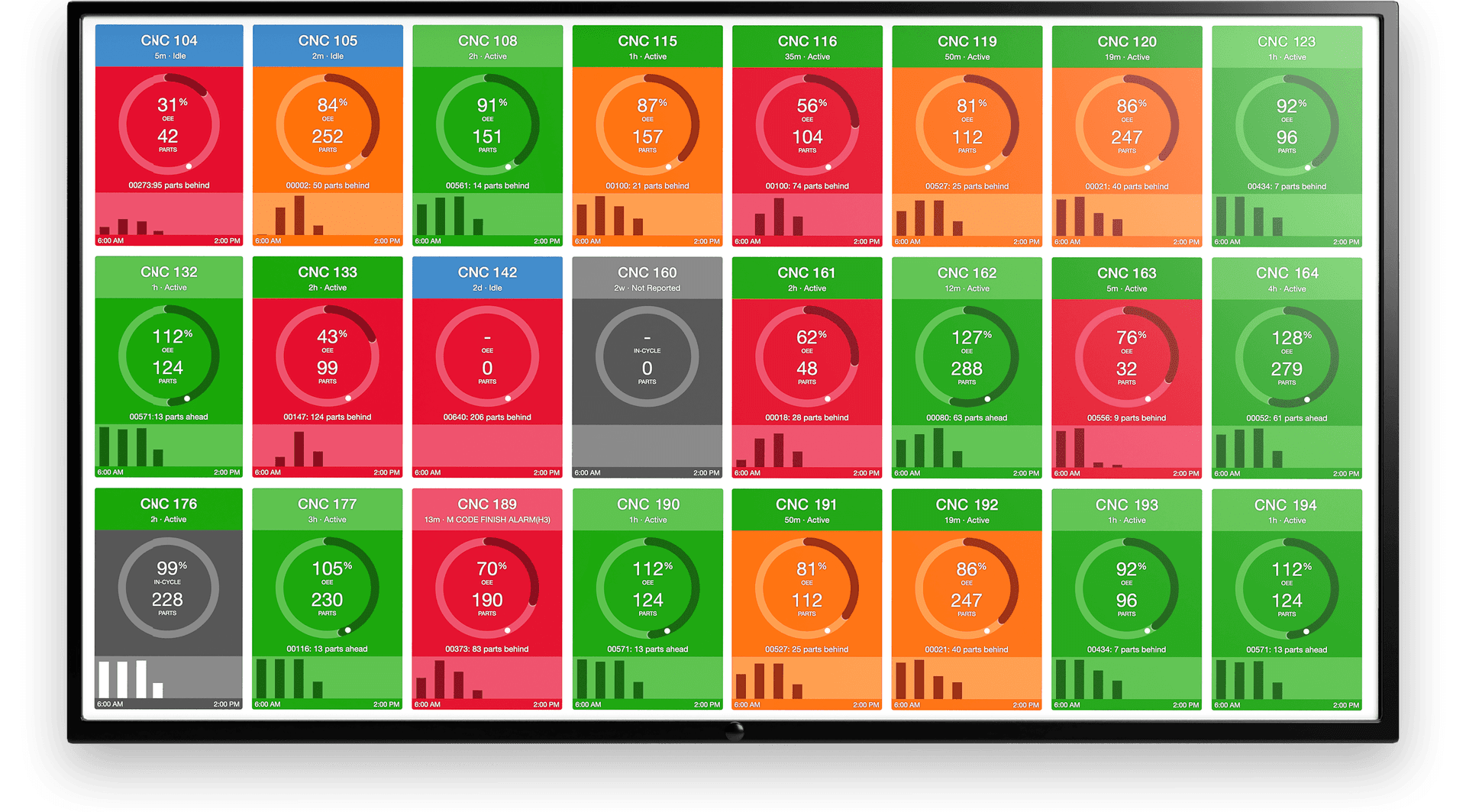
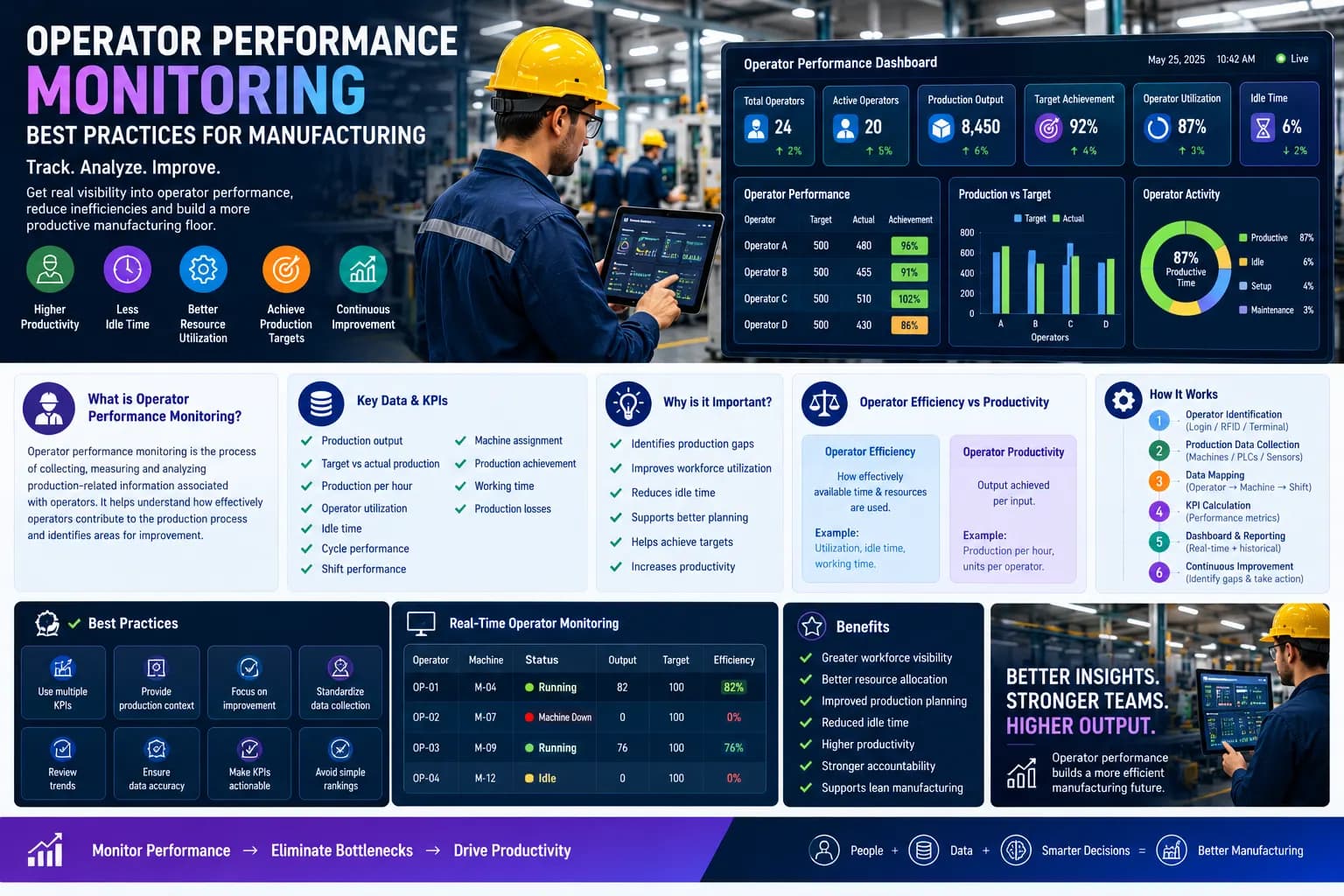
An operator performance dashboard should make important information easy to understand.
A useful dashboard can include:
- Total operators
- Active operators
- Production target
- Actual production
- Target achievement
- Production per hour
- Operator utilization
- Idle time
- Shift performance
- Operator-wise production
- Machine-wise operator performance
- Productivity trends
The dashboard should allow managers to move from a high-level overview to detailed information.
For example:
Plant → Department → Production Line → Machine → Operator → Shift
This type of drill-down makes it easier to identify the source of performance variations.
Operator-Wise Performance Analysis
Operator-wise analysis helps managers identify trends in production performance.
For example:
Operator A consistently achieves 98% of target.
Operator B averages 94%.
Operator C averages 78%.
The next step should not be to immediately label Operator C as underperforming.
Managers should investigate the operating environment.
Important questions include:
- Are all three operators working on the same products?
- Are their machines equally available?
- Are their production targets comparable?
- Does one operator handle more complex work?
- Are there differences in material availability?
- Are there quality or rework issues?
- Is additional training required?
This approach makes performance monitoring more meaningful.
Monitor Production Conditions Alongside Operators
Operators work within a larger production system.
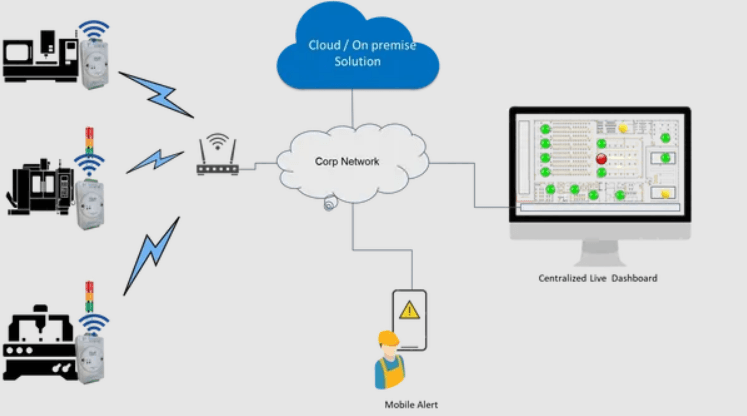
For this reason, operator performance monitoring should ideally be connected with production and machine information.
Important data sources can include:
- PLCs
- Machine sensors
- Production counters
- Machine status signals
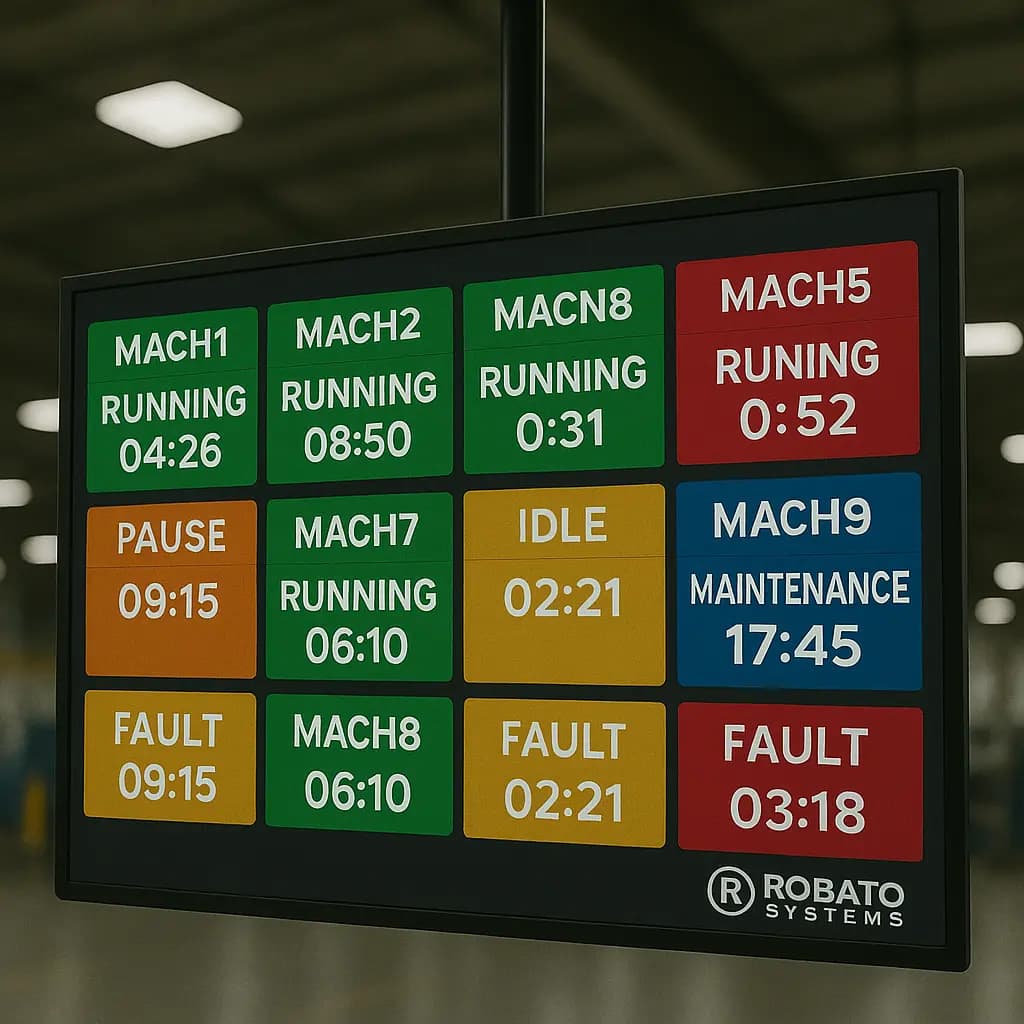
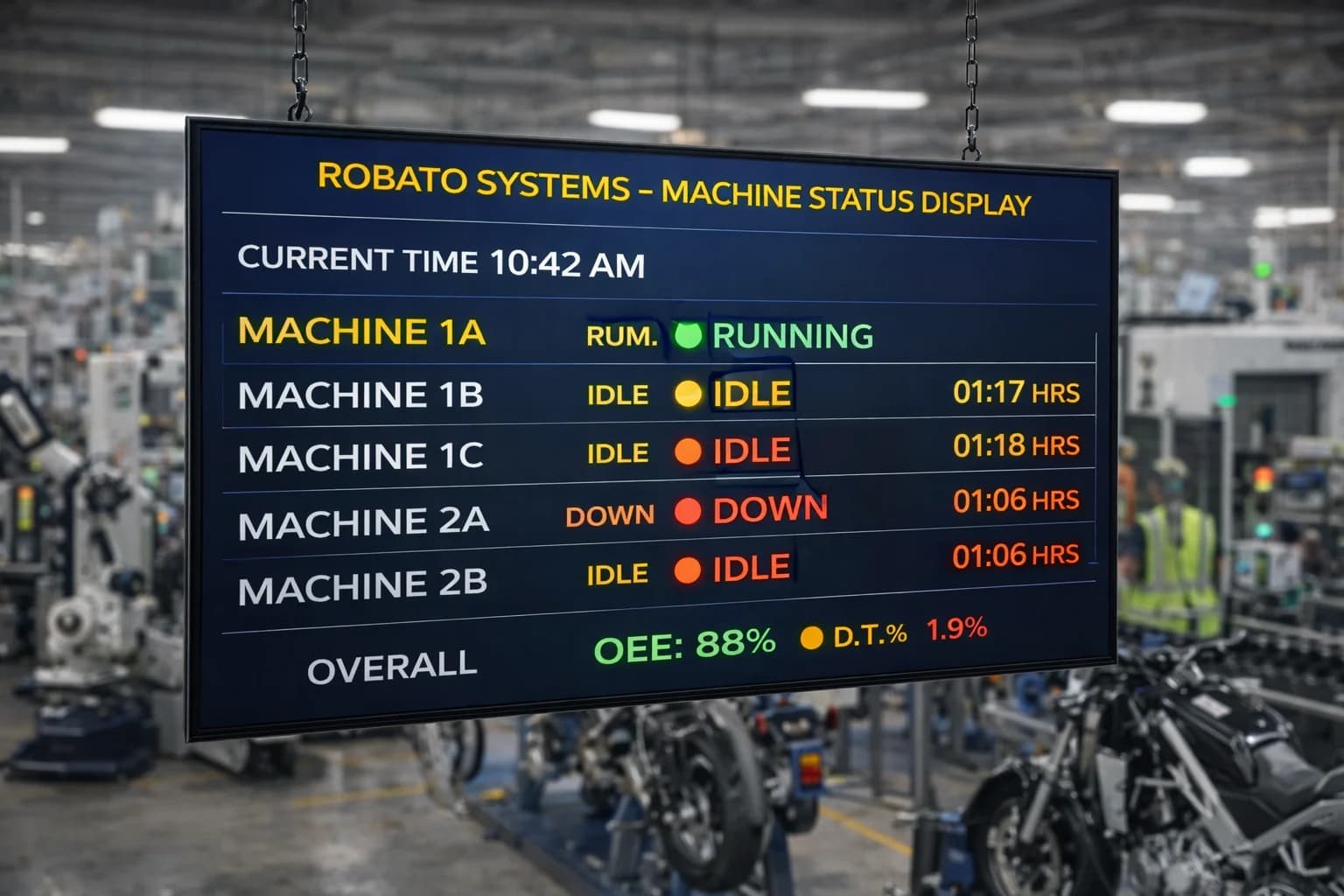
- Production management software
- Operator login systems
- Shift management systems
- Quality systems
Connecting these sources allows manufacturers to build a more complete production picture.
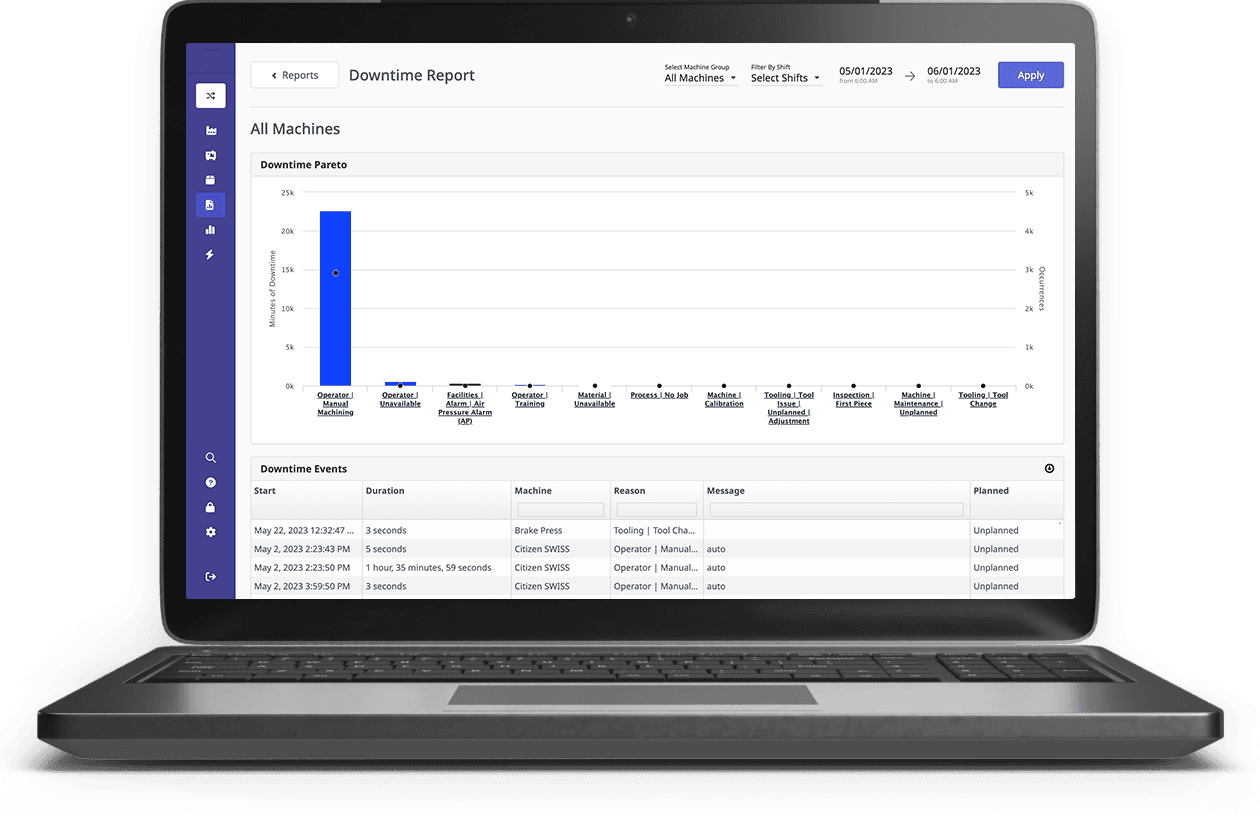
Operator Performance and Machine Downtime
Machine downtime can have a direct impact on operator output.
If a machine stops for 60 minutes, the operator may be unable to produce during that period.
Therefore, low operator output during high machine downtime should not automatically be considered an operator performance issue.
A connected system can show:
Operator → Machine → Downtime → Production Loss
This helps managers separate workforce-related issues from machine-related problems.
It also makes root-cause analysis more accurate.
Use Performance Monitoring for Continuous Improvement
Operator performance monitoring should support continuous improvement rather than simply generate reports.
Once performance data is available, managers can identify recurring patterns.
For example:
- One workstation consistently has low production.
- One shift regularly experiences high idle time.
- A particular process has longer cycle times.
- Certain machines frequently stop during specific shifts.
- Operators spend significant time waiting for material.
Each pattern can become an improvement opportunity.
The goal is to identify the problem, understand the cause, implement an improvement, and then measure the result.
Identify Training Opportunities
Performance monitoring can also help identify areas where operators may require additional support or training.
For example, if a group of operators consistently performs below the expected cycle rate on a specific process, management can investigate whether the issue is related to:
- Process knowledge
- Machine operation
- Standard work
- Training
- Tool handling
- Workstation design
Training decisions can then be based on production data rather than assumptions.
Improve Workforce Allocation
Manufacturing plants often have different workloads across production lines.
One line may be operating at full capacity while another has available workforce capacity.
Operator performance data can help managers understand where resources are being used and where additional workforce may be required.
This can support better:
- Shift planning
- Workforce allocation
- Operator-machine assignments
- Production scheduling
- Capacity planning
Compare Performance Against Standards
Performance monitoring becomes more useful when actual results can be compared with defined production standards.
Standards may include:
- Expected production quantity
- Standard cycle time
- Expected production per hour
- Planned working time
- Shift production target
The comparison should help identify deviations.
However, standards should be realistic and updated when production conditions change.
Best Practices for Operator Performance Monitoring
1. Define Clear Performance Metrics
Before implementing a monitoring system, define what the organization actually wants to measure.
Focus on metrics that directly relate to production objectives.
2. Avoid Measuring Everything
More data does not automatically mean better decision-making.
Start with a focused set of KPIs such as:
- Target vs actual
- Production per hour
- Utilization
- Idle time
- Cycle performance
- Shift performance
3. Connect Operator and Machine Data
Operator data becomes much more useful when combined with machine status and production information.
4. Use Real-Time Visibility
Real-time dashboards can help supervisors react while production is still running.
5. Analyze Trends
Do not make decisions based on one shift or one production result.
Look at daily, weekly, and monthly trends.
6. Investigate the Root Cause
When performance is below target, identify why.
Do not automatically assume that the operator is responsible.
7. Keep Measurement Fair
Compare operators performing similar work under similar production conditions.
8. Communicate the Purpose
Employees should understand that monitoring is intended to improve production processes and support better performance.
9. Review KPIs Regularly
Production processes change over time.
KPIs and targets should therefore be reviewed periodically.
Common Mistakes in Operator Performance Monitoring
Focusing Only on Output
Output alone does not explain the complete performance picture.
Ignoring Machine Downtime
A machine that is frequently unavailable can significantly affect operator output.
Comparing Different Processes Directly
Operators working on different products or machines may have different production standards.
Using Data Without Context
Numbers should be combined with operational information.
Treating Monitoring as Punishment
Performance monitoring works better when employees understand how it supports process improvement.
Ignoring Data Accuracy
Incorrect production counts or operator assignments can result in misleading reports.
Manual vs Digital Operator Performance Monitoring
Manual monitoring commonly uses:
- Paper records
- Excel spreadsheets
- Supervisor observations
- Manual production reports
- End-of-shift calculations
These methods may work for smaller operations but become difficult to maintain as production complexity increases.
Digital systems can automate data collection and provide centralized dashboards.
| Manual Monitoring | Digital Monitoring |
|---|---|
| Manual data entry | Automated data collection |
| Delayed reports | Real-time or near real-time visibility |
| Higher risk of errors | More consistent data |
| Difficult historical analysis | Historical performance trends |
| Time-consuming reporting | Automated reports |
| Limited visibility | Centralized dashboards |
Digital monitoring does not replace production supervisors. Instead, it provides them with better information for decision-making.
How to Implement Operator Performance Monitoring
A practical implementation can follow these steps.
Step 1: Identify the Objective
Decide whether the main goal is productivity improvement, workforce utilization, target achievement, capacity planning, or another operational objective.
Step 2: Identify Operators and Workstations
Create a clear relationship between employees, machines, production lines, and shifts.
Step 3: Define KPIs
Select the most important metrics for the manufacturing process.
Step 4: Collect Production Data
Connect machine signals, production counters, sensors, or existing production systems.
Step 5: Build the Dashboard
Create dashboards for operators, supervisors, production managers, and plant managers based on their needs.
Step 6: Analyze Performance
Compare actual results with targets and historical trends.
Step 7: Take Corrective Action
Use the information to improve processes, training, workforce allocation, and machine availability.
Step 8: Measure Improvement
After implementing changes, compare new results with previous performance.
Operator Performance Monitoring and Industry 4.0
Industry 4.0 is creating increasingly connected manufacturing environments.
Machines, sensors, production systems, and workforce information can be integrated into a single digital production ecosystem.
Operator performance monitoring can become part of this connected environment.
For example:
Machine Data + Operator Data + Production Data + Downtime Data + Quality Data = Connected Manufacturing Intelligence
This allows production managers to understand not only what happened but also where production losses are occurring.
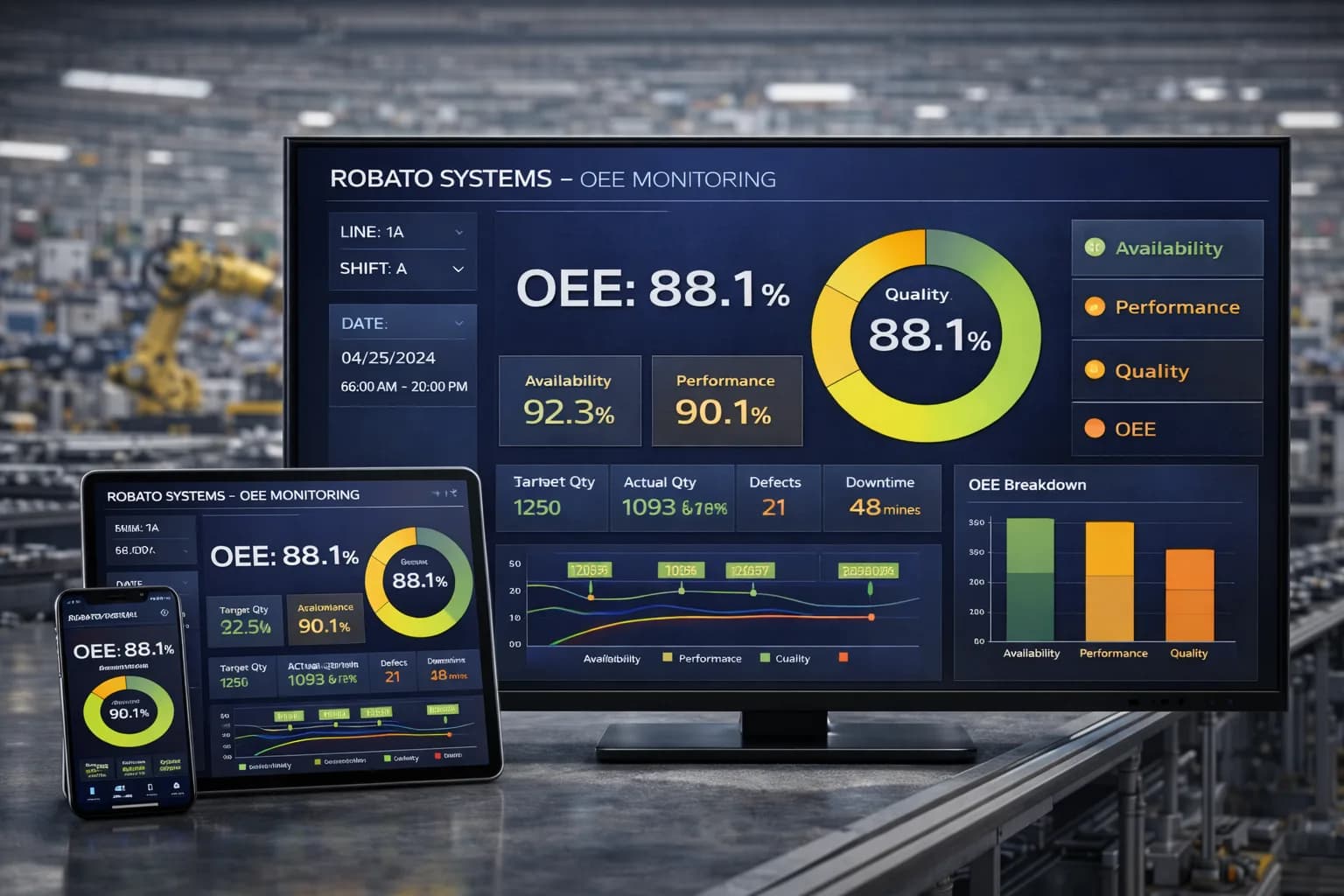
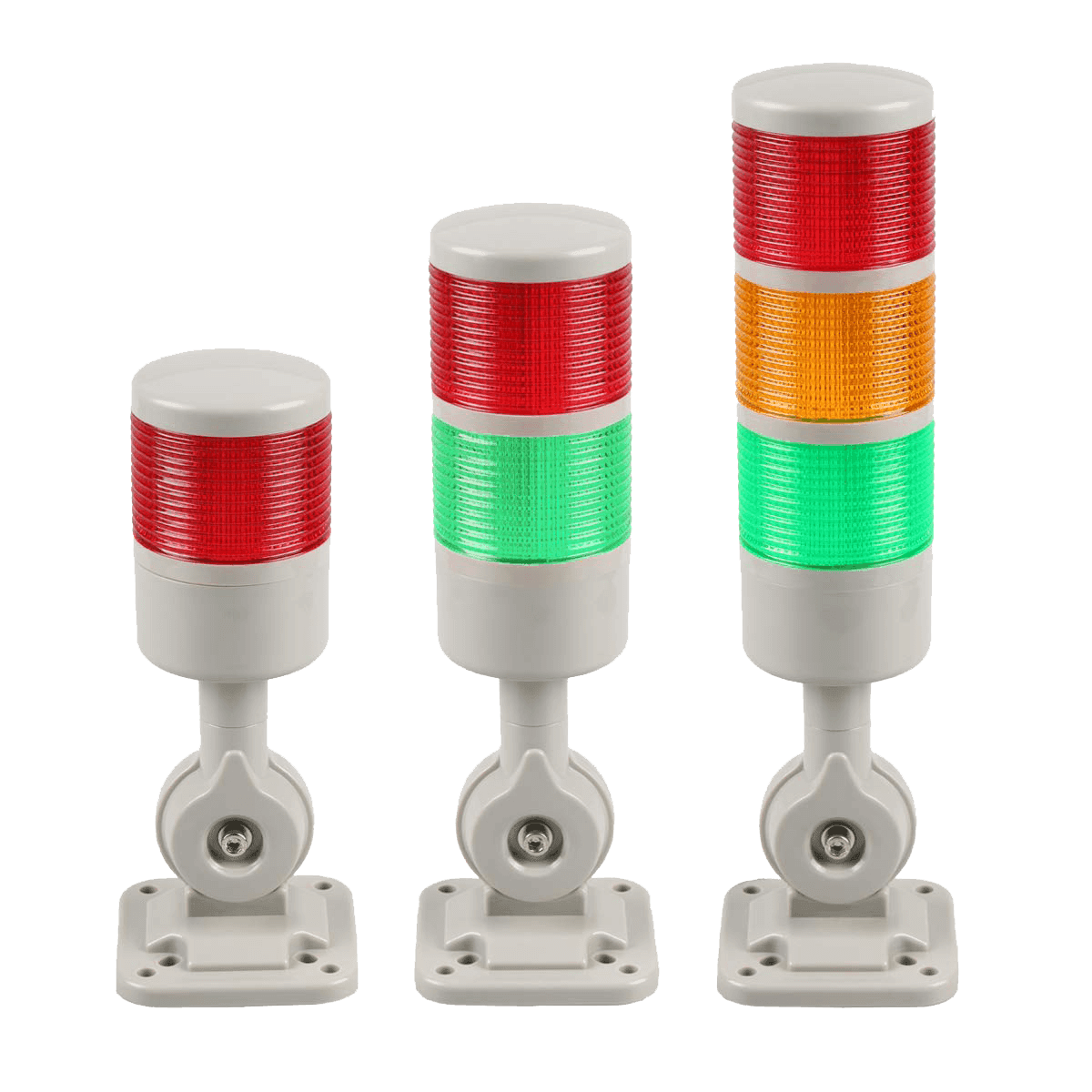
Combined with OEE, Andon, downtime monitoring, and production analytics, operator performance monitoring can contribute to a broader factory performance management strategy.
Operator Performance Monitoring with Robato Systems
Robato Systems helps manufacturers build connected production monitoring solutions that bring machine and production information into a centralized digital environment.
Operator performance monitoring can provide visibility into production targets, actual output, operator assignments, utilization, production rates, shift performance, and related manufacturing KPIs.
When operator information is connected with machine status, production counts, downtime, and OEE data, managers can gain a broader understanding of factory performance.
The focus should be on finding production constraints, improving workforce utilization, and helping teams make better operational decisions using real-time manufacturing data.
Conclusion
Operator performance monitoring is an important part of modern manufacturing management.
When implemented correctly, it provides visibility into production output, target achievement, utilization, idle time, cycle performance, and shift productivity.
The most important principle is to measure operator performance fairly and in context.
Machine downtime, material availability, product complexity, changeovers, and process conditions can all affect operator results.
By connecting operator data with machine and production information, manufacturers can identify productivity gaps more accurately and take practical steps toward continuous improvement.
For factories moving toward Industry 4.0, digital operator performance monitoring can become an important component of a connected and data-driven production environment.
FAQs
What is operator performance monitoring?
Operator performance monitoring is the process of measuring and analyzing an operator's production-related performance using metrics such as output, target achievement, utilization, idle time, and cycle performance.
Why is operator performance monitoring important?
It helps manufacturers understand workforce performance, identify productivity gaps, improve workforce utilization, and support better production decisions.
What KPIs are useful for operator performance monitoring?
Common KPIs include target vs actual production, production per hour, operator utilization, idle time, cycle time performance, production per operator, and shift performance.
Should operator performance be measured using production output only?
No. Production output should be evaluated alongside machine availability, downtime, product type, production targets, material availability, and other relevant operating conditions.
Can operator performance monitoring be connected to machines?
Yes. Connecting operator data with machine production and downtime data provides better context for analyzing performance.
Can operator performance be monitored in real time?
Yes. Digital manufacturing systems can provide real-time or near real-time visibility into production progress, targets, utilization, and operator-related KPIs.
How does operator performance monitoring help reduce production losses?
It can identify productivity gaps, idle time, slow production cycles, and recurring process issues, helping managers investigate and address the causes of lost production.
Is operator performance monitoring useful for Industry 4.0?
Yes. It can connect workforce information with machine, production, downtime, and quality data to support a more connected manufacturing environment.